


Product Monograph - Hizentra
Recent Major Label Changes
| None at the time of the most recent authorization |
|---|
Table of Contents
Certain sections or subsections that are not applicable at the time of the preparation of the most recent authorized product monograph are not listed.
Recent Major Label Changes .................................................................................................... 2
Table of Contents .................................................................................................................... 2
Part 1: Healthcare Professional Information ............................................................................ 5
- 1.
Indications ........................................................................................................................ 5
1.1. Pediatrics .................................................................................................................... 5
1.2. Geriatrics ..................................................................................................................... 5
- 2. Contraindications ............................................................................................................. 5
- 3. Serious Warnings and Precautions Box ............................................................................. 6
- 4.
Dosage and Administration .............................................................................................. 6
4.1. Dosing Considerations................................................................................................. 6
4.2. Recommended Dose and Dosage Adjustment ............................................................ 6
4.3. Reconstitution ............................................................................................................. 8
4.4. Administration ............................................................................................................ 8
4.5. Missed Dose .............................................................................................................. 14
- 5. Overdose ........................................................................................................................ 14
- 6. Dosage Forms, Strengths, Composition, and Packaging .................................................. 14
- 7.
Warnings and Precautions .............................................................................................. 15
General ................................................................................................................................. 16
Hematologic.......................................................................................................................... 17
Immune ................................................................................................................................ 17
Monitoring and Laboratory Tests ......................................................................................... 17
Neurologic ............................................................................................................................ 17
Sensitivity/Resistance ........................................................................................................... 18
7.1. Special Populations ................................................................................................... 18
7.1.1. Pregnancy ......................................................................................................... 18
7.1.2. Breastfeeding ................................................................................................... 18
7.1.3. Pediatrics .......................................................................................................... 19
7.1.4. Geriatrics .......................................................................................................... 19
- 8.
Adverse Reactions .......................................................................................................... 19
8.1. Adverse Reaction Overview ...................................................................................... 19
8.2. Clinical Trial Adverse Reactions ................................................................................. 20
8.3. Less Common Clinical Trial Adverse Reactions .......................................................... 27
8.4. Abnormal Laboratory Findings: Hematologic, Clinical Chemistry, and Other Quantitative Data ................................................................................................................ 28
8.5. Post-Market Adverse Reactions ................................................................................ 28
- 9.
Drug Interactions ............................................................................................................ 29
9.2. Drug Interactions Overview ...................................................................................... 29
9.3. Drug-Behaviour Interactions ..................................................................................... 29
9.4. Drug-Drug Interactions ............................................................................................. 29
9.5. Drug-Food Interactions ............................................................................................. 29
9.6. Drug-Herb Interactions ............................................................................................. 29
9.7. Drug-Laboratory Test Interactions ............................................................................ 29
- 10.
Clinical Pharmacology .................................................................................................... 30
10.1. Mechanism of Action ................................................................................................ 30
10.2. Pharmacodynamics ................................................................................................... 30
10.3. Pharmacokinetics ...................................................................................................... 30
10.4. Immunogenicity ........................................................................................................ 33
- 11. Storage, Stability, and Disposal ...................................................................................... 33
- 12. Special Handling Instructions .......................................................................................... 33
Part 2: Scientific Information ................................................................................................. 34
- 13. Pharmaceutical Information ........................................................................................... 34
- 14.
Clinical Trials .................................................................................................................. 36
14.1. Clinical Trials by Indication ........................................................................................ 36
Treatment of Primary and Secondary Immune Deficiency ................................................... 36
Treatment of Chronic Inflammatory Demyelinating Polyneuropathy ................................... 41
- 15. Microbiology .................................................................................................................. 42
- 16.
Non-Clinical Toxicology .................................................................................................. 42
General Toxicology ............................................................................................................... 42
Genotoxicity ......................................................................................................................... 44
Carcinogenicity ..................................................................................................................... 44
Reproductive and Developmental Toxicology....................................................................... 45
Special Toxicology ................................................................................................................. 45
Patient Medication Information ............................................................................................ 46
Part 1: Healthcare Professional Information
1. Indications
Hizentra (Subcutaneous Immunoglobulin (Human) (SCIG)) is indicated for:
- The treatment of patients with Primary Immune Deficiency (PID) and Secondary Immune Deficiency (SID) who require immunoglobulin replacement therapy.
- The treatment of patients with Chronic Inflammatory Demyelinating Polyneuropathy (CIDP) as maintenance therapy to prevent relapse of neuromuscular disability and impairment.
1.1. Pediatrics
Treatment of Primary and Secondary Immune Deficiency
Pediatrics (<18 years of age): Based on the data submitted and reviewed by Health Canada, the safety and efficacy of Hizentra in pediatric patients has been established. Therefore, Health Canada has authorized an indication for pediatric use (see 7.1.3 Pediatrics). Hizentra was not evaluated in neonates or infants.
Treatment of Chronic Inflammatory Demyelinating Polyneuropathy
Pediatrics (<18 years of age): No data is available to Health Canada; therefore, Health Canada has not authorized an indication for pediatric use.
1.2. Geriatrics
Treatment of Primary and Secondary Immune Deficiency
Geriatrics (>65 years of age): No overall differences in safety or efficacy were observed between subjects >65 years of age and subjects 18 to 65 years of age.
Treatment of Chronic Inflammatory Demyelinating Polyneuropathy
Geriatrics (>65 years of age): Limited clinical trial information has shown no differences in the safety profile in patients >65 years than in younger patients.
2. Contraindications
- Hizentra, Subcutaneous Immunoglobulin (Human) (SCIG), is contraindicated in patients who have had an anaphylactic or severe systemic reaction to the administration of human normal immunoglobulin or to components of Hizentra.
- Hizentra is contraindicated in patients with hyperprolinemia type I and II because it contains the stabilizer L-proline (see section 6 Dosage Forms, Strengths, Composition, and Packaging).
3. Serious Warnings and Precautions Box
- Rarely, human normal immunoglobulin can induce a fall in blood pressure with anaphylactic reaction, even in patients who had tolerated previous treatment with human normal immunoglobulin. Suspicion of allergic or anaphylactic type reactions requires immediate discontinuation of the injection. In case of shock, standard medical treatment should be administered.
- There is clinical evidence of an association between the administration of immunoglobulins and thromboembolic events such as myocardial infarction, stroke, pulmonary embolism and deep vein thrombosis. Therefore, caution should be exercised when prescribing and administering immunoglobulins.
- Risk factors for thromboembolic events include: advanced age, use of estrogens, in-dwelling central vascular catheters, history of vascular disease or thrombotic episodes, acquired or inherited hypercoagulable states, prolonged periods of immobilization, severe hypovolemia, diseases which increase blood viscosity and cardiovascular risk factors (including obesity, hypertension, diabetes mellitus, history of atherosclerosis and/or impaired cardiac output).
- Thrombosis may occur even in the absence of known risk factors (see section Hematologic).
4. Dosage and Administration
4.1. Dosing Considerations
The dose and dose regimen are dependent on the indication.
4.2. Recommended Dose and Dosage Adjustment
Dosage for the Treatment of Primary and Secondary Immune Deficiency
The recommended weekly dose of Hizentra, Subcutaneous Immunoglobulin (Human) (SCIG), is 0.1 to 0.2 g/kg body weight administered subcutaneously (¼ of the recommended monthly dose for replacement therapy 0.4-0.8 g/kg body weight [2-4 mL/kg body weight]). Provided the total weekly dose is maintained, any administration frequency (dosing regimen) from daily up to biweekly (every 2 weeks) can be used and will result in systemic serum IgG exposure that is comparable to the previous IVIG or weekly Hizentra treatment (see section 10.3 Pharmacokinetics).
For patients that were previously on Ig replacement therapy, Hizentra doses are equivalent to doses administered during the subjects’ previous IVIG or SCIG therapy.
The dosage regimen using the subcutaneous route should achieve the clinically desired serum level of IgG.
How to convert patients to Hizentra (the following dosage regimens are given as guidelines):
Loading Dose
- If a loading dose is required: Hizentra may be given at least 0.2 to 0.5 g/kg body weight (1.0 to 2.5 mL/kg body weight) divided over several days.
Switching from IVIG
- Establish the initial weekly dose of Hizentra by converting the recommended monthly IVIG dose into a weekly dose (divide the previous IVIG dose in grams by the number of weeks between doses during the patient’s IVIG treatment [e.g., 3 or 4]).
- The established weekly dose should be maintained for weekly dosing.
- For biweekly dosing, multiply the calculated Hizentra weekly dose by 2 (twice the weekly dose).
- For dosing frequencies greater than once per week (2 to 7 times per week), divide the calculated weekly dose by the desired number of administration(s) per week (e.g., for 3 times per week dosing, divide weekly dose by 3).
Switching from another SCIG
- For patients already on SCIG treatment the dosing recommendation is to start with an initial Hizentra dose that is equal to the previous SCIG dose.
- The previous weekly SCIG dose should be maintained for weekly dosing.
- For biweekly dosing, multiply the previous weekly dose by 2.
- For dosing frequencies greater than once per week (2 to 7 times per week), divide the calculated weekly dose by the desired number of administration(s) per week (e.g., for 3 times per week dosing, divide weekly dose by 3).
Start Hizentra Treatment:
For weekly or frequent dosing, start treatment with Hizentra 1 week after the patient’s last IVIG infusion or Hizentra/SCIG infusion.
For biweekly dosing, start treatment 1 or 2 weeks after the last IVIG infusion or 1 week after the last weekly Hizentra/SCIG infusion.
To convert the Hizentra dose (in grams) to milliliters (mL), multiply the dose by 5 (0.2 g per 1 mL).
Dose Adjustment:
Over time, the dose may need to be adjusted to achieve the desired clinical response and serum IgG trough level. However, the patient’s clinical response should be the primary consideration in dose adjustment.
Dosage for the Treatment of Chronic Inflammatory Demyelinating Polyneuropathy
The recommended subcutaneous dose range is 0.2 to 0.4 g/kg (1 mL to 2 mL/kg) body weight per week. The initial weekly dose of Hizentra is determined from the patient’s previous IVIG dose and treatment interval. Divide the prior IVIG dose in grams by the number of weeks between IVIG treatments (example: a 1g/kg IVIG dose given every 3 weeks would convert into a 0.33g/kg weekly Hizentra dose. The weekly dose can be divided into smaller doses and administered by desired number of times per week. For dosing every two weeks, double the weekly Hizentra dose). Hizentra therapy should be initiated 1 week after the last IVIG infusion. Provided the total weekly dose is maintained, patients may choose a dosing interval from daily up to biweekly (every 2 weeks) which will result in systemic serum IgG exposure that is comparable to the weekly Hizentra treatment (see section 10.3 Pharmacokinetics). For biweekly dosing, multiply the calculated Hizentra weekly dose by 2. For frequent dosing (2 to 7 times per week), divide the calculated weekly dose by the desired number of times per week (e.g., for 3 times per week dosing, divide weekly dose by 3).
Monitor the patient’s clinical response and adjust the dose as needed.
4.3. Reconstitution
- Not applicable. Hizentra is a ready to use solution of human immunoglobulin for subcutaneous infusion.
4.4. Administration
Hizentra is for subcutaneous infusion only. Do not inject into a blood vessel.
Hizentra can be infused in the following areas: abdomen, thigh, upper arm, and/or upper leg/hip area.
The following information is guidance based on the results of clinical trials:
| Injection sites | A Hizentra dose may be infused into multiple injection sites. There is no limit to the number of injection sites used in parallel. More than one infusion device can be used simultaneously. Injection sites should be at least 2 inches apart (5 cm). |
|---|---|
| Volume | For patients not already on SCIG therapy, the maximum initial volume per injection site should not exceed 20 mL. The volume may be increased to a maximum of 50 mL per site for subsequent infusions as tolerated. |
| Rate | For the first infusion of Hizentra, the maximum recommended flow rate is 20 mL per hour per site. For subsequent infusions, the flow rate may be increased to a maximum of 50 mL per hour per site as tolerated. |
Hizentra is provided in the following formats:
- Single-use pre-filled syringes or
- Single-use vials
| Follow the steps below and use aseptic technique to administer Hizentra. | ||||
|---|---|---|---|---|
| 1 | Clean surface
| |||
| 2 | Assemble supplies Gather the Hizentra pre-filled syringe(s) and/or vial(s). The vials/pre-filled syringes must be at room temperature before administration. Gather the following supplies (not provided with Hizentra):
| |||
| 3 | Wash hands
| 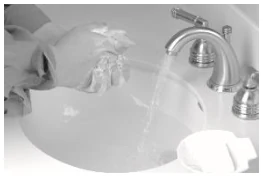 Figure 1 | ||
| 4 | Check Vials or Pre-Filled Syringes
| 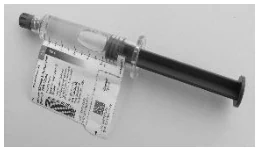 Figure 2 | ||
| 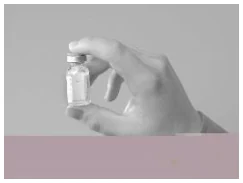 Figure 3 | |||
Do not use the pre-filled syringe or vial if:
| ||||
| 5 | Prepare Hizentra for infusion
| |||
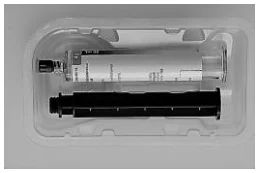
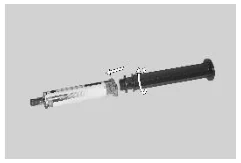
5.1: Hizentra pre-filled syringe(s) The 5 mL, 10 mL, 20 mL and 50 mL pre-filled syringes are supplied ready to use. The 5 mL and 10 mL pre-filled syringes are fully assembled (Figure 4). For the 20 mL and 50 mL pre-filled syringes (Figure 5), screw the plunger rod onto the pre-filled syringe stopper prior to use (Figure 6). If you are using a syringe pump, Hizentra pre-filled syringes can be placed directly in the syringe pump if the pre-filled syringe size matches the pump requirements. Please follow the manufacturer’s instructions, and then go to Step 6. NOTE: An additional adapter may be required for the Hizentra pre-filled syringes to fit properly in the infusion pump. Check with the provider of your supplies for the appropriate adapter and installation instructions. If the Hizentra pre-filled syringe size does not match the infusion pump requirements, transfer the contents of the pre-filled syringe | Figure 4 Figure 5 Figure 6 | |||
to another empty sterile syringe of a size specific for the infusion pump by following the directions below:
Go to Step 6. 5.2: Transfer Hizentra from vial(s) to syringe
| Figure 7 Figure 8 | |||
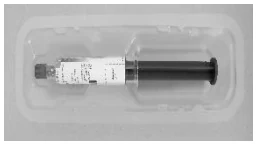  
Go to Step 6. | Figure 12 | |||
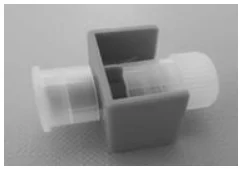 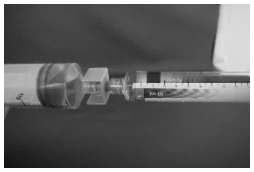 | ||||
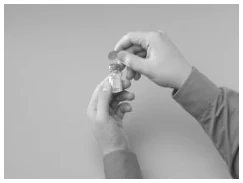 Figure 9 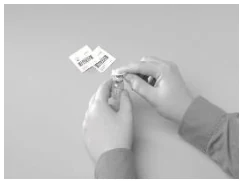 Figure 10 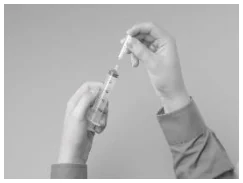 Figure 11 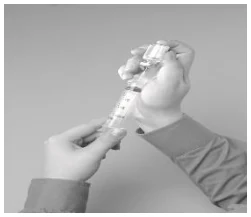 | ||||
| 6 | Prepare the administration tubing
| 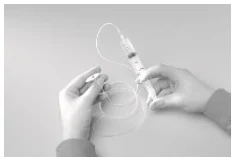 Figure 13 | ||
| 7 | Prepare infusion pump
| |||
| ||||
| 8 | Prepare injection site(s)
| 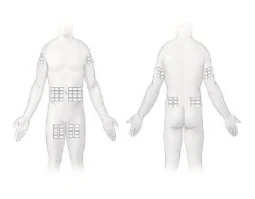 Figure 14 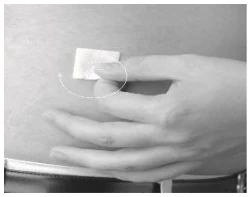 Figure 15 | ||
| 9 | Insert needle
| 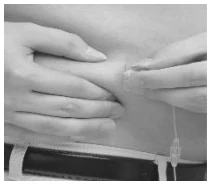 Figure 16  Figure 17 | ||
| 10 | Infuse Hizentra
| |||
| 11 | Record treatment
| |||
| 12 | Clean up
| |||
The patient needs to be instructed by a healthcare professional about infusion techniques, the keeping of a treatment diary and measures to be taken in case of severe adverse reactions.
4.5. Missed Dose
A missed dose should be administered as soon as possible to ensure an adequate IgG serum level.
5. Overdose
Consequences of an overdose are not known with Hizentra.
For the most recent information in the management of a suspected drug overdose, contact your regional poison control centre or Health Canada’s toll-free number, 1-844 POISON-X (1-844-764-7669).
- 6. Dosage Forms, Strengths, Composition, and Packaging
To help ensure the traceability of biologic products, healthcare professionals should record both the brand name and the non-proprietary (active ingredient) name as well as other product-specific identifiers such as the Drug Identification Number (DIN) and the batch/lot number of the product supplied.
Table 1 – Dosage Forms, Strengths, and Composition
| Route of Administration | Dosage Form/ Strength/Composition | Clinically Relevant Non-medicinal Ingredients |
| Subcutaneous | 20% solution for injection (200 mg/mL) | L-proline |
Hizentra, Subcutaneous Immunoglobulin (Human) (SCIG), is supplied in a single-use, tamper-evident vial or pre-filled syringe containing 0.2 grams of protein per mL of preservative-free liquid. Each vial label or pre-filled syringe contains a peel-off strip with the vial size and product lot number for use in recording doses in a patient treatment record.
The following dosage presentations are available:
| Vials | Pre-filled Syringes | ||
|---|---|---|---|
| Fill Size (mL) | Grams Protein | Fill Size (mL) | Grams Protein |
| 5 | 1 | 5 | 1 |
| 10 | 2 | 10 | 2 |
| 20 | 4 | 20 | 4 |
| 50 | 10 | 50 | 10 |
Composition
The 20% IgG solution is formulated with 250 mmol/L of L-proline at pH 4.8. To improve the appearance of the final product, Hizentra contains approximately 8 to 30 mg/L of polysorbate 80. Hizentra has a low sodium content (<10 mmol/L) and the osmolality is about 380 mOsmol/kg. Hizentra contains no preservative and no carbohydrate stabilizers (sucrose, maltose). The components used in the packaging for Hizentra are latex-free.
The protein moiety of Hizentra is highly purified IgG (≥98% purity). More than 90% of the IgG consists of monomers and dimers. Hizentra is prepared from large donor pools and represents the antibody spectrum present in the donor population.
Description
Hizentra, Subcutaneous Immunoglobulin (Human) (SCIG), is a ready to use, polyvalent human normal immunoglobulin G (IgG) for subcutaneous administration. Hizentra is a 20% protein solution. Hizentra is prepared from large pool of human plasma by a combination of cold ethanol fractionation, octanoic acid fractionation, combined with a filter aid-assisted depth filtration, and anion exchange chromatography. In addition, the Hizentra manufacturing process includes an immunoaffinity chromatography step that specifically reduces blood group A and B antibodies (isoagglutinins A and B) (see section 13 Pharmaceutical Information).
7. Warnings and Precautions
- See 3 Serious Warnings and Precautions Box.
- This product is prepared from large pools of human plasma. Thus, there is a possibility it may contain causative agents of viral or other undetermined diseases.
General
Hizentra should only be used via subcutaneous administration.
Products made from human plasma
Hizentra, Subcutaneous Immunoglobulin (Human) (SCIG), is made from human plasma. Products made from human plasma may contain infectious agents, e.g. viruses, and theoretically the transmissible spongiform encephalopathy agents (including the Creutzfeldt-Jakob disease (CJD) agent), which can cause disease. The risk that such products will transmit an infectious agent has been reduced by screening plasma donors for prior exposure to certain viruses, by testing of individual donations and plasma pools for specific markers of infection, and by removing/inactivating certain viruses during manufacturing through a three step process: inactivation by pH 4 incubation, partitioning by depth filtration and elimination by virus filtration (see section 13 Pharmaceutical Information, subsection Viral Inactivation).
Despite these measures, when medicinal products prepared from human blood or plasma are administered, the possibility of transmitting infective agents cannot be totally excluded. This also applies to unknown or emerging viruses and other pathogens.
The measures taken are considered effective for enveloped viruses such as HIV, HBV and HCV, and for the non-enveloped viruses HAV and parvovirus B19.
It is recommended that every time Hizentra is administered to a patient, the name and batch number of the product are recorded in order to maintain a link between the patient and the batch of the product.
All infections thought by a physician possibly to have been transmitted by this product should be reported by the physician or other healthcare provider to CSL Behring at 1-866-773-7721. The physician should discuss the risks and benefits of this product with the patient.
Cardiovascular
Thromboembolic events such as myocardial infarction, stroke, pulmonary embolism and deep vein thrombosis have been associated with the use of immunoglobulins.
Since thrombosis may occur in the absence of known risk factors, caution should be exercised in prescribing and administering immunoglobulins. Hizentra should be administered at the minimum dose and at the minimum rate of infusion practicable. Patients should be adequately hydrated before administration of immunoglobulins.
Baseline assessment of blood viscosity should be considered in patients at risk for hyperviscosity, including those with cryoglobulins, fasting chylomicronemia/markedly high triacylglycerols (triglycerides), or monoclonal gammopathies. Patients at risk of hyperviscosity should be monitored for signs and symptoms of thrombosis and blood viscosity should be assessed.
Risk factors for thromboembolic events include: advanced age, use of estrogens, in-dwelling central vascular catheters, history of vascular disease or thrombotic episodes, acquired or inherited hypercoagulable states, prolonged periods of immobilization, severe hypovolemia, diseases which increase blood viscosity and cardiovascular risk factors (including obesity, hypertension, diabetes mellitus, history of atherosclerosis and/or impaired cardiac output).
Hematologic
Hizentra can contain blood group antibodies (e.g. isoagglutinins A and B) that may act as hemolysins and induce in vivo coating of red blood cells (RBCs) with immunoglobulin, causing a positive direct antiglobulin reaction and rarely, hemolysis. The Hizentra manufacturing process includes an immunoaffinity chromatography step (IAC) that specifically reduces blood group A and B antibodies (isoagglutinins A and B). Clinical data with Hizentra manufactured with the IAC step is not yet available.
Delayed hemolytic anemia can develop subsequent to immune globulin therapy due to enhanced RBC sequestration, and acute hemolysis, consistent with intravascular hemolysis, has been reported.
Hizentra recipients should be closely monitored for clinical signs and symptoms of hemolysis. If signs and/or symptoms of hemolysis are present after Hizentra infusion, appropriate confirmatory laboratory testing should be performed.
Immune
Individuals with IgA deficiency can develop anti-IgA antibodies and in very rare cases develop potentially severe hypersensitivity and anaphylactic reactions after administration of blood components containing IgA. Not all patients with anti-IgA antibodies receiving Intravenous Immunoglobulin (IVIG) experience reactions, but those patients with high or rising titers of anti-IgA antibodies are thought to have an increased risk of adverse reactions.
Patients who have experienced adverse reactions to IVIG have been reported to better tolerate SCIG. In one study, four out of five patients who had anti-IgA antibodies and developed anaphylactic reactions with IVIG were successfully treated with SCIG. Successful desensitization has also been shown with SCIG products. It has been suggested that patients with severe reactions to IVIG who have IgA deficiency and anti-IgA antibodies should receive an IVIG product with low IgA levels or subcutaneous immunoglobulin. Also, products with low IgA content appear to be better tolerated in some children.
Patients with anti-IgA antibodies, in whom treatment with subcutaneous IgG products remains the only option, should be given Hizentra only under close medical supervision. Hizentra contains no more than 50 mg/L of immunoglobulin A.
Monitoring and Laboratory Tests
Patients may need to be monitored for the following reactions reported to occur with IVIG treatment, including: renal dysfunction/failure, hyperproteinaemia, thrombotic events, aseptic meningitis syndrome (AMS), hemolysis and transfusion-related acute lung injury (TRALI).
For Drug-Laboratory Test Interactions, see section 9.7 Drug-Laboratory Test Interactions.
Neurologic
AMS has been reported with use of IVIG or SCIG. The syndrome usually begins within several hours to 2 days following immunoglobulin treatment. AMS is characterized by the following signs and symptoms: severe headache, neck stiffness, drowsiness, fever, photophobia, nausea, and vomiting. Patients exhibiting signs and symptoms of AMS should receive a thorough neurological examination, including CSF studies, to rule out other causes of meningitis. Discontinuation of immunoglobulin treatment may result in remission of AMS within several days without sequelae.
Sensitivity/Resistance
Rarely, human normal immunoglobulin can induce a fall in blood pressure with anaphylactic reaction, even in patients who had tolerated previous treatment with human normal immunoglobulin.
In case of hypersensitivity, discontinue the Hizentra infusion immediately and institute appropriate treatment.
Severe hypersensitivity or anaphylactic reactions up to shock can particularly occur in patients with known allergies to anti-IgA antibodies. Patients with anti-IgA antibodies may have a greater risk of developing potentially severe hypersensitivity and anaphylactic reaction with the administration with Hizentra. Close medical supervision is required.
In case of severe hypersensitivity/anaphylactic reactions the administration of Hizentra must be stopped immediately. In case of shock, standard medical treatment should be administered.
Potential complications can often be avoided by ensuring that patients are not sensitive to human normal immunoglobulin, by initially injecting the product slowly.
Patients naive to human normal immunoglobulin or switched from an alternative product should be monitored during and after the first infusion for the first hour, in order to detect potential adverse signs.
7.1. Special Populations
7.1.1. Pregnancy
Animal reproduction studies have not been conducted with Hizentra. The safety of Hizentra for use in human pregnancy has not been established in controlled clinical trials. Hizentra should be given to pregnant women only if clearly needed.
Continued treatment of the pregnant woman is important to ensure that the neonate is born with appropriate passive immunity. Immunodeficient women who are pregnant may be at greater risk for infection since placental transfer of the IgG to the fetus may deplete already limited maternal stores. Therapeutic replacement therapy doses may in fact need to be increased to confer adequate humoral protection to the mother and newborn. In women requiring IgG replacement therapy, it is believed that the maintenance of high and stable maternal IgG levels are necessary for the efficient placental transport of IgG to the fetus and have been shown with SCIG therapy with good efficacy and safety.
7.1.2. Breastfeeding
Hizentra has not been evaluated in nursing mothers.
After administration of IVIG products, IgGs are excreted into the milk and may contribute to the transfer of protective antibodies to the neonate. As the route of administration is irrelevant for the passive transfer of antibodies once they are in the circulation, and due to the similar metabolism of IVIG and SCIG products, this transfer is also expected to apply to Hizentra.
7.1.3. Pediatrics
Treatment of Primary and Secondary Immune Deficiency
Pediatrics (<18 years of age): The Pivotal Phase III EU study was conducted in 51 PID patients, of which 25 subjects were pediatric patients of <18 years of age. The Supportive Phase III US study was conducted in 49 subjects, of which 10 were pediatric subjects of <16 years of age. There were no apparent differences in the safety and efficacy profiles of pediatric subjects as compared with adult subjects being treated with Hizentra. No pediatric-specific dose requirements were necessary to achieve the desired serum IgG levels.
Hizentra was not evaluated in neonates or infants.
Treatment of Chronic Inflammatory Demyelinating Polyneuropathy
Pediatrics (<18 years of age): The safety and effectiveness of Hizentra has not been established in patients with CIDP who are under the age of 18.
No data is available to Health Canada; therefore, Health Canada has not authorized an indication for pediatric use.
7.1.4. Geriatrics
Treatment of Primary and Secondary Immune Deficiency
Geriatrics (>65 years of age): In the Pivotal Phase III EU study, no patients over 65 years of age were evaluated. In the Supportive Phase III US study, 6 subjects were 65 years of age and over. No overall differences in safety or efficacy were observed between subjects >65 years of age and subjects 18 to 65 years of age.
Treatment of Chronic Inflammatory Demyelinating Polyneuropathy
Geriatrics (>65 years of age): In clinical studies, Hizentra was evaluated in 61 subjects with CIDP >65 years of age and no specific dose adjustments were necessary to achieve the desired clinical outcome. Limited clinical trial information has shown no differences in the safety profile in patients >65 years than in younger patients.
8. Adverse Reactions
8.1. Adverse Reaction Overview
No related serious adverse drug reactions were observed in subjects treated with Hizentra, Subcutaneous Immunoglobulin (Human) (SCIG), during the clinical studies evaluating its safety.
The most common related adverse drug reactions reported in patients treated with Hizentra were local reactions (e.g., swelling, redness, heat, pain, and itching at the infusion site), headaches, diarrhea, back pain, nausea, pain in extremity, cough, rash, vomiting, abdominal pain (upper), migraine, pain, pruritus, urticaria, fatigue and nasopharyngitis.
8.2. Clinical Trial Adverse Reactions
Clinical trials are conducted under very specific conditions. The adverse reaction rates observed in the clinical trials; therefore, may not reflect the rates observed in practice and should not be compared to the rates in the clinical trials of another drug. Adverse reaction information from clinical trials may be useful in identifying and approximating rates of adverse drug reactions in real-world use.
Frequent (2 To 7 Times per Week) or Biweekly (Every Two Weeks) Dosing
No clinical trials have been conducted to evaluate the safety and tolerability of these alternative Hizentra dosing regimens. However, based on the limited post-marketing data available there is no evidence that the Hizentra safety profile for these alternative dosing regimens (dose administration) differs from the weekly dosing regimen.
Treatment of Primary and Secondary Immune Deficiency
The data on Clinical Safety are based primarily on the Pivotal Phase III open-label, single-arm, prospective, multicentre study of Hizentra, for Subcutaneous Administration (SCIG), in subjects with primary immunodeficiency (PID), previously treated with IVIG or SCIG for at least 6 months. This study was conducted in Europe (EU).
Supportive safety data is obtained from the Phase III open-label, single-arm, prospective, multicentre study of Hizentra in subjects with PID, previously treated with IVIG for at least 3 months and conducted in the United States (US). Additional safety information is provided from one completed Phase I safety study in healthy male subjects, which aimed at evaluating the local tolerability as well as the safety of Hizentra. The clinical studies contributing to the safety assessment of Hizentra are summarized in the Table 2 below.
Table 2 – Description of studies used to assess the safety of Hizentra
| Study | N | Subjects | Regimen | Safety Endpoints |
|---|---|---|---|---|
| Pivotal Phase III EU Study | 51 | PID | Weekly s.c. infusions in patients previously treated with IVIG or SCIG. | Assessment of AEs, laboratory parameters (haematology, serum chemistry, urinalysis), physical examination, vital signs, local tolerability. |
| Supportive Phase III US Study | 49 | PID | Weekly s.c. infusions in patients previously treated with IVIG. | Assessment of AEs, laboratory parameters (haematology, serum chemistry, urinalysis), physical examination, vital signs, local tolerability, viral safety. |
| Phase I trial | 28 | Healthy subjects | s.c. infusion, in random order, of 15 mL of IgPro16, Hizentra and Vivaglobin and 12 mL of Hizentra with a wash-out period of 7 days between each infusion. | Assessment of local tolerability, AEs, laboratory parameters, serum IgG concentration, 12-lead ECG, vital signs, physical examination. |
s.c. = subcutaneous; PID = Primary immunodeficiency; IVIG = intravenous immunoglobul
in; SCIG = subcutaneous immunoglobulin
Pivotal Phase III EU Study
In the Pivotal Phase III EU study, the safety of Hizentra was evaluated in all 51 subjects. A total of 1831 Hizentra infusions were administered. Overall, there were no safety concerns with the use of Hizentra in adult and pediatric subjects with PID. AEs were possibly related to study drug and temporally associated (i.e., during infusion or within 72 h after the end of infusion) in 29 subjects (56.9%).
Almost all AEs (98.7%) were mild or moderate in intensity. Subgroup analyses of AEs revealed no clinically relevant or consistent trends according to age class, disease type, previous therapy, as well as starting infusion rate and rates of infusion in the overall incidences of subjects with AEs.
Local reactions (i.e., a non-MedDRA group of 25 preferred terms related to the site of injection) were the most common AEs experienced by 24 subjects (47.1%) and occurred at a rate of 0.056 per infusion.
Table 3 – Causally and temporally associated (72h) AEs*
| AEs | Pivotal Phase III EU | Supportive Phase III US | ||
|---|---|---|---|---|
Number (%) of subjects (N=51) | Number (rate) of AEs (N=1831) | Number (%) of subjects (N=49) | Number (rate) of AEs (N=2264) | |
| Any AEs | 29 (56.9) | 157 (0.086) | 49 (100) | 1393 (0.615) |
| Local reactiona | 24 (47.1) | 102 (0.056) | 49 (100) | 1320 (0.583) |
| Headache | 6 (11.8) | 9 (0.005) | 11 (22.4) | 31 (0.014) |
| Rash | 2 (3.9) | 2 (0.001) | 1 (2.0) | 1 (< 0.001) |
| Pruritus | 4 (7.8) | 13 (0.007) | 0 | 0 |
| Cough | 0 | 0 | 1 (2.0) | 1 (<0.001) |
| Diarrhea | 0 | 0 | 2 (4.1) | 2 (<0.001) |
| Fatigue | 3 (5.9) | 4 (0.002) | 2 (4.1) | 2 (<0.001) |
| Back pain | 1 (2.0) | 1 (<0.001) | 2 (4.1) | 2 (<0.001) |
| Nausea | 0 | 0 | 2 (4.1) | 2 (<0.001) |
| Pain in extremities | 0 | 0 | 1 (2.0) | (0.001) |
*Excluding infections.
a Local reaction included the following events that took place at the injection/infusion/puncture site: reaction, erythema, haematoma, induration, inflammation, mass, oedema, pain, pruritus, rash, reaction, scab, swelling, bruising, cyst, eczema, extravasation, irritation, and nodule. Because of different scales and timing of recording local reactions in the EU and US studies, these results cannot be directly compared.
AE = Adverse event; N = Total number of patients or infusions.
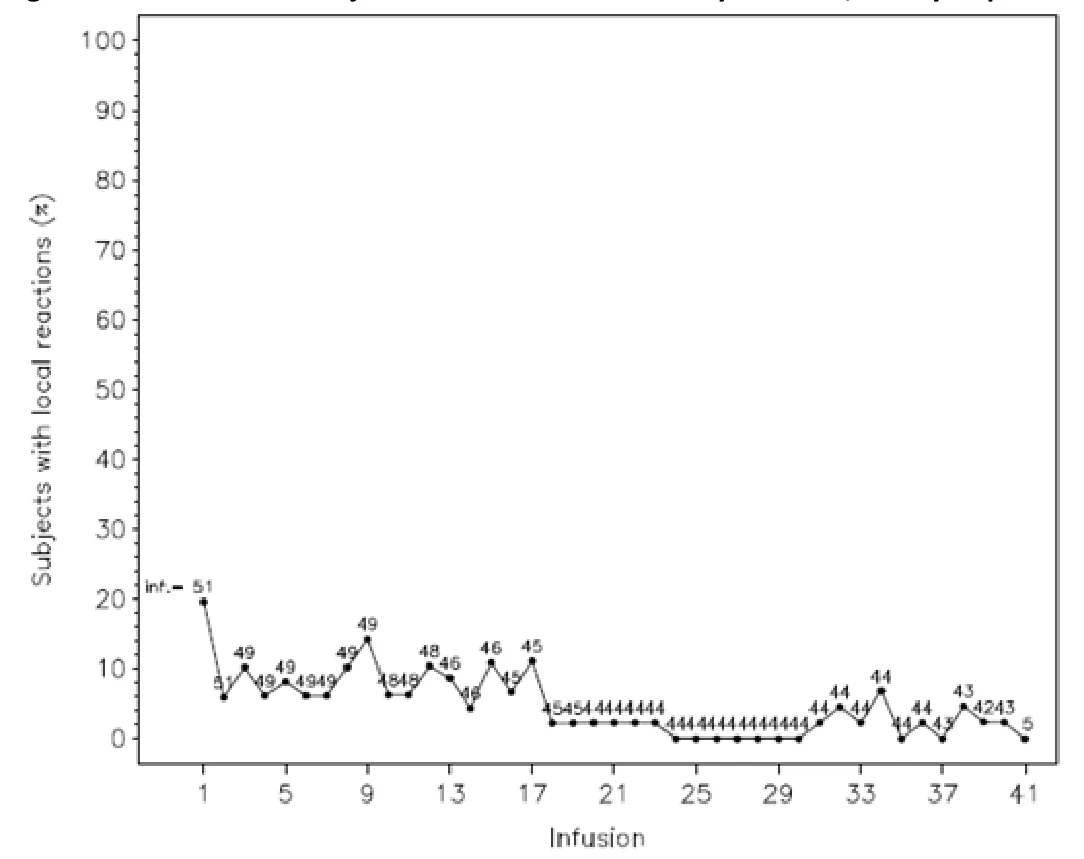
Local reactions are expected with SCIG infusions. In the Pivotal Phase III EU study, the incidence of local reactions decreased over time; approximately 20% of subjects experienced a local reaction after the first Hizentra infusion, <5% of subjects experienced a local reaction after 24 of 29 infusions during the efficacy period (i.e., from Week 13 to 41), and none of the subjects experienced a local reaction after Infusions 24 to 30, 35, 37, and 41 (see Figure 1).
Figure 1– Incidence of Subjects with Local Reactions by Infusion, Safety Population
Local reactions were mostly mild in intensity and short in duration in both Phase III studies. AEs of local reaction started after a median time of 2.6 hours after the start of an infusion and had a median duration of 2.5 days.
In addition to the reporting of local reactions as AEs, an assessment of local tolerability was done by the subjects themselves. Subjects assessed their overall perception of local tolerability between 24 and 72 h after the end of infusion as “very good” or “good” for 1767 of the 1831 infusions (96.5%). For 52 infusions (2.8%), the subjects’ assessment of local tolerability was “fair”, and after only 6 infusions (0.3%) was the local tolerability assessed as “poor” (Table 4).
These data were reviewed by the investigator and assigned a rating of mild (87.3%), moderate (11.8%) or severe (0.9%).
Table 4 – Subject Assessments of local tolerability between 24-72 hours after the end of infusions
| Local tolerability | Number (%) of Infusions (n=1831) |
|---|---|
| Very Good or Good | 1767 (96.5%) |
| Fair | 52 (2.8%) |
| Poor | 6 (0.3%) |
For the “Non-injection site” reactions, the most common drug related temporally associated AEs were headache in 6 subjects (11.8%) and pruritus in 4 subjects (7.8%) (Table 3).
Subgroup analyses of AEs according to the intrinsic factors of age class and disease type were conducted. The overall rate of AEs was lower in subjects 2 to <12 years of age compared to subjects 16 to <65 years of age (0.198 vs. 0.362), and the incidence and rate of causally related AEs in subjects 2 to <12 years of age was approximately half of that observed in subjects 12 to <65 years of age.
In the Pivotal Phase III EU study, subgroup analyses of AEs according to previous replacement therapy (SCIG or IVIG) or starting infusion rate (<15, 15 to 25, or >25 mL/h) revealed no relevant trends in the overall incidence of subjects with AEs or in AE rates.
Supportive Phase III US Study
In the Supportive Phase III US study, the safety of Hizentra was evaluated in all 49 subjects. A total of 2264 Hizentra infusions were administered. Overall, there were no safety concerns with the use of Hizentra in adult and pediatric subjects with PID. AEs were possibly related to study drug and temporally associated (i.e., during infusion or within 72 h after the end of infusion) in all 49 subjects (100%).
Almost all AEs (99%) were mild or moderate in intensity.
Local reactions (i.e., a non-MedDRA group of 25 preferred terms related to the site of injection) were the most common AEs experienced by all 49 subjects (100%) and occurred at a rate per infusion of 0.583.
Local tolerability was assessed by the subjects 24 hours after the end of the Hizentra infusion using a five-point scale of “none”, “very slight”, “slight”, “moderate” or “severe”. Most local tolerability reactions (94.8%) were “very slight” or “slight”; one of the reactions was assessed as severe. The majority of local reactions, as rated by the investigator, were mild (93.4%) or moderate (6.3%) in intensity; only 0.3% were severe. In addition, the investigators assessed local reactions 15-45 minutes post-infusion where they rated individual symptoms of erythema (32.4-60.7% of subjects), induration (57.6-82.1% of subjects), local heat (4.8-27.3% of subjects), itching (0-21.2% of subjects) , and local pain (2.6-26.7% of subjects). According to the US investigators’ assessments, approximately 75% of subjects had injection site reactions 15-45 min after each infusion, whereas, according to subjects’ assessments made 24 hours post-infusion, approximately 40% of subjects had injection site reactions. The difference could indicate that approximately 50% of the local reactions observed by the investigators were resolved within 24 hours. However, the difference between investigators’ and subjects’ evaluations also reflects different endpoints analysed; while the investigator evaluated specific symptoms (i.e., erythema, induration, local heat, itching, and local pain) shortly after the end of infusion, the subjects judged their overall perception 24 hours after infusion.
For the “Non-injection site” reactions, the most common, drug related Temporary Associated Adverse Event (TAAE) was headache in 11 subjects (22.4%) (Table 3).
Subgroup analyses of AEs revealed no clinically relevant or consistent trends according to age class, disease type, previous therapy, as well as starting infusion rate and rates of infusion in the overall incidences of subjects with AEs.
Because subjects’ assessments of local tolerability were performed at different time points and with different rating scales in the European and US studies, the results cannot be directly compared. The assessments of local tolerability were performed by the subjects themselves in both studies, and also by the investigators in the US study. In the EU study, local reactions were evaluated by subjects during 24-72 hour period after every infusion. In the US study, the investigators evaluated each of 5 specific symptoms shortly after the end of infusion and the subjects judged their overall perception of injection sites after 24 h. As the subjects’ and investigators’ assessments are also reflected in the reporting of local reactions as AEs, these differences may account for most of the discrepancy between the frequencies of local reaction AEs observed in the two studies. However, taken together, these assessments have shown that even though many subjects treated with Hizentra experienced local reactions, as is to be expected for SCIG infusions; the reactions were overwhelmingly mild and short-lived.
Phase I Trial
Four subjects experienced AEs that were considered at least possibly related by the investigators and all resolved: headaches of mild (1 patient) to moderate severity (2 patients) and somnolence of moderate severity (1 patient). All adverse events started after the end of infusion. No SAEs were observed during this study.
Conclusion
Hizentra was evaluated in two open-label Phase III studies that found the product to be well tolerated in subjects with PID. Reactions at the injection site are a common occurrence with SCIG infusions. Although a large number of subjects experienced local site reactions, they were well tolerated, mild in intensity and of short duration. Incidence of local reactions decreased over the first few weeks in new SCIG patients. Headache was the second most common AE at least possibly related to Hizentra. Overall, the adverse events were mild or moderate in intensity. The Phase I study showed a similar safety profile.
Treatment of Chronic Inflammatory Demyelinating Polyneuropathy
PATH Study
The safety of 2 doses of Hizentra (0.2 g/kg body weight or 0.4 g/kg body weight) versus placebo was evaluated in the 24-week subcutaneous (SC) treatment period of a clinical study in subjects with CIDP who had been treated previously with IVIG (see section 14 Clinical Trials). The dose was administered once a week in 2 infusion sessions conducted on 1 or 2 consecutive day(s). The safety population included 172 subjects.
Table 5 summarizes the most frequent ARs that occurred in ≥5% of subjects treated with Hizentra and at a higher frequency than placebo. The overall AR rates were similar in the 0.2 g/kg body weight and 0.4 g/kg body weight Hizentra dose groups (50.9% and 46.6%, respectively) and higher than placebo (33.3%). The most frequent ARs were local reactions. Local reactions were more frequent among subjects who received the 0.4 g/kg body weight Hizentra dose than among subjects who received the 0.2 g/kg body weight Hizentra dose (29.3% and 19.3%, respectively). All local reactions were either mild (94.5%) or moderate (5.5%) in intensity and the frequency tended to decrease over time. No subject withdrew because of local reaction.
One serious AR, allergic dermatitis was reported in the 0.2 g/kg body weight Hizentra group which started at SC Week 9 and lasted 15 days. One subject withdrew from the study due to a non-serious AR, fatigue.
Table 5 – CIDP SC Treatment Period – ARs Occurring in ≥5% of Subjects Treated with Hizentra and at a Higher Frequency than Placebo-Treated Subjects
| Placebo | 0.2 g/kg Hizentra | 0.4 g/kg Hizentra | ||||||||||||||||||
|---|---|---|---|---|---|---|---|---|---|---|---|---|---|---|---|---|---|---|---|---|
| Number (%) of Subjects n=57 | Number of Events (Rate/ Infusion) n=2007* | Number (%) of Subjects n=57 | Number of Events (Rate/ Infusion) n=2007* | Number (%) of Subjects n=58 | Number of Events (Rate/ Infusion) n=2218* | |||||||||||||||
| Local Reactions† | 4 (7.0) | 7 (0.005) | 11 (19.3) | 54 (0.027) | 17 (29.3) | 49 (0.022) | ||||||||||||||
| Headache | 2 (3.5) | 2 (0.001) | 4 (7.0) | 5 (0.002) | 4 (6.9) | 4 (0.002) | ||||||||||||||
| Naso-pharyngitis | 1 (1.8) | 1 (<0.001) | 4 (7.0) | 6 (0.003) | 2 (3.4) | 2 (<0.001) | ||||||||||||||
| Fatigue | 1 (1.8) | 1 (<0.001) | 5 (8.8) | 5 (0.002) | 0 | 0 | ||||||||||||||
| Upper respiratory infection | 2 (3.5) | 2 (0.001) | 3 (5.3) | 3 (0.001) | 2 (3.4) | 2 (<0.001) | ||||||||||||||
| Fall | 0 | 0 | 3 (5.3) | 8 (0.004) | 1 (1.7) | 1 (<0.001) | ||||||||||||||
| Back Pain | 1 (1.8) | 1 (<0.001) | 3 (5.3) | 4 (0.002) | 1 (1.7) | 1 (<0.001) | ||||||||||||||
| Arthralgia | 1 (1.8) | 1 (<0.001) | 3 (5.3) | 4 (0.002) | 1 (1.7) | 1 (<0.001) | ||||||||||||||
| Pain in extremity | 0 | 0 | 1 (1.8) | 1 (<0.001) | 3 (5.2) | 3 (0.001) | ||||||||||||||
AR = adverse reaction; SC = subcutaneous.
* Number of infusions.
† Includes infusion site erythema, infusion site swelling, infusion site pain, infusion site induration, infusion site warmth, infusion site hematoma, and infusion site pruritus.
Systemic adverse reactions in the IVIG Restabilization Period of the study for subjects also randomized and treated with Hizentra (N=115), occurred at a rate of 0.098 (956 infusions) relative to a rate of 0.027 (4225 infusions) during treatment with Hizentra in the SCIG period of the study. The systemic adverse reaction rate for Hizentra was approximately 4-fold lower than the IVIG rate.
PATH Extension Study
Long-term safety of Hizentra in maintenance treatment of CIDP in subjects completing the preceding PATH Study was evaluated in this multicenter, open-label extension study.
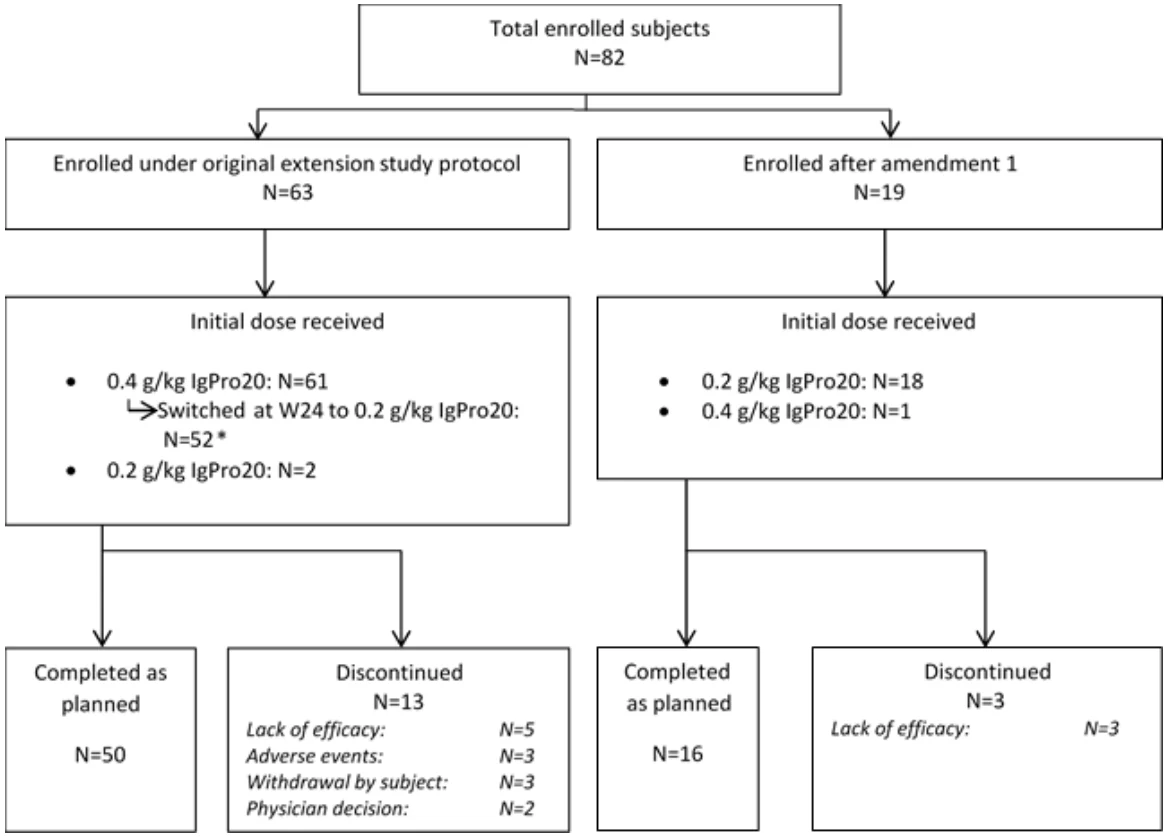
Eighty-two (82) subjects received subcutaneous infusions of 0.2 and/or 0.4 g/L of Hizentra for 48 weeks (Figure 2).
Figure 2 – Study Profile
Adverse events were reported in 33 subjects (45.2%; 77 events) in the 0.2 g/kg group and 46 subjects (63.9%; 103 events) in the 0.4 g/kg group. The majority of AEs were mild (62.2%; 133 events) or moderate (29.3%; 35 events) in intensity. Seven subjects experienced 8 SAEs that were not causally related to Hizentra treatment.
The most frequent AEs were local reactions associated with subcutaneous administration (overall: 18 subjects [22.0%]).
The most frequent temporally associated event was Infusion Site Swelling (9 subjects [11.0%] overall), Nasopharyngitis (8 subjects [9.8%] overall), and Infusion Site Erythema (7 subjects [8.5%] overall). No new ARs were observed in this PATH extension study.
Three subjects (3.7%) had 6 AEs leading to subject discontinuation (Infusion Site Swelling [2], Infusion Site Erythema [2], Pyrexia [1] and Atrial Flutter [1]).
8.3. Less Common Clinical Trial Adverse Reactions
Not applicable.
8.4. Abnormal Laboratory Findings: Hematologic, Clinical Chemistry, and Other Quantitative Data
Clinical Trial Findings
There were no safety concerns regarding clinical laboratory parameters over the course of the studies. The observed cases of abnormal values were isolated and did not indicate any trend. Furthermore, there was no concern for the patients’ safety.
There were no clinically relevant changes in vital signs, and most physical examination findings were normal at baseline and at the completion visit.
8.5. Post-Market Adverse Reactions
Because post-marketing reporting of adverse reactions is voluntary and from a population of uncertain size, it is not always possible to reliably estimate the frequency of these reactions or establish a causal relationship to product exposure.
The following adverse reactions have been observed during post-approval use of Hizentra. This list does not include reactions already reported in clinical studies with Hizentra:
- Immune system disorders: anaphylactic reactions such as swollen face or tongue and pharyngeal edema, pyrexia, chills, dizziness, hypertension/changes in blood pressure, malaise, tachycardia, flushing
- Nervous system disorders: aseptic meningitis syndrome (AMS), tremor, burning sensation
- General disorders and administration site conditions: infusion site ulcer, influenza-like illness
- Vascular disorders: thromboembolism, chest discomfort (including chest pain)
- Respiratory: dyspnea
- Hematologic: hemolysis
IVIG administration related ADRs
The following adverse reactions have been identified and reported during the post approval use of immunoglobulin products.
- Respiratory: Apnea, Acute Respiratory Distress Syndrome (ARDS), TRALI, cyanosis, hypoxemia, pulmonary edema, bronchospasm
- Cardiovascular: Cardiac arrest, vascular collapse, hypotension
- Neurological: Coma, loss of consciousness, seizures
- Integumentary: Stevens-Johnson syndrome, epidermolysis, erythema multiforme, bullous dermatitis, myaligia, wheezing
- Hematologic: Pancytopenia, leukopenia, positive direct antiglobulin (Coombs’) test
- General/Body as a Whole: Rigors, hyperproteinaemia
- Gastrointestinal: Hepatic dysfunction
- Renal impairment: Renal dysfunction/failure
9. Drug Interactions
9.2. Drug Interactions Overview
Vaccination
The passive transfer of antibodies with immunoglobulin administration may interfere, for a period of at least 6 weeks and up to 3 months, with the response to live virus vaccines such as measles, mumps, rubella, and varicella. After administration of this medicinal product, an interval of 3 months should elapse before vaccination with live attenuated virus vaccines. In the case of measles, this impairment may persist for up to 1 year. Therefore, patients receiving measles vaccine should have their antibody status checked. The immunizing physician should be informed of recent therapy with Hizentra so that appropriate measures may be taken.
Because vaccination in patients with Primary Immune Deficiency is an evolving field, we recommend you refer to the relevant vaccination guidelines.
9.3. Drug-Behaviour Interactions
Interactions with behaviour have not been established.
9.4. Drug-Drug Interactions
See section 9
Drug Interactions Overview.
9.5. Drug-Food Interactions
Interactions with food have not been established.
9.6. Drug-Herb Interactions
Interactions with herbal products have not been established.
9.7. Drug-Laboratory Test Interactions
Various passively transferred antibodies in immunoglobulin preparations may lead to misinterpretation of the results of serological testing.
Passive transmission of antibodies to erythrocyte antigens, e.g. A, B, D may interfere with some serological tests for red cell alloantibodies (Coombs test).
10. Clinical Pharmacology
10.1. Mechanism of Action
Treatment of Primary and Secondary Immune Deficiency
Primary immunodeficiencies (PIDs) include a variety of disorders in which there is an intrinsic defect in the immune system that renders patients more susceptible to infections. These infections may be fatal if left untreated. The PID disorders constitute a spectrum of more than 100 defects in the body’s immune system. Common PIDs include disorders of humoral immunity (affecting B-cell differentiation or antibody production), T-cell defects and combined B- and T-cell defects, phagocytic disorders, and complement deficiencies. Major clinical manifestations of these disorders include multiple infections despite aggressive treatment, infections with unusual or opportunistic organisms, and failure to thrive or poor growth.
Secondary Immunodeficiencies (SIDs) are a group of conditions caused by other factors than primary/genetic causes such as sequelae of certain diseases, malignancies or medications, which result in a hypogammaglobinemia rendering the patients susceptible to infections and requiring immunoglobulin replacement therapy as with many of the PIDs.
Immunoglobulin replacement therapy is the standard treatment for patients with immunodeficiency. Providing passive immunity by administering exogenous IgG controls most recurrent infections.
Hizentra, Subcutaneous Immunoglobulin (Human) (SCIG), supplies a broad spectrum of opsonizing and neutralizing IgG antibodies against a wide variety of bacterial and viral agents; it has a distribution of immunoglobulin subclasses closely proportional to that in native human plasma. Adequate doses of this medicine may restore abnormally low immunoglobulin G levels to the normal range and thus help in preventing infections in immunodeficiency.
Treatment of Chronic Inflammatory Demyelinating Polyneuropathy
The mechanism of action in CIDP is not fully understood.
10.2. Pharmacodynamics
Not applicable.
10.3. Pharmacokinetics
Treatment of Primary and Secondary Immune Deficiency
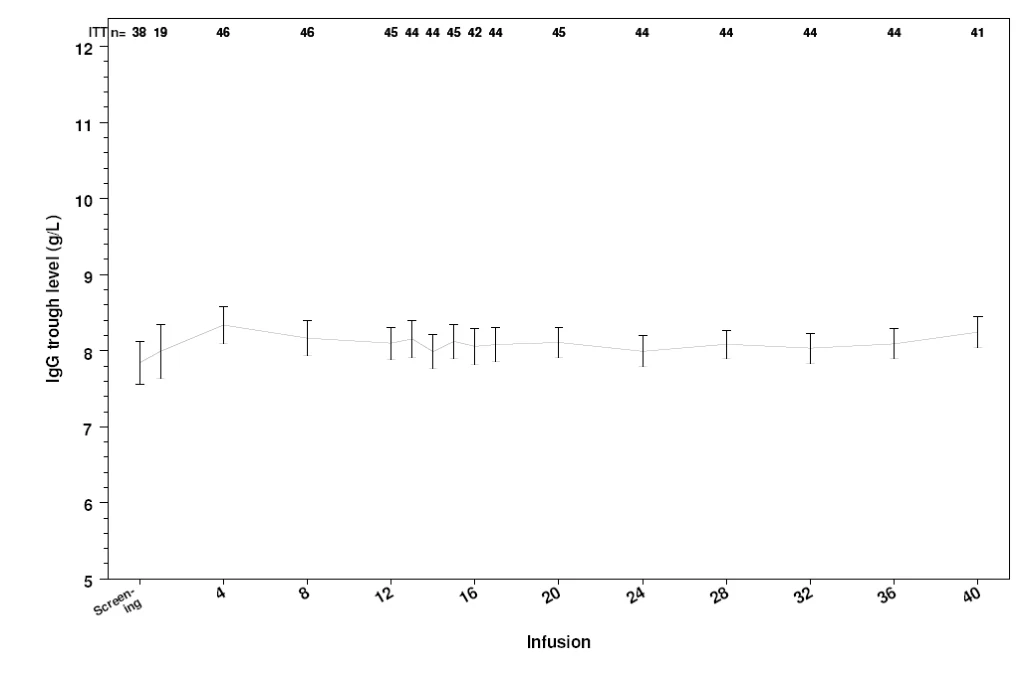
A pharmacokinetic (PK) substudy of the Pivotal Phase III EU study was conducted in a subset of subjects during the efficacy period throughout 1 treatment interval at various timepoints. The objectives of the PK substudy were to determine the AUC according to the trapezoidal method (non-compartmental analysis), maximum concentration (Cmax), and timepoint of maximum concentration (Tmax) of total IgG as well as serum concentrations of IgG subclasses Ctrough values of total serum IgG were also measured throughout the study in all subjects (before Infusions 1, 4, 8, 12 to 17, 20, and every fourth infusion thereafter) and were analyzed as the primary efficacy endpoint (see section 14 Clinical Trials).
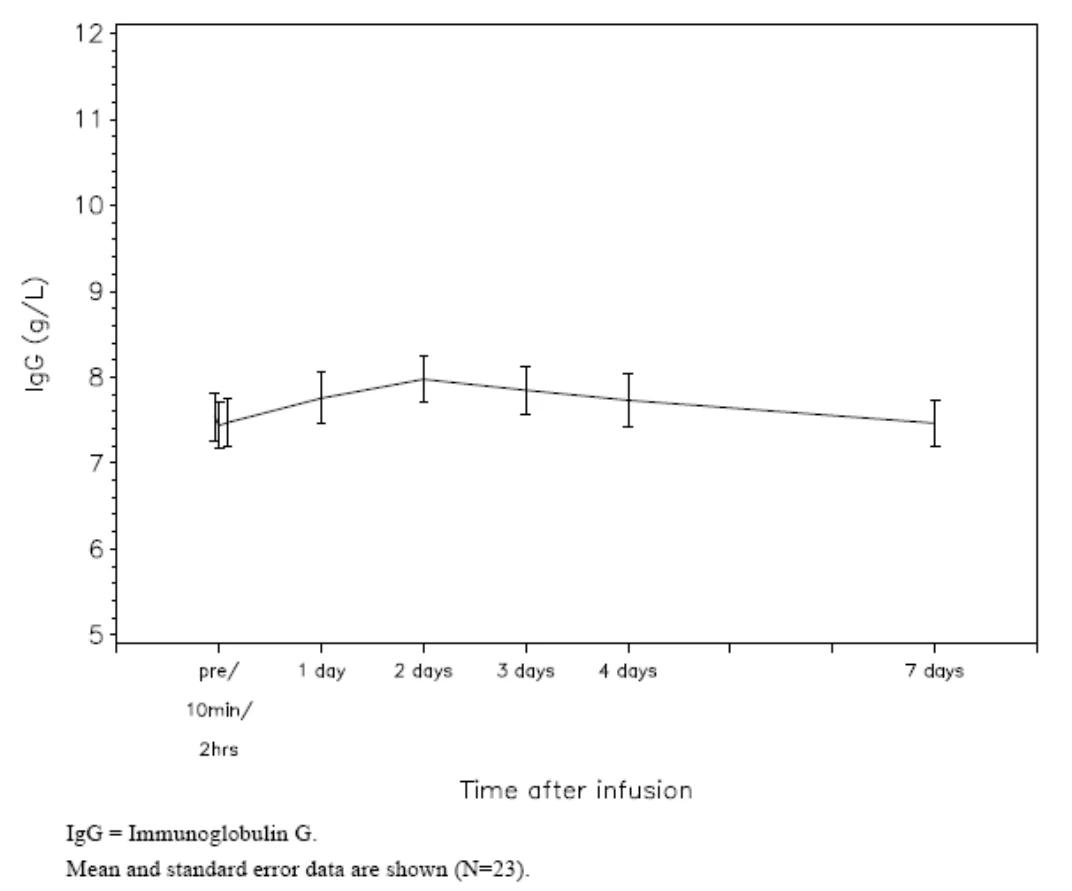
The mean IgG concentrations ranged between 7.44 and 7.98 g/L. The mean Cmax was 8.26 g/L and was reached after a median of 2 days (Figure 3). There were no relevant differences in the mean total serum IgG concentrations when analysed by age classes.
Figure 3 – Mean Total Serum IgG Concentrations Across 1 Dosing Interval at Week 28 ± 1, PPK Population (Pivotal Phase III EU study)
IgG Ctrough values were analyzed as the primary efficacy endpoint. The mean of the individual median IgG Ctrough values at steady-state was 8.10 g/L in all subjects treated during the efficacy period, and IgG Ctrough values were stable throughout the Hizentra treatment period.
Simulations by empirical population pharmacokinetic models suggest that comparable IgG exposure levels (AUC0-14days, Cmin 14days) may be obtained if Hizentra is administered subcutaneously weekly or every two weeks using double the weekly dose.
In addition, simulations by empirical population pharmacokinetic models suggest that for the same total weekly dose, Hizentra infusions given 2 to 7 times per week (frequent dosing) produce IgG exposures comparable to weekly dosing [equivalent AUCs, with a slightly lower IgG peak (Cmax) and slightly higher trough (Cmin)]. Frequent dosing reduces the peak-to-trough variation in Hizentra exposure, thus resulting in more sustained IgG exposures.
The ratios of the individual IgG subclasses contributing to total IgG at steady-state in Pivotal Phase III EU and Supportive Phase III US studies were generally within the range of physiological ratios of IgG subclasses reported in the literature indicating that Hizentra treatment should provide protection against a range of different types of infection that is comparable to that in healthy people. IgG subclass concentrations were similar in all age classes.
Treatment of Chronic Inflammatory Demyelinating Polyneuropathy
In the PATH study, subjects (n=172) achieved sustained trough levels over a period of 24 weeks when receiving weekly doses of 0.2 g/kg body weight and 0.4 g/kg body weight, respectively. The mean (SD) IgG trough concentration after 24 weeks of Hizentra treatment in the 0.4 g/kg body weight group was 20.8 (3.23) g/L and 15.3 (2.57) g/L in the 0.2 g/kg body weight group.
The IgG pharmacokinetic (PK) characteristics for CIDP subjects were primarily described using population PK methods on pooled data from 2 clinical trials (see 14 Clinical Trials). The mean (95% CI) clearance was estimated to be 0.453 (0.431, 0.474) L/day and central volume of distribution was estimated to be 4.69 (4.38, 5.01) L. Table 6 summarizes steady-state PK parameters after administration of Hizentra.
Table 6 – Summary of Steady-State Serum IgG Pharmacokinetic Parameters from the Simulated Population of Subjects with CIDP
| Pharmacokinetic parameter | 0.2 g/kg Hizentra Median (90% Prediction Interval) | 0.4 g/kg Hizentra Median (90% Prediction Interval) |
|---|---|---|
| Cmax (g/L) | 17.4 (12.9, 25.1) | 22.2 (16.6, 30.6) |
| Cmin (g/L) | 16.5 (11.9, 24.3) | 20.4 (14.9, 28.9) |
| AUC0-7 days (g∙day/L) | 119 (87.4, 173) | 150 (112, 209) |
Cmax = maximum concentration; Cmin = minimum concentration; AUC0-7 days = area under the concentration-time curve to 7 days
Both IgG clearance and central volume of distribution were found to be positively correlated with total body weight.
Pharmacokinetic Modeling and Simulation
Biweekly (Every 2 Weeks) or more Frequent Dosing (2 times per week or Daily Dosing)
The final population pharmacokinetic model was used to simulate serum PK profiles and parameters of IgG after administration of biweekly or more frequent dosing regimens of Hizentra in subjects with CIDP. Compared with weekly administration, the model predicted that administration of Hizentra on a biweekly (every 2 weeks) basis at double the weekly dose results in comparable IgG exposure [equivalent AUCs, with a slightly higher IgG peak (Cmax) and slightly lower trough (Cmin)]. In addition, PK modeling and simulation predicted that for the same total weekly dose (0.2 g/kg or 0.4 g/kg), Hizentra infusions given 2 times per week or daily dosing (frequent dosing) produce IgG exposures comparable to weekly dosing [equivalent AUCs, with a slightly lower IgG peak (Cmax) and slightly higher trough (Cmin)]. Frequent dosing reduces the peak-to-trough variation in Hizentra serum levels, thus resulting in more sustained IgG exposures.
10.4. Immunogenicity
Not applicable.
- 11. Storage, Stability, and Disposal
Hizentra, Subcutaneous Immunoglobulin (Human) (SCIG), can be stored either in the refrigerator or at room temperature (at +2°C to +25°C). Hizentra is stable for the period indicated by the expiration date printed on the outer carton and vial/pre-filled syringe label.
DO NOT FREEZE. Do not use product that has been frozen. Do not shake. Keep Hizentra in its original carton to protect it from light.
The Hizentra solution contains no preservatives and should be administered as soon as possible after opening the vial/pre-filled syringe.
12. Special Handling Instructions
Hizentra, Subcutaneous Immunoglobulin (Human) (SCIG), is a clear and pale yellow to light brown solution.
- Prior to administration, visually inspect each vial/pre-filled syringe of Hizentra for particulate matter, whenever the solution and container permit. Do not use if the solution is cloudy or contains particulates.
- Check the product expiration date on the vial/pre-filled syringe label. Do not use beyond the expiration date.
- Do not mix Hizentra with other products.
- Do not shake the Hizentra vial/pre-filled syringe.
- Use aseptic technique when preparing and administering Hizentra.
- The Hizentra vial/pre-filled syringe is for single-use only. Discard any unused product after each infusion in accordance with local requirements.
Part 2: Scientific Information
13. Pharmaceutical Information
Drug Substance
Proper name: Subcutaneous Immunoglobulin (Human)
Chemical name: Subcutaneous Immunoglobulin (Human)
Molecular formula and molecular mass: Not Applicable
Structural formula: The active ingredient of Hizentra is the immunoglobulin G (IgG) component of human plasma. Human polyvalent IgG is a Y-shaped molecule consisting of two identical heavy chains (H-chain) of about 420 amino acid residues and two identical light chains (L-chains) of about 210 amino acid residues. The H-chain is composed of four distinct areas or domains (VH, CH1-CH3) and a connecting hinge section, whereas the L-chain comprises two domains (VL and CL). VH and VL show considerable sequence variation, whereas the other domains of the H-chain (CH1-CH3), as well as the CL, are constant. H-chains are linked together and to the L-chain by inter-chain disulfide bridges and noncovalent interactions. IgG is defined by its composition of H-chains of the γ-type. L-chains may belong either to the κ- or the λ-type. Molecular weights are about 50 kDa for the H-chain, about 25 kDa for the L-chain and about 150 kDa for the entire IgG-molecule. The structural combination of VH and VL domains determines the shape of the antigen binding site. Hence, IgG has two identical binding sites, situated at the N-terminal end or Fab part. Together, the two C-terminal domains of both H-chains (CH2 and CH3) forming the Fc-part of the IgG-molecule, are responsible for several effector activities of the IgG-molecule (such as binding to immune cells bearing Fc receptors). About 3% of the molecular mass is carbohydrates linked to CH2 located in the Fc-part of the molecule. Human IgG has four subclasses, namely IgG1, IgG2, IgG3 and IgG4, which differ in the amino acid composition of the γ-chains, their relative concentration, numbers and position of interchain disulfide bonds and biological activities.
Physicochemical properties: One mL of solution contains human normal immunoglobulin 200 mg (purity of at least 98% IgG).
IgG-subclass distribution
IgG1
69%
IgG2
26%
IgG3
3%
IgG4
2%
Pharmaceutical standard: Pharmacopeial
Product Characteristics
Hizentra, Subcutaneous Immunoglobulin (Human) (SCIG), is a ready-to-use polyvalent human immunoglobulin G (IgG) for subcutaneous administration, presented as a 20% protein solution. Hizentra is manufactured from large pools of human plasma by a combination of cold alcohol fractionation, octanoic acid fractionation, and anion exchange chromatography. In addition, the Hizentra manufacturing process includes an immunoaffinity chromatography step that specifically reduces blood group A and B antibodies (isoagglutinins A and B). The IgG proteins are not subjected to heating or to chemical or enzymatic modification. The Fc and Fab functions of the IgG molecule are retained. Fab functions tested include antigen binding capacities, and Fc functions tested include complement activation and Fc-receptor-mediated leukocyte activation (determined with complexed IgG).
On account of its higher IgG concentration, the use of a 20% SCIG formulation can be expected to reduce the infusion volume and duration of infusion compared to the lower concentration SCIG preparations currently used for IgG replacement therapy.
The IgA content is required to always be ≤50mg/L IgA. Hizentra has a purity of ≥98% IgG and a pH of 4.8. Hizentra contains approximately 250 mmol/L L-proline (a nonessential amino acid) as a stabilizer, 0.02 g/L polysorbate 80, and trace amounts of sodium. Hizentra contains no carbohydrate stabilizers (e.g., sucrose, maltose) and no preservative.
All plasma used in the manufacture of Hizentra is tested using FDA-licensed serological assays for hepatitis B surface antigen (HBsAg) and antibodies to HCV and HIV-1/2 as well as FDA-licensed Nucleic Acid Testing (NAT) for HCV and HIV-1 and found to be nonreactive (negative).
Viral Inactivation
The manufacturing process for Hizentra includes three steps (Figure 4) that have been shown to reduce the risk of virus transmission in an additive manner. Dedicated virus clearance steps include pH 4 incubation to inactivate enveloped viruses and B19V and virus filtration to remove by size exclusion both enveloped and non-enveloped viruses as small as approximately 20 nanometers. An additional depth filtration step removes residual non-IgG proteins and contributes to the virus reduction capacity.
Figure 4 – The pathogen reduction process used in the manufacturing of Hizentra
| Step | Re-solubilized precipitate A (or paste II + III) | Mechanism |
|---|---|---|
| 1 | pH 4 incubation | Inactivation |
| 2 | Clarifying depth filtration in the presence of filter aids at neutral pH | Partitioning |
| 3 | Virus nanofiltration | Elimination |
These steps have been independently validated in a series of in vitro experiments for their capacity to inactivate and/or remove both enveloped and non-enveloped viruses. Table 7 shows the virus clearance during the manufacturing process for Hizentra, expressed as the mean log10 reduction factor (LRF).
Table 7 – Virus Inactivation/Removal in Hizentra†
| HIV-1 | PRV | BVDV | WNV | EMCV | MVM | |||||||||||||
|---|---|---|---|---|---|---|---|---|---|---|---|---|---|---|---|---|---|---|
| Virus property | ||||||||||||||||||
| Genome | RNA | DNA | RNA | RNA | RNA | DNA | ||||||||||||
| Envelope | Yes | Yes | Yes | Yes | No | No | ||||||||||||
| Size (nm) | 80-100 | 120-200 | 50-70 | 50-70 | 25-30 | 18-24 | ||||||||||||
| Manufacturing step | Mean LRF | |||||||||||||||||
| pH 4 incubation | ≥5.6 | ≥6.1 | 4.6 | ≥7.8 | nt | nt | ||||||||||||
| Depth filtration | ≥6.7 | ≥5.7 | 3.5±0.2 | 3.0±0.4 | 5.7±0.2 | 3.7±0.3 | ||||||||||||
| Virus filtration | ≥4.7 | ≥5.8 | ≥4.6* | ≥6.8 | ≥6.3* | ≥6.5* | ||||||||||||
| Overall reduction (log10 units) | ≥17.0 | ≥17.6 | ≥12.7 | ≥17.6 | ≥12.0 | ≥10.2 | ||||||||||||
HIV-1, human immunodeficiency virus type 1, a model for HIV-1 and HIV-2; PRV, pseudorabies virus, a nonspecific model for large enveloped DNA viruses (e.g., herpes virus); BVDV, bovine viral diarrhea virus, a model for hepatitis C virus; WNV, West Nile virus; EMCV, encephalomyocarditis virus, a model for hepatitis A virus; MVM, minute virus of mice, a model for a small highly resistant non-enveloped DNA virus (e.g., parvovirus); B19V, B19 virus; LRF, log10 reduction factor; nt: not tested.
* The validations were performed with two different virus removal filters (Pall DV20 virus removal filter and Sartorius Virosart HC virus removal filter). The values represent the worst case result.
† The virus clearance of human parvovirus B19 was investigated experimentally at the pH 4 incubation step. The estimated LRF obtained was ≥5.6.
14. Clinical Trials
14.1. Clinical Trials by Indication
Treatment of Primary and Secondary Immune Deficiency
The Clinical efficacy data are summarized in two studies:
- Pivotal Phase III EU study which was an open-label, single-arm, prospective, multicentre study of Hizentra, for Subcutaneous Administration (SCIG), in subjects with primary immunodeficiency (PID), previously treated with IVIG or SCIG for at least 6 months.
- Supportive Phase III US study which was an open-label, single-arm, prospective, multicentre study of Hizentra, for Subcutaneous Administration (SCIG), in subjects with PID, previously treated with IVIG for at least 3 months.
Pivotal Phase III EU Study
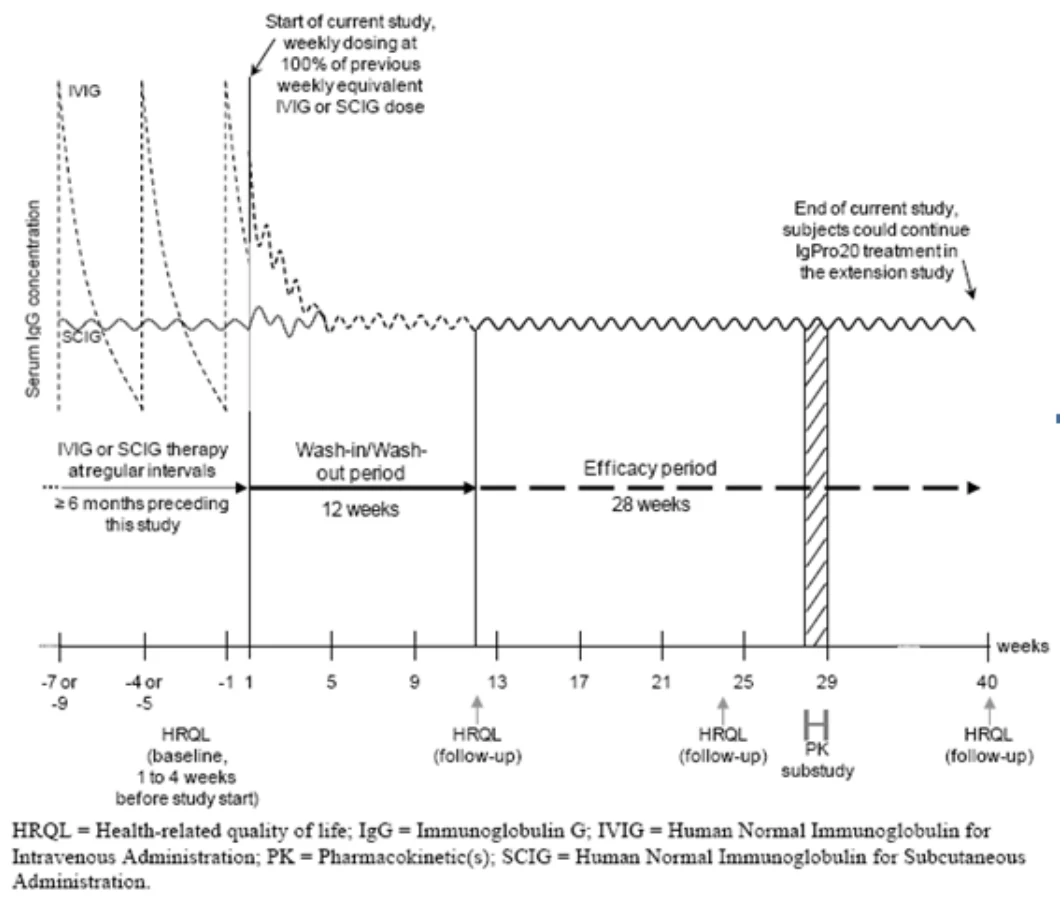
This prospective, open-label, single-arm, multicenter study conducted in Europe assessed the efficacy, safety, tolerability, and pharmacokinetics (PK) of Hizentra in subjects with PID previously treated with IVIG or SCIG for at least 6 months. The study was conducted in 51 adult and pediatric subjects (including 25 subjects <18 years of age) who were treated with weekly SC Hizentra infusions during a 12-week wash-in/wash-out period, followed by a 28-week efficacy period during which the efficacy, pharmacokinetics (PK), safety, and tolerability of Hizentra as well as health-related quality of life (HRQL) of Hizentra were evaluated (Figure 5).
The Hizentra doses administered throughout the study were generally equal to the weekly equivalent doses during the subjects’ previous IVIG or SCIG therapy.
During the efficacy period the mean weekly Hizentra dose ranged from 117.4 to 120.7 mg/kg body weight, with individual median doses ranging from 59 to 243 mg/kg body weight (equivalent to monthly accumulated doses of 236 to 972 mg/kg body weight).
The median duration of infusion per week was 1.17 hours into an average of 2 sites.
Figure 5 – Schematic Overview of the overall Design of the Pivotal Phase III EU Study
All 51 subjects enrolled in the study were treated with Hizentra and included in treated population (AT). The intention-to-treat population (ITT) included all 46 subjects treated during the efficacy period and the per protocol efficacy (PPE) population included 34 subjects who completed the study per protocol. In the ITT population, 15 subjects (32.6%) were female and 31 subjects (67.4%) were male. All subjects were white. The mean age was 21.5 years (17 subjects were <12 years of age); the mean body weight was 52.1 kg. Twenty-eight subjects (60.9%) had Common variable immunodeficiency (CVID), 17 subjects (37.0%) had X-linked agammaglobulinaemia (XLA), and 1 subject had autosomal recessive agammagmlobulinaeia (ARAG). Amongst the ITT population, 27 subjects had previously received IVIG therapy and 19 subjects had previously received SCIG therapy.
Primary Objectives
The primary objective was to achieve sustained total serum IgG Ctrough values during Hizentra treatment that were comparable to the previous IgG treatment (IVIG or SCIG). This was evaluated in ITT population from a descriptive comparison of 3 Ctrough values obtained during the subjects’ previous treatment in the last 3 to 6 months prior to the study (baseline) to 6 consecutive Ctrough values measured during steady-state Hizentra treatment.
The primary objective of the Pivotal Phase III EU study was clearly met for demonstrating the efficacy of Hizentra in the treatment of subjects with PID because sustained IgG Ctrough values were achieved; the mean of individual median IgG Ctrough values increased by 8.1% with Hizentra treatment (ranged from 7.99 to 8.25 g/L) (Figure 6). The consistent steady state Ig levels are broadly similar to those found in the general population.
Furthermore, the mean IgG Ctrough values were generally stable during the efficacy period demonstrating persistence of efficacy.
Figure 6 – Mean Serum IgG Trough levels over time (ITT population)
Secondary Objectives
Secondary objectives included evaluations of efficacy during the 28-week efficacy period (numbers of infection episodes [including SBIs], days out of work/school/kindergarten/day care or unable to perform normal activities due to infections, days of hospitalization due to infections, and use of antibiotics for infection prophylaxis and treatment), health-related quality of life (HRQL), and safety (AEs, local tolerability, clinical laboratory parameters, vital signs, and physical examination).
The other secondary objectives evaluated during the efficacy period were: annual rate of infections (5.18 infections/subject/year), annual days out of work/school/kindergarten/day care or unable to perform normal activities (8.00 days/subject/year), hospitalizations (3.48 days/subject/year), and treatment with antibiotics (72.75 days/subject/year).
The efficacy of Hizentra indicated by the primary efficacy analysis was consistently supported by results of the secondary efficacy analyses for the efficacy period. None of the subjects had an SBI during the efficacy period of this study (annual rate of 0 SBIs/subject/year; upper 99% confidence limit: 0.192).
Although the value missed days of work per year in this group compares to that of typical average of a non-immunocompromised German worker (7.3 days), the data were skewed by one subject who during the efficacy period missed 71 days due to infection (work/school/kindergarten/day care or was unable to perform normal activities).
There were no clinically relevant or consistent trends to suggest that age class, disease type, or previous replacement therapy had an effect on the efficacy of Hizentra. Overall, the study demonstrated that SCIG therapy with Hizentra is a highly effective treatment for adult and pediatric subjects with PID when administered at approximately 100% of the weekly equivalent doses during the subjects’ preceding IVIG or SCIG therapy.
Compared to previous IVIG treatment some aspects of HRQL and treatment satisfaction improved with SC Hizentra treatment. Statistically significant improvements from baseline compared to the end of study were observed for the Treatment Satisfaction Questionnaire for Medication (TSQM) domain convenience.
A significant improvement in the total Life Quality Index LQI score from baseline compared to the end of study was observed in subjects who previously received IVIG therapy (median change: +17.2; 95% CI: 8.5; 26.0). Median scores improved in all domains relative to baseline. “Treatment interference” (from 58.3 to 91.7: p <0.0001) “Therapy-related problems” (from 62.5 to 83.3: p <0.0332) and “Therapy setting” (from 55.6 to 94.4: p<0.0001) domains of the LQI all showed statistically significant improvements (p<0.05) when patients were changed from IVIG to SCIG therapy. In subjects who were previously treated with SCIG, there was no relevant change in any of the domains or the total LQI score and no disadvantages were seen.
Supportive Phase III US Study
A prospective, open-label, multicenter, single-arm, clinical study conducted in the US evaluated the efficacy, tolerability, and safety of Hizentra in adult and pediatric subjects with PID. Subjects previously receiving monthly treatment with IVIG were switched to weekly subcutaneous administration of Hizentra for 15 months (a 3-month wash-in/wash-out period followed by a 12-month efficacy period). The efficacy analyses included 38 subjects in the modified intention-to-treat (MITT) population. The MITT population consisted of subjects who completed the wash-in/wash-out period and received at least 1 infusion of Hizentra during the efficacy period.
The weekly doses of Hizentra during efficacy period in ITT population ranged from 72 to 379 mg/kg body weight. Subjects received a total of 2264 infusions of Hizentra.
The primary objective was to evaluate whether the annual rate of SBIs per subject during the efficacy period was <1. The primary objective of Supportive Phase III US study was clearly met for demonstrating the efficacy of Hizentra in the treatment of subjects with PID because none of the subjects had an SBI, resulting in an annual rate of 0 SBIs/subject/year, with an upper 99% confidence limit of 0.132.
The secondary objectives evaluated the annual rate of any infections (2.76 infections/subject year), the use of antibiotics for infection (48.5 days/subject year: prophylaxis or treatment), the days out of work/school/kindergarten/day care or unable to perform normal activities due to infections (2.06 days/subject year), and hospitalizations due to infections (0.2 days/subject year). All these data demonstrated that SCIG therapy with Hizentra is a highly effective treatment for subjects with PID when administered at weekly doses that result in serum IgG levels comparable to the average serum IgG levels during the subjects preceding IVIG therapy.
Conclusions
The Pivotal European and the Supportive US Studies demonstrated that SCIG therapy with Hizentra is a highly effective treatment for subjects with immunodeficiencies. The primary objectives for demonstrating the efficacy of Hizentra in the treatment of subjects with PID were clearly met. Sustained serum IgG Ctrough values compared to the previous IgG treatment (i.e., an increase by 8.1%) were achieved in EU study, and the annual rate of SBIs was 0 during efficacy period for both studies. The good efficacy profile of Hizentra was consistently supported by the secondary efficacy analyses in EU and US studies. Furthermore, no clinically relevant differences in the efficacy of Hizentra were observed in pediatric subjects, and no pediatric-specific dosing requirements were necessary to achieve the desired serum IgG concentrations.
Hizentra therapy, at a dose equivalent to previous IVIG therapy, improved subjects’ quality of life and treatment satisfaction. The results are consistent with previous studies showing that SCIG therapy dramatically improved the typically poor HRQL of patients with PID . Subjects switched from IVIG to Hizentra showed a greater improvement in HRQL than subjects switched from another SCIG to Hizentra. The most significant aspects contributing to the improvement in subjects’ quality of life were: “Treatment interference”, “Therapy-related problems” and “Therapy setting”. Additionally, subjects reported “Convenience” as the main factor contributing to an overall improvement in treatment satisfaction when they switched to Hizentra therapy. These findings are consistent with previous results showing an improvement in quality of life when subjects were switched from IVIG to SCIG therapy.
Treatment of Chronic Inflammatory Demyelinating Polyneuropathy
PATH Study
The safety, efficacy and tolerability of Hizentra in patients with CIDP have been assessed in a multicenter, double-blind, randomized, placebo-controlled, parallel-group phase 3 PATH (Polyneuropathy and Treatment with Hizentra) study where 172 subjects previously treated with IVIG were randomized to weekly 0.2 g/kg body weight Hizentra, weekly 0.4 g/kg body weight Hizentra or placebo groups, and followed for a subsequent 24 weeks. The median duration (range) of exposure was 162.0 (2,167) days in the 0.2 g/kg body weight and 162.5 (1,166) days in the 0.4 g/kg body weight Hizentra group. The median (range) number of infusion sites used in parallel by subjects was 4 (1,8). In total, 57 subjects received 1514 infusions in the placebo group, 57 subjects received 2007 infusions in the 0.2 g/kg body weight Hizentra group, and 58 subjects received 2218 infusions in the 0.4 g/kg body weight Hizentra group. 110 of the 172 (64%) subjects were male, age ranged from 24.7 to 82.7 years (median 57.8).
The primary efficacy endpoint was the percentage of subjects who had a CIDP relapse (defined as a ≥1 point increase in adjusted Inflammatory Neuropathy Cause and Treatment [INCAT] score compared with baseline) or were withdrawn from the study during SC treatment for any reason.
Both Hizentra doses demonstrated superiority over placebo for the primary endpoint. Results are shown in Table 8.
Table 8 – SC Treatment Period: Primary Efficacy Endpoint and CIDP Relapse Analyses
| Analysis | CIDP Relapse (or Withdrawal for Other Reason), n (%) (95% CIa) | Difference in % (95% CIb) p-valuec | CIDP Relapse (or Withdrawal for Other Reason), n (%) (95% CIa) | Difference in % (95% CIb) p-valuec | |||||||||
|---|---|---|---|---|---|---|---|---|---|---|---|---|---|
| Placebo | 0.2 g/kg Hizentra | 0.2 g/kg Hizentra Versus Placebo | 0.4 g/kg Hizentra | 0.4 g/kg Hizentra Versus Placebo | |||||||||
| Primary endpoint analysis | N = 57 | N = 57 | -24.6 (-40.7, -6.21) 0.007d | N = 58 | -30.4 (-46.0, -12.2) <0.001d | ||||||||
| 36 (63.2) (50.2, 74.5) | 22 (38.6) (27.1, 51.6) | 19 (32.8) (22.1, 45.6) | |||||||||||
| CIDP Relapse analysis e | N = 57 | N = 57 | -22.8 (-39.0, -4.6) | N = 58 | -37.2 (-51.7, -19.7) | ||||||||
| 32 (56.1) (43.3, 68.2) | 19 (33.3) (22.5, 46.3) | 11 (19.0) (10.9, 30.9) | |||||||||||
CI = confidence interval; CIDP = chronic inflammatory demyelinating polyneuropathy; SC = subcutaneous.
a Wilson score confidence interval for proportion of subjects with CIDP relapse (%).
b Wilson score confidence interval for the difference in proportion of subjects with CIDP relapse (%).
c One-sided Fisher’s exact test.
d Multiplicity addressed by multiple comparison procedure based on hierarchical testing.
e Relapse analysis: Only CIDP relapses were counted as events.
Time to CIDP relapse was evaluated and the corresponding probabilities for CIDP relapse based on Kaplan-Meier estimates were: placebo, 58.8%; 0.2 g/kg body weight Hizentra, 35.0%; and 0.4 g/kg body weight Hizentra, 22.4%.
Subjects in both Hizentra dose groups remained relatively stable while subjects in the placebo group deteriorated in mean INCAT score, mean grip strength, mean Medical Research Council (MRC) sum score, and mean Rasch-built Overall Disability Scale (R-ODS) centile score.
Based on the EuroQoL 5-Dimension Questionnaire results, compared with placebo, more subjects treated with Hizentra maintained or improved their health status in each health dimension.
PATH Extension Study
A phase 3, multicenter, 48-week open-label extension study enrolled 82 CIDP patients from the PATH study. The extension study investigated the long-term safety and efficacy of Hizentra maintenance therapy in the two weekly doses, 0.2 g/kg and 0.4 g/kg body weight. Due to the study design, the same subject could receive both doses during the study; 72 subjects received doses of 0.4 g/kg and 73 subjects received doses of 0.2 g/kg during the efficacy evaluation period. The mean efficacy evaluation period was 125.8 days (range: 1-330) in the 0.2 g/kg, and 196.1 days (range: 1-330) in the 0.4 g/kg body weight group.
Patients who completed the pivotal PATH study without relapse on 0.4 g/kg body weight dose and initially received this dose in the extension study had a relapse rate of 5.6% (1/18 patients). For all patients who received 0.4 g/kg body weight in the PATH extension study, 9.7% (7/72 patients) had a relapse. Patients who completed the PATH study without relapse on 0.2 g/kg body weight dose and initially received this dose in the extension study had a relapse rate of 50% (3/6 patients). For all patients who received 0.2 g/kg body weight in the extension study, 47.9% (35/73 patients) had a relapse. Down-titrating patients in the extension study from 0.4 g/kg to 0.2 g/kg body weight dose without occurrence of relapse was possible in 67.9% of subjects (19/28 patients). All patients who relapsed (relapse is defined as a deterioration by >1 point in total INCAT score) recovered within 4 weeks of initiation of 0.4 g/kg body weight dose. Grip strength, MRC sum score, and R-ODS centile score remained stable as compared to baseline for patients who never had a relapse in the extension study.
15. Microbiology
Not applicable.
16. Non-Clinical Toxicology
General Toxicology
Single and Repeat-dose Toxicity
No single-dose toxicity studies have been conducted with Hizentra. In general, single-dose toxicity studies may generate useful information on dose-response relationship early in drug development; however such information was considered to be broadly available for subcutaneous immunoglobulin (SCIG) products as well as for L-proline.
Hizentra’s novel manufacturing steps introduced for its parent product Privigen (IgPro10) focus on an improved purification procedure, leaving the active component IgG in a native state as shown by multiple in-vitro assays. The excipients L-proline and polysorbate 80 are well known, widely used in marketed plasma-derived products and controlled in Hizentra. Therefore, single-dose toxicity studies were not performed.
No repeat-dose toxicity studies were conducted with Hizentra due to the xenoreactivity and immunogenicity of the product. Antigenicity of human IgG in rats was confirmed in a 28-day study in rats with repeated dosing of 200 and 800 mg IgG/kg body weight/day in which all animals developed antibodies against human IgG and tolerated the multi-fold SC application of Hizentra without any adverse effect or notable clinical signs.
With the excipient L-proline, repeat-dose toxicity studies were conducted in two species, i.e., rats and dogs.
In a 5-day repeat-dose intravenous dose finding study, groups of male rats were administered daily for 7 hours with low and high dose L-proline (579 and 1449 mg/kg body weight/day). Other groups of rats were infused with low and high dose glycine (378 and 945 mg glycine/kg body weight/day) or with physiological saline. The high dose level represented the maximal daily dose that could be infused in the animals. There were no signs of toxicity. The No Observed Adverse Effect Level (NOAEL) was therefore the high dose level, i.e. 1449 mg L-proline/kg body weight/day and 945 mg glycine/kg body weight/day, respectively. The high dose was considered appropriate as upper dose in the final 28-day toxicity study.
In a 28-day repeat-dose intravenous study with a two-week treatment-free observational phase, groups of female and male rats were administered daily for 7 hours with low and high dose L-proline (579 and 1449 mg L-proline/kg body weight/day). Other groups of rats were infused with low and high dose glycine (378 and 945 mg glycine/kg body weight/day) or with physiological saline. The high dose group represented the maximal daily dose that could be infused in the animals. There were no unscheduled deaths throughout the study. No treatment-related clinical signs were observed in any group and there were no treatment related eye lesions. There was no obvious influence of treatment on the hematology and serum clinical chemistry parameters. There were no treatment-related effects on the urine parameters. No obvious effects of treatment with L-proline and glycine were observed in organ weights, or after macroscopic and microscopic examinations of the tissues. The only treatment-related changes were slight (not statistically significant) reductions in body weight gain and food consumption during the first two weeks of treatment, especially in males. These affected principally the animals treated with both doses L-proline, and glycine at 945 mg/kg/day, whereas glycine at 378 mg/kg/day was not affected. NOAELs of 1449 mg/kg/day for L-proline and 945 mg/kg/day for glycine could be established under the defined experimental conditions.
In the dog studies, doses of up to 4350 mg L-proline/kg body weight were administered as 7 hour i.v. infusions on 7 or 28 consecutive days to male and female Beagle dogs. There were no ophthalmoscopy, electrocardiography, hematology or clinical chemistry findings that were considered treatment-related and no necropsy or histological findings were attributed to L-proline. There were no changes in the urinary parameters that were considered to be directly related to treatment with L-proline and the majority of the changes that were observed were due to physiological electrolyte imbalance caused by the large volumes that were administered.
In the 4-week study, clinical signs which included emesis were noted for several animals in the highest dose group. Body weight profiles were considered to be satisfactory during the study. A reduction in food consumption was generally noted for animals during treatment with the highest dose (4350 mg/kg).
In conclusion, the intravenous (7 hour) infusion of L-proline at dose levels of 2170 and 4350 mg/kg at infusion rates of 9 and 18 mL/kg/H for 28 consecutive days was considered to be well tolerated by Beagle dogs. The No Observed Adverse Effect Level (NOAEL) was considered to be 4350 mg/kg L-proline. Thus, a safety margin of >75 relative to the maximum human dose of L-proline used in the clinical trial with Hizentra could be established.
Local Tolerance
To evaluate whether the properties of Hizentra (IgPro20; 20% protein concentration, pH 4.8) would affect tolerability upon s.c. infusion, a local tolerance study in rabbits was conducted with the marketed Beriglobin P as a comparator test article. Beriglobin P has a 16% protein concentration and a pH of 6.8. In addition, other IgG products under development at CSL Behring at that time were tested (IgPro10, IgPro16, IgPro18). A second local tolerance study in the rabbit was conducted to assess putative local reactions after i.v., i.a. and p.v. application of Hizentra. In the latter study, a lot of Hizentra was used that was also investigated in a clinical trial.
All IgPro products tested showed similar or better local tolerability as compared to the marketed product Beriglobin P when applied at equal volumes. The slight differences observed between test articles could be primarily ascribed to the different protein doses applied with equal volumes of the test articles, however, even the highest protein concentration of 20% in Hizentra showed a similar local tolerability as the marketed Beriglobin P. A single i.v. and i.a. administration of Hizentra was locally well tolerated; results obtained after p.v. administration of the product are acceptable considering the normal s.c. administration route of Hizentra.
Genotoxicity
Human IgGs cannot interact directly with DNA or chromosomes in intact human cells.
Genotoxicity testing of Hizentra is therefore not appropriate.
The absence of direct genotoxicity has been demonstrated for L-proline in combination with nicotinamide and L-isoleucine using a variety of assays such as the Ames test, in vitro cytogenicity assay, a bacterial stress gene (Pro-Tox) assay and a bone marrow micronucleus assay in mice. Published literature substantiates that L-proline is not mutagenic in the Ames test, a microsomal mutagenesis assay or a host-mediated assay.
Carcinogenicity
Carcinogenicity studies are not appropriate for IgG molecules found in Hizentra or the excipient L-proline because they are both endogenously available and repeated dosing of human IgGs would cause immunological reactions in heterologous species. Limited data are available for L-proline from the published literature. It has been shown that L-proline has no influence on the progression of hamster bile duct carcinoma.
Reproductive and Developmental Toxicology
Due to the xenoreactivity of human IgGs in animal species, reproductive and developmental toxicity studies were not conducted with Hizentra.
Segment I (fertility and early embryonic development) and III (peri- and post-natal development, including maternal function) reproductive toxicity studies have not been conducted on L-proline, which is endogenously bioavailable in humans and used extensively in products for humans. In addition, in the four-week toxicity studies there were no histopathological findings on reproductive organs of rats and dogs treated up to the top dose level at the Day 28 kill.
A Segment II (teratogenicity and embryotoxicity) reproduction toxicity study in rats has been carried out with L-proline at a dose of 1,449 mg/kg/day administered IV during 7 hours/day during Days 6 to 17 of gestation. This dose corresponds to 42 mL L-proline solution/kg body weight and represents the maximal daily dose that can be infused in the animals. There was no indication of maternal or embryo-toxicity, and the dose tested was a No Observed Effect Level, NOEL.
Special Toxicology
No single-dose toxicity studies are available for either Hizentra or its excipient L-proline.