


Product Monograph - Cuvitru
RECENT MAJOR LABEL CHANGES
| 4 DOSAGE AND ADMINISTRATION | 03/2025 |
|---|---|
| 7 WARNINGS AND PRECAUTIONS | 03/2021 |
TABLE OF CONTENTS
Sections or subsections that are not applicable at the time of authorization are not listed.
RECENT MAJOR LABEL CHANGES ......................................................................................................... 2
TABLE OF CONTENTS ........................................................................................................................... 2
PART I: HEALTH PROFESSIONAL INFORMATION .................................................................................. 4
1 INDICATIONS .......................................................................................................................... 4
1.1 Pediatrics ...........................................................................................................................4
1.2 Geriatrics ............................................................................................................................4
2 CONTRAINDICATIONS ............................................................................................................. 4
3 SERIOUS WARNINGS AND PRECAUTIONS BOX ........................................................................ 4
4 DOSAGE AND ADMINISTRATION ............................................................................................. 5
4.1 Dosing Considerations .......................................................................................................5
4.2 Recommended Dose and Dosage Adjustment ..................................................................6
4.4 Administration ...................................................................................................................7
4.5 Missed Dose .......................................................................................................................8
5 OVERDOSAGE ......................................................................................................................... 9
6 DOSAGE FORMS, STRENGTHS, COMPOSITION AND PACKAGING ............................................. 9
7 WARNINGS AND PRECAUTIONS .............................................................................................. 9
7.1 Special Populations ......................................................................................................... 12
7.1.1 Pregnant Women ............................................................................................................ 12
7.1.2 Breast-feeding ................................................................................................................. 13
7.1.3 Pediatrics ........................................................................................................................ 13
7.1.4 Geriatrics ......................................................................................................................... 13
8 ADVERSE REACTIONS ............................................................................................................ 13
8.1 Adverse Reaction Overview ............................................................................................ 13
8.2 Clinical Trial Adverse Reactions ...................................................................................... 13
8.5 Post-Market Adverse Reactions ...................................................................................... 17
9 DRUG INTERACTIONS ............................................................................................................ 17
9.2 Drug Interactions Overview ............................................................................................ 17
9.4 Drug-Drug Interactions ................................................................................................... 17
9.5 Drug-Food Interactions ................................................................................................... 17
9.6 Drug-Herb Interactions ................................................................................................... 18
9.7 Drug-Laboratory Test Interactions .................................................................................. 18
10 CLINICAL PHARMACOLOGY ................................................................................................... 18
10.1 Mechanism of Action ...................................................................................................... 18
10.2 Pharmacodynamics ......................................................................................................... 18
10.3 Pharmacokinetics ............................................................................................................ 18
11 STORAGE, STABILITY AND DISPOSAL ..................................................................................... 23
12 SPECIAL HANDLING INSTRUCTIONS ....................................................................................... 23
PART II: SCIENTIFIC INFORMATION ................................................................................................... 24
13 PHARMACEUTICAL INFORMATION ........................................................................................ 24
14 CLINICAL TRIALS.................................................................................................................... 27
14.1 Trial Design and Study Demographics ............................................................................ 27
14.2 Study Results ................................................................................................................... 30
15 MICROBIOLOGY .................................................................................................................... 34
16 NON-CLINICAL TOXICOLOGY ................................................................................................. 34
PATIENT MEDICATION INFORMATION .............................................................................................. 37
PART I: HEALTH PROFESSIONAL INFORMATION
1 INDICATIONS
CUVITRU is an Immunoglobulin Subcutaneous (Human) (IGSC), 20% Liquid indicated as replacement therapy for primary humoral immunodeficiency (PI) and secondary humoral immunodeficiency (SI) in adult and pediatric patients two years of age and older.
1.1 Pediatrics
Safety and effectiveness of CUVITRU has not been evaluated in neonates or infants <2 years old. The safety and efficacy profiles were similar to adult subjects. No pediatric-specific dose requirements were necessary to achieve the desired serum IgG levels [See section 4 DOSAGE AND ADMINISTRATION].
1.2 Geriatrics
No differences in safety or efficacy were observed for a small group of patients of 65 years old and over [See 7 WARNINGS AND PRECAUTIONS and 7.1.4 Geriatrics ].
2 CONTRAINDICATIONS
- Patients who are hypersensitive to this drug or to any ingredient in the formulation or component of the container. For a complete listing, see 6 DOSAGE FORMS, STRENGTHS, COMPOSITION AND PACKAGING section of the product monograph.
- Patients who have had an anaphylactic or severe systemic hypersensitivity reaction to the subcutaneous administration of human immunoglobulin.
- Patients with severe IgA-deficiency and a history of hypersensitivity to human immunoglobulin treatment.
3 SERIOUS WARNINGS AND PRECAUTIONS BOX
Serious Warnings and Precautions
- Thrombotic and thromboembolic events have been reported in association with immunoglobulin products including myocardial infarction, stroke, pulmonary embolism and deep vein thrombosis. Therefore, caution should be exercised when prescribing and administering immunoglobulins. Thrombosis may occur even in the absence of known risk factors.
- Thrombosis may occur with immunoglobulin products, including CUVITRU. Risk factors for thromboembolic events include: obesity, advanced age, hypertension, diabetes mellitus, history of vascular disease or thrombotic episodes, acquired or inherited thrombophilic disorders, prolonged periods of immobilization, severe hypovolemia, hypercoagulable conditions, use of estrogens, indwelling central vascular catheters, and cardiovascular risk factors. For further information please refer to WARNINGS and PRECAUTIONS- Thrombotic Events section.
- Treating physician should discuss the risk and benefits of this product with the patient. For patients at risk of thrombosis, administer CUVITRU at the minimum dose and infusion rate practicable. Ensure adequate hydration in patients before administration. Monitor for signs and symptoms of thrombosis and assess blood viscosity in patients at risk of hyperviscosity.
4 DOSAGE AND ADMINISTRATION
4.1 Dosing Considerations
For subcutaneous administration only.
- Do not administer intravenously, nor intramuscularly.
- CUVITRU should be administered by a healthcare professional, caregiver or self-administered by the patient after appropriate training. Infusion pumps or manual administration using a syringe appropriate for subcutaneous administration of immunoglobulins may be used.
- Treatment should be commenced and initially monitored under the supervision of a physician experienced in the treatment of immunodeficiency. Potential complications can often be avoided by initially infusing the product slowly.
- Patients should be closely monitored and carefully observed for any adverse reactions throughout the infusion period and at least 20 minutes after administration. In particular, naïve patients starting therapy, patients switching from an alternative immunoglobulin product or when there has been a long interval since the previous infusion, should be monitored for the first hour after the first infusion.
- Patients with a history of allergic reactions should not be treated subcutaneously at home until several treatments have been administered and tolerated under medical supervision (See 7 WARNINGS AND PRECAUTIONS).
- CUVITRU can be administered at regular intervals from daily up to every two weeks (biweekly).
- Individualize the dose based on the patient’s pharmacokinetic and clinical response.
- Monitor serum IgG trough levels regularly to guide subsequent dose adjustments and dosing intervals as needed (see Dose Adjustment).
For patients at risk for measles exposure:
If a patient has been exposed to measles, please refer to the National Advisory Committee on Immunization (NACI) recommendations for measles post-exposure prophylaxis.
For Self-Administration
- If self-administration is deemed to be appropriate by the physician, clear instructions and training on subcutaneous infusion should be given to the patient and caregiver. The demonstration of their ability to independently administer subcutaneous infusions should be documented, including the recognition of possible severe adverse reactions and measures to be taken in case these occur.
- The patient and caregiver must be instructed in keeping a treatment diary, including information about each infusion such as the time, date, dose, lot number(s), infusion sites, and any reactions.
- Inform the patient to start the infusion promptly after drawing CUVITRU into the syringe. Ensure the patient understands to complete the administration within 2 hours due to the potential formation of particles caused by siliconized syringes.
Ensure the patient understands the importance of consistent subcutaneous infusions to
- maintain appropriate steady IgG levels.
4.2 Recommended Dose and Dosage Adjustment
The dose regimen should achieve a trough level of Ig G (measured before the next infusion) of at least 5 to 6 g/L and aim to be within the reference interval of serum Ig G for age. A loading dose of at least 0.2 to 0.5 g/kg (1 to 2.5 mL/kg) body weight may be required. This may need to be divided over several days, with a maximal daily dose of 0.1 to 0.15 g/kg. After steady state Ig G levels have been attained, maintenance doses are administered at repeated intervals to reach a cumulative monthly dose of the order of 0.3 to 1.0 g/kg. Each single dose may need to be injected at different anatomic sites.
For patients switching from Immunoglobulin Intravenous (Human) treatment (IGIV)
- Begin treatment with CUVITRU one week after the patient’s last IGIV infusion.
- Establish the initial weekly dose by converting the monthly IGIV dose into an equivalent weekly dose.
To calculate the initial weekly dose, divide the previous IGIV dose in grams by the number of weeks between intravenous doses.
Initial Weekly dose = Previous IGIV dose (in grams)
Number of weeks between IGIV doses
- To convert the dose (in grams) to milliliters (mL), multiply the calculated dose (in grams) by 5.
- Doses divided over the course of a week, or once weekly, or biweekly, achieve similar exposure when administered regularly at steady-state.
To determine the dose for alternative regular dosing intervals:
- Frequent dosing (2-7 times per week): Divide the calculated weekly dose by the desired number of times per week.
- Biweekly dosing: Multiply the calculated weekly dose by 2.
To guide dose adjustments, see section Dose Adjustments (see Table 1).
For patients switching from another Immunoglobulin Subcutaneous (Human) treatment (IGSC):
- The weekly dose of CUVITRU (in grams) is recommended to be the same as the weekly dose of prior IGSC treatment (in grams).
- Doses divided over the course of a week, once weekly, or biweekly, achieve similar exposure when administered regularly at steady-state.
To determine the dose for alternative regular dosing intervals:
- Frequent dosing (2-7 times per week): Divide the calculated weekly dose by the desired number of times per week.
- Biweekly dosing: Multiply the calculated weekly dose by 2.
- To convert the dose (in grams) to milliliters (mL), multiply the calculated dose (in grams) by 5.
Dose Adjustment
To guide dose adjustment, calculate the difference between the patient’s target serum IgG trough level and the IgG trough level during subcutaneous treatment. Find this difference in Table 1 and the corresponding amount (in mL) by which to increase (or decrease) the weekly/biweekly dose based on the patient's body weight. If the difference between measured and target trough levels is less than 100 mg/dL, then no adjustment is necessary. However, the patient's clinical response should be the primary consideration in dose adjustment.
Table 1: Change in Volume to Be Administered Weekly/Biweekly for Intended IgG Trough Level Changea
| Body Weight | |||||||||
| Difference from Target Serum IgG Trough Levels | Dosing Frequency | 30 kg | 50 kg | 70 kg | 90 kg | 110 kg | |||
| 100 mg/dL | Weekly | 3 mL | 5 mL | 7 mL | 9 mL | 11 mL | |||
| Biweekly | 6 mL | 10 mL | 13 mL | 17 mL | 21 mL | ||||
| 200 mg/dL | Weekly | 6 mL | 10 mL | 13 mL | 17 mL | 21 mL | |||
| Biweekly | 12 mL | 19 mL | 27 mL | 35 mL | 42 mL | ||||
| 300 mg/dL | Weekly | 9 mL | 14 mL | 20 mL | 26 mL | 32 mL | |||
| Biweekly | 17 mL | 29 mL | 40 mL | 52 mL | 63 mL | ||||
a Derived using a linear approximation of trough levels and weekly dose per kg body mass with a slope of 52.1 kg/dL.
Example 1: A patient with a body weight of 70 kg who is on a weekly treatment has a measured IgG trough level of 600 milligrams/dL, and the target trough level is 800 milligrams/dL. The desired target trough level difference is 200 milligrams/dL (800 milligrams/dL minus 600 milligrams/dL). The weekly dose of CUVITRU should be increased by 13 mL.
Example 2: A patient with a body weight of 50 kg who is on a biweekly treatment has a measured IgG trough of 900 milligrams/dL, and the target trough level is 700 milligrams/dL. The desired target trough level difference is 200 milligrams/dL (900 milligrams/dL minus 700 milligrams/dL). The biweekly dose of CUVITRU should be decreased by 19 mL.
4.4 Administration
- For subcutaneous administration only. Do not administer CUVITRU intravenously.
- See detailed instructions in the PATIENT MEDICATION INFORMATION section.
Pump-assisted infusion:
It is recommended to use an initial administration speed of 10 mL/hr/infusion site.
If well tolerated (see 8 ADVERSE REACTIONS), the rate of administration may be increased at intervals of at least 10 minutes to a maximum of 20 mL/hr/infusion site for the initial two infusions. More than one pump can be used simultaneously.
For subsequent infusions, the infusion rate may be increased to 60 mL/hr/site as tolerated (e.g., 60 mL/hr/site x 2 sites = 120 mL/hr). For patients utilizing 4 infusion sites, the maximum infusion rate for all sites combined is 240 mL/hr.
Table 2: Infusion Volume and Rate*
| Infusion Parameters | First 2 Infusions | Subsequent Infusions | ||||||||
|---|---|---|---|---|---|---|---|---|---|---|
| Patients <40 kg | Patients ≥40 kg | Patients <40 kg | Patients ≥40 kg | |||||||
Volume (mL/site) | ≤20 | ≤60 | ≤60 | |||||||
| Rate (mL/hr/site) | 10 - 20 | ≤60 | ||||||||
* If the initial infusions are well tolerated then subsequent infusions can begin at the maximum tolerated rate.
Manual infusion:
If infusing manually, the proposed maximum infusion rate is approximately 1-2 mL per minute.
CUVITRU may be administered using a syringe at a single infusion site. If administration at additional sites is required, a new sterile injection needle should be used. Consider using multi-needle sets with ‘butterfly’ adapters.
The proposed maximum infusion rate is approximately 1-2 mL per minute. The rate of administration should be adjusted for each patient’s local tolerance which may depend on the site of each subcutaneous infusion and the amount of the individual patient’s subcutaneous tissue at that site.
Consideration for Infusion
Selection of Infusion Site: Suggested areas for subcutaneous infusion of CUVITRU are abdomen, thighs, upper arms, or lateral hip. CUVITRU may be infused into multiple infusion sites. Use up to 4 sites simultaneously. Consider using multi-needle sets with ‘butterfly’ adapters. Infusion sites should be at least four inches apart, avoiding bony prominences. Rotate sites with each administration.
Volume per Site: To calculate the number of sites to be used, divide the total volume to be infused by the maximum volume/site (up to 60 mL/site) to be infused. Simultaneous subcutaneous infusion at multiple sites can be facilitated by use of a multi-needle administration set.
The amount of product infused into a particular site varies. In infants and children, infusion site may be changed every 5-15 mL. An adult dose over 30 mL may be divided according to patient preference.
4.5 Missed Dose
If a patient misses a dose, administer the missed dose as soon as possible and then resume scheduled treatments as applicable.
5 OVERDOSAGE
Consequences of an overdose are not known.
For management of a suspected drug overdose, contact your regional poison control centre.
6 DOSAGE FORMS, STRENGTHS, COMPOSITION AND PACKAGING
To help ensure the traceability of biologic products, including biosimilars, health professionals should recognise the importance of recording both the brand name and the non-proprietary (active ingredient) name as well as other product-specific identifiers such as the Drug Identification Number (DIN) and the batch/lot number of the product supplied.
Table 3: Dosage Forms, Strengths, Composition and Packaging
CUVITRU is a 200 mg/mL (20%) protein solution for subcutaneous infusion.
CUVITRU is supplied in single use 5, 10, 20, 40 or 50 ml vials (Type I glass) containing the labeled amount of functionally active IgG which are closed with bromobutyl rubber stoppers. The components used in the packaging for CUVITRU are not made with natural rubber latex.
The available presentations of CUVITRU are described in Table 3.
7 WARNINGS AND PRECAUTIONS
Please see 3 SERIOUS WARNINGS AND PRECAUTIONS BOX.
This product is prepared from large pools of human plasma. Thus, there is a possibility it may contain causative agents of viral or other undetermined diseases.
General
CUVITRU is made from human blood. This is the reason that it may carry a risk of transmitting infectious agents, e.g., viruses, the variant Creutzfeldt-Jakob disease (vCJD) agent, and theoretically, the Creutzfeldt-Jakob disease agent. This also applies to unknown or emerging viruses and other pathogens. No confirmed cases of viral transmission or vCJD have been associated with CUVITRU. The
| Route of Administration | Dosage Form / Strength/Composition | Non-medicinal ingredients | |
| Subcutaneous | Volume | Grams Protein | Glycine, water for injection |
| 5 mL | 1.0 | ||
| 10 mL | 2.0 | ||
| 20 mL | 4.0 | ||
| 40 mL | 8.0 | ||
| 50 mL | 10.0 | ||
risk that such products will transmit an infectious agent has been reduced by screening plasma donors for prior exposure to certain viruses, by testing for the presence of certain current virus infections, and by inactivating and/or removing certain viruses. The measures taken (including solvent/detergent treatment, 35nm nanofiltration, and a low-pH incubation at elevated temperature 30-32oC) are considered effective for enveloped viruses such as HIV, HBV and HCV, and for the nonenveloped viruses HAV and parvovirus B19. Despite these measures, such products can still potentially transmit disease. There is also the possibility that unknown infectious agents may be present in such products. Individuals who receive infusions of blood or plasma products may develop signs and/or symptoms of some viral infections.
All infections thought by a physician to possibly have been transmitted by this product should be reported by the physician or other healthcare professional to Takeda Canada Inc.
Cardiovascular
Thrombotic Events
Thrombotic and thromboembolic events may occur following treatment with immunoglobulin products. Risk factors may include advanced age, prolonged immobilization, hypercoagulable conditions, history of venous or arterial thrombosis, use of estrogens, indwelling central vascular catheters, hyperviscosity, and cardiovascular risk factors. Thrombosis may occur in the absence of known risk factors.
Consider baseline assessment of blood viscosity in patients at risk for hyperviscosity, including those with cryoglobulins, fasting chylomicronemia/markedly high triacylglycerols (triglycerides), or monoclonal gammopathies. For patients at risk of thrombosis, administer CUVITRU at the minimum dose and infusion rate practicable. Ensure adequate hydration in patients before administration. Monitor for signs and symptoms of thrombosis and assess blood viscosity in patients at risk for hyperviscosity [see 7 WARNINGS AND PRECAUTIONS]. Takeda existing manufacturing process has been shown to produce product with low procoagulant activity, as measured by various in vitro and in vivo tests.
For demonstrating process robustness it was shown that the upstream part of the CUVITRU process removes more than 90% of the FXI zymogen present in the Cohn pool with further reduction occurring in the downstream purification steps.
The potential risks and benefits of CUVITRU should be weighed against those of alternative therapies for all patients for whom IGSC administration is being considered.
Driving and Operating Machinery
There are no data available on the potential effects of IGSC, 20% on the ability to drive or operate machinery. The ability to drive and operate machines may be impaired by some adverse reactions associated with CUVITRU, such as headache, nausea and/or vomiting. Patients who experience adverse reactions during treatment should wait for these to resolve before driving or operating machines.
Hematologic
Hemolysis
CUVITRU can contain blood group antibodies that may act as hemolysins and induce in vivo coating of red blood cells (RBC) with immunoglobulin. This may cause a positive direct antiglobulin test [DAT (Coomb’s test)]. Delayed hemolytic anemia can develop subsequent to CUVITRU therapy due to enhanced RBC sequestration; acute hemolysis, consistent with intravascular hemolysis, can occur.
The following risk factors may be related to the development of hemolysis: high doses (e.g., ≥2 grams/kg, single administration or divided over several days) and non-O blood group. Underlying inflammatory state in an individual patient may increase the risk of hemolysis7 but its role is uncertain.
Monitor patients for clinical signs and symptoms of hemolysis, particularly patients with risk factors noted above. Consider appropriate laboratory testing in higher risk patients, including measurement of hemoglobin or hematocrit prior to infusion and within approximately 36 to 96 hours post infusion.
Monitoring and Laboratory Tests
- Periodic monitoring of renal function and urine output is particularly important in patients predisposed to be at increased risk of developing acute renal failure. Assess renal function, including measurement of BUN and serum creatinine, before the initial infusion of CUVITRU and at appropriate intervals thereafter.
- Consider baseline assessment of blood viscosity in patients at risk for hyperviscosity, including those with cryoglobulins, fasting chylomicronemia/markedly high triacylglycerols (triglycerides), or monoclonal gammopathies, because of the potentially increased risk of thrombosis.
- If signs and/or symptoms of hemolysis are present after an infusion of CUVITRU, perform appropriate laboratory testing for confirmation.
- If TRALI is suspected, perform appropriate tests for the presence of anti-neutrophil antibodies and anti-HLA antibodies in both the product and patient’s serum.
Interference with Laboratory Tests
After infusion of IgG, the transitory rise of the various passively transferred antibodies in the patient’s blood may yield false positive serological test results, with the potential for misleading interpretation. Passive transmission of antibodies to erythrocyte antigens (e.g., A, B, and D) may cause a positive direct or indirect antiglobulin (Coombs’) test.
Administration of CUVITRU can lead to false positive readings in assays that depend on detection of beta-D-glucans for diagnosis of fungal infections; this may persist during the weeks following infusion of the product.
Neurologic
Aseptic Meningitis Syndrome (AMS)
AMS has been reported with the use of immunoglobulin, including CUVITRU (see 8 ADVERSE REACTIONS, Post-Market Adverse Reactions). The syndrome usually begins within several hours to two days following immunoglobulin treatment. AMS may occur more frequently in female patients.
AMS is characterized by the following signs and symptoms: severe headache, nuchal rigidity, drowsiness, fever, photophobia, painful eye movements, nausea and vomiting. Cerebrospinal fluid (CSF) studies frequently reveal pleocytosis up to several thousand cells per mm3, predominantly from the granulocytic series, and elevated protein levels up to several hundred milligram/dL, but negative culture results. Conduct a thorough neurological examination, including CSF studies, on patients exhibiting such signs and symptoms, to rule out other causes of meningitis. Discontinuation of treatment has resulted in remission of AMS within several days without sequelae.
Renal
Acute renal dysfunction/failure, acute tubular necrosis, proximal tubular nephropathy, osmotic nephrosis, and death may occur upon use of immunoglobulin treatment, especially those containing sucrose. CUVITRU does not contain sucrose. Ensure that patients are not volume depleted prior to the initiation of infusion of CUVITRU. In patients who are at risk of developing renal dysfunction, because of pre-existing renal insufficiency or predisposition to acute renal failure (such as diabetes mellitus, age greater than 65, volume depletion, sepsis, paraproteinemia, or patients receiving known nephrotoxic drugs, etc.) monitor renal function and consider lower, more frequent dosing [see 4 DOSAGE AND ADMINISTRATION].
Periodic monitoring of renal function and urine output is particularly important in patients predisposed to be at increased risk for developing acute renal failure. Assess renal function, including measurement of blood urea nitrogen (BUN) and serum creatinine, before the initial infusion of CUVITRU and again at appropriate intervals thereafter. If renal function deteriorates, consider discontinuation of CUVITRU [see 4 DOSAGE AND ADMINISTRATION].
Reproductive Health: Female and Male Potential
Animal reproduction studies have not been conducted with CUVITRU (see 7.1.1 Pregnant Women).
Respiratory
Transfusion-Related Acute Lung Injury (TRALI)
Non-cardiogenic pulmonary edema (TRALI) has been reported in patients following treatment with immunoglobulin products. TRALI is characterized by severe respiratory distress, pulmonary edema, hypoxemia, normal left ventricular function, and fever. Symptoms typically occur within 1 to 6 hours after treatment.
Monitor patients for pulmonary adverse reactions. If TRALI is suspected, perform appropriate tests for the presence of anti-neutrophil and anti-HLA antibodies in both the product and patient serum. TRALI may be managed using oxygen therapy with adequate ventilatory support.
Sensitivity/Resistance
Hypersensitivity
Severe hypersensitivity reactions may occur, even in patients who had tolerated previous treatment with human immunoglobulin. If a hypersensitivity reaction occurs, discontinue CUVITRU infusion immediately and institute appropriate treatment.
CUVITRU contains trace amount of IgA (≤280 mcg/mL with an average concentration of 80 mcg/mL). Patients with known antibodies to IgA have a greater risk of developing potentially severe hypersensitivity reactions, including anaphylaxis, with administration of CUVITRU [see 2 CONTRAINDICATIONS].
7.1 Special Populations
7.1.1 Pregnant Women
There are no data from the use of CUVITRU in pregnant women. Animal reproduction studies have not been conducted with CUVITRU.
The safety of this medicinal product for use in human pregnancy has not been established in controlled clinical trials and therefore it should only be given with caution to pregnant women and breast-feeding mothers and only if clearly indicated.
Immunoglobulins cross the placenta from maternal circulation increasingly after 30 weeks of gestation. Healthcare professional should carefully consider the potential risks and benefits for each specific patient before prescribing CUVITRU.
7.1.2 Breast-feeding
There are no data from the use of CUVITRU in lactating women.
It is not known whether CUVITRU is excreted in human milk. Because many drugs are excreted in human milk, caution should be exercised when CUVITRU is administered to a nursing woman. The developmental and health benefits of breastfeeding should be considered along with the mother's clinical need for CUVITRU and any potential adverse effects on the breastfed infant from CUVITRU or from the underlying maternal condition.
7.1.3 Pediatrics
CUVITRU was evaluated in 39 pediatric subjects with PI (2 to < 16 years of age) in two multicenter clinical studies. The safety and efficacy profiles were similar to adult subjects. No pediatric-specific dose requirements were necessary to achieve the desired serum IgG levels.
7.1.4 Geriatrics
CUVITRU was evaluated in 12 subjects 65 years of age and older. No differences in safety or efficacy were observed for this group.
Monitor patients who are at an increased risk for developing renal failure or thrombotic events. Do not exceed the recommended dose, and infuse at the minimum infusion rate practicable [See 4 DOSAGE AND ADMINISTRATION].
8 ADVERSE REACTIONS
8.1 Adverse Reaction Overview
No serious adverse drug reactions (causally related and/or temporally associated adverse events) were observed with CUVITRU during the clinical studies evaluating its safety. The majority of adverse drug reactions were assessed as mild. Infusion site pain, infusion site erythema, and infusion site pruritus were the most frequently reported causally related and/or temporally associated non-serious local adverse events during CUVITRU treatment. Headache was the most frequently reported causally related and/or temporally associated non-serious systemic adverse events during CUVITRU treatment.
8.2 Clinical Trial Adverse Reactions
Because clinical trials are conducted under very specific conditions the adverse reaction rates observed in the clinical trials may not reflect the rates observed in practice and should not be compared to the rates in the clinical trials of another drug. Adverse drug reaction information from clinical trials is useful for identifying drug-related adverse events and for approximating rates.
CUVITRU was administered subcutaneously in two prospective, open-label, non-controlled, multi-center pivotal clinical studies to evaluate efficacy, safety, tolerability, and pharmacokinetics in subjects with primary immunodeficiency (PI). One pivotal study was performed in North America (170904), and one pivotal study was performed in Europe (170903). The study demographics and designs of the two studies are summarized in Table 13.
Adverse reactions (defined as adverse events occurring during or within 72 hours of infusion, or any causally related event occurring within the study period) occurring most frequently in the two pivotal clinical trials are shown in Table 4. The most frequent local adverse reactions categorized according to severity are listed separately in Table 5.
Table 4: Adverse Reactionsa Reported in Subjects Under IGSC 20% Treatment (Studies 170903, 170904)
| Pivotal Phase III North America (170904) | Pivotal Phase III Europe (170903) | ||||||
| Adverse Reaction | By Subject n (%)b N=74 | By Infusion n (rate)c N=4327 | By Subject n (%)b N=48 | By Infusion n (rate)c N=2349 | |||
| Gastrointestinal disorders | |||||||
| Nausea | 9 (12.2%) | 16 (0.004) | 2 (4.2%) | 2 (<0.001) | |||
| Diarrhea | 5 (6.8%) | 5 (0.001) | 9 (18.8%) | 58 (0.025) | |||
| Vomiting | 4 (5.4%) | 5 (0.001) | 1 (2.1%) | 1 (<0.001) | |||
| Musculoskeletal and connective tissue disorders | |||||||
| Arthralgia | 0 (0.0%) | 0 (0.000) | 3 (6.3%) | 5 (0.002) | |||
| General disorders and administration site conditions | |||||||
| Local reactions | 23 (31.1%) | 96 (0.022) | 18 (37.5%) | 176 (0.075) | |||
| Infusion site pain (including Infusion site discomfort and Injection site pain) | 15 (20.3%) | 36 (0.008) | 10 (20.8%) | 34 (0.014) | |||
| Infusion site erythema (including Injection site erythema) | 8 (10.8%) | 23 (0.005) | 10 (20.8%) | 54 (0.023) | |||
| Infusion site pruritus (including Injection site pruritus) | 4 (5.4%) | 8 (0.002) | 7 (14.6%) | 30 (0.013) | |||
| Infusion site swelling | 1 (1.4%) | 1 (<0.001) | 4 (8.3%) | 46 (0.020) | |||
| Fatigue | 6 (8.1%) | 9 (0.002) | 6 (12.5%) | 8 (0.003) | |||
| Nervous system disorders | |||||||
| Headache | 10 (13.5%) | 50 (0.012) | 14 (29.2%) | 59 (0.025) | |||
| Respiratory, thoracic and mediastinal disorders | |||||||
| Oropharyngeal pain | 3 (4.1%) | 3 (<0.001) | 3 (6.3%) | 3 (0.001) | |||
| Cough | 1 (1.4%) | 1 (<0.001) | 5 (10.4%) | 7 (0.003) | |||
Table 5: Most Frequent Local Adverse Reactionsa Reported in Subjects Under IGSC 20% Treatment (Studies 170903, 170904)
| Pivotal Phase III North America (170904) | Pivotal Phase III Europe (170903) | |||||||||||||
| Total Number of Adverse Reactions | Total Number of Adverse Reactions | |||||||||||||
| Mild | Moderat e | By Subject n (%)b N=74 | By Infusion n (rate)c N=4327 | Mild | Moderat e | By Subject n (%)b N=48 | By Infusion n (rate)c N=2349 | |||||||
| Adverse Reaction | ||||||||||||||
| Infusion site pain (including Infusion site discomfort and Injection site pain) | 33 | 3 | 15 (20.3%) | 36 (0.008) | 34 | 0 | 10 (20.8%) | 34 (0.014) | ||||||
| Infusion site erythema (including Injection site erythema) | 22 | 1 | 8 (10.8%) | 23 (0.005) | 54 | 0 | 10 (20.8%) | 54 (0.023) | ||||||
| Infusion site pruritus (including Injection site pruritus) | 7 | 1 | 4 (5.4%) | 8 (0.002) | 30 | 0 | 7 (14.6%) | 30 (0.013) | ||||||
| Infusion site swelling | 1 | 0 | 1 (1.4%) | 1 (<0.001) | 46 | 0 | 4 (8.3%) | 46 (0.020) | ||||||
aCausally Related and/or Temporally Associated (Within 72 Hour) AEs (Excluding Infections).
bTotal number of affected subjects divided by the total number of subjects under treatment.
cTotal number of AEs divided by the al number of infusions under treatment.
Pivotal Phase 2/3 Study in North America
Efficacy and safety during treatment with CUVITRU were evaluated in 74 subjects in the pivotal clinical trial in North America. CUVITRU was administered for a median treatment duration of 380.5 days (range: 30 - 629 days) and a mean (± SD) of 413.1 ± 116.5 days. Sixty-seven out of 74 subjects completed the study including 20/21 subjects aged 2 to <16 years old. Of the 7 subjects who discontinued treatment with CUVITRU; one subject withdrew due to fatigue (assessed as not related), 1 subject withdrew because of non-compliance, and 5 subjects withdrew for personal reasons.
A total of 4327 CUVITRU infusions were administered during the clinical study. No serious adverse reactions occurred during treatment with CUVITRU. 278 non-serious adverse reactions (defined as adverse events occurring during or within 72 hours of infusion or any causally related event occurring within the study period) occurred at a rate per infusion of 0.06. Among the 4327 CUVITRU infusions, 99.3% (276/278) of adverse reactions were mild or moderate and transient in nature. Of the 278 non-serious adverse reactions (excluding infections), 83% (231/278) were rated as mild (transient discomfort that resolves spontaneously or with minimal intervention), 16% (45/278) were rated as moderate (limited impairment of function, may require therapeutic intervention, produces no sequelae), and 1% (2/278, hemoptysis and abdominal pain, both temporally associated but not causally related) were severe (marked impairment of function, may lead to temporary inability to resume usual life pattern; produces sequelae which require (prolonged) therapeutic intervention).
Systemic adverse reactions to immunoglobulin intravenous in Epoch 1 of the study occurred at a rate of 0.299, relative to a rate of 0.042 during treatment with CUVITRU. The CUVITRU systemic adverse reaction rate was approximately 7-fold lower than the immunoglobulin intravenous rate.
The most common reactions (by subject) were local reactions. Of the total 96 local adverse reactions, 100% were either mild (92.5%) or moderate (7.5%) in severity. No severe local adverse reactions were reported. During the clinical study, 68.9% of subjects did not experience any local adverse reactions. The overall rate of local adverse reactions (excluding infections) during the clinical study was 0.022 (0.021 mild and 0.002 moderate). The rate of related local adverse events per subject during the course of treatment with CUVITRU can be seen in Figure 1 below. As can be seen from the graph, the frequency of related local adverse events decreased over time, with most events being reported within the first 16 weeks of treatment.
Figure 1: Non-Serious Related Local AEs By Monthly Periods
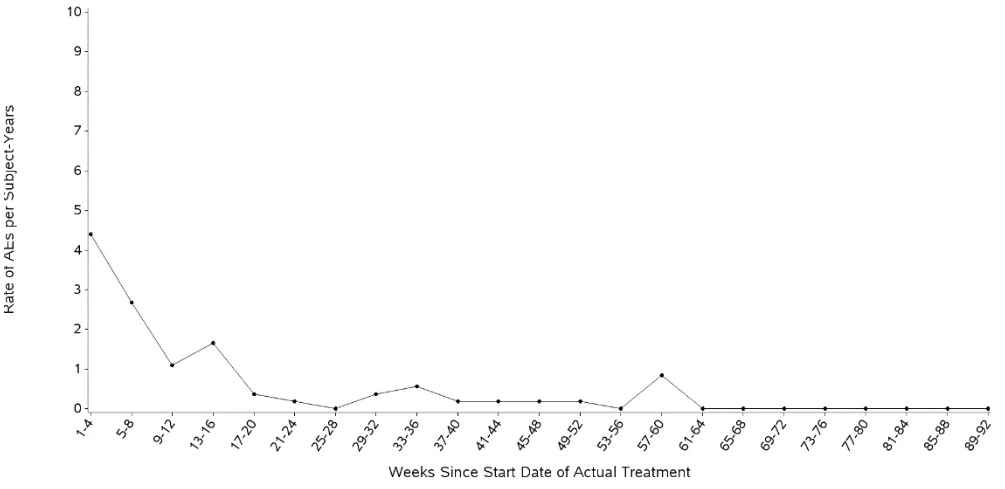
Planned treatment period was variable – according to enrollment time point - with minimum of 52 weeks of treatment with IGSC, 20%.
Pivotal Phase 2/3 Study in Europe
Efficacy and safety during treatment with CUVITRU were evaluated in 48 subjects in the pivotal clinical trial in Europe. CUVITRU was administered for a median treatment duration of 358 days (range: 127.0-399 days) and a mean (± SD) of 347.4 ± 47.9 days. Subcutaneous administration of treatment was well accepted across all age groups as evidenced by the few discontinuations during IGSC, 20% treatment: 45/48 subjects treated with IGSC, 20% completed the study, including 23/25 subjects aged 2 to <18 years old, suggesting that IGSC, 20% treatment fitted well in the daily activities of adults as well as pediatric subjects.
A total of 2349 CUVITRU infusions were administered during this clinical study. No serious adverse reactions occurred during treatment with CUVITRU. In total 176 local adverse reactions and 205 systemic adverse reactions were reported (adverse reaction defined as adverse events occurring during or within 72 hours of infusion or any causally related event occurring within the study period), excluding infections. Of the 205 systemic reactions, the majority (134 events) were mild, 70 events were moderate and one event was severe (headache, assessed as temporally associated, not causally related). Per infusion the rate of systemic adverse reactions (excluding infections) during treatment with CUVITRU was 0.087, and the rate of related systemic AEs (excluding infections) per infusion was 0.032. During treatment with IGIV, 10% in Epoch 1, the rate of related systemic AEs (excluding infections) was 0.173 events per infusion. The CUVITRU related systemic adverse event rate was approximately 5-fold lower than the immunoglobulin intravenous rate.
Among the 176 local adverse reactions in total (adverse reaction defined as adverse events occurring during or within 72 hours of infusion or any causally related event occurring within the study period), none were severe reactions; in total 175 events (99.4%) were mild, and 1 event (0.6%) was moderate. The overall rate of local reactions was 0.075 per infusion, and the rate of related local adverse events per infusion was 0.069. The most common reactions (by subject) were infusion site pain, infusion site erythema and infusion site pruritus.
8.5 Post-Market Adverse Reactions
Because post-marketing reporting of adverse reactions is voluntary and from a population of uncertain size, it is not always possible to reliably estimate the frequency of these reactions or establish a causal relationship to product exposure.
Post-marketing Experience of Immunoglobulin Products
The following adverse reactions have been identified and reported during the post-marketing use of immunoglobulin products administered subcutaneously:
Table 6: Adverse Reactions identified in Post-marketing Surveillance of immunoglobulin products administered subcutaneously
| System Organ Class (SOC) | Preferred MedDRA Term |
|---|---|
| Cardiac disorders | Tachycardia |
| General disorders and administration site conditions | Injection site reaction (such as induration and warmth) and chest discomfort |
| Immune system disorders | Anaphylactic reaction |
| Nervous system disorders | Meningitis aseptic, Tremor and paresthesia |
| Respiratory, Thoracic and Mediastinal disorders | Dyspnea and laryngospasm |
9 DRUG INTERACTIONS
9.2 Drug Interactions Overview
Passive transfer of antibodies may transiently impair the immune responses to live attenuated virus vaccines such as mumps, rubella and varicella for up to 6 months and for a year or more to measles (rubella). The healthcare provider should be informed of recent therapy with CUVITRU so that appropriate precautions can be taken.
9.4 Drug-Drug Interactions
Interactions with other drugs have not been established.
9.5 Drug-Food Interactions
Interactions with food have not been established.
9.6 Drug-Herb Interactions
Interactions with herbal products have not been established.
9.7 Drug-Laboratory Test Interactions
Interactions with laboratory tests have not been established.
10 CLINICAL PHARMACOLOGY
10.1 Mechanism of Action
CUVITRU supplies a broad spectrum of opsonizing and neutralizing IgG antibodies against a wide variety of bacterial and viral agents. CUVITRU also contains a spectrum of antibodies capable of interacting with and altering the activity of cells of the immune system as well as antibodies capable of reacting with cells such as erythrocytes. The role of these antibodies and the mechanisms of action of IgG in CUVITRU have not been fully elucidated.
Immunoglobulins are the main effector molecules of the humoral immune response. They have two separable functions: one is to bind specifically to the antigen of the pathogen that elicited the immune response via their antigen binding region; the other is to engage the effector functions of the immune system that will dispose of the antigen via their constant Fc region.
Immunoglobulins can protect from pathogens or their toxic products in three distinct ways:
- By binding of immunoglobulin to the antigen, its access to cells is blocked, i.e. the antigen is neutralized.
- When pathogens or foreign particles are coated by immunoglobulins, a process known as opsonization, the Fc portion of the antibody engages specific receptors on phagocytic cells resulting in the removal and destruction of the pathogen.
- The Fc portion of antigen-antibody complexes can activate complement, which enhances engulfment of pathogens by phagocytes or direct damage of certain bacteria.
Secondary Immunodeficiences (SI) are a group of conditions caused by other factors than primary/genetic causes such as sequelae of certain diseases, malignancies or medications, which result in hypogammaglobinemia rendering the patients susceptible to infections and requiring immunoglobulin replacement therapy as with many of the PIs.
10.2 Pharmacodynamics
Human normal immunoglobulin contains mainly immunoglobulin G (IgG) with a broad spectrum of antibodies against infectious agents. Human normal immunoglobulin contains the IgG antibodies present in the normal population. It has a distribution of immunoglobulin G subclasses closely proportional to that in native human plasma.
Adequate doses of CUVITRU may restore abnormally low immunoglobulin G levels to the normal range.
10.3 Pharmacokinetics
The PK profile of IGSC, 20% in adult and pediatric patients with PI has been characterized in Study 170904 (in North America) and in Study 170903 (in Europe). Data from supportive study 160601 (in USA) conducted to evaluate the PK parameters of total IgG following administration of IGSC, 10%, at 130% of the dose administered during IGIV, 10% treatment further support the IGSC, 20% PK analysis.
In Study 170904, actual PK parameters for total IgG were assessed in subjects 12 years and older in Epoch 1 (IGIV, 10% at pre-study dose, 3-week interval, N = 16; 4-week interval, N= 38), in Epoch 2, (IGSC, 20% at 145% of the IGIV, 10% dose; N = 18). In Epoch 4, PK assessments were performed in all subjects (IGSC, 20% at the individualized dose, N = 60).
In study 170903, actual PK parameters for total IgG were determined in subjects aged 12 years and older based on IgG levels measured at the end of each Study Epoch and during 6 consecutive weeks of IGSC, 20% treatment. The dose administered was the same as the pre-study dose (range 0.3-1.0 g/kg BW /4 weeks). Only data from subjects with 3 or more available PK measurements during IGSC, 20% treatment (N=31) were considered for this analysis.
A population PK analysis was performed post-hoc on the pooled total IgG trough levels data obtained during Study 170904 and 170903. A total of 102 subjects with reliable dosing and sampling collection date and time information, at least 2 measurable IgG concentrations for a modeled product, and with IgG concentrations from IGSC 20% were considered for analysis (N = 32 in Study 170903 and N= 70 in Study 170904).
Study 170904
Pharmacokinetic (PK) parameters of subcutaneously administered CUVITRU were evaluated in 60 subjects with primary immunodeficiency (PI) during a clinical study in North America [see 14 CLINICAL TRIALS, Part II SCIENTIFIC INFORMATION for study #170904]. This pivotal study included the determination of a dose adjustment factor for subcutaneous immunoglobulin treatment (to achieve an equivalent AUC, as required in SCIG clinical trials for submission to the Food and Drug Administration). Subjects were initially treated intravenously for 13 weeks with a comparator product [GAMMAGARD LIQUID, Immunoglobulin (Human), 10%] and then switched to weekly subcutaneous CUVITRU infusions. Initially, subjects were treated for up to 12 to 16 weeks at a subcutaneous dose that was 145% of the intravenous dose. A comparison of the area under the curve (AUC) for subcutaneous versus intravenous infusions was performed on 15 subjects aged 12 years and older. Subsequently, all subjects were treated with this dose for 12 weeks, after which the dose was individualized for all subjects using the trough IgG levels.
After approximately 4 months treatment at this subcutaneous dose (Study Epoch 4), a PK evaluation was conducted. Pharmacokinetic parameters for CUVITRU were assessed for 60 subjects aged 2 years and older. The pharmacokinetic parameters of CUVITRU administered subcutaneously are shown in Table 7 below.
Table 7: Pharmacokinetic Parameters
| Parameter | Median (95% Cl) N=60 |
| AUC [g*days/L] | 115.11 (110.10 to 120.66) |
| AUC / (Dose/Weight) [(g*days/L)/(g/kg)] [[[(g*days/L)/(g/kg)] | 536.43 (466.83 to 582.14) |
| Apparent clearance [mL/kg/day] | 1.86 (1.80 to 2.17) |
| Cmax [mg/dL] | 1809 (1745 to 2068) |
| Cmin [mg/dL] | 1477 (1323 to 1535) |
| Tmax [hours] | 104.93 (71.27 to 119.02) |
The median peak IgG levels were lower (1809 mg/dL, 95% CI:1745 to 2068 mg/dL) during subcutaneous treatment with CUVITRU compared to IGIV, 10% administration (2602 mg/dL, 95% CI: 2304 to 3043 mg/dL for 3 week intervals and 2521 mg/dL, 95% CI: 2326 to 2666 mg/dL for 4 week intervals), consistent with the lower weekly dose compared to the dose administered every 3 or 4 weeks intravenously. In contrast, the geometric mean trough levels were higher with CUVITRU (1474 mg/dL, 95% CI: 1403 to 1548 mg/dL), compared to those when given intravenously (1158 mg/dL, 95% CI: 1036 to 1294 mg/dL for 3 week intervals and 1019 mg/dL, 95% CI: 955 to 1088 mg/dL for 4 week intervals), a result of both higher monthly dose and more frequent dosing. The peak IgG level occurred at a geometric mean of 78.68 (95% CI: 65.37 to 94.70) hours after subcutaneous CUVITRU administration. At this dose adjustment, the geometric mean ratio of the AUC for subcutaneous CUVITRU vs. intravenous administration immunoglobulin 10% was 108.55% (90% confidence limit 103.94 to 113.36). Pharmacokinetic parameters for CUVITRU did not significantly differ between age groups.
Human PK parameters for IP administration calculated based on the IgG serum concentration data collected during Study 170904 are summarized in Table 8.
Table 8: Pharmacokinetic Parameters for Total IgG During Study 170904
| Treatment Epoch (IP) | Epoch 1 IGIV, 10% | Epoch 2 IGSC, 20% 145% of IGIV, 10% | Epoch 4 IGSC, 20% individualized | |||||||||||||||||||
|---|---|---|---|---|---|---|---|---|---|---|---|---|---|---|---|---|---|---|---|---|---|---|
| Dosing interval | 3 weeks (n = 16) | 4 weeks (n = 38) | 1 week (n = 18) | 1 week (n = 60) | ||||||||||||||||||
| Parameter [unit] | Median | 95% CI | Median | 95% CI | Median | 95% CI | Median | 95% CI | ||||||||||||||
| AUC (g*days/L) | 360.33 | 296.16 to 426.71 | 408.15 | 385.67 to 447.54 | 107.66 | 93.71 to 125.59 | 115.11 | 110.10 to 120.66 | ||||||||||||||
| AUC / (Dose/Weight) [(g*days/L)/(g/kg)] | 572.14 | 505.26 to 748.32 | 783.49 | 735.15 to 933.12 | 515.01 | 367.06 to 562.02 | 536.43 | 466.83 to 582.14 | ||||||||||||||
| CL/F [mL/kg/days] | 1.75 | 1.42 to 2.21 | 1.28 | 1.07 to 1.36 | 1.94 | 1.78 to 2.72 | 1.86 | 1.80 to 2.17 | ||||||||||||||
| Cmax (g/L) | 26.02 | 23.04 to 30.43 | 25.21 | 23.26 to 26.66 | 16.73 | 14.21 to 22.04 | 18.09 | 17.45 to 20.68 | ||||||||||||||
| Cmin (g/L) | 12.77 | 10.67 to 14.73 | 10.02 | 9.23 to 12.30 | 14.69 | 11.51 to 15.48 | 14.77 | 13.23 to 15.35 | ||||||||||||||
| Tmax (hr) | 3.75 | 2.92 to 24.83 | 2.84 | 2.58 to 4.17 | 72.37 | 23.70 to 117.73 | 104.93 | 71.27 to 119.02 | ||||||||||||||
| Note: Epochs 1 and 2, data from subjects aged 12 years and older; Epoch 4, data from subjects aged 2 years and older. | ||||||||||||||||||||||
Bioavailability of IGSC, 20% at the individualized dose estimated from the ratio of the geometric means of AUC/week for total IgG during weekly IGSC, 20% treatment in Epoch 4 (once every week) versus IGIV, 10% treatment (3 or 4-week interval standardized to 1 week) was 1.0855 (90% CI: 1.0394 to 1.1336, N = 49).
Study 170903
The pivotal clinical study of CUVITRU in Europe evaluated immunoglobulin trough levels in all 48 study subjects treated, and full pharmacokinetic (PK) parameters in 31 subjects aged 12 years and older [see 14 CLINICAL TRIALS, Part II SCIENTIFIC INFORMATION for study #170903].
IgG trough levels during treatment with CUVITRU in Epoch 2 remained similar to trough levels measured during Epoch 1 (12 week treatment with IGIV, 10% or IGSC, 16%). After the last infusion of CUVITRU once a week, total IgG levels were 8.26 g/L (median, 95%CI: 7.30-8.96). During 6 consecutive weeks of trough level assessment during CUVITRU administration (Epoch 2, week 21-27) , the median of all available total IgG trough levels (measured weekly for 6 consecutive weeks) was 8.48 g/L (95%CI: 7.94-9.90, N= 46) across all age groups. During CUVITRU treatment, trough levels comparable to those observed during Epoch 1 were achieved, indicating that switching from IGIV, 10% or IGSC, 16% therapy to CUVITRU treatment can be accomplished at the same dose without compromising IgG trough levels.
Data from the clinical trial of CUVITRU show that serum IgG trough levels can be maintained by dosing regimens of 0.3 to 1.0 g/kg body weight/4 weeks. Subjects achieved sustained trough levels (median 8.26 g/l) over a period of 52 weeks when receiving median weekly doses of 0.125 g/kg.
The pharmacokinetic parameters in 31 subjects aged 12 years and older are presented in the following table:
Table 9: Pharmacokinetic Parameters
| Parameter | Median (95% Cl), N=31 |
|---|---|
| AUC [g*days/l] | 62.52 (57.16 to 68.86) |
| AUC / (Dose/Weight) [(g*days/l)/(g/kg)] | 589.49 (448.40 to 638.81) |
| Apparent clearance [ml/kg/day] | 1.70 (1.57 to 2.23) |
| Cmax [g/l] | 9.80 (9.31 to 10.62) |
| Cmin [g/l] | 8.04 (7.30 to 8.99) |
| Tmax [hours] | 73.92 (69.82 to 120.08) |
It can be seen from the table above that during CUVITRU administration, across all age groups (N=31), the median AUC for IgG was 62.52 g*days/L and the “dose per weight”-adjusted AUC was 589.49 (g*days/L)/(g/kg). Following subcutaneous administration of CUVITRU peak serum levels are achieved after approximately 3 days. In this study, bioavailability as measured by AUC showed that the ratio of the geometric means of CUVITRU over IGIV, 10% was estimated to be 82% (90%CI: 77% - 88%). Pharmacokinetic parameters for IGSC, 20% did not significantly differ between age groups.
Human PK parameters for IGSC, 20% administration calculated based on the serum IgG concentration data collected during Study 170903 are summarized in Table 10.
| Table 10: Pharmacokinetic Parameters for Total IgG During Study 170903 | ||||||||||||||
|---|---|---|---|---|---|---|---|---|---|---|---|---|---|---|
Treatment Epoch IP, Dosing interval | Epoch 1 IGIV, 10%, 4 weeks (n = 16) | Epoch 2 IGSC, 20%, 1 week (n = 31) | ||||||||||||
| Treatment interval | Median | 95% CI | Median | 95% CI | ||||||||||
| AUC (g*days/L) | 278.94 | 252.39-327.03 | 62.52 | 57.16-68.86 | ||||||||||
| AUC / (Dose/Weight) [(g*days/L)/(g/kg)] | 703.64 | 546.84-806.18 | 589.49 | 448.40 - 638.81 | ||||||||||
| CL/F [mL/kg/days] | 1.42 | 1.34-1.89 | 1.70 | 1.57-2.23 | ||||||||||
| Cmax (g/L) | 15.37 | 14.92-17.24 | 9.80 | 9.31-10.62 | ||||||||||
| Cmin (g/L) | 6.59 | 5.98-7.60 | 8.04 | 7.30-8.99 | ||||||||||
| Tmax (hr) | 4.58 | 2.27-26.53 | 73.92 | 69.82-120.08 | ||||||||||
| Note: IGSC, 20% administered at the same weekly-equivalent dose as with the previously used IG product. Data from subjects ad 12 years and older | ||||||||||||||
Bioavailability of IGSC, 20% at the same weekly-equivalent dose as with the previously used IG product, estimated from the ratio of the geometric means of AUC/week for total IgG during weekly IGSC, 20% treatment (once every week, N= 31) versus IGIV, 10% treatment (3 or 4-week interval, N= 16) was 82.07% (90% CI: 76.71-87.80)
Study 160601
Human PK parameters for IGSC, 10% administration calculated based on the serum IgG concentration data collected during Study 160601 are summarized in Table 11.
| Table 11: Pharmacokinetic Parameters for Total IgG During IGSC, 10% Treatment Administered Once Every Week | |||||||||
|---|---|---|---|---|---|---|---|---|---|
| Study Part | Parameter | Median | 95% CI for Median | ||||||
| Study Part 2 (n = 31) | C_max [g/L] | 14.5 | 12.3 - 16.4 | ||||||
| T_max [days] | 4.8 | 3.0 - 4.9 | |||||||
| C_min [g/L] | 12.5 | 11.3 - 14.2 | |||||||
| AUC [g*days/L] | 94.2 | 83.8 - 106.3 | |||||||
| Clearance [mL/kg/day] | 1.86 | 1.61 - 2.04 | |||||||
| Study Part 3B (n = 32) | C_max [g/L] | 14.1 | 12.5 - 16.3 | ||||||
| T_max [days] | 2.9 | 1.2 - 3.2 | |||||||
| C_min [g/L] | 12.6 | 10.6 - 14.0 | |||||||
| AUC [g*days/L] | 94.6 | 80.4 - 106.9 | |||||||
| Clearance [mL/kg/day] | 2.00 | 1.84 - 2.12 | |||||||
| Note: Epoch 2, IGSC, 10% at 130% of the dose in Epoch 1; Epoch 3b, IGSC, 10% at the Adjusted or at the individualized dose. Data from subjects aged 12 years and older. | |||||||||
Pharmacokinetic Modeling and Simulation
Once Weekly, Biweekly or more Frequent Dosing (2-7 times per week)
Model-based simulation of IGSC, 20% administration indicate that IGSC, 20% infused every week or every 2 weeks with a IGIV, 10%/IGSC, 20% dose adjustment factor of 1:1.30, provides comparable exposure as assessed by median and mean AUC ratios above 95%.
Pharmacokinetic characterization of biweekly or more frequent dosing of CUVITRU was undertaken using population PK-based modeling and simulation. Serum IgG concentration data consisted of 2056 samples from 102 unique pediatric and adult subjects with PI from two clinical studies conducted in North America and Europe. Compared with weekly administration, PK modeling and simulation predicted that administration of CUVITRU on a biweekly basis at double the weekly dose results in comparable IgG exposure (overlapping IgG average, 5th and 95th percentile concentrations across the concentration time profile). In addition, PK modeling and simulation predicted that for the same total weekly dose, CUVITRU infusions given 2-7 times per week (frequent dosing) produce IgG exposures comparable to weekly dosing (overlapping IgG concentrations [average, 5th and 95th percentiles]) across an entire 2-week interval.
Dose Adjustment Factor for SC Administration
To determine comparable AUC as per U.S. requirement, PK modeling and simulation were undertaken: Using data from the pooled analysis of two clinical studies, results of model-based simulations demonstrated that weekly or biweekly CUVITRU dosing regimens with an IGIV:IGSC dose adjustment factor of 1:1.30 adequately maintain IgG exposure (median AUC0-28 day ratios of 96.0% for weekly and 95.8% for biweekly) compared to IGIV dosing every 4 weeks.
11 STORAGE, STABILITY AND DISPOSAL
Store CUVITRU in the refrigerator at a temperature of 2oC to 8oC for up to 36 months. You can remove CUVITRU from the refrigerator and store it at room temperature (not to exceed 25oC) for up to 3 months, as long as the 3-month period does not exceed the “Refrig. Exp” (2oC to 8oC) expiry date on the product label. Alternatively, CUVITRU can be stored at room temperature (not to exceed 25°C) for up to 24 months. Do not use past the “Room Temp/Ambiante Exp” (up to 25oC) expiry date on the product label. Once CUVITRU is removed from the refrigerator, it cannot be put back in the refrigerator.
12 SPECIAL HANDLING INSTRUCTIONS
- Inspect the drug product visually for particulate matter and discoloration prior to administration. CUVITRU is a clear and colorless or pale yellow or light brown solution and clear of particulate matter. Do not use if the solution is cloudy, turbid, or if it contains particulates.
- Do not mix CUVITRU with other products.
- Do not dilute.
- Do not return CUVITRU to the refrigerator if you take it out to room temperature.
- Do not freeze.
- Do not shake.
- Keep the vials in the carton in order to protect from light.
- Discard any unused product.
- Do not use past the expiration date.
In case the product is stored in a refrigerator, the unopened vials must be placed at room temperature for a minimum of 90 minutes prior to use and kept at room temperature during administration. Do not use heating devices including microwaves.
PART II: SCIENTIFIC INFORMATION
13 PHARMACEUTICAL INFORMATION
Drug Substance
Proper name: Immunoglobulin (Human)
Chemical name: Immunoglobulin (Human)
Molecular formula and molecular mass: Not Applicable
Structural formula: The active ingredient of CUVITRU is human polyvalent immunoglobulin G (IgG). Immunoglobulins are made up of four polypeptide chains, comprising two identical light chains of a molecular weight of approximately 25 kD and two identical heavy chains of a molecular weight of approximately 50 kD. The four chains form a three-dimensional Y-shaped structure as shown by X-ray crystallography. Carbohydrate groups are attached covalently at distinct positions of the heavy chains. The overall molecular mass of IgG molecules approximates 150 kD. Each of the four chains has a variable region at the amino-terminus, which contributes to the antigen-binding site, and a constant region. The constant region of the heavy chains determines the isotype (heavy chain class) of the antibody. Variable and constant regions are divided into a series of homologous domains with similar amino acid sequences that each fold into a distinct globular structure.
The light chains are bonded to the heavy chains by non-covalent associations and by disulfide bonds. Variable regions of light and heavy chains pair to generate two identical antigen-binding sites, which lie at the N-termini of the arms of the Y (in the Fab region) and confer specificity to the antibody. The trunk of the Y, or Fc fragment (fragment crystallizable), is composed of the two carboxy-terminal domains of the two heavy chains. Flexible hinge regions join the Fab and Fc parts of the immunoglobulin. The Fc fragment and hinge regions differ in antibodies of different isotypes, thus determining their functional properties.
Immunoglobulin G is the most common immunoglobulin class, with a level of 9-12 g per liter of plasma, accounting for about 75 % of the total immunoglobulins in plasma of healthy individuals. Immunoglobulin G is further divided into subclasses with different heavy chain isotypes: IgG1, IgG2, IgG3 and IgG4.
In the CUVITRU manufacturing process, the native structure of IgG antibodies, as well as the broad antibody diversity and the IgG subclass distribution are maintained during the enrichment of IgG from human plasma.
Physicochemical properties: Immunoglobulins are the main effector molecules of the humoral immune response. They have two separable functions: one is to bind specifically to the antigen of the pathogen that elicited the immune response via their antigen-binding region; the other is to engage the effector functions of the immune system that will dispose of the antigen via their constant Fc region.
Immunoglobulins can protect from pathogens or their toxic products in three distinct ways:
- By binding of immunoglobulin to the antigen, its access to cells is blocked, i.e. the antigen is neutralized.
- When pathogens or foreign particles are coated by immunoglobulins, a process known as opsonization, the Fc portion of the antibody engages specific receptors on phagocytic cells resulting in the removal and destruction of the pathogen.
- The Fc portion of antigen-antibody complexes can activate complement, which enhances engulfment of pathogens by phagocytes or direct damage of certain bacteria.
CUVITRU is a purified IgG preparation that is isolated from human plasma pools using a modified Cohn-Oncley cold alcohol fractionation process and further purified through chromatographic steps using weak cation (CM Sepharose Fast Flow) and weak anion exchange (ANX Sepharose 4 Fast Flow, low substitution) media. The native structure and function of the IgG molecules are not compromised throughout the process. The IgG is isolated without chemical or enzymatic modification, and the Fc and Fab portion are maintained intact and the IgG does not activate complement or pre-Kallikrein activity in an unspecific manner. Therefore, the product retains the broad spectrum of antibody specificities and subclass distribution, and the product exerts all the critical biological activities of polyvalent antibody molecules present in human plasma. The distribution of IgG subclasses present in this product is comparable to that found in normal serum.
Product Characteristics
CUVITRU is a purified, ready to use IgG liquid biologic product at 20% w/v protein concentration. CUVITRU has a purity ≥98% IgG and a pH of 4.6 to 5.1. CUVITRU contains 200 milligram/mL protein. The maximum immunoglobulin A (IgA) concentration is 280 μg/mL. CUVITRU contains a broad spectrum of IgG antibodies against bacterial and viral agents. Glycine (0.25M) serves as a stabilizing and buffering agent, and there are no added sugars, sodium or preservatives.
CUVITRU is manufactured from large pools of human plasma. IgG preparations are purified from plasma pools using a modified Cohn-Oncley cold ethanol fractionation process, as well as cation and anion exchange chromatography.
CUVITRU manufacturing process employs a modified Cohn-Oncley cold alcohol fractionation procedure to isolate an intermediate immunoglobulin G (IgG) fraction, referred to as Precipitate G, from frozen human plasma pools. Precipitate G is further purified by a continuous process through the use of weak cation exchange chromatography (CM Sepharose Fast Flow) and weak anion exchange chromatography (ANX Sepharose 4 Fast Flow, low substitution), to final formulation. Three dedicated virus reduction steps are included in the downstream purification of Precipitate G, which are solvent/detergent (S/D) treatment, nanofiltration, and incubation at low pH and elevated temperature in the final formulation. The final formulation step is achieved at the ultra/diafiltration step against 0.25M glycine buffer at pH 4.2 to meet the final release criteria of a pH of 4.6 to 5.11 and a protein concentration of human IgG of 18.0 to 22.0%.
CUVITRU belongs to the pharmacotherapeutic group of immune sera and immunoglobulins, immunoglobulins, normal human, ATC code: J06BA01. The active ingredient of CUVITRU is human
1 pH is measured after the solution is diluted to 1% protein with saline. The pH range of 4.6 to 5.1 corresponds to a range of 4.4 to 4.9 when the solution is measured undiluted. Measurement of the undiluted solution was performed during process and formulation development, and will be routinely performed in manufacturing to monitor the process.
polyvalent IgG. The native structure and function of the IgG molecules are not compromised throughout the manufacturing process. Therefore, the product retains the subclass distribution and the broad spectrum of antibody specificities present in human plasma, and exerts all the critical biological activities of polyvalent antibody molecules. The exact mechanism of action other than replacement therapy is not fully elucidated but includes immunomodulatory effects.
Viral Inactivation
The starting material used for the manufacture of CUVITRU is plasma. The CUVITRU product can be manufactured from either Source or Recovered Plasma obtained in the United States (US). Plasma is the Human Plasma intended for the manufacture of blood derivatives.
Source Plasma as defined in 21 CFR Part 640, is the fluid portion of human blood collected by manual or automated plasmapheresis and intended as source material for further manufacturing. Source plasma is frozen to -20° C or below within 30 minutes of donation.
Recovered Plasma is defined as human plasma obtained from a single unit of whole blood and intended for further manufacturing use. Recovered plasma is separated from whole blood and frozen within 24 hours of donation. Recovered plasma complies with the standards described in 21 CFR Part 640.34 (a), Recovered Plasma.
Recovered plasma classified as 24 hour plus Recovered Plasma (24H+) may also be used in the manufacture of CUVITRU and falls under the following two categories:
- Recovered Plasma Category 19804 - prepared from fresh frozen Recovered plasma by rapid freeze-thawing process followed by the removal of cryoprecipitate through centrifugation. The cryo-depleted plasma unit is re-frozen for storage at -20°C or colder. This is referred to as 24 H + Cryo-depleted Recovered plasma.
- Recovered Plasma Category 19861 - prepared from whole blood that has been stored from 24 to 72 hours prior to centrifugation for recovery of plasma followed by freezing (at -20°C or colder). This is referred to as 24 H + Cryo-rich Recovered Plasma.
Plasma Screening
Screening against potentially infectious agents begins with the donor selection process and continues throughout plasma collection and plasma preparation. Each individual plasma donation used in the manufacture of CUVITRU is collected only at FDA approved blood establishments and is tested by FDA licensed serological tests for Hepatitis B Surface Antigen (HBsAg), and for antibodies to Human Immunodeficiency Virus (HIV-1/HIV-2) and Hepatitis C Virus (HCV) in accordance with U.S. regulatory requirements. As an additional safety measure, mini-pools of the plasma are tested for the presence of HIV-1 and HCV by FDA licensed Nucleic Acid Testing (NAT) and found to be negative.
To further improve the margin of safety, validated virus inactivation/removal steps have been integrated into the manufacturing and formulation processes, namely solvent/detergent (S/D) treatment, 35 nm nanofiltration, and a low pH incubation at elevated temperature (30°C to 32°C). The S/D process includes treatment with an organic mixture of tri-n-butyl phosphate, octoxynol 9 and polysorbate 80 at 18°C to 25°C for a minimum of 60 minutes. S/D treatment inactivates the lipid-enveloped viruses investigated to below detection limits within minutes. The ethanol fractionation process provides an additional virus clearance capacity.
In vitro virus spiking studies have been used to validate the capability of the manufacturing process to inactivate and remove viruses. To establish the minimum applicable virus clearance capacity of the manufacturing process, these virus clearance studies were performed under extreme conditions (e.g., at minimum S/D concentrations, incubation time and temperature for the S/D treatment).
Virus clearance studies for CUVITRU performed in accordance with good laboratory practices are summarized in Table 12.
Table 12. Three Dedicated Independent Virus Inactivation/Removal Steps Mean Log10 Reduction Factorsa (RFs) For Each Virus and Manufacturing Step
Virus type
Enveloped
RNA
Enveloped DNA
Non-enveloped
RNA
Non-enveloped
DNA
Family
Retroviridae
Flaviviridae
Herpesviridae
Picornaviridae
Parvoviridae
Virus
HIV-1
BVDV
WNV
PRV
HAV
EMCV
MMV
Fractionation
>5.1
1.3
>6.1
>4.9
3.9
4.2
4.9
SD treatment
>4.5
>6.2
n.a.
>4.8
n.d.
n.d.
n.d
35 nm nanofiltration
>4.5
>5.1
>6.2
>5.6
5.7
1.4
2.0
Low pH treatment
>5.8
>5.5
>6.0
>6.5
n.d.b
>6.3
3.1
Overall log reduction factor (ORF)
>19.9
>18.1
>18.3
>21.8
9.6b
>11.9
10.1
Abbreviations: HIV-1, Human Immunodeficiency Virus Type 1; BVDV, Bovine Viral Diarrhea Virus (model for Hepatitis C Virus and other lipid enveloped RNA viruses); WNV, West Nile Virus; PRV, Pseudorabies Virus (model for lipid enveloped DNA viruses, including Hepatitis B Virus); EMCV, Encephalomyocarditis Virus (model for non-lipid enveloped RNA viruses, including Hepatitis A virus [HAV]); MMV, Mice Minute Virus (model for non-lipid enveloped DNA viruses, including B19 virus [B19V]); n.d. (not done), n.a. (not applicable).
a For the calculation of these RF data from virus clearance study reports, applicable manufacturing conditions were used. Log10 RFs on the order of 4 or more are considered effective for virus clearance in accordance with the Committee for Medicinal Products for Human Use (CHMP, formerly CPMP) guidelines.
b No RF obtained due to immediate neutralization of HAV by the anti-HAV antibodies present in the product.
14 CLINICAL TRIALS
14.1 Trial Design and Study Demographics
Summary of patient demographics for clinical trials in the Primary immunodeficiency (PI) and Secondary Humoral Immunodeficiency (SI) indications (pivotal studies 170904, 170903, and supportive study 160601) are provided in Table 13.
Table 13: Summary of Clinical Trials in Immunodeficiency
| Study # | Trial design | Dosage, route of administration and duration | Study subjects (n = number) | Mean age (Range) | Gender |
| Study # | Trial design | Dosage, route of administration and duration | Study subjects (n = number) | Mean age (Range) | Gender |
| 170904 (USA and Canada) | Phase 2/3 Prospective, open-label, non-controlled, multicenter |
| 77a | Subjects aged 2 years and older, with PI | F/M |
| 170903 (Europe) | Phase 2/3 Prospective, open-label, non-controlled, multi-center |
| 49b | Subjects aged 2 years and older, with PI | F/M |
160601 (Supportive Study) | Phase 2/3 Prospective, open-label, non-controlled, multi-center |
| 49a | Subjects aged 2 years and older, with PI | F/M |
a In Supportive Study 160601, 49 subjects were treated with any investigational product; 47 subjects received IGSC, 10%.
BW = body weight; PK = pharmacokinetic; PI = Primary immunodeficiency; SC = subcutaneous;
IV = intravenous
Study #170904
The objectives of Study 170904 were to evaluate the following: efficacy of IGSC 20% in preventing VASBIs in subjects with PI, safety and tolerability of IGSC 20%, PK characteristics of IGSC 20%, quality of life and treatment satisfaction, and proportion of subjects who required dose adjustments. The primary endpoint of the study was the rate of VASBIs defined as the mean number of VASBIs per subject per year in the ITT population.
Of the 77 treated subjects (51.9% male, 48.1% female), the majority were White/Caucasian (90.9%) and not of Hispanic or Latino ethnicity (93.5%). The median age of treated subjects was 36.0 years (range: 3-83 years). The median weight was 68.20 kg (range: 13.20-161.80 kg) and the median height 164.60 cm (range: 106.50-195.6 cm).
Study #170903
The objectives of study 170903 were to evaluate the following: efficacy of IGSC 20% in particular, with respect to VASBIs, safety and tolerability of IGSC 20%, PK characteristics of IGSC 20%, dose adjustments, quality of life aspects, treatment satisfaction and treatment preference. The primary endpoint of the study was rate of VASBIs defined as the mean number of VASBIs per subject per year in the ITT population.
Of the 49 treated subjects (61.2% male, 38.8% female), the majority (98.0%) were White/Caucasian. The median age was 17 years (range: 2-67 years). The median weight was 63.00 kg (range: 12.85-140.00 kg) and the median height 165.00 cm (range: 88.50-187.00 cm).
Supportive Study # 160601
The objectives of study 160601 were to evaluate tolerability of IGSC 10%, efficacy with respect to infections, PK parameters of IGSC 10% and to provide a comparison of PK parameters of IGSC 10% to those of IGIV 10%. Primary endpoints were as follows:
- In subjects ≥12 years, bioavailability of IgG after administration of IGIV, 10%, IGSC, 10% and IGSC, 10% at an adjusted/individually adapted dose, as measured by area under the IgG concentration versus time curve (AUC0-τ)/week
- In subjects 2 to <12 years, bioavailability of IgG after administration of IGIV, 10%, IGSC, 10% and IGSC, 10% at an adjusted/individually adapted dose, as measured by trough levels of IgG
Of all subjects treated, 44.9% (22/49) were female, and 55.1% (27/49) were male. In the age group of 2 to <12 years, the ratio of females and males was 42.9% (6/14)and 57.1% (8/14), respectively, and in the age group of 12 years and older, the ratio was 45.7% (16/35) and 54.3% (19/35), respectively. Among the subjects treated, 93.9% (46/49) were Caucasian, 4.1% (2/49) were Black, and 2.0% (1/49) were of Hispanic ethnicity. The median age of subjects was 20 years (range: 3 to 77 years). The median height of subjects was 164 cm (range 99 to 191 cm). The median weight of subjects was 61 kg (range 18 to 133 kg).
14.2 Study Results
Study #170904
A prospective, open-label, non-controlled, multi-center clinical study was conducted in North America to determine the efficacy, tolerability and PK of CUVITRU in 77 adult and pediatric subjects with PI. Efficacy was determined in 53 adults 16 years or older, 6 adolescents between 12 and <16 years of age, and 15 children between 2 years and <12. CUVITRU was administered to 74 subjects for a median treatment duration of 380.5 days (range: 30 - 629 days) and a mean (± SD) of 413.1 ± 116.5 days. The median duration of treatment did not vary significantly between age groups. The total exposure to CUVITRU was 83.70 subject-years and 4327 infusions.
Initially subjects received immunoglobulin 10% intravenously (IGIV) every 3 or 4 weeks at a monthly dose equivalent to that received prior to the study for 13 weeks. The objective of Epoch 1 of the study was to determine AUCIV of total IgG following IGIV administration. In Epoch 2 of the study, subjects received CUVITRU subcutaneously at an adjusted dose of 145% of the IGIV dose. The objective of Epoch 2 was to determine AUCSC of total IgG following weekly CUVITRU administration and to calculate an adjusted dose to be used in Epoch 3. The dose adjustment factor was assessed to be 145% of the IGIV 10% dose by comparing the AUCSC with the AUCIV, 0-τ (standardized to 1 week) of Epoch 1 for the first 15 subjects that completed Epoch 2. Subjects who completed Epoch 1 after this assessment was available, went directly into Epoch 3. In Epoch 3 of the study, subjects were treated weekly for 12 weeks at the adjusted dose.
The ratio of serum IgG trough levels for Epoch 1 and 3 were compared to the expected trough level determined in Epoch 2 to establish the individually adapted dose for Epoch 4 for each subject. In Epoch 4 of the study, subjects were infused weekly with CUVITRU at the individually adapted dose for 40 weeks. During Epoch 4, an additional pharmacokinetic assessment was performed.
One acute serious bacterial infection (ASBI) of pneumonia was reported in a 78-year old subject who had specific antibody deficiency while receiving CUVITRU. The point estimate of the annualized rate of ASBIs was 0.012 (upper limit of 99% CI: 0.024) during CUVITRU treatment. This annual rate of ASBIs was lower than 1.0 ASBIs /year, (p<0.0001), the threshold specified as providing substantial evidence of efficacy.
The summary of infections and associated events for subjects during subcutaneous treatment with CUVITRU is summarized in Table 14.
| Table 14: Summary of Infections and Associated Events | ||
|---|---|---|
Number of subjects Total number of subject-years on treatment Annual rate of any infections (per subject-year) | 74 83.70 2.41 (95% CI: 1.89 to 3.03) | |
| Days on antibiotics (rate per subject- year) | 57.59 (95% CI: 40.71 to 78.59) | |
| Days off work/school/days unable to perform normal daily activities due to illness or infection (rate per subject-year) | 1.16 (95% CI: 0.70 to 1.79) | |
Number of hospitalizations due to infections (rate per subject-year) Number of days in hospital due to infections (rate per subject-year) | 0.012 (95% CI: 0.006 to 0.022) 0.06 (95% CI: 0.03 to 0.11) | |
In the clinical study, across all age groups, the median maximum infusion rate was 60 mL/hr/site. This infusion rate was achieved in 57.3% (2480/4327) of completed CUVITRU infusions. CUVITRU infusion rate of 60 mL/h/site was achieved in 28.6% (6/21) of pediatric subjects (2 years to < 16 years of age), in 88.7% (47/53) of adults (16 years of age and older) and in 71.6% (53/74) of all subject For more than half of CUVITRU infusions (2393/4327) a volume of 30 to 39 mL (1096/4327 infusions) or 40 to 49 mL (1297/4327 infusions) was infused per site. For 320/4327of CUVITRU infusions, a volume of 60 mL/site or more was infused. Infusion parameters resulted in a median of 2 infusion sites (range: 1 to 4) per CUVITRU administration. During CUVITRU treatment, 84.9% (3662/4314) of infusions were administered using 1 infusion site (18.5%; 798/4314) or 2 infusion sites (66.4%; 2864/4314) across all ages. The median duration of infusions was less than 1 hour (0.95 h; range: 0.2-6.4 hours). During all treatment periods, 99.8% of infusions were completed without a reduction, interruption, or discontinuation for tolerability reasons. Infusion characteristics did not significantly differ between adult and pediatric subjects.
The annualized rate of VASBIs (0.012) during IGSC, 20% treatment (Epoch 2 to Epoch 4) was statistically significantly lower than 1.0 VASBIs/year, (p<0.0001). One VASBI of pneumonia was reported during IGSC, 20% treatment in Epoch 4 in a subject who had specific antibody deficiency. No VASBIs occurred during treatment with IGIV, 10% (Epoch 1). In all epochs combined the annualized rate of VASBIs was 0.010.
Throughout the study, health-related quality of life was assessed using the Pediatric Quality of Life Inventory™ (PEDS-QL) questionnaire (pediatric subjects) or the self-administered SF-36 survey15(adult subjects). Quality of life was analyzed separately for the age groups 2 to 4 and 5 to 7 years (PEDS-QL, observer: parent), 8 to 12 and 13 years (PEDS-QL, observer: subject) and 14 years and older (SF-36, observer: subject). Treatment satisfaction was measured using the Life Quality Index questionnaire (LQI) and the Treatment Satisfaction Questionnaire for Medication (TSQM-9). The LQI was assessed for the age group 2 years to 12 years (observer: parent) and the age group 13 years and older (observer: subject) in three domains: Treatment Interference, Therapy-related Problems and Therapy Settings. The TSQM-9 was assessed in subjects aged 2 to 12 years (observer: parent) and 13 years and older (observer: subject) in 3 domains: Effectiveness, Convenience and Global Satisfaction.
Differences between scores during the intravenous study part and subcutaneous 20% study part were calculated for selected domains of the instruments, see Table 15.
Table 15: Selected Patient Reported Outcomes: Differences Between the Intravenous and Subcutaneous Treatment
| Scale | Difference | p-value |
| SF-36 Physical Component Score | 0.89 | 0.067 |
| SF-36 Mental Component Score | 1.31 | 0.976 |
| Total Score (PedsQL) | 1.09 | 0.449 |
| Treatment Interference (LQI) | 1.50 | 0.008 |
| Convenience (TSQM-9) | 11.11 | <0.001 |
Study #170903
A prospective, open-label, non-controlled, multi-center study conducted in 16 sites in Europe to evaluate the efficacy, safety, tolerability, and PK parameters of CUVITRU in subjects with PI aged 2 years and older at the time of screening. The study consisted of 2 Epochs. In Study Epoch 1, subjects were treated with IGSC, 16% for 12 weeks or with IGIV, 10% for 13 weeks. Administration, dosage frequency, and dose were dependent on the pre-study treatment. However, the dose range had to be within 0.3-1.0 g/kg BW/4 weeks. During Study Epoch 2, subjects received weekly CUVITRU infusions for 51 weeks at the dose used during Study Epoch 1, adjusted to a weekly equivalent dose if necessary. PK assessments were performed before the end of Epoch 1 and after approximately 5 months in Epoch 2 in subjects aged ≥12 years. For younger subjects (aged 2 to <12 years), only IgG trough levels were assessed to avoid multiple blood drawings. Human and population PK parameters for CUVITRU were calculated from levels of Immunoglobulin G (IgG) measured during each Epoch of Study 170903.
CUVITRU was administered at the same weekly-equivalent dose as with the previously used IG product (mean (± SD) dose: 0.125 ± 0.042 g/kg/week). CUVITRU administered at this dose was shown to be efficacious in subjects with PI aged at least 2 years, as the primary outcome measure for the study was met.
One acute serious bacterial infection (ASBI) of pneumonia was reported in a 12-year old subject with a more severe form of hypogammaglobulinemia (XLA) while receiving CUVITRU. The point estimate of the annualized rate of ASBIs was 0.022 (upper limit of 99% CI: 0.049) during CUVITRU treatment. The annual rate of validated ASBIs for CUVITRU (0.022 VASBIs/year, Epoch 2) and for IGIV, 10% or IGSC, 16% combined (0. 083 VASBIs/year, Epoch 1) were statistically significantly lower than 1.0 validated ASBIs/year, (p<0.0001), the threshold specified as providing substantial evidence of efficacy.
The summary of infections and associated events for subjects during subcutaneous treatment with CUVITRU is summarized in Table 16.
| Table 16: Summary of Infections and Associated Events | ||
|---|---|---|
Number of subjects Annual ratea of any infections (rate per subject-year) | 48 4.38 (95% CI: 3.38 to 5.56) | |
| Days on antibiotics (rate per subject-year) | 18.11 (95% CI: 13.01 to 24.41) | |
| Days off work/school/days unable to perform normal daily activities due to illness or infection (rate per subject-year) | 15.55 (95% CI: 10.06 to 22.75) | |
Number of hospitalizations due to infections (rate per subject-year) Number of days in hospital due to infections (rate per subject-year) | 0.04 (95% CI: 0.02 to 0.08) 0.11 (95% CI: 0.05 to 0.21) | |
a Rate = number of infections divided by the total number of subject-years under treatment
Annualized rate of VASBIs for IGSC, 20% (0.022) and the annualized rate of VASBIs for IGIV, 10% or IGSC, 16% combined (0.083) were statistically significantly lower than 1.0 VASBIs/year (p<0.0001).
2 VASBIs of bacterial pneumonia were reported in one subject with X-linked agammaglobulinemia (XLA): one while receiving IGSC, 16%; a second during treatment with IGSC, 20%
The quality of life (QoL) and treatment satisfaction scores obtained using the PEDS-QL questionnaire or the SF-36 survey and the EQ-5D Health Questionnaire were in the upper part of the possible score range indicating treatment satisfaction. The majority of subjects (42/48) stated that they preferred CUVITRU and would continue on this treatment, 1 preferred treatment with another SC product and 5 had a preference for IV administration.
Supportive Study # 160601
A prospective, open-label, non-controlled, multi-center phase 2/3 study initiated to evaluate the tolerability of IGI, 10% administered SC in subjects with PI aged 2 years and older. Further aims were the evaluation of PK parameters and efficacy (with respect to acute serious bacterial infections). The PK of IGSC, 10% was compared to the PK of IGIV, 10% in subjects aged ≥12 years. In total 49 subjects received treatment in the study, and 47 subjects were treated with IGSC, 10%. The study comprised 3 Study Epochs plus an optional Study Extension. During Epoch 1 subjects received IGIV, 10%. Administration, dosage frequency, and dose in Epoch 1 were to match the pre-study treatment; however, the dose range had to be within a dose of 0.3-1.0 g/kg BW/4 weeks. In Epoch 2, Epoch 3, and Extension period, subjects were administered IGSC, 10%. In Epoch 2, subjects received 130% of the weekly equivalent dose in Epoch 1, once a week. In Epoch 3 A and B, subjects were administered IGSC, 10% once per week, at dose adjusted based either on AUC determined in Epoch 1 and Epoch 2 (Epoch 3A) or on IgG trough levels measured in Epoch 3a (Epoch 3B). During the optional extension, subjects continued receiving IGSC, 10% at the same dose and regimen as in Epoch 3b. The duration of study participation for each subject from Epoch 1 to Epoch 3 was approximately 10 months; the optional Study Extension was of variable length.
Overall, estimated annual infection rates were similar during the IGIV, 10% and IGSC, 10% treatment periods. Estimated annual rates of days on antibiotics and patient-reported outcomes did not show a consistent advantage of one mode of administration over the other.
A total of 3 subjects had acute serious bacterial infections during IGSC, 10% treatment. All 3 infections were bacterial pneumonias. No acute serious bacterial infections were reported during the 12-week period of IGIV, 10% treatment. The annualized rate of acute serious bacterial infections during IGSC, 10% treatment was 0.067 (99% upper confidence limit: 0.134).
The summary of infections and associated events for subjects during subcutaneous treatment with IGSC, 10% is summarized in Table 17.
| Table 17: Summary of Infections and Associated Events | |||
|---|---|---|---|
Number of subjects Annual ratea of any infections (rate per subject-year) | 47 4.1 (95% CI: 3.2 to 5.1) | ||
| Days on antibiotics (rate per subject-year) | 50.19 b (95% CI: 33.35 to 71.91 b) | ||
| Days off work/school/days unable to perform normal daily activities due to illness or infection (rate per subject-year) | 3.99 (95% CI: 2.46 to 6.06) | ||
Number of hospitalizations due to infections (rate per subject-year) Number of days in hospital due to infections (rate per subject-year) | - 0.05 (95% CI: 0.02 to 0.09) | ||
a Rate = number of infections divided by the total number of subject-years under treatment b Parameter = days on systemic antibiotics; “antibiotic use” includes antibacterials, antimycotics, and antivirals
Equivalence of IgG as measured by AUC0-τ /week following IGIV, 10% and IGSC, 10% administration was determined at an Adjusted/Individually Adapted SC Dose of 137.3% in subjects aged 12 years and older with PI. Trough levels (medians) in all age groups were higher during weekly IGSC, 10% replacement than during IGIV, 10% replacement. Slightly higher median trough levels were also observed in subjects who received IGIV, 10% at 3-week intervals compared to those on a 4-week treatment schedule.
15 MICROBIOLOGY
No microbiological information is required for this drug product.
16 NON-CLINICAL TOXICOLOGY
Immunoglobulin Subcutaneous (IGSC) 20% is similar to Immunoglobulin Intravenous (IGI) 10%, with the exception of ultra/diafiltration and formulation at a higher concentration intended for SC administration. IGSC, 20% maintains the same product characteristics, including antibody spectrum, molecular size distribution, and subclass distribution. In view of the extensive nonclinical program conducted for IGI, 10% in different animal models, a bridging approach was used for IGSC, 20%, whereby only studies addressing concerns potentially resulting from the 20% concentration were conducted.
The safety profile of IGI, 10% was tested in mice, rats, and rabbits. Acute toxicity studies with IGI, 10% -administered IV in mice and rats revealed a NOAEL of 5000 mg/kg in mice and 2000 mg/kg in rats, respectively.
Local tolerance studies in rabbits showed similar results for IGI, 10%, GAMMAGARD S/D, and Gamimune N 10% after IV, intra-arterial, and paravenous injection. No changes in behavior were noted and no local irritation was visible at the injection site after SC treatment with IGI, 10%.
As IGSC, 20% is expected to have the same safety profile as IGI, 10%, only local tolerance studies were performed for IGSC, 20% (see Table 18: Local Tolerance Studies Findings). These studies used the SC route of administration, which is the intended clinical route. In addition, the tolerability of IGI, 10% or IGSC, 20% co-formulated with recombinant human hyaluronidase (rHuPH20) after SC administration in Yucatan mini pigs was evaluated.
Table 18: Local Tolerance Studies Findings
Species / Strain | Test Article | Method of Administration | Dose (mg/kg) | Noteworthy Findings |
|---|---|---|---|---|
| Rabbit/NZW | IGI, 10% | intravenous / intra-arterial / paravenous | 500 10/10/0.5 mL per animal | well tolerated after intravenous infusion, slight irritation after intra-arterial or paravenous administration |
| Rabbit/NZW | IGI, 10% | subcutaneous | 500 | mild to moderate subcutaneous inflammatory reaction after single or repeated application of IG, 10% which are considered to be a consequence of the rabbits’ immune response against the human IgG preparation and thus of minor relevance for the assessment of clinical local tolerability. |
| Rabbit/NZW | IGSC, 20% | subcutaneous | 500 | minimal to moderate subcutaneous inflammatory reaction which are considered to be a consequence of the rabbits’ immune response against the human IgG preparation and thus of minor relevance for the assessment of clinical local tolerability. |
| Rabbit/NZW | IGSC, 20% | Subcutaneous | 500 | mild to moderate subcutaneous inflammatory reaction with edema which are considered to be a consequence of the rabbits’ immune response against the human IgG preparation and thus of minor relevance for the assessment of clinical local tolerability |
Yucatan Minipig | IGSC, 20% | subcutaneous | 50 mL total volume | IGSC, 20% administered subcutaneously in Mini Pigs was well tolerated with minimal signs of inflammation |
Single-Dose Toxicity
Three studies for IGI, 10% were performed in mice and rat to compare the acute toxicity of IGI,10% and GAMMAGARD S/D (2,500, 5,000, and 10,000 mg/kg for mice and 2,000 mg/kg for rats) after a single IV injection.
Table 19: Single Dose Toxicity Studies Findings
Species / Strain | Test Article | Dose (mg/kg) | Observed Maximum Nonlethal Dose (mg/kg) | Noteworthy Findings |
|---|---|---|---|---|
Mouse/ NMRI | IGI, 10% | 2,500; 5,000; 10,000 | 5,000 | initial behavioral depression, dyspnea, mortality related to the test item were observed at the highest dose |
Mouse/ NMRI | IGI, 10% | 2,500; 5,000; 10,000 | 5,000 | behavioral depression with or without dyspnea was observed at the highest dose. No treatment related histopathological changes in the lung, heart, or kidneys were observed. |
Rat/ Sprague Dawley | IGI, 10% | 2,000 | 2,000 | none |
Repeated Dose Toxicity
Repeated dose toxicity studies were not conducted with IGI, 10% or IGSC, 20% due to induction of and interference by developing antibodies to heterologous proteins. Clinical experience with IGI, 10% demonstrated the safety of the product after long-term use.
Genotoxicity
Genotoxic effects are not expected during the course of substitution therapy of a native human immunoglobulin. An in vitro mutagenicity test was performed for IGI, 10% to cover possible effects of the residual solvent/detergent reagents. A classic Ames test using Salmonella strains (OEFZS-UL-0159) demonstrated no statistically significant increase in the mutation frequency up to a concentration of 100 μl per plate. Metabolic activation did not change these results. No further studies on genotoxicity were conducted for IGSC, 20%.
Carcinogenicity
Since clinical experience provides no evidence for carcinogenic potential of immunoglobulins, no carcinogenicity studies in heterogeneous species were performed with either IGI, 10% or IGSC, 20%.