


Patient Medication Information: uses, side effects, how to take - Cuvitru
What is CUVITRU used for?
CUVITRU is used to treat patients with primary immunodeficiency (PI) and with secondary humoral immunodeficiency (SI).
CUVITRU is a ready-to-use, liquid medicine that contains immunoglobulin G (IgG) antibodies. These IgG antibodies help the body rid itself of the bacteria and viruses, and are important in helping the body fight disease and illness.
CUVITRU helps lower the number of infections you may get.
How does CUVITRU work?
PI and SI result in an inability of your body to make a very important type of protein called ‘antibody’. Antibodies are found in the blood of healthy individuals to help combat germs, such as bacteria and viruses, which help the body fight off infections. CUVITRU is made from human blood that is donated by healthy people. CUVITRU contains antibodies collected from these healthy people that replace the missing antibodies in PI and SI patients.
What are the ingredients in CUVITRU?
Medicinal ingredients: Human Immunoglobulin
Non-medicinal ingredients: Glycine, Water for injections
CUVITRU comes in the following dosage forms:
Sterile Solution for subcutaneous administration containing 20% Human Immunoglobulin. Available in single use vials containing 5, 10, 20, 40 or 50 mL.
Serious Warnings and Precautions
CUVITRU can cause the following serious reactions:
- Severe allergic reactions causing difficulty in breathing or skin rashes
- Decreased kidney function or kidney failure
- Blood clots in the heart, brain, lungs, or elsewhere in the body
- Severe headache, drowsiness, fever, painful eye movements, or nausea and vomiting
- Dark colored urine, swelling, fatigue, or difficulty breathing
Do not use CUVITRU if:
Do not use CUVITRU if you have a known history of a severe allergic reaction to immunoglobulin or other blood products. If you have such a history, discuss this with your healthcare professional to determine if CUVITRU can be given to you. Tell your healthcare professional if you have a condition called selective (or severe) immunoglobulin A (IgA) deficiency.
To help avoid side effects and ensure proper use, talk to your healthcare professional before you take CUVITRU. Talk about any health conditions or problems you may have, including if you:
- are with an increased risk of kidney damage include those with any degree of existing kidney disease
- have diabetes
- are at age greater than 65
- are dehydrated
- have an overwhelming infection
- have abnormal proteins in the blood, or
- are receiving drugs known to damage the kidneys
Especially in these people, immunoglobulin products should be administered at the lowest possible concentration and as slowly as is practical. While these reports of kidney disease and failure of the kidneys have been associated with the use of many of the licensed IGIV products, those containing sucrose produced more kidney problems than expected.
CUVITRU does NOT contain sucrose.
People with increased risk to blood clots in their veins or arteries include those that have high blood pressure, diabetes mellitus, history of blood vessel disease or previous clots, acquired or inherited increased numbers or activity of platelets which help the blood clot, prolonged periods of not moving, such as lying in bed, increased activity of the proteins that make blood clot, conditions, obesity, advanced age, use of estrogens, long term catheters that go into a central vein, and other cardiovascular risk factors. Thrombosis may occur even in the absence of known risk factors.
Tell your healthcare professional about all the medicines you take, including any drugs, vitamins, minerals, natural supplements or alternative medicines.
The following may interact with CUVITRU:
CUVITRU can make vaccines (like measles/mumps/rubella or chickenpox vaccines) not work as well for you. Before you get any vaccines, tell your healthcare professional that you take CUVITRU.
Tell your healthcare professional if you are pregnant, or plan to become pregnant, or if you are nursing.
How to take CUVITRU:
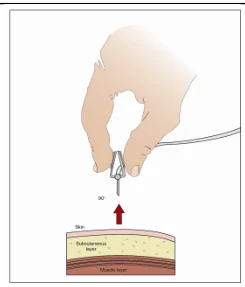
CUVITRU is to be infused under the skin (subcutaneous administration). Do not infuse CUVITRU into your veins (intravenously).
Treatment with CUVITRU will be started by your healthcare profession. You may be allowed to use the medicine at home once you have received the first few infusions under medical supervision and you and your caregiver have been adequately trained. You and your healthcare profession will decide if you can use CUVITRU at home.
Do not begin treatment with CUVITRU at home until you have received complete instructions in the techniques for administering CUVITRU. Only after such instruction should you follow the instructions below.
Whenever giving yourself treatments at home, you should have another responsible person present to help treat side effects or get help if you have a serious adverse reaction. Ask your healthcare professional whether you should have rescue medications, such as antihistamines or epinephrine.
Always use this medicine exactly as your healthcare professional has told you. Check with your healthcare professional if you are not sure.
Prepare CUVITRU vial(s):
- Remove CUVITRU from the box. Allow vials to reach room temperature. This may take up to 90 minutes.
- Do not apply heat or place in microwave.
- Do not shake the vial(s).
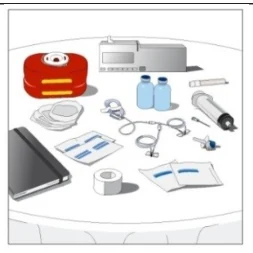
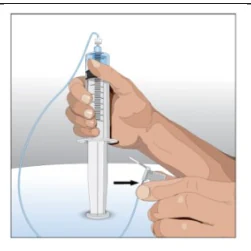
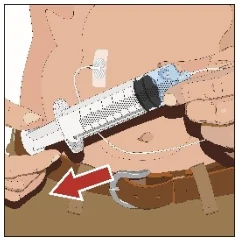
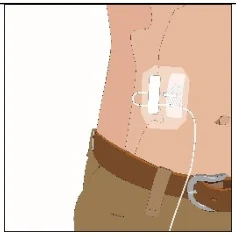
Detailed Instructions for Use are provided in the section below.
| |
|---|---|
|   |
|    |
|  |
|    |
|   |
|  |
| |
|
Usual dose:
The dose depends on your condition and your bodyweight. Your healthcare professional will determine your dose and may change your dose based on your clinical response to CUVITRU therapy. The levels of IgG antibodies in your blood will be measured before your next infusion.
Overdose:
The consequences of an overdose are not known.
If you think you, or a person you are caring for, have taken too much CUVITRU, contact a healthcare professional, hospital emergency department, or regional poison control centre immediately, even if there are no symptoms.
Missed Dose:
Inform your healthcare professional if you missed a dose.
What are possible side effects from using CUVITRU?
These are not all the possible side effects you may feel when taking CUVITRU. If you experience any side effects not listed here, contact your healthcare professional.
The following one or more possible reactions may occur at the site of infusion. These generally go away within a few hours, and are less likely after the first few infusions.
- Mild or moderate pain
- Redness
- Itching
 |
The most common side effects with CUVITRU are:
- Headache
- Nausea
- Fatigue
- Diarrhea
- Vomiting
If any of the following problems occur after starting treatment with CUVITRU, stop the infusion immediately and contact your healthcare professional or call emergency services. These could be signs of a serious problem.
- Hives, swelling in the mouth or throat, itching, trouble breathing, wheezing, fainting or dizziness. These could be signs of a serious allergic reaction.
- Bad headache with nausea, vomiting, stiff neck, fever, and sensitivity to light. These could be signs of irritation of the lining around your brain.
- Reduced urination, sudden weight gain, or swelling in your legs. These could be signs of a kidney problem.
- Pain, swelling, warmth, redness, or a lump in your legs or arms. These could be signs of a blood clot.
- Brown or red urine, fast heart rate, yellow skin or eyes. These could be signs of a liver problem or a blood problem.
- Chest pain or trouble breathing, or blue lips or extremities. These could be signs of a serious heart or lung problem.
- Fever over 37.8°C (100°F). This could be a sign of an infection.
If you have a symptom or side effect that is not listed here, if a listed side-effect worsens, or if it interferes with your daily activities, talk to your healthcare professional.
Reporting Side Effects
You can report any suspected side effects associated with the use of health products to Health Canada by:
- Visiting the Web page on Adverse Reaction Reporting (https://www.canada.ca/en/health-canada/services/drugs-health-products/medeffect-canada.html) for information on how to report online, by mail or by fax; or
- Calling toll-free at 1-866-234-2345.
NOTE: Contact your health professional if you need information about how to manage your side effects. The Canada Vigilance Program does not provide medical advice.
Storage:
Store CUVITRU in the refrigerator at a temperature of 2oC to 8oC for up to 36 months. You can remove CUVITRU from the refrigerator and store at room temperature (not to exceed 25oC) for
- up to 3 months, as long as the 3-month period does not exceed the “Refrig. Exp” (2oC to 8oC) expiry date on the product label.
- You can also store CUVITRU at room temperature (not to exceed 25°C) for up to 24 months. Do not use past the “Room Temp/Ambiante Exp” (up to 25oC) expiry date on the product label.
- Do not return CUVITRU to the refrigerator if you take it out to room temperature.
- Check the expiration date on the carton and vial label. Do not use CUVITRU after the expiration date.
- Do not freeze.
- Do not shake.
- Protect from light. Keep CUVITRU vials in their original cartons to protect the drug from light.
- Keep out of reach and sight of children.
If you want more information about CUVITRU:
- Talk to your healthcare professional
- Find the full product monograph that is prepared for healthcare professionals and includes this Patient Medication Information by visiting the Health Canada website: https://www.canada.ca/en/health-canada/services/drugs-health-products/drug-products/drug-product-database.html; the manufacturer’s website www.takeda.com/en-ca, or by calling 1-800-268-2772.
Takeda Canada Inc.
22 Adelaide Street West, Suite 3800
Toronto Ontario M5H 4E3
Last Revised: June 18, 2026
CUVITRU® is a registered trademark of Baxalta Incorporated.
TAKEDA and the TAKEDA Logo are trademarks of Takeda Pharmaceutical Company Limited, used under license.