


Product Monograph - Inrebic
RECENT MAJOR LABEL CHANGES
| 3 SERIOUS WARNINGS AND PRECAUTIONS BOX | 05/2024 |
|---|---|
| 4 DOSAGE AND ADMINISTRATION, Recommended Dose and Dosage Adjustment, Management of Thiamine Levels and Wernicke’s Encephalopathy (WE) | 05/2024 |
| 4 DOSAGE AND ADMINISTRATION, 4.2 Recommended Dose and Dose Adjustment | 07/2024 |
| 7 WARNINGS AND PRECAUTIONS, Neurologic, Encephalopathy, including Wernicke’s | 05/2024 |
| 7 WARNINGS AND PRECAUTIONS, Monitoring and Laboratory Tests | 05/2024 |
| 7 WARNINGS AND PRECAUTIONS, Ophthalmologic, Uveitis | 02/2025 |
| 9 DRUG INTERACTIONS, 9.4 Drug-Drug Interactions, Strong CYP3A4 inhibitors; Moderate CYP3A4 inhibitors; Dual CYP2C19 and CYP3A4 moderate inhibitors | 07/2024 |
TABLE OF CONTENTS
Sections or subsections that are not applicable at the time of authorization are not listed.
RECENT MAJOR LABEL CHANGES ............................................................................... 2
TABLE OF CONTENTS ...................................................................................................... 2
PART I: HEALTH PROFESSIONAL INFORMATION ...................................................... 5
1 INDICATIONS ........................................................................................................... 5
1.1 Pediatrics .............................................................................................................. 5
1.2 Geriatrics .............................................................................................................. 5
2 CONTRAINDICATIONS ........................................................................................... 5
3 SERIOUS WARNINGS AND PRECAUTIONS BOX .............................................. 5
4 DOSAGE AND ADMINISTRATION ........................................................................ 5
4.1 Dosing Considerations .......................................................................................... 5
4.2 Recommended Dose and Dosage Adjustment ..................................................... 6
4.3 Reconstitution ...................................................................................................... 8
4.4 Administration ...................................................................................................... 8
4.5 Missed Dose ......................................................................................................... 8
5 OVERDOSAGE......................................................................................................... 8
6 DOSAGE FORMS, STRENGTHS, COMPOSITION AND PACKAGING ............. 8
7 WARNINGS AND PRECAUTIONS ......................................................................... 9
7.1 Special Populations ............................................................................................. 11
7.1.1 Pregnant Women ......................................................................................... 11
7.1.2 Breast-feeding .............................................................................................. 12
7.1.3 Pediatrics ...................................................................................................... 12
7.1.4 Geriatrics ....................................................................................................... 12
8 ADVERSE REACTIONS ........................................................................................ 12
8.1 Adverse Reaction Overview ................................................................................ 12
8.2 Clinical Trial Adverse Reactions .......................................................................... 12
8.2.1 Clinical Trial Adverse Reactions – Pediatrics ........................................... 14
8.4 Abnormal Laboratory Findings: Hematologic, Clinical Chemistry and Other Quantitative Data ........................................................................................................... 14
8.5 Post-Market Adverse Reactions ......................................................................... 16
9 DRUG INTERACTIONS ......................................................................................... 16
9.1 Serious Drug Interactions ................................................................................... 16
9.2 Drug Interactions Overview ................................................................................ 16
9.3 Drug-Behavioural Interactions ............................................................................ 16
9.4 Drug-Drug Interactions ....................................................................................... 16
9.5 Drug-Food Interactions ....................................................................................... 20
9.6 Drug-Herb Interactions ....................................................................................... 20
9.7 Drug-Laboratory Test Interactions ...................................................................... 20
10 CLINICAL PHARMACOLOGY .............................................................................. 20
10.1 Mechanism of Action .......................................................................................... 20
10.2 Pharmacodynamics ............................................................................................ 20
10.3 Pharmacokinetics ............................................................................................... 21
11 STORAGE, STABILITY AND DISPOSAL ............................................................ 22
12 SPECIAL HANDLING INSTRUCTIONS ............................................................... 22
PART II: SCIENTIFIC INFORMATION ............................................................................ 23
13 PHARMACEUTICAL INFORMATION .................................................................. 23
14 CLINICAL TRIALS ................................................................................................. 23
14.1 Clinical Trials by Indication ................................................................................. 23
15 MICROBIOLOGY .................................................................................................... 32
16 NON-CLINICAL TOXICOLOGY ............................................................................ 32
PATIENT MEDICATION INFORMATION ........................................................................ 34
PART I: HEALTH PROFESSIONAL INFORMATION
1 INDICATIONS
INREBIC® (fedratinib) is indicated for:
- the treatment of splenomegaly and/or disease related symptoms in adult patients with intermediate-2 or high-risk primary myelofibrosis, post-polycythemia vera myelofibrosis or post-essential thrombocythemia myelofibrosis, including patients who have been previously exposed to ruxolitinib.
1.1 Pediatrics
Pediatrics (<18 years of age): No data are available to Health Canada; therefore, Health Canada has not authorized an indication for pediatric use.
1.2 Geriatrics
Of the total number of patients with myelofibrosis who received an INREBIC dose of 400 mg in the clinical studies, 47.3% were greater than 65 years of age and 12.3% were greater than 75 years of age. No overall differences in safety or effectiveness of INREBIC were observed between these patients and younger patients.
2 CONTRAINDICATIONS
- INREBIC is contraindicated in patients who are hypersensitive to this drug or to any ingredient in the formulation, including any non-medicinal ingredient, or component of the container. For a complete listing, see 6 DOSAGE FORMS, STRENGTHS, COMPOSITION AND PACKAGING.
3 SERIOUS WARNINGS AND PRECAUTIONS BOX
Serious Warnings and Precautions
|
|---|
4 DOSAGE AND ADMINISTRATION
4.1 Dosing Considerations
Renal Impairment:
No starting dose adjustment is necessary for patients with mild to moderate renal impairment. Due to potential increase of exposure, patients with pre-existing moderate renal impairment require more intensive safety monitoring, and if necessary, dose modifications based on adverse reactions. In patients with severe renal impairment
(creatinine clearance (CRcl) 15 mL/min to 29 mL/min), reduce the INREBIC dose to 200 mg once daily.
Hepatic Impairment:
No starting dose adjustment is necessary for patients with mild to moderate hepatic impairment. Due to potential increase of exposure, patients with pre-existing moderate hepatic impairment require more intensive safety monitoring, and if necessary, dose modifications based on adverse reactions. INREBIC pharmacokinetics have not been evaluated in patients with severe hepatic impairment. Avoid use of INREBIC in subjects with severe hepatic impairment (Child-Pugh class C or total bilirubin >3 times ULN and any AST) (see 10 CLINICAL PHARMACOLOGY).
4.2 Recommended Dose and Dosage Adjustment
The recommended dose of INREBIC is 400 mg taken orally once daily for patients with a baseline platelet count of ≥50 x 109/L. A complete blood count should be obtained prior to starting treatment with INREBIC and during treatment as clinically indicated (see 7 WARNINGS AND PRECAUTIONS, Hematologic). Fedratinib has not been studied in patients with a baseline platelet count less than 50 x 109/L.
Patients receiving treatment with ruxolitinib before the initiation of INREBIC must taper and discontinue ruxolitinib according to the ruxolitinib prescribing information.
Modify dose for hematologic and non-hematologic toxicities per Table 1 and Table 2. Discontinue INREBIC in patients who are unable to tolerate a dose of 200 mg daily.
Table 1 Dosage Reductions for Hematologic Toxicities
| Hematologic Toxicity | Dose Reduction |
|---|---|
| Grade 3 Thrombocytopenia with active bleeding or Grade 4 Thrombocytopenia | Interrupt INREBIC dose until resolved to Grade ≤ 2 or baseline. Restart dose at 100 mg daily below the last given dose. |
| Grade 4 Neutropenia | Interrupt INREBIC dose until resolved to Grade ≤ 2 or baseline. Restart dose at 100 mg daily below the last given dose. Granulocyte growth factors may be used at the physician’s discretion. |
| Grade ≥ 3 anemia, transfusion indicated | Interrupt INREBIC dose until resolved to Grade ≤ 2 or baseline. Restart dose at 100 mg daily below the last given dose. |
Consider dose reductions for patients who become transfusion-dependent during treatment with INREBIC.
Table 2 Dosage Reductions for Non-Hematologic Toxicities
| Adverse Reaction | Recommended Action |
|---|---|
| Grade ≥ 3 Nausea, Vomiting, or Diarrhea not responding to supportive measures within 48 hours | Interrupt INREBIC dose until resolved to Grade ≤ 1 or baseline. Restart dose at 100 mg daily below the last given dose. |
| Grade ≥ 3 ALT, AST, or Bilirubin | Interrupt INREBIC dose until resolved to Grade ≤ 1 or baseline. Restart dose at 100 mg daily below the last given dose. Monitor ALT, AST, and bilirubin (total and direct) every 2 weeks for at least 3 months following the dose reduction. If re-occurrence of a Grade 3 or higher elevation, discontinue treatment with INREBIC. |
|---|---|
| Grade ≥ 3 Other Non-Hematologic Toxicities | Interrupt INREBIC dose until resolved to Grade ≤ 1 or baseline. Restart dose at 100 mg daily below the last given dose. |
Dose Re-Escalation Following Dose Reduction for Adverse Drug Reactions
If the adverse reaction due to INREBIC that resulted in a dose reduction is under effective management with the toxicity resolved for at least 28 days, the dose level may be re-escalated to one dose level higher per month up to the original dose level. Dose re-escalation is not recommended if the dose reduction was due to a Grade 4 non-hematologic toxicity, Grade ≥ 3 ALT, AST, or total bilirubin elevation, or reoccurrence of a Grade 4 hematologic toxicity.
Management of Thiamine Levels and Wernicke’s Encephalopathy (WE)
Assess thiamine levels prior to starting INREBIC. Do not start INREBIC treatment in patients with thiamine deficiency; replete thiamine prior to treatment initiation if thiamine levels are low. While on treatment all patients should receive prophylaxis with daily 100 mg oral thiamine and should have thiamine levels assessed as clinically indicated. If Wernicke’s encephalopathy is suspected, immediately discontinue treatment with INREBIC and initiate parenteral thiamine treatment. Monitor until symptoms resolve or improve and thiamine levels normalize (see 7 WARNINGS AND PRECAUTIONS and 8 ADVERSE REACTIONS).
Table 3 Management of Dose Modifications for Thiamine Levels and Wernicke’s Encephalopathy
| Thiamine Level | Recommended Action |
|---|---|
| For thiamine levels below the normal range but greater than or equal to 30 nmol/L without signs or symptoms of WE | Interrupt INREBIC treatment. Dose with daily 100 mg oral thiamine until thiamine levels are restored to normal range. Consider restarting INREBIC when thiamine levels are within normal range. |
| For thiamine levels less than 30 nmol/L without signs or symptoms of WE | Interrupt INREBIC treatment. Immediate treatment with parenteral thiamine at therapeutic dosages until thiamine levels are restored to normal range. Consider restarting INREBIC when thiamine levels are within normal range. |
| For signs or symptoms of WE regardless of thiamine levels | Discontinue INREBIC treatment and immediately administer parenteral thiamine at therapeutic dosages. |
Dose Modification with Concomitant Use of Strong CYP3A4 Inhibitors:
Avoid strong CYP3A4 inhibitors. If concomitant strong CYP3A4 inhibitors cannot be avoided, reduce INREBIC dose to 200 mg. Patients should be carefully monitored weekly for safety.
In cases where co-administration with a strong CYP3A4 inhibitor is discontinued, increase INREBIC dose to 300 mg once daily during the first two weeks after discontinuation of the CYP3A4 inhibitor and then 400 mg once daily thereafter as tolerated. Make additional dose adjustments as needed, based upon INREBIC-related safety and efficacy.
Pediatric patients (< 18 years of age): The safety and efficacy of INREBIC in pediatric or adolescent patients have not been established. Health Canada has not authorized an indication for pediatric use (see 1 INDICATIONS).
4.3 Reconstitution
Not applicable.
4.4 Administration
INREBIC may be taken with or without food. To enhance tolerability, INREBIC should be given with food, preferably with a higher fat content evening meal (see 7 WARNINGS AND PRECAUTIONS and 9 DRUG INTERACTIONS).
The capsules should be swallowed whole, and should not be broken, opened or chewed.
4.5 Missed Dose
If a dose is missed, the next scheduled dose should be taken the following day. The patient should not take 2 doses at the same time to make up for the missed dose.
5 OVERDOSAGE
In the event of overdose, monitor patients for adverse reactions and provide appropriate supportive care.
| For management of a suspected drug overdose, contact your regional poison control centre. |
|---|
6 DOSAGE FORMS, STRENGTHS, COMPOSITION AND PACKAGING
Table 4 Dosage Forms, Strengths, Composition and Packaging
| Route of Administration | Dosage Form / Strength/Composition | Non-medicinal Ingredients |
| Oral | capsule, 100 mg fedratinib (as fedratinib hydrochloride) | gelatin, red iron oxide (E172), silicified microcrystalline cellulose, sodium stearyl fumarate, titanium dioxide (E171), white ink |
INREBIC 100 mg capsules are reddish brown, size 0, opaque with “FEDR” on cap and “100 mg” on body in white ink.
INREBIC capsules are supplied in bottles of 120 capsules.
7 WARNINGS AND PRECAUTIONS
Please see 3 SERIOUS WARNINGS AND PRECAUTIONS BOX.
Carcinogenesis and Mutagenesis
Secondary Malignancies
Another JAK-inhibitor has increased the risk of lymphoma and other malignancies excluding non-melanoma skin cancer (NMSC) (compared to those treated with TNF blockers) in patients with rheumatoid arthritis, a condition for which INREBIC is not indicated. Patients who are current or past smokers are at additional increased risk of secondary malignancies.
Consider the benefits and risks for the individual patient prior to initiating or continuing therapy with INREBIC, particularly in patients with a known malignancy (other than a successfully treated NMSC), patients who develop a malignancy, and patients who are current or past smokers.
Cardiovascular
Major Adverse Cardiac Events (MACE)
Another Janus Kinase (JAK)-inhibitor has increased the risk of MACE, including cardiovascular death, myocardial infarction, and stroke (compared to those treated with TNF blockers) in patients with rheumatoid arthritis, a condition for which INREBIC is not indicated.
Consider the benefits and risks for the individual patient prior to initiating or continuing therapy with INREBIC, particularly in patients who are current or past smokers and patients with other cardiovascular risk factors. Patients should be informed about the symptoms of serious cardiovascular events and the steps to take if they occur.
Driving and Operating Machinery
INREBIC has a minor influence on the ability to drive and use machines. Patients who experience dizziness after taking INREBIC should refrain from driving or using machines.
Gastrointestinal
Nausea, Vomiting and Diarrhea
Nausea, vomiting, and diarrhea were among the most frequent adverse reactions (61.6%, 44.8% and 67.5%, respectively) with a median time to onset of 5, 2 and 6 days of treatment, respectively. In the Phase 3 study, the rates of gastrointestinal events were higher in female than in male patients for nausea (81% vs 46.3%); diarrhea (71.4% vs 61.1%); vomiting (57.1% vs 24.1%), and abdominal pain (21.4% vs 5.6%). Most of the gastrointestinal adverse events were Grade 1 or 2. It is recommended that INREBIC is taken with a higher fat and larger evening meal to minimize nausea and vomiting. Prophylactic antiemetics should be used according to local practice for the first 8 weeks of treatment and then continued as clinically indicated. Diarrhea should be treated with antidiarrheal medications at the first onset of symptoms. For Grade 3 or higher nausea, vomiting, and diarrhea that are not responsive to supportive care within 48 hours interrupt INREBIC until resolved to Grade 1 or less or baseline. Restart dose at 100 mg daily below the last given dose. Monitor thiamine levels and replete as needed (see 4 DOSAGE AND ADMINISTRATION, 8 ADVERSE REACTIONS and 9 DRUG
INTERACTIONS).
Hematologic
Anemia and Thrombocytopenia
Treatment with INREBIC may cause anemia and thrombocytopenia.
A baseline complete blood count should be obtained prior to starting treatment with INREBIC and during treatment as clinically indicated.
New or worsening Grade 3 anemia occurred in 43% of patients with the median time to onset of approximately 2 months. Patients with anemia may require blood transfusions and/or INREBIC dose modifications (see 8 ADVERSE REACTIONS and 4 DOSAGE AND ADMINISTRATION).
Grade 3 or 4 thrombocytopenia including bleeding events occurred in 17% of patients with the median time to onset of approximately 2 months. Patients with thrombocytopenia may require platelet transfusions and/or INREBIC dose modifications (see 8 ADVERSE REACTIONS and 4 DOSAGE AND ADMINISTRATION).
Thrombosis
Another JAK-inhibitor has increased the risk of thrombosis, including deep venous thrombosis, pulmonary embolism, and arterial thrombosis (compared to those treated with TNF blockers) in patients with rheumatoid arthritis, a condition for which INREBIC is not indicated. In patients with MF treated with INREBIC in clinical trials, the rates of thromboembolic events were similar in INREBIC and placebo treated patients.
Patients with symptoms of thrombosis should be promptly evaluated and treated appropriately.
Monitoring and Laboratory Tests
A baseline complete blood count should be obtained prior to starting treatment with INREBIC and during treatment as clinically indicated. Dosage modification is recommended for patients who develop Grade 4 anemia, neutropenia or thrombocytopenia (see 4 DOSAGE AND ADMINISTRATION).
Assess thiamine levels prior to starting INREBIC. Do not start INREBIC treatment unless thiamine levels are normal. While on treatment all patients should receive prophylaxis with oral thiamine and should have thiamine levels assessed as clinically indicated (see 4 DOSAGE AND ADMINISTRATION).
Neurologic
Encephalopathy, including Wernicke’s
Cases of encephalopathy, including Wernicke’s encephalopathy were reported in patients taking INREBIC. Wernicke’s encephalopathy is neurologic emergency resulting from thiamine (Vitamin B1) deficiency. Signs and symptoms of Wernicke’s encephalopathy may include ataxia, mental status changes, and ophthalmoplegia (e.g., nystagmus, diplopia) (see 3 SERIOUS WARNINGS AND PRECAUTIONS BOX and 8 ADVERSE REACTIONS).
Any change in mental status including drowsiness, confusion, or memory impairment should raise concern for potential encephalopathy, including Wernicke’s and prompt a full evaluation including a neurologic examination, assessment of thiamine levels and imaging.
Prior to starting treatment with INREBIC, assess thiamine levels in all patients. Do not start INREBIC treatment unless thiamine levels are normal. While on treatment all patients should receive prophylaxis with oral thiamine and should have thiamine levels assessed as clinically indicated. If Wernicke’s encephalopathy is suspected, immediately discontinue treatment with INREBIC and initiate parenteral thiamine treatment. Monitor until symptoms resolve and thiamine levels normalize (see 4 DOSAGE AND ADMINISTRATION).
Ophthalmologic
Uveitis
Uveitis has been observed in post-approval clinical trials with an overall incidence of 4.4%. The incidence is increased with longer treatment duration and is highest among Japanese patients (19.4%), suggesting variability in risk by ethnicity/race. Fedratinib-associated uveitis is a late-onset adverse event, with the first episode occurring at a median of 14 months after starting treatment, with a range of 8 to 22 months. Among patients developing uveitis, 55% experienced more than one episode, with severity ranging from Grade 1/2 (60%) to Grade 3/4 (40%). Most episodes were managed with topical steroids (75%), while systemic steroids (25%) were required in more severe cases. Treatment discontinuation due to uveitis occurred in 27% of patients.
Advise patients on the risks of developing uveitis before starting fedratinib therapy. Patients should be evaluated at each visit for new or worsening visual symptoms. Certain ethnic groups (such as Asians) may be at higher risk of developing uveitis. Common uveitis symptoms include eye pain, redness, photophobia, floaters, and decreased vision. If new or worsening visual symptoms occur, a prompt ophthalmologic examination is recommended. Withhold, reduce dose, or discontinue permanently based on adverse reaction severity.
Reproductive Health: Female and Male Potential
- Fertility
- There are no human data on the effect of INREBIC on fertility. A fertility study with fedratinib showed no effects on fertility or reproductive performance in male or female rats. However, the exposure at the highest dose (30 mg/kg/day) was only approximately 0.1 times the steady state clinical exposure at the recommended daily dose (see 16 NON-CLINICAL TOXICOLOGY, Reproductive and Developmental Toxicology). There are no data on effects on fertility in animals at clinically relevant exposures.
7.1 Special Populations
7.1.1 Pregnant Women
There are no studies with the use of INREBIC in pregnant women to inform drug-associated risks. If this drug is used during pregnancy, or if the patient becomes pregnant while taking this drug, advise the patient of the potential risk to a fetus. The administration of fedratinib to rats during organogenesis resulted in increased embryo-fetal death, reduced fetal weights, and increased incidence of skeletal variations, all at exposures lower than the steady state clinical exposure based on the AUC at the recommended human dose.
Advise females of reproductive potential to avoid becoming pregnant while receiving INREBIC and to use effective contraception during treatment with INREBIC and for at least 1 month after the last dose.
7.1.2 Breast-feeding
There are no data on the presence of INREBIC or its metabolites in human milk, the effects on the breastfed infant, or the effects on milk production. Because many drugs are excreted in human milk and because of the potential for adverse reactions in breastfed infants, advise women not to breastfeed during treatment with INREBIC and for at least 1 month after the last dose.
7.1.3 Pediatrics
Pediatrics (<18 years of age): No data are available to Health Canada; therefore, Health Canada has not authorized an indication for pediatric use.
7.1.4 Geriatrics
Evidence from clinical studies suggests that use in the geriatric population is not associated with differences in safety or effectiveness. No dosage adjustment is required for INREBIC based on age.
8 ADVERSE REACTIONS
8.1 Adverse Reaction Overview
In a pooled cohort of 203 patients with myelofibrosis (MF) treated with a 400 mg dose of INREBIC in the clinical studies, the most frequent nonhematologic adverse drug reactions were diarrhea, nausea, and vomiting. The most frequent hematologic adverse reactions were anemia and thrombocytopenia. The most frequent serious events regardless of causality included pneumonia (4.4%), cardiac failure (3%), anemia (2.5%), atrial fibrillation, sepsis, pleural effusion, acute kidney injury, and diarrhea (1.5% each). Fatal adverse events not related to disease progression included cardiorespiratory arrest and sepsis (2 patients), cardiogenic shock, and hemorrhagic shock (in one patient, each).
In the placebo-controlled Phase 3 study, JAKARTA, patients received INREBIC 400 mg (n=96) or placebo (n=96) once daily for 6 cycles. Discontinuation for adverse events during the first 6 cycles of treatment, regardless of causality, was observed in 15.8% of patients treated with a 400 mg dose of INREBIC and 8.4% of patients treated with placebo. TEAEs leading to death occurred in 5.2% of patients receiving INREBIC 400 mg daily and in 6.3% of patients treated with placebo.
8.2 Clinical Trial Adverse Reactions
Because clinical trials are conducted under very specific conditions, the adverse reaction rates observed in the clinical trials may not reflect the rates observed in practice and should not be compared to the rates in the clinical trials of another drug. Adverse reaction information from clinical trials is useful for identifying drug-related adverse events and for approximating rates.
The overall safety information of INREBIC was assessed in 608 patients receiving continuous doses in clinical studies including patients with myeloproliferative neoplasms and solid tumors. Serious and fatal encephalopathy, including Wernicke’s encephalopathy, has occurred in INREBIC-treated patients. Serious cases were reported in 1.3% (8/608) of patients treated with INREBIC in clinical trials and 0.16% (1/608) of cases were fatal. Seven patients were taking INREBIC at 500 mg daily prior to the onset of neurologic findings and had predisposing factors such as gastrointestinal adverse events that could have led to thiamine deficiency. Most events resolved after INREBIC treatment cessation with some residual neurological symptoms including memory loss, cognitive impairment, and dizziness (see 3 SERIOUS WARNINGS AND PRECAUTIONS BOX and 7 WARNINGS AND PRECAUTIONS).
In a pooled cohort of 203 patients with primary myelofibrosis, post-polycythemia vera myelofibrosis, or post-essential thrombocythemia myelofibrosis , treated with the recommended clinical dose of INREBIC (400 mg daily), including 97 patients previously exposed to ruxolitinib, the median duration of exposure was 35.6 weeks (range 0.7 to 114.6 weeks). For 95 patients who received placebo in JAKARTA, the median duration of exposure was up to 24.0 weeks (or 6 cycles); only data before the crossover to INREBIC are included. Table 5 summarizes safety data by treatment group for up to 6 cycles.
Table 5 Treatment-emergent adverse events reported in ≥ 5% patients receiving INREBIC 400 mg with a difference from placebo of ≥ 5% (frequencies reported regardless of causality) during the first 6 cycles
Body System Adverse Reaction | INREBIC 400 mg N = 203 (%) | Placebo N = 95 (%) | |||||||||||
| Any Grade | Grade 3/4 | Any Grade | Grade 3/4 | ||||||||||
| Gastrointestinal Disorders | |||||||||||||
| Diarrhea | 127 (62.6) | 11 (5.4) | 15 (15.8) | 0 | |||||||||
| Nausea | 119 (58.6) | 1 (0.5) | 14 (14.7) | 0 | |||||||||
| Vomiting | 80 (39.4) | 4 (2.0) | 5 (5.3) | 0 | |||||||||
| Constipation | 32 (15.8) | 2 (1.0) | 7 (7.4) | 0 | |||||||||
| Infections and infestations | |||||||||||||
| Urinary tract infection | 19 (9.4) | 0 | 1 (1.1) | 0 | |||||||||
| Musculoskeletal and connective tissue disorders | |||||||||||||
| Muscle spasms | 19 (9.4) | 0 | 1 (1.1) | 0 | |||||||||
| Nervous system disorders | |||||||||||||
| Headache | 20 (9.9) | 1 (0.5) | 1 (1.1) | 0 | |||||||||
| Dizziness | 18 (8.9) | 0 | 3 (3.2) | 0 | |||||||||
| Skin and subcutaneous tissue disorders | |||||||||||||
| Pruritis | 20 (9.9) | 0 | 3 (3.2) | 0 | |||||||||
System organ classes and preferred terms are coded using the MedDRA v20.1 dictionary.
Encephalopathy, including Wernicke’s
Cases of serious and fatal encephalopathy, including Wernicke’s were reported in patients taking INREBIC. Serious cases were reported in 1.3% (8/608) of patients treated with INREBIC in clinical trials and 0.16% (1/608) of cases were fatal. Wernicke’s encephalopathy is characterized by acute symptoms of ophthalmoplegia, cerebellar abnormalities such as ataxia and/or altered mental status with specific neuroimaging findings. Seven subjects were taking INREBIC at 500 mg daily prior to the onset of neurologic findings and had predisposing factors such as gastrointestinal adverse events that could have led to thiamine deficiency. Most events resolved with some residual neurological symptoms including memory loss, cognitive impairment, and dizziness, except for 1 subject with metastatic head and neck cancer and severe malnutrition (whose symptoms were not confirmed to be WE), who had a fatal outcome (see 7 WARNINGS AND PRECAUTIONS).
Gastrointestinal Events
Among 203 patients with myelofibrosis who received 400 mg of INREBIC during the entire treatment duration, diarrhea (67.5%), nausea (61.6%), and vomiting (44.8%) were among the most frequent adverse drug reactions associated with fedratinib treatment. Most events were Grade 1 or 2, with Grade 3 events of diarrhea, vomiting, and nausea occurring in 5.4%, 2.0%, and 0.5% of patients, respectively.
These events occurred most frequently in the first 2 cycles of treatment with INREBIC. These events led to permanent treatment discontinuation in 4.0% of patients (see 7 WARNINGS AND PRECAUTIONS).
Thiamine levels
In FEDR-MF-002, a randomized controlled post-marketing study of Fedratinib vs. best available therapy (BAT), the incidence of thiamine levels below the lower limit of normal (< 70 nmol/L) was 20.9% for Fedratinib vs 4.5% for BAT. Thiamine levels < 30 nmol/L were not observed on the study. The median time to the first low thiamine level after initiation of Fedratinib was 29.5 days. The frequency of low thiamine levels in participants receiving Fedratinib was 1.5% in those receiving thiamine supplementation 100 mg orally per day vs. 39.1% in those not receiving thiamine supplementation.
8.2.1 Clinical Trial Adverse Reactions – Pediatrics
Trials were not conducted in pediatric populations.
8.4 Abnormal Laboratory Findings: Hematologic, Clinical Chemistry and Other Quantitative Data
Clinical Trial Findings
Table 6 summarizes laboratory abnormalities in myelofibrosis patients treated with INREBIC 400 mg for up to 6 cycles.
Table 6 Most Common (≥20%) Worst Grade Selected Laboratory Abnormalities Reported in Myelofibrosis Patients Who Received INREBIC 400 mg Dosea, b
| Laboratory Parameter | INREBIC 400 mg N = 203 (%) | Placebo N = 95 (%) | ||
| Any Grade | Grade 3/4 | Any Grade | Grade 3/4 | |
| Blood and Lymphatic System Disorders | ||||
| Anemiac | 201 (99.0) | 88 (43.3) | 86 (90.5) | 24 (25.3) |
| Thrombocytopenia | 128 (63.1) | 34 (16.7) | 45 (47.4) | 9 (9.5) |
| Neutropenia | 45/202 (22.3) | 12/202 (6.0) | 18/92 (19.6) | 5/92 (5.4) |
| Hepatobillary disorders | ||||
| Aspartate aminotransferase increasedc | 105 (51.7) | 2 (1.0) | 27 (28.4) | 1 (1.1) |
| Alanine aminotransferase increasedc | 88 (43.3) | 3 (1.5) | 16 (16.8) | 0 |
| Laboratory Parameter | INREBIC 400 mg N = 203 (%) | Placebo N = 95 (%) | ||
| Any Grade | Grade 3/4 | Any Grade | Grade 3/4 | |
| Investigations | ||||
| Blood bilirubin increasedc | 59 (29.1) | 3 (1.5) | 39 (41.1) | 2 (2.1) |
| Metabolism and nutrition disorders | ||||
| Amylase increased | 41 (20.2) | 3 (1.5) | 7 (7.4) | 0 |
| Lipase increased | 65 (32.0) | 19 (9.4) | 6 (6.4) | 2 (2.1) |
| Renal and urinary disorders | ||||
| Blood creatinine increasedc | 138 (68.0) | 3 (1.5) | 28 (29.5) | 1 (1.1) |
a Worst grade may have occurred at baseline.
b incidence based on laboratory values.
c There were no cases of Grade 4 laboratory abnormalities; frequency includes Grade 3 only.
Anemia
Among 203 patients with myelofibrosis treated with 400 mg of INREBIC, the rate of anemia was 51.7%; 43.3% of patients developed Grade 3 anemia; no patients developed Grade 4 anemia. The median time to onset of the first Grade 3 anemia event was approximately 57 days. Hemoglobin levels reached nadir after 12 to 16 weeks with partial recovery and stabilization after 16 weeks. In the Phase 3 study, JAKARTA, the discontinuation rate due to anemia was low during the first 6 cycles of treatment (1.0% of patients receiving INREBIC and no patients receiving placebo). Overall 61.5% versus 32.3% of patients in the 400 mg INREBIC and placebo treatment groups received red blood cell transfusions over the entire duration of treatment (see 7 WARNINGS AND PRECAUTIONS).
Thrombocytopenia
Among 203 patients treated with 400 mg of INREBIC, 14.3% and 8.9% of patients developed Grade 3 and Grade 4 thrombocytopenia, respectively. The median time to first onset of Grade 3 or 4 thrombocytopenia was approximately 65 days. Thrombocytopenia was managed with supportive treatment, dose reduction, or dose interruption.
In the Phase 3 study, JAKARTA, platelet transfusions were administered to 9 patients receiving 400 mg INREBIC and to 3 patients receiving placebo over the entire duration of treatment. During the first 6 cycles permanent discontinuation of treatment due to thrombocytopenia occurred in 2.1% of patients receiving 400 mg INREBIC and in no patients receiving placebo. In the 400 mg INREBIC group, Grade 4 rectal hemorrhage and Grade 4 hemorrhagic stroke were reported (both in 1 subject), and Grade 5 shock hemorrhagic was reported in 1 subject. No bleeding events were reported in the placebo group.
In the Phase 2 study, JAKARTA2, where all patients had been previously exposed to ruxolitinib, the rates of Grade 3 or 4 thrombocytopenia were 16.5% and 7.2%, respectively. The rate of Grade 3 bleeding events (not associated with thrombocytopenia) was 3% (see 7 WARNINGS AND PRECAUTIONS).
Elevated Liver Enzymes
Elevations of ALT (51.7%) and AST (59.1%), all grades, were reported in a pool of 203 myelofibrosis patients taking 400 mg INREBIC. These events were primarily Grade 1 or 2 and were asymptomatic. Grade 3 or 4 ALT, AST and total bilirubin elevations occurred in 6.4% of patients and were generally reversible with dose modification or permanent treatment discontinuation (see 4 DOSAGE AND ADMINISTRATION).
Elevated Lipase/Amylase
For the entire treatment duration, elevations of amylase (24.1%) and lipase (39.9%), all grades, were reported in myelofibrosis patients taking 400 mg INREBIC. Most of these events were Grade 1 or 2; more severe elevations (Grade 3 or 4) responded to dose modification; the discontinuation rate was 2% (see 4 DOSAGE AND ADMINISTRATION). In the Phase 3 study, JAKARTA, permanent discontinuation of treatment due to elevated amylase and/or lipase occurred in 1.0% of patients receiving INREBIC and in no patients receiving placebo. Pancreatitis was observed in 1 patient in the Phase 3 study at 400 mg without prior elevations of lipase and amylase; the event of pancreatitis resolved with treatment discontinuation.
Elevated Creatinine
Elevations of creatinine (68.0%), all grades, were reported in myelofibrosis patients taking 400 mg of INREBIC. Most of these elevations were primarily asymptomatic Grade 1 or 2 events, with Grade 3 elevations observed in only 1.5% of patients. In the Phase 3 study, JAKARTA, permanent discontinuation of treatment due to elevated creatinine occurred in 2.1% of patients receiving 400mg INREBIC and in no patients receiving placebo.
8.5 Post-Market Adverse Reactions
Eye Disorders: Uveitis
Uveitis has been observed in post-approval clinical trials and post-marketing reports. Patients should be informed of the risk of late-onset uveitis with fedratinib (usually after 8 months). This condition is generally mild to moderate in severity, with higher risk observed in certain ethnic groups (e.g., Asians).
9 DRUG INTERACTIONS
9.1 Serious Drug Interactions
At the time of authorization, no serious drug interactions were identified.
9.2 Drug Interactions Overview
Fedratinib is metabolized by multiple CYPs in vitro, with the predominant contribution from CYP3A4, and with a lesser contribution from CYP2D6, CYP2C19, and flavin-containing monooxygenases (FMOs).
9.3 Drug-Behavioural Interactions
At the time of authorization, drug-behavioural interactions have not been established.
9.4 Drug-Drug Interactions
The drugs listed in this table are based on either drug interaction case reports or studies, or potential interactions due to the expected magnitude and seriousness of the interaction (ie, those identified as contraindicated).
Table 7 Established or Potential Drug-Drug Interactions
| [Proper/Common | Source of | Effect | Clinical comment |
| name] | Evidence | ||
| Drugs that may increase fedratinib plasma concentrations | |||
Strong CYP3A4 inhibitors (e.g., ketoconazole, ritonavir, itraconazole, voriconazole and posaconazole) Moderate CYP3A4 inhibitors (e.g., diltiazem, erythromycin) | CT, T | Co-administration of ketoconazole (strong CYP3A4 inhibitor: 200 mg twice daily) with a single dose of fedratinib (300 mg) increased the fedratinib AUC by approximately 3-fold. Based on physiologically based pharmacokinetic (PBPK) simulations, fedratinib AUC is predicted to increase by 2.5-fold when a single 400 mg oral dose of fedratinib is given together with a strong CYP3A4 inhibitor (ritonavir) versus given alone. Based on PBPK simulations, the co-administration of the moderate CYP3A4 inhibitor erythromycin (500 mg three times daily), or diltiazem (120 mg twice daily), with fedratinib 400 mg QD is predicted to increase fedratinib AUC at steady state by 1.1-fold. | Increased exposure of fedratinib may increase the risk of adverse reactions. Avoid strong CYP3A4 inhibitors. If strong CYP3A4 inhibitors cannot be avoided, reduce INREBIC dose (see 4.2 Recommended Dose and Dosage Adjustment). Adverse reactions following prolonged co-administration of a moderate CYP3A4 inhibitor cannot be excluded. Monitor safety and if necessary, modify INREBIC dose based on adverse reactions. (see 4.2 Recommended Dose and Dosage Adjustment) Grapefruit or grapefruit juice can inhibit CYP3A enzyme activity and should be avoided with INREBIC. |
| Dual CYP2C19 and CYP3A4 moderate inhibitors (e.g., fluconazole) | CT, T | Concomitant administration of INREBIC with a dual CYP3A4 and CYP2C19 inhibitor increases fedratinib exposure. Coadministration of fluconazole (dual inhibitor of CYP3A4 and CYP2C19, 200 mg once daily) with a single dose of fedratinib (100 mg) increased AUC of fedratinib by 1.7-fold. Based on PBPK simulations, coadministration of a dual inhibitor of CYP3A4 and CYP2C19 such as | Increased exposure of fedratinib may increase the risk of adverse reactions. Avoid dual CYP2C19 and CYP3A4 moderate inhibitors. If it cannot be avoided, patients taking concomitant dual CYP2C19 and CYP3A4 moderate inhibitors may require more intensive safety monitoring and if necessary, dose modifications of |
| fluconazole (200 mg once daily) with INREBIC 400 mg once daily is predicted to increase fedratinib AUC at steady state by approximately 1.5-fold. | INREBIC based on adverse reactions. (see 4.2 Recommended Dose and Dosage Adjustment). | ||
| Drugs that may decrease fedratinib plasma concentrations | |||
| Strong and moderate CYP3A4 inducers (e.g., phenytoin, rifampicin, efavirenz), including herbal agents and food (e.g., St John's wort) | CT, T | Co-administration of rifampicin (strong CYP3A4 inducer: 600 mg once daily) or efavirenz (moderate CYP3A4 inducer: 600 mg once daily) with a single dose of fedratinib (500 mg) decreased AUCinf of fedratinib by approximately 80% or 50%, respectively. | Strong and moderate CYP3A4 inducers can decrease fedratinib activity and should be avoided in patients receiving INREBIC. |
| Proton Pump Inhibitors (PPI) (e.g., pantoprazole) | CT | Co-administration of an oral proton pump inhibitor, pantoprazole (40 mg once daily on days 1-7) and INREBIC (500 mg orally once on day 7) increased fedratinib AUC by approximately 1.15-fold. | INREBIC dose does not need to be adjusted when taken with drugs that increase gastric pH (such as antacids, histamine-2 blockers, and PPIs). |
| Effect of fedratinib on CYP3A4 substrates | |||
| CYP3A4 substrates (e.g., midazolam) | CT | Concomitant administration of INREBIC with the CYP3A4 substrate midazolam increased midazolam AUC by 4-fold. | INREBIC should be used with caution with drugs that are sensitive CYP3A4 substrates. Dose modifications of drugs that are CYP3A4 substrates should be made as needed with close monitoring of safety and efficacy. |
| Effect of fedratinib on CYP2C19 substrates | |||
CYP2C19 substrates (e.g., omeprazole) | CT | Concomitant administration of INREBIC with the CYP2C19 substrate omeprazole increased omeprazole AUC by 3-fold. | INREBIC should be used with caution with drugs that are sensitive CYP2C19 substrates. Dose modifications of drugs that are CYP2C19 substrates should be made as needed with |
| close monitoring of safety and efficacy. | |||
| Effect of fedratinib on CYP2D6 substrates | |||
| CYP2D6 substrates (e.g., metoprolol) | CT | Concomitant administration of INREBIC with the CYP2D6 substrate metoprolol increased metoprolol AUC by 2-fold. | INREBIC should be used with caution with drugs that are sensitive CYP2D6 substrates. Dose modifications of drugs that are CYP2D6 substrates should be made as needed with close monitoring of safety and efficacy. |
| Effect of fedratinib on drug transporter substrates | |||
| P-gp substrates (e.g., digoxin) | CT | Co-administration of a single dose of fedratinib (600 mg) with a single dose of digoxin (0.25 mg) had no clinically meaningful effect on the plasma exposure of digoxin. | The combination is not predicted to have any clinical effects. |
| OATP1B1/1B3 and BCRP substrate (e.g., rosuvastatin) | CT | Co-administration of a single dose of fedratinib (600 mg) with a single dose of rosuvastatin (10 mg) had no clinically meaningful effect on the plasma exposure of rosuvastatin. | The combination is not predicted to have any clinical effects. |
| OCT2 and MATE1/2-K substrates, (e.g., metformin) | CT | Co-administration of single dose of fedratinib (600 mg) with a single dose of metformin (1000 mg) had no clinically meaningful effect on the plasma exposure of metformin. Renal clearance of metformin was decreased by 36% in the presence of fedratinib. Co-administration of single dose of fedratinib (600 mg) with a single dose of metformin (1000 mg) in the fasted state increased the baseline adjusted plasma glucose AUC(0-3h) and Cmax by 51% and 27%, respectively. | For agents that are renally excreted via OCT2 and MATE1/2-K, closely monitor the efficacy and safety and make dose adjustments as necessary when taking these agents. Monitor blood glucose levels regularly when taking metformin. |
Legend: CT = Clinical Trial; T = Theoretical
P-gp inhibitors
Fedratinib is a substrate of P-glycoprotein (P-gp) in vitro. No clinical data is available.
In vitro drug interactions: Effect of fedratinib on drug transporters
In vitro, fedratinib inhibits P-gp, BCRP, MATE1, MATE2-K, OATP1B1, OATP1B3, and OCT2, but not BSEP, MRP2, OAT1, and OAT3.
9.5 Drug-Food Interactions
INREBIC may be taken with or without food. In clinical studies, INREBIC was administered on an empty stomach. To minimize nausea and vomiting, INREBIC should be given with food, preferably with an evening meal. A dedicated drug-food interaction study demonstrated that the exposure to INREBIC was not affected by food (see 10.3 Pharmacokinetics). However, a high-fat, high calorie meal significantly decreased nausea and vomiting associated with INREBIC. A larger meal with a higher fat content, such as an evening meal, may be more effective in improving tolerability than a smaller low-fat meal. (see 4 DOSAGE AND ADMINISTRATION).
9.6 Drug-Herb Interactions
Drug-Herb interactions have not been studied.
9.7 Drug-Laboratory Test Interactions
There is no known interference with laboratory tests.
10 CLINICAL PHARMACOLOGY
10.1 Mechanism of Action
Fedratinib is an oral kinase inhibitor with activity against wild type and mutationally activated Janus Associated Kinase 2 (JAK2) and FMS-like tyrosine kinase 3 (FLT3). Fedratinib is a JAK2-selective inhibitor with higher potency for JAK2 over family members JAK1, JAK3, and TYK2. Abnormal activation of JAK2 is associated with myeloproliferative neoplasms (MPNs), including myelofibrosis and polycythemia vera. In cell models expressing mutationally active JAK2, fedratinib reduced phosphorylation of signal transducer and activator of transcription (STAT3/5) proteins, inhibited cell proliferation, and induced apoptotic cell death. In mouse models of JAK2V617F-driven myeloproliferative disease, fedratinib blocked phosphorylation of STAT3/5, and improved survival and disease-associated signs, (including white blood cell counts, hematocrit, splenomegaly, and fibrosis.)
10.2 Pharmacodynamics
Fedratinib inhibits cytokine induced STAT3 phosphorylation in whole blood from myelofibrosis patients. A single dose administration of 300, 400, or 500 mg of fedratinib resulted in maximal inhibition of STAT3 phosphorylation approximately 2 hours after dosing, with values returning to near baseline at 24 hours. Similar levels of inhibition were achieved at steady state PK on Cycle 1 Day 15, after administration of 300, 400, or 500 mg of fedratinib per day.
Cardiac Electrophysiology
The potential for QTc prolongation with fedratinib was evaluated in patients with solid tumors. Fedratinib 500 mg doses every day for 14 days did not prolong the QT interval to any clinically relevant extent. The largest time-matched mean QTcF difference for fedratinib vs. placebo observed at 4-hour post-dose was 4.32 msec (90% confidence interval [CI]: 1.16, 7.49), with the upper bound of the 2-sided 90% CI being lower than 10 msec.
10.3 Pharmacokinetics
Table 8 Summary of Fedratinib Pharmacokinetic Parameters for Day 1 Cycle 1 in Myelofibrosis Patients receiving 400 mg INREBIC (n=10)
| Cmax (ng/mL) | tmax (hours) | AUC0-24 (ng.h/mL) | |||
|---|---|---|---|---|---|
| Mean (SD) | Geometric Mean (CV%) | Median | Range | Mean (SD) | Geometric Mean (CV%) |
| 1431 (754) | 1294 (47) | 2.0 | 1.0, 4.0 | 9610 (3449) | 9133 (33) |
Absorption
Fedratinib is rapidly absorbed following oral administration, achieving Cmax within 0.5 to 4 hours. Based on a mass balance study in humans, oral absorption of fedratinib is estimated to be approximately 77%.
At a dose of 400 mg, the mean steady state fedratinib AUC is approximately 29000 ng·h/mL in patients with MF. Steady state plasma levels are reached within 15 days of once daily dosing, with an approximately 3-fold accumulation.
No effect on exposure of fedratinib was observed upon administration of fedratinib with a high-fat, high-calorie meal (approximately 815 calories of which 52% were derived from fat), and a low-fat, low-calorie meal (approximately 162 calories of which 6% were derived from fat) (see 9 DRUG INTERACTIONS).
Distribution:
The apparent volume of distribution of fedratinib at steady-state is 1770 L in patients with myelofibrosis at 400 mg once daily dose. Fedratinib is 92% or greater bound to human plasma proteins.
Metabolism:
Fedratinib is metabolized by multiple CYPs in vitro, with the predominant contribution from CYP3A4, and with a lesser contribution from CYP2C19, and flavin-containing monooxygenases (FMOs).
Fedratinib was the predominant entity (approximately 80% of plasma radioactivity) in systemic circulation after oral administration of radiolabeled-fedratinib. None of the metabolites contribute greater than 10% of total drug related exposure in plasma.
Elimination
Following a single oral dose of radiolabeled-fedratinib, elimination was primarily through metabolism with approximately 77% of radioactivity excreted in feces and only approximately 5% of the radioactivity excreted in urine. Unchanged drug was the major component in excreta, accounting on average for approximately 23% and 3% of the dose in feces and urine, respectively.
Fedratinib has a terminal half-life of approximately 62 hours to 78 hours in the 300 mg to 500 mg dose range and CL/F is approximately 13 L/hr (CV% 51). The kinetic profiles of the parent drug and its prominent metabolite are similar.
Special Populations and Conditions
In a population pharmacokinetics analysis of cumulative data from 452 patients, no clinically meaningful effect on the pharmacokinetics of fedratinib was observed with regard to age (20 years to 95 years), race, sex, body weight (40 kg to 135 kg), mild [defined as total bilirubin ≤upper limit of normal (ULN) and AST >ULN or total bilirubin 1 to 1.5 times ULN and any AST] or moderate (defined as total bilirubin >1.5 to 3 times ULN and any AST) hepatic impairment, and mild (defined as 60 ≤CRcl <90 mL/min) renal impairment.
- Pediatrics Fedratinib pharmacokinetics in children has not been evaluated.
Geriatrics In a population pharmacokinetics analysis of cumulative data from patients, age was not a significant covariate influencing AUC.
No clinically meaningful effect on the pharmacokinetics of fedratinib was observed with regard to age (20 years to 95 years). Therefore, no dose adjustment based on age is recommended for elderly subjects.
Hepatic Insufficiency The safety and pharmacokinetics of a single oral 300 mg dose of fedratinib were evaluated in a study in subjects with normal hepatic function and with mild hepatic impairment [Child-Pugh A]. No clinically meaningful effect on the pharmacokinetics of fedratinib was observed in subjects with mild hepatic impairment compared to that in subjects with normal hepatic function.
INREBIC pharmacokinetics has not been evaluated in patients with severe hepatic impairment (Child-Pugh Class C). Avoid use of INREBIC in subjects with severe hepatic impairment.
- Renal Insufficiency Following a single 300 mg dose of fedratinib, the AUCinf of fedratinib increased by 1.5-fold in subjects with moderate (CRcl 30 mL/min to 59 mL/min by Cockcroft-Gault) renal impairment and 1.9-fold in subjects with severe (CRcl 15 mL/min to 29 mL/min by Cockcroft-Gault) renal impairment, compared to that in subjects with normal renal function (CRcl ≥90 mL/min by Cockcroft-Gault) (see 4 lDOSAGE AND ADMINISTRATION).
11 STORAGE, STABILITY AND DISPOSAL
Store at room temperature (15 to 30°C).
12 SPECIAL HANDLING INSTRUCTIONS
Dispose of any unused medicinal product or waste material in accordance with local requirements.
PART II: SCIENTIFIC INFORMATION
13 PHARMACEUTICAL INFORMATION
Drug Substance
Proper name: fedratinib hydrochloride
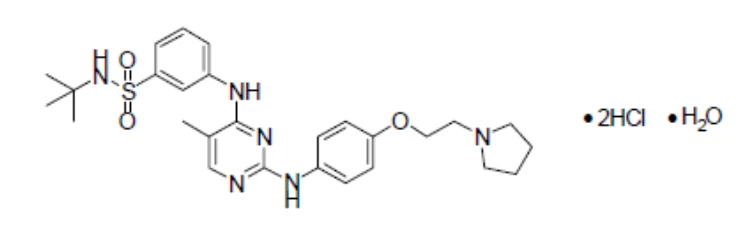
Chemical name: N-tert-butyl-3-[(5-methyl-2-{[4-(2-pyrrolidin-1-ylethoxy)phenyl]amino}pyrimidin-4-yl)amino]benzenesulfonamide dihydrochloride monohydrate
Molecular formula and molecular mass: C27H36N6O3S 2HCl, H2O; 524.68 as free base (615.62 as dihydrochloride monohydrate)
Structural formula:
Physicochemical properties: The drug substance is a white to off-white powder with pKa values of 6.3 and 9.5. The solubility of fedratinib hydrochloride in aqueous media decreases over the range pH 1.1 to pH 7.2 from 112 mg/mL to 0.004 mg/mL. The melting point is 218°C.
14 CLINICAL TRIALS
14.1 Clinical Trials by Indication
JAKARTA
Patients with primary or secondary myelofibrosis (MF) classified as intermediate-risk level 2 or high-risk by modified International Working Group for Myelofibrosis Research and Treatment criteria (IWG-MRT).
Table 9 Summary of Trial Design and Patient Demographics for JAKARTA
| Study | Trial design | Dosage, route of administration and duration | Study subjects (n) | Mean age (Range) | Sex |
|---|---|---|---|---|---|
| JAKARTA | Double-blind, randomized, 3-arm, placebo-controlled Phase 3 study | INREBIC 400 mg or 500 mg once daily, orally or placebo | INREBIC 400 mg (N=96) INREBIC 500 mg (N=97) Placebo (N=96) | 63 years (39 - 86) 36.5% > 65 years 65 years (39 – 80) 49.5% > 65 years 65 years (27 – 85) 54.2% > 65 years | 56.3% male 43.7% female 62.9% male 37.1% female 57.3% male 42.7% female |
JAKARTA was a double-blind, randomized, placebo-controlled Phase 3 study in patients with intermediate-2 or high-risk myelofibrosis, post-polycythemia vera myelofibrosis or post-essential thrombocythemia myelofibrosis with splenomegaly and platelet count ≥50 x 109/L. A total of 289 patients were randomized to receive either INREBIC 500 mg (N=97), 400 mg (n=96), or placebo (n=96) once daily for at least six 28-day cycles. Among these, the median age was 65 years (range 27 to 86 years), 47% of patients were older than 65 years, and 59% were male. Sixty-four percent (64%) of patients had primary MF, 26% had post-polycythemia vera MF, and 10% had post-essential thrombocythemia MF. Overall, 67% of patients presented with V617F mutations of JAK2. Fifty-two percent (52%) of patients had intermediate-2 risk, and 48% had high-risk disease. The median hemoglobin count at baseline was 10.2 g/dL. The median platelet count at baseline was 213.5 x 10⁹/L; 16.3% of patients had a platelet count <100 x 109/L, and 83.7% of patients had a platelet count ≥100 x 109/L. Patients had a median palpable spleen length of 15 cm at baseline and a median spleen volume as measured by magnetic resonance imaging (MRI) or computed tomography (CT) of 2568 mL (range of 316 to 8244 mL) at baseline. (The median normal spleen volume is approximately 215 mL).
The primary efficacy endpoint was the proportion of patients achieving a greater than or equal to 35% reduction from baseline in spleen volume at the End of Cycle 6 as measured by MRI or CT and confirmed 4 weeks later.
One of the secondary endpoints was the proportion of patients with a 50% or greater reduction in Total Symptom Score (TSS) from baseline to the End of Cycle 6 as measured by the modified Myelofibrosis Symptoms Assessment Form (MFSAF) v2.0 diary.
Efficacy analyses for patients on INREBIC 400 mg and placebo treatment arms are presented in Table 10.
Table 10 Percent of Patients Achieving Spleen Volume Reduction and Spleen Size Reduction from Baseline to the End of Cycles 3 and 6 in the Phase 3 Study, JAKARTA (ITT Population)
| Spleen Volume and Spleen Size at the End of Cycles 3 and 6 | INREBIC 400 mg N=96 n (%) (95% CI)a | Placebo N=96 n (%) (95% CI)a | |||
|---|---|---|---|---|---|
| Spleen Volume | |||||
| Number (%) of Patients with Spleen Volume Reduction by 35% or More at end of cycle 6 | 45 (46.9) (36.9, 56.9) | 1 (1.0) (0, 3.1) | |||
| p-value | p<0.0001 | ||||
| Number (%) of Patients with Spleen Volume Reduction by 35% or More at end of cycle 6 (with a Scan 4 Weeks Later) | 35 (36.5) (26.8, 46.1) | 1 (1.0) (0, 3.1) | |||
| p-value | p<0.0001 | ||||
| Number (%) of Patients with Spleen Volume Reduction by 35% or More at end of cycle 3 | 41 (42.7) (32.8, 52.6) | 1 (1.0) (0, 3.1) | |||
| p-value | p<0.0001 | ||||
| Number (%) of Patients with Spleen Volume Reduction by 25% or More at end of cycle 6 (with a scan 4 weeks later) | 47 (49.0) (39.0, 59.0) | 2 (2.1) (0, 4.9) | |
|---|---|---|---|
| p-value | p<0.0001 | ||
| Spleen Size | |||
| Number (%) of Patients with Spleen Size Reduction by 50% or More at end of cycle 6 | 37 (38.5) (28.8, 48.3) | 3 (3.1) (0, 6.6) | |
aConfidence intervals are calculated using Normal approximation
A higher proportion of patients in the INREBIC 400 mg group achieved a greater than or equal to 35% reduction from baseline in spleen volume (Table 11) regardless of the presence or absence of the JAK2V617F mutation.
Table 11 Percent of Patients Achieving 35% or Greater Reduction from Baseline in Spleen Volume by JAK Mutation Status at the End of Cycle 6 in the Phase 3 Study, JAKARTA (ITT Population)
INREBIC 400 mg N=96 | Placebo N=96 | |||||||||
|---|---|---|---|---|---|---|---|---|---|---|
| JAK mutation status | Positive N=62 n (%) (95% CI)a | Negative N=30 n (%) (95% CI)a | Positive N=59 n (%) (95% CI)a | Negative N=32 n (%) (95% CI)a | ||||||
| Number (%) of Patients (95% CI) with Spleen Volume Reduced by 35% or More at end of cycle 6 | 34 (54.8) (42.5, 67.2) | 10 (33.3) (16.5, 50.2) | 0 -- | 1 (3.1) (0, 9.2) | ||||||
aConfidence intervals are calculated using Normal approximation
Figure 1 shows the percent change in spleen volume by MRI/CT from baseline for each patient who had an evaluable measurement at baseline and at the End of Cycle 6 (EOC6).
Figure 1 Percent Change in Spleen Volume from Baseline at End of Cycle 6 for Each Patient in the Phase 3 Study, JAKARTA
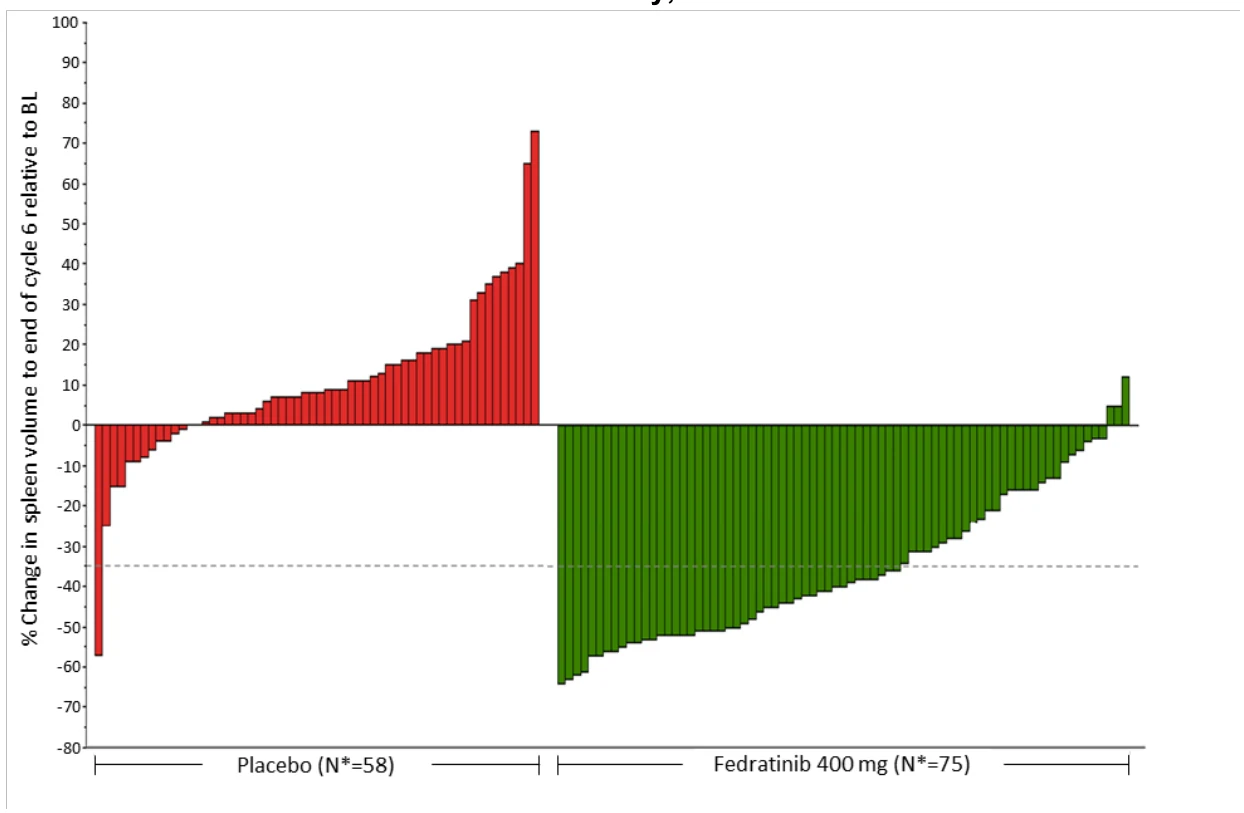
N*: Subjects with available percent change in spleen volume at EOC6.
Based on Kaplan-Meier estimates, the median duration of spleen response was 18.2 months for the INREBIC 400 mg group.
The modified MFSAF included 6 key MF associated symptoms: night sweats, itching, abdominal discomfort, early satiety, pain under ribs on left side, and bone or muscle pain. The symptoms were measured on a scale from 0 (absent) to 10 (worst imaginable).
The proportion of patients with a 50% or greater reduction in Total Symptom Score (TSS) was 40.4% in the INREBIC 400 mg group and 8.6% in the placebo group (Table 12).
Table 12 Improvement in Total Symptom Score in Patients in the Phase 3 Study, JAKARTA
INREBIC 400 mg N=89 n (%) (95% CI)a | Placebo N=81 n (%) (95% CI)a | |||
|---|---|---|---|---|
| Number (%) of Patients with 50% or Greater Reduction in Total Symptom Score at the End of Cycle 6 | 36 (40.4) (30.3, 50.6) | 7 (8.6) (2.5, 14.8) | ||
| p-value | p<0.0001 | |||
aConfidence intervals are calculated using Normal approximation
Figure 2 shows the percent change in Total Symptom Score from baseline at the End of Cycle 6 for each patient.
Figure 2 Percent Change from Baseline in Total Symptom Score at the End of Cycle 6 for Each Patient in the Phase 3 Study, JAKARTA
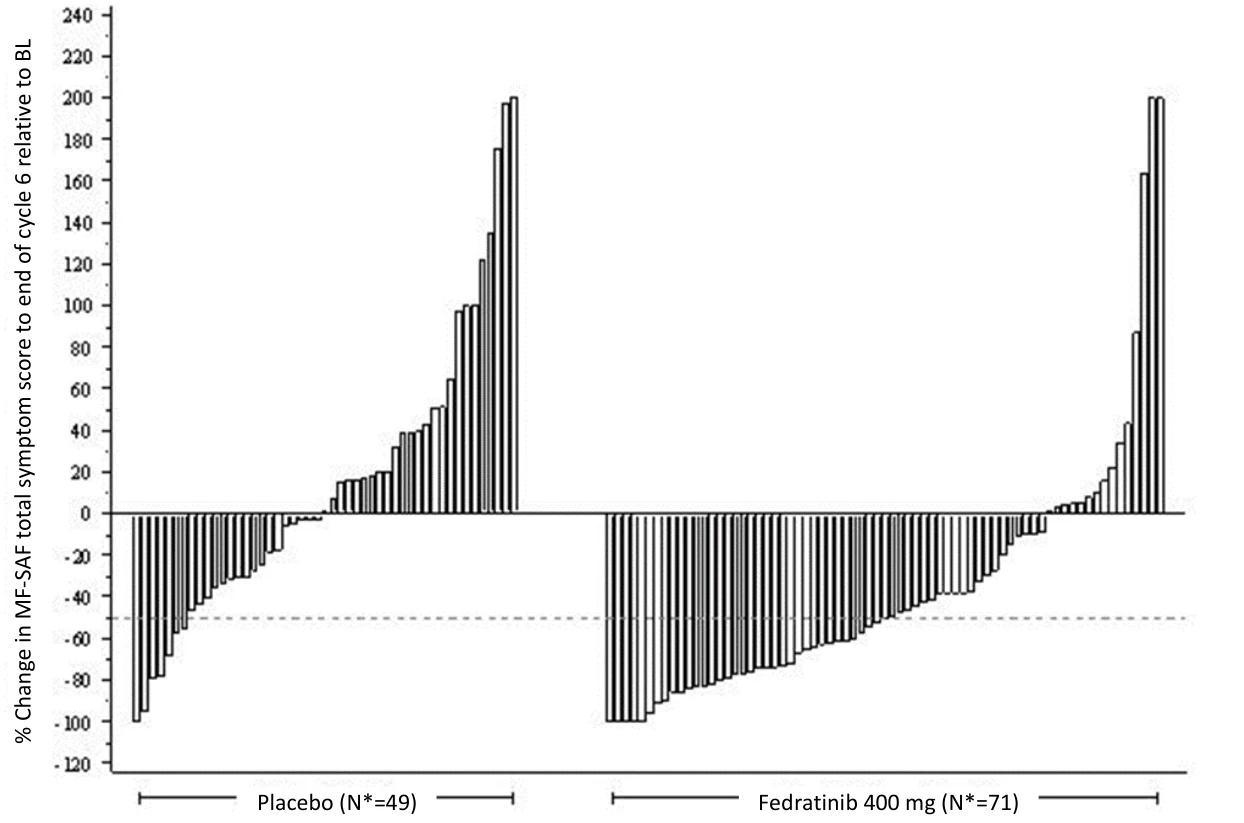
N*: Subjects with available percent change in total symptom score at EOC6.
At the End of Cycle 6, patients treated with INREBIC 400 mg experienced median changes in the following 3 key individual symptoms physically related to the spleen size, specifically:
% Chan ge in MF -SAF total symp tom score to e nd of cycle 6 relativ e to B L
Fedratinib 400 mg (N*=71)
Placebo (N*=49)
-50.0% for abdominal discomfort; -66.6% for early satiety; and -61.4% for pain under ribs on left side. In the placebo group, the median percentage change for these 3 spleen-related symptoms was +4.0%, +6.1%, and -7.0%, respectively. Patients in the INREBIC 400 mg group had the greatest median percentage change at the End of Cycle 6 for the individual symptom of night sweats (-84.2% vs. 13.5% in the placebo group). The median percentage change was -27.6% for bone or muscle pain in the 400 mg group vs. +6.5% in the placebo group, and -46.7% for itching in the 400 mg group vs. -35.6% in the placebo group.
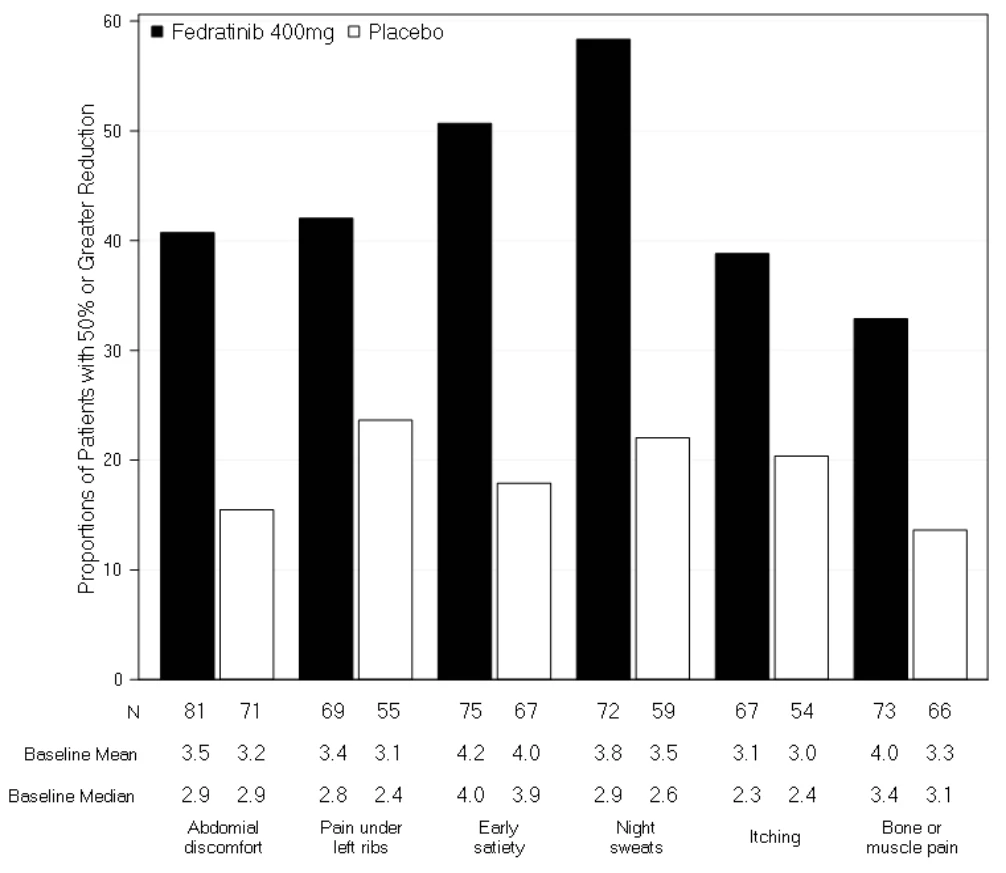
Figure 3 displays mean percent changes across the 6 individual symptoms scores included in the TSS. This figure shows a meaningful improvement from baseline for all 6 symptoms in the group treated with INREBIC 400 mg.
Figure 3 Proportion of Patients Achieving 50% or Greater Reduction in Individual Symptom Scores at the End of Cycle 6 with Non-Zero Baseline Scores
JAKARTA2
Intermediate and high-risk (by modified IWG-MRT criteria) primary and secondary myelofibrosis patients previously exposed to ruxolitinib
Table 13 Summary of Trial Design and Patient Demographics for JAKARTA2
| Study | Trial design | Dosage, route of administration and duration | Study subjects (n) | Mean age (Range) | Sex |
|---|---|---|---|---|---|
| JAKARTA2 | Open-label, single-arm study | INREBIC 400 mg, once daily, orally, upwards titration permitted | 97 | 67 years (38 – 83) 57.7% > 65 years | 54.6% male 45.4% female |
JAKARTA2 was a multicenter, open-label, single-arm study in patients previously exposed to ruxolitinib with a diagnosis of intermediate-1 with symptoms, intermediate-2 or high-risk primary myelofibrosis, post-polycythemia vera myelofibrosis or post-essential thrombocythemia myelofibrosis with splenomegaly and platelet count ≥50 x 109/L. A total of 97 patients were enrolled and treated with INREBIC 400 mg once daily. The median age was 67 years (range 38 to 83 years) with 58% of patients older than 65 years and 55% were male. Fifty-five percent (55%) of patients had primary MF, 26% had post-polycythemia vera MF, and 19% had post-essential thrombocythemia MF. Sixteen percent (16%) of patients had intermediate-1 with symptoms, 49% had intermediate-2, and 35% had high-risk disease. The median hemoglobin count was 9.8 g/dL at baseline. The median platelet count was 147.0 x 10⁹/L at baseline; 34.0% of patients had a platelet count <100 x 109/L, and 66.0% of patients had a platelet count ≥100 x 109/L. Patients had a median palpable spleen length of 18 cm at baseline and a median spleen volume as measured by magnetic resonance imaging (MRI) or computed tomography (CT) of 2893.5 mL (range of 737 to 7815 mL) at baseline.
The median duration of prior exposure to ruxolitinib was 10.7 months (range 0.1 to 62.4 months). Seventy-one percent (71%) of patients had received doses of either 30 mg or 40 mg daily of ruxolitinib prior to study entry.
The primary efficacy endpoint was the proportion of patients achieving a greater than or equal to 35% reduction in spleen volume from baseline to the End of Cycle 6 as measured by MRI or CT.
One of the secondary endpoints included symptom response rate defined as the proportion of patients with a 50% or greater reduction in Total Symptom Score (TSS) from baseline to the End of Cycle 6 as measured by the modified Myelofibrosis Symptoms Assessment Form (MFSAF) v2.0 diary.
For the primary endpoint, the proportion of patients on INREBIC 400 mg who achieved a greater than or equal to 35% reduction in spleen volume reduction by MRI or CT at the End of Cycle 6 was 30.9% and at the End of Cycle 3 was 40.2% (Table 14).
Table 14 Percent of Patients Achieving 35% or Greater Reduction from Baseline in Spleen Volume at the End of Cycles 3 and 6 in the Phase 2 Study, JAKARTA2 (ITT Population)
INREBIC (N=97) n (%) (95% CI)a | |
|---|---|
| Number (%) of Patients with 35% or Greater Reduction in Spleen Volume at the End of Cycle 6 | 30 (30.9) (21.9, 41.1) |
| Number (%) of Patients with 35% or Greater Reduction in Spleen Volume at the End of Cycle 3 | 39 (40.2) (30.4, 50.7) |
a Confidence interval estimated by Clopper-Pearson Exact method
The percent change in spleen volume from baseline to the End of Cycle 6 for each patient is shown in Figure 4.
Figure 4 Waterfall Plot of Percent Change in Spleen Volume from Baseline to the End of Cycle 6 in the Phase 2 Study, JAKARTA2
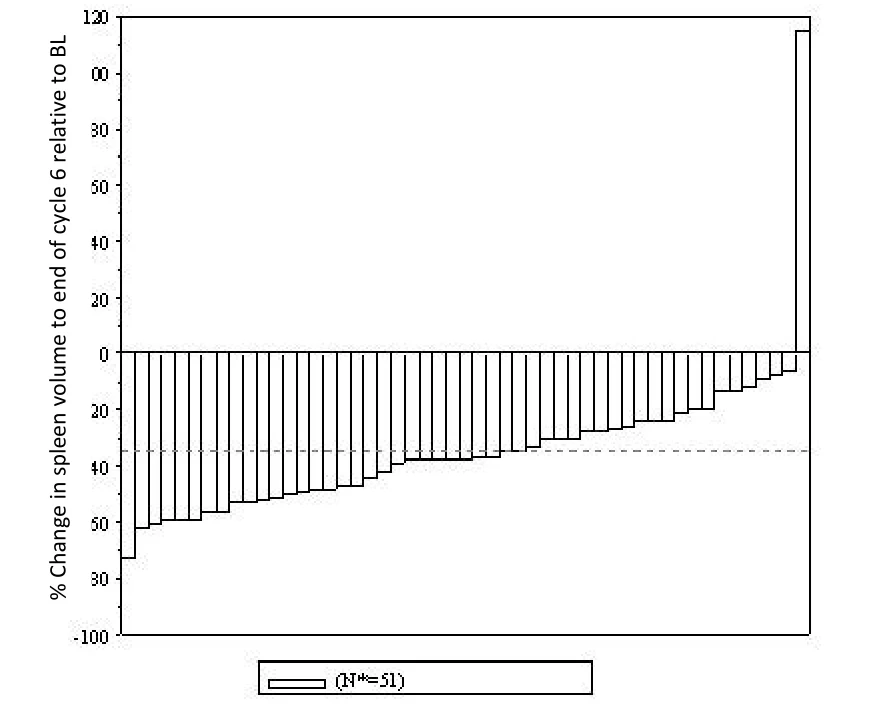
n*: Patients with available percent change in spleen volume at EOC6.
The proportion of patients with an available baseline assessment achieving a greater than or equal to 50% reduction in TSS from baseline to the End of Cycle 6 was 26.7% (Table 15).
% Chan ge in spleen volume to end of cycle 6 relat ive to BL
Table 15 Percent Change from Baseline in Total Symptom Score at the End of Cycle 6 in the Phase 2 Study, JAKARTA2 (MFSAF Analysis Population)
INREBIC (N=90) n (%) (95% CI)a | |
|---|---|
| Number (%) of Patients with 50% or Greater Reduction in Total Symptom Score at the End of Cycle 6 | 24 (26.7) (17.9, 37) |
a Confidence interval estimated by Clopper-Pearson Exact method.
The median percent change in modified MFSAF TSS at the End of Cycle 6 was −44.3%, indicating an improvement of approximately 44% in MF-related symptoms. Most subjects in the MFSAF Analysis Population had a decrease in the modified MFSAF TSS at the End of Cycle 6 (Figure 5).
Figure 5 Waterfall Plot of Percent Change from Baseline in Total Symptom Score at the End of Cycle 6 as Measured by the Modified MFSAF in the Phase 2 Study, JAKARTA2
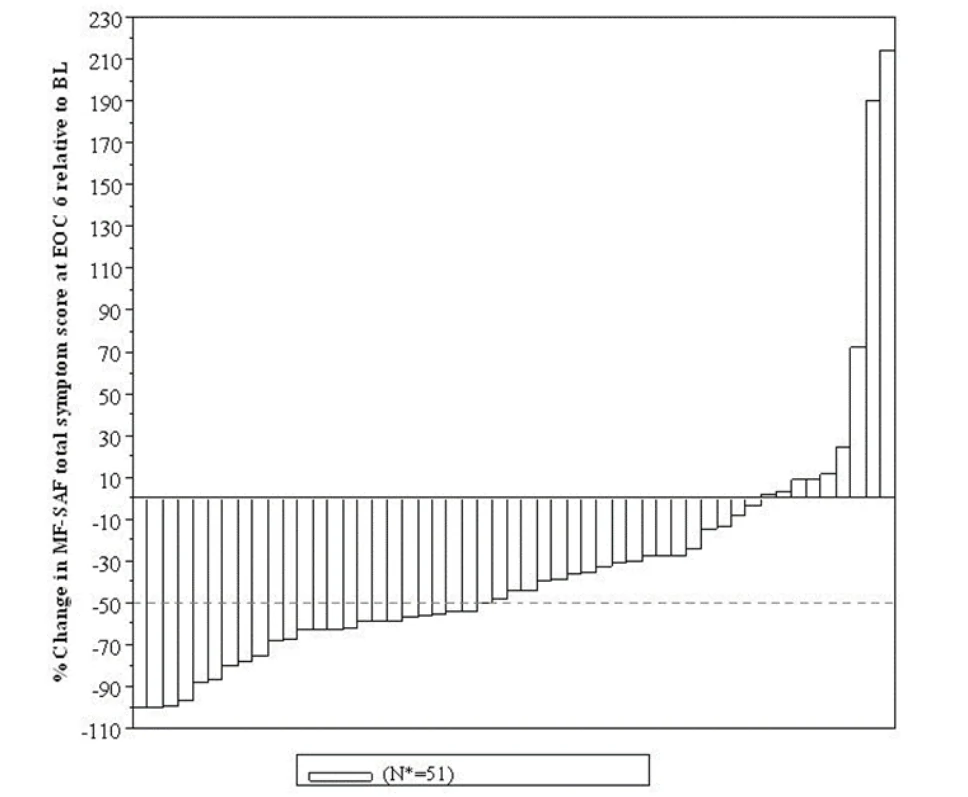
Note: Total Symptom Score is defined as the sum of the daily average score of the six item measures in a week: night sweats, pruritus, abdominal discomfort, early satiety, pain under ribs on left side, and bone or muscle pain.
N*: Patients with available percent change in total symptom score at EOC6.
All key symptoms assessed showed an improvement at the End of Cycle 6, with a median reduction of -22.2% in bone or muscle pain, -44.1% in itching, -46.2% in abdominal discomfort, -51.3% in early satiety, -76.0% in night sweats, and -83.3% in pain under ribs on left side.
15 MICROBIOLOGY
No microbiological information is required for this drug product.
16 NON-CLINICAL TOXICOLOGY
General Toxicology: Target organs of fedratinib in repeated dose studies included bone marrow (hypoplasia) and liver (bile duct hypertrophy and necrosis, hepatocellular necrosis and degeneration, Kupffer cell hyperplasia, and cholestasis). Effects were also observed in the lymphoid tissues (atrophy of thymus, spleen, mesenteric lymph nodes; histiocytic infiltrates in mesenteric lymph node), lungs (histiocytic infiltration), skeletal muscle (necrosis), non-glandular stomach (edema and squamous cell hyperplasia), intestines (glandular atrophy), heart (increased incidence of cardiomyopathy), and male reproductive organs (aspermia, seminiferous tubule degeneration). Pneumonia and abscesses were also observed at lethal doses in dogs, possibly secondary to effects on the bone marrow and lymphoid organs. A comparison of animal and human exposures reveals that exposures achieved in patients exceeded the highest exposures achieved in rats and dogs; for example, AUC values for patients given a dose of fedratinib 400 mg are approximately 6 to 10 times higher than the highest AUC values recorded for rats and dogs in the pivotal 6- and 9-month studies suggesting that humans are less sensitive than animals to the toxicities of fedratinib.
Fedratinib inhibited hERG channel current with an IC50 of 2.1 µM. A cardiovascular/respiratory study in conscious telemetered beagle dogs at doses up to 20 mg/kg showed no effect on hemodynamic parameters, respiratory rate, or electrocardiographic activity.
Carcinogenicity: Fedratinib was not carcinogenic in the 6-month Tg.rasH2 transgenic mouse model.
Genotoxicity: Fedratinib was not mutagenic in a bacterial mutagenicity assay (Ames test) or clastogenic in an in vitro chromosomal aberration assay (Chinese hamster ovary cells) or in vivo in a micronucleus test in rats. Fedratinib demonstrated no phototoxic potential in vitro in 3T3 cells.
Reproductive and Developmental Toxicology: Fedratinib administered to pregnant rats at a dose of 30 mg/kg/day during organogenesis (gestation Days 6 to 17) was associated with adverse embryo-fetal effects including post-implantation loss, lower fetal body weights, and skeletal variations. These effects occurred in rats at approximately 0.1 times the clinical exposure at the recommended human daily dose of 400 mg/day. At lower doses of 10 mg/kg/day, fedratinib administered to pregnant rats resulted in maternal toxicity of decreased gestational weight gain.
In pregnant rabbits treated during organogenesis (gestation Days 6 to 18), fedratinib did not produce developmental or maternal toxicity at doses up to the highest dose level tested, 30 mg/kg/day (exposure approximately 0.08 times the steady state clinical exposure at the recommended daily dose). In a separate study, administration of 80 mg/kg/day fedratinib to rabbits resulted in maternal mortality and thus higher doses could not be evaluated for embryo-fetal toxicity.
In a fertility study in rats, fedratinib was administered for at least 70 days (males) and 14 days (females) prior to cohabitation and up to the implantation day (gestation day 7). Fedratinib had no effect on estrous cycle parameters, mating performance, fertility, pregnancy rate, or reproductive parameters in male or female rats at doses up to 30 mg/kg. The exposure (AUC) at the dose of 30 mg/kg/day is approximately 0.10 to 0.13 times the clinical exposure at the recommended dose of 400 mg once daily.
In a pre- and post-natal study in rats, fedratinib was administered to pregnant female rats at doses of 3, 10, or 30 mg/kg/day from Day 6 of gestation through Day 20 of lactation, with weaning on Day 21. A slight decrease in maternal body weight gain during gestation occurred at 30 mg/kg/day. The offspring from the high dose (30 mg/kg) had decreased body weight preweaning in both sexes and postweaning through the maturation phase in males. These effects occurred at exposures approximately 0.1 times the steady state clinical exposure at the recommended daily dose.