


Patient Medication Information: uses, side effects, how to take - Intralipid 10%
What is INTRALIPID used for:
INTRALIPID infusion delivers energy (fats):
- directly into the blood,
- when normal eating is not possible,
- in the form of fatty acids,
- and helps prevent fatty acid deficiency.
How does INTRALIPID work?
INTRALIPID contains fatty acids added directly to the blood. The body uses fatty acids to make energy.
What are the ingredients in INTRALIPID?
Purified soybean oil, purified egg phospholipids, glycerol anhydrous, sodium hydroxide and water for injection.
INTRALIPID comes in the following dosage forms:
INTRALIPID 10% comes in bags containing 100 mL, 250 mL, and 500 mL.
INTRALIPID 20% comes in bags containing 100 mL, 250 mL, 500 mL and 1000 mL.
INTRALIPID 30% comes in bags containing 250 mL and 500 mL.
Do not use INTRALIPID if:
- You are in acute shock,
- You have very high amounts of fats in your blood (severe hyperlipidemia),
Your body’s ability to break down fat is severely damaged in following cases:
- Your liver is severely damaged and does not work properly,
- You are suffering from a severe heart attack,
- You have a disease affecting your blood and immune system, called hemophagocytotic syndrome,
- You are in shock and have such a drop-in blood pressure that you could die,
- You are allergic (hypersensitive) to egg, soya or peanuts or to any of the ingredients of INTRALIPID. (See
What are the ingredients in INTRALIPID),
IMPORTANT: When INTRALIPID is mixed, especially with other vitamins and / or minerals, and is exposed to light, it may produce peroxides. If you are giving INTRALIPID (in a bag or an administration set) to a newborn or a child below 2 years of age, you should protect it from light until administration is complete.
To help avoid side effects and ensure proper use, talk to your healthcare professional before you take INTRALIPID. Talk about any health conditions or problems you may have, including if:
You are pregnant or planning to become pregnant,
- You are breast feeding or planning to breastfeed,
You have:
- Kidney or liver problems
- High levels of sugar in the blood, or diabetes
- An inflamed pancreas (pancreatitis)
- Low amounts of thyroid hormones (hypothyroidism)
- Full body infection (sepsis), which can lead to death
These conditions may interfere with your body’s handling of fats (lipids). Your doctor may order tests to check the fat levels in your blood.
- You want to do a laboratory test,
- You are allergic to soybean oil and egg. Patients who are allergic to peanuts may also have reactions to soybean oil,
- You are using medications that help preventing blood clots that contain coumarin,
Tell your healthcare professional about all the medications you take, including any drugs, vitamins, minerals, natural supplements or alternative medicines.
The following may interact with INTRALIPID:
- Insulin,
- Heparin,
- Cumarin derivatives which interfere with Vitamin K (e.g. anticoagulants that help preventing blood clots),
Drug-Laboratory Interactions
This medicine may interfere with certain laboratory tests. It is important to tell any doctor doing tests that you are using INTRALIPID.
How to take INTRALIPID:
Your healthcare professional may add INTRALIPID to other substances that can be matched with INTRALIPID.
INTRALIPID can be given at:
- A hospital,
- A managed care facility,
A home
- under the supervision of a doctor or other healthcare professionals,
- by yourself if you receive required training and get agreement of your healthcare team.
Use INTRALIPID only if:
- It looks like milk,
- The bag is not damaged,
- It is used under clean and germ-free conditions,
- The expiry date printed on the bag has not been passed.
The bag should only be used one time. Throw away any remaining product. Do not use the bag if it was used before.
Usual dose:
Your medicine will go directly into the blood.
Your doctor checks your medical condition and your body needs and decides how much and how fast INTRALIPID should be given to you (please also see section “Do not use INTRALIPID if”).
Overdose:
If you receive too much fat, there may be a case of overdose. This is called “fat overload syndrome”. In these cases, the fat infusion should be stopped or, if necessary, continued at a reduced dosage. See section “Serious side effects and what to do about them” for more information.
If you have any further questions on the use of this product, ask your doctor or nurse.
| If you think you have received too much INTRALIPID, contact your healthcare professional, hospital emergency department or regional poison control centre immediately, even if there are no symptoms. |
Instructions for use and handling
Before administering the product in plastic bags to the patient, review these directions:
Intravenous emulsion
These instructions are only intended as guidelines for product use. Please refer to your own departmental guidelines.
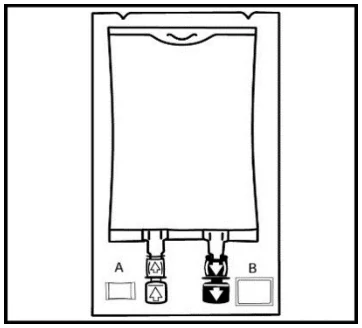
- 1.
The integrity indicator (Oxalert™) A should be inspected before removing the overwrap. If the indicator is black the overwrap is damaged, and the product should be discarded.
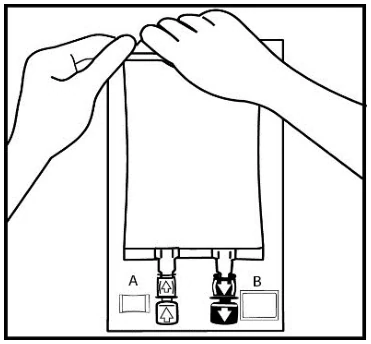
2.
Place the bag on the clean, flat surface. Remove the overwrap by tearing at the notch and pulling down along the container.
The Oxalert™ sachet A and the oxygen absorber B should be discarded.
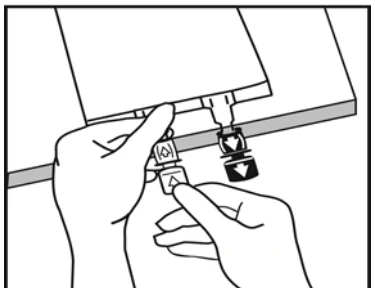
3.
Place the bag on the clean, flat surface. If additives are to be used, break off the tamper-evident arrow flag from the white additive port.
If no additives are to be used go to figure 5.
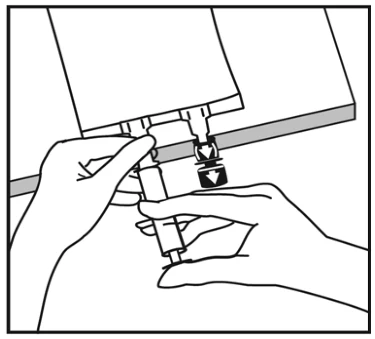
4.
Place the bag on the clean, flat surface. Insert the needle horizontally through the center of the septum of the additive port and inject the additives (with known compatibility). Use syringes with needles of 18-23 gauge and a length of max. 40 mm.
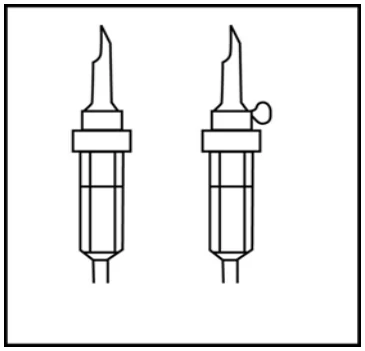
5.
Use a non-vented infusion set or close the air vent on a vented set. Follow the instructions for use for the infusion set. Use a spike with diameter as specified in ISO 8536-4, 5.6 +/- 0.1 mm.
6.
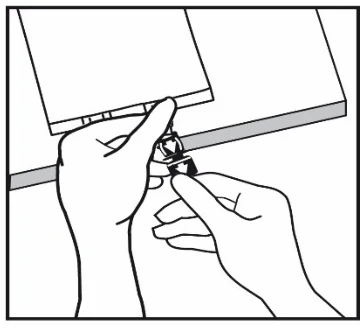
Place the bag on the clean, flat surface. Break off the tamper-evident arrow flag from the blue infusion port.
7.
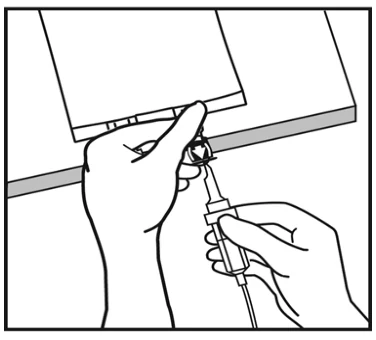
Place the bag on the clean, flat surface. Hold the base of the infusion port. Insert the spike through the infusion port, by rotating your wrist slightly until the spike is inserted.
8.
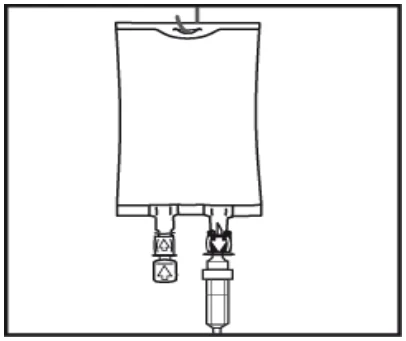
Hang the bag in the hanger cut and start infusion.
When used in neonates and children below 2 years, INTRALIPID (in bags and administration sets) should be protected from light exposure until administration is completed
What are possible side effects from using INTRALIPID?
These are not all the possible side effects you may feel after receiving INTRALIPID. If you experience any side effects not listed here, contact your healthcare professional. Please also see Warning and Precautions.
INTRALIPID may cause a rise in body temperature and, not so often, shivering, chills, nausea, vomiting, headache, back or chest pain with shortness of breath and bluish skin (number of people getting sick <1%). If any of these signs or symptoms of an allergic reaction develop, stop the infusion immediately and contact your doctor
Fat overload syndrome:
If you are given too much INTRALIPID you may have too much fat in your blood. Stop INTRALIPID and contact your doctor if you have symptoms such as:
- yellowing of the skin and eyes (jaundice), abdominal pain,
- headaches, fever, fatigue, weakness,
- increased bleeding (e.g. nosebleeds) or bruising due to low blood platelets.
Serious side effects observed during administration of lipid emulsions are listed in the table:
Serious side effects and what to do about them
| Symptom / effect | Talk with your doctor or nurse | Stop taking drug and call your doctor or nurse |
|---|---|---|
| Only if severe | In all cases | |
| Very Rare | ||
gums)
| ||
| √ | ||
If you have a troublesome symptom or feeling that is not listed here or becomes bad enough to interfere with your daily activities, talk to your healthcare professional.
Storage:
Keep out of reach and sight of children. Store up to 25 °C. Do not freeze.
When used in neonates and children below 2 years, the solution (in bags and administration sets) should be protected from light exposure until administration is completed
If you want more information about INTRALIPID:
- Talk to your healthcare professional
- Find the full product monograph that is prepared for healthcare professionals and includes this Patient Medication Information by visiting the Health Canada website (https://health-products.canada.ca/dpd-bdpp/); the manufacturer’s website (http://www.fresenius-kabi.ca), or by calling 1-877-821-7724 (toll-free-telephone).
This information is current up to the time of the last revision date shown below, but more current information may be available from Fresenius Kabi.
Last revised: January 6, 2020
INTRALIPID is registered trademark of Fresenius Kabi AG.
Fresenius Kabi is registered trademark of Fresenius SE.
Biofine is a trademark of Fresenius Medical Care.
Reporting Side Effects
You can report any suspected side effects associated with the use of health products to Health Canada by:
NOTE: Contact your health professional if you need information about how to manage your side effects. The Canada Vigilance Program does not provide medical advice. |

Fresenius Kabi Canada Ltd.
165 Galaxy Blvd, Suite 100
Toronto, ON, M9W 0C8
Questions or concerns? 1-877-821-7724