


Product Monograph - Intralipid 10%
INDICATIONS AND CLINICAL USES
INTRALIPID should be used as an energy source in patients for whom the usual intravenous fluid therapy would not be adequate and as a source of essential fatty acids to prevent essential fatty acid deficiency.
Pre-and post-operative nutritional disorders, in which an increased administration of energy is necessary.
Nutritive disorders resulting from decreased or inhibited intestinal absorption. Such disorders may be due to tumours of the digestive tract, or to acute or chronic intestinal diseases, such as ulcerative colitis or terminal ileitis.
In burn cases where the energy requirements can be excessive. In these cases every energy supplement is of the utmost importance. Even if the patients are able to take nourishment by mouth, difficulties are often encountered in supplying sufficient amounts of energy in the diet. The administration of intravenous fat is, therefore, indicated in such cases.
Prolonged states of unconsciousness e.g., following trauma, or intoxication, if tube feeding is inadvisable or impossible.
Cachexia due to serious diseases in organs other than the alimentary tract, e.g. metastasized tumours, systemic diseases.
Impaired renal function in which adequate energy supply is essential to reduce protein breakdown.
Essential fatty acid deficiency. To prevent clinical manifestations during parenteral nutrition.
CONTRAINDICATIONS
INTRALIPID is contraindicated in patients with acute shock and in patients with severe hyperlipidemia.
In conditions characterized by severely disordered fat metabolism such as in severe liver insufficiency, acute myocardial infarction, hemophagocytotic syndrome and shock, INTRALIPID is contraindicated. Hypersensitivity to egg, soya or peanut protein or to any of the active substances or excipients is also contra-indicated.
WARNINGS
Fat metabolism may be disturbed in patients with special diseases and conditions. In these cases, fat elimination must be checked daily. For instructions see PRECAUTIONS.
Use in Pregnancy and Lactation
The safety of INTRALIPID for use in pregnancy and lactation has not yet been established; therefore, it should not be used in pregnant women, unless, in the judgement of the physician, its use is deemed absolutely necessary to the welfare of the patient.
PRECAUTIONS
In patients with special diseases and conditions
INTRALIPID should be given with caution in conditions of impaired lipid metabolism as in renal insufficiency, uncompensated diabetes mellitus, pancreatitis, impaired liver function, hypothyroidism (if hypertri-glyceridemic) and sepsis. If INTRALIPID is given to patients with these conditions, close monitoring of the serum triglyceride concentration is obligatory: fat elimination should be checked daily (see Fat elimination test) and the dosage adjusted to the patient's capacity for fat elimination. In cases of verified or suspected liver insufficiency, liver function must be closely followed.
INTRALIPID may interfere with certain laboratory measurements (bilirubin, lactate dehydrogenase, oxygen saturation, Hb, etc.) if blood is sampled before fat has been adequately cleared from the blood stream. Fat is cleared after a fat free interval of 5-6 hours in most patients. If increased levels of transaminases, alkaline phosphatases or bilirubin appear, further infusion of INTRALIPID should be postponed, or the dosage decreased, until normalization is achieved.
This medicinal product contains soya-bean oil and egg phospholipids, which may rarely cause allergic reactions. Cross allergic reactions have been observed between soybean and peanut.
Soybean oil has a natural content of Vitamin K1. This is considered important only for patients treated with coumarin derivatives, which interfere with Vitamin K1.
Pediatric Patients
INTRALIPID should be given with caution to neonates and prematures with hyperbilirubinemia and cases with suspected pulmonary hypertension. In neonates, particularly prematures on long term parenteral nutrition, platelet count, liver test and serum triglyceride concentrations should be monitored.
Very low birth weight preterm infants and small for gestational age infants clear intravenous fat emulsion more slowly than term infants and are at a greater risk of developing hyperlipidemia. This has the potential risk for lowering oxygen tension. The rate of infusion of INTRALIPID should be as slow as possible, the daily dose preferably administered continuously over 24 hours by infusion pump. The infant's ability to eliminate infused fat from the circulation must be carefully monitored. The lipemia must clear prior to proceeding to the next daily infusion.
Light exposure of parenteral nutrition, especially after admixture with trace elements and/or vitamins, may have adverse effects on clinical outcome in neonates, due to generation of peroxides and other degradation products. When used in neonates and children below 2 years, INTRALIPID should be protected from ambient light until administration is completed.
Due to the lack of experience, INTRALIPID 30% is not recommended for use in infants and children.
Fat elimination test
Before the beginning of infusion in the morning a citrated blood sample is drawn, preferably when the patient is still in a fasting state. The blood sample is centrifuged at 20-25 Hz (or 1200-1500 rpm). If the plasma is then strongly opalescent or milky, the planned infusion is postponed. In the great majority of cases, plasma is completely clear 12 hours after the infusion of the daily dose. In patients with no suspected metabolic disturbances this test should be carried out once a week.
Laboratory tests - interference
Lipemic serum interferes with colorimetric laboratory analyses. To avoid this, blood samples should be drawn in the morning prior to infusion of INTRALIPID.
Interaction with other medicinal products and other forms of interaction
Some drugs, like insulin, may interfere with the body’s lipase system. This kind of interaction seems, however, to be of only limited clinical importance.
Heparin in clinical doses causes a transient increase in lipolysis in plasma, resulting in a transient decrease in triglyceride clearance due to depletion of lipoprotein lipase.
Soybean oil has a natural content of vitamin K1. This is considered important only for patients treated with coumarin derivatives, which interfere with vitamin K1.
Effects on ability to drive and use machines
No effects on the ability to drive and operate machines are to be expected.
ADVERSE REACTIONS
INTRALIPID infusion may cause a rise in body temperature and, less frequently, shivering, chills, nausea, vomiting, headache, back or chest pain with dyspnea and cyanosis (incidence <1%).
Table 1 Frequency of Adverse Drug Reactions
| SOC According to WHO | Frequency | Symptom |
|---|---|---|
| Body as a whole - general disorders | Uncommon (>1/1 000, <1/100 Very rare (<1/10 000) | Headache, Rise in body temperature, Shivering, Chills, Tiredness Anaphylactic reaction |
| Cardiovascular disorder | Very rare (<1/10 000) | Circulatory effects (hyper/hypotension) |
| Gastrointestinal disorders | Uncommon (>1/1 000 <1/100) | Abdominal pain, Nausea, Vomiting |
| Liver & biliary system disorder | Very rare (<1/10 000) | Transient increase in liver function test |
| Musculoskeletal, connective tissue and bone disorders | Very rare (<1/10 000) | Abnormal pain |
| Platelet, bleeding & clotting disorders | Very rare (<1/10 000) | Thrombocytopenia |
| Red blood cell disorders | Very rare (<1/10 000) | Haemolysis, Reticulocytosis |
| Reproductive disorders, male | Very rare (<1/10 000) | Priapism |
| Skin and appendages disorders | Very rare (<1/10 000) | Rash, Urticaria |
Thrombocytopenia has been reported in association with prolonged treatment with INTRALIPID in infants. Transient increases in liver function tests after prolonged intravenous nutrition with or without INTRALIPID have also been noted. Increased cholesterol has been observed with infants after long term treatment with Intralipid 10%. The reasons are not clear at present.
Fat overload syndrome: An impaired capacity to eliminate INTRALIPID may lead to the fat overload syndrome as a result of overdosage. However, this syndrome may appear also at recommended rates of infusion in association with a sudden change in the patient’s clinical condition, such as renal function impairment or infection. The fat overload syndrome is characterised by hyperlipemia, fever, fat infiltration and disorders in various organs and coma. All symptoms are usually reversible if the infusion of INTRALIPID is discontinued.
SYMPTOMS AND TREATMENT OF OVERDOSAGE
See Adverse Reactions “Fat overload syndrome”. Severe overdose of fat emulsions containing triglycerides can, especially if carbohydrates are not administered simultaneously, lead to acidosis.
When fat emulsion is given in amounts exceeding the capacity of fat elimination the following symptoms may occur: hyperlipemia, hepatosplenomegaly, jaundice, hemolytic anemia, prolonged clotting time and thrombocytopenia. All symptoms clear in days to weeks after cessation of fat infusion.
| For further information on the management of suspected drug overdose, contact your regional Poison Control Centre. |
DOSAGE AND ADMINISTRATION
Dosage:
Adults
Dosage should normally not exceed 2 g of fat per kg body weight/day (20 mL, 10 mL and 6.7 mL per kg of INTRALIPID 10%, 20% and 30%, respectively). In raised energy requirements, the supply of INTRALIPID can be increased but should not, without special precautions, exceed a quantity corresponding to 3 g fat (30 mL, 15 mL and 10 mL of Intralipid 10%, 20% and 30% respectively) per kg body weight/day.
For prevention of essential fatty acid deficiency: The recommended minimum requirement is approximately 4% of the caloric intake. In most patients, this can be supplied as 500 mL of INTRALIPID 10% administered intravenously twice weekly.
The drip rate is adjusted to about 2–3 mL per minute for INTRALIPID 10% and about 1-2 mL per minute of INTRALIPID 20% at which rates 500 mL can be infused in 3–5 hours and 5–9 hours, respectively. The infusion time for 500 mL must not be shorter than 3 and 5 hours, respectively. The infusion should be started at half the infusion rate during the first 30 minutes, under supervision.
A daily supplement of 333 mL of INTRALIPID 30% (100 g fat) is regarded as sufficient to meet the basal metabolic requirements of a 70 kg patient on total parenteral nutrition. The drip rate is adjusted to 0.6-1 mL per minute at which rate 333 mL can be infused over a period of 5-10 hours. The rate of infusion should not exceed 333 mL of INTRALIPID 30% over a 5 hour period. The infusion should be started at half the infusion rate during the first 30 minutes, under supervision.
Pediatrics
The infant's ability to eliminate fat should govern the dosage (see CONTRA-INDICATIONS and PRECAUTIONS). Recommended dosage per 24 hours is 0.5-4 g fat per kg body weight equivalent to 2.5-20 mL INTRALIPID 20% and 5-40 mL INTRALIPID 10% per kg body weight, respectively. The recommended initial dose in very low birth weight infants and small for gestational age infants is 0.5 g fat per kg bodyweight per 24 hours. The dose should be increased in relation to the infant's ability to eliminate fat, which should be checked daily (see Fat elimination test). The daily dose should preferably be administered continuously over 24 hours by infusion pump. Due to the lack of experience, INTRALIPID 30% is not recommended for use in infants.
Administration
Light exposure of parenteral nutrition, especially after admixture with trace elements and/or vitamins, may have adverse effects on clinical outcome in neonates, due to generation of peroxides and other degradation products. When used in neonates and children below 2 years, INTRALIPID (in bags and administration sets) should be protected from ambient light until administration is completed.
See SPECIAL HANDLING INSTRUCTIONS.
STORAGE AND STABILITY
Shelf life of the medicinal product as packaged for sale: 24 months.
For use once the overwrap is removed.
Store up to 25°C. Do not freeze.
Do not use INTRALIPID after the expiry date printed on the container.
When used in neonates and children below 2 years, INTRALIPID (in bags and administration sets) should be protected from light exposure until administration is completed
Shelf life after first opening the container
The emulsion should be used directly due to the risk of microbiological contamination. From a microbiological point of view the emulsion should be used immediately after removing of the overwrap. If not used immediately, in-use storage times and conditions prior to use are the responsibility of the user and would normally not be longer than 24 hours at 2°C - 8°C. Any unused emulsion should be discarded.
Storage after mixing
When additions are made to infusion solution, the infusion should be completed within 24 hours, due to the risk of microbiological contamination. If admixtures are not used immediately, in-use storage times and conditions prior to use are the responsibility of the user and would normally not be longer than 24 hours at 2°C - 8°C, unless additions have taken place in controlled and validated aseptic conditions.
SPECIAL HANDLING INSTRUCTIONS
Instructions for use and handling
Before administering the product in plastic bags to patient, review these directions:
Intravenous emulsion
These instructions are only intended as guidelines for product use. Please refer to your own departmental guidelines.
| 1. | 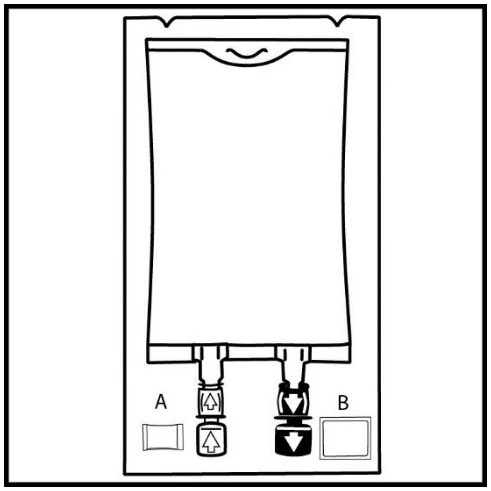 |
| The integrity indicator (Oxalert™) A should be inspected before removing the overwrap. If the indicator is black the overwrap is damaged and the product should be discarded. | |
| 2. | 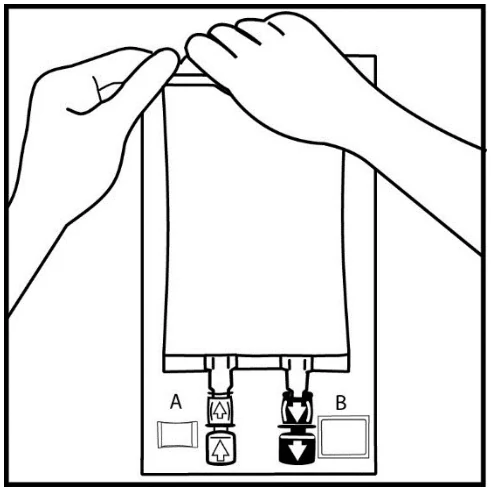 |
Place the bag on the clean, flat surface. Remove the overwrap by tearing at the notch and pulling down along the container. The Oxalert™ sachet A and the oxygen absorber B should be discarded. | |
| 3. | 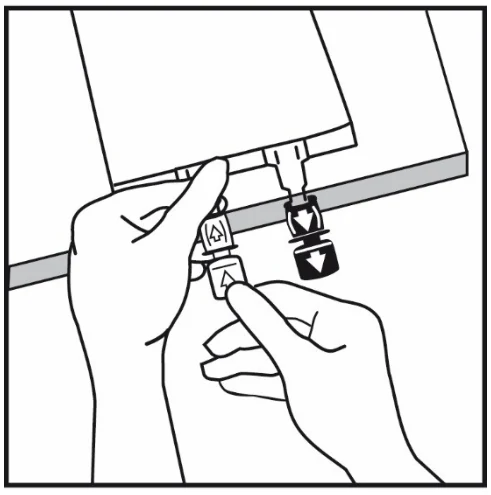 |
Place the bag on the clean, flat surface. If additives are to be used break off the tamper-evident arrow flag from the white additive port. If no additives are to be used go to figure 5. | |
| 4. | 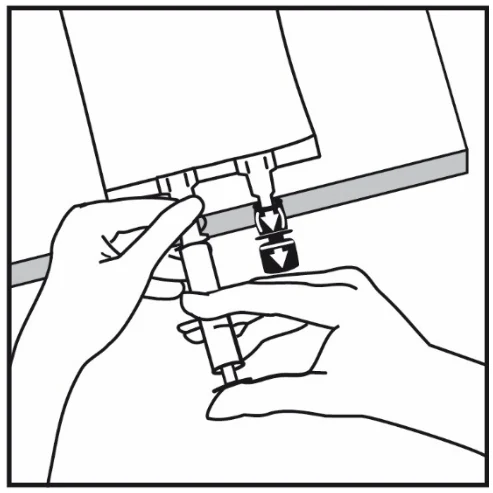 |
| Place the bag on the clean, flat surface. Insert the needle horizontally through the centre of the septum of the additive port and inject the additives (with known compatibility). Use syringes with needles of 18-23 gauge and a length of max. 40 mm. | |
| 5. | 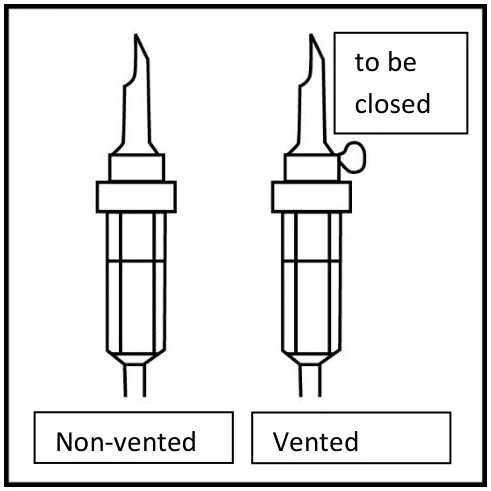 Non-vented Vented to be closed |
| Use a non-vented infusion set or close the air vent on a vented set. Follow the instructions for use for the infusion set. Use a spike with diameter as specified in ISO 8536-4, 5.6 +/- 0.1 mm. | |
| 6. | 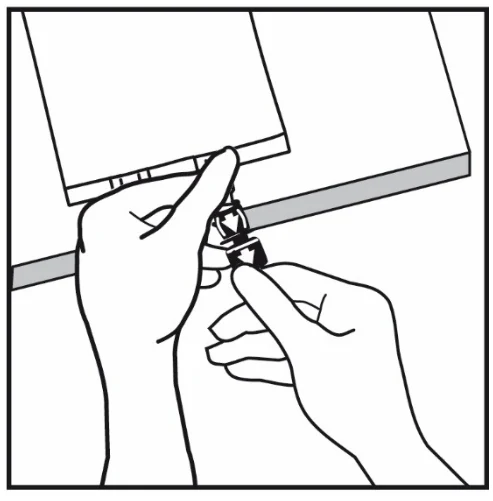 |
| Place the bag on the clean, flat surface. Break off the tamper-evident arrow flag from the blue infusion port. | |
| 7. | 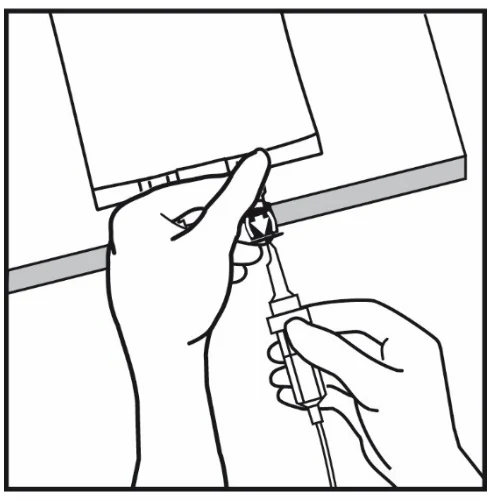 |
Place the bag on the clean, flat surface. Hold the base of the infusion port. Insert the spike through the infusion port, by rotating your wrist slightly until the spike is inserted. 8. | |
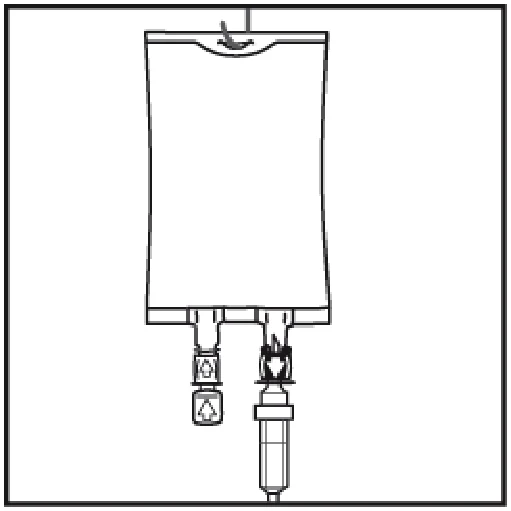
| 8. | |
| Hang the bag in the hanger cut and start infusion. | |
Administration
The emulsion is intended for intravenous administration only using correct aseptic technique. Use only undamaged bags.
Gently invert the bag before use. Parenteral emulsions should be inspected visually for precipitate, discoloration, phase separation, and leakage prior to administration. Emulsions showing signs of discoloration, phase separation, and leakage should not be used.
Only administration sets and administration lines made from DEHP-free material should be used.
For single use only. Any unused emulsion should be discarded.
INTRALIPID must not be mixed with electrolyte or nutrient solutions, nor must drugs or vitamins be added to the emulsion in the infusion bag other than drugs or vitamins especially formulated for addition to fat emulsions.
When used in neonates and children below 2 years, INTRALIPID (in bags and administration
 |
sets) should be protected from light exposure until administration is completed.
The simultaneous administration of INTRALIPID and amino acid solutions or carbohydrate can be achieved, using separate infusion sets where the two liquids are allowed to mix in a Y-tube just before the intravenous needle.
Use of an in-line filter (not less than 1.2 micro pore size) is recommended during administration of all parenteral nutrition admixtures.
If inappropriate spiking techniques are used during compounding, there is a potential for particles of the administration port to be dislodged into the bag (shedding of blue particles). To avoid damaging the spike port, use spike conforming to ISO 8536-4, diameter 5.6 mm + 0.1 mm. The remaining contents of a partly used bag must be discarded and should not be stored for later use.
PHARMACEUTICAL INFORMATION
Drug Substance:
Name: Purified soybean oil
Chemical Name: mixture of triglycerides of predominantly unsaturated fatty acids
Structural Formula: CH2-OCO-R1
|
CH-OCO-R2
|
CH2-OCO-R3
where R1, R2 and R3 represent the fatty acids specified in the identity test linked to the glycerol moiety of the triglyceride
Molecular Mass: approximately 870 g/mol
Physical Form: liquid
Solubility: Soluble in hexane, 2-propanol, trichlorethylene and chloroform
Partly soluble in ethanol and acetone
Not soluble in water
Melting Point/Freezing Point (range): -19ºC – +2 ºC / -10 ºC – -25 ºC
Composition:
Intralipid 10%
1 000 mL contain:
| purified soybean oil | 100 g |
| purified egg phospholipids | 12 g |
| glycerol anhydrous | 22.0 g |
| water for injection q.s.ad | 1 000 mL |
| pH is adjusted with sodium hydroxide | to pH approx. 8 |
| energy content /litre | 4.6 MJ (1 100 kcal) |
| osmolality (approx) | 300 mOsm/kg water |
osmolarity (approx) 260 mOsm/L
Intralipid 20%
1000 mL contain:
| purified soybean oil | 200 g |
| purified egg phospholipids | 12 g |
| glycerol anhydrous | 22.0 g |
| water for injection q.s.ad | 1 000 mL |
| pH is adjusted with sodium hydroxide | to pH approx. 8 |
| energy content /litre | 8.4 MJ (2000 kcal) |
osmolality (approx) osmolarity (approx) | 350 mOsm/kg water 260 mOsm/L |
Intralipid 30%
1000 mL contain:
| purified soybean oil | 300 g |
| purified egg phospholipids | 12 g |
| glycerol anhydrous | 16.7 g |
| water for injection q.s.ad | 1 000 mL |
| pH is adjusted with sodium hydroxide | to pH approx.8 |
| energy content /litre | 12.6 MJ (3 000 kcal) |
osmolality (approx) osmolarity (approx) | 310 mOsm/kg water 200 mOsm/L |
Fatty Acid Pattern of Intralipid (%)
Considerable variation in the pattern can occur as a result of utilizing biological sources.
%
Myristic acid < 1 %
Palmitic acid 13 %
Stearic acid 4 %
Oleic acid 22 %
Linoleic acid 52 %
Linolenic acid 8 %
Others 1 %
Packaging (Biofine and Excel):
The packaging consists of an inner bag (primary package) with an oxygen barrier over-pouch. An oxygen absorber and an integrity indicator (Oxalert™) are placed between the inner bag and the over-pouch.
The primary plastic container is made from a multilayered film specifically designed for parenteral nutrition drug products. The film is polypropylene based comprising three coextruded layers. It contains no plasticizers and exhibits virtually no leachables. The container does not contain DEHP (di(2-ethylhexyl)phthalate), PVC or latex. The container is nontoxic and biologically inert.
The oxygen barrier over-pouch consists of polyethylene terephthalate with a barrier layer and polyolefin or polyethylene terephthalate with a barrier layer, polyolefin and ethylene-vinyl alcohol copolymer (EVOH).
The over-pouch, the oxygen absorber and the integrity indicator should be discarded after opening of the over-pouch. The integrity indicator (Oxalert™) will react with free oxygen and change colour from clear to black in case of damage in the over-pouch.
Each bag, is contained in a carton packaged as per Availability of Dosage Forms. (below)
Stability and Storage Recommendations:
Store at controlled temperature below 25◦C. Do not freeze.
AVAILABILITY OF DOSAGE FORMS
INTRALIPID 10% is supplied in Excel bags containing 100 mL and 500 mL or in Biofine bags containing 100mL, 250mL, and 500 mL
INTRALIPID 20% is supplied in Excel bags containing 100 mL, 250 mL, 500 mL and 1 000 mL or in Biofine bags containing 100 mL, 250mL, 500 mL, 1 000 mL
INTRALIPID 30% is supplied in Excel bags containing 250 mL, and 333 mL or in Biofine bags containing 250 mL and 500mL.
Package sizes:
100 mL bag: Box of 10 units.
250 mL bag: Box of 10 units.
500 mL bag: Box of 12 units.
1 000 mL bag: Box of 6 units
PHARMACOLOGY
INTRALIPID is a fat emulsion for parenteral nutrition and has no pharmacological action except the nutritive one. The shape and magnitude of the fat globules closely resemble those of naturally occurring chylomicrons circulating in the blood after an oral fatty meal.
Rossner (1974) has shown that there is a rapid elimination of the INTRALIPID globules from the blood stream. He found the K2-values for male patients to be 6.09 + 0.4%/min and for the females 7.15 + 0.33, which give half-lives (T1/2) of 8.8 + 0.59 and 10.3 + 0.48 minutes, respectively.
The influence of INTRALIPID on the reticuloendothelial system (RES) has been investigated by Lemperle et al. (1970) and they found no accumulation in Kupffer cells or any significant reduction in the formation of antibodies in the guinea pig.
Rapid infusion of INTRALIPID showed no reduction of the pulmonary function and no interference with the oxygen supply to the tissues were found (Steinberethner and Wagner, 1967). On the other hand, measurement of steady state pulmonary diffusion capacity and membrane-diffusing capacity showed a transient decrease in these functions. These changes returned to normal values within 24 hours (Greene et al, 1976).
Pharmacodynamics properties
INTRALIPID provides essential and non-essential long-chain fatty acids for energy metabolism and apposition in cell membranes.
INTRALIPID in the recommended dosage does not cause any hemodynamic changes. No clinically significant changes in pulmonary function have been described when INTRALIPID is used properly. The transient increase in liver enzymes seen in some patients on TPN including INTRALIPID is reversible and disappears when TPN is interrupted. Similar changes are seen also in parenteral nutrition without fat emulsions.
Pharmacokinetic properties
INTRALIPID has biological properties similar to those of endogenous chylomicrons. Unlike chylomicrons, INTRALIPID does not contain cholesterol esters or apolipoproteins, while its phospholipid content is significantly higher.
INTRALIPID is eliminated from the circulation via the same pathway as endogenous chylomicrons, at least early on in the catabolism. The exogenous fat particle is hydrolysed in the circulation and taken up by LDL receptors peripherally and by the liver. The elimination rate is determined by the composition of the fat particles, the nutritional status, the disease and the rate of infusion. In healthy volunteers the maximum clearance rate of INTRALIPID after fasting overnight is equivalent to 3.8 + 1.5 g of triglycerides/kg body weight/24 hours.
Both the elimination and the oxidation rates are dependent on the patient’s clinical condition; elimination is faster, and utilization is increased in postoperative patients and in trauma, while patients with renal failure and hypertriglyceridemia show lower utilization of exogenous fat emulsions.
Preclinical Safety Data
Preclinical safety studies with INTRALIPID 10%, 20% and 30% demonstrated good tolerance.
TOXICOLOGY
Acute toxicity
When Intralipid is administered in a single dose intravenously in mice, the infusion rate is of importance. An estimation of the median lethal dose (LD50) must therefore be carried out at a constant infusion rate, which means that the total volume injected should be administered in several minutes.
Despite these precautions, a meaningful LD50 value is not obtained. The animals tolerate a single dose of more than 100 mL of INTRALIPID 10% per kg bodyweight and currently there is no rationale for testing intravenous volumes exceeding 10% of the body weight. This means that the LD50 is more than 10 g fat per kilogram bodyweight.
Long-term tolerance
In rats, using a central venous catheter, INTRALIPID has been infused continuously for 20 hours per day for 28 consecutive days. Even if the dose level is as high as 180 mL of INTRALIPID 10%/kg/day and 60 mL of INTRALIPID 30%/kg/day, the animals tolerated the preparation well and the following postmortem examination did not show any abnormalities.
Also in the dog, using peripheral veins, INTRALIPID has been given for 28 consecutive days at a dose level of 9 g fat per kilogram bodyweight per day. This almost corresponds to the dog’s total need for energy and has been tolerated without any clinical sign of toxicity. The investigated parameters, concerning a battery of tests for hematology, liver status, enzymology and so on were without any remarkable deviations from normal values.
No significant histopathological lesions were observed in visceral tissues. There was a slight to moderate centrolobular lipid deposit in the liver, which is known to be transient and supposed to be a result of the high fat dose used.
BIBLIOGRAPHY
Allardyce, D.B.: The postmortem interval as a factor in fat embolism. Arch. Path. 92, 248-253, (1971).
Amris, C.J., Brockner, J., Larsen, V.: Changes in the coagulability of blood during the infusion of Intralipid. Acta Chir. Scan. Suppl 325, 70-74 (1964).
Andersen, G.E., Hertel, J., Tygstrup, I.: Pulmonary fat accumulation in preterm infants. Lancet I, 441, (1981).
Andrew, G., Chan, G., and Schiff, D.: Lipid metabolism in the neonate. J. Pediatr. 92, 995-997 (1978).
Ayers, P., Boullata, J., Gervasio, J., et al.: A.S.P.E.N. Parental Nutrition Safety Consensus Recommendations. Journal of Parenteral and Enteral Nutrition. 38, 296-333 (2014).
Bark, S., Holm, I., Hakansson, I., and Wretlind, A.: Nitrogen-sparing effect of fat emulsion compared with glucose in the post-operative period. Acta Chir. Scand. 142, 423-427 (1976).
Barson, A.J. Safety of Intralipid (letter to the editor). Lancet II, 1020-1021 (1980).
Blumenthal, I.: Parenteral nutrition in the newborn (letter to the editor). Lancet II, 1021-1022 (1980).
Bradfield, J.W.B.: Intralipid and reticuloendothelial blockade. Lancet II, 1138 (1980).
Bryan, H., Shennan, A., Griffin, E., and Angel, A.: Intralipid - Its rational use in parenteral nutrition of the newborn. Pediatrics 58, 787-790 (1976).
Borresen, H.C., Coran, A., and Knutrud, O.: Metabolic results of parenteral feeding in neonatal surgery. Ann. Surg. 172, 291-301 (1970).
Carlsson, L.A., and Liljedahl, S.O.: Lipid metabolism and trauma. Acta Chir. Scand. 137, 123-129 (1971).
Cashore, W.J., Sedaghatian, M.R. and Usher, R.H.: Nutritional supplements with intravenously administered lipid, protein hydrolysate, and glucose in small premature infants. Pediatrics 56, 8-16 (1975).
Cohen, I.T., Dahms, B., and Hays, D.M.: Peripheral total parenteral nutrition employing a lipid emulsion (Intralipid): Complications encountered in pediatric patients. J. Pediatr. Surg. 12, 837-845 (1977).
Collins, F.D., Sinclair, A.J., Royle, J.P., Coats, D.A., Maynard, A.T., and Leonard, R.F.: Plasma lipids in human linoleic acid deficiency. Nutr. Metab. 13, 150-167 (1971).
Coran, A.: The intravenous use of fat for the total parenteral nutrition of the infant. Lipids 7, 455-458 (1972).
Craig, R.P., et al. Intravenous glucose, amino acids and fat in the post-operative period. A controlled evaluation of each substrate. Lancet II, 8-11 (1977).
Cronberg, S., and Nilsson, I.M.: Coagulation studies after administration of a fat emulsion, Intralipid. Thromb. Diath. Haemorrh. 18, 664-669 (1967).
Dainow, I.I.: Safety of Intralipid (letter to the editor). Lancet II, 1020 (1980).
Deitel, M., and Kaminsky, V.: Total nutrition by peripheral vein - the lipid system. C.M.A.J. 111, 152-154 (1974).
Deitel, M., Kaminsky, V.M.: Growth of common bacteria and Candida albicans in 10% soybean oil emulsion. Can. J. Surg. 18, 531-535 (1975).
Editorial. Parenteral nutrition in the newborn - a time for caution. Lancet II, 838-839 (1980).
Elwyn, D.H.: Nutritional requirements of adult surgical patients. Crit. Care Med. 8, 9-20 (1980).
Filler, R.M., Takada, Y., Carreras, T., and Heim, T.: Serum Intralipid levels in neonates during parenteral nutrition: The relation to gestational age. J. Pediatr. Surg. 15, 405-410 (1980).
Fischer, G.W. et al.: Diminished bacterial defences with Intralipid. Lancet II (8199): 819-820 (1980).
Fischer, G.W., Hunter, K.W., Wilson, S.R.: Intralipid and reticuloendothelial clearance. Lancet II, 1300 (1980).
Friedman, Z.: Essential fatty acids revisited. Am. J. Dis. Child. 134, 397-408 (1980).
Friedman, Z., and Frolich, J.C.: Essential fatty acids, and the major urinary metabolites of the E prostaglandins in thriving neonates and in infants receiving parenteral fat emulsions. Pediatr Res 13 (8), 932-936 (1979).
Fujita, T.: Intravenous feeding in gastroenterological surgery, particularly in disorder of liver function. Proceedings of the International Congress of Parenteral Nutrition, Université de Montpellier, pp. 487-500 (1974).
Gordon, D.: Parenteral nutrition in the newborn (letter to the editor). Lancet II, 1021-1022 (1980).
Greene, H.L.: Effect of Intralipid on pulmonary function. In: Fat Emulsion in Parenteral
Nutrition. Eds: Meng & Wilmore, AMA 1976, pp. 95-98.
Grotte, G., Esscher, T., Hambraeus, L., and Meurling, S.: Nutrition parentérale compl te dans la chirurgie infantile. Ann. Anesth. Franc. Spécial 11, 65-73 (1975).
Grotte, G., Jacobson, S., and Wretlind, A.: Possibilities and limits of intravenous fat emulsions. Symposium in Rome, May 30-June 2, 1975, pp. 47-73 (1975).
Gunn, T., Reaman, G., Outerbridge, E.W., and Colle, E.: Peripheral total parenteral nutrition for premature infants with the respiratory distress syndrome: A controlled study. J. Pediatr 92, 608-613, (1978).
Gustafson, A., Kjellmer, I., Olegard, R., and Victorin, L.: Nutrition in low birth weight infants. I. Intravenous injection of fat emulsion. Acta Paediatr. Scan. 61, 149-158, (1972).
Gustafson, A., Kjellmer, I., Olegard, R., and Victorin, L.: Nutrition in low birth weight infants. II. Repeated intravenous injections of fat emulsions. Acta Paediatr. Scan. 63, 177-182 (1974).
Hallberg, D.: Therapy with fat emulsion. Acta Anaesth. Scand. Suppl. 55, 131-136 (1974).
Hallberg, D., Holm, I., Obel, A.L., Schuberth, O., and Wretlind, A.: Fat emulsions for complete intravenous nutrition. Postgrad. Med. J. 43, 307-316 (1967).
Hanc, I., Kleczkowska, H., and Rodkiewicz, B.: On intravenous infusions of fat emulsions in pediatric surgery. Pediatria Polska XLIII, 1355-1364 (1968).
Holm, I.: Parenteral nutrition in surgical and medical gastroenterology. Acta Chir. Scand. 143, 297-305 (1977).
Jacobson, S.: Complete parenteral nutrition in man for seven months. In Advances in Parenteral Nutrition, pp. 6-19 (Georg Thieme Verlag, Stuttgart 1970).
Jeejeebhoy, K.N., Anderson, G.H., Sanderson, I. and Bryan, M.D.: Total parenteral nutrition: nutrient needs and technical tips. Part 1 and 2. Mod. Med. 29, No. 9 & 10 (1974).
Jeejeebhoy, K.N., Zorhab, W.J., Langer, B., Phillips, M.J., Kuksis, A., and Anderson, G.H.: Total parenteral nutrition at home for 23 months, without complication and with good rehabilitation. Gastroenterol. 65, 811-820 (1973).
Johnston, I.D.A.: The role of parenteral nutrition in surgical care. Ann. Roy. Coll. Surg. Engl. 50, 196-206 (1972).
Kamath, K.R., Berry, A., Cummins, G.: Acute hypersensitivity reaction to Intralipid. N. Engl. J. Med. 304, 360 (1981).
Kapp, J.P., Duckert, F., and Hartmann, G.: Platelet adhesiveness and serum lipids during and after Intralipid infusions. Nutr. Metab. 13, 92-99 (1971).
Kaijser, L., Rossner, S.: Removal of exogenous triglycerides in human forearm muscle and subcutaneous tissue. Acta Med. Scand. 197, 289-294 (1975).
Kjekshus, J.K., Ellekjaer, E., and Rinde, P.: The effect of free fatty acids on oxygen consumption in man: the free fatty acid hypothesis. Scand. J. Clin. Lab. Invest. 40, 63-70 (1980).
Lemperle G., Reichelt, M., Denk, S.: The evaluation of phagocytic activity in men by means of a lipid-clearance-test. Abstract. 6th International Meeting of the Reticuloendothelial Society. Freiburg, Germany. July 28-Aug 1, 1980.
Levene, M.I., et al.: Pulmonary fat accumulation after Intralipid infusion in the preterm infant. Lancet II (8199), 815-818 (1980).
Levene, M.I., Wigglesworth, J.S., Desai, R.: Safety of Intralipid (letter to the editor). Lancet II, 1020-1021 (1980).
Liljedahl, S.O., and Birke, G.: The nutrition of patients with extensive burns. Nutr. Metab. 14, Suppl., 110-113 (1972).
Melly, M.A., Meng, H.C., Schaffner, W.: Microbial growth in lipid emulsions used in parenteral nutrition. Arch. Surg. 110, 1479-1481 (1975).
Michel, H., Raynaud, A., Nalet, B., and Bertrand, L.: Tolerance des cirrhotiques aux lipides intraveineux. Proceedings of the International Congress of Parenteral Nutrition. Université de Montpellier, pp. 131-1137 (1974).
Nordenström, J. et al: Decreased chemotactic and random migration of leukocytes during Intralipid infusion. Am. J. Clin. Nutr. 32, 2416-2422 (1979).
Olegard, R.: Stores of essential fatty acids and tolerance of intravenous fat emulsion in newborn infants. Proceedings of the International Congress of Parenteral Nutrition. Université de Montpelier, pp. 747-756 (1974).
Olegard, R., Gustafson, A., Kjellmer, I., and Victorin, L.: Nutrition in low birth weight infants. III. Lipolysis and free fatty acid elimination after intravenous administration of fat emulsion. Acta Paediatr. Scand. 64, 745-751 (1975).
Palmblad, J., Brostrom, O., Udéen, A-M., Venizelos, N., Lahnborg, G.: (letter to the editor). Lancet II, 1138-1139 (1980).
Pereira, G.R., et al: Decreased oxygenation and hyperlipemia during intravenous fat infusions in premature infants. Pediatrics 66, 26-30 (1980).
Reimer, S.L., Michener, W.M., Steiger, E.: Nutritional support of the critically ill child. Pediatr. Clin. North Am. 27, 647-660 (1980).
Rossner, S.: Studies on an intravenous Fat Tolerance Test. Acta Med. Scand. Suppl. 564, (1974).
Shenkin, A., and Wretlind, A.: Parenteral nutrition. Wld. Rev. Nutr. Diet. 28, 1-111 (1978).
Simonsen, S. and Kjekshus, J.K.: The effect of free fatty acids on myocardial oxygen consumption during atrial pacing and catecholamine infusion in man. Circulation 58, 484-491 (1978).
Steinbereithner, K., and Wagner, O.: Das verhalten des arteriellen sauerstoffdrucks nach intravenoser fett - und laevulosebelastung bei schweren schadelverletzten. Agressologie 8, 389-393 (1967).
Sternberg, A., Gruenevald, T., Deutsch, A.A., Reiss, R.: Intralipid-induced transient sinus bradycardia. N. Engl. J. Med. 304, 422-423 (1981).
Swolin, K.: Experimentelle studien zur prophylaxe von intraabdominalen verwachsungen. Acta Obst. et Gynec. Scandinav. 45, 473-498 (1966).
Wolfe et al: Substrate interaction in intravenous feeding. Ann. Surg. 186, 518-540 (1977).
Wretlind, A.: Modern principles of the use of fat emulsions in parenteral nutrition. Zeitschrift fur Ernahrungswissenschaft, Suppl. 13, 27-37 (1972).
Zorhab, W.J., McHattie, J.D., and Jeejeebhoy, K.N.: Total parenteral alimentation with lipid. Gastroenterol. 64, 583-592 (1973).
Yu, V.Y.H., James, B., Hendry, P., and MacMahon, R.A.: Total parenteral nutrition in very low birth weight infants: a controlled trial. Arch. Dis. Child. 54, 653-661 (1979).