


Product Monograph - Jamp Metronidazole Gel
Recent Major Label Changes
Not Applicable
Table of Contents
Recent Major Label Changes ................................................................................................... 2
Table of Contents .................................................................................................................... 2
Part 1: Healthcare Professional Information ........................................................................... 4
- 1.
Indications ......................................................................................................................... 4
1.1 Pediatrics ...................................................................................................................... 4
1.2 Geriatrics ....................................................................................................................... 4
- 2. Contraindications ............................................................................................................... 4
- 4.
Dosage and Administration ................................................................................................ 4
4.2. Recommended Dose and Dosage Adjustment ............................................................. 4
4.4. Administration ............................................................................................................. 4
4.5. Missed Dose ................................................................................................................. 5
- 5. Overdose ........................................................................................................................... 5
- 6. Dosage Forms, Strengths, Composition, and Packaging ...................................................... 5
- 7.
Warnings and Precautions ................................................................................................. 5
General ................................................................................................................................ 5
Carcinogenesis and Genotoxicity ......................................................................................... 6
Dependence, Tolerance and/or Abuse Liability .................................................................... 6
Hematologic ......................................................................................................................... 6
Ophthalmologic ................................................................................................................... 6
Sensitivity/Resistance .......................................................................................................... 6
Skin ...................................................................................................................................... 7
7.1. Special Populations ...................................................................................................... 7
7.1.1. Pregnancy ............................................................................................................ 7
7.1.2. Breastfeeding ........................................................................................................ 7
7.1.3. Pediatrics .............................................................................................................. 7
7.1.4. Geriatrics ............................................................................................................... 7
- 8.
Adverse Reactions .............................................................................................................. 7
8.1. Adverse Reaction Overview ......................................................................................... 7
8.2. Clinical Trial Adverse Reactions .................................................................................... 8
8.5. Post-Market Adverse Reactions .................................................................................... 8
- 9.
Drug Interactions ............................................................................................................... 9
9.2. Drug Interactions Overview.......................................................................................... 9
9.3. Drug-Behaviour Interactions ........................................................................................ 9
9.4. Drug-Drug Interactions ................................................................................................. 9
9.5. Drug-Food Interactions .............................................................................................. 10
9.6. Drug-Herb Interactions .............................................................................................. 10
9.7. Drug-Laboratory Test Interactions .............................................................................. 10
- 10.
Clinical Pharmacology ..................................................................................................... 10
10.1. Mechanism of Action ............................................................................................... 10
10.2. Pharmacodynamics .................................................................................................. 10
10.3. Pharmacokinetics ..................................................................................................... 10
- 11. Storage, Stability, and Disposal ....................................................................................... 11
Part 2: Scientific Information ................................................................................................ 12
- 13. Pharmaceutical Information ........................................................................................... 12
- 14.
Clinical Trials ................................................................................................................... 12
14.1. Clinical Trials by Indication ....................................................................................... 12
- 16. Non-Clinical Toxicology ................................................................................................... 13
- 17. Supporting Product Monographs………………………………………………………………………………….16
Patient Medication Information ............................................................................................ 17
Part 1: Healthcare Professional Information
1. Indications
JAMP Metronidazole Gel (metronidazole 0.75% topical gel) is indicated for:
- the treatment of inflammatory papules, pustules, and erythema of rosacea.
JAMP Metronidazole Gel contains an antibacterial ingredient, metronidazole. To reduce the development of drug-resistant bacteria and maintain the effectiveness of metronidazole, JAMP Metronidazole Gel should only be used for the authorized indication and clinical use.
1.1 Pediatrics
Pediatrics (up to 18 years of age): No data are available to Health Canada; therefore, Health Canada has not authorized an indication for pediatric use.
1.2 Geriatrics
While specific clinical trials in the geriatric population have not been conducted, 66 patients aged 65 years and older treated with metronidazole gel 1% over 10 weeks showed comparable safety and efficacy as compared to the general study population.
2. Contraindications
- JAMP Metronidazole Gel (metronidazole 0.75% topical gel) is contraindicated in patients who are hypersensitive to this drug or other ingredients of the formulations. For a complete listing, see the 6 Dosage Forms, Strengths, Composition, and Packaging section of the product monograph.
- JAMP Metronidazole Gel (metronidazole 0.75% topical gel) must not be used in patients with Cockayne syndrome. Cases of severe hepatotoxicity/acute hepatic failure, including cases with a fatal outcome with very rapid onset after treatment initiation in patients with Cockayne syndrome have been reported with products containing metronidazole for systemic use.
4. Dosage and Administration
4.2. Recommended Dose and Dosage Adjustment
- JAMP Metronidazole Gel 0.75%: Apply and rub in a thin film twice daily, morning and evening, to entire affected areas.
- Significant therapeutic results should be noticed within three weeks. Clinical studies have demonstrated continuing improvement through nine weeks of therapy. The dosage required for long-term administration is uncertain (see 7 Warnings and Precautions).
- Health Canada has not authorized an indication for pediatric use (see 1.1 Pediatrics).
4.4. Administration
Areas to be treated should be cleansed before application of JAMP Metronidazole Gel. The face must be dry before applying medication. Patients may use cosmetics after application of JAMP Metronidazole Gel. The medication should have absorbed into the skin (“dry”) before the cosmetics are applied.
4.5. Missed Dose
If you miss a dose of this medicine, apply it as soon as possible. However, if it is almost time for your next dose, skip the missed dose and go back to your regular dosing schedule.
5. Overdose
There is no human experience with overdosage of metronidazole gel (metronidazole 0.75% topical gel). Topically applied metronidazole can be absorbed in sufficient amount to produce systemic effects. Do not exceed the recommended dose and duration of treatment.
Massive ingestion may produce vomiting and slight disorientation. There is no specific antidote. Activated charcoal may be administered to aid in the removal of unabsorbed drug. General supportive measures are recommended.
| For the most recent information in the management of a suspected drug overdose, contact your regional poison control centre or Health Canada’s toll-free number,1-844 POISON-X (1-844-7647669). |
|---|
- 6. Dosage Forms, Strengths, Composition, and Packaging
Table [1] – Dosage Forms, Strengths, and Composition
| Route of Administration | Dosage Form/ Strength/Composition | Non-Medicinal Ingredients |
|---|---|---|
| Topical | Gel, 0.75% w / w of metronidazole | Preservatives: Methyl parahydroxybenzoate and propyl parahydroxybenzoate. Non-medicinal ingredients: Carbomer homopolymer type C, edetate disodium, propylene glycol, purified water, and sodium hydroxide (to adjust pH). |
JAMP Metronidazole Gel 0.75% is available in aluminum tubes of 60 g. It is a clear, colourless to pale yellow gel free from lumps and foreign matter.
7. Warnings and Precautions
General
Because of the minimal absorption of metronidazole, and consequently its insignificant plasma concentration after topical administration, the systemic adverse reactions reported with the oral form of the drug should not be expected with metronidazole gel (metronidazole 0.75% topical gel).
Physicians should consider the most appropriate formulation for their patients.
Although rosacea is a chronic disease, data on the long-term use of metronidazole gel in rosacea is not available. In controlled clinical trials, patients were treated for up to 12 weeks (see 4 Dosage and Administration).
Carcinogenesis and Genotoxicity
Information from preclinical studies indicates that metronidazole and its principal metabolite are mutagenic in bacteria and that tumours were observed in animal studies after oral administration of metronidazole (see 16 Non-Clinical Toxicology). The relevance of these findings to the topical use of metronidazole in humans is unknown. The anaerobic or hypoxic conditions that might lead to the production of genotoxic compounds are unlikely to occur in topical use. There is no conclusive evidence after 30 years of clinical use of systemic metronidazole for either a genotoxic or carcinogenic potential.
In humans, no significant increases in the frequency of chromosomal aberrations or sister chromatid exchanges were observed in lymphocytes from patients treated with oral metronidazole for trichomoniasis. An increased chromosome aberration frequency in peripheral lymphocytes relative to controls was reported in a population of patients with Crohn's disease treated with oral metronidazole. No increased chromosome aberration frequency could be detected in the lymphocytes from patients treated with oral metronidazole for Crohn's disease in a double-blind cross-over study.
In humans, three cases of carcinoma were reported in patients with Crohn's disease treated with large doses of oral metronidazole. Two of these patients developed breast carcinoma. One of them had received a total metronidazole dose of 720 g within a 3-year continuous treatment, the second one had received a total dose of approximately 340 g within two 4- to 5-month treatment periods. The third patient, who developed a cholangiocarcinoma, had received a total metronidazole dose of approximately 275 g over a 3-year period. The metronidazole doses involved are in excess from those used for the treatment of trichomoniasis, which usually consist of a total 8-g dose given over a 7 to 10day period. No relationship other than chronological association could be established between these cases of cancers and the absorption of metronidazole.
One case of adrenal neuroblastoma was reported in a newborn male whose mother was treated with metronidazole during pregnancy (see 7.1.1 Pregnancy).
Dependence, Tolerance and/or Abuse Liability
JAMP Metronidazole Gel has not been studied for its potential to cause dependence, tolerance and/or abuse; however, there may be a theoretical risk of the occurrence of one or more of these risks. Healthcare professionals should consider the patient’s history of drug use and monitor appropriately.
Hematologic
Metronidazole is a nitroimidazole and should be used with care in patients with evidence of, or history of, blood dyscrasia.
Ophthalmologic
Avoid contact with the eyes. Topical metronidazole has been reported to cause tearing of the eyes. It should not be used in or close to the eye. If contact does occur, flush with water.
Conjunctivitis associated with topical use of metronidazole on the face has been reported.
Sensitivity/Resistance
Exposure to sunlight, including sunlamps and tanning beds, should be avoided when using JAMP Metronidazole Gel (based on studies in hairless mice treated with intraperitoneal metronidazole) (see 16 Non-Clinical Toxicology).
Skin
If a reaction suggesting local irritation occurs, patients should be directed to use the medication less frequently, discontinue use temporarily, or discontinue use until further instructions.
There were no reports of contact dermatitis attributed to metronidazole gel during clinical trials. However, there have been reports of contact dermatitis/allergic reaction reported as post marketing adverse reactions (see 8 Adverse Reactions). Physicians should be aware of the possibility of skin sensitivity reactions and of cross-sensitization with other imidazole preparations, such as clotrimazole and tioconazole.
7.1. Special Populations
7.1.1. Pregnancy
There has been no experience to date with the use of metronidazole gel in pregnant patients. Metronidazole crosses the placental barrier and enters the fetal circulation rapidly. No fetotoxicity was observed after oral metronidazole in rats or mice.
However, because animal reproduction studies are not always predictive of human response, this drug should only be used during pregnancy after careful assessment of the risk/benefit ratio.
One case of adrenal neuroblastoma was reported in a newborn male whose mother was treated with metronidazole during pregnancy. The dosage consisted of oral metronidazole 250 mg twice daily and intravaginal metronidazole 500 mg daily, both for 10 days. It was not possible to establish a causal relationship between adrenal neuroblastoma and metronidazole based on this report.
7.1.2. Breastfeeding
After oral administration, metronidazole is secreted in breast milk in concentrations similar to those found in the plasma. Even though metronidazole blood levels are significantly lower after topical application than after oral administration a decision should be made whether to discontinue nursing or to discontinue the drug, taking into account the importance of the drug to the mother.
7.1.3. Pediatrics
Pediatrics (up to 18 years old): No data are available to Health Canada; therefore, Health Canada has not authorized an indication for pediatric use.
7.1.4. Geriatrics
While specific clinical trials in the geriatric population have not been conducted, 66 patients aged 65 years and older treated with metronidazole gel over 10 weeks showed comparable safety and efficacy as compared to the general study population.
- 8. Adverse Reactions
8.1. Adverse Reaction Overview
The safety profile of metronidazole gel (metronidazole topical gel 0.75%) has been established in clinical trials. The results of the safety analyses indicate topical application of metronidazole is well tolerated.
8.2. Clinical Trial Adverse Reactions
Clinical trials are conducted under very specific conditions. Therefore, the frequencies of adverse reactions observed in the clinical trials may not reflect frequencies observed in clinical practice and should not be compared to frequencies reported in clinical trials of another drug.
Metronidazole Topical Gel 0.75%
The patient safety database included 114 evaluable patients that participated in controlled and uncontrolled metronidazole (metronidazole topical gel) trials. Adverse reactions attributed to the use of metronidazole are summarized in the table below.
Table [2] – Adverse Reactions Attributed to Metronidazole Gel 0.75% (metronidazole topical gel)
| SYSTEM ORGAN CLASS / |
|---|
ADVERSE REACTIONS
INCIDENCE (NO. OF PATIENTS) | SEVERITY | FOLLOW-UP TREATMENT | |||
|---|---|---|---|---|---|
| Skin and subcutaneous disorders | |||||
| Skin irritation | 1.8% (2) | Mild (2) | none required | ||
| Dry skin | 1.8% (2) | Mild (2) | none required | ||
| Erythema | 1.8% (2) | Mild (2) | none required | ||
| Burning sensation | 0.9% (1) | Mild (2) | none required | ||
| Eye disorders | |||||
| Lacrimation increased | 0.9% (1) | Mild (1) | none required | ||
8.5. Post-Market Adverse Reactions
Since commercialization of metronidazole gel (metronidazole 0.75% & 1% topical gel), the following post marketing adverse reactions have been reported.
A causal relationship with topical metronidazole has not been unequivocally established for these adverse drug reactions.
Post Marketing Adverse Drug Reactions by System Organ Class, MedDRA preferred term for metronidazole gel:
Blood and lymphatic disorders: Leucopenia
Eye disorders: Lacrimation increased
Gastrointestinal disorders: Dysgeusia, nausea
General disorders and administration: Condition aggravated
Immune system disorders: Hypersensitivity
Nervous system disorders: Paraesthesia
Skin and subcutaneous tissue disorders: Dermatitis contact, Dry skin, Erythema, Pruritus, Rash pustular, Dermatitis bullous, Skin burning sensation, Skin irritation, Skin exfoliation, Swelling face.
9. Drug Interactions
9.2. Drug Interactions Overview
Bioavailability studies with metronidazole gel formulation in rosacea patients treated with 7.5 mg metronidazole applied topically to the face resulted in maximum serum concentrations of 66 ng/mL which is approximately 100 times less than those attained after a single oral dose of 250 mg. In most patients at most time points after application of metronidazole gel formulation, serum concentrations of metronidazole were below the detectable limits of the assay (25 ng/mL). Therefore, low levels of systemic exposure after topical application of metronidazole gel 0.75% limit the likelihood of significant interactions with systemic medications and with alcohol.
9.3. Drug-Behaviour Interactions
The interaction of JAMP Metronidazole Gel with individual behavioural risks (e.g. cigarette smoking, cannabis use, and/or alcohol consumption) has not been studied.
9.4. Drug-Drug Interactions
Table [3] – Established or Potential Drug-Drug Interactions
| [Non-proprietary name(s) of the drug product(s)] | Source of evidence | Effect | Clinical comment |
|---|---|---|---|
| Coumarin and warfarin | C/CT | Potentiate the anticoagulant effect | Drug interactions are less likely with topical administration but should be kept in mind when metronidazole is prescribed for patients who are receiving anticoagulant treatment. Oral metronidazole has been reported to potentiate the anticoagulant effect of coumarin and warfarin resulting in a prolongation of prothrombin time. |
| Alcohol | T (topical) C (oral) | Disulfiram-like reaction. | Oral metronidazole also interacts with alcohol, producing a disulfiram-like reaction. Although this adverse reaction has not been reported with topical application of metronidazole, a drug interaction of metronidazole alcohol is a possibility. |
| Other imidazole preparations such as clotrimazole and tioconazole | T | Skin sensitivity | Physicians should be aware of the possibility of skin sensitivity reactions and of cross-sensitization with other imidazole preparations. |
Legend: C = Case Study; CT = Clinical Trial; T = Theoretical; PBPK = Physiologically based pharmacokinetic modeling; popPK = Population pharmacokinetic modeling
9.5. Drug-Food Interactions
Interactions with food have not been established.
9.6. Drug-Herb Interactions
Interactions with herbal products have not been established.
9.7. Drug-Laboratory Test Interactions
Interactions with laboratory tests have not been established.
10. Clinical Pharmacology
10.1. Mechanism of Action
Metronidazole (metronidazole topical gel) preparations are particularly effective against the inflammatory, papulopustular component of rosacea. The mechanisms by which topical metronidazole acts in reducing inflammatory lesions of rosacea are unknown, but may include an anti-bacterial and/or an anti-inflammatory effect.
10.2. Pharmacodynamics
Cardiac Electrophysiology: The effect of metronidazole (metronidazole topical gel) on the QTc interval has not been adequately characterized.
10.3. Pharmacokinetics
The metronidazole Cmax following oral and topical administration ranged from 4270 to 13970 ng/mL after oral administration and 19.1 to 42.7 ng/mL after administration with the topical gel.
Metronidazole concentrations were below the quantifiable limit of the assay (i.e., 9.6 ng/mL) after 48 hours after oral or topical administration for almost all the subjects. Therefore, with normal usage, topical metronidazole results in minimal systemic exposure.
Table [4] – Summary of [Metronidazole] pharmacokinetic parameters in healthy volunteers
| Mean ± SD (N=12) | Cmax (ng/mL) | Tmax (h) | t½ (h) | AUC0-∞ (ng*h/mL) | CL/F (L/h) | Vd/F (L) |
|---|---|---|---|---|---|---|
Single Oral Dose Mean | 7248 ± 3019 | 1.51 ± 1.39 | 7.76 ± 1.51 | 67207 ± 15380 | 3.91 ± 0.91 | 42.82 ± 9.42 |
Single Topical Dose (7.5 mg) | 29.1 ± 6.7 | 8.51 ± 2.84 | - | 814.8 ± 251.4 | - | - |
Abbreviations: Cmax=maximal concentration, Tmax= time for maximal concentration, AUC0-∞ = total area under the curve, CL/F= apparent Clearance, Vd/F= Apparent volume of distribution
Absorption
Topical administration of a one-gram of metronidazole gel 0.75% (metronidazole topical gel) to the face of 12 subjects resulted in a mean (SD) Cmax of metronidazole of 29.1 + 6.7 ng/mL. The mean (SD) AUC0-∞ was 814.8 + 251.4 ng.h/mL. The mean Cmax and AUC0-∞ are less than 1.5% of the value reported for a single 250 mg oral dose of metronidazole. The time to maximum plasma concentration (Tmax) was 8.5 hours after topical application.
Distribution
The mean (SD) volume of distribution of metronidazole was estimated to be 42.82 (9.42) L after oral administration.
Metabolism
Following oral metronidazole administration, approximately 12% of the dose was recovered in the urine over 48 hours as metronidazole and its glucuronide conjugate, 23% as 2-hydroxymethylmetronidazole and its glucuronide conjugate, and 11% as metronidazole acetic acid and its glucuronide conjugate. The fraction of the dose recovered in the urine over 48 hours after oral administration of the 250 mg tablet was higher compared to the 1 g topical dose (7.5 mg metronidazole) of the gel formulation.
Elimination
The mean (SD) clearance of metronidazole was estimated to be 3.91 (0.91) L/h after oral administration while terminal-half life was 7.76 (1.51) h
- 11. Storage, Stability, and Disposal
Store JAMP Metronidazole Gel 0.75% at 15-30°C.
Part 2: Scientific Information
13. Pharmaceutical Information
Drug Substance
Non-proprietary name of the drug substance(s):
Metronidazole
Chemical name:
2-Methyl-5-nitroimidazole-1-ethanol
Molecular formula and molecular mass:
C6H9N3O3, 171.2 g / moL
Structural formula:
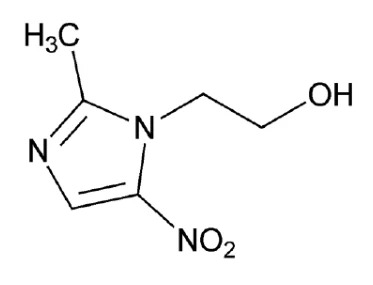
Physicochemical properties:
Description: Metronidazole is a white to pale yellow crystalline powder.
Melting point: 159-163ºC
Solubility: Slightly soluble in water, acetone, alcohol, methylene chloride.
pH: 5.5-7.5 (1% water)
14. Clinical Trials
14.1. Clinical Trials by Indication
- Treatment of inflammatory papules, pustules, and erythema of rosacea.
Study Demographics and Trial Design
Two randomized, double-blind, placebo-controlled, split-face design clinical studies were conducted in the United States on patients with rosacea. Metronidazole gel 0.75% (metronidazole gel) was applied to one side of the face and placebo gel to the other, twice daily for nine weeks. The results are summarized in the following table.
Table 5: Clinical Trial Results for Metronidazole Gel 0.75% (metronidazole topical gel)
| NUMBER OF PATIENTS EVALUATED | % OF PATIENTS WITH SUBSTANTIAL REDUCTION IN INFLAMMATORY LESIONS | % OF PATIENTS WITH IMPROVEMENT IN ERYTHEMA | ||
|---|---|---|---|---|
| Metronidazole Gel | Placebo | Metronidazole Gel | Placebo | |
| 39 (15M, 24F)a | 77% * | 28% | 56% | 28% |
| 47 (25M, 22F)b | 68% * | 28% | 74% | 55% |
* among metronidazole gel (metronidazole topical gel) substantial responders, mean lesion reduction was 81% in Dr. Sober’s studya and 83% in Dr. Aronson’s studyb.
Statistically significant differences in inflammatory lesions, erythema and global assessments were seen at 3, 6 and 9 weeks post baseline in favour of the active treatment side. The telangiectatic component of the disease was not altered.
16. Non-Clinical Toxicology
General toxicology
Acute toxicity:
The acute oral LD50 of metronidazole as a pure substance is in the range of 3 to 5 g/kg in mice and rats, respectively. Signs of toxicity following oral or intravenous administration were sedation, ataxia and death in mice, and sedation and death in rats. Metronidazole gel 0.75% (metronidazole topical gel) was administered in one dose at 5 g/kg by oral gavage to ten (5M, 5F) young adult rats. No animal showed clinical signs of toxicity and no animal had visible lesions on gross necropsy. Therefore, it is concluded that the oral LD50 of 0.75% metronidazole gel, in male and female rats, is greater than 5 g/kg of body weight.
Subacute toxicity:
Metronidazole gel 0.75% (metronidazole topical gel) was applied topically, 5 days per week, to young adult rabbits at three dose levels plus control (5M + 5F/dose level) for 13 weeks. The three dose levels employed were the human dose (per application) equivalent, and 10 and 100 times the human equivalent on a mg/kg basis.
There were no compound-related dermal observations for treated animals nor were there effects on the hematology or clinical chemistry data of treated rabbits when compared with those of controls. No effects were observed on terminal body weight or organ weights. In addition, there were no compound-related macroscopic or microscopic pathologic findings.
The no-observable-effect level for rabbits exposed cutaneously to 0.75% metronidazole is greater than 13.0 mg/kg.
Subchronic Toxicity
Two treatment groups containing five male and five female Sprague Dawley rats were treated with either the lotion or the gel formulation. A third, identical group left untreated served as a control. A treatment dose of 2 mL/kg/day (approximately 15 mg/kg/day metronidazole) was applied to about 10% of the total body surface once daily for 28 consecutive days (clipped mid-dorsal region, intact skin). In a satellite study, 24 Sprague Dawley rats were treated with a single cutaneous application (2 mL/kg) of either the lotion or the gel formulation (10 rats each, five males and five females), or with the vehicle alone (four rats). Blood samples for metronidazole determination in plasma were taken four hours following treatment.
No cutaneous signs of irritation were observed in any group (no erythema or edema in any animal). A variety of changes were observed in the clinical chemistries of animals treated with metronidazole lotion and gel 0.75% formulations. These changes are of no toxicological significance as the changes were small and metronidazole can interfere with certain types of determinations of serum chemistry values. A significant reduction in the white blood cell counts was noted in females treated with either the lotion or gel formulation (p=0.05 vs. control). No macroscopic abnormalities were detected on necropsy. Histopathology did not reveal any treatment-related changes.
Four hours following a single application of the lotion formulation (day 1), the mean metronidazole plasma levels were 207 ng/mL in males and 170 ng/mL in females. Higher metronidazole levels were observed following repeated applications, with mean levels of 736 and 922 ng/mL in males and females, respectively, four hours after the 28th application.
It is concluded that no cutaneous signs of irritation were seen in any of the treatment groups and that the minimal signs of systemic toxicity are of no toxicological significance for the topical use of metronidazole lotion, 0.75% in the treatment of rosacea.
Primary Dermal Irritation
Metronidazole gel, cream, or lotion were applied to one intact and one symmetrically abraded test site on the backs of New Zealand white rabbits and maintained under occlusion. Patches were removed 24 hours after application and the treated areas were individually examined and scored for erythema and edema using the Draize four-level skin scoring scale. Neither metronidazole gel, cream, nor lotion were judged primary skin irritants.
A dermal sensitisation study in Hartley albino guinea pigs, evaluated metronidazole gel 1% via a combination of intradermal and topical applications. Animals were divided into 4 groups: 12 test animals, 6 negative controls (vehicle – Sterile Water for Injection, USP:WFI), 6 positive controls (1-chloro-2,4dinitrobenzene:DNCB) and six naïve positive controls. During the 9-day induction phase, the test formulation (diluted in a 25% v/v WFI) and the control solutions were administered by interdermal injection. At 7 days post-injection, the same animals were exposed to a topical application for 48 hours. A challenge phase 14 days later consisted of topical exposure to untreated sites on the animals. The dosing sites erythema scores ranged from 0 to 1 for the metronidazole test group and negative control. There were no edema reactions. Metronidazole gel 1% was not a contact sensitizer and did not induce an allergic response.
Metronidazole gel 1% (0.5 mL) was administered at 2 sites, 1 intact and 1 abraded to the back of the New Zealand White rabbits (n=6) in a primary skin irritation study. Following removal of the gel at 24 hrs, Dermal Irritation scores and Cumulative Primary Dermal Irritation scores at 24 and 72 hours for intact and abraded sites were 0 for all animals. No irritation was observed throughout the duration of the study.
Primary Eye Irritation
Metronidazole gel (0.1 mL) was placed into the everted lower lid of one eye of each of three rabbits. The upper and lower lids were gently held together for one second to prevent loss of material and then released. The other eye served as the untreated control. The eyes were unflushed and examined for ocular irritation at 1, 24, 48 and 72 hours after treatment. At the 72 hour reading, sodium fluorescein was used to aid in revealing possible corneal injury. Irritation was graded and scored according to the Draize technique.
No pain response (vocalization) was elicited from any animal following instillation of the test material and no corneal or iridal irritation was exhibited by any animal during the study period. In addition, the sodium fluorescein examination at 72 hours was also negative for all animals. One animal at 1 hour had a clear discharge in an amount different from normal. It was concluded that this formulation does not produce irritation in the rabbit eye.
New Zealand White rabbits (n=6); were administered metronidazole gel 1% (0.1 mL) to the right eye in a primary eye irritation study. The right eye, and the left eye which served as a control, were rinsed with saline after 24 hrs. No irritation was observed in the eyes of the animals at 25, 48 and 72 hours following administration. Metronidazole gel was determined not to be an eye irritant.
Mutagenicity
The mutagenic potential of metronidazole has been extensively studied, either in vitro as an active ingredient, or in vivo following systemic administration.
In the Ames test, with several susceptible bacteria, and in growing and dividing cells of yeast and fungi, metronidazole demonstrated mutagenicity. Mutagenesis in this test only occurred under anaerobic conditions or when the nitroimidazoles were reduced by oxygen-insensitive nitroreductases. Since mutagenesis in the Ames test occurs only under conditions of low redox potential, which is unattainable in normal aerobic human cells, the relevance of this type of mutagenicity testing to potential human toxicity is questionable. The inherent antimicrobial properties of metronidazole further complicate the interpretation respecting genotoxicity to humans.
Metronidazole in in vitro non-mammalian systems using Drosophila showed no mutagenic activity in the sex-linked recessive lethal test, whereas it induced an increase in the frequency of mosaic light spots on the eyes.
In several in vitro and in vivo mammalian mutation-detecting assays, metronidazole and its two primary metabolites have produced negative results. The tests included: in vivo dominant lethal tests in rodents; the micronucleus test in rodents; sister chromatid exchange (SCE) in rodent cell lines, in vitro and in vivo, with and without S9 fractions; chromosomal aberration assays in human lymphocytes in vitro and in vivo; heritable translocation in mice; mutations at the TK locus in L5178Y mouse lymphoma cells; mutation at the HGPRT or Na+/ K+ ATPase locus in V79 cells and assays for DNA synthesis inhibition and unscheduled synthesis (repair) and damage.
Positive reports have included induction of chromosome aberrations in Chinese hamster V79 cells (only under anaerobic conditions); mutation of V79 “spheroids” (under partial hypoxic condition) and DNA single-strand breaks in rat hepatocytes as measured by alkaline elution. Other studies reported positive mutagenic effects including an increase in the percentage of abnormal anaphases in CHO cells, an increase in the percentage of micronuclei in human lymphocytes, a dose-related relationship in the frequency of micronuclei in mice, and a dose-related relationship in the increase of chromosomal aberrations in human lymphocytes.
Carcinogenicity/Photocarcinogenicity
Long- term bioassays for carcinogenicity of systemic metronidazole have been carried out in three species of rodents: mouse, rat, and hamster, and one study also investigated the potential photocarcinogenic effects of intraperitoneally administered metronidazole.
Increased tumour incidences were reported from several studies in both rats and mice administered systemic metronidazole, but not in hamsters. Induction of lung adenomas and lymphatic lymphomas in male and female mice followed a relatively short, low dose exposure. A tendency towards an increase in the number of mammary tumours in female rats and in benign tumours of all cell types in both sexes of rat was observed. An enhanced response to UV induced skin tumours was reported for intraperitoneally administered metronidazole in hairless mice. No carcinogenicity studies have been performed by the topical route in animals. The relevance of these tumour findings in animals to the topical use of metronidazole in humans is unknown. There is no conclusive evidence after 30 years of clinical use of systemic metronidazole for a carcinogenic potential.
17. Supporting Product Monographs
- 1. PrMETROGEL® (topical gel, 0.75% w/w and 1% w/w), control 303961, product monograph, Galderma Canada Inc. 2026-04-29