


Product Monograph - Rosasol
INDICATIONS AND CLINICAL USE
ROSASOL® (metronidazole 1%, octinoxate 7.5%, avobenzone 2%, w/w) cream is indicated for the treatment of inflammatory lesions (papules and pustules), erythema and telangiectasia associated with rosacea.
CONTRAINDICATIONS
Patients with a prior history of hypersensitivity to metronidazole or other nitroimidazoles or to octinoxate, avobenzone or to any other contained in the preparation ingredient in the formulation or component of the container.
WARNINGS
Contact with eyes or mucous membranes should be avoided. In case of contact with the eyes, rinse thoroughly with copious amounts of water. If irritation persists a physician should be consulted.
Use in Pregnancy
There are no relevant fertility data available.
There are no adequate and well-controlled studies with the use of ROSASOL® (metronidazole 1%, octinoxate 7.5%, avobenzone 2%, w/w) cream in pregnant women. Metronidazole crosses the placental barrier and rapidly enters the fetal circulation. Animal toxicology studies at doses higher than human oral doses (intravenous administration of 15 or 30 mg/kg/day of metronidazole in rabbits, or 7-11mg/kg/day to guinea pigs, rats, and mice) demonstrated embryotoxic or teratogenic effects (see TOXICOLOGY). ROSASOL® should not be used during pregnancy unless the expected benefit to the mother outweighs any possible risks to the fetus.
Use in Nursing Mothers
There are no adequate and well-controlled studies with the use of ROSASOL® in nursing women. Following oral administration, metronidazole is secreted in human milk in a concentration similar to the plasma concentrations. Although metronidazole blood levels are much lower following application of ROSASOL® than after oral administration, a decision should be made whether to discontinue nursing or to discontinue ROSASOL® treatment for the mother.
Use in Children
The safety and effectiveness of ROSASOL® have not been established in children.
PRECAUTIONS
Following topical administration, the absorption of metronidazole is minimal which yields much smaller plasma concentrations than following oral or I.V. route. Therefore, the adverse reactions observed following oral or I.V. administration of the drug have not been reported with ROSASOL® (metronidazole 1%, octinoxate 7.5%, avobenzone 2%, w/w) cream.
General
Although rosacea is a chronic disease, there is no information available on the long term use of ROSASOL® for the treatment of rosacea. In controlled clinical trials, patients were treated for 12 weeks (see Dosage and Administration).
Application of ROSASOL® to affected areas may provide sun protection on covered areas for a limited time only. As excessive sunlight will worsen rosacea, patients should be instructed to avoid unnecessary or prolonged exposure to the sun and use a sunscreen with a minimum of SPF 15 on all areas of the skin that will be exposed to sunlight (see Dosage and Administration).
Metronidazole is a nitroimidazole and should be used with caution in patients who have or have had any evidence of dyscrasia.
Drug Interaction
Interactions between metronidazole and systemic medication is unlikely because absorption of metronidazole 1% w/w following cutaneous application is low. (Percutaneous absorption of metronidazole following application of 0.5 to 1.0 g of a 1% w/w metronidazole cream per day, corresponding to 5-10 mg of metronidazole, demonstrated a metronidazole serum concentration of 20-45 ng/mL. In comparison, a Cmax of 4-7 μg/mL of serum was obtained following oral administration of 200 mg of metronidazole (see Pharmacokinetics).
Anticoagulants
Oral metronidazole has been reported to potentiate the anticoagulant effect of warfarin and other coumarin anticoagulants, resulting in a prolongation of prothrombin time. The effect of ROSASOL® on prothrombin is not known. However, cases of increased International Normalized Ratio (INR) values have been reported with concomitant use of metronidazole cream and coumarin anticoagulants, such as warfarin.
Dermatological Sensitivity
Although during the course of clinical trials, contact dermatitis was not observed in patients receiving ROSASOL® or vehicle. Nevertheless, physicians should be aware of the possibility of skin sensitivity reactions to metronidazole and/or of cross-sensitization with other imidazole preparations, such as clotrimazole and ticoconazole.
If a skin reaction suggesting local irritation occurs, patients should be advised to discontinue use, and to contact their physician concerning further use if necessary.
Carcinogenesis and Mutagenesis
An increase in chromosomal aberrations has been reported in patients with Crohn's disease who were treated with oral 200 to 1200 mg/day of metronidazole for 1 to 24 months. However, no excess chromosomal aberrations in circulating human lymphocytes have been observed in patients treated for 8 months. Human epidemiological studies have provided no evidence of increased carcinogenic risk in humans. The significance of chromosomal aberrations in Crohn’s disease to ROSASOL® is not known.
Animal toxicology studies of metronidazole have demonstrated tumour induction at supratherapeutic doses. Mutagenic potential of metronidazole has been demonstrated in the Ames test; and in non mammalian cells. In addition dose related increased frequency in micronuclei was observed in mice receiving intraperitoneal metronidazole injections (see Toxicology). Although the significance of these results to humans is not clear, longer treatment than usually required should be avoided.
Photosensitivity and Photocarcinogenesis
Significant enhancement of UV induced skin tumors have been reported in hairless mice receiving metronidazole intraperitoneally (see Toxicology). Although the significance of these results to humans is not clear, exposure of treated sites to ultraviolet light or strong sunlight should be avoided during use of metronidazole.
ADVERSE REACTIONS
Clinical Trial Adverse Reactions
Mild to moderate and rarely severe stinging (burning), erythema or itching have been reported with ROSASOL® (metronidazole 1%, octinoxate 7.5%, avobenzone 2%, w/w) cream. These sensations were self-limiting and of short duration. Watering of the eyes if applied close to the ocular region, temporary redness and mild dryness has been reported with topical metronidazole.
Table 1 provides a listing of the related adverse events reported during controlled clinical studies in which 60 patients received ROSASOL®. All these adverse events occurred at the site of application. Related adverse events were not observed in other body systems.
Table 1 - Adverse Events
Adverse Event Severity Incidence
(No of
patients)
Follow-up treatment
Brown spot on cheek Mild 1 None
Burning / stinging Mild 8 None
Moderate 4 Thinner application in one patient
Severe 1 Stopped drug for 3 days Dryness Mild 1 None
Moderate 2 None
Severe 1 None
Edema Mild 1 None
Erythema Mild 4 None
Moderate 2 Ice application in one patient Severe 2 Thinner application in one patient
Irritation Moderate 1 Patient voluntarily withdrew from study
Oiliness Mild 1 None
Moderate 1 None
Pink crust on the
cheek
Mild 1 None
Pruritus Mild 4 None
Moderate 1 None
Small comedones Mild 1 None
Post-Market Adverse Drug Reactions
Nervous system disorders: tingling or numbness of the extremities.
Gastrointestinal disorders: nausea, metallic taste.
Skin and subcutaneous tissue disorders: itching and local skin irritation, worsening rosacea.
SYMPTOMS AND TREATMENT OF OVERDOSAGE
For management of a suspected overdose, contact your regional Poison Control Centre.
Symptoms
Single oral doses of metronidazole, up to 12 g have been reported. Symptoms included vomiting, nausea, ataxia and slight disorientation.
Treatment
There is no specific antidote for metronidazole oral overdosage. In case of suspected overdosage, a symptomatic and supportive treatment should be instituted. For topical application overdosage, unabsorbed medication can be removed by washing with warm water.
DOSAGE AND ADMINISTRATION
The areas affected by rosacea should be washed with a mild soap, rinsed well with lukewarm water and patted dry before application of ROSASOL® (metronidazole 1%, octinoxate 7.5%, avobenzone 2%; w/w). Apply and rub in a thin layer of ROSASOL® twice daily, morning and evening, to entire affected areas.Care should be taken to avoid eyes, nostrils, mouth and other mucous membranes.
Significant therapeutic results should be evident within the first month of treatment and controlled clinical studies have demonstrated continuing improvement through 12 weeks of therapy. The dosage for long-term administration is uncertain.
Application of ROSASOL® to affected areas may provide sun protection on the covered areas for a limited time only. As worsening of rosacea is frequently observed following exposure to the sun, patients should be instructed to avoid unnecessary or prolonged exposure to sunlight and to use a sunscreen with a minimum of SPF 15 on all areas of the skin that will be exposed to sunlight. After applying ROSASOL®, the patient should be instructed to allow the skin to dry before applying a sunscreen. The sunscreen should be reapplied according to the sunscreen directions.
PHARMACEUTICAL INFORMATION
Drug Substance
Proper name:
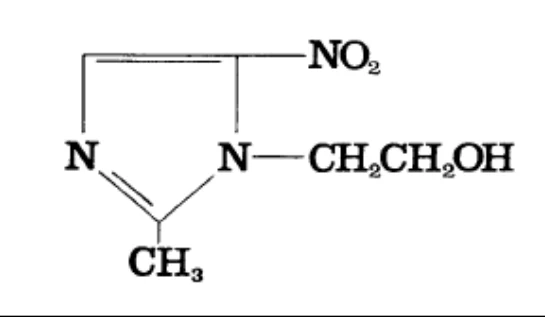
metronidazole
Chemical name:
1 H-Imidazole-1-ethanol, 2-methyl-5-nitro-
Molecular formula:
C6H9O3N3
Molecular Mass:
171.16 g/mol
Structural formula:
Physicochemical properties:
A white to pale yellow crystalline powder or crystals, odourless or with a slight odour and a bitter slightly saline taste. It darkens on exposure to light. Sparingly soluble in water and in alcohol (1 in 100), Slightly soluble in ether and in chloroform (1 in 1000). Metronidazole has a melting point of 159 to163°C and a pH of 5.5 to 7.5 (c=1% in water).
| Sunscreen Drug Substances | |
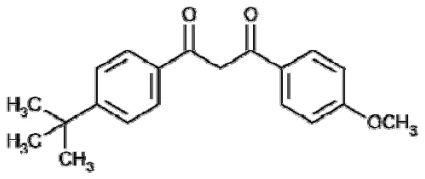
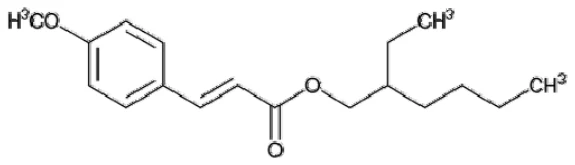
Proper name: octinoxate | Proper name: avobenzone |
Chemical name: 2-ethyl hexyl-P-methoxycinnamate | Chemical name: 1-(p-tert-butylphenyl)-3-(p-methoxyphenyl)-1,3-propanedione |
| Molecular formula: C18H26O3 | Molecular formula: C20H22O3 |
| Molecular Mass: 290.4 g/mol | Molecular Mass: 310.39 g/mol |
| Structural formula: | Structural formula: |
Physicochemical properties: A pale yellow slightly oily practically odourless liquid. | Physicochemical properties: Off-white to yellow powder. |
Composition
Each 1 g of ROSASOL® (metronidazole 1%, octinoxate 7.5%, avobenzone 2%, w/w) contains 10 mg of metronidazole (1 % metronidazole USP) with 7.5% octinoxate and 2% avobenzone.
It also contains cyclomethicone NF, diisopropyl adipate, dimethyl isosorbide, EDTA, emulsifying wax, glycerine, isoarachidyl neopentanoate, light mineral oil, phenonip, phenyl trimethicone, polysorbate 60, purified stearic acid, purified water, sodium hydroxide, sorbitan monostearate NF.
Stability and Storage Recommendations
Store ROSASOL® at 15°-30°C.
Special Handling Instructions
There are no special requirements for use or handling of this product.
AVAILABILITY OF DOSAGE FORMS
ROSASOL® cream is available in 30 g tubes.
INFORMATION FOR THE CONSUMER
ROSASOL® (metronidazole 1%, octinoxate 7.5%, avobenzone 2%, w/w): What it is used for, what it does
ROSASOL® contains metronidazole which is a medication proven to be topically effective in the treatment of rosacea. The exact way that metronidazole reduces inflammation, sores, redness and dilated blood vessels in the skin is not known but may involve anti-inflammatory effects.
ROSASOL® also contains the sunscreens octinoxate and avobenzone to provide limited sun protection.
What the medicinal ingredients are:
ROSASOL® contains 1% metronidazole with sunscreens octinoxate 7.5% and avobenzone 2%.
What the nonmedicinal ingredients are:
ROSASOL® contains cyclomethicone NF, diisopropyl adipate, dimethyl isosorbide, edetate disodium, emulsifying wax, glycerine, isoarachidyl neopentanoate, light mineral oil, phenonip, phenyl trimethicone, polysorbate 60, purified stearic acid, purified water, sodium hydroxide, sorbitan monostearate NF.
Directions for Use
Your doctor has prescribed ROSASOL® to treat your rosacea. It is important to read and follow these instructions for use.
- 1. First, wash the affected areas with mild soap. Rinse well with lukewarm water and pat dry.
- 2. Apply a thin film of ROSASOL® with your fingertips to the areas affected by rosacea, twice daily, morning and evening, or as directed by your doctor. Gently spread the medication and rub in lightly, carefully avoiding the eyes, mouth, nostrils and other mucous membranes.
- 3. Wash your hands thoroughly after using the medication.
- 4. ROSASOL® may provide sun protection on the covered areas for a limited time only. As worsening of rosacea is frequently observed following exposure to the sun, avoid unnecessary or prolonged exposure to sunlight and use a sunscreen with a minimum of SPF 15 on all areas of the skin that will be exposed to sunlight. After applying ROSASOL®, allow the skin to dry before applying a sunscreen. The sunscreen should be reapplied according to the sunscreen directions.
- 5. Patients may generally use cosmetics after application of metronidazole.
Warnings and Precautions
BEFORE you use ROSASOL® talk to your doctor or pharmacist if:
- You have or have ever had blood clotting problems, or problems in your blood test results.
- You are pregnant or breastfeeding.
- You have any allergies to this drug or its ingredients or components of the container.
Keep your medication in a safe place, out of the reach of children. ROSASOL® should not be used in children unless directed by your doctor. The safety and effectiveness of metronidazole cream has not been established in children.
ROSASOL® is for external use only. Keep ROSASOL® away from your eyes, nostrils, mouth and other mucous membranes. ROSASOL® is not for ophthalmic use. Avoid all contact with eyes. If contact with eyes occurs, flush with water for at least five minutes. If discomfort persists, consult your doctor.
Unneccessary, long use of this medication should be avoided.
Decrease or discontinue use if skin irritation develops or increases; ask your doctor about further use if needed.
Although this formulation contains sunscreens with some sun protection, unnecessary or prolonged exposure to sunlight, sun lamps, wind and cold should be avoided during treatment.
The sun may worsen rosacea, cause sunburn, premature aging of the skin and skin cancer. Avoiding the sun, wearing protective clothing and regular use of sunscreens over the years may reduce the chance of these harmful effects.
Interactions with this Medication
Drugs that may interact with ROSASOL® include coumarin anticoagulants, such as warfarin.
Overdose
In case of drug overdose, contact a healthcare professional (doctor), hospital emergency department or regional poison control centre, even if there are no symptoms.
Remember
ROSASOL® has been prescribed by your doctor for your use only. Do not allow others to use it.
MICROBIOLOGY
Metronidazole is bactericidal, amebicidal and trichomonacidal in action. Although the precise mechanism of these actions have not been fully elucidated, it is hypothesized that metronidazole enters the target cell by passive diffusion. Once inside the cell, the nitro group on the metronidazole molecule is reduced which leads to the formation of short lived cytotoxic intermediates. These intermediates will then interact with the DNA and possibly with other macromolecules of susceptible microorganisms.
The reduction of metronidazole, which is the crucial aspect of its mode of action, is achieved by the redox system. This system plays an important role in the metabolism of anaerobes but plays no or only a minor role in aerobic organisms. This explains why, in general, metronidazole is active against most obligately anaerobic bacteria either gram-positive or gram-negative and to many protozoa. On the other hand, metronidazole is inactive against most aerobic or facultatively anaerobic bacteria and is inactive against fungi and viruses.
Metronidazole is inactive in vitro against Propionibacterium acnes. The MIC at which 50% and 90% of strains were inhibited was greater than 128 μg/mL.
The mite Demodex folliculorum which was believed to play a role in the aetiology of rosacea, although this concept received little support in recent years, is unaffected by metronidazole in concentrations up to 1 mg/mL. Thus the action of metronidazole in rosacea is not attributable to its direct action on the mite.
PHARMACOLOGY
Human Studies
No pharmacodynamic and pharmacokinetic studies were conducted with ROSASOL® (metronidazole 1%, octinoxate 7.5%, avobenzone 2%, w/w) cream.
Oral metronidazole was shown to have specific anti-inflammatory properties in humans. Biopsies showed a definite histopathological evidence of reduction of inflammatory response. 90% of the patients treated with metronidazole showed a good to excellent response to therapy compared to 20% in the placebo group.
Pharmacokinetics
Percutaneous absorption of metronidazole following application of 0.5 to 1.0 g of a 1% w/w metronidazole cream per day, corresponding to 5-10 mg of metronidazole, produced a metronidazole serum concentration of 20-45 ng/mL. By comparison, a Cmax of 4-7 μg/mL of serum was obtained following oral administration of 200 mg of metronidazole.
Following oral and rectal administration, metronidazole is rapidly absorbed, peak plasma concentrations occur after approximately 20 minutes to 3 hours.
The serum half-life of metronidazole following oral and I.V. administration was in both instances around 7 hours.
Distribution: Of the metronidazole which achieves systemic distribution, the distribution volume of metronidazole is approximately 0.55 l/kg. No more than 20% is bound to plasma proteins. It easily diffuses into tissues and organs and bodily fluids (e.g. bile, suppurative matter). Metronidazole crosses the placental barrier and is excreted in breast milk.
Metabolism: Of the metronidazole which achieves systemic distribution, approximately 30-60% of the administered dose of metronidazole is metabolised in the in the liver by side-chain oxidation and glucuronide formation. The main hydroxyl metabolite, 1-(2-hydroxyethyl)-2-hydroxymethyl-5-nitroimidazole, is formed as a result of oxidation. The biological half-life is approximately 8 hours.
Excretion: Of the metronidazole which achieves systemic distribution, approximately 60 - 80% of metronidazole is excreted in urine, including 20% in unchanged form, with fecal excretion accounting for 6 to 15% of the dose.
CLINICAL STUDIES
One hundred and twenty patients participated in a double-blind, randomized, parallel group study to assess the safety and efficacy of ROSASOL® (metronidazole 1%, octinoxate 7.5%, avobenzone 2%, w/w) cream. The study was conducted against a placebo sunscreen cream (octinoxate 7.5%, avobenzone 2%). Patients with verified moderate to severe rosacea were randomized to one of the two treatment groups and instructed to apply the medication twice daily for 12 weeks.
The results demonstrate that compared to the placebo, ROSASOL® produced significantly greater reductions in the number of inflammatory lesions, and in the severity of both erythema and telangiectasia. Both the investigator and patient global assessment showed that ROSASOL® produced a significantly greater improvement in the rosacea condition than the placebo.
There were no irreversible adverse reactions reported in this study. The majority of the adverse events related to the study medications occurred at the site of application and consisted essentially of stinging, erythema, itching and dryness. No difference between the safety profiles of ROSASOL® and placebo was found.
TOXICOLOGY
Acute Toxicity
Acute toxicity studies with ROSASOL® (metronidazole 1%, octinoxate 7.5%, avobenzone 2%, w/w) cream have not been conducted.
LD50 (mg/kg) values for metronidazole
| SPECIES | ||
Route of Administration | MICE | RATS |
| Intragastric | 3500-4350 | 5000 |
| Intravenous | 1170-1260 | 1575 |
| Intraperitoneal | 3700 | 5000 |
Subacute Toxicity
Oral Tolerance Study
Rats:
In rats receiving metronidazole for four weeks at dose levels of 25 and 50 mg/kg/day, no variations in body weight, blood counts and kidney or liver function were observed compared to control animals. A moderate reduction in growth was observed. Males receiving the high dose of metronidazole showed a reduction in testis weight and in spermatogenesis. The hematology was normal. No other treatment-related effects were observed.
Monkeys:
Metronidazole in dose levels of 45, 100 and 225 mg/kg/day were administered by gastric intubation to males and females for 14 weeks. Weight gain was not adversely affected at any dose level. Clinical chemistry values and haematological findings were generally within normal limits. In the high dose group, histologic examinations revealed liver changes consisting generally of confined to pale staining cytoplasm and some hepatic cell hypertrophy.
Another study during which dose levels of 75 and 150 mg/kg/day were administered by gavage six days per week for 52 weeks, revealed compound-related effects on the liver. These changes included variations in hepatocyte size, presence of hypertrophic hepatic nuclei and presence of multinucleate hepatocytes. Other laboratory findings were within normal limits.
These studies demonstrate that the toxic effects of metronidazole in the monkey appear to be limited to microscopic changes in the liver without any associated changes in serum enzyme levels.
Dogs:
Metronidazole in dose levels of 75, 110, 150 and 225 mg/kg/day was administered orally to dogs. In the 150 and 225 mg/kg/day dose, very definite effects to the central nervous system were observed which included ataxia, muscular rigidity and tremors followed by severe prostration. These symptoms disappeared if the treatment was terminated; the recovery period, taking about one week.
A second study, which consisted of histopathologic examination of the brains of dogs who received 225 mg/kg/day, did not reveal any morphologic changes that could explain the symptoms observed.
Long Term Oral Toxicity
Mice:
The long term toxicity of metronidazole was evaluated during a 78-week study on the CD-1 strain of ICR Swiss mice and during a 92-week study on the CF-1 strain. Both studies used dose groups of 40 males and 40 females each, and dose levels of 75, 150 and 600 mg/kg/day were administered orally. In each study, treatment began when the mice were approximately 28 days of age and continued for the duration of the study.
Survival was not affected adversely at any treatment level in either study. In the 78-week study, a significant decrease in the rate of body weight gain in both sexes for all treatment levels was noted whereas in the 92-week study the rate of body weight gain of the animals in the treated group was not significantly different from controls.
Histological examination revealed alteration of the testicular activity, classified as hypospermato-genesis, in the CD-1 strain especially in the high dose group. No changes or alterations of testicular activity were reported in the CF-1 strain.
Rats:
Metronidazole in dose levels of 75, 150, 300 and 600 mg/kg/day were given orally to rats for a period of 80 weeks. The rate of body weight gain was generally depressed. In the 300 mg/kg/day group, testicular dystrophy was encountered ans was not reversed during the 28 week recovery period. The 600 mg/kg/day dose level which was administered for 13 weeks produced a high incidence of testicular dystrophy and prostatic atrophy as well as a notable decrease in the rate of body weight gain. The survival rate was not affected adversely by the treatment.
Intravenous Tolerance Study
Rats:
Metronidazole in dose levels of 60, 150 and 300 mg/kg/day were injected into the jugular vein for four weeks. The body weight and weight gain of the treated animals was comparable to the control animals. No significant changes in blood pressure, haematology or clinical chemistry were observed. Post mortem findings were also unremarkable.
Primary Ocular Irritation
The degree of ocular irritation produced following a single instillation of ROSASOL® (metronidazole 1%, octinoxate 7.5%, avobenzone 2%) cream was evaluated in New Zealand White rabbits. Administration of the test article, approximately 0.1 mL of ROSASOL® cream A (metronidazole 1%, octinoxate 7.5%, avobenzone 2%, w/w), to the eyes of New Zealand White rabbits (Group2; n=3 animals) showed negligible ocular irritancy, as assessed using the Draize method at 1, 4, 24, 48 and 72 hours following administration. Likewise, administration of the vehicle control article, approximately 0.1 mL of ROSASOL® cream B (vehicle with sunscreens), to the eyes of New Zealand White rabbits (Group1; n=3 animals) showed negligible ocular irritancy, as assessed using the Draize method at the same timepoints. For all animals, no adverse clinical signs were observed, animal body weights remained normal, and assessment of corneal integrity using fluorescein dye procedures revealed no corneal injuries.
Primary Dermal Irritation
No evidence for a primary dermal irritation was observed in rabbits following a single 24-hour cutaneous application of metronidazole cream to abraded and non-abraded skin, under occlusion.
Teratology
No study to determine the teratologic potential of ROSASOL® was conducted. Metronidazole, however, has been evaluated for it embryotoxic and teratogenic potential in the rat, rabbit and mouse. Most studies included the measurement of conception rate, litter size, resorption rate, fetal sex distribution, fetal size and examination of soft and skeletal tissues.
Rabbits:
In the rabbit, metronidazole was administered by buccal or by gastric intubation at dose levels of 30-200 mg/kg/day for periods ranging from 3-13 days during pregnancy. No embryotoxic or teratogenic effects were observed.
Metronidazole was administered intravenously to rabbits at doses of 15 or 30 mg/kg/day from days 6-18 of pregnancy inclusive. Discrepancies between the number of corpora lutea and implantation site suggested that metronidazole may have caused a 10-15% increase in pre-implantation loss.
Mice:
In a mouse study, two groups of mice were treated from the sixth to the fifteenth day of gestation. Metronidazole was administered by gastric intubation at dose levels of 10 and 20 mg/kg/day. At the dosages utilized, metronidazole did not produce any teratogenic effects.
Rats:
In five rat studies, metronidazole was administered in the diet at a concentration of 0.13% for 18 days of gestation, or by gastric intubation at dose levels from 50-
200 mg/kg/day for periods ranging from 10 days (mid-gestation) to 40 days (before and during pregnancy). Drug-related embryotoxic or teratogenic effects were not observed in any of the five studies.
Rodents:
In a study with rats, mice, and guinea-pigs, metronidazole was given at 10mg/kg/day to rats for an unspecified period during pregnancy, at 10-11 mg/kg/day to mice during 10 days and to guinea-pigs at 7-9 mg/kg/day for 7-10 days. Embryotoxic or teratogenic effects were reported with an increase of incidence in premature birth, birth defects and still births in all three species.
Mutagenicity
Metronidazole has been shown to be mutagenic in the Ames test. Metronidazole and a metabolite have been shown to be mutagenic in non-mammalian cells.
In addition, a dose-related increase in the frequency of micronuclei was observed in mice after intraperitoneal injection.
Carcinogenicity
Mice:
In one study, male and female Swiss mice were fed with concentration of metronidazole ranging from 0.5% to 0.06% metronidazole in a pelleted diet from 6 to 8 weeks of age until death. No adverse effect on the physical appearance, behavior and body weight was noted. There was an increased incidence of lung tumors in male and female mice, and of malignant lymphoma in female mice.
Malignant liver tumors were increased in male mice treated at approximately 1500 mg/m2. This dose is approximately 3 times the recommended oral dose.
Rats:
In the 80-week feeding study at dose levels of 75, 150, 300 and 600 mg/kg, there was a significant increase in the number of benign mammary tumors, but only in the females of the 300 mg/kg group.
Another study with female Sprague-Dawley rats, however, failed to find any significant difference in controls and those given metronidazole 0.135% in diet for 66 weeks.
In another study, three groups of male and female non-inbred Sas:MRC (WI)BR rats were given metronidazole at dose levels of 0.6%, 0.3% and 0.06% in a diet throughout their life span. In addition to a significant increase in mammary tumors (76.6%) versus controls, a significant incidence (23%) of hepatic tumors was also noted in females maintained at the highest dose. Also, the rates of Leydig cell tumors of the testes and pituitary adenomas were statistically significant among males given the highest dose.
Hamsters:
In two separate studies with hamsters fed with 0.3 or 0.15% metronidazole in diet, or administered 30 or 80 mg/kg/day from 7 or 8 weeks of age until death, no significant increase in tumor formation was noted.
Photocarcinogenicity
One study showed a significant enhancement of UV-induced skin tumours in hairless mice treated with metronidazole intraperitoneally (15 mcg/g body weight and per day for 28 weeks).
BIBLIOGRAPHY
Gamborg Nielsen P. Metronidazole treatment in rosacea. Int J Derm 1988;27:1-
5.
Houghton GW, Thorne PS, Smith J, Templeton R, Collier J. Comparison of the pharmacokinetics of metronidazole in healthy female volunteers following either a single oral or intravenous dose. Br J Clin Pharmac 1979;8:337-341.
Roe FJC. Toxicologic evaluation of metronidazole with particular reference to carcinogenic, mutagenic and teratogenic potential. Surgery 1983;93(1) Part 2:158-164.
Schmadel LK, McEvoy GK. Topical metronidazole: A new therapy for rosacea. Clinical Pharmacy 1990;9:94-101.
Tanga MR, Antani JA, Kabade MS. Clinical evaluation of metronidazole as an anti-inflammatory agent. Int Surgery 1975;60:75-76.