


Product Monograph - Picato
SUMMARY PRODUCT INFORMATION
| Route of Administration | Dosage Form / Strength | Clinically Relevant Nonmedicinal Ingredients |
| Topical | Gel 0.015% strength contains 70 mcg ingenol mebutate per unit dose tube 0.05% strength contains 235 mcg ingenol mebutate per unit dose tube | For a complete listing see Dosage Forms, Composition and Packaging section. |
INDICATIONS AND CLINICAL USE
PICATO (ingenol mebutate) is indicated for:
- topical treatment of non-hyperkeratotic, non-hypertrophic actinic keratosis (AK) in adults.
Geriatrics (≥ 65 years): No overall differences in safety or efficacy were observed between patients aged 65 years and over compared with younger patients (see ACTION AND CLINICAL PHARMACOLOGY, Special Populations).
Pediatrics (< 18 years): The safety and efficacy of PICATO in patients less than 18 years of age have not been established.
CONTRAINDICATIONS
- Hypersensitivity to ingenol mebutate or to any of the excipients. For a complete listing, see the Dosage Forms, Composition and Packaging section of the product monograph.
WARNINGS AND PRECAUTIONS
General
The efficacy of PICATO (ingenol mebutate) in the prevention of squamous cell carcinoma (SCC) associated with actinic keratosis (AK) has not been studied. The rate of SCC reported in the treatment area was comparable in patients treated with PICATO (0.3%) and in vehicle treated patients (0.3%) in the AK clinical studies. SCC in the treatment area was reported in no patients previously treated with PICATO in three prospective, observational long term 1 year follow-up studies.
Health care professionals should advise patients to be vigilant for any lesions developing within the treatment area and to seek medical advice should any occur. Lesions clinically atypical for actinic keratosis or suspicious for malignancy should be biopsied to determine appropriate treatment.
Clinical data on re-treatment and treatment of more than one area with PICATO is not available (see DOSAGE AND ADMINISTRATION, Dosing Considerations).
Clinical data on treatment in immunocompromised patients is not available, but systemic risks are not expected since systemic exposure of ingenol mebutate was not detected following topical treatment with PICATO.
The PICATO 0.05% gel should not be used on the face or scalp as this could lead to severe skin reactions and a higher incidence of local skin responses. Only the PICATO 0.015% gel should be applied on the face or scalp (see DOSAGE AND ADMINISTRATION).
PICATO should not be used in, near, or around the eyes, mouth and lips. It should not be used on the inside of the nostrils or on the inside of the ears.
Ophthalmologic
Severe eye disorders occurred more frequently in patients treated with PICATO than vehicle, including periorbital edema, eyelid edema, eye edema, eye pain, and eyelid ptosis in the AK clinical studies. These eye disorders resolved without sequelae and may result from spreading of application site edema (see ADVERSE REACTIONS).
Ingenol mebutate is a known ocular irritant. Cases of chemical conjunctivitis and corneal burn following accidental exposure to eyes have been reported with PICATO treatment in the post-marketing setting. Treatment in the periocular area should be avoided. To avoid transfer of PICATO to the eyes and surrounding areas during and after application, precautions should be taken. Patients should wash their hands thoroughly with soap and water immediately after applying PICATO and should not touch the area of application for at least 6 hours (see DOSAGE AND ADMINISTRATION). If accidental exposure occurs, the eyes should be flushed immediately with large amounts of water, and the patient should seek medical care as soon as possible.
Gastrointestinal
PICATO (ingenol mebutate) must not be ingested. If accidental ingestion occurs the patient should drink plenty of water.
Hypersensitivity Reactions
Cases of hypersensitivity reactions including anaphylaxis have been reported with PICATO treatment in the post-market setting (see ADVERSE REACTIONS). If anaphylactic or other clinically significant hypersensitivity reactions occur, PICATO should be discontinued immediately and appropriate medical therapy should be instituted.
Skin
Severe local skin responses (LSRs) such as erythema, flaking/scaling, crusting, swelling, vesiculation/pustulation, and erosion/ulceration can occur after topical application of PICATO. LSRs are common and the majority are mild to moderate. A treatment effect may not be adequately assessed until resolution of local skin responses.
Administration of PICATO is not recommended until the skin is healed from treatment with any previous medicinal product or surgical treatment.
PICATO should not be applied to areas of skin with open wounds or damaged skin where the skin barrier is compromised.
Shaving the treated area should be avoided during treatment with PICATO. Patients should be advised to wait for resolution of the local skin response as shaving may irritate the skin.
Due to the irritant properties of ingenol mebutate, contact with skin outside the treatment area should be avoided. If there is inadvertent contact with skin not in the treatment area, the area must be washed with mild soap and water.
Carcinogenesis and Mutagenesis
Long-term animal carcinogenicity studies with ingenol mebutate have not been conducted. Ingenol mebutate was not genotoxic or clastogenic in a bacterial mutation (Ames) assay, mouse lymphoma cell assay, or rat in vivo micronucleus assay. Ingenol mebutate was positive in the Syrian hamster embryo (SHE) cell transformation test, which detects both genotoxic and epigenetic carcinogens.
Carcinogenic and mutagenic risks to humans receiving treatment with PICATO are considered unlikely since systemic exposure of ingenol mebutate was not detected following topical treatment.
Special Populations
Pregnant Women: There are no data from the use of PICATO in pregnant women. Embryo-fetal development studies in rabbits with intravenous ingenol mebutate demonstrated an increase in embryo-fetal mortality and an increased incidence of fetal visceral and skeletal variations (see TOXICOLOGY, Reproduction). Risks to humans receiving treatment with PICATO are considered unlikely since systemic exposure of ingenol mebutate was not detected following topical treatment. However, as a precautionary measure, it is preferable to avoid the use of PICATO during pregnancy.
Nursing Women: No effects on breastfed newborns/infants are anticipated since systemic exposure of ingenol mebutate was not detected following topical treatment with PICATO. The nursing mother should be instructed that physical contact between her newborn/infant and the treated area should be avoided for a period of 6 hours after application of PICATO.
Pediatrics (< 18 years): The safety and efficacy of PICATO in patients less than 18 years of age have not been established.
ADVERSE REACTIONS
Adverse Drug Reaction Overview
The most frequently reported adverse drug reactions associated with PICATO (ingenol mebutate) treatment were general disorders and administration site disorders, including application site pain and application site pruritus.
Local Skin Responses (LSRs) were assessed independently in an effort to provide a better profile of the specific types of visible local skin reactions. LSRs included erythema, flaking/scaling, crusting, swelling, vesiculation/pustulation, and erosion/ulceration. LSRs are transient and typically occur within 1 day of treatment initiation and peak in intensity up to 1 week following completion of treatment. These effects typically resolve within 2 weeks for areas treated on the face and scalp and within 4 weeks for areas treated on the trunk and extremities.
Clinical Trial Adverse Drug Reactions
Because clinical trials are conducted under very specific conditions the adverse reaction rates observed in the clinical trials may not reflect the rates observed in practice and should not be compared to the rates in the clinical trials of another drug. Adverse drug reaction information from clinical trials is useful for identifying drug-related adverse events and for approximating rates.
The adverse drug reaction profile described below reflects exposure to PICATO on a skin area of 25 cm2 in 499 patients with actinic keratosis, including 274 patients exposed to PICATO at a concentration of 0.015% once daily for 3 consecutive days on the face or scalp, and 225 subjects exposed to PICATO at a concentration of 0.05% once daily for two consecutive days on the trunk and extremities.
Adverse Drug Reactions that occurred in ≥1% of patients treated with PICATO are presented in Table 1 and Table 2. Adverse drug reactions were generally mild to moderate in severity.
| Table 1. Adverse Drug Reactions Occurring in ≥ 1 % of Patients Treated with PICATO Gel or Vehicle in Controlled Phase 3 Face/Scalp Studies | ||||
| MedDRA SOC (Preferred term) | PICATO gel, 0.015% n=274 (%) | Vehicle n=271 (%) | ||
| General disorders and administration site disorders | ||||
| Application site pain‡ | 13.9 % | 0.4 % | ||
| Application site pruritus | 8.0 % | 1.1 % | ||
| Application site irritation | 1.8 % | 0.0 % | ||
| Infections and infestations | ||||
| Application site infection | 2.6 % | 0.0 % | ||
| Nervous system disorders | ||||
| Headache | 2.2 % | 1.1 % | ||
| Eye Disorders† | ||||
| Eyelid edema | 1.1 % | 0.0 % | ||
| Periorbital edema | 2.6 % | 0.0 % | ||
† Application site swelling on the face or scalp may gravitate to the eye area.
‡ Including application site burning
| Table 2. Adverse Drug Reactions Occurring in ≥ 1 % of Patients Treated with PICATO Gel or Vehicle in Controlled Phase 3 Trunk/Extremities Studies | ||||
| MedDRA SOC (Preferred term) | PICATO gel, 0.05% n=225 (%) | Vehicle n=232 (%) | ||
| General disorders and administration site disorders | ||||
| Application site pruritus | 8.4 % | 0.0 % | ||
| Application site irritation | 3.6 % | 0.4 % | ||
| Application site pain‡ | 2.2 % | 0.0 % | ||
‡ Including application site burning
Less Common Clinical Trial Adverse Drug Reactions (<1%)
Other less common adverse drug reactions (less than 1% but more than 0.5%) were for scalp/face: eye pain, application site discharge, and application site parasthesia; for trunk/extremities: application site parasthesia and application site warmth.
Local Skin Responses
LSRs were evaluated within the selected treatment area and graded by the investigator on a scale of 0 to 4 (see Table 3 and Table 4).
| Table 3. Investigator Assessment of Maximal Local Skin Reactions in the Treatment Area during the 57 Days Post Treatment Period (face/scalp studies) | |||||||||||||||||||||
Face and Scalp (n=545) 0.015% PICATO gel, once daily for 3 days | |||||||||||||||||||||
| Skin reactions | Any Grade* > Baseline | Mild | Moderate | Severe | |||||||||||||||||
| Grade 1 | Grade 2 | Grade 3 | Grade 4 | ||||||||||||||||||
| PICATO gel (n=274) | Vehicle (n=271) | PICATO gel (n=274) | PICATO gel (n=274) | PICATO gel (n=274) | PICATO gel (n=274) | ||||||||||||||||
| Erythema | 258 (94%) | 69 (25%) | 25 ( 9%) | 56 (20%) | 125 (46%) | 66 (24%) | |||||||||||||||
| Flaking / Scaling | 233 (85%) | 67 (25%) | 52 (19%) | 91 (33%) | 98 (36%) | 25 ( 9%) | |||||||||||||||
| Crusting | 220 (80%) | 46 (17%) | 85 (31%) | 64 (23%) | 64 (23%) | 16 ( 6%) | |||||||||||||||
| Swelling | 217 (79%) | 11 ( 4%) | 88 (32%) | 67 (24%) | 48 (18%) | 14 ( 5%) | |||||||||||||||
| Vesiculation / Pustulation | 154 (56%) | 1 ( 0%) | 36 (13%) | 53 (19%) | 50 (18%) | 15 ( 5%) | |||||||||||||||
| Erosion / Ulceration | 87 (32%) | 3 ( 1%) | 55 (20%) | 26 ( 9%) | 5 ( 2%) | 1 ( 0%) | |||||||||||||||
| *A grade of 0 represented no reaction present in the treated area, and a grade of 4 indicated a marked and discernible skin reaction that extended beyond the area treated. | |||||||||||||||||||||
| Table 4. Investigator Assessment of Maximal Local Skin Reactions in the Treatment Area during the 57 Days Post Treatment Period (trunk/extremities studies) | |||||||||||||||||||||
Trunk and Extremities (n=457) 0.05% PICATO gel , once daily for 2 days | |||||||||||||||||||||
| Skin reactions | Any Grade* > Baseline | Mild | Moderate | Severe | |||||||||||||||||
| Grade 1 | Grade 2 | Grade 3 | Grade 4 | ||||||||||||||||||
| PICATO gel (n=225) | Vehicle (n=232) | PICATO gel (n=225) | PICATO gel (n=225) | PICATO gel (n=225) | PICATO gel (n=225) | ||||||||||||||||
| Erythema | 207 (92%) | 43 (19%) | 31 (14%) | 94 (42%) | 61 (27%) | 34 (15%) | |||||||||||||||
| Flaking / Scaling | 203 (90%) | 44 (19%) | 52 (23%) | 86 (38%) | 66 (29%) | 18 ( 8%) | |||||||||||||||
| Crusting | 167 (74%) | 23 (10%) | 105 (47%) | 39 (17%) | 23 (10%) | 8 ( 4%) | |||||||||||||||
| Swelling | 143 (64%) | 13 ( 6%) | 65 (29%) | 51 (23%) | 20 ( 9%) | 7 ( 3%) | |||||||||||||||
| Vesiculation / Pustulation | 98 (44%) | 2 (1%) | 46 (20%) | 30 (13%) | 19 ( 8%) | 3 ( 1%) | |||||||||||||||
| Erosion / Ulceration | 58 (26%) | 6 ( 3%) | 37 (16%) | 15 ( 7%) | 4 ( 2%) | 2 ( 1%) | |||||||||||||||
| *A grade of 0 represented no reaction present in the treated area, and a grade of 4 indicated a marked and discernible skin reaction that extended beyond the area treated. | |||||||||||||||||||||
For patients treated on the face or scalp for 3 consecutive days, the majority of patients treated with PICATO gel, 0.015% had a maximum LSR score on Day 4, which returned to baseline or below by Day 15.
For patients treated on the trunk or extremities for 2 consecutive days, the majority of patients treated with PICATO gel 0.05% had a maximum LSR score on Days 3 or 8, which returned to baseline or below by Day 29.
Long-term Safety Follow-up
A total of 108 patients treated with PICATO on the face/scalp and 76 patients treated on the trunk/extremities were enrolled in three prospective, observational long-term follow-up studies. There were no adverse drug reactions reported in these studies (see CLINICAL TRIALS).
Post-Market Adverse Drug Reactions
Eye disorders: Reports of chemical conjunctivitis and corneal burn in connection with accidental eye exposure have been reported with the use of PICATO (see DOSAGE AND
ADMINISTRATION and WARNINGS AND PRECAUTIONS for prevention of eye exposure).
Application site reactions: Reports of pigmentation changes with the use of PICATO have been reported. Cases of application site scarring have also been reported.
Hypersensitivity reactions: Reports of hypersensitivity reactions have been reported with the use of PICATO, including Stevens-Johnson syndrome.
Infections: Reports of herpes zoster have been reported with the use of PICATO
Squamous cell carcinoma (SCC): Reports of SCCs in the treatment area have been reported with the use of PICATO.
DRUG INTERACTIONS
No interaction studies have been performed. Interactions with systemically absorbed medicinal products are considered unlikely since systemic exposure of ingenol mebutate was not detected following topical treatment with PICATO (see ACTION AND CLINICAL PHARMACOLOGY).
DOSAGE AND ADMINISTRATION
Dosing Considerations
For topical use only.
PICATO (ingenol mebutate) gel is not for oral, ophthalmic or intravaginal use.
Avoid application or transfer to the eyes and surrounding areas. Avoid application in, near, and around the mouth and lips.
Clinical data on treatment for more than one treatment course of 2 or 3 consecutive days is not available. Clinical data on treatment of more than one area is not available.
The treated area should not be covered with occlusive bandages after PICATO is applied.
Recommended Dose and Dosage Adjustment
Actinic keratosis on the face or scalp:
PICATO 0.015% gel should be applied to a single treatment field area no larger than 25 cm2 once daily for 3 consecutive days.
Actinic keratosis on the trunk or extremities:
PICATO 0.05% gel should be applied to a single treatment field area no larger than 25 cm2 once daily for 2 consecutive days.
Geriatrics (≥ 65 years): No dose adjustment is required (see ACTION & CLINICAL PHARMACOLOGY, Special Populations).
Administration
PICATO should be applied to the treatment field area as defined by the treating physician. Each tube contains enough gel to cover an area of approximately 25 cm2 (e.g., 5 cm x 5 cm).
The gel from the unit dose tube should be squeezed onto the fingertip and spread evenly over the entire treatment area, allowing it to dry for 15 minutes. One unit dose tube should be used for the field treatment area.
Care should be taken not to apply the 0.05% PICATO gel on the face or scalp. Patients should be instructed to use the appropriate gel strength for the indicated treatment area (PICATO 0.015% should only be applied on the face or scalp and PICATO 0.05% should only be applied on the trunk or extremities).
Patients should be instructed to wash their hands immediately after applying PICATO. Care should be taken to avoid transferring PICATO to the eyes, surrounding skin, and other areas. If treating the hands, only the fingertip which is used for applying the gel should be washed.
Washing and touching the treated area should be avoided for a period of 6 hours after the application of PICATO. Following this, patients may wash the area with a mild soap.
PICATO should not be applied immediately after taking a shower or less than 2 hours before bedtime
OVERDOSAGE
There has been no experience of overdose in clinical studies with PICATO (ingenol mebutate).
| For management of a suspected drug overdose or accidental ingestion, contact your regional Poison Control Centre. |
ACTION AND CLINICAL PHARMACOLOGY
Mechanism of Action
The mechanism of action of ingenol mebutate in actinic keratosis (AK) is not fully characterized since there is no adequate animal model of AK. In vivo and in vitro models using tumour cell lines, including squamous cell carcinoma, have shown a dual mechanism of action for the effects of ingenol mebutate: 1) direct cytotoxicity and 2) promoting an inflammatory response characterised by release of inflammatory cytokines and infiltration of immunocompetent cells.
Pharmacodynamics
At a high concentration (100 µg/ml) in vitro and in vivo, studies have shown that ingenol mebutate is cytotoxic.
At lower concentrations (10 to 100 ng/ml), ingenol mebutate activates both novel and classical protein kinase C (PKC) and is associated with immunostimulatory effects. Some classes of PKC activators, such as phorbol esters, are known to be tumour promoters. Ingenol mebutate is structurally related to phorbol esters. The clinical significance of potential proliferative effects via activation of PKC by ingenol mebutate is unknown. However, no evidence of neoplasia was noted in 6 and 9-month dermal repeat dose studies in rats and minipigs (cyclic administration).
The risk of tumour induction in humans receiving treatment with PICATO is considered very unlikely due to the short duration of treatment (2-3 days).
Exposure of isolated human keratinocytes to lower concentrations of ingenol mebutate (10 to 100 ng/ml) in vitro, was shown to induce release of the cytokines IL-8 and TNF-alpha and neutrophil activation. Both in vitro and in mice, ingenol mebutate induced IL-8 / murine IL-8 homologue MIP-2, TNF-alpha, and IL-1beta, all mediators of neutrophil recruitment and activation.
Topical treatment with ingenol mebutate gel in the squamous cell carcinoma model resulted in a localized and transient application site inflammatory reaction, which peaked after few days, and resolved within 2 weeks followed by scar resolution after 2 to 3 months. After 3 weeks of treatment with ingenol mebutate, treated mouse skin was similar to untreated skin in elasticity
Ultraviolet Light Exposure: Studies have been conducted to assess the effects of UV irradiation on the skin following single and multiple applications of ingenol mebutate, 100 mcg/g. Ingenol mebutate gel did not demonstrate any potential for photo-irritation or photo-allergic effects.
Pharmacokinetics
The systemic pharmacokinetic profile of ingenol mebutate and its metabolites has not been characterised in humans due to an absence of quantifiable whole blood levels following topical administration.
In vitro studies to assess the potential of ingenol mebutate to inhibit or induce human cytochrome P450 (CYP) enzymes demonstrated that ingenol mebutate does not inhibit CYP 1A2, 2A6, 2B6, 2C8, 2C9, 2C19, 2D6, 2E1, or 3A4, or induce CYP 1A2, 2C9, or 3A4.
Absorption: In humans, the highest concentration and treatment area evaluated was 0.05 µg/mm2 of ingenol mebutate gel, 0.05% applied once daily to a 100 cm2 area for two consecutive days. No systemic blood levels of ingenol mebutate or its two isomers PEP015 and PEP025 were quantifiable, i.e. concentrations were below the LLOQ (0.1 ng/mL).
Special Populations and Conditions
Pediatrics (< 18 years): The safety and efficacy of PICATO (ingenol mebutate) in patients less than 18 years of age have not been established.
Geriatrics (≥ 65 years): Of the 1,165 patients treated with PICATO in the actinic keratosis clinical studies, 656 patients (56%) were 65 years and older, while 241 patients (21%) were 75 years and older. No overall differences in safety or efficacy were observed between younger and older patients.
STORAGE AND STABILITY
PICATO (ingenol mebutate) gel should be stored in a refrigerator (2ºC to 8ºC).
Keep out of reach of children.
DOSAGE FORMS, COMPOSITION AND PACKAGING
PICATO (ingenol mebutate) is a clear colourless gel.
PICATO, 0.015% Gel
Each unit dose tube contains 70 mcg of ingenol mebutate in 0.47 g gel.
Available as: 3 unit dose tubes per carton.
PICATO, 0.05% Gel
Each unit dose tube contains 235 mcg of ingenol mebutate in 0.47 g gel.
Available as: 2 unit dose tubes per carton.
Non-medicinal ingredients: Isopropyl alcohol, hydroxyethyl cellulose, benzyl alcohol, citric acid monohydrate, sodium citrate, purified water.
PART II: SCIENTIFIC INFORMATION
PHARMACEUTICAL INFORMATION
Drug Substance
| Proper name (I.N.N.): | ingenol mebutate |
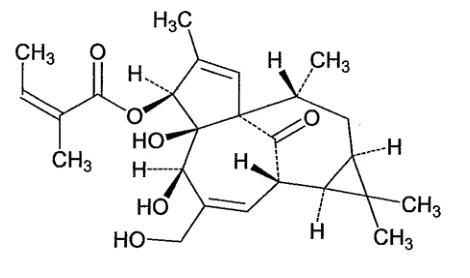
| Chemical name: | 2-Butenoic acid, 2-methyl-, (1aR,2S,5R,5aS,6S,8aS,9R,10aR)-1a,2,5,5a,6,9,10,10a-octahydro-5,5a-dihydroxy-4-(hydroxymethyl)-1,1,7,9-tetramethyl-11-oxo-1H-2,8a-methanocyclopenta [a]cyclopropa[e]cyclodecen-6-yl ester, (2Z) - |
| Alternative chemical | (1aR,2S,5R,5aS,6S,8aS,9R,10aR)-5,5a-dihydroxy-4-(hydroxymethyl)-1,1,7,9-tetramethyl-11-oxo-1a,2,5,5a,6,9,10,10a-octahydro-1H 2,8a-methanocyclopenta[a]cyclopropa[e]cyclodecen-6-yl (2Z) 2 methylbut-2-enoate. |
| Laboratory code name: | PEP005 |
| Molecular formula: | C25H34O6 |
| Molecular mass: | 430.53 g/mol |
| Chirality: | Eight chiral centres with specific optical rotation range 44° - 49° |
Structural formula:
| Physicochemical properties : | |
| Physical form | White to pale yellow crystalline powder |
| Solubility | Freely soluble in benzyl alcohol and isopropyl alcohol, soluble in methanol, ethanol, acetonitrile and acetone, very slightly soluble in ethanol-water (1:3) and practically insoluble in n-heptane and water |
| Melting point | 154.1 °C – 156.8 °C |
| pH | Weakly acidic, pKa 12.7 |
CLINICAL TRIALS
The efficacy and safety of PICATO (ingenol mebutate) 0.015% gel administered on the face or scalp for 3 consecutive days, and 0.05% gel administered on the trunk or extremities for 2 consecutive days was studied in four multi-centre, double-blind, randomized, parallel group, vehicle-controlled studies. For both treatment locations, eligible patients had 4 to 8 clinically typical, visible, discrete, non-hyperkeratotic, non-hypertrophic, actinic keratosis (AK) lesions within a contiguous 25 cm2 treatment area. On each scheduled dosing day, the study gel was applied to the entire treatment area (25 cm2). Patients continued in the studies for an 8 week follow-up period during which they returned for clinical observations and safety monitoring.
The efficacy of PICATO in AK is based on clinical clearance; histological assessment of clearance was not performed. The primary efficacy endpoint was complete clearance rate, defined as the proportion of patients at Day 57 with no clinically visible AK lesions in the selected treatment area. The secondary endpoint was partial clearance rate, defined as the proportion of patients at Day 57 with a 75% or greater reduction in the number of clinically visible AK lesions identified at baseline in the selected treatment area. The median percent reduction from baseline in the total number of AK lesions at Day 57 was also determined.
Face and Scalp
Study patients (n=547) ranged from 34 to 89 years of age (mean 64 years) and 94% had Fitzpatrick skin type I, II, or III. Approximately 85% of subjects were male, and all subjects were Caucasian. A total of 536 subjects (98%) completed these studies (see Table 5).
| Table 5. Clinical Efficacy Studies of Actinic Keratosis on the Face and Scalp | ||||||||||
| Study # | Trial design | Dosage, route of administration and duration | Study patients by dose group | Mean age (Range) years | Gender by dose group M/F | |||||
| PEP005-016 | Multi-centre, double-blind, randomized, parallel group, vehicle-controlled | PICATO 0.015% or vehicle, once a day topical, for 3 consecutive days | 135 134 | 63.5 (37–88) 63.0 (40–85) | 116/19 120/14 | |||||
| PEP005-025 | Multi-centre, double-blind, randomized parallel group, vehicle-controlled | PICATO 0.015% or vehicle, once a day topical, for 3 consecutive days | 142 136 | 64.8 (34–88) 65.0 (46-89) | 117/25 112/24 | |||||
At Day 57, patients treated with PICATO gel had statistically significantly higher complete and partial clearance rates than patients treated with vehicle gel (p < 0.001). The median percent reduction in actinic keratosis lesions was higher in the group treated with ingenol mebutate compared to the vehicle group (see Table 6). Efficacy varied between anatomical locations (Table 7). Within each group, the complete and partial clearance rates were higher in patients treated with PICATO gel than patients treated with vehicle.
| Table 6. Rates of Patients with Complete and Partial Clearance and Percent (%) Reduction on the Face and Scalp | |||||||||||||
| Study PEP005-016 | Study PEP005-025 | ||||||||||||
PICATO 0.015% gel (n=135 ) | Vehicle (n=134 ) | PICATO 0.015% gel (n=142) | Vehicle (n=136) | ||||||||||
| Complete Clearance Ratea | 50 (37%)d | 3 (2%) | 67 (47%)d | 7 (5%) | |||||||||
| Partial Clearance Rate (≥ 75%)b | 81 (60%)d | 9 (7%) | 96 (68%)d | 11 (8%) | |||||||||
| Median % Reductionc | 83% | 0% | 87% | 0% | |||||||||
a Complete clearance rate was defined as the proportion of patients with no (zero) clinically visible actinic keratosis lesions in the treatment area. b Partial clearance rate was defined as the percentage of patients in whom 75% or more of the number of baseline actinic keratosis lesions were cleared. c Median percent (%) reduction in actinic keratosis lesions compared to baseline. d p<0.001; compared to vehicle by Cochran-Mantel-Haenszel test stratified by study site. | |||||||||||||
| Table 7. Number and Rate of Patients with Complete and Partial Clearance at Day 57 by Anatomical Location (Face and Scalp Studies PEP005-016 and PEP005-025 Combined) | |||||||||||
| Complete Clearance | Partial Clearance ( ≥ 75%) | ||||||||||
PICATO 0.015 % gel (n=277 ) | Vehicle (n=270 ) | PICATO 0.015 % gel (n=277 ) | Vehicle (n=270) | ||||||||
| Face | 104/220 47% | 9/220 4% | 157/220 71% | 18/220 8% | |||||||
| Scalp | 13/57 23% | 1/50 2% | 20/57 35% | 2/50 4% | |||||||
The safety of PICATO 0.015% gel treatment was assessed up to day 57 and ingenol mebutate gel was found to be well tolerated. All adverse drug reactions and local skin responses resolved without sequelae.
Trunk and Extremities
Study patients (n=458) ranged from 34 to 89 years of age (mean 66 years) and 94% had Fitzpatrick skin type I, II, or III. Approximately 62% of subjects were male, and all subjects were Caucasian. A total of 447 subjects (98%) completed these studies (see Table 8).
| Table 8. Clinical Efficacy Studies of Actinic Keratosis on the Trunk and Extremities | |||||||||||
| Study # | Trial design | Dosage, route of administration and duration | Study patients by dose group | Mean age (Range) years | Gender by dose group M/F | ||||||
| PEP005-014 | Multi-centre, double-blind, randomized, parallel group, vehicle-controlled | PICATO 0.05% or vehicle, once a day topical, for 2 consecutive days | 126 129 | 67.2 (43–88) 66.9 (36–87) | 86/40 73/56 | ||||||
| PEP005-028 | Multi-centre, double-blind, randomized, parallel group, vehicle-controlled | PICATO 0.05% or vehicle, once a day topical, for 2 consecutive days | 100 103 | 65.3 (43–87) 64.9 (34–89) | 59/41 68/35 | ||||||
At Day 57, patients treated with PICATO gel had statistically significantly higher complete and partial clearance rates than patients treated with vehicle gel (p < 0.001). The median percent reduction in actinic keratosis lesions was higher in the group treated with ingenol mebutate compared to the vehicle group (see Table 9). Efficacy varied between anatomical locations (Table 10). Within each group, the complete and partial clearance rates were higher in patients treated with PICATO gel than patients treated with vehicle.
| Table 9. Rates of Patients with Complete and Partial Clearance and Percent (%) Reduction on the Trunk and Extremities | |||||||||||
| Study PEP005-014 | Study PEP005-028 | ||||||||||
PICATO 0.05% gel (n=126 ) | Vehicle (n=129 ) | PICATO 0.05% gel (n=100) | Vehicle (n=103) | ||||||||
| Complete Clearance Ratea | 35 (28%)d | 6 (5%) | 42 (42%)d | 5 (5%) | |||||||
| Partial Clearance Rate (≥ 75%)b | 56 (44%)d | 9 (7%) | 55 (55%)d | 7 (7%) | |||||||
| Median % Reductionc | 69 % | 0 % | 75% | 0% | |||||||
a Complete clearance rate was defined as the proportion of patients with no (zero) clinically visible actinic keratosis lesions in the treatment area. b Partial clearance rate was defined as the percentage of patients in whom 75% or more of the number of baseline actinic keratosis lesions were cleared. c Median percent (%) reduction in actinic keratosis lesions compared to baseline. d p<0.001; compared to vehicle by Cochran-Mantel-Haenszel test stratified by study site. | |||||||||||
| Table 10. Number and Rate of Patients with Complete and Partial Clearance at Day 57 by Anatomical Location (Trunk and Extremities Studies PEP005-014 and PEP005-028 Combined) | ||||||||||
| Complete Clearance | Partial Clearance ( ≥ 75%) | |||||||||
PICATO 0.05 % gel (n=226) | Vehicle (n=232) | PICATO 0.05 % gel (n=226) | Vehicle (n=232) | |||||||
| Arm | 49/142 35% | 7/149 5% | 75/142 53% | 11/149 7% | ||||||
| Back of Hand | 10/54 19% | 0/56 0% | 16/54 30% | 1/56 2% | ||||||
| Chest | 11/14 79% | 2/11 18% | 12/14 86% | 2/11 18% | ||||||
| Othera | 7/16 44% | 2/16 13% | 8/16 50% | 2/16 13% | ||||||
| aOther includes shoulder, back and leg. | ||||||||||
The safety of PICATO 0.05% gel treatment for 2 days was assessed up to day 57 and ingenol mebutate gel was found to be well-tolerated. All adverse drug reactions and local skin responses resolved without sequelae.
Long-term Efficacy
Three prospective, observational long-term 1 year follow-up studies were conducted to evaluate sustained efficacy by recurrence of actinic keratosis lesions in the treatment field, and safety in patients who had received treatment with PICATO. One study included patients treated with PICATO 0.015% on the face or scalp for 3 days and two studies included patients treated with PICATO 0.05% on the trunk or extremities for 2 days. Only those patients who achieved complete clearance in the treated area at the end of the phase 3 studies (Day 57) were eligible for long term follow-up. Patients were followed every 3 months for 12 months (see Tables 11).
| Table 11. Rate of Recurrence of Actinic Keratosis Lesions | |||||
PICATO 0.015% gel Face and Scalp (n=108 ) | PICATO 0.05% gel Trunk and Extremities (n=76c ) | ||||
Recurrence Rate 12 months KM estimate (95% CI)a | 53.9% (44.6-63.7%) | 56.0% (45.1-67.6%) | |||
Lesion Based Recurrence Rateb 12 months Mean (SD) | 12.8% (19.1%) | 13.2% (23.0%) | |||
a The recurrence rate is the Kaplan-Meier (KM) estimate at the target study date of the visit expressed as a percentage (95% CI). Recurrence was defined as any identified actinic keratosis lesion in the previously treated area for patients who achieved complete clearance at day 57 in the previous phase 3 studies. b The lesion-based recurrence rate for each patient defined as the ratio of the number of actinic keratosis lesions at 12 months to the number of lesions at baseline in the previous phase 3 studies. c Of these, 38 subjects were previously treated in a vehicle controlled phase 3 study and 38 subjects were previously treated in an uncontrolled phase 3 study. | |||||
Local Tolerability
Results of 3 topical safety studies in healthy volunteers showed that PICATO gel did not produce a sensitization response and results indicated no potential for dermal phototoxicity, or dermal photosensitization.
DETAILED PHARMACOLOGY
There is no adequate disease model for AK. Therefore, in vivo and in vitro models using tumour cell lines, including squamous cell carcinoma, were used to investigate the mechanism of action of ingenol mebutate (see ACTION AND CLINICAL PHARMACOLOGY, Pharmacodynamics).
In safety pharmacology studies, ingenol mebutate did not inhibit IKr ion channel activity in vitro or adversely affect QT intervals or electrocardiogram waveform morphology in vivo in dogs at the highest doses evaluated (5 μg/mL and 15 μg/kg, respectively). Mild haemodynamic effects (≥5 μg/kg) and increased respiration and minute volume ventilation (≥7.5 μg/kg) were observed in dogs following a single IV administration. No significant effects on central nervous system parameters were noted in rats following IV administration of ≤10 μg/kg ingenol mebutate.
TOXICOLOGY
In all topical administration studies, dose limiting toxicity was associated with the severity of the irritant response to ingenol mebutate gel administration. Dose- and frequency-dependent skin responses in rats and minipigs, characterised by erythema and oedema, and microscopic observations of acanthosis, dermal inflammation/fibrosis, epidermal hyperplasia, erosion/ulceration, and scab formation, were similar between species and were consistent across studies.
Gross and histological observations of dermal irritation were reversible at all tested dose levels in both rats and minipigs.
In topical administration studies, single or three daily repeat doses of 0.1% ingenol mebutate up to 500 µg on 150-600 mm2 in rats or minipigs did not produce mortality or systemic toxicity.
Chronic topical application of 0.02% ingenol mebutate gel up to 30 µg on 600 mm2 for 3 consecutive days repeated monthly for 6 months in rats and 0.03% ingenol mebutate gel up to 180 µg on 2400 mm2 for 3 consecutive days repeated monthly for 41 weeks in minipigs also demonstrated no systemic toxicity.
Clinical pathology findings were limited to occasional increases in circulating neutrophils and/or monocytes in rats which were associated with acute/chronic dermal inflammation.
Reproduction
In rats, ingenol mebutate was not associated with fetal developmental effects at IV doses up to 5 µg/kg/day (30 µg/m2/day). In rabbits, dams receiving 4 µg/kg/day showed an increased incidence of early embryonic deaths compared with the controls (13% vs. 7%). Minor foetal abnormalities were also observed at an increased incidence in the foetuses of ingenol mebutate treated dams (at doses of 1-4µg/kg/day), including variation in the origin of arteries arising directly from the aortic arch, unilateral/bilateral rib costal cartilage not attached to sternum, incompletely ossified cervical vertebral arches and jugal connected/fused to the zygomatic process of the maxilla.
No fertility studies have been performed with ingenol mebutate.
Carcinogenesis and Mutagenesis
Carcinogenicity studies with ingenol mebutate have not been conducted.
Ingenol mebutate was not mutagenic in an in vitro Ames test, mouse lymphoma assay, and in vivo rat micronucleus test. An in vitro Syrian hamster embryonic (SHE) cell transformation assay was positive. The SHE transformation assay gave a positive result after the 24 h and 7 day exposure periods. There was an increase in toxicity (decrease in relative plating efficiency) and increase in morphologically transformed colonies (MTC). Toxicity noted at ≥ 0.05 µg/mL at 24 h and after 7 days. A statistical increase in MTC was seen from 0.1 µg/mL at 24 h and 0.025 µg/mL at 7 days.
A 6-month repeat dose IV rat study in 154 rats found that one male and one female dosed twice weekly with 15 µg/kg had a kidney tubular adenoma and tubular hyperplasia of the kidney. A pituitary adenoma was also present in the female with the renal adenoma. At the 1-month recovery kill, one male had a thyroid follicular cell carcinoma. There was no evidence of neoplasia at lower IV doses or in the 6 month dermal rat and 41 week dermal minipig repeat dose studies.
REFERENCES
| Adolf W, Chanai S, Hecker E. 3-o-Angeloylingenol, the toxic and skin irrritant factor from latex of Euphorbia antiquorum L. (Euphorbiaceae) and from a derived Thai purgative and anthelmintic (vermifuge) drug. J Sci Soc Thailand. 1983;9:81-8. |
| Challacombe JM, Suhrbier A, Parsons PG, Jones B, Hampson P, Kavanagh D, et al. Neutrophils are a key component of the antitumor efficacy of topical chemotherapy with ingenol-3-angelate. J Immunol. 2006;177(11):8123-32. |
| Cohen JL. Actinic keratosis treatment as a key component of preventive strategies for nonmelanoma skin cancer. J Clin Aesthetic Dermatol. 2010 Jun; 3(6):39-44. |
| Cozzi SJ, Parsons PG, Ogbourne SM, Pedley J, Boyle GM. Induction of senescence in diterpene ester-treated melanoma cells via protein kinase C-dependent hyperactivation of the mitogen-activated protein kinase pathway. Cancer Res. 2006;66(20):10083-91. |
| Einspahr JG, Stratton SP, Bowden GT, et al. Chemoprevention of human skin cancer. Crit Rev Oncol Hematol. 2002;41:269-285. |
| Fu W, Cockerell CJ. The actinic (solar) keratosis: A 21st century perspective. Arch Dermatol. 2003 Jan;139(1):66-70. |
| Graham GF, Camacho F, Roseborough I, Taylor S, Gratton B, Balkrishnan R, et al. Patients with solar keratosis, particularly of the trunk or lower extremities, are at high risk for skin cancer development. Clin Exp Dermatol. 2005 Nov;30(6):717-8. |
| Hampson P, Chahal H, Khanim F, Hayden R, Mulder A, Assi LK, et al., PEP005, a selective small-molecule activator of protein kinase C, has potent antileukemic activity mediated via the delta isoform of PKC. Blood. 2005;106(4):1362-1368. |
| Hampson P, Kavanagh D, Smith E, Wang K, Lord JM, Rainger G. The anti-tumor agent, ingenol-3-angelate (PEP005), promotes the recruitment of cytotoxic neutrophils by activation of vascular endothelial cells in the PKCδ dependent manner. Cancer Immunol Immunother. 2008 Aug;57(8):1241-51. |
| Hampson P, Wang K, Lord JM. PEP005. Drugs Future. 2005;30(10):1003-5. |
| Hartwell JL. Plants used against cancer. A survey. Lloydia. 1969 Sep;32(3):247-96. |
| Holman CDJ et al. Relationship of solar keratosis and history of skin cancer to objective measures of actinic skin damage. Br J Dermatol 1984;110(2):129-38 |
| Kedei N, Lundberg DJ, Toth A, Welburn P, Garfield SH, Blumberg PM. Characterization of the interaction of ingenol 3-angelate with protein kinase C. Cancer Res. 2004;64(9):3243-55. |
| Le TT, Gardner J, Hoang-Le D, Schmidt CW, MacDonald KP, Lambley E, et al., Immunostimulatory cancer chemotherapy using local ingenol-3-angelate and synergy with immunotherapies. Vaccine. 2009;27(23):3053-62. |
| Lebwohl M, Swanson N, Anderson LL, Melgaard A, Xu Z and Berman B. Ingenol mebutate gel for Actinic Keratosis. N Eng J Med 2012; 366(11); 1010-19. |
| Maiden JH. Weeds of New South Wales. Ag Gazette NSW. 1917;131-3. |
| Ogbourne SM, Suhrbier A, Jones B, Cozzi SJ, Boyle GM, Morris M, et al., Antitumour activity of 3-ingenyl angelate: Plasma membrane and mitochondrial disruption and necrotic cell death. Cancer Res. 2004;64(8):2833-9. |
| Olsnes AM, Ersvær E, Ryningen A, Paulsen K, Hampson P, Lord JM, et al. The protein kinase C agonist PEP005 increases NF-kappaB expression, induces differentiation and increases constitutive chemokine release by primary acute myeloid leukaemia cells. Br J Haematol. 2009 Jun;145(6):761-74. |
| Ortonne JP. From actinic keratosis to squamous cell carcinoma. Br J Dermatol. 2002 Apr;146 Suppl 61:20-3. |
| Padilla RS, Sebastian S, Jiang Z, Nindl I, Larson R. Gene expression patterns of normal human skin, actinic keratosis, and squamous cell carcinoma: a spectrum of disease progression, Arch Dermatol. 2010 Mar; 146(3): 288-293. |
| Rizk AM, Hammouda FM, El-Missiry, Radwan HM, Evans FJ. Biologically active diterpene esters from Euphorbia peplus. Phytochemistry. 1985;24(7):1605-6. |
| Rosen RH, Gupta AK, Tyring SK. Dual mechanism of action of ingenol mebutate gel for topical treatment of actinic keratosis: Rapid lesion necrosis followed by lesion-specific immune response. J Am Acad Dermatol 10.1016 (in press) |
| Serova M, Ghoul A, Benhadji KA, Faivre S, Le Tourneau C, Cvitkovic E, et al. Effects of protein kinase C modulation by PEP005, a novel ingenol angelate, on mitogen- activated protein kinase and phosphatidylinositol 3-kinase signaling in cancer cells. Mol Cancer Ther. 2008 Apr;7(4):915-22. |
| A multi-center, randomized, parallel group, double-blind, vehicle-controlled study to evaluate the efficacy and safety of PEP005 (ingenol mebutate) Gel, 0.05% in patients with actinic keratoses on non-head locations (REGION-Ia; PEP005-014) 2010 Sep 16 (data on file) |
| A multi-center, Randomized, parallel group, double-blind, vehicle-controlled study to evaluate the Efficacy and safety of PEP005 (ingenol mebutate) Gel, 0.05% In patients with actinic keratoses on non-head locations (REGION-Ib; PEP005-028) 2010 Sep 8 (data on file) |
| A multi-center, randomized, parallel group, double-blind, vehicle-controlled study to evaluate the efficacy and safety of PEP005 (ingenol mebutate) Gel, 0.015% in patients with actinic keratoses on the head (face or scalp). (REGION-IIa; PEP005-016) 2010 Sep 8 (data on file) |
| A multi-center, randomized, parallel group, double-blind, vehicle-controlled study to evaluate the efficacy and safety of PEP005 (ingenol mebutate) Gel, 0.015% in patients with actinic keratoses on the head (face or scalp). (REGION-IIb; PEP005-025) 2010 Sep 8 (data on file) |