


Product Monograph - Noritate
1 INDICATIONS
NORITATE (metronidazole) is indicated for topical application in the treatment of inflammatory papules, pustules and erythema of rosacea.
NORITATE contains an antibacterial ingredient, metronidazole. To reduce the development of drug-resistant bacteria and maintain the effectiveness of metronidazole, NORITATE should only be used for the authorized indication and clinical use.
1.1 Pediatrics
Pediatrics (< 18 years of age): Safety and effectiveness in children have not been established. Therefore, Health Canada has not authorized an indication for pediatric use (see 7.1.3 Pediatrics).
1.2 Geriatrics
Geriatrics: No data are available to Health Canada; therefore, Health Canada has not authorized an indication for geriatric use.
2 CONTRAINDICATIONS
- NORITATE is contraindicated in patients who are hypersensitive to this drug or to any ingredient in the formulation, including any non-medicinal ingredient, or component of the container. For a complete listing, see 6 DOSAGE FORMS, STRENGTHS, COMPOSITION AND PACKAGING.
4 DOSAGE AND ADMINISTRATION
4.1 Dosing Considerations
- NORITATE is for topical use only. NORITATE is not for ophthalmic, oral, or vaginal use.
- Avoid contact with eyes.
- Significant therapeutic results should be evident within the first month of treatment and controlled clinical studies have demonstrated continuing improvement through 8 weeks of therapy. The dosage required for long-term administration is uncertain (see 7 WARNINGS AND PRECAUTIONS).
- Patients may use cosmetics after application of NORITATE. The medication should have absorbed into the skin (“dry”) before the cosmetics are applied.
4.2 Recommended Dose and Dosage Adjustment
- Health Canada has not authorized an indication for pediatric use (see 1.1 Pediatrics).
- Cleanse all affected areas of the skin.
- Squeeze out approximately 1/2 cm of NORITATE cream and apply to the entire affected areas twice daily, morning and evening.
- Rub in lightly.
4.5 Missed Dose
If patients miss a dose of NORITATE, they should apply it as soon as possible. However, if it is almost time for the next dose, they would need to go back to their regular dosing schedule. Patients should not use extra medicine to make up their missed dose.
5 OVERDOSAGE
There is no human experience with overdosage of topically applied NORITATE cream. Topically applied metronidazole can be absorbed in sufficient amount to produce systemic effects. Do not exceed the recommended dose and duration of treatment.
Symptoms
Massive ingestion may produce vomiting and slight disorientation.
Treatment
There is no specific antidote. Ipecac syrup or gastric lavage; then activated charcoal followed by a saline cathartic is suggested. Treatment should include symptomatic and supportive therapy.
| For management of a suspected drug overdose, contact your regional poison control centre. |
6 DOSAGE FORMS, STRENGTHS, COMPOSITION AND PACKAGING
Table 1: Dosage Forms, Strengths, Composition and Packaging
NORITATE is a white to slightly off-white soft cream containing 10 mg metronidazole per gram of cream (1% w/w) and is supplied in aluminum tubes of 45 g.
| Route of Administration | Dosage Form / Strength/Composition | Non-medicinal Ingredients |
| Topical | Metronidazole Topical Cream 1 % w/w | Glycerin, Glyceryl Monostearate, Methyl Paraben, Propyl Paraben, Purified Water, Stearic Acid, Triethanolamine. |
7 WARNINGS AND PRECAUTIONS
General
Although rosacea is a chronic disease, data on the long-term use of NORITATE in rosacea are not available. In controlled clinical trials, patients were treated for a maximum 2 months (see 4.1 Dosing Considerations).
Carcinogenesis and Mutagenesis
Studies in rats and mice have provided some evidence that metronidazole may cause tumors in these species when administered orally for a long period at high doses. The relevance of these findings in humans undergoing topical treatment with metronidazole is not known.
The mutagenic potential of metronidazole was tested in two ways: the dominant lethal test in mammalian germ cells, which yielded negative results, and a test using a bacterial indicator strain, which yielded positive results. The inherent antimicrobial property of metronidazole complicates the interpretation of this result with respect to any possible risk to humans (see 16 NON-CLINICAL TOXICOLOGY).
Hematologic
Metronidazole is a nitroimidazole and should be used with care in patients with evidence of, or a history of, blood dyscrasia.
Ophthalmologic
NORITATE has been reported to cause tearing of the eyes. Therefore, contact with or close to the eyes should be avoided. If contact does occur, flush with water.
Conjunctivitis associated with topical use of metronidazole on the face has been reported.
Sensitivity/Resistance
Development of Drug-Resistant Bacteria
Prescribing NORITATE in the absence of the authorized indications is unlikely to provide benefit to the patient and risks the development of drug-resistant bacteria.
Potential for Microbial Overgrowth
Resistance to metronidazole has been documented. If there is no clinical improvement after 8 weeks, appropriateness of treatment with NORITATE Topical cream should be reassessed.
Skin
If a reaction suggesting local irritation occurs, patients should be directed to use the medication less frequently, discontinue use temporarily or discontinue use until further instructions.
Exposure to unnecessary or prolonged sunlight, including sunlamps and tanning beds, should be avoided when using NORITATE. Metronidazole may make skin sensitive to sunlight.
Dermatological Sensitivity
During clinical trials, there were 3 reports of possible contact dermatitis during treatment with NORITATE. Sensitivity to NORITATE was confirmed in only one of these patients by re-challenging with the product. In the other patients, a clear causal relationship could not be established (see 8 ADVERSE REACTIONS). Nevertheless, physicians should be aware of the possibility of skin sensitivity reactions to NORITATE and/or of cross-sensitization with other imidazole preparations, such as clotrimazole and tioconazole (see 9.4 Drug-Drug Interactions).
7.1 Special Populations
7.1.1 Pregnant Women
There has been no experience to date with the use of NORITATE in pregnant patients. Systemically administered metronidazole crosses the placental barrier and enters the fetal circulation rapidly. No fetotoxicity was observed after oral metronidazole in rats or mice. However, because animal reproduction studies are not always predictive of the human response, this drug should be used during pregnancy only after careful assessment of the risk/benefit ratio.
7.1.2 Breast-feeding
Even though metronidazole blood levels are significantly lower after topical than after oral administration, a decision should be made whether to discontinue nursing or to discontinue the drug, taking into account the importance of the drug to the mother. After oral administration, metronidazole is secreted in breast milk in concentrations similar to those found in plasma.
7.1.3 Pediatrics
Pediatrics (< 18 years of age): Safety and effectiveness in children have not been established. Therefore, Health Canada has not authorized an indication for pediatric use (see 1.1 Pediatrics).
7.1.4 Geriatrics
Geriatrics: No data are available to Health Canada; therefore, Health Canada has not authorized an indication for geriatric use.
8 ADVERSE REACTIONS
8.1 Adverse Reactions Overview
Because of the minimal absorption of metronidazole and consequently its insignificant plasma concentration after topical administration, the adverse experiences reported with the oral form of the drug are less likely to occur with NORITATE but the possibility cannot be excluded.
8.2 Clinical Trial Adverse Reactions
Clinical trials are conducted under very specific conditions. The adverse reaction rates observed in the clinical trials; therefore, may not reflect the rates observed in practice and should not be compared to the rates in the clinical trials of another drug. Adverse reaction information from clinical trials may be useful in identifying and approximating rates of adverse drug reactions in real-world use.
Adverse conditions reported included transient skin irritation, dryness and stinging, as well as 3 cases of possible contact dermatitis. The incidence of these dermatological effects was about 3-4% during clinical trials.
Gastrointestinal side effects (nausea, constipation, gastrointestinal upset) were reported in 7 patients (less than 2% of the total clinical experience with NORITATE).
The following table provides specific information about the adverse effects observed during the two controlled clinical trials in which a total of 99 patients received NORITATE.
Table 2: Adverse Effects Observed During Two Controlled Clinical Trials
Body System/ Adverse Effect | Severity | Incidence (No. of patients) | Course of Action Taken |
|---|---|---|---|
| SKIN | |||
| Burning sensation | Mild Moderate | 1 1 | None required None required |
| Pruritus | Mild | 2 | None required |
| Pruritus/erythema/ burning | Mild-Moderate | 1 | None required |
| Erythema | Mild | 1 | None required |
| Oily skin | Mild | 1 | None required |
| Photosensitivity | Moderate | 1 | None required |
| Papular rash | Mild | 1 | Drug discontinued |
| Contact dermatitis | Moderate Severe | 1 2 | Drug discontinued Drug discontinued |
| GASTROINTESTINAL (GI) | |||
| Nausea | Mild Moderate | 1 1 | None required None required |
| Burping | Mild | 1 | None required |
| GI upset | Mild Severe | 1 2 | None required Drug discontinued* |
| GI cramps/anorexia | Moderate-severe | 1 | Drug discontinued** |
* One of these patients likely received an oral antibiotic.
** Patient predisposed to stomach ailments.
8.5 Post-Market Adverse Reactions
Cardiac disorders: QT prolongation has been reported, particularly when metronidazole was administered with drugs with the potential for prolonging the QT interval (see 9.4 Drug-Drug Interactions).
Eye disorders: transient vision disorders such as diplopia, myopia, blurred vision, decreased visual acuity, changes in color vision. Optic neuropathy/neuritis has been reported. Watering or tearing eyes may also occur if NORITATE is applied too closely to this area.
Skin and subcutaneous tissue disorders: flushing, pustular eruptions, and urticaria.
9 DRUG INTERACTIONS
9.3 Drug-Behavioural Interactions
Alcohol: Oral metronidazole interacts with alcohol, producing a disulfiram-like reaction. Although this response has not been reported with topically applied metronidazole, an interaction with alcohol may be a possibility.
9.4 Drug-Drug Interactions
Drugs that prolong the QT interval: QT prolongation has been reported, particularly when metronidazole was administered with drugs with the potential for prolonging the QT interval (see 8 ADVERSE REACTIONS).
Oral anticoagulant therapy (warfarin type): Drug interactions are less likely with topical administration but should be kept in mind when NORITATE is prescribed for patients who are receiving anticoagulant treatment. Oral metronidazole has been reported to potentiate the anticoagulant effect of coumarin and warfarin resulting in a prolongation of prothrombin time.
Other imidazole preparations such as clotrimazole and tioconazole: Physicians should be aware of the possibility of skin sensitivity reactions to NORITATE and/or of cross-sensitization with other imidazole preparations, such as clotrimazole and tioconazole.
9.5 Drug-Food Interactions
Interactions with food have not been established.
9.6 Drug-Herb Interactions
Interactions with herbal products have not been established.
9.7 Drug-Laboratory Test Interactions
Interactions with laboratory tests have not been established.
10 CLINICAL PHARMACOLOGY
10.1 Mechanism of Action
NORITATE topical cream is particularly effective against the inflammatory papulopustular component of rosacea. The mechanisms by which NORITATE acts in reducing inflammatory lesions of rosacea are unknown but may include an anti-bacterial and/or an anti-inflammatory effect.
10.2 Pharmacodynamics
Clinical and experimental evidence suggests that rosacea presents through degenerative changes of the perivascular (and possibly vascular) collagen and elastic tissues. This dermal dystrophy leads to small vessel dilation resulting in telangiectasia, erythema and flushing. Eventually, this leads to small vessel incompetence with leakage of potentially inflammatory substances perivascularly which produce papules, pustules and lupoid nodules. Alternatively, a number of antigens, including the mite Demodex folliculorum or light-altered collagen and nuclear components could generate an immune response leading to the inflammatory changes.
Since metronidazole is particularly effective against the inflammatory papulopustular component of the disease, its mechanism of action may involve an anti-inflammatory effect. Evidence has been presented that metronidazole has a direct pharmacological effect on neutrophil cell function, inhibiting the generation of reactive oxygen species. Other investigators have provided evidence for an anti-inflammatory activity, modification of the granulocyte function and selective effects on some aspects of the humoral and cell-mediated immunity.
10.3 Pharmacokinetics
Metronidazole is rapidly and nearly totally absorbed after oral administration. The drug is not significantly bound to serum proteins and distributes well to all body compartments with the lowest concentration found in fat. Metronidazole is excreted primarily in the urine as parent drug, oxidative metabolites and conjugates.
Percutaneous absorption of metronidazole from a 2% cream was studied in 16 healthy male volunteers following a single application of 100 mg of the cream to intact and stripped skin of the upper back. After 12 hours of exposure to the cream, there were no detectable levels of the drug in the plasma. An average of approximately 1.3% of the dose was recovered in the urine (intact and stripped skin) and 0.1-0.2% was recovered in the feces.
In another study, metronidazole was applied to intact or stripped skin of volunteers as a 0.5%, 1% and 2% cream for 44 days. At the end of this period, plasma levels ranged from below the limit of detection (< 20 ng/mL) in 6 of 24 subjects to a maximum of 58 ng/mL in one subject (mean for remaining subjects: 31 ng/mL). These concentrations are more than 100 times lower than those produced by a single 250 mg oral tablet. Therefore, with normal use, NORITATE affords minimal systemic concentrations of metronidazole.
11 STORAGE, STABILITY AND DISPOSAL
Store at room temperature (15 to 30ºC).
Keep out of reach and sight of children.
12 SPECIAL HANDLING INSTRUCTIONS
There are no special handling instructions for this product.
PART II: SCIENTIFIC INFORMATION
13 PHARMACEUTICAL INFORMATION
Drug Substance
Proper name: Metronidazole
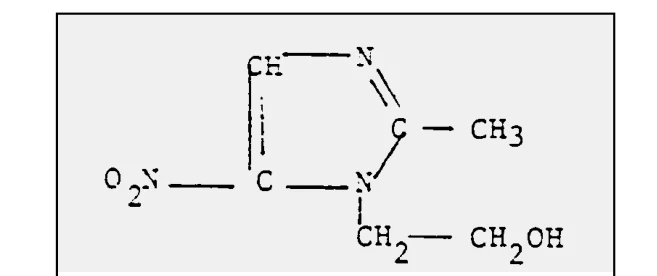
Chemical name: 1-H-imidazole-1-ethanol, 2-methyl-5-nitro-
Or 2-methyl-5-nitroimidazole-1-ethanol
Molecular formula and molecular mass: C6H9N3O3 171.16 g/mol
Structural formula:
Physicochemical properties:
Description: Metronidazole is a white to pale yellow, odorless crystalline powder and a bitter, metallic taste.
Solubility: It is sparingly soluble in water and alcohol at 20ºC: 1.0g/100 mL in water and 0.5g/100 mL in ethanol. Slightly soluble in chloroform and ether (<0.05g/100 mL). Soluble in dilute acids.
pH: The pH of a saturated aqueous solution is 5.8.
Melting range: 159-163ºC.
14 CLINICAL TRIALS
14.1 Clinical Trials by Indication
The Treatment of Inflammatory Papules, Pustules and Erythema of Rosacea
Two randomized double-blind controlled studies were conducted in rosacea patients for a period of 8 weeks. One study employed a placebo control, while the other employed orally administered tetracycline (250 mg three times daily) as an active standard of comparison. In both studies NORITATE cream was applied to the affected areas twice daily. The results are summarized in the following table:
Table 3: Summary of Clinical Trials in the Treatment of Inflammatory Papules, Pustules and Erythema of Rosacea
| Study # | Study Subjects (n) | % Patients with Substantial Reduction in Inflammatory Lesions | % Patients with Improvement in Erythema | ||||
| CMT 1286 | 82 patients | NORITATE | Placebo | NORITATE | Placebo | ||
77%* (32/42) | 57% (23/40) | Mild erythema pre-treatment in both groups with slight improvement | |||||
*p<0.05 vs placebo (lesion count) | |||||||
| CMT 1487 | 101 patients | NORITATE | Tetracycline | NORITATE | Tetracycline | ||
86% (42/49) | 87% (45/52) | Some improvement with both treatments | |||||
| No significant difference between treatments | |||||||
Statistically significant differences were observed between NORITATE and placebo cream with respect to lesion counts, especially after the first month of treatment. NORITATE proved to be statistically and clinically comparable to orally administered tetracycline. None of the treatments had an effect on the telangiectatic component of the disease.
15 MICROBIOLOGY
This information is not available for this drug product.
16 NON-CLINICAL TOXICOLOGY
General Toxicology:
Acute Toxicity
The LD50 values for metronidazole are given in the following table:
Table 4: LD50 values
| Species | Sex | Route | LD50 (mg/kg) |
| Mouse | -- M M F | p.o. i.p. i.v. i.v. | 4350 3650 1170 1260 |
| Rat | -- M M F | p.o. i.p. i.v. i.v. | 5000 5000 1575 1575 |
| M: male; F: female; p.o: per os; i.p.: intraperitoneal; i.v.: intravenous. | |||
Signs of toxicity following oral and intravenous administration of metronidazole were sedation, ataxia and death in mice, and sedation and death in rats. Single doses of 500, 750, 1000, 1500, 3000 or 5000 mg/kg metronidazole were administered to dogs by gastric intubation; severe vomiting ensued at all doses above 500 mg/kg, accompanied by ataxia, loss of spatial judgement, dozing, walking blindly and convulsions.
Subacute and Chronic Toxicity
The following table summarizes the results of subacute and chronic toxicity testing:
Table 5: Subacute and Chronic Toxicity Testing
| Species | Dose (mg/kg) | Route | Duration (months) | Findings | ||||||||||
| Rat | 0, 25, 50 100 1000 | Oral Oral Oral | 1 0.5 1 | No abnormalities, except minor epithelial desquamation in the epididymus in 100 and 1000 mg/kg groups | ||||||||||
Rat: 20 M 20 F | 30 | I.V. | 1 | Statistical decrease in body weight gain in males only | ||||||||||
| Dog | 0, 25, 50 | Oral | 1 | No abnormalities | ||||||||||
| Dog | 75, 110, 225 | Oral | 6 | Ataxia, muscle rigidity tremor | ||||||||||
Dog: 2 M 2 F | 37.5 | I.V. | 5 days/week x 1 month | Relative weights of thyroids below controls in 2 males and 1 female | ||||||||||
| M: male; F: female; I.V.: intravenous. | ||||||||||||||
Carcinogenicity:
Two separate tumorigenic studies were carried out in two different strains of mice with metronidazole. Metronidazole was administered in the diet at daily doses of 75, 150 and 600 mg/kg in both experiments. A study with the strain of Swiss mice was terminated after 78 weeks, while the other experiment with CF1 mice was terminated at 92 weeks. There was no evidence that the administration of metronidazole at any dosage level produced an adverse effect upon the physical appearance, behavior, body weight and food consumption. However, the survival in mice in the treated groups was better than that in the controls.
Statistical analysis of necropsy data, gross and microscopic, using life-table and other techniques revealed a significant increase in the rate of benign lung tumors in the groups of mice treated with 600 mg/kg. With the lower dosage, there was also a trend for increased rate, however, the changes were not significant. It should, though, be noted that this type of tumor was also seen in up to 30% of mice in the untreated groups.
In the rat, dose levels of 75, 150 and 300 mg/kg/day were administered orally in the diet for 80 consecutive weeks; a dosage of 600 mg/kg was administered for 13 weeks only. No consistant deleterious effects were observed with doses of 75 and 150 mg/kg for 28-80 weeks on physical, behavioral, clinical laboratory or post-mortem examinations. At the dosage of 300 mg/kg, testicular dystrophy was regularly encountered at 13 weeks or longer and was not reversed by a 28 week recovery (no drug) period; prostatic atrophy was also seen at 26 weeks. The 600 mg/kg dosage group showed a high incidence of testicular dystrophy and prostatic atrophy with a pronounced reduction in the rate of body weight gain. There was a significant increase in the number of benign mammary tumors only in the females of the 300 mg/kg group.
Two independent tumorigenicity studies conducted in the hamster gave negative results.
Genotoxicity:
The mutagenic potential of metronidazole has been measured in two test systems. In a study using a bacterial indicator strain to detect mutagenic effects, positive results were reported. The inherent anti-microbial property of metronidazole further complicates the interpretation respecting genetic and carcinogenic hazard to man. The other test system, the dominant lethal test, measured the effect of metronidazole on mammalian germ cells. Male rats administered doses of metronidazole up to 600 mg/kg/day for five consecutive days, were mated to untreated females. Fetal deaths, the primary measure of dominant lethality, were not increased in those females mated to treated males.
Special Toxicology:
Primary Eye Irritation
The ocular irritant effects of 0.5%, 1% and 2% topical metronidazole cream were tested in rabbits against a placebo control. An aliquot (0.1 mL) of one of the cream formulations was placed in the lower lid of one eye of each of three animals. The eyes were subsequently examined for the appearance and severity of ocular lesions after 1 hour and 1, 2, 3, 4 and 7 days after instillation. Mild conjunctival irritation was noted in several animals in both the active and placebo cream groups. The eyes of the animals in all treatment groups normalized within 1 to 3 days of instillation. None of the rabbits showed any corneal or iridial inflammation.
Cumulative Skin Irritation Studies in Humans
Three strengths of metronidazole cream (0.5%, 1% and 2%) were tested daily in 24 healthy subjects over 44 days. Each strength (0.2 g) was applied to a thin perforated non adherent polyester film and secured to the intact skin of the scapular region with a hypoallergenic adhesive dressing. In addition, the 2% cream was applied to an area of stripped skin, also in the scapular region. A placebo cream served as the control. The sites of application remained covered for 24 hours until the time of the next application.
There were random, mild irritations in both the test and placebo groups, but no systematic evidence of acute or cumulative irritation or of an allergic reaction to any formulation. After 44 days, there was no evidence of photosensitivity, except in 1 subject who exhibited a slight erythema at the stripped skin site following exposure to UV light. The erythema resolved in one day.