


Product Monograph - Jaypirca
Recent Major Label Changes
Not Applicable.
Table of Contents
Certain sections or subsections that are not applicable at the time of the preparation of the most recent authorized product monograph are not listed.
Recent Major Label Changes ....................................................................................... 2
Table of Contents .......................................................................................................... 2
Part 1: Healthcare Professional Information ............................................................... 4
1 Indications........................................................................................................... 4
1.1 Pediatrics ............................................................................................. 4
1.2 Geriatrics .............................................................................................. 4
2 Contraindications ............................................................................................... 4
3 Serious Warnings and Precautions Box .......................................................... 4
4 Dosage and Administration ............................................................................... 4
4.1 Dosing Considerations ........................................................................ 4
4.2 Recommended Dose and Dosage Adjustment .................................... 4
4.4 Administration ...................................................................................... 6
4.5 Missed Dose ........................................................................................ 6
5 Overdose ............................................................................................................. 6
6 Dosage Forms, Strengths, Composition, and Packaging ............................... 6
7 Warnings and Precautions ................................................................................ 7
7.1 Special Populations .............................................................................. 9
7.1.1 Pregnancy ............................................................................................... 9
7.1.2 Breastfeeding ......................................................................................... 9
7.1.3 Pediatrics ................................................................................................ 9
7.1.4 Geriatrics ................................................................................................ 9
7.1.5 Lactose Intolerance ................................................................................. 9
8 Adverse Reactions ........................................................................................... 10
8.1 Adverse Reaction Overview ............................................................... 10
8.2 Clinical Trial Adverse Reactions ......................................................... 10
8.3 Less Common Clinical Trial Adverse Reactions ................................. 14
8.4 Abnormal Laboratory Findings: Hematologic, Clinical Chemistry and Other Quantitative Data ...................................................................................... 14
9 Drug Interactions .............................................................................................. 16
9.2 Drug Interactions Overview ................................................................ 16
9.4 Drug-Drug Interactions ....................................................................... 16
9.5 Drug-Food Interactions ...................................................................... 19
9.6 Drug-Herb Interactions ....................................................................... 19
9.7 Drug-Laboratory Test Interactions ...................................................... 19
10 Clinical Pharmacology ..................................................................................... 19
10.1 Mechanism of Action .......................................................................... 19
10.2 Pharmacodynamics ............................................................................ 19
10.3 Pharmacokinetics ............................................................................... 19
11 Storage, Stability, and Disposal ...................................................................... 21
12 Special Handling Instructions ......................................................................... 21
Part 2: Scientific Information ..................................................................................... 22
13 Pharmaceutical Information ............................................................................ 22
14 Clinical Trials .................................................................................................... 22
14.1 Clinical Trials by Indication ................................................................. 22
15 Microbiology ..................................................................................................... 25
16 Non-Clinical Toxicology ................................................................................... 25
Patient Medication Information .................................................................................. 27
Part 1: Healthcare Professional Information
1 Indications
JAYPIRCA (pirtobrutinib) is indicated as monotherapy for the treatment of adult patients with:
- mantle cell lymphoma (MCL) relapsed or refractory in patients who have previously received at least two lines of systemic therapy including a Bruton tyrosine kinase (BTK) inhibitor.
- chronic lymphocytic leukemia/small lymphocytic lymphoma (CLL/SLL) who have received at least two prior lines of therapy including a BTK inhibitor and a BCL-2 inhibitor.
1.1 Pediatrics
Pediatrics (<18 years of age): No data are available to Health Canada; therefore, Health Canada has not authorized an indication for pediatric use.
1.2 Geriatrics
Geriatrics (≥65 years of age): No overall differences in effectiveness were observed between younger and older patients. In the pooled safety population in patients with hematologic malignancies, 401 (68%) were 65 years of age and older. Patients aged 65 years and older experienced higher rates of Grade 3 and higher adverse reactions and serious adverse reactions compared to patients who were less than 65 years of age (see 7.1.4 Special Populations - Geriatrics).
2 Contraindications
JAYPIRCA is contraindicated in patients who are hypersensitive to this drug or to any ingredient in the formulation, including any non-medicinal ingredient, or component of the container. For a complete listing, see 6 Dosage Forms, Strengths, Composition, and Packaging.
3 Serious Warnings and Precautions Box
- Treatment with JAYPIRCA should be initiated and supervised by a Qualified Health Care Practitioner experienced in the use of anticancer therapies.
- Serious hemorrhage (See 7 Warnings and Precautions)
4 Dosage and Administration
4.1 Dosing Considerations
- Avoid concomitant use of a strong or moderate CYP3A inducer with JAYPIRCA. If concomitant use cannot be avoided, consider a dose modification (see 4.2 Recommended Dose and Dosage Adjustment).
- Avoid concomitant use of strong CYP3A inhibitors with JAYPIRCA. If concomitant use cannot be avoided, consider a dose modification (see 4.2 Recommended Dose and Dosage Adjustment).
4.2 Recommended Dose and Dosage Adjustment
Recommended Dose
The recommended dosage of JAYPIRCA is 200 mg orally once daily. Treatment should be continued until disease progression or unacceptable toxicity.
Dosage Adjustment
Recommended dosage modifications of JAYPIRCA for adverse reactions are presented in Table 1.
Table 1: Recommended Dosage Modification of JAYPIRCA for Adverse Reactions
| Adverse Reaction a | Occurrences Requiring Dosage Modification | Modification (Starting Dosage: 200 mg once daily) |
|---|---|---|
| First occurrence | Suspend JAYPIRCA until recovery to Grade 1 or baseline; restart at original dosage (200 mg once daily) a. |
| Second occurrence | Suspend JAYPIRCA until recovery to Grade 1 or baseline; restart at 100 mg once daily. | |
| Third occurrence | Suspend JAYPIRCA until recovery to Grade 1 or baseline; restart at 50 mg once daily. | |
| Fourth occurrence | Discontinue JAYPIRCA. |
a Dose modification is not recommended for asymptomatic lymphocytosis or asymptomatic lipase increase.
Recommended dose modification for use with strong CYP3A inhibitors
If concomitant use of a strong CYP3A inhibitor with JAYPIRCA is unavoidable, consider reducing the dose by 50 mg. If the current dose is 50 mg once daily, interrupt JAYPIRCA treatment for the duration of strong CYP3A inhibitor use. After discontinuation of a strong CYP3A inhibitor for at least 5 half-lives, resume the JAYPIRCA dose that was administered prior to initiation of the strong CYP3A inhibitor (see 9.4 Drug-Drug Interactions, 10 Clinical Pharmacology).
Recommended dose modification for use with moderate and strong CYP3A inducers
If concomitant use of a moderate or strong CYP3A inducer with JAYPIRCA is unavoidable and the current dose is 200 mg once daily, consider increasing the dose to 300 mg. If the current dose is 50 mg or 100 mg once daily, consider an increase of the dose by 50 mg (see 9.4 Drug-Drug Interactions, 10 Clinical Pharmacology).
Special Populations
Pediatrics (<18 years of age): Health Canada has not authorized an indication for pediatric use.
Geriatrics (≥65 years of age): No clinically relevant differences in efficacy were observed between patients ≥65 years and those younger than 65 years (See 7.1.4 Special Populations - Geriatrics).
Hepatic Impairment: No dosage adjustment is recommended for patients with mild (Child Pugh Class A), moderate (Child Pugh Class B), or severe (Child Pugh Class C) hepatic impairment.
Renal Impairment: No dosage adjustment of JAYPIRCA is recommended for patients with mild or moderate renal impairment (eGFR 30-89 mL/min).
Severe renal impairment (eGFR15-29 mL/min) increases pirtobrutinib exposure in otherwise healthy volunteers (see 10.3 Pharmacokinetics – Special Populations and Conditions). For patients with severe renal impairment, reduce the JAYPIRCA dose to 100 mg once daily if the current dose is 200 mg once daily, otherwise reduce the dose by 50 mg. Monitor patients closely for signs of toxicity. If the current dosage is 50 mg once daily, discontinue JAYPIRCA.
4.4 Administration
The tablet should be swallowed whole with water. Do not chew, crush, or split tablets before swallowing. JAYPIRCA can be taken with or without food (see 10 Clinical Pharmacology). If vomiting occurs, do not take an additional dose, continue with the next scheduled dose.
Patients should take the dose at approximately the same time every day.
4.5 Missed Dose
If a dose of JAYPIRCA is missed by more than 12 hours, an additional dose should not be taken and take the next dose at its scheduled time.
5 Overdose
There is no specific treatment for JAYPIRCA overdose. The treatment of overdose of JAYPIRCA should consist of general supportive measures.
For management of a suspected drug overdose, contact your regional poison control centre.
6 Dosage Forms, Strengths, Composition, and Packaging
Table 2 - Dosage Forms, Strengths, and Composition
Description
50 mg tablets are blue, film coated, arc-triangle shaped tablets debossed with “Lilly 50” on one side and “6902” on the other side.
100 mg tablets are blue, film coated, round tablets debossed with “Lilly 100” on one side and “7026” on the other side.
Packaging
Tablets are supplied in monolayer white high-density polyethylene (HDPE) 75ml bottles with induction heat seal liner and plastic screw cap.
| Route of Administration | Dosage Form / Strength/Composition | Non-medicinal Ingredients |
| Oral | Tablet 50 mg, 100 mg pirtobrutinib | Each tablet contains inactive ingredients of croscarmellose sodium, FD&C Blue #2, hypromellose, hypromellose acetate succinate, lactose monohydrate, magnesium stearate, microcrystalline cellulose, silicon dioxide, titanium dioxide and triacetin. |
7 Warnings and Precautions
Please see 3 Serious Warnings and Precautions Box.
Carcinogenesis and Genotoxicity
Second Primary Malignancies
Second primary malignancies have occurred in 9% of 593 patients treated with JAYPIRCA, with the most frequent types being non-melanoma skin cancers reported in 4.6% of 593 patients. Monitor patients for the appearance of skin cancers and advise protection from sun exposure.
Cardiovascular
Cardiac Arrhythmias
Cardiac arrhythmias, including atrial fibrillation and atrial flutter have been observed in patients treated with JAYPIRCA. Atrial fibrillation or atrial flutter were reported in 3.2% of patients, with Grade 3 or 4 atrial fibrillation or atrial flutter reported in 1.5% of 593 patients in the clinical trial (see 8 Adverse Reactions).
Other serious cardiac arrhythmias such as supraventricular tachycardia and cardiac arrest occurred in 0.5% of patients. Patients with cardiac risk factors, such as hypertension, or previous arrhythmias may be at increased risk.
Monitor for signs and symptoms of arrhythmias (e.g., palpitations, dizziness, syncope, dyspnea) and manage appropriately. Based on severity, reduce dose, temporarily withhold, or permanently discontinue JAYPIRCA based on dose modification guidance for non-hematological toxicity (see 4.2 Recommended Dose and Dosage Adjustment – Table 1).
Driving and Operating Machinery
No specific studies have been conducted to evaluate the influence of JAYPIRCA treatment on the ability to drive and operate heavy machines.
Endocrine and Metabolism
Tumor Lysis Syndrome
Tumor lysis syndrome has been reported rarely with JAYPIRCA therapy. Patients at high risk of TLS are those with high tumor burden prior to treatment. Patients should be assessed for possible risk of TLS (e.g., high tumor burden or blood uric acid level) and take appropriate precautions.
Hematologic
Cytopenias
Grade 3 or 4 cytopenias, including neutropenia (139 [23.4%]) anemia (62 [10.5%]), thrombocytopenia (53 [8.9%]), have occurred in patients treated with JAYPIRCA. Grade 4 decreased neutrophils developed in 82 (14.2%) patients and Grade 4 decreased platelets developed in 34 (5.8%) patients. Monitor complete blood counts during treatment. Based on the grade of cytopenia, dose modification may be required (see 4 Dosage and Administration).
Hemorrhage
Fatal and serious bleeding events have occurred in patients treated with JAYPIRCA, with and without thrombocytopenia. Among patients who received 200mg of JAYPIRCA without dose escalation, 216 (36.4%) patients reported bleeding AEs, with the majority of these patients experiencing bleeding events that were consistent with low-grade bruising (123 [20.7%] patients) or petechia or purpura (39 [6.6%] patients). Major bleeding events of Grade 3 or higher have been observed in 3.0% of patients taking JAYPIRCA, including gastrointestinal and intracranial hemorrhage. Two patients had fatal bleeding. Patients receiving anticoagulant or antiplatelet agents are at increased risk of hemorrhage. Consider the risks and benefits of anticoagulant or antiplatelet therapy when coadministered with JAYPIRCA. The use of JAYPIRCA has not been studied with warfarin or other vitamin K antagonists. Consider the benefit-risk of withholding JAYPIRCA for 3 to 5 days pre- and post-surgery depending on the type of surgery and risk of bleeding. Based on the grade of the bleeding event and whether it occurs with thrombocytopenia, dose modification may be required (see 4 Dosage and Administration).
Hepatotoxicity
Cases of hepatotoxicity, including liver injury, hepatic failure, and fatal hepatic events, have been reported in clinical trials and the post-marketing setting in patients treated with Bruton tyrosine kinase inhibitors.
Immune
Infections
Fatal and serious infections (including bacterial, viral or fungal infections) and opportunistic infection have occurred in patients treated with JAYPIRCA. There were 118 (19.9%) patients with Grade 3 or 4 infections. The most frequently reported Grade ≥3 infections were pneumonia (6.9%), COVID-19 pneumonia (4.4%), COVID-19 (2.0%), febrile neutropenia (3.4%) and sepsis (3.2%). Grade 5 events include COVID-19 (0.8%), pneumonia (0.2%), COVID-19 pneumonia (1.3%), sepsis (0.3%) and septic shock (0.5%). Opportunistic infections after treatment with JAYPIRCA have included, but are not limited to, Pneumocystis jirovecii pneumonia and fungal infection. In patients with CLL/SLL, Grade 3 or higher infections occurred in 32% of patients, with fatal infections occurring in 8%.
Consider prophylaxis, including vaccinations and antimicrobial prophylaxis, in patients who are at increased risk for opportunistic infections. Based on the grade of infection and whether it occurs with neutropenia, dose modification may be required (see 4 Dosage and Administration).
Monitoring and Laboratory Tests
- Monitor complete blood counts as per routine clinical practice.
- Monitor for symptoms (e.g. palpitations, dizziness, syncope, chest pain, dyspnea) of atrial fibrillation and atrial flutter and obtain an echocardiogram as appropriate.
- Monitor patients for the appearance of skin cancers.
- Monitor patients for signs of bleeding.
- Monitor patients for signs of infections
Monitor liver function before initiating treatment and periodically throughout treatment with JAYPIRCA
For patients who develop abnormal liver tests after JAYPIRCA, monitor more frequently for liver test abnormalities and clinical signs and symptoms of hepatic toxicity
- Monitor for signs and symptoms of tumor lysis syndrome
Peri-Operative Considerations
Consider the benefit-risk of withholding JAYPIRCA for 3 to 5 days pre- and post-surgery depending on the type of surgery and risk of bleeding.
Reproductive Health:
- Fertility
There are no data on the effect of JAYPIRCA on human fertility. In animal studies, pirtobrutinib had no adverse effects on fertility, reproductive performance, or pregnancy outcomes in male or female rats at exposures of <1-fold or 2.7x higher than those in humans at the recommended dose, respectively (see 16 Non-Clinical Toxicology).
- Contraception
Women of childbearing potential should be advised to use highly effective contraception during treatment and for at least 5 weeks after the last dose of JAYPIRCA. Men are advised to use an effective method of contraception during treatment and for 3 months after the last dose.
7.1 Special Populations
7.1.1 Pregnancy There are no adequate and well-controlled clinical studies of JAYPIRCA in pregnant women. Based on findings from animal studies, JAYPIRCA can cause fetal harm when administered to a pregnant woman. In animal reproduction studies, administration of pirtobrutinib to pregnant rats during organogenesis resulted in decreased fetal weight, embryo-fetal mortality, and fetal malformations. The embryo-fetal development abnormalities happened at maternal exposures approximately 3-times those in patients at the recommended daily dose of 200 mg (see 16 Non-Clinical Toxicology). JAYPIRCA should not be used in pregnancy and women of childbearing potential should have a pregnancy test prior to initiation of treatment. Inform the patient of the potential risk to the fetus or if the patient becomes pregnant while taking JAYPIRCA.
7.1.2 Breastfeeding
There are no data on the presence of JAYPIRCA in human milk or the effects on the breastfed child or milk production. Precaution should be exercised because many drugs can be excreted in human milk. Advise women not to breastfeed during treatment with JAYPIRCA and for one week after the last dose.
7.1.3 Pediatrics
No data are available to Health Canada; therefore, Health Canada has not authorized an indication for pediatric use.
7.1.4 Geriatrics
No overall differences in effectiveness were observed between younger and older patients. In the pooled safety population in patients with hematologic malignancies, 401 (68%) were 65 years and older. Patients aged 65 years and older experienced higher rates of Grade 3 and higher adverse reactions and serious adverse reactions compared to patients who were less than 65 years of age (see 14 Clinical Trials).
7.1.5 Lactose Intolerance
Patients with rare hereditary problems of galactose intolerance, total lactase deficiency or glucose-galactose malabsorption should not take this medicinal product.
8 Adverse Reactions
8.1 Adverse Reaction Overview
Overview
The safety of JAYPIRCA has been assessed in clinical development studies as well as in the post-marketing setting.
The data in the WARNINGS AND PRECAUTIONS reflect exposure to JAYPIRCA as a single-agent, administered at 200 mg once daily in 593 patients with hematologic malignancies in the LOXO-BTK-18001 (BRUIN) study with a data cutoff date of 08 February 2023. Among these 593 patients, the median duration of exposure was 10 months, 62% were exposed for at least 6 months and 45% were exposed for at least one year. Serious adverse events occurred in 264 patients (44.5%). The most common adverse reactions, including laboratory abnormalities, in patients that received 200mg of JAYPIRCA without dose escalation were decreased neutrophil count (46%), decreased hemoglobin (39%), fatigue (32%), decreased lymphocyte count (31%), musculoskeletal pain (30%), decreased platelet count (29%), diarrhea (24%), COVID-19 (22%), bruising (21%), and cough (20%). Adverse events leading to dose interruptions occurred in 242 (40.8%) patients, and dose reductions occurred in 31 (5.2%) patients. Due to adverse reactions, JAYPIRCA was discontinued in 55 (9.3%) patients.
8.2 Clinical Trial Adverse Reactions
Clinical trials are conducted under very specific conditions. The adverse reaction rates observed in the clinical trials; therefore, may not reflect the rates observed in practice and should not be compared to the rates in the clinical trials of another drug.
Mantle Cell Lymphoma (MCL)
BRUIN
The safety of JAYPIRCA was evaluated in the BRUIN trial an open-label, phase 1 and 2, international, multicohort, single-arm study of JAYPIRCA as monotherapy in patients with MCL who have received at least two lines of systemic therapy, including a BTK inhibitor (see 14 Clinical Trials). The trial required a platelet count ≥ 50 x 109/L, absolute neutrophil count ≥ 0.75 x 10⁹/L, hepatic transaminases ≤ 2.5 times upper limit of normal (ULN), and an ECOG performance status of 0 to 2. The trial excluded patients with active central nervous system (CNS) involvement by lymphoma, significant cardiovascular disease, major bleeding or Grade ≥3 arrhythmia with a prior BTK inhibitor, prolonged QTc interval, or need for a strong CYP3A inhibitor or inducer or strong P-gp inhibitor.
Patients received JAYPIRCA 200 mg orally once daily until disease progression or unacceptable toxicity (n = 74). The median time on treatment was 5.3 months (range: 0.3 to 26.9 months). The median number of prior therapies was 3 (range: 1-8). The median age was 71 years (range: 46 to 87 years) and 82.4% of patients were male.
Serious adverse reactions occurred in 39.2% of patients who received JAYPIRCA. Serious adverse reactions that occurred in ≥ 2% of patients were pneumonia (14.9%), COVID-19 (6.8%), musculoskeletal pain (4.1%), leukocytosis (2.7%), ventricular arrhythmia (2.7%) and sepsis (2.7%). Fatal adverse reactions within 28 days of the last dose of JAYPIRCA occurred in 9.5% of patients, most commonly due to infections (4.1%).
Adverse reactions led to dose reductions in 5.4%, treatment interruption in 32.4%, and permanent discontinuation of JAYPIRCA in 13.5%. The adverse reaction which resulted in permanent discontinuation of JAYPIRCA in >1 patient was pneumonia.
The most common adverse reactions (≥ 15%), excluding laboratory terms, were fatigue, musculoskeletal pain, diarrhea, bruising, constipation, dyspnea, peripheral neuropathy, rash, edema, pneumonia, and cough.
Table 3 summarizes select adverse reactions in BRUIN.
Table 3: Adverse Reactions (≥ 10%) in Patients with MCL Who Received JAYPIRCA
JAYPIRCA 200 mg once daily | ||||||
|---|---|---|---|---|---|---|
| N = 74 | ||||||
| Adverse Reactions a | All Grades (%) | Grade 3 or 4 (%) | ||||
| General Disorders | ||||||
| Fatigue | 38 | 3 | ||||
| Edema | 18 | - | ||||
| Musculoskeletal and Connective Tissue Disorders | ||||||
| Musculoskeletal pain | 31 | 4 | ||||
| Arthritis or arthralgia | 12 | 1 | ||||
| Gastrointestinal Disorders | ||||||
| Diarrhea | 23 | - | ||||
| Constipation | 20 | - | ||||
| Abdominal pain | 12 | 1 | ||||
| Nausea | 11 | - | ||||
| Respiratory, thoracic, and mediastinal disorders | ||||||
| Dyspnea | 20 | 1 | ||||
| Cough | 16 | - | ||||
| Injury | ||||||
| Bruising | 22 | - | ||||
| Infections | ||||||
| Pneumonia | 18b | 15 | ||||
| Upper respiratory tract infections | 12 | 1 | ||||
| Nervous system disorders | ||||||
| Peripheral neuropathy | 19 | 1 | ||||
| Dizziness | 14 | - | ||||
| Neurological changes c | 12 | 1 | ||||
| Skin and subcutaneous disorders | ||||||
| Rash | 19 | 1 | ||||
| Vascular disorders | ||||||
| Hemorrhage d | 11 | 3 | ||||
a Each term listed includes other related terms
b Includes 1 fatality from COVID-19 pneumonia
c includes preferred terms memory impairment, dementia, depressed level of consciousness d Includes preferred terms hemorrhage, intracranial hemorrhage, and gastrointestinal hemorrhage.
Data cutoff date: 31 January 2022
Chronic Lymphocytic Leukemia/Small Lymphocytic Lymphoma (CLL/SLL)
BRUIN
The safety of JAYPIRCA was evaluated in the BRUIN trial an open-label, phase 1 and 2, international, multicohort, single-arm study of JAYPIRCA as monotherapy in 110 patients with CLL/SLL who were previously treated with at least two prior lines of therapy, including a BTK inhibitor and a BCL-2 inhibitor (see 14 Clinical Trials). The trial required a platelet count ≥ 50 x 109/L, absolute neutrophil count ≥ 0.75 x 10⁹/L, hepatic transaminases ≤ 2.5 times upper limit of normal (ULN), and an ECOG performance status of 0 to 2. The trial excluded patients with active central nervous system (CNS) involvement by lymphoma, significant cardiovascular disease, major bleeding, uncontrolled or symptomatic arrhythmias, prolonged QTc interval, or need for a strong CYP3A inhibitor or inducer or strong P-gp inhibitor.
Patients received JAYPIRCA 200 mg orally once daily until disease progression or unacceptable toxicity (N = 110); median time on treatment was 15.26 months, with 60% of patients on treatment for at least one year, and 14% being on treatment for at least 2 years. The median age was 68 years (range: 41 to 88 years) and 67% of patients were male. The median number of prior therapies was 5 (range: 1-11).
Serious adverse reactions occurred in 56% of patients who received JAYPIRCA. Serious adverse reactions that occurred in ≥ 5% of patients were pneumonia (18%), COVID-19 (9%), sepsis (7%), and febrile neutropenia (7%) Fatal adverse reactions within 28 days of the last dose of JAYPIRCA occurred in 11% of patients, most commonly due to infections (10%), including sepsis (5%) and COVID-19 (2.7%).
Adverse reactions led to dose reductions in 3.6%, treatment interruption in 42%, and permanent discontinuation of JAYPIRCA in 9%. Adverse reactions which resulted in dose reductions of JAYPIRCA in > 1% of patients included neutropenia. Adverse reactions which resulted in treatment interruptions of JAYPIRCA in > 5% of patients included pneumonia, neutropenia, febrile neutropenia, and COVID-19. Adverse reactions which resulted in permanent discontinuation of JAYPIRCA in > 1% of patients included second primary malignancy, COVID-19, and sepsis.
The most common adverse reactions (≥ 20%), excluding laboratory terms, were fatigue, bruising, cough, musculoskeletal pain, COVID-19, diarrhea, pneumonia, abdominal pain, dyspnea, hemorrhage, edema, nausea, pyrexia, and headache.
Table 4 summarizes select adverse reactions for patients with CLL/SLL treated on BRUIN.
Table 4: Adverse Reactions (≥ 10%) in Patients with CLL/SLL Who Received JAYPIRCA
JAYPIRCA 200 mg once daily | |||||||
|---|---|---|---|---|---|---|---|
JAYPIRCA 200 mg once daily | |||||||
| N = 110 | |||||||
| N = 110 | |||||||
| Adverse Reactions a | All Grades (%) | Grade 3-4 (%) | |||||
| General Disorders | |||||||
| Fatigue | 36 | 2.7 | |||||
| Edema | 21 | 0 | |||||
| Pyrexia | 20 | 2.7 | |||||
| Injury | |||||||
| Bruising | 36 | 0 | |||||
| Fall | 14 | 0.9 | |||||
| Respiratory, thoracic, and mediastinal disorders | |||||||
| Cough | 33 | 0 | |||||
| Dyspnea | 22 | 2.7 | |||||
| Mucositis | 12 | 0.9 | |||||
| Musculoskeletal and Connective Tissue Disorders | |||||||
| Musculoskeletal pain | 32 | 0.9 | |||||
| Arthritis or arthralgia | 19 | 1.8 | |||||
| Infections | |||||||
| COVID-19 | 28b | 7 | |||||
| Pneumonia | 27c | 16 | |||||
| Upper respiratory tract infections | 13 | 2.7 | |||||
| Respiratory tract infection | 11 | 1.8 | |||||
| Gastrointestinal Disorders | |||||||
| Diarrhea | 26 | 0 | |||||
| Abdominal pain | 25 | 2.7 | |||||
| Nausea | 21 | 0 | |||||
| Constipation | 14 | 0 | |||||
| Vascular disorders | |||||||
| Hemorrhage | 22d | 2.7 | |||||
| Hypertension | 12 | 5 | |||||
| Nervous system disorders | |||||||
| Headache | 20 | 0.9 | |||||
| Peripheral neuropathy | 16 | 3.6 | |||||
| Dizziness | 15 | 0 | |||||
| Neurological changes | 12e | 2.7 | |||||
| Skin and subcutaneous disorders | |||||||
| Rash | 19 | 0.9 | |||||
| Psychiatric disorders | |||||||
| Insomnia | 14 | 0 | |||||
| Neoplasms benign, malignant and unspecified | |||||||
| Second primary malignancy | 13f | 2.7 | |||||
| Renal and urinary disorders | |||||||
| Renal insufficiency | 12g | 6 | |||||
| Metabolism and nutrition disorders | |||||||
| Decreased appetite | 12 | 0 | |||||
| Cardiac disorders | |||||||
| Supraventricular tachycardia | 10h | 5 | |||||
a Each term listed includes other related terms.
b Includes COVID-19 pneumonia. Includes 1 fatalities from COVID-19 and 2 fatalities from COVID-19 pneumonia
c Includes COVID-19 pneumonia. Includes 2 fatalities from COVID-19 pneumonia and 1 fatality from pneumonia
d Includes preferred terms hemorrhage, intracranial hemorrhage, and gastrointestinal hemorrhage e Includes preferred terms memory impairment, confusional state, encephalopathy, mental status changes
f Includes preferred terms second primary malignancy and nonmelanoma skin cancers. 1 fatality from metastatic malignant melanoma
g Includes preferred terms renal failure, chronic kidney disease, acute kidney injury
h Includes preferred terms supraventricular tachycardia, sinus tachycardia, atrial fibrillation
Data cutoff date: 08 February 2023
8.3 Less Common Clinical Trial Adverse Reactions
Additional clinically relevant adverse reactions (all grades) occurring at an overall incidence <10% and ≥1% of patients included:
Mantle Cell Lymphoma (MCL)
Blood and lymphatic system disorders: lymphocytosis (consolidated term)
General disorders and administration site conditions: headache
Infections and infestations: urinary tract infection
Vascular disorders: hematoma
Chronic Lymphocytic Leukemia/Small Lymphocytic Lymphoma (CLL/SLL)
Blood and lymphatic system disorders: lymphocytosis (consolidated term)
Infections and infestations: urinary tract infection
Vascular disorders: hematoma
8.4 Abnormal Laboratory Findings: Hematologic, Clinical Chemistry and Other Quantitative Data
Clinical Trial Findings
Mantle Cell Lymphoma (MCL)
Table 5 summarizes laboratory abnormalities in BRUIN.
Table 5: Select* Laboratory Abnormalities (≥ 10%) That Worsened from Baseline in Patients with MCL Who Received JAYPIRCA
| Laboratory Abnormality a | JAYPIRCA a 200 mg once daily | ||||
|---|---|---|---|---|---|
| All Grades (%) | Grade 3 or 4 (%) | ||||
| Hematology | |||||
| Hemoglobin decreased | 42 | 8 | |||
| Platelet count decreased | 39 | 13 | |||
| Neutrophil count decreased | 37 | 19 | |||
| Chemistry | |||||
| Creatinine increased | 33 | 1 | |||
| AST increased | 18 | 1 | |||
| ALT increased | 15 | 1 | |||
a The denominator used to calculate the rate varied from 72 to 73 based on the number of patients with a baseline value and at least one post-treatment value.
Data cutoff date: 31 January 2022
* Clinically relevant laboratory abnormalities are included. Excluding parameters indicative of general health, such as nutritional and hydration status or age-related renal function, commonly observed in elderly patients.
Lymphocytosis: Upon initiation of JAYPIRCA, a temporary increase in lymphocyte counts (defined as absolute lymphocyte count increased ≥ 50% from baseline and a post-baseline value ≥ 5,000/µL) occurred in 24.7% of MCL patients in BRUIN. The median time to onset of lymphocytosis was 1.1 weeks.
Table 6 summarizes laboratory abnormalities in BRUIN for patients with CLL/SLL.
Table 6: Select* Laboratory Abnormalities (≥ 10%) That Worsened from Baseline in Patients with CLL/SLL Who Received JAYPIRCA
| Laboratory Abnormality a | JAYPIRCA a 200 mg once daily | |||||
|---|---|---|---|---|---|---|
| All Grades (%) | Grade 3 or 4 (%) | |||||
| Hematology | ||||||
| Neutrophils decreased | 63 | 45 | ||||
| Hemoglobin decreased | 48 | 19 | ||||
| Platelets decreased | 30 | 15 | ||||
| Lymphocytes decreased | 23 | 8 | ||||
| Chemistry | ||||||
| ALT increased | 23 | 2.8 | ||||
| AST increased | 23 | 1.9 | ||||
| Creatinine increased | 23 | 0 | ||||
a The denominator used to calculate the rate varied from 83 to 108 based on the number of patients with a baseline value and at least one post-treatment value.
Data cutoff date: 08 February 2023
* Clinically relevant laboratory abnormalities are included. Excluding parameters indicative of general health, such as nutritional and hydration status or age-related renal function, commonly observed in elderly patients.
Lymphocytosis: Upon initiation of JAYPIRCA, a temporary increase in lymphocyte counts (defined as absolute lymphocyte count increased ≥ 50% from baseline and a post-baseline value ≥ 5,000/µL) occurred in 64% of CLL/SLL patients in BRUIN. The median time to onset of lymphocytosis was 1.1 weeks.
9 Drug Interactions
9.2 Drug Interactions Overview
Pirtobrutinib is a CYP3A substrate and a weak inhibitor of CYP3A4.
Concomitant use of JAYPIRCA with a strong CYP3A inhibitor increased pirtobrutinib systemic exposure (see Table 7), which may increase the risk of JAYPIRCA adverse reactions. If concomitant use of strong CYP3A inhibitors is unavoidable, reduce the JAYPIRCA dosage (see 4.2 Recommended Dose and Dosage Adjustment).
Concomitant use of JAYPIRCA with a strong or moderate CYP3A inducer decreased pirtobrutinib systemic exposure (see Table 7). If concomitant use of a CYP3A inducer is unavoidable, consider increasing the JAYPIRCA dosage (see Table 7) (see 4.2 Recommended Dose and Dosage Adjustment).
Pirtobrutinib is a P-gp inhibitor, a moderate CYP2C8 and BCRP inhibitor, and a weak CYP2C19 and CYP3A inhibitor. Concomitant use of JAYPIRCA with sensitive P-gp, CYP2C8, BCRP, CYP2C19, or CYP3A substrates increased their plasma concentrations (see Table 8), which may increase the risk of adverse reactions related to these substrates for drugs which are sensitive to minimal concentration changes.
9.4 Drug-Drug Interactions
The effect of other drugs on JAYPIRCA are listed in Table 7. The effect of JAYPIRCA on other drugs are listed in Table 8. The drugs listed in these tables are based on either clinical studies or predicted interactions due to the expected magnitude and seriousness of the potential interaction. The lists in these tables are not exhaustive but are representative of possible drug interactions that may occur with JAYPIRCA.
Table 7: Effect of Other Drugs on JAYPIRCA
| Common name | Source of Evidence | Effect | Clinical Comment |
| Strong CYP3A Inducers (e.g. rifampin, rifabutin, phenobarbital) | CT | Co-administration of a single 200 mg dose of pirtobrutinib with rifampicin decreased the AUC of pirtobrutinib by 71%. | If concomitant use cannot be avoided and the JAYPIRCA dosage is 200 mg QD, consider increasing dose to 300 mg. If dosage is 50 mg or 100 mg QD, consider increasing dose by 50 mg. |
| Moderate CYP3A Inducers (e.q.efavirenz, and bosentan) | P | Efavirenz and bosentan are predicted to decrease the AUC of pirtobrutinib by 49% and 27%, respectively. | |
| Strong CYP3A Inhibitors (e.g. itraconazole, ritonavir, ketoconazole, and clarithromycin) | CT, P | Itraconazole, a strong CYP3A4 inhibitor, increased the AUC of pirtobrutinib by 48 % and did not change Cmax. Ritonavir, ketoconazole, and clarithromycin are predicted to increase the AUC of pirtobrutinib by 51%, 49%, and 37%, respectively. | If concomitant use of a strong CYP3A inhibitor with JAYPIRCA is unavoidable, consider reducing the dose by 50 mg. If the current dose is 50 mg once daily, interrupt JAYPIRCA treatment for the duration of strong CYP3A inhibitor use. After discontinuation of a strong CYP3A inhibitor for at least 5 half-lives, resume the JAYPIRCA dose that was administered prior to initiation of the strong CYP3A inhibitor. |
Legend: CT = Clinical Trial; P = Predicted
Table 8: Effect of JAYPIRCA on Other Drugs
| Common name | Source of Evidence | Effect | Clinical Comment |
| Sensitive CYP3A Substrates (e.g. midazolam, everolimus, sirolimus, and tacrolimus) | CT | Pirtobrutinib increased the AUC and Cmax of orally administered midazolam by 70% and 58%, respectively. Pirtobrutinib did not have a clinically meaningful effect on the exposure of intravenously administered midazolam. | If concomitant use with narrow-therapeutic-index CYP3A substrate cannot be avoided follow recommendations provided in the approved product labeling. |
| Sensitive CYP2C8 Substrates (e.g. repaglinide) | CT | Pirtobrutinib increased the AUC and Cmax of repaglinide by 130% and 98%, respectively. | If concomitant use with narrow-therapeutic-index CYP2C8 substrate cannot be avoided, follow recommendations provided in the approved product labeling. |
| Sensitive CYP2C19 Substrates (e.g. omeprazole) | CT | Pirtobrutinib increased the AUC and Cmax of omeprazole by 56% and 49%, respectively. | If concomitant use with narrow-therapeutic-index CYP2C19 substrate cannot be avoided, follow recommendations provided in the approved product labeling. |
| P-gp Substrates (e.g. digoxin) | CT | A single 200 mg dose of pirtobrutinib increased the AUC and Cmax of digoxin by 17% and 51%, respectively. Multiple doses of pirtobrutinib (200 mg daily) further increased the AUC and Cmax of digoxin up to 35% and 55%, respectively. | If concomitant use with narrow-therapeutic-index P-gp substrate cannot be avoided, follow recommendations provided in the approved product labeling. |
| BCRP Substrates (e.g. rosuvastatin) | CT | Multiple doses of pirtobrutinib (200 mg daily) increased the AUC and Cmax of rosuvastatin by 140% and 146%, respectively. | If concomitant use with narrow-therapeutic-index BCRP substrate cannot be avoided, follow recommendations provided in the approved product labeling. |
| Antithrombotic agents (e.g. warfarin, vitamin k agonists) | CT | The use of JAYPIRCA has not been studied in patients with warfarin or other vitamin K antagonists. In healthy volunteers there was no clinically relevant impact by JAYPIRCA on the PK of S-warfarin (CYP2C9 substrate). | Consider the risks and benefits of anticoagulant or antiplatelet therapy when coadministered with JAYPIRCA. (see 7 Warnings and Precautions) |
Legend: CT = Clinical Trial
In Vitro Studies
Cytochrome P450 (CYP) Enzymes: Pirtobrutinib inhibits CYP2C8, CYP2C9, CYP3A and minimally inhibits CYP1A2, CYP2B6, CYP2C19, and CYP2D6 in human liver microsomes. Pirtobrutinib induces CYP3A4, CYP3A5, CYP2B6, and CYP2C19 in human hepatocytes cells.
Transporter Systems: Pirtobrutinib is a substrate of P-gp and BCRP but not hepatic transporters such as OATP1B1, OATP1B3, OCT1, or BSEP. in vitro, pirtobrutinib inhibits P-gp and BCRP, but not OAT1, OAT3, OCT1, OCT2, OATP1B1, OATP1B3, MATE1, or MATE2-K.
9.5 Drug-Food Interactions
Following a high-fat, high-calorie meal in healthy participants, the Cmax of pirtobrutinib was decreased by 23% and Tmax was delayed by 1 hour. There was no effect on pirtobrutinib AUC. These changes are not considered to be clinically meaningful (see 10 Clinical Pharmacology).
9.6 Drug-Herb Interactions
Avoid concomitant use of St. John’s Wort, as this herb is a strong inducer of CYP3A (Table 7).
9.7 Drug-Laboratory Test Interactions
There is no impact of JAYPIRCA on laboratory tests.
10 Clinical Pharmacology
10.1 Mechanism of Action
Pirtobrutinib is a selective, noncovalent, small molecule, inhibitor of BTK. BTK is a signaling protein of the B-cell antigen receptor (BCR) and cytokine receptor pathways. In B-cells, BTK signaling results in activation of pathways necessary for B-cell proliferation, trafficking, chemotaxis, and adhesion. Pirtobrutinib binds to wild type BTK and BTK harboring C481 mutations, leading to inhibition of BTK kinase activity. In nonclinical studies, pirtobrutinib inhibited BTK-mediated B-cell CD69 expression and inhibited malignant B-cell proliferation. Pirtobrutinib showed dose-dependent anti-tumor activities in BTK wild type and BTK C481S mutant mouse xenograft models.
10.2 Pharmacodynamics
At the recommended dosage of 200 mg once daily, pirtobrutinib trough concentrations exceeded the BTK IC96. BTK occupancy is maintained throughout the dosing interval, regardless of the intrinsic rate of BTK turnover.
Cardiac Electrophysiology
The effect of a single 900 mg dose of pirtobrutinib on the corrected QT (QTc) interval was evaluated in a placebo-controlled and positive-controlled study in 30 healthy participants. A supratherapeutic dose of 900 mg resulted in a Cmax approximately 2 times higher than the steady state Cmax achieved at the recommended dosage of 200 mg once daily. Pirtobrutinib had no clinically meaningful effect on the change in QTcF interval (i.e., > 10 ms) and there was no relationship between pirtobrutinib exposure and change in QTc interval.
10.3 Pharmacokinetics
The pharmacokinetics of pirtobrutinib were characterized in healthy participants and in patients with cancer. Pirtobrutinib exposure (AUC and Cmax) increases proportionally following once daily doses ranging from 25 – 300 mg (0.125 to 1.5 times the recommended dosage) up to single doses of 800 mg. After administration of 200 mg once daily, steady state was achieved within 5 days, and in cancer patients, the mean [coefficient of variation (CV %)] accumulation ratio was 1.63 (26.7 %) based on AUC.
Table 9 - Summary of Pirtobrutinib Pharmacokinetic Parameters in patients with 200mg QD
| Cmax, ss (CV%) | Tmax * | t½ (CV%) | AUC0-24, ss (CV%) | CL/F (CV%) | V/F | |
| Geometric mean | 6380 ng/mL (26%) | 2 h (0.833 to 4.15 h) | 18.8 h (37%) | 90300 h*ng/mL (40%) | 2.05 L/h (37.2%) | 52.6 L |
* median (min-max)
Absorption
The absolute bioavailability of pirtobrutinib after a single oral 200 mg dose is 85.5% (range 75.9% to 90.9%) in healthy participants. Pirtobrutinib is rapidly absorbed after oral administration with a median Tmax (range) of 2 hours (0.833 to 4.15 hours).
Effect of Food
Following a high-fat, high-calorie meal in healthy participants, the Cmax of pirtobrutinib was decreased by 23% and Tmax was delayed by 1 hour. There was no effect on pirtobrutinib AUC. These changes are not considered to be clinically meaningful.
Distribution:
The mean oral apparent central volume of distribution (Vc/F) of pirtobrutinib is 34.1 L in cancer patients. The plasma protein binding is 96% and was independent of concentration between 0.5 and 50 μM. In plasma from healthy participants and participants with severe renal impairment, the protein binding was 96%. Mean blood-to-plasma ratio is 0.79.
Metabolism:
Pirtobrutinib is metabolized by CYP3A4, UGT1A8, and UGT1A9.
Elimination:
Hepatic metabolism is the main route of clearance for pirtobrutinib.
Following a single radiolabeled dose of pirtobrutinib 200 mg to healthy participants, 37% of the dose was recovered in feces (18% unchanged) and 57% in urine (10% unchanged).
Special Populations and Conditions
Based on a population PK analysis in patients with cancer, age (range 22-95 years), sex (444 males and 224 females), race (White 84%, Asian 7%) and body weight (range 35.7-152 kg) had no clinically meaningful effect on the exposure of pirtobrutinib. The effect of other races on the pharmacokinetics of pirtobrutinib is unknown.
- Pediatrics No pharmacokinetic studies were performed with pirtobrutinib in patients under 18 years of age.
Hepatic Insufficiency There were no clinically significant differences in the PK of pirtobrutinib for any degree of hepatic impairment (by Child-Pugh A, B, and C or any total bilirubin and any AST). In a population PK analysis of cancer patients, no statistically significant difference in the apparent clearance of pirtobrutinib was observed between patients with mild hepatic impairment (n = 116), as categorized by NCI criteria, and those with normal hepatic function (n=531).
In a dedicated hepatic impairment study in otherwise healthy participants, there was no clinically meaningful difference in the pirtobrutinib PK exposure parameters [total (AUC and Cmax) and unbound (AUCu and Cmax,u)] between participants with any degree of hepatic impairment (Child-Pugh A, B, and C) and normal hepatic function.
- Renal Insufficiency Based on a population PK analysis of cancer patients, no clinically relevant PK differences were observed in 287 patients with mild (eGFR 60-89 mL/min) or 132 patients with moderate renal impairment (eGFR 30-59 mL/min) relative to 208 patients with normal renal function (eGFR ≥ 90 mL/min). In a dedicated clinical pharmacology study of otherwise healthy volunteers, following a single 200 mg oral dose, the mean unbound AUC of pirtobrutinib increased by 68% in participants with severe renal impairment (eGFR 15-29 mL/min) compared to participants with normal renal function. The pharmacokinetics of pirtobrutinib in patients requiring dialysis have not been studied.
11 Storage, Stability, and Disposal
Store JAYPIRCA tablets at room temperature (15°C to 30°C).
12 Special Handling Instructions
Not applicable.
Part 2: Scientific Information
13 Pharmaceutical Information
Drug Substance
Proper/Common name: Pirtobrutinib
Chemical name: 5-amino-3-{4-[(5-fluoro-2-methoxybenzamido)methyl]phenyl}-1-[(2S)-1,1,1-trifluoropropan-2-yl]-1H-pyrazole-4-carboxamide
Molecular formula and molecular mass: C22H21F4N5O3 and a molecular weight of 479.44 g/mol
Structural formula:
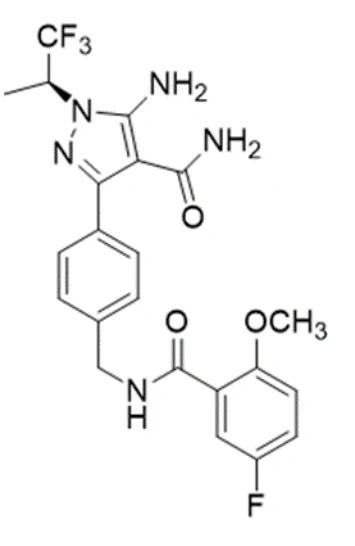
Physicochemical properties: Pirtobrutinib is a white to practically white to yellow to brown solid. The aqueous solubility of pirtobrutinib is considered practically insoluble, or insoluble, across the pH 1 to pH 7 range.
Disposal: Any unused medicinal product or waste material should be disposed of in accordance with local requirements.
14 Clinical Trials
14.1 Clinical Trials by Indication
Mantle Cell Lymphoma
JAYPIRCA (pirtobrutinib) is indicated for the treatment of adult patients with mantle cell lymphoma (MCL) relapsed or refractory in patients who have previously received at least two lines of systemic therapy including a Bruton tyrosine kinase (BTK) inhibitor.
Table 10 - Summary of patient demographics for clinical trials in MCL
| Study # | Study design | Dosage, route of administration and duration | Study participants (n) | Median age (Range) | Sex |
| BRUIN (LOXO-BTK-18001) | Open label, Phase 1/2, international, multicohort, single-arm study in patients with previously treated MCL | JAYPIRCA® 200 mg once daily | 74 | 71 (46-87) | M: 82.4% F: 17.6% |
The efficacy of JAYPIRCA was evaluated in adult patients with MCL in an open-label, global multi-center, multi-cohort, single arm study of JAYPIRCA as monotherapy (BRUIN). BRUIN enrolled a total of 725 patients, including 74 patients with MCL who received a starting dose of JAYPIRCA of 200 mg orally daily, and were previously treated with a BTK inhibitor. Treatment was continued until disease progression or unacceptable toxicity. Baseline characteristics included median age 71.0 years (range: 46 to 87 years); 82.4% male; 82.4% White, 8.1% Asian, 1.4% Black or African American and 8.1% Other; and baseline ECOG performance status of 0 or 1 (98.6%). The simplified Mantle Cell Lymphoma International Prognostic Index (sMIPI) score was low in 17.6%, intermediate in 60.8% and high in 21.6% of patients. Patients had received a median number of 3 prior lines of therapy (range: 1 to 8), with 91.9% of patients receiving at least 2 prior therapies including a BTK inhibitor. All patients received BTK inhibitor, 94.6% received prior anti-CD20 therapy, 85.1% received prior chemotherapy, 21.6% received prior stem cell transplantation, 23% received a prior immunomodulator, 14.9% received a prior BCL-2 inhibitor, 5.4% received prior CAR-T therapy, and 4.1% received a prior PI3K inhibitor. 83.8% of patients discontinued a prior BTK inhibitor for disease progression, 12.2% discontinued for toxicity, 4.1% discontinued for other reasons. At baseline, 31.1% had tumor bulk ≥ 5 cm, 41.9% had extranodal disease, 51.4% had bone marrow involvement, 75.7% were Ann Arbor Stage IV, 78.4% had classic or leukemic histology with 12.2% having pleomorphic and 9.5% having blastoid MCL histology.
Efficacy of JAYPIRCA was assessed by an Independent Review Committee (IRC) using 2014 Lugano criteria for malignant lymphoma. The primary endpoint was overall response rate (ORR). Efficacy results are shown in Table 11. In 27 censored responders, the Kaplan-Meier estimate for the DOR rate at 6 months was 76.2% (95% CI: 58.9. 86.9) and 54% (95% CI: 33.2, 70.9) for 18 months or over.
Table 11: Efficacy Results per IRC in Patients with MCLa Previously Treated with a BTK inhibitor.
Endpoint
BRUIN Study
(N=74)
ORR (%)
56.8
95% CI (%)
44.7, 68.2
CR (%)
18.9
PR (%)
37.8
Duration of Response a
Median DOR, months (95% CI)
21.6 (6.9, NE)
CI, confidence interval; CR, complete response; DoR, duration of response; IRC, Independent Review Committee; NE, not estimable, ORR, overall response rate; PR, partial response.
a Based on Kaplan-Meier estimation. Estimated median follow-up in responders was 7.85 months (range: 5.6 to 20.3 months).
b Patients had confirmed diagnosis of MCL based on local pathology report obtained at time of screening and with no known active CNS involvement; were treated with a prior BTK inhibitor-containing regimen; at least 1 site of radiographically assessable disease as determined by Investigator, defined as lymph node LDi > 1.5 cm, or extra nodal site LDi > 1.0 cm by CT; and received one or more doses of JAYPIRCA.
Data cutoff date: 31 January 2022
Chronic Lymphocytic Leukemia/Small Lymphocytic Lymphoma
JAYPIRCA (pirtobrutinib) is indicated for the treatment of adult patients with chronic lymphocytic leukemia/small lymphocytic lymphoma (CLL/SLL) who have received at least two prior lines of therapy including a BTK inhibitor and a BCL-2 inhibitor.
Table 12 - Summary of patient demographics for clinical trials in CLL/SLL
| Study # | Study design | Dosage, route of administration and duration | Study participa nts (n) | Median age (Range) | Sex |
| BRUIN (LOXO-BTK-18001) | Open label, multicenter Phase 1/2 study in patients with CLL/SLL previously treated with a BTK inhibitor and a BCL-2 inhibitor | JAYPIRCA® 200 mg once daily | 110 | 68 (41-88) | M: 67% F: 33% |
The efficacy of JAYPIRCA in patients with CLL/SLL was evaluated in BRUIN, an open-label, multicenter Phase 1/2 study in patients with CLL/SLL previously treated with a BTK inhibitor and a BCL-2 inhibitor. Efficacy was based on 110 patients with CLL/SLL treated with JAYPIRCA who were previously treated with a BTK inhibitor and a BCL-2 inhibitor. JAYPIRCA was given orally at a dose of 200 mg once daily and was continued until disease progression or unacceptable toxicity. Patients with active central nervous system lymphoma or allogeneic hematopoietic stem cell transplantation (HSCT) within 60 days were excluded.
The median age was 68 years (range: 41 to 88 years); 67% were male; 89% were White, 4.5% Black or African American, 1.8% Asian. Baseline ECOG performance status was 0 or 1 in 91.0% of patients and 47% of patients had Rai stage III or IV disease. Among those patients with a suitable sample for testing, 41% (37 of 90 patients) had a C481 BTK mutation, 54% (43 of 80 patients) had 17p deletion and/or TP53 mutation, 93% (78 of 84 patients) had unmutated IGHV, and 22% (16 of 73 patients) had 11q deletion. Patients received a median number of 5 prior lines of therapy (range:1 to 11). The most common prior BTK inhibitors received were ibrutinib (96%), acalabrutinib (9%), and zanubrutinib (1.8%). Patients may have received more than one prior BTK inhibitor; 76% of patients discontinued the last BTK inhibitor for refractory or progressive disease, 14% discontinued for toxicity, and 10% discontinued for other reasons.
Efficacy was based on overall response rate (ORR) and duration of response (DOR), as assessed by an independent review committee (IRC) using 2018 iwCLL criteria. Efficacy results are shown in Table 13.
Table 13: Efficacy Results per IRC in Patients with CLL/SLL Previously Treated with a BTK Inhibitor and a BCL-2 inhibitor.
| Outcome | JAYPIRCA 200 mg once daily (N = 110) |
|---|---|
| Overall Response Rate | |
| ORR, n | 80 (73%) |
| (95% CI, %) | 63, 81 |
| PR, n | 80 (73%) |
| Duration of Response a | |
| Median DOR, months (95% CI) | 12.5 (9.3, 14.7) |
CI, confidence interval; PR, partial response.
a Based on Kaplan-Meier estimation. Estimated median follow-up was 15.7 months.
Data cutoff date: 08 February 2023
15 Microbiology
No microbiological information is required for this drug product.
16 Non-Clinical Toxicology
General Toxicology: Repeat-dose studies were conducted up to 6-month in rats and 9-month in dogs to characterize toxicity. Important effects in both rats and dogs consisted of decreased size, weight, or cellularity of lymphoid organs and decreases in B lymphocyte counts and other markers of immune system function such as shift in the balance of T, B, and NK lymphocytes, and decreased T-cell dependent antibody response in rats (at 0.69-fold human exposure) In the 3-month dog study minimal to mild corneal lesions were observed (at 0.42-fold human exposure), but were not seen in the 9-months study at comparable exposure. Mild to moderate vascular necrosis and vascular/perivascular inflammation in large pulmonary blood vessels were observed only in 6-month rats study. This effect was considered partially reversible, as minimal fibrosis observed during the recovery period suggested ongoing resolution of the vascular injury. These effects occurred at clinically relevant exposure levels at the recommended dose of 200 mg based on AUC.
Carcinogenicity: Carcinogenicity studies have not been conducted with pirtobrutinib.
Genotoxicity: Pirtobrutinib was not mutagenic in a bacterial mutagenicity (Ames) assay. Pirtobrutinib was aneugenic in in vitro micronucleus assays using human peripheral blood lymphocytes. Pirtobrutinib had no effect in an in vivo rat bone marrow micronucleus assay at doses up to 2000 mg/kg (single dose), which is approximately 12-fold higher exposure (This is based on unbound Cmax value in female rats) than human exposure at 200 mg.
Embryotoxicity/Teratogenicity: In an embryo- fetal development study in rats, oral administration of pirtobrutinib (doses ≥ 375 mg/kg BID) to pregnant rats during organogenesis resulted in decreased fetal body weight, embryo-fetal mortality, fetal malformations and variation in the urinary tract (including absent or abnormal ureters and kidneys), reproductive tract (malpositioned ovaries and misshapen uterus), and bone (misshapen sternebrae). At 375 mg/kg twice daily in rats, the maternal systemic exposures (AUC) were approximately 3 times the human exposure at 200 mg once daily.
Reproduction Toxicity: No effects on fertility were observed in male or female rat studies. In male rat animal study, repeated administration of pirtobrutinib for 28 days before mating and throughout the mating period for 29 days (in total 57 days) showed no significant effects on reproductive performance, intrauterine survival, macroscopic examination and sperm parameters at systemic exposure <1-fold higher than those in humans at the recommended dose of 200 mg once daily (based on total AUC). In female rats, administration of pirtobrutinib for 14 days prior to mating and continuing through Gestation Day 6 had no impact on key reproductive parameters, including the number and length of estrous cycles, precoital intervals, or overall reproductive performance (mating, fertility, and pregnancy indices). Additionally, no effects were observed on intrauterine survival or macroscopic findings, at systemic exposures approximately 2.7-fold higher than those in patients at the recommended clinical dose (based on total AUC).
In repeat-dose toxicity studies lasting up to 6 months in rats, pirtobrutinib had no effect on male and female reproductive organs at <1-fold and 1.8-fold respectively at the recommended daily dose of 200 mg in patients. Similarly, in 9-month studies in dogs, no effects were observed on reproductive organs in either sex at exposures below 1-fold of the patients recommended dose.