


Product Monograph - Jublia
Recent Major Label Changes
| N/A | N/A |
|---|
Table of Contents
Certain sections or subsections that are not applicable at the time of the preparation of the most recent authorized product monograph are not listed.
Recent Major Label Changes ................................................................................................... 2
Table of Contents ................................................................................................................... 2
Part 1: Healthcare Professional Information ........................................................................... 4
- 1.
Indications ....................................................................................................................... 4
1.1. Pediatrics .................................................................................................................. 4
1.2. Geriatrics .................................................................................................................. 4
- 2. Contraindications ............................................................................................................ 4
- 4.
Dosage and Administration ............................................................................................. 4
4.1. Dosing Considerations .............................................................................................. 4
4.2. Recommended Dose and Dosage Adjustment ......................................................... 4
4.4. Administration .......................................................................................................... 5
4.5. Missed Dose ............................................................................................................. 5
- 5. Overdose ......................................................................................................................... 5
- 6. Dosage Forms, Strengths, Composition, and Packaging ................................................... 5
- 7.
Warnings and Precautions ............................................................................................... 6
General ................................................................................................................................. 6
Ear/Nose/Throat ................................................................................................................... 6
Genitourinary ....................................................................................................................... 6
Ophthalmologic .................................................................................................................... 6
Skin ....................................................................................................................................... 6
7.1. Special Populations .................................................................................................. 6
7.1.1. Pregnancy ........................................................................................................ 6
7.1.2. Breastfeeding .................................................................................................. 6
7.1.3. Pediatrics ......................................................................................................... 7
7.1.4. Geriatrics ......................................................................................................... 7
- 8.
Adverse Reactions ........................................................................................................... 7
8.1. Adverse Reaction Overview ...................................................................................... 7
8.2. Clinical Trial Adverse Reactions ................................................................................ 7
8.3. Less Common Clinical Trial Adverse Reactions ......................................................... 8
- 9.
Drug Interactions ............................................................................................................. 8
9.4. Drug-Drug Interactions ............................................................................................. 8
9.5. Drug-Food Interactions............................................................................................. 8
9.6. Drug-Herb Interactions ............................................................................................. 8
9.7. Drug-Laboratory Test Interactions ........................................................................... 8
- 10.
Clinical Pharmacology ..................................................................................................... 8
10.1. Mechanism of Action ................................................................................................ 8
10.2. Pharmacodynamics .................................................................................................. 9
10.3. Pharmacokinetics ..................................................................................................... 9
- 11. Storage, Stability, and Disposal ...................................................................................... 10
- 12. Special Handling Instructions ......................................................................................... 10
Part 2: Scientific Information ................................................................................................ 11
- 13. Pharmaceutical Information .......................................................................................... 11
- 14.
Clinical Trials .................................................................................................................. 12
14.1. Clinical Trials by Indication ..................................................................................... 12
- 15. Microbiology ................................................................................................................. 14
- 16. Non-Clinical Toxicology .................................................................................................. 15
Patient Medication Information ........................................................................................... 17
Part 1: Healthcare Professional Information
1. Indications
JUBLIA (Efinaconazole Topical Solution, 10% w/w), a triazole antifungal agent, is indicated for:
- the topical treatment of mild to moderate onychomycosis (tinea unguium) of toenails without lunula involvement due to Trichophyton rubrum and Trichophyton mentagrophytes in immunocompetent adult patients.
1.1. Pediatrics
Pediatrics (< 18 years of age): No data are available to Health Canada; therefore, Health Canada has not authorized an indication for pediatric use.
1.2. Geriatrics
Geriatrics (≥ 65 years of age): Of the total number of subjects in clinical studies of JUBLIA, 8.3% were 65 years of age and over while none were 75 years of age and over. No overall differences in safety and effectiveness were observed between these subjects and younger subjects, but greater sensitivity of some older individuals cannot be ruled out.
2. Contraindications
- JUBLIA (Efinaconazole Topical Solution, 10% w/w) is contraindicated in patients who are hypersensitive to this drug or to any ingredient in the formulation, including any non-medicinal ingredient, or component of the container. For a complete listing, see 6 Dosage Forms, Strengths, Composition, and Packaging.
4. Dosage and Administration
4.1. Dosing Considerations
No debridement is necessary when treating onychomycosis with JUBLIA (Efinaconazole Topical Solution, 10% w/w). Removal of previously applied JUBLIA is not required as there is no buildup from daily application. Patients should clip their toenail(s) every four weeks and clippings should be discarded. The unaffected toenail(s) should be clipped before the affected ones.
4.2. Recommended Dose and Dosage Adjustment
JUBLIA (efinaconazole) should be topically applied once daily (preferably at bedtime). Using the brush, JUBLIA should be applied onto the affected toenail(s). A second application should be done onto the affected big toenail(s).
A complete cure may be seen some months after mycological cure is achieved. This is related to time required for outgrowth of healthy nail.
A bottle of 8 mL of JUBLIA contains approximately 380 applications: 1 daily application per each toenail affected. The big toenail requires a second application.
Health Canada has not authorized an indication for pediatric use, see 1.1. Pediatrics.
4.4. Administration
JUBLIA (efinaconazole) should be topically applied once daily (preferably at bedtime) to the affected toenails, with the built-in flow-through brush applicator provided. JUBLIA should completely cover the toenail, the nail folds, nail bed, hyponychium and the undersurface of the nailplate.
JUBLIA should be applied to clean dry nails. Once applied, JUBLIA should be allowed to dry thoroughly before touching the treated areas with bed sheets, socks or other clothing (see Patient Medication Information).
4.5. Missed Dose
Physicians should use clinical judgement based on the severity of the infection.
5. Overdose
Penetration of JUBLIA (Efinaconazole Topical Solution, 10% w/w) by the topical route leads to low systemic concentration levels. There are no data available on human oral bioavailability however, oral bioavailability in rats (0.4%) is very low.
No reports of overdose were observed in clinical trials either through topical use or by ingestion, however, overdose is unlikely to occur with topical application due to low systemic concentration levels. No specific antidote is known.
For the most recent information in the management of a suspected drug overdose, contact your regional poison control centre or Health Canada’s toll-free number, 1-844 POISON-X (1-844-764-7669).
- 6. Dosage Forms, Strengths, Composition, and Packaging
Table 1 – Dosage Forms, Strengths, and Composition
Description
JUBLIA contains efinaconazole 10% w/w in a clear, low surface tension solution for topical application.
JUBLIA (efinaconazole) Solution 10% w/w is supplied in a white plastic bottle with built-in flow-through brush applicator. Each bottle contains 8 mL of solution.
| Route of Administration | Dosage Form/ Strength/Composition | Non-Medicinal Ingredients |
| Topical | Solution, 10% w/w of efinaconazole | Alcohol, Butylated Hydroxytoluene, C12-15 Alkyl Lactate, Citric Acid, Cyclomethicone, Diisopropyl Adipate, Disodium Edetate, and Purified Water. |
7. Warnings and Precautions
General
Safety and effectiveness of JUBLIA (Efinaconazole Topical Solution, 10% w/w) have not been studied in patients with a history and/or clinical signs of immunosuppression, with HIV infection, uncontrolled diabetes, pregnant and nursing women, other toenail infection (except Candida), toenail infection extended to matrix, patients with only lateral toenail disease, severe plantar (moccasin) tinea pedis.
Concomitant use of other antifungal therapy with JUBLIA has not been evaluated.
Safety and efficacy of daily use of JUBLIA for longer than 48 weeks have not been established.
JUBLIA is flammable; keep away from heat or flame.
Ear/Nose/Throat
JUBLIA (efinaconazole) is not for oral use. It is for topical use on toenails and immediately adjacent skin only.
Genitourinary
JUBLIA (efinaconazole) is not for intravaginal use. It is for topical use on toenails and immediately adjacent skin only.
Ophthalmologic
JUBLIA (efinaconazole) is not for ophthalmic use. It is for topical use on toenails and immediately adjacent skin only.
Skin
If a reaction suggesting sensitivity or severe irritation should occur with the use of JUBLIA, treatment should be discontinued, and appropriate therapy instituted, as recommended by the healthcare professional.
7.1. Special Populations
7.1.1. Pregnancy
There are no adequate and well-controlled studies in pregnant women with JUBLIA. JUBLIA should not be used during pregnancy unless the expected benefit to the mother outweighs any potential risk to the fetus (see 16. Non-Clinical Toxicology, Reproductive and developmental toxicology, and 10.3. Pharmacokinetics).
7.1.2. Breastfeeding
It is unknown if JUBLIA is excreted in human milk. After repeated subcutaneous administration, efinaconazole was detected in milk of nursing rats. Because many drugs are excreted in human milk, JUBLIA should not be used in the treatment of nursing women unless the expected benefit outweighs the possibility of any potential risk to the infant.
7.1.3. Pediatrics
Pediatrics (< 18 years of age): No data are available to Health Canada; therefore, Health Canada has not authorized an indication for pediatric use.
7.1.4. Geriatrics
Geriatrics (≥ 65 years of age): Of the total number of subjects in clinical studies of JUBLIA, 8.3% were 65 years of age and over while none were 75 years of age and over. No overall differences in safety and effectiveness were observed between these subjects and younger subjects, but greater sensitivity of some older individuals cannot be ruled out.
8. Adverse Reactions
8.1. Adverse Reaction Overview
The data described below reflect exposure to JUBLIA (Efinaconazole Topical Solution, 10% w/w) applied topically to toenails once a day in 1189 patients in two identical Vehicle controlled Phase 3 clinical studies in which 1124 (94.5%) patients were exposed for 24 weeks, and 757 (63.7%) patients were exposed for 48 weeks.
The total number of patients who reported a treatment-emergent adverse reaction (based on adverse events assessed by the Investigator to be at least possibly related to study medication) was 6.1% in the JUBLIA arm and 3.5% in the Vehicle treatment arm.
The most common treatment-emergent adverse reactions reported in patients treated with JUBLIA were application site dermatitis (2.0%) and application site vesicles (1.4%).
The majority of adverse events in the JUBLIA arm were mild to moderate in severity as assessed by the Investigator. Rate of study treatment discontinuation due to adverse events was 2.7% (32/1189) in the JUBLIA group compared to 0.2% (1/401) in the Vehicle group. The most common adverse event that led to study treatment discontinuation was application site dermatitis 1.1% (13/1189).
8.2. Clinical Trial Adverse Reactions
Clinical trials are conducted under very specific conditions. Therefore, the frequencies of adverse reactions observed in the clinical trials may not reflect frequencies observed in clinical practice and should not be compared to frequencies reported in clinical trials of another drug.
The treatment-emergent adverse events assessed by the Investigator as definitely, probably, or possibly drug related and reported in ≥ 1% of patients treated with JUBLIA compared with those reported in patients treated with the Vehicle are presented in Table 2.
Table 2 – Drug Related Treatment-Emergent Adverse Events Reported by ≥ 1% of Patients Treated with JUBLIA for up to 48 Weeks
Adverse Event System organ class/preferred term | JUBLIA N = 1189 n (%) | Vehicle N = 401 n (%) |
| General disorders and administration site conditions | ||
| Application site dermatitis | 24 (2.0%) | 1 (0.2%) |
| Application site vesicles | 17 (1.4%) | 0 (0.0%) |
8.3. Less Common Clinical Trial Adverse Reactions
Cardiac Disorders: Ventricular extrasystole (0.1%).
Eye Disorders: Blepharitis (0.1%), eye pruritus (0.1%), and vision blurred (0.1%).
General Disorders and Administration Site Conditions: Application site reactions: discolouration (0.3%), eczema (0.2%), erythema (0.8%), exfoliation (0.6%), irritation (0.3%), pain (0.4%), paraesthesia (0.3%), pruritus (0.4%), and swelling (0.5%).
Infections and Infestations: Nasopharyngitis (0.2%).
Nervous System Disorders: Headache (0.2%).
Skin and Subcutaneous Tissue Disorders: Onychomadesis (0.3%).
9. Drug Interactions
9.4. Drug-Drug Interactions
Topical administration of JUBLIA (Efinaconazole Topical solution, 10% w/w) has very low systemic exposure, therefore potential interactions between JUBLIA and other drugs have not been evaluated (see 10. Clinical Pharmacology, Absorption, Metabolism and Elimination).
9.5. Drug-Food Interactions
Interactions with food have not been established.
9.6. Drug-Herb Interactions
Interactions with herbal products have not been established.
9.7. Drug-Laboratory Test Interactions
Interactions with laboratory tests have not been established.
10. Clinical Pharmacology
10.1. Mechanism of Action
Efinaconazole is a triazole antifungal agent. Efinaconazole inhibits fungal lanosterol 14α-demethylase involved in ergosterol biosynthesis. The accumulation of 14α-methyl sterols and subsequent loss of ergosterol in the fungi cell wall may be responsible for the fungistatic and fungicidal activity of efinaconazole. Efinaconazole is shown in vitro to be substantially adsorbed to keratin, but keratin binding is weak. Efinaconazole’s low keratin affinity is expected to result in increased availability of free drug to the nail infection site.
10.2. Pharmacodynamics
In a guinea pig maximization test, efinaconazole was a mild skin sensitizer. In a Buehler guinea pig test, treatment with a prototype efinaconazole formulation and its vehicle were positive for skin sensitization. However, there was no strong evidence of skin sensitization to JUBLIA in a human repeat insult patch test.
- Safety Pharmacology
The safety pharmacology of efinaconazole was characterized after acute exposure in CNS, cardiovascular, respiratory, gastrointestinal and renal preparations and/or animals. Efinaconazole was without effects on core physiological systems or effects were only noted at high doses.
Efinaconazole and the major human plasma metabolite, H3, have negligible or no potential to increase QT interval based on in vitro hERG inhibition. This hERG inhibition model used electrophysiological assessment of IKr potassium current in human cells transfected with human hERG cDNA. The H3 metabolite was inactive on hERG-mediated current at 100 mcM (22500 ng/mL) and lower concentrations while efinaconazole produced slight inhibition, 17%, at the maximal soluble concentration of 10 mcM (3480 ng/mL).
Efinaconazole has limited potential for any adverse secondary or off target pharmacological effects because only high parenteral doses produced test article effects. Furthermore, systemic efinaconazole and H3 metabolite exposure in the parenteral animal and ex vivo studies are expected to be far above the low ng/mL plasma levels in clinical topical nail therapy.
10.3. Pharmacokinetics
Absorption
Administration of JUBLIA by the topical route leads to low systemic efinaconazole concentrations. Systemic absorption of efinaconazole in 18 patients with severe onychomycosis was determined after application of JUBLIA once daily for 28 days to patients’ 10 toenails and adjacent skin. The concentration of efinaconazole in plasma was determined at multiple time points over the course of 24-hour periods on days 1, 14, and 28. Efinaconazole mean plasma Cmax on Day 28 was 0.67 ng/mL. The mean plasma concentration versus time profile was generally flat over the course of treatment. In onychomycosis patients, the steady state plasma concentration range was 0.1-1.5 ng/mL for efinaconazole and 0.2-7.5 ng/mL for H3 metabolite. In a separate study of healthy volunteers, the plasma half-life of JUBLIA at day 10 following repeat treatment applications repeated to all 10 toenails was 29.9 hours.
Distribution
Efinaconazole in vitro binding to human plasma proteins is high, 95.8% - 96.5%. Because of low systemic levels, efinaconazole plasma protein binding is not expected to be clinically relevant. Plasma protein binding was not concentration-dependent over a range 50– 2500 ng/mL. Efinaconazole in vitro bound to human serum albumin (95.2%), α1-acid glycoprotein (85.5%) and to γ-globulin (4.4%). As albumin concentration is high in plasma relative to other proteins, efinaconazole is expected to be mainly bound to human serum albumin in vivo.
Efinaconazole penetrates through nails in vitro after JUBLIA administration, suggesting drug penetrations to the site of fungal infection in the nail and the nail bed, though clinical relevance is unknown. The penetration of JUBLIA was evaluated in an in vitro investigation after daily application of radiolabelled efinaconazole (10%) to human nails for 28 days at 55.1 mcL/cm2. After 28 days, the cumulative radioactivity in the receptor fluid and in the nail plate, on a percent basis of total administered radioactivity, was 0.03% and 0.16% (3.11 mg eq/g), respectively.
The flux rate was relatively constant from Days 18 to 28, mean 1.40 mcg eq/cm2/day, suggesting steady state attainment.
Metabolism
JUBLIA (efinaconazole) is extensively metabolized through oxidative/reductive processes, with the potential of additional metabolite glucuronidation.
Analysis of human plasma confirmed that H3 is the only major efinaconazole metabolite.
JUBLIA is considered a non-inhibitor and non-inducer of the CYP450 enzyme family. In in vitro studies using human liver microsomes, efinaconazole inhibited CYP2C8, CYP2C9, CYP2C19 and CYP3A4 enzyme activities at concentrations higher than clinical systemic exposure levels. In addition, in vitro studies in human primary hepatocytes showed that efinaconazole did not induce CYP1A2 or CYP3A4 activities. Therefore, efinaconazole is unlikely to affect the pharmacokinetics of substrates of the major CYP450 isoenzymes through inhibition or induction mechanisms (see 10.3. Pharmacokinetics).
Elimination
Efinaconazole metabolites are excreted in urine and bile/feces.
- 11. Storage, Stability, and Disposal
Store at controlled room temperature (15-30°C). Keep bottle tightly closed and store in an upright position.
12. Special Handling Instructions
Keep out of the reach and sight of children. Solution is flammable; keep away from heat or flame.
Part 2: Scientific Information
13. Pharmaceutical Information
Drug Substance
Non-proprietary name of the drug substance: Efinaconazole
Chemical name: ((2R,3R)-2-(2,4-difluorophenyl)-3-(4-methylenepiperidin-1-yl)-1-(1H-1,2,4-triazol-1-yl) butan-2-ol)
Molecular formula and molecular mass: C18H22F2N4O, 348.39 g/mol
Structural formula:
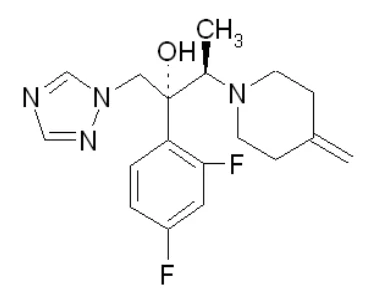
Physicochemical properties: White to pale yellow crystals or crystalline powder. Melting point: 86 to 89 °C. The pH of a saturated solution is between 5.5 and 7.5. Practically insoluble or insoluble in water.
14. Clinical Trials
14.1. Clinical Trials by Indication
The safety and efficacy of once daily use of JUBLIA (Efinaconazole Topical Solution, 10% w/w) for the treatment of onychomycosis of the toenail were assessed in two identical Phase III clinical trials which included patients with 20% to 50% clinical involvement of the area of the target great toenail, without dermatophytomas or lunula (matrix) involvement. Patients had positive dermatophyte culture and positive potassium hydroxide (KOH) examination from the target toenail. Patients were not excluded for concomitant Candida infection.
Table 3 provides the design and demographics of the 2 pivotal Phase III clinical trials.
Table 3 – Summary of study design and patient demographics for pivotal Phase III clinical trials in onychomycosis
| Study # | Study design | Dosage, route of administration and duration | Study subjects (n) | Age (range) | Sex % M/F |
| Study DPSI-IDP-108-P3-01 | Phase 3, Multicenter, Randomized (3:1), Double-Blind Study evaluating the safety and efficacy of IDP-108 topical solution versus Vehicle in subjects with mild to moderate onychomycosis of the toenails | JUBLIA Vehicle Topical: Once daily Duration of Therapy: 48 weeks | 618 202 | 52.3 (20-71) 52.0 (18-70) | 74/25 74/25 |
| Study DPSI-IDP-108-P3-02 | Phase 3, Multicenter, Randomized (3:1), Double-Blind Study evaluating the safety and efficacy of IDP-108 topical solution versus Vehicle in subjects with mild to moderate onychomycosis of the toenails | JUBLIA Vehicle Topical: Once daily Duration of Therapy: 48 weeks | 580 201 | 50.6 (18-71) 50.7 (18-70) | 80/20 81/18 |
Table 4 below displays the primary efficacy results obtained from Study DPSI-IDP-108-P3-01 and Study DPSI-IDP-108-P3-02.
Table 4 – Primary Efficacy Results (Complete Cure) at week 52 in the ITT1 population
| Study # | Primary efficacy endpoint | JUBLIA % (n/N) | Vehicle % (n/N) | p-value3 |
| DPSI-IDP-108-P3-01 | Complete Cure2 at Week 52 | 18.8% (116/618) | 3.5% (7/202) | <0.001 |
| DPSI-IDP-108-P3-02 | Complete Cure at Week 52 | 15.2% (88/580) | 5.5% (11/201) | <0.001 |
1ITT=Intent to treat.
2Complete Cure at Week 52 (4-weeks after completion of therapy) defined as 0% clinical involvement of the target toenail (toenail is totally clear) in addition to Mycologic Cure, defined as a negative fungal culture and a negative potassium hydroxide (KOH) examination of the target toenail sample.
3p-value from a Cochran-Mantel-Haenszel test, stratified by analysis center.
Study DPSI-IDP-108-P3-01
It was observed that the percentage of subjects who achieved a Complete Cure was greater in the active group than in the Vehicle group by Week 24 and that the percentage of successful subjects in the active group continued to increase over time through the four-week post-treatment follow-up visit (Week 52).
Study DPSI-IDP-108-P3-02
It was observed that the percentage of subjects who achieved a Complete Cure was greater in the active group than in the Vehicle group by Week 36 and that the percentage of successful subjects in the active group continued to increase over time through the four-week post treatment follow-up visit (Week 52).
Table 5 below displays the secondary efficacy results obtained from Study DPSI-IDP-108-P3-01 and Study DPSI-IDP-108-P3-02.
Table 5 – Secondary Efficacy Results at week 52 in the ITT1 Population
| Study # | Secondary efficacy endpoints | JUBLIA % (n/N) | Vehicle % (n/N) | p-value |
| DPSI-IDP-108-P3-01 | Clinical Efficacy2 at Week 52 | 46% (281/618) | 18% (36/202) | <0.001 |
| Mycologic Cure3 rate at Week 52 | 55.3% (342/618) | 16.8% (34/202) | <0.001 | |
| Unaffected New Nail4 Growth at Week 52 LS Mean5 (mm) | 5.0 | 1.5 | <0.001 | |
| Study # | Secondary efficacy endpoints | JUBLIA % (n/N) | Vehicle % (n/N) | p-value |
| DPSI-IDP-108-P3-02 | Clinical Efficacy at Week 52 | 31% (180/580) | 11.9% (24/201) | <0.001 |
| Mycologic Cure rate at Week 52 | 53.4% (310/580) | 16.9% (34/201) | <0.001 | |
Unaffected New Nail Growth at Week 52 LS Mean (mm) | 3.8 | 0.9 | <0.001 | |
1ITT=Intent to treat.
2Clinical Efficacy is defined as an affected target toenail area of less than 10%.
3Mycologic Cure is defined as a negative fungal culture and a negative potassium hydroxide (KOH) examination of the target toenail sample.
4Unaffected New Nail Growth is defined as the change from baseline in the healthy [unaffected] target toenail measurement for the target toenail.
5LS Mean: Least Square Mean.
Table 6 – Mycological Cure1 Rate at Treatment Period Intervals in the ITT2 Population
Treatment Period (week) | Study DPSI-IDP-108-P3-01 | Study DPSI-IDP-108-P3-02 | |||||
JUBLIA N=618 n (%) | Vehicle N=202 n (%) | JUBLIA N=580 n (%) | Vehicle N=201 n (%) | ||||
| 12 | 149 (24) | 29 (14) | 128 (22) | 25 (12) | |||
| 24 | 298 (48) | 50 (25) | 264 (46) | 39 (19) | |||
| 36 | 339 (55) | 41 (20) | 301 (52) | 38 (19) | |||
| 48 | 347 (56) | 52 (26) | 316 (55) | 40 (20) | |||
| 52 | 342 (55) | 34 (17) | 310 (53) | 34 (17) | |||
1Mycologic Cure is defined as a negative fungal culture and a negative potassium hydroxide (KOH) examination of the target toenail sample.
2ITT=Intent to treat.
15. Microbiology
Activity In Vitro and In Vivo
Efinaconazole has been shown to be active both in vitro and in clinical studies for the treatment of toenail infections involving the following microorganisms:
Trichophyton mentagrophytes
Trichophyton rubrum
Efinaconazole is active in vitro against strains of the following organisms; however, the safety and effectiveness of efinaconazole in treating clinical infections due to these microorganisms have not been established in clinical trials:
Candida albicans
Trichophyton tonsurans
Trichophyton verrucosum
Trichophyton schoenleinii
Epidermophyton floccosum
Scopulariopsis brevicaulis
Acremonium spp.
Fusarium spp.
Candida parapsilosis
Candida krusei
Candida tropicalis
Microsporum canis
Activity in Animal Models
In a guinea pig model of onychomycosis with T. rubrum infection, JUBLIA reduced nail mycological burden by reducing the number of fungi and preventing nail destruction.
Resistance
Efinaconazole drug resistance development was studied in vitro against T. mentagrophytes, T. rubrum and C. albicans. Serial passage of fungal cultures in the presence of sub-growth inhibitory concentrations of efinaconazole suggested low resistance development potential. The clinical significance of these in vitro results is unknown.
16. Non-Clinical Toxicology
General toxicology
- Acute Toxicity
Assessments of efinaconazole acute toxicity were conducted in rat via dermal ad subcutaneous (SC) administration, in mice via intraperitoneal administration, and in dog via dermal administration. Efinaconazole was well tolerated in both genders of all 3 species, with all LD50 values higher than 0.5 to 2 grams/kg.
- Long Term Toxicity
The long-term toxicity of efinaconazole was evaluated in minipig and mouse via dermal administration and in rats via subcutaneous administration.
Efinaconazole was generally well tolerated in rats with repeated daily doses of up to 30 (males) and 40 (females) mg/kg. The high doses were the maximum tolerated doses, based on increased frequency of severe injection site reactions and a 17% average lower body weight in males compared to controls. No target organs of toxicity were identified at any dose level. Administration of the propylene glycol Vehicle at 2 mL/kg over 6 months was not well tolerated and resulted in mortalities in all groups; Vehicle-related effects included severe dermal clinical signs, and gross and microscopic pathology findings at the injection sites. Early death in several efinaconazole-treated rats was attributed to spinal cord necrosis and urinary tract disease; these lesions also were noted in control rats and were attributed to the spread of injection site reactions (necrosis, abscessation). The NOAEL was determined to be 10 mg/kg/day in both male and female rats which had an exposure of 70 folds or more for efinaconazole and metabolite H3 as compared to human exposure levels.
In dermal toxicity studies, efinaconazole was well tolerated in minipigs at doses up to 150-200 mg /kg/day. Slight to moderate skin reactions were noted macroscopically and microscopically in all test article groups and Vehicle control and consisted of hyperkeratosis, acanthosis and localized inflammation. These skin effects were attributed to the Vehicle and were not considered adverse due to the mild severity of changes. Microscopic skin changes were resolved by the end of the drug-free recovery period. No target organs were identified at the high dose, which was the maximum feasible dose based on test article solubility and application rate. The NOAEL, established by the 30% strength, was determined to be >150 mg/kg/day which had an exposure of 208 folds for efinaconazole as compared to human exposure levels.
In 13-week dermal toxicity in mice, the systemic exposure to efinaconazole was much higher as compared to minipig. In this study an increase in liver weight and minimal to mild panlobular hepatocellular hypertrophy was observed 30% IDP-108, the local application of IDP-108 and/or the vehicle alone resulted in higher incidences of hyperkeratosis, epidermal hyperplasia, and mononuclear infiltrates in the treated skin. Higher concentration of the test article of 10% and 30% IDP-108 were associated with higher severity of these cutaneous changes compared to controls, and a low incidence of the formation of erosion/ulcers at the treated site. The NOAEL, established by the 30% strength which had an exposure of 700 folds or more for efinaconazole as compared to human exposure levels.
Genotoxicity
Efinaconazole was not mutagenic in a bacterial reverse mutation assay and was not clastogenic in mouse micronucleus and CHL cell chromosomal aberration tests.
Carcinogenicity
In a 2-year dermal carcinogenicity study in mice, efinaconazole showed no evidence of carcinogenicity at doses of up to 140 mg/kg/day (equivalent to approximately 16 and 248 times the clinical maximum use dose based on mg/m2 and AUC, respectively).
Reproductive and developmental toxicology
In a fertility and early embryonic development study, subcutaneous efinaconazole administration to rats at doses up to 25 mg/kg/day had no effect on fertility in males or females. Efinaconazole delayed the estrous cycle in females at 25 mg/kg/day but did not have effects at 5 mg/kg/day (equivalent to 58 times the clinical maximal use dose based on AUC).
Efinaconazole was tested for developmental toxicity in pregnant rats and rabbits via subcutaneous administration. At maternally toxic doses, efinaconazole was embryofetal and neonatal lethal in rats but not teratogenic at ≥89 times the AUC at the clinical maximal use dose. The maximal use dose in onychomycosis patients assumes ~42 mg/day efinaconazole (~420 mg/day JUBLIA to all 10 toenails). At lower maternally toxic doses, efinaconazole produced rat placental changes (increased weight and size, and decidua cell vacuolation) and the no observed adverse effect level (NOAEL) was 2 mg/kg/day (equivalent to 10 times the AUC in onychomycosis patients). The rat pre/postnatal NOAEL was 22 times the AUC in onychomycosis patients. In rabbits, efinaconazole was maternally toxic but did not affect embryofetal development at the high dose of 10 mg/kg/day (equivalent to 154 times the AUC in onychomycosis patients).