


Product Monograph - Lotriderm
1 INDICATIONS
LOTRIDERM® Cream (betamethasone dipropionate and clotrimazole) is indicated for:
- the topical treatment of the following fungal dermal infections complicated by inflammatory pruritus: tinea pedis, tinea cruris, and tinea corporis due to Trichophyton rubrum, Trichophyton mentagrophytes, Epidermophyton floccosum, and Microsporum canis.
1.1 Pediatrics
Pediatrics: Based on the available data, the safety and effectiveness in children below the age of 12 have not been established with LOTRIDERM® Cream.
1.2 Geriatrics
Geriatrics: There is insufficient data to suggest that use in the geriatric population is associated with differences in safety or effectiveness.
2 CONTRAINDICATIONS
LOTRIDERM® Cream is contraindicated in:
- patients who are hypersensitive to this drug or to any ingredient in the formulation, including any non-medicinal ingredient, or component of the container. For a complete listing, see Dosage Forms, Strengths, Composition and Packaging.
- patients who are sensitive to other corticosteroids or imidazoles.
- untreated bacterial and tubercular infections involving the skin and in certain viral diseases such as herpes simplex, chicken pox and vaccinia.
3 DOSAGE AND ADMINISTRATION
3.1 Dosing Considerations
LOTRIDERM® should not be used with occlusive dressings.
3.2 Recommended Dose and Dosage Adjustment
Based on the available data, Health Canada has not authorized the use of LOTRIDERM® Cream in children below 12 years of age (See INDICATIONS).
3.3 Administration
A thin film of LOTRIDERM® Cream should be applied to cover completely the affected and surrounding skin areas twice daily, in the morning and at night, for two weeks in tinea cruris and tinea corporis, and for four weeks in tinea pedis. The use of LOTRIDERM® Cream for longer than four weeks is not recommended.
Clinical improvement, with relief of erythema and pruritus, usually occurs within three to five days of treatment. If a patient with tinea cruris and tinea corporis shows no clinical improvement after one week of treatment with LOTRIDERM® Cream, the diagnosis should be reviewed. In tinea pedis, the treatment should be applied for two weeks prior to making that decision. Treatment with LOTRIDERM® Cream should be discontinued if the condition persists after two weeks in tinea cruris and tinea corporis and after four weeks in tinea pedis. Alternate therapy may then be instituted, if indicated, with an appropriate antifungal preparation.
4 MISSED DOSE
If a dose is missed, the patient can resume treatment with the next scheduled application.
5 OVERDOSAGE
No specific antidote is available, and treatment should be symptomatic.
Betamethasone dipropionate:
Excessive or prolonged use of topical corticosteroids can suppress pituitary-adrenal function, resulting in secondary adrenal insufficiency, and produce manifestations of hypercorticism, including Cushing's disease.
Clotrimazole:
Overdosage by topical clotrimazole administration is highly improbable, since application of C14 labelled clotrimazole to intact or diseased skin under occlusive dressing for 6 hours did not yield measurable quantities (lower detection limit 0.001 μg/mL) of radioactive material in the sera of human subjects.
Treatment:
Appropriate symptomatic treatment of corticosteroid overdosage is indicated. Acute hypercorticoid symptoms are usually reversible. Treat electrolyte imbalance, if necessary. In cases of chronic toxicity, slow withdrawal of corticosteroids is advised.
For management of a suspected drug overdose, contact your regional poison control centre.
6 DOSAGE FORMS, STRENGTHS, COMPOSITION AND PACKAGING
Table 1 – Dosage Forms, Strengths, Composition and Packaging.
LOTRIDERM® is a smooth, uniform, white to off-white cream.
Each gram of LOTRIDERM® cream contains 10.0 mg clotrimazole, Organon Standard, and 0.64 mg betamethasone dipropionate, Organon Standard, (equivalent to 0.5 mg (0.05%) betamethasone) in a hydrophilic emollient cream. Tubes of 15 and 50 g.
7 WARNINGS AND PRECAUTIONS
General
Patients should be advised to inform subsequent physicians of the prior use of corticosteroids.
Occlusive dressings should not be used, as this may result in an increase in the systemic absorption of topical corticosteroids or clotrimazole.
If irritation or hypersensitivity develops with the use of LOTRIDERM® (betamethasone dipropionate and clotrimazole) Cream, treatment should be discontinued, and appropriate therapy instituted.
Endocrine and Metabolism
Systemic absorption of topical corticosteroids has produced reversible hypothalamic- pituitary-adrenal (HPA) axis suppression, manifestations of Cushing's syndrome, hyperglycemia, and glucosuria in some patients.
Systemic absorption of topical corticosteroid agents will be increased with the use of more potent corticosteroid agents, with prolonged usage or if extensive body surface areas are treated. Therefore, patients receiving large doses of potent topical corticosteroids, applied to a large surface area should be evaluated periodically for evidence of HPA axis suppression. If HPA axis suppression occurs, an attempt should be made to withdraw the drug, to reduce the frequency of application, or to substitute with a less potent corticosteroid agent.
Recovery of HPA axis function is generally prompt and complete upon discontinuation of the drug. Infrequently, signs and symptoms of steroid withdrawal may occur, requiring supplemental systemic corticotherapy.
| Route of Administration | Dosage Form / Strength/Composition | Non-medicinal Ingredients |
| Topical | Cream/ Betamethasone Dipropionate 0.05% and clotrimazole 1.0% | cetostearyl alcohol, liquid paraffin, macrogol cetostearyl ether, propylene glycol, sodium dihydrogen phosphate dihydrate, phosphoric acid and white soft paraffin; benzyl alcohol as preservative. Sodium hydroxide to adjust pH |
Monitoring and Laboratory Tests
If there is a lack of response to LOTRIDERM® Cream, appropriate microbiological studies should be repeated to confirm the diagnosis and rule out other pathogens before instituting another course of antimycotic therapy.
The following tests may be helpful in evaluating HPA axis suppression due to the corticosteroid component:
Urinary free cortisol test
ACTH stimulation test
Ophthalmologic
LOTRIDERM® should not be used in or near the eyes since this preparation is not formulated for ophthalmic use.
Visual disturbance may be reported with systemic and topical (including, intranasal, inhaled and intraocular) corticosteroid use. If a patient presents with symptoms such as blurred vision or other visual disturbances, the patient should be considered for referral to an ophthalmologist for evaluation of possible causes of visual disturbances which may include cataract, glaucoma or rare diseases such as central serous chorioretinopathy (CSCR) which have been reported after use of systemic and topical corticosteroids.
Skin
Suitable precautions should be taken in using topical corticosteroids in patients with stasis dermatitis and other skin diseases with impaired circulation.
Prolonged use of corticosteroid preparations may produce striae or atrophy of the skin or subcutaneous tissue. If this occurs, treatment should be discontinued.
7.1 Special Populations
7.1.1 Pregnant Women
There are no adequate and well-controlled studies in pregnant women on teratogenic effects of a topically applied combination of clotrimazole and betamethasone dipropionate. Therefore, LOTRIDERM® Cream should be used during pregnancy only if the potential benefit justifies the potential risk to the fetus.
Drugs containing corticosteroids should not be used extensively on pregnant patients in large amounts or for prolonged periods of time.
7.1.2 Breast-feeding
Since it is not known whether the components of LOTRIDERM® Cream are excreted in human milk, caution should be exercised when this product is administered to a nursing
woman.
7.1.3 Pediatrics
Safety and effectiveness in children below the age of 12 have not been established with LOTRIDERM® Cream.
The use of LOTRIDERM® Cream in diaper dermatitis is not recommended.
Pediatric patients may demonstrate greater susceptibility to topical corticosteroid-induced HPA axis suppression and Cushing's syndrome than mature patients because of greater absorption due to a larger skin surface area to body weight ratio.
Hypothalamic-pituitary-adrenal (HPA) axis suppression, Cushing's syndrome, and intracranial hypertension have been reported in children receiving topical corticosteroids. Manifestations of adrenal suppression in children include linear growth retardation, delayed weight gain, low plasma cortisol levels, and absence of response to ACTH stimulation. Manifestations of intracranial hypertension include bulging fontanelles, headaches, and bilateral papilledema.
Administration of topical dermatologics containing a corticosteroid to children should be limited to the least amount compatible with an effective therapeutic regimen. Chronic corticosteroid therapy may interfere with the growth and development of children.
8 ADVERSE REACTIONS
8.1 Adverse Reaction Overview
The following adverse reactions have been reported in connection with the use of LOTRIDERM® Cream: paresthesia in 5 of 270 patients (1.85%), maculopapular rash, edema, and secondary infection, each in 1 of 270 (0.37%) patients.
Adverse reactions reported with the use of clotrimazole are as follows: erythema, stinging, blistering, peeling, edema, pruritis, urticaria, and general irritation of the skin.
The following local adverse reactions are reported infrequently when topical corticosteroids are used as recommended. These reactions are listed in an approximate decreasing order of occurrence: burning, itching, irritation, dryness, folliculitis, hypertrichosis, acneiform eruptions, hypopigmentation, perioral dermatitis, allergic contact dermatitis, maceration of the skin, secondary infection, skin atrophy, striae, and miliaria.
Systemic adverse reactions, such as vision blurred, have also been reported with the use of topical corticosteroids.
9 DRUG INTERACTIONS
9.1 Drug-Drug Interactions
Interactions of LOTRIDERM® Cream with other drugs have not been established.
9.2 Drug-Herb Interactions
Interactions of LOTRIDERM® Cream with herbal products have not been established.
9.3 Drug-Laboratory Test Interactions
Interactions of LOTRIDERM® Cream with laboratory tests have not been established.
10 ACTION AND CLINICAL PHARMACOLOGY
10.1 Mechanism of Action
Betamethasone dipropionate with clotrimazole combines the anti-inflammatory, antipruritic and vasoconstrictive activity of betamethasone dipropionate with the antifungal activity of clotrimazole. The primary action of clotrimazole is against dividing and growing organisms, possibly through reaction with the cell membrane.
10.2 Pharmacodynamics
Betamethasone dipropionate was compared with other fluorinated topical corticosteroids in the McKenzie/Stoughton vasoconstrictor test. In this test, betamethasone dipropionate was significantly more active (p <0.05) than fluocinolone acetonide, fluocortolone caproate plus fluocortolone, flumethasone pivalate and betamethasone valerate. The results showed betamethasone dipropionate to be active in a concentration of 0.000016%, the lowest concentration tested which showed activity.
10.3 Pharmacokinetics
Betamethasone Dipropionate
Betamethasone dipropionate, as is characteristic of a corticosteroid, is absorbed through the skin, becomes highly but reversibly bound to plasma proteins, is metabolized at both hepatic and extrahepatic sites to yield mostly inactive substances and is almost completely excreted within 72 hours.
In rats and mice with intact skin, only about 10% of the applied dose of betamethasone dipropionate is absorbed. In skin with the stratum corneum removed, betamethasone is about 90% absorbed when applied cutaneously. The absorbed portion of the steroids is distributed rapidly and found in all organs within 24 hours of administration. By 48 hours, nearly 90% of the initial dose was excreted with the remaining portion found in organs of the digestive tract and kidneys. In rodents, betamethasone dipropionate or its metabolites were excreted predominantly in the feces. The high levels found in the feces indicates that betamethasone
dipropionate is metabolized by the liver and excreted in the bile. The two major metabolites of betamethasone dipropionate were shown to be betamethasone 17- propionate and 6 beta 17-propionate and 6 beta-hydroxybetamethasone17-propionate.
Clotrimazole
The percutaneous absorption of clotrimazole was examined in humans with radiolabelled clotrimazole (1% cream). The results demonstrated that the highest concentration of clotrimazole remained in the epidermis, particularly the stratum corneum. Very low subcutaneous levels of the drug were detected, and 48 hours after application, serum concentrations were below the detection level of the assay (0.001 mg/L). Urine concentration of the drug was consistently below 0.5% of the radioactivity applied to the skin. Negligible systemic absorption of the drug after intravaginal insertion of one (1) 100 mg tablet was found. The average serum level 24 hours after insertion was approximately 0.03 mg/L. When given orally, however, clotrimazole is rapidly and nearly completely absorbed and distributed throughout the body within hours. The highest concentrations of the drug were found in the liver, adipose tissue and skin. In the rat, the clotrimazole absorbed is eliminated predominantly (more than 90%) in the feces within 48 hours. In man, nearly 25% of the drug is excreted in the urine with the rest excreted in the feces by six (6) days.
11 STORAGE, STABILITY AND DISPOSAL
Store between 15°C and 30°C.
PART II: SCIENTIFIC INFORMATION
12 PHARMACEUTICAL INFORMATION
Drug Substance
Proper name: Clotrimazole
Chemical name: 1-(o-Chloro- α,α-diphenyl benzyl) imidazole
Molecular formula: C22H17ClN2
Molecular mass: 344.8
Structural formula:
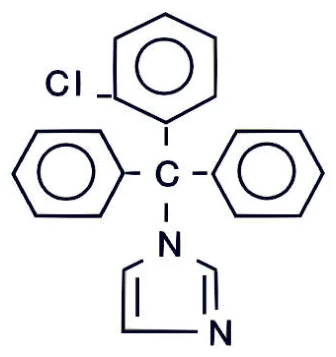
Physicochemical properties: Clotrimazole is an odourless, white crystalline powder, insoluble in water and soluble in ethanol.
Drug Substance
Proper name: Betamethasone dipropionate
Chemical name: 9-Fluoro-11β, 17,21-trihydroxy-16β-methylpregna-1, 4-diene-3,20-dione 17,21-dipropionate
Molecular formula: C28H37FO7
Molecular mass: 504.6
Structural formula:
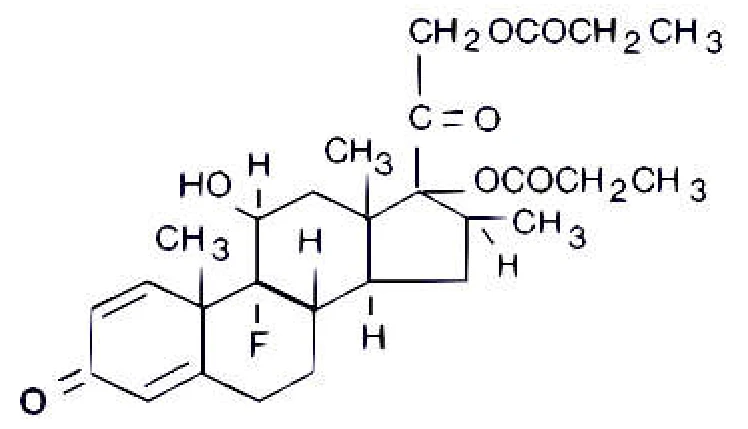
Physicochemical properties: Betamethasone dipropionate is a white to creamy white, odourless crystalline powder, insoluble in water.
13 MICROBIOLOGY
In vitro, clotrimazole exhibits fungistatic and fungicidal activity against isolates of Trichophyton rubrum, Trichophyton mentagrophytes, Epidermophyton floccosum and Microsporum canis. In general the in vitro activity of clotrimazole corresponds to that of tolnaftate and griseofulvin against the mycelia of dermatophytes (Trichophyton, Microsporum, and Epidermophyton).
At concentrations of <2 μg/mL clotrimazole was fungicidal for many isolates of Candida albicans, Trichophyton sp., Microsporum sp. and Epidermophyton sp. At concentrations <5 μg/mL clotrimazole was fungistatic for other isolates of these species. Addition of bovine serum to the culture media at a final concentration of 30% resulted in somewhat higher MIC's of clotrimazole.
In vivo studies in guinea pigs infected with Trichophyton mentagrophytes have shown no measurable loss of clotrimazole activity due to combination with betamethasone dipropionate.
Strains of fungi having a natural resistance to clotrimazole have not been reported.
No single-step or multiple-step resistance to clotrimazole has developed during successive passages of Trichophyton mentagrophytes.
In studies of the mechanism of action in fungal cultures, the minimum fungicidal concentration of clotrimazole caused leakage of intracellular phosphorous compounds into the ambient medium with concomitant breakdown of cellular nucleic acids, and accelerated potassium efflux. Both of these events began rapidly and extensively after addition of the drug to the cultures.
14 NON-CLINICAL TOXICOLOGY
Acute Toxicity:
Oral LD50 of LOTRIDERM® Cream in male and female rats and mice was greater than 40 mL/kg, equivalent to 35.2 grams of LOTRIDERM® Cream/kg when animals were given a single oral dose. Compound-related findings within 48 hours of dosing included rough hair coat, diarrhea, hypoactivity and hypothermia in several rats. Hypoactivity and ptosis occurred within 4 hours in the majority of mice dosed.
Subacute Dermal Toxicity Studies (Rabbits):
In two (2) simultaneous studies, New Zealand White rabbits with intact or abraded skin were used. In each study, 15 male and 15 female rabbits were assigned to five (5) groups (3/sex/group). Two (2) of these groups were dosed by applying LOTRIDERM® Cream over approximately 1.5% and 10% of the body surface at total daily doses of 0.15 and 0.5 g/kg (0.75 and 0.25 g/kg b.i.d.) respectively for 21-25 consecutive days. Two (2) additional groups were dosed in a similar manner over approximately 10% of the body surface with either 10% clotrimazole or vehicle cream at 0.5 g/kg and served as a comparative or vehicle control group. A fifth group remained untreated. Doses were approximately 9 and 31 times the proposed human daily dose.
Signs of corticosteroid activity in LOTRIDERM®-dosed rabbits included:1) progressive skeletal muscle wasting (slight to moderate in low-dose and slight to severe in high-dose rabbits); 2) distended abdomen; 3) marginal decreases in hematocrit, hemoglobin and erythrocytes; 4) moderate to marked decreases in lymphocytes; 5) moderate to marked decreases in serum glucose, alkaline phosphatase, SGOT and SGPT; and 6) marginal increases in blood urea nitrogen. Signs of minimal dermal irritation were observed in all dosed rabbits which included wrinkling and drying of the skin and transient, sporadic episodes of very slight to moderate erythema at the application site. In addition, papules progressing to scabs were observed intermittently on most vehicle and clotrimazole control rabbits. In contrast, papules occurred in only four (4) LOTRIDERM®-dosed rabbits (high- dose, intact). Thickening of the skin at the application site was observed in all clotrimazole- dosed rabbits and was not observed in any of the other rabbits.
The principal compound-related changes observed at necropsy for LOTRIDERM® -dosed animals (low and high dose groups) were: muscle wasting, enlarged, friable, pale or discoloured livers, reduced size of the spleen, lymph nodes, testes, thymus, adrenals, prostate and thyroids, pale kidneys and reduced thickness of the skin at the application site.
Thickening of the skin at the application site was observed for several vehicle control and the majority of the clotrimazole control rabbits. Decreased absolute and/or relative weights were recorded for the following organs/tissues of LOTRIDERM® low and high-dose rabbits: adrenals, prostate, testes and skeletal muscle. Increased kidney and liver weights also occurred in these groups. Organ weight changes for clotrimazole-dosed rabbits included increased weights of the adrenals (abraded only), kidneys, liver (abraded only), and prostate, and decreased weights of the testes (intact only).
Histopathological examination revealed the following changes in the LOTRIDERM® low and high dose rabbits: 1) atrophy of the adrenal cortex; 2) bone resorption; 3) hypocellularity of bone marrow 4) atrophy of the thymus, spleen, lymph nodes, testes and thyroid; 5) myodegeneration of the muscle (primarily in high dose rabbits); 6) thinning of the untreated epidermis; 7) vacuolization of renal cortical tubular epithelium. Such observations are not unexpected following treatment with a corticosteroid and are consistent with the observations made throughout the study.
These data indicate that under the conditions of this study, LOTRIDERM® Cream was relatively well tolerated locally when applied topically to rabbits with intact or abraded skin. In fact, dermal irritation was shown to be less severe for LOTRIDERM® Cream than that observed for rabbits treated with clotrimazole alone. The systemic changes observed with LOTRIDERM® Cream were expected and are typical of those observed after topical administration of corticosteroids.
Reproduction and Teratology:
Betamethasone Dipropionate
In animals, betamethasone dipropionate has been shown to interfere with fetal development in a manner typical of corticosteroids when administered to mice, rats and rabbits at doses in excess of those recommended for man.
Animals were treated intramuscularly with dose levels between 0.324 - 32.5 mg/kg for mice, 1-2 mg/kg for rats and 0.002 - 0.8 mg/kg for rabbits.
In rats, there were no indications of adverse effects on either the dams or the pups, but in both the mouse and rabbit, teratogenic effects typical of corticosteroids were observed.
Clotrimazole
Studies in pregnant rats with intravaginal doses up to 100 mg/kg have revealed no evidence of harm to the fetus due to clotrimazole.
High oral doses of clotrimazole in rats and mice ranging from 80 to 120 mg/kg resulted in embryotoxicity (possibly secondary to maternal toxicity), impairment of mating, decreased litter size and number of viable young and decreased pup survival to weaning. However, clotrimazole was not teratogenic in mice, rabbits and rats at oral doses up to 200, 180 and 100 mg/kg, respectively. Oral absorption in the rat amounts to approximately 90% of the administered dose.
Mutagenicity:
In tests for mutagenesis, chromosomes of the spermatophores of Chinese hamsters which have been exposed to clotrimazole were examined for structural changes during the metaphase. Prior to testing, the hamsters had received five oral clotrimazole doses of 100 mg/kg body weight. The results of this study showed that clotrimazole had no mutagenic effect.