


Product Monograph - Kyleena
RECENT MAJOR LABEL CHANGES
| 01/2021 |
| 01/2021 |
TABLE OF CONTENTS
Sections or subsections that are not applicable at the time of authorization are not listed.
Table of Contents ................................................................................................................................................................. 3
PART I: HEALTH PROFESSIONAL INFORMATION............................................................................................................... 4
1 INDICATIONS ................................................................................................................................................................. 4
1.1 Pediatrics................................................................................................................................................................ 4
1.2 Geriatrics................................................................................................................................................................ 4
2 CONTRAINDICATIONS .................................................................................................................................................. 4
3 SERIOUS WARNINGS AND PRECAUTIONS BOX .......................................................................................................... 5
4 DOSAGE AND ADMINISTRATION................................................................................................................................. 5
4.1 Dosing Considerations .......................................................................................................................................... 5
4.2 Recommended Dose and Dosage Adjustment.................................................................................................... 5
4.3 Reconstitution ....................................................................................................................................................... 5
4.4 Administration ....................................................................................................................................................... 6
4.5 Missed Dose.........................................................................................................................................................14
5 OVERDOSAGE .............................................................................................................................................................. 15
6 DOSAGE FORMS, STRENGTHS, COMPOSITION AND PACKAGING .......................................................................... 15
7 WARNINGS AND PRECAUTIONS ................................................................................................................................ 17
7.1 Special Populations .............................................................................................................................................25
8 ADVERSE REACTIONS.................................................................................................................................................. 26
8.1 Adverse Reaction Overview................................................................................................................................26
8.2 Clinical Trial Adverse Reactions..........................................................................................................................26
8.3 Less Common Clinical Trial Adverse Reactions .................................................................................................28
8.4 Abnormal Laboratory Findings: Hematologic, Clinical Chemistry and other Quantitative Data ...................28
8.5 Post-Market Adverse Reactions .........................................................................................................................28
9 DRUG INTERACTIONS ................................................................................................................................................. 28
9.2 Drug Interactions Overview................................................................................................................................28
9.3 Drug-Behavioural Interactions ...........................................................................................................................28
9.4 Drug-Drug Interactions .......................................................................................................................................28
9.5 Drug-Food Interactions .......................................................................................................................................29
9.6 Drug-Herb Interactions .......................................................................................................................................29
9.7 Drug-Laboratory Test Interactions .....................................................................................................................29
10 CLINICAL PHARMACOLOGY...................................................................................................................................... 29
10.1 Mechanism of Action ........................................................................................................................................29
10.2 Pharmacodynamics ...........................................................................................................................................30
10.3 Pharmacokinetics ..............................................................................................................................................32
11 STORAGE, STABILITY AND DISPOSAL ...................................................................................................................... 33
12 SPECIAL HANDLING INSTRUCTIONS ........................................................................................................................ 33
PART II: SCIENTIFIC INFORMATION .................................................................................................................................. 34
13 PHARMACEUTICAL INFORMATION ......................................................................................................................... 34
14 CLINICAL TRIALS ........................................................................................................................................................ 35
15 MICROBIOLOGY ........................................................................................................................................................ 37
16 NON-CLINICAL TOXICOLOGY.................................................................................................................................... 37
PATIENT MEDICATION INFORMATION ............................................................................................................................ 40
PART I: HEALTH PROFESSIONAL INFORMATION
1 INDICATIONS
KYLEENA (levonorgestrel-releasing intrauterine system [19.5 mg]) is indicated for conception control for up to 5 years.
1.1 Pediatrics
Pediatrics (< 18 years of age): No data are available to Health Canada; therefore, Health Canada has not authorized an indication for pediatric use.
1.2 Geriatrics
Geriatrics: KYLEENA is not indicated for use in postmenopausal women. No data are available to Health Canada, therefore, Health Canada has not authorized an indication for geriatric use.
2 CONTRAINDICATIONS
KYLEENA (levonorgestrel-releasing intrauterine system [19.5 mg]) is contraindicated in patients with the following conditions:
- known or suspected pregnancy
- current or recurrent pelvic inflammatory disease or conditions associated with increased risk for pelvic infections
- postpartum endometritis or septic abortion during the previous three months
- abnormal uterine bleeding of unknown etiology
- congenital or acquired uterine anomaly, including fibroids, that distort the uterine cavity
- uterine or cervical malignancy
- known or suspected progestogen-dependent neoplasia, including breast cancer
- cervicitis or vaginitis, including bacterial vaginosis or other lower genital tract infections until infection is controlled
- cervical dysplasia
- active liver disease or dysfunction
- actual benign or malignant liver tumours
- hypersensitivity to levonorgestrel or any of the other ingredients in the formulation or components of KYLEENA. For a complete listing, see the 6 DOSAGE FORMS, STRENGTHS, COMPOSITION AND PACKAGING section of the Product Monograph
- a previously inserted intrauterine contraceptive (IUC) that has not been removed
- recent trophoblastic disease while hCG levels are elevated
- bacterial endocarditis
3 SERIOUS WARNINGS AND PRECAUTIONS BOX
Serious Warnings and Precautions
|
4 DOSAGE AND ADMINISTRATION
4.1 Dosing Considerations
Not Applicable
4.2 Recommended Dose and Dosage Adjustment
Following insertion into the uterine cavity, KYLEENA (levonorgestrel-releasing intrauterine system [19.5 mg]) is effective for up to 5 years. KYLEENA must be removed by the end of the fifth year and can be replaced at the time of removal with a new KYLEENA if continued contraceptive protection is desired.
The in vivo release curve is characterized by an initial steep decline that slows down progressively resulting in little change after 1 year until the end of the intended 5-year period of use. Estimated in vivo delivery rates for different time points are provided in Table 1.
Table 1: Estimated in vivo release rates based on observed ex vivo residual content data
| Time | Estimated in vivo release rate [micrograms/24 hours] |
| 24 days after insertion | 17.5 |
| 60 days after insertion | 15.3 |
| 1 year after insertion | 9.8 |
| 3 years after insertion | 7.9 |
| 5 years after insertion | 7.4 |
| Average over 1st year | 12.6 |
| Average over 5 years | 9.0 |
4.3 Reconstitution
Not Applicable
4.4 Administration
Medical Examination/Consultation
Before insertion, the woman must be informed of the efficacy, risks, and side effects of KYLEENA. A thorough history and physical examination should also be performed prior to insertion, including a blood pressure determination. Breasts, liver, extremities, and pelvic organs should be examined. Cervical smear (Papanicolaou smear) should be performed as needed, according to healthcare professional’s evaluation. Pregnancy and sexually transmitted infections should be excluded and any genital infections must be successfully treated. For timing of insertion to exclude pregnancy, see 4 DOSAGE AND ADMINISTRATION - Insertion, Removal and Replacement. The position of the uterus and the size of the uterine cavity should be determined. Fundal position of KYLEENA is particularly important in order to ensure uniform exposure of the endometrium to the progestogen, prevent expulsion and maximize efficacy. Because irregular bleeding is common during the first months of therapy with all IUSs, including KYLEENA, it is recommended to exclude endometrial pathology before insertion (see 7 WARNINGS AND PRECAUTIONS - Genitourinary: Bleeding Irregularities; and 8 ADVERSE REACTIONS). It is also important to counsel women about how their bleeding pattern may change after insertion of KYLEENA.The instructions for insertion should be followed carefully. The patient should be re-examined 4 to 12 weeks after insertion and once a year thereafter, or more frequently if clinically indicated.
KYLEENA is not for use as a postcoital contraceptive.
Insertion, Removal and Replacement
It is recommended that KYLEENA only be inserted by healthcare professionals who are experienced in IUS insertions and/ or have undergone training on the KYLEENA insertion procedure.
KYLEENA can be distinguished from other IUSs by the silver ring which is visible upon ultrasound as well as the blue colour of the removal threads. The T-body of KYLEENA contains barium sulphate, which makes it visible in X-ray examination.
In women of fertile age, KYLEENA should be inserted within 7 days of the onset of menstruation. In this case no back up contraception is needed. KYLEENA can be inserted any time during the cycle if the healthcare professional can be reasonably certain (as defined by the World Health Organization) that the woman is not pregnant. If insertion is more than 7 days since menstrual bleeding started, a barrier method of contraception should be used or the patient should abstain from vaginal intercourse for the next 7 days to prevent pregnancy. Consider the possibility of ovulation and conception before using this product. KYLEENA may be replaced by a new system at any time during the cycle. The system can also be inserted immediately after first trimester abortion.
Insertions following second trimester abortion should be postponed for a minimum of 6 weeks or until the uterus is fully involuted. If involution is delayed, wait until involution is complete before insertion.
Postpartum insertions should be postponed until the uterus is fully involuted, and not earlier than 6 weeks after delivery. If involution is substantially delayed, consider waiting until 12 weeks postpartum. In case of a difficult insertion and/or exceptional pain or bleeding during or after insertion, the possibility of perforation should be considered and appropriate steps should be taken, such as physical examination and ultrasound.
If bleeding irregularities develop during prolonged treatment, appropriate diagnostic measures should be taken as irregular bleeding may be a symptom of endometrial polyps, hyperplasia or cancer.
The removal threads may be felt by the partner during intercourse.
KYLEENA can be removed by gently pulling on the removal threads with forceps. If the threads are not visible and the system is in the uterine cavity, it may be removed using forceps. This may require dilatation of the cervical canal or other surgical intervention, such as hysteroscopy.
After removal of KYLEENA, verify that the system is intact. The system should be removed after 5 years of use. If the patient wishes to continue using KYLEENA, a new system can be inserted at the time of removal of the old one. If pregnancy is not desired, removal should be carried out within 7 days of the onset of menstruation in women of fertile age provided that there appears to be a menstrual cycle. If the system is removed at some other time or the woman does not experience regular menses and the woman has had intercourse within a week, she is at risk of pregnancy. To ensure continuous contraception, a new system should be immediately inserted or an alternative contraceptive method should have been initiated.
Insertion and removal may be associated with some pain and bleeding. The procedure may cause a fainting spell or precipitate a seizure in an epileptic patient. It is recommended to wait 24 to 48 hours before having sexual intercourse in the event of general discomfort after insertion of KYLEENA.
Expulsion
Partial or complete expulsion of KYLEENA may occur resulting in the loss of efficacy. Symptoms of the partial or complete expulsion of KYLEENA may include bleeding or pain; however, a system may be expelled from the uterine cavity without the patient noticing it. Since KYLEENA decreases menstrual flow, an increase in menstrual flow may indicate an expulsion.
In clinical trials with KYLEENA, the incidence of expulsion was 3.5% (59 of 1690 subjects over 5 years), and in the same range as that reported for other IUDs and IUSs. Overall, more than half of the expulsions occurred during the first 12 months after insertion.
In clinical trials with KYLEENA, more expulsions occurred in parous women (6.1%), than in nulliparous women (2.5%).
In a large, retrospective, cohort study (mean observation time of 2 years) in LNG IUS and copper IUD users (N=326,658 women), the overall incidence of expulsion was 2.74 per 100 IUS/IUD insertions. The incidence of expulsion was 7.75 per 100 insertions among women with IUS/IUD insertion immediately after delivery (i.e. 0-3 days following delivery); and the incidence was 2.95 per 100 insertions among women without documented delivery in the past 52 weeks. The expulsion rate among women at other postpartum intervals were generally similar to that of women without delivery in the past 52 weeks.
Analysis of expulsion risk factor among women who had not delivered within 12 months before insertion (228,834 women) showed an increased expulsion risk in:
- Women with history of heavy menstrual bleeding: the incidence of expulsion was 7.37 per 100 insertions in women with a recent history (≤ 12 months before insertion) and 9.24 per 100 insertions in women with both recent and past history (> 12 months), compared to women without any prior diagnosis of menorrhagia (2.10 expulsions per 100 insertions).
- Women with greater than normal BMI at the time of insertion: this risk increases gradually with increasing BMI. Compared to women with normal BMI (2.14 expulsions per 100 insertions), the incidence of expulsion was 5.39 per 100 insertions in women with morbid obesity (BMI ≥40).
The patient should be counselled on the possible signs of expulsion and how to check the threads of KYLEENA. If expulsion is suspected based on ultrasound, consider further diagnostic imaging such as x-ray. A partially expelled KYLEENA should be removed. A new system can be inserted at that time provided pregnancy has been excluded.
Lost Removal Threads
If the threads are not visible upon follow-up examination, they may have retracted into the uterus or broken, or KYLEENA may have broken, perforated the uterus, or been expelled. If the length of the threads has changed since the length at the time of insertion, the system may have become displaced (see 4 DOSAGE AND ADMINISTRATION - 4.4 Administration: Expulsion). Pregnancy must be excluded and the location of KYLEENA must be verified by sonography (KYLEENA contains a silver ring to facilitate detection by ultrasound), X-ray (KYLEENA is radiopaque), or by gentle exploration of the uterine cavity with a probe. If KYLEENA is displaced, remove it. A new KYLEENA may be inserted at that time or during the next menses if it is certain that conception has not occurred.
Insertion Instructions
Because the insertion technique is different from other intrauterine devices, it is important that healthcare professionals receive training on the correct insertion technique. Healthcare professionals should become thoroughly familiar with the insertion instructions in their entirety before insertion of KYLEENA. |
KYLEENA is supplied in a sterile package which should not be opened until required for insertion. It is sterilized with ethylene oxide. Do not resterilize. For single use only. Do not use if the seal of the sterile package is broken, or if the package is damaged or opened. The exposed product should be handled with aseptic precautions. Insert before the date indicated on the label.
KYLEENA is supplied with a patient reminder card in the outer package. Complete the patient reminder card and give it to the patient, after insertion.
In women of fertile age, KYLEENA is to be inserted into the uterine cavity within 7 days of the onset of menstruation. In this case no back up contraception is needed. KYLEENA can be inserted any time during the cycle if the healthcare professional can be reasonably certain (as defined by the World Health Organization) that the woman is not pregnant. If insertion is more than 7 days since menstrual bleeding started, a barrier method of contraception should be used or the patient should abstain from vaginal intercourse for the next 7 days to prevent pregnancy. Consider the possibility of ovulation and conception before using this product. KYLEENA is not suitable for use as postcoital contraceptive. KYLEENA can be replaced by a new system at any time in the cycle.
Preparation for Insertion
- 1. Visualize the cervix with the aid of a speculum and thoroughly cleanse the cervix and vagina with a suitable antiseptic solution.
- 2. Grasp the upper lip of the cervix with a tenaculum or suitable holding forceps to stabilize the uterus. If the uterus is retroverted, it may be more appropriate to grasp the lower lip of the cervix. Gentle traction on the holding forceps can be applied to straighten the cervical canal. The forceps should remain in position and gentle traction on the cervix should be maintained throughout the insertion procedure.
- 3. Gently advance a uterine sound through the cervical canal to the fundus to determine the depth and confirm the direction of the uterine cavity, and to exclude any evidence of intrauterine abnormalities (eg, uterine septum, synechiae or submucosal fibroids) or a previously inserted intrauterine contraceptive which has not been removed. If difficulty is encountered, consider dilatation of the canal. If cervical dilatation is required, consider using analgesics and/or paracervical block.
Insertion
Step 1–Opening of the sterile package
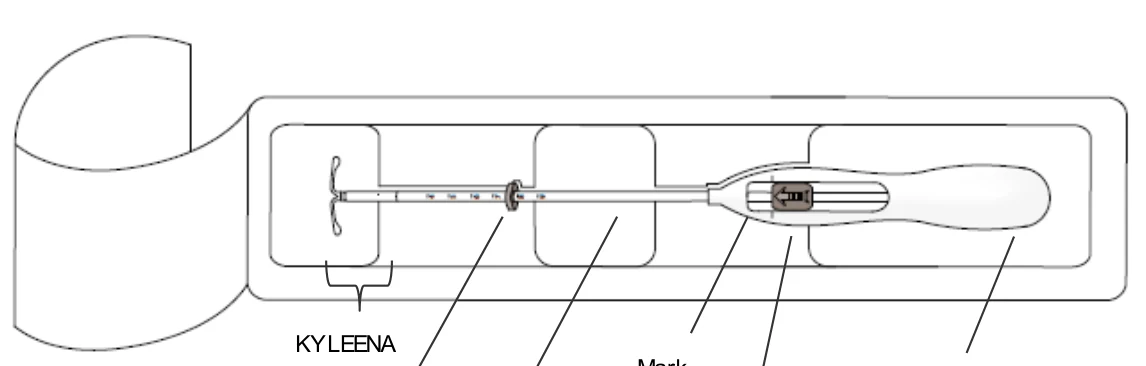
First, open the sterile package completely (Figure 1). Then use aseptic technique and sterile gloves.
Figure 1: Sterile Package Containing KYLEENA
Step 2–Load KYLEENA into the insertion tube
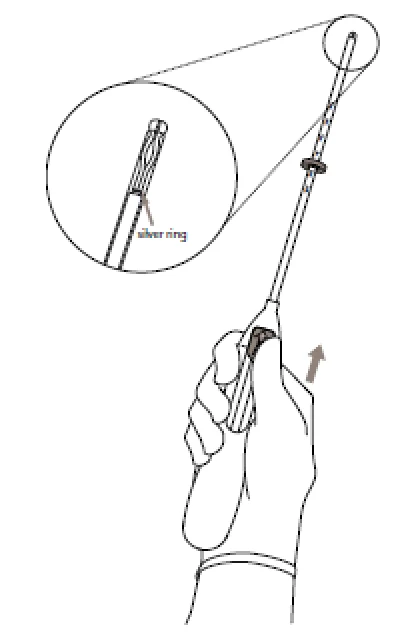
- To load KYLEENA into the insertion tube, push the slider forward in the direction of the arrow to the furthest position (Figure 2).
IMPORTANT! Do not pull the slider downwards as this may prematurely release KYLEENA. Once released, KYLEENA cannot be re-loaded.
KYLEENA
Flange
Mark
Slider
Handle w ith threads inside
Insertion tube with plunger and scale
Figure 2: Loading KYLEENA into the Insertion Tube
Step 3–Setting the flange
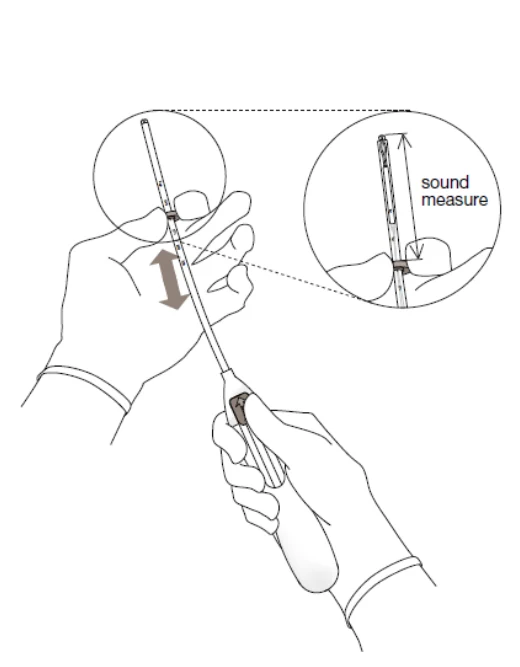
Holding the slider in the furthest position, set the upper edge of the flange to correspond to the sound measurement of the uterine depth (Figure 3).
Figure 3: Setting the Flange to the Uterine Depth
Step 4–Advance the inserter through the cervix
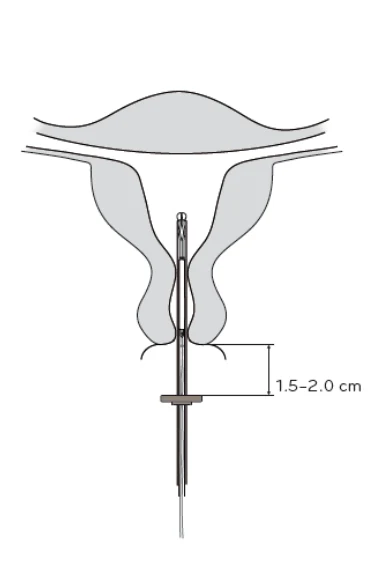
- While holding the slider in the furthest position, gently advance the inserter through the cervical canal and into the uterine cavity until the flange is approximately 1.5 to 2.0 cm from the external cervical os (Figure 4).
- NOTE: Do not advance flange to the cervix at this step. Maintaining the flange 1.5 to 2 cm from the cervical os allows sufficient space for the arms to open (when released) within the uterine cavity.
IMPORTANT! Do not force the inserter. If necessary, dilate the cervical canal.
Figure 4: Advancing the Inserter Until Flange is 1.5 to 2 cm From Cervical Os
Step 5–Release the arms
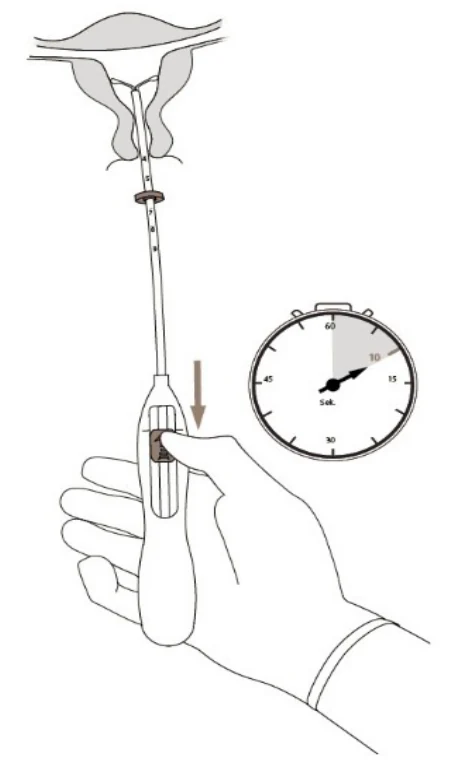
While holding the inserter steady, pull the slider to the mark to open the horizontal arms of KYLEENA (Figure 5). Wait approximately 10 seconds for the horizontal arms of KYLEENA to open completely.
Figure 5: Releasing the Arms of KYLEENA
Step 6–Advance to fundal position
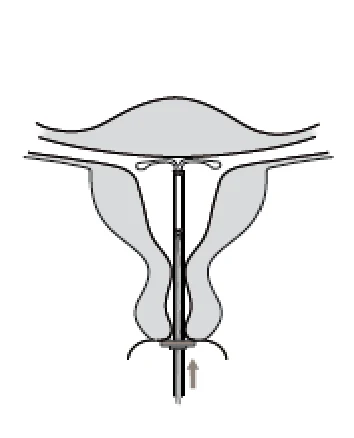
Advance the inserter gently towards the fundus of the uterus until the flange touches the cervix or you feel fundal resistance. KYLEENA should now be in the desired fundal position (Figure 6)
Figure 6: KYLEENA in the Fundal Position
Step 7–Release KYLEENA and withdraw the inserter
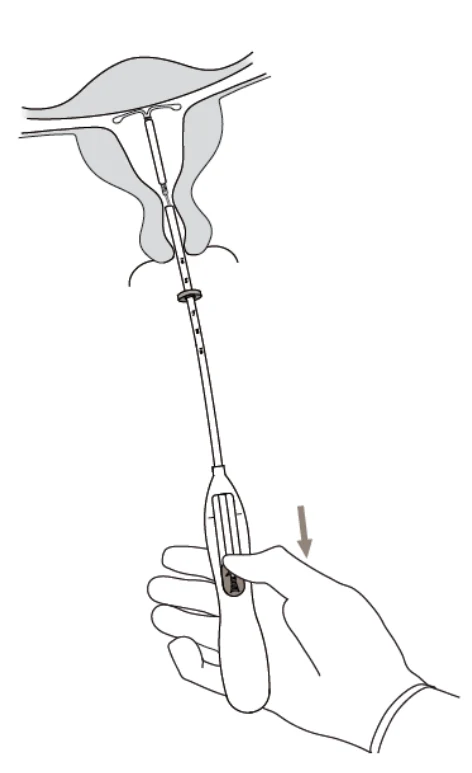
- While holding the inserter in place, pull the slider all the way down to release KYLEENA from the insertion tube (Figure 7). The threads will release automatically from the internal thread lock of the inserter.
- Gently remove the inserter by pulling it out.
Cut the threads perpendicular to the thread length, for example, with sterile curved scissors, leaving about 2-3 cm visible outside of the cervix. NOTE: Cutting the threads at an angle may leave sharp ends.
Figure 7: Releasing KYLEENA from the Insertion Tube
KYLEENA insertion is now complete.
In case difficulties arise during insertion, the patient complains of pain, or if there is any doubt that KYLEENA is in the correct position, verify with ultrasound or X-ray. Remove KYLEENA if it is not positioned properly in the intrauterine cavity, and insert a new one. A removed system must never be reinserted. Patients should be re-examined 4 to 12 weeks after insertion and once a year thereafter, or more frequently if clinically indicated. |
Use of Sanitary Pads or Menstrual Cups
The use of sanitary pads is recommended. If tampons or menstrual cups are used, they should be changed carefully to avoid inadvertently pulling the KYLEENA removal threads.
Removal/Replacement of KYLEENA
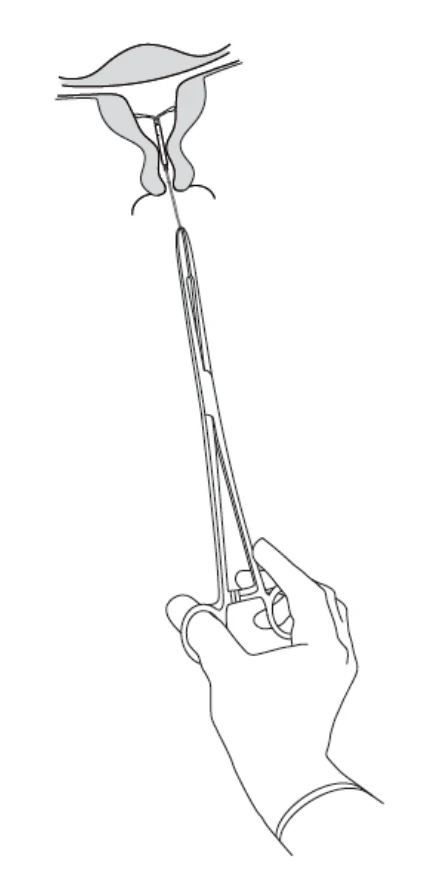
KYLEENA is removed by pulling on the threads with a pair of forceps (Figure 8).
A KYLEENA system should not remain in the uterus longer than 5 years.
Figure 8: Removal of KYLEENA
Continuation of Contraception after Removal
KYLEENA should be removed after 5 years. If KYLEENA has been used for a longer period of time than 5 years, pregnancy should be ruled out before insertion of a new system.
If pregnancy is not desired and if a woman wishes to continue using KYLEENA, a new system can be inserted immediately after removal any time during the cycle.
If a patient with regular cycles wants to start a different contraceptive method, time removal and initiation of the new method to ensure continuous contraception. Either remove KYLEENA during the first 7 days of the menstrual cycle and start the new method immediately thereafter or start the new method at least 7 days prior to removing KYLEENA if removal is to occur at other times during the cycle.
If a patient with irregular cycles or amenorrhea wants to start a different contraceptive method, start the new method at least 7 days before removal.
4.5 Missed Dose
KYLEENA should be removed after 5 years. If pregnancy is not desired and if a woman wishes to continue using KYLEENA, a new system can be inserted immediately after removal any time during the cycle. If KYLEENA has been used for a longer period of time than 5 years, pregnancy should be ruled out before insertion of a new system.
5 OVERDOSAGE
Not applicable. KYLEENA is an intrauterine system.
| For management of a suspected drug overdose, contact your regional poison control centre. |
6 DOSAGE FORMS, STRENGTHS, COMPOSITION AND PACKAGING
Table 2: Dosage Forms, Strengths, Composition and Packaging
| Route of Administration | Dosage Form / Strength / Composition | Clinically Relevant Nonmedicinal Ingredients |
| Intrauterine | Intrauterine system / 19.5 mg levonorgestrel (LNG) | Barium sulphate, copper phthalocyanine, polydimethylsiloxane elastomer, polyethylene, polypropylene, silica colloidal anhydrous, silver. |
KYLEENA (levonorgestrel-releasing intrauterine system [19.5 mg]) contains 19.5 mg of levonorgestrel in a cylindrical-shaped reservoir composed of a whitish or pale yellow matrix of levonorgestrel and polydimethylsiloxane covered with a semi-opaque membrane made of polydimethylsiloxane and silica (see Figure 9). The reservoir is mounted on the vertical stem of a polyethylene T-body. The vertical stem contains a silver ring to facilitate detection by sonography which is located close to the horizontal arms. The T-body is pigmented with barium sulphate and has a loop at one end of the vertical stem and two horizontal arms at the other end. Blue polypropylene removal threads are attached to the loop of the T-body.
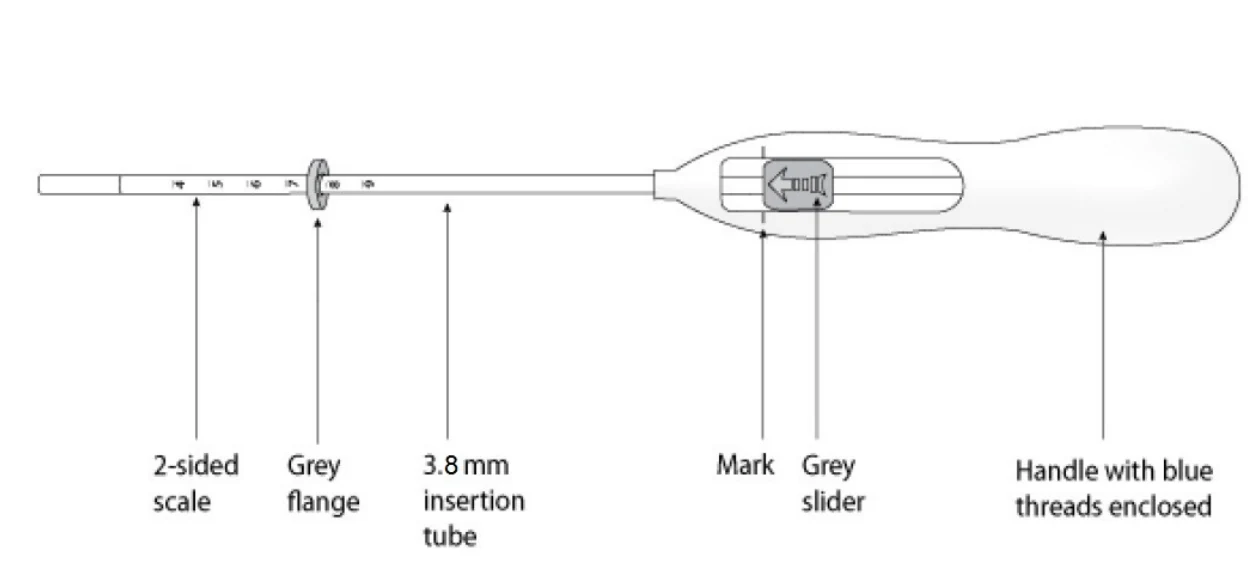
KYLEENA is supplied in a sterile package. The vertical stem of KYLEENA is loaded in the insertion tube at the tip of the EvoInserter (Figure 10), which is used to insert KYLEENA into the uterine cavity. The arms of KYLEENA are pre-aligned in the horizontal position.
The EvoInserter consists of a symmetrical two-sided body and slider that are integrated with flange, 2-sided scale, lock, curved insertion tube and plunger. The narrow insertion tube has an outer diameter of 3.8 mm. The blue removal threads are contained within the insertion tube and the ergonomic handle, enabling single-handed loading. Once KYLEENA has been inserted, the inserter is to be discarded.
Figure 9: KYLEENA (levonorgestrel-releasing intrauterine system [19.5 mg])
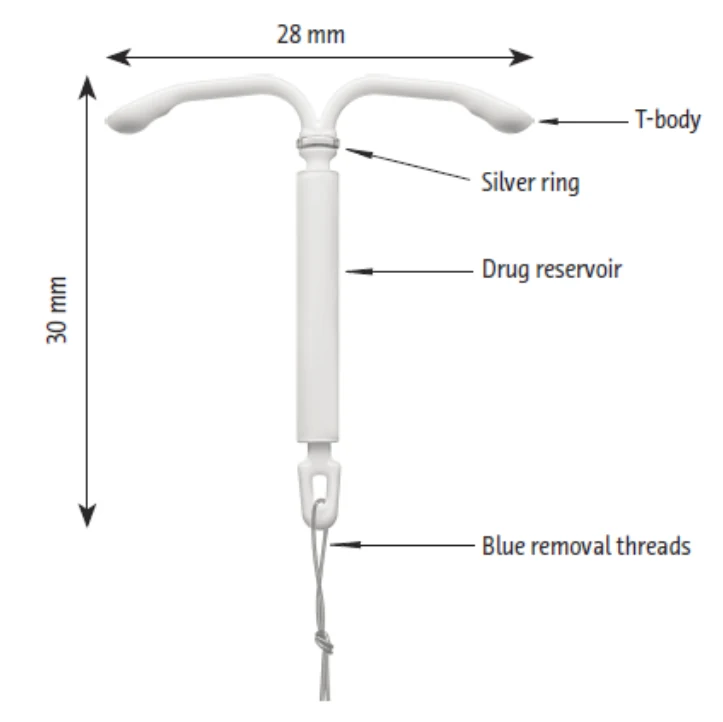
Figure 10: KYLEENA EvoInserter
7 WARNINGS AND PRECAUTIONS
Please see the 3 SERIOUS WARNINGS AND PRECAUTIONS BOX at the beginning of Part I: Health Professional Information.
Carcinogenesis and Mutagenesis
Breast Cancer
Increasing age, inherited mutations, and a strong family history are the most significant risk factors for the development of breast cancer. Other established risk factors include nulliparity, first full-term pregnancy after the age of 30, menarche before the age of 12, never breastfed a child, and daily alcohol consumption. In some women, the use of hormonal contraceptives may accelerate the growth of an existing but undiagnosed breast cancer. More thorough studies are needed to determine the definitive link between hormonal contraceptive use and the potential risk of breast cancer.
Breast self-examination should be discussed with women receiving hormonal contraceptives. Women should be instructed to notify their healthcare professionals whenever any masses are detected.
Spontaneous reports of breast cancer have been received during postmarketing experience with another levonorgestrel-releasing intrauterine system (LNG-releasing IUS). Two observational studies did not support a causal relationship between breast cancer and the other LNG-releasing IUS, however an elevated breast cancer risk cannot be totally excluded since these studies did not control for confounding factors such as use of oral hormonal contraception by control subjects, genetics and lifestyle and environmental factors such as smoking and alcohol.
There is currently no conclusive evidence of an association between KYLEENA use and development of breast cancer or progression of subclinical breast cancer.
Cardiovascular
An individual benefit-risk assessment in relation to continued use of KYLEENA should be carried out in the event of arterial thrombosis. In particular, removal of KYLEENA should be considered if severe arterial disease such as stroke or myocardial infarction occurs. In addition, KYLEENA should be used with caution in patients with a previous history of severe arterial disease such as stroke or myocardial infarction. Women with a history of thromboembolic disorders should be made aware of the possibility of a recurrence. There have been postmarket reports of cardiovascular events, including myocardial infarction and stroke in women using another LNG IUS, although a causal relationship could not be clearly established in these cases.
Predisposing Factors for Coronary Artery Disease
Cigarette smoking increases the risk of serious cardiovascular side effects and mortality. Hormonal contraceptives increase this risk, especially with increasing age.
Other women who are independently at high risk for cardiovascular disease include those with diabetes, hypertension, abnormal lipid profile, or a family history of these risk factors.
Hypertension
If a significant elevation of blood pressure in previously normotensive or hypertensive subjects occurs at any time during KYLEENA use, KYLEENA removal should be considered.
Congenital or Valvular Heart Disease
KYLEENA should be used with caution in women with congenital or valvular heart disease who are at risk of infective endocarditis.
Driving and Operating Machinery
The effect of KYLEENA on the ability to drive or use machines has not been studied. Patients should be advised not to drive or use machines until they know how they react to KYLEENA.
KYLEENA has no known influence on the ability to drive or use machines.
Endocrine and Metabolism
Glucose Tolerance
Combination and progestogen-only oral contraceptives, including those containing levonorgestrel, may affect glucose tolerance in some users. Diabetic patients, and those with a family history of diabetes, should be observed closely to detect any alterations in carbohydrate metabolism. Young diabetic patients whose disease is of recent origin, well controlled and not associated with hypertension or other signs of vascular disease such as ocular fundal changes, should be closely observed. One published clinical study indicated no change in mean daily insulin requirements in women with Type 1 diabetes using another levonorgestrel (LNG)-releasing intrauterine system (IUS) over a 12-month period 1.
Gastrointestinal
Gastrointestinal disorders have been reported (see 8 ADVERSE REACTIONS - 8.2 Clinical Trial Adverse Reactions).
Genitourinary
Bleeding Irregularities
Because irregular menstrual bleeding or spotting is common during the first few months of use, endometrial pathology should be excluded prior to insertion of KYLEENA. Irregular bleeding patterns in users of KYLEENA could mask the signs and symptoms of cervical or endometrial cancer. If bleeding irregularities develop after prolonged use, appropriate diagnostic measures should be undertaken.
Patients should be appropriately counseled on the likelihood of changes in menstrual patterns. During the first 3-6 months of KYLEENA use, the number of bleeding and spotting days may be higher and bleeding patterns may be irregular. With continued use, the frequency of amenorrhea and infrequent bleeding increases while the frequency of prolonged, irregular and frequent bleeding decreases. In clinical trials, amenorrhea developed by the end of the first year of use in approximately 12% of KYLEENA users. Over time, infrequent bleeding (1 or 2 bleeding or spotting episodes per 90-day reference period) and/or amenorrhea developed gradually in 26.4% and 22.6% of users, respectively (see 10 CLINICAL PHARMACOLOGY - 10.2 Pharmacodynamics). In clinical trials, a total of 81 subjects out of 1,697 (4.8%) discontinued due to uterine bleeding complaints. Reduced bleeding increases the level of blood hemoglobin. The possibility of pregnancy should be considered if menstruation does not occur
1 Rogovskaya S, Rivera R, Grimes DA, Chen PL, Pierre-Louis B, Prilepskaya V, et al. Effect of a levonorgestrel intrauterine system on women with type 1 diabetes: a randomized trial. Obstet Gynecol. 2005;105(4):811-5 after six weeks or more of amenorrhea, following a pattern of regular menses. A repeat pregnancy test is not necessary in amenorrheic women unless indicated by other symptoms.
Hematologic
An individual benefit-risk assessment in relation to continued use of KYLEENA should be carried out in the event of thrombosis. In particular, removal of KYLEENA should be considered if venous thromboembolic disease such as deep vein thrombosis or pulmonary embolism occurs. Women with a history of thromboembolic disorders should be made aware of the possibility of a recurrence. There have been postmarketing reports of arterial and venous thromboembolism (ATE, VTE) in women using another LNG-releasing IUS, although a causal relationship could not be clearly established in such cases. Epidemiological studies have indicated that women using progestogen-only oral contraceptives may have a slightly increased risk of venous thromboembolism; however, the results are not statistically significant 2 3 4.
Appropriate diagnostic and therapeutic measures should be undertaken immediately if there are symptoms or signs of thrombosis in users of KYLEENA. Symptoms of thromboembolism include: unilateral leg pain and/or swelling, sudden severe pain in the chest whether or not it radiates to the left arm, sudden breathlessness, sudden onset of coughing, any unusual severe prolonged headache, sudden partial or complete loss of vision, diplopia, slurred speech or aphasia, vertigo, collapse with or without focal seizure, weakness or very marked numbness suddenly affecting one side or part of the body, motor disturbances and acute abdomen. Symptoms or signs of retinal thrombosis are: unexplained partial or complete loss of vision, onset of proptosis or diplopia, papilledema, or retinal vascular lesions.
Other Risk Factors for Venous Thromboembolism
Other generalized risk factors for venous thromboembolism include but are not limited to a personal history, a family history (the occurrence of VTE in a direct relative at a relatively early age may indicate genetic predisposition), severe obesity (body mass index ≥30 kg/m2) and systemic lupus erythematosus. The risk of VTE also increases with age and smoking. The risk of VTE may be temporarily increased with prolonged immobilization, major surgery, or trauma. Also patients with varicose veins and leg cast should be closely monitored.
Hepatic/Biliary/Pancreatic
Steroid hormones may be poorly metabolized in patients with impaired liver function. Acute or chronic disturbances of liver function may necessitate the discontinuation of hormonal contraceptive use until markers of liver function return to normal (see 2 CONTRAINDICATIONS).
2 Farmer RD, Preston TD. The risk of venous thromboembolism associated with low oestrogen oral contraceptives. J Obstet Gynaecol. 1995;15:195-200
3 Gomes MP, Dietcher SR. Risk of venous thromboembolic disease associated with hormonal contraceptives and hormone replacement therapy: a clinical review. Arch Intern Med. 2004;164(18):1965-76
4 Lewis MA, Heinemann LA, MacRae KD, Bruppacher R, Spitzer WO. The increased risk of venous thromboembolism and the use of third generation progestogens: role of bias in observational research. The Transnational Research Group on Oral Contraceptives and the Health of Young Women. Contraception. 1996;54(1):5-13
To date, no studies have examined whether the avoidance of the first-pass effect through the liver, as with non-oral hormonal contraceptives, lessens concerns in women with liver conditions 5.
Jaundice
Patients who have had jaundice should be given hormonal contraceptives only with great care and under close observation. If jaundice develops in a patient using KYLEENA, consideration should be given to removing the system. Hormonal contraceptive-related cholestasis has been described in women with a history of pregnancy-related cholestasis. This condition may recur with subsequent hormonal contraceptive use (see 2 CONTRAINDICATIONS).
Monitoring and Laboratory Tests
Magnetic Resonance Imaging (MRI)
Nonclinical testing with another LNG-IUS with the same size silver ring and T-body has demonstrated that a patient can be scanned safely after placement of KYLEENA (“MR Conditional”) under the following conditions:
- Static magnetic field of 3-Tesla or less
- Spatial gradient magnetic field of 36,000 Gauss/cm (T/m) or less
- Maximum whole body averaged specific absorption rate (SAR) of 4W/kg in the First Level Controlled mode for 15 minutes of continuous scanning
In non-clinical testing, the aforementioned LNG-IUS produced a temperature rise of 1.8°C or less at a maximum whole body averaged specific absorption rate (SAR) of 2.9 W/kg, for 15 minutes of MR scanning at 3T using a transmit/receive body coil. A small amount of imaging artifact may occur if the area of interest is in the same area or relatively close to the position of KYLEENA.
Physical Examination and Follow-up
Before insertion, the woman must be informed of the efficacy, risks, and side effects of KYLEENA.
A thorough history and physical examination should also be performed prior to insertion, including a blood pressure determination. Breasts, liver, extremities, and pelvic organs should be examined. Cervical smear (Papanicolaou smear) should be performed as needed, according to healthcare professional´s evaluation. Pregnancy and sexually transmitted infections should be excluded, and genital infections have to be successfully treated. For timing of insertion to exclude pregnancy, see 4 DOSAGE AND ADMINISTRATION - Insertion, Removal and Replacement.
Women should be re-examined 4 to 12 weeks after insertion and at least once a year thereafter, or more frequently if clinically indicated. At each annual visit, examination should include those procedures that were done at the initial visit as outlined above or per recommendations of the Canadian Task Force on Preventive Health Care.
See also 4 DOSAGE AND ADMINISTRATION - Medical Examination/Consultation.
5 Gaffield ME, Curtis KM, Mohllajee AP, Peterson HB. Medical eligibility criteria for new contraceptive methods: combined hormonal patch, combined hormonal vaginal ring and the etonogestrel implant. Contraception. 2006;73(2):134-44
Neurologic
Headache
KYLEENA should be used with caution in women with a history of severe headache or migraine headache, including migraine with focal neurological symptoms (ie, asymmetrical visual loss or other symptoms indicating transient cerebral ischemia). The onset or exacerbation of migraine or the development of headaches with a new pattern that is recurrent, persistent or severe requires evaluation of the cause and consideration to remove KYLEENA (see 7 WARNINGS AND PRECAUTIONS - Cardiovascular).
Ophthalmologic
Contact Lenses
Any eye problems or discomfort occurring during use of a hormonal contraceptive, including those relating to the use of contact lenses, should be assessed. If this occurs, an ophthalmologist should be consulted. Temporary or permanent cessation of wear may be advised.
Peri-Operative Considerations
Thromboembolic Complications – Post surgery
Women using KYLEENA who require surgery associated with prolonged immobilization should be followed closely for signs and symptoms of thromboembolism.
Psychiatric
Patients with a history of emotional disturbances, especially the depressive type, may be more prone to have a recurrence of depression while using KYLEENA. In cases of a serious recurrence, consideration should be given to removing KYLEENA, since the depression may be drug-related.
Reproductive Health: Female and Male Potential
Ectopic Pregnancy
Carefully consider the possibility of an ectopic pregnancy in women who become pregnant while having KYLEENA in place. If a woman becomes pregnant with KYLEENA in place, the relative likelihood of ectopic pregnancy is increased. Approximately half of the pregnancies that occur with KYLEENA in place are ectopic. The possibility of ectopic pregnancy should be considered in the case of lower abdominal pain, especially in association with missed periods, or if an amenorrheic woman starts bleeding.
In clinical trials with KYLEENA, the incidence of ectopic pregnancy was approximately 0.2% per year. Women who choose KYLEENA should be told about the risk of ectopic pregnancy, including the possibility of impaired fertility or loss of fertility. Educate women to recognize and report to their healthcare professional any signs and symptoms of ectopic pregnancy.
Women with a history of ectopic pregnancy were excluded from clinical trials with KYLEENA. The risk of ectopic pregnancy in women who have a history of ectopic pregnancy and use KYLEENA is unknown. Women with a previous history of ectopic pregnancy, tubal surgery or pelvic infection carry a higher risk of ectopic pregnancy.
Expulsion
Partial or complete expulsion of KYLEENA may occur resulting in the loss of efficacy. Symptoms of the partial or complete expulsion of KYLEENA may include bleeding or pain. However, partial or complete expulsion can occur without the woman noticing it. As KYLEENA typically decreases menstrual bleeding over time, an increase of menstrual bleeding may be indicative of an expulsion (see 4 DOSAGE AND ADMINISTRATION – Expulsion).
In clinical trials with KYLEENA, the incidence of expulsion was 3.5% (59 of 1690 subjects over 5 years) and in the same range as that reported for other IUDs and IUSs.
In a large, retrospective, cohort study (mean observation time of 2 years) in LNG IUS and copper IUD users (N=326,658 women), the overall incidence of expulsion was 2.74 per IUS/IUD insertions. The incidence of expulsion was 7.75 per 100 insertions among women with IUS/IUD insertion immediately after delivery (i.e. 0-3 days following delivery); and the incidence was 2.95 per 100 insertions among women without documented delivery in the past 52 weeks. The expulsion rate among women at other postpartum intervals were generally similar to that of women without delivery in the past 52 weeks.
Analysis of expulsion risk factor among women who had not delivered within 12 months before insertion (228,834 women) showed an increased expulsion risk in:
- Women with history of heavy menstrual bleeding: the incidence of expulsion was 7.37 per 100 insertions in women with a recent history (≤ 12 months before insertion) and 9.24 per 100 insertions in women with both recent and past history (> 12 months), compared to women without any prior diagnosis of menorrhagia (2.10 expulsions per 100 insertions).
- Women with greater than normal BMI at the time of insertion: this risk increases gradually with increasing BMI. Compared to women with normal BMI (2.14 expulsions per 100 insertions), the incidence of expulsion was 5.39 per 100 insertions in women with morbid obesity (BMI≥40).
A woman should be counselled on the possible signs of expulsion and how to check the threads of KYLEENA. Advise her to contact her healthcare professional if the threads cannot be felt and avoid intercourse or use a barrier contraceptive (such as condoms) until the location of KYLEENA has been confirmed. If expulsion is suspected based on ultrasound, consider further diagnostic imaging such as x-ray.
A partially expelled KYLEENA should be removed. A new system can be inserted at that time provided pregnancy has been excluded.
The risk of expulsion may be increased when the uterus is not completely involuted at the time of insertion. Delay KYLEENA insertion a minimum of six weeks or until uterine involution is complete following a delivery or a second trimester abortion.
Ovarian Cysts / Enlarged Ovarian Follicles
Since the contraceptive action of KYLEENA is due mainly to its local effect on the uterus, ovulatory cycles with follicular rupture usually occur in women of fertile age. Sometimes atresia of the follicle is delayed and folliculogenesis may continue. These enlarged follicles cannot be distinguished clinically from ovarian cysts.
Most of these follicles are asymptomatic, although some may be accompanied by pelvic pain or dyspareunia. In most cases, the enlarged follicles resolve spontaneously over two to three months' observation. Should an enlarged follicle fail to resolve spontaneously, continued ultrasound monitoring and other diagnostic or therapeutic measures may be appropriate. Rarely, surgical intervention may be required.
Ovarian cysts (reported as adverse reactions if they were abnormal, non-functional cysts and/or had a diameter >3 cm on ultrasound examination, regardless of presence or absence of associated symptoms) were reported at least once over the course of clinical trials in 22% of women using KYLEENA, and 0.6% of subjects discontinued because of an ovarian cyst (see 8 ADVERSE REACTIONS – 8.2 Clinical Trial Adverse Reactions).
Pelvic Infection
KYLEENA is contraindicated in women with current or recurrent pelvic inflammatory disease or conditions associated with increased risk for pelvic infections (see 2 CONTRAINDICATIONS). Conditions associated with an increased risk of pelvic inflammatory disease (PID) include established immunodeficiency and acute malignancies affecting blood or leukemias.
The inserter provided with KYLEENA helps protect the system from contamination with micro-organisms during insertion, thereby minimizing the risk of pelvic infection. The exposed product should be handled with aseptic precautions (see 4 DOSAGE AND ADMINISTRATION – Insertion Instructions). Known risk factors for PID include multiple sexual partners, sexually transmitted infections, prior history of PID, and young age. Less common causes of pelvic inflammatory disease include pelvic actinomycosis and pelvic tuberculosis, both of which are extremely rare.
There is an increased risk of PID related to the insertion procedure during 20 days following the insertion of IUDs. Thereafter, the risk of PID during the use of IUDs or levonorgestrel-releasing intrauterine systems is small. In clinical trials, PID was observed in 0.5% of women overall. Patients should be advised to report to their healthcare professionals promptly if they experience symptoms suggestive of PID 6 7 8. PID may be asymptomatic but tubal damage and resulting fertility issues may still occur.
If recurrent endometritis or pelvic infections are experienced, or if an acute infection does not respond to treatment within a few days, KYLEENA must be removed.
Sepsis
There have been very rare postmarket reports of Group A streptococcal sepsis (GAS) temporally associated with IUC insertion. Because death from GAS is more likely if treatment is delayed, it is important to be aware of these rare but serious infections. Aseptic technique during insertion of KYLEENA is essential in order to minimize serious infections such as GAS.
Uterine Perforation
Partial perforation (uterine embedment) or complete perforation of the uterus wall or cervix may occur during insertion with intrauterine contraceptives, although the perforation may not be detected until later. Pregnancy may result from partial or complete perforation. If partial or complete perforation
6 ACOG Committee on Practice Bulletins – Gynecology. ACOG practice bulletin. Clinical management guidelines for obstetrician-gynecologists. Number 59, January 2005. Intrauterine device.Obstet Gynecol. 2005;105(1):223-32
7 Gareen IF, Greenland S, Morgenstern H. Intrauterine devices and pelvic inflammatory disease: meta-analyses of published studies, 1974-1990. Epidemiology. 2000;11(5):589-97
8 Black A, et al. Canadian Contraception Consensus (Part 3 of 4): Chapter 7 – Intrauterine Contraception. J Obstet Gynaecol Can. 2016;38(2):182-222
occurs, KYLEENA must be located and removed; surgery may be required. Partial perforation (uterine embedment) can result in difficult removal. Delayed detection of perforation may result in migration outside the uterine cavity, adhesions, peritonitis, intestinal perforation and obstruction, abscesses and erosion of adjacent viscera. The number of uterine perforations is linked to the experience of the person inserting the system 9. During clinical trials, perforation occurred rarely, at a rate between 0.1 and 1 per 1000 insertions (see 8 ADVERSE REACTIONS – 8.2 Clinical Trial Adverse Reactions). Clinical trials with KYLEENA excluded breast-feeding women.
In a large, prospective, comparative, non-interventional cohort study (1 year follow-up period) in users of another LNG-IUS10 and copper IUDs (N = 61,448 women), the incidence of perforation was 1.3 (95% CI:1.1-1.6) per 1000 insertions in the entire study cohort; 1.4 (95% CI: 1.1-1.8) per 1000 insertions in the cohort of another LNG-IUS, and 1.1 (95% CI: 0.7 - 1.6) per 1000 insertions in the copper IUD cohort. Extending the observational period to 5 years in a subgroup of this study (N = 39,009 women using another LNG-IUS or copper IUD), the incidence of perforation detected at any time during the entire 5-year period was 2.0 (95% CI: 1.6 – 2.5) per 1000 insertions; 2.1 (95% CI: 1.6 – 2.8) and 1.6 (95% CI: 0.9 – 2.5) for another LNG-IUS and copper IUD, respectively.
The study showed that both breast-feeding at the time of insertion and insertion up to 36 weeks after giving birth were associated with an increased risk of perforation (see Table 3). These risk factors were confirmed in the subgroup followed up for 5 years. Both risk factors were independent of the type of IUD inserted.
Table 3: Incidence of perforation per 1000 insertions for the entire study cohort observed over 1 year, stratified by breastfeeding and time since delivery at insertion (parous women)
| Breastfeeding at time of insertion | Not breastfeeding at time of insertion | |
| Insertion ≤ 36 weeks after delivery | 5.6 (95% CI 3.9-7.9; n=6047 insertions) | 1.7 (95% CI 0.8-3.1; n=5927 insertions) |
| Insertion > 36 weeks after delivery | 1.6 (95% CI 0.0-9.1; n=608 insertions) | 0.7 (95% CI 0.5-1.1; n=41910 insertions) |
The risk of perforation may be increased in women with abnormal uterine anatomy or fixed retroverted uterus.
To reduce the possibility of perforation postpartum, KYLEENA insertion should be delayed a minimum of 6 weeks after delivery or until uterine involution is complete. If involution is delayed, consider waiting until 12 weeks postpartum. Inserting KYLEENA immediately after first trimester abortion is not known to increase the risk of perforation, but insertion after second trimester abortion should be delayed until uterine involution is complete.
To reduce the possibility of perforation, it is important to follow the recommended insertion technique (see 4 DOSAGE AND ADMINISTRATION – Insertion Instructions).
9 Harrison-Woolrych M, Ashton J, Coulter D. Uterine perforation on intrauterine device insertion: is the incidence higher than previously reported? Contraception. 2003;67(1):53-6
10 “Another LNG-IUS” refers to an LNG-IUS that is slightly larger than KYLEENA and contains more levonorgestrel.
Inform patients before the procedure about the risk of uterine perforation and educate them on possible signs of this complication, including, but not limited to, severe low abdominal pain, which may be associated with bleeding after the procedure, loss of threads, or change in thread length.
Uterine Embedment
Embedment of KYLEENA in the myometrium may occur. Embedment may decrease contraceptive effectiveness and result in pregnancy. An embedded KYLEENA must be removed. Embedment can result in difficult removal, and may require surgery.
- Fertility: The use of KYLEENA does not alter the course of future fertility. Upon removal of KYLEENA, women return to their normal fertility (see 10 CLINICAL PHARMACOLOGY – 10.2 Pharmacodynamics).
Skin
Skin and subcutaneous tissue disorders have been reported (see 8 ADVERSE REACTIONS – 8.2 Clinical Trial Adverse Reactions).
7.1 Special Populations
7.1.1 Pregnant Women/Intrauterine Pregnancy
The use of KYLEENA during an existing or suspected pregnancy is contraindicated (see also 2 CONTRAINDICATIONS). If a woman becomes pregnant with KYLEENA in place, the likelihood of ectopic pregnancy is increased. If pregnancy occurs with KYLEENA in place, KYLEENA should be removed since any intrauterine system left in place may increase the risk of abortion and preterm labour. Removal of KYLEENA or probing of the uterus may result in spontaneous abortion. In the event of an intrauterine pregnancy with KYLEENA in place, consider the following:
- a) Risk of septic abortion
- b) Continuation of pregnancy
If KYLEENA cannot be removed or the woman chooses not to have it removed, she should be warned that failure to remove KYLEENA increases the risk of miscarriage, sepsis, premature labor, and premature delivery. Ectopic pregnancy should be excluded. The woman should be followed closely and advised to report any abnormal symptoms, such as fever, chill, cramping, abdominal pain, bleeding, vaginal discharge, or leakage of fluid.
- c) Long-term effects and congenital anomalies
When pregnancy continues with KYLEENA in place, long-term effects on the offspring are unknown. Congenital anomalies in live births have occurred infrequently with another LNG-releasing IUS. There have been few cases of masculinization of the eternal genitalia of the female fetus following local exposure to levonorgestrel during pregnancy with an LNG-IUS in place.
7.1.2 Breast-feeding
Hormonal contraceptives are not recommended as the contraceptive method of first choice in breast-feeding women. A published study indicated that during lactation in users of another LNG releasing IUS (52mg), 0.1% of the daily maternal dose of LNG could be transferred to the newborn via milk 11. Although LNG may be found in the breast milk of women using LNG releasing IUS, there does not appear to be a detrimental effect on growth or development of breast-fed infants whose mothers started using the product after six weeks postpartum. Progestogen-only contraceptive methods do not appear to affect the quantity and quality of breast milk. However, isolated cases of decreased milk production have been reported with KYLEENA.
7.1.3 Pediatrics
Pediatrics (<18 years of age): No data are available to Health Canada; therefore, Health Canada has not authorized an indication for pediatric use.
7.1.4 Geriatrics
KYLEENA is not indicated for use in postmenopausal women.
8 ADVERSE REACTIONS
8.1 Adverse Reaction Overview
The majority of women experience changes in menstrual bleeding pattern after insertion of KYLEENA (levonorgestrel-releasing intrauterine system [19.5 mg]). Over time, the frequency of amenorrhea and infrequent bleeding increases, and the frequency of prolonged, irregular and frequent bleeding decreases (see 7 WARNINGS AND PRECAUTIONS – Genitourinary: Bleeding Irregularities; and 10 CLINICAL PHARMACOLOGY – 10.2 Pharmacodynamics).
The serious adverse reactions of ectopic pregnancy, intrauterine pregnancy, sepsis, pelvic inflammatory disease, perforation, expulsion and ovarian cysts are discussed in 7 WARNINGS AND PRECAUTIONS.
8.2 Clinical Trial Adverse Reactions
Clinical trials are conducted under very specific conditions. The adverse reaction rates observed in the clinical trials; therefore, may not reflect the rates observed in practice and should not be compared to the rates in the clinical trials of another drug. Adverse reaction information from clinical trials may be useful in identifying and approximating rates of adverse drug reactions in real-world use.
Adverse drug reactions (ADRs) were collected from a total of 1,697 patients in contraception studies (3-year Phase II study and 3-year Phase III study with extension to 5 years), including 1,425 exposed for one year and 550 who completed the five year study. The data cover approximately 68,000 cycles of exposure or more than 5,225 women-years. ADRs were more common during the first year after insertion of KYLEENA, and then gradually decreased over time.
11 Heikkila M, Haukkamaa M, Luukkainen T. Levonorgestrel in milk and plasma of breast-feeding women with a levonorgestrel-releasing IUD. Contraception. 1982;25(1):41-9
Table 4: Adverse drug reactions, phase II and III clinical trials, N= 1697 women (5225.52 women-years)
| System Organ Class (MedDRA) | Very common (≥ 10%) | Common (≥ 1% to < 10%) | Uncommon (≥ 0.1% to < 1%) | Rare (≥ 0.01% to < 0.1%) |
|---|---|---|---|---|
| Gastrointestinal disorders | Abdominal/ pelvic pain | Nausea | ||
| Nervous system disorders | Headache | Migraine | ||
| Psychiatric disorders | Depressed mood/ Depression | |||
| Reproductive system and breast disorders | Bleeding changes including increased and decreased menstrual bleeding, spotting, oligomenorrhoea and amenorrhoea Ovarian cyst a Vulvovaginitis | Upper genital tract infection Dysmenorrhea Breast pain/ discomfort Device expulsion (complete and partial) Genital discharge | Uterine perforation b | |
| Skin and subcutaneous tissue disorders | Acne/ Seborrhoea | Alopecia | Hirsutism |
- a Ovarian cysts had to be reported as AEs if they were abnormal, non-functional cysts and/or had a diameter > 3 cm on ultrasound examination, regardless of presence or absence of associated symptoms.
- b This frequency is based on a large, prospective, comparative, non-interventional cohort study. Please see 8.5 Post-Market Adverse Reactions. In clinical trials with KYLEENA that excluded breastfeeding women, the frequency of perforation was “rare”.
In the combined Phase II and III studies, 22% discontinued prematurely due to an adverse reaction. The most common adverse reactions (>1%) leading to discontinuation were increased bleeding (4.5%), abdominal pain/pelvic pain (4.2%), device expulsion (3.1%), acne/seborrhea (2.2%), and dysmenorrhea/uterine spasm (1.3%).
In the clinical trials with KYLEENA (N= 1697), serious adverse reactions occurring in more than a single subject included: ectopic pregnancy/ruptured ectopic pregnancy (10 subjects); pelvic inflammatory disease (6 subjects); missed abortion/incomplete spontaneous abortion/spontaneous abortion (4 subjects); ovarian cyst (3 subjects); abdominal pain (4 subjects); depression/affective disorder (4 subjects); and uterine perforation/embedded device (myometrial perforation) (4 subjects/5259 subjects 12).
12 Includes all insertions from clinical trials with a similar IUS, inserter dimensions and identical insertion procedures.
8.3 Less Common Clinical Trial Adverse Reactions
Not Applicable
8.4 Abnormal Laboratory Findings: Hematologic, Clinical Chemistry and other Quantitative Data
Not Applicable
8.5 Post-Market Adverse Reactions
In a large, prospective, comparative, non-interventional cohort study (1 year follow-up period) in users of another LNG-IUS and copper IUDs (N = 61,448 women), the incidence of perforation was 1.3 (95% CI:1.1-1.6) per 1000 insertions in the entire study cohort; 1.4 (95% CI: 1.1-1.8) per 1000 insertions in the cohort of another LNG-IUS, and 1.1 (95% CI: 0.7 - 1.6) per 1000 insertions in the copper IUD cohort. This study showed that breastfeeding at the time of insertion and insertion up to 36 weeks after giving birth are independent risk factors for perforation (see 7 WARNINGS AND PRECAUTIONS – Sexual Function/Reproduction: Uterine Perforation).
The following adverse reactions have been identified during post-approval use of LNG-releasing IUSs. Because these reactions are reported voluntarily from a population of uncertain size, it is not always possible to reliably estimate their frequency or establish a causal relationship to drug exposure:
- Arterial thrombotic and venous thromboembolic events, including cases of pulmonary embolism, deep vein thrombosis and stroke
- Device breakage, which can occur with KYLEENA in place or during its removal. The broken pieces should be located and removed; surgery may be required. Check device integrity when removing KYLEENA.
- Hypersensitivity (including rash, pruritis, urticaria, and angioedema)
- Increased blood pressure
- Isolated postmarketing cases of decreased milk production have been reported in women using a LNG-IUS
9 DRUG INTERACTIONS
9.2 Drug Interactions Overview
The prescribing information of concomitant medications should be consulted to identify potential interactions.
9.3 Drug-Behavioural Interactions
The effect of KYLEENA on the ability to drive or to use machines has not been studied. Patients should be advised not to drive or use machines until they know how they react to KYLEENA.
9.4 Drug-Drug Interactions
No drug-drug interaction studies have been conducted with KYLEENA.
The effect of hormonal contraceptives may be impaired by drugs which induce liver enzymes, specifically cytochrome P450 enzymes. The influence of these drugs on the efficacy of KYLEENA
(levonorgestrel-releasing intrauterine system [19.5 mg]) has not been studied, but it is not believed to be of major importance due to the local action of KYLEENA.
Substances increasing the clearance of levonorgestrel
Substances which may increase the clearance of levonorgestrel include phenytoin, barbiturates, primidone, carbamazepine, rifampicin, and possibly also oxcarbazepine, topiramate, and products containing St. John’s wort.
Substances with variable effects on the clearance of levonorgestrel
When co-administered with sex hormones, many HIV/HCV protease inhibitors and non-nucleoside reverse transcriptase inhibitors can increase or decrease plasma concentrations of the progestin.
Substances decreasing the clearance of levonorgestrel (enzyme inhibitors)
Strong and moderate CYP3A4 inhibitors such as azole antifungals (eg, fluconazole, itraconazole, ketoconazole, voriconazole), verapamil, macrolides (eg, clarithromycin, erythromycin), diltiazem and grapefruit juice can increase plasma concentrations of the progestin.
9.5 Drug-Food Interactions
Interactions with food have not been established.
9.6 Drug-Herb Interactions
Interactions with herbal products have not been established.
9.7 Drug-Laboratory Test Interactions
Interactions with laboratory tests have not been established.
Tissue Specimens
Pathologists should be advised of KYLEENA therapy when specimens obtained from surgical procedures and Pap smears are submitted for examination.
10 CLINICAL PHARMACOLOGY
10.1 Mechanism of Action
KYLEENA (levonorgestrel-releasing intrauterine system [19.5 mg]) consists of a small polyethylene T-shaped body with a cylindrical reservoir containing levonorgestrel around the vertical stem of the T body (see Figure 9). In addition, the vertical stem contains a silver ring to aid in detection by sonography located close to the horizontal arms. The white T-body has a loop at one end of the vertical stem and two horizontal arms at the other end. Blue colored removal threads are attached to the loop. The vertical stem of the IUS is loaded in the insertion tube at the tip of the inserter.
KYLEENA is a long acting reversible contraceptive (LARC). After insertion in the uterus, KYLEENA releases levonorgestrel continuously for up to 5 years. Intrauterine administration allows a very low daily dosage of progestin (average over 5 years of 9.0 mcg per 24 hours), as the hormone is released directly to the target organ. KYLEENA contains a total of 19.5 mg of levonorgestrel; the in vivo release curve is characterized by an initial steep decline that slows down progressively resulting in little change after 1 year until the end of the intended 5-year period of use. Estimated in vivo delivery rates for different time points are provided in Table 1. KYLEENA does not contain any estrogen.
10.2 Pharmacodynamics
KYLEENA has mainly local progestogenic effects in the uterine cavity. The high levonorgestrel concentration in the endometrium down-regulates endometrial estrogen and progesterone receptors. The endometrium becomes relatively insensitive to the circulating estradiol and a strong antiproliferative effect is seen. Morphological changes of the endometrium and a weak local foreign body reaction were observed during use. Thickening of the cervical mucus prevents passage of the sperm through the cervical canal. The local milieu of the uterus and of the fallopian tubes inhibits sperm mobility and function, preventing fertilization. The local mechanism by which continuously released LNG contributes to the contraceptive effectiveness of KYLEENA has not been conclusively demonstrated.
The use of KYLEENA does not alter the course of future fertility; upon removal of KYLEENA, women return to their normal fertility. In a 5-year study with KYLEENA, 116 of 163 (71.2 %) women who discontinued because of the wish for pregnancy, and with follow-up information available, had become pregnant during the 12-month follow-up.
The duration and volume of menstrual bleeding and menstrual blood loss gradually decreases after the first several months of use, after an initial increase in the number and irregularity of bleeding and spotting days. With continued use, bleeding patterns vary from regular menstruation in some women, to irregular or prolonged bleeding in other women, and amenorrhea in others. In most women, there is a trend over time towards less frequent and shorter episodes of bleeding.
Menstrual bleeding patterns were recorded by all women throughout their participation in clinical trials with KYLEENA, starting from the day of insertion. Menstrual bleeding patterns were assessed using the World Health Organization 90-day reference period method 13. Data reported for each reference period reflect the number of women actually enrolled in trials during that specific reference period and for whom valid bleeding diaries were returned. The following bleeding patterns were observed:
Table 5: Bleeding patterns by 90-day reference period
| KYLEENA | First 90 days | Second 90 days | End of year 1 | End of year 3 | End of year 5 |
| Amenorrhea | < 1 % | 5 % | 12 % | 20 % | 23 % |
| Infrequent bleeding | 10 % | 20 % | 26 % | 26 % | 26 % |
| Frequent bleeding | 25 % | 10 % | 4 % | 2% | 2 % |
| Prolonged bleeding* | 57 % | 14 % | 6 % | 2 % | 1 % |
| Irregular bleeding | 43 % | 25 % | 17 % | 10 % | 9 % |
- * Subjects with prolonged bleeding may also be included in one of the other categories (excl. amenorrhea)
13 Belsey EM, Machin D, d'Arcangues C. The analysis of vaginal bleeding patterns induced by fertility regulating methods. World Health Organization Special Programme of Research, Development and Research Training in Human Reproduction. Contraception. 1986;34(3):253-60
Overall, women experienced reduced bleeding with KYLEENA. Over five years, the percentage of women experiencing amenorrhea increased gradually from <1% to 23%. Rates of frequent bleeding decreased to 2% and prolonged bleeding decreased to 1% at five years. Incidence of irregular bleeding decreased, while infrequent bleeding increased during the first year and remained stable thereafter 14.
Amenorrhea is defined as no bleeding or spotting throughout the 90 day reference period. Infrequent bleeding is the occurrence of 1 or 2 bleeding/spotting episodes per 90 day reference period. Frequent bleeding is the occurrence of more than 5 bleeding/spotting episodes per 90 day reference period. Prolonged bleeding is the occurrence of bleeding/spotting episodes lasting more than 14 days per 90 day reference period. Irregular bleeding is the occurrence of 3 to 5 bleeding/spotting episodes and less than 3 bleeding/spotting-free intervals of 14 days or more per 90 day reference period.
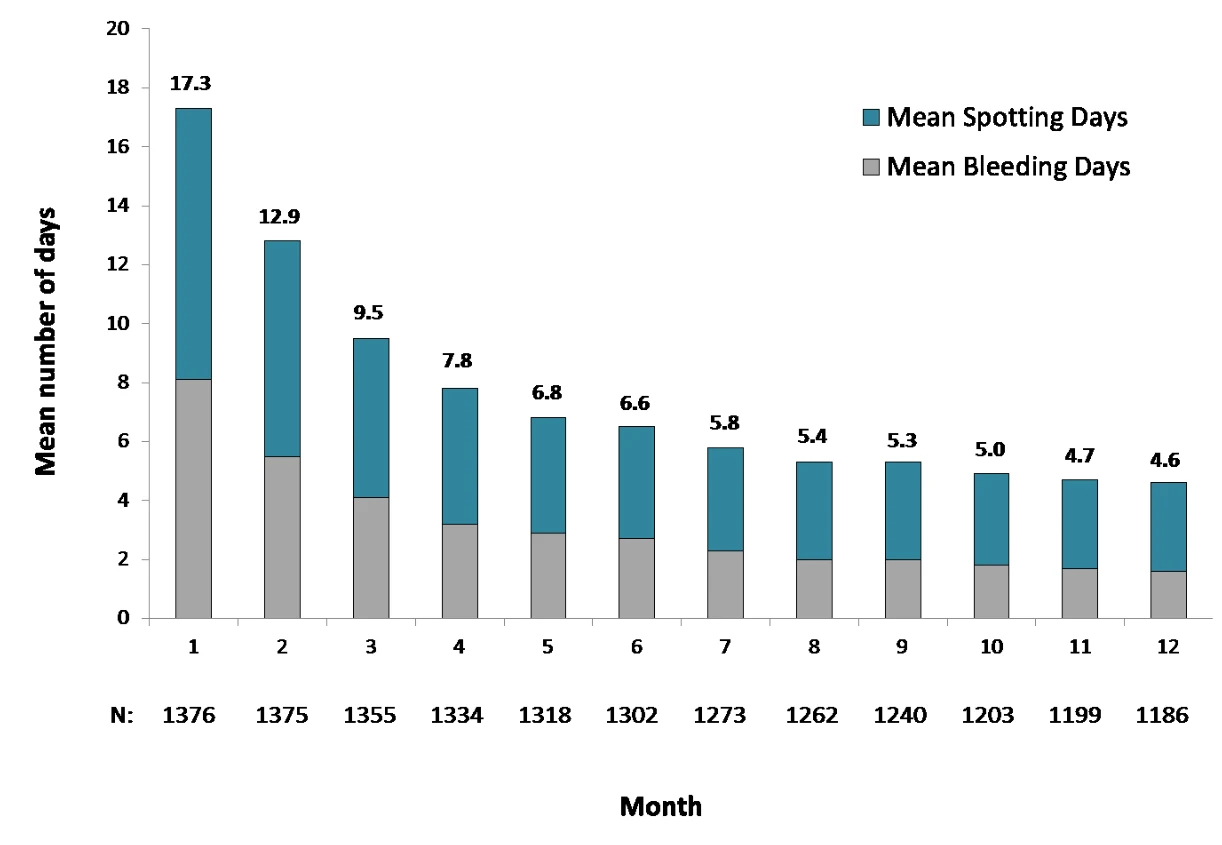
In the phase III study, the mean number of bleeding/spotting days in the first 30 days was 17.3 and decreased to 4.6 days after one year (see Figure 11).
Figure 11: Mean number of bleeding/spotting days by 30-day reference periods in the phase III trial
The altered menstrual bleeding pattern that occurs with KYLEENA use is a result of the direct action of levonorgestrel on the endometrium and is not due to the suppression of the ovulatory cycle. There is no clear difference in follicle development, ovulation, or estradiol and progesterone production in women with different bleeding patterns. Ovarian function is normal and estradiol levels are maintained even when users of KYLEENA are amenorrheic.
14 Gemzell-Danielsson K, et al. Evaluation of a New, Low-Dose Levonorgestrel Intrauterine Contraceptive System Over 5 years of Use. European Journal of Obstetrics and Gynecology and Reproductive Biology. 2016
In clinical trials with KYLEENA, ovulation was observed in the majority of women studied. Evidence of ovulation was seen in 23 out of 26 women in the first year, in 19 out of 20 women in the second year and in all 16 women in the third year. In the fourth year, evidence of ovulation was observed in the one woman remaining in the subset and in the fifth year, no women remained in this subset.
Endometrial histology has been investigated in clinical studies examining the intrauterine release of levonorgestrel at rates ranging from approximately 5 to 20 mcg/day after insertion. During treatment, a strong progestogenic effect was observed in the majority of cases. The decrease in number of bleeding days and amount of menstrual bleeding seen during the clinical studies reflects the high degree of endometrial suppression.
In the phase III pivotal study, cervical histology was evaluated at screening and annually. Epithelial cell abnormalities were seen in 1.7% of women at screening, and the maximum was observed at Month 24 with 6.3% of women. At the Month 60 visit at the end of the extension phase, epithelial cell abnormalities were detected in 4.3% of women.
10.3 Pharmacokinetics
Absorption
Following insertion, levonorgestrel (LNG) is immediately released from the IUS into the uterine cavity. More than 90% of the released levonorgestrel is systemically available. Maximum serum concentrations of levonorgestrel are reached within the first two weeks after insertion of KYLEENA. Seven days after insertion, a mean LNG concentration of 162 pg/mL was determined. Thereafter serum concentrations of LNG decline over time to reach mean concentrations of 91.3 pg/mL after 3 years and 83.1 pg/mL after 5 years. The geometric mean serum concentrations were calculated based on a population pharmacokinetic model. With the use of an LNG-IUS, the high local drug exposure in the uterine cavity leads to a strong concentration gradient from the endometrium to the myometrium (gradient: endometrium to myometrium >100-fold), and to low concentrations of LNG in serum (gradient: endometrium to serum>1000-fold).
Distribution
LNG is bound non-specifically to serum albumin and specifically to sex hormone-binding globulin (SHBG). Less than 2 % of the circulating LNG is present as free steroid. LNG binds with high affinity to SHBG. Accordingly, changes in the concentration of SHBG in serum result in an increase (at higher SHBG concentrations) or in a decrease (at lower SHBG concentrations) of the total LNG concentration in serum. The concentration of SHBG declined on average by approximately 30% during the first 3 months after insertion of KYLEENA and remained relatively stable over the 5 year period of use. The apparent volume of distribution of LNG is reported to be approximately 1.8 L/kg.
Metabolism
LNG is extensively metabolized. The most important metabolic pathways are the reduction of the Δ4-3-oxo group and hydroxylations at positions 2α, 1β and 16β, followed by conjugation. CYP3A4 is the main enzyme involved in the oxidative metabolism of LNG. The available in vitro data suggest that CYP mediated biotransformation reactions may be of minor relevance for LNG compared to reduction and conjugation.
Elimination
The total clearance of LNG from plasma is approximately 1.0 mL/min/kg. Only trace amounts of LNG are excreted in unchanged form. The metabolites are excreted in feces and urine at an excretion ratio of about 1. The excretion half-life is about 1 day.
Special Populations and Conditions
- Pediatrics (< 18 years of age): Safety and efficacy have been studied in women aged 18 and over. KYLEENA is not indicated for use before menarche.
- Geriatrics (> 65 years of age): KYLEENA is not indicated for use in postmenopausal women.
- Sex: KYLEENA is intended for use only in women of reproductive age.
Pregnancy and Breast-feeding
- Pregnancy: KYLEENA is not indicated for use in pregnancy (see also 2 CONTRAINDICATIONS and 7 WARNINGS AND PRECAUTIONS – 7.1 Special Populations: 7.1.1 Pregnant Women/Intrauterine Pregnancy).
- Breast-feeding: Progestogen-only contraceptive methods do not appear to affect the quantity and quality of breast milk. However, isolated cases of decreased milk production have been reported with KYLEENA (see also 7 WARNINGS AND PRECAUTIONS – 7.1 Special Populations: 7.1.2 Breast-feeding).
- Hepatic Insufficiency: KYLEENA has not been studied in women with hepatic impairment. KYLEENA is contraindicated in women with acute liver disease or liver tumour (see 2 CONTRAINDICATIONS).
- Renal Insufficiency: KYLEENA has not been studied in women with renal impairment.
- Obesity: Risk of expulsion is increased in women with normal than greater BMI at the time of insertion; this risk increases gradually with increasing BMI (see 7 WARNINGS AND PRECAUTIONS – Sexual Function/Reproduction: Expulsion).
11 STORAGE, STABILITY AND DISPOSAL
Store KYLEENA (levonorgestrel-releasing intrauterine system [19.5 mg]) at controlled room temperature (between 15°C and 30°C).
Keep out of reach of children and pets.
Used KYLEENA systems should be considered biohazardous waste. Care should be taken to ensure the remaining hormonal ingredients are not introduced into water/sewer systems.
12 SPECIAL HANDLING INSTRUCTIONS
KYLEENA (levonorgestrel-releasing intrauterine system [19.5 mg]) should be handled with aseptic precautions. Used KYLEENA systems should be considered biohazardous waste.
PART II: SCIENTIFIC INFORMATION
13 PHARMACEUTICAL INFORMATION
Drug Substance
| Proper name: | Levonorgestrel |
| Chemical name: | 18,19-Dinorpregn-4-en-20-yn-3-one, 13-ethyl-17-hydroxy-,(17α)-(-) (CAS) |
Molecular formula: Molecular weight: | C21 H28 O2 312.45 |
| Structural formula: | 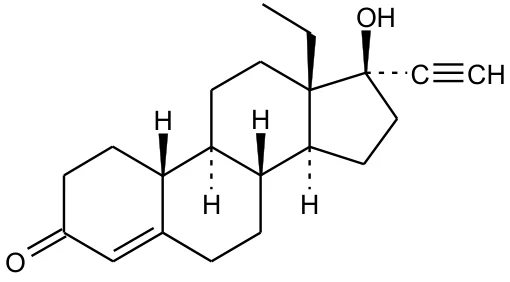 |
| Physicochemical properties: | Levonorgestrel is a white to off-white crystalline powder, practically insoluble in water and slightly soluble in ethanol and acetone. The melting range is between 234°C and 239°C. |
14 CLINICAL TRIALS
14.1 Trial Design and Study Demographics
Table 6: Summary of patient demographics for clinical trials in contraception
| Study # | Study design | Dosage, route of administration and duration | Study subjects (n) | Mean age (Range) | Sex |
| 91665 | Multi-center, open-label, randomized, 2-arm, parallel-group study, efficacy & safety | Levonorgestrel-releasing intrauterine system (LNG-IUS) 19.5mg, 3 years with an optional extension up to 5 years | 1452 | 27.1 years (18-35) | Female |
The contraceptive efficacy of KYLEENA (levonorgestrel-releasing intrauterine system [19.5 mg]) has been evaluated in a multi-centre (Europe, North America, and South America), open-label, randomized clinical study for 3 years with an extension to 5 years. The study included 1452 women aged 18-35 including 39.5 % (574) nulliparous women of whom 84% (482) were nulligravid using KYLEENA. Approximately 40% of women in this study were 25 years or younger. Approximately 80% of women enrolled in the study were Caucasian, 11% Hispanic, 5% Black and 1% of Asian origin. The mean body mass index was 25.3 kg/m2 (range 15.2 – 57.6 kg/m2). Women less than six weeks postpartum, with a history of ectopic pregnancy, with clinically significant ovarian cysts or with HIV or otherwise at high risk for sexually transmitted infections were excluded.
14.2 Study Results
The 1 year Pearl Index was 0.16 and the Pearl Index after 5 years was 0.29. The failure rate was approximately 0.2 % at 1 year and the cumulative failure rate was approximately 1.4% at 5 years. The failure rate also includes pregnancies due to undetected expulsions and perforations. KYLEENA provides more than 99% efficacy for each year of use. Contraceptive failure rate with KYLEENA is <0.5% for each year of use. Kaplan-Meier failure rates associated with KYLEENA are provided in Table 7 below.
Table 7: Kaplan-Meier Failure Rates and Contraceptive Efficacy of KYLEENA
| Time point | Number of women | Number of pregnancies | Kaplan-Meier failure rate (%) | Failure Rate 95 % CI | Contraceptive efficacy (%) |
| Year 1 | 1,452 | 2 | 0.178 | 0.044–0.709 | 99.8% |
| Year 2 | 1,206 | 4 | 0.371 | 0.139–0.988 | 99.6% |
| Year 3 | 1,010 | 4 | 0.423 | 0.159–1.123 | 99.6% |
| Year 4 | 773 | 1 | 0.147 | 0.021–1.038 | 99.8% |
| Year 5 | 636 | 2 | 0.333 | 0.083–1.324 | 99.7% |
5 years (Cumulative) | 1,452 | 13 | 1.445 | 0.823–2.531 | 98.5% |
The Kaplan-Meier failure rate reflects the probability of getting pregnant (%) after each year of use. With the ongoing risk of pregnancy over time, the cumulative failure rate increases as the period of analysis increases. Contraceptive efficacy is often expressed as 1- contraceptive failure rate. For example, the contraceptive efficacy of KYLEENA for the first year of use: 99.8% (1- 0.00178 = 0.99822) 15.
Of the 1452 women treated with KYLEENA, 1445 (99.5%) had a successful insertion. The first insertion attempt was successful in 1390/1452 women (95.7%); the second attempt was successful in 55/57 (96.5 %) women. Study investigators assessed the insertion procedure as easy in 1302/1452 women (89.7 %). The insertion procedure was evaluated as easy in 84.3% and 93.2% of nulliparous and parous women, respectively.
Most women experienced either no pain (18.5%, 268/1452) or only mild pain (47.0 %, 683/1452) during insertion of KYLEENA. A total of 400 (27.5 %) women experienced moderate pain and 100 (6.9%) experienced severe pain. There was a trend towards less pain in parous women compared to nulliparous women.
In the pivotal study, 60% (870/1452) of women completed the planned treatment duration of 3 years with KYLEENA 16. Of the 707 women that continued in the 2 year extension phase, 78% (550/707 women) completed the overall treatment duration of 5 years 14. During the first 3 years, the majority of premature discontinuations were due to adverse events (278 subjects, 19.1%). In the 2 year extension phase, only 5.1% of premature discontinuations were due to an adverse event. Over the five years, the frequency of discontinuations due to progestogen-related side effects or any bleeding problems/abnormalities (including amenorrhea) was 3.1% and 5.2%, respectively.
General Information
The following table gives typical pregnancy rates for various forms of birth control, including no birth control. The reported rates represent the number of women out of 100 who would become pregnant within the first year of use 17.
15 Trussell J. Understanding contraceptive failure. Best practice & research Clinical obstetrics & gynaecology. 2009;23(2):199-209
16 Nelson A, Apter D, Hauck B, Schmelter T, Rybowski S, Rosen K, et al. Two low-dose levonorgestrel intrauterine contraceptive systems: A randomized controlled trial. Obstet Gynecol. 2013;122(6):1205-13
14 Gemzell-Danielsson K, et al. Evaluation of a New, Low-Dose Levonorgestrel Intrauterine Contraceptive System Over 5 years of Use. European Journal of Obstetrics and Gynecology and Reproductive Biology. 2016
17 Black A, et al. Canadian Contraception Consensus (Part 1 of 4). Journal of Obstetrics and Gynaecology Canada. 2015;37(10):936-42
Table 8: Reported Pregnancies per 100 Women Within the First Year of Use
| Hormonal Intrauterine system (IUS) | less than 1 |
| Copper Intrauterine device (IUD) | less than 1 |
| Progesterone Injection | 6 |
| Combined hormonal contraceptive (pill, patch or ring) | 9 |
| Diaphragm | 12 |
| Male condom | 18 |
| Female condom | 21 |
| Sponge, spermicide | 12-28 |
| Withdrawal method | 22 |
| Natural family planning | 24 |
| No method | 85 |
15 MICROBIOLOGY
No microbial information is required for this drug product
16 NON-CLINICAL TOXICOLOGY
Levonorgestrel (LNG) is widely used in gynecology in various ways: either in combination as the progestin component in oral contraceptives, and in hormonal replacement therapy or alone for contraception in minipills, subdermal implants and intrauterine systems. The toxicological profile of LNG after systemic and local administration is well known and the available evidence indicates that this hormone is a safe drug in the above-mentioned indications.
General Toxicity
Single dose toxicity studies with LNG in rats and mice using the oral, intraperitoneal and subcutaneous route of application indicate a low acute toxicity with lethal doses in the g/kg body weight range (LD50 > 4 g/kg).
Biocompatibility studies
A wide range of biocompatibility tests were performed with the materials and components of KYLEENA. Many of the tests have been conducted during the development of other LNG-releasing IUSs (52 mg and 13.5 mg), which mainly consist of the same materials as KYLEENA. Therefore, studies conducted with other LNG-releasing IUSs (52 mg and 13.5 mg), or modified versions of it, are also relevant for KYLEENA. There was no evidence of any bioincompatibility including absence of a genotoxic potential of the components of KYLEENA. No systemic or local intolerance was detected in chronic studies in rats (intramuscular, subcutaneous) or Cynomolgus monkeys (intrauterine implantation). The endometrial effects of the modified intrauterine systems observed in monkey studies were similar to those seen in clinical studies.
It is unlikely that cytotoxic concentrations of silver ions can be achieved in vivo by the silver ring used in KYLEENA. Also, taking into consideration that there was no evidence of hemolytic potential or mutagenicity in vitro and no local or systemic intolerance in vivo after exposure to the silver ring for up to 39 weeks, there is no cause for concern for the use of the silver ring in KYLEENA for detection and differentiation by ultrasound.
Based on the results of the studies conducted with KYLEENA materials after ethylene oxide sterilization and considering guidance given by the ISO standard 10993, the limit of 2 ppm is considered to be toxicologically justified and not pose a risk to human health.
Long-term Toxicity
Systemic tolerance studies were performed in mice, rats, dogs and monkeys either with LNG or the racemate d,l-norgestrel. Systemic tolerance findings were as expected and in line with findings that have been described in these species after prolonged treatment with other progestins. Most findings could directly be related to the progestogenic activity of LNG on target organs or on the endocrine regulation. Furthermore, clinical and laboratory findings observed in one or more species, such as increased body weight gains, alterations in serum lipid (cholesterol or triglyceride) levels, increases in plasma fibrinogen, increases in blood sedimentation rate and the decreases in red blood cell parameters are also well known effects of repeated dosages of progestogens, including progesterone in the affected species.
In chronic toxicity studies in monkeys over 9 months, intrauterine administered LNG-IUSs have been systemically and locally well tolerated. Exposure to the LNG-IUS induced typical pharmacological effects of LNG such as amenorrhea or reduced intensity and frequency of menses. Histological findings of the endometrium, which were observed both in the LNG-treated and placebo control animals, such as slight superficial hemorrhage, slight to moderate superficial necrosis, slight inflammatory cell infiltration and slight to moderate focal hyperplasia, were considered to be due to the mechanical effect of the IUS. Further progestational effects, such as atrophy of endometrial glands accompanied by decidualization of endometrial stroma, are typical endocrine effects of LNG and not indicators of local intolerance.
Carcinogenicity
The effect of LNG on the induction of mammary hyperplasia (acinar and/or ductal) in dogs is considered a species-specific effect. No compound-related alterations were observed in tumourigenicity studies with LNG in mice, rats and monkeys. In dogs, long-term oral treatment with the highest daily dose of 0.5 mg/kg LNG led to an increased incidence in benign mammary tumours. This is a well known effect of progestogens in dogs, the mechanism of which is assumed to be due to stimulation of growth hormone secretion that exerts a mammotrophic effect in this species. Endocrine regulation and the sensitivity of the mammary gland to progestogens and growth hormone are known to be unique for the dog, and have no predictive value for human risk assessment. Thus, taking into consideration biocompatibility and the absence of genotoxicity of the LNG-IUS and its components, the absence of proliferative or neoplastic changes in the local and systemic tolerance studies in rats and monkeys, and the extensive clinical experience with LNG and with another LNG-releasing intrauterine system (IUS) (52 mg), KYLEENA is regarded to possess no carcinogenic potential.
Genotoxicity
Mutagenicity tests were performed with LNG to detect gene mutations and chromosomal aberrations. Based on the results obtained from in vitro and in vivo tests, there is no evidence that LNG has a mutagenic potential. Furthermore, LNG has been tested into the potential to induce DNA-repair in rat hepatocytes in vitro (Unscheduled DNA Synthesis-test) and into its DNA-adduct forming potential in human liver slices in vitro. None of these tests gave an indication of a genotoxic potential of LNG.
Neither the LNG-IUS nor its components showed any evidence of a genotoxic potential in vitro or in vivo.
Reproductive and Developmental Toxicology
An early developmental formulation of KYLEENA was studied in rabbits following intrauterine administration. The absence of compound-related maternal toxicity, embryotoxicity, teratogenicity or effects on fetal development in pregnant rabbits suggests that KYLEENA is not a reproductive toxicant.
Reproduction toxicity tests were performed with LNG or norgestrel, for evaluation of effects on fertility and peri-/postnatal toxicity in rats and on embryotoxicity in mice, rats and rabbits. No adverse effects are to be expected at clinically relevant dose levels.