


Product Monograph - Merrem (Pfizer Canada, PM 00051097)
SUMMARY PRODUCT INFORMATION
| Route of Administration | Dosage Form / Strength | Clinically Relevant Nonmedicinal Ingredients |
| For intravenous use | meropenem for injection, 500 mg, 1 g per vial (as meropenem trihydrate) | Sodium carbonate |
INDICATIONS AND CLINICAL USE
MERREM (meropenem) is indicated for treatment of the following infections when caused by susceptible strains of the designated micro-organisms:
Lower Respiratory Tract
Community-acquired pneumonia caused by Staphylococcus aureus (methicillin-susceptible strains only), Streptococcus pneumoniae, Escherichia coli and Haemophilus influenzae (including β-lactamase-producing strains).
Nosocomial pneumonia caused by Staphylococcus aureus (methicillin-susceptible strains only), Escherichia coli, Haemophilus influenzae (non- β-lactamase-producing), Klebsiella pneumoniae and Pseudomonas aeruginosa.
Urinary Tract
Complicated urinary tract infections caused by Enterobacter cloacae, Escherichia coli, Klebsiella pneumoniae, Pseudomonas aeruginosa and Serratia marcescens.
Intra-abdominal
Complicated intra-abdominal infections caused by Citrobacter freundii, Enterobacter cloacae, Escherichia coli, Klebsiella oxytoca, Klebsiella pneumoniae, Morganella morganii, Pseudomonas aeruginosa, Bacteroides fragilis, Bacteroides ovatus, Bacteroides thetaiotaomicron, Bacteroides vulgatus, Clostridium perfringens and Peptostreptococcus species.
Gynecologic
Gynecologic infections caused by Staphylococcus aureus (methicillin-susceptible strains only), Staphylococcus epidermidis (methicillin-susceptible strains only), Escherichia coli, Prevotella bivia and Peptostreptococcus species.
Pelvic inflammatory disease caused by Staphylococcus epidermidis (methicillin-susceptible strains only), Streptococcus agalactiae, Escherichia coli and Prevotella bivia.
NOTE: MERREM has no activity against Chlamydia trachomatis. Additional antimicrobial coverage is required if this pathogen is expected.
Uncomplicated Skin and Skin Structure
Uncomplicated skin and skin structure infections caused by Staphylococcus aureus (methicillin-susceptible strains only), Streptococcus agalactiae, Streptococcus pyogenes and Escherichia coli.
Complicated Skin and Skin Structure
Complicated skin and skin structure infections, except infected burns, due to Staphylococcus aureus (methicillin-susceptible strains), Streptococcus pyogenes, Streptococcus agalactiae, Viridans group streptococci, Escherichia coli, Pseudomonas aeruginosa, Proteus mirabilis, Klebsiella pneumoniae, Peptostreptococcus species and Bacteroides fragilis.
Bacterial Meningitis
Bacterial meningitis caused by Streptococcus pneumoniae, Haemophilus influenzae (including β-lactamase-producing strains) and Neisseria meningitidis.
NOTE: There is limited adult efficacy data for MERREM in the treatment of bacterial meningitis. Support for the adult meningitis indication is largely provided by pediatric data.
Bacterial Septicemia
Bacterial septicemia caused by Escherichia coli.
To reduce the development of drug-resistant bacteria and maintain the effectiveness of MERREM and other antibacterial drugs, MERREM should be used only to treat infections that are proven or strongly suspected to be caused by susceptible bacteria. When culture and susceptibility information are available, they should be considered in selecting or modifying antibacterial therapy. In the absence of such data, local epidemiology and susceptibility patterns may contribute to the empiric selection of therapy.
Therapy with MERREM may be initiated on the basis of clinical judgement before results of sensitivity testing are available. Continuation of therapy should be re-evaluated on the basis of bacteriological findings and on the patient's clinical condition. Regular sensitivity testing is recommended when treating Pseudomonas aeruginosa infections.
Appropriate use of meropenem should be guided by local susceptibility data accumulated for key bacterial pathogens.
Localised clusters of infections due to carbapenem-resistant bacteria have been reported in some regions.
The prevalence of acquired resistance may vary geographically and with time for selected species and local information on resistance is desirable, particularly when treating severe infections. As necessary, expert advice should be sought when the local prevalence of resistance is such that the utility of the agent in at least some types of infections is questionable.
Pediatrics (≥ 3 months of age):
The safety and effectiveness of MERREM in the pediatric population 3 months of age and older have been established. MERREM is not recommended for use in infants under the age of 3 months (see WARNINGS AND PRECAUTIONS, Special Populations).
CONTRAINDICATIONS
MERREM (meropenem) is contraindicated in patients with known hypersensitivity to any component of this product or in patients who have demonstrated anaphylactic reactions to β-lactam antibiotics (see DOSAGE FORMS, COMPOSITION AND PACKAGING).
WARNINGS AND PRECAUTIONS
Serious Warning and Precautions
Hypersensitivity Reactions
SERIOUS AND OCCASIONALLY FATAL HYPERSENSITIVITY (ANAPHYLACTIC) REACTIONS HAVE BEEN REPORTED IN PATIENTS RECEIVING THERAPY WITH β-LACTAM ANTIBIOTICS, INCLUDING MERREM. THESE REACTIONS ARE MORE LIKELY TO OCCUR IN INDIVIDUALS WITH A HISTORY OF SENSITIVITY TO MULTIPLE ALLERGENS (see ADVERSE REACTIONS).
THERE HAVE BEEN REPORTS OF INDIVIDUALS WITH A HISTORY OF PENICILLIN HYPERSENSITIVITY WHO HAVE EXPERIENCED SEVERE REACTIONS WHEN TREATED WITH ANOTHER β-LACTAM ANTIBIOTIC. BEFORE INITIATING THERAPY WITH MERREM (MEROPENEM), CAREFUL INQUIRY SHOULD BE MADE CONCERNING PREVIOUS HYPERSENSITIVITY REACTIONS TO PENICILLINS, CEPHALOSPORINS, OTHER β-LACTAM ANTIBIOTICS AND OTHER ALLERGENS. IF AN ALLERGIC REACTION TO MERREM OCCURS, DISCONTINUE THE DRUG IMMEDIATELY. ANAPHYLACTIC REACTIONS REQUIRE IMMEDIATE TREATMENT WITH EPINEPHRINE. OXYGEN, INTRAVENOUS STEROIDS, ANTIHISTAMINES AND AIRWAY MANAGEMENT, INCLUDING INTUBATION, MAY BE REQUIRED.
Seizures
MERREM, like all β-lactam antibiotics, has the potential to cause seizures. Diminished renal function and central nervous system lesions may increase the risk of seizures. When MERREM is indicated in patients with these risk factors, caution is advised. Convulsions have been observed in a temporal association with use of MERREM.
Valproic Acid Interaction
Case reports in the literature have shown that co-administration of carbapenems, including meropenem, to patients receiving valproic acid or divalproex sodium results in a reduction in valproic acid concentrations. The valproic acid concentrations may drop below the therapeutic range as a result of this interaction, therefore increasing the risk of breakthrough seizures. Increasing the dose of valproic acid or divalproex sodium may not be sufficient to overcome this interaction. The concomitant use of meropenem and valproic acid or divalproex sodium is generally not recommended. Antibacterials other than carbapenems should be considered to treat infections in patients whose seizures are well controlled on valproic acid or divalproex sodium. If administration of MERREM is necessary, supplemental anti-convulsant therapy should be considered. The concomitant use of valproic acid/sodium valproate and MERREM is not recommended (see DRUG INTERACTIONS, Drug-Drug Interactions).
General
As with other broad-spectrum antibiotics, prolonged use of MERREM (meropenem) may result in overgrowth of nonsusceptible organisms. Repeated evaluation of the patient is essential. If superinfection does occur during therapy, appropriate measures should be taken.
No studies on the ability to drive and use machines have been performed. However when driving or operating machines, it should be taken into account that headache, paraesthesia, and convulsions have been reported for MERREM.
MERREM should not be used to treat infections caused by methicillin resistant staphylococci.
When treating infections known or suspected to be caused by Pseudomonas aeruginosa, higher doses are recommended based on pharmacokinetic/pharmacodynamic modeling and probability of target attainment simulation for susceptible strains of Pseudomonas aeruginosa (MIC < 2 ug/mL) (see DOSAGE AND ADMINISTRATION and MICROBIOLOGY). Caution may be required in critically ill patients with known or suspected Pseudomonas aeruginosa lower respiratory tract infections.
Gastrointestinal
Clostridium difficile-associated disease
Clostridium difficile-associated disease (CDAD) has been reported with use of many antibacterial agents, including MERREM. CDAD may range in severity from mild diarrhea to fatal colitis. It is important to consider this diagnosis in patients who present with diarrhea, or symptoms of colitis, pseudomembranous colitis, toxic megacolon, or perforation of colon subsequent to the administration of any antibacterial agent. CDAD has been reported to occur over 2 months after the administration of antibacterial agents.
Treatment with antibacterial agents may alter the normal flora of the colon and may permit overgrowth of Clostridium difficile. C. difficile produces toxins A and B, which contribute to the development of CDAD. CDAD may cause significant morbidity and mortality. CDAD can be refractory to antimicrobial therapy.
If the diagnosis of CDAD is suspected or confirmed, appropriate therapeutic measures should be initiated. Mild cases of CDAD usually respond to discontinuation of antibacterial agents not directed against Clostridium difficile. In moderate to severe cases, consideration should be given to management with fluids and electrolytes, protein supplementation, and treatment with an antibacterial agent clinically effective against Clostridium difficile. Surgical evaluation should be instituted as clinically indicated, as surgical intervention may be required in certain severe cases (see ADVERSE REACTIONS).
Hepatic/Biliary/Pancreatic
Patients with pre-existing liver disorders should have their liver function monitored during treatment with MERREM.
Skin
Severe cutaneous adverse reactions (SCAR), such as Stevens-Johnson syndrome (SJS), toxic epidermal necrolysis (TEN), drug reaction with eosinophilia and systemic symptoms (DRESS), erythema multiforme (EM) and acute generalised exanthematous pustulosis (AGEP) have been reported in patients receiving MERREM (see ADVERSE REACTIONS). If signs and symptoms suggestive of these reactions appear, MERREM should be withdrawn immediately and an alternative treatment should be considered.
Susceptibility/Resistance
Development of Drug-Resistant Bacteria
Prescribing MERREM in the absence of a proven or strongly suspected bacterial infection is unlikely to provide benefit to the patient and risks the development of drug-resistant bacteria.
Special Populations
Pregnant Women: There are no adequate and well-controlled studies in pregnant women. MERREM should be used during pregnancy only if the potential benefit justifies the potential risk to mother and fetus. Reproduction studies have been performed in rats and cynomolgus monkeys at doses up to 1000 mg/kg/day (approximately 16 times the usual human dose of 1 g every 8 hours). These studies revealed no evidence of impaired fertility or harm to the fetus due to meropenem although there were slight changes in fetal body weight at doses of 240 mg/kg/day and above in rats.
Nursing Women: Meropenem has been reported to be excreted in human milk. MERREM should not be given to breast-feeding women unless the potential benefit justifies the potential risk to the baby.
Pediatrics (≥ 3 months of age): The safety and effectiveness of MERREM in the pediatric population 3 months of age and older have been established. MERREM is not recommended for use in infants under the age of 3 months.
The use of MERREM in pediatric patients with bacterial meningitis is supported by evidence from adequate and well controlled studies in the pediatric population. Use of MERREM in pediatric patients for all other indications, as listed in the INDICATIONS section, is supported by evidence from adequate and well controlled studies in adults with additional data from pediatric pharmacokinetic studies and controlled clinical trials in pediatric patients (see DOSAGE AND ADMINISTRATION, Children).
NOTE: Inadequate data are available to support the pediatric indications for nosocomial pneumonia, septicemia and complicated skin and skin structure infections.
Renal Impairment: Dosage adjustment is recommended for patients with renal insufficiency (see DOSAGE AND ADMINISTRATION).
Geriatrics (≥ 65 years of age): This drug is known to be substantially excreted by the kidney. No dose adjustment is required in elderly patients, except in cases of moderate to severe renal impairment (see DOSAGE AND ADMINISTRATION).
Monitoring and Laboratory Tests
Use of MERREM may lead to the development of a positive direct or indirect Coombs test.
ADVERSE REACTIONS
Adverse Drug Reaction Overview
MERREM (meropenem) is generally well tolerated. Many patients receiving MERREM are severely ill, have multiple background diseases, physiological impairments and receive multiple other drug therapies. In such seriously ill patients, it is difficult to establish the relationship between adverse events and MERREM.
Serious adverse reactions include occasionally fatal hypersensitivity (anaphylactic) reactions, and severe skin reactions (erythema multiforme, Stevens-Johnson syndrome, toxic epidermal necrolysis, drug reaction with eosinophilia and systemic symptoms and acute generalised exanthematous pustulosis) which require immediate discontinuation of the drug and standard of care treatment. The most commonly reported drug-related adverse events in the clinical trial programme were inflammation at the site of injection, diarrhea, nausea and vomiting, and rash. The most commonly reported laboratory adverse events included increased levels of ALT and AST and increased platelets.
Clinical Trial Adverse Drug Reactions
Because clinical trials are conducted under very specific conditions the adverse reaction rates observed in the clinical trials may not reflect the rates observed in practice and should not be compared to the rates in the clinical trials of another drug. Adverse drug reaction information from clinical trials is useful for identifying drug-related adverse events and for approximating rates.
The safety of MERREM has been evaluated in a clinical trial program of 3187 adults and children, in a range of bacterial infections including pneumonia, complicated urinary tract, intra-abdominal and skin/skin structure infections, gynecological infections and meningitis.
A subsequent safety review on an expanded clinical trial database of 4872 patients treated intravenously or intramuscularly with meropenem (5026 treatment exposures) was generally consistent with earlier findings.
Table 1 presents a summary of clinical trial adverse drug reactions, judged by the investigator to be related to therapy with MERREM (possibly, probably or definitely), that occurred at frequencies greater than 0.2% in the 3187 patients treated intravenously with MERREM, plus those reactions only observed in the expanded clinical trial database at frequencies greater than or equal to 0.1%.
| Table 1 Meropenem Clinical Trial Adverse Drug Reactions with Frequency ≥ 0.2% (N= 3187 patients) and Frequency ≥ 0.1% only observed in the expanded clinical database (N= 4872 patients) | ||
|---|---|---|
| System Organ Class | Frequency1 | Reaction2 |
| Blood and lymphatic system disorders | Common | thrombocythaemia3 |
| Uncommon | eosinophilia, thrombocytopenia, leucopenia, neutropenia | |
| Gastrointestinal disorders | Common | diarrhea (2.5%) nausea/vomiting (1.2%) |
| Uncommon | abdominal pain | |
| General disorders and administration site conditions | Common | fever, injection site, inflammation (1.6%) |
| Uncommon | injection site phlebitis / thrombophlebitis (0.5%), injection site reaction (0.4%) | |
| Infections and infestations | Uncommon | oral (0.3%) and vaginal (0.7%) candidiasis, vaginitis (0.3%) |
| Nervous system disorders | Common | headache |
| Uncommon | paraesthesiae, convulsions | |
| Skin and subcutaneous tissue disorders | Common | rash (1.1%) |
| Uncommon | urticaria (0.3%), pruritis | |
1 CIOMS III frequency classification: very common (≥1/10; ≥10%); common (≥1/100 to <1/10; ≥1% to <10%); uncommon (≥1/1,000 to <1/100; ≥0.1% to <1%)
2 Medical Dictionary for Regulatory Activities preferred term level. Incidence is provided where available.
3 Observed in the expanded clinical trial database at ≥0.1%, n = 4872 patients (5026 meropenem treatment exposures)
Less Common Clinical Trial Adverse Drug Reactions (<0.2%; N=3187 patients)
Blood and lymphatic system disorders: Agranulocytosis
Gastrointestinal disorders: Constipation
General disorders and administration site conditions: Chills, infection, injection site pain and injection site edema
Metabolism and nutrition disorders: Peripheral edema
Nervous system disorders: Agitation, dizziness, hallucinations, neuropathy, taste perversion
Renal and urinary disorders: Renal impairment
Skin and subcutaneous tissue disorders: Sweating
Abnormal Hematologic and Clinical Chemistry Findings
Adverse laboratory changes that were reported in clinical trials by the investigator as possibly, probably or definitely related to MERREM occurring in greater than 0.2% of the patients are summarised in Table 2.
| Table 2 Meropenem-Related Adverse Chemical and Hematologic Laboratory Changes with Frequency ≥0.2% (N=3187 patients) | |
|---|---|
| Adverse Laboratory Change1 | Frequency2 |
| Chemistry: | |
| Alanine aminotransferase increased | Common |
| Alkaline phosphatase increased | Common |
| Aspartate aminotransferase increased | Common |
| Blood bilirubin increased | Uncommon |
| Blood urea nitrogen increased | Uncommon |
| Blood creatinine increased | Uncommon |
| Lactate dehydrogenase increased | Common |
| Transaminases increased | Common |
| Hematology: | |
| Eosinophil count increased | Common |
| Partial thromboplastin time abnormal | Uncommon |
| Platelet count decreased | Uncommon |
| Platelet count increased | Common |
| Prothrombin time abnormal | Uncommon |
| White blood cell count decreased | Uncommon |
1 Medical Dictionary for Regulatory Activities preferred term level
2 CIOMS III frequency classification: very common (≥1/10; ≥10%); common (≥1/100 to <1/10; ≥1% to <10%); uncommon (≥1/1,000 to <1/100; ≥0.1% to <1%)
Pediatrics (≥ 3 months of age)
Drug related increases in platelets (7.0%) appear to occur more frequently in pediatric patients than in adults treated with MERREM.
Post-Market Adverse Drug Reactions
The following adverse reactions have been identified during post-approval use of MERREM.
These reactions were reported voluntarily from a population of uncertain size, so it is not possible to reliably estimate their frequency. A causal relationship could not be excluded in spite of concomitant medications and/or illnesses.
Blood and the lymphatic system disorders
Thrombocytopenia with bleeding, hemolytic anemia
Gastrointestinal disorders
Pseudomembranous colitis
Hepatobiliary disorders
Cholestasis, hepatitis
Investigations
Hypokalemia, hypomagnesemia
Immune system disorders
Severe hypersensitivity reactions of angioedema and anaphylaxis
Psychiatric disorders
Delirium
Skin and subcutaneous tissue disorders
Severe skin reactions such as drug reaction with eosinophilia and systemic symptoms (DRESS), acute generalised exanthematous pustulosis, erythema multiforme, Stevens-Johnson syndrome and toxic epidermal necrolysis
DRUG INTERACTIONS
Overview
Other than probenecid and valproic acid, no specific drug interaction studies were conducted.
Drug-Drug Interactions
Probenecid
Probenecid competes with meropenem for active tubular secretion and thus inhibits the renal excretion of meropenem with the effect of increasing the elimination half-life and plasma concentration of MERREM. The coadministration of probenecid with MERREM is neither required nor recommended.
Valproic Acid
Decreases in blood levels of valproic acid have been reported when it is co-administered with carbapenem agents resulting in a 60-100% decrease in valproic acid levels in about two days. Due to the rapid onset and the extent of the decrease, co-administration of
MERREM in patients stabilized on valproic acid is not considered to be manageable and therefore should be avoided (see WARNINGS AND PRECAUTIONS, General).
Drug-Laboratory Interactions
Use of MERREM may lead to the development of a positive direct or indirect Coombs test.
DOSAGE AND ADMINISTRATION
Dosing Considerations
Adults
The usual dose is 500 mg to 1 g by intravenous infusion every 8 hours, depending on the type and severity of infection, the known or suspected susceptibility of the pathogens and the condition of the patient (see Table 3). Doses up to 2 g every 8 hours have been used. MERREM (meropenem) should be given by intravenous infusion over approximately 15 to 30 minutes or as an intravenous bolus injection (5 to 20 mL) over approximately 5 minutes (see DOSAGE AND ADMINISTRATION, Administration and Reconstitution, Intravenous Bolus Administration and Infusion).
When treating infections known or suspected to be caused by Pseudomonas aeruginosa, a dose of at least 1g every 8 hours in adults (maximum approved dose is 6g daily given in 3 divided doses) is recommended. This dose is based on pharmacokinetic/pharmacodynamic modeling and probability of target attainment simulation for susceptible strains of Pseudomonas aeruginosa (MIC ≤ 2 ug/mL).
There is limited safety data available to support the administration of a 2g bolus dose.
Recommended Dose and Dosage Adjustment
The recommended dose to be given for adults is as in Table 3.
| Table 3 Recommended Dose in Adults | ||
|---|---|---|
| Type of Infection | Dose | Dosage Interval |
| Complicated urinary tract | 500 mg | every 8 hours |
| Uncomplicated skin and skin structure | 500 mg | every 8 hours |
| Complicated skin and skin structure | 500 mg | every 8 hours |
| Gynecologic and Pelvic Inflammatory Disease | 500 mg | every 8 hours |
Lower respiratory Community-acquired pneumonia Nosocomial pneumonia | 500 mg 1 g | every 8 hours every 8 hours |
| Complicated intra-abdominal | 1 g | every 8 hours |
| Table 3 Recommended Dose in Adults |
|---|
| Type of Infection | Dose | Dosage Interval |
|---|---|---|
| Meningitis | 2 g | every 8 hours |
| Septicemia | 1 g | every 8 hours |
Impaired Renal Function
Dosage should be reduced in patients with creatinine clearance less than 51 mL/min (Table 4).
| Table 4 Dosage in Patients with Creatinine Clearance Less than 51 mL/min | ||
|---|---|---|
Creatinine clearance (mL/min) | Dose (dependent on type of infection) | Dosing Interval |
| 26-50 | recommended dose (500 mg to 2000 mg) | every 12 hours |
| 10-25 | one-half recommended dose | every 12 hours |
| < 10 | one-half recommended dose | every 24 hours |
Meropenem is removed by hemodialysis and hemofiltration; if continued treatment with MERREM is necessary, the dose, based on the infection type and severity, should be administered at the completion of the hemodialysis procedure to reinstitute effective treatment.
There are no data on appropriate doses in patients requiring peritoneal dialysis.
Hepatic Impairment (Adults)
No dosage adjustment is necessary in patients with hepatic dysfunction as long as renal function is normal.
Geriatrics (≥ 65 years of age)
Dosage adjustment is recommended for the elderly with an estimated or measured creatinine clearance value below 51 mL/min (see DOSAGE AND ADMINISTRATION, Recommended Dose and Dose Adjustment, Impaired Renal Function).
Pediatrics (≥ 3 months of age)
For infants and children over 3 months of age and weighing up to 50 kg, the recommended dose of MERREM is 10 to 40 mg/kg every 8 hours, depending on the type and severity of infection, the known or suspected susceptibility of the pathogens and the condition of the patient (see Table 5). Children weighing over 50 kg require the adult dosage. MERREM should be given as an intravenous infusion over approximately 15 to 30 minutes or as an intravenous bolus injection (5 to 20 mL) over approximately 5 minutes (see DOSAGE AND ADMINISTRATION, Administration and Reconstitution, Intravenous Bolus Administration and Infusion).
When treating infections known or suspected to be caused by Pseudomonas aeruginosa, a dose of at least 20 mg/kg every 8 hours in children (maximum approved dose is 120 mg/kg daily given in 3 divided doses) is recommended. This dose is based on pharmacokinetic/pharmacodynamic modeling and probability of target attainment simulation for susceptible strains of Pseudomonas aeruginosa (MIC ≤ 2 ug/mL).
There is limited safety data available to support the administration of a 40 mg/kg bolus dose.
| Table 5 Dosage in Pediatric Patients | ||
|---|---|---|
| Type of Infection | Dose (mg/kg) | Dosing Interval |
| Complicated urinary tract | 10 | every 8 hours |
| Uncomplicated skin and skin structure | 10 – 20 | every 8 hours |
| Community acquired pneumonia | 10 – 20 | every 8 hours |
| Complicated intra-abdominal | 20 | every 8 hours |
| Meningitis | 40 | every 8 hours |
There are no data on appropriate doses for children with renal impairment.
Missed Dose
If a dose is missed then it should be given as soon as practically possible after the scheduled time and subsequent doses should be given at 8 hour intervals from the revised dose time.
Administration and Reconstitution
Parenteral Products
Compatibility of MERREM with other drugs has not been established. MERREM should not be mixed with or physically added to solutions containing other drugs.
Freshly prepared solutions of MERREM should be used whenever possible. Constituted solutions of MERREM should not be frozen.
All vials are for single use only. Standard aseptic technique should be employed during constitution and administration. Shake constituted solution before use.
Parenteral drug products should be inspected visually for particulate matter and discolouration prior to administration, whenever solution and container permit.
Intravenous Bolus Administration
| Table 6 Reconstitution Volume | |||
|---|---|---|---|
| Vial Size | Amount of Diluent Added (mL) | Approximate Withdrawable Volume (mL) | Approximate Average Concentration (mg/mL) |
| 500 mg/20 mL | 10 | 10 | 50 |
| 1 g/30 mL | 20 | 20 | 50 |
Stability in Glass Vials
MERREM injection vials reconstituted with sterile Water for Injection for bolus administration (up to 50 mg/mL of MERREM) may be stored for up to 3 hours at controlled room temperature (15 - 25°C) or for up to 16 hours under refrigerated conditions (2-8°C).
Infusion
A solution for infusion is prepared by dissolving the drug product MERREM (500 mg/20 mL and 1 g/30 mL) in either 0.9% sodium chloride solution for infusion or 5% glucose (dextrose) solution for infusion, then the resulting solution is added to an i.v. container and further diluted to a final concentration of 1 to 20 mg/mL (see Table 7).
Stability in Plastic i.v. Bags
Solutions prepared for infusion (MERREM concentrations ranging from 1 to 20 mg/mL) may be stored in plastic i.v. bags with diluents as shown in Table 7 below. MERREM injection vials reconstituted with 0.9% sodium chloride for infusion may be stored for up to 3 hours at controlled room temperature (15 - 25°C) or for up to 24 hours under refrigerated conditions (2-8°C). Constituted solutions of MERREM in 5% glucose (dextrose) solution should be used immediately.
From a microbiological point of view, unless the method of opening/constitution/dilution precludes the risk of microbiological contamination, the product should be used immediately. If not used immediately, in-use storage times and conditions are the responsibility of the user.
Diluted intravenous infusion solutions should be inspected visually for discolouration, haziness, particulate matter and leakage prior to administration, whenever solution and container permit. Discard unused portion.
| Table 7 Number of Hours Stable after Reconstitution | ||
|---|---|---|
| Diluent | Number of Hours Stable at Controlled Room Temperature 15 – 25°C | Number of Hours Stable at 2-8°C |
| Sodium Chloride 0.9% | 3 | 24 |
| Glucose (Dextrose) 5.0% | Use immediately | Use Immediately |
OVERDOSAGE
Intentional overdosing of MERREM (meropenem) is unlikely, although accidental overdosing might occur particularly in patients with reduced renal function. The largest dose of meropenem administered in clinical trials has been 2 g given intravenously every 8 hours to adult patients with normal renal function and 40 mg/kg every 8 hours to children with normal renal function. At these dosages, no adverse pharmacological effects were observed.
Limited post-marketing experience indicates that if adverse events occur following overdosage, they are generally consistent with the adverse event profile described under ADVERSE REACTIONS.
In the event of an overdose, MERREM should be discontinued and general supportive treatment given until renal elimination takes place. MERREM and its metabolite are readily dialyzable and effectively removed by hemodialysis; however, no information is available on the use of hemodialysis to treat overdosage.
The intravenous LD50 of meropenem in mice and rats is more than 2500 mg/kg and is approximately 2000 mg/kg in dogs.
ACTION AND CLINICAL PHARMACOLOGY
Mechanism of Action
MERREM (meropenem) is a broad spectrum, β-lactamase-resistant, carbapenem antibiotic for parenteral administration.
The bactericidal activity of meropenem results from the inhibition of bacterial cell wall synthesis. Meropenem readily penetrates through the cell wall of most Gram-positive and Gram-negative bacteria to reach penicillin binding protein (PBP) targets. Its greatest affinity is for PBP 2 of Escherichia coli, PBP 2 and 3 of Pseudomonas aeruginosa and 1, 2 and 4 of Staphylococcus aureus.
Meropenem is stable in the presence of most serine β-lactamases (both penicillinases and cephalosporinases) produced by Gram-positive and Gram-negative bacteria.
Pharmacokinetics
The pharmacokinetics of meropenem are typical of those parenteral β-lactam antibiotics that have low protein binding and predominantly renal excretion.
| For management of a suspected drug overdose, contact your regional Poison Control Centre. |
Meropenem shows biexponential pharmacokinetics after intravenous administration in healthy adult volunteers with normal renal function. There is a rapid distribution phase followed by a terminal elimination phase with a half-life (t½) of approximately 1 hour. The pharmacokinetic parameters following three doses of meropenem are shown in Table 8 (see also Table 10 in ACTIONS AND CLINICAL PHARMACOLOGY, Mechanism of Action, Metabolism and Excretion).
Table 8 Pharmacokinetic Parameters of Meropenem in Healthy Volunteers Following a Single Intravenous Infusion Over 30 Minutes
| Dose (mg) | Cmax (μg/mL) | AUC∞ (μg.h/mL) | t½ (h) | Volume of distribution Steady State Vss (L) | Plasma Clearance Clp (mL/min) | Renal Clearance Clr (mL/min/kg) | Urinary Recovery (% dose) |
|---|---|---|---|---|---|---|---|
| 500 | 22.5 (21) | 27.1 (15) | 0.97 (13) | 20.2 (16) | 314 (15) | 3.05 (20) | 73.0 (12) |
| 1,000 | 48.6 (16) | 60.8 (16) | 0.96 (14) | 18.9 (10) | 280 (16) | 2.52 (15) | 69.0 (6) |
| 2,000 | 115 (20) | 153 (15) | 1.18 (8) | 15.8 (20) | 205 (18) | 1.73 (12) | 65.4 (18) |
The area under the serum concentration time curve (AUC) of meropenem increases approximately 5.5-fold over the dose range of 500 mg to 2 g. There are no marked changes in the pharmacokinetic parameters. However, there is a reduction in renal clearance with higher doses probably due to the saturation of tubular clearance. These changes in kinetic parameters are not important in otherwise healthy adults.
There were no important changes in the pharmacokinetics of meropenem when administered as a 5 minute infusion, compared with a 30 minute infusion. Peak plasma concentrations of meropenem were doubled after the bolus infusion, but from 1 hour after dosing, plasma concentrations for both rates of administration were similar.
After multiple dose administration in healthy subjects, there was no accumulation of meropenem and no change in the pharmacokinetics of meropenem as a consequence of repeated administration (Table 9).
Table 9 Pharmacokinetic Parameters of Meropenem in Healthy Volunteers Following Multiple Dose (1000 mg) Intravenous Infusion*
| Day | Cmax (μg/mL) | AUC∞ (μg.h/mL) | t½ (h) | Plasma Clearance (Clp) (mL/min) | Urinary Recovery (% dose) |
|---|---|---|---|---|---|
| 1 | 42.4 (13) | 71.6 (15) | 0.96 (9) | 227 (14) | 59.4 (6) |
| 4 | 34.1 (57) | 60.4 (25) | 0.48 (23) | 293 (29) | 62.6 (21) |
| 7 | 40.5 (14) | 61.3 (17) | 1.11 (32) | 279 (17) | 53.2 (19) |
mean (coefficient of variation)
*25 infusions over 60 min at intervals of 6 h for 7 days
Distribution
At the end of a 30-minute intravenous infusion of a single dose of meropenem in healthy, male volunteers, mean peak plasma concentrations are approximately 23 μg/mL for the 500 mg dose, 49 μg/mL for the 1 g dose and 115 μg/mL for the 2 g dose. The plasma concentration-time data for meropenem after a single 30 minute infusion are presented in Table 10.
A 5 minute intravenous bolus injection of meropenem in healthy, male volunteers results in mean peak plasma levels of approximately 52 μg/mL for the 500 mg dose and 112 μg/mL for the 1 g dose.
Tissue Concentrations
Meropenem penetrates into body tissues in sufficient concentrations to treat most commonly occurring pathogens at the principal sites of infection.
However, it does not penetrate readily into cerebrospinal fluid or aqueous humor in the absence of inflammation at the sites. In children and adults with bacterial meningitis, meropenem concentrations in the cerebrospinal fluid, after intravenous administration of recommended doses, are in excess of those required to inhibit susceptible bacteria.
Note: See Table 11 for meropenem concentrations in select tissues and body fluids. See MICROBIOLOGY for susceptibility breakpoints.
| Table 10 Plasma concentration-time values during and following single 30 min infusion doses of meropenem in volunteers | |||
|---|---|---|---|
| 500 mg | 1000 mg | 2000 mg | |
Time (h) | Mean Conc. ± SD (μg/mL) | Mean Conc. ± SD (μg/mL) | Mean Conc. ± SD (μg/mL) |
| Pre-dose | ND | ND | ND |
| 0.083 | 5.43 ± 3.00 | 12.9 ± 3.62 | - |
| 0.167 | - | - | 48.4 ± 18.23 |
| 0.25 | 13.9 ± 2.74 | 28.6 ± 3.74 | - |
| 0.5 | 22.5 ± 4.86 | 48.6 ±7.81 | 115.2 ± 23.5 |
| 0.75 | 15.5 ± 0.97 | 33.8 ±1.99 | 78.8 ± 10.2 |
| 1 | 10.8 ± 1.46 | 24.6 ± 3.03 | 58.3 ± 8.93 |
| 1.5 | 6.84 ± 0.91 | 14.8 ± 2.17 | 36.9 ±7.45 |
| 2 | 3.68 ± 0.81 | 11.1 ± 3.88 | 25.1 ± 4.62 |
| 2.5 | 2.92 ± 0.80 | 6.22 ± 1.40 | - |
| 3 | 1.95 ± 0.67 | 4.49 ± 1.02 | 12.5 ± 3.25 |
| 3.5 | 1.28 ± 0.58 | 2.47 ± 1.07 | - |
| 4 | 0.91 ± 0.41 | 2.35 ± 1.07 | - |
| 4.5 | 0.57 ± 0.31 | 1.54 ± 0.86 | - |
| 5 | 0.40 ± 0.19 | 0.99 ± 0.63 | 3.33 ± 1.20 |
| 6 | 0.27 ± 0.15 | 0.60 ± 0.36 | 1.83 ± 0.65 |
| 7 | 0.14 ± 0.09 | 0.30 ± 0.23 | 1.03 ± 0.46 |
| 8 | - | - | 0.63± 0.32 |
| 10 | - | - | 0.21 ± 0.13 |
ND - Not detectable, - Not measured
| Table 11 Meropenem Concentrations in Selected Tissues or Body Fluids (Highest Concentrations Reported) | ||||
|---|---|---|---|---|
| Tissue | Dose (g) | Number of Samples | Mean [μg/mL or μg/(g)]* | Range [μg/mL or μg/(g)] |
| Endometrium | 0.5 | 7 | 4.2 | 1.7 – 10.2 |
| Myometrium | 0.5 | 15 | 3.8 | 0.4 – 8.1 |
| Ovary | 0.5 | 8 | 2.8 | 0.8 – 4.8 |
| Cervix | 0.5 | 2 | 7.0 | 5.4 - 8.5 |
| Fallopian tube | 0.5 | 9 | 1.7 | 0.3 – 3.4 |
| Skin | 0.5 | 22 | 3.3 | 0.5 – 12.6 |
| Skin | 1.0 | 10 | 5.3 | 1.3 – 16.7 |
| Colon | 1.0 | 2 | 2.6 | 2.5 – 2.7 |
| Bile | 1.0 | 7 | 14.6 (3 h) | 4.0 – 25.7 |
| Gall bladder | 1.0 | 1 | - | 3.9 |
| Interstitial fluid | 1.0 | 5 | 26.3 | 20.9 – 37.4 |
| Peritoneal fluid | 1.0 | 9 | 30.2 | 7.4 – 54.6 |
| Lung | 1.0 | 2 | 4.8 (2 h) | 1.4 – 8.2 |
| Bronchial mucosa | 1.0 | 7 | 4.5 | 1.3 – 11.1 |
| Muscle | 1.0 | 2 | 6.1 (2 h) | 5.3 – 6.9 |
| Fascia | 1.0 | 9 | 8.8 | 1.5 – 20.0 |
| Heart valves | 1.0 | 7 | 9.7 | 6.4 – 12.1 |
| Myocardium | 1.0 | 10 | 15.5 | 5.2 – 25.5 |
| CSF (inflamed) | 20 mg/kg** | 8 | 1.1 (2 h) | 0.2 – 2.8 |
| 40 mg/kg*** | 5 | 3.3 (3 h) | 0.9 – 6.5 | |
| CSF (uninflamed) | 1.0 | 4 | 0.2 (2 h) | 0.1 – 0.3 |
* at 1 hour unless otherwise noted mean (coefficient of variation)
** in children of age 5 months to 8 years
*** in children of age 1 month to 15 years
Metabolism and Excretion
Meropenem is cleared predominantly by renal excretion, with a combination of glomerular filtration and active tubular secretion.
At doses of 500 mg, mean plasma levels of meropenem decline to 1 μg/mL or less, 6 hours after administration.
In vitro studies demonstrate that meropenem is stable to human renal dehydropeptidase. This finding is supported by the urinary excretion of meropenem which is typically 60% to 70% of the administered dose. Thus, there is no requirement to coadminister an inhibitor of dehydropeptidase-1 with meropenem.
Meropenem plasma protein binding is low, approximately 2%. Therefore the renal filtration rate should approximate the glomerular filtration rate (GFR). However, renal clearance values are generally in excess of the measured or calculated value for GFR: the difference is due to active tubular secretion of meropenem.
The hydrolysis of the β-lactam bond can occur either chemically in solution or biologically under the influence of enzymes. The reduction in the non-renal clearance of meropenem that occurs as renal function declines suggests that the kidney may be a site of metabolism. The trend to reduction in the non-renal clearance of meropenem seen when meropenem was coadministered with probenecid implies that the proximal renal tubule may be involved in the metabolism of meropenem.
The only identified metabolite of meropenem is ICI 213,689 which is produced by hydrolysis of the β-lactam bond and is bacteriologically inactive. In healthy subjects, the apparent elimination half-life of ICI 213,689 was longer than that of meropenem at approximately 2.3 hours (range 1.8 to 2.8 hours). The AUC for ICI 213,689 was approximately 10% of the AUC for meropenem, showing that exposure to the circulating metabolite is small in subjects with normal renal function.
The administration of probenecid with meropenem did not alter the urinary half-life of ICI 213,689. Exposure to ICI 213,689 does not appear to change on repeated meropenem administration and there are no major changes in the excretion of ICI 213,689 after repeated meropenem administration in persons with normal renal function.
In subjects with normal renal function, the elimination half-life of meropenem is approximately one hour. Urinary concentrations of meropenem in excess of 10 μg/mL are maintained for at least 5 hours at the 500 mg dose. The metabolism and excretion of meropenem were studied by means of administration of [14C]-labelled meropenem. Radioactivity was very rapidly excreted with 95.4% of the dose recovered in the urine at 8 hours after dosing. This rapid excretion is consistent with the observed lack of accumulation on multiple dosing. Overall, 99.0% of the dose was recovered in the urine, with an additional 2.1% recovered in the feces.
Multiple dosing with meropenem in normal volunteers caused increases, decreases or no change in the fecal flora, depending on the organism. Changes were small and were reversed after cessation of meropenem administration. Meropenem is present in bile at concentrations of up to 25 μg/mL. This biliary excretion of a small proportion of the dose as active antibiotic could account for both the minor disturbance of fecal flora and the fecal recovery of radioactivity.
Special Populations and Conditions
Pediatrics (≥ 3 months of age): The pharmacokinetics of MERREM in infants and children over age 2 are essentially similar to those in adults, except that the half-life is approximately double to 1.75 hours in the youngest age group (3-5 months). The elimination half-life for meropenem was approximately 1.5 hours in children of age 3 months to 2 years. The pharmacokinetics for children are linear for doses of 10, 20 and 40 mg/kg and the peak plasma concentrations and AUC values are similar to those seen in healthy adult volunteers after 500 mg, 1 g and 2 g doses, respectively.
The prolongation of half-life and increased volume of distribution of meropenem in the younger subjects is consistent with the reduced renal function and increased extracelluar fluid volume in infants of this age. An 8-hour dosing interval is considered acceptable even in the 3 to 5 month age group (Table 12).
In general, meropenem dosing on a mg/kg basis is appropriate in infants and children.
| Table 12 Pharmacokinetic Parameters of Meropenem in Children | |||||||
|---|---|---|---|---|---|---|---|
| Age | Dose (mg/kg) | Cmax (μg/mL) | AUC∞ (μg/mL) | t1/2 (h) | Volume of Distribution (Vss)* (L/kg) | Plasma Clearance (Clp)* (mL/min/kg) | Urinary Recovery (% dose) |
| 3-5 months | 10 | 26.3 (18) | 38.8 (30) | 1.4 (31) | 0.401 (10) | 4.6 (35) | 64.9 (15) |
| 20 | 53.4 (33) | 90.0 (29) | 1.7 (30) | 0.449 (12) | 4.0 (30) | 37.5 no CV% | |
| 40 | 125 (48) | 228 (80) | 2.3 (59) | 0.480 (24) | 4.3 (8) | 21.6 no CV% | |
| 6-23 months | 10 | 28.8 (33) | 34.9 (56) | 1.1 (49) | 0.358 (33) | 5.7 (37) | 62.8 (31) |
| 20 | 64.0 (25) | 75.0 (24) | 1.3 (37) | 0.356 (29) | 4.3 (34) | 47.4 (29) | |
| 40 | 84.9 (21) | 122 (27) | 1.5 (3.5) | 0.524 (18) | 5.8 (26) | 39.6 (62) | |
| 2-5 years | 10 | 29.2 (28) | 33.1 (24) | 1.1 (35) | 0.353 (23) | 5.3 (29) | 54.5 (24) |
| 20 | 51.6 (18) | 60.6 (22) | 1.0 (4) | 0.375 (16) | 5.8 (24) | 55.3 (16) | |
| 40 | 79.0 (18) | 91.9 (27) | 1.1 (47) | 0.501 (31) | 7.7 (28) | 52.6 (32) | |
| Table 12 Pharmacokinetic Parameters of Meropenem in Children |
|---|
| Age | Dose (mg/kg) | Cmax (μg/mL) | AUC∞ (μg/mL) | t1/2 (h) | Volume of Distribution (Vss)* (L/kg) | Plasma Clearance (Clp)* (mL/min/kg) | Urinary Recovery (% dose) |
|---|---|---|---|---|---|---|---|
| 6-12 years | 10 | 32.1 (40) | 35.3 (50) | 0.9 (30) | 0.314 (23) | 5.7 (39) | 67.2 (7) |
| 20 | 58.6 (29) | 64.4 (38) | 0.8 (43) | 0.315 (22) | 6.3 (42) | 60.4 (10) | |
| 40 | 79.7 (7) | 93.0 (19) | 1.0 (24) | 0.414 (16) | 6.4 (8) | 50.3 (12) |
mean (coefficient of variation)
* Vss , Clp normalized for body weight
Geriatrics (≥ 65 years of age): In the elderly, there are changes in the pharmacokinetics of meropenem and ICI 213,689 that reflect the age-associated reduction in renal function (Table 13). Dosage reduction, dependent upon renal function, may be necessary.
| Table 13 Comparison of Pharmacokinetic Parameters Between Health Elderly and Healthy Younger Patients (500 mg infused over 30 min) | ||||||||
|---|---|---|---|---|---|---|---|---|
| Patients (age, years) | Creatinine Clearance (mL/min) | GFR* (mL/min) | Cmax (μg/mL) | AUC∞ (μg.h/mL) | t1/2 (h) | Volume of Distribution at Steady State (L) | Urinary Recovery (% dose) | Renal Clearance Clr (ml/minkg) |
| Young (10) | 120 (7) | 99 (15) | 35.6 (17) | 39.5 (12) | 0.81 (20) | 13.8 | 68.2 (12) | 2.18 (20-35) (20) |
Elderly (65-80) | 68 (17) | 72 (17) | 37.0 (17) | 58.3 (17) | 1.29 (14) | 14.5 (17) | 67.3 (7) | 1.51 (11) |
* glomerular filtration rate
Hepatic Impairment: A study in patients with alcoholic cirrhosis has shown no effects of liver disease on the pharmacokinetics of meropenem.
Renal Impairment: Meropenem is excreted predominantly by the kidney and changes in renal function alter meropenem pharmacokinetics.
Pharmacokinetic studies of MERREM in patients with renal insufficiency have shown that the plasma clearance of meropenem correlates with creatinine clearance. Dosage adjustments are necessary in subjects with renal impairment (see DOSAGE AND ADMINISTRATION). A pharmacokinetic study with MERREM in elderly patients with renal insufficiency has shown that a reduction in plasma clearance of meropenem correlates with age-associated reduction in creatinine clearance.
The reduction in meropenem clearance correlates well with creatinine clearance and is consistent across studies. Even in renally impaired subjects, there is no alteration in the pharmacokinetics of meropenem due to multiple dosing, when it is dosed appropriately. The metabolite accumulates with repeated doses: the clinical importance of this observation is unknown. The physiological reduction in renal function due to age and renal impairment due to disease produce a similar effect on the clearance of meropenem (Table 14).
| Table 14 Pharmacokinetic Parameters for Meropenem in Patients with Renal Insufficiency | |||||||
|---|---|---|---|---|---|---|---|
| Creatinine Clearance (mL/min | Dose (g) | Dosing Interval (h) | Cmax (μg/mL) | AUC∞ (μg.h/mL) | t1/2 (h) | Renal Clearance Clr (L/min/kg) | Urinary Recovery (% dose) |
| Day 1 | |||||||
| 51-70 | 1 | 8 | 60.9 (25) | 115 (21) | 1.59 (26) | 1.05 (29) | 58.1 (18) |
| 26-50 | 1 | 12 | 75.9 (22) | 207 (27) | 2.12 (29) | 0.53 (62) | 55.1 (36) |
| 10-25 | 0.5 | 12 | 32.0 (34) | 143 (17) | 4.61 (33) | 0.20 (33) | 32.1 (52) |
| 0 | 0.5 | 24 | 41.0 (28) | 320 (30) | 6.56 (16) | ||
| Day 4 | |||||||
| 51-70 | 1 | 8 | 60.0 (31) | 115 (23) | 1.45 (23) | 0.69 (81) | nd |
| 26-50 | 1 | 12 | 90.6 (32) | 229 (31) | 2.33 (27) | 0.37 (36) | nd |
| 10-25 | 0.5 | 12 | 40.6 (25) | 188 (34) | 4.87 (30) | 0.19 (41) | nd |
| 0 | 0.5 | 24 | 50.7 (38) | 306 (26) | 7.04 (54) | ||
mean (coefficient of variation); nd not determined
STORAGE AND STABILITY
Store between 15 – 30°C. Do not freeze.
DOSAGE FORMS, COMPOSITION AND PACKAGING
MERREM (meropenem) is supplied in 20 mL and 30 mL injection vial sizes containing sufficient meropenem to deliver 500 mg and 1 g of meropenem anhydrous respectively for intravenous administration.
For vials, each 1 g MERREM vial will deliver 1 g of meropenem anhydrous as meropenem trihydrate and 90.2 mg of sodium as sodium carbonate and each 500 mg vial will deliver 500 mg meropenem anhydrous as meropenem trihydrate and 45.1 mg of sodium as sodium carbonate.
PART II: SCIENTIFIC INFORMATION
PHARMACEUTICAL INFORMATION
| Drug Substance | |
| Proper Name: | meropenem |
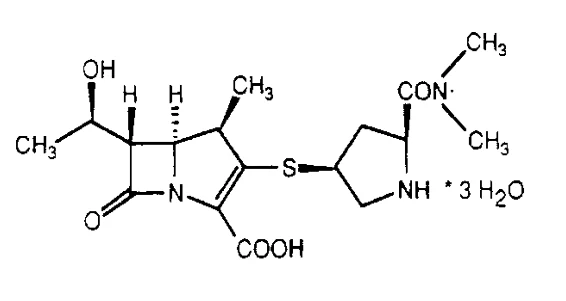
| Chemical Name: | (-)-(4R,5S,6S)-3-[[(3S,5S)-5-(dimethylcarbamoyl)-3- pyrrolidinyl]thio]-6-[(1R)-1-hydroxyethyl]-4-methyl-7-oxo-1-azabicyclo[3,2,0]hept-2-ene-2-carboxylic acid trihydrate |
| Molecular Formula and Molecular Mass: | C17H31N3O8S 437.51 |
| Structural Formula: | |
| Physicochemical Properties: | Meropenem is a white to light yellow, crystalline powder which is soluble in 5% sodium bicarbonate solution, sparingly soluble in water, very slightly soluble in absolute ethanol and practically insoluble in ether. The pH of a 1% w/v solution in water ranges from 4.0 to 6.0. The pKa values are 2.9 and 7.4. The melting point is difficult to determine because decomposition and colour changes occur before melting. The n-octanol:water partition coefficient is small (<1x10⁻³). |
CLINICAL TRIALS
The clinical trial studies supporting the use of MERREM for the approved indications are not provided in the product monograph.
DETAILED PHARMACOLOGY
Meropenem failed to cause any changes of biological significance in the following series of general pharmacology tests.
 |
Autonomic Pharmacology In Vitro
In vitro data suggest that meropenem does not possess potent histaminergic, acetylcholinergic, alpha-adrenergic or beta-adrenergic activity when tested at 1 x 10⁻³ M. A weak increase in resting tone was observed in the rat fundic strip indicating a possibility of 5-hydroxytryptaminergic activity.
Sympathetic Function In Vivo
Single intravenous administrations of meropenem (300 mg/kg) to anaesthetized cats produced weak effects of short duration on the nictitating membrane. This suggested weak sympatholytic activity which would account for the transient fall in blood pressure observed.
Gastrointestinal Pharmacology
No effect upon gastrointestinal motility was seen in mice following a single intravenous administration of meropenem (300 mg/kg).
Intravenous administration (one dose of 100 mg/kg) to male beagle dogs (with Heidenhain pouches) had no effect on stimulated gastric acid secretion and is therefore unlikely to cause acid hypersecretion.
Cardiovascular Function
In conscious male beagle dogs, a single intravenous dose of meropenem (300 mg/kg) did not produce significant changes in blood pressure, heart rate, ECG (P-R interval), cardiac output, central venous pressure or total peripheral resistance. Cardiac force decreased slightly but this was thought not to have any biological significance. No behavioural side effects were noted in this study.
Intravenous dosing at 300 mg/kg on two consecutive days to spontaneously hypertensive rats did not produce significant changes in blood pressure or heart rate on day 1. On day 2, a fall in mean arterial blood pressure, which was of borderline significance, was seen 2 hours after dosing. The effect was not seen at further time points and was thought to be biologically insignificant.
Renal Pharmacology
In fasted male rats, orally loaded with physiological saline, a single intravenous dose of meropenem (300 mg/kg) did not cause diuretic or natriuretic activity or biologically significant changes in urinary chloride or potassium levels. Hence, there was no evidence of effect upon the renal function of the rat.
However, chronic administration of meropenem was associated with increased kidney size.
Central Nervous System Pharmacology
Meropenem (given as a single intravenous dose of 300 mg/kg) did not elicit biologically significant changes in central nervous system function in rats or mice. The drug did not modify neuromuscular co-ordination or affect gross behaviour or body temperature. In mice there was no significant change in sodium barbital-induced sleeping time or in the current required to elicit tonic extensor seizures.
Spontaneous EEG and arousal response in rabbits was unaltered following an intravenous dose of meropenem (1000 mg/kg). Imipenem (300 mg/kg) evoked a response in 4/7 rabbits and cefazolin, dosed at 300 or 1000 mg/kg, evoked responses in 1/7 and 6/7 rabbits, respectively.
Intravenous administration of a single dose of meropenem (50 to 400 mg/kg) to mice failed to elicit any biologically significant potentiation of metrazole-induced convulsions. Conversely, imipenem alone (200 mg/kg) or in combination with cilastatin (400 mg/kg + 400 mg/kg), did produce a significant potentiation of seizures (p <0.05).
Metabolic Homeostasis
A single intravenous administration of meropenem (100 or 300 mg/kg) to rabbits did not cause biologically significant changes in glucose metabolism or lipid metabolism where triglycerides, phospholipids or cholesterol were involved. A decrease in free fatty acid metabolism was recorded in animals given 300 mg/kg; the change was not statistically significant.
Hemostasis
In male rats, dosed intravenously (once) with meropenem (300 mg/kg), there was no significant effect on platelet aggregation.
Meropenem (3 x 10⁻³ M) did not have any influence on rabbit platelet aggregation in the presence of added adenosine diphosphate (ADP) or collagen.
There was no change in prothrombin time in beagle dogs dosed daily with meropenem (21 and 70 mg/kg, intravenously for 14 days). Changes were observed in values for partialthromboplastin-time-with-kaolin on days 5 and 14 in animals dosed at 70 mg/kg. These changes were small and similar to variations seen pre-dosing.
A single intravenous administration of meropenem (up to 300 mg/kg) to rabbits had no influence on recalcification time, prothrombin time, activated partial thromboplastin time or thrombin time.
Meropenem (3 x 10⁻³ M or 3 x 10⁻⁴ M) did not cause haemolysis of rat blood.
Respiratory Function
Single doses of meropenem (up to 300 mg/kg, intravenously), had no significant effect on airway resistance, dynamic compliance or histamine induced bronchoconstriction in guinea pigs.
Immune Function
Meropenem (300 mg/kg, given intravenously on each of eight days) showed no immunosuppressive properties in mice sensitized with oxazalone.
MICROBIOLOGY
The in vitro susceptibility to meropenem of a given isolate should be determined by standard methods. Interpretations of in vitro test results should be made in accordance with local infectious diseases and clinical microbiology guidelines. Meropenem has been shown to be active against the following microorganisms (List 1) in clinical infections as described in the INDICATIONS AND CLINICAL USE section. In vitro data from clinical isolates collected over the period 2005 to 2011 indicate that the following species remain susceptible to meropenem.
List 1
Aerobic and facultative Gram-positive microorganisms
Staphylococcus aureus (methicillin- susceptible strains only)
Staphylococcus epidermidis (methicillin- susceptible strains only)
Streptococcus agalactiae
Streptococcus pneumoniae
Streptococcus pyogenes
Viridans group streptococci
Aerobic and facultative Gram-negative microorganisms
Citrobacter freundii
Enterobacter cloacae
Escherichia coli
Haemophilus influenzae (including β-lactamase-producing strains)
Klebsiella oxytoca
Klebsiella pneumoniae
Morganella morganii
Neisseria meningitidis
Proteus mirabilis
Pseudomonas aeruginosa
Serratia marcescens
Gram-positive anaerobes
Clostridium perfringens
Peptostreptococcus species
Gram-negative anaerobes
Bacteroides fragilis
Bacteroides ovatus
Bacteroides thetaiotaomicron
Bacteroides vulgatus
Prevotella bivia
The published medical microbiology literature describes in vitro meropenem-susceptibilities of many other bacterial species. However, the clinical significance of in vitro findings should be obtained from local infectious diseases and clinical microbiology experts and local professional guidelines. The clinical safety and efficacy of Merrem have not been established for treatment of infections caused by the organisms presented in List 2.
List 2
Aerobic and facultative Gram-positive microorganisms
Streptococcus anginosus
Aerobic and facultative Gram-negative microorganisms
Enterobacter aerogenes
MICs and MBCs are little affected by changes in inoculum concentration from 104 to 108cfu/mL or when conducted in broth adjusted in pH over the range of 5-7 or in test medium supplemented with 50% human serum. At pH 8, only P. aeruginosa showed increased MICs and MBCs.
Meropenem post-antibiotic effects ≥ 0.5 h were obtained with 87% of all strains tested including Enterobacteriaceae strains, Gram-positive aerobes, B. fragilis and in vivo in neutropenic mice infected with P. aeruginosa.
In vitro tests show meropenem to act synergistically with aminoglycoside antibiotics against some isolates of Pseudomonas aeruginosa and some of the Enterobacteriaceae. Meropenem and vancomycin act synergistically against some enterococci and coagulase-positive and coagulase-negative staphylococcal strains, including those resistant to methicillin. These in vitro tests show meropenem does not act antagonistically with aminoglycosides or vancomycin against Gram-negative and Gram-positive aerobes, respectively.
Assessment of Resistance
Meropenem is active against many bacteria which are resistant to other antibiotics. Meropenem was active against bacteria with known mechanisms of resistance, e.g. S. aureus,
S. epidermidis, N. gonorrhoeae or M. catarrhalis which produce β-lactamase; H. influenzae which are resistant to ampicillin or produce β-lactamases and S. pneumoniae which are resistant to penicillin. Meropenem has excellent activity against strains of staphylococci,
Enterobacteriaceae and P. aeruginosa expressing plasmid or chromosomally-encoded β- lactamases. It is unaffected when tested against strains of Enterobacteriaceae harbouring transferable (plasmid-mediated) β-lactamases which hydrolyze ceftazidime, cefotaxime and other third generation cephalosporins.
Serial passage in meropenem did not select resistant S. aureus. While 10 serial passages in meropenem elevated the MIC of one strain each of K. pneumoniae, E. cloacae or S.
marcescens, 2 further studies failed, using point mutation, to select Enterobacteriaceae with elevated MICs.
Bacterial resistance to meropenem may result from one or more factors: (1) decreased permeability of the outer membrane of Gram-negative bacteria (due to diminished production of porins) (2) reduced affinity of the target PBPs (3) increased expression of efflux pump components, and (4) production of β-lactamases that can hydrolyse carbapenems.
Susceptibility Test Methods
When available, the clinical microbiology laboratory should provide the results of in vitro susceptibility test results for antimicrobial drugs used in local hospitals and practice areas to the physician as periodic reports that describe the susceptibility profile of nosocomial and community-acquired pathogens. These reports should aid the physician in selecting the most effective antimicrobial.
Dilution Techniques
Quantitative methods are used to determine antimicrobial minimum inhibitory concentrations
(MICs). These MICs provide estimates of the susceptibility of bacteria to antimicrobial compounds. The MICs should be determined using a standardized procedure. Standardized procedures are based on a dilution method (broth or agar) or equivalent with standardized inoculum concentrations and standardized concentrations of meropenem powder. The MIC values should be interpreted according to the criteria in Table 17.
Diffusion Techniques
Quantitative methods that require measurement of zone diameters provide reproducible estimates of the susceptibility of bacteria to antimicrobial compounds. One such standardized procedure requires the use of standardized inoculum concentrations. This procedure uses paper disks impregnated with 10 μg of meropenem to test the susceptibility of microorganisms to meropenem. Results should be interpreted according to the criteria in Table 17.
Anaerobic Techniques
For anaerobic bacteria, the susceptibility to meropenem as MICs should be determined by standardized test methods. The MIC values obtained should be interpreted according to the criteria in Table 17.
Table 17 Interpretive Criteria for Meropenem
| Pathogen | Minimum Inhibitory Concentrations (μg/mL) | Disk Diffusion (zone diameters in mm) | ||||
| S | I | R | S | I | R | |
| Enterobacteriaceae+ | ≤ 1 | 2 | ≥ 4 | ≥ 23 | 20-22 | ≤ 19 |
| Pseudomonas aeruginosa+ | ≤ 2 | 4 | ≥ 8 | ≥ 19 | 16-18 | ≤15 |
| Haemophilus influenzae* | ≤ 0.5 | -- | -- | ≥ 20 | -- | -- |
| Streptococcus pneumoniae*‡ | ≤ 0.25 | 0.5 | ≥ 1 | |||
Streptococcus agalactiae*‡ and Streptococcus pyogenes*‡ | ≤ 0.5 | -- | -- | |||
| Anaerobes § | ≤ 4 | 8 | ≥ 16 | |||
S = Susceptible, I = Intermediate, R = Resistant.
+Interpretive criteria for Enterobacteriaceae and P. aeruginosa are based on a dosage regimen of 1g every 8h.
* If isolates yield MIC results that are undefined in the above table, they should be submitted to a reference laboratory for further testing.
‡ No Disk diffusion (zone diameter) interpretative criteria have been established for testing Streptococcus pneumoniae, Streptococcus agalactiae, and Streptococcus pyogenes.
Use results from dilution techniques (MICs).
§ MIC values using either Brucella blood or Wilkins Chalgren agar (former reference medium) are considered equivalent, based upon published in vitro literature and a multicenter collaborative trial for these antimicrobial agent
Source: CLSI 2013
Susceptibility of staphylococci to meropenem may be deduced from testing penicillin and either cefoxitin or oxacillin.
Susceptibility – Quality Control
Standardized susceptibility test procedures require the use of quality control micro-organisms to control the technical aspects of the test procedures. Standard meropenem powder should provide the following range of values noted in Table 18.
| Table 18 Acceptable Quality Control Ranges for Susceptibility Testing (CLSI 2013) | ||
|---|---|---|
| Species | Disk diffusion (10μg) | MIC (μg/mL) |
S. aureus ATCC 25923 | 29-37 | - |
S. aureus ATCC 29213 | - | 0.03-0.12 |
E. coli ATCC 25922 | 28-34 | 0.008-0.06 |
P. aeruginosa ATCC 27853 | 27-33 | 0.25-1 |
H. influenzae ATCC 49247 | 20-28 | |
H. influenzae ATCC 49766 | - | 0.03-0.12 |
S. pneumoniae ATCC 49619 | 28-35 | 0.06-0.25 |
Bacteroides fragilis ATCC 25285 | - | 0.03-0.25a, # |
Bacteroides thetaiotaomicron ATCC 29741 | 0.125-0.5# | |
# agar dilution MIC
ª broth dilution MIC
TOXICOLOGY
| Table 19 Acute Toxicity | |||
|---|---|---|---|
| Species | Sex | LD50 (mg/kg IV) | 95% Confidence Interval |
Mouse Mouse | M F | 2650 2950 | 2190-3120 2460-3540 |
Rat Rat | M F | 2850 3200 | 2550-3190 2670-3840 |
| Rabbit | F | >400 | |
| Dog | M/F | approx. 2000 | |
Short-term Toxicity
Groups of six male and six female Alpk:APfSD (Wistar derived) rats were administered meropenem in a dose of 250 mg/kg/day intravenously for 28 days and no important effects were observed on body weight gain, food consumption, hematology, blood chemistry and compound-related pathology. Groups of 12 male and female Alpk:APfSD rats were administered meropenem at doses of 120, 240 and 1000 mg/kg/day intravenously for three months. At 1000 mg/kg/day, reduced body weight, minimal reversible degenerative changes in the kidney and an increase in relative adrenal weight were observed. Groups of 3 male and
3 female Beagle dogs were administered meropenem at doses of 120, 240 and 500 mg/kg/day intravenously for three months. Slight reduction in red cell indices, associated with a small increase in red cell osmotic fragility in the absence of effects on deformability occurred at 500 mg/kg/day. This was not associated with morphological changes. Increases in plasma alkaline phosphatase, triglycerides and relative kidney weight occurred at 240 and 500 mg/kg/day.
Long-term Toxicity
Groups of 24 male and 24 female Alpk:APfSD rats were administered meropenem at doses of
60, 240 and 1000 mg/kg/day for 6 months. Decreases in ovary weight and increases in adrenal, caecum and spleen weight and ALT occurred at all doses. Clinical observations and decreases in AST occurred at 1000 mg/kg/day. These changes were associated with either changes in the immune activity or microbial status of the animals due to the antibiotic activity of meropenem and the tissue damage and inflammation resulting from the repeated intravenous route of administration over the six month period. Groups of either three or four
Beagle dogs were administered meropenem at a dose of 1, 20, 60, 240 or 500 mg/kg/day for 6 months. Increases in liver weight and serum alkaline phosphatase occurred at doses over 20 mg/kg/day; however, no pathological changes or functional abnormalities were observed.
Reproductive Toxicity
Fertility Studies
Four groups of 22 male and 22 female Alpk:APfSD rats were administered meropenem at doses of 0, 240, 500 or 1000 mg/kg/day intravenously. Males were exposed for 11 weeks prior to and throughout the pairing period. Females were exposed for two weeks prior to pairing through to day eight of pregnancy. There was no effect on mating, pregnancy or fetal viability.
Pregnant animals, dosed on two consecutive days at 300 mg/kg, showed normal weight gain with no evidence of abnormal vaginal cytology or bleeding. The fertility of the rats was unaffected. One dead foetus was found in a total of 55 suggesting that the drug had no abortifacient effect. Four days of dosing to males failed to produce significant changes in seminal vesicle weights at necropsy on day five.
Teratology Studies
Four groups of 36 mated female Alpk:APfSD rats were dosed on days 6 - 17 of pregnancy with 0, 240, 500 or 750 mg/kg/day of meropenem, intravenously. Twenty-four were killed on day 20 of pregnancy and the remaining littered and reared their young to day 21 postpartum.
There was no evidence of embryotoxicity or teratogenicity and no effects on the functional ability of F1 generation animals.
The teratogenic potential of meropenem in the rabbit could not be studied because of severe diarrhea therefore the cynomolgus monkey was used as an alternative species. Four groups of 12-16 female monkeys received meropenem at doses of 0, 120, 240 or 360 mg/kg/day, intravenously, from day 20 to 50 post coitum. One skeletal malformation in one foetus at 360 mg/kg, involving proximal fusion of the first and second rib on the left side, was considered to be incidental. There was no evidence of maternal toxicity, embryo toxicity or teratogenicity.
Meropenem was shown to cross the placenta.
Perinatal and Postnatal Studies
Four groups of 22 mated, female rats were dosed from days 17 of pregnancy through to day
21 of lactation with 0, 240, 500 and 1000 mg/kg/day of meropenem, intravenously. All females were allowed to litter and rear their young until day 21 postpartum.
Twenty-two male and female offspring per group were selected on day 35 postpartum and retained for F1 cross. All F1 female uterine contents were examined on day 20 of pregnancy.
There was a reduction in food consumption during pregnancy in the F0 females from all dose groups and an increase in body weight gain during lactation in the F0 females given 500 and
1000 mg/kg/day only. There was a reduction in body weights during maturation in the F1 females that were offspring of the group given 1000 mg/kg/day. There were no effects on successful pregnancy, parturition or lactation of the F0 dams or the survival behaviour or reproductive performance of the F1 generation.
Mutagenicity Studies
No evidence of mutagenic potential was found in any of the five tests conducted: reverse mutation and induced mutation frequency tests in S. typhimurium and E. coli, gene mutation in cultured mammalian cells, in vitro cytogenetics and the micronucleus test in mice. All in vitro studies were conducted with and without a metabolic activation system (S-9). All doses were the highest possible based on preliminary studies except for the micronucleus test which was conducted up to a dose which was lethal in acute toxicity studies (up to 2500 mg/kg intravenously).
Immunogenic and Allergic Potential
Immunogenic and allergenic potential is a characteristic of β-lactam antibiotics. Tests of immunogenic potential have demonstrated that meropenem does not induce IgE anaphylaxis-inducing antibodies although IgG antibody production was forced by concomitant administration of Freund's complete adjuvant. There is consistency in the production of IgG antibodies under these conditions in studies in rabbits and guinea pigs. A lack of response in the passive cutaneous anaphylaxis test in guinea pigs may be due to the different induction regime employed. The induction of IgG by meropenem and cross-reactivity (in studies with synthetic protein conjugates), is similar to that found with other antibiotics. Meropenem has a weak allergenic potential and showed no contact sensitization.
As decomposition products of some antibiotics have an immunogenic potential, "aged"
formulations of meropenem reconstituted in water (24h in solution at 25ºC) were examined.
As with fresh meropenem, IgG antibody production was demonstrated in the PHA
(Phytohemagglutinin) test and there were no reactions in the active systemic anaphylaxis or passive cutaneous tests.
Nephrotoxic Potential
No tubular necrosis was caused by meropenem in acute rabbit studies or in six month studies with rats and dogs or after co-administration with furosemide/glycerol to rats. There was mild/moderate fat accumulation and mild tubular necrosis in the Cynomolgus monkey at 500 mg/kg but there was no histological change at 180 mg/kg of meropenem.
REFERENCES
- 1. CLSI. Methods for Dilution Antimicrobial Susceptibility Tests for Bacteria That Grow Aerobically: Approved Standard—Ninth Edition. CLSI document M07-A9, Wayne, PA: Clinical and Laboratory Standards Institute; 2012.
- 2. CLSI. Performance Standards for Antimicrobial Susceptibility Testing: Twenty-Third Informational Supplement. CLSI document M100-S23, Wayne, PA: Clinical and Laboratory Standards Institute; 2013.
- 3. Walkty A, Baxter M, Adam H, Karlowsky JA, Legace-Wiens P, Hoban DJ and Zhanel GG. Antimicrobial susceptibility of Pseudomonas aeruginosa isolates obtained from patients in Canadian hospitals: CANWARD 2008-2011.
- 4. Zhanel GG, Adam HJ, Low DE, et al. Antimicrobial susceptibility of 22 746 pathogens from Canadian Hospitals: results of the CANWARD 2007-11 study. J Antimicrob Chemother 2013;68 Suppl 1:i7-i22.