


Product Monograph - Myalepta
RECENT MAJOR LABEL CHANGES
Not Applicable.
TABLE OF CONTENTS
Sections or subsections that are not applicable at the time of authorization are not listed.
RECENT MAJOR LABEL CHANGES ............................................................................................ 2
TABLE OF CONTENTS .............................................................................................................. 2
PART I: HEALTH PROFESSIONAL INFORMATION ...................................................................... 4
1 INDICATIONS ............................................................................................................... 4
1.1 Pediatrics ................................................................................................................ 4
1.2 Geriatrics ................................................................................................................ 4
2 CONTRAINDICATIONS ................................................................................................. 4
3 SERIOUS WARNINGS AND PRECAUTIONS BOX ............................................................ 5
4 DOSAGE AND ADMINISTRATION ................................................................................. 5
4.1 Dosing Considerations ............................................................................................ 5
4.2 Recommended Dose and Dosage Adjustment ....................................................... 5
4.3 Reconstitution ........................................................................................................ 7
4.4 Administration ...................................................................................................... 10
4.5 Missed Dose ......................................................................................................... 11
5 OVERDOSAGE ............................................................................................................ 11
6 DOSAGE FORMS, STRENGTHS, COMPOSITION AND PACKAGING ............................... 12
7 WARNINGS AND PRECAUTIONS ................................................................................ 12
7.1 Special Populations............................................................................................... 14
7.1.1 Pregnant Women ........................................................................................... 14
7.1.2 Breast-feeding ................................................................................................ 15
7.1.3 Pediatrics ........................................................................................................ 15
7.1.4 Geriatrics ........................................................................................................ 15
8 ADVERSE REACTIONS ................................................................................................ 15
8.1 Adverse Reaction Overview .................................................................................. 15
8.2 Clinical Trial Adverse Reactions ............................................................................ 16
8.2.1 Clinical Trial Adverse Reactions – Pediatrics ................................................... 19
8.3 Less Common Clinical Trial Adverse Reactions ..................................................... 19
8.5 Abnormal Laboratory Findings: Hematologic, Clinical Chemistry and Other Quantitative Data ................................................................................................. 21
8.6 Post-Market Adverse Reactions ........................................................................... 21
9 DRUG INTERACTIONS ................................................................................................ 22
9.2 Drug Interactions Overview .................................................................................. 22
9.3 Drug-Behavioural Interactions .............................................................................. 23
9.4 Drug-Drug Interactions ......................................................................................... 23
9.5 Drug-Food Interactions ......................................................................................... 23
9.6 Drug-Herb Interactions ......................................................................................... 23
9.7 Drug-Laboratory Test Interactions ........................................................................ 23
10 CLINICAL PHARMACOLOGY ....................................................................................... 23
10.1 Mechanism of Action ...................................................................................... 23
10.2 Pharmacodynamics ........................................................................................ 23
10.3 Pharmacokinetics ........................................................................................... 23
11 STORAGE, STABILITY AND DISPOSAL ......................................................................... 24
12 SPECIAL HANDLING INSTRUCTIONS ........................................................................... 25
PART II: SCIENTIFIC INFORMATION ....................................................................................... 26
13 PHARMACEUTICAL INFORMATION ............................................................................ 26
14 CLINICAL TRIALS ........................................................................................................ 26
14.1 Trial design and study demographics ............................................................. 26
14.2 Study Results .................................................................................................. 27
15 MICROBIOLOGY ........................................................................................................ 28
16 NON-CLINICAL TOXICOLOGY ..................................................................................... 29
PATIENT MEDICATION INFORMATION .................................................................................. 31
Instructions For Use .............................................................................................................. 38
PART I: HEALTH PROFESSIONAL INFORMATION
1 INDICATIONS
MYALEPTA (metreleptin for injection) is indicated as an adjunct to diet as a replacement therapy to treat the complications of leptin deficiency in lipodystrophy (LD) patients:
- with confirmed congenital generalised LD (Berardinelli-Seip syndrome) or acquired generalised LD (Lawrence syndrome) in adults and children 2 years of age and above
with confirmed familial partial LD (PL) or acquired PL (Barraquer-Simons syndrome), in adults and children 12 years of age and above with persistent significant metabolic disease for whom standard treatments have failed to achieve adequate metabolic control.
1.1 Pediatrics
The safety and efficacy of Myalepta in children aged 0 to 2 years with generalised LD and children aged 0 to 12 years with partial LD has not been established. Very limited data are available in children with generalised LD < 6 years of age (n=5; range: 1-4 years). Very limited data are available in children with partial LD <18 years of age (n=5; range: 15-17 years).
Myalepta lyophilized powder when reconstituted with the diluent Bacteriostatic Water for Injection (benzyl alcohol preserved) is not indicated in patients under 3 years of age or in patients with a known sensitivity to benzyl alcohol (see 7 WARNINGS AND PRECAUTIONS).
1.2 Geriatrics
Clinical trials of Myalepta did not include sufficient numbers of patients aged 65 and older (n=1) to determine whether they respond differently from younger patients.
2 CONTRAINDICATIONS
- Myalepta is contraindicated in patients who are hypersensitive to this drug or to any ingredient in the formulation, including any non-medicinal ingredient, or component of the container. For a complete listing, see 6 DOSAGE FORMS, STRENGTHS, COMPOSITION AND PACKAGING.
- Myalepta is contraindicated in patients with general obesity not associated with confirmed generalised leptin deficiency or confirmed partial lipodystrophy.
- Myalepta is contraindicated in patients with HIV-related lipodystrophy
3 SERIOUS WARNINGS AND PRECAUTIONS BOX
4 DOSAGE AND ADMINISTRATION
4.1 Dosing Considerations
- Treatment should be initiated and monitored by a healthcare professional experienced in the diagnosis and management of metabolic disorders associated with lipodystrophy.
- Dosage adjustments, including possible large reductions, of insulin or insulin secretagogue (e.g., sulfonylurea) may be necessary in some patients to minimize the risk of hypoglycemia. Closely monitor blood glucose in patients on concomitant insulin therapy, especially those on high doses, or insulin secretagogue (e.g., sulfonylurea) when treating with Myalepta (see 7 WARNINGS AND PRECAUTIONS).
- Limit the use of Bacteriostatic Water for Injection (BWFI) to patients 3 years of age and older. (see 7 WARNINGS AND PRECAUTIONS).
7WARNINGS AND PRECAUTIONSWhen discontinuing Myalepta, tapering of the dose over a two-week period is recommended in conjunction with a low fat diet. During tapering, monitor triglyceride levels and consider initiating or adjusting the dose of lipid-lowering medicinal products as needed. Signs and/or symptoms consistent with pancreatitis should prompt an appropriate clinical evaluation (see 7 WARNINGS AND PRECAUTIONS).
4.2 Recommended Dose and Dosage Adjustment
The recommended daily dose of Myalepta is based on body weight as provided in Table 1.
In order to ensure patients and carers understand the correct dose to be injected, the prescriber should prescribe the appropriate dose both in milligrams and the volume in millilitres. In order to avoid medication errors including overdose, dose calculation and dose adjustment guidelines below should be followed.
Actual body weight at initiation of treatment should always be used when calculating the dose.
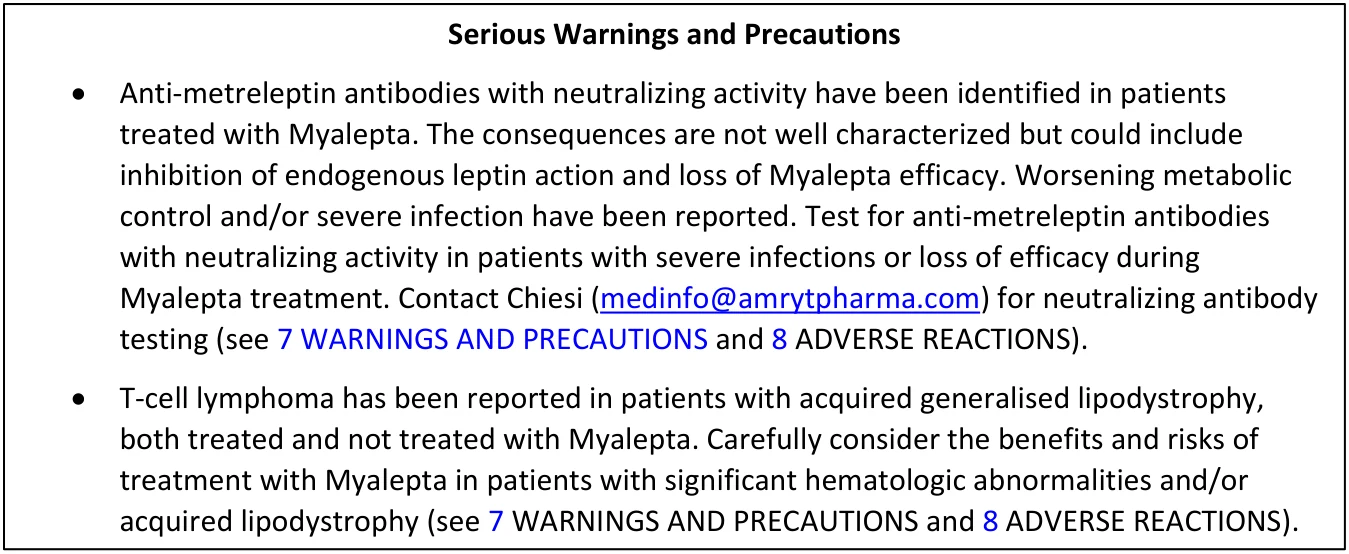
Table 1 Myalepta Recommended Dose
| BASELINE WEIGHT | STARTING DAILY DOSE (INJECTION VOLUME) | DOSE ADJUSTMENTS (INJECTION VOLUME) | MAXIMUM DAILY DOSE (INJECTION VOLUME) |
|---|---|---|---|
| Males and Females ≤40 kg | 0.06 mg/kg (0.012 mL/kg) | 0.02 mg/kg (0.004 mL/kg) | 0.13 mg/kg (0.026 mL/kg) |
| Males >40 kg | 2.5 mg (0.5 mL) | 1.25 mg (0.25 mL) to 2.5 mg (0.5 mL) | 10 mg (2 mL) |
| Females >40 kg | 5 mg (1 mL) | 1.25 mg (0.25 mL) to 2.5 mg (0.5 mL) | 10 mg (2 mL) |
Dosage Adjustment
Based on clinical response (e.g., inadequate metabolic control) or other consideration (e.g., tolerability issues, excessive weight loss, especially in paediatric patients), the dose may be decreased or increased by the recommended dose adjustment levels to the maximum dose listed in Table 1. The maximum tolerated dose may be less than the maximum daily dose outlined in Table 1, as evidenced by excessive weight loss, even if metabolic response is incomplete.
A minimum clinical response is defined as at least:
- 0.5% haemoglobin A1c (HbA1c) reduction and/or 25% reduction in insulin requirements;
and/or
- 15% reduction in triglycerides.
If clinical response is not seen after 6 months of treatment the physician should ensure that the patient is compliant with the administration technique, is receiving the correct dose and is adherent to diet.
Myalepta dose increases in adults and children based on incomplete clinical response can be considered after a minimum of 6 months following initiation of treatment.
Reductions in HbA1c and triglycerides may not be seen in children as metabolic abnormalities may not be present at the start of treatment. It is anticipated that most children will require increasing per kg dose, especially as they reach puberty. Increasing abnormalities of triglycerides and HbA1c may be seen which may require a dose increase. Dose adjustments in children without metabolic abnormalities should primarily be made according to weight change.
Dose increases should not be made more frequently than every 4 weeks. Dose decreases based on weight loss may be made weekly.
The once daily dose of Myalepta can be increased by increments as shown in Table 1 to a maximum daily dose.
Table 2 Starting dose calculation
| Weight and gender | Starting dose calculation |
|---|---|
| For males and females ≤ 40 kg once daily dose | Weight (kg) x 0.06 mg/kg = Individual patient daily starting dose in mg Weight (kg) x 0.012 mL/kg = Individual patient daily starting volume to inject in mL Example: 25 kg patient is initiated at 0.06 mg/kg of Myalepta. The individual patient dose = 1.5 mg 25 kg patient is initiated at 0.012 mL/kg = 0.3 mL of Myalepta solution to inject |
| For males > 40 kg once daily dose | Individual patient once daily dose in mg = 2.5 mg Amount to inject once daily dose = 0.5 mL |
| For females > 40 kg once daily dose | Individual patient once daily dose in mg = 5 mg Amount to inject once daily dose = 1 mL |
Special Populations
Pediatrics: The safety and efficacy of Myalepta in children aged 0 to 2 years with generalised LD and children aged 0 to 12 years with partial LD has not been established. Very limited data are available in children with generalised LD < 6 years of age (n=5; range: 1-4 years). Very limited data are available in children with partial LD <18 years of age (n=5; range: 15-17 years). Myalepta lyophilized powder when reconstituted with the diluent BWFI (benzyl alcohol preserved) should not be administered in patients under 3 years of age.
Geriatrics (≥65 years old): Clinical trials of Myalepta did not include sufficient numbers of patients aged 65 and older (n=1) to determine whether they respond differently from younger patients.
Renal impairment: Myalepta has not been studied in patients with impaired renal function.
Hepatic impairment: Myalepta has not been studied in patients with impaired hepatic function.
4.3 Reconstitution
Instruct patients to follow the directions below for reconstitution of the lyophilized powder. Patients should also be directed to the Educational Materials at (https://www.medisonpharma.com/product-monographs/):
- a) Remove the vial containing the Myalepta lyophilized powder from the refrigerator and allow the vial to warm to room temperature (20°C to 25°C) prior to reconstitution.
- b) Visually inspect the vial containing Myalepta. The cake of lyophilized powder should be intact and white in colour.
- c)
Myalepta 3 mg powder for solution for injection – for single use
Using a 1 mL syringe with a 21 gauge or smaller diameter needle, withdraw 0.6 mL of preservative-free sterile water for injection (SWFI) only. Do not reconstitute with other diluents.
Myalepta 5.8 mg powder for solution for injection – for single use
Using a 3 mL syringe with a 21 gauge or smaller diameter needle, withdraw 1.1 mL of preservative-free sterile water for injection (SWFI) only. Do not reconstitute with other diluents.
Myalepta 3 mg and 5.8 mg should be used immediately, and any remaining reconstituted solution should be discarded.
Myalepta 11.3 mg powder for solution for injection – For multi-use
Using a 3 mL syringe with a 21 gauge or smaller diameter needle, withdraw 2.2 mL of bacteriostatic water for injection (BWFI).
BWFI diluent contains 0.9% benzyl alcohol as a preservative.
Myalepta 11.3 mg reconstituted with BWFI should be used within 3 days of reconstitution when stored at 2oC to 8 oC and protected from light.
In patients under 3 years of age or with known hypersensitivity to benzyl alcohol, Myalepta 3 mg, 5.8 mg, and 11.3 mg vials must be reconstituted with SWFI (see 7 WARNINGS AND PRECAUTIONS).
Myalepta which has been reconstituted with SWFI must be used immediately and any unused portion discarded. Use of other reconstitution diluents should be avoided.
- d) Inject the SWFI or BWFI into the vial containing the lyophilized powder of Myalepta, slowly injecting down the side of the vial. It is normal for some bubbles to form.
- e) Remove the needle and syringe from the vial and gently swirl the contents to reconstitute. Do not shake or vigorously agitate. When properly mixed, the Myalepta reconstituted solution should be clear and free of clumps or dry powder, bubbles or foam. Do not use the solution if discoloured or cloudy, or if particulate matter remains.
- f) After reconstitution each mL contains 5mg of Myalepta.
- g)
Regarding the compatibility of Myalepta reconstituted solution with other solutions:
- Do not mix with, or transfer into, the contents of another vial of Myalepta.
- Do not add other medications, including insulin. Use a separate syringe for insulin injections.
Table 3 Required syringe for Myalepta reconstitution with SWFI or BWFI
| Syringe | Needle gauge and length |
| Myalepta 3 mg powder for solution for injection | |
| 1.0 mL | 21 gauge 40 mm needle |
| Myalepta 5.8 mg powder for solution for injection | |
| 3.0 mL | 21 gauge 40 mm needle |
| Myalepta 11.3 mg powder for solution for injection | |
| 3.0 mL | 21 gauge 40 mm needle |
Table 4 Required administration syringe per Myalepta dose
| Syringe | Needle gauge and length | Myalepta dose range to be administered |
| 0.3 mL U100 Insulin Syringe | 31 gauge 8 mm needle | For doses of: ≤ 1.5 mg /≤ 0.3 mL volume daily |
| 1.0 mL | 30 gauge 13 mm needle | For doses of: > 1.5 mg – 5 mg / 0.3 – 1.0 mL volume daily |
3.0 mL OR 2 x 1.0 mL* | 30 gauge 13 mm needle | For doses of: > 5 mg – 10 mg / > 1.0 mL volume daily |
*Doses exceeding 1mL can be administered as two injections using two 1.0 mL syringes.
For patients weighing less than 40 kg, actual body weight at initiation of therapy should be used to calculate dose; of these, in patients weighing less than or equal to 25 kg, refer to Table 5 for the starting dose.
Table 5 Conversion table for the 0.3 mL U100 insulin syringe
| Weight of child | Dose of Myalepta | Actual amount of solution* | Rounded amount of solution | ‘Unit’ measurement volume in 0.3 mL syringe to inject |
|---|---|---|---|---|
| 9 kg | 0.54 mg | 0.108 mL | 0.10 mL | 10 |
| 10 kg | 0.60 mg | 0.120 mL | 0.12 mL | 12 |
| 11 kg | 0.66 mg | 0.132 mL | 0.13 mL | 13 |
| 12 kg | 0.72 mg | 0.144 mL | 0.14 mL | 14 |
| 13 kg | 0.78 mg | 0.156 mL | 0.15 mL | 15 |
| 14 kg | 0.84 mg | 0.168 mL | 0.16 mL | 16 |
| 15 kg | 0.90 mg | 0.180 mL | 0.18 mL | 18 |
| 16 kg | 0.96 mg | 0.192 mL | 0.19 mL | 19 |
| 17 kg | 1.02 mg | 0.204 mL | 0.20 mL | 20 |
| 18 kg | 1.08 mg | 0.216 mL | 0.21 mL | 21 |
| Weight of child | Dose of Myalepta | Actual amount of solution* | Rounded amount of solution | ‘Unit’ measurement volume in 0.3 mL syringe to inject |
|---|---|---|---|---|
| 19 kg | 1.14 mg | 0.228 mL | 0.22 mL | 22 |
| 20 kg | 1.20 mg | 0.240 mL | 0.24 mL | 24 |
| 21 kg | 1.26 mg | 0.252 mL | 0.25 mL | 25 |
| 22 kg | 1.32 mg | 0.264 mL | 0.26 mL | 26 |
| 23 kg | 1.38 mg | 0.276 mL | 0.27 mL | 27 |
| 24 kg | 1.44 mg | 0.288 mL | 0.28 mL | 28 |
| 25 kg | 1.50 mg | 0.300 mL | 0.30 mL | 30 |
*Note: Initial and dose increments should be rounded down to the nearest 0.01 mL
The once daily dose of Myalepta can be increased by increments as shown in Table 6 to a maximum daily dose.
Table 6 Dose adjustment calculation
Adjust dose as follows (if necessary) | Action |
| Males and females ≤ 40 kg | Weight (kg) x 0.02 mg/kg = amount of dose adjustment in mg Total daily volume to be injected is total dose in mg divided by 5. Example: A 15 kg patient is initiated at 0.06 mg/kg of Myalepta. The individual patient dose = 0.9 mg. A dose increment of 0.02 mg/kg increases the daily dose to 0.08 mg/kg = 1.2 mg. Total daily volume to be injected is total dose in mg divided by 5, in this case it is 1.2 mg/5 = 0.24 mL which equals 24 units on the 0.3 mL insulin syringe. The maximum daily dose in males and females is 0.13 mg/kg or 0.026 mL/kg injection volume. |
| Both males and females > 40 kg | For all patients weighing more than 40 kg an incremental adjustment increase in daily dose would be 1.25 mg or 0.25 mL injection volume. Total daily volume to be injected is total dose in mg divided by 5. Example: A male patient is initiated at 2.5 mg of Myalepta daily. A dose increment of 1.25 mg increases the daily dose to 3.75 mg. Total daily volume to be injected is 3.75 mg/5 = 0.75 mL. The maximum daily dose in males and females is 10 mg or 2 mL injection volume. |
4.4 Administration
Myalepta should be administered once daily at the same time every day. Myalepta can be administered any time of day without regard to the timing of meals.
Healthcare practitioners should instruct patients and caregivers on the proper subcutaneous injection technique with care to avoid intramuscular injection in patients with minimal subcutaneous adipose tissue. Patients and/or carers should prepare and administer the first dose of the medicinal product under the supervision of a qualified healthcare professional. Never administer Myalepta intravenously or intramuscularly.
Instruct patients to follow the recommended injection technique:
- a) Using a syringe with a needle appropriate for subcutaneous injection (see Table 4), withdraw the prescribed dose of Myalepta reconstituted solution.
- b) Remove any large air pockets or large bubbles from the filled syringe prior to administration. Some small bubbles may remain in the syringe.
- c) Administer Myalepta into the subcutaneous tissue of the abdomen, thigh or upper arm. Advise patients to use a different injection site each day when injecting in the same region. After choosing an injection site, pinch the skin and at a 45-degree angle, inject the Myalepta reconstituted solution subcutaneously. Avoid intramuscular injection, especially in patients with minimal subcutaneous adipose tissue.
- d) Doses exceeding 1 mL can be administered as two injections (the total daily dose divided equally) to minimize potential injection-site discomfort due to injection volume. When dividing doses due to volume, doses can be administered one after the other.
- e) In pediatric patients, small volumes for administration can result in medication errors when measured incorrectly. Smaller syringe sizes may be more appropriate for pediatric patients weighing less than or equal to 25 kg. Ensure the proper size syringe is selected.
- f) When small doses/volumes are prescribed (e.g. children under 3 years of age where BWFI cannot be used), the vials will remain almost completely filled with product after withdrawal of the required dose. Remaining reconstituted product with WFI should be discarded after use.
Do not mix Myalepta with insulin. Use a separate syringe for each medication. If Myalepta and insulin are administered at the same time of day, they may be injected in the same body area using two different injection sites.
Rotation of injection sites is recommended in patients co-administering insulin (or other subcutaneous medicinal products) and Myalepta.
4.5 Missed Dose
Instruct patients that if a dose is missed, administer the dose as soon as noticed, and resume the normal dosing schedule the next day. A double dose should not be administered to make up for a missed dose.
5 OVERDOSAGE
In one post marketing case, an infant was exposed to a 10-fold overdose of Myalepta for 8 months. In this case, prolonged overdose was associated with severe anorexia causing vitamin and zinc deficiencies, iron deficiency anaemia, protein calorie malnutrition, and poor weight gain, which resolved following supportive treatment and dose adjustment (see 7 WARNINGS AND PRECAUTIONS and 8 ADVERSE REACTIONS).
In case of overdose, patients should be closely monitored for signs or symptoms of adverse reactions and supportive treatment initiated.
| For management of a suspected drug overdose, contact your regional poison control centre. |
|---|
6 DOSAGE FORMS, STRENGTHS, COMPOSITION AND PACKAGING
Table 7 Dosage Forms, Strengths, Composition and Packaging
The cake of lyophilised powder should be intact and white in colour.
Myalepta 3 mg/ vial powder for solution for injection
Type I glass vial (3 mL) with a chlorobutyl rubber stopper and an aluminium seal/red plastic flip off cap.
Myalepta 5.8 mg/ vial powder for solution for injection
Type I glass vial (3 mL) with a chlorobutyl rubber stopper and an aluminium seal/blue plastic flip off cap.
Myalepta 11.3 mg/ vial powder for solution for injection
Type I glass vial (5 mL) with a bromobutyl rubber stopper and an aluminium seal/white plastic flip off cap.
Pack sizes of 1 or 30 vials.
7 WARNINGS AND PRECAUTIONS
General
Benzyl alcohol toxicity
Myalepta contains benzyl alcohol when reconstituted with BWFI. Myalepta contains no preservative when reconstituted with sterile Water for Injection (SWFI). The preservative benzyl alcohol has been associated with serious adverse events and death in pediatric patients, particularly in neonates and premature infants.
Medication Dosing Errors
In pediatric patients, small volumes for administration can result in medication errors. In a post marketing case, an infant was exposed to a 10-fold overdose of Myalepta for 8 months. In this case, prolonged overdose was associated with severe anorexia causing vitamin and zinc deficiencies, iron deficiency anaemia, protein calorie malnutrition, and poor weight gain, which resolved following supportive treatment and dose adjustment.
Carcinogenesis and Mutagenesis
T cell lymphoma
Three cases of T-cell lymphoma have been reported in the Myalepta lipodystrophy clinical studies; all three patients had acquired generalised lipodystrophy. Two of these patients were diagnosed with
| Route of Administration | Dosage Form / Strength/Composition | Non-medicinal Ingredients |
| Subcutaneous injection | 3mg/ vial, 5.8 mg/ vial and 11.3 mg/ vial powder for solution for injection | Glutamic acid, glycine, polysorbate 20, sodium hydroxide, sucrose |
peripheral T-cell lymphoma while receiving Myalepta. Both had immunodeficiency and significant hematologic abnormalities including severe bone marrow abnormalities before the start of Myalepta treatment. A separate case of anaplastic large cell lymphoma was reported in a patient receiving Myalepta who did not have hematological abnormalities before treatment.
Lymphoproliferative disorders, including lymphomas, have been reported in patients with acquired generalised lipodystrophy not treated with Myalepta. A causal relationship between Myalepta treatment and the development and/or progression of lymphoma has not been established. Acquired lipodystrophies are associated with autoimmune disorders, and autoimmune disorders are associated with an increased risk of malignancies including lymphomas.
The benefits and risks of Myalepta treatment should be carefully considered in patients with acquired lipodystrophy and/or those with significant hematologic abnormalities (including leukopenia, neutropenia, bone marrow abnormalities, lymphoma, and/or lymphadenopathy), (see 3 SERIOUS WARNINGS AND PRECAUTIONS BOX and 8 ADVERSE REACTIONS).
Driving and Operating Machinery
Exercise caution when driving or operating a vehicle or potentially dangerous machinery. Myalepta has minor influence on the ability to drive and use machines due to fatigue and dizziness. (see 8 ADVERSE REACTIONS).
Endocrine and Metabolism
Hypoglycaemia with concomitant use of insulin and other antidiabetic medication
There is a risk of hypoglycaemia in patients treated with Myalepta who are on antidiabetic medications, in particular but not limited to insulin or insulin secretagogues (e.g. sulphonylureas). Large dose reductions of baseline insulin requirements may be needed in the first 2 weeks of treatment. Dose adjustments of other antidiabetic medications may also be needed to minimise the risk of hypoglycaemia.
Closely monitor blood glucose in patients on concomitant insulin therapy, especially those on high doses, or insulin secretagogues and combination treatment. Patients and carers should be advised to be aware of the signs and symptoms of hypoglycaemia. Hypoglycemia management should be reviewed and reinforced when initiating Myalepta therapy (see 8 ADVERSE REACTIONS).
Hepatic/Biliary/Pancreatic
Acute pancreatitis
Discontinuation of Myalepta may result in worsening hypertriglyceridaemia and associated pancreatitis, particularly in patients with risk factors for pancreatitis (e.g. history of pancreatitis, severe hypertriglyceridaemia).
If a patient develops pancreatitis whilst being treated with MYALEPTA, it is advised that Myalepta be continued uninterrupted, as stopping treatment abruptly may exacerbate the condition. When discontinuing Myalepta, tapering of the dose over a two week period is recommended in conjunction with a low fat diet, see 4.2 Recommended Dose and Dosage Adjustment. During tapering, monitor triglyceride levels and consider initiating or adjusting the dose of lipid lowering medicinal products as needed. Signs and/or symptoms consistent with pancreatitis should prompt an appropriate clinical evaluation (see 8 ADVERSE REACTIONS).
Immune
Hypersensitivity reactions
There have been reports of generalised hypersensitivity (e.g. anaphylaxis, urticaria or generalised rash) in patients using metreleptin. Anaphylactic reactions may follow immediately after administration of the medicine. If an anaphylactic reaction or other serious allergic reaction occurs, administration should be permanently discontinued immediately and appropriate therapy initiated.
Antidrug Antibodies
In clinical trials, antidrug antibodies (ADA) to Myalepta occurred in 86% of a subset of evaluable patients in the GL and PL subgroup (48/56 patients). Neutralizing activity has been observed in 95% of patients in an extended subset (78/82 patients; see 8.2 Clinical Trial Adverse Reactions).
Serious and/or severe infections that were temporally associated with neutralizing antibodies against Myalepta occurred in 6 GL patients, and 2 PL patients in the PL subgroup. LD patients with a blocking activity against Myalepta and concurrent infections responded to standard of care treatment. In patients with serious and severe infections, continuation of Myalepta should be at the discretion of the prescriber. An association between the development of a blocking activity against Myalepta and serious and severe infections cannot be excluded.
Anti-metreleptin antibodies with neutralizing activity could inhibit endogenous leptin action and/or result in loss of Myalepta efficacy.
Test for anti-metreleptin antibodies with neutralizing activity in patients with severe infections or loss of efficacy during Myalepta treatment. Contact Chiesi (medinfo@amrytpharma.com) for neutralizing antibody testing (see 3 SERIOUS WARNINGS AND PRECAUTIONS BOX).
Autoimmune Diseases
Autoimmune disorder progression / flares, including severe autoimmune hepatitis, have been observed in some patients treated with Myalepta. Leptin plays a role in immune system homeostasis. Acquired lipodystrophies are associated with autoimmune disorders including autoimmune hepatitis and membranoproliferative glomerulonephritis. Cases of progression of autoimmune hepatitis and membranoproliferative glomerulonephritis (associated with massive proteinuria and renal failure) were observed in some patients with acquired generalised lipodystrophy treated with Myalepta. A causal relationship between Myalepta treatment and the development and/or progression of autoimmune disease has not been established.
Close monitoring for underlying autoimmune disorder flares (sudden and severe onset of symptoms) is recommended. The potential benefits and risks of Myalepta treatment should be carefully considered in patients with autoimmune diseases.
Reproductive Health: Female and Male Potential
- Fertility
Unplanned pregnancies may occur due to effects on luteinizing hormone (LH).
7.1 Special Populations
7.1.1 Pregnant Women
Myalepta is not recommended during pregnancy and in women of childbearing potential not using contraception. Abortions, stillbirths and preterm deliveries have been reported in women exposed to metreleptin during pregnancy. In two pre- and postnatal development studies conducted in mice, administration of metreleptin caused prolonged gestation and dystocia resulting in maternal death during parturition and lower survival of offspring in the immediate postnatal period at doses starting approximately at the maximum recommended clinical dose (see 16 NON-CLINICAL TOXICOLOGY).
7.1.2 Breast-feeding
It is unknown whether metreleptin or its metabolites are excreted in human milk; however, endogenous leptin is present in human milk. There are no available data on the effects of metreleptin on the breastfed infant or the effects on milk production.
A risk to newborns/infants cannot be excluded.
A decision must be made whether to discontinue breast-feeding or to discontinue/abstain from Myalepta therapy, taking into account the benefit of breast-feeding for the child and the benefit of therapy for the woman.
7.1.3 Pediatrics
The safety and efficacy of Myalepta in children aged 0 to 2 years with generalised LD and children aged 0 to 12 years with partial LD has not been established. Very limited data are available in children with generalised LD < 6 years of age (n=5; range: 1-4 years). Very limited data are available in children with partial LD <18 years of age (n=5; range: 15-17 years).
Myalepta lyophilized powder when reconstituted with the diluent BWFI (benzyl alcohol preserved) should not be administered in patients under 3 years of age.
7.1.4 Geriatrics
Clinical trials of Myalepta did not include sufficient numbers of patients aged 65 and older (n=1) to determine whether they respond differently from younger patients.
8 ADVERSE REACTIONS
8.1 Adverse Reaction Overview
The most commonly reported adverse events were weight decreased (17%), hypoglycaemia (14%), and fatigue (7%) (see 4.1 Dosing Considerations, 7 WARNINGS AND PRECAUTIONS and 8.2 Clinical Trial Adverse Reactions).
In the clinical trials (study NIH 991265/20010769 and study FHA101), serious AEs reported in >1 GL patient were abdominal pain and pancreatitis (4 patients each, 5%); and pneumonia, sepsis, liver disorder (worsening underlying liver disease), cardiac failure and liver function test increased (2 patients each, 3%). The most common SAEs in the PL subgroup were abdominal pain (3 patients, 8%) and cellulitis (2 patients, 5%). Autoimmune diseases with cases of progression of autoimmune hepatitis and membranoproliferative glomerulonephritis (associated with massive proteinuria and renal failure) were observed in some patients with acquired generalised lipodystrophy treated with Myalepta (See 7 WARNINGS AND PRECAUTIONS).
Overall, 7 (6%) of the patients withdrew due to a treatment-emergent adverse event, including 6 (8%) of 75 patients with GL and 1 (3%) of 38 patients in the PL subgroup. The treatment-emergent adverse events leading to discontinuation in GL (reported in 1 patient each) were: diabetes mellitus inadequate control and blood triglycerides increased, renal failure, peripheral T-cell lymphoma unspecified, chronic hepatic failure, cardiac arrest, adenocarcinoma and in the PL subgroup the treatment-emergent adverse event leading to discontinuation was hypoxic-ischemic encephalopathy. Five (4%) of the patients died during the studies, including 4 out of the 6 patients with GL who withdrew due to a treatment-emergent adverse event (renal failure, chronic hepatic failure, cardiac arrest and adenocarcinoma) and the 1 patient in the PL subgroup (hypoxic-ischemic encephalopathy).
Adverse drug reactions identified in the post-market setting are described below in 8.5 Liver function
In Study NIH 991265/2001769, elevations of ALT or AST to a level above 5.0 x ULN were noted in 4 patients with GL. Three of these four patients had AEs reported in association with these elevations: hepatic enzyme increased, progression of underlying liver disease (liver disorder) and hypoalbuminemia, and ALT increased. All of these patients had hepatic disease at baseline, including autoimmune hepatitis, hepatic fibrosis, non-alcoholic steatohepatitis (NASH), hepatic steatosis, or hepatomegaly.
During Study FHA101, AEs of liver function test increased were reported in 2 patients in the GL group (in one of them AST was elevated to a level 5.0-20.0 x ULN) and 1 patient in the PL subgroup (elevation of both ALT and AST to a level 1.0-3.0 x ULN).
Proteinuria
In the NIH 991265/2001769 study, proteinuria was reported as an AE (1 of them SAE) in 5 patients in the GL group, all of whom had high protein excretion rates at baseline. There were no AEs of proteinuria in the PL subgroup.
Urinalysis data was not captured for patients in the FHA101 study.
Post-Market Adverse Reactions.
8.2 Clinical Trial Adverse Reactions
Clinical trials are conducted under very specific conditions. The adverse reaction rates observed in the clinical trials; therefore, may not reflect the rates observed in practice and should not be compared to the rates in the clinical trials of another drug. Adverse reaction information from clinical trials may be useful in identifying and approximating rates of adverse drug reactions in real-world use.
Safety and efficacy data were analysed in a subgroup of partial LD patients with the following characteristics: 12 years of age and above with leptin levels < 12 ng/mL, TG ≥ 5.65 mmol/l and/or HbA1c ≥ 6.5%.
A total of 113 patients (aged 1 year to 68 years) with generalised and partial LD received Myalepta during clinical studies. The duration of follow-up ranged from 79 days to 14 years, including 75 patients with GL and 38 patients in the PL subgroup.
The treatment-emergent adverse events identified in patients treated with Myalepta (frequencies ≥ 5%) are presented in Table 8.
Table 8 Treatment-emergent adverse events reported in clinical trials (studies NIH 991265/20010769, FHA101) (frequencies ≥ 5%)
| System Organ Class | MedDRA Preferred Term | Generalised Lipodystrophy (N=75) | Partial Lipodystrophy (N=38) | Overall (N=113) |
|---|---|---|---|---|
| n(%) | n(%) | n(%) | ||
| Gastrointestinal disorders | Abdominal pain | 13 (17.3%) | 7 (18.4%) | 20 (17.7%) |
| Constipation | 4 (5.3%) | 3 (7.9%) | 7 (6.2%) | |
| Nausea | 7 (9.3%) | 7 (18.4%) | 14 (12.4%) | |
| Vomiting | 3 (4.0%) | 4 (10.5%) | 7 (6.2%) | |
| General disorders and administration site conditions | Fatigue | 6 (8.0%) | 4 (10.5%) | 10 (8.8%) |
| Infections and infestations | Ear infection | 8 (10.7%) | 0 (0.0%) | 8 (7.1%) |
| Sinusitis | 2 (2.7%) | 4 (10.5%) | 6 (5.3%) | |
| Upper respiratory tract infection | 7 (9.3%) | 4 (10.5%) | 11 (9.7%) | |
| Urinary tract infection | 4 (5.3%) | 4 (10.5%) | 8 (7.1%) | |
| Investigations | Weight decreased | 18 (24.0%) | 2 (5.3%) | 20 (17.7%) |
| Metabolism and nutrition disorders | Decreased appetite | 8 (10.7%) | 1 (2.6%) | 9 (8.0%) |
| Hypoglycaemia | 12 (16.0%) | 9 (23.7%) | 21 (18.6%) | |
| Musculoskeletal and connective tissue disorders | Arthralgia | 7 (9.3%) | 3 (7.9%) | 10 (8.8%) |
| Back pain | 5 (6.7%) | 3 (7.9%) | 8 (7.1%) | |
| Pain in extremity | 4 (5.3%) | 2 (5.3%) | 6 (5.3%) | |
| Nervous system disorders | Headache | 9 (12.0%) | 1 (2.6%) | 10 (8.8%) |
| Psychiatric disorders | Anxiety | 6 (8.0%) | 2 (5.3%) | 8 (7.1%) |
| Respiratory, thoracic and mediastinal disorders | Cough | 4 (5.3%) | 2 (5.3%) | 6 (5.3%) |
| Skin and subcutaneous tissue disorders | Alopecia | 3 (4.0%) | 3 (7.9%) | 6 (5.3%) |
| Vascular disorders | Hypertension | 5 (6.7%) | 1 (2.6%) | 6 (5.3%) |
System organ classes and preferred terms are coded using the MedDRA dictionary (Version 19.0)
Acute pancreatitis
In clinical studies, 6 patients (4 with generalised LD and 2 with partial LD), experienced treatment-emergent pancreatitis. All patients had a history of pancreatitis and hypertriglyceridaemia. Abrupt interruption and/or non-compliance with metreleptin dosing was suspected to have contributed to the occurrence of pancreatitis in 2 patients (See 7 WARNINGS AND PRECAUTIONS).
Hypoglycaemia
Myalepta may decrease insulin resistance in diabetic patients, resulting in hypoglycaemia in patients with LD and co-existing diabetes. Hypoglycaemia was reported in 12 (16%) of the 75 GL patients. Among the 38 patients in the PL subgroup, 9 (24%) experienced hypoglycaemia on study, w All reports were mild to moderate in severity, and none led to treatment withdrawal.
There was no pattern of onset; hypoglycemia events occurred at varying times relative to treatment start from the first week to 2 to 10 years after treatment start. Generally, the events were managed by food intake, and 4 patients were reported to have a modification in their antidiabetic medication as action for the hypoglycaemia.
T-cell lymphoma
Three cases of T-cell lymphoma have been reported while using metreleptin in clinical studies. All three patients had acquired generalised LD. Two of these patients were diagnosed with peripheral T-cell lymphoma while receiving the medicinal product. Both had immunodeficiency and significant haematological abnormalities including severe bone marrow abnormalities before the start of treatment. A separate case of anaplastic large cell lymphoma was reported in a paediatric patient receiving the medicinal product who did not have haematological abnormalities before treatment (see 3 SERIOUS WARNINGS AND PRECAUTIONS BOX and 7 WARNINGS AND PRECAUTIONS).
Immunogenicity
As with all therapeutic proteins, there is a potential for immunogenicity. The detection of antibody formation is highly dependent on the sensitivity and specificity of the assay. The immunogenicity assays utilized in clinical trials lacked sensitivity, resulting in potential underestimation of the number of samples positive for anti-metreleptin antibodies with neutralizing activity. Additionally, the observed incidence of antibody (including neutralizing antibody) positivity in an assay may be influenced by several factors including assay methodology, sample handling, timing of sample collection, concomitant medications, and underlying disease. For these reasons, comparison of the incidence of antibodies to metreleptin with the incidence of antibodies to other products may be misleading.
Data for binding ADAs was available for 56 (50%) of the 113 patients in the GL and PL subgroups combined. Among these 56 patients, 48 (86%) were positive for ADAs and 8 (14%) were negative. Blocking (neutralizing) activity was observed in 95% of an extended set of patients (78 out of 82 patients). The incompleteness of the current immunogenicity database precludes understanding of the magnitude and persistence of the observed ADA responses.
Peak ADA titer data were available for a subset of 31 patients with GL and 12 patients in the PL subgroup. Across these 43 patients, peak titres were ≤125 for the majority of patients (23, 53%); peak titres were 625 or 3125 for 15 patients (35%) and ≥15,625 for 5 patients (12%).
Serious and/or severe infections that were temporally associated with blocking (neutralising) activity against metreleptin occurred in 6 GL patients and in 2 patients in the PL subgroup. These events included 1 episode in 1 patient of serious and severe appendicitis, 2 episodes in patients of serious and severe pneumonia, a single episode of serious and severe sepsis and non-serious severe gingivitis in 1 patient and 6 episodes of serious and severe sepsis or bacteraemia, 2 episodes of serious and severe cellulitis in 2 patients, one of them together with serious and severe pharyngitis due to severe streptococcal infection, the other developed to serious and severe osteomyelitis, and 1 episode of non-serious severe ear infection in 1 patient. LD patients with a blocking activity against metreleptin and concurrent infections responded to standard of care treatment (see 7 WARNINGS AND PRECAUTIONS).
Injection site reactions
Injection site reactions were reported in 3.4% of patients with LD treated with metreleptin. All events reported in clinical studies in patients with LD have been mild or moderate in severity and none have led to treatment discontinuation. Most events occurred during the initial 1-2 months of initiation of treatment.
8.2.1 Clinical Trial Adverse Reactions – Pediatrics
Across two completed clinical studies (NIH 991265/20010769 and FHA101), there were 53 paediatric patients (5 in the subgroup of partial LD patients and 48 with generalised LD) enrolled and exposed to Myalepta. Very limited data are available in children with generalised LD < 6 years of age (n=5; range: 1-4 years). Very limited data are available in children with partial LD <18 years of age (n=5; range: 15-17 years). Overall, the observed safety and tolerability profile of Myalepta appears similar in children and adults.
In generalised LD patients, the overall incidence of adverse reactions appears similar regardless of age. Serious adverse reactions were reported in 2 patients, worsening hypertension and anaplastic large cell lymphoma.
In partial LD patients, assessment across age groups is limited, due to the small sample size.
8.3 Less Common Clinical Trial Adverse Reactions
Table 9 Treatment related adverse reactions that were reported in clinical trials (studies NIH 991265/20010769, FHA101) with a frequency below 5%
| System Organ Class | MedDRA Preferred Term | Generalised Lipodystrophy (N=75) | Partial Lipodystrophy (N=38) | Overall (N=113) | |||||
|---|---|---|---|---|---|---|---|---|---|
| n (%) | n (%) | n (%) | |||||||
| Blood and lymphatic system disorders | Iron deficiency anaemia | 1 (1.3%) | 0 (0.0%) | 1 (0.9%) | |||||
| Cardiac disorders | Tachycardia | 1 (1.3%) | 0 (0.0%) | 1 (0.9%) | |||||
| Gastrointestinal disorders | Abdominal pain | 1 (1.3%) | 1 (2.6%) | 2 (1.8%) | |||||
| Anal incontinence | 1 (1.3%) | 0 (0.0%) | 1 (0.9%) | ||||||
| Dyspepsia | 1 (1.3%) | 0 (0.0%) | 1 (0.9%) | ||||||
| Nausea | 2 (2.7%) | 2 (5.3%) | 4 (3.5%) | ||||||
| Vomiting | 1 (1.3%) | 0 (0.0%) | 1 (0.9%) | ||||||
| System Organ Class | MedDRA Preferred Term | Generalised Lipodystrophy (N=75) | Partial Lipodystrophy (N=38) | Overall (N=113) | |||||
|---|---|---|---|---|---|---|---|---|---|
| n (%) | n (%) | n (%) | |||||||
| General disorders and administration site conditions | Chest pain | 1 (1.3%) | 0 (0.0%) | 1 (0.9%) | |||||
| Injection site bruising | 1 (1.3%) | 1 (2.6%) | 2 (1.8%) | ||||||
| Injection site erythema | 2 (2.7%) | 0 (0.0%) | 2 (1.8%) | ||||||
| Injection site induration | 1 (1.3%) | 0 (0.0%) | 1 (0.9%) | ||||||
| Injection site inflammation | 1 (1.3%) | 0 (0.0%) | 1 (0.9%) | ||||||
| Injection site pain | 0 (0.0%) | 1 (2.6%) | 1 (0.9%) | ||||||
| Injection site reaction | 2 (2.7%) | 2 (5.3%) | 4 (3.5%) | ||||||
| Injection site urticaria | 1 (1.3%) | 1 (2.6%) | 2 (1.8%) | ||||||
| Investigations | Liver function test increased | 1 (1.3%) | 0 (0.0%) | 1 (0.9%) | |||||
| Neutralising antibodies | 4 (5.3%) | 0 (0.0%) | 4 (3.5%) | ||||||
| Metabolism and nutrition disorders | Decreased appetite | 4 (5.3%) | 0 (0.0%) | 4 (3.5%) | |||||
| Musculoskeletal and connective tissue disorders | Arthralgia | 0 (0.0%) | 1 (2.6%) | 1 (0.9%) | |||||
| Neoplasms benign, malignant and unspecified (incl cysts and polyps) | Anaplastic large-cell lymphoma | 1 (1.3%) | 0 (0.0%) | 1 (0.9%) | |||||
| Nervous system disorders | Disturbance in attention | 0 (0.0%) | 1 (2.6%) | 1 (0.9%) | |||||
| Dizziness | 0 (0.0%) | 1 (2.6%) | 1 (0.9%) | ||||||
| Headache | 1 (1.3%) | 1 (2.6%) | 2 (1.8%) | ||||||
| Renal and urinary disorders | Urinary incontinence | 1 (1.3%) | 0 (0.0%) | 1 (0.9%) | |||||
| Reproductive system and breast disorders | Menorrhagia | 2 (2.7%) | 0 (0.0%) | 2 (1.8%) | |||||
| Vaginal haemorrhage | 1 (1.3%) | 0 (0.0%) | 1 (0.9%) | ||||||
| Respiratory, thoracic and mediastinal disorders | Respiratory distress | 1 (1.3%) | 0 (0.0%) | 1 (0.9%) | |||||
| Skin and subcutaneous tissue disorders | Alopecia | 2 (2.7%) | 2 (5.3%) | 4 (3.5%) | |||||
| Night sweats | 0 (0.0%) | 1 (2.6%) | 1 (0.9%) | ||||||
| Vascular disorders | Hypertension | 1 (1.3%) | 0 (0.0%) | 1 (0.9%) | |||||
System organ classes and preferred terms are coded using the MedDRA dictionary (Version 19.0)
Table 10 Serious or severe treatment-emergent adverse events that were reported in clinical trials with a frequency less than 5% (2 to 5 patients)
| System Organ Class | MedDRA Preferred Term | Generalised Lipodystrophy (N=75) | Partial Lipodystrophy (N=38) | Overall (N=113) |
|---|---|---|---|---|
| n(%) | n(%) | n(%) | ||
| Cardiac disorders | Cardiac failure | 2 (2.7%) | 0 (0.0%) | 2 (1.8%) |
| Gastrointestinal disorders | Lower gastrointestinal haemorrhage | 1 (1.3%) | 1 (2.6%) | 2 (1.8%) |
| Nausea | 2 (2.7%) | 0 (0.0%) | 2 (1.8%) | |
| Pancreatitis | 4 (5.3%) | 1 (2.6%) | 5 (4.4%) | |
| Vomiting | 2 (2.7%) | 0 (0.0%) | 2 (1.8%) | |
| Hepatobiliary disorders | Liver disorder | 2 (2.7%) | 0 (0.0%) | 2 (1.8%) |
| Infections and infestations | Cellulitis | 0 (0.0%) | 2 (5.3%) | 2 (1.8%) |
| Pneumonia | 3 (4.0%) | 0 (0.0%) | 3 (2.7%) | |
| Sepsis | 2 (2.7%) | 0 (0.0%) | 2 (1.8%) | |
| Investigations | Liver function test increased | 2 (2.7%) | 0 (0.0%) | 2 (1.8%) |
| Neutralising antibodies | 4 (5.3%) | 0 (0.0%) | 4 (3.5%) | |
| Musculoskeletal and connective tissue disorders | Back pain | 1 (1.3%) | 2 (5.3%) | 3 (2.7%) |
| Pain in extremity | 3 (4.0%) | 0 (0.0%) | 3 (2.7%) | |
| Neoplasms benign, malignant and unspecified (incl cysts and polyps) | Peripheral T-cell lymphoma unspecified | 2 (2.7%) | 0 (0.0%) | 2 (1.8%) |
| Psychiatric disorders | Suicidal ideation | 1 (1.3%) | 1 (2.6%) | 2 (1.8%) |
| Renal and urinary disorders | End stage renal disease | 1 (1.3%) | 1 (2.6%) | 2 (1.8%) |
| Proteinuria | 2 (2.7%) | 0 (0.0%) | 2 (1.8%) | |
| Respiratory, thoracic and mediastinal disorders | Dyspnoea | 2 (2.7%) | 0 (0.0%) | 2 (1.8%) |
System organ classes and preferred terms are coded using the MedDRA dictionary (Version 19.0)
8.5 Abnormal Laboratory Findings: Hematologic, Clinical Chemistry and Other Quantitative Data
Clinical Trial Findings
Liver function
In Study NIH 991265/2001769, elevations of ALT or AST to a level above 5.0 x ULN were noted in 4 patients with GL. Three of these four patients had AEs reported in association with these elevations:
hepatic enzyme increased, progression of underlying liver disease (liver disorder) and hypoalbuminemia, and ALT increased. All of these patients had hepatic disease at baseline, including autoimmune hepatitis, hepatic fibrosis, non-alcoholic steatohepatitis (NASH), hepatic steatosis, or hepatomegaly.
During Study FHA101, AEs of liver function test increased were reported in 2 patients in the GL group (in one of them AST was elevated to a level 5.0-20.0 x ULN) and 1 patient in the PL subgroup (elevation of both ALT and AST to a level 1.0-3.0 x ULN).
Proteinuria
In the NIH 991265/2001769 study, proteinuria was reported as an AE (1 of them SAE) in 5 patients in the GL group, all of whom had high protein excretion rates at baseline. There were no AEs of proteinuria in the PL subgroup.
Urinalysis data was not captured for patients in the FHA101 study.
8.6 Post-Market Adverse Reactions
The following adverse reactions have been identified during post-approval use of Myalepta. Because these reactions are reported voluntarily from a population of uncertain size, it is not always possible to reliably estimate their frequency or establish a causal relationship to drug exposure.
- Incorrect dose administered, accidental overdose
- Injection site reaction, including inflammation and hyperpigmentation.
Medication Dosing Error
In one post marketing case, an infant was exposed to a 10-fold overdose of MYALEPTA for 8 months. In this case, prolonged overdose was associated with severe anorexia causing vitamin and zinc deficiencies, iron deficiency anaemia, protein calorie malnutrition, and poor weight gain, which resolved following supportive treatment and dose adjustment (see 7 WARNINGS AND PRECAUTIONS).
9 DRUG INTERACTIONS
9.2 Drug Interactions Overview
No interaction studies have been performed in humans.
Leptin is a cytokine and has the potential to alter the formation of cytochrome P450 (CYP450) enzymes. Since it cannot be excluded that metreleptin may reduce exposure to substrates of CYP3A through enzyme induction, the efficacy of hormonal contraceptives may be reduced if co-administered with metreleptin. Therefore, an additional non-hormonal contraceptive method should be considered during treatment. The effect of metreleptin on CYP450 enzymes may be clinically relevant for CYP450 substrates with narrow therapeutic index, where the dose is individually adjusted. Upon initiation or discontinuation of metreleptin, in patients being treated with these types of agents, therapeutic monitoring of effect (e.g., warfarin), or drug concentrations (e.g. cyclosporin or theophylline) should be performed and the individual dose of the agent adjusted as needed. When starting therapy with Myalepta there is a risk of hypoglycaemia in patients who are on anti diabetic medicinal products, in particular insulin or insulin secretagogues.
9.3 Drug-Behavioural Interactions
Interactions with behaviours have not been established.
9.4 Drug-Drug Interactions
Interactions with other drugs have not been established.
9.5 Drug-Food Interactions
Interactions with food have not been established.
9.6 Drug-Herb Interactions
Interactions with herbal products have not been established.
9.7 Drug-Laboratory Test Interactions
Interactions with laboratory tests have not been established.
10 CLINICAL PHARMACOLOGY
10.1 Mechanism of Action
Metreleptin mimics the physiological effects of leptin by binding to and activating the human leptin receptor (ObR), which belongs to the Class I cytokine family of receptors that signals through the JAK/STAT transduction pathway.
Only the metabolic effects of metreleptin have been studied.
10.2 Pharmacodynamics
No formal pharmacodynamic studies have been performed with metreleptin.
10.3 Pharmacokinetics
There are very limited data on the pharmacokinetics of metreleptin following subcutaneous (SC) administration in patients with lipodystrophy, and the impact of disease etiology (generalised or partial LD) on metreleptin PK is unknown. The metreleptin assay measures both endogenous leptin as well as exogenously administered metreleptin.
Table 11 Pooled Summary of Metreleptin Pharmacokinetic Parameters in four adult partial lipodystrophy patients and one pediatric generalised lipodystrophy patient 16 years of age.
Cmax (ng/mL/kg) | Tmax (h) | AUC0-10 (ng•h/mL/kg) | |
| Baseline adjusted and dose normalised mean (SD) | 9.02 (5.555) | 4.00 (2.0, 6.0) | 58.55 (32.564) |
Cmax: Observed peak serum metreleptin concentration
Tmax: Time of peak serum metreleptin concentration (Cmax), expressed as median (range)
AUC0-10: Area under the concentration versus time curve from time 0 to 10 hours
Absorption
Metreleptin exposure increased in an approximately dose-proportional fashion following SC administration of single doses ranging from 0.01 to 0.3 mg/kg in healthy subjects. The mean metreleptin Tmax was 4.0 to 4.8 hours in healthy subjects. The median Tmax of metreleptin was 4 hours (range: 2 to 8 hours; N=5) following single-dose administration of metreleptin in lipodystrophy patients (Table 11).
Distribution
Observed apparent volume of distribution during the terminal phase (Vz/F) following SC bolus dosing in healthy subjects ranged from 803.8 mL/kg, to 444.4 mL/kg, at doses ranging from 0.01 to 0.3 mg/kg, respectively.
Metabolism
No formal metabolism studies have been conducted.
Elimination
Non-clinical data indicate renal clearance is the major route of metreleptin elimination, with no apparent contribution of systemic metabolism or degradation. Following single subcutaneous doses of 0.01 to 0.3 mg/kg metreleptin in healthy adult subjects, the half-life was 3.8 to 4.7 hours. The half-life of metreleptin in LD patients is unknown. A higher metreleptin exposure is observed with higher ADA levels.
Special Populations and Conditions
- Pediatrics
Pharmacokinetic data were collected for 1 pediatric patient 16 years of age with generalised lipodystrophy. Metreleptin exposure and ADA levels increased from baseline to 3 months.
Very limited data are available in children with generalised LD < 6 years of age (n=5; range: 1-4 years)). Very limited data are available in children with partial LD <18 years of age (n=5; range: 15-17 years). Health Canada has not authorized an indication for use in general LD patients < 2 years of age and for partial LD patients < 12 years of age.
- Age, Sex, Race, Body Mass Index Specific clinical studies have not been conducted to assess the effect of age, sex, race, or body mass index on the pharmacokinetics of metreleptin in patients with lipodystrophy.
- Hepatic Insufficiency No formal pharmacokinetic studies were conducted in patients with hepatic impairment.
- Renal Insufficiency No formal pharmacokinetic studies were conducted in patients with renal impairment.
11 STORAGE, STABILITY AND DISPOSAL
- Myalepta should be stored in the refrigerator at 2°C to 8°C and protected from light until preparing for use. Keep Myalepta vials in the carton when not in use.
- Myalepta should not be used past the expiration date.
- Do not freeze Myalepta.
- Do not use if the white lyophilized cake is discoloured.
- Use with BWFI: when 11.3 mg Myalepta is reconstituted with BWFI, the vial can be used for multiple doses within 3 days when stored in the refrigerator at 2°C to 8°C and protected from light.
- Use with SWFI: when Myalepta is reconstituted with SWFI, the vial can be used for a single dose only and should be administered immediately. Unused reconstituted solution cannot be saved for later use and should be discarded.
- After reconstitution, the vials should not be frozen (below 0°C) or shaken vigorously. If the reconstituted product is inadvertently frozen, it should be thrown away.
- Keep out of the reach of children.
12 SPECIAL HANDLING INSTRUCTIONS
Not Applicable.
PART II: SCIENTIFIC INFORMATION
13 PHARMACEUTICAL INFORMATION
Drug Substance
Proper name: Metreleptin
Chemical name: recombinant methionyl-human leptin
Molecular formula and molecular mass: C714H1167N191O221S6
molecular weight of approximately 16.15 kDa
Structural formula: Metreleptin is a 147 amino acid polypeptide with one disulphide bond between Cys-97 and Cys-147.
Physicochemical properties: Metreleptin is an acidic protein with a pI of 6.2. Its extinction coefficient is 0.97 mL mg-1 cm-1 at 280 nm. The solubility of metreleptin at pH 4 is in excess of 70 mg/mL, declining to about 2 mg/mL at neutral pH. Metreleptin self-associates to form soluble oligomers in aqueous solution. This reversible self-association is concentration-, temperature- and time-dependent.
14 CLINICAL TRIALS
14.1 Trial design and study demographics
Table 12 Summary of patient demographics for clinical trials in congenital or acquired generalised LD or familial or acquired partial LD
| Study # | Study design | Dosage, route of administration and duration | Study subjects (n) | Median age | Sex |
| NIH 991265/ 20010769 | Open label, single arm study | Metreleptin subcutaneous injection weight-based dosing Up to 14 years | 107 (66 GL and 41 PL). Of 41 PL patients, 31 were included in the PL Subgroup* | GL: 15 years PL Subgroup*: 38 years | GL: 77% F, 23% M PL Subgroup*: 97% F, 3% M |
* PL subgroup = patients with baseline HbA1c ≥6.5% and/or triglycerides ≥5.65 mmol/L.
The efficacy of treatment with metreleptin was evaluated in an open-label, single-arm study, Study NIH 991265/20010769. The pilot study (991265) was a short-term dose-escalation study (up to 8 months) and the long-term study (20010769) allowed for the rollover of patients from the pilot study, as well as for direct enrolment of new patients. Male and female patients with congenital or acquired generalised LD or familial or acquired partial LD were enrolled if they had at least one of the following 3 metabolic abnormalities:
- Presence of diabetes mellitus, or
- Fasting insulin concentration >30µU/mL, or
- Fasting triglyceride (TG) concentration >2.26 mmol/L or postprandially elevated TGs >5.65 mmol/L
Concomitant antihyperglycemic and lipid-altering medication dosage regimens were not held constant during the study; for example, some patients treated with insulin had their dosage increased and others had large reductions or discontinuation of insulin.
Generalised Lipodystrophy (GL)
A total of 66 GL patients were enrolled and treated, including 45 patients with congenital GL (CGL) and 21 patients with acquired GL (AGL). 77% of the patients were females. 47% of the patients were Caucasian, 3% were Hispanic, 24% were Black. The median age at baseline was 15 years (range: 1 to 68 years); 45 (68%) of the patients were pediatric (<18 years of age) patients. Median fasting leptin concentration at baseline was 1.0 ng/mL (range: 0.3-3.3 ng/mL) in males and 1.1 ng/mL in females.
Median overall duration of treatment was 49.9 months (range: 3.4 to 166.0 months). Myalepta was administered subcutaneously either once daily or twice daily (in two equal doses). The weighted average daily dose (i.e., the average dose taking into account duration of treatment at different doses) for patients weighing over 40kg (48 patients) in the first year of treatment was 2.6 mg for males and 5.2 mg for females during the first year of treatment, and 3.7 mg for males and 6.5 mg for females over the entire study period. For the 18 patients with baseline body weight less than or equal to 40 kg, the weighted average daily dose was 2.0 mg for males and 2.3 mg for females in the first year of treatment, and 2.5 mg for males and 3.2 mg for females over the entire study period.
Partial Lipodystrophy (PL)
A total of 41 PL patients were enrolled, of which 31 patients were included in the PL subgroup (PL patients with baseline HbA1c ≥6.5% and/or triglycerides ≥5.65 mmol/L) and were analyzed in a post-hoc analysis. The PL Subgroup included 27 patients with familial partial PL (FPLD) and 4 patients with acquired PL (APL). 30 (97%) of the patients in the PL Subgroup were females. The PL Subgroup included 84% Caucasian patients, 7% Hispanic patients and no Black patients. The median age at baseline was 38 years (range: 15 to 64 years); 5 (16%) of the patients were pediatric (<18 years of age) patients. Median fasting leptin concentration at baseline was 5.9 ng/mL (range 1.6-16.9 ng/mL) in the PL subgroup (the 1 male patient had fasting leptin concentration of 5.4 ng/mL at baseline).
Median overall duration of treatment was 29.3 months (range: 6.7 to 167.7 months). Myalepta was administered subcutaneously either once daily or twice daily (in two equal doses). All 31 patients in the PL subgroup weighed over 40kg. The weighted average daily dose in the first year of treatment was 7.0 mg and 8.4 mg over the study period.
14.2 Study Results
The efficacy of metreleptin was measured using the following co-primary efficacy endpoints:
- Absolute change from baseline in HbA1c at Month 12, and
- Relative change from baseline in fasting serum triglycerides (TGs) at Month 12
The descriptive findings for generalised and partial lipodystrophy are shown in Table 12 and Table 13, respectively.
Table 13 Results for the primary outcome in an open-label, single-arm study (NIH 991265/20010769) in patients with generalised lipodystrophy
| Parameter | Baseline | Month 12 | Change from baseline at month 12 | |
|---|---|---|---|---|
| HbA1c (%) | N Mean (SD) [95% CI] | 62 8.6 (2.33) [8.0, 9.2] | 59 6.4 (1.68) [6.0, 6.9] | 59 -2.2 (2.15) [-2.7, -1.6] |
| Triglycerides (mmol/L) | N Median (Q1, Q3) Mean (SD) [95% CI] | 61 4.6 (2.5, 13.8) 14.7 (25.66) [8.1, 21.2] | 58 2.3 (1.5, 3.5) 4.5 (6.10) [2.9, 6.1] | 57 -53.3 (-77.0, -0.2) -32.1% (71.28%) [-51.0%, -13.2%] |
Abbreviations: CI = confidence interval; HbA1c = haemoglobin A1c; SD = standard deviation
Notes:
a Ns presented in table body are the number of patients with changes from baseline analysed for that parameter.
Table 14 Results for the primary outcome in an open-label, single-arm study (NIH 991265/20010769) in patients with partial lipodystrophy with baseline HbA1c ≥6.5% and/or triglycerides ≥5.65 mmol/L
| Parameter | Baseline | Month 12 | Change from baseline at month 12 | |
|---|---|---|---|---|
| HbA1c (%) | N Mean (SD) [95% CI] | 29 8.8 (1.91) [8.1, 9.5] | 27 8.0 (1.83) [7.2, 8.7] | 27 -0.9 (1.23) [-1.4, -0.4] |
| Triglycerides (mmol/L) | N Median (Q1, Q3) Mean (SD) [95% CI] | 29 5.7 (2.9, 14.0) 15.7 (26.42) [5.6, 25.7] | 27 3.4 (2.0, 5.6) 6.0 (8.41) [2.7, 9.4] | 27 -37.9% (-54.2, -17.3) -37.4% (30.81%) [-49.6%, -25.2%] |
Abbreviations: CI = confidence interval; HbA1c = haemoglobin A1c; SD = standard deviation
Notes:
a Ns presented in table body are the number of patients with changes from baseline analysed for that parameter.
15 MICROBIOLOGY
No microbiological information is required for this drug product.
16 NON-CLINICAL TOXICOLOGY
General Toxicology: Two pivotal repeat-dose toxicity studies were conducted in mice and dogs. Consistent findings between the two species included exaggerated pharmacodynamic effects that caused reductions in body weight, food consumption, and atrophy of adipose tissue.
Metreleptin (0, 0.3, 1, 3, 10, 30 mg/kg) was administered subcutaneous once daily for 3 or 6 months (including 28-day recovery assessment after 6-month treatment) to mice, the no observed adverse effect level (NOAEL) was determined to be 1 mg/kg/day. No adverse effects were observed at doses ranging between (0.12 and 0.24-fold the maximum recommended clinical dose, based on body surface area of a 20- and 60-kg patient, respectively). The principal toxic effects noted at higher doses were decreased thymus weight and spleen weight, centrilobular hepatocyte degeneration, lymphocytolysis in lymphoid tissues and gastric mucosal erosion. Abscess of the preputial glands with skin ulceration and osteosarcoma were each observed in one low-dose mouse, while lymphosarcoma was observed in one high-dose mouse; the relationship of these findings to test article is unknown.
Metreleptin (0.05, 0.15, 0.5, 1.5, 5 mg/kg) was administered subcutaneous once daily to dogs for 1, 3 or 6 months, a NOAEL could not be established due to adverse effects observed at all doses. The lowest observed adverse effect level (LOAEL) was approximately equal to the maximum recommended clinical dose, based on body surface area of a 20- and 60-kg patient, respectively. The findings included hemorrhage and inflammation in the GI tract, gingival tissues, conjunctiva of the eye, urinary bladder; perivasculitis in adipose tissue, liver and kidney; hyperplasia of the lymph nodes; and thyroid hypertrophy/hyperplasia.
Carcinogenicity: Carcinogenicity studies have not been conducted with metreleptin.
Genotoxicity: In vitro, metreleptin was demonstrated to be non-mutagenic when tested in the bacterial reverse mutation (AMES) assay and did not induce chromosome aberrations in human peripheral blood lymphocytes. Two separate hypoxanthine-guanine phosphorybosyl transferase (HGPRT) forward gene mutation assays undertaken using Chinese Hamster Ovary (CHO) cells were also judged to be negative. During in vivo studies, clastogenicity was investigated in a mammalian erythrocyte micronucleus assay in CD-1 male mice using single i.v. doses of 0, 10, 30 and 100 mg/kg. No increases in micronucleated polychromatic erythrocytes were observed in the test animals at 24 and 48 hours after dosing.
Reproductive and Developmental Toxicology: A fertility study, an embryofetal development study, and two pre- and postnatal development studies were conducted in mice with metreleptin. A normal requirement, an embryofetal development study conducted in a second species (such as rabbits), was not available for metreleptin. Based on the reproductive toxicity studies that were conducted, no adverse effects on mating, fertility or embryo foetal development were observed at doses ranging between 4 and 7-fold the maximum recommended clinical dose, based on body surface area of a 20- and 60-kg patient, respectively.
Two pre- and postnatal development studies were conducted in mice. In the first study, metreleptin (3, 10, 30 mg/kg) was administered subcutaneous once daily to mated female mice from gestational day (GD) 6 to lactation day 20 (LD). In the second study, Metreleptin 10 mg/kg was administered subcutaneous once daily to mated female mice for different treatment durations (GD 6-15, GD 15-18, or GD 6-18). A NOAEL could not be determined for either study because metreleptin caused prolonged gestation and dystocia at all tested doses. The LOAEL was approximately equal to the maximum recommended clinical dose, based on body surface area of a 60 kg patient. Prolonged gestation resulted in the death of some females during parturition and lower survival of offspring within the immediate postnatal period. These findings are considered to be related to metreleptin pharmacology, resulting in nutritional deprivation of treated animals, and also possibly, due to an inhibitory effect on spontaneous and oxytocin induced contractions, as has been observed in strips of human myometrium exposed to leptin. Decreased maternal body weight was observed from gestation throughout lactation at all doses and resulted in reduced weight of offspring at birth, which persisted into adulthood. However, no developmental abnormalities were observed and reproductive performance of the first or second generations was not affected at any dose.
Reproductive toxicity studies have not included toxicokinetics analysis. However, separate studies revealed that exposure of the mouse foetus to metreleptin was low (< 1%) after subcutaneous administration of metreleptin to pregnant mice. The AUC exposure of pregnant mice was approximately 2 to 3 times greater than observed in non pregnant mice after 10 mg/kg subcutaneous administration of metreleptin. A 4 to 5-fold increase in the t1/2 values was also observed in pregnant mice compared to non pregnant mice. The greater metreleptin exposure and longer t1/2 observed in the pregnant animals may be related to a reduced elimination capacity by binding to soluble leptin receptor found at higher levels in pregnant mice.
Juvenile Toxicity: No studies with direct administration of metreleptin to juvenile animals have been conducted.