


Product Monograph - Mylan-Pantoprazole
SUMMARY PRODUCT INFORMATION
Route of Administration | Dosage Form / Strength | All Nonmedicinal Ingredients |
| oral | Enteric-Coated Tablet, 40 mg pantoprazole (as pantoprazole sodium) | betacyclodextrin, calcium stearate, crospovidone, ferric oxide, hydroxy propyl cellulose, hypromellose, methacrylic acid copolymer, microcrystalline cellulose, povidone, propylene glycol, sodium carbonate anhydrous, titanium dioxide, and triethyl citrate |
INDICATIONS AND CLINICAL USE
MYLAN-PANTOPRAZOLE (pantoprazole sodium) is indicated for the treatment of conditions where a reduction of gastric acid secretion is required, such as the following:
- Duodenal ulcer
- Gastric ulcer
- Reflux esophagitis
- Symptomatic gastro-esophageal reflux disease (such as, acid regurgitation and heartburn).
For the maintenance treatment of patients with reflux esophagitis and the resolution of symptoms associated with reflux esophagitis, such as heartburn with or without regurgitation, 20 mg or 40 mg pantoprazole once daily have been used for 3 years in controlled clinical trials. In continuous maintenance treatment 20 mg pantoprazole has been used in a limited number of patients for up to eight years.
Geriatrics (> 65 years of age):
No dose adjustment is recommended based on age. The daily dose used in elderly patients, as a rule, should not exceed the recommended dosage regimens. See PHARMACOLOGY.
Pediatrics:
The safety and effectiveness of pantoprazole in children have not yet been established.
CONTRAINDICATIONS
Patients who are hypersensitive to pantoprazole, substituted benzimidazoles, or to any ingredient in the formulation or component of the container. For a complete listing, see the DOSAGE FORMS, COMPOSITION AND PACKAGING section of the product monograph.
Co-administration with rilpivirine is contraindicated.
WARNINGS AND PRECAUTIONS
General
In the presence of any alarm symptom (e.g. significant unintentional weight loss, recurrent vomiting, dysphagia, hematemesis, anemia, or melena) and when gastric ulcer is suspected, the possibility of malignancy should be excluded before therapy with MYLAN-PANTOPRAZOLE (pantoprazole sodium) is instituted since treatment with pantoprazole sodium may alleviate symptoms and delay diagnosis. Further investigation should be considered if symptoms persist despite adequate treatment. In long-term treatment, patients should be kept under regular surveillance.
Antibiotic Combination Therapy
Pseudomembranous colitis has been reported with nearly all antibacterial agents, including clarithromycin and amoxicillin, and may range in severity from mild to life threatening. Therefore, it is important to consider this diagnosis in patients who present with diarrhea subsequent to the administration of antibacterial agents.
Treatment with antibacterial agents alters the normal flora of the colon and may permit overgrowth of Clostridia. Studies indicate that a toxin produced by Clostridium difficile is a primary cause of “antibiotic-associated colitis”.
After the diagnosis of pseudomembranous colitis has been established, therapeutic measures should be initiated. Mild cases of pseudomembranous colitis usually respond to discontinuation of the drug alone. In moderate to severe cases, consideration should be given to management with fluids and electrolytes, protein supplementation, and treatment with an antibacterial drug clinically effective against Clostridium difficile colitis.
Clostridium Difficile-Associated Diarrhea
Decreased gastric acidity due to any means, including proton pump inhibitors (PPIs), increases gastric counts of bacteria normally present in the gastrointestinal tract. Treatment with PPIs can lead to an increased risk of gastrointestinal infections such as Salmonella, Campylobacter and Clostridium difficile.
An increased risk for Clostridium difficile infection (CDI) and Clostridium difficile-associated diarrhea (CDAD) has been observed in association with PPI use in several observational studies.
CDI/CDAD should be considered in the differential diagnosis for diarrhea that does not improve. Additional risk factors for CDI and CDAD include recent hospitalization, the use of antibiotics, old age and the presence of co-morbidities.
Patients should be prescribed PPIs at the lowest dose and for the shortest duration required for the condition being treated and be reassessed to ascertain whether continued PPI therapy remains beneficial.
Concomitant Use with Methotrexate
Literature suggests that concomitant use of PPIs with methotrexate (primarily at high dose) may elevate and prolong serum levels of methotrexate and/or its metabolite, possibly leading to methotrexate toxicities. A temporary withdrawal of the PPI may be considered in some patients receiving treatments with high dose methotrexate.
Bone Fracture
Several published observational studies suggest that PPI therapy may
be associated with an increased risk for osteoporosis-related fractures of the hip, wrist, or spine. The risk of fracture was increased in patients who received high-dose, defined as multiple daily doses, and long-term PPI therapy (a year or longer). Patients should use the lowest dose and shortest duration of PPI therapy appropriate to the condition being treated. Patients at risk for osteoporosis-related fractures should be managed according to established treatment guidelines (see DOSAGE AND ADMINISTRATION and ADVERSE REACTIONS).
Carcinogenesis and Mutagenesis
Effects of long-term treatment include hypergastrinemia, possible enterochromaffin-like (ECL) cell hyperplasia and carcinoid formation in the stomach, adenomas and carcinomas in the liver and neoplastic changes in the thyroid.
In the rat, the mechanism leading to the formation of gastric carcinoids is considered to be due to the elevated gastrin level occurring during chronic treatment. Similar observations have also been made after administration of other acid secretion inhibitors. (For further details, see TOXICOLOGY).
Short-term and long-term treatment with pantoprazole sodium in a limited number of patients up to 6 years have not resulted in any significant pathological changes in gastric oxyntic exocrine cells.
Drug Interactions with Antiretroviral Drugs
PPIs have been reported to interact with some antiretroviral drugs. The clinical importance and the mechanisms behind these interactions are not always known. A change in gastric pH may change the absorption of the antiretroviral drug. Other possible mechanisms are via CYP 2Cl9.
Rilpivirine
Co-administration is contraindicated due to significant decrease in rilpivirine exposure and loss of therapeutic effect (see CONTRAINDICATIONS).
Atazanavir and Nelfinavir
Co-administration with atazanavir or nelfinavir is not recommended due to decreased atazanavir and nelfinavir exposure (see the REYATAZ® and VIRACEPT® Product Monographs).
If the combination of MYLAN-PANTOPRAZOLE (pantoprazole sodium) with atazanavir is judged unavoidable, close clinical monitoring is recommended in combination with the use of 400 mg atazanavir/100 mg ritonavir dose; the dose of pantoprazole sodium should not exceed an equivalent dose of omeprazole of 20 mg daily (see REYATAZ® Product Monograph).
Saquinavir
If MYLAN-PANTOPRAZOLE (pantoprazole sodium) is co-administered with saquinavir/ritonavir, caution and monitoring for potential saquinavir toxicities, including gastrointestinal symptoms, increased triglycerides, deep vein thrombosis and QT prolongation, are recommended. Dose reduction of saquinavir should be considered from the safety perspective for individual patients (see INVIRASE® Product Monograph).
Hepatic/Biliary/Pancreatic & Renal
The daily dose in patients with severe liver disease should, as a rule, not exceed 20 mg pantoprazole. See ACTION & CLINICAL PHARMACOLOGY, Special Populations & Conditions.
The daily dose used in renal insufficient patients, as a rule, should not exceed the recommended dosage regimens. See ACTION & CLINICAL PHARMACOLOGY, Special Populations & Conditions.
Pantoprazole should not be used in combination treatment for the eradication of H. pylori in patients with severe hepatic or renal dysfunction since currently no data are available on the efficacy and safety of pantoprazole in combination treatment of these patients.
Endocrine and Metabolism
Hypomagnesemia
Hypomagnesemia, symptomatic and asymptomatic, has been reported in patients treated with PPIs for at least three months, in most cases after a year of therapy. Serious adverse events include tetany, arrhythmias, and seizures. In most patients, treatment of hypomagnesemia required magnesium replacement and discontinuation of the PPI.
For patients expected to be on prolonged treatment or who take PPIs with medications such as digoxin or drugs that may cause hypomagnesemia (e.g., diuretics), healthcare professionals may consider monitoring magnesium levels prior to initiation of PPI treatment and periodically.
The chronic use of PPIs may lead to hypomagnesemia. Moreover, hypokalemia and hypocalcemia have been reported in the literature as accompanying electrolyte disorders.
Cyanocobalamin (Vitamin B12) Deficiency
The prolonged use of proton pump inhibitors may impair the absorption of protein-bound Vitamin B12 and may contribute to the development of cyanocobalamin (Vitamin B12) deficiency.
Interference with Laboratory Tests
During treatment with antisecretory drugs, chromogranin A (CgA) increases due to decreased gastric acidity. Increased CgA levels may interfere with investigations for neuroendocrine tumours. To avoid this interference, MYLAN-PANTOPRAZOLE treatment should be stopped 14 days before CgA measurements (see DRUG INTERACTIONS).
Special Populations
Pregnant Women:
There are no adequate or well-controlled studies in pregnant women. Studies in animals have shown reproductive toxicity, the potential risk for humans is unknown. Pantoprazole sodium should not be administered to pregnant women unless the expected benefits outweigh the potential risks to the fetus. See REPRODUCTION and TERATOLOGY.
Nursing Women:
Animal studies have shown excretion of pantoprazole in breast milk. Excretion into human milk has been reported. Pantoprazole sodium should not be given to nursing mothers unless its use is believed to outweigh the potential risks to the infant.
Pediatrics:
The safety and effectiveness of pantoprazole in children have not yet been established.
Geriatrics (> 65 years of age):
No dose adjustment is recommended based on age. The daily dose used in elderly patients, as a rule, should not exceed the recommended dosage regimens. See PHARMACOLOGY. Benefits of use of PPIs should be weighed against the increased risk of fractures as patients in this category (> 71 years of age) may already be at high risk for osteoporosis-related fractures. If the use of PPIs is required, they should be managed carefully according to established treatment guidelines (see DOSAGE AND ADMINISTRATION and ADVERSE REACTIONS).
ADVERSE REACTIONS
Adverse Drug Reaction Overview
Pantoprazole sodium is well tolerated. Most adverse events have been mild and transient showing no consistent relationship with treatment.
The following adverse events (the most frequently reported) have been reported in individuals receiving pantoprazole therapy (40 mg once daily) in controlled clinical trials of at least 6 months duration: Headache (2.1%), Diarrhea (1.6%), Nausea (1.2%).
Clinical Trial Adverse Drug Reactions
Because clinical trials are conducted under very specific conditions the adverse reaction rates observed in the clinical trials may not reflect the rates observed in practice and should not be compared to the rates in the clinical trials of another drug. Adverse drug reaction information from clinical trials is useful for identifying drug-related adverse events and for approximating rates.
Adverse events have been recorded during controlled clinical investigations in over 13,000 patients exposed to pantoprazole sodium as the single therapeutic agent for treatment of conditions requiring acid suppression. The following adverse reactions considered possibly, probably, or definitely related by the investigator have been reported in individuals receiving pantoprazole therapy (20 mg or 40 mg once daily) in long-term clinical trials (duration of at least 6 months).
Adverse drug reactions with a frequency of ≥ 1%, related
to 40 mg pantoprazole, assessed as possibly, probably or
definitely related by the investigator
| Preferred term | Number of patients | Percentage of patients |
| Headache | 24 | 2.137 |
| Diarrhea | 18 | 1.603 |
| Nausea | 13 | 1.158 |
For long-term treatment with 20 mg, no such events were reported with a frequency of more than 1%.
Adverse drug reactions with a frequency of 0.1 to 1% related to 20 mg pantoprazole
Gastrointestinal Disorders: Diarrhea, Flatulence, Abdominal pain, Abdominal pain upper, Abdominal distension, Gastric polyps, Loose stools, Frequent bowel movements, Eructation, Dyspepsia, Nausea, Vomiting, Constipation
General Disorders: Fatigue
Hepatobiliary Disorders: Alanine aminotransferase increased, Aspartate aminotransferase increased, Liver function tests abnormal, Transaminases increased
Laboratory Parameters: Hyperglycemia
Nervous System Disorders: Headache, Dizziness, Vertigo
Skin and Subcutaneous Tissue Disorders: Pruritus, Rash
Special Senses: Visual disturbance
Other: Libido decreased
Adverse drug reactions with a frequency of 0.1 to 1% related to 40 mg pantoprazole
Cardiovascular System: Blood pressure increased, Hypertension, ECG abnormal
Gastrointestinal Disorders: Flatulence, Abdominal distension, Abdominal pain, Abdominal pain upper, Loose stools, Esophageal reflux aggravated, Gastric polyps, Abdominal discomfort, Abdominal tenderness, Constipation, Eructation, Vomiting, Dyspepsia, Gastroesophageal reflux, Esophagitis
General Disorders: Fatigue, Peripheral edema, Pyrexia
Hepatobiliary Disorders: Alanine aminotransferase increased, Aspartate aminotransferase increased, Liver function tests abnormal, Transaminases increased
Laboratory Parameters: Hypertriglyceridemia
Metabolic and Nutritional: Appetite decreased, Weight increase
Nervous System Disorders: Dysgeusia, Dizziness, Migraine, Vertigo
Respiratory System: Cough
Skin and Subcutaneous Tissue Disorders: Pruritus, Rash
Special Senses: Mouth dry, Vision blurred
Other: Neoplasm
The following adverse reactions considered possibly, probably, or definitely related by the investigator, have been reported in individuals receiving pantoprazole therapy (20 mg or 40 mg once daily) in short-term clinical trials (duration of up to 3 months).
Adverse drug reactions with a frequency of 0.1 to 1% related to pantoprazole, 20 or 40 mg
Gastrointestinal Disorders: Diarrhea, Flatulence, Nausea, Constipation, Abdominal pain
Nervous System Disorders: Headache, Dizziness
Skin and Subcutaneous Tissue Disorders: Pruritus
In addition, the following adverse events considered unrelated, or unlikely related by the investigator have been reported in individuals receiving pantoprazole therapy (20 mg or 40 mg once daily) in short-term and long-term clinical trials.
Adverse Events with a frequency of ≥ 1 %, 20 or 40 mg
Influenza like Illness, Headache, Diarrhea
Adverse Events with a frequency of 0.1 to 1%, 20 or 40 mg
Bronchitis, Nausea, Back pain, Abdominal pain upper, Upper respiratory tract infection, Non-accidental injury, Sinusitis, Abdominal pain, Dizziness, Arthralgia, Vomiting, Pharyngitis, Chest pain, Gastroenteritis, Dyspepsia, Urinary tract infection, Eructation, Pyrexia, Cough, Depression, Hypertension, Pain in limb, Constipation, Fatigue, Operation, Neck pain, Nasopharyngitis, Alanine aminotransferase increased, Hemorrhoids, Pain, Flatulence, Viral infection, Hypertriglyceridemia, Toothache, Hypersensitivity, Rash, Abdominal pain lower, Pneumonia, Abdominal distension, Dyspnoea, Muscle cramp, Rhinitis, Peripheral edema, Tonsillitis, Angina pectoris, Cholelithiasis, Sinus congestion, Influenza, Vertigo, Insomnia, Infection, Osteoarthritis, Hypercholesterolemia, Pruritus, Eczema, Sleep disorder, Migraine, Aspartate aminotransferase increased, Hyperglycemia, Musculoskeletal discomfort, Blood triglycerides Increased, Myocardial infarction, Tendonitis, Weight increased, Rectal hemorrhage, Cystitis, Nasal congestion, Arthritis, Contusion, Abdominal discomfort, Enteritis
The following Serious Adverse Events regardless of causality were reported with a frequency of <0.1% in either 20 mg or 40 mg:
Sepsis
A total of 1217 patients were treated with triple combination therapy including pantoprazole sodium and two antibiotics. Adverse events noted at a frequency of greater than or equal to 1% when pantoprazole sodium was used in combination with antibiotics for the eradication of an H. pylori infection included the following:
In combination with clarithromycin and metronidazole (n=725):
Body as a Whole: Headache (1.8%), Tiredness (1.1%)
Central and Peripheral Nervous System: Dizziness (1.4%)
Gastrointestinal: Diarrhea (4.8%), Nausea (3.7%), Upper abdominal Pain (1.9%), Tongue Pain (1.2%), Loose Stools (1.0%), Buccal inflammation (1.0%)
Hepatobiliary: Hepatic enzymes increased (1.2%)
Special Senses: Bitter taste (4.0%), Metallic taste (2.1%)
In combination with amoxicillin and clarithromycin (n=492):
Body as a Whole: Headache (1.8%), Pain (1.0%)
Skin and Appendages: Exanthema (1.2%)
Gastrointestinal: Diarrhea (10.0%), Bitter taste (3.0%), Upper abdominal pain (1.4%), Nausea (1.2%)
Abnormal Hematological & Clinical Chemistry Findings
Please refer to the Hepatobiliary Disorders and the Laboratory Parameters portions of the ADVERSE REACTION section, the ACTION & CLINICAL PHARMACOLOGY Special Populations & Conditions section, and the WARNINGS & PRECAUTIONS Hepatic/Biliary/Pancreatic section.
Post-Market Adverse Drug Reactions
The following adverse events were reported in post-marketing use and causal relation to pantoprazole sodium treatment could not be ruled out. As the events were reported spontaneously, no exact incidences can be provided:
Interstitial nephritis; Stevens-Johnson syndrome; Erythema multiforme; Toxic epidermal necrolysis (Lyell syndrome); Photosensitivity; Hyponatremia; Hypomagnesemia; Hepatocellular injury; Jaundice; Hepatocellular failure; Hallucination; Confusion (especially in pre-disposed patients, as well as the aggravation of these symptoms in the case of pre-existence). Hypokinesia, Anterior ischemic optic neuropathy; Pancreatitis; Increased salivation; Speech disorder; Elevated creatine phosphokinase; Rhabdomyolysis; Alopecia; Acne; Exfoliative dermatitis; Nervousness; Tremor; Tinnitus; Paresthesia; Photophobia; Vertigo; Increased appetite; Hematuria; Impotence; Eosinophilia; Osteoporosis and osteoporosis-related fractures.
In addition the following identified adverse drug reactions have been reported in oral pantoprazole sodium clinical trials in any indication and in any dosage:
Uncommon: Headache; Dizziness; Nausea/vomiting; Abdominal distension and bloating; constipation; dry mouth; Abdominal pain and discomfort; Rash/exanthema/eruption; Pruritus; Asthenia, fatigue and malaise; Liver enzymes increased (transaminases, γ-GT); Sleep disorders.
Rare: Agranulocytosis; Disturbances in vision/blurred vision; Urticaria; Angioedema; Myalgia; Arthralgia; Hyperlipidemias and lipid increases (triglycerides, cholesterol); Weight changes; Body temperature increased; Edema peripheral; Gynecomastia; Hypersensitivity (including anaphylactic reactions and anaphylactic shock); Bilirubin increased; Depression (and all aggravations); Taste Disorder.
Very rare: Thrombocytopenia; Leukopenia; Pancytopenia; Disorientation (and all aggravations). Withdrawal of long-term PPI therapy can lead to aggravation of acid related symptoms and may result in rebound acid hypersecretion.
DRUG INTERACTIONS
Overview
Pantoprazole undergoes extensive hepatic metabolism via cytochrome P450-mediated oxidation. The main metabolic pathway is demethylation by CYP 2C19 and other metabolic pathways which include oxidation by CYP 3A4. This is followed by sulphate conjugation via a Phase II reaction (non-saturable, non-cytochrome P450 dependent). Pharmacokinetic drug interaction studies in man did not
demonstrate the inhibition of the oxidative metabolism of the drug. No induction of the CYP 450 system by pantoprazole was observed during chronic administration of pantoprazole sodium with antipyrine as a marker. Pantoprazole causes long lasting inhibition of gastric acid secretion. Therefore, pantoprazole may interfere with absorption of drugs where gastric pH is an important determinant of the bioavailability (e.g. ketoconazole, itraconazole, posaconazole, erlotinib).
Drug-Drug Interactions
Pantoprazole sodium does not interact with carbamazepine, caffeine, diclofenac, naproxen, piroxicam, ethanol, glibenclamide, metoprolol, antipyrine, diazepam, phenytoin, nifedipine, theophylline, digoxin, oral contraceptives (containing levonorgestrel and ethinyl oestradiol), or cyclosporine. Concomitant use of antacids does not affect the pharmacokinetics of pantoprazole sodium.
Although no interaction during concomitant administration of warfarin has been observed in clinical pharmacokinetic studies, a few isolated cases of changes in INR have been reported during concomitant treatment in the post-marketing period. Therefore, in patients being treated with coumarin anticoagulants, monitoring of prothrombin time/ INR is recommended after initiation, termination or during irregular use of pantoprazole.
Case reports, published population pharmacokinetic studies, and retrospective analyses suggest that concomitant administration of PPIs and methotrexate (primarily at high dose) may elevate and prolong serum levels of methotrexate and/or its metabolite hydroxymethotrexate. However, no formal drug interaction studies of methotrexate with PPIs have been conducted.
Rilpivirine
Co-administration is contraindicated due to significant decreases in rilpivirine exposure and loss of therapeutic effect (see CONTRAINDICATIONS).
Atazanavir
Co-administration of MYLAN-PANTOPRAZOLE (pantoprazole sodium) with atazanavir is not recommended. Concomitant administration of omeprazole (20 or 40 mg once daily) substantially reduced plasma Cmax and AUC of atazanavir in healthy volunteers administered atazanavir or atazanavir/ritonavir. (see REYATAZ® Product Monograph).
Nelfinavir
Co-administration of MYLAN-PANTOPRAZOLE (pantoprazole sodium) with nelfinavir is not recommended. Concomitant administration of omeprazole (40 mg daily) with nelfinavir (1250 mg twice daily) markedly reduced the AUC and Cmax for nelfinavir (by 36% and 37%, respectively) and its active metabolite M8 (by 92% and 89%, respectively) (see VIRACEPT® Product Monograph).
Saquinavir
Co-administration of saquinavir requires caution and monitoring, along with potential dose reduction of saquinavir, due to increased saquinavir exposure and thus the risk of saquinavir-related toxicities (see the INVIRASE® Product Monograph).
Concomitant administration of omeprazole (40 mg daily) with saquinavir/ritonavir (1000/100 mg twice daily) increased saquinavir AUC by 82% and Cmax by 75%.
Drug-Food Interactions
Consumption of food does not affect the pharmacokinetics (AUC and Cmax) of pantoprazole sodium. See HUMAN PHARMACOLOGY.
Drug-Laboratory Interactions
There have been reports of false-positive results in some urine screening tests for tetrahydrocannabinol (THC) in patients receiving most proton pump inhibitors, including pantoprazole. A confirmatory method should be considered to verify positive results.
During treatment with antisecretory drugs, chromogranin A (CgA) increases due to decreased gastric acidity. Increased Chromogranin A (CgA) level may interfere with investigations for neuroendocrine tumours. To avoid this interference, MYLAN-PANTOPRAZOLE treatment should be stopped 14 days before CgA measurements (see ACTION AND CLINICAL PHARMACOLOGY, Pharmacodynamics, Pharmacodynamic Properties).
Other
Generally, daily treatment with any acid-blocking medicines over a long time (e.g. longer than 3 years) may lead to malabsorption of cyanocobalamin caused by hypo- or achlorhydria. Rare cases of cyanocobalamin deficiency under acid-blocking therapy have been reported in the literature and should be considered if respective clinical symptoms are observed.
DOSAGE AND ADMINISTRATION
Recommended Dose and Dosage Adjustment
DUODENAL ULCER
The recommended adult dose of MYLAN-PANTOPRAZOLE (pantoprazole sodium) for the oral treatment of duodenal ulcer is 40 mg as pantoprazole given once daily in the morning. Healing usually occurs within 2 weeks. For patients not healed after this initial course of therapy, an additional course of 2 weeks is recommended.
GASTRIC ULCER
The recommended adult oral dose of pantoprazole for the oral treatment of gastric ulcer is 40 mg given once daily in the morning. Healing usually occurs within 4 weeks. For patients not healed after this initial course of therapy, an additional course of 4 weeks is recommended. SYMPTOMATIC GASTRO-ESOPHAGEAL REFLUX DISEASE (GERD)
The recommended adult oral dose for the treatment of symptoms of GERD, including heartburn and regurgitation, is 40 mg once daily for up to 4 weeks. If significant symptom relief is not obtained in 4 weeks, further investigation is required.
REFLUX ESOPHAGITIS
The recommended adult oral dose of pantoprazole is 40 mg, given once daily in the morning. In most patients, healing usually occurs within 4 weeks. For patients not healed after this initial course of therapy, an additional 4 weeks of treatment is recommended.
Both 20 mg and 40 mg once daily have been demonstrated to be effective in the maintenance of healing of reflux esophagitis. If maintenance therapy fails when using 20 mg once daily, consideration may be given to the 40 mg daily dose as maintenance therapy. Patients should use the lowest dose and shortest duration of PPI therapy appropriate to the condition being treated.
Missed Dose
If a dose is forgotten, the missed dose should be taken as soon as possible unless it is close to the next scheduled dose. Two doses should never be taken at one time to make up for a missed dose; patients should just return to the regular schedule.
Administration
Pantoprazole sodium is formulated as an enteric-coated tablet. A whole tablet should not be chewed or crushed, and should be swallowed with fluid in the morning either before, during, or after breakfast.
Reconstitution:
Not applicable.
OVERDOSAGE
| For management of a suspected drug overdose, contact your regional Poison Control Centre | ||
| Immediately. |
Some reports of overdosage with pantoprazole have been received. No consistent symptom profile was observed after ingestion of high doses of pantoprazole. Daily doses of up to 272 mg pantoprazole i.v., and single doses of up to 240 mg i.v. administered over 2 minutes, have been administered and were well tolerated.
As pantoprazole is extensively protein bound, it is not readily dialyzable. In the case of overdosage with clinical signs of intoxication, apart from symptomatic and supportive treatment, no specific therapeutic recommendations can be made.
ACTION AND CLINICAL PHARMACOLOGY
Mechanism of Action
MYLAN-PANTOPRAZOLE (pantoprazole sodium) is a specific inhibitor of the gastric H+, K+-ATPase enzyme (the proton pump) that is responsible for gastric acid secretion by the parietal cells of the stomach.
Pantoprazole is a substituted benzimidazole that accumulates in the acidic environment of the parietal cells after absorption. Pantoprazole is then converted into the active form, a cyclic sulphenamide, which binds selectively to the proton translocating region of the H+, K+-ATPase, thus inhibiting both the basal and stimulated gastric acid secretion. Pantoprazole exerts its effect in an acidic environment (pH < 3), and it is mostly inactive at higher pH. Its pharmacological and therapeutic effect is achieved in the acid-secretory parietal cells. As pantoprazole action is distal to the receptor levels, it can inhibit gastric acid secretion irrespective of the nature of the stimulus (acetylcholine, histamine, gastrin).
In long-term international studies involving over 800 patients, a 2 to 3 fold mean increase from the pre-treatment fasting serum gastrin level was observed in the initial months of treatment with pantoprazole at doses of 40 mg per day during GERD maintenance studies and 40 mg or higher per day in patients with refractory GERD. Fasting serum gastrin levels generally remained at approximately 2 to 3 times baseline for up to 4 years of periodic follow-up in clinical trials.
Pharmacodynamics
In clinical studies investigating intravenous (i.v.) and oral administration, pantoprazole sodium inhibited pentagastrin-stimulated gastric acid secretion. With a daily oral dose of 40 mg, inhibition was 51% on Day 1 and 85% on Day 7. Basal 24-hour acidity was reduced by 37% and 98% on Days 1 and 7, respectively.
Pharmacodynamic Properties:
During treatment with antisecretory medicinal products, serum gastrin increases in response to the decreased acid secretion. Also CgA increases due to decreased gastric acidity. The increased CgA level may interfere with investigations for neuroendocrine tumours.
Available published evidence suggests that proton pump inhibitors should be discontinued 14 days prior to CgA measurements. This is to allow CgA levels that might be spuriously elevated following PPI treatment to return to reference range (see WARNINGS AND PRECAUTIONS, Interference with Laboratory Tests).
Pharmacokinetics
Absorption: Pantoprazole is absorbed rapidly following administration of a 40 mg enteric coated tablet. Its oral bioavailability compared to the i.v. dosage form is 77% and does not change upon multiple dosing. Following an oral dose of 40 mg, Cmax is approximately 2.5 μg/mL with a tmax of 2 to 3 hours. The AUC is approximately 5 μg.h/mL. There is no food effect on AUC (bioavailability) and Cmax.
Distribution: Pantoprazole is 98% bound to serum proteins. Elimination half-life, clearance and volume of distribution are independent of the dose.
Metabolism: Pantoprazole is almost completely metabolized in the liver. Studies with pantoprazole in humans reveal no inhibition or activation of the cytochrome P450 (CYP 450) system of the liver.
Excretion: Renal elimination represents the major route of excretion (about 82%) for the metabolites of pantoprazole sodium, the remaining metabolites are excreted in feces. The main metabolite in both the serum and urine is desmethylpantoprazole as a sulphate conjugate. The half-life of the main metabolite (about 1.5 hours) is not much longer than that of pantoprazole (approximately 1 hour). Pantoprazole shows linear pharmacokinetics, i.e., AUC and Cmax increase in proportion with the dose within the dose-range of 10 to 80 mg after both i.v. and oral administration. Elimination half-life, clearance and volume of distribution are considered to be dose-independent. Following repeated i.v. or oral administration, the AUC of pantoprazole was similar to a single dose.
Special Populations and Conditions
Pediatrics:
The safety and effectiveness of pantoprazole in children have not yet been established.
Geriatrics:
An increase in AUC (35%) and Cmax (22%) for pantoprazole occurs in elderly volunteers when compared to younger volunteers after 7 consecutive days oral dosing with pantoprazole 40 mg. After a single oral dose of pantoprazole 40 mg, an increase in AUC (43%) and Cmax (26%) occurs in elderly volunteers when compared to younger volunteers. No dose adjustment is recommended based on age. The daily dose in elderly patients, as a rule, should not exceed the recommended dosage regimens.
Hepatic Insufficiency:
The half-life increased to between 7 and 9 h, the AUC increased by a factor of 5 to 7, and the Cmax increased by a factor of 1.5 in patients with liver cirrhosis compared with healthy subjects following administration of 40 mg pantoprazole. Similarly, following administration of a 20 mg dose, the AUC increased by a factor of 5.5 and the Cmax increased by a factor of 1.3 in patients with severe liver cirrhosis compared with healthy subjects. Considering the linear pharmacokinetics of pantoprazole, there is an increase in AUC by a factor of 2.75 in patients with severe liver cirrhosis following administration of a 20 mg dose compared to healthy volunteers following administration of a 40 mg dose. Thus, the daily dose in patients with severe liver disease should, as a rule, not exceed 20 mg pantoprazole.
Renal Insufficiency:
In patients with severe renal impairment, pharmacokinetic parameters for pantoprazole were similar to those of healthy subjects. No dosage adjustment is necessary in patients with renal impairment or in patients undergoing hemodialysis, as the difference in AUCs between patients who are dialyzed and those who are not is 4%.
STORAGE AND STABILITY
Store at 15°C to 30°C in the recommended packaging.
SPECIAL HANDLING INSTRUCTIONS
None.
DOSAGE FORMS, COMPOSITION AND PACKAGING
MYLAN-PANTOPRAZOLE (pantoprazole sodium) is available as enteric-coated tablets for oral administration. MYLAN-PANTOPRAZOLE 40 mg tablets are yellow, oval, biconvex tablets imprinted with “40” on one side and contain 40 mg pantoprazole (45.1 mg pantoprazole sodium sesquihydrate). The 40 mg strength is available in bottles of 100 & 500 tablets.
Non-medicinal Ingredients: Betacyclodextrin, Microcrystalline Cellulose, Sodium Carbonate, Hydroxy Propyl Cellulose, Crospovidone, Calcium Stearate, Hypromellose, Triethyl Citrate, Povidone, Titanium Dioxide, Propylene Glycol, Ferric Oxide, and Methacrylic acid Copolymer.
PART II: SCIENTIFIC INFORMATION
PHARMACEUTICAL INFORMATION
Drug Substance
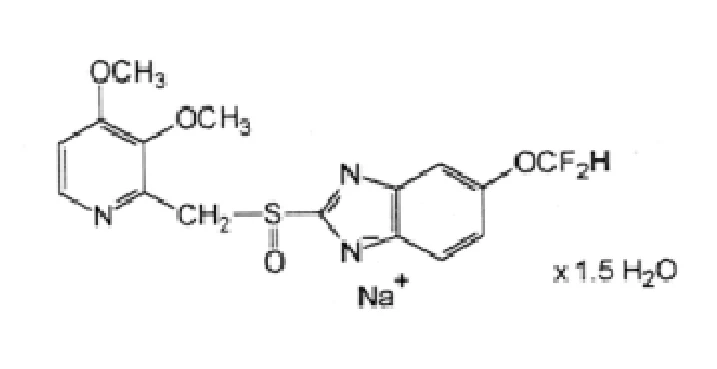
Proper name: Pantoprazole Sodium Sesquihydrate.
Chemical name: Sodium 5-(difluoromethoxy)-2-[(RS)-[3,4-dimethoxypyridin-2-yl)-methyl]sulphinyl]benzimidazol-1-ide sesquihydrate.
Molecular formula:
Pantoprazole Sodium Sesquihydrate: C16 H14 F2 N3 Na04 S x 1.5 H2 0 Pantoprazole Base: C16 H15 F2 N3 O4 S
Molecular Weight:
Pantoprazole Sodium Sesquihydrate: 432.4 g/mol
Pantoprazole Base: 383.4 g/mol
Structural formula:
Physicochemical properties:
Physical description: White to off-white crystalline powder
Pantoprazole sodium is freely soluble in ethanol and water, and practically insoluble in hexane.
pH: 10% aqueous solution: 9.5 - 10
pKa1: 3.92
pKa2: 8.19
CLINICAL TRIALS
Comparative Bioavailability Studies
Two comparative bioequivalence studies were conducted on MYLAN-PANTOPRAZOLE 40 mg Enteric Coated Tablets and Pantoloc 40 mg tablets as follows:
A blinded, single dose randomized, 2-way crossover bioequivalence study of MYLAN-
PANTOPRAZOLE 40 mg Enteric-Coated Tablets and Pantoloc 40 mg enteric coated tablets conducted on 71 healthy non-smoking male and female volunteers, under fasting conditions.
A blinded, single dose randomized, 2-way crossover bioequivalence study of MYLAN-
PANTOPRAZOLE 40 mg Enteric-Coated Tablet and Pantoloc 40 mg enteric coated tablets conducted on 40 healthy non-smoking male and female, under fed conditions.
The comparative bioavailability data for both studies are summarized as follows:
Fasted Study Data:
Pantoprazole (1 x 40 mg) From measured data Geometric Mean Arithmetic Mean (CV %) | ||||
| Parameter | Test* | Reference† | Ratio (%) of Geometric Means | 90% Confidence Interval |
AUC0-t (ng.h/mL) | 4392.97 5032.27 (61.95) | 4810.79 5569.87 (63.23) | 91.31 | 85.89 - 97.08 % |
| AUC0-inf (ng.h/mL) | 4494.52 5309.24 (78.88) | 4881.27 5801.08 (78.03) | 92.08 | 86.68 - 97.81 % |
Cmax (ng/mL) | 2592.29 2801.62 (34.10) | 2902.32 3031.54 (29.55) | 89.32 | 81.62 - 97.75 % |
Tmax§ (h) | 3.45 (34.63) | 2.73 (29.30) | ||
T½§ (h) | 1.21 (71.66) | 1.22 (64.00) | ||
* Pantoprazole sodium 40 mg Enteric-Coated Tablet, manufactured by Ilsan Ilaç San. Ve Tic. A.Ş., (Turkey), for Mylan Pharmaceuticals ULC (Canada)
† Pantoloc (pantoprazole sodium) 40 mg Enteric-Coated Tablet, by SOLVAY PHARMA Inc., Canada (Currently manufactured by Takeda Canada Inc.)/ ALTANA Pharma AG, Germany, purchased in Canada
§ Expressed as the arithmetic mean (CV%) only
Fed Study Data:
Pantoprazole (1 x 40 mg) From measured data Geometric Mean Arithmetic Mean (CV %) | ||||
| Parameter | Test* | Reference† | Ratio (%) of Geometric Means | 90% Confidence Interval |
AUC0-t (ng.h/mL) | 3890.41 5137.77 (105.58) | 4131.60 5425.87 (104.25) | 94.16 | 86.23 - 102.83 |
| AUC0-inf (ng.h/mL) | 4054.60 5722.82 (129.05) | 4424.81 5892.14 (117.12) | 91.63 | 85.96 - 97.69 |
Cmax (ng/mL) | 1902.09 2066.01 (40.19) | 1987.17 2176.85 (38.05) | 95.72 | 84.79 - 108.05 |
Tmax§ (h) | 11.5 (53.48) | 9.24 (59.59) | ||
T½§ (h) | 1.65 (140.71) | 1.73 (137.39) | ||
* Pantoprazole sodium 40 mg Enteric-Coated Tablet, manufactured by Ilsan Ilaç San. Ve Tic. A.Ş., (Turkey), for Mylan Pharmaceuticals ULC (Canada)
† Pantoloc (pantoprazole sodium) 40 mg Enteric-Coated Tablet, by SOLVAY PHARMA Inc., Canada/ ALTANA Pharma AG, Germany, purchased in Canada
§ Expressed as the arithmetic mean (CV%) only
Symptomatic gastro-esophagea1 reflux disease
In a US placebo-controlled study involving 538 patients, a significantly greater proportion of patients taking pantoprazole sodium 40mg enteric-coated tablets experienced complete relief of daytime and nighttime heartburn and the absence of regurgitation starting from the first day of treatment compared with placebo. Patients taking pantoprazole sodium enteric-coated tablets consumed significantly fewer antacid tablets per day than those taking placebo.
In a second US study involving 215 patients, a significantly greater proportion of the patients in the pantoprazole sodium enteric-coated tablet treatment groups experienced complete relief of nighttime heartburn and regurgitation starting on the first day and of daytime heartburn on the second day compared with those taking nizatidine 150 mg twice daily. Patients taking pantoprazole sodium enteric-coated tablets consumed significantly fewer antacid tablets per day than those taking nizatidine.
Prevention of relapse of reflux esophagitis
The long-term maintenance of healing of erosive esophagitis was assessed in two U.S. randomised, double-blind, parallel-group, active controlled studies. Eligible patients in both studies had a recent history of grade II or III (Hetzel-Dent) erosive esophagitis, and endoscopically demonstrated healing. Both studies used as the primary endpoint endoscopically demonstrated recurrence (assessed at month 1, 3, 6 and 12) of erosive esophagitis ('relapse'). Gelusil antacid tablets were to be taken as needed for symptomatic relief after 5 or more minutes of retrosternal pain, acid regurgitation, or dysphagia, but not within 1 hour before or after taking study medication. Ad hoc endoscopies were 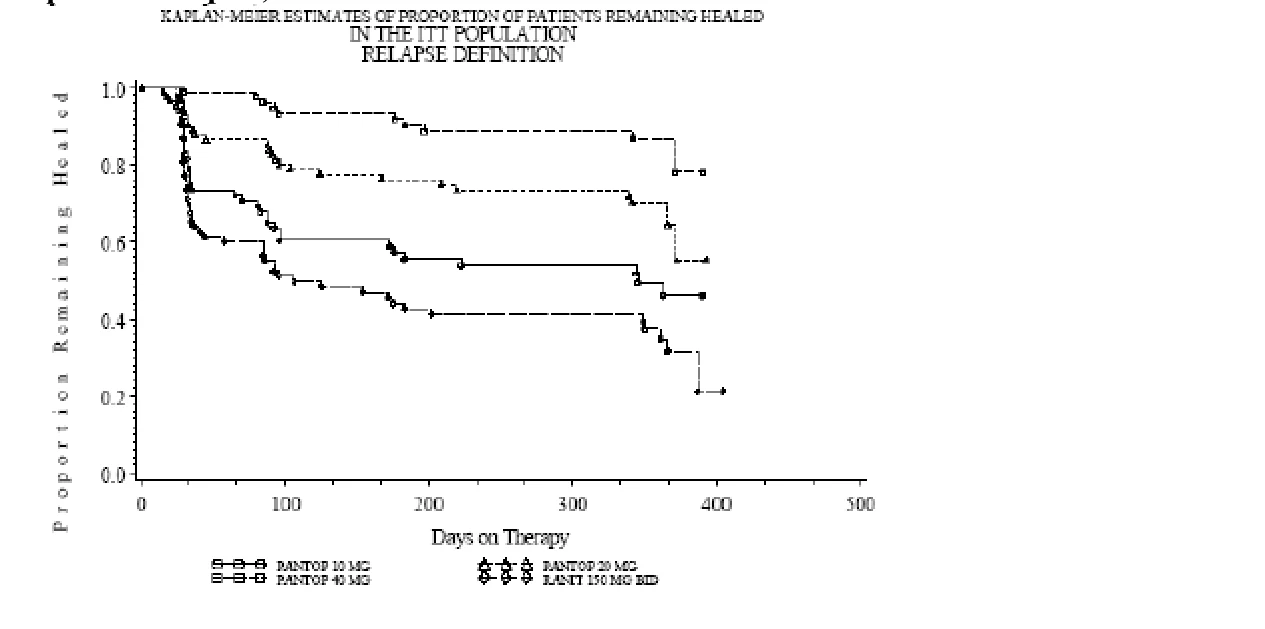
performed when symptoms of GERD occurred for more than 3 consecutive days. As the primary analysis Kaplan Meier’s method was performed, whereas the discrete analysis was secondary.
In the US studies, the results of Kaplan-Meier’s analyses showed that the cumulative proportion of relapse over time was dose-related for the pantoprazole treatment groups. The cumulative proportion of relapse at 12 months for patients treated with pantoprazole 20 mg and pantoprazole 40 mg exhibited a statistically significant difference in the pooled data (p-value=0.001) and in the data of one of the studies (3001A1-302-US: p-value =0.012, 3001A1-303-US p-value=0.052) (p-values adjusted for pairwise comparison).
Kaplan-Meier plot; 3001A1-302-US
Kaplan-Meier plot; 3001A1-303-US
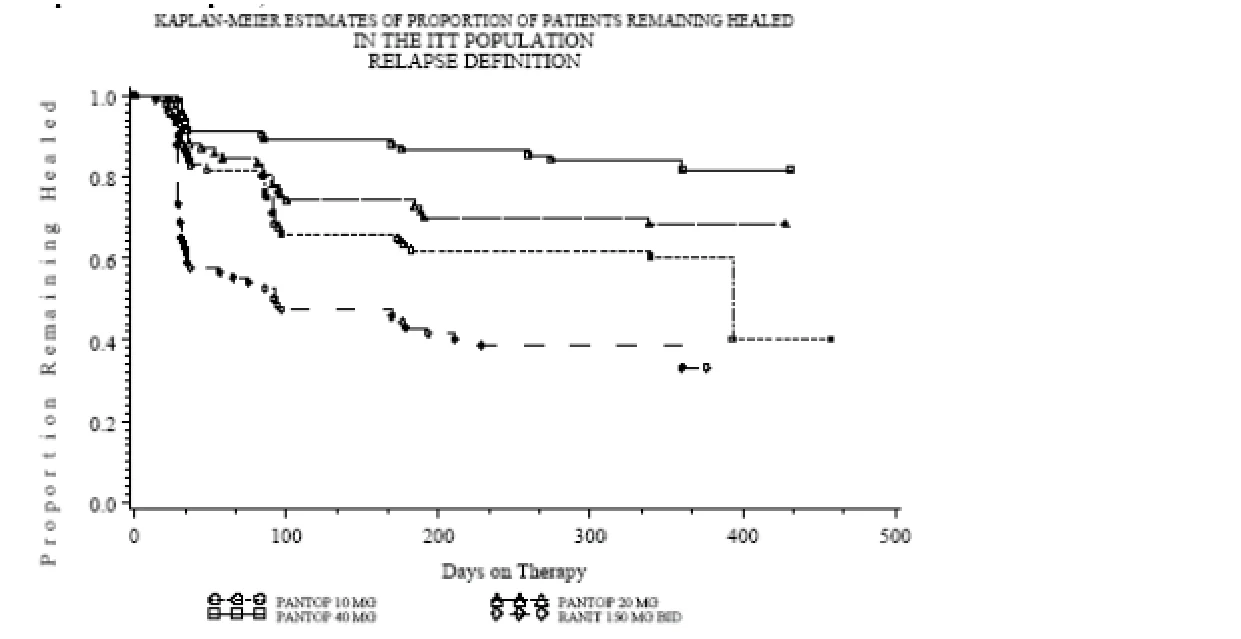
In the discrete analysis of the pooled results of the two U.S. studies, 40 mg was significantly (p-value=0.004) more effective in the maintenance of healed erosive esophagitis compared to 20 mg (see following table).
Long-term maintenance of healing of erosive esophagitis: Proportion of patients who relapse in individual studies and pooled studies at 12 months. U.S. Studies
Pantoprazole 20 mg n/N (%) | Pantoprazole 40 mg n/N (%) | Ranitidine 150 mg n/N (%) | |
| Study 3001A1-302-US | |||
| Month 1 Month 3 Month 6 Month 12 | 11/86(12.8)* 17/77(22.1)* 21/77(27.3)* 25/75(33.3)* | 1/78(1.3)* 5/76(6.6)* 8/70(11.4)* 10/64(15.6)* a | 32/84(38.1) 41/81(50.6) 47/77(61.0) 52/76(68.4) |
| Study 3001A1-303-US | |||
| Month 1 Month 3 Month 6 Month 12 | 11/87(12.6)* 21/80(26.3)* 24/75(32.0)* 25/73(34.2)* | 8/93(8.6)* 10/88(11.4)* 12/85(14.1)* 15/78(19.2)* | 37/92(40.2) 45/83(54.2) 51/79(64.6) 52/78(66.7) |
| Pooled data | |||
| Month 12 | 50/148(33.8)* | 25/142(17.6)* a | 104/154(67.5) |
*Statistically significant between treatment and ranitidine at 0.05 level; Statistically significant between pantoprazole 40 mg and 20 mg with adjusted p-value (Holm procedure). Mean age 302-US 49.2 years, 303-US 48.95 years, 302-US: 28% female / 72% male 303-US: 38% female / 62% male, 302-US: 3.9 % black, 4.1 % Hispanic, <1% Asian, 91% white, <1% other, US-303: 6.4 % black, 6.4 % Hispanic, <1% Asian, 86% white, <1% other, 1US-302: 85% H. pylori negative, 15% H. pylori positive, US-303: 88% H. pylori negative, 12% H. pylori positive.
1Mylan-Canada in no way markets the use of this product for anything other than the indication(s) listed above in the indication section. Furthermore, Mylan-Canada only markets this product to be used as a monotherapy product.
Additionally, long-term maintenance of healing of erosive esophagitis was assessed in two European, randomized, double-blind, parallel-group non-inferiority studies. Eligible patients in both studies had a recent history of grade II or III (Savary-Miller) erosive esophagitis, and endoscopically demonstrated healing. Both studies used as the primary endpoint endoscopically demonstrated recurrence of erosive esophagitis ('relapse'). Pantoprazole 40 mg is non-inferior to pantoprazole 20 mg which means patients who were treated with pantoprazole 40 mg showed no less reduction in the proportion of relapse at 12 months compared to pantoprazole 20 mg.
Long-term maintenance of healing of erosive esophagitis: Proportion of patients who relapse in individual studies and pooled studies at 12 months. European Studies
| Study | Month | Relapse rates (%) | Diff. Between Treatment and 95%CI (%) | |
| 40 mg Pantoprazole | 20 mg Pantoprazole | |||
| FK3028 FK3033 Pooled | 12 12 12 | 39/174 (22) 30/151 (20) 69/325 (21) | 45/174 (26) 49/161 (30) 94/335 (28) | -3.5 (-12.4;5.5) -10.6 (-20;-1) -6.8 (-13.4;-0.3) |
Mean age FK3028 56 years, FK3033 50 years, FK3028 35% female / 65% male, FK3033: 28% female / 72% male.
DETAILED PHARMACOLOGY
ANIMAL PHARMACOLOGY
Pharmacodynamics:
In vivo, pantoprazole produced marked and long-lasting inhibition of basal and stimulated gastric acid secretion with median effective dose (ED50) values ranging from 0.2 -2.4 mg/kg in rats and dogs. In addition to the administration of single doses, pantoprazole has been tested upon repeated oral administration (e.g. during 24-h pH-metry in dogs performed under pentagastrin stimulation). While a dose of 1.2 mg/kg did not significantly elevate pH on Day 1, pH rose to values between 4 and 7 after a 5-day dosing regimen. This effect was no longer observed 18 hours after the last drug administration. In various gastric ulcer models in the rat, pantoprazole showed antiulcer activity.
In parallel to the profound inhibition of gastric acid secretion, pantoprazole induced a dose-dependent increase in serum gastrin levels up to values above 1000 pg/mL from a control level of about 100 pg/mL. As a consequence of persisting hypergastrinemia in rats after high/doses of pantoprazole, hyperplastic changes were observed in the fundic mucosa with an increased density of enterochromaffin-like (ECL) cells. These changes were reversible during drug-free recovery periods.
In a battery of standard high-dose pharmacology tests, no influence of pantoprazole was detected on the central and peripheral nervous system. In conscious dogs as well as anaesthetized cats receiving single i.v. doses up to 10 mg/kg pantoprazole, no consistent changes with respect to respiratory rate, ECG, EEG, blood pressure and heart rate were observed. Higher doses led to modest and transient reductions in blood pressure and variable changes in heart rate. No influence of pantoprazole was found on renal function and on autonomic functions, such as pancreatic and bile secretion, gastrointestinal motility and body temperature.
No consistent changes in the effects of ethanol, pentobarbitone, or hexobarbitone were induced by pantoprazole; only doses over 300 mg/kg prolonged the effects of diazepam.
Pharmacokinetics:
Absorption and Distribution
Pantoprazole is absorbed rapidly in both rat and dog. Peak plasma levels are attained within 15 to 20 minutes in the rat and after about 1 hour in the dog. Oral bioavailability is 33% in the rat and 49 % in the dog. Following absorption, autoradiography and quantitative tissue distribution experiments have shown that pantoprazole is rapidly distributed to extravascular sites. Following administration of pantoprazole, distribution of radioactivity in the blood and most organs is found to be uniform initially. After 16 hours, radiolabelled pantoprazole is predominantly detected in the stomach wall. After 48 hours, all the administered radioactivity is found to have been excreted. Penetration of the blood-brain barrier by radiolabelled pantoprazole is very low. Protein binding in the rat and dog is 95% and 86%, respectively.
Metabolism and Excretion
Pantoprazole is extensively metabolized. Oxidations and reductions at different sites of the molecule, together with Phase II reactions (sulfation and glucuronidation) and combinations thereof result in the formation of various metabolites. In rats and dogs, 29-33% of a pantoprazole dose is excreted as urinary metabolites, and the remainder as biliary/fecal metabolites. Almost no parent compound can be found in the excreta.
Mammoglandular passage and transplacental transport has been investigated in the rat using radiolabelled pantoprazole. A maximum of 0.23% of the administered dose is excreted in the milk. Radioactivity penetrates the placenta with 0.1-0.2% of the dose /g fetal tissue on the first day after oral administration.
HUMAN PHARMACOLOGY
Pharmacodynamics:
Pantoprazole is a potent inhibitor of gastric acid secretion. This was demonstrated with pantoprazole by use of a gastric acid aspiration technique as well as by continuous intragastric pH monitoring. Using the aspiration technique it was also shown that pantoprazole caused a dose-dependent reduction of secreted gastric acid volume.
Table 1: Percent inhibition of pentagastrin-stimulated acid output (PSAO) in healthy volunteers following single oral doses of pantoprazole vs. placebo during 4 to 7 hours post dosing.
| Dose | Mean % Inhibition of PSAO |
| 6mg | 13% |
| 10mg | 24% |
| 20 mg | 27% |
| 40 mg | 42% |
| 60mg | 54% |
| 80 mg | 80% |
| 100mg | 82% |
With 40 mg administered orally, effective inhibition of gastric acid secretion was achieved. Pantoprazole 40 mg was significantly superior to standard H2-blocker therapy (300 mg ranitidine at night) with regard to median 24-hour and daytime pH; however, not for nighttime measurements.
Table 2: Effects of one week oral treatment in healthy volunteers with placebo, pantoprazole 40 mg in the morning, and standard ranitidine therapy with 300 mg in the evening
| Time of Day | Median pH | ||
| Placebo | Pantoprazole 40 mg | Ranitidine 300 mg | |
| 08.00-08.00 (24h) | 1.6 | 4.2* | 2.7 |
| 08.00-22.00 (Daytime) | 1.8 | 4.4* | 2.0 |
| 22.00-08.00 (Nighttime) | 1.3 | 3.1 | 3.7 |
*p<0.05 vs ranitidine
Increasing the once daily dose from 40 mg to 80 mg pantoprazole did not result in a significantly higher median 24-hour pH.
Table 3: Effect of oral pantoprazole in healthy volunteers on median 24-hour pH on Day 7 (40 vs 80 mg).
| 40 mg | 80 mg | |
| 3.8 | 3.85 | n.s. |
n.s.=not significant
Hence, once daily administration of 40 mg pantoprazole should be sufficient for the treatment of most patients with acid-related diseases.
Pharmacokinetics:
The absolute bioavailability of the pantoprazole tablet is 77%. Maximum serum concentrations of pantoprazole are reached within approximately 2.5 hours after oral intake. Following a dose of 40 mg, mean maximum serum concentrations of approximately 2 μg/mL and 3 μg/mL are reached after 2 to 3 hours. There is no food effect on AUC (bioavailability) and Cmax. However, time to reach
maximum serum concentrations is slightly increased when the drug is given together with a high caloric breakfast. Taking into account the long duration of action of pantoprazole, which by far exceeds the time period over which serum concentrations are measurable, this observed variation in tmax is considered to be of no clinical importance.
Pantoprazole is approximately 98% bound to serum protein.
Despite its relatively short elimination half-life of approximately 1 hour, the antisecretory effect increases during repeated once daily administration, demonstrating that the duration of action markedly exceeds the serum elimination half-life. This means that there is no direct correlation between the serum concentrations and the pharmacodynamic action.
Morning administration of pantoprazole was significantly superior to evening dosing with regard to 24 hour intragastric pH, hence morning dosing should be recommended for the treatment of patients. Since the intake of the drug before a breakfast did not influence Cmax and AUC, which characterize rate and extent of absorption, no specific requirements for intake of pantoprazole in relation to breakfast are necessary.
Pantoprazole undergoes metabolic transformation in the liver. Approximately 82% of the oral dose is removed by renal excretion, and the remainder via feces. The main serum metabolites (M1-M3) are sulphate conjugates formed after demethylation at the pyridine moiety, the sulphoxide group being either retained (M2, main metabolite), or oxidized to a sulphone (Ml), or reduced to a sulphide (M3). These metabolites also occur in the urine (main metabolite M2). Conjugates with glucuronic acid are also found in the urine.
MICROBIOLOGY
Not applicable.
TOXICOLOGY
ACUTE TOXICITY
In acute toxicity studies in mice the mean lethal dose (LD50) values for pantoprazole were found to be around 390 mg/kg bodyweight for i.v. administration and around 700 mg/kg bodyweight for oral administration.
In the rat the corresponding values were around 250 mg/kg for i.v. administration and >1000 mg/kg for oral administration.
Acute toxicity studies were conducted on B8810-044, the major degradation product of pantoprazole. The approximate LD50 values for mice (119-167 mg/kg) and rats (73-82 mg/kg) were lower than those for pantoprazole itself, after intravenous injection, but the toxic symptoms were similar to those noted for the drug. A 4-week repeat dose study was also conducted using this degradation product using the intravenous route in rats. Rats received 5 and 25 mg of B8810-044/kg, while a comparison group received 25 mg/kg of pantoprazole. Muscle twitches were observed immediately after injection
in rats receiving 25 mg/kg of the degradation product, but not in the pantoprazole-treated animals. Otherwise the compounds were comparable.
Table 6: Acute toxicity studies of Pantoprazole
| SPECIES | SEX | ROUTE | ca. LD50* |
| (mg/Kg) | |||
| Mouse | M | p.o. | >1000 |
| F | p.o. | 747 | |
| Mouse | M | i.v. | 399 |
| F | i.v. | 395 | |
| Rat | M | p.o. | 1343 |
| F | p.o. | 1037 | |
| Rat | M | i.v. | 330 |
| F | i.v. | 343 | |
| Dog | M/F | p.o. | 300-1000** |
| M/F | i.v. | 150-300 |
* Doses refer to the sodium salt administered in solution
** sodium salt as dry powder in gelatine capsules
The symptoms seen after lethal oral or i.v. doses were similar in rats and mice: the animals displayed ataxia, reduced activity, hypothermia and prostration. Surviving animals recovered uneventfully. Salivation, tremor, lethargy, prostration and coma were seen in dogs at lethal oral doses, with death occurring on the following day. Ataxia, tremor and a prone position were noted at sublethal oral and i.v. doses, but the survivors recovered quickly and appeared fully normal after the 2-week observation period.
CHRONIC TOXICITY
Daily oral doses of pantoprazole in 1- and 6-month SD rat repeated-dose studies were 1, 5, 20, and 500 mg/kg and 0.8, 4, 16 and 320 mg/kg, respectively; doses for a 1 month rat i.v. study were 1, 5, and 30 mg/kg.
A 12-month toxicity study in SD rats was conducted using daily oral doses of 5, 50, and 300 mg/kg. Daily oral doses in 1- and 6 month (beagle) dog studies were 7.5, 15, 30, and 100 mg/kg and 5, 15, 30, and 60 mg/kg respectively. In a 12-month oral study in dogs, 2.5, 15, and 60 mg/kg were administered daily.
Hypergastrinemia was dose-related and was observed at all doses investigated in the studies mentioned above, but was reversible upon cessation of treatment. Drug-related effects on the stomach included increased stomach weights and morphologic changes of the mucosa. In the 6-month rat study, increased stomach weight and some cellular changes were detected at all doses. In the 1-month rat study, gastric changes were detected at 5 mg/kg but not at 1 mg/kg. In dogs, increased stomach weight was observed at all doses studied. There were no gastric cellular changes detected at oral doses of 7.5 or 5 mg/kg in the 1- and 6-month dog studies, respectively. In both species, most gastric effects were reversible after a 4- or 8-week recovery period. Hypergastinemia and gastric changes were considered to be the consequence of the pharmacological action of the compound, namely prolonged and profound inhibition of acid secretion.
Increased liver weight in the rat experiments was considered to be a consequence of the induction of hepatic drug metabolizing systems and was found to be associated with centrilobular hepatocellular hypertrophy at 320 mg/kg in the 6-month study and at 50 and 300 mg/kg after 12 months of treatment. Increased liver weights were also detected at a dose of 16 mg/kg in male rats in the 6-month study and at 500 mg/kg, but not 20 mg/kg, in the 1-month study. Increased liver weight was noted in male dogs of all dose groups in the 1-month study, though only at 100 mg/kg in females on the same study. Both males and females had increased liver weights after 6 months administration of 30 or 60 mg/kg, but not of 15 mg/kg. In the 12-month study, liver weights were increased only in the female dogs dosed with 60 mg/kg. There were no hepatic lesions that correlated with increased liver weight in the dog studies. In dogs, the increase in liver weight was attributed to an activation of hepatic drug metabolizing systems as mentioned for rats.
Thyroid activation in animal experiments is due to the rapid metabolization of thyroid hormones in the liver and has been described in a similar form for other drugs. Thyroid weights were increased in both sexes at 500 mg/kg in the 1-month rat study and at 320 mg/kg in the rat 6-month study. Thyroid follicular cell hypertrophy was noted in females at these doses, in rats treated with 50 and 300 mg/kg in the 12 month study and also in a few females at 16 mg/kg in the 6 month study. There were no thyroid effects in rats at or below an oral dose of 5 mg/kg even after 1 year. In the dog, no effects were seen on the thyroid after 4 weeks. Only slight, but not dose-dependent, increases in thyroid weights were seen after 6 months, but no changes were observed histologically. In the 12 month study, the relative thyroid weights in the 60 mg/kg group were only slightly higher than those of the control dogs, and changes were detected histologically in only a few animals under 15 and 60 mg/kg. In both species, changes were reversible.
Increased serum cholesterol values were noted in all groups in the 6- and 12 month dog studies and in all groups in the 12 month rat study. The increases were slight and were reversible after cessation of treatment.
In dog studies, oral doses of pantoprazole of 15 mg/kg or above caused a transient pulmonary edema in a proportion of naive dogs during the first week of drug administration. Pulmonary edema caused death in a few dogs after repeated oral doses of 15 mg/kg or above. There is strong evidence that the pulmonary toxicity is due to a thiol metabolite which does not occur in man. No evidence of pulmonary edema was detected in dogs at an oral dose of 7.5 mg/kg nor at 60 mg/kg when administered daily for 6 or 12 months after a 1 week dose escalation phase.
CARCINOGENICITY
Three carcinogenicity studies had been conducted with pantoprazole:
- A 24 month oral study was conducted at doses of 0.5, 5, 50 and 200 mg/kg/day in SD rat.
- A 24 month oral study was conducted at doses of 5, 15 and 50 mg/kg/day in Fischer-344 rat.
- A 24 month oral study was conducted at doses of 5, 25 and 150 mg/kg/day in B6C3F1 mouse.
Pantoprazole, dissolved in distilled water, was administered once a day by oral gavage to groups of 50 male and 50 female B6C3F1 mice at doses of 5, 25, or 150 mg/kg. An identical control group was dosed with distilled water (pH 10), while a second identical control group received no treatment at all. In the first rat study, pantoprazole was administered once a day by oral gavage to groups of 70 male and 70 female SD rats at doses of 0.5, 5, 50, and 200 mg/kg. A control group of 70 males and 70
females received the vehicle. In the second rat study, pantoprazole was administered once a day by oral gavage to groups of 50 male and 50 female Fischer-344 rats at doses of 5, 15, and 50 mg/kg. A control group of 50 males and 50 females received the vehicle, while another group remained untreated.
In the first 2 year carcinogenicity study in rats, which corresponds to a lifetime treatment for rats, neuroendocrine neoplasms were found in the stomach at doses of 50 mg/kg/day and above in males and at 0.5 mg/kg/day and above in females. Tumor formation occurred late in the life of the animals (only after 17 months treatment), whereas no tumors were found in rats treated with an even higher dose for 1 year. The mechanism leading to the formation of gastric carcinoids by substituted benzimidazoles has been carefully investigated, and it is considered to be due to high levels of serum gastrin observed in the rat during chronic treatment. In the second rat carcinogenicity study, neuroendocrine cell tumors in the stomach were found in all treated female groups and in the male 15 and 50 mg/kg groups. No metastases from any gastric neuroendocrine cell tumours were detected.
ECL-cell neoplasms were not observed in either the carcinogenicity study in the mouse (24 months) or in the chronic studies in the dog. In clinical studies, where pantoprazole was administered at doses up to 80 mg, ECL-cell density remained almost unchanged.
Microscopy of the rat (first carcinogenicity study) and mouse tissues gave evidence for an increase in liver tumors. In the rat experiment, the incidence of benign liver tumors in the 50 and 200 mg/kg groups and the incidence of hepatocellular carcinoma was increased in the males and females of the 200 mg/kg group. There was a slightly higher incidence of hepatocellular adenomas and carcinomas in the female mice of the 150 mg/kg group than in either of the 2 control groups. Other changes in the liver morphology were present as well. Centrilobular hepatocellular hypertrophy increased in incidence and severity with increasing dose, and hepatocellular necrosis was increased in the highest dose in the rat studies and in the mouse study. Hepatocellular tumors are common in mice, and the incidence found for the female 150 mg/kg group was within historical control ranges for this strain. The liver tumor incidences in rats treated with 50 mg/kg and in the male rats treated with 200 mg/kg were also within historical control incidences for the rat. These tumors occurred late in the life of the animals and were primarily benign. The nongenotoxic mechanism of rodent liver tumor formation after prolonged treatment with pantoprazole is associated with enzyme induction leading to hepatomegaly and centrilobular hypertrophy and is characterized by tumor induction in low incidences at high doses only. As pantoprazole acts in a similar fashion to phenobarbital, causing reversible centrilobular hepatocellular hypertrophy and enzyme induction in short-term studies, it is probable that the mechanism of action for induction of the liver tumors seen in long-term rodent studies is also the same. Hepatocellular tumors at high doses in rodents are not indicative of human carcinogenic risk.
A slight increase in neoplastic changes of the thyroid was observed in rats receiving pantoprazole at 200 mg/kg/day. The incidences of these tumours were within the historical control ranges for this rat strain. No thyroid neoplasms were observed in the 12-month study. The no-effect dose for both male and female rats is 50 mg/kg, which is 100 times the most commonly used human dose (i.e. 40 mg dose). The effect of pantoprazole on the thyroid is secondary to the effects on liver enzyme induction, which lead to enhanced metabolism of thyroid hormones in the liver. As a consequence, increased TSH is produced, which has a trophic effect on the thyroid gland. Clinical studies have demonstrated
that neither liver enzyme induction nor changes in thyroid hormonal parameters occur in man after therapeutic doses of pantoprazole.
Tumors induced in rats and mice by pantoprazole were the result of nongenotoxic mechanisms which are not relevant to humans. Tumors were induced in rodents at dosages that provide higher exposure than with human therapeutic use. Based on kinetic data, the exposure to pantoprazole in rats receiving 200 mg/kg was 22.5 times higher than that found in humans receiving 40 mg oral doses. In mice receiving 150 mg/kg, exposure to pantoprazole was 2.5 times higher than that in humans.
MUTAGENICITY
Pantoprazole was studied in several mutagenicity studies: Pantoprazole was found negative in the Ames test, an in vivo chromosome aberration assay in rat bone marrow, a mouse lymphoma test, two gene mutation tests in Chinese hamster ovary cells in vitro, and two micronucleus tests in mice in vivo. Pantoprazole was found positive in three of four chromosome aberration assays in human lymphocytes in vitro. The in vitro tests were conducted both in the presence and absence of metabolic activation. The potential of pantoprazole to induce DNA repair synthesis was tested negative in an in vitro assay using rat hepatocytes. In addition, a rat liver DNA covalent binding assay showed no biologically relevant binding of pantoprazole to DNA.
In addition, two in vitro cell transformation assays using different cell types were performed to aid in the interpretation of the rodent carcinogenicity studies; in neither test did pantoprazole enhance the morphologic transformation of the cell types used.
A bacterial mutation assay conducted with the degradation product B8810-044, gave no indication of a mutagenic potential.
REPRODUCTION AND TERATOLOGY
Pantoprazole was not teratogenic to rats or rabbits at doses up to 450 and 40 mg/kg/day (gavage), 20 and 15 mg/kg/day (i.v. injection), respectively.
Treatment of male rats with pantoprazole up to 500 mg/kg p.o. for 127 days did not affect fertility. Treatment of pregnant rats induced dose-dependent fetotoxic effects: increased pre- and postnatal deaths (450 mg/kg/day), reduced fetal weight and delayed skeletal ossification (150 mg/kg/day), and reduced pup weight (15 mg/kg/day). These results may be explained by maternal toxicity of pantoprazole at high dose and/or placental transfer of pantoprazole.
Penetration of the placenta was investigated in the rat and was found to increase with advanced gestation. As a result, concentration of pantoprazole in the fetus is increased shortly before birth regardless of the route of administration.
In humans, there are no adequate or well-controlled studies with the use of pantoprazole during pregnancy.
REFERENCES
- 1. Escourrou J, Deprez P, Saggioro A, et al. Maintenance therapy with pantoprazole 20 mg prevents relapse of reflux esophagitis. Aliment Pharmacol Ther 1999 Nov; 13 (11): 1481-91.
- 2.
Gugler R., Hartmann M., Rudi J., Brod I., Huber R., Steinijans V.W., Bliesath H., Wurst W.,
Klotz U.; Lack of pharmacokinetic interaction of pantoprazole with diazepam in man; Br J Pharmacol 1996;42(2):249-252.
- 3. Hanauer G., Graf U., Meissner T.; In vivo cytochrome P-450 interactions of the newly developed H+, K+-ATPase inhibitor Pantoprazole (BY1023/SK&F96022) compared to other antiulcer drugs; Meth Find Exp Clin Pharmacol 1991;13(1):63-67.
- 4. Hannan A., Weil, J., Broom C., Walt RP.; Effects of oral Pantoprazole on 24 hour intragastric acidity and plasma gastrin profiles; Aliment Pharmacol Ther 1992; 6:373-380.
- 5.
Hartmann M., Theiβ U., Bliesath H., Kuhn I., Lühmann R., Huber R., Wurst W., Postius S.,
Lücker P.; 24 h intragastric pH following oral intake of Pantoprazole and omeprazole; Hellenic J. Gastroenterol 1992;5(suppl.):112 (A No. 451).
- 6. Huber R, Hartmann M, Bliesath H, Lühmann R, Steinijans VW, Zech K. Pharmacokinetic of pantoprazole in man; Internal J Clin Pharmacol Therap 1996;34:185-194.
- 7. Huber R, Kohl B, Sachs G, Senn-Bilfinger J, Simon WA, Sturm E. Review article: the continuing development of proton pump inhibitors with particular reference to pantoprazole; Aliment Pharmacol Ther 1995;9;363-378.
- 8. Judmaier G., Koelz H.R., Pantoprazole-duodenal ulcer-study group; Comparison of pantoprazole and ranitidine in the treatment of acute duodenal ulcer; Aliment Pharmacol Ther 1994;8:81-86.
- 9. Kliem V., Bahlmann J., Hartmann M., Huber R., Lühmann R., Wurst W. Pharmacokinetics of pantoprazole with end-stage renal failure. Nephrol Dial Transplant 1998; 13:1189-1193.
- 10. Kohl B. et al.; (H+,K+)-ATPase inhibiting - 2-[(2-pyridylmethyl)suftinyl] benzimidazoles. A novel series of dimethoxypyridyl-substituted inhibitors with enhanced selectivity. The selection of Pantoprazole as a clinical candidate; J Medicinal Chem 1992;35: 1049-1057.
- 11. Kovacs TOG, DeVault K., Metz D., et. al. Pantoprazole prevents relapse of healed erosive esophagitis more effectively than ranitidine in gastroesophagealreflux disease patients. Am J Gastroenterol 1999; 94 (9): 2590 (A No. 53).
- 12. Metz DC, Bochenek WJ, and the pantoprazole US GERD study group. Pantoprazole maintenance therapy prevents relapse of erosive esophagitis. Aliment Pharmacol Ther 2003; 17:155-164.
- 13. Mossner J., Holscher A.H., Herz R., Schneider A.; A double-blind study of pantoprazole and omeprazole in the treatment of reflux oesophagitis: a multicentre trial; Aliment Pharmacol Ther 1995;9:321-326.
- 14. Müller P., Simon B., Khalil H., Lühmann R., Leucht U., Schneider A.; Dose-range finding study with the proton pump inhibitor Pantoprazole in acute duodenal ulcer patients; Z Gastroenterol 1992;30:771-775.
- 15. Plein K, Hotz J, Wurzer H, et al. Pantoprazole 20 mg is an effective maintenance therapy for patients with gastro-oesophageal reflux disease. Eur J Gastroenterol Hepatol 2000 Apr; 12 (4): 425-32.
- 16. Pue M.A., Laroche J., Meineke I., de Mey C.; Pharmacokinetics of Pantoprazole following single intravenous and oral administration to healthy male subjects; Eur J Clin Pharmacol 1993;44:575-578.
- 17. Report 305E/92; Pantoprazole and B8401-026. Effects on selected hepatic drug-metabolizing enzyme activities following oral administration to female rats for 4 weeks; Data on file, Takeda GmbH.
- 18.
Sachs G.; Gastric H, K-ATPase as therapeutic target; Ann Rev Pharmacol Toxicol
1988;28:269-284.
- 19.
Schulz H.-U., Hartmann M., Steinijans, V.W., Huber R., Luhrmann B., Bliesath H., Wurst
W.; Lack of influence of Pantoprazole on the disposition kinetics of theophylline in man; Int J Clin Pharmacol Ther 1991;29(9):369-375.
- 20. Simon B., Müller P., Bliesath H., Lühmann R., Hartmann M., Huber R., Wurst W.; Single intravenous administration of the H+,K+-ATPase inhibitor BY1023/SK&F96022 -inhibition of pentagastrin-stimulated gastric acid secretion and pharmacokinetics in man; Aliment Pharmacol Therap 1990a;4:239-245.
- 21.
Simon B., Müller P., Hartmann M., Bliesath H., Lühmann R., Huber R., Bohnenkamp
W.,Wurst W.; Pentagastrin-stimulated gastric acid secretion and pharmacokinetics following single and repeated intravenous administration of the gastric H+,K+-ATPase inhibitor Pantoprazole (BY1023/SK&F96022) in healthy volunteers; Z Gastroenterol 1990;28:443-447.
- 22. Simon B., Müller P., Marinis E., Lühmann R., Huber R., Hartmann M., Wurst W.; Effect of repeated oral administration of BY1023/SK&F96022 - a new substituted benzimidazole derivative – on pentagastrin-stimulated gastric acid secretion and pharmacokinetics in man; Aliment Pharmacol Therap 1990c;4:373-379.
- 23. Steinijans VW, Huber R, Hartmann M, Zech K, Bliesath H, Wurst W, Radtke HW.; Lack of pantoprazole drug interactions in man: an updated review; Internal J Clin Pharmacol Therap 1996;34:S31-S50.
- 24.
PrPANTOLOC®, Takeda Canada Inc., Product Monograph dated September 13, 2017, Control
No. 206282.