


Product Monograph - Nat-Lanthanum
RECENT MAJOR LABEL CHANGES
| 7 WARNINGS AND PRECAUTIONS, Gastrointestinal | 08/2023 |
|---|
TABLE OF CONTENTS
Sections or subsections that are not applicable at the time of authorization are not listed.
RECENT MAJOR LABEL CHANGES…………………………………………………………………………………………. 2
TABLE OF CONTENTS .............................................................................................................. 2
PART I: HEALTH PROFESSIONAL INFORMATION ...................................................................... 4
1 INDICATIONS ............................................................................................................... 4
1.1 Pediatrics ................................................................................................................ 4
1.2 Geriatrics ................................................................................................................ 4
2 CONTRAINDICATIONS ................................................................................................. 4
4 DOSAGE AND ADMINISTRATION ................................................................................. 4
4.1 Dosing Considerations ............................................................................................ 4
4.2 Recommended Dose and Dosage Adjustment ....................................................... 4
4.4 Administration ........................................................................................................ 5
4.5 Missed Dose ........................................................................................................... 5
5 OVERDOSAGE .............................................................................................................. 5
6 DOSAGE FORMS, STRENGTHS, COMPOSITION AND PACKAGING ................................. 5
7 WARNINGS AND PRECAUTIONS .................................................................................. 6
7.1 Special Populations................................................................................................. 7
7.1.1 Pregnant Women ............................................................................................. 7
7.1.2 Breast-feeding .................................................................................................. 7
7.1.3 Pediatrics .......................................................................................................... 7
7.1.4 Geriatrics .......................................................................................................... 8
8 ADVERSE REACTIONS .................................................................................................. 8
8.1 Adverse Reaction Overview .................................................................................... 8
8.2 Clinical Trial Adverse Reactions .............................................................................. 8
8.3 Less Common Clinical Trial Adverse Reactions ..................................................... 10
8.5 Post-Market Adverse Reactions ........................................................................... 11
9 DRUG INTERACTIONS ................................................................................................ 11
9.2 Drug Interactions Overview .................................................................................. 11
9.3 Drug-Behavioural Interactions .............................................................................. 11
9.4 Drug-Drug Interactions ......................................................................................... 11
9.5 Drug-Food Interactions ......................................................................................... 14
9.6 Drug-Herb Interactions ......................................................................................... 14
9.7 Drug-Laboratory Test Interactions ........................................................................ 14
9.8 Drug-Lifestyle Interactions ................................................................................... 14
10 CLINICAL PHARMACOLOGY ....................................................................................... 14
10.1 Mechanism of Action ...................................................................................... 15
10.2 Pharmacodynamics ........................................................................................ 15
10.3 Pharmacokinetics ........................................................................................... 15
11 STORAGE, STABILITY AND DISPOSAL ......................................................................... 17
12 SPECIAL HANDLING INSTRUCTIONS ........................................................................... 17
PART II: SCIENTIFIC INFORMATION ....................................................................................... 18
13 PHARMACEUTICAL INFORMATION ............................................................................ 18
14 CLINICAL TRIALS ........................................................................................................ 18
14.1 Trial Design and Study Demographics ............................................................ 18
14.2 Study Results .................................................................................................. 20
14.3 Comparative Bioavailability Studies ................................................................ 25
15 MICROBIOLOGY ........................................................................................................ 25
16 NON-CLINICAL TOXICOLOGY ..................................................................................... 25
17 SUPPORTING PRODUCT MONOGRAPHS .................................................................... 27
PATIENT MEDICATION INFORMATION .................................................................................. 28
PART I: HEALTH PROFESSIONAL INFORMATION
1 INDICATIONS
NAT-LANTHANUM (lanthanum carbonate dihydrate) is indicated as a phosphate binding agent in patients with end stage renal disease on dialysis.
The use of lanthanum carbonate in controlled clinical studies beyond 2 years is limited. The risk versus benefit from administration beyond two years should be carefully considered. (see WARNINGS AND PRECAUTIONS, Bone, CLINICAL PHARMACOLOGY, Pharmacokinetics, Distribution, and CLINICAL TRIALS, Bone Safety)
1.1 Pediatrics
Pediatrics (<18 years of age): No data are available to Health Canada; therefore, Health Canada has not authorized an indication for pediatric use.
1.2 Geriatrics
Geriatrics (>65 years of age): Of the total number of patients in clinical studies of lanthanum carbonate, 32% (538) were ≥65 years of age while 9.3% (159) were ≥75 years of age. No overall differences in safety or efficacy were observed between patients ≥65 years of age and younger patients.
2 CONTRAINDICATIONS
NAT-LANTHANUM (lanthanum carbonate dihydrate) is contraindicated in:
- Patients with bowel obstruction, ileus and fecal impaction
- Patients with hypophosphatemia
- Patients with hypersensitivity to lanthanum carbonate or to any ingredient in the formulation, including any non-medicinal ingredient, or component of the container. For a complete listing, see DOSAGE FORMS, STRENGTHS, COMPOSITION AND PACKAGING.
4 DOSAGE AND ADMINISTRATION
4.1 Dosing Considerations
Serum phosphorus levels should be monitored as needed during titration until an optimal serum phosphorus level is reached, and then on a regular basis thereafter.
4.2 Recommended Dose and Dosage Adjustment
The recommended initial daily dose of NAT-LANTHANUM (lanthanum carbonate dihydrate) for adults is 750 mg-1500 mg. The dose should be titrated every 2-3 weeks to a level that achieves maintenance of acceptable serum phosphorus levels. The daily dose should be divided and taken with or immediately after meals. Patients should adhere to recommended diets in order to control phosphate and fluid intake. NAT-LANTHANUM is presented as a chewable tablet, therefore avoiding the need to take additional fluid.
In clinical studies in ESRD patients, lanthanum carbonate doses up to 4500 mg were evaluated. Most patients required a total daily dose between 1500 mg and 3000 mg of lanthanum carbonate to reduce serum phosphorus levels to less than 6.0 mg/dL (1.92 mmol/L). Doses were generally titrated in increments of 750 mg/day.
Health Canada has not authorized an indication for pediatric use. (see WARNINGS AND PRECAUTIONS, Special Populations, Pediatrics)
4.4 Administration
Tablets should be chewed completely before swallowing. The tablets may be crushed as an aid to chewing. Intact tablets should not be swallowed. Consider crushing tablets completely for patients with poor dentition.
4.5 Missed Dose
A missed dose should be taken at the next scheduled dose with a meal. Taking a dose at a time other than mealtime may lead to nausea and vomiting. Patients should not double-up the dose to catch up.
5 OVERDOSAGE
The highest daily dose of lanthanum carbonate administered to healthy adult subjects during a Phase I study was 9000 mg/day for 3 days. The symptoms associated with overdose are adverse reactions such as headache, nausea and vomiting. Given the local activity of NAT-LANTHANUM in the gut, and the excretion in feces of the majority of the dose, supportive therapy is recommended in case of overdosage. Lanthanum carbonate was not acutely toxic in animals by the oral route. (see NON-CLINICAL TOXICOLOGY, Single- and Repeat-Dose Toxicity)
| For management of a suspected drug overdose, contact your regional poison control centre. |
|---|
6 DOSAGE FORMS, STRENGTHS, COMPOSITION AND PACKAGING
Table 1: Dosage Forms, Strengths, Composition and Packaging
Each chewable tablet is white to off-white, round shaped tablets and debossed on one side with ‘NAT’ and the dosage strength corresponding to the content of the elemental lanthanum.
NAT-LANTHANUM 250 mg chewable tablets are supplied in bottles of 90 tablets.
NAT-LANTHANUM 500 mg chewable tablets are supplied in bottles of 45 tablets.
NAT-LANTHANUM 750 mg chewable tablets are supplied in bottles of 15 tablets.
NAT-LANTHANUM 1000 mg chewable tablets are supplied in bottles of 10 tablets.
| Route of Administration | Dosage Form / Strength / Composition | Non-medicinal Ingredients |
| Oral | Chewable tablets / 250 mg, 500 mg, 750 mg, and 1000 mg of elemental lanthanum (as lanthanum carbonate dihydrate) | Colloidal silicon dioxide, dextrates (hydrated), hydroxy propyl cellulose, magnesium stearate and talc. |
7 WARNINGS AND PRECAUTIONS
Bone
Tissue Deposition: Tissue deposition of lanthanum has been shown with lanthanum carbonate in animal and human studies. The use of lanthanum carbonate in controlled clinical studies beyond 2 years is limited. The risk/benefit from longer-term administration should be carefully considered. In bone biopsies of patients treated with lanthanum carbonate for up to 4.5 years, rising levels of lanthanum were noted over time (see CLINICAL PHARMACOLOGY, Pharmacokinetics, Distribution; WARNINGS AND PRECAUTIONS, Bone, Long-term effects; CLINICAL TRIALS, Bone Safety). There is no information on the re-distribution of lanthanum eliminated from bone into other tissues upon termination of lanthanum carbonate therapy.
The effect of iron or aluminum chelation on serum lanthanum released from bone has not been studied. Patients requiring chelation treatment who are taking NAT-LANTHANUM should be monitored closely.
Long-term Effects: There were no differences in the rates of fracture in patients treated with lanthanum carbonate compared to Standard Therapy1 for up to 3 years. The duration of treatment exposure and time of observation in the clinical program is too short to conclude that lanthanum carbonate does not adversely affect bone quality or the risk for fracture or mortality beyond 3 years. (see CLINICAL TRIALS, Bone Safety)
Carcinogenesis and Mutagenesis
See NON-CLINICAL TOXICOLOGY, Mutagenicity and Carcinogenicity sections.
Gastrointestinal
Serious cases of gastrointestinal obstruction, ileus, subileus, gastrointestinal perforation and fecal impaction have been reported in post-marketing follow-up of patients treated with lanthanum carbonate, some requiring surgery or hospitalization. Some of the cases are found to have lanthanum deposition or Product residues in the gastrointestinal tract. Lanthanum deposition in gastroduodenal mucosa is demonstrated endoscopically as whitish lesions of different sizes and shapes pathological features were identified in gastroduodenal mucosa with lanthanum deposition, such as chronic or active inflammation, glandular atrophy, regenerative changes, foveolar hyperplasia, intestinal metaplasia and neoplasia.
Lanthanum is known to cause constipation (see ADVERSE REACTIONS, Clinical Trial Adverse Reactions).
Exercise caution in all patients predisposed to gastrointestinal obstruction, ileus, subileus and perforation; for example those with altered gastrointestinal anatomy (e.g., diverticular disease, peritonitis, history of gastrointestinal surgery, gastrointestinal cancer and gastrointestinal ulceration), hypomotility disorders (e.g., constipation, diabetic gastroparesis), and when used with medications known to potentiate these effects. Some cases were reported in patients with no history of gastrointestinal disease.
__________________________
1 Standard Therapy: Patients randomized to Standard Therapy continued to take their prescribed binder at the optimal dose required to control their phosphate levels at ≤5.9 mg/dL. Patients were allowed to switch phosphate binders throughout the study and could also take a combination of binders in order to achieve optimal phosphate control.
During treatment with NAT-LANTHANUM, physicians and patients should remain vigilant for signs and symptoms of gastrointestinal disorders, especially constipation and abdominal pain/distention which may indicate bowel obstruction, ileus or subileus.
Treatment with NAT-LANTHANUM should be re-evaluated in patients who develop severe constipation or other severe gastrointestinal signs and symptoms.
The safety of lanthanum carbonate in patients with acute peptic ulcer, ulcerative colitis or Crohn’s disease has not been established in clinical studies. Caution should be used in patients with these conditions.
Advise patients to chew the tablet completely and not swallow whole (see DOSAGE AND ADMINISTRATION, Administration). Serious gastrointestinal complications, such as those described above, have been reported in association with unchewed or incompletely chewed tablets.
Hepatic/Biliary/Pancreatic
No studies have been done in patients with hepatic impairment. Although lanthanum is not metabolized, it is excreted in the bile. Caution should be exercised in patients with hepatic impairment or biliary obstruction, as elimination of absorbed lanthanum may be reduced.
Monitoring and Laboratory Tests
Patients should adhere to recommended diets in order to control phosphate and fluid intake. NAT-LANTHANUM is presented as a chewable tablet therefore avoiding the need to take additional fluid. Serum phosphate levels should be monitored and the dose of NAT-LANTHANUM titrated every 2 to 3 weeks until an acceptable serum phosphate level is reached, with regular monitoring thereafter.
Renal:
Patients with renal impairment may develop hypocalcaemia. Serum calcium levels should therefore be monitored at regular intervals in this patient population and appropriate supplements should be given.
7.1 Special Populations
7.1.1 Pregnant Women
No adequate and well-controlled studies have been conducted in pregnant women. The effect of lanthanum carbonate on the absorption of vitamins and other nutrients has not been studied in pregnant women. NAT-LANTHANUM is not recommended for use during pregnancy. (see NON-CLINICAL TOXICOLOGY, Reproductive and Developmental Toxicology)
7.1.2 Breast-feeding
The excretion of lanthanum in milk has not been studied in animals. It is unknown whether lanthanum is excreted in human breast milk. Because many drugs are excreted in human milk precaution should be exercised.
7.1.3 Pediatrics
Pediatrics (<18 years of age): Based on the data submitted and reviewed by Health Canada, the safety and efficacy of lanthanum carbonate in pediatric patients has not been established; therefore, Health Canada has not authorized an indication for pediatric use.
While growth abnormalities were not identified in long-term animal studies, lanthanum was deposited into developing bone including growth plate. The consequences of such deposition in developing bone in pediatric patients are unknown. Therefore, the use of NAT-LANTHANUM in pediatric patients is not recommended. (see CLINICAL TRIALS, Bone Safety)
7.1.4 Geriatrics
Of the total number of patients in clinical studies of lanthanum carbonate, 32% (538) were ≥65 years of age while 9.3% (159) were ≥75 years of age. No overall differences in safety or efficacy were observed between patients ≥65 years of age and younger patients.
8 ADVERSE REACTIONS
8.1 Adverse Reaction Overview
Gastrointestinal symptoms including, but not limited to, nausea, vomiting, abdominal cramps and diarrhea were observed in patients taking lanthanum carbonate. These symptoms were less frequent when taking NAT-LANTHANUM with or immediately after food.
8.2 Clinical Trial Adverse Reactions
Clinical trials are conducted under very specific conditions. The adverse reaction rates observed in the clinical trials; therefore, may not reflect the rates observed in practice and should not be compared to the rates in the clinical trials of another drug. Adverse reaction information from clinical trials may be useful in identifying and approximating rates of adverse drug reactions in real-world use.
In three placebo-controlled studies in end stage renal disease (ESRD) patients, the most common adverse events for lanthanum carbonate were gastrointestinal events such as nausea and vomiting, and they generally abated over time with continued dosing. Adverse events that were more frequent (≥5% difference) in the lanthanum carbonate group are presented in Table 2.
Table 2: Adverse Events that were More Common to Lanthanum carbonate in Placebo-Controlled, Double-blind Studies with Treatment Periods of 4 - 6 Weeks
System Organ Class Preferred Terminology (WHOART) | Lanthanum carbonate n=180 (%) | Placebo n = 95 (%) |
Dialysis Complication-NW Dialysis Graft Occlusion | 7.8 | 1.1 |
Gastrointestinal System Disorders Nausea Vomiting Abdominal Pain | 10.6 9.4 5.0 | 5.3 4.2 0.0 |
WHOART = World Health Organization Adverse Reactions Thesaurus,
NW = non-WHOART term developed by Sponsor for the clinical development program
The safety of lanthanum carbonate was studied in two long-term clinical trials that included 1215 patients treated with lanthanum carbonate and 944 with alternative therapy. Sixteen percent (16%) of patients in these comparative, open-label studies discontinued in the lanthanum carbonate-treated group due to adverse events. Gastrointestinal adverse events, such as nausea, diarrhea and vomiting, were the most common type of event leading to discontinuation.
The number of withdrawals and the most common adverse events (≥5% in either treatment group) in both the long-term (2 year), open-label, active-controlled, study of lanthanum carbonate vs. alternative therapy (Study A) and the 6-month, comparative study of lanthanum carbonate vs. calcium carbonate (Study B) are shown in Table 3 and Table 4, respectively. In Table 4, Study A events have been adjusted for mean exposure differences between treatment groups (with a mean exposure of 1.0 year on lanthanum and 1.4 years on alternative therapy). The adjustment for mean exposure was achieved by multiplying the observed adverse event rates in the alternative therapy group by 0.74.
| Table 3: Number of Withdrawals/Phosphate Levels Achieved by Study Phase | ||||||||
|---|---|---|---|---|---|---|---|---|
| Study A* | Study B** | |||||||
| WITHDRAWALS | ||||||||
| Lanthanum carbonate | Alternative Therapy | Lanthanum carbonate | Calcium Carbonate | |||||
| Titration Phase | 98/668 (14.67%) | 38/670 (5.67%) | 60/510 (11.96%) | 41/257 (15.95%) | ||||
| Maintenance Phase | 374/570 (65.61%) | 311/632 (49.21%) | 188/450 (41.78%) | 103/207 (49.76%) | ||||
| MEAN SERUM PHOSPHATE LEVEL ACHIEVED | ||||||||
| Titration Phase | 6.43 mg/dL* (2.06 mmol/L) | 5.71 mg/dL* (1.85 mmol/L) | 1.87 mmol/L ** | 1.66 mmol/L ** | ||||
| Maintenance Phase | 6.17 mg/dL (1.97 mmol/L) | 6.05 mg/dL (1.94 mmol/L) | 1.73 mmol/L | 1.72 mmol/L | ||||
*Study A: Patients in the lanthanum carbonate group were titrated over a six-week period starting from a dose of 750 mg/day and then maintained on doses up to 3000 mg/day. The alternative therapy group started the titration phase at their optimal dose and were subsequently maintained at their optimal dose with the allowance of switching/adding phosphate binders if they wished.
**Study B: Patients in the lanthanum carbonate group were titrated from 375 mg/day up to their optimal dose and then maintained on doses up to 3000 mg/day. The calcium carbonate group started the titration phase at their optimal dose and were maintained on doses up to 9000 mg/day.
| Table 4: Incidence of Treatment-Emergent Adverse Events that Occurred in ≥5% of Patients (in Either Treatment Group) and in Both Comparative Studies A and B | ||||||||||
|---|---|---|---|---|---|---|---|---|---|---|
Study A % | Study B % | |||||||||
Lanthanum carbonate (n=682) | Alternative* Therapy Adjusted Rates (n=677) | Lanthanum carbonate (n=533) | Calcium Carbonate (n=267) | |||||||
| Nausea | 37 | 29 | 16 | 13 | ||||||
| Vomiting | 27 | 22 | 18 | 11 | ||||||
| Dialysis graft complication | 25 | 24 | 3 | 5 | ||||||
| Table 4: Incidence of Treatment-Emergent Adverse Events that Occurred in ≥5% of Patients (in Either Treatment Group) and in Both Comparative Studies A and B | ||||||||||
|---|---|---|---|---|---|---|---|---|---|---|
Study A % | Study B % | |||||||||
Lanthanum carbonate (n=682) | Alternative* Therapy Adjusted Rates (n=677) | Lanthanum carbonate (n=533) | Calcium Carbonate (n=267) | |||||||
| Diarrhea | 24 | 24 | 13 | 10 | ||||||
| Headache | 22 | 21 | 5 | 6 | ||||||
| Dialysis graft occlusion | 21 | 21 | 4 | 6 | ||||||
| Abdominal pain | 17 | 18 | 5 | 3 | ||||||
| Hypotension | 16 | 18 | 8 | 9 | ||||||
| Constipation | 15 | 14 | 6 | 7 | ||||||
| Bronchitis | 5 | 6 | 5 | 6 | ||||||
| Rhinitis | 4 | 6 | 7 | 6 | ||||||
| Hypercalcemia | 4 | 8 | 0 | 20 | ||||||
*Alternative Therapy: Patients randomized to alternative therapy continued to take their prescribed binder at the optimal dose required to control their phosphate levels at ≤5.9 mg/dL. Patients were allowed to switch phosphate binders throughout the study and could also take a combination of binders in order to achieve optimal phosphate control.
The dose range used in Study B was lanthanum carbonate 375 mg-3000 mg as elemental lanthanum and calcium carbonate 1500 mg-9000 mg elemental calcium.
8.3 Less Common Clinical Trial Adverse Reactions
In clinical studies, the following other, less common (≥0.1% and <5%), adverse drug reactions were reported:
- Blood and Lymphatic System Disorders: Eosinophilia
- Ear and Labyrinth Disorders: Vertigo
- Endocrine Disorders: Hyperparathyroidism
- Gastrointestinal Disorders: Dry mouth, dyspepsia, eructation, esophagitis, flatulence, gastrointestinal disorder NOS (not otherwise specified), indigestion, irritable bowel syndrome, loose stools, stomatitis, tooth disorder
- General Disorders and Administration Site Conditions: Asthenia, chest pain, fatigue, malaise, pain, peripheral edema, thirst
- Infections and Infestations: Gastroenteritis, laryngitis
- Investigations: Alkaline phosphatase increased, blood aluminum increased, GGT increased, hepatic transaminases increased, weight decrease
- Metabolism and Nutrition Disorders: Anorexia, appetite increased, hyperglycemia, hyperphosphatemia, hypocalcemia, hypophosphatemia
- Musculoskeletal and Connective Tissue Disorders: Arthralgia, myalgia, osteoporosis
- Nervous System Disorders: Dizziness, taste alteration
- Skin and Subcutaneous Tissue Disorders: Alopecia, erythematous rash, itching, pruritus, sweating increased
- Although there have been a number of additional isolated events reported, none of these were considered unexpected in this patient population.
- In a comparative clinical study, patients on lanthanum carbonate had a lower incidence of hypercalcemic episodes relative to patients on calcium-based phosphate binder (p<0.001).
8.5 Post-Market Adverse Reactions
The following adverse reactions have been identified during post-approval use of lanthanum carbonate:
- Gastrointestinal disorders: dyspepsia, ileus, intestinal obstruction, intestinal perforation, product residue present, subileus
- General disorder: tooth injury
Skin and subcutaneous tissue disorders: allergic skin reactions (including pruritus, skin rashes and urticaria)
9 DRUG INTERACTIONS
9.2 Drug Interactions Overview
Lanthanum carbonate dihydrate is not a substrate for cytochrome P450 and does not significantly inhibit the activities of the major human cytochrome P450 isoenzymes, CYP1A2, CYP2D6, CYP3A4, CYP2C9 or CYP2C19 in vitro.
NAT-LANTHANUM does not alter gastric pH. Therefore, NAT-LANTHANUM drug interactions based on altered gastric pH are not expected.
9.3 Drug-Behavioural Interactions
Drug-behavioural interactions have not been established.
9.4 Drug-Drug Interactions
The drugs listed in the table below are based on either drug interaction case reports or studies, or potential interactions due to the expected magnitude and seriousness of the interaction (i.e., those identified as contraindicated).
In Vitro Drug Interactions
Gastric Fluid: The potential for a physico-chemical interaction (precipitation) between lanthanum and six commonly used medications (warfarin, digoxin, furosemide, phenytoin, metoprolol and enalapril) was investigated in simulated gastric fluid. The results suggest that precipitation in the stomach of insoluble complexes of these drugs with lanthanum is unlikely.
In Vivo Drug Interactions
Table 5: Established or Potential Drug-Drug Interactions
| Proper/Common name | Source of Evidence | Effect | Clinical comment |
Calcitriol (1,25-dihydroxy vitamin D3) | CT | Lanthanum carbonate: 1000 mg three times a day for 1 day Calcitriol: 2 x 0.5 mcg Co-administration in healthy subjects. | Did not significantly alter peak concentrations or overall extent of absorption of calcitriol. |
Ciprofloxacin (quinolone antibiotics) | CT | Co-administration of lanthanum carbonate with quinolone antibiotics in a single dose study in healthy volunteers | Lanthanum carbonate should not be taken simultaneously with oral quinolone antibiotics. May reduce the absorption as a result of complex formation. The bioavailability of oral ciprofloxacin was decreased by approximately 50%. |
| Citrate | CT | Lanthanum carbonate: 1000 mg Co-administration with citrate in healthy subjects. | Lanthanum carbonate absorption and pharmacokinetics were not affected |
| Digoxin | C | Digoxin: 0.5 mg Lanthanum carbonate: 3 x 1000 mg on the day prior to exposure and one dose of 1000 mg on the day of co-administration in healthy subjects. | No effects of lanthanum were found on the absorption of digoxin. Potential pharmacodynamic interactions between lanthanum and digoxin were not evaluated. None of the drug interaction studies were done with the maximum recommended therapeutic dose of lanthanum carbonate. |
| Fat soluble vitamins (A, D, E and K), vitamin B12 or other nutrients | CT | Lanthanum appears not to affect the intestinal absorption (see CLINICAL TRIALS, Open-Label, Active Controlled Studies) |
Table 5: Established or Potential Drug-Drug Interactions
| Proper/Common name | Source of Evidence | Effect | Clinical comment |
Levothyroxine (Thyroid hormones) | C | NAT-LANTHANUM should not be taken simultaneously with thyroid hormones replacement therapy and closer monitoring of TSH levels is recommended in patients receiving both medicinal products. Bioavailability of levothyroxine was decreased by approximately 40%. | |
| Metoprolol | C | Metoprolol: 100 mg Lanthanum carbonate: 3 x 1000 mg on the day prior to exposure and one dose of 1000 mg on the day of co-administration in health subjects. | No effects of lanthanum were found on the absorption of metoprolol. Potential pharmacodynamic interactions between lanthanum and metoprolol were not evaluated. None of the drug interaction studies were done with the maximum recommended therapeutic dose of lanthanum carbonate. |
| Warfarin | C | Warfarin: 10 mg Lanthanum carbonate: 3 x 1000 mg on the day prior to exposure and one dose of 1000 mg on the day of co-administration in healthy subjects. | No effects of lanthanum were found on the absorption of warfarin. Potential pharmacodynamic interactions between lanthanum and warfarin (e.g., bleeding time or prothrombin time) were not evaluated. None of the drug interaction studies were done with the maximum recommended therapeutic dose of lanthanum carbonate. |
| Other Potential Interactions | |||
Antibiotics (tetracycline, doxycycline) | T | Interactions with drugs such as tetracycline and doxycycline are theoretically possible. | If these compounds are to be co-administered, it is recommended that they not be taken within 2 hours of dosing with NAT-LANTHANUM. |
Table 5: Established or Potential Drug-Drug Interactions
| Proper/Common name | Source of Evidence | Effect | Clinical comment |
| Compounds known to interact with antacids (chloroquine, hydroxychloroquine and ketoconazole) | T | Potential for NAT-LANTHANUM to interact with compounds which bind to cationic antacids (e.g., aluminum-, magnesium-, or calcium-based). | It is recommended that compounds known to interact with antacids should not be taken within 2 hours of dosing with NAT-LANTHANUM (e.g., chloroquine, hydroxychloroquine and ketoconazole) |
Legend: C = Case Study; CT = Clinical Trial; T = Theoretical
No drug interaction studies assessed the effects of drugs on phosphate binding by lanthanum carbonate.
The drug interactions profile of lanthanum carbonate is characterized by the potential of lanthanum to bind to drugs with anionic functions (e.g., carboxyl, carbonyl and hydroxyl groups). When administering any such medications where a reduction in the bioavailability of that medication would have a clinically significant effect on safety or efficacy, the physician should consider dosing that medicine apart from NAT-LANTHANUM or monitoring blood levels.
9.5 Drug-Food Interactions
The effect of food on the bioavailability of lanthanum carbonate has not been evaluated, but the timing of food intake relative to lanthanum administration (during and 30 minutes after food intake) has a negligible effect on the systemic level of lanthanum. (see CLINICAL PHARMACOLOGY, Pharmacokinetics, Absorption)
9.6 Drug-Herb Interactions
Interactions of NAT-LANTHANUM with herbs have not been established.
9.7 Drug-Laboratory Test Interactions
Abdominal X-rays of patients taking lanthanum carbonate may have a radio-opaque appearance typical of an imaging agent.
9.8 Drug-Lifestyle Interactions
Interactions of lanthanum carbonate with lifestyle have not been established.
10 CLINICAL PHARMACOLOGY
Patients with ESRD can develop hyperphosphatemia as a result of phosphorus retention, which may be associated with secondary hyperparathyroidism and elevated calcium phosphate product.
Treatment of hyperphosphatemia usually includes all of the following: reduction in dietary intake of phosphate, removal of phosphate by dialysis and inhibition of intestinal phosphate absorption with phosphate binders.
10.1 Mechanism of Action
NAT-LANTHANUM (lanthanum carbonate dihydrate) acts in the lumen of the gut to bind dietary phosphorus released from food during digestion. Lanthanum carbonate dihydrate inhibits the absorption of phosphorus by the formation of highly insoluble lanthanum phosphate complexes that cannot easily pass through the wall of the gastrointestinal tract, and are excreted in the feces.
10.2 Pharmacodynamics
Lanthanum carbonate dissociates in the acid environment of the upper GI tract to release lanthanum ions that bind dietary phosphate released from food during digestion. NAT-LANTHANUM inhibits absorption of phosphate by forming highly insoluble lanthanum phosphate complexes, consequently reducing both serum phosphate and calcium phosphate product.
In vitro studies have shown that in the physiologically relevant pH range of 3 to 5 in gastric fluid, lanthanum binds approximately 97% of the available phosphate when lanthanum is present in a two-fold molar excess to phosphate. In order to bind dietary phosphate efficiently, lanthanum should be administered with or immediately after a meal.
10.3 Pharmacokinetics
Since the binding of dietary phosphorus occurs in the lumen of the stomach and upper small intestine, plasma lanthanum concentrations are not predictive of lanthanum carbonate dihydrate’s efficacy.
Table 6: Summary of Lanthanum Pharmacokinetic Parameters in [specific patient population]
| Cmax | Tmax | t½ (h) | AUC0-∞ | CL | Vd | |
|---|---|---|---|---|---|---|
| Single dose mean | 1.06 (±1.04) ng/mL | 36 | 31.1 (±40.5) ng·h/mL |
Absorption:
Following single or multiple dose oral administration of lanthanum carbonate to healthy subjects, the concentration of lanthanum in plasma was very low, with oral bioavailability estimated to be <0.002%.
In healthy subjects, plasma AUC and Cmax increased as a function of dose, but in a less than proportional manner, after single oral doses of 250 mg to 1000 mg lanthanum, consistent with dissolution-limited absorption. The apparent plasma elimination half-life in healthy subjects was 36 hours.
In renal dialysis patients dosed for 10 days with 1000 mg lanthanum carbonate dihydrate three times daily, the mean (±sd) lanthanum Cmax was 1.06 (±1.04) ng/mL, and the mean AUClast was 31.1 (±40.5) ng·h/mL. During long-term administration (52 weeks) in renal dialysis patients, the mean lanthanum concentration in plasma was approximately 0.6 ng/mL. Regular blood level monitoring in renal dialysis patients taking lanthanum carbonate dihydrate (with increasing doses within the therapeutic dose range) for up to 2 years showed minimal increase in plasma lanthanum concentrations over this time period.
The effect of food on the bioavailability of NAT-LANTHANUM has not been evaluated, but the timing of food intake relative to lanthanum administration (during and 30 minutes after food intake) has a negligible effect on the systemic level of lanthanum.
Distribution:
Lanthanum is present in the environment. Measurement of background levels in non-lanthanum carbonate-treated ESRD patients on dialysis during Phase III clinical trials revealed concentration of <0.05 to 0.90 ng/mL in plasma, and <0.006 to 1.0 mcg/g in bone biopsy samples.
In vitro, lanthanum is highly bound (>99%) to human plasma proteins, including human serum albumin, α1-acid glycoprotein, and transferrin. Binding to erythrocytes in vivo is negligible in rats.
In long-term studies in mice, rats and dogs, absorbed lanthanum was widely distributed to systemic tissues, predominantly bone, liver and the gastrointestinal tract, including the mesenteric lymph nodes. Lanthanum concentrations in several tissues, including the gastrointestinal tract, bone and liver, increased over time and were several orders of magnitude higher than plasma concentrations. Changes in tissue lanthanum levels after withdrawal of treatment varied between tissues. A relatively high proportion of lanthanum was retained in tissues for longer than 6 months after cessation of dosing [median percent retained in bone ≤100% (rat) and ≤87% (dog) and in the liver ≤6% (rat) and ≤82% (dog)]. There is no evidence from animal studies that lanthanum crosses the blood-brain barrier.
In 105 bone biopsies from patients treated with lanthanum carbonate for up to 4.5 years, rising levels of lanthanum were noted over time. Steady-state bone concentrations were not reached during the period studied (see CLINICAL TRIALS, Bone Safety). Cases of lanthanum carbonate deposition in gastrointestinal mucosa, mainly after long-term use, have been reported. The clinical significance of this is not yet known.
Metabolism:
Lanthanum carbonate is not metabolized and is not a substrate of CYP450. In vitro metabolic inhibition studies showed that lanthanum at concentrations of 10 and 40 mcg/mL does not have relevant inhibitory effects on any of the CYP450 isoenzymes tested (1A2, C9, 2C19, 2D6 and 3A4).
Elimination:
Lanthanum was cleared from plasma following discontinuation of therapy with an elimination half-life of 53 hours.
No information is available regarding the mass balance of lanthanum in humans after oral administration. In healthy subjects, the majority of an orally administered dose was excreted in the feces with only around 0.000031% of the oral dose excreted in the urine (representing <2% of total plasma clearance).
Studies in chronic renal failure patients with hepatic impairment have not been conducted. In patients with co-existing hepatic disorders at the time of entry into Phase III clinical studies, there was no evidence of increased plasma exposure to lanthanum or worsening hepatic function after treatment with lanthanum carbonate for periods up to 2 years.
Paired bone biopsies from 11 patients were collected after 12 months of lanthanum carbonate treatment and 24-26 months after stopping lanthanum carbonate treatment. The mean bone lanthanum concentration at the end of the treatment period was 2806 mcg/kg (range 530 to 5513 mcg/kg) and the mean concentration was 1903 mcg/kg (range 543 to 5683 mcg/kg) after 24 - 26 months off-treatment. This limited data demonstrated that lanthanum is slowly cleared from bone. Its clearance showed considerable variability between individuals.
Special Populations and Conditions
Pediatrics: Pharmacokinetics of lanthanum carbonate has not been studied in pediatric patients. (see WARNINGS AND PREACAUTION, Special Populations)
11 STORAGE, STABILITY AND DISPOSAL
Store between 15 - 30°C.
Keep in a safe place out of the reach and sight of children and pets.
12 SPECIAL HANDLING INSTRUCTIONS
No special handling instructions are required for this drug product.
PART II: SCIENTIFIC INFORMATION
13 PHARMACEUTICAL INFORMATION
Drug Substance
Proper name: lanthanum carbonate dihydrate
Chemical name: Carbonic acid, lanthanum (III+) salt (3:2) dihydrate
Molecular formula and molecular mass: NAT-LANTHANUM contains lanthanum carbonate (2:3) dihydrate with molecular formula La2(CO3)3•2H2O and a molecular mass of 493.84 g/mol.
Structural formula:
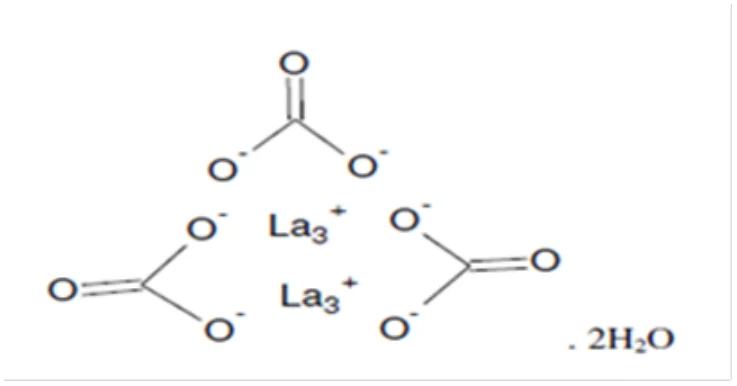
Physicochemical properties: Lanthanum carbonate dihydrate, a white to off white powder, is a basic carbonate consisting primarily of carbonate dihydrate, La2(CO3)3•2H2O. A macromolecular structure is formed from the association of water molecules across the crystal lattice. The pKa values for its salt, carbonic acid, are 10.51 and 6.68. Lanthanum carbonate is insoluble in organic solvents and soluble in dilute hydrochloric acid.
14 CLINICAL TRIALS
14.1 Trial Design and Study Demographics
The effectiveness of lanthanum carbonate in reducing serum phosphorus in ESRD patients was demonstrated in one short-term, placebo-controlled, double-blind dose-ranging study, two placebo-controlled, randomized withdrawal studies and two long-term, active-controlled, open-label studies in both hemodialysis and peritoneal dialysis (PD) patients.
Table 7: Summary of patient demographics for clinical trials in hyperphosphatasemia in end stage renal disease
| Study # | Study design | Dosage, route of administration and duration | Study subjects (n) | Mean age (Range) | Sex |
| LAM-IV-202 | Phase 2, randomized, double-blind, placebo-controlled study with 3 parts (Part 1: 2-week washout; Part 2: 4-week dose titration; Part 3: 4-week randomized treatment) | Daily dose of 250 mg, 375 mg, 750 mg, 1500 mg, or 2250 mg; Chewable tablets taken orally; Duration: 4-week titration period and 4-week double blind period) | Total = 59: Placebo 19; Lanthanum carbonate 36 | 55 (29 – 79) years | 56/44 |
| LAM-IV-204 | Phase 2, randomized, double-blind, placebo controlled, parallel group, dose ranging study with 3 parts (Part 1: 1 to 3-week single-blind placebo run-in; Part 2: 6-week double blind treatment; Part 3: 2- week run-out) | Daily dose of 225 mg, 675 mg, 1350 mg, or 2250 mg; Chewable tablets taken orally; Duration: 6 weeks | Total = 144: Placebo 32; 225 mg 27; 675 mg 29 1350 mg 30 2250 mg 26 | 56 (23 – 84) years | 55/44 |
| LAM-IV-301 | Phase 3, open-label, comparator controlled study with 5 parts (Part 1: 1 to 3-week washout; Part 2: 5-week dose titration; Part 3: 20-week open label treatment; Part 4: 24-week open label extension; Part 5: 2-year optional extension) | Daily dose of 375 mg, 750 mg, 1500 mg, 2250 mg or 3000 mg; Chewable tablets taken orally; Duration: up to 5 weeks titration + 20 weeks open label treatment + 24 weeks open label extension + 2 years extension | Total = 800: Comparator (Calcium Carbonate) 267; Lanthanum carbonate: 533 | 59 (19-85) years | 66/34 |
Table 7: Summary of patient demographics for clinical trials in hyperphosphatasemia in end stage renal disease
| Study # | Study design | Dosage, route of administration and duration | Study subjects (n) | Mean age (Range) | Sex |
| LAM-302 | Phase 3, dose titration, randomized, double blind, placebo controlled, parallel group study with 3 parts (Part 1: 1 to 3-week washout; Part 2: 6-week open label dose titration; Part 3: 4-week double blind maintenance treatment | Daily dose of 375 mg, 750 mg, 1500 mg, 2250 mg, or 3000 mg; Chewable tablets taken orally; Duration: 6 weeks titration + 4 weeks of double blind treatment | Total = 93: Placebo 44; Lanthanum carbonate 49 | 60 (21-83) years | 66/34 |
| LAM-307 | Phase 3, open-label, randomized, multicenter, comparator controlled parallel group study with 3 parts (Part 1: 1 to 3-week washout; Part 2; 6-week dose titration; Part 3: 24-month maintenance on the randomized treatment) | Daily dose of 375 mg, 750 mg, 1500 mg, 2250 mg, or 3000 mg; Chewable tablets taken orally; Duration: 1-3 weeks washout; 6 weeks dose titration; 24 months maintenance treatment | Total =1359 Lanthanum carbonate: 682 Comparator: 677 | 55 (10-91) years | 59/41 |
14.2 Study Results
Double-Blind, Placebo-Controlled Studies
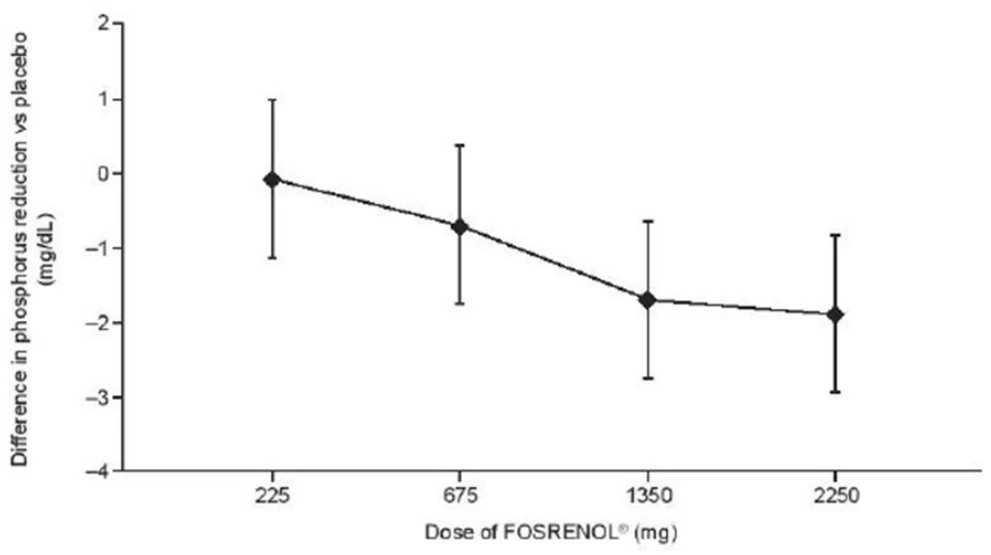
One-hundred-forty-four patients with chronic renal failure undergoing hemodialysis and with elevated phosphate levels were randomized to double-blind treatment at a fixed dose of lanthanum carbonate of 225 mg (n=27), 675 mg (n=29), 1350 mg (n=30) or 2250 mg (n=26) or placebo (n=32) in divided doses with meals. Fifty-five percent of subjects were male, 71% black, 25% white and 4% of other races. The mean age was 56 years and the duration of dialysis ranged from 0.5 to 15.3 years.
Fifty-four subjects [37 (33%) patients on lanthanum carbonate and 17 (53%) patients on placebo] withdrew from the study after randomization. The reasons for discontinuation are described in Table 8 below.
Table 8: Reasons for Discontinuation in Study LAM-204
| Reason for Discontinuation | Lanthanum carbonate (n=112 randomized) | Placebo (n=32 randomized) |
|---|---|---|
| Total withdrawn | 37 (33%) | 17 (53%) |
| Adverse events, including death | 10 (9%) | 3 (9%) |
| Outside pre-specified safety criteria* | 19 (17%) | 13 (41%) |
| Administrative or other | 8 (7%) | 1 (3%) |
* Including efficacy-related criteria such as PO4 >10 mg/dL, PO4XCa >80 mg2/dL2, and change in PTH >500 pg/mL.
Steady-state effects were achieved after two weeks. The effect after six weeks of treatment is shown in Figure 1.
Figure 1: Difference in Phosphate Reduction in the Lanthanum carbonate and Placebo Group in a 6 Week, Dose-ranging, Double-blind Study in ESRD Patients (with 95% Confidence Intervals)
One-hundred-eighty-five patients with ESRD undergoing either hemodialysis (n=146) or peritoneal dialysis (n=39) were enrolled in two placebo-controlled, randomized withdrawal studies. Sixty-four percent of subjects were male, 28% black, 62% white and 10% of other races. The mean age was 58.4 years and the duration of dialysis ranged from 0.2 to 21.4 years.
After a four- to six-week titration of lanthanum carbonate to achieve a goal phosphate level between 4.2 and 5.6 mg/dL in one study (doses up to 2250 mg/day) or ≤5.9 mg/dL in the second study (doses up to 3000 mg/day) and maintenance through 6 weeks, patients were randomized to lanthanum or placebo.
Fifty (27%) of the subjects taking lanthanum in the titration phase withdrew (unplanned) from the studies prior to randomization. The reasons for discontinuation were: adverse event including 1 death (16; 8.6%), outside pre-specified safety criteria (14; 7.6%), and protocol violation or other (20; 10.8%).
During the placebo-controlled, randomized withdrawal phase (four weeks), the phosphorus concentration rose in the placebo group by 1.9 mg/dL in both studies relative to patients who remained on lanthanum carbonate therapy.
Open-Label, Active-Controlled Studies
Two long-term, open-label studies were conducted, involving a total of 2159 patients with ESRD undergoing hemodialysis. In Study LAM-301, 800 patients completed a washout period off phosphate binders (Part 1) and were then randomized 2:1 to receive either lanthanum carbonate or calcium carbonate. These patients were then dose-titrated to a target phosphate level of ≤1.8 mmol/L over a five-week period (Part 2). On completion of titration, remaining patients remained on their randomized phosphate binder and were followed for six months (Part 3). After the six-month maintenance phase, all subjects who had been randomized were eligible to take part in a longer-term extension on lanthanum carbonate only. The purpose of the extension was primarily to assess safety and long-term tolerability of lanthanum carbonate.
Of the 767 subjects who entered the titration period (ITT population), 101 [lanthanum carbonate: 60 (11.8%); Calcium: 41 (16.0%)] withdrew before entering the maintenance phase of the study. Two-hundred and ninety-one subjects [lanthanum carbonate: 188 (41.8%); Calcium: 103 (49.8%)] withdrew during the maintenance phase (to end of Part 3). A total of 375 subjects (including those who re-entered the study at the beginning of the extension) completed the six month randomized therapy and additional six month open-label safety extension. The reasons for discontinuation are shown in Table 9.
Table 9: Reasons for Discontinuation in Study LAM-301
| Reason for Discontinuation | Lanthanum carbonate (n=533 randomized) | Calcium (n=267 randomized) |
|---|---|---|
| Total withdrawn | 271 (50.8%) | 154 (57.7%) |
| Death | 19 (3.6%) | 11 (4.1%) |
| Adverse events | 82 (15.4%) | 47 (17.6%) |
| Serious adverse event | 12 (2.3%) | 4 (1.5%) |
| Protocol violation | 24 (4.5%) | 11 (4.1%) |
| Withdrew consent | 43 (8.1%) | 29 (10.9%) |
| Received kidney transplant | 23 (4.3%) | 16 (6.0%) |
| Lost to follow-up | 5 (0.9%) | 1 (0.4%) |
| Other (including 1 missing) | 64 (12.0%) | 34 (12.7%) |
At the end of the maintenance phase of the study, the mean phosphate level was 1.73 mmol/L (representing -0.74 mmol/L from baseline) in the lanthanum carbonate group (doses up to 3000 mg/day), and 1.73 mmol/L (representing -0.75 mmol/L from baseline in the Calcium group (doses up to 9000 mg/day) in patients who completed the maintenance period.
In Study LAM-307, 1359 patients were randomized to receive either lanthanum carbonate or Standard Therapy2. Subjects completed a three-week washout period (Part 1) off all phosphate binders. After a subsequent titration period of six weeks (Part 2), the patients were maintained on their randomized treatment for 24 months (Part 3). A total of 682 patients were randomized to lanthanum carbonate therapy, and 677 were randomized to Standard Therapy2.
Of the 1359 patients who entered the titration period, 842 (62%) withdrew prior to completion of the two-year study. Of these, 486 (71.3%) were in the lanthanum carbonate group and 356 (52.6%) were in the Standard Therapy2 group.
The reasons for discontinuation are shown in Table 10.
Table 10: Reasons for Discontinuation in Study LAM-307
| Reason for Discontinuation | Lanthanum carbonate (n=682 randomized) | Standard Therapya (n=677 randomized) |
|---|---|---|
| Total withdrawn | 487 (71.3%) | 356 (52.6%) |
| Deathb | 42 (6.2%) | 96 (14.2%) |
| Adverse event | 98 (14.4%) | 29 (4.3%) |
| Exceeded pre-specified safety criteria: | ||
| Two PO4 >10 mg/dL | 32 (4.7%) | 22 (3.3%) |
| Two PO4 <2.0 mg/dL | 0 | 2 (0.3%) |
| Two CaXPO4 >90 mg2/dL2 | 14 (2.1%) | 7 (1.0%) |
| Calcium >11.5 mg/dL | 2 (0.3%) | 1 (0.1%) |
| Increase PTH >500 pg/mL | 5 (0.7%) | 1 (0.1%) |
| Protocol violation | 13 (1.9%) | 5 (0.7%) |
| Withdrew consent | 107 (15.7%) | 34 (5.0%) |
| Received kidney transplant | 55 (8.1%) | 75 (11.1%) |
| Lost to follow-up | 10 (1.5%) | 12 (1.8%) |
| Other | 109 (16.0%) | 73 (10.8%) |
- a. Standard Therapy: Patients randomized to Standard Therapy continued to take their prescribed binder at the optimal dose required to control their phosphate levels at ≤5.9 mg/dL. Patients were allowed to switch phosphate binders throughout the study and could also take a combination of binders in order to achieve optimal phosphate control.
- b. Represents End of Study entry as the investigator-determined reason for study withdrawal. There were patients who died after study termination (13 lanthanum carbonate; 19 Standard Therapy). As a result, the total number of patients who died whether during the study or within 30 days after the last dose of study drug was 178, who are not represented all on this table.
Study LAM-307 was primarily a safety and tolerability study; phosphate control was a secondary objective.
One-hundred and sixty-one patients entered a further 12-month extension of Study LAM-301, taking lanthanum carbonate only, to a total of three years. Maintenance of phosphate reduction was observed in patients treated with lanthanum carbonate for up to 3 years of which 62% received daily doses of either 2250 mg or 3000 mg at Week 58. There were minimal dose changes throughout the remainder of the study. Of the 90 patients who completed the third year of therapy, 49 (54.4%) had a phosphate level better than the target of 1.8 mmol/L.
__________________________
2 Standard Therapy: Patients randomized to Standard Therapy continued to take their prescribed binder at the optimal dose required to control their phosphate levels at ≤5.9 mg/dL. Patients were allowed to switch phosphate binders throughout the study and could also take a combination of binders in order to achieve optimal phosphate control.
In an open-label long-term 2-year extension study in 93 patients who had transitioned from other studies, resulting in a total of up to 6 years treatment, maintenance of reduction in serum phosphate level was observed. There was no evidence of adverse safety concerns after long-term lanthanum carbonate treatment in any body system, including the hepatic system, bone and central nervous system in the small number of patients remaining in their sixth year of treatment.
No effects of lanthanum carbonate on serum levels of 25-hydroxy and 1,25-dihydroxy vitamin D, vitamin A, vitamin B12, vitamin E and vitamin K were observed in patients who were monitored for 6 months.
Vital status was known for over 2000 patients, 97% of those participating in the clinical program during and after receiving treatment. The adjusted yearly mortality rate (rate/years of observation) for patients treated with lanthanum carbonate or alternative therapy was 6.6%.
Bone Safety
Lanthanum Deposition in Bone:
In the comparative bone studies, a trend towards increasing bone lanthanum concentrations with time in the Standard Therapy3 group was observed from averaged data, the median rising 3-fold from a baseline of 53 mcg/kg (wet weight) at 24 months. In patients treated with lanthanum carbonate, the bone lanthanum concentrations increased during the first 12 months of lanthanum carbonate treatment up to a median of 1328 mcg/kg (range 122-5513 mcg/kg). Median and range concentrations at 18 and 24 months were similar to 12 months. The median at 54 months was 4246 mcg/kg (range 1673-9792 mcg/kg), a 3-fold increase from that at 12 months. Steady-state bone concentrations were not reached during the period.
Bone Histology:
Paired bone biopsies (at baseline and at one year) were collected from 63 patients randomized to either lanthanum carbonate (n=33) or calcium carbonate (n=30) in one study. In a second randomized study 99 patients had both a baseline and follow up biopsy after 1 or 2 years of treatment; 63 patients had bone biopsies at baseline and 1 year (lanthanum carbonate: n=31, Standard Therapy3: n=32), and 52 patients had biopsies at baseline and 2 years (lanthanum carbonate: n=31, Standard Therapy3: n=21). Histomorphometric analysis showed no differences in the development of mineralization defects between the groups up to 2 years. However, long-term effects of lanthanum on bone quality are unknown.
__________________________
3 Standard Therapy: Patients randomized to Standard Therapy continued to take their prescribed binder at the optimal dose required to control their phosphate levels at ≤5.9 mg/dL. Patients were allowed to switch phosphate binders throughout the study and could also take a combination of binders in order to achieve optimal phosphate control.
14.3 Comparative Bioavailability Studies
Pharmacodynamic Equivalence Study
Since the binding of dietary phosphorus occurs in the lumen of the stomach and upper small intestine, plasma lanthanum concentrations are not predictive of lanthanum carbonate hydrate’s efficacy, and therefore, the use of a conventional comparative bioavailability approach to demonstrate lanthanum bioequivalence between two products would be meaningless. Furthermore, due to low bioavailability of lanthanum (less than 0.002%), an alternative assessment method is required.
An in vivo study using pharmacodynamic endpoints in healthy subjects was used to replace the conventional human pharmacokinetic in vivo studies in assessing the equivalence of NAT-LANTHANUM (lanthanum carbonate chewable tablets) versus FOSRENOL® (lanthanum carbonate chewable tablets from Shire Pharma Canada ULC). The primary endpoint used for pharmacodynamic equivalence assessment was the average daily urinary phosphate excretion over three days.
A randomized, double blind, balanced, two-treatment, two-period, two-sequence, multiple dose, two-way crossover study comparing daily urinary excretion of phosphorus for three days with tid administration of a 1000 mg tablet dose of NAT-LANTHANUM chewable tablets versus FOSRENOL® (lanthanum carbonate) chewable tablets was conducted in healthy adult male volunteers under fed conditions. The difference between formulations in average daily urinary phosphate excretion (LS means and 90% CI) was estimated and compared for the determination of pharmacodynamic equivalence.
15 MICROBIOLOGY
No microbiological information is required for this drug product.
16 NON-CLINICAL TOXICOLOGY
General Toxicology: In vitro studies have shown that lanthanum binds phosphate in the physiologically relevant pH range of 3 to 7. In normal rats, lanthanum carbonate (1000 mg/kg p.o.) increased fecal excretion of co-administered [32P]-phosphate and decreased urinary [32P]-phosphate excretion compared to vehicle-treated controls, indicative of effective dietary phosphate binding. In partially nephrectomised rats, lanthanum carbonate treatment (≥1000 mg/kg) reduced, but not significantly, the hyperphosphataemia and hyperparathyroidism associated with chronic renal failure.
The absolute oral bioavailability of lanthanum (from lanthanum carbonate) was estimated from oral and intravenous studies in rats to be 0.0007%. In rats and dogs, the mean recovery of lanthanum after an oral dose was about 99% and 94% respectively and was essentially all from feces. In bile-duct cannulated rats, biliary excretion of intravenous lanthanum (administered as the soluble lanthanum chloride) was the predominant route of elimination.
Long-term studies in animals have shown deposition of lanthanum in tissues, mainly the gastrointestinal tract, mesenteric lymph nodes, liver and bone (see also CLINICAL PHARMACOLOGY, Pharmacokinetics, Distribution). There is no evidence from animal studies that lanthanum crosses the blood brain barrier.
Single- and Repeat-Dose Toxicity
In single-dose oral toxicity studies in mice and rats, lanthanum carbonate at doses up to 2000 mg/kg resulted in no deaths and produced no overt signs of toxicity. Single-dose intravenous toxicity studies in mice and rats were conducted using the soluble chloride salt of lanthanum to ensure delivery of high systemic lanthanum doses. The maximum non-lethal intravenous doses were 3.0 mg/kg in the mouse and 6.25 mg/kg in the rat. In both species, at 6.25 mg/kg, histopathological changes in the liver included degeneration and necrosis of hepatocytes, with hemorrhage and inflammation 2 days post-dose.
In repeat-dose oral toxicity studies in mice (for up to 99 weeks), rats (for up to 104 weeks), and dogs (for up to 52 weeks), lanthanum carbonate was well tolerated at the maximum practicable doses of 1500 mg/kg/day in rodents and 2000 mg/kg/day in dogs. In a 13-week oral toxicity study in mice, lanthanum carbonate at doses up to 2000 mg/kg/day was associated with a dose-dependent accumulation of lanthanum particularly in the liver and femur. Epithelial hyperplasia was observed in the gastric mucosa at doses of 500 mg/kg/day or higher in rodents. No gastric pathology occurred in dogs, but there was a dose-related increase in lanthanum concentration in the femur at the end of the 52-week treatment period.
Repeat-dose intravenous toxicity studies of 4 weeks duration with lanthanum chloride exposed rats and dogs to peak plasma lanthanum concentrations that were approximately 1500 times (rats, 0.3 mg/kg/day) or 20 000 times (dogs, 1.0 mg/kg/day) higher than in patients (assuming a human Cmax of 1.06 ng/mL after 1000 mg of lanthanum carbonate dihydrate TID). No adverse effects occurred in rats. Chronic hepatitis was present in all male and female dogs given 1 mg/kg/day.
Pre-clinical studies also found that chronically renal impaired rats given high doses of lanthanum carbonate resulted in osteomalacia, and non-dietary phosphate supplements minimized this effect.
Carcinogenicity: Oral administration of lanthanum carbonate to rats for up to 104 weeks, at doses up to 1500 mg/kg/day, revealed no evidence of carcinogenic potential. In mice, oral administration of lanthanum carbonate for up to 99 weeks at a dose of 1500 mg/kg/day was associated with an increased incidence of gastric glandular adenomas. There were no treatment effects on the incidences of malignant tumors.
Immunotoxicity: Specific immunotoxicity studies have not been performed.
Mutagenicity: Lanthanum carbonate tested negative for mutagenic activity in an in vitro Ames assay using Salmonella typhimurium and Escherichia coli strains and an in vitro HGPRT gene mutation and chromosomal aberration assays in Chinese Hamster Ovary (CHO) cells. Lanthanum carbonate also tested negative in an in vivo mouse micronucleus assay at oral doses up to 2000 mg/kg/day.
In addition, lanthanum chloride, administered intravenously, was shown to be non-clastogenic in a bone marrow micronucleus test and in a liver unscheduled DNA synthesis assay in rats at doses up to 0.1 mg/kg/day, a dose that produced plasma lanthanum concentrations >2000 times the peak human plasma concentration.
Reproductive and Developmental Toxicology: In pregnant rats, oral administration of lanthanum carbonate at doses up to 2000 mg/kg/day resulted in no evidence of harm to the fetus. There was an increased incidence of observations of small pups in the group treated at 2000 mg/kg/day. In pregnant rabbits, oral administration of lanthanum carbonate at a dose of 1500 mg/kg/day was associated with a reduction in maternal body weight gain, food consumption, fecal production, increased pre- and post-implantation losses, reduced fetal weights, and delayed fetal ossification.
Oral administration of lanthanum carbonate to rats from implantation through lactation at 2000 mg/kg/day caused delayed eye opening, reduction in body weight gain, and delayed sexual development (preputial separation and vaginal opening) of the offspring.
Lanthanum carbonate at doses up to 2000 mg/kg/day did not affect fertility or mating performance of male or female rats.
17 SUPPORTING PRODUCT MONOGRAPHS
- 1. FOSRENOL® (chewable tablets, 250 mg, 500 mg, 750 mg, and 1000 mg), submission control number (270959), Product Monograph, Takeda Canada Inc., (April 06, 2023)