


Product Monograph - Velphoro
1 INDICATIONS
Velphoro (sucroferric oxyhydroxide) is indicated for the control of serum phosphorus levels in adult patients with end-stage renal disease (ESRD) on dialysis.
1.1 Pediatrics
Pediatrics (<18 years of age): No data are available to Health Canada; therefore, Health Canada has not authorized an indication for pediatric use.
1.2 Geriatrics
Geriatrics (> 65 years of age): In clinical trials, no overall differences in safety or efficacy were observed between subjects ≥65 and younger subjects.
2 CONTRAINDICATIONS
Velphoro is contraindicated in:
- Patients who are hypersensitive to this drug or to any ingredient in the formulation, including any non-medicinal ingredient, or component of the container. For a complete listing, see Dosage Forms, Strengths, Composition and Packaging.
- Patients with hemochromatosis or any other iron accumulation disorders.
3 DOSAGE AND ADMINISTRATION
3.1 Dosing Considerations
- Velphoro is a chewable tablet and must be taken with meals.
- In order to maximise the adsorption of dietary phosphate, the total daily dose should be divided across the meals of the day, taking into consideration the size of the meals.
- Tablets must be chewed and not swallowed whole. Tablets may be crushed into small pieces to aid with chewing and swallowing.
- Serum phosphorus levels must be monitored during titration as needed until an acceptable serum phosphorous level is reached, with regular monitoring thereafter.
3.2 Recommended Dose and Dosage Adjustment
Starting Dose
The recommended starting dose of Velphoro is 3 tablets (1,500 mg iron) per day administered as 1 tablet (500 mg iron) 3 times daily with meals.
Titration and Maintenance
Serum phosphorus levels must be monitored and the dose of Velphoro titrated up or down in increments of 500 mg iron (1 tablet) per day every 2-4 weeks until an acceptable serum phosphorus level is reached, with regular monitoring thereafter.
In clinical practice, treatment will be based on the need to control serum phosphorus levels, though patients who respond to Velphoro therapy, usually achieve optimal serum phosphorus levels at doses of 1,500-2,000 mg iron (3 to 4 tablets) per day.
Maximum Daily Dose
The maximum recommended dose is 3,000 mg iron (6 tablets) per day.
Health Canada has not authorized an indication for pediatric use.
3.3 Administration
Velphoro tablets must be consistently taken with meals and must be chewed and not swallowed whole. Tablets may be crushed into small pieces to aid with chewing and swallowing.
3.4 Missed Dose
If one or more doses are missed, the normal dose of Velphoro should be resumed with the next meal.
4 OVERDOSAGE
There are no reports of overdosage with Velphoro in patients. Since the absorption of iron from Velphoro is low (see ACTION AND CLINICAL PHARMACOLOGY, Absorption), the risk of systemic iron toxicity is low. Any instances of overdosage of Velphoro (e.g., hypophosphatemia) should be treated using standard clinical practice.
| For management of a suspected drug overdose, contact your regional poison control centre. |
5 DOSAGE FORMS, STRENGTHS, COMPOSITION AND PACKAGING
Table 1 – Dosage Forms, Strengths, Composition and Packaging.
Velphoro chewable tablets are brown, circular, bi-planar, and are embossed with "PA 500" on one side. Each Velphoro tablet contains 500 mg iron that is equivalent to 2,500 mg sucroferric oxyhydroxide which is a mixture of polynuclear iron (III)-oxyhydroxide, sucrose, pregelatinized maize starch and potato starch.
Available in a high density polyethylene (HDPE) bottle containing 90 chewable tablets. The bottle has a child-resistant polypropylene closure; a foil induction seal and contains a molecular sieve desiccant and cotton.
| Route of Administration | Dosage Form / Strength/Composition | Non-medicinal Ingredients |
| Oral | Chewable Tablets / 500 mg iron (equivalent to 2,500 mg sucroferric oxyhydroxide) | Woodberry flavour Magnesium stearate Neohesperidin dihydrochalcone Silica (colloidal, anhydrous) |
6 WARNINGS AND PRECAUTIONS
General
Velphoro contains starches. Patients with diabetes should take note that one tablet of Velphoro is equivalent to approximately 1.4 g of carbohydrates (equivalent to 0.116 bread units). This quantity can generally be considered insignificant in comparison to total daily food intake.
Patients with rare hereditary problems of fructose intolerance should be made aware that the sucrose included in Velphoro can be digested to glucose and fructose. These compounds can be absorbed in the blood.
Patients with rare hereditary problems of glucose-galactose malabsorption or sucrase-isomaltase insufficiency should be made aware that the sucrose and starch components of Velphoro can be digested to glucose and fructose, and maltose and glucose, respectively.
Carcinogenesis and Mutagenesis
Carcinogenicity studies were performed in mice and rats. There was no clear evidence of a carcinogenic effect in mice (see section NON-CLINICAL TOXICOLOGY).
Gastrointestinal
Patients with peritonitis, significant gastric disorders and patients who have undergone major gastrointestinal surgery were not included in clinical studies with Velphoro. Velphoro should only be used in these patients if the benefits outweigh the risks.
Velphoro can cause discoloured (black) stool, which may visually mask gastrointestinal bleeding. However, Velphoro does not affect guaiac based or immunological based fecal occult blood tests.
Hepatic/Biliary/Pancreatic
Patients with significant hepatic disorders were not included in clinical studies with Velphoro. However, no evidence of hepatic impairment or significant alteration of hepatic enzymes were observed in clinical studies with Velphoro. Velphoro should only be used in these patients if the benefits outweigh the risks.
Monitoring and Laboratory Tests:
Serum Phosphorus: Serum phosphorus levels must be monitored during titration as needed until an acceptable serum phosphorous level is reached, with regular monitoring thereafter.
Iron: The formulation of Velphoro gives a product that approximately contains 20% iron by weight. Iron uptake with Velphoro was generally low (see section 9.3 Pharmacokinetics) in CKD patients. Regular monitoring of iron levels should follow standard clinical practice in ESRD patients on dialysis.
Renal
Velphoro is indicated for the control of serum phosphorus levels in adult patients with ESRD on dialysis. There is no clinical data available with Velphoro in patients with earlier stages of renal impairment.
Sexual Health
Fertility
There are no data on the effect of Velphoro (sucroferric oxyhydroxide) on fertility in humans. In animal studies, there were no adverse effects on mating performance, fertility, and litter parameters following treatment with sucroferric oxyhydroxide.
6.1 Special Populations
6.1.1 Pregnant Women
There are no adequate and well-controlled studies in pregnant women. Reproductive and development toxicity studies in animals revealed no adverse effects with respect to pregnancy, embryonic/fetal development, parturition or postnatal development. Appropriate caution should be exercised when prescribing to pregnant women.
6.1.2 Breast-feeding
There have been no adequate, well-controlled studies in nursing women; however, since the absorption of iron from Velphoro is minimal, excretion of iron from Velphoro in breast milk is unlikely. A decision on whether to continue breastfeeding or to continue Velphoro therapy should be made taking into account the benefit of breastfeeding to the child and the benefit of Velphoro therapy to the mother.
6.1.3 Pediatrics
Pediatrics (<18 years of age): No data are available to Health Canada; therefore, Health Canada has not authorized an indication for pediatric use.
6.1.4 Geriatrics
No dosage adjustments are recommended in patients aged 65 years of age and older (See ACTION AND CLINICAL PHARMACOLOGY, and DOSAGE AND ADMINISTRATION).
7 ADVERSE REACTIONS
7.1 Adverse Reaction Overview
The safety of Velphoro has been investigated in 2 active-controlled, pivotal clinical studies: a 6-week dose finding study and a safety and efficacy study of up to 55 weeks. A total of 778 patients on hemodialysis and 57 patients on peritoneal dialysis were treated for up to 55 weeks.
The majority of the ADRs reported from trials were gastrointestinal disorders. As expected with oral preparations containing iron, discoloured feces was very common (see WARNINGS AND PRECAUTIONS). Diarrhea was also very common, however the majority of these events were mild and transient, occurring soon after initiation of treatment and resolving with continued treatment. In the 55-week long-term study, diarrhea led to treatment discontinuation in 3.1% of patients.
7.2 Clinical Trial Adverse Reactions
Because clinical trials are conducted under very specific conditions, the adverse reaction rates observed in the clinical trials may not reflect the rates observed in practice and should not be compared to the rates in the clinical trials of another drug. Adverse reaction information from clinical trials is useful for identifying drug-related adverse events and for approximating rates.
Table 2 below lists all treatment-related treatment emergent adverse events (TR-TEAEs), sorted by System Organ Class (SOC) and Preferred Term (PT), at incidence over 1% from all TEAEs in Velphoro and in the comparator group (i.e. sevelamer) in data combined from the following two pivotal studies conducted with Velphoro (doses from 250 mg iron/day to 3,000 mg iron/day): a 6-week, parallel design, dose-finding study in hemodialysis patients treated with either Velphoro (N=128) or an active-control (sevelamer hydrochloride; N=26); and a 55-week, open-label, active-controlled, parallel design, safety and efficacy study involving 969 hemodialysis patients and 86 peritoneal dialysis patients treated with either Velphoro (N=707 including 57 peritoneal dialysis patients) or the active-control (sevelamer carbonate; N=348 including 29 peritoneal dialysis patients).
Table 2 TR-TEAEs with Incidence > 1% in Combined Data from 6-week and 55-week Pivotal Studies
System Organ Class Preferred Term (MedDRA) | Velphoro n = 835 (%) | Sevelamer n = 374 (%) |
|---|---|---|
| Gastrointestinal Disorders | 47.9 | 41.7 |
| Diarrhea | 20.8 | 11.5 |
| Nausea | 8.4 | 13.6 |
| Vomiting | 5.4 | 8.8 |
| Constipation | 4.8 | 7.8 |
| Abdominal Pain | 3.2 | 3.2 |
| Dyspepsia | 3.1 | 4.3 |
| Abdominal Pain Upper | 2.8 | 2.7 |
| Gastritis | 2.2 | 2.1 |
| Flatulence | 1.2 | 2.1 |
| Toothache | 1.2 | 1.3 |
| Gastroesophageal reflux disease | 1.1 | 1.1 |
| Metabolism and Nutrition Disorders | 37.0 | 38.5 |
| Hyperkalemia | 4.7 | 6.7 |
System Organ Class Preferred Term (MedDRA) | Velphoro n = 835 (%) | Sevelamer n = 374 (%) |
|---|---|---|
| Hypercalcemia | 4.1 | 3.2 |
| Hypocalcemia | 4.0 | 5.9 |
| Decreased appetite | 1.9 | 4.3 |
| Hypoglycemia | 1.7 | 1.6 |
| Infections and infestations | 26.0 | 30.2 |
| Nasopharyngitis | 3.7 | 5.3 |
| General Disorders and Administration Site Conditions | 19.2 | 23.8 |
| Edema peripheral | 2.3 | 3.2 |
| Fatigue | 1.3 | 2.1 |
| Vascular disorders | 18.8 | 23.5 |
| Hypertension | 10.1 | 11.2 |
| Hypotension | 5.0 | 9.1 |
| Musculoskeletal and connective tissue disorders | 18.4 | 20.3 |
| Muscle spasms | 6.7 | 7.2 |
| Investigations | 15.6 | 20.3 |
| Blood parathyroid hormone increased | 2.3 | 2.4 |
| Serum ferritin increased | 1.8 | 2.1 |
| Nervous system disorders | 13.2 | 16.6 |
| Headache | 5.4 | 5.3 |
| Dizziness | 2.5 | 4.3 |
| Respiratory, thoracic and mediastinal disorders | 12.7 | 16.0 |
| Dyspnea | 3.5 | 3.7 |
System Organ Class Preferred Term (MedDRA) | Velphoro n = 835 (%) | Sevelamer n = 374 (%) |
|---|---|---|
| Skin and subcutaneous tissue disorders | 9.6 | 11.5 |
| Pruritus | 4.2 | 3.7 |
| Rash | 1.3 | 2.1 |
| Endocrine disorders | 5.7 | 11.0 |
| Hyperparathyroidism secondary | 3.6 | 8.3 |
| Hyperparathyroidism | 1.7 | 2.7 |
| Psychiatric disorders | 4.8 | 4.8 |
| Insomnia | 2.3 | 2.9 |
Note: hypophosphatemia, hyperphosphatemia and blood phosphorus increased are not included in Table 2 but were reported as TEAEs as well as treatment related-TEAEs during the clinical studies in the Velphoro and in the sevelamer group.
7.3 Less Common Clinical Trial Adverse Reactions
In the 6-week and 55-week clinical studies, the following less common (<1%), treatment-related treatment emergent adverse events (not otherwise listed in Table 2), were reported in more than one patient:
Gastrointestinal disorders: abdominal discomfort, abdominal distension, dry mouth, dysphagia, tongue discolouration (some cases temporary), tooth discolouration
General disorders and administration site conditions: thirst
Investigations: vitamin K decreased
Product issues: product taste abnormal
7.4 Post-market Adverse Reactions
The following adverse reactions are based on post-market spontaneous reports. Because these reactions are reported voluntarily from a population of uncertain size, it is not possible to reliably estimate the frequency.
Gastrointestinal disorders: eosinophilic peritonitis
Post-authorization data
A prospective, non-interventional, post-authorization safety study (VERIFIE) has been conducted. The objective of VERIFIE was to evaluate the short- and long-term (>1 year) safety and effectiveness of Velphoro in adult patients on hemodialysis (HD) (n=1,198) or peritoneal dialysis (PD) (n=160), who were followed in routine clinical practice for 12 to 36 months (safety analysis set, N=1,365). During the study, 45.3% (n=618) of these patients were concomitantly treated with phosphate binder(s) other than Velphoro. Overall, the effectiveness and safety profile of Velphoro in a real-life setting was consistent with that observed in the phase 3 clinical study.
In the safety analysis set (N=1365), 531 (38.9%) patients reported at least one adverse drug reaction (ADR), and 26 (1.9%) reported serious ADRs. The most common ADRs were diarrhea and discoloured feces, reported by 14.2% (n=194) and 9.4% (n=128) of patients, respectively. The incidence of diarrhea was highest in the first week and decreased with duration of use. Diarrhea was of mild to moderate intensity in most patients and resolved in the majority of patients within 2 weeks. Diarrhea assessed as related to Velphoro and lasting longer than 7 weeks was reported by 20 of 1365 patients (1.5%). In total, 46 gastrointestinal bleeding events were reported for 38 patients (2.8%) during Velphoro treatment. For 4 of the 40 concomitant gastrointestinal bleeding events with a documented gastrointestinal bleeding report, Velphoro-related stool discolouration was reported as causing an insignificant delay in diagnosis of gastrointestinal bleeding, without affecting patient health. In the remaining cases, no delay in diagnosis of gastrointestinal bleeding has been reported.
8 DRUG INTERACTIONS
8.1 Overview
When administering any oral medicinal product that is known to interact with iron, the medicinal product should be administered at least one hour before or two hours after Velphoro.
8.2 Drug-Drug Interactions
Interaction studies have not been performed in patients on dialysis. Drug-drug interaction studies have been conducted in healthy male and female subjects with losartan, furosemide, digoxin, warfarin and omeprazole. Concomitant administration of Velphoro did not affect the bioavailability of these medicinal products as measured by area under the curve (AUC).
Data from clinical studies have shown that Velphoro does not affect the lipid lowering effects of HMG-CoA reductase inhibitors (e.g., atorvastatin and simvastatin). In addition, post hoc analyses from clinical studies demonstrated no impact on Velphoro and the intact parathyroid hormone (iPTH) lowering effect of oral Vitamin D analogues. Vitamin D and 1,25-hydroxy Vitamin D levels remained unchanged.
In vitro Drug Binding Studies
In a series of analytical in vitro studies, potential adsorption to Velphoro in an aqueous solution was assessed for a range of drugs commonly used in CKD patients. No relevant binding of Velphoro was revealed with a number of drugs which may be co-administrated: acetylsalicylic acid, cephalexin, cinacalcet, ciprofloxacin, clopidogrel, enalapril, hydrochlorothiazide, metformin, metoprolol, nifedipine, pioglitazone and quinidine. Although no relevant interaction was found in in vitro, caution should be exercised when patients taking Velphoro concomitantly with these drugs.
Relevant binding of Velphoro was revealed with a number of drugs listed in Table 3.
Table 3 Established or Potential Drug-Drug Interactions
| Proper/Common name | Source of Evidence | Effect | Clinical comment |
| Alendronate | T | Interaction has been observed in in vitro study | Take at least 1 hour before taking Velphoro. |
| Doxycycline | T | Interaction has been observed in in vitro study | Take at least 1 hour before taking Velphoro or at least 2 hours after taking Velphoro. |
| Levothyroxine | T | Interaction has been observed in in vitro study | Take at least 1 hour before taking Velphoro. |
Legend: T = Theoretical
8.3 Drug-Food Interactions
Interactions with food have not been established.
There have been no adequate, well-controlled studies regarding the effect of a variety of foods on the intestinal phosphate binding of Velphoro. Velphoro must be administered with meals (see DOSAGE AND ADMINISTRATION, Recommended Dose and Dosage Adjustment).
8.4 Drug-Herb Interactions
Interaction with herbal products has not been established.
8.5 Drug-Laboratory Test Interactions
Velphoro can cause discoloured (black) stool, which may visually mask gastrointestinal bleeding. Velphoro does not affect guaiac based or immunological based fecal occult blood tests.
9 ACTION AND CLINICAL PHARMACOLOGY
9.1 Mechanism of Action
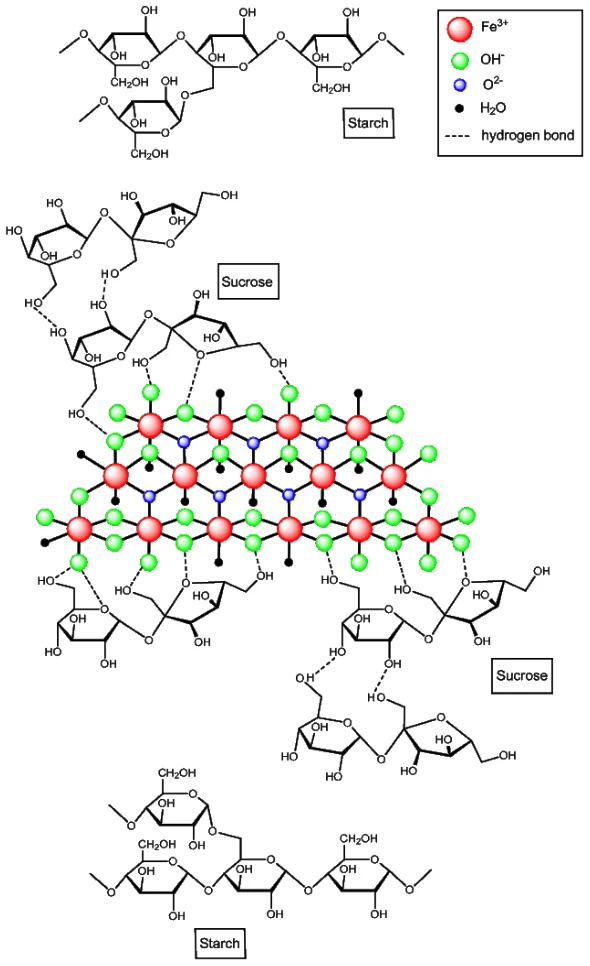
Velphoro (sucroferric oxyhydroxide) is a mixture of polynuclear iron(III)-oxyhydroxide (pn-FeOOH), sucrose, and starches. Phosphate binding takes place by ligand exchange between hydroxyl groups and/or water and the phosphate ions throughout the physiological pH range of the gastrointestinal (GI) tract.
Both serum phosphorus levels and calcium-phosphorus product levels are reduced as a consequence of the reduced dietary phosphate absorption.
9.2 Pharmacodynamics
In vitro studies have demonstrated a robust phosphate binding capacity of sucroferric oxyhydroxide over the physiological pH range of the GI tract (1.2-7.5). In vitro data suggest that the sucrose and starch components of sucroferric oxyhydroxide can be digested to glucose and fructose, and maltose and glucose, respectively. These compounds can be absorbed in the blood. One tablet of Velphoro is equivalent to approximately 1.4 g of carbohydrates.
9.3 Pharmacokinetics
Sucroferric oxyhydroxide works by binding phosphate in the GI tract and thus the serum concentration is not relevant for its efficacy. Due to the insolubility and degradation characteristics of sucroferric oxyhydroxide, no classical pharmacokinetic studies can be carried out, e.g., determination of the distribution volume, area under the curve, mean residence time, etc.
In two Phase 1 studies, it was concluded that the potential for iron overload is minimal and no dose-dependent effects were observed in healthy volunteers.
Absorption, distribution and excretion studies were conducted in rats and dogs with 59Fe-sucroferric oxyhydroxide, administered orally at clinically relevant dosages.
Absorption: Polynuclear iron(III)-oxyhydroxide (pn-FeOOH), the medical component of the product is practically insoluble and therefore not absorbed. Its degradation product, mononuclear iron species, can however be released from the surface of pn-FeOOH and be absorbed.
The iron uptake from radiolabeled Velphoro drug substance, 2,000 mg iron in 1 day, was investigated in 16 patients with CKD (8 pre-dialysis and 8 hemodialysis patients) and 8 healthy volunteers with low iron stores (serum ferritin < 100 µg/L). In healthy subjects, the median uptake of radiolabeled iron in the blood was 0.43% on Day 21. In CKD patients the median uptake was 0.04% on Day 21 (uptake values ranged from 0% to 0.44%), which was approximately 10 times lower than in the healthy volunteers. Hence, subjects on hemodialysis had a maximum uptake of 0.04% of iron from Velphoro drug substance which would equate to absorption of 1.2 mg iron/day, following administration of the maximum proposed daily clinical dose of 3,000 mg iron. Blood levels of radiolabeled iron were very low and confined to the erythrocytes.
Distribution: There are no human distribution data. In rats and dogs, the absorbed iron was recovered in the typical tissues of iron storage or utilization (red blood cells, liver, spleen, bone marrow).
Metabolism: pn-FeOOH is not metabolized, however, the degradation product mononuclear iron species, can be released from the surface of pn-FeOOH and absorbed.
Excretion: In animal studies with rats and dogs administered 59Fe-sucroferric oxyhydroxide orally, radiolabeled iron was recovered in the feces but not the urine. Studies in bile duct cannulated rats showed that biliary excretion or enterohepatic re-circulation of iron does not occur after oral administration of sucroferric oxyhydroxide.
Special Populations and Conditions
Pediatrics: The safety and efficacy of Velphoro have not been established in children.
Geriatrics: Velphoro has been administered to over 248 seniors (≥65 years of age). Of the total number of subjects in clinical studies of Velphoro, 29.7% were 65 and over whereas 8.7% were aged 75 and over. No special dosage and administration guidelines were applied to seniors in these studies and the dosing schedules were not associated with any significant concerns.
Hepatic Insufficiency: Generally, patients with severe hepatic impairment were excluded from participating in clinical studies with Velphoro.
However, no evidence of hepatic impairment or significant alteration of hepatic enzymes were observed in the clinical studies with Velphoro.
Renal Insufficiency: Velphoro is indicated for the control of serum phosphorus levels in patients with ESRD. There are no clinical data available with Velphoro in patients with earlier stages of renal impairment.
10 STORAGE, STABILITY AND DISPOSAL
Store at room temperature (15 to 30°C).
Store in the original package and keep the bottle tightly closed in order to protect from moisture.
Use within 90 days of opening bottle.
Keep out of reach and sight of children.
11 SPECIAL HANDLING INSTRUCTIONS
None.
PART II: SCIENTIFIC INFORMATION
12 PHARMACEUTICAL INFORMATION
Drug Substance
Common name: Sucroferric oxyhydroxide
Chemical name: Mixture of polynuclear iron(III)-oxyhydroxide, sucrose, and starches
Molecular formula : pn-FeOOH, xC12H22O11, y(C6H10O5)n
The medicinal ingredient is sucroferric oxyhydroxide, a mixture of polynuclear iron(III) oxyhydroxide, sucrose and starches.
Physicochemical properties: sucrose part is soluble in water; polynuclear iron(III)-oxyhydroxide and starches are practically insoluble in water.
The starches contained in sucroferric oxyhydroxide are pregelatinized maize starch and potato starch.
Structural formula:
13 CLINICAL TRIALS
13.1 Trial Design and Study Demographics
A total of 835 patients have been treated with Velphoro in pivotal clinical trials at doses up to 3,000 mg iron/day.
The ability of Velphoro (sucroferric oxyhydroxide) to lower serum phosphorus in ESRD patients on dialysis was demonstrated in 2 pivotal clinical trials:
- Study-PA-CL-03A, a 6-week, open-label, randomized, active-controlled (sevelamer hydrochloride), parallel group, dose-finding study; and
- Study-PA-CL-05A with extension Study-PA-CL-05B, totaling 55 weeks, open-label, randomized, active-controlled (sevelamer carbonate), parallel-group, safety and efficacy study.
Table 4 provides a summary of patient demographics for the pivotal trials.
Table 4 Summary of patient demographics for clinical trials in ESRD patients on dialysis
| Study # | Trial design | Dosage, route of administration and duration | Study subjects (n)* | Mean age in years (Range)* | Sex (M/F) |
|---|---|---|---|---|---|
| Study-PA-CL03A | Open-label, randomized, active-controlled, parallel-group, multicentre dose-finding study | Velphoro (V): 250; 1,000; 1,500; 2,000; or 2,500 mg iron/day Sevelamer hydrochloride (S): 4.8 g/day Oral 6 weeks | V: n = 128 S: n = 26 | V: 60.3 (28-85) S: 61.1 (33-80) | V: 82/46 S: 15/11 |
| Study-PA-CL-05A | Stage 1: Open-label randomized, active-controlled, parallel-group Stage 2: Open-label, randomized, Velphoro low dose-controlled, parallel-group | Stage 1 Velphoro (V): 1,000 – 3,000 mg iron/day (titrated to effect) Sevelamer carbonate (S): 2.4 – 14.4 g/day (titrated to effect) Stage 2 Velphoro-maintenance dose group (Vm): 1,000 – 3,000 mg iron/day Velphoro-low dose control group: (Vld) 250 mg iron/day. Oral Stage 1: 24 weeks Stage 2: 3 weeks | Stage 1 V: n = 707 S: n = 348 Stage 2: Vm: n = 45 Vld: n = 49 | Stage 1 V: 56.3 (21-89) S: 55.8 (21-88) Stage 2 Vm: 59.7 (37-83) Vld: 56.8 (23-83) | Stage 1 V: 394/313 S: 219/129 Stage 2 Vm: 21/24 Vld: 24/25 |
| Study # | Trial design | Dosage, route of administration and duration | Study subjects (n)* | Mean age in years (Range)* | Sex (M/F) |
|---|---|---|---|---|---|
| Study-PA-CL-05B | Open-label, randomized, active- controlled, Parallel-group, multicentre, long-term extension study | Velphoro-maintenance dose group (Vm): 1,000 – 3,000 mg iron/day Sevelamer carbonate (S): 2.4 – 14.4 g/day Oral 28 weeks | V: n = 391 S: n = 267 | V: 55.2 (22-87) S: 55.6 (21-88) | V: 220/171 S: 165/102 |
F = female; M = male; S = sevelamer hydrochloride or carbonate as applicable; V = Velphoro; Vld = Velphoro-low dose control; Vm = Velphoro-maintenance dose
* All randomized subjects who took at least 1 dose of study medication.
13.2 Study Results
Dose-Finding Study (Study-PA-CL-03A)
A randomized, open-label, active-controlled dose-ranging Phase 2 study over 6 weeks was performed in 154 patients on hemodialysis with serum phosphorus levels ≥1.78 mmol/L. Out of these, 128 patients received fixed dosages of Velphoro, whereas 26 patients were on the comparator drug (sevelamer hydrochloride). Velphoro was shown to be pharmacologically active from 1,000 mg iron/day to 2,500 mg iron/day with significant dose-dependent serum phosphorus lowering effects. The 250 mg iron/day dose was ineffective. Velphoro doses of 1,000 or 1,500 mg iron/day appeared to be comparable to sevelamer hydrochloride 4,800 mg/day in lowering serum phosphorus. There were no patient-reported dose limiting treatment emergent adverse events (AEs).
Mean changes in iron parameters (ferritin, TSAT and transferrin) and vitamins (A, D, E and K) were generally not clinically meaningful and showed no apparent trends across the treatment groups.
Velphoro had a similar gastrointestinal AE profile to sevelamer hydrochloride and no dose-dependent trend in gastrointestinal events was observed.
Dose Titration Study (Study-PA-CL-05A)
In PA-CL-05A, 1,055 patients on hemodialysis (HD) (N=968) and peritoneal dialysis (PD) (N=87) who were hyperphosphatemic (serum phosphorus ≥1.94 mmol/L) following a 2-4 week phosphate binder washout period, were randomized and received Velphoro at a starting dose of 1,000 mg iron/day (N=707) or comparator drug (sevelamer carbonate, N=348) for 24 weeks.
During the first 8 weeks, Velphoro dose increases or decreases by steps of 500 mg iron/day every 2 weeks were permitted for efficacy (to achieve target serum phosphorus levels between 0.81 and 1.78 mmol/L) and tolerability reasons, to a minimum dose of 1,000 mg iron/day or maximum dose of 3,000 mg iron/day. Velphoro was administered with food and the daily dose was divided across the largest meals of the day. After this 8-week dose titration period, subjects were continued on a stable dose of either Velphoro or sevelamer carbonate for a further 4-week maintenance period. Dose titrations for tolerability reasons only were allowed during this period. At the end of 12 weeks, a secondary non-inferiority efficacy comparison of Velphoro versus sevelamer carbonate with respect to change from baseline in serum phosphorus levels was performed. Subjects were continued on their study medication from Week 12 to Week 24, during which time dose titrations were allowed for both tolerability and efficacy reasons.
At the end of Week 24, 94 patients on hemodialysis who were being treated with Velphoro continued treatment with either their maintenance dose (N=45) or a non-effective low dose (N=49) control (250 mg iron/day) of Velphoro for a further 3 weeks, following re-randomization. The primary superiority efficacy analysis with respect to change in serum phosphorus from Week 24 was performed at the end of this 3-week period (Week 27).
The PA-CL-05A study met its predefined primary efficacy endpoint of establishing superiority of the Velphoro maintenance dose (1,000 to 3,000 mg iron/day) versus Velphoro non-effective low dose control (250 mg iron/day) in maintaining the phosphorus lowering effect in haemodialysis (HD) patients at Week 27 (p<0.001).
The results are provided in Table 5.
Table 5 Velphoro Maintenance Dose is Superior to the Non-Effective Low Dose Control in Maintaining Serum Phosphorus Levels (n=93)a)
| Mean (SD) Serum Phosphorus (mmol/L) | |||||
Velphoro Maintenance Dose (1,000 to 3,000 mg iron/day) (N=44)a) | Velphoro Low Dose Control (250 mg iron/day) (N=49) | ||||
| Week 24 (BL) | 1.5 (0.33) | 1.6 (0.37) | |||
| Week 25 | 1.5 (0.30) | 2.0 (0.46) | |||
| Week 26 | 1.5 (0.39) | 2.1 (0.62) | |||
| Week 27/End of Treatment | 1.6 (0.34) | 2.2 (0.50) | |||
| Change from BL to Week 27/Endpoint | 0.1 (0.4)* | 0.6 (0.47) | |||
*p<0.001 for the maintenance dose versus non-effective low dose. a) 44 of the 45 Velphoro patients received at least 1 study drug administration during this stage (Primary Efficacy Set).
Notes: BL is Week 24 or latest value available before Week 24 when Week 24 result is missing; End of Treatment is Week 27 value or includes the latest evaluable measurement after Week 24 (i.e. LOCF).
BL = Baseline; LOCF = Last observation carried forward; SD = Standard deviation.
The trial also met its pre-specified secondary endpoint of establishing non-inferiority with the active comparator (sevelamer carbonate) after 12 weeks of treatment. Mean changes in serum phosphorus levels from baseline to Week 12 were -0.71 mmol/L in the Velphoro group and -0.79 mmol/L in the sevelamer group. The upper bound of the 97.5% 1-sided confidence interval of this difference was 0.14 mmol/L, which was below the pre-defined non-inferiority margin of 0.19 mmol/L.
Extension Study (Study-PA-CL-05B)
Following completion of Study-PA-CL-05A, 658 patients (597 on hemodialysis and 61 on peritoneal dialysis) were treated in the 28-week extension study (Study-PA-CL-05B) with either Velphoro (N=391) or sevelamer carbonate (N=267) according to their original randomization.
Combined Data from Studies-PA-CL-05A and -PA-CL-05B
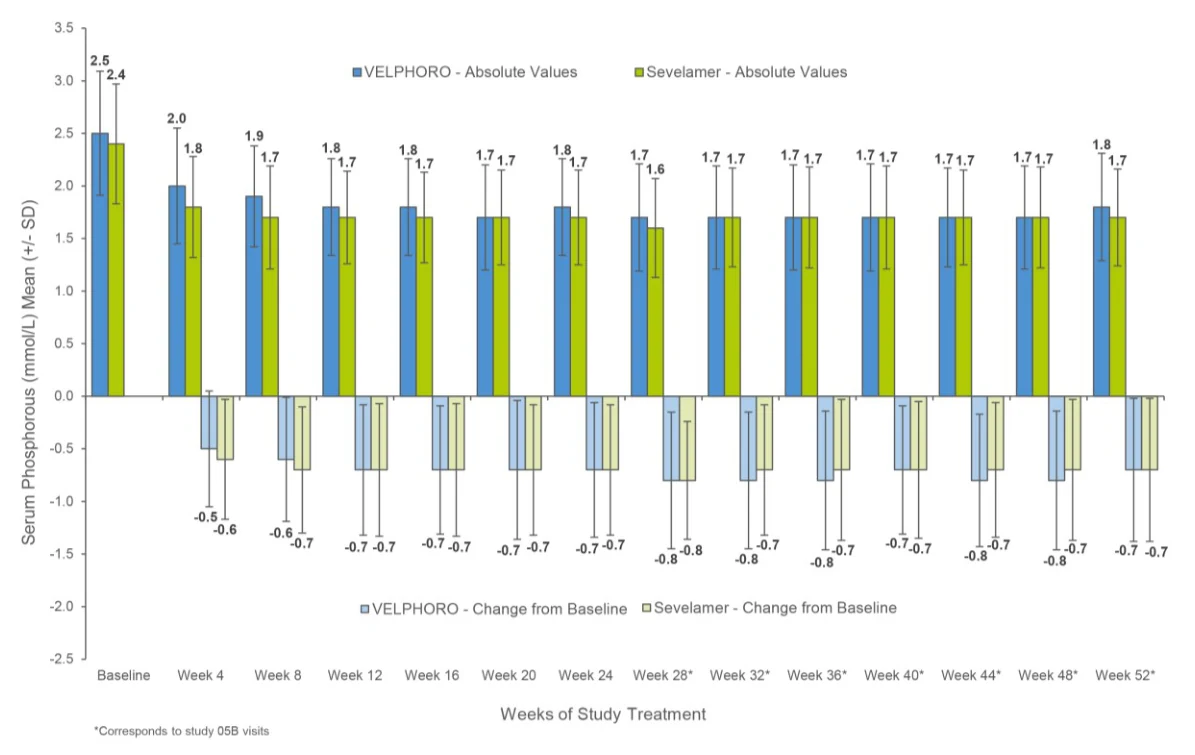
Overall, serum phosphorous levels declined rapidly during the first few weeks of titration phase and remained relatively constant thereafter. The phosphorus lowering effect of Velphoro was consistently maintained through 12 months of treatment (see
Figure 1). The mean daily dose taken over 12 months was 1,650 mg iron (3.3 tablets per day) for Velphoro and 6,960 mg (8.7 tablets per day) for sevelamer carbonate.
Figure 1 Mean (± SD) of Absolute and Change from Baseline Values in Serum Phosphorus Over Time in Patients Receiving VELPHORO Compared with Sevelamer Carbonate (Study 05A and extension Study 05B).
Notes:
-The Week 24 to Week 27 maintenance dose versus low dose period is not shown in the figure.
- *Corresponds to study 05B visits
Changes in iron parameters during treatment with Velphoro are consistent with a minimal level of iron absorption. No safety signals were detected with respect to clinical chemistry, haematological, or vitamin levels.
14 NON-CLINICAL TOXICOLOGY
General Toxicology
Nonclinical data reveal no special hazard for humans based on conventional studies of safety pharmacology, repeated dose toxicity, genotoxicity, carcinogenic potential, toxicity to reproduction and development.
In a single-dose oral toxicity study in rats, sucroferric oxyhydroxide at a dose of 1,000 mg iron/kg, representing about 25 times the maximum intended human clinical dose of 40 mg iron/kg/day, resulted in no deaths, or signs of toxicity.
In repeated-dose oral toxicity studies in rats and dogs, dosages of up to 12.5 times (rats) and 10 times (dogs) the intended human dose were tolerated for 26 or 39 weeks, respectively. Conventional toxicokinetic data were not collected due to the lack of significant absorption of sucroferric oxyhydroxide or its iron (see: DETAILED PHARMACOLOGY). However, the potential for iron accumulation after repeat administration was investigated. Where iron was distributed outside the cells of the reticulo-endothelial system (e.g., in the epithelial cells or hepatocytes), there was no evidence of toxic insult to the tissues, and in combination with the modest increases (generally 2-fold or less) in tissue iron levels in the storage organs (liver, spleen, kidney), the potential for iron overload and toxicity in human use of the product is considered to be low.
At the no observed adverse effect level (NOAEL) dosages from the repeated-dose toxicity studies, safety margins ranged from 5-fold (4 weeks dosing) to one-fold (26 weeks dosing) in rats, and were 10-fold for all studies in dogs (up to 39 weeks dosing), compared to the maximum intended human clinical dose of 40 mg iron/kg/day. The apparent low safety margins derived from healthy normophosphatemic rats with normal renal function are of limited relevance to the intended hyperphosphatemic ESRD patient population, and the definition of the NOAEL dosages in the rat toxicity studies was based largely on non-specific indices of toxicity (e.g., reduced weight gain) and/or the adaptive changes observed in the gastrointestinal tract, which reflects the higher sensitivity of rodents to changes induced by bulky test materials.
Carcinogenicity
Carcinogenicity studies were performed in mice and rats. Groups of 60 male and 60 female CD-1 mice were treated with sucroferric oxyhydroxide by diet at doses of 0 (control), 250, 500 or 1000 mg iron/kg/day for 2 years. There was no clear evidence of a carcinogenic effect in mice. Mucosal hyperplasia, with diverticulum/cyst formation was observed in the colon and caecum of mice after 2 years treatment, but this was considered a species-specific effect with no diverticula/cysts seen in long term studies in rats or dogs. In the 2-year rat carcinogenicity study, groups of 65 male and 65 female Crl:CD (SD) rats were treated with sucroferric oxyhydroxide by diet at doses of 0 (control), 200, 750 or 2500 mg iron/kg/day. There was an increased incidence (21.9%) of benign C-cell adenoma in the thyroid of male rats given the highest dose (12.5 times the maximum intended human clinical dose) of sucroferric oxyhydroxide. This is thought to be most likely an adaptive response to the pharmacological effect of the drug, and not clinically relevant.
Mutagenicity
No mutagenic or genotoxic effects were seen in in vitro and in vivo studies.
Impairment of Fertility
There are no data on the effect of Velphoro on fertility in humans. In animal studies, there were no adverse effects on mating performance, fertility, and litter parameters following treatment with sucroferric oxyhydroxide.
Teratogenicity
Nonclinical reproductive and developmental toxicity studies revealed no adverse effects on dams at doses up to 280 mg iron/kg/day or pups at doses up to 800 mg iron /kg/day in rats and doses up to 100 mg iron/kg/day in rabbits (maternal and embryo-fetal).