


Product Monograph - NB-Ezetimibe
RECENT MAJOR LABEL CHANGES
N/A
TABLE OF CONTENTS
Sections or subsections that are not applicable at the time of authorization are not listed.
RECENT MAJOR LABEL CHANGES ............................................................................................ 2
TABLE OF CONTENTS .............................................................................................................. 2
PART I: HEALTH PROFESSIONAL INFORMATION ...................................................................... 4
1 INDICATIONS .............................................................................................................. 4
1.1 Pediatrics ................................................................................................................... 4
1.2 Geriatrics ................................................................................................................... 4
2 CONTRAINDICATIONS ................................................................................................. 5
3 SERIOUS WARNINGS AND PRECAUTIONS BOX ............................................................. 5
4 DOSAGE AND ADMINISTRATION ................................................................................. 5
4.1 Dosing Considerations ............................................................................................... 5
4.2 Recommended Dose and Dosage Adjustment ......................................................... 6
4.4 Administration ........................................................................................................... 6
4.5 Missed Dose .............................................................................................................. 6
5 OVERDOSAGE ............................................................................................................. 6
6 DOSAGE FORMS, STRENGTHS, COMPOSITION AND PACKAGING .................................. 7
7 WARNINGS AND PRECAUTIONS .................................................................................. 7
7.1 Special Populations ................................................................................................. 10
7.1.1 Pregnant Women .............................................................................................. 10
7.1.2 Breast-feeding ................................................................................................... 10
7.1.3 Pediatrics ........................................................................................................... 10
7.1.4 Geriatrics ........................................................................................................... 11
8 ADVERSE REACTIONS ................................................................................................ 11
8.1 Adverse Reaction Overview .................................................................................... 11
8.2 Clinical Trial Adverse Reactions ............................................................................... 11
8.3 Less Common Clinical Trial Adverse Reactions ....................................................... 14
8.4 Abnormal Laboratory Findings: Hematologic, Clinical Chemistry and Other Quantitative Data .............................................................................................................. 14
8.5 Post-Market Adverse Reactions .............................................................................. 15
9 DRUG INTERACTIONS ................................................................................................ 15
9.1 Serious Drug Interactions ........................................................................................ 15
9.2 Drug Interactions Overview .................................................................................... 15
9.4 Drug-Drug Interactions ............................................................................................ 16
9.5 Drug-Food Interactions ........................................................................................... 19
9.6 Drug-Herb Interactions ........................................................................................... 19
9.7 Drug-Laboratory Test Interactions .......................................................................... 19
10 CLINICAL PHARMACOLOGY ....................................................................................... 19
10.1 Mechanism of Action .............................................................................................. 19
10.2 Pharmacodynamics ................................................................................................. 20
10.3 Pharmacokinetics .................................................................................................... 20
11 STORAGE, STABILITY AND DISPOSAL ......................................................................... 21
12 SPECIAL HANDLING INSTRUCTIONS ........................................................................... 21
PART II: SCIENTIFIC INFORMATION ....................................................................................... 22
13 PHARMACEUTICAL INFORMATION ............................................................................ 22
14 CLINICAL TRIALS........................................................................................................ 23
14.1 Clinical Trials by Indication ...................................................................................... 23
14.2 Comparative Bioavailability Studies ........................................................................ 29
15 MICROBIOLOGY ........................................................................................................ 29
16 NON-CLINICAL TOXICOLOGY ..................................................................................... 30
17 SUPPORTING PRODUCT MONOGRAPHS .................................................................... 33
PATIENT MEDICATION INFORMATION .................................................................................. 34
PART I: HEALTH PROFESSIONAL INFORMATION
1 INDICATIONS
NB-Ezetimibe (ezetimibe) is indicated as an adjunct to lifestyle changes, including diet, when the response to diet and other non-pharmacological measures alone has been inadequate.
Primary Hypercholesterolemia
NB-Ezetimibe, administered alone or with an HMG-CoA reductase inhibitor (statin), is indicated for:
the reduction of elevated total cholesterol (total-C), low density lipoprotein cholesterol
(LDL-C), apolipoprotein B (Apo B), and triglycerides (TG) and
to increase high density lipoprotein cholesterol (HDL-C) in patients with primary
(heterozygous familial and non-familial) hypercholesterolemia.
NB-Ezetimibe, administered in combination with fenofibrate, is indicated for:
- the reduction of elevated total-C, LDL-C, Apo B, and non-HDL-C in patients with mixed hyperlipidemia.
Homozygous Familial Hypercholesterolemia (HoFH)
NB-Ezetimibe, administered with a statin, is indicated for:
- the reduction of elevated total-C and LDL-C levels in patients with HoFH as an adjunct to treatments such as LDL apheresis or if such treatments are not possible.
Homozygous Sitosterolemia (Phytosterolemia)
NB-Ezetimibe is indicated for:
- the reduction of elevated sitosterol and campesterol levels in patients with homozygous familial sitosterolemia.
1.1 Pediatrics
Pediatrics (< 10 years): Treatment with NB-Ezetimibe (ezetimibe) in children (<10 years) is not recommended.
1.2 Geriatrics
Geriatrics (> 65 years of age): Evidence from clinical studies and experience suggests that LDL-C reduction and safety profile are comparable between elderly and young subjects treated with ezetimibe.
2 CONTRAINDICATIONS
- NB-Ezetimibe is contraindicated in patients who are hypersensitive to this drug or to any ingredient in the formulation, including any non-medicinal ingredient, or component of the container. For a complete listing, see 6 DOSAGE FORMS, STRENGTHS, COMPOSITION AND PACKAGING.
- The combination of NB-Ezetimibe with a statin is contraindicated in patients with active liver disease or unexplained persistent elevations in serum transaminases.
All statins and fenofibrate are contraindicated in pregnant and nursing women. When
NB-Ezetimibe is administered with a statin or with fenofibrate in a woman of childbearing potential, refer to the product labeling for that medication (see 7 WARNINGS AND PRECAUTIONS, 7.1 Special Populations, 7.1.1 Pregnant Women).
- Due to the presence of lactose in NB-Ezetimibe tablets, use in patients with hereditary problems of galactose intolerance, glucose-galactose malabsorption or the Lapp lactase deficiency is also contraindicated (see 7 WARNINGS AND PRECAUTIONS, Sensitivity/Resistance).
3 SERIOUS WARNINGS AND PRECAUTIONS BOX
Serious Warnings and Precautions
- Drug induced liver injury including hepatitis
- Pancreatitis
- Myopathy/rhabdomyolysis
- Myalgia
- Anaphylaxis
Severe cutaneous adverse reactions (SCARs), including Stevens-Johnson Syndrome
(SJS), Toxic Epidermal Necrolysis (TEN), drug reaction with eosinophilic and systemic symptoms (DRESS), see (7 WARNINGS AND PRECATIONS; 8 ADVERSE REACTIONS; 8.5 Post-Market Adverse Reactions).
4 DOSAGE AND ADMINISTRATION
4.1 Dosing Considerations
- Patients should be placed on a standard cholesterol-lowering diet at least equivalent to the NCEP Adult Treatment Panel III (ATP III) TLC diet before receiving NB-Ezetimibe, and should continue on this diet during treatment with NB-Ezetimibe. If appropriate, a program of weight control and physical exercise should be implemented.
- Prior to initiating therapy with NB-Ezetimibe, secondary causes for elevations in plasma lipid levels should be excluded. A lipid profile should also be performed.
4.2 Recommended Dose and Dosage Adjustment
The recommended dose of NB-Ezetimibe is 10 mg once daily orally, alone, with a statin, or with fenofibrate. NB-Ezetimibe can be taken with or without food at any time of the day but preferably at the same time each day.
Use in the Elderly: No dosage adjustment is required for elderly patients (see 7 WARNINGS AND PRECAUTIONS, 7.1 Special Populations, 7.1.4 Geriatrics).
Use in Pediatric Patients: Children and adolescents ≥ 10 years: No dosage adjustment is required (see 7 WARNINGS AND PRECAUTIONS, 7.1 Special Populations, 7.1.3 Pediatrics).
Use in Patients with Hepatic Impairment: No dosage adjustment is required in patients with mild hepatic insufficiency (Child-Pugh score 5 to 6). Treatment with NB-Ezetimibe is not recommended in patients with moderate (Child-Pugh score 7 to 9) or severe (Child-Pugh score >9) liver dysfunction (see 7 WARNINGS AND PRECAUTIONS, Hepatic/Biliary/Pancreatic, Patients with Liver Impairment).
Use in Patients with Renal Impairment: No dosage adjustment is required for patients with renal impairment (see 7 WARNINGS AND PRECAUTIONS, Renal).
Co-administration with Bile Acid Sequestrants: NB-Ezetimibe should be administered either 2 hours or longer before or 4 hours or longer after administration of a bile acid sequestrant (see 9 DRUG INTERACTIONS, 9.4 Drug-Drug Interactions, Cholestyramine).
4.4 Administration
NB-Ezetimibe tablet is for oral administration.
NB-Ezetimibe can be taken with or without food at any time of the day but preferably at the same time each day.
4.5 Missed Dose
The recommended dosing regimen is one tablet, once daily. If a dose is missed, the patient should be counselled to resume the usual schedule of one tablet daily.
5 OVERDOSAGE
In clinical studies, administration of ezetimibe, 50 mg/day to 15 healthy subjects for up to 14 days, or 40 mg/day to 18 patients with primary hypercholesterolemia for up to 56 days, was generally well tolerated.
A few cases of overdosage with ezetimibe tablets have been reported; most have not been associated with adverse experiences. Reported adverse experiences have not been serious. In the event of an overdose, symptomatic and supportive measures should be employed.
6 DOSAGE FORMS, STRENGTHS, COMPOSITION AND PACKAGING
Table 1 – Dosage Forms, Strengths, Composition and Packaging
Route of
Administration
Dosage Form /
Strength / Composition
Non-medicinal Ingredients oral Tablet 10 mg croscarmellose sodium, hypromellose, lactose monohydrate, magnesium stearate, microcrystalline cellulose, sodium lauryl sulfate
NB-Ezetimibe is formulated as white, oval tablets with debossing “10” on one side and “EZT” on the other side. Each tablet contains 10 mg of active ingredient, ezetimibe.
NB-Ezetimibe tablets are packaged in blisters of 30.
NB-Ezetimibe tablets are also available in HDPE bottles of 100 tablets.
7 WARNINGS AND PRECAUTIONS
Please see 3 SERIOUS WARNINGS AND PRECAUTIONS BOX.
General
When ezetimibe is to be administered with a statin or with fenofibrate, please refer also to the Product Monograph for that medication. Note that all statins and fenofibrate are contraindicated in pregnant women (see the Product Monograph for the medication; see 7 WARNINGS AND PRECAUTIONS, 7.1 Special Populations, 7.1.1 Pregnant Women).
Sex: Plasma concentrations for total ezetimibe are slightly higher (<20%) in women than in men. LDL-C reduction and safety profile are comparable between men and women treated with ezetimibe. Therefore, no dosage adjustment is necessary on the basis of sex.
For the most recent information in the management of a suspected drug overdose, contact your regional poison control centre or Health Canada's toll-free number, 1-844 POISON-X (1-844-764-7669).
Race: Based on a meta-analysis of pharmacokinetic studies, there were no pharmacokinetic differences between Blacks and Caucasians.
Hepatic/Biliary/Pancreatic
NB-Ezetimibe monotherapy: Liver function tests should be considered at initiation of NB-Ezetimibe monotherapy and then as indicated (see 8 ADVERSE REACTIONS, 8.4 Abnormal Laboratory Findings: Hematologic, Clinical Chemistry and Other Quantitative Data, Clinical Trial Findings).
Concomitant Administration with a Statin or Fenofibrate: When NB-Ezetimibe is initiated in a patient already taking a statin or fenofibrate, liver function tests should be considered at initiation of ezetimibe therapy, and then as indicated (see 8 ADVERSE REACTIONS, 8.4 Abnormal Laboratory Findings: Hematologic, Clinical Chemistry and Other Quantitative Data, Clinical Trial Findings).
When NB-Ezetimibe is initiated at the same time as a statin or fenofibrate, liver function tests should be performed at initiation of therapy and according to the recommendations of that medication (see 8 ADVERSE REACTIONS, 8.4 Abnormal Laboratory Findings: Hematologic, Clinical Chemistry and Other Quantitative Data, Clinical Trial Findings).
Liver Enzymes: In controlled monotherapy studies, the incidence of consecutive elevations (≥ 3 times the upper limit of normal [ULN]) in serum transaminases was similar between ezetimibe (0.5%) and placebo (0.3%).
In controlled co-administration trials in patients receiving ezetimibe with a statin, the incidence of consecutive transaminase elevations (≥ 3 X ULN) was 1.3% compared to 0.4% in patients on a statin alone.
Patients with Liver Impairment: The pharmacokinetics of ezetimibe were examined in patients with impaired liver function as defined by the Child-Pugh scoring system.
- In patients with mild hepatic insufficiency (Child-Pugh score 5 or 6), the mean area under the curve (AUC) for total ezetimibe (after a single 10 mg dose of ezetimibe) was increased approximately 1.7-fold compared to healthy subjects. No dosage adjustment is necessary for patients with mild hepatic insufficiency.
- In patients with moderate hepatic insufficiency (Child-Pugh score 7 to 9), the mean AUC for total ezetimibe (after multiple doses of 10 mg daily) was increased approximately 4-fold on Day 1 and Day 14 compared to healthy subjects. Due to the unknown effects of the increased exposure to ezetimibe in patients with moderate (Child-Pugh score 7 to 9) or severe (Child-Pugh score >9) hepatic insufficiency, ezetimibe is not recommended in these patients.
- No pharmacokinetic studies with ezetimibe have been carried out in patients with either active liver disease or unexplained and persistent elevations in serum transaminases. It is recommended that care be exercised in such patients.
The co-administration of NB-Ezetimibe and a statin is contraindicated in patients with active liver disease or unexplained and persistent elevations in serum transaminases.
Post-marketing reports of adverse events have included rare cases of hepatitis in patients taking ezetimibe. There is sufficient evidence to suggest a causal association between ezetimibe monotherapy and drug induced liver injury (see 3 SERIOUS WARNINGS AND PRECAUTIONS BOX). If patients develop signs or symptoms of hepatitis, liver function should be evaluated.
Concomitant Administration with fibrates: The co-administration of ezetimibe with fibrates other than fenofibrate has not been studied. Therefore, co-administration of NB-Ezetimibe and fibrates (other than fenofibrate) is not recommended (see 9 DRUG INTERACTIONS).
Fenofibrate: If cholelithiasis is suspected in a patient receiving NB-Ezetimibe and fenofibrate, gallbladder studies are indicated and alternative lipid-lowering therapy should be considered (see 8 ADVERSE REACTIONS and the Product Monograph for fenofibrate).
Pancreatitis: Post-marketing reports of adverse events have included rare cases of acute pancreatitis occurring in patients taking ezetimibe, although causality has not been proven. The diagnosis of acute pancreatitis should be considered in patients taking NB-Ezetimibe who develop sudden acute abdominal pain.
Immune
Post-marketing reports of adverse events have included rare cases of Severe Cutaneous Adverse Reactions in patients taking ezetimibe. There is sufficient evidence to suggest at least a reasonable possibility of a causal association with some cases of Stevens-Johnson Syndrome (SJS), Toxic Epidermal Necrolysis (TEN), Drug reaction with eosinophilic and systemic symptoms (DRESS). (see 3 SERIOUS WARNINGS AND PRECAUTIONS BOX).
Musculoskeletal
Myopathy/Rhabdomyolysis: Myopathy and rhabdomyolysis are known adverse effects of statins and fibrates. Post-marketing reports of adverse events have included rare cases of myopathy/rhabdomyolysis occurring in patients taking ezetimibe with or without a statin, regardless of causality. Myopathy/Rhabdomyolysis should be considered in patients presenting with muscle pain during treatment with NB-Ezetimibe with or without a statin or fenofibrate, and consideration given to discontinuation of the drugs. Most cases of
myopathy/rhabdomyolysis resolved when drugs were discontinued.
Myalgia: In controlled clinical trials, the incidence of myalgia was 5.0% for ezetimibe versus 4.6% for placebo (see 8 ADVERSE REACTIONS, Table 2). Post-marketing reports of adverse events have included myalgia in patients taking ezetimibe with or without a statin, regardless of causality. Patients should be instructed to contact their physician if they experience persistent and severe muscle pains with no obvious cause.
A number of patients treated with ezetimibe, in whom myalgia occurred had previously experienced myalgia (with or without elevated CK levels) with statin therapy. Patients with a history of statin intolerance (myalgia with or without elevated CK levels) should be closely monitored for adverse muscle events during treatment with NB-Ezetimibe.
Renal
Renal Insufficiency: After a single 10 mg dose of ezetimibe in patients with severe renal disease, the mean AUC for total ezetimibe was increased approximately 1.5-fold, compared to healthy subjects. Accordingly, no dosage adjustment is necessary for renal impaired patients.
Sensitivity/Resistance
Due to the presence of lactose in NB-Ezetimibe tablets, patients with hereditary problems of galactose intolerance, glucose-galactose malabsorption or the Lapp lactase deficiency should not take NB-Ezetimibe (see 2 CONTRAINDICATIONS).
7.1 Special Populations
7.1.1 Pregnant Women
No clinical data on exposed pregnancies are available for ezetimibe. The effects of ezetimibe on labour and delivery in pregnant women are unknown. Note that all statins and fenofibrate are contraindicated in pregnant women (see the Product Monograph for the medication). Caution should be exercised when prescribing to pregnant women.
7.1.2 Breast-feeding
Studies in rats have shown that ezetimibe is excreted in milk. It is not known whether ezetimibe is excreted into human breast milk, therefore, NB-Ezetimibe should not be used in nursing mothers unless the potential benefit justifies the potential risk to the infant. Note that all statins and fenofibrate are contraindicated in nursing women (see the Product Monograph for the medication).
7.1.3 Pediatrics
The pharmacokinetics of ezetimibe in adolescents (10 to 18 years) have been shown to be similar to that in adults. Treatment experience with ezetimibe in the pediatric population is limited to 4 patients (9 to 17 years) in the sitosterolemia study and 5 patients (11 to 17 years) in the HoFH study. Treatment with ezetimibe in children (<10 years) is not recommended.
7.1.4 Geriatrics
Plasma concentrations for total ezetimibe are about 2-fold higher in the elderly (≥ 65 years) than in the young (18 to 45 years). LDL-C reduction and safety profile are comparable between elderly and young subjects treated with ezetimibe. Therefore, no dosage adjustment is necessary in the elderly.
8 ADVERSE REACTIONS
8.1 Adverse Reaction Overview
The most commonly reported adverse events in clinical studies were upper respiratory tract infection, headache, myalgia and back pain. In post-marketing use, serious adverse events reported rarely or very rarely, regardless of causality, included hepatitis, hypersensitivity reactions, pancreatitis and myopathy/rhabdomyolysis.
When NB-Ezetimibe is to be administered with a statin or fenofibrate, please refer also to the Product Monograph for that medication.
8.2 Clinical Trial Adverse Reactions
Clinical trials are conducted under very specific conditions. The adverse reaction rates observed in the clinical trials; therefore, may not reflect the rates observed in practice and should not be compared to the rates in the clinical trials of another drug. Adverse reaction information from clinical trials may be useful in identifying and approximating rates of adverse drug reactions in real-world use.
Ezetimibe clinical trial experience involved 2486 patients in placebo-controlled monotherapy trials (1691 treated with ezetimibe tablets) and 4547 patients in active controlled trials (449 of whom were treated with ezetimibe tablets alone and 1708 treated with ezetimibe tablets plus a statin and 185 patients treated with ezetimibe tablets and fenofibrate). The studies were of 8 to 14 weeks duration.
The overall incidence of adverse events reported with ezetimibe was similar to that reported with placebo and the discontinuation rates due to treatment related adverse events was similar between ezetimibe (2.3%) and placebo (2.1%).
Monotherapy
Adverse experiences reported in ≥ 2% of patients treated with ezetimibe tablets and at an incidence greater than placebo in placebo-controlled studies of ezetimibe tablets, regardless of causality assessment, are shown in Table 2.
Table 2* – Clinical Adverse Events Occurring in ≥ 2% of Patients Treated with Ezetimibe Tablets and at an Incidence Greater than Placebo, Regardless of Causality
Body System/Organ Class
Adverse Event
PLACEBO
(%)
(N=795)
EZETIMIBE 10 mg
(%)
(N=1691)
Body as a whole – general
disorders
Fatigue
1.8
2.2
Gastrointestinal system
disorders
Abdominal pain
Diarrhea
2.8
3.0
3.0
3.7
Infection and infestations
Infection viral
Pharyngitis
Sinusitis
1.8
2.1
2.8
2.2
2.3
3.6
Musculoskeletal system
disorders
Arthralgia
Back pain
3.4
3.9
3.8
4.1
Respiratory system disorders
Coughing
2.1
2.3
* Includes patients who received placebo or ezetimibe tablets alone reported in Table 2.
The frequency of less common adverse events was comparable between ezetimibe and placebo.
Only two patients out of the 1691 patients treated with ezetimibe tablets alone reported serious adverse reactions-one with abdominal pain plus panniculitis, and one with arm pain and palpitation.
In monotherapy placebo-controlled clinical trials, 4% of patients treated with ezetimibe and 3.8% of patients treated with placebo were withdrawn from therapy due to adverse events.
Combination with a Statin
Ezetimibe has been evaluated for safety in combination studies in more than 2000 patients. In general, adverse experiences were similar between ezetimibe administered with a statin and a statin alone. However, the frequency of increased transaminases was slightly higher in patients receiving ezetimibe administered with a statin than in patients treated with a statin alone (see 7 WARNINGS AND PRECAUTIONS, Hepatic/Biliary/Pancreatic, Patients with Liver Impairment).
Clinical adverse experiences reported in ≥ 2% of patients and at an incidence greater than placebo in four placebo-controlled trials where ezetimibe was administered alone or initiated concurrently with various statins, regardless of causality assessment, are shown in Table 3.
Table 3* – Clinical Adverse Events Occurring in ≥ 2% of Patients and at an Incidence Greater than Placebo, Regardless of Causality, in Ezetimibe /Statin Combination Studies
Body System/Organ Class
Adverse Event
Placebo
(%)
(N=259)
Ezetimibe 10 mg (%)
(N=262)
All
Statins**
(%)
(N=936)
Ezetimibe + All Statins**
(%)
(N=925)
Body as a whole - general
disorders
Chest pain
Dizziness
Fatigue
Headache
1.2
1.2
1.9
5.4
3.4
2.7
1.9
8.0
2.0
1.4
1.4
7.3
1.8
1.8
2.8
6.3
Gastrointestinal system disorders
Abdominal pain
Diarrhea
2.3
1.5
2.7
3.4
3.1
2.9
3.5
2.8
Infection and infestations
Pharyngitis
Sinusitis
Upper respiratory tract infection
1.9
1.9
10.8
3.1
4.6
13.0
2.5
3.6
13.6
2.3
3.5
11.8
Musculoskeletal system disorders
Arthralgia
Back pain
Myalgia
2.3
3.5
4.6
3.8
3.4
5.0
4.3
3.7
4.1
3.4
4.3
4.5
* Includes four placebo-controlled combination studies in which ezetimibe was initiated concurrently with a statin.
** All statins=all doses of all statins.
In co-administration placebo-controlled clinical trials, 5.7% of patients treated with ezetimibe co-administered with a statin, 4.3% of patients treated with statin alone, 5.0% of patients treated with ezetimibe alone, and 6.2% of patients treated with placebo were withdrawn from therapy due to adverse events.
Combination with Fenofibrate
In a clinical study involving 625 patients treated for up to 12 weeks and 576 patients treated for up to 1 year, co-administration of ezetimibe and fenofibrate was well tolerated. This study was not designed to compare treatment groups for infrequent events. Incidence rates (95% CI) for clinically important elevations (>3 X ULN, consecutive) in serum transaminases were 4.5% (1.9, 8.8) and 2.7% (1.2, 5.4) for fenofibrate monotherapy and ezetimibe co-administered with fenofibrate, respectively, adjusted for treatment exposure. Corresponding incidence rates for cholecystectomy were 0.6% (0.0, 3.1) and 1.7% (0.6, 4.0) for fenofibrate monotherapy and
ezetimibe co-administered with fenofibrate, respectively (see 7 WARNINGS AND PRECAUTIONS, Hepatic/Biliary/Pancreatic, Fenofibrate and 9 DRUG INTERACTIONS). There were no CPK elevations >10 X ULN in either treatment group in this study. Abdominal pain was commonly reported.
8.3 Less Common Clinical Trial Adverse Reactions
Monotherapy
The following additional drug-related adverse experiences were reported in patients taking ezetimibe alone (n = 2396) and at a greater incidence than placebo (n=1159).
Common (incidence ≥1% and <10%)
Gastrointestinal Disorders: flatulence
Uncommon (incidence ≥0.1% and <1%)
Investigations: ALT and/or AST increased; blood CPK increased; gammaglutamyltransferase increased; liver function test abnormal
Gastrointestinal Disorders: dyspepsia; gastroesophageal reflux disease; nausea General Disorders: chest pain; pain
Musculoskeletal and Connective Tissue Disorders: muscle spasms; neck pain Metabolism and Nutrition Disorders: decreased appetite
Vascular Disorders: hot flush; hypertension
Combination with a Statin
The following additional drug-related adverse experiences were reported in patients taking ezetimibe co-administered with a statin (n = 11,308) and at a greater incidence than statin administered alone (n=9361).
Uncommon (incidence ≥0.1% and <1%)
Gastrointestinal Disorders: dry mouth; gastritis
General Disorders: asthenia; edema peripheral
Musculoskeletal and Connective Tissue Disorders: muscular weakness; pain in extremity Nervous System Disorders: paresthesia
Skin and Subcutaneous Tissue Disorders: pruritus; rash; urticaria
8.4 Abnormal Laboratory Findings: Hematologic, Clinical Chemistry and Other Quantitative
Data
Clinical Trial Findings
In controlled clinical monotherapy trials, the incidence of clinically important consecutive elevations in serum transaminases (ALT and/or AST ≥ 3 X ULN) was similar between ezetimibe (0.5%) and placebo (0.3%). In co-administration trials, the incidence was 1.3% for patients
treated with ezetimibe co-administered with a statin and 0.4% for patients treated with a statin alone. These elevations were generally asymptomatic, not associated with cholestasis, and returned to baseline levels after discontinuation of therapy or with continued treatment.
In clinical trials there was no excess of myopathy or rhabdomyolysis associated with ezetimibe compared with the relevant control arm (placebo or statin alone). However, myopathy and rhabdomyolysis are known adverse reactions to statins and other lipid-lowering drugs. In clinical trials, the incidence of CK >10 X ULN was 0.2% for ezetimibe versus 0.1% for placebo, and 0.1% for ezetimibe co-administered with a statin versus 0.4% for statin alone.
8.5 Post-Market Adverse Reactions
The following adverse events have been reported rarely or very rarely, regardless of causality:
- myalgia (see 7 WARNINGS AND PRECAUTIONS)
- myopathy/rhabdomyolysis (see 7 WARNINGS AND PRECAUTIONS)
drug-induced liver injury, including hepatitis (see 3 SERIOUS WARNINGS AND
PRECAUTIONS BOX; 7 WARNINGS AND PRECAUTIONS).
- hypersensitivity reactions, including anaphylaxis, angioedema, rash and urticaria
- erythema multiforme
- pancreatitis (see 7 WARNINGS AND PRECAUTIONS)
- thrombocytopenia
- cholelithiasis
- cholecystitis
- depression
- constipation
- severe cutaneous adverse reactions (SCARs), including Stevens-Johnson syndrome (SJS), toxic epidermal necrolysis (TEN), drug reaction with eosinophilic and systemic symptoms (DRESS) (see 3 SERIOUS WARNINGS AND PRECAUTIONS BOX; 7 WARNINGS AND PRECAUTIONS).
9 DRUG INTERACTIONS
9.1 Serious Drug Interactions
Serious Drug Interactions
- Concomitant treatment with cyclosporine (see 9.4 Drug-Drug Interactions)
9.2 Drug Interactions Overview
Drug-drug interactions are known or suspected with cholestyramine, cyclosporine and fibrates.
9.4 Drug-Drug Interactions
The drugs listed in this table are based on either drug interaction case reports or studies, or potential interactions due to the expected magnitude and seriousness of the interaction (i.e., those identified as contraindicated).
Table 4 – Established of Potential Drug-Drug Interactions
Proper/Common name Effect Clinical comment
Cytochrome P450
System
Ezetimibe neither induces, nor inhibits, these cytochrome P450 isoenzymes.
No clinically significant pharmacokinetic interactions have been observed between ezetimibe and drugs known to be metabolized via CYP 1A2, 2D6, 2C8, 2C9, and 3A4 isoenzymes, or N-acetyltransferase such as caffeine, dextromethorphan, tolbutamide, and IV midazolam.
Anticoagulants - Concomitant administration of ezetimibe
(10 mg once daily) had no significant effect on bioavailability of warfarin and prothrombin time in a study of twelve healthy adult males. As with the initiation of any medication in patients treated with warfarin or another coumarin anticoagulant, additional International Normalised Ratio (INR) measurements are recommended for patients administered warfarin or another coumarin anticoagulant concomitantly with NB-Ezetimibe. Diogixin - Concomitant administration of ezetimibe
(10 mg once daily) had no significant effect on the bioavailability of digoxin and the ECG parameters (HR, PR, QT, and QTc intervals) in a study of twelve healthy adult males.
Oral Contraceptives - Co-administration of ezetimibe (10 mg once daily) with oral contraceptives had no significant effect on the bioavailability of ethinyl estradiol or levonorgestrel in a study of eighteen healthy adult females. Cimetidine - Multiple doses of cimetidine (400 mg twice daily) had no significant effect on the oral bioavailability of ezetimibe and
Proper/Common name Effect Clinical comment
total ezetimibe in a study of twelve healthy adults.
Antacids - Concomitant antacid (aluminum and magnesium hydroxide) administration decreased the rate of absorption of ezetimibe but had no effect on the bioavailability of ezetimibe. This decreased rate of absorption is not considered clinically significant. Glipizide A single dose of
glipizide (10 mg) had no significant effect on the exposure to total ezetimibe or
ezetimibe.
In a study of twelve healthy adult males, steady-state levels of ezetimibe (10 mg once daily) had no significant effect on the pharmacokinetics and
pharmacodynamics of glipizide.
Cholestyramine or any
other bile acid
sequestrant
The incremental LDL-C reduction due to
adding ezetimibe to cholestyramine may be lessened by this
interaction.
Concomitant cholestyramine
administration decreased the mean AUC of total ezetimibe (ezetimibe + ezetimibe-glucuronide) approximately 55%.
When NB-Ezetimibe is used concurrently with cholestyramine or any other bile acid sequestrant, an interval of at least 2 hours before or 4 hours after should be maintained between the two drugs as the absorption of ezetimibe may be impaired.
Fibrates Fibrates may increase
cholesterol excretion into the bile, leading to cholelithiasis
The safety and effectiveness of ezetimibe co-administered with fenofibrate have been evaluated in a clinical study (see 7 WARNINGS AND PRECAUTIONS; 8 ADVERSE REACTIONS and 14 CLINICAL TRIALS, Co-administration with Fenofibrate); co-administration of ezetimibe with other fibrates has not been studied. Fibrates may increase cholesterol excretion into the bile, leading to cholelithiasis.
Proper/Common name Effect Clinical comment
In a preclinical study in dogs, ezetimibe increased cholesterol in the gallbladder bile. Although the relevance of this preclinical finding to humans is unknown, co-administration of ezetimibe with fibrates (other than fenofibrate) is not recommended until use in patients is studied.
- Fenofibrate: In a pharmacokinetic study, concomitant fenofibrate administration increased total ezetimibe concentrations approximately 1.5-fold. This increase is not considered clinically significant.
- Gemfibrozil: In a pharmacokinetic study, concomitant gemfibrozil administration increased total ezetimibe concentrations approximately 1.7-fold. This increase is not considered clinically significant. No clinical data are available.
Statins - No clinically significant pharmacokinetic interactions were seen when ezetimibe was co-administered with atorvastatin, simvastatin, pravastatin, lovastatin, fluvastatin or rosuvastatin.
Cyclosporine - Caution should be exercised when
initiating NB-Ezetimibe in the setting of cyclosporine. Cyclosporine
concentrations should be monitored in patients receiving ezetimibe and cyclosporine.
In a study of eight post-renal transplant patients with creatinine clearance of >50 mL/min on a stable dose of cyclosporine, a single 10 mg dose of ezetimibe resulted
Proper/Common name Effect Clinical comment
in a 3.4-fold (range 2.3- to 7.9-fold) increase in the mean AUC for total ezetimibe compared to a healthy control population from another study (N=17). In a different study, a renal transplant patient with severe renal insufficiency (creatinine clearance of 13.2
mL/min/1.73 m2) who was receiving multiple medications, including cyclosporine, demonstrated a 12-fold greater exposure to total ezetimibe compared to concurrent controls.
In contrast, in a two-period crossover study in twelve healthy subjects, daily administration of 20 mg ezetimibe for 8 days with a single 100-mg dose of cyclosporine on Day 7 resulted in a mean 15% increase in cyclosporine AUC (range 10% decrease to 51% increase) compared to a single 100-mg dose of cyclosporine alone.
9.5 Drug-Food Interactions
Interactions with food have not been established.
9.6 Drug-Herb Interactions
Interactions with herbal products have not been established.
9.7 Drug-Laboratory Test Interactions
Interactions with laboratory tests have not been established.
10 CLINICAL PHARMACOLOGY
10.1 Mechanism of Action
Ezetimibe is in a new class of lipid-lowering compounds that selectively inhibit the intestinal absorption of cholesterol and related plant sterols. Ezetimibe is orally active, with a unique mechanism of action that differs from other classes of cholesterol-reducing compounds e.g., HMG-CoA reductase inhibitors (statins), bile acid sequestrants (resins), fibric acid derivatives,
plant stanols. The molecular target of ezetimibe is the sterol transporter, Niemann-Pick C1-Like 1 (NPC1L1), which is responsible for the intestinal uptake of cholesterol and phytosterols.
Although ezetimibe is rapidly absorbed and is extensively metabolized to an active phenolic glucuronide which reaches the systemic circulation after oral administration (see 10 CLINICAL PHARMACOLOGY, 10.3 Pharmacokinetics, Absorption), its action is localized at the brush border of the small intestine where it inhibits the absorption of cholesterol, leading to a decrease in the delivery of intestinal cholesterol to the liver. This results in a reduction of hepatic cholesterol stores and an increase in clearance of cholesterol from the blood. Ezetimibe does not increase bile acid excretion in contrast to bile acid sequestrants and does not inhibit cholesterol synthesis in the liver as do statins. Ezetimibe and statins have distinct mechanisms of action that provide complementary cholesterol reduction. Administration of ezetimibe with fenofibrate is effective in improving serum total-C, LDL-C, Apo B, TG, HDL-C, and non-HDLC in patients with mixed hyperlipidemia.
Clinical studies have demonstrated that elevated levels of total-C, low density lipoprotein cholesterol (LDL-C) and apolipoprotein B (Apo B; the major protein constituent of LDL), promote atherosclerosis in humans. In addition, decreased levels of high density lipoprotein cholesterol (HDL-C) are associated with the development of atherosclerosis. Epidemiologic studies have established that cardiovascular morbidity and mortality vary directly with the level of total-C and LDL-C and inversely with the level of HDL-C. Like LDL, cholesterol-enriched triglyceride-rich lipoproteins, including very low density lipoproteins (VLDL), intermediate density lipoproteins (IDL), and remnants, can also promote atherosclerosis. The effects of ezetimibe given either alone or in addition to a statin or fenofibrate on cardiovascular morbidity and mortality have not been established.
10.2 Pharmacodynamics
Preclinical studies in animals were performed to determine the selectivity of ezetimibe for inhibiting cholesterol absorption. Ezetimibe inhibited the absorption of [14C]-cholesterol with no effect on the absorption of triglycerides, fatty acids, bile acids, progesterone, ethinyl estradiol, or the fat soluble vitamins A and D.
In a study of hypercholesterolemic patients, ezetimibe inhibited intestinal cholesterol absorption by 54%, compared with placebo. Ezetimibe had no clinically meaningful effect on the plasma concentrations of the fat-soluble vitamins A, D, and E, and did not impair adrenocortical steroid hormone production.
10.3 Pharmacokinetics
Absorption
After oral administration, ezetimibe is rapidly absorbed and extensively conjugated to a phenolic glucuronide (ezetimibe-glucuronide) form which is at least as pharmacologically active as the parent drug. Mean ezetimibe peak plasma concentrations (Cmax) of 3.4 to 5.5 ng/mL were
attained within 4 to 12 hours (Tmax). Ezetimibe-glucuronide mean Cmax values of 45 to 71 ng/mL were achieved between 1 and 2 hours (Tmax). The extent of absorption and absolute bioavailability of ezetimibe cannot be determined as the compound is virtually insoluble in aqueous media suitable for injection.
Concomitant food administration (high fat or non-fat meals) had no effect on the extent of absorption of ezetimibe when administered as ezetimibe 10 mg tablets. Cmax of ezetimibe was increased by 38% when taken with high fat meals.
Distribution
Ezetimibe and ezetimibe-glucuronide are bound 99.7% and 88 to 92% to human plasma proteins, respectively.
Metabolism
Ezetimibe is metabolized primarily in the small intestine and liver via glucuronide conjugation (a phase II reaction) with subsequent biliary and renal excretion. Minimal oxidative metabolism (a phase I reaction) has been observed in all species evaluated. Ezetimibe and ezetimibe glucuronide are the major compounds detected in plasma. The conjugated ezetimibe glucuronide constitutes 80-90% of plasma drug levels with ezetimibe the remaining 10-20%. Both ezetimibe and ezetimibe-glucuronide are slowly eliminated from plasma with evidence of significant enterohepatic recycling. The half-life for ezetimibe and ezetimibe-glucuronide is approximately 22 hours.
Elimination
Following oral administration of 14C-ezetimibe (20 mg) to human subjects, total ezetimibe (ezetimibe + ezetimibe-glucuronide) accounted for approximately 93% of the total radioactivity in plasma. Approximately 78% and 11% of the administered radioactivity were recovered in the feces and urine, respectively, over a 10-day collection period. After 48 hours, there were no detectable levels of radioactivity in the plasma. Ezetimibe was the major component in feces (69% of the administered dose) while ezetimibe-glucuronide was the major component in urine and accounted for 9% of the administered dose.
11 STORAGE, STABILITY AND DISPOSAL
Store between 15°C-30°C. Protect from moisture.
12 SPECIAL HANDLING INSTRUCTIONS
There are no special requirements for use or handling of this product.
PART II: SCIENTIFIC INFORMATION
13 PHARMACEUTICAL INFORMATION
Drug Substance
Proper name: ezetimibe
Chemical name: 1-(4-fluorophenyl)-3(R)-[3-(4-fluorophenyl)-3(S)-hydroxypropyl]-4(S)-4-hydroxyphenyl)-2-azetidinone
Molecular formula and molecular mass: C24H21F2NO3; 409.42 g/mol
Structural formula:
Physicochemical properties: White to an off-white crystalline powder
Solubility: Ezetimibe is freely to very soluble in ethanol, methanol and acetone and practically insoluble in water.
Solubility of ezetimibe in various aqueous media at 37 ˚C: Media Solubility final pH water 0.0004 mg/ml 6.0 0.1M HCl 0.0008 mg/ml 1.2 phosphate – citric buffers:
- pH 3.0
- pH 4.5
- pH 6.8
pH 7.5
0.0007 mg/ml 0.0006 mg/ml 0.0005 mg/ml 0.0003 mg/ml
3.1 4.6 6.8 7.5
The solubility of ezetimibe is independent of crystal form as the anhydrous form rapidly converts into the monohydrate form in aqueous media.
pKa: 9.72 (potentiometric titration)
9.66 (theoretical)
Partition coefficient: LogP = 4.5
Melting point:
Anhydrous form: melts at 163°C (onset) 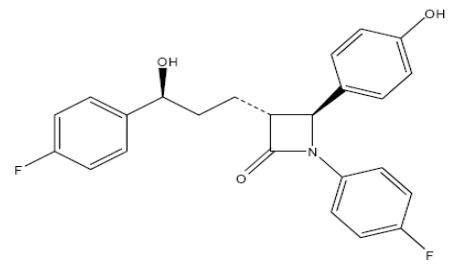
Hydrate form: dehydration peak into anhydrate from around 65°C; melts at 163°C (onset)
14 CLINICAL TRIALS
14.1 Clinical Trials by Indication
Primary Hypercholesterolemia
Ezetimibe has been shown to be effective in reducing total-C, LDL-C, Apo B, and TG and increasing HDL-C in patients with primary hypercholesterolemia. Maximal to near maximal response is generally achieved within 2 weeks and maintained during chronic therapy.
Ezetimibe is effective in a variety of patient populations with hypercholesterolemia, in men and women, and in the elderly, administered alone or with a statin.
Monotherapy
Table 5 – Summary of patient demographics for clinical trials in patients with primary hypercholesterolemia
Study Design
Dosage, route of
administration and
duration
Study subjects
(n)
Mean age
(Range) Sex
Double-blind,
placebo-
controlled
studies
12 weeks duration in
patients with primary
hypercholesterolemia
1719 58 years 48 % male
In two double-blind, placebo-controlled studies of 12 weeks duration in patients with primary hypercholesterolemia, ezetimibe significantly lowered total-C, LDL-C, Apo B, and TG and increased HDL-C compared with placebo. The studies enrolled 1719 patients (ezetimibe =1288, placebo = 431) with an LDL-C ≥ 130 mg/dL (3.37 mmol/L) and ≤ 250 mg/dL (6.48 mmol/L), and with a TG ≤ 350 mg/dL (3.96 mmol/L). In general, the groups were balanced with regard to body weight, sex, age, race and baseline lipid levels; at entry into the study the mean LDL-C was 165 mg/dL (4.27 mmol/L) while the mean age was 58 years and 48% were male.
Table 6 – Mean Response to Ezetimibe in Patients with Primary Hypercholesterolemia (Mean % Change from Baseline)
Treatment Group N Total-C LDL-C Apo B TGa HDLC
Study 1 Placebo 205 +1 +1 -1 -1 -1
Ezetimibe tablet 622 -12 -18 -15 -7 +1 Study 2 Placebo 226 +1 +1 -1 +2 -2
Ezetimibe tablet 666 -12 -18 -16 -9 +1
a Median % change from baseline
Reductions in LDL-C were consistent across age, sex, race, and baseline LDL-C (see Table 3). In addition, ezetimibe tablet had no effect on the plasma concentrations of the fat-soluble vitamins A, D, and E, or on prothrombin time, and did not impair adrenocortical steroid hormone production.
In two, 12 week ezetimibe monotherapy studies which included 1288 patients treated with ezetimibe and 431 treated with placebo, the safety profile of ezetimibe was similar to that of placebo. There was no difference in the incidence of clinically important liver function or muscle adverse experiences between the groups.
Co-Administration with a Statin
Ezetimibe Initiated Concurrently with a Statin
Table 7 – Summary of patient demographics for clinical trials in patients with primary hypercholesterolemia, Ezetimibe co-administered with a statin
Study Design
Dosage, route of administration and
duration
Study subjects
(n)
Mean age
(Range) Sex
Four double-
blind, placebo-
controlled
studies
Patients with primary hypercholesterolemia, Ezetimibe co-
administered with a statin
2382 57 years 43% male
In four double-blind, placebo-controlled studies in patients with primary hypercholesterolemia, Ezetimibe co-administered with a statin significantly lowered total-C, LDL-C, Apo B and TG and increased HDL-C compared with a statin alone. The studies enrolled 2382 patients (Ezetimibe alone=262, placebo=259, ezetimibe co-administered with a statin=925, statin alone=936) with an LDL-C ≥ 145 mg/dL (3.76 mmol/L) and ≤ 250 mg/dL (6.48 mmol/L) and with TG ≤ 350 mg/dL (3.96 mmol/L). In general, the groups were balanced with regard to body weight, sex, age, race and baseline lipids; at entry into the study the mean LDL-C was 179 mg/dL (4.64 mmol/L) while the mean age was 57 years and 43% were male.
In general, the incremental effect on LDL-C reduction was independent of the dose or specific statin used. In addition, LDL-C reduction for ezetimibe tablet co-administered with the lowest tested dose (10 mg) of any of the statins was similar to or greater than the LDL-C reduction of the highest tested dose of the corresponding statin administered alone (Table 8).
Table 8 – Mean % Change from Baseline in Plasma Concentration of Calculated LDL-C for Ezetimibe Administered with Statins
Atorvastatin
Study
Simvastatin
Study
Pravastatin
Study
Lovastatin Study
Placebo +4 -1 -1 0 Ezetimibe -20 -19 -20 -19 10 mg statin -37 -27 -21 -20 Ezetimibe + 10 mg
statin
-53 -46 -34 -34
20 mg statin -42 -36 -23 -26 Ezetimibe + 20 mg
statin
-54 -46 -40 -41
40 mg statin -45 -38 -31 -30 Ezetimibe + 40 mg
statin
-56 -56 -42 -46
80 mg statin -54 -45 - - Ezetimibe + 80 mg
statin
-61 -58 - -
In addition, ezetimibe had a beneficial effect on total-C, Apo B, TG, and HDL-C.
In the 4 ezetimibe and statin factorial studies performed with lovastatin, pravastatin, simvastatin and atorvastatin, 925 patients received ezetimibe co-administered with statins and 936 received statin alone. Overall, the co-administration of ezetimibe and statin was well tolerated. There was no difference in the incidence of clinically important muscle adverse experiences. There was small excess of liver function elevations in the co-administration group compared to statins alone: 1.3% versus 0.4% respectively.
Ezetimibe Added to On-going Statin Therapy
Table 9 – Summary of patient demographics for clinical trials in patients with primary hypercholesterolemia, Ezetimibe added to on-going statin therapy.
Study Design
Dosage, route of
administration and
duration
Study subjects
(n)
Mean age
(Range) Sex
Double-blind,
placebo-
controlled
study
8 weeks duration in
patients with primary
hypercholesterolemia,
with known coronary
artery disease or
multiple
cardiovascular risk
769 60 years 58% male
Study Design
Dosage, route of administration and
duration
Study subjects
(n)
Mean age
(Range) Sex factors not controlled by existing statin therapy
In a single double-blind, placebo-controlled study of 8 weeks duration in patients with primary hypercholesterolemia, with known coronary artery disease or multiple cardiovascular risk factors not controlled by existing statin therapy (i.e., LDL-C exceeded NCEP ATP II defined targets), the addition of ezetimibe to a statin further reduced LDL-C by 25% (versus 4% for statin alone) and brought significantly more patients to their LDL-C goal than the statin alone (72% versus 19%). The study enrolled 769 patients (Ezetimibe co-administered with a statin=379, statin alone=390). In general, the groups were balanced with regard to body weight, sex, age, race and baseline lipids; at entry into the study the mean LDL-C was 139 mg/dL (3.60 mmol/L) while the mean age was 60 years and 58% were male.
Co-administration with Fenofibrate
Table 10 – Summary of patients demographics for clinical trials in patients with mixed hyperlipidemia Ezetimibe co-administered with Fenofibrate
Study Design
Dosage, route of administration and duration
Study subjects
(n)
Mean age
(Range) Sex
Multicenter,
double-blind,
placebo-
controlled,
clinical study
Patients,
randomized to
receive placebo, Ezetimibe alone, 160 mg
fenofibrate
alone, or
Ezetimibe and
160 mg
fenofibrate
625 (treated for up to 12 weeks)
576 (treated for up to 1 year)
54 years 56% male
In a multicenter, double-blind, placebo-controlled, clinical study in patients with mixed hyperlipidemia, 625 patients were treated for up to 12 weeks and 576 for up to 1 year. Patients with an LDL-C ≥ 130 mg/dL (3.37 mmol/L) and ≤ 220 mg/dL (5.70 mmol/L) (for non-diabetics) or ≥ 100 mg/dL (2.59 mmol/L) and ≤ 180 mg/dL (4.66 mmol/L) (for diabetics), and with TG ≥ 200 mg/dL (2.26 mmol/L) and ≤ 500 mg/dL (5.65 mmol/L) were randomized to receive placebo, ezetimibe alone, 160 mg fenofibrate alone, or ezetimibe and 160 mg fenofibrate. In general, the groups were balanced with regard to body weight, sex, age, race and baseline lipids; at entry
into the study the mean LDL-C was 161 mg/dL (4.17 mmol/L) while the mean age was 54 years and 56% were male.
Table 11 – Response to Ezetimibe and Fenofibrate Initiated Concurrently in Patients with Mixed Hyperlipidemia (Meana % Change from Untreated Baselineb at 12 weeks)
Treatment
(Daily Dose)
N Total-C LDL-C Apo B TGa HDL-C Non-HDL-C
Placebo 63 0 0 -1 -9 +3 0 Ezetimibe 185 -12 -13 -11 -11 +4 -15 Fenofibrate 160 mg 188 -11 -6 -15 -43 +19 -16 Ezetimibe +
Fenofibrate 160 mg
183 -22 -20 -26 -44 +19 -30 a For triglycerides, median % change from baseline
b Baseline - on no lipid-lowering drug
Ezetimibe co-administered with fenofibrate significantly lowered total-C, LDL-C, Apo B, and non-HDL-C compared to fenofibrate administered alone. The percent decrease in TG and percent increase in HDL-C for ezetimibe co-administered with fenofibrate were comparable to those for fenofibrate administered alone (see Table 11).
Improvements in lipid endpoints after 1 year of treatment were consistent with the 12-week data displayed above.
Homozygous Familial Hypercholesterolemia (HoFH)
Table 12 – Summary of patient demographics for clinical trials in patients with Homozygous Familial Hypercholesterolemia (HoFH)
Study Design
Dosage, route of
administration
and duration
Study subjects
(n)
Mean age
(Range) Sex
Double-blind,
randomized
study
12 weeks
Ezetimibe
administered
with atorvastatin
or simvastatin
(40 mg) or
Ezetimibe
administered
with atorvastatin
or simvastatin
50 32 years 42% male
A study was conducted to assess the efficacy of ezetimibe in the treatment of HoFH. This double-blind, randomized, 12-week study enrolled 50 patients with a clinical and/or genotypic diagnosis of HoFH, with or without concomitant LDL apheresis. Patients were already receiving atorvastatin or simvastatin (40 mg) at entry, had LDL-C ≥ 100 mg/dL (2.59 mmol/L), and were randomized to one of three treatment groups: atorvastatin or simvastatin (80 mg; n=17), ezetimibe administered with atorvastatin or simvastatin (40 mg) or ezetimibe administered with atorvastatin or simvastatin (80 mg; n=33). In general, the groups were well balanced with regard to body weight, sex, age, race and baseline lipids; at entry into the study the mean LDL-C was 332 mg/dL (8.60 mmol/L), the mean age was 32 years and 42% were male.
Table 13 – Mean Response to Ezetimibe in Patients with HoFH (Mean % Change from Baseline)
Treatment (Daily Dose) N LDL-C
Atorvastatin (80 mg) or simvastatin (80 mg) 17 -7 Ezetimibe + atorvastatin (40 mg or 80 mg) or simvastatin (40 mg or 80 mg)
33 -21
Sub-group analysis:
Ezetimibe + atorvastatin (80 mg) or simvastatin (80 mg)
17 -27
Ezetimibe administered with atorvastatin (40 mg or 80 mg) or simvastatin (40 mg or 80 mg), significantly reduced LDL-C compared with increasing the dose of simvastatin or atorvastatin monotherapy from 40 mg to 80 mg.
Homozygous Sitosterolemia (Phytosterolemia)
Table 14 – Summary of patient demographics for clinical trials in n the treatment of homozygous sitosterolemia
Study Design
Dosage, route of
administration
and duration
Study subjects
(n)
Mean age
(Range) Sex
Multicenter,
double-blind,
placebo-
controlled study
8-week duration 37 37 years 35% male
A study was conducted to assess the efficacy of ezetimibe as adjunctive therapy in the treatment of homozygous sitosterolemia. This multicenter, double-blind, placebo-controlled, study of 8-weeks duration enrolled 37 patients (Ezetimibe =30, placebo=7) ≥ 10 years of age with sitosterol >5 mg/dL (0.1 mmol/L). In general, the groups were well balanced with regard to body weight, sex, age, race and baseline lipids; at entry into the study the mean sitosterol was 20 mg/dL (0.5 mmol/L), the mean age was 37 years and 35% were male.
Ezetimibe significantly lowered the two major plant sterols, sitosterol and campesterol, by 21% and 24% from baseline, respectively. In contrast, patients who received placebo had increases in sitosterol and campesterol of 4% and 3% from baseline, respectively. For patients treated with ezetimibe, the reduction in plant sterols was progressive over the course of the study.
Reductions in sitosterol and campesterol were consistent between patients taking ezetimibe concomitantly with bile acid sequestrants (n=8) and patients not on concomitant bile acid sequestrant therapy (n=21).
14.2 Comparative Bioavailability Studies
A randomized, two-way, single-dose, crossover comparative bioavailability study of NB-Ezetimibe 10 mg tablets (NB Pharma Inc.) and PrEZETROL® 10 mg tablets (Merck Frosst-Schering Pharma GP, Canada) was conducted in healthy, adult, male and female subjects under fasting conditions. Comparative bioavailability data from 45 subjects that were included in the statistical analysis are presented in the following table:
SUMMARY TABLE OF THE COMPARATIVE BIOAVAILABILITY DATA
Ezetimibe
(1 x 10 mg)
Geometric Mean
Arithmetic Mean (CV %)
Parameter Test1 Reference2 % Ratio of
Geometric Means
90% Confidence
Interval
AUCT
(pg·h/mL)
84111.22
94906.71 (51.93)
83721.12
90748.34 (41.43) 100.8 94.4 – 107.7
AUCI
(pg·h/mL)
87443.92
94733.32 (50.97)
87328.10
94486.76 (44.48) 100.1 93.3 – 107.4
Cmax
(pg/mL)
4884.60
5736.02 (60.09)
4425.60
4992.07 (53.03) 110.4 101.4 – 120.2
Tmax3
(h) 5.00 (0.50 – 12.00) 5.00 (0.75 – 12.00)
T½4
(h) 20.56 (39.20) 21.30 (44.80)
1 NB-Ezetimibe tablets, 10 mg (NB Pharma Inc.)
2 PrEZETROL® (ezetimibe) tablets, 10 mg (Merck Frosst-Schering Pharma GP, Canada) 3 Expressed as the median (range) only
4 Expressed as the arithmetic mean (CV %) only
15 MICROBIOLOGY
No microbiological information is required for this drug product.
16 NON-CLINICAL TOXICOLOGY
General Toxicology
Acute Toxicity
The acute toxicity of ezetimibe following single doses was evaluated in mice, rats, and dogs.
Table 15 – Ezetimibe LD50 Values
Species Sex Route Estimated LD50 Value
(mg/kg)
Mouse Male/Female PO >5000
Mouse Male/Female IP >1000 LD50 <2000
Rat Male/Female PO >5000
Rat Male/Female IP >2000
Dog Male/Female PO >3000 PO=orally; IP=intraperitoneally
In animals, no toxicity was observed after single oral doses of 5000 mg/kg of ezetimibe in rats and mice and 3000 mg/kg in dogs.
Ezetimibe (1000 mg/kg) was co-administered with either simvastatin (1000 mg/kg) or lovastatin (1000 mg/kg) by oral gavage to mice and rats. All animals survived. There were no clinical observations of toxicity and no effects on body weight parameters. The estimated oral LD50 for both species was >1000 mg/kg of each co-administered agent.
Chronic Toxicity (ezetimibe alone)
Ezetimibe was well tolerated by mice, rats and dogs. No target organs of toxicity were identified in chronic studies at daily doses up to 1500 and 500 mg/kg in male and female rats, respectively, up to 500 mg/kg in mice, or up to 300 mg/kg in dogs.
Subchronic Toxicity (Ezetimibe/Statin Co-administration)
The safety of concomitant administration of ezetimibe and statins was assessed in rats and dogs in multiple dose toxicity studies ranging from 2 weeks to 3 months in duration. Target organs identified in these studies are summarized in the following table.
Table 16 – Target Organs Affected in Animal Co-administered Ezetimibe and Statinsa
Rat Dog
Liver b :increased weight, hepatocellular
vacuolation, hepatocellular hypertrophy,
foci of cellular alteration, bile duct
hyperplasia, increased liver-related serum
enzymes
Liver b : decreased weight, bile duct hyperplasia, increased liver-related serum enzymes
Skeletal Muscle b : myofiber
degeneration/regeneration, mixed cellular
infiltration
Testes b : spermatic aggregates, spermatogenic alteration, luminal cellular debris
Stomach (nonglandular)b : hyperkeratosis,
acanthosis, mixed cellular infiltration
a Ezetimibe was co-administered with simvastatin, lovastatin, pravastatin or atorvastatin. b Known target organ of statins.
When ezetimibe was co-administered with statins (specifically atorvastatin, simvastatin, pravastatin or lovastatin) toxicologic findings were consistent with those seen with statins administered alone. Co-administration of ezetimibe and statins did not result in any new toxicities.
Myopathy in rats was attributed to a toxicokinetic interaction resulting in increased systemic exposure to the statin (1.5- to 15.1 -fold) and/or its pharmacologically active metabolite (2.4- to 11.2 -fold) compared to the statin control. Similar alterations in plasma drug levels are not seen at lower doses (~10-20 times human exposure to total ezetimibe), and no myopathy in rats is seen under these conditions. Thus, ezetimibe does not increase the sensitivity of rats to statin-induced myopathy in the absence of a toxicokinetic interaction.
Co-administration of ezetimibe and statins to dogs was associated with marked (100x) increases in serum ALT activity. However, there was no evidence of necrosis in liver or skeletal muscle. Upon cessation of dosing, ALT values approached or returned to baseline within one month. Increases in ALT were attenuated by mevalonate, the product of HMG-CoA reductase, demonstrating that these increases were related to inhibition of the reductase. While the source of the ALT has not been identified, these changes in dogs were not indicative of drug-induced organ toxicity, based on the lack of any functional or morphologic changes in the liver that would typically be associated with transaminase increases of this magnitude.
Findings potentially relevant to the safety of concomitant administration of ezetimibe and statin in humans (i.e., hepatotoxicity, myopathy, and testicular degeneration) are similar to those of HMG-CoA reductase inhibitors administered alone.
Carcinogenicity:
In two-year studies conducted in mice and rats, ezetimibe was not carcinogenic. A 104-week oral carcinogenicity study with ezetimibe was conducted in mice at doses up to 500 mg/kg (>150 times the human exposure at 10 mg daily based on AUC 0-24hr for total ezetimibe). A 104-week oral carcinogenicity study with ezetimibe was conducted in rats at doses up to 1500 mg/kg (males) and 500 mg/kg (females) (~14 and ~17 times the human exposure at 10 mg daily based on AUC 0-24hr for total ezetimibe). There were no statistically significant increases in tumor incidences in drug-treated rats or mice.
Mutagenicity:
No evidence of mutagenicity was observed in vitro in a microbial mutagenicity (Ames) test with salmonella typhimurium and escherichia coli with or without metabolic activation. No evidence of clastogenicity was observed in vitro in a chromosomal aberration assay in human peripheral blood lymphocytes with or without metabolic activation. In addition, there was no evidence of genotoxicity in the in vivo mouse micronucleus test.
Combinations of ezetimibe and statins were not mutagenic (with or without metabolic activation), did not induce chromosome aberration (with or without exogenous metabolic activation) and did not induce an increase in micronuclei in mouse bone marrow polychromatic erythrocytes.
Reproductive and Developmental Toxicology:
In oral (gavage) fertility studies of ezetimibe conducted in rats, there was no evidence of reproductive toxicity at doses up to 1000 mg/kg/day in male or female rats (~1181 [males] times the human dose at 10 mg daily based on surface area and ~7 [females] times the human exposure at 10 mg daily based on AUC 0-24hr for total ezetimibe). Ezetimibe, at doses up to 1000 mg/kg (the highest feasible dose), was not maternotoxic in embryo-fetal development studies in rats and rabbits.
Ezetimibe was not teratogenic in rats or rabbits and had no effect on prenatal or postnatal development. When ezetimibe was given with lovastatin, simvastatin, pravastatin or atorvastatin, no teratogenic effects were observed in embryo-fetal development studies in pregnant rats. In pregnant rabbits, a low incidence of skeletal malformations (fused sternebrae, fused caudal vertebrae, reduced number of caudal vertebrae) was observed when ezetimibe (1000 mg/kg; ≥146 times the human exposure at 10 mg daily based on AUC 0-24hr for total ezetimibe) was administered with lovastatin (2.5 and 25 mg/kg), simvastatin (5 and 10 mg/kg), pravastatin (25 and 50 mg/kg), or atorvastatin (5, 25, and 50 mg/kg). Exposure to the pharmacologically active form of the statin ranged from 1.4 (atorvastatin) to 547 (lovastatin) times the human exposure at 10 mg daily (simvastatin or atorvastatin) or 20 mg daily (lovastatin and pravastatin) based on AUC 0-24hr.
17 SUPPORTING PRODUCT MONOGRAPHS
- 1.
PrEZETROL® 10 mg tablets, submission control number 278401, Product Monograph,
Merck Canada Inc. (JAN 16, 2024)