


Product Monograph - Nilemdo
Recent Major Label Changes
| None at time of the most recent authorization. |
|---|
Table of Contents
Certain sections or subsections that are not applicable at the time of the preparation of the most recent authorized Product Monograph are not listed.
Recent Major Label Changes ................................................................................................. 2
Table of Contents ................................................................................................................. 2
Part 1: Healthcare Professional Information.......................................................................... 4
- 1.
Indications..................................................................................................................... 4
1.1. Pediatrics .................................................................................................................... 4
1.2. Geriatrics .................................................................................................................... 4
- 2. Contraindications .......................................................................................................... 4
- 4.
Dosage and Administration ............................................................................................ 4
4.1. Dosing Considerations ............................................................................................... 4
4.2. Recommended Dose and Dosage Adjustment .......................................................... 5
4.4. Administration ........................................................................................................... 5
4.5. Missed Dose ............................................................................................................... 5
- 5. Overdose ....................................................................................................................... 5
- 6. Dosage Forms, Strengths, Composition, and Packaging .................................................. 6
- 7.
Warnings and Precautions ............................................................................................. 6
Endocrine and Metabolism .................................................................................................... 6
Hepatic/Biliary/Pancreatic ..................................................................................................... 6
Musculoskeletal ...................................................................................................................... 7
Renal ....................................................................................................................................... 7
Reproductive Health ............................................................................................................... 7
7.1. Special Populations .................................................................................................... 8
7.1.1. Pregnancy ........................................................................................................... 8
7.1.2. Breastfeeding ..................................................................................................... 8
7.1.3. Pediatrics ............................................................................................................ 8
7.1.4. Geriatrics ............................................................................................................ 8
- 8.
Adverse Reactions ......................................................................................................... 8
8.1. Adverse Reaction Overview ....................................................................................... 8
8.2. Clinical Trial Adverse Reactions ................................................................................. 9
8.3. Less Common Clinical Trial Adverse Reactions ........................................................ 11
8.4. Abnormal Laboratory Findings: Hematologic, Clinical Chemistry, and Other Quantitative Data ................................................................................................................. 11
8.5. Post-Market Adverse Reactions ............................................................................... 12
- 9.
Drug Interactions ......................................................................................................... 12
9.1. Serious Drug Interactions ........................................................................................ 12
9.2. Drug Interactions Overview ..................................................................................... 12
9.4. Drug-Drug Interactions ............................................................................................ 13
9.5. Drug-Food Interactions ............................................................................................ 14
9.6. Drug-Herb Interactions ............................................................................................ 14
9.7. Drug-Laboratory Test Interactions........................................................................... 14
- 10.
Clinical Pharmacology .................................................................................................. 15
10.1. Mechanism of Action ............................................................................................... 15
10.2. Pharmacodynamics .................................................................................................. 15
10.3. Pharmacokinetics ..................................................................................................... 15
- 11. Storage, Stability, and Disposal .................................................................................... 18
Part 2: Scientific Information .............................................................................................. 19
- 13. Pharmaceutical Information ........................................................................................ 19
- 14.
Clinical Trials ............................................................................................................... 19
14.1. Clinical Trials by Indication ...................................................................................... 19
Prevention of Cardiovascular Events ............................................................................... 19
- 15. Microbiology ............................................................................................................... 26
- 16. Non-Clinical Toxicology ................................................................................................ 26
Patient Medication Information ......................................................................................... 28
Part 1: Healthcare Professional Information
1. Indications
Primary Hyperlipidemia
NILEMDO (bempedoic acid) is indicated for the reduction of low-density lipoprotein cholesterol (LDL-C) in adults with hyperlipidemia, i.e., heterozygous familial hypercholesterolemia (HeFH) and mixed dyslipidemias,
- as an adjunct to diet, in combination with statins, with or without ezetimibe and PCSK9 inhibitors, or
- as an adjunct to diet, as monotherapy in patients who cannot tolerate recommended statin therapy, with or without ezetimibe and PCSK9 inhibitors.
Prevention of Cardiovascular Events
NILEMDO is indicated to reduce the risk of adverse cardiovascular events, defined as cardiovascular death, myocardial infarction, stroke, or coronary revascularisation, in adults at increased risk for these events.
NILEMDO should be used with statin drug therapy, as tolerated, with or without ezetimibe and PCSK9 inhibitors. In patients unable to take statins at any dose, NILEMDO may be used as monotherapy, or combined with ezetimibe and/or PCSK9 inhibitors, as appropriate.
1.1. Pediatrics
Pediatrics (<18 years): No data are available to Health Canada. Therefore, Health Canada has not authorized an indication for pediatric use.
1.2. Geriatrics
Geriatrics (>65 years of age): No overall differences in safety or efficacy were observed between geriatric patients and younger patients (see 7.1.4 Geriatrics). NILEMDO is authorized in geriatric patients.
2. Contraindications
NILEMDO is contraindicated in
- patients with a history of serious hypersensitivity reaction to bempedoic acid, or to any other ingredient in the formulation, or component of the container. For a complete listing, see 6 Dosage Forms, Strengths, Composition, and Packaging.
- pregnancy and breastfeeding (see 7.1.1 Pregnancy, 7.1.2 Breastfeeding).
- patients with concomitant use of simvastatin > 40 mg daily (see 9.1 Serious Drug Interactions).
4. Dosage and Administration
4.1. Dosing Considerations
When NILEMDO is co-administered with simvastatin, the dose of simvastatin should generally be
- Pregnancy should be ruled out prior to administration of NILEMDO (see 2 Contraindications).
- Measure serum uric acid level at initiation of therapy, and then periodically during treatment, as appropriate (see 7 Warnings and Precautions, Endocrine and Metabolism).
4.2. Recommended Dose and Dosage Adjustment
The recommended dose of NILEMDO is 180 mg taken orally once daily.
Special populations
Patients with renal impairment
No dose adjustment is necessary in patients with mild or moderate renal impairment. There are limited data available in patients with severe renal impairment. Patients with end-stage renal disease (ESRD) and severe renal impairment were excluded from clinical studies for NILEMDO (see 7 Warnings and Precautions, Renal, 10.3 Pharmacokinetics, Special Populations and Conditions).
Patients with hepatic impairment
No dose adjustment is necessary in patients with mild or moderate hepatic impairment (Child-Pugh A or B). No data are available in patients with severe hepatic impairment (Child-Pugh C) (see 7 Warnings and Precautions, Hepatic/Biliary/Pancreatic, 10.3 Pharmacokinetics, Special Populations and Conditions).
Pediatric patients (< 18 years of age)
The safety and efficacy of NILEMDO in children aged less than 18 years have not been established (see 1.1 Pediatrics). Health Canada has not authorized an indication for pediatric use.
Geriatric patients (> 65 years of age)
No dose adjustment is necessary in elderly patients (see 7.1.4 Geriatrics and 10.3 Pharmacokinetics, Special Populations and Conditions).
4.4. Administration
Each 180 mg film-coated tablet should be taken orally with or without food. Tablets should be swallowed whole.
4.5. Missed Dose
If a dose is missed, patients should take the missed dose later in the day, and then take the next dose at their regular time the next day. If a dose is missed on the previous day, then patients should take their dose at the regular time and not make up for the forgotten dose.
5. Overdose
Doses of bempedoic acid up to 240 mg/day, i.e., 1.3 times the recommended dose, have been administered in clinical trials with no evidence of dose limiting toxicity.
No adverse events were observed in monkey studies at exposures up to 13-fold higher than those observed in patients treated with bempedoic acid at 180 mg once daily.
There is no specific treatment for an overdose with NILEMDO. In the event of an overdose, the patient should be treated symptomatically, and supportive measures instituted as required.
For the most recent information in the management of a suspected drug overdose, contact your regional poison control centre or Health Canada’s toll-free number, 1-844 POISON-X (1-844-764-7669).
- 6. Dosage Forms, Strengths, Composition, and Packaging
Table 1 – Dosage Forms, Strengths, and Composition
Description
NILEMDO is a white to off-white, oval, film-coated tablet debossed with “180” on one side and “ESP” on the other side.
NILEMDO tablets are available in bottles of 30 tablets with child-resistant caps and blisters of 7 count tablets.
7. Warnings and Precautions
Endocrine and Metabolism
Increased serum uric acid
Bempedoic acid may raise serum uric acid levels due to inhibition of renal tubular organic anion transporter 2 (OAT2), and may thus cause or exacerbate hyperuricemia, and precipitate gout in patients with a medical history of gout or in those predisposed to gout (see 8 Adverse Reactions).
Measure serum uric acid level at initiation of therapy, and then periodically during treatment, as appropriate (see 4.1 Dosing Considerations). Treatment with NILEMDO should be discontinued if hyperuricemia accompanied with symptoms of gout appear.
Hepatic/Biliary/Pancreatic
Hepatic impairment
Patients with severe hepatic impairment (Child-Pugh, Class C) have not been studied (see 10.3 Pharmacokinetics, Special Populations and Conditions). Periodic liver function tests should be
| Route of Administration | Dosage Form/ Strength/Composition | Non-Medicinal Ingredients |
| Oral | Film-coated tablet 180 mg bempedoic acid | Tablet core Colloidal silicon dioxide, hydroxypropyl cellulose, lactose monohydrate, magnesium stearate, microcrystalline cellulose, and sodium starch glycolate Film-coating Partially hydrolyzed polyvinyl alcohol, polyethylene glycol, talc, and titanium dioxide |
considered for patients with severe hepatic impairment.
Elevated liver enzymes
In clinical trials, elevations of > 3× the upper limit of normal (ULN) and <5× ULN in the liver enzymes, alanine aminotransferase (ALT) and aspartate aminotransferase (AST), were reported more frequently in patients treated with bempedoic acid, compared to placebo-treated patients (see 8 Adverse Reactions). These elevations were asymptomatic and not associated with elevations ≥ 2× ULN in bilirubin, or with cholestatic disease, and generally returned to baseline with continued treatment or after discontinuation of therapy. Liver function tests should be performed at initiation of therapy. Treatment with NILEMDO should be discontinued if an increase in transaminases of > 3× ULN persists.
Musculoskeletal
Potential risk of myopathy with concomitant use of statins
Bempedoic acid increases plasma concentrations of statins (see 9 Drug Interactions). Patients receiving NILEMDO as adjunctive therapy to a statin should be monitored for adverse reactions that are associated with the use of high doses of statins. Statins occasionally cause myopathy. In rare cases, myopathy may take the form of rhabdomyolysis, with or without acute renal failure secondary to myoglobinuria, and can lead to fatality. All patients receiving NILEMDO with a statin should be advised of the potential increased risk of myopathy, and told to report promptly any unexplained muscle pain, tenderness, or weakness. If such symptoms occur while a patient is receiving treatment with NILEMDO and a statin, a lower maximum dose of the same statin, an alternative statin, or discontinuation of NILEMDO and initiation of alternative lipid-lowering therapy, should be considered, with close monitoring of lipid levels and associated adverse reactions. If myopathy is confirmed by a creatine phosphokinase (CPK) level > 10× ULN, NILEMDO and any statin that the patient is taking concomitantly, should be immediately discontinued.
Myositis with a CPK level > 10× ULN was reported rarely with bempedoic acid and background simvastatin 40 mg therapy. Doses of simvastatin > 40 mg should not be used with NILEMDO (see 2 Contraindications).
Renal
Renal impairment
There is limited experience with bempedoic acid in patients with severe renal impairment, i.e., eGFR < 30 mL/min/1.73 m2), while patients with end-stage renal disease (ESRD) on dialysis have not been studied (see 10.3 Pharmacokinetics, Special Populations and Conditions). Additional monitoring for adverse reactions may be warranted in these patients when NILEMDO is administered.
Reproductive Health
Fertility
No data on the effect of NILEMDO on human fertility are available. Animal studies showed no effect on reproductive potential, however a reduction in sperm counts at 6 times the systemic exposure in humans at 180 mg, and changes in estrous cyclicity, decreased numbers of corpora lutea and implants were observed, beginning at 4 times the systemic exposure in humans of oral administration of bempedoic acid at 180 mg (see 16 Non-Clinical Toxicology).
Contraception
Women of childbearing potential must use effective contraception during treatment. Patients should stop taking NILEMDO before stopping contraceptive measures if they plan to become pregnant (see 2 Contraindications, 7.1.1 Pregnancy).
7.1. Special Populations
7.1.1. Pregnancy
NILEMDO is contraindicated during pregnancy (see 2 Contraindications).
Bempedoic acid was not studied in pregnant women. Studies in animals with bempedoic acid have shown adverse effects on the pregnant female animals and development of the embryo and fetus following treatment (see 16 Non-Clinical Toxicology).
Because bempedoic acid decreases cholesterol synthesis and possibly the synthesis of other cholesterol derivatives needed for normal fetal development, NILEMDO may cause fetal harm when administered to pregnant women. NILEMDO should be discontinued prior to conception or as soon as pregnancy is recognised (see 2 Contraindications).
Pregnant patients should be advised of the potential risk to a fetus based on NILEMDO's mechanism of action. Female patients should be advised to inform their healthcare provider of a known or suspected pregnancy. Patients should be advised that there is a pregnancy safety study that monitors pregnancy outcomes in patients exposed to NILEMDO during pregnancy. These patients should be encouraged to report their pregnancy to HLS Therapeutics Inc. at 1-833-266-3423.
7.1.2. Breastfeeding
NILEMDO is contraindicated during breastfeeding (see 2 Contraindications).
It is unknown whether bempedoic acid/metabolites are excreted in human milk. Because of the potential for serious adverse reactions in a breastfed infant, based on the NILEMDO’s mechanism of action, patients taking NILEMDO should not breastfeed their infants.
7.1.3. Pediatrics
Pediatrics (<18 years): No data are available to Health Canada; therefore, Health Canada has not authorized an indication for pediatric use.
7.1.4. Geriatrics
Geriatrics (>65 years): Safety, effectiveness, and pharmacokinetics of bempedoic acid are not affected by age. Therefore, no dose adjustment is necessary in elderly patients.
8. Adverse Reactions
8.1. Adverse Reaction Overview
The safety of NILEMDO was evaluated in four placebo-controlled primary hyperlipidemia studies in a total of 3,621 patients (see 8.2 Clinical Trial Adverse Reactions and 14 Clinical Trials). The most common adverse events included anemia (2.5%), gout (1.4%), hyperuricemia (3.8%), increased AST (1.2%) and pain in extremities (3.1%).
The safety of NILEMDO was assessed in CLEAR OUTCOMES (N=13,965), a cardiovascular outcomes study conducted over 3.4 years. The most commonly reported adverse reactions with NILEMDO in the
CLEAR OUTCOMES trial, compared to placebo, were hyperuricemia (bempedoic acid 16.5%, placebo 8.3%), and gout (bempedoic acid 3.1%, placebo 2.1%). Adjudicated tendon rupture was reported in 1.2% of patients treated with bempedoic acid, and 0.9% of patients treated with placebo.
8.2. Clinical Trial Adverse Reactions
Clinical trials are conducted under very specific conditions. Therefore, the frequencies of adverse reactions observed in the clinical trials may not reflect frequencies observed in clinical practice and should not be compared to frequencies reported in clinical trials of another drug.
The safety data in Table 2 below were assessed in a pooled data set of four studies (see 8.1 Adverse Reaction Overview, and 14.1 Clinical Trials by Indication). Studies 1002-040 and 1002-047, two Phase 3, 52 week, double-blind trials included 1,487 and 522 patients, respectively, in the NILEMDO treatment arm, and 742 and 257 patients, respectively, in the placebo-treatment arm, with statins as background therapy. Studies 1002-046 (24 weeks) and 1002-048 (12 weeks) were Phase 3, double-blind trials that included 234 and 181 patients to the NILEMDO treatment arm, respectively, and 111 and 87 patients, respectively, to the placebo treatment arm, in patients intolerant to statins (see 14.1 Clinical Trials by Indication).
Table 2 – Adverse Reactions Occurring at Incidence ≥1% NILEMDO-Treated Patients and Greater than Placebo in Pool of 4 Hyperlipidemia Placebo-Controlled Trials
| System organ class/preferred term | NILEMDO n = 2,424 (%) | Placebo n = 1,197 (%) | ||
| Blood and lymphatic system disorders | ||||
| Anemia | 2.5 | 1.6 | ||
| Metabolism and nutrition disorders | ||||
| Gout | 1.4 | 0.4 | ||
| Hyperuricemiaa | 3.8 | 1.1 | ||
| Hepatobiliary disorders | ||||
| Increased aspartate aminotransferase | 1.2 | 0.3 | ||
| Musculoskeletal and connective tissue disorders | ||||
| Pain in extremity | 3.1 | 1.8 | ||
a Hyperuricemia includes hyperuricemia and blood uric acid increased.
Gout
Increases in serum uric acid were observed in clinical trials with bempedoic acid. In the primary hyperlipidemia studies, a mean increase of 47.6 µmol/L (0.82 mg/dL) in serum uric acid levels from baseline was observed with bempedoic acid at Week 12, amounting to a 15% increase in the bempedoic acid group. The elevations in serum uric acid usually occurred within the first 4 weeks of treatment and returned to baseline following discontinuation of treatment. In the primary hyperlipidemia studies, gout was reported in 1.4% of patients treated with bempedoic acid, and 0.4% of patients treated with placebo (see 7 Warnings and Precautions). In the CLEAR OUTCOMES study, a mean increase of 45.2 µmol/L (0.76 mg/dL) in serum uric acid, compared to baseline, representing a
15% increase, was observed at Month 6. Adverse events of gout were correspondingly reported more frequently in bempedoic acid-treated patients (3.1%), than placebo-treated patients (2.1%). In both treatment groups, patients who reported gout were more likely to have a medical history of gout and/or baseline levels of uric acid above normal.
Anemia
Decreases in hemoglobin were observed in clinical trials with bempedoic acid. In the primary hyperlipidemia studies, a decrease in hemoglobin from baseline of ≥ 0.2 g/dL and < lower limit of normal (LLN) was observed in 4.6% of patients in the bempedoic acid group, compared to 1.9% of patients on placebo. The mean hemoglobin level in bempedoic acid treated patients was 14.2 g/dL at baseline. Greater than 0.5 g/dL and < LLN decreases in hemoglobin were reported at 0.2% in both bempedoic acid and placebo treated patient groups. The decreases in hemoglobin usually occurred within the first 4 weeks of treatment and returned to baseline following discontinuation of treatment. Among patients who had normal hemoglobin values at baseline, 1.4% in the bempedoic acid group and 0.4% in the placebo group experienced hemoglobin values below LLN while on treatment. In the primary hyperlipidemia studies, anemia was reported in 2.5% of patients treated with bempedoic acid as an adverse event, and 1.6% of patients treated with placebo. In the CLEAR OUTCOMES study, similar decreases in hemoglobin were observed, and anemia was also reported more frequently in bempedoic acid-treated patients (4.7%), compared to placebo-treated patients (3.9%).
Table 3 describes the safety of NILEMDO in the CLEAR OUTCOMES trial (N=13,965 treated), a cardiovascular outcomes study with a median follow-up of 3.4 years.
Table 3 – Adverse Reactions Occurring at Incidence of ≥3% NILEMDO-Treated Patients and Greater than Placebo in the CLEAR OUTCOMES trial in patients with CVD or at high risk for CVD
| System organ class/preferred term | NILEMDO n = 7,001 (%) | Placebo n = 6,964 (%) | ||
| Blood and lymphatic system disorders | ||||
| Anemia | 5 | 4 | ||
| Metabolism and nutrition disorders | ||||
| Gout | 3 | 2 | ||
| Hyperuricemiaa | 16 | 8 | ||
| Hepatobiliary disorders | ||||
| Increased liver enzymes | 4 | 3 | ||
| Musculoskeletal and connective tissue disorders | ||||
| Muscle spasms | 4 | 3 | ||
| Renal | ||||
| Renal impairmentb | 11 | 9 | ||
CVD = cardiovascular disease.
a Hyperuricemia includes hyperuricemia and blood uric acid increased.
b Renal impairment includes laboratory related terms including glomerular filtration rate decreased, blood creatinine increased and hematuria.
8.3. Less Common Clinical Trial Adverse Reactions
Below is a list of less common clinical trial adverse reactions. 1
Hepatic: Cholelithiasis
Metabolic: Body weight decreases
Musculoskeletal: Tendon rupture
In the CLEAR OUTCOMES study, decreases in body weight were observed more frequently in bempedoic acid-treated patients (1.4%), than in placebo-treated patients (1.1%). These decreases were observed only in patients with a baseline body mass index (BMI) of ≥30 kg/m2, with a mean body weight reduction of 2.3 kg at Month 36 in these patients. Mean reduction in body weight was ≤0.5 kg in patients with a baseline BMI of 25 to <30 kg/m2, while no mean change in body weight was observed in patients with a baseline BMI of < 25 kg/m2.
In the CLEAR OUTCOMES study, cholelithiasis was reported in 2.2% of patients treated with bempedoic acid, compared to 1.2% receiving placebo. In the primary hyperlipidemia trials, cholelithiasis was reported in 0.5% of patients treated with bempedoic acid, compared to 0.6% receiving placebo.
8.4. Abnormal Laboratory Findings: Hematologic, Clinical Chemistry, and Other Quantitative Data
Clinical Trial Findings
Hepatic enzyme elevations
Increases in serum transaminases (AST and/or ALT) have been reported with bempedoic acid. In the primary hyperlipidemia studies, the incidence of elevations ≥ 3× ULN in hepatic transaminase levels was 0.7% for patients treated with bempedoic acid, and 0.3% for placebo. In the CLEAR OUTCOMES study, the incidence of elevations > 3× ULN in hepatic transaminase levels also occurred more frequently in bempedoic acid-treated patients (1.6%), than in placebo-treated patients (1.0%). These elevations in transaminases were not associated with increases in total bilirubin or other evidence of liver dysfunction.
Effects on serum creatinine and blood urea nitrogen
Bempedoic acid treatment has been associated with modest increases in serum creatinine and blood urea nitrogen (BUN). In the primary hyperlipidemia studies, mean increases of 4.4 µmol/L (0.05 mg/dL) in serum creatinine and 0.61 mmol/L (1.7 mg/dL) in BUN from baseline were observed with bempedoic acid at Week 12. These elevations usually occurred within the first 4 weeks of treatment, remained stable, and then returned to baseline following discontinuation of treatment. Similar mean increases in serum creatinine of 5.8 µmol/L (0.07 mg/dL) and BUN of 0.82 mmol/L (2.3 mg/dL) were observed with bempedoic acid in the CLEAR OUTCOMES study.
The observed elevations in serum creatinine may be associated with bempedoic acid inhibition of OAT2-dependent renal tubular secretion of creatinine (see 9 Drug Interactions), which would represent a drug-endogenous substrate interaction, and not indicate worsening renal function. This should be
1 Due to the difference in clinical trial durations, common adverse reactions were based on a 1% cut-off for primary hyperlipidemia studies, each of a maximum duration of one year, and a 3% cut-off for the CLEAR OUTCOMES study, having a median follow-up duration of 3.4 years.
considered when interpreting changes in estimated creatinine clearance in patients on NILEMDO therapy, particularly in patients with medical conditions or receiving medicinal products that require monitoring of estimated creatinine clearance.
Serum platelet counts
In the CLEAR OUTCOMES study, increases in mean serum platelet counts were observed within 3 months in both bempedoic acid treated patients and in those receiving placebo. At Month 3, mean platelet counts increased by 9.0% in bempedoic acid treated patients, compared to 2.0%, in placebo treated patients, from a baseline value of 245 × 103/µL in both treatment groups. Platelet counts then remained stable throughout the study at a mean increase of 11.8% from baseline for bempedoic acid treated patients, compared to an increase of 4.2% in placebo treated patients at Month 36. During the course of the trial, 18.6% of bempedoic acid patients experience an increase from baseline in platelet count of >100 × 103/µL, compared to 10.2% of patients in the placebo group. In the hyperlipidemia trials, 10.1% of bempedoic acid treated patients experienced an increase of >100 × 103/µL in serum platelet counts, compared to 4.7% of placebo patients. These increases were asymptomatic and did not result in an increased risk for thromboembolic events.
8.5. Post-Market Adverse Reactions
The following adverse reactions have been identified in the post-marketing setting: hypersensitivity reactions, including angioedema, wheezing, rash, and urticaria.
9. Drug Interactions
9.1. Serious Drug Interactions
- Concomitant use of simvastatin doses over 40 mg is contraindicated (see 2 Contraindications, 9.4 Drug-Drug Interactions).
9.2. Drug Interactions Overview
Transporter-mediated drug interactions: Bempedoic acid and its glucuronide weakly inhibit OATP1B1 and OATP1B3 at clinically relevant concentrations. Coadministration of bempedoic acid with medicinal products that are substrates of OATP1B1 or OATP1B3 (i.e., bosentan, fimasartan, asunaprevir, glecaprevir, grazoprevir, voxilaprevir, and statins such as atorvastatin, pravastatin, fluvastatin, pitavastatin, rosuvastatin, and simvastatin [see 7 Warnings and Precautions) may result in increased plasma concentrations of these medicinal products.
Bempedoic acid inhibits OAT2 in vitro, which may be the mechanism responsible for minor elevations in serum creatinine and uric acid (see 8 Adverse Reactions). Inhibition of OAT2 by bempedoic acid may also potentially increase plasma concentrations of medicinal products that are substrates of OAT2. Bempedoic acid may also weakly inhibit OAT3 at clinically relevant concentrations.
Transporter-mediated drug interactions: In vitro drug interaction studies suggest bempedoic acid, as well as its active metabolite and glucuronide form, are not substrates of commonly characterised drug transporters with the exception of bempedoic acid glucuronide, which is an OAT3 substrate.
9.4. Drug-Drug Interactions
Effects of other medicinal products on bempedoic acid
Probenecid, an inhibitor of glucuronide conjugation, was studied to evaluate the potential effect of these inhibitors on the pharmacokinetics of bempedoic acid. Administration of bempedoic acid 180 mg with steady-state probenecid resulted in a 1.7-fold increase in bempedoic acid area under the curve (AUC) and a 1.9-fold increase in bempedoic acid active metabolite (ESP15228) AUC. This is considered a weak interaction (<2-fold increase in AUC), dosing adjustments were not required in clinical studies when probenecid was used as a concomitant medication.
Effects of bempedoic acid on other medicinal products
Statins
The pharmacokinetic interactions between bempedoic acid 180 mg and simvastatin 40 mg, atorvastatin 80 mg, pravastatin 80 mg, and rosuvastatin 40 mg were evaluated in clinical trials. Administration of a single dose of simvastatin 40 mg with steady-state bempedoic acid 180 mg resulted in a 2-fold increase in simvastatin acid exposure. Elevations of 1.4-fold to 1.5-fold in area under the curve (AUC) of atorvastatin, pravastatin, and rosuvastatin (administered as single doses) and/or their major metabolites were observed when co-administered with bempedoic acid 180 mg. Slightly higher elevations in AUC (<2-fold) have been observed when these statins were co-administered with a supratherapeutic 240 mg dose of bempedoic acid (see 7 Warnings and Precautions).
Ezetimibe
Administration of a single dose of ezetimibe 10 mg with steady-state bempedoic acid 180 mg to healthy subjects resulted in an approximately 1.6- and 1.8-fold increase in AUC and Cmax, respectively, in total ezetimibe (ezetimibe and its glucuronide form). This increase is likely due to inhibition of OATP1B1 by bempedoic acid, which results in decreased hepatic uptake and subsequently decreased elimination of ezetimibe-glucuronide. Increases in AUC and Cmax for ezetimibe were less than 20% while AUC and Cmax of the glucuronide form were increased approximately 70 and 80%, respectively. These elevations were considered weak (<2-fold increase in AUC), dosing adjustments were not required in clinical studies when ezetimibe was used as a concomitant medication.
Other interactions studied
Bempedoic acid had no effect on the pharmacokinetics or pharmacodynamics of metformin or the pharmacokinetics of oral contraceptive norethindrone/ethinyl estradiol.
The drugs listed in this table are based on drug interaction studies.
Table 4 – Established or Potential Drug-Drug Interactions
| Co-administered Drug | Source of evidence | Effect | Clinical comment | |||
| Atorvastatin, single dose 80 mg | CT | Atorvastatin ↑44% AUC, ↑44% Cmax Ortho-hydroxy Atorvastatin ↑46% AUC, ↑53% Cmax | Bempedoic acid increases plasma concentrations of statins. Patients receiving NILEMDO as adjunctive therapy to a statin should be monitored for adverse reactions that are associated with the use of high doses of statins, specifically the risk of statin-related myopathy. Dose adjustment or interruption of statins should be considered if adverse reactions are observed (see 7 Warnings and Precautions). | |||
| Pravastatin, single dose 80 mg | CT | Pravastatin ↑46% AUC, ↑36% Cmax | ||||
| Rosuvastatin, single dose 40 mg | CT | Rosuvastatin ↑45% AUC, ↑68% Cmax | ||||
| Simvastatin, single dose 40 mg | CT | Simvastatin ↑20% AUC, No effect on Cmax Simvastatin acid ↑96% AUC, ↑52% Cmax | Concomitant use of NILEMDO and simvastatin doses above 40 mg is contraindicated. The dose of simvastatin should be generally limited to 20 mg dose when administered concomitantly with NILEMDO. (See 2 Contraindications; 7 Warnings and Precautions). | |||
AUC = area under the plasma-concentration time curve; Cmax = maximum drug concentration; CT = Clinical Trial.
9.5. Drug-Food Interactions
The bioavailability following administration of a single NILEMDO 180 mg tablet with a high-fat, high-calorie meal to healthy subjects results in comparable AUCT and Cmax to administration under fasted conditions (see 10.3 Pharmacokinetics). As a result, bempedoic acid tablets can be taken with or without food (see 4 Dosage and Administration).
9.6. Drug-Herb Interactions
Interactions with herbal products have not been established.
9.7. Drug-Laboratory Test Interactions
Interactions with laboratory tests have not been established.
10. Clinical Pharmacology
10.1. Mechanism of Action
Bempedoic acid (also known as ETC-1002) is an adenosine triphosphate citrate lyase (ACL) inhibitor that lowers LDL-C by inhibition of cholesterol synthesis in the liver. ACL is an enzyme upstream of 3-hydroxy-3-methyl-glutaryl-coenzyme A (HMG-CoA) reductase in the cholesterol biosynthesis pathway. Bempedoic acid can be considered a prodrug that requires activation. Bempedoic acid and its active metabolite, ESP15228, require coenzyme A (CoA) activation by very long-chain acyl-CoA synthetase 1 (ACSVL1) to form ETC-1002-CoA and ESP15228-CoA, respectively. ACSVL1 is presented primarily in the liver, only minimally in kidney and not present in skeletal muscle. Inhibition of ACL by ETC-1002-CoA results in decreased cholesterol synthesis in the liver and lowers LDL-C in blood via upregulation of low-density lipoprotein receptors. Additionally, inhibition of ACL by ETC-1002-CoA results in concomitant suppression of hepatic fatty acid biosynthesis.
10.2. Pharmacodynamics
Administration of bempedoic acid alone and in combination with other lipid modifying medicinal products decreases LDL-C, non-high density lipoprotein cholesterol (non-HDL-C), apolipoprotein B (apo B), total cholesterol (TC), and C-reactive protein (CRP) in patients with hypercholesterolemia or mixed dyslipidemia.
Cardiac electrophysiology
A dedicated, randomised, three-arm, placebo- and positive-controlled study was performed in 162 healthy volunteers. The highest dose of bempedoic acid evaluated was 240 mg once a day for 9 days. Bempedoic acid 240 mg at steady-state did not prolong the QTc interval to a clinically relevant extent, i.e., the maximum mean prolongation of the QTc interval did not exceed 5 ms (upper bound of the 90% confidence interval < 10 ms). The mean Cmax of ETC-1002 achieved with the 240 mg dose in this study was 30.4 mcg/mL after last administration of bempedoic acid. In patients with hyperlipidemia, the mean Cmax at steady state for the 180 mg dose was 24.8 mcg/mL. This study did not include supratherapeutic dosing (i.e., exposure levels exceeding twice the steady-state Cmax of the approved 180 mg dose) which is often employed to characterise cardiac safety risk at elevated exposures.
10.3. Pharmacokinetics
Table 5 – Summary of Bempedoic Acid (180 mg) Pharmacokinetic Parameters in healthy subjects
Cmax,ss Mean (SD) | Tmax Median | t½ Mean | AUC24,ss Mean (SD) | CL/F Mean | Vz/F Mean |
| 20.6 (6.1) mcg/mL | 3.5 hours | 21.1 hours | 288.8 (96.4) mcg h/mL | 11.2 mL/min | 18 L |
AUC24,ss = area under the concentration-time curve over 24 hours at steady state; CL/F = apparent clearance; Cmax,ss = maximum concentration at steady state; SD = standard deviation; Tmax = time to maximum concentration; Vz/F = apparent volume of distribution.
Bempedoic acid pharmacokinetic parameters are presented as the mean [standard deviation (SD)] unless otherwise specified. The steady-state Cmax and AUC of bempedoic acid following multiple dose administration in patients with hypercholesterolemia were 24.8 (6.9) microgram/mL and 348 (120) microgram∙h/mL, respectively. Bempedoic acid steady-state pharmacokinetics were generally linear over a range of 120 mg to 220 mg. There were no time-dependent changes in bempedoic acid pharmacokinetics following repeat administration at the recommended dose, and bempedoic acid steady-state was achieved after 7 days. The mean accumulation ratio of bempedoic acid was approximately 2.3-fold.
The steady-state maximum concentration (Cmax) and AUC of the equipotent active metabolite (ESP15228) of bempedoic acid in patients with hypercholesterolemia were 3.0 (1.4) microgram/mL and 54.1 (26.4) microgram∙h/mL, respectively.
Absorption
Pharmacokinetic data indicate that bempedoic acid is absorbed with a median time to maximum concentration of 3.5 hours when administered as NILEMDO 180 mg tablets (Table 5).
Effect of Food:
Administration of a single NILEMDO 180 mg tablet with a high-fat, high-calorie meal to healthy subjects resulted in no significant change in rate and extent of absorption of bempedoic acid compared to administration under fasted conditions (see 4 Dosage and Administration).
Distribution
The bempedoic acid apparent steady-state volume of distribution (V/F) was 18 L based on the population pharmacokinetic analysis. In in vitro studies, the plasma protein binding of bempedoic acid, its glucuronide and its pharmacologically active metabolite, ESP15228, were 99.3%, 98.8% and 99.2%, respectively. Bempedoic acid does not partition into the cellular components of blood.
Metabolism
In vitro metabolic interaction studies suggest that bempedoic acid, as well as its active metabolite and glucuronide forms are not metabolised by and do not inhibit or induce cytochrome P450 enzymes.
Bempedoic acid is also reversibly converted to a pharmacologically active metabolite (ESP15228) based on aldo-keto reductase activity observed in vitro from human liver. Both compounds are converted to inactive glucuronide conjugates in vitro by UDP-Glucuronosyltransferase-2B7 (UGT2B7). Bempedoic acid, ESP15228 and their respective conjugated forms were detected in plasma with bempedoic acid accounting for the majority (46%) of the AUC0-48h and its glucuronide being the next most prevalent (30%). ESP15228 and its glucuronide represented 10% and 11% of the plasma AUC0-48h, respectively.
Mean plasma AUC metabolite/parent drug ratio for ESP15228 following repeat-dose administration was 18% at steady state
Elimination
The steady-state clearance (CL/F) of bempedoic acid determined from pharmacokinetic (PK) analysis in healthy subjects was 11.2 mL/min after once-daily dosing; renal clearance of unchanged bempedoic acid represented less than 2% of total clearance. The mean (SD) half-life for bempedoic acid in humans was 21.1 (11.4) hours at steady-state.
Following single oral administration of 240 mg (1.3 times the approved recommended dose) 14C-labelled of bempedoic acid, 62.1% of the total dose (bempedoic acid and its metabolites) was recovered in urine, and 25.4% was recovered in feces. Less than 5% of the administered dose was excreted as unchanged bempedoic acid in feces and urine combined. The majority of bempedoic acid was excreted as acyl glucuronide conjugate of bempedoic acid.
Special populations and conditions
Pediatrics: Safety and efficacy of NILEMDO have not been studied in children and adolescents below 18 years of age.
Geriatrics: Based on the population pharmacokinetics analyses slightly higher exposure of bempedoic acid (AUC 1.26-fold) was seen in patients greater than 75 years of age. However, no differences in safety or efficacy were noted based on the age. Hence no dose adjustment is recommended based on the age.
Sex: Based on population pharmacokinetics analysis, female subjects exhibited higher bempedoic acid exposure than males (1.4-fold increase); however, the analysis indicated that when exposure estimates were adjusted to body weight, the sex differences disappeared. Bempedoic acid exposure is expected to be relatively higher in a lower weight individual irrespective of sex.
Ethnic origin: Pharmacokinetics of bempedoic acid were not affected by race or ethnic origin.
Hepatic Insufficiency: The pharmacokinetics of a single dose of bempedoic acid and its metabolite (ESP15228) were studied in patients with normal hepatic function or mild or moderate hepatic impairment (Child-Pugh A or B) (n=8/group). Compared to patients with normal hepatic function, the bempedoic acid mean Cmax and AUC were decreased by 11% and 22%, respectively, in patients with mild hepatic impairment and by 14% and 16%, respectively, in patients with moderate hepatic impairment. This is not expected to result in lower efficacy. No dose adjustment was required in clinical studies in patients with mild or moderate hepatic impairment (4.2 Dosage and Administration).
Bempedoic acid was not studied in patients with severe hepatic impairment (Child-Pugh C).
Renal Insufficiency: The pharmacokinetics of a single dose of bempedoic acid was studied in patients with varying degrees of renal impairment. Compared to patients with normal renal function (n=6), subjects with mild renal impairment (n=5) (eGFR ≥60-89 mL/min/1.73 m2) had a 1.5-fold increase in bempedoic acid AUC, whereas, subjects with moderate (n=5) (eGFR >30-59 mL/min/1.73 m2), and severe renal impairment (n=5) (eGFR ≤30 mL/min/1.73 m2) had 2.3-fold, and 2.4-fold increase in bempedoic acid AUC, respectively.
Pharmacokinetics of bempedoic acid was evaluated in a population pharmacokinetics analysis performed on pooled data from all clinical trials (n=2261) to assess renal function on the steady-state AUC of bempedoic acid and in a single-dose pharmacokinetic study in subjects with varying degrees of renal function. Compared to patients with normal renal function, the mean bempedoic acid exposures were higher in patients with mild or moderate renal impairment by 1.4-fold (90% PI: 1.3, 1.4) and 1.9-fold (90% PI: 1.7, 2.0), respectively (see 7 Warnings and Precautions). No dose adjustment was required in patients with mild or moderate renal impairment (see 4.2 Recommended Dose and Dosage Adjustment)
There is limited information in patients with severe renal impairment from the dedicated renal impairment study. Clinical studies for bempedoic acid excluded patients with severe renal impairment and patients with ESRD on dialysis (see 7 Warnings and Precautions).
Obesity (Body weight): Based on the population pharmacokinetics analysis, body weight of less than 73 kg (lowest quartile of body weight) was associated with approximately 1.3-fold higher exposure at steady-state. No dose adjustment was required based on the weight.
- 11. Storage, Stability, and Disposal
Store at room temperature (15°C to 30°C). Keep out of reach of children.
Part 2: Scientific Information
13. Pharmaceutical Information
Drug Substance
Non-proprietary name of the drug substance(s): bempedoic acid
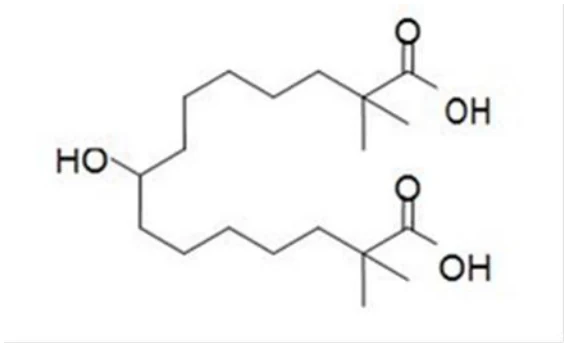
Chemical name: 8-hydroxy-2,2,14,14-tetramethyl-pentadecanedioic acid
Molecular formula and molecular mass: The molecular formula is C19H36O5, and the molecular weight is 344.5 grams per mole.
Structural formula:
Physicochemical properties: bempedoic acid is a white to off-white crystalline powder that is highly soluble in ethanol, isopropanol, and pH 8 phosphate buffer, and insoluble in water and aqueous solutions below pH 5.
14. Clinical Trials
14.1. Clinical Trials by Indication
Prevention of Cardiovascular Events
The cardiovascular outcomes study, CLEAR OUTCOMES, was a multi-centre, randomised, double-blind, placebo-controlled trial in 13,970 adult patients with established atherosclerotic cardiovascular disease (CVD) (70%), or at high risk for atherosclerotic CVD (30%). Patients with established CVD had a documented history of coronary artery disease, symptomatic peripheral arterial disease, and/or cerebrovascular atherosclerotic disease. Patients without established CVD were considered at high risk for CVD based on having at least one of: (1) diabetes mellitus (type 1 or type 2) in women over 65 years of age, or men over 60 years of age, or (2) a Reynolds Risk score >30%, or a SCORE Risk score >7.5% over 10 years, or 3) a coronary artery calcium score >400 Agatston units at any time in the past. Patients were randomised 1:1 to receive either NILEMDO 180 mg per day (n = 6,992) or placebo (n = 6,978) alone, or as an add-on to other background lipid lowering therapies that could include very low doses of statins. Overall, at least 95% of patients were followed until the end of the trial or death, with less than 1% lost to follow-up. The median follow-up duration was 3.4 years.
Table 6 – Summary of Patient Demographics for Clinical Trials in the Prevention of Cardiovascular Events in patients with CVD or at high risk for CVD.
| Study # | Study design | Dosage, route of administration and duration | Study subjects (n) | Mean age (SD) | Sex |
CLEAR OUTCOMES (Study 1002-043) | Randomised, double-blind, placebo-controlled | NILEMDO 180 mg, PO, OD Placebo, PO, OD Expected median treatment duration of approximately 42 months | NILEMDO: 6,992 Placebo: 6,978 | 65.5 (9.0) years | 7,230 (51.8%) men; 6,740 (48.2%) women |
CVD = cardiovascular disease; OD = once daily; PO = oral; SD = standard deviation.
At study entry, the mean age in this study was 65.5 years, with 48% women. Additional baseline characteristics included, hypertension (85%), diabetes mellitus (46%), pre-diabetes mellitus (42%), current tobacco user (22%), eGFR <60 mL/min per 1.73 m2 (21%), and mean body mass index 29.9 kg/m2. The mean baseline LDL-C was 3.6 mmol/L (139 mg/dL). At baseline, 41% of patients were taking at least one lipid-modifying therapy including, ezetimibe (12%), and very low dose of statins (23%).
NILEMDO significantly reduced the risk of the primary composite endpoint of major adverse cardiovascular events (MACE-4), consisting of cardiovascular death, non-fatal myocardial infarction, non-fatal stroke, or coronary revascularisation, by 13%, compared to placebo: hazard ratio (HR) 0.87 (95% confidence interval (CI): 0.79 to 0.96), p = 0.004; and the risk of the key secondary endpoint (MACE-3) consisting of cardiovascular death, non-fatal myocardial infarction, or non-fatal stroke, by 15%, compared to placebo: HR: 0.85 (95% CI: 0.76 to 0.96), p = 0.006. The results for the primary composite endpoint result were generally consistent across pre-specified subgroups, including baseline age, race, ethnicity, sex, LDL-C category, statin use, ezetimibe use, and diabetes status.
The results of the primary and key secondary efficacy endpoints are shown in Table 7Error! Reference source not found., below. The Kaplan-Meier curve estimates of the cumulative incidence of the MACE-4 primary endpoint are shown in Figure 1, below.
The difference in mean percent change in LDL-C from baseline to Month 6 between NILEMDO and placebo was -20% (95% CI: -21% to -19%). Over time, the difference in LDL-C levels narrowed in this study, with the time-averaged difference in mean LDL-C levels in this study amounting to a reduction of LDL-C levels of -16%, in favour of bempedoic acid. Among the patients in the placebo group, 15.6% received additional lipid-lowering therapy during the course of the trial as background therapy, compared to 9.4% in the bempedoic acid group. Further, at any time during the study, 4.8% and 7.2% of patients in the bempedoic acid and placebo treatment groups, respectively, received a moderate or high intensity dose of statin.
Table 7 – Key Efficacy Endpoints of the CLEAR OUTCOMES trial, with median follow-up of 3.4 years in patients with CVD or at high risk for CVD.
| Endpoint | NILEMDO N=6,992 | Placebo N=6,978 | NILEMDO vs. Placebo | ||||
|---|---|---|---|---|---|---|---|
| n (%) | n (%) | Hazard Ratioa (95% CI) p-valueb | |||||
| Primary Composite Endpoint | |||||||
| Cardiovascular death, non-fatal myocardial infarction, non-fatal stroke, coronary revascularisation (MACE-4) | 819 (11.7) | 927 (13.3) | 0.87 (0.79, 0.96) 0.004 | ||||
| Components of Primary Endpoint | |||||||
| Non-fatal myocardial infarction (MI) | 236 (3.4) | 317 (4.5) | 0.73 (0.62, 0.87) | ||||
| Coronary revascularisation | 435 (6.2) | 529 (7.6) | 0.81 (0.72, 0.92) | ||||
| Non-fatal stroke | 119 (1.7) | 144 (2.1) | 0.82 (0.64, 1.05) | ||||
| Cardiovascular death | 269 (3.8) | 257 (3.7) | 1.04 (0.88, 1.24) | ||||
| Key Secondary Endpoints | |||||||
| Cardiovascular death, non-fatal myocardial infarction, non-fatal stroke (MACE-3) | 575 (8.2) | 663 (9.5) | 0.85 (0.76, 0.96) 0.006 | ||||
| Fatal and non-fatal myocardial infarction | 261 (3.7) | 334 (4.8) | 0.77 (0.66, 0.91) 0.002 | ||||
| Coronary revascularisation | 435 (6.2) | 529 (7.6) | 0.81 (0.72, 0.92) 0.001 | ||||
| Fatal and non-fatal stroke | 135 (1.9) | 158 (2.3) | 0.85 (0.67, 1.07) NS | ||||
CI = confidence interval; CVD = cardiovascular disease; MACE = major adverse cardiovascular event; NS = not significant. a Hazard ratio and corresponding 95% CI were based on a Cox proportional hazard model fitting treatment as explanatory variable. b p-value was based on log rank test. Note: this Table also presents the time to first occurrence for each of the components of MACE; patients may be included in more than 1 category.
Figure 1 – Kaplan-Meier Curve for Time to First Occurrence of MACE-4
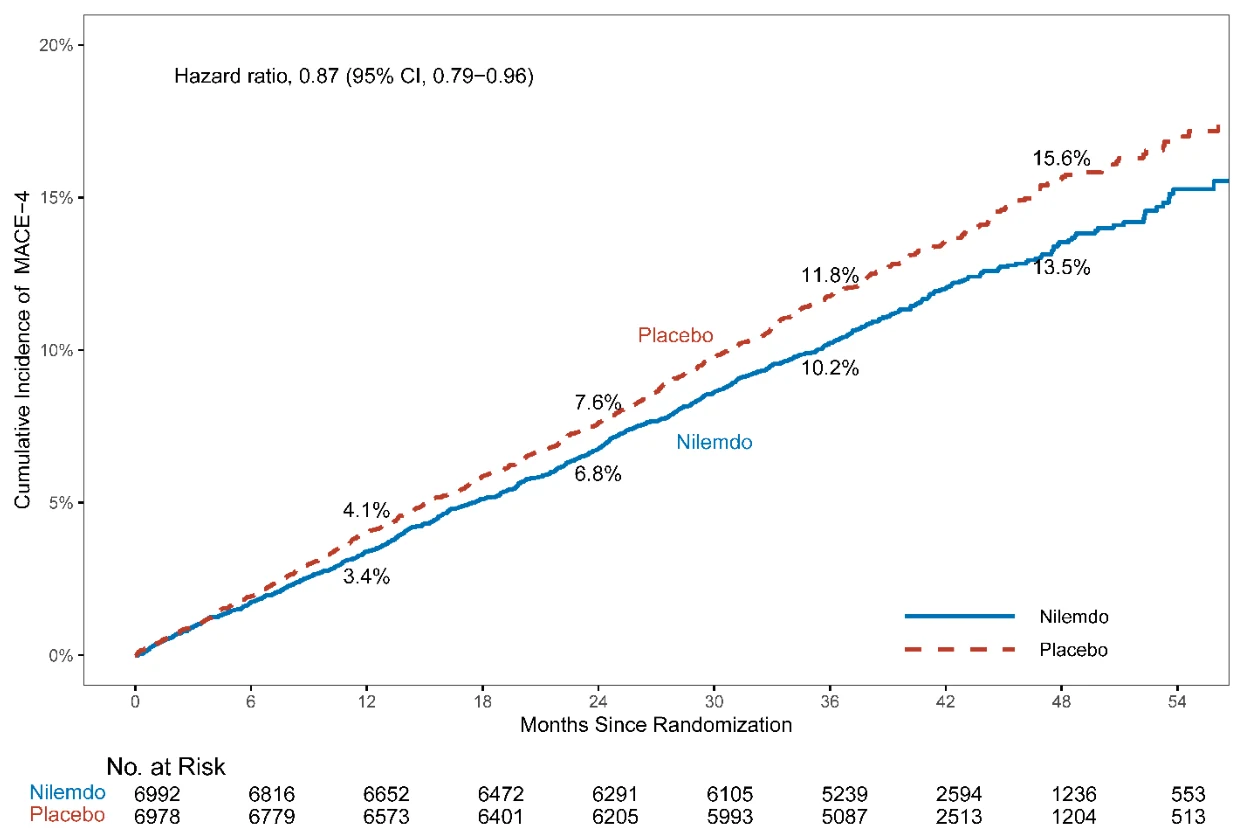
MACE = major adverse cardiovascular event.
Note: MACE-4 defined as the composite endpoint of cardiovascular death, non-fatal MI, non-fatal stroke, or coronary revascularisation.
Primary Hyperlipidemia
The safety and efficacy of NILEMDO was investigated in four multi-centre, randomised, double-blind, placebo-controlled primary hyperlipidemia studies involving 3,623 adult patients with hyperlipidemia, of whom 2,425 were randomised to NILEMDO. All patients received NILEMDO 180 mg or placebo orally once daily. The clinical drug development program of NILEMDO included two trials in which patients were taking background lipid-modifying therapies consisting of a maximum tolerated dose of statin, with or without other lipid-modifying therapies. Two other trials were conducted in patients with documented statin intolerance. The primary efficacy endpoint in these trials was the mean percentage reduction from baseline in LDL-C at Week 12, compared to placebo.
Table 8 – Summary of Patient Demographics in Clinical Trials of Primary Hyperlipidemia
| Study # | Study design | Dosage, route of administration and duration | Study subjects (n) | Mean age | Sex |
| 1002-040 | Randomised, double-blind, placebo-controlled, parallel group in patients at high CV risk with hyperlipidemia on a stable maximally tolerated dose of statin ± other LMT | NILEMDO 180 mg, PO, OD Placebo, PO, OD 52 weeks | NILEMDO: 1,488 Placebo: 742 | 66.1 years | 1,628 (73.0%) men, 602 (27.0%) women |
| 1002-047 | Randomised, double-blind, placebo-controlled, parallel group in patients at high CV risk with hyperlipidemia on stable maximally tolerated dose of statin ± other LMT. | NILEMDO 180 mg, PO, OD Placebo, PO, OD 52 weeks | NILEMDO: 522 Placebo: 257 | 64.3 years | 496 (63.7%) men, 283 (36.3%) women |
| 1002-046 | Randomised, double-blind, placebo-controlled, parallel group in statin intolerant patients with elevated LDL-C. | NILEMDO 180 mg, PO, OD Placebo PO, OD 24 weeks | NILEMDO: 234 Placebo: 111 | 65.2 years | 151 (43.8%) men, 194 (56.2%) women |
| 1002-048 | Randomised, double-blind, placebo-controlled, parallel group in patients with elevated LDL-C. | NILEMDO 180 mg, PO, OD Placebo, PO, OD 12 weeks. | NILEMDO: 181 Placebo: 88 | 63.8 years | 104 (38.7%) men, 165 (61.3%) women |
| CV = cardiovascular; LMT = lipid modifying therapy; OD = once daily; PO = oral; SD = standard deviation. | |||||
Study 1002-040 was a multi-centre, randomised, double-blind, placebo-controlled 52-week study, evaluating the safety and efficacy of NILEMDO in patients with hypercholesterolemia or mixed dyslipidemia. Efficacy of NILEMDO was evaluated at Week 12. The trial included 2,230 patients randomised 2:1 to receive either NILEMDO (n=1,488) or placebo (n=742) as add-on treatment to maximum tolerated lipid-lowering therapy, defined as a maximum tolerated statin dose (to include statin regimens other than daily dosing and very low doses) alone, or in combination with other lipid-lowering therapies. Patients on simvastatin 40 mg per day or higher, and patients on proprotein convertase subtilisin/kexin type 9 (PCSK9) inhibitors, were excluded from the trial.
Overall, the mean age at baseline was 66 years, 61% of patients were ≥ 65 years old, 27% were women, 96% were White, 3% Black, and 1% Asian. The mean baseline LDL-C was 2.7 mmol/L (103.2 mg/dL). At the time of randomisation, all patients were receiving statin therapy, with 50% receiving high-intensity statin therapy.
NILEMDO significantly reduced LDL-C by 18% from baseline at Week 12, compared to placebo, p < 0.001. A significantly higher proportion of patients achieved an LDL-C of ˂ 1.81 mmol/L (˂ 70 mg/dL) in the NILEMDO group at 32%, compared to placebo at 9%, p < 0.001. NILEMDO reduced non-HDL-C, apo B, and TC.
Study 1002-047 was a multi-centre, randomised, double-blind, placebo-controlled, 52-week study in patients with hypercholesterolemia or mixed dyslipidemia. Efficacy of NILEMDO was evaluated at Week 12. The trial included 779 patients randomised 2:1 to receive either NILEMDO (n=522) or placebo (n=257) as add-on to a maximum tolerated lipid-lowering therapy, defined as a maximum tolerated statin dose (to include statin regimens other than daily dosing, and no to very low doses) alone, or in combination with other lipid-lowering therapies. Patients on simvastatin 40 mg/day or higher were excluded from the trial.
Overall, the mean age at baseline was 64 years, 51% of patients were ≥ 65 years old, 36% were women, 94% were White, 5% Black, and 1% Asian. The mean baseline LDL-C was 3.1 mmol/L (120.4 mg/dL). At the time of randomisation, 91% of patients were receiving statin therapy, and 53% were receiving high-intensity statin therapy. Bempedoic acid significantly reduced LDL-C by 17% from baseline at Week 12, compared to placebo, p<0.001. NILEMDO also significantly reduced non-HDL-C, apo B, and TC.
Table 9 – Efficacy of NILEMDO at Week 12 in patients with hypercholesterolemia or mixed dyslipidemia, as add-on treatment in Studies 1002-040 and 1002-047.
| Study 1002-040 (N=2,230) | Study 1002-047 (N=779) | |||||||||||
|---|---|---|---|---|---|---|---|---|---|---|---|---|
| NILEMDO n=1,488 | Placebo n=742 | p-value | NILEMDO n=522 | Placebo n=257 | p-value | |||||||
| Primary endpoint | ||||||||||||
| LDL-Ca | -16.5% | 1.6% | p<0.001 | -15.1% | 2.4% | p<0.001 | ||||||
| Secondary endpoints | ||||||||||||
| non-HDL-Ca | -11.9% | 1.5% | p<0.001 | -10.8% | 2.3% | p<0.001 | ||||||
| apo Ba | -8.6% | 3.3% | p<0.001 | -9.3% | 3.7% | p<0.001 | ||||||
| TCa | -10.3% | 0.8% | p<0.001 | -9.9% | 1.3% | p<0.001 | ||||||
apo B = apolipoprotein B; HDL-C = high-density lipoprotein cholesterol; LDL-C = low-density lipoprotein cholesterol; LS = least squares; TC = total cholesterol. a Percentage change from baseline was analysed using analysis of covariance (ANCOVA), with treatment and randomisation strata as factors and baseline lipid parameter as a covariate. | ||||||||||||
Study 1002-046 was a multi-centre, randomised, double-blind, placebo-controlled 24-week primary hyperlipidemia study evaluating the efficacy of NILEMDO versus placebo in patients with elevated LDL-C who were statin-intolerant or unable to tolerate two or more statins, one at the lowest dose. Patients able to tolerate a dose that was less than the approved starting dose of a statin were allowed to stay on that dose during the study. Efficacy of NILEMDO was evaluated at Week 12. The trial included 345 patients randomised 2:1 to receive either NILEMDO (n=234) or placebo (n=111) for 24 weeks. At the time of randomisation, 8% of patients on NILEMDO versus 10% on placebo were receiving statin therapy at less than the lowest approved doses, and 36% of patients on NILEMDO versus 30% of patients on placebo were on other non-statin lipid-modifying therapies.
Overall, the mean age at baseline was 65 years, 58% were ≥ 65 years old, 56% were women, 89% were White, 8% Black, and 2% Asian. The mean baseline LDL-C was 4.1 mmol/L (157.6 mg/dL).
NILEMDO significantly reduced LDL-C from baseline to Week 12, compared to placebo, p < 0.001, see Table 10, below. NILEMDO also significantly reduced non-HDL-C, apo B, and TC.
In Study 1002-046, 133 patients in the NILEMDO group and 67 patients in the placebo group were on no background lipid-modifying therapies. The difference between NILEMDO and placebo in mean percentage change in LDL-C from baseline to Week 12 was -22.1% (95% CI: -26.8% to -17.4).
Study 1002-048 was a multi-centre, randomised, double-blind, placebo-controlled 12-week primary hyperlipidemia study evaluating the efficacy of NILEMDO versus placebo in lowering LDL-C, when added to ezetimibe in patients with elevated LDL-C who had a history of statin intolerance and were unable to tolerate more than the lowest approved starting dose of a statin. The trial included 269 patients randomised 2:1 to receive either NILEMDO (n=181) or placebo (n=88) as add-on to ezetimibe 10 mg daily for 12 weeks.
Overall, the mean age at baseline was 64 years, 55% were ≥ 65 years old, 61% were women, 89% were White, 8% Black, and 2% Asian. The mean baseline LDL-C was 3.3 mmol/L (127.6 mg/dL). At the time of randomisation, 33% of patients on NILEMDO versus 28% on placebo were receiving statin therapy at less than or equal to lowest approved doses.
NILEMDO significantly reduced LDL-C from baseline to Week 12, compared to placebo, p < 0.001, see Table 10, below. NILEMDO also significantly reduced non-HDL-C, apo B, and TC.
Table 10 – Efficacy of NILEMDO at Week 12 in patients with hypercholesterolemia or mixed dyslipidemia who were intolerant to statin therapy, in Studies 1002-046 and 1002-048.
| Study 1002-046 (N=345) | Study 1002-048 (N=269) | |||||||||||
|---|---|---|---|---|---|---|---|---|---|---|---|---|
| NILEMDO n=234 | Placebo n=111 | p-value | NILEMDO n=181 | Placebo n=88 | p-value | |||||||
| Primary Endpoint | ||||||||||||
| LDL-Ca | -22.6% | -1.2% | p<0.001 | -23.5% | 5.0% | p<0.001 | ||||||
| Secondary Endpoints | ||||||||||||
| non-HDL-Ca | -18.1% | -0.1% | p<0.001 | -18.4% | 5.2% | p<0.001 | ||||||
| apo Ba | -14.7% | 0.3% | p<0.001 | -14.6% | 4.7% | p<0.001 | ||||||
| TCa | -15.4% | -0.6% | p<0.001 | -15.1% | 2.9% | p<0.001 | ||||||
apo B = apolipoprotein B; HDL-C = high-density lipoprotein cholesterol; LDL-C = low-density lipoprotein cholesterol; LS = least squares; TC = total cholesterol. Background statin (1002-046): atorvastatin, simvastatin, pitavastatin, rosuvastatin, pravastatin, lovastatin.
Background statin (1002-048): atorvastatin, simvastatin, rosuvastatin, pravastatin, lovastatin.
a Percentage change from baseline was analysed using analysis of covariance (ANCOVA), with treatment and randomisation strata as factors and baseline lipid parameter as a covariate.
15. Microbiology
No microbiological information is required for this drug product.
16. Non-Clinical Toxicology
General toxicology
Increased liver weight and hepatocellular hypertrophy were observed in rats only and were partially reversed after the 1-month recovery at ≥ 30 mg/kg/day or 4 times the exposure in humans at 180 mg. Reversible, non-adverse changes in laboratory parameters indicative of these hepatic effects, decreases in red blood cell and coagulation parameters, and increases in urea nitrogen and creatinine were observed in both rats and monkeys at tolerated doses. The no-observed-adverse-effect level (NOAEL) for adverse response in the chronic studies was 10 mg/kg/day and 60 mg/kg/day associated with exposures below the human exposure at 180 mg in rats and 13 times the human exposure at 180 mg in monkeys.
Carcinogenicity
In a 2-year carcinogenicity study, Wistar rats were given oral doses of bempedoic acid at 3, 10, and 30 mg/kg/day. A significant increase in the incidence of hepatocellular, thyroid gland follicular tumours and pancreatic islet cell adenomas combined with carcinomas were observed in male rats compared to control at the dose of 30 mg/kg/day associated with exposure equivalent to the systemic exposure in humans at 180 mg (based on total AUC). Additionally, at the same dose (30 mg/kg/day), a higher incidence of brain astrocytomas compared to control was observed, however it was not considered statistically significant.
In a 2-year mice carcinogenicity study, CD-1 mice were given oral doses of bempedoic acid at 25, 75 and 150 mg/kg/day. Bempedoic acid-related increases in the incidence of liver hepatocellular tumours were observed at ≥75 mg/kg/day, about 6 times the systemic exposure in humans at 180 mg (based on total AUC).
Observations of liver and thyroid tumors are consistent with a rodent-specific peroxisome proliferator-activated receptor (PPAR) alpha activation, therefore, these tumours are not considered to translate to human risk. The human relevance of findings in pancreatic islet cell and brain tumours is unknown.
Genotoxicity
The standard battery of genotoxicity studies has not identified any mutagenic or clastogenic potential of bempedoic acid. Bempedoic acid was negative for mutagenicity in an in vitro bacterial reverse mutation (Ames) assay and negative for clastogenicity in an in vitro human lymphocyte chromosome aberration assay. Bempedoic acid was negative in both in vivo mouse micronucleus and in vivo rat bone marrow micronucleus/liver comet assay.
Reproductive and developmental toxicology
Pregnant rabbits given bempedoic acid at 20, 50, and 80 mg/kg/day during organogenesis (from gestation day (GD) 6 to 18) had a decrease in mean body weight and food consumption at 80 mg/kg/day. Bempedoic acid was not teratogenic or toxic to embryos or fetuses in pregnant rabbits at doses up to 80 mg/kg/day or 12 times the systemic exposure in humans at 180 mg.
Pregnant rats given bempedoic acid at 10, 30, and 60 mg/kg/day during organogenesis (GD 6 to 17) had decreased numbers of viable fetuses and reduced fetal body weight at ≥ 30 mg/kg/day or 4 times the systemic exposure in humans at 180 mg. An increased incidence of fetal skeletal findings (bent scapula and ribs) were observed in a dose-dependent manner at all doses, at exposures below the systemic exposure in humans at 180 mg.
In a pre- and post-natal development study, pregnant rats administered bempedoic acid at 5, 10, 20 and 30 mg/kg/day throughout pregnancy and lactation (from GD6 to lactation day 20) had adverse maternal effects at ≥ 20 mg/kg/day and reductions in numbers of live pups and pup survival, pup growth and learning and memory at ≥ 10 mg/kg/day, with maternal exposures at 10 mg/kg/day, less than the exposure in humans at 180 mg.
In fertility and early embryofetal development study in rats, bempedoic acid was given at doses of 10, 30 and 60 mg/kg/day. Males were dosed for 28 days prior to mating and females were dosed for 14 days prior to mating through GD7. Administration of bempedoic acid to females resulted in changes in estrous cyclicity, decreased numbers of corpora lutea and implants at ≥ 30 mg/kg/day (4 times the systemic exposure in humans at 180 mg). No effects on male fertility outcomes were detected, however significant decrease in sperm counts (16%) were observed at 60 mg/kg/day (6 times the system exposure in humans at 180 mg).