


Product Monograph - Vascepa
RECENT MAJOR LABEL CHANGES
| 7 WARNINGS AND PRECAUTIONS, Cardiovascular | 04/2022 |
| 7 WARNINGS AND PRECAUTIONS, Immune System | 04/2022 |
TABLE OF CONTENTS
Sections or subsections that are not applicable at the time of authorization are not listed.
RECENT MAJOR LABEL CHANGES ................................................................................ 2
TABLE OF CONTENTS....................................................................................................... 2
PART I: HEALTH PROFESSIONAL INFORMATION ....................................................... 4
1 INDICATIONS ........................................................................................................... 4
1.1 Pediatrics.............................................................................................................4
1.2 Geriatrics.............................................................................................................4
2 CONTRAINDICATIONS ........................................................................................... 4
4 DOSAGE AND ADMINISTRATION ......................................................................... 4
4.1 Dosing Considerations .........................................................................................4
4.2 Recommended Dose and Dosage Adjustment .......................................................5
4.4 Administration.....................................................................................................5
4.5 Missed Dose ........................................................................................................5
5 OVERDOSAGE ......................................................................................................... 5
6 DOSAGE FORMS, STRENGTHS, COMPOSITION AND PACKAGING .............. 5
7 WARNINGS AND PRECAUTIONS.......................................................................... 6
7.1 Special Populations..............................................................................................7
7.1.1 Pregnant Women ............................................................................................. 7
7.1.2 Breast-feeding ................................................................................................. 7
7.1.3 Pediatrics ........................................................................................................ 8
7.1.4 Geriatrics ........................................................................................................ 8
8 ADVERSE REACTIONS........................................................................................... 8
8.1 Adverse Drug Reaction Overview ........................................................................8
8.2 Clinical Trial Adverse Drug Reactions .................................................................8
8.3 Less Common Clinical Trial Adverse Reactions ...................................................9
8.4 Post-Market Adverse Reactions.......................................................................... 10
9 DRUG INTERACTIONS.......................................................................................... 10
9.2 Drug Interaction Overview ................................................................................. 10
9.3 Drug-Behavioural Interactions ........................................................................... 10
9.4 Drug-Drug Interactions ...................................................................................... 10
9.5 Drug-Food Interactions ...................................................................................... 11
10 CLINICAL PHARMACOLOGY............................................................................... 11
10.1 Mechanism of Action ..................................................................................... 11
10.3 Pharmacokinetics ........................................................................................... 11
11 STORAGE, STABILITY AND DISPOSAL ............................................................ 12
12 Special Handling Instructions ............................................................................. 12
PART II: SCIENTIFIC INFORMATION ............................................................................. 13
13 PHARMACEUTICAL INFORMATION ................................................................... 13
14 CLINICAL TRIALS .................................................................................................. 14
14.1 Clinical Trials by Indication............................................................................ 14
15 MICROBIOLOGY .................................................................................................... 19
16 NON-CLINICAL TOXICOLOGY ............................................................................. 19
PATIENT MEDICATION INFORMATION ......................................................................... 21
PART I: HEALTH PROFESSIONAL INFORMATION
1 INDICATIONS
VASCEPA® (icosapent ethyl) is indicated to reduce the risk of cardiovascular events (cardiovascular death, non-fatal myocardial infarction, non-fatal stroke, coronary revascularization or hospitalization for unstable angina) in statin-treated patients with elevated triglycerides, who are at high risk of cardiovascular events due to:
- established cardiovascular disease, or
- diabetes, and at least one other cardiovascular risk factor.
1.1 Pediatrics
Pediatrics (<18 years): No data are available to Health Canada; therefore, Health Canada has not authorized an indication for pediatric use.
1.2 Geriatrics
Geriatrics (≥65 years): VASCEPA may be used in patients ≥65 years of age. Evidence from clinical studies and experience suggests that use in the geriatric population is not associated with differences in safety or effectiveness, but greater sensitivity of some older individuals cannot be ruled out.
2 CONTRAINDICATIONS
VASCEPA is contraindicated in patients who are hypersensitive (e.g., anaphylactic reaction) to VASCEPA or to any ingredient in the formulation, including any non-medicinal ingredient, or component of the container. For a complete listing, see 6 DOSAGE FORMS, STRENGTHS, COMPOSITION AND PACKAGING.
4 DOSAGE AND ADMINISTRATION
4.1 Dosing Considerations
- VASCEPA is to be administered together with statin treatment.
- Patients should not take other omega-3 fatty acid products while they are taking VASCEPA without first consulting their attending physician.
- Pregnancy should be ruled out prior to administration.
- Fish and/or shellfish hypersensitivity should be ruled out prior to administration.
Prior to initiation of VASCEPA:
- Assess lipid levels before initiating therapy. Identify other causes (e.g., diabetes mellitus, hypothyroidism, or medications) of high triglyceride levels and manage as appropriate.
- Patients should engage in appropriate nutritional intake and physical activity before receiving VASCEPA, which should continue during treatment with VASCEPA.
4.2 Recommended Dose and Dosage Adjustment
- The dose of VASCEPA is 4 grams per day, taken as two 1 g capsules twice a day with food.
- Discontinue if anaphylactic/hypersensitivity reactions occur.
- Health Canada has not authorized an indication for pediatric use (see 1 INDICATIONS).
4.4 Administration
Patients should be advised to swallow VASCEPA capsules whole. Do not break open, crush, dissolve, or chew VASCEPA.
4.5 Missed Dose
If a dose is missed, patients should take it as soon as they remember. However, if they miss one day of VASCEPA, they should not double the dose when they take their next dose.
5 OVERDOSAGE
There is no specific treatment for VASCEPA overdose. As the active metabolite, icosapentaenoic acid, is an essential fatty-acid, there are no established upper tolerability limits with respect to dose. In the event of an overdose, the patient should be monitored and treated symptomatically with supportive measures instituted as required (e.g., for possible gastrointestinal disturbances, bleeding, atrial fibrillation/flutter etc.). Due to extensive drug binding to plasma proteins, hemodialysis is not expected to significantly enhance VASCEPA clearance.
| For management of a suspected drug overdose, contact your regional poison control centre. |
6 DOSAGE FORMS, STRENGTHS, COMPOSITION AND PACKAGING
Table 1 – Dosage Form, Strengths and Composition
The 1 g dosage strength is available in 8 count blisters and bottles of 120 capsules.
| Route of Administration | Dosage Form / Strength/Composition | Non-medicinal Ingredients |
| oral | 1 g amber-colored, oblong, soft-gelatin capsules imprinted with VASCEPA. | gelatin, glycerin, hypromellose, maltitol, propylene glycol, purified water, sorbitol, titanium dioxide, and tocopherol |
7 WARNINGS AND PRECAUTIONS
General
Icosapent ethyl is not the same as, and should not be substituted with, or combined with other products that contain omega-3 fatty acids. Patients should be questioned about which natural health products or dietary supplements they may be taking, and cautioned not to take other omega-3 fatty acid products while they are taking VASCEPA, without first consulting their attending physician.
Bleeding
Treatment with VASCEPA has been associated with an increased incidence of bleeding (see 8.2 Clinical Trial Adverse Drug Reactions). Patients taking VASCEPA along with antithrombotic agents, i.e., anti-platelet agents, including aspirin and/or anticoagulants, may be at increased risk of bleeding. Monitor these patients appropriately.
Carcinogenesis and Mutagenesis
No carcinogenicity or mutagenicity data in humans are available (see 16 MICROBIOLOGY
Not applicable.
NON-CLINICAL TOXICOLOGY).
Cardiovascular
Icosapent ethyl was associated with an increased risk of atrial fibrillation or flutter requiring hospitalization in a double-blind placebo-controlled trial. The incidence of atrial fibrillation was greater in patients with a previous history of atrial fibrillation or flutter. Patients, particularly those with a relevant medical history, should be monitored for clinical evidence of atrial fibrillation or atrial flutter (e.g., dyspnea, palpitations, syncope/dizziness, chest discomfort, change in blood pressure, or irregular pulse). Electrocardiographic evaluation should be performed when clinically indicated.
Immune System
It is not known whether patients with allergies to fish and/or shellfish are at increased risk of an allergic reaction to VASCEPA, which is a fish-derived product. Post-market anaphylactic reactions have been reported in patients receiving VASCEPA. Inform patients with known hypersensitivity to fish and/or shellfish about the potential for allergic reactions and advise them to discontinue VASCEPA and seek medical attention if any reactions occur.
Monitoring and Laboratory Tests
In patients with hepatic impairment, alanine aminotransferase (ALT) and aspartate aminotransferase (AST) levels should be monitored periodically during therapy with VASCEPA.
Reproductive Health: Female and Male Potential
- Fertility
No fertility data in humans are available. No significant effect on fertility was observed in rats receiving eicosapentaenoic acid ethyl ester orally (see 15 MICROBIOLOGY
Not applicable.
NON-CLINICAL TOXICOLOGY).
7.1 Special Populations
7.1.1 Pregnant Women
There are very limited data from the use of VASCEPA in pregnant women. There are no adequate and well-controlled studies that evaluated the use of VASCEPA in pregnant women. In animal reproduction studies in pregnant rats, oral administration of icosapent ethyl or eicosapentaenoic acid (EPA) ethyl ester during organogenesis resulted in fetal visceral or skeletal abnormalities, increased incidence of absent optic nerves, and unilateral testes atrophy even at doses below an equivalent to the clinical dose of 4 g/day based on a comparison of body surface area, for a 60 kg human (see 16 MICROBIOLOGY
Not applicable.
NON-CLINICAL TOXICOLOGY). 14C-labelled ethyl-EPA given orally to pregnant dams was shown to transfer to the fetus, especially in early gestation (gestation day 12) during which peak concentrations in fetuses and placentas reached 1.9- and 3.6-times the concentration in maternal plasma, respectively, at 24 hours post-administration.
Therefore, the use of VASCEPA is not recommended during pregnancy.
7.1.2 Breast-feeding
There is no information regarding the presence of VASCEPA in human milk, the effects on the breastfed infant, or the effects on milk production. However, studies with other omega-3-acid ethyl esters have demonstrated excretion in human milk, therefore VASCEPA may also be excreted in human milk. An animal study in lactating rats given one dose of 14C-labelled ethyl-EPA by oral gavage demonstrated that EPA levels were 6 to 14 times higher in milk than in plasma at their maximum, 24 hours post-administration. After 96 hours (4 days), the concentration of EPA measured in milk was still 20% of the peak values.
The use of VASCEPA in nursing women is not recommended (see 16 MICROBIOLOGY
Not applicable.
NON-CLINICAL TOXICOLOGY).
7.1.3 Pediatrics
Pediatrics (<18 years): No data are available to Health Canada; therefore, Health Canada has not authorized an indication for pediatric use.
7.1.4 Geriatrics
Geriatrics (≥65 years): Of the total number of patients in well-controlled clinical studies of VASCEPA, 45% were 65 years of age and over. Effectiveness was consistently observed between these patients and younger patients. No overall differences in safety were observed between age groups.
8 ADVERSE REACTIONS
8.1 Adverse Drug Reaction Overview
The safety of VASCEPA was evaluated in 8,179 patients in the REDUCE-IT cardiovascular outcomes trial, with 4,089 randomized to VASCEPA and 4,090 patients randomized to placebo. The median follow-up duration was 4.9 years. The overall adverse event rates were similar in patients treated with VASCEPA (82%), compared to placebo (81%), while the incidence of serious adverse events was the same in patients treated with VASCEPA (31%) and placebo (31%). The rate of adverse events leading to discontinuation of study drug was also the same in patients treated with VASCEPA (8%) and placebo (8%).
The most serious adverse reactions associated with VASCEPA were bleeding events (see Bleeding) and atrial fibrillation/flutter (see Cardiovascular).
The most commonly reported adverse reactions were peripheral edema (6.5%), constipation (5.4%), and atrial fibrillation (5.3%).
8.2 Clinical Trial Adverse Drug Reactions
Because clinical trials are conducted under very specific conditions, the adverse reaction rates observed in the clinical trials may not reflect the rates observed in practice and should not be compared to the rates in the clinical trials of another drug. Adverse reaction information from clinical trials is useful for identifying drug-related adverse events and for approximating rates.
Adverse Reactions in the REDUCE-IT trial
In this double-blind, randomized, placebo-controlled cardiovascular outcomes trial, 4,089 patients were randomized to VASCEPA, and 4,090 to placebo (see 14 CLINICAL TRIALS). The median age of enrolled patients was 64 years (range: 44 to 92 years), and 46% were 65 years of age or older. Approximately twenty-nine percent (28.8%) were female, 90.2% were White, 5.5% were Asian, 1.9% were Black, and 4.2% identified as Hispanic ethnicity. Patients were exposed to VASCEPA or placebo for a median of 4.3 years; with 87% of patients for ≥12 months, 77% for ≥24 months, 65% for ≥36 months, 54% for ≥48 months, and 29% for ≥60 months.
Table 2 - Adverse Reactions Occurring at Incidence ≥5% and Significantly Greater than Placebo in REDUCE-IT
System Organ Class Preferred Term | VASCEPA (N=4089) n (%) | Placebo (N=4090) n (%) |
| Cardiac disorders | ||
| atrial fibrillation | 215 (5.3) | 159 (3.9) |
| Gastrointestinal disorders | ||
| constipation | 221 (5.4) | 149 (3.6) |
| General disorders and administration site conditions | ||
| peripheral edema | 267 (6.5) | 203 (5.0) |
Cardiovascular
Atrial Fibrillation: In the REDUCE-IT trial, adjudicated events of atrial fibrillation/atrial flutter were observed more frequently in the VASCEPA group than in the placebo group, at 3.1% and 2.1%, respectively (p=0.004). The incidence of unadjudicated atrial fibrillation/atrial flutter adverse events was also significantly higher in the VASCEPA group than in the placebo group, at 5.8% and 4.5% of patients, respectively (p=0.008).
Hematologic
Bleeding: In the REDUCE-IT trial, a significantly higher incidence of bleeding events was observed with VASCEPA than with placebo, at 11.8% and 9.9% of patients, respectively (p=0.006). Serious adverse bleeding events were observed in 2.7% of patients exposed to VASCEPA, and 2.1% to placebo, (p=0.06). There were no significant differences between the VASCEPA-treated group and the placebo group in the rates of adjudicated hemorrhagic stroke, at 0.3% and 0.2% (p=0.54), or serious gastrointestinal bleeding, at 1.5% and 1.1%, respectively (p=0.15).
8.3 Less Common Clinical Trial Adverse Reactions
The following less common adverse reactions at <5% in the VASCEPA group and at least 1% greater than in the placebo group are presented below.
Metabolism and nutrition disorders: gout
Musculoskeletal and connective tissue disorders: musculoskeletal pain
8.4 Post-Market Adverse Reactions
The following adverse reactions have been identified from global post-marketing use of VASCEPA. Because these reactions are reported voluntarily from a population of uncertain size, it is generally not possible to reliably estimate their frequency or establish causal relationship to drug exposure: arthralgia, diarrhea, abdominal discomfort, and pain in the extremities.
9 DRUG INTERACTIONS
9.2 Drug Interaction Overview
VASCEPA was associated with an increased risk of bleeding in the pivotal REDUCE‐IT trial. The incidence of bleeding was greater in patients receiving concomitant antithrombotic medications, such as aspirin, clopidogrel, or warfarin (see Bleeding and 8.2 Clinical Trial Adverse Drug Reactions).
9.3 Drug-Behavioural Interactions
No meaningful differences were noted in adverse events experienced based on either alcohol use or smoking status.
9.4 Drug-Drug Interactions
VASCEPA was studied at the 4 g/day dose level with the following medications which are typical substrates of cytochrome P450 enzymes, and no drug-drug interactions were observed:
- Omeprazole: In a drug-drug interaction study with 28 healthy adult subjects, VASCEPA 4 g/day at steady-state did not significantly change the steady-state AUCτ or Cmax of omeprazole when co-administered at 40 mg/day to steady-state.
- Rosiglitazone: In a drug-drug interaction study with 28 healthy adult subjects, VASCEPA 4 g/day at steady-state did not significantly change the single dose AUC or Cmax of rosiglitazone at 8 mg.
- Warfarin: In a drug-drug interaction study with 25 healthy adult subjects, VASCEPA 4 g/day at steady-state did not significantly change the single dose AUC or Cmax of R- and S- warfarin or the anti-coagulation pharmacodynamics of warfarin when co-administered as racemic warfarin at 25 mg.
- Atorvastatin: In a drug-drug interaction study of 26 healthy adult subjects, VASCEPA 4 g/day at steady-state did not significantly change the steady-state AUCτ or Cmax of atorvastatin, 2-hydroxyatorvastatin, or 4-hydroxyatorvastatin when co-administered with atorvastatin 80 mg/day to steady-state.
9.5 Drug-Food Interactions
VASCEPA was administered with or following a meal in all clinical studies; no food effect studies were performed.
10 CLINICAL PHARMACOLOGY
10.1 Mechanism of Action
Icosapent ethyl (IPE) is a stable ethyl ester of the omega-3 fatty acid eicosapentaenoic acid (EPA). The mechanisms of action contributing to reduction of cardiovascular events with IPE are not completely understood. EPA, as a polyunsaturated fatty acid, incorporates into cell membranes which may contribute to multi-factorial effects in different tissues. Potential mechanisms of action reported under certain conditions include: improved lipoprotein profile with reduction of triglyceride-rich lipoproteins, improved endothelial cell function, and reduced macrophage accumulation, inflammatory mediators, platelet aggregation and atherosclerotic plaque volume. However, the clinical impact of each individual effect is not clear.
10.3 Pharmacokinetics
Table 3 – Summary of Icosapent Ethyl Pharmacokinetic Parameters in Healthy Volunteers
Total plasma icosapentaenoic acid (baseline-adjusted) results
| Cmax (mcg/mL) | Tmax (h) | t1/2 (h) | AUC0-24h (mcg•h/mL) | CL (mL/h) | Vd (L) | |
|---|---|---|---|---|---|---|
| 28 Days of 4 g/day VASCEPA | 347 | 5 | 89 | 6519 | 684 | 88 |
AUC = area under the curve; CL = clearance; Cmax = maximum observed plasma concentration; t1/2 = elimination half-life; Tmax = time to maximum observed concentration; Vd = volume of distribution. Means presented for all parameters except median for Tmax.
Absorption: After oral administration, VASCEPA is de-esterified during the absorption process and the active metabolite icosapentaenoic acid is absorbed in the small intestine and enters the systemic circulation mainly via the thoracic duct lymphatic system. Peak plasma concentrations of icosapentaenoic acid were reached approximately 5 hours following oral doses of VASCEPA.
Distribution: The mean volume of distribution at steady-state of icosapentaenoic acid is approximately 88 litres. The majority of icosapentaenoic acid circulating in plasma is incorporated in phospholipids, triglycerides and cholesteryl esters, and <1% is present as the unesterified fatty acid. Greater than 99% of unesterified icosapentaenoic acid is bound to plasma proteins.
Metabolism: Icosapentaenoic acid is mainly metabolized by the liver via beta-oxidation similar to dietary fatty acids. Beta oxidation splits the long carbon chain of icosapentaenoic acid into acetyl Coenzyme A, which is converted into energy via the Krebs cycle.
Elimination: Cytochrome P450-mediated metabolism is a minor pathway of elimination of icosapentaenoic acid. The total plasma clearance of icosapentaenoic acid at steady state is 684 mL/hr. The plasma elimination half-life (t1/2) of icosapentaenoic acid is approximately 89 hours. VASCEPA does not undergo renal excretion.
Special Populations and Conditions
Pediatrics: The pharmacokinetics of VASCEPA has not been studied in pediatric patients.
Sex: When administered VASCEPA in clinical trials, plasma total icosapentaenoic acid concentrations did not differ significantly between men and women
Hepatic Insufficiency: VASCEPA has not been studied in patients with hepatic impairment.
Renal Insufficiency: VASCEPA has not been studied in patients with renal impairment.
11 STORAGE, STABILITY AND DISPOSAL
Store at room temperature (20° to 25°C). Keep out of reach of children.
Safely throw away medicine that is out of date or no longer needed.
12 SPECIAL HANDLING INSTRUCTIONS
Not applicable.
PART II: SCIENTIFIC INFORMATION
13 PHARMACEUTICAL INFORMATION
Drug Substance
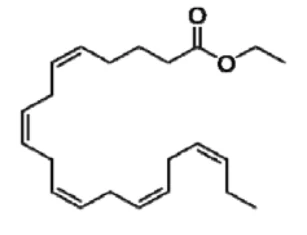
Each VASCEPA® capsule contains 1 gram of icosapent ethyl (in a 1 g capsule).
Proper name: icosapent ethyl
Chemical name: ethyl all-cis-5,8,11,14,17-icosapentaenoate
Molecular formula: C22H34O2
Molecular Mass: 330.512 g/mol
Structural formula:
Physicochemical properties: icosapent ethyl (IPE) is a clear, colourless to pale yellow liquid, insoluble in water, soluble in ethanol
14 CLINICAL TRIALS
14.1 Clinical Trials by Indication
Prevention of Cardiovascular Events
Table 4. Summary of patient demographics for clinical trials for lowering cardiovascular risk
| Study # | Study design | Dosage, route of administration and duration | Study subjects (n) | Median age (Range) | Sex |
|---|---|---|---|---|---|
| REDUCE-IT | Double-blind, randomized, placebo-controlled, multi-center, prospective study | 2 g VASCEPA twice daily (4 g/day) Oral Median duration of treatment: 1583.0 days (4.3 years) | 8179 patients randomized 4089 in VASCEPA group 4090 in placebo group | 64 years (range: 44.0 to 92.0) | Male: 5822 (71.2%) Female: 2357 (28.8%) |
The REDUCE-IT study was a double-blind, randomized, placebo-controlled trial in 8,179 statin-treated adult patients with elevated serum triglyceride (TG) levels (≥1.5 mmol/L and <5.6 mmol/L) who were also at high risk for atherothrombotic events. Patients either had established cardiovascular disease (CVD) (70.7%), defined as the secondary prevention cohort, or were at high risk for CVD (29.3%), defined as primary prevention cohort. Patients with established cardiovascular disease were at least 45 years of age and having a documented history of coronary artery disease, cerebrovascular or carotid disease, or peripheral artery disease. Patients with other risk factors for cardiovascular disease were at least 50 years of age and had diabetes and at least one additional major cardiovascular risk factor. Patients were randomly assigned 1:1 to receive either VASCEPA at 4 grams daily, given as two 1 gram capsules twice a day with food, or placebo. The median follow-up duration was 4.9 years. Overall, 99.8% of patients were followed for vital status until the end of the trial or death.
At baseline, the median age was 64 years (range: 44 years to 92 years), with 46% being at least 65 years old, and 28.8% women. The trial population was 90.2% White, 5.5% Asian, 1.9% Black, and 4.2% were identified as of Hispanic ethnicity.
Patients enrolled in the trial included 46.7% who had prior myocardial infarction, 9.2% who had symptomatic peripheral arterial disease, 6.2% who had prior ischemic stroke, and 4.6% who had prior transient ischemic attack (TIA). Additional baseline risk factors included hypertension (86.6%), diabetes mellitus (58.5%), eGFR <60 mL/min/1.73m2 (22.2%), congestive heart failure (17.7%), and current daily cigarette smoking (15.2%). Most patients at baseline were taking at least one other cardiovascular medication including anti-hypertensives (95%), anti-platelet agents (79.4%), beta blockers (70.7%), angiotensin-converting enzyme (ACE) inhibitors (51.9%), and angiotensin receptor blockers (ARB) (27.0%), with 77.5% taking either an ACE inhibitor or ARB.
At baseline, while on stable background lipid-lowering therapy, the median LDL-C was 1.9 mmol/L, while the median fasting serum TG was 2.4 mmol/L. Baseline TG levels ranged from 0.92 to 15.8 mmol/L.
The primary composite endpoint (time to first occurrence of cardiovascular death, myocardial infarction, stroke, coronary revascularization, or hospitalization for unstable angina) occurred at an event rate of 4.3 per 100 patient-years in patients treated with VASCEPA, compared to 5.7 per 100 patient-years in patients treated with placebo (p<0.0001), while the key secondary composite endpoint (time to first occurrence of cardiovascular death, myocardial infarction, or stroke) occurred at an event rate of 2.7 per 100 patient-years in patients treated with VASCEPA, compared to 3.7 per 100 patient-years in patients treated with placebo (p<0.0001).
The results of the primary and secondary efficacy endpoints are shown in Table 5 below, while the Kaplan-Meier estimates of the cumulative incidence of the primary and key secondary composite endpoints over time are shown in Figure 1 and Figure 2 below.
Table 5. Effect of VASCEPA on Time to First Occurrence of Cardiovascular Events in Patients with Established CVD or at High Risk for CVD and Elevated Triglyceride Levels in REDUCE-IT
| VASCEPA | Placebo | VASCEPA vs Placebo | ||||||||
|---|---|---|---|---|---|---|---|---|---|---|
N = 4089 n (%) | Incidence Rate (per 100 patient years) | N = 4090 n (%) | Incidence Rate (per 100 patient years) | Hazard Ratio (95% CI) | ||||||
| Primary composite endpoint | ||||||||||
| Cardiovascular death, myocardial infarction, stroke, coronary revascularization, hospitalization for unstable angina (5-point MACE) | 705 (17.2) | 4.3 | 901 (22.0) | 5.7 | 0.75 (0.68, 0.83) | |||||
| Key secondary composite endpoints | ||||||||||
| Cardiovascular death, myocardial infarction, stroke (3-point MACE) | 459 (11.2) | 2.7 | 606 (14.8) | 3.7 | 0.74 (0.65, 0.83) | |||||
| Other secondary endpoints | ||||||||||
| Cardiovascular death[1] | 174 (4.3) | 1.0 | 213 (5.2) | 1.2 | 0.80 (0.66, 0.98) | |||||
| Non-fatal myocardial infarction | 237 (5.8) | 1.4 | 332 (8.1) | 2.0 | 0.70 (0.59, 0.82) | |||||
| Non-fatal stroke | 85 (2.1) | 0.5 | 118 (2.9) | 0.7 | 0.71 (0.54, 0.94) | |||||
| Coronary revascularization | 376 (9.2) | 2.3 | 544 (13.3) | 3.4 | 0.66 (0.58, 0.76) | |||||
| Hospitalization for unstable angina[2] | 108 (2.6) | 0.6 | 157 (3.8) | 0.9 | 0.68 (0.53, 0.87) | |||||
| All-cause mortality[3] | 274 (6.7) | 1.6 | 310 (7.6) | 1.8 | 0.87 (0.74, 1.02) | |||||
[1] CV Death includes adjudicated cardiovascular deaths and deaths of undetermined causality [2] Determined to be caused by myocardial ischemia by invasive/non-invasive testing and requiring emergent hospitalization. | ||||||||||
| VASCEPA | Placebo | VASCEPA vs Placebo |
|---|
N = 4089 n (%) | Incidence Rate (per 100 patient years) | N = 4090 n (%) | Incidence Rate (per 100 patient years) | Hazard Ratio (95% CI) |
|---|---|---|---|---|
| [3] All-cause mortality is not a component of either the primary composite endpoint or key secondary endpoint | ||||
Figure 1. Kaplan-Meier Estimated Cumulative Incidence of Primary Composite Endpoint in REDUCE-IT
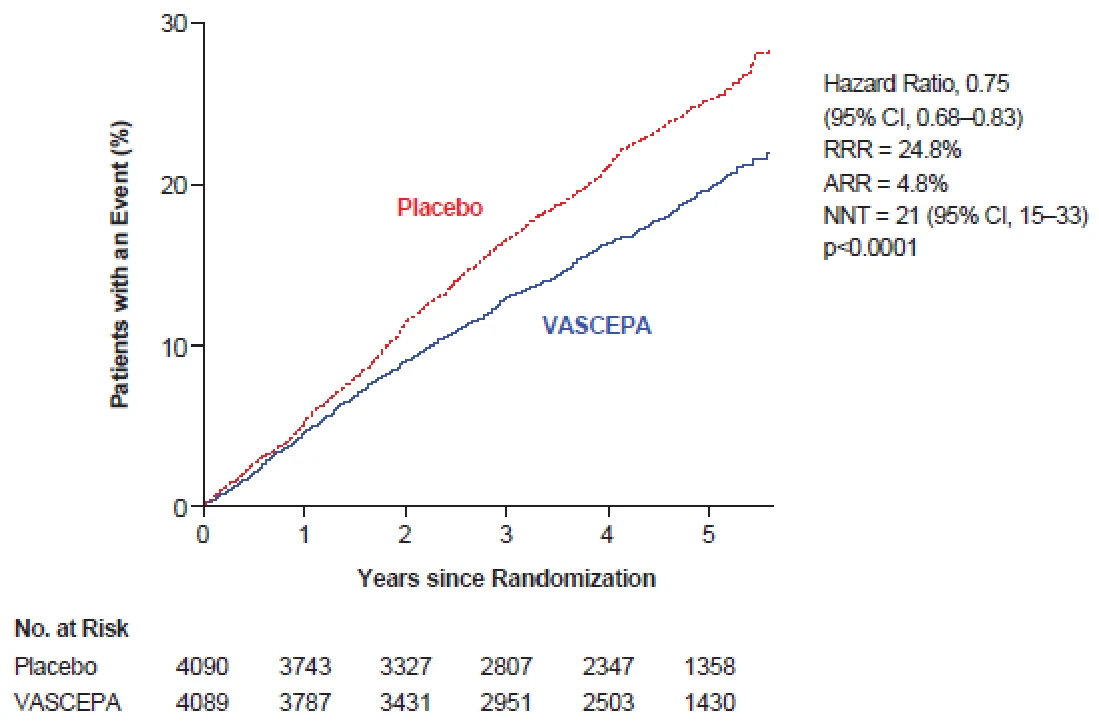
RRR = relative risk reduction; ARR= absolute relative risk; NNT= number needed to treat
Figure 2. Kaplan-Meier Estimated Incidence of Key Secondary Composite Endpoint in REDUCE-IT
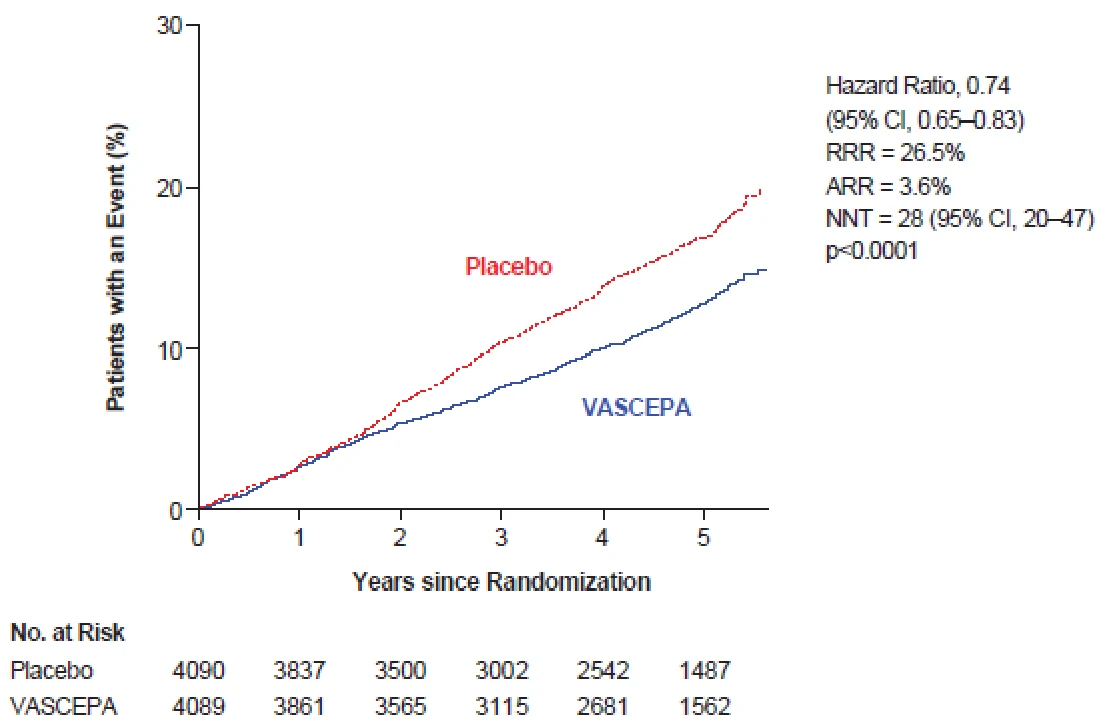
RRR = relative risk reduction; ARR= absolute relative risk; NNT= number needed to treat
The median difference between VASCEPA and placebo in TG from baseline to Month 4 was -20.1% (p<0.001), and from baseline to Month 12 was -19.7% (p<0.001), in favour of VASCEPA. At Month 12, the median TG was 2.0 mmol/L in the VASCEPA group, with 35.9% of patients with available measurements having TG <1.7 mmol/L and 61.3% having a TG <2.3 mmol/L. Prespecified analyses of the effect of VASCEPA on cardiovascular outcomes in the REDUCE-IT trial failed to demonstrate a correlation between triglyceride response and cardiovascular effect based on baseline triglyceride levels or on-treatment change in triglyceride levels.
The median difference between VASCEPA and placebo in LDL-C from baseline to Month 12 was -6.6% (p<0.001), in favour of VASCEPA. At Month 12, the median LDL-C was 2.0 mmol/L in the VASCEPA group, with 35.5% with available measurements of patients having LDL-C <1.8 mmol/L and 79.9% having LDL-C <2.6 mmol/L.
15 MICROBIOLOGY
Not applicable.
16 NON-CLINICAL TOXICOLOGY
General Toxicology
In a 39-week dog study, icosapent ethyl was administered to beagle dogs at doses of 0.3, 1 or 2 g/kg/day. Expected pharmacological changes in plasma lipid concentrations (lower total cholesterol, HDL-cholesterol, LDL-cholesterol and triglycerides) were observed at all dose levels. At doses ≥1 g/kg/day, there were increases in alkaline phosphatase and aspartate aminotransferase levels. Vacuolar degeneration of the adrenal glands followed a dose-related pattern. The NOAEL is 0.3 g/kg/day (2.5 times the 4 g/day clinical dose based on a body surface area comparison, for a 60 kg human).
Carcinogenicity
In a 2-year rat carcinogenicity study with oral gavage doses of 0.09, 0.27, and 0.91 g/kg/day icosapent ethyl, a significant treatment-related increase in mortality was observed in females. Anterior lobe pituitary adenoma was the most frequent cause of death in females treated with the highest dose who died prematurely. There was a statistically significant dose-related increase in hemangiomas of the mesenteric lymph node, the site of drug absorption, in males and females. Incidence in mid-dose females was higher than in controls at an exposure 2.7 times the exposure at the clinical dose of 4 g/day (based on AUC), whereas incidence in treated males was higher than in controls only at the highest dose level, at which exposure is 6.8 times the clinical dose of 4 g/day. Overall incidence of hemangiomas and hemangiosarcomas in all vascular tissues did not increase with treatment.
In a 6-month carcinogenicity study in Tg.rasH2 transgenic mice with oral gavage doses of 0.5, 1, 2, and 4.6 g/kg/day icosapent ethyl, drug-related incidences of benign squamous cell papilloma in the skin and subcutis of the tail were observed in high dose male mice. The papillomas were considered to develop secondary to chronic irritation of the proximal tail associated with fecal excretion of oil and therefore not clinically relevant. Drug-related neoplasms were not observed in female mice.
Genotoxicity
Icosapent ethyl was not mutagenic with or without metabolic activation in the bacterial mutagenesis (Ames) assay. A chromosomal aberration assay in Chinese Hamster Ovary cells was positive for clastogenicity with and without metabolic activation, but icosapent ethyl did not induce micronuclei in vivo in mice.
Reproductive and Developmental Toxicology
Only one full study report compliant with Good Laboratory Practices was submitted. In that study, icosapent ethyl was given by oral gavage to female rats from gestation day 6 to 16 at doses of 0.3, 1.0 or 2.0 g/kg/day. Minor abnormalities included 13th reduced ribs, additional liver lobes, and testes medially displaced or not fully descended in the treated groups, including at the lowest dose of 0.3 g/kg/day equivalent to 0.7 times the recommended dose of 4 g/day of icosapent ethyl in a 60 kg human based on body surface area comparisons.
Concerning fertility in male and female rats, oral gavage of EPA ethyl ester at doses of 0.3, 1.0 or 3.0 g/kg/day for 9 weeks (males) or 2 weeks (females) pre-mating was not associated with significant reduction of copulation or fertility rates. Increased anogenital distance was observed in high-dose female pups, and skeletal variations (cervical rib, dumbbell shape of the vertebral body) were more common in the offspring from the treatment groups than in controls. In two follow-up studies, offspring exposed to EPA ethyl ester in utero had lower fertility rates even at the low dose, lower copulation rates when mated together, and/or lower implantation rate.
In two supporting studies, EPA ethyl ester given at doses of 0.3, 1.0 or 3.0 g/kg/day by oral gavage to rats either in early (day 7 to 17) or late gestation and nursing period (day 17 to post-natal day 20) led to different effects in offspring. Offspring exposed early in gestation had higher incidences of minor abnormalities (such as unilateral testes atrophy, absent optic nerves, early incisor eruption, incomplete or abnormal ossification of various skeletal bones, increased incidence of cervical ribs and of poorly ossified sternebra, and lower rates of opening of the foramen transversarium of the 7th cervical vertebra). Offspring exposed later in gestation and before weaning did not present with malformations. In both studies, adverse effects were seen in offspring at the lowest dose tested of 0.3 g/kg/day, which is approximately equivalent to 0.7 times the recommended dose of 4 g per day of icosapent ethyl in a 60 kg human.
Likewise, in a supportive study where EPA ethyl ester was given by oral gavage at doses of 0.1, 0.3, or 1.0 g/kg/day to rabbits during gestation days 6 to 18, the high dose (1.0 g/kg/day) led to an increase in fetal death correlated with higher maternal toxicity (weight loss and reduced food consumption). Higher rates of skeletal variations (13th rib) were seen in the mid- and high-dose groups. The mid-dose is equivalent to 1.5 times the recommended dose of icosapent ethyl in a 60 kg human.