


Product Monograph - Praluent (Sanofi-Aventis Canada, 75 mg, 150 mg)
SUMMARY PRODUCT INFORMATION
| Route of Admin-istration | Dosage Form / Strength | Nonmedicinal Ingredients |
| Subcutaneous injec-tion | Solution in Pre-filled syringe (PFS) or Pre-filled Pen (PFP) 75 mg/mL 150 mg/mL | Histidine, sucrose, polysorbate 20, water for injection For a complete listing, see Dosage Forms, Composition and Packaging section |
DESCRIPTION
Alirocumab is a fully human monoclonal antibody (Immunoglobulin IgG1 isotype) that binds to proprotein convertase subtilisin kexin type 9 (PCSK 9). Alirocumab is produced by recombinant DNA technology in Chinese Hamster Ovary cell suspension culture.
INDICATIONS AND CLINICAL USE
Prevention of Cardiovascular Events
PRALUENT (alirocumab injection) is indicated in combination with a maximum tolerated dose of a statin, with or without other lipid lowering therapies, to reduce the risk of myocardial infarc-tion, ischemic stroke, and unstable angina requiring hospitalization in adults with established cardiovascular disease.
Primary Hyperlipidemia
PRALUENT (alirocumab injection) is indicated for the reduction of low density lipoprotein cho-lesterol (LDL-C) in adults with primary hyperlipidemia (heterozygous familial and non-familial):
- As an adjunct to diet and statin therapy, with or without other lipid-lowering therapies;
- As an adjunct to diet, as monotherapy or in combination with other non-statin lipid-modifying therapies, in patients for whom a statin is contraindicated.
Geriatrics (≥65 years of age):
In primary hypercholesterolemia controlled studies, 1158 patients (34.7 %) treated with PRALUENT were ≥ 65 years of age, including 241 patients (7.2 %) ≥ 75 years of age. In the cardiovascular outcomes study, 2505 patients (26.5%) treated with PRALUENT were ≥ 65 years of age, including 493 patients (5.2%) ≥ 75 years of age. No overall differences in safety or effi-cacy were observed between these patients and younger patients (see WARNINGS AND PRECAUTIONS, Special populations, Geriatrics).
Pediatrics (< 18 years of age):
The safety and efficacy in pediatric patients has not been established.
CONTRAINDICATIONS
- Patients who are hypersensitive to this drug or to any ingredient in the formulation or component of the container. For a complete listing, see the DOSAGE FORMS, COMPOSITION AND PACKAGING section of the product monograph.
WARNINGS AND PRECAUTIONS
Immune
Hypersensitivity reactions (e.g., pruritus, rash, urticaria), including serious allergic reactions (i.e., angioedema, hypersensitivity reactions requiring hospitalization, nummular eczema, hypersensi-tivity vasculitis) have been reported with PRALUENT treatment (see ADVERSE REACTIONS). If signs or symptoms of serious allergic reactions occur, discontinue treatment with PRALUENT and initiate appropriate treatment according to standard of care, and monitor until signs and symptoms resolve (see CONTRAINDICATIONS).
Special Populations
Pregnant Women:
No studies have been conducted with PRALUENT in pregnant women and data from clinical use are very limited.
Studies in monkeys showed that alirocumab crosses the placental barrier and is pharmacological-ly active in infants exposed during organogenesis through parturition. A suppression of the hu-moral immune response to keyhole limpet hemocyanin (KLH) antigen was observed in offspring of exposed animals. Animal studies did not demonstrate any additional effects on pregnancy or neonatal/infant development (see Part II: TOXICOLOGY).
Animal studies are not always predictive of human response. Therefore, it is not known whether
PRALUENT can cause fetal harm when administered to a pregnant woman. PRALUENT is used in combination with maximally tolerated statin. Statin Product Monographs recommend discon-tinuation when a patient becomes pregnant, therefore PRALUENT should also be discontinued (see the Special Populations section of the relevant statin Product Monograph).
Nursing Women:
There is no information regarding the presence of PRALUENT in human breast milk, the effects on the breastfed infant, or the effects on milk production. A risk to breastfed newborns and in-fants cannot be excluded. Because many drugs and immunoglobulins are excreted in human milk, the use of PRALUENT is not recommended in breastfeeding women.
Fertility:
No data are available on the effect of PRALUENT on human fertility. Animal studies did not show any effects on fertility endpoints (see Part II: TOXICOLOGY).
Pediatrics (< 18 years of age):
PRALUENT has not been studied in patients less than 18 years of age.
Geriatrics (≥ 65 years of age):
In controlled studies, 1158 patients (34.7 %) treated with PRALUENT were ≥ 65 years of age and 241 patients (7.2 %) treated with PRALUENT were ≥ 75 years of age. No overall differ-ences in safety or efficacy were observed between age classes but data are limited in patients over 75 years of age.
Hepatic Impairment:
The safety and efficacy of PRALUENT in patients with severe hepatic impairment have not been studied (see ADVERSE REACTIONS).
Renal Impairment:
The safety and efficacy of PRALUENT in patients with severe renal impairment, including end-stage renal disease, have not been studied.
ADVERSE REACTIONS
Adverse Drug Reaction Overview
The safety data described below reflect exposure to PRALUENT in 2476 patients (2758.5 pa-tient-years of exposure), the majority with high or very high cardiovascular risk, treated with PRALUENT at a dose of 75 or 150 mg, administered subcutaneously once every 2 weeks (Q2W), for a treatment duration of up to 18 months (including 1999 patients exposed to PRALUENT for at least 52 weeks, and 639 patients exposed to PRALUENT for at least 76 weeks). The safety data are based on pooled results from nine placebo-controlled studies (four phase 2 and five phase 3 studies, all in patients on background statin).
Serious adverse events occurred in 13.7% of patients treated with PRALUENT and 14.3% of pa-tients in the placebo group.
In ten phase 3 controlled trials, involving patients with primary hypercholesterolemia, the most common adverse reactions were local injection site reactions (including erythema/redness, itch-ing, swelling, pain/tenderness), upper respiratory tract signs and symptoms and pruritus (itch). Adverse reactions led to discontinuation of treatment in 5.3% of patients treated with PRALUENT and 5.1% of patients in the placebo group. The most common adverse reactions leading to treatment discontinuation in patients treated with PRALUENT were allergic reactions (0.6% versus 0.2% for PRALUENT and placebo, respectively) and injection site reactions (0.2% versus 0.4% for PRALUENT and placebo, respectively).
The safety profile of PRALUENT derived from the cardiovascular outcomes study (ODYSSEY OUTCOMES) was consistent with the overall safety profile described in the phase 3 controlled trials.
Clinical Trial Adverse Drug Reactions
Because clinical trials are conducted under very specific conditions the adverse reaction rates observed in the clinical trials may not reflect the rates observed in practice and should not be compared to the rates in the clinical trials of another drug. Adverse drug reaction information from clinical trials is useful for identifying drug-related adverse events and for approximating rates.
Table 1 - Adverse events occurring in ≥ 1% of patients treated with PRALUENT and more fre-quently than with placebo in the pool of 10 hyperlipidemia placebo-controlled trials
System Organ Class Preferred Term* | Placebo (N=1276) | Alirocumab (N=2476) |
|---|---|---|
| Cardiac disorders | ||
| Angina unstable | 0.9% | 1.2% |
| Gastrointestinal disorders | ||
| Diarrhoea | 4.4% | 4.7% |
| Constipation | 1.5% | 1.7% |
| Abdominal pain | 1.3% | 1.6% |
| Abdominal pain upper | 0.8% | 1.1% |
| General disorders and administration site conditions | ||
| Injection site reaction | 5.1% | 7.2% |
| Oedema peripheral | 0.9% | 1.3% |
| Infections and infestations | ||
| Nasopharyngitis | 11.1% | 11.3% |
System Organ Class Preferred Term* | Placebo (N=1276) | Alirocumab (N=2476) |
|---|---|---|
| Influenza | 4.6% | 5.7% |
| Urinary tract infection | 4.6% | 4.8% |
| Bronchitis | 3.8% | 4.3% |
| Sinusitis | 2.7% | 3.0% |
| Gastroenteritis viral | 0.7% | 1.3% |
| Pneumonia | 1.1% | 1.3% |
| Pharyngitis | 0.8% | 1.1% |
| Cellulitis | 0.8% | 1.0% |
| Injury, poisoning and procedural complications | ||
| Contusion | 1.3% | 2.1% |
| Investigations | ||
| Alanine aminotransferase increased | 0.7% | 1.1% |
| Metabolism and nutrition disorders | ||
| Diabetes mellitus | 1.1% | 1.3% |
| Type 2 diabetes mellitus | 0.9% | 1.3% |
| Gout | 0.9% | 1.1% |
| Musculoskeletal and connective tissue disorders | ||
| Myalgia | 3.4% | 4.2% |
| Muscle spasms | 2.4% | 3.1% |
| Musculoskeletal pain | 1.6% | 2.1% |
| Psychiatric disorders | ||
| Insomnia | 1.3% | 1.4% |
| Respiratory, thoracic and mediastinal disorders | ||
| Cough | 2.3% | 2.5% |
| Oropharyngeal pain | 0.5% | 1.2% |
| Skin and subcutaneous tissue disorders | ||
| Pruritus | 0.4% | 1.1% |
| Vascular disorders | ||
| Hypertension | 3.0% | 3.1% |
System Organ Class Preferred Term* | Placebo (N=1276) | Alirocumab (N=2476) |
|---|---|---|
| * coded using MedDRA version 17.0 |
The safety profile of alirocumab in the ezetimibe-controlled studies (COMBO II, MONO, ALTERNATIVE) was consistent with the safety profile in the placebo-controlled studies with no additional adverse reactions identified.
Table 2 - Adverse events occurring in > 1% of patients treated with PRALUENT and more fre-quently than with placebo in the cardiovascular outcomes study (ODYSSEY OUTCOMES)
System Organ Class Preferred Term* | Placebo (N=9443) | Alirocumab (N=9451) |
|---|---|---|
| Any class | 77.1% | 75.8% |
| Ear and labyrinth disorders | ||
| Vertigo | 1.3% | 1.4% |
| Gastrointestinal disorders | ||
| Nausea | 1.8% | 2.1% |
| Gastrooesophageal reflux disease | 1.4% | 1.7% |
| Abdominal pain upper | 1.3% | 1.4% |
| General disorders and administration site conditions | ||
| Non-cardiac chest pain | 6.8% | 7.0% |
| Injection site reaction | 1.4% | 2.8% |
| Infections and infestations | ||
| Nasopharyngitis | 5.6% | 6.0% |
| Sinusitis | 1.3% | 1.5% |
| Lower respiratory tract infection | 1.0% | 1.1% |
| Injury, poisoning and procedural complications | ||
| Contusion | 1.7% | 1.8% |
| Musculoskeletal and connective tissue disorders | ||
| Myalgia | 5.3% | 5.6% |
| Back pain | 4.2% | 4.3% |
| Arthralgia | 3.7% | 3.9% |
| Muscle spasms | 2.1% | 2.3% |
System Organ Class Preferred Term* | Placebo (N=9443) | Alirocumab (N=9451) | |||
|---|---|---|---|---|---|
| Nervous system disorders | |||||
| Hypoaesthesia | 0.9% | 1.0% | |||
| Psychiatric disorders | |||||
| Insomnia | 1.3% | 1.5% | |||
| Reproductive system and breast disorders | |||||
| Benign prostatic hyperplasia | 1.2% | 1.3% | |||
| Erectile dysfunction | 0.9% | 1.0% | |||
| Skin and subcutaneous tissue disorders | |||||
| Rash | 1.1% | 1.2% | |||
| Vascular disorders | |||||
| Hypotension | 1.8% | 1.9% | |||
| * coded using MedDRA version 20.1 | |||||
Injection site reactions
Injection site reactions, including erythema/redness, itching, swelling, and pain/tenderness were reported in 7.2% of patients treated with PRALUENT vs. 5.1% in the placebo group. Most injec-tion site reactions were transient and of mild intensity. The discontinuation rate due to local in-jection site reactions was 0.2% versus 0.4% for PRALUENT and placebo, respectively.
In a 48-week placebo-controlled trial evaluating injection of PRALUENT 300 mg every 4 weeks (Q4W) or 75 mg every 2 weeks (Q2W) , in which all patients received an injection of drug or placebo every 2 weeks to maintain the blind (see CLINICAL TRIALS, CHOICE I study), local injection site reactions were reported more frequently in patients treated with PRALUENT 300 mg Q4W as compared to those receiving PRALUENT 75 mg Q2W or placebo (16.6%, 9.6%, and 7.9%, respectively). The discontinuation rate due to injection site reactions was 0.7% in patients treated with PRALUENT 300 mg Q4W versus 0% in the placebo treatment group.
In the cardiovascular outcomes study (ODYSSEY OUTCOMES), injection site reactions also occurred more frequently in alirocumab-treated patients than in placebo-treated patients (3.8% alirocumab versus 2.1% placebo).
Allergic reactions
General allergic reactions were reported more frequently in the PRALUENT group than in the placebo group (8.6% vs 7.8% respectively), mainly due to a difference in the incidence of pruri-tus. The proportion of patients who discontinued treatment due to allergic reactions was higher among those treated with PRALUENT (0.6% versus 0.2%). In addition, rare and sometimes se-rious allergic reactions, such as hypersensitivity, nummular eczema, and hypersensitivity vascu-litis have been reported in controlled clinical studies.
Neurocognitive Events:
Neurocognitive events were reported in 0.8% of patients treated with PRALUENT and 0.7% of the placebo group patients. Confusion or memory impairment were each reported in 0.2% of pa-tients treated with PRALUENT and in <0.1% (for each) in the placebo group patients. The ma-jority of neurocognitive events were non-serious. The causal relationship between these events and alirocumab has not been established.
Liver Enzyme Abnormalities:
Hepatic abnormalities (primarily related to abnormalities in liver enzymes) were reported in 2.5% of patients treated with PRALUENT and 1.8% of the placebo group patients. Increases in serum ALT to greater than 3 times the upper limit of normal occurred in 1.7% of patients treated with PRALUENT and 1.4% of the placebo group patients.
Immunogenicity
As with all therapeutic proteins, there is a potential for immunogenicity.
In the ODYSSEY OUTCOMES trial, 5.5% of patients treated with alirocumab 75 mg and/or 150 mg every 2 weeks (Q2W) had anti-drug antibodies (ADA) detected after initiating treatment compared with 1.6% of patients treated with placebo. Persistent ADA responses were observed in 0.7% of patients treated with alirocumab and 0.4% of patients treated with placebo. Neutraliz-ing antibody (NAb) responses were observed in 0.5% of patients treated with alirocumab and in <0.1% of patients treated with placebo.
Anti-drug antibody responses, including NAb, were low titer and did not appear to have a clini-cally meaningful impact on the efficacy or safety of alirocumab, except for a higher rate of injec-tion site reactions in patients with treatment emergent ADA compared to patients who were ADA negative (7.5% vs 3.6%). The long-term consequences of continuing alirocumab treatment in the presence of ADA are unknown.
In a pool of ten placebo-controlled and active-controlled trials of patients treated with aliro-cumab 75 mg and/or 150 mg Q2W as well as in a separate clinical study of patients treated with alirocumab 75 mg Q2W or 300 mg every 4 weeks (including some patients with dose adjustment to 150 mg Q2W), the incidence of detecting ADA and NAb was consistent with the results from the ODYSSEY OUTCOMES trial.
Immunogenicity data are highly dependent on the sensitivity and specificity of the assay as well as other factors. Additionally, the observed incidence of antibody positivity in an assay may be influenced by several factors, including sample handling, timing of sample collection, concomi-tant medications, and underlying disease. For these reasons, comparison of the incidence of anti-bodies to alirocumab with the incidence of antibodies to other products may be misleading.
Low LDL-C levels
In the pool of the placebo- and active-controlled studies using an every 2 week or every 4 week dosing interval, 914 of 3913 patients (23.4 %) treated with PRALUENT had two consecutive values of LDL-C <0.65 mmol/L (25 mg/dL), including 335 patients (8.6 %) with two consecu-tive values of LDL-C <0.39 mmol/L (15 mg/dL). LDL-C values < 0.65 mmol/L (25 mg/dL) and <0.39 mmol/L (15 mg/dL) were observed more frequently in patients treated with the PRALUENT 150 mg Q2W or 300 mg Q4W dosing regimens.
Although adverse consequences of very low LDL-C were not identified in alirocumab trials, the long-term effects of very low levels of LDL-C are unknown. In published genetic studies as well as clinical and observational trials with lipid lowering therapies, an increased risk of new-onset of diabetes has been associated with lower levels of LDL-C.
Less Common Clinical Trial Adverse Drug Reactions (<1%)
In the pooled placebo- and ezetimibe-controlled studies, the following adverse reactions were observed with a frequency of less than 1% and at a higher frequency in the PRALUENT arm compared to control (control vs. PRALUENT):
Infections and infestations: urinary tract infection (0% vs. 0.1%)
Blood and lymphatic system disorders: neutropenia (<0.1% vs. 0.2%)
Immune system disorders: hypersensitivity (0.1% vs. 0.2%)
Metabolism and nutrition disorders: decreased appetite (<0.1% vs. 0.1%)
Nervous system disorders: hypoesthesia (<0.1% vs. 0.2%)
Cardiac disorders: palpitations (<0.1% vs. 0.2%)
Respiratory, thoracic and mediastinal disorders: epistaxis (<0.1% vs. 0.1%)
Gastrointestinal disorders: abdominal pain (0.1% vs. 0.2%), constipation (0.1% vs. 0.2%)
Skin and subcutaneous tissue disorders: pruritus (0.1% vs. 0.3%), rash (0.1% vs. 0.3%)
Musculoskeletal and connective tissue disorders: muscle spasms (0.4% vs. 0.6%)
General disorders and administration site conditions: fatigue (0.5% vs. 0.6%), asthenia (0.1% vs. 0.3%), injection site erythema (<0.1% vs. 0.1%).
Investigations: alanine aminotransferase increased (0.3% vs. 0.4%), gamma-glutamyltransferase increased (<0.1% vs. 0.1%)
Injury, poisoning and procedural complications: accidental overdose (0.5% vs. 0.6%)
Post-Marketing Experience
The following additional adverse reactions have been reported during post-market use of PRALUENT.
General disorders and administration site conditions
Flu-like illness
Skin and subcutaneous tissue disorders
Angioedema
DRUG INTERACTIONS
Overview
No formal drug-drug interaction studies have been conducted for PRALUENT, nor have any studies been conducted to assess interactions with food/diet, herbal products or lifestyle.
Drug-Drug Interactions
Effects of alirocumab on other drugs
In clinical studies where alirocumab was administered in combination with atorvastatin or rosu-vastatin, no relevant changes in statin concentrations were observed in the presence of repeated administration of alirocumab.
DOSAGE AND ADMINISTRATION
Recommended Dose and Dosage Adjustment
The recommended starting dose of PRALUENT is 75 mg once every 2 weeks (Q2W) adminis-tered subcutaneously, since the majority of patients achieve sufficient LDL-C reduction with this dosage. Alternatively, 300 mg once every 4 weeks (monthly) may be administered subcutane-ously for patients who prefer less frequent dosing.
Measure LDL-C levels within 4 to 8 weeks of initiating PRALUENT to assess response and ad-just the dose, if needed. For patients receiving PRALUENT 300 mg every 4 weeks, measure LDL-C just prior to the next scheduled dose of initiating PRALUENT, since LDL-C levels in some patients can vary considerably between doses with this regimen (see CLINICAL TRIALS, CHOICE I study).
If the LDL-C response is inadequate, the dosage may be adjusted to the maximum dosage of 150 mg administered every 2 weeks.
Missed Dose
If an every 2-week dose is missed, the patient should administer the injection as soon as possible (within 7 days from the missed dose), and thereafter resume treatment two weeks from the day of the missed dose, keeping the patient’s original schedule. If the missed dose is not administered within 7 days, instruct the patient to wait until the next dose on the original schedule.
If an every 4-week dose is missed, instruct the patient to administer the injection within 7 days of the missed dose and then resume the patient’s original schedule. If the missed dose is not admin-istered within 7 days, instruct the patient to administer the dose, starting a new schedule based on this date.
Administration
PRALUENT is administered as a subcutaneous injection into the thigh, abdomen, or upper arm, using a single-use pre-filled pen or single-use pre-filled syringe.
Remove PRALUENT pen or syringe from refrigerator approximately 30 to 40 min before injec-tion to allow the solution to come to room temperature.
To administer the 300 mg dose, give two 150 mg PRALUENT injections consecutively at two different injection sites.
It is recommended to rotate the injection site with each injection.
PRALUENT should not be injected into areas of active skin disease or injury, such as sunburns, skin rashes, inflammation, or skin infections.
Do not co-administer PRALUENT with other injectable drugs at the same injection site.
Special Populations
Pediatric patients
Safety and efficacy in pediatric patients has not been established.
Elderly patients
No dose adjustment is needed for elderly patients.
Hepatic impairment
No dose adjustment is needed for patients with mild or moderately impaired hepatic function. No data are available in patients with severe hepatic impairment (see ACTION AND CLINICAL PHARMACOLOGY, Special Populations and Conditions).
Renal impairment
No dose adjustment is needed for patients with mild or moderately impaired renal function. No data are available in patients with severe renal impairment (see ACTION AND CLINICAL PHARMACOLOGY, Special Populations and Conditions – Renal Insufficiency).
Body weight
No dose adjustment is needed in patients based on weight (see ACTION AND CLINICAL PHARMACOLOGY, Special Populations and Conditions – Body Weight).
OVERDOSAGE
In controlled clinical studies, no safety issues were identified with more frequent PRALUENT dosing than the recommended Q2W dosing schedule.
| For management of a suspected drug overdose, contact your regional Poison Control Centre. |
ACTION AND CLINICAL PHARMACOLOGY
Mechanism of Action
Alirocumab is a fully human monoclonal antibody that binds with high affinity and specificity to proprotein convertase subtilisin kexin type 9 (PCSK9).
PCSK9 binds to the low-density lipoprotein receptors (LDLR) on the surface of hepatocytes to promote LDLR degradation within the liver. LDLR is the primary receptor that clears circulating LDL, therefore the decrease in LDLR levels by PCSK9 results in higher blood levels of LDL-C. By inhibiting the binding of PCSK9 to LDLR, alirocumab increases the number of LDLRs avail-able to clear LDL, thereby lowering LDL-C levels.
Pharmacodynamics
Alirocumab reduced free PCSK9 in a concentration-dependent manner. Following a single sub-cutaneous administration of alirocumab 75 or 150 mg, maximal suppression of free PCSK9 oc-curred within 4 to 8 hours. Free PCSK9 concentrations returned to baseline when alirocumab concentrations decreased below the limit of quantitation.
Pharmacokinetics
Absorption:
After subcutaneous (SC) administration of 75 mg to 300 mg alirocumab, median times to maxi-mum serum concentration (tmax) were 3-7 days.
The pharmacokinetics (PK) of alirocumab after single SC administration of 75 mg into the ab-domen, upper arm or thigh were similar.
The absolute bioavailability of alirocumab after SC administration was about 85% as determined by population PK analysis.
A slightly greater than dose proportional increase was observed, with a 2.1- to 2.7-fold increase in total alirocumab concentrations for a 2-fold increase in dose from 75 mg every 2 weeks to 150 mg every 2 weeks. Monthly exposure with 300 mg every 4 weeks treatment was similar to that of 150 mg every 2 weeks.
Steady state was reached after 2 to 3 doses with an accumulation ratio up to a maximum of about 2-fold.
Distribution:
Following IV administration, the volume of distribution was about 0.04 to 0.05 L/kg indicating that alirocumab is distributed primarily in the circulatory system.
Metabolism:
Specific metabolism studies were not conducted, because alirocumab is a protein. Alirocumab is expected to degrade to small peptides and individual amino acids.
Excretion:
Two elimination phases were observed for alirocumab. At low concentrations, the elimination is predominately through saturable binding to target (PCSK9), while at higher concentrations the elimination of alirocumab is largely through a non-saturable proteolytic pathway.
Based on a population pharmacokinetic analysis, the median apparent half-life of alirocumab at steady state was 17 to 20 days in patients receiving alirocumab at subcutaneous doses of 75 mg Q2W or 150 mg Q2W. When co-administered with a statin, the median apparent half-life of ali-rocumab was reduced to 12 days.
Special Populations and Conditions
Pediatrics (<18 years of age):
PRALUENT has not been studied in pediatric patients.
Geriatrics (≥ 65 years of age):
Based on a population pharmacokinetic analysis, age was associated with a small difference in alirocumab exposure at steady state, with no impact on efficacy or safety.
Gender:
Based on a population pharmacokinetic analysis, gender was found not to significantly influence alirocumab pharmacokinetics.
Race:
Based on a population pharmacokinetic analysis, race was found not to significantly influence alirocumab pharmacokinetics.
Body Weight:
Based on a population pharmacokinetic analysis, body weight was associated with a small differ-ence in alirocumab exposure, with no significant influence on efficacy or safety.
Hepatic Impairment:
In a phase 1 study, after administration of a single 75 mg SC dose, alirocumab pharmacokinetic profiles in subjects with mild and moderate hepatic impairment were similar as compared to sub-jects with normal hepatic function. No data are available in patients with severe hepatic impair-ment.
Renal Impairment:
Since monoclonal antibodies are not known to be eliminated via renal pathways, renal function is not expected to impact the pharmacokinetics of alirocumab. No data are available in patients with severe renal impairment.
STORAGE AND STABILITY
Store in a refrigerator at 2°C to 8°C (36°to 46° F). Do not freeze.
Store in the outer carton in order to protect from light.
Do not expose to extreme heat.
SPECIAL HANDLING INSTRUCTIONS
The patient may either self-inject PRALUENT, or a caregiver may administer PRALUENT, after guidance has been provided by a healthcare professional on proper subcutaneous injection tech-nique.
Parenteral drug products should be inspected visually for particulate matter and discoloration prior to administration. If the solution is discolored or contains visible particulate matter, the so-lution should not be used.
The pre-filled pen (PFP) or pre-filled syringe (PFS) should be allowed to warm to room tempera-ture for 30-40 minutes prior to use. PRALUENT should be used as soon as possible after it has warmed up. Time out of refrigeration should not exceed 30 days at 25oC.
After use, place the PFP or PFS into a puncture-resistant container and discard as required by local (provincial) regulations. Do not recycle the container. Always keep the container out of the reach of children.
Patients and caregivers should receive guidance on proper subcutaneous injection technique, in-cluding aseptic technique, and how to use the PFP or PFS correctly (see Instructions for Use leaflet).
Patients and caregivers should be reminded to read the patient information leaflet and Instruc-tions for Use leaflet carefully before administration of PRALUENT.
Patients and caregivers should be cautioned that the PFS or PFP must not be re-used, and in-structed in how to safely discard after use.
DOSAGE FORMS, COMPOSITION AND PACKAGING
PRALUENT is a clear, colorless to pale yellow solution, with a pH of about 6.0.
PRALUENT is supplied as a sterile, preservative-free solution for injection, in a single-use pre-filled pen (PFP) or single-use pre-filled syringe (PFS).
Each 1mL PFP contains 75 mg or 150 mg alirocumab. Each 1mL PFS contains 75 mg or 150 mg alirocumab.
Each 75 mg/mL PFP or PFS contains histidine, sucrose, polysorbate 20, and water for injection (USP), to pH 6.0.
Each 150 mg/mL PFP or PFS contains histidine, sucrose, polysorbate 20 and water for injection (USP), to pH 6.0.
PRALUENT 75 mg/ mL or 150 mg/ mL solution for injection in single-use PFS or single-use PFP is supplied in a siliconized 1 mL Type 1 clear glass syringe. The rubber needle shield does not contain natural latex.
Pack size of 75 or 150 mg PFP: 1, 2, or 6 per carton.
Pack size of 75 or 150 mg PFS: 1, 2, or 6 per carton.
PART II: SCIENTIFIC INFORMATION
PHARMACEUTICAL INFORMATION
Drug Substance
Alirocumab is a fully human monoclonal antibody (IgG1 isotype) that targets proprotein con-vertase subtilisin kexin type 9 (PCSK 9). Alirocumab is produced by recombinant DNA technol-ogy in Chinese Hamster Ovary cell suspension culture.
Alirocumab consists of two disulfide-linked human heavy chains, each covalently linked through a disulfide bond to a fully human kappa light chain. A single N-linked glycosylation site is locat-ed in each heavy chain within the CH2 domain of the Fc constant region of the molecule. The variable domains of the heavy and light chains combine to form the PCSK9 binding site within the antibody. Alirocumab has an approximate molecular weight of 146 kDa.
Figure 1 - Schematic Representation of the Structure of Alirocumab*
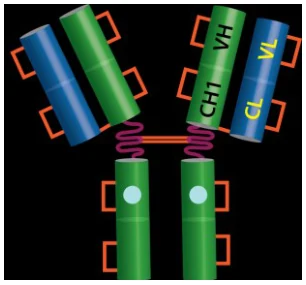
* Orange= Location of intra-chain and inter-chain disulfide bonds; Green=Heavy chains; Blue=Light chains; Cyan= Fc domain glycosylation site; CH = constant region of the heavy chain; CL = constant region of the light chain; VH = variable region of the heavy chain; VL = variable region of the light chain.
CLINICAL TRIALS
Table 3 - Summary of trial design and patient demographics for alirocumab clinical trials
| Study | Trial design | Dosage, route of ad-ministration and duration | Study subjects (n = number) | Mean age (Range) | Gender |
|---|---|---|---|---|---|
| Cardiovascular outcomes trial | |||||
| OUTCOMES | Multicentre, randomized, double-blind, placebo-controlled, parallel-group study to evaluate the effect of alirocumab on the oc-currence of cardiovascular events in patients who have recently experienced an acute coronary syn-drome | In addition to maximally tolerated daily statin therapy ± other LMT*:
5 years | Alirocumab: 9462 Placebo: 9462 | Overall: 58.6y (39-92) Alirocumab: 58.5y (40-90) Placebo: 58.6y (39-92) | Overall: 74.8% M/25.1% F Alirocumab: 74.7% M/25.3% F Placebo: 74.9% M/25.1% F |
| Placebo-controlled trials | |||||
| LONG TERM | Multicentre, randomized, double-blind, placebo-controlled, in patients with HeFH** or non-FH± and on a maximally tolerated dose of statin ± other LMT* | In addition to stable maximally tolerated dai-ly statin ± other LMT*:
18 months | Alirocumab: 1553 Placebo: 788 | Overall: 60.5 y (18-89) Alirocumab: 60.4 y (18-89) Placebo: 60.6 y (19-87) | Overall: 62.2% M/ 37.8%F Alirocumab: 63.3% M/ 36.7% F Placebo: 60.2% M/ 39.8% F |
| COMBO I | Multicentre, randomized, double-blind, placebo-controlled, in patients at high CV risk with hyper-cholesterolemia on a sta-ble maximally tolerated dose of statin ± other LMT* | In addition to stable maximally tolerated dai-ly statin ± other LMT*:
52 weeks | Alirocumab: 209 Placebo: 107 | Overall: 63 y (39-87) Alirocumab: 63 y (40-87) Placebo: 64 y (39-83) | Overall: 65.8% M/ 34.2% F Alirocumab: 62.7% M/ 37.3% F Placebo: 72% M/ 28% F |
| FH I | Multicentre, randomized, double-blind, placebo-controlled, parallel-group, in patients with HeFH** not adequately controlled with their current LMT (stable maximally tolerated daily statin therapy ± other LMT*) | In addition to stable maximally tolerated dai-ly statin therapy ± other LMT*:
| Alirocumab: 323 Placebo: 163 | Overall: 51.9 y (20-87) Alirocumab: 52.1 y (20-87) Placebo: 51.7 y (21- | Overall: 56.4% M/ 43.6% F Alirocumab: 55.7% M/ 44.3% F Placebo: 57.7% M/ |
| Study | Trial design | Dosage, route of ad-ministration and duration | Study subjects (n = number) | Mean age (Range) | Gender |
|---|---|---|---|---|---|
| 18 months | 78) | 42.3% F | |||
| FH II | Multicentre, randomized, double-blind, placebo-controlled, parallel-group, in patients with HeFH** not adequately controlled with their LMT(stable maximally tolerated daily statin therapy ± other LMT*) | In addition to stable maximally tolerated dai-ly statin therapy ± other LMT*:
18 months | Alirocumab: 167 Placebo: 82 | Overall: 53.2 y (22-85) Alirocumab: 53.2 y (22-85) Placebo: 53.2 y (23-84) | Overall: 52.6% M/ 47.4% F Alirocumab: 51.5% M/ 48.5% F Placebo: 54.9% M/ 45.1% F |
| HIGH FH | Multicentre, randomized, double-blind, placebo-controlled, in HeFH** patients with a LDL-C ≥ 4.14 mmol/L (160 mg/dL) ), not ade-quately controlled with their LMT* (maximum tolerated dose of statin ± other LMT*) | In addition to stable maximally tolerated dai-ly statin therapy ± other LMT*:
18-months | Alirocumab: 72 Placebo: 35 | Overall: 50.6 y (18-80) Alirocumab: 46.8 y (18-80) Placebo: 52.1 y (25-69) | Overall: 53.3% M/ 46.7% F Alirocumab: 48.6% M/ 51.4% F Placebo: 62.9% M/ 37.1% F |
| CHOICE I | Multicentre, randomized, double-blind, placebo-controlled study to evalu-ate the efficacy and safety of alirocumab Q4W in patients with primary hy-percholesterolemia | Patients with or without concomitant statin thera-py:
48 weeks | Alirocumab 300 mg Q4W: 458 Alirocumab 75 mg Q2W: 115 Placebo: 230 | Overall: 60.8y (21-88) Alirocumab 300 mg Q4W: 60.9y (21-88) Alirocumab 75 mg Q2W: 60.2y (31-83) Placebo: 60.9y (31-86) | Overall: 57.5%M/ 42.5%F Alirocumab 300 mg Q4W: 55.9% M/44.1%F Alirocumab 75 mg Q2W: 56.5% M/43.5% F Placebo: 61.3% M/38.7% F |
| Ezetimibe-controlled trials | |||||
| COMBO II | Multicentre, randomized, double-blind, ezetimibe-controlled, in patients at high CV risk with hyper-cholesterolemia and not at their pre-defined target | In addition to statin at maximal tolerated daily dose:
| Alirocumab: 479 Ezetimibe: 241 | Overall: 61.6 y (29-88) Alirocumab: 61.7 y (30- | Overall: 73.6% M/ 26.4% F Alirocumab: 75.2% M/ |
| Study | Trial design | Dosage, route of ad-ministration and duration | Study subjects (n = number) | Mean age (Range) | Gender |
|---|---|---|---|---|---|
| LDL-C on a maximally tolerated dose of statin |
2 years | 88) Ezetimibe : 61.3 y (29-84) | 24.8% F Ezetimibe : 70.5% M/ 29.5% F | ||
| ALTERNATIVE | Multicentre, randomized, double-blind, ezetimibe-controlled, in patients with moderate or high CV risk and with documented statin intolerance due to skeletal muscle-related symptoms | In addition to stable LMT* (other than statin and ezetimibe):
24 weeks | Alirocumab: 126 Ezetimibe : 125 Atorvastatin: 63 | Overall: 63.4 y (31-88) Alirocumab: 64.1 y (39-85) Ezetimibe: 62.8 y (31-83) Atorvasta-tin: 63.4 y (42-88) | Overall: 54.8% M/ 45.2% F Alirocumab: 55.6% M/ 44.4% F Ezetimibe: 53.6% M/ 46.4% F Atorvas-tatin: 55.6% M/ 44.4% F |
| MONO | Multicentre, randomized, double-blind, ezetimibe-controlled, in patients with a moderate CV risk, not taking statins or other li-pid-modifying therapies, and with a baseline LDL-C of 2.59 - 4.91 mmol/L (100-190 mg/dL) |
24 weeks | Alirocumab: 52 Ezetimibe: 51 | Overall: 60.2 y (45-72) Alirocumab: 60.8 y (49-72) Ezetimibe: 59.6 y (45-69) | Overall: 53.4% M/ 46.6% F Alirocumab: 53.8% M/ 46.2% F Ezetimibe: 52.9% M/ 47.1% F |
# Dose up-titration of alirocumab to 150 mg Q2W occurred at month 2 in patients with LDL-C ≥ 1.29 mmol/L (50 mg/dL) *LMT: lipid-modifying therapy § Dose up-titration of alirocumab to 150 mg Q2W occurred at week 12 in patients with LDL-C ≥ 1.81 mmol/L (70 mg/dL) ¢ Dose up-titration of alirocumab to 150 mg Q2W occurred at week 12 if additional LDL-C lowering was required based on pre-specified LDL-C criteria ¥ Dose up-titration of alirocumab to 150 mg Q2W occurred at week 12 in patients with LDL-C ≥ 1.81 mmol/L (70 mg/dL) or 2.59 mmol/L (100mg/dL) depending on their level of CV risk £ QD: once daily ** HeFH: heterozygous familial hypercholesterolemia ± non-FH : non-familial hypercholesterolemia | |||||
Prevention of Cardiovascular Events
The cardiovascular outcomes study (ODYSSEY OUTCOMES) was a multicentre, double-blind, placebo-controlled, event-driven trial, which included 18,924 adult patients (9462 alirocumab; 9462 placebo) that were followed for a median duration of 33 months (24 months to 5 years). Patients had experienced an acute coronary syndrome (ACS) event 4 to 52 weeks prior to ran-domization and were treated with a lipid-modifying-therapy (LMT) regimen that was statin-intensive (i.e., atorvastatin 40 or 80 mg, or rosuvastatin 20 or 40 mg or at maximally tolerated dose of those statins) with or without other LMT.
All patients were randomized 1:1 to receive either PRALUENT 75 mg once every two weeks (Q2W) or placebo Q2W. At month 2, if additional LDL-C lowering was required based on pre-specified LDL-C criteria (LDL-C ≥1.29 mmol/L), PRALUENT was adjusted to 150 mg Q2W. For patients who had their dose adjusted to 150 mg Q2W and who had two consecutive LDL-C values below 0.65 mmol/L, down-titration from 150 mg Q2W to 75 mg Q2W was performed. Patients receiving 75 mg Q2W who had two consecutive LDL-C values below 0.39 mmol/L were switched to placebo in a blinded fashion. In total, 2615 (27.7%) patients receiving PRALUENT required dose adjustment to 150 mg Q2W; 805 (30.8%) subsequently were down-titrated to 75 mg Q2W. Overall, 730 (7.7%) patients receiving PRALUENT were switched to placebo. A total of 99.5% of patients were followed for survival until the end of the trial.
The primary efficacy endpoint was the time from randomization to first occurrence of one of the following clinical events, as determined by the Clinical Events Committee: coronary heart dis-ease (CHD) death (including “undetermined causes of death”), any non-fatal myocardial infarc-tion (MI), fatal and non-fatal ischemic stroke (including “stroke not otherwise specified”), and unstable angina (UA) requiring hospitalization. The final analysis was scheduled to occur when 1613 events had occurred or 24 months after the last date of randomization (excluding China), whichever occurred last.
The index ACS event was a myocardial infarction in 83.2% of patients (34.6% STEMI, 48.6% NSTEMI) or an episode of unstable angina in 16.8% of patients. Prior to the index ACS event, 19.2% of patients had a myocardial infarction and 22.7% had coronary revascularization proce-dures (CABG/PCI). Most patients (88.8%) were receiving high intensity statin therapy with or without other LMT at randomization. The mean LDL-C value at baseline was 2.39 mmol/L; a total of 28.8% of patients had diabetes at baseline.
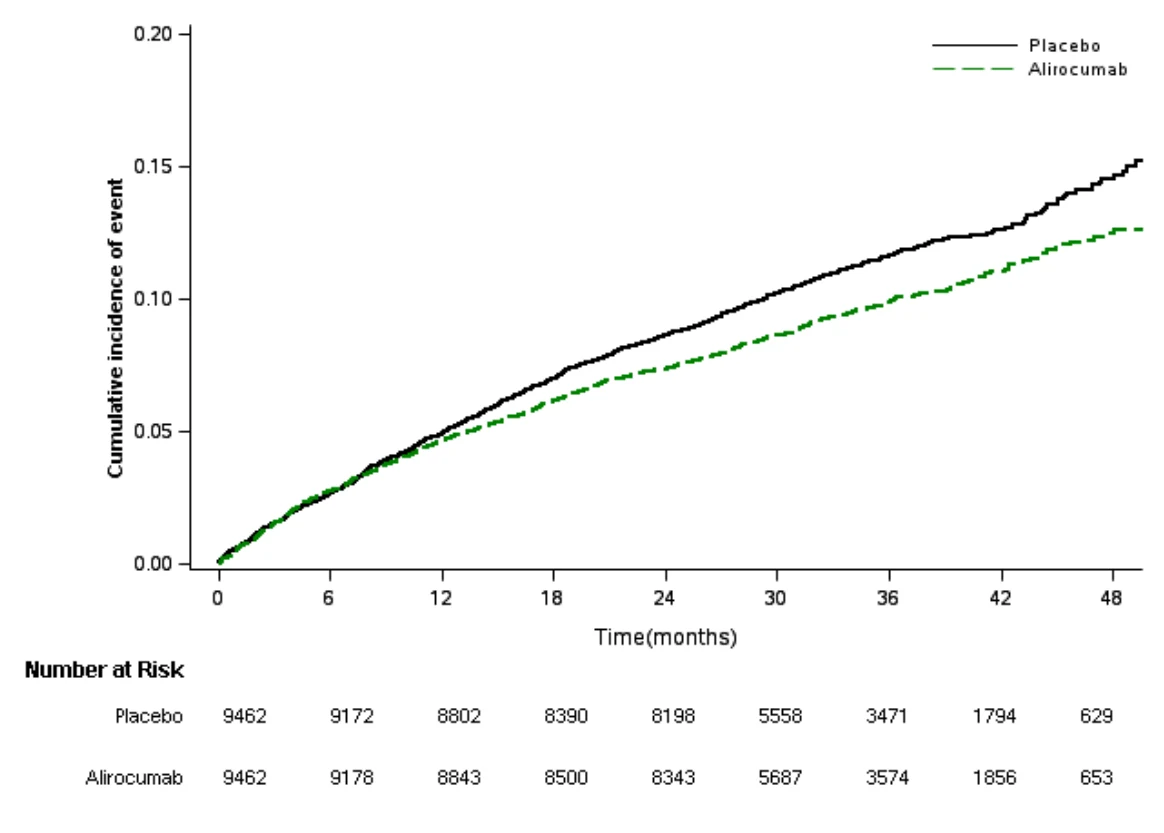
PRALUENT significantly reduced the risk of the primary composite endpoint: time-to-first oc-currence of coronary heart disease (CHD) death, non-fatal myocardial infarction (MI), fatal and non-fatal ischemic stroke, or unstable angina (UA) requiring hospitalization (p =0.0003) (see Ta-ble 4).
Table 4 -Efficacy of PRALUENT in Patients with Established Cardiovascular Disease
(ITT Population)
| Endpoint | Number of patients with an event n (%) | Hazard Ratioa (95% CI) | p-valueb | |||||
|---|---|---|---|---|---|---|---|---|
Placebo N=9462 | Praluent N=9462 | |||||||
| Primary composite endpointc | 1052 (11.1) | 903 (9.5) | 0.85 (0.78, 0.93) | 0.0003 | ||||
| Coronary Heart Disease Death | 222 (2.3) | 205 (2.2) | 0.92 (0.76, 1.11) | |||||
| Myocardial Infarctiond | 722 (7.6) | 626 (6.6) | 0.86 (0.77, 0.96) | |||||
| Ischemic Stroked | 152 (1.6) | 111 (1.2) | 0.73 (0.57, 0.93) | |||||
| Unstable Angina Requiring Hospitalizationd | 60 (0.6) | 37 (0.4) | 0.61 (0.41, 0.92) | |||||
| All-cause Mortalitye | 392 (4.1) | 334 (3.5) | 0.85 (0.73, 0.98) | |||||
a Cox Proportional Hazard model with treatment as a factor and stratified by geographical region b Two-sided log-rank test stratified by geographical region c MACE defined as a composite of coronary heart disease (CHD) death, non-fatal myocardial infarction (MI), fatal and non-fatal ischemic stroke, or unstable angina (UA) requiring hospitalization d Statistical testing performed outside hierarchy; therefore not considered statistically significant e Not statistically significant per pre-specified method to control for type I error. | ||||||||
The Kaplan-Meier estimates of the cumulative incidence of the primary endpoint over time for the overall patient population is presented in Figure 2.
Figure 2 - Major Atherosclerotic Cardiovascular Disease Events: Cumulative Incidence Over 4 Years in ODYSSEY OUTCOMES
Primary Hyperlipidemia
Study demographics and trial design
The efficacy of alirocumab was investigated in five double-blind placebo-controlled phase 3 tri-als that enrolled 3499 patients; 36% were patients with heterozygous familial hypercholesterol-emia (HeFH) and 54% were non-FH patients who had clinical atherosclerotic cardiovascular dis-ease. Three of the five studies were conducted exclusively in patients with heterozygous familial hypercholesterolemia (HeFH). All patients were taking background lipid-modifying therapy (LMT) consisting of a maximally tolerated dose of statin, with or without other lipid-modifying therapies. In the trials that enrolled patients with HeFH, the diagnosis of HeFH was made either by genotyping or clinical criteria (“definite FH” using either the Simon Broome or WHO/Dutch Lipid Network criteria). All trials were at least 52 weeks in duration with the primary efficacy endpoint measured at week 24 (mean percent change in LDL-C from baseline).
Two studies (LONG TERM and HIGH FH), involving a total of 2416 patients, were performed with a 150 mg every 2 weeks (Q2W) dose only. Three studies (COMBO I, FH I and FH II) were performed with a dose of 75 mg Q2W, and criteria-based up-titration to 150 mg Q2W at week 12 in patients who did not achieve their pre-defined target LDL-C based on their level of CV risk at week 8.
The efficacy of PRALUENT was also investigated in three ezetimibe-controlled trials (COMBO II, ALTERNATIVE, MONO) using an initial dose of 75 mg Q2W followed by crite-ria-based up-titration to 150 mg Q2W at week 12, with the primary efficacy endpoint measured at week 24 (mean percent change from baseline in LDL-C).
Another double-blind, placebo-controlled, 48-week trial (CHOICE I) enrolled 547 patients on maximally tolerated dose of statin who received PRALUENT 300 mg every 4 weeks (Q4W), 75 mg every 2 weeks (Q2W) or placebo, with criteria-based adjustment to 150 mg Q2W in the PRALUENT arms at week 12. The co-primary efficacy endpoints were evaluated at week 24 and from weeks 21 to 24 (mean percent change in LDL-C from baseline).
Study results
LONG TERM study
This multicentre, randomized, double-blind, placebo-controlled, 18-month study included 2341 patients (1553 patients in the alirocumab group and 788 patients in the placebo group) with HeFH or non-FH on a maximally tolerated dose of statin, with or without other lipid-modifying therapy. Patients received either alirocumab at a dose of 150 mg Q2W or placebo in addition to their existing lipid-modifying therapy.
The LONG TERM study included 17.7% HeFH patients and 68.6% non-FH patients with clini-cal atherosclerotic cardiovascular disease. The mean age was 60.5 years (range 18-89), 37.8% were women, 93% were Caucasian, 3% were Black, and 5% were Hispanic/Latino. The mean LDL-C at baseline was 3.15 mmol/L (122 mg/dL).
The proportion of patients who prematurely discontinued study drug prior to the 24-week end-point was 8% among those treated with PRALUENT and 8% among those treated with placebo.
At week 24, the treatment difference between PRALUENT and placebo in mean LDL-C percent change was -58.5 % (95% CI:-61.1%, -55.8%; p-value: ˂0.0001) (see Table 5 and Figure 3).
Table 5 - Mean percent Change from Baseline and Differencea from Placebo in Lipid Parameters at Week 12 and Week 24 in the LONG TERM Studyb
| Treatment Group | LDL-C | Total-C | Non-HDL-C | Apo B | |||||||||||||||
| Week 12 | |||||||||||||||||||
| Placebo | 1.3 | 0.1 | 0.8 | 0.4 | |||||||||||||||
| PRALUENT (150 mg) | -61.4 | -37.7 | -52.3 | -53.8 | |||||||||||||||
Difference from placebo (LS meanc) (95%CI) | -62.7 (-65.2, -60.3) | -37.8 (-39.4, -36.3) | -53.0 (-55.1, -50.9) | -54.2 (-56.6, -51.9) | |||||||||||||||
| p valued | <0.0001 | <0.0001 | <0.0001 | <0.0001 | |||||||||||||||
| Week 24 | |||||||||||||||||||
| Placebo | 0.7 | -0.3 | 0.6 | 1.1 | |||||||||||||||
| PRALUENT (150 mg) | -57.8 | -36.0 | -49.1 | -49.8 | |||||||||||||||
Difference from placebo (LS meanc) (95%CI) | -58.5 (-61.1, -55.8) | -35.7 (-37.4, -34.0) | -49.7 (-52.0, -47.4) | -50.9 (-53.3, -48.4) | |||||||||||||||
| p valued | <0.0001 | <0.0001 | <0.0001 | <0.0001 | |||||||||||||||
a Difference is PRALUENT minus placebo b A pattern-mixture model approach was used with multiple imputation of missing post-treatment values based on a subject’s own baseline value and multiple imputation of missing on-treatment values based on a model including available on-treatment values. c Least-square (LS) means were obtained by combining LS means from analyses of covariance (ANCOVA) of the different imputed data sets, using Rubin’s formulae. The ANCOVA models included the fixed categorical effect of treatment group and randomization strata, and the continuous fixed covariate of baseline value. d A hierarchical testing procedure was used to test the primary and the key secondary efficacy endpoints while con-trolling for Type I error rate. | |||||||||||||||||||
Figure 3 - Mean Percent Change from Baseline in LDL-C over 52 weeks in the LONG TERM studya
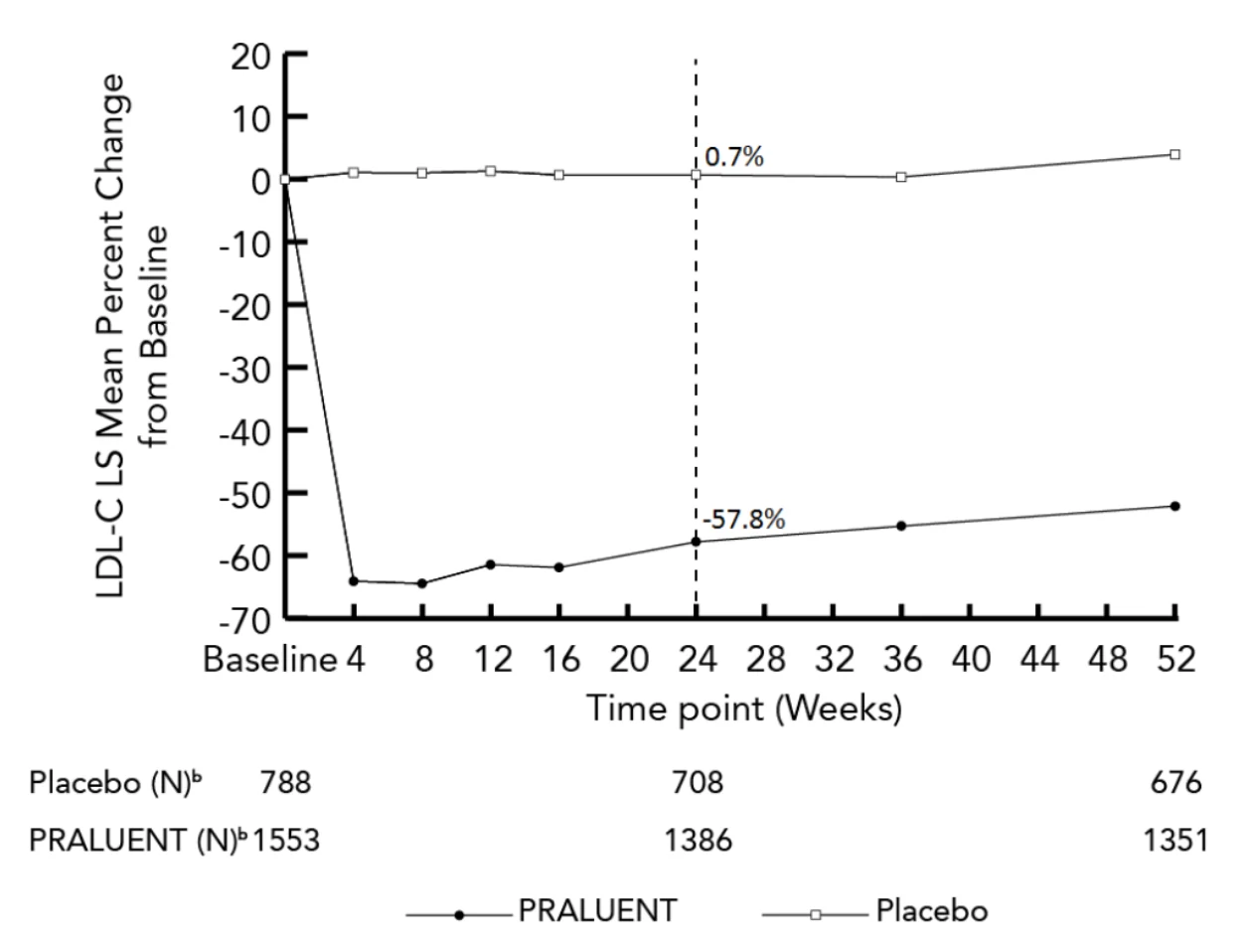 |
a The means were estimated based on all randomized patients, with multiple imputation of missing data taking into account treatment adherence b Number of patients with observed data |
COMBO I study
A multicentre, randomized, double-blind, placebo-controlled 52 week study included 316 pa-tients (209 in the alirocumab group and 107 patients in the placebo group) categorized as very high CV risk with hypercholesterolemia on a maximally tolerated dose of statin, with or without other lipid-modifying therapy who required additional LDL-C reduction. Patients received either 75 mg alirocumab Q2W or placebo in addition to their existing lipid-modifying therapy. Dose up-titration of alirocumab to 150 mg Q2W occurred at week 12 in patients with LDL-C ≥1.81 mmol/L (70 mg/dL).
The mean age was 63 years (range 39-87), 34.2% were women, 82% were Caucasian, 16% were Black, and 11% were Hispanic/Latino. Overall 84% of patients had clinical atherosclerotic car-diovascular disease. The mean baseline LDL-C was 2.63 mmol/L (102 mg/dL).
The dose was up-titrated to 150 mg Q2W in 32 of 191 (16.8%) of patients treated beyond 12 weeks.
The proportion of patients who prematurely discontinued study drug prior to the 24-week end-point was 11% among those treated with PRALUENT and 12% among those treated with place-bo.
At week 24, the mean treatment difference from placebo in LDL-C percent change from baseline was - 42.7% (95% CI: - 49.9%, - 35.4%; p-value: ˂ 0.0001) (see Table 6).
Table 6 - Mean percent Change from Baseline and Differencea from Placebo in Lipid Parameters at Week 12 and Week 24 in the COMBO I Studyb
| Treatment Group | LDL-C | Total-C | Non-HDL-C | Apo B | ||||||||||||||||
| Week 12 | ||||||||||||||||||||
| Placebo | 1.1 | 0.9 | 2.5 | 3.2 | ||||||||||||||||
| PRALUENT (75 mg) | -44.9 | -24.7 | -36.3 | -33 | ||||||||||||||||
Difference from placebo (LS meanc) (95%CI) | -46 (-52.6, -39.5) | -25.6 (-30.4, -20.7) | -38.8 (-45.2, -32.4) | -36.2 (-42.1, -30.2) | ||||||||||||||||
| p valued | < 0.0001 | < 0.0001 | < 0.0001 | < 0.0001 | ||||||||||||||||
| Week 24 | ||||||||||||||||||||
| Placebo | -1.5 | -2.3 | -1.1 | 0.2 | ||||||||||||||||
| PRALUENT (75/up to 150 mg) | -44.2 | -25.6 | -36.0 | -33.6 | ||||||||||||||||
Difference from placebo (LS meanc) (95%CI) | -42.7 (-49.9, -35.4) | -23.3 (-27.9, -18.7) | -34.8 (-41.3, -28.3) | -33.8 (-39.9, -27.7) | ||||||||||||||||
| p valued | < 0.0001 | < 0.0001 | < 0.0001 | < 0.0001 | ||||||||||||||||
a Difference is PRALUENT minus placebo b A pattern-mixture model approach was used with multiple imputation of missing post-treatment values based on a subject’s own baseline value and multiple imputation of missing on-treatment values based on a model including available on-treatment values. c Least-square (LS) means were obtained by combining LS means from analyses of covariance (ANCOVA) of the different imputed data sets, using Rubin’s formulae. The ANCOVA models included the fixed categorical effect of treatment group and randomization strata, and the continuous fixed covari-ate of baseline value. d A hierarchical testing procedure was used to test the primary and the key secondary efficacy endpoints while controlling for Type I error rate. | ||||||||||||||||||||
FH I and FH II studies
Two multicentre, placebo-controlled, double-blind 18-month studies included 735 patients (490 in the alirocumab group and 245 patients in the placebo group) with HeFH receiving a maximal-ly tolerated dose of statin, with or without other lipid-modifying therapy. The trials were similar with regards to both design and eligibility criteria. Patients received either alirocumab 75 mg Q2W or placebo in addition to their existing lipid-modifying therapy. Dose up-titration of aliro-cumab to 150 mg Q2W occurred at week 12 in patients with LDL-C ≥ 1.81 mmol/L (70 mg/dL).
Overall, the mean age was 52 years (range 20-87), 45% were women, 94% were Caucasian, 1% were Black, and 3% were Hispanic/Latino. The proportion of patients in FH I study and in the FH II study with clinical atherosclerotic cardiovascular disease was 51.2% and 38.3% respective-ly. The mean baseline LDL-C was 3.74 mmol/L (144.6 mg/dL) in FH I study and 3.48 mmol/dL (134.4 mg/dL) in FH II study. The dose was up-titrated beyond week 12 in 135 of 311 patients (43.4%) in FHI study and in 61 of 158 patients (38.6%) in FH II study.
The proportion of patients who prematurely discontinued study drug prior to the 24-week end-point was 6.5% among those treated with PRALUENT and 5.5% among those treated with pla-cebo in the FH I study and 4.8% among those treated with PRALUENT and 2.4% among those treated with placebo in the FH II study .
At week 24, the mean treatment difference from placebo in LDL-C percent change from baseline in FH I study was -56.3% (95% CI: -61.8%, -50.7%; p-value: ˂ 0.0001) (see Table 7 and Figure 4). At week 24, the mean treatment difference from placebo in LDL-C percent change from baseline in FH II study was -50.2% (95% CI:-57.1%, -43.2%; p-value: ˂ 0.0001) (see Table 7 and Figure 5).
Table 7 - Mean Percent Change from Baseline and Differencea from Placebo in Lipid Parameters at Week 12 and Week 24 in Studies FH Ib and FH IIb
| Treatment Group | FH I | FH II | |||||||||||||||||||||||||
| LDL-C | Total-C | Non-HDL-C | Apo B | LDL-C | Total-C | Non-HDL-C | Apo B | ||||||||||||||||||||
| Week 12 | |||||||||||||||||||||||||||
| Placebo | 5.6 | 4.1 | 5.2 | 3.2 | 4.6 | 3.4 | 4.1 | -0.7 | |||||||||||||||||||
| PRALUENT (75 mg) | -42.8 | -27.9 | -37.8 | -33.7 | -43.1 | -26.2 | -37.3 | -34.7 | |||||||||||||||||||
Difference from place-bo (LS meanc) (95%CI) | -48.4 (-53.3, -43.5) | -32.0 (-35.3, -28.6) | -43.0 (-47.3, -38.6) | -36.9 (-40.7, -33.0) | -47.6 (-54.1, -41.2) | -29.5 (-34.2, -24.9) | -41.4 (-47.3, -35.5) | -34.0 (-38.9, -39.1) | |||||||||||||||||||
| p valued | < 0.0001 | < 0.0001 | < 0.0001 | < 0.0001 | < 0.0001 | < 0.0001 | < 0.0001 | < 0.0001 | |||||||||||||||||||
| Week 24 | |||||||||||||||||||||||||||
| Placebo | 9.0 | 7.1 | 9.5 | 4.8 | 2.8 | 2.1 | 3.0 | -3.4 | |||||||||||||||||||
| PRALUENT (75mg/up to 150 mg) | -47.2 | -30.5 | -41.5 | -39.2 | -47.3 | -29.9 | -41.5 | -41.4 | |||||||||||||||||||
Difference from place-bo (LS meanc) (95%CI) | -56.3 (-61.8, -50.7) | -37.7 (-41.5, -33.8) | -51.0 (-56.0, -46.0) | -44 (-48.3, -39.7) | -50.2 (-57.1, -43.2) | -31.9 (-36.7, -27.1) | -44.6 (-50.8, -38.4) | -37.9 (-43.0, -32.8) | |||||||||||||||||||
| p valued | < 0.0001 | < 0.0001 | < 0.0001 | < 0.0001 | < 0.0001 | < 0.0001 | < 0.0001 | < 0.0001 | |||||||||||||||||||
a Difference is PRALUENT minus placebo b A pattern-mixture model approach was used with multiple imputation of missing post-treatment values based on a subject’s own baseline value and multiple imputation of missing on-treatment values based on a model including avail-able on-treatment values. c Least-square (LS) means were obtained by combining LS means from analyses of covariance (ANCOVA) of the dif-ferent imputed data sets, using Rubin’s formulae. The ANCOVA models included the fixed categorical effect of treat-ment group and randomization strata, and the continuous fixed covariate of baseline value. d A hierarchical testing procedure was used to test the primary and the key secondary efficacy endpoints while control-ling for Type I error rate. | |||||||||||||||||||||||||||
Figure 4 - Mean percent Change from Baseline in LDL-C over 52 weeks in FH I Studya
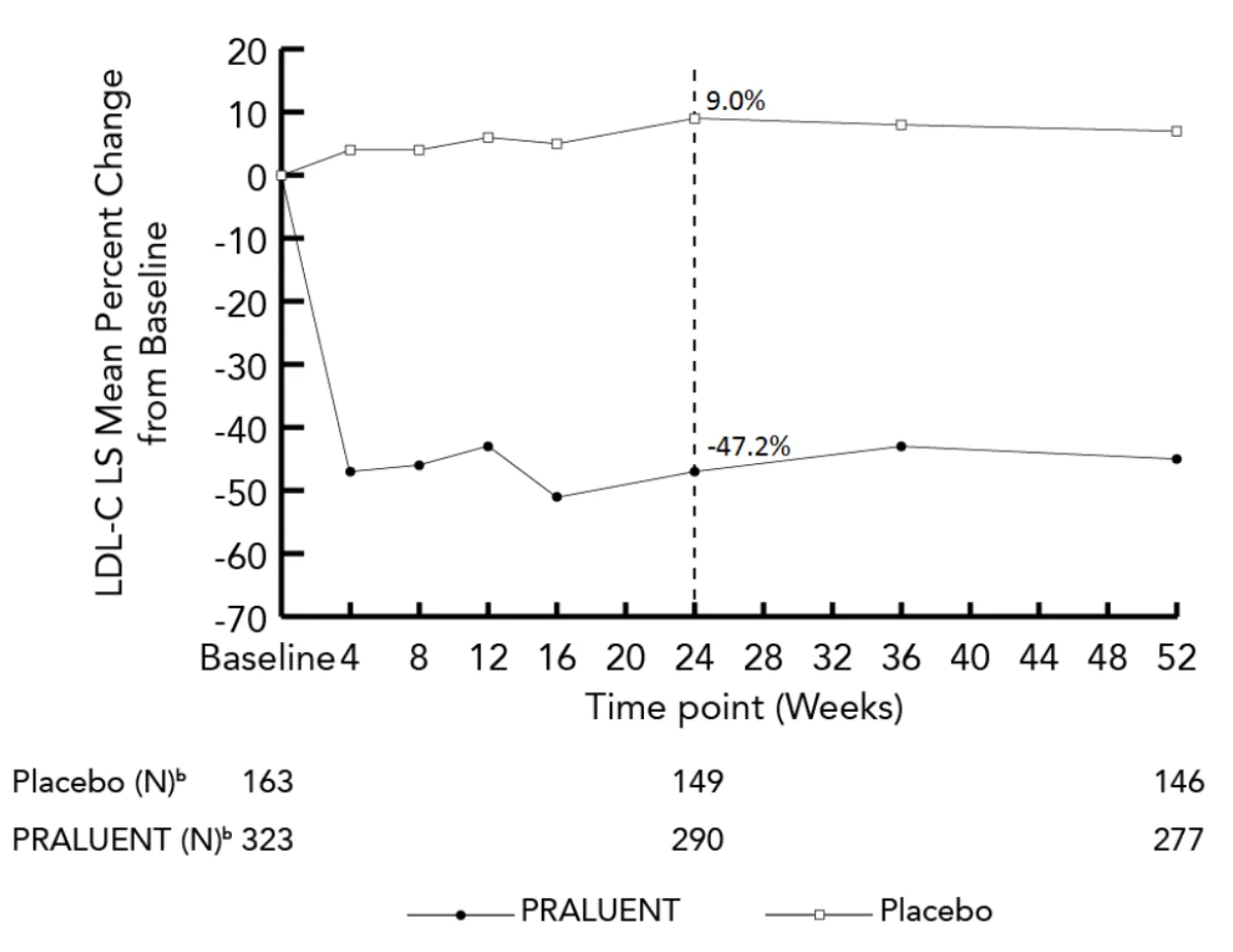 |
a The means were estimated based on all randomized patients, with multiple imputation of missing data taking into account treatment adherence b Number of patients with observed data |
Figure 5 - Mean percent Change from Baseline in LDL-C over 52 weeks in FH II Studya
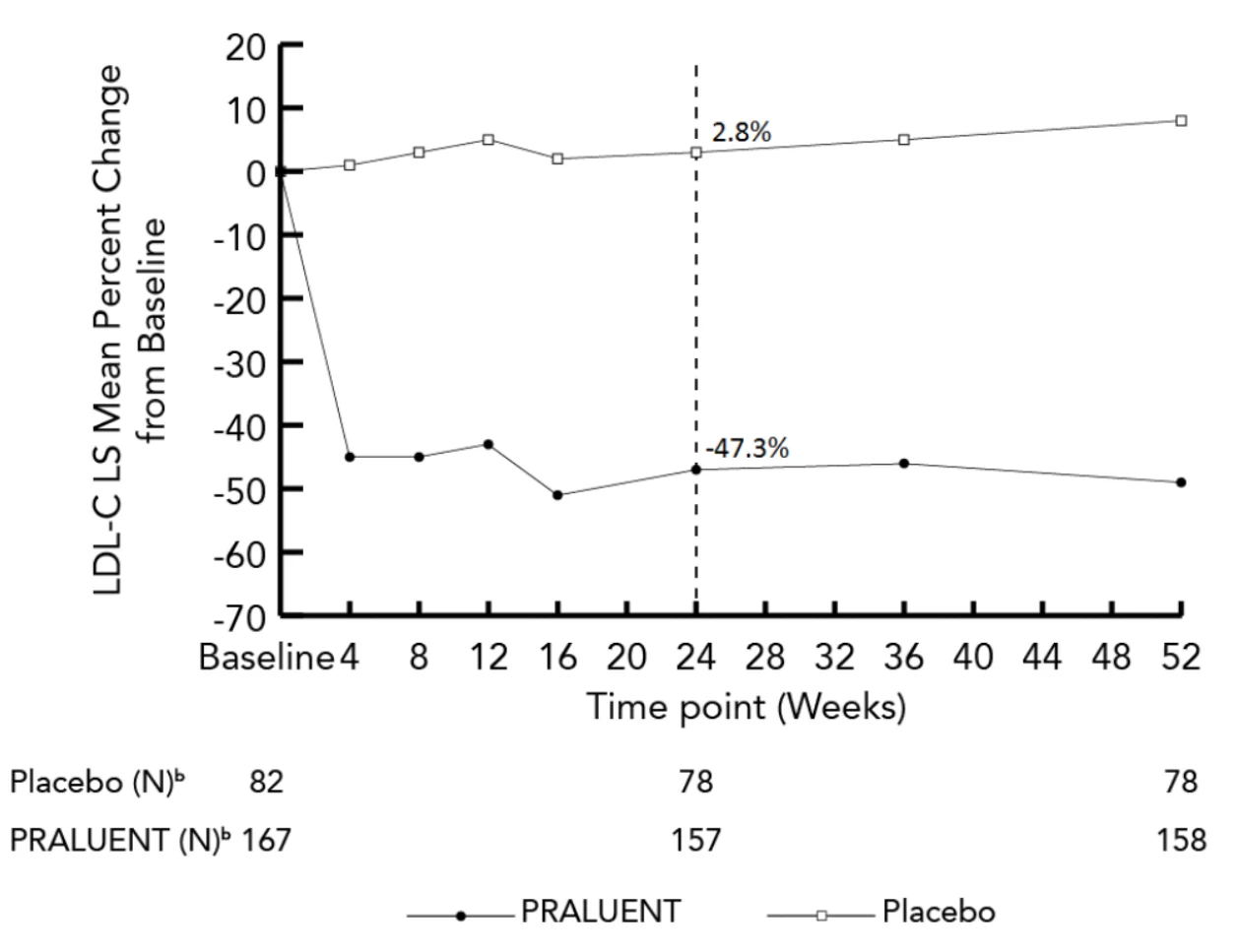 |
a The means were estimated based on all randomized patients, with multiple imputation of missing data taking into account treatment adherence b Number of patients with observed data |
HIGH FH study
HIGH FH was a multicentre, randomized, double-blind, placebo-controlled 18-month study that included 107 HeFH patients (72 patients in the alirocumab group and 35 patients in the placebo group) on a maximally tolerated dose of statin, with or without other lipid-modifying therapies, and a baseline LDL-C ≥ 4.14 mmol/L (160 mg/dL). Patients received either alirocumab at a dose of 150 mg Q2W or placebo in addition to their existing lipid-modifying therapy.
The mean age was 50.6 years (range 18-80), 46.7% were women, 88% were Caucasian, 2% were Black, and 6% were Hispanic/Latino. Overall, 50% of patients had clinical atherosclerotic cardi-ovascular disease. Mean baseline LDL-C was 5.08 mmol/L (196.3 mg/dL) in the alirocumab group and 5.2 mmol/L (201.0 mg/dL) in the placebo group.
The proportion of patients who discontinued study drug prior to the 24-week endpoint was 10% among those treated with PRALUENT and 0% among those treated with placebo.
At week 24, the mean treatment difference from placebo in LDL-C percent change from baseline was - 36.3% (95% CI: -48.5%, -24.2%; p-value: ˂ 0.0001) (see Table 8).
Table 8 - Mean percent Change from Baseline and Differencea from Placebo in Lipid Parameters at Week 12 and Week 24 in the HIGH FH Studyb
| Treatment Group | LDL-C | Total-C | Non-HDL-C | Apo B | |||||||||||
| Week 12 | |||||||||||||||
| Placebo | -6.7 | -5.1 | -7.0 | -9.1 | |||||||||||
| PRALUENT (150 mg) | -46.9 | -33.2 | -41.8 | -39.3 | |||||||||||
Difference from placebo (LS meanc) (95%CI) | -40.3 (-51.3, -29.2) | -28.1 (-36.3, -19.8) | -34.8 (-45.0, -24.6) | -30.2 (-39.2, -21.3) | |||||||||||
| p valued | <0.0001 | <0.0001 | <0.0001 | <0.0001 | |||||||||||
| Week 24 | |||||||||||||||
| Placebo | -6.9 | -4.8 | -6.2 | -8.6 | |||||||||||
| PRALUENT (150 mg) | -43.3 | -31.3 | -39.7 | -36.5 | |||||||||||
Difference from placebo (LS meanc) (95%CI) | -36.3 (-48.5, -24.2) | -26.5 (-35.5, -17.4) | -33.5 (-44.2, -22.7) | -28.0 (-37.6, -18.3) | |||||||||||
| p valued | <0.0001 | <0.0001 | <0.0001 | <0.0001 | |||||||||||
a Difference is PRALUENT minus placebo b A pattern-mixture model approach was used with multiple imputation of missing post-treatment values based on a subject’s own baseline value and multiple imputation of missing on-treatment values based on a model including available on-treatment values. c Least-square (LS) means were obtained by combining LS means from analyses of covariance (ANCOVA) of the different imputed data sets, using Rubin’s formulae. The ANCOVA models included the fixed categorical effect of treatment group and randomization strata, and the continuous fixed covariate of baseline value. d A hierarchical testing procedure was used to test the primary and the key secondary efficacy endpoints while con-trolling for Type I error rate. | |||||||||||||||
COMBO II study
COMBO II study was a multicentre, randomized, double-blind, ezetimibe-controlled 2 year study that included 720 patients (479 patients in the alirocumab group and 241 patients in the ezetimibe group) categorized as very high CV risk with hypercholesterolemia, on a maximally tolerated dose of statin. Patients received either alirocumab 75 mg Q2W or ezetimibe 10 mg once daily in addition to their existing statin therapy. Dose up-titration of alirocumab to 150 mg Q2W occurred at week 12 in patients with LDL-C ≥ 1.81 mmol/L (70 mg/dL); the dose was up-titrated to 150 mg Q2W in 82 (18%) of 446 patients treated with PRALUENT for at least 12 weeks.
The mean age was 61.6 years (range 29-88), 26.4% were women, 84.7% were Caucasian, 3.9% were Black, and 2.8% were Hispanic/Latino. Overall 90.1% of patients had clinical atheroscle-rotic cardiovascular disease; 30.7% of patients had type 2 diabetes at baseline. Mean baseline LDL-C was 2.81 mmol/L (108.6 mg/dL) in the alirocumab group and 2.7 mmol/L (104.6 mg/dL) in the ezetimibe group. The dose was up-titrated to 150 mg Q2W in 82 of 446 (18.4%) of pa-tients treated beyond 12 weeks.
The proportion of patients who prematurely discontinued study drug prior to the 24-week end-point was 8.6% among those treated with PRALUENT and 9.5% among those treated with ezetimibe.
At week 24, the mean percent change from baseline in LDL-C was -47.8% with PRALUENT and -20.1% with ezetimibe, and the mean treatment difference from ezetimibe in LDL-C percent change from baseline was - 27.7% (95% CI: -32.5%, -22.9%, ; p-value: ˂ 0.0001).
In the subgroup of patients with pre-existing type II diabetes mellitus, percent reduction in LDL-C was consistent with the overall population
CHOICE I
CHOICE I was a double-blind, placebo-controlled 48-week trial that randomly assigned 458 patients to PRALUENT 300 mg every 4 week dosing regimen (Q4W), 115 patients to PRALUENT 75 mg every 2 weeks (Q2W), and 230 patients to placebo. All 803 patients had hy-percholesterolemia and were receiving concomitant statins (68.1%) or other lipid modifying therapy (39.8%). The primary efficacy endpoint was measured at week 24 (mean percent change in LDL-C from baseline). At week 12, if additional LDL-C lowering was required based on pre-specified LDL-C criteria, PRALUENT was adjusted to 150 mg Q2W in the PRALUENT treat-ment groups for the remainder of the trial. Approximately 20% of patients treated with PRALUENT 75 mg Q2W or 300 mg Q4W for at least 12 weeks required dose adjustment to 150 mg Q2W.
The mean age was 61years (range 21-88), 42 % were women, 87% were Caucasian, 11% were Black, and 3% were Hispanic/Latino. Overall, 64% of patients had atherosclerotic cardiovascular disease; 27% of patients had type 2 diabetes at baseline. The proportion of patients who discon-tinued study drug prior to the 24-week endpoint was 12% among those treated with PRALUENT 300 mg Q4W, 14% among those treated with PRALUENT 75 mg Q2W and 15% among those treated with placebo.
In the cohort of patients on background statin, the mean LDL-C at baseline was 2.92 mmol/L.
At week 24, the treatment difference between initial assignment to PRALUENT 300 mg Q4W and placebo in mean percent change from baseline in LDL-C was -56% (97.5% CI: -62%, -49%; p-value: <0.0001), and the treatment difference between initial assignment to PRALUENT 75 mg Q2W and placebo in mean percent change in LDL-C from baseline was -48% (97.5% CI: -57%, -39%).
In the cohort of patients not treated with a concomitant statin, the mean LDL-C at baseline was 3.67 mmol/L (142 mg/dL).
At week 24, the treatment difference between initial assignment to PRALUENT 300 mg Q4W and placebo in mean percent change in LDL-C from baseline was - 48% (97.5% CI: -56%, -39%; p-value: <0.0001), and the treatment difference between initial assignment to PRALUENT 75 mg Q2W and placebo in mean percent change in LDL-C from baseline was -45% (97.5% CI: -57%, -34%; p-value: <0.0001).
In the subgroup of patients with pre-existing type II diabetes mellitus, percent reduction in LDL-C was consistent with the overall population
ALTERNATIVE study
ALTERNATIVE study was a multicentre, double-blind, ezetimibe-controlled trial in patients for whom the maximally tolerated daily dose of statin was contraindicated due to skeletal muscle-related symptoms, with 126 patients randomly assigned to PRALUENT 75 mg Q2W/150 mg Q2W and 125 patients to ezetimibe 10 mg/day. At week 12, if additional LDL-C lowering was required based on pre-specified LDL-C criteria, PRALUENT was up-titrated to 150 mg Q2W for the remainder of the trial. The dose was up-titrated to 150 mg Q2W in 54 (50%) of 109 patients treated with PRALUENT for at least 12 weeks.
There were 48.7% of patients that were on concomitant non-statin lipid modifying therapy other than ezetimibe. The mean age was 63 years (range 31-88), 45% were women, 94% were Cauca-sian, 4% were Black, and 2% were Hispanic/Latino; 23.9% of patients had type 2 diabetes at baseline. Mean baseline LDL-C was 4.9 mmol/L (191 mg/dL).
The proportion of patients who prematurely discontinued study drug prior to the 24-week end-point was 24% among those treated with PRALUENT and 33% among those treated with ezetimibe.
At week 24, the mean percent change from baseline in LDL-C was -44% with PRALUENT and -13% with ezetimibe, and the treatment difference between PRALUENT and ezetimibe in mean LDL-C percent change was -30% (95% CI: -37%, -24%; p-value: ˂0.0001).
In the subgroup of patients with pre-existing type II diabetes mellitus, percent reduction in LDL-C was consistent with the overall population.
MONO study
MONO study was a multicentre, double-blind, ezetimibe-controlled trial in patients with a mod-erate CV risk, not taking statins or other lipid-modifying therapies, and a baseline LDL-C be-tween 2.59-4.9 mmol/L (100 mg/dL to 190 mg/dL) that randomly assigned 52 patients to PRALUENT 75 mg Q2W and 51 patients to ezetimibe 10 mg/day. At week 12, if additional LDL-C lowering was required based on pre-specified LDL-C criteria, PRALUENT was up-titrated to 150 mg Q2W for the remainder of the trial. The dose was up-titrated to 150 mg Q2W in 14 (30%) of 46 patients treated with PRALUENT for at least 12 weeks.
The mean age was 61 years (range 49-72), 46% were women, 89% were Caucasian and 12% were Black. Mean baseline LDL-C was 141 mg/dL. The proportion of patients who prematurely discontinued study drug prior to the 24-week endpoint was 15% among those treated with PRALUENT and 14% among those treated with ezetimibe.
At week 24, the mean percent change from baseline in LDL-C was -45% with PRALUENT and -14% with ezetimibe, and the treatment difference between PRALUENT and ezetimibe in mean LDL-C percent change was -31% (95% CI: -40%, -22%; p-value: ˂0.0001).
DETAILED PHARMACOLOGY
Animal Pharmacology
Pharmacodynamics
Alirocumab binds with high affinity to PCSK9 across several species and blocks its interaction with LDLR in vitro and in vivo. The administration of alirocumab significantly reduced levels of serum LDL-C in rats and cynomolgus monkeys in a dose-dependent manner. Reductions in se-rum LDL-C were more pronounced in cynomolgus monkeys when administered in combination with atorvastatin. Species specific reductions in HDL-C were observed in rats and in cynomolgus monkeys only when combined with atorvastatin.
Pharmacokinetics
Alirocumab displayed nonlinear pharmacokinetics in the rat and monkey, which were character-ized by saturable, target-mediated disposition. An approximate 2- to 3-fold accumulation of total alirocumab generally occurred in both species with repeated weekly intravenous and subcutane-ous dosing in the majority of studies, with achievement of steady state typically observed after 5 alirocumab doses. The absolute bioavailability of alirocumab following subcutaneous admin-istration was dose independent and ranged from 44% to 65% in the rat and from 73% to 77% in the monkey. Alirocumab crossed the placental barrier, as determined by measurable serum total alirocumab concentrations in fetal rats and infant monkeys. In monkeys, repeated concomitant administration of alirocumab with atorvastatin did not influence the pharmacokinetics of atorvas-tatin or its active metabolites, but showed a trend towards reduced alirocumab exposure.
TOXICOLOGY
No significant adverse effects were observed in rats and cynomolgus monkeys when adminis-tered alirocumab by subcutaneous or intravenous injection up to dose levels of 75 mg/kg QW for 6 months.
There were no additive or synergistic adverse effects when alirocumab was administered in combination with atorvastatin to cynomolgus monkeys up to dose levels of 75/mg/kg QW and 40 mg/kg QD, respectively, for 3 months.
Carcinogenicity, mutagenicity and genotoxicity studies have not been conducted with aliro-cumab. There were no adverse effects on surrogate markers of fertility (e.g. estrous cyclicity, tes-ticular volume or sperm parameters) up to doses of 75 mg/kg QW included in a 26-week chronic subcutaneous toxicology study in sexually-mature monkeys. In addition, there were no aliro-cumab-related anatomic pathology or histopathology findings in reproductive tissues in any rat or monkey toxicology study.
No effects on embryo-fetal development were observed in Sprague Dawley rats up to doses of 75 mg/kg by subcutaneous route on gestational day 6 and 12. Studies in monkeys showed that alirocumab crosses the placental barrier and is pharmacologically active in infants exposed dur-ing organogenesis through parturition. Dose-related decreases in T-cell dependent antibody re-sponse (TDAR) to keyhole limpet hemocyanin (KLH) were observed at doses ≥ 15 mg/kg QW in offspring of exposed mothers at 4 to 6 months of age, suggesting a suppression of humoral immune response. Recovery of infant immune function was not assessed. Studies in monkeys did not demonstrate any additional embryo-fetal, pre- or postnatal or maternal effects up to doses of 75 mg/kg QW.
REFERENCES
- 1. Colhoun HM, Robinson JG, Farnier M, Cariou B, Blom D, Kereiakes DJ, Lorenzato C, Pordy R, Chaudhari U. Efficacy and safety of alirocumab, a fully human PCSK9 mono-clonal antibody, in high cardiovascular risk patients with poorly controlled hypercholes-terolemia on maximally tolerated doses of statins: rationale and design of the ODYSSEY COMBO I and II trials. BMC Cardiovasc Disord. 2014; 14:121.
- 2. Kastelein JJ, Robinson JG, Farnier M, Krempf M, Langslet G, Lorenzato C, Gipe DA, Baccara-Dinet MT. Efficacy and safety of alirocumab in patients with heterozygous fa-milial hypercholesterolemia not adequately controlled with current lipid-lowering thera-py: design and rationale of the ODYSSEY FH studies. Cardiovasc Drugs Ther. 2014; 28(3):281-9.
- 3. Kastelein JJP, Ginsberg HN, Langslet G, et al. ODYSSEY FH I and FH II: 78-week re-sults with alirocumab treatment in 735 patients with heterozygous familial hypercholes-terolemia. Eur Heart J. 2015;36(43):2996–3003.
- 4. Robinson JG, Farnier M, Krempf M et al., for the ODYSSEY LONG TERM Investiga-tors. Efficacy and Safety of Alirocumab in Reducing Lipids and Cardiovascular Events. N Engl J Med 2015;372(16):1489-99.
- 5. Kereiakes DJ, Robinson JG, Cannon CP, et al. Efficacy and safety of the proprotein con-vertase subtilisin/kexin type 9 inhibitor alirocumab among high cardiovascular risk pa-tients on maximally tolerated statin therapy: The ODYSSEY COMBO I study. American Heart Journal 2015;169(6):906-15.
- 6. Cannon CP, Cariou B, Blom D, McKenney JM, Lorenzato C, Pordy R, Chaudhari U, Colhoun HM; for the ODYSSEY COMBO II Investigators. Efficacy and safety of aliro-cumab in high cardiovascular risk patients with inadequately controlled hypercholesterol-aemia on maximally tolerated doses of statins: the ODYSSEY COMBO II randomized controlled trial Eur Heart J. 2015. doi:10.1093/eurheartj/ehv028.
- 7. G.G. Schwartz, P.G. Steg, M. Szarek, D.L. Bhatt, V.A. Bittner, R. Diaz, J.M. Edelberg, S.G. Goodman, C. Hanotin, R.A. Harrington, J.W. Jukema, G. Lecorps, K.W. Mahaffey, A. Moryusef, R. Pordy, K. Quintero, M.T. Roe, W.J. Sasiela, J.-F. Tamby, P. Tricoci, H.D. White, and A.M. Zeiher, for the ODYSSEY OUTCOMES Committees and Investi-gators. Alirocumab and Cardiovascular Outcomes after Acute Coronary Syndrome. N Engl J Med 2018; 379:2097-2107