


Product Monograph - Nemluvio
Recent Major Label Changes
None at the time of most recent authorization.
Table of Contents
Recent Major Label Changes ................................................................................................. 2
Part 1: Healthcare Professional Information.......................................................................... 4
- 1.
Indications..................................................................................................................... 4
1.1. Pediatrics .................................................................................................................... 4
1.2. Geriatrics .................................................................................................................... 4
- 2. Contraindications .......................................................................................................... 4
- 4.
Dosage and Administration ............................................................................................ 5
4.1. Dosing Considerations ............................................................................................... 5
4.2. Recommended Dose and Dosage Adjustment .......................................................... 5
4.3. Reconstitution ............................................................................................................ 6
4.4. Administration ........................................................................................................... 6
4.5. Missed Dose ............................................................................................................... 7
- 5. Overdose ....................................................................................................................... 7
- 6.
Dosage Forms, Strengths, Composition, and Packaging .................................................. 7
6.1. Physical Characteristics .............................................................................................. 8
- 7.
Warnings and Precautions ............................................................................................. 8
Immune .................................................................................................................................. 8
7.1. Special Populations .................................................................................................... 8
7.1.1. Pregnancy .......................................................................................................... 8
7.1.2. Breastfeeding ..................................................................................................... 9
7.1.3. Pediatrics............................................................................................................ 9
7.1.4. Geriatrics ............................................................................................................ 9
- 8.
Adverse Reactions ......................................................................................................... 9
8.1. Adverse Reaction Overview ....................................................................................... 9
8.2. Clinical Trial Adverse Reactions ................................................................................. 9
8.2.1. Clinical Trial Adverse Reactions – Pediatrics ................................................... 12
8.3. Less Common Clinical Trial Adverse Reactions ........................................................ 12
8.4 Abnormal Laboratory Findings: Hematologic, Clinical Chemistry, and Other Quantitative Data ................................................................................................................. 12
8.5. Post-Market Adverse Reactions ............................................................................... 12
- 9.
Drug Interactions ......................................................................................................... 12
9.2. Drug Interactions Overview ..................................................................................... 12
9.3. Drug-Behaviour Interactions .................................................................................... 13
9.4. Drug-Drug Interactions ............................................................................................ 13
9.5. Drug-Food Interactions ............................................................................................ 13
9.6. Drug-Herb Interactions ............................................................................................ 13
9.7. Drug-Laboratory Test Interactions ........................................................................... 13
- 10.
Clinical Pharmacology .................................................................................................. 13
10.1. Mechanism of Action ............................................................................................... 13
10.2. Pharmacodynamics .................................................................................................. 13
10.3. Pharmacokinetics ..................................................................................................... 13
10.4. Immunogenicity ....................................................................................................... 16
- 11. Storage, Stability, and Disposal .................................................................................... 17
- 12. Special Handling Instructions ....................................................................................... 17
Part 2: Scientific Information .............................................................................................. 19
- 13. Pharmaceutical Information ........................................................................................ 19
- 14.
Clinical Trials ............................................................................................................... 20
14.1. Clinical Trials by Indication ....................................................................................... 20
14.1.1 Atopic Dermatitis .................................................................................................... 20
14.1.2 Prurigo Nodularis ..................................................................................................... 26
- 16. Non-Clinical Toxicology ................................................................................................ 31
Patient Medication Information ......................................................................................... 33
INSTRUCTIONS FOR USE ..................................................................................................... 38
Part 1: Healthcare Professional Information
1. Indications
Atopic Dermatitis
NEMLUVIO (nemolizumab for injection) is indicated for the treatment of patients aged 12 years and older with moderate-to-severe atopic dermatitis (AD) whose disease is not adequately controlled with topical prescription therapies or when those therapies are not advisable.
Prurigo Nodularis
NEMLUVIO (nemolizumab for injection) is indicated for the treatment of adults with moderate-to-severe prurigo nodularis (PN) whose disease is not adequately controlled with topical prescription therapies or when those therapies are not advisable.
1.1. Pediatrics
Atopic Dermatitis
Pediatrics (12 to < 18 years of age): Based on the data submitted and reviewed by Health Canada, the efficacy and safety of NEMLUVIO in pediatric patients 12 years of age and older has been established.
A total of 176 pediatric subjects received NEMLUVIO in two pivotal clinical studies. No meaningful difference was identified in the efficacy or safety of NEMLUVIO in these subjects relative to the overall study population (see 8.2.1. Clinical Trial Adverse Reactions – Pediatrics; 14. Clinical Trials).
Pediatrics (<12 years of age): No data are available to Health Canada; therefore, Health Canada has not authorized use of NEMLUVIO in pediatric patients less than 12 years of age with atopic dermatitis.
Prurigo Nodularis
Pediatrics (<18 years of age): No data are available to Health Canada; therefore, Health Canada has not authorized use of NEMLUVIO in pediatric patients less than 18 years of age with prurigo nodularis.
1.2. Geriatrics
Atopic Dermatitis
Geriatrics (>65 years of age):
A total of 67 geriatric subjects with AD received NEMLUVIO in two pivotal clinical studies. Based on these limited data, a meaningful difference in the efficacy or safety of NEMLUVIO in geriatric subjects relative to the overall study population cannot be dismissed (see 14. Clinical Trials).
Prurigo Nodularis
Geriatrics (>65 years of age):
A total of 99 geriatric subjects with PN received NEMLUVIO for up to 24 weeks in two pivotal clinical studies. Based on these limited data, a meaningful difference in the efficacy or safety of NEMLUVIO in geriatric subjects relative to the overall study population cannot be dismissed (see 14. Clinical Trials).
2. Contraindications
NEMLUVIO is contraindicated in patients who are hypersensitive to this drug or to any ingredient in the formulation, including any non-medicinal ingredient, or component of the container. For a
- complete listing, see 6. Dosage Forms, Strengths, Composition, and Packaging.
4. Dosage and Administration
4.1. Dosing Considerations
- NEMLUVIO should not be injected into skin that is tender, inflamed, swollen, damaged or that has bruises, scars or open wounds.
- NEMLUVIO is intended for use under the guidance of a healthcare provider. A patient may self-inject NEMLUVIO or the patient’s caregiver may administer NEMLUVIO. Prior to first injection, patients and/or caregivers should be given proper instructions for preparation and administration of NEMLUVIO according to the Instructions for Use (IFU).
4.2. Recommended Dose and Dosage Adjustment
Atopic Dermatitis (AD)
Adults
- The recommended dose of NEMLUVIO for adult patients is an initial dose of 60 mg (two 30 mg injections), followed by 30 mg given every 4 weeks (Q4W).
- After 16 weeks of treatment, for patients who achieve clinical response, the recommended maintenance dose of NEMLUVIO is 30 mg every 8 weeks (Q8W).
- Use NEMLUVIO with topical corticosteroids (TCS) and/or topical calcineurin inhibitors (TCI). When the disease has sufficiently improved, discontinue the use of topical therapies.
- If NEMLUVIO treatment interruption becomes necessary, patients can re-start treatment at 30 mg Q4W.
Pediatrics (12 to < 18 years of age)
- No dose adjustment for body weight is recommended for patients 12 years of age and older with AD (see 10.3. Pharmacokinetics).
Geriatrics (> 65 years)
- No dose adjustment is recommended for elderly patients (see 10.3. Pharmacokinetics).
Renal & Hepatic Insufficiency (or Impairment)
- No dose adjustment is needed in patients with renal or hepatic impairment (see 10.3. Pharmacokinetics).
Prurigo Nodularis (PN)
Adults
- The recommended dose of NEMLUVIO for patients weighing < 90 kg is an initial dose of 60 mg (two 30 mg injections), followed by 30 mg given every 4 weeks (Q4W).
- The recommended dose of NEMLUVIO for patients weighing ≥ 90 kg is an initial dose of 60 mg (two 30 mg injections), followed by 60 mg given every 4 weeks (Q4W).
- Some patients with initial partial response may subsequently improve with continued treatment beyond 16 weeks. If NEMLUVIO treatment interruption becomes necessary, patients can re-start treatment at 30 mg or 60 mg Q4W depending on current weight.
Pediatrics (< 18 years)
The safety and efficacy of NEMLUVIO in pediatric patients with PN have not been established.
Geriatrics (> 65 years)
- No dose adjustment is recommended for elderly patients (see 10.3. Pharmacokinetics).
Renal & Hepatic Insufficiency (or Impairment)
- No dose adjustment is needed in patients with renal or hepatic impairment (see 10.3. Pharmacokinetics).
4.3. Reconstitution
- Before injection, remove NEMLUVIO carton from the refrigerator and allow to reach room temperature (30-45 minutes).
- Inspect NEMLUVIO visually prior to reconstitution. NEMLUVIO is supplied in a single-use prefilled dual-chamber pen or syringe with white powder in one chamber and a clear diluent in the other chamber. Do not use if powder is not white, or if diluent is cloudy or contains visible particles.
- NEMLUVIO must be reconstituted prior to administration by mixing the lyophilized powder with the water for dissolving the medicine. Shake the pen up and down for 30 seconds or shake the syringe with the tip pointing upward for 60 seconds. Then, wait about 5 minutes for the powder to fully dissolve and bubbles to reduce. If not fully dissolved, repeat shaking and waiting.
- Following reconstitution, each prefilled pen/syringe delivers 30 mg/0.49 mL as a clear and colorless to slightly yellow solution. Parenteral drug products should be inspected visually for particulate matter and discoloration prior to administration, whenever solution and container permit. Do not use if the reconstituted solution has discoloration or contains particles.
- Use NEMLUVIO within 4 hours after reconstitution. Discard unused reconstituted NEMLUVIO after 4 hours.
- Discard any unused portions after administration.
Refer to 11. Storage, Stability, and Disposal for more details on recommended storage period and conditions.
4.4. Administration
- NEMLUVIO is administered by subcutaneous injection.
- Administer NEMLUVIO into the front upper thighs or abdomen avoiding the 5 cm area around the navel. Injection into the upper arm should only be performed by a caregiver or healthcare professional.
- For the initial dose, administer each of the two NEMLUVIO injections at different injection sites.
- For subsequent doses, it is recommended to rotate the injection site with each dose. NEMLUVIO should not be injected into skin that is tender, inflamed, swollen, damaged or has bruises, scars or open wounds.
NEMLUVIO is intended for use under the guidance of a healthcare professional. A patient may self-inject NEMLUVIO, or the patient’s caregiver may administer NEMLUVIO if their healthcare professional determines that this is appropriate. Prior to first injection, patients and/or caregivers should be given proper instructions for preparation and administration of NEMLUVIO according to the complete instructions for use with illustrations at the end of the Patient Medication Information (PMI) section for pen and syringe.
4.5. Missed Dose
If a dose is missed, administer the dose as soon as possible. Thereafter, resume dosing at the regular scheduled time.
5. Overdose
There is no specific treatment for NEMLUVIO overdose. In the event of overdosage, monitor the patient for any signs or symptoms of adverse reactions and institute appropriate symptomatic treatment immediately.
For the most recent information in the management of a suspected drug overdose, contact your regional poison control centre or Health Canada’s toll-free number, 1-844 POISON-X (1-844-764-7669).
- 6. Dosage Forms, Strengths, Composition, and Packaging
To help ensure the traceability of biologic products, health professionals should record both the brand name and the non-proprietary (active ingredient) name as well as other product-specific identifiers such as the Drug Identification Number (DIN) and the batch/lot number of the product supplied.
Table 1 – Dosage Forms, Strengths, Composition and Packaging
Description
30 mg powder and solvent solution for injection in pre-filled pen
Single-use dual-chamber borosilicate glass type 1 cartridge in an auto-injector, with a stainless-steel staked needle.
| Route of Administration | Dosage Form / Strength/Composition | Non-medicinal Ingredients |
| Subcutaneous injection | Preservative-free, lyophilized powder and solvent solution:
| Powder for solution for injection: L-arginine hydrochloride, Poloxamer 188, Sucrose, Tris-hydrochloride (for pH-adjustment), Trometamol Solvent: Water for injection |
Pack size:
- 1 pre-filled pen
- Multipack containing 2 (2 packs of 1) pre-filled pens
30 mg powder and solvent solution for injection in pre-filled syringe
Single-use dual-chamber pre-filled syringe in a borosilicate glass type 1, co-packaged with a 27G needle (stainless steel) with safety shield.
Pack size:
- 1 pre-filled syringe
6.1. Physical Characteristics
Nemolizumab for injection is a preservative-free, white lyophilized powder in a dual-chamber single-use, pre-filled pen or syringe. One chamber contains 30 mg of nemolizumab for injection with inactive ingredients and the other chamber contains the diluent, water for injection. Following reconstitution, each pre-filled pen or syringe delivers 30 mg/0.49 mL of nemolizumab for injection.
7. Warnings and Precautions
Immune
Hypersensitivity
Type I hypersensitivity reactions (Ig-E mediated reactions), including urticaria and facial angioedema, have been reported for NEMLUVIO. Reactions were mild or moderate and did not lead to treatment discontinuation. If a systemic hypersensitivity reaction (immediate or delayed) occurs, discontinue administration of NEMLUVIO and initiate appropriate therapy.
Vaccinations
Consider completing all age-appropriate vaccinations as recommended by current immunization guidelines prior to initiating treatment with NEMLUVIO. Avoid use of live vaccines in patients during treatment with NEMLUVIO. It is unknown if administration of live vaccines during NEMLUVIO treatment will impact the safety or efficacy of these vaccines. No data are available on the response to non-live vaccines.
Respiratory
Cases of worsening of asthma (in subjects with pre-existing asthma) were observed in the clinical studies (see 8.2. Clinical Trial Adverse Reactions, Prurigo Nodularis, Worsening of asthma). Subjects with uncontrolled asthma during the preceding 3 months, an exacerbation of asthma requiring hospitalization in the preceding 12 months, and patients with a current medical history of chronic obstructive pulmonary disease (COPD) and/or chronic bronchitis were excluded from the nemolizumab clinical studies. No data are available on the efficacy and safety of NEMLUVIO in these populations.
7.1. Special Populations
7.1.1. Pregnancy
Data on nemolizumab exposure during pregnancy in humans is very limited. NEMLUVIO is not recommended during pregnancy. Animal data demonstrated an increase in postnatal death following administration of nemolizumab to pregnant cynomolgus monkeys. Nemolizumab was also detected in neonatal plasma, indicating drug transfer across the placental barrier (see 16. Non-Clinical Toxicology).
7.1.2. Breastfeeding
No data are available on the excretion of nemolizumab for injection in human milk. Maternal IgG is known to be excreted in human milk, and nemolizumab was detected in the milk of cynomolgus monkeys (see 16. Non-Clinical Toxicology). Thus, a risk to the newborn/infant cannot be excluded. The developmental and health benefits of breastfeeding should be considered along with the mother’s clinical need for NEMLUVIO and any potential adverse effects on the breastfed child from NEMLUVIO.
7.1.3. Pediatrics
Atopic Dermatitis (AD)
The efficacy and safety of NEMLUVIO in pediatric subjects with AD less than 12 years of age have not been established.
Prurigo Nodularis (PN)
Pediatrics (<18 years of age): The efficacy and safety of NEMLUVIO in pediatric subjects (birth to 18 years of age) with PN have not been established.
7.1.4. Geriatrics
Atopic Dermatitis
Clinical trials of NEMLUVIO in AD did not include sufficient number of subjects older than 65 years of age to determine whether they respond differently than younger subjects (see 10.3. Pharmacokinetics, Special Populations and Conditions).
Prurigo Nodularis
Clinical trials of NEMLUVIO in PN did not include sufficient number of subjects older than 65 years of age to determine whether they respond differently than younger subjects (see 10.3. Pharmacokinetics, Special Populations and Conditions).
8. Adverse Reactions
8.1. Adverse Reaction Overview
The most common adverse reaction in patients with atopic dermatitis is injection site reactions (1.2%) and urticaria (1.0%), a type of hypersensitivity reaction. The most common adverse reactions in patients with prurigo nodularis are headache (7.0%), dermatitis atopic (4.6%), eczema (3.8%), eczema nummular (3.5%), skin, mucosal, and nail fungal infections (3.0%).
8.2. Clinical Trial Adverse Reactions
Clinical trials are conducted under very specific conditions. Therefore, the frequencies of adverse reactions observed in the clinical trials may not reflect frequencies observed in clinical practice and should not be compared to frequencies reported in clinical trials of another drug.
Atopic Dermatitis
Adults and children aged 12 years and older
The safety of NEMLUVIO was evaluated in two randomized, double-blind, placebo-controlled, multicenter phase 3 trials (ARCADIA 1, ARCADIA 2). In these 2 trials, 1135 subjects were treated with subcutaneous injections of NEMLUVIO (30 mg every 4 weeks), with concomitant topical corticosteroids (TCS) and/or topical calcineurin inhibitors (TCI) up to 48 weeks. 32.9% of the subjects had a history of asthma-related condition, 18.7% had rhinitis, 15.0% had food allergy, and 11.2% had allergic conjunctivitis. A multicentre, open label long-term extension trial (ARCADIA LTE) assessed the safety of NEMLUVIO (30 mg every 4 weeks by subcutaneous injection) in adolescents aged 12 to < 18 and adults with moderate-to-severe atopic dermatitis who had previously participated in clinical trials of NEMLUVIO or adolescents with no previous exposure to NEMLUVIO. The safety data provided in ARCADIA LTE reflect exposure to NEMLUVIO in 1740 subjects, including 747 exposed for at least 52 weeks.
Week 0 to Week 16
In ARCADIA 1 and ARCADIA 2, during the Week 16 initial treatment periods, the proportion of subjects who discontinued treatment because of adverse events was 2.3% in NEMLUVIO 30 mg Q4W and 2.2% in placebo group. Table 2 summarizes the adverse reactions that occurred at a rate of at least 1% in the NEMLUVIO group (and more frequently than in the placebo group).
Table 2 - Adverse Reactions Occurring in ≥1% (and more frequently than placebo) of subjects aged 12 and older with moderate-to-severe Atopic Dermatitis treated with NEMLUVIO and placebo during the initial treatment periods (to week 16) of ARCADIA 1 and ARCADIA 2
NEMLUVIO (nemolizumab for injection) n = 1,135 (%) | Placebo n = 548 (%) | |||
| General disorders and administration site conditions | ||||
| Injection site reactions* | 15 (1.2%) | 8 (0.9%) | ||
| Skin and subcutaneous tissue disorders | ||||
| Urticaria | 12 (1%) | 2 (0.3%) | ||
*Includes: injection site erythema, injection site pain, injection site haematoma, injection site irritation, injection site oedema and injection site pruritus in NEMLUVIO -treated patients; injection site erythema, injection site pain, injection site reaction, injection site pruritus and injection site inflammation in placebo patients.
Dose and dose regimen: Initial dose of 60 mg (two 30 mg injections), followed by 30 mg given every 4 weeks (Q4W).
Safety through Week 52 (ARCADIA LTE)
The safety profile observed in the long-term extension trial through week 52 was generally consistent with the safety profile of NEMLUVIO observed in the controlled studies at Week 16.
Prurigo Nodularis
Two randomized, double-blind, placebo-controlled, multicenter trials (OLYMPIA 1 and OLYMPIA 2) evaluated the safety of NEMLUVIO monotherapy in 370 subjects with PN. Subjects weighing less than 90 kg in the NEMLUVIO group received NEMLUVIO 60 mg or placebo at Week 0, followed by 30 mg injections every 4 weeks. Subjects weighing 90 kg or more in the NEMLUVIO group received NEMLUVIO 60 mg or placebo at Week 0 and every 4 weeks. In terms of co-morbid conditions, 25.6% of the subjects had a history of atopy (including 14.6% with asthma-related condition, 5.1% had allergic rhinitis, 5.9% with atopic dermatitis).
A multicenter, open label long-term extension trial (OLYMPIA LTE) assessed the safety of NEMLUVIO in subjects with PN who had previously participated in controlled studies of NEMLUVIO or had been screened for OLYMPIA 1 or OLYMPIA 2. The safety data in OLYMPIA LTE reflect exposure to NEMLUVIO in 508 subjects, including 375 exposed for at least 52 weeks.
Phase 3 pivotal studies (OLYMPIA 1 and OLYMPIA 2)
During the treatment periods of OLYMPIA 1 and OLYMPIA 2, the proportion of subjects who discontinued treatment because of adverse reactions was 3.8% in NEMLUVIO- treated subjects versus 2.7% in placebo-treated subjects. Table 3 summarizes the adverse reactions that occurred at a rate of at least 1% in the NEMLUVIO group (and more frequently than in the placebo group) during the treatment periods.
Table 3 - Adverse Reactions Occurring in ≥1% (and more frequently than placebo) of adult subjects with prurigo nodularis treated with NEMLUVIO during the treatment periods of OLYMPIA 1 (to week 24) and OLYMPIA 2 (to week 16) Trial.
NEMLUVIO (nemolizumab for injection) n = 370 (%) | Placebo n = 186 (%) | |||
|---|---|---|---|---|
| Nervous system disorders | ||||
| Headache* | 26 (7.0%) | 6 (3.2%) | ||
| Skin and subcutaneous tissue disorders | ||||
| Dermatitis atopic | 17 (4.6%) | 1 (0.5%) | ||
| Eczema | 14 (3.8%) | 4 (2.2%) | ||
| Eczema nummular | 13 (3.5%) | 0 | ||
| Skin, mucosal, and nail fungal infections** | 11 (3.0%) | 0 | ||
*includes: headache and tension headache
**includes: Body tinea, Fungal infection, Tinea pedis, Fungal skin infection, Onychomycosis, Oral candidiasis, Tinea versicolor, Vulvovaginal mycotic infection
Dose and dose regimen: patients weighing < 90 kg initial dose of 60 mg (two 30 mg injections), followed by 30 mg given every 4 weeks (Q4W). Patients weighing ≥ 90 kg initial dose of 60 mg (two 30 mg injections), followed by 60 mg given every 4 weeks (Q4W).
Worsening of asthma
In the PN patients with pre-existing asthma (n=51), 8 (15.7%) patients experienced a worsening of asthma (WOA) after initiation of nemolizumab, 5 of whom had a body weight > 90 kg and received 60 mg nemolizumab every 4 weeks. This was observed more frequently in patients weighing > 90 kg who received 60 mg nemolizumab every 4 weeks compared to patients weighing < 90 kg who received 30 mg nemolizumab every 4 weeks.
The majority of WOA events occurred within the first two months of treatment initiation and all were reported as mild or moderate in severity. Most patients experienced a single event of WOA during treatment and the event resolved with standard of care asthma medications (inhalers) without the use of systemic steroids. None led to permanent discontinuation of treatment. The incidence of WOA did not increase with longer term exposure to nemolizumab (up to Week 52) in the PN open-label long-term extension study.
Safety through Week 52 (OLYMPIA LTE)
The safety profile observed in the long-term extension trial through week 52 was generally consistent with the safety profile of NEMLUVIO observed in the controlled studies at Week 16 and at Week 24.
8.2.1. Clinical Trial Adverse Reactions – Pediatrics
Adolescents (aged 12 to < 18 years) with Atopic Dermatitis
The safety of NEMLUVIO was assessed in 176 subjects 12 to <18 years of age with moderate-to-severe atopic dermatitis enrolled in the ARCADIA 1 or ARCADIA 2 trials who received at least one dose of NEMLUVIO from Week 0 to Week 16 in the primary safety population. The safety profile of NEMLUVIO in these subjects through Week 16 was consistent with the safety profile observed in adults with atopic dermatitis.
8.3. Less Common Clinical Trial Adverse Reactions
In a prurigo nodularis study, facial (peri-ocular) angioedema [a type of hypersensitivity reaction] of mild intensity was reported in 1 subject (0.3%). The adverse reaction did not lead to discontinuation of NEMLUVIO .
Moderate or severe bullous pemphigoid was reported in 3 subjects (0.8%) in the prurigo nodularis studies and 1 subject (0.3%) in an atopic dermatitis study. All 4 subjects were discontinued from NEMLUVIO and 3 subjects were discontinued from the study.
8.4 Abnormal Laboratory Findings: Hematologic, Clinical Chemistry, and Other Quantitative Data
Clinical Trial Findings
Eosinophilia
In the treatment periods of the atopic dermatitis clinical trials ARCADIA 1 and ARCADIA 2, 10.0% of subjects treated with nemolizumab reported potentially clinically significant increases in eosinophil count (> 0.7 x 10⁹/L if baseline was ≤ 0.7 x 10⁹/L) compared to 6.0% of subjects in the placebo group. In the treatment periods of the prurigo nodularis clinicals trials OLYMPIA 1 and OLYMPIA 2, these proportions were 5.5%, and 2.7%, respectively. During the same periods, 7.2% of atopic dermatitis subjects and 5.0% of prurigo nodularis subjects reported eosinophil counts > 1.5 to ≤ 5.0 x 10⁹/L (if baseline was ≤ 0.7 x 10⁹/L). No subject reported an eosinophil count > 5.0 x 10⁹/L (if baseline was ≤ 0.7 x 10⁹/L) in these trials.
8.5. Post-Market Adverse Reactions
There is no post-market surveillance information available for NEMLUVIO.
9. Drug Interactions
9.2. Drug Interactions Overview
Drug interactions with nemolizumab have not been assessed.
No pharmacokinetic drug interactions are expected based on the characteristics of nemolizumab.
9.3. Drug-Behaviour Interactions
The interaction of subcutaneous injection of NEMLUVIO with individual behavioural risks (e.g. cigarette smoking, cannabis use, and/or alcohol consumption) is unlikely and has not been studied.
9.4. Drug-Drug Interactions
Cytochrome P450 substrates
The formation of CYP450 enzymes can be altered by increased levels of certain cytokines (e.g., IL-1, IL-6, IL- 10, TNFα, IFN) during chronic inflammation. Treatment with NEMLUVIO may modulate serum levels of some cytokines and influence the formation of CYP450 enzymes.
Therefore, upon initiation or discontinuation of NEMLUVIO in patients who are receiving concomitant drugs which are CYP450 substrates, particularly those with a narrow therapeutic index, consider monitoring for effect (e.g., for warfarin) or drug concentration (e.g., for cyclosporine) and consider dosage modification of the CYP450 substrate.
9.5. Drug-Food Interactions
Interactions with food have not been established.
9.6. Drug-Herb Interactions
Interactions with herbal products have not been established.
9.7. Drug-Laboratory Test Interactions
Interactions with laboratory tests have not been established.
10. Clinical Pharmacology
10.1. Mechanism of Action
Nemolizumab is a humanized IgG2 monoclonal antibody that inhibits interleukin-31 (IL-31) signaling by binding selectively to interleukin-31 receptor alpha (IL-31 RA). IL-31 is a cytokine that is involved in pruritus, inflammation, epidermal dysregulation, and fibrosis. Nemolizumab inhibited IL-31-induced responses including the release of proinflammatory cytokines (e.g., IL-6). The mechanism of action of nemolizumab has not been definitively established.
10.2. Pharmacodynamics
Pharmacodynamics of nemolizumab for injection in the treatment of prurigo nodularis and atopic dermatitis are unknown.
10.3. Pharmacokinetics
No difference was identified in the nemolizumab for injection PK profile between subjects with AD and PN, thus confirming that the disease does not impact the nemolizumab for injection PK profile.
Table 4 - Summary of Nemolizumab for injection Pharmacokinetic Parameters in healthy subjects following a single subcutaneous dose of 60 mg
| Single dose, N=96 | Cmax (µg/mL) | Tmax (day) | t½ (day) | AUC0-∞ (µg.day/mL) | CL/F (L/day) | Vd/F (L) |
| Prefilled pen | 8.00 (±2.34) | 4.99a (1.0, 22.0)a | 18.0 (±5.91)b | 270 (±85.8)b | 0.24 (±0.077)b | 5.98 (±1.76)b |
| Prefilled syringe | 7.51 (±2.31) | 5.99a (1.0, 22.0)a | 18.5 (±4.52) | 279 (±89.7) | 0.24 (±0.104) | 6.08 (±1.58) |
a: Median (Min – Max)
b: N=95
Abbreviations: AUC0-∞= area under the concentration-time curve extrapolated to infinity; CL/F= systemic clearance for extravascular administration; Cmax=observed maximum serum concentration; t1/2 = Elimination half-life; Tmax = Time to maximum concentration ; Vd/F= Volume of distribution for extravascular administration; Max=maximum observed value; Min=minimum observed value; N=number of subjects.
Note: All PK parameters presented as arithmetic mean (±standard deviation), except Tmax, presented as median (minimum-maximum observed values)
Absorption
Following an initial subcutaneous loading dose of 60 mg and subsequent 30 mg doses Q4W, at steady-state, nemolizumab for injection reached peak concentrations (Cmax,ss) of 5.15 mcg/mL in subjects with AD and 5.17 mcg/mL in subjects with PN; steady-state extent of exposure was 105 mcg·day/mL in subjects with AD and 109 mcg·day/mL in subjects with PN.
Following multiple doses of nemolizumab for injection in subjects with AD, the population PK estimated mean (SD) steady-state trough concentrations of nemolizumab for injection were 2.63 (1.27) mcg/mL for 30 mg administered Q4W and 0.74 (0.44) mcg/mL for 30 mg administered Q8W.
Following multiple doses of nemolizumab for injection in subjects with PN, the population PK estimated mean (SD) steady-state trough concentrations of nemolizumab for injection 3.04 (1.23) mcg/mL in patients with body weight <90 kg for 30 mg administered Q4W; and 3.66 (1.63) mcg/mL in patients with body weight ≥90 kg for 60 mg administered Q4W.
In both AD and PN population, steady state concentrations of nemolizumab for injection were achieved by week 4 after a 60 mg loading dose and by week 12 without a loading dose.
A loading dose is proposed for subjects with PN with body weight < 90 kg. However, for subjects with body weight ≥ 90 kg no loading dose is proposed because the 60 mg dose was sufficient to achieve similar steady-state concentrations of nemolizumab as the 30 mg dose (with 60 mg loading dose).
Linearity/non-linearity
After a single dose, nemolizumab exhibited linear pharmacokinetics with exposures increasing in dose-proportional manner between 0.03 and 3 mg/kg following subcutaneous administration.
After multiple doses, nemolizumab systemic exposure increased in an approximately dose-proportional manner across the SC dose range up to 30 mg. There was a slight decrease in bioavailability by 9% with the 60 mg SC dose and by 15% with the 90 mg SC dose.
Distribution
Based on a population PK analysis, the apparent volume of distribution for nemolizumab for injection was 7.67 L.
Elimination
Nemolizumab for injection is expected to be degraded in the same manner as endogenous IgG. In the population PK analysis, the terminal elimination half-life (SD) of nemolizumab for injection was estimated to be 18.9 (4.96) days and apparent systemic clearance was estimated to be 0.263 L/day.
Metabolism
Specific metabolism studies were not conducted because nemolizumab for injection is a protein. Nemolizumab for injection is expected to be metabolized into small peptides by catabolic pathways.
Special populations and conditions
Pediatrics
Atopic Dermatitis
In the population PK analysis, no clinically significant difference in the pharmacokinetics of nemolizumab for injection was estimated in adolescents 12 - 17 years of age compared to adults. Dose adjustment in this population is not recommended.
Table 5- Summary of Nemolizumab Pharmacokinetic Parameters at steady-state in adult (18-65 years old) and pediatric (12-17 years old) subjects with AD
| 12-17 years (N=191) | 18-65 years (N=1580) | |||
|---|---|---|---|---|
| Cmax,ss (mcg/mL) | ||||
| Geo. mean (Geo. %CV) | 6.55 (35.8%) | 4.98 (34.7%) | ||
| Median [Min, Max] | 6.69 [2.52, 17.8] | 5.04 [1.38, 19.3] | ||
| AUCτ,ss (mcg·day/mL) | ||||
| Geo. mean (Geo. %CV) | 137 (40.9%) | 102 (39.7%) | ||
| Median [Min, Max] | 141 [46.7, 418] | 104 [20.3, 335] | ||
PopPK model-derived Nemolizumab Exposures in AD Subjects Receiving 30 mg Q4W (60 mg LD)
Abbreviations: AD=atopic dermatitis; AUCτ,ss=area under the concentration-time curve during a dosing interval at steady state; Cmax,ss=maximum concentration at Week 12; CV=coefficient of variation; Geo. mean=geometric mean; LD=loading dose; Max=maximum; Min=minimum; N=number of subjects, Q4W=every 4 weeks.
Prurigo Nodularis
The pharmacokinetics of nemolizumab for injection have not been studied in pediatric patients (< 18 years of age) with PN.
- Geriatrics: No clinically significant difference in the pharmacokinetics of nemolizumab for injection was estimated based on age (18 – 65 years and > 65 years) determined by population PK analysis. No dose adjustment is recommended for elderly patients.
- Sex: Sex was not found to be associated with any clinically meaningful impact on the systemic exposure of nemolizumab for injection determined by population PK analysis.
- Ethnic Origin: Race was not found to be associated with any clinically meaningful impact on the systemic exposure of nemolizumab for injection by population PK analysis.
- Hepatic Insufficiency: Nemolizumab for injection, as a monoclonal antibody, is not expected to undergo significant hepatic elimination. No clinical studies have been conducted to evaluate the effect of hepatic impairment on the pharmacokinetics of nemolizumab for injection. Mild to moderate hepatic impairment was not found to affect the PK of nemolizumab for injection determined by population PK analysis. No data are available in patients with severe hepatic impairment.
- Renal Insufficiency: Nemolizumab for injection, as a monoclonal antibody, is not expected to undergo significant renal elimination. No clinical studies have been conducted to evaluate the effect of renal impairment on the pharmacokinetics of nemolizumab for injection. Population PK analysis did not identify mild or moderate renal impairment as having a clinically meaningful influence on the systemic exposure of nemolizumab for injection. Very limited data are available in patients with severe renal impairment.
- Obesity: Nemolizumab for injection exposure was lower in subjects with higher body weight.
Table 6 - PK parameters by weight Quartile (geometric mean)
| Body weight (kg) | 1st Quartile [30.8 to 62.0] | 2nd Quartile [62.0 to 74.0] | 3rd Quartile [74.0 to 87.1] | 4th Quartile [87.1 to 181] |
|---|---|---|---|---|
| Cmax,ss (mcg/mL) | 6.64 | 5.48 | 4.86 | 3.99 |
| Ctrough,ss (mcg/mL) | 2.92 | 2.39 | 2.18 | 1.72 |
| AUCτ,ss (mcg•day/mL) | 137 | 113 | 101 | 81.6 |
AUCt,ss Area under the concentration-time curve during a dosing interval (τ) at steady state; Cmax,ss Maximum concentration at steady state; Ctrough,ss Predose concentration at steady state PK parameters calculated with population PK model (N=1952)
Atopic Dermatitis
The difference in systemic exposure due to body weight had no clinically meaningful impact on efficacy in subjects with AD. Dose adjustment based on body weight is not needed (see 4. Dosage and Administration).
Prurigo Nodularis
The variability in systemic exposure due to body weight had a clinically meaningful impact on skin lesion efficacy as assessed by IGA response but not on pruritus improvement and does require dose adjustment in subjects with PN (see 4. Dosage and Administration).
10.4. Immunogenicity
All therapeutic proteins have the potential for immunogenicity. The detection of antibody formation is highly dependent on the sensitivity and specificity of the assay. Additionally, the observed incidence of antibody (including neutralizing antibody) positivity in an assay may be influenced by several factors including assay methodology, sample handling, timing of sample collection, concomitant medications, and underlying disease. For these reasons, comparison of incidence of antibodies in the studies described below with the incidences of antibodies in other studies or to other products may be misleading.
Atopic Dermatitis
In the Phase 3 AD pivotal trials (ARCADIA 1, ARCADIA 2) and ARCADIA LTE trial up to 128 weeks, the incidence of treatment-emergent ADAs was 11.2% (123 subjects out of 1100); neutralizing antibodies were detected in 5 (0.5%) subjects.
There was no identified clinically significant effect of anti-drug antibodies on the pharmacokinetics, safety or efficacy of nemolizumab for injection.
Prurigo Nodularis
In the Phase 3 PN pivotal trials (OLYMPIA 1, OLYMPIA 2) and OLYMPIA LTE trial up to 116 weeks, the incidence of treatment-emergent ADAs was 12.8% (46 subjects out of 358); neutralizing antibodies were detected in 12 (3.4%) subjects.
There was no identified clinically significant effect of anti-drug antibodies on the pharmacokinetics, safety or efficacy of nemolizumab for injection.
- 11. Storage, Stability, and Disposal
Store in a refrigerator at 2°C - 8°C in the original carton to protect from light until the expiration date. Alternatively, NEMLUVIO carton containing the pre-filled pen or pre-filled syringe may be stored at room temperature (up to 25°C) for a single period up to 90 days. Write the date first removed from the refrigerator in the space provided in the outer carton. Do not use NEMLUVIO beyond the expiration date or 90 days after the date it was first removed from the refrigerator (whichever is earlier).
Do not freeze.
Do not expose to extreme heat.
Comprehensive instructions for the administration of NEMLUVIO in a pre-filled pen or in a pre-filled syringe are in the patient insert.
NEMLUVIO must be removed from the refrigerator for 30-45 minutes before reconstitution.
Inspect NEMLUVIO visually prior to reconstitution. NEMLUVIO consists of a white powder and a clear liquid. Do not use if powder is not white, or if liquid is cloudy, or particulate matter is visible. Prior to administration, check that NEMLUVIO is clear and colorless to slightly yellow and does not contain particles. Use the NEMLUVIO pen or syringe within 4 hours after reconstitution. Any unused medicinal product or waste material should be disposed of in accordance with local requirements. The used pens or syringes should be discarded in an appropriate sharps disposal container avoiding contact with the needle and following safe needle disposal practices.
Shelf-Life
Pre-filled pen: 30 months
Pre-filled syringe: 36 months
12. Special Handling Instructions
When disposing of NEMLUVIO pen, avoid contact with the needle and dispose of the used pen and the grey cap in a sharps disposal container immediately after use.
Do not :
- Recap the pen after use,
- Dispose of the NEMLUVIO pen and cap in household trash,
- Recycle used sharps disposal container.
When disposing of NEMLUVIO syringe, avoid contact with the needle and dispose of the used syringe with the attached needle, the needle cap, the white cap, and the grey cap in a sharps disposal container immediately after use.
Do not :
- Dispose of the NEMLUVIO syringe with needle and caps in household trash,
Recycle used sharps disposal container.
Part 2: Scientific Information
13. Pharmaceutical Information
Drug Substance
Non-proprietary name of the drug substance(s): Nemolizumab
Chemical name: Nemolizumab
Molecular formula: C6384H9814N1678O2034S48 (estimated)
Molecular mass: 144,153 Da (peptide chains only)
Structure:
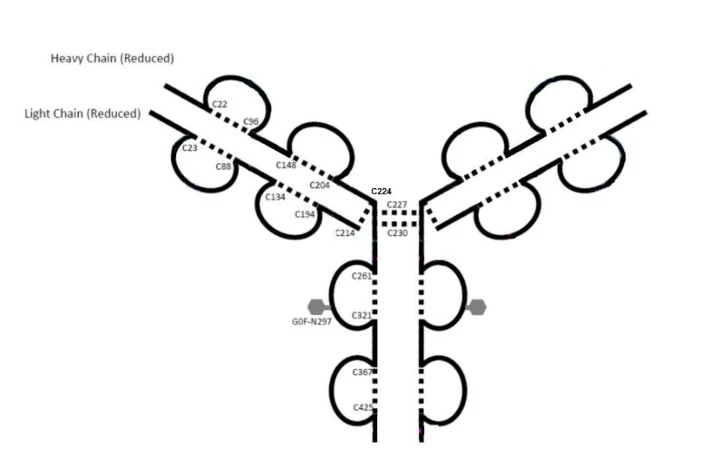
Nemolizumab is a humanized monoclonal antibody recognizing the interleukin (IL)-31 receptor alpha chain (IL-31RA) that blocks the binding of IL-31.
Nemolizumab has a human immunoglobulin G2 (IgG2) framework containing two heavy chains VH gamma (445 amino acid residues each) and two light chains VL kappa subgroup sequences (214 amino acid residues each).
Relevant physicochemical properties: Nemolizumab is soluble in aqueous solutions suitable for subcutaneous injection. Nemolizumab for injection is a white lyophilized powder and solvent solution. Nemolizumab for injection is stable at room temperature for up to 90 days when not reconstituted. Once reconstituted, it should be used within four hours.
Pharmaceutical standard: Nemolizumab is a biological active substance derived from biotechnology, therefore there is no pharmaceutical standard applicable. Additionally, no international standard is available for nemolizumab.
Product Characteristics:
Nemolizumab, an interleukin-31 receptor alpha (IL-31RA) antagonist, is a humanized monoclonal modified immunoglobulin G (IgG) antibody targeting IL-31RA.
Nemolizumab has a molecular weight of 144,153 kDa.
Nemolizumab is produced by recombinant DNA technology in Chinese Hamster Ovary cells. Nmepolizumab manufacturing process consists of two processes, “Cell Culture and Harvest” and “Purification”.
During nemolizumab drug substance manufacturing, no raw materials of animal or human origin were used.
14. Clinical Trials
14.1. Clinical Trials by Indication
14.1.1 Atopic Dermatitis
Trial Design and Study Demographics
The efficacy and safety of NEMLUVIO with concomitant topical background therapy was evaluated in two identical, randomized, double-blind, parallel-group, placebo-controlled, multicentre studies (ARCADIA 1 and ARCADIA 2) in subjects 12 years of age and older with moderate-to-severe atopic dermatitis (AD) that was not adequately controlled by topical treatments. Subjects enrolled in these studies had a disease severity defined by an Investigator’s Global Assessment (IGA) score of ≥3 in the overall assessment of AD lesions, an Eczema Area and Severity Index (EASI) score of ≥16, a minimum body surface area (BSA) involvement of ≥10%, and a weekly average peak pruritus numeric rating scale (PP NRS) score of ≥ 4.
In the initial treatment phase, a total of 1728 subjects were randomized 2:1 to receive subcutaneous injections of either NEMLUVIO 60 mg at Week 0, followed by 30 mg every 4 weeks (Q4W) until Week 12, or matched placebo. Subjects were stratified by baseline disease severity as measured by IGA (moderate = 3; severe = 4), and itch severity as measured by PP NRS (PP NRS <7; PP NRS ≥7). Concomitant low and/or medium potency topical corticosteroids (TCS) and/or topical calcineurin inhibitors (TCI) were administered to subjects for at least 14 days prior to baseline and continued during the trial. Based on disease activity, these concomitant therapies could be tapered and/or discontinued at the investigator’s discretion.
Baseline subject demographics and disease characteristics were relatively consistent between treatment groups. The majority of subjects were male (51%) and White (80%). The mean age was 34.1 years; 15% of subjects were 12 to 17 years of age and 5% were >65 years of age. The mean body weight was 75.04 kg and body mass index was 26.007 kg/m2. Overall, 70% of subjects had an IGA score of 3 (moderate AD) and 30% of subjects had an IGA score of 4 (severe AD), a mean EASI score of 27.51, and a mean weekly average PP-NRS score of 7.126. In total, 63% of subjects received other previous systemic treatments for AD.
Subjects achieving either IGA success (defined as an IGA score of 0 or 1 and a ≥2-point reduction from baseline) and/or EASI-75 (defined as at least a 75% improvement in EASI score from baseline) at Week 16 were classified as responders and continued into the maintenance treatment period for an additional 32 weeks (up to week 48) to evaluate the maintenance of response achieved at Week 16.
In the maintenance treatment period, a total of 506 subjects who were NEMLUVIO responders were re-randomized 1:1:1 to either NEMLUVIO 30 mg every 4 weeks, NEMLUVIO 30 mg every 8 weeks, or placebo every 4 weeks (all groups continued to receive background TCS/TCI). Subjects randomized to placebo in the initial treatment period who were responders at Week 16 continued to receive placebo every 4 weeks (these results are not discussed).
Table 7 - Summary of Subject Demographics for Clinical Trials in Adults and Adolescents with Moderate-to-Severe Atopic Dermatitis
| Study # | Study design | Dosage, route of administration and duration | Study subjects (n) | Mean age (Min, Max) | Sex n (%) |
| ARCADIA 1 | Phase 3 randomized, double-blind, parallel-group, placebo-controlled, multicentre study | Initial Period: [Weeks 0 to 16]
Final dose at Week 12 Maintenance Period (responders): [Weeks 16 to 48]
Final dose at Week 44 | 941 | 33.4 years (12, 82) | Female 441 (46.9%) Male 500 (53.1%) |
| ARCADIA 2 | Phase 3 randomized, double-blind, parallel-group, placebo-controlled, multicentre study | Initial Period: [Weeks 0 to 16]
Final dose at Week 12 Maintenance Period (responders): [Weeks 16 to 48]
Final dose at Week 44 | 787 | 35.0 years (12, 85) | Female 406 (51.6%) Male 381 (48.4%) |
The co-primary endpoints in both ARCADIA 1 and ARCADIA 2 were: 1) the proportion of subjects with an IGA success (defined as an IGA of 0 [clear] or 1 [almost clear] and a ≥2-point reduction from baseline) at Week 16; and 2) the proportion of subjects with EASI-75 (≥75% improvement in EASI from baseline) at Week 16. Key secondary endpoints included PP NRS improvement ≥4 from baseline at Weeks 16, PP NRS <2 at Week 16, and Sleep Disturbance Numeric Rating Scale (SD NRS) improvement ≥4 from baseline at Week 16.
The IGA is a single-item 5-point scale used by the Investigator to evaluate the global severity of AD based on a review of the subject’s skin and assigned a score of 0 (clear), 1 (almost clear), 2 (mild), 3 (moderate), or 4 (severe) based on the presence of erythema, induration/papulation, and associated oozing/crusting. The EASI is a composite score ranging from 0 to 72 used by the Investigator to assess the severity of erythema (E), induration/papulation (I), excoriation (Ex), and lichenification (L) on a scale of 0 (absent) to 3 (severe) for each of the 4 body areas: head/neck, trunk, upper limbs, and lower limbs. The extent of AD involvement in each of the 4 body areas was assessed as a percentage, and the total body area percentage was categorically calculated. The PP NRS was a single-item outcome scale used by subjects to report the intensity of their pruritus during the last 24 hours on an 11-point scale from 0 (no itch) to 10 (worst itch imaginable). The SD NRS was a single-item outcome scale used by subjects to report the degree of sleep loss related to symptoms of AD on an 11-point scale form 0 (no sleep loss) to 10 (I did not sleep at all). The PP NRS and SD NRS outcomes are reported as a weekly average of at least 4 days of data up to the target study day (excluding) and set to missing, if less than 4 days of data were available.
Study Results
The key efficacy results from ARCADIA 1 and ARCADIA 2 evaluating the initial treatment period with NEMLUVIO at Week 16 in subjects with moderate-to-severe AD are presented in Table 8 and Figure 1, Figure 2 and Figure 3
Table 8 – Results of Key Efficacy Endpoints at Week 16 in Subjects with Moderate-to-Severe AD from ARCADIA 1 and ARCADIA 2 (Initial Treatment Period)
| ARCADIA 1 | ARCADIA 2 | |||||||||||
|---|---|---|---|---|---|---|---|---|---|---|---|---|
NEMLUVIO + TCS/TCI (N=620) | Placebo + TCS/TCI (N=321) | Difference‡ from placebo (97.5% CI) | NEMLUVIO+ TCS/TCI (N=522) | Placebo + TCS/TCI (N=265) | Difference‡ from placebo (97.5% CI) | |||||||
| Co-primary Efficacy Endpoints | ||||||||||||
| Proportion of subjects† with IGA success [0 or 1] at Week 16 | 35.6% | 24.6% | 11.5% (4.7, 18.3)* | 37.7% | 26.0% | 12.2% (4.6, 19.8)* | ||||||
| Proportion of subjects† with EASI-75 at Week 16 | 43.5% | 29.0% | 14.9% (7.8, 22.0)* | 42.1% | 30.2% | 12.5% (4.6, 20.3)* | ||||||
| Key Secondary Efficacy Endpoints | ||||||||||||
| Proportion of subjects† with an improvement (reduction) of ≥4 points from baseline in PP NRS at Week 16 | 42.7% | 17.8% | 24.9% (18.4, 31.5)* | 41.0% | 18.1% | 23.2% (16.1, 30.3)* | ||||||
| Proportion of subjects† with a PP NRS <2 at Week 16 | 30.6% | 11.2% | 19.5% (13.7, 25.2)* | 28.4% | 11.3% | 17.1% (10.9, 23.3)* | ||||||
| Proportion of subjects† with an improvement (reduction) of ≥4 points from baseline in SD NRS at Week 16 | 37.9% | 19.9% | 17.9% (11.3, 24.5)* | 33.5% | 16.2% | 17.5% (10.8, 24.3)* | ||||||
IGA success=Investigator’s Global Assessment score of 0 or 1 and ≥2-point improvement from baseline; EASI-75= 75% or greater improvement from baseline in the Eczema Area and Severity Index; N=number of subjects randomized to treatment group; PP NRS=Peak Pruritus Numeric Rating Scale; SD NRS=Sleep Disturbance Numeric Rating Scale; TCS=topical corticosteroids; TCI=topical calcineurin inhibitors.
† Subjects who received rescue treatment or who had missing data were considered as non-responders.
‡ Strata-adjusted proportion differences were obtained using a weighted average of stratum-specific proportion using the Cochran-Mantel-Haenszel test. Confidence intervals (CIs) were calculated using the Wald asymptotic method.
* Statistically significant versus placebo based on the pre-defined testing hierarchy at the overall 2-sided 0.05 significance level. Strata-adjusted p-value is based on the Cochran-Mantel-Haenszel test stratified by PP NRS at baseline (<7 or ≥7) and IGA severity at baseline (3 or 4).
A statistically significantly greater proportion of subjects receiving NEMLUVIO compared to placebo achieved an improvement of ≥4 from baseline in PP NRS at Week 1 and at each visit through Week 16.
Figure 1 – The proportion of subjects with IGA success from baseline to Week 16 in ARCADIA 1 and ARCADIA 2
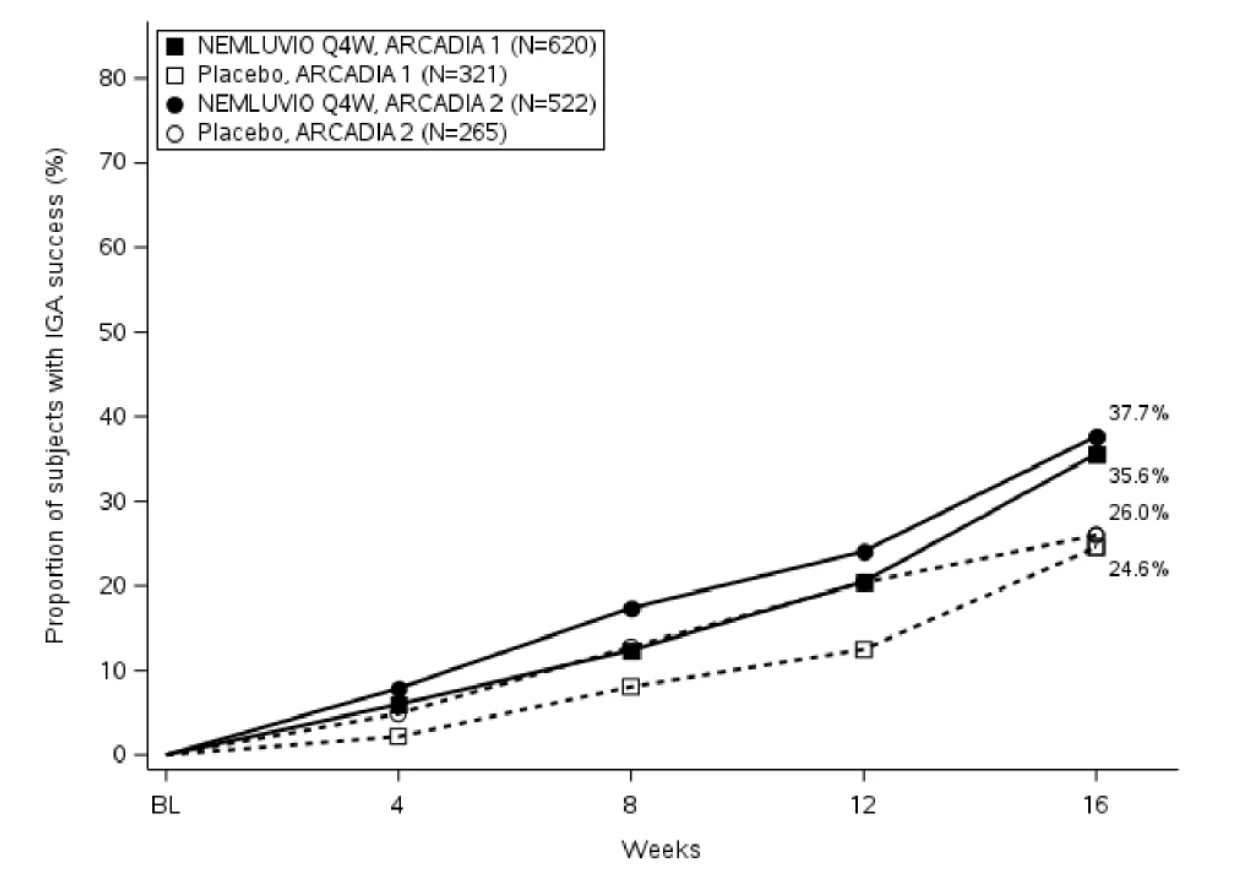
Subjects who received rescue treatment or who had missing data were considered as non-responders.
Figure 2– The proportion of subjects with EASI-75 from baseline to Week 16 in ARCADIA 1 and ARCADIA 2
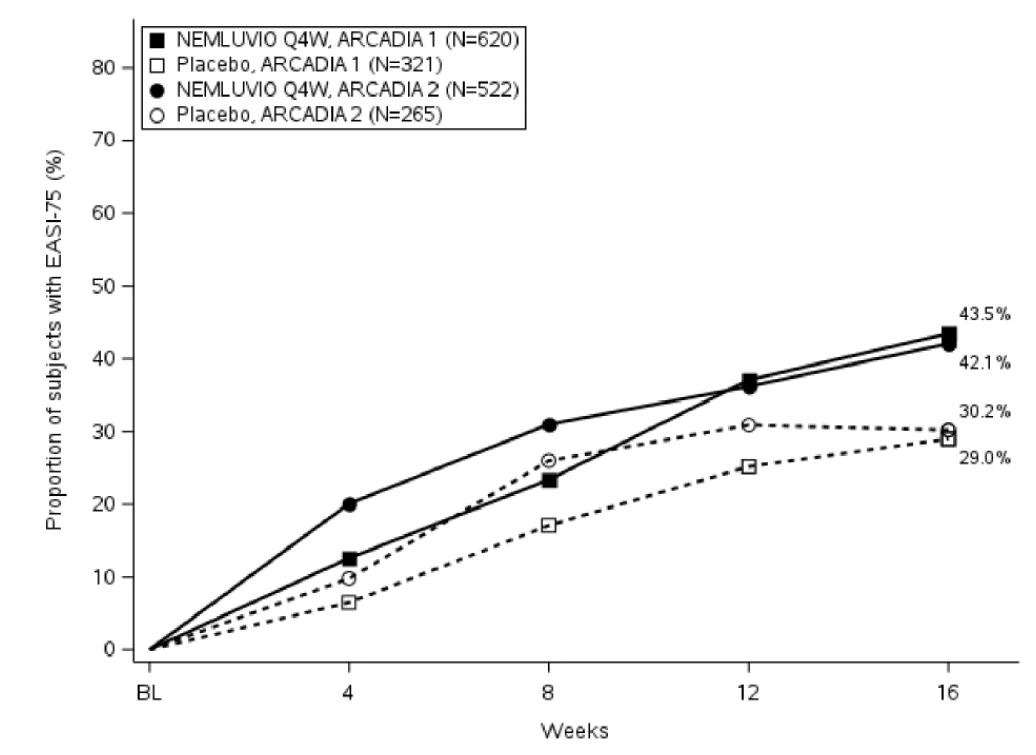
Subjects who received rescue treatment or who had missing data were considered as non-responders.
Figure 3– The proportion of subjects with PP NRS improvements of ≥4 from baseline to Week 16 in ARCADIA 1 and ARCADIA 2
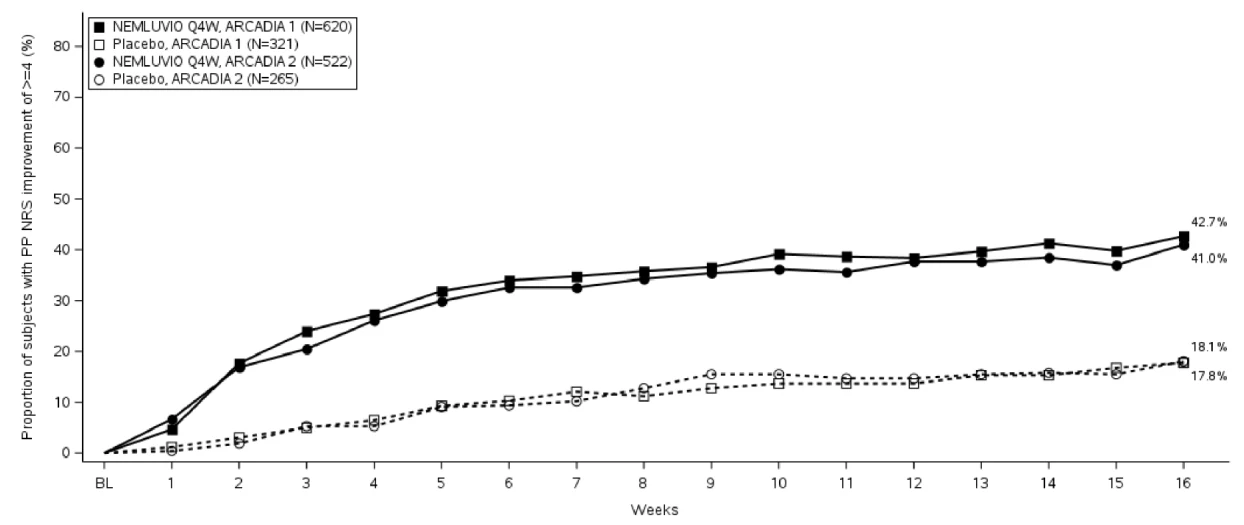
Subjects who received rescue treatment or who had missing data were considered as non-responders.
Efficacy results in adolescents were generally consistent with those observed in adults.
The efficacy results for ARCADIA 1 and ARCADIA 2 evaluating the maintenance treatment period with NEMLUVIO at Week 48 are presented in Table 9.
Table 9 – Results of Efficacy Endpoints at Week 48 in Subjects with Moderate-to-Severe AD from ARCADIA 1 and ARCADIA 2 (Maintenance Treatment Period)
| ARCADIA 1 | ARCADIA 2 | |||||||||||||||||
|---|---|---|---|---|---|---|---|---|---|---|---|---|---|---|---|---|---|---|
NEMLUVIO (Q4W) + TCS/TCI (N=90) | NEMLUVIO (Q8W) + TCS/TCI (N=91) | Placebo + TCS/TCI (N=91) | NEMLUVIO (Q4W) + TCS/TCI (N=79) | NEMLUVIO (Q8W) + TCS/TCI (N=78) | Placebo + TCS/TCI (N=78) | |||||||||||||
| Number of subjects who achieved IGA success [0 or 1] at Week 16 | 77 | 73 | 68 | 65 | 69 | 63 | ||||||||||||
| Proportion of subjects† with IGA success [0 or 1] at Week 48 among subjects with IGA success at Week 16 | 61.0% | 58.9% | 50.0% | 66.2% | 69.6% | 60.3% | ||||||||||||
| Number of subjects who achieved EASI-75 at Week 16 | 89 | 88 | 88 | 74 | 75 | 69 | ||||||||||||
| Proportion of subjects† with EASI-75 at Week 48 among subjects with EASI-75 at Week 16 | 74.2% | 75.0% | 61.4% | 77.0% | 78.7% | 69.5% | ||||||||||||
IGA success=Investigator’s Global Assessment score of 0 or 1 and ≥2-point improvement from initial baseline; EASI-75=75% or greater improvement from initial baseline in the Eczema Area and Severity Index; Q4W=Every 4 weeks; Q8W=Every 8 weeks; N = number of subjects randomized to the treatment group among nemolizumab-treated clinical responders at Week 16, where clinical responder is defined as achieving IGA success [0 or 1] or EASI-75 at Week 16.
† Subjects who received rescue treatment or who had missing data were considered as non-responders.
14.1.2 Prurigo Nodularis
Trial Design and Study Demographics
The efficacy and safety of NEMLUVIO as monotherapy was evaluated in two randomized, double-blind, multicentre, placebo-controlled studies (OLYMPIA 1 and OLYMPIA 2) in subjects 18 years of age and older with prurigo nodularis (PN). Subjects enrolled in these studies had a disease severity defined by an Investigator’s Global Assessment (IGA) score ≥ 3 in overall assessment of the categorical number of palpable pruriginous nodules, a weekly average of the peak pruritus numeric rating scale (PP NRS) score of ≥7, and ≥20 nodular lesions with bilateral distribution.
A total of 560 subjects were randomized (2:1) to receive initial subcutaneous injections of either NEMLUVIO or matched placebo. Subjects weighing <90 kg received NEMLUVIO 60 mg at Week 0, followed by 30 mg every 4 weeks (Q4W) until Week 12 (OLYMPIA 2) or Week 20 (OLYMPIA 1), while subjects weighing ≥90 kg received NEMLUVIO 60 mg at Week 0, followed by 60 mg Q4W until Week 12 (OLYMPIA 2) or Week 20 (OLYMPIA 1). Subjects were stratified by study site and baseline body weight (<90 kg and ≥90 kg). Concomitant use of topical corticosteroids (TCS) and/or topical calcineurin inhibitors (TCI) was prohibited.
Baseline subject demographics and disease characteristics were relatively consistent between treatment groups. The majority of subjects were female (60%) and White (81%). The mean age was 55.2 years; 25% of subjects were >65 years of age. A history of atopy was reported by 32% of subjects. The mean body weight was 82.6 kg and body mass index was 28.9 kg/m2. Overall, 58% of subjects had an IGA score of 3 (moderate PN) and 42% of subjects had an IGA score of 4 (severe PN), and a mean weekly average PP NRS score of 8.5.
Table 10 - Summary of Subject Demographics for Clinical Trials in Adults with Prurigo Nodularis
| Study # | Study design | Dosage, route of administration and duration | Study subjects (n) | Mean age (Min, Max) | Sex n (%) |
| OLYMPIA 1 | Phase 3 randomized, double-blind, parallel-group, placebo-controlled. multicentre study | Subjects < 90kg
Subjects ≥ 90kg
Final dose at Week 20 | 286 | 57.5 years (49, 67) | Female 166 (58.0%) Male 120 (42.0%) |
| OLYMPIA 2 | Phase 3 randomized, double-blind, parallel-group, placebo-controlled, multicentre study | Subjects < 90kg
Subjects ≥ 90kg
| 274 | 52.7 years (42, 64) | Female 168 (61.3%) Male 106 (38.7%) |
The primary efficacy endpoints in both OLYMPIA 1 and OLYMPIA 2 were: 1) the proportion of subjects with an improvement of ≥4 from baseline in Peak Pruritus Numeric Rating Scale (PP NRS) at Week 16; and 2) the proportion of subjects with an IGA success (defined as an IGA of 0 [clear] or 1 [almost clear], and a ≥2-point improvement from baseline) at Week 16. Key secondary endpoints included PP NRS improvement ≥4 from baseline at Week 4, PP NRS <2 at Week 16, and SD NRS improvement ≥4 from baseline at Week 16.
The IGA is a single-item 5-point scale used by the Investigator to evaluate the global severity of PN based on a review of the amount of palpable pruriginous nodules (nodules) and assigned a score of 0 (clear – no nodules), 1 (almost clear – rare nodules), 2 (mild – few nodules), 3 (moderate – many nodules), or 4 (severe – abundant nodules). The PP NRS was a single-item outcome scale used by subjects to report the intensity of their pruritus during the last 24 hours on an 11-point scale from 0 (no itch) to 10 (worst itch imaginable). The SD NRS was a single-item outcome scale used by subjects to report the degree of sleep loss related to symptoms of PN on an 11-point scale form 0 (no sleep loss) to 10 (I did not sleep at all). The PP NRS and SD NRS outcomes are reported as a weekly average of at least 4 consecutive days of data up to the target study day (excluding) and set to missing, if less than 4 days of data were available.
Study Results:
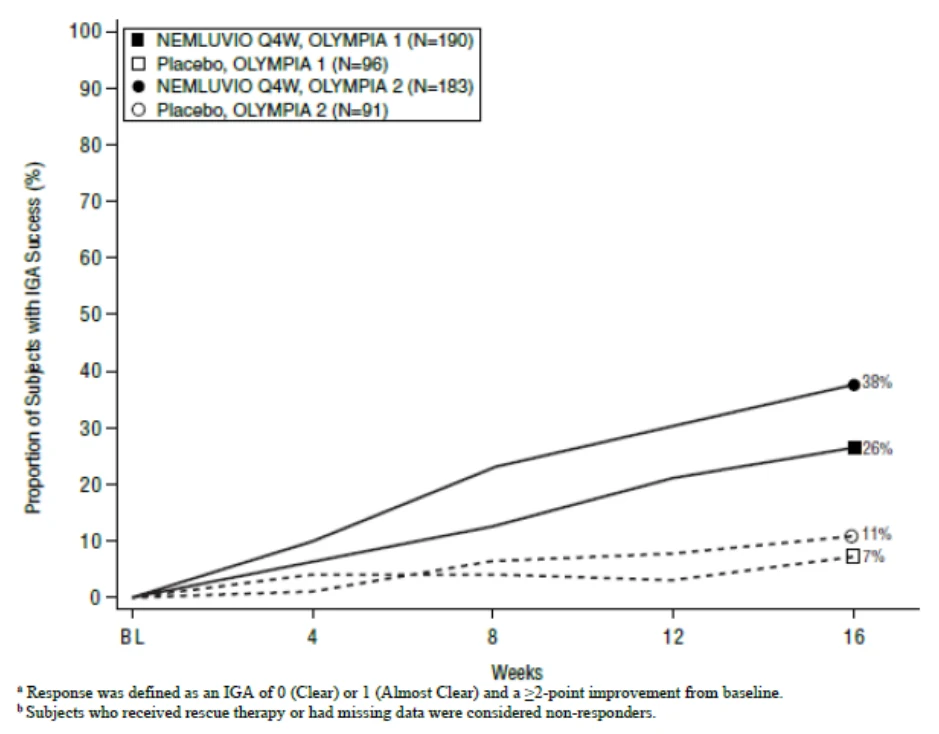
The key efficacy results from OLYMPIA 1 and OLYMPIA 2 evaluating NEMLUVIO at Week 16 in subjects with PN are presented in Table 11 and Figure 4 and Figure 5.
Table 11 – Results of Key Efficacy Endpoints at Week 16 in Subjects with Prurigo Nodularis from OLYMPIA 1 and OLYMPIA 2
| OLYMPIA 1 | OLYMPIA 2 | |||||||||||
|---|---|---|---|---|---|---|---|---|---|---|---|---|
NEMLUVIO (N=190) | Placebo (N=96) | Difference‡ from placebo | NEMLUVIO (N=183) | Placebo (N=91) | Difference‡ from placebo | |||||||
| (95% CI) | (95% CI) | |||||||||||
| Primary Efficacy Endpoints | ||||||||||||
| Proportion of subjects† with an improvement (reduction) of ≥4 points from baseline in PP NRS | 58.4% | 16.7% | 40.1% (29.4, 50.8)* | 56.3% | 20.9% | 37.4% (26.3, 48.5)* | ||||||
| Proportion of subjects† with IGA success [0 or 1] | 26.3% | 7.3% | 14.6% (6.7, 22.6)* | 37.7% | 11.0% | 28.5% (18.8, 38.2)* | ||||||
| Key Secondary Efficacy Endpoints | ||||||||||||
| Proportion of subjects† with a PP NRS <2 | 34.2% | 4.2% | 30.5% (22.3, 38.7)* | 35.0% | 7.7% | 30.0% (21.3, 38.6)* | ||||||
| Proportion of subjects† with an improvement (reduction) of ≥4 points from baseline in SD NRS | 50.0% | 11.5% | 38.0% (27.8, 48.2)* | 51.9% | 20.9% | 31.9% (20.7, 43.2)* | ||||||
IGA success=Investigator’s Global Assessment score of 0 or 1 and a ≥2-point improvement from baseline; N=number of subjects randomized to treatment group; PP NRS=Peak Pruritus Numeric Rating Scale; SD NRS=Sleep Disturbance Numeric Rating Scale.
† Subjects who received rescue treatment or who had missing data were considered as non-responders.
‡ Strata-adjusted proportion differences were obtained using a weighted average of stratum-specific proportion using the Cochran-Mantel-Haenszel test. Confidence intervals (CIs) were based on the Wald statistic controlling for stratification variables.
* Statistically significant versus placebo based on the pre-defined testing hierarchy at the overall 2-sided 0.05 significance level. Strata-adjusted p-value is based on the Cochran-Mantel-Haenszel test stratified by analysis centre and body weight at randomization (<90 kg, ≥90 kg).
In OLYMPIA 1 and OLYMPIA 2, the proportion of subjects with both an improvement (reduction) of ≥4 points from baseline in PP NRS and an IGA success [0 or 1] at Week 16 was greater in subjects receiving NEMLUVIO (22.6% and 29.5%, respectively) compared with placebo (2.1% and 5.5% respectively). The strata-adjusted treatment difference favoured NEMLUVIO in both OLYMPIA 1 (Difference: 16.0% [95% CI; 9.5, 22.5]) and OLYMPIA 2 (Difference: 26.1% [95% CI; 17.4, 34.8]).
In OLYMPIA 1 and OLYMPIA 2, the proportion of subjects with an improvement (reduction) of ≥4 points from baseline in PP NRS at Week 4 was greater in subjects receiving NEMLUVIO (41.1% and 41.0%, respectively) compared with placebo (6.3% and 7.7%, respectively). The strata-adjusted treatment difference statistically favoured NEMLUVIO in both OLYMPIA 1 (Difference: 31.7% [95% CI; 23.0, 40.4]) and OLYMPIA 2 (Difference: 33.4% [95% CI; 24.3, 42.4]) (see Figure 4). Additionally, statistically significantly greater proportions of subjects receiving NEMLUVIO compared to placebo achieved a PP NRS <2 at Week 4, and an improvement of ≥4 from baseline in SD NRS at Week 4.
Figure 4– The proportion of subjects with PP NRS improvement ≥ 4 from baseline to Week 16 in OLYMPIA 1 and OLYMPIA 2
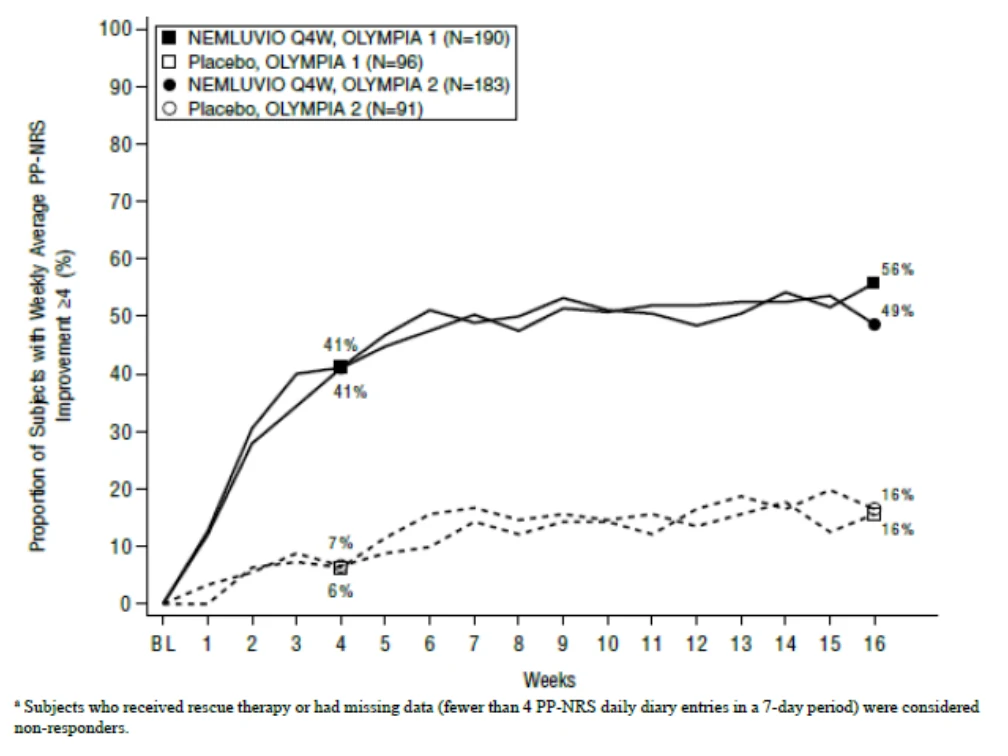
Figure 5– The proportion of subjects with IGA success [0 or 1] from baseline to Week 16 in OLYMPIA 1 and OLYMPIA 2
16. Non-Clinical Toxicology
General toxicology: A 13-week and a 26-week repeat-dose study were conducted in sexually mature cynomolgus monkeys to evaluate the safety of subcutaneous administration of nemolizumab. In these studies, animals received either control item or nemolizumab at 1, 5, or 25 mg/kg every two weeks for 13 and 26 weeks (7 and 14 doses, respectively). In the 26-week study, exposures at doses of 1, 5, and 25 mg/kg were 3-, 14-, and 55-fold the exposure at the maximum recommended human dose (154 mcg•day/mL in adult PN patients), respectively for the male monkeys and 2-, 12-, and 47-fold the exposure for the females.
Both studies included comprehensive evaluations: clinical signs, neurobehavioral and cardiovascular assessments, reproductive parameters (menstruation and sperm analysis), clinical pathology, toxicokinetic, anti-drug antibody analysis, immunotoxicity (including a T-cell dependent antibody response [TDAR] assay), and full histopathology. No systemic or organ-specific toxicity was observed in either study. Injection site reactions (mononuclear cell infiltration) were minimal.
Based on the absence of adverse findings in both studies, the No Observed Adverse Effect Level (NOAEL) was established at 25 mg/kg administered once every two weeks.
Genotoxicity: No studies have been performed to evaluate the genotoxic potential of nemolizumab.
Carcinogenicity: No long-term animal studies have been performed to evaluate the carcinogenic potential of nemolizumab.
Reproductive and developmental toxicology: No effects on fertility-related parameters (menstrual cycle length in females and sperm count, motility, and morphology and testicular volume in males) and no histopathological findings in male and female reproductive organs were observed in sexually mature cynomolgus monkeys in the 26-week repeat-dose toxicity study summarized above (see General Toxicology). However, no dedicated fertility/mating study has been conducted with nemolizumab.
Effects on pre- and post-natal development were assessed in an enhanced pre- and post-development (ePPND) study conducted in cynomolgus monkeys. In this study, nemolizumab was administered subcutaneously at doses of 0 (vehicle control), 1, or 25 mg/kg once every two weeks to pregnant monkeys from the start of organogenesis (gestation day 20) until delivery (total of 9 to 12 doses). At these doses, exposures were 2- and 32-fold the exposures at the maximum recommended human dose (154 mcg•day/mL in adult PN patients), respectively. To evaluate effects on post-natal development of offspring, nemolizumab was also administered to the offspring at the same dose levels once every two weeks for 26 weeks, starting from postnatal day 35 (PND 35) to PND 217 (total of 14 doses). At these doses, exposures were 5- and 122-fold the exposure at the maximum recommended human pediatric dose (137 mcg•day/mL in pediatric AD patients), respectively. Maternal animals were allowed to deliver naturally and nursed their offspring until PND 220, when the offspring were necropsied. No maternal toxicity or effects on gestation length or on the placenta were observed. Pregnancy outcomes were not affected and the incidence of fetal losses was comparable to the control group. However, an increase in early post-natal infant deaths was observed at the high-dose for which a drug-related effect could not be ruled out.
No other effects on development were observed in surviving infants in the ePPND study, including following direct dosing of offspring. This included no adverse effects on cardiovascular function and immune function (by TDAR). There were also no adverse effects observed upon skeletal and microscopic examinations.
Prior to the direct dosing of offspring, nemolizumab was detected in infant plasma on PND 7 to PND 35 and declined gradually with time, indicating transfer across the placental barrier followed by elimination. Nemolizumab concentrations in infant plasma during this time were either comparable to or higher than those in the respective maternal animal. Low levels of nemolizumab in milk were detected when compared to maternal plasma concentrations, indicating secretion into milk.
In conclusion, the NOAEL for maternal toxicity and juvenile toxicity following direct dosing was 25 mg/kg administered once every two weeks. However, the NOAEL for developmental toxicity following in utero exposure was determined to be the maternal dose of 1 mg/kg administered once every two weeks based on the increase in early post-natal infant deaths observed at the high-dose.
Juvenile toxicity: Juvenile toxicity was assessed as part of the ePPND study summarized above (see Reproductive and developmental toxicology).