


Product Monograph - Elidel
RECENT MAJOR LABEL CHANGES
INDICATIONS, Pediatrics (1.1) 09-2019
SERIOUS WARNING AND PRECAUTIONS BOX (3) [Removed] 09-2019
WARNINGS AND PRECAUTIONS, Carcinogenesis (6.0), Special Populations, Pediatrics (6.1.3) 09-2019
TABLE OF CONTENTS
RECENT MAJOR LABEL CHANGES ............................................................................ 2
TABLE OF CONTENTS .................................................................................................. 2
PART I: HEALTH PROFESSIONAL INFORMATION .................................................... 4
1 INDICATIONS ...................................................................................................... 4
1.1 Pediatrics ..................................................................................................... 4
1.2 Geriatrics ..................................................................................................... 4
2 CONTRAINDICATIONS ....................................................................................... 4
3 DOSAGE AND ADMINISTRATION ..................................................................... 4
3.1 Recommended Dose and Dosage Adjustment ............................................ 4
4 OVERDOSAGE .................................................................................................... 5
5 DOSAGE FORMS, STRENGTHS, COMPOSITION AND PACKAGING ............. 5
6 WARNINGS AND PRECAUTIONS ...................................................................... 5
6.1 Special Populations ..................................................................................... 7
6.1.1 Pregnant Women ..................................................................................... 7
6.1.2 Breast-feeding .......................................................................................... 7
6.1.3 Pediatrics (≥ 3 months of age) .................................................................. 7
6.1.4 Geriatrics (> 65 years of age) ................................................................... 7
7 ADVERSE REACTIONS ...................................................................................... 7
7.1 Adverse Reaction Overview ........................................................................ 7
7.2 Clinical Trial Adverse Reactions .................................................................. 8
7.3 Less Common Clinical Trial Adverse Reactions ........................................ 13
7.4 Clinical Trial Adverse Reactions (Pediatrics) ............................................. 13
7.5 Post-Market Adverse Reactions ................................................................ 14
8 DRUG INTERACTIONS ..................................................................................... 15
8.1 Overview .................................................................................................... 15
8.2 Drug-Food Interactions .............................................................................. 15
8.3 Drug-Herb Interactions .............................................................................. 15
8.4 Drug-Laboratory Test Interactions ............................................................. 15
9 ACTION AND CLINICAL PHARMACOLOGY ................................................... 15
9.1 Mechanism of Action ................................................................................. 15
9.2 Pharmacodynamics ................................................................................... 15
9.3 Pharmacokinetics ...................................................................................... 16
10 STORAGE, STABILITY AND DISPOSAL ......................................................... 17
11 SPECIAL HANDLING INSTRUCTIONS ............................................................ 17
12 PHARMACEUTICAL INFORMATION ............................................................... 18
13 CLINICAL TRIALS ............................................................................................. 19
14 DETAILED PHARMACOLOGY – CLINICAL STUDIES .................................... 21
15 MICROBIOLOGY ............................................................................................... 22
16 NON-CLINICAL TOXICOLOGY ......................................................................... 22
PATIENT MEDICATION INFORMATION ..................................................................... 25
PART I: HEALTH PROFESSIONAL INFORMATION
1 INDICATIONS
ELIDEL® (pimecrolimus) Cream 1% is indicated for:
- second-line therapy for short term and intermittent long-term therapy of mild to moderate atopic dermatitis in non-immunocompromised patients 3 months of age and older, in whom the use of alternative, conventional therapies is deemed inadvisable because of potential risks, or in the treatment of patients who are not adequately responsive to or intolerant of alternative, conventional therapies.
For additional safety information, please refer to WARNINGS AND PRECAUTIONS section.
1.1 Pediatrics
Pediatrics (≥ 3 months of age): Based on the data submitted and reviewed by Health Canada, the safety and efficacy of ELIDEL® cream in pediatric patients have been established; therefore, Health Canada has authorized an indication for pediatric use.
1.2 Geriatrics
Geriatrics (> 65 years of age): Clinical studies of ELIDEL® did not include sufficient numbers of subjects aged 65 and older to establish efficacy and safety of the drug in geriatric patients.
2 CONTRAINDICATIONS
ELIDEL® (pimecrolimus) Cream, 1% is contraindicated in individuals who have known or suspected hypersensitivity to pimecrolimus or any of the components of the cream. For a complete listing, see DOSAGE FORMS, STRENGTHS, COMPOSITION and PACKAGING.
3 DOSAGE AND ADMINISTRATION
3.1 Recommended Dose and Dosage Adjustment
Apply a thin layer of ELIDEL® (pimecrolimus) Cream, 1% to sufficiently cover the affected skin area twice daily. ELIDEL® may be used on all skin surfaces, including the head, neck, and intertriginous areas.
ELIDEL® Cream should be used for short or long intermittent periods of treatment. Therapy should be stopped upon clearance of the signs and symptoms of atopic dermatitis (e.g. pruritus, inflammation and erythema). Treatment should be discontinued if resolution of disease occurs. If no improvement occurs after 3 weeks of treatment, or in case of disease exacerbation, ELIDEL® therapy should be discontinued, and patients should consult their physicians.
The use of ELIDEL® under occlusion has not been studied, therefore occlusive dressings are not recommended.
4 OVERDOSAGE
There has been no experience of overdose with ELIDEL® (pimecrolimus) Cream, 1%. No incidents of accidental ingestion have been reported.
| For management of a suspected drug overdose, contact your regional poison control centre. |
5 DOSAGE FORMS, STRENGTHS, COMPOSITION AND PACKAGING
Table – Dosage Forms, Strengths, Composition and Packaging.
6 WARNINGS AND PRECAUTIONS
General
ELIDEL® (pimecrolimus) Cream, 1% should not be applied to areas of active cutaneous viral infections.
ELIDEL® has not been evaluated for its efficacy and safety in the treatment of clinically infected atopic dermatitis. Before commencing treatment with ELIDEL®, clinical infections at treatment sites should be cleared.
While patients with atopic dermatitis are predisposed to surface infections including eczema herpeticum (Kaposi's varicelliform eruption) treatment with ELIDEL® may be associated with an increased risk of varicella zoster virus infection (chickenpox or shingles), herpes simplex virus infection, or eczema herpeticum. In presence of these skin infections, ELIDEL® treatment at the site of infection should be discontinued until the viral infection is cleared.
Although patients treated with ELIDEL® experienced overall a lower incidence of bacterial skin infections as compared to patients treated with the vehicle, patients with severe atopic dermatitis may have an increased risk of skin bacterial infections (impetigo) during treatment with ELIDEL®.
Cases of lymphadenopathy (0.9%) were reported in patients treated with ELIDEL®. These cases of lymphadenopathy were usually related to infections and noted to resolve upon appropriate antibiotic therapy. However, in the absence of clear etiology for the lymphadenopathy, or in the presence of acute infectious mononucleosis, discontinuation of ELIDEL® should be considered. Patients who developed lymphadenopathy should be monitored to ensure that the lymphadenopathy resolves.
| Route of Administration | Dosage Form / Strength/Composition | Non-medicinal Ingredients |
| Topical | Cream / 1% / 5 g (sample), 30 g and 60 g tubes | Benzyl Alcohol, Cetyl Alcohol, Citric Acid, Mono- and Di-glycerides, Oleyl Alcohol, Propylene Glycol, Sodium Cetostearyl Sulphate, Sodium Hydroxide, Stearyl Alcohol, Triglycerides, and Water |
Information to be provided to the Patient/Guardian
Patients using ELIDEL® should receive the following information and instructions:
Patients should use ELIDEL® as directed by the physician. ELIDEL® is for external use only. Patients should wash their hands after application if hands are not an area for treatment. Care should be taken to avoid contact with nose, eyes and mouth. If accidentally applied to these areas, the cream should be thoroughly wiped off and rinsed off with water.
- Patients should minimize or avoid exposure to natural or artificial sunlight (tanning beds or UVA/B treatment) while using ELIDEL®.
- Patients should not use this medication for any disorder other than that for which it was prescribed.
- Patients should report any signs of adverse reactions to their physician.
- Before applying ELIDEL® after a bath or shower, be sure your skin is completely dry.
- Therapy should be discontinued after signs and symptoms of atopic dermatitis have resolved. If no improvement is seen following 3 weeks of treatment, or in case of disease exacerbation, ELIDEL® therapy should be discontinued, and patients should consult their physicians.
Carcinogenesis
Long-term effect on the local skin immune response and on the incidence of skin malignancies is unknown. ELIDEL® should not be applied to potentially malignant or pre-malignant skin lesions.
Pimecrolimus is a calcineurin inhibitor. In transplant patients, prolonged systemic exposure to intense immunosuppression following systemic administration of calcineurin inhibitors has been associated with an increased risk of developing lymphomas and skin malignancies. Cases of malignancies, including cutaneous and other types of lymphoma and skin cancers have been reported inpatients using pimecrolimus cream (see ADVERSE REACTIONS, Post-market Adverse Reactions). However, patients with atopic dermatitis treated with ELIDEL® have not been found to have significant systemic pimecrolimus levels.
In clinical studies, cases of skin papilloma or warts (1%) were observed in pediatric patients treated with ELIDEL®. In cases where patients have worsening of skin papillomas or do not respond to conventional therapy, discontinuation of ELIDEL® should be considered until complete resolution of the warts is achieved.
Animal photocarcinogenicity study: Despite the absence of observed phototoxicity in humans, ELIDEL® cream and its vehicle shortened the time to skin papilloma formation. It is prudent for patients to minimize or avoid exposure to natural or artificial sunlight (see NON-CLINICAL TOXICOLOGY, Carcinogenesis, Mutagenesis, Impairment of Fertility). The enhancement of ultraviolet carcinogenicity is not necessarily dependent on phototoxic mechanisms.
Animal studies of monkey and mice using pimecrolimus administered at high and sustained doses were associated with lymphoma formation. Chronic topical dosing of ELIDEL® Cream 1% or vehicle alone in hairless mice with concurrent exposure to UV radiation decreased the median time to onset of skin tumor formation (see NON-CLINICAL TOXICOLOGY, Carcinogesis, Mutagenesis, Impairment of Fertility).
Immune
There are no data to support use of ELIDEL® in immunocompromised patients.
Ophthalmologic
ELIDEL® is not for ophthalmic use.
Skin
ELIDEL® cream should not be used in patients with Netherton's syndrome due to the potential for increased systemic absorption of pimecrolimus.
The use of ELIDEL® may cause local symptoms such as skin burning, which are mostly mild and transient. If the application site reaction is severe, the risk benefit of treatment with ELIDEL® should be considered.
6.1 Special Populations
6.1.1 Pregnant Women
There are no adequate and well-controlled studies in pregnant women. Studies in rats and rabbits, by dermal and oral administration gave no evidence of a teratogenic potential of pimecrolimus. Because animal reproduction studies are not always predictive of human response, this drug should be used only if clearly needed during pregnancy.
6.1.2 Breast-feeding
It is not known whether this drug is excreted in human milk. Because of the potential for serious adverse reactions in nursing infants from pimecrolimus, a decision should be made whether to discontinue nursing or to discontinue the drug, taking into account the importance of the drug to the mother.
6.1.3 Pediatrics (≥ 3 months of age)
ELIDEL® may be used in pediatric patients 3 months of age and older. ELIDEL® is not recommended for use in pediatric patients below the age of 3 months. Studies have been conducted in pediatric patients aged 3 months and older. Certain adverse event incidences, including pyrexia, URI, cough, rhinitis, viral rash, and wheezing, were found to be higher in patients treated with ELIDEL® in comparison with patients treated with vehicle.
The effects of ELIDEL® on the developing immune system in infants are unknown.
6.1.4 Geriatrics (> 65 years of age)
Clinical studies of ELIDEL® did not include sufficient numbers of subjects aged 65 and older to establish efficacy and safety of the drug in geriatric patients.
7 ADVERSE REACTIONS
7.1 Adverse Reaction Overview
In human dermal safety studies, ELIDEL® (pimecrolimus) Cream, 1% did not induce contact sensitization, phototoxicity, or photoallergy, nor did it show any cumulative irritation. ELIDEL® did not elicit skin atrophy compared to topical corticosteroid use.
In a one-year safety study in pediatric patients age 2-17 years old involving sequential use of ELIDEL® Cream and a topical corticosteroid, 43% of ELIDEL® patients and 68% of vehicle patients used corticosteroids during the study. Corticosteroids were used for more than 7 days by 34% of ELIDEL® patients and 54% of vehicle patients. An increased incidence of impetigo, skin infection, superinfection (infected atopic dermatitis), rhinitis, and urticaria were found in the patients that had used ELIDEL® Cream and topical corticosteroid sequentially as compared to ELIDEL® Cream alone.
In 3 randomized, double-blind, vehicle-controlled pediatric studies and one active controlled adult study, 843 and 328 patients respectively, were treated with ELIDEL® Cream 1%. In these clinical trials, 48 (4%) of the 1171 ELIDEL® patients and 13 (3%) of 408 vehicle-treated patients discontinued therapy due to adverse events. Discontinuations for AEs were primarily due to application site reactions, and cutaneous infections. The most common application site reaction was application site burning, which occurred in 8-26% of patients treated with ELIDEL® Cream.
In a five-year multicenter, open-label, parallel group, randomized study in pediatric patients age 3 months to less than 12 months, 1205 patients were randomized to ELIDEL® cream and 1213 patients were randomized to topical corticosteroids (TCS). The median age of the safety set at baseline was 6.8 months (range, 2.8-12.8 months) and almost all patients (2403 patients, 99.4%) were under 12 months old. The majority of patients were male (1486 male patients, (61.5%), 932 female patients (38.5%)) and Caucasian (1449 patients, 59.9%).
The study drug related AEs occurring at the 3 highest frequencies in the ELIDEL® cream group were lymphadenopathy (1.6%), application site erythema, (1.4%), and application site infection and eczema infected (1.2% each). The study drug related AEs occurring at the 3 highest frequencies in the TCS group were arthropod bite (1.6%), application site infection (1.2%), and pityriasis alba (0.9%). For serious AEs, infections and infestations was the most frequently reported system organ class (SOC), and the incidence of events in this SOC was similar between treatment groups (ELIDEL® cream group: 13.0%; TCS group: 12.4%) during the treatment period. During the treatment period, the incidence of AEs leading to discontinuation were similar for the ELIDEL® cream and TCS groups (0.6% vs 1.1%, respectively).
7.2 Clinical Trial Adverse Reactions
Because clinical trials are conducted under very specific conditions, the adverse reaction rates observed in the clinical trials may not reflect the rates observed in practice and should not be compared to the rates in the clinical trials of another drug. Adverse reaction information from clinical trials is useful for identifying drug-related adverse events and for approximating rates.
The table below depicts the incidence of adverse events pooled across the 2 identically designed 6-week studies with their open label extensions and the 1-year safety study for pediatric patients ages 2-17. Data from the adult active control study is also included in this table. Adverse events are listed regardless of relationship to study drug.
Treatment Emergent Adverse Events (1%) in ELIDEL® Treatment Groups
Pediatric Patients* Vehicle-Controlled (6 weeks) | Pediatric Patients Open Label (20 weeks) | Pediatric Patients* Vehicle-Controlled (1 year) | Adult Active Comparator (1 year) | ||||||||||||||
|---|---|---|---|---|---|---|---|---|---|---|---|---|---|---|---|---|---|
ELIDEL® Cream (N=267) N (%) | Vehicle (N=136) N (%) | ELIDEL® Cream (N=335) N (%) | ELIDEL® Cream (N=272) N (%) | Vehicle (N=75) N (%) | ELIDEL® Cream (N=328) N (%) | ||||||||||||
| At least 1 AE | 182 (68.2%) | 97 (71.3%) | 240 (72.0%) | 230 (84.6%) | 56 (74.7%) | 256 (78.0%) | |||||||||||
| Infections and Infestations | |||||||||||||||||
Upper Respiratory Tract Infection NOS | 38 (14.2%) | 18 (13.2%) | 65 (19.4%) | 13 (4.8%) | 6 (8.0%) | 14 (4.3%) | |||||||||||
| Nasopharyngitis | 27 (10.1%) | 10 (7.4%) | 32 (19.6%) | 72 (26.5%) | 16 (21.3%) | 25 (7.6%) | |||||||||||
| Skin Infection NOS | 8 (3.0%) | 9 (5.1%) | 18 (5.4%) | 6 (2.2%) | 3 (4.0%) | 21 (6.4%) | |||||||||||
| Influenza | 8 (3.0%) | 1 (0.7%) | 22 (6.6%) | 36 (13.2%) | 3 (4.0%) | 32 (9.8%) | |||||||||||
| Ear Infection NOS | 6 (2.2%) | 2 (1.5%) | 19 (5.7%) | 9 (3.3%) | 1 (1.3%) | 2 (0.6%) | |||||||||||
| Otitis Media | 6 (2.2%) | 1 (0.7%) | 10 (3.0%) | 8 (2.9%) | 4 (5.3%) | 2 (0.6%) | |||||||||||
| Impetigo | 5 (1.9%) | 3 (2.2%) | 12 (3.6%) | 11 (4.0%) | 4 (5.3%) | 8 (2.4%) | |||||||||||
| Bacterial Infection | 4 (1.5%) | 3 (2.2%) | 4 (1.2%) | 3 (1.1%) | 0 | 6 (1.8%) | |||||||||||
| Folliculitis | 3 (1.1%) | 1 (0.7%) | 3 (0.9%) | 6 (2.2%) | 3 (4.0%) | 20 (6.1%) | |||||||||||
| Sinusitis | 3 (1.1%) | 1 (0.7%) | 11 (3.3%) | 6 (2.2%) | 1 (1.3%) | 2 (0.6%) | |||||||||||
| Pneumonia NOS | 3 (1.1%) | 1 (0.7%) | 5 (1.5%) | 0 | 1 (1.3%) | 1 (0.3%) | |||||||||||
| Pharyngitis NOS | 2 (0.7%) | 2 (1.5%) | 3 (0.9%) | 22 (8.1%) | 2 (2.7%) | 3 (0.9%) | |||||||||||
| Pharyngitis Streptococcal | 2 (0.7%) | 2 (1.5%) | 10 (3.0%) | 0 | <1% | 0 | |||||||||||
| Molluscum Contagiosum | 2 (0.7%) | 0 | 4 (1.2%) | 5 (1.8%) | 0 | 0 | |||||||||||
| Staphylococcal Infection | 1 (0.4%) | 5 (3.7%) | 7 (2.1%) | 0 | <1% | 3 (0.9%) | |||||||||||
| Bronchitis NOS | 1 (0.4%) | 3 (2.2%) | 4 (1.2%) | 29 (10.7%) | 6 (8.0%) | 8 (2.4%) | |||||||||||
| Herpes Simplex | 1 (0.4%) | 0 | 4 (1.2%) | 9 (3.3%) | 2 (2.7%) | 13 (4.0%) | |||||||||||
| Tonsillitis NOS | 1 (0.4%) | 0 | 3 (0.9%) | 17 (6.3%) | 0 | 2 (0.6%) | |||||||||||
| Viral Infection NOS | 2 (0.7%) | 1 (0.7%) | 1 (0.3%) | 18 (6.6%) | 1 (1.3%) | 0 | |||||||||||
Pediatric Patients* Vehicle-Controlled (6 weeks) | Pediatric Patients Open Label (20 weeks) | Pediatric Patients* Vehicle-Controlled (1 year) | Adult Active Comparator (1 year) |
|---|
ELIDEL® Cream (N=267) N (%) | Vehicle (N=136) N (%) | ELIDEL® Cream (N=335) N (%) | ELIDEL® Cream (N=272) N (%) | Vehicle (N=75) N (%) | ELIDEL® Cream (N=328) N (%) | |||||||||||||
|---|---|---|---|---|---|---|---|---|---|---|---|---|---|---|---|---|---|---|
| Gastroenteritis NOS | 0 | 3 (2.2%) | 2 (0.6%) | 20 (7.4%) | 2 (2.7%) | 6 (1.8%) | ||||||||||||
| Chickenpox | 2 (0.7%) | 0 | 3 (0.9%) | 8 (2.9%) | 3 (4.0%) | 1 (0.3%) | ||||||||||||
| Skin Papilloma | 1 (0.4%) | 0 | 2 (0.6%) | 9 (3.3%) | <1% | 0 | ||||||||||||
| Tonsillitis Acute NOS | 0 | 0 | 0 | 7 (2.6%) | 0 | 0 | ||||||||||||
Upper Respiratory Tract Infection Viral NOS | 1 (0.4%) | 0 | 3 (0.9%) | 4 (1.5%) | 0 | 1 (0.3%) | ||||||||||||
| Herpes Simplex Dermatitis | 0 | 0 | 1 (0.3%) | 4 (1.5%) | 0 | 2 (0.6%) | ||||||||||||
| Bronchitis Acute NOS | 0 | 0 | 0 | 4 (1.5%) | 0 | 0 | ||||||||||||
| Eye Infection NOS | 0 | 0 | 0 | 3 (1.1%) | <1% | 1 (0.3%) | ||||||||||||
General Disorders and Administration Site Conditions | ||||||||||||||||||
| Application Site Burning | 28 (10.4%) | 17 (12.5%) | 5 (1.5%) | 23 (8.5%) | 5 (6.7%) | 85 (25.9%) | ||||||||||||
| Pyrexia | 20 (7.5%) | 12 (8.8%) | 41 (12.2%) | 34 (12.5%) | 4 (5.3%) | 4 (1.2%) | ||||||||||||
| Application Site Irritation NOS | 8 (3.0%) | 7 (5.1%) | 7 (2.1%) | 9 (3.3%) | 2 (2.7%) | 48 (14.6%) | ||||||||||||
| Application Site Irritation | 8 (3.0%) | 8 (5.9%) | 3 (0.9%) | 1 (0.4%) | 3 (4.0%) | 21 (6.4%) | ||||||||||||
| Influenza Like Illness | 1 (0.4%) | 0 | 2 (0.6%) | 5 (1.8%) | 2 (2.7%) | 6 (1.8%) | ||||||||||||
| Application Site Erythema | 1 (0.4%) | 0 | 0 | 6 (2.2%) | 0 | 7 (2.1%) | ||||||||||||
| Application Site Pruritus | 3 (1.1%) | 2 (1.5%) | 2 (0.6%) | 5 (1.8%) | 0 | 18 (5.5%) | ||||||||||||
Respiratory, Thoracic and Mediastinal Disorders | ||||||||||||||||||
| Cough | 31 (11.6%) | 11 (8.1%) | 31 (9.3%) | 43 (15.8%) | 8 (10.7%) | 8 (2.4%) | ||||||||||||
| Nasal Congestion | 7 (2.6%) | 2 (1.5%) | 6 (1.8%) | 4 (1.5%) | 1 (1.3%) | 2 (0.6%) | ||||||||||||
| Rhinorrhea | 5 (1.9%) | 1 (0.7%) | 3 (0.9%) | 1 (0.4%) | 1 (1.3%) | 0 | ||||||||||||
| Asthma Aggravated | 4 (1.5%) | 3 (2.2%) | 13 (3.9%) | 3 (1.1%) | 1 (1.3%) | 0 | ||||||||||||
Pediatric Patients* Vehicle-Controlled (6 weeks) | Pediatric Patients Open Label (20 weeks) | Pediatric Patients* Vehicle-Controlled (1 year) | Adult Active Comparator (1 year) |
|---|
ELIDEL® Cream (N=267) N (%) | Vehicle (N=136) N (%) | ELIDEL® Cream (N=335) N (%) | ELIDEL® Cream (N=272) N (%) | Vehicle (N=75) N (%) | ELIDEL® Cream (N=328) N (%) | |
|---|---|---|---|---|---|---|
| Sinus Congestion | 3 (1.1%) | 1 (0.7%) | 2 (0.6%) | <1% | <1% | 3 (0.9%) |
| Rhinitis | 1 (0.4%) | 0 | 5 (1.5%) | 12 (4.4%) | 5 (6.7%) | 7 (2.1%) |
| Wheezing | 1 (0.4%) | 1 (0.7%) | 4 (1.2%) | 2 (0.7%) | <1% | 0 |
| Asthma NOS | 2 (0.7%) | 1 (0.7%) | 11 (3.3%) | 10 (3.7%) | 2 (2.7%) | 8 (2.4%) |
| Epistaxis | 0 | 1 (0.7%) | 0 | 9 (3.3%) | 1 (1.3%) | 1 (0.3%) |
| Dyspnea NOS | 0 | 0 | 0 | 5 (1.8%) | 1 (1.3%) | 2 (0.6%) |
| Gastrointestinal Disorders | ||||||
| Abdominal Pain Upper | 11 (4.1%) | 6 (4.4%) | 10 (3.0%) | 15 (5.5%) | 5 (6.7%) | 1 (0.3%) |
| Sore Throat | 9 (3.4%) | 5 (3.7%) | 15 (5.4%) | 22 (8.1%) | 4 (5.3%) | 12 (3.7%) |
| Vomiting NOS | 8 (3.0%) | 6 (4.4%) | 14 (4.2%) | 18 (6.6%) | 6 (8.0%) | 2 (0.6%) |
| Diarrhea NOS | 3 (1.1%) | 1 (0.7%) | 2 (0.6%) | 21 (7.7%) | 4 (5.3%) | 7 (2.1%) |
| Nausea | 1 (0.4%) | 3 (2.2%) | 4 (1.2%) | 11 (4.0%) | 5 (6.7%) | 6 (1.8%) |
| Abdominal Pain NOS | 1 (0.4%) | 1 (0.7%) | 5 (1.5%) | 12 (4.4%) | 3 (4.0%) | 1 (0.3%) |
| Toothache | 1 (0.4%) | 1 (0.7%) | 2 (0.6%) | 7 (2.6%) | 1 (1.3%) | 2 (0.6%) |
| Constipation | 1 (0.4%) | 0 | 2 (0.6%) | 10 (3.7%) | <1% | 0 |
| Loose Stools | 0 | 1 (0.7%) | 4 (1.2%) | <1% | <1% | 0 |
Reproductive System and Breast Disorders | ||||||
| Dysmenorrhea | 3 (1.1%) | 0 | 5 (1.5%) | 3 (1.1%) | 1 (1.3%) | 4 (1.2%) |
| Eye Disorders | ||||||
| Conjunctivitis NEC | 2 (0.7%) | 1 (0.7%) | 7 (2.1%) | 6 (2.2%) | 3 (4.0%) | 10 (3.0%) |
Skin & Subcutaneous Tissue Disorders | ||||||
| Urticaria | 3 (1.1%) | 0 | 1 (0.3%) | 1 (0.4%) | <1% | 3 (0.9%) |
Pediatric Patients* Vehicle-Controlled (6 weeks) | Pediatric Patients Open Label (20 weeks) | Pediatric Patients* Vehicle-Controlled (1 year) | Adult Active Comparator (1 year) |
|---|
ELIDEL® Cream (N=267) N (%) | Vehicle (N=136) N (%) | ELIDEL® Cream (N=335) N (%) | ELIDEL® Cream (N=272) N (%) | Vehicle (N=75) N (%) | ELIDEL® Cream (N=328) N (%) | |
|---|---|---|---|---|---|---|
| Acne NOS | 0 | 1 (0.7%) | 1 (0.3%) | 4 (1.5%) | <1% | 6 (1.8%) |
| Immune System Disorders | ||||||
| Hypersensitivity NOS | 11 (4.1%) | 6 (4.4%) | 16 (4.8%) | 14 (5.1%) | 1 (1.3%) | 11 (3.4%) |
| Injury and Poisoning | ||||||
| Accident NOS | 3 (1.1%) | 1 (0.7%) | 1 (0.3%) | <1% | 1 (1.3%) | 0 |
| Laceration | 2 (0.7%) | 1 (0.7%) | 5 (1.5%) | <1% | <1% | 0 |
Musculoskeletal, Connective Tissue and Bone Disorders | ||||||
| Back Pain | 1 (0.4%) | 2 (1.5%) | 1 (0.3%) | <1% | 0 | 6 (1.8%) |
| Arthralgias | 0 | 0 | 1 (0.3%) | 3 (1.1%) | 1 (1.3%) | 5 (1.5%) |
| Ear and Labyrinth Disorders | ||||||
| Earache | 2 (0.7%) | 1 (0.7%) | 0 | 8 (2.9%) | 2 (2.7%) | 0 |
| Nervous System Disorders | ||||||
| Headache | 37 (13.9%) | 12 (8.8%) | 38 (11.3%) | 69 (25.4%) | 12 (16.0%) | 23 (7.0%) |
*Ages 2-17 years
NOS = not otherwise specified
NEC = not elsewhere classified
A clinical study showed that the incidence of overall viral skin infections were significantly increased in the ELIDEL® treated group compared to the vehicle control group (12.4% vs. 6.3%, p=0.038).
In clinical trials, there were two cases of cancer (squamous cell carcinoma of the skin and colon carcinoma) out of 19,000 patients on ELIDEL®, and 5 cases of cancer (gastric cancer, melanoma, malignant histiocytosis, leukemia, and thyroid cancer) out of 4,000 patients given the control, 4 out of 5 of which were on topical corticosteroids. Clinical studies show no evidence of an increased risk of cancer.
7.3 Less Common Clinical Trial Adverse Reactions
For the 5-year pediatric study, less common study drug related AEs occurring in the ELIDEL® cream group (i.e. related events with frequencies > 0.1% and < 1%) included the following:
General disorders and administration site conditions: application site reaction (0.8%), application site pain (0.5%), application site dermatitis, application site irritation, and application site pruritus (0.4% each), and application site urticaria, application site dryness, and pyrexia, (0.2% each)
Immune system disorders: allergy to arthropod bite (0.3%)
Infections and infestations: molluscum contagiosum (0.9%), herpes simplex and varicella (0.4% each), candida nappy rash, oral herpes, and tinea capitis (0.3% each), and application site folliculitis, eczema herpeticum, furuncle, infected bites, nasopharyngitis, skin bacterial infection, tinea infection, and upper respiratory tract infection, (0.2% each)
Neoplasms benign, malignant and unspecified (incl. cysts and polyps): skin papilloma (0.3%)
Respiratory, thoracic and mediastinal disorders: cough (0.2%)
Skin and subcutaneous tissue disorders: pityriasis alba (0.4%), dermatitis diaper (0.3%), and dermatitis atopic, dry skin, eczema, erythema, and telangiectasia (0.2% each).
7.4 Clinical Trial Adverse Reactions (Pediatrics)
The table below depicts the incidence of study drug related AEs occurring in ≥ 1% of the subjects in either treatment group, over the treatment period, from a 5-year study of ELIDEL® cream compared to topical corticosteroids (TCS) in pediatric patients ages 3 to 12 months.
Study Drug Related Adverse Events Occurring in ≥ 1% of the Subjects in Either Treatment Group Over the Treatment Period
Elidel® Cream N = 1205 n (%) | TCS N = 1213 n (%) | |
|---|---|---|
| Any Study Drug Related Adverse Event | 106 (8.8) | 58 (4.8) |
| Blood and Lymphatic System Disorders | 19 (1.6) | 8 (0.7) |
| Lymphadenopathy | 19 (1.6) | 8 (0.7) |
| General Disorders and Administration Site Conditions | 51 (4.2) | 11 (0.9) |
| Application Site Erythema | 17 (1.4) | 1 (0.1) |
| Infections and Infestations | 52 (4.3) | 38 (3.1) |
| Application Site Infection | 15 (1.2) | 14 (1.2) |
| Eczema Infected | 15 (1.2) | 2 (0.2) |
| Impetigo | 12 (1.0) | 4 (0.3) |
| Injury, Poisoning and Procedural Complications | 13 (1.1) | 20 (1.6) |
| Arthropod Bite | 13 (1.1) | 19 (1.6) |
7.5 Post-Market Adverse Reactions
The following adverse reactions have been reported in patients also having used ELIDEL® Cream. Because these reactions are reported voluntarily from a population of uncertain size, it is not always possible to reliably estimate their frequency or establish a causal relationship to drug exposure.
General:
Alcohol intolerance has been rarely (<1 out of 1,000) reported in patients treated with ELIDEL® 1% cream. In most cases, flushing, rash, burning, itching or swelling occurred shortly after the intake of alcohol.
Allergic reactions (e.g. rash, urticaria, angioedema) and skin discoloration (e.g. hypopigmentation, hyperpigmentation) have been rarely reported in patients treated with ELIDEL®. Very rarely, anaphylactic reactions, including erythroderma and anaphylactic shock, have been reported.
Hematology/Oncology:
Isolated cases of malignant neoplasms were reported from post-marketing surveillance for patients also having used ELIDEL® Cream 1%. The malignancies included T- and B-cell type lymphomas, skin neoplasms (basal cell carcinoma, squamous cell carcinoma, melanoma), and malignancies of various organs. A causal relationship between the use of ELIDEL® Cream 1% and the reported cases has not been established. Because these reactions are reported voluntarily from a population of uncertain size, it is not possible to reliably estimate their frequency or establish a causal relationship to drug exposure.
8 DRUG INTERACTIONS
8.1 Overview
Potential interactions between ELIDEL® (pimecrolimus) Cream, 1% and other drugs, including immunizations, have not been systematically evaluated. Although very low blood levels of pimecrolimus are detected in a minority of patients after topical application, the concomitant administration of known CYP3A inhibitors in patients with wide spread and/or erythrodermic diseases should be done with caution.
Some examples of these drugs are: erythromycin, itraconazole, ketoconazole, fluconazole, calcium channel blocker and cimetidine.
8.2 Drug-Food Interactions
Interactions with food have not been established.
8.3 Drug-Herb Interactions
Interactions with herbal products have not been established.
8.4 Drug-Laboratory Test Interactions
Interactions with laboratory tests have not been established.
9 ACTION AND CLINICAL PHARMACOLOGY
9.1 Mechanism of Action
The exact mechanism of action of pimecrolimus in atopic dermatitis is not known. However, it has been demonstrated that pimecrolimus binds with high affinity to macrophilin-12 and inhibits the calcium-dependent phosphatase, calcineurin. As a consequence, it inhibits T cell activation by blocking the transcription of early cytokines. In particular, pimecrolimus inhibits at nanomolar concentrations Interleukin-2 and interferon gamma (Th1-type) and Interleukin-4 and Interleukin-10 (Th2-type) cytokine synthesis in human T cells. In addition, pimecrolimus prevents the release of cytokines and pro-inflammatory mediators from mast cells in vitro after stimulation by antigen/IgE. Pimecrolimus does not affect the growth of, or IL-8 release from, keratinocyte, fibroblast, and endothelial cell lines.
9.2 Pharmacodynamics
Pimecrolimus is a non-steroid anti-inflammatory topical calcineurin inhibitor and a selective inhibitor of the production and release of pro-inflammatory cytokines and mediators in T cells and mast cells.
Pimecrolimus binds with high affinity to macrophilin-12 and inhibits the calcium-dependent phosphatase, calcineurin. As a consequence, it inhibits T cell activation by blocking the transcription of early cytokines. In particular, pimecrolimus inhibits at nanomolar concentrations
Interleukin-2 and interferon gamma (Th1-type) and Interleukin-4 and Interleukin-10 (Th2-type) cytokine synthesis in human T cells. In addition, pimecrolimus prevents the release of cytokines and pro-inflammatory mediators from mast cells in vitro after stimulation by antigen/IgE. Pimecrolimus does not affect the growth of, or IL-8 release from, keratinocyte, fibroblast, and endothelial cell lines.
Pimecrolimus exhibits high anti-inflammatory activity in animal models of skin inflammation after topical and systemic application. Pimecrolimus is as effective as the ultrapotent corticosteroid clobetasol-17-propionate after topical application in the pig model of allergic contact dermatitis. Pimecrolimus also inhibits the inflammatory response to irritants, as shown in murine models of irritant contact dermatitis. Unlike clobetasol-17-propionate, pimecrolimus does not cause skin atrophy or affect skin texture in pigs.
In contrast to its efficacy in skin inflammation models, the potential of pimecrolimus for affecting systemic immune responses is low. This has been demonstrated in comparative studies with the immunosuppressants cyclosporin A and tacrolimus, which used rat models of localized graft-versus-host reaction and allogeneic kidney transplantation. Subcutaneous injections of pimecrolimus as high as nine times the effective dose of cyclosporin A and ninety times the effective dose of tacrolimus do not significantly inhibit the localized graft-versus-host reaction in rats. In the rat kidney transplantation model, an oral dose of pimecrolimus three times higher than that of cyclosporin A and fifteen times higher than that of tacrolimus is required to prevent kidney rejection. In contrast to cyclosporin A and tacrolimus, oral treatment of mice with pimecrolimus neither impairs the primary immune response nor decreases lymph node weight and cellularity in allergic contact dermatitis. Taken together, pimecrolimus has unique pharmacological properties: it combines high skin-specific anti-inflammatory activity with a low potential for affecting systemic immune responses.
In animal studies, orally administered pimecrolimus had no effect on basal lung and cardiovascular functions. CNS and endocrine parameters (like GH, prolactin, LH, testosterone, corticosterone) were also unaffected. Based on its mechanism of action, pimecrolimus does not have any effect on the HPA-axis.
9.3 Pharmacokinetics
Adults: The range of blood concentrations measured in adult atopic dermatitis (AD) patients (≥ 18 years of age) was similar to that in pediatric patients. The highest blood level of pimecrolimus measured in adults was 1.4 ng/mL. In 8 adult AD patients the AUC(0-12h) values ranged from 2.5 to 11.4 ng.h/mL.
In 40 adult patients treated for up to 1 year with ELIDEL®, blood concentrations of pimecrolimus were low. A maximum blood concentration of 0.8 ng/mL was observed in only 2 patients in week 6 of treatment. There was no increase of blood concentration over time in any patient during the 12 months of treatment. In 13 adult patients with hand dermatitis treated with ELIDEL® twice daily for 3 weeks (palmar and dorsal surfaces of hands treated, overnight occlusion), the maximum blood concentration of pimecrolimus was 0.91 ng/mL.
Absorption, Distribution, Metabolism, Elimination: In man, the fate of pimecrolimus in the body following topical application could not be determined due to low systemic absorption and low resultant blood concentrations of pimecrolimus. No drug metabolism was observed in human skin in vitro.
After single oral administration in healthy subjects, unchanged pimecrolimus was the major drug-related component in blood and there were numerous minor metabolites of moderate polarity that appeared to be products of O-demethylations and oxygenation. Drug related radioactivity was excreted principally via the feces (78.4%) and only a small fraction (2.5%) was recovered in urine. Total mean recovery of radioactivity was 80.9%. Parent compound was not detected in urine and less than 1% of radioactivity in feces was accounted for by unchanged pimecrolimus.
The bioavailability of pimecrolimus in mini pigs following a single dermal dose (applied for 22h under semi occlusion) was 0.03%. The amount of active substance related material in the skin at the application site (almost exclusively unchanged pimecrolimus) remained practically constant for 10 days.
Special Populations and Conditions
Pediatrics: Systemic exposure to pimecrolimus was investigated in 58 pediatric patients aged 3 months to 4 years and 8 to 14 years. For these patients, AD lesions involving 10%-92% of the total body surface area were treated with ELIDEL® (pimecrolimus) Cream, 1% twice daily for 3 weeks.
Blood concentrations measured in the youngest patients aged 3 to 23 months were consistently low, ranging from below the assay limit of quantitation (LoQ: 0.1 ng/mL) to 2.6 ng/mL. In earlier studies, blood concentrations in pediatric patients 8 months to 14 years of age were also low, ranging from below the LoQ (0.5 ng/mL) to 2.0 ng/mL. Overall, the majority of concentrations measured was below the limit of quantitation and there was no evidence of higher blood concentrations in patients even with a high proportion of their total body surface area (%TBSA) under treatment (>70% TBSA).
10 STORAGE, STABILITY AND DISPOSAL
Store at room temperature (15°C-30°C). Do not freeze. The in use (consumption) period of the tube, following piercing of the aluminum membrane, is 12 months.
11 SPECIAL HANDLING INSTRUCTIONS
N/A
PART II: SCIENTIFIC INFORMATION
12 PHARMACEUTICAL INFORMATION
Drug Substance
Proper name: Pimecrolimus
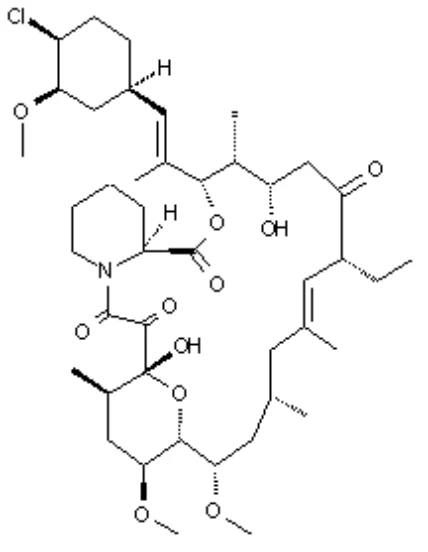
Chemical name: (1R,9S,12S,13R,14S,17R,18E,21S,23S,24R,25S,27R)-12-[(1E)-2-
{(1R,3R,4S)-4-chloro-3-methoxycyclohexyl}-1-methylvinyl]-17-ethyl-1,14- dihydroxy-23,25-dimethoxy-13,19,21,27-tetramethyl-11,28-dioxa-4-aza- tricyclo [22.3.1.04,9] octacos-18-ene-2,3,10,16-tetraone
Molecular formula and molecular mass: C43H68ClNO11, 810.47 g/mol
Structural formula:
Physicochemical properties:
Description: white to off-white fine crystalline powder
Solubility: soluble in methanol and ethanol and insoluble in
water
pH: 0.1% suspension of pimecrolimus in water is
pH 5.5±1
13 CLINICAL TRIALS
The majority of the clinical studies with ELIDEL® (pimecrolimus) Cream, 1% were conducted in pediatric patients, since eczema (atopic dermatitis (AD) is primarily a disease affecting this age group. Studies in adults were also undertaken, since AD sometimes continues into adulthood. All of these studies were double-blind and either active-controlled or vehicle-controlled.
Vehicle-Controlled Studies in Pediatrics
Two identical 6 week, randomized, vehicle-controlled, multi-center, phase 3 trials were conducted to evaluate ELIDEL® Cream 1% for the treatment of mild to moderate eczema (atopic dermatitis). A total of 403 pediatric patients 2-18 years old were included in the studies. The male/female ratio was approximately 50% and 29% of the patients were African American. At study entry, 59% of patients had moderate disease and the mean body surface area (BSA) affected was 26%. About 75% of patients had atopic dermatitis affecting the face and/or neck region.
In these studies, patients applied either ELIDEL® Cream or vehicle cream twice daily to 5% to 96% of their BSA for up to 6 weeks. At endpoint, based on the physician’s global evaluation of clinical response, 35% of patients treated with ELIDEL® Cream were clear or almost clear of signs of atopic dermatitis compared to only 18% of vehicle treated patients. More ELIDEL® patients (57%) had mild or no pruritus at 6 weeks compared to vehicle patients (34%). The improvement in pruritus occurred in conjunction with the improvement of the patients’ atopic dermatitis.
In these two 6-week studies of ELIDEL®, the combined efficacy results at endpoint are as follows:
% Patients ELIDEL® (N= 267) | Vehicle (N= 136) | |
| Global Assessment | ||
| Clear | 28 (10%) | 5 (4%) |
| Clear or Almost Clear | 93 (35%) | 25 (18%) |
| Clear to Mild Disease | 180 (67%) | 55 (40%) |
In the two pediatric studies that independently support the use of ELIDEL® Cream in mild to moderate atopic dermatitis, a significant treatment effect was seen by Day 15. Of the key signs of atopic dermatitis, erythema, infiltration/papulation, lichenification, and excoriations, erythema and infiltration/papulation were reduced at day 8 when compared to vehicle.
Active-Comparative Controlled Study in Pediatrics
A 5-year, multi-center, open-label, parallel group, randomized study was conducted to demonstrate the safety of ELIDEL® cream (twice daily) compared with topical corticosteroids (TCS) in the treatment of infants 3 months to less than 12 months of age at enrollment with mild to moderate atopic dermatitis (AD):
- when used for 6 weeks during the acute state of the disease by assessing adverse events (AEs);
- when used for up to 5 years by assessing AEs and any potential effect on the developing immune system and growth velocity; and
- to document the long-term efficacy of ELIDEL® cream in the treatment of mild to moderate AD for up to 5 years (no statistical testing of efficacy was planned).
The facial Investigator’s Global Assessment (IGA) rating was severe or very severe for 24 (1.0%) patients. The majority of patients (2415 patients, 99.9%) had an overall IGA rating of mild or moderate disease. Baseline disease characteristics of patients in the immunology/safety set and follow-up/safety set were similar to those for the safety set.
Efficacy results: Overall, the efficacy parameters in the ELIDEL® treatment group in infants 3 to <12 months of age (at start of study) were similar to that observed in the topical corticosteroids (TCS) treatment group.
- At 3 weeks and 6 weeks of treatment (acute phase), overall IGA treatment success was achieved in more than 50% of patients in both treatment groups, and facial IGA treatment success was achieved in ≥ 61% of patients in both treatment groups. By the end of the fifth year of treatment, treatment success was still demonstrated among patients who remained in the trial.
- The total body surface area (TBSA) affected by AD decreased with both treatments in a similar manner throughout the study. The mean TBSA affected at baseline was approximately 21% in both treatment groups and decreased to less than 10% by week 6 (acute phase) and was sustained to the end of five years in patients who remained in the trial for both treatment groups.
Overall conclusions: ELIDEL® cream was efficacious and well tolerated in subjects with mild to moderate AD who were 3 to 12 months of age at the start of the study. No impairment of systemic immune assessments was seen, and subjects with AD who were treated with ELIDEL® cream or TCS displayed normal immune response maturation and developed effective immunization against vaccine antigens.
PEER Registry Data
The PEER registry is a prospective 10-year observational registry of pediatric subjects (age greater than or equal to 2 years to age less than or equal to 17 years) with atopic dermatitis who have used ELIDEL® cream.
Of the 8014 enrolled subjects (3729 male, 4274 female), 3373 have data out to 60 months (5 years) and 1842 have data out to 120 months (10 years). Over the full 120-month duration, the use of ELIDEL® cream has decreased relative to baseline; the proportions of subjects who reported using ELIDEL® cream over the 6-month period prior to the 5-year and 10-year time points were 45.12% and 29.04%, respectively. Overall, 39690.49 cumulative person-years have been accrued in the study. A total of > 1800, 120-month surveys (i.e. 10 years out) have been collected; more than 76000 total surveys have been received, which is approximately 63% of the projected total.
The Data and Safety Monitoring Board has not reported any safety concerns and no data indicates that subjects enrolled in this registry study have not demonstrated a safety signal with regard to increased cancer risk after having used ELIDEL® cream.
Active-Comparative Controlled Studies in Adults
In adult patients, 1% ELIDEL® cream was compared with corticosteroid in two studies. In one study, it was compared with 0.1% betamethasone 17 valerate cream, and in the other study it was compared with 0.1% triamcinolone acetonide cream (for the trunk and limbs) plus 1% hydrocortisone acetate cream (for the face, neck and intertriginous areas). Both studies showed that 1% ELIDEL® cream was not as effective as the positive controls in treatment of atopic dermatitis in adult patients.
14 DETAILED PHARMACOLOGY – CLINICAL STUDIES
Children and Adolescents
Data from two 6-week, vehicle-controlled trials in which a total of 403 pediatric patients 2-18 years old were treated twice daily, with ELIDEL® (pimecrolimus) Cream, 1%. At study entry, the majority of patients had moderate disease. At endpoint, 34.8% of patients treated with ELIDEL® were clear or almost clear of signs of atopic dermatitis compared to only 18.4% of vehicle-treated patients. More ELIDEL® patients (57%) had mild or no pruritus at 6 weeks compared to vehicle patients (34%).
Infants
A similar 6-week study was conducted in 83 patients aged 3 months to 2 years. Almost two-thirds of these patients were diagnosed with moderate disease. The results from a planned interim analysis of this study show that at Day 43, the proportion of patients whose atopic dermatitis was assessed as clear or almost clear was significantly greater in the ELIDEL®-treated group (63%; p < 0.001) compared with the vehicle-treated group (17%). In addition, more ELIDEL® patients (75%) had no or mild pruritus at 6 weeks compared with vehicle treated patients (33%).
In these three 6-week studies of ELIDEL®, the combined efficacy results* at endpoint are as follows:
| % Patients | ||||||||
ELIDEL® (N=326) | Vehicle (N=160) | p-value | ||||||
| Clear or Almost Clear | 40 | 18 | 0.004 | |||||
| Improvement | 62 | 33 | Not done | |||||
| Pruritus Absent or Mild | 60 | 33 | < 0.001 | |||||
*The combined efficacy results include data from a planned interim analysis of the 6-week study in infants.
In the three pediatric studies mentioned above, a significant treatment effect was seen by Day 8. More than 78% of patients had atopic dermatitis involvement on the head and neck at baseline. The mean reduction in the severity and extent of key signs (i.e., erythema, infiltration/papulation, lichenification, and excoriations) within the treatment area of the head and neck for ELIDEL® was significantly greater than vehicle within the first week of treatment (p<0.001) and at endpoint (p=0.004). The median percent reduction of severity and extent of key signs at endpoint was 93% for the ELIDEL® treatment group and 25% for vehicle.
In a double-blind study of long-term management of atopic dermatitis in 711 pediatric patients aged 2-17 years, ELIDEL® was evaluated as first-line foundation therapy. Both ELIDEL® and control treatment groups used emollients and, when needed to control flares, second-line topical corticosteroid therapy. The vehicle control was used to maintain the study blind. An analysis of the incidence of flares showed a significant treatment effect in favor of ELIDEL® in comparison to the control group (p<0.001). This treatment effect was maintained in subgroup analysis of mild through severe disease (p<0.01). The proportion of subjects who completed 6 months of treatment without any flares was substantially higher in the ELIDEL® group (61% vs 35%). In the ELIDEL® treatment group, 66% required no corticosteroid therapy compared to 38% of the vehicle patients. Only 19% of ELIDEL® patients compared with 34% of vehicle patients were treated with corticosteroids for 15 days or more during the 6-month study.
15 MICROBIOLOGY
N/A
16 NON-CLINICAL TOXICOLOGY
General
Conventional studies of repeated dose toxicity, reproductive toxicity and carcinogenicity using oral administration produced effects at exposures sufficiently in excess of those in man to be of negligible clinical significance. Pimecrolimus had no genotoxic, antigenic, phototoxic, photoallergenic or photocarcinogenic potential. Dermal application in embryo/fetal developmental studies in rats and rabbits and in carcinogenicity studies in mice and rats were negative.
Effects on reproductive organs and altered sex hormone functions were seen in male and female rats in repeated dose toxicity studies after oral administration of 10 or 40 mg/kg/day (= 20 to 60 times the maximum human exposure after dermal application). This is reflected by the findings from the fertility study. The No Observed Adverse Effect Level (NOAEL) for female fertility was 10 mg/kg/day (= 20 times the maximum human exposure after dermal application). In the oral embryotoxicity study in rabbits, a higher resorption rate associated with maternal toxicity was observed at 20 mg/kg/day (= 7 times the maximum human exposure after dermal application); the mean number of live fetuses was not affected.
High safety margins exist between non-toxic exposures in animals and those in humans after b.i.d. treatment with 1% cream. A high safety margin also exists between the systemic oral exposure at the very effective clinical dose of 60 mg/day (30 mg b.i.d.) pimecrolimus and that observed after chronic topical treatment in pediatric, adolescent and adult atopic patients.
Acute Toxicity
The acute toxicity of pimecrolimus was assessed by the oral and i.v. routes in mice and rats, and by dermal administration in rats.
Intravenous administration to mice caused muscle spasms and death at doses of = 100 mg/kg. Intravenous administration to rats caused sedation, dyspnea and lethality at = 50 mg/kg. The cause of death was not determined. However, some of the effects may have been a consequence of the low solubility of pimecrolimus in the formulation. In view of the dermal use and low concentrations of pimecrolimus in the cream formulation the significance of intravenous toxicity is rather limited.
The low order of acute oral and dermal toxicity indicates that there is a minimal risk of intoxication following accidental or deliberate ingestion of the 1% cream formulation.
Sub-Acute and Chronic Toxicity
No systemic toxicity was noted in the topical studies. Morphological alterations observed in the oral toxicity studies were characteristic of the compound class of calcineurin inhibitors. Their onset in both species was dose- and time-dependent. The cream formulations were well tolerated by rats, adult and juvenile minipigs without signs of skin irritation in subacute, subchronic and chronic toxicity studies. In particular, no effects on the immune system were noted, such as reduction in lymphocyte counts or medullary atrophy in the thymus.
Carcinogenesis, Mutagenesis, Impairment of Fertility
Photocarcinogenicity/Carcinogenicity
Topical studies
In a 2-year rat dermal carcinogenicity study using ELIDEL® Cream, a statistically significant increase in the incidence of follicular cell adenoma of the thyroid was noted in low, mid and high dose male animals compared to vehicle and saline control male animals. Follicular cell adenoma of the thyroid was noted in the dermal rat carcinogenicity study at the lowest dose of 2 mg/kg/day [0.2% pimecrolimus cream; 1.5X the Maximum Recommended Human Dose (MRHD) based on AUC comparisons]. No increase in the incidence of follicular cell adenoma of the thyroid was noted in the oral carcinogenicity study in male rats up to 10 mg/kg/day (66X MRHD based on AUC comparisons). However, oral studies may not reflect continuous exposure or the same metabolic profile as by the dermal route.
In a mouse dermal carcinogenicity study using pimecrolimus in an ethanolic solution, no increase in incidence of neoplasms was observed in the skin or other organs up to the highest dose of 4 mg/kg/day (0.32% pimecrolimus in ethanol) 27X MRHD based on AUC comparisons. However, lymphoproliferative changes (including lymphoma) were noted in a 13 week repeat dose dermal toxicity study conducted in mice using pimecrolimus in an ethanolic solution at a dose of 25 mg/kg/day (47X MRHD based on AUC comparisons). No lymphoproliferative changes were noted in this study at a dose of 10 mg/kg/day (17X MRHD based on AUC comparison) and lymphoma in pimecrolimus-treated mice occurred at a dose of 50 mg/kg/day. However, the latency time to lymphoma formation was shortened to 8 weeks after dermal administration of pimecrolimus dissolved in ethanol at a dose of 100 mg/kg/day (179 217X MRHD based on AUC comparisons).
In a 52-week dermal photo carcinogenicity study, albino hairless mice were treated with ELIDEL® creams 0.2%, 0.6% and 1% or vehicle cream and exposed to simulated solar ultraviolet radiation (low and high UVR). The median time to onset of skin tumor formation was decreased in hairless mice following chronic topical dosing with concurrent exposure to UV radiation (40 weeks of treatment followed by 12 weeks of observation) with the ELIDEL® Cream vehicle alone. No additional effect on tumor development beyond the vehicle effect was noted with the addition of the active ingredient, pimecrolimus, to the vehicle cream.
Oral studies
In a mouse oral (gavage) carcinogenicity study, a statistically significant increase in the incidence of lymphoma was noted in high dose male and female animals compared to vehicle control male and female animals. Lymphomas were noted in the oral mouse carcinogenicity at a dose of 45 mg/kg/day (258 340X MRHD based on AUC comparisons). No drug related tumors were noted in the mouse oral carcinogenicity study at a dose of 15 mg/kg/day (60 133X MRHD based on AUC comparisons).
In an oral (gavage) rat carcinogenicity study, a statistically significant increase in the incidence of benign thymoma was noted in 10 mg/kg/day pimecrolimus treated male and female animals compared to vehicle control treated male and female animals. In addition, a significant increase in the incidence of benign thymoma, a tumor of epithelial cell origin, was noted in another oral (gavage) rat carcinogenicity study in 5 mg/kg/day pimecrolimus treated male animals compared to vehicle control treated male animals. No drug related tumors were noted in the rat oral carcinogenicity study at a dose of 1 mg/kg/day male animals (1.1X MRHD based on AUC comparisons) and at a dose of 5 mg/kg/day for female animals (21X MRHD based on AUC comparisons).
In a 39-week monkey oral toxicity study, a dose-related immunosuppressive-related lymphoproliferative disorder (IRLD) associated with lymphocryptovirus (LCV) and other opportunistic infections were observed. This study had a control group and three dose groups, 15 mg/kg/day, 45 mg/kg/day, and 120 mg/kg/day. IRLD was observed in 13 out of 37 monkeys: no monkeys on placebo, 1/8 on 15 mg/kg/day, 5/8 on 45 mg/kg/day and 7/9 on 120 mg/kg/day. Of these 13 monkeys, 3 (in the 45mg/kg/day) were diagnosed with lymphocytic leukemia and 1 (in the 120 mg/kg/day) with Hodgkin disease-like lymphoma These doses, respectively corresponding to recorded mean AUC(0-24) values of 1193 ng x h/mL, 3945 ng x h/mL and 7485 ng x h/mL, are respectively equivalent to 31, 104 and 197 times the maximum systemic exposure observed in humans treated with topical pimecrolimus in clinical trials (72, 239 and 454 times the mean of the AUC values respectively, in 18 out of 50 patients having measurable pimecrolimus levels). The 120 mg/kg/day dosage was discontinued at week 19 because of toxicity. IRLD was accompanied by mortality, food consumption and body weight reduction, and pathological changes secondary to compound-related immunosuppression. Recovery and/or at least partial reversibility of the effects were noted upon drug cessation. This study did not establish the no-observable adverse effect level.
Genotoxicity
A battery of in vitro genotoxicity tests, including Ames assay, mouse lymphoma L5178Y assay, and chromosome aberration test in V79 Chinese hamster cells and an in vivo mouse micronucleus test revealed no evidence for a mutagenic or clastogenic potential for the drug.
Reproduction and Teratology
An oral fertility and embryofetal developmental study in rats revealed estrus cycle disturbances, post implantation loss and reduction in litter size at the 45 mg/kg/day dose (38X MRHD based on AUC comparisons). No effect on fertility in female rats was noted at 10 mg/kg/day (12X MRHD based on AUC comparisons). No effect on fertility in male rats was noted at 45 mg/kg/day (23X MRHD based on AUC comparisons), which was the highest dose tested in this study.
A second oral fertility and embryofetal developmental study in rats revealed reduced testicular and epididymal weights, reduced testicular sperm counts and motile sperm for males and estrus cycle disturbances, decreased corpora lutea, decreased implantations and viable fetuses for females at 45 mg/kg/day dose (123 x MRHD for males and 192 x MRHD for females based on AUC comparisons). No effect on fertility in female rats was noted at 10 mg/kg/day (5 x MRHD based on AUC comparisons). No effect on fertility in male rats was noted at 2 mg/kg/day (0.7 x MRHD based on AUC comparisons).