


Product Monograph - Dupixent (Sanofi-Aventis Canada, 100 mg)
RECENT MAJOR LABEL CHANGES
| 1 Indications | 07/2023 |
|---|---|
| 4 Dosage and Administration, 4.2 Recommended Dose and Dosage Adjustment, 4.3 Administration | 07/2023 |
| 1 Indications | 05/2023 |
| 4 Dosage and Administration, 4.2 Recommended Dose and Dosage Adjustment | 05/2023 |
| 4 Dosage and Administration, 4.3 Administration | 05/2023 |
| 1 Indications | 04/2023 |
| 1 Indications, 1.1 Pediatric | 04/2023 |
| 4 Dosage and Administration, 4.2 Recommended Dose and Dosage Adjustment | 04/2023 |
| 4 Dosage and Administration, 4.3 Administration | 04/2023 |
| 1 Indications | 03/2022 |
| 1 Indications, 1.1 Pediatric | 03/2022 |
| 4 Dosage and Administration, 4.2 Recommended Dose and Dosage Adjustment | 03/2022 |
| 4 Dosage and Administration, 4.3 Administration | 03/2022 |
| 7 Warnings and Precautions, 7.1.3 Pediatrics | 03/2022 |
| 7 Warnings and Precautions | 03/2022 |
TABLE OF CONTENTS
Sections or subsections that are not applicable at the time of authorization are not listed.
RECENT MAJOR LABEL CHANGES ............................................................................................ 2
TABLE OF CONTENTS .............................................................................................................. 2
PART I: HEALTH PROFESSIONAL INFORMATION ...................................................................... 5
- 1.
INDICATIONS ............................................................................................................... 5
1.1 Pediatrics ................................................................................................................ 5
1.2 Geriatrics ................................................................................................................ 6
- 2. CONTRAINDICATIONS ................................................................................................. 6
- 4.
DOSAGE AND ADMINISTRATION ................................................................................. 6
4.2 Recommended Dose and Dosage Adjustment ....................................................... 6
4.3 Administration ........................................................................................................ 8
4.4 Missed Dose ......................................................................................................... 10
- 5. OVERDOSAGE ............................................................................................................ 10
- 6. DOSAGE FORMS, STRENGTHS, COMPOSITION AND PACKAGING ............................... 10
- 7.
WARNINGS AND PRECAUTIONS ................................................................................ 12
7.1 Special Populations............................................................................................... 14
7.1.1 Pregnant Women .................................................................................................. 14
7.1.2 Breast-feeding ................................................................................................ 14
7.1.3 Pediatrics ........................................................................................................ 15
7.1.4 Geriatrics ........................................................................................................ 15
- 8.
ADVERSE REACTIONS ................................................................................................ 16
8.2 Clinical Trial Adverse Reactions ............................................................................ 16
8.5 Post-Market Adverse Reactions ........................................................................... 24
- 9.
DRUG INTERACTIONS ................................................................................................ 25
9.4 Drug-Drug Interactions ......................................................................................... 25
9.5 Drug-Food Interactions ......................................................................................... 25
9.6 Drug-Herb Interactions ......................................................................................... 25
9.7 Drug-Laboratory Test Interactions ........................................................................ 25
- 10.
CLINICAL PHARMACOLOGY ....................................................................................... 26
10.1 Mechanism of Action ...................................................................................... 26
10.2 Pharmacodynamics ........................................................................................ 26
10.3 Pharmacokinetics ........................................................................................... 27
- 11. STORAGE, STABILITY AND DISPOSAL ......................................................................... 30
- 12. SPECIAL HANDLING INSTRUCTIONS ........................................................................... 30
PART II: SCIENTIFIC INFORMATION ....................................................................................... 32
- 13. PHARMACEUTICAL INFORMATION ............................................................................ 32
- 14.
CLINICAL TRIALS ........................................................................................................ 33
14.1 Trial Design and Study Demographics ............................................................ 33
14.2 Study Results .................................................................................................. 45
- 15. MICROBIOLOGY ........................................................................................................ 65
- 16. NON-CLINICAL TOXICOLOGY ..................................................................................... 66
PATIENT MEDICATION INFORMATION .................................................................................. 67
INSTRUCTIONS FOR USE ....................................................................................................... 75
DUPIXENT 300 MG SINGLE-USE PRE-FILLED SYRINGE WITH NEEDLE SHIELD ............... 75
INSTRUCTIONS FOR USE ....................................................................................................... 85
DUPIXENT 200 MG SINGLE-USE PRE-FILLED SYRINGE WITH NEEDLE SHIELD ............... 85
INSTRUCTIONS FOR USE ....................................................................................................... 94
DUPIXENT 300 MG SINGLE-USE PRE-FILLED SYRINGE ................................................... 94
INSTRUCTIONS FOR USE ..................................................................................................... 105
DUPIXENT 300 MG SINGLE-USE PRE-FILLED PEN ......................................................... 105
INSTRUCTIONS FOR USE ..................................................................................................... 115
DUPIXENT 200 MG SINGLE-USE PRE-FILLED PEN ......................................................... 115
INSTRUCTIONS FOR USE ..................................................................................................... 125
DUPIXENT 100 MG SINGLE-USE Pre-filled Syringe with Needle Shield (PFS-S)........... 125
PART I: HEALTH PROFESSIONAL INFORMATION
1. INDICATIONS
Atopic Dermatitis
DUPIXENT (dupilumab injection) is indicated for the treatment of patients aged 6 months and older with moderate-to-severe atopic dermatitis whose disease is not adequately controlled with topical prescription therapies or when those therapies are not advisable.
DUPIXENT can be used with or without topical corticosteroids.
Asthma
DUPIXENT is indicated as an add-on maintenance treatment in patients aged 6 years and older with severe asthma with a type 2/eosinophilic phenotype or oral corticosteroid-dependent asthma.
DUPIXENT is not indicated for relief of acute bronchospasm or status asthmaticus (see WARNINGS AND PRECAUTIONS).
Chronic Rhinosinusitis with Nasal Polyposis
DUPIXENT is indicated as an add-on maintenance treatment with intranasal corticosteroids in adult patients with severe chronic rhinosinusitis with nasal polyposis (CRSwNP) inadequately controlled by systemic corticosteroids and/or surgery.
Eosinophilic Esophagitis
DUPIXENT is indicated for the treatment of patients aged 12 years and older, weighing at least 40 kg, with eosinophilic esophagitis (EoE).
Prurigo Nodularis
DUPIXENT is indicated for the treatment of adult patients with moderate-to-severe prurigo nodularis (PN) whose disease is not adequately controlled with topical prescription therapies or when those therapies are not advisable. DUPIXENT can be used with or without topical corticosteroids.
1.1 Pediatrics
Atopic Dermatitis
Efficacy and safety of DUPIXENT in pediatric patients with atopic dermatitis below the age of 6 months have not been established.
Asthma
Efficacy and safety in pediatric patients with asthma below the age of 6 years have not been established.
Chronic Rhinosinusitis with Nasal Polyposis
Efficacy and safety of DUPIXENT in pediatric patients with CRSwNP have not been established.
Eosinophilic Esophagitis
Efficacy and safety of DUPIXENT in pediatric patients with EoE below the age of 12 years have not been established.
Prurigo Nodularis
Efficacy and safety of DUPIXENT in pediatric patients with PN younger than 18 years have not been established.
1.2 Geriatrics
Atopic Dermatitis
Of the 1472 patients with atopic dermatitis exposed to DUPIXENT in a phase 2 dose-ranging study or phase 3 placebo-controlled studies, a total of 67 were 65 years or older. Although no differences in efficacy or safety were observed between older and younger patients, the number of patients aged 65 and over is not sufficient to determine whether they respond differently from younger patients (see CLINICAL PHARMACOLOGY, Special Populations and Conditions). No dose adjustment is recommended for elderly patients.
Asthma
Of the 1977 patients with asthma exposed to DUPIXENT, a total of 240 patients were 65 years or older and 39 patients were 75 years or older. Efficacy and safety in this age group was consistent with the overall study population.
Chronic Rhinosinusitis with Nasal Polyposis
Of the 440 patients with CRSwNP exposed to DUPIXENT, at total of 79 were 65 years and older. Efficacy and safety in this age group were consistent with the overall study population. A total of 11 patients were 75 years and older (see CLINICAL PHARMACOLOGY, Special Populations and Conditions). No dose adjustment is recommended for elderly patients.
Eosinophilic Esophagitis
Of 203 subjects with EoE exposed to DUPIXENT in the phase 3 study, a total of 2 were 65 years of age or older.
Prurigo Nodularis
Of 152 patients with PN exposed to DUPIXENT, a total of 37 patients were 65 years of age or older and 8 patients were 75 years or older.
2. CONTRAINDICATIONS
Dupixent is contraindicated in patients who are hypersensitive to this drug or to any ingredient in the formulation or component of the container. For a complete listing, see the DOSAGE FORMS, STRENGTHS, COMPOSITION AND PACKAGING section of the product monograph.
4. DOSAGE AND ADMINISTRATION
4.2 Recommended Dose and Dosage Adjustment
Dupixent is administered by subcutaneous injection.
Provide proper training to patients and/or caregivers on proper subcutaneous injection technique, including aseptic technique, and the preparation and administration of Dupixent prior to use. Advise patients to follow sharps disposal recommendations (see Instructions for Use).
Atopic Dermatitis
Adults
The recommended dose of Dupixent for adult patients with atopic dermatitis is an initial dose of 600 mg (two 300 mg injections), followed by 300 mg every other week.
Pediatrics (6 to 17 years of age)
The recommended dose of Dupixent for pediatrics 6 to 17 years of age is specified in Table 1.
| Table 1 – Dose of Dupixent for Subcutaneous Administration in Pediatrics 6 to 17 Years of Age with Atopic Dermatitis | |||||||
|---|---|---|---|---|---|---|---|
| Body Weight | Initial Dose | Subsequent Doses | |||||
| 15 to less than 30 kg | 600 mg (two 300 mg injections) | 300 mg every 4 weeks (Q4W) | |||||
| 30 to less than 60 kg | 400 mg (two 200 mg injections) | 200 mg every other week (Q2W) | |||||
| 60 kg or more | 600 mg (two 300 mg injections) | 300 mg every other week (Q2W) | |||||
Pediatrics (6 months to 5 years of age)
The recommended dose of Dupixent for pediatrics 6 months to 5 years of age is specified in Table 2.
Table 2: Dose of Dupixent for Subcutaneous Administration in Pediatrics 6 months to 5 Years of Age with Atopic Dermatitis
| Body Weight | Initial Dose | Subsequent Doses |
|---|---|---|
| 5 to less than 15 kg | 200 mg (one 200 mg injection) | 200 mg every 4 weeks (Q4W) |
| 15 to less than 30 kg | 300 mg (one 300 mg injection) | 300 mg every 4 weeks (Q4W) |
Dupixent can be used with or without topical corticosteroids. Topical calcineurin inhibitors may be used, but should be reserved for problem areas only, such as the face, neck, intertriginous and genital areas.
Asthma
Adults and adolescents (12 years of age and older)
The recommended dose of Dupixent for adults and adolescents (12 years of age and older) is:
- An initial dose of 400 mg (two 200 mg injections) followed by 200 mg given every other week for patients with severe asthma with a type 2/eosinophilic phenotype. The dose may be increased to 300 mg every-other-week based on clinical judgement.
- An initial dose of 600 mg (two 300 mg injections) followed by 300 mg given every-other-week for patients with oral corticosteroids-dependent asthma or with co-morbid moderate-to-severe atopic dermatitis or adults with co-morbid severe chronic rhinosinusitis with nasal polyposis for which Dupixent is indicated.
Pediatrics (6 to 11 years of age)
The recommended dose of Dupixent for children aged 6 to 11 years is specified in Table 3.
| Table 3– Dose of Dupixent for Subcutaneous Administration Pediatrics 6 to 11 Years of Age with Asthma | ||||
|---|---|---|---|---|
| Body Weight | Initial and Subsequent Doses* | |||
| 15 to less than 30 kg | 100 mg every other week (Q2W) or 300 mg every four weeks (Q4W)† | |||
| 30 to less than 60 kg | 200 mg every other week (Q2W) or 300 mg every four weeks (Q4W)† | |||
| 60 kg or more | 200 mg every other week (Q2W) | |||
*For pediatrics (6 to 11 years) with asthma, no initial loading dose is recommended.
†Based on population PK modeling (see 10 CLINICAL PHARMACOLOGY).
For pediatrics (6-11 years old) with asthma and co-morbid moderate-to-severe atopic dermatitis, the recommended dose specified in Table 1 should be followed.
Chronic Rhinosinusitis with Nasal Polyps
The recommended dose of Dupixent for adult patients with chronic rhinosinusitis with nasal polyps is 300 mg every-other-week.
Eosinophilic Esophagitis
The recommended dose of Dupixent for patients 12 years of age and older, weighing at least 40 kg, is 300 mg given every week (QW).
Prurigo Nodularis
The recommended dose of Dupixent for adult patients is an initial dose of 600 mg (two 300 mg injections), followed by 300 mg given every other week.
4.3 Administration
For atopic dermatitis, asthma and prurigo nodularis patients receiving an initial 600 mg dose, administer two 300 mg Dupixent injections consecutively in different injection sites.
For atopic dermatitis and asthma patients taking the initial 400 mg dose, administer two 200 mg Dupixent injections consecutively in different injection sites.
Dupixent is intended for use under the guidance of a healthcare professional. A patient may self-inject Dupixent or the patient's caregiver may administer Dupixent. The Dupixent pre-filled pen is only for use in adults and adolescents aged 12 years and older. In adolescents 12 years of age and older, it is recommended that Dupixent be given by or under the supervision of an adult. The Dupixent pre-filled syringe should be given by a caregiver in pediatric patients 6 months to 11 years of age with atopic dermatitis, the Dupixent pre-filled syringe is the presentation appropriate for this population. Provide proper training to patients and/or caregivers on the preparation and administration of Dupixent prior to use according to the Instructions for Use (IFU).
Dupixent is self-administered by subcutaneous injection into the thigh or abdomen, except for the 5 cm (2 inches) around the navel, using a single-use pre-filled syringe or pen. If a caregiver administers Dupixent, an injection in the upper arm can also be used.
It is recommended to rotate the injection site with each injection.
Dupixent should not be injected into skin that is tender, damaged or has bruises or scars.
In the absence of compatibility studies, this medicinal product must not be mixed with other medicinal products.
Special populations
Pediatrics (< 18 years of age):
Atopic Dermatitis
Efficacy and safety of Dupixent in pediatric patients with atopic dermatitis below the age of 6 months have not been established.
Asthma
Efficacy and safety of Dupixent in pediatric patients with asthma below the age of 6 years have not been established.
Chronic Rhinosinusitis with Nasal Polyps
Efficacy and safety of Dupixent in pediatric patients with CRSwNP have not been established.
Eosinophilic Esophagitis
Efficacy and safety of Dupixent in pediatric patients with EoE younger than 12 years of age have not been established.
Prurigo Nodularis
Efficacy and safety of Dupixent in pediatric patients with PN younger than 18 years have not been established.
Geriatrics (>65 years of age):
No dose adjustment is recommended for elderly patients (see CLINICAL PHARMACOLOGY, Special Populations and Conditions).
Hepatic impairment
No data are available in patients with hepatic impairment (see CLINICAL PHARMACOLOGY, Special Populations and Conditions).
Renal impairment
No dosage adjustment is recommended in patients with mild or moderate renal impairment. No data are available in patients with severe renal impairment (see CLINICAL PHARMACOLOGY, Special Populations and Conditions).
Body weight
No dose adjustment for body weight is recommended in adults with atopic dermatitis, CRSwNP or PN and for adults and adolescents with asthma (see CLINICAL PHARMACOLOGY, Special Populations and Conditions).
For pediatric patients 6 to 17 years of age with atopic dermatitis, the recommended dose is 300 mg Q4W (15 kg to <30 kg), 200 mg Q2W (30 kg to <60 kg), or 300 mg Q2W (≥60 kg) following an initial dose of 600 mg, 400 mg, or 600 mg, respectively. (see DOSAGE AND ADMINISTRATION, Recommended Dose and Dosage Adjustment).
For pediatric patients 6 to 11 years of age with asthma, the recommended doses are 100 mg Q2W or 300 mg Q4W (≥15 kg to <30 kg), 200 mg Q2W or 300 mg Q4W (≥30 kg to <60 kg), and 200 mg Q2W (≥ 60 kg) (see DOSAGE AND ADMINISTRATION, Recommended Dose and Dosage Adjustment).
For pediatric patients 6 months to 5 years of age with atopic dermatitis, the recommended dose is 200 mg Q4W (5 kg to <15 kg) and 300 mg Q4W (15 kg to <30 kg). (see DOSAGE AND ADMINISTRATION, Recommended Dose and Dosage Adjustment).
4.4 Missed Dose
If a weekly dose is missed, administer the dose as soon as possible, and start a new weekly schedule from the date of this administered dose.
If an every other week dose is missed, instruct the patient to administer the injection within 7 days from the missed dose and then resume the patient's original schedule. If the missed dose is not administered within 7 days, instruct the patient to wait until the next dose on the original schedule.
If an every 4 week dose is missed, instruct the patient to administer the injection within 7 days from the missed dose and then resume the patient's original schedule. If the missed dose is not administered within 7 days, instruct the patient to administer the dose, starting a new schedule based on this date.
5. OVERDOSAGE
In clinical studies, no safety issues were identified with single intravenous doses up to 12 mg/kg.
There is no specific treatment for Dupixent overdose. In the event of overdosage, monitor the patient for any signs or symptoms of adverse reactions and institute appropriate symptomatic treatment immediately.
| For management of a suspected drug overdose, contact your regional poison control centre. |
|---|
6. DOSAGE FORMS, STRENGTHS, COMPOSITION AND PACKAGING
To help ensure the traceability of biologic products, including biosimilars, health professionals should recognise the importance of recording both the brand name and the non-proprietary (active ingredient) name as well as other product-specific identifiers such as the Drug Identification Number (DIN) and the batch/lot number of the product supplied.
| Table 4 – Dosage Forms, Strengths, Composition and Packaging | ||||
| Route of Administration | Dosage Form / Strength/Composition | Non-medicinal Ingredients | ||
| Subcutaneous injection | Solution:
| L-arginine hydrochloride, L-histidine, polysorbate 80, sodium acetate, sucrose, acetic acid for pH adjustment, water for injection. | ||
Dupixent is supplied as a clear to slightly opalescent, colorless to pale yellow sterile, preservative-free, solution, which is free from visible particulates.
Dupixent 300 mg is available in a single-use pre-filled syringe with needle shield (PFS-S), a single-use pre-filled syringe (PFS) or pre-filled pen (PFP), designed to deliver 300 mg dupilumab in 2 mL solution (150 mg/mL) via subcutaneous injection.
Dupixent 200 mg is available in a single-use pre-filled syringe with needle shield (PFS-S) or pre-filled pen (PFP), designed to deliver 200 mg dupilumab in 1.14 mL solution (175 mg/mL) via subcutaneous injection.
Dupixent 100 mg is available in a single-use pre-filled syringe with needle shield (PFS-S), designed to deliver 100 mg dupilumab in 0.67 mL solution (150 mg/mL) via subcutaneous injection.
300 mg Pre-Filled Syringe with needle shield
- Dupixent is provided as a single dose in a 2.25-mL siliconized clear Type-1 glass pre-filled syringe with a fixed 27-gauge ½ inch, thin wall stainless steel staked needle and passive needle shield.
- The needle cap is not made with natural rubber latex.
300 mg Pre-filled Syringe
- Dupixent is provided as a single dose in a 2.25-mL siliconized clear Type-1 glass pre-filled syringe with a fixed 27 gauge ½ inch, thin wall stainless steel staked needle.
- The needle cap is not made with natural rubber latex.
300 mg Pre-filled Pen
- Dupixent is provided as a single dose in a 2.25-mL siliconized clear Type-1 glass syringe.
- The needle cap is not made with natural rubber latex.
200 mg Pre-Filled Syringe with needle shield
- Dupixent is provided as a single dose in a 1.14-mL siliconized clear Type-1 glass pre-filled syringe with a fixed 27 gauge ½ inch, thin wall stainless steel staked needle and passive needle shield.
- The needle cap is not made with natural rubber latex.
|
200 mg Pre-filled Pen
- Dupixent is provided as a single dose in a 1.14-mL siliconized clear Type-1 glass syringe.
- The needle cap is not made with natural rubber latex.
100 mg Pre-Filled Syringe with needle shield
- Dupixent is provided as a single dose in a 1-mL siliconized clear Type-1 glass pre-filled syringe with a fixed 27 gauge ½ inch, thin wall stainless steel staked needle and passive needle shield.
- The needle cap is not made with natural rubber latex.
The pre-filled pen is available either with a round cap and oval viewing window encircled with an arrow or with a square cap with ridges and an oval viewing window without an arrow.
Dupixent is available in packs containing 1 or 2 pre-filled syringes with needle shield or pre-filled syringes or pre-filled pens
7. WARNINGS AND PRECAUTIONS
General
Acute Asthma Symptoms or Deteriorating Disease
Dupixent (dupilumab injection) should not be used to treat acute asthma symptoms or acute exacerbations. Do not use Dupixent to treat acute bronchospasm or status asthmaticus.
Patients should be instructed to seek medical advice if their asthma remains uncontrolled or worsens after initiation of treatment with Dupixent.
Reduction of Corticosteroid Dosage
Do not discontinue systemic, topical, or inhaled corticosteroids abruptly upon initiation of treatment with Dupixent. Reductions in corticosteroid dose, if appropriate, should be gradual and only performed under the supervision of a healthcare professional. Reduction in corticosteroid dose may be associated with systemic withdrawal symptoms and/or may unmask conditions previously suppressed by systemic corticosteroid therapy.
Patients with atopic dermatitis or CRSwNP who have comorbid asthma should be advised not to adjust or stop their asthma treatments without consulting their healthcare professional.
Immune
Hypersensitivity
Hypersensitivity reactions, including anaphylaxis, serum sickness or serum sickness-like reactions and angioedema, some of which have been serious, have been reported following the use of Dupixent. If a systemic hypersensitivity reaction occurs, including generalized urticaria, rash, erythema nodosum, serum sickness or serum-sickness-like reactions (occurred in less than 1% of subjects who received Dupixent in clinical trials), administration of Dupixent should be discontinued immediately and appropriate therapy initiated. One case of anaphylaxis has been reported in the asthma development program following the administration of Dupixent (see ADVERSE REACTIONS). Advise patients to discontinue Dupixent and to seek immediate medical attention if they experience any symptoms of systemic hypersensitivity reactions.
Eosinophilic Conditions
Dupixent has been associated with an elevation of blood eosinophils. Patients being treated for asthma may present with serious systemic eosinophilia sometimes presenting with clinical features of eosinophilic pneumonia or vasculitis consistent with eosinophilic granulomatosis with polyangiitis, conditions that are often treated with systemic corticosteroids. These events usually, but not always, may be associated with the reduction of oral corticosteroid therapy.
Cases of eosinophilic pneumonia were reported with Dupixent in adult subjects who participated in the asthma development program and cases of vasculitis consistent with eosinophilic granulomatosis with polyangiitis have been reported in subjects who participated in the asthma development program as well as in adult subjects with co-morbid asthma receiving Dupixent in the CRSwNP development program. Healthcare professionals should be alert to vasculitic rash, worsening pulmonary symptoms, cardiac complications, and/or neuropathy presenting in patients with eosinophilia. A causal association between Dupixent and these conditions has not been established.
Helminth Infection
Patients with known helminth infections were excluded from participation in clinical studies. It is unknown if Dupixent will influence the immune response against helminth infections. Treat patients with pre-existing helminth infections before initiating Dupixent. If patients become infected while receiving treatment with Dupixent and do not respond to anti-helminth treatment, discontinue treatment with Dupixent until infection resolves. Adverse reactions of helminth infections (5 cases of enterobiasis and 1 case of ascariasis) were reported in children 6 to 11 years old who participated in the pediatric asthma development program (see ADVERSE REACTIONS).
Conjunctivitis and Keratitis
Conjunctivitis and keratitis related events occurred more frequently in subjects with atopic dermatitis who received Dupixent than in subjects who received placebo, and more frequently in subjects with atopic dermatitis than in other indications. Some patients reported visual disturbances (e.g. blurred vision) associated with conjunctivitis or keratitis (see ADVERSE REACTIONS).
Among asthma subjects, the frequency of conjunctivitis was low and consistent between Dupixent and placebo.
In subjects with CRSwNP or PN, the frequency of conjunctivitis was higher in dupilumab compared to placebo. There were no cases of keratitis reported in the CRSwNP and PN development program (see ADVERSE REACTIONS).
Conjunctivitis and keratitis related events (including ulcerative keratitis) have been reported in the postmarketing setting.
Advise patients to report new onset or worsening eye symptoms to their healthcare professional. Patients treated with Dupixent who develop conjunctivitis that does not resolve following standard treatment or signs and symptoms suggestive of keratitis should undergo ophthalmological examination, as appropriate (see ADVERSE REACTIONS).
Concomitant Atopic Conditions
Patients with atopic dermatitis and comorbid asthma should be advised not to adjust their treatment without consultation with their healthcare professional. If discontinuing Dupixent, consider the potential effects on other atopic conditions.
Musculoskeletal and connective tissue disorders
Arthralgia
Arthralgia has been reported with the use of Dupixent with some patients reporting gait disturbances or decreased mobility associated with joint symptoms; some cases resulted in hospitalization. In clinical trials and postmarketing reports, onset of arthralgia was variable, ranging from days to months after the first dose of Dupixent. Some patients’ symptoms resolved while continuing treatment with Dupixent and other patients recovered or were recovering following discontinuation of Dupixent (see ADVERSE REACTIONS).
Advise patients to report new onset or worsening joint symptoms to their healthcare provider. If symptoms persist or worsen, consider rheumatological evaluation and/or discontinuation of Dupixent.
Reproductive Health: Female and Male Potential
Fertility
No specific non-clinical animal study on fertility has been conducted with dupilumab (see NON-CLINICAL TOXICOLOGY).
7.1 Special Populations
7.1.1 Pregnant Women
No studies have been conducted with Dupixent in pregnant women and relevant data from clinical use are very limited. Human IgG antibodies are known to cross the placental barrier; therefore, Dupixent may be transmitted from the mother to the developing fetus. Non-clinical animal reproductive and developmental toxicology studies were not conducted with dupilumab due to lack of pharmacologic activity in non-human species (see NON-CLINICAL TOXICOLOGY).
7.1.2 Breast-feeding
There is no information regarding the presence of Dupixent in human breast milk, the effects on the breastfed infant, or the effects on milk production. The developmental and health benefits of breastfeeding should be considered along with the mother’s clinical need for Dupixent and any potential adverse effects on the breastfed child from Dupixent or from the underlying maternal condition.
7.1.3 Pediatrics
Atopic Dermatitis
Efficacy and safety of Dupixent in pediatric patients with atopic dermatitis less than 6 months of age have not been established.
Asthma
Efficacy and safety in pediatric patients with asthma below the age of 6 years have not been established.
For 107 adolescents aged 12 to 17 years with asthma (68 exposed to dupilumab), the safety profile was consistent with the overall adult population.
For 405 children aged 6 to 11 with asthma (271 exposed to dupilumab), the safety profile was consistent with the overall adult and adolescent populations with the additional adverse reaction of helminth infection.
Chronic Rhinosinusitis with Nasal Polyposis
Efficacy and safety in pediatric subjects (<18 years of age) with CRSwNP have not been established.
Eosinophilic Esophagitis
Efficacy and safety in pediatric patients with EoE younger than 12 years of age have not been established.
For 99 adolescents aged 12 to 17 years with EoE (64 exposed to dupilumab), the safety profile was consistent with the overall adult population.
Prurigo Nodularis
Efficacy and safety in pediatric subjects (<18 years of age) with PN have not been established.
7.1.4 Geriatrics
Atopic Dermatitis
Of the 1472 patients with atopic dermatitis exposed to Dupixent in a phase 2 dose-ranging study or phase 3 placebo-controlled studies, a total of 67 were 65 years or older. Although no differences in efficacy or safety were observed between older and younger subjects, the number of subjects aged 65 and over is not sufficient to determine whether they respond differently from younger subjects.
Asthma
Of the 1977 patients with asthma exposed to Dupixent, a total of 240 patients were 65 years or older and 39 patients were 75 years or older. Efficacy and safety in this age group was consistent with the overall study population.
Chronic Rhinosinusitis with Nasal Polyposis
Of the 440 subjects with CRSwNP exposed to Dupixent, at total of 79 were 65 years and older. Efficacy and safety in this age group were consistent with the overall study population. A total of 11 subjects were 75 years and older. No dose adjustment is recommended for elderly patients.
Eosinophilic Esophagitis
Clinical studies of Dupixent in EoE did not include sufficient numbers of subjects aged 65 years and over to determine whether they respond differently than younger adult subjects.
Prurigo Nodularis
Of 152 patients with PN exposed to Dupixent, a total of 37 patients were 65 years of age or older and 8 patients were 75 years or older. The number of subjects aged 65 and over is not sufficient to determine whether they respond differently from younger subjects.
8. ADVERSE REACTIONS
8.2 Clinical Trial Adverse Reactions
Clinical trials are conducted under very specific conditions. The adverse reaction rates observed in the clinical trials; therefore, may not reflect the rates observed in practice and should not be compared to the rates in the clinical trials of another drug. Adverse reaction information from clinical trials may be useful in identifying and approximating rates of adverse drug reactions in real-world use.
Atopic Dermatitis
Adults
In the overall exposure pool, a total of 2526 subjects with atopic dermatitis were treated with Dupixent in controlled and uncontrolled clinical trials. Of these, 739 subjects were exposed for at least 1 year.
The safety of Dupixent monotherapy was evaluated through week 16 based on data from three randomized, double-blind, placebo-controlled multicenter studies (SOLO 1, SOLO 2, and a phase 2, dose-ranging study) that included 1564 adult subjects with moderate-to-severe atopic dermatitis (AD). The study population had a mean age of 38.2 years, 41.1 % was female, 67.9 % white, 21.9 % Asian, 7.1% black, and reported co-morbid atopic conditions such as asthma (39.6%), allergic rhinitis (49.0%), food allergy (37.3%), and allergic conjunctivitis (23.1%).
The safety of Dupixent with concomitant topical corticosteroids (TCS) was evaluated based on data from one randomized, double-blind, placebo-controlled multicentre study (CHRONOS). A total of 740 subjects were treated up to 52 weeks. The study population had a mean age of 37.1 years, 39.7% was female, 66.2% white, 27.2% Asian, 4.6% black, and reported co-morbid atopic conditions such as asthma (39.3%), allergic rhinitis (42.8%), food allergy (33.4%), and allergic conjunctivitis (23.2%).
In the monotherapy studies, the proportion of subjects who discontinued treatment due to adverse events was 1.9% of the placebo group and 1.9% of the Dupixent 300 mg every other week (Q2W) group.
In the concomitant TCS study, the proportion of subjects who discontinued treatment due to adverse events was 7.6% of the placebo + TCS group and 1.8% of the Dupixent 300 mg Q2W + TCS group.
In a phase 3, multicentre, open label extension (OLE) study (AD-1225), the long-term safety of repeat doses of Dupixent was assessed in adults with moderate-to-severe AD who had previously participated in controlled studies of Dupixent or had been screened for a phase 3 study (SOLO1 or SOLO2). The safety data in AD-1225 reflect the exposure to Dupixent in 2677 adult atopic dermatitis patients, including 2254 who completed at least 52 weeks, 1192 who completed at least 100 weeks and 357 who completed at least 148 weeks of the study. The majority of the patients in Trial AD-1225 (99.7%) were exposed to Dupixent 300 mg weekly dosing (QW). The long-term safety profile observed in this study up to 148 weeks was generally consistent with the safety profile of Dupixent observed in controlled studies.
Table 5 summarizes the adverse reactions that occurred in ≥1% of subjects treated with Dupixent during the first 16-weeks of treatment in placebo-controlled trials.
| Table 5 – Adverse Reactions Occurring in ≥1% of subjects with Atopic Dermatitis Treated with Dupixent through Week 16 in Placebo-Controlled Trials | |||||||||||
|---|---|---|---|---|---|---|---|---|---|---|---|
| Adverse Reaction | Dupixent Monotherapy a | Dupixent + TCS b | |||||||||
Placebo N=517 n (%) | Dupixent 300 mg Q2W N=529 n (%) | Placebo +TCS N=315 n (%) | Dupixent 300 mg Q2W + TCS N=110 n (%) | ||||||||
| Injection site reaction | 28 (5.4%) | 51 (9.6%) | 18 (5.7%) | 11 (10.0%) | |||||||
| Conjunctivitisc | 12(2.3%) | 51(9.6%) | 15 (4.8%) | 10(9.1%) | |||||||
| Blepharitis | 1 (0.2%) | 2 (0.4%) | 2 (0.6%) | 5 (4.5%) | |||||||
| Oral herpes | 8 (1.5%) | 20 (3.8%) | 5 (1.6%) | 3 (2.7%) | |||||||
| Eye pruritus | 1 (0.2%) | 3 (0.6%) | 2 (0.6%) | 2 (1.8%) | |||||||
| Dry eye | 0 | 1 (0.2%) | 1 (0.3%) | 2 (1.8%) | |||||||
| Herpes simplexd | 4 (0.8%) | 9 (1.7%) | 1 (0.3%) | 1 (0.9%) | |||||||
| Keratitise | 0 | 1 (0.2%) | 0 | 4(3.6%) | |||||||
| Eosinophilia | 2 (0.4%) | 9 (1.7%) | 0 | 1 (0.9%) | |||||||
a Safety data from a phase 2, dose-ranging study and the SOLO 1 and SOLO 2 studies. b Safety data from the CHRONOS study. Subjects were on background TCS therapy. c Conjunctivitis cluster includes conjunctivitis, allergic conjunctivitis, bacterial conjunctivitis, viral conjunctivitis, giant papillary conjunctivitis, eye irritation, and eye inflammation. d In clinical trials, herpes simplex cases were mucocutaneous, generally mild to moderate in severity, and did not include eczema herpeticum. Eczema herpeticum cases were reported separately and incidence was lower in subjects treated with Dupixent compared to placebo. e Keratitis cluster includes keratitis, ulcerative keratitis, allergic keratitis, atopic keratoconjunctivitis, and ophthalmic herpes simplex. Q2W: every other week; TCS: topical corticosteroids | |||||||||||
The safety profile of Dupixent + TCS through week 52 was consistent with the safety profile observed at week 16.
Adolescents
The safety of Dupixent was assessed in a study of 250 subjects 12 to 17 years of age with moderate-to-severe atopic dermatitis (AD-1526). The safety profile of Dupixent in these subjects followed through Week 16 was consistent with the safety profile from studies in adults with atopic dermatitis.
The longer term safety of Dupixent was assessed in a 52-week open-label extension study in subjects 12 to 17 years of age with moderate-to-severe atopic dermatitis (AD-1434). The safety profile of Dupixent in subjects followed through Week 52 was consistent to the safety profile observed at Week 16 in AD-1526 study. Overall, the safety profile of Dupixent observed in adolescents was consistent with that seen in adults with atopic dermatitis.
Pediatrics (6 to 11 years of age)
The safety of Dupixent was assessed in a trial of 367 pediatric subjects 6 to 11 years of age with severe atopic dermatitis (AD-1652). The safety profile of Dupixent + TCS in these subjects through Week 16 was consistent with the safety profile established in adults and adolescents with atopic dermatitis.
The longer term safety of Dupixent + TCS was assessed in a 52-week open-label extension study including 368 subjects 6 to 11 years of age with atopic dermatitis (AD-1434) who had participated in a prior atopic dermatitis study of Dupixent. Among subjects who entered this study, 110 (29.9%) had moderate, and 72 (19.6%) had severe atopic dermatitis at the time of enrolment. The safety profile of Dupixent + TCS in subjects followed through Week 52 from trial AD-1434 was consistent with that observed at Week 16 from trial AD-1652. Overall, the safety profile of Dupixent + TCS observed in children was consistent with that seen in adults and adolescents with atopic dermatitis.
Pediatrics (6 months to 5 years of age)
The safety of Dupixent + TCS was assessed in a study of 161 pediatric patients 6 months to 5 years of age with moderate-to-severe atopic dermatitis (AD-1539). The safety profile of Dupixent + TCS in these patients through Week 16 was consistent with the safety profile from studies in adults and pediatric patients 6 to 17 years of age with atopic dermatitis.
The long-term safety of Dupixent + TCS was assessed in an open-label extension study of 180 patients 6 months to 5 years of age with atopic dermatitis (AD-1434). The majority of subjects were treated with Dupixent 300 mg every 4 weeks. The safety profile of Dupixent + TCS in subjects followed through Week 52 was similar to the safety profile observed through Week 16 in AD-1539. The long-term safety profile of Dupixent + TCS observed in pediatric subjects 6 months to 5 years of age was consistent with that seen in adults and pediatric patients 6 to 17 years old with atopic dermatitis.
Asthma
Adults and adolescents
A total of 2888 adult and adolescent subjects with moderate-to-severe asthma were evaluated in 3 randomized, placebo-controlled, multicentre trials of 24 to 52 weeks duration (DRI12544, QUEST, and VENTURE). Of these, 2678 subjects had a history of 1 or more severe exacerbations in the year prior to enrollment despite regular use of medium- to high-dose inhaled corticosteroids plus an additional controller(s) (DRI12544 and QUEST), while 210 subjects were receiving high-dose inhaled corticosteroids plus up to two additional controllers along with maintenance oral corticosteroids (VENTURE). The safety population (DRI12544 and QUEST) had a mean age of 48.1 years, 63.4% were female, 81.9% were white, 12.5% Asian, 4.4% black, and 76.9% reported co-morbid atopic conditions such as, allergic rhinitis (67.5%), allergic conjunctivitis (14.5%), chronic rhinosinusitis (17.3%), nasal polyposis (12.3%), atopic dermatitis (9.7%), and food allergy (8.5%). Dupixent 200 mg or 300 mg was administered subcutaneously every-other-week, following an initial dose of 400 mg or 600 mg, respectively.
In DRI12544 and QUEST studies, the proportion of subjects who discontinued treatment due to an adverse event was 3.2% in the Dupixent 200 mg Q2W group, 6.1% in the Dupixent 300 mg Q2W group, and 4.3% in the combined placebo group.
Table 6 summarizes the adverse reactions that occurred at a rate of at least 1% in subjects receiving Dupixent and at higher rate than in their respective comparator groups in DRI12544 and QUEST studies.
| Table 6 – Adverse Reactions Occurring in ≥1% of the Dupixent Groups in DRI12544 and QUEST and Greater than Placebo (6 Month Safety Pool) | ||||||||
|---|---|---|---|---|---|---|---|---|
| Adverse Reaction | DRI12544 and QUEST | |||||||
Dupixent 200 mg Q2W N=779 n (%) | Dupixent 300 mg Q2W N=788 n (%) | Placebo N=792 n (%) | ||||||
| Injection site reactionsa | 111 (14%) | 144 (18%) | 50 (6%) | |||||
| Oropharyngeal pain | 13 (2%) | 19 (2%) | 7 (1%) | |||||
| Eosinophiliab | 17 (2%) | 16 (2%) | 2 (<1%) | |||||
a Injection site reactions cluster includes erythema, edema, pruritus, pain, and inflammation. b Eosinophilia = blood eosinophils ≥3,000 cells/mcL, or deemed by the investigator to be an adverse event. None met the criteria for serious eosinophilic conditions (see WARNINGS AND PRECAUTIONS). | ||||||||
The long-term safety of Dupixent was assessed in an open-label extension study in 2193 adults and 89 adolescents (aged 12 to 17 years) with moderate-to-severe asthma, including 185 adults with oral corticosteroid-dependent asthma (TRAVERSE). In this study, patients were followed for up to 96 weeks, resulting in 3169 patient-years cumulative exposure to Dupixent. The safety profile of Dupixent in TRAVERSE was consistent with the safety profile observed in pivotal asthma studies for up to 52 weeks of treatment.
Pediatrics (6 to 11 years of age)
The safety of Dupixent was assessed in 405 patients 6 to 11 years of age with moderate-to-severe asthma (VOYAGE). The safety profile of Dupixent in these patients through Week 52 was similar to the safety profile from studies in adults and adolescents with moderate-to-severe asthma (Table 5), with the additional adverse reaction of helminth infections. Helminth infections were reported in 2.2% (6 subjects) in the Dupixent groups and 0.7% (1 subjects) in the placebo group. The majority of cases were enterobiasis, reported in 1.8% (5 patients) in the Dupixent groups and none in the placebo group. There was one case of ascariasis in the Dupixent groups. All helminth infections cases were mild to moderate and patients recovered with anti-helminth treatment without Dupixent treatment discontinuation.
Chronic Rhinosinusitis with Nasal Polyposis
A total of 722 adult subjects with chronic rhinosinusitis with nasal polyposis (CRSwNP) were evaluated in 2 randomized, placebo-controlled, multicentre trials of 24 to 52 weeks duration (SINUS-24 and SINUS-52) The safety pool consisted of data from the first 24 weeks of treatment.
In the safety pool, the proportion of subjects who discontinued treatment due to adverse events was 2.0% of the Dupixent 300 mg Q2W group and 4.6% of the placebo group. Table 7 summarizes the adverse reactions that occurred at a rate of at least 1% in subjects treated with Dupixent and at a higher rate than in their respective comparator group in SINUS-24 and SINUS-52.
| Table 7 – Adverse Reactions Occurring in ≥1% of the Dupixent Group in SINUS-24 and SINUS-52 and at a greater frequency than Placebo (24-Week Safety Pool) | ||
|---|---|---|
| Adverse Reaction | SINUS-24 and SINUS-52 | |
Dupixent 300 mg Q2W N=440 n (%) | Placebo N=282 n (%) | |
| Injection site reactionsa | 28 (6.4%) | 12 (4.3%) |
| Conjunctivitisb | 7 (1.6%) | 2 (0.7%) |
| Arthralgia | 14 (3.2%) | 5 (1.8%) |
| Gastritis | 7 (1.6%) | 2 (0.7%) |
| Insomnia | 6 (1.4%) | 0 (0%) |
| Eosinophilia | 5 (1.1%) | 1 (0.4%) |
a Injection site reactions cluster includes injection site reactions, pain, bruising, and swelling. b Conjunctivitis cluster includes conjunctivitis, allergic conjunctivitis, bacterial conjunctivitis, viral conjunctivitis, giant papillary conjunctivitis, eye irritation, and eye inflammation. | ||
The safety profile of Dupixent through Week 52 was generally consistent with the safety profile observed at Week 24.
Prurigo Nodularis
A total of 309 adult patients with prurigo nodularis (PN) were evaluated in two 24-week randomized, double-blind, placebo-controlled, multicenter trials (PRIME and PRIME2). The safety pool included data from the 24 week treatment and available 12 week follow-up periods from both studies.
In the safety pool, the proportion of patients who discontinued treatment due to adverse events was 3% of the placebo group and 0% of the DUPIXENT 300 mg Q2W group.
Table 8 summarizes the adverse reactions that occurred at a rate of at least 2% in patients treated with DUPIXENT and at a higher rate than in their respective comparator group in PRIME and PRIME2.
Table 8- Adverse Reactions Occurring with a frequency ≥2% in dupilumab group in PRIME and PRIME2 Pooled safety population and difference ≥1% versus placebo group.
| Adverse Reaction | PRIME and PRIME2 | |
|---|---|---|
DUPIXENT 300 mg Q2W N=152 n (%) | Placebo N=157 n (%) | |
| Nasopharyngitisa | 8 (5%) | 3 (2%) |
| Conjunctivitisb | 6 (4%) | 2 (1%) |
| Herpes infectionsc | 5 (3%) | 0 (0%) |
| Dizziness d | 5 (3%) | 2 (1%) |
| Myalgia e | 5 (3%) | 2 (1%) |
| Diarrhea | 4 (3%) | 1 (1%) |
a Nasopharyngitis includes pharyngitis
b Conjunctivitis cluster includes conjunctivitis, allergic conjunctivitis, bacterial conjunctivitis, viral conjunctivitis, giant papillary conjunctivitis, eye irritation, and eye inflammation. In the PN program, the observed events from the cluster in the DUPIXENT arm were conjunctivitis and allergic conjunctivitis.
c Herpes infection includes oral herpes, genital herpes simplex, herpes zoster and ophthalmic herpes zoster d Dizziness includes dizziness postural, vertigo and vertigo positional
e Myalgia includes musculoskeletal pain and musculoskeletal chest pain
Eosinophilic Esophagitis
A total of 321 adult and pediatric patients 12 to 17 years of age, weighing at least 40 kg, with EoE were evaluated in a randomized, double-blind, parallel-group, multicenter, placebo-controlled protocol consisting of two 24-week treatment studies (TREET Part A and TREET Part B). Patients completing the 24 weeks of the double-blind treatment period in Parts A or B were provided an option to enroll in a 28-week active treatment extension study (TREET Part C). The safety pool consisted of 239 patients in Parts A and B who received either Dupixent 300 mg QW or placebo.
In the safety pool, the proportion of patients who discontinued treatment due to adverse events was 1.7% of the placebo group and 2.5% of the Dupixent 300 mg QW group.
Table 9 summarizes the adverse reactions that occurred at a rate of at least 2% in patients treated with Dupixent and at a higher rate than in their respective comparator group in TREET Parts A and B.
Table 9: Adverse Reactions Occurring in ≥2% of DUPIXENT Group in TREET Parts A and B and at a greater frequency than Placebo (24-Week Safety Pool)
| TREET Parts A and B | |||||||
|---|---|---|---|---|---|---|---|
| Adverse Reaction | DUPIXENT 300 mg QW N=122 n (%) | Placebo N=117 n (%) | |||||
| Injection site reactionsa | 46 (38%) | 39 (33%) | |||||
| Upper respiratory tract infectionsb | 22 (18%) | 12 (10%) | |||||
| Arthralgia | 3 (2%) | 1 (1%) | |||||
| Herpes viral infectionsc | 3 (2%) | 1 (1%) | |||||
a Injection site reactions are composed of several terms including, but not limited to, injection site swelling, pain, and bruising.
b Upper respiratory tract infections are composed of several terms including, but not limited to, COVID-19, sinusitis, and upper respiratory tract infection. c Herpes viral infections are composed of oral herpes and herpes simplex.
Description of Selected Adverse Reactions
Hypersensitivity
Hypersensitivity reactions, including anaphylaxis and serum sickness or serum sickness-like reactions, have been reported in subjects receiving Dupixent (see WARNINGS AND PRECAUTIONS, Immune).
One serious case of anaphylaxis has been reported in the asthma development program following administration of Dupixent (see WARNINGS AND PRECAUTIONS, Immune).
Eosinophils
Subjects receiving Dupixent had a greater mean initial increase from baseline in blood eosinophil count compared to subjects receiving placebo in the atopic dermatitis, asthma, and CRSwNP indications. Blood eosinophil counts declined to near baseline levels during study treatment. Eosinophil counts continued to decline to near baseline levels during the open-label extension study in asthma patients.
Across atopic dermatitis, asthma, and CRSwNP indications, the incidence of treatment-emergent eosinophilia (≥500 cells/mcL) was consistent in Dupixent and placebo groups. An increase from baseline in blood eosinophil count was not observed in subjects with EoE and in subjects with PN treated with Dupixent as compared to placebo.
Treatment-emergent eosinophilia (≥5,000 cells/mcL) was reported in <3% of subjects receiving Dupixent and <0.5% in subjects receiving placebo (SOLO1, SOLO2, AD-1021, DRI12544, QUEST, VOYAGE, SINUS-24 and SINUS-52; TREET Parts A and B, PRIME and PRIME2 studies). Treatment-emergent eosinophilia (≥5,000 cells/mcL) was reported in 8.4% of Dupixent-treated patients and 0% in placebo-treated patients in study AD-1539 in atopic dermatitis patients, with median eosinophil counts declining below baseline at end of treatment period (see WARNINGS AND PRECAUTIONS, Eosinophilic Conditions).
Infections
In atopic dermatitis, asthma, CRSwNP, and PN the rate of serious infections was consistent between subjects receiving Dupixent and subjects receiving placebo.
The overall incidence of infections or serious infections was consistent with Dupixent compared to placebo in the primary safety pool for atopic dermatitis clinical studies. In the 16-week monotherapy clinical studies primary safety pool, serious infections were reported in 1.0% of subjects treated with placebo and 0.5% of subjects treated with Dupixent. In the 52-week CHRONOS trial, serious infections were reported in 0.6% of subjects treated with placebo and 0.2% of subjects treated with Dupixent. The rates of serious infections remained stable at 148 weeks in the long-term OLE study (AD-1225).
The overall incidence of infections was consistent with Dupixent compared to placebo in the safety pool for asthma clinical studies. In the 24-week safety pool, serious infections were reported in 1.0% of subjects receiving Dupixent and 1.1% of subjects receiving placebo. In the 52-week QUEST study, serious infections were reported in 1.3% of subjects receiving Dupixent and 1.4% of subjects receiving placebo. In the 52-week VOYAGE study, serious infections were reported in 1.1% (3/271) of subjects receiving Dupixent and 2.2% (3/134) of subjects receiving placebo.
The overall incidence of infections was consistent with Dupixent compared to placebo in the safety pool for CRSwNP clinical studies. In the 24-week safety pool, serious infections were reported in 0.7% of subjects receiving Dupixent and 1.1% of subjects receiving placebo. In the 52-week SINUS-52 study, serious infections reported in 1.3% of subjects receiving Dupixent and 1.3 % of subjects receiving placebo.
The overall incidence of infections was consistent with Dupixent compared to placebo in the safety pool for PN clinical studies. In the 24-week safety pool, serious infections were reported in 1.3% of patients treated with Dupixent and 1.3% of patients treated with placebo.
The overall incidence of infections was slightly elevated for Dupixent compared to placebo in the safety pool for EoE clinical studies. In the 24-week safety pool, infections were reported in 32.0% of subjects receiving Dupixent and 24.8% of subjects receiving placebo; serious infections were reported in 0.8% of patients treated with Dupixent and 0% of patients treated with placebo.
Eczema Herpeticum and Herpes Zoster
The rate of eczema herpeticum was consistent in the Dupixent and placebo groups in 16 week monotherapy studies. In the 52-week placebo-controlled CHRONOS trial, the incidence of eczema herpeticum in the Dupixent combined group was 0.2% and in the placebo group was 1.9%. The rates remained stable at 148 weeks in the long-term OLE trial (AD-1225).
Herpes zoster was reported in <0.1% of the Dupixent groups (<1%) and in <1% of the placebo group (1 per 100 subject-years) in the 16-week monotherapy trials. In the 52-week Dupixent + TCS trial, herpes zoster was reported in 1% of the Dupixent + TCS group (1 per 100 subject-years) and 2% of the placebo + TCS group (2 per 100 subject-years). During the long-term OLE trial with data up to 148 weeks (AD-1225), 1.9% of Dupixent-treated subjects reported herpes zoster (0.99 per 100 subject-years of follow up).
Among PN subjects, herpes zoster and ophthalmic herpes zoster were each reported in <1% of the Dupixent group (1 per 100 subject-years) and 0% of the placebo group.
Conjunctivitis and Keratitis
Conjunctivitis and keratitis related events occurred more frequently in atopic dermatitis patients who received Dupixent in the placebo controlled atopic dermatitis studies. Keratitis was reported in <1% of the Dupixent group (1 per 100 subject-years) in the 16-week monotherapy trials. In the 52-week Dupixent + topical corticosteroids (TCS) trial, keratitis was reported in 4% of the Dupixent + TCS group (12 per 100 subject-years). In the long-term OLE trial (AD-1225) through 148 weeks, keratitis was reported in 3% of the Dupixent group (2 per 100 subject-years).
During the 52-week treatment period of concomitant therapy trial (CHRONOS) in subjects with atopic dermatitis, conjunctivitis was reported in 16% of the Dupixent 300 mg Q2W + TCS group (20 per 100 subject-years) and in 9% of the placebo + TCS group (10 per 100 subject-years). During the long-term OLE trial (AD-1225) with data through 148 weeks, conjunctivitis was reported in 20% of the Dupixent group (12 per 100 subject-years). Most patients with conjunctivitis or keratitis recovered or were recovering during the treatment period.
Among asthma subjects, the frequency of conjunctivitis was low and consistent between Dupixent and placebo.
In subjects with CRSwNP, the frequency of conjunctivitis was 2% in the Dupixent group compared to 1% in the placebo group in the 24-week safety pool; these subjects recovered. During the 52-week treatment period of subjects with CRSwNP (SINUS-52), conjunctivitis was reported in 3% of subjects receiving Dupixent and in 1% of subjects receiving placebo; all of these subjects recovered. There were no cases of keratitis reported in the CRSwNP development program (see WARNINGS AND PRECAUTIONS).
Among subjects with PN, the frequency of conjunctivitis was 4% in the Dupixent group compared to 1% in the placebo group in the safety pool; all of these subjects recovered or were recovering during the treatment period. There were no cases of keratitis reported in the PN development program (see WARNINGS AND PRECAUTIONS).
Among patients with EoE, the frequency of conjunctivitis was low and similar between dupilumab and placebo groups. There were no cases of keratitis in the EoE development program.
Immunogenicity
As with all therapeutic proteins, there is a potential for immunogenicity with dupilumab. The observed incidence of persistent ADA responses and neutralizing activity in the assay are highly dependent on the sensitivity and specificity of the assay used. Additionally, the observed incidence of antibody positivity in an assay may be influenced by several factors, including assay methodology, sample handling, timing of sample collection, concomitant medications, and underlying disease status of the individual patient. For these reasons, comparison of the incidence of antibodies to Dupixent with the incidence of antibodies to other products may be misleading.
Approximately 5% of subjects with atopic dermatitis, asthma or CRSwNP who received Dupixent 300 mg Q2W for 52 weeks developed anti-drug antibodies (ADA) to dupilumab; approximately 2% exhibited persistent ADA responses and approximately 2% had neutralizing antibodies. Similar results were observed in pediatric patients (6 months to 11 years of age) with atopic dermatitis who received either Dupixent 200 mg Q2W, 200 mg Q4W or 300 mg Q4W.
Approximately 16% of adolescent subjects (12-17 years of age) with atopic dermatitis who received Dupixent 300 mg or 200 mg Q2W for 16 weeks developed antibodies to dupilumab; approximately 3% exhibited persistent ADA responses, and approximately 5% had neutralizing antibodies.
Approximately 9% of adults and adolescent subjects (12-17 years of age) with asthma who received Dupixent 200 mg Q2W for 52 weeks developed antibodies to dupilumab; approximately 4% exhibited persistent ADA responses and approximately 4% had neutralizing antibodies.
Approximately 3 to 6% of pediatric subjects (6-11 years of age) with atopic dermatitis who received Dupixent 200 mg Q2W or 300 mg Q4W for 16 weeks, and with asthma who received Dupixent 100 mg Q2W or 200 mg Q2W for 52 weeks developed antibodies to dupilumab; approximately 0 to 3% exhibited persistent ADA responses, and approximately 1 to 2% had neutralizing antibodies.
Approximately 1% of pediatric subjects (6 months-5 years of age) with atopic dermatitis who received Dupixent 200 mg or 300 mg Q4W for 16 weeks developed antibodies to dupilumab; neutralizing antibodies were not observed.
Approximately 8% of patients with PN who received Dupixent 300 mg Q2W for 24 weeks developed antibodies to dupilumab; approximately 1% exhibited persistent ADA responses, and approximately 3% had neutralizing antibodies.
Approximately 1% of patients with EoE who received Dupixent 300 mg QW for 24 weeks developed antibodies to dupilumab.
Regardless of age or population, up to 4% of subjects in the placebo groups were positive for antibodies to Dupixent; approximately 2% exhibited persistent ADA responses and approximately 1% had neutralizing antibodies.
ADA responses were not generally associated with impact on Dupixent exposure, safety, or efficacy. Less than 1% of subjects who received Dupixent at approved dosing regimens exhibited high titer ADA responses associated with reduced exposure and efficacy. Two subjects who experienced high titer antibody responses developed serum sickness or serum sickness-like reactions during treatment with Dupixent (see WARNINGS AND PRECAUTIONS, Immune).
8.5 Post-Market Adverse Reactions
The following additional adverse reactions have been identified during post-approval use of Dupixent. The adverse reactions are derived from spontaneous reports and therefore, the frequency is “not known” (cannot be estimated from the available data).
•Immune system disorders:
Angioedema
Musculoskeletal and connective tissue disorders:
Arthralgia
Skin and subcutaneous tissue disorders:
Facial rash
9. DRUG INTERACTIONS
9.4 Drug-Drug Interactions
Interactions with CYP450 Substrates
In a clinical trial with 12-13 evaluable subjects with atopic dermatitis, the effects of dupilumab injection on the pharmacokinetics of caffeine (metabolized by CYP1A2), warfarin (metabolized by CYP2C9), omeprazole (metabolized by CYP2C19), metoprolol (metabolized by CYP2D6), and midazolam (metabolized by CYP3A4) were evaluated. The AUC of metoprolol increased by 29% after dupilumab injection administration (a SC loading dose of 600 mg followed by 300 mg SC weekly for 6 weeks). The AUC of other CYP substrates investigated were comparable before and after dupilumab injection administration.
Use with Other Drugs for Treatment of Asthma
An effect of dupilumab on the pharmacokinetics of co-administered medications is not expected. Based on the population pharmacokinetic analysis, commonly co-administered medications had no effect on dupilumab pharmacokinetics in subjects with moderate to severe asthma.
Drug-Vaccine Interactions
Live Vaccines
Dupixent has not been studied with live vaccines. Live vaccines should not be given concurrently with Dupixent.
Non-Live Vaccines
Immune responses to vaccination were assessed in a study in which subjects with atopic dermatitis were treated once weekly for 16 weeks with 300 mg of dupilumab injection. After 12 weeks of dupilumab injection administration, subjects were vaccinated with a Tdap vaccine (T cell-dependent, Adacel®) and a meningococcal polysaccharide vaccine (T cell-independent, Menomune®) and immune responses were assessed 4 weeks later. Antibody responses to both tetanus vaccine and meningococcal polysaccharide vaccine were similar in dupilumab injection -treated and placebo-treated subjects. No adverse interactions between either of the non-live vaccines and dupilumab injection were noted in the study.
9.5 Drug-Food Interactions
Interactions with food have not been established.
9.6 Drug-Herb Interactions
Interactions with herbal products have not been established.
9.7 Drug-Laboratory Test Interactions
Interactions with laboratory tests have not been established.
10. CLINICAL PHARMACOLOGY
10.1 Mechanism of Action
Dupilumab is a recombinant human IgG4 monoclonal antibody that inhibits interleukin-4 (IL-4) and interleukin-13 (IL-13) signaling by specifically binding to the IL-4Rα subunit shared by the IL-4 and IL-13 receptor complexes. Dupilumab inhibits IL-4 signaling via the Type I receptor (IL-4Rα/γc), and both IL-4 and IL-13 signaling through the Type II receptor (IL-4Rα/IL-13Rα).
IL-4 and IL-13 are key type 2 (including Th2) cytokines involved in atopic disease.
Type 2 inflammation is an important component in the pathogenesis of asthma, atopic dermatitis, CRSwNP, PN and EoE. Multiple cell types that express IL-4Rα (e.g., mast cells, eosinophils, macrophages, lymphocytes, epithelial cells, goblet cells) and inflammatory mediators (e.g., histamine, eicosanoids, leukotrienes, cytokines, chemokines) are involved in inflammation. Blocking IL-4Rα with dupilumab inhibits IL-4 and IL-13 cytokine-induced inflammatory responses, including the release of pro-inflammatory cytokines, chemokines, nitric oxide, and IgE; however, the mechanism of dupilumab action in asthma has not been definitively established.
10.2 Pharmacodynamics
Atopic Dermatitis
In clinical trials that enrolled subjects with atopic dermatitis, treatment with Dupixent was associated with decreases from baseline in concentrations of type 2-associated biomarkers, such as thymus and activation-regulated chemokine (TARC/CCL17), total serum IgE, and allergen-specific IgE in serum. A reduction of lactate dehydrogenase (LDH), a biomarker associated with AD disease activity and severity, was observed with Dupixent treatment.
Dupixent suppressed TARC relative to placebo as early as week 2, with a trend of continued decline to a maximal and sustained suppression by Week 12. The majority of subjects treated with Dupixent in the CHRONOS study (87.0% of subjects in the Dupixent 300 mg Q2W group) achieved normalized TARC levels compared to 20.0% in the placebo group at week 52.
Total IgE was reduced -74.8% by Week 52 (median change from baseline) with Dupixent 300 mg Q2W, compared to a 0% reduction in the placebo group. Consistent trends were observed for allergen specific IgEs. After 52 weeks of treatment, total IgE was normalized in 11.7% of subjects receiving Dupixent 300 mg Q2W, respectively compared to 4.4% in the placebo group. Consistent trends were observed with antigen-specific IgEs, including S. aureus specific enterotoxin A, grass and tree allergens.
Asthma
Consistent with inhibition of IL-4 and IL-13 signaling, dupilumab decreased FeNO and circulating concentrations of eotaxin-3, total IgE, allergen specific IgE, TARC, and periostin relative to placebo, in subjects with severe asthma. These reductions in biomarkers of inflammation were consistent for the 200 mg Q2W and 300 mg Q2W regimens, with near maximal reduction observed after 2 weeks of exposure to dupilumab, except for IgE, which declined more slowly. These reductions in biomarkers were sustained throughout treatment.
10.3 Pharmacokinetics
The pharmacokinetics of dupilumab are consistent between subjects with atopic dermatitis, asthma, CRSwNP, PN and EoE.
Table 10 - Summary of steady-state dupilumab pharmacokinetic parameters in patients with atopic dermatitis, asthma, CRSwNP, PN, and EoE
| Dose Regimen | Age Group | AUC4wk,ss a,c (mg day/L) | Cmax,ss a,c (mg/L) | Ctrough,ssa,c (mg/L) | Tmaxb (day) | Vd c (L) | |||||||||
|---|---|---|---|---|---|---|---|---|---|---|---|---|---|---|---|
| 300 mg qw | Adults and Adolescents d | 5360 (2180) | 211 (85) | 198 (83) | 2-7 | 3.1-4.9 | |||||||||
| 300 mg q2w | 2070 (896)-2404(912) | 83.6 (34.5)-95.1 (39.4) | 60.4 (29.5)-72.5 (30.3) | ||||||||||||
| 200 mg q2w | 1192 (672)-2031 (691) | 50.1 (25.3)-83.5 (27.2) | 38.9 (23.1)-57.7 (22.3) | ||||||||||||
| 200 mg q2w | 6 to 11 Years d | 2902 (1030)-3306 (1062) | 114 (38.4)-135 (41.6) | 86.6 (34.0)-95.3 (34.6) | 1.7-2.9 | ||||||||||
| 300 mg q4w | 2143 (884)-3845 (1286) | 102 (35.5)-189 (49.7) | 48.0 (26.5)-98.7 (41.0) | ||||||||||||
| 100 mg q2w | 1984 (722) | 77.5 (26.7) | 59.8 (23.7) | ||||||||||||
| 300 mg q4w | 6 Months to 5 Years d | 4495 (1402) | 230 (57.1) | 111 (46.5) | 1.3-1.5 | ||||||||||
| 200 mg q4w | 4506 (1465) | 224 (56.0) | 123 (52.3) | ||||||||||||
arange of mean(SD); brange of median; cestimated by population PK analysis; dadults and adolescents with atopic dermatitis asthma or EoE, and adults with CRSwNP and PN, children 6 to 11 years with atopic dermatitis or asthma, and children 6 months to 5 years with atopic dermatitis
AUC4wk,ss: area under the concentration time curve over 4 weeks interval at steady state; Cmax,ss: maximum concentration at steady state; Ctrough,ss: trough concentration at steady state; Tmax times to maximum concentration; Vd= volume of distribution
Absorption
After a single subcutaneous (SC) dose of 75-600 mg dupilumab, median times to maximum concentration in serum (tmax) were 3-7 days. The absolute bioavailability of dupilumab following a SC dose is consistent between AD, asthma, CRSwNP, PN and EoE subjects, ranging from 61% and 64%, as determined by a population pharmacokinetic (PK) analysis.
In adults with AD, CRSwNP or PN, as well as adults and adolescents with asthma, for every-other-week dosing (Q2W) with either 200 mg or 300 mg, starting with a respective loading dose of 400 mg or 600 mg, or with 300 mg without a loading dose, population PK analysis determined steady-state concentrations to be achieved by 16 weeks. Mean steady state trough concentrations were 29-37 mg/L at 200 mg Q2W and 60-80 mg/L at 300 mg Q2W.The mean steady state trough concentration was 172-195 mg/L at 300 mg QW for adults with EoE.
Dose Linearity
Due to nonlinear clearance, dupilumab exposure, as measured by area under the concentration-time curve (AUC), increases with dose in a greater than proportional manner following single SC doses from 75 mg (AUC of 59.2 mg day/L) to 600 mg (AUC of 1780 mg day/L).
Distribution:
A volume of distribution for dupilumab of approximately 4.6 L was estimated by population PK analysis.
Metabolism:
Specific metabolism studies were not conducted because dupilumab is a protein. Dupilumab is expected to degrade to small peptides and individual amino acids.
Elimination:
Dupilumab elimination is mediated by parallel linear and nonlinear pathways. At higher concentrations, dupilumab elimination is primarily through a non-saturable proteolytic pathway, while at lower concentrations, the non-linear saturable IL-4Rα target-mediated elimination predominates.
After the last steady state dose of 300 mg QW, 300 mg Q2W, 200 mg Q2W, 300 mg Q4W, or 200 mg Q4W dupilumab, the median times to washout of dupilumab, determined by population PK analysis, ranged from 9-13 weeks in adults and adolescents and are approximately 1.5 times and 2.5 times longer in pediatric subjects 6 to 11 years of age and pediatric subjects less than 6 years of age, respectively.
Special Populations and Conditions
Pediatrics:
Atopic Dermatitis
Adolescents (12 to 17 years of age)
For adolescents 12 to 17 years of age with moderate-to-severe atopic dermatitis that received Q2W dosing with either 200 mg (<60 kg) or 300 mg (≥60 kg), the mean ±SD steady-state trough concentration of dupilumab was 54.5±27.0 mg/L.
Pediatrics (6 to 11 years of age)
For children 6 to 11 years of age with severe atopic dermatitis Q2W dosing with 200 mg (≥30 kg) or Q4W dosing with 300 mg (<30 kg), the mean ± SD steady-state trough concentration of dupilumab was 86.0±34.6 mg/L and 98.7±33.2 mg/L, respectively.
Pediatrics (6 months to 5 years of age)
For children 6 months to 5 years of age with atopic dermatitis receiving every four week dosing (Q4W) with 300 mg (≥15 to <30 kg) or 200 mg (≥5 to <15 kg) mean ± SD steady-state trough concentration was 110±42.8 mcg/mL and 109±50.8 mcg/mL, respectively.
Asthma
Adolescents (12 to 17 years of age)
A total of 107 adolescents aged 12 to 17 years with moderate to severe asthma were enrolled in QUEST study and received either 200 mg (n=21) or 300 mg (n=18) dupilumab (or matching placebo either 200 mg [n=34] or 300 mg [n=34]) every-other-week. The mean ±SD steady-state trough concentration of dupilumab was 46.7±26.9 mcg/mL or 107± 51.6 mcg/mL, respectively, for 200 mg or 300 mg administered every–other-week.
Pediatrics (6 to 11 years of age)
In the VOYAGE study, dupilumab pharmacokinetics was investigated in 270 patients with moderate-to-severe asthma following subcutaneous administration of either 100 mg Q2W (for 91 children weighing <30 kg) or 200 mg Q2W (for 179 children weighing ≥30 kg. The mean ± SD steady-state trough concentration was 58.4±28.0 mcg/mL and 85.1±44.9 mcg/mL, respectively. Simulation of a 300 mg Q4W subcutaneous dose in children aged 6 to 11 years with body weight of ≥15 to <30 kg and ≥30 to <60 kg resulted in predicted steady-state trough concentrations was 98.7±41.0 mcg/mL and 48.0±26.5 mcg/mL, respectively.
Chronic rhinosinusitis with nasal polyposis
The pharmacokinetics of dupilumab has not been studied in pediatric patients (<18 years of age) with CRSwNP.
Eosinophilic Esophagitis
A total of 35 adolescents aged 12 to 17 years with eosinophilic esophagitis weighing ≥40 kg were enrolled in TREET Part A and Part B, receiving 300 mg every week dosing (QW). The mean ± SD steady-state trough concentration of dupilumab was 227 ± 95.3 mcg/mL.
PN
The pharmacokinetics of dupilumab have not been studied in pediatric patients (< 18 years of age) with PN.
Geriatrics
Atopic Dermatitis
In subjects with atopic dermatitis who were 65 years and older, the mean steady-state trough concentrations of dupilumab were 69.4 mg/L and 166 mg/L, respectively, for 300 mg administered every 2 weeks and weekly. No dose adjustment in this population is recommended.
Asthma
Of the 1977 subjects with asthma exposed to dupilumab, a total of 240 subjects were 65 years or older and 39 subjects were 75 years or older. No dose adjustment in this population is recommended.
Chronic Rhinosinusitis with Nasal Polyposis
Of the 440 subjects with CRSwNP exposed to dupilumab, a total of 79 were 65 years and older and 11 subjects were 75 years and older. No dose adjustment in this population is recommended.
Eosinophilic Esophagitis
Of 203 subjects with EoE exposed to DUPIXENT in the phase 3 study, a total of 2 were 65 years of age or older. Clinical studies of Dupixent in EoE did not include sufficient numbers of patients aged 65 years and over to determine whether they respond differently from younger patients.
Prurigo Nodularis
Of the 152 subjects with PN exposed to dupilumab, a total of 37 were 65 years or older and 8 subjects were 75 years or older. No dose adjustment in this population is recommended.
- Sex: Sex was not found to be associated with any clinically meaningful impact on the systemic exposure of dupilumab as determined by population PK analysis.
- Age: Age was not found to be associated with any clinically meaningful impact on the systemic exposure of dupilumab in adults and in pediatric patients 6 to 17 years of age as determined by population PK analysis. In pediatric patients 6 months to 5 years of age, clearance increased with age as determined by population PK analysis.
- Race: Race was not found to be associated with any clinically meaningful impact on the systemic exposure of dupilumab as determined by population PK analysis.
- Hepatic Insufficiency: No clinical studies have been conducted to evaluate the effect of hepatic impairment on the pharmacokinetics of dupilumab.
- Renal Insufficiency: No clinical studies have been conducted to evaluate the effect of renal impairment on the pharmacokinetics of dupilumab. Population PK analysis did not identify mild or moderate renal impairment as having a clinically meaningful influence on the systemic exposure of dupilumab. No data are available in patients with severe renal impairment.
- Body Weight: Dupilumab trough concentrations were lower in subjects with higher body weight as determined by population-PK analysis.
11. STORAGE, STABILITY AND DISPOSAL
Store refrigerated at 2°C to 8°C in the original carton to protect from light.
Do not freeze.
Do not expose to heat.
Do not shake.
Do not use beyond the expiry date stamped on the carton and container label.
12. SPECIAL HANDLING INSTRUCTIONS
The patient may either self-inject Dupixent, or a caregiver may administer Dupixent, after guidance has been provided by a healthcare professional on proper subcutaneous injection technique.
Parenteral drug products should be inspected visually for particulate matter and discoloration prior to administration. If the solution is discolored or contains visible particulate matter, the solution should not be used.
The 300 mg pre-filled syringe with a needle shield, pre-filled syringe or pre-filled pen should be allowed to reach room temperature by waiting for 45 min before injecting Dupixent.
The 200 mg pre-filled syringe with a needle shield, or pre-filled pen should be allowed to reach room temperature by waiting for 30 min before injecting Dupixent.
The 100 mg pre-filled syringe with a needle shield should be allowed to reach room temperature by waiting for 30 min before injecting Dupixent.
If necessary, pre-filled syringes or pens may be kept at room temperature up to 25°C for a maximum of 14 days. Do not store above 25°C. After removal from the refrigerator, Dupixent must be used within 14 days or discarded.
The pre-filled syringe or pen should not be exposed to heat or direct sunlight.
In the absence of compatibility studies, this medicinal product must not be mixed with other medicinal products.
Any unused medicinal product or waste material should be disposed of in accordance with local requirements.
PART II: SCIENTIFIC INFORMATION
13. PHARMACEUTICAL INFORMATION
Drug Substance
Proper name: Dupilumab
Molecular mass: 147 kDa.
Product Characteristics:
Dupixent (dupilumab injection) is a fully human IgG4 monoclonal antibody produced by recombinant DNA technology in Chinese Hamster Ovary cell suspension culture.
Dupixent inhibits interleukin-4 (IL-4) and interleukin-13 (IL-13) signaling by specifically binding to the IL-4Rα subunit shared by the IL-4 and IL-13 receptor complexes. Dupixent inhibits IL-4 signaling via the Type I receptor (IL-4Rα/γc), and both IL-4 and IL-13 signaling through the Type II receptor (IL-4Rα/IL-13Rα).
Dupilumab is a covalent heterotetramer consisting of two disulfide-linked human heavy chains, each covalently linked through a disulfide bond to a human kappa light chain. There is a single N-linked glycosylation site in each heavy chain, located within the CH2 domain of the Fc constant region of the molecule. The Dupixent heavy chain has an immunoglobulin (Ig) G4P isotype constant region. IgG4P is an IgG4 constant region with a single amino acid substitution in the hinge region that recreates the IgG1 hinge sequence in order to stabilize IgG4 dimer formation. The variable domains of the heavy and light chains combine to form the IL-4Rα binding site within the antibody.
14. CLINICAL TRIALS
14.1 Trial Design and Study Demographics
14.1.1 - Trial design and demographics: Atopic Dermatitis in adults
Three randomized, double-blind, placebo-controlled trials (SOLO 1, SOLO 2, and CHRONOS) enrolled a total of 2119 subjects 18 years of age and older with moderate-to-severe atopic dermatitis (AD) not adequately controlled by topical medication(s). Disease severity was defined by an Investigator’s Global Assessment (IGA) score ≥3 in the overall assessment of AD lesions on a severity scale of 0 to 4, an Eczema Area and Severity Index (EASI) score ≥16 on a scale of 0 to 72, and a minimum body surface area involvement of ≥10%. At baseline, 59% of subjects were male, 67% were white, 52% of subjects had a baseline IGA score of 3 (moderate AD), and 48% of subjects had a baseline IGA of 4 (severe AD). The baseline mean EASI score was 33 and the baseline weekly averaged peak pruritus Numeric Rating Scale (NRS) was 7 on a scale of 0-10.
In all three trials, subjects in the Dupixent (dupilumab) group received subcutaneous injections of Dupixent 600 mg at Week 0, followed by 300 mg every other week (Q2W). In the monotherapy trials (SOLO 1 and SOLO 2), subjects received Dupixent or placebo for 16 weeks.
In the concomitant therapy trial (CHRONOS), subjects received Dupixent or placebo with concomitant topical corticosteroids (TCS) and as needed topical calcineurin inhibitors for problem areas only, such as the face, neck, intertriginous and genital areas for 52 weeks.
All three trials assessed the primary endpoint, the change from baseline to Week 16 in the proportion of subjects with an IGA 0 (clear) or 1 (almost clear) and at least a 2-point improvement. Other endpoints included the proportion of subjects with EASI-75 (improvement of at least 75% in EASI score from baseline), and reduction in itch as defined by at least a 4 point improvement in the peak pruritus NRS from baseline to Week 16.
| Table 11– Summary of patient demographics for clinical trials in adults with moderate-to-severe atopic dermatitis (AD) | ||||||||||
| Study # | Trial design | Dosage, route of administration and duration | Study subjects (n = number) | Mean age (Range) | Gender | |||||
| SOLO 1 | Randomized, double-blind, placebo-controlled, parallel group, in adults with moderate-to-severe AD | Subcutaneous: dupilumab injection vs. placebo
16 weeks | Dupilumab injection:
Placebo: n = 224 | 39.5 (18-85) | M: 58.1% F: 41.9% | |||||
| Table 11– Summary of patient demographics for clinical trials in adults with moderate-to-severe atopic dermatitis (AD) | ||||||||||
| Study # | Trial design | Dosage, route of administration and duration | Study subjects (n = number) | Mean age (Range) | Gender | |||||
| SOLO 2 | Randomized, double-blind, placebo-controlled, parallel group, in adults with moderate-to-severe AD | Subcutaneous: dupilumab injection vs. placebo
16 weeks | Dupilumab injection:
Placebo: n = 236 | 37.1 (18-88) | M: 57.6% F: 42.4% | |||||
| CHRONOS | Randomized, double-blind, placebo-controlled, parallel group, in adults with moderate-to-severe AD | Dupilumab injection + topical corticosteroids (TCS) vs. placebo+TCS* Subcutaneous:
52 weeks | Dupilumab injection:
Placebo: n = 315 | 37.1 (18-81) | M: 60.3% F: 39.7% | |||||
* Subjects received Dupixent or placebo with concomitant use of TCS starting at baseline using a standardized regimen. Subjects were also permitted to use topical calcineurin inhibitors (TCI) Q2W: every other week; QW: weekly | ||||||||||
14.1.2 - Trial design and demographics: Atopic Dermatitis in pediatrics (6 to 11 years of age)
The efficacy and safety of Dupixent in pediatric patients treated concomitantly with TCS was evaluated in a multicentre, randomized, double-blind, placebo-controlled trial (AD-1652) in 367 subjects 6 to 11 years of age, with AD defined by an IGA score of 4 (scale of 0 to 4), an EASI score ≥21 (scale of 0 to 72), and a minimum BSA involvement of ≥15%. Eligible subjects enrolled into this trial had previous inadequate response to topical medication. Enrollment was stratified by baseline weight (<30 kg; ≥30 kg).
Subjects in the Dupixent Q2W + TCS group with baseline weight of <30 kg received an initial dose of 200 mg on Day 1, followed by 100 mg Q2W from Week 2 to Week 14, and subjects with baseline weight of ≥30 kg received an initial dose of 400 mg on Day 1, followed by 200 mg Q2W from week 2 to week 14. Subjects in the Dupixent Q4W + TCS group received an initial dose of 600 mg on Day 1, followed by 300 mg Q4W from week 4 to week 12, regardless of weight. Subjects were permitted to receive rescue treatment at the discretion of the investigator. Subjects who received rescue treatment were considered non-responders.
The mean age of subjects was 8.5 years, the median weight was 29.8 kg, 50.1% of patients were female, 69.2% were White, 16.9% were Black, and 7.6% were Asian. At baseline, the mean BSA involvement was 57.6%, and prior systemic non-steroidal immunosuppressants were utilized by 16.9% of subjects. Also, at baseline the mean EASI score was 37.9, and the weekly average of daily worst itch score was 7.8 on a scale of 0-10, the baseline mean SCORAD score was 73.6, the baseline POEM score was 20.9, and the baseline mean CDLQI was 15.1. Overall, 91.7% of subjects had at least one co-morbid allergic condition; 64.4% had food allergies, 62.7% had other allergies, 60.2% had allergic rhinitis, and 46.7% had asthma.
The primary endpoint was the proportion of subjects with an IGA 0 (clear) or 1 (almost clear) at week 16. Other evaluated outcomes included the proportion of subjects with EASI-75 or EASI-90 (improvement of at least 75% or 90% in EASI from baseline, respectively), percent change in EASI score from baseline to week 16, and reduction in itch as measured by the peak pruritus NRS (≥4-point improvement). Additional secondary endpoints included mean change from baseline to week 16 in the POEM and CDLQI scores.
14.1.3 Trial design and demographics: Atopic Dermatitis in pediatrics (6 months to 5 years of age)
The efficacy and safety of Dupixent use concomitantly with TCS in pediatric patients was evaluated in a multicenter, randomized, double-blind, placebo-controlled trial (AD-1539) in 162 patients 6 months to 5 years of age, with moderate-to-severe AD defined by an IGA score ≥3 (scale of 0 to 4), an EASI score ≥16 (scale of 0 to 72), and a minimum BSA involvement of ≥10%. Eligible patients enrolled into this trial had previous inadequate response to topical medication. Enrollment was stratified by baseline weight (≥5 to <15 kg and ≥15 to <30 kg).
Patients in the Dupixent Q4W + TCS group with baseline weight of ≥5 to <15 kg received an initial dose of 200 mg on Day 1, followed by 200 mg Q4W from Week 4 to Week 12, and patients with baseline weight of ≥15 to <30 kg received an initial dose of 300 mg on Day 1, followed by 300 mg Q4W from Week 4 to Week 12. Patients were permitted to receive rescue treatment at the discretion of the investigator. Patients who received rescue treatment were considered non-responders.
In AD-1539, the mean age was 3.8 years, the median weight was 16.5 kg, 38.9% of patients were female, 68.5% were White, 18.5% were Black, and 6.2% were Asian. At baseline, the mean BSA involvement was 58.4%, and 29% had received prior systemic non-steroidal immunosuppressants. Also, at baseline the mean EASI score was 34.1, and the weekly average of daily worst itch score was 7.6 on a scale of 0-10. Overall, 81.4% of patients had at least one co-morbid allergic condition; 68.3% had food allergies, 52.8% had other allergies, 44.1% had allergic rhinitis, and 25.5% had asthma.
The primary endpoint was the proportion of patients with an IGA 0 (clear) or 1 (almost clear) at Week 16. Other evaluated outcomes included the proportion of patients with EASI-75 or EASI-90 (improvement of at least 75% or 90% in EASI from baseline, respectively), and reduction in itch as measured by the Worst Scratch/Itch NRS (≥4-point improvement).
14.1.4 Trial design and demographics: Asthma in adults and adolescents (aged 12 years and older)
The asthma development program for patients aged 12 years and older included three randomized, double-blind, placebo-controlled, parallel-group, multi-centre studies (DRI12544, QUEST, and VENTURE) of 24 to 52 weeks in treatment duration. Patients were enrolled without requiring a minimum baseline blood eosinophil or other type 2 inflammatory biomarkers (e.g. FeNO or IgE) level
DRI12544
DRI12544 was a 24-week dose-ranging study that included 776 subjects (18 years of age and older). Dupixent compared with placebo was evaluated in adult patients with asthma receiving medium-or-high dose inhaled corticosteroid and a long-acting beta agonist. Subjects were randomized to receive either 200 mg (n= 150) or 300 mg (n= 157) Dupixent every-other-week or 200 mg (n= 154) or 300 mg (n= 157) Dupixent every 4 weeks following an initial dose of 400 mg, 600 mg, or placebo (n= 158), respectively. The primary analysis population was subjects with baseline blood eosinophil count of ≥300 cells/mcL. The primary endpoint was change from baseline to Week 12 in FEV1 (L). Annualized rate of severe asthma exacerbation events during the 24-week placebo controlled treatment period was also determined as described in QUEST.
QUEST
QUEST was a 52-week study that included 1902 subjects (12 years of age and older). Dupixent compared with placebo was evaluated in 107 adolescent and 1795 adult subjects with asthma receiving medium- or high- dose inhaled corticosteroid (ICS) and one or two additional controller medications (e.g., long-acting beta agonists). Subjects were randomized to receive either 200 mg (n=631) or 300 mg (n=633) Dupixent every-other-week (or matching placebo for either 200 mg [n = 317] or 300 mg [n= 321] every-other-week) following an initial dose of 400 mg, 600 mg, or placebo, respectively. The primary endpoints were the annualized rate of severe exacerbation events during the 52-week placebo-controlled period and change from baseline in pre-bronchodilator FEV1 at Week 12. A severe exacerbation was defined as a deterioration of asthma requiring the use of systemic corticosteroids for at least 3 days or hospitalization or emergency room visit due to asthma that required systemic corticosteroids.
VENTURE
VENTURE was a 24-week oral corticosteroid (OCS) reduction study in 210 subjects with asthma receiving high-dose inhaled corticosteroids plus additional controller(s) (e.g., LABA). All subjects were receiving OCS; the mean baseline daily OCS dose was 11 mg in subjects receiving Dupixent and 12 mg in subjects receiving placebo. The number of subjects receiving 5 mg OCS as the optimized OCS dose at randomization was limited to approximately 30% of the study population. After optimizing the OCS dose during the screening period, subjects were randomized to receive 300 mg Dupixent (n=103) or placebo (n=107) once every-other-week for 24 weeks following an initial dose of 600 mg or placebo. Subjects continued to receive their existing asthma medicine during the study; however, their OCS dose was reduced every 4 weeks during the OCS reduction phase (Week 4-20), if asthma control was maintained. Asthma control was maintained if subjects did not experience i) an increase in ACQ-5 ≥ 0.5 units, ii) a severe asthma exacerbation, or iii) a clinically significant event that required OCS dose adjustment. The primary endpoint was the percent reduction of OCS dose at Weeks 20 to 24 compared with the baseline dose, while maintaining asthma control.
The demographics and baseline characteristics of these 3 trials are provided in Table 12
| Table 12 – Demographics and Baseline Characteristics of Asthma Trials | |||
|---|---|---|---|
| Parameter | DRI12544 (n = 776) | QUEST (n = 1902) | VENTURE (n=210) |
| Mean age (years) (SD) | 48.6 (13.0) | 47.9 (15.3) | 51.3 (12.6) |
| % Female | 63.1 | 62.9 | 60.5 |
| % White | 78.2 | 82.9 | 93.8 |
| Duration of Asthma (years), mean (± SD) | 22.03 (15.42) | 20.94 (15.36) | 19.95 (13.90) |
| Never smoked, (%) | 77.4 | 80.7 | 80.5 |
| Mean exacerbations in previous year (± SD) | 2.17 (2.14) | 2.09 (2.15) | 2.09 (2.16) |
| High dose ICS use (%) | 49.5 | 51.5 | 88.6 |
| Pre-dose FEV1 (L) at baseline (± SD) | 1.84 (0.54) | 1.78 (0.60) | 1.58 (0.57) |
| Mean percent predicted FEV1 (%) (±SD) | 60.77 (10.72) | 58.43 (13.52) | 52.18 (15.18) |
| % Reversibility (± SD) | 26.85 (15.43) | 26.29 (21.73) | 19.47 (23.25) |
| Mean ACQ-5 score (± SD) | 2.74 (0.81) | 2.76 (0.77) | 2.50 (1.16) |
| Mean AQLQ score (± SD) | 4.02 (1.09) | 4.29 (1.05) | 4.35 (1.17) |
Atopic Medical History % Overall (AD %, NP %, AR %) | 72.9 (8.0, 10.6, 61.7) | 77.7 (10.3, 12.7, 68.6) | 72.4 (7.6, 21.0, 55.7) |
| Mean FeNO ppb (± SD) | 39.10 (35.09) | 34.97 (32.85) | 37.61 (31.38) |
| Mean total IgE IU/mL (± SD) | 435.05 (753.88) | 432.40 (746.66) | 430.58 (775.96) |
| Mean blood eosinophil count (± SD) cells/mcL | 350 (430) | 360 (370) | 350 (310) |
| ICS = inhaled corticosteroid; LABA = Long-acting beta2-agonist; FEV1 = Forced expiratory volume in 1 second; ACQ-5 = Asthma Control Questionnaire-5; AQLQs = Asthma Quality of Life Questionnaire, Standardized Version; AD = atopic dermatitis; NP = nasal polyposis; AR = allergic rhinitis; FeNO = fraction of exhaled nitric oxide. | |||
14.1.5 Trial design and demographics: Asthma in pediatrics (6 to 11 years of age)
The efficacy and safety of Dupixent in children was evaluated in a 52-week multicenter, randomized, double-blind, placebo-controlled study in 408 patients 6 to 11 years of age, with moderate-to-severe asthma on a medium- or high- dose ICS and a second controller medication or high dose ICS alone. Patients were randomized to Dupixent (N=273) or matching placebo (N=135) every other week based on body weight ≤30 kg (100 mg Q2W) or >30 kg (200 mg Q2W), respectively. The efficacy was evaluated in two primary analysis populations: (1) subjects with baseline blood eosinophil count of ≥300 cells/mcL, and (2) subjects with baseline blood eosinophil count of ≥150 cells/mcL or FeNO ≥20 ppb). The majority of patients with FeNO ≥20 ppb also had blood eosinophils levels of ≥150 cells/mcL (184/203). The primary endpoint was the annualized rate of severe exacerbation events during the 52-week placebo-controlled period. A severe exacerbations were defined as deterioration of asthma requiring the use of systemic corticosteroids for at least 3 days or hospitalization or emergency room visit due to asthma that required systemic corticosteroids. The key secondary endpoint was the change from baseline in pre-bronchodilator FEV1 percent predicted at Week 12.
The effectiveness of Dupixent 300 mg Q4W in children 6 to 11 years of age with body weight 15 to <60 kg was extrapolated from efficacy of 100 mg Q2W and 200 mg Q2W in VOYAGE with support from population pharmacokinetic analyses (see CLINICAL PHARMACOLOGY).
The demographics and baseline characteristics for VOYAGE are provided in Table 13.
Table 13 – Demographics and Baseline Characteristics of VOYAGE
| Parameter | ITT (N=408) |
|---|---|
| Mean age (years) (SD) | 8.9 (1.6) |
| % Female | 60.5 |
| % White | 88.2 |
| Mean body weight (kg) | 35.91 |
| Mean exacerbations in previous year (± SD) | 2.44 (2.18) |
ICS dose (%) High | 44.1 |
| Pre-dose FEV1 (L) at baseline (± SD) | 1.48 (0.41) |
| Mean percent predicted FEV1 (%) (±SD) | 78.07 (14.72) |
| % Reversibility (± SD) | 19.58 (20.76) |
| Mean ACQ-7-IA score (± SD) | 2.13 (0.73) |
| Mean PAQLQ(S)-IA score (± SD) | 4.91 (1.13) |
Atopic Medical History % Overall (AD %, AR %) | 92.4 (36.3, 81.9) |
| Median total IgE IU/mL (± SD) | 792.28 (1093.46) |
| Mean FeNO ppb (± SD) | 27.71 (23.84) |
| % patients with FeNO ppb≥20 | 49.7 |
| Mean baseline blood Eosinophil count (± SD) cells/mcL | 500 (400) |
% patients with baseline blood Eosinophil counts ≥ 150 cells/mcL ≥ 300 cells/mcL | 81.1 63.5 |
ICS = inhaled corticosteroid; FEV1 = Forced expiratory volume in 1 second; ACQ-7-IA = Asthma Control Questionnaire-7 Interviewer Administered; PAQLQ(S)-IA = Paediatric Asthma Quality of Life Questionnaire with Standardised Activities–Interviewer Administered; AD = atopic dermatitis; AR = allergic rhinitis; FeNO = fraction of exhaled nitric oxide
14.1.6 - Study demographics and trial design
Chronic Rhinosinusitis with Nasal Polyps
The chronic rhinosinusitis with nasal polyposis (CRSwNP) development program included two randomized, double-blind, parallel-group, multicentre, placebo-controlled trials (SINUS-24 and SINUS-52) in 724 subjects aged 18 years and older receiving background intranasal corticosteroids (INCS). These trials included subjects with severe CRSwNP despite prior sino-nasal surgery, treatment with systemic corticosteroids in the past 2 years, or who were ineligible to receive systemic corticosteroids. Subjects with chronic rhinosinusitis without nasal polyposis were not included in these trials. Rescue treatment with systemic corticosteroids or surgery was allowed during the trials at the investigator’s discretion. In SINUS-24, a total of 276 subjects were randomized to receive either 300 mg Dupixent (N=143) or placebo (N=133) every-other-week for 24 weeks. In SINUS-52, 448 subjects were randomized to receive either 300 mg Dupixent (N=150) every-other-week for 52 weeks, 300 mg Dupixent (N=145) every-other-week until week 24 followed by 300 mg Dupixent every 4 weeks until week 52, or placebo (N=153). All subjects had evidence of sinus opacification on the Lund MacKay (LMK) sinus CT scan and 73% to 90% of subjects had opacification of all sinuses. Subjects were stratified based on their histories of prior surgery and co-morbid asthma/nonsteroidal anti-inflammatory drug exacerbated respiratory disease (NSAID-ERD). A total of 63% of subjects reported previous sinus surgery, with a mean number of 2.0 prior surgeries, 74% used systemic corticosteroids in the previous 2 years with a mean number of 1.6 systemic corticosteroid courses in the previous 2 years, 59% had co-morbid asthma, and 28% had NSAID-ERD.
The co-primary efficacy endpoints were change from baseline to week 24 in bilateral endoscopic nasal polyps score (NPS; 0-8 scale) as graded by central blinded readers, and change from baseline to week 24 in nasal congestion/obstruction score averaged over 28 days (NC; 0-3 scale), as determined by subjects using a daily diary. For NPS, polyps on each side of the nose were graded on a categorical scale (0=no polyps; 1=small polyps in the middle meatus not reaching below the inferior border of the middle turbinate; 2=polyps reaching below the lower border of the middle turbinate; 3=large polyps reaching the lower border of the inferior turbinate or polyps medial to the middle turbinate; 4=large polyps causing complete obstruction of the inferior nasal cavity).The total score was the sum of the right and left scores. NC was rated daily by the subjects on a 0 to 3 categorical intensity scale (0=no symptoms; 1=mild symptoms; 2=moderate symptoms; 3=severe symptoms).
In both trials, key secondary endpoints at week 24 included change from baseline in: LMK sinus CT scan score, University of Pennsylvania smell identification test (UPSIT), daily loss of smell, and 22-item sinal-nasal outcome test (SNOT-22). The LMK sinus CT scan score evaluated the opacification of each sinus using a 0 to 2 scale (0=normal; 1=partial opacification; 2=total opacification) deriving a maximum score of 12 per side and a total maximum score of 24 (higher scores indicate more opacification). Olfactory function was assessed by UPSIT, which is a 40-odorant test (score range 0-40) used to distinguish subjects (mild [score of 31-34], moderate [score of 26-30], severe microsmia [score of 19-25]) or anosmia [score of 0-18]). . Loss of smell was scored reflectively by the patient every morning on a 0-3 scale (0=no symptoms, 1=mild symptoms, 2=moderate symptoms, 3=severe symptoms). SNOT-22 includes 22 items assessing symptoms and symptom impact associated with CRSwNP with each item scored from 0 (no problem) to 5 (problem as bad as it can be) with a global score ranging from 0 to 110; SNOT-22 had a 2 week recall period. In the pool of the two trials, the reduction in the proportion of subjects requiring rescue treatment with systemic corticosteroid and/or sino-nasal surgery was evaluated.
Demographics and baseline characteristics of these 2 trials are provided in Table 14.
| Table 14 – Demographics and Baseline Characteristics of CRSwNP Trials | ||
|---|---|---|
| Parameter | SINUS-24 (N=276) | SINUS-52 (N=448) |
| Mean age (years) (SD) | 50.49 (13.39) | 51.95 (12.45) |
| % Male | 57.2 | 62.3 |
| Mean CRSwNP duration (years)(SD) | 11.11 (9.16) | 10.94 (9.63) |
| Subjects with ≥ 1 prior surgery (%) | 71.7 | 58.3 |
| Subjects with systemic corticosteroid use in the previous 2 years (%) | 64.9 | 80.1 |
| Mean Bilateral endoscopic NPSa (SD), range 0–8 | 5.75 (1.28) | 6.10 (1.21) |
| Mean Nasal congestion (NC) scorea (SD) range 0–3 | 2.35 (0.57) | 2.43 (0.59) |
| Mean LMK sinus CT total scorea(SD), range 0–24 | 19.03 (4.44) | 17.96 (3.76) |
| Mean Smell test (UPSIT) scorea (SD), range 0–40 | 14.56 (8.48) | 13.61 (8.02) |
| Mean Sense of smell loss scorea (AM), (SD) range 0–3 | 2.71 (0.54) | 2.75 (0.52) |
| Mean SNOT-22 total scorea (SD), range 0–110 | 49.40 (20.20) | 51.86 (20.90) |
| Mean blood eosinophils (cells/mcL)(SD) | 437 (333) | 431 (353) |
| Mean total IgE IU/mL (SD) | 201.37 (281.50) | 211.79 (257.38) |
Atopic (type 2 inflammatory disease) Medical History % Overall | 75.4% | 82.4% |
| Asthma (%) | 58.3 | 59.6 |
| NSAID-ERD (%) | 30.4 | 26.8 |
| aHigher scores indicate greater disease severity except UPSIT where higher scores indicate lower disease severity; SD=standard deviation; AM = morning; NPS = nasal polyps score; LMK = Lund Mackay; UPSIT = University of Pennsylvania smell identification test; SNOT-22 = 22-item sino-nasal outcome test; NSAID-ERD= asthma/nonsteroidal anti-inflammatory drug exacerbated respiratory disease. | ||
14.1.7 – Eosinophilic Esophagitis
The eosinophilic esophagitis (EoE) development program included a three-part protocol (TREET) consisting of two separately randomized, double-blind, parallel-group, multicentre, placebo-controlled, 24-week treatment studies (TREET Part A and TREET Part B) in adult and adolescent subjects (12 to 17 years of age) weighing at least 40 kg. In both parts, subjects were required to have ≥15 intraepithelial eosinophils per high-power field (eos/hpf) following an at least 8-week course of a high-dose proton pump inhibitor (PPI) either prior to or during the screening period and a Dysphagia Symptom Questionnaire (DSQ) score ≥10 on a scale of 0 to 84. Subjects completing the 24 weeks double-blind treatment period in Parts A or B were provided an option to enroll in a 28-week active treatment extension study (TREET Part C).
In Part A, a total of 81 subjects (61 adults and 20 adolescents) were randomized (1:1) to receive either 300 mg Dupixent every week or placebo. In Part B, a total of 159 subjects (107 adults and 52 adolescents) were randomized (1:1) to receive either 300 mg Dupixent every week or placebo. Rescue with systemic and/or swallowed topical corticosteroids or emergency esophageal dilation was allowed during the study at the investigator’s discretion.
The co-primary efficacy endpoints in Parts A and B were (i) the proportion of subjects achieving a peak esophageal intraepithelial eosinophil count of ≤6 eos/hpf (i.e., histological remission) at Week 24; and (ii) the absolute change in the patient-reported DSQ score from baseline to Week 24. EoE-EREFS, which assesses characteristic inflammatory and remodeling endoscopic features of EoE, including Edema, Rings, Exudates, Furrows, and Stenosis, was a secondary endpoint.
The demographics and baseline characteristics of TREET Parts A and B are provided in Table 15.
Table 15 - Demographics and Baseline Characteristics (TREET Parts A and B)
| Parameter | TREET Part A (N=81) | TREET Part B (N=159) |
|---|---|---|
| Age (years), mean (SD) | 31.5 (14.3) | 28.3 (13.1) |
| % Male | 60.5 | 67.9 |
| % White | 96.3 | 89.9 |
| Weight (kg), mean (SD) | 77.8 (21.0) | 77.3 (20.4) |
| BMI (kg/m2), mean (SD) | 26.1 (6.3) | 25.9 (6.4) |
| Duration of EoE (yr), mean (SD) | 5.01 (4.3) | 5.39 (4.6) |
| Prior swallowed topical steroid use (%) | 74.1 | 69.8 |
| Prior esophageal dilations (%) | 43.2 | 37.1 |
| PPI use at randomization (%) | 67.9 | 73.6 |
| Food elimination diet at screening (%) | 40.7 | 37.7 |
| DSQ score (0-84a), mean (SD) | 33.6 (12.4) | 37.2 (10.7) |
| Peak esophageal intraepithelial eosinophil count of 3 regions, mean (SD) | 89.3 (48.3) | 86.8 (44.0) |
| Mean esophageal intraepithelial eosinophil count of 3 regions, mean (SD) | 64.3 (37.6) | 59.7 (30.9) |
| EREFS total Score [0-18a], mean (SD) | 6.3 (2.8) | 7.0 (3.2) |
aHigher scores indicate greater disease severity
SD = standard deviation
14.1.8 - Study demographics and trial design
Prurigo Nodularis
The prurigo nodularis (PN) development program included two 24-week randomized, double-blind, placebo-controlled, multicenter, parallel-group studies (PRIME and PRIME2) in 311 patients 18 years of age and older with severe pruritus (WI-NRS ≥ 7 on a scale of 0 to 10) and greater than or equal to 20 nodular lesions whose disease was not adequately controlled with topical prescription therapies or when those therapies were not advisable. PRIME and PRIME2 assessed the effect of DUPIXENT on itch improvement as well as its effect on PN lesions.
In these two studies, patients received either subcutaneous DUPIXENT 600 mg (two 300 mg injections) on day 1, followed by 300 mg once every other week (Q2W) for 24 weeks, or matching placebo.
Patients on a stable regimen of low to medium potency TCS or TCI could continue their concomitant topical steroid application. Participants who were on a stable regimen of high potency or super potent steroids were asked to decrease to medium potency TCS at the screening. At baseline, a total of 182 (58.5%) participants reported stable use of TCS/TCI.
Table 16- Demographics and Baseline Characteristics (PRIME and PRIME2)
The WI-NRS is comprised of a single item, rated on a scale from 0 (“no itch”) to 10 (“worst imaginable itch”). Participants were asked to rate the intensity of their worst pruritus (itch) over the past 24 hours using this scale. The IGA PN-S is a scale that measures the approximate number of nodules using a 5-point scale from 0 (clear) to 4 (severe).
| Parameter | PRIME (N=151) | PRIME2 (N=160) |
|---|---|---|
| Mean age (years) (SD) | 50.1 (16.6) | 48.8 (15.6) |
| % Female | 66.2 | 64.4 |
Race: % White % Black % Asian | 53.0 7.3 35.8 | 60.0 5.0 32.5 |
| Median weight (kg) | 71.0 | 72.2 |
| Mean WI-NRS (SD) | 8.5 (1.0) | 8.5 (1.0) |
IGA PNS: % Moderate (20-100 Nodules) % Severe (>100 nodules) | 71.3 28.7 | 61.6 38.4 |
| % Prior Topical therapy use | 100 | 99.3 |
| % Prior systemic corticosteroid use | 15.0 | 19.9 |
| % Prior non-steroidal systemic immunosuppressant use | 23.8 | 17.2 |
| % Prior Gabapentin use | 4.6 | 0.6 |
| % stable TCS/TCI use at baseline | 60.9 | 56.3 |
| % Antidepressant use at baseline | 11.9 | 9.4 |
% History of Atopy (medical history of AD, allergic rhinitis/rhinoconjunctivitis, asthma or food allergy) | 40.4 | 46.3 |
The primary efficacy endpoint was the proportion of patients with improvement (reduction) in WI-NRS by ≥4 points. Key secondary endpoints included the proportion of participants with IGA PN-S 0 or 1 (the equivalent of 0-5 nodules) and the proportion of subjects who achieved a response in both WI-NRS and IGA PN-S per the criteria described above.
14.2 Study Results
14.2.1 Study results: Atopic Dermatitis in adults
In SOLO 1, SOLO 2 and CHRONOS, from baseline to week 16, a clinically and significantly greater proportion of subjects randomized to Dupixent achieved an IGA 0 or 1 response, EASI-75, and/or an improvement of >4 points on the pruritus NRS compared to placebo (see Table 16).
| Table 16 – Efficacy Results of Dupixent Monotherapy and concomitant TCS in adults at Week 16 (FAS) | |||||||||||||||||||||
| SOLO 1 (FAS)a | SOLO 2 (FAS)a | CHRONOS (FAS)f | |||||||||||||||||||
| Placebo | Dupixent 300 mg Q2W | Placebo | Dupixent 300 mg Q2W | Placebo + TCS | Dupixent 300 mg Q2W+TCS | ||||||||||||||||
| Subjects randomized | 224 | 224 | 236 | 233 | 315 | 106 | |||||||||||||||
IGA 0 or 1b, % responders c | 10.3 % | 37.9 %e | 8.5 % | 36.1 % e | 12.4 % | 38.7 % | |||||||||||||||
EASI-75, % responders c | 14.7 % | 51.3 % e | 11.9 % | 44.2 % e | 23.2 % | 68.9 % e | |||||||||||||||
EASI-90, % responders c | 7.6 % | 35.7 % e | 7.2 % e | 30.0 % | 11.1 % e | 39.6 % e | |||||||||||||||
| Number of subjects with baseline pruritus NRS score ≥ 4 | 212 | 213 | 221 | 225 | 299 | 102 | |||||||||||||||
Pruritus NRS (>4-point improvement), % responders c, d | 12.3 % | 40.8 % e | 9.5% | 36.0 % e | 19.7 % | 58.8 %e | |||||||||||||||
IGA = Investigator’s Global Assessment scale; EASI = Eczema Area and Severity Index; NRS = pruritus Numerical Rating Scale; Q2W = every other week a Full analysis set (FAS) includes all subjects randomized. b Responder was defined as a subjects with IGA 0 or 1 (“clear” or “almost clear”) with a reduction of > 2 points on a 0-4 IGA scale. c Subjects who received rescue treatment or with missing data were considered as non-responders. d a significantly greater proportion of subjects on Dupixent had improvement in pruritus NRS of ≥ 4 points compared to placebo at week 2 (p<0.01) e p-value <0.0001 f All subjects were on background TCS therapy and subjects were permitted to use topical calcineurin inhibitors. The primary and key secondary efficacy endpoints (categorical) were analyzed using the Cochran-Mantel-Haenszel test. To control the total type 1 error rate at 0.05, each dose regimen was tested at α=0.025 and a hierarchical testing procedure was used for the multiple endpoints within each dose regimen. Results are based on patient considered non-responder after rescue treatment use. | |||||||||||||||||||||
A significantly greater proportion of subjects randomized to Dupixent achieved a rapid improvement in the pruritus NRS compared to placebo (defined as >4-point improvement as early as week 2; p<0.01)
and the proportion of subjects responding on the pruritus NRS continued to increase through the treatment period (see Figure 1).
Figure 1 – Proportion of patients with ≥ 4-point Improvement on the Pruritus NRS in SOLO 1a and SOLO 2a (FAS)b
| SOLO 1 | SOLO 2 |
|---|
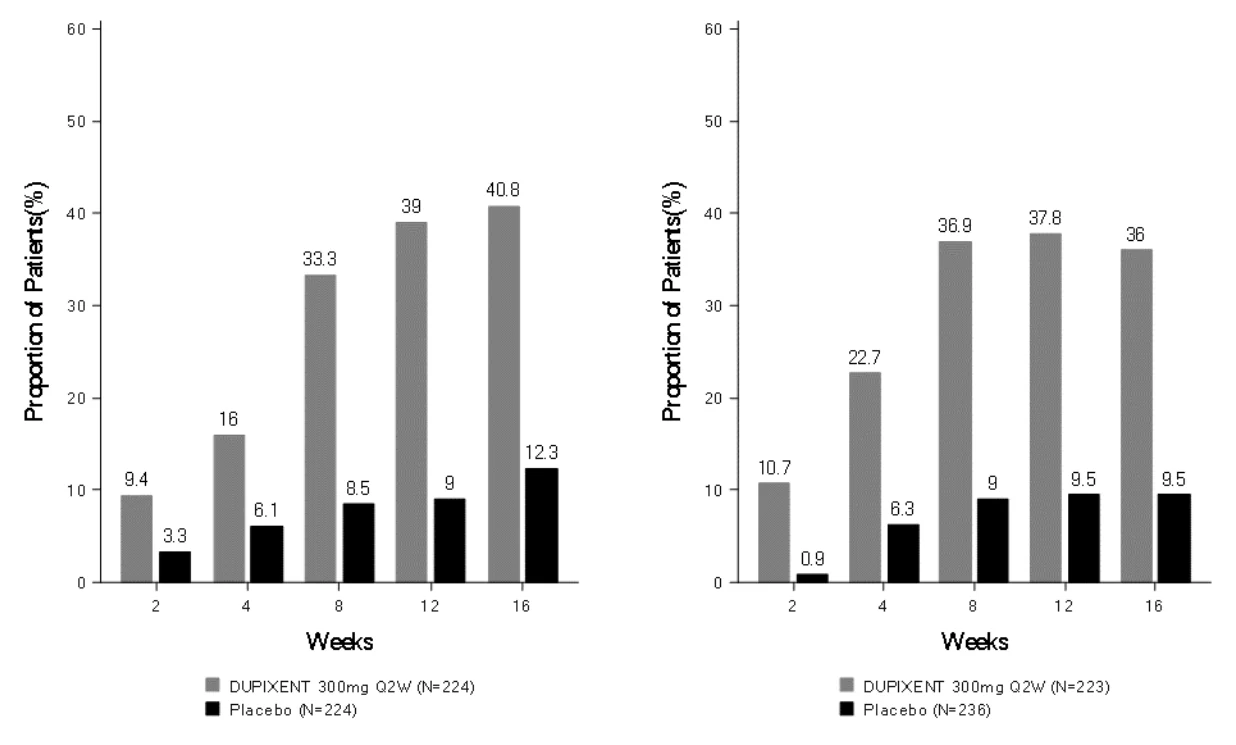
a In the primary analyses of the efficacy endpoints, subjects who received rescue treatment or with missing data were considered non-responders.
b Full Analysis Set (FAS) includes all subjects randomized.
Treatment effects in subgroups (weight, age, gender, race, and background treatment, including immunosuppressants) in SOLO 1 and SOLO 2 were in general consistent with the results in the overall study population.
In studies SOLO 1, SOLO 2, and CHRONOS, a third randomized treatment arm of Dupixent 300 mg QW did not demonstrate additional treatment benefit over Dupixent 300 mg Q2W.
52-Week Concomitant TCS Study (CHRONOS)
In the CHRONOS trial, of the 421 subjects, 353 had been on study for 52 weeks at the time of data analysis. Of these 353 subjects, responders at Week 52 represent a mixture of subjects who maintained their efficacy from Week 16 (e.g., 53% of Dupixent IGA 0 or 1 responders at Week 16 remained responders at Week 52) and subjects who were non-responders at Week 16 who later responded to treatment. Results of supportive analyses of the 353 subjects in the CHRONOS trial are presented in Table 17.
| Table 17 – The Percentage of Responders in Clinical Trial CHRONOS by Treatment Arm and Responder Status at Week 16 and Week 52 | ||||
|---|---|---|---|---|
Dupixent 300 mg Q2W + TCS | Placebo + TCS | |||
| Number of Subjectsa | 89 | 264 | ||
| Responderb,c at Week 16 and 52 | 22% | 7% | ||
| Responder at Week 16 but Non-responder at Week 52 | 20% | 7% | ||
| Non-responder at Week 16 and Responder at Week 52 | 13% | 6% | ||
| Non-responder at Week 16 and 52 | 44% | 80% | ||
| Overall Responderb,c Rate at Week 52 | 36% | 13% | ||
a In CHRONOS, of the 421 randomized and treated subjects, 68 subjects (16%) had not been on study for 52 weeks at the time of data analysis. b Responder was defined as a subject with IGA 0 or 1 (“clear” or “almost clear”) with a reduction of ≥2 points on a 0-4 IGA scale. c Subjects who received rescue treatment or with missing data were considered as non-responders. | ||||
Additional Secondary Endpoints
Patient reported outcomes in both monotherapy studies (SOLO1 and SOLO2) and in the Dupixent +TCS study (CHRONOS) were consistent with significant improvements observed in the physician reported outcomes.
A larger proportion of subjects treated with Dupixent had ≥4 points improvement (corresponding to minimal clinically important difference) in POEM and DLQI in SOLO1, SOLO2, and CHRONOS studies compared to placebo.
In SOLO 1, the proportion of Dupixent-treated responders for POEM and DLQI was 67.6% and 64.1%, respectively, compared to 26.9% and 30.5% for placebo at week 16.
In SOLO 2, the proportion of Dupixent-treated responders for POEM and DLQI was 71.7% and 73.1%, respectively, compared to 24.4% and 27.6% for placebo at week 16.
In CHRONOS, the proportion of Dupixent-treated responders for POEM and DLQI was 76.4% and 80.0%, respectively, compared to 26.1% and 30.3% for placebo at week 52.
Atopic Dermatitis in Adolescents
Dupixent monotherapy in adolescent subjects was evaluated in a multicenter, randomized, double-blind, placebo-controlled trial, AD-1526, in 251 adolescent subjects 12 to 17 years of age with moderate-to-severe AD defined by IGA score ≥3 in the overall assessment of AD lesions on a severity scale of 0 to 4, an EASI score ≥16 on a scale of 0 to 72, and a minimum BSA involvement of ≥10%. Eligible subjects enrolled into this trial had previous inadequate response to topical medication.
Subjects in the Dupixent group received an initial dose of 400 mg at Week 0, followed by 200 mg Q2W for subjects with baseline weight of <60 kg or an initial dose of 600 mg at Week 0, followed by 300 mg Q2W for subjects with baseline weight of ≥60 kg for 16 weeks. Dupixent was administered by subcutaneous injection. If needed to control intolerable symptoms, subjects were permitted to receive rescue treatment at the discretion of the investigator. Subjects who received rescue treatment were considered non-responders.
In the AD-1526 study, the mean age was 14.5 years, the median weight was 59.4 kg, 41% of subjects were female, 63% were White, 15% were Asian, and 12% were Black. At baseline 46% of subjects had an IGA score of 3 (moderate AD), 54% had an IGA score of 4 (severe AD), the mean BSA involvement was 57%, and 42% had received prior systemic immunosuppressants. Also, at baseline the mean EASI score was 36, and the weekly averaged peak pruritus NRS was 8 on a scale of 0-10. Overall, 92% of subjects had at least one co-morbid allergic condition; 66% had allergic rhinitis, 54% had asthma, and 61% had food allergies.
The co-primary endpoints were the proportion of subjects with IGA 0 (clear) or 1 (almost clear) with at least a 2-point improvement, and the proportion of subjects with EASI-75 (improvement of at least 75% in EASI), from baseline to Week 16. Other evaluated outcomes included the proportion of subjects with EASI-90 (improvement of at least 90% in EASI from baseline), reduction in itch as measured by the peak pruritus NRS and from baseline to Week 16. Additional secondary endpoints included mean change from baseline to week 16 in the POEM and CDLQI scores.
The efficacy results at Week 16 for AD-1526 Study are presented in Table 18
| Table 18 – Efficacy Results of Dupixent in the AD-1526 Study at Week 16 (FAS)a | |||||||
|---|---|---|---|---|---|---|---|
Placebo N=85a | Dupixent 200 mg (<60 kg) or 300 mg (≥60 kg) Q2W N=82a | ||||||
| IGA 0 or 1b,c | 2% | 24% | |||||
| EASI-75c | 8% | 42% | |||||
| EASI-90c | 2% | 23% | |||||
| Pruritus NRS, LS mean % change from baseline (+/- SE) | -19% (4.1) | -48% (3.4) | |||||
| Peak Pruritus NRS (>4-point improvement)c | 5% | 37% | |||||
a Full Analysis Set (FAS) includes all subjects randomized. b Responder was defined as a subject with IGA 0 or 1 (“clear” or “almost clear”) with a reduction of ≥2 points on a 0-4 IGA scale. c Subjects who received rescue treatment or with missing data were considered as non-responders (59% and 21% in the placebo and Dupixent arms, respectively. | |||||||
Patient reported outcomes CDLQI and POEM were consistent with significant improvements observed in the physician reported outcomes. The reductions in mean CDLQI and mean POEM scores from baseline to week 16 week were -8.5 (0.50) and -10.1 (0.76) for Dupixent and -5.1(0.62) and -3.8 (0.96) for placebo, respectively.
A larger percentage of subjects randomized to placebo needed rescue treatment (topical corticosteroids, systemic corticosteroids, or systemic non-steroidal immunosuppressants) as compared to the Dupixent group (59% and 21%, respectively).
A significantly greater proportion of subjects randomized to Dupixent achieved a rapid improvement in the pruritus NRS compared to placebo, (defined as >4-point improvement as early as Week 4; nominal p<0.001) and the proportion of subjects responding on the pruritus NRS continued to increase through the treatment period. The improvement in pruritus NRS occurred in conjunction with the improvement of objective signs of atopic dermatitis.
The long-term efficacy of Dupixent in adolescent patients with moderate-to-severe AD who had participated in previous clinical trials of Dupixent was assessed in an open-label extension trial (AD-1434). Efficacy data from this trial suggests that clinical benefit provided at Week 16 was sustained through Week 52.
14.2.2 Study results: Atopic Dermatitis in pediatrics (6 to 11 years of age)
Table 19 presents the results by baseline weight strata for the recommended dose regimens.
| Table 19 – Efficacy Results of Dupixent with Concomitant TCS in AD-1652 at Week 16 (FAS)a | ||||||||||
|---|---|---|---|---|---|---|---|---|---|---|
Dupixent 300 mg Q4Wd + TCS | Placebo Q4W+TCS | Dupixent 200 mg Q2We + TCS | Placebo Q2W+ TCS | |||||||
| (N=61) | (N=61) | (N=59) | (N=62) | |||||||
| <30 kg | <30 kg | ≥30 kg | ≥30 kg | |||||||
| IGA 0 or 1b, % respondersc | 29.5% | 13.1% | 39.0% | 9.7% | ||||||
| EASI-75, % respondersc | 75.4% | 27.9% | 74.6% | 25.8% | ||||||
| EASI-90, % respondersc | 45.9% | 6.6% | 35.6% | 8.1% | ||||||
| Pruritus NRS (≥4-point improvement), % respondersc | 54.1% | 11.7% | 61.4% | 12.9% | ||||||
aFull Analysis Set (FAS) includes all randomized subjects. bResponder was defined as a subject with an IGA 0 or 1 (“clear” or “almost clear”). cSubjects who received rescue treatment or who had missing data were classified as non-responders. d The worst itch NRS was an adaptation of the peak pruritus NRS instrument used in adult trials in which the wording was simplified to make it age appropriate. dSubjects received an initial dose of 600 mg of dupilumab. eSubjects received an initial dose of 200 mg (baseline weight <30 kg) or 400 mg (baseline weight ≥30 kg) of dupilumab. | ||||||||||
A greater proportion of subjects randomized to Dupixent + TCS achieved an improvement in the peak pruritus NRS compared to placebo + TCS (defined as ≥4-point improvement at week 4).
In subjects receiving Dupixent, favorable changes were observed with respect to patient-reported symptoms, the impact of AD on sleep, and health-related quality of life as measured by POEM, and CDLQI scores at Week 16 compared to placebo.
The changes in mean CDLQI score from baseline to week 16 were -11.5and -7.2 for Dupixent 300 mg Q4W (< 30 kg) and placebo, respectively, and -9.8 and -5.6 for Dupixent 200 mg Q2W (≥ 30 kg) and placebo, respectively. The changes in mean POEM score from baseline to week 16 were -14.0 and -5.9 for Dupixent 300 mg Q4W (< 30 kg) and placebo, respectively, and -13.6 and -4.7 for Dupixent 200 mg Q2W (≥ 30 kg) and placebo, respectively.
In pediatric patients with atopic dermatitis who had participated in the previous Dupixent clinical trials and enrolled in the open-label extension study (AD-1434), the effect observed at Week 16 was consistent at Week 52.
14.2.3 - Study results: Atopic dermatitis in pediatrics (6 months to 5 years of age)
The efficacy results at Week 16 for AD-1539 are presented in Table 20.
Table 20 - Efficacy Results of Dupixent with Concomitant TCS in AD-1539 at Week 16 (FAS)a
Dupixent + TCS 200 mg (5 to <15kg) or 300 mg (15 to <30 kg) Q4Wd (N=83) | Placebo + TCS (N=79) | Difference vs. Placebo (95 % CI) | |
|---|---|---|---|
| IGA 0 or 1b,c | 27.7% | 3.9% | 23.8% (13.3%, 34.4%) |
| EASI-75c | 53.0% | 10.7% | 42.3% (29.5%, 55.2%) |
| EASI-90c | 25.3% | 2.8% | 22.5% (12.4%, 32.6%) |
| Worst Scratch/Itch NRS (≥4-point improvement)c | 48.1% | 8.9% | 39.2% (26.2%, 52.3%) |
a Full Analysis Set (FAS) includes all patients randomized.
b Responder was defined as a patient with an IGA 0 or 1 (“clear” or “almost clear”).
c Patients who received rescue treatment (62% and 19% in the placebo and Dupixent arms, respectively) or with missing data were considered as non-responders.
d At Day 1, patients received 200 mg (5 to <15kg) or 300 mg (15 to <30 kg) of Dupixent.
In subjects receiving Dupixent, statistically significant differences compared to placebo were observed with respect to patient-reported symptoms and health-related quality of life as measured by POEM, CDLQI (in 85 patients 4-5 years old) / IDQOL (in 77 patients 6 months to 3 years old) score, skin pain NRS, and sleep quality NRS at Week 16. In the ITT population, the magnitude of LS mean change in CDLQI and IDQOL scores from baseline to week 16 observed was greater in the Dupixent + TCS (-10.0 and -10.9) group compared to the placebo + TCS group (-2.5 and -2.0).
The changes in mean POEM score from baseline to week 16 were -12.9 and -3.8 for Dupixent + TCS and placebo, respectively.
14.2.4 Study results: Asthma in adults and adolescents (aged 12 years and older)
Exacerbations
Results of annualized rate of severe exacerbation event for DRI12544 and QUEST are presented in Table 21. In the overall population, in QUEST, the rate of severe exacerbations was 0.46 and 0.52 for Dupixent 200 mg Q2W and 300 mg Q2W, respectively, compared to matched placebo rates of 0.87 and 0.97. The rate ratio of severe exacerbations compared to placebo was 0.52 (95% CI: 0.41, 0.66) and 0.54 (95% CI: 0.43, 0.68) for Dupixent 200 mg Q2W and 300 mg Q2W, respectively.
| Table 21 – Rate of Severe Exacerbations in DRI12544 and QUEST | |||||||
|---|---|---|---|---|---|---|---|
| Study | Treatment | Baseline Blood EOS ≥300 cells/mcL | |||||
| N | Rate (95% CI) | Rate Ratio (95% CI) | |||||
| DRI12544 | Dupixent 200 mg Q2W | 65 | 0.30 (0.13, 0.68) | 0.29 (0.11, 0.76) | |||
Dupixent 300 mg Q2W | 64 | 0.20 (0.08, 0.52) | 0.19 (0.07, 0.56) | ||||
| Placebo | 68 | 1.04 (0.57, 1.90) | |||||
| QUEST | Dupixent 200 mg Q2W | 264 | 0.37 (0.29, 0.48) | 0.34 (0.24, 0.48) | |||
| Placebo | 148 | 1.08 (0.85, 1.38) | |||||
Dupixent 300 mg Q2W | 277 | 0.40 (0.32, 0.51) | 0.33a (0.23, 0.45) | ||||
| Placebo | 142 | 1.24 (0.97, 1.57) | |||||
ap-value <0.0001 For QUEST study, a hierarchical testing procedure was used to strongly control the overall Type I error rate. Adjusted annualized severe exacerbation event rate is derived using negative binomial model with the total number of events as the response variable, with treatment, age, region, baseline eosinophil stratum, baseline ICS dose level and number of severe exacerbation events within 1 year prior to the study as covariates, and log-transformed standardized observation duration as an offset variable. | |||||||
Results of annualized rate of severe exacerbation event based on baseline blood eosinophil counts are presented in Figure 2. Results of annualized rate of severe exacerbation event based on an exploratory analysis by baseline FeNO levels are presented in Figure 3.
Figure 2 – Relative Risk in Annualized Event Rate of Severe Exacerbations Across Baseline Blood Eosinophil Count (cells/mcL) in QUEST
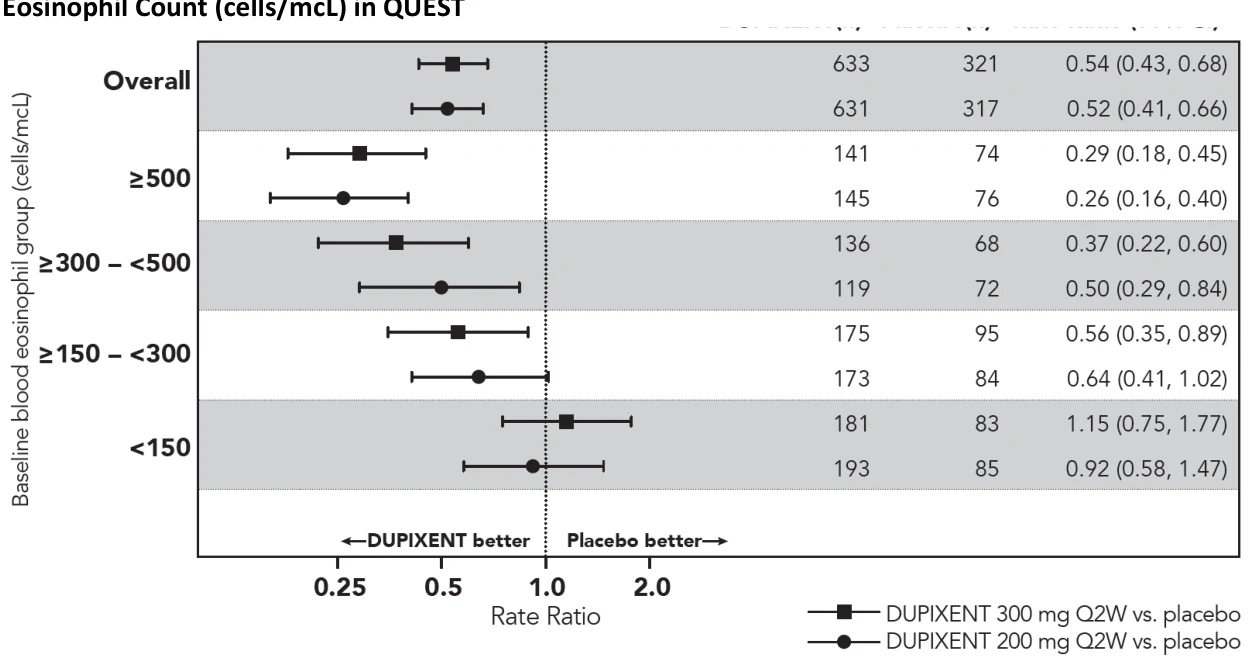
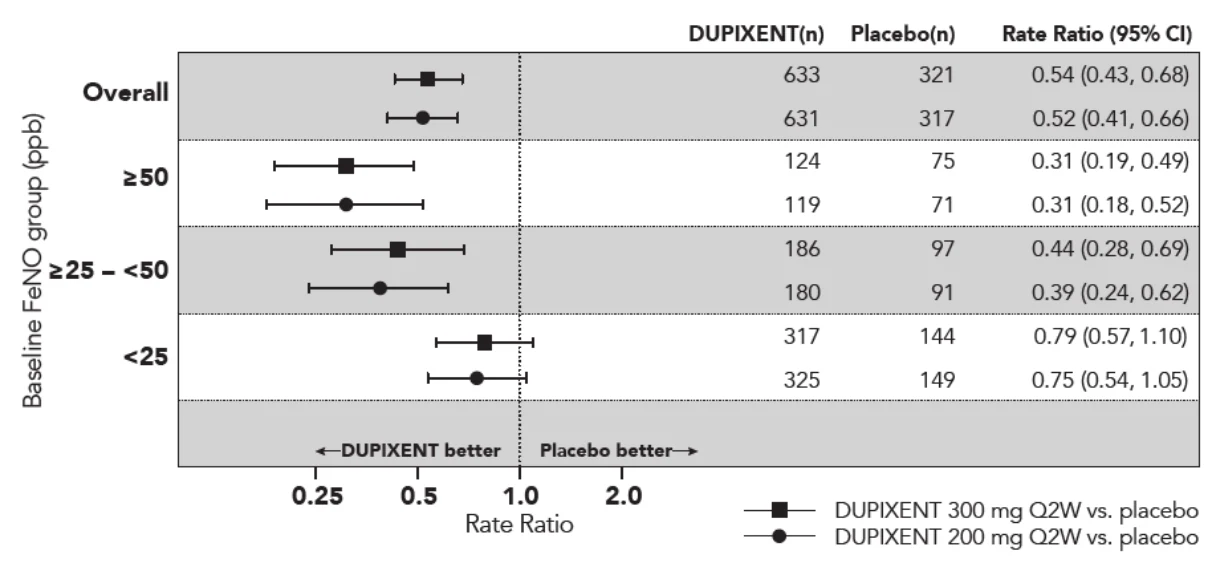
In QUEST, the estimated rate ratio of exacerbations leading to hospitalizations and/or emergency room visits versus placebo was 0.53 (95% CI: 0.28, 1.03) and 0.74 (95% CI: 0.32, 1.70) with Dupixent 200 mg or 300 mg Q2W, respectively.
Figure 3 – Relative Risk in Annualized Event Rate of Severe Exacerbations across Baseline FeNO group (ppb) in QUEST
Lung Function
Results of change from baseline in pre-bronchodilator FEV1 at Week 12 for DRI12544 and QUEST are presented in Table 22. In the overall population in QUEST, the FEV1 LS mean change from baseline was 0.32 L (21%) and 0.34 L (23%) for Dupixent 200 mg Q2W and 300 mg Q2W, respectively, compared to matched placebo means of 0.18 L (12%) and 0.21 L (14%). The LS mean treatment difference versus placebo was 0.14 L (95% CI: 0.08, 0.19) and 0.13 L (95% CI: 0.08, 0.18) for Dupixent 200 mg Q2W and 300 mg Q2W, respectively.
| Table 22 – Mean Change from Baseline and vs Placebo in Pre-Bronchodilator FEV1 at Week 12 in DRI12544 and QUEST | ||||||||
|---|---|---|---|---|---|---|---|---|
| Study | Treatment | Baseline Blood EOS ≥300 cells/mcL | ||||||
| N | LS Mean Change from baseline L (%) | LS Mean Difference vs. placebo (95% CI) | ||||||
| DRI12544 | Dupixent 200 mg Q2W | 65 | 0.43 (25.9) | 0.26 (0.11, 0.40) | ||||
Dupixent 300 mg Q2W | 64 | 0.39 (25.8) | 0.21 (0.06, 0.36) | |||||
| Placebo | 68 | 0.18 (10.2) | ||||||
| QUEST | Dupixent 200 mg Q2W | 264 | 0.43 (29.0) | 0.21 (0.13, 0.29) | ||||
| Placebo | 148 | 0.21 (15.6) | ||||||
Dupixent 300 mg Q2W | 277 | 0.47 (32.5) | 0.24a (0.16, 0.32) | |||||
| Placebo | 142 | 0.22 (14.4) | ||||||
a p-value <0.0001 For QUEST study, a hierarchical testing procedure was used to strongly control the overall Type I error rate. LS mean and LS mean difference were derived from MMRM model with change from baseline in pre-bronchodilator FEV1 values up to Week 12 as response variable, and treatment, age, sex, baseline height, region, baseline eosinophil stratum, baseline ICS dose level, visit, treatment by-visit interaction, baseline pre-bronchodilator FEV1 value and baseline-by-visit interaction as covariates. | ||||||||
Results of change from baseline in pre-bronchodilator FEV1 at Week 12 based on baseline blood eosinophil counts are presented in Figure 4. Results of change from baseline in pre-bronchodilator FEV1 at Week 12 based on an exploratory analysis by baseline FeNO levels are presented in Figure 5.
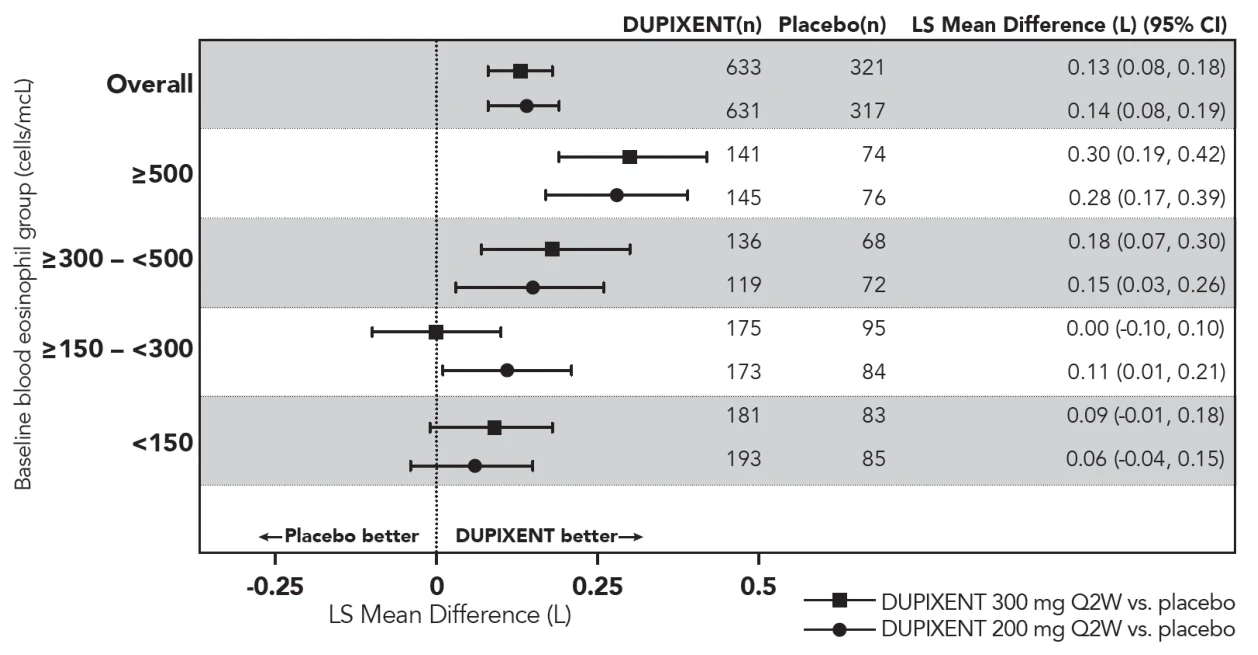
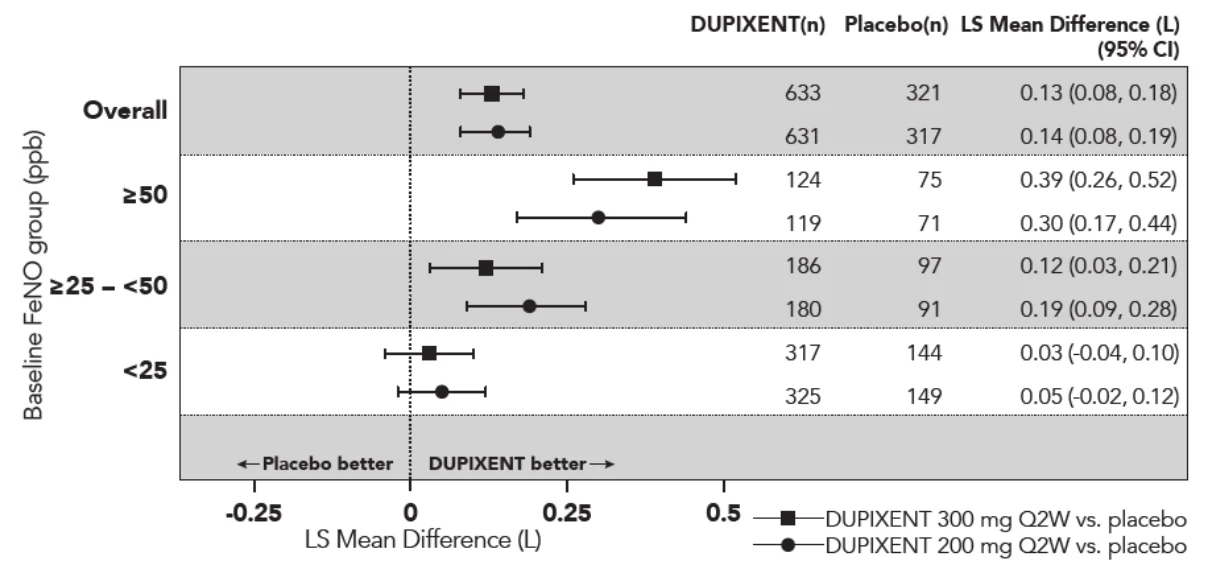
The change in FEV1 over 52 weeks in QUEST overall population is presented in Figure 6.
Figure 4 – LS Mean Difference in Change from Baseline vs Placebo to Week 12 in Pre-Bronchodilator FEV1 across Baseline Blood Eosinophil Counts (cells/mcL) in QUEST
Figure 5 – LS Mean Difference in Change from Baseline vs Placebo to Week 12 in Pre-Bronchodilator FEV1 across Baseline FeNO (ppb) in QUEST
Figure 6 – Mean Change from Baseline in Pre-Bronchodilator FEV1 (L) Over Time in QUEST (ITT Population)
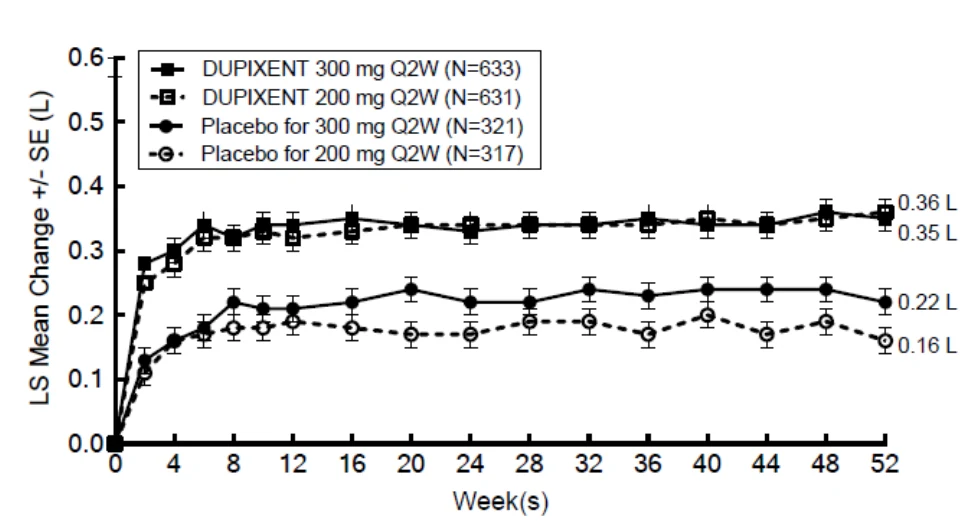
Asthma Symptoms and Quality of Life
ACQ-5 and AQLQ(S) were assessed in QUEST at 52 weeks. A responder rate was defined as an improvement in score of at least 0.5 units for ACQ-5 (scale range 0-6) and AQLQ(S) (scale range 1-7), respectively.
In QUEST, in the overall population, the ACQ-5 responder rate in subjects receiving Dupixent 200 mg and 300 mg Q2W was 69% and 69%, respectively, and 62% and 63% in subjects receiving placebo. The AQLQ(S) responder rate in subjects receiving Dupixent 200 mg and 300 mg Q2W was 62% and 62%, respectively, and 54% and 57% in subjects receiving placebo. The ACQ-5 and AQLQ(S) responder rates in subjects with baseline blood eosinophils ≥300 cells/mcL were consistent with the overall population.
Oral Corticosteroid Reduction (VENTURE)
The mean percent reduction in daily OCS dose from baseline at week 24 in subjects receiving the recommended dose of Dupixent was 70.1% (median 100 %) and placebo was 41.9% (median 50 %). Reductions of 50% or higher in the OCS dose were observed in 82 (79.6%) subjects receiving Dupixent and 57 (53.3%) of subjects receiving placebo. The proportion of subjects with a mean final OCS dose less than 5 mg at Weeks 24 was 69% for Dupixent and 33% for placebo. Only subjects with a daily baseline OCS dose of 30 mg or less were eligible to achieve a 100% reduction in OCS dose during the study. Of those subjects, 52.8% (54 of 103) receiving Dupixent and 29.2% (31 of 106) receiving placebo achieved a 100% reduction in OCS dose.
The annualized rate of severe exacerbation event was 0.65 in subjects receiving Dupixent and 1.60 in subjects receiving placebo; an exacerbation was defined as an increase in OCS dose for ≥3 days. The LS mean change from baseline in pre-bronchodilator FEV1 at week 24 was 0.22L in subjects receiving Dupixent and 0.01L in subjects receiving placebo. Changes in ACQ-5 and AQLQ(S) were consistent with those observed in QUEST.
Long-term extension trial (TRAVERSE)
The long-term safety of Dupixent in 2193 adults and 89 adolescents (aged 12 to 17 years) with moderate-to-severe asthma, including 185 adults with oral corticosteroid-dependent asthma, who had participated in previous clinical trials of Dupixent, was assessed in the open-label extension study
(TRAVERSE). Efficacy was measured as a secondary endpoint up to 96 weeks, and the results were consistent with results observed in the pivotal studies. The adults with oral corticosteroid dependent asthma had efficacy results that were consistent with the pivotal studies up to 96 weeks, despite decrease or discontinuation of oral corticosteroid dose.
14.2.5 Study results : Asthma in pediatrics 6 to 11 years of age
VOYAGE
Results of annualized rate of severe asthma exacerbation events during the 52-week treatment period compared to placebo and results in change from baseline in percent predicted pre-bronchodilator FEV1 at Week 12 in the population with baseline blood eosinophils ≥150 cells/mcl or FeNO ≥20 ppb are presented in Table 17. In this population, the LS mean change from baseline in pre-bronchodilator FEV1 at Week 12 was 0.22 L in the Dupixent group and 0.12 L in the placebo group; at Week 52 the treatment effect was consistent with results observed at Week 12.
| Table 23 – Rate of Severe Exacerbations and Mean Change from Baseline and vs Placebo in percent-predicted pre-bronchodilator FEV1 in VOYAGE | |||||||||
|---|---|---|---|---|---|---|---|---|---|
| Treatment | EOS ≥ 150 cells/mcL or FeNO ≥ 20 ppb | ||||||||
| Annualized severe exacerbations rate over 52 weeks | |||||||||
| N | Rate (95% CI) | Rate Ratio (95% CI) | |||||||
Dupixent 100 mg Q2W (<30 kg)/ 200 mg Q2W (≥30 kg) | 236 | 0.305 (0.223, 0.416) | 0.407 (0.274, 0.605) | ||||||
| Placebo | 114 | 0.748 (0.542, 1.034) | |||||||
| Mean Change from Baseline in percent predicted FEV1 at Week 12 | |||||||||
| N | LS mean Δ from baseline in percent predicted FEV1 | LS mean difference vs. placebo (95% CI) | |||||||
Dupixent 100 mg Q2W (<30 kg)/ 200 mg Q2W (≥30 kg) | 229 | 10.53 | 5.21 (2.14, 8.27) | ||||||
| Placebo | 110 | 5.32 | |||||||
A hierarchical testing procedure was used to strongly control the overall Type I error rate. Adjusted annualized severe exacerbation event rate is derived using negative binomial model with the total number of events as the response variable, with treatment, age, baseline weight group, region, baseline eosinophil level, baseline FeNO level, baseline ICS dose level and number of severe exacerbation events within 1 year prior to the study as covariates, and log-transformed standardized observation duration as an offset variable. LS mean and LS mean difference were derived from MMRM model with change from baseline in percent predicted pre-bronchodilator FEV1 values up to Week 12 as response variable, and treatment, baseline weight group, region, ethnicity, baseline eosinophil level, baseline FeNO level, baseline ICS dose level, visit, treatment by-visit interaction, baseline percent predicted pre-bronchodilator FEV1 value and baseline-by-visit interaction as covariates.
Results of the primary and key secondary endpoint in the population with baseline blood eosinophils ≥300 cells/mcl were consistent with those observed in the population with baseline blood eosinophils ≥150 cells/mcl or FeNO ≥20 ppb.
Subgroup analyses for results of Dupixent treatment based upon either baseline eosinophil level or baseline FeNO level were similar to the adolescent (12 to 17 years of age) and adult trials and are described for the adult and adolescent (12 to 17 years of age) asthma population above.
The change in percent predicted FEV1 over 52 weeks in VOYAGE in the population defined by baseline blood eosinophils ≥150 cells/mcL or FeNO ≥ 20 ppb is presented in Figure 7.
Figure 7 – Mean Change from Baseline in Percent Predicted Pre-Bronchodilator FEV1 (L) Over Time in VOYAGE (Baseline Blood Eosinophils ≥ 150 cells/mcL or FeNO ≥ 20 ppb)
| Baseline Blood Eosinophils ≥ 150 cells/mcL or FeNO ≥ 20 ppb |
|---|
ACQ-7-IA and PAQLQ(s)-IA were assessed in VOYAGE at 24 weeks. The responder rate was defined as an improvement in score of 0.5 or more (scale range 0-6 for ACQ-7-IA and 1-7 for PAQLQ(S)). In VOYAGE, in the population defined by baseline blood eosinophils ≥ 150 cells/mcL or FeNO ≥ 20 ppb, the ACQ-7-IA responder rate in subjects receiving Dupixent was 79.2%, and 69.3% in subjects receiving placebo and the PAQLQ(S)-IA responder rate in subjects receiving Dupixent was 73.0% versus 65.4%) in subjects receiving placebo.
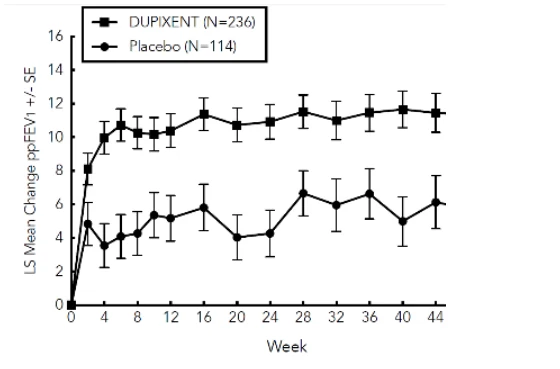 |
|---|
14.2.6 - Study Results
Chronic Rhinosinusitis with Nasal Polyps: Clinical Response (SINUS-24 and SINUS-52)
The results for primary and key secondary endpoints in CRSwNP trials are presented in the Table 24.
A reduction in score indicates improvement, except UPSIT where an increase indicates improvement.
| Table 24 – Results of the Primary and Key Secondary Endpoints at Week 24 in CRSwNP Trials | ||||||||||||
|---|---|---|---|---|---|---|---|---|---|---|---|---|
| SINUS -24 | SINUS -52 | |||||||||||
Placebo (n=133) | Dupixent 300mg Q2W (n=143) | LS mean difference vs. Placebo (95%CI) | Placebo (n=153) | Dupixent 300mg Q2W (n=295) | LS mean difference vs. Placebo (95%CI) | |||||||
| Primary Endpoints | ||||||||||||
| Scores | Baseline mean | LS mean change | Baseline mean | LS mean change | Baseline mean | LS mean change | Baseline mean | LS mean change | ||||
| NPS | 5.86 | 0.17 | 5.64 | -1.89 | -2.06 (-2.43, -1.69) | 5.96 | 0.10 | 6.18 | -1.71 | -1.80 (-2.10, -1.51) | ||
| NC | 2.45 | -0.45 | 2.26 | -1.34 | -0.89 (-1.07, -0.71) | 2.38 | -0.38 | 2.46 | -1.25 | -0.87 (-1.03, -0.71) | ||
| Key Secondary Endpoints | ||||||||||||
| Scores | Baseline mean | LS mean change | Baseline mean | LS mean change | Baseline mean | LS mean change | Baseline mean | LS mean change | ||||
| LMK sinus CT scan score | 19.55 | -0.74 | 18.55 | -8.18 | -7.44 (-8.35, -6.53) | 17.65 | -0.09 | 18.12 | -5.21 | -5.13 (-5.80, -4.46) | ||
| UPSIT | 14.44 | 0.70 | 14.68 | 11.26 | 10.56 (8.79, 12.34) | 13.78 | -0.81 | 13.53 | 9.71 | 10.52 (8.98, 12.07) | ||
| Loss of smell | 2.73 | -0.29 | 2.70 | -1.41 | -1.12 (-1.31, -0.93) | 2.72 | -0.23 | 2.77 | -1.21 | -0.98 (-1.15, -0.81) | ||
| SNOT-22 | 50.87 | -9.31 | 48.0 | -30.43 | -21.12 (-25.17, -17.06) | 53.48 | -10.40 | 51.02 | -27.77 | -17.36 (-20.87, -13.85) | ||
NC = nasal congestion, NPS = nasal polyposis score; LMK = Lund-MacKay total CT score; UPSIT = University of Pennsylvania smell identification test; SNOT-22 = 22-item sino-nasal outcome test. (all p values <0.0001). A hierarchical testing procedure was used to strongly control the overall Type I error rate in each study. Data collected after treatment discontinuation were included in the analyses. For subjects who underwent sino-nasal surgery or received systemic corticosteroids (SCS) for any reason, data collected post-surgery or post-SCS were not utilized, and the worst post-baseline value on or before the time of surgery or SCS was used in the analysis. Missing data were imputed by multiple imputation | ||||||||||||
The results of SINUS-52 trial at week 52 are presented in Table 25.
| Table 25 - Results of the efficacy at week 52 in SINUS-52 study | |||||
|---|---|---|---|---|---|
Placebo (n=153) | Dupixent 300mg Q2W (n=150) | LS mean difference vs. Placebo (95%CI) | |||
Baseline mean | LS mean change | Baseline mean | LS mean change | ||
| NPS | 5.96 | 0.15 | 6.07 | -2.24 | -2.40 (-2.77, -2.02) |
| NC | 2.38 | -0.37 | 2.48 | -1.35 | -0.98 (-1.17, -0.79) |
| SNOT-22 | 53.48 | -8.88 | 50.16 | -29.84 | -20.96 (-25.03, -16.89) |
A reduction in score indicates improvement NC = nasal congestion, NPS = nasal polyposis score; SNOT-22 = 22-item sino-nasal outcome test. (all p values <0.0001). A hierarchical testing procedure was used to strongly control the overall Type I error rate in each study. Data collected after treatment discontinuation were included in the analyses. For subjects who underwent sino-nasal surgery or received systemic corticosteroids (SCS) for any reason, data collected post-surgery or post-SCS were not utilized, and the worst post-baseline value on or before the time of surgery or SCS was used in the analysis. Missing data were imputed by multiple imputation. | |||||
Statistically significant differences were observed in SINUS-24 and SINUS-52 with regard to improvement in bilateral endoscopic NPS at Week 24 and at Week 52 in SINUS-52 following continuous treatment with Dupixent (Figure 7 and Figure 8). During the post-treatment period of SINUS-24 (e.g., Weeks 24-48) when subjects no longer received Dupixent, the treatment effect diminished over time (see Figure 8).
Figure 8 – LS mean change from baseline in bilateral nasal polyps score (NPS) up to Week 48 in SINUS-24 - ITT population.
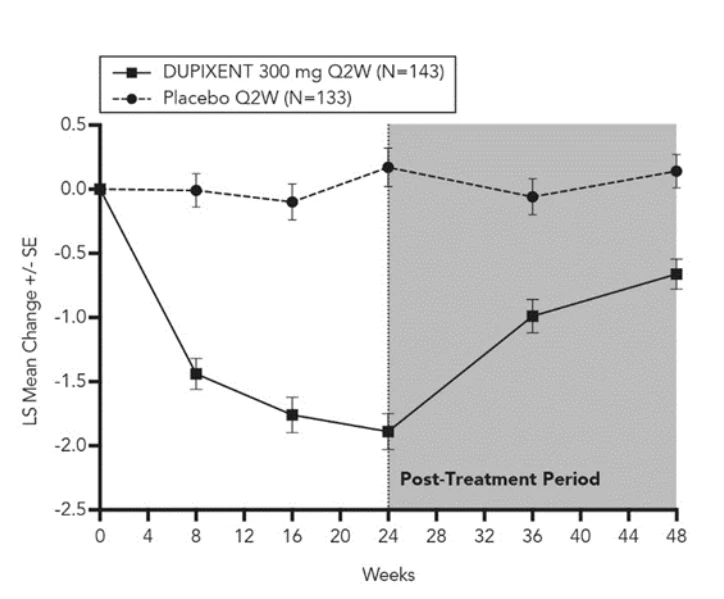
Figure 9 – LS mean change from baseline in bilateral nasal polyps score (NPS) up to Week 52 in SINUS-52 - ITT population.
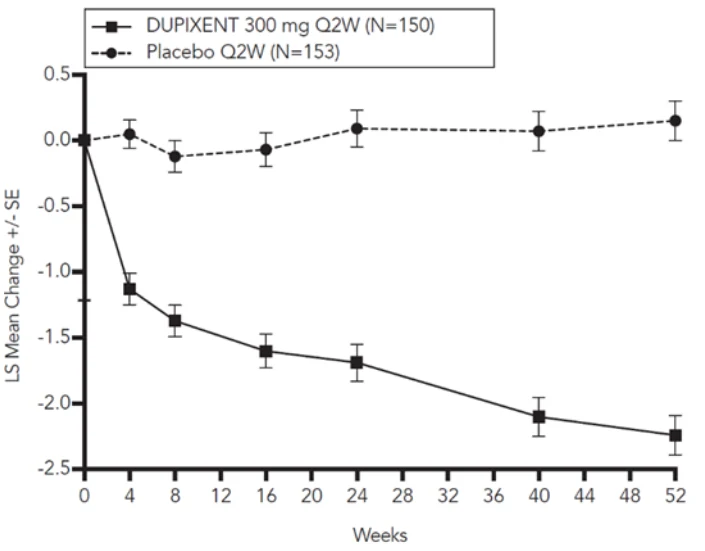
Statistically significant differences were observed in SINUS-24 and SINUS-52 with regard to improvement in NC at Week 24 and at Week 52 in SINUS-52 following continuous treatment with Dupixent (Figure 9 and Figure 10). During the post-treatment period of SINUS-24 (e.g., Weeks 24-48) when subjects no longer received Dupixent, the treatment effect diminished over time (see Figure 10).
Figure 10 – LS mean change from baseline in nasal congestion score (NC) up to Week 48 in SINUS-24 - ITT population.
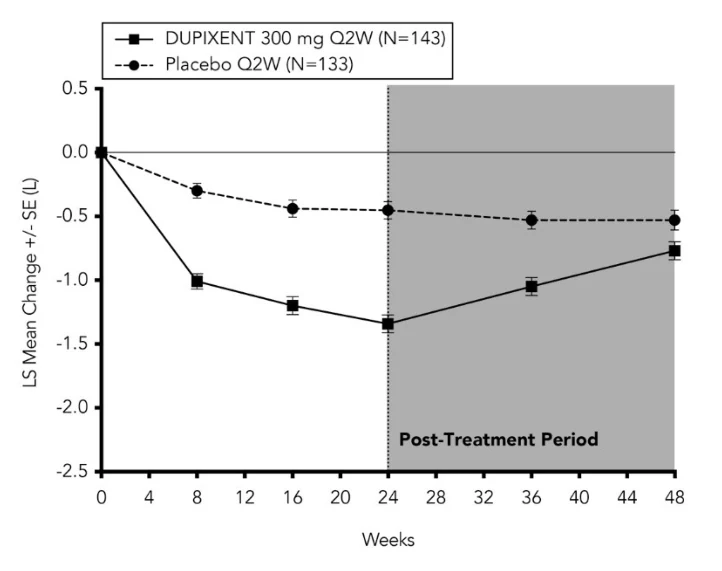
Figure 11 – LS mean change from baseline in nasal congestion score (NC) up to Week 52 in SINUS-52 - ITT population.
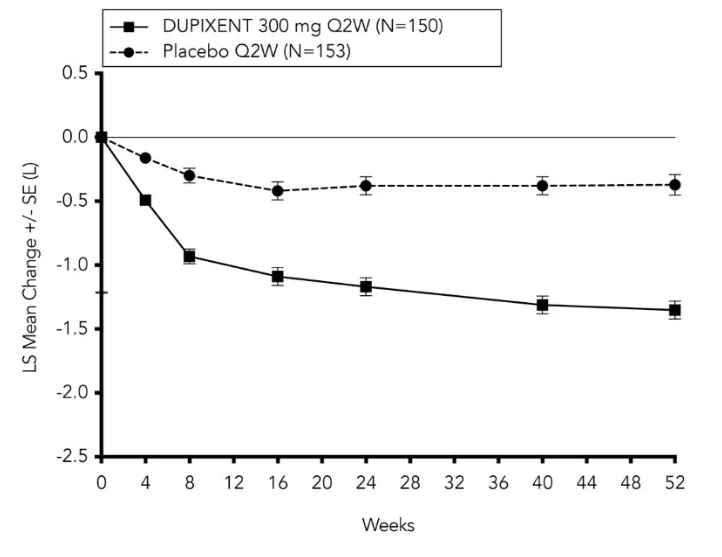
Changes in LMK, UPSIT, and loss of smell scores at Week 52 were consistent with results observed at Week 24.
In the pre-specified multiplicity-adjusted pooled analysis of the two trials (up to Week 24 for SINUS-24 and up to Week 52 for SINUS-52), treatment with Dupixent resulted in significant reduction of systemic corticosteroid use or need for sino-nasal surgery (actual or planned) versus placebo (HR of 0.24; 95% CI: 0.17, 0.35) (see Figure 11.
In the pooled analysis, the proportion of subjects who required systemic corticosteroid use over the 52-week period was 12.3% in the Dupixent group and 38.0% in the placebo group. The proportion of subjects who required sino-nasal surgery over the 52-week period was 1.2% in the Dupixent group and 10.2% in the placebo group.
Figure 12 – Kaplan Meier Curve for time-to-first systemic corticosteroid use or sino-nasal surgery during treatment period - ITT population [SINUS-24 and SINUS-52 pooled]
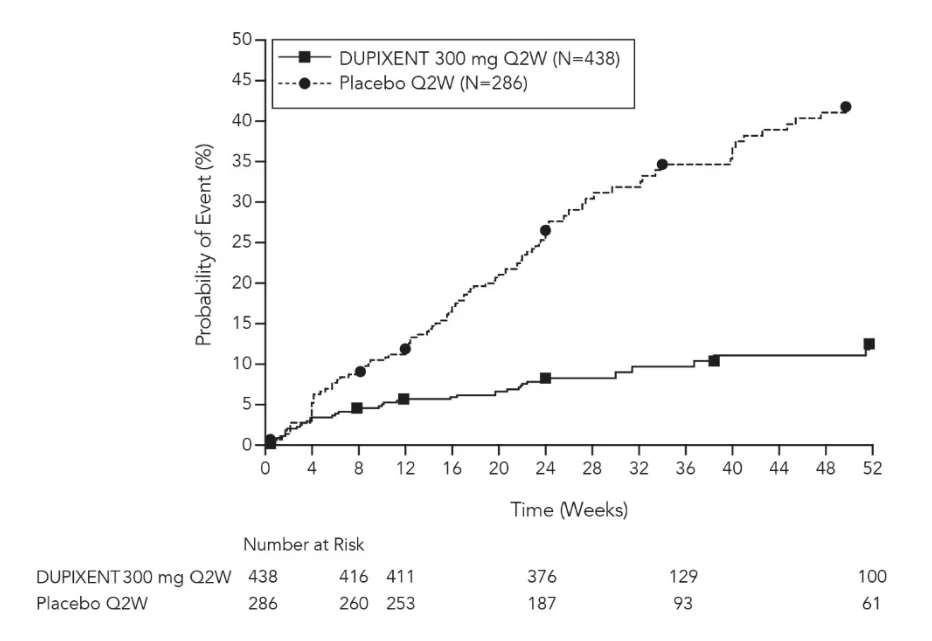
Changes in NPS, NC, and LMK scores in favour of dupilumab were consistent between subjects with CRSwNP with or without comorbid asthma.
In subjects with CRSwNP and co-morbid asthma, improvements in pre-bronchodilator FEV1 were consistent with those observed in the asthma program.
14.2.7- Study Results: Eosinophilic Esophagitis
The results for TREET Parts A and B are presented in Table 26.
Table 26: Efficacy Results of Dupixent at Week 24 in Subjects 12 Years of Age and Older with EoE (TREET Parts A and B)
| TREET Part Aa | TREET Part Ba | |||||
|---|---|---|---|---|---|---|
Dupixent 300 mg QW N = 42 | Placebo N = 39 | Difference vs. Placebo (95% CI)b | Dupixent 300 mg QW N = 80 | Placebo N = 79 | Difference vs. Placebo (95% CI)b | |
| Co-primary endpoints | ||||||
| Proportion of patients achieving histological remission (peak esophageal intraepithelial eosinophil count ≤6 eos/hpf), n (%) | 25 (59.5) | 2 (5.1) | 55.3 (39.58, 71.04)c | 47 (58.8) | 5 (6.3) | 53.5 (41.20, 65.79)c |
| Absolute change from baseline in DSQ score (0-84d), LS mean (SE) | -21.92 (2.53) | -9.60 (2.79) | -12.32 (-19.11, -5.54)c | -23.78 (1.86) | -13.86 (1.91) | -9.92 (-14.81, -5.02)c |
|---|---|---|---|---|---|---|
| Secondary endpoint | ||||||
| Absolute change from baseline in EoE-EREFS (0-18e), LS mean (SE) | -3.2 (0.41) | -0.3 (0.41) | -2.9 (-3.91, -1.84) c | -4.5 (0.36) | -0.6 (0.38) | -3.8 (-4.77, -2.93) |
a Subjects stratified at randomization by age at the time of the screening visit (adult vs. adolescent) and by current use of proton-pump inhibitor (yes vs. no).
b Absolute difference in proportions for categorical endpoints and LS mean difference for continuous endpoints.
c Statistically significant (p < 0.05). For histological remission, the difference in percentages is estimated using the Cochran Mantel Haenszel method, adjusting for randomization stratification factors. For absolute change in DSQ score, the LS mean changes, standard errors, and differences are estimated using an ANCOVA model with treatment group, randomization stratification factors, and baseline measurement as covariates.
d Total biweekly DSQ scores range from 0 to 84; higher scores indicate greater frequency and severity of dysphagia.
e EoE-EREFS overall scores range from 0 to 18; higher scores indicate worse endoscopic inflammatory and/or remodeling features of the esophagus.
In TREET Parts A and B, a greater proportion of subjects randomized to Dupixent achieved histological remission (peak esophageal intraepithelial eosinophil count ≤6 eos/hpf) compared to placebo at Week 24. Additionally, subjects randomized to Dupixent had a favourable change in DSQ score compared to placebo at Week 24, which represented a within-subject clinically meaningful improvement.
Subjects randomized to Dupixent had a favourable change in endoscopic scoring (EoE-EREFS) of inflammatory and remodeling features of EoE compared to placebo at Week 24.
The proportion of subjects achieving a histological response (peak esophageal intraepithelial eosinophil count <15 eos/hpf) at Week 24 with Dupixent was 64.3% in Part A and 82.5% in Part B, whereas the proportion was 7.6% with placebo (in both Parts A and B).
14.2.8 - Study Results: Prurigo Nodularis
The efficacy results for PRIME and PRIME2 are presented in Table 27.
Table 27: Results of the Primary and Key Secondary Endpoints in PRIME and PRIME2
| PRIME | PRIME2 | ||||||||||
| Placebo (N=76) | Dupixent 300 mg Q2W (N=75) | Difference (95% CI) for DUPIXENT vs. Placeboa | Placebo (N=82) | Duipxent 300 mg Q2W (N=78) | Difference (95% CI) for DUPIXENT vs. Placeboa | ||||||
| Proportion of patients with improvement (reduction) in WI-NRS by ≥4 points from baseline at week 24 (Primary endpoint in PRIME) b | 18.4% | 60.0% | 42.7% (27.76, 57.72) | 19.5% | 57.7% | 42.6% (29.06, 56.08) | |||||
| Proportion of patients with improvement (reduction) in WI-NRS by ≥4 points from baseline at week 12. (Primary endpoint in PRIME2) b | 15.8%a | 44.0% a | 29.2% (14.49, 43.81)c | 22.0% | 37.2% | 16.8% (2.34, 31.16) | |||||
| Proportion of patients with IGA PN-S 0 or 1 at week 24. b | 18.4% | 48.0% | 28.3% (13.41, 43.16) | 15.9% | 44.9% | 30.8% (16.37, 45.22) | |||||
| Proportion of patients with both an improvement (reduction) in WI-NRS by ≥4 points from baseline to Week 24 and an IGA PN-S 0 or 1 at Week 24 b | 9.2% | 38.7% | 29.6% (16.42, 42.81) | 8.5% | 32.1% | 25.5% (13.09, 37.86) | |||||
a Cochran-Mantel Haenszel (CMH) derived response rate difference, adjusted by randomization stratification factors (history of atopy [atopic or non-atopic], stable use of TCS/TCI [yes or no], and region), and baseline anti-depressant use.
b Subjects who received rescue treatment earlier or had missing data were considered as non-responders.
c Not adjusted for multiplicity in PRIME.
The Dermatology Life Quality Index (DLQI) score ranges from 0 to 30. The LS mean change from baseline in DLQI score (SE) at Week 24 was -11.97 (1.02) and -13.16 (1.21) in patients receiving Dupixent in PRIME and PRIME2, respectively, and -5.77 (1.05) and -6.77 (1.18) in patients receiving placebo in PRIME and PRIME2, respectively.
15. MICROBIOLOGY
No microbiological information is required for this drug product.
16. NON-CLINICAL TOXICOLOGY
Dupilumab binds specifically to human IL-4Rα and does not react with any other animal species. Pivotal toxicology studies were therefore conducted using surrogate antibodies against the IL-4Rα of cynomolgus monkeys and CD-1 mice.
General Toxicology:
No significant adverse effects were observed in cynomolgus monkeys when administered a surrogate antibody against IL-4Rα by subcutaneous or intravenous injection up to dose levels of 100 mg/kg/week for 6 months. Serum drug levels achieved at these dosages were sufficient to have fully saturated the monkey IL-4Rα.
Carcinogenicity:
Carcinogenicity studies have not been conducted with dupilumab.
Genotoxicity:
Genotoxicity studies have not been conducted with dupilumab.
Reproductive and Developmental Toxicology:
No significant adverse embryofetal, morphological, functional or immunological developmental effects were observed in offspring of pregnant cynomolgus monkeys exposed to a surrogate antibody against IL-4Rα by subcutaneous injection from the beginning of organogenesis through parturition up to dose levels of 100 mg/kg/week. The overall rate of embryofetal loss during gestation was 5 of 20 (25%) in control animals, 10 of 20 (50%) in animals treated with 25 mg/kg/week, and 3 of 18 (17%) in animals treated with 100 mg/kg/week. Concentrations of the surrogate antibody observed in the infant monkeys at birth were comparable to those observed in maternal serum, indicating placental transfer.
No effects on fertility parameters, including reproductive organs, menstrual cycle length, or sperm analyses were observed in sexually mature mice receiving a murine surrogate antibody against IL-4Rα by subcutaneous injection up to dose levels of 200 mg/kg/week.
Juvenile Toxicity:
No juvenile toxicology studies have been conducted with dupilumab or any of its surrogates.