


Product Monograph - Norvir Sec
SUMMARY PRODUCT INFORMATION
| Route of Administration | Dosage Form/Strength | Clinically Relevant Non-medicinal Ingredients |
|---|---|---|
| oral | film-coated tablets / 100 mg | sorbitan monolaurate/sorbitan laurate |
| oral solution / 80 mg/mL | ethanol, polyoxyl 35 castor oil, propylene glycol | |
| soft elastic capsules / 100 mg | ethanol, polyoxyl 35 castor oil | |
| For a complete listing of non-medicinal ingredients, see (DOSAGE FORMS, COMPOSITION AND PACKAGING) section. |
INDICATIONS AND CLINICAL USE
NORVIR® (ritonavir) film-coated tablets, NORVIR® (ritonavir) oral solution, and NORVIR® SEC (ritonavir) soft elastic capsules are indicated in combination with other antiretroviral agents for:
- the treatment of HIV infection when therapy is warranted.
For patients with advanced Human Immunodeficiency Virus (HIV) disease, this indication is based on the results from a study that showed a reduction in both mortality and AIDS-defining clinical events for patients who received NORVIR®. Median duration of follow-up in this study was 6 months. The clinical benefit from NORVIR® therapy for longer periods of treatment is unknown.
For patients with less advanced disease, this indication is based on changes in surrogate markers in studies evaluating patients who received NORVIR® alone or in combination with other antiretroviral agents. See (CLINICAL TRIALS).
Geriatrics (≥ 65 years of age)
Clinical studies of NORVIR® did not include sufficient numbers of subjects age 65 and over to determine whether they respond differently from younger subjects. In general, appropriate caution should be exercised in the administration and monitoring of NORVIR® in elderly patients reflecting the greater frequency of decreased hepatic, renal, or cardiac function, and of concomitant disease or other drug therapy.
Pediatrics (2 to 16 years of age)
The safety and effectiveness of NORVIR® in pediatric patients below the age of 2 years have not been established. Although the database in HIV-infected patients age 2 to 16 years is much smaller, the adverse event profile seen during a clinical trial and post-marketing experience was similar to that observed for adult patients.
CONTRAINDICATIONS
When co-administering NORVIR® (ritonavir) film-coated tablets, NORVIR® (ritonavir) oral solution or NORVIR® SEC (ritonavir) soft elastic capsules with other protease inhibitors, see the Product Monograph for that protease inhibitor including contraindication information.
- NORVIR® is contraindicated in patients with known hypersensitivity to NORVIR® or any of its ingredients. For a complete listing, see the (DOSAGE FORMS, COMPOSITION AND PACKAGING) sections of the Product Monograph.
- Co-administration of NORVIR® is contraindicated with the drugs listed in Table 1 [see also (DRUG INTERACTIONS, Serious Drug Interactions) box] because competition for primarily CYP3A by NORVIR® could result in inhibition of the metabolism of these drugs and create the potential for serious and/or life-threatening reactions such as cardiac arrhythmias, prolonged or increased sedation, and respiratory depression.
Table 1. Drugs that are Contraindicated with NORVIR®
| Drug Class | Drugs Within Class that are Contraindicated with NORVIR® | Clinical Comment |
|---|---|---|
| Alpha1-Adrenoreceptor Antagonist | Alfuzosin | CONTRAINDICATED due to potential for serious reactions such as hypotension. See (DRUG INTERACTIONS, Drug-Drug Interactions, Table 5). |
| Antiarrhythmics | amiodarone, bepridil1, flecainide, propafenone, quinidine | CONTRAINDICATED due to potential for serious and/or life-threatening reactions such as cardiac arrhythmias. |
| Antibiotic | fusidic acid | CONTRAINDICATED due to potential of increased fusidic acid-associated adverse events such as hepatitis or bone marrow suppression. |
| Anticoagulant | rivaroxaban | CONTRAINDICATED due to potential of increased rivaroxaban plasma concentrations which may lead to risk of increased bleeding. |
| Antifungal | Voriconazole | CONTRAINDICATED due to a significant reduction in voriconazole plasma concentrations and possible loss of effect. See (DETAILED PHARMACOLOGY, Human, Pharmacokinetics, Table 13). |
| Antihistamines | astemizole1, terfenadine1 | CONTRAINDICATED due to potential for serious and/or life-threatening reactions such as cardiac arrhythmias. |
| Ergot Derivatives | dihydroergotamine, ergonovine, ergotamine, methylergonovine1 | CONTRAINDICATED due to potential for serious and/or life-threatening reactions such as acute ergot toxicity characterized by vasospasm and tissue ischemia. |
| GI Motility Agent | cisapride1 | CONTRAINDICATED due to potential for serious and/or life-threatening reactions such as cardiac arrhythmias. |
| Herbal Products | St. John’s wort (Hypericum perforatum) | CONTRAINDICATED: May lead to loss of virologic response and possible resistance to NORVIR® or to the class of protease inhibitors. |
| HMG-CoA Reductase Inhibitors | lovastatin, simvastatin | CONTRAINDICATED: Potential for serious reactions such as risk of myopathy including rhabdomyolysis. |
| Long Acting Beta-Adrenoceptor | salmeterol | CONTRAINDICATED: May result in potential increased risk of cardiovascular adverse events associated with salmeterol. |
| Neuroleptic | pimozide | CONTRAINDICATED due to potential for serious and/or life-threatening reactions such as cardiac arrhythmias. |
| Drug Class | Drugs Within Class that are Contraindicated with NORVIR® | Clinical Comment |
|---|---|---|
| PDE5 Inhibitors | sildenafil2, only when used for the treatment of pulmonary arterial hypertension (PAH) vardenafil | CONTRAINDICATED due to potential increase in PDE5 inhibitor associated adverse reactions including hypotension, syncope, visual changes and prolonged erection. CONTRAINDICATED due to potential increase in PDE5 inhibitor associated adverse reactions including hypotension, syncope, visual changes and prolonged erection. |
| Sedative/Hypnotics | midazolam, triazolam | CONTRAINDICATED due to potential for serious and/or life-threatening reactions such as prolonged or increased sedation or respiratory depression. |
1: Product no longer marketed in Canada. 2: See (WARNINGS AND PRECAUTIONS) and (DRUG INTERACTIONS) for co-administration of sildenafil in patients with erectile dysfunction. | ||
WARNINGS AND PRECAUTIONS
Serious Warnings and Precautions
|
General
When co-administering NORVIR® (ritonavir) film-coated tablets, NORVIR® (ritonavir) oral solution or NORVIR® SEC (ritonavir) soft elastic capsules with other protease inhibitors, see the Product Monograph for that protease inhibitor including (WARNINGS AND PRECAUTIONS).
Co-administration of NORVIR® with certain non-sedating antihistamines, sedative hypnotics, or antiarrhythmics may result in potentially serious and/or life-threatening adverse events due to possible effects of NORVIR® on the hepatic metabolism of certain drugs. See (CONTRAINDICATIONS) and (DRUG INTERACTIONS).
NORVIR® is an inhibitor of cytochrome P450 3A (CYP3A) both in vitro and in vivo. NORVIR® also inhibits CYP2D6 in vitro, but to a lesser extent than CYP3A. Co-administration of NORVIR® and drugs primarily metabolized by CYP3A or CYP2D6 may result in increased plasma concentrations of other drugs that could increase or prolong its therapeutic and adverse effects. See (CONTRAINDICATIONS, Table 1) and (DRUG INTERACTIONS, Table 5).
Cardiac and neurologic events have been reported with NORVIR® when co-administered with disopyramide, mexiletine, nefazodone, fluoxetine and beta blockers. The possibility of drug interactions cannot be excluded.
There have been post-marketing reports of drug interactions, including increased itraconazole levels, when NORVIR® and itraconazole were co-administered.
Due to inhibition of CYP3A by NORVIR®, co-administration of NORVIR® with quetiapine results in increased quetiapine concentrations. Serious and life-threatening quetiapine-related adverse reactions have been reported. NORVIR® should not be used in combination with quetiapine (see DRUG INTERACTIONS).
Antimycobacterial
Saquinavir/NORVIR® should not be given together with rifampin, due to the risk of severe hepatotoxicity (presenting as increased hepatic transaminases) if the three drugs are given together.
HMG-CoA Reductase Inhibitors
Concomitant use of NORVIR® with lovastatin and simvastatin is contraindicated. See (CONTRAINDICATIONS). Caution should be exercised if HIV protease inhibitors, including NORVIR®, are used concurrently with other HMG-CoA reductase inhibitors that are also metabolized by the CYP3A4 pathway (e.g. atorvastatin). While rosuvastatin elimination is not dependent on CYP3A, an elevation of rosuvastatin exposure has been reported with NORVIR® co-administration. The risk of myopathy including rhabdomyolysis may be increased when HIV protease inhibitors, including NORVIR®, are used in combination with these drugs.
Allergic Reactions
Allergic reactions including urticaria, skin eruptions, bronchospasm, and angioedema have been reported. Rare cases of anaphylaxis and Stevens-Johnson syndrome have also been reported.
Organ Targets for Toxicity
Toxicological studies in laboratory animals identified various organs as targets for toxicity at drug exposures below or approaching those achieved in patients participating in clinical trials with NORVIR®. Because no safety margin or a small safety margin has been demonstrated in long-term studies, these organs should be assessed periodically or if clinical signs and symptoms occur during therapy. See (TOXICOLOGY).
Co-Administration with Tipranavir
Co-administration of tipranavir with 200 mg NORVIR® has been associated with reports of clinical hepatitis and hepatic decompensation including some fatalities. See (DRUG INTERACTIONS). Refer to the tipranavir Product Monograph for more information.
Extra vigilance is warranted in patients with chronic hepatitis B or hepatitis C co-infection, as these patients have an increased risk of hepatotoxicity.
Carcinogenesis and Mutagenesis
For a brief discussion of pre-clinical animal data. See (TOXICOLOGY, Mutagenicity and Carcinogenicity).
Cardiovascular
PR Interval Prolongation
NORVIR® has been shown to cause asymptomatic prolongation of the PR interval in some patients. Reports of second or third degree atrioventricular block in patients with underlying structural heart disease and pre-existing conduction system abnormalities or in patients receiving drugs known to prolong the PR interval (such as verapamil or atazanavir) have been reported in patients receiving NORVIR®. NORVIR® should be used with caution in such patients. See (ACTION AND CLINICAL PHARMACOLOGY, Pharmacodynamics, Effects on the Electrocardiogram).
Endocrine and Metabolism
Corticosteroids
Concomitant use of NORVIR® and fluticasone or other glucocorticoids that are metabolized by CYP3A4 is not recommended unless the potential benefit of treatment outweighs the risk of systemic corticosteroid effects.
A drug interaction study in healthy subjects has shown that NORVIR® significantly increases plasma fluticasone propionate exposures, resulting in significantly decreased serum cortisol concentrations. Systemic corticosteroid effects, including Cushing’s syndrome and adrenal suppression have been reported during post-marketing use in patients receiving NORVIR® and budesonide or inhaled/intranasally administered fluticasone propionate. See (DRUG INTERACTIONS, Table 5).
Diabetes Mellitus/Hyperglycemia
New onset diabetes mellitus, exacerbation of pre-existing diabetes mellitus and hyperglycemia have been reported during post-marketing surveillance in HIV-infected patients receiving protease inhibitor therapy. Some patients required either initiation or dose adjustments of insulin or oral hypoglycemic agents for treatment of these events. In some cases diabetic ketoacidosis has occurred. In those patients who discontinued protease inhibitor therapy, hyperglycemia persisted in some cases. Because these events have been reported voluntarily during clinical practice, estimates of frequency cannot be made and a causal relationship between protease inhibitor therapy and these events has not been established.
Fat Redistribution/Accumulation
Redistribution/accumulation of body fat including central obesity, dorsocervical fat enlargement (buffalo hump), peripheral wasting, facial wasting, breast enlargement, and “cushingoid appearance” have been observed in patients receiving antiretroviral therapy. The mechanism and long-term consequences of these events are currently unknown. A causal relationship has not been established.
Lipid Disorders
Treatment with NORVIR® therapy alone or in combination with saquinavir has resulted in substantial increases in the concentration of total triglycerides and cholesterol. See (ADVERSE REACTIONS, Abnormal Hematologic and Clinical Chemistry Findings). Triglycerides and cholesterol testing should be performed prior to initiating NORVIR® therapy and at periodic intervals during therapy. Lipid disorders should be managed as clinically appropriate.
Hematologic
There have been reports of increased bleeding, including spontaneous skin hematomas and hemarthrosis, in patients with hemophilia type A and type B treated with protease inhibitors. In some patients, additional Factor VIII was given. In more than half of the reported cases, treatment with protease inhibitors was continued or re-introduced. There is no proven relationship between protease inhibitors and such bleeding; however, the frequency of bleeding episodes should be closely monitored in patients on NORVIR®.
Hepatic/Biliary/Pancreatic
Impaired Hepatic Function
NORVIR® is principally metabolized by the liver. Pre-clinical studies have identified the liver as a toxicity target. See (TOXICOLOGY). Therefore, appropriate tests should be performed at treatment initiation and at periodic intervals to assess hepatic function.
Caution should be exercised when administering NORVIR® to patients with impaired hepatic function.
Hepatic Reactions
Hepatic transaminase elevations exceeding 5 times the upper limit of normal, clinical hepatitis, and jaundice have occurred in patients receiving NORVIR® alone or in combination with other antiretroviral drugs. See (ADVERSE REACTIONS, Table 4). There may be an increased risk for transaminase elevations in patients with underlying hepatitis B or C. Therefore, caution should be exercised when administering NORVIR® to patients with pre-existing liver disease, liver enzyme abnormalities, or hepatitis.
There have been post-marketing reports of hepatic dysfunction, including some fatalities. These have generally occurred in patients taking multiple concomitant medications and/or with advanced AIDS.
Pancreatitis
Pancreatitis has been observed in patients receiving NORVIR® therapy, including those who developed hypertriglyceridemia. In some cases fatalities have been observed. Patients with advanced HIV disease may be at increased risk of elevated triglycerides and pancreatitis.
Pancreatitis should be considered if clinical symptoms (nausea, vomiting, abdominal pain) or abnormalities in laboratory values (such as increased serum lipase or amylase values) suggestive of pancreatitis should occur. Patients who exhibit these signs or symptoms should be evaluated and NORVIR® therapy should be discontinued if a diagnosis of pancreatitis is made.
Immune
Immune Reconstitution Syndrome
Immune reconstitution syndrome has been reported in HIV-infected patients treated with combination antiretroviral therapy, including NORVIR®. During the initial phase of treatment, patients responding to antiretroviral therapy may develop an inflammatory response to indolent or residual opportunistic infections (such as Mycobacterium avium infection, cytomegalovirus, Pneumocystis jiroveci pneumonia, or tuberculosis), which may necessitate further evaluation and treatment.
Autoimmune disorders (such as Graves’ disease, polymyositis, and Guillain-Barré syndrome) have also been reported to occur in the setting of immune reconstitution, however, the time to onset is more variable, and can occur many months after initiation of treatment.
Neurologic
Central nervous system (CNS) penetration of NORVIR® has not been established.
Sexual Function/Reproduction
PDE5 Inhibitors
Particular caution should be used when prescribing sildenafil or tadalafil for the treatment of erectile dysfunction in patients receiving NORVIR®. Co-administration of NORVIR® with these drugs is expected to substantially increase their concentrations and may result in increased associated adverse events, such as hypotension, syncope, visual changes, and prolonged erection.
Concomitant use of sildenafil with NORVIR® is contraindicated in pulmonary arterial hypertension patients. Concomitant use of vardenafil with NORVIR® is contraindicated. See (CONTRAINDICATIONS) and (DRUG INTERACTIONS, Table 5).
Resistance/Cross-resistance
Resistance
HIV-1 isolates with reduced susceptibility to ritonavir have been selected in vitro. Genotypic analysis of these isolates showed mutations in the HIV protease gene at amino acid positions 84 (Ile to Val), 82 (Val to Phe), 71 (Ala to Val), and 46 (Met to Ile). Phenotypic (n = 18) and genotypic (n = 44) changes in HIV isolates from selected patients treated with NORVIR® were monitored in Phase 1/2 trials over a period of 3 to 32 weeks. Mutations associated with the HIV viral protease in isolates obtained from 41 patients appeared to occur in a stepwise and ordered fashion; in sequence, these mutations were position 82 (Val to Ala/Phe), 54 (Ile to Val), 71 (Ala to Val/Thr), and 36 (Ile to Leu), followed by combinations of mutations at an additional 5 specific amino acid positions.
Of 18 patients for which both phenotypic and genotypic analysis were performed on free virus isolated from plasma, 12 showed reduced susceptibility to ritonavir in vitro. All 18 patients possessed one or more mutations in the viral protease gene. The 82 mutation appeared to be necessary but not sufficient to confer phenotypic resistance. Phenotypic resistance was defined as a ≥ 5-fold decrease in viral sensitivity in vitro from baseline. The clinical relevance of phenotypic and genotypic changes associated with NORVIR® therapy has not been established.
Cross-Resistance
Among protease inhibitors variable cross-resistance has been recognized. Serial HIV isolates obtained from six patients during NORVIR® therapy showed a decrease in ritonavir susceptibility in vitro but did not demonstrate a concordant decrease in susceptibility to saquinavir in vitro when compared to matched baseline isolates. However, isolates from two of these patients demonstrated decreased susceptibility to indinavir in vitro (8-fold). Isolates from five patients were also tested for cross-resistance to amprenavir and nelfinavir; isolates from two patients had a decrease in susceptibility to nelfinavir (12- to 14-fold), and none to amprenavir. Cross-resistance between NORVIR® and reverse transcriptase inhibitors is unlikely because of the different enzyme targets involved. One zidovudine (ZDV)-resistant HIV isolate tested in vitro retained full susceptibility to ritonavir.
Special Populations
Pregnant Women
There are no adequate and well-controlled studies in pregnant women. As of January 2012, the Antiretroviral Pregnancy Registry (APR) has received prospective reports of 3860 exposures to ritonavir containing regimens (1567 exposed in the first trimester and 2293 exposed in the second and third trimester). Birth defects occurred in 35 of the 1567 (2.2%) live births (first trimester exposure) and 59 of the 2293 (2.6%) live births (second/third trimester exposure). The prevalence of birth defects after any trimester exposure to ritonavir is comparable to the prevalence observed in the general population.
Because animal reproduction studies are not always predictive of human response, this drug should be used during pregnancy only if clearly needed.
In rat fertility studies, hepatic toxicity precluded drug exposures equal to those achieved with the proposed human therapeutic dose. No effects on fertility in rats were produced at drug exposures approximately 40% (male) and 60% (female) of that achieved with the proposed human therapeutic dose.
No treatment-related malformations were observed when ritonavir was administered to pregnant rats or rabbits. Developmental toxicity observed in rats (early resorptions, decreased fetal body weight and ossification delays and developmental variations) occurred at a maternally toxic dosage at an exposure equivalent to approximately 30% of that achieved with the proposed therapeutic dose. A slight increase in the incidence of cryptorchidism was also noted in rats at an exposure approximately 22% of that achieved with the proposed therapeutic dose.
Developmental toxicity observed in rabbits (resorptions, decreased litter size and decreased fetal weights) also occurred at a maternally toxic dosage equivalent to 1.8 times the proposed therapeutic dose based on a body surface area conversion factor.
Antiretroviral Pregnancy Registry
To monitor maternal-fetal outcomes of pregnant women exposed to NORVIR®, an Antiretroviral Pregnancy Registry has been established. Physicians are encouraged to register patients by calling 1-800-258-4263.
Nursing Women
HIV-infected mothers should not breast-feed their infants to avoid risking postnatal transmission of HIV. It is not known whether ritonavir is secreted in human milk. Because of both the potential for HIV transmission and the potential for serious adverse reactions in nursing infants, mothers should be instructed not to breast-feed if they are receiving NORVIR®.
Pediatrics (2 to 16 years of age)
The safety and effectiveness of NORVIR® in pediatric patients below the age of 2 years have not been established. Although the database in HIV-infected patients age 2 to 16 years is much smaller, the adverse event profile seen during a clinical trial and post-marketing experience was similar to that observed for adult patients.
Toxicity in Preterm Neonates
NORVIR® oral solution should not be used in preterm neonates in the immediate postnatal period because of possible toxicities. NORVIR® oral solution contains the excipients alcohol (43.2% v/v) and propylene glycol (26.57% w/v). When administered concomitantly with propylene glycol, ethanol competitively inhibits the metabolism of propylene glycol, which may lead to elevated concentrations. Preterm neonates may be at an increased risk of propylene glycol-associated adverse events due to diminished ability to metabolize propylene glycol, thereby leading to accumulation and potential adverse events. Infants should be monitored closely for toxicity related to ritonavir oral solution including: hyperosmolality, with or without lactic acidosis, renal toxicity, CNS depression (including stupor, coma, and apnea), seizures, hypotonia, cardiac arrhythmias and ECG changes, and hemolysis.
Total amounts of alcohol and propylene glycol from all medicines that are to be given to infants should be taken into account in order to avoid toxicity from these excipients.
Geriatrics (≥ 65 years of age)
Clinical studies of NORVIR® did not include sufficient numbers of subjects age 65 and over to determine whether they respond differently from younger subjects. In general, appropriate caution should be exercised in the administration and monitoring of NORVIR® in elderly patients reflecting the greater frequency of decreased hepatic, renal, or cardiac function, and of concomitant disease or other drug therapy.
Monitoring and Laboratory Tests
NORVIR® has been associated with elevations in cholesterol, triglycerides, SGOT (AST), SGPT (ALT), GGT, CK, and uric acid. Appropriate laboratory testing should be performed prior to initiating NORVIR® therapy and at periodic intervals or if any clinical signs or symptoms occur during therapy. For comprehensive information concerning laboratory test alterations associated with other antiretroviral agents, physicians should refer to the complete product information for each of these drugs.
ADVERSE REACTIONS
Clinical Trial Adverse Drug Reactions
Because clinical trials are conducted under very specific conditions the adverse reaction rates observed in the clinical trials may not reflect the rates observed in practice and should not be compared to the rates in the clinical trials of another drug. Adverse drug reaction information from clinical trials is useful for identifying drug-related adverse events and for approximating rates.
When co-administering NORVIR® (ritonavir) film-coated tablets, NORVIR® (ritonavir) oral solution or NORVIR® SEC (ritonavir) soft elastic capsules with other protease inhibitors, see the Product Monograph for that protease inhibitor including (ADVERSE REACTIONS).
The safety of NORVIR® alone and in combination with nucleoside reverse transcriptase inhibitors was studied in 1270 adult patients.
Table 2 lists treatment-emergent adverse events (at least possibly related and of at least moderate intensity) that occurred in 2% or greater of adult patients receiving NORVIR® alone or in combination with nucleoside reverse transcriptase inhibitors in Study I or Study II and in combination with saquinavir in Study IV. In that study, 141 protease inhibitor-naïve, HIV-infected patients with mean baseline CD4 of 300 cells/microliter were randomized to one of four regimens of NORVIR® plus saquinavir, including NORVIR® 400 mg twice daily plus saquinavir 400 mg twice daily. Overall, the most frequently reported adverse drug reactions among patients receiving NORVIR® alone or in combination with other antiretroviral drugs were gastrointestinal and neurological disturbances including diarrhea, nausea, vomiting, anorexia, abdominal pain (upper and lower), and neurological disturbances (including paresthesia and oral paresthesia), and fatigue/asthenia. Similar adverse event profiles were reported in adult patients receiving NORVIR® in other trials.
Table 2. Percentage of Patients with Treatment-Emergent Adverse Events1 of Moderate or Severe Intensity Occurring in ≥ 2% of Adult Patients Receiving NORVIR®
Study I Advanced Patients2 | Study II Naïve Patients3 | Study IV PI-Naïve Patients4 | |||||||||||||
|---|---|---|---|---|---|---|---|---|---|---|---|---|---|---|---|
| Adverse Events | NORVIR® (n = 541) | Placebo (n = 545) | NORVIR® + Zidovudine (n = 116) | NORVIR® (n = 117) | Zidovudine (n = 119) | NORVIR® + Saquinavir (n = 141) | |||||||||
| Body as a Whole | |||||||||||||||
| Abdominal Pain | 8.3 | 5.1 | 5.2 | 6.0 | 5.9 | 2.1 | |||||||||
| Asthenia | 15.3 | 6.4 | 28.4 | 10.3 | 11.8 | 16.3 | |||||||||
| Fever | 5.0 | 2.4 | 1.7 | 0.9 | 1.7 | 0.7 | |||||||||
| Headache | 6.5 | 5.7 | 7.8 | 6.0 | 6.7 | 4.3 | |||||||||
| Malaise | 0.7 | 0.2 | 5.2 | 1.7 | 3.4 | 2.8 | |||||||||
| Pain (unspecified) | 2.2 | 1.8 | 0.9 | 1.7 | 0.8 | 4.3 | |||||||||
| Cardiovascular | |||||||||||||||
| Syncope | 0.6 | 0.0 | 0.9 | 1.7 | 0.8 | 2.1 | |||||||||
| Vasodilation | 1.7 | 0.0 | 3.4 | 1.7 | 0.8 | 3.5 | |||||||||
| Digestive | |||||||||||||||
| Anorexia | 7.8 | 4.2 | 8.6 | 1.7 | 4.2 | 4.3 | |||||||||
| Constipation | 0.2 | 0.4 | 3.4 | 0.0 | 0.8 | 1.4 | |||||||||
| Diarrhea | 23.3 | 7.9 | 25.0 | 15.4 | 2.5 | 22.7 | |||||||||
| Dyspepsia | 5.9 | 1.5 | 2.6 | 0.0 | 1.7 | 0.7 | |||||||||
| Fecal Incontinence | 0.0 | 0.0 | 0.0 | 0.0 | 0.0 | 2.8 | |||||||||
| Flatulence | 1.7 | 0.7 | 2.6 | 0.9 | 1.7 | 3.5 | |||||||||
| Liver Function Tests Abnormal | 3.3 | 0.9 | 2.6 | 1.7 | 1.7 | 5.0 | |||||||||
| Local Throat Irritation | 2.8 | 0.4 | 0.9 | 1.7 | 0.8 | 1.4 | |||||||||
| Nausea | 29.8 | 8.4 | 46.6 | 25.6 | 26.1 | 18.4 | |||||||||
| Vomiting | 17.4 | 4.4 | 23.3 | 13.7 | 12.6 | 7.1 | |||||||||
| Metabolic and Nutritional | |||||||||||||||
| Creatinine Phosphokinase (CK) Increase | 0.9 | 0.2 | 4.3 | 3.4 | 3.4 | N/A | |||||||||
| Hyperlipidemia | 5.7 | 0.2 | 2.6 | 1.7 | 0.0 | 3.5 | |||||||||
| Weight Loss | 2.4 | 1.7 | 0.0 | 0.0 | 0.0 | 0.0 | |||||||||
| Musculoskeletal | |||||||||||||||
| Arthralgia | 1.7 | 0.7 | 0.0 | 0.0 | 0.0 | 2.1 | |||||||||
Study I Advanced Patients2 | Study II Naïve Patients3 | Study IV PI-Naïve Patients4 |
|---|
| Adverse Events | NORVIR® (n = 541) | Placebo (n = 545) | NORVIR® + Zidovudine (n = 116) | NORVIR® (n = 117) | Zidovudine (n = 119) | NORVIR® + Saquinavir (n = 141) |
|---|---|---|---|---|---|---|
| Myalgia | 2.4 | 1.1 | 1.7 | 1.7 | 0.8 | 2.1 |
| Nervous | ||||||
| Anxiety | 1.7 | 0.9 | 0.9 | 0.0 | 0.8 | 2.1 |
| Circumoral Paresthesia | 6.7 | 0.4 | 5.2 | 3.4 | 0.0 | 6.4 |
| Confusion | 0.6 | 0.6 | 0.0 | 0.9 | 0.0 | 2.1 |
| Depression | 1.7 | 0.7 | 1.7 | 1.7 | 2.5 | 7.1 |
| Dizziness | 3.9 | 1.1 | 5.2 | 2.6 | 3.4 | 8.5 |
| Insomnia | 2.0 | 1.8 | 3.4 | 2.6 | 0.8 | 2.8 |
| Paresthesia | 3.0 | 0.4 | 5.2 | 2.6 | 0.0 | 2.1 |
| Peripheral Paresthesia | 5.0 | 1.1 | 0.0 | 6.0 | 0.8 | 5.7 |
| Somnolence | 2.4 | 0.2 | 2.6 | 2.6 | 0.0 | 0.0 |
| Thinking Abnormal | 0.9 | 0.4 | 2.6 | 0.0 | 0.8 | 0.7 |
| Respiratory | ||||||
| Pharyngitis | 0.4 | 0.4 | 0.9 | 2.6 | 0.0 | 1.4 |
| Skin and Appendages | ||||||
| Rash | 3.5 | 1.5 | 0.9 | 0.0 | 0.8 | 0.7 |
| Sweating | 1.7 | 1.1 | 3.4 | 2.6 | 1.7 | 2.8 |
| Special Senses | ||||||
| Taste Perversion | 7.0 | 2.2 | 17.2 | 11.1 | 8.4 | 5.0 |
| Urogenital | ||||||
| Nocturia | 0.2 | 0.0 | 0.0 | 0.0 | 0.0 | 2.8 |
1: Includes those adverse events at least possibly related to study drug or of unknown relationship and excludes concurrent HIV conditions. 2: The median duration of treatment for patients randomized to regimens containing NORVIR® in Study I was 9.4 months. 3: The median duration of treatment for patients randomized to regimens containing NORVIR® in Study II was 9.1 months. 4: The median duration of treatment for patients in Study IV was 48 weeks. Definitions: N/A = Not available | ||||||
Other Common Clinical Trial Adverse Drug Reactions
Table 3 includes other treatment-emergent adverse reactions (with possible or probable relationship to study drug) occurring in ≥ 1% of adult patients receiving NORVIR® derived from cumulative data from combined Phase 2 to 4 studies.
Table 3. Treatment-Emergent Adverse Reactions (With Possible or Probable Relationship to Study Drug) Occurring in ≥ 1% of Adult Patients Receiving NORVIR® in Combined Phase 2 to 4 Studies (N = 1,755)
| Adverse Reactions | n | % |
|---|---|---|
| Eye disorders | ||
| Blurred vision | 113 | 6.4 |
| Gastrointestinal disorders | ||
| Abdominal Pain (upper and lower) | 464 | 26.4 |
| Diarrhea including severe with electrolyte imbalance | 1,192 | 67.9 |
| Dyspepsia | 201 | 11.5 |
| Flatulence | 142 | 8.1 |
| Gastrointestinal hemorrhage | 41 | 2.3 |
| Gastroesophageal reflux disease (GERD) | 19 | 1.1 |
| Nausea | 1,007 | 57.4 |
| Vomiting | 559 | 31.9 |
| General disorders and administration site conditions | ||
| Fatigue including asthenia | 811 | 46.2 |
| Hepatobiliary disorders | ||
| Blood bilirubin increased (including jaundice) | 25 | 1.4 |
| Hepatitis (including increased AST, ALT, GGT) | 153 | 8.7 |
| Immune system disorders | ||
| Hypersensivity including urticatria and face edema | 114 | 8.2 |
| Metabolism and nutrition disorders | ||
| Edema and peripheral edema | 110 | 6.3 |
| Gout | 24 | 1.4 |
| Hypercholesterolemia | 52 | 3.0 |
| Hypertriglyceridemia | 158 | 9.0 |
| Lipodystrophy acquired | 51 | 2.9 |
| Musculoskeletal and connective tissue disorders | ||
| Arthralgia and back pain | 326 | 18.6 |
| Myopathy/creatine phosphokinase increased | 66 | 3.8 |
| Myalgia | 156 | 8.9 |
Adverse Reactions
| n | % | |||
|---|---|---|---|---|
| Nervous system disorders | ||||
| Dizziness | 274 | 15.6 | ||
| Dysgeusia | 285 | 16.2 | ||
| Paresthesia (including oral paresthesia) | 889 | 50.7 | ||
| Peripheral neuropathy | 178 | 10.1 | ||
| Syncope | 58 | 3.3 | ||
| Psychiatric disorders | ||||
| Confusion | 52 | 3.0 | ||
| Disturbance in attention | 44 | 2.5 | ||
| Renal and urinary disorders | ||||
| Increased urination | 74 | 4.2 | ||
| Respiratory, thoracic and mediastinal disorders | ||||
| Coughing | 380 | 21.7 | ||
| Oropharyngeal Pain | 279 | 15.9 | ||
| Skin and subcutaneous tissue disorders | ||||
| Acne | 67 | 3.8 | ||
| Pruritus | 214 | 12.2 | ||
| Rash (includes erythematous and maculopapular) | 475 | 27.1 | ||
| Vascular disorders | ||||
| Flushing, feeling hot | 232 | 13.2 | ||
| Hypertension | 58 | 3.3 | ||
| Hypotension including orthostatic hypotension | 30 | 1.7 | ||
| Peripheral coldness | 21 | 1.2 | ||
Less Common Clinical Trial Adverse Drug Reactions (< 2%)
Adverse events occurring in less than 2% of adult patients receiving NORVIR® in all Phase 2/Phase 3 studies and considered at least possibly related or of unknown relationship to treatment and of at least moderate intensity are listed below by body system.
| Body as a Whole: | Abdomen enlarged, accidental injury, cachexia, chest pain, chills, facial pain, flu syndrome, hormone level altered, hypothermia, kidney pain, neck pain, neck rigidity, pelvic pain, photosensitivity reaction, and substernal chest pain. |
| Cardiovascular System: | Cardiovascular disorder, cerebral ischemia, cerebral venous thrombosis, hemorrhage, migraine, myocardial infarct, palpitation, peripheral vascular disorder, phlebitis, postural hypotension, tachycardia, and vasospasm. |
| Digestive System: | Abnormal stools, bloody diarrhea, cheilitis, cholangitis, cholestatic jaundice, colitis, dry mouth, dysphagia, eructation, esophageal ulcer, esophagitis, gastritis, gastroenteritis, gastrointestinal disorder, gingivitis, hepatic coma, hepatomegaly, hepatosplenomegaly, ileitis, ileus, liver damage, melena, mouth ulcer, oral moniliasis, pancreatitis, periodontal abscess, pseudomembranous colitis, rectal disorder, rectal hemorrhage, sialadenitis, stomatitis, tenesmus, thirst, tongue edema, and ulcerative colitis. |
| Endocrine System: | Adrenal cortex insufficiency and diabetes mellitus. |
| Hemic and Lymphatic System: | Acute myeloblastic leukemia, anemia, ecchymosis, leukopenia, lymphadenopathy, lymphocytosis, myeloproliferative disorder, and thrombocytopenia. |
| Metabolism and Nutritional Disorders: | Albuminuria, alcohol intolerance, avitaminosis, BUN increased, dehydration, enzymatic abnormality, glycosuria, and xanthomatosis. |
| Musculoskeletal System: | Arthritis, arthrosis, bone disorder, bone pain, extraocular palsy, joint disorder, leg cramps, muscle cramps, muscle weakness, myositis, and twitching. |
| Nervous System: | Abnormal dreams, abnormal gait, agitation, amnesia, aphasia, ataxia, coma, convulsion, dementia, depersonalization, diplopia, emotional lability, euphoria, grand mal convulsion, hallucinations, hyperesthesia, hyperkinesia, hypesthesia, incoordination, libido decreased, manic reaction, nervousness, neuralgia, neuropathy, paralysis, peripheral neuropathic pain, peripheral sensory neuropathy, personality disorder, sleep disorder, speech disorder, stupor, subdural hematoma, tremor, urinary retention, vertigo, and vestibular disorder. |
| Respiratory System: | Asthma, bronchitis, dyspnea, epistaxis, hiccup, hypoventilation, interstitial pneumonia, larynx edema, lung disorder, rhinitis, and sinusitis. |
| Skin and Appendages: | Contact dermatitis, dry skin, eczema, erythema multiforme, exfoliative dermatitis, folliculitis, fungal dermatitis, furunculosis, molluscum contagiosum, onychomycosis, psoriasis, pustular rash, seborrhea, skin discoloration, skin disorder, skin hypertrophy, skin melanoma, and vesiculobullous rash. |
| Special Senses: | Abnormal electro-oculogram, abnormal electroretinogram, abnormal vision, amblyopia/blurred vision, blepharitis, conjunctivitis, ear pain, eye disorder, eye pain, hearing impairment, increased cerumen, iritis, parosmia, photophobia, taste loss, tinnitus, uveitis, visual field defect, and vitreous disorder. |
| Urogenital System: | Acute kidney failure, breast pain, cystitis, dysuria, hematuria, impotence, kidney calculus, kidney failure, kidney function abnormal, kidney pain, menorrhagia, penis disorder, polyuria, pyelonephritis, urethritis, urinary frequency, urinary tract infection, and vaginitis. |
Abnormal Hematologic and Clinical Chemistry Findings
Table 4 shows the percentage of adult patients who developed marked laboratory abnormalities.
Table 4. Percentage of Adult Patients, by Study and Treatment Group, with Chemistry and Hematology Abnormalities Occurring in ≥ 2% of Patients Receiving NORVIR®
Study I Advanced Patients | Study II Naïve Patients | Study IV PI-Naïve Patients | ||||||||||||||||||||||||
|---|---|---|---|---|---|---|---|---|---|---|---|---|---|---|---|---|---|---|---|---|---|---|---|---|---|---|
| Variable | Limit | NORVIR® (n = 541) | Placebo (n=545) | NORVIR® + ZDV (n = 116) | NORVIR® (n = 117) | ZDV (n=119) | NORVIR® + Saquinavir (n = 141) | |||||||||||||||||||
| Chemistry | High | |||||||||||||||||||||||||
| Alkaline Phosphatase | > 550 IU/L | 2.3 | 2.2 | - | 0.9 | - | - | |||||||||||||||||||
| Cholesterol | > 6.22 mmol/L | 36.5 | 8.0 | 30.7 | 44.8 | 9.3 | 65.2 | |||||||||||||||||||
| CK | > 1000 IU/L | 9.1 | 6.3 | 9.6 | 12.1 | 11.0 | 9.9 | |||||||||||||||||||
| GGT | > 300 IU/L | 19.6 | 11.3 | 1.8 | 5.2 | 1.7 | 9.2 | |||||||||||||||||||
| Glucose | > 13.88 mmol/L | 0.9 | 1.3 | 2.6 | 0.9 | 0.8 | 0.7 | |||||||||||||||||||
| SGOT/AST | > 180 IU/L | 6.4 | 7.0 | 5.3 | 9.5 | 2.5 | 7.8 | |||||||||||||||||||
| SGPT/ALT | > 215 IU/L | 8.5 | 4.4 | 5.3 | 7.8 | 3.4 | 9.2 | |||||||||||||||||||
| Total Bilirubin | > 61.56 micromol/L | 1.3 | 0.2 | - | 0.9 | 0.8 | 2.1 | |||||||||||||||||||
| Triglycerides | > 9.04 mmol/L | 33.6 | 9.4 | 9.6 | 17.2 | 3.4 | 23.4 | |||||||||||||||||||
| Triglycerides | > 16.95 mmol/L | 12.6 | 0.4 | 1.8 | 2.6 | - | 11.3 | |||||||||||||||||||
| Triglycerides Fasting | > 16.95 mmol/L | 9.9 | 0.3 | 1.5 | 1.3 | - | - | |||||||||||||||||||
| Uric Acid | > 713.76 micromol/L | 3.8 | 0.2 | - | - | - | 1.4 | |||||||||||||||||||
| Chemistry | Low | |||||||||||||||||||||||||
| Potassium | < 3.0 mEq/L | 3.0 | 2.0 | - | 1.7 | - | 2.1 | |||||||||||||||||||
| Hematology | High | |||||||||||||||||||||||||
| Eosinophils | > 1.0 x 10⁹/L | 2.6 | 3.3 | - | 2.6 | 1.7 | 0.7 | |||||||||||||||||||
| Neutrophils | > 20 x 109/L | 2.3 | 1.3 | - | - | - | - | |||||||||||||||||||
| Hematology | Low | |||||||||||||||||||||||||
| Hematocrit | < 30% | 17.3 | 22.0 | 2.6 | - | 0.8 | 0.7 | |||||||||||||||||||
| Hemoglobin | < 80 g/L | 3.8 | 3.9 | 0.9 | - | - | - | |||||||||||||||||||
| Neutrophils | ≤ 0.5 x 10⁹/L | 6.0 | 8.3 | - | - | - | - | |||||||||||||||||||
| Red Blood Cells (RBC) | < 3.0 x 10¹²/L | 18.6 | 24.4 | 1.8 | - | 5.9 | - | |||||||||||||||||||
| White Blood Cells (WBC) | < 2.5 x 10⁹/L | 36.9 | 59.4 | - | 0.9 | 6.8 | 3.5 | |||||||||||||||||||
Definitions: CK = creatinine; ULN = upper limit of the normal range; N/A = Not Applicable; SGPT/ALT = serum glutamic-pyruvic transaminase/alanine aminotransferase; SGOT/AST = serum glutamic-oxaloacetic transaminase/aspartate aminotransferase; GGT = gamma-glutamyl transpeptidase; ZDV = zidovudine. | ||||||||||||||||||||||||||
Post-Market Adverse Drug Reactions
The following adverse events have been reported during post-marketing use of NORVIR®. Because these reactions are reported voluntarily from a population of unknown size, it is not possible to reliably estimate their frequency or establish a causal relationship to NORVIR® exposure.
| Cardiovascular System: | Myocardial infarction has been reported. Cardiac and neurologic events have been reported when NORVIR® has been co-administered with disopyramide, mexiletine, nefazodone, fluoxetine, and beta blockers. The possibility of drug interaction cannot be excluded. |
| Endocrine System: | Hyperglycemia has been reported in individuals with and without a known history of diabetes. Cushing's syndrome and adrenal suppression have been reported when NORVIR® has been co-administered with fluticasone propionate or budesonide. |
| Hemic and Lymphatic System: | There have been reports of increased bleeding in patients with hemophilia A or B. See (WARNINGS AND PRECAUTIONS, Hematologic). |
| Immune System: | Immune Reconstitution Syndrome. See (WARNINGS AND PRECAUTIONS, Immune) |
| Metabolism and Nutrition Disorders: | Redistribution/accumulation of body fat has been reported. See (WARNINGS AND PRECAUTIONS). Dehydration, usually associated with gastrointestinal symptoms, and sometimes resulting in hypotension, syncope, or renal insufficiency has been reported. Syncope, orthostatic hypotension and renal insufficiency have also been reported without known dehydration. Co-administration of NORVIR® with ergotamine or dihydroergotamine has been associated with acute ergot toxicity characterized by vasospasm and ischemia of the extremities and other tissues including the central nervous system. |
| Nervous System Disorders: | There have been post-marketing reports of seizure. Cause and effect relationship has not been established. |
| Reproductive System and Breast Disorders: | Menorrhagia has been reported. |
| Skin and Subcutaneous Tissue Disorders: | Stevens-Johnson syndrome, and Toxic epidermal necrolysis (TEN). |
DRUG INTERACTIONS
Overview
When co-administering NORVIR® (ritonavir) film-coated tablets, NORVIR® (ritonavir) oral solution or NORVIR® SEC (ritonavir) soft elastic capsules with other protease inhibitors, see the Product Monograph for that protease inhibitor including information on drug interactions.
Potential for NORVIR® to Affect Other Drugs
Ritonavir is an inhibitor of cytochrome P450 3A (CYP3A) and may increase plasma concentrations of agents that are primarily metabolized by CYP3A. Agents that are extensively metabolized by CYP3A and have high first pass metabolism appear to be the most susceptible to large increases in AUC (> 3-fold) when co-administered with ritonavir. Thus, co-administration of NORVIR with drugs highly dependent on CYP3A for clearance and for which elevated plasma concentrations are associated with serious and/or life-threatening events is contraindicated. Co-administration with other CYP3A substrates may require a dose adjustment or additional monitoring as shown in Table 5.
Ritonavir also inhibits CYP2D6 to a lesser extent. Co-administration of substrates of CYP2D6 with ritonavir could result in increases (up to 2-fold) in the AUC of the other agent, possibly requiring a proportional dosage reduction. Ritonavir also appears to induce CYP3A, CYP1A2, CYP2C9, CYP2C19, and CYP2B6 as well as other enzymes, including glucuronosyl transferase. Therefore, decreased plasma concentrations of the co-administered drugs and potential loss of therapeutic effects may signify the need for dosage alteration of these agents.
When co-administering NORVIR® with any agent having a narrow therapeutic margin, such as anticoagulants, anticonvulsants, and antiarrhythmics, special attention is warranted.
Serious Drug Interactions
|
Potential for Other Drugs to Affect NORVIR®
Agents which increase CYP3A activity (e.g. phenobarbital, carbamazepine, dexamethasone, phenytoin, rifampin, and rifabutin) would be expected to increase the clearance of NORVIR® resulting in decreased ritonavir plasma concentrations. Tobacco use is associated with an 18% decrease in the area under the concentration-time curve (AUC) of ritonavir.
Drug-Drug Interactions
Table 5 lists the established and other potentially significant drug interactions. Alteration in dose or regimen may be recommended based on drug interaction studies or predicted interaction. See also (CONTRAINDICATIONS) and (DETAILED PHARMACOLOGY, Human, Pharmacokinetics) for magnitude of interaction.
Table 5. Established and Other Potentially Significant Drug Interactions: Alteration in Dose or Regimen Recommended Based on Drug Interaction Studies or Predicted Interaction.
| Concomitant Drug Class: Drug Name | Effect on Concentration of NORVIR® or Concomitant Drug | Clinical Comment |
|---|---|---|
| HIV-Antiviral Agents | ||
| HIV Protease Inhibitors: | ||
| amprenavir, fosamprenavir | ↑ amprenavir | Literature reports have shown that concentrations of the HIV-protease inhibitor, amprenavir, are increased when co-administered with NORVIR®. Refer to the fosamprenavir Product Monograph for details on co-administration of fosamprenavir 700 mg twice daily with NORVIR® 100 mg twice daily or fosamprenavir 1400 mg once daily with NORVIR® 200 mg once daily. |
| atazanavir | When co-administered with reduced doses of atazanavir and NORVIR® ↑ atazanavir | Atazanavir plasma concentrations achieved with atazanavir 300 mg once daily and NORVIR® 100 mg once daily are higher than those achieved with atazanavir 400 mg once daily. Refer to the atazanavir Product Monograph for details on co-administration of atazanavir 300 mg once daily, with NORVIR® 100 mg once daily. |
| darunavir | When co-administered with reduced doses of NORVIR® ↑ darunavir | Refer to the darunavir Product Monograph for details on co-administration of darunavir 600 mg twice daily with NORVIR® 100 mg twice daily. |
| Concomitant Drug Class: Drug Name | Effect on Concentration of NORVIR® or Concomitant Drug | Clinical Comment |
|---|---|---|
| indinavir | When co-administered with reduced doses of indinavir and NORVIR® ↑ indinavir | Alterations in concentrations are noted when reduced doses of indinavir are co-administered with NORVIR®. The safety and efficacy of this combination have not yet been established. The risk of nephrolithiasis may be increased when doses of indinavir equal to or greater than 800 mg twice daily are given with NORVIR®. Adequate hydration and monitoring of the patients is warranted. |
| nelfinavir | ↑ M8 (major active metabolite of nelfinavir) | NORVIR® increases the concentrations of nelfinavir major active metabolite, M8. This interaction is likely to involve cytochrome P450 inhibition and induction. |
| saquinavir | When co-administered with reduced doses of saquinavir and NORVIR® ↑ saquinavir | The recommended dosage regimen is saquinavir 1000 mg with NORVIR® 100 mg twice daily taken within 2 hours after a meal. Dose adjustment may be needed if other HIV-protease inhibitors are used in combination with saquinavir and NORVIR®. Saquinavir and NORVIR® should not be given together with rifampin due to risk of severe hepatotoxicity (presenting as increased hepatic transaminases) if the three drugs are given together. In some cases, co-administration of saquinavir and NORVIR® has led to severe adverse events, mainly diabetic ketoacidosis and liver disorders, especially in patients with pre-existing liver disease. Refer to the saquinavir Product Monograph for prescribing information. |
| tipranavir | When co-administered with NORVIR® ↑ tipranavir | Refer to the tipranavir Product Monograph for details on co-administration of tipranavir 500 mg twice daily with NORVIR® 200 mg twice daily. |
| Concomitant Drug Class: Drug Name | Effect on Concentration of NORVIR® or Concomitant Drug | Clinical Comment |
|---|---|---|
| Nucleoside Reverse Transcriptase Inhibitors: | ||
| didanosine | ↓ didanosine | Dosing of didanosine and NORVIR® should be separated by 2.5 hours to avoid formulation incompatibility. |
| tenofovir | ↑ tenofovir | Lopinavir/ritonavir has been shown to increase tenofovir concentrations. Higher tenofovir concentrations could potentiate tenofovir-associated adverse events, including renal disorders. Patients receiving NORVIR® and tenofovir disoproxil fumarate should be monitored for tenofovir-associated adverse events. Refer to the tenofovir Product Monograph for more information. |
| Non-Nucleoside Reverse Transcriptase Inhibitors: | ||
| delavirdine | ↑ ritonavir ↔ delavirdine | When used in combination with delavirdine, a dose reduction of NORVIR® should be considered. Based on comparison to historical data, the pharmacokinetics of delavirdine did not appear to be affected by NORVIR®. The safety and efficacy of this combination (delavirdine/ NORVIR®) have not been established. |
| efavirenz | ↑ efavirenz | In healthy volunteers receiving 500 mg NORVIR® twice daily with efavirenz 600 mg once daily, the steady state AUC was increased by 21%. An associated increase in the AUC of NORVIR® of 17% was observed. |
| Integrase Inhibitor: | ||
| raltegravir | ↓ raltegravir | A pharmacokinetic study showed that co-administration of NORVIR® 100 mg twice daily and raltegravir 400 mg single dose resulted in a reduction in raltegravir plasma concentration. |
| CCR5 Antagonist: | ||
| maraviroc | When co-administered with reduced dose of NORVIR® ↑ maraviroc | Concurrent administration of maraviroc with NORVIR® increases plasma levels of maraviroc. The dose of maraviroc should be decreased during co-administration with NORVIR®. Refer to the maraviroc Product Monograph for details on co-administration of maraviroc 150 mg twice daily with NORVIR®. |
| Concomitant Drug Class: Drug Name | Effect on Concentration of NORVIR® or Concomitant Drug | Clinical Comment |
|---|---|---|
| Other agents | ||
| Alpha1-adrenoreceptor Antagonist: | ||
| alfuzosin | ↑ alfuzosin | Based on results of a drug interaction study with ketoconazole, another potent inhibitor of CYP3A4, a significant increase in alfuzosin exposure is expected in the presence of NORVIR® (600 mg twice daily). Therefore, alfuzosin is contraindicated with NORVIR®. See (CONTRAINDICATIONS). |
| Analgesics, Narcotic: | ||
| fentanyl | ↑ fentanyl | NORVIR® inhibits CYP3A4 and as a result is expected to increase the plasma concentrations of fentanyl, tramadol, propoxyphene. Careful monitoring of therapeutic and adverse effects (including respiratory depression) is recommended when NORVIR® is co-administered with fentanyl, including extended-release, transdermal or transmucosal preparations. Use tramadol and propoxyphene with caution, dose reduction of these drugs may be needed. |
| tramadol | ↑ tramadol | |
| propoxyphene | ↑ propoxyphene | |
| methadone | ↓ methadone | Dosage increase of methadone may be considered. |
| Anesthetic: | ||
| meperidine | ↓ meperidine ↑ normeperidine (metabolite) | Dosage increase and long-term use of meperidine with NORVIR® are not recommended due to the increased concentrations of the metabolite normeperidine which has both analgesic activity and CNS stimulant activity (e.g. seizures). |
| Antialcoholics: | ||
| disulfiram/metronidazole | NORVIR® formulations contain alcohol, which can produce disulfiram-like reactions when co-administered with disulfiram or other drugs that produce this reaction (e.g. metronidazole). | |
| Antiarrhythmics: | ||
| disopyramide, lidocaine, mexiletine | ↑ disopyramide ↑ lidocaine ↑ mexiletine | Plasma concentrations of these drugs are expected to increase by co-administration with NORVIR®. Use with caution, dose reduction of these drugs may be needed. |
| Concomitant Drug Class: Drug Name | Effect on Concentration of NORVIR® or Concomitant Drug | Clinical Comment |
|---|---|---|
| Antibacterial: | ||
| fusidic acid | ↑ fusidic acid ↑ ritonavir | Coadministration of protease inhibitors, including NORVIR ® with fusidic acid is expected to increase fusidic acid, as well as the protease inhibitor concentration in plasma. See (CONTRAINDICATIONS). |
| Anticancer agents: | ||
| dasatinib, nilotinib, vincristine, vinblastine | ↑ anticancer agents | Serum concentrations increase when co-administered with NORVIR® resulting in the potential for increased incidence of adverse events. |
| Anticoagulants: | ||
| rivaroxaban | ↑ rivaroxaban | A study has shown that co-administration of NORVIR® and rivaroxaban resulted in increased exposure of rivaroxaban which may lead to risk of increased bleeding. NORVIR® and rivaroxaban should not be used concomitantly. See (CONTRAINDICATIONS). |
| warfarin | ↓ R-warfarin ↓ ↑ S-warfarin | Initial frequent monitoring of the INR (International Normalized Ratio) during NORVIR® and warfarin co-administration is indicated. |
| Anticonvulsants: | ||
| clonazepam | ↑ clonazepam | Plasma concentrations of clonazepam and ethosuximide are expected to increase by co-administration with NORVIR®. Use with caution, dose reduction of these drugs may be needed. Plasma concentrations of divalproex and lamotrigine are expected to decrease by co-administration with NORVIR®. Use with caution, dose increase of these drugs may be needed. |
| ethosuximide | ↑ ethosuximide | |
| divalproex | ↓ divalproex | |
| lamotrigine | ↓ lamotrigine | |
| carbamazepine, phenobarbital, phenytoin | ↑ carbamazepine ↓ phenytoin ↓ ritonavir | Plasma concentrations of carbamazepine is expected to increase by co-administration with NORVIR®. Use with caution, dose reduction of carbamazepine may be needed. Plasma concentrations of phenytoin is expected to decrease by co-administration with NORVIR®. Use with caution, dose increase of phenytoin may be needed. Carbamazepine, phenobarbital, phenytoin, which increase CYP3A activity, would be expected to increase the clearance of NORVIR® resulting in decreased ritonavir plasma concentrations. Use with caution, dose adjustment of NORVIR® may be needed. |
| Concomitant Drug Class: Drug Name | Effect on Concentration of NORVIR® or Concomitant Drug | Clinical Comment |
|---|---|---|
| Antidepressants: | ||
| amitriptyline, clomipramine, fluoxetine, imipramine, maprotiline, nefazodone, nortriptyline, paroxetine, sertraline, trimipramine, venlafaxine | ↑ antidepressants | Plasma concentrations of these drugs are expected to increase by co-administration with NORVIR®. Use with caution, dose reduction of these drugs may be needed. |
| bupropion | ↓ bupropion | Bupropion is primarily metabolized by CYP2B6. Concurrent administration of bupropion with repeated doses of NORVIR® decreases bupropion levels. |
| desipramine | ↑ desipramine | A study has shown that co-administration of NORVIR® and desipramine resulted in increased exposure of desipramine. Dosage reduction and concentration monitoring of desipramine is recommended. |
| trazodone | ↑ trazodone | Concomitant use of NORVIR® and trazodone increases concentrations of trazodone. Adverse events of nausea, dizziness, hypertension and syncope have been observed. If trazodone is used with a CYP3A4 inhibitor such as NORVIR®, the combination should be used with caution and a lower dose of trazodone should be considered. |
| Antiemetics: | ||
| dronabinol | ↑ dronabinol | Plasma concentrations of dronabinol are expected to increase by co-administration with NORVIR®. Use with caution, dose reduction of dronabinol may be needed. |
| Antifungal: | ||
| ketoconazole | ↑ ketoconazole | High doses of ketoconazole or itraconazole (> 200 mg/day) are not recommended. |
| itraconazole | ↑ itraconazole | |
| Concomitant Drug Class: Drug Name | Effect on Concentration of NORVIR® or Concomitant Drug | Clinical Comment |
|---|---|---|
| Antigout: | ||
| colchicine | ↑ colchicine | Patients with renal or hepatic impairment should not be given colchicine with NORVIR®. NORVIR® and co-administration of colchicine:
|
| Anti-infective: | ||
| clarithromycin | ↑ clarithromycin | For patients with renal impairment, the following dosage adjustments should be considered:
No dose adjustment for patients with normal renal function is necessary. |
| Antimycobacterial: | ||
| rifabutin | ↑ rifabutin and rifabutin metabolite ↓ ritonavir | Dosage reduction of rifabutin by at least three-quarters of the usual dose of 300 mg/day is recommended (e.g. 150 mg every other day or three times a week). Further dosage reduction may be necessary. |
| rifampin | ↓ ritonavir | May lead to loss of virologic response. Alternate antimycobacterial agents such as rifabutin should be considered. See (Antimycobacterial: rifabutin) for dose reduction recommendations. |
| Concomitant Drug Class: Drug Name | Effect on Concentration of NORVIR® or Concomitant Drug | Clinical Comment |
|---|---|---|
| Antiparasitics: | ||
| atovaquone | ↓ atovaquone | Plasma concentrations of atovaquone are expected to decrease by co-administration with NORVIR®. Use with caution, dose increase of atovaquone may be needed. Plasma concentrations of quinine are expected to increase by co-administration with NORVIR®. Use with caution, dose reduction of quinine may be needed. |
| quinine | ↑ quinine | |
| Antipsychotics: | ||
| quetiapine | ↑ quetiapine | NORVIR® should not be used in combination with quetiapine. Due to CYP3A inhibition by NORVIR®, concentrations of quetiapine are expected to increase, which can result in serious and/or life-threatening adverse reactions. |
| Beta-blockers: | ||
| metoprolol, timolol | ↑ beta-blockers | Plasma concentrations of these drugs are expected to increase by co-administration with NORVIR®. Use with caution, dose reduction of these drugs may be needed. |
| Bronchodilator: | ||
| theophylline | ↓ theophylline | Increased dosage of theophylline may be required; therapeutic monitoring should be considered. |
| Calcium channel blockers: | ||
| diltiazem, nifedipine, verapamil | ↑ calcium channel blockers | Plasma concentrations of these drugs are expected to increase by co-administration with NORVIR®. Use with caution, dose reduction of these drugs may be needed. |
| Concomitant Drug Class: Drug Name | Effect on Concentration of NORVIR® or Concomitant Drug | Clinical Comment |
|---|---|---|
| Corticosteroids: | ||
| fluticasone propionate, budesonide | ↑ fluticasone | Concomitant use of NORVIR® and fluticasone propionate or other glucocorticoids that are metabolized by CYP3A4 is not recommended unless the potential benefit of treatment outweighs the risk of systemic corticosteroid side effects, including Cushing’s syndrome and adrenal suppression. Consider alternatives to fluticasone propionate or budesonide, particularly for long-term use. See (WARNINGS AND PRECAUTIONS, Endocrine and Metabolism, Corticosteroids). |
| dexamethasone | ↑dexamethasone ↓ ritonavir | Dexamethasone, which increases CYP3A activity, would be expected to increase the clearance of NORVIR® resulting in decreased ritonavir plasma concentrations. Plasma concentrations of dexamethasone and prednisone are expected to increase by co-administration with NORVIR®. Use with caution, dose adjustment of these drugs may be needed. |
| prednisone | ↑ prednisone | |
| Digoxin | ↑ digoxin | A literature report has shown that co-administration of NORVIR® (300 mg every 12 hours) and digoxin resulted in significantly increased digoxin levels. Caution should be exercised when co-administrating NORVIR® and digoxin, with appropriate monitoring of serum levels. |
| Endothelin receptor antagonist: | ||
| bosentan | ↑ bosentan | Co-administration of bosentan in patients already on NORVIR® for at least 10 days: Start at 62.5 mg once daily or every other day based upon individual tolerability. Coadministration of NORVIR® in patients on bosentan: Discontinue use of bosentan at least 36 hours prior to initiation of NORVIR®. After at least 10 days following the initiation of NORVIR®, resume bosentan at 62.5 mg once daily or every other day based upon individual tolerability. |
| Concomitant Drug Class: Drug Name | Effect on Concentration of NORVIR® or Concomitant Drug | Clinical Comment |
|---|---|---|
| PDE5 Inhibitors: | ||
| sildenafil | ↑ sildenafil | Sildenafil should be used with caution and should not exceed a maximum single dose of 25 mg in a 48-hour period. See (WARNINGS AND PRECAUTIONS). Concomitant use of sildenafil with NORVIR® is contraindicated in patients with pulmonary arterial hypertension. See (CONTRAINDICATIONS) and (WARNINGS AND PRECAUTIONS). |
| tadalafil | ↑ tadalafil | Use tadalafil for the treatment of erectile dysfunction with caution at reduced doses of no more than 10 mg every 72 hours with increased monitoring for adverse events. See (WARNINGS AND PRECAUTIONS, Sexual Function/Reproduction, PDE5 Inhibitors). Coadministration of NORVIR® and tadalafil for the treatment of pulmonary arterial hypertension is not recommended. |
| vardenafil | ↑ vardenafil | Concomitant use of vardenafil with NORVIR® is contraindicated. See (CONTRAINDICATIONS). |
| Hypolipidemics, HMG- CoA Reductase Inhibitors: | ||
| atorvastatin | ↑ atorvastatin | Co-administration with lovastatin and simvastatin is not recommended. See (CONTRAINDICATIONS) and (WARNINGS AND PRECAUTIONS, General, HMG-CoA Reductase Inhibitors). Use the lowest possible dose of atorvastatin or rosuvastatin with careful monitoring or consider other HMG-CoA reductase inhibitors such as pravastatin or fluvastatin in combination with NORVIR®. |
| rosuvastatin | ↑ rosuvastatin | |
| Immunosuppressants : | ||
| cyclosporine, everolimus, tacrolimus, rapamycin | ↑ immunosuppressants | Therapeutic concentration monitoring is recommended for immunosuppressant agents when co-administered with NORVIR®. |
| Neuroleptics: | ||
| perphenazine, risperidone, thioridazine | ↑ neuroleptics | Plasma concentrations of these drugs are expected to increase by co-administration with NORVIR®. Use with caution, dose reduction of these drugs may be needed. |
| Oral Contraceptive or Patch Contraceptive: | ||
| ethinyl estradiol | ↓ ethinyl estradiol | Dosage increase or alternate contraceptive measures should be considered. |
| Concomitant Drug Class: Drug Name | Effect on Concentration of NORVIR® or Concomitant Drug | Clinical Comment |
|---|---|---|
| Sedative/hypnotics: | ||
| buspirone, clorazepate, diazepam, estazolam, flurazepam, zolpidem | ↑ sedative/hypnotics | Plasma concentrations of these drugs are expected to increase by co-administration with NORVIR®. Use with caution, dose reduction of these drugs may be needed. |
| Stimulants: | ||
| methamphetamine | ↑ methamphetamine | Plasma concentrations of these drugs are expected to increase by co-administration with NORVIR®. Use with caution, dose reduction of these drugs may be needed. |
| Definitions: b.i.d. = twice daily. | ||
Drug-Food Interactions
It is recommended that NORVIR® be taken with meals, if possible. Refer to (ACTION AND CLINICAL PHARMACOLOGY, Pharmacokinetics, Absorption) and to (CLINICAL TRIALS, Pivotal Comparative Bioavailability Studies) for information on the effect of food on ritonavir pharmacokinetics.
Drug-Herb Interactions
St-John’s Wort
Concomitant use of NORVIR® and St. John’s wort (Hypericum perforatum) or products containing St. John’s wort is not recommended. Co-administration of protease inhibitors, including NORVIR®, with St. John’s wort is expected to substantially decrease protease inhibitor concentrations and may result in sub-optimal levels of ritonavir and lead to loss of virologic response and possible resistance to NORVIR® or to the class of protease inhibitors. See (CONTRAINDICATIONS).
Drug-Laboratory Interactions
Interactions with laboratory tests have not been established.
DOSAGE AND ADMINISTRATION
General Dosing Guidelines
Prescribers should consult the Product Monograph and clinical study information of protease inhibitors if they are co-administered with a reduced dose of NORVIR® (ritonavir) film-coated tablets, NORVIR® (ritonavir) oral solution or NORVIR® SEC (ritonavir) soft elastic capsules.
Dosing Considerations
Patients should be aware that frequently observed adverse events, such as mild to moderate gastrointestinal disturbances and paresthesias, may diminish as therapy is continued. In addition, patients initiating combination regimens with NORVIR® and other antiretroviral agents may improve gastrointestinal tolerance by initiating NORVIR® alone and subsequently adding the other antiretroviral agents before completing two weeks of NORVIR® monotherapy. The long-term effects of dose escalation on efficacy have not been established.
Patients who take the 600 mg twice daily soft elastic capsules NORVIR® dose may experience more gastrointestinal side effects, such as nausea, vomiting, abdominal pain, or diarrhea when switching from the soft elastic capsules to the tablet formulation because of greater maximum plasma concentration (Cmax) achieved with the tablet formulation relative to the soft elastic capsule. See (ACTION AND CLINICAL PHARMACOLOGY, Pharmacokinetics, Absorption). Patients should also be aware that these adverse events (gastrointestinal or paresthesias) may diminish as therapy is continued.
Recommended Dose and Dosage Adjustment
Adult Patients
NORVIR® Film-coated Tablets
The recommended dose of NORVIR® tablets is 600 mg (six tablets) twice daily orally and should be taken with a meal. NORVIR® tablets should be swallowed whole with water and not chewed, broken or crushed.
NORVIR® Oral Solution and NORVIR® SEC Soft Elastic Capsules
The recommended dosage of NORVIR® is 600 mg (6 capsules or 7.5 mL) twice daily orally. Some patients experience nausea upon initiation of 600 mg twice daily dosing. Use of a dose titration schedule may help to reduce treatment-emergent adverse events while maintaining appropriate ritonavir plasma levels. NORVIR® should be started at no less than 300 mg twice daily and increased by 100 mg twice daily increments up to 600 mg twice daily. The titration period should not exceed 14 days.
Pediatric Patients (2 to 16 years of age)
NORVIR® should be used in combination with other antiretroviral agents. The recommended dosage of NORVIR® oral solution is 400 mg/m2 of body surface area twice daily by mouth and should not exceed 600 mg twice daily (Table 6). NORVIR® oral solution should be started at 250 mg/m2 twice daily and increased at 2- to 3-day intervals by 50 mg/m2 twice daily, as tolerated. If patients do not tolerate 400 mg/m2 twice daily due to adverse events, the highest tolerated dose should be used for maintenance therapy in combination with other antiretroviral agents. Doses of oral solution should be administered using a calibrated dosing syringe.
Table 6. Pediatric Dosage Guidelines for NORVIR® Oral Solution
| Body Surface Area* (m2) | Twice Daily Dose 250 mg/m2 | Twice Daily Dose 300 mg/m2 | Twice Daily Dose 350 mg/m2 | Twice Daily Dose 400 mg/m2 |
|---|---|---|---|---|
| 0.25 | 0.8 mL (62.5 mg) | 0.9 mL (75 mg) | 1.1 mL (87.5 mg) | 1.25 mL (100 mg) |
| 0.50 | 1.6 mL (125 mg) | 1.9 mL (150 mg) | 2.2 mL (175 mg) | 2.5 mL (200 mg) |
| 0.75 | 2.3 mL (187.5 mg) | 2.8 mL (225 mg) | 3.3 mL (262.5 mg) | 3.75 mL (300 mg) |
| 1.00 | 3.1 mL (250 mg) | 3.75 mL (300 mg) | 4.4 mL (350 mg) | 5 mL (400 mg) |
| 1.25 | 3.9 mL (312.5 mg) | 4.7 mL (375 mg) | 5.5 mL (437.5 mg) | 6.25 mL (500 mg) |
| 1.50 | 4.7 mL (375 mg) | 5.6 mL (450 mg) | 6.6 mL (525 mg) | 7.5 mL (600 mg) |
* Body surface area can be calculated with the following equation: BSA (m2) = Ht (Cm) x Wt (kg) 3600 | ||||
Total amounts of alcohol and propylene glycol from all medicines, including ritonavir oral solution, that are to be given to children should be taken into account in order to avoid toxicity from these excipients. See [WARNINGS AND PRECAUTIONS, Special Populations, Pediatrics (2 to 16 years of age), Toxicity in Preterm Neonates] and (OVERDOSAGE, Management of Overdosage).
Missed Dose
If a dose of this medication has been missed, it should be taken as soon as possible. However, if it is almost time for the next dose, skip the missed dose and go back to the regular dosing schedule. Do not double doses.
Administration
NORVIR® (ritonavir) film-coated tablets, NORVIR® (ritonavir) oral solution and NORVIR® SEC (ritonavir) soft elastic capsules are administered orally. It is recommended that NORVIR® oral solution be taken with meals if possible. Patients may improve the taste of NORVIR® oral solution by mixing with chocolate milk or ENSURE® within one hour of dosing. The effects of antacids on the absorption of NORVIR® have not been studied.
The NORVIR® oral solution dosage cup should be cleaned immediately with hot water and dish soap after use. When cleaned immediately, drug residue is removed. The dosage cup must be dry prior to use.
OVERDOSAGE
| For management of a suspected drug overdose, contact your regional Poison Control Centre. |
Acute Overdosage
Human Overdose Experience
Human experience of acute overdose with NORVIR® (ritonavir) film-coated tablets, NORVIR® (ritonavir) oral solution and NORVIR® SEC (ritonavir) soft elastic capsules is limited. One patient in clinical trials took NORVIR® 1500 mg/day for two days. The patient reported paresthesias which resolved after the dose was decreased.
A post-marketing case of renal failure with eosinophilia has been reported with NORVIR® overdose.
Management of Overdosage
Administration of activated charcoal may be used to aid in removal of unabsorbed drug. Treatment of overdose with NORVIR® consists of general supportive measures including monitoring of vital signs and observation of the clinical status of the patient. There is no specific antidote for overdose with NORVIR®. Since ritonavir is extensively metabolized by the liver and is highly protein-bound, dialysis is unlikely to be beneficial in significant removal of the drug. However, dialysis can remove both alcohol and propylene glycol in the case of overdose with NORVIR® oral solution.
NORVIR® oral solution contains 43.2% alcohol by volume and 26.57% propylene glycol by weight. Accidental ingestion of the product by a young child could result in significant alcohol- and propylene glycol-related toxicity and could approach the potential lethal dose of alcohol.
ACTION AND CLINICAL PHARMACOLOGY
Mechanism of Action
NORVIR® is an inhibitor of HIV protease with activity against the Human Immunodeficiency Virus (HIV).
Ritonavir is an orally active peptidomimetic inhibitor of both the HIV-1 and HIV-2 proteases. Inhibition of HIV protease renders the enzyme incapable of processing the gag-pol polyprotein precursor which leads to the production of HIV particles with immature morphology that are unable to initiate new rounds of infection. Ritonavir has selective affinity for the HIV protease and has little inhibitory activity against human aspartyl proteases.
Antiviral Activity in vitro
The activity of ritonavir was assessed in vitro in acutely infected lymphoblastoid cell lines and in peripheral blood lymphocytes. The concentration of drug that inhibits 50% (EC50) of viral replication ranged from 3.8 to 153 nM depending upon the HIV-1 isolate and the cells employed. The average EC50 for low passage clinical isolates was 22 nM (n = 13). In MT4 cells, ritonavir demonstrated additive effects against HIV-1 in combination with either zidovudine (ZDV) or didanosine (ddI). Studies which measured cytotoxicity of ritonavir on several cell lines showed that > 20 microM was required to inhibit cellular growth by 50% resulting in an in vitro therapeutic index of at least 1000.
Resistance
HIV-1 isolates with reduced susceptibility to ritonavir have been selected in vitro. The clinical relevance of phenotypic and genotypic changes associated with NORVIR® therapy has not been established. See (WARNINGS AND PRECAUTIONS) and (MICROBIOLOGY).
Cross-resistance to Other Antiretrovirals
Among protease inhibitors variable cross-resistance has been recognized. See (WARNINGS AND PRECAUTIONS) and (MICROBIOLOGY).
Cross-resistance between ritonavir and reverse transcriptase inhibitors is unlikely because of the different enzyme targets involved. One ZDV-resistant HIV isolate tested in vitro retained full susceptibility to ritonavir.
Pharmacodynamics
In vitro data indicate that ritonavir is active against all strains of HIV tested in a variety of transformed and primary human cell lines. The concentration of drug that inhibits 50% and 90% (EC50, EC90) of viral replication is approximately 0.02 and 0.11 microM, respectively. Studies which measured direct cell toxicity of ritonavir on several cell lines showed no direct toxicity at concentrations up to 25 microM, with a resulting in vitro therapeutic index of at least 1000.
Effects on the Electrocardiogram
QTcF interval was evaluated in a randomized, placebo and active (moxifloxacin 400 mg once daily) controlled cross-over study in 45 healthy adults, with 10 measurements over 12 hours on Day 3. The maximum mean (95% upper confidence bound) difference in QTcF from placebo was 5.5 (7.6) msec for 400 mg twice daily NORVIR®. The Day 3 NORVIR® exposure was approximately 1.5 fold higher than that observed with the 600 mg twice daily dose at steady state. No subject experienced an increase in QTcF of ≥ 60 msec from baseline or a QTcF interval exceeding the potentially clinically relevant threshold of 500 msec.
Mean change from baseline in PR interval of 11.0 to 24.0 msec was also noted in subjects receiving NORVIR® in the same study on Day 3. Maximum PR interval was 252 msec and no second or third degree heart block was observed. See (WARNINGS and PRECAUTIONS).
Pharmacokinetics
The pharmacokinetics of ritonavir have been studied in healthy volunteers and HIV-infected patients (CD4 ≥ 50 cells/microliter). See Table 7 for ritonavir pharmacokinetic characteristics.
Table 7. Ritonavir Pharmacokinetic Characteristics
| Parameter | n | Values (Mean ± SD) |
|---|---|---|
| Cmax SS1 | 10 | 11.2 ± 3.6 mcg/mL |
| Ctrough SS1 | 10 | 3.7 ± 2.6 mcg/mL |
| Vβ/F2 | 91 | 0.41 ± 0.25 L/kg |
| t½ | 3 to 5 h | |
| CL/F SS1 | 10 | 8.8 ± 3.2 L/h |
| CL/F2 | 91 | 4.6 ± 1.6 L/h |
| CLR | 62 | < 0.1 L/h |
| RBC/Plasma Ratio | 0.14 | |
| Percent Bound3 | 98 to 99% | |
1: SS = steady state; patients taking NORVIR® 600 mg every 12h. 2: Single NORVIR® 600 mg dose. 3: Primarily bound to human serum albumin and alpha-1 acid glycoprotein over the ritonavir concentration range of 0.01 to 30 mcg/mL. | ||
Absorption
The absolute bioavailability of NORVIR® has not been determined. After a 600 mg dose of oral solution, peak concentrations of ritonavir were achieved approximately 2 hours and 4 hours after dosing under fasting and non-fasting (514 KCal; 9% fat, 12% protein, and 79% carbohydrate) conditions, respectively.
NORVIR® tablets are not bioequivalent to NORVIR® capsules. Under moderate fat conditions (857 kcal; 31% fat, 13% protein, 56% carbohydrates), when a single 100 mg NORVIR® dose was administered as a tablet compared with a capsule, AUC(0-∞) met equivalence criteria but mean Cmax was increased by 26% (92.8% confidence intervals: +15% to +39%).
No information is available comparing NORVIR® tablets to NORVIR® capsules or NORVIR® oral solution under fasting conditions.
Effect of Food on Oral Absorption
When the oral solution was given under non-fasting conditions, peak ritonavir concentrations decreased 23% and the extent of absorption decreased 7% relative to fasting conditions. Dilution of oral solution, within one hour of administration, with 240 mL of chocolate milk, ADVERA® or ENSURE® did not significantly affect the extent and rate of ritonavir absorption. After a single 600 mg dose under non-fasting conditions, in two separate studies, the capsule (n = 21) and oral solution (n = 18) formulations yielded mean ± SD areas under the plasma concentration-time curve (AUCs) of 129.5 ± 47.1 and 129.0 ± 39.3 mcg·h/mL, respectively. Relative to fasting conditions, the extent of absorption of ritonavir from the capsule formulation was 15% higher when administered with a meal (771 KCal; 46% fat, 18% protein, and 37% carbohydrate).
A food effect is observed for NORVIR® tablets. Food decreased the bioavailability of the ritonavir tablets when a single 100 mg dose of NORVIR® was administered. Under high fat conditions (907 kcal; 52% fat, 15% protein, 33% carbohydrates), a 23% decrease in mean AUC(0-∞) [90% confidence intervals: -30% to -15%], and a 23% decrease in mean Cmax [90% confidence intervals: -34% to -11%] was observed relative to fasting conditions. Under moderate fat conditions, a 21% decrease in mean AUC(0-∞) [90% confidence intervals: -28% to -13%], and a 22% decrease in mean Cmax [90% confidence intervals: -33% to -9%] was observed relative to fasting conditions.
However, the type of meal administered did not change ritonavir tablet bioavailability when high fat was compared to moderate fat meals.
Distribution
The protein binding of ritonavir in human plasma was noted to be approximately 98 to 99%. Ritonavir binds to both human α-1-acid glycoprotein (AAG) and human serum albumin (HSA) with comparable affinities. Total plasma protein binding is constant over the concentration range of 1 to 100 mcg/mL.
Tissue distribution studies with 14C-labeled ritonavir in rats showed the liver, adrenals, pancreas, kidneys and thyroid to have the highest concentrations of drug. Tissue to plasma ratios of approximately one, measured in rat lymph nodes, suggest that ritonavir distributes into lymphatic tissue. Ritonavir penetrates minimally into the brain.
Metabolism
Nearly all of the plasma radioactivity after a single oral 600 mg dose of 14C-ritonavir oral solution (n = 5) was attributed to unchanged ritonavir. Five ritonavir metabolites have been identified in human urine and feces. The isopropyl thiazole oxidation metabolite (M-2) is the major metabolite and has antiviral activity similar to that of parent drug; however, the concentrations of this metabolite in plasma are low. Studies utilizing human liver microsomes have demonstrated that cytochrome P450 3A (CYP3A) is the major isoform involved in ritonavir metabolism, although CYP2D6 also contributes to the formation of M-2.
Excretion
In a study of five subjects receiving a 600 mg dose of 14C-ritonavir oral solution, 11.3 ± 2.8% of the dose was excreted into the urine, with 3.5 ± 1.8% of the dose excreted as unchanged parent drug. In that study, 86.4 ± 2.9% of the dose was excreted in the feces with 33.8 ± 10.8% of the dose excreted as unchanged parent drug. Upon multiple dosing, ritonavir accumulation is less than predicted from a single dose possibly due to a time and dose-related increase in clearance.
Special Populations and Conditions
Pediatrics
The pharmacokinetic profile of NORVIR® in pediatric patients below the age of 2 years has not been established. Steady-state pharmacokinetics were evaluated in 37 HIV-infected patients ages 2 to 14 years receiving doses ranging from 250 mg/m2 twice daily to 400 mg/m2 twice daily. Across dose groups, ritonavir steady-state oral clearance (CL/F/m2) was approximately 1.5 times faster in pediatric patients than in adult subjects. Ritonavir concentrations obtained after 350 to 400 mg/m2 twice daily in pediatric patients were comparable to those obtained in adults receiving 600 mg (approximately 330 mg/m2) twice daily.
Geriatrics
No age-related pharmacokinetic differences have been observed in adult patients (18 to 63 years). Ritonavir pharmacokinetics have not been studied in older patients.
Gender
A study of ritonavir pharmacokinetics in healthy males and females showed no statistically significant differences in the pharmacokinetics of ritonavir.
Race
Pharmacokinetic differences due to race have not been identified.
Weight
Ritonavir pharmacokinetic parameters were not statistically significantly associated with body weight or lean body mass.
Hepatic Insufficiency
In six HIV-infected adult subjects with mild hepatic insufficiency dosed with NORVIR® 400 mg twice daily, ritonavir exposures were similar to control subjects dosed with 500 mg twice daily. Results indicate that dose adjustment is not required in patients with mild hepatic impairment.
Adequate pharmacokinetic data are not available for patients with moderate hepatic impairment. Protein binding of ritonavir was not statistically significantly affected by mildly or moderately impaired hepatic function.
Renal Insufficiency
Ritonavir pharmacokinetics have not been studied in patients with renal insufficiency; however, since renal clearance is negligible, a decrease in total body clearance is not expected in patients with renal insufficiency.
Because ritonavir is highly protein bound it is unlikely that it will be significantly removed by dialysis. See (OVERDOSAGE).
STORAGE AND STABILITY
NORVIR® Film-coated Tablets
Store NORVIR® film-coated tablets between 15 and 30°C. Dispense in original container or USP equivalent container (60 mL or less). For patient use: exposure of the product to high humidity outside the original or USP equivalent tight container (60 mL or less) for longer than 2 weeks is not recommended.
NORVIR® Oral Solution
Store NORVIR® oral solution between 20 and 25°C (68 and 77ºF). Do not refrigerate. SHAKE WELL BEFORE EACH USE. Product must be stored and dispensed in the original container. Avoid exposure to excessive heat. Keep cap tightly closed. Use by product expiration date.
The NORVIR® oral solution dosage cup should be cleaned immediately with hot water and dish soap after use. When cleaned immediately, drug residue is removed. The dosage cup must be dry prior to use.
NORVIR® SEC (Soft Elastic Capsules)
Store NORVIR® SEC (soft elastic capsules) in the refrigerator between 2 and 8°C (36 and 46°F) until dispensed. Refrigeration of NORVIR® SEC by the patient is recommended, but not required if used within 30 days and stored below 25°C (77°F). Protect from light. Avoid exposure to excessive heat. Product must be stored and dispensed in the original container.
DOSAGE FORMS, COMPOSITION AND PACKAGING
NORVIR® is available as
- 100 mg film-coated tablets
- 80 mg/mL oral solution
- 100 mg soft elastic capsules
NORVIR® Film-coated Tablets
NORVIR® (ritonavir) film-coated tablets are white oval tablets debossed with the Abbott logo and the Abbo-Code “NK” on the same side. NORVIR® is available as 100 mg tablets. Each bottle contains 30 tablets.
Listing of Non-Medicinal Ingredients
Each white film-coated oval tablet contains 100 mg of ritonavir with the following non-medicinal ingredients: copovidone, colloidal silicon dioxide/colloidal anhydrous silica, dibasic calcium phosphate anhydrous/calcium hydrogen phosphate anhydrous, sorbitan monolaurate/sorbitan laurate, sodium stearyl fumarate. The film coating ingredients include: colloidal silicon dioxide/colloidal silica anhydrous, hydroxypropyl cellulose, hypromellose, polyethylene glycol 400/macrogol type 400, polyethylene glycol 3350/macrogol type 3350, polysorbate 80, talc and titanium dioxide E171.
NORVIR® Oral Solution
NORVIR® (ritonavir) oral solution is an orange-colored liquid supplied in amber-colored, multi-dose bottles. Each multi-dose bottle contains 600 mg ritonavir per 7.5 mL marked dosage cup (80 mg/mL) in the following size: 240 mL bottles.
Listing of Non-Medicinal Ingredients
Each mL of oral solution contains 80 mg of ritonavir in a peppermint and caramel-flavored vehicle with the following non-medicinal ingredients: anhydrous citric acid to adjust pH, creamy caramel flavouring, ethanol, FD&C Yellow No. 6, peppermint oil, polyoxyl 35 castor oil, propylene glycol, saccharin sodium and water.
NORVIR® SEC (Soft Elastic Capsules)
NORVIR® SEC (ritonavir) soft elastic capsules are white oblong soft elastic capsules imprinted with the Abbott logo, 100, and the Abbo-Code DS. NORVIR® SEC is available as 100 mg capsules. Each bottle contains 120 capsules.
Listing of Non-Medicinal Ingredients
Each capsule contains 100 mg of ritonavir with the following non-medicinal ingredients: butylated hydroxytoluene, ethanol, gelatin, black opacode ink (iron oxide), oleic acid, polyoxyl 35 castor oil, purified water, titanium dioxide, sorbitol and glycerin.
PART II: SCIENTIFIC INFORMATION
PHARMACEUTICAL INFORMATION
Drug Substance
| Proper name: | ritonavir | |
| Chemical name: | 10-Hydroxy-2-methyl-5-(1-methylethyl)-1- [2-(1-methylethyl)-4-thiazolyl]-3,6-dioxo-8,11-bis(phenylmethyl)-2,4,7,12-tetraazatridecan-13-oic acid, 5-thiazolylmethyl ester, [5S-(5R*,8R*,10R*,11R*)] | |
| Molecular formula and molecular mass: | C37H48N6O5S2 | 720.95 |
| Structural formula: | 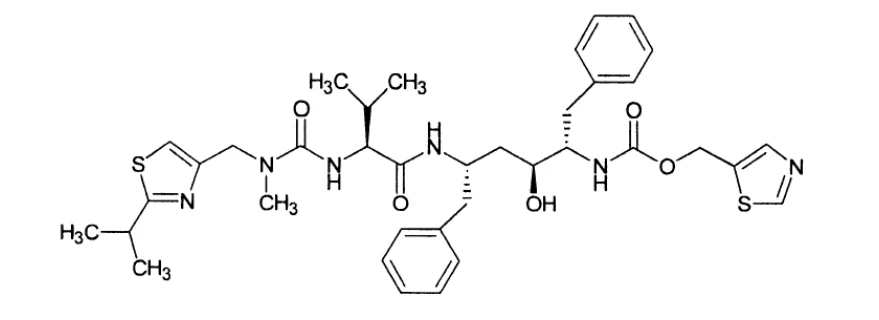 | |
| Physicochemical properties: | Ritonavir is a white to light tan powder. | |
| Solubility: | Ritonavir has a bitter metallic taste. It is freely soluble in methanol and ethanol, soluble in isopropanol and practically insoluble in water. | |
CLINICAL TRIALS
The activity of NORVIR® (ritonavir) as monotherapy or in combination with nucleoside reverse transcriptase inhibitors has been evaluated in 1446 patients enrolled in two double-blind, randomized trials. NORVIR® therapy in combination with zidovudine and zalcitabine was also evaluated in an open-label, non-comparative study of 32 patients.
Study Demographics and Trial Design
Table 8. Summary of Patient Demographics for Clinical Trials in Specific Indication
| Study # | Trial Design | Dosage, Route of Administration and Duration | Study Subjects | Mean Age (Range) | Gender Race (% M/F) (%C/O)1 | Mean Baseline CD4 Cell Count (Range) |
|---|---|---|---|---|---|---|
| Advanced Patients with Prior Antiretroviral Therapy | ||||||
| I | Double blind, randomized, two-arm, parallel, multicenter international | NORVIR® liquid or semi-solid capsules (600 mg b.i.d.) vs. Placebo Oral 6 months double-blind followed by 14 months open-label follow-up | 1090 | 38.9 years (15-72) | 92/8 86/14 | 32 cells/microliter (0-154)2 |
| Study # | Trial Design | Dosage, Route of Administration and Duration | Study Subjects | Mean Age (Range) | Gender Race (% M/F) (%C/O)1 | Mean Baseline CD4 Cell Count (Range) |
|---|---|---|---|---|---|---|
| Patients Without Prior Antiretroviral Therapy | ||||||
| II | Double blind, randomized, three-arm, parallel, multicenter | NORVIR® liquid or semi-solid capsules (600 mg b.i.d.) vs. zidovudine capsules (200 mg t.i.d.) vs. NORVIR® liquid or semi-solid capsules (600 mg b.i.d.) + zidovudine capsules (200 mg t.i.d.) Oral 8-12 months | 356 | 36.0 years (18-69) | 91/9 83/17 | 364 cells/ microliter Range: 139-1054 (200-500)3 |
| Combination Therapy in Anti-retroviral Naïve Patients | ||||||
| III | Phase II, open-label, multicenter | Triple Therapy Combination: NORVIR® (600 mg b.i.d.) + zidovudine (200 mg t.i.d.) + zalcitabine (0.75 mg t.i.d.) Oral 6 months | 32 | 38.1 years (29-52) | 88/12 97/3 | Median: 83 > 100 cells/ microliter (81%)4 |
1: % Male/Female; % Caucasian/Other 2: Approximately 50% of patients had baseline CD4 cell counts ≤ 20 cells/microliter, and only 22% had counts > 50 cells/microliter. 3: Approximately 75% of the patients were evenly distributed between this range 4: The majority (81%) of patients had baseline CD4 values > 100 cells/microliter Definitions: b.i.d. = twice daily; t.i.d. = three times daily. | ||||||
Study Results
Advanced Patients with Prior Antiretroviral Therapy
Study I was a randomized, double-blind trial conducted in HIV-infected patients with at least nine months of prior antiretroviral therapy and baseline CD4 cells counts ≤ 100 cells/microliter. NORVIR® 600 mg twice daily or placebo was added to each patient's baseline antiretroviral therapy regimen, which could have consisted of up to two approved antiretroviral agents. The study accrued 1090 patients, with mean baseline CD4 cell count at study entry of 32 cells/ microliter. Median duration of follow-up was 6 months.
The six month cumulative incidence of clinical disease progression or death was 17% for patients randomized to NORVIR® compared to 34% for patients randomized to placebo. This difference in rates was statistically significant.
The six-month cumulative mortality was 5.8% for patients randomized to NORVIR® and 10.1% for patients randomized to placebo. This difference in rates was statistically significant.
In addition, analyses of mean CD4 cell count changes from baseline over the first 16 weeks of study for the first 211 patients enrolled (mean baseline CD4 cell count = 29 cells/microliter) showed that NORVIR® was associated with larger increases in CD4 cell counts than was placebo. Compared to placebo, NORVIR® also produced a greater mean decrease in HIV RNA levels from baseline.
Patients Without Prior Antiretroviral Therapy
In Study II, 356 antiretroviral-naïve HIV-infected patients (mean baseline CD4 = 364 cells/microliter) were randomized to receive either NORVIR® 600 mg twice daily, zidovudine 200 mg three times daily, or a combination of these drugs. In analyses of average CD4 cell count changes from baseline over the first 16 weeks of study, both NORVIR® monotherapy and combination therapy produced greater mean increases in CD4 cell count than did zidovudine monotherapy. The CD4 cell count increases for NORVIR® monotherapy were larger than the increases for combination therapy. Similarly, the mean decreases in HIV RNA level from baseline were larger with NORVIR® monotherapy than with combination therapy or zidovudine monotherapy.
Combination Therapy with NORVIR®, Zidovudine, and Zalcitabine in Antiretroviral- Naïve Patients
In Study III, an open-label uncontrolled trial, 32 antiretroviral- naïve HIV-infected patients initially received NORVIR® 600 mg twice daily monotherapy. Zidovudine 200 mg three times daily and zalcitabine 0.75 mg three times daily were added after 14 days of NORVIR® monotherapy. Results of combination therapy for the first 20 weeks of this study show median increases in CD4 cell counts from baseline levels of 83 to 106 cells/microliter over the treatment period. Mean decreases from baseline in HIV RNA particle levels ranged from 1.69 to 1.92 logs.
Pivotal Comparative Bioavailability Studies
NORVIR® Film-coated Tablets
A Phase 1, single-dose, open-label, randomized, two-period, crossover comparative bioavailability study, with a two-stage group sequential design was conducted under fed (moderate-fat) conditions. In order to protect the overall α level at 0.05, the confidence intervals were set at 92.8% at each of the first and second stages of the study. The study was stopped based on the results of the first-stage analysis in which the rate and extent of absorption of ritonavir was compared following a single dose of 1 x 100 mg film-coated NORVIR® tablet or 1 x 100 mg NORVIR® soft elastic capsule, which were administered to 84 healthy adult male and female volunteers. The results from the first-stage analysis are provided below in Table 9.
Table 9. Comparative Bioavailability Data for the 100 mg NORVIR® Film-Coated Tablet Versus the NORVIR® Soft Elastic Capsule
Ritonavir (1 x 100 mg) From measured data Geometric Mean Arithmetic Mean (CV%) | ||||
|---|---|---|---|---|
| Parameter | Test Non-Fasting - Regimen A (n = 84) | Reference Non-Fasting - Regimen B Reference (n = 84) | % RATIO OF GEOMETRIC MEANS % Ratio of Geometric Means+ | 92.8% Confidence Interval |
AUCt (mcg•h/mL) | 3.154 3.6 (54) | 2.780 3.3 (78) | 113.4 | 107-121 |
AUCinf (mcg•h/mL) | 3.253 3.7 (55) | 2.949 3.5 (82) | 110.3 | 104-117 |
Cmax (mcg/mL) | 0.367 0.44 (66) | 0.290 0.35 (75) | 126.4 | 115-139 |
Tmaxa (h) | 4.4 (26) | 6.0 (66) | ||
T1/2 b (h) | 6.10 (22) | 6.45 (28) | ||
Regimen A: 100 mg dosed as ritonavir film-coated tablet, test, non-fasting Regimen B: 100 mg dosed as ritonavir soft elastic capsule (Market formulation), non-fasting. a Tmax: Expressed as arithmetic mean (%CV) only. b T1/2 : Expressed as harmonic mean (%CV) only. | ||||
In addition, in a Phase 1, randomized, single-dose, fasting and non-fasting, open-label, three-period, crossover study was conducted in a total of 27 healthy adult male and female volunteers. Subjects were randomly assigned to three treatments to assess the bioequivalence of 100 mg NORVIR® dosed as 100 mg film-coated tablet dosed under fasting, moderate-fat and high-fat conditions. Table 10 summarizes the comparative bioavailability data.
Table 10. Comparative Bioavailability Data for the 100 mg NORVIR® Film-Coated Tablet Dosed Under Fasting, Moderate-Fat and High-Fat Conditions.
Ritonavir (1 x 100 mg) From measured data Geometric Mean Arithmetic Mean (CV%) | ||||
|---|---|---|---|---|
| PARAMETER | REFERENCE Fasting - Regimen C (n = 26) | TEST High-Fat - Regimen A (n = 26) | TEST Moderate-Fat - Regimen B (n = 27) | % RATIO OF GEOMETRIC MEANS (CONFIDENCE INTERVALS) |
AUCt (mcg·h/mL) | 3.981 4.6 (43) | 3.044 3.6 (44) | 3.135 3.8 (51) | A/C = 77 (70-84) B/C = 79 (72-87) |
AUCinf (mcg·h/mL) | 4.049 4.7 (43) | 3.137 3.7 (45) | 3.218 3.9 (52) | A/C = 78 (70-85) B/C = 80 (72-87) |
Cmax (mcg/mL) | 0.501 0.60 (51) | 0.384 0.44 (46) | 0.392 0.47 (56) | A/C = 77 (66-90) B/C = 78 (68-91) |
Tmaxa (h) | 3.2 (37) | 4.8 (23) | 4.3 (27) | |
T1/2 b (h) | 5.49 (20) | 5.98 (20) | 5.81 (20) | |
Regimen A: 100 mg ritonavir film-coated tablet, test, high-fat condition. Regimen B: 100 mg ritonavir film-coated tablet, test, moderate-fat condition. Regimen C: 100 mg ritonavir film-coated tablet, reference, fasting. a Tmax: Expressed as arithmetic mean (%CV) only. b t1/2 : Expressed as harmonic mean (%CV) only. | ||||
NORVIR® SEC (Soft Elastic Capsules)
In a Phase1, randomized, single-dose, fasting and non-fasting, open-label, three-period, crossover study, a total of 57 healthy adult male and female volunteers were randomly assigned to three dosing regimens to assess the bioequivalence of 600 mg NORVIR® dosed as 100 mg soft elastic capsules to 7.5 mL of 80 mg/mL NORVIR® oral solution. Table 11 summarizes the comparative bioavailability data.
Table 11. Comparative Bioavailability Data for the 100 mg NORVIR® Soft Elastic Capsule versus the 80 mg/mL NORVIR® Oral Solution
| PARAMETER | REFERENCE Non-fasting - Regimen A (n = 57) | TEST Non-Fasting - Regimen B (n = 57) | TEST Fasting - Regimen C (n = 57) | % RATIO/RATIO OF GEOMETRIC MEANS |
|---|---|---|---|---|
AUCt (mcg·h/mL) | 77.0 109.3 (54.4) | 104.2 121.4 (44.2) | 93.3 108.5 (47.7) | B/A = 135.4 C/B = 89.5 |
AUC40 (mcg·h/mL) | 77.1 109.3 (54.4) | 104.2 121.4 (44.2) | 93.3 108.5 (47.7) | B/A = 135.3 C/B = 89.5 |
AUCinf (mcg·h/mL) | 77.2 109.6 (54.5) | 104.6 121.7 (44.2) | 93.5 108.5 (47.7) | B/A = 135.4 C/B = 89.4 |
Cmax (mcg/mL) | 8.8 11.9 (44.6) | 11.91 13.6 (39.5) | 12.73 14.5 (40.2) | B/A = 135.3 C/B = 107.0 |
Tmaxa (h) | 3.8 4.1 (38.4) | 5.2 5.5 (35.9) | 3.9 4.4 (70.2) | B/A = 138.3 C/B = 74.0 |
T1/2 b (h) | 4.31 4.23 (20.0) | 4.04 3.96 (23.3) | 4.30 4.21 (21.7) | B/A = 93.6 C/B = 106.6 |
Beta h-1 | 0.161 0.164 (20.0) | 0.172 0.175 (18.5) | 0.161 0.165 (21.9) | B/A = 106.8 C/B = 93.8 |
CL/F (L/h) | 6.8 28.0 (405.5) | 5.7 9.8 (260.3) | 6.4 12.7 (357.6) | B/A = 83.8 C/B = 111.8 |
Regimen A: 600 mg NORVIR® as 7.5 mL (80 mg/mL) liquid, reference, non-fasting (Market formulation K-5). Regimen B: 600 mg NORVIR® as six 100 mg SEC, test, non-fasting, formulation 2. Regimen C: 600 mg NORVIR® as six 100 mg SEC, test, fasting, formulation 2. a Tmax: Expressed as arithmetic mean (%CV) only. b t1/2 : Expressed as harmonic mean only. | ||||
DETAILED PHARMACOLOGY
Animal
Pharmacodynamics
Ritonavir was administered orally to mice or rats at doses of 5 to 50 mg/kg to determine potential effects on various neuropharmacological endpoints. In mice, ritonavir had no meaningful effect on rotarod performance, ethanol-induced sleep time or pentobarbital-induced sleep time. In rats, no effect was observed on spontaneous motor activity or rotarod performance.
Ritonavir produced no pharmacologically significant effects on heart rate or blood pressure when administered orally to unanesthetized rats at doses of 20 or 50 mg/kg. The compound was also infused intravenously in a vehicle consisting of 20% ethanol and 15% propylene glycol in 5% dextrose water to pentobarbital-anesthetized dogs instrumented to measure various cardiovascular parameters.
Mean peak plasma levels of ritonavir were as high as 15.11 mcg/mL. Although the vehicle itself produced hemodynamic changes consistent with cardiac depression, ritonavir produced no consistent additional effects on systemic or pulmonary pressures or resistance, central venous pressure, cardiac output, left ventricular dP/dt or end-diastolic pressure.
Ritonavir had no effect on isolated guinea pig ileum basal tone or on carbachol-induced contractions.
Human
Pharmacodynamics
A Phase 1, multiple-dose, open-label, placebo and active controlled (moxifloxacin 400 mg once daily), randomized study was conducted according to a crossover design in healthy volunteers. NORVIR® was dosed at 400 mg twice daily. On Day 3, ritonavir concentrations were approximately 1.5 fold higher than that observed with the 600 mg twice daily dose at steady state. Digital EKGs were performed in triplicate on study Day 3 and compared to time-matched baseline EKGs. At these increased concentrations, the maximum increase in QTcF was 5.5 msec with an upper bound 95% CI of 7.6 msec. This increase is not clinically significant.
The absolute PR interval on Day 3 and change from baseline were also evaluated. The maximum PR interval was 252 msec and no second or third degree heart block was observed. Exposure-response analysis predicted that the PR effect of ritonavir plateaus around 20 msec, thus ritonavir 600 mg twice daily is unlikely to result in clinically significant PR prolongation.
Pharmacokinetics
For details regarding the ritonavir pharmacokinetics refer to section (ACTION AND CLINICAL PHARMACOLOGY, Pharmacokinetics).
The effects of co-administration of ritonavir on the AUC, Cmax, and Cmin are summarized in Table 12 (effect of other drugs on ritonavir) and Table 13 (effect of ritonavir on other drugs).
Table 12. Drug Interactions: Pharmacokinetic Parameters for Ritonavir in the Presence of the Co-administered Drug (See Table 5 for Recommended Alterations in Dose or Regimen)
| Co-Administered Drug | Dose of Co-Administered Drug | NORVIR® Dosage | n | AUC % (95% CI) | Cmax % (95% CI) | Cmin % (95% CI) |
|---|---|---|---|---|---|---|
| Clarithromycin | 500 mg every 12 h 4 days | 200 mg every 8 h 4 days | 22 | ↑ 12% (2, 23%) | ↑ 15% (2, 28%) | ↑ 14% (-3, 36%) |
| Didanosine | 200 mg every 12 h 4 days, about 2.5 h before NORVIR® | 600 mg every 12 h 4 days | 12 | ↔ | ↔ | ↔ |
| Fluconazole | 400 mg Day 1, 200 mg daily 4 days | 200 mg every 6 h 4 days | 8 | ↑ 12% (5, 20%) | ↑ 15% (7, 22%) | ↑ 14% (0, 26%) |
| Fluoxetine | 30 mg every 12 h 8 days | 600 mg single dose | 16 | ↑ 19% (7, 34%) | ↔ | ND |
| Ketoconazole | 200 mg daily 7 days | 500 mg every 12 h 10 days | 12 | ↑ 18% (-3, 52%) | ↑ 10% (-11, 36%) | ND |
| Rifampin | 600 mg or 300 mg daily 10 days | 500 mg every 12 h 20 days | 7,9* | ↓ 35% (7, 55%) | ↓ 25% (-5, 46%) | ↓ 49% (-14, 91%) |
| Voriconazole | 400 mg every 12 h, 1 day; then 200 mg every 12 h 8 days | 400 mg every 12 h 9 days | 17 | ↔ | ↔ | ND |
| Zidovudine | 200 mg every 8 h 4 days | 300 mg every 6 h 4 days | 10 | ↔ | ↔ | ↔ |
↑ Indicates increase; ↓ indicates decrease; ↔ indicates no change. * Parallel group design; entries are subjects receiving combination and control regimens, respectively. Definitions: h = hour; ND = not detected | ||||||
Table 13. Drug Interactions: Pharmacokinetic Parameters for Co-administered Drug in the Presence of ritonavir (See Table 5 for Recommended Alterations in Dose or Regimen)
| Co-Administered Drug | Dose of Co-Administered Drug | NORVIR® Dosage | n | AUC % (95% Cl) | Cmax % (95% Cl) | Cmin % (95% Cl) |
|---|---|---|---|---|---|---|
| HIV-Antiviral Agents | ||||||
| Atazanavir | 300 mg every 24h Days 1 to 20 | 100 mg every 24h Days 11 to 20 | 28 | ↑ 3.4-fold | ↑ 1.9-fold | ↑ 11.9-fold |
| Darunavir | 800 mg single dose | Titrated: 300 to 600 mg every 12h over 6 days | 8 | ↑ 9.2-fold | ↑ 2-fold | not reported |
Indinavir1 Day 14 | 400 mg every 12h 15 days | 400 mg every 12h 15 days | 10 | ↑ 6% (-14, 29%) | ↓ 51% (40, 61%) | ↑ 4-fold (2.8, 6.8X) |
| Day 15 | ↓ 7% (-22, 28%) | ↓ 62% (52, 70%) | ↑ 4-fold (2.5, 6.5X) | |||
| Saquinavir2 | 400 mg every 12h steady state | 400 mg every 12h steady-state | 7 | ↑ 17-fold (9, 31X) | ↑ 14-fold (7, 28X) | ND |
| Maraviroc | 100 mg every 12h | 100 mg every 12h | 8 | ↑ 28% | ↑ 161% | not reported |
| Other agents | ||||||
| Alprazolam | 1 mg single dose | 500 mg every 12h 10 days | 12 | ↓ 12% (-5, 30%) | ↓ 16% (5, 27%) | ND |
| Clarithromycin | 500 mg every 12h 4 days | 200 mg every 8h 4 days | 22 | ↑ 77% (56, 103%) | ↑ 31% (15, 51%) | ↑ 2.8-fold (2.4, 3.3X) |
| 14-OH clarithromycin metabolite | ↓100% | ↓ 99% | ↓ 100% | |||
| Desipramine | 100 mg single dose | 500 mg every 12h 12 days | 14 | ↑ 145% (103, 211%) | ↑ 22% (12, 35%) | ND |
| 2-OH desipramine metabolite | ↓ 15% (3, 26%) | ↓ 67% (62, 72%) | ND | |||
| Didanosine | 200 mg every 12h 4 days, about 2.5 h before NORVIR® | 600 mg every 12h 4 days | 12 | ↓ 13% (0, 23%) | ↓ 16% (5, 26%) | ↔ |
| Co-Administered Drug | Dose of Co-Administered Drug | NORVIR® Dosage | n | AUC % (95% Cl) | Cmax % (95% Cl) | Cmin % (95% Cl) |
|---|---|---|---|---|---|---|
| Ethinyl estradiol | 50 mcg single dose | 500 mg every 12h 16 days | 23 | ↓ 40% (31, 49%) | ↓ 32% (24, 39%) | ND |
| Fluticasone propionate aqueous nasal spray | 200 mcg daily 7 days | 100 mg every 12h 7 days | 18 | ↑ approx. 350-fold6 | ↑ approx. 25-fold6 | |
| Ketoconazole | 200 mg daily 7 days | 500 mg every 12h 10 days | 12 | ↑ 3.4-fold (2.8, 4.3X) | ↑ 55% (40, 72%) | ND |
| Meperidine | 50 mg oral single dose | 500 mg every 12h 10 days | 8 | ↓ 62% (59, 65%) | ↓ 59% (42, 72%) | ND |
| Normeperidine metabolite | 6 | ↑ 47% (-24, 345%) | ↑ 87% (42, 147%) | ND | ||
| Methadone3 | 5 mg single dose | 500 mg every 12h 15 days | 11 | ↓ 36% (16, 52%) | ↓ 38% (28, 46%) | ND |
| Raltegravir | 400 mg single dose | 100 mg every 12 h 16 days | 10 | ↓ 16% (-30, 1%) | ↓ 24% (-45, 4%) | ↓ 1% (-30, 40%) |
| Rifabutin | 150 mg daily 16 days | 500 mg every 12h 10 days | 5,11* | ↑ 4-fold (2.8, 6.1X) | ↑ 2.5-fold (1.9, 3.4X) | ↑ 6-fold (3.5, 18.3X) |
25-O-desacetyl rifabutin metabolite | ↑ 38-fold (28, 56X) | ↑ 16-fold (13, 20X) | ↑ 181-fold(ND) | |||
| Sildenafil | 100 mg single dose | 500 mg b.i.d.‡ 8 days | 28 | ↑ 11-fold | ↑ 4-fold | ND |
| Sulfamethoxazole4 | 800 mg single dose | 500 mg every 12h 12 days | 15 | ↓ 20% (16, 23%) | ↔ | ND |
| Tadalafil | 20 mg single dose | 200 mg every 12h | ↑ 124% | ↔ | ND | |
| Theophylline | 3 mg/kg every 8h 15 days | 500 mg every 12h 10 days | 13, 11* | ↓ 43% (42, 45%) | ↓ 32% (29, 34%) | ↓ 57% (55, 59%) |
| Trazodone | 50 mg single dose | 200 mg every 12h 10 days | 10 | ↑ 2.4-fold | ↑ 34% |
| Co-Administered Drug | Dose of Co-Administered Drug | NORVIR® Dosage | n | AUC % (95% Cl) | Cmax % (95% Cl) | Cmin % (95% Cl) |
|---|---|---|---|---|---|---|
| Trimethoprim4 | 160 mg single dose | 500 mg every 12h 12 days | 15 | ↑ 20% (3, 43%) | ↔ | ND |
| Vardenafil | 5 mg | 600 mg every 12h | ↑ 49-fold | ↑ 13-fold | ND | |
| Voriconazole | 400 mg every 12h, 1day; then 200 mg every 12h 8 days | 400 mg every 12h 9 days | 17 | ↓ 82% | ↓ 66% | not reported |
Warfarin S-Warfarin | 5 mg single dose | 400 mg every 12h 12 days | 12 | ↑ 9% (-17, 44%)5 | ↓ 9% (-16, -2%)5 | ND |
| R-Warfarin | ↓ 33% (-38, -27%)5 | ↔ | ND | |||
| Zidovudine | 200 mg every 8h 4 days | 300 mg every 6h 4 days | 9 | ↓ 25% (15, 34%) | ↓ 27% (4, 45%) | ND |
1: NORVIR® and indinavir were co-administered for 15 days; Day 14 doses were administered after a 15% fat breakfast (757 Kcal) and 9% fat evening snack (236 Kcal), and Day 15 doses were administered after a 15% fat breakfast (757 Kcal) and 32% fat dinner (815 Kcal). Indinavir Cmin was also increased 4-fold. Effects were assessed relative to an indinavir 800 mg every 8h regimen under fasting conditions. 2: Comparison to a standard saquinavir 600 mg every 8h regimen (n = 114). 3: Effects were assessed on a dose normalized comparison to a methadone 20 mg single dose. 4: Sulfamethoxazole and trimethoprim taken as single combination tablet. 5: 90% CI presented for R- and S-warfarin AUC and Cmax ratios. 6: This significant increase in plasma fluticasone propionate exposure resulted in a significant decrease (86%) in plasma cortisol AUC. ‡ Subjects in the entire study, a subset of subjects were administered the specified regimen. * Parallel group design; entries are subjects receiving combination and control regimens, respectively. ↑ Indicates increase; ↓ indicates decrease; ↔ indicates no change. Definitions: b.i.d. = twice daily; ND = not detected. | ||||||
MICROBIOLOGY
Resistance
HIV-1 isolates with reduced susceptibility to ritonavir have been selected in vitro. Genotypic analysis of these isolates showed mutations in the HIV protease gene at amino acid positions 84 (Ile to Val), 82 (Val to Phe), 71 (Ala to Val), and 46 (Met to Ile). Phenotypic (n = 18) and genotypic (n = 44) changes in HIV isolates from selected patients treated with ritonavir were monitored in Phase 1/2 trials over a period of 3 to 32 weeks. Mutations associated with the HIV viral protease in isolates obtained from 41 patients appeared to occur in a stepwise and ordered fashion; in sequence, these mutations were position 82 (Val to Ala/Phe), 54 (Ile to Val), 71 (Ala to Val/Thr), and 36 (Ile to Leu), followed by combinations of mutations at an additional 5 specific amino acid positions.
Of 18 patients for which both phenotypic and genotypic analysis were performed on free virus isolated from plasma, 12 showed reduced susceptibility to ritonavir in vitro. All 18 patients possessed one or more mutations in the viral protease gene. The 82 mutation appeared to be necessary but not sufficient to confer phenotypic resistance. Phenotypic resistance was defined as a ≥ 5-fold decrease in viral sensitivity in vitro from baseline. The clinical relevance of phenotypic and genotypic changes associated with NORVIR® therapy has not been established.
Cross-resistance to other antiretrovirals
Among protease inhibitors variable cross-resistance has been recognized. Serial HIV isolates obtained from six patients during NORVIR® therapy showed a decrease in ritonavir susceptibility in vitro but did not demonstrate a concordant decrease in susceptibility to saquinavir in vitro when compared to matched baseline isolates. However, isolates from two of these patients demonstrated decreased susceptibility to indinavir in vitro (8-fold). Isolates from five patients were also tested for cross-resistance to amprenavir and nelfinavir; isolates from two patients had a decrease in susceptibility to nelfinavir (12- to 14-fold), and none to amprenavir. Cross-resistance between ritonavir and reverse transcriptase inhibitors is unlikely because of the different enzyme targets involved. One ZDV-resistant HIV isolate tested in vitro retained full susceptibility to ritonavir.
TOXICOLOGY
The toxicology of ritonavir has been assessed in mice, rats, dogs and rabbits in studies ranging in duration from a single dose to six months of oral administration. All phases of the reproductive process have been evaluated for potential adverse effects, and a generally accepted battery of in vitro and in vivo mutagenicity studies has been conducted. The following section summarizes the findings from these studies. The most significant target organs in the toxicity studies have been the liver and retina. Retinal changes secondary to phospholipidosis were limited to rodents only and were considered not to pose any undue risk to humans. Dogs appeared to be less sensitive than the rodent to the hepatotoxic effects of ritonavir. Human clinical studies have not disclosed a high incidence of hepatic complications. See (ADVERSE REACTIONS).
Acute Toxicity
Ritonavir has a low order of acute toxicity in rodents by oral route but is more toxic when given intravenously. The difference is probably due to the fact that the acute toxicity produced by ritonavir is more related to plasma Cmax than AUC values, and Cmax is most likely considerably higher following intravenous injection. When given orally in a vehicle of propylene glycol and ethyl alcohol (95:5, v/v) containing two molar equivalents of p-toluene sulfonic acid monohydrate, the median lethal dose (LD50) generally exceeds the limited dose of 2500 mg/kg for both mice and rats. Toxic signs for both species consisted of decreased activity, ataxia, dyspnea, squinting, prostration, and tremors.
When administered intravenously, the approximately lethal dose (ALD) ranged from 35 to 80 mg/kg for both species. Signs of toxicity included decreased activity, ataxia, dyspnea, exophthalmos, and clonic convulsions.
Sub-chronic Toxicity
Rat
A one-month rat study was conducted by gavage at 0, 15, 50, and 150/100 (male/female) mg/kg/day. Drug exposure (AUC) values toward the end of the treatment period were 3.64, 27.61 and 63.32 mcg·h/mL for males and 5.34, 24.50 and 91.34 mcg·h/mL for females treated at 15, 50 and 150/100 mg/kg/day, respectively.
Treatment-related clinical signs of decreased activity, emaciation, hunched posture, weakness, and urine-staining of abdominal hair occurred in rats at the high dosages. Rats in the high dosage group also had lower mean body weights and body weight gains than the controls. Treatment-related differences from the controls in clinical pathology were limited to minimally increased serum globulin and monocystosis in rats treated at 50 mg/kg/day and higher. No changes in liver enzyme activities were noted. Mean liver weights were increased at 50 mg/kg/day and above and thyroid gland weights were increased in female rats at 100 mg/kg/day. Target organs were identified as the liver, thyroid, and eye. Changes in the liver consisted of hepatomegaly, multinucleated hepatocytes and/or mild focal periportal inflammation in rats at 50 mg/kg/day and higher. Mild to moderate hypertrophy of follicular epithelium also occurred in rats at 50 mg/kg/day and above.
Minimal hypertrophy and cytoplasmic granularity of the retinal pigment epithelium (RPE) were found in rats at the high dosage. Effects in the thyroid gland and the eye were reversible after a one-month recovery period, but the liver changes were not reversible following one-month of recovery. The no-toxic-effect level in this study was 15 mg/kg/day corresponding to a systemic exposure of 3.6 to 4.7 mcg·h/mL in male rats and 5.3 to 8.9 mcg·h/mL in female rats (approximately 1/25th of the expected human exposure of 150 mcg·h/mL from a dose of 600 mg twice daily).
A three-month oral gavage study was conducted in rats at dosages of 0, 25, 75, and 175/125 (male/female) mg/kg/day. The mean AUC values toward the end of the treatment period were 18, 43, 97 mcg·h/mL for males and 21, 73 and 98 mcg·h/mL for females at corresponding dosages of 25, 75 and 175 (males) and 125 (females) mg/kg/day, respectively. Three male rats that received 175 mg/kg/day and two females given 125 mg/kg/day died during the treatment period. Ataxia, decreased activity, dehydration, emaciation, rough coat, hunched posture, weakness, tremors, cold to touch, pale and squinting eyes, urine-staining of abdominal hair, and discoloration of urine were noted in rats at the high dosage. Group mean body weights and food consumption for rats in the high-dosage group were significantly lower than the controls. At the preterminal eye examination, pale choroidal vasculature and dilated retinal vessels were seen in rats at the high dosage. Electroretinograms (ERGs) recorded near the end of the treatment period revealed decreases in mean values of A- and B-wave amplitudes and mean amplitude values for rod response along with a prolongation of the implicit times of the A-wave in the high dosage rats. The eye changes along with the effects on A- and B-wave amplitude values were still evident in rats that were held for a three-month recovery period. The mean values of erythrocytic parameters for the high dosage rats were significantly lower than the controls. The ALT and AST activities for the drug-treated rats were significantly increased over the controls. Increased mean GGT activities and cholesterol values were found for the mid and high dosage rats. The mean serum thyroid stimulating hormone (TSH) values for the drug-treated rats were higher than the controls, while the T4 (thyroxine) values for the mid and high dosage males were lower than the controls. The liver weights of rats at all dosage levels were increased over the controls. Histopathologic evaluation revealed that the liver, eye, and stomach were major target organs. The hepatic changes (multinucleated hepatocytes, single cell necrosis, histiocytic microgranulomas, and chronic pericholangitis) were found in rats at all dosage levels, and the retinal alternations (hypertrophy of the RPE and retinal degeneration) were observed mainly in mid and high dosage rats. Minimal to mild pyloric gastritis and necrosis were noted in rats at mid and high dosages.
Ultrastructural evaluation of the eye revealed a considerable accumulation of phagosomes in the RPE of rats at mid and high dosages. Reduced or absent photoreceptor outer segments also occurred in rats at the high dosage. The liver from the drug-treated rats contained abundant irregular, dense-staining inclusions in both hepatocytes and phagocytic cells upon ultrastructural evaluation. The changes in the liver and eye were not reversible after three months of recovery. The no-toxic-effect level in this study was considered to be less than 25 mg/kg/day corresponding to a systemic exposure of 18 to 21 mcg·h/mL (approximately one-eighth of the expected human exposure of 150 mcg·h/mL from a dose of 600 mg twice daily).
A six month study was conducted in rats by oral gavage at dosages of 0, 25, 75, and 175/125 (male/female) mg/kg/day during Study Days 0 to 79. Thereafter, the high dosage levels for males and females were lowered to 150 and 100 mg/kg/day, respectively, due to excessive toxicity. The group mean AUC values on Study Day 174 were 14.3, 60.7 and 83.4 mcg·h/mL for males and 21.5, 76.2 and 174.5 mcg·h/mL for females at the corresponding dosages of 25, 75 and 150 (males)/100 (females) mg/kg/day. One mid dosage female, two high dosage males, and five high dosage females died during the study. Dehydration, emaciation, hunched posture, decreased activity, weakness, sedation, tremors, cold to touch, matted hair, rough coat, squinting eyes, urine-staining of hair, salivation, and abnormal stool were noted in the high dosage rats. Group mean body weights and food consumption for rats in the high dosage group were lower than the controls. Pale choroidal vessels and/or dilated retinal vessels were seen in some of the high dosage rats at the preterminal eye examination. Significantly decreased hemoglobin and hematocrit values occurred in the mid and high dosage groups. Red blood cell (RBC)
morphology changes suggested that a mild low grade hemolytic anemia occurred in individual rats. A mild to marked increase in serum ALT and AST values in some individual rats were seen at all dosage levels. Elevations of GGT, total bilirubin, ALP, and serum cholesterol values also occurred in the mid and high dosage rats. Mean serum triglyceride levels for male rats at all dosage levels were significantly decreased compared to the controls, while triglyceride values of the high dosage female rats were increased. The mean TSH values for the drug-treated rats were higher than the controls, and the T4 (thyroxine) values for the mid and high dosage rats were lower than the controls. The mean liver weights in rats at all dosage levels were increased over the controls. Histopathology evaluations revealed that liver, eye, kidney, and thyroid were the major target organs. The changes in liver and eye were similar to those observed in the three-month rat studies. Treatment-related histologic changes in the kidney included mild to moderate, multifocal tubular degeneration occurring in rats in all dosage groups. Mild epithelial hypertrophy in the thyroid gland was noted in mid and high dosage rats. The reversibility of these changes was not assessed in this six-month study. The no-toxic-effect level in this study was less than 25 mg/kg/day corresponding to a systemic exposure of 14 to 22 mcg·h/mL which was approximately one-eighth of the expected human exposure of 150 mcg·h/mL from a dosage of 600 mg twice daily.
Dog
A one-month study in dogs was conducted by oral gavage at dosages of 0, 10, 50, and 200 mg/kg/day. No clear sex difference in mean plasma drug levels was apparent. The group mean AUC values for both males and females on Day 0 were 25.9, 75.2 and 160.7 mcg·h/mL and on Day 27 were 21.1, 17.1 and 240.3 mcg·h/mL at corresponding dosages of 10, 50 and 200 mg/kg/day, respectively. No deaths occurred during the course of treatment. Clinical signs were observed in dogs at 50 and 200 mg/kg/day and included emesis, increased salivation, diarrhea and/or abnormal stool. Dogs in the high dosage group also had incidences of dehydration, ataxia, decreased activity, and involuntary movements. Body weight loss was seen in some dogs at 200 mg/kg/day. Two female and one male high dosage dogs required supplemental feed to maintain their health. Treatment-related changes in clinical pathology were limited to mild increases in ALT, ALP, GGT, and bile acids in some high dosage dogs. Mean liver weights were significantly increased in dogs at the high dosage.
Target organs were identified as liver and thymus (liver hydropic degeneration and thymic atrophy) in dogs that received 200 mg/kg/day corresponding to a systemic exposure of 200 mcg·h/mL. Drug-related effects on the target organs were reversed during one-month of recovery. The no-toxic-effect level in this study was 50 mg/kg/day corresponding to a systemic exposure of 17.1 to 75.2 mcg·h/mL which was approximately one-third of the expected human exposure of 150 mcg·h/mL from a dose of 600 mg twice daily.
A three-month study was conducted in dogs at dosages of 0, 10, 50, and 100 to 200 mg/kg/day. Dogs in the high dosage group received 200 mg/kg/day for 21 days, but due to excessive weight loss and morbidity, the dosage was reduced to 100 mg/kg/day in male dogs (Days 21 to 92) and suspended in female dogs. Treatment at 100 mg/kg/day was resumed after 13 days of recovery (Days 21 to 33) in the high dosage female dogs. The group mean AUC values on Study Day 82 were 25.1, 80.2 and 147.4 mcg·h/mL for males and 22.7, 50.5 and 22.3 mcg·h/mL for females at corresponding dosages of 10, 50 and 100 mg/kg/day, respectively. One high dosage female dog was euthanized on Day 86 in moribund condition. Decreased activity, emesis, excessive salivation, and diarrhea/abnormal stool were observed in mid and high dosage dogs. In female dogs that received 200 mg/kg/day, dehydration, emaciation, ataxia, weakness, tremors, hunched posture, and involuntary body movements were noted for Study Days 0 to 20. Body weight loss was evident in the high dosage dogs. Elevations of serum ALT, ALP, and GGT activities occurred in one male and four female dogs that received 200 mg/kg/day and achieving AUC values > 200 mcg·h/mL prior to the suspension of drug-treatment on Day 21. However, at the end of the treatment period no significant elevations in serum enzyme activity were found with the exception of a single high dosage female dog that was euthanized on Day 86. This dog had elevated ALP, ALT, GGT, and bile acids. The liver was a target organ, as evidenced by increased weight and histopathologic findings (pericholangitis, biliary hyperplasia, fibrosis, hydropic degeneration), in dogs that received 200/100 mg/kg/day and achieving AUC values > 200 mcg·h/mL on Study Day 14. However, none of the above changes were seen in dogs that were held for a two-month recovery period. The liver changes seen in the study appeared to be reversible. The no-toxic effect exposure (AUC) in this study was considered to be < 200 mcg·h/mL and the expected human exposure from a dose of 600 mg twice daily was 150 mcg·h/mL.
Ritonavir was administered by oral gavage to beagle dogs at dosages of 0, 10, 50 or 125 mg/kg/day for six months. The group mean AUC values on Study Day 152 were 18.3, 64.2 and 115.0 mcg·h/mL in males and 25.7, 133.6 and 204.6 mcg·h/mL in females at corresponding dosages of 10, 50 and 125 mg/kg/day, respectively. No deaths occurred during the study. Emesis, abnormal stool and/or diarrhea were observed in mid and high dosage dogs. Additional clinical signs seen in the high dosage dogs were decreased activity and a thin and/or emaciated appearance. Mean body weights and weight gains for the high dosage dogs were lower than the controls. Dietary supplementation was used for some high dosage dogs as a precaution against excessive weight loss and associated debilitation. Increases in serum ALP values were present in the mid and high dosage groups. Target organs were the liver and thymus. Liver changes included increased organ weights and hepatomegaly in the high dosage group. Diffuse hepatocellular hydropic degeneration was found in a single female in the high dosage group. This dog was found to have the highest individual plasma drug exposure (AUC = 482 mcg·h/mL). Decreased thymic weights and thymic atrophy were apparent in the high dosage male dogs. The reversibility of changes seen in the liver and thymus was not assessed in this six-month study. The no-toxic-effect level in this study was considered to be 10 mg/kg/day corresponding to a systemic exposure of 18.3 to 25.7 mcg·h/mL which was approximately one-seventh of the expected human exposure of 150 mcg·h/mL. However, histopathological changes in liver were only observed in a single female dog at the highest dosage (125 mg/kg/day) at a plasma drug exposure of 482 mcg·h/mL.
Special Studies
A three month dietary study was conducted in mice at dosages of 0, 200, 400, 600, and 1000 mg/kg/day to select dosages for the two-year carcinogenicity study. The group mean AUC values in males were 57.1, 130.7, 219.1 and 381.4 mcg·h/mL and in females were 112.0, 209.1, 320.4 and 396.7 mcg·h/mL at the corresponding dosages of 200, 400, 600 and 1000 mg/kg/day.
No drug-related deaths were observed, but hunched posturing, alopecia and urine-stained or matted hair were noted at dosages of 600 mg/kg/day and above. Mean body weights of mice at 600 mg/kg/day and above were significantly decreased from controls. Differences from controls in clinical chemistry parameters included increased AST, ALT, cholesterol, and triglycerides in drug-treated mice. Increases in ALP, GGT, and total protein were noted in mice receiving 400 mg/kg/day and above. Mean liver weights were increased in all drug-treated mice. Pathology in the liver consisted of hepatocytomegaly, hepatocyte necrosis, and histiocytic microgranulomas in all drug-treated mice, vacuolation and increased mitosis in hepatocytes of mice receiving 400 mg/kg/day and higher doses. Treatment-related pathology of the eye consisted of hypertrophy of RPE in mice at 400 mg/kg/day or higher.
A three-month dietary study was conducted in rats at dosages of 0, 50, 100, 160, and 200 mg/kg/day and 0, 30, 75, 125, and 175 mg/kg/day for males and females, respectively to select dosages for the two-year carcinogenicity study. The group mean AUC values toward the end of the treatment period were 6.23, 21.72, 57.32 and 93.18 mcg·h/mL for males and 1.62, 23.41, 67.05 and 105.35 mcg·h/mL for females at corresponding nominal dosages of 50, 100, 160 and 200 mg/kg/day for males and 30, 75, 125 and 175 mg/kg/day for females. There were no drug-related deaths in the study. Emaciation, rough coat and hunched posture were noted in the high dosage rats.
Group mean body weights and food consumption for rats at the two higher dosage groups were lower than the controls. The mean ALT and AST activities for the drug-treated rats at all dosage levels were increased over the controls. Significantly increased GGT activities were noted in rats at the two higher dosage groups. Mean serum cholesterol values for rats at the three top dosage levels were higher than the controls. The mean serum thyroxine (T4) values for the drug-treated rats were lower than the controls, while the mean TSH values for female rats at the two top dosages were greater than the controls. The mean liver weights for rats at the top three dosage levels were increased over the controls. Histopathologic evaluation revealed the liver, eye and thyroid were major target organs. The hepatic and retinal changes seen in this dietary study were similar to those noted in the three-month oral gavage study in rats. The liver changes were noted at all dosage levels, while the ocular alterations were limited to rats at the two top dosage levels. Thyroid follicular epithelial cell hypertrophy occurred in rats at the three top dosage levels.
Ritonavir was evaluated for the potential to produce delayed contact hypersensitivity in guinea pigs. The Maximization Method was used in this study and the data generated indicated that ritonavir did not induce delayed contact hypersensitivity in guinea pigs.
Mutagenicity and Carcinogenicity
Carcinogenicity studies with ritonavir have been conducted in mice and rats. In male mice, at dosage levels of 50, 100, or 200 mg/kg/day, there was a dose dependent increase in the incidence of both adenomas and combined adenomas and carcinomas in the liver. Based on the drug exposure (AUC) measurements, the exposure at the high dosage was approximately 0.3-fold for males that of exposure in humans with the recommended therapeutic dose (600 mg twice daily). There were no carcinogenic effects seen in females at the dosages tested. The exposure at the high dosage was approximately 0.6-fold for the females that of the exposure in humans. In rats dosed at levels of 7, 15, or 30 mg/kg/day there were no carcinogenic effects. In this study the exposure at the high dose was approximately 5% that of the exposure in humans with the 600 mg twice daily regimen. Based on the exposures achieved in the animal studies, the significance of the observed effects is not known.
Ritonavir was not found to be mutagenic or clastogenic in a battery of in vitro and in vivo assays including the Ames bacterial reverse mutation assay using S. Typhimurium and E. coli, the mouse lymphoma assay, the mouse micronucleus test and chromosomal aberration assays in human lymphocytes.
Reproduction and Teratology
Fertility and General Reproductive Performance
Rats
Ritonavir was administered orally by gavage to female rats at dosages of 0, 20, 40, and 75 mg/kg/day beginning at 14 days prior to mating with males that were treated at dosages of 0, 20, 40, and 125 mg/kg/day beginning at 28 days prior to mating. The treatment in female rats was continued through mating until gestation Day 9. The group mean plasma AUC values for males near the end of the premating period were 8.2, 19.7 and 61.0 mcg·h/mL, respectively, for the 20, 40, and 125 mg/kg/day treatment groups. The corresponding values for females were 14.6, 33.1 and 90.5 mcg·h/mL, respectively, for the 20, 40 and 75 mg/kg/day treatment groups. There were no treatment-related deaths in the study. Maternal toxicity consisted of adverse clinical signs and decreases in mean body weights and food intake in the mid and high dosage groups.
There were no treatment-related effects on the estrous cycle or male and female reproductive indices. Maternal survival and pregnancy status of the ritonavir-treated groups were also comparable to the controls. No treatment-related effects were seen in the number of corpora lutea, implantation sites, viable and nonviable embryos. There were no increases in the incidence of preimplantation and postimplantation losses. The no-toxic-effect level for systemic toxicity in F0 generation rats was 20 mg/kg/day. However, there were no adverse effects on male or female reproduction or early embryonic development up to the highest dosage (125/75 mg/kg/day) tested.
Developmental Toxicity
Rats
Ritonavir was administered orally to mated female rats at dosages of 0, 15, 35, and 75 mg/kg/day from Gestation Day 6 to 17. Three high dosage rats were euthanized in moribund condition during the study. The group mean plasma AUC values on Gestation Day 16 were 17.3, 34.3 and 45.2 mcg·h/mL at dosages of 15, 35 and 75 mg/kg/day, respectively. Decreased activity, emaciation, dehydration, rough coat and/or matted coat, hunched posture, tremors, and noisy respiration were observed in rats at the high dosage level. Marked decreases in body weights and food consumption were evident in the high dosage group. Reduction in food consumption accompanied by a reduction in body weight gain was also noted for the mid dosage group during Gestation Days 6 to 9. No effects were found in the number of corpora lutes or implantation sites. Developmental toxicity in the high dosage group was characterized by increased postimplantation loss, decreased fetal body weights, and an increased incidence of ossification delays and developmental variations (enlarged fontanelles, cryptorchidism and wavy ribs). Developmental toxicity at the 35 mg/kg/day dosage level was characterized by a slight increase in cryptorchidism. No treatment-related malformations were observed in this study.
Developmental toxicity occurred only at maternally toxic dosages. The no-effect level for maternal and developmental toxicity was 15 mg/kg/day corresponding to a systemic exposure of 17.3 mcg·h/mL.
Rabbits
Ritonavir was administered to mated female rabbits by oral gavage at dosages of 0, 25, 50, and 110 mg/kg/day from Gestation Day 6 to 19. The group mean plasma AUC values on Gestation Day 20 were 1.30 and 28.55 mcg·h/mL at dosages of 25 and 50 mg/kg/day, respectively. Plasma AUC values were not calculated for the 110 mg/kg/day group because plasma samples were obtained from the three surviving rabbits at only two time points. Four deaths in rabbits given 110 mg/kg/day were considered to be possibly drug-related. There was an increased incidence of decreased defecation and soft stool in all drug-treated groups. The observation of no stool was noted in mid and high dosage groups; rales and mucoid stool occurred only at the high dosage. Marked decreases in body weights, body weight gain and food consumption were noted in the high dosage group. Developmental toxicity was evident at the high dosage level with four whole litter resorptions and in surviving litters a significant increase in postimplantation losses, decreased litter size and decreased uterine and fetal weights. There were no drug-related fetal malformations in this study.
The no-observable-effect level was 50 mg/kg/day with respect to maternal and developmental toxicity.
Peri-/Postnatal Toxicity
Rats
Mated female rats were administered ritonavir orally at dosages of 0, 15, 35, or 60 mg/kg/day beginning on Gestation Day (GD) 6. Treatment continued throughout gestation, parturition and lactation; the final dosage was given on Postpartum Day (PD) 20. Plasma drug levels were not determined in this study. No deaths or treatment-related clinical signs were observed among the F0 dams. Dams in the 60 mg/kg/day group gained less weight and consumed less food during GD 6 to 9. Gestation length, litter size at birth, and F1 pup growth and survival were unaffected. No effects on the time of appearance of developmental landmarks or learning as measured by a passive avoidance test were evident. The ontogeny of various reflexes were unaffected. The reproductive competence of the F1 generation was unaffected. Therefore, the no-observed-effect level for developmental toxicity was considered to be 60 mg/kg/day, the highest dosage tested.
REFERENCES
- 1. Bugelski PJ, Kirsh R, Hart TK. HIV protease inhibitors: effects on viral maturation and physiologic function in macrophages. J Leukoc Biol 1994; 56:374-380.
- 2. Caliendo AM, Hirsch MS. Combination therapy for infection due to human immunodeficiency virus type 1. Clin Infect Dis 1994; 18:516-524.
- 3. Cameron DW, Heath-Chiozzi M, Danner S, et al. Randomised placebo-controlled trial of ritonavir in advanced HIV-1 disease. Lancet 1998; 351:543-49.
- 4. Coffin JM. HIV population dynamics in vivo: implications for genetic variation, pathogenesis, and therapy. Sci 1995; 267:483-489.
- 5. Church JA. Clinical aspects of HIV infection. Pediatric Ann. 1993; 22(7):417-427.
- 6. Danner SA, Carr A, Leonard JM, et al. A short-term study of the safety, pharmacokinetics, and efficacy of ritonavir, an inhibitor of HIV-1 protease. N Eng J Med 1995; 333:1528-1533.
- 7. Darke PL, Huff JR. HIV protease as an inhibitor target for the treatment of AIDS. Adv Pharmacol 1994; 25:399-455.
- 8. Hammer SM, Kessler HA, Saag MS. Issues in combination antiretroviral therapy: a review. J Acq Immun Def Synd 1994; 7(Suppl. 2):524-537.
- 9. Ho DD, Neumann AU, Perelson AS, Chen W, Leonard J, Markowitz M. Rapid turnover of plasma virions and CD4 lymphocytes in HIV-1 infection. Nature 1995; 373:123-126.
- 10. Hsu A, Granneman GR, Bertz RJ. Ritonavir. Clinical pharmacokinetics and interactions with other anti-HIV agents. Clin Pharmacokinet 1998 Oct; 35(4):275-91. Review. Erratum in: Clin Pharmacokinet 1998 Dec; 35(6):473.
- 11. Hsu A, Granneman R, Rynkiewicz K, et al. Kinetics of ABT-538, a protease inhibitor, in human after single oral rising doses. Pharm Res 1994; 11(Suppl):S400.
- 12. Kempf DJ, Marsh KC, Denissen JF, et al. ABT-538 is a potent inhibitor of human immunodeficiency virus protease and has a high oral bioavailability. Proc Natl Acad Sci 1995; 92:2484-2488.
- 13. Kohl NE, Emini EA, Schleif WA, et al. Active human immunodeficiency virus protease is required for viral infectivity. Proc Natl Acad Sci USA 1988; 85:4686-4690.
- 14. Markowitz M, Saag M, Powderly WG, et al. A preliminary study of ritonavir, an inhibitor of HIV-1 protease to treat HIV-1 infection. N Eng J Med 1995; 333:1534-1539.
- 15. Mathez D, Bagnarelli P, Gorin I, et al. Reductions in viral load and increases in T lymphocyte numbers in treatment-naïve patients with advanced HIV-1 infection treated with ritonavir, zidovudine and zalcitabine triple therapy. Antiviral Therapy 1997:2(3); 175-83.
- 16. Mellors JW, Kingsley LA, Rinaldo CR, et al. Quantitation of HIV-1 RNA in plasma predicts outcome after seroconversion. Ann Intern Med 1995; 122:573-579.
- 17. Mitsuya H, Yarchoan R, Kageyama S, Broder S. Targeted therapy of human immunodeficiency virus-related disease. FASEB J 1991; 5:2369-2381.
- 18. Roberts NA, Craig JC, Duncan IB. HIV protease inhibitors. Biochem Soc Trans 1992; 20:513-516.
- 19. Tudor-Williams G, St. Clair MH, McKinney RE et al. HIV-1 Sensitivity to zidovudine and clinical outcome in children. Lancet. 1992; 339(8784):15-19.
- 20. Wei X, Ghosh SK, Tayler ME, et al. Viral dynamics in human immunodeficiency virus type 1 infection. Nature 1995; 373:117-122.
- 21. Whitcup SM, Butler KM, Caruso R et al. Retinal toxicity in human immunodeficiency virus-infected children treated with 2,3'-dideoxyinosine. Am J Ophthalmol. 1992; 113(1):1-7.