


Product Monograph - Crixivan (Merck Canada, 400 mg)
SUMMARY PRODUCT INFORMATION
| Route of Administration | Dosage Form / Strength | Clinically Relevant Nonmedicinal Ingredients |
| oral | capsules 400 mg indinavir (as indinavir sulfate) | Anhydrous lactose For a complete listing see DOSAGE FORMS, COMPOSITION AND PACKAGING section. |
INDICATIONS AND CLINICAL USE
CRIXIVAN® (indinavir sulfate) in combination with other antiretroviral agents is indicated for the treatment of HIV-1 infection.
Clinical studies with indinavir sulfate in adults demonstrated:
- reduced risk of progression to an AIDS-defining illness or death;
- durable reduction in serum viral RNA;
- durable increase in CD4 cell counts.
CONTRAINDICATIONS
- CRIXIVAN® is contraindicated in patients with clinically significant hypersensitivity to any of its ingredients. For a complete listing, see the DOSAGE FORMS, COMPOSITION AND PACKAGING section of the product monograph.
- Co-administration of indinavir sulfate is contraindicated with drugs that are highly dependent on CYP3A for clearance and for which elevated plasma concentrations are associated with serious and/or life-threatening events (i.e. cardiac arrhythmias, prolonged sedation). See Table 1.
Table 1 Drugs that are contraindicated with indinavir sulfate | |
|---|---|
| Drug Class: Drug Name | Clinical Comment |
| Alpha 1-adrenoreceptor antagonist: alfuzosin | Potentially increased alfuzosin concentrations that can result in hypotension. |
| Antiarrhythmics: amiodarone | Potential for serious and/or life-threatening reactions such as cardiac arrhythmias. |
| Antimycobacterial: rifampin | Potential loss of virologic response and possible resistance to CRIXIVAN® or to the class of protease inhibitors or other coadministered antiretroviral agents. Rifampin is a potent inducer of P450 (CYP3A4) which markedly diminishes plasma concentrations of indinavir sulfate (see DETAILED PHARMACOLOGY, Drug Interactions, Rifampin). |
| Ergot derivatives: dihydroergotamine, ergonovine, ergotamine, methylergonovine | Potential for serious and/or life-threatening reactions such as acute ergot toxicity characterized by peripheral vasospasm and ischemia of the extremities and other tissues. |
| GI motility agents: cisapride1 | Potential for serious and/or life-threatening reactions such as cardiac arrhythmias. |
| Herbal products: St. John’s wort (Hypericum perforatum) | Potential loss of virologic response and possible resistance to CRIXIVAN® or to the class of protease inhibitors (see DRUG INTERACTIONS, Drug-Herb Interactions). |
| HMG-CoA reductase inhibitors (statins): lovastatin, simvastatin | Potential for serious reactions such as risk of myopathy including rhabdomyolysis (see DRUG INTERACTIONS). |
| Neuroleptics: pimozide | Potential for serious and/or life-threatening reactions such as cardiac arrhythmias. |
| PDE5 Inhibitors: sildenafil when used for the treatment of Pulmonary Arterial Hypertension (PAH) | A safe and effective dose has not been established when used with CRIXIVAN®. Potential increase in PDE5 inhibitor-associated adverse events including hypotension, visual changes, and prolonged erection (see, DRUG INTERACTIONS, Drug-Drug Interactions, Table 4 for administration of sildenafil in patients with erectile dysfunction; DETAILED PHARMACOLOGY, Drug Interactions, PDE5 Inhibitors). |
| Protease inhibitor: atazanavir | Association with indirect (unconjugated) hyperbilirubinemia. Combinations of CRIXIVAN® and atazanavir have not been studied and coadministration of CRIXIVAN® and atazanavir is not recommended. |
| Sedative/hypnotics: alprazolam, oral midazolam, triazolam | Potential for serious and/or life-threatening reactions such as prolonged or increased sedation or respiratory depression (for parenterally administered midazolam, see DRUG INTERACTIONS, Table 4). |
1 Not marketed in Canada
WARNINGS AND PRECAUTIONS
Serious Warnings and Precautions Nephrolithiasis/urolithiasis has occurred with CRIXIVAN® therapy in patients. If signs and symptoms of nephrolithiasis, including flank pain with or without hematuria (including microscopic hematuria), occur, temporary interruption of therapy (e.g., 1-3 days) during the acute episode of nephrolithiasis or discontinuation of therapy may be considered (see WARNINGS AND PRECAUTIONS, Genitourinary and ADVERSE REACTIONS, Nephrolithiasis/Urolithiasis). |
Lactose intolerance: CRIXIVAN® contains lactose and is not recommended for patients with rare hereditary problems of galactose intolerance, the Lapp lactase deficiency or glucose-galactose malabsorption (for a complete listing of excipients, see DOSAGE FORMS, COMPOSITION AND PACKAGING section).
General
Coadministration of CRIXIVAN® and drugs primarily metabolized by CYP3A4 may result in increased plasma concentrations of the other drug with the potential for increased toxicity (see CONTRAINDICATIONS and DRUG INTERACTIONS).
Due to inhibition of CYP3A4 by CRIXIVAN®, co-administration of CRIXIVAN® with quetiapine may result in increased quetiapine concentrations. Serious and/or life-threatening quetiapine-related adverse reactions, including severe sedation and coma, have been reported for concomitant use of HIV protease inhibitors and quetiapine. CRIXIVAN® should not be used in combination with quetiapine. If coadministration is necessary, reduce the quetiapine dose and monitor for quetiapine-associated adverse reactions as recommended in the quetiapine prescribing information (see DRUG INTERACTIONS).
Endocrine and Metabolism
Hyperglycemia
There have been reports of new onset diabetes mellitus or hyperglycemia, or exacerbation of pre-existing diabetes mellitus occurring in HIV-infected patients receiving protease inhibitor therapy. Many of these reports occurred in patients with confounding medical conditions, some of which required therapy with agents that have been associated with the development of diabetes mellitus or hyperglycemia. Some patients required either initiation or dose adjustments of insulin or oral hypoglycemic agents for treatment of these events. In some cases diabetic ketoacidosis has occurred.
In the majority of cases, treatment with protease inhibitors was continued while in some cases treatment was either discontinued or interrupted. In some patients, hyperglycemia persisted after the protease inhibitor was withdrawn, whether or not diabetes was reported at baseline. A causal relationship between protease inhibitor therapy and these events has not been established.
Redistribution/Accumulation of Body Fat
Redistribution/accumulation of body fat including central obesity, dorsocervical fat enlargement (buffalo hump), peripheral wasting, breast enlargement, facial wasting, and “cushingoid appearance” have been observed in patients receiving antiretroviral therapy. The mechanism and long-term consequences of these events are currently unknown. A causal relationship has not been established.
Genitourinary
Nephrolithiasis/Urolithiasis and tubulointerstitial nephritis
Nephrolithiasis/urolithiasis has occurred with CRIXIVAN® therapy in patients. The cumulative frequency of nephrolithiasis events increases with increasing exposure to CRIXIVAN®; however, the risk over time remains relatively constant. In some cases, nephrolithiasis has been associated with renal insufficiency or acute renal failure. In the majority of these cases, renal insufficiency and acute renal failure were reversible. If signs and symptoms of nephrolithiasis, including flank pain with or without hematuria (including microscopic hematuria), occur, temporary interruption of therapy (e.g., 1-3 days) during the acute episode of nephrolithiasis or discontinuation of therapy may be considered. Adequate hydration is recommended (at least 1.5 liters a day) in all patients treated with indinavir sulfate (see ADVERSE REACTIONS, Nephrolithiasis/Urolithiasis and DOSAGE AND ADMINISTRATION).
During post-marketing surveillance of patients treated with indinavir, rare reports of interstitial nephritis with medullary calcification and cortical atrophy have been observed in patients with asymptomatic severe leukocyturia (>100 cells/high power field). Asymptomatic severe leukocyturia could indicate the presence of renal damage (e.g., tubulointerstitial nephritis) and further evaluation may be warranted. Change in the management of these patients may be necessary to prevent progression of renal damage. The regular use of microscopic urinalyses may add significantly to the safe management of individuals on indinavir treatment.
Hematologic
Hyperbilirubinemia
Indirect hyperbilirubinemia has occurred frequently during treatment with CRIXIVAN® and has infrequently been associated with increases in serum transaminases (see ADVERSE REACTIONS). However, because of the theoretical potential for the compound to exacerbate the physiologic hyperbilirubinemia seen in human neonates, careful consideration must be given to the use of indinavir sulfate in pregnant women at the time of delivery (see Pregnancy).
Hemolytic Anemia
Acute hemolytic anemia, including cases resulting in death, has been reported in patients treated with CRIXIVAN®. Once a diagnosis is apparent, appropriate measures for the treatment of hemolytic anemia should be instituted, including discontinuation of indinavir sulfate.
Bleeding in Hemophiliacs
There have been reports of increased bleeding including spontaneous skin hematomas and hemarthrosis in patients with Hemophilia Type A and Type B treated with protease inhibitors. In some patients, additional Factor VIII was given. In many of the reported cases, treatment with protease inhibitors was continued or re-introduced. There is no proven relationship between protease inhibitors and such bleeding, however, the frequency of bleeding episodes should be closely monitored in patients on indinavir sulfate.
Hepatic/Biliary/Pancreatic
Hepatitis
Hepatitis including cases resulting in hepatic failure and death has been reported in patients treated with CRIXIVAN®. Because the majority of these patients had confounding medical conditions and/or were receiving concomitant therapy(ies), a causal relationship between CRIXIVAN® and these events has not been established.
Patients with Hepatic Insufficiency due to Cirrhosis
Indinavir sulfate should not be administered to patients with hepatic insufficiency due to cirrhosis because of decreased metabolism of the drug resulting in elevated drug levels (see DETAILED PHARMACOLOGY, Pharmacokinetics, Hepatic Insufficiency Due to Cirrhosis).
Immune
Immune Reconstitution Inflammatory Syndrome
Immune reconstitution inflammatory syndrome has been reported in patients with combination antiretroviral therapy, including CRIXIVAN®. During the initial phase of combination antiretroviral treatment, patients whose immune system responds to antiretroviral therapy may develop an inflammatory response to indolent or residual opportunistic infections (such as Mycobacterium avium infection, cytomegalovirus, Pneumocystis jirovecii pneumonia (PCP), or tuberculosis), which may necessitate further evaluation and treatment.
Autoimmune disorders (such as Graves’ disease, polymyositis, and Guillain-Barré syndrome) have also been reported to occur in the setting of immune reconstitution; however, the time to onset is more variable, and can occur many months after initiation of treatment.
Neurologic
CNS penetration of indinavir sulfate has not been established.
Renal
Patients with renal insufficiency have not been studied.
Special Populations
Pregnant Women:
There are no adequate and well controlled studies in pregnant patients. Indinavir sulfate may be used during pregnancy only if the potential benefit justifies the potential risk to the fetus. Given substantially lower antepartum exposures that have been observed in a small study of HIV-infected pregnant patients and the limited data in this patient population, indinavir use is not recommended in HIV-infected pregnant patients (see ACTION AND CLINICAL PHARMACOLOGY, Special Populations and conditions, Pregnant Women).
In Rhesus monkeys, administration of indinavir sulfate to neonates caused a mild exacerbation of the transient physiologic hyperbilirubinemia seen in this species after birth. Administration of indinavir sulfate to pregnant Rhesus monkeys during the third trimester did not cause a similar exacerbation in neonates; however, only limited placental transfer of indinavir sulfate occurred.
Antiviral Pregnancy Registry
To monitor maternal-fetal outcomes of pregnant patients exposed to CRIXIVAN®, an Antiretroviral Pregnancy Registry has been established. Physicians are encouraged to register patients by calling 1-800-567-2594.
Nursing Women:
It is not known whether this drug is excreted in human milk. Because many drugs are excreted in human milk, and because of the potential for adverse reactions from indinavir sulfate in nursing infants, mothers should be instructed to discontinue nursing if they are receiving indinavir sulfate. In addition, it is advisable for HIV-infected women not to breast-feed to avoid post-natal transmission of HIV to a child who may not be infected.
Pediatrics
A dose of 500 mg/m2 every 8 hours has been studied in uncontrolled studies of 70 children, 3 to 18 years of age. The pharmacokinetic profiles of indinavir at this dose were not comparable to profiles previously observed in adults receiving the recommended dose of 800 mg every 8 hours (see DETAILED PHARMACOLOGY, Pharmacokinetics). Viral suppression was observed in some of the 21 patients who were followed on a regimen of indinavir 500 mg/m2 in combination with D4T and 3TC through 24 weeks. However, a substantially higher rate of nephrolithiasis/urolithiasis was reported when compared to adult historical data (see WARNINGS AND PRECAUTIONS, nephrolithiasis/urolithiasis and tubulointerstitial nephritis).
In clinical trials with CRIXIVAN®, asymptomatic pyuria of unknown etiology was noted in 10.9% (6/55) of pediatric patients 3 years of age and older who received CRIXIVAN® at a dose of 500 mg/m2 every 8 hours. Some of these events were associated with mild elevation of serum creatinine.
Geriatrics
Safety and effectiveness in elderly patients have not been established.
ADVERSE REACTIONS
Nephrolithiasis/Urolithiasis
In clinical trials with CRIXIVAN®, nephrolithiasis, including flank pain with or without hematuria (including microscopic hematuria), has been reported in approximately 9.8% (252/2577) of patients receiving CRIXIVAN® at the recommended dose compared to 2.2% in the control arms. In general these events were not associated with renal dysfunction and resolved with hydration and temporary interruption of therapy (e.g., 1-3 days). The cumulative frequency of nephrolithiasis events increases with increasing exposure to CRIXIVAN®; however, the risk over time remains relatively constant (see WARNINGS AND PRECAUTIONS and DOSAGE AND ADMINISTRATION).
Hyperbilirubinemia
Asymptomatic hyperbilirubinemia [total bilirubin ≥42.75 μmol/L (≥2.5 mg/dL)], reported predominantly as elevated indirect bilirubin, has occurred in approximately 14% of patients treated with indinavir sulfate. In <1% this was associated with elevations in ALT or AST.
Hyperbilirubinemia and nephrolithiasis occurred more frequently at doses exceeding 2.4 g/day.
Clinical Trial Adverse Drug Reactions
Because clinical trials are conducted under very specific conditions the adverse reaction rates observed in the clinical trials may not reflect the rates observed in practice and should not be compared to the rates in the clinical trials of another drug. Adverse drug reaction information from clinical trials is useful for identifying drug-related adverse events and for approximating rates.
In controlled clinical trials conducted worldwide, indinavir sulfate was administered alone or in combination with other antiretroviral agents (zidovudine, didanosine, and/or lamivudine) and was found to be generally well tolerated. Indinavir sulfate did not alter the type, frequency, or severity of known major toxicities associated with the use of zidovudine, didanosine, or lamivudine.
Study 028, a double-blind, multicenter, randomized, clinical endpoint trial compared the effects of indinavir sulfate plus zidovudine with those of indinavir sulfate alone or zidovudine alone on the progression to an AIDS-defining illness (ADI) or death, and on surrogate marker responses.
The median length of follow-up was 56 weeks with a maximum of 97 weeks (see CLINICAL TRIALS).
Study ACTG 320 was a multicenter, randomized, double-blind clinical endpoint trial to compare the effect of indinavir sulfate in combination with zidovudine (or stavudine) and lamivudine with that of zidovudine (or stavudine) plus lamivudine on the progression to an AIDS-defining illness (ADI) or death. The median length of follow-up was 38 weeks with a maximum of 52 weeks (see CLINICAL TRIALS).
Drug-related clinical adverse reactions of moderate or severe intensity in ≥2% of patients treated with indinavir sulfate alone, indinavir sulfate in combination with zidovudine, or zidovudine alone are presented in Table 2.
Table 2 Clinical Adverse Experiences Reported in ≥2% of Patients | |||||
|---|---|---|---|---|---|
Study 028 Considered Drug-Related and of Moderate or Severe Intensity | Study ACTG 320 of Unknown Drug Relationship and of Severe or Life-threatening Intensity | ||||
| Adverse Experience | CRIXIVAN® Percent (n=332) | CRIXIVAN® plus Zidovudine Percent (n=332) | Zidovudine Percent (n=332) | CRIXIVAN®plus Zidovudine plus Lamivudine Percent (n=571) | Zidovudine Plus Lamivudine Percent (n=575) |
Body as a Whole Abdominal pain Asthenia/fatigue Fever Malaise | 16.6 2.1 1.5 2.1 | 16.0 4.2 1.5 2.7 | 12.0 3.6 2.1 1.8 | 1.9 2.4 3.8 0 | 0.7 4.5 3.0 0 |
Digestive System Nausea Diarrhea Vomiting Acid regurgitation Anorexia Appetite increase Dyspepsia Jaundice | 11.7 3.3 8.4 2.7 2.7 2.1 1.5 1.5 | 31.9 3.0 17.8 5.4 5.4 1.5 2.7 2.1 | 19.6 2.4 9.0 1.8 3.0 1.2 0.9 0.3 | 2.8 0.9 1.4 0.4 0.5 0 0 0 | 1.4 1.2 1.4 0 0.2 0 0 0 |
Hemic and Lymphatic System Anemia Musculoskeletal System Back pain | 0.6 8.4 | 1.2 4.5 | 2.1 1.5 | 2.4 0.9 | 3.5 0.7 |
Nervous System/Psychiatric Headache Dizziness Somnolence Skin and Skin Appendage Pruritus Rash | 5.4 3.0 2.4 4.2 1.2 | 9.6 3.9 3.3 2.4 0.6 | 6.0 0.9 3.3 1.8 2.4 | 2.4 0.5 0 0.5 1.1 | 2.8 0.7 0 0 0.5 |
Respiratory System Cough Difficulty breathing/ dyspnea/shortness of breath | 1.5 0 | 0.3 0.6 | 0.6 0.3 | 1.6 1.8 | 1.0 1.0 |
Urogenital System Nephrolithiasis/urolithiasis* Dysuria | 8.7 1.5 | 7.8 2.4 | 2.1 0.3 | 2.6 0.4 | 0.3 0.2 |
Special Senses Taste perversion | 2.7 | 8.4 | 1.2 | 0.2 | 0 |
| * Including renal colic, and flank pain with and without hematuria | |||||
In Phase I and II controlled trials, the following adverse reactions were reported significantly more frequently by those randomized to the arms containing indinavir sulfate than by those randomized to nucleoside analogues: rash, upper respiratory infection, dry skin, pharyngitis, and taste perversion.
Adverse reactions occurring in less than 2% of patients receiving indinavir sulfate in Phase II/ Phase III studies and considered at least possibly related or of unknown relationship to treatment and of at least moderate intensity are listed below by body system.
Body As A Whole/Site Unspecified: Abdominal distention, chest pain, chills, fever, flank pain, flu-like illness, fungal infection, malaise, pain, syncope, redistribution/accumulation of body fat (see WARNINGS AND PRECAUTIONS, Redistribution/Accumulation of Body Fat).
Cardiovascular System: Cardiovascular disorder, palpitation.
Digestive System: Acid regurgitation, anorexia, aphthous stomatitis, cheilitis, cholecystitis, cholestasis, constipation, dry mouth, dyspepsia, eructation, flatulence, gastritis, gingivitis, glossodynia, gingival hemorrhage, increased appetite, infectious gastroenteritis, jaundice, liver cirrhosis.
Hemic and Lymphatic System: Anemia, lymphadenopathy, spleen disorder, bleeding in hemophiliacs (see WARNINGS AND PRECAUTIONS).
Metabolic/Nutritional/Immune: Food allergy.
Musculoskeletal System: Arthralgia, back pain, leg pain, myalgia, muscle cramps, muscle weakness, musculoskeletal pain, shoulder pain, stiffness.
Nervous System and Psychiatric: Agitation, anxiety, anxiety disorder, bruxism, decreased mental acuity, depression, dizziness, dream abnormality, dysesthesia, excitement, fasciculation, hypesthesia, nervousness, neuralgia, neurotic disorder, paresthesia, peripheral neuropathy, sleep disorder, somnolence, tremor, vertigo.
Respiratory System: Cough, dyspnea, halitosis, pharyngeal hyperemia, pharyngitis, pneumonia, rales/rhonchi, respiratory failure, sinus disorder, sinusitis, upper respiratory infection.
Skin and Skin Appendage: Body odor, contact dermatitis, dermatitis, dry skin, flushing, folliculitis, herpes simplex, herpes zoster, night sweats, pruritus, seborrhea, skin disorder, skin infection, sweating, urticaria.
Special Senses: Accommodation disorder, blurred vision, eye pain, eye swelling, orbital edema, taste disorder.
Urogenital System: Dysuria, hematuria, hydronephrosis, nocturia, premenstrual syndrome, proteinuria, renal colic, urinary frequency, urinary tract infection, urine abnormality, urine sediment abnormality, urolithiasis.
Laboratory Test Abnormalities
The most frequently occurring selected laboratory adverse experiences (incidence ≥5%) considered to be possibly, probably, or definitely drug-related by the study investigator in the group treated with indinavir sulfate alone, were changes in ALT, AST, indirect serum bilirubin, total serum bilirubin, and urine protein. Only 1% of patients discontinued treatment due to these laboratory adverse experiences, when treated with indinavir sulfate alone or in combination with other antiretroviral agents. With the exception of hyperbilirubinemia, the incidences of these adverse events with indinavir sulfate monotherapy were lower than in the groups treated with indinavir sulfate in combination with other antiretroviral agents. Similar incidences in drug-related laboratory adverse experiences of changes in ALT, AST, and urine protein were observed in the group treated with zidovudine alone.
Presented in Table 3 are selected laboratory abnormalities reported in patients treated with indinavir sulfate alone, indinavir sulfate in combination with zidovudine, or zidovudine alone in Phase III clinical trials (Studies 028 and ACTG 320).
Table 3 Selected Laboratory Abnormalities of Severe or Life-threatening Intensity Reported in Studies 028 and ACTG 320 | |||||
|---|---|---|---|---|---|
| Study 028 | Study ACTG 320 | ||||
CRIXIVAN® Percent (n=329) | CRIXIVAN® plus Zidovudine Percent (n=320) | Zidovudine Percent (n=330) | CRIXIVAN® plus Zidovudine plus Lamivudine Percent (n=571) | Zidovudine plus Lamivudine Percent (n=575) | |
Hematology Decreased hemoglobin <7.0 g/dL Decreased platelet count <50 x 103/mm3 Decreased neutrophils <0.75 x 10³/mm3 | 0.6 0.9 2.4 | 0.9 0.9 2.2 | 3.3 1.8 6.7 | 2.4 0.2 5.1 | 3.5 0.9 14.6 |
Blood chemistry Increased ALT >500% ULN* Increased AST >500% ULN Total serum bilirubin >250% ULN Increased serum amylase >200% ULN Increased glucose >250 mg/dL Increased creatinine >300% ULN | 4.9 3.7 11.9 2.1 0.9 0 | 4.1 2.8 9.7 1.9 0.9 0 | 3.0 2.7 0.6 1.8 0.6 0.6 | 2.6 3.3 6.1 0.9 1.6 0.2 | 2.6 2.8 1.4 0.3 1.9 0 |
| * Upper limit of the normal range. | |||||
Post-Market Adverse Drug Reactions
The following additional adverse experiences have been reported in post-marketed experience without regard to causality.
Body As A Whole/Site Unspecified: Redistribution/accumulation of body fat in areas such as the back of the neck, abdomen, and retro-peritoneum (see WARNINGS AND PRECAUTIONS, Redistribution/Accumulation of Body Fat).
Cardiovascular System: Cardiovascular disorders including myocardial infarction and angina pectoris.
Digestive System: Liver function abnormalities, hepatitis including reports of hepatic failure (see WARNINGS AND PRECAUTIONS, Hepatitis); pancreatitis.
Endocrine/Metabolic: New onset diabetes mellitus or hyperglycemia, or exacerbation of pre-existing diabetes mellitus (see WARNINGS AND PRECAUTIONS).
Hematologic: Increased spontaneous bleeding in patients with hemophilia (see WARNINGS AND PRECAUTIONS), thrombocytopenia, anemia including acute hemolytic anemia (see WARNINGS AND PRECAUTIONS).
Hypersensitivity: Angioedema, anaphylaxis, vasculitis.
Musculoskeletal System: Periarthritis.
Nervous System/Psychiatric: oral paresthesia.
Skin and Skin Appendage: Alopecia, hyperpigmentation, urticaria, rash including erythema multiforme and Stevens Johnson syndrome; ingrown toenails and/or paronychia.
Urogenital System: Nephrolithiasis/urolithiasis, generally without renal dysfunction; however, there have been reports of nephrolithiasis/urolithiasis with renal dysfunction including acute renal failure; pyelonephritis; renal insufficiency; renal failure; leukocyturia; crystalluria; and interstitial nephritis sometimes with indinavir crystal deposits, in some patients, the interstitial nephritis did not resolve following discontinuation of CRIXIVAN®.
The following additional laboratory experiences have been reported: Increased serum triglycerides; increased serum cholesterol.
DRUG INTERACTIONS
Overview (see CONTRAINDICATIONS section)
Indinavir is an inhibitor of the cytochrome P450 isoform CYP3A4. Coadministration of CRIXIVAN® with calcium channel blockers, trazodone and other drugs metabolized by CYP3A4, may result in increased plasma concentrations of these drugs, which could increase or prolong its therapeutic and adverse effects (see CONTRAINDICATIONS, WARNINGS AND PRECAUTIONS). Based on in vitro data in human liver microsomes, indinavir does not inhibit CYP1A2, CYP2C9, CYP2E1 and CYP2B6. However, indinavir may be a weak inhibitor of CYP2D6.
Indinavir is metabolized by CYP3A4. Drugs that induce CYP3A4 activity would be expected to increase the clearance of indinavir, resulting in lowered plasma concentrations of indinavir. Co-administration of CRIXIVAN® and other drugs that inhibit CYP3A4 may decrease the clearance of indinavir and may result in increased plasma concentrations of indinavir.
__________________________
1 Not marketed in Canada
Serious Drug Interactions
Indinavir sulfate should not be administered concurrently with the following (see CONTRAINDICATIONS section):
- Alfuzosin,
- alprazolam,
- amiodarone,
- atazanavir,
- cisapride1,
- ergot derivatives,
- lovastatin,
- midazolam (oral),
- pimozide,
- rifampin,
- sildenafil (when used for the treatment of pulmonary arterial hypertension),
- simvastatin,
- St. John’s Wort,
- triazolam.
Competition for P450 (CYP3A4) by indinavir sulfate could result in inhibition of the metabolism of these drugs and create the potential for serious and/or life-threatening events (i.e., cardiac arrhythmias, prolonged sedation).
The potential exists for interaction between indinavir sulfate and other P450 (CYP3A4) substrates which have not been studied (see CONTRAINDICATIONS – Table 1, DRUG INTERACTIONS, and ACTION AND CLINICAL PHARMACOLOGY, Pharmacokinetics).
Drug-Drug Interactions
The drugs listed in Table 1 are based on either drug interaction case reports or studies, or potential interactions due to the expected magnitude and seriousness of the interaction (i.e. those identified as contraindicated).
Table 4 includes information pertaining to established and other potentially significant drug interactions with CRIXIVAN®. Alteration in dose or regimen may be recommended based on drug interaction studies or predicted interaction (see also ACTION AND CLINICAL PHARMACOLOGY for magnitude of interaction, DOSAGE AND ADMINISTRATION and the complete prescribing information of the referenced interacting drugs for all potential drug interactions in which a dosage adjustment is recommended).
Table 4 Established and Other Potentially Significant Drug Interactions: Alteration in Dose or Regimen May Be Recommended Based on Drug Interaction Studies or Predicted Interaction (see also ACTION AND CLINICAL PHARMACOLOGY for magnitude of interaction, and DOSAGE AND ADMINISTRATION) | ||
|---|---|---|
| Concomitant Drug Class: Drug Name | Effect on Concentration of Indinavir or Concomitant Drug* | Clinical Comment |
| HIV-Antiviral Agents | ||
Non-nucleoside reverse transcriptase inhibitor: Delavirdine | ↑ indinavir | Due to an increase in indinavir plasma concentrations (preliminary results), delavirdine is not recommended for use with 800 mg of CRIXIVAN® (see DOSAGE AND ADMINISTRATION, Concomitant Therapy, Delavirdine, DETAILED PHARMACOLOGY, Drug Interactions, Delavirdine). |
Non-nucleoside reverse transcriptase inhibitor: Efavirenz | ↓ indinavir | The optimal dose of indinavir, when given in combination with efavirenz is not known. Increasing the indinavir dose to 1000 mg every 8 hours does not compensate for the increased indinavir metabolism due to efavirenz. When indinavir at an increased dose (1000 mg every 8 hours) was given with efavirenz (600 mg once daily) in uninfected volunteers, the indinavir AUC and Cmin were decreased by approximately 33-46% and 39-57%, respectively, compared to when indinavir was given alone at the standard dose (800 mg every 8 hours). |
Nucleoside reverse transcriptase inhibitor: Didanosine | interaction has not been evaluated | A normal (acidic) gastric pH may be necessary for optimum absorption of indivanir whereas acid rapidly degrades didanosine which is formulated with buffering agents to increase the pH. Indinavir and didanosine formulations containing buffer should be administered at least one hour apart on an empty stomach. |
Table 4 Established and Other Potentially Significant Drug Interactions: Alteration in Dose or Regimen May Be Recommended Based on Drug Interaction Studies or Predicted Interaction (see also ACTION AND CLINICAL PHARMACOLOGY for magnitude of interaction, and DOSAGE AND ADMINISTRATION) |
|---|
| Concomitant Drug Class: Drug Name | Effect on Concentration of Indinavir or Concomitant Drug* | Clinical Comment | |
|---|---|---|---|
| Antiretroviral activity was unaltered when didanosine was administered 3 hours after treatment with indinavir. | |||
Nucleoside reverse transcriptase inhibitor: Enteric-coated didanosine | interaction has not been evaluated | There is no drug-drug interaction between enteric coated didanosine and indinavir; these two products can be given together. | |
HIV Protease Inhibitor: Ritonavir | ↑ indinavir ↑ ritonavir | In cases of co-administration of ritonavir and indinavir (dosed at 800 mg twice daily), caution is warranted as the risk of nephrolithiasis can be increased. Appropriate hydration is recommended (see DETAILED PHARMACOLOGY, Drug Interactions, Ritonavir). | |
| Other Agents | |||
Antifungal: Itraconazole | ↑ indinavir | Itraconazole is an inhibitor of CYP3A4 that increases plasma concentrations of indinavir. Therefore, itraconazole is not recommended for use with 800 mg of CRIXIVAN® (see DOSAGE AND ADMINISTRATION, Concomitant Therapy, Itraconazole, DETAILED PHARMACOLOGY, Drug Interactions, Itraconazole). | |
Antifungal: Ketoconazole | ↑ indinavir | Ketoconazole is an inhibitor of CYP3A4 that increases plasma concentrations of indinavir. Therefore, ketoconazole is not recommended for use with 800 mg of CRIXIVAN® (see DOSAGE AND ADMINISTRATION, Concomitant Therapy, Ketoconazole, DETAILED PHARMACOLOGY, Drug Interactions, Ketoconazole). | |
Antidepressant: Venlafaxine | ↓ indinavir ↔ venlafaxine | Venlafaxine decreases indinavir plasma concentrations. Indinavir did not affect the plasma concentrations of venlafaxine and active metabolite O-desmethyl-venlafaxine. The clinical significance of this finding is unknown. | |
Antimycobacterial: Rifabutin | ↓ indinavir ↑ rifabutin | When rifabutin and CRIXIVAN® are coadministered, there is an increase in the plasma concentration of rifabutin and a decrease in the plasma concentration of indinavir. Therefore, rifabutine is not recommended for use with 800 mg of CRIXIVAN®. The suggested dose adjustments are expected to result in rifabutin concentrations at least 50% higher than typically observed when rifabutin is administered alone at its usual dose (300 mg/day) and indinavir concentrations which may be slightly less than typically observed when indinavir is administered alone at its usual dose (800 mg every 8 hours) (see DOSAGE AND ADMINISTRATION, Concomitant Therapy, Rifabutin, DETAILED PHARMACOLOGY, Drug Interactions, | |
Table 4 Established and Other Potentially Significant Drug Interactions: Alteration in Dose or Regimen May Be Recommended Based on Drug Interaction Studies or Predicted Interaction (see also ACTION AND CLINICAL PHARMACOLOGY for magnitude of interaction, and DOSAGE AND ADMINISTRATION) |
|---|
| Concomitant Drug Class: Drug Name | Effect on Concentration of Indinavir or Concomitant Drug* | Clinical Comment |
|---|---|---|
| Rifabutin). | ||
Antipsychotic Quetiapine | ↑ quetiapine | CRIXIVAN® should not be used in combination with quetiapine. Due to CYP3A4 inhibition by CRIXIVAN®, concentrations of quetiapine are expected to increase, which can result in serious and/or life-threatening adverse reactions. If coadministration is necessary, monitoring and quetiapine dose reduction may be required (see WARNINGS AND PRECAUTIONS, General). |
HMG-CoA Reductase Inhibitors: Rosuvastatin Atorvastatin Pravastatin | ↑ rosuvastatin ↑ atorvastatin ↑ pravastatin | HMG-CoA reductase inhibitors (statins) may interact with protease inhibitors and increase the risk of myopathy, including rhabdomyolysis. Based on an interaction study with lopinavir/ritonavir, combination of rosuvastatin and protease inhibitors is not recommended. Caution should be exercised if HIV protease inhibitors, including CRIXIVAN®, are used concurrently with atorvastatin. The risk of myopathy including rhabdomyolysis may be increased when HIV protease inhibitors, including CRIXIVAN®, are used in combination with these statin drugs. The interaction of CRIXIVAN® with pravastatin or fluvastatin is not known. |
PDE5 inhibitor (phosphodiesterase type 5 inhibitors): Sildenafil Tadalafil Vardenafil | ↑ sildenafil ↑ tadalafil ↑ vardenafil | Coadministration of a protease inhibitor with a PDE5 inhibitor is expected to substantially increase the PDE5 inhibitor concentration and may result in an increase in PDE5 inhibitor-associated adverse events, including hypotension, syncope, visual disturbances and priapism (see CONTRAINDICATIONS and DETAILED PHARMACOLOGY, Drug Interactions, PDE5 Inhibitors). For the treatment of erectile dysfunction:
Use with caution and monitor adverse events. For the treatment of pulmonary arterial hypertension (tadalafil):
|
Table 4 Established and Other Potentially Significant Drug Interactions: Alteration in Dose or Regimen May Be Recommended Based on Drug Interaction Studies or Predicted Interaction (see also ACTION AND CLINICAL PHARMACOLOGY for magnitude of interaction, and DOSAGE AND ADMINISTRATION) |
|---|
| Concomitant Drug Class: Drug Name | Effect on Concentration of Indinavir or Concomitant Drug* | Clinical Comment |
|---|---|---|
Antigout: colchicine | ↑ colchicine | CRIXIVAN® should not be coadministered with colchicine to patients with renal or hepatic impairment. Exposure to colchicine may be increased when coadministered with CRIXIVAN®. Colchicine is a CYP3A4 substrate. Recommended dosage of colchicine when administered with CRIXIVAN®: Treatment of gout flares: 0.6 mg (1 tablet) for 1 dose, followed by 0.3 mg (half tablet) 1 hour later. Not to be repeated before 3 days. Prophylaxis of gout flares: If the original regimen was 0.6 mg twice a day, the regimen should be adjusted to 0.3 mg once a day. If the original regimen was 0.6 mg once a day, the regimen should be adjusted to 0.3 mg once every other day. |
Endothelin receptor antagonist: Bosentan | ↑ bosentan | Co-administration of bosentan in patients on CRIXIVAN® or co-administration of CRIXIVAN® in patients on bosentan: Start at or adjust bosentan to 62.5 mg once daily or every other day based upon individual tolerability. |
Inhaled beta agonist: Salmeterol | ↑ salmeterol | Concurrent administration of salmeterol with CRIXIVAN® is not recommended. The combination may result in increased risk of cardiovascular adverse events associated with salmeterol, including QT prolongation, palpitations and sinus tachycardia. |
| Drugs Metabolized by CYP3A4 | ↑ calcium channel blockers ↑ trazodone ↑ other drugs metabolized by CYP3A4 | Coadministration of CRIXIVAN®, a CYP3A4 inhibitor, with calcium channel blockers, trazodone and other drugs metabolized by CYP3A4, may result in increased plasma concentrations of these drugs which could increase or prolong their therapeutic and adverse effects. The potential exists for interaction between indinavir sulfate and other P450 (CYP3A4) substrates which have not been studied (e.g., mefloquine). |
| Other drugs that induce CYP3A4 | ↓ indinavir | Other drugs that induce CYP3A4 less potently than rifampin, such as phenobarbital, phenytoin, carbamazepine, and dexamethasone should be used cautiously together with indinavir sulfate since they could also diminish plasma concentrations of indinavir sulfate. |
Table 4 Established and Other Potentially Significant Drug Interactions: Alteration in Dose or Regimen May Be Recommended Based on Drug Interaction Studies or Predicted Interaction (see also ACTION AND CLINICAL PHARMACOLOGY for magnitude of interaction, and DOSAGE AND ADMINISTRATION) |
|---|
| Concomitant Drug Class: Drug Name | Effect on Concentration of Indinavir or Concomitant Drug* | Clinical Comment |
|---|---|---|
Sedative/hypnotics: Midazolam | ↑ midazolam | Midazolam is extensively metabolized by CYP3A4. Co-administration with CRIXIVAN® may cause a large increase in the concentration of this benzodiazepine. No drug interaction study has been performed for the co-administration of CRIXIVAN® with benzodiazepines. Based on data from other CYP3A4 inhibitors, plasma concentrations of midazolam are expected to be significantly higher when midazolam is given orally. Therefore CRIXIVAN® should not be co-administered with orally administered midazolam (see CONTRAINDICATIONS), whereas caution should be used with co-administration of CRIXIVAN® and parenteral midazolam. Data from concomitant use of parenteral midazolam with other protease inhibitors suggest a possible 3-4 fold increase in midazolam plasma levels. If CRIXIVAN® is co-administered with parenteral midazolam, it should be done in an intensive care unit (ICU) or similar setting which ensures close clinical monitoring and appropriate medical management in case of respiratory depression and/or prolonged sedation. Based on a drug interaction study between saquinavir and midazolam, there is a potential for midazolam overexposure due to the inhibitor effects of CRIXIVAN® on CYP3A4. Dosage reduction for midazolam should be considered, especially if more than a single dose of midazolam is administered. |
| * ↑ = increase; ↓ = decrease; ↔ = no change | ||
Other Drugs
Specific drug interaction studies were performed with indinavir sulfate and the following drugs: clarithromycin, fluconazole, isoniazid, methadone, norethindrone/ethinyl estradiol 1/35, trimethoprim/sulfamethoxazole, zidovudine, zidovudine/lamivudine. No clinically significant interactions were observed with these drugs.
Drug-Food Interactions
Ingestion of CRIXIVAN® with a meal high in calories, fat, and protein reduces the absorption of CRIXIVAN®. For optimal absorption, CRIXIVAN® should be administered without food but with water 1 hour before or 2 hours after a meal (see DOSAGE AND ADMINISTRATION).
Drug-Herb Interactions
St. John’s wort (Hypericum perforatum)
Coadministration of CRIXIVAN® and St. John’s wort has been shown to substantially decrease indinavir concentrations and may lead to loss of virologic response and possible resistance to
CRIXIVAN® or to the class of protease inhibitors (see CONTRAINDICATIONS and DETAILED PHARMACOLOGY, Drug Interactions, St. John’s Wort (Hypericum perforatum)).
Drug-Laboratory Test Interactions
Interactions with laboratory tests have not been established.
DOSAGE AND ADMINISTRATION
Recommended Dose
Adults:
The recommended dosage of CRIXIVAN® is 800 mg orally every 8 hours. Therapy with INDINAVIR SULFATE MUST BE INITIATED at the recommended dose of 2.4 g/day.
Since CRIXIVAN® must be taken at intervals of 8 hours, a schedule convenient for the patient should be developed. For optimal absorption, indinavir sulfate should be administered without food but with water, 1 hour before or 2 hours after a meal. Alternatively, indinavir sulfate may be administered with other liquids such as skim milk, juice, coffee, or tea, or a light meal (e.g., dry toast with jelly, apple juice, and coffee with skim milk and sugar or corn flakes, skim milk and sugar) (see DETAILED PHARMACOLOGY, Effect of Food on Oral Absorption).
To ensure adequate hydration, it is recommended that adults drink at least 1.5 liters (approximately 48 ounces) of liquids during the course of 24 hours.
In addition to adequate hydration, medical management of patients who experience nephrolithiasis may include temporary interruption of therapy (e.g., 1-3 days) during the acute episode of nephrolithiasis or discontinuation of therapy.
Concomitant Therapy
Due to pharmacokinetic interactions, the following drugs are not recommended to be coadministered with 800 mg dose of CRIXIVAN®:
Delavirdine
Itraconazole
Ketoconazole
Rifabutin
Missed Dose
If a dose is missed by more than 2 hours, do not take it later in the day. Simply continue to follow the usual schedule.
OVERDOSAGE
| For management of a suspected drug overdose, please contact your regional Poison Control Centre. |
There have been reports of human overdosage with CRIXIVAN®. The most commonly reported symptoms were gastrointestinal (e.g., nausea, vomiting, diarrhea) and renal (e.g., nephrolithiasis/urolithiasis, flank pain, hematuria).
It is not known whether indinavir sulfate is dialyzable by peritoneal dialysis or hemodialysis.
There is no specific antidote for overdose with CRIXIVAN®. Treatment of overdose with CRIXIVAN® consists of general supportive measures including monitoring of vital signs and observation of the clinical status of the patient. Administration of activated charcoal may be used to aid in removal of unabsorbed active substance.
ACTION AND CLINICAL PHARMACOLOGY
Mechanism of Action
CRIXIVAN® is a selective protease inhibitor active against the Human Immunodeficiency Virus (HIV-1).
HIV protease is an enzyme required for the proteolytic cleavage of the viral polyprotein precursors into the individual functional proteins found in infectious HIV. Indinavir sulfate binds to the protease active site and inhibits the activity of the enzyme. This inhibition prevents cleavage of the viral polyproteins resulting in the formation of immature non-infectious viral particles.
Antiretroviral Potency
The relationship between in vitro susceptibility of HIV to indinavir sulfate and inhibition of HIV replication in humans has not been established. The in vitro activity of indinavir sulfate was assessed in cell lines of lymphoblastic and monocytic origin and in peripheral blood lymphocytes. HIV variants used to infect the different cell types include laboratory-adapted variants, primary clinical isolates and clinical isolates resistant to nucleoside analogue and nonnucleoside inhibitors of the HIV reverse transcriptase. The IC95 (95% inhibitory concentration) of indinavir sulfate in these test systems was in the range of 25 to 100 nM. In drug combination studies with the nucleoside analogues zidovudine and didanosine, as well as with an investigational nonnucleoside (L-697,661), indinavir sulfate showed synergistic activity in cell culture.
Virus Mutations
Isolates of HIV with reduced susceptibility to the drug have been recovered from some patients treated with indinavir sulfate. Viral resistance was correlated with the accumulation of mutations that resulted in the expression of amino acid substitutions in the viral protease. Eleven amino acid residue positions, at which substitutions are associated with resistance, have been identified. Resistance was mediated by the co-expression of multiple and variable substitutions at these positions. In general, higher levels of resistance were associated with the co-expression of greater numbers of substitutions.
Cross-resistance between indinavir sulfate and HIV reverse transcriptase inhibitors is unlikely because the enzyme targets involved are different. Cross-resistance was noted between indinavir sulfate and the protease inhibitor ritonavir. Varying degrees of cross-resistance have been observed between indinavir sulfate and other HIV-protease inhibitors.
Pharmacokinetics
Table 5 Summary of Indinavir’s Pharmacokinetic Parameters in adult patients | ||||
| Regimen | AUC0-8hr (nM•hour ± SD) | Cmax (nM ± SD) | C8hrs (nM ± SD) | n* |
| Adult patients, 800 mg every 8 hrs | 30,691 ± 11,407 | 12,617 ± 4037 | 251 ± 178 | 16 |
* n = number of subjects SD = standard deviation | ||||
Absorption
Pharmacokinetic parameters of indinavir are summarized in Table 5. In adult patients, indinavir was rapidly absorbed in the fasted state with a time to peak plasma concentration (Tmax) of 0.8 ± 0.3 hours (mean ± S.D.) (n=11). A greater than dose-proportional increase in indinavir plasma concentrations was observed over the 200-1000 mg dose range. Between 800 mg and 1000 mg dose levels, the deviation from dose-proportionality is less pronounced.
Administration of indinavir with a meal high in calories, fat, and protein (784 kcal, 48.6 g fat, 31.3 g protein) resulted in a 77% ± 8% reduction in AUC and an 84% ± 7% reduction in Cmax (n=10). Administration with lighter meals (e.g., a meal of dry toast with jelly, apple juice, and coffee with skim milk and sugar or a meal of corn flakes, skim milk and sugar) resulted in little or no change in AUC, Cmax or trough concentration (see DOSAGE AND ADMINISTRATION).
Distribution
Indinavir was approximately 60% bound to human plasma proteins over a concentration range of 81 nM to 16,300 nM.
Metabolism
Following a 400 mg dose of 14C-indinavir sulfate, 83 ± 1% (n=4) and 19 ± 3% (n=6) of the total radioactivity was recovered in feces and urine, respectively; radioactivity due to parent drug in feces and urine was 19.1% and 9.4%, respectively. Seven metabolites have been identified, one glucuronide conjugate and six oxidative metabolites. In vitro studies indicate that cytochrome P450 (CYP3A4) is the major enzyme responsible for formation of the oxidative metabolites.
Elimination
Less than 20% of indinavir is excreted unchanged in the urine. Mean urinary excretion of unchanged drug was 10.4 ± 4.9% (n=10) and 12.0 ± 4.9% (n=10) following a single 700 mg and 1000 mg dose, respectively. Indinavir was rapidly eliminated with a half-life of 1.8 ± 0.4 hours (n=10). Significant accumulation was not observed after multiple dosing at 800 mg every 8 hours.
Special Populations and Conditions
Gender: The effect of gender on the pharmacokinetics of indinavir was evaluated in 10 HIV seropositive women who received indinavir 800 mg every 8 hours with zidovudine 200 mg every 8 hours and lamivudine 150 mg twice a day for one week. Indinavir pharmacokinetic parameters in these women were compared to those in HIV seropositive men (pooled historical control data). The mean percentage decrease in AUC 0-8h, Cmax and C8h for females relative to males was 13%, 13%, and 22%, respectively. The clinical significance of these gender differences in the pharmacokinetics of indinavir is not known.
Race: Pharmacokinetics of indinavir appear to be comparable in Caucasians and Blacks based on pharmacokinetic studies including 42 Caucasians (26 HIV-positive) and 16 Blacks (4 HIV-positive).
Hepatic Insufficiency: Patients with mild-to-moderate hepatic insufficiency and clinical evidence of cirrhosis had evidence of decreased metabolism of indinavir resulting in approximately 60% higher mean AUC following a single 400 mg dose (n=12). The half-life of indinavir increased to 2.8 ± 0.5 hours. Indinavir pharmacokinetics have not been studied in patients with severe hepatic insufficiency (see DOSAGE AND ADMINISTRATION, Hepatic Insufficiency Due to Cirrhosis).
Renal Insufficiency: The pharmacokinetics of indinavir have not been studied in patients with renal insufficiency.
For information on pharmacokinetic drug-drug interactions, see DRUG INTERACTIONS, Overview and DETAILED PHARMACOLOGY, Drug Interactions.
Pregnant Women
A CRIXIVAN® dose of 800 mg every 8 hours (with zidovudine 200 mg every 8 hours and lamivudine 150 mg twice a day) has been studied in 16 HIV-infected pregnant patients at 14 to 28 weeks of gestation at enrollment (study PACTG 358). Given the substantially lower antepartum exposures observed and the limited data in this patient population, indinavir use is not recommended in HIV-infected pregnant patients (see WARNINGS AND PRECAUTIONS, Special Populations, Pregnant Women).
Absorption of orally administered indinavir sulfate is rapid. Peak plasma concentration occurs within 1 hour and is not dose dependent. The oral absorption of a 400 mg dose of indinavir sulfate is reduced by 78% when administered with a standard meal high in calories, fat and protein contents. Indinavir sulfate has a relatively short half-life of 1.8 hours. There is very little drug accumulation following either an 8 hour or 6 hour dosing regimen over the clinical dose range.
Indinavir is widely distributed in the body and is approximately 60% bound to human plasma proteins. Less than 20% of indinavir is excreted unchanged in the urine. Following a single 400 mg dose of indinavir sulfate, patients with mild-to-moderate hepatic insufficiency and clinical evidence of cirrhosis had a mean AUC which was found to be higher by approximately 60% compared to that in healthy subjects and the half-life increased to approximately 2.8 hours, a reflection of reduced metabolism.
Therapy with indinavir sulfate should be initiated at the full recommended dose to increase suppression of viral replication and therefore inhibit the emergence of resistant virus (see DOSAGE AND ADMINISTRATION). No titration is necessary upon initiating therapy.
STORAGE AND STABILITY
Store in a tightly closed container at room temperature (15°C-30°C). Protect from moisture. CRIXIVAN® capsules are sensitive to moisture. CRIXIVAN® should be dispensed and stored in the original container. The desiccant should remain in the original bottle.
DOSAGE FORMS, COMPOSITION AND PACKAGING
Composition
Capsules of indinavir sulfate are formulated as a sulfate salt ethanolate in strength of 400 mg of the active ingredient, indinavir. Each capsule also contains the following non-medicinal ingredients: anhydrous lactose (as a diluent), magnesium stearate (as a lubricant); gelatin, and titanium dioxide (empty capsule shell).
Availability:
CRIXIVAN® 400 mg, are white semi-translucent capsules, coded CRIXIVAN™ 400 mg in green. Available in bottles of 180 capsules, with desiccant.
Each 400 mg capsule contains 149.6 mg lactose.
PART II: SCIENTIFIC INFORMATION
PHARMACEUTICAL INFORMATION
Drug Substance
Proper name: indinavir sulfate (as the ethanolate salt)
Chemical name: [1(1S,2R),5(S)]-2,3,5-trideoxy-N-(2,3-dihydro-2-hydroxy-1H-inden-1-yl)-5-[2-[[(1,1-dimethylethyl) amino]carbonyl]-4-(3-pyridinylmethyl)-
1-piperazinyl]-2-(phenylmethyl)-D-erythro-pentonamide sulfate (1:1)
salt.
Molecular formula: C36H47N5O4•H2SO4•CH3CH2OH
Molecular mass: 757.94
Structural formula:
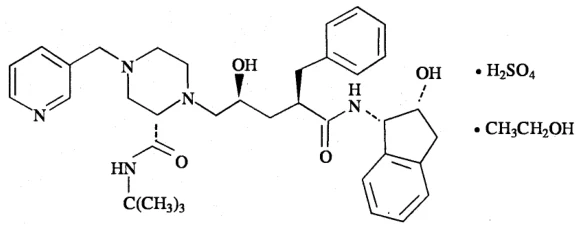
Physicochemical properties:
Description: Indinavir sulfate ethanolate is a white to off-white, free-flowing crystalline powder.
Solubility: very soluble in water and methanol.
CLINICAL TRIALS
Table 6 Study demographics and trial design | |||||
|---|---|---|---|---|---|
| Study # | Trial Design | Dosage, route of administration* and duration | Study subjects (n) | Mean age (Range) | Gender |
| ACTG 320 | Multicenter, randomized, double-blind clinical endpoint trial to compare the effect of indinavir sulfate in combination with zidovudine (or stavudine) and lamivudine with that of zidovudine (or stavudine) plus lamivudine on the progression to an AIDS-defining illness (ADI) or death. | Indinavir 800 mg q8h, zidovudine 200 mg tid, lamivudine, 150 mg bid versus Zidovudine 200 mg tid, lamivudine, 150 mg bid The median length of follow-up was 38 weeks with a maximum of 52 weeks. | 1156 HIV-infected patients | 39 years (15 to 73 years) | 17% female 28% Black 18% Hispanic |
| 028 | Double-blind, multicenter, randomized, clinical endpoint trial compared the effects of indinavir sulfate plus zidovudine with those of indinavir sulfate alone or zidovudine alone on the progression to an ADI or death, and on surrogate marker responses. Treatment regimens containing zidovudine were modified in a blinded manner with the optional addition of lamivudine (at median time study week 40). | Indinavir, 800 mg q8h given as 200-mg capsules; plus zidovudine**, 200 mg q8h given as 100-mg capsules. versus Indinavir, 800 mg q8h given as 200-mg capsules; plus matching placebo to zidovudine versus Zidovudine**, 200 mg q8h given as 100-mg capsules; plus matching placebo to MK-0639. The median length of follow-up was 56 weeks with a maximum of 97 weeks. | 996 HIV-1 seropositive patients | 33 years (18 to 67 years) | 28% female 11% Black 1% Asian/ Other |
| 035 | Multicenter, randomized, surrogate marker trial comparing the effects of indinavir sulfate with those of indinavir sulfate plus zidovudine plus lamivudine and those of zidovudine plus lamivudine on CD4 cell counts and serum viral RNA. Treatment was changed to open label therapy with indinavir sulfate plus zidovudine plus lamivudine after at least 24 weeks of double-blind, randomized therapy | Indinavir, 800 mg q8h, zidovudine, 200 mg q8h, 3TC, 150 mg bid versus Indinavir, 800 mg q8h, alone versus Zidovudine, 200 mg q8h, 3TC, 150 mg bid | 97 HIV-1 seropositive patients | 40 years (18 to 67 years) | 15% female 12% Hispanic/ Latin American 10% Black 4% Asian/Other |
Table 6 Study demographics and trial design |
|---|
| Study # | Trial Design | Dosage, route of administration* and duration | Study subjects (n) | Mean age (Range) | Gender |
|---|---|---|---|---|---|
| The median length of double-blind follow-up was 41 weeks with a maximum of 52 weeks. | |||||
* All drugs were administered orally. ** Per Protocol/Amendment 028-03, each patient in a zidovudine containing arm of this trial had the option of adding blinded lamivudine (3TC), 150 mg bid | |||||
Table 7 Baseline Demographic and Disease Characteristics of studies | ||||||||
|---|---|---|---|---|---|---|---|---|
| Study ACTG 320 | Study 035 | Study 028 | ||||||
| IDV+ ZDV+ 3TC | ZDV+3TC | IDV | IDV+ZDV+3TC | ZDV+3TC | IDV | IDV+ZDV | ZDV | |
| Demographic Characteristics | ||||||||
Mean Age – years (Range) | 39.2 (15-73) | 39.1 (16-73) | 40.2 (27-63) | 41.4 (30-62) | 38.7 (18-67) | 34.4 (18-67) | 35.0 (18-66) | 34.5 (18-59) |
| Sex (%) | ||||||||
| Male | 471 (82) | 485 (84) | 24 (77) | 31 (94) | 27 (82) | 238 (72) | 242 (73) | 239 (72) |
| Female | 106 (18) | 94 (16) | 7 (23) | 2 (6) | 6 (18) | 94 (28) | 90 (27) | 93 (28) |
| Race (%) | ||||||||
| Caucasian | 303 (53) | 295 (51) | 22 (71) | 26 (79) | 23 (70) | 287 (86) | 297 (89) | 289 (87) |
| 163 (28) | 165 (28) | 5 (16) | 2 (6) | 3 (9) | 40 (12) | 32 (10) | 40 (12) | |
| Hispanic† | 99 (17) | 106 (18) | 2 ( 6) | 3 (9) | 7 (21) | 1 (0) | 0 (0) | 1 (0) |
| Other* | 12 (2) | 13 (2) | 2 (6) | 2 (6) | 0 (0) | 4 (1) | 3 (1) | 2 (1) |
| Disease Characteristics | ||||||||
Mean Baseline CD4+ - cells/mm3 (range) | 88.9 (0-348) | 84.7 (0-392) | 172.3 (51.1- 480.0) | 183.6 (35-433.0) | 168.3 (34.8-400.0) | 151.7 (16-498) | 153.5 (22-410) | 149.9 (32-389) |
| Mean Serum Viral RNA (log10 copies/ml) | ND | ND | 4.63 | 4.58 | 4.63 | 4.34 | 4.50 | 4.50 |
| Median time exposure to ZDV in months (range) | 22.0 (3-288) | 20.0 (3-312) | 32.2 (5.1-87.3) | 28.2 (6.3-91.6) | 31.2 (6.2-69.1) | NA | NA | NA |
† Includes Latin American for Protocol 35 * Includes Asian ND = Results not broken out by treatment group, mean baseline across both treatment groups is 4.95 log10 copies/mL NA = Not Applicable, Treatment-Naïve Protocol | ||||||||
Study Results
Study ACTG 320
Study ACTG 320 was a multicenter, randomized, double-blind clinical endpoint trial to compare the effect of indinavir sulfate in combination with zidovudine (or stavudine) and lamivudine with that of zidovudine (or stavudine) plus lamivudine on the progression to an AIDS-defining illness (ADI) or death. Indinavir was dosed at 800 mg q8h, zidovudine 200 mg tid, lamivudine, 150 mg bid versus zidovudine 200 mg tid, lamivudine, 150 mg bid. All drugs were administered orally.
Table 8 Study ACTG 320 | |||
| Primary and secondary endpoint | IDV+ZDV+3TC | ZDV+3TC | Treatment difference (p-value) |
| Progression to AIDS or death (%) – week 48 | Kaplan-Meier Estimate 6.8 | Kaplan-Meier Estimate 13.1 | Risk reduction 50 (p<0.001)* |
| Average change from baseline over followup for CD4 Cell Counts (cells/mm3) – week 40 | 61 | 22 | 39 (p<0.001) |
| Proportions with HIV RNA <400 copies/mL (%) – week 40 | 45 | 9 | 37 (p<0.001) |
| * Based upon stratified log rank test | |||
According to the protocol, patients were protease inhibitor and lamivudine naive, and zidovudine experienced with CD4 cell counts of ≤ 200 cells/mm³. The mean baseline CD4 count was 87 cells/mm³ and the median time of prior zidovudine therapy was 21 months.
A total of 33 (6%, n=577) patients progressed to an ADI or death in the group treated with the combination containing indinavir sulfate compared to 63 (11%, n=579) patients in the group treated with the nucleoside analogue combination. This represents a 50% reduction in the risk of progression to an ADI or death in the group treated with the combination containing indinavir sulfate relative to the group treated with the nucleoside analogue combination (p=0.001). The estimates for the proportion of patients surviving without an ADI are summarized in Table 8. A total of 10 deaths (1.7%, n=577) occurred in the group treated with the combination containing indinavir sulfate and 19 deaths (3.3%, n=579) occurred in the group treated with the nucleoside analogue combination. Although there was a 49% reduction in the risk of overall mortality associated with indinavir sulfate, the difference was not statistically significant. Mean changes in CD4 cell count are summarized in Table 8.
Study 028
Study 028 was a double-blind, multicenter, randomized, clinical endpoint trial which compared the effects of indinavir sulfate plus zidovudine with those of indinavir sulfate alone or zidovudine alone on the progression to an ADI or death, and on surrogate marker responses.
Treatment regimens containing zidovudine were modified in a blinded manner with the optional addition of lamivudine (at median time study week 40). Indinavir, 800 mg q8h given as 200-mg capsules; plus zidovudine, 200 mg q8h given as 100-mg capsules versus indinavir, 800 mg q8h given as 200-mg capsules; plus matching placebo to zidovudine versus zidovudine, 200 mg q8h given as 100-mg capsules; plus matching placebo to MK-0639. All drugs were administered orally.
Table 9 Study 028 | ||||
|---|---|---|---|---|
| Primary and Secondary endpoints | IDV+ZDV (+3TC) | IDV | ZDV (+3TC) | Treatment difference (p-value) |
| Progression to AIDS or death (%) – week 48 | Kaplan-Meier Estimate 7 | Kaplan-Meier Estimate 6 | Kaplan-Meier Estimate 15 | Risk reduction IDV+ZDV vs ZDV 70 (p<0.001)* IDV vs ZDV 61 (p<0.001)* |
| Average change from baseline over followup for CD4 Cell Counts (cells/mm3) | 113 | 104 | 22 | IDV+ZDV vs ZDV 90 (p<0.001) IDV vs ZDV 82 (p<0.001) |
| Proportions with HIV RNA <500 copies/mL (%) – week 48 | 39 | 32 | 10 | IDV+ZDV vs ZDV 29 (p<0.001) IDV vs ZDV 22 (p<0.001) |
| * Based upon stratified log rank test | ||||
According to the protocol, all patients were antiretroviral naive with CD4 cell counts of 50 to 250 cells/mm³. The mean baseline CD4 cell count was of 152 cells/mm³ and the mean serum viral RNA of 4.44 log10 copies/mL [27,824 copies/mL].
A total of 20 (6%, n=332) patients progressed to an ADI or death in the group treated with indinavir sulfate plus zidovudine compared to 61 (18%, n=332) patients in the group treated with zidovudine alone. This represents a 70% reduction in the risk of progression to an ADI or death in the group initially treated with indinavir sulfate plus zidovudine compared to the group initially treated with zidovudine alone (p<0.0001). A total of 26 (8%, n=332) patients progressed to an ADI or death in the group treated with indinavir sulfate alone. This represents a 61% reduction in the risk of progression to an ADI or death in the group treated with indinavir sulfate alone compared to the group treated with zidovudine alone (p<0.0001). The estimates for the proportion of patients surviving without an ADI are summarized in Table 9. A total of 8 (2.4%, n=332) deaths occurred in the group treated with indinavir sulfate plus zidovudine, 5 (1.5%, n=332) in the group treated with indinavir sulfate alone, and 11 (3.3%, n=332) in the group treated with zidovudine alone. No statistically significant differences in the risk of death among treatment groups was demonstrated.
Mean changes in CD4 cell counts are summarized in Table 9. The proportions of patients with serum viral RNA below 500 copies/mL, the limit of quantification of the assay, are summarized in Table 9.
Study 035
Study 035 was a multicenter, randomized, surrogate marker trial comparing the effects of indinavir sulfate with those of indinavir sulfate plus zidovudine plus lamivudine and those of zidovudine plus lamivudine on CD4 cell counts and serum viral RNA.
Treatment was changed to open label therapy with indinavir sulfate plus zidovudine plus lamivudine after at least 24 weeks of double-blind, randomized therapy. Indinavir, 800 mg q8h, zidovudine, 200 mg q8h, 3TC, 150 mg b.i.d versus indinavir, 800 mg q8h, alone versus zidovudine, 200 mg q8h, 3TC, 150 mg b.i.d. All drugs were dosed orally.
Table 10 Study 035 | ||||
|---|---|---|---|---|
| Primary endpoint | IDV | IDV+ZDV+3TC | ZDV+3TC | Treatment difference (p-value) |
| Average change from baseline over follow up for CD4 Cell Counts (cells/mm3) | 104 | 102 | 41 | IDV vs ZDV+3TC 64 (p<0.001) IDV+ZDV+3TC vs ZDV+3TC 62 (p<0.001) |
| Proportions with HIV RNA <500 copies/mL (%) – week 40 | 32 | 86 | 0 | IDV vs ZDV+3TC 32 (p<0.001) IDV+ZDV+3TC vs ZDV+3TC 86 (p<0.001) |
According to the protocol, all patients were protease-inhibitor and lamivudine naive, and zidovudine experienced, with CD4 cell counts between 50 and 400 cells/mm³ and serum viral RNA levels ≥ 20,000 copies/mL. The median time of prior zidovudine therapy was 29.7 months. The mean baseline CD4 cell count over all patients was 175 cells/mm³, and the mean baseline serum viral RNA was 4.62 log10 copies/mL (41,230 copies/mL).
Mean changes in CD4 cell counts during the double-blind portion are summarized in Table 10. The proportions of patients during the double-blind portion with serum viral RNA below 500 copies/mL, the limit of quantification of the assay, are summarized in Table 10.
DETAILED PHARMACOLOGY
Pharmacokinetics
Absorption in Adult Patients
Indinavir was rapidly absorbed in the fasted state with a time to peak plasma concentration (Tmax) of 0.8 ± 0.3 hours (mean ± S.D.) (n=11). A greater than dose-proportional increase in indinavir plasma concentrations was observed over the 200-1000 mg dose range. At a dosing regimen of 800 mg every 8 hours, steady-state area under the plasma concentration time curve (AUC) was 30,691 ± 11,407 nM•hour (n=16), peak plasma concentration (Cmax) was 12,617 ± 4037 nM (n=16), and plasma concentration eight hours post dose (trough) was 251 ± 178 nM (n=16).
Effect of Food on Oral Absorption
Administration of indinavir with a meal high in calories, fat, and protein (784 kcal, 48.6 g fat, 31.3 g protein) resulted in a 77% ± 8% reduction in AUC and an 84% ± 7% reduction in Cmax (n=10). Administration with lighter meals (e.g., a meal of dry toast with jelly, apple juice, and coffee with skim milk and sugar or a meal of corn flakes, skim milk and sugar) resulted in little or no change in AUC, Cmax or trough concentration (see DOSAGE AND ADMINISTRATION).
Distribution
Indinavir was approximately 60% bound to human plasma proteins over a concentration range of 81 nM to 16,300 nM.
In dogs, the ratio of mean fetal plasma to mean maternal plasma indinavir concentrations was 0.49 both 1 and 2 hours after dosing. Distribution of indinavir across the placental barrier was limited and the ratio of AUC in the fetus to that in maternal plasma averaged 0.02 and 0.2 in rabbits and rats, respectively.
Metabolism
Following a 400 mg dose of 14C-indinavir sulfate, 83 ± 1% (n=4) and 19 ± 3% (n=6) of the total radioactivity was recovered in feces and urine, respectively; radioactivity due to parent drug in feces and urine was 19.1% and 9.4%, respectively. Seven metabolites have been identified, one glucuronide conjugate and six oxidative metabolites. In vitro studies indicate that cytochrome P450 (CYP3A4) is the major enzyme responsible for formation of the oxidative metabolites.
Elimination
Less than 20% of indinavir is excreted unchanged in the urine. Mean urinary excretion of unchanged drug was 10.4 ± 4.9% (n=10) and 12.0 ± 4.9% (n=10) following a single 700 mg and 1000 mg dose, respectively. Indinavir was rapidly eliminated with a half-life of 1.8 ± 0.4 hours (n=10). Significant accumulation was not observed after multiple dosing at 800 mg every 8 hours.
Hepatic Insufficiency Due to Cirrhosis
Patients with mild-to-moderate hepatic insufficiency and clinical evidence of cirrhosis had evidence of decreased metabolism of indinavir resulting in approximately 60% higher mean AUC following a single 400 mg dose (n=12).
The half-life of indinavir increased to 2.8 ± 0.5 hours. Indinavir pharmacokinetics have not been studied in patients with severe hepatic insufficiency (see DOSAGE AND ADMINISTRATION, Hepatic Insufficiency Due to Cirrhosis).
Renal Insufficiency
The pharmacokinetics of indinavir have not been studied in patients with renal insufficiency.
Drug Interactions
Table 11 Drug Interactions; Pharmacokinetic Parameters of CRIXIVAN® in the Presence of Co-administered drugs | ||||||
|---|---|---|---|---|---|---|
| Co-Administered Drug | Dose (mg) of co-administered drug | Dose (mg) of CRIXIVAN® | N | Mean Ratio or % Change of Pharmacokinetic parameters 90% CI; no effect = 1.00 | ||
| Cmax | AUC | Cmin | ||||
| Antiretrovirals | ||||||
| Delavirdine | 400 three times daily | 400 three times daily, 7 days | 28 | 0.641 (0.48, 0.86) | No significant change1 | 2.181 (1.16, 4.12) |
| Delavirdine | 400 three times daily | 600 three times daily, 7 days | 28 | No significant change | 1.531 (1.07, 2.20) | 3.981 (2.04, 7.78) |
| Efavirenz2 | 600 once daily, 10 days | 1000 three times daily, 10 days After morning dose After afternoon dose After evening dose | 20 | No significant change1 No significant change1 0.711 (0.57, 0.89) | 0.671 (0.61, 0.74) 0.631 (0.54, 0.74) 0.541 (0.46, 0.63) | 0.611 (0.49, 0.76) 0.481 (0.43, 0.53) 0.431 (0.37, 0.50) |
| Ritonavir | 100 twice daily, 14 days | 800 twice daily, 14 days | 10, 163 | See text below for discussion of interaction. | ||
| Ritonavir | 200 twice daily, 14 days | 800 twice daily, 14 days | 9, 163 | See text below for discussion of interaction. | ||
Table 11 Drug Interactions; Pharmacokinetic Parameters of CRIXIVAN® in the Presence of Co-administered drugs |
|---|
| Co-Administered Drug | Dose (mg) of co-administered drug | Dose (mg) of CRIXIVAN® | N | Mean Ratio or % Change of Pharmacokinetic parameters 90% CI; no effect = 1.00 |
|---|
| Cmax | AUC | Cmin | ||||
|---|---|---|---|---|---|---|
| Other Medications | ||||||
| Itraconazole | 200 twice daily, 7 days | 600 three times daily, 7 days | 12 | 0.781 (0.69, 0.88) | 0.991 (0.91, 1.06) | 1.491 (1.28, 1.74) |
| Ketoconazole | 400 once daily, 7 days 400 once daily, 7 days | 600 three times daily, 7 days 400 three times daily, 7 days | 12 12 | 0.691 (0.61, 0.78) 0.421 (0.37, 0.47) | 0.801 (0.74, 0.87) 0.441 (0.41, 0.48) | 1.291 (1.11, 1.51) 0.731 (0.62, 0.85) |
| Rifabutin | 150 once daily in the morning, 10 days | 800 three times daily, 10 days | 14 | 0.80 (0.72, 0.89) | 0.68 (0.60, 0.76) | 0.60 (0.51, 0.72) |
| Rifabutin | 300 once daily in the morning, 10 days | 800 three times daily, 10 days | 10 | 0.75 (0.61, 0.91) | 0.66 (0.56, 0.77) | 0.61 (0.50, 0.75) |
| Rifampin | 600 once daily in the morning, 8 days | 800 three times daily, 7 days | 12 | 0.13 (0.08, 0.22) | 0.08 (0.06, 0.11) | Not Done |
| St. John’s Wort (Hypericum perforatum) | 300 three times daily with meals, 14 days | 800 three times daily | 8 | Not Available | 0.46 (0.34, 0.58)4 | 0.19 (0.06, 0.33)4 |
| Sildenafil | 25 single dose | 800 three times daily | 6 | See text below for discussion of interaction. | ||
All interaction studies conducted in healthy, HIV-negative adult subjects, unless otherwise indicated. 1 Relative to indinavir 800 mg three times daily alone. 2 Study conducted in HIV-positive subjects. 3 Comparison to historical data on 16 subjects receiving indinavir alone. 4 95% CI. |
Table 12 Pharmacokinetics of the co-administered drugs in the presence of CRIXIVAN® | ||||||
|---|---|---|---|---|---|---|
| Co-Administered Drug | Dose (mg) of co-administered drug | Dose (mg) of CRIXIVAN® | N | Mean Ratio or % Change of Pharmacokinetic parameters 90% CI; no effect = 1.00 | ||
| Cmax | AUC | Cmin | ||||
| Antiretrovirals | ||||||
| Efavirenz | 200 once daily, 14 days | 800 three times daily, 14 days | 20 | No significant change | No significant change | -- |
| Ritonavir | 100 twice daily, 14 days 200 twice daily, 14 days | 800 twice daily, 14 days 800 twice daily, 14 days | 10, 41 9, 51 | 1.61 (1.13, 2.29) 1.19 (0.85, 1.66) | 1.72 (1.20, 2.48) 1.96 (1.39, 2.76) | 1.62 (0.93, 2.85) 4.71 (2.66, |
Table 12 Pharmacokinetics of the co-administered drugs in the presence of CRIXIVAN® |
|---|
| Co-Administered Drug | Dose (mg) of co-administered drug | Dose (mg) of CRIXIVAN® | N | Mean Ratio or % Change of Pharmacokinetic parameters 90% CI; no effect = 1.00 |
|---|
| Cmax | AUC | Cmin | ||
|---|---|---|---|---|
8.33) n=9, 4 | ||||
| Other Medications | ||||
| Sildenafil | 25 single dose | 800 three times daily | 6 | See text below for discussion of interaction. |
| Vardenafil | 10 single dose | 800 three times daily | 18 | See text below for discussion of interaction. |
All interaction studies conducted in healthy, HIV-negative adult subjects, unless otherwise indicated. 1 Parallel group design; n for coadministered drug + indinavir, n for coadministered drug alone. |
Delavirdine: Delavirdine inhibits the metabolism of indinavir such that coadministration of 400-mg or 600-mg indinavir three times daily with 400-mg delavirdine three times daily alters indinavir AUC, Cmax and Cmin (see Table11). Indinavir had no effect on delavirdine pharmacokinetics (see DOSAGE AND ADMINISTRATION, Concomitant Therapy, Delavirdine), based on a comparison to historical delavirdine pharmacokinetic data.
PDE5 Inhibitors (sildenafil, tadalafil, vardenafil): Because indinavir is a cytochrome P450 3A4 inhibitor, coadministration of CRIXIVAN® with sildenafil, tadalafil, or vardenafil is likely to result in an increase of plasma concentrations of these compounds by competitive inhibition of metabolism, and may result in an increase in PDE5 inhibitor-associated adverse events, including hypotension, visual changes, and priapism (see the manufacturer’s complete prescribing information for sildenafil, tadalafil, or vardenafil for recommended dosage adjustments). In one study in HIV-infected men, coadministration of indinavir (800 mg every 8 hours) with a single 25 mg dose of sildenafil resulted in a 4.4-fold increase in average sildenafil AUC, compared to historical data following administration of sildenafil alone. Co-administration with sildenafil did not significantly alter plasma indinavir levels; the average AUC0-8hr of indinavir increased 1.1-fold and the average indinavir Cmax increased 1.4-fold, compared to indinavir 800 mg every 8 hours alone. Coadministration of indinavir (800 mg every 8 hours) with a single 10-mg dose of vardenafil resulted in a 16-fold increase in vardenafil AUC, a 7-fold increase in vardenafil Cmax, and a 2-fold increase in vardenafil half-life. The interaction of tadalafil with indinavir has not been studied.
Ritonavir: Compared to historical data in patients who received indinavir 800 mg every 8 hours alone, twice-daily coadministration to volunteers of indinavir 800 mg and ritonavir with food for two weeks resulted in a 2.7-fold increase of indinavir AUC24h, a 1.6-fold increase in indinavir Cmax, and an 11-fold increase in indinavir Cmin for a 100-mg ritonavir dose and a 3.6-fold increase of indinavir AUC24h, a 1.8-fold increase in indinavir Cmax, and a 24-fold increase in indinavir Cmin for a 200-mg ritonavir dose. In the same study, twice-daily coadministration of indinavir
(800 mg) and ritonavir (100 or 200 mg) resulted in ritonavir AUC24h increases versus the same doses of ritonavir alone (see Table 12).
MICROBIOLOGY
VIROLOGY
Indinavir at concentrations of 50 to 100 nM mediated 95% inhibition (IC95) of viral spread (relative to an untreated virus-infected control) in human T-lymphoid cell cultures infected with several cell-line adapted variants of HIV-1 (LAI, MN, and RF). Similar inhibition of HIV-1 infection was seen in primary human monocytes/macrophages using a macrophage-tropic viral variant (SF 162). In addition, indinavir at concentrations of 25 to 100 nM resulted in 95% inhibition of viral spread in cultures of mitogen-activated human peripheral blood mononuclear cells infected with diverse, primary clinical isolates of HIV-1, including isolates resistant to reverse transcriptase inhibitors including zidovudine and non-nucleoside reverse transcriptase inhibitors. Synergistic antiretroviral activity was observed when human T-lymphoid cells infected with the LAI variant of HIV-1 were incubated with indinavir and either zidovudine, didanosine, or a non-nucleoside reverse transcriptase inhibitor.
Drug Resistance
Loss of suppression of viral RNA levels occurred in some patients, however, CD4 cell counts were often sustained above pretreatment levels. When loss of viral RNA suppression occurred, it was typically associated with replacement of circulating susceptible virus with resistant viral variants. Resistance was correlated with the accumulation of mutations in the viral genome that resulted in the expression of amino acid substitutions in the viral protease enzyme.
At least eleven HIV-1 protease amino acid residue positions, at which substitutions are associated with resistance, have been identified. No single substitution was capable of engendering measurable resistance to the inhibitor; resistance was mediated by the co-expression of multiple and variable substitutions. In general, higher levels of resistance result from the co-expression of greater numbers of substitutions at the eleven identified positions. Substitutions at these positions appeared to accumulate sequentially, probably as the result of ongoing viral replication.
It should be noted that the decrease in suppression of viral RNA levels was seen more frequently when therapy with indinavir sulfate was initiated at doses lower than the recommended oral dose of 2.4 g/day. Therefore, therapy with indinavir sulfate should be initiated at the full recommended dose to increase suppression of viral replication and therefore inhibit the emergence of resistant virus (see DOSAGE AND ADMINISTRATION).
Genotypic Resistance in Clinical Studies
Study 006 was a dose-ranging study in which patients were initially treated with indinavir sulfate at a dose of <2.4 g/day followed by 2.4 g/day. Study 019 was a randomized comparison of indinavir sulfate (IDV) 600 mg every 6 hours, indinavir sulfate plus zidovudine (ZDV), and zidovudine alone. Table 13 shows the incidence of genotypic resistance at 24 weeks in these studies.
Table 13 Genotypic Resistance at 24 weeks | ||
|---|---|---|
| Treatment Group | Resistance to IDV n/N’ | Resistance to ZDV n/N’ |
| IDV | - | - |
| <2.4g/day | 31/37 (84%) | - |
| 2.4g/day | 9/21 (43%) | 1/17 (6%) |
| IDV/ZDV | 4/22 (18%) | 1/22 (5%) |
| ZDV | 1/18 (6%) | 11/17 (65%) |
| N’ – includes patients with non-amplifiable virus at 24 weeks who had amplifiable virus at week 0. | ||
Cross Resistance
HIV-1 patient isolates with reduced susceptibility to indinavir sulfate expressed varying patterns and degrees of cross-resistance to a series of diverse HIV protease inhibitors, including ritonavir and saquinavir. Complete cross-resistance was noted between indinavir sulfate and ritonavir; however, cross-resistance to saquinavir varied among isolates. Many of the protease amino acid substitutions reported to be associated with resistance to ritonavir and saquinavir were also associated with resistance to indinavir sulfate. The concomitant use of indinavir sulfate with a nucleoside analogue (to which the patient is naive) may lessen the chance of the development of resistance to both indinavir and the nucleoside analogue.
TOXICOLOGY
Acute Toxicity
The approximate oral LD50 for indinavir is >5000 mg/kg in rats and mice. The approximate intraperitoneal LD50 is ≥5000 mg/kg in mice and >5000 mg/kg in rats.
Long-Term Toxicity
Crystals (consistent with parent drug) have been seen in the urine of rats treated with indinavir at doses ≥50 mg/kg/day. In monkeys treated with indinavir at doses up to 40 mg/kg twice a day, crystalluria was not observed; however, it was observed in one monkey at 160 mg/kg twice a day. In dogs treated with indinavir at doses up to 40 mg/kg/day, crystalluria was not observed; however, it was observed in one dog at 80 mg/kg/day. The crystals have not been associated with drug-induced renal injury including no increases in serum urea nitrogen or creatinine in any of these species. Renal histologic changes have not been seen in rats at doses up to 640 mg/kg/day for up to 53 weeks, in dogs at doses up to 80 mg/kg/day for up to 53 weeks, and in monkeys at doses up to 160 mg/kg twice a day for up to 5 weeks. An increase in thyroidal weight and thyroidal follicular cell hyperplasia, due to an increase in thyroxine clearance, was seen in rats treated with indinavir at doses ≥160 mg/kg/day. An increase in hepatic weight occurred in rats treated with indinavir at doses ≥40 mg/kg/day and was accompanied by hepatocellular hypertrophy at doses ≥320 mg/kg/day; this change was seen without histologic evidence of hepatic injury at doses up to 640 mg/kg/day in this species.
Carcinogenicity
Carcinogenicity studies were conducted in mice and rats. In mice, no increased incidence of any tumor type was observed. The highest doses in the mouse study were 480 mg/kg/day (males) and 640 mg/kg/day (females), which produced daily systemic exposures approximately 1.7 and 2.6 times higher, respectively, than the daily systemic exposure in humans at the recommended daily dose. In rats, an increased incidence of thyroid adenomas was seen at the highest dose tested, 640 mg/kg/day (males and females). At that dose, daily systemic exposure in rats was approximately 1.3 to 2.3 times higher than daily systemic exposure in people.
Mutagenicity
No evidence of mutagenicity or genotoxicity was observed in in vitro microbial mutagenesis (Ames) tests, in vitro alkaline elution assays for DNA breakage, in vitro and in vivo chromosomal aberration studies, and in in vitro mammalian cell mutagenesis assays.
Reproduction and Teratology
No treatment-related effects on mating, fertility, or embryo survival were seen in female rats and no treatment-related effects on mating performance were seen in male rats at doses up to 640 mg/kg/day. In addition, no treatment-related effects were observed in fecundity or fertility of untreated females mated to treated males.
Developmental toxicity studies performed in rats, rabbits, and dogs (at doses which produced systemic exposures comparable to or slightly greater than human exposure) revealed no evidence of teratogenicity. No treatment-related external or visceral changes were observed in rats. Treatment-related increases over controls in the incidence of supernumerary ribs at doses ≥160 mg/kg/day and of cervical ribs at 640 mg/kg/day were seen in rats. No treatment-related external, visceral, or skeletal changes were observed in rabbits or dogs. In all three species, no treatment-related effects on embryonic/fetal survival or fetal weights were observed. Estimates of placental transfer based on the ratio of fetal to maternal plasma concentrations at or near the Tmax indicated a significant in utero exposure in rats (range 5-33%; n=4 animals) and in dogs (range 46-58%; n=4 animals). The absence or low levels of indinavir in rabbit fetal plasma did not permit estimation of placental transfer in this species.
Studies in which rats were administered 40 or 640 mg/kg/day demonstrated that indinavir is excreted in milk of lactating rats. The ratios of indinavir in milk to that in plasma were greater than 1.
In Rhesus monkeys, administration of indinavir sulfate to neonates caused a mild exacerbation of the transient physiologic hyperbilirubinemia seen in this species after birth. Administration of indinavir sulfate to pregnant Rhesus monkeys during the third trimester did not cause a similar exacerbation in neonates; however, only limited placental transfer of indinavir sulfate occurred.
REFERENCES
- 1. Balani SK, Arison BH, Mathai L, Kauffman LR, Miller RR, Stearns RA, Chen IW, Lin JH. Metabolites of L-735,524, a Potent HIV-1 Protease Inhibitor in Human Urine. Drug Metab Dispos 1995;23(2):266-70.
- 2. Condra JH, Schleif WA, Blahy OM, Gabryelski LJ, Graham DJ, Quintero JC, Rhodes A, Robbins HL, Roth E, Shivaprakash M, Titus D, Yang T, Teppler H, Squires KE, Deutsch PJ, Emini EA. In vivo Emergence of HIV-1 Variants Resistant to Multiple Protease Inhibitors. Nature 1995;374:569-71.
- 3. Dawson JD, Lagakos SW. Analyzing Laboratory Marker Changes in AIDS Clinical Trials. J Acquir Immune Defic Syndr Hum Retrovirol 1991;4:667-76.
- 4. Dorsey BD, Levin RB, McDaniel SL, Vacca JP, Guare JP, Darke PL, Zugay JA, Emini EA, Schleif WA, Quintero JC, Lin JH, Chen IW, Holloway MK, Fitzgerald PMD, Axel MG, Ostovic D, Anderson PS, Huff JR. L-735,524: The Design of a Potent and Orally Bioavailable HIV Protease Inhibitor. J Med Chem 1994:37(21);3443-51.
- 5. Fichtenbaum CJ, Gerber JG, Rosenkranz SL, Segal Y, Aberg JA, Blaschke T, et al. Pharmacokinetic interactions between protease inhibitors and statins in HIV seronegative volunteers: ACTG Study A5047. AIDS 2002;16(4):569-77.
- 6. Gulick RM, Mellors JW, Havlir D, Eron JJ, Gonzalez C, McMahon D, Richman DD, Valentine FT, Jonas L, Meibohm A, Emini EA, Chodakewitz JA. Treatment with Indinavir, Zidovudine, and Lamivudine in Adults with Human Immunodeficiency Virus Infection and Prior Antiretroviral Therapy. N Engl J Med 1997;337:734-9.
- 7. Hammer SM, Squires KE, Hughes MD, Grimes JM, Demeter LM, Currier JS, Eron JJ, Feinberg JE, Balfour HH, Deyton LR, Chodakewitz JA, Fischl MA, for the AIDS Clinical Trials Group 320 Study Team. A Controlled Trial of Two Nucleoside Analogues Plus Indinavir in Persons with Human Immunodeficiency Virus Infection and CD4 Cell Counts of 200 Per Cubic Millimeter or Less. N Engl J Med 1997;337:725-33.
- 8. Hsyu P-H, Schultz-Smith MD, Lillibridge JH, Lewis RH, Kerr BM. Pharmacokinetic interactions between nelfinavir and 3-hydroxy-3-methylglutaryl coenzyme A reductase inhibitors atorvastatin and simvastatin. Antimicrob Agents Chemother 2001;45(12):3445-50.
- 9.
Kim BM, Vacca JP, Guare JP, Hanifin CM, Michelson SR, Darke PL, Zugay JA, Emini EA, Schleif W, Lin JH, Chen IW, Vastag K, Ostovic D, Anderson PS, Huff JR. A New
- Hydroxyethylamine Class of HIV-1 Protease Inhibitors With High Antiviral Potency and Oral Bioavailability. Bioorg Med Chem 1994;4(19):2273-8.
- 10. Kiser JJ, Gerber JG, Predhomme JA, Wolfe P, Flynn DM and Hoody DW. Drug/Drug Interaction Between Lopinavir/Ritonavir and Rosuvastatin in Healthy Volunteers. J Acquir Immune Defic Syndr 2008:47(5):570-578.
- 11. Waldman SA, Teppler H, Osborne B, Bjornsson TD, Pomerantz R, Woolf E, Yeh K, Deutsch P, Squires K, Saag M. Pharmacokinetics of L-735,524, an HIV Protease Inhibitor. Clin Pharmacol Ther 1994;55(2):195.