


Product Monograph - Aptivus
RECENT MAJOR LABEL CHANGES
| 01/2021 |
TABLE OF CONTENTS
Sections or subsections that are not applicable at the time of authorization are not listed.
RECENT MAJOR LABEL CHANGES............................................................................................ 2
TABLE OF CONTENTS .............................................................................................................. 2
PART I: HEALTH PROFESSIONAL INFORMATION ..................................................................... 4
1 INDICATIONS .............................................................................................................. 4
1.1 Pediatrics .......................................................................................................... 4
1.2 Geriatrics........................................................................................................... 4
2 CONTRAINDICATIONS ................................................................................................. 4
3 SERIOUS WARNINGS AND PRECAUTIONS BOX ............................................................ 6
4 DOSAGE AND ADMINISTRATION................................................................................. 6
4.1 Dosing Considerations ....................................................................................... 6
4.2 Recommended Dose and Dosage Adjustment..................................................... 6
4.4 Administration................................................................................................... 7
4.5 Missed Dose ...................................................................................................... 7
5 OVERDOSAGE ............................................................................................................. 7
6 DOSAGE FORMS, STRENGTHS, COMPOSITION AND PACKAGING ................................. 7
7 WARNINGS AND PRECAUTIONS .................................................................................. 8
7.1 Special Populations .......................................................................................... 13
7.1.1 Pregnant Women ....................................................................................... 13
7.1.2 Breast-feeding............................................................................................ 13
7.1.3 Pediatrics ................................................................................................... 13
7.1.4 Geriatrics ................................................................................................... 13
8 ADVERSE REACTIONS ................................................................................................ 14
8.2 Clinical Trial Adverse Reactions ........................................................................ 14
8.2.1 Clinical Trial Adverse Reactions – Pediatrics ................................................ 24
8.3 Less Common Clinical Trial Adverse Reactions .................................................. 24
8.4 Abnormal Laboratory Findings: Hematologic, Clinical Chemistry and Other Quantitative Data ...................................................................................................... 25
8.5 Post-Market Adverse Reactions........................................................................ 26
9 DRUG INTERACTIONS................................................................................................ 27
9.1 Serious Drug Interactions ................................................................................. 27
9.2 Drug Interactions Overview.............................................................................. 28
9.3 Drug-Behavioural Interactions.......................................................................... 28
9.4 Drug-Drug Interactions .................................................................................... 29
9.5 Drug-Food Interactions .................................................................................... 49
9.6 Drug-Herb Interactions .................................................................................... 49
9.7 Drug-Laboratory Test Interactions .................................................................... 50
10 CLINICAL PHARMACOLOGY ....................................................................................... 50
10.1 Mechanism of Action.................................................................................. 50
10.2 Pharmacodynamics .................................................................................... 50
10.3 Pharmacokinetics ....................................................................................... 50
11 STORAGE, STABILITY AND DISPOSAL ......................................................................... 60
12 SPECIAL HANDLING INSTRUCTIONS........................................................................... 60
PART II: SCIENTIFIC INFORMATION ...................................................................................... 61
13 PHARMACEUTICAL INFORMATION............................................................................ 61
14 CLINICAL TRIALS........................................................................................................ 62
14.1 Clinical Trials by Indication.......................................................................... 62
15 MICROBIOLOGY ........................................................................................................ 71
16 NON-CLINICAL TOXICOLOGY ..................................................................................... 73
PATIENT MEDICATION INFORMATION ................................................................................. 76
PART I: HEALTH PROFESSIONAL INFORMATION
1 INDICATIONS
APTIVUS (tipranavir capsules) is indicated for co-administration with 200 mg ritonavir, for combination antiretroviral treatment of HIV-1 infected adults who are treatment experienced and infected with HIV-1 strains resistant to more than one protease inhibitor.
In deciding on a new regimen for patients who have failed an antiretroviral regimen, careful consideration should be given to the treatment history of the individual patient and the patterns of mutations associated with different drugs.
For a description of the clinical data in support of this indication, refer to 14 CLINICAL TRIALS.
1.1 Pediatrics
Pediatrics (2-18 years of age): Based on the data submitted and reviewed by Health Canada, the safety and efficacy of APTIVUS in pediatric patients has not been established. Therefore, Health Canada has not authorized an indication for pediatric use.
Pediatrics (under 2 years of age): No data are available to Health Canada; therefore, Health
Canada has not authorized an indication for pediatric use.
See 4 DOSAGE AND ADMINISTRATION, 7 WARNINGS AND PRECAUTIONS, 8 ADVERSE REACTIONS and 10 CLINICAL PHARMACOLOGY sections.
1.2 Geriatrics
Geriatrics (> 65 years of age): Clinical studies of APTIVUS did not include sufficient number of subjects aged 65 and over to determine whether they respond differently from younger subjects. In general, caution should be exercised in the administration and monitoring of APTIVUS in elderly patients reflecting the greater frequency of decreased hepatic, renal, or cardiac function, and of concomitant disease or other drug therapy. See 4 DOSAGE AND ADMINISTRATION, 7 WARNINGS AND PRECAUTIONS, 8 ADVERSE REACTIONS and 10 CLINICAL PHARMACOLOGY sections.
2 CONTRAINDICATIONS
APTIVUS is contraindicated in patients who are hypersensitive to this drug or to any ingredient in the formulation, including any non-medicinal ingredient, or component of the container. For a complete listing, see 6 DOSAGE FORMS, STRENGTHS, COMPOSITION AND PACKAGING.
In case of rare hereditary conditions that may be incompatible with an excipient of the product (please refer to 7 WARNINGS and PRECAUTIONS) the use of the product is contraindicated.
APTIVUS is contraindicated in patients with moderate or severe (Child-Pugh Class B or C respectively) hepatic insufficiency.
APTIVUS contains Cremophor® EL. Caution should be used when administering medicines containing Cremophor® EL (e.g. cyclosporine i.v. and paclitaxel i.v.) to patients with a prior hypersensitivity reaction to Cremophor® EL.
Co-administration of APTIVUS with 200 mg ritonavir, with drugs that are highly dependent on CYP3A for clearance and for which elevated plasma concentrations are associated with serious and/or life-threatening events is contraindicated. These drugs are listed in Table 1 below.
| Table 1: Drugs that are Contraindicated with APTIVUS, Co-Administered with Ritonavir | |
| Drug Class | Drugs within Class that are Contraindicated with APTIVUS, Co-administered with Ritonavir |
| Alpha-1 adrenoreceptor antagonist | Alfuzosin |
| Antiarrhythmics | Amiodarone, flecainide, propafenone |
| Anti-gout | Colchicine+ |
| Antimycobacterials | Rifampin |
| Antipsychotics | Pimozide, quetiapine |
| Ergot derivatives | Dihydroergotamine, ergonovine, ergotamine |
| Herbal products | St. John’s wort (hypericum perforatum) |
| HMG-CoA reductase inhibitors | Lovastatin, simvastatin |
| PDE5 Inhibitors | Sildenafil, when used for the treatment of pulmonary arterial hypertension (PAH)* |
| Sedatives/hypnotics | Oral midazolam oral triazolam |
*See Table 9 for sildenafil when dosed for erectile dysfunction
+See Table 8 for contraindications and see Table 9 for dosing with patients with normal hepatic and renal function
Due to the need for co-administration of APTIVUS with low-dose ritonavir (RTV), please refer to ritonavir product monograph for a description of ritonavir contraindications.
3 SERIOUS WARNINGS AND PRECAUTIONS BOX
Serious Warnings and Precautions
APTIVUS co-administered with 200 mg ritonavir has been associated with reports of both fatal and non-fatal intracranial hemorrhage (see 7 WARNINGS AND PRECAUTIONS). APTIVUS co-administered with 200 mg ritonavir has been associated with reports of clinical hepatitis and hepatic decompensation including some fatalities. Extra vigilance including increased clinical and laboratory monitoring is warranted in patients with chronic hepatitis B or hepatitis C co-infection, as these patients have an increased risk of hepatotoxicity (see 7 WARNINGS AND PRECAUTIONS, Hepatic Impairment). |
4 DOSAGE AND ADMINISTRATION
4.1 Dosing Considerations
APTIVUS must be administered with 200 mg ritonavir to ensure therapeutic effect. Patients should be instructed accordingly.
Please also refer to the ritonavir product monograph for contraindications, warnings, precautions, side effects and potential drug interactions.
Triglyceride and cholesterol testing should be performed prior to initiating tipranavir therapy and during therapy.
4.2 Recommended Dose and Dosage Adjustment
The recommended dose of APTIVUS is 500 mg (two 250 mg capsules), co-administered with 200 mg ritonavir (low-dose ritonavir), twice daily.
Dosage for Elderly Patients
In general, caution should be exercised in the administration and monitoring of APTIVUS in elderly patients reflecting the greater frequency of decreased hepatic, renal or cardiac function, and of concomitant disease or other drug therapy. See 7 WARNINGS AND PRECAUTIONS, 8 ADVERSE REACTIONS and 10 CLINICAL PHARMACOLOGY sections.
Dosage for Pediatric Patients
Health Canada has not authorized an indication for pediatric use. See 7 WARNINGS AND PRECAUTIONS, 8 ADVERSE REACTIONS and 10 CLINICAL PHARMACOLOGY sections.
Dosage for Hepatically Impaired Patients
APTIVUS is contraindicated in patients with moderate or severe hepatic insufficiency (Child-
Pugh Class B or C, respectively) (see 2 CONTRAINDICATIONS). APTIVUS co-administered with 200 mg ritonavir should be used with caution in patients with mild hepatic insufficiency (Child-Pugh Class A); these patients should be monitored closely
4.4 Administration
APTIVUS, co-administered with 200 mg ritonavir, should be administered with food.
APTIVUS capsules must be swallowed whole and must not be opened or chewed.
APTIVUS, co-administered with 200 mg ritonavir, should be taken with at least two additional antiretroviral agents. The manufacturers’ product monograph of the antiretroviral agents should be followed.
APTIVUS, co-administered with 200 mg ritonavir, causes a reduction in the AUC of didanosine. Dosing of enteric-coated didanosine and tipranavir, co-administered with 200 mg ritonavir, should be separated by at least 2 hours to avoid formulation incompatibility.
4.5 Missed Dose
Patients should be advised of the need to take APTIVUS every day as prescribed. If a dose is missed the patient should not double the next dose but should take the next dose as soon as possible.
5 OVERDOSAGE
There is no known antidote for APTIVUS overdose. Treatment of overdose should consist of general supportive measures, including monitoring of vital signs and observation of the patient’s clinical status. Administration of activated charcoal may also be used to aid in removal of unabsorbed drug. Since tipranavir is highly protein bound, dialysis is unlikely to be beneficial in significant removal of this medicine.
| For management of a suspected drug overdose, contact your regional poison control centre. |
6 DOSAGE FORMS, STRENGTHS, COMPOSITION AND PACKAGING
Table 2 – Dosage Forms, Strengths, Composition and Packaging
| Route of Administration | Dosage Form / Strength/Composition | Non-medicinal Ingredients |
| Oral Administration | Capsule, 250 mg | Cremophor® EL (Polyoxyl 35 Castor Oil) Ethanol |
APTIVUS capsules 250 mg are pink, oblong soft gelatin capsules imprinted in black with “TPV 250”. They are packaged in HDPE unit-of-use bottles with a child resistant closure and 120 capsules.
7 WARNINGS AND PRECAUTIONS
Please see 3 SERIOUS WARNINGS AND PRECAUTIONS BOX.
General
APTIVUS must be administered with 200 mg ritonavir to ensure its therapeutic effect (see 4 DOSAGE AND ADMINISTRATION). Failure to correctly co-administer APTIVUS with ritonavir will result in reduced plasma levels of tipranavir that may be insufficient to achieve the desired antiviral effect. Patients should be instructed accordingly. Please refer to ritonavir product monograph for additional information on precautionary measures.
APTIVUS contains up to 50.4 mg sorbitol per maximum recommended daily dose. Patients with
| Each APTIVUS capsule contains 250 mg of tipranavir. | mono/diglycerides of caprylic/capric acid propyl gallate propylene glycol purified water trometamol Capsule Shell: Gelatin iron oxide red propylene glycol purified water ‘sorbitol special glycerin blend’ (d-sorbitol, 1,4-sorbitan, mannitol and glycerin) titanium dioxide Black printing ink: ammonium hydroxide ethylacetate iron oxide black isopropyl alcohol Macrogol polyvinyl acetate phthalate, propylene glycol, purified water SDA 35 alcohol |
the rare hereditary condition of fructose intolerance should not take this medicine.
APTIVUS capsules contain ethanol 7 % (v/v) in each capsule. This should be taken into account in pregnant or breast-feeding women, children, and in high-risk groups such as those with liver disease or epilepsy. Ethanol could be harmful for those suffering from alcoholism.
Carcinogenesis and Mutagenesis
Animal data only (see 16 NON-CLINICAL TOXICOLOGY)
Cardiovascular
QT Prolongation
A specific study was conducted using the therapeutic and supratherapeutic doses of APTIVUS co-administered with RTV (TPV/r 500/200 mg and TPV/r 750/200 mg) on the QTc interval in healthy male and female volunteers using moxifloxacin (400 mg) as a positive control. There was no clinically relevant prolongation of the QT interval or other electrocardiac abnormalities compared to the baseline with either dose.
Effects on Platelet Aggregation and Coagulation
APTIVUS co-administered with ritonavir, should be used with caution in patients who may be at risk of increased bleeding from trauma, surgery or other medical conditions, or who are receiving medications known to increase the risk of bleeding such as antiplatelet agents and anticoagulants, or who supplement high doses of vitamin E. (See 9 DRUG INTERACTION section).
In in vitro experiments, tipranavir was observed to inhibit human platelet aggregation at levels consistent with exposures observed in patients receiving APTIVUS, co-administered with ritonavir.
In rats, co-administration of a Vitamin E derivative increased the bleeding effects of tipranavir (see 16 NON-CLINICAL TOXICOLOGY section). However, analyses of stored plasma from adults treated with APTIVUS capsules plus low-dose ritonavir, and from paediatric patients treated with APTIVUS capsules or tipranavir oral solution (which contains a vitamin E derivative) plus low-dose ritonavir have demonstrated that with or without the vitamin E-containing oral solution there was no effect of tipranavir on vitamin K-dependent coagulation factors (Factor II and Factor VII), Factor V, or on prothrombin or activated partial thromboplastin times.
Endocrine and Metabolism
Diabetes Mellitus/Hypergylcemia
New onset diabetes mellitus, exacerbation of pre-existing diabetes mellitus and hyperglycemia have been reported during post-marketing surveillance in HIV-infected patients receiving protease inhibitor therapy. Some patients required either initiation or dose adjustments of insulin or oral hypoglycemic agents for treatment of these events. In some cases, diabetic ketoacidosis occurred. In those patients who discontinued protease inhibitor therapy, hyperglycemia persisted in some cases. Because these events have been reported voluntarily during clinical practice, estimates of frequency cannot be made. The causal relationship between protease inhibitor therapy and these events has not been established.
Fat Redistribution
Redistribution/accumulation of body fat including central obesity, dorsocervical fat enlargement (buffalo hump), peripheral wasting, facial wasting, breast enlargement, and “cushingoid appearance” have been observed in patients receiving antiretroviral therapy. The mechanism and long-term consequences of these events are currently unknown. A causal relationship has not been established.
Lipid Elevation
Treatment with APTIVUS co-administered with ritonavir, and other antiretroviral agents, has resulted in increased plasma total triglycerides and cholesterol. Triglyceride and cholesterol testing should be performed prior to initiating APTIVUS therapy and during therapy. Treatment-related lipid elevations should be managed as clinically appropriate.
Hematologic
Hemophilia
There have been reports of increased bleeding, including spontaneous skin haematomas and haemarthrosis in patients with haemophilia type A and B treated with protease inhibitors. In some patients additional Factor VIII was given. In more than half of the reported cases, treatment with protease inhibitors was continued or reintroduced if treatment had been discontinued. A causal relationship between protease inhibitors and these events has not been established.
Hepatic/Biliary/Pancreatic
Hepatic Impairment
APTIVUS is contraindicated in patients with moderate or severe hepatic insufficiency (Child-Pugh Class B or C, respectively) (see 2 CONTRAINDICATIONS). Limited data are currently available for the use of APTIVUS, co-administered with ritonavir, in patients co-infected with hepatitis B or C. Patients with chronic hepatitis B or C and treated with antiretroviral agents are at an increased risk for severe and potentially fatal hepatic adverse events. APTIVUS should be used in this patient population only if the potential benefit outweighs the potential risk, and with increased clinical and laboratory monitoring.
Patients with mild hepatic impairment (Child-Pugh Class A) should be closely monitored.
Caution should be exercised when administering APTIVUS (tipranavir)/ritonavir to patients with liver enzyme abnormalities or history of hepatitis. Appropriate laboratory testing should be conducted prior to initiating therapy with APTIVUS and ritonavir, and frequently during treatment. Increased monitoring should be considered when APTIVUS and ritonavir are administered to patients with elevated baseline transaminase levels, or active hepatitis B or C, as patients with underlying hepatitis B or C or marked elevations in transaminases prior to treatment may be at increased risk for developing further transaminase elevations or hepatic decompensation. APTIVUS/ritonavir should be discontinued once signs of worsening liver function occur in patients with pre-existing liver disease.
APTIVUS co-administered with ritonavir, has been associated with reports of clinical hepatitis and hepatic decompensation, including some fatalities. These have generally occurred in patients with advanced HIV disease taking multiple concomitant medications. A causal relationship to APTIVUS co-administered with ritonavir could not be established. Physicians and patients should be vigilant for the appearance of signs or symptoms of hepatitis, such as fatigue, malaise, anorexia, nausea, jaundice, liver tenderness or hepatomegaly. Patients with signs or symptoms of hepatitis should discontinue APTIVUS/ritonavir treatment and seek medical evaluation.
Tipranavir is principally metabolised by the liver. Therefore caution should be exercised when administering this drug to patients with hepatic impairment because tipranavir concentrations may be increased.
For information on the multi-dose pharmacokinetics of tipranavir in hepatically impaired patients, see 10 CLINICAL PHARMACOLOGY.
Immune
Immune Reconstitution Syndrome
During the initial phase of treatment, patients responding to antiretroviral therapy may develop an inflammatory response to indolent or residual opportunistic infections (such as Mycobacterium avium-complex (MAC), cytomegalovirus (CMV), Pneumocystis jirovecii pneumonia (PCP), and tuberculosis (TB)), which may necessitate further evaluation and treatment. Autoimmune disorders (such as Graves´ disease, polymyositis and Guillain-Barré syndrome) have also been reported to occur in the setting of immune reconstitution; however, the time to onset is more variable and can occur many months after initiation of treatment.
Monitoring and Laboratory Tests
Appropriate laboratory testing should be conducted prior to initiating therapy with APTIVUS and low-dose ritonavir, and during treatment. Increased monitoring should be considered when APTIVUS and low dose ritonavir are administered to patients with elevated AST and ALT levels, or chronic hepatitis B or C.
Triglyceride and cholesterol testing should be performed prior to initiating tipranavir therapy and during therapy.
Neurologic
APTIVUS, co-administered with 200 mg of ritonavir, has been associated with reports of both fatal and non-fatal intracranial hemorrhage (ICH). Many of these patients had other medical conditions or were receiving concomitant medications that may have caused or contributed to these events. No pattern of abnormal coagulation parameters has been observed in patients in general, or preceding the development of ICH. Therefore, routine measurement of coagulation parameters is not currently indicated in the management of patients on APTIVUS.
Renal
Renal Impairment
Since the renal clearance of tipranavir is negligible, increased plasma concentrations are not expected in patients with renal impairment.
Reproductive Health: Female and Male Potential
Fertility
Clinical data on fertility are not available for tipranavir. No adverse effect on fertility was observed in animal reproductive studies performed with tipranavir at an exposure equivalent to humans.
Please refer to the 16 NON-CLINICAL TOXICOLOGY section for further information on studies.
Sensitivity/Resistance
Sulfonamide Allergy
APTIVUS should be used with caution in patients with a known sulfonamide allergy. Tipranavir contains a sulfonamide moiety. The potential for cross-sensitivity between drugs in the sulfonamide class and tipranavir is unknown.
Skin
Rash
Urticarial rash, maculopapular rash, and possible photosensitivity have been reported in subjects receiving APTIVUS/ritonavir. In Phase 2 and 3 trials, rash was observed in 14% of females and in 8-10% of males receiving APTIVUS/ritonavir. Additionally, in one drug interaction trial in healthy female volunteers administered a single dose of ethinyl estradiol followed by APTIVUS/ritonavir, 33% of subjects developed a rash. Rash accompanied by joint pain or stiffness, throat tightness, or generalized pruritus has been reported in both men and women receiving APTIVUS/ritonavir. The risk of rash increases in patients with lower CD4 cell counts.
7.1 Special Populations
7.1.1 Pregnant Women
There are no adequate and well-controlled studies in pregnant women for the treatment of HIV-1 infection. APTIVUS should be used during pregnancy only if the potential benefit justifies the potential risk to the fetus. No teratogenicity was observed in animal reproductive studies with tipranavir. See 16 NON-CLINICAL TOXICOLOGY section.
Antiretroviral Pregnancy Registry: To monitor maternal-fetal outcomes of pregnant women exposed to APTIVUS, an Anti-retroviral Pregnancy Registry has been established. Physicians are encouraged to register patients by calling toll-free 1-800-258-4263.
7.1.2 Breast-feeding
APTIVUS was shown to be excreted in breast milk in rats/mice. It is unknown if the drug is excreted in human milk. Precaution should be exercised because many drugs can be excreted in human milk. Consistent with the recommendation that HIV-infected mothers not breast-feed their infants to avoid risking postnatal transmission of HIV, mothers should discontinue breast-feeding if they are receiving APTIVUS.
7.1.3 Pediatrics
Pediatrics (2-18 years of age): Based on the data submitted and reviewed by Health Canada, the safety and efficacy of APTIVUS in pediatric patients has not been established. Therefore, Health Canada has not authorized an indication for pediatric use.
Pediatrics (under 2 years of age): No data are available to Health Canada; therefore, Health Canada has not authorized an indication for pediatric use.
See 4 DOSAGE AND ADMINISTRATION, 8 ADVERSE REACTIONS and 10 CLINICAL PHARMACOLOGY sections.
7.1.4 Geriatrics
Clinical studies of APTIVUS did not include sufficient numbers of subjects aged 65 and over to determine whether they respond differently from younger subjects. In general, caution should be exercised in the administration and monitoring of APTIVUS in elderly patients reflecting the greater frequency of decreased hepatic, renal, or cardiac function, and of concomitant disease or other drug therapy.
8 ADVERSE REACTIONS
8.2 Clinical Trial Adverse Reactions
Clinical trials are conducted under very specific conditions. The adverse reaction rates observed in the clinical trials; therefore, may not reflect the rates observed in practice and should not be compared to the rates in the clinical trials of another drug. Adverse reaction information from clinical trials may be useful in identifying and approximating rates of adverse drug reactions in real-world use.
APTIVUS co-administered with low-dose ritonavir has been studied in more than 6300 HIV-positive adults as combination therapy in clinical studies. More than 900 adults in formal clinical trials, including 541 in the RESIST-1 and RESIST-2 Phase III pivotal trials, have been treated with 500 mg/200 mg twice daily for at least 48 weeks. The following tables contain adverse events observed within the RESIST trials with no assigned causality.
Due to the need for co-administration of APTIVUS with low-dose ritonavir, please refer to ritonavir product monograph for ritonavir-associated adverse reactions.
Table 3: Serious Adverse Events (SAE) Occurring in ≥ 0.5% of RESIST Trial Patients
| Preferred Term | TPV/ra | CPI/rb | |||
|---|---|---|---|---|---|
No. (%) of Patients | events/100 PEY | No. (%) of Patients | events/100 PEY | ||
| Total treated | 749 (100.0) | 1159.6 | 737 (100.0) | 659.3 | |
| Total of any SAE | 217 (29.0) | 22.4 | 156 (21.2) | 27.0 | |
| Blood and Lymphatic System Disorders | 15 (2.0) | 1.3 | 15 (2.0) | 2.3 | |
| Anemia | 7 (0.9) | 0.6 | 8 (1.1) | 1.2 | |
| Gastrointestinal Disorders | 49 (6.5) | 4.3 | 25 (3.4) | 3.8 | |
| Diarrhea | 13 (1.7) | 1.1 | 7 (1.0) | 1.1 | |
| Pancreatitis | 8 (1.1) | 0.7 | 2 (0.3) | 0.3 | |
| Abdominal pain | 7 (0.9) | 0.6 | 3 (0.4) | 0.5 | |
| Vomiting | 5 (0.7) | 0.4 | 3 (0.4) | 0.5 | |
| Dysphagia | 4 (0.5) | 0.3 | 2 (0.3) | 0.3 | |
General Disorders and Administration Site Conditions | 44 (5.9) | 3.9 | 25 (3.4) | 3.9 | |
| Preferred Term | TPV/ra | CPI/rb |
|---|
No. (%) of Patients | events/100 PEY | No. (%) of Patients | events/100 PEY | |
|---|---|---|---|---|
| Pyrexia | 24 (3.2) | 2.1 | 11 (1.5) | 1.7 |
| Chills | 4 (0.5) | 0.3 | 1 (0.1) | 0.2 |
| Asthenia | 4 (0.5) | 0.3 | 3 (0.4) | 0.5 |
| Chest pain | 5 (0.7) | 0.4 | 3 (0.4) | 0.5 |
| Hepatobiliary Disorders | 12 (1.6) | 1.0 | 3 (0.4) | 0.5 |
| Hepatic failure | 4 (0.5) | 0.3 | 0 (0.0) | 0.0 |
| Infections and Infestations | 104 (13.9) | 9.6 | 72 (9.8) | 11.5 |
| Pneumonia | 23 (3.1) | 2.0 | 5 (0.7) | 0.8 |
| Gastroenteritis | 5 (0.7) | 0.4 | 4 (0.5) | 0.6 |
| Cytomegalovirus chorioretinitis | 4 (0.5) | 0.3 | 4 (0.5) | 0.6 |
| Pneumocystis jiroveci pneumonia | 10 (1.3) | 0.9 | 8 (1.1) | 1.2 |
| Esophageal candidiasis | 8 (1.1) | 0.7 | 7 (1.0) | 1.1 |
| Bronchitis | 4 (0.5) | 0.3 | 1 (0.1) | 0.2 |
| Condyloma acuminatum | 5 (0.7) | 0.4 | 1 (0.1) | 0.2 |
| Sepsis | 5 (0.7) | 0.4 | 0 (0.0) | 0.0 |
| Appendicitis | 4 (0.5) | 0.3 | 1 (0.1) | 0.2 |
| HIV infection | 4 (0.5) | 0.3 | 0 (0.0) | 0.0 |
| Sinusitis | 4 (0.5) | 0.3 | 2 (0.3) | 0.3 |
Injury, poisoning and procedural complications | 14 (1.9) | 1.2 | 9 (1.2) | 1.4 |
| Hip fracture | 4 (0.5) | 0.3 | 0 (0.0) | 0.0 |
| Road traffic accident | 4 (0.5) | 0.3 | 2 (0.3) | 0.3 |
| Investigations | 17 (2.3) | 1.5 | 11 (1.5) | 1.7 |
| ALT increased | 6 (0.8) | 0.5 | 1 (0.1) | 0.2 |
| AST increased | 5 (0.7) | 0.4 | 1 (0.1) | 0.2 |
| Preferred Term | TPV/ra | CPI/rb |
|---|
No. (%) of Patients | events/100 PEY | No. (%) of Patients | events/100 PEY | |
|---|---|---|---|---|
| Weight decreased | 4 (0.5) | 0.3 | 3 (0.4) | 0.5 |
Metabolism and Nutrition Disorders | 20 (2.7) | 1.7 | 10 (1.4) | 1.5 |
| Dehydration | 11 (1.5) | 1.0 | 4 (0.5) | 0.6 |
| Neoplasms Benign, Malignant and Unspecified (including cysts and polyps) | 39 (5.2) | 3.4 | 23 (3.1) | 3.6 |
| Basal cell carcinoma | 4 (0.5) | 0.3 | 1 (0.1) | 0.2 |
| Hodgkin’s disease | 5 (0.7) | 0.4 | 0 (0.0) | 0.0 |
| Nervous System Disorders | 31 (4.1) | 2.7 | 22 (3.0) | 3.4 |
| Headache | 6 (0.8) | 0.5 | 4 (0.5) | 0.6 |
| Convulsions | 4 (0.5) | 0.3 | 4 (0.5) | 0.6 |
| Psychiatric Disorders | 5 (0.7) | 0.4 | 12 (1.6) | 1.8 |
| Depression | 1 (0.1) | 0.1 | 5 (0.7) | 0.8 |
| Renal and Urinary Disorders | 24 (3.2) | 2.1 | 9 (1.2) | 1.4 |
| Acute renal failure | 11 (1.5) | 1.0 | 2 (0.3) | 0.3 |
| Renal failure | 7 (0.9) | 0.6 | 3 (0.4) | 0.5 |
Respiratory, Thoracic and Mediastinal Disorders | 23 (3.1) | 2.0 | 11 (1.5) | 1.7 |
| Dyspnea | 5 (0.7) | 0.4 | 4 (0.5) | 0.6 |
| Respiratory failure | 4 (0.5) | 0.3 | 0 (0.0) | 0.0 |
a Dose is TPV/r 500 mg /200 mg BID
b Doses are BID and in mg: LPV/r 400/100, IDV/r 800/100, SQV/r 1000/100 or SQV/r 800/200, APV/r 600/100
In RESIST-1 and RESIST-2 in the APTIVUS/ritonavir arm, the most frequent adverse events were diarrhoea, nausea, headache, pyrexia, vomiting, fatigue and abdominal pain. The 48 Week Kaplan-Meier rates of adverse events leading to discontinuation were 13.3 % for
APTIVUS/ritonavir-treated patients and 10.8% for the comparator arm patients.
The following clinical safety features (intracranial hemorrhage, hepatotoxicity, hyperlipidemia) were seen at higher frequency among APTIVUS/ritonavir treated patients when compared with the comparator arm treated patients in the RESIST trials.
Intracranial Hemorrhage (ICH): Five cases of ICH in 4 patients (1246 patient exposure years) were observed in patients receiving APTIVUS/ritonavir compared to no cases in the comparator arm (660 patient exposure years). Fourteen intracranial hemorrhage events (ICH), including 8 fatalities, occurred in 13 out of 6,840 HIV-1 infected individuals receiving APTIVUS capsules, as part of combination antiretroviral therapy, in clinical trials. Many of these patients had other medical conditions or were receiving concomitant medications that may have caused or contributed to these events. An increased risk of ICH has previously been observed in patients with advanced HIV disease / AIDS. No pattern of abnormal coagulation parameters has been observed in patients in general, or preceding the development of ICH. The median time to onset of an ICH event was 525.5 days on treatment.
Hepatotoxicity: The frequency of Grade 3 or 4 ALT and/or AST abnormalities was higher in APTIVUS/ritonavir patients compared with comparator arm patients. Multivariate analyses showed that baseline ALT or AST above DAIDS Grade 1 and co-infection with hepatitis B or C were risk factors for these elevations.
Hyperlipidaemia: Grade 3 or 4 elevations of triglycerides and cholesterol occurred more frequently in the APTIVUS/ritonavir arm compared with the comparator arm. The clinical significance of these observations has not been fully established.
Table 4: Percentage of Patients with Treatment Emergent Adverse Events of at Least Moderate Intensity (Grades 2-4) in ≥ 2% of Patients in Either Treatment Groupa in the RESIST Trials at the 48-Week Time Point
| Phase 3 Studies 1182.12 and 1182.48 (48-weeks) | |||||||
|---|---|---|---|---|---|---|---|
| Percentage of patients (rate per 100 patient-exposure years) | |||||||
APTIVUS/ritonavir (500/200 mg BID) + OBR (n=749; 757.4 patient-exposure years) | Comparator PI/ritonavirb + OBR (n=737; 503.9 patient-exposure years) | ||||||
Blood and Lymphatic Disorders Anemia Neutropenia | 3.3% (3.4) 2.0% (2.0) | 2.3% (3.4) 1.0% (1.4) | |||||
Gastrointestinal Disorders Diarrhea Nausea Vomiting Abdominal pain Abdominal pain upper | 15.0% (16.5) 8.5% (9.0) 5.9% (6.0) 4.4% (4.5) 1.5% (1.5) | 13.4% (21.6) 6.4% (9.7) 4.1% (6.1) 3.4% (5.1) 2.3% (3.4) | |||||
General Disorders Pyrexia Fatigue | 7.5% (7.7) 5.7% (5.9) | 5.4% (8.2) 5.6% (8.4) | |||||
Investigations Weight decreased ALT increased GGT increased | 3.1% (3.1) 2.0% (2.0) 2.0% (2.0) | 2.2% (3.2) 0.5% (0.8) 0.4% (0.6) | |||||
Metabolism and Nutrition Disorders Hypertriglyceridemia Hyperlipidemia Dehydration | 3.9% (4.0) 2.5% (2.6) | 2.0% (3.0) 0.8% (1.2) | |||||
| Phase 3 Studies 1182.12 and 1182.48 (48-weeks) |
|---|
| Percentage of patients (rate per 100 patient-exposure years) |
|---|
APTIVUS/ritonavir (500/200 mg BID) + OBR (n=749; 757.4 patient-exposure years) | Comparator PI/ritonavirb + OBR (n=737; 503.9 patient-exposure years) | |||
|---|---|---|---|---|
| 2.1% (2.1) | 1.1% (1.6) | |||
Musculoskeletal and Connective Tissue Disorders Myalgia | 2.3% (2.3) | 1.8% (2.6) | ||
Nervous System Disorders Headache Peripheral neuropathy | 5.2% (5.3) 1.5% (1.5) | 4.2% (6.3) 2.0% (3.0) | ||
Psychiatric Disorders Insomnia | 1.7% (1.7) | 3.7% (5.5) | ||
Respiratory, Thoracic and Mediastinal Disorders Dyspnea | 2.1% (2.1) | 1.0% (1.4) | ||
Skin and Subcutaneous Tissue Disorders Rash | 3.1% (3.1) | 3.8% (5.7) | ||
a Excludes laboratory abnormalities that were Adverse Events b Comparator PI/RTV: lopinavir/ritonavir 400/100 mg BID, indinavir/ritonavir 800/100 mg BID, saquinavir/ritonavir1000/100 mg BID, amprenavir/ritonavir 600/100 mg BID | ||||
Table 5: Adverse Events Resulting in Clinical Intervention (Discontinuation) in the RESIST Trials 1182.12 and 1182.14
| System Organ Class / Preferred Term | Treatment Group | ||||||||||||||
|---|---|---|---|---|---|---|---|---|---|---|---|---|---|---|---|
| TPV/r | CPI/r | ||||||||||||||
| N (%) | events/100 PEY | N (%) | events/100 PEY | ||||||||||||
| Total Treated | 749 (100.0) | 1159.6 | 737 (100.0) | 659.3 | |||||||||||
| Total With Any AE Leading to Discontinuation | 117 (15.6) | 10.3 | 69 (9.4) | 10.7 | |||||||||||
| Gastrointestinal Disorders | 41 (5.5) | 3.6 | 28 (3.8) | 4.3 | |||||||||||
| Nausea | 13 (1.7) | 1.1 | 11 (1.5) | 1.7 | |||||||||||
| Vomiting | 12 (1.6) | 1.0 | 9 (1.2) | 1.4 | |||||||||||
| Diarrhea | 14 (1.9) | 1.2 | 10 (1.4) | 1.5 | |||||||||||
| Abdominal Pain | 2 (0.3) | 0.2 | 6 (0.8) | 0.9 | |||||||||||
| Abdominal Pain Upper | 2 (0.3) | 0.2 | 1 (0.1) | 0.2 | |||||||||||
| Pancreatitis | 3 (0.4) | 0.3 | 0 (0.0) | 0.0 | |||||||||||
| Gastrointestinal disorder | 2 (0.3) | 0.2 | 1 (0.1) | 0.2 | |||||||||||
| General Disorders and Administration Site Conditions | 15 (2.0) | 1.3 | 10 (1.4) | 1.5 | |||||||||||
| Asthenia | 2 (0.3) | 0.2 | 0 (0.0) | 0.0 | |||||||||||
| Fatigue | 4 (0.5) | 0.3 | 4 (0.5) | 0.6 | |||||||||||
| Malaise | 2 (0.3) | 0.2 | 0 (0.0) | 0.0 | |||||||||||
| Pyrexia | 4 (0.5) | 0.3 | 2 (0.3) | 0.3 | |||||||||||
| Hepatobiliary Disorders | 8 (1.1) | 0.7 | 2 (0.3) | 0.3 | |||||||||||
| Cytolytic Hepatitis | 2 (0.3) | 0.2 | 1 (0.1) | 0.2 | |||||||||||
| Infections and Infestations | 17 (2.3) | 1.5 | 10 (1.4) | 1.5 | |||||||||||
| Retroviral infections | 2 (0.3) | 0.2 | 2 (0.3) | 0.3 | |||||||||||
| Pneumocystis jiroveci pneumonia | 2 (0.3) | 0.2 | 0 (0.0) | 0.0 | |||||||||||
| Investigations | 26 (3.5) | 2.3 | 3 (0.4) | 0.5 | |||||||||||
| ALT Increased | 7 (0.9) | 0.6 | 1 (0.1) | 0.2 | |||||||||||
| AST Increased | 3 (0.4) | 0.3 | 1 (0.1) | 0.2 | |||||||||||
| System Organ Class / Preferred Term | Treatment Group |
|---|
| TPV/r | CPI/r |
|---|
| N (%) | events/100 PEY | N (%) | events/100 PEY | |
|---|---|---|---|---|
| GGT Increased | 5 (0.7) | 0.4 | 0 (0.0) | 0.0 |
| Hepatic Enzyme Increased | 4 (0.5) | 0.3 | 1 (0.1) | 0.2 |
| Liver Function Test Abnormal | 3 (0.4) | 0.3 | 0 (0.0) | 0.0 |
| Transaminases Increased | 3 (0.4) | 0.3 | 0 (0.0) | 0.0 |
| Weight decreased | 3 (0.4) | 0.3 | 0 (0.0) | 0.0 |
| Blood Triglycerides Increased | 2 (0.3) | 0.2 | 0 (0.0) | 0.0 |
| Metabolism and Nutrition Disorders | 14 (1.9) | 1.2 | 6 (0.8) | 0.9 |
| Anorexia | 4 (0.5) | 0.3 | 1 (0.1) | 0.2 |
| Cachexia | 2 (0.3) | 0.2 | 0 (0.0) | 0.0 |
| Hypertriglyceridemia | 2 (0.3) | 0.2 | 1 (0.1) | 0.2 |
| Dehydration | 3 (0.4) | 0.3 | 0 (0.0) | 0.0 |
| Hyperlipidaemia | 2 (0.3) | 0.2 | 0 (0.0) | 0.0 |
| Musculoskeletal and connective tissue disorders | 5 (0.7) | 0.4 | 3 (0.4) | 0.5 |
| Arthralgia | 1 (0.1) | 0.1 | 2 (0.3) | 0.3 |
| Back pain | 0 (0.0) | 0.0 | 2 (0.3) | 0.3 |
| Myalgia | 2 (0.3) | 0.2 | 0 (0.0) | 0.0 |
| Neoplasms Benign, Malignant and Unspecified (including cysts and polyps) | 3 (0.4) | 0.3 | 9 (1.2) | 1.4 |
| Lymphoma | 0 (0.0) | 0.0 | 3 (0.4) | 0.5 |
| Nervous System Disorders | 13 (1.7) | 1.1 | 4 (0.5) | 0.6 |
| Headache | 3 (0.4) | 0.3 | 2 (0.3) | 0.3 |
| Dizziness | 2 (0.3) | 0.2 | 0 (0.0) | 0.0 |
| Psychiatric Disorders | 2 (0.3) | 0.2 | 0 (0.0) | 0.0 |
| Renal and Urinary Disorders | 4 (0.5) | 0.3 | 3 (0.4) | 0.5 |
| System Organ Class / Preferred Term | Treatment Group |
|---|
| TPV/r | CPI/r |
|---|
| N (%) | events/100 PEY | N (%) | events/100 PEY | |
|---|---|---|---|---|
| Renal failure acute | 2 (0.3) | 0.2 | 0 (0.0) | 0.0 |
| Nephrolithiasis | 0 (0.0) | 0.0 | 2 (0.3) | 0.3 |
Respiratory, thoracic and mediastinal disorders | 6 (0.8) | 0.5 | 1 (0.1) | 0.2 |
| Skin and Subcutaneous Tissue Disorders | 7 (0.9) | 0.6 | 8 (1.1) | 1.2 |
| Rash | 5 (0.7) | 0.4 | 4 (0.5) | 0.6 |
| Vascular disorders | 2 (0.3) | 0.2 | 0 (0.0) | 0.0 |
Table 6: Study-Drug-Related Adverse Events Occurring in 1% or More of Patients in Either Treatment Group in the RESIST Trials
| System Organ Class/ Preferred Term | Treatment Group/Number (%) of Patients events/100 PEY | |||||||||||
| TPV/ra | events/ 100 PEY | CPI/ra | events/ 100 PEY | |||||||||
| Total treated | 749 (100.0) | 1159.6 | 737 (100.0) | 659.3 | ||||||||
| Total with any study drug-related adverse event | 412 (55.0) | 65.9 | 300 (40.7) | 67.3 | ||||||||
| Gastrointestinal Disorders | 268 (35.8) | 33.4 | 226 (30.7) | 45.3 | ||||||||
| Diarrhea | 144 (19.2) | 14.9 | 138 (18.7) | 24.4 | ||||||||
| Nausea | 105 (14.0) | 10.2 | 87 (11.8) | 14.5 | ||||||||
| Vomiting | 41 (5.5) | 3.7 | 28 (3.8) | 4.4 | ||||||||
| Flatulence | 26 (3.5) | 2.3 | 25 (3.4) | 3.9 | ||||||||
| Abdominal distension | 22 (2.9) | 2.0 | 19 (2.6) | 2.9 | ||||||||
| Abdominal pain | 22 (2.9) | 1.9 | 29 (3.9) | 4.6 | ||||||||
| Abdominal pain upper | 10 (1.3) | 0.9 | 11 (1.5) | 1.7 |
| Dyspepsia | 9 (1.2) | 0.8 | 9 (1.2) | 1.4 |
| Dry mouth | 4 (0.5) | 0.3 | 7 (1.0) | 1.1 |
| Gastritis | 2 (0.3) | 0.2 | 7 (1.0) | 1.1 |
| General Disorders and Administration Site Conditions | 58 (7.7) | 1094.4 (5.3) | 53 (7.2) | 8.5 |
| Fatigue | 39 (5.2) | 1116.1 (3.5) | 29 (3.9) | 4.5 |
| Asthenia | 4 (0.5) | 1156.5 (0.3) | 13 (1.8) | 2.0 |
| Investigations | 64 (8.5) | 1103.6 (5.8) | 19 (2.6) | 2.9 |
| ALT increased | 18 (2.4) | 1145.0 (1.6) | 4 (0.5) | 0.6 |
| GGT increased | 16 (2.1) | 1147.7 (1.4) | 1 (0.1) | 0.2 |
| Blood triglycerides increased | 15 (2.0) | 1143.7 (1.3) | 6 (0.8) | 0.9 |
| AST increased | 12 (1.6) | 1148.8 (1.0) | 3 (0.4) | 0.5 |
| Transaminases increased | 8 (1.1) | 1153.5 (0.7) | 0 (0.0) | 0.0 |
| Metabolism and Nutrition Disorders | 83 (11.1) | 1065.6 (7.8) | 48 (6.5) | 7.7 |
| Hypertriglyceridemia | 33 (4.4) | 1120.4 (2.9) | 17 (2.3) | 2.6 |
| Hyperlipidemia | 23 (3.1) | 1127.1 (2.0) | 7 (1.0) | 1.1 |
| Anorexia | 10 (1.3) | 1154.9 (0.9) | 8 (1.1) | 1.2 |
| Nervous System Disorders | 59 (7.9) | 1083.2 (5.4) | 56 (7.6) | 9.0 |
| Headache | 29 (3.9) | 1117.0 (2.6) | 15 (2.0) | 2.3 |
| Dizziness | 12 (1.6) | 1141.1 (1.1) | 11 (1.5) | 1.7 |
| Somnolence | 5 (0.7) | 1153.2 (0.4) | 7 (1.0) | 1.1 |
| Neuropathy peripheral | 3 (0.4) | 1156.6 (0.3) | 7 (1.0) | 1.1 |
| Psychiatric Disorders | 19 (2.5) | 1134.0 (1.7) | 20 (2.7) | 3.1 |
| Insomnia | 5 (0.7) | 1151.7 (0.4) | 7 (1.0) | 1.1 |
| Skin and Subcutaneous Tissue Disorders | 58 (7.7) | 1090.4 (5.3) | 40 (5.4) | 6.2 |
| Rash | 16 (2.1) | 1141.2 (1.4) | 12 (1.6) | 1.8 |
| Lipodystrophy acquired | 9 (1.2) | 1151.0 (0.8) | 3 (0.4) | 0.5 |
| Pruritis | 12 (1.6) | 1142.6 (1.1) | 3 (0.4) | 0.5 |
a Doses are BID and in mg. TPV/r doses are 500/200; CPI/r doses are LPV/r 400/100, IDV/r 800/100, SQV/r 1000/100 or SQV/r 800/200, APV/r 600/100
8.2.1 Clinical Trial Adverse Reactions – Pediatrics
Pediatrics (2-18 years of age): Based on the data submitted and reviewed by Health Canada, the safety and efficacy of APTIVUS in pediatric patients has not been established. Therefore, Health Canada has not authorized an indication for pediatric use.
Pediatrics (under 2 years of age): No data are available to Health Canada; therefore, Health
Canada has not authorized an indication for pediatric use.
See 7 WARNINGS AND PRECAUTIONS and 10 CLINICAL PHARMACOLOGY sections.
8.3 Less Common Clinical Trial Adverse Reactions
Clinically meaningful adverse reactions of moderate to severe intensity occurring in less than 1% (<1/100) of adult patients in all Phase II and III trials treated with the 500 mg/200 mg APTIVUS/ritonavir dose (n=1397) are listed below by system organ class and frequency according to the following categories:
Blood and lymphatic system disorders: anaemia, neutropenia, thrombocytopenia
Gastrointestinal disorders: gastrooesophageal reflux disease, pancreatitis, lipase increased
General Disorders and Administration Site Conditions: influenza like illness, malaise, pyrexia
Hepatobiliary disorders: hepatitis, toxic hepatitis, hepatic steatosis, hepatic failure (including fatal outcome), hyperbilirubinemia
Immune system disorders: hypersensitivity
Investigations: hepatic enzymes increased, liver function test abnormal, weight decreased, lipase increased
Metabolism and nutrition disorders: decreased appetite, diabetes mellitus, hyperamylasaemia, hypercholesterolaemia, dehydration, facial wasting, hyperglycaemia
Musculoskeletal and connective tissue disorders: muscle spasms, myalgia
Nervous system disorders: dizziness, neuropathy peripheral, somnolence, intracranial hemorrhage
Psychiatric disorders: insomnia, sleep disorder
Renal and urinary disorders: renal failure
Respiratory, thoracic and mediastinal disorders: dyspnoea
Skin and subcutaneous system disorders: exanthem, lipoatrophy, lipodystrophy acquired, lipohypertrophy
Reactivation of herpes simplex and varicella zoster virus infections were observed in the RESIST trials.
8.4 Abnormal Laboratory Findings: Hematologic, Clinical Chemistry and Other Quantitative Data
Clinical Trial Findings
Frequencies of marked clinical laboratory abnormalities (Grade 3 or 4) reported in at least 2 % of patients in the APTIVUS/ritonavir (TPV/r) arms in the Phase III clinical studies (RESIST -1 and RESIST-2) after 48-weeks were increased AST (6.1 %), increased ALT (9.6 %), increased ALT and/or AST (10.9 %), increased amylase (6.0 %), increased cholesterol (4.2%), increased triglycerides (24.9 %) and decreased white blood cell counts (5.7 %).
In clinical trials RESIST-1 and RESIST-2 extending up to 96-weeks, the proportion of patients who developed Grade 2-4 ALT and/or AST elevations increased from 26% at week 48 to 29.3% at week 96 with APTIVUS/ritonavir and from 13.7% at week 48 to 14.6% at week 96 with Comparator PI/ritonavir, showing that the risk of developing transaminase elevations during the second year of therapy is lower than during the first year. Grade 3/4 ALT and/or AST elevations with APTIVUS coadministered with low dose ritonavir continued to increase from 10.0% at week 48 to 14.7% at week 96, and for comparator PI/ritonavir from 3.4% to 4.5% at weeks 48 and 96, respectively.
Marked clinical laboratory abnormalities (Grade 3 or 4) reported in phase III clinical studies (RESIST-1 and RESIST-2) in adults are summarized in Table 7 below:
Table 7: Grade 3-4 Laboratory Abnormalities Reported in ≥ 2% of Adult Patients
RESIST-1/RESIST-2 (48-weeks) Percentage of patients (events per 100 patient-exposure years) | |||||||
APTIVUS/RTV (500mg/200 mg bid) + OBR (n=738) | Comparator PI/RTV + OBR* (n=724) | ||||||
| Hematology | |||||||
| WBC count (decrease) | 5.7 (5.8) | 5.9 (9.5) | |||||
| Chemistry | |||||||
| ALT | 9.6 (10.1) | 2.1 (3.3) | |||||
| AST | 6.1 (6.3) | 1.8 (2.8) | |||||
| ALT and/or AST | 10.3 (10.9) | 2.9 (4.6) | |||||
| Amylase | 6.0 (6.2) | 7.0 (11.6) | |||||
| Lipase | 2.8 (2.9) | 2.6 (4.2) | |||||
| Total Cholesterol | 4.2 (4.3) | 0.4 (0.7) | |||||
| Triglycerides | 24.9 (30.8) | 13.0 (22.9) | |||||
| Glucose (increase) | 1.9 (1.9) | 1.8 (2.8) | |||||
*OBR – optimized background regimen - Comparator PI/r: LPV/r 400/100 mg bid, IDV/r 800/100 mg bid, SQV/r 1000/100 mg bid, APV/r 600/100 mg bid
8.5 Post-Market Adverse Reactions
In addition to adverse events identified in clinical trials, the following events have been reported since market introduction of APTIVUS. Because they are reported spontaneously from a population of unknown size, estimates of frequency cannot be made. The following events have been chosen for inclusion due to their seriousness, frequency of reporting, potential causal connection to APTIVUS, or a combination of these factors.
Blood and Lymphatic System Disorders: thrombocytopenia
Gastrointestinal Disorders: diarrhoea, nausea, pancreatitis, vomiting
Hepatobiliary Disorders: hepatitis, hepatotoxicity, hyperbilirubinaemia, jaundice
Immune System Disorders: hypersensitivity
Investigations: alanine aminotransferase increased, aspartate aminotransferse increased, blood bilirubin increased, blood triglycerides increased, gamma glutamyl transferase increased, hepatic enzyme increased, liver function test abnormal, transaminases increased
Metabolism and Nutrition Disorders: anorexia, hypertriglyceridaemia
Musculoskeletal, Connective Tissue and Bone Disorders: haemarthrosis, muscle haemorrhage
Nervous System Disorders: dizziness, haemorrhage intracranial, headache, somnolence
Psychiatric Disorders: insomnia
Renal and Urinary Disorders: renal failure
Skin and Subcutaneous Disorders: rash, subcutaneous haemorrhage
9 DRUG INTERACTIONS
9.1 Serious Drug Interactions
Serious Drug Interactions Tipranavir is a substrate, an inducer and an inhibitor of cytochrome P450 CYP3A. However, when co-administered with ritonavir at the recommended dosage, there is a net inhibition of P450 CYP3A. Co-administration of APTIVUS and ritonavir with agents primarily metabolised by CYP3A may result in changed plasma concentrations of tipranavir or the other agents, which could alter their therapeutic and adverse effects. Agents that are contraindicated specifically due to the expected magnitude of interaction and potential for serious adverse events are listed in 2 CONTRAINDICATIONS and in 9 DRUG INTERACTIONS, Table 7: Drugs that Should Not Be Co-Administered with APTIVUS/Ritonavir. Tipranavir is metabolised by CYP3A and is a Pgp substrate. Co-administration of tipranavir and agents that induce CYP3A and/or Pgp may decrease tipranavir concentrations and reduce its therapeutic effect. Co-administration of APTIVUS and medicinal products that inhibit Pgp may increase tipranavir plasma concentrations. Interaction with other drugs and other potentially significant drug interactions are discussed in greater detail in this |
| Section. |
9.2 Drug Interactions Overview
APTIVUS co-administered with ritonavir at the recommended dose is a net inhibitor of CYP3A and may increase plasma concentrations of agents that are primarily metabolized by CYP3A. Thus, co-administration of APTIVUS/ritonavir with drugs highly dependent on CYP3A for clearance and for which elevated plasma concentrations are associated with serious and/or life-threatening events is contraindicated (see 2 CONTRAINDICATIONS). Co-administration with other CYP3A substrates may require a dose adjustment or additional monitoring (see 9 DRUG INTERACTIONS).
A phenotypic cocktail study was conducted with 16 healthy volunteers to quantify the influence of 10 days of APTIVUS/ritonavir administration on the activity of hepatic CYP 1A2 (caffeine), 2C9 (warfarin), 2C19 (omeprazole), 2D6 (dextromethorphan) and the activity of intestinal and hepatic CYP3A4/5 (midazolam) and P-glycoprotein (P-gp) (digoxin). This study determined the first-dose and steady-state effects of 500 mg of APTIVUS, co-administered with 200 mg of ritonavir twice-daily in capsule form.
There was no net effect on CYP2C9 or hepatic P-gp at first dose or steady state. There was no net effect after first dose on CYP1A2, but there was moderate induction at steady state. There was slight inhibition after first dose on CYP2C19 and moderate induction at steady state. Potent inhibition of CYP2D6 and both hepatic and intestinal CYP3A4/5 activities were observed after first dose and steady state.
Intestinal and hepatic P-gp activity was assessed by administering oral and intravenous digoxin, respectively. The digoxin results indicate that P-gp was inhibited after the first dose of APTIVUS/ritonavir followed by induction of P-gp over time. Thus, it is difficult to predict the net effect of APTIVUS administered with ritonavir on oral bioavailability and plasma concentrations of drugs that are dual substrates of CYP3A and P-gp. The net effect will vary depending on the relative affinity of the co-administered drugs for CYP3A and P-gp, and the extent of intestinal first-pass metabolism/efflux. An in vitro induction study in human hepatocytes showed an increase in UGT1A1 by tipranavir similar to that evoked by rifampin. The clinical consequences of this finding have not been established.
9.3 Drug-Behavioural Interactions
Driving and Using Machines: No studies on the effects on the ability to drive and use machines have been performed for APTIVUS/ritonavir. However, dizziness, somnolence, and fatigue have been reported in some patients; therefore, caution should be recommended when driving a car or operating machinery. If patients experience fatigue, dizziness, or somnolence they should avoid potentially hazardous tasks such as driving or operating machinery.
9.4 Drug-Drug Interactions
The following medications were discouraged in the pivotal trials: amitriptyline, benazepril, buspirone, carbamazepine, cimetidine, clonazepam, desiryl, encainide erythromycin, fentanyl, loratadine, milk thistle (Silybum marianum), mirtazapine, nortriptyline, phenobarbital, phenytoin, quetiapine fumarate, risperidone, sublimaze, sulfinpyrazone, systemic cytotoxic chemotherapy, temazepam, troleandomycin, venlafaxine, verapamil, zaleplon, and zolpidem tartrate. Clinicians should monitor patients taking any of these medications concomitantly with APTIVUS/ritonavir.
Drugs that are contraindicated for co-administration with APTIVUS are included in Table 7. These recommendations are based on either drug interaction studies or predicted interactions due to the expected magnitude of interaction and the potential for loss of therapeutic effect.
Table 8: Drugs That Should Not Be Co-Administered with APTIVUS/ritonavir
| Drug Class: Drug Name | Clinical Comment |
|---|---|
Alpha-1 adrenoreceptor antagonist: alfuzosin | CONTRAINDICATED. Potential for increased alfuzosin concentrations which can result in hypotension. |
Antiarrhythmics: amiodarone flecainide propafenone | CONTRAINDICATED. Concentrations of amiodarone, flecainide, propafenone, may be increased when co-administered with APTIVUS/ritonavir. |
Anti-gout: colchicine | CONTRAINDICATED; Co-administration of colchicine with APTIVUS/ritonavir should not be given in patients with renal or hepatic impairment. See Table 8 for administration in patients with normal renal and hepatic functions. |
Antimycobacterials rifampin | CONTRAINDICATED; May lead to loss of virologic response and possible resistance to APTIVUS or to the class of protease inhibitors or other co-administered antiretroviral agents. |
Antipsychotics: pimozide | CONTRAINDICATED; due to CYP3A inhibition by APTIVUS/ritonavir, which may lead to serious and/or life-threatening reactions such as cardiac arrhythmias and coma. |
| Drug Class: Drug Name | Clinical Comment |
|---|---|
| quetiapine | |
Corticosteroids: fluticasone propionate | A drug interaction study in healthy subjects has shown that ritonavir significantly increases plasma fluticasone propionate exposures, resulting in significantly decreased serum cortisol concentrations. Concomitant use of APTIVUS, co-administered with ritonavir, and fluticasone propionate may produce the same effects (see 7 WARNINGS AND PRECAUTIONS). Systemic corticosteroid effects including Cushing's syndrome and adrenal suppression have been reported during post-marketing use in patients receiving ritonavir and inhaled or intranasally administered fluticasone propionate. Therefore, co-administration of fluticasone propionate and APTIVUS/ritonavir is not recommended unless the potential benefit to the patient outweighs the risk of systemic corticosteroid side effects. |
Ergot derivatives: dihydroergotamine ergonovine ergotamine | CONTRAINDICATED due to potential for serious and/or life-threatening reactions such as acute ergot toxicity characterized by peripheral vasospasm and ischemia of the extremities and other tissues. |
Herbal products St. John’s wort | CONTRAINDICATED; May lead to loss of virologic response and possible resistance to APTIVUS or to the class of protease inhibitors. |
HMG-CoA reductase inhibitors: lovastatin simvastatin | CONTRAINDICATED due to an increased risk of myopathy, including rhabdomyolysis. |
HMG-CoA reductase inhibitors: atorvastatin | The concomitant use of APTIVUS, co-administered with low-dose ritonavir with atorvastatin is not recommended due to an increased risk of myopathy, including rhabdomyolysis. |
Long-acting beta2-adrenergic receptor agonist: salmeterol | The concomitant use of salmeterol and APTIVUS, co-administered with low-dose ritonavir is not recommended. The combination may result in increased risk of cardiovascular adverse events associated with salmeterol, including QT prolongation, palpitations and sinus tachycardia. |
Non-nucleoside reverse transcriptase inhibitors: etravirine | APTIVUS/ritonavir caused a 76% decrease of etravirine AUC that could significantly impair the virologic response to etravirine. Co-administration of etravirine and APTIVUS/ritonavir is not recommended. |
| Drug Class: Drug Name | Clinical Comment |
|---|---|
Phosphodiesterase (PDE5) inhibitors: Sildenafil, Pulmonary arterial hypertension (PAH) | CONTRAINDICATED; Co-administration of APTIVUS/ritonavir with sildenafil may substantially increase the sildenafil plasma concentration and sildenafil associated adverse events such as hypotension, syncope, visual changes and priaprism. A safe and effective dose of sildenafil in combination with APTIVUS/ritonavir has not been established. See Table 9 for the use of sildenafil for erectile dysfunction. |
Proton pump inhibitors /H2 Antagonists: omeprazole esomeprazole | A drug interaction study in healthy subjects has shown that APTIVUS /ritonavir significantly decreased plasma omeprazole exposures (AUC and Cmax by 71% and 73%, respectively). Therefore, co-administration of omeprazole or esomeprazole with APTIVUS /ritonavir is not recommended. If unavoidable, upward dose adjustments for either omeprazole or esomeprazole should be considered based on clinical response to therapy. Recommendations for maximal doses of omeprazole or esomeprazole are found in their corresponding product monographs. |
Protease Inhibitors: atazanavir fosamprenavir lopinavir saquinavir | In a clinical study of dual-boosted protease inhibitor combination therapy in multiple-treatment experienced HIV-positive adults, APTIVUS, co-administered with 200 mg ritonavir, caused a 55%, 70% and 78% reduction in the Cmin of amprenavir, lopinavir and saquinavir, respectively. An 81% reduction in the Cmin of atazanavir was similarly observed in a healthy volunteer interaction study. Concomitant use of APTIVUS, co-administered with 200 mg ritonavir, with the protease inhibitors fosamprenavir, atazanavir, lopinavir or saquinavir (each co-administered with low-dose ritonavir) results in significant decreases in plasma concentrations of these protease inhibitors (see 10.3 Pharmacokinetics, Table 11). Combining a protease inhibitor with APTIVUS/ritonavir is not recommended. |
Sedatives/hypnotics: Oral midazolam oral triazolam | Concomitant use of APTIVUS/ritonavir and sedative/hypnotics such as oral midazolam or triazolam is CONTRAINDICATED due to the potential for serious and/or life-threatening reactions such as prolonged or increased sedation or respiratory depression. Ritonavir is a potent inhibitor of CYP 3A, and therefore will affect drugs metabolized by this enzyme. Concentrations of intravenously administered single dose midazolam were increased 2.8-fold (AUC0-24h) and concentrations of orally administered midazolam were increased 10-fold when co-administered with APTIVUS/ritonavir at steady state. |
The drugs listed in Table 9 are based on either drug interaction case reports or studies, or potential interactions due to the expected magnitude and seriousness of the interaction (i.e., those identified as contraindicated).
Table 9: Established and Other Potentially Significant Drug Interactions: Alterations in Dose or Regimen May be Recommended Based on Drug Interaction Studies or Predicted Interaction
Concomitant Drug Class: Drug name | Source of Evidence | Effect on Concentration of APTIVUS, co-administered with ritonavir or Concomitant Drug | Clinical Comment | ||
|---|---|---|---|---|---|
| HIV-Antiviral Agents | |||||
| Nucleoside reverse transcriptase inhibitors: | |||||
| Abacavir | CT | ↓ Abacavir AUC by approximately 40% | Clinical relevance of reduction in abacavir levels not established. Dose adjustment of abacavir cannot be recommended at this time. | ||
| Didanosine (EC) | CT | ↓ Didanosine | Clinical relevance of reduction in didanosine levels not established. For optimal absorption, didanosine should be separated from APTIVUS co-administered with ritonavir dosing by at least 2 hours to avoid formulation incompatibility. | ||
| Zidovudine | CT | ↓ Zidovudine AUC by approximately 35%. ZDV glucuronide concentrations were unaltered | Clinical relevance of reduction in zidovudine levels not established. Dose adjustment of zidovudine cannot be recommended at this time. | ||
| Lamivudine and stavudine | CT | No significant change in the AUC of lamivudine or stavudine | No dosage adjustment of lamivudine or stavudine is recommended. | ||
Concomitant Drug Class: Drug name | Source of Evidence | Effect on Concentration of APTIVUS, co-administered with ritonavir or Concomitant Drug | Clinical Comment | ||
|---|---|---|---|---|---|
| Tenofovir | CT | No significant change in the plasma concentrations of tenofovir | No dosage adjustment of tenofovir is recommended. | ||
| Emtricitabine | T | Emtricitabine (not studied) Tipranavir (not studied) | No dosage adjustment of emtricitabine is recommended. | ||
| Non-nucleoside reverse transcriptase inhibitors: | |||||
| Efavirenz | CT | No significant impact on the AUC and Cmin of efavirenz | Steady-state efavirenz 600 mg qd co-administered with steady-state APTIVUS and ritonavir (500/200 mg bid) had no significant impact on tipranavir AUC and Cmax (2.9% and 8.3% decreases, respectively) and resulted in a clinically unimportant increase in Cp12h (19.2%). Therefore no dose adjustment is necessary. | ||
| Nevirapine | T | No significant interaction with nevirapine was observed | Therefore no dose adjustments are necessary. | ||
| Rilpivirine | T | Rilpivirine (not studied) | The use of rilpivirine co-administered with APTIVUS/ritonavir has not been studied. Concomitant use of rilpivirine with ritonavir-boosted darunavir or lopinavir has demonstrated an increase in the plasma concentrations of rilpivirine. If APTIVUS/ritonavir is co-administered with rilpivirine, close monitoring and/or dose adjustment of either drug may be required. | ||
| Etravirine | CT | ↓ etravirine | APTIVUS/ritonavir caused a 76% decrease of etravirine | ||
Concomitant Drug Class: Drug name | Source of Evidence | Effect on Concentration of APTIVUS, co-administered with ritonavir or Concomitant Drug | Clinical Comment | ||
|---|---|---|---|---|---|
| AUC that could significantly impair the virologic response to etravirine. Co-administration of etravirine and APTIVUS/ritonavir is not recommended. | |||||
| Fusion Inhibitors: | |||||
| Enfuvirtide | T CT | No formal drug interaction data are currently available on interactions of APTIVUS, co-administered with 200 mg ritonavir, with fusion inhibitors | The co-administration of enfuvirtide with APTIVUS, co-administered with ritonavir, is associated with an increase in steady-state plasma tipranavir trough concentration for the study population by approximately 45%. Similar increases also have been observed for lopinavir (23%) and saquinavir (63%) plasma trough concentrations after combination with enfuvirtide. The mechanism for this interaction is not known. Tipranavir or ritonavir dose adjustment is not recommended. | ||
| Integrase strand transfer inhibitor: | |||||
| Raltegravir | CT | Multiple doses of APTIVUS/ ritonavir decreased the raltegravir C12; but AUC0-12 and Cmax were not significantly affected | Favourable efficacy data collected in phase III studies substantiate that APTIVUS/ritonavir may be co-administered with raltegravir 400 mg twice daily without a dose adjustment. | ||
Concomitant Drug Class: Drug name | Source of Evidence | Effect on Concentration of APTIVUS, co-administered with ritonavir or Concomitant Drug | Clinical Comment | ||
|---|---|---|---|---|---|
| For other doses of raltegravir, please refer to the current prescribing information for raltegravir. | |||||
| Dolutegravir | T | ↓Dolutegravir | Coadministration of APTIVUS/ritonavir with dolutegravir may reduce dolutegravir exposure (AUC, Cmax and Ctrough) because tipranavir acts as a substrate and inducer of the CYP 3A4. For dosage recommendations, please, refer to the current prescribing information for dolutegravir. | ||
| Other Agents for Opportunistic Infections | |||||
| Antifungals: | |||||
Concomitant Drug Class: Drug name | Source of Evidence | Effect on Concentration of APTIVUS, co-administered with ritonavir or Concomitant Drug | Clinical Comment |
|---|---|---|---|
Fluconazole Itraconazole Ketoconazole Voriconazole | CT T T T | ↑ Tipranavir ↔ Fluconazole ↑ Itraconazole (not studied) ↑ Ketoconazole (not studied) ↨ Voriconazole (not studied) | Fluconazole increases TPV concentrations but dose adjustments are not needed. Fluconazole doses > 200 mg/day are not recommended. Based on theoretical considerations itraconazole and ketoconazole should be used with caution. High doses (200 mg/day) are not recommended. Due to multiple CYP isoenzymes systems involved with voriconazole metabolism, it is difficult to predict the interaction with APTIVUS, co-administered with ritonavir. |
| Cobicistat and cobicistat-containing products | T | ↓tipranavir (tipranavir alone) ↓cobicistat (tipranavir alone) | APTIVUS/ritonavir should not be administered concomitantly with cobicistat or cobicistat-containing products. Cobicistat significantly inhibits hepatic enzymes, as well as other metabolic pathways. When coadministered, tipranavir and cobicistat exposures are markedly lower compared to that of tipranavir when boosted with low dose ritonavir. |
| Antimycobacterials: |
Concomitant Drug Class: Drug name | Source of Evidence | Effect on Concentration of APTIVUS, co-administered with ritonavir or Concomitant Drug | Clinical Comment | ||
|---|---|---|---|---|---|
| Clarithromycin | CT | ↑ Tipranavir ↑ Clarithromycin ↓ 14-hydroxy-clarithromycin metabolite | Patients using clarithromycin at doses higher than 500 mg bid should be carefully monitored for signs of toxicity. No dose adjustment of APTIVUS or clarithromycin for patients with normal renal function is necessary. For patients with renal impairment the following dosage adjustments should be considered:
| ||
| Rifabutin | CT | ↔Tipranavir ↑Rifabutin ↑ Desacetyl-rifabutin | Single dose study. Dosage reductions of rifabutin by 75% are recommended (e.g. 150 mg every other day). Increased monitoring for adverse events in patients receiving the combination is warranted. Further dosage reduction may be necessary. | ||
| Other Agents Commonly used | |||||
| Antacids | CT | ↓ Tipranavir | When APTIVUS/ritonavir, was co-administered with 20 mL of aluminum and magnesium- | ||
Concomitant Drug Class: Drug name | Source of Evidence | Effect on Concentration of APTIVUS, co-administered with ritonavir or Concomitant Drug | Clinical Comment | ||
|---|---|---|---|---|---|
based antacid, tipranavir AUC12h, Cmax and C12h were reduced by 27, 25, and 29%, respectively. Consideration should be given to separating APTIVUS/ritonavir dosing from antacid administration to prevent reduced absorption of tipranavir. | |||||
Anticonvulsants: Carbamazepine Phenobarbital Phenytoin | Carbamazepin e CT Phenobarbital CS Phenytoin CT | ↓ Tipranavir ↑ Carbamazepine | Carbamazepine, phenobarbital and phenytoin should be used with caution in combination with APTIVUS/ritonavir. APTIVUS may be less effective due to decreased tipranavir plasma concentration in patients taking these agents concomitantly. Concomitant use of carbamazepine at a dose of 200 mg BID resulted in increased carbamazepine plasma concentrations (by approximately 23 % in geometric mean Cmin for the total of carbamazepine and carbamazepine-10,11 -epoxide; both are pharmacologically active moieties), and a decrease in tipranavir Cmin (by approximately 61% compared to historical controls), which may result in decreased | ||
Concomitant Drug Class: Drug name | Source of Evidence | Effect on Concentration of APTIVUS, co-administered with ritonavir or Concomitant Drug | Clinical Comment | ||
|---|---|---|---|---|---|
| effectiveness. Higher doses of carbamazepine may result in even larger decreases in tipranavir plasma concentrations. | |||||
| Valproic Acid | T | ↓ Valproic Acid | Caution should be used when prescribing valproic acid. Valproic acid may be less effective due to decreased valproic acid plasma concentration in patients taking APTIVUS concomitantly. | ||
Antidepressants: Trazodone Bupropion Desipramine | CT CT T | ↑ Trazodone ↓ Bupropion Combination with APTIVUS/ritonavir not studied | Adverse events of nausea, dizziness, hypotension, and syncope have been observed following co-administration of trazodone and ritonavir. If trazodone is used with APTIVUS/ritonavir, the combination should be used with caution and a lower dose of trazodone should be considered. APTIVUS, co-administered with ritonavir at steady-state resulted in approximately a 50% decrease in bupropion Cmax and AUC. Careful clinical monitoring should be recommended when combining these three drugs. APTIVUS, coadministered with low-dose ritonavir, is expected to increase desipramine | ||
Concomitant Drug Class: Drug name | Source of Evidence | Effect on Concentration of APTIVUS, co-administered with ritonavir or Concomitant Drug | Clinical Comment | ||
|---|---|---|---|---|---|
| ↑Desipramine | concentrations. Dosage reduction and concentration monitoring of desipramine is recommended. | ||||
Anti-gout: Colchicine | T | ↑ Colchicine | Exposure of colchicine, a CYP34A substrate, may be increased when co-administered with APTIVUS/ ritonavir. In patients with normal renal and hepatic function, adjustment of the colchicine dosing regimen is advised with co-administration. with APTIVUS/ritonavir; Treatment of gout-flares – co-administration of colchicine in patients on APTIVUS/ritonavir: 0.6 mg (1 tablet) x 1 dose, followed by 0.3 mg (half tablet) 1 hour later. Treatment course to be repeated no earlier than 3 days. Prophylaxis of gout-flares – co-administration of colchicine in patients on APTIVUS/ritonavir: If the original regimen was 0.6 mg twice a day, the regimen should be adjusted to 0.3 mg (half tablet) once a day. | ||
Concomitant Drug Class: Drug name | Source of Evidence | Effect on Concentration of APTIVUS, co-administered with ritonavir or Concomitant Drug | Clinical Comment | ||
|---|---|---|---|---|---|
If the original regimen was 0.6 mg once a day, the regimen should be adjusted to 0.3 mg (half tablet) once every other day. Treatment of familial Mediterranean fever (FMF) – co-administration of colchicine in patients on APTIVUS/ritonavir: maximum daily dose of 0.6 mg (may be given as 0.3 mg twice a day). | |||||
Calcium Channel Blockers: Diltiazem Felodipine Nicardipine Nisoldipine Verapamil | T | Combination with APTIVUS/ritonavir not studied. Cannot predict effect of APTIVUS/ritonavir on calcium channel blockers that are dual substrates of CYP 3A and P-gp due to conflicting effect of APTIVUS/ritonavir on CYP 3A and P-gp. ↨ Diltiazem ↑ Felodipine (CYP 3A substrate but not P-gp substrate) ↨ Nicardipine ↨ Nisoldipine (CYP 3A substrate but not clear whether it is a P-gp substrate) ↨ Verapamil | Caution is warranted and clinical monitoring of patients is recommended. | ||
| Disulfiram/Metronidazole | T | Combination with APTIVUS/ritonavir not studied | APTIVUS capsules contain alcohol that can produce disulfiram-like reactions when | ||
Concomitant Drug Class: Drug name | Source of Evidence | Effect on Concentration of APTIVUS, co-administered with ritonavir or Concomitant Drug | Clinical Comment | ||
|---|---|---|---|---|---|
| co-administered with disulfiram or other drugs which produce this reaction (e.g. metronidazole). | |||||
Endothelin receptor antagonists: Bosentan | T | ↑ Bosentan | Co-administration of bosentan in patients on APTIVUS/ritonavir: In patients who have been receiving APTIVUS/ritonavir for at least 10 days, start bosentan at 62.5 mg once daily or every other day based upon individual tolerability. Co-administration of APTIVUS/ritonavir in patients on bosentan: Discontinue use of bosentan at least 36 hours prior to initiation of APTIVUS/ritonavir. After at least 10 days following the initiation of APTIVUS/ritonavir, resume bosentan at 62.5 mg once daily or every other day based upon individual tolerability. | ||
| HMG-CoA reductase inhibitors: | |||||
| Rosuvastatin | CT | ↑ Rosuvastatin | Co-administration of APTIVUS/ritonavir and rosuvastatin should be initiated with the lowest dose | ||
Concomitant Drug Class: Drug name | Source of Evidence | Effect on Concentration of APTIVUS, co-administered with ritonavir or Concomitant Drug | Clinical Comment | ||
|---|---|---|---|---|---|
| (5mg/day) of rosuvastatin, titrated to treatment response, and accompanied with careful clinical monitoring for rosuvastatin associated symptoms as described in the label of rosuvastatin. | |||||
| Pravastatin | T | ↑ Pravastatin (not studied) | Based on similarities in the elimination of pravastatin and rosuvastatin it is also recommended to initiate pravastatin on the lowest possible dose (10 gm/day) with careful monitoring for pravastatin associated symptoms as described in the label of pravastatin. | ||
| Atorvastatin | CT | ↑ Atorvastatin ↓ Hydroxy-atorvastatin metabolites | In cases where co-administration is necessary, do not exceed 10 mg atorvastatin daily. | ||
| Fluvastatin | T | ↑ Fluvastatin (not studied) | Ritonavir may theoretically induce CYP 2C9, increasing the metabolism of fluvastatin to inactive metabolites, thus potentially reducing the therapeutic effect of fluvastatin | ||
Simvastatin and lovastatin | T | ↑Simvastatin ↑lovastatin | Coadministration of APTIVUS/ritonavir with simvastatin or lovastatin is expected to significantly increase the HMG-CoA reductase inhibitors concentration, (see 2 CONTRAINDICATIONS and 9 | ||
Concomitant Drug Class: Drug name | Source of Evidence | Effect on Concentration of APTIVUS, co-administered with ritonavir or Concomitant Drug | Clinical Comment | ||
|---|---|---|---|---|---|
| DRUG INTERACTIONS) | |||||
Hypoglycemics: Glimepiride Glyburide Pioglitazone Repaglinide Tolbutamide | T | Combination with APTIVUS/ritonavir not studied ↔ Glimepiride (CYP 2C9) ↔ Glyburide (CYP 2C9) ↨ Pioglitazone (CYP 2C8 and CYP 3A4) ↨ Repaglinide (CYP 2C8 and CYP 3A4) ↔ Tolbutamide (CYP 2C9) The effect of APTIVUS/ritonavir on CYP 2C8 and CYP 2C9 substrates is not known | Careful glucose monitoring is warranted. | ||
Immunosuppressants: Cyclosporine Sirolimus Tacrolimus | T | Combination with APTIVUS/ritonavir not studied. Cannot predict effect of TPV/ritonavir on immunosuppressants due to conflicting effect of TPV/ritonavir on CYP 3A and P-gp ↨ Cyclosporine ↨ Sirolimus ↨ Tacrolimus The effect of co-administration of APTIVUS with ritonavir on a substrate for CYP3A4/5 showed | More frequent concentration monitoring of these medicinal products is recommended until blood levels have been stabilized. | ||
Concomitant Drug Class: Drug name | Source of Evidence | Effect on Concentration of APTIVUS, co-administered with ritonavir or Concomitant Drug | Clinical Comment | ||
|---|---|---|---|---|---|
| potent inhibition at both first-dose and steady-state APTIVUS/ritonavir. When APTIVUS with ritonavir was co-administered with a substrate for P-gp moderate inhibition of P-gp occurred with first-dose APTIVUS/ritonavir, however no effect on P-gp occurred with steady-state APTIVUS/ritonavir. It is anticipated that similar effects will be seen with these immunosuppressants | |||||
| Loperamide | CT | A pharmacodynamic interaction study in healthy volunteers demonstrated that administration of loperamide and APTIVUS, co-administered with low-dose ritonavir, does not cause any clinically relevant change in the respiratory response to carbon dioxide The pharmacokinetic analysis showed that the AUC and Cmax of loperamide are reduced by 51% and 61%, respectively, and the Cmin of tipranavir by 26% | The clinical relevance of these changes is unknown. | ||
Long-acting beta2-adrenergic receptor agonist: Salmeterol | T | The concomitant use of salmeterol and APTIVUS, co-administered with low-dose ritonavir is not recommended. The combination may result in increased risk of cardiovascular adverse events associated with salmeterol, including QT prolongation, | |||
Concomitant Drug Class: Drug name | Source of Evidence | Effect on Concentration of APTIVUS, co-administered with ritonavir or Concomitant Drug | Clinical Comment | ||
|---|---|---|---|---|---|
| palpitations and sinus tachycardia. | |||||
Narcotic analgesics: Meperidine Methadone | T CT | Combinations with APTIVUS/ritonavir not studied ↓ Meperidine, ↑ Normeperidine ↓ Methadone AUC and Cmax by 50% | APTIVUS, co-administered with low-dose ritonavir, is expected to decrease meperidine concentrations and increase normeperidine metabolite concentrations. Dosage increase and long-term use of meperidine are not recommended due to increased concentrations of the metabolite normeperidine which has both analgesic activity and CNS stimulant activity (e.g. seizures). Co-administration of APTIVUS and low-dose ritonavir with single dose methadone results in approximately 50% reductions in methadone concentrations (AUC and Cmax). If APTIVUS/ritonavir is co-administered with single dose methadone, patients should be monitored for opiate withdrawal syndrome. Dosage of methadone may need to be increased when co-administered with tipranavir and 200 mg of ritonavir. | ||
| Nucleoside analogue DNA polymerase | CT | Co-administration of valaciclovir, APTIVUS and | Therefore, these agents can be co-administered without dose | ||
Concomitant Drug Class: Drug name | Source of Evidence | Effect on Concentration of APTIVUS, co-administered with ritonavir or Concomitant Drug | Clinical Comment | ||
|---|---|---|---|---|---|
inhibitor: Valaciclovir | ritonavir was not associated with clinically relevant pharmacokinetic effects | adjustment. | |||
Oral contraceptives: Estrogen/Ethinyl estradiol Progestins | CT | ↓ Ethinyl estradiol concentrations by 50% | Alternative methods of non-hormonal contraception should be used when estrogen based oral contraceptives are co-administered with APTIVUS and ritonavir. Patients using estrogens as hormone replacement therapy should be clinically monitored for signs of estrogen deficiency. Women using estrogens may have an increased risk of rash. | ||
PDE5 inhibitors: Sildenafil Tadalafil Vardenafil | T CT T | ↑ PDE-5 Inhibitors ↑ Sildenafil (not studied) ↑ Tadalafil ↑ Vardenafil (not studied) ↑ Sildenafil (not studied) ↑ Tadalafil ↑ Vardenafil (not studied) | Co-administration with APTIVUS/rtv may result in an increase in PDE-5 Inhibitor adverse events, including hypotension, syncope, visual disturbances and priaprism. For treatment of erectile dysfunction Concomitant use of PDE-5 Inhibitors with APTIVUS/ritonavir should be used with caution and in no case should the starting of:
| ||
Concomitant Drug Class: Drug name | Source of Evidence | Effect on Concentration of APTIVUS, co-administered with ritonavir or Concomitant Drug | Clinical Comment | ||
|---|---|---|---|---|---|
* the dosage of 2.5 mg of vardenafil is not approved in Canada For treatment of pulmonary arterial hypertension (PAH)
Co-administration of APTIVUS/ritonavir and tadalafil or vadenafil for the treatment of pulmonary arterial hypertension (PAH) is not recommended. | |||||
Selective Serotonin-Reuptake Inhibitors: Fluoxetine Paroxetine Sertraline | T | Combination with APTIVUS/ritonavir not studied ↑ Fluoxetine ↑ Paroxetine ↑ Sertraline | Antidepressants have a wide therapeutic index, but doses may need to be adjusted upon initiation of APTIVUS/ritonavir therapy. | ||
| Theophylline | T | APTIVUS, co-administered with low-dose ritonavir, is expected to decrease theophylline concentrations. | Increased dosage of theophylline may be required and therapeutic monitoring should be considered. | ||
Concomitant Drug Class: Drug name | Source of Evidence | Effect on Concentration of APTIVUS, co-administered with ritonavir or Concomitant Drug | Clinical Comment |
|---|---|---|---|
Oral anticoagulants: Warfarin | T | ↔ S-Warfarin | Clinical and biological (INR measurement) monitoring is recommended when these medicinal products are combined with APTIVUS/ritonavir. |
| Buprenorphine/naloxone | CT | ↔ Buprenorphine/naloxone ↓ Tipranavir | A pharmacokinetic study (n=10) indicated that buprenorphine AUC and Cp24h were not significantly affected by co-administered TPV/rtv. Compared to historical controls the Cmin of tipranavir was decreased by 39% with this combination. |
Legend: C = Case Study; CT = Clinical Trial; T = Theoretical
9.5 Drug-Food Interactions
APTIVUS capsules, administered under high fat meal conditions or with a light snack of toast and skimmed milk, were tested in a multiple dose study. Food enhanced the extent of bioavailability (AUC point estimate 1.31, confidence interval 1.23-1.39), but had minimal effect on peak tipranavir concentrations (Cmax point estimate 1.16, confidence interval 1.09-1.24).
APTIVUS may be safely taken with standard or high-fat meals. APTIVUS capsules, co-administered with ritonavir, should be taken with food.
9.6 Drug-Herb Interactions
Herbal preparations containing St. John’s wort must not be combined with APTIVUS, co-administered with low dose ritonavir. Co-administration of protease inhibitors, including APTIVUS, with St. John’s wort is expected to substantially decrease protease inhibitor concentrations and may result in sub-optimal levels of tipranavir and lead to loss of virologic response and possible resistance to APTIVUS or to the class of protease inhibitors (See Tables 1 and 8).
9.7 Drug-Laboratory Test Interactions
Interactions with laboratory tests have not been established.
10 CLINICAL PHARMACOLOGY
10.1 Mechanism of Action
The human immunodeficiency virus (HIV-1) encodes an aspartyl protease that is essential for the cleavage and maturation of viral protein precursors. Tipranavir is a non-peptidic inhibitor of the HIV-1 protease that inhibits viral replication by preventing the maturation of viral particles.
10.2 Pharmacodynamics
In order to achieve effective tipranavir plasma concentrations and a bid dosing regimen, co-administration of APTIVUS (tipranavir) with 200 mg ritonavir twice daily is essential (see 4 DOSAGE AND ADMINISTRATION). Ritonavir acts by inhibiting hepatic cytochrome P450 CYP3A, the intestinal P-glycoprotein (Pgp) efflux pump and possibly intestinal cytochrome P450 CYP3A as well. As demonstrated in a dose-ranging evaluation in 113 HIV-negative healthy male and female volunteers, ritonavir increases AUC0-12h, Cmax and Cmin and decreases the clearance of tipranavir. APTIVUS co-administered with ritonavir (500 mg/200 mg twice daily) was associated with a 29-fold increase in the geometric mean morning steady-state trough plasma concentrations compared to APTIVUS 500 mg twice daily without ritonavir.
10.3 Pharmacokinetics
Table 10: Pharmacokinetic Parameters for Tipranavir in the Presence of Co-administered Drugs
Coadministered Drug | Co-administered Drug Dose (Schedule) | APTIVUS/ritonavi r Drug Dose (Schedule) | n | PK | Ratio (90% Confidence Interval) of Tipranavir Pharmacokinetic Parameters with/without Co-administered Drug; | |||
|---|---|---|---|---|---|---|---|---|
| Cmax | AUC | Cmin | ||||||
| Atazanavir | 300/100 mg QD (9 doses) | 500/100 mg BID (34 doses) | 13 | ↑ | 1.08 (0.98, 1.20) | 1.20 (1.09, 1.32) | 1.75 (1.39, 2.20) | |
| Atorvastatin | 10 mg (1 dose) | 500/200 mg BID (14 doses) | 22 | ↔ | 0.96 (0.86, | 1.08 (1.00, | 1.04 (0.89, | |
Coadministered Drug | Co-administered Drug Dose (Schedule) | APTIVUS/ritonavi r Drug Dose (Schedule) | n | PK | Ratio (90% Confidence Interval) of Tipranavir Pharmacokinetic Parameters with/without Co-administered Drug; |
|---|
| Cmax | AUC | Cmin | |||||
|---|---|---|---|---|---|---|---|
| 1.07) | 1.15) | 1.22) | |||||
| Clarithromycin | 500 mg BID (25 doses) | 500/200 mg BID* | 24 (68) | ↑ | 1.40 (1.24, 1.47) | 1.66 (1.43, 1.73) | 2.00 (1.58, 2.47) |
| Didanosine | 400 mg (1 dose) | 500/100 mg BID (27 doses) | 5 | ↓ | 1.32 (1.09, 1.60) | 1.08 (0.82, 1.42) | 0.66 (0.31, 1.43) |
| Efavirenz | 600 mg QD (8 doses) | 500/100 mg BID* | 21 (89) | ↓ | 0.79 (0.69, 0.89) | 0.69 (0.57, 0.83) | 0.58 (0.36, 0.86) |
| 750/200 mg BID* | 25 (100 ) | ↔ | 0.97 (0.85,1.09) | 1.01 (0.85, 1.18) | 0.97 (0.69, 1.28) | ||
Ethinyl estradiol /Norethindrone | 0.035/1.0 mg (1 dose) | 500/100 mg BID (21 doses) | 21 | ↓ | 1.10 (0.98, 1.24) | 0.98 (0.88, 1.11) | 0.73 (0.59, 0.90) |
750/200 mg BID (21 doses) | 13 | ↔ | 1.01 (0.96, 1.06) | 0.98 (0.90, 1.07) | 0.91 (0.69, 1.20) | ||
| Fluconazole | 100 mg QD (12 doses) | 500/200 mg BID* | 20 (68) | ↑ | 1.32 (1.18,1.47) | 1.50 (1.29, 1.73) | 1.69 (1.33, 2.09) |
| Loperamide | 16 mg (1 dose) | 750/200 mg BID (21 doses) | 24 | ↓ | 1.03 (0.92, 1.17) | 0.98 (0.86, 1.12) | 0.74 (0.62, 0.88) |
| Rifabutin | 150 mg (1 dose) | 500/200 mg BID (15 doses) | 21 | ↔ | 0.99 (0.93, | 1.00 (0.96, | 1.16 (1.07, |
Coadministered Drug | Co-administered Drug Dose (Schedule) | APTIVUS/ritonavi r Drug Dose (Schedule) | n | PK | Ratio (90% Confidence Interval) of Tipranavir Pharmacokinetic Parameters with/without Co-administered Drug; |
|---|
| Cmax | AUC | Cmin | |||||
|---|---|---|---|---|---|---|---|
| 1.07) | 1.04) | 1.27) | |||||
| Rosuvastatin | 10 mg (1 dose) | 500/200 mg BID (24 doses) | 16 | ↔ | 1.08 (1.00, 1.17) | 1.06 (0.97, 1.15) | 0.99 (0.88, 1.11) |
| Tenofovir | 300 mg (1 dose) | 500/100 mg BID | 22 | ↓ | 0.83 (0.74, 0.94) | 0.82 (0.75, 0.91) | 0.79 (0.70, 0.90) |
750/200 mg BID (23 doses) | 20 | ↔ | 0.89 (0.84, 0.96) | 0.91 (0.85, 0.97) | 0.88 (0.78, 1.00) | ||
| Zidovudine | 300 mg (1 dose) | 500/100 mg BID | 29 | ↓ | 0.87 (0.80, 0.94) | 0.82 (0.76, 0.89) | 0.77 (0.68, 0.87) |
| 750/200 mg BID(23 doses) | 25 | ↔ | 1.02 (0.94, 1.10) | 1.02 (0.92, 1.13) | 1.07 (0.86, 1.34) |
*steady state comparison to historical data (n)
Table 11: Pharmacokinetic Parameters for Co-administered Drug in the Presence of APTIVUS/ritonavir
| Co-administered Drug | Co-administered Drug Dose (Schedule) | APTIVUS/ritonav ir Drug Dose (Schedule) | n | PK | Ratio (90% Confidence Interval) of Co-administered Drug Pharmacokinetic Parameters with/without APTIVUS/ritonavir; No Effect = 1.00 | ||
| Cmax | AUC | Cmin | |||||
| Amprenavir/RTV a | 600/100 mg BID (27 doses) | 500/200 mg BID (28 doses) | 16 74 | ↓ ↓ | 0.61 (0.51, 0.73)d | 0.56 (0.49, 0.64)d | 0.45 (0.38, 0.53)d 0.44 (0.39, 0.49)e | |||||||||
| Abacavir a | 300 mg BID (43 doses) | 250/200 mg BID 750/100 mg BID 1250/100 mg BID (42 doses) | 28 14 11 | ↓ ↓ ↓ | 0.56 (0.48, 0.66) 0.54 (0.47, 0.63) 0.48 (0.42, 0.53) | 0.56 (0.49, 0.63) 0.64 (0.55, 0.74) 0.65 (0.55, 0.76) | - - - | |||||||||
| Atazanavir | 300/100 mg QD (9 doses) | 500/100 mg BID (34 doses) | 13 | ↓ | 0.43 (0.38, 0.50) | 0.32 (0.29, 0.36) | 0.19 (0.15, 0.24) | |||||||||
| Atorvastatin | 10 mg (1 dose) | 500/200 mg BID (17 doses) | 22 | ↑ | 8.61 (7.25, 10.21) | 9.36 (8.02, 10.94) | 5.19 (4.21, 6.40) | |||||||||
| Orthohydroxy-atorvastatin | 21 12 17 | ↓ | 0.02 (0.02, 0.03) | 0.11 (0.08, 0.17) | 0.07 (0.06, 0.08) | |||||||||||
| Parahydroxy-atorvastatin | 13 22 1 | ↓ | 1.04 (0.87, 1.25) | 0.18 (0.14, 0.24) | 0.33 (NA) | |||||||||||
| Clarithromycin | 500 mg BID (25 doses) | 500/200 mg BID (15 doses) | 21 | ↑ | 0.95 (0.83, 1.09) | 1.19 (1.04, 1.37) | 1.68 (1.42, 1.98) | |||||||||
| 14-OH-clarithromycin | 21 | ↓ | 0.03 (0.02, 0.04) | 0.03 (0.02, 0.04) | 0.05 (0.04, 0.07) | |||||||||||
| Didanosineb | 200 mg BID, ≥ 60 kg 125 mg BID, < 60 kg (43 doses) | 250/200 mg BID 750/100 mg BID 1250/100 mg BID (42 doses) | 10 8 9 | ↓ ↔ ↔ | 0.57 (0.42, 0.79) 0.76 (0.49, 1.17) 0.77 (0.47, 1.26) | 0.67 (0.51, 0.88) 0.97 (0.64, 1.47) 0.87 (0.47, 1.65) | - - - | |||||||||
| 400 mg | 500/100 mg BID | 5 | ↔ | 0.80 | 0.90 | 1.17 | ||||||||||
| (1 dose) | (27 doses) | (0.63, 1.02) | (0.72, 1.11) | (0.62, 2.20) | |||
| Efavirenzb | 600 mg QD (15 doses) | 500/100 mg BID 750/200 mg BID (15 doses) | 24 22 | ↔ ↔ | 1.09 (0.99, 1.19) 1.12 (0.98, 1.28) | 1.04 (0.97, 1.12) 1.00 (0.93, 1.09) | 1.02 (0.92, 1.12) 0.94 (0.84, 1.04) |
| Ethinyl estradiol | 0.035 mg (1 dose) | 500/100 mg BID 750/200 mg BID (21 doses) | 21 13 | ↓ ↓ | 0.52 (0.47, 0.57) 0.48 (0.42, 0.57) | 0.52 (0.48, 0.56) 0.57 (0.54, 0.60) | - - |
| Fluconazole | 200 mg (Day 1) then 100 mg QD (6 or 12 doses) | 500/200 mg BID (2 or 14 doses) | 19 19 | ↔ ↔ | 0.97 (0.94, 1.01) 0.94 (0.91, 0.98) | 0.99 (0.97, 1.02) 0.92 (0.88, 0.95) | 0.98 (0.94, 1.02) 0.89 (0.85, 0.92) |
| Lopinavir/RTVa | 400/100 mg BID (27 doses) | 500/200 mg BID (28 doses) | 21 69 | ↓ ↓ | 0.53 (0.40, 0.69)d - | 0.45 (0.32, 0.63)d - | 0.30 (0.17, 0.51)d 0.48 (0.40, 0.58)e |
| Loperamide | 16 mg (1 dose) | 750/200 mg BID (21 doses) | 24 | ↓ | 0.39 (0.31, 0.48) | 0.49 (0.40, 0.61) | - |
| N-Demethyl-Loperamide | 24 | ↓ | 0.21 (0.17, 0.25) | 0.23 (0.19, 0.27) | |||
| Lamivudinea | 150 mg BID (43 doses) | 250/200 mg BID 750/100 mg BID 1250/100 mg BID (42 doses) | 64 46 35 | ↔ ↔ ↔ | 0.96 (0.89, 1.03) 0.86 (0.78, 0.94) 0.71 (0.62, 0.81) | 0.95 (0.89, 1.02) 0.96 (0.90, 1.03) 0.82 (0.66, 1.00) | - - - |
| Nevirapinea | 200 mg BID (43 doses) | 250/200 mg BID 750/100 mg BID 1250/100 mg BID (42 doses) | 26 22 17 | ↔ ↔ ↔ | 0.97 (0.90, 1.04) 0.86 (0.76, 0.97) 0.71 (0.62, 0.82) | 0.97 (0.91, 1.04) 0.89 (0.78, 1.01) 0.76 (0.63, 0.91) | 0.96 (0.87, 1.05) 0.93 (0.80, 1.08) 0.77 (0.64, 0.92) | ||||
| Norethindrone | 1.0 mg (1 dose) | 500/100 mg BID 750/200 mg BID (21 doses) | 21 13 | ↔ ↔ | 1.03 (0.94, 1.13) 1.08 (0.97, 1.20) | 1.14 (1.06, 1.22) 1.27 (1.13, 1.43) | - - | ||||
| Rifabutin | 150 mg (1 dose) | 500/200 mg BID (15 doses) | 20 | ↑ | 1.70 (1.49, 1.94) | 2.90 (2.59, 3.26) | 2.14 (1.90, 2.41) | ||||
| 25-O-desacetyl-rifabutin | 20 | ↑ | 3.20 (2.78, 3.68) | 20.71 (17.66, 24.28) | 7.83 (6.70, 9.14) | ||||||
| Rifabutin + 25-O-desacetyl- rifabutinc | 20 | ↑ | 1.86 (1.63, 2.12) | 4.33 (3.86, 4.86) | 2.76 (2.44, 3.12) | ||||||
| Rosuvastatin | 10 mg (1 dose) | 500/200 mg BID (24 doses) | 16 | ↑ | 2.23 (1.83, 2.72) | 1.26 (1.08, 1.46) | 1.06 (0.93, 1.20) | ||||
| Saquinavir/RTVa | 600/100 mg BID (27 doses) | 500/200 mg BID (28 doses) | 20 68 | ↓ ↓ | 0.30 (0.23, 0.40)d - | 0.24 (0.19, 0.32)d - | 0.18 (0.13, 0.26)d 0.20 (0.16, 0.25)e | ||||
| Stavudinea | 40 mg BID, ≥ 60 kg 30 mg BID, < 60 kg (43 doses) | 250/200 mg BID 750/100 mg BID 1250/100 mg BID (42 doses) | 26 22 19 | ↔ ↔ ↔ | 0.90 (0.81, 1.02) 0.76 (0.66, 0.89) 0.74 (0.69, 0.80) | 1.00 (0.91, 1.11) 0.84 (0.74, 0.96) 0.93 (0.83, 1.05) | - - - | ||||
| Tadalafil | 10 mg (1 dose) | 500/200 mg (1 dose) | 17 | ↑ | - | 2.33 (2.02, 2.69) | 0.78 (0.72, 0.84) | |||
10 mg (1 dose) | 500/200 mg BID (17 doses) | 17 | ↔ | - | 1.01 (0.83, 1.21) | 0.70 (0.63, 0.78) | ||||
| Tenofovir | 300 mg (1 dose) | 500/100 mg BID 750/200 mg BID (23 doses) | 22 20 | ↓ ↓ | 0.77 (0.68, 0.87) 0.62 (0.54, 0.71) | 0.98 (0.91, 1.05) 1.02 (0.94, 1.10) | 1.07 (0.98, 1.17) 1.14 (1.01, 1.27) | |||
| Zidovudineb | 300 mg BID 300 mg BID 300 mg BID (43 doses) | 250/200 mg BID 750/100 mg BID 1250/100 mg BID (42 doses) | 48 31 23 | ↓ ↓ ↓ | 0.54 (0.47, 0.62) 0.51 (0.44, 0.60) 0.49 (0.40, 0.59) | 0.58 (0.51, 0.66) 0.64 (0.55, 0.75) 0.69 (0.49, 0.97) | - - - | |||
| Zidovudine glucuronide | 300 mg (1 dose) | 500/100 mg BID 750/200 mg BID (23 doses) | 29 25 | ↓ ↕ | 0.39 (0.33, 0.45) 0.44 (0.36, 0.54) | 0.57 (0.52, 0.63) 0.67 (0.62, 0.73) | 0.89 (0.81, 0.99) 1.25 (1.08, 1.44) | |||
500/100 mg BID 750/200 mg BID (23 doses) | 29 25 | ↑ ↑ | 0.82 (0.74, 0.90) 0.82 (0.73, 0.92) | 1.02 (0.97, 1.06) 1.09 (1.05, 1.14) | 1.52 (1.34, 1.71) 1.94 (1.62, 2.31) | |||||
aHIV+ patients bHIV+ patients (APTIVUS/ritonavir 250 mg/200 mg, 750 mg/200 mg and 1250 mg/100 mg) and healthy volunteers (APTIVUS/ritonavir 500 mg/100 mg and 750 mg/200 mg) cNormalized sum of parent drug (rifabutin) and active metabolite (25-O-desacetyl-rifabutin) dIntensive PK analysis eDrug levels obtained at 8-16 hrs post-dose | ||||||||||
Dosing APTIVUS 500 mg with 200 mg ritonavir twice-daily for greater than 2 weeks and without meal restriction produced the pharmacokinetic parameters for male and female HIV-positive patients presented in Table 12.
Table 12 - Summary of tipranavir/ritonavir 500/200 mg Pharmacokinetic Parametersa for HIV+ Patients Population
| Cptrough (μM) | Cmax(μM) | Tmax(h) | t½ (h) | AUC0-∞(μM•h) | CL(L/h) | V(L) | |
|---|---|---|---|---|---|---|---|
Single dose mean, Females (n = 14) | 41.6 ± 24.3 | 94.8 ± 22.8 | 2.9 | 5.5 | 851 ± 309 | 1.15 | 7.7 |
Single dose mean, males (n = 106) | 35.6 ± 16.7 | 77.6 ± 16.6 | 3.0 | 6.0 | 710 ± 207 | 1.27 | 10.2 |
aPopulation pharmacokinetic parameters reported as mean ± standard deviation
A trial of HIV infected patients assessed the pharmacokinetics and safety of APTIVUS (tipranavir)/ritonavir 500/200 mg administered with and without lopinavir, amprenavir, or saquinavir compared to ritonavir 100 mg administered with lopinavir, amprenavir, or saquinavir. The mean systemic ritonavir concentration when 200 mg of ritonavir was given with APTIVUS was similar to the concentrations observed when 100 mg was given with the other protease inhibitors.
Absorption of tipranavir in humans is limited, although no absolute quantification of absorption is available. Tipranavir is a P-gp substrate, a weak P-gp inhibitor, and appears to be a potent P-gp inducer as well. In vivo data suggest that tipranavir/ritonavir, at the dose of 500/200 mg, is a P-gp inhibitor after the first dose and induction of P-gp occurs over time. Tipranavir trough concentrations at steady-state are about 70% lower than those on Day 1, presumably due to intestinal P-gp induction. Steady state is attained in most subjects after 7-10 days of dosing.
Peak plasma concentrations are reached within 1 to 5 hours after dose administration depending upon the dosage used. With repeated dosing, tipranavir plasma concentrations are lower than predicted from single dose data, presumably due to hepatic and transporter enzyme induction. Steady state is attained in most subjects after 7 days of dosing. APTIVUS (tipranavir), co-administered with 200 mg ritonavir, exhibits linear pharmacokinetics at steady-state.
Dosing with APTIVUS 500 mg concomitant with 200 mg ritonavir twice daily for 2 to 4 weeks and without meal restriction produced a mean tipranavir peak plasma concentration (Cmax) of 94.8 ± 22.8 µM for female patients (n=14) and 77.6 ± 16.6 µM for male patients (n=106), occurring approximately 3 hours after administration.
The mean steady-state trough concentration prior to the morning dose was 41.6 ± 24.3 µM for female patients and 35.6 ± 16.7 µM for male patients. Tipranavir AUC over a 12 hour dosing interval averaged 851 ± 309 µM•h (CL=1.15 l/h) for female patients and 710 ± 207 µM•h (CL=1.27 l/h) for male patients. The mean half-life was 5.5 (females) or 6.0 hours (males).
Absorption
For APTIVUS capsules co-administered with ritonavir at steady-state, no clinically significant changes in Cmax, Cp12h, and AUC were observed under fed conditions (500-682 Kcal, 23-25% calories from fat) compared to fasted conditions. In view of the better tolerability of ritonavir when taken with food and the importance of taking APTIVUS and ritonavir together, APTIVUS/ritonavir should be taken with food (see 4 DOSAGE AND ADMINISTRATION).
When APTIVUS, co-administered with 200 mg ritonavir, was co-administered with 20 ml of aluminium and magnesium-based antacid, tipranavir AUC12h, Cmax and C12h were reduced by 25-29 %. Consideration should be given to separating APTIVUS/ritonavir dosing from anatacid administration to prevent reduced absorption of tipranavir.
Distribution:
Tipranavir is extensively bound to plasma proteins (>99.9%). From clinical samples of healthy volunteers and HIV-positive subjects who received APTIVUS without ritonavir the mean fraction of tipranavir unbound in plasma was similar in both populations (healthy volunteers 0.015% ± 0.006%; HIV positive subjects 0.019% ± 0.076%). Total plasma tipranavir concentrations for these samples ranged from 9 to 82 μM. The unbound fraction of tipranavir appeared to be independent of total drug concentration over this concentration range.
No studies have been conducted to determine the distribution of tipranavir into human cerebrospinal fluid or semen.
Metabolism:
In vitro metabolism studies with human liver microsomes indicated that CYP3A4 is the predominant CYP isoform involved in tipranavir metabolism.
The oral clearance of tipranavir decreased after the addition of ritonavir which may represent diminished first-pass clearance of the drug at the gastrointestinal tract as well as the liver.
The metabolism of tipranavir in the presence of low-dose ritonavir is minimal. In a 14C-tipranavir human study (14C-tipranavir/ritonavir, 500 mg/200 mg bid), unchanged tipranavir was predominant and accounted for 98.4% or greater of the total plasma radioactivity circulating at 3, 8, or 12 hours after dosing. Only a few metabolites were found in plasma, and all were at trace levels (0.2% or less of the plasma radioactivity). In feces, unchanged tipranavir represented the majority of fecal radioactivity (79.9% of fecal radioactivity). The most abundant fecal metabolite, at 4.9% of fecal radioactivity (3.2% of dose), was a hydroxyl metabolite of tipranavir. In urine, unchanged tipranavir was found in trace amounts (0.5% of urine radioactivity). The most abundant urinary metabolite, at 11.0% of urine radioactivity (0.5% of dose) was a glucuronide conjugate of tipranavir.
Elimination
Administration of 14C-tipranavir to subjects (n = 8) that received APTIVUS/ritonavir 500 mg/200 mg bid dosed to steady-state demonstrated that most radioactivity (median 82.3%) was excreted in faeces, while only a median of 4.4% of the radioactive dose administered was recovered in urine. In addition, most radioactivity (56.3 %) was excreted between 24 and 96 hours after dosing. The effective mean elimination half-life of tipranavir/ritonavir in healthy volunteers (n = 67) and HIV-infected adult patients (n = 120) was 4.8 and 6.0 hours, respectively, at steady state following a dose of 500/200 mg bid daily with a light meal.
Special Populations and Conditions
Pediatrics:
Pediatrics (2-18 years of age): Based on data submitted and reviewed by Health Canada, the safety and efficacy of APTIVUS in pediatric patients has not been established. Therefore, Heath Canada has not authorized an indication for pediatric use.
Pediatrics (under 2 years of age): No data are available to Health Canada; therefore, Health Canada has not authorized an indication for pediatric use.
See 4 DOSAGE AND ADMINISTRATION, 7 WARNINGS AND PRECAUTIONS and 8 ADVERSE REACTIONS.
- Geriatrics: Evaluation of steady-state plasma tipranavir trough concentrations at 10-14 h after dosing from the RESIST-1 and RESIST-2 studies demonstrated that there was no change in median trough tipranavir concentrations as age increased for either gender through 65 years of age. There were an insufficient number of women greater than age 65 years in the two trials to evaluate the elderly, but the trend of consistent trough tipranavir concentrations with increasing age through 80 years for men was supported.
Sex: Evaluation of steady-state plasma tipranavir trough concentrations at 10-14 h after dosing from the RESIST-1 and RESIST-2 studies demonstrated that females generally had higher tipranavir concentrations than males. After 4 weeks of APTIVUS (tipranavir)/ritonavir 500 mg/200 mg bid, the median plasma trough concentration of
- tipranavir was 43.9 μM for females and 31.1 μM for males. This difference in concentrations does not warrant a dose adjustment.
- Pregnancy and Breast-feeding: There are no adequate and well-controlled studies in pregnant women for the treatment of HIV-1 infection. Consistent with the recommendation that HIV-infected mothers not breast-feed their infants to avoid risking postnatal transmission of HIV; mothers should discontinue breast-feeding if they are receiving APTIVUS. See 7 WARNINGS AND PRECAUTIONS.
- Ethnic Origin: Evaluation of steady-state plasma tipranavir trough concentrations at 10-14 h after dosing from the RESIST-1 and RESIST-2 studies demonstrated that white males generally had more variability in tipranavir concentrations than black males, but the median concentration and the range making up the majority of the data are comparable between the races. Females of either race generally had higher trough tipranavir concentrations than males.
Hepatic Insufficiency: In a study comparing 9 patients with mild (Child-Pugh A) hepatic impairment to 9 controls, the single and multiple dose pharmacokinetic profiles of tipranavir and ritonavir were increased in patients with hepatic impairment but still within the range observed in the clinical studies. No dosing adjustment is required in patients with mild hepatic impairment; however, patients should be closely monitored.
The influence of moderate hepatic impairment (Child Pugh B) on the multiple-dose pharmacokinetics of either tipranavir or ritonavir has not been evaluated. APTIVUS is contraindicated in patients with moderate or severe hepatic impairment.
- Renal Insufficiency: Tipranavir pharmacokinetics have not been studied in patients with renal dysfunction. However, since the renal clearance of tipranavir is negligible, a decrease in total body clearance is not expected in patients with renal insufficiency.
11 STORAGE, STABILITY AND DISPOSAL
APTIVUS capsules should be stored under refrigeration (2oC to 8oC). Once opened, the bottle can be stored at 25oC, excursions permitted to 15 to 30oC for up to 60 days.
12 SPECIAL HANDLING INSTRUCTIONS
APTIVUS does not have special handling instructions.
PART II: SCIENTIFIC INFORMATION
13 PHARMACEUTICAL INFORMATION
Drug Substance
Proper name: Tipranavir
Chemical name: 2-pyridinesulfonamide, N-[3-[(1R)-1-[(6R)-5,6-dihydro-4-hydroxy-2-oxo-6-(2-phenylethyl)-6-propyl-2H-pyran-3-yl]propyl]phenyl]-5-(trifluoromethyl)
Molecular formula and molecular mass: C31H33F3N2O5S; 602.7
Structural formula:
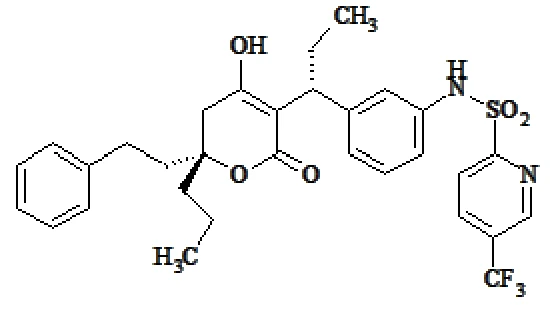
Single Stereoisomer 1R, 6R Tipranavir (free acid form)
Physicochemical properties:
Description: Tipranavir is a white to off-white to slightly yellow solid.
Melting point: Tipranavir melts at approximately 90ºC. The DSC data show an onset of melt at 88ºC and a peak temperature of 97ºC when heated at 10ºC per minute.
Crystallinity/Polymorphism: Tipranavir is partially crystalline substance. No polymorphs have been observed in the drug substance manufactured by the A1, B, B1, and B2 synthesis routes.
Solubility: 0.11 µg/mL at pH 2 aqueous buffer, 13 µg/mL at pH 7.4 aqueous buffer, and 385 µg/mL at pH 8.6 aqueous buffer. Soluble in organic solvents such as ethanol (>1 g/mL), propylene glycol (>500 mg/mL), and PEG 400 (>600 mg/mL).
14 CLINICAL TRIALS
14.1 Clinical Trials by Indication
Human Immunodeficiency Virus (HIV-1)
Treatment Experienced Patients
Studies RESIST-1 and RESIST-2: APTIVUS/Ritonavir 500/200 mg bid + optimized background regimen (OBR) vs. Comparator PI/Ritonavir bid + OBR
The following clinical data is derived from analyses of 48-week data from ongoing studies (RESIST-1 and RESIST-2) measuring effects on plasma HIV-1 RNA levels and CD4 cell counts. At present there are no results from controlled trials evaluating the effect of APTIVUS (tipranavir capsules) on clinical progression of HIV.
Table 13 - Summary of patient demographics for clinical trials
| Study # | Study design | Dosage, route of administration and duration | Study subjects (n) | Mean age (Range) | Sex |
1182.12 RESIST 1 | Randomised, open-label | APTIVUS/r 500mg/200mg Oral, 240 weeks Comparator PIs (CPI/r):LPV, indinavir (IDV), SQV, and APV | 620 | 44 (24-80) | 91.1% Male 8.9% Female |
1182.48 RESIST 2 | Randomised, open-label | APTIVUS/r 500mg/200mg Oral, 240 weeks Comparator PIs (CPI/r):LPV, indinavir (IDV), SQV, and APV | 863 | 42 (17-76) | 82.9% Male 17.1% Female |
RESIST-1 and RESIST-2 are ongoing, randomized, open-label, multicenter studies in HIV-positive, triple-class experienced patients, evaluating treatment with APTIVUS, co-administered with 200 mg ritonavir (APTIVUS/ritonavir), plus an OBR individually defined for each patient based on genotypic resistance testing and patient history. The comparator regimen included a ritonavir-boosted PI (CPI/r; also individually defined) plus an OBR. The ritonavir-boosted PI was chosen from among saquinavir, amprenavir, indinavir or lopinavir/ritonavir. All patients had received at least two PI-based antiretroviral regimens and were failing a PI-based regimen at the time of study entry. At least one primary protease gene mutation from among 30N, 46I, 46L, 48V, 50V, 82A, 82F, 82L, 82T, 84V or 90M had to be present at baseline, with not more than two mutations on codons 33, 82, 84 or 90. After week 8, patients in the comparator arm who met the protocol defined criteria of initial lack of virologic response had the option of discontinuing treatment and switching over to APTIVUS/ritonavir in a separate roll-over study.
There were 1483 patients (APTIVUS/ritonavir: n=746, CPI/ritonavir: n=737) included in the primary analysis of the combined RESIST trials. The patient groups had median ages of 43 years (range 17-80 years) and 42 years (range 21-72) for APTIVUS/ritonavir and CPI/ritonavir, respectively. Patients were 84% and 88 % male, 77% and 74 % white, 12.6% and 13.3 % black and 0.7% and 1.2 % Asian for the APTIVUS/ritonavir and CPI/ritonavir groups, respectively. In the APTIVUS/ritonavir and CPI/ritonavir groups median baseline CD4 cell counts were 158 and 166 cells/mm3, respectively, (interquartile ranges (IQRs) 66-285 and 53-280 cells/mm3); median baseline plasma HIV-1 RNA was 4.79 and 4.80 log10 copies/ml, respectively (IQRs: 4.32-5.24 and 4.25-5.27 log10 copies/ml).
Study Results
Treatment response and outcomes of randomised treatment at week 48 and 96 are presented for the two RESIST studies as well as combined studies as shown in Table 14 below.
Table 14: Outcomes of Randomised Treatment at Week 48 and 96 (Pooled Studies RESIST-1 and RESIST-2 in Treatment Experienced Patients)
APTIVUS/RTV (500/200 mg bid) + OBR
| Comparator PI/RTV*** + OBR
| p value | ||||
| 48 weeks | 96 weeks | 48 weeks | 96 weeks | |||
| Treatment Response* | 34.2% | 26.4% | 15.5% | 10.7% | p<0.000 1 | |
| with new enfuvirtide | 60.5% (N=75/124) | 45.2% (N=56/124) | 22.7% (N=22/97) | 16.5% (N=16/97) | p<0.000 1 | |
| without enfuvirtide | 29.5% (N=170/576) | 23.1% (N=133/57 6) | 14.3% (N=86/602) | 9.5% (N=57/602) | p<0.000 1 | |
| Median HIV VL log change from baseline (log10 copies/ml) | -0.64 | -0.58 | -0.22 | -0.22 | -- | |
| HIV VL <400 copies/ml | 30.3% | 26.9% | 13.6% |
| -- | |
| HIV VL <50 copies/ml | 22.7% | 20.4% | 10.2% | 9.1% | -- | |
| Median increase in CD4+ cell count (cells/mm3) | 23 | 19 | 4 | 3 | -- | |
| Treatment Failure | 65.8% | 73.6% | 84.5% | 89.3% | -- | |
| Reasons for treatment failure | ||||||
| Death | 1.6% | 2.4% | 0.7% | 0.9% | -- | |
| Discontinued study drug or OBR change due to lack of efficacy | 12.5% | 19.2% | 45.9% | 49.5% | -- | |
| Virologic rebound | 23.1% | 26.7% | 18.3% | 20.6% | -- | |
| No confirmed virologic response | 49.5% | 51.6% | 69.9% | 72.0% | -- | |
| Discontinued due to any adverse event | 8.7% | 10.2% | 4.7% | 5.2% | -- | |
| Discontinued due to other reasons** | 6.0% | 9.4% | 9.2% | 11.1% | -- | |
* Composite endpoint defined as patients with a confirmed 1 log RNA drop from baseline and without evidence of treatment failure
** Lost to follow-up, nonadherence to protocol, consent withdrawn, or other reasons
*** Comparator PI/RTV: LPV/r 400/100 mg bid, IDV/r 800/100 mg bid, SQV/r 1000/100 mg bid or 800/200 mg bid, APV/r 600/100 mg bid (n=149)
RESIST data also demonstrate that APTIVUS co-administered with low dose ritonavir exhibited a better treatment response at 48 weeks when the OBR contained genotypically available antiretroviral agents (eg enfuvirtide).
Through 96 weeks of treatment, the median time to treatment failure was 115 days among APTIVUS/ritonavir treated patients and 0 days among CPI/ritonavir treated patients. In patients who received new enfuvirtide (defined as initiation of enfuvirtide for the first time), the median time to treatment failure was 587 days among APTIVUS/ritonavir treated patients and 60 days among CPI/ritonavir treated patients.
Analyses of tipranavir resistance in treatment experienced patients
APTIVUS/ritonavir response rates were assessed by baseline tipranavir genotype and phenotype. Relationships between baseline phenotypic susceptibility to tipranavir, tipranavir resistance-associated mutations and response to APTIVUS/ritonavir therapy have been assessed.
Tipranavir resistance-associated mutations:
Virological and treatment response to APTIVUS/ritonavir therapy has been evaluated using a tipranavir-associated mutation score based on baseline genotype in RESIST-1 and RESIST-2 patients. This score (counting the 16 amino acids that have been associated with reduced tipranavir susceptibility and/or reduced viral load response: 10V, 13V, 20M/R/V, 33F, 35G, 36I, 43T, 46L, 47V, 54A/M/V, 58E, 69K, 74P, 82L/T, 83D and 84V) was applied to baseline viral protease sequences. A correlation between the tipranavir mutation score and response to APTIVUS/ritonavir therapy at weeks 2 and 48 has been established.
At week 48, a higher proportion of patients receiving APTIVUS, co-administered with low-dose ritonavir, achieved a treatment response in comparison to the comparator protease inhibitor/ritonavir for nearly all of the possible combinations of genotypic resistance mutations (see Table 15).
Table 15: Proportion of patients achieving treatment response at Week 48 (confirmed ≥ 1 log10 copies/mL decrease in viral load compared to baseline), according to tipranavir baseline mutation score and ENF use in RESIST patients.
| New ENF | No New ENF1 | |||
| Number of Tipranavir Score Mutations | TPV/r | CPI/r | TPV/r | CPI/r |
| 0,1 | 73% | 21% | 53% | 25% |
| 2 | 61% | 43% | 33% | 17% |
| 3 | 75% | 23% | 27% | 14% |
| 4 | 59% | 19% | 23% | 8% |
| ≥ 5 | 47% | 15% | 13% | 13% |
| All patients | 61% | 23% | 29% | 14% |
1 Includes patients who did not receive ENF and those who were previously treated with and continued ENF
Sustained HIV-1 RNA decreases through Week 48 (Table 16) were mainly observed in patients who received APTIVUS/ritonavir and new ENF. If patients did not receive APTIVUS/ritonavir with new ENF, diminished treatment responses at week 48 were observed, relative to new ENF use.
Table 16: Mean decrease in viral load from baseline to Week 48, according to tipranavir baseline mutation score and ENF use in RESIST patients.
| New ENF | No New ENF1 | |||
| Number of Tipranavir Score Mutations | TPV/r | CPI/r | TPV/r | CPI/r |
| 0, 1 | -2.3 | -1.5 | -1.6 | -0.6 |
| 2 | -2.1 | -1.4 | -1.1 | -0.6 |
| 3 | -2.4 | -1.0 | -0.9 | -0.5 |
| 4 | -1.7 | -0.7 | -0.8 | -0.3 |
| ≥ 5 | -1.9 | -0.6 | -0.6 | -0.4 |
| All patients | -2.0 | -1.0 | -1.0 | -0.5 |
1 Includes patients who did not receive ENF and those who were previously treated with and continued ENF
Protease mutations at positions 33, 82, 84 and 90: Mutations at two, three or more of these positions resulted in reduced susceptibility to APTIVUS/ritonavir and four mutations resulted in resistance.
Tipranavir phenotypic resistance:
Increasing baseline phenotypic fold change to tipranavir in isolates is correlated to decreasing virologic response. Isolates with baseline fold change of 0 to 3 are considered susceptible; isolates with >3 to 10 fold changes have decreased susceptibility; isolates with >10 fold changes are resistant.
Conclusions regarding the relevance of particular mutations or mutational patterns are subject to change with additional data, and it is recommended to always consult current interpretation systems for analysing resistance test results.
Table 17: Outcomes of Randomised Treatment at Week 48 (Individual Studies RESIST-1 and RESIST-2 in Treatment Experienced Patients)
| RESIST Efficacy Data | ||||
| 48-week Data | RESIST 1 | RESIST 2 | ||
tipranavir + ritonavir | chosen PI + ritonavir | tipranavir + ritonavir | chosen PI + ritonavir | |
| N | 311 | 309 | 435 | 428 |
| % 1 log drop, FAS NCF | 36.7 | 16.2 | 36.8 | 16.8 |
| Treatment Failure* | ||||
| % DC due to virologic failurea | 10.6 | 45.3 | 13.8 | 46.3 |
| % DC due to AE | 9.6 | 4.5 | 8.0 | 4.9 |
| Median viral load change (log copies/mL) | -0.61 | -0.24 | -0.65 | -0.21 |
| % BLQ 400 | 30.9 | 13.9 | 30.1 | 13.8 |
| % BLQ 50 | 22.5 | 9.7 | 23.0 | 10.5 |
| CD4 count change (cells/mm3) | +19 | +6 | +26 | +1 |
FAS = full analysis set; NCF = non completers considered failures; PPS = per protocol set; DC = discontinuation;
AE = adverse event; BLQ = below the level of quantification
* Statistical testing not performed due to the relatively small number of patients involved a Includes premature discontinuation of the study PI due to virologic failure and the addition of a drug to the background regimen, if not introduced to replace a background drug discontinued due to AEs attributable to the discontinued background drug.
Data from the RESIST trials were combined to analyze treatment response within each pre-selected PI stratum (Table 18). The APTIVUS/ritonavir group had significantly higher treatment responses than LPV/r, SQV/r, or APV/r groups. The IDV stratum had too few patients to make definitive statements. After adjustment for PI and ENF stratum, being randomized to the APTIVUS group increased the odds of a treatment response at Week 24 by nearly three fold (p<0.0001).
Table 18: Sensitivity analyses of response at Week 24, 48 and 96 by PI strata - RESIST trials (FAS)
| Treatment Group | Treatment Differencea | |||||||||
|---|---|---|---|---|---|---|---|---|---|---|
PI Strata | Analysi s | We ek | TPV/r | CPI/r | Weighte d Diff.% | 95% CI | ||||
LL % | UL% | p-value | ||||||||
| n | % | N | n | % | N | |||||
| LPV | ||||||||||
| FAS (NCF) | ||||||||||
| 24 | 116 | 39.6 | 293 | 62 | 21.4 | 290 | 17.7 | 10.5 | 25.0 | -- |
| 48 | 122 | 33.5 | 364 | 60 | 16.8 | 358 | 16.4 | 10.2 | 22.6 | <0.0001 |
| 96 | 94 | 25.8 | 364 | 40 | 11.2 | 358 | 14.4 | 8.9 | 20.0 | <0.0001 |
| SQV | ||||||||||
| FAS (NCF) | ||||||||||
| 24 | 51 | 43.6 | 117 | 18 | 15.3 | 118 | 27.4 | 16.5 | 38.3 | -- |
| 48 | 57 | 35.4 | 161 | 20 | 12.3 | 162 | 22.3 | 13.5 | 31.1 | <0.0001 |
| 96 | 43 | 26.7 | 161 | 12 | 7.4 | 162 | 18.7 | 10.9 | 26.4 | <0.0001 |
| APV | ||||||||||
| FAS (NCF) | ||||||||||
| 24 | 63 | 41.7 | 151 | 28 | 18.8 | 149 | 22.0 | 12.1 | 31.9 | -- |
| 48 | 68 | 34.3 | 198 | 33 | 17.0 | 194 | 16.7 | 8.4 | 25.0 | <0.0001 |
| 96 | 53 | 26.8 | 198 | 26 | 13.4 | 194 | 12.8 | 5.1 | 20.6 | <0.0001 |
n = Number of responders; N = Number of evaluable patients
a Treatment difference and confidence interval weighted for the size of ENF strata and PI strata.
Genotypic analyses of tipranavir resistance in treatment-experienced patients
The virologic response to APTIVUS co-administered with low-dose ritonavir has been evaluated with respect to baseline viral genotype in treatment-experienced patients participating in studies RESIST-1 and RESIST-2. In these studies, the patients had baseline HIV-1 isolates with an average of 16 HIV-1 protease gene mutations, including a median of 3 primary protease gene mutations D30N, L33F/I, V46I/L, G48V, I50V, V82A/F/T/L, I84V, and L90M. In addition the majority of participants evaluated had mutations associated with both NRTI and NNRTI resistance.
The use of genotypic resistance testing and the clinical interpretation of genotypic mutations is a complex and evolving field. Conclusions regarding the relevance of particular mutations or mutational patterns are subject to change pending additional data.
Several analyses were conducted to evaluate the impact of specific mutations and mutational patterns on virology outcome. The HIV-1 RNA response at Week 48 in studies RESIST-1 and RESIST-2 by number of protease gene mutations is shown in Table 19 below.
Table 19: Change in Viral load at Week 48 by baseline IAS protease gene mutations – RESIST trials integrated (FAS-LOCF)
| Change in viral load from baseline at 48 weeks (APTIVUS/ritonavir) | Change in viral load from baseline at 48 weeks (Comparator PI/r) | |
| PI resistance related mutations, IAS 2005ab | Median (N) | Median (N) |
| ≤ 7 | -1.61 (114) | -0.35 (105) |
| 8 - 9 | -1.00 (156) | -0.40 (167) |
| 10 - 11 | -0.53 (239) | -0.16 (244) |
| ≥ 12 | -0.37 (236) | -0.11 (221) |
a Individual codons counted, mixture of wild type and mutant counted as mutant.
b Number of protease mutations out of (10FIRV, 13V, 16E, 20IMR, 24I, 30N, 32I, 33FIV, 35G, 36ILV, 43T, 46IL, 47AV, 48V, 50LV, 53L, 54ALMSTV, 58E, 60E, 62V, 63P, 69K, 71ILTV, 73ACST, 74P, 77I, 82AFLST, 83D, 84V, 85V, 88DS,90M, 93L)
Virologic response to APTIVUS/ritonavir therapy has been evaluated with respect to baseline genotype and phenotype in treatment experienced patients participating in four studies (RESIST-1, RESIST-2, 1182.52, 1182.51), which provided the greatest spectrum of patients with highly mutated virus. A correlation between key protease mutations (at amino acids 33, 82, 84 and 90), baseline phenotypic susceptibility to tipranavir and response to APTIVUS/ritonavir therapy at weeks 2 and 24 has been established and is summarized in Table 20. Data on comparator protease inhibitor/ritonavir arm is not shown in Table 20 because the 1182.51 and 1182.52 trials did not include a comparator arm.
Table 20: HIV RNA Response at Weeks 2 and 24 by Baseline Key Mutations and Tipranavir Phenotypic Susceptibility in RESIST-1 and RESIST-2 and Studies 1182.52 and 1182.51*
No. of key mutations at amino acids 33, 82, 84, 90 | Baseline Fold Change in Tipranavir Phenotypic Susceptibility** | Change in viral load at 2 weeks | Change in viral load at 24 weeks |
| ≤ 1 | 1.0 | -1.35 | -1.27 |
| 2 | 1.7 | -1.39 | -0.78 |
| 3 | 3.4 | -1.25 | -0.24 |
| 4 | 12.0 | -1.08 | -0.33 |
*All trials tipranavir/ritonavir 500 mg/200 mg bid dose; Trials 1182.52 and 1182.51 had patient population infected with highly mutated virus. All patients included from 1182.51 received APTIVUS/ritonavir 500 mg/200 mg bid, without additional PI therapy
**Fold change in susceptibility from wild-type determined by recombinant phenotypic AntivirogramTM assay
Phenotypic analyses of tipranavir resistance in treatment-experienced patients
Virologic response to APTIVUS/ritonavir therapy has been evaluated with respect to baseline genotype in treatment experienced patients participating in trials RESIST-1 and RESIST-2. A score (counting the 16 amino acids that have been associated with reduced tipranavir susceptibility and/or reduced 24-week viral load response: 10V, 13V, 20M/R/V, 33F, 35G, 36I, 43T, 46L, 47V, 54A/M/V, 58E, 69K, 74P, 82L/T, 83D and 84V) was applied to baseline viral protease sequences. A correlation between the tipranavir susceptibility score and response to APTIVUS/ritonavir therapy at weeks 2 and 24 has been established and is summarized in Table 21.
Table 21: HIV Response: Change in Viral load at Weeks 2 and 24 by Baseline Tipranavir Susceptibility Score** in Studies RESIST-1, and RESIST-2
| Change in viral load from baseline at 2 weeks (APTIVUS/ritonavir)* | Change in viral load from baseline at 24 weeks (APTIVUS/ritonavir)* | |
Tipranavir Susceptibility Score** | Median (N) | Median (N) |
| 0-1 | -1.25 (125) | -1.87 (134) |
| 2-3 | -1.41 (250) | -0.92 (266) |
| 4-5 | -1.43 (262) | -0.44 (285) |
| > 6 | -1.35 (58) | -0.45 (60) |
* Change in Viral load was the change in HIV RNA from baseline through weeks 2 and 24 in log10 copies/mL (LOCF).
** Count of altered bases at 10V, 13V, 20M/R/V, 33F, 35G, 36I, 43T, 46L, 47V, 54A/M/V, 58E, 69K, 74P, 82L/T, 83D and 84V in baseline HIV-1 sequence
The virologic response to APTIVUS, co-administered with low-dose ritonavir, therapy has been evaluated with respect to baseline tipranavir phenotypic susceptibility (N=454) in treatment-experienced patients participating in trials RESIST-1 and RESIST-2. In these studies, the patients had baseline HIV isolates with an average decrease in susceptibility of 12-fold wild-type (WT) for amprenavir, 55-fold WT for atazanavir, 41-fold WT for indinavir, 87-fold WT for lopinavir, 41-fold WT for nelfinavir, 195-fold WT for ritonavir, 20-fold WT for saquinavir, and 2-fold WT for tipranavir. Phenotypic analysis of baseline isolates from these studies demonstrated a correlation between baseline susceptibility to tipranavir and response to tipranavir, co-administered with low-dose ritonavir, therapy. Table 22 below summarizes the HIV RNA response by tipranavir susceptibility.
Table 22: HIV Response at Weeks 2 and 24 by Baseline Tipranavir Susceptibility in Studies RESIST-1, RESIST-2
| Change in Viral Load from Baseline at 2 weeks (APTIVUS/RTV)* | Change in Viral Load from Baseline at 24 weeks (APTIVUS/RTV)* | |||||||||
| Fold-change at baseline in tipranavir IC50 | N | Median | N | Median | ||||||
| < 1 | 115 | -1.53 | 122 | -1.82 | ||||||
| 1 to < 4 | 190 | -1.44 | 199 | -0.64 | ||||||
| ≥ 4 | 89 | -0.66 | 91 | -0.32 | ||||||
| * Change in Viral load was the change in HIV RNA from baseline through week 2 (OT) or week 24 (LOCF) in log10 copies/mL. | ||||||||||
15 MICROBIOLOGY
Mechanism of action: The human immunodeficiency virus (HIV-1) encodes an aspartyl protease that is essential for the cleavage and maturation of viral protein precursors. Tipranavir is a non-peptidic inhibitor of the HIV-1 protease that inhibits viral replication by preventing the maturation of viral particles.
Tipranavir inhibits the replication of laboratory strains of HIV-1 and clinical isolates in acute models of T-cell infection, with 50% effective concentrations (EC50) ranging from 0.03 to 0.07 µM (18-42 ng/ml). Tipranavir demonstrates antiviral activity in vitro against a broad panel of HIV-1 group M non-clade B isolates (A, C, D, F, G, H, CRF01 AE, CRF02 AG, CRF12 BF). Group O and HIV-2 isolates have reduced susceptibility in vitro to tipranavir with EC50 values ranging from 0.164-1 µM and 0.233-0.522 µM, respectively. Protein binding studies have shown that the antiviral activity of tipranavir decreases on average 3.75-fold in conditions where human serum is present. When used with other antiretroviral agents in vitro, the combination of tipranavir was additive to antagonistic with other protease inhibitors (amprenavir, atazanavir, indinavir, lopinavir, nelfinavir, ritonavir, and saquinavir) and generally additive with the NNRTIs (delavirdine, efavirenz, and nevirapine) and the NRTIs (abacavir, didanosine, emtricitabine, lamivudine, stavudine, tenofovir, and zidovudine). Tipranavir was synergistic with the HIV fusion inhibitor enfuvirtide. There was no antagonism of the in vitro combinations of tipranavir with either adefovir or ribavirin, used in the treatment of viral hepatitis.
Resistance: The development of resistance to tipranavir in vitro is slow and complex. In one particular in vitro resistance experiment, an HIV-1 isolate that was 87-fold resistant to tipranavir was selected after 9 months, and contained 10 mutations in the protease: L10F, I13V, V32I, L33F, M36I, K45I, I54V/T, A71V, V82L, I84V as well as a mutation in the gag polyprotein CA/P2 cleavage site. Reverse genetic experiments showed that the presence of 6 mutations in the protease (I13V, V32I, L33F, K45I, V82L, I84V) was required to confer > 10-fold resistance to tipranavir while the full 10-mutation genotype conferred 69-fold resistance to tipranavir. In vitro, there is an inverse correlation between the degree of resistance to tipranavir and the capacity of viruses to replicate. Recombinant viruses showing ≥ 3-fold resistance to tipranavir grow at less than 1 % of the rate detected for wild type HIV-1 in the same conditions.
Through a series of multiple stepwise regression analyses of baseline and on-treatment genotypes from all clinical studies, 16 amino acids have been associated with reduced tipranavir susceptibility and/or reduced 24-week viral load response: 10V, 13V, 20M/R/V, 33F, 35G, 36I, 43T, 46L, 47V, 54A/M/V, 58E, 69K, 74P, 82L/T, 83D and 84V. Clinical isolates that exhibited a ≥10-fold decrease in tipranavir susceptibility harboured eight or more tipranavir-associated mutations. In Phase II and III clinical trials, 276 patients with on-treatment genotypes have demonstrated that the predominant emerging mutations with tipranavir treatment are L33F/I/V, V82T/L and I84V. Combination of all three of these is usually required for reduced susceptibility. Mutations at position 82 occur via two pathways: one from pre-existing mutation 82A selecting to 82T, the other from wild type 82V selecting to 82L.
Cross resistance: Tipranavir maintains significant antiviral activity (< 4-fold resistance) against the majority of HIV-1 clinical isolates showing post-treatment decreased susceptibility to the currently approved protease inhibitors: amprenavir, atazanavir, indinavir, lopinavir, ritonavir, nelfinavir and saquinavir.
Greater than 10-fold resistance to tipranavir is uncommon (< 2.5 % of tested isolates) in viruses obtained from treatment experienced patients who have received multiple peptidic protease inhibitors.
Tipranavir resistant viruses which emerge in vitro from wild-type HIV-1 show decreased susceptibility to the protease inhibitors amprenavir, atazanavir, indinavir, lopinavir, nelfinavir and ritonavir but remain sensitive to saquinavir.
16 NON-CLINICAL TOXICOLOGY
General Toxicology:
Animal toxicology studies have been conducted with tipranavir alone and co-administered with ritonavir (3.75:1 w/w ratio) in various species. Studies with co-administration of tipranavir and ritonavir did not reveal any additional toxicological effects when compared to those seen in the tipranavir single agent toxicological studies.
Acute and Chronic Toxicity
The predominant effects of repeated administration of tipranavir across all species toxicologically tested were on the gastrointestinal tract (emesis, soft stool, diarrhoea) and the liver (hypertrophy). In animals, this effect was observed at exposure levels of 290 - 450 µM·h, dependent on duration of treatment. The effects were reversible with termination of treatment.
In preclinical studies in rats, tipranavir treatment induced dose-dependent changes in coagulation parameters (increased prothrombin time, increased activated partial thromboplastin time and a decrease in some vitamin K dependent factors). In some rats, these changes led to bleeding in multiple organs and death. The majority of the effects in repeat-dose toxicity studies appeared at systemic exposure levels which are equivalent to or below the human exposure levels at the recommended clinical dose. Bleeding in rats was observed at exposure levels of 300 - 1100 µM·h (rodent specific). The co-administration of tipranavir with vitamin E in the form of TPGS (d-alpha-tocopherol polyethylene glycol 1000 succinate) resulted in a significant increase in effects on coagulation parameters, bleeding events and death. The mechanism for these effects is unknown.
In preclinical studies of tipranavir in dogs, an effect on coagulation parameters was not seen. Co-administration of tipranavir and vitamin E has not been studied in dogs.
Clinical evaluation of coagulation effects on HIV-1-infected patients demonstrated no tipranavir plus ritonavir effect and no effect of the vitamin E-containing oral solution on coagulation parameters.
Carcinogenicity: Long-term carcinogenicity studies in mice and rats have been conducted with tipranavir. Mice were administered 30, 150 or 300 mg/kg/day tipranavir, 150/40 mg/kg/day tipranavir/ritonavir in combination, or 40 mg/kg/day ritonavir. The incidences of benign hepatocellular adenomas and combined adenomas/carcinomas were increased in females of all groups except the low dose of tipranavir. These tumors were also increased in male mice at the high-dose of tipranavir and the tipranavir/ritonavir combination group. Hepatocellular carcinoma incidence was increased in female mice given the high dose of tipranavir and both sexes receiving tipranavir/ritonavir. The combination of tipranavir and ritonavir caused an exposure-related increase in this same tumor type in both sexes. The clinical relevance of the carcinogenic findings in mice is unknown. Systemic exposures in mice (based on AUC or Cmax) at all dose levels tested were below those in humans receiving the recommended dose level. Rats were administered 30, 100 or 300 mg/kg/day tipranavir, 100/26.7 mg/kg/day tipranavir/ritonavir in combination, or 10 mg/kg/day ritonavir. No drug-related findings in male rats were observed. At the highest dose of tipranavir, an increased incidence of benign follicular cell adenomas of the thyroid gland was observed in female rats. Based on AUC measurements, exposure to tipranavir at this dose level in rats is approximately equivalent to exposure in humans at the recommended therapeutic dose. This finding is probably not relevant to humans, because thyroid follicular cell adenomas are considered a rodent-specific effect secondary to enzyme induction.
Genotoxicity:
Tipranavir showed no evidence of genetic toxicity in a battery of five in vitro and in vivo tests assessing mutagenicity and clastogenicity.
Reproductive and Developmental Toxicology: Investigation of fertility and early embryonic development with tipranavir disodium was performed in rats, teratogenicity studies were performed in rats and rabbits, and pre- and post-natal development were explored in rats.
No teratogenicity was detected in reproductive studies performed in pregnant rats and rabbits up to dose levels of 1000 mg/kg/day and 150 mg/kg/day tipranavir, respectively. At 400 mg/kg/day and above in rats, fetal toxicity (decreased sternebrae ossification and body weights) was observed, corresponding to an AUC of 1310 µM·h or 0.8 fold human exposure at the recommended dose. In rats and rabbits, fetal toxicity was not noted at 40 mg/kg/day and 150 mg/kg/day, respectively, corresponding accordingly to Cmax / AUC0-24 levels of 30.4 µM / 340 µM·h/mL and 8.4 µM / 120 µM·h/mL. These exposure levels (AUC) are 0.4 0.2 fold and 0.1 fold the exposure in humans at the recommended dose.
In pre- and post-development studies in rats, tipranavir showed no adverse effects at 40 mg/kg/day, but caused growth inhibition in pups and maternal toxicity at dose levels of 400 mg/kg/day and above. No post-weaning functions were affected at any dose level. Calculated exposure in animal studies were equivalent to or below human therapeutic exposure levels.
For the animal studies reported above, exposures were three to five fold lower at the end of the dosing period compared to the start of the dosing period.
In a study conducted in rats with tipranavir at systemic exposure levels (AUC) of 1670 µM·h, equivalent to human exposure at the adult human clinical dose, no adverse effects on mating or fertility were observed. Tipranavir did not produce teratogenic effects at maternal doses producing systemic drug exposure levels of 1310 µM·h in rats or 120 µM·h in rabbits equivalent to or below the exposure at the adult human clinical dose (APTIVUS /ritonavir 500 mg/200 mg bid), respectively.
At tipranavir exposures of 1310 µM·h in rats (0.8-fold human exposure at the clinical dose), fetal toxicity (decreased sternebrae ossification and body weights) was observed. In pre- and post-natal development studies with tipranavir in rats, no adverse effects were noted at 340 µM·h (0.2-fold human exposure), but growth inhibition of pups was observed at maternally toxic doses of 1310 µM·h (0.8-fold human exposure). Calculated exposure in animal studies were equivalent to or below human therapeutic exposure levels. For the animal studies reported above, exposures were three to five fold lower at the end of the dosing period compared to the start of the dosing period.