


Product Monograph - Nat-Darunavir
RECENT MAJOR LABEL CHANGES
None at the time of the most recent authorization
TABLE OF CONTENTS
Sections or subsections that are not applicable at the time of authorization are not listed.
RECENT MAJOR LABEL CHANGES ...................................................................................................... 2
TABLE OF CONTENTS ........................................................................................................................ 2
PART I: HEALTH PROFESSIONAL INFORMATION ................................................................................ 4
1 INDICATIONS ....................................................................................................................... 4
1.1 Pediatrics .............................................................................................................................. 4
1.2 Geriatrics .............................................................................................................................. 4
2 CONTRAINDICATIONS .......................................................................................................... 4
4 DOSAGE AND ADMINISTRATION .......................................................................................... 5
4.1 Dosing Considerations ......................................................................................................... 5
4.2 Recommended Dose and Dosage Adjustment .................................................................... 5
4.5 Missed Dose ......................................................................................................................... 6
5 OVERDOSAGE ...................................................................................................................... 6
6 DOSAGE FORMS, STRENGTHS, COMPOSITION AND PACKAGING ............................................ 7
7 WARNINGS AND PRECAUTIONS ............................................................................................ 8
7.1 Special Populations ............................................................................................................11
7.1.1 Pregnant Women ........................................................................................................11
7.1.2 Breast-feeding .............................................................................................................12
7.1.3 Pediatrics .....................................................................................................................12
7.1.4 Geriatrics .....................................................................................................................12
8 ADVERSE REACTIONS ......................................................................................................... 12
8.1 Adverse Reaction Overview ...............................................................................................12
8.2 Clinical Trial Adverse Reactions .........................................................................................13
8.3 Less Common Clinical Trial Adverse Reactions ..................................................................16
8.4 Abnormal Hematologic and Clinical Chemistry Findings ...................................................17
8.5 Post-Market Adverse Reactions .........................................................................................22
9 DRUG INTERACTIONS ......................................................................................................... 23
9.1 Serious Drug Interactions ...................................................................................................23
9.2 Drug Interactions Overview ...............................................................................................24
9.4 Drug-Drug Interactions ......................................................................................................24
9.5 Drug-Food Interactions ......................................................................................................45
9.6 Drug-Herb Interactions ......................................................................................................46
9.7 Drug-Laboratory Test Interactions .....................................................................................46
10 CLINICAL PHARMACOLOGY ................................................................................................ 46
10.1 Mechanism of Action ...................................................................................................46
10.2 Pharmacodynamics .....................................................................................................46
10.3 Pharmacokinetics ........................................................................................................46
11 STORAGE, STABILITY AND DISPOSAL ................................................................................... 51
PART II: SCIENTIFIC INFORMATION ................................................................................................. 51
13 PHARMACEUTICAL INFORMATION ..................................................................................... 51
14 CLINICAL TRIALS ................................................................................................................. 52
14.1 Clinical Trials by Indication ..........................................................................................52
14.2 Comparative Bioavailability Studies ............................................................................65
15 MICROBIOLOGY ................................................................................................................. 69
16 NON-CLINICAL TOXICOLOGY ............................................................................................... 73
17 SUPPORTING PRODUCT MONOGRAPHS .............................................................................. 74
PATIENT MEDICATION INFORMATION ............................................................................................ 75
PART I: HEALTH PROFESSIONAL INFORMATION
1 INDICATIONS
NAT-DARUNAVIR (darunavir), co-administered with 100 mg ritonavir, and with other antiretroviral agents, is indicated for the treatment of HIV-1 infection.
For a description of the clinical data in support of this indication, refer to 14 CLINICAL TRIALS.
1.1 Pediatrics
NAT-DARUNAVIR is not indicated for use in patients less than 18 years of age.
1.2 Geriatrics
Geriatrics (>65 years of age)
Clinical studies of darunavir did not include sufficient numbers of patients aged 65 and over to determine whether they respond differently from younger patients. In general, caution should be exercised in the administration and monitoring of NAT-DARUNAVIR in elderly patients, reflecting the greater frequency of decreased hepatic, renal or cardiac function and of concomitant disease or other drug therapy (see 4 DOSAGE AND ADMINISTRATION, 7 WARNINGS AND PRECAUTIONS and 10 CLINICAL PHARMACOLOGY).
2 CONTRAINDICATIONS
NAT-DARUNAVIR is contraindicated in patients who are hypersensitive to this drug or to any ingredient in the formulation or component of the container. For a complete listing, refer to 6 DOSAGE FORMS, STRENGTHS, COMPOSITION AND PACKAGING.
NAT-DARUNAVIR is contraindicated in patients with severe (Child-Pugh Class C) hepatic insufficiency.
Co-administration of NAT-DARUNAVIR/ritonavir (rtv) is contraindicated with drugs that are highly dependent on CYP3A4 for clearance and for which elevated plasma concentrations are associated with serious and/or life-threatening events (narrow therapeutic index). Co-administration of NAT-DARUNAVIR/rtv is contraindicated with rifampin and St. John’s Wort as it may reduce plasma concentrations of darunavir which may result in loss of therapeutic effect and development of resistance. Drugs that are contraindicated with NAT-DARUNAVIR are listed in Table 1 (also see 9.4 Drug-Drug Interactions, Table 11 and Table 12).
Table 1: Drugs that are Contraindicated with NAT-DARUNAVIR/ritonavir (rtv)
| Drug Class | Drugs within Class that are Contraindicated with NAT-DARUNAVIR/rtv |
|---|---|
| Alpha 1-Adrenoreceptor Antagonist | alfuzosin |
| Antiarrhythmics/Antianginals | amiodarone, dronedarone, ivabradine, lidocaine (systemic) |
| Direct Oral Anti-coagulants (DOACs) | apixaban, rivaroxaban |
| Anti-gout | colchicine (in patients with renal and/or hepatic impairment) |
| Antimycobacterial | rifampin |
| Antivirals (Hepatitis C virus [HCV] direct-acting antivirals) | elbasvir/grazoprevir |
|---|---|
| Ergot Derivatives | dihydroergotamine, ergonovine, ergotamine |
| Herbal Products | St. John’s wort (Hypericum perforatum) |
| HMG-CoA Reductase Inhibitors / Other lipid modifying agents | lovastatin, simvastatin lomitapide |
| Neuroleptics | lurasidone, pimozide |
| Opioid Antagonist | naloxegol |
| PDE-5 Inhibitor | sildenafil (for treatment of pulmonary arterial hypertension) |
| Sedatives/Hypnotics | triazolam |
4 DOSAGE AND ADMINISTRATION
4.1 Dosing Considerations
NAT-DARUNAVIR (darunavir) must always be given with ritonavir as a pharmacokinetic enhancer, and in combination with other antiretroviral medicinal products. The prescribing information of ritonavir must, therefore, be consulted prior to initiation of therapy with NAT-DARUNAVIR/rtv. The treatment history and, when available, genotypic or phenotypic testing should guide the use of NAT-DARUNAVIR/rtv (see 4.2 Recommended Dose and Dosage Adjustment, Adults).
4.2 Recommended Dose and Dosage Adjustment
Adults
The recommended oral dosing regimens for adult patients are NAT-DARUNAVIR 800 mg in combination with ritonavir (100 mg) once daily and with food, or 600 mg in combination with ritonavir (100 mg) twice daily and with food. The type of food does not affect exposure to darunavir (see 9.5 Drug-Food Interactions). The dosing schedule for NAT-DARUNAVIR/rtv is presented in Table 2.
Table 2: Recommended Dose for Adult Patients for NAT-DARUNAVIR Tablets with ritonavir (100 mg)
| Treatment-Naïve Adult Patients | Treatment-Experienced Adult Patients | ||
|---|---|---|---|
| With no darunavir resistance- associated mutations (DRV- RAMs)a | With at least one darunavir resistance-associated mutation (DRV-RAM)a | ||
| 800 mg (two 400 mg tablets or one 800 mg tablet) NAT-DARUNAVIR in combination with ritonavir 100 mg (one 100 mg Tablet/Capsule or 1.25 mL of the 80 mg/mL ritonavir solution) once daily and with food | 800 mg (two 400 mg tablets or one 800 mg tablet) NAT-DARUNAVIR in combination with ritonavir 100 mg (one 100 mg Tablet/Capsule or 1.25 mL of the 80 mg/mL ritonavir solution) once daily and with food | 600 mg (one 600 mg tablet) NAT-DARUNAVIR in combination with 100 mg ritonavir (one 100 mg Tablet/Capsule or 1.25 mL of the 80 mg/mL ritonavir solution) twice daily and with food | |
a DRV-RAMs: V11I, V321, L33F, I47V, I50V, I54M, I54L, T74P, L76V, I84V and L89V
For antiretroviral treatment-experienced patients HIV genotypic testing is recommended. However, when HIV genotypic testing is not feasible, the NAT-DARUNAVIR/rtv once-daily dosing regimen is recommended in protease inhibitor-naive patients and the twice daily dosing regimen is recommended in protease inhibitor-experienced patients.
The type of food does not affect exposure to darunavir. Ritonavir is used as a pharmacokinetic enhancer of NAT-DARUNAVIR (see 9.4 Drug-Drug Interactions, and 10.3 Pharmacokinetics). A further increase in the dose of darunavir or ritonavir is not likely to result in any clinically relevant increase in antiviral activity.
Geriatric Patients
In general, caution should be exercised in the administration and monitoring of NAT-DARUNAVIR in elderly patients, reflecting the greater frequency of decreased hepatic, renal or cardiac function, and of concomitant disease or other drug therapy (see 1 INDICATIONS, 7 WARNINGS AND PRECAUTIONS and 10 CLINICAL PHARMACOLOGY).
Pediatric Patients
NAT-DARUNAVIR is not indicated for use in patients less than 18 years of age (see 1 INDICATIONS).
Hepatic Impairment
The safety and efficacy of darunavir have not been established in patients with severe hepatic insufficiency (see 2 CONTRAINDICATIONS). No dose adjustment is required in patients with mild or moderate hepatic impairment (see 10.3 Pharmacokinetics).
Renal Impairment
No dose adjustment is required in patients with renal impairment (see 7 WARNINGS AND PRECAUTIONS, Renal and 10.3 Pharmacokinetic).
Dosing with Didanosine
Dosing of enteric-coated didanosine and darunavir, co-administered with low-dose ritonavir, should be separated by at least 2 hours to avoid formulation incompatibility.
4.5 Missed Dose
Patients Taking 600 mg of NAT-DARUNAVIR Twice Daily
The missed dose should be taken as soon as possible, if the dose was missed by less than 6 hours. The next dose of NAT-DARUNAVIR and ritonavir should be taken at the regularly scheduled time. If the dose of NAT-DARUNAVIR or ritonavir was missed by more than 6 hours, the next dose of NAT-DARUNAVIR and ritonavir should be taken at the regularly scheduled time. Doses should not be doubled.
Patients Taking 800 mg of NAT-DARUNAVIR Once Daily
The missed dose (one 800 mg tablet) should be taken as soon as possible, if the dose was missed by less than 12 hours. The next dose of NAT-DARUNAVIR (one 800 mg tablet) and ritonavir should be taken at the regularly scheduled time. If the dose of NAT-DARUNAVIR (one 800 mg tablet) or ritonavir was missed by more than 12 hours, the next dose of NAT-DARUNAVIR (one 800 mg tablet) and ritonavir should be taken at the regularly scheduled time. Doses should not be doubled.
5 OVERDOSAGE
Human experience of acute overdose with darunavir/rtv is limited. Single doses up to 3,200 mg of the oral solution of darunavir alone and up to 1,600 mg of the tablet formulation of darunavir co-administered with ritonavir have been administered to healthy volunteers without untoward symptomatic effects.
There is no specific antidote for overdose with darunavir. Treatment of overdose with darunavir consists of general supportive measures including monitoring of vital signs and observation of the clinical status of the patient. Since darunavir is highly protein bound, dialysis is unlikely to be beneficial in significant removal of the active substance.
6 DOSAGE FORMS, STRENGTHS, COMPOSITION AND PACKAGING
Table – Dosage Forms, Strengths, Composition and Packaging
NAT-DARUNAVIR 400 mg Tablets
NAT-DARUNAVIR (darunavir) 400 mg tablets are supplied as light orange colored, oval shaped film coated tablets debossed with “DA400” on one side and plain in other side.
NAT-DARUNAVIR 600 mg Tablets
NAT-DARUNAVIR (darunavir) 600 mg tablets are supplied as green colored, oval shaped film coated tablets debossed with “DA600” on one side and plain on other side.
| For management of a suspected drug overdose, contact your regional poison control centre. |
|---|
| Route of Administration | Dosage Form / Strength/Composition | Non-medicinal Ingredients |
| Oral | tablet, 400 mg | Colloidal anhydrous silica, croscarmellose sodium, magnesium stearate, microcrystalline cellulose and OPADRY® II Orange ( FD&C Yellow # 6/ sunset yellow FCF aluminium lake, polyethylene glycol, polyvinyl alcohol, talc, titanium dioxide) |
| Oral | tablet, 600 mg | Colloidal anhydrous silica, croscarmellose sodium, magnesium stearate, microcrystalline cellulose and OPADRY® II Green ( FD&C Blue # 1/ brilliant blue FCF aluminium lake, FD&C Yellow # 5/ tartrazine aluminium lake, polyethylene glycol, polyvinyl alcohol, talc, titanium dioxide) |
| Oral | tablet, 800 mg | Colloidal anhydrous silica, croscarmellose sodium, magnesium stearate, microcrystalline cellulose and OPADRY® II Blue (FD&C Blue # 1/ brilliant blue FCF aluminium lake, FD&C Blue # 2/ indigo carmine aluminium lake, and FD&C Red # 40/ allura red AC aluminium lake, polyethylene glycol, polyvinyl alcohol, talc, titanium dioxide) |
NAT-DARUNAVIR 800 mg Tablets
NAT-DARUNAVIR (darunavir) 800 mg tablets are supplied as blue colored, oval shaped film coated tablets debossed with “DA800” on one side and plain on other side.
NAT-DARUNAVIR tablets are packaged in bottles in the following configuration:
400 mg tablets—bottles of 60 tablets and blister cartons of 30 tablets
600 mg tablets—bottles of 60 tablets and blister cartons of 30 tablets
800 mg tablets—bottles of 30 tablets and blister cartons of 30 tablets
7 WARNINGS AND PRECAUTIONS
General
NAT-DARUNAVIR (darunavir) must be administered with low-dose ritonavir to ensure its therapeutic effect (see 4 DOSAGE AND ADMINISTRATION, 9.4 Drug-Drug Interactions, and 10.3 Pharmacokinetics). Failure to correctly co-administer darunavir with ritonavir will result in reduced plasma levels of darunavir that may be insufficient to achieve the desired antiviral effect. Patients should be instructed accordingly. Please refer to the ritonavir Product Monograph for additional information on precautionary measures.
Darunavir is not a cure for HIV-1 infection or AIDS. Patients receiving darunavir or any other antiretroviral therapy may continue to develop opportunistic infections and other complications of HIV-1 infection.
Darunavir therapy has not been shown to reduce the risk of transmission of HIV-1 to others.
Due to inhibition of CYP3A by darunavir, co-administration of darunavir with quetiapine may results in increased quetiapine concentrations. Serious and life-threatening quetiapine- related adverse reactions have been reported with CYP3A inhibitors. NAT-DARUNAVIR should not be used in combination with quetiapine (see 9 DRUG INTERACTIONS). Monitoring and dose reductions may be required if necessary.
Carcinogenesis and Mutagenesis
Darunavir was evaluated for carcinogenic potential by oral gavage administration to mice and rats up to 104 weeks. A dose-related increase in the incidence of hepatocellular adenomas and carcinomas were observed in males and females of both species as well as an increase in thyroid follicular cell adenomas in male rats. These findings are considered to be of limited relevance to humans. Based on AUC measurements, exposure to darunavir at the dose levels studied was below or approximately equivalent to exposure in humans at the recommended therapeutic dose (see 16 NON-CLINICAL TOXICOLOGY, Carcinogenesis and Genotoxicity).
Darunavir was not mutagenic or genotoxic in a battery of in vitro and in vivo assays including bacterial reverse mutation (Ames), chromosomal aberration in human lymphocytes and in vivo micronucleus test in mice (see 16 NON-CLINICAL TOXICOLOGY, Carcinogenesis and Genotoxicity).
Endocrine and Metabolism
Diabetes Mellitus/Hyperglycemia
New onset diabetes mellitus, exacerbation of pre-existing diabetes mellitus, and hyperglycemia have been reported during post-marketing surveillance in HIV-infected patients receiving protease inhibitor (PI) therapy. Some patients required either initiation or dose adjustments of insulin or oral hypoglycemic agents for treatment of these events. In some cases, diabetic ketoacidosis has occurred. In those patients who discontinued PI therapy, hyperglycemia persisted in some cases. Because these events have been reported voluntarily during clinical practice, estimates of frequency cannot be made and causal relationships between PI therapy and these events have not been established.
Hematologic
There have been reports of increased bleeding, including spontaneous skin hematomas and hemarthrosis, in patients with hemophilia type A and B treated with protease inhibitors. In some patients, additional factor VIII was given. In more than half of the reported cases, treatment with protease inhibitors was continued or reintroduced. A causal relationship between protease inhibitor therapy and these events has not been established; however, the frequency of bleeding episodes should be closely monitored in patients on darunavir/rtv.
Lipid Elevations
Treatment with darunavir has resulted in increases in the concentration of total cholesterol and triglycerides. Triglyceride and cholesterol testing should be performed prior to initiating NAT-DARUNAVIR therapy and at periodic intervals during therapy. Lipid disorders should be managed as clinically appropriate. See Table 9 and Table 10 for additional information on potential drug interactions with darunavir and HMG-CoA reductase inhibitors/other lipid modifying agent.
Hepatic/Biliary/Pancreatic
Hepatic Impairment
NAT-DARUNAVIR is contraindicated in patients with severe hepatic insufficiency (Child-Pugh Class C) (see 2 CONTRAINDICATIONS). Patients with mild or moderate hepatic impairment (Child- Pugh Class A or B, respectively) should be closely monitored.
Patients with chronic hepatitis B or C and treated with combination antiretroviral therapy are at an increased risk for severe and potentially fatal hepatic adverse events. Limited data are currently available for the use of darunavir co-administered with low dose ritonavir, in patients co-infected with hepatitis B or C.
Hepatotoxicity
Drug-induced hepatitis (e.g., acute hepatitis, cytolytic hepatitis) has been reported with darunavir/rtv. During the clinical development program (n=3,063), hepatitis has been reported in 0.5% of patients receiving combination therapy with darunavir/rtv.
Post-marketing cases of clinical hepatitis and hepatic decompensation, including some fatalities have been reported. These have generally occurred in patients with advanced HIV disease taking multiple concomitant medications, having co-morbidities including hepatitis B or C co-infection, and/or developing immune reconstitution inflammatory syndrome. A causal relationship with darunavir/rtv therapy has not been established.
Patients with pre-existing liver dysfunction including chronic hepatitis B or C have an increased frequency of liver function abnormalities during combination antiretroviral therapy. Appropriate monitoring should be conducted prior to initiating therapy with NAT-DARUNAVIR/rtv and increased monitoring should be considered in patients with elevated baseline transaminase levels, active hepatitis B or C and in patients with underlying liver disease, especially during the first several months of darunavir/rtv treatment. Evidence of new or worsening liver dysfunction (including clinically significant elevation of liver enzymes and/or symptoms such as fatigue, anorexia, nausea, jaundice, dark urine, liver tenderness and hepatomegaly) in patients on darunavir/rtv, should prompt consideration to interrupt or discontinue treatment.
For information on the multi-dose pharmacokinetics of darunavir in hepatically impaired patients, see 10 CLINICAL PHARMACOLOGY.
Pancreatic
Pancreatitis has been observed in patients receiving darunavir/rtv therapy, including those who developed marked triglyceride elevations. Although a causal relationship to darunavir has not been established, marked triglyceride elevation is a risk factor for development of pancreatitis (see 7 WARNINGS AND PRECAUTIONS, Lipid Elevations). Patients with advanced HIV disease may be at risk of elevated triglycerides and pancreatitis, and patients with a history of pancreatitis may be at increased risk for recurrence during darunavir/rtv therapy.
Immune
Immune Reconstitution Inflammatory Syndrome
During the initial phase of treatment, patients responding to antiretroviral therapy may develop an inflammatory response to indolent or residual opportunistic infections (such as Mycobacterium avium complex (MAC), cytomegalovirus (CMV) infection, Pneumocystis jirovecii pneumonia, and tuberculosis (TB), which may necessitate further evaluation and treatment.
Autoimmune disorders (such as Graves’ disease, autoimmune hepatitis, polymyositis and Guillain-Barré syndrome) have also been reported to occur in the setting of immune reconstitution; however, the time to onset is more variable, and can occur many months after initiation of treatment.
Renal
Renal Impairment
Population pharmacokinetic analysis showed that the pharmacokinetics of darunavir were not significantly affected in HIV-1-infected patients with moderate renal impairment (CrCL between 30–60 mL/min, n=20). There are no pharmacokinetic data available in HIV-1-infected patients with severe renal impairment or end stage renal disease. However, since the renal clearance of darunavir is limited, a decrease in total body clearance is not expected in patients with renal impairment. As darunavir and ritonavir are highly bound to plasma proteins, it is unlikely that they will be significantly removed by hemodialysis or peritoneal dialysis (see 4 DOSAGE AND ADMINISTRATION and 10.3 Pharmacokinetics, Special Populations and Conditions, Renal Insufficiency).
Sensitivity/Resistance
Darunavir contains a sulfonamide moiety. NAT-DARUNAVIR should be used with caution in patients with a known sulfonamide allergy. The potential for cross-sensitivity between drugs in the sulfonamide class and darunavir is unknown. In clinical studies with darunavir/ritonavir, the incidence and severity of rash was similar in patients with or without a history of sulphonamide allergy.
Skin
Severe Skin Reactions
During the clinical development program (n=3063), severe skin reactions, which may be accompanied by fever and/or elevations of transaminases, have been reported in 0.4% of patients. Stevens-Johnson Syndrome was rarely (<0.1%) reported; and during post-marketing experience toxic epidermal necrolysis, DRESS (Drug Rash with Eosinophilia and Systemic Symptoms) and acute generalized exanthematous pustulosis have been reported very rarely (<0.01%).
Discontinue NAT-DARUNAVIR immediately if signs or symptoms of severe skin reactions develop. These can include but are not limited to severe rash or rash accompanied with fever, general malaise, fatigue, muscle or joint aches, blisters, oral lesions, conjunctivitis, hepatitis and/or eosinophilia.
Rash (all grades, regardless of causality) occurred in 10.3% of patients treated with darunavir (see 8 ADVERSE REACTIONS). Rash was mostly mild-to-moderate, often occurring within the first four weeks of treatment and resolving with continued dosing. The discontinuation rate due to rash in patients using darunavir/rtv was 0.5%.
Darunavir contains a sulfonamide moiety. NAT-DARUNAVIR should be used with caution in patients with a known sulfonamide allergy. In clinical studies with darunavir/rtv, the incidence and severity of rash was similar in patients with or without a history of sulfonamide allergy.
Rash occurred more commonly in treatment-experienced patients receiving regimens containing darunavir/rtv + raltegravir compared to subjects receiving darunavir/rtv without raltegravir or raltegravir without darunavir/rtv. However, rash that was considered drug related occurred at similar rates for all three groups. These rashes were mild to moderate in severity and did not limit therapy; there were no discontinuations due to rash.
7.1 Special Populations
7.1.1 Pregnant Women
NAT-DARUNAVIR should not be used during pregnancy unless the potential benefit justifies the potential risk.
There are no adequate and well-controlled studies with darunavir in pregnant women.
Darunavir/ritonavir (600/100 mg twice daily. or 800/100 mg once daily) in combination with a background regimen was evaluated in a clinical trial of 36 pregnant women during the second and third trimesters, and postpartum. The pharmacokinetic data demonstrate that exposure to darunavir and ritonavir as part of an antiretroviral regimen was lower during pregnancy compared with postpartum (6-12 weeks). Virologic response was preserved throughout the study period in both arms. No mother to child transmission occurred in the infants born to the 31 subjects who stayed on the antiretroviral treatment through delivery. Darunavir/ritonavir was well tolerated during pregnancy and postpartum. There were no new clinically relevant safety findings compared with the known safety profile of darunavir/ritonavir in HIV-1 infected adults (see 10.3 Pharmacokinetics).
Studies in animals have not shown evidence of developmental toxicity or effect on reproductive function and fertility. However, due to limited bioavailability and/or dosing limitations, animal exposures (based on AUC) were only 50% (mice and rats) and 5% (rabbit) of those obtained in humans at the recommended clinical dose boosted with ritonavir (see 16 NON-CLINICAL TOXICOLOGY, Reproductive and Developmental Toxicity).
The Antiretroviral Pregnancy Registry has received prospective reports of exposure to darunavir- containing regimens during pregnancies resulting in live births. The majority had first exposure in the first trimester. No safety concern relating to darunavir has been identified to date.
Antiretroviral Pregnancy Registry: To monitor maternal-fetal outcomes of pregnant women exposed to NAT-DARUNAVIR, an Antiretroviral Pregnancy Registry has been established. Physicians are encouraged to register patients by calling 1-800-258-4263.
7.1.2 Breast-feeding
HIV-infected mothers should not breast-feed their infants to avoid risking postnatal transmission of HIV. It is not known whether darunavir is excreted in human milk. Studies in rats have demonstrated that darunavir is excreted into the milk of lactating rats and at high levels (1,000 mg/kg/day) resulted in toxicity. Because of both the potential for HIV transmission and the potential for serious adverse events in nursing infants, mothers should be instructed not to breast-feed if they are receiving NAT-DARUNAVIR (see 16 NON-CLINICAL TOXICOLOGY, Reproductive and Developmental Toxicity).
7.1.3 Pediatrics
NAT-DARUNAVIR is not indicated for use in patients less than 18 years of age (see 1 INDICATIONS).
7.1.4 Geriatrics
Geriatrics (>65 years of age)
Clinical studies of darunavir did not include sufficient numbers of patients aged 65 and over to determine whether they respond differently from younger patients. In general, caution should be exercised in the administration and monitoring of NAT-DARUNAVIR in elderly patients, reflecting the greater frequency of decreased hepatic, renal or cardiac function and of concomitant disease or other drug therapy.
8 ADVERSE REACTIONS
8.1 Adverse Reaction Overview
During the clinical development program (n=3063), 65.9% of patients experienced at least one adverse drug reaction (ADR). The total mean exposure for patients was 57.5 weeks. The most common ADRs were diarrhea (23.7%), nausea (14.9%), headache (13.8%), and rash (10.3%). The majority of ADRs were mild or moderate in severity. The overall incidence of any Grade 3 or 4 ADR was 15.1%. The most common Grade 3 or 4 ADRs were diarrhea (1.3%) and those related to laboratory abnormalities, i.e., hepatic enzyme increased (3.4%), hypertriglyceridemia (2.9%), pancreatic enzyme increased (2.7%), and hypercholesterolemia (1.4%). Treatment discontinuation due to ADRs was frequent (2.5%). The most common ADRs leading to treatment discontinuation were hepatic enzyme increased (0.6%), rash (0.5%), diarrhea (0.3%), and nausea (0.3%).
8.2 Clinical Trial Adverse Reactions
Clinical trials are conducted under very specific conditions. The adverse reaction rates observed in the clinical trials; therefore, may not reflect the rates observed in practice and should not be compared to the rates in the clinical trials of another drug. Adverse reaction information from clinical trials may be useful in identifying and approximating rates of adverse drug reactions in real-world use.
Antiretroviral Treatment-Naïve Adult Patients
The safety assessment is based on all safety data from the randomized, controlled, open-label Phase 3 trial TMC114-C211 comparing darunavir/rtv 800/100 mg q.d. versus lopinavir/ritonavir 800/200 mg per day in antiretroviral treatment-naïve HIV-1-infected adult patients. The total mean exposure in weeks for patients in the darunavir/rtv 800/100 mg q.d. arm and the lopinavir/ritonavir 800/200 mg per day arm was 162.5 and 153.5, respectively.
Discontinuation due to adverse events/HIV-related events occurred in 4.7% of patients in the darunavir/rtv group and in 12.7% of patients in the LPV/rtv group.
The majority of the ADRs reported during treatment with darunavir/rtv 800/100 mg q.d. were mild in severity. The most common ADRs to darunavir/rtv 800/100 mg q.d. (≥5%) of at least moderate intensity (≥ Grade 2) were diarrhea, headache and abdominal pain.
ADRs to darunavir/rtv 800/100 mg q.d. of at least moderate intensity (≥ Grade 2) in antiretroviral treatment-naïve HIV-1-infected adult patients are presented in Table 3.
Table 3: Adverse Drug Reactionsa of At Least Moderate Intensity (≥ Grade 2) Reported in ≥1% of Antiretroviral Treatment-Naïve HIV-1-Infected Adult Patients Who Received Darunavir/rtv 800/100 mg q.d.
Randomized Study TMC114-C211 (through 192 weeks) | |||||||
|---|---|---|---|---|---|---|---|
| System Organ Class, Preferred Term | Darunavir/rtv 800/100 mg q.d. + TDF/FTC N=343 | lopinavir/ritonavir 800/200 mg per day + TDF/FTC N=346 | |||||
| Gastrointestinal Disorders | |||||||
| Abdominal pain | 5.8% | 6.1% | |||||
| Diarrhea | 8.7% | 15.9% | |||||
| Nausea | 4.1% | 3.8% | |||||
| Vomiting | 2.0% | 3.5% | |||||
| Metabolism and Nutrition Disorders | |||||||
| Anorexia | 1.5% | 0.9% | |||||
| Nervous System Disorders | |||||||
| Headache | 6.7% | 5.5% | |||||
| Skin and Subcutaneous Tissue Disorders | |||||||
| Pruritus | 1.2% | 0.9% | |||||
Randomized Study TMC114-C211 (through 192 weeks) | |||||||
|---|---|---|---|---|---|---|---|
| System Organ Class, Preferred Term | Darunavir/rtv 800/100 mg q.d. + TDF/FTC N=343 | lopinavir/ritonavir 800/200 mg per day + TDF/FTC N=346 | |||||
| Rash | 6.1% | 6.6% | |||||
| Urticariab | 1.2% | 0.6% | |||||
N = total number of patients per treatment group TDF = tenofovir disoproxil fumarate FTC = emtricitabine a Excluding laboratory abnormalities reported as ADRs bAdverse drug reaction also identified from post-marketing experience | |||||||
Antiretroviral Treatment-Experienced Adult Patients
The safety assessment is based on all safety data from the randomized, controlled, open-label Phase 3 trial TMC114-C214 comparing darunavir/rtv 600/100 mg b.i.d. versus lopinavir/ritonavir 400/100 mg b.i.d. in antiretroviral treatment-experienced HIV-1-infected adult patients. The total mean exposure in weeks for patients in the darunavir/rtv 600/100 mg b.i.d. arm and the lopinavir/ritonavir 400/100 mg b.i.d. arm was 80.7 and 76.4, respectively.
Discontinuation due to adverse events/HIV-related events occurred in 7.7% of patients in the darunavir/rtv group and in 8.1% of patients in the LPV/rtv group.
The majority of the ADRs reported during treatment with darunavir/rtv 600/100 mg b.i.d. were mild in severity. The most common ADRs to darunavir/rtv 600/100 mg b.i.d. (≥5%) of at least moderate intensity (≥ Grade 2) were diarrhea, hypertriglyceridemia, hypercholesterolemia, nausea, abdominal pain, vomiting, lipodystrophy, hepatic enzymes increased and rash.
ADRs of at least moderate intensity (≥ Grade 2) and reported in ≥1% of patients treated with darunavir/rtv 600/100 mg b.i.d. in antiretroviral treatment-experienced HIV-1-infected adult patients are presented in Table 4.
Table 4: Adverse Drug Reactionsa of At Least Moderate Intensity (≥ Grade 2) Reported in ≥1% of Antiretroviral Treatment-Experienced HIV-1-Infected Adult Patients Who Received darunavir/rtv 600/100 mg b.i.d.
Randomized Study TMC114-C214 (through 96 weeks) | ||||||
|---|---|---|---|---|---|---|
| System Organ Class, Preferred Term | Darunavir/rtv 600/100 mg b.i.d. + OBR N=298 | lopinavir/rtv 400/100 mg b.i.d. + OBR N=297 | ||||
| Gastrointestinal Disorders | ||||||
| Abdominal distension | 2.0% | 0.3% | ||||
| Abdominal pain | 5.7% | 2.7% | ||||
| Diarrhea | 14.4% | 19.9% | ||||
| Dyspepsia | 2.0% | 1.0% | ||||
Randomized Study TMC114-C214 (through 96 weeks) | ||||||
|---|---|---|---|---|---|---|
| System Organ Class, Preferred Term | Darunavir/rtv 600/100 mg b.i.d. + OBR N=298 | lopinavir/rtv 400/100 mg b.i.d. + OBR N=297 | ||||
| Nausea | 7.0% | 6.4% | ||||
| Vomiting | 5.4% | 2.7% | ||||
| General Disorders and Administration Site Conditions | ||||||
| Asthenia | 3.0% | 1.0% | ||||
| Fatigue | 1.3% | 1.3% | ||||
| Metabolism and Nutrition Disorders | ||||||
| Anorexia | 1.7% | 2.0% | ||||
| Diabetes mellitus | 1.7% | 0.3% | ||||
| Musculoskeletal and Connective Tissue Disorders | ||||||
| Myalgia | 1.0% | 0.7% | ||||
| Nervous System Disorders | ||||||
| Headache | 2.7% | 3.0% | ||||
| Skin and Subcutaneous Tissue Disorders | ||||||
| Lipodystrophy (lipohypertrophy, lipodystrophy and lipoatrophy) | 5.4% | 4.4% | ||||
| Pruritus | 1.0% | 1.0% | ||||
| Rash | 7.0% | 3.0% | ||||
N = total number of patients per treatment group OBR = optimized background regimen aExcluding laboratory abnormalities reported as ADRs | ||||||
Additional safety data was obtained from the randomized, controlled, open-label trial TMC114- C229 comparing darunavir/rtv 800/100 mg q.d. to darunavir/rtv 600/100 mg b.i.d. in treatment-experienced HIV-1-infected patients with screening genotype resistance test showing no darunavir resistance associated mutations. ADRs of at least moderate intensity (≥ Grade 2) and reported in ≥1% of patients treated with darunavir are presented in Table 5.
Table 5: Adverse Drug Reactionsa of At Least Moderate Intensity (≥ Grade 2) Reported in ≥1% of Antiretroviral Treatment-Experienced HIV-1 Infected Adult Patients with No DRV-RAMs Who Received darunavir/rtv 800/100 mg Once Daily and darunavir/rtv 600/100 b.i.d.
Randomized Study TMC114-C229 Week 48 | ||||||
|---|---|---|---|---|---|---|
| System Organ Class, Preferred Term | Darunavir/rtv 800/100 mg once daily + OBRb N=294 | Darunavir/rtv 600/100 mg b.i.d. + OBRb N=296 | ||||
| Gastrointestinal Disorders | ||||||
| Abdominal pain | 3.1% | 2.4% | ||||
| Diarrhea | 5.8% | 5.4% | ||||
| Dyspepsia | 0.3% | 1.4% | ||||
| Nausea | 4.8% | 5.1% | ||||
| Vomiting | 3.4% | 5.4% |
|---|---|---|
| Metabolism and Nutrition Disorders | ||
| Anorexia | 0.3% | 1.4% |
| Diabetes mellitus | 0.3% | 1.0% |
| Musculoskeletal and Connective Tissue Disorders | ||
| Myalgia | 0.7% | 1.4% |
| Nervous System Disorders | ||
| Headache | 3.4% | 4.4% |
| Skin and Subcutaneous Tissue Disorders | ||
| Rash | 2.0% | 0.3% |
N = total number of patients per treatment group a Excluding laboratory abnormalities reported as ADRs b OBR = optimized background regimen | ||
Additional ADRs to darunavir/rtv Identified in Adult Patients in Other Clinical Trials
The additional ADRs of interest identified from other clinical trials were osteonecrosis (0.4%).
Serious ADRs
The following serious ADRs of at least moderate intensity (> Grade 2) occurred in the Phase 2b studies and Phase 3 studies with darunavir/rtv: abdominal pain, acute hepatitis, acute pancreatitis, anorexia, asthenia, diabetes mellitus, diarrhea, fatigue, headache, hepatic enzyme increased, hypercholesterolemia, hyperglycemia, hypertriglyceridemia, immune reconstitution inflammatory syndrome, low density lipoprotein increased, nausea, pancreatic enzyme increased, rash, Stevens-Johnson Syndrome and vomiting.
Patients Co-infected with Hepatitis B and/or Hepatitis C Virus
The incidence of adverse events or clinical chemistry abnormalities, except for increased hepatic enzymes, was comparable in patients co-infected with hepatitis B or C virus and patients who were not co-infected. Patients co-infected with hepatitis B or C virus receiving darunavir/rtv were more likely to have baseline and treatment-emergent hepatic transaminase elevations than those without chronic viral hepatitis. Patients with chronic hepatitis B and/or C co-infection should be monitored appropriately.
8.3 Less Common Clinical Trial Adverse Reactions
Antiretroviral Treatment-Naïve Adult Patients: Less Common Clinical Trial Adverse Drug Reactions (<1%)
Adverse drug reactions occurring in less than 1% of patients receiving darunavir/rtv considered at least possibly related to treatment and of at least moderate intensity are listed below by body system:
Gastrointestinal Disorders: acute pancreatitis, dyspepsia, flatulence
General Disorders and Administration Site Conditions: asthenia, fatigue
Hepatobiliary Disorders: acute hepatitis
Immune System Disorders: (drug) hypersensitivity†, immune reconstitution inflammatory syndrome
Metabolism and Nutrition Disorders: diabetes mellitus
Musculoskeletal and Connective Tissue Disorders: myalgia, osteonecrosis
Psychiatric Disorders: abnormal dreams
Skin and Subcutaneous Tissue Disorders: angioedema†, lipodystrophy (lipohypertrophy, lipodystrophy and lipoatrophy), pruritus, Stevens-Johnson Syndrome, urticaria†
†Adverse drug reaction also identified from post-marketing experience
Antiretroviral Treatment-Experienced Adult Patients: Less Common Clinical Trial Adverse Drug Reactions (<1%)
Adverse drug reactions occurring in less than 1% of patients receiving darunavir/rtv, considered at least possibly related to treatment and of at least moderate intensity are listed below by body system:
Gastrointestinal Disorders: acute pancreatitis, flatulence
Immune System Disorders: immune reconstitution inflammatory syndrome
Psychiatric Disorders: abnormal dreams
Reproductive and Breast Disorders: gynecomastia
Skin and Subcutaneous Tissue Disorders: urticaria†
†Adverse drug reaction also identified from post-marketing experience
8.4 Abnormal Hematologic and Clinical Chemistry Findings
Antiretroviral Treatment-Naïve Adult Patients
The percentages of antiretroviral treatment-naïve HIV-1-infected adult patients treated with darunavir/rtv 800/100 mg q.d. with Grade 2 to 4 laboratory abnormalities, considered ADRs, are presented in Table 6.
Table 6: Grade 2 to 4 Laboratory Abnormalities Observed in Antiretroviral Treatment-Naïve HIV-1- Infected Adult Patients
Randomized Study TMC114-C211 (through 192 weeks) | |||||||||
|---|---|---|---|---|---|---|---|---|---|
| Laboratory Parameter Preferred Term | Limit | Darunavir/rtv 800/100 mg q.d. + TDF/FTC N=343 | lopinavir/ritonavir 800/200 mg per day + TDF/FTC N=346 | ||||||
| Biochemistry | |||||||||
| Alanine Aminotransferase | |||||||||
| Grade 2 | > 2.5 to ≤ 5.0 X ULN | 8.8% | 9.4% | ||||||
| Grade 3 | > 5.0 to ≤ 10.0 X ULN | 2.9% | 3.5% | ||||||
| Grade 4 | > 10.0 X ULN | 0.9% | 2.9% | ||||||
Randomized Study TMC114-C211 (through 192 weeks) | |||||||||||||
|---|---|---|---|---|---|---|---|---|---|---|---|---|---|
| Laboratory Parameter Preferred Term | Limit | Darunavir/rtv 800/100 mg q.d. + TDF/FTC N=343 | lopinavir/ritonavir 800/200 mg per day + TDF/FTC N=346 | ||||||||||
| Aspartate Aminotransferase | |||||||||||||
| Grade 2 | > 2.5 to ≤ 5.0 X ULN | 7.3% | 9.9% | ||||||||||
| Grade 3 | > 5.0 to ≤ 10.0 X ULN | 4.4% | 2.3% | ||||||||||
| Grade 4 | > 10.0 X ULN | 1.2% | 2.6% | ||||||||||
| Alkaline Phosphatase | |||||||||||||
| Grade 2 | > 2.5 to ≤ 5.0 X ULN | 1.5% | 1.5% | ||||||||||
| Grade 3 | > 5.0 to ≤ 10.0 X ULN | 0% | 0.6% | ||||||||||
| Grade 4 | > 10.0 X ULN | 0% | 0% | ||||||||||
| Hyperbilirubinemia | |||||||||||||
| Grade 2 | >1.5 to ≤ 2.5 X ULN | 0.9% | 4.4% | ||||||||||
| Grade 3 | > 2.5 to ≤ 5.0 X ULN | 0.3% | 0.6% | ||||||||||
| Grade 4 | > 5.0 X ULN | 0% | 0% | ||||||||||
| Triglycerides | |||||||||||||
| Grade 2 | 5.65–8.48 mmol/L 500–750 mg/dL | 2.6% | 9.9% | ||||||||||
| Grade 3 | 8.49–13.56 mmol/L 751–1200 mg/dL | 1.8% | 5.0% | ||||||||||
| Grade 4 | > 13.56 mmol/L > 1200 mg/dL | 1.5% | 1.2% | ||||||||||
| Total Cholesterola | |||||||||||||
| Grade 2 | 6.20–7.77 mmol/L 240–300 mg/dL | 22.9% | 27.1% | ||||||||||
| Grade 3 | > 7.77 mmol/L > 300 mg/dL | 1.5% | 5.5% | ||||||||||
| Low-Density Lipoproteina Cholesterol | |||||||||||||
| Grade 2 | 4.13–4.90 mmol/L 160–190 mg/dL | 14.1% | 12.3% | ||||||||||
| Grade 3 | ≥ 4.91 mmol/L ≥ 191 mg/dL | 8.8% | 6.1% | ||||||||||
| Elevated Glucose Levels | |||||||||||||
| Grade 2 | 6.95–13.88 mmol/L 126–250 mg/dL | 10.8% | 9.6% | ||||||||||
| Grade 3 | 13.89–27.75 mmol/L 251–500 mg/dL | 1.2% | 0.3% | ||||||||||
| Grade 4 | > 27.75 mmol/L > 500 mg/dL | 0% | 0% | ||||||||||
| Pancreatic Lipase | |||||||||||||
| Grade 2 | > 1.5 to ≤ 3.0 X ULN | 2.6% | 1.7% | ||||||||||
| Grade 3 | > 3.0 to ≤ 5.0 X ULN | 0.6% | 1.2% | ||||||||||
Randomized Study TMC114-C211 (through 192 weeks) | |||||||||
|---|---|---|---|---|---|---|---|---|---|
| Laboratory Parameter Preferred Term | Limit | Darunavir/rtv 800/100 mg q.d. + TDF/FTC N=343 | lopinavir/ritonavir 800/200 mg per day + TDF/FTC N=346 | ||||||
| Grade 4 | > 5.0 X ULN | 0% | 0.9% | ||||||
| Pancreatic Amylase | |||||||||
| Grade 2 | > 1.5 to ≤ 2.0 X ULN | 4.7% | 2.3% | ||||||
| Grade 3 | > 2.0 to ≤ 5.0 X ULN | 4.7% | 4.1% | ||||||
| Grade 4 | > 5.0 X ULN | 0% | 0.9% | ||||||
N = total number of patients per treatment group TDF = tenofovir disoproxil fumarate FTC = emtricitabine a Grade 4 data not applicable in Division of AIDS grading scale. | |||||||||
Antiretroviral Treatment-Experienced Adult Patients
The percentages of antiretroviral treatment-experienced HIV-1-infected adult patients treated with darunavir/rtv 600/100 mg b.i.d. with Grade 2 to 4 laboratory abnormalities, considered ADRs, are presented in Table 7.
Table 7: Grade 2 to 4 Laboratory Abnormalities Observed in Antiretroviral Treatment-Experienced HIV- 1-Infected Adult Patients
Randomized Study TMC114-C214 (through 96 weeks) | |||||||||||
|---|---|---|---|---|---|---|---|---|---|---|---|
| Laboratory Parameter Preferred Term | Limit | Darunavir/rtv 600/100 mg b.i.d. + OBRa N = 298 | lopinavir/rtv 400/100 mg b.i.d. + OBR N = 297 | ||||||||
| Biochemistry | |||||||||||
| Alanine Aminotransferase | |||||||||||
| Grade 2 | > 2.5 to ≤ 5.0 X ULN | 6.9% | 4.8% | ||||||||
| Grade 3 | > 5.0 to ≤ 10.0 X ULN | 2.4% | 2.4% | ||||||||
| Grade 4 | > 10.0 X ULN | 1.0% | 1.7% | ||||||||
| Aspartate Aminotransferase | |||||||||||
| Grade 2 | > 2.5 to ≤ 5.0 X ULN | 5.5% | 6.2% | ||||||||
| Grade 3 | > 5.0 to ≤ 10.0 X ULN | 2.4% | 1.7% | ||||||||
| Grade 4 | > 10.0 X ULN | 0.7% | 1.7% | ||||||||
| Alkaline Phosphatase | |||||||||||
| Grade 2 | > 2.5 to ≤ 5.0 X ULN | 0.3% | 0% | ||||||||
| Grade 3 | > 5.0 to ≤ 10.0 X ULN | 0.3% | 0.3% | ||||||||
| Grade 4 | > 10.0 X ULN | 0% | 0% | ||||||||
| Hyperbilirubinemia | |||||||||||
| Grade 2 | >1.5 to ≤ 2.5 X ULN | 0.3% | 1.7% | ||||||||
| Grade 3 | > 2.5 to ≤ 5.0 X ULN | 0.3% | 0.3% | ||||||||
Randomized Study TMC114-C214 (through 96 weeks) | ||||||||||||||
|---|---|---|---|---|---|---|---|---|---|---|---|---|---|---|
| Laboratory Parameter Preferred Term | Limit | Darunavir/rtv 600/100 mg b.i.d. + OBRa N = 298 | lopinavir/rtv 400/100 mg b.i.d. + OBR N = 297 | |||||||||||
| Grade 4 | > 5.0 X ULN | 0.3% | 0% | |||||||||||
| Triglycerides | ||||||||||||||
| Grade 2 | 5.65–8.48 mmol/L 500–750 mg/dL | 10.4% | 11.4% | |||||||||||
| Grade 3 | 8.49–13.56 mmol/L 751–1200 mg/dL | 6.9% | 9.7% | |||||||||||
| Grade 4 | > 13.56 mmol/L > 1200 mg/dL | 3.1% | 6.2% | |||||||||||
| Total Cholesterolb | ||||||||||||||
| Grade 2 | 6.20–7.77 mmol/L 240–300 mg/dL | 24.9% | 23.2% | |||||||||||
| Grade 3 | > 7.77 mmol/L > 300 mg/dL | 9.7% | 13.5% | |||||||||||
| Low-Density Lipoproteinb Cholesterol | ||||||||||||||
| Grade 2 | 4.13–4.90 mmol/L 160–190 mg/dL | 14.4% | 13.5% | |||||||||||
| Grade 3 | ≥ 4.91 mmol/L ≥ 191 mg/dL | 7.7% | 9.3% | |||||||||||
| Elevated Glucose Levels | ||||||||||||||
| Grade 2 | 6.95–13.88 mmol/L 126–250 mg/dL | 10.0% | 11.4% | |||||||||||
| Grade 3 | 13.89–27.75 mmol/L 251–500 mg/dL | 1.4% | 0.3% | |||||||||||
| Grade 4 | > 27.75 mmol/L > 500 mg/dL | 0.3% | 0% | |||||||||||
| Pancreatic Lipase | ||||||||||||||
| Grade 2 | > 1.5 to ≤ 3.0 X ULN | 2.8% | 3.5% | |||||||||||
| Grade 3 | > 3.0 to ≤ 5.0 X ULN | 2.1% | 0.3% | |||||||||||
| Grade 4 | > 5.0 X ULN | 0.3% | 0% | |||||||||||
| Pancreatic Amylase | ||||||||||||||
| Grade 2 | > 1.5 to ≤ 2.0 X ULN | 6.2% | 7.3% | |||||||||||
| Grade 3 | > 2.0 to ≤ 5.0 X ULN | 6.6% | 2.8% | |||||||||||
| Grade 4 | > 5.0 X ULN | 0% | 0% | |||||||||||
N = total number of patients per treatment group a OBR = optimized background regimen b Grade 4 data not applicable in Division of AIDS grading scale. | ||||||||||||||
Except for a lower incidence of diarrhea and Grade 3 or 4 increases in triglycerides, and a higher incidence of rash-related AEs with DRV/rtv than with LPV/rtv, there were no clinically relevant differences in the overall safety profile for DRV/rtv 600/100 mg b.i.d. and LPV/rtv 400/100 mg b.i.d in the TMC114-C214 study.
The percentages of antiretroviral treatment-experienced HIV-1-infected adult patients with no darunavir resistance-associated mutations treated with darunavir/rtv 800/100 mg once daily and darunavir/rtv 600/100 b.i.d. with Grade 2 to 4 laboratory abnormalities, considered ADRs, are presented in Table 8.
Table 8: Grade 2 to 4 Laboratory Abnormalities Observed in Antiretroviral Treatment-Experienced HIV-1-Infected Adult Patients with No RAMS
Randomized Study TMC114-C229 (48 weeks) | |||||||||||||
|---|---|---|---|---|---|---|---|---|---|---|---|---|---|
| Laboratory Parameter Preferred Term | Limit | Darunavir/rtv 800/100 mg once daily + OBRa N = 294 | Darunavir/rtv 600/100 mg b.i.d. + OBRa N = 296 | ||||||||||
| Biochemistry | |||||||||||||
| Alanine Transaminase | |||||||||||||
| Grade 2 | > 2.5 to ≤ 5.0 X ULN | 1.7% | 2.5% | ||||||||||
| Grade 3 | > 5.0 to ≤ 10.0 X ULN | 0% | 0.7% | ||||||||||
| Grade 4 | > 10.0 X ULN | 0% | 0.4% | ||||||||||
| Aspartate Aminotransferase | |||||||||||||
| Grade 2 | > 2.5 to ≤ 5.0 X ULN | 1.4% | 2.5% | ||||||||||
| Grade 3 | > 5.0 to ≤ 10.0 X ULN | 0.7% | 0.7% | ||||||||||
| Grade 4 | > 10.0 X ULN | 0% | 0.4% | ||||||||||
| Alkaline Phosphatase | |||||||||||||
| Grade 2 | > 2.5 to ≤ 5.0 X ULN | 0.7% | 0.4% | ||||||||||
| Grade 3 | > 5.0 to ≤ 10.0 X ULN | 0% | 0% | ||||||||||
| Grade 4 | > 10.0 X ULN | 0% | 0% | ||||||||||
| Triglycerides | |||||||||||||
| Grade 2 | 5.65–8.48 mmol/L 500–750 mg/dL | 3.5% | 7.1% | ||||||||||
| Grade 3 | 8.49–13.56 mmol/L 751–1200 mg/dL | 1.4% | 2.8% | ||||||||||
| Grade 4 | > 13.56 mmol/L > 1200 mg/dL | 0.3% | 1.1% | ||||||||||
| Total Cholesterol b | |||||||||||||
| Grade 2 | 6.20–7.77 mmol/L 240–300 mg/dL | 7.7% | 14.9% | ||||||||||
| Grade 3 | > 7.77 mmol/L > 300 mg/dL | 2.4% | 5.7% | ||||||||||
Low-Density Lipoprotein b Cholesterol | |||||||||||||
| Grade 2 | 4.13–4.90 mmol/L 160–190 mg/dL | 7.0% | 12.8% | ||||||||||
Randomized Study TMC114-C229 (48 weeks) | ||||||||||||
|---|---|---|---|---|---|---|---|---|---|---|---|---|
| Laboratory Parameter Preferred Term | Limit | Darunavir/rtv 800/100 mg once daily + OBRa N = 294 | Darunavir/rtv 600/100 mg b.i.d. + OBRa N = 296 | |||||||||
| Grade 3 | ≥ 4.91 mmol/L ≥ 191 mg/dL | 2.8% | 3.9% | |||||||||
| Elevated Glucose Levels | ||||||||||||
| Grade 2 | 6.95–13.88 mmol/L 126–250 mg/dL | 6.6% | 5.3% | |||||||||
| Grade 3 | 13.89–27.75 mmol/L 251–500 mg/dL | 0.7% | 0.7% | |||||||||
| Grade 4 | > 27.75 mmol/L > 500 mg/dL | 0% | 0.4% | |||||||||
| Pancreatic Lipase | ||||||||||||
| Grade 2 | > 1.5 to ≤ 3.0 X ULN | 1.0% | 1.8% | |||||||||
| Grade 3 | > 3.0 to ≤ 5.0 X ULN | 0.3% | 0% | |||||||||
| Grade 4 | > 5.0 X ULN | 0% | 0% | |||||||||
| Pancreatic Amylase | ||||||||||||
| Grade 2 | > 1.5 to ≤ 2.0 X ULN | 3.1% | 2.5% | |||||||||
| Grade 3 | > 2.0 to ≤ 5.0 X ULN | 2.4% | 1.1% | |||||||||
| Grade 4 | > 5.0 X ULN | 0.3% | 0.4% | |||||||||
N=total number of patients per treatment group a OBR = optimized background regimen b Grade 4 data not applicable in Division of AIDS grading scale. | ||||||||||||
8.5 Post-Market Adverse Reactions
- In addition to adverse events identified in clinical trials, the following post-marketing events have been included due to their seriousness, frequency of reporting, potential causal association with darunavir/rtv, or a combination of these factors. Because they are reported spontaneously from a population of unknown size, estimates of incidence cannot be made.
- Blood and Lymphatic System Disorders: anemia, pancytopenia, thrombocytopenia and neutropenia
- Cardiac Disorders: bradycardia, myocarditis
- Eye Disorders: eye swelling, uveitis, maculopathy, blurred vision
- Gastrointestinal Disorders: pancreatitis, pancreatitis relapsing, rectal hemorrhage, gastritis
- Hepatobiliary Disorders: bile duct obstruction, hepatic cirrhosis, hepatic failure, hepatitis, hepatotoxicity, jaundice
- Infections and Infestations: clostridial infection, cryptosporidiosis infection, cytomegalovirus encephalitis, hepatitis B, esophageal candidiasis, progressive multifocal leukoencephalopathy, sepsis
- Investigations: blood alkaline phosphatase increased, blood bilirubin increased, abnormal liver function test
- Immune System Disorder: drug hypersensitivity, immune reconstitution inflammatory syndrome, autoimmune disorders such as Graves’ disease and autoimmune hepatitis.
- Injury, Poisoning and Procedural Complications: drug toxicity
- Metabolism and Nutrition Disorders: dehydration, hyperkalemia, metabolic acidosis
- Musculoskeletal and Connective Tissue Disorders: myositis, osteonecrosis, rhabdomyolysis, sensation of heaviness, arthritis, bone pain, pain in extremities, arthropathy
- Neoplasms Benign, Malignant and Unspecified: diffuse large B-cell neoplasm, malignant hepatic neoplasm, lymphoma
- Nervous System Disorders: altered state of consciousness, cerebrovascular accident, dizziness, facial palsy, grand mal convulsion, ischemic cerebral infarction, nervous system disorder, neuromyopathy, petit mal epilepsy
- Psychiatric Disorders: completed suicide, anxiety, depression
- Renal and Urinary Disorders: acute renal failure, hematuria, renal tubular necrosis, creatinine renal decreased, GFR decreased, renal failure, proteinuria, crystal nephropathy
- Respiratory, Thoracic and Mediastinal Disorders: acute respiratory distress syndrome, pharyngeal lesion, pneumothorax, respiratory failure, pulmonary edema, epistaxis
Skin and Subcutaneous Tissue Disorders: angioedema, rash, swelling face, Stevens-Johnson syndrome, toxic epidermal necrolysis, urticaria, acute generalized exanthematous pustulosis, DRESS (Drug Rash with Eosinophilia and Systemic Symptoms).
9 DRUG INTERACTIONS
9.1 Serious Drug Interactions
Serious Drug Interactions
|
|---|
9.2 Drug Interactions Overview
NAT-DARUNAVIR should not be used in combination with other antiretrovirals that are also administered with a pharmacokinetic enhancer (e.g. ritonavir or cobicistat).
Darunavir and ritonavir are both inhibitors of the cytochrome P450 isoform CYP3A4 and CYP2D6 and the transporter P-gp. Co-administration of darunavir and ritonavir with drugs primarily metabolized by CYP3A4, CYP2D6, or transported by P-gp and/or OATP1B may result in increased plasma concentrations of such drugs, which could increase or prolong their therapeutic effect and adverse events (see 2 CONTRAINDICATIONS and 9.4 Drug-Drug Interactions, Tables 9 and 10). Co-administration of darunavir/cobi or darunavir/rtv with drugs that have active metabolite(s), formed by CYP3A may result in reduced plasma concentrations of these active metabolite(s), potentially leading to loss of their therapeutic effect (See 9.4 Drug-Drug Interactions, Table 10).
9.4 Drug-Drug Interactions
Drugs that are contraindicated and not recommended for co-administration with NAT-DARUNAVIR/rtv are included in Table 9. These recommendations are based on either drug interaction studies or predicted interactions due to the expected magnitude of interaction and potential for serious events or loss of efficacy.
Drug-drug interactions presented by drug class including drug name examples are presented below. This list of examples of drug-drug interactions is not comprehensive and therefore the label of each drug that is co-administered with NAT-DARUNAVIR should be consulted for information related to the route of metabolism, interaction pathways, potential risks, and specific actions to be taken with regards to co-administration.
Table 9: Drugs that are CONTRAINDICATED with NAT-DARUNAVIR/rtv
| Drug Class: Drug Name | Clinical Comment |
|---|---|
Alpha 1–Adrenoreceptor Antagonists: alfuzosin | Due to potential for serious and/or life-threatening reactions such as hypotension. |
Antiarrhythmics/Antianginals: dronedarone ivabradine lidocaine (systemic) amiodarone | Concentrations of dronedarone, ivabradine, lidocaine and amiodarone may be increased when co-administered with darunavir/rtv. |
Direct Oral Anticoagulants (DOACs): apixaban rivaroxaban | Concentrations of apixaban or rivaroxaban may be increased when co- administered with darunavir/rtv (inhibition of CYP3A and/or P- glycoprotein). |
Anti-gout colchicine | Patients with renal or hepatic impairment should not be given colchicine with NAT-DARUNAVIR/rtv. Concomitant use of darunavir/rtv with colchicine may increase concentrations of colchicine (inhibition of CYP3A). Refer to Table 10 for dosing recommendations. |
Antimycobacterials: rifampin | Rifampin is a potent inducer of CYP450 metabolism. NAT-DARUNAVIR/rtv should not be used in combination with rifampin, as this may cause significant decreases in darunavir plasma concentrations. This may result in loss of therapeutic effect of |
| Drug Class: Drug Name | Clinical Comment |
|---|---|
| darunavir and development of resistance. | |
| Antivirals (Hepatitis C Virus [HCV] direct-acting antivirals): elbasvir/grazoprevir | Concentrations of grazoprevir may be increased when co-administered with darunavir (in combination with ritonavir or cobicistat) due to inhibition of OATP1B and CYP3A. |
Ergot Derivatives: dihydroergotamine ergonovine ergotamine | Due to potential for serious and/or life-threatening reactions such as acute ergot toxicity characterized by peripheral vasospasm and ischemia of the extremities and other tissues. |
Herbal Products: St. John's wort (Hypericum perforatum) | NAT-DARUNAVIR/rtv should not be used concomitantly with products containing St. John’s wort (Hypericum perforatum) because co- administration may cause significant decreases in darunavir plasma concentrations. This may result in loss of therapeutic effect of darunavir and development of resistance. |
HMG-CoA Reductase Inhibitors: lovastatin simvastatin Other Lipid modifying agents: lomitapide | HMG-CoA reductase inhibitors, such as lovastatin and simvastatin, which are highly dependent on CYP3A4 metabolism, are expected to have markedly increased plasma concentrations when co-administered with darunavir/ritonavir. Increased concentrations of HMG-CoA reductase inhibitors may cause myopathy, including rhabdomyolysis. For information regarding atorvastatin and pravastatin see Table 10. Darunavir/rtv is expected to increase the exposure of lomitapide when co-administered. |
Neuroleptics: lurasidone pimozide | Due to the potential for serious and/or life-threatening reactions such as cardiac arrhythmias. |
Opioid Antagonist: naloxegol | Concomitant use of naloxegol and darunavir/rtv may increase the exposure to naloxegol (inhibition of CYP3A). |
PDE-5 Inhibitors: sildenafil (for treatment of pulmonary arterial hypertension) | A safe and effective dose of the PDE-5 inhibitors for the treatment of pulmonary arterial hypertension has not been established when co- administered with darunavir/rtv. There is an increased potential for sildenafil-associated adverse events (which include visual disturbances, hypotension, prolonged erection, and syncope). |
Sedatives/Hypnotics: orally administered triazolam | Due to the potential for serious and/or life-threatening reactions such as prolonged or increased sedation or respiratory depression. |
Established and other potentially significant drug interactions with darunavir/rtv are included in Table 10. These recommendations are based on either drug interaction studies or predicted interactions due to the expected magnitude of interaction and potential for serious events or loss of efficacy.
Table 10: Established and Other Potentially Significant Drug Interactions: Alterations in Dose or Regimen May Be Recommended Based on Drug Interaction Studies or Predicted Interaction (See Tables 12 and 13)
Concomitant Drug Class: Drug Name | Effect on Concentration of Darunavir or Concomitant Drug | Clinical Comment |
|---|---|---|
| HIV-Antiviral Agents: Non-Nucleoside Reverse Transcriptase Inhibitors (NNRTIs) | ||
| delavirdine | ↑ darunavir ↑ delavirdine | Co administration of darunavir/rtv and delavirdine may increase darunavir and delavirdine concentrations (inhibition of CYP3A). The appropriate doses of darunavir/rtv and delavirdine have not been established. The combination of NAT-DARUNAVIR/rtv and delavirdine is not recommended. |
| efavirenz | ↓ darunavir ↑ efavirenz | An interaction trial between darunavir (300 mg twice daily [b.i.d.]), low-dose ritonavir (100 mg b.i.d.), and efavirenz (600 mg once daily [q.d.]) has been performed. In the presence of efavirenz, a decrease of 13% for darunavir exposure was observed. Exposure to efavirenz increased by 21% when administered in combination with darunavir and ritonavir. Since this difference is not considered to be clinically relevant, the combination of NAT-DARUNAVIR/rtv and efavirenz can be used without dose adjustments. |
| etravirine | ↔ darunavir ↓ etravirine | In an interaction trial between darunavir/rtv (600/100 mg b.i.d.) and etravirine (100 mg b.i.d.), there was a 37% decrease in etravirine exposure in the presence of darunavir/rtv and no relevant change in exposure to darunavir. Therefore, NAT-DARUNAVIR/rtv can be co-administered with etravirine at the recommended therapeutic dose of 200 mg b.i.d. without dose adjustments. |
| nevirapine | ↔ darunavir ↑ nevirapine | The results of an interaction trial with darunavir (400 mg b.i.d.), low-dose ritonavir (100 mg b.i.d.), and nevirapine (200 mg b.i.d.) demonstrated that darunavir exposure was not affected when administered concomitantly with nevirapine. Exposure to nevirapine increased by 27% (compared to historical controls) when administered in combination with darunavir and ritonavir. No dose adjustment is currently recommended for the combination of NAT-DARUNAVIR/rtv and nevirapine. However, the literature indicates that changes in plasma exposure of nevirapine can lead to significant safety concerns, specifically hepatotoxicity. For further information, please |
Concomitant Drug Class: Drug Name | Effect on Concentration of Darunavir or Concomitant Drug | Clinical Comment |
|---|---|---|
| refer to the nevirapine Product Monograph. | ||
| rilpivirine | ↔ darunavir ↑ rilpivirine | Concomitant use of rilpivirine with darunavir/ritonavir may cause an increase in the plasma concentrations of rilpivirine (inhibition of CYP3A enzymes). An interaction trial between rilpivirine (150 mg q.d.) and darunavir/ritonavir (800 mg/100 mg q.d.) demonstrated that darunavir/ritonavir increased the mean exposure of rilpivirine by 2.3-fold and from 2.7-fold to 3.8-fold in a subset (31%) of subjects. Caution should be exercised when these drugs are co-administered. |
| HIV-Antiviral Agents: Nucleoside Reverse Transcriptase Inhibitors (NRTIs) | ||
| didanosine | ↔ darunavir ↔ didanosine | Darunavir/rtv (600/100 mg b.i.d.) did not significantly affect didanosine exposure. The combination of NAT-DARUNAVIR co- administered with 100 mg ritonavir and didanosine can be used without dose adjustments. Dosing of enteric-coated didanosine and darunavir, co-administered with low-dose ritonavir, should be separated by at least 2 hours to avoid formulation incompatibility (see 4.1 Dosing Considerations and 9.5 Drug-Food Interactions) |
| tenofovir disoproxil fumarate | ↔ darunavir ↑ tenofovir | The results of an interaction trial between darunavir (300 mg b.i.d.), low-dose ritonavir (100 mg b.i.d.), and tenofovir disoproxil fumarate (300 mg q.d.) demonstrated that darunavir exposure was not significantly affected when administered concomitantly with tenofovir disoproxil fumarate. Exposure to tenofovir disoproxil fumarate increased by 22% when administered in combination with darunavir and ritonavir. This finding is not considered to be clinically relevant. There was no change in the urinary excretion of tenofovir disoproxil fumarate or darunavir during co- administration. The combination of NAT-DARUNAVIR/rtv and tenofovir disoproxil fumarate can be used without dose adjustments. |
| HIV-Antiviral Agents: CCR5 Antagonist | ||
| maraviroc | ↔ darunavir ↑ maraviroc | An interaction trial between darunavir (600 mg b.i.d.), low dose ritonavir (100 mg b.i.d.), and maraviroc (150 mg b.i.d.) demonstrated that in the presence of darunavir/rtv the exposure of maraviroc was increased by 305%. There was no apparent effect of maraviroc on darunavir/ritonavir exposure. When used in combination with NAT-DARUNAVIR/rtv, the dose of maraviroc should be 150 mg twice daily. |
| HIV-Antiviral Agents: Integrase strand transfer Inhibitors | ||
| dolutegravir | ↔ darunavir | Darunavir/rtv (600/100 mg b.i.d.) decreased the |
Concomitant Drug Class: Drug Name | Effect on Concentration of Darunavir or Concomitant Drug | Clinical Comment |
|---|---|---|
| ↔ dolutegravir | dolutegravir AUC24h and the C24h by 22% and 38%, respectively, with no effect on the maximum plasma concentration (Cmax). No impact of dolutegravir on darunavir pharmacokinetics is expected which is confirmed with historical pharmacokinetic data for darunavir. The decrease in dolutegravir pharmacokinetics is not considered to be clinically relevant and no dose adjustment is recommended. | |
| elvitegravir | ↔ darunavir | When darunavir/rtv (600/100 mg b.i.d.) is used in combination with elvitegravir, the dose of elvitegravir should be 150 mg once daily. The pharmacokinetics and dosing recommendations for other doses of darunavir or with elvitegravir/cobicistat have not been established. Therefore, co administration of NAT-DARUNAVIR/rtv in doses other than 600/100 mg b.i.d. and elvitegravir is not recommended. Co-administration of NAT-DARUNAVIR/rtv and elvitegravir in the presence of cobicistat is not recommended. |
| raltegravir | ↓ darunavir | Some clinical studies suggest raltegravir may cause a modest decrease in darunavir plasma concentrations. At present the effect of raltegravir on darunavir plasma concentrations does not appear to be clinically relevant. NAT-DARUNAVIR co-administered with low dose ritonavir and raltegravir can be used without dose adjustments. |
| HIV-Antiviral Agents: HIV-Protease Inhibitors | ||
| ritonavir | ↑ darunavir | The overall pharmacokinetic enhancement effect by ritonavir was an approximate 14-fold increase in the systemic exposure of darunavir when a single dose of 600 mg darunavir was given orally in combination with ritonavir at 100 mg b.i.d. Therefore, NAT-DARUNAVIR should only be used in combination with 100 mg of ritonavir as a pharmacokinetic enhancer (see 7 WARNINGS AND PRECAUTIONS, General and 10.3 Pharmacokinetics, Absorption and Bioavailability). |
| atazanavir | ↔ darunavir ↔ atazanavir | An interaction trial between darunavir (400 mg b.i.d.), low-dose ritonavir (100 mg b.i.d.), and atazanavir (300 mg q.d.) demonstrated that exposure to darunavir and atazanavir was not significantly affected when co-administered. Atazanavir can be co-administered with NAT-DARUNAVIR/rtv. |
| indinavir | ↑ darunavir ↑ indinavir | An interaction trial between darunavir (400 mg b.i.d.), low-dose ritonavir (100 mg b.i.d.), and indinavir (800 mg b.i.d.) |
Concomitant Drug Class: Drug Name | Effect on Concentration of Darunavir or Concomitant Drug | Clinical Comment |
|---|---|---|
| demonstrated that darunavir exposure was increased by 24% when co-administered with indinavir and ritonavir; indinavir exposure was increased by 23% when administered concomitantly with darunavir/ritonavir. When used in combination with NAT-DARUNAVIR/rtv, dose adjustment of indinavir may be warranted in case of intolerance. | ||
| lopinavir/ritonavir | ↓ darunavir | Results of interaction trials with darunavir with or without ritonavir and lopinavir/ritonavir (1200 mg darunavir b.i.d. with or without 100 mg ritonavir b.i.d. and lopinavir/ritonavir 400/100 mg b.i.d. or 533/133.3 mg b.i.d.) demonstrated a decrease in the exposure (AUC) of darunavir by 40%. The appropriate doses of the combination have not been established. Hence, it is not recommended to co-administer NAT-DARUNAVIR/rtv with lopinavir/ritonavir. |
| saquinavir | ↓ darunavir | An interaction trial between darunavir (400 mg b.i.d.), saquinavir (1000 mg b.i.d.), and low-dose ritonavir (100 mg b.i.d.) demonstrated that darunavir exposure was decreased by 26% when co-administered with saquinavir and ritonavir; saquinavir exposure was not affected when administered concomitantly with darunavir/ritonavir. It is not recommended to co-administer saquinavir and NAT-DARUNAVIR, with or without low-dose ritonavir. |
| Other Agents | ||
Antacids aluminium/magnesi um hydroxide calcium carbonate | ↔ darunavir | No interaction is expected between antacids and darunavir/rtv. Antacids and NAT-DARUNAVIR/rtv can be used concomitantly without dose adjustments. |
Antiarrythmics / Antianginals digoxin disopyramide flecainide mexiletine propafenone | ↑ digoxin ↑ antiarrhythmics/ antianginals | An interaction trial with darunavir/rtv (600/100 mg b.i.d.) and a single dose of digoxin (0.4 mg) showed an increase of digoxin AUClast of 77% (ratio of Least Square Means was 1.77 with a 90% CI of 0.90 to 3.50). It is recommended that the lowest dose of digoxin should initially be prescribed and digoxin dose should be titrated to obtain the desired clinical effect when co-administered with NAT-DARUNAVIR/rtv. Serum digoxin concentrations should be monitored to assist in the titration. Co-administration of disopyramide or propafenone with darunavir/rtv is expected to increase plasma concentration of disopyramide or propafenone. Disopyramide or propafenone plasma concentration should be monitored when co-administered with NAT-DARUNAVIR/rtv. Exposure |
Concomitant Drug Class: Drug Name | Effect on Concentration of Darunavir or Concomitant Drug | Clinical Comment |
|---|---|---|
| to flecainide or mexiletine may be increased when co-administered with NAT-DARUNAVIR/rtv. Caution is warranted and therapeutic concentration monitoring of antiarrythmics/antianginals is recommended when available. | ||
Anticancer Agents: dasatinib nilotinib vinblastine vincristine everolimus, irinotecan | ↑ anticancer agent | The plasma concentrations of these anticancer agents are expected to increase with co administration of darunavir/rtv (inhibition of CYP3A), resulting in the potential for adverse events usually associated with these agents. Caution should be exercised and drug concentration monitoring should be conducted, if available, when combining one of these anticancer agents with NAT-DARUNAVIR/rtv. Concomitant use of everolimus or irinotecan and NAT-DARUNAVIR/rtv is not recommended. |
Direct Oral Anticoagulants (DOACs): Dabigatran edoxaban warfarin | ↑ anticoagulant ↓ warfarin | DOACs are primarily metabolized by CYP3A4 and/or transported by P-gp. Co-administration with darunavir/rtv may result in increased plasma concentrations of the DOAC, which may lead to an increased bleeding risk. The results of a drug-drug interaction study, between darunavir 800 mg, ritonavir 100 mg and dabigatran etexilate 150 mg in healthy participants showed a 1.7-fold increase in dabigatran plasma AUC after single dosing of darunavir and ritonavir, and a 1.2-fold increase in dabigatran plasma AUC after repeated dosing of darunavir and ritonavir. The study demonstrated a 1.6-fold increase in dabigatran plasma Cmax after single dosing of darunavir and ritonavir, and a 1.2-fold increase in dabigatran plasma Cmax after repeated dosing of darunavir and ritonavir. Clinical monitoring of the DOAC is recommended when a DOAC not affected by CYP3A4 but transported by P-gp, including dabigatran and edoxaban, is co-administered with NAT-DARUNAVIR/rtv. A dose reduction of the DOAC may be needed. The combination of NAT-DARUNAVIR/rtv and dabigatran or edoxaban is not recommended in subjects with severe renal impairment. Warfarin concentrations may be affected when co- |
Concomitant Drug Class: Drug Name | Effect on Concentration of Darunavir or Concomitant Drug | Clinical Comment |
|---|---|---|
| ↔ darunavir | administered with darunavir/rtv. It is recommended that the international normalized ratio (INR) be monitored when warfarin is combined with NAT-DARUNAVIR/rtv. | |
Anticonvulsant: carbamazepine Clonazepam | ↔ darunavir ↑ carbamazepine ↑ clonazepam | An interaction trial between darunavir/rtv (600/100 mg b.i.d.) and carbamazepine (200 mg b.i.d.) showed that the exposure to darunavir, co-administered with ritonavir, was unaffected by carbamazepine. Ritonavir exposure (AUC12h) was decreased by 49%. For carbamazepine, AUC12h was increased by 45%. No dose adjustment for NAT-DARUNAVIR/rtv is recommended. If there is a need to combine NAT-DARUNAVIR/rtv and carbamazepine, patients should be monitored for potential carbamazepine-related adverse events. Carbamazepine concentrations should be monitored and its dose should be titrated for adequate response. Based upon the findings, the dose of carbamazepine may need to be reduced by 25% to 50% in the presence of darunavir/rtv. Co-administration of darunavir/rtv with clonazepam may increase concentrations of clonazepam. Clinical monitoring is recommended when co-administering NAT-DARUNAVIR/rtv with clonazepam. |
Anticonvulsants: phenobarbital phenytoin | ↓ darunavir | Phenobarbital and phenytoin are inducers of CYP450 enzymes. NAT-DARUNAVIR/rtv should not be used in combination with phenobarbital, or phenytoin as co-administration may cause significant decreases in darunavir plasma concentrations. This may result in loss of therapeutic effect of darunavir. |
Anti-bacterials: clarithromycin | ↔ darunavir ↑ clarithromycin | An interaction trial between darunavir (400 mg b.i.d.), low-dose ritonavir (100 mg b.i.d.), and clarithromycin (500 mg b.i.d.) demonstrated an increase in exposure to clarithromycin by 57%, while exposure to darunavir was not affected. For patients with renal impairment, the following dose adjustments should be considered:
|
Antiemetics: Domperidone | ↑ domperidone | Use with caution: monitor for domperidone adverse reactions. |
| Antifungals: ketoconazole itraconazole | ↑ ketoconazole ↑ darunavir itraconazole (not | Ketoconazole, itraconazole and posaconazole are potent inhibitors as well as substrates of CYP3A4. Concomitant systemic use of these antifungals, and darunavir and |
Concomitant Drug Class: Drug Name | Effect on Concentration of Darunavir or Concomitant Drug | Clinical Comment |
|---|---|---|
(not studied) isavuconazole posaconazole voriconazole (not studied) clotrimazole fluconazole | studied) voriconazole (not studied) ↑ darunavir ↑ clotrimazole ↑ fluconazole | ritonavir may increase plasma concentrations of both darunavir and some of these antifungals. In an interaction trial, concomitant administration of ketoconazole (200 mg b.i.d.) with darunavir (400 mg b.i.d.) and ritonavir (100 mg b.i.d.) increased exposure of ketoconazole and darunavir by 212% and 42%, respectively. When co-administration is required, the daily dose of ketoconazole or itraconazole should not exceed 200 mg. Clinical monitoring is recommended when coadministering NAT-DARUNAVIR/rtv with posaconazole or isavuconazole. Co-administration of voriconazole with darunavir/rtv has not been studied. Administration of voriconazole with ritonavir (100 mg twice daily) decreased the AUC of voriconazole by an average of 39%. Voriconazole should not be administered to patients receiving darunavir/ritonavir unless an assessment of the benefit/risk ratio justifies the use of voriconazole. Co-administration of darunavir/rtv with these antifungals may increase concentrations of darunavir, ritonavir, and/or the antifungal. Clinical monitoring is recommended when co-administering NAT-DARUNAVIR/rtv with these antifungals. |
Anti-gout: colchicine | ↑ colchicine | Exposure of colchicines, a CYP34A substrate, may be increased when co-administered with Darunavir/rtv. Treatment of gout-flares – co-administration of colchicine in patients on NAT-DARUNAVIR/rtv: 0.6 mg (1 tablet) x 1 dose, followed by 0.3 mg (half tablet) 1 hour later. Treatment course to be repeated no earlier than 3 days. Prophylaxis of gout-flares – co-administration of colchicine in patients on NAT-DARUNAVIR/rtv: If the original regimen was 0.6 mg twice a day, the regimen should be adjusted to 0.3 mg (half tablet) once a day. If the original regimen was 0.6 mg once a day, the regimen |
Concomitant Drug Class: Drug Name | Effect on Concentration of Darunavir or Concomitant Drug | Clinical Comment |
|---|---|---|
should be adjusted to 0.3 mg (half tablet) once every other day. Treatment of familial Mediterranean fever – co-administration of colchicine in patients on NAT-DARUNAVIR/ritonavir: maximum daily dose of 0.6 mg (may be given as 0.3 mg twice a day). The use of colchicine in patients with renal or hepatic impairment is contraindicated with NAT-DARUNAVIR/ritonavir. | ||
Antimycobacterials: rifabutin | ↑ darunavir ↑ rifabutin ↑ 25-O-desacetylrifabutin | Rifabutin is a substrate of CYP450 enzymes. In an interaction trial, an increase of systemic exposure to darunavir by 57% was observed when darunavir/rtv (600/100 mg b.i.d.) was administered with rifabutin (150 mg once every other day (q.o.d.). Based on the safety profile of darunavir/rtv, the increase in darunavir exposure in the presence of rifabutin does not warrant a dose adjustment for darunavir/rtv. The interaction trial showed a comparable systemic exposure for rifabutin between treatment at 300 mg q.d. alone and at 150 mg q.o.d. in combination with darunavir/rtv (600/100 mg b.i.d.) with an increase in exposure to the active metabolite 25-O-desacetyl-rifabutin. A dosage reduction of rifabutin by 75% of the usual dose of 300 mg/day (i.e., rifabutin 150 mg every other day) is warranted if rifabutin is co-administered with NAT-DARUNAVIR/rtv. Increased monitoring for rifabutin-related adverse events is warranted in patients receiving the combination. |
Antiplatelets: clopidogrel | ↓ clopidogrel active metabolite | Co-administration of darunavir/cobi or darunavir/rtv with clopidogrel is expected to decrease clopidogrel active metabolite plasma concentration, which may reduce the antiplatelet activity of clopidogrel. Co-administration of NAT-DARUNAVIR/cobi or NAT-DARUNAVIR/rtv with clopidogrel is not recommended. |
Antivirals (Hepatitis C Virus (HCV) direct- acting antivirals): glecaprevir/ pibrentasvir | ↑ glecaprevir ↑ pibrentasvir | Concomitant use of glecaprevir/pibrentasvir and darunavir/rtv may increase the exposure to glecaprevir and pibrentasvir (inhibition of P-gp, BCRP and/or OATP1B1/3). Co-administration of NAT-DARUNAVIR/rtv with glecaprevir/pibrentasvir is not recommended. |
β-Blockers: carvedilol | ↑ beta-blockers | Co administration of darunavir/rtv and beta blockers may increase concentrations of the beta blocker (inhibition of |
Concomitant Drug Class: Drug Name | Effect on Concentration of Darunavir or Concomitant Drug | Clinical Comment |
|---|---|---|
metoprolol timolol | CYP2D6). Clinical monitoring is recommended when co administering NAT-DARUNAVIR/rtv with beta blockers and a lower dose of the beta blocker should be considered. | |
Calcium Channel Blockers: amlodipine diltiazem felodipine nifedipine verapamil | ↑ calcium channel blockers | Plasma concentrations of calcium channel blockers (e.g., amlodipine, diltiazem, felodipine, nifedipine, verapamil) may increase when darunavir/rtv are co-administered. Caution is warranted and clinical monitoring of patients is recommended. |
Corticosteroids: Systemic dexamethason e prednisone Primarily metabolized by CYP3A, including inhaled/nasal/topical bethamethasone budesonide fluticasone mometasone triamcinolone | ↓ darunavir ↑ corticosteroid | Use with caution. Systemic dexamethasone induces CYP3A4 and can thereby decrease darunavir plasma concentrations. This may result in loss of therapeutic effect to darunavir. Concomitant use of corticosteroids (systemic and/or inhaled/nasal/topical) and darunavir/rtv may increase plasma concentrations of these corticosteroids. Concomitant use may increase the risk for development of systemic corticosteroid effects, including Cushing’s syndrome and adrenal suppression. Clinical monitoring is recommended when coadministering NAT-DARUNAVIR/rtv with corticosteroids. Alternatives should be considered, particularly for long-term use. For co-administration of cutaneously-administered corticosteroids sensitive to CYP3A inhibition, refer to prescribing information of the corticosteroid for conditions or uses that augment its systemic absorption. |
Endothelin Receptor Antagonists: bosentan | ↑ bosentan | Co-administration of bosentan in patients on NAT-DARUNAVIR/rtv: In patients who have been receiving NAT-DARUNAVIR/rtv for at least 10 days, start bosentan at 62.5 mg once daily or every other day based upon individual tolerability. Co-administration of NAT-DARUNAVIR/rtv in patients on bosentan: Discontinue use of bosentan at least 36 hours prior to initiation of NAT-DARUNAVIR/rtv. After at least 10 days following the initiation of NAT-DARUNAVIR/rtv, resume bosentan at 62.5 mg once daily or every other day based upon individual tolerability. |
| Estrogen-Based Contraceptives: | ↓ ethinyl estradiol ↓norethindrone | The results of an interaction trial between darunavir/rtv (600/100 mg b.i.d.) and ethinyl estradiol and |
Concomitant Drug Class: Drug Name | Effect on Concentration of Darunavir or Concomitant Drug | Clinical Comment |
|---|---|---|
ethinyl estradiol norethindrone ethinyl estradiol drospirenone | unknown | norethindrone demonstrated that at steady-state, systemic exposures to ethinyl estradiol and norethindrone are decreased by 44% and 14%, respectively. Drug interaction data with hormonal contraceptives are available from studies using darunavir/cobi combination with ethinyl estradiol and drospirenone; it is not known which of the active products is responsible for the observed effects. The results of an interaction trial between darunavir/cobi (800/150 mg q.d.) and ethinylestradiol and drospirenone demonstrated that single dose systemic exposures to ethinylestradiol and drospirenone are decreased by 30% and increased by 58%, respectively. The effect of darunavir/rtv on drospirenone exposure is not known. When NAT-DARUNAVIR is co- administered with a drospirenone-containing product, clinical monitoring is recommended due to the potential for hyperkalemia. No data are available to make recommendations on the use of darunavir/rtv with other hormonal contraceptives. Therefore, additional or alternative methods of (non-hormonal) contraception are recommended. |
HMG-CoA Reductase Inhibitors: atorvastatin rosuvastatin pravastatin | ↑ atorvastatin ↑ rosuvastatin | An interaction trial between darunavir (300 mg b.i.d.), low-dose ritonavir (100 mg b.i.d.), and atorvastatin (10 mg q.d.) demonstrated that exposure to atorvastatin was only 15% lower when co-administered with darunavir and ritonavir than when atorvastatin (40 mg q.d.) was administered alone. When administration of atorvastatin and NAT-DARUNAVIR/rtv is desired, it is recommended to start with an atorvastatin dose of 10 mg q.d. A gradual dose increase of atorvastatin may be tailored to the clinical response. An interaction study evaluating darunavir/rtv (600/100 mg b.i.d.) in combination with rosuvastatin (10 mg q.d.) resulted in a significant increase in rosuvastatin plasma exposures. When administration of rosuvastatin and NAT-DARUNAVIR/rtv is desired, it is recommended to start with the lowest possible dose of rosuvastatin and titrate up to the desired clinical effect while monitoring for safety. An interaction trial between darunavir (600 mg b.i.d.), low dose ritonavir (100 mg b.i.d.) and pravastatin (40 mg single dose) demonstrated that DRV/rtv did not increase exposure |
Concomitant Drug Class: Drug Name | Effect on Concentration of Darunavir or Concomitant Drug | Clinical Comment |
|---|---|---|
| ↑ pravastatin | of pravastatin in most patients but increased pravastatin exposure up to 5-fold in a limited subset of patients. When administration of pravastatin and NAT-DARUNAVIR/rtv is required, it is recommended to start with the lowest possible dose of pravastatin and titrate up to the desired clinical effects while monitoring safety. | |
H2-Receptor Antagonists and Proton Pump Inhibitors: cimetidine famotidine nizatidine ranitidine esomeprazole lansoprazole omeprazole pantoprazole rabeprazole | ↔ darunavir | Co-administration of omeprazole (20 mg q.d.) or ranitidine (150 mg b.i.d.) and darunavir (400 mg b.i.d.) in the presence of low-dose ritonavir (100 mg b.i.d.) did not affect the exposure to darunavir. Based on these results, darunavir/rtv can be co- administered with H2-receptor antagonists and proton pump inhibitors without dose adjustments. The effects of darunavir/rtv on omeprazole or ranitidine exposures were not evaluated. |
Immunosuppressants: cyclosporine tacrolimus sirolimus everolimus | ↑immunosuppressants | Plasma concentrations of these immunosuppressants may be increased when co-administered with darunavir/rtv. Therapeutic concentration monitoring of the immunosuppressive agent is recommended for immunosuppressant agents when co- administered with NAT-DARUNAVIR/rtv. Concomitant use of everolimus and NAT-DARUNAVIR/rtv is not recommended. |
Inhaled Beta Agonist: salmeterol | Concurrent administration of salmeterol and NAT-DARUNAVIR/rtv is not recommended. The combination may result in increased risk of cardiovascular adverse events associated with salmeterol, including QT prolongation, palpitations and sinus tachycardia. | |
Narcotic Analgesics/Treatment of Opioid Dependence: methadone meperidine | ↓ methadone ↓ meperidine | An interaction trial investigating the effect of darunavir/rtv (600/100 mg b.i.d.) on a stable methadone maintenance therapy showed an AUC decrease of 16% for R-methadone. Based on pharmacokinetic and clinical findings, no adjustment of methadone dosage is required when initiating co-administration of darunavir/rtv. However, clinical monitoring is recommended, as maintenance therapy may need to be adjusted in some patients. Darunavir/rtv is expected to decrease meperidine |
Concomitant Drug Class: Drug Name | Effect on Concentration of Darunavir or Concomitant Drug | Clinical Comment |
|---|---|---|
fentanyl oxycodone tramadol | ↑ fentanyl ↑ oxycodone ↑ tramadol | concentrations and increase normeperidine metabolite concentrations. Dosage increase and long-term use of meperidine and NAT-DARUNAVIR/rtv are not recommended due to the increased concentrations of the metabolite normeperidine, which has both analgesic and CNS stimulant activity (e.g., seizures). Co-administration of darunavir/rtv with fentanyl, oxycodone or tramadol may increase concentrations of the analgesic. Clinical monitoring is recommended when co-administering NAT-DARUNAVIR/rtv with these analgesics. |
| buprenorphine/ naloxone | ↑ norbuprenorphine | The results of an interaction trial with darunavir/rtv and buprenorphine/naloxone demonstrated that buprenorphine exposure was not affected when administered with darunavir/rtv. Exposure of the active metabolite, norbuprenorphine, increased by 46%. No dose adjustment for buprenorphine was required. Careful clinical monitoring is recommended if NAT-DARUNAVIR/rtv and buprenorphine are co-administered. |
Neuroleptics: risperidone quetiapine perphenazine | ↑ neuroleptics | Concomitant use of risperidone and darunavir/rtv may increase the exposure to these antipsychotics (inhibition CYP2D6 and/or P- gp). Decrease of risperidone dose may be needed when co administered with NAT-DARUNAVIR/rtv. NAT-DARUNAVIR/rtv should not be used in combination with quetiapine. Due to CYP3A inhibition by darunavir/rtv, concentrations of quetiapine are expected to increase, which can result in serious and/or life-threatening adverse reactions. Refer to Norvir Product Monograph. Co-administration of darunavir/rtv and perphenazine may increase concentrations of the neuroleptic (inhibition of CYP3A or CYP2D6). Clinical monitoring is recommended when co-administering darunavir/rtv with perphenazine and a lower dose of the neuroleptic should be considered. |
Platelet aggregation inhibitors: ticagrelor | ↑ ticagrelor | Co-administration of darunavir/rtv with ticagrelor may increase concentrations of ticagrelor. Co-administration of darunavir/rtv and ticagrelor is not recommended. |
PDE-5 Inhibitors: sildenafil, tadalafil vardenafil | ↑ PDE-5 inhibitors | In an interaction trial, a comparable systemic exposure to sildenafil was observed for a single dose of 100 mg sildenafil alone and a single dose of 25 mg sildenafil co-administered with darunavir (400 mg b.i.d.) and low-dose |
Concomitant Drug Class: Drug Name | Effect on Concentration of Darunavir or Concomitant Drug | Clinical Comment |
|---|---|---|
ritonavir (100 mg b.i.d.). Co-administration with darunavir/rtv may result in an increase in PDE-5 inhibitor-associated adverse events, including hypotension, syncope, visual disturbances and priapism. Use of PDE-5 inhibitors for erectile dysfunction: Concomitant use of PDE-5 inhibitors, when used for the treatment of erectile dysfunction, should be done with caution. Co- administration of darunavir and low-dose ritonavir with sildenafil or tadalafil is expected to substantially increase the PDE-5 concentration and may result in an increase in PDE-5 inhibitor- associated adverse events including hypotension, visual changes, syncope and priapism. If concomitant use of NAT-DARUNAVIR/rtv with sildenafil or tadalafil is required, sildenafil at a single dose not exceeding 25 mg in 48 hours or tadalafil at a single dose not exceeding 10 mg in 72 hours is recommended. Vardenafil should not be used with NAT-DARUNAVIR/rtv. Use of PDE-5 inhibitors for pulmonary arterial hypertension (PAH): Use of sildenafil is contraindicated (see Table 9). Based on theoretical considerations, co-administration of darunavir with tadalafil may increase concentrations of tadalafil (CYP3A inhibition). Co-administration of NAT-DARUNAVIR with tadalafil is not recommended. | ||
Sedatives/Hypnotics: buspirone clorazepate diazepam flurazepam zolpidem parenterally administered midazolam | ↑ sedatives/hypnotics | Co administration of darunavir/rtv with these sedatives/hypnotics may increase concentrations of the sedative/hypnotic (inhibition of CYP3A). Clinical monitoring is recommended when co administering NAT-DARUNAVIR/rtv with these sedatives/hypnotics and a lower dose of the sedatives/hypnotics should be considered. Co-administration of parenteral midazolam should be done in a setting that ensures close clinical monitoring and appropriate medical management in case of respiratory depression and/or prolonged sedation. Dose reduction for parenteral midazolam should be considered, especially if more than a single dose of midazolam is administered. |
Concomitant Drug Class: Drug Name | Effect on Concentration of Darunavir or Concomitant Drug | Clinical Comment |
|---|---|---|
Urinary antispasmodics: fesoterodine solifenacin | ↑ Urinary antispasmodics | Use with caution. Monitor for fesoterodine or solifenacin adverse reactions, dose reduction of fesoterodine or solifenacin may be necessary. |
Antidepressants: sertraline paroxetine amitriptyline desipramine imipramine nortriptyline trazodone | ↔ darunavir ↓ sertraline ↓ paroxetine ↑ antidepressants | An interaction trial between paroxetine (20 mg q.d.) or sertraline (50 mg q.d.) and darunavir (400 mg b.i.d.) and low-dose ritonavir (100 mg b.i.d.) demonstrated that exposure to darunavir was not affected by the co-administration of sertraline or paroxetine. Exposure to sertraline or paroxetine decreased by 49% and 39%, respectively, when co-administered with darunavir and ritonavir. If sertraline or paroxetine is co-administered with NAT-DARUNAVIR/rtv, the recommended approach is a careful dose titration of the SSRI based on a clinical assessment of antidepressant response. In addition, patients on a stable dose of sertraline or paroxetine who start treatment with NAT-DARUNAVIR/rtv should be monitored for antidepressant response. Concomitant use of darunavir/rtv and these antidepressants is expected to increase concentrations of the antidepressant (inhibition of CYP2D6 and/or CYP3A). Clinical monitoring and dose adjustment are recommended when co administering NAT-DARUNAVIR/rtv with these antidepressants. |
Other NRTIs
Based on the different elimination pathways of the other NRTIs (zidovudine, zalcitabine, emtricitabine, stavudine, lamivudine and abacavir) that are primarily renally excreted, no drug interactions are expected for these drugs and darunavir/rtv.
Other Protease Inhibitors
The co-administration of darunavir/rtv and PIs other than lopinavir/ritonavir, saquinavir, atazanavir, and indinavir has not been studied. Therefore, such co-administration is not recommended.
CCR5 Antagonist
When used in combination with NAT-DARUNAVIR/rtv, the dose of maraviroc should be 150 mg twice daily.
An interaction trial between darunavir/rtv (600/100 mg b.i.d.) and maraviroc (150 mg b.i.d.) demonstrated that in the presence of darunavir/rtv the exposure of maraviroc was increased by 305%. There was no apparent effect of maraviroc on darunavir/ritonavir exposure.
See also 2 CONTRAINDICATIONS, 7 WARNINGS AND PRECAUTIONS and 9 DRUG INTERACTIONS.
Darunavir co-administered with ritonavir is an inhibitor of CYP3A and CYP2D6. Co-administration of darunavir and ritonavir with drugs primarily metabolized by CYP3A and CYP2D6 may result in increased plasma concentrations of such drugs, which could increase or prolong the therapeutic effect and adverse events.
Darunavir and ritonavir are metabolized by CYP3A. Drugs that induce CYP3A activity would be expected to increase the clearance of darunavir and ritonavir, resulting in lowered plasma concentrations of darunavir and ritonavir. Co-administration of darunavir and ritonavir and other drugs that inhibit CYP3A may decrease the clearance of darunavir and ritonavir and may result in increased plasma concentrations of darunavir and ritonavir.
Drug interaction studies were performed with darunavir and other drugs likely to be co-administered and some drugs commonly used as probes for pharmacokinetic interactions. The effects of co- administration of darunavir on the AUC, Cmax and Cmin values are summarized in Table 11 (effect of other drugs on darunavir) and Table 12 (effect of darunavir on other drugs).
Table 11: Drug Interactions: Pharmacokinetic Parameters for Darunavir in the Presence of Co-administered Drugs
| Co-Administered Drug | Dose/Schedule | N | PK | LS Mean Ratio (90% CI) of Darunavir Pharmacokinetic Parameters With/Without Co-administered Drug No Effect = 1.00 | ||||
|---|---|---|---|---|---|---|---|---|
| Co-Administered Drug | Darunavir/ ritonavir | Cmax | AUC | Cmin | ||||
| Co-Administration With Other Protease Inhibitors | ||||||||
| Co-Administered Drug | Dose/Schedule | N | PK | LS Mean Ratio (90% CI) of Darunavir Pharmacokinetic Parameters With/Without Co-administered Drug No Effect = 1.00 | ||||||||||||
|---|---|---|---|---|---|---|---|---|---|---|---|---|---|---|---|---|
| Co-Administered Drug | Darunavir/ ritonavir | Cmax | AUC | Cmin | ||||||||||||
| Atazanavir | 300 mg q.d. a | 400/100 mg b.i.d. b | 13 | ↔ | 1.02 (0.96-1.09) | 1.03 (0.94-1.12) | 1.01 (0.88-1.16) | |||||||||
| Indinavir | 800 mg b.i.d. | 400/100 mg b.i.d. | 9 | ↑ | 1.11 (0.98-1.26) | 1.24 (1.09-1.42) | 1.44 (1.13-1.82) | |||||||||
| Lopinavir/ Ritonavir | 400/100 mg b.i.d. 533/133.3 mg b.i.d. | 1,200/100 mg b.i.d.c 1,200 mg b.i.d.c | 14 15 | ↓ ↓ | 0.79 (0.67-0.92) 0.79 (0.64-0.97) | 0.62 (0.53-0.73) 0.59 (0.50-0.70) | 0.49 (0.39-0.63) 0.45 (0.38-0.52) | |||||||||
| Ritonavir | Titrated: 300 to 600 mg b.i.d. over 6 days | Darunavir 800 mg single dose | 9 | ↑ | 1.97 (1.40-2.77) | 9.23 (6.62-12.88) | - | |||||||||
| Saquinavir hard gel capsule | 1,000 mg b.i.d. | 400/100 mg b.i.d. | 14 | ↓ | 0.83 (0.75-0.92) | 0.74 (0.63-0.86) | 0.58 (0.47-0.72) | |||||||||
| Co-Administration With Other Antiretrovirals | ||||||||||||||||
| Didanosine | 400 mg q.d. | 600/100 mg b.i.d. | 17 | ↔ | 0.93 (0.86-1.00) | 1.01 (0.95-1.07) | 1.07 (0.95-1.21) | |||||||||
| Efavirenz | 600 mg q.d. | 300/100 mg b.i.d. | 12 | ↓ | 0.85 (0.72-1.00) | 0.87 (0.75-1.01) | 0.69 (0.54-0.87) | |||||||||
| Etravirine | 200 mg b.i.d. | 600/100 mg b.i.d. | 15 | ↔ | 1.11 (1.01-1.22) | 1.15 (1.05-1.26) | 1.02 (0.90-1.17) | |||||||||
| Nevirapine | 200 mg b.i.d. | 400/100 mg b.i.d. | 8 | ↑ | 1.40 d (1.14-1.73) | 1.24 d (0.97-1.57) | 1.02 d (0.79-1.32) | |||||||||
| Rilpivirine | 150 mg q.d. e | 800/100 mg q.d. | 15 | ↔ | 0.90 (0.81- 1.00) | 0.89 (0.81-0.99) | 0.89 (0.68-1.16) | |||||||||
| Tenofovir Disoproxil Fumarate | 300 mg q.d. | 300/100 mg b.i.d. | 12 | ↑ | 1.16 (0.94-1.42) | 1.21 (0.95-1.54) | 1.24 (0.90-1.69) | |||||||||
| Co-Administration With Other Drugs | ||||||||||||||||
| Carbamazepine | 200 mg b.i.d. | 600/100 mg b.i.d. | 16 | ↔ | 1.04 (0.93-1.16) | 0.99 (0.90-1.08) | 0.85 (0.73-1.00) | |||||||||
| Clarithromycin | 500 mg b.i.d. | 400/100 mg b.i.d. | 17 | ↔ | 0.83 (0.72-0.96) | 0.87 (0.75-1.01) | 1.01 (0.81-1.26) | |||||||||
| Ketoconazole | 200 mg b.i.d. | 400/100 mg b.i.d. | 14 | ↑ | 1.21 (1.04-1.40) | 1.42 (1.23-1.65) | 1.73 (1.39-2.14) | |||||||||
| Co-Administered Drug | Dose/Schedule | N | PK | LS Mean Ratio (90% CI) of Darunavir Pharmacokinetic Parameters With/Without Co-administered Drug No Effect = 1.00 | |||||||||
|---|---|---|---|---|---|---|---|---|---|---|---|---|---|
| Co-Administered Drug | Darunavir/ ritonavir | Cmax | AUC | Cmin | |||||||||
| Omeprazole | 20 mg q.d. | 400/100 mg b.i.d. | 16 | ↔ | 1.02 (0.95-1.09) | 1.04 (0.96-1.13) | 1.08 (0.93-1.25) | ||||||
| Paroxetine | 20 mg q.d. | 400/100 mg b.i.d. | 16 | ↔ | 0.97 (0.92-1.02) | 1.02 (0.95-1.10) | 1.07 (0.96-1.19) | ||||||
| Ranitidine | 150 mg b.i.d. | 400/100 mg b.i.d. | 16 | ↔ | 0.96 (0.89-1.05) | 0.95 (0.90-1.01) | 0.94 (0.90-0.99) | ||||||
| Rifabutin | 150 mg q.o.d. f | 600/100 mg b.i.d. | 11 | ↑ | 1.42 (1.21-1.67) | 1.57 (1.28-1.93) | 1.75 (1.28-2.37) | ||||||
| Sertraline | 50 mg q.d. | 400/100 mg b.i.d. | 13 | ↔ | 1.01 (0.89-1.14) | 0.98 (0.84-1.14) | 0.94 (0.76-1.16) | ||||||
N = number of patients with data; - = no information available. a q.d. = once daily b b.i.d. = twice daily cThe pharmacokinetic parameters of darunavir in this study were compared with the pharmacokinetic parameters following administration of darunavir/ritonavir 600/100 mg b.i.d. d Ratio based on between-study comparison. e This interaction study has been performed with a dose higher than the recommended dose for rilpivirine (25 mg once daily) assessing the maximal effect on the co-administered drug. f q.o.d. = every other day g N=14 for Cmax | |||||||||||||
Table 12: Drug Interactions: Pharmacokinetic Parameters for Co-administered Drugs in the Presence of Darunavir/Ritonavir
| Co-Administered Drug | Dose/Schedule | N | PK | LS Mean Ratio (90% CI) of Co-Administered Drug Pharmacokinetic Parameters With/Without Darunavir No effect =1.00 | ||||||||||
|---|---|---|---|---|---|---|---|---|---|---|---|---|---|---|
| Co-Administered Drug | Darunavir/ ritonavir | Cmax | AUC | Cmin | ||||||||||
| Co-Administration With Other Protease Inhibitors | ||||||||||||||
| Atazanavir | 300 mg q.d.a /100 mg ritonavir q.d. | 400/100 mg b.i.d. b | 13 | ↔ | 0.89 (0.78-1.01) | 1.08 (0.94-1.24) | 1.52 (0.99-2.34) | |||||||
| Co-Administered Drug | Dose/Schedule | N | PK | LS Mean Ratio (90% CI) of Co-Administered Drug Pharmacokinetic Parameters With/Without Darunavir No effect =1.00 | ||||||||||||
|---|---|---|---|---|---|---|---|---|---|---|---|---|---|---|---|---|
| Co-Administered Drug | Darunavir/ ritonavir | Cmax | AUC | Cmin | ||||||||||||
when administered alone 300 mg q.d. when administered with darunavir/ ritonavir | ||||||||||||||||
| Indinavir | 800 mg b.i.d. /100 mg ritonavir b.i.d. when administered alone 800 mg b.i.d. when administered with darunavir/ ritonavir | 400/100 mg b.i.d. | 9 | ↑ | 1.08 (0.95-1.22) | 1.23 (1.06-1.42) | 2.25 (1.63-3.10) | |||||||||
| Lopinavir/ Ritonavir | 400/100 mg b.i.dc 533/133.3 mg b.i.d.c | 1200/100 mg b.i.d. 1200 mg b.i.d. | 14 15 | ↔ ↔ | 0.98 (0.78-1.22) 1.11 (0.96-1.30) | 1.09 (0.86-1.37) 1.09 (0.96-1.24) | 1.23 (0.90-1.69) 1.13 (0.90-1.42) | |||||||||
| Saquinavir hard gel capsule | 1000 mg b.i.d. /100 mg ritonavir b.i.d. when administered alone 1000 mg b.i.d. when administered with darunavir/ ritonavir | 400/100 mg b.i.d. | 12 | ↔ | 0.94 (0.78-1.13) | 0.94 (0.76-1.17) | 0.82 (0.52-1.30) | |||||||||
| Co-Administration With Other Antiretrovirals | ||||||||||||||||
| Didanosine | 400 mg q.d. | 600/100 mg b.i.d. | 17 | ↔ | 0.84 (0.59-1.20) | 0.91 (0.75-1.10) | - | |||||||||
| Efavirenz | 600 mg q.d. | 300/100 mg b.i.d. | 12 | ↑ | 1.15 (0.97-1.35) | 1.21 (1.08-1.36) | 1.17 (1.01-1.36) | |||||||||
| Etravirine | 100 mg b.i.d. | 600/100 mg b.i.d. | 14 | ↓ | 0.68 (0.57-0.82) | 0.63 (0.54-0.73) | 0.51 (0.44-0.61) | |||||||||
| Rilpivirine | 150 mg q.d. a | 800/100 mg q.d. | 14 | ↑ | 1.79 (1.56-2.06) | 2.30 (1.98-2.67) | 2.78 (2.39-3.24) | |||||||||
| Nevirapine | 200 mg b.i.d. | 400/100 mg b.i.d. | 8 | ↑ | 1.18 (1.02-1.37) | 1.27 (1.12-1.44) | 1.47 (1.20-1.82) | |||||||||
| Tenofovir | 300 mg q.d. | 300/100 mg | 12 | ↑ | 1.24 | 1.22 | 1.37 | |||||||||
| Co-Administered Drug | Dose/Schedule | N | PK | LS Mean Ratio (90% CI) of Co-Administered Drug Pharmacokinetic Parameters With/Without Darunavir No effect =1.00 | |||
|---|---|---|---|---|---|---|---|
| Co-Administered Drug | Darunavir/ ritonavir | Cmax | AUC | Cmin | |||
| Disoproxil Fumarate | b.i.d. | (1.08-1.42) | (1.10-1.35) | (1.19-1.57) | |||
| Maraviroc | 150 mg b.i.d. | 600/100 mg b.i.d. | 12 | ↑ | 2.29 (1.46-3.59) | 4.05 (2.94-5.59) | 8.00 (6.35-10.1) |
| Co-Administration With Other Drugs | |||||||
| Atorvastatin | 40 mg q.d. when administered alone 10 mg q.d. when administered with darunavir/ Ritonavir | 300/100 mg b.i.d. | 15 | ↑ | 0.56 (0.48-0.67) | 0.85 (0.76-0.97) | 1.81 (1.37-2.40) |
Buprenorphine/ Naloxone Norbuprenorphine | 8/2 mg to 16/4 mg q.d. | 600/100 mg b.i.d. | 17 17 | ↔ ↑ | 0.92 d (0.79-1.08) 1.36 (1.06-1.74) | 0.89d (0.78-1.02) 1.46 (1.15-1.85) | 0.98d (0.82-1.16) 1.71 (1.29-2.27) |
Carbamazepine Carbamazepine epoxide | 200 mg b.i.d. | 600/100 mg b.i.d. | 16 16 | ↑ ↓ | 1.43 (1.34-1.53) 0.46 (0.43-0.49) | 1.45 (1.35-1.57) 0.46 (0.44-0.49) | 1.54 (1.41-1.68) 0.48 (0.45-0.51) |
| Clarithromycin | 500 mg b.i.d. | 400/100 mg b.i.d. | 17 | ↑ | 1.26 (1.03-1.54) | 1.57 (1.35-1.84) | 2.74 (2.30-3.26) |
| Digoxin | 0.4 mg | 600/100 mg b.i.d. | 8 | ↑ | 1.15 (0.89-1.48) | 1.36 (0.81-2.27) | - |
Ethinyl Estradiol (EE) Norethindrone (NE) | Ortho-Novum 1/35 (35 µg EE / 1 mg NE) | 600/100 mg b.i.d. | 11 11 | ↓ ↓ | 0.68 (0.61-0.74) 0.90 (0.83-0.97) | 0.56 (0.50-0.63) 0.86 (0.75-0.98) | 0.38 (0.27-0.54) 0.70 (0.51-0.97) |
| Ketoconazole | 200 mg b.i.d. | 400/100 mg b.i.d. | 15 | ↑ | 2.11 (1.81-2.44) | 3.12 (2.65-3.68) | 9.68 (6.44-14.55) |
| R-Methadone | 55-150 mg q.d. | 600/100 mg b.i.d. | 16 | ↓ | 0.76 (0.71-0.81) | 0.84 (0.78-0.91) | 0.85 (0.77-0.94) |
| Paroxetine | 20 mg q.d. | 400/100 mg b.i.d. | 16 | ↓ | 0.64 (0.59-0.71) | 0.61 (0.56-0.66) | 0.63 (0.55-0.73) |
| Pravastatin | 40 mg single dose | 600/100 mg b.i.d. | 14 | ↑ | 1.63 (0.95-2.82) | 1.81 (1.23-2.66) | - |
| Rifabutin | 150 mg q.o.d. ewhen | 600/100 mg | 11 | ↑ | 0.72 (0.55-0.93) | 0.93 (0.80-1.09) | 1.64 (1.48-1.81) |
| Co-Administered Drug | Dose/Schedule | N | PK | LS Mean Ratio (90% CI) of Co-Administered Drug Pharmacokinetic Parameters With/Without Darunavir No effect =1.00 | ||||||||||||
|---|---|---|---|---|---|---|---|---|---|---|---|---|---|---|---|---|
| Co-Administered Drug | Darunavir/ ritonavir | Cmax | AUC | Cmin | ||||||||||||
| 25-O-desacetyl- rifabutin | administered with darunavir/ritonavir 300 mg q.d. when administered alone | b.i.d. f | 11 | ↑ | 4.77 (4.04-5.63) | 9.81 (8.09-11.9) | 27.1 (22.2-33.2) | |||||||||
| Sertraline | 50 mg q.d. | 400/100 mg b.i.d. | 13 | ↓ | 0.56 (0.49-0.63) | 0.51 (0.46-0.58) | 0.51 (0.45-0.57) | |||||||||
| Sildenafil | 100 mg (single dose) administered alone 25 mg (single dose) when administered with darunavir/ ritonavir | 400/100 mg b.i.d. | 16 | ↑ | 0.62 (0.55-0.70) | 0.97 (0.86-1.09) | - | |||||||||
N = number of patients with data;- = no information available. a q.d. = once daily b b.i.d. = twice daily c The pharmacokinetic parameters of lopinavir in this study were compared with the pharmacokinetic parameters following administration of lopinavir/ritonavir 400/100 mg b.i.d. d ratio is for buprenorphine; mean Cmax and AUC24 for naloxone were comparable when buprenorphine/naloxone was administered with or without darunavir/rtv e q.o.d. = every other day f In comparison to rifabutin 300 mg q.d. g N=14 for Cmax | ||||||||||||||||
9.5 Drug-Food Interactions
Darunavir, when given as a tablet and co-administered with low-dose ritonavir as a pharmacokinetic enhancer, should be taken with food. The type of food does not affect the exposure to darunavir.
Effects of Food on Oral Absorption
When administered without food, the relative bioavailability of darunavir in the presence of low-dose ritonavir is 30% lower as compared to intake with food. Therefore, NAT-DARUNAVIR tablets should be taken with ritonavir and with food.
Food has no effect on the oral bioavailability of darunavir when administered as a suspension formulation following a single 600 mg dose of darunavir taken with low-dose ritonavir.
9.6 Drug-Herb Interactions
Concomitant use of NAT-DARUNAVIR/rtv and St. John’s wort (Hypericum perforatum) or products containing St. John’s wort is contraindicated. Co-administration of protease inhibitors (PIs), including darunavir/rtv, with St. John’s wort is expected to substantially decrease PI concentrations and may result in suboptimal concentrations of darunavir and lead to loss of virologic response and possible resistance to darunavir/rtv or to the class of PIs (see 9.4 Drug- Drug Interactions, Table 9).
Interactions with other herbal products have not been established.
9.7 Drug-Laboratory Test Interactions
Interactions with laboratory tests have not been established.
10 CLINICAL PHARMACOLOGY
10.1 Mechanism of Action
Darunavir is an inhibitor of the dimerization and of the catalytic activity of the HIV-1 protease. It selectively inhibits the cleavage of HIV-encoded Gag-Pol polyproteins in virus-infected cells, thereby preventing the formation of mature infectious virus particles.
Darunavir tightly binds to the HIV-1 protease with a KD of 4.5 x 10⁻¹² M.
Darunavir is not an inhibitor of any of 13 tested human cellular proteases.
10.2 Pharmacodynamics
Electrocardiogram (Effect on QT Intervals)
In an open-label, randomized, placebo- and active-controlled, four-way crossover trial, 40 healthy subjects were administered supratherapeutic doses of darunavir/ritonavir 1,600/100 mg once daily and 800/100 mg twice daily for seven days.
At the mean maximum darunavir concentration of 6,599 ng/mL observed in this study, the mean increase in QTcF was 2.2 ms with a 90% two-sided confidence interval (CI) of –2.0 to 6.3 ms.
When evaluating the two-sided 90% CI on the time-matched mean changes in QTcF versus placebo control, the upper bounds of both darunavir/ritonavir groups never exceeded the 10 ms boundary. In the setting of this trial, darunavir/ritonavir did not appear to prolong the QTc interval.
10.3 Pharmacokinetics
General
Darunavir is primarily metabolized by CYP3A4. The overall pharmacokinetic enhancement effect by ritonavir was an approximate 14-fold increase in the systemic exposure of darunavir when a single dose of 600 mg darunavir was given orally co-administered with ritonavir at 100 mg b.i.d. Therefore, NAT-DARUNAVIR should only be co-administered with 100 mg of ritonavir as a pharmacokinetic enhancer.
Table 13: Pharmacokinetic Parameters of Darunavir 600 mg and Darunavir/rtv at 600/100 mg b.i.d.
| Pharmacokinetics of darunavir | Darunavir 600 mg Oral N=7 | Darunavir 600 mg Oral + rtv 100 mg b.i.d. N=7 |
|---|
| (mean ±SD, tmax: median [range]) | (mean ±SD, tmax: median [range]) | |
| tmax, h | 2.00 (1.00 – 4.00) | 4.00 (2.00 – 5.00) |
|---|---|---|
| Cmax, ng/mL | 2204 ± 1071 | 5627 ± 923.5 |
| AUClast, ng.h/mL | 7748 ± 4867 | 91390 ± 20050 |
| AUC∞, ng.h/mL | 10990 ± 4061 | 92340 ± 20020 |
| Bioavailability (F) (%) | 36.93 | 81.93 |
Absorption
Absorption and Bioavailability
Darunavir was rapidly absorbed following oral administration. Maximum plasma concentration of darunavir in the presence of low-dose ritonavir is generally achieved within 2.5-4.0 hours.
The absolute oral bioavailability of a single 600 mg dose of darunavir alone was approximately 37% and increased to approximately 82% in the presence of 100 mg b.i.d. ritonavir. Increasing the dose of ritonavir to above 100 mg b.i.d. did not significantly affect darunavir concentrations. It is not recommended to alter the dose of ritonavir. In vivo data suggest that darunavir/ritonavir is an inhibitor of the p-glycoprotein (p-gp) transporter.
The pharmacokinetic properties of darunavir, co-administered with ritonavir, have been evaluated in healthy adult volunteers and in HIV-1-infected patients. Exposure to darunavir was higher in HIV-1- infected patients than in healthy patients. Darunavir is primarily metabolized by CYP3A. Ritonavir inhibits CYP3A, thereby increasing the plasma concentrations of darunavir considerably.
Table 14 displays the mean plasma concentrations of darunavir at steady-state for the darunavir/ritonavir 800/100 mg q.d. dose.
Table 14: Mean Steady-State Plasma Concentration-Time Profiles of Darunavir and Ritonavir at 800/100 mg q.d. at Week 4 (Study TMC114-C211)
| Scheduled Time | Darunavir | Ritonavir | ||||||||
|---|---|---|---|---|---|---|---|---|---|---|
| Mean ± SD (ng/mL) | CV (%) | Mean ± SD (ng/mL) | CV (%) | |||||||
| 0 h | 1826 ±1003 | 54.92 | 141.2± 156.0 | 110.5 | ||||||
| 1 h | 3964 ± 1805 | 45.52 | 154.4± 122.6 | 79.36 | ||||||
| 2 h | 4692 ± 1135 | 24.19 | 264.5± 247.2 | 93.46 | ||||||
| 3 h | 4949 ± 1344 | 27.15 | 386.8± 357.6 | 92.45 | ||||||
| 4 h | 4426 ± 1300 | 29.38 | 465.9± 256.5 | 55.06 | ||||||
| 6 h | 3532 ± 1065 | 30.16 | 463.1± 205.3 | 44.33 | ||||||
| 9 h | 2664 ± 1002 | 37.59 | 282.7± 137.5 | 48.64 | ||||||
| 12 h | 2353 ± 919.6 | 39.08 | 229.4± 159.8 | 69.67 | ||||||
| 24 h | 1440 ±513.9 | 35.68 | 97.10±99.08 | 102.0 | ||||||
Table 15 displays the mean plasma concentrations of darunavir and ritonavir at steady-state for the darunavir/ritonavir 600/100 mg b.i.d. dose.
Table 15: Mean Steady-State Plasma Concentration-Time Profiles of Darunavir and Ritonavir at 600/100 mg b.i.d. at Week 4 (Integrated Data from POWER 1 and POWER 2, Primary 24- Week Analysis)
| Scheduled Time | Darunavir | Ritonavir | |||||||
|---|---|---|---|---|---|---|---|---|---|
| Mean ± SD (ng/mL) | CV (%) | Mean ± SD (ng/mL) | CV (%) | ||||||
| 0 h | 4010 ± 1635 | 40.78 | 495.6 ± 258.6 | 52.18 | |||||
| 1 h | 5386 ± 1538 | 28.55 | 634.0 ± 462.2 | 72.90 | |||||
| 2 h | 6125 ± 1750 | 28.57 | 658.1 ± 439.7 | 66.81 | |||||
| 3 h | 6471 ± 2066 | 31.92 | 713.8 ± 371.5 | 52.04 | |||||
| 4 h | 5307 ± 1796 | 33.84 | 719.5 ± 274.7 | 38.18 | |||||
| 6 h | 4856 ± 2007 | 41.33 | 701.9 ± 318.3 | 45.36 | |||||
| 9 h | 3618 ± 1893 | 52.33 | 516.9 ± 224.4 | 43.42 | |||||
| 12 h | 2813 ± 1612 | 57.30 | 321.9 ± 180.1 | 55.97 | |||||
NAT-DARUNAVIR tablets should be taken with ritonavir and with food. The type of food does not affect exposure to darunavir. (See 4 DOSAGE AND ADMINISTRATION and 9.5 Drug-Food Interactions).
Distribution:
Darunavir is approximately 95% bound to plasma proteins. Darunavir binds primarily to plasma alpha-1-acid glycoprotein (AAG).
Metabolism:
In vitro experiments with human liver microsomes (HLMs) indicate that darunavir primarily undergoes oxidative metabolism. Darunavir is extensively metabolized by the hepatic CYP system, and almost exclusively by isozyme CYP3A4. A 14C-darunavir trial in healthy volunteers showed that a majority of the radioactivity in plasma after a single 400/100 mg darunavir/ritonavir dose was due to the parent drug. At least three oxidative metabolites of darunavir have been identified in humans; all showed activity that was at least 10-fold less than the activity of darunavir against wild-type HIV.
Elimination
After a 400/100 mg 14C-darunavir/ritonavir dose, approximately 79.5% and 13.9% of the administered dose of 14C-darunavir could be retrieved in feces and urine, respectively. Unchanged darunavir accounted for approximately 41.2% and 7.7% of the administered dose in feces and urine, respectively. The terminal elimination half-life of darunavir was approximately 15 hours when combined with ritonavir. The intravenous clearance of darunavir alone (150 mg) and in the presence of low-dose ritonavir was 32.8 L/h and 5.9 L/h, respectively.
Special Populations and Conditions
- Pediatrics: NAT-DARUNAVIR/rtv is not indicated for use in patients less than 18 years of age (see 1 INDICATIONS)
- Geriatrics: Population pharmacokinetic analysis in HIV-1-infected patients showed that darunavir pharmacokinetics are not considerably different in the age range (18 to 75 years) evaluated in HIV-1-infected patients (n=12, age ≥ 65) (see 7.1.4 Geriatrics).
Sex: Population pharmacokinetic analysis showed a slightly higher darunavir exposure (16.8%) in HIV-1-infected females (n=68) compared to males. This difference is not considered clinically
- relevant.
Pregnancy and Breast-feeding
Pregnancy and Postpartum
The exposure to total darunavir and ritonavir after intake of darunavir/ritonavir 600/100 mg b.i.d and darunavir/ritonavir 800/100 mg q.d. as part of an antiretroviral regimen was generally lower during pregnancy compared with postpartum (see Table 16 and Table 17). However, for unbound (i.e., active) darunavir, the pharmacokinetic parameters were less reduced during pregnancy compared to postpartum, due to an increase in the unbound fraction of darunavir during pregnancy compared to postpartum.
Table 16: Pharmacokinetic Results of Total darunavir After Administration of darunavir/ritonavir at 600/100 mg bid as Part of an Antiretroviral Regimen, During the 2nd Trimester of Pregnancy, the 3rd Trimester of Pregnancy and Postpartum
| Pharmacokinetics of total darunavir (mean ± SD) | 2nd Trimester of Pregnancy (n=12)a | 3rd Trimester of Pregnancy (n=12) | Postpartum (6-12 Weeks) (n=12) | |||||
|---|---|---|---|---|---|---|---|---|
| Cmax, ng/mL | 4668 ± 1097 | 5328 ± 1631 | 6659 ± 2364 | |||||
| AUC12h, ng.h/mL | 39370 ± 9597 | 45880 ± 17360 | 56890 ± 26340 | |||||
| Cmin, ng/mL | 1922 ±825 | 2661 ± 1269 | 2851 ± 2216 | |||||
| a n=11 for AUC12h | ||||||||
Table 17: Pharmacokinetic Results of Total darunavir After Administration of darunavir/ritonavir at 800/100 mg qd as Part of an Antiretroviral Regimen, During the 2nd Trimester of Pregnancy, the 3rd Trimester of Pregnancy and Postpartum
| Pharmacokinetics of total darunavir (mean ± SD) | 2nd Trimester of Pregnancy (n=17) | 3rd Trimester of Pregnancy (n=15) | Postpartum (6-12 Weeks) (n=16) |
|---|---|---|---|
| Cmax, ng/mL | 4964 ± 1505 | 5132 ± 1198 | 7310 ± 1704 |
| AUC24h, ng.h/mL | 62289 ± 16234 | 61112 ± 13790 | 92116 ± 29241 |
| Cmin, ng/mL | 1248 ± 542 | 1075 ± 594 | 1473 ± 1141 |
In women receiving darunavir/ritonavir 600/100 mg b.i.d during the 2nd trimester of pregnancy, mean intra-individual values for total darunavir Cmax, AUC12h and Cmin were 28%, 26% and 26% lower, respectively, as compared with postpartum; during the 3rd trimester of pregnancy, total darunavir Cmax, AUC12h and Cmin values were 18%, 16% lower and 2% higher, respectively, as compared with postpartum.
In women receiving darunavir/ritonavir 800/100 mg q.d during the 2nd trimester of pregnancy, mean intra-individual values for total darunavir Cmax, AUC24h and Cmin were 33%, 31% and 30% lower, respectively, as compared with postpartum; during the 3rd trimester of pregnancy, total darunavir Cmax, AUC24h and Cmin values were 29%, 32% and 50% lower, respectively, as compared with postpartum.
- Race: Population pharmacokinetic analysis of darunavir in HIV-1-infected patients indicated that race had no apparent effect on the exposure to darunavir.
Hepatic Insufficiency
Hepatic Impairment
In a multiple dose study with darunavir co-administered with ritonavir (600/100 mg) twice daily, it was demonstrated that the steady-state pharmacokinetic parameters of darunavir in patients with mild (Child-Pugh Class A, n=8) and moderate (Child-Pugh Class B, n=8) hepatic impairment were comparable with those in healthy patients. The effect of severe hepatic impairment of on the pharmacokinetics of darunavir has not been studied (see 2 CONTRAINDICATIONS, 4 DOSAGE AND ADMINISTRATION, and 7 WARNINGS AND PRECAUTIONS).
Hepatitis B or Hepatitis C Virus Co-infection
The primary 48-week analysis of the data from Study TMC114-C211 and TMC114-C214 in HIV-1-infected patients indicated that hepatitis B and/or hepatitis C virus co-infection status had no apparent effect on the exposure to darunavir.
- Renal Insufficiency Results from a mass balance study with 14C-darunavir/ritonavir showed that approximately 7.7% of the administered dose of darunavir is excreted in the urine as unchanged drug. As darunavir and ritonavir are highly bound to plasma proteins, it is unlikely that they will be significantly removed by hemodialysis or peritoneal dialysis. Although darunavir has not been studied in patients with renal impairment, population pharmacokinetic analysis showed that the pharmacokinetics of darunavir were not significantly affected in HIV-1-infected patients with moderate renal impairment (CrCL between 30–60 mL/min, n=20) (see 4.2 Recommended Dose and Dosage Adjustment, Renal Impairment and 7 WARNINGS AND PRECAUTIONS, Renal).
Population Pharmacokinetics in HIV-1 patients
Population pharmacokinetic analysis in HIV-1-infected patients showed that darunavir pharmacokinetics is not considerably different in the age range (18 to 75 years) evaluated in HIV-1- infected patients. Population pharmacokinetic analysis showed a slightly higher darunavir exposure in HIV-1-infected females compared to males. This difference is not considered clinically relevant.
Population pharmacokinetic analysis of darunavir in HIV-1-infected patients indicated that race had no apparent effect on the exposure to darunavir. The steady-state pharmacokinetic parameters of darunavir in patients with mild and moderate hepatic impairment were comparable with those in healthy patients, therefore, no dose adjustment is required in patients with mild or moderate hepatic impairment. Darunavir has not been studied in patients with severe hepatic impairment.
Population pharmacokinetic analysis showed that the pharmacokinetics of darunavir were not significantly affected in HIV-1-infected patients with moderate renal impairment. There are no pharmacokinetic data available in HIV-1-infected patients with severe renal impairment or end stage renal disease. However, since the renal clearance of darunavir is limited, a decrease in total body clearance is not expected in patients with renal impairment.
The population pharmacokinetics derived geometric mean (SD) C0h and AUC12h for darunavir in 119 HIV-1-infected patients (TMC114-C213 and TMC114-C202, Primary 24-Week Analysis) receiving [600/100 mg b.i.d. darunavir/ritonavir] is 3578 (±1151) ng/mL and 62349 (±16143) ng.h/mL, respectively.
The pharmacokinetics of darunavir, co-administered with low dose ritonavir (100 mg), has been evaluated in healthy adult volunteers and in HIV-1-infected patients. Table 18 displays the population pharmacokinetic estimates of darunavir after oral administration of darunavir/rtv 600/100 mg twice daily [based on sparse sampling in 285 patients in study TMC114-C214 and 119 patients (integrated data) from Studies TMC114-C202 and TMC114-C213] and darunavir/rtv 800/100 mg once daily [based on sparse sampling in 335 patients in Study TMC114-C211 and 280 patients in Study TMC114-C229] to HIV-1-infected patients.
Table 18: Population Pharmacokinetic Estimates of Darunavir at darunavir/rtv 800/100 mg once daily (Study TMC114-C211, 48-Week Analysis and Study TMC114-C229, 48-Week Analysis) and darunavir/rtv 600/100 mg twice daily (Study TMC114-C214, 48-Week Analysis and Integrated data from Studies TMC114-C213 and TMC114-C202, Primary 24-Week Analysis)
| Parameter | Study TMC114- C211 Darunavir/ rtv 800/100 mg once daily N = 335 | Study TMC114- C229 Darunavir/ rtv 800/100 mg once daily N = 280 | Study TMC114- C214 Darunavir/ rtv 600/100 mg twice daily N = 285 | Study TMC114- C229 Darunavir/ rtv 600/100 mg twice daily N = 278 | Studies TMC114- C213 and TMC114- C202 (integrated data) Darunavir/ rtv 600/100 mg twice daily N =119 |
|---|---|---|---|---|---|
AUC24h (ng∙h/mL)a | |||||
| Mean ± Standard Deviation | 93026 ± 27050 | 93334 ± 28626 | 116796 ± 33594 | 114302 ± 32681 | 124698 ± 32286 |
| Median (Range) | 87854 (45000-219240) | 87788 (45456-236920) | 111632 (64874-355360) | 109401 (48934-323820) | 123336 (67714-212980) |
| C0h (ng/mL) | |||||
| Mean ± Standard Deviation | 2282 ± 1168 | 2160 ± 1201 | 3490 ± 1401 | 3386 ± 1372 | 3578 ± 1151 |
| Median (Range) | 2041 (368-7242) | 1896 (184-7881) | 3307 (1517-13198) | 3197 (250-11865) | 3539 (1255-7368) |
N = number of patients with data. a AUC24h is calculated as AUC12h*2
11 STORAGE, STABILITY AND DISPOSAL
Store NAT-DARUNAVIR tablets between 15 – 30°C. Keep out of sight and reach of children.
PART II: SCIENTIFIC INFORMATION
13 PHARMACEUTICAL INFORMATION
Drug Substance
Proper name: Darunavir
Chemical name: (3R, 3aS, 6aR)-Hexahydrofuro [2,3-b]furan-3-yl(1S,2R)-3-[[(4- Amino phenyl)sulfonyl](2-methylpropylamino]-1-benzyl-2-hydroxy propyl] carbamate)
Molecular formula: C27H37N3O7S
Molecular mass: 547.68 g/mol
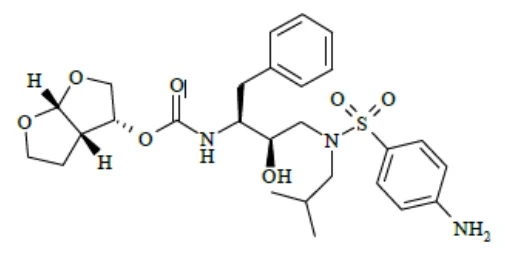
Structural formula:
Physicochemical properties:
Physical Description: White to pale yellow color solid.
Solubility: Freely soluble in Dichloromethane and very slightly soluble in Ethyl alcohol absolute.
14 CLINICAL TRIALS
General
The evidence of efficacy of darunavir/rtv is based on the analyses of 192-week data from a randomized, controlled open-label Phase 3 trial in treatment-naïve (TMC114-C211 [ARTEMIS]) HIV-1-infected adult subjects and 96-week data from a randomized, controlled, open-label Phase 3 trial in antiretroviral treatment-experienced (TMC114-C214 [TITAN]) HIV-1-infected adult patients, and the analysis of 48-week data from one randomized, open-label Phase 3 trial in early treatment experienced HIV-1-infected adult patients (TMC114-C229 [ODIN]).
In addition, 96-week data is included from 2 randomized, controlled Phase 2b trials, TMC114-C213 (POWER 1) and TMC114-C202 (POWER 2), in antiretroviral treatment-experienced HIV-1-infected adult patients, and 96-week data is included from the open label trial TMC114-C215 (POWER 3) in patients who initiated darunavir/rtv at the recommended dose.
14.1 Clinical Trials by Indication
Antiretroviral Treatment-Naïve Adult Patients
TMC114-C211 (ARTEMIS)
Demographics and Trial Design
The evidence of efficacy of darunavir/rtv 800/100 mg q.d. is based on the analyses of 192-week data from the randomized, controlled, open-label, Phase 3 trial TMC114-C211 in antiretroviral treatment-naïve HIV-1-infected patients comparing darunavir/rtv 800/100 mg q.d. with lopinavir/rtv 800/200 mg per day (given as a twice-daily or as a once-daily regimen). Both arms used a fixed background regimen consisting of tenofovir disoproxil fumarate 300 mg q.d. (TDF) and emtricitabine 200 mg q.d. (FTC).
HIV-1 infected patients who were eligible for this trial had plasma HIV-1 RNA > 5000 copies/mL. Randomization was stratified by screening plasma viral load and screening CD4+ cell count. Virologic response was defined as a confirmed plasma HIV-1 RNA viral load < 50 copies/mL. Analyses included 689 patients in Study TMC114-C211 who had completed 48 and 192 weeks of treatment or discontinued earlier.
Demographics and baseline characteristics were balanced between the darunavir/rtv arm and the lopinavir/rtv arm (see Table 19). Table 19 compares the demographic and baseline characteristics between patients in the darunavir/rtv 800/100 mg q.d. arm and patients in the lopinavir/ritonavir 800/200 mg per day arm in the ARTEMIS trial. The 343 patients on darunavir/rtv 800/100 mg q.d. had a median age of 34 years (range 18-70), 70% were male, 40% white, 23% black, 23% hispanic, and 13% asian. The mean baseline plasma HIV-1 RNA was 4.86 log10 copies/mL and the median baseline CD4+ cell count was 228 x 106 cells/L (range 4 – 750 x 106 cells/L).
Table 19: Demographic and Baseline Characteristics of Patients in TMC114-C211 Trial
| Randomized TMC114-C211 Trial | ||||||||||
|---|---|---|---|---|---|---|---|---|---|---|
Darunavir/rtv 800/100 mg q.d. + TDF/FTC N = 343 | lopinavir/ritonavir 800/200 mg per day + TDF/FTC N = 346 | |||||||||
| Demographic Characteristics | ||||||||||
| Median Age (years) | 34 | 33 | ||||||||
| (range, years) | (18-70) | (19-68) | ||||||||
| Sex | ||||||||||
| Male | 70% | 70% | ||||||||
| Female | 30% | 30% | ||||||||
| Race | ||||||||||
| White | 40% | 45% | ||||||||
| 23% | 21% | |||||||||
| Hispanic | 23% | 22% | ||||||||
| Asian | 13% | 11% | ||||||||
| Baseline Characteristics | ||||||||||
| Mean Baseline Plasma HIV-1 RNA (log10 copies/mL) | 4.86 | 4.84 | ||||||||
| Median Baseline CD4+ Cell Count (cells/mm3) | 228 | 218 | ||||||||
(cells/mm3) (range, cells/mm3) | (4-750) | (2-714) | ||||||||
| Percentage of Patients with Baseline Viral Load ≥ 100,000 copies/mL | 34% | 35% | ||||||||
| Percentage of Patients with Baseline CD4+ Cell Count < 200 cells/mm3 | 41% | 43% | ||||||||
Study Results
According to the statistical methods for analysis at Week 48 and Week 192 in the TMC114-C211 protocol, if at each time point, the lower limit of the 95% two-sided CI of the difference between DRV/rtv and LPV/rtv exceeded -12% (for the On-Protocol (OP) population), noninferiority of DRV/rtv versus LPV/rtv could be concluded for that time point. Noninferiority in virologic response (HIV-1 RNA < 50 copies/mL) with darunavir/rtv 800/100 mg q.d. compared to treatment with lopinavir/ritonavir 800/200 mg per day was demonstrated through 48 weeks of treatment (83.7% in the darunavir/rtv
800/100 mg q.d arm versus 78.3% in the lopinavir/ritonavir 800/200 mg per day arm) (p< 0.001). The difference (95% CI) in response at Week 48 between DRV and LPV is 5.5% (- 0.4 - 11.4) for <50 copies/mL and 2.7% (-2.4 - 7.8) for 400 copies/mL.
Analyses of the data at 192 weeks of treatment in the ARTEMIS trial demonstrated sustained antiretroviral efficacy and immunological benefit of the darunavir/rtv arm. In the 192-week analysis, virologic response (HIV-1 RNA<50 copies/mL) in the ITT population was 68.8% and 57.2% for the darunavir/rtv and lopinavir/rtv arm, respectively. Non-inferiority in virologic response was demonstrated (p<0.001) for both ITT and OP population. Furthermore, statistical superiority of the darunavir/rtv arm over the lopinavir/rtv arm was demonstrated (p=0.002) for both ITT and OP population.
Week 48 and 192 week outcomes for patients in the On-Protocol population on darunavir/rtv 800/100 mg q.d. from the ARTEMIS trial are shown in Table 20.
Table 20: Outcomes of Randomized Treatment Through Week 48 and 192 of the TMC114-C211 Trial for the On-Protocol Population
| Randomized Study TMC114-C211 | ||||||||||||||||
|---|---|---|---|---|---|---|---|---|---|---|---|---|---|---|---|---|
| Week 48 | Week 192 | |||||||||||||||
Darunavir/ rtv 800/100 mg q.d. + TDF/FTC N = 340 | lopinavir/ritonavir 800/200 mg per day + TDF/FTC N = 346 | Darunavir/rtv 800/100 mg q.d. + TDF/FTC N = 340 | lopinavir/ritonavir 800/200 mg per day + TDF/FTC N = 346 | |||||||||||||
| Virologic Responders | 83.8% | 78.3% | 69.1% | 57.1% | ||||||||||||
| HIV-1 RNA < 50 | ||||||||||||||||
| copies/mL | ||||||||||||||||
| (HIV-1 RNA < 400 | (87.9%) | (85.3%) | (75.2%) | (65.0%) | ||||||||||||
| copies/mL) | ||||||||||||||||
| Virologic failures | 5.8% | 10.1% | 8.2% | 12.5% | ||||||||||||
| Reboundera | 1.5% | 2.6% | 7.0% | 11.0% | ||||||||||||
| Never suppressedb | 4.4% | 7.5% | 1.2% | 1.4% | ||||||||||||
| Discontinuation due to adverse events | 2.9% | 5.5% | 4.1% | 11.3% | ||||||||||||
| Death | 0.3% | 0.6% | 0.3% | 1.4% | ||||||||||||
| Discontinuation due to other reasons | 7.1% | 5.5% | 18.2% | 17.7% | ||||||||||||
N = total number of patients in the On-Protocol population with data a Patients with a confirmed viral load < 50 copies/mL before Week 48 or 192, but without a confirmed viral load < 50 copies/mL at Week 48 and Week 192 b Patients who never reached a confirmed viral load < 50 copies/mL before Week 48 or Week 192 | ||||||||||||||||
The mean changes in plasma HIV-1 RNA from baseline in the ITT population were –2.77 log10 copies/mL at 48 weeks (-2.35 log10 copies/mL at 192 weeks) in the arm receiving darunavir/rtv
800/100 mg q.d. and –2.65 log10 copies/mL at 48 weeks (-2.03 log10 copies/mL at 192 weeks) for the arm receiving lopinavir/ritonavir 800/200 mg per day. The median increase from baseline in CD4+ cell counts was comparable for both treatment groups (148 cells/mm3 and 148 cells/mm3 at 48 weeks (266 cells/mm3 and 269 cells/mm3 at 192 weeks) in the darunavir/rtv 800/100 mg q.d. arm and the lopinavir/ritonavir 800/200 mg per day arm, respectively).
The virological response (< 50 copies/mL) by baseline viral load for all ITT patients is presented in Table 21. For patients with baseline VL < 100,000 copies/mL, responses were similar for darunavir/rtv and lopinavir/ritonavir; patients with baseline VL ≥100,000 copies/mL receiving darunavir/ritonavir had a statistically superior virological response (< 50 copies/mL) than lopinavir/rtv (67.5 % vs. 51.7%; p= 0.012).
Table 21: Virological Response (< 50 copies/mL) at 192 Weeks by BaselineViral Load and Baseline CD4+ Cell Count
Darunavir/rtv 800/100 mg q.d. n=343 | lopinavir/ritonavir 800/200 mg per day n=346 | Treatment difference | |||||||||
|---|---|---|---|---|---|---|---|---|---|---|---|
| N | number of responders at week 192 n (%) | N | number of responders at week 192 n (%) | Difference in % response (95% CI of difference in % response) | |||||||
| Baseline plasma viral load (copies/mL) | |||||||||||
| < 100,000 | 226 | 157 (69.5) | 226 | 136 (60.2) | 9.3 (0.5; 18.1) | ||||||
| ≥ 100,000 | 117 | 79 (67.5) | 120 | 62 (51.7) | 15.9 (3.5; 28.3) | ||||||
| Baseline CD4+ cell count (x 106/L) | |||||||||||
| < 200 | 141 | 92 (65.2) | 148 | 80 (54.1) | 11.2 (-0.1; 22.5) | ||||||
| ≥ 200 | 202 | 144 (71.3) | 198 | 118 (59.6) | 11.7 (2.4; 21.0) | ||||||
Antiretroviral Treatment-Experienced Adult Patients
The evidence of comparable efficacy of darunavir/rtv 800/100 mg q.d. and darunavir/rtv 600/100 mg b.i.d. in treatment-experienced patients with no darunavir resistance associated mutations is based on the 48 week analysis of the Phase 3 trial TMC114-C229 (ODIN).
The evidence of efficacy of darunavir/rtv 600/100 mg b.i.d. in treatment experienced patients is based on the 96 week analysis of the Phase 3 trial TMC114-C214 (TITAN) in treatment experienced, lopinavir/rtv naïve patients and on the analyses of 96 week data from the Phase 2b trials POWER 1, 2 and 3, in patients with high level of PI resistance.
TMC114-C229 (ODIN)
Demographics and Trial Design
Study TMC114-C229 is a randomized, open-label trial comparing darunavir/rtv 800/100 mg q.d. to darunavir/rtv 600/100 mg b.i.d. in treatment-experienced HIV-1-infected patients with screening genotype resistance test showing no darunavir resistance associated mutations (i.e. V11I, V32I, L33F, I47V, I50V, I54M, I54L, T47P, L76V, I84V, L89V) and a screening viral load of >1,000 HIV-1 RNA copies/mL. Both arms used an optimized background regimen consisting of ≥2 NRTIs selected by the investigator.
HIV-1-infected patients who were eligible for this trial were on a stable highly active antiretroviral therapy regimen (HAART) for at least 12 weeks. Virologic response was defined as a confirmed plasma HIV-1 RNA viral load <50 copies/mL. Analyses included 590 patients who had completed 48 weeks of treatment or discontinued earlier (ITT population). Table 22 compares the demographic and baseline characteristics between patients in the darunavir/rtv 800/100 mg q.d. and patients in the darunavir/rtv 600/100 mg b.i.d. arm in study TMC114-C229. No imbalances between the two arms were noted. The majority of the patient population (>87%) was not co-infected with hepatitis B and/or hepatitis C virus.
Table 22: Demographic and Baseline Characteristics of Patients in Study TMC114-C229 (ITT Populationa )
| Randomized Study TMC114-C229 | ||||||||||||
|---|---|---|---|---|---|---|---|---|---|---|---|---|
Darunavir/ritonavir 800/100 mg once daily + OBR N = 294 | Darunavir/ritonavir 600/100 mg twice daily + OBR N = 296 | |||||||||||
| Demographic Characteristics | ||||||||||||
| Median Age (years) | 40 | 40 | ||||||||||
| (range, years) | (18-70) | (18-77) | ||||||||||
| Sex | ||||||||||||
| Male | 61% | 67% | ||||||||||
| Female | 39% | 33% | ||||||||||
| Race | ||||||||||||
| White | 35% | 37% | ||||||||||
| 28% | 24% | |||||||||||
| Hispanic | 16% | 20% | ||||||||||
| Asian | 16% | 14% | ||||||||||
| Baseline Characteristics | ||||||||||||
| Mean Baseline Plasma HIV-1 RNA (log10 copies/mL) | 4.19 | 4.13 | ||||||||||
| Median Baseline CD4+ Cell Count (cells/mm3) | 219 (24-1306) | 236 (44-864) | ||||||||||
| (range, cells/mm3) | ||||||||||||
| Percentage of Patients with Baseline Viral Load ≥ 100,000 copies/mL | 13% | 11% | ||||||||||
| Percentage of Patients with Baseline CD4+ Cell Count < 200 cells/mm3 | 43% | 39% | ||||||||||
| Median Darunavir Fold Change | 0.50 | 0.50 | ||||||||||
| (range)b | (0.1-1.8) | (0.1-1.9) | ||||||||||
| Median Number of Resistance-Associatedc: | 3 | 4 | ||||||||||
| PI mutations | ||||||||||||
| Randomized Study TMC114-C229 | ||||||||
|---|---|---|---|---|---|---|---|---|
Darunavir/ritonavir 800/100 mg once daily + OBR N = 294 | Darunavir/ritonavir 600/100 mg twice daily + OBR N = 296 | |||||||
| NNRTI mutations | 2 | 1 | ||||||
| NRTI mutations | 1 | 1 | ||||||
| Percentage of Patients with Number of | 84% 8% 5% 3% | 84% 9% 4% 2% | ||||||
| Baseline Primary Protease Inhibitor Mutations | ||||||||
| 0 | ||||||||
| 1 | ||||||||
| 2 | ||||||||
| ≥ 3 | ||||||||
| Median Number of ARVs Previously Usedd: | 3 | 3 | ||||||
| NRTIs | ||||||||
| NNRTIs | 1 | 1 | ||||||
| PIs (excluding low-dose ritonavir) | 1 | 1 | ||||||
a Intent-to-treat (ITT) population was defined as the set of patients who were randomized and who had taken >1 dose of trial medication, regardless of their compliance with the protocol. b Based on phenotype [FC] (Antivirogram®) FC = EC50of the patient virus/EC50 of reference wild type virus c Johnson VA, Brun-Vézinet F, Clotet B, et al. Update of the drug resistance mutations in HIV-1: December 2008. Top HIV Med 2008; 16(5): 138-145 d Only counting ARVs, excluding low-dose ritonavir | ||||||||
The evidence of comparable efficacy of darunavir/rtv 800/100 mg q.d. and darunavir/rtv 600/100 mg b.i.d. in treatment-experienced patients with no darunavir resistance associated mutations is based on the 48 week analysis of the Phase 3 trial TMC114-C229 (ODIN).
Study Results
In the 48-week primary analysis, the virologic response defined as a confirmed plasma HIV-1 RNA viral load <50 copies/mL (ITT, TLOVR), was 72.1% for the darunavir/rtv q.d. arm and 70.9% for the darunavir/rtv b.i.d. arm (difference = 1.2%, 95% CI = [-6.1; 8.5]). Statistical comparisons between the treatment arms at Week 48 based on a normal approximation of the difference in virologic response, confirmed non-inferiority of darunavir/rtv q.d. versus darunavir/rtv b.i.d. for both the ITT and OP populations (p-value<0.001). A summary of all Week 48 outcomes for patients on darunavir/rtv 800/100 mg q.d. from study TMC114-C229 are shown in Table 23.
Table 23: Outcomes of Randomized Treatment Through Week 48 of Study TMC114-C229
| Randomized Study TMC114-C229 | ||||||||||
|---|---|---|---|---|---|---|---|---|---|---|
Darunavir/rtv 800/100 mg q.d. + OBR N =294 | Darunavir/rtv 600/100 mg b.i.d. + OBR N =296 | Difference in virologic response [95% CI] | P-value for non- inferiority | |||||||
| Virologic Responders (HIV-1 RNA < 50 copies/mL) | 71.4% a | 70.3% a | 1.2 [-6.2; 8.5] | < 0.001b | ||||||
| Virologic failures:c Lack of initial responsed | 10.5% a | 8.1% a | ||||||||
| Reboundere | 2.4% | 2.0% | ||||||||
| Never suppressedf | 4.8% | 5.1% | ||||||||
| Discontinuation due to adverse events | 2.4% | 2.0% | ||||||||
| Death | 0.6% | 1.7% | ||||||||
| Discontinuation due to other reasonsg | 7.8% | 10.8% | ||||||||
N = total number of patients in the ITT population with data a Two patients in each arm with a confirmed virologic response at Week 48 demonstrated an initial lack of response at week 24, and were therefore not considered virologic responders in this outcome summary. b Based on a normal approximation of the difference in response. c Patients who discontinued prior to Week 48 for lack or loss of efficacy; patients who are ≥50 copies in Week 48 and patients who had a switch in their background regimen that was not permitted by the protocol. d Patients are considered to show an initial lack of response if i) they have viral load data beyond the considered time point, and ii) confirmed virologic response (VL<400 copies/mL – TLOVR) at Week 24 equals 0. e Patients who have a confirmed response (<50 copies/mL – TLOVR) before the considered time point (any response = 1) but who have a confirmed rebound at the considered time point (i.e. TLOVR response = No at the considered time point) f Patients who never reached a confirmed viral load < 50 copies/mL before Week 48 g Includes: withdrew consent, loss to follow-up, moved etc. | ||||||||||
At Week 48, the mean change in log10 viral load from baseline in the ITT population was -1.84 and -1.80 log10 copies/mL for the DRV/rtv q.d. and DRV/rtv b.i.d. groups, respectively. The difference in mean change and 95% confidence interval in log10 viral load from baseline between treatment groups at Week 48 was -0.04 (-0.24, 0.16). Statistical comparison (ITT-ANCOVA) showed an estimated difference (difference between LS Means and the 95% CI) between the DRV/rtv q.d. and the b.i.d. treatment groups at 48 weeks of -0.003 (-0.188, 0.182) (p=0.977).
The mean increase from baseline in CD4+ cell counts was comparable for both treatment arms (108 cells/mm3 and 112 cells/mm3 in the darunavir/rtv 800/100 mg q.d. arm and the darunavir/rtv 600/100 mg b.i.d. arm, respectively).
Study TMC114-C214 (TITAN)
Demographics and Trial Design
Study TMC114-C214 was an ongoing randomized, controlled, open label Phase 3 trial comparing darunavir/rtv 600/100 mg b.i.d. versus lopinavir/rtv 400/100 mg b.i.d. in antiretroviral treatment- experienced, lopinavir/rtv naïve HIV-1 infected adult patients. Both arms used an optimized background regimen (OBR) consisting of at least 2 antiretrovirals (NRTIs with or without NNRTIs).
HIV-1 infected patients who were eligible for this trial had plasma HIV-1 RNA > 1000 copies/mL and were on a highly active antiretroviral therapy regimen (HAART) for at least 12 weeks. Virologic response was defined as a confirmed plasma HIV-1 RNA viral load < 400 copies/mL. Analyses included 595 patients in the TITAN trial who had completed 96 weeks of treatment or discontinued earlier.
Demographics and baseline characteristics were balanced between the darunavir/rtv arm and the lopinavir/ritonavir arm. Table 24 compares the demographic and baseline characteristics between patients in the darunavir/rtv 600/100 mg b.i.d. arm and patients in the lopinavir/ritonavir 400/100 mg b.i.d. arm in study TMC114-C214.
Table 24: Demographic and Baseline Characteristics of Patients in Study TMC114-C214
| Randomized Study TMC114-C214 | ||||||||||
|---|---|---|---|---|---|---|---|---|---|---|
Darunavir/rtv 600/100 mg b.i.d. + OBR N = 298 | lopinavir/ritonavir 400/100 mg b.i.d. + OBR N = 297 | |||||||||
| Demographic Characteristics | ||||||||||
| Median Age (years) | 40 | 41 | ||||||||
| (range, years) | (18-68) | (22-76) | ||||||||
| Sex | ||||||||||
| Male | 77% | 81% | ||||||||
| Female | 23% | 19% | ||||||||
| Race | ||||||||||
| White | 54% | 57% | ||||||||
| 18% | 17% | |||||||||
| Hispanic | 15% | 15% | ||||||||
| Asian | 9% | 9% | ||||||||
| Baseline Characteristics | ||||||||||
| Mean Baseline Plasma HIV-1 RNA (log10 copies/mL) | 4.33 | 4.28 | ||||||||
| Median Baseline CD4+ Cell Count (cells/mm3) | 235 | 230 | ||||||||
| (range, cells/mm3) | ||||||||||
| Randomized Study TMC114-C214 | ||||||||||||
|---|---|---|---|---|---|---|---|---|---|---|---|---|
Darunavir/rtv 600/100 mg b.i.d. + OBR N = 298 | lopinavir/ritonavir 400/100 mg b.i.d. + OBR N = 297 | |||||||||||
| (3-831) | (2-1096) | |||||||||||
Percentage of Patients with Baseline Viral Load ≥ 100,000 copies/mL | 19% | 17% | ||||||||||
| Percentage of Patients with Baseline CD4+ Cell Count < 200 cells/mm3 | 40% | 40% | ||||||||||
| Median Darunavir FC | 0.60 (0.1 - 37.4) | 0.60 (0.1 - 43.8) | ||||||||||
| Median Lopinavir FC | 0.70 (0.4 – 74.4) | 0.80 (0.3 – 74.5) | ||||||||||
| Median Number of Resistance-Associateda: | 4 | 4 | ||||||||||
| PI mutations | ||||||||||||
| NNRTI mutations | 1 | 1 | ||||||||||
| NRTI mutations | 2 | 2 | ||||||||||
| Percentage of Patients with Number of Baseline | 78% | 80% | ||||||||||
| Primary Protease Inhibitor Mutationsa: | ||||||||||||
| ≤ 1 | ||||||||||||
| 2 | ||||||||||||
| ≥ 3 | 8% | 9% | ||||||||||
| 13% | 11% | |||||||||||
| Median Number of ARVs Previously Usedb: | 4 | 4 | ||||||||||
| NRTIs | ||||||||||||
| NNRTIs | 1 | 1 | ||||||||||
| PIs (excluding low-dose ritonavir) | 1 | 1 | ||||||||||
| Percentage of Patients Resistantc to All Availabled PIs at Baseline, excluding Darunavir | 2% | 3% | ||||||||||
a Johnson VA, Brun-Vezinet F, Clotet B, et al. Update of the drug resistance mutations in HIV-1: Fall 2006. Top HIV Med 2006; 14(3): 125-130 b Only counting ARVs, excluding low-dose ritonavir c Based on phenotype (Antivirogram™) d Commercially available PIs at the time of study enrollment | ||||||||||||
Study Results
According to the statistical methods in the TMC114-C214 protocol, if the lower limit of the 95% 2- sided CI of the difference between DRV/rtv and LPV/rtv exceeded –12% (for the On-protocol (OP) population), noninferiority of DRV/rtv versus LPV/rtv was concluded. Week 48 and 96 outcomes for patients on darunavir/rtv 600/100 mg b.i.d. from study TMC114-C214 are shown in Table 25.
Table 25: Outcomes of Randomized Treatment Through Week 48 and 96 of Study TMC114-C214
| Randomized Study TMC114-C214 | ||
|---|---|---|
| 48 Weeks | 96 Weeks |
Darunavir/rtv 600/100 mg b.i.d. + OBR N = 274 N | lopinavir/ritonavir 400/100 mg b.i.d. + OBR N = 280 N | Darunavir/rtv 600/100 mg b.i.d. + OBR N = 280 N | lopinavir/ritonavir 400/100 mg b.i.d. + OBR N = 294 N | ||||||||||||||
| Virologic Responders | 211 (77.0%) [196 (71.5%)] | 189 (67.5%) [169 (60.4%)] | 189 (67.5%) [172 (61.4%)] | 175 (59.5%) | |||||||||||||
HIV-1 RNA < 400 copies/mL (HIV-1 RNA < 50 copies/mL) | |||||||||||||||||
| [164 (55.8%)] | |||||||||||||||||
| Virologic failures | 28 (10.2%) | 51 (18.2%) | 31 (11.1%) | 61 (20.7%) | |||||||||||||
| Lack of initial responsea | 19 (6.9%) | 29 (10.4%) | 19 (6.8%) | 35 (11.9%) | |||||||||||||
| Rebounderb | 9 (3.3%) | 21 (7.5%) | 12 (4.3%) | 25 (8.5%) | |||||||||||||
| Discontinued due to virologic failure: never suppressedc | 0 (0%) | 1 (0.4%) | 0 (0%) | 1 (0.3%) | |||||||||||||
| Discontinuation due to adverse events | 14 (5.1%) | 13 (4.6%) | 22 (7.9%) | 23 (7.8%) | |||||||||||||
| Death | 2 (0.7%) | 2 (0.7%) | 20 (7.1%) | 17 (5.8%) | |||||||||||||
| Discontinuation due to other reasons | 19 (6.9%) | 25 (8.9%) | 2 (0.7%) | 3 (1.0%) | |||||||||||||
N = total number of patients with data a Patients with viral load ≥ 400 copies/mL at Week 16 and without a confirmed viral load <400 copies/mL at Week 48 and Week 96 b Patients with a confirmed viral load < 400 copies/mL before Week 48 and Week 96, but without a confirmed viral load < 400 copies/mL at Week 48 and Week 96 c Patients who never reached a confirmed viral load < 400 copies/mL before Week 48 and Week 96 | |||||||||||||||||
Through 96 weeks of treatment, there was a significantly greater proportion of patients with HIV-1 RNA < 400 copies/mL and with HIV-1 RNA < 50 copies/mL in the arm receiving darunavir/rtv 600/100 mg b.i.d. (67.5% and 61.4%, respectively) compared to the arm receiving lopinavir/ritonavir 400/100 mg b.i.d. (59.5% and 55.8%, respectively). The difference (95% CI) in response at Week 96 between DRV and LPV is 8.0% (0.1 - 15.8) for <400 copies/mL and 5.6% (2.4 – 13.7) for <50 copies/mL.
Noninferiority in virologic response (HIV-1 RNA < 400 copies/mL) with darunavir/rtv 600/100 mg b.i.d. compared to treatment with lopinavir/ritonavir 400/100 mg b.i.d. was demonstrated (p < 0.001), furthermore superiority of darunavir/rtv over the lopinavir/rtv arm was demonstrated
(p = 0.033).
The proportion of patients with at least 1 log10 HIV-1 RNA below baseline was 77.7% in the arm receiving darunavir/rtv 600/100 mg b.i.d. compared to 69.3% in the arm receiving lopinavir/ritonavir
400/100 mg b.i.d. At week 96, the mean changes in plasma HIV-1 RNA from baseline were -1.72 log10 copies/mL in the arm receiving darunavir/rtv 600/100 mg b.i.d. and -
1.54 log10 copies/mL for the arm receiving lopinavir/ritonavir 400/100 mg b.i.d. The median increase from baseline in CD4+ cell counts was comparable for both treatment groups (81 cells/mm3 and 96 cells/mm3 in the darunavir/ rtv 600/100 mg b.i.d. arm and lopinavir/ritonavir 400/100 mg b.i.d. arm, respectively).
TMC114-C213 (POWER 1) and TMC114-C202 (POWER 2)
Demographics and Trial Design
Studies TMC 114-C213 (Power 1) and TMC114-C202 (Power 2) are randomized, controlled
Phase 2b trials in patients with a high level of PI resistance, consisting of 2 parts: an initial partially blinded, dose finding part and a second long term part in which all patients randomized to darunavir/rtv received the recommended dose of 600/100 mg b.i.d.
HIV-1-infected patients who were eligible for these trials had plasma HIV-1 RNA >1000 copies/mL, had prior treatment with PI(s), NNRTI(s) and NRTI(s), had at least one primary PI mutation (D30N, M46I/L, G48V, I50L/V, V82A/F/S/T, I84A/C/V, L90M) at screening, and were on a stable PI- containing regimen at screening for at least 8 weeks. Randomization was stratified by the number of PI mutations, screening viral load, and the use of enfuvirtide.
The virologic response rate was evaluated in patients receiving darunavir/rtv plus an optimized background regimen (OBR) versus a control group receiving an investigator-selected PI(s) regimen plus an OBR. The OBR consisted of at least 2 NRTIs with or without enfuvirtide. Based on resistance testing and prior medical history, selected PIs in the control arm included: lopinavir/ritonavir in 36%, (fos)amprenavir in 34%, saquinavir in 35% and atazanavir in 17%; 23% of the control patients used dual-boosted PIs. Approximately 47% of all patients used enfuvirtide (ENF), and 35% of the use was in patients who were ENF-naïve. Virologic response was defined as a decrease in plasma HIV-1 RNA viral load of at least 1.0 log10 versus baseline.
In the pooled analysis for TMC114-C213 and TMC114-C202, demographics and baseline characteristics were balanced between the darunavir/rtv arm and the comparator PI arm. Table 26 compares the demographic and baseline characteristics between patients in the darunavir/rtv 600/100 mg b.i.d. arm and patients in the comparator PI arm in the pooled analysis of studies TMC114-C213 and TMC114-C202.
Table 26: Demographic and Baseline Characteristics of Patients in Studies TMC114-C213 and TMC114-C202 (Pooled Analysis)
| Randomized Studies TMC114-C213 and TMC114-202 | |||||
|---|---|---|---|---|---|
Darunavir/rtv 600/100 mg b.i.d. + OBR N = 131 | Comparator PI(s) + OBR N = 124 | ||||
| Demographic Characteristics | |||||
| Median Age (years) | 43 | 44 | |||
| (range, years) | (27-73) | (25-65) | ||||||
|---|---|---|---|---|---|---|---|---|
| Sex | ||||||||
| Male | 89% | 88% | ||||||
| Female | 11% | 12% | ||||||
| Race | ||||||||
| White | 81% | 73% | ||||||
| 10% | 15% | |||||||
| Hispanic | 7% | 8% | ||||||
| Baseline Characteristics | ||||||||
| Mean Baseline Plasma HIV-1 RNA (log10 copies/mL) | 4.61 | 4.49 | ||||||
| Median Baseline CD4+ Cell Count (cells/mm3) | 153 | 163 | ||||||
| (range, cells/mm3) | (3-776) | (3-1274) | ||||||
| Percentage of Patients with Baseline Viral Load > 100,000 copies/mL | 24% | 29% | ||||||
| Percentage of Patients with Baseline CD4+ Cell Count < 200 cells/mm3 | 67% | 58% | ||||||
| Median Darunavir FC | 4.3 | 3.3 | ||||||
| Median Number of Resistance-Associateda: | 12 | 12 | ||||||
| PI mutations | ||||||||
| NNRTI mutations | 1 | 1 | ||||||
| NRTI mutations | 6 | 5 | ||||||
| Percentage of Patients with Number of | 8% | 9% | ||||||
| Baseline Primary Protease Inhibitor Mutationsa: | ||||||||
| ≤ 1 | ||||||||
| 2 | ||||||||
| ≥ 3 | 22% | 21% | ||||||
| 70% | 70% | |||||||
| Median Number of ARVs Previously Usedb: | 6 | 6 | ||||||
| NRTIs | ||||||||
| NNRTIs | 1 | 1 | ||||||
| PIs (excluding low-dose ritonavir) | 4 | 4 | ||||||
| Percentage of Patients Resistantb to All Availablec PIs at Baseline, excluding Tipranavir and Darunavir | 66% | 61% | ||||||
| Percentage of Patients with Prior Use of Enfuvirtide | 20% | 17% | ||||||
a Johnson VA, Brun-Vezinet F, Clotet B, et al. Update of the drug resistance mutations in HIV-1: Fall 2006. Top HIV Med 2006; 14(3): 125-130 b Based on phenotype (Antivirogram™) c Commercially available PIs at the time of study enrollment | ||||||||
Study Results
Week 48 outcomes for patients on the recommended dose darunavir/rtv 600/100 mg b.i.d. from the pooled studies TMC114-C213 and TMC114-C202 are shown in Table 27.
Table 27: Outcomes of Randomized Treatment Through Week 48 of the Studies TMC114-C213 and TMC114- C202 (Pooled Analysis)
| Randomized Studies TMC114-C213 and TMC114-C202 | |||||||||
|---|---|---|---|---|---|---|---|---|---|
Darunavir/rtv 600 mg b.i.d. + OBR N=131 | Comparator PI + OBR N=124 | ||||||||
| Virologic Responders | 61.1%d | 16.1% | |||||||
| confirmed at least 1 log10 HIV-1 | |||||||||
| RNA below baseline through Week | |||||||||
| 48 | |||||||||
| (< 50 copies/mL at Week 48) | (45.0%)d | (11.3%) | |||||||
| Virologic failures | 29.0% | 75.0% | |||||||
| Lack of initial responsea | 8.4% | 53.2% | |||||||
| Rebounderb | 16.0% | 13.7% | |||||||
| Never Suppressedc | 4.6% | 8.1% | |||||||
| Discontinuation due to adverse events | 4.6% | 2.4% | |||||||
| Deaths | 2.3% | 0.8% | |||||||
| Discontinuation due to other reasons | 3.1% | 5.6% | |||||||
a Patients who did not achieve at least a confirmed 0.5 log10 HIV-1 RNA drop from baseline at Week 12 b Patients with an initial response (confirmed 1 log10 drop in viral load), but without a confirmed 1 log10 drop in viral load at Week 48 c Patients who never reached a confirmed 1 log10 drop in viral load before Week 48 d p<0.001, based on logistic regression model; p-values [Darunavir/rtv 600/100 mg b.i.d vs. comparator PI + OB] | |||||||||
In the pooled TMC114-C213 and TMC114-C202 analysis through 48 weeks of treatment, the proportion of patients with HIV-1 RNA < 400 copies/mL in the arm receiving darunavir/rtv 600/100 mg b.i.d. compared to the comparator PI arm was 55.0% and 14.5%, respectively (p<0.001). In addition, the mean changes in plasma HIV-1 RNA from baseline were –1.69 log10 copies/mL in the arm receiving darunavir/rtv 600/100 mg b.i.d. and –0.37 log10 copies/mL for the comparator PI arm (p<0.001). The mean increase from baseline in CD4+ cell counts was higher in the arm receiving darunavir/rtv 600/100 mg b.i.d. (103 cells/mm3) than in the comparator PI arm (17 cells/mm3) (p<0.001).
Analyses of the data through 96 weeks of treatment in the pooled TMC114-C213 and TMC114-C202 trials demonstrated sustained antiretroviral efficacy and immunological benefit. Treatment with darunavir/rtv 600/100 mg b.i.d. resulted in 56.5% of patients with a decrease of at least 1 log10 HIV-1 RNA versus baseline and 38.9% of patients reaching less than 50 HIV-1 RNA copies/mL. At Week 96, 49.6% of patients reached less than 400 HIV-1 RNA copies/mL, and the mean change in plasma HIV-1 RNA from baseline was -1.58 log10 copies/mL. The mean increase in CD4+ cell count versus baseline was 133 cells/mm3 at Week 96.
TMC114-C215 (POWER 3)
Demographics and Trial Design
Additional data on the efficacy of darunavir/rtv 600/100 mg b.i.d. have been obtained in treatment-experienced patients participating in the non-randomized trial TMC114-C215. The 318 patients included in the 96-week efficacy analysis initiated therapy with darunavir/rtv with the recommended dose of 600/100 mg b.i.d. The OBR consisted of at least two NRTIs with or without enfuvirtide. Entry criteria for Study TMC114-C215 were the same as those for TMC114-C213 (POWER 1) and TMC114-C202 (POWER 2) trials.
Baseline characteristics of the patients included in TMC114-C215 trial were comparable to those patients in TMC114-C213 and TMC114-C202 trials.
Study Results
The TMC114-C215 48-week efficacy analysis supported the viral load reduction and CD4+ cell count increases observed in the TMC114-C213 and TMC114-C202 trials. Of the 334 patients at Week 48, 58.7% had a virologic response defined as a decrease of at least 1.0 log10 HIV-1 RNA versus baseline and 46.4% of the patients reached less than 50 HIV-1 RNA copies/mL. At Week 48, 54.8% of the patients reached less than 400 HIV-1 RNA copies/mL, and the mean changes in plasma HIV-1 RNA from baseline were -1.62 log10 copies/mL. The mean increase in CD4+ cell count versus baseline was 105 cells/mm3 at Week 48.
Analyses of the data through 96 weeks of treatment in the non-randomized trial TMC114-C215 demonstrated sustained antiretroviral efficacy and immunological benefit. Of the 318 patients at Week 96, 52.2% had a virologic response defined as a decrease of at least 1.0 log10 HIV-1 RNA versus baseline and 42.1% of the patients reached less than 50 HIV-1 RNA copies/mL. At Week 96, 50.0% of the patients reached less than 400 HIV-1 RNA copies/mL, and the mean change in plasma HIV-1 RNA from baseline was -1.43 log10 copies/mL. The mean increase in CD4+ cell count versus baseline was 103 cells/mm3 at Week 96.
TMC114-C213, TMC114-C202 and TMC114-C215 Trials
Out of the 206 patients who responded with complete viral suppression (< 50 HIV-1 RNA copies/mL) at Week 48, 86% of patients remained responders at Week 96.
14.2 Comparative Bioavailability Studies
A double-blind, randomized, single-dose (1 x 800 mg), two-way crossover study of NAT-DARUNAVIR (darunavir) Tablets, 800 mg (Natco Pharma (Canada) Inc.), and PREZISTA® (darunavir ethanolate) Tablets, 800mg (Janssen Inc.) with co-administration of NORVIR® (Ritonavir) Tablets, 100 mg twice daily (AbbVie Corporation), was conducted in healthy, adult, Asian male subjects under high-fat, high-calorie fed conditions. The results from the 44 subjects who completed the study are summarized below.
SUMMARY TABLE OF THE COMPARATIVE BIOAVAILABILITY DATA
Darunavir (1 x 800 mg) From measured data Geometric Mean Arithmetic Mean (CV%) |
|---|
| Parameter | Test* | Reference† | % Ratio of Geometric Means | 90% Confidence Interval |
|---|---|---|---|---|
AUCT (µg.h/ml) | 102.73 110.63 (38.34) | 103.59 110.44 (34.83) | 99.2 | 94.5 – 104.1 |
AUCI (µg.h/ml) | 105.20 113.14 (38.12) | 106.32 113.22 (34.44) | 98.9 | 94.1 – 104.0 |
Cmax (µg/ml) | 8.22 8.38 (19.54) | 8.73 8.96 (24.12) | 94.2 | 89.9 – 98.7 |
| Tmax§ (h) | 3.33 (1.33 – 6.00) | 3.67 (1.00 – 5.50) | ||
| T½€ (h) | 10.14 (29.34) | 9.79 (29.67) |
* NAT-DARUNAVIR (darunavir) Tablets 800 mg (by Natco Pharma (Canada) Inc.)
† PrPREZISTA® (darunavir ethanolate) Tablets 800 mg (by Janssen Inc.), purchased in Canada
§ Expressed as the median (range) only
€ Expressed as the arithmetic mean (CV%) only
TMC114-TiDP3-C162
In a Phase 1, open-label, randomized, two-panel, two-way crossover bioavailability trial the rate and extent of absorption of darunavir following administration of two tablet strengths (in the presence of low-dose ritonavir) under fed and fasted conditions was assessed in 96 healthy subjects.
In Panel 1, 47 male and female subjects randomly received under fasted conditions a single oral 600 mg dose of darunavir formulated as the 300 mg tablet (2 x 300 mg; Treatment A) in one session, followed by a single oral 600 mg dose formulated as the 600 mg tablet (1 x 600 mg; Treatment B) in the second session. The results indicate that the bioavailability of a 1 x 600 mg dose of darunavir is comparable to the bioavailability of a 2 x 300 mg dose of darunavir.
In Panel 2, 46 male and female subjects randomly received under fed conditions a single oral 600 mg dose of darunavir formulated as the 300 mg tablet (2 x 300 mg; Treatment C) in one session and a single oral 600 mg dose of darunavir formulated as the 600 mg tablet (1 x 600 mg; Treatment D) in the second session. The results indicate that the bioavailability of a 1 x 600 mg dose of darunavir is comparable to the bioavailability of a 2 x 300 mg dose of darunavir.
The summary of results is presented in Table 28.
Table 28: Summary Table of the Comparative Bioavailability Data Under Fed and Fasting Conditions
Darunavir (TMC114) 1 x 600 mg tablet and 2 x 300 mg tablet From measured data Geometric Meana Arithmetic Mean (CV%) | ||||||
|---|---|---|---|---|---|---|
| Fed Conditions | Fasted Conditions | |||||
| Parameter | Referenceb | Testc | % Ratio of Geometric Meansa (90% Confidence Interval) | Referenceb | Testc | % Ratio of Geometric Meansa (90% Confidence Interval) |
| AUClast (ng.h/mL) | 103900 111800 (44.3) | 99650 103900 (32.4) | 95.87 (89.67 - 102.5) | 81250 85470 (31.5) | 78140 82500 (34.0) | 96.17 (89.75 - 103.0) |
AUC∞ (ng.h/mL) | 108600 117300 (45.7) | 105000 110600 (36.5) | 96.66 (90.35 - 103.4) | 87870 93700 (36.5) | 85000 92440 (43.6) | 96.73 (89.35 - 104.7) |
| Cmax | 5843 | 5706 5803 (18.6) | 97.66 (92.84 - 102.7) | 4056 | 4076 4213 (28.0) | 100.5 |
| (ng/mL) | 6024 (26.6) | 4134 (19.7) | (94.31 - 107.1) | |||
| Tmaxd (h) | 4.0 (1.0 - 5.0) | 4.0 (1.0 - 6.0) | 2.0 (1.0 - 5.0) | 2.0 (1.0 - 5.0) | ||
| T½e (h) | 15.81 (33.4) | 15.94 (42.9) | 19.09 (38.0) | 18.97 (58.5) | ||
a Based on least square mean estimates
b Darunavir 300 mg tablet (F016)
c Darunavir 600 mg tablet (F032)
dExpressed arithmetic median (range) only
e Expressed as the arithmetic mean (CV%) only
TMC114-TiDP3-C176
In a Phase 1, open-label, randomized two-panel, two-way crossover bioavailability trial the rate and extent of absorption of darunavir following administration of two tablet strengths (in the presence of low-dose ritonavir) under fed and fasted conditions was assessed in 124 healthy subjects.
In Panel 1, 78 male and female subjects randomly received under fasted conditions a single oral 800 mg dose of darunavir formulated as the 400 mg tablet (2 x 400 mg; Treatment A) in one session, followed by a single oral 800 mg dose formulated as the 800 mg tablet (1 x 800 mg; Treatment B) in the second session. The results indicate that the bioavailability of a 1 x 800 mg dose of darunavir is comparable to the bioavailability of a 2 x 400 mg dose of darunavir.
In Panel 2, 40 male and female subjects randomly received under fed conditions a single oral 800 mg dose of darunavir formulated as the 400 mg tablet (2 x 400 mg; Treatment C) in one session, followed by a single oral 800 mg dose formulated as the 800 mg tablet (1 x 800 mg; Treatment D) in the second session. The results indicate that the bioavailability of a 1 x 800 mg dose of darunavir is comparable to the bioavailability of a 2 x 400 mg dose of darunavir.
The summary of results is presented in Table 29.
Table 29: Summary Table of the Comparative Bioavailability Data Under Fed and Fasting Conditions
Darunavir (TMC114) 1 x 800 mg tablet and 2 x 400 mg tablet From measured data Geometric Meana Arithmetic Mean (CV%) | ||||||
|---|---|---|---|---|---|---|
| Fed Conditions | Fasted Conditions | |||||
| Parameter | Referenceb | Testc | % Ratio of Geometric Meansa (90% Confidence Interval | Referenceb | Testc | % Ratio of Geometric Meansa (90% Confidence Interval |
| AUClast (ng.h/mL) | 101800 105900 (30.72) | 99350 105100 (36.04) | 97.59 (93.82 – 101.51) | 86000 96120 (57.04) | 85300 91140 (44.16) | 99.18 (94.35 - 104.27) |
| AUC∞ | 105100 | 103100 | 98.12 (94.11– | 92420 | 92720 | 100.33 (94.80 - |
| (ng.h/mL) | 109700 | 109600 | 101.31) | 105000 (62.36) | 99540 | 106.19) |
| (32.32) | (37.91) | (49.60) | ||||
| Cmax | 6890 | 6580 | 95.50 (92.15 – | 4658 | 4750 | 101.97 (98.03 - |
| (ng/mL) | 7031 (23.74) | 6773 | 98.97) | 4866 (29.62) | 4914 | 106.07) |
| (24.63) | (27.10) | |||||
| Tmaxd | 2.98 | 2.98 | 2.02 | 2.00 | ||
| (h) | (1.00 – 5.97) | (0.97 – | (0.97 - 23.93) | (1.00 - | ||
| 5.00) | 4.98) | |||||
| T½e (h) | 13.45 (35.47) | 14.03 (32.94) | 16.09 (52.05) | 16.96 (101.30) | ||
a Based on least square mean estimates
b Darunavir 400 mg tablet (F030)
c Darunavir 800 mg tablet (G002)
d Expressed as the median (range) only
e Expressed as the mean (CV%) only
15 MICROBIOLOGY
Antiviral Activity In Vitro
Darunavir exhibits activity against laboratory strains and clinical isolates of HIV-1 and laboratory strains of HIV-2 in acutely infected T-cell lines, human peripheral blood mononuclear cells and human monocytes/macrophages with median EC50 values ranging from 1.2 to 8.5 nM (0.7 to 5.0 ng/mL). Darunavir demonstrates antiviral activity in vitro against a broad panel of HIV-1 group M (A, B, C, D, E, F, G) and group O primary isolates with EC50 values ranging from <0.1 to 4.3 nM.
These EC50 values are well below the 50% cellular toxicity concentration range of 87 μM to >100 μM. The EC50 value of darunavir increases by a median factor of 5.4 in the presence of human serum.
Darunavir showed synergistic antiviral activity when studied in combination with the PIs ritonavir, nelfinavir, or amprenavir, and additive antiviral activity when studied in combination with the PIs indinavir, saquinavir, lopinavir, atazanavir, or tipranavir, the nucleoside (nucleotide) reverse transcriptase inhibitors (N(t)RTIs) zidovudine, lamivudine, zalcitabine, didanosine, stavudine, abacavir, emtricitabine, or tenofovir, the non-nucleoside reverse transcriptase inhibitors (NNRTIs) nevirapine, delavirdine, rilpivirine or etravirine, or efavirenz, and the fusion inhibitor enfuvirtide. No antagonism was observed between darunavir and any of these antiretrovirals in vitro.
Resistance In Vitro
In vitro selection of darunavir-resistant virus from wild-type HIV-1 was lengthy (more than 2 years). The selected viruses were unable to grow in the presence of darunavir concentrations above 220 nM. Viruses selected in these conditions and showing decreased susceptibility to darunavir (range: 23- to 50-fold) harboured 2 to 4 amino acid substitutions in the protease gene. The decreased susceptibility to darunavir of the emerging viruses in the selection experiment could not be explained by the emergence of these protease mutations.
In vitro selection of darunavir-resistant HIV-1 (range: 53- to 641-fold change in EC50 values) from 9 HIV-1 strains harbouring multiple PI resistance-associated mutations (RAMs) resulted in the overall emergence of 22 mutations in the protease, of which L10F, V32I, L33F, S37N, M46I, I47V, I50V, L63P, A71V, and I84V were present in more than 50% of the 9 darunavir-resistant isolates. A minimum of 8 of these darunavir in vitro selected mutations, from which at least 2 were already present in the protease prior to selection, were required in the HIV-1 protease to render a virus resistant (fold change (FC) > 10) to darunavir.
In 1113 clinical isolates resistant to amprenavir, atazanavir, indinavir, lopinavir, nelfinavir, ritonavir, saquinavir and/or tipranavir, and in 886 baseline isolates from the patients enrolled in the TMC114-C213 (POWER 1) and TMC114-C202 (POWER 2) trials and in the TMC114-C215 (POWER 3) analysis, only the subgroups with > 10 PI resistance-associated mutations showed a median FC for darunavir > 10.
Cross-Resistance In Vitro
Cross-resistance has been observed among PIs. Darunavir has a < 10-fold decreased susceptibility against 90% of 3309 clinical isolates resistant to amprenavir, atazanavir, indinavir, lopinavir, nelfinavir, ritonavir, saquinavir and/or tipranavir showing that viruses resistant to most PIs remain susceptible to darunavir.
Seven of the 9 darunavir-resistant viruses selected from PI-resistant viruses had phenotypic data for tipranavir. Six of those showed a FC in EC50 value < 3 for tipranavir, indicative of limited cross- resistance between these 2 PIs.
Cross-resistance between darunavir and the nucleoside/nucleotide reverse transcriptase inhibitors, the non-nucleoside reverse transcriptase inhibitors, the entry inhibitors, or the integrase inhibitor is unlikely because the viral targets for those inhibitors are different.
In Vivo Selection of Viral Resistance During Darunavir/ritonavir Therapy
In the 192-week analysis of the TMC114-C211 (ARTEMIS) trial, the number of virologic failures was lower in the group of patients receiving darunavir/rtv 800/100 mg q.d. than in patients receiving lopinavir/ritonavir 800/200 mg per day (16.0% vs. 20.5%, respectively). In the virologic failures of the darunavir/rtv arm with paired baseline/endpoint genotype data, four patients with developing PI RAMs were identified. In the virologic failures of the lopinavir/ritonavir arm with paired baseline/endpoint genotype data, nine patients with developing PI RAMs at endpoint were identified. This was not associated with a loss in susceptibility to lopinavir. None of the developing mutations in the darunavir/rtv group or in the lopinavir/rtv group were primary (i.e., major) PI mutations. In four virologic failures in the darunavir/rtv arm and seven virologic failures in the lopinavir/ritonavir arm, a maximum of two developing NRTI RAMs were identified. The development of the NRTI RAM at position 184 (n= 9) was identified, which was associated with a decreased susceptibility to emtricitabine (FTC) included in the fixed background regimen.
In the 48-week analysis of the TMC114-C229 (ODIN) trial, the number of virologic failures was comparable in the darunavir/rtv 800/100 mg q.d. group and the darunavir/rtv 600/100 mg b.i.d. group (22.1% vs. 18.2%, respectively). Of the virologic failures, the darunavir/rtv 800/100 mg q.d. group reported 7 (12%) patients with developing PI RAMs compared to 4 (10%) patients in the darunavir/rtv 600/100 mg b.i.d group. Only 1 subject, in the DRV/rtv q.d. group, developed primary (major) PI mutations (V32I, M46I, L76V and I84V), which included 3 DRV RAMs (V32I, L76Vand I84V). The emergence of these DRV RAMs was associated with loss of DRV susceptibility.
All virologic failures from the darunavir/rtv 600/100 mg b.i.d. group retained susceptibility to darunavir. Four (6.7%) and 3 (7.1%) virologic failures developed 1 or 2 NRTI RAMs in the darunavir/rtv 800/100 mg q.d. and the darunavir/rtv 600/100 mg b.i.d. groups, respectively. In 3 and 2 of these virologic failures in the darunavir/rtv 800/100 mg q.d. and the darunavir/rtv 600/100 mg b.i.d. groups, respectively, the development of these NRTI RAMs (V75I+M184V; M184V; T215Y in the q.d. group and M184V; M41L+T215Y in the b.i.d. group) was associated with a decreased susceptibility to a NRTI included in the background regimen.
In the 96-week analysis of the TMC114-C214 (TITAN) trial, the number of virologic failures was lower in the group of patients receiving darunavir/rtv 600/100 mg b.i.d. than in patients receiving lopinavir/ritonavir 400/100 mg b.i.d. (41/298, 13.8% versus 76/297, 25.6%, respectively). Examination of patients who failed on daruanvir/rtv 600/100 mg twice daily and had post-baseline genotypes and phenotypes showed that 6 patients (6/39; 15%) developed PI substitutions on darunavir/ritonavir treatment resulting in decreased susceptibility to darunavir. Five of the 6 had baseline PI resistance-associated substitutions and baseline darunavir phenotypes > 7. The most common emerging PI substitutions in the virologic failures were V32I, I47V, T74P, and L76V.
For the lopinavir/ritonavir arm, baseline and endpoint genotype was available for 72 of 76 virologic failures. Comparing patients with available baseline and endpoint genotypes, fewer virologic failures treated with darunavir/rtv 600/100 mg b.i.d. than with lopinavir/ritonavir 400/100 mg b.i.d. developed primary (i.e. major) PI mutations (7 vs. 25, respectively) or NRTI RAMS (4 vs. 20, respectively) or lost susceptibility to the PI (3 vs. 17, respectively) or NRTI(s) (4 vs. 20, respectively) used in the treatment regimen.
In a pooled analysis of the POWER and DUET trials, the percentage of rebounders (patients who lost a viral load ≥1.0 log10 below baseline) was 17.6% (188 out of 1071 patients). Baseline and endpoint genotype was available for 185 out of 188 rebounders. The most common protease mutations that developed in ≥ 20% of the isolates from patients who experienced virological failure by rebound were V32I, I54L, and L89V. Amino acid substitutions that developed in 10 to 20% of the isolates were V11I, I13V, L33F, I50V, and F53L. The percentage of never suppressed patients (patients that never achieved a viral load >1.0 log10 below baseline at 2 consecutive visits) was 19.7% (211 out of 1071 patients). Baseline and endpoint genotype was available for 197 out of the 211 never suppressed patients. The most common protease mutations that developed in ≥20% of the analyzed never suppressed patients were V32I and I54L. Mutations that developed in 10 to 20% of these never suppressed patients were V11I, I15V, L33F, I47V and L89V.
In Vivo Cross-Resistance with Other Protease Inhibitors
In the virologic failures of the ARTEMIS trial, no cross-resistance with other PIs was observed.
Of the viruses isolated from patients receiving darunavir/rtv 800/100 mg q.d. experiencing virologic failure in the ODIN trial, 98% remained susceptible to darunavir after treatment. In the same group of patients, 96% to 100% that were susceptible at baseline to amprenavir, atazanavir, indinavir, lopinavir, saquinavir or tipranivir remained susceptible to these protease inhibitors after treatment. In the virologic failures receiving darunavir/rtv 600/100 mg b.i.d. no cross-resistance with other PIs was observed.
In the TITAN trial, the number of virologic failures was lower in the DRV/rtv group than in the LPV/rtv group and fewer virologic failures treated with DRV/rtv than with LPV/rtv lost susceptibility to PIs. Of the viruses isolated from patients receiving darunavir/rtv 600/100 mg b.i.d. experiencing virologic failures in the TITAN trial, 8% of those susceptible to darunavir at baseline developed decreased susceptibility to darunavir during treatment. In the same group of patients, 97% to 100% that were susceptible at baseline to amprenavir, atazanavir, indinavir, lopinavir, saquinavir or tipranavir remained susceptible after darunavir/rtv treatment.
Of the viruses isolated from patients experiencing virologic failure by rebound from the darunavir/rtv 600/100 mg b.i.d. group, of the POWER and DUET trials, 85% that were susceptible to darunavir at baseline developed decreased susceptibility to darunavir during treatment. In the same group of patients, 71% of viruses that were susceptible to tipranavir at baseline remained susceptible after treatment. In the POWER trials, patients with resistance to tipranavir (FC > 3) at baseline showed a mean change in viral load at Week 24 of -1.38 log10. Cross resistance with the other PIs could not be studied in the POWER and DUET trials, since most of the baseline viruses were already resistant to these PIs. Patients with no susceptible PI at baseline (excluding tipranavir) showed a mean change in viral load at Week 24 of -1.57 log10.
Baseline Genotype or Phenotype and Virologic Outcome
In a pooled analysis of the 600/100 mg b.i.d. groups of the POWER and DUET trials, the presence at baseline of three or more of the darunavir- specific mutations (V11I, V32I, L33F, I47V, I50V, I54L or M,
T74P, L76V, I84V or L89V) was associated with a decreased virologic response to darunavir/rtv. In early treatment-experienced patients (TITAN) three or more of these mutations were only found in 4% of the patients at baseline.
Table 30: Response (HIV-1 RNA < 50 copies/mL at week 24) to darunavir/rtv 600/100 mg b.i.d. by baseline genotypea and by use of enfuviritide: As-treated analysis of the POWER and DUET trials
| Number of mutations at baselinea | All % n/N | No/non-naïve use of ENF % n/N | Naïve use of ENF % n/N |
|---|---|---|---|
| All Ranges | 45% 455/1014 | 39% 290/741 | 60% 165/273 |
| 0 – 2 | 54% 359/660 | 50% 238/477 | 66% 121/183 |
| 3 | 39% 67/172 | 29% 35/120 | 62% 32/52 |
| ≥4 | 12% 20/171 | 7% 10/135 | 28% 10/36 |
| a Number of mutations from the list of mutations associated with a diminished response to darunavir/rtv (V11I, V32I, L33F, I47V, I50V, I54L or M, T74P, L76V, I84V or L89V) | |||
Baseline darunavir phenotype (shift in susceptibility relative to reference) was shown to be the most predictive factor of virologic outcome. Response rates assessed by baseline darunavir phenotype are shown in Table 31. The data are provided to give clinicians information on the likelihood of virologic success based on pre-treatment susceptibility to darunavir.
Table 31: Response (HIV-1 RNA < 50 copies/mL at week 24) to darunavir/rtv 600/100 mg b.i.d. by baseline darunavir phenotype and by use of enfuvirtide: As-treated analysis of the POWER and DUET trials
| Baseline darunavir phenotype | All % n/N | No/non naïve use of ENF % n/N | Naïve use of ENF % n/N |
|---|---|---|---|
| All ranges | 45% 455/1014 | 39% 290/741 | 60% 165/273 |
| ≤ 10 | 55% 364/659 | 51% 244/477 | 66% 120/182 |
| 10-40 | 29% 59/203 | 17% 25/147 | 61% 34/56 |
| >40 | 8% 9/118 | 5% 5/94 | 17% 4/24 |
In deciding on a new regimen for patients who have failed an antiretroviral regimen, careful consideration should be given to the treatment history and to resistance testing results where available.
16 NON-CLINICAL TOXICOLOGY
General Toxicology:
Animal toxicology studies have been conducted with darunavir alone, in mice, rats and dogs and in combination with ritonavir in rats and dogs.
In chronic toxicology studies in rats and dogs, there were only limited effects of treatment with darunavir. In the rat the key target organs identified were the hematopoietic system, the blood coagulation system, liver and thyroid, observed at 100 mg/kg/day and above and at exposures below clinical levels. A variable but limited decrease in red blood cell-related parameters was observed, together with increases in activated PTT. The observed liver and thyroid changes were considered to reflect an adaptive response to enzyme induction in the rat rather than an adverse effect. In combination toxicity studies with ritonavir, no additional target organs of toxicity were reported in rats. In the dog, no major toxicity findings or key target organs were identified at doses up to 120 mg/kg/day and exposures equivalent to clinical exposure at the recommended dose.
Carcinogenicity:
Darunavir was evaluated for carcinogenic potential by oral gavage administration to mice and rats up to 104 weeks. Daily doses of 150, 450 and 1000 mg/kg were administered to mice and doses of 50, 150 and 500 mg/kg were administered to rats. A dose related increase in the incidences of hepatocellular adenomas and carcinomas were observed in males and females of both species. Thyroid follicular cell adenomas were noted in male rats. Administration of darunavir did not cause a statistically significant increase in the incidence of any other benign or malignant neoplasm in mice or rats. The observed hepatocellular findings in rodents are considered to be of limited relevance to humans. Repeated administration of darunavir to rats caused hepatic microsomal enzyme induction and increased thyroid hormone elimination, which predispose rats, but not humans, to thyroid neoplasms. At the highest tested doses, the systemic exposures (based on AUC) to darunavir were between 0.4- and 0.7- fold (mice) and 0.7- and 1-fold (rats), relative to those observed in humans at the recommended therapeutic doses (600/100 mg twice daily or 800/100 mg once daily).
Genotoxicity:
Darunavir was not mutagenic or genotoxic in a battery of in vitro and in vivo assays including bacterial reverse mutation (Ames), chromosomal aberration in human lymphocytes and in vivo micronucleus test in mice.
Reproductive and Developmental Toxicology:
Investigation of fertility and early embryonic development was performed in rats, teratogenicity studies were conducted in mice, rats and rabbits, and the pre- and post-natal development study was conducted in rats.
In the fertility and early embryonic development study, a significant decrease in body weight gain with subsequent related reduction in the number of ovulations resulting in a reduction in the number of live fetuses was observed in female rats treated with 1000 mg/kg. Otherwise, there were no effects on mating or fertility with darunavir treatment up to 1000 mg/kg/day and exposure levels below (AUC 0.5-fold) that in humans at the clinically recommended dose. Up to the same dose levels, there was no teratogenicity with darunavir in rats and rabbits when treated alone nor in mice when treated in combination with ritonavir. The exposure levels were lower than those observed with the recommended clinical dose in humans. In addition, rats treated in combination with ritonavir showed no teratogenicity when exposed to higher levels of darunavir than those achieved with the recommended clinical dose in humans. In a pre- and post-natal development assessment in rats, darunavir with and without ritonavir caused a transient reduction in body weight gain of the offspring during lactation. This was attributed to drug exposure via the milk. No post-weaning functions were affected with darunavir alone or in combination with ritonavir.
Juvenile Toxicity
In juvenile rats directly dosed with darunavir (from 20 mg/kg to 1000 mg/kg) up to days 23 to 26 of age, mortality was observed and, in some of the animals, convulsions. Within this age range exposures in plasma, liver and brain were dose and age dependent and were considerably greater than those observed in adult rats. These findings were attributed to the ontogeny of the CYP450 liver enzymes involved in the metabolism of darunavir and the immaturity of the blood-brain barrier. No treatment-related mortalities were noted in juvenile rats dosed at 1000 mg/kg darunavir (single dose) on day 26 of age or at 500 mg/kg (repeated dose) from day 23 to 50 of age, and the exposures and toxicity profile were comparable to those observed in adult rats. In humans, the activity of drug- metabolizing enzymes approaches adult values by 3 years of age.
17 SUPPORTING PRODUCT MONOGRAPHS
- 1. PREZISTA® Tablets, 75 mg, 150 mg, 600 mg, 800 mg, submission control 268362, Product Monograph, Janssen Inc. (MAR 3, 2023)