


Product Monograph - Ofloxacin Tablets
INDICATIONS AND CLINICAL USE
OFLOXACIN TABLETS (ofloxacin) is indicated for the treatment of adults with the following infections caused by susceptible strains of the designated microorganisms:
Lower Respiratory Tract Infections: including pneumonia and acute exacerbation of chronic bronchitis due to Haemophilus influenzae, Streptococcus pneumoniae, or Moraxella catarrhalis.
Urinary Tract Infections: UNCOMPLICATED CYSTITIS due to Escherichia coli, Klebsiella pneumoniae or Proteus mirabilis.
COMPLICATED URINARY TRACT INFECTIONS due to Escherichia coli, Klebsiella pneumoniae or Proteus mirabilis.
Prostatitis: due to Escherichia coli.
Sexually Transmitted Diseases (See WARNINGS): acute, uncomplicated urethral and cervical gonorrhea due to Neisseria gonorrhoeae. Urethritis / cervicitis due to Chlamydia trachomatis or mixed infections due to Neisseria gonorrhoeae and Chlamydia trachomatis.
Note: Ofloxacin is not effective in the treatment of syphilis. All patients with gonorrhoea should have an initial serologic test for syphilis and a follow–up serologic test after three months (see WARNINGS).
Skin and Skin Structure Infections: uncomplicated skin and skin structure infections due to Staphylococcus aureus or Streptococcus pyogenes.
Appropriate culture and susceptibility tests should be performed before treatment in order to isolate and identify organisms causing the infection and to determine their susceptibility to ofloxacin. Therapy with ofloxacin may be initiated before results of these tests are known; once the results of bacteriological testing become known, therapy should be adjusted if required.
As with other drugs of this class, some strains of Pseudomonas aeruginosa may develop resistance fairly rapidly during treatment with ofloxacin tablets. Culture and susceptibility testing performed periodically during therapy will provide information not only on the therapeutic effect of the antimicrobial agent but also on the possible emergence of bacterial resistance.
If anaerobic organisms are suspected of or known to be contributing to the infection, appropriate therapy for anaerobic pathogens should be considered.
CONTRAINDICATIONS
Ofloxacin is contraindicated in persons with a history of hypersensitivity to ofloxacin or members of the quinolone group of antibacterial agents.
WARNINGS
The safety and efficacy of ofloxacin in children, adolescents (under the age of 18 years), pregnant women and lactating women has not been established. (See PRECAUTIONS; Use in Children, Use in Pregnancy and Nursing Mothers.)
The oral administration of ofloxacin has produced lesions in weight bearing articular cartilage and lameness in several species of immature animals (see TOXICOLOGY; Other Studies). Consequently, OFLOXACIN TABLETS (ofloxacin) should not be used in pre–pubertal patients.
Syphilis
Ofloxacin is not effective in the treatment of syphilis. Antimicrobial agents used in high doses for short periods of time to treat gonorrhea may mask or delay the symptoms of incubating syphilis. All patients with gonorrhea should have a serologic test for syphilis at the time of diagnosis. Patients treated with ofloxacin should have a follow–up serologic test for syphilis after three months.
Hypersensitivity Reactions
Serious and occasionally fatal hypersensitivity (anaphylactic/ anaphylactoid) reactions have been reported in patients receiving therapy with quinolones, including ofloxacin. These reactions often occur following the first dose. Some reactions were accompanied by cardiovascular collapse, hypotension/shock, seizure, loss of consciousness, tingling, angioedema (including tongue, laryngeal, throat or facial edema/swelling, etc.), airway obstruction (including bronchospasm, shortness of breath, and acute respiratory distress), dyspnea, urticaria/hives, itching and other serious skin reactions. A few patients had a history of hypersensitivity reactions. The drug should be discontinued immediately at the first appearance of a skin rash or any other sign of hypersensitivity. Serious acute hypersensitivity reactions may require treatment with epinephrine and other resuscitative measures, including oxygen, intravenous fluids, antihistamines, corticosteroids, pressor amines and airway management, as clinically indicated. (See PRECAUTIONS and ADVERSE REACTIONS.)
Serious and sometimes fatal events of uncertain etiology have been reported in patients receiving therapy with quinolones including, extremely rarely, ofloxacin. These events may be severe and generally occur following the administration of multiple doses. Clinical manifestations may include one or more of the following: fever, rash or severe dermatologic reactions (e.g. toxic epidermal necrolysis, Stevens–Johnson Syndrome, etc.); vasculitis, arthralgia, myalgia, serum sickness; allergic pneumonitis; interstitial nephritis, acute renal insufficiency/failure; hepatitis, jaundice, acute hepatic necrosis/ failure; anemia including hemolytic and aplastic, thrombocytopenia including thrombotic thrombocytopenic purpura, leukopenia, agranulocytosis, pancytopenia, and/or other hematologic abnormalities. The administration of ofloxacin should be discontinued immediately after appearance of a skin rash or any other sign of hypersensitivity and supportive measures instituted. (See ADVERSE REACTIONS).
CNS Effects
Convulsions, increased intracranial pressure, and toxic psychosis have been reported in patients receiving quinolones, including ofloxacin. Quinolones, including ofloxacin, may also cause central nervous system stimulation, which may lead to tremors, restlessness/agitation, nervousness/anxiety, lightheadedness, confusion, hallucinations, paranoia and depression, nightmares, insomnia, and rarely suicidal thoughts or acts. These reactions may occur following the first dose. If these reactions occur in patients receiving ofloxacin, the drug should be discontinued and appropriate measures instituted. As with all quinolones, ofloxacin should be used with caution in patients with a known or suspected CNS disorder that may predispose to seizures or lower the seizure threshold (eg. severe cerebral arteriosclerosis, epilepsy, etc.) or in the presence of other risk factors that may predispose to seizures or lower the seizure threshold (eg. certain drug therapy, renal dysfunction, etc.). (See PRECAUTIONS and ADVERSE REACTIONS).
Vision Disorders
If vision disorder occurs in association with the use of OFLOXACIN TABLETS, consult an eye specialist immediately. A modest increase in risk of developing Retinal Detachment was found in association with the use of Fluoroquinolones in some observational studies; however, a causal relationship to the drug has not been clearly established.
Gastrointestinal Effects
Pseudomembranous colitis has been reported with nearly all antibacterial agents, including ofloxacin, and may range in severity from mild to life–threatening. Therefore, it is important to consider this diagnosis in patients who present with diarrhea subsequent to the administration of antibacterial agents.
Treatment with antibacterial agents alters the normal flora of the colon and may permit overgrowth of clostridia. Studies indicate that a toxin produced by Clostridium difficile is one primary cause of “antibiotic–associated colitis”. After the diagnosis of pseudomembranous colitis has been established, therapeutic measures should be initiated. Mild cases of pseudomembranous colitis usually respond to drug discontinuation alone. In moderate to severe cases, consideration should be given to management with fluids and electrolytes, protein supplementation and treatment with an oral antibacterial drug effective against C. difficile. (See ADVERSE REACTIONS).
PRECAUTIONS
General
Periodic assessment of organ system functions, including renal, hepatic and hematopoietic, is advisable during prolonged therapy. (See WARNINGS and ADVERSE REACTIONS).
Adequate hydration of patients receiving ofloxacin should be maintained to prevent the formation of highly concentrated urine.
Renal/Hepatic
Administer ofloxacin with caution in the presence of renal or hepatic insufficiency/impairment. In patients with known or suspected renal or hepatic insufficiency/impairment, careful clinical observation and appropriate laboratory studies should be performed prior to and during therapy since elimination of ofloxacin may be reduced. Alteration of the dosage regimen is necessary for patients with impairment of renal function (creatinine clearance ≤ 50 mL/min). (See HUMAN PHARMACOLOGY and DOSAGE AND ADMINISTRATION.)
Allergic Reactions
Moderate to severe phototoxicity reactions have been observed in patients who are exposed to direct sunlight while receiving some drugs in this class including ofloxacin. Excessive sunlight should be avoided. Therapy should be discontinued if phototoxicity (eg. a skin eruption, etc.) occurs.
Use in Pregnancy
Doses equivalent to 50 and 10 times the maximum therapeutic dose of ofloxacin (based on mg/kg) were fetotoxic (i.e., decreased fetal body weight and increased fetal mortality) in rats and rabbits, respectively. Minor skeletal variations were reported in rats receiving doses of 810 mg/kg/day, which is more than 10 times higher than the maximum intended human dose (based on mg/m2).
Safety and efficacy have not been established in pregnant women. Ofloxacin should not be used during pregnancy unless the potential benefit justifies the potential risk to the fetus. (See WARNINGS).
Nursing Mothers
In nursing females a single 200 mg dose resulted in concentrations of ofloxacin in milk which were similar to those found in plasma. Because of the potential for serious adverse reactions from ofloxacin in nursing infants, a decision should be made whether to discontinue nursing or to discontinue the drug, taking into account the importance of the drug to the mother. (See WARNINGS and ADVERSE REACTIONS).
Use in Children
Safety and effectiveness in children and adolescents below the age of 18 years have not been established. Ofloxacin causes arthropathy (arthrosis) and osteochondrosis in juvenile animals of several species. (See WARNINGS).
Patients with Special Diseases and Conditions
CNS Disorders
As with all quinolones, ofloxacin should be used with caution in any patient with a known or suspected CNS disorder that may predispose to seizures or lower the seizure threshold (e.g. severe cerebral arteriosclerosis, epilepsy, etc.) or in the presence of other risk factors that may predispose to seizures or lower the seizure threshold (e.g., certain drug therapy, renal dysfunction, etc.). (See WARNINGS and PRECAUTIONS: Drug Interactions).
Disturbances of Blood Glucose
As with other quinolones, disturbances of blood glucose including symptomatic hyper–and hypoglycemia have been reported, usually in diabetic patients receiving concomitant treatment with an oral hypoglycemic agent (e.g. glyburide/glibenclamide, etc.,) or with insulin. In these patients careful monitoring of blood glucose is recommended. If a hypoglycemic reaction occurs in a patient being treated with ofloxacin, the patient should discontinue ofloxacin immediately and appropriate ancillary measures should be instituted. (See PRECAUTIONS: Drug Interactions and ADVERSE REACTIONS).
Drug Interactions
Antacids, Sucralfate, Metal Cations and Multivitamins: Quinolones have the potential to form stable complexes with many metal ions. Administration of oral quinolones with antacids containing calcium, magnesium, or aluminum; sucralfate; divalent or trivalent cations such as iron; or multivitamins containing zinc may substantially interfere with the absorption of oral quinolones resulting in systemic levels considerably lower than desired. These agents should not be taken within the two-hour period before or within the two-hour period after ofloxacin administration.
Cimetidine: Cimetidine has demonstrated interference with the elimination of some quinolones. This interference has resulted in significant increases in half–life and AUC of some quinolones. The potential for interaction between ofloxacin and cimetidine had not been studied.
Cyclosporine: Elevated serum levels of cyclosporine have been reported following concomitant use with some other quinolones. The potential for interaction between ofloxacin and cyclosporine has not been studied.
Drugs Metabolized by Cytochrome P450 Enzymes: Most quinolone antimicrobial drugs inhibit cytochrome P450 enzyme activity. This may result in a prolonged half–life for some drugs that are also metabolized by this system (e.g. cyclosporine, theophylline/methylxanthines, warfarin, etc.) when co-administered with quinolones. The extent of this inhibition varies among different quinolones. (See other Drug Interactions).
Nonsteroidal Anti-inflammatory Drugs: The concomitant administration of a nonsterodial anti–inflammatory drug with a quinolone, including ofloxacin, may increase the risk of CNS stimulation and convulsive seizures. (See WARNINGS).
Probenecid: The concomitant use of probenecid with certain other quinolones has been reported to affect renal tubular secretion. The effect of probenecid on the elimination of ofloxacin has not been studied.
Theophylline: Steady–state theophylline levels may increase when ofloxacin and theophylline are given concurrently. As with other quinolones, concomitant administration of ofloxacin may prolong the half–life of theophylline, elevate serum theophylline levels, and increase the risk of theophylline–related adverse reactions. Theophylline levels should be closely monitored and theophylline dosage adjustments made when ofloxacin and theophylline are co–administered. Adverse reactions (including seizures, etc.) may occur with or without an elevation in the serum theophylline level. (See WARNINGS and PRECAUTIONS: General).
Warfarin: Some quinolones have been reported to enhance the effects of the oral anticoagulant warfarin or its derivatives. Therefore, if a quinolone antibiotic is administered concomitantly with warfarin or its derivatives, the prothrombin time (PT) (or other appropriate test(s) of coagulation) should be monitored and the dose of warfarin modified as appropriate.
Antidiabetic Agents (e.g. insulin, glyburide/glibenclamide, etc.): Since disturbances of blood glucose including hyperglycemia and hypoglycemia have been reported in patients treated concurrently with quinolones and an antidiabetic agent, careful monitoring of blood glucose is recommended when these agents are used concomitantly.
ADVERSE REACTIONS
Clinical Trials Experience
The following is a compilation of the data for ofloxacin based on clinical experience with both the oral and intravenous formulations. The incidence of drug–related adverse reactions in patients during Phase 2 and 3 clinical trials was 11%. Among patients receiving multiple–dose therapy, 4% discontinued ofloxacin due to adverse experiences.
In clinical trials, the following events were considered likely to be drug related in patients receiving multiple doses of ofloxacin:
| Nausea | 3% | Vomiting | 1% | |
| Insomnia | 3% | Dizziness | 3% | |
| Rash | 1% | Pruritus | 1% | |
| External genital pruritus in women | 1% | Vaginitis | 1% | |
| Diarrhea | 1% | Headache | 3% | |
| Dysgeusia | 1% |
In clinical trials, the most frequently reported adverse events, regardless of relationship to drug, were:
| Nausea | 10% | Insomnia | 7% | |
| Vomiting | 4% | Headache | 9% | |
| Diarrhea | 4% | Vaginitis | 5% | |
| External genital pruritus in women | 6% | Dizziness | 5% |
Additional events occurring in clinical trials at rates of 1 - 3 % and less than 1% regardless of relationship to drug or route of administration were:
| Body System | Adverse Event Without Regard to Relationship to Drug or Route of Administration | |
| < 1% | 1 - 3% | |
| Body as a Whole | asthenia, chills, extremity pain, malaise, pain, epistaxis | chest pain, fatigue, abdominal pain and cramps, trunk pain and pharyngitis |
| Nutritional/Metabolic | thirst, weight loss | decreased appetite, dry mouth, |
| dysgeusia | ||
| Special Senses | decreased hearing acuity, photophobia, tinnitus | visual disturbances |
| Nervous System | anxiety, cognitive change, confusion, depression, dream abnormality, euphoria, hallucinations, paresthesia, seizures, syncope, vertigo, tremor | nervousness, sleep disorders, somnolence. |
| Cardiovascular System | cardiac arrest, edema, hypertension, hypotension, palpitations, vasodilation | - |
| Respiratory System | cough, respiratory arrest, rhinorrhea | - |
| Gastrointestinal System | dyspepsia | flatulence, gastrointestinal distress, constipation |
| Genital/Reproductive System | burning, irritation, pain and rash of the female genitalia, dysmenorrhea, menorrhagia, metrorrhagia | vaginal discharge |
| Urinary System | dysuria, urinary frequency, urinary retention | - |
| Skin/Hypersensitivity | angioedema, diaphoresis, urticaria, vasculitis | pruritus, fever, rash |
| Musculoskeletal System | arthralgia, myalgia | - |
The following laboratory abnormalities appeared in ≥ 1% of patients receiving multiple doses of ofloxacin. It is not known whether these abnormalities were caused by the drug or the underlying conditions being treated.
Hematopoietic: anemia, leukopenia, leukocytosis, neutropenia, neutrophilia, increased band forms, lymphocytopenia, eosinophilia, lymphocytosis, thrombocytopenia, thrombocytosis, elevated ESR
Hepatic: elevated: alkaline phosphatase, AST (SGOT), ALT (SGPT)
Serum chemistry: hyperglycemia, hypoglycemia, elevated creatinine, elevated BUN
Urinary: glucosuria, proteinuria, alkalinuria, hyposthenuria, hematuria, pyuria
Worldwide Marketing Experience
Additional adverse events regardless of relationship to drug were reported from worldwide marketing experience with quinolones, including ofloxacin.
| Body System | Adverse Event |
| Special Senses | diplopia, nystagmus, blurred vision, disturbances of: taste, smell, hearing and equilibrium, usually reversible following discontinuation |
| Nervous System | nightmares; suicidal thoughts or acts, disorientation, psychotic reactions, paranoia; phobia, agitation, restlessness, aggressiveness/hostility, manic reaction, emotional lability; peripheral neuropathy, ataxia, incoordination; possible exacerbation of: myasthenia gravis and extrapyramidal disorders; dysphasia, lightheadedness (See WARNINGS and PRECAUTIONS) |
| Cardiovascular System | cerebral thrombosis, pulmonary edema, tachycardia, hypotension/shock, syncope |
| Respiratory System | bronchospasm, dyspnea, allergic pneumonitis, stridor |
| Gastrointestinal System | hepatic dysfunction including: hepatic necrosis, hepatitis, jaundice (cholestatic or hepatocellular); intestinal perforation; pseudomembranous colitis, GI hemorrhage; hiccough; painful oral mucosa, pyrosis ( See WARNINGS) |
| Genital/Reproductive System | vaginal candidiasis |
| Urinary System | anuria, polyuria, renal failure, renal calculi, urinary retention, interstitial nephritis, hematuria (See WARNINGS and PRECAUTIONS) |
| Skin/Hypersensitivity | anaphylactic/toid reactions/shock; purpura, serum sickness, erythema multiforme/Stevens–Johnson syndrome, exfoliative dermatitis, photosensitivity, toxic epidermal necrolysis, erythema nodosum, hyperpigmentation, conjuctivitis, vesiculobullous eruption. (See WARNINGS and PRECAUTIONS) |
| Endocrine/Metabolic | hyper– or hypoglycemia, especially in diabetic patients on insulin or oral hypoglycemic agents (See PRECAUTIONS: General and DRUG INTERACTIONS) |
| Hematopoietic | anemia, including hemolytic and aplastic; hemorrhage, pancytopenia, agranulocytosis, leukopenia, reversible bone marrow depression, thrombocytopenia, thrombotic thrombocytopenic purpura, petechiae, ecchymosis/bruising (See WARNINGS) |
| Musculoskeletal | tendonitis/rupture; weakness |
| Laboratory Abnormalities | Hematopoietic: prolongation of prothrombin time Serum Chemistry: acidosis, elevation of: serum triglycerides, serum cholesterol, serum potassium, liver function tests including: GGTP, LDH, bilirubin Urinary: albuminuria, candiduria |
In clinical trials using multiple–dose therapy, ophthalmologic abnormalities including cataracts and multiple punctate lenticular opacities have been noted in patients undergoing treatment with other quinolones. The relationship of the drugs to these events is not presently established.
SYMPTOMS AND TREATMENT OF OVERDOSAGE
Information on overdosage with ofloxacin is limited. One incident of accidental overdosage has been reported. In this case, an adult female received 3 grams of ofloxacin intravenously over 45 minutes. A blood sample obtained 15 minutes after the completion of the infusion revealed an ofloxacin level of 39.3 µg/mL. In 7 hours, the level had fallen to 16.2 µg/mL, and by 24 hours to 2.7 µg/mL. During the infusion, the patient developed drowsiness, nausea, dizziness, hot and cold flushes, subjective facial swelling and numbness, slurring of speech, and mild to moderate disorientation. All complaints except the dizziness subsided within 1 hour after discontinuation of infusion. The dizziness, most bothersome while standing, resolved in approximately 9 hours. Laboratory testing reportedly revealed no clinically significant changes in routine parameters in this patient.
In the event of acute overdose, the patient should be observed and appropriate hydration maintained. Ofloxacin is not efficiently removed by hemodialysis or peritoneal dialysis.
DOSAGE AND ADMINISTRATION
General
The dosing recommendations apply to patients with normal renal function (i.e. creatinine clearance > 50 mL/min). For patients with altered renal function (i.e. creatinine clearance ≤ 50 mL/min) see Dosage Adjustment for Renal Impairment.
The usual dose of OFLOXACIN TABLETS (ofloxacin) is 200 mg to 400 mg orally every 12 hours as described in the DOSAGE CHART.
Antacids containing calcium, magnesium, or aluminum; sucralfate; divalent or trivalent cations such as iron; or multivitamins containing zinc should not be taken within the two-hour period before, or within the two-hour period after oral administration of ofloxacin (see PRECAUTIONS).
| DOSAGE CHART (Patients with Normal Renal Function) | |||||||||
| Infection | Description | Unit Dose | Frequency | Duration* | Daily Dose | ||||
| Lower Respiratory Tract Infections | Exacerbation of chronic bronchitis or pneumonia | 400 mg | q12h | 10 days | 800 mg | ||||
| Sexually Transmitted Diseases | Acute, uncomplicated gonorrhea | 400 mg | single dose | 1 day | 400 mg | ||||
| Cervicitis/urethritis due to C. trachomatis or mixed infections due to C. trachomatis and N. gonorrhoeae | 300 mg | q12h | 7 days | 600 mg | |||||
| Skin and Skin Structure Infections | Uncomplicated / Complicated | 400 mg | q12h | 10 days | 800 mg | ||||
| Urinary Tract | Acute cystitis | 200 mg | q12h | 3 days | 400 mg | ||||
| Uncomplicated UTI | 200 mg | q12h | 7 days | 400 mg | |||||
| Complicated UTI | 200 mg | q12h | 10 days | 400 mg | |||||
| Prostatitis | 300 mg | q12h | 6 weeks | 600 mg | |||||
| * Total therapy duration. When appropriate, patients may be converted from ofloxacin i.v. to an equivalent dose of ofloxacin tablets. As an example, patients receiving 400 mg i.v. q12h may be converted to 400 mg p.o. q12h or b.i.d. | |||||||||
Dosage Adjustment For Renal Impairment
Dosage should be adjusted in patients with a creatinine clearance value of less than or equal to 50 mL/min. After a normal initial dose, the dosing interval should be adjusted as follows:
| Creatinine Clearance | Maintenance Unit Dose | Frequency | ||
| 20-50 mL/min | as recommended in the Dosage Chart | q24h | ||
| < 20 mL/min | ½ recommended dose in Dosage Chart | q24h |
When only the serum creatinine is known, the following formula may be used to estimate creatinine clearance. The serum creatinine should represent steady–state renal function.
| (mg/dL) creatinine serum x 72 age) -(140 x (kg) Weight (mL/min) clearance Creatinine : Men = |
Women: 0.85 x the value calculated in men.
Patients with Cirrhosis
The excretion of ofloxacin may be reduced in patients with severe liver function disorders (e.g. cirrhosis with or without ascites). A maximum dose of 400 mg of ofloxacin per day should therefore not be exceeded.
PHARMACEUTICAL INFORMATION
Drug Substance
Proper/Common Name: Ofloxacin
Chemical Name(s): (±)-9-fluoro-2,3-dihydro-3-methyl-I0-(4-methyl-1-piperazinyl)-7- oxo-7H-pyrido[1,2,3-de]-1,4-benzoxazine-6-carboxylic acid.
Structural Formula:
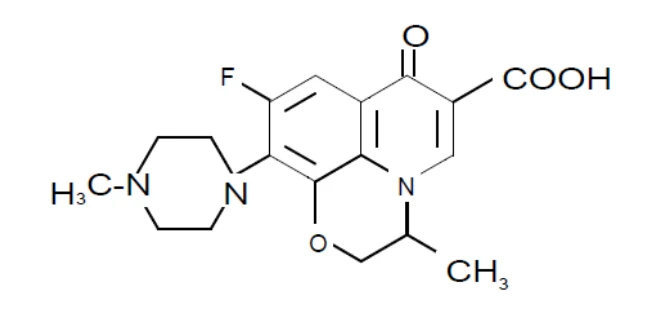
Molecular Formula: C18H20FN3O4
Molecular Weight: 361.4
Description: Ofloxacin, a fluorinated carboxyquinolone occurs as off–white to pale yellow crystals or crystalline powder. It is odorless and has a bitter taste. The relative solubility characteristics of ofloxacin at room temperature, as defined by USP nomenclature, indicate that ofloxacin is considered to be soluble in aqueous solutions with pH between 2 and 5. It is sparingly to slightly soluble in aqueous solutions with pH 7 (solubility falls to 4 mg/mL) and freely soluble in aqueous solutions with pH above 9. In addition, it is freely soluble in glacial acetic acid, sparingly soluble in chloroform and slightly soluble in methanol, ethanol and acetone. The pKa’s are pKa: 5.74 (COOH) and pKa2: 7.90 (CH3-N). The pH is 7.16 (saturated solution). The melting point is 260 - 270°C.
Composition
In addition to ofloxacin, each tablet contains the non–medicinal ingredients microcrystalline cellulose, methylcellulose, croscarmellose sodium, magnesium stearate, colloidal silicon dioxide, polydextrose, hydroxypropylmethylcellulose, polyethylene glycol, titanium dioxide and carnauba wax. The 200 mg and 400 mg tablets also contain yellow ferric oxide.
Stability and Storage Recommendations
OFLOXACIN TABLETS should be stored in well closed containers. Store at room temperature (15 - 30°C). Protect from light.
AVAILABILITY OF DOSAGE FORMS
200 mg: Each light yellow, oval, biconvex, film–coated tablet, engraved 200 on one side, contains 200 mg ofloxacin. Available in bottles of 100 and 250, and unit dose packages of 100.
300 mg: Each white, oval, biconvex, film–coated tablet, engraved 300 on one side, contains 300 mg ofloxacin. Available in bottles of 100 and 250, and unit dose packages of 100.
400 mg: Each yellow, oval, biconvex, film–coated tablet, engraved 400 on one side, contains 400 mg ofloxacin. Available in bottles of 100 and 250, and unit dose packages of 100.
MICROBIOLOGY
Ofloxacin is active in vitro against a broad spectrum of gram–positive and gram–negative aerobic and anaerobic bacteria (Table 1). Ofloxacin is often bactericidal at concentrations equal to or slightly greater than inhibitory concentrations. Ofloxacin is not inhibited by β–lactamase enzymes.
TABLE 1: CUMMULATIVE PERCENT OF STRAINS INHIBITED AT THE INDICATED CONCENTRATIONS OF OFLOXACIN
| Genera or Species | No. of isolates Tested | MIC (µg/mL) | |||||||||||
| 0.062 | 0.125 | 0.25 | 0.5 | 1.0 | 2 | 4 | 8 | 16 | 32 | 64 | 128 | ||
| Enterococcus (Streptococcus faecalis) | 16 | 50 | 50 | ||||||||||
| Enterococci spp. | 73 | 1 | 6 | 14 | 44 | 85 | 95 | 100 | |||||
| Staphylococcus aureus (including methicillin-resistant strains) | 40 | 50 | 90 | 100 | |||||||||
| Staphylococcus epidermidis (including methicillin-resistant strains) | 45 | 50 | 90 | ||||||||||
| Staphylococcus saprophyticus | 20 | 90 | 100 | ||||||||||
| Staphylococcus spp. | 110 | 41 | 93 | 98 | 100 | ||||||||
| Streptococcus agalactiae | 45 | 90 | 100 | ||||||||||
| Streptococcus pneumoniae | 20 | 90 | 100 | ||||||||||
| Streptococcus pyogenes | 29 | 90 | |||||||||||
| Streptococci (serogroups A, B, C) | 49 | 4 | 14 | 20 | 43 | 82 | 96 | 100 | |||||
| Clostridium perfringens | ≥10 | 50 | 90 | ||||||||||
| Clostridium welchii | 50 | 50 | 90 | ||||||||||
| Clostridium spp. | 25 | 40 | 50 | 90 | |||||||||
| Peptococcus species | 20 | 50 | 90 | ||||||||||
| Peptostreptococcus species | 20 | 50 | 90 | ||||||||||
| Acinetobacter calcoaceticus | 32 | 50 | 90 | ||||||||||
| Acinetobacter species | 14 | 57 | 71 | 86 | 93 | 100 | |||||||
| Aeromonas hydrophila | 25 | 90 | |||||||||||
| Aeromonas species | 10 | 90 | 100 | ||||||||||
| Moraxella catarrhalis * | 20 | 50 | 90 | 100 | |||||||||
| Bordetella parapertussis | 46 | 50 | 90 | ||||||||||
| Bordetella pertussis | 75 | 90 | |||||||||||
| Campylobacter jejuni | 100 | 50 | >90 | ||||||||||
| Citrobacter diversus | 27 | 90 | |||||||||||
| Citrobacter freundii | 32 | 50 | 90 | ||||||||||
| Citrobacter spp. | 54 | 28 | 68 | 81 | 98 | 100 | |||||||
| Enterobacter aerogenes | 32 | 50 | 90 | ||||||||||
| Enterobacter cloacae | 29 | 50 | 90 | ||||||||||
| Enterobacter spp. | 95 | 83 | 93 | 99 | 100 | ||||||||
| Escherichia coli | 193 | 97 | 98 | 100 | |||||||||
| Hemophilus ducreyi | 50 | 90 | |||||||||||
| Hemophilus influenzae | 40 | 90 | 100 | ||||||||||
| Genera or Species | No. of isolates Tested | MIC (µg/mL) | |||||||||||
| 0.062 | 0.125 | 0.25 | 0.5 | 1.0 | 2 | 4 | 8 | 16 | 32 | 64 | 128 | ||
| Hemophilus parainfluenzae | ≥10 | 50 | 90 | ||||||||||
| Klebsiella pneumoniae | 32 | 50 | 90 | ||||||||||
| Klebsiella oxytoca | 30 | 50 | 90 | ||||||||||
| Klebsiella spp. | 73 | 51 | 81 | 92 | 96 | 99 | 100 | ||||||
| Neisseria gonorrhoeae | 30 | 90 | 100 | ||||||||||
| Neisseria meningitidis | 25 | 90 | |||||||||||
| Plesiomonas shigelloides | 62 | 90 | |||||||||||
| Plesiomonas species | ≥10 | 90 | |||||||||||
| Proteus mirabilis | 40 | 60 | 97 | 100 | |||||||||
| Protus vulgaris | 22 | 73 | 100 | ||||||||||
| Proteus morganii * | 44 | 89 | 93 | 98 | 100 | ||||||||
| Providencia rettgeri | 30 | 50 | 90 | ||||||||||
| Providencia stuartii | 31 | 50 | 90 | ||||||||||
| Pseudomonas aeruginosa | 256 | 9 | 49 | 88 | 98 | 100 | |||||||
| Pseudomonas maltophilia | ≥10 | 50 | 90 | ||||||||||
| Pseudomonas spp. | 48 | 13 | 31 | 60 | 77 | 85 | 94 | 94 | 100 | ||||
| Salmonella species | 47 | 94 | 98 | 100 | |||||||||
| Serratia marcescens | 32 | 50 | 90 | ||||||||||
| Serratia spp. | 107 | 1 | 4 | 18 | 37 | 72 | 93 | 96 | 97 | 98 | 100 | ||
| Shigella species | 28 | 50 | 90 | ||||||||||
| Vibrio cholerae | 13 | 50 | 90 | ||||||||||
| Yersinia enterocolitica | 12 | 90 | |||||||||||
| Bacteroides fragilis | 30 | 48 | 50 | 90 | |||||||||
| Bacteroides melaninogenicus | 40 | 50 | 100 | ||||||||||
| Eikenella corrodens | 17 | 90 | |||||||||||
| Gardnerella vaginalis | 20 | 50 | 100 | ||||||||||
| Chlamydia pneumoniae | 4 | 100 | |||||||||||
| Chlamydia trachomatis | 10 | 50 | 90 | ||||||||||
| Legionella pneumophilia | ≥10 | 50 | 90 | ||||||||||
| Mycobacterium hominis | 51 | 50 | 90 | ||||||||||
| Mycobacterium tuberculosis | ≥10 | 50 | 90 | ||||||||||
| Mycoplasma pneumoniae | ≥10 | 50 | 90 | ||||||||||
| Ureaplasma urealyticum | ≥10 | 50 | 90 | ||||||||||
* This species was previously referred to as Branhamella catarrhalis
** In some references this species is referred to as Morganella morganii
Many strains of other streptococcal species, Enterococcus species and anaerobes are resistant to ofloxacin. Ofloxacin has not been shown to be active against Treponema pallidum. (See WARNINGS).
Resistance
The mode of action of quinolone antibiotics is different from that of other major classes of antibiotics. Organisms resistant to non–quinolone antibiotics may be sensitive to quinolones. Ofloxacin has been shown to be active against many microorganisms resistant to other antimicrobials, including penicillins, cephalosporins, aminoglycosides, macrolides, tetracyclines, chloramphenicol, and isoniazid.
Resistance to ofloxacin due to spontaneous mutation in vitro is a rare occurrence (range: 10-9 to 10-11).
Organisms acquiring resistance to the older quinolones, such as nalidixic acid and cinoxacin, have been shown to be susceptible to ofloxacin. Although cross–resistance has been observed between ofloxacin and other fluoroquinolones such as norfloxacin, enoxacin, and ciprofloxacin, some organisms resistant to other quinolones may be susceptible to ofloxacin.
Susceptibility Testing
Diffusion techniques: The National Committee for Clinical Laboratory Standards (NCCLS) approved procedure (M2-A4--Performance Standards for Antimicrobial Disk Susceptibility Tests 1990) has been recommended for use with the 5-mg ofloxacin disk to test susceptibility to ofloxacin. Interpretation involves correlation of the diameters obtained in the disk test with minimum inhibitory concentrations (MIC) for ofloxacin. Other quinolone antibacterial disks should not be substituted when performing susceptibility tests for ofloxacin because of spectrum differences with ofloxacin. The 5-µg ofloxacin disk should be used for all in vitro testing of isolates using diffusion techniques.
Reports from the laboratory giving results of the standard single-disk susceptibility test with a 5-µg ofloxacin disk should be interpreted according to the following criteria:
| Zone diameter (mm) | Interpretation |
| ≥16 | Susceptible |
| 13-15 | Moderately Susceptible |
| ≤12 | Resistant |
A report of “susceptible” indicates that the pathogen is likely to be inhibited by generally achievable blood levels. A report of “moderately susceptible” suggests that the organism would be susceptible if high dosage is used or if the infection is confined to tissues and fluids in which ofloxacin levels are much higher than in plasma. A report of “resistant” indicates that achievable concentrations of ofloxacin are unlikely to be inhibitory and other therapy should be selected.
Standardized procedures require the use of laboratory control organisms. The 5-µg ofloxacin disk should give the following zone diameter:
| Organism | Zone diameter (mm) |
| E. coli ATCC 25922 | 29 - 33 |
| P. aeruginosa ATCC 27853 | 17 - 21 |
| S. aureus ATCC 25923 | 24 - 28 |
Dilution Techniques: Broth and agar dilution methods, such as those recommended by the NCCLS (M7-A2--Methods for Dilution Antimicrobial Susceptibility Tests for Bacteria that Grow Aerobically 1990), may be used to determine the minimum inhibitory concentrations (MIC) of ofloxacin. MIC test results should be interpreted according to the following criteria:
| MIC (µg/mL) | Interpretation |
| ≤2 | (S) Susceptible |
| 4 | (MS) Moderately Susceptible |
| ≥8 | (R) Resistant |
As with standard diffusion methods, dilution procedures require the use of laboratory control organisms. Standard ofloxacin powder should give the following MIC values:
| Organism | MIC range (mg/mL) |
| E. coli ATCC 25922 | 0.015 - 0.120 |
| E. faecalis ATCC 29212 | 1.000 - 4.000 |
| P. aeruginosa ATCC 27853 | 1.000 - 8.000 |
| S. aureus ATCC 29213 | 0.120 - 1.000 |
PHARMACOLOGY
ANIMAL PHARMACOLOGY
A summary of the major findings obtained from pharmacology studies with ofloxacin is presented below:
| ORGAN SYSTEM | MAJOR FINDINGS |
| Central Nervous System | At ≥100 mg/kg, p.o., ofloxacin depresses mood and motor activity, increases pain threshold and potentiates hexobarbital sleeptime in mice. At ≥10 mg/kg i.v., ofloxacin depresses EEG activity in cats. |
| Autonomic Nervous System | At 10 mg/kg i.v., ofloxacin inhibits depressor response to acetylcholine and at 30 mg/kg, i.v., ofloxacin inhibits pressor response to norepinephrine in dogs. There is no effect on pupil size in rabbits at oral doses > 1000 mg/kg. In the cat i.v., administration (3 mg/kg) of ofloxacin inhibits electronically stimulated contractions of the nictitating membrane. |
| Cardiovascular System | Administered by bolus intravenous injection at ≥3 mg/kg, ofloxacin reduces systolic, diastolic and mean arterial blood pressure in dogs and cats (not in rats); the effect is blunted by prior treatment with an antihistamine; no effect is observed with slow (30 - 60 min.) infusion. At ≥300 mg/kg p.o. to rats, ofloxacin decreased urinary volume and electrolyte excretion. |
| Respiratory System | At ≥10 mg/kg by bolus intravenous injection, ofloxacin increases respiratory rate and depresses respiratory depth in dogs; no effect is seen with slow infusion over 30 - 60 min. |
| Gastrointestinal System | At ≥300 mg/kg p.o., to rodents, ofloxacin decreases gastric emptying rates, fluid volume, acidity and pepsin activity. In dogs, at ≥10 mg/kg, i.v. ofloxacin reduces gastric and intestinal motility. |
| Isolated Smooth Muscle | At 0.1 mg/mL, ofloxacin reduces response of guinea pig ileum to BaCl2; at 1 mg/mL, ofloxacin enhances contractile responses of rat uterus and guinea pig trachea and vas deferens. Following 30 mg/kg i.v. to rabbits, ofloxacin enhances electrically stimulated twitch response of tibial muscle. |
The major effects of ofloxacin on the central nervous system or gastrointestinal tract were observed either at relatively high oral doses (>100 mg/kg) or following rapid bolus intravenous injection. Human oral doses of 200 to 400 mg (per 50 - 60 kg individuals) are equivalent to 4 - 8 mg/kg. Some of the effects were, in addition, species specific.
HUMAN PHARMACOLOGY
Pharmacokinetics
Following oral administration, the bioavailability of ofloxacin in the tablet formulation is approximately 98%. Maximum serum concentrations are achieved one to two hours after an oral dose. Absorption of ofloxacin after single or multiple doses of 200 to 400 mg is predictable, and the amount of drug absorbed increases proportionately with the dose.
The following are mean peak serum concentrations in healthy 70 - 80 kg male volunteers after single oral doses of 200, 300, or 400 mg of ofloxacin or after multiple doses of 400 mg.
| Dose | Cmax µg/mL ± S.D. | AUC0-last point µg x hr/mL ± S.D. | Tmax ± S.D. | t½ |
| 200 mg -single dose | 1.7 ± 0.3 | 14.1 ± 2.3 | 1.5 ± 0.3 | 4.9 |
| 300 mg -single dose | 2.6 ± 0.4 | 21.2 ± 2.5 | 1.7 ± 0.5 | 4.6 |
| 400 mg -single dose | 3.7 ± 0.7 | 31.4 ± 4.7 | 1.8 ± 0.6 | 3.8 |
| 400 mg -steady state | 5.0 ± 1.0 | 62.9 ± 14.4 | 1.7 ± 0.5 | 5.2 |
Steady–state concentrations are achieved after four doses. The area under the curve (AUC) was approximately 40% higher than the AUC after single doses. Therefore, after multiple–dose administration of 200 mg and 300 mg, peak plasma levels of 2.2 µg/mL and 3.6 µg/mL, respectively, are predicted at steady–state.
Metabolism and Excretion
Ofloxacin has biphasic elimination. Following multiple oral doses at steady state administration, the half–lives are approximately 4 - 5 hours and 20 - 25 hours. However, the longer half–life represents less than 5% of the total AUC. Accumulation at steady–state can be estimated using a half–life of 9 hours. The total clearance and volume of distribution are approximately similar after single or multiple doses.
Elimination is mainly by renal excretion. Between 0 and 6 hours following the administration of a single oral 200 mg dose of ofloxacin to 12 healthy volunteers, the average urine ofloxacin concentration was approximately 220 µg/mL. Between 12 and 24 hours after administration, the average urine ofloxacin level was approximately 34 µg/mL.
| Time | Urinary Concentration (µg/mL) following single doses | |||||
| Hours Post Dose | 100 mg | 300 mg | ||||
| 0 - 2 | 78 | 228 | ||||
| 2 - 4 | 115 | 260 | ||||
| 4 - 6 | 65 | 287 | ||||
| 6 - 8 | 75 | 271 | ||||
| 8 - 12 | 62 | 202 | ||||
The solubility of ofloxacin in human urine is estimated to be between 7000 and 9000 µg/mL. The maximum expected urinary concentrations of ofloxacin after administration of a 400 mg dose is 400 µg/mL, approximately 20 times less than the equilibrium solubility. Ofloxacin crystals have not been observed to date in urine of any subject.
Ofloxacin undergoes minimal biotransformation. Ofloxacin has a pyridobenzoxazine ring that appears to decrease the extent of parent compound metabolism. Between 65% to 80% of an administered oral dose of ofloxacin is excreted unchanged via the kidneys within 48 hours of dosing. Studies indicate that less than 5% of an administered dose is recovered in the urine as the desmethyl or N-oxide metabolites. Four to eight percent of an ofloxacin dose (oral/parenteral) is excreted in the feces. This indicates a small degree of biliary secretion of ofloxacin.
CNS Effects
No evidence of an effect of ofloxacin on the electrical activity of the brain has been demonstrated. Ofloxacin does not alter the metabolism of glucose in the central nervous system based on positron emission tomography. It does not affect the electrical patterns of brain function based on EEGs.
Factors Influencing the Pharmacokinetics
Age (elderly): Following the administration of oral doses of ofloxacin to healthy, elderly volunteers (64 - 74 years of age) with normal renal function, the apparent half–life of ofloxacin is 7 to 8 hours, compared to approximately 6 hours in younger male adults. Drug absorption, however, appears to be unaffected by age.
Impaired Renal Function: Clearance of ofloxacin is reduced in patients with impaired renal function (creatinine clearance rate ≤50 mL/min), and dosage adjustment is necessary (see DOSAGE AND ADMINISTRATION).
| MEAN PHARMACOKINETIC PARAMETERS FOR OFLOXACIN FOLLOWING A SINGLE 300 MG DOSE IN HEALTHY VOLUNTEERS AND IN PATIENTS WITH RENAL INSUFFICIENCY | |||||||
| PARAMETER | |||||||
| Group | Creatinine Clearance (mL/min/ 1.73 m2) | Cmax (mg/L) | Tmax (h) | t½ (h) | AUC (mg•h/L) | Renal Clearance L/hr | % Dose Urinary Recovery 0-120 hr (%) |
| I | ≥50 | 3.55 ± 0.60 | 1.8 ± 0.7 | 6.51 | 40.43 ± 10.5 | 6.2 | 74.3 |
| II | 10 - 49 | 3.69 ± 1.0 | 2.2 ± 1.0 | 16.38 | 83.24 ± 29.4 | 1.3 | 28.5 |
| III | <10 | 4.20 ± 1.3 | 1.5 ± 0.4 | 21.67 | 152.45 ± 32.3 | N/A | 6.7 |
Food: The absorption of ofloxacin is not affected when administered with food.
Caffeine: Interactions between ofloxacin and caffeine have not been detected. See PRECAUTIONS (Drug Interactions) for effects on administration with food, antacids and multivitamins.
Serum Protein Binding: In vitro, approximately 32% of the drug in serum is protein bound.
Tissue Concentration: The following are mean concentrations of ofloxacin in various body fluids and tissues after one or more oral doses.
| Concentration (µg/mL or µg/g) | Hours Post Dosing | Dose (mg) | Dosage Amount | |||||
| Sputum | 3.1 5.7 | 1-2 4 | 400 400 | single dose steady state | ||||
| Lung tissue | 4.5 6.7 | 6-7 2.5 | 400 200 | two doses steady state | ||||
| Skin | 3.4 | 2-2.5 | 300 | single dose | ||||
| Blister fluid | 4.7 | 6 | 600 | single dose | ||||
| Prostatic tissue | 3.9 | 2.5 | 200 | single dose | ||||
| Prostatic fluid | 7.2 | 7 | 300 | two doses | ||||
| Ovary | 5.5 | 1-6 | 300 | single dose | ||||
| Cervix | 5.6 | 2 | 300 | single dose | ||||
| Gallbladder tissue | 3.1 | 4 | 200 | single dose | ||||
| Bile | 2.9 | 3-4 | 200 | single dose |
There is inadequate evidence to establish the extent of distribution to cerebrospinal fluid or brain tissue.
TOXICOLOGY
| Acute Toxicity |
| STRAIN/ SPECIES | # ANIMAL/ GROUP | ROUTE | DOSE LEVELS mg/kg | LD50 mg/kg | TOXIC SIGNS | |||||
| Mice | M-10 | p.o. | 240, 300, 375, 470, 585, 730 | 376 | Decrease in locomotor activity, ptosis, hyperpnea, cyanosis, tonic convulsions, and respiratory arrest. Slight lower body weight gains. Scattered foci in lungs, slight hydrothorax. | |||||
| F-10 | p.o. | 240, 300, 375, 470, 585, 730 | 450 | Decrease in locomotor activity, ptosis, hyperpnea, cyanosis, tonic convulsions, and respiratory arrest. Slight lower body weight gains. Scattered foci in the lungs, slight hydrothorax. | ||||||
| ddY Mice | M-10 F-10 | p.o. | 1600, 2130, 2830, 3760, 5000 | M-5450 F-5290 | Ptosis, decreased locomotor activity, sedation and prostration, loss of righting reflex and cyanosis. | |||||
| ddY Mice | M-10 | s.c. | 5920, 7690, 10000 | >10000 | Hypoactivity, ptosis, hypopnea, ataxia, tremors, chromodacryorrhea, convulsion, cyanosis. | |||||
| F-10 | 5920, 7690, 10000 | >10000 | Hypoactivity, ptosis, hypopnea, chromodacryorrhea. | |||||||
| ddY Mice | M-10 | i.v. | 163, 186, 205, 225, 248, 273 | 208 | Hypopnea, prostration, convulsions, dyspnea, hypoactivity, ptosis, collapse, exophthalmos. | |||||
| F-10 | i.v. | 186, 205, 225, 248, 273, 300, 330 | 233 | Hypopnea, prostration, convulsions, dyspnea, hypoactivity, collapse, exophthalmos, ptosis. | ||||||
| Mice | M-10 | i.v. | 28.1, 31.5, 35.5, 39.5, 44.5, 50.0 | 39 | Hyperpnea, respiratory depression, tonic convulsions. | |||||
| F-10 | i.v. | 31.5, 35.5, 39.5, 44.5, 50.0, 56.0 | 40 |
| Acute Toxicity (cont’d) |
| STRAIN/ SPECIES | # ANIMAL/ GROUP | ROUTE | DOSE LEVELS mg/kg | LD50 mg/kg | TOXIC SIGNS | |||||
| Wistar Rats | M-10 | p.o. | 1890, 2450, 3190, 4140, 5380 | 3590 | Salivation, hypoactivity, ptosis, ataxia, prostration, tremors, convulsion, hypopnea, lacrimation, hypothermia, cyanosis, urinary staining, bloody nasal discharge. | |||||
| F-10 | p.o. | 1890, 2450, 3190, 4140, 5380 | 3750 | |||||||
| Wistar Rats | M-10 | s.c. | 5920, 6750, 7690, 10000 | 7070 | Hypoactivity, ptosis, hypopnea, ataxia, tremors, prostration, convulsion, lacrimation, bloody nasal discharge, urinary staining. | |||||
| F-10 | s.c. | 5920, 6750, 7690, 10000 | 9000 | |||||||
| Wistar Rats | M-10 | s.c. | 5920, 6750, 7690, 10000 | 273 | Muscle weakness, hypopnea, prostration, convulsions, hypoactivity, ptosis. | |||||
| F-10 | i.v. | 225, 248, 273, 300, 330 | 276 | |||||||
| Beagle Dogs | M-1 | p.o. | 200, 400 | >200 | Emesis, salivation. | |||||
| F-1 | p.o. | 200, 400 | >200 | |||||||
| Beagle Dogs | M-1 | i.v. | 50, 70, 100 | a | Salivation, muscle weakness, hypopnea, rapid shallow respiration, defecation, emesis, collapse, hyperemia, urinary incontinence, dyspnea, cyanosis, convulsions. | |||||
| F-1 | i.v. | 50, 70, 100 | a | |||||||
| Squirrel | M-3 | p.o. | 500, 1000 | >500 | Head jerking, foamy salivation, immobile posture with abnormal crouching, emesis. | |||||
| Monkey | M-4 | <1000 | ||||||||
| a For both sexes LD50 is estimated to be >70 mg/kg. | ||||||||||
| Subchronic Toxicity |
| STUDY | AVERAGE DOSE LEVELS mg/kg/DAY | LETHALITY | TOXIC SIGNS | CLINICAL PATHOLOGY | PATHOLOGY GROSS/ MICROSCOPIC | |||||
| Rats, oral, 2/4 weeks 14/sex/group | 0, 10, 30, 90 | None | None | Not evaluated | Statistically significant increases in cecal weights occurred at 90 mg/kg at both 2 and 4 weeks. Common to all antibiotics.* | |||||
| Rats, oral, 4 weeks 10/sex/group | 0, 10, 30, 90, 270, 810 | No drug related deaths | Transient salivation, soft stool, increased water intake, decreased food consumption, roughened fur coat, urinary staining, slight reduction of body weight gains. | Dose–dependent decrease in urinary excretion of sodium in 270 and 810 mg/kg rats. Dose related increase in the number of animals with positive occult blood occurred at 90, 270 and 810 mg/kg. | Cecum enlargement observed in all treatment groups.* Local rarefaction of matrix in the femoral and humeral articular cartilage observed in two 810 mg/kg male rats. | |||||
| Other: No drug related changes were noted in ophthalmoscopy, audiometry and ECG examinations. | ||||||||||
| * Similar effects seen in pharmacology studies. | ||||||||||
| Dogs, oral, 4 weeks 3/sex/group | 0, 12.5, 50, 200 | 1 dog at 200 mg/kg | Salivation, vomiting, decreased motor activity, staggering gait, tremors, and hyperemia of the skin were observed at 50 and 200 mg/kg. Reduced body weights and food consumption were noted in females at 200 mg/kg. | Hematologic, biochemical and urinanalytic changes were related to dehydration secondary to emesis and decreased food consumption. | Erosion of articular cartilage of the distal portion of the femur and humerus was noted at 50 and 200 mg/kg. | |||||
| Subchronic Toxicity (Cont’d) |
| STUDY | AVERAGE DOSE LEVELS mg/kg/DAY | LETHALITY | TOXIC SIGNS | CLINICAL PATHOLOGY | PATHOLOGY GROSS/ MICROSCOPIC | |||||
| Monkeys, oral, 4 weeks 3/sex/group | 0, 10, 20, 60,180 | 2 monkeys - 180 mg/kg, day 25 | 180 mg/kg - emesis. Diarrhea was noted in all treatment groups in a dose related manner. | Cholesterol and alkaline phosphatase decreased at 180 mg/kg. Slight quantities of blood were noted in the urine at 180 mg/kg during the first week of dosing. | Candidiasis in the esophagus occurred in all treatment groups (males only). Minimal to mild karyomegaly occurred in the livers of 3 treated monkeys. Both deaths may be due to electrolyte imbalance from persistent diarrhea. | |||||
| Rats, I.V., 4 weeks; M, F; 10/sex/group Age: 9 weeks | 0, 10, 32, 80 | None | Edema, scaling and scabs at injection site (tail). | None | At tail injection site irritation extended to nearby bone with periosteal proliferation and new bone growth. | |||||
| Dogs, I.V., (bolus & infusion), 1 week; M,F; 1/sex/group(bolus) 1/sex/group (control), 2/sex/group (infusion) Age: 12 months | 0, 10, 80 | No drug-related deaths | Histamine–like effects at 10 and 80 mg/kg | Not evaluated | Erosions at shoulder joints at 80 mg/kg. Discolored or enlarged axillary lymph nodes all groups and discoloration of heart at 80 mg/kg (bolus) and myocardial necrosis (one female; bolus). | |||||
| Dogs, I.V., (infusion), 1 week; M, F; 2/sex/group Age: 10 - 12 mos. | 0, 5, 10 | No drug–related deaths | Reddening of ears and/or muzzle, clear nasal discharge and tremors. | Not evaluated | Discoloration of axillary lymph nodes at 5 and 10 mg/kg; erosion or depression of elbow joint (5 mg/kg) focal discoloration of elbow joints (5 & 10 mg/kg); and raised foci in lungs (5mg/kg): many injection sites discolored. |
| Subchronic Toxicity (Cont’d) |
| STUDY | AVERAGE DOSE LEVELS mg/kg/DAY | LETHALITY | TOXIC SIGNS | CLINICAL PATHOLOGY | PATHOLOGY GROSS/ MICROSCOPIC | |||||
| Dogs, I.V. (infusion), 1 week; 16 week recovery M, F: 4/sex/group Age; 10 - 13 mos. | 0, 2, 5, 10, 32, 80 | None | Tremors, redness of ears and muzzle and salivation in dose related manner. Emesis, swelling of ears and muzzle, lethargy, and defecation/urination at 80 mg/kg. Slight decrease in food consumption at 32 and 80 mg/kg. | Not evaluated | Erosions and/or focal discolorations in articular surfaces of shoulders, elbows and hip joints from all groups (including vehicle). Shoulder lesions 2/8 dogs at 32 mg/kg and 4/8 dogs at 80 mg/kg. | |||||
| Dogs, I.V. (infusion) 1 week: F; 5/group 0, 32 mg 10/group 80 mg Age: 24 - 36 mos. | 0, 32, 80 | None | Emesis, urination, defecation, reddening of ears, face and oral mucosa, facial edema, ptosis and languid behaviour at 80 mg/kg. By end of 7 days, signs except emesis and ptosis decreased. Decreased food consumption and body weight in all treated dogs. | Not evaluated | Focal discoloration, depression and erosion on articular surfaces of several joints in dog of each group. At 80 mg/kg; focal blister on surface of radius in 1/10 dogs was of uncertain etiology. | |||||
| Dogs, I.V., 4 weeks; F; 3/sex/group Age: 12 mos. | 0, 4, 10, 25 | None | Reddened buccal mucosa, palpebral conjunctiva and ear skin, slightly swollen ears and salivation at 10 and 25 mg/kg during first half of study. Throbbing and slightly increased pulse rate during or shortly after injection. | None | None |
| Subchronic Toxicity (Cont’d) |
| STUDY | AVERAGE DOSE LEVELS mg/kg/DAY | LETHALITY | TOXIC SIGNS | CLINICAL PATHOLOGY | PATHOLOGY GROSS/ MICROSCOPIC | |||||
| Dogs, (young), I.V. 4 weeks: M, F; 3/sex/group Age: 12 mos. | 0, 10, 32, 80 | One male and female in 80 mg/kg sacrificed on day 15 | Head shaking, vocalizing, salivation, ataxia and reddening of muzzle and around ears in dose related manner. Emesis and tremors at 32 and 80 mg/kg. These signs decreased as study progressed. Food consumption decreased at 80 mg/kg during first week of study and at 32 mg/kg by end of study. Body weights at 80 mg/kg decreased. | None | At 80 mg/kg: Focal discoloration with a depression of cerebrum (2/6); focal red discoloration of heart papillary muscle (3/6); increased amount of synovial fluid in one (hip or shoulder) joint (2/6); and erosion of one of those shoulder joints. Discolored injection sites all dogs and edematous involving adjacent lymph nodes at 32 and 80 mg/kg. At 80 mg/kg: myocardial fibrosis and erosion of joint surface. |
| Chronic Toxicity |
| STUDY | AVERAGE DOSE LEVELS mg/kg/DAY | LETHALITY | TOXIC SIGNS | CLINICAL PATHOLOGY | PATHOLOGY GROSS/ MICROSCOPIC | |||||
| Rat, oral 26 weeks 15/sex/group at 13 weeks; 10/sex/group at 26 weeks; recovery group - 5/sex/group at 5 and 13 weeks post-dosing. | 0, 10, 30, 90, 270 0, 270 | No drug related deaths | 270 mg/kg - salivation, soft stool, urine staining, slight decrease in body weights and food consumption, and increased water consumption. Salivation noted in some rats at 90 mg/kg. | Slight increase in SGOT in female rats; and an increase in SAP in male rats at 270 mg/kg. Fecal occult blood dose-related increase. | Enlargement of the cecum was noted at 30, 90 and 270 mg/kg. 270 mg/kg - increase in the amount of lipid droplets in the adrenal cortical cells (returned to normal after drug withdrawal) 90 and 270 mg/kg - an osteochondrosis - like lesion in the femoral condyle. No trend for recovery after drug withdrawal. | |||||
| Monkey, oral, 52 weeks 4/sex/group | 0, 10, 20, 40 | No dose-related mortality occurred. | No notable effects. | Significant changes were within normal limits. | No significant changes. |
Carcinogenicity
As with most drugs of this class, long term studies to determine the carcinogenic potential have not been conducted.
Mutagenicity
The mutagenic potential of ofloxacin was evaluated in Ames Rec-Assay, In Vivo Cytogenetic, Sister Chromatid Exchange (Chinese Hamster and Human Cell Lines), Unscheduled DNA Repair and Dominant Lethal Studies.
Only the Rec-Assay had a positive finding indicating a potential for ofloxacin to produce primary DNA damage in Bacillus subtilis. Ofloxacin, nalidixic acid and pipemidic acid inhibited M45 (rec-) slightly more than H17 (rec+). Kenamycin inhibited both mutants in a similar manner, and mitomycin C inhibited MH5 to a greater degree than it inhibited H17.
In contrast ofloxacin had no effect on the DNA of eukaryotes. There was no evidence of either point mutations or of in vitro or in vivo chromosome mutation.
| REPRODUCTION AND TERATOLOGY |
| Fertility |
| STUDY | MATERNAL TOXICITY | EMBRYO / FETOTOXICITY | TERATOGENICITY | |||
| Fertility and reproductive performance in rats, 24/sex/group, oral; 10, 60, or 360 mg/kg/day. Treated animals mated to treated animals. | Yes at 380 mg: Salivation, hyperuresis. No change in body wt. Reduction of food consumption at 60 and 360 mg. Water consumption decreased at 60 mg/kg and increased at 360 mg/kg. | No: No significant differences in percentages of implantation rates, fetal mortality, body weights, or sex ratio. No external malformation was noted. | No: Skeletal and visceral anomalies comparable to controls. |
| Teratology and Embryotoxicity | ||||||||
| STUDY | MATERNAL TOXICITY | EMBRYO / FETOTOXICITY | TERATOGENICITY | COMMENTS | ||||
| Oral (gavage) teratogenicity in Sprague-Dawley Rats 36/group; 0, 10, 90, 810 mg/kg from day 7-10 of gestation. | Yes: 810 mg/kg Salivation, soft stool, hyperuresis, decreased food and water intake, and decreased body weight gain. | Yes: 810 mg/kg Higher fetal mortality, decreased fetal body weight gain. | No: No increase in anomalies. | 810 mg/kg: Retardation of skeletal ossification. Skeletal variations thought to be due to inanition in dams included cervical ribs and shortening of the 13th rib. | ||||
| Oral teratogenicity in New Zealand White Rabbits 15/group; 10, 40, and 160 mg/kg/day from day 6-18 of gestation. | Yes: 160 mg/kg Decrease in body weight and food consumption. | Yes: 160 mg/kg Fetal mortality, significantly higher. | No: No increase in anomalies. | 810 mg/kg: Increased incidence of cervical ribs and shortened 13th ribs with days 9-10 treatment. | ||||
| STUDY | MATERNAL TOXICITY | EMBRYO / FETOTOXICITY | TERATOGENICITY | COMMENTS | ||||
| Teratology study in Sprague-Dawley Rats, 810 mg/kg administered at different times of gestation (days 7-8, 9-10, 11-12, 13-14, or 15-17) | No: Limited maternal exposure. | Yes: Decreased fetal body weight. | No: No increase in anomalies. | |||||
| Teratology study in Sprague-Dawley Rats 24/group; 0, 810, 1100, or 1600 mg/kg administered on days 9-10 of gestation. | Yes: Dose-related decrease in body weight. | No: No increase in anomalies. | No: No increase in anomalies. | Dose-related decrease in fetal body weights, retardation of ossification and increase in incidence of cervical ribs and shortened or absent 13th ribs. | ||||
| Teratology study in Sprague-Dawley Rats 22/group; 0, 810 mg/kg administered on days 9-10 of gestation; half sacrificed on day 21 of gestation; remaining animals observed until day 21 post partum. | No | No | No: No increase in anomalies | Higher incidence of cervical ribs observed in both full-term fetuses and 21-day old pups, indicative of transient retardation of ossification. |
| Perinatal and Postnatal |
| STUDY | MATERNAL TOXICITY | EMBRYO / FETOTOXICITY | PARTURITION / NEONATAL GROWTH AND SURVIVAL | |||
| Peri- and Post-natal in Slc: SD Rats 24/group; 10, 60, 360 mg/kg (gavage) from day 17 of gestation to day 20 post partum. | No: Food and water consumption increased at 60 mg/kg; food consumption decreased during gestation and food and water consumption increased during lactation at 360 mg/kg. | No: Number of implantation sites live and dead pups at birth, delivery rate and sex ratio not affected by ofloxacin. Mean body weights of males at 360 mg/kg was significantly higher than control. | Survival rate was greater, body weights higher, and separation of auricles in 60 and 360 mg/kg groups occurred earlier than the control group. Transient decrease in spontaneous activity in pups at 360 mg/kg. |
Other Studies
The results of special toxicity studies indicated that ofloxacin demonstrated no evidence of ocular toxicity in rats, no antigenicity or ototoxicity in guinea pigs.
Ofloxacin is not nephrotoxic when administered orally for 10 days to rabbits (4/group; 0, 50, 200 mg/kg/day) at dosage levels of 50 or 200 mg/kg/day. Crystalluria was not observed in any animals treated with ofloxacin. In vaseline or gel ointment, ofloxacin is neither phototoxic nor photo–allergenic in guinea pigs.
Reduced serum globulin and protein levels have been observed in animals treated with quinolones. In one ofloxacin study, minor decreases in serum globulin and protein levels were noted in female cynomolgus monkeys dosed orally with 40 mg/kg ofloxacin daily for one year. These changes, however, were considered to be within normal limits for monkeys.
A series of special studies was conducted in rats and dogs to evaluate the arthropathic effects of ofloxacin. The lesion induced by ofloxacin and other quinolones is described as an irreversible blister, erosion or increased synovial fluid of the diarthric joint cartilage that may lead to permanent lameness. Results of these studies are as follows:
| Arthropathy: |
| STUDY | AVERAGE DOSE LEVELS/DAY | RESPONSE |
| Sprague-Dawley rats; 10 males/group; orally administered for 7 days. Age: 3½ weeks | ofloxacin - 0, 100, 300, or 900; AM - 715 - 100, 300, or 900 mg/kg; cinoxacin - 30, 100, 300 mg/kg. | Blister formation in the joints of rats receiving 300 and 900 mg/kg ofloxacin and 300 mg/kg cinoxacin. Non–arthropathic dose of ofloxacin and cinoxacin is <300 mg/kg. |
| Sprague-Dawley rats; 10 males/group; oral administration for 7 days. Age: 4 weeks | 0, 30, 100, 300, or 900 mg/kg Nalidixic acid at 100 or 300 mg/kg. | Non–arthropathic dose of ofloxacin in immature rats is >100 mg/kg, and <300 mg/kg. It is <100 mg/kg with nalidixic acid. |
| Beagle dogs, 3 males/group; oral administration for 7 days. Age: 9 months | 0, 20, or 80 mg/kg | High dose: emesis, increase in synovial fluid, evidence of cavity formation (2/3) in the articular cartilage of the shoulder. No changes at the elbow, hip, or knee at the high doses. |
| Beagle dogs, 3 males/group; oral administration for 7 days. Age: 3-4 months | 0, 20, 60, or 180 mg/kg (reduced to 120 on day 4) | Mid dose: decreased motor activity, laborious gait, decreased lymphocyte count. High dose: salivation, emesis, recumbency, body weight loss, and increased platelet count in addition to the mid dose symptoms. All treated groups: blister formation, erosion and increased synovial fluid of the diarthric joints. |
| Beagle dogs, 3 males/group; oral administration for 7 days with a withdrawal period of 13 weeks. Age: 3-4 months | ofloxacin - 0, 5, 10, 20, or 40 mg/kg; nalidixic acid - 40 or 80 mg/kg. | Decrease in body weight gains, decrease in motor activity, ataxia at 40 mg/kg ofloxacin and 40 and 80 mg/kg nalidixic acid. Blister formation, erosion, and increase in synovial fluid at w10 mg/kg ofloxacin and 40 mg/kg nalidixic acid. Recovery period group: no increase in synovial fluid; evidence of repair of erosion and blister formation at 40 mg/kg ofloxacin. No effect dose is 5 mg/kg. Evidence of reversibility is shown at 10 mg/kg or greater. |
| Beagle dogs, 3 males/group; oral administration for 14 days. Age : 13 months | 0, 20, 40, or 80 mg/kg | High dose: emesis. Decreased motor activity. Mid dose: emesis. Body weight decreases in both mid and high dose groups. No macroscopic or microscopic joint abnormalities were observed. |
| STUDY | AVERAGE DOSE LEVELS/DAY | RESPONSE |
| CR:CD Rats; 12 males/treatment group; 3 males/control group; single oral dose followed by sacrifice at 5, 8, 24, 48 hrs post dose. Age: 4 weeks | 0, 1000, or 3000 mg/kg | High dose: no weight gains. Both dose levels: degenerative chondrocytes in the middle zone of the humeral trochlea at 5 hrs; edematous swelling at 8 hrs; and cavity formation resulting from destruction, lysis, and absorption of edematous cartilage at 24 and 48 hrs. Similar changes noted in femoral condyle at 24 or 48 hrs. |
| RJ:CD Rats; 3 males (control) and 5 males (treated)/recovery periods (day 1, 3, and 10 wks post dose); oral administration for 7 days. Age: 4 weeks | 0 or 900 mg/kg | Day 1: erosion of the articular cartilage of the femoral condyle; blister formation of the humeral cochlea, but no erosion. Week 1: enlargement of the chondrocyte clusters (humeral cochlea) Week 3: extensive cavity formation and erosion noted along with evidence of reparative process in both the humeral and femoral cartilage. Week 10: reparative process more evident: elevation of the erosion level to almost level in the femoral condyle; no evidence of recovery in the erosion of the humeral cochlea. |
| CRJ:CD Rats; 7 males/age group (6, 8, and 10 wks of age); oral administration for 7 days. | 0 or 900 mg/kg | 6 week old: small protruding focus on the articular cartilage at the lower part of the femoral condyle (1 animal); edematous swelling of matrix with collagen fibers and clusters of chondrocytes, surface cartilage with decreased number of chondrocytes protruded into joint cavity (2 animals). Other 6 week old rats and the 8 and 10 week old rats were unaffected. |
| Slc:SC Rats; 7 males/group, oral administration for 5 or 13 weeks. Age: 6 weeks | 0, 30, 300 mg/kg | At 5 weeks: slight osteochondrosis occurred in all groups, along with moderate changes in the high dose group. At 13 weeks: osteochondrosis occurred in a dose related manner. Osteochondrosis enhancement revealed lesions in the medial femoral chondyle in all groups, the severity of these lesions occurred in a dose related manner. Ofloxacin increased the incidence and severity of osteochondrosis at 300 mg/kg but not at 30 mg/kg. |
BIBLIOGRAPHY
- 1. Ball P. Overview of experience with ofloxacin in respiratory tract infection. Scand J Infect Dis 1990; Suppl. 68: 56 - 63.
- 2. Batteiger BE, Jones RB, White A. Efficacy and safety of ofloxacin in the treatment of nongonococcal sexually transmitted disease. Am J Med 1989; 87 (suppl 6C): 75S - 77S.
- 3. Boslego JW, Hicks CB, Greenup R, et al. A prospective randomized trial of ofloxacin vs. doxycycline in the treatment of uncomplicated male urethritis. Sex Transm Dis 1988; 15 (4): 186-191.
- 4. Cox CE. Ofloxacin in the management of complicated urinary tract infections, including prostatitis. Am J Med 1989; 87 (suppl 6C): 61S - 68S.
- 5. Davis GJ, McKenzie BE. Toxicologic evaluation of ofloxacin. Am J Med 1989; 87 (suppl 6c): 43S-46S.
- 6. Drew RH, Gallis HA. Ofloxacin: its pharmacology, pharmacokinetics and potential for clinical application. Pharmacotherapy 1988; 8: 35-46.
- 7. Flor S. Pharmacokinetics of ofloxacin. An overview. Am J Med 1989; 87 (suppl 6c): 24S-30S.
- 8. Furuhama K, Akahane K, Kato M, Yamada A, Onodera T. 10-Day oral nephrotoxicity study on DL-8280 in rabbits. Chemotherapy (Tokyo) 1984; 32 (Suppl. 1): 1142-1147.
- 9. Gentry LO, Rodriguez-Gomez G, Zeluff BJ, et al. A comparative evaluation of oral ofloxacin versus intravenous cefotaxime therapy for serious skin and skin structure infections; Am J Med 1989; 87 (suppl 6C): 57S - 60S.
- 10. Kato M, Ohno H, Yoshida M, et al. Twenty-six week chronic oral toxicity of DL-8280, a new synthetic antibacterial agent, in rats. Chemotherapy (Tokyo) 1984; 80 (Suppl. 2): 1122-1141.
- 11. Lipsky B, Tack K, Kuo C, et al. Ofloxacin treatment of Chlamydia pneumoniae (strain TWAR) lower respiratory tract infections. Am J Med 1990; 89: 722-724.
- 12. Lode H, Hoffken G, Olschewski P, et al. Pharmacokinetics of ofloxacin after parenteral and oral administration. Antimicrob Agents Chemother 1987; 31: 1338-1342.
- 13. Lutz FB. Single-dose efficacy of ofloxacin in uncomplicated gonorrhea. Am J Med 1989; 87 (suppl 6C): 69S - 74S.
- 14. Mayer D, Bruch K. No indications for the mutagenicity of ofloxacin. Infection 1986; 14 (Suppl. 1): S108-S109.
- 15. Monk JP, Campoli-Richards DM. Ofloxacin: a review of its antibacterial activity, pharmacokinetic properties and therapeutic use. Drugs 1987; 33: 346-391.
- 16. Nomura M, Inage F, Kato M, et al. Four-weeks subacute toxicity of DL-8280, a new synthetic antibacterial agent, in dogs. Chemotherapy (Tokyo) 1984; 32 (Suppl. 1): 1105-1121.
- 17. Ohno H, Inage F, Akahane Ket al. Acute toxicity study of DL-8280, a new synthetic antibacterial agent, in mice, rats, dogs and monkeys. Chemotherapy (Tokyo) 1984; 32 (Suppl. 1): 1084-1090.
- 18. Seibert G, Limbert M, Kiesel N. Comparison of the antibacterial in vitro and in vivo activity of ofloxacin (HODE 280 DL 8280) and nalidixic acid analogues. Eur J Clin Microbiol 1983; 2(6): 548 - 553.
- 19. Shimada H, Ebine J, Sato T, et al. Dominant lethal study in male mice treated with ofloxacin, a new antimicrobial drug. Mutat Res 1985; 144: 51-55.
- 20. Stocks JM, Wallace RJ, Griffith DE, et al. Ofloxacin in community-acquired lower respiratory infections. Am J Med 1989; 87 (suppl 6C): 52S - 56S.
- 21. Todd PA, Faulds D. Ofloxacin: a reappraisal of its antimicrobial activity, pharmacology and therapeutic use. Drugs 1991; 42 (5): 825-876.
- 22. United States Food and Drug Administration. Clinical Pharmacokinetics. NDA 19-735: 23-42.
- 23. United States Food and Drug Administration. Microbiology Review. NDA 19-735. Floxin. August 23, 1990, 1-5.
- 24. United States Food and Drug Administration. Animal Pharmacology and Toxicology. NDA 19-735. Floxin, 20-22.
- 25. United States Food and Drug Administration. Review and Evaluation of Pharmacology and Toxicology Data. 19-735. Ofloxacin. March 26, 1990, 1-26.
- 26. Wolfson J, Hooper D. Fluoroquinolone antimicrobial agents. Clinical Microbiology Reviews 1989; 378 - 424.