


Product Monograph - Onsolis
SUMMARY PRODUCT INFORMATION
Route of Administration | Dosage Form / Strength | Nonmedicinal Ingredients |
| Transmucosal | One buccal soluble film contains: 200 micrograms fentanyl (as 314.2 mcg fentanyl citrate) 400 micrograms fentanyl (as 628.4 mcg fentanyl citrate) 600 micrograms fentanyl (as 942.6 mcg fentanyl citrate) 800 micrograms fentanyl (as 1256.8 mcg fentanyl citrate) 1200 micrograms fentanyl (as 1885.2 mcg fentanyl citrate) | citric acid, ferric oxide, hydroxyethylcellulose, hydroxypropylcellulose, methylparaben, monobasic sodium phosphate, peppermint oil, polycarbophil, propylene glycol, propylparaben, saccharin sodium, sodium benzoate, sodium carboxymethylcellulose, sodium hydroxide, , titanium dioxide, tribasic sodium phosphate, vitamin E acetate, and water. |
INDICATIONS AND CLINICAL USE
Adults
Onsolis (fentanyl citrate) buccal soluble film is indicated only for the management of breakthrough pain in cancer patients, 18 years of age and older, who are already receiving, and who are tolerant to, opioid therapy for their persistent baseline cancer pain.
Patients considered opioid tolerant are those who are taking at least 60 mg/day morphine equivalents for a week or longer.
All patients starting treatment with Onsolis must begin with titration from the 200 mcg dose. (see DOSAGE AND ADMINISTRATION)
This product must not be used in opioid non-tolerant patients because life-threatening respiratory depression could occur in patients not taking chronic opiates. For this reason, Onsolis is contraindicated in the management of acute or postoperative pain, including headache/migraine, dental pain, or use in the emergency room.
Onsolis is intended to be used only by healthcare professionals who are knowledgeable of, and skilled in the use of opioids to treat cancer pain.
Geriatrics (>65 years of age):
In clinical studies with Onsolis, there was no difference in the median titrated dose of Onsolis in patients aged 65 years and older compared to those below 65 years. However, elderly patients may be more sensitive to the effects of fentanyl, compared with the younger population. In the elderly, elimination of fentanyl may be slower and the terminal elimination half-life may be longer, which may result in accumulation of the active substance and a greater risk of undesirable effects. Therefore, exercise caution when titrating Onsolis in elderly patients.
Pediatrics:
Onsolis is not indicated in children under the age of 18 years, as dosage requirements for the safe and effective use of Onsolis have not been established for this patient population.
CONTRAINDICATIONS
Because serious or life-threatening hypoventilation could occur, Onsolis (fentanyl citrate) is contraindicated in:
- Opioid non-tolerant patients (e.g. use in acute or post-operative pain, headache/migraine, dental pain, or use in the emergency room);
- Severe respiratory depression or severe obstructive lung conditions
See boxed Serious Warnings and Precautions for details regarding proper patient selection.
Onsolis is also contraindicated in patients with known intolerance or hypersensitivity to fentanyl or to any ingredient in the formulation or component of the container. Anaphylaxis and hypersensitivity have been reported in association with the use of other oral transmucosal fentanyl products. For a complete listing, see the DOSAGE FORMS, COMPOSITION AND PACKAGING section of this product monograph.
WARNINGS AND PRECAUTIONS
Serious Warnings and Precautions
WARNINGS
IMPORTANCE OF PROPER PATIENT SELECTION, and POTENTIAL FOR ABUSE
Onsolis (fentanyl citrate) contains fentanyl, an opioid agonist a Schedule 1 controlled substance, with an abuse liability similar to other opioid analgesics. Onsolis can be abused in a manner similar to other opioid agonists, legal or illicit. This should be considered when prescribing or dispensing Onsolis in situations where the physician or pharmacist is concerned about an increased risk of misuse, abuse, or diversion. Opioid substances which include morphine, oxycodone, hydromorphone, oxymorphone, and methadone have the highest potential for abuse and risk of fatal overdose due to respiratory depression.
Onsolis is intended to be used only in the care of opioid tolerant patients with cancer and only by healthcare professionals who are knowledgeable of, and skilled in, the use of opioids to treat cancer pain.
Onsolis is indicated only for the management of breakthrough pain in patients with cancer, 18 years of age and older, who are already receiving and who are tolerant to opioid therapy for their persistent baseline cancer pain. Patients considered opioid tolerant are those who are taking at least: 60 mg oral morphine/day, 25 mcg transdermal fentanyl/hour, 30 mg oral oxycodone/day, 8 mg oral hydromorphone/day, 25 mg oral oxymorphone/day, or an equianalgesic dose of another opioid for one week or longer.
Onsolis is contraindicated for use in opioid non-tolerant patients including those using opioids intermittently, on an as needed basis.
Fentanyl products which are designed to manage breakthrough pain, including Onsolis, should not be used in patients who are receiving partial opioid agonists such as buprenorphine or agents with some opioid effects such as tramadol, as the safety of their concomitant use has not been established.
Onsolis is contraindicated in the management of acute or postoperative pain, including headache/migraine, dental pain, or use in the emergency room. Life-threatening respiratory depression could occur at any dose in opioid non-tolerant patients. Deaths have occurred in opioid non-tolerant patients treated with other fentanyl products.
When prescribing, do not convert patients on a mcg per mcg basis from any other transmucosal fentanyl product to Onsolis. If patients are using other opioid-containing products for breakthrough pain, they may be started on Onsolis at the initial dose of 200 mcg.
Regardless of the opioid dose used for the baseline cancer pain, patients beginning treatment with Onsolis must begin with titration from the 200 mcg dose. (see DOSAGE AND ADMINISTRATION).
When dispensing, do not substitute an Onsolis prescription for any other fentanyl product. Substantial differences exist in the pharmacokinetic profile of Onsolis compared to other fentanyl products that result in clinically important differences in the extent of absorption of fentanyl. As a result of these differences, the substitution of Onsolis for any other fentanyl product may result in fatal overdose. Onsolis is NOT a generic version of any other fentanyl product.
Special care must be used when dosing Onsolis. If the breakthrough pain episode is not relieved, patients should wait at least 4 hours before taking another dose [see DOSAGE AND ADMINISTRATION).
The concomitant use of Onsolis with strong and moderate cytochrome P450 3A4 inhibitors may result in an increase in fentanyl plasma concentrations, and may cause potentially fatal respiratory depression. (see DRUG INTERACTIONS )
Patients and their caregivers must be instructed that Onsolis contains a medicine in an amount which can be fatal to children, in individuals for whom it is not prescribed, and in those who are not opioid tolerant. All units must be kept out of the reach of children and opened units properly discarded.
General
It is important that the long-acting opioid treatment used to treat the patient's persistent pain has been stabilized before starting Onsolis therapy. In cases where patients regularly experience more than 4 breakthrough pain episodes per day, increasing the opioid maintenance dose has to be considered before starting the titration process.
Cardiovascular
Intravenous fentanyl may produce bradycardia. Therefore, Onsolis should be used with caution in patients with bradyarrhythmias.
Concomitant Use of Central Nervous System Depressants
The concomitant use of Onsolis with other CNS depressants, including other opioids, sedatives or hypnotics, general anesthetics, phenothiazines, tranquilizers, skeletal muscle relaxants, sedating antihistamines, and alcoholic beverages may increase depressant effects (e.g., hypoventilation, hypotension, and profound sedation).
Patients on concomitant CNS depressants must be monitored for a change in opioid effects that may warrant an adjustment to the dose of Onsolis. (see DRUG INTERACTIONS section)
Concomitant Use of CYP 3A4 Inhibitors
Fentanyl is metabolized by the CYP 3A4 isoenzyme in the liver and intestinal mucosa. Hence caution is advised if fentanyl is given concomitantly with CYP 3A4 inhibitors. Inhibitors of CYP 3A4 such as macrolide antibiotics (e.g. erythromycin, clarithromycin, telithromycin), azole antifungals (e.g. ketoconazole, itraconazole, and fluconazole) and certain protease inhibitors (e.g. ritonavir, indinavir, nelfinavir, saquinavir) as well as the calcium channel blocker verapamil, the anti-emetic aprepitant, and the antidepressant nefazodone may increase the bioavailability of swallowed fentanyl and may also decrease its systemic clearance resulting in increased or prolonged opioid effects which may cause potentially fatal respiratory depression.
Similar effects could be seen after concurrent ingestion of grapefruit juice, which is known to inhibit CYP 3A4. Patients receiving Onsolis who begin therapy with, or increase the dose of, CYP 3A4 inhibitors should be carefully monitored for signs of opioid toxicity over an extended period of time (see DRUG INTERACTIONS).
Dependence/Tolerance
Tolerance and physical and/or psychological dependence may develop upon repeated administration of opioids such as fentanyl. However, iatrogenic addiction following therapeutic use of opioids is rare.
Guide the administration of Onsolis by the response of the patient. Physical dependence is not ordinarily a concern when treating a patient with chronic cancer pain, and fear of tolerance and physical dependence should not deter using doses that adequately relieve the pain.
Opioid analgesics may cause physical dependence. Physical dependence results in withdrawal symptoms in patients who abruptly discontinue the drug.
Withdrawal also may be precipitated through the administration of drugs with opioid antagonist activity, e.g. naloxone, nalmefene, or mixed agonist/antagonist analgesics (pentazocine, butorphanol, buprenorphine, nalbuphine).
Physical dependence usually does not occur to a clinically significant degree until after several weeks of continued opioid usage. Tolerance, in which increasingly larger doses are required in order to produce the same degree of analgesia, is initially manifested by a shortened duration of analgesic effect, and subsequently, by decreases in the intensity of analgesia.
Potential for Abuse and Diversion
Concerns about abuse and addiction should not prevent the proper management of pain. However, all patients treated with opioids require careful monitoring for signs of abuse and addiction, because use of opioid analgesic products carries the risk of addiction even under appropriate medical use.
Addiction is a primary, chronic, neurobiologic disease, with genetic, psychosocial, and environmental factors influencing its development and manifestations. It is characterized by behaviours that include one or more of the following: impaired control over drug use, compulsive use, continued use despite harm, and craving. Drug addiction is a treatable disease, utilizing a multidisciplinary approach, but relapse is common. “Drug-seeking” behaviour is very common in addicts and drug abusers.
Abuse and addiction are separate and distinct from physical dependence and tolerance. Physicians should be aware that addiction may not be accompanied by concurrent tolerance and symptoms of physical dependence in all addicts. In addition, abuse of opioids can occur in the absence of addiction and is characterized by misuse for nonmedical purposes, often in combination with other psychoactive substances. Since Onsolis may be diverted for nonmedical use, careful record keeping of prescribing information, including quantity, frequency, and renewal requests is strongly advised.
Proper assessment of patients, proper prescribing practices, periodic reevaluation of therapy, and proper dispensing and storage are appropriate measures that help to limit abuse of opioid drugs.
Drug or Alcohol Dependence
Use of Onsolis in combination with CNS depressants, including alcohol, can result in increased risk to the patient (see DRUG INTERACTIONS section).
Head Injuries and Increased Intracranial Pressure
Onsolis should only be administered with extreme caution in patients who may be particularly susceptible to the intracranial effects of CO2 retention, such as those with evidence of increased intracranial pressure, or impaired consciousness. Opioids may obscure the clinical course of a patient with a head injury and should be used only if clinically warranted. Fentanyl should only be administered with extreme caution in patients who may be particularly susceptible to the intracranial effects of CO2 retention, such as those with evidence of increased intracranial pressure, or impaired consciousness.
Hepatic/Biliary/Pancreatic
Onsolis should be administered with caution to patients with liver dysfunction.
The influence of liver impairment on the pharmacokinetics of Onsolis has not been determined. However, the clearance of intravenously administered fentanyl is decreased in hepatic disease due to alterations in metabolic clearance and plasma proteins.
Fentanyl may cause spasm of the sphincter of Oddi and Onsolis should be used with caution in patients with biliary tract disease, including acute pancreatitis. Opioids may cause increases in serum amylase concentration.
Psychomotor Impairment
Opioid analgesics like fentanyl may impair the mental or physical ability required for the performance of potentially dangerous tasks. Patients should not drive or operate machinery if
they are feeling sleepy or dizzy, have blurred or double vision, or have difficulty in concentrating while using Onsolis.
Renal
The influence of renal impairment on the pharmacokinetics of Onsolis has not been determined. However, the clearance of intravenously administered fentanyl is decreased in renal disease due to alterations in metabolic clearance and plasma proteins.
Respiratory
Respiratory Depression (Hypoventilation)
Respiratory depression is the chief hazard of opioids, including fentanyl, the active ingredient in Onsolis. Respiratory depression is more likely to occur in patients with underlying respiratory disorders and elderly or debilitated patients, usually following large initial doses in opioid non-tolerant patients, or when opioids are given in conjunction with other drugs that depress respiration.
As with all opioids, there is a risk of clinically significant respiratory depression associated with the use of Onsolis. Particular caution should be used when titrating Onsolis in patients with non-severe chronic obstructive pulmonary disease or other medical conditions predisposing them to respiratory depression, as even doses of Onsolis that are normally therapeutic may further decrease respiratory drive to the point of respiratory failure.
Respiratory depression from opioids is manifested by a reduced urge to breathe and a decreased rate of respiration, often associated with the “sighing” pattern of breathing (deep breaths separated by abnormally long pauses). Carbon dioxide retention from opioid-induced respiratory depression can exacerbate the sedating effects of opioids.
Use in Patients with Chronic Pulmonary Disease
Fentanyl should be used with caution in patients with chronic pulmonary disease, patients with decreased respiratory reserve and others with potentially compromised respiration. Normal analgesic doses of opioids may further decrease respiratory drive in these patients to the point of respiratory failure.
Special Populations
Pregnant Women: There are no adequate and well-controlled studies in pregnant women. Onsolis should be used during pregnancy only if the potential benefit justifies the potential risk to the fetus. No epidemiological studies of congenital anomalies in infants born to women treated with fentanyl during pregnancy have been reported.
Chronic maternal treatment with fentanyl during pregnancy has been associated with transient respiratory depression, behavioural changes, or seizures in newborn infants characteristic of neonatal abstinence syndrome.
Transient neonatal muscular rigidity has been observed in infants whose mothers were treated with intravenous fentanyl.
Fentanyl is embryocidal in rats as evidenced by increased resorptions in pregnant rats at doses of 30 mcg/kg IV or 160 mcg/kg SC. Conversion to human equivalent doses indicates this is within the range of the human recommended dosing for Onsolis.
Fentanyl citrate was not teratogenic when administered to pregnant animals. In published studies, pregnant rats were treated with fentanyl (10, 100, or 500 mcg/kg/day) via implanted micro-osmotic minipumps from Day 7 to 21 of their 21-day gestation period. The highest dose in these tests, 500 mcg/kg/day is approximately 3-times the maximum recommended human dose (MRHD) of 1200 mcg Onsolis per breakthrough cancer pain episode. Intravenous administration of fentanyl (10 or 30 mcg/kg/day) to pregnant female rats from gestation Day 6 to 18, was embryo or fetal toxic, and caused a slightly increased mean delivery time in the 30 mcg/kg/day group, but was not teratogenic.
Labor and Delivery:
Fentanyl passes through the placenta and may cause respiratory depression in the fetus. The placental transfer ratio is 0.44 (fetal:maternal ratio 1.00:2.27). Onsolis is not indicated during delivery.
Nursing Women: Fentanyl passes into breast milk; therefore women should not breast-feed while taking Onsolis because of the possibility of sedation and respiratory depression in their infants. Symptoms of opioid withdrawal may occur in infants at the cessation of nursing by women using Onsolis.
Pediatrics: Onsolis is not indicated in children under the age of 18 years, as dosage requirements for the safe and effective use of Onsolis have not been established for this patient population.
Geriatrics (> 65 years of age): In clinical studies with Onsolis, there was no difference in the median titrated dose of Onsolis in patients aged 65 years and older compared to those below 65 years. However, elderly patients may be more sensitive to the effects of fentanyl compared with the younger population. In the elderly, elimination of fentanyl may be slower and the terminal elimination half-life may be longer, which may result in accumulation of the active substance and a greater risk of undesirable effects. Therefore, exercise caution when titrating Onsolis in elderly patients.
Concomitant Use of MAO Inhibitors
Onsolis is not recommended for use in patients who have received MAO inhibitors within 14 days, because severe and unpredictable potentiation by MAO inhibitors has been reported with opioid analgesics.
Information for Patients
The physician should advise the patient that a Consumer Information leaflet is included in the package of Onsolis dispensed to the patient. The patient should read this leaflet very carefully before starting treatment with Onsolis.
Patients receiving Onsolis should be given the following instructions by the physician:
- 1. Patients should be informed that accidental use by individuals (including children) other than the patient for whom it was originally prescribed, may lead to severe, even fatal, consequences.
- 2. Patients should be advised that Onsolis contains fentanyl, an opioid pain medicine similar to morphine, hydromorphone, methadone, oxycodone, and oxymorphone.
- 3.
Patients should be advised that Onsolis should be taken as directed by the physician and the dose of Onsolis should NEVER be adjusted without the prescribing physician’s instruction.
a. The dose of Onsolis will be adjusted until the physician finds the right dose for the patient that achieves adequate analgesia with tolerable side effects.
b. Onsolis should be used only one time for each episode of breakthrough cancer pain. Doses of Onsolis should be separated by at least 4 hours.
c. Onsolis should not be used for more than four episodes of breakthrough cancer pain in one day. If the patient has more than four episodes of breakthrough pain each day, the dose of the opioid pain medicine for the persistent baseline cancer pain may need to be changed.
d. Once the right dose for the patient has been found, the patient should not change the dose of Onsolis unless directed by their physician.
- 4. Onsolis comes in a foil package. Patients should be advised not to open the package until ready to use, and not to cut or tear the film. Once opened, the entire Onsolis film should be used right away. Instructions for opening the foil package are included in the Consumer Information.
- 5.
Patients should be advised that liquids can be consumed after 5 minutes of applying
Onsolis film to the wet oral mucosa. Food should not be consumed until after the film has dissolved.
- 6. Patients should be advised to never chew or swallow this medication, as this will decrease its activity.
- 7. Patients should be advised that Onsolis may impair mental and/or physical ability required for the performance of potentially hazardous tasks (e.g., driving, operating machinery).
- 8.
Patients should be advised that Onsolis should not be combined with alcohol or other
CNS depressants (e.g. sleep medications, tranquilizers) because dangerous additive effects may occur, resulting in serious injury or death.
- 9. Patients should be advised to consult their physician or pharmacist if other medications are being or will be used with Onsolis.
- 10. Patients should be advised that Onsolis contains fentanyl, a drug with high potential for abuse. Patients, family members and caregivers should be advised to protect Onsolis from theft or misuse in the work or home environment.
- 11. Patients should be instructed to keep Onsolis in a secure place out of the reach of children due to the high risk of fatal respiratory depression.
- 12. When Onsolis is no longer needed, the unused Onsolis films should be removed from their foil pouches and the films dropped into the toilet. The toilet should be flushed after all films are dropped in it. Foil packages and cartons should not be dropped in the toilet.
- 13. Patients should be informed that accidental exposure or misuse may lead to death or other serious medical problems.
- 14. Patients should be advised to report episodes of uncontrolled breakthrough pain and adverse experiences occurring during therapy. Individualization of dosage is essential to make optimal use of this medication.
- 15. Patients should be advised of the most common adverse reactions that may occur while taking Onsolis: nausea, vomiting dizziness, dehydration, dyspnea and somnolence
- 16. Patients should be advised that Onsolis should never be given to anyone other than the individual for whom it was prescribed.
- 17. Women of childbearing potential who become or are planning to become pregnant should be advised to consult a physician prior to initiating or continuing therapy with Onsolis. Women who are breast-feeding or pregnant should not use Onsolis.
ADVERSE REACTIONS
Adverse Drug Reaction Overview
The adverse reactions seen with Onsolis (fentanyl citrate) are the typical opioid side effects. Frequently, opioid-associated adverse reactions will cease or decrease in intensity with continued use of Onsolis. Expect opioid side effects and manage them accordingly.
The most serious adverse reactions associated with all opioids including Onsolis are respiratory depression (potentially leading to apnea or respiratory arrest), circulatory depression, hypotension, and shock. Follow all patients for symptoms of respiratory depression.
Clinical Trial Adverse Drug Reactions
Because clinical trials are conducted under very specific conditions the adverse reaction rates observed in the clinical trials may not reflect the rates observed in practice and should not be compared to the rates in the clinical trials of another drug. Adverse drug reaction information from clinical trials is useful for identifying drug-related adverse events and for approximating rates.
The safety of Onsolis has been evaluated in 306 opioid tolerant adult patients with breakthrough cancer pain in one randomized, double-blind, placebo-controlled, multiple cross-over study and two open-label safety studies. The mean duration of therapy was 115 days, with 128 treated for ≥ 60 days, 104 treated for ≥ 90 days, and 32 patients treated for more than 1 year. Numbers of subjects exposed in long-term treatment across the dose range is approximately the same in the dose range of 400 to 1200 mcg, with smaller groups in the 200 mcg and >1200 mcg groups.
Common Clinical Trial Adverse Drug Reactions (≥ 5%)
Adverse Drug Reactions with an overall frequency of ≥ 5% that occurred during short-term administration (single dose or during titration period) periods of studies, which include all events whether considered by the clinical investigator to be related to the study drug or not (regardless of causality), are listed by maximum dose received in Table 1.
Table 1
Adverse Reactions which Occurred During Short-Term Administration at a Frequency of ≥5%
| System Organ Class Preferred Term | ONSOLIS Dose | Total | |||||
| 200 mcg | 400 mcg | 600 mcg | 800 mcg | 1200 mcg | >1200 mcg | ||
(N=303) % | (N=257) % | (N=207) % | (N=138) % | (N=79) % | (N=9) % | (N=306) % | |
| Gastrointestinal Disorders | |||||||
| Nausea | 16 (5) | 12 (5) | 6 (3) | 5 (4) | 4 (5) | 0 | 42 (14) |
| Vomiting | 7 (2) | 9 (4) | 8 (4) | 2 (1) | 0 | 0 | 26 (8) |
| Nervous System Disorders | |||||||
| Dizziness | 5 (2) | 5 (2) | 6 (3) | 2 (1) | 4 (5) | 0 | 22 (7) |
| Somnolence | 6 (2) | 2 (1) | 4 (2) | 2 (1) | 4 (5) | 1 (11) | 17 (6) |
Table 2 lists adverse reactions with an overall frequency of ≥5% that occurred during long-term treatment (115 days), which include all events whether considered by the clinical investigator to be related to the study drug or not (regardless of causality), by the last dose before the event.
Table 2 Adverse Reactions Which Occurred During Long-Term Treatment at a Frequency of ≥ 5%
| System Organ Class Preferred Term | ONSOLIS Dose | Total | |||||
| 200 mcg | 400 mcg | 600 mcg | 800 mcg | 1200 mcg | >1200 mcg | ||
| (N=23) % | (N=59) % | (N=79) % | (N=91) % | (N=81) % | (N=28) % | (N=213) % | |
| Gastrointestinal Disorders | |||||||
| Nausea | 2 (9) | 6 (10) | 8 (10) | 12 (13) | 26 (32) | 4 (14) | 56 (26) |
| Vomiting | 1 (4) | 5 (8) | 9 (11) | 8 (9) | 23 (28) | 3 (11) | 45 (21) |
| Constipation | 2 (9) | 4 (7) | 4 (5) | 4 (4) | 6 (7) | 4 (14) | 23 (11) |
| Diarrhea | 1 (4) | 1 (2) | 4 (5) | 4 (4) | 10 (12) | 0 | 19 (9) |
| Dry mouth | 1 (4) | 4 (7) | 3 (4) | 2 (2) | 3 (4) | 1 (4) | 14 (7) |
| Abdominal Pain | 0 | 0 | 3 (4) | 1 (1) | 7 (9) | 1 (4) | 11 (5) |
| General Disorders and Administration Site Conditions | |||||||
| Asthenia | 0 | 6 (10) | 3 (4) | 8 (9) | 7 (9) | 4 (14) | 28 (13) |
| Fatigue | 2 (9) | 6 (10) | 1 (1) | 7 (8) | 7 (9) | 3 (11) | 25 (12) |
| Investigations | |||||||
| Weight decreased | 3 (13) | 0 | 2 (3) | 5 (5) | 5 (6) | 1 (4) | 15 (7) |
| Metabolism/Nutrition | |||||||
| Dehydration | 1 (4) | 4 (7) | 6 (8) | 5 (5) | 10 (12) | 3 (11) | 28 (13) |
| Decreased Appetite | 0 | 4 (7) | 4 (5) | 6 (7) | 2 (2) | 2 (7) | 18 (8) |
| Anorexia | 2 (9) | 1 (2) | 3 (4) | 4 (4) | 6 (7) | 1 (4) | 17 (8) |
| Nervous System Disorders | |||||||
| Dizziness | 2 (9) | 4 (7) | 2 (3) | 3 (3) | 10 (12) | 2 (7) | 23 (11) |
| Headache | 2 (9) | 1 (2) | 3 (4) | 9 (10) | 7 (9) | 0 | 20 (9) |
| Somnolence | 2 (9) | 0 | 4 (5) | 2 (2) | 3 (4) | 3 (11) | 14 (7) |
| Psychiatric Disorders | |||||||
| Confusional state | 1 (4) | 0 | 4 (5) | 4 (4) | 6 (7) | 4 (14) | 18 (8) |
| Depression | 0 | 3 (5) | 1 (1) | 4 (4) | 7 (9) | 3 (11) | 18 (8) |
| Insomnia | 0 | 2 (3) | 2 (3) | 3 (3) | 4 (5) | 2 (7) | 12 (6) |
| Anxiety | 1 (4) | 1 (2) | 2 (3) | 3 (3) | 3 (4) | 1 (4) | 11 (5) |
| Respiratory | |||||||
| Dyspnea | 3 (13) | 4 (7) | 3 (4) | 8 (9) | 6 (7) | 3 (11) | 26 (12) |
| Cough | 1 (4) | 0 | 3 (4) | 5 (5) | 6 (7) | 1 (4) | 15 (7) |
| Vascular Disorders | |||||||
| Hypotension | 0 | 3 (5) | 3 (4) | 1 (1) | 3 (4) | 1 (4) | 11 (5) |
In a special study, a group of patients (n=7) with Grade 1 oral mucositis and a matched group of control patients (n=7) without oral mucositis were included in a clinical trial designed to support
the safety of Onsolis. The adverse reaction profile was similar in both subsets of patients. There was no evidence that Onsolis caused oral mucosal irritation or pain in either study group.
The duration of exposure to Onsolis varied greatly, and included open-label and double-blind studies. The adverse reactions listed below represent those that were reported by ≥ 1% of patients from two clinical trials (the titration and post-titration periods) while receiving Onsolis. Events are classified by system organ class.
Cardiac disorders: tachycardia
Eye disorders: vision blurred, diplopia
Gastrointestinal disorders: nausea, vomiting, constipation, diarrhea, dry mouth, abdominal pain, dyspepsia, dysphagia, abdominal distension, intestinal obstruction, flatulence
General disorders and administration site conditions: asthenia, fatigue, malaise
Injury, poisoning and procedural complications: fall, confusion
Investigations: weight decreased, blood pressure increased
Metabolism and nutrition disorders: dehydration, decreased appetite, anorexia
Nervous system disorders: dizziness, somnolence, headache, lethargy, amnesia, sedation
Psychiatric disorders: confusional state, depression, insomnia, anxiety, hallucination, agitation, mental status changes
Renal and urinary disorders: urinary retention
Respiratory, thoracic and mediastinal disorders: dyspnea, cough
Skin and subcutaneous tissue disorders: pruritus, rash
Vascular disorders: hypotension, hot flush, deep vein thrombosis, hypertension
Post-Market Adverse Drug Reactions
Post-marketing reports describe patients with symptoms suggestive of, or diagnostic of, serotonin syndrome following the concomitant use of fentanyl with a serotonergic drug, such as a Selective Serotonin Reuptake Inhibitor or a Serotonin Norepinephrine Reuptake Inhibitor (See also DRUG INTERACTIONS).
DRUG INTERACTIONS
Overview
Drug-Drug Interactions
Additive Effects of Other CNS Depressants
The concomitant use of Onsolis (fentanyl citrate) with other CNS depressants, other opioids, sedatives or hypnotics, general anesthetics, phenothiazines, tranquilizers, skeletal muscle relaxants, sedating antihistamines, and alcoholic beverages may increase depressant effects (e.g., hypoventilation, hypotension, and profound sedation).
Patients on concomitant CNS depressants must be monitored for a change in opioid effects that may warrant an adjustment to the dose of Onsolis.
Drug or Alcohol Dependence
Use of Onsolis in combination with CNS depressants, including alcohol, can result in increased risk to the patient.
CYP 3A4 Inhibitors
Fentanyl is metabolized mainly via the human CYP 3A4 isoenzyme system; therefore potential interactions may occur when Onsolis is given concurrently with agents that affect CYP 3A4 activity.
The concomitant use of Onsolis with CYP 3A4 inhibitors (e.g. indinavir, nelfinavir, ritonavir, clarithromycin, itraconazole, ketoconazole, nefazodone, saquinavir, telithromycin, aprepitant, diltiazem, erythromycin, fluconazole, grapefruit juice, verapamil, or cimetidine) may result in a potentially dangerous increase in fentanyl plasma concentrations, which could increase or prolong adverse drug effects and may cause potentially fatal respiratory depression. Patients receiving Onsolis who begin therapy with, or increase the dose of, CYP 3A4 inhibitors should be carefully monitored for signs of opioid toxicity over an extended period of time. Dosage increases of both Onsolis and CYP 3A4 inhibitors should be done conservatively (see WARNINGS AND PRECAUTIONS section).
The concomitant use of Onsolis with CYP 3A4 inducers (e.g. barbiturates, carbamazepine, efavirenz, glucocorticoids, modafinil, nevirapine, oxcarbazepine, phenobarbital, phenytoin, pioglitazone, rifabutin, rifampin, St. John's wort, or troglitazone) may result in a decrease in fentanyl plasma concentrations, which could decrease the efficacy of Onsolis. (see WARNINGS AND PRECAUTIONS section)
MAO Inhibitors
Onsolis is not recommended for use in patients who have received MAO inhibitors within 14 days, because severe and unpredictable potentiation by MAO inhibitors has been reported with opioid analgesics.
Serotonergic Drugs
Coadministration of fentanyl with a serotonergic agent, such as a Selective Serotonin Reuptake Inhibitor or a Serotonin Norepinephrine Reuptake Inhibitor, may increase the risk of serotonin syndrome, a potentially life threatening condition. (See also ADVERSE REACTIONS)
DOSAGE AND ADMINISTRATION
General
As with all opioids, the safety of patients using such products is dependent on healthcare professionals prescribing them in strict conformity with their approved labeling with respect to patient selection, dosing, and proper conditions for use (see Serious Warnings and Precautions Box).
Dosing Considerations
Individually titrate Onsolis (fentanyl citrate) to a dose that provides adequate analgesia with tolerable side effects.
Dose Titration
The goal of dose titration is to find the individual patient’s effective and tolerable dose. The dose of Onsolis is not predicted from the daily maintenance dose of opioid used to manage the persistent cancer pain and MUST be determined by dose titration.
Starting Dose: All patients MUST begin treatment using one 200 mcg Onsolis film.
Due to differences in pharmacokinetic properties and individual variability, patients switching from another transmucosal fentanyl product must be started on no greater than 200 mcg of Onsolis.
When prescribing, do not switch patients from any other fentanyl product to Onsolis as Onsolis is not equivalent on a mcg per mcg basis with any other fentanyl product.
Subsequent Doses/Titration: From the initial dose, closely follow patients and up titrate incrementally until the patient reaches a dose that provides adequate analgesia. If adequate pain relief is not achieved after one 200 mcg Onsolis film, titrate using multiples of the 200 mcg Onsolis film (for doses of 400, 600, or 800 mcg).
Increase the dose by 200 mcg in each subsequent episode until the patient reaches a dose that provides adequate analgesia with tolerable side effects. Do not use more than four of the 200 mcg Onsolis film simultaneously.
When multiple 200 mcg Onsolis films are used, they should not be placed on top of each other and may be placed on both sides of the mouth.
If adequate pain relief is not achieved after 800 mcg Onsolis film (i.e. four 200 mcg Onsolis films), and the patient has tolerated the 800 mcg dose, treat the next episode by using one 1200 mcg Onsolis film. Doses above 1200 mcg Onsolis film should not be used.
Once adequate pain relief is achieved with a dose between 200 and 800 mcg Onsolis, the patient should use or safely and properly dispose of all remaining 200 mcg Onsolis in accordance with the disposal instructions.
Patients who require 1200 mcg Onsolis should properly dispose of all remaining unused 200 mcg Onsolis films.
The patient should then get a prescription for Onsolis of the dose determined by titration (i.e., 200, 400, 600, 800, or 1200 mcg) to treat subsequent episodes.
Single doses should be separated by at least 4 hours. Onsolis should only be used once per breakthrough cancer pain episode, i.e. Onsolis should not be redosed within an episode.
During any episode of breakthrough cancer pain, if adequate pain relief is not achieved after Onsolis, the patient may use a rescue medication (other than Onsolis, after 30 minutes) as directed by their healthcare provider.
Dose Titration
Onsolis is available in 5 dosage strengths;
200, 400, 600, 800, and 1200 mcg
Start ⇨ The initial dose is 200 mcg
Titrate the dose incrementally using the next higher Onsolis dose until the patient reaches a dose that provides adequate analgesia with tolerable side effects.
Fentanyl dose | 200 mcg | 400 mcg | 600 mcg | 800 mcg | 1200 mcg |
| Using | 200 mcg Onsolis film (s) | 1200 mcg Onsolis film | |||
| Number of films | 1 | 2 | 3 | 4 | 1 |
Dose Adjustment
During maintenance treatment, if the prescribed dose no longer adequately manages the breakthrough cancer pain episode for several consecutive episodes, increase the dose of Onsolis as described in Dose Titration. Once a successful dose is determined, each episode is treated with a single film. Use of Onsolis should be limited to four episodes of breakthrough pain per day, and administration of Onsolis must be separated by at least 4 hours.
Consider increasing the dose of the around-the-clock opioid medicine used for persistent cancer pain in patients experiencing more than four breakthrough cancer pain episodes daily.
Use and dosage of all opioid analgesics should be regularly monitored by a healthcare professional.
Use in children
Onsolis is not indicated in children under the age of 18 years, as dosage requirements for the safe and effective use of Onsolis have not been established for this patient population.
Use in the elderly
In clinical studies with Onsolis, there was no difference in the median titrated dose of Onsolis in patients aged 65 years and older compared to those below 65 years. However, elderly patients may be more sensitive to the effects of fentanyl, compared with the younger population. In the elderly, elimination of fentanyl may be slower and the terminal elimination half-life may be longer, which may result in accumulation of the active substance and a greater risk of undesirable effects. Therefore, exercise caution when titrating Onsolis in elderly patients.
Use in special patient populations
Special care should be taken during the titration process in patients with kidney or liver dysfunction.
Discontinuation of therapy
Provided, patients continue to take their background opioid therapy for persistent pain, Onsolis therapy may usually be immediately discontinued if no longer required for breakthrough pain only.
For patients requiring discontinuation of all opioid therapy, the recent Onsolis dose should be taken into consideration for a gradual downward opioid titration to avoid the possibility of abrupt withdrawal effects.
Administration of Onsolis
Open the Onsolis film package immediately prior to product use. The Onsolis film should not be cut or torn prior to use.
Use the tongue to wet the inside of the cheek or rinse the mouth with water to wet the area in the mouth where Onsolis film will be placed.
With dry hands, take the Onsolis film between your forefinger and thumb with the pink side facing up . Carefully place the pink side of the Onsolis film against the inside of the cheek.
Press and hold the film in place for a minimum of 5 seconds until it sticks firmly. The Onsolis film should stay in place on its own after this period.
The Onsolis film will usually dissolve within 15 to 30 minutes after application. Where complete dissolution takes longer than 30 minutes fentanyl absorption is not affected.
Liquids may be consumed after 5 minutes. Chewing and swallowing Onsolis films might result in lower peak concentrations and lower bioavailability than when used as directed. The film should not be manipulated with the tongue or finger(s) and eating food should be avoided until the film has dissolved.
OVERDOSAGE
For management of a suspected drug overdose, contact your regional Poison Control Centre.
Clinical Presentation
The manifestations of Onsolis overdosage are an extension of its pharmacological actions with the most serious effect being respiratory depression.
Immediate Management of Opioid Overdose
Remove Onsolis film or even parts of it, if still in the mouth. Ensure a patent airway, physical and verbal stimulation of the patient, assessment of the level of consciousness, ventilatory and circulatory status, and assisted ventilation (ventilatory support) if necessary.
Treatment of Overdosage (Accidental Ingestion) in the Opioid Non-Tolerant Person For treatment of accidental ingestion in the opioid non-tolerant person, provide ventilatory support, intravenous access should be obtained, and naloxone or other opioid antagonists should be employed as clinically indicated. The duration of respiratory depression following overdose may be longer than the effects of the opioid antagonist's action (e.g., the half-life of naloxone ranges from 30 to 81 minutes) and repeated administration of naloxone or other opioid antagonists may be necessary. Consult the product monographs of the individual opioid antagonist for details about such use.
Treatment of Overdose in Opioid Tolerant Patients
For treatment of overdose in opioid-tolerant patients, provide ventilatory support and obtain intravenous access as clinically indicated. The judicious use of naloxone or another opioid antagonist may be warranted in some instances, but it is associated with the risk of precipitating an acute withdrawal syndrome.
Although muscle rigidity interfering with respiration has not been seen following the use of Onsolis, this is possible with fentanyl and other opioids. If it occurs, it should be managed by the use of assisted ventilation, by an opioid antagonist, and as a final alternative, by a neuromuscular blocking agent.
General Considerations for Overdose
Management of severe Onsolis overdose includes: Securing a patent airway, assisting or controlling ventilation, establishing intravenous access, and where swallowed, gastrointestinal decontamination by lavage and/or activated charcoal, once the patient’s airway is secure. In the presence of hypoventilation or apnea, assist or control ventilation, and administer oxygen as indicated.
Although muscle rigidity interfering with respiration has not been seen following the use of Onsolis, this is possible with fentanyl and other opioids. If it occurs, manage by the use of assisted or controlled ventilation, by the administration of an opioid antagonist, and, as a final alternative, by the administration of a neuromuscular blocking agent.
ACTION AND CLINICAL PHARMACOLOGY
Mechanism of Action
Fentanyl, a pure opioid agonist, acts primarily through interaction with μ-opioid receptors located in the brain, spinal cord and smooth muscle. The primary site of therapeutic action is the central nervous system (CNS). The clinically most useful pharmacological effect of the interaction of fentanyl with μ-opioid receptors is analgesia.
Pharmacodynamics
Pharmacological effects of opioid agonists include analgesia, anxiolysis, euphoria, feelings of relaxation, respiratory depression, constipation, miosis and cough suppression. Like all pure opioid agonist analgesics, with increasing doses there is increasing analgesia, unlike with mixed agonist/antagonists or non-opioid analgesics, where there is a limit to the analgesic effect with increasing doses. With pure opioid agonist analgesics, there is no defined maximum dose; the ceiling to analgesic effectiveness is imposed only by tolerability of side effects, the more serious of which may include somnolence and respiratory depression.
Secondary actions include increase in the tone and decrease in the contractions of the gastrointestinal smooth muscle, which results in prolongation of gastrointestinal transit time and may be responsible for the constipation typically seen with opioids.
Analgesia
The analgesic effects of fentanyl are related to the blood level of the drug, if proper allowance is made for the delay into and out of the CNS (a process with a 3-to-5-minute half-life). In opioid-naive individuals, analgesia occurs at blood levels of 1 to 2 ng/mL, while blood levels of 10-20 ng/mL would produce surgical anaesthesia and profound respiratory depression.
In general, the effective concentration and the concentration at which toxicity occurs increase with increasing tolerance with any and all opioids. The rate of development of tolerance varies widely among individuals. As a result, the dose of Onsolis (fentanyl citrate) should be individually titrated to achieve the desired effect.
Central Nervous System
The precise mechanism of the analgesic action is unknown although fentanyl is known to be a µ-opioid receptor agonist. Specific CNS opioid receptors for endogenous compounds with opioid-like activity have been identified throughout the brain and spinal cord and play a role in the analgesic effects of this drug.
Fentanyl produces respiratory depression by direct action on brain stem respiratory centres. The respiratory depression involves both a reduction in the responsiveness of the brain stem to increases in carbon dioxide and to electrical stimulation.
Fentanyl causes miosis even in total darkness. Pinpoint pupils are a sign of opioid overdose but are not pathognomonic (e.g. pontine lesions of hemorrhagic or ischemic origin may produce similar findings).
Urinary and Gastrointestinal Systems
Fentanyl causes a reduction in motility associated with an increase in smooth muscle tone in the antrum of the stomach and in the duodenum. Digestion of food is delayed in the small intestine and propulsive contractions are decreased. Propulsive peristaltic waves in the colon are decreased, while tone may be increased to the point of spasm resulting in constipation. Other opioid induced-effects may include a reduction in gastric, biliary, and pancreatic secretions, spasm of the sphincter of Oddi, and transient elevations in serum amylase.
While opioids generally increase the tone of urinary tract smooth muscle, the overall effect tends to vary, in some cases producing urinary urgency, in others difficulty in urination.
Cardiovascular System
Fentanyl may produce release of histamine with or without associated peripheral vasodilation. Manifestations of histamine release or peripheral vasodilation may include pruritus, flushing, red eyes, sweating, and orthostatic hypotension.
Endocrine System
Opioid agonists have been shown to have a variety of effects on the secretion of hormones. Opioids inhibit the secretion of ACTH, cortisol, and luteinizing hormone (LH) in humans. They
also stimulate prolactin, growth hormone (GH) secretion, and pancreatic secretion of insulin and glucagon in humans and other species (rats, dogs). Thyroid stimulating hormone (TSH) has been shown to be both inhibited and stimulated by opioids.
Respiratory System
All opioid μ-receptor agonists, including fentanyl, produce dose dependent respiratory depression. The risk of respiratory depression is less in patients receiving chronic opioid therapy who develop tolerance to respiratory depression and other opioid effects. During the titration phase of the clinical trials, somnolence, which may be a precursor to respiratory depression, did increase in patients who were treated with higher doses of Onsolis. Peak respiratory depressive effects may be seen as early as 15 to 30 minutes from the start of oral transmucosal fentanyl citrate product administration and may persist for several hours.
Serious or fatal respiratory depression can occur even at recommended doses. Fentanyl depresses the cough reflex as a result of its CNS activity. Although not observed with oral transmucosal fentanyl products in clinical trials, fentanyl given rapidly by intravenous injection in large doses may interfere with respiration by causing rigidity in the muscles of respiration.
Therefore, physicians and other healthcare providers should be aware of this potential complication.
Pharmacokinetics
Absorption:
The absorption pharmacokinetics of fentanyl from Onsolis is a combination of an initial rapid absorption from the buccal mucosa and a slightly more prolonged absorption of swallowed fentanyl from the gastrointestinal tract. Following buccal application of Onsolis, the absolute bioavailability of fentanyl was 71%. Approximately 51% of the total dose of Onsolis is absorbed from the buccal mucosa. The remaining 49% of the total dose is swallowed with the saliva and then slowly absorbed from the gastrointestinal tract. Of the swallowed fentanyl, about 20% of the total dose escapes hepatic and intestinal first-pass elimination and becomes systemically available. If a Onsolis film is completely chewed and swallowed, this will likely result in lower peak concentrations and lower bioavailability than when consumed as directed.
0
0.4
0.8
1.2
1.6
2
0.0 0.5 1.0 1.5 2.0 2.5 3.0 3.5 4.0
Time (h)
Figure 1 Mean (SD) Fentanyl Concentration After Onsolis Administration
The absolute bioavailability study also demonstrated similar pharmacokinetics in the subsets of six male and six female adult normal volunteers.
In a study that compared the relative bioavailability of the same nominal doses of Onsolis and an oral transmucosal fentanyl citrate [OTFC] in 12 adult normal volunteers, the rate and extent of fentanyl absorption were considerably greater with Onsolis [62% greater maximum plasma concentration (Cmax) and 40% greater systemic exposure (AUCinf)] (Table 3).
Table 3
Fentanyl Plasma Pharmacokinetic Parameters in Healthy Adult Subjects Receiving Single Doses of
Onsolis or OTFC (oral transmucosal fentanyl citrate)
| Pharmacokinetic Parameter * | Onsolis (800 mcg) | OTFC (800 mcg) |
| Cmax (ng/mL) | 1.67 ± 0.75 | 1.03 ± 0.25 |
| AUCinf (hr·ng/mL) | 14.46 ± 5.4 | 10.30 ± 3.8 |
| Tfirst (min) | 9.0 ± 4.8 | 13.2 ± 10.8 |
| Tmax (min) | 60 (45 – 240) | 120 (30 – 240) |
* Data for Tmax presented as median (range); other data are presented as mean ± SD
In another study, dose proportionality across the range of the available dosage strengths of Onsolis was demonstrated in a balanced crossover design comparing fentanyl plasma
concentrations in three dosage strengths (200, 600, and 1200 mcg) in adult normal volunteers (n=12). Mean fentanyl plasma concentrations following these three doses of Onsolis are shown in Table 4. The curves for each dose level are similar in shape with increasing doses producing increasing fentanyl plasma concentrations. Cmax and AUCinf increased in a manner that is approximately proportional to the Onsolis dose administered. The mean Cmax ranged from 0.38 ng/mL to 2.19 ng/mL over this dose range.
Figure 2: Dose linearity of Onsolis in Healthy Adult Subjects
Table 4
Fentanyl Plasma Pharmacokinetic Parameters in Healthy Adult Subjects Receiving Single Doses of
200-, 600-, and 1200-mcg of Onsolis
| Pharmacokinetic | Onsolis Dose (mcg) | ||
| Parameter * | 200 | 600 | 1200 |
| Cmax(ng/mL) | 0.38 ± 0.07 | 1.16 ± 0.19 | 2.19 ± 0.54 |
| AUCinf (hr·ng/mL) | 3.46 ± 0.72 | 11.72 ± 5.29 | 20.43 ± 4.52 |
*Based on venous blood samples.
0.0
1.0
2.0
3.0
0 200 400 600 800 1000 1200 1400
Dose (mcg)
0
10
20
30
| Cmax (ng/mL) AUCinf(hr·ng/mL) |
In an open-label, multiple dose, 3-period study the dose to dose reproducibility of absorption and multiple-dose pharmacokinetics of Onsolis were investigated in healthy adult volunteers (n=12). Subjects received a single dose of Onsolis 600 mcg in Period 1 (Day 1) and Period 2 (Day 4); and subjects received 3 doses of Onsolis 600 mcg 1 hour apart in Period 3 (Day 7). Peak plasma concentrations (mean Cmax = 1.08 and 1.01 ng/mL) and overall exposure (mean AUC0-12 = 6.2 and 6.3 hr·ng/mL) were nearly identical after the 2 single doses indicating little dose to dose variability in fentanyl plasma concentrations with Onsolis. Further, there was no statistical difference in Cmax, AUClast and AUCinf between the Period 1 and Period 2 single doses. Multiple doses administered 1 hour apart produced a linear increase in Cmax and AUC with an approximately 3-fold increase with the 3-dose regimen. There was a period related decrease in clearance and an increase in T1/2 reflecting some dose to dose accumulation and associated ability to measure fentanyl at 48- and 72-hours post-dose.
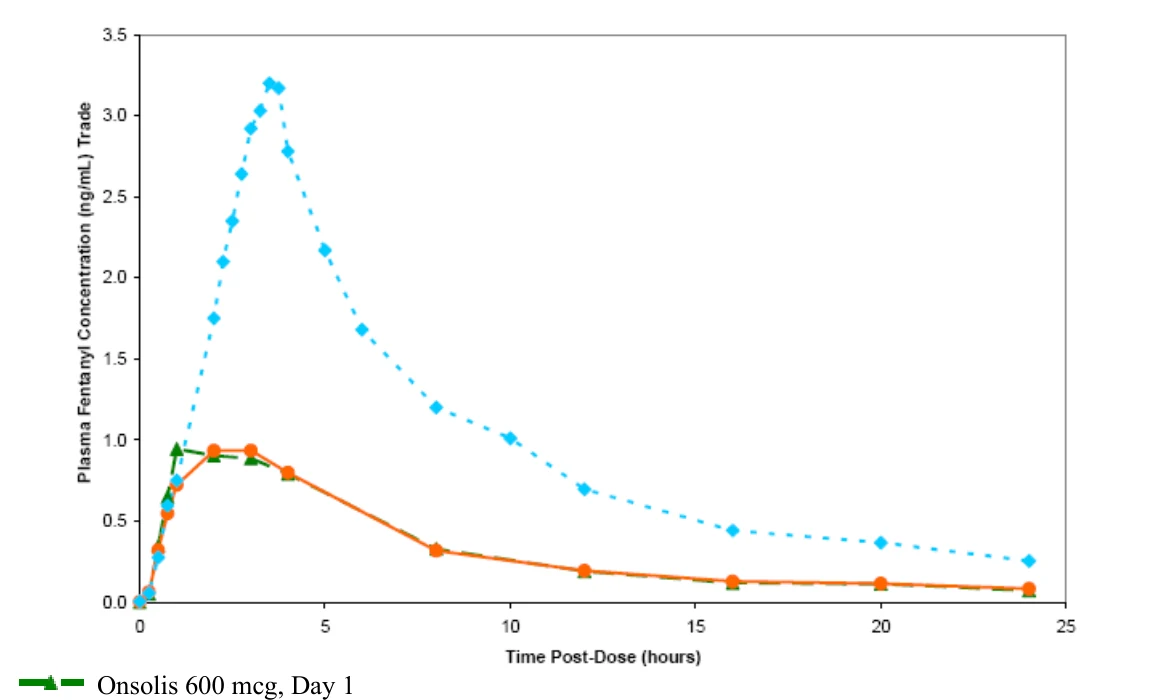

Onsolis 600 mcg, Day 1
Onsolis 600 mcg, Day 4
Onsolis 600 mcg, 3 doses at 1 hour intervals, Day 7
Figure 3 Mean Fentanyl Plasma Concentration-Time Plots After Administration of Onsolis
The effect of oral mucositis (Grade 1) on the pharmacokinetic profile of Onsolis was studied in cancer patients with (n=7) and without (n=7) oral mucositis who were otherwise matched. A single 200 mcg Onsolis film was administered, followed by sampling at appropriate intervals. Application of Onsolis on an active site of mucositis was associated with decreases in the Cmax and AUCinf that are not likely to be clinically relevant. The difference in Cmax was less than the intersubject variability and dose adjustment was not required.
Distribution: Fentanyl is highly lipophilic. Animal data show that fentanyl is rapidly distributed to the brain, heart, lungs, kidneys, and spleen followed by a slower redistribution to muscles and fat. The plasma protein binding of fentanyl is 80-85%. The main binding protein is alpha-1-acid glycoprotein, but both albumin and lipoproteins contribute to some extent. The free fraction of fentanyl increases with acidosis. The mean volume of distribution at steady state (Vss) was 4 L/kg.
Metabolism:
Fentanyl is metabolized in the liver and in the intestinal mucosa to norfentanyl by CYP 3A4 isoform. Norfentanyl was not found to be pharmacologically active in animal studies. Fentanyl is primarily (more than 90%) eliminated by biotransformation to N-dealkylated and hydroxylated inactive metabolites.
Excretion:
Fentanyl is primarily (more than 90%) eliminated by biotransformation to N-dealkylated and hydroxylated inactive metabolites. Less than 7% of the dose is excreted unchanged in the urine, and only about 1% is excreted unchanged in the feces. The metabolites are mainly excreted in the urine, while fecal excretion is less important. The total plasma clearance of fentanyl was 0.5 L/hr/kg (range 0.3 to 0.7 L/hr/kg). The clinically relevant half life of fentanyl after Onsolis administration is approximately seven hours, and the terminal elimination half-life is about 14 hours.
Special Populations and Conditions
Pediatrics: The pharmacokinetics of Onsolis have not been studied in children and adolescents aged less than 18 years.
Geriatrics: In the elderly, elimination of fentanyl may be slower and the terminal elimination half-life may be longer, which may result in accumulation of the active substance and a greater risk of undesirable effects.
Gender: After adjustment for body weight, there were no gender related differences in pharmacokinetics of Onsolis.
Hepatic insufficiency: The influence of liver impairment on the pharmacokinetics of Onsolis has not been determined. However, the clearance of intravenously administered fentanyl is decreased in hepatic disease due to alterations in metabolic clearance and plasma proteins.
Renal insufficiency: The influence of renal impairment on the pharmacokinetics of Onsolis has not been determined. However, the clearance of intravenously administered fentanyl is decreased in renal disease due to alterations in metabolic clearance and plasma proteins.
STORAGE AND STABILITY
Storage and Handling
Onsolis (fentanyl citrate) is supplied in individually-sealed child-resistant foil packages. The amount of fentanyl contained in Onsolis can be fatal to a child. The entire film should be used immediately after opening the child-resistant package. Patients and their caregivers must be instructed to keep Onsolis out of the reach of children.
Store between 15-30ºC (59-86ºF) until ready to use.
Protect Onsolis from freezing and moisture. Do not use if the foil package has been opened.
SPECIAL HANDLING INSTRUCTIONS
Patients and their caregivers must be instructed that Onsolis (fentanyl citrate) contains medicine in an amount that can be fatal in children, in individuals for whom it is not prescribed, and in those who are not opioid tolerant. Patients and their caregivers must be instructed to keep Onsolis out of the reach of children.
Disposal of Onsolis
Patients and members of their household must be instructed to dispose of any unneeded films remaining from a prescription as soon as they are no longer needed. The Onsolis film should be removed from its foil package and dropped into the toilet. This should be repeated for each Onsolis film. Flush the toilet after all unneeded films have been put into the toilet. Do not flush the Onsolis foil packages or cartons down the toilet.
DOSAGE FORMS, COMPOSITION AND PACKAGING
Onsolis (fentanyl citrate) is supplied as a muco-adhesive film in five dosage strengths: 200, 400, 600, 800, and 1200 mcg fentanyl as fentanyl citrate. Each unit is a rectangle with rounded corners, pink on one side and white on the other side.
200 mcg/unit Each unit has a “2” mark debossed and visible on the white side. 400 mcg/unit Each unit has a “4” mark debossed and visible on the white side. 600 mcg/unit Each unit has a “6” mark debossed and visible on the white side. 800 mcg/unit Each unit has a “8” mark debossed and visible on the white side. 1200 mcg/unit Each unit has a “12” mark debossed and visible on the white side.
Each film is individually wrapped in a child-resistant, protective foil package. These foil packages are color coded by strength and packed 30 per carton.
200 mcg - BLUE
400 mcg - RED
600 mcg - GREEN
800 mcg - ORANGE
1200 mcg - PURPLE
Onsolis is an oral transmucosal form of the potent opioid analgesic, fentanyl citrate, intended for application to the buccal mucosa. Onsolis uses the BioErodible MucoAdhesive (BEMA®) bilayer delivery technology which is comprised of water-soluble polymeric films.
Onsolis consists of a pink bioadhesive layer bonded onto a white inactive layer. The active ingredient, fentanyl citrate, is incorporated into the bioadhesive layer, which adheres to the moist buccal mucosa. The amount of fentanyl delivered transmucosally is proportional to the film surface area. The inactive layer isolates the bioadhesive layer from the saliva, which may optimize delivery of fentanyl across the buccal mucosa.
Inactive Ingredients: citric acid, ferric oxide, hydroxyethylcellulose, hydroxypropylcellulose, methylparaben, monobasic sodium phosphate, peppermint oil, polycarbophil, propylene glycol, propylparaben, saccharin sodium, sodium benzoate, sodium carboxymethylcellulose, sodium hydroxide, titanium dioxide, tribasic sodium phosphate, vitamin E acetate, and water. 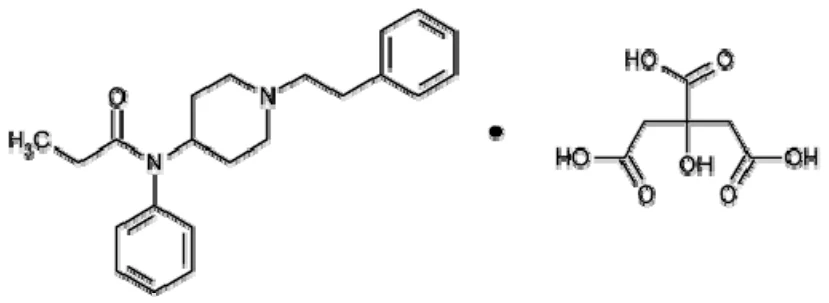
PART II: SCIENTIFIC INFORMATION
PHARMACEUTICAL INFORMATION
Drug Substance
Common name: Fentanyl citrate
Chemical name: The chemical names of Fentanyl citrate are N-(1-phenethyl-4-piperidyl)
propionanilide citrate (1:1) or N-Phenyl-N-(1-(2-phenylethyl)-4-piperidinyl) propanamide citrate (1:1)
Molecular formula and molecular mass: The molecular weight of Fentanyl citrate is
528.6, and the empirical formula is C22H28N2O.C6H8O7.
Structural formula:
Physicochemical properties: Fentanyl citrate is a white to off-white crystalline powder, with a melting point of 149-151°C and an aqueous solubility of approximately 25 mg per mL. There are no known polymorphs of fentanyl citrate.
CLINICAL TRIALS
The efficacy of Onsolis was investigated in a randomized, double-blind, placebo-controlled crossover study in 152 opioid-tolerant cancer patients with breakthrough pain. Breakthrough cancer pain was defined as a transient flare of moderate-to-severe pain occurring in patients with cancer experiencing persistent cancer pain otherwise controlled with maintenance doses of opioid medications. All patients were on stable doses of either long-acting oral opioids equivalent to ≥ 60 mg of oral morphine/day (e.g. oxycodone 30 mg, methadone 20 mg, or hydromorphone 7.5 mg) or ≥50 mcg/hour transdermal fentanyl for their persistent cancer pain.
Open-label titration identified a successful dose of Onsolis, within the range of 200 to 1200 mcg. A “successful” dose was defined as a dose in which a patient obtained adequate analgesia with
tolerable side effects. Of the 152 patients enrolled, 69 (45.4%) discontinued during the titration period; of these 15 (9.9%) subjects discontinued because of difficulties or noncompliance with the electronic diary, 14 (9.2%) subjects withdrew consent without explanation, 5 (3.3%) discontinued due to lack of efficacy, 2 (1.3%) subjects withdrew consent because of their cancer or its treatment, and 11 (7.2%) subjects withdrew for a variety of other reasons.
In this study, patients who identified a successful dose were randomized to a sequence of nine treatments; six with the successful dose of Onsolis and three with placebo. The break out by dose of those who achieved a successful dose taking double-blind study drug (n=81) is provided in Table 5.
Table 5 Successful Dose of Onsolis Following Initial Titration
Dose of Fentanyl Buccal Soluble Film (mcg) | Total No. Subjects (%) (N=81) |
| 200 | 4 (5%) |
| 400 | 15 (19%) |
| 600 | 23 (28%) |
| 800 | 19 (23%) |
| 1200 | 20 (25%) |
The final titrated dose of Onsolis for breakthrough cancer pain was not predictable from the background opioid dose underlying the need for individual titration starting at 200 mcg.
The mean age of subjects in the ITT population (n=80) was 56.8 years (range 31-82 years) with 55.0% female and 45.0% male.
The primary outcome measure, the mean sum of pain intensity differences at 30 minutes (SPID30) for Onsolis-treated episodes was statistically significantly higher than for placebo-treated episodes (p=0.004). The difference of the least square means between the treatments was 9.74 (95% CI:3.31,16.18).
The difference in SPID reached statistical significance (p = 0.047) as early as 15 minutes post-dose and the difference continued to be statistically significant through all time points thereafter until the final assessment at 60 minutes post-dose (Figure 4).
Figure 4 Mean Sum of Pain Intensity Differences (SPID) Following Onsolis or Placebo in
Adult Patients with Breakthrough Cancer Pain
Secondary endpoints in addition to SPID at time points other than 30 minutes provide supporting evidence of the efficacy of Onsolis in breakthrough pain.
The mean total pain relief for Onsolis was greater than placebo for all post-dose time points and the differences were statistically significant at 30, 45 and 60 minute post-dose intervals (p=0.002, p=0.005 and p=0.001, respectively).
Onsolis had positive impact on patient overall satisfaction with their medication and was supportive of the primary efficacy endpoint.
Efficacy is also further supported by the results of the long-term, open-label study of Onsolis. An initial effective dose of 1200 mcg Onsolis or less was seen in 168 of 179 patients (94%) and of this group only 14 (about 8%) subsequently increased the dose at any time, indicating that the suggested dose range of 200-1200 mcg is adequate for the majority of patients.
During the maintenance phase of this study, which also includes patients rolled over from the double-blind, placebo-controlled crossover study, 6 of 179 subjects (3.4%) withdrew due to lack of efficacy. Rescue medication was not required in nearly 90% of episodes treated.
BEMA Fentanyl
Placebo
0
10
20
30
40
50
60
70
80
90
100
110
120
130
140
150
160
Time from Administration of Study Drug (minutes) 0 5 10 15 30 45 60
0.047
0.004
DETAILED PHARMACOLOGY
Nonclinical Testing
Primary Pharmacodynamics
It is well-established that fentanyl is a potent, short-acting, synthetic, pure μ-opioid receptor agonist with the main pharmacologic activity being analgesia. The analgesic potency of fentanyl is approximately 100-fold greater than that of morphine. Fentanyl produces effective analgesia without significant respiratory depression at plasma concentrations ranging from 0.6-2 ng/mL. At higher plasma concentrations (>2 ng/mL), significant respiratory depression may occur. Significant nonrespiratory side effects associated with fentanyl include muscle rigidity, bradycardia, hypotension, nausea and vomiting, pruritus, and urinary retention. As with other narcotic analgesics, subjects may become tolerant to the effects of fentanyl after repeated administration.
Dependence
Recently, the effects of fentanyl withdrawal on brain reward function and somatic withdrawal symptoms were evaluated in male Wistar rats. The rats were trained on a modified discrete-trial intracranial self-stimulation procedure and implanted with 14-day minipumps containing saline or fentanyl citrate (1.2 mg/kg/day). Abrupt cessation of fentanyl administration resulted in a time-dependent elevation in brain reward thresholds and somatic withdrawal signs suggesting a severe deficit in brain reward function. Naloxone resulted in a dose-dependent elevation in brain reward thresholds and somatic withdrawal signs in fentanyl-treated rats; however, it did not alter the response latencies.
Pharmacokinetics
The pharmacokinetics of fentanyl has been extensively studied. Clinical observations, test article administration site observations, and toxicokinetic monitoring were performed for up to 12 hours after application. All formulations produced measurable systemic exposures to fentanyl, with concomitant signs of sedation in the dogs. No significant adverse events or local irritation were attributed to Onsolis administration in these studies. Onsolis was well-tolerated with sedation being the consistent treatment-related effect attributed to test article administration.
TOXICOLOGY
The toxicity profile of fentanyl by various routes of administration has been well-established. Fentanyl buccal soluble film formulations have been evaluated in four toxicity studies following single- and repeat-dose administration in the dog.
A 28-day, repeat-dose toxicity study of fentanyl citrate and three local tolerance studies (two with fentanyl citrate and one with fentanyl free base) were performed in dogs to evaluate the safety of fentanyl buccal soluble film formulations (Table 6). There were no new systemic adverse effects observed in these studies.
Table 6 Overview of Toxicology Program with Fentanyl Buccal Soluble Film
| Study Type | Route of Administration | Species | Fentanyl Buccal Soluble Film Dose Administered |
| Repeat-Dose Toxicity | |||
| 28-day | p.o. | Dog | 273 mcg fentanyl free base at pH 6, 7.25, or 8.5 twice daily (429 mcg fentanyl citrate) |
| Local Tolerance Studies | |||
| Acute | p.o. | Dog | 368 mcg fentanyl free base (578 mcg fentanyl citrate) |
| Acute | p.o. | Dog | 844 mcg fentanyl free base (1326 mcg Fentanyl citrate) |
| Acute | p.o. | Dog | 383 mcg fentanyl free base |
In summary, the toxicologic profile of fentanyl has been well-characterized following administration by several routes in animals, and its serious adverse effects have been directly correlated with plasma drug concentrations. Other components of fentanyl buccal soluble film are excipients that are generally recognized as safe for buccal or oral administration. Repeat-dose toxicity and local tolerance studies of prospective fentanyl buccal soluble film formulations in dogs have demonstrated no new or serious systemic adverse effects, and no notable local irritation at the application site. Fentanyl was extensively absorbed from fentanyl buccal soluble film producing systemic exposure profiles similar to those achieved after other routes of fentanyl administration.
Single-Dose Toxicity
Based on the extensive nonclinical single-dose toxicity data available and the historical evidence of fentanyl use for the treatment of pain in humans, no new studies were conducted to further evaluate the single-dose toxicity of fentanyl. Intravenous LD50 determinations showed that rat and guinea pig with an LD50 in the 2-3 mg/kg range was the most sensitive species tested. An intramuscular LD50 of 1 mg/kg was seen in the rat while an LD 50 of 65 mg/kg was seen in the hamster.
Repeat-Dose Toxicity
In the 28-day fentanyl buccal soluble film study in dogs, treatment-related effects included decreased activity, abnormal gait and stance, excessive salivation, tremors, emesis, decreased body weight and weight gain, decreased food consumption, decreased white blood cell (WBC) parameters and slight increase in absolute and relative spleen weights. There were no definitive differences in toxicity noted based on the pH of the discs (pH 6.5, 7.25, or 8.5) and no notable treatment-related local irritation lesions were noted in samples of oral mucosa examined histopathologically. Due to the slight decrease of white blood cell (WBC) parameters and the slight increase in absolute and relative spleen weights additional histopathologic examination of spleen and bone marrow were performed. These investigations also revealed no test article-related toxicity
Genotoxicity Studies
Standard genotoxicity testing (in vitro in the Ames, mouse lymphoma, rat hepatocytes, BALB/c 3T3 transformation, human lymphocyte, or Chinese hamster ovary chromosomal aberration assays and in the in vivo mouse micronucleus assay) of fentanyl citrate and fentanyl hydrochloride have been reported with no evidence of genotoxicity observed.
Carcinogenicity Studies
No carcinogenicity studies have been conducted with fentanyl.
Reproductive and Developmental Toxicity Studies
In reproductive and developmental toxicity studies in rats, fentanyl has been shown to impair fertility and increase resorptions when given during organogenesis on Gestation Days 12 through 21 at doses of 30 mcg/kg intravenously and 160 mcg/kg subcutaneously. The potential effects of fentanyl on embryofetal development were studied in mouse, rat, and rabbit models with no clear evidence of teratogenicity noted. The potential effects of fentanyl on pre- and postnatal development were examined via intravenous infusion in the rat. Fentanyl treatment (0.4 mg/kg/day) significantly decreased body weight in male and female pups and also decreased survival in pups at Day 4. Animals receiving 0.1 and 0.4 mg/kg/day fentanyl experienced alterations in some landmarks of physical development (delayed incisor eruption and eye opening) and transient effects on behavioral development (decreased locomotor activity at Day 28 which recovered by Day 50).
Local Tolerance
Assessment of local irritation/tolerance has been evaluated at fentanyl buccal soluble film application sites following single or repeat-application in the pharmacokinetic and toxicology studies. No clinically relevant local irritation was attributed to fentanyl buccal soluble film administration in these studies.
Other Toxicity Studies
Fentanyl may induce muscular rigidity in the rat following intravenous administration of 100 mcg/kg fentanyl by the activation of μ-opioid receptors at the locus coeruleus. The muscular rigidity induced by fentanyl was antagonized by pretreatment with either pertussis toxin, N-ethylmaleimide, or 1-(5-isoquinolinesulfonyl)-2-methylpiperazine, but not by cholera toxin or forskolin, suggesting that in addition to Go protein, other pertussis toxin-sensitive G proteins, possibly Gi and Gp subtypes, may also be involved in the signal transduction processes that underlie muscular rigidity following activation by fentanyl.
The toxicity of fentanyl in juvenile animals (2–35 days of age) was examined in an intravenous administration study evaluating changes in minute ventilation. The results from this study indicate there is no change in the effect of fentanyl based on the age of the animals, which suggests dosing should not vary markedly with age.
REFERENCES
Preclinical
- 1. Bragg P, Zwass M, Lau M, Fisher D. Opioid Pharmacodynamics in neonatal dogs: differences between morphine and fentanyl. American Physiology. 1995; 1519-1524.
- 2. El Mouedden M, Meert TF. The impact of the opioids fentanyl and morphine on nociception and bone destruction in a murine model of bone cancer pain. Pharmacol Biochem Behav 2007; 87:30-40.
- 3. Lee T, Fu M, Lui P, Chan S, Subtypes od Guanine-nucleotide-Binding Regulatory Proteins at the Locus coeruleus involved in Fentanyl-Induced Muscular Rigidity in the Rat. J Biomed Sci 1995;2:263-271.
- 4. Peng PWH, Sandler AN. A review of the use of fentanyl analgesia in the management of acute pain in adults. Anesthesiology. 1999; 90: 576-599.
- 5. Poklis A. Fentanyl: A review for clinical and analytical toxicologists. Clinical Toxicology. 1995; 33 (5): 439-447.
- 6. Vuckovic S, Ivanovic M, Prostran M, Todorovic Z, Ristovic Z, et al. Higher environmental temperature potentiates cataleptic effect of fentanyl in rats. Jpn JPharmacol. 1998; 78 (4): 523-527.
- 7. Zaveri N, Polgar WE, Olsen CM, Kelson AB, Grundt P, Lewis JW, Toll L. Characterization of opiates, neuroleptics, and synthetic analogs at ORL1 and opioid receptors. Eur J Pharmacol 2001; 428:29-36.
Clinical
- 8. Darwish M, Kirby M, Robertson P, et al. Absolute and relative bioavailability of fentanyl buccal tablet and oral transmucosal fentanyl citrate. J Clin Pharmacol 2007;47(3):343-50.
- 9. De Conno F, Caraceni A, Gamba A, et al. Pain measurement in cancer patients: a comparison of six methods. Pain 1994;57:161-6.
- 10. De Conno F, Caraceni A, Gamba A, Mariani L, Abbattista A, Brunelli C, et al. Pain measurement in cancer patients: A comparison of six methods. Pain 1994;57:161-6.
- 11. Farrar JT, Cleary J, Rauck R, Busch M, Nordbrock E. Oral transmucosal fentanyl citrate: randomized, double-blind, placebo-controlled trial for treatment of breakthrough pain in cancer patients. J Natl Cancer Inst. 1998;90:611-616.
- 12. Farrar JT, Dworkin RH, Max MB. Use of the cumulative proportion of responders analysis graph to present pain data over a range of cut-off points: Making clinical trial data more understandable. J Pain Symptom Manage. 2006;31:369-77.
- 13. Gupta, SK, Hwang, S, Southam, M and Sathyan, G. Effects of application site and subject demographics on the pharmacokinetics of fentanyl HCl patient-controlled transdermal system (PCTS). Clin Pharmacokinet 2005;44(Suppl 1):25-32.
- 14. Kharasch D, Hoffer C, Whittington D. Influence of age on the pharmacokinetics and pharmacodynamics of oral transmucosal fentanyl citrate. Anesthesiology 2004;101:738-43.
- 15. Portenoy RK, Hagen NA. Breakthrough pain: Definition, prevalence and characteristics. Pain 1990;41:273-281.
- 16. Portenoy RK, Payne R, Coluzzi P, et al. Oral transmucosal fentanyl citrate (OTFC) for the treatment of breakthrough pain in cancer patients: A controlled dose titration study. Pain 1999;79:303-12.
- 17. Portenoy RK, Taylor D, Messina J, Tremmel L. A randomized, placebo-controlled study of fentanyl buccal tablet for breakthrough pain in opioid-treated patients with cancer. Clin J Pain 2006;22:805-11.
- 18. Streisand JB, Busch MA, Egan TD, Smith BG, Gay M, Pace NL. Dose proportionality and pharmacokinetics of oral transmucosal fentanyl citrate. Anesthesiology 1998;88(2):305-309.
- 19. Svendsen KB, Andersen S, Arnason S, Arnér S, Breivik H, Heiskanen T, et al. Breakthrough pain in malignant and non-malignant diseases: A review of prevalence, characteristics and mechanisms. Eur J Pain 2005;9:195-206.