


Product Monograph - Oseni
SUMMARY PRODUCT INFORMATION
| Route of Administration | Dosage Form / Strength | Clinically Relevant Nonmedicinal Ingredients |
| Oral | Tablets 12.5 mg/15 mg, 12.5 mg/30 mg, 12.5 mg/45 mg, 25 mg/15 mg, 25 mg/30 mg and 25 mg/45 mg | For a complete listing see DOSAGE FORMS, COMPOSITION AND PACKAGING section |
INDICATIONS AND CLINICAL USE
OSENITM is indicated to improve glycemic control in adult patients (≥ 18 years old) with type 2 diabetes mellitus (T2DM):
- as an adjunct to diet and exercise in patients inadequately controlled on pioglitazone or in patients already being treated with this combination of alogliptin and pioglitazone and for whom metformin is inappropriate due to contraindications or intolerance.
- in combination with metformin when diet and exercise plus dual therapy with pioglitazone and metformin do not provide adequate glycemic control.
Geriatrics (≥ 65 years of age): Dosing of OSENITM should be conservative in patients with advanced age due to the potential for decreased renal function in this population. Any dosage adjustment should be based on an assessment of renal function (see WARNINGS AND PRECAUTIONS, DOSAGE AND ADMINISTRATION and ACTION AND CLINICAL PHARMACOLOGY).
Pediatrics (<18 years of age): The safety and efficacy of OSENITM in pediatric patients have not yet been established. No data are available. Therefore, OSENITM should not be used in this population.
CONTRAINDICATIONS
OSENITM is contraindicated in patients with:
- New York Heart Association (NYHA) Class I to IV cardiac status.
- Hypersensitivity to this drug or to any ingredient in the formulation or component of the container. (see DOSAGE FORMS, COMPOSITION AND PACKAGING).
Severe hepatic impairment (Child-Pugh score > 9) (see WARNINGS AND PRECAUTIONS, Hepatic/Biliary/Pancreatic)
Pregnancy. Oral antidiabetic agents should not be given (see WARNINGS AND PRECAUTIONS, Special Populations, Pregnant Women).
Active bladder cancer or a history of bladder cancer.
Uninvestigated macroscopic haematuria.
Unstable and/or insulin-dependent (Type 1) diabetes mellitus.
WARNINGS AND PRECAUTIONS
General
Weight Gain: Pioglitazone may be associated with weight gain. Mean weight gain in controlled monotherapy studies ranged from 0.5 to 2.8 kg. In controlled combination therapy studies, the mean weight gain ranged from 0.95 to 3.0 kg. Treatment should be re-evaluated in patients with excessive weight gain (see ACTION AND CLINICAL PHARMACOLOGY, Pharmacodynamics).
Fractures: In a pooled analysis of randomized, controlled double-blind clinical studies, an increased incidence of bone fracture was observed in female patients taking pioglitazone versus comparator drugs or placebo (2.6% versus 1.7%). The majority of these fractures were in the distal upper limb or distal lower limb. The risk of fracture should be considered in the care of all patients treated with OSENI™.
Carcinogenesis and Mutagenesis
See PART II, TOXICOLOGY, for animal studies.
Cardiovascular
Congestive Heart Failure
OSENITM is contraindicated in patients with NYHA Class I, II, III, and IV heart failure (see CONTRAINDICATIONS). Patients with severe heart failure (including NYHA Class III and IV cardiac status) were not studied during clinical trials (see CLINICAL TRIALS).
Thiazolidinediones, like pioglitazone, alone or in combination with other antidiabetic agents, can cause fluid retention, which can lead to congestive heart failure. The fluid retention may very rarely present as rapid and excessive weight gain. All patients should be monitored for signs and symptoms of adverse reactions relating to fluid retention and heart failure. In particular, patients who are at risk for heart failure including those receiving concurrent therapy which increases insulin levels should be closely monitored (see ADVERSE REACTIONS).
Treatment with thiazolidinediones, like pioglitazone, has been associated with cases of congestive heart failure, some of which were difficult to treat unless medication was discontinued. OSENITM should be discontinued if any deterioration in cardiac status occurs.
Since patients experiencing acute coronary syndrome (ACS) are at an increased risk of developing heart failure, and in view of the potential for pioglitazone to cause or exacerbate heart failure, initiation of OSENITM in patients experiencing an acute coronary event is not recommended. Furthermore, discontinuation of OSENITM during the acute phase should be considered.
Edema: OSENITM should be used with caution in patients with edema. In placebo-controlled clinical studies, the incidence of edema is increased with pioglitazone relative to the control groups and may be dose-related (see ADVERSE REACTIONS). For information on macular edema see WARNINGS AND PRECAUTIONS, Ophthalmologic.
Endocrine and Metabolism
Hypoglycemia
Caution should be exercised when OSENI™ is used in combination with metformin, as the incidence of hypoglycemia was greater in studies of alogliptin as add-on therapy to metformin with pioglitazone compared to active-control or placebo, respectively
Pioglitazone
During the administration of pioglitazone as monotherapy, documented hypoglycemia has not been observed, nor would it be expected based on the mechanism of action. Patients receiving pioglitazone in combination with other hypoglycemic agents may be at risk for hypoglycemia, and a reduction in the dose of either agent may be necessary.
Genitourinary
Bladder cancer
Pioglitazone
Preclinical and clinical data, and results from an observation study suggest an increased risk of bladder cancer in pioglitazone users. The observational data further suggest that the risk of bladder cancer increases with duration of use. Do not use in patients with active bladder cancer or with a prior history of bladder cancer.
A two-year carcinogenicity study was conducted in male and female rats at oral doses up to 63 mg/kg (approximately 14 times the maximum recommended human oral dose of 45 mg based on mg/m2). Drug-induced tumours were not observed in any organ except for the urinary bladder. Benign and/or malignant transitional cell neoplasms were observed in male rats at 4 mg/kg/day and above (approximately equal to the maximum recommended human oral dose based on mg/m2). A two-year carcinogenicity study was conducted in male and female mice at oral doses up to 100 mg/kg/day (approximately 11 times the maximum recommended human oral dose based on mg/m2). No drug-induced tumours were observed in any organ.
In two 3-year studies in which pioglitazone was compared to placebo or glyburide, there were 16/3656 (0.44%) reports of bladder cancer in patients taking pioglitazone compared to 5/3679 (0.14%) in patients not taking pioglitazone. After excluding patients in whom exposure to study drug was less than one year at the time of diagnosis of bladder cancer, there were six (0.16%) cases on pioglitazone and two (0.05%) on placebo.
A five-year interim report of an ongoing 10-year observational cohort study in patients with diabetes (KPNC study) found a non-significant increase in the risk for bladder cancer in subjects ever exposed to pioglitazone, compared to subjects never exposed to pioglitazone (HR 1.2 [95% CI 0.9 – 1.5]). Compared to never exposure, a duration of pioglitazone therapy longer than 12 months was associated with an increased risk (HR 1.4 [95% CI 0.9 – 2.1]), which reached statistical significance after more than 24 months of pioglitazone use (HR 1.4 [95% CI 1.03 – 2.0]). Interim results from this study suggested that taking pioglitazone longer than 12 months increased the relative risk of developing bladder cancer in any given year by 40% which equates to an absolute increase of 3 cases in 10, 000 from approximately 7 in 10,000 (without pioglitazone) to approximately 10 in 10,000 (with pioglitazone).
Cases of bladder cancer were reported more frequently in a meta-analysis of controlled clinical trials with pioglitazone (19 cases from 12506 patients, 0.15%) than in control groups (7 cases from 10212 patients, 0.07%) HR=2.64 (95% CI 1.11-6.31, p=0.029). After excluding patients in whom exposure to study drug was less than one year at the time of diagnosis of bladder cancer, there were 7 cases (0.06%) on pioglitazone and 2 cases (0.02%) in control groups. Available epidemiological data also suggest a small increased risk of bladder cancer in diabetic patients treated with pioglitazone in particular in patients treated for the longest durations and with the highest cumulative doses. A possible risk after short term treatment cannot be excluded.
Risk factors for bladder cancer should be assessed before initiating OSENITM treatment (risks include age, current or past history of smoking, family history of bladder cancer, exposure to chemicals in the workplace or to certain cancer treatments such as cyclophosphamide and radiation therapy to abdomen or pelvis). Any macroscopic haematuria should be investigated before starting OSENITM therapy.
Patients prescribed OSENITM should be advised to seek medical attention if macroscopic haematuria or other symptoms such as dysuria, or urinary urgency develop during treatment, as these may be symptoms of bladder cancer.
Hematologic
Pioglitazone
Across all clinical studies, mean hemoglobin values declined by 2% to 4% in pioglitazone-treated patients but remained within normal limits at all times (including up to 18 months of continuous therapy). In all studies, patients were excluded if they had a hemoglobin of less than 120 g/L for males or 100 g/L for females. In the monotherapy studies, the mean hemoglobin declined from 151 to 147 g/L, with the range in the bottom 10% of hemoglobin values 111 to 125 g/L. In a long-term, open-label follow-up monotherapy study of an additional 84 weeks, the change in hemoglobin remained small, declining from 151 to 143 g/L. In the combination studies, the mean hemoglobin declined from 147 to 142 g/L, with the range in the bottom 10% of hemoglobin values 100 to 124 g/L. In a long-term, open-label follow up combination study, after an additional 72 weeks, the change in hemoglobin remained small, declining from 147 to 138 g/L. These changes may be related to increased plasma volume and have not been associated with any significant hematologic clinical effects (see ADVERSE REACTIONS, Laboratory Abnormalities).
Hepatic/Biliary/Pancreatic
OSENITM is contraindicated in patients with severe hepatic impairment (Child-Pugh score > 9) (see CONTRAINDICATIONS, DOSAGE AND ADMINISTRATION and ACTION AND CLINICAL PHARMACOLOGY). Liver tests should be measured prior to initiation of therapy and periodically thereafter. Therapy with OSENITM should not be initiated if a patient exhibits clinical evidence of active liver disease or in patients with increased baseline liver enzyme levels (ALT >2.5 times the upper limit of normal). Therapy should be discontinued if ALT levels remain >3 times the upper limit of normal, or the patient is symptomatic.
Initiation of, or continuation of therapy with OSENITM in patients with mild liver enzyme elevations should proceed with caution and include appropriate close clinical follow-up, including more frequent liver enzyme monitoring. Liver tests must be measured promptly in all patients who report symptoms that may indicate liver injury, including fatigue, anorexia, right upper abdominal discomfort, dark urine or jaundice.
Alogliptin
There have been postmarketing reports of fatal and non-fatal hepatic failure in patients taking Alogliptin, although some of the reports contain insufficient information necessary to establish the probable cause. In randomized controlled studies, serum alanine aminotransferase (ALT) elevations greater than three times the upper limit of normal (ULN) were observed:1.3% in alogliptin-treated patients and 1.5% in all comparator-treated patients.
Patients with type 2 diabetes may have fatty liver disease which may cause liver test abnormalities, and they may also have other forms of liver disease, many of which can be treated or managed. Liver tests should be measured prior to initiation of therapy and periodically there after.
Pioglitazone
Rare cases of severe hepatocellular injury have been reported associated with thiazolidinediones. Although available data from clinical studies show no evidence of pioglitazone-induced hepatotoxicity or ALT elevations, pioglitazone has a common thiazolidinedione structure to troglitazone, which has been associated with idiosyncratic hepatotoxicity and rare cases of liver failure, liver transplants, and death. In post-marketing experience with pioglitazone, reports of hepatitis, hepatic enzyme elevations 3 or more times the upper limit of normal, and hepatic failure with and without fatal outcome have been received. It is recommended that patients treated with pioglitazone undergo periodic monitoring of liver enzymes.
Pancreatitis
Events of acute pancreatitis have been reported with alogliptin in clinical trials and in postmarketing reports. Reports of acute pancreatitis, including fatal and non-fatal hemorrhagic or necrotizing pancreatitis, were noted in patients taking alogliptin and other members of this class. After initiation of OSENI™, patients should be observed carefully for signs and symptoms of pancreatitis. If pancreatitis is suspected, OSENI™ should be promptly discontinued and appropriate management should be initiated (see ADVERSE REACTIONS).
Immune
Hypersensitivity Reactions
Postmarketing events of serious hypersensitivity reactions in patients treated with OSENI™ such as anaphylaxis, angioedema, and severe cutaneous adverse reactions including Stevens-Johnson syndrome have been reported and have been associated with other DPP-4 inhibitors. A single event of serum sickness was observed with OSENI™ treatment in a clinical trial. If a hypersensitivity reaction is suspected, discontinuation of OSENI™ should be considered. Use caution in a patient with a history of angioedema with another DPP-4 inhibitor, since it is unknown whether such patients will be predisposed to angioedema with OSENI™.
Ophthalmologic
Pioglitazone
New onset and/or worsening macular edema with decreased visual acuity has been reported rarely in post-marketing experience with pioglitazone. In some cases, the visual events resolved or symptoms improved following discontinuation of pioglitazone. Physicians should consider the possibility of macular edema if a patient reports disturbances in visual acuity.
Renal
As there is a need for dose adjustment of alogliptin in patients with moderate renal impairment, assessment of renal function is recommended prior to initiation of OSENITM and periodically thereafter (see DOSAGE AND ADMINISTRATION).
Experience with OSENITM in patients with severe renal impairment or ESRD requiring dialysis is limited and therefore OSENITM should not be used in such patients (see DOSAGE AND ADMINISTRATION and ACTION AND CLINICAL PHARMACOLOGY).
Sexual Function/Reproduction
Pioglitazone
In premenopausal anovulatory patients with insulin resistance, treatment with thiazolidinediones, including pioglitazone, may result in resumption of ovulation. These patients may be at risk for pregnancy if adequate contraception is not used.
Special Populations
Pregnant Women:
There are no adequate or well-controlled studies in pregnant women with OSENITM. Pioglitazone, one of the components of OSENI™, is contraindicated during pregnancy, therefore OSENITM is contraindicated in pregnant woman (see TOXICOLGY, Reproduction and Teratology).
Nursing Women:
It is unknown whether alogliptin or pioglitazone are excreted in human milk. Alogliptin is secreted in the milk of lactating rats. A risk to the breast-fed child cannot be excluded.
Because many drugs are excreted in human milk, OSENITM should not be used in women who are breastfeeding (see CONTRAINDICATIONS).
Pediatrics (< 18 years of age):
Safety and effectiveness of OSENITM in pediatric patients under 18 years of age have not been established. Therefore, OSENI™ should not be used in this population.
Geriatrics (> 65 years of age):
Dosing of OSENITM should be conservative in patients with advanced age due to the potential for decreased renal function in this population. Any dosage adjustment should be based on an assessment of renal function (see WARNINGS AND PRECAUTIONS, DOSAGE AND ADMINISTRATION and ACTION AND CLINICAL PHARMACOLOGY).
Monitoring and Laboratory Tests
Monitoring of Glycemic Parameters: Periodic measurements of blood glucose and HbA1c levels should be performed, with a goal of decreasing these levels towards the normal range. HbA1c is especially useful for evaluating long-term glycemic control.
Monitoring of Hematologic Parameters: Initial and periodic monitoring of hematologic parameters (e.g., hemoglobin/hematocrit and red blood cell indices) should be performed, at least on an annual basis.
Monitoring of Renal Function: Renal function should be monitored regularly:
•at least once a year in patients with normal renal function
•at least two to four times a year in patients with serum creatinine levels at or above the upper limit of normal and in elderly patients
Monitoring of hepatic function: Liver tests should be measured prior to initiation of therapy and periodically thereafter.
ADVERSE REACTIONS
Adverse Drug Reaction Overview
Clinical studies conducted to support the efficacy and safety of OSENITM involved the co-administration of alogliptin and pioglitazone as separate tablets. However, the results of bioequivalence studies have demonstrated that OSENITM film-coated tablets are bioequivalent to the corresponding doses of alogliptin and pioglitazone co-administered as separate tablets.
The information provided is based on a total of 1297 patients with type 2 diabetes mellitus, including 801 patients treated with alogliptin and pioglitazone, who participated in 2 phase 3 double-blind, placebo- or active-controlled clinical studies.
Alogliptin
Alogliptin was generally well-tolerated in controlled clinical studies with an overall incidence of adverse events in patients treated with alogliptin 25 mg comparable to placebo (66.6% vs 64.8%). The incidence of serious adverse events was low in both treatment groups (alogliptin 25 mg 4.7 % vs 3.2 % placebo). The main causes for discontinuation for alogliptin occurring more frequently than in placebo were renal impairment (alogliptin 25 mg 0.2% vs. 0% placebo); vomiting (alogliptin 25 mg 0.1% vs. 0% placebo); peripheral edema (alogliptin 25 mg 0.1% vs. 0% placebo); anxiety (alogliptin 25 mg <0.1% vs. 0% placebo); and cardiac failure congestive (alogliptin 25 mg <0.1% vs. 0% placebo).
Pancreatitis
In a pooled analysis of 14 Phase 2 and 3 studies, including a cardiovascular outcomes trial, pancreatitis was reported in 11 of 5902 (0.2%) patients receiving alogliptin 25 mg daily, compared to 5 of 5183 (˂0.1%) patients receiving all comparators.
Serious Hypersensitivity Reactions
A single event of serum sickness was reported in a patient treated with 25 mg alogliptin.
Pioglitazone
In worldwide clinical trials, over 3700 patients with type 2 diabetes have been treated with pioglitazone (pioglitazone hydrochloride). Adverse drug reactions reported commonly (frequency >1%, <10%) and at least 0.5% in excess of placebo in double-blind placebo-controlled studies for pioglitazone monotherapy were: visual disturbance, upper respiratory tract infection, weight increased and hypoaesthesia. Hypoglycemia was experienced by 1.2% of patients on pioglitazone monotherapy compared to none on placebo.
Edema
Edema was reported in 6–9% of patients treated with pioglitazone over one year in controlled clinical trials. The edema rates for comparator groups (sulphonylurea, metformin) were 2–5%.
Heart failure
In an outcome study of patients with pre-existing major macrovascular disease, the incidence of serious heart failure was 1.6% higher with pioglitazone than with placebo, when added to therapy that included insulin. However, this did not lead to an increase in mortality in this study. Bone fractures
An increase incidence of bone fractures was observed in female patients taking pioglitazone versus comparator drugs or placebo (2.6% versus 1.7%) in a pooled analysis of randomized, controlled double-blind clinical studies. Bladder cancer
Cases are increased in patients taking pioglitazone (see WARNINGS AND PRECAUTIONS).
Clinical Trial Adverse Drug Reactions
Because clinical trials are conducted under very specific conditions the adverse reaction rates observed in the clinical trials may not reflect the rates observed in practice and should not be compared to the rates in the clinical trials of another drug. Adverse drug reaction information from clinical trials is useful for identifying drug-related adverse events and for approximating rates.
In Phase 3 controlled studies, adverse events reported, regardless of causality assessment, in ≥1% of patients treated with alogliptin and pioglitazone are shown in Tables 1 and 2.
Table 1. Treatment-Emergent Adverse Events by Preferred Term with Incidence in Pioglitazone + Alogliptin 25 mg ≥ 1% and in Excess of Pioglitazone + Placebo
(Study SYR-322-TZD-009)
System Organ Class/ Preferred Term | Pioglitazone + Alogliptin 25 mg (N = 199) | Pioglitazone + Placebo (N = 97) |
|---|---|---|
| Blood and lymphatic system disorders | ||
| Anaemia | 6 (3.0%) | 0 |
| Cardiac disorders | ||
| Atrial fibrillation | 2 (1.0%) | 0 |
| Cardiac failure congestive | 3 (1.5%) | 0 |
| Myocardial infarction | 2 (1.0%) | 0 |
| Ventricular extrasystoles | 2 (1.0%) | 0 |
| Ear and labyrinth disorders | ||
| Vertigo | 2 (1.0%) | 0 |
| Gastrointestinal disorders | ||
| Abdominal pain lower | 2 (1.0%) | 0 |
| Constipation | 3 (1.5%) | 1 (1.0%) |
| Dyspepsia | 3 (1.5%) | 0 |
| Flatulence | 3 (1.5%) | 1 (1.0%) |
| Nausea | 6 (3.0%) | 2 (2.1%) |
| Vomiting | 3 (1.5%) | 0 |
| General disorders and administration site conditions | ||
| Feeling hot | 2 (1.0%) | 0 |
| Pyrexia | 3 (1.5%) | 1 (1.0%) |
| Infections and infestations | ||
| Cellulitis | 6 (3.0%) | 0 |
| Gastroenteritis | 2 (1.0%) | 0 |
| Impetigo | 2 (1.0%) | 0 |
| Influenza | 11 (5.5%) | 4 (4.1%) |
| Nasopharyngitis | 14 (7.0%) | 6 (6.2%) |
| Paronychia | 2 (1.0%) | 0 |
| Pneumonia | 3 (1.5%) | 1 (1.0%) |
System Organ Class/ Preferred Term | Pioglitazone + Alogliptin 25 mg (N = 199) | Pioglitazone + Placebo (N = 97) |
|---|---|---|
| Urinary tract infection | 4 (2.0%) | 1 (1.0%) |
| Injury, poisoning and procedural complications | ||
| Epicondylitis | 2 (1.0%) | 0 |
| Fall | 2 (1.0%) | 0 |
| Road traffic accident | 2 (1.0%) | 0 |
| Scratch | 2 (1.0%) | 0 |
| Wrist fracture | 2 (1.0%) | 0 |
| Investigations | ||
| Blood creatinine increased | 3 (1.5%) | 0 |
| Hepatic enzyme increased | 2 (1.0%) | 0 |
| Metabolism and nutrition disorders | ||
| Dyslipidaemia | 3 (1.5%) | 0 |
| Hypertriglyceridaemia | 3 (1.5%) | 0 |
| Musculoskeletal and connective tissue disorders | ||
| Arthralgia | 8 (4.0%) | 2 (2.1%) |
| Pain in extremity | 5 (2.5%) | 1 (1.0%) |
| Tendonitis | 3 (1.5%) | 0 |
| Nervous system disorders | ||
| Headache | 10 (5.0%) | 4 (4.1%) |
| Paraesthesia | 2 (1.0%) | 0 |
| Tension headache | 2 (1.0%) | 0 |
| Psychiatric disorders | ||
| Depression | 2 (1.0%) | 0 |
| Insomnia | 2 (1.0%) | 0 |
| Renal and urinary disorders | ||
| Haematuria | 3 (1.5%) | 0 |
| Respiratory, thoracic and mediastinal disorders | ||
| Cough | 4 (2.0%) | 1 (1.0%) |
| Dyspnoea | 3 (1.5%) | 0 |
System Organ Class/ Preferred Term | Pioglitazone + Alogliptin 25 mg (N = 199) | Pioglitazone + Placebo (N = 97) |
|---|---|---|
| Epistaxis | 3 (1.5%) | 1 (1.0%) |
| Skin and subcutaneous tissue disorders | ||
| Blister | 2 (1.0%) | 0 |
| Ingrowing nail | 3 (1.5%) | 0 |
| Pruritus | 5 (2.5%) | 1 (1.0%) |
| Skin exfoliation | 2 (1.0%) | 0 |
| Vascular disorders | ||
| Hypertension | 8 (4.0%) | 2 (2.1%) |
Table 2. Treatment-Emergent Adverse Events by Preferred Term
with Incidence in Alogliptin 25 mg + Pioglitazone 30 mg + Metformin ≥ 1% and in Excess of Metformin + Pioglitazone 45 mg (Study 01-06-TL-322OPI-004)
System Organ Class/ Preferred Term | Metformin + Alogliptin 25 mg + Pioglitazone 30 mg (N = 404) | Metformin + Pioglitazone 45 mg (N = 399) |
|---|---|---|
| Blood and lymphatic system disorders | ||
| Monocytosis | 4 (1.0%) | 3 (0.8%) |
| Cardiac disorders | ||
| Angina pectoris | 4 (1.0%) | 1 (0.3%) |
| Sinus bradycardia | 4 (1.0%) | 2 (0.5%) |
| Eye disorders | ||
| Conjunctivitis | 7 (1.7%) | 3 (0.8%) |
| Gastrointestinal disorders | ||
| Abdominal pain | 7 (1.7%) | 2 (0.5%) |
| Dyspepsia | 8 (2.0%) | 3 (0.8%) |
| Gastrooesophageal reflux disease | 8 (2.0%) | 2 (0.5%) |
| Nausea | 10 (2.5%) | 4 (1.0%) |
| Toothache | 7 (1.7%) | 5 (1.3%) |
| Vomiting | 8 (2.0%) | 5 (1.3%) |
System Organ Class/ Preferred Term | Metformin + Alogliptin 25 mg + Pioglitazone 30 mg (N = 404) | Metformin + Pioglitazone 45 mg (N = 399) |
|---|---|---|
| General disorders and administration site conditions | ||
| Fatigue | 9 (2.2%) | 6 (1.5%) |
| Influenza like illness | 4 (1.0%) | 2 (0.5%) |
| Non-cardiac chest pain | 5 (1.2%) | 3 (0.8%) |
| Infections and infestations | ||
| Bronchitis | 19 (4.7%) | 12 (3.0%) |
| Cellulitis | 5 (1.2%) | 4 (1.0%) |
| Herpes zoster | 4 (1.0%) | 1 (0.3%) |
| Nasopharyngitis | 28 (6.9%) | 21 (5.3%) |
| Rhinitis | 6 (1.5%) | 3 (0.8%) |
| Sinusitis | 10 (2.5%) | 5 (1.3%) |
| Tooth abscess | 4 (1.0%) | 2 (0.5%) |
| Upper respiratory tract infection | 29 (7.2%) | 16 (4.0%) |
| Urinary tract infection | 22 (5.4%) | 13 (3.3%) |
| Viral upper respiratory tract infection | 4 (1.0%) | 1 (0.3%) |
| Injury, poisoning and procedural complications | ||
| Arthropod bite | 4 (1.0%) | 2 (0.5%) |
| Excoriation | 6 (1.5%) | 4 (1.0%) |
| Investigations | ||
| Weight increased | 7 (1.7%) | 6 (1.5%) |
| Metabolism and nutrition disorders | ||
| Hyperkalaemia | 8 (2.0%) | 6 (1.5%) |
| Musculoskeletal and connective tissue disorders | ||
| Muscle spasms | 7 (1.7%) | 2 (0.5%) |
| Musculoskeletal pain | 6 (1.5%) | 2 (0.5%) |
| Neck pain | 4 (1.0%) | 0 |
| Pain in extremity | 8 (2.0%) | 7 (1.8%) |
| Nervous system disorders |
System Organ Class/ Preferred Term | Metformin + Alogliptin 25 mg + Pioglitazone 30 mg (N = 404) | Metformin + Pioglitazone 45 mg (N = 399) |
|---|---|---|
| Dizziness | 6 (1.5%) | 5 (1.3%) |
| Headache | 19 (4.7%) | 16 (4.0%) |
| Paraesthesia | 4 (1.0%) | 3 (0.8%) |
| Psychiatric disorders | ||
| Insomnia | 7 (1.7%) | 3 (0.8%) |
| Reproductive system and breast disorders | ||
| Erectile dysfunction | 5 (1.2%) | 1 (0.3%) |
| Respiratory, thoracic and mediastinal disorders | ||
| Cough | 11 (2.7%) | 6 (1.5%) |
| Oropharyngeal pain | 5 (1.2%) | 2 (0.5%) |
| Skin and subcutaneous tissue disorders | ||
| Dermatitis | 5 (1.2%) | 1 (0.3%) |
| Pruritus | 7 (1.7%) | 4 (1.0%) |
| Rash | 10 (2.5%) | 7 (1.8%) |
| Skin lesion | 4 (1.0%) | 3 (0.8%) |
| Skin ulcer | 5 (1.2%) | 1 (0.3%) |
| Vascular disorders | ||
| Hypertension | 24 (5.9%) | 22 (5.5%) |
Less Common Clinical Trial Adverse Drug Reactions (<1%)
The following adverse events were reported at an incidence of <1% in alogliptin + pioglitazone clinical trials (drug-related in more than one patient, with higher frequency than comparator):
| Blood and lymphatic system disorders: Anaemia, Monocytosis, Neutropenia |
| Cardiac disorders: Angina pectoris, Cardiac failure, Cardiac failure congestive, Palpitations |
| Gastrointestinal disorders: Dyspepsia, Flatulence, Gastrooesophageal reflux disease, Nausea, Vomiting |
| General disorders and administration site conditions: Influenza like illness |
| Immune system disorders: Hypersensitivity |
| Infections and infestations: Influenza, Upper respiratory tract infection |
| Investigations: Alanine aminotransferase increased, Electrocardiogram QT prolonged |
| Metabolism and nutrition disorders: Hypercholesterolaemia |
| Musculoskeletal and connective tissue disorders: Muscle spasms, Musculoskeletal chest pain, Myalgia, Pain in extremity |
| Nervous system disorders: Dizziness, Migraine, Paraesthesia, Somnolence, Tension headache |
| Renal and urinary disorders: Haematuria |
| Respiratory, thoracic and mediastinal disorders: Dyspnoea |
| Skin and subcutaneous tissue disorders: Dry skin, Rash papular, Skin fissures |
| Vascular disorders: Hypertension |
Abnormal Hematologic and Clinical Chemistry Findings
Alogliptin
Overall, no clinically significant trend in abnormal laboratory findings were seen in patients treated with alogliptin compared with patients treated with placebo or active comparators.
Pioglitazone
Hematologic: Across all clinical studies, mean hemoglobin values declined by 2% to 4% in Pioglitazone-treated patients. These changes generally occurred within the first 4 to 12 weeks of therapy and remained relatively stable thereafter. These changes may be related to increased plasma volume associated with pioglitazone therapy and have not been associated with any significant hematologic clinical effects. Values remained within normal limits at all times (including up to 18 months of continuous therapy).
CPK Levels: During required laboratory testing in clinical trials, sporadic, transient elevations in creatine phosphokinase levels (CPK) were observed. An isolated elevation to greater than 10 times the upper limit of normal was noted in 9 patients (values of 2150 to 11400 IU/L. Six of these patients continued to receive pioglitazone, two patients had completed receiving study medication at the time of the elevated value and one patient discontinued study medication due to the elevation. These elevations resolved without any apparent clinical sequelae. The relationship of these events to pioglitazone therapy is unknown.
Serum Transaminase Levels: A total of 4 of 1526 (0.26%) pioglitazone-treated patients and 2 of 793 (0.25%) placebo-treated patients had ALT values ≥3 times the upper limit of normal in double-blind, randomized clinical trials. During all clinical studies in the US, 11 of 2561 (0.43%) Pioglitazone-treated patients had ALT values ≥3 times the upper limit of normal. All patients with follow-up values had reversible elevations in ALT. In the population of patients treated with Pioglitazone, mean values for bilirubin, AST, ALT, alkaline phosphatase, and GGT were decreased at the final visit compared with baseline. Fewer than 0.12% of pioglitazone-treated patients were withdrawn from clinical trials due to abnormal liver function tests.
In pre-approval clinical trials, there were no cases of idiosyncratic drug reactions leading to hepatic failure.
Post-Market Adverse Drug Reactions
Alogliptin
Additional adverse reactions have been identified during post-marketing use of alogliptin, one of the components of OSENI™. These reactions have been reported when alogliptin has been used alone and/or in combination with other antihyperglycemic agents. Because these reactions are reported voluntarily from a population of uncertain size, it is generally not possible to reliably estimate their frequency or establish a causal relationship to drug exposure.
Immune system disorders: hypersensitivity reactions including anaphylaxis, angioedema, urticarial.
Gastrointestinal disorders: acute pancreatitis, hepatobiliary disorders: hepatic dysfunction including hepatic failure.
Skin and subcutaneous tissue disorders: exfoliative skin conditions including Stevens-Johnson syndrome.
Pioglitazone
Cardiac disorders: congestive heart failure.
Eye disorders: new onset or worsening (diabetic) macular edema with decreased visual acuity. Affected patients also frequently reported concurrent peripheral edema. In some cases, symptoms improved following discontinuation of pioglitazone.
Hepatobiliary disorders: hepatitis and of hepatic enzyme elevations to 3 or more times the upper limit of normal, hepatic failure with and without fatal outcome.
Neoplasms benign, malignant and unspecified: bladder cancer.
Respiratory, thoracic and mediastinal disorders: pulmonary edema.
In a pooled analysis of randomized, controlled double-blind clinical studies, an increased incidence of bone fracture was observed in female patients taking pioglitazone versus metformin, sulfonylureas or placebo (2.6% versus 1.7%). The majority of these fractures were in the distal upper limb or distal lower limb.
DRUG INTERACTIONS
Alogliptin and Pioglitazone
Co-administration of 25 mg alogliptin once daily and 45 mg pioglitazone once daily for 12 days in healthy subjects had no clinically relevant effects on the pharmacokinetics of alogliptin, pioglitazone or their active metabolites.
Specific pharmacokinetic drug interaction studies have not been performed with OSENI™. The following section outlines the interactions observed with the individual components of OSENI™ alogliptin/pioglitazone) as reported in their respective Product Monographs.
Alogliptin
Alogliptin is primarily excreted unchanged in the urine and metabolism by the cytochrome P450 (CYP) enzyme system is negligible (see ACTION AND CLINICAL PHARMACOLOGY). In addition, alogliptin does not induce and does not inhibit the major human CYP isoforms at concentrations achieved with the recommended dose of 25 mg alogliptin. As a result, alogliptin is not expected to interact with substances which induce, inhibit or are known substrates of cytochrome P450 enzymes. Furthermore, clinical data suggest that interactions with p-glycoprotein inhibitors are not expected, and no drug-drug interactions were observed with alogliptin and other renally excreted drugs in clinical studies.
Drug-Drug Interactions
The drugs listed in this table are based on either drug interaction case reports or studies, or potential interactions due to the expected magnitude and seriousness of the interaction (i.e., those identified as contraindicated).
| Table 3. Effect of Alogliptin on the Pharmacokinetics of Other Drugs | |||
| Common Name | Reference | Effect | Clinical Comments |
| Atorvastatin | CT | Concomitant administration of alogliptin and atorvastatin (a CYP3A4 substrate) results in a 13% increase in atorvastatin Cmax, no effect on atorvastatin Tmax, and a 14% increase in atorvastatin AUC. | No Recommended Dose Adjustment |
| Cimetidine | CT | Concomitant administration of alogliptin and cimetidine (an organic cation transporter 2 inhibitor) had no effect on cimetidine Cmax, Tmax, and AUC. | No Recommended Dose Adjustment |
| Digoxin | CT | Concomitant administration of alogliptin and digoxin (a Pgp substrate) had no effect on digoxin Cmax, Tmax, and AUC. | No Recommended Dose Adjustment |
| Ethinyl estradiol | CT | Concomitant administration of alogliptin and ethinyl estradiol (a CYP3A4 substrate) had no effect on ethinyl estradiol Cmax, Tmax, and AUC. | No Recommended Dose Adjustment |
| Glyburide | CT | Concomitant administration of alogliptin and glyburide (a CYP2C9 substrate) resulted in a 15% increase in glyburide Cmax and no effect on glyburide Tmax and AUC. | No Recommended Dose Adjustment |
| Metformin | CT | Concomitant administration of alogliptin and metformin (an organic cation transporter 2 substrate) results in no effect in metformin Cmax and Tmax and a 19% increase in metformin AUC. | No Recommended Dose Adjustment |
| Norethindrone | CT | Concomitant administration of alogliptin and norethindrone (a CYP3A4 substrate) had no effect on norethindrone Cmax, Tmax, and AUC. | No Recommended Dose Adjustment |
| Pioglitazone | CT | Concomitant administration of alogliptin and pioglitazone (a CYP2C8 substrate) had no effect on pioglitazone Cmax, Tmax, and AUC. | No Recommended Dose Adjustment |
| Warfarin | CT | Concomitant administration of alogliptin and warfarin (a CYP1A2/2C9 substrate) had no effect on R- and S- warfarin Cmax, Tmax, and AUC and pharmacodynamics (PT or INR). | No Recommended Dose Adjustment |
Caffeine, Midazolam, Tolbutamide, Dextromethorphan, Fexofenadine Cocktail | CT | Concomitant administration had no effect on caffeine (CYP1A2 substrate), tolbutamide (CYP2C9 substrate), or midazolam (CYP3A4 substrate) Cmax, Tmax, and AUC. Concomitant administration results in a 32% increase in dextromethorphan (CYP2D6 substrate) Cmax, no effect on dextromethorphan Tmax, and a 27% increase in dextromethorphan AUC. Concomitant administration results in a 17% increase in fexofenadine (Pgp substrate) Cmax, no effect on fexofenadine Tmax, and a 34% increase in fexofenadine AUC. | No Recommended Dose Adjustment |
| CT = Clinical Trial; C: Case Study; T = Theoretical |
| Table 4. Effect of Other Drugs on the Pharmacokinetics of Alogliptin | |||
| Common Name | Reference | Effect | Clinical Comments |
| Atorvastatin | CT | Concomitant administration of alogliptin and atorvastatin (a CYP3A4 substrate) had no effect on alogliptin Cmax, Tmax, and AUC. | No Recommended Dose Adjustment |
| Cimetidine | CT | Concomitant administration of alogliptin and cimetidine (an organic cation transporter 2 inhibitor) had no effect on alogliptin Cmax, Tmax, and AUC. | No Recommended Dose Adjustment |
| Cyclosporine | CT | Concomitant administration of alogliptin and cyclosporine (a Pgp inhibitor) had no effect on alogliptin Cmax, Tmax, and AUC. | No Recommended Dose Adjustment |
| Digoxin | CT | Concomitant administration of alogliptin and digoxin (a Pgp substrate) had no effect on alogliptin Cmax, Tmax, and AUC. | No Recommended Dose Adjustment |
| Fluconazole | CT | Concomitant administration of alogliptin and fluconazole (a CYP2C9 inhibitor) resulted in a 20% decrease in alogliptin Cmax, delay of alogliptin Tmax by 1.5 hr, and no effect on alogliptin AUC. | No Recommended Dose Adjustment |
| Gemfibrozil | CT | Concomitant administration of alogliptin and gemfibrozil (a CYP2C8/9 inhibitor) resulted in a 15% decrease in alogliptin Cmax, delay of alogliptin Tmax by 2 hr, and no effect on alogliptin AUC. | No Recommended Dose Adjustment |
| Ketoconazole | CT | Concomitant administration of alogliptin and ketoconazole (a CYP3A4 inhibitor) resulted in a 22% increase in alogliptin Cmax and no effect on alogliptin Tmax and AUC. | No Recommended Dose Adjustment |
| Metformin | CT | Concomitant administration of alogliptin and metformin (an organic cation transporter 2 substrate) had no effect on alogliptin Cmax, Tmax, and AUC. | No Recommended Dose Adjustment |
| Pioglitazone | CT | Concomitant administration of alogliptin and pioglitazone (a CYP2C8 substrate) had no effect on alogliptin Cmax, Tmax, and AUC. | No Recommended Dose Adjustment |
| Voglibose | CT | Concomitant administration of alogliptin and voglibose (an alpha-glucosidase inhibitor) results in a 10% decrease in alogliptin Cmax, no effect on alogliptin Tmax, and a 22% decrease in alogliptin AUC. | No Recommended Dose Adjustment |
| CT = Clinical Trial; C: Case Study; T = Theoretical |
Interactions with Pioglitazone
Pioglitazone neither induced nor inhibited P450 activity when tested following chronic administration to rats or when incubated with human P450 liver microsomes, indicating minimal effects of pioglitazone on metabolic pathways of the liver. The cytochrome P450 isoform CYP3A4 is partially responsible for the metabolism of pioglitazone.
Patients on drugs metabolized by cytochrome P450 enzymes including calcium channel blockers and HMG-CoA reductase inhibitors were permitted in clinical trials.
The following drugs were studied in healthy volunteers with a co-administration of pioglitazone. Listed below are the results:
Oral Contraceptives: Co-administration of pioglitazone (45 mg once daily) and an oral contraceptive (1 mg norethindrone plus 0.035 mg ethinyl estradiol once daily) for 21 days, resulted in least square mean (90% CI) values for ethinyl estradiol of 0.87 (0.78-0.96) for Cmax and 0.89 (0.83-0.96) for AUC(0-24). There were no significant changes in norethindrone AUC(0-24) and Cmax. In view of the high variability of ethinyl estradiol pharmacokinetics, the clinical significance of this finding is unknown.
Glipizide: In healthy volunteers, coadministration of pioglitazone (45 mg once daily) and glipizide (5.0 mg once daily) for 7 days did not alter the steady-state pharmacokinetics of glipizide.
Digoxin: In healthy volunteers, coadministration of pioglitazone (45 mg once daily) with digoxin (0.25 mg once daily) for 7 days did not alter the steady-state pharmacokinetics of digoxin.
Warfarin: In healthy volunteers, coadministration of pioglitazone (45 mg once daily) for 7 days with warfarin did not alter the steady-state pharmacokinetics of warfarin. In addition, pioglitazone has no clinically significant effect on prothrombin time when administered to patients receiving chronic warfarin therapy.
Metformin: In healthy volunteers, coadministration of metformin (1000 mg) and pioglitazone after 7 days of pioglitazone (45 mg once daily) did not alter the pharmacokinetics of the single dose of metformin.
Fexofenadine HCl: Co-administration of pioglitazone (45 mg once daily) for 7 days with 60 mg fexofenadine administered orally twice daily resulted in no significant effect on pioglitazone pharmacokinetics. Pioglitazone had no significant effect on the pharmacokinetics of fexofenadine administered in the AM. However, co-administration of pioglitazone with fexofenadine administered in the PM resulted in least square mean (90% CI) values for fexofenadine of 1.37 (1.14-1.63) for Cmax and 1 30 (1.15-1.46) for AUC(0- ). The clinical significance of this AM/PM variation is unknown.
Midazolam: Administration of pioglitazone (45 mg once daily) for 15 days followed by a single 7.5 mg dose of midazolam syrup resulted in least square mean (90% CI) values for unchanged midazolam of 0.74 (0 66-0.84) for Cmax and 0.74 (0.65-0.83) for AUC(0-∞).
Ranitidine HCl: Co-administration of pioglitazone (45 mg once daily) for 7 days with ranitidine administered orally twice daily for either 4 or 7 days resulted in no significant effect on pioglitazone pharmacokinetics. Pioglitazone showed no significant effect on ranitidine pharmacokinetics.
Nifedipine ER: Co-administration of pioglitazone (45 mg once daily) for 7 days with 30 mg nifedipine ER administered orally once daily for 4 days to male and female volunteers did not affect the pharmacokinetics of nifedipine in females, but resulted in least square mean (90% CI) values for unchanged nifedipine of 0.75 (0.62-0.91) for Cmax and 0.78 (0.69-0.88) for AUC(0- ) in males. In view of the high variability of nifedipine pharmacokinetics, the clinical significance of this finding is unknown.
Ketoconazole: Co-administration of pioglitazone (45 mg once daily) for 7 days with ketoconazole 200 mg administered twice daily resulted in least square mean (90% CI) values for total pioglitazone of 1.17 (1.10-1.24) for Cmax, 1.21 (1.16-1.25) for AUC(0-24) and 1.29 (1.23-1.35) for Cmin. These changes are not expected to have any significant effect on the clinical efficacy of pioglitazone.
Atorvastatin Calcium: Co-administration of pioglitazone (45 mg once daily) for 7 days with atorvastatin calcium (LIPITOR®) 80 mg once daily resulted in least square mean (90% CI) values for total pioglitazone of 0.78 (0.70-0.88) for Cmax, 0.80 (0.73-0.88) for AUC(0-24) and 0.89 (0.82-0.96) for Cmin. For total atorvastatin the least square mean (90% CI) values were 0.76 (0.65-0.89) for Cmax, 0.87 (0.80-0.95) for AUC(0-24) and 0.96 (0.88-1.04) for Cmin.
Theophylline: Co-administration of pioglitazone (45 mg once daily) for 7 days with theophylline 400 mg administered twice daily resulted in no change in the pharmacokinetics of either drug.
Gemfibrozil: Co-administration of pioglitazone 30 mg with gemfibrozil 600 mg twice daily (an inhibitor of CYP2C8) was reported to result in a 3-fold increase in AUC of pioglitazone. Given the potential for dose-related adverse events, a decrease in dose may be needed when pioglitazone is coadministered with gemfibrozil. Close monitoring of glycemic control should be considered.
Rifampicin: Co-administration of pioglitazone 30 mg with rifampicin 600 mg once daily (an inducer of CYP2C8) was reported to result in a 54% decrease in AUC of pioglitazone. The dose of pioglitazone may need to be increased when the drug is coadministered with rifampicin. Close monitoring of glycemic control should be considered.
Drug-Food Interactions
There are no known interactions with food.
Drug-Herb Interactions
Interactions with herbal products have not been established.
Drug-Laboratory Interactions
Interactions with laboratory tests have not been established.
Drug-Lifestyle Interactions
Alogliptin
No specific studies on the effects of alogliptin on the ability to drive and use machines have been performed.
When alogliptin is used in combination with pioglitazone and metformin, patients should be advised to take precautions to avoid hypoglycemia while driving or using machinery.
DOSAGE AND ADMINISTRATION
Dosing Considerations
The dose of OSENITM should be individualized on the basis of the patient’s current treatment regimen while not exceeding the maximum recommended daily doses of 25 mg alogliptin and 45 mg pioglitazone.
As adverse events such as edema and weight gain appear to be dose-related to pioglitazone, the smallest effective dose of pioglitazone component should be used.
Caution should be exercised when OSENI™ is used in combination with metformin, as an increased risk of hypoglycemia has been observed with this regimen.
Recommended Dose and Dosage Adjustment:
For patients inadequately controlled on pioglitazone alone, the recommended dose of OSENITM should provide alogliptin dosed at 25 mg once daily and pioglitazone at the daily dose (15 mg or 30 mg or 45 mg) already being taken.
For patients inadequately controlled on dual therapy with pioglitazone and metformin, the dose of metformin should be maintained, and OSENITM administered concomitantly; alogliptin should be dosed at 25 mg once daily and pioglitazone at the daily dose (15 mg or 30 mg or 45 mg) already being taken.
For patients switching from separate tablets of alogliptin and pioglitazone, both alogliptin and pioglitazone should be dosed at the daily dose already being taken.
OSENI™ can be administered with or without food.
Special Populations
Geriatrics
No dose adjustment is necessary based on age. However, dosing of OSENITM should be conservative in patients with advanced age due to the potential for decreased renal function in this population. Any dosage adjustment should be based on an assessment of renal function (see CONTRAINDICATIONS, WARNINGS AND PRECAUTIONS and ACTION AND CLINICAL PHARMACOLOGY).
Pediatrics
The safety and efficacy of alogliptin in pediatric patients have not been established. Therefore, OSENI™ should not be used in this population.
Hepatic Impairment
OSENITM is contraindicated in patients with severe hepatic impairment (Child-Pugh score > 9) (see CONTRAINDICATIONS, DOSAGE AND ADMINISTRATION and ACTION AND CLINICAL PHARMACOLOGY). Liver tests should be measured prior to initiation of therapy and periodically thereafter. Therapy with OSENITM should not be initiated if a patient exhibits clinical evidence of active liver disease or in patients with increased baseline liver enzyme levels (ALT >2.5 times the upper limit of normal). Therapy should be discontinued if ALT levels remain >3 times the upper limit of normal, or the patient is symptomatic.
Initiation of, or continuation of therapy with OSENITM in patients with mild liver enzyme elevations should proceed with caution and include appropriate close clinical follow-up, including more frequent liver enzyme monitoring. Liver tests must be measured promptly in all patients who report symptoms that may indicate liver injury, including fatigue, anorexia, right upper abdominal discomfort, dark urine or jaundice.
No dose adjustment is necessary for patients with mild to moderate hepatic impairment (Child-Pugh scores of 5 to 9) (see ACTION AND CLINICAL PHARMACOLOGY, Special Populations).
Renal Impairment
Because there is a need for dose adjustment based upon renal function, assessment of renal function is recommended prior to initiation of OSENI™ therapy and periodically thereafter (see WARNINGS AND PRECAUTIONS, Renal).
For patients with mild renal impairment, no dose adjustment of alogliptin is necessary (see
DETAILED PHARMACOLOGY).
For patients with moderate renal impairment, the dose of alogliptin is 12.5 mg once daily and pioglitazone should remain at the dose (15 mg or 30 mg or 45 mg once daily) already being taken. OSENITM 12.5 mg/15 mg, 12.5 mg/30 mg or 12.5 mg/45 mg once daily are, therefore, recommended in patients with moderate renal impairment; see ACTION AND CLINICAL PHARMACOLOGY).
OSENITM should not be used for patients with severe renal impairment or End-Stage Renal Disease (ESRD) requiring dialysis.
Missed Dose
If a dose is missed, it should be taken as soon as the patient remembers. However, if it is too close to the time of the next dose, the missed dose should be skipped and treatment should be resumed with the next scheduled dose. A double dose should not be taken on the same day.
Administration
OSENITM should be taken once daily with or without food. The tablets should be swallowed whole with water.
OVERDOSAGE
No data are available with regard to overdose of OSENI™.
Alogliptin
No adverse events associated with overdose of alogliptin were reported during clinical development.
The highest doses of alogliptin administered in clinical trials were single doses of 800 mg to healthy subjects and doses of 400 mg once daily for 14 days to patients with type 2 diabetes mellitus (equivalent to 32 times and 16 times the recommended daily dose of 25 mg alogliptin, respectively). No dose-limiting adverse events were observed at these doses.
Pioglitazone
During controlled clinical trials, one case of overdose with pioglitazone (pioglitazone hydrochloride) was reported. A male patient took 120 mg per day for four days, then 180 mg per day for seven days. The patient denied any clinical symptoms during this period.
Management
In the event of an overdose, clinical monitoring and supportive measures should be employed as dictated by the patient's clinical status.
Minimal quantities of alogliptin are removed by hemodialysis (approximately 7% of the drug was removed during a 3-hour hemodialysis session). Therefore, hemodialysis is of little benefit in an overdose situation. It is not known if alogliptin is removed by peritoneal dialysis.
| For management of a suspected drug overdose, contact your regional Poison Control Centre. |
ACTION AND CLINICAL PHARMACOLOGY
Mechanism of Action
OSENITM combines two antihyperglycaemic medications with complementary and distinct mechanisms of action to improve glycaemic control in patients with type 2 diabetes mellitus: alogliptin, a dipeptidyl-peptidase-4 (DPP-4) inhibitor, and pioglitazone, a member of the thiazolidinedione class. Studies in animal models of diabetes showed that concomitant treatment with alogliptin and pioglitazone produced both additive and synergistic improvements in glycaemic control, increased pancreatic insulin content and normalised pancreatic beta-cell distribution.
Alogliptin
Increased concentrations of the incretin hormones such as glucagon-like peptide-1 (GLP-1) and glucose-dependent insulinotropic peptide (GIP) are released into the bloodstream from the small intestine in response to meals. These hormones cause insulin release from the pancreatic beta cells in a glucose-dependent manner but are inactivated by the DPP-4 enzyme within minutes. GLP-1 also lowers glucagon secretion from pancreatic alpha cells, reducing hepatic glucose production. In patients with type 2 diabetes, concentrations of GLP-1 are reduced but the insulin response to GLP-1 is preserved. Alogliptin is a potent, reversible and selective inhibitor of dipeptidyl peptidase-4 (DPP-4) that slows the inactivation of the incretin hormones, thereby increasing their concentrations and reducing fasting and postprandial glucose concentrations in a glucose-dependent manner in patients with type 2 diabetes mellitus. In summary, alogliptin is expected to improve glycemic control by inhibiting DPP-4 activity.
Alogliptin does not inhibit the activity of other closely related enzymes in vitro at concentrations 15-fold greater than the mean human plasma exposure at the recommended clinical dose. Alogliptin (mean IC50 = 6.9) is greater than 10,000 fold more selective for DPP-4 than other related enzymes including DPP-8 and DP-9.
Pioglitazone
Pioglitazone hydrochloride is a thiazolidinedione antidiabetic agent that depends on the presence of insulin for its mechanism of action. Pioglitazone decreases insulin resistance in the periphery and liver, resulting in increased insulin-dependent glucose disposal and decreased hepatic glucose output respectively.
Pioglitazone improves glycemic control while reducing circulating insulin levels. Pioglitazone is a potent and highly selective agonist for peroxisome proliferator-activated receptor-gamma (PPARγ). PPARγ receptors are found in tissues important for insulin action such as adipose tissue, skeletal muscle, and liver. Activation of PPARγ nuclear receptors modulates the transcription of a number of insulin responsive genes involved in the control of glucose and lipid metabolism, and in the maturation of preadipocytes, predominantly of subcutaneous origin.
Pioglitazone results in increased responsiveness of insulin-dependent tissues. Pioglitazone significantly improves hepatic and peripheral (muscle) tissue sensitivity to insulin in patients with type 2 diabetes. Pioglitazone also results in significant reductions in markers of beta cell hyperstimulation, such as fasting insulin and fasting C-peptide. In short term clinical studies of 16 weeks duration, pioglitazone has also been shown to significantly improve biochemical markers of pancreatic beta cell function.
Since pioglitazone enhances the effects of circulating insulin (by decreasing insulin resistance), it does not lower blood glucose in animal models that lack endogenous insulin.
Pharmacodynamics
Alogliptin
Administration of 25 mg alogliptin to patients with type 2 diabetes mellitus produced peak inhibition of DPP-4 within 1 to 2 hours and exceeded 93% both after a single 25 mg dose and after 14 days of once-daily dosing. Inhibition of DPP-4 remained above 81% at 24 hours after 14 days of dosing. The 4-hour postprandial glucose concentrations were consistently reduced from baseline following breakfast, lunch and dinner. When these glucose concentrations were averaged across all 3 meals and corrected from baseline, 14 days of treatment with 25 mg alogliptin resulted in a mean reduction in 4-hour post prandial glucose compared to placebo (-1.30 mmol/L versus 0.65 mmol/L, respectively).
Cardiac Electrophysiology: In a single-blind, randomized, placebo- and positive-controlled, parallel group ECG assessment study, healthy subjects received alogliptin 50 mg once daily (N=62), alogliptin 400 mg once daily (N=62), or placebo (N=63) for 7 days. ECG data were collected at baseline and on Days 1 and 7 of treatment at 0 hour and at 0.5, 1, 2, 3, 4, 5, 6, 8, 10, 12, 14, 16, 18, and 23.5 hour post-dose. In the alogliptin 50 mg group, the maximum mean difference from placebo in the QTcF interval was 4.5 ms (90% CI 0.4, 8.5) at 2 hour post-dosing on Day 7 of treatment. In the alogliptin 400 mg treatment group, the maximum mean difference from placebo was 5.8 ms (90% CI 1.8, 9.7) at 1 hour post-dosing on Day 7 of treatment. The therapeutic 25 mg dose of alogliptin was not tested in this study; however, based on pharmacokinetic-pharmacodynamic modelling, no QTcF prolongation is predicted at the 25 mg dose, assuming a mean steady-state Cmax of 152.78 ng/mL. No effects on heart rate or the QRS duration were observed at the 50 mg and 400 mg doses tested in this study.
Pioglitazone
Clinical studies demonstrate that pioglitazone improves insulin sensitivity in insulin-resistant patients. Pioglitazone enhances cellular responsiveness to insulin, increases insulin-dependent glucose disposal, improves hepatic sensitivity to insulin, and improves dysfunctional glucose homeostasis. In patients with type 2 diabetes, the decreased insulin resistance produced by pioglitazone results in significantly lower blood glucose concentrations, lower plasma insulin levels, and lower HbA1c values. Based on results from open-label extension studies, the glucose lowering effects of pioglitazone are sustained for more than 1 year, but some patients require titration to higher doses to maintain the response. The effect of pioglitazone occurs in the absence of weight loss.
Pioglitazone exerts its antihyperglycemic effect in the presence of insulin. Because pioglitazone does not stimulate insulin secretion, hypoglycemia would not be expected in patients treated with pioglitazone alone.
Pharmacokinetics
The results of bioequivalence studies in healthy subjects demonstrated that OSENITM film-coated tablets are bioequivalent to the corresponding doses of alogliptin and pioglitazone co-administered as separate tablets.
Co-administration of 25 mg alogliptin once daily and 45 mg pioglitazone once daily for 12 days in healthy subjects had no clinically relevant effects on the pharmacokinetics of alogliptin, pioglitazone or their active metabolites.
Administration of OSENITM with food resulted in no change in overall exposure to alogliptin or pioglitazone. OSENITM may, therefore, be administered with or without food.
The following section outlines the pharmacokinetic properties of the individual components of OSENITM (alogliptin/pioglitazone) as reported in their respective Product Monographs.
Alogliptin
The pharmacokinetics of alogliptin have been studied in healthy subjects and in patients with type 2 diabetes mellitus (Table 7), and were comparable between the two populations.
| Table 7. Summary of Alogliptin Steady State Pharmacokinetic Parameters (Arithmetic Mean ± SD) in Patients with T2DM | |||||||||
Tmax* (hr) | Cmax (ng/mL) | t1/2 (hr) | AUC(0-24) (ng∙hr/mL) | Clearance (L/hr) | Volume of Distribution (L) | ||||
| Alogliptin 25 mg at Steady State in Patients with T2DM | 1.1 (0.8, 4.5) | 153 ± 39 | 21.1 ± 8.8 | 1474 ± 214 | 10.4 ± 2.3 | 299 ± 77 | |||
*Tmax is presented as Median (Min, Max).
After multiple-dose administration up to 400 mg for 14 days in patients with type 2 diabetes, accumulation of alogliptin was minimal with an increase in total (i.e., AUC) and peak (i.e., Cmax) alogliptin exposures of 34% and 9%, respectively. Total and peak exposure to alogliptin increased proportionally across single doses and multiple doses of alogliptin ranging from 25 mg to 400 mg. The inter-subject coefficient of variation for alogliptin AUC was 17%.
Pioglitazone
Serum concentrations of total pioglitazone (pioglitazone plus active metabolites) remain elevated 24 hours after once-daily dosing. Steady-state serum concentrations of both pioglitazone and total pioglitazone are achieved within 7 days. At steady state, two of the pharmacologically active metabolites of pioglitazone, Metabolites III (M-III) and IV (M-IV), reach serum concentrations equal to or greater than pioglitazone. At steady state, in both healthy volunteers and in patients with type 2 diabetes, pioglitazone comprises approximately 30% to 50% of the peak total pioglitazone serum concentrations and 20% to 25% of the total area under the serum concentration-time curve (AUC).
Maximum serum concentration (Cmax), AUC, and trough serum concentrations (Cmin) for both pioglitazone and total pioglitazone increase proportionally at doses of 15 mg and 30 mg per day. There is a slightly less than proportional increase for pioglitazone and total pioglitazone at a dose of 60 mg per day.
Absorption
OSENI™ may be administered with or without food.
Alogliptin
The absolute bioavailability of alogliptin is approximately 100%.
Administration with a high-fat meal resulted in no change in total and peak exposure to alogliptin.
Pioglitazone
Following oral administration, in the fasting state, pioglitazone is first measurable in serum within 30 minutes, with peak concentrations observed within 2 hours. Food slightly delays the time to peak serum concentration to 3 to 4 hours, but does not alter the extent of absorption.
Distribution
Alogliptin
Following a single intravenous dose of 12.5 mg alogliptin to healthy subjects, the volume of distribution during the terminal phase was 417 L indicating that the drug is well distributed into tissues.
Alogliptin is 20% bound to plasma proteins.
Pioglitazone
The mean apparent volume of distribution (Vd/F) of pioglitazone following single-dose administration is 0.63 0.41 (mean SD) L/kg of body weight. Pioglitazone is extensively protein bound (>99%) in human serum, principally to serum albumin. Pioglitazone also binds to other serum proteins, but with lower affinity. Metabolites M-III and M-IV also are extensively bound (>98%) to serum albumin.
Metabolism
Alogliptin
Alogliptin does not undergo extensive metabolism and 60-71% of the dose is excreted as unchanged drug in the urine.
Two minor metabolites were detected following administration of an oral dose of [14C] alogliptin, N-demethylated alogliptin, M-I (< 1% of the parent compound), and N-acetylated alogliptin, M-II (< 6% of the parent compound). M-I is an active metabolite and is a highly selective inhibitor of DPP-4 similar to alogliptin; M-II does not display any inhibitory activity towards DPP-4 or other DPP-related enzymes. In vitro data indicate that CYP2D6 and CYP3A4 contribute to the limited metabolism of alogliptin.
Alogliptin exists predominantly as the (R)-enantiomer (> 99%) and undergoes little or no chiral conversion in vivo to the (S)-enantiomer. The (S)-enantiomer is not detectable at therapeutic doses.
Pioglitazone
Pioglitazone is extensively metabolized by hydroxylation and oxidation; the metabolites also partly convert to glucuronide or sulfate conjugates. Metabolites M-II and M-IV (hydroxy derivatives of pioglitazone) and M-III (keto derivative of pioglitazone) are pharmacologically active in animal models of type 2 diabetes. In addition to pioglitazone, M-III and M-IV are the principal drug-related species found in human serum following multiple dosing.
Pioglitazone incubated with expressed human P450 or human liver microsomes results in the formation of M-IV and to a much lesser degree, M-II. The major cytochrome P450 isoforms involved in the hepatic metabolism of pioglitazone are CYP2C8 and CYP3A4 (>50% of metabolism) with contributions from a variety of other isoforms including the mainly extrahepatic CYP1A1. Ketoconazole inhibited up to 85% of hepatic pioglitazone metabolism in vitro at an equimolar concentration to pioglitazone. At higher than therapeutic concentrations, pioglitazone had no effect on the reactions mediated by human liver microsomes expressing cytochrome P450 isoforms including CYP2C8 and CYP3A4. The potential induction or inhibition of CYP3A4 by pioglitazone has been observed in vivo (See Drug-Drug Interactions).
Elimination
Alogliptin
Following administration of an oral dose of [14C] alogliptin, 76% of total radioactivity was eliminated in the urine and involved some active renal tubular secretion, and 13% was recovered in the feces, achieving a total recovery of 89% of the administered radioactive dose. The renal clearance of alogliptin (9.6 L/hr) indicates some active renal tubular secretion. Systemic clearance of alogliptin was 14.0 L/hr.
Pioglitazone
Following oral administration, approximately 15% to 30% of the pioglitazone dose is recovered in the urine as metabolites. Renal elimination of unchanged pioglitazone is negligible, and the drug is excreted primarily as metabolites and their conjugates. It is presumed that most of the oral dose is excreted into the bile either unchanged or as metabolites and eliminated in the feces.
The mean serum half-life of pioglitazone and total pioglitazone ranges from 3 to 7 hours and 16 to 24 hours, respectively. Pioglitazone has an apparent clearance, CL/F, calculated to be 5 to 7 L/hr.
Linearity and Time dependency
Alogliptin
Total and peak exposure to alogliptin increased proportionately across single doses of 6.25 mg up to 100 mg alogliptin (covering the therapeutic dose range).
Total exposure (AUC(0-inf)) to alogliptin following administration of a single dose was similar to exposure during one dose interval (AUC(0-24)) after 6 or 7 days of once daily dosing between the doses of 25 mg to 400 mg. This indicates no time-dependency in the kinetics of alogliptin after multiple dosing.
Special Populations and Conditions
Renal Impairment
Alogliptin
A single-dose of 50 mg alogliptin was administered to 4 groups of patients with varying degrees of renal impairment (creatinine clearance (CrCl) using the Cockcroft-Gault formula): mild (CrCl = > 50 to ≤ 80 ml/min), moderate (CrCl = ≥ 30 to ≤ 50 ml/min), severe (CrCl = < 30 ml/min) and End-Stage Renal Disease (ESRD) on haemodialysis.
An approximate 1.7-fold increase in AUC for alogliptin was observed in patients with mild renal impairment. However, as the distribution of AUC values for alogliptin in these patients was within the same range as control subjects, no dose adjustment for patients with mild renal impairment is necessary (see WARNINGS AND PRECAUTIONS).
In patients with moderate renal impairment, an approximate 2-fold increase in plasma AUC of alogliptin was observed. To maintain similar systemic exposures of alogliptin to those with normal renal function, the recommended dose is 12.5 mg once daily in patients with moderate renal impairment.
In patients with severe renal impairment and end-stage renal disease (requiring dialysis), an approximate 3- and 4-fold increase in plasma AUC of alogliptin were observed, respectively. Dialysis removed approximately 7% of the drug during a 3-hour dialysis session. OSENITM should not be used in such patients (see WARNINGS AND PRECAUTIONS and DOSAGE AND ADMINISTRATION).
Pioglitazone
The serum elimination half-life of pioglitazone, M-III, and M-IV remains unchanged in patients with moderate (creatinine clearance 0.5 to 1.0 mL/s [30 to 60 mL/min]) to severe (creatinine clearance <0.5 mL/s [30 mL/min]) renal impairment when compared to normal subjects. No dose adjustment in patients with renal dysfunction is recommended.
Hepatic Impairment
OSENITM is contraindicated in patients with severe hepatic impairment (Child-Pugh score > 9) (see CONTRAINDICATIONS, DOSAGE AND ADMINISTRATION and ACTION AND CLINICAL PHARMACOLOGY). Liver tests should be measured prior to initiation of therapy and periodically thereafter. Therapy with OSENITM should not be initiated if a patient exhibits clinical evidence of active liver disease or in patients with increased baseline liver enzyme levels (ALT >2.5 times the upper limit of normal). Therapy should be discontinued if ALT levels remain >3 times the upper limit of normal, or the patient is symptomatic.
Initiation of, or continuation of therapy with OSENITM in patients with mild liver enzyme elevations should proceed with caution and include appropriate close clinical follow-up, including more frequent liver enzyme monitoring. Liver tests must be measured promptly in all patients who report symptoms that may indicate liver injury, including fatigue, anorexia, right upper abdominal discomfort, dark urine or jaundice.
Alogliptin
Total exposure to alogliptin was approximately 10% lower and peak exposure was approximately 8% lower in patients with moderate hepatic impairment compared to healthy control subjects. The magnitude of these reductions was not considered to be clinically relevant. Therefore, no dose adjustment is necessary for patients with mild to moderate hepatic impairment (Child-Pugh scores of 5 to 9). Alogliptin has not been studied in patients with severe hepatic impairment (Child-Pugh score > 9, see WARNINGS AND PRECAUTIONS).
Pioglitazone
A single-dose, open-label study was conducted to investigate the effects of impaired hepatic function on pioglitazone. A group of 24 subjects was enrolled; 12 with normal hepatic function and 12 with abnormal hepatic function classified as Childs-Pugh Class B or C. Subjects received a 30 mg pioglitazone tablet 10 minutes after a diet-controlled meal, and changes in the serum pharmacokinetic profile and urinary excretion of pioglitazone and its metabolites were then studied. Compared with controls, subjects with impaired hepatic function have a 45% reduction in pioglitazone and total (pioglitazone plus active metabolites) mean peak concentrations but no change in the mean AUC values. The findings of this study showed that the extent of pioglitazone absorption, as indicated by AUC(0-24), was similar in both normal subjects and individuals with impaired hepatic function. No adverse events attributable to pioglitazone were reported in either group, and no clinically significant changes in baseline laboratory tests, including liver function tests, were observed.
Gender, Race, Body Weight
Alogliptin
Age (≥ 65 years old), gender, race (White, Black and Asian) and body weight did not have any clinically relevant effect on the pharmacokinetics of alogliptin. No dose adjustment is necessary.
Pioglitazone
Pioglitazone improved glycemic control in both males and females. In controlled clinical trials the mean Cmax and AUC values were increased 20% to 60% in females. HbA1c decreases from baseline were generally greater for females than for males (average mean absolute difference in HbA1c 0.005). No dose adjustment is recommended based on gender alone.
Pediatrics
Alogliptin
The pharmacokinetics of alogliptin in patients < 18 years old have not yet been established.
Pioglitazone
Pharmacokinetic data in the pediatric population are not available. Pioglitazone is not recommended for patients under 18 years of age.
Geriatrics
Pharmacokinetics of alogliptin do not differ significantly between young (age range 18 to 45) and elderly (age range 65 to 85) subjects. No dose adjustment is necessary based on age. However, dosing of OSENITM should be conservative in patients with advanced age due to the potential for decreased renal function in this population. Any dosage adjustment should be based on an assessment of renal function (see WARNINGS AND PRECAUTIONS, DOSAGE AND ADMINISTRATION and ACTION AND CLINICAL PHARMACOLOGY).
In healthy elderly subjects, peak serum concentrations of pioglitazone and total pioglitazone are not significantly different, but AUC values are slightly higher and the terminal half-life values slightly longer than for younger subjects. These changes were not of a magnitude that would be considered clinically relevant.
Genetic Polymorphism
The effect of genetic polymorphisms on the pharmacokinetics of alogliptin has not been studied, as alogliptin is not extensively metabolized and the majority is excreted unchanged in the urine.
STORAGE AND STABILITY
Store at 15°-30°C.
SPECIAL HANDLING INSTRUCTIONS
There are no special requirements for OSENI™.
DOSAGE FORMS, COMPOSITION AND PACKAGING
OSENITM is supplied as film-coated tablets as follows:
12.5mg+15mg: Pale yellow, round, biconvex, film-coated tablet with both “A/P” and “12.5/15” printed on 1 side
12.5mg+30mg: Pale peach, round, biconvex, film-coated tablet with both “A/P” and “12.5/30” printed on 1 side
12.5mg+45mg: Pale red, round, biconvex, film-coated tablet with both “A/P” and “12.5/45” printed on 1 side
25mg+15mg: Yellow, round, biconvex, film-coated tablet with both “A/P” and “25/15” printed on 1 side
25mg+30mg: Peach, round, biconvex, film-coated tablet with both “A/P” and “25/30” printed on 1 side
25mg+45mg: Red, round, biconvex, film-coated tablet with both “A/P” and “25/45” printed on 1 side
Each OSENITM tablet contains 17 mg, or 34 mg alogliptin benzoate which is equivalent to 12.5 mg, or 25 mg, respectively, of alogliptin and 16.53 mg, 33.06 mg, or 49.59 mg of pioglitazone hydrochloride, which is equivalent to 15 mg, 30 mg, or 45 mg pioglitazone hydrochloride. The following inactive ingredients are also included in each tablet: mannitol, microcrystalline cellulose, hydroxypropyl cellulose, croscarmellose sodium, magnesium stearate, and lactose monohydrate; the tablets are film-coated with hypromellose 2910, macrogol 8000, titanium dioxide, talc, ferric oxide (yellow and/or red), and are marked with RED A1 or Gray F1 printing ink.
OSENITM tablets are supplied in high-density polyethylene (HDPE) bottles of 30 tablets.
PART II: SCIENTIFIC INFORMATION
PHARMACEUTICAL INFORMATION
Drug Substance: Alogliptin benzoate plus Pioglitazone hydrochloride
| Proper name: | Alogliptin benzoate | Pioglitazone hydrochloride |
| Chemical name: | 2-({6-[(3R)-3-aminopiperidin-1-yl]-3-methyl- 2,4-dioxo-3,4-dihydropyrimidin-1(2H)-yl}methyl) benzonitrile monobenzoate | ( )-5-[[4-[2-(5-ethyl-2-pyridinyl)ethoxy]phenyl]methyl]-2,4-thiazolidinedione monohydrochloride |
| Molecular formula: | C18H21N5O2•C7H6O2 | C19H20N2O3S • HCl |
| Molecular mass: | 461.51 (benzoate salt) 339.39 (free base) | 392.90 (hydrochloride salt) 356.44 (free base) |
| Structural formula: | N N N CN O O NH2 HO2C H3C • | |
| Physicochemical properties: | White to off-white, crystalline powder containing one asymmetric carbon in the aminopiperidine moiety. It is soluble in dimethylsulfoxide, sparingly soluble in methanol, water, and aqueous solutions across the physiologic pH range; slightly soluble in ethanol, and very slightly soluble in octanol and isopropyl acetate. Melting point: 182.5°C. | White crystalline powder, odourless and slightly bitter. Soluble in a variety of polar organic solvents but practically insoluble in aqueous or non-polar solvents. Aqueous solutions: slightly soluble at pH 1.1, very slightly soluble at pH 2.0, practically insoluble at pH 3.3, and insoluble at pH 5.0 to 7.0. Melting point: 193°C. |
CLINICAL TRIALS
Study demographics and trial design
Table 8: Summary of patient demographics for clinical trials in specific indication
| Add on Combination Therapy with Pioglitazone | |||||
|---|---|---|---|---|---|
| Study # | Trial design | Dosage (patients enrolled/completing the trial), route of administration and duration | Study subjects (n=number) | Mean age (Range) | Gender (M- Male F- Female) |
| SYR-322-TZD-009 | Phase 3, randomized, double-blinded, placebo-controlled, 3-treatment arm Efficacy (HbA1c) | PIO+SU or MET with: ALO 12.5 mg (197/153) ALO 25 mg (199/160) PBO (97/71) Total (493/384) Oral administration Treatment duration: 26 weeks Subjects with T2DM being treated with a TZD (PIO) alone or in combination with MET or an SU | 493 | 55.4 (24-80) years | 287 (58.2%) Men, 206 (41.8%) Women |
| 01-06-TL-322OPI-004 | Phase 3, randomized, double-blinded, 2-treatment arm Efficacy (HbA1c) | MET+ALO 25+PIO 30 mg (404/283) MET+PIO 45 mg (399/243) Total (803/526) Oral administration Treatment duration: 52 weeks Subjects with T2DM and inadequate glycemic control on MET (≥1500 mg or MTD) and PIO 30 mg | 803 | 55.1 (25-80) years | 389 (48.4%) Women, 414 (51.6%) Men |
Study Results:
Clinical studies conducted to support the efficacy of OSENITM involved the co-administration of alogliptin and pioglitazone as separate tablets. However, the results of bioequivalence studies have demonstrated that OSENITM film-coated tablets are bioequivalent to the corresponding doses of alogliptin and pioglitazone co-administered as separate tablets.
A total of 3504 patients with type 2 diabetes mellitus, including 1908 patients treated with alogliptin and pioglitazone, participated in 4 phase 3 double-blind, placebo- or active-controlled clinical studies conducted to evaluate the effects of co-administered alogliptin and pioglitazone on glycemic control and their safety. In these studies, 312 alogliptin/pioglitazone-treated patients were ≥ 65 years old. The studies included 1269 patients with mild renal impairment and 161 patients with moderate renal impairment treated with alogliptin/pioglitazone.
Overall, treatment with the recommended daily dose of 25 mg alogliptin in combination with pioglitazone improved glycemic control. This was determined by clinically relevant and statistically significant reductions in glycosylated hemoglobin (HbA1c) compared to control from baseline to study endpoint. Reductions in HbA1c were similar across different subgroups including mild to moderate renal impairment, age, gender, race and body mass index (BMI). Clinically meaningful reductions in HbA1c by alogliptin in combination with pioglitazone compared to control were also observed regardless of baseline background medication dose, for subjects with a baseline HbA1c >7.5. Higher baseline HbA1c was associated with a greater reduction in HbA1c. Generally, the effects of alogliptin on body weight and lipids were neutral.
Alogliptin as add-on therapy to Pioglitazone (PIO) (SYR-322-TZD-009)
The addition of 25 mg alogliptin once daily to pioglitazone therapy (mean dose = 35.0 mg, with or without metformin or a sulfonylurea) resulted in statistically significant improvements from baseline in HbA1c (see Figure 2) and FPG at Week 26 when compared to the addition of placebo (Table 9). Approximately 56% and 21% of subjects were receiving metformin or sulfonylurea at baseline. Clinically meaningful reductions in HbA1c compared to placebo were also observed with 25 mg alogliptin regardless of whether patients were receiving concomitant metformin or sulfonylurea therapy. Significantly more patients receiving 25 mg alogliptin (49.2%) achieved target HbA1c levels of ≤ 7.0% compared to those receiving placebo (34.0%) at Week 26 (p=0.004). Also, fewer patients receiving 25 mg alogliptin (9.0%) required hyperglycemic rescue compared to those receiving placebo (12.4%) during the study. Body weight did not differ significantly between the groups.
| Table 9. Glycemic Parameters at Week 26 for Alogliptin When Added to Pioglitazone (Study SYR-322-009) | |||||||
Alogliptin 25 mg | Placebo | ||||||
| HbA1c (%) | N=199 | N=97 | |||||
| Baseline (mean) | 8.01 | 7.97 | |||||
| Change from Baseline at Week 26† | 0.80 ± 0.056 (n=195) | -0.19 ± 0.081 (n=95) | |||||
| Difference vs. Placebo† | -0.61%* [-0.80, -0.41] | ||||||
| Patients (%) achieving HbA1c ≤7% at Week 26 | 49.2 | 34.0 | |||||
| FPG (mmol/L) | N=199 | N=97 | |||||
| Baseline (mean) | 9.41 | 9.53 | |||||
| Change from Baseline at Week 26† | -1.10 ± 0.15 (n=197) | -0.32 ± 0.21 (n=97) | |||||
| Difference vs Placebo† | -0.78 mmol/L* [-1.29, -0.28] | ||||||
†Least squares mean ± SE
*p<0.01, [ ] shows two-sided 95% confidence interval
Figure 2. Change from Baseline at Week 26 in HbA1c when Alogliptin 25 mg is Added on to Pioglitazone
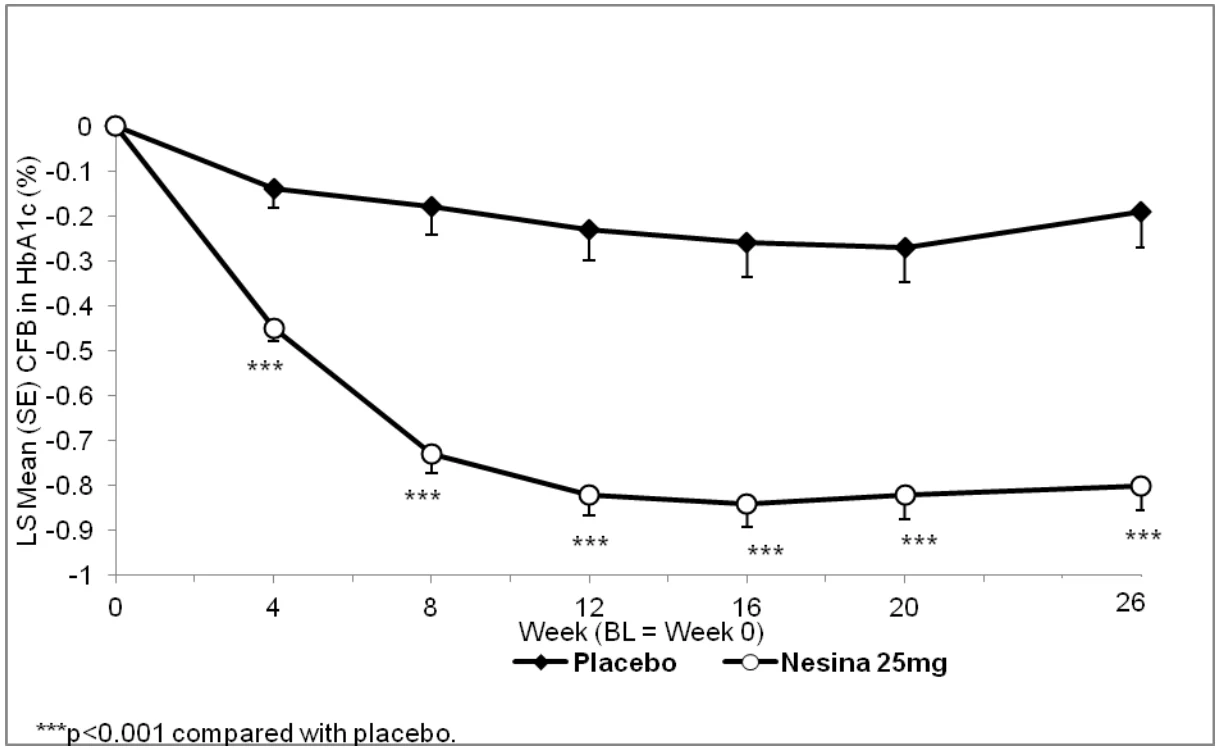
Alogliptin as Add-on Therapy to Pioglitazone with Metformin (01-06-TL-322OPI-004)
The addition of 25 mg alogliptin once daily to 30 mg pioglitazone in combination with metformin hydrochloride therapy (mean dose = 1867.9 mg) resulted in clinically meaningful improvements from baseline in HbA1c at Week 52 that were statistically superior to those produced by 45 mg pioglitazone in combination with metformin hydrochloride therapy (mean dose = 1847.6 mg; Table 10 and Figure 3). The significant reductions in HbA1c observed with 25 mg alogliptin plus 30 mg pioglitazone and metformin were consistent over the entire 52-week treatment period compared to 45 mg pioglitazone and metformin (p<0.001 at all time points). Also, fewer patients receiving 25 mg alogliptin plus 30 mg pioglitazone and metformin (10.9%) required hyperglycemic rescue compared to those receiving 45 mg pioglitazone and metformin (21.7%) during the study (p<0.001). Body weight did not differ significantly between the groups.
Table 10. Glycemic Parameters at Week 52 for Alogliptin as Add-on Combination Therapy with Pioglitazone and Metformin (Study 322OPI-004)
| Alogliptin 25 mg + Metformin hydrochloride (≥1500) + Pioglitazone 30 mg | Metformin hydrochloride (≥1500) + Pioglitazone 45 mg | |
| HbA1c (%) | N=404 | N=399 |
| Baseline (mean) | 8.24 | 8.14 |
| Change from Baseline at Week 52 (Per protocol set)† | -0.70 ± 0.048 (n=303) | -0.29 + 0.048 (n =306) |
| Difference vs Metformin + Pioglitazone† | -0.42% [-infinity, -0.28] | |
| Patients (%) achieving HbA1c ≤7% at Week 52 | 33.2 | 21.3 |
| FPG (mmol/L) | N=404 | N=399 |
| Baseline (mean) | 8.98 | 9.00 |
| Change from Baseline at Week 52 (Full Analysis Set)† | -0.81 ± 0.10 (n=399) | -0.21 + 0.10 (n=396) |
| Difference vs. Metformin + Pioglitazone† | -0.60 mmol/L* <-0.90, -0.32> |
†Least squares mean ± SE
*p<0.001, [ ] shows one-sided 97.5% confidence interval, < > shows two-sided 95% confidence interval
Figure 3. Change from Baseline at Week 26 in HbA1c with Alogliptin 25 mg is Added on to
Pioglitazone with Metformin
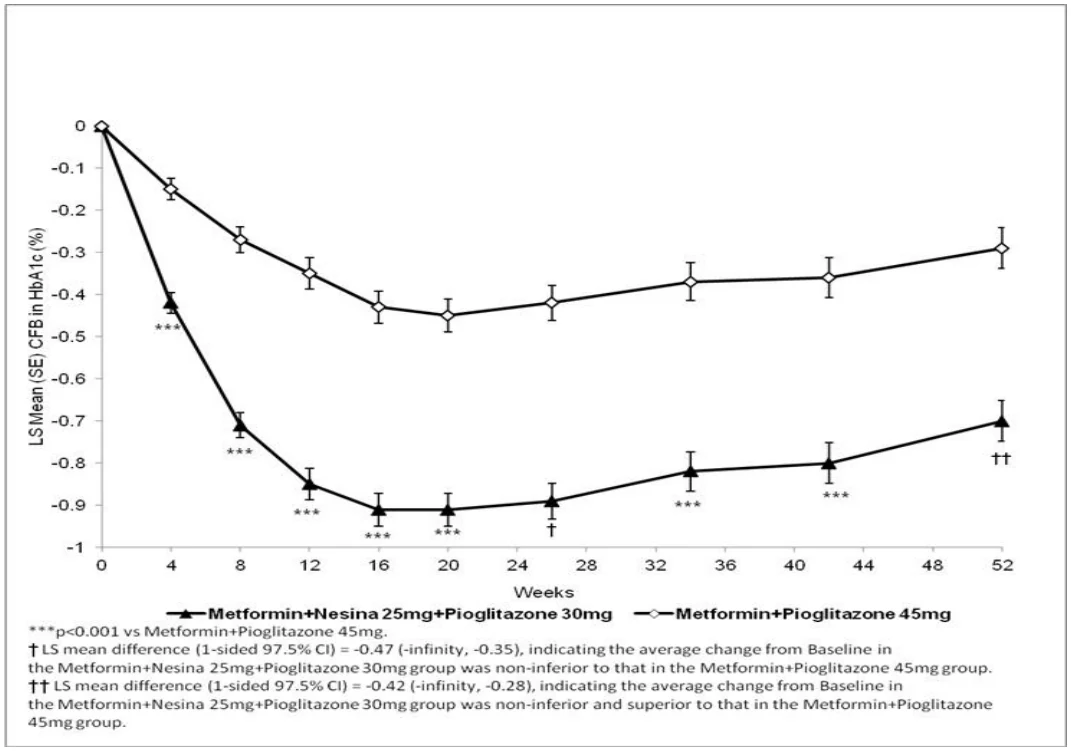
DETAILED PHARMACOLOGY
Alogliptin
Alogliptin exists predominantly as the (R)-enantiomer (>99%) and undergoes little or no enantiomeric conversion to the (S)-enantiomer in vivo. Alogliptin is metabolized to 2 minor metabolites, an N-demethylated metabolite (M-I) and an N-acetylated metabolite (M-II). In vitro, alogliptin is a potent and highly selective inhibitor of DPP-4 activity. Alogliptin- mediated inhibitory activity was not observed against DPP2, DPP-8, DPP-9, PEP, FAP-α, PREP and tryptase. M-I has similar DPP-4 inhibitory activity as alogliptin and displays similar enzyme selectivity. The (S)-enantiomer exhibited minimal DPP-4 inhibitory activity (IC50 = 1045 nM), and M-II showed no inhibition at the highest concentration evaluated.
In vivo, oral administration of alogliptin to mice, rats, dogs, and monkeys inhibited the activity of plasma DPP-4. When administered to animal models of T2DM, alogliptin improved various disease indices including glucose tolerance, glycosylated hemoglobin, and plasma and pancreatic insulin content. Immunohistochemical analysis of pancreatic beta cells isolated from diabetic ob/ob mice administered alogliptin for 4 weeks revealed an increase in the intensity of insulin staining in these cells but with no obvious change in the number or size of beta cells. There were no changes in glucagon staining pancreatic alpha cells.
Non-Clinical Pharmacokinetics
Alogliptin was absorbed rapidly after oral administration with relatively high bioavailability across species (42% to 88%). After oral administration of [14C]alogliptin to rats, a broad tissue distribution was evident, but drug-derived radioactivity did not readily cross the blood/brain barrier. The metabolism of alogliptin was similar and limited in all species evaluated (rat, mouse, dog, monkey, and human). [14C]Alogliptin was excreted rapidly in all species following oral administration. The major route of elimination was via feces, followed by urine.
Clinical Pharmacokinetics
In vitro
In vitro studies indicate that alogliptin is neither an inducer of CYP1A2, CYP2B6, CYP2C9, CYP2C19, and CYP3A4, nor an inhibitor of CYP1A2, CYP2B6, CYP2C8, CYP2C9, CYP2C19, CYP3A4 and CYP2D6 at clinically relevant concentrations.
In vivo
After administration of single, oral doses of up to 800 mg in healthy subjects, alogliptin was rapidly absorbed with peak plasma concentrations occurring 1 to 2 hours (median Tmax) after dosing. Steady state concentrations are achieved with minimal accumulation in both healthy subjects (~1.4-fold accumulation) and in patients with type 2 diabetes mellitus (~1.3-fold accumulation). The inter-subject coefficient of variation for alogliptin AUC was small (17%).
Following a single, 12.5 mg intravenous infusion of alogliptin to healthy subjects, the volume of distribution during the terminal phase was 417 L, indicating that the drug is well distributed into tissues. Protein binding of alogliptin is approximately 20% and is similar in healthy subjects and subjects with renal impairment. Alogliptin does not undergo extensive metabolism as the majority of the dose is excreted as unchanged drug in the urine. Alogliptin is eliminated with a mean half-life of approximately 21 hours.
Clinical Pharmacodynamics
Single-dose administration of alogliptin to healthy subjects resulted in a peak inhibition of DPP-4 within 2 to 3 hours after dosing. The peak inhibition of DPP-4 exceeded 93% across doses of 12.5 mg to 800 mg. Inhibition of DPP-4 remained above 80% at 24 hours for doses greater than or equal to 25 mg. Peak and total exposure over 24 hours to active GLP-1 were 3- to 4-fold greater with alogliptin (at doses of 25 to 200 mg) than placebo.
Administration of 25 mg alogliptin to patients with type 2 diabetes mellitus produced peak inhibition of DPP-4 within 1 to 2 hours and exceeded 93% both after a single 25 mg dose and after 14 days of once-daily dosing. Inhibition of DPP-4 remained above 81% at 24 hours after 14 days of dosing. In clinical studies, postprandial active GLP-1 levels were consistently increasing compared to placebo and postprandial glucose concentrations were consistently reduced compared to placebo.
Pioglitazone
Clinical Effects on Glucose Metabolism
In early single-dose and multiple-dose tolerance studies, conducted in healthy volunteers over the range of pioglitazone 2 mg to 60 mg, assessment of effect was attempted by measuring fasting and postprandial serum levels of glucose, insulin, and C-peptide. As expected in normal volunteers who do not have an underlying resistance to the effects of insulin at the cellular level, no symptoms of hypoglycemia or decreases in serum glucose levels were observed. Despite the small sample sizes in each group and corresponding large variations in group means, statistical analysis provided some evidence of a drug effect in the single-dose study: decreases in the postprandial insulin area under the concentration-time curve. This effect is consistent with a drug-related increase in insulin sensitivity, the drug action seen in diabetic animals. No effect on postprandial glucose or C-peptide was seen. The decrease seen in insulin following single-dose administration was not confirmed following administration for 7 days.
Administration of pioglitazone as monotherapy improved both FBG and postprandial blood glucose; and the hypoglycemic effect was maintained throughout the day. After 14 days of treatment with pioglitazone 15, 30, and 60 mg, measurements of blood glucose generally decreased at all time points throughout the day. The insulin levels, which were examined in conjunction with the glucose levels, showed no changes in diurnal variation before and after treatment with pioglitazone thus confirming that pioglitazone did not promote insulin secretion.
Statistically significant decreases from baseline in FBG (1.2 mmol/L) were noted as early as 2 weeks of treatment with monotherapy pioglitazone 30 mg and 60 mg. In another 8 week study there were dose-dependent reductions in HbA1c and FBG over the dose range of 7.5 mg to 30 mg; the decreases were statistically significant from baseline for FBG following administration of 30 mg (2.3 mmol/L) and for HbA1c following administration of 15 mg (-0.0023) and 30 mg
(-0.0084). In both studies, the decreases generally were greater in patients with greater body mass index (BMI).
Pioglitazone improves insulin sensitivity and splanchnic glucose uptake in insulin-resistant patients with type 2 diabetes. Pioglitazone increases insulin-dependent glucose disposal and enhance cellular responsiveness to insulin and thus, improves dysfunction in glucose homeostasis. The decreased insulin resistance results in lower blood glucose, insulin, and HbA1c.
Improvements in hepatic and peripheral tissue insulin sensitivity with pioglitazone have been shown to correlate with reductions in visceral fat. In one study, insulin sensitivity was determined from an oral glucose tolerance test and a 2-step, euglycemic insulin clamp with 3H-glucose while changes in abdominal fat depots were measured with MRI. Patients with type 2 diabetes receiving a stable sulfonylurea dose or diet alone were treated with pioglitazone 45 mg daily. After 16 weeks, pioglitazone significantly decreased visceral fat 10% (144 to 131 cm2; p<0.05), while increasing extra-abdominal fat, including muscle and subcutaneous fat 11% (301 to 342 cm2; p<0.01). Pioglitazone also significantly reduced both the basal endogenous glucose production and plasma insulin concentration, but significantly increased the glucose metabolic clearance rate (all p<0.05). The reduction in visceral fat correlated with both the reduction in basal insulin resistance and the increase in peripheral tissue insulin sensitivity.
In another study that also used MRI to measure fat stores, patients with type 2 diabetes were randomized to placebo or to pioglitazone 45 mg daily for 18 weeks. Relative to the control, pioglitazone significantly reduced intra-abdominal fat but increased subcutaneous fat and hip circumference while significantly decreasing HbA1c (-0.015), and FBG (-2.4 mmol/L).
Another study has shown that muscle fat content correlates with the clinical efficacy of patients with type 2 diabetes poorly controlled with sulfonylurea. Visceral, subcutaneous, and muscle fat density were determined with CT scanning. After treatment with pioglitazone 30 mg daily for 6 months, multiple regression analysis showed a significant correlation between the improvement in HbA1c and initial thigh and hip muscle density (thigh, R2=0.59; hip, R2=0.72).
Other Clinical Pharmacodynamic Effects
Several clinical studies have also shown that pioglitazone significantly increases LDL particle size. In one study, pioglitazone 15 mg or 30 mg daily for 16 weeks significantly reduced the Atherogenic Index of Plasma, which correlates inversely with LDL particle size. In a second study, pioglitazone 45 mg daily for 6 months significantly reduced Apo-B [from the small, dense (L6), most atherogenic subfraction of LDL], and also increased the average diameter of LDL particles.
Pioglitazone significantly reduces markers of early diabetic nephropathy in patients with type 2 diabetes. In one study, pioglitazone 30 mg daily for 3 months reduced mean urinary albumin excretion (UAE) from 142.8 to 48.4 µg/min (p<0.01), and mean urinary endothelin (ET)-1 levels from 8.6 to 3.4 ng/g urinary creatinine (p<0.01). In a second study, normotensive patients with type 2 diabetes and healthy controls were randomized to pioglitazone 30 mg daily or to placebo for 6 months. At baseline, urinary podocytes were present in the urine of 60.7% of the patients with diabetes. Pioglitazone significantly reduced urinary albumin excretion from 96.7 to 39 µg/min (p<0.05), and urinary podocytes from 0.9 to 0.1 cells/min (p<0.001) in the patients with type 2 diabetes.
TOXICOLOGY
Alogliptin and Pioglitazone in Combination
Animal studies of up to 13-weeks duration have been conducted with the combined substances in OSENI™.
Concomitant treatment with alogliptin and pioglitazone did not produce new toxicities, nor did it exacerbate any pioglitazone-related findings. No effects on the toxicokinetics of either compound were observed.
Combination treatment with alogliptin and pioglitazone to pregnant rats slightly augmented pioglitazone-related fetal effects of growth retardation and visceral variations, but did not induce embryo-fetal mortality or teratogenicity.
The following data are findings from studies performed with alogliptin or pioglitazone individually.
Alogliptin
Nonclinical data reveal no special hazard for humans based on conventional studies of safety pharmacology, repeated dose toxicity, genotoxicity, carcinogenic potential, and reproduction and development toxicity.
The no-observed-adverse-effect level (NOAEL) in the repeated dose toxicity studies in rats and dogs up to 26- and 39-weeks in duration, respectively, produced exposure margins that were approximately 147- and 227-fold, respectively, the exposure in humans at the recommended total daily dose of 25 mg alogliptin.
Acute Toxicity
Alogliptin
Alogliptin was well tolerated by study animals. The single lethal oral dose of alogliptin in rats and dogs exceeded 1471 mg/kg and 368 mg/kg, respectively.
Pioglitazone
Comparing the acute intraperitoneal toxicity of pioglitazone (HCl) to four of its metabolites (M-II, M-III, M-IV, and M-V) revealed comparable toxicity for pioglitazone, M-II and M-III and less toxicity for M-IV and M-V. Overall, data indicated that pioglitazone (HCl) has minimal acute oral or intravenous toxicity in mice, rats and monkeys, that most of the observed toxicity is associated with the vehicle used, and that two metabolites (M-II and M-III) exhibit comparable toxicity to the parent drug.
Chronic Toxicity
Alogliptin
The toxicity potential of alogliptin was evaluated in a series of repeated dose toxicity studies in rats and dogs of up to 26 and 39 weeks in duration, respectively. In rats, the main target organs of toxicity of alogliptin were the liver, kidney and urinary bladder. Moderate liver toxicity was noted at doses of ≥900 mg/kg/day as reflected by elevated serum AST, ALT and/or ALP activities, increased liver weights, as well as minimal to mild centrilobular hepatocellular hypertrophy. At doses of ≥1333 mg/kg/day, in addition to the liver, toxicities on kidney and urinary bladder were evident. In the kidneys, renal tubular degeneration and/or regeneration and renal tubular dilatation and/or necrosis were observed. In the urinary bladder, transitional cell hyperplasia (simple or papillary/nodular), hemorrhage, and inflammation, erosion/ulceration, and dilatation were noted. The urinary bladder and/or kidney complications contributed in part to an increase in mortality in rats from 1333 to 2000 mg/kg/day. The no-observed-adverse-effect-level in rats was 400 mg/kg, approximately 147 times the exposure in humans at the maximum recommended human adult dose (MRHD) of 25 mg alogliptin. In dogs, reddened ears and facial swelling, without associated histopathological changes, were noted at doses of ≥30 mg/kg/day. The no-observed-adverse-effect-level in dogs derived from the 39week study was 100 mg/kg/day, approximately 112 times the exposure in humans at the MRHD.
Pioglitazone
Heart enlargement has been observed in mice (100 mg/kg), rats (4 mg/kg and above) and dogs (3 mg/kg) treated orally with pioglitazone HCl (approximately 11, 1, and 2 times the maximum recommended human oral dose for mice, rat, and dogs, respectively, based on mg/m2). In a one-year rat study, drug-related early death due to apparent heart dysfunction occurred at an oral dose of 160 mg/kg/day (approximately 35 times the maximum recommended human oral dose based on mg/m2). Heart enlargement was seen in a 13-week study in monkeys at oral doses of 8.9 mg/kg and above (approximately 4 times the maximum recommended human oral dose based on mg/m2), but not in a 52-week study at oral doses up to 32 mg/kg (approximately 13 times the maximum recommended human oral dose based on mg/m2).
Mutagenicity
Alogliptin
Alogliptin was negative in a battery of genetic toxicology studies, including the Ames bacterial assay (microbial mutagenesis test), an in vitro cytogenetic assay in mouse lymphoma cells, and an in vivo mouse micronucleus study.
Pioglitazone
Pioglitazone HCl was not mutagenic in a battery of genetic toxicology studies, including the Ames bacterial assay, a mammalian cell forward gene mutation assay (CHO/HPRT and AS52/XPRT), an in vitro cytogenetics assay using CHL cells, an unscheduled DNA synthesis assay, and an in vivo micronucleus assay.
Carcinogenicity
Alogliptin
A two-year carcinogenicity study was conducted in rats at oral doses of 75, 400 and 800 mg/kg/day alogliptin. No treatment-related tumors were observed in either male or female rats given 75 mg/kg/day alogliptin (approximately 27 times human exposure at the MRHD). Increases in the combined incidence of C-cell adenoma and/or carcinoma were only observed in male rats at doses of ≥400 mg/kg/day (≥245 times human exposure at the MRHD). Increases in non-neoplastic histopathological changes in the liver, lung, urinary bladder, testes, epididymis, and prostate were noted in rats at doses that were at least 240 times the exposure in humans at the MRHD.
A two-year carcinogenicity study was conducted in mice at oral doses of 50, 150 and 300 mg/kg/day alogliptin. No treatment-related tumors were observed in either male or female mice at doses up to 300 mg/kg/day, approximately 51 times the exposure in humans at the MRHD.
Pioglitazone
During prospective evaluation of urinary cytology involving more than 1800 patients receiving pioglitazone in clinical trials up to one year in duration, no new cases of bladder tumours were identified. Occasionally, abnormal urinary cytology results indicating possible malignancy were observed in both pioglitazone-treated (0.72%) and placebo-treated (0.88%) patients.
Reproduction Toxicity
Alogliptin
No adverse effects of alogliptin were observed upon fertility, reproductive performance, or early embryonic development in rats given alogliptin orally at doses up to 500 mg/kg/day (up to approximately 191 times human exposure at the MRHD) prior to and throughout mating. Although fertility was not affected, a slight increase in the percent of abnormal sperm was noted at 1000 mg/kg/day (approximately 392 times human exposure at the MRHD).
Pioglitazone
No adverse effects upon fertility were observed in male and female rats at oral doses up to 40 mg/kg pioglitazone HCl daily prior to and throughout mating and gestation (approximately 9 times the maximum recommended human oral dose based on mg/m2).
Development
Alogliptin
Placental transfer of alogliptin occurs in rats following oral dosing. Alogliptin was not teratogenic in rabbits and rats at oral doses up to 200 and 500 mg/kg/day (up to approximately 149 and 180 times human exposure at the MRHD) given during organogenesis, respectively. Higher doses of alogliptin resulted in maternal toxicity, and were associated with delayed and/or lack of ossification of bones and decreased fetal body weights. The non-observed-adverse-effect-level for embryo-fetal development in rabbits and rats was 200 mg/kg/day and 500 mg/kg/day (approximately 149 and 180 times human exposure at the MRHD), respectively.
Alogliptin at oral doses up to 250 mg/kg/day (up to approximately 95 times human exposure at the MRHD) given to pregnant rats from gestation Day 6 to lactation Day 20 did not harm the developing embryo or affect offspring growth and development. Higher doses of alogliptin, providing exposures exceeding 200 times the exposure in humans at the MRHD, decreased F1 offspring body weights and induced some developmental effects.
No alogliptin-related effects were observed in juvenile rats following repeated oral dosing for 4 and 8 weeks at doses up to 300 mg/kg/day (up to approximately 63 and 75 times human exposure at the MRHD, respectively).
Pioglitazone
Pioglitazone was not teratogenic in rats at oral doses up to 80 mg/kg or in rabbits given up to 160 mg/kg during organogenesis (approximately 17 and 40 times the maximum recommended human oral dose based on mg/m2, respectively). Delayed parturition and embryotoxicity (as evidenced by increased post-implantation losses, delayed development and reduced fetal weights) were observed in rats at oral doses of 40 mg/kg/day and above (approximately 10 times the maximum recommended human oral dose based on mg/m2). No functional or behavioural toxicity was observed in offspring of rats. In rabbits, embryotoxicity was observed at an oral dose of 160 mg/kg (approximately 40 times the maximum recommended human oral dose based on mg/m2). Delayed postnatal development, attributed to decreased body weight, was observed in offspring of rats at oral doses of 10 mg/kg and above during late gestation and lactation periods (approximately 2 times the maximum recommended human oral dose based on mg/m2).
Safety Pharmacology
The cardiovascular safety of alogliptin was evaluated. Alogliptin was not observed to inhibit hERG channel tail currents in stably transfected HEK-293 and CHO cells, and exhibited no effect on action potential parameters in isolated canine cardiac Purkinje fibres. In conscious telemetered beagle dogs, cardiovascular function was assessed following administration of single oral doses of 0, 7.5, 15, and 25 mg/kg alogliptin. No effects on heart rate, blood pressure, cardiac troponin levels (I and T isoforms) or ECG interval parameters were observed.
Respiratory safety was evaluated in rats following a single oral dose 0, 10, 30 and 100 mg/kg alogliptin. There were no alterations in respiratory rate, minute volume or tidal volume.
REFERENCES
Alogliptin
- 1. Moritoh Y, Takeuchi K, Hazama M. Combination treatment with alogliptin and voglibose prevents the development of diabetes and preserves islet function in prediabetic db/db mice. Diabetes Obes Metab 2010;12:(3):224-233.
- 2. Asakawa T, Moritoh Y, Kataoka O, Suzuki N, Takeuchi K, Odaka H. A novel dipeptidyl peptidase-4 inhibitor, alogliptin (SYR-322), is effective in diabetic rats with sulfonylurea-induced secondary failure. Life Sci 2009;85:(3 Pt 4):122-126.
- 3. Moritoh Y, Takeuchi K, Asakawa T, Kataoka O, Odaka H. Combining a dipeptidyl peptidase-4 inhibitor, alogliptin, with pioglitazone improves glycaemic control, lipid profiles and beta-cell function in db/db mice. Br J Pharmacol 2009;157:(3):415-426.
- 4. Moritoh Y, Takeuchi K, Asakawa T, Kataoka O, Odaka H. The dipeptidyl peptidase-4 inhibitor alogliptin in combination with pioglitazone improves glycemic control, lipid profiles, and increases pancreatic insulin content in ob/ob mice. Eur J Pharmacol 2009;602:(2):448-454.
- 5. Lee B, Shi L, Kassel DB, Asakawa T, Takeuchi K, Christopher RC. Pharmacokinetic, pharmacodynamic and efficacy profiles of alogliptin, a novel inhibitor of dipeptidyl peptidase-4, in rats, dogs, and monkeys. Eur J Pharmacol 2008;589:306-314.
- 6. Moritoh Y, Takeuchi K, Asakawa T, Kataoka O, Odaka H. Chronic administration of alogliptin, a novel, potent, and highly selective dipeptidyl peptidase-4 inhibitor, improves glycemic control and beta-cell function in obese diabetic ob/ob mice. Eur J Pharmacol 2008;588:(2):325-332.
- 7. Gwaltney II S L. Medicinal chemistry approaches to the inhibition of dipeptidyl peptidase IV. Current Topics in Medicinal Chemistry 2008; 8:1545-1552.
- 8. Feng J, Zhang Z, Wallace MB, Stafford JA, Kaldor SW, Kassel DB, et al. Discovery of alogliptin: a potent, selective, bioavailable, and efficacious inhibitor of dipeptidyl peptidase IV. J Med Chem 2007;(10):2297-2300.
Alogliptin-Pioglitazone FDC
- 1. DeFronzo RA, Burant CF, Fleck P, Wilson C, Mekki Q, Pratley RE. Efficacy and tolerability of the DPP-4 inhibitor alogliptin combined with pioglitazone, in metformin-treated patients with type 2 diabetes. J Clin Endocrinol Metab. 2012;97(5):1615-22.
- 2. Bosi E, Ellis G, Wilson CA, Fleck PR. Alogliptin as a third oral antidiabetic drug in patients with type 2 diabetes and inadequate glycaemic control on metformin and pioglitazone: a 52-week, randomized, double-blind, active-controlled, parallel-group study. Diabetes Obes Metab. 2011;13(12):1088-96.