


Product Monograph - Osnuvo
RECENT MAJOR LABEL CHANGES
| 3 Serious Warnings and Precautions Box | 09/2021 |
| 4 Dosage and administration, 4.1 Dosing Considerations | 09/2021 |
| 7 Warning and Precautions | 09/2021 |
TABLE OF CONTENTS
Sections or subsections that are not applicable at the time of authorization are not listed.
RECENT MAJOR LABEL CHANGES............................................................................................ 2
TABLE OF CONTENTS .............................................................................................................. 2
PART I: HEALTH PROFESSIONAL INFORMATION ..................................................................... 4
1 INDICATIONS .............................................................................................................. 4
1.1 Pediatrics .......................................................................................................... 4
1.2 Geriatrics........................................................................................................... 4
2 CONTRAINDICATIONS ................................................................................................. 4
4 DOSAGE AND ADMINISTRATION................................................................................. 5
4.1 Dosing Considerations ....................................................................................... 5
4.2 Recommended Dose and Dosage Adjustment..................................................... 5
4.3 Administration................................................................................................... 5
4.4 Missed Dose ...................................................................................................... 6
5 OVERDOSAGE ............................................................................................................. 6
6 DOSAGE FORMS, STRENGTHS, COMPOSITION AND PACKAGING ................................. 7
7 WARNINGS AND PRECAUTIONS .................................................................................. 7
7.1 Special Populations ............................................................................................ 9
7.1.1 Pregnant Women ......................................................................................... 9
7.1.2 Breast-feeding.............................................................................................. 9
7.1.3 Pediatrics ..................................................................................................... 9
7.1.4 Geriatrics ..................................................................................................... 9
8 ADVERSE REACTIONS ................................................................................................ 10
8.1 Adverse Reaction Overview.............................................................................. 10
8.2 Clinical Trial Adverse Reactions ........................................................................ 10
8.4 Abnormal Laboratory Findings: Hematologic, Clinical Chemistry and Other Quantitative Data ...................................................................................................... 14
8.5 Post-Market Adverse Reactions........................................................................ 15
9 DRUG INTERACTIONS................................................................................................ 15
9.2 Drug Interactions Overview.............................................................................. 15
9.4 Drug-Drug Interactions .................................................................................... 16
9.5 Drug-Food Interactions .................................................................................... 16
9.6 Drug-Herb Interactions .................................................................................... 16
9.7 Drug-Laboratory Test Interactions .................................................................... 17
10 CLINICAL PHARMACOLOGY ....................................................................................... 17
10.1 Mechanism of Action.................................................................................. 17
10.2 Pharmacodynamics .................................................................................... 17
10.3 Pharmacokinetics ....................................................................................... 20
11 STORAGE, STABILITY AND DISPOSAL ......................................................................... 21
12 SPECIAL HANDLING INSTRUCTIONS........................................................................... 21
PART II: SCIENTIFIC INFORMATION ...................................................................................... 23
13 PHARMACEUTICAL INFORMATION............................................................................ 23
14 CLINICAL TRIALS........................................................................................................ 24
14.1 Trial Design and Study Demographics ......................................................... 24
14.2 Study Results ............................................................................................. 25
14.3 Comparative Bioavailability Studies ............................................................ 26
14.4 Immunogenicity ......................................................................................... 26
14.5 Clinical Trials - Reference Biologic Drug ....................................................... 26
15 MICROBIOLOGY ........................................................................................................ 39
16 NON-CLINICAL TOXICOLOGY ..................................................................................... 39
16.1 Comparative Non-Clinical Pharmacology and Toxicology ............................. 41
16.1.1 Comparative Non-Clinical Pharmacodynamics............................................. 41
16.1.2 Comparative Toxicology ............................................................................. 41
17 SUPPORTING PRODUCT MONOGRAPHS.................................................................... 41
PATIENT MEDICATION INFORMATION ................................................................................. 42
Osnuvo [teriparatide (rDNA origin) injection] is a biosimilar biologic drug (biosimilar) to Forteo®1.
PART I: HEALTH PROFESSIONAL INFORMATION
1 INDICATIONS
Indications have been granted on the basis of similarity between Osnuvo and the reference biologic drug Forteo.
Osnuvo [teriparatide (rDNA origin) injection] is indicated:
- For the treatment of postmenopausal women with severe osteoporosis who are at high risk of fracture or who have failed or are intolerant to previous osteoporosis therapy.
- To increase bone mass in men with primary or hypogonadal severe osteoporosis who have failed or are intolerant to previous osteoporosis therapy. The effects of teriparatide on risk for fracture in men have not been demonstrated.
- For the treatment of osteoporosis associated with sustained systemic glucocorticoid therapy in men and women who are at increased risk for fracture.
The diagnosis of severe osteoporosis may be confirmed by the finding of low bone mass or the presence or history of osteoporotic fracture. While non-vertebral fractures are usually clinically apparent, vertebral fractures also may be manifested by back pain, height loss, or kyphosis.
1.1 Pediatrics
Pediatrics (< 18 years of age): The safety and efficacy of Osnuvo have not been studied in pediatric populations. Osnuvo is not indicated for use in pediatric patients or young adults with open epiphysis (see 2 CONTRAINDICATIONS and 7 WARNINGS AND PRECAUTIONS, 7.1 Special Populations, 7.1.3Pediatrics).
1.2 Geriatrics
Geriatrics (≥ 65 years of age): Evidence from clinical studies and experience suggests that use of teriparatide (rDNA origin) in the geriatric population is not associated with differences in safety or effectiveness (see 7 WARNINGS AND PRECAUTIONS, 7.1 Special Populations7.1.4 Geriatrics).
2 CONTRAINDICATIONS
Osnuvo is contraindicated for:
- Hypersensitivity to teriparatideor to any ingredient in the formulation, including any non-medicinal ingredient, or component of the container. For a complete listing, see 6 DOSAGE FORMS, STRENGTHS, COMPOSITION AND PACKAGING.
- Pre-existing hypercalcemia.
- Severe renal impairment.
1 Forteo is a registered trademark for teriparatide (rDNA origin) injection of Eli Lilly and Company.
- Metabolic bone diseases other than primary or glucocorticoid-induced osteoporosis (including hyperparathyroidism and Paget's disease of the bone).
- Unexplained elevations of alkaline phosphatase.
- Prior external beam or implant radiation therapy involving the skeleton.
- Bone metastases or a history of skeletal malignancies.
- Pregnancy and nursing mothers (see 7 WARNINGS AND PRECAUTIONS, 7.1 Special Populations).
- Pediatric patients or young adults with open epiphysis (see 7 WARNINGS AND PRECAUTIONS, 7.1 Special Populations).
4 DOSAGE AND ADMINISTRATION
4.1 Dosing Considerations
- Osnuvo should be administered initially under circumstances in which the patient can sit or lie down if symptoms of orthostatic hypotension occur.
- In general, the maximum lifetime exposure to teriparatide for an individual patient should be 24 months (see 7 WARNINGS AND PRECAUTIONS, General). Use of Osnuvo for more than 24 months during a patient’s lifetime should only be considered if a patient remains at or has returned to having a high risk for fracture.
- Patients should receive supplemental calcium and vitamin D if dietary intake is inadequate.
- Osnuvo should not be used in patients with severe renal impairment (see 2 CONTRAINDICATIONS).
- No data are available on the safety or efficacy of intravenous or intramuscular injection of Osnuvo.
- Following cessation of therapy with teriparatide, patients may be continued on other osteoporosis therapies.
4.2 Recommended Dose and Dosage Adjustment
The recommended dosage of Osnuvo is 20 mcg once a day. Osnuvo should be administered as a subcutaneous injection into the thigh or abdominal wall.
Health Canada has not authorized an indication for use in pediatric patients < 18 years of age or young adults with open epiphysis (see 2 CONTRAINDICATIONS and 7 WARNINGS AND PRECAUTIONS, 7.1 Special Populations, 7.1.3 Pediatrics).
In geriatric patients ≥ 65 years of age, no dose adjustment is required (see 1 INDICATIONS, 1.2 Geriatrics and 7 WARNINGS AND PRECAUTIONS, 7.1 Special Populations, 7.1.4 Geriatrics).
4.3 Administration
- Osnuvo is a clear and colourless solution for injection. Osnuvo should not be used if the solution is cloudy, coloured or contains visible particles.
- Osnuvo is supplied in a cartridge. One cartridge contains 2.4mL of solution with 600 mcg of teriparatide (rDNA origin) (corresponding to 250 mcg/mL).
- Osnuvo should be administered with the dedicated, reusable, multidose medicine delivery system (“pen”) and the injection needles which are listed as compatible in the instructions which are provided with the pen. The pen and injection needles are not included with Osnuvo. Osnuvo must not be used with any other pen.
- Patients must be trained to use the proper injection techniques (see 12 SPECIAL HANDLING INSTRUCTIONS). An instruction for use which is included in the carton of the delivery system is also available to instruct patients on the correct use of the pen.
- Before using the pen device for the first time, the patient should read and understand the instructions.
- Each cartridge and pen should be used by only one patient. The pen can be used with compatible pen needles. These are listed in the instruction for use for the pen. A new, sterile pen needle must be used for every injection.
- Batch (Lot) number of the cartridge and the date of first injection should be recorded by the patient on a calendar.
- After each injection, Osnuvo must be returned to the refrigerator. Once used, the cartridge should not be removed from the pen during the 28 days of usage.
- Expiry date on cartridge label must always be checked before inserting the cartridge into the pen. To avoid medication errors, make sure that there is at least one month between the date when starting to use a new cartridge and the expiry date.
- Osnuvo must not be transferred to a syringe. Empty cartridges must not be refilled.
4.4 Missed Dose
If a dose of Osnuvo was missed or it could not be taken at the usual time, it should be administered as soon as possible. Do not use a double dose to make up for a forgotten dose. Do not use more than one injection in the same day.
5 OVERDOSAGE
No cases of overdose were reported during clinical trials with teriparatide (rDNA origin) injection. Teriparatide (rDNA origin) injection has been administered in single doses of up to 100 mcg and in repeated doses of up to 60 mcg/day for 6 weeks. The effects of overdose that might be expected include a delayed hypercalcemic effect and risk of orthostatic hypotension. Nausea, vomiting, dizziness, and headache might also occur.
In post-marketing spontaneous reports, there have been cases of medication error in which the entire contents (up to 800 mcg) of the teriparatide (rDNA origin) injection pen have been administered as a single dose. Transient events reported have included nausea, weakness/lethargy and hypotension. In some cases, no adverse events occurred as a result of the overdose. No fatalities associated with overdose have been reported.
Overdose management - There is no specific antidote for teriparatide (rDNA origin). Treatment of suspected overdose should include discontinuation of teriparatide, monitoring of serum calcium and phosphorus, and implementation of appropriate supportive measures, such as hydration.
| For management of a suspected drug overdose, contact your regional poison control centre. |
6 DOSAGE FORMS, STRENGTHS, COMPOSITION AND PACKAGING
Table 1 Dosage Forms, Strengths, Composition and Packaging
Osnuvo is supplied in a 3 mL cartridge (siliconised Type I glass), with a plunger stopper (halobutyl rubber) and disc seal (aluminum and rubber liner seals).
Each cartridge contains at least 28 doses of 20 mcg (per 80 mcL). This corresponds to 2.4 mL of teriparatide (rDNA origin) solution containing 600 micrograms of teriparatide (rDNA origin).
1 or 3 cartridge(s) are packed in plastic tray sealed with lid foil and a carton.
Not all pack sizes may be marketed.
Description
Osnuvo [teriparatide (rDNS origin) injection] contains recombinant human parathyroid hormone (1-34), [rhPTH(1-34)], which has an identical sequence to the 34 N-terminal amino acids (the biologically active region) of the 84-amino acid human parathyroid hormone.
Teriparatide (rDNA origin) is manufactured using a strain of E. coli modified by recombinant DNA technology.
7 WARNINGS AND PRECAUTIONS
General
The safety and efficacy of teriparatide (rDNA origin) injection have been evaluated up to 2 years in four studies GHAC, GHAJ, GHBJ, and GHCA (median 19 months in women in study GHAC and 10 months in men in study GHAJ). An additional clinical study (GHBZ) evaluated the safety and efficacy of teriparatide (rDNA origin) injection for up to 3 years. In general, the maximum lifetime exposure to teriparatide (rDNA origin) injection for an individual patient is 24 months. Use of teriparatide (rDNA origin) injection for more than 24 months during a patient’s lifetime should only be considered if a patient remains at or has returned to having a high risk for fracture.
In clinical trials, the frequency of urolithiasis was similar in patients treated with teriparatide (rDNA origin) injection and placebo. However, teriparatide (rDNA origin) injection has not been studied in patients with active urolithiasis. If active urolithiasis or pre-existing hypercalciuria are suspected, measurement of urinary calcium excretion should be considered. Teriparatide (rDNA origin) injection should be used with caution in patients with active or recent urolithiasis because of the potential to exacerbate this condition.
| Route of Administration | Dosage Form / Strength/Composition | Non-medicinal Ingredients |
| Subcutaneous Injection | Sterile Solution/ 250 mcg/mL (600 mcg in 2.4 mL solution) | Acetic acid (glacial), Mannitol, Metacresol, Hydrochloric acid (for pH adjustment), Sodium acetate (trihydrate), Sodium hydroxide (for pH adjustment), Water for injections |
Carcinogenesis and Mutagenesis
Two carcinogenicity bioassays were conducted in Fischer 344 rats. In these studies, rats were given daily subcutaneous teriparatide (rDNA origin) injections at doses that resulted in systemic exposures between 3 and 60 times higher than the systemic exposure observed in humans following a subcutaneous dose of 20 mcg (based on AUC comparison). Teriparatide (rDNA origin) treatment resulted in increases in the incidence of bone tumours, including osteosarcoma, that occurred in association with dose-dependant exaggerated increases in bone mass. The studies showed that the occurrence of bone tumours was dependent upon dose and duration of exposure.
Osteosarcoma was not observed in teriparatide (rDNA origin) injection clinical trials. Though osteosarcoma has been reported in a post-market setting, increased incidence of osteosarcoma has not been observed with teriparatide (rDNA origin) injection treatment in observational studies.
Teriparatide (rDNA origin) injection should not be prescribed to patients who are at increased baseline risk for osteosarcoma (e.g. Paget’s disease, pediatric and young adult patients with open epiphyses, history of radiation therapy involving the skeleton, etc.).
Driving and Operating Machinery
Due caution should be exercised when driving or operating a vehicle or potentially dangerous machinery (see also 7 WARNINGS AND PRECAUTIONS, Hypotension below).
Hypotension
In short-term clinical studies with teriparatide (rDNA origin), isolated episodes of transient orthostatic hypotension were observed. Typically, an event began within 4 hours of dosing and spontaneously resolved within a few minutes to a few hours. When transient orthostatic hypotension occurred, it happened within the first several doses, was relieved by placing subjects in a reclining position, and did not preclude continued treatment. Patients experiencing symptoms associated with hypotension should not drive or operate machinery until they become asymptomatic.
Monitoring and Laboratory Tests
Serum calcium: Teriparatide (rDNA origin) injection transiently increases serum calcium, with the maximal effect observed at approximately 4 to 6 hours post-dose. By 16 hours post-dose, serum calcium generally has returned to or near baseline. These effects should be kept in mind because serum calcium concentrations observed within 16 hours after a dose may reflect the pharmacologic effect of teriparatide (rDNA origin). Persistent hypercalcemia was not observed in clinical trials with teriparatide (rDNA origin) injection. If persistent hypercalcemia is detected, treatment with teriparatide (rDNA origin) injection should be discontinued pending further evaluation of the cause of hypercalcemia.
Patients known to have an underlying hypercalcemic disorder, such as primary hyperparathyroidism, should not be treated with teriparatide (see 2 CONTRAINDICATIONS).
- Urinary calcium: Teriparatide (rDNA origin) injection increases urinary calcium excretion, but the frequency of hypercalciuria in clinical trials was similar for patients treated with teriparatide (rDNA origin) injection and placebo (see 10 ACTION AND CLINICAL PHARMACOLOGY, 10.2 Pharmacodynamics, Urinary calcium excretion).
Renal function: No clinically important adverse renal effects were observed in clinical studies. Assessments included creatinine clearance; measurements of blood urea nitrogen (BUN), creatinine, and electrolytes in serum; urine specific gravity and pH; and examination of urine sediment. Long-term evaluation of patients with severe renal insufficiency, patients undergoing acute or chronic dialysis, or patients who have functioning renal transplants has not been
- performed. Caution should be exercised in patients with moderate and severe renal impairment.
- Serum uric acid: Teriparatide (rDNA origin) injection increases serum uric acid concentrations. In clinical trials, 2.8% of teriparatide (rDNA origin) injection patients had serum uric acid concentrations above the upper limit of normal compared with 0.7% of placebo patients. However, the hyperuricemia did not result in an increase in gout, arthralgia, or urolithiasis.
7.1 Special Populations
7.1.1 Pregnant Women
Osnuvo should not be administered to women who are pregnant. The effect of Osnuvo treatment on human fetal development has not been studied. Women of childbearing potential should use effective methods of contraception during use of Osnuvo. Should pregnancy occur, Osnuvo should be discontinued (see 2 CONTRAINDICATIONS).
7.1.2 Breast-feeding
There have been no clinical studies to determine if teriparatide (rDNA origin) is secreted into breast milk. Osnuvo should not be administered to nursing mothers (see 2 CONTRAINDICATIONS).
7.1.3 Pediatrics
The safety and efficacy of teriparatide (rDNA origin) injection have not been studied in pediatric populations. Osnuvo should not be used in children (<18 years of age) or young adults with open epiphyses (see 2 CONTRAINDICATIONS).
7.1.4 Geriatrics
Of the patients receiving teriparatide (rDNA origin) injection in the osteoporosis treatment trial of 1637 postmenopausal women, 75% were 65 years and over and 23% were 75 years and over. No significant differences in bone response and no new safety findings were seen in geriatric patients receiving teriparatide (rDNA origin) as compared with younger patients.
Of the patients receiving teriparatide (rDNA origin) injection in the osteoporosis treatment trial of 437 men, 39% were 65 years and over and 13% were 75 years and over. Fracture efficacy endpoints have not been evaluated in these patients. No significant differences in bone response and no new safety findings were seen in geriatric patients receiving teriparatide (rDNA origin) as compared with younger patients.
Of the 214 patients who received teriparatide (rDNA origin) injection in an active comparator trial of glucocorticoid-induced osteoporosis, 28% were 65 years and over and 9% were 75 years and over. No significant differences in bone response and no new safety findings were seen in geriatric patients (≥ 65 years) receiving teriparatide (rDNA origin) as compared with younger patients.
8 ADVERSE REACTIONS
The adverse drug reaction profiles reported in clinical studies that compared Osnuvo to Forteo (the reference biologic drug) were comparable. The description of adverse reactions in this section is based on clinical experience with the reference biologic drug.
8.1 Adverse Reaction Overview
The safety of teriparatide (rDNA origin) injection has been evaluated in 24 clinical trials that enrolled over 2800 women and men. Four long-term, Phase 3 clinical trials included one large placebo-controlled, double-blind multicentre trial with 1637 postmenopausal women, one placebo-controlled, double-blind multicentre trial with 437 men, and two active-controlled trials including 393 postmenopausal women. Teriparatide doses ranged from 5 to 100 mcg/day in short-term trials and 20 to 40 mcg/day in the long-term trials. A total of 1943 of the patients studied received teriparatide (rDNA origin), including 815 patients at 20 mcg/day and 1107 patients at 40 mcg/day. In the long-term clinical trials, 1137 patients were exposed to teriparatide (rDNA origin) for greater than 1 year (500 at 20 mcg/day and 637 at 40 mcg/day). The maximum exposure duration to teriparatide (rDNA origin) was 2 years. Adverse events associated with teriparatide (rDNA origin) injection usually were mild and generally did not require discontinuation of therapy.
The safety of teriparatide (rDNA origin) has also been evaluated in a Phase 3 randomised, double blind, double-dummy, active controlled clinical trial that enrolled 428 men and women with glucocorticoid-induced osteoporosis. Patients received either teriparatide (rDNA origin) 20 mcg/day plus oral placebo (n=214) or alendronate 10 mg/day plus injectable placebo (n=214) for up to 3 years.
An additional Phase 3, randomised, multinational, multicentre, open-label study that enrolled 868 patients evaluated safety and efficacy of up to 24 months continuous treatment with 20 mcg/day of teriparatide (rDNA origin).
8.2 Clinical Trial Adverse Reactions
Clinical trials are conducted under very specific conditions. The adverse reaction rates observed in the clinical trials; therefore, may not reflect the rates observed in practice and should not be compared to the rates in the clinical trials of another drug. Adverse reaction information from clinical trials may be useful in identifying and approximating rates of adverse drug reactions in real-world use.
In the two Phase 3, placebo-controlled clinical trials in men and postmenopausal women, early discontinuation due to an adverse event occurred in 5.6% of patients assigned to placebo and 7.1% of patients assigned to teriparatide (rDNA origin) injection.
Table 2 lists adverse events occurring in the Phase 3, placebo-controlled clinical trials in postmenopausal women and in men at a frequency ≥ 2.0% in the teriparatide (rDNA origin) groups and in more teriparatide-treated patients than in placebo-treated patients. Adverse events are shown without attribution of causality.
Table 2 Adverse Events in Placebo-Controlled Clinical Trials (Irrespective of Causality)a
Teriparatide (rDNA origin) Injection n = 691 (% patients) | Placebo n = 691 (% patients) | |
|---|---|---|
| Body as a Whole | ||
| Pain | 21.3% | 20.5% |
| Asthenia | 8.7% | 6.8% |
| Headache | 7.5% | 7.4% |
| Neck Pain | 3.0% | 2.7% |
| Cardiovascular | ||
| Hypertension | 7.1% | 6.8% |
| Syncope | 2.6% | 1.4% |
| Angina Pectoris | 2.5% | 1.6% |
| Digestive System | ||
| Nausea | 8.5% | 6.7% |
| Constipation | 5.4% | 4.5% |
| Dyspepsia | 5.2% | 4.1% |
| Diarrhea | 5.1% | 4.6% |
| Vomiting | 3.0% | 2.3% |
| Gastrointestinal Disorder | 2.3% | 2.0% |
| Tooth Disorder | 2.0% | 1.3% |
| Metabolic | ||
| Hyperuricemia | 2.8% | 0.7% |
| Musculoskeletal | ||
| Arthralgia | 10.1% | 8.4% |
| Leg Cramps | 2.6% | 1.3% |
| Nervous System | ||
| Dizziness | 8.0% | 5.4% |
| Insomnia | 4.3% | 3.6% |
| Depression | 4.1% | 2.7% |
| Vertigo | 3.8% | 2.7% |
Teriparatide (rDNA origin) Injection n = 691 (% patients) | Placebo n = 691 (% patients) | |
|---|---|---|
| Respiratory System | ||
| Rhinitis | 9.6% | 8.8% |
| Cough Increased | 6.4% | 5.5% |
| Pharyngitis | 5.5% | 4.8% |
| Dyspnea | 3.6% | 2.6% |
| Pneumonia | 3.9% | 3.3% |
| Skin and Appendages | ||
| Rash | 4.9% | 4.5% |
| Sweating | 2.2% | 1.7% |
a Treatment emergent adverse events that occurred at a frequency ≥ 2% in patients treated with teriparatide (rDNA origin) at 20 mcg/day irrespective of causality assessment by Clinical Study Investigators.
COSTART terminology.
Treatment emergent adverse events considered by clinical study investigators to be causally related to teriparatide (rDNA origin) injection, reported by at least 1% of teriparatide-treated patients and reported in more teriparatide-treated patients than placebo-treated patients are: dizziness, nausea, arthralgia, asthenia and headache. Leg cramps is an adverse event that may also be causally related to teriparatide (rDNA origin) injection.
NOTE: The incidence of hypertension, syncope, dyspepsia, rhinitis, and pharyngitis in patients treated with teriparatide (rDNA origin) 40 mcg/day (twice the recommended dose) was lower than the incidence in placebo-treated patients.
During the 18-month primary phase of a double-blind, double-dummy, active comparator-controlled study in men and women with glucocorticoid-induced osteoporosis, early discontinuation due to treatment-emergent adverse events (TEAEs) occurred in 31 (15%) patients assigned to teriparatide (rDNA origin) (n = 214) and in 25 (12%) patients assigned to alendronate (n = 214). Over 24 months, the early discontinuation due to TEAEs occurred in 35 (16.4%) patients assigned to teriparatide (rDNA origin) (n = 214) and in 27 (12.6%) patients assigned to alendronate (n = 214).
Table 3 lists drug-related adverse events reported in ≥ 1% of patients treated with teriparatide (rDNA origin) injection or alendronate 10 mg/day in a clinical trial of men and women with glucocorticoid-induced osteoporosis up to 24 months.
Table 3 Drug-Relateda Adverse Events Reported in ≥ 1% of Patients Treated with teriparatide (rDNA origin) injection 20 mcg/day or alendronate 10 mg/day in a Principle Clinical Trial in Men and Women with Glucocorticoid-induced Osteoporosis. Study B3D-US-GHBZ, 24 Month data
Teriparatide (rDNA origin) Injection n = 214 (% patients) | Alendronate n = 214 (% patients) | |
|---|---|---|
| Gastrointestinal disorders | ||
| Nausea | 7.0% | 2.3% |
| Abdominal pain upper | 3.3% | 3.3% |
| Vomiting | 2.8% | 3.3% |
| Abdominal pain | 1.4% | 0.9% |
| Dyspepsia | 1.4% | 0.9% |
| Gastric Ulcer | 0% | 1.4% |
| Cardiovascular | ||
| Muscle spasms | 0.9% | 1.9% |
| Digestive System | ||
| Dizziness | 3.3% | 0.9% |
| Headache | 3.3% | 0.9% |
a Considered to be at least possibly related by Clinical Study Investigators.
MedDRA (version 10.0) terminology.
The 24-month study, B3D-EW-GHCA (EUROFORS), was a multinational, multicentre, prospective, open-label Phase 3/4 trial in postmenopausal women with osteoporosis. Study GHCA had 2 substudies in which all patients received teriparatide (rDNA origin) 20 mcg/day plus calcium and vitamin D during the first 12 months. In substudy 1, patients were randomised to receive an additional one year of therapy with either teriparatide (rDNA origin) 20 mcg/day or raloxifene 60 mg/day, or no treatment. In substudy 2, all patients received 24 months of teriparatide (rDNA origin) 20 mcg/day. All patients received supplemental calcium and Vitamin D.
Table 4 lists drug-related adverse events reported in ≥ 1% of patients. Most reports of possibly drug related TEAEs occurred in the first 6-month interval of the study.
Table 4 Drug-Relateda Adverse Events Reported in ≥ 1% of Patients Treated with Teriparatide (rDNA origin) Injection 20 mcg/day in a Clinical Trial in Women with Osteoporosis. Study B3D-EW-GHCA, 24 Month data
Teriparatide (rDNA origin) Injection n = 866 (% patients) | |
|---|---|
| Gastrointestinal disorders | |
| Nausea | 8.0% |
| Diarrhea | 1.3% |
| Vomiting | 1.2% |
| Musculoskeletal and connective tissue disorders | |
| Muscle cramp | 4.3% |
| Arthralgia | 1.7% |
| Back pain | 1.0% |
| Pain in extremity | 1.3% |
| Nervous system disorders | |
| Headache | 4.4% |
| Dizziness | 2.9% |
| Vertigo | 1.5% |
| Other | |
| Hypercalcemia | 3.1% |
| Injection site erythema | 1.3% |
a Considered to be at least possibly related by clinical study investigators.
MedDRA (version 7.0) terminology.
Immunogenicity - In a large clinical trial, antibodies that cross reacted with teriparatide (rDNA origin) were detected in 2.8% of female patients receiving teriparatide (rDNA origin) injection. Generally, antibodies were first detected following 12 months of treatment and diminished after withdrawal of therapy. There were no effects of the antibodies on serum calcium or bone mineral density (BMD) response.
8.4 Abnormal Laboratory Findings: Hematologic, Clinical Chemistry and Other Quantitative Data
Clinical Trial Findings
Serum calcium - Teriparatide (rDNA origin) injection transiently increases serum calcium, with the maximal effect observed at approximately 4 to 6 hours post-dose. Serum calcium measured at least 16 hours post-dose was not different from pretreatment levels. In clinical trials, the frequency of at least 1 episode of transient hypercalcemia in the 4 to 6 hours after teriparatide (rDNA origin) injection administration was increased from 1.5% of women and none of the men treated with placebo to 11.1% of women and 6.0% of men treated with teriparatide (rDNA origin) injection. The number of patients treated with teriparatide (rDNA origin) injection whose transient hypercalcemia was verified on consecutive measurements was 3.0% of women and 1.3% of men.
8.5 Post-Market Adverse Reactions
Since global market introduction of teriparatide (rDNA origin) injection, adverse events reported have included:
- Possible allergic events soon after injection: acute dyspnea, oro/facial edema, generalized urticaria, chest pain (< 1 in 1000 patients treated). Since first marketing in 2002, spontaneous reports of anaphylaxis (irrespective of causality assessment) have been reported very rarely (<1 in 25,000 patients treated). In these very rare case reports, patients typically had alternative diagnoses explaining the events or subsequent negative rechallenge.
- Cases of bone tumour and osteosarcoma have been reported rarely in the post-marketing period. Long-term osteosarcoma safety surveillance studies were conducted in patients using teriparatide (rDNA origin) injection (see 8 ADVERSE REACTIONS, 8.5 Post-Market Adverse Reactions, Observational Osteosarcoma Studies).
- In the post-marketing data analysis of benign, malignant and unspecified neoplasms, the ratio of cases reported for both men and women is equivalent.
- Hypercalcemia greater than 2.76 mmol/L (< 1 in 100 patients treated).
- Hypercalcemia greater than 3.25 mmol/L (< 1 in 1000 patients treated).
- Muscle spasms, such as of the leg or back, are reported commonly (≥1 in 100 and <1 in 10 patients treated), sometimes shortly after the first dose.
- Serious back spasms have been reported very rarely (< 1 in 10,000 patients treated).
Observational Osteosarcoma Studies
Teriparatide (rDNA origin) injection’s post-marketing program included osteosarcoma surveillance safety studies designed to obtain data on the incidence rate of osteosarcoma among teriparatide (rDNA origin) injection-treated patients.
Two post-marketing observational studies identified three and zero osteosarcoma cases among 379,283 and 153,316 teriparatide (rDNA origin) injection users, respectively, in two U.S. claims-based databases. The study results suggest a similar risk for osteosarcoma between teriparatide (rDNA origin) injection users and patients not treated with teriparatide (rDNA origin) injection matched on demographic and other clinical characteristics. The interpretation of the study results calls for caution owing to the limitations of the data sources which do not allow for complete measurement and control for confounders.
9 DRUG INTERACTIONS
9.2 Drug Interactions Overview
Teriparatide (rDNA origin) injection may potentially interact with Digoxin (see Table 5). Interactions with other drugs (including hormone therapy) that have been studied indicate no clinical significance with co-administration.
The potential for other types of interactions have not been studied.
9.4 Drug-Drug Interactions
The drugs listed in Table 5 are based on either drug interaction case reports or studies, or potential interactions due to the expected magnitude and seriousness of the interaction (i.e., those identified as contraindicated).
Table 5 Established or Potential Drug-Drug Interactions
| Teriparatide (rDNA origin) injection | Source of Evidence | Effect | Clinical comment |
|---|---|---|---|
| Digoxin | CT 15 healthy subjects | A single teriparatide (rDNA origin) injection 20 mcg dose did not alter the effect of digoxin at steady state on the systolic time interval (from ECG Q-wave onset to aortic valve closure, a measure of digoxin's calcium-mediated cardiac effect). | Sporadic case reports have suggested that hypercalcemia may predispose patients to digitalis toxicity. Because teriparatide (rDNA origin) injection transiently increases serum calcium, teriparatide (rDNA origin) injection should be used with caution in patients taking digoxin. |
| Furosemide | CT 9 healthy subjects, 17 patients with mild, moderate, and severe renal insufficiency (CrCl 13 - 72 mL/min) | Co-administration of furosemide (20 - 100 mg, IV) with teriparatide (rDNA origin) 40 mcg resulted in small increases in the serum calcium (2%) and 24-hour urine calcium (37%) responses to teriparatide (rDNA origin). | The increase did not appear to be clinically important. |
| Hydrochlorothiazide | CT 20 healthy subjects | Co-administration of hydrochlorothiazide 25 mg did not affect the serum calcium response to 40 mcg teriparatide (rDNA origin). The 24-hour urine excretion of calcium was reduced by 15%. | The 24-hour reduction of urine excretion of calcium was clinically insignificant. The effect of co-administration of a higher dose of hydrochlorothiazide with teriparatide (rDNA origin) on serum calcium levels has not been studied. |
Legend: CT = Clinical Trial; IV = intravenous
9.5 Drug-Food Interactions
Interactions with food have not been established.
Osnuvo can be taken with or without food.
9.6 Drug-Herb Interactions
Interactions with herbal products have not been established.
9.7 Drug-Laboratory Test Interactions
Interactions with laboratory tests have not been established.
10 CLINICAL PHARMACOLOGY
10.1 Mechanism of Action
Endogenous 84-amino-acid parathyroid hormone (PTH) is the primary regulator of calcium and phosphate metabolism in bone and kidney. Physiological actions of PTH include regulation of bone metabolism, renal tubular reabsorption of calcium and phosphate, and intestinal calcium absorption. The biological actions of PTH and teriparatide (rDNA origin) are mediated through binding to specific high-affinity cell-surface receptors. Teriparatide and the 34 N-terminal amino acids of PTH bind to these receptors with the same affinity and have the same physiological actions on bone and kidney. Teriparatide is not expected to accumulate in bone or other tissues.
The skeletal effects of teriparatide (rDNA origin) depend upon the pattern of systemic exposure. Once-daily administration of teriparatide (rDNA origin) stimulates new bone formation on trabecular and cortical (periosteal and/or endosteal) bone surfaces by preferential stimulation of osteoblastic activity over osteoclastic activity. In monkey studies, teriparatide (rDNA origin) improved trabecular microarchitecture and increased bone mass and strength by stimulating new bone formation in both cancellous and cortical bone. In humans, the anabolic effects of teriparatide (rDNA origin) manifest as an increase in skeletal mass, an increase in markers of bone formation and resorption, and an increase in bone strength. By contrast, continuous excess of endogenous PTH, as occurs in hyperparathyroidism, may be detrimental to the skeleton because bone resorption may be stimulated more than bone formation.
10.2 Pharmacodynamics
Effects on mineral metabolism - Teriparatide affects calcium and phosphorus metabolism in a pattern consistent with the known actions of endogenous PTH (e.g., increases serum calcium and decreases serum phosphorus).
Serum calcium concentrations - When teriparatide (rDNA origin) 20 mcg is administered once daily, the serum calcium concentration increases transiently, beginning approximately 2 hours after dosing and reaching a maximum concentration between 4 and 6 hours (median increase, 0.1 mmol/L). The serum calcium concentration begins to decline approximately 6 hours after dosing and returns to baseline by 16 to 24 hours after each dose.
In a clinical study of postmenopausal women with osteoporosis, the median peak serum calcium concentration measured 4 to 6 hours after dosing with teriparatide (rDNA origin) injection was 2.42 mmol/L at 12 months. The peak serum calcium remained below 2.76 mmol/L in >99% of women at each visit. Sustained hypercalcemia was not observed.
In this study, 11.1% of women treated with teriparatide (rDNA origin) injection had at least 1 serum calcium value above the upper limit of normal (2.64 mmol/L) at the 4- to 6-hour post dose peak measurement compared with 1.5% of women treated with placebo. The 24-hour post-dose trough serum calcium measurement was unchanged from baseline in both groups. The percentage of women treated with teriparatide (rDNA origin) whose serum calcium was above the upper limit of normal on consecutive 4- to 6-hour post-dose measurements was 3.0% compared with 0.2% of women treated with placebo. In these women, calcium supplements and/or teriparatide (rDNA origin) injection doses were reduced. The timing of these dose reductions was at the discretion of the investigator.
Teriparatide (rDNA origin) injection dose adjustments were made at varying intervals after the first observation of increased serum calcium (median 21 weeks). During these intervals, there was no evidence of progressive increases in serum calcium.
In a clinical study of men with either primary or hypogonadal osteoporosis, the effects on serum calcium were similar to those observed in postmenopausal women. The median peak serum calcium concentration measured 4 to 6 hours after dosing with teriparatide (rDNA origin) was 2.35 mmol/L at 12 months. The peak serum calcium remained below 2.76 mmol/L in 98% of men at each visit. Sustained hypercalcemia was not observed.
In this study, 6.0% of men treated with teriparatide (rDNA origin) injection daily had at least 1 serum calcium value above the upper limit of normal (2.64 mmol/L) at the 4- to 6-hour post dose peak measurement compared with none of the men treated with placebo. The 24 hour post-dose trough serum calcium measurement was unchanged from baseline in both groups. The percentage of men treated with teriparatide (rDNA origin) injection whose serum calcium was above the upper limit of normal on consecutive measurements was 1.3% (2 men) compared with none of the men treated with placebo. Although calcium supplements and/or teriparatide (rDNA origin) injection doses could have been reduced in these men, only calcium supplementation was reduced (see 7 WARNINGS AND PRECAUTIONS and 8 ADVERSE REACTIONS).
Osnuvo has not been studied in patients with pre-existing hypercalcemia. These patients should be excluded from treatment with teriparatide (rDNA origin) because of the possibility of exacerbating hypercalcemia (see 2 CONTRAINDICATIONS).
Urinary calcium excretion - In a long-term (median of 19 months) study of postmenopausal women with osteoporosis, who received 1000 mg of supplemental calcium and at least 400 IU of vitamin D, teriparatide (rDNA origin) injection slightly increased urinary calcium excretion. The median values at 6 and 12 months were 0.76 mmol/day (30 mg/day) and 0.30 mmol/day (12 mg/day) higher, respectively, than those of placebo-treated patients. The median urinary excretion of calcium was 4.8 mmol/day (190 mg/day) at 6 months and 4.2 mmol/day (170 mg/day) at 12 months. The incidence of hypercalciuria (>7.5 mmol calcium/day or 300 mg/day) was not different from that in placebo-treated subjects.
In a long-term (median of 10 months) study of men with osteoporosis, who received 1000 mg of supplemental calcium and at least 400 IU of vitamin D, teriparatide (rDNA origin) injection had inconsistent effects on urinary calcium excretion. The median values at 1 and 6 months were 0.50 mmol/day (20 mg/day) higher and 0.20 mmol/day (8.0 mg/day) lower, respectively, than those of placebo-treated patients. The median urinary excretion of calcium was 5.6 mmol/day (220 mg/day) at 1 month and 5.3 mmol/day (210 mg/day) at 6 months. The incidence of hypercalciuria (>7.5 mmol Ca/day or 300 mg/day) was not different from that in placebo-treated subjects.
Phosphorus and vitamin D - In single-dose studies, teriparatide (rDNA origin) produced transient phosphaturia and mild transient reductions in serum phosphorus concentration. However, hypophosphatemia (<0.74 mmol/L or 2.4 mg/dL) was not observed in long-term (median of 10 and 19 months) clinical trials with teriparatide (rDNA origin) injection.
In clinical studies of daily teriparatide (rDNA origin) injection, the median serum concentration of 1,25-dihydroxyvitamin D at 12 months was increased by 19% in women and 14% in men, compared to baseline. In the placebo group, this concentration decreased by 2% in women and increased by 5% in men. The median serum 25-hydroxyvitamin D concentration at 12 months was decreased by 19% in women and 10% in men compared to baseline. In the placebo group, this concentration was unchanged in women and increased by 1% in men.
Effects on markers of bone turnover - Daily administration of teriparatide (rDNA origin) injection to men and postmenopausal women with osteoporosis stimulated bone formation, as shown by rapid increases in the formation markers: serum bone-specific alkaline phosphatase (BSAP) and procollagen I carboxy-terminal propeptide (PICP). Peak concentrations of PICP approximately 41% above baseline were observed at 1 month of treatment, followed by a decline to near-baseline values by 12 months. BSAP concentrations had increased by 1 month of treatment and continued to rise more slowly from 6 through 12 months. Maximum increases of BSAP achieved were 45% above baseline in women and 23% in men. After discontinuation of therapy, BSAP concentrations returned toward baseline. The increases in formation markers were accompanied by secondary increases in the markers of bone resorption: urinary N telopeptide (NTX) and urinary deoxypyridinoline (DPD), consistent with the physiological coupling of bone formation and resorption in skeletal remodelling. Changes in BSAP, NTX, and DPD were somewhat lower in men than in women, possibly because of lower systemic exposure to teriparatide (rDNA origin) in men.
Pharmacodynamics in Men and Women with Glucocorticoid-Induced Osteoporosis
Glucocorticoid-Induced Osteoporosis - The primary effect of glucocorticoids on bone is to inhibit osteoblastic bone-forming activity. Glucocorticoids also increase bone resorption.
Effects on markers of bone turnover - During 18 months (the primary phase) of therapy in a 36-month double-blind, double-dummy, active comparator-controlled study of patients with glucocorticoid-induced osteoporosis who received either teriparatide (rDNA origin) injection 20 mcg/day or alendronate 10 mg/day, daily administration of teriparatide (rDNA origin) injection stimulated new bone formation as shown by increases from baseline in the serum concentration of biochemical markers of bone formation including BSAP, PICP, and amino-terminal propeptide of type I collagen (PINP) (see Table 6). Teriparatide also stimulated bone resorption as shown by increases from baseline in serum concentrations of C-terminal telopeptide of type I collagen (CTX). Alendronate 10 mg/day induced decreases from baseline in the serum concentration of BSAP, PICP, PINP and CTX (see Table 6). The effects of teriparatide (rDNA origin) on bone turnover markers in patients with glucocorticoid induced osteoporosis were qualitatively similar to the effects in postmenopausal women with osteoporosis not taking glucocorticoids.
Table 6 Median Percent Changes a, b from Baseline in Bone Biomarkers in Patients with Glucocorticoid-Induced Osteoporosis
| PINP (mcg/L) | BSAP (mcg/L) | PICP (mcg/L) | CTX (pmol/L) | ||||||||||||||
| Treatment Duration | teriparatide (rDNA origin) injection | ALN | teriparatide (rDNA origin) injection | ALN | teriparatide (rDNA origin) injection | ALN | teriparatide (rDNA origin) injection | ALN | |||||||||
| 1 month | 64 | -17 | 19 | -5 | 36 | -12 | 11 | -46 | |||||||||
| 6 months | 70 | -50 | 31 | -20 | 0 | -27 | 45 | -56 | |||||||||
| 18 months | 35 | -48 | 16 | -21 | -11 | -28 | 9 | -64 | |||||||||
a The median percent changes in teriparatide (rDNA origin) injection -treated patients were significantly different (p<0.01) compared with alendronate- treated (ALN) patients for each biomarker at all time points.
b Values represent median percent changes with n=54 to 99 among the 4 biomarkers at the different time points.
Calcium and phosphorus concentrations — In the study of patients with glucocorticoid-induced osteoporosis, the effects of teriparatide (rDNA origin) injection on serum calcium and phosphorus were similar to those observed in postmenopausal women with osteoporosis not taking glucocorticoids.
10.3 Pharmacokinetics
Absorption
Teriparatide (rDNA origin) is extensively absorbed after subcutaneous injection; the absolute bioavailability is approximately 95% based on pooled data from 20-, 40-, and 80-mcg doses administered into the abdominal wall. The rates of absorption and elimination are rapid. The peptide reaches peak serum concentrations about 30 minutes after subcutaneous injection of a 20- mcg dose and declines to non-quantifiable concentrations within 3 hours. Peak molar concentrations of teriparatide (rDNA origin) briefly exceed the upper limit of normal for endogenous PTH by 4- to 5-fold.
Metabolism:
No metabolism or excretion studies have been performed with teriparatide (rDNA origin). However, the mechanisms of metabolism and elimination of PTH(1-34) and intact endogenous PTH have been extensively described in published literature. Peripheral metabolism of PTH is believed to occur by non-specific enzymatic mechanisms in the liver followed by excretion via the kidneys.
Distribution and Elimination
Systemic clearance of teriparatide (rDNA origin) (approximately 62 L/hr in women and 94 L/hr in men) exceeds the rate of normal liver plasma flow, consistent with both hepatic and extra-hepatic clearance. Volume of distribution, following intravenous injection, is approximately 0.12 L/kg. Inter-subject variability in systemic clearance and volume of distribution is 25% to 50%. The half-life of teriparatide in serum is 5 minutes when administered by intravenous injection and approximately 1 hour when administered by subcutaneous injection.
The longer half-life following subcutaneous administration reflects the time required for absorption from the injection site.
Special Populations and Conditions
- Pediatrics: The pharmacokinetics of teriparatide (rDNA origin) have not been evaluated in pediatric populations (see 7 WARNINGS AND PRECAUTIONS, 7.1 Special Populations, 7.1.3 Pediatrics).
- Geriatrics: No differences in teriparatide (rDNA origin) pharmacokinetics were detected with regard to age (range 31 to 85 years).
- Sex: Although systemic exposure to teriparatide (rDNA origin) is approximately 20% to 30% lower in men than in women, the recommended dose for both genders is 20 mcg/day.
- Pregnancy and Breast-feeding: The pharmacokinetics of teriparatide (rDNA origin) have not been evaluated in pregnant and breast-feeding populations (see 7 WARNINGS AND PRECAUTIONS, 7.1 Special Populations, 7.1.1 Pregnant Women and 7.1.2 Breast-feeding).
- Ethnic Origin: The influence of race on serum teriparatide (rDNA origin) concentrations has not been determined.
- Heart failure: No clinically relevant pharmacokinetic, blood pressure, pulse rate, or other safety differences were identified in 13 patients with stable heart failure (New York Heart Association Class I to III and additional evidence of cardiac dysfunction) after administration of two 20 mcg doses of teriparatide (rDNA origin) injection. There are no data from patients with severe heart failure.
- Hepatic Insufficiency: Non-specific proteolytic enzymes in the liver (possibly Kupffer cells) cleave PTH(1-34) and PTH(1-84) into fragments that are cleared from the circulation mainly by the kidney. No studies have been performed in patients with hepatic impairment.
- Renal Insufficiency: No pharmacokinetic differences were identified in 11 patients with mild or moderate renal insufficiency [creatinine clearance (CrCl) 30 to 72 mL/min] when administered a single dose of teriparatide (rDNA origin). In 5 patients with severe renal insufficiency (CrCl<30 mL/min), the AUC and T1/2 of teriparatide (rDNA origin) were increased by 73% and 77%, respectively. Maximum serum concentration of teriparatide (rDNA origin) was not increased. No studies have been performed in patients undergoing dialysis for chronic renal failure (see 2 CONTRAINDICATIONS).
11 STORAGE, STABILITY AND DISPOSAL
Store the cartridge in a refrigerator (2°C – 8°C) at all times. Do not freeze. Keep the cartridge in the outer carton in order to protect from light.
After insertion of the cartridge into the pen, the combined pen and cartridge should be returned to the refrigerator immediately after use.
Do not store the pen with the needle attached. Do not remove the cartridge from the pen after first use.
Chemical in-use stability has been demonstrated for 28 days at 2 – 8 °C.
From a microbiological point of view, once opened, the product may be stored for a maximum of 28 days within its shelf-life at 2 °C to 8 °C. Other in-use storage times and conditions are the responsibility of the user.
Any unused product or waste material should be disposed of in accordance with local requirements.
12 SPECIAL HANDLING INSTRUCTIONS
Osnuvo is supplied in a cartridge. Osnuvo cartridges are to be used in the dedicated reusable, multidose pen device, and should not be used with any other pen. No pen and needles are supplied with the product, they are provided separately.
Each cartridge and pen should be used by only one patient. The pen can be used with compatible pen needles. These are listed in the pen Instructions for Use. A new, sterile pen needle must be used for every injection.
Batch (Lot) number of the cartridge and the date of first injection should be recorded by the patient on a calendar.
After each injection, Osnuvo should be returned to the refrigerator. Once used the cartridge should not be removed from the pen during the 28 days of usage.
Patient should check the instructions for use on how to use the pen.
Osnuvo should not be used if the solution is cloudy, coloured or contains particles.
Expiry date on cartridge label must always be checked before inserting the cartridge into the pen. To avoid medication errors make sure that there is at least one month between the date when starting to use a new cartridge and the expiry date.
Osnuvo must not be transferred to a syringe. Empty cartridges must not be refilled.
Patients and caregivers who administer Osnuvo should receive appropriate training and instructions on the proper use of the pen from a qualified health professional. It is important to read, understand, and follow the instructions for using the pen in the pen Instructions for Use. Failure to do so may result in inaccurate dosing.
PART II: SCIENTIFIC INFORMATION
13 PHARMACEUTICAL INFORMATION
Drug Substance
Proper name: Teriparatide
Chemical name: Teriparatide
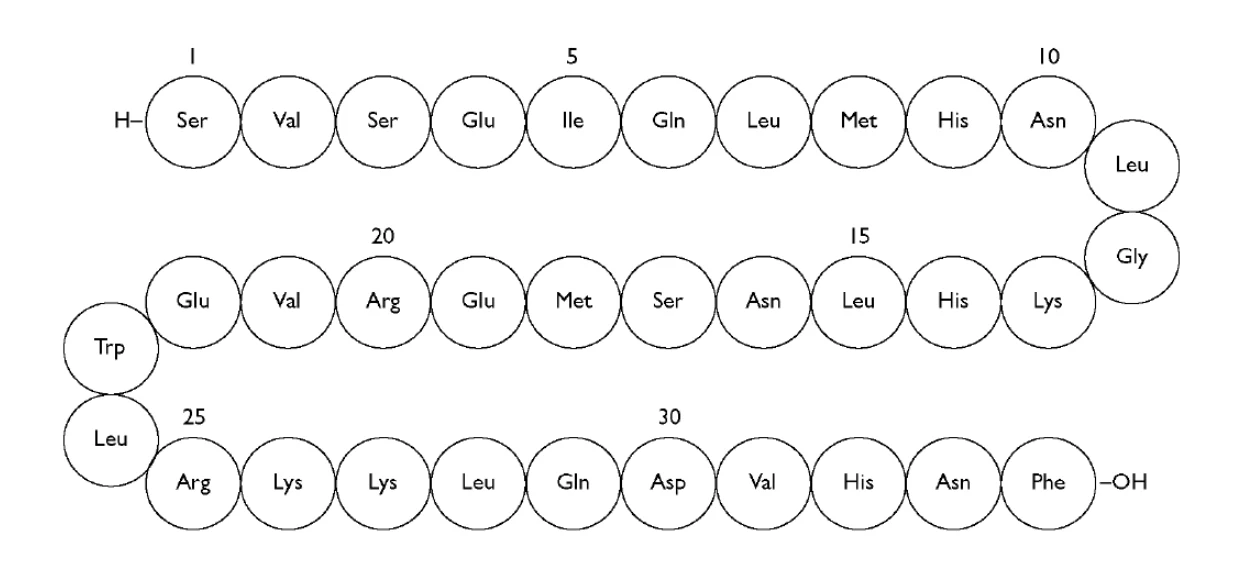
Teriparatide is a recombinant 1-34 fragment N-terminal amino acid sequence of natural human parathyroid hormone: recombinant human parathyroid hormone (1-34), [rhPTH(1-34)]
Molecular formula and molecular mass: C181H291N55O51S2,, 4115.14 Daltons
Structural formula:
Amino acid sequence:
Physicochemical properties: Teriparatide is a clear and colourless protein solution in buffer, pH 3.8 – 4.5.
Product Characteristics:
*Teriparatide, rhPTH(1-34), produced in E. coli, using recombinant DNA technology, is identical to the 34-N-terminal amino acid sequence of endogenous human parathyroid hormone.
14 CLINICAL TRIALS
14.1 Trial Design and Study Demographics
Clinical studies conducted to support similarity between Osnuvo and the reference biologic drug, Forteo (Forsteo®, as marketed in Europe2), included:
- RGB-10-001: A single centre, double-blind, randomised, single, 20 mcg/ 80 mcL fixed dose, 2-way crossover study in healthy adult females
- RGB1023O31: A multicentre, randomised, non-inferiority, active drug controlled, rater blinded, parallel-group comparative phase III study in patients with osteoporosis at high risk of fracture.
An overview of the study designs and demographic characteristics of patients enrolled is presented in Table 7.
Table 7 Summary of trial design and patient demographics
| Study # | Trial design | Dosage, route of administration and duration | Study subjects (n) | Mean age (Range) | Sex |
| RGB-10-001 | Phase I, randomised, double-blind, single-dose, two-way crossover, comparative PK study | Test: Osnuvo 20 mcg SC Reference: Forsteo (sourced from Europe) 20 mcg SC | Healthy Adults 53 subjects | 29 years (18 – 48) | Female |
| RGB1023 O31 | Phase III, multicentre, randomised, active drug-controlled, rater-blinded, parallel-group comparative study | Basal Treatment: Calcium (610 mg/day) and Vitamin D (400 IU/day) Test: Osnuvo 20 mcg SC Once daily for 52 weeks Reference: Forteo (sourced from Japan) 20 mcg SC Once daily for 52 weeks | Patients with primary osteoporosis at high risk of fracture 250 subjects | 70.4 years (55 – 85) | Male (9) and Postmenoposal Female (241) |
PK = Pharmacokinetic; SC = Subcutaneous injection
RGB-10-001
2 Forsteo is a registered trademark for teriparatide (rDNA origin) injection marketed in Europe by Eli Lilly and Company.
The PK of Osnuvo was compared with Forsteo (EU-sourced) in non-pregnant healthy premenopausal female subjects, aged 18 – 55 years.
Subjects were primarily Caucasian (98%), weighing an average of 62 kg (range 51 – 83 kg) with a mean BMI of 23 kg/m2 (range 19 – 27 kg/m2).
RGB1023O31
The safety and efficacy of Osnuvo once daily for up to 52 weeks were compared to Japan-sourced Forteo in a multicentre, active drug-controlled, randomised, rater-blinded comparative clinical study in men and post-menopausal women with primary osteoporosis, who were at high risk of fracture.
Among the 250 patients of the Full Analysis Set (FAS), subjects were primarily women (96.4%), weighing an average of 48.79 kg (range 35.0 – 76.5 kg) with a mean BMI of 21.29 kg/m2 (range 14.9 – 34.5 kg/m2). Subjects had a lumbar spine (L2-L4) BMD mean baseline of 0.6275 g/cm2 (range 0.334 – 0.835 g/cm2) and the percentage of subjects with prior treatment with bisphosphonates was 4.4%.
14.2 Study Results
Comparative Safety and Efficacy
Efficacy
The results of the primary endpoint demonstrated comparability between Osnuvo and Forteo.
The two-sided 95% confidence interval of difference of the percent change in adjusted mean in lumbar spine (L2-L4) BMD met the pre-specified equivalence margin (±2.8%). The difference in the % change of the mean and 95% CI between the Osnuvo and Forteo groups was -0.65% [ 2.17% – 0.87 %] (Table 8).
Table 8 Analysis of Covariance of the Percent Change in Lumbar Spine (L2-L4) Bone Mineral Density at Week 52 (FAS)
| Percent Change in Lumbar Spine (L2-L4) BMD (%) | ANCOVA | ||
| Treatment group | Mean (Range) | Adjusted mean a | |
| Between group difference b [95% CI] | |||
| Osnuvo (n = 121) | 8.94 (-6.3, 24.5) | 7.36 | -0.65 [-2.17, 0.87] |
| Forteo (n = 124) | 9.65 (-3.0, 26.6) | 8.01 | |
a Mean percent change in lumbar spine (L2-L4) BMD adjusted for baseline lumbar spine (L2-L4) and prior bisphosphonate status
b Osnuvo group – Forteo group
*Note: The primary analysis is based on Last Observation Carried Forward imputation. An analysis using Mixed Effect Model Repeated Measure confirmed the results of the primary analysis: the adjusted difference (two-sided 95% confidence interval [CI]) in the mean between the Osnuvo and Forteo groups was 0.61% [-2.10%, 0.89%].
Safety
The type, incidence, onset time, severity and outcome of adverse events and ADRs were comparable between the biosimilar and the reference biologic drug.
14.3 Comparative Bioavailability Studies
Pharmacokinetics
Table 9 Summary Table of the Comparative Bioavailability Data (Uncorrected for Potency) in 52 Healthy Female Subjects
Teriparatide (rDNA origin) (1 x 20 mcg) From measured data Geometric Mean Arithmetic Mean (CV %) | ||||
|---|---|---|---|---|
| Parameter | Testa | Referenceb | % Ratio of Geometric Means | 94.12% Confidence Intervald |
AUCt (pg∙hour/mL) | 91.5 98.1 (37.8%) | 98.8 104.4 (32.8%) | 92.6 | 86.1 – 99.6 |
AUCie (pg∙hour/mL) | 103.3 109.4 (34.6%) | 113.7 118.6 (28.9%) | 90.9 | 84.6 – 97.5 |
Cmax (ng/mL) | 81.6 87.5 (38.6%) | 88.4 94.14 (36.5%) | 92.3 | 85.7 – 99.4 |
Tmaxc (hours) | 0.3 (40.3) | 0.4 (36.4) | Not applicable | Not applicable |
T½c (hours) | 0.7 (40.9) | 0.8 (37.6) | Not applicable | Not applicable |
a Osnuvo (teriparatide rDNA origin), by AVIR Pharma Inc.
b Forsteo® (teriparatide rDNA origin), by Eli Lilly Netherland B.V.
c Arithmetic Mean (CV%) only.
d Due to two stage study design
e n = 51 for Test and n=50 for Reference
14.4 Immunogenicity
No subject in the Osnuvo group was tested positive for anti-teriparatide antibody. Two subjects in the Forteo group were tested positive for anti-teriparatide antibody; both were negative for neutralizing activity.
14.5 Clinical Trials - Reference Biologic Drug
Clinical Trial Design and Study Demographics Using Teriparatide (rDNA origin) Injection
An overview of the study design(s) and demographic characteristics of patients enrolled in each clinical study are presented in Table 10.
Table 10 Summary of trial design and patient demographics using Teriparatide
| Study # | Trial design | Dosage, route of administration and duration | Study subjects (n) | Mean age (Range) | Sex |
|---|---|---|---|---|---|
| Clinical trials in postmenopausal women with osteoporosis | |||||
| Study # | Trial design | Dosage, route of administration and duration | Study subjects (n) | Mean age (Range) | Sex |
|---|---|---|---|---|---|
| B3D-MC-GHAC | Double-blind, placebo-controlled | Placebo, teriparatide (rDNA origin) injection 20 mcg, or teriparatide (rDNA origin) 40 mcg. SC, once daily. Up to 24 months (median: 19 months). | Postmenopausal osteoporosis (1637) | 69.5 years (42 to 86 years) | Female |
| Clinical trials in men with primary or hypogonadal osteoporosis | |||||
| B3D-MC-GHAJ | Double-blind, placebo-controlled | Placebo, teriparatide (rDNA origin) injection 20 mcg, or teriparatide (rDNA origin) 40 mcg. SC, once daily. Up to 14 months (median: 10 months). | Primary (idiopathic) or hypogonadal osteoporosis (437) | 58.7 years (28 to 85 years) | Male |
| Clinical trials in men and women with glucocorticoid-induced osteoporosis | |||||
| B3D-US-GHBZ | Double-blind, active comparator-controlled | Placebo (oral and injection), teriparatide (rDNA origin) injection 20 mcg/day SC, once daily, Alendronate 10 mg/day, oral, once daily Duration 36 months: Primary phase – 18 months; continuation phase - 18 months. | Glucocorticoid-induced osteoporosis (428) | 57 years (22 to 89 years) | Male and Female |
| Study # | Trial design | Dosage, route of administration and duration | Study subjects (n) | Mean age (Range) | Sex |
|---|---|---|---|---|---|
| Clinical trials of 24-month continuous treatment with teriparatide | |||||
| B3D-EW-GHCA | Multicentre, prospective, open-label phase 3/4 trial, 2 substudies. Substudy 1: randomised with 3 treatment arms. Substudy 2: all patients receiving Teriparatide for 24 months. | teriparatide (rDNA origin) injection 20 mcg/day for 24 months in substudy 1 treatment arm 1 and substudy 2, and for 12 months in substudy 1 treatment arms 2 and 3. raloxifene HCl 60 mg/day for the second 12 months in substudy 1 treatment arm 2. All patients supplemented with 500 mg/day elemental calcium and 400 to 800 IU/day vitamin D. | Post-menopausal Substudy 1: 632 Substudy 2: 234 (Total: 866) | 69.9 years (55 to 92 years) | Postmenopausal women |
SC = subcutaneous injection
Treatment of Osteoporosis in Postmenopausal Women (Study B3D-MC-GHAC)
The safety and efficacy of teriparatide (rDNA origin) once daily for up to 24 months (median: 19 months), were examined in a double-blind, placebo-controlled clinical study of 1637 postmenopausal women (mean age: 69.5 years) with severe osteoporosis (mean T- score: -2.6). Among these women, 541 received teriparatide (rDNA origin) injection 20 mcg. All women received 1000 mg of calcium per day and at least 400 IU of vitamin D per day. Ninety percent of the women in the study had 1 or more radiographically diagnosed vertebral fractures at baseline. The primary efficacy endpoint was the occurrence of new radiographically diagnosed vertebral fractures defined as changes in the height of previously undeformed vertebrae.
Treatment to Increase Bone Mass in Men with Primary or Hypogonadal Osteoporosis (Study B3D-MC-GHAJ)
The safety and efficacy of teriparatide (rDNA origin) injection once daily for up to 14 months (median: 10 months) were examined in a double-blind, placebo-controlled clinical study of 437 men (mean age: 58.7 years) with either primary (idiopathic) or hypogonadal osteoporosis (teriparatide (rDNA origin) injection 20 mcg, n=151). All men received 1000 mg of calcium per day and at least 400 IU of vitamin D per day. The primary efficacy endpoint was change in lumbar spine bone mineral density (BMD).
Treatment of Men and Women with Glucocorticoid-Induced Osteoporosis (Study B3D-US-GHBZ)
Glucocorticoid-induced osteoporosis affects both men and women. Loss of BMD occurs early after the initiation of glucocorticoid therapy and may continue during sustained glucocorticoid therapy. The safety and efficacy of once daily teriparatide (rDNA origin) injection were examined in a multicentre, randomised, double-blind, double-dummy, active comparator-controlled study of 83 men and 345 women taking systemic glucocorticoid medications (prednisone equivalent ≥ 5 mg/day for ≥ 3 consecutive months prior to screening) and had a BMD T-score of ≤ -2 at the total hip, femoral neck, or lumbar spine, or had ≥ 1 fragility fracture and a BMD T-score of ≤ -1 at the total hip, femoral neck, or lumbar spine. Patients received either teriparatide (rDNA origin) injection 20 mcg/day plus oral placebo (n = 214) or alendronate 10 mg/day plus injectable placebo (n = 214). Patients received supplemental calcium 1000 mg/day and vitamin D 800 IU/day.
The mean age of patients with glucocorticoid-induced osteoporosis was 57 years (range 22-89). The baseline median glucocorticoid dose (prednisone equivalent) was 7.5 mg and the median duration of glucocorticoid use was 1.3 years. The mean (SD) baseline lumbar spine BMD was 0.85 ± 0.13 g/cm2 and T-score was -2.5 ± 1. A total of 27% of patients had prevalent vertebral fracture(s) and 43% had prior non-vertebral fracture(s). The patients had chronic diseases that required sustained glucocorticoid therapy including 73% with rheumatologic or other joint and musculoskeletal disorders, and 14% with respiratory disorders. There was no significant difference in these baseline characteristics between the teriparatide (rDNA origin) and alendronate groups.
2-Year Continuous Treatment of Osteoporosis in Postmenopausal Women with Teriparatide (rDNA origin) Injection (Study B3D-EW-GHCA)
The 24-month study, Study B3D-EW-GHCA, was a multinational, multicentre, outpatient, prospective, open-label, Phase 3/4 trial in postmenopausal women with severe osteoporosis and ≥1 clinical fragility fracture (76% had received antiresorptive drugs). This study had 2 substudies in which all patients received teriparatide (rDNA origin) injection 20 mcg/day during the first 12 months.
Substudy 1 (parallel, controlled, and randomised) enrolled postmenopausal women with a BMD T-score 2.5 standard deviations (SDs) below the reference range for healthy premenopausal women at the lumbar spine, total hip, or femoral neck, and ≥1 pre-existing clinical vertebral or nonvertebral fragility fracture within 3 years of screening. The 3 treatment arms of substudy 1 were:
- treatment arm 1 - teriparatide (rDNA origin) injection 20 mcg/day for 24 months
- treatment arm 2 - teriparatide (rDNA origin) injection 20 mcg/day for 12 months, followed by raloxifene 60 mg/day for 12 months
- treatment arm 3 - teriparatide (rDNA origin) injection 20 mcg/day for 12 months, followed by no treatment for 12 months
Substudy 2 (uncontrolled – all patients receive teriparatide (rDNA origin) injection 20 mcg/day for 24 months): patients had to meet the criteria of patients in substudy 1 plus have 1 of the following: (a) a new, documented clinical vertebral or nonvertebral fragility fracture despite prescription of antiresorptive therapy in the year prior to this fracture; or (b) had a lumbar spine, femoral neck, or total hip BMD T-score 3 SDs or more below the reference range for healthy premenopausal women despite prescription of antiresorptive treatment for the past 2 years; or (c) a BMD decrease of ≥3.5% at any site, despite prescription of antiresorptive treatment for the past 2 years. Thus, all patients in substudy 2 had an inadequate clinical response to prior osteoporosis therapy.
At baseline, the mean age in substudy 2 (n = 234) was 70.2 years, 99.1% of patients had prior antiresorptive therapy, and 99.6% had a history of fragility fracture. Study B3D-EW-GHCA differs from most clinical studies of teriparatide (rDNA origin) which enrolled treatment-naïve patients or patients with limited previous use of antiresorptive drugs. In addition, this study enrolled high risk osteoporotic patients who had failed to respond to other anti-osteoporosis drugs.
Study Results
Treatment of Osteoporosis in Postmenopausal Women (Study B3D-MC-GHAC)
Effect on fracture incidence
New vertebral fractures - Teriparatide (rDNA origin) injection, when taken with calcium and vitamin D and compared with calcium and vitamin D alone, significantly reduced the risk of 1 or more new vertebral fractures from 14.3% of women in the placebo group to 5.0% in the teriparatide (rDNA origin) group (p<0.001). See Table 11. The absolute reduction in risk was 9.3% and the relative reduction was 65%. Eleven women would need to be treated with teriparatide (rDNA origin) injection for a median of 19 months to prevent one or more new vertebral fractures. Teriparatide (rDNA origin) injection was effective in reducing the risk for vertebral fractures regardless of age, baseline rate of bone turnover, or baseline bone mineral density (BMD).
Table 11 Effect of teriparatide (rDNA origin) injection on Vertebral Fracture Incidence in Postmenopausal Women with Osteoporosis
| Placebo (n = 448) (%) | Teriparatide (rDNA origin) injection (n = 444) (%) | Absolute Risk Reduction (%) | 95% CI (%) | P-Value | |
| New fracture (≥ 1) | 14.3 | 5.0 | 9.3 | (5.3, 13.4) | <0.001 |
| Multiple fractures (≥ 2) | 4.9 | 1.1 | 3.8 | (1.3, 6.2) | 0.001 |
| Moderate or severe fracture (≥ 1) | 9.4 | 0.9 | 8.5 | (5.4, 11.5) | <0.001 |
Percentages compared between treatment groups using Fisher’s Exact Test.
Confidence Interval (CI) based on Fleiss Method.
Effect on height loss - Both treatment groups lost height during the trial. The mean decreases were 3.61 and 2.81 mm in the placebo and teriparatide (rDNA origin) injection groups, respectively. For the 86 postmenopausal women who experienced vertebral fractures, those treated with teriparatide (rDNA origin) injection had significantly less height loss when compared to placebo (p = 0.001).
Effect on back pain - Teriparatide (rDNA origin) injection significantly reduced the incidence and severity of back pain. In women with postmenopausal osteoporosis, there was a 26% reduction (p = 0.017) in the spontaneous reports of new or worsened back pain compared to placebo.
New nonvertebral osteoporotic fractures - Table 12 shows the effect of teriparatide (rDNA origin) injection on the risk of nonvertebral fractures. Teriparatide (rDNA origin) injection significantly reduced the risk of any nonvertebral fracture from 5.5% in the placebo group to 2.6% in the teriparatide (rDNA origin) injection group (p<0.05). The absolute reduction in risk was 2.9% and the relative reduction was 53%.
Table 12 Effects of teriparatide (rDNA origin) injection on Risk of New Nonvertebral Fractures in Postmenopausal Women with Osteoporosis
| Skeletal site | teriparatide (rDNA origin) injection a n = 541 | Placeboa n = 544 | Absolute Risk Reduction (%) | 95% CI %) | P-Value |
| Wrist | 2 (0.4%) | 7 (1.3%) | 0.9 | (-0.3, 2.2) | 0.178 |
| Ribs | 3 (0.6%) | 5 (0.9%) | 0.4 | (-0.8, 1.6) | 0.726 |
| Hip | 1 (0.2%) | 4 (0.7%) | 0.6 | (-0.4, 1.5) | 0.374 |
| Ankle/Foot | 1 (0.2%) | 4 (0.7%) | 0.6 | (-0.4, 1.5) | 0.374 |
| Humerus | 2 (0.4%) | 2 (0.4%) | 0.0 | (-0.9, 0.9) | 1.000 |
| Pelvis | 0 | 3 (0.6%) | 0.6 | (-0.3, 1.4) | 0.249 |
| Other | 6 (1.1%) | 8 (1.5%) | 0.4 | (-1.2, 1.9) | 0.789 |
| Total | 14 (2.6%) | 30 (5.5%) | 2.9 | (0.4, 5.5) | 0.020 |
a Data shown as number (%) of women with fractures.
Percentages compared between treatment groups using Fisher's Exact Test.
Confidence Interval (CI) based on Fleiss Method.
The cumulative percentage of postmenopausal women with osteoporosis who sustained new nonvertebral fractures was lower in women treated with teriparatide (rDNA origin) injection than in women treated with placebo (see Figure 1).
Figure 1 Cumulative percentage of postmenopausal women with osteoporosis sustaining new nonvertebral osteoporotic fractures*
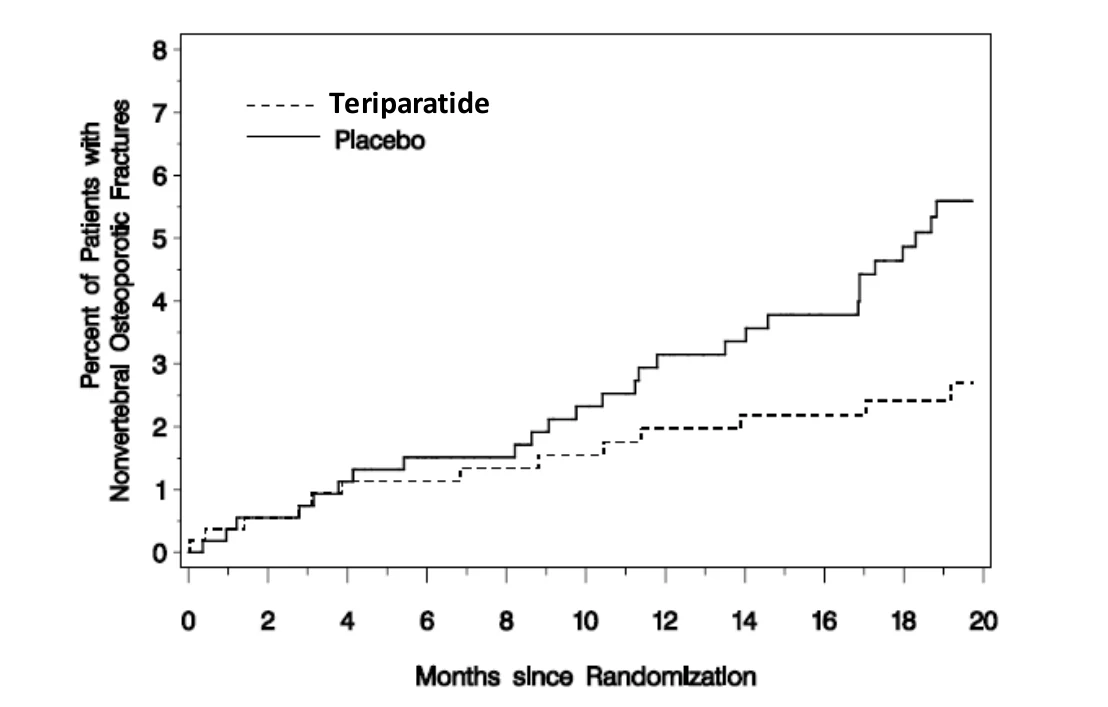
* The graph includes all fractures listed above in Table 12.
Teriparatide
Post- treatment fracture efficacy - Following treatment with teriparatide (rDNA origin) injection, 1262 postmenopausal women from the pivotal trial enrolled in a post-treatment follow-up study. After 18 months, approximately 50% of the women in each former treatment group had begun an approved osteoporosis therapy (not including teriparatide (rDNA origin) injection) at the discretion of their physician. All women were offered 1000 mg of calcium per day and at least 400 IU of vitamin D per day.
During a median of 18 months following discontinuation of teriparatide (rDNA origin) injection treatment, there was a significant 40% reduction in relative risk for new vertebral fractures in women previously treated with teriparatide (rDNA origin) injection, compared to placebo. (The relative risk reduction was similar for women with and without osteoporosis treatment, 41% and 37%, respectively). During the same observation period, there was a 42% risk reduction for nonvertebral fragility fractures in women previously treated with teriparatide (rDNA origin) injection, compared with placebo.
Data from this study demonstrate that regardless of the follow-up treatment options, fracture risk was reduced for women previously treated with teriparatide (rDNA origin) injection.
Effect on bone mineral density (BMD)
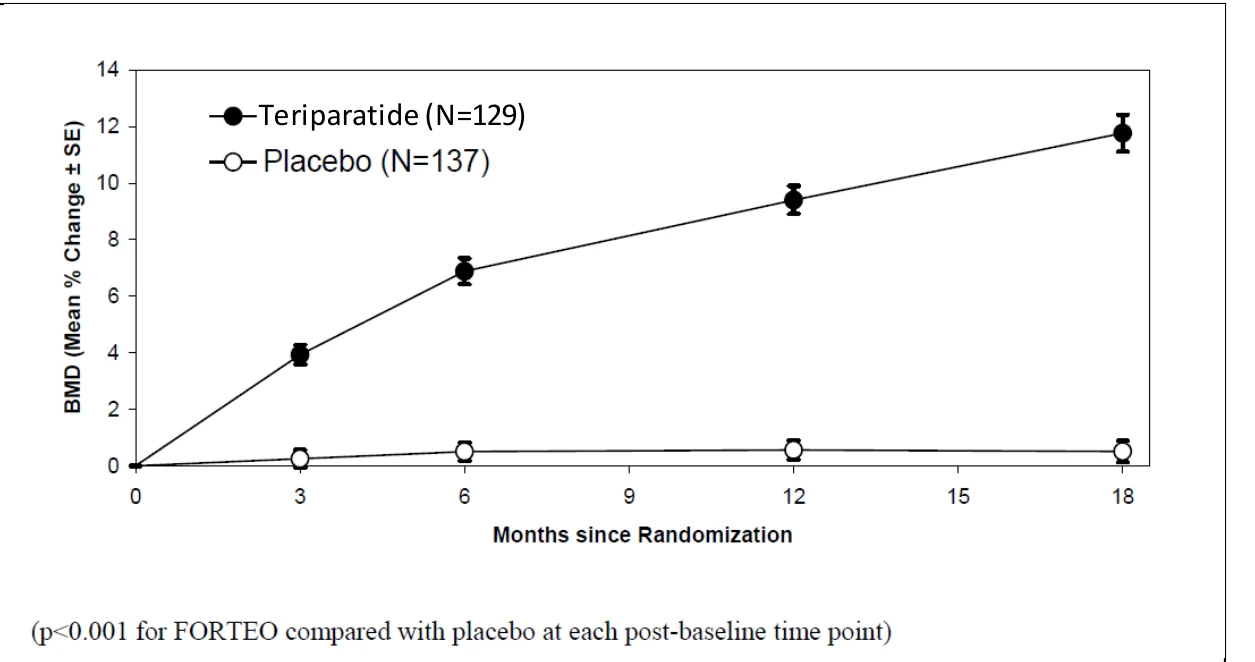
Teriparatide (rDNA origin) injection increased lumbar spine BMD in postmenopausal women with osteoporosis. Statistically significant increases were seen at 3 months and continued throughout the treatment period, as shown in Figure 2.
Figure 2 Time course of change in lumbar spine BMD in postmenopausal women with osteoporosis treated with teriparatide vs placebo (women with data available at all time points)
Postmenopausal women with osteoporosis who were treated with teriparatide (rDNA origin) injection also had statistically significant increases in BMD at the femoral neck, total hip, and total body (see Table 13).
 Teriparatide (N=129) |
Table 13 Mean Percent Change in BMD from Baseline to Endpoint* in Postmenopausal Women with Osteoporosis, Treated with teriparatide (rDNA origin) injection or Placebo
| Teriparatide (rDNA origin) Injection n = 541 | Placebo n = 544 | Treatment Difference | 95% CI (%) | |
| Lumbar spine BMD | 9.7 | 1.1 | 8.6a | (7.8, 9.4) |
| Femoral neck BMD | 2.8 | -0.7 | 3.5b | (2.8, 4.2) |
| Total hip BMD | 2.6 | -1.0 | 3.6b | (2.8, 4.4) |
| Trochanter BMD | 3.5 | -0.2 | 3.7b | (2.9, 4.5) |
| Intertrochanter BMD | 2.6 | -1.3 | 3.9b | (3.0, 4.8) |
| Ward’s triangle BMD | 4.2 | -0.8 | 5.0b | (3.5, 6.5) |
| Total body BMD | 0.6 | -0.5 | 1.0b | (0.4, 1.7) |
| Distal 1/3 radius BMD | -2.1 | -1.3 | -0.8 | (-1.7, 0.0) |
| Ultradistal radius BMD | -0.1 | -1.6 | 1.5 | (-0.2, 3.3) |
* Intent-to-treat analysis, last observation carried forward.
a p<0.001 compared with placebo.
b p<0.05 compared with placebo.
Percentages compared between treatment groups using T-test
Figure 3 shows the cumulative distribution of the percentage change from baseline of lumbar spine BMD for the teriparatide (rDNA origin) injection and placebo groups. Teriparatide (rDNA origin) injection treatment increased lumbar spine BMD from baseline in 96% of postmenopausal women treated (see Figure 3). Seventy-two percent of patients treated with teriparatide (rDNA origin) injection achieved at least a 5% increase in spine BMD, and 44% gained 10% or more.
Figure 3 Percent of postmenopausal women with osteoporosis attaining a lumbar spine BMD percent change from baseline at least as great as the value on the x-axis (median duration of treatment 19 months)
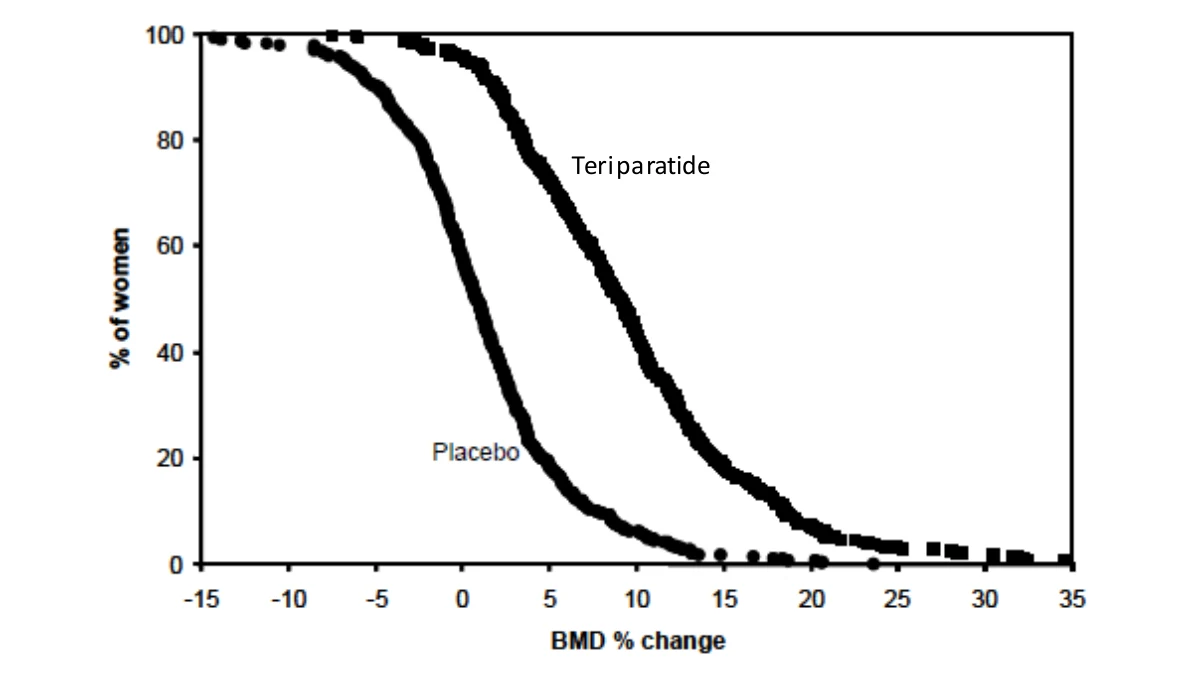
Bone histology - The effects of teriparatide (rDNA origin) injection on bone histology were evaluated in iliac crest biopsies of 35 postmenopausal women treated for 12 to 24 months with calcium and vitamin D and teriparatide (rDNA origin) injection 20 or 40 mcg/day. Normal mineralization was observed with no evidence of cellular toxicity. The new bone formed with teriparatide (rDNA origin) injection was of normal quality (as evidenced by the absence of woven bone and marrow fibrosis). Teriparatide (rDNA origin) injection significantly increased cancellous bone volume and connectivity, improved trabecular morphology with a shift toward a more plate-like structure, and increased cortical bone thickness.
Treatment to Increase Bone Mass in Men with Primary or Hypogonadal Osteoporosis (Study B3D-MC-GHAJ)
Effect on bone mineral density (BMD)
Teriparatide (rDNA origin) injection increased lumbar spine BMD in men with primary or hypogonadal osteoporosis. Statistically significant increases were seen at 3 months and continued throughout the treatment period. After a median treatment period of 10 months, BMD in the spine increased on average by 5.4% and in the total hip by 0.7% compared to placebo. Teriparatide (rDNA origin) injection was effective in increasing lumbar spine BMD regardless of age, baseline rate of bone turnover, and baseline BMD. The effects of teriparatide (rDNA origin) injection at additional skeletal sites are shown in Table 14.
Teriparatide
Table 14 Mean Percent Change in BMD from Baseline to Endpoint* in Men with Primary or Hypogonadal Osteoporosis, Treated with Teriparatide (rDNA origin) Injection or Placebo for a Median of 10 Months
| Teriparatide (rDNA origin) Injection n = 151 | Placebo n = 147 | Treatment Difference | 95% CI (%) | |
| Lumbar spine BMD | 5.9 | 0.5 | 5.3a | (4.4, 6.3) |
| Femoral neck BMD | 1.5 | 0.3 | 1.2b | (0.3, 2.2) |
| Total hip BMD | 1.2 | 0.5 | 0.6 | (0.0, 1.3) |
| Trochanter BMD | 1.3 | 1.1 | 0.2 | (-0.7, 1.1) |
| Intertrochanter BMD | 1.2 | 0.6 | 0.6 | (-0.2, 1.3) |
| Ward’s triangle BMD | 2.8 | 1.1 | 1.8 | (-0.2, 3.7) |
| Total body BMD | 0.4 | -0.4 | 0.8 | (-0.1, 1.6) |
| Distal 1/3 radius BMD | -0.5 | -0.2 | -0.3 | (-0.9, 0.3) |
| Ultradistal radius BMD | -0.5 | -0.3 | -0.2 | (-1.1, 0.7) |
* Intent-to-treat analysis, last observation carried forward.
a p < 0.001 compared with placebo.
b p < 0.05 compared with placebo.
Percentages compared between treatment groups using T-test
Figure 4 shows the cumulative distribution of the percentage change from baseline of lumbar spine BMD for the Teriparatide (rDNA origin) injection and placebo groups. Teriparatide (rDNA origin) injection treatment for a median of 10 months increased lumbar spine BMD from baseline in 94% of men treated. Fifty-three percent of patients treated with F Teriparatide (rDNA origin) injection achieved at least a 5% increase in spine BMD, and 14% gained 10% or more.
Figure 4 Percent of men with primary or hypogonadal osteoporosis attaining a lumbar spine BMD percent change from baseline at least as great as the value on the x axis (median duration of treatment 10 months)
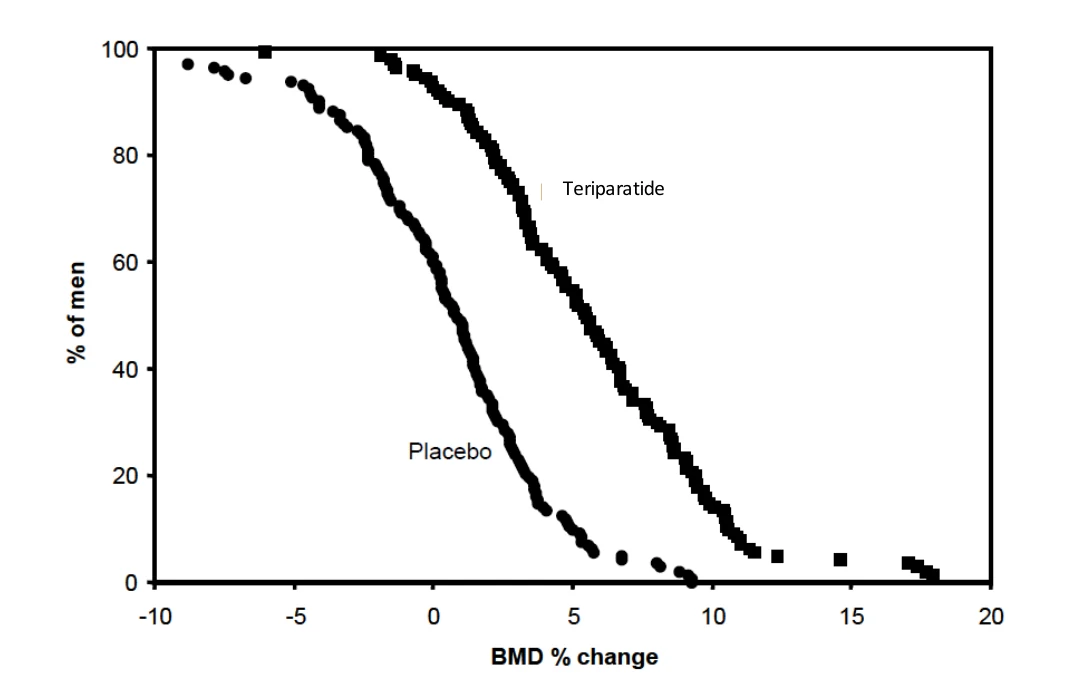
Treatment of Men and Women with Glucocorticoid-Induced Osteoporosis (Study B3D-US-GHBZ)
Effect on bone mineral density (BMD)
In patients with glucocorticoid-induced osteoporosis, both teriparatide (rDNA origin) injection and alendronate significantly increased lumbar spine BMD compared with baseline at 3 months through 24 months of treatment. Table 15 shows the mean change in lumbar spine, total hip, and femoral neck BMD from baseline to the primary 18-month endpoint in patients with glucocorticoid-induced osteoporosis who were treated with teriparatide (rDNA origin) injection or alendronate. The analysis in Table 15 included all patients with a baseline and at least one post baseline BMD measurement (last observation carried forward analysis).
Teriparatide
Table 15 Least Squares Mean Change in BMD (g/cm2) from Baseline to Endpoint in Men and Women with Glucocorticoid-Induced Osteoporosis who had a Baseline and at Least One Post-baseline BMD Measurementa, 18 Month Data
| Teriparatide (rDNA origin) Injection 20 mcg/day (n = 214) | Alendronate 10 mg/day (n = 214) | Treatment difference (95% CI) | ||||||||||
| n | Change in BMD (%) | n | Change in BMD (%) | |||||||||
| Lumbar Spine | 198 | 0.059 (7.2%) | 195 | 0.028 (3.4%) | 0.031 (0.021, 0.041) b | |||||||
| Total Hip | 185 | 0.026 (3.6%) | 176 | 0.017 (2.2%) | 0.009 (0.003, 0.015) c | |||||||
| Femoral Neck | 185 | 0.024 (3.7%) | 176 | 0.014 (2.1%) | 0.010 (0.002, 0.018) d | |||||||
a Within group actual changes (percent change) in BMD from baseline to endpoint (last observation carried forward, 18 months) were significant (p<0.01) at the lumbar spine, total hip, and femoral neck for both teriparatide (rDNA origin) injection and alendronate
b p<0.001, teriparatide (rDNA origin) injection versus alendronate
c p<0.01, teriparatide (rDNA origin) injection versus alendronate
d p<0.05, teriparatide (rDNA origin) injection versus alendronate
Between treatment group p values were obtained using the following analysis of variance model: Actual change in BMD = treatment + region + prior bisphosphonate use + gender.
Figure 5 shows the mean percent changes from baseline in lumbar spine BMD in patients treated with teriparatide (rDNA origin) injection or alendronate who had BMD measurements at each time point. The increase in lumbar spine BMD induced by teriparatide (rDNA origin) injection was significantly greater compared with alendronate after 6, 12, 18 and 24 months of therapy (p<0.001 for teriparatide (rDNA origin) injection vs. alendronate). The relative treatment effects of teriparatide (rDNA origin) injection and alendronate were consistent in subgroups defined by gender, age, geographic region, body mass index, underlying disease, prevalent vertebral fracture, baseline glucocorticoid dose, prior bisphosphonate use, and glucocorticoid discontinuation during trial.
Figure 5 Percent change in lumbar spine BMD (g/cm2) in men and women with glucocorticoid-induced osteoporosis (patients with BMD measurements at each visit through 24 months)
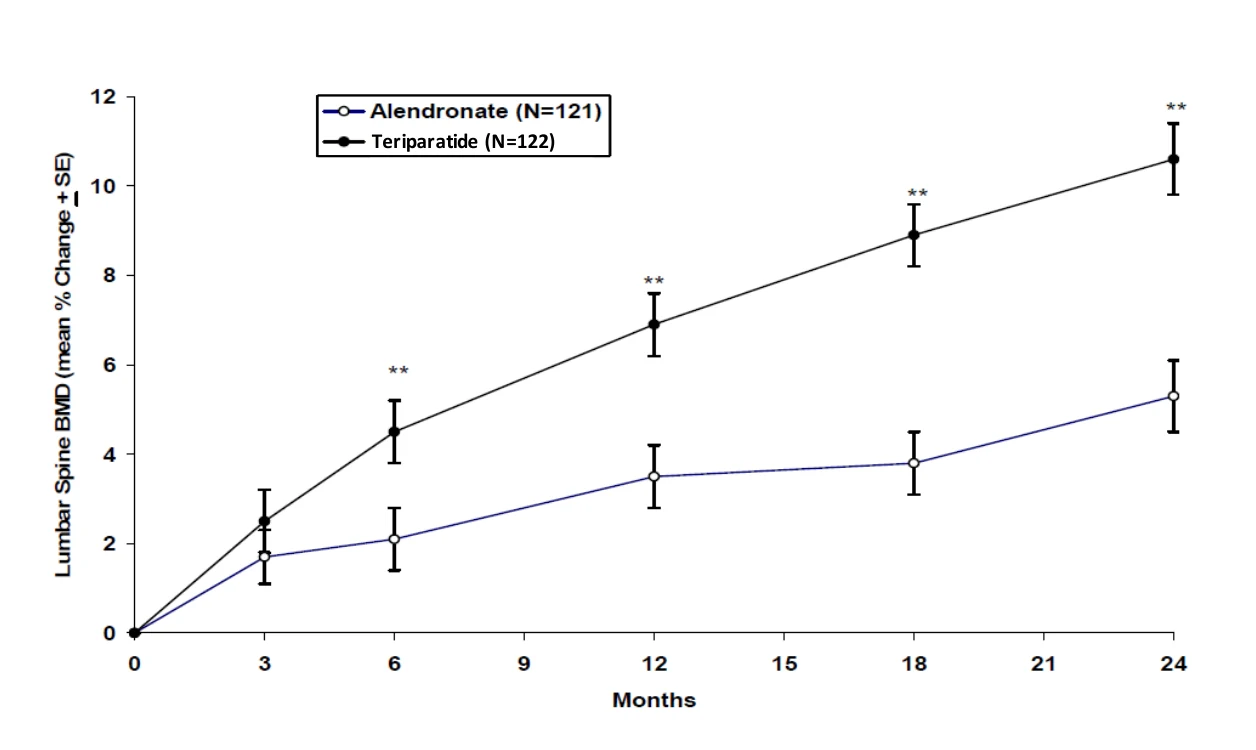
**p<0.001: teriparatide (rDNA origin) injection vs. alendronate
Between 18 and 24 months in patients with glucocorticoid-induced osteoporosis treated with teriparatide (rDNA origin) injection, the mean percent change in lumbar spine, total hip and femoral neck BMD increased by an additional (0.014 g/cm2) 1.7%, (0.007 g/cm2) 0.9%, and (0.002 g/cm2) 0.4%, respectively.
Effect on vertebral and non-vertebral fractures
During the 18-month primary phase of Study B3D-US-GHBZ, 18 patients in the alendronate group and 13 patients in the by teriparatide (rDNA origin) injection group experienced vertebral and/or nonvertebral fracture(s). One patient in the alendronate group experienced both a vertebral and a nonvertebral fracture.
An analysis of 336 spinal X-rays, performed at 18 months, showed that 10 (6.1%) patients in the alendronate group compared to 1 (0.6%) in the by teriparatide (rDNA origin) injection group had experienced a new vertebral fracture. New nonvertebral fracture(s) were reported for 8 (3.7%) alendronate patients and 12 (5.6%) by teriparatide (rDNA origin) injection patients. At 36 months, analysis of spinal X-rays showed that 13 of 169 patients (7.7%) in the alendronate group had experienced a new vertebral fracture compared with 3 of 173 patients in the by teriparatide (rDNA origin) injection group (1.7%). Whereas, 15 of 214 patients in the alendronate group (7.0%) had experienced a nonvertebral fracture compared with 16 of 214 patients in the by teriparatide (rDNA origin) injection group (7.5%).
Teriparatide (N=122)
2-Year Continuous Treatment of Osteoporosis in Postmenopausal Women with Teriparatide (rDNA origin) Injection (Study B3D-EW-GHCA)
Effect on bone mineral density (BMD)
In Study B3D-EW-GHCA, 503 postmenopausal women with severe osteoporosis and a fragility fracture within the previous 3 years (83% had received previous osteoporosis therapy) were treated with teriparatide (rDNA origin) Injection for up to 24 months. At 24 months, the mean increase from baseline in lumbar spine, total hip and femoral neck BMD was 0.076 g/ cm2 (10.5%), 0.018 g/cm2 (2.6%) and 0.024 g/ cm2 (3.9%) respectively. The mean increase in BMD from 18 to 24 months was 0.011 g/cm2 (1.4%), 0.008 g/ cm2 (1.2%), and 0.010 g/ cm2 (1.6%) at the lumbar spine, total hip and femoral neck, respectively.
15 MICROBIOLOGY
No microbiological information is required for this drug product.
16 NON-CLINICAL TOXICOLOGY
General Toxicology
Acute Toxicity – Two studies were conducted, each with 344 Fischer rats. The studies indicated teriparatide is not acutely toxic. No mortality occurred in rats given doses of 1000 mcg/kg (540 times the human dose) or in mice given 10,000 mcg/kg (2700 times the human dose).
Long-Term Toxicity - The primary effects produced by teriparatide in repeated-dose studies in rats and monkeys up to 1 year in duration were either directly or indirectly related to the known pharmacologic actions of PTH on bone metabolism and mineral ion regulation. Systemic exposure of rats and monkeys to teriparatide at the NOAELs in the chronic studies were estimated to be 2 to 5 times greater than for humans given a dose of teriparatide (rDNA origin) injection 20 mcg/day.
Carcinogenicity:
Carcinogenicity - Two carcinogenicity bioassays were conducted in Fischer 344 rats. In the first study, male and female rats were given daily subcutaneous teriparatide injections of 5, 30, or 75 mcg /kg/day for 24 months from 2 months of age. These doses resulted in systemic exposures that were, respectively, 3, 20, and 60 times higher than the systemic exposure observed in humans following a subcutaneous dose of 20 mcg (based on AUC comparison). Teriparatide treatment resulted in a marked dose-related increase in the incidence of osteosarcoma, a rare malignant bone tumour, in both male and female rats. Osteosarcomas were observed at all doses and the incidence reached 40% to 50% in the high-dose groups. Teriparatide also caused a dose-related increase in osteoblastoma and osteoma in both sexes. No osteosarcomas, osteoblastomas or osteomas were observed in untreated control rats. The bone tumours in rats occurred in association with a large increase in bone mass and focal osteoblast hyperplasia.
The second 2-year study was carried out in order to determine the effect of treatment duration and animal age on the development of bone tumours. Female rats were treated for different periods between 2 and 26 months of age with subcutaneous doses of 5 and 30 mcg/kg (equivalent to 3 and 20 times the human exposure at the 20-mcg dose, based on AUC comparison). The study showed that the occurrence of osteosarcoma, osteoblastoma and osteoma was dependent upon dose and duration of exposure. Bone tumours were observed when immature 2-month old rats were treated with 30 mcg/kg/day for 24 months or with 5 or 30 mcg/kg/day for 6 months. Bone tumours were also observed when mature 6-month old rats were treated with 30 mcg/kg/day for 6 or 20 months. Tumours were not detected when mature 6-month old rats were treated with 5 mcg/kg/day for 6 or 20 months. The results did not demonstrate a difference in susceptibility to bone tumour formation, associated with teriparatide treatment, between mature and immature rats.
Osteosarcoma was not observed in teriparatide clinical trials. Though osteosarcoma has been reported in a post-market setting, increased incidence of osteosarcoma has not been observed with teriparatide (rDNA origin) injection treatment in observational studies.
Genotoxicity:
Mutagenicity - Teriparatide was not genotoxic in any of the following test systems: the Ames test for bacterial mutagenesis; the mouse lymphoma assay for mammalian cell mutation; the chromosomal aberration assay in Chinese hamster ovary cells, with and without metabolic activation; and the in vivo micronucleus test in mice.
Reproductive and Developmental Toxicology:
Impairment of Fertility - Teriparatide had no effects on fertility of male or female rats at doses up to 300 mcg/kg (160 times the human dose based on surface area, mcg /m2).
Teriparatide produced no teratogenic effects in rats, mice, or rabbits. No important effects on embryo/fetal development were seen in rats or mice given teriparatide at doses up to 1000 mcg/kg (270 to 540 times the human dose based on surface area, mcg/m2). Embryo/fetal mortality and reduced litter size was observed in pregnant rabbits administered daily doses of 3 to 100 mcg/kg of teriparatide. The embryotoxicity observed in rabbits may be related to the increased levels of blood ionized calcium.
Developmental effects in a perinatal/postnatal study in rats were limited to mild growth retardation of the offspring at doses ≥ 225 mcg/kg (>120 times the human dose based on surface area, mcg/m2) and decreased motor activity in offspring at 1000 mcg/kg.
Special Toxicology:
Special Toxicology Studies - Subcutaneous administration of teriparatide at a dose of 40 mcg/kg/day to monkeys for approximately 4 months caused renal histologic changes which were largely reversible and had a limited impact on kidney function. However, no drug-related histopathologic changes were observed in the kidneys of mature, ovariectomized monkeys administered teriparatide doses up to 5 mcg/kg/day for 12 or 18 months.
Two limited repeated-dose studies were conducted in dogs: a 2-week study and an 8-week study. Treatment groups included daily subcutaneous injections of teriparatide, and transmucosal tablets of teriparatide, both at a dose of 2 mcg/kg in the 2-week study or 0.5 mcg/kg in the 8-week study. Slight-to-moderate transient increases in blood ionized calcium occurred in all teriparatide-treated groups of both studies. Minimal-to-moderate renal tubular lesions occurred only in dogs given teriparatide transmucosally for 8 weeks, with one dog showing signs of renal failure as evidenced by elevations in blood urea and creatinine that were accompanied by overt hypercalcemia. These findings are consistent with the high sensitivity of dogs to the known hypercalcemic effects of PTH.
16.1 Comparative Non-Clinical Pharmacology and Toxicology
16.1.1 Comparative Non-Clinical Pharmacodynamics
In vitro Studies
Activation of the parathyroid hormone-receptor-1 (PTHR1) results in an intracellular rise in cAMP concentration. Therefore, cell based bioassays measure the release of cAMP after binding of teriparatide to and activation of PTHR1 using rat (UMR-106) and human (Saos-2) osteosarcoma cell lines. Receptor binding was an additional attribute assessed in comparative studies using a competitive ELISA. Results of the comparative studies are summarized below:
Rat Osteosarcoma Cell Line UMR-106 Bioassay: The potency results for Forsteo batches were comparable to those of Osnuvo batches. Based on the data, Forsteo and Osnuvo are similar in terms of potency by UMR-106 cell bioassay.
Human Osteosarcoma Cell Line Saos-2 Bioassay: The potency results for Forsteo batches were comparable to those of Osnuvo batches. Based on the data, Forsteo and Osnuvo are similar in terms of potency by Saos-2 Bioassay.
PTHR1 receptor binding activity: The receptor binding results of Forsteo batches were comparable to those of Osnuvo batches. Based on the data, Forsteo and Osnuvo are similar in terms of PTHR1 receptor binding.
In vivo Studies
The in vivo primary pharmacodynamics of Osnuvo were compared to those of Forsteo in a 4-week pharmacokinetic/pharmacodynamic study conducted in 4-week old female Sprague-Dawley rats. Animals were administered doses of 10 or 40 µg/kg body weight/day by daily subcutaneous injection. The effects were predominantly observed at 40 µg/kg body weight/day, with only slight changes observed at 10 µg/kg body weight/day. The effects observed were generally comparable between the Osnuvo and Forsteo groups at each dose level.
16.1.2 Comparative Toxicology
The toxicity profile of Osnuvo was compared to that of Forsteo in a 4-week repeat-dose toxicity study conducted in male and female Sprague-Dawley rats (8 to 9 weeks of age). Animals were administered doses of 30, 100, or 300 µg/kg body weight/day by daily subcutaneous injection. The incidence and severity of all test article-related findings were generally comparable between the Osnuvo and Forsteo groups at each dose level. No adverse effects unique to Osnuvo were observed.
17 SUPPORTING PRODUCT MONOGRAPHS
- 1. Forteo® (250 mcg/mL in 3 mL prefilled pen; 250 mcg/mL in 2.4 mL prefilled pen), submission control 242741, Product Monograph, Eli Lilly Canada Inc. (Aug. 12, 2021)