


Product Monograph - Oxeze Turbuhaler
SUMMARY PRODUCT INFORMATION
| Route of Administration | Dosage Form / Strength | Nonmedicinal Ingredients |
| Oral Inhalation | Turbuhaler/ 6 mcg/dose formoterol fumarate dihydrate 12 mcg/dose formoterol fumarate dihydrate | Lactose monohydrate (which may contain milk protein residue) |
INDICATIONS AND CLINICAL USE
Asthma:
OXEZE TURBUHALER (formoterol fumarate dihydrate) is indicated for the treatment of asthma only as add-on therapy to an inhaled corticosteroid, a long-term asthma control medication, in patients 6 years of age and older with reversible obstructive airways disease, including patients with symptoms of nocturnal asthma.
Corticosteroids should not be stopped because formoterol is prescribed.
Formoterol is a long-acting beta2 agonist (LABA) and should not be used as a rescue medication. To relieve acute asthmatic symptoms a short-action inhaled bronchodilator should be used.
LABA, such as formoterol, the active ingredient in OXEZE, may increase the risk of asthma-related death (see WARNINGS AND PRECAUTIONS). Use of OXEZE for the treatment of asthma without concomitant use of an inhaled corticosteroid, a long-term asthma control medication, is contraindicated (see CONTRAINDICATIONS). Use OXEZE only as add-on therapy for patients with asthma who are currently taking but are inadequately controlled on an inhaled corticosteroid.
Once asthma control is achieved and maintained, assess the patient at regular intervals and consider stepping down therapy (e.g. discontinue OXEZE) if possible without the loss of asthma control, and maintain the patient on a long-term asthma control medication, such as an inhaled corticosteroid. Do not use OXEZE for patients whose asthma is adequately controlled on low- to medium-dose inhaled corticosteroids.
Pediatric and Adolescent Patients: Available data from controlled clinical trials suggest that LABA may increase the risk of asthma-related hospitalization in pediatric and adolescent patients (see WARNINGS AND PRECAUTIONS). For pediatric and adolescent patients with asthma who require addition of a LABA to an inhaled corticosteroid, a fixed-dose combination product containing both an inhaled corticosteroid and LABA should ordinarily be used to ensure adherence with both drugs. In cases where use of a separate inhaled corticosteroid and LABA is clinically indicated, appropriate steps must be taken to ensure adherence with both treatment components. If adherence cannot be assured, a fixed-dose combination product containing both an inhaled corticosteroid and LABA is recommended.
Exercise-Induced Bronchoconstriction:
OXEZE is also indicated for the acute prevention of exercise-induced bronchoconstriction in adults and children 6 years of age and older, when administered on an occasional, as-needed basis. OXEZE may be clinically indicated as a single agent for the prevention of exercise-induced bronchoconstriction in patients who do not have persistent asthma. In patients with persistent asthma, use of OXEZE for the prevention of exercise-induced bronchoconstriction should only be considered if the treatment of asthma includes a long-term asthma control medication, such as an inhaled corticosteroid (see CONTRADICATIONS).
CONTRAINDICATIONS
OXEZE TURBUHALER (formoterol fumarate dihydrate) is contraindicated when there is known hypersensitivity to formoterol or inhaled lactose. Like other sympathomimetic amines, OXEZE TURBUHALER should not be used in patients with tachyarrhythmias.
Because of the potential risk of death and hospitalization, use of OXEZE for the treatment of asthma without concomitant use of an inhaled corticosteroid, a long-term asthma control medication, is contraindicated (see WARNINGS AND PRECAUTIONS).
WARNINGS AND PRECAUTIONS
WARNING FOR ASTHMA PATIENTS Asthma-Related Death: Long-acting beta2 agonists (LABA), such as formoterol, the active ingredient in OXEZE, may increase the risk of asthma-related death. Data from a large placebo-controlled US study, which compared the safety of salmeterol, a LABA, with placebo when added to patients’ usual asthma therapy showed an increase in asthma-related deaths in patients receiving salmeterol. This finding with salmeterol is considered a LABA class effect. Currently available data are inadequate to determine whether concurrent use of inhaled |
corticosteroids or other long-term asthma control drugs mitigates the increased risk of asthma-related death from LABA. Because of this potential risk, use of OXEZE for the treatment of asthma without concomitant use of an inhaled corticosteroid, a long-term asthma control medication, is contraindicated (see CONTRAINDICATIONS). Use OXEZE only as add-on therapy for patients with asthma who are currently taking but are inadequately controlled on an inhaled corticosteroid. Once asthma control is achieved and maintained, assess the patient at regular intervals and consider stepping down therapy (e.g. discontinue OXEZE) if possible without the loss of asthma control. Patients should be maintained on a long-term asthma control medication, such as an inhaled corticosteroid. Do not use OXEZE for patients whose asthma is adequately controlled on low- to medium-dose inhaled corticosteroids (see DOSAGE AND ADMINISTRATION). Pediatric and Adolescent Patients: Available data from controlled clinical trials suggest that LABA may increase the risk of asthma-related hospitalization in pediatric and adolescent patients. For pediatric and adolescent patients with asthma who require addition of a LABA to an inhaled corticosteroid, a fixed-dose combination product containing both an inhaled corticosteroid and LABA should ordinarily be used to ensure adherence with both drugs. In cases where use of a separate inhaled corticosteroid and LABA is clinically indicated, appropriate steps must be taken to ensure adherence with both treatment components. If adherence cannot be assured, a fixed-dose combination product containing both an inhaled corticosteroid and LABA is recommended (see DOSAGE AND ADMINISTRATION). |
General
Use of Anti-Inflammatory Agents
Patients should be receiving optimal anti-inflammatory therapy with corticosteroids before starting maintenance treatment with OXEZE TURBUHALER. Formoterol is not a substitute for inhaled or oral corticosteroids; its use is complementary to them. Corticosteroids should not be stopped when OXEZE TURBUHALER is initiated. Patients must be advised not to stop or reduce corticosteroid therapy without medical advice (see CONTRAINDICATIONS).
OXEZE TURBUHALER and the Management of Asthma
OXEZE TURBUHALER may be used as a regular twice daily maintenance regimen. The management of asthma should normally follow a stepwise programme, as advised in asthma management guidelines, with patient response monitored clinically and by lung function tests. The lowest effective dose of OXEZE TURBUHALER should be used.
Consideration should be given to the following in the management of asthma with OXEZE TURBUHALER:
- Use of OXEZE for the treatment of asthma without concomitant use of a long-term asthma control medication, such as an inhaled corticosteroid, is contraindicated.
- Adequate education should be provided to the patient regarding the use of long-acting β2-agonists.
- Increasing use of OXEZE TURBUHALER or other fast-acting bronchodilators to control symptoms indicates deterioration of asthma control and the need to reassess the patient's therapy.
Sudden or progressive deterioration in asthma control is potentially life-threatening; the treatment plan must be re-evaluated, and consideration be given to increasing corticosteroid therapy. In patients at risk, daily peak flow monitoring with precise instructions for acceptable variation limits should be considered.
Watch for Increased Need for Rescue Medication
Fast-acting, inhaled bronchodilators (e.g., terbutaline, salbutamol) may be used for relief of breakthrough symptoms. Asthma may deteriorate acutely over a period of hours or slowly over several days or longer. The total maximum daily dose of OXEZE TURBUHALER should not be exceeded. Should symptoms persist, or treatment with fast-acting inhaled β2-agonist become less effective or a patient needs more inhalations than usual, this indicates a worsening of the underlying condition and warrants reassessment of the treatment regimen and consideration given to increasing corticosteroid therapy. Patients requiring increasing doses or inhalations of fast-acting β2-agonists for relief of symptoms should be advised to consult a physician for re-evaluation. In the case of acutely or rapidly worsening dyspnea, a doctor should be consulted immediately.
Do Not Exceed Recommended Dosage
OXEZE TURBUHALER should NOT be used at higher doses than recommended. Fatalities have been reported in association with excessive use of inhaled sympathomimetic drugs (see below).
Cardiovascular
Potentially serious ECG changes (such as increased QTc interval) and hypokalemia may result from β2-agonist therapy. Although clinically not significant, a small increase in QTc interval and/or decrease in serum potassium has been reported at therapeutic doses of formoterol. Particular caution is advised in severe asthma as these effects may be potentiated by hypoxia and concomitant treatment with xanthine derivatives, steroids and diuretics. Hypokalemia will increase the susceptibility of digitalis patients to cardiac arrhythmias. It is recommended that serum potassium levels be monitored in such situations. Therefore, OXEZE TURBUHALER, like all sympathomimetic amines, should be used with caution in patients with cardiovascular disorders, arrhythmias and hypertension.
Usually no effect on the cardiovascular or central nervous system is seen after the administration of formoterol at recommended doses, but the cardiovascular and central nervous system effects seen with all sympathomimetic drugs (e.g., increased heart rate, cardiac contractility, tremor) can occur while using formoterol. Special care and supervision, with particular emphasis on dosage limits, is required in patients with the following conditions receiving OXEZE TURBUHALER: ischemic heart disease, cardiac arrhythmias, especially third degree atrioventricular block, severe cardiac decompensation, severe hypertension, hypertrophic obstructive cardiomyopathy, thyrotoxicosis or severe heart failure.
Use with caution in patients with idiopathic hypertrophic subvalvular aortic stenosis, in whom an increase in the pressure gradient between the left ventricle and the aorta may occur, causing increased strain on the left ventricle.
Caution should be observed when treating patients with known or suspected prolongation of the QTc-interval. Formoterol itself may induce prolongation of the QTc-interval.
Endocrine and Metabolism
Sympathomimetic bronchodilators should be administered cautiously to patients who are unusually responsive to sympathomimetic amines, e.g., in patients with hyperthyroidism not yet under adequate control. Since β2-agonists may increase the blood glucose level, additional blood glucose controls are recommended when asthmatic patients with concomitant diabetes are started on OXEZE TURBUHALER.
Respiratory
Paradoxical Bronchospasm: As with other inhaled asthma medication, the potential for paradoxical bronchospasm should be kept in mind. If it occurs, treatment with OXEZE TURBUHALER should be discontinued immediately and alternative therapy instituted.
Sensitivity/Resistance
Immediate Hypersensitivity Reactions: Immediate hypersensitivity reactions may occur after administration of OXEZE TURBUHALER. OXEZE TURBUHALER contains lactose (approximately 1000 mcg per dose) and is contraindicated in patients with hypersensitivity to inhaled lactose or formoterol. The amount of lactose in OXEZE TURBUHALER does not normally cause problems in lactose intolerant people (see CONTRAINDICATlONS).
Special Populations
Pregnant Women: The safety of formoterol during pregnancy has not yet been established. OXEZE TURBUHALER should be used during pregnancy only if the potential benefit justifies the potential risk to the fetus.
There are no well-controlled human studies that have investigated the effects of formoterol on preterm labour or labour at term. Because of the potential for β-agonist interference with uterine contractility, use of β2-agonists, such as OXEZE TURBUHALER, during labour should be restricted to those patients in whom the benefits clearly outweigh the risks.
Nursing Women: Formoterol was found to be excreted in the milk of lactating rats after oral administration. Since there is no experience in the use of OXEZE TURBUHALER in nursing mothers, its use in such circumstances should only be considered if the expected benefit to the mother is greater than the risk to the infant.
Pediatrics: OXEZE TURBUHALER is not recommended for children younger than 6 years of age due to limited clinical data in this age group.
In children and adolescents the severity of asthma may be variable with age and periodic reassessment should be considered to determine if continued therapy with OXEZE TURBUHALER is still indicated. Compliance, especially neglect of anti-inflammatory therapy and overuse of rescue medication, should be carefully followed in this age group.
Geriatrics: No adjustment of dose should be required in the elderly, or in patients with renal or hepatic impairment, at the recommended normal doses. (See also WARNINGS and PRECAUTIONS for patients with cardiovascular disorders).
ADVERSE REACTIONS
Adverse Drug Reaction Overview
OXEZE TURBUHALER (formoterol fumarate dihydrate) has been used by more than 29,000 patients in clinical trials. The total post marketing exposure to OXEZE TURBUHALER is more than 2.4 million treatment-years. The most commonly reported adverse symptoms, which constitute the majority of the reports, are listed as adverse side effects of β2-agonist therapy. There has been no indication of any particularly serious or unanticipated drug related reactions. The frequencies listed below are from the pooled placebo controlled clinical trials. Pharmacologically predictable side-effects of β2-agonist therapy, such as tremor and palpitations, may occur but tend to be transient and reduced with regular therapy. As with other inhalation therapy, paradoxical bronchospasm may occur in very rare cases. The following adverse reactions can be classified as common (i.e. frequency ≥ 1% and <10%): tremor, headache, dizziness, nausea and muscle cramps; uncommon (frequency ≥ 0.1% and <1%): tachycardia, palpitations, cardiac arrythmias (e.g., atrial fibrillation, supraventricular tachycardia, extrasystoles), angina pectoris, sleep disturbances, hypersensitivity reaction (e.g., bronchospasm, exanthema, urticaria, pruritus), hypokalemia, hyperglycemia, taste disturbance and variations in blood pressure; rare (frequency ≥ 0.01% and < 0.1%): agitation and restlessness.
Long-acting beta2 agonists (LABA), including formoterol, the active ingredient in OXEZE, may increase the risk of asthma-related death. Currently available data are inadequate to determine whether concurrent use of inhaled corticosteroids mitigates the increased risk of asthma-related death from LABA. Available data from controlled clinical trials suggest that LABA may increase the risk of asthma-related hospitalization in pediatrics and adolescent patients (WARNINGS AND PRECAUTIONS).
Clinical Trial Adverse Drug Reactions
The incidence of adverse events, irrespective of causality towards the drug, from four controlled trials (duration 1, 3, 3 and 6 months, respectively) with OXEZE TURBUHALER is presented in the following table.
Table 1 Incidence Of Adverse Events (Irrespective Of Causality) With Frequency Higher Than Placebo In Four Controlled Trials Of Duration 1, 3, 3 And 6 Months Respectively.
| OXEZE TURBUHALER | Placebo TURBUHALER | ||||||||||||||
|---|---|---|---|---|---|---|---|---|---|---|---|---|---|---|---|
| Total | 6 mcg b.i.d. | 12 mcg b.i.d. | |||||||||||||
| No. (%) | No. (%) | No. (%) | No. (%) | ||||||||||||
| Total Number of Evaluable Patients | 359 | 190 | 169 | 412 | |||||||||||
| Headache | 66 (18%) | 15 (8%) | 51 (30%) | 84 (20%) | |||||||||||
| Tremor | 11 (3%) | 4 (2%) | 7 (4%) | 2 (0%) | |||||||||||
| Pharynx Disorder | 18 (5%) | 3 (2%) | 15 (9%) | 10 (2%) | |||||||||||
| Cramps | 10 (3%) | 3 (2%) | 7 (4%) | 3 ( 1%) | |||||||||||
Post-market Adverse Drug Reactions
The following adverse reactions have been reported during post-approval use of OXEZE. Because these reactions are reported voluntarily from a population of uncertain size, it is not possible to reliably estimate their frequency or establish a causal relationship to drug exposure. Some of these adverse reactions may also have been observed in clinical studies with OXEZE
Cardiac disorders: angina pectoris, tachycardia, cardiac arrhythmias (e.g. atrial fibrillation, extrasystoles), palpitations
Gastrointestinal disorders: nausea
Immune system disorders: brochospasm, urticaria, rash, dermatitis, pruritus
Metabolic and nutrition disorders: hyperglycemia, hypokalemia
Musculoskeletal, connective tissue, and bone disorders: muscle spasms
Nervous system disorders: tremor, dizziness, headache
Psychiatric disorders: behaviour disturbances, sleep disturbances, nervousness, agitation, restlessness
Vascular disorders: variations in blood pressure, hypertension
DRUG INTERACTIONS
Beta-Receptor Blocking Agents
Beta-receptor blocking agents (including eye drops), especially non-selective ones, may partly or totally inhibit the effect of beta-stimulants.
Should a patient treated with OXEZE TURBUHALER (formoterol fumarate dihydrate) also require concomitant treatment with a beta-blocker, it is recommended that a beta-blocker (e.g., metoprolol) with less predominant β2-blocking effects be considered. If concomitant treatment is necessary, patients should be monitored carefully for possible deterioration in pulmonary function and the need to adjust the dosage of either drug.
Xanthine Derivatives, Steroids and Diuretics
Concomitant treatment with xanthine derivatives, steroids or diuretics may potentiate a possible hypokalemic effect of β2-agonists. Hypokalemia may increase the disposition towards arrhythmias in patients who are treated with digitalis glycosides.
Other Drugs
Concomitant treatment with quinidine, disopyramide, procainamide, phenothiazines, antihistamines (terfenadine), monoamine oxidase inhibitors and tricyclic antidepressants can prolong the QTc-interval and increase the risk of ventricular arrhythmias.
L-Dopa, L-thyroxine, oxytocin and alcohol can impair cardiac tolerance towards β2-sympathomimetics.
Concomitant treatment with monoamine oxidase inhibitors including agents with similar properties such as furazolidone and procarbazine may precipitate hypertensive reactions.
There is elevated risk of arrhythmias in patients receiving concomitant anesthesia with halogenated hydrocarbons.
DOSAGE AND ADMINISTRATION
Dosing Considerations for Asthma:
Long-acting beta2 agonists (LABA), such as formoterol, the active ingredient in OXEZE, may increase the risk of asthma-related death (see WARNINGS AND PRECAUTIONS). Because of this potential risk, use of OXEZE for the treatment of asthma without concomitant use of an inhaled corticosteroid, a long-term asthma control medication, is contraindicated (see CONTRAINDICATION). Use OXEZE only as add-on therapy for patients with asthma who are currently taking but are inadequately controlled on an inhaled corticosteroid.
Once asthma control is achieved and maintained, assess the patient at regular intervals and consider stepping down therapy (e.g. discontinue OXEZE) if possible without loss of asthma control. Patients should be maintained on a long-term asthma control medication, such as an inhaled corticosteroid. Do not use OXEZE for patients whose asthma is adequately controlled on low- to medium-dose inhaled corticosteroids (see WARNINGS and PRECAUTIONS).
Pediatric and Adolescent Patients: Available data from controlled clinical trials suggest that LABA may increase the risk of asthma-related hospitalization in pediatric and adolescent patients. For pediatric and adolescent patients with asthma who require addition of a LABA to an inhaled corticosteroid, a fixed-dose combination product containing both an inhaled corticosteroid and LABA should ordinarily be used to ensure adherence with both drugs. In cases where use of a separate long-term asthma control medication (e.g. inhaled corticosteroid) and LABA is clinically indicated, appropriate steps must be taken to ensure adherence with both treatment components. If adherence cannot be assured, a fixed-dose combination product containing both an inhaled corticosteroid and LABA is recommended (see WARNINGS AND PRECAUTIONS).
OXEZE TURBUHALER SHOULD NOT BE USED AT HIGHER DOSES THAN RECOMMENDED. Asthma may deteriorate acutely over a period of hours or chronically over several days or longer. If the patient's fast-acting inhaled β2-agonist becomes less effective or a patient needs more inhalations than usual, this may be a marker of destabilization of asthma. In this setting, the patient requires immediate reassessment of the treatment regimen. Increasing the daily dosage of OXEZE TURBUHALER in this situation is not appropriate (see WARNINGS AND PRECAUTIONS).
Bronchodilators should not be the only or the main treatment in patients with moderate to severe or unstable asthma. Patients with severe asthma may require regular medical assessment. These patients will require high dose inhaled or oral corticosteroid therapy. Sudden worsening of symptoms may require increased corticosteroid dosage which should be administered under medical supervision.
Recommended Dose and Dosage Adjustment
Since there may be serious adverse effects associated with excessive dosing, the dosage should not be increased beyond the maximum recommended dose. Dosage should be individualized and patient response should be monitored by the prescribing physician on an ongoing basis.
- 1. Asthma
As a twice daily regular treatment, OXEZE TURBUHALER provides 24-hour bronchodilation when used concurrently with corticosteroid therapy.
The dose of OXEZE TURBUHALER should be individualized to the patient’s needs and should be the lowest possible dose that keeps the patient symptom free or fulfils the therapeutic objective.
Adults: The usual dose is 6 or 12 mcg from OXEZE TURBUHALER, twice daily, at 12 hour intervals. Some patients may need 24 mcg twice daily. In adults, the maximum recommended daily dose is 48 mcg.
Children (6-16 years): The usual dose is 6 or 12 mcg, twice daily, at 12 hour intervals. In children, the maximum recommended daily dose is 24 mcg.
In children and adolescents, the severity of asthma may be variable with age and periodic reassessment should be considered to identify the lowest dose required to maintain control and to determine if continued maintenance therapy with OXEZE TURBUHALER is still indicated (see WARNINGS AND PRECAUTIONS).
OXEZE TURBUHALER is available in two strengths, 6 or 12 mcg per inhalation. Use of the higher strength is recommended for patients requiring 12 mcg or more, twice daily.
OXEZE TURBUHALER should not be used to relieve the acute symptoms of an asthma attack. In the event of an acute attack, a short-acting beta2-agonist should be used.
OXEZE TURBUHALER is not recommended for children younger than 6 years of age due to limited clinical data in this age group.
- 2. Prevention of Exercise-Induced Bronchoconstriction
Adults and Children 6 years of age and older: 6 or 12 mcg before exercise.
When OXEZE TURBUHALER is used to prevent exercise-induced bronchoconstriction, the maximum dose during a 24 hour period should not exceed 48 mcg in adults and 24 mcg in adolescents and children.
OXEZE may be clinically indicated as a single agent for the prevention of exercise-induced bronchoconstriction in patients who do not have persistent asthma. In patients with persistent asthma, use of OXEZE for the prevention of exercise-induced bronchoconstriction should only be considered if the treatment of asthma includes a long-term asthma control medication, such as an inhaled corticosteroid (see CONTRAINDICATIONS).
NOTES: The medication from OXEZE TURBUHALER is delivered to the lungs as the patient inhales and, therefore, it is important to instruct the patient to breathe in forcefully and deeply through the mouthpiece. The patient may not taste or feel any medication when using OXEZE TURBUHALER due to the small amount of drug dispensed.
It is important to instruct patients to avoid exhaling into the device and to always replace the cover after using OXEZE TURBUHALER.
Missed Dose
If a dose of twice daily maintenance treatment of OXEZE TURBUHALER is missed, it should be taken as soon as possible within 6 hours of the missed dose; the patient should then resume their regular schedule. If more than 6 hours have passed, the missed dose should not be taken. Patients should be advised to take their next scheduled dose on time.
A double dose of OXEZE TURBUHALER should never be taken to make up for missed doses.
OVERDOSAGE
For management of suspected drug overdose, contact your regional Poison Control Centre.
There is limited clinical experience on the management of overdose. An overdose would likely lead to effects that are typical of β2-adrenergic agonists: tremor, headache, palpitations. Metabolic acidosis and hypertension may also occur. Symptoms reported from isolated cases are tachycardia, hyperglycaemia, hypokalaemia, prolonged QTc-interval, arrhythmia, nausea and vomiting. Supportive and symptomatic treatment may be indicated.
ACTION AND CLINICAL PHARMACOLOGY
Mechanism of Action
The active ingredient in OXEZE TURBUHALER (formoterol fumarate dihydrate), formoterol, produces bronchodilation by stimulation of the β2 adrenergic receptors in bronchial smooth muscle, thereby causing relaxation of smooth muscle fibres.
Pharmacodynamics
Following inhalation from OXEZE TURBUHALER (formoterol fumarate dihydrate), a marked improvement in pulmonary function is observed within 1-3 minutes. This fast onset of action is similar to that seen with short-acting bronchodilators (e.g., terbutaline, salbutamol). Approximately 80% of peak effect is attained within 15 minutes of administration. In addition, formoterol has a mean duration of bronchodilator effect of 12 hours after a single dose, much like other long-acting β2-agonists.
Pharmacokinetics
Absorption: Inhaled formoterol is rapidly absorbed. Peak plasma concentration is reached about 15 minutes after inhalation.
In a pharmacokinetic study, the mean lung deposition of formoterol after inhalation via TURBUHALER was 43% of the delivered dose (corresponding to 32% of the metered dose). The total systemic availability was around 60% of the delivered dose.
Distribution: Plasma protein binding is approximately 50%.
Metabolism: Formoterol is metabolized via direct glucuronidation and O-demethylation. The enzyme responsible for O-demethylation has not been identified. Total plasma clearance and volume of distribution has not been determined.
Excretion: The major part of the dose of formoterol is eliminated via metabolism. After inhalation 6-10% of the dose of formoterol is excreted unmetabolized in the urine. About 20% of an intravenous dose is excreted unchanged in the urine. The terminal half-life after inhalation is estimated to be 8 hours.
STORAGE AND STABILITY
OXEZE TURBUHALER (formoterol fumarate dihydrate) should be stored at room temperature between 15°C and 30°C with the cover tightened.
SPECIAL HANDLING INSTRUCTIONS
OXEZE TURBUHALER (formoterol fumarate dihydrate) cannot be refilled and should be discarded when empty.
DOSAGE FORMS, COMPOSITION AND PACKAGING
OXEZE TURBUHALER (formoterol fumarate dihydrate) is supplied in two strengths: 6 mcg/dose (60 doses) and 12 mcg/dose (60 doses). This corresponds to a delivered dose (the dose leaving the mouthpiece) of 4.5 mcg or 9 mcg formoterol fumarate dihydrate, respectively.
OXEZE TURBUHALER also contains lactose (approximately 1000 mcg per dose). This amount does not normally cause problems in lactose-intolerant people.
PART II: SCIENTIFIC INFORMATION
PHARMACEUTICAL INFORMATION
| Drug Substance | |
| Proper Name | formoterol fumarate dihydrate |
| Chemical Name | (R*,R*)-(±)-N-[2-hydroxy-5-[1-hydroxy-2-[[2-(4-methoxyphenyl)-1-methylethyl]amino]ethyl]phenyl] formamide, (E)-2-butendioate(2:1), dihydrate |
Molecular Formula and Molecular Mass | C42H56N4O14 840.9 |
| Structural Formula | 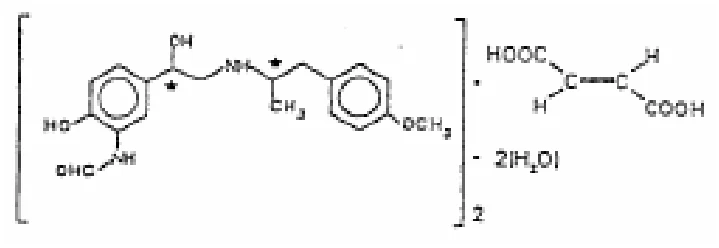 |
Physicochemical Properties Dissociation Constant Partition Coefficient | Formoterol fumarate dihydrate is a white to off-white or slightly yellow non-hygroscopic crystalline powder. The pKa of formoterol fumarate dihydrate at 25°C is 7.9 for the phenolic group and 9.2 for the amino group. The octanol-water partition coefficient at 25°C is 2.6. |
DETAILED PHARMACOLOGY
Human Pharmacology
Absorption and Bioavailability
Inhaled formoterol reaches the systemic circulation via two routes, absorption in the lungs (pulmonary bioavailability) and absorption in the gut (oral bioavailability). Inhaled formoterol is rapidly absorbed and the peak plasma concentration is reached about 15 minutes after inhalation. The mean pulmonary bioavailability has been estimated in a pharmacokinetic study to be 43% of the delivered dose (corresponding to 32% of the metered dose). The total systemic availability after inhalation is approximately 60% of the delivered dose.
Distribution and Metabolism
Plasma protein binding is approximately 50%. Formoterol is metabolized via direct glucuronidation and O-demethylation. Direct conjugation of formoterol, and phase 1 biotransformation followed by conjugation, are likely metabolic fates of formoterol. The oxidative metabolism is likely to be slower in cirrhotic patients, but, conjugation capacity should essentially be maintained since glucuronidation appears to be little affected in conjunction with cirrhosis. Thus, cirrhosis should not a priori be expected to reduce the capacity to eliminate formoterol. If, however, metabolic clearance really were reduced, the increase in plasma concentrations after inhalation should not hinder the use of clinically recommended doses of OXEZE TURBUHALER (formoterol fumarate dihydrate) (6-12 mcg b.i.d.) even with a 50% reduction in total clearance.
Elimination
The major part of the dose of formoterol is eliminated via metabolism. After inhalation 6-10% of the dose of formoterol is excreted unmetabolized in the urine. Following i.v. infusion of formoterol, about 19% of the dose was excreted in urine as unmetabolized formoterol within 24-48 hours. Less than 10% of the nominal dose was recovered intact after inhalation without concomitant charcoal. A considerable fraction of the dose might be excreted in urine as metabolite(s) of formoterol (e.g., Met1), or as conjugates of these metabolite(s).
The terminal half-life after inhalation is estimated to be around 8 hours.
Pharmacodynamics
A dose-response relationship was evident when single doses of OXEZE TURBUHALER were investigated within the dose range of 3 to 48 mcg. Compared with placebo, all tested doses resulted in statistically significant increases in mean FEV1 values, however, the maximum increase after 3 mcg was not significantly different from placebo. As the maximum effect on FEV1 and the duration of efficacy are important measures of clinical efficacy, the 3 mcg dose was considered a clinically less appropriate dose, especially as the tolerability of the higher doses was good. The 6 mcg dose was thus defined as the lowest effective dose. OXEZE TURBUHALER has an onset of action (1 to 3 minutes) similar to that seen with short-acting inhaled β2-agonists and faster than that with salmeterol. Single doses of 6, 12, 24 and 48 mcg OXEZE TURBUHALER result in l2-hour duration of bronchodilation. The duration is dose-dependent and the duration for 12 mcg OXEZE TURBUHALER is similar to that of 50 mcg salmeterol.
A dose-dependent tremor of mild or moderate intensity was observed in healthy subjects not earlier exposed to OXEZE TURBUHALER.
OXEZE TURBUHALER in doses up to and including 48 mcg did not statistically significantly increase the pulse rate, neither in healthy subjects nor in asthmatics as compared with placebo. A clinically relevant increase in pulse rate was observed in healthy subjects after a cumulative dose of 72 mcg of OXEZE TURBUHALER.
When a cumulative dose of 72 mcg OXEZE TURBUHALER was given to healthy subjects, statistically significant but clinically not important increases in systolic and decreases diastolic blood pressure were found. No important changes were found when blood pressure was monitored in patients with asthma receiving single doses or repeated daily doses of 48 mcg of OXEZE TURBUHALER.
An expected dose-response relationship has been documented for the prolongation of the QTc time, with a single dose of 24 mcg in healthy subjects being significantly different from placebo. However, the absolute changes seen even after cumulative dose of 72 mcg OXEZE TURBUHALER in healthy subjects cannot be considered clinically important. It should be noted that the QTc time may not be the best measure of cardiac effects. The QTc time may even be misleading when QT intervals and heart rate change at the same time.
An initial decrease in S-K+ was noted in healthy subjects after administration of OXEZE TURBUHALER but a rapid tolerance to the hypokalemic effect was noted. No clinically significant decreases in S-K+ were reported in studies in patients with asthma. No hypokalemic tendency was noted in the OXEZE TURBUHALER long-term studies.
A high cumulative dose of OXEZE TURBUHALER was associated with statistically significant, but clinically not important increases in plasma glucose and lactate in healthy subjects.
TOXICOLOGY
Acute Toxicity
The acute toxicity of formoterol was studied in mice and rats after inhalation and oral administration. The inhalation LD50 values in mice and rats were estimated to be >280 mg/kg and 40-200 mg/kg respectively. The oral LD50 values were estimated to be in the range of >2000 mg/kg in adult mice and rats, and 500-1000 mg/kg in young rats (12-14 days old). Symptoms of acute toxicity were decreased motor activity, abdominal respiration, tremor, increased salivation and chromodacryorrhea. Myocardial lesions were found in some severely affected animals. This is an expected finding with a high dose of β-adrenoceptor stimulating agents such as isoprenaline, salbutamol and terbutaline.
The effects noted in the single dose studies are those which can be expected with a potent β-agonist.
Long Term Toxicity
The general toxicity after repeated administration of formoterol was studied in mice, rats and dogs after inhalation and oral administration. Studies in young rats were also performed.
Table 2 Dose Levels In Repeat Dose Toxicity Studies And Exposure Ratios Animal/Man* Of Mean Cmax And AUC For Unchanged Formoterol.
| Species | Route Duration | Dose mg/kg | Exposure Ratio (Animal/Man) | Results and Observations | ||||||||
|---|---|---|---|---|---|---|---|---|---|---|---|---|
| Cmax | AUC | |||||||||||
| Mouse | p.o. 3 months | 0.1 1.0 10.0 | <2.2 37 >343 | n.c. 25 214 |
| |||||||
| Rat | inhal 5 days | 0.12 0.80 3.7 | - - - | - - - |
| |||||||
inhal 3 months | 0.082 0.26 0.87 | 60 163 341 | 63 108 215 |
| ||||||||
| Species | Route Duration | Dose mg/kg | Exposure Ratio (Animal/Man) | Results and Observations |
|---|
| Cmax | AUC |
|---|---|
inhal 6 months | |
0.026 0.13 0.85 | |
16 63 278 | 18 68 264 |
| |
| Species | Route Duration | Dose mg/kg | Exposure Ratio (Animal/Man) | Results and Observations |
|---|
| Cmax | AUC | ||||
|---|---|---|---|---|---|
Young rat | p.o. 3 months original study | 0.2 0.8 3 | ≥3.3 8.1 29 | n.c. 17 60 |
|
Young rat cont. | p.o. 3 months repeat study in males | 0.03 0.2 0.8 3 | - - 9.8 37 | - - 15 56 |
|
| Species | Route Duration | Dose mg/kg | Exposure Ratio (Animal/Man) | Results and Observations |
|---|
| Cmax | AUC | ||||
|---|---|---|---|---|---|
inhal 3 months | 0.028 0.16 0.78 | 18 97 380 | 15 82 291 |
| |
| Dog | inhal 5 days | 0.0005 0.0029 0.015 | 1.7 6.3 48 | n.c. 5.3 44 |
|
inhal 1 month | 0.0005 0.0029 0.015 | 1.8 6.2 51 | n.c. 6.4 44 |
|
| Species | Route Duration | Dose mg/kg | Exposure Ratio (Animal/Man) | Results and Observations |
|---|
| Cmax | AUC | ||||
|---|---|---|---|---|---|
p.o. 1 month | 0.002 0.015 0.1 | 3.9 25 98 | n.c. 29 217 |
| |
p.o. 12 months | 0.0007 0.0086 0.092 | 1.4 17 131 | n.c. 24 265 |
|
n.c. = not calculable * Based on a human dose of 24 mcg.
The effects observed in the repeat dose toxicity studies in mice, rats and dogs are those which can be expected with a potent β2-agonist. The most prominent are those on the cardiovascular system with tachycardia, ventricular arrhythmia and myocardial lesions at high doses. In some studies slightly elevated serum potassium was noted, which is contrary to what is usually seen clinically, i.e., reduced serum potassium after acute exposure to a β2-agonist. In this context it should be mentioned that blood sampling for clinical chemistry in toxicological studies is routinely performed about 24 hours after dosing. Thus, the slightly elevated serum potassium may be due to a rebound effect. The same explanation may also be valid for other discrepancies between clinical and toxicity studies, e.g., blood glucose variations. A slight elevation of ALT activity was noted in some of the studies which may indicate effects on the liver although no morphological changes were found.
The findings of an increased incidence of testicular atrophy noted in the original study in young rats with formoterol was not reproducible. All other repeat dose studies performed with formoterol in mice, rats and dogs (adult animals) have been reviewed with regard to testicular atrophy. There is no evidence from these studies that formoterol causes testicular atrophy. It is concluded that the testicular effects noted in the first study in young rats are equivocal in nature and are therefore considered to be of no relevance in the clinical setting.
Mutagenicity
The mutagenic potential of formoterol was studied in the Ames test, Mouse Lymphoma L5178 TK +/- assay, in vitro chromosome aberration test in human lymphocytes and the rat micronucleus test. In the Ames test two batches of formoterol were each tested in two independent experiments. A weak but significant increase in the number of revertant colonies was seen in one of the experiments using each batch. However, since the mutagenic effects were neither reproducible nor dose related, it was concluded that formoterol was not mutagenic in this test. Neither was it mutagenic at the thymidine kinase locus in L5178Y mouse lymphoma cells, nor did it not induce chromosome aberrations in human lymphocytes in vitro or micronuclei in rats treated with formoterol by inhalation. Considering that the mouse lymphoma and chromosome aberration tests are generally more sensitive than the Ames test, and the low and inconsistent activity seen in the two different Ames tests, it was concluded that formoterol is not an in vitro mutagen. The negative results in the micro-nucleus test indicated that the compound is not mutagenic in vivo either.
Carcinogenicity
The carcinogenic potential of formoterol was studied in mice after oral administration and in rats after inhalation. The only treatment related findings were increased incidence of uterine leiomyomas in mice and one mesovarian leiomyoma in rats. These are expected findings in rodents with β-stimulating agents.
Table 3 Dose Levels Carcinogenicity Studies And Exposure Ratios Animal/Man* Of Mean Cmax And AUC For Unchanged Formoterol
| Species | Route Duration | Dose mg/kg | Exposure Ratio (Animal/man) | Results and Observations | ||||||||
|---|---|---|---|---|---|---|---|---|---|---|---|---|
| Cmax | AUC | |||||||||||
| Mouse | p.o. | 0.1 | 5.6 | n.c. | -dose-related increased incidence of uterine leiomyomas | |||||||
| 24 months | 0.5 | 8.9 | 6.4 | -dose-related increased incidence of uterine leiomyomas | ||||||||
| 2.5 | 59 | 56 | -dose-related increased incidence of uterine leiomyomas | |||||||||
| Rat | inhal | 0.005 | 4.8 | n.c. | ||||||||
| 24 months | 0.022 | 17 | 15 | |||||||||
| 0.13 | 67 | 66 | -single mesovarian leiomyoma found, considered to be dose-related | |||||||||
n.c. = not calculable * Based on a human dose of 24 mcg.
Reproductive Studies
A complete program of reproduction toxicology studies was performed in rats and rabbits. In these studies formoterol was administered either orally or by inhalation.
In the fertility study in rats with formoterol given orally by gavage, a reduction in male fertility (fertility 78% of control) was noted at the high dose level (15 mg/kg) in the main study. This effect was not seen at the mid (3 mg/kg) or low (0.2 mg/kg) dose levels. This reduction in fertility was associated with a slight decrease in testes weight at the high dose level, although not statistically significant. Histological examination of the testes did not reveal an increased incidence or severity of testicular atrophy at the high dose level or any other dose level in comparison with the control group. The overall incidence of testicular atrophy in this study was within the historical control data of this laboratory. That male, but not female fertility was affected was indicated by the finding that formoterol treated satellite group females, who were mated with untreated males, showed a 100% pregnancy rate, even in the 15 mg/kg dose group. It was noted that untreated females mated with males from the 15 mg/kg dose group (male’s second mate) showed reduced fertility (81% of control). At the high dose level, 15 mg/kg, the systemic exposure (Cmax and AUC) was about 1300 times the recommended human exposure.
Effects upon pregnancy were studied in rats after inhalation of formoterol (dose range 0.004-1.2 mg/kg). The maternal body weight was dose-dependently increased versus the control from the beginning of the dosing period. Dose related tachycardia was also noted. Mean placental weights were statistically significantly increased in all dose groups compared with the control group.
No adverse effects which could be related to the treatment with formoterol on organogenesis or fetal development were noted up to and including 1.2 mg/kg (high dose level).
Effects upon pregnancy were also studied in rabbits after oral gavage at doses of 0.2, 3.5 and 60 mg/kg. Increased maternal weight gain was observed at all dose levels, most notably at 60 mg/kg. A slight increase in placental weight and a higher proportion of fetuses with subcapsular liver cysts were also noted at 60 mg/kg. The percentage of fetuses with extra ribs and reduced and/or asymmetric/bipartite sternebrae at this dose level was also higher although considered to be of uncertain treatment relationship.
There was no clear adverse effect of treatment on embryonal development at 0.2 or 3.5 mg/kg. At the high dose level systemic exposure (Cmax and AUC) was about 7000-11000 times the recommended human exposure.
As to possible effects on late pregnancy, delivery and offspring development rats were treated orally by gavage with formoterol in the dose range 0.2-3.4 mg/kg. A dose-dependent increase in maternal body weight gain was noted. The number of non-pregnant females and females with total litter loss was slightly higher in the mid (0.8 mg/kg) and the high dosed groups (3.4 mg/kg). The litter weights and the mean pup weights were slightly reduced in the dose groups, but with no obvious dose dependency. There were no differences in the developmental milestones, the reflex development or the functional tests. No differences in sexual function or fertility between groups were seen (F1 generation).
No serious adverse effects on reproduction were noted. The most important finding is a reduced fertility at the high dose level (about 1300 times higher than maximal recommended human systemic exposure) in the rat. Thus, it is considered that it does not represent a clinical problem.
REFERENCES
- 1. Anderson GP. Formoterol: pharmacology, molecular basis of agonism, and mechanism of long duration of a highly potent and selective β2-adrenoceptor agonist bronchodilator. Life Sci 1993;52:2145-2160.
- 2. Decker N, Quennedey MC, Rouot B, Schwartz J, Velly J. Effects of N-aralkyl substitution of β-agonists on α- and β-adrenoceptor subtypes: Pharmacological studies and binding assays. J Pharm Pharmacol 1982;34:107-112.
- 3. Derom EY, Pauwels RA. Time course of bronchodilating effect of inhaled formoterol, a potent and long acting sympathomimetic. Thorax 1992;47:30-33.
- 4. Faulds D, Hollingshead LM, Goa KL. Formoterol. A review of its pharmacological properties and therapeutic potential in reversible obstructive airways disease. Drugs 1991;42:115-137.
- 5. Grønnerød TA, von Berg A, Schwabe G, Soliman S. Formoterol via Turbuhaler® gave better protection than terbutaline against repeated exercise challenge for up to 12 hours in children and adolescents. Respiratory Medicine 2000: 94 (7):661-667
- 6. Ind P, Börszörmenyi Nagy G, Pietinalho A, Shiner R, Villasante C, Brander R, Larsson P. Formoterol 4.5 mcg, used as needed via Turbuhaler® was as safe and well tolerated as terbutaline 0.5 mg. Eur Resp J 1999;ERS-99 (P1086).
- 7. Löfdahl C-G, Svedmyr N. Formoterol fumarate, a new β2-adrenoceptor agonist. Acute studies of selectivity and duration of effect after inhaled and oral administration. Allergy 1989;44:264-271.
- 8. Mak JCW, Grandordy B, Barnes PJ. High affinity [3H]formoterol binding sites in lung: characterization and autoradiographic mapping. Eur J Pharmacol 1994;269:35-41.
- 9. National Institute of Health, Global Strategy for Asthma Management and Prevention, NHLBI/WHO Workshop Report, March 1993, Publication #95-3659, January 1995.
- 10. Nelson HS, Weiss, ST, Bleeckeer ER, Yancey SW, Dorinsky PM, and SMART Study Group. The Salmeterol Multicenter Asthma Research Trial: A Comparison of Usual Pharmacotherapy for Asthma or Usual Pharmacotherapy Plus Salmeterol. CHEST, 2006;129:15-26
- 11. Pauwels RA, Löfdahl C-G, Postma DS, Tattersfield AE, O’Byrne P, Barnes PJ, Ullman A. Effect of inhaled formoterol and budesonide on asthma exacerbations. N Engl J Med, 1997;337:1405-11.
- 12. Politiek MJ, Boorsma M, Aalbers R. Comparison of formoterol, salbutamol and salmeterol in methacholine-induced severe bronchoconstriction. Eur Respir J 1999;13:988-992.
- 13. Ramsdale EH, Otis J, Kline PA, Gontovnick LS, Hargreave FE, O’Byrne PM. Prolonged protection against methacholine-induced bronchoconstriction by the inhaled β2-agonist formoterol. Am Rev Respir Dis 1991;143:998-1001.
- 14. Rott Z, Böcskei C, Poczi M, Juhász, Larsson P, Rosenborg J. On the relative therapeutic index between formoterol Turbuhaler® and salbutamol pressurized metered dose (pMDI) inhaler in asthmatic patients. Eur Respir J 1998;12(Suppl 28):324s.
- 15. Sasaki H, Kamimura H, Enjoji Y, Shiobara Y. Absorption and distribution of formoterol fumarate in rats. Oyo Yakuri 1983;25(6):981-991.
- 16. Scheurs AJM et al. A dose-response study with formoterol Turbuhaler as maintenance therapy in asthmatic patients. ERJ 1996;9:1678-1683.
- 17. Seberová E and A Andersson. Oxis® (formoterol given by Turbuhaler®) showed as rapid an onset of action as salbutamol given by pMDI. Respiratory Medicine 2000, 94, 607-611.
- 18. Tattersfield A, Löfdahl CG, Postma DS, Ekström T, Eivindson A, Schreurs A, Rasidakis A, Karlsson K, Larsson P. On demand treatment: Comparison of formoterol and terbutaline in moderate asthma. Am J Respir Crit Care Med 1999;159 (No. 3 Pt 2):A636.
- 19. The 1999 Canadian Asthma Consensus Report. Canadian Medical Association Journal, November 30, 1999; 161 (11 Suppl).
- 20. Tötterman KJ, Huhti L, Sutinen E, Backman R, Pietinalho A, Falck M, Larsson P, Selroos O. Tolerability to high doses of formoterol and terbutaline via Turbuhaler® for 3 days in stable asthmatic patients. Eur Respir J 1998;12:573-579.
- 21.
Trofast J, Österberg K, Källström B-L, Waldeck B. Steric aspects of agonism and antagonism at β-adrenoceptors: Synthesis of and
- pharmacological experiments with the enantiomers of formoterol and their diastereomers. Chirality 1991;3:443-450.
- 22. van der Molen T, et al. Effects of the long acting beta agonist formoterol on asthma control in asthmatic patients using inhaled corticosteroids. Thorax 1996;52:535-539.
- 23. Vilsvik J, Ankerst J, Palmqvist M, Persson G, Schaanning J, Schwabe G, Johansson Å. Protection against exercise-induced bronchoconstriction during regular treatment with formoterol Turbuhaler® b.i.d. in adult asthmatics. Eur Resp J 1999;ERS-99 (P1085).
- 24. Wallin A, Sandström T, Rosenhall L, Melander B. Time course and duration of bronchodilatation with formoterol dry powder in patients with stable asthma. Thorax 1993;48:611-614. Correction Thorax 1993;48:1188. Letters to the Editor Thorax 1994;49:95.
- 25. Wegener T, Hedenström H, Melander B. Rapid onset of action of inhaled formoterol in asthmatic patients. Chest 1992;102:535-538.