


Product Monograph - Ozanex
SUMMARY PRODUCT INFORMATION
| Route of Administration | Dosage Form / Strength | Nonmedicinal Ingredients |
| Topical | ozenoxacin cream 1% w/w | None For a complete listing see Dosage Forms, Composition and Packaging section |
INDICATIONS AND CLINICAL USE
OZANEX™ (ozenoxacin) is indicated for the topical treatment of impetigo in patients aged 2 months and older.
To reduce the development of drug-resistant bacteria and maintain the effectiveness of OZANEX™ and other antibacterial drugs, OZANEX™ should be used only to treat infections that are proven or strongly suspected to be caused by susceptible bacteria. When culture and susceptibility information are available, they should be considered in selecting or modifying antibacterial therapy. In the absence of such data, local epidemiology and susceptibility patterns may contribute to the empiric selection of therapy.
Geriatrics (≥ 65 years of age):
A limited number of subjects aged ≥ 65 years have been treated with OZANEX™ in clinical trials.
Pediatrics (< 2 months of age):
The safety and efficacy of OZANEX™ in pediatric patients younger than 2 months of age has not been established.
CONTRAINDICATIONS
OZANEX™ is contraindicated in patients who are hypersensitive to this drug or to any ingredient in the formulation. For a complete listing, see the DOSAGE FORMS, COMPOSITION AND PACKAGING section of the Product Monograph.
WARNINGS AND PRECAUTIONS
General
Do not ingest.
There are very limited efficacy data in subjects with impetigo affecting more than 50 cm2 total surface area. Safety and efficacy of OZANEX™ has not been established in subjects with impetigo affecting more than 100 cm2 in total surface area (or exceeding 2% of body surface area [equivalent to two palm surface areas of the child] in pediatric patients). In patients aged less than 12 years the total surface area treated should be no more than 2% of the body surface area.
Do not use OZANEX™ on mucous membranes (oral, intranasal, or intravaginal).
OZANEX™ contains propylene glycol which may cause skin irritation.
OZANEX™ contains stearyl alcohol which may cause local skin reactions (e.g. contact dermatitis).
OZANEX™ contains benzoic acid which may be an irritant to the skin, eyes and mucous membranes and may increase the jaundice in pre-term and full-term jaundiced neonates because of its absorption through the skin.
Ophthalmologic
Do not use OZANEX™ in the eyes.
Sensitivity
In the event of sensitization or severe local irritation from OZANEX™, treatment should be discontinued, the cream carefully wiped off and appropriate alternative therapy for the infection instituted. No evidence of irritation, photoirritation reactions, sensitization potential or photoallergic reactions were observed with ozenoxacin in clinical studies.
Susceptibility/Resistance
Prescribing OZANEX™ in the absence of a proven or strongly suspected bacterial infection is unlikely to provide benefit to the patient and risks the development of drug-resistant bacteria.
As with other antibacterial agents, prolonged use may result in overgrowth of non-susceptible microorganisms, including fungi.
Special Populations
Pregnant Women: No studies with OZANEX™ have been performed in pregnant women. No effects during pregnancy are anticipated since systemic exposure to ozenoxacin is negligible.
Nursing Women: The safe use of OZANEX during breast-feeding has not been established. It is not known whether ozenoxacin is excreted in human breast milk. Minimal systemic exposure to ozenoxacin is observed in adults, therefore exposure of the breast-feeding infant to ozenoxacin is likely to be negligible. Should OZANEX™ be used during breast-feeding it is recommended to avoid applying OZANEX™ to the breast area to protect the nursing infant from unintentional oral drug uptake.
Pediatrics (< 2 months of age): The safety and efficacy of OZANEX™ in pediatric patients younger than 2 months of age has not been established.
ADVERSE REACTIONS
Adverse Drug Reaction Overview
OZANEX™ has been evaluated for safety in 458 patients with superficial skin infections. In these clinical studies, the most frequently reported adverse events were application site irritation and application site pruritus, which affected less than 1% of patients.
Overall, the frequency of adverse drug reactions for OZANEX™ in the combined Phase III impetigo studies (n=362) was low with only one (0.3%) patient experiencing an adverse drug reaction. No serious adverse events were reported.
The incidence of discontinuations of OZANEX™ due to adverse drug reactions was 0.3% - one patient discontinued due to worsening of already present rosacea and seborrheic dermatitis.
Clinical Trial Adverse Drug Reactions
Because clinical trials are conducted under very specific conditions the adverse reaction rates observed in the clinical trials may not reflect the rates observed in practice and should not be compared to the rates in the clinical trials of another drug. Adverse drug reaction information from clinical trials is useful for identifying drug-related adverse events and for approximating rates.
The safety profile of OZANEX™ was assessed in two randomized, controlled, Phase III clinical studies in 362 adult and pediatric patients ≥ 2 months of age, who used at least one dose of OZANEX™.
OZANEX™ was generally well tolerated. No adverse drug reactions were reported at a frequency of ≥ 1%.
Less Common Clinical Trial Adverse Drug Reactions (<1%)
Skin and subcutaneous tissue disorders: worsening of existing rosacea and seborrheic dermatitis.
Pediatric Patients During the clinical development program, no adverse drug reactions were reported in pediatric patients.
DRUG INTERACTIONS
Overview
OZANEX shows negligible systemic absorption (generally below 0.5 ng/ml)
OZANEX™ does not induce cytochrome P450 enzymes in vitro.
Drug-Drug Interactions
The effect of concurrent application of OZANEX™ and other topical medicinal products to the same area of skin has not been studied, and it is not recommended.
Drug-Herb Interactions
Interactions with herbal products have not been studied.
Drug-Food Interactions
Interactions with food have not been studied.
Drug-Laboratory Interactions
Interactions with laboratory tests have not been studied.
DOSAGE AND ADMINISTRATION
Dosing Considerations
OZANEX™ is for cutaneous use only.
There are very limited efficacy data in subjects with impetigo affecting more than 50 cm2 total surface area. Efficacy and safety of OZANEX™ has not been established in subjects with impetigo affecting more than 100 cm2 in total surface area (or exceeding 2% of body surface area [equivalent to two palm surface areas of the child] in pediatric patients).
Recommended Dose and Dosage Adjustment
Adults, children and infants 2 months of age and older: Apply a thin layer of OZANEX™ to the affected area twice daily for 5 days. Scabs do not have to be removed. Patients not showing a clinical response within 3 days should be re-evaluated and alternative therapy should be considered.
Pediatrics (< 2 months of age): The safety and efficacy of OZANEX™ in pediatric patients younger than 2 months of age have not been established.
Geriatrics: No dosage adjustment is necessary.
Hepatic/Renal Impairment: No dosage adjustment is necessary.
Missed Dose
If a dose of OZANEX™ is missed, the patient should be advised to apply the cream as soon as he/she remembers, and then continues with the next application at the proper time interval.
Administration
A thin layer of cream should be applied to the affected area. The area treated may be covered with a sterile bandage or gauze dressing if desired.
OVERDOSAGE
Overdosage with OZANEX™ has not been reported. Any signs or symptoms of overdose, either topically or by accidental ingestion, should be treated symptomatically and consistent with good clinical practices.
There is no known antidote for overdoses of OZANEX™.
| For management of a suspected drug overdose, contact your regional Poison Control Centre. |
ACTION AND CLINICAL PHARMACOLOGY
Mechanism of Action
Ozenoxacin is a non-fluorinated quinolone with dual inhibitory activity against bacterial DNA replication enzymes, DNA gyrase A and topoisomerase IV.
Pharmacokinetics
Absorption:
Healthy adults
Systemic exposure to ozenoxacin was not detected following topical application of OZANEX™ to intact or abraded skin.
Children aged 2 months and older
Negligible systemic absorption was observed in a Phase I study that included pediatric patients (aged > 2 months old) with impetigo, following topical application of ozenoxacin 1% cream twice daily for 5 days.
Distribution: Since no detectable systemic absorption was observed in clinical studies, ozenoxacin tissue distribution has not been investigated in humans.
In an in vitro plasma binding study, mean protein binding of [14C]-ozenoxacin was moderate (~85% to 87%) in human plasma samples and did not appear to be dependent on concentration.
Metabolism: Since no detectable systemic absorption was observed in clinical trials, ozenoxacin metabolism has not been investigated in humans.
In an in vitro human hepatocyte study, ozenoxacin was relatively metabolically stable. In freshly prepared human skin discs, [14C]-ozenoxacin was found to be metabolically stable.
Excretion: Since no detectable systemic absorption was observed in clinical studies, ozenoxacin elimination has not been investigated in humans.
Following a single dermal administration of [14C]-ozenoxacin to rats and mini-pigs, the mean total dose absorbed was 2.7% in rats and 1.6% in mini-pigs. In rats the mean recovery was 2.5% and 0.1% in feces and urine respectively. In mini-pigs the mean recovery was 1.23% and 0.19% in feces and urine respectively.
Special Populations and Conditions
Pediatrics: Negligible systemic absorption was observed in the pediatric population (2 months of age and older).
Hepatic Impairment: No pharmacokinetic data are available in patients with hepatic impairment. However, in view of the negligible systemic exposure to ozenoxacin following topical application, hepatic impairment is not expected to result in systemic exposure of clinical concern.
Renal Impairment: No pharmacokinetic data are available in patients with renal impairment. However, in view of the negligible systemic exposure to ozenoxacin following topical application, renal impairment is not expected to result in systemic exposure of clinical concern.
STORAGE AND STABILITY
OZANEX™ should be stored at room temperature (15 to 30ºC).
Use within 45 days of first opening the tube.
DOSAGE FORMS, COMPOSITION AND PACKAGING
OZANEX™ is a pale yellow cream containing 10 mg/g of ozenoxacin (1% w/w). The nonmedicinal ingredients are benzoic acid (E 210), ethylene glycol monopalmitostearate, octyldodecanol, oleoyl macrogol-6-glycerides, polyethylene glycol-6 stearate, polyethylene glycol-32 stearate, propylene glycol, purified water, and stearyl alcohol.
OZANEX™ is available in 10 gram tubes.
PART II: SCIENTIFIC INFORMATION
PHARMACEUTICAL INFORMATION
Drug Substance
Common name: ozenoxacin
Chemical name: 1-Cyclopropyl-8-methyl-7-(5-methyl-6-methylamino-pyridin-
3-yl)-4-oxo-1,4-dihydro-quinoline-3-carboxylic acid
Molecular formula: C21H21N3O3
Molecular mass: 363.41 g/mol
Structural formula:
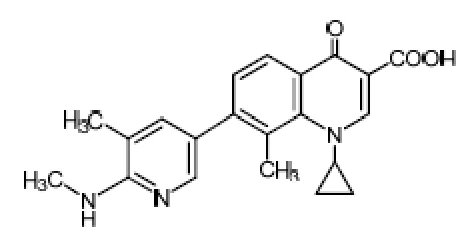
Physicochemical properties: White to pale yellow crystalline powder.
CLINICAL TRIALS
The clinical efficacy of OZANEX™ (ozenoxacin) was demonstrated in two multicentre, randomized, placebo-controlled pivotal Phase III studies; 362 adult and pediatric subjects ≥ 2 months of age with impetigo received OZANEX™ (Table 1). In Study P-110880-01, a third group received retapamulin 1% ointment. Enrolled subjects could have an affected area of no more than 100 cm2 in total surface area, or not exceeding 2% of body surface area in patients less than 12 years of age. The mean area studied was 15.1 cm2 in patients more than 12 years of age and 0.09% of body surface area in patients less than 12 years.
Study demographics and trial design
Table 1 – Summary of Patient Demographics for Clinical Trials in Impetigo
| Study # | Trial Design | Dosage, Route of Administration and Duration | Study Subjects (Safety Population) | Mean Age (Range) | Gender |
| P-110880-01 | Multicentre, randomized, placebo controlled, parallel, blinded (double-blind for ozenoxacin versus placebo comparison and investigator blinded for retapamulin versus placebo comparison), superiority study with active control arm for internal validity purposes. | OZANEX™: Twice daily for 5 days Placebo cream: Twice daily for 5 days Retapamulin 1% ointment: Twice daily for 5 days Study Duration: Approximately 2 weeks, including 5 days of treatment, with follow-up 5 to 7 days later | 156 156 152 | 16.1 years (2 – 83 years) | 286 male 178 female |
| P-110881-01 | Multicenter, randomized, placebo controlled, parallel, double-blind superiority study | OZANEX™: Twice daily for 5 days Placebo cream: Twice daily for 5 days Study Duration: Approximately 2 weeks, including 5 days of treatment, with follow-up 5 to 7 days later | 206 205 | 18.6 years (2 months – 80 years) | 210 male 201 female |
Clinical and microbiological evaluations were performed at day 3 - 4 on-therapy (Visit 2), end of therapy (Visit 3, day 6 - 7) and 5 - 7 days after the last application (Visit 4, day 10 - 13).
The primary efficacy endpoint in both studies was clinical response (success or failure) at end of therapy in the intent-to-treat clinical (ITTC) population. Secondary efficacy endpoints included microbiological response (success or failure) at all post-baseline visits (ITTB population) and overall therapeutic response (combined clinical and microbiological response, ITTB population) at end of therapy.
Study results
Table 2 – Clinical Response at End of Therapy, ITTC Population
| Study P-110880-01 | Study P-110881-01 | ||||||||
| OZANEX™ (N=155) n (%) | Placebo (N=156) n (%) | OZANEX™ (N=206) n (%) | Placebo (N=206) % (n) | ||||||
| Clinical Success Rate1 | 54 (34.8) | 30 (19.2) | 112 (55.2) | 78 (39.2) | |||||
| Differences in Success Rates (%) 95% CI p-value | 15.5% 0.056 - 0.255 0.003 | 16.0% 0.063 - 0.256 0.001 | |||||||
Abbreviations: CI = confidence interval, ITTC = intent-to-treat clinical. N = number of patients in population, n = number of patients with observation.
1Study P-110880-01: clinical success at end of therapy was defined as Skin Infection Rating Scale (SIRS) score 0 for exudate/pus, crusting, tissue warmth and pain, and no more than 1 for each of erythema/inflammation, tissue edema and itching, and no additional antimicrobial therapy necessary.
Clinical success rate for the active control (retapamulin) was 37.7%
Study P-110881-01: clinical success at end of therapy was defined as SIRS score 0 for blistering, exudate/pus, crusting, itching/pain, and no more than 1 for erythema/inflammation, and no additional antimicrobial therapy necessary.
Table 3 presents the results for microbiological response.
Table 3 – Microbiological Response, ITTB Population
| Study P-110880-01 | Study P-110881-01 | ||||||||||||||||
|---|---|---|---|---|---|---|---|---|---|---|---|---|---|---|---|---|---|
OZANEX™ (N=154) | Placebo (N=152) | OZANEX™ (N=125) | Placebo (N=119) | ||||||||||||||
| Visit 2, n | 154 | 152 | 125 | 108 | |||||||||||||
| Microbiological Success1, n (%) | 109 (70.8%) | 58 (38.2%) | 109 (87.2%) | 76 (70.4%) | |||||||||||||
| Difference in Success Rates2 | 35.0% | 16.8% | |||||||||||||||
| 95% CI | 0.25 - 0.46 | 0.064 - 0.272 | |||||||||||||||
| p-value | <0.0001 | 0.002 | |||||||||||||||
| Visit 3, n | 154 | 152 | 123 | 107 | |||||||||||||
| Microbiological success1, n (%) | 122 (79.2%) | 86 (56.6%) | 115 (93.5%) | 87 (81.3%) | |||||||||||||
| Difference in success rates2 | 27.0% | 12.2% | |||||||||||||||
| 95% CI | 0.18 - 0.37 | 0.036 - 0.208 | |||||||||||||||
| p-value | <0.0001 | 0.005 | |||||||||||||||
Abbreviations: ITTB = intent-to-treat clinical bacteriological N = number of patients in population, n = number of patients with observation, CI = confidence interval
1 Microbiological success was defined as the absence of the original pathogen(s) (Visit 1, baseline) from the culture of specimen from the baseline affected area (with or without the presence of any new microorganism(s))
2Only microbiological success and microbiological failure were used for difference in success rates, CI and p-value.
Study P-110880-01: Microbiological success for the active control (retapamulin) at Visit 3 was 81.7%
In both studies, the overall therapeutic success rate (combined clinical and microbiological success for the ITTB population) after 5 days of therapy was significantly higher in the OZANEX™ group than in the placebo group (27.9% vs. 15.1% (ITTB), respectively; p=0.006 in Study P-110880-01; 58.5% vs. 36.0% (ITTB), respectively; p<0.001 in Study P-110881-01).
In both studies, the most commonly found pathogens were Staphylococcus aureus and Streptococcus pyogenes. Table 4 presents the microbiological response by pathogen at visit 3 (pooled data from studies P-110880-01 and P-110881-01).
Table 4 – Microbiological Response by Pathogen at Visit 3 - ITTB population
| Ozenoxacin | Placebo | Retapamulin2 | |||||||||||
|---|---|---|---|---|---|---|---|---|---|---|---|---|---|
| Staphylococcus aureus (Methicillin susceptible) | |||||||||||||
| N | 190 | 169 | 90 | ||||||||||
| Microbiological Success | 179 (94.2%) | 118 (69.8%) | 84 (93.3%) | ||||||||||
| 95% CI | (89.9%; 97.1%) | (62.3%; 76.6%) | (86.1%; 97.5%) | ||||||||||
| Staphylococcus aureus (Methicillin Resistant) | |||||||||||||
| N | 10 | 9 | 0 | ||||||||||
| Microbiological Success1 | 9 (90.0%) | 8 (88.9%) | - | ||||||||||
| 95 % CI | (55.5%; 99.7%) | (51.8%; 99.7%) | - | ||||||||||
| Streptococcus pyogenes | |||||||||||||
| N | 90 | 82 | 73 | ||||||||||
| Microbiological Success | 80 (88.9%) | 52 (63.4%) | 69 (94.5%) | ||||||||||
| 95 % CI | (80.5%; 94.5%) | (52.0%; 73.8%) | (86.6%; 98.5%) | ||||||||||
1 Based on pooled data from the pivotal studies, 10 patients in the ozenoxacin group had MRSA identified as a baseline pathogen; 90% showed microbiological eradication (ITTB); 30% were clinical cures as per the definition of clinical cure (ITTC; primary endpoint), while 100% showed clinical cure plus improvement (ITTC; secondary endpoint).
2 Retapamulin was an active control (internal validity) in Study P-110880-01
In both studies, more patients in the OZANEX™ group achieved first positive clinical response and first bacteriological eradication at an earlier time point during treatment when compared to patients in the placebo group.
In both studies, very few patients had a total affected area of 50 to 100 cm2 (or exceeding 2% of body surface area in patients less than 12 years of age); efficacy outcomes in this subgroup were inferior to placebo.
Examination of age and gender subgroups did not identify differences in response to OZANEX among these groups.
MICROBIOLOGY
Ozenoxacin is a non-fluorinated quinolone antibacterial.
Mechanism of Action
The antibacterial action of ozenoxacin is due to the inhibition of both bacterial enzymes, DNA gyrase A and topoisomerase IV. DNA gyrase is an essential enzyme required for replication, transcription and repair of bacterial DNA. Topoisomerase IV is an essential enzyme required for partitioning of the chromosomal DNA during bacterial cell division.
The mechanism of action of ozenoxacin is different from that of aminoglycosides, macrolides, and β-lactam antibiotics. Therefore ozenoxacin may be active against pathogens that are resistant to these antibiotics, and these antibiotics may be active against pathogens that are resistant to ozenoxacin.
Ozenoxacin is bactericidal, with minimum bactericidal concentrations (MBCs) generally the same or within 1 dilution of the minimum inhibitory concentrations (MICs).
Development of Resistance
Resistance to quinolones typically arises as a result of alterations in the target enzymes (DNA gyrase and topoisomerase IV), and also as a result of changes in drug entry and efflux through cellular envelopes. The development of quinolone resistance is caused by point mutations in discrete regions of the DNA gyrase (gyrA) and topoisomerase IV (grlA) genes called the Quinolone Resistance-Determining Regions (QRDR). The mutations in the QRDR of the gyrA and grlA genes of the S. aureus resistant mutants selected with ozenoxacin were investigated by PCR and DNA sequencing. Compared to fluoroquinolone-susceptible wild-type S. aureus strains, the strains that lost sensitivity to ozenoxacin showed a mutation in the amino acid codon Ser-84 (Ser to Leu) of the gyrA gene and a mutation in the amino acid codon Ser-80 (Ser to Phe) of the grlA gene.
The MICs of the selected mutants were determined in the absence and the presence of reserpine (a NorA, efflux pump, inhibitor) confirming no influence of this efflux pump on the detected resistance levels.
Ozenoxacin has a dual target of action, inhibiting DNA gyrase and topoisomerase IV, and demonstrates greater inhibitory activity against both of these enzymes compared to other quinolones tested. As a result of this greater inhibitory target activity and its bactericidal property, ozenoxacin shows a very low frequency of selection of spontaneous resistant mutants compared to other quinolones.
Cross-Resistance
In vitro studies with gram-positive organisms demonstrated quinolone cross-resistance between ozenoxacin and other fluoroquinolones. However, ozenoxacin retained activity below the breakpoints for mutants resistant to other marketed quinolones. No cross-resistance was seen between ozenoxacin and other available antimicrobials. Based on in vitro broth microdilution susceptibility testing, no differences were observed in susceptibility of S. aureus to ozenoxacin, whether the isolates were methicillin-resistant or methicillin-susceptible.
Spectrum of Activity
The in vitro spectrum of activity of ozenoxacin includes the following microorganisms:
|
|
|
|
|
|
|
|
The in vivo spectrum of activity of ozenoxacin, based on the pivotal clinical studies, includes the following microorganisms:
- Staphylococcus aureus (including methicillin-resistant strains)
- Streptococcus pyogenes
Susceptibility Tests
Dilution Techniques:
Quantitative methods can be used to determine the minimum inhibitory concentration (MIC) of ozenoxacin that will inhibit the growth of the bacteria being tested. The MIC provides an estimate of the susceptibility of bacteria to ozenoxacin. The MIC should be determined using a standardized procedure. Standardized procedures are based on a dilution method (broth or agar) or equivalent with standardized inoculum concentrations and standardized concentrations of ozenoxacin powder.
Diffusion Techniques:
Quantitative methods that require measurement of zone diameters also provide reproducible estimates of the susceptibility of bacteria to antimicrobial compounds. One such standardized procedure requires the use of standardized inoculum concentrations. This procedure uses paper disks impregnated with 5 mcg of ozenoxacin to test the susceptibility of microorganisms to ozenoxacin.
Susceptibility Test Interpretive Criteria:
In vitro susceptibility test interpretive criteria have not been determined for this topical antimicrobial. The relation of the in vitro MIC and/or disk diffusion susceptibility test results to clinical efficacy of ozenoxacin against the bacteria tested should be monitored.
Quality Control Parameters for Susceptibility Testing:
In vitro susceptibility test quality control parameters were developed for ozenoxacin so that laboratories that test the susceptibility of bacterial isolates to ozenoxacin can determine if the susceptibility test is performing correctly. Standardized dilution techniques and diffusion methods require the use of laboratory control microorganisms to monitor the technical aspects of the laboratory procedures. Standard ozenoxacin powder should provide the following MICs
(Table 5), and a 5 mcg ozenoxacin disk should produce the following zone diameters with the indicated quality control strains in Table 6.
Table 5 - Proposed ozenoxacin broth microdilution MIC quality control ranges
Quality control strain (ATCC) | Proposed QC range (MIC in µg/ml) | Dilution range CLSI/RF | % in range CLSI/RF | |
| CLSI | RangeFinder (RF) | |||
| S. aureus (29213) | 0.001 to 0.004 | 0.001 to 0.004 | 3 | 99.8 |
| E. faecalis (29212) | 0.015 to 0.06 | 0.015 to 0.06 | 3 | 99.2 |
| E. coli (25922) | 0.008 to 0.06* 0.008 to 0.06** | 0.004 to 0.06* 0.004 to 0.12** | 4/5* 4/6** | 94/96,8* 93.5/100** |
| S. pneumoniae (49619) | 0.008 to 0.06 | 0.008 to 0.06 | 4 | 99.2 |
Abbreviations: CLSI= Clinical and Laboratory Standards Institute, MIC= Mimimum Inhibition Concentration
*Including all MIC values (levofloxacin as the only valid internal control); **Excluding MIC values associated with out of control results for ciprofloxacin
Table 6 - Proposed ozenoxacin disk diffusion quality control ranges
| Quality control strain | Proposed range expressed in mm (*) | % of results in proposed range * |
| S. aureus ATCC 25923 | 30-38 (29-39) | 97.6 (99.6) |
| E. faecalis ATCC 29212 | 23-29 | 98.8 |
| E. coli ATCC 25922 | 26-30 (25-31) | 95.4 (99) |
| S. pneumoniae ATCC 49619 | 24-30 (23-31) | 97.1 (99.6) |
*Rangefinder results, if different are provided in parentheses
TOXICOLOGY
Acute Toxicity
The acute toxicity of ozenoxacin was assessed with a single i.v. dose of ozenoxacin 50, 70, 100, 125, 150 and 175 mg/kg in rats. Based on observation for 14 days, the maximum dose without lethal effect was 70 mg/kg and the minimum lethal dose was 100 mg/kg (21.43% of mortality). The most frequent clinical signs observed at a systemic exposure dose of ≥ 70 mg/kg were dyspnea, salivation, pigmented lacrimation, vocalization, tremors, convulsions, twitches, excitation and prostration.
Repeat Dose Toxicity
Ozenoxacin was administered once daily by oral gavage to rats for 28 days at dosages of 30, 125, and 500 mg/kg/day. Ozenoxacin did not produce mortality at any dose and was well tolerated without adverse effects on body weight, food and water consumption, necropsy or histopathology findings. In the higher dose group a decrease in the liver weight, increase in alkaline phosphatase and decrease in the weight of all lymphatic organs were observed all of which were completely reversible during the recovery period. The no-observed-adverse-effect-level (NOAEL) was 125 mg/kg.
Ozenoxacin was administered once daily by oral gavage to beagle dogs for 28 days at dosages of 50, 150 or 450-350 mg/kg/day (450 mg/kg/day was reduced to 350 mg/kg/day after the first 14 days). At doses ≥150 mg/kg/day, gastrointestinal alterations (soft feces and diarrhea) were observed frequently and vomiting occasionally. At the doses of 450 mg/kg/day and 350 mg/kg/day central nervous system alterations (convulsions, rigidity of limbs, mydriasis, tremors and emesis) were also recorded. Except for the convulsions, all these clinical signs remitted completely and immediately upon suspending the treatment. Reversibility of convulsions could not be assessed during recovery period as out of the three animals in which this clinical sign was observed, one male animal died after day 21 of administration and two females animals were sacrificed after day 24 and 25 of administration, respectively due the convulsions. The NOAEL was 50 mg/kg/day.
Ozenoxacin 1% cream was administered once daily for 28 days to intact and abraded skin of mini-pigs in concentrations of 0, 5 and 10 mg/cm2 to no less than 10% of the total body surface (corresponding to doses of 0, 2 and 4 mg/kg/day respectively). Topical administration of ozenoxacin cream up to 4 mg/kg/day did not produce any ozenoxacin related dermal irritation or toxicologically relevant adverse effects on body weight changes, qualitative food consumption, ophthalmology, electrocardiography or clinical pathology parameters. Furthermore, no relevant histopathological findings were noted in the tissues evaluated (brain, kidneys, liver, lung, ovaries, skin sites, testes, and thymus). The bioanalytical sample results were below the Lower Limit of Quantification (LLOQ), except on day 28 when only one female animal sample showed a slightly greater result of 0.52 ng/mL (LLOQ was 0.5 ng/mL). Due to the negligible evidence of systemic exposure of ozenoxacin, no toxicokinetic evaluation was performed. The low and high dose administered in the study corresponded with 10 and 22 times the proposed adult dose for clinical use (1% of ozenoxacin cream applied as 1 g/day) taking into account the maximum dermal exposure in humans is 0.01 g/cm2 for 5 to 10% of the total human body surface. The NOAEL was 4 mg/kg/day, corresponding with a human equivalent dose (3.64 mg/kg) 22 times higher than the adult dose under clinical use (0.166 mg/kg, in a 60 kg adult patient).
Local Tolerance
Ozenoxacin showed no evidence of phototoxicity, photoallergenic potential, skin sensitization potential or ocular irritation in non-clinical studies. Local tolerance studies included a mouse local lymph node assay for the assessment of contact sensitization potential and guinea pig phototoxicity, photoallergenicity and contact hypersensitivity studies. A rabbit dermal and ocular tolerance study was also conducted.
Carcinogenicity
Studies in animals to evaluate carcinogenic potential have not been conducted with ozenoxacin.
Genotoxicity
Ozenoxacin showed no genotoxicity or mutagenicity when evaluated in vitro for gene mutation and/or chromosomal effects in an Ames assay with Salmonella typhimurium and Escherichia coli, in a mouse lymphoma cell assay. Ozenoxacin and related impurities identified during development of the product showed no genotoxic potential when evaluated in vivo in a rat micronucleus assay. Ozenoxacin or its related impurities, did not induce statistically or biologically significant increases in the frequency of micronucleated polychromatic erythrocytes in the bone marrow of rats or any cytotoxic effects in the bone marrow of treated animals when were administered orally for two consecutive days up to a dose of 2000 mg/kg/day and after adequate systemic exposure.
Reproduction
Fertility and Early Embryonic Development:
Ozenoxacin was administered once daily by oral gavage to male and female rats at dosages of 125, 250 and 500 mg/kg/day. Male rats were dosed beginning 28 days before cohabitation, through cohabitation and continuing through the day before sacrifice. Female rats were dosed beginning 15 days before cohabitation and continuing through day 7 of gestation. The paternal and maternal NOAEL for general and reproductive toxicity of ozenoxacin was 500 mg/kg/day, the maximum dosage tested. Ozenoxacin did not affect mating or male or female fertility, male reproductive organ weights, sperm parameters, caesarean-sectioning or litter parameters at any dosage.
Embryo-Fetal Development:
Ozenoxacin was administered once daily by oral gavage to pregnant rats at dosages of 0, 125, 250 and 500 mg/kg/day from day 7 through 17 of gestation. The developmental NOAEL of ozenoxacin was 500 mg/kg/day. Ozenoxacin did not produce any toxicologically relevant gross external, soft tissue or skeletal alterations (malformations or variations) in doses up to 500 mg/kg/day when tested in female rats during organogenesis period. All dosages of ozenoxacin slightly reduced fetal body weights and delayed skeletal ossification (caudal vertebrae, rib pairs, thoracic vertebrae) and increased average number of ossified lumbar vertebrae, but the expected number of presacral vertebrae for this species was present in all treated groups. At 500 mg/kg/day delays in ossification of the sternal centers, hindlimb metatarsals and hindlimb phalanges were observed. The delays in skeletal ossification were presumed reversible and were associated with the overall reduction in fetal body weight occurring at these dosage levels and may have been related to the pharmacology of ozenoxacin, a quinolone antibiotic.
Ozenoxacin was administered once daily by oral gavage to pregnant rabbits at dosages of 5, 15 and 40 mg/kg/day from day 7 through 19 of gestation. Developmental toxicity in rabbits, evident as an increase in post-implantation loss and a corresponding reduction in live fetuses per litter, occurred at 40 mg/kg/day. Ozenoxacin also reduced fetal body weights at 15 and 40 mg/kg/day, which in turn, caused delays in skeletal ossification (reduced ossification of the hyoid, forelimb and hindlimb phalanges and forelimb metacarpals). Ozenoxacin did not produce any overt gross external, soft tissue or skeletal malformations or variations at any dosage tested. The developmental NOAEL was 5 mg/kg/day.
Prenatal and Postnatal Development:
Ozenoxacin was administered once daily by oral gavage to pregnant rats at dosages of 125, 250 and 500 mg/kg/day from day 7 of gestation through day 20 of lactation or day 24 of gestation in rats that did not deliver a litter. Because manifestations of effects induced by ozenoxacin during this period may be delayed, observations were continued through sexual maturity of the F1 generation rats. Repeated administration of ozenoxacin from implantation through lactation and weaning did not result in any mortality or increase in the incidence of clinical signs or gross lesions in the F0 generation rats. The reproductive NOAEL in the dams was 500 mg/kg/day, the highest dosage tested. There were no apparent effects on gestation, parturition, lactation or maternal behavior at any dosage tested. In F1 rats, where ozenoxacin was quantifiable in pup plasma on day 14 postpartum, there were no effects on feed consumption, sexual maturation, learning and memory, mating and fertility, male reproductive organ weights or caesarean-sectioning parameters. The NOAEL for viability and growth in the offspring was also 500 mg/kg/day.
Juvenile Toxicity
In a preliminary chondrotoxicity study, ozenoxacin 300 mg/kg/day was administered once daily by oral gavage to juvenile male rats for 5 days. In addition, placebo or another quinolone, ofloxacin, 300 mg/kg/day was administered to another group rats. Ozenoxacin did not produce any observable articular lesion, showing it to be safer than ofloxacin, which in the same experimental conditions produced irreversible damage in the cartilage in 30% of the treated animals.
In a second study, ozenoxacin was administered once daily by oral gavage to juvenile beagle dogs for 2 weeks at dosages of 10, 25, 50 and 100 mg/kg/day to study the potential articular toxicity and general toxicological effects on other potential target organ systems. There was no microscopic evidence of quinolone-induced articular toxicity (structural or cellular changes) in the examined bone/articular cartilage or any effects on bone size or bone mass assessed by densitometry technique. There were no adverse effects on organ weights or any macroscopic or microscopic changes in the selected organs examined (brain, thymus, liver, lung and kidney). Clinical signs related to treatment included decreased activity, tremors, emesis and salivation at the 50 and 100 mg/kg/day dose which were not noted during the recovery period. These central nervous system (CNS) adverse effects were only observed in males at 100 mg/kg/day and in females at 50 and 100 mg/kg/day and the CNS effects are probably related with the high plasma exposure levels of ozenoxacin obtained in the juvenile animals after oral administration during 14 consecutive days. The clinical signs were attributed to the secondary effects of quinolones. The NOAEL was 100 mg/kg/day, the human equivalent dose (HED) derived from the NOAEL is 55 mg/kg, significantly higher than the proposed therapeutic dose for paediatric population.
Table 7 - OZANEX™ Estimated Safety margin in pediatric population
| Pediatric classification | Mean body weight / Proposed therapeutic dose mg/kg (combined boys-girls) | Safety margin (Times HED mg/kg is over Proposed therapeutic dose mg/kg ) |
Infant: 2 months – 2 years | 7.5 kg / 1.33 mg/kg | 41 times the proposed therapeutic dose |
Young Child: 2 – 6 years | 17 kg / 0.59 mg/kg | 93 times the proposed therapeutic dose |
Child: 6 – 12 years | 32 kg / 0.31 mg/kg | 177 times the proposed therapeutic dose |
Adolescents 12 – 18 years | 60 kg / 0.17 mg/kg | 323 times the proposed therapeutic dose |
Abbreviations: HED=human equivalent dose
REFERENCES
- 1. Gropper S, Albareda N, Chelius K, Kruger D, Mitha I, Vahed Y, Gani M, García-Alonso F; Ozenoxacin 1% cream in the treatment of impetigo: a multicenter, randomized, placebo- and retapamulin-controlled clinical trial. Future Microbiol 2014; 9:1013-23.
- 2. CLSI 2009; Methods for Dilution Antimicrobial Susceptibility Tests for Bacteria That Grow Aerobically; Approved Standard, Eighth Edition. CLSI Document M07-A8. CLSI, Wayne, Pennsylvania 19087-1898, USA
- 3. CLSI 2009; Performance Standards for Antimicrobial Disk Susceptibility Tests; Approved Standard, Tenth Edition. CLSI Document M02-A10. CLSI, Wayne, Pennsylvania 19087-1898, USA