


Product Monograph - Taro-Sodium Fusidate
1 INDICATIONS
For use in the treatment of primary and secondary skin infections caused by sensitive strains of Staphylococcus aureus, Streptococcus spp and Corynebacterium minutissimum. Primary skin infections that may be expected to respond to treatment with Taro-Sodium Fusidate (sodium fusidate ointment) and Taro-Fusidic Acid (fusidic acid cream) include: impetigo contagiosa, erythrasma and secondary skin infections such as infected wounds and infected burns.
To reduce the development of drug-resistant bacteria and maintain the effectiveness of sodium fusidate and fusidic acid and other antibacterial drugs, Taro-Sodium Fusidate and Taro-Fusidic Acid should be used only to treat infections that are proven or strongly suspected to be caused by bacteria.
Appropriate culture and susceptibility studies should be performed. However, while waiting results of these studies and, if antibiotic therapy is considered to be necessary, Taro-Sodium Fusidate and Taro-Fusidic Acid may be administered to those patients in whom an infection caused by susceptible bacteria is suspected. This antibiotic treatment may subsequently require modification once these results become available.
In addition, local concentrations of sodium fusidate and fusidic acid are active against other Corynebacteria spp. No cross-resistance has been observed to date between sodium fusidate/ fusidic acid and other antibiotics presently in clinical use.
Resistance to sodium fusidate/ fusidic acid has readily been induced in vitro. The development of resistance has also been shown to occur in the clinical setting.
Consideration should be given to official guidance on the appropriate use of antibacterial agents.
2 CONTRAINDICATIONS
Taro-Fusidic Acid (fusidic acid cream 2% w/w) and Taro-Sodium Fusidate (sodium fusidate ointment 2% w/w) are contraindicated in patients who are hypersensitive to these drugs or to any ingredient in the formulation, including non-medicinal ingredient, or component of the container. For a complete listing, see Dosage Forms, Strength, Composition and Packaging.
3 DOSAGE AND ADMINISTRATION
3.1 Administration
A small amount of Taro-Sodium Fusidate (sodium fusidate ointment 2% w/w) or Taro-Fusidic Acid (fusidic acid cream 2% w/w) should be applied to the lesion two to three times daily for 7-14 days. Whenever the lesion is to be covered with a gauze dressing, less frequent applications (1 or 2 daily) may be used. In impetigo contagiosa, it has been shown to be unnecessary to remove the crusts before application of sodium fusidate ointment or fusidic acid cream.
When required, incision and drainage of infected skin lesions should be carried out before treatment with Taro-Sodium Fusidate or Taro-Fusidic Acid.
4 OVERDOSAGE
For topically applied fusidic acid, no information concerning potential symptoms and signs due to overdose administration is available.
Systemic consequences of an overdose of the active substance after accidental oral intake are unlikely to occur. The amount of fusidic acid in one tube of Taro-Sodium Fusidate or Taro-Fusidic Acid does not exceed the oral daily dose of systemic treatment.
For the most recent information in the management of a suspected drug overdose, contact your regional poison control centre or Health Canada’s toll-free number, 1-844 POISON-X (1-844-764-7669).
5 DOSAGE FORMS, STRENGTHS, COMPOSITION AND PACKAGING
Route of Administration | Dosage Form / Strength/Composition | Non-medicinal Ingredients |
|---|---|---|
| topical | Fusidic acid 2% w/w (as hemihydrate) cream: white to off-white cream | Butylhydroxyanisole (E320), cetyl alcohol, glycerin, hydrochloric acid, mineral oil, polysorbate 60, potassium sorbate, purified water and white petrolatum |
| topical | Sodium fusidate 2% w/w ointment: translucent yellowish to white ointment | Butylhydroxyanisole (E320), cetyl alcohol, lanolin, mineral oil, white petrolatum |
Packaging
Taro-Fusidic Acid (fusidic acid cream 2%):
Available in aluminium tubes of 30 g covered with internal epoxy lacquer. The tube has a re-closable white polypropylene screw cap.
Taro-Sodium Fusidate (sodium fusidate ointment 2%):
Available in aluminium tubes of 30 g covered with internal epoxy lacquer. The tube has a re-closable white polypropylene screw cap
6 WARNINGS AND PRECAUTIONS
General
Treatment of severe or refractory skin lesions should be supplemented with the administration of a systemic antibacterial agent. Use of topical antibiotics occasionally allows overgrowth of non-susceptible organisms. If this occurs, or irritation or sensitization develops, treatment with Taro-Sodium Fusidate or Taro-Fusidic Acid should be discontinued and appropriate therapy instituted.
Susceptibility/Resistance
Development of Drug-Resistant Bacteria
Prescribing Taro-Sodium Fusidate and Taro-Fusidic Acid in the absence of a proven or strongly suspected bacterial infection is unlikely to provide benefit to the patient and risks the development of resistant organisms.
Potential for Microbial Overgrowth
Bacterial resistance among Staphylococcus aureus has been reported to occur with the use of topical fusidic acid/sodium fusidate. As with all antibiotics, extended or recurrent use of fusidic acid may increase the risk of developing antibiotic resistance. Limiting therapy with topical fusidic acid to no more than 14 days at a time will minimize the risk of developing resistance.
Fertility
There are no clinical studies with topical fusidic acid/sodium fusidate regarding fertility. No effects in women of childbearing potential are anticipated, since systemic exposure following topically applied fusidic acid/sodium fusidate is negligible.
Skin
Taro-Fusidic Acid (Fusidic acid cream 2%) contains butyl hydroxyanisole, cetyl alcohol and potassium sorbate. These excipients may cause local skin reactions (e.g. contact dermatitis). Butyl hydroxyanisole may also cause irritation to the eyes and mucous membranes. Taro-Fusidic Acid should therefore be used with care when applied in the proximity of the eyes.
Taro-Sodium Fusidate (Sodium fusidate ointment 2%) contains butyl hydroxyanisole, cetyl alcohol and lanolin. These excipients may cause local skin reactions (e.g. contact dermatitis). Butyl hydroxyanisole may also cause irritation to the eyes and mucous membranes. When Taro-Sodium Fusidate is used on the face; care should be taken to avoid the eyes as the excipients in the ointment may cause conjunctival irritation.
6.1 Special Populations
6.1.1 Pregnant Women
The safety of fusidic acid/sodium fusidate in the treatment of infections during pregnancy has not been established. There is evidence to suggest that following systemic administration the drug can penetrate the placental barrier. If the administration of Taro-Fusidic Acid or Taro-Sodium Fusidate to pregnant patients is considered to be necessary, its use requires that the potential benefits be weighed against the possible hazards to the foetus.
Animal studies have not demonstrated teratogenicity with fusidic acid.
6.1.2 Breast-feeding
The safety of fusidic acid/sodium fusidate for the treatment of infections in women who are breastfeeding has not been established.
Following systemic administration fusidic acid has been detected in the milk of nursing mothers.
The use of Taro-Fusidic Acid or Taro-Sodium Fusidate during lactation requires that the potential benefits be weighed against the risks to the nursing infant.
It is recommended to avoid applying Taro-Fusidic Acid or Taro-Sodium Fusidate on the breast to protect the nursing infant from unintentional oral drug uptake.
7 ADVERSE REACTIONS
7.1 Adverse Reaction Overview
In patients with dermatoses treated with sodium fusidate ointment, mild irritation that did not usually require discontinuance of therapy has been occasionally reported. The application of sodium fusidate ointment to deep leg ulcers has been associated with pain. Reports of hypersensitivity reactions have been rare.
7.2 Post-Market Adverse Reactions
The following post-market adverse drug reactions have been reported from world wide experience with fusidic acid and sodium fusidate:
Conjunctivitis, Dermatitis (incl. dermatitis contact, eczema), Rash*, Pruritus, Uriticaria, Blister, Erythema, Angioedema, Hypersensitivity, Application site pain and Application site irritation.
*Various types of rash reactions such as erythematous, pustular, vesicular, maculo-papular and papular have been reported. Rash generalised has also occurred.
8 DRUG INTERACTIONS
No interaction studies have been performed. Interactions with systemically administered medicinal products are considered minimal as the systemic absorption of topical fusidic acid/ sodium fusidate is negligible.
9 ACTION AND CLINICAL PHARMACOLOGY
9.1 Mechanism of Action
The antibacterial action of fusidic acid results from the inhibition of bacterial protein synthesis. The drug interferes with amino acid transfer from aminoacylsRNA to protein on the ribosomes. Fusidic acid may be bacteriostatic or bactericidal depending on inoculum size. Although bacterial cells stop dividing almost within two minutes after contact with the antibiotic in vitro, DNA and RNA synthesis continue for 45 minutes and 1-2 hours, respectively.
Fusidic acid is virtually inactive against Gram-negative bacteria. The differences in activity against Gram-negative and Gram-positive organisms are believed to be due to a difference in cell wall permeability.
Mammalian cells are much less susceptible to inhibition of protein synthesis by fusidic acid than sensitive bacterial cells. These differences are believed to be due primarily to a difference in cell wall permeability.
10 STORAGE, STABILITY AND DISPOSAL
Taro-Fusidic Acid (fusidic acid cream 2%):
Store between 15°C to 30°C. Use within 28 days of first opening the tube. Dispense and store in original packaging.
Taro-Sodium Fusidate (sodium fusidate ointment 2%):
Store between 15°C to 30°C. Use within 3 months of first opening the tube. Dispense and store in original packaging
PART II: SCIENTIFIC INFORMATION
11 PHARMACEUTICAL INFORMATION
Drug Substance
Proper name: Fusidic Acid Hemihydrate
Chemical name: ent-(17Ζ)-16α-(Acetyloxy)-3β,11β-dihydroxy-4β,8,14-trimethyl-18- nor-5β,10α-cholesta-17(20),24-dien-21-oic acid hemihydrate
Molecular formula: C31H48O6 ·½H2O
Molecular mass: 525.7 g/mol
Structural formula:
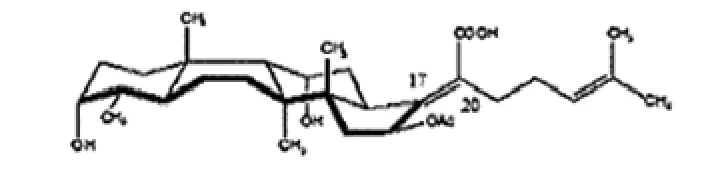
Physicochemical properties: White to almost white crystalline powder, insoluble in water.
Drug Substance
Proper name: Sodium Fusidate
Chemical name: Sodium (Ζ)-ent-16α-(acetyloxy)-3β,11β-dihydroxy-4β,8,14-trimethyl-18-nor-5β,10α-cholesta-17(20),24-dien-21-oate
Molecular formula: C31H47NaO6
Molecular Weight: 538.7
Structural formula:
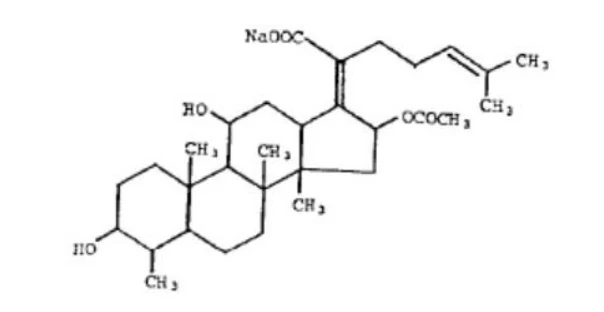
Physicochemical properties: Sodium fusidate is a white crystalline powder, soluble in one part of water at 20°C.
12 CLINICAL TRIALS
Comparative Studies
Taro-Fusidic Acid
A randomized, double-blind, multiple-center, placebo-controlled, parallel design study comparing Taro-Fusidic Acid 2% (Taro Pharmaceuticals Inc.) to Fucidin® Cream 2% (Leo Pharma Inc., Canada) and both Active Treatments to a Placebo Control in the treatment of impetigo was performed in 335 eligible patients aged 1.5 to 80 years old with a clinical diagnosis of impetigo. A small amount of the cream was applied to the affected areas without a covering dressing 3 times daily for 7 days (21 applications).
The primary efficacy endpoint was the proportion of subjects in each treatment group with clinical cure at follow up visit (Day 14 ± 4 days; 7 days after End of Treatment). Bioequivalence was established if the continuity-corrected 95% Confidence Interval (CI) for the difference in cure proportions was contained within the interval [-2.20, +0.20] for the Per-Protocol (PP) population.
The secondary efficacy endpoints were: The proportion of subjects with clinical cure at the End of Treatment Visit (Day 7 + 3 Days); The proportion of subjects with bacteriological cure at the End of Treatment Visit (Day 7 + 3 Days); The proportion of subjects with bacteriological cure at the Follow-up Visit (Day 14 ± 4 Days; 7 days after the end of treatment)
The test product was determined to be clinically and therapeutically equivalent to the reference product for all efficacy endpoints. The superiority of the active treatments over Vehicle was also demonstrated for all endpoints. Results of the efficacy analyses are summarized in the table below.
Summary of Efficacy Analysis Results
| Primary Endpoint: Clinical Cure at Follow-up Visit 7 days Post-treatment | |||
| Parameter | Test | Reference | Vehicle |
| Per protocol (PP) Population | |||
| n | 119 | 118 | |
| Clinical Cure Percent | 90.8 | 97.5 | |
| Percent Difference | -6.70 | ||
| 95% CI | (-13.47, 0.07) | ||
| Modified Intent to Treat (mITT) Population | |||
| n | 123 | 118 | 55 |
| Clinical Cure Percent | 90.2 | 97.5 | 52.7 |
| Percent Difference | 37.52 | 44.73 | |
| p-value vs Vehicle | <0.0001 | <0.0001 | |
| Secondary Endpoint: Clinical Cure at End of Treatment Visit | |||
| Parameter | Test | Reference | Vehicle |
| Per protocol (PP) Population | |||
| n | 119 | 118 | |
| Clinical Cure Percent | 66.4 | 72.9 | |
| Percent Difference | -6.49 | ||
| 95% CI | (-19.02, 6.03) | ||
| Modified Intent to Treat (mITT) Population | |||
| n | 123 | 118 | 55 |
| Clinical Cure Percent | 65.9 | 72.9 | 36.4 |
| Percent Difference | 29.49 | 36.52 | |
| p-value vs Vehicle | 0.0001 | <0.0001 | |
| Secondary Endpoint: Bacteriological Cure at Follow-up Visit 7 days Post-treatment | |||
| Parameter | Test | Reference | Vehicle |
| Per protocol (PP) Population | |||
| n | 119 | 118 | |
| Bacteriological Cure Percent | 93.3 | 99.2 | |
| Percent Difference | -5.88 | ||
| 95% CI | (-11.51, -0.24) | ||
| Modified Intent to Treat (mITT) Population | |||
| n | 123 | 118 | 55 |
| Bacteriological Cure Percent | 93.5 | 99.2 | 58.2 |
| Percent Difference | 35.31 | 40.97 | |
| p-value vs Vehicle | <0.0001 | <0.0001 | |
| Secondary Endpoint: Bacteriological Cure at End of Treatment Visit | |||
| Parameter | Test | Reference | Vehicle |
| Per protocol (PP) Population | |||
| n | 119 | 118 | |
| Bacteriological Cure Percent | 93.0 | 99.1 | |
| Percent Difference | -6.16 | ||
| 95% CI | (-12.01, -0.32) | ||
| Modified Intent to Treat (mITT) Population | |||
| n | 123 | 118 | 55 |
| Bacteriological Cure Percent | 93.2 | 99.1 | 56.6 |
| Percent Difference | 36.56 | 42.54 | |
| p-value vs Vehicle | <0.0001 | <0.0001 | |
| CI = confidence interval. | |||
Taro-Sodium Fusidate
A randomized, double-blind, multiple-center, placebo-controlled, parallel design study comparing Taro-Sodium Fusidate 2% (Taro Pharmaceuticals Inc.) to Fucidin® Ointment 2% (Leo Pharma Inc., Canada) and both Active Treatments to a Placebo Control in the treatment of secondarily skin infections was performed in 540 eligible adult patients with a clinical diagnosis of secondarily infected traumatic skin lesions and a positive baseline culture for Streptococcus aureus and/or Staphylococcus pyogenes. A small amount of the cream was applied to the affected areas without a covering dressing 3 times daily for 10 days (30 applications).
The primary efficacy endpoint was the proportion of subjects in each treatment group with clinical cure at follow up visit (Day 17 ± 4 days; 7 days after End of Treatment). Bioequivalence was established if the continuity-corrected 95% Confidence Interval (CI) for the difference in cure proportions was contained within the interval [-2.20, +0.20] for the Per-Protocol (PP) population.
The secondary efficacy endpoints were: The proportion of subjects with clinical cure at the End of Treatment Visit (Day 10 + 3 Days); The proportion of subjects with bacteriological cure at the End of Treatment Visit (Day 10 + 2 Days); The proportion of subjects with bacteriological cure at the Follow-up Visit (Day 17 ± 4 Days; 7 days after the end of treatment).
The test product was determined to be clinically and therapeutically equivalent to the reference product for all efficacy endpoints. The superiority of the active treatments over Vehicle was also demonstrated for all endpoints. Results of the efficacy analyses are summarized in the table below.
Summary of Efficacy Analysis Results
| Primary Endpoint: Clinical Cure at Follow-up Visit | |||
| Parameter | Test | Reference | Placebo (Vehicle) |
| Per protocol (PP) Population | |||
| n | 134 | 142 | |
| Clinical Cure Percent | 65.7 | 69.6 | |
| Percent Difference | -3.92 | ||
| 95% C.I. [1] | (-12.99, -5.15) | ||
| Modified Intent-To-Treat (mITT) Population | |||
| n | 134 | 142 | 41 |
| Clinical Cure Percent | 65.7 | 69.6 | 40.2 |
| Percent Difference | 25.49 | 29.41 | |
| p-value vs Vehicle [2] | <0.0001 | <0.0001 | |
| Secondary Endpoint: Clinical Cure at End of Treatment Visit | |||
| Parameter | Test | Reference | Placebo (Vehicle) |
| Per protocol (PP) Population | |||
| n | 38 | 38 | |
| Clinical Cure Percent | 18.6 | 18.6 | |
| Percent Difference | 0.00 | ||
| 95% C.I. [1] | (-7.56, -7.56) | ||
| Modified Intent-To-Treat (mITT) Population | |||
| n | 38 | 38 | 11 |
| Clinical Cure Percent | 18.6 | 18.6 | 10.8 |
| Percent Difference | 7.84 | 7.84 | |
| p-value vs Vehicle [2] | 0.0978 | 0.0978 | |
| Secondary Endpoint: Bacteriological Cure at Follow-up Visit | |||
| Parameter | Test | Reference | Placebo (Vehicle) |
| Per protocol (PP) Population | |||
| n | 197 | 201 | |
| Bacteriological Cure Percent | 96.6 | 98.5 | |
| Percent Difference | -1.96 | ||
| 95% C.I. [1] | (-4.96, -1.03) | ||
| Modified Intent-To-Treat (mITT) Population | |||
| n | 197 | 201 | 84 |
| Bacteriological Cure Percent | 96.6 | 98.5 | 82.4 |
| Percent Difference | 14.22 | 16.18 | |
| p-value vs Vehicle [2] | <0.0001 | <0.0001 | |
| Secondary Endpoint: Bacteriological Cure at End of Treatment Visit | |||
| Parameter | Test | Reference | Placebo (Vehicle) |
| Per protocol (PP) Population | |||
| n | 195 | 201 | |
| Bacteriological Cure Percent | 95.6 | 98.5 | |
| Percent Difference | -2.94 | ||
| 95% C.I. [1] | (-6.21, -0.33) | ||
| Modified Intent-To-Treat (mITT) Population | |||
| n | 195 | 201 | 79 |
| Bacteriological Cure Percent | 95.6 | 98.5 | 77.5 |
| Percent Difference | 18.14 | 21.08 | |
| p-value vs Vehicle [2] | <0.0001 | <0.0001 | |
Note: Percentages are based on the number of subjects per treatment in the population.
Treatment success is defined as clinical cure where clinical cure is defined as a Skin Infection Rating Scale (SIRS) score of 0 for all signs and symptoms on a 4-point scale. An LOCF approach was used to impute missing data.
[1] Equivalence established if the 95% continuity corrected Wald confidence interval for the difference between test and reference products for the proportion of subjects with ‘Treatment Success’ is contained within the interval -20% to 20%.
[2] From Fisher’s exact test.
13 PHARMACOLOGY
Fusidic acid/ sodium fusidate shows strong surface activity and is also fat soluble (Stewart, 1964). Using titriated sodium fusidate ointment, Hart (1978) demonstrated the systemic absorption of the ointment applied to the shaved backs of rabbits. Pre-treatment with 1% sodium lauryl sulfate in petroleum jelly increased absorption by from 0.02% to 0.16% to 0.2% to 3.4%. Vickers (1969) using excised human skin demonstrated penetration by fusidic acid and by sodium fusidate comparable to that seen with glucocorticoids. This was later confirmed by Knight (1969). In 1968, Kjelstrup demonstrated the penetration and accumulation of fusidic acid/ sodium fusidate in subcutaneous infected tissue in cases of atheromas. Penetration has also been demonstrated in the skin of an amputated finger, as well as in treated fingers and in bone periosteum.
14 MICROBIOLOGY
In Vitro Studies
Fusidic acid/ sodium fusidate is active in vitro against Gram-positive bacteria and Neisseria species, but has almost no antibacterial activity against Gram-negative organisms. The in vitro susceptibility against a range of clinical isolates is illustrated in Table 1.
In vitro sensitivity to fusidic acid/ sodium fusidate can be determined by the Kirby-Bauer disc diffusion methods using discs containing 10 mcg sodium fusidate.
N.B.: It is important to note that this sensitivity test is invalid if blood is present on the agar medium employed as fusidic acid/ sodium fusidate becomes bound to protein, even in the presence of a very small amount of blood.
The following criteria have been recommended for interpreting the results for Staphylococcus aureus:
Sensitive Organisms
Zone equal to or greater than 20 mm diameter (equivalent to an M.I.C. of 2 mcg/mL or less).
Resistant Organisms
Zone equal to or less than 19 mm diameter. Streptococcal isolates showing inhibition zones of
12-18 mm diameter may be considered as sensitive to fusidic acid/ sodium fusidate.
Table 1. Spectrum of In Vitro Activity of Sodium Fusidate
| Species | No. of strains tested | Cumulative percentage of strains inhibited by given concentration of sodium fusidate (in mcg/mL)** | Activity Range in mcg/mL | |||||||||||||||||||||
|---|---|---|---|---|---|---|---|---|---|---|---|---|---|---|---|---|---|---|---|---|---|---|---|---|
| 0.015 | 0.03 | 0.06 | 0.12 | 0.25 | 0.5 | 1 | 2* | 4 | 8 | |||||||||||||||
Staph. aureus (penicillin sens.) Staph. aureus (penicillin resist.) Strep. pyogenes Strep. pneumoniae Strep. faecalis N. gonorrhoeae N. meningitidis Clostridium spp. Peptostrep. spp. Bacteroides fragilis Bacteroides spp. Corynebacterium spp. | 149 10 13 8 102 108 42 15 83 72 118 | - - - - - 18 - - - - - | 11 - - - 9 51 - - - - - | 50 - - - 19 81 21 13 - 7 77 | 74 - - - 30 92 50 40 - 14 79 | 98 - - - 47 98 74 67 1 29 - | 100 - - - 76 100 88 73 4 47 - | 100 - - 13 92 100 100 93 31 60 87 | 100 - 8 13 96 100 100 100 80 79 - | 100 40 46 100 99 100 100 100 89 90 98 | 100 100 100 100 100 100 100 100 94 94 - | 0.03 - 0.3 4 - 16 2 - 16 1 - 8 0.03 - 4 0.015 - 0.5 0.06 - 1.0 0.06 - 2 0.25 - 16 0.06 - 16 0.06 - 12.5 | ||||||||||||
* isolates with MIC's greater than 2 mcg/mL are considered to be insensitive at those serum concentrations achievable with normal doses of fusidic acid/ sodium fusidate. ** Expressed as sodium fusidate | ||||||||||||||||||||||||
The possibility of synergism between sodium fusidate and other antibiotics has been tested in meat infusion broth inoculated with sensitive strains of Staphylococcus aureus. Synergism has been demonstrated with penicillin V, penicillin G, erythromycin and picromycin.
In another experiment, the M.I.C.'s of combinations of benzyl penicillin or methicillin with fusidic acid were determined by the serial-dilution tube titration method. When the penicillin was added 2 hours before fusidic acid, the combination was synergistic. However when penicillin was added at the same time or later than fusidic acid, the two agents acted antagonistically. It has been suggested that these apparently opposing effects occur because fusidic acid rapidly inhibits protein synthesis, but the action of penicillin requires active cell growth. Fusidic acid and methicillin act antagonistically against staphylococcal strains which are susceptible to methicillin but not in methicillin-resistant strains.
Synergism between the penicillins and fusidic acid has only been observed with strains of Staphylococcus aureus that produce small amounts of penicillinase and not with penicillinase- stable penicillins.
In Vivo Studies
Mice Protection: Sodium fusidate, administered orally at levels of 20 to 2500 mcg per dose was tested in vivo in mice infected with a penicillin-resistant strain of Staphylococcus aureus, Streptococcus pyogenes C 203 or Mycobacterium tuberculosis, var. bovin, strain Ravenel. Sodium fusidate was active against Staphylococcus aureus at all levels, but active against Streptococcus pyogenes C 203 only at levels of 313 mg/dose and above. The drug did not prolong survival times of mice infected with Mycobacterium tuberculosis.
In another study, groups of mice were infected intraperitoneally with Streptococcus pyogenes C 203, Staphylococcus aureus (penicillin-resistant and penicillin-sensitive) or Diplococcus pneumoniae SV.1. When 1 dose of 250 mg/kg sodium fusidate was administered orally 24 or 6 hours prior to the staphylococcal infection, it protected 60% and 80% of the mice treated, respectively. When the single dose of sodium fusidate was administered 4, 2 and 1 hour pre- infection or at the time of infection, 100% of the mice were protected. Sodium fusidate administered subcutaneously failed to protect the mice against Streptococcus pyogenes C 203 and Diplococcus pneumonia infections, regardless of the time of administration. Single subcutaneous and oral doses of sodium fusidate, vernamycin B and erythromycin (4.0, 20.0 and 100 mg/kg) were tested in corticosterone-treated mice which had been infected intradermally with 2 strains of Staphylococcus aureus, all three drugs protected the animals from lesions with the 20 mg/kg s.c. dose when given one hour after infection. When administered subcutaneously one hour pre-infection, erythromycin was 5 times more active.
With the oral route, all three drugs provided complete protection with 100 mg/kg given at the time of infection, but 500 mg/kg or more was required when the drugs were administered 3 to 6 hours post-infection. When the same three drugs were tested against an
intraperitoneally- induced staphylococcal infection, erythromycin was the most active drug.
Rabbit Protection: Rabbits were inoculated intradermally for 3 days with two different strains of Staphylococcus. When infection was induced 24 hours before the administration of sodium fusidate (32.5, 125 or 500 mg/kg), no beneficial effects on the induced lesions were observed; however, when the staphylococcal lesions were produced at the same time or 24 hours following drug administration, erythema was limited and the size of the lesions remained constant throughout the test period (1 week) for all dose levels.
Resistance in vivo
Although resistance to fusidic acid/ sodium fusidate has been rapidly induced in vitro, resistant strains have only occasionally been observed in the clinical setting. In one study, only 3 out of 1025 naturally occurring strains of Staphylococcus aureus were found to be resistant to fusidic acid/ sodium fusidate. In another study, only 10 out of 2700 clinical isolates of Staphylococcus showed resistance to fusidic acid/ sodium fusidate and all 10 strains were coagulase-positive Staphylococci. The degree of resistance exhibited by these strains was comparable to the resistance shown by various mutants in vitro.
Resistant strains of Staph. aureus have emerged following systemic treatment with fusidic acid/ sodium fusidate. In one study resistant strains of Staph. aureus emerged in 6 of 13 burn patients treated with 500 mg fusidic acid/ sodium fusidate two or three times daily for 7 days.
15 TOXICOLOGY
Acute Toxicity
The following Table summarizes the acute toxicity data obtained for mice and rats:
DRUG FORM TESTED
SPECIES
ROUTE OF ADMINISTRATION
NO. OF ANIMALS
LD50
(mg/kg)
Sodium fusidate
Fusidic acid
Diethanolamine
Fusidate
Mouse
Mouse-M
Mouse-M
Mouse-F
Mouse
Mouse
Mouse-M
Mouse-F
Mouse-M
Mouse
Rat
Mouse
Mouse
Rat
Adults
Pups
Mouse
Rat
Oral
Oral
Oral
Subcutaneous
Intravenous
Intravenous
Intravenous
Intraperitoneal
Oral
Oral
Intraperitoneal
Oral
Intravenous
Intravenous
-
50
190
115
-
-
80
175
90
-
11
-
-
10
10
10
10
975
2150
2045
2100
313
205
180
190
175
170
2700
5400
355
2263
443
232
192
The signs and symptoms of toxicity of fusidic acid and its salts in mice were decreased activity, ataxia and convulsions; in rats, the only symptoms preceding death were decreased activity and slight salivation.
Dogs: Sodium fusidate was administered as a 10% solution by stomach tube to 2 fasted dogs in single doses of 250 and 500 mg/kg, respectively. Two other fasted dogs received the drug in the form of gelatin capsules in doses of 500 and 1500 mg/kg, respectively.
No effects were noted in the dogs receiving 500 mg/kg by capsules. The remaining 3 dogs vomited within 8 to 60 minutes; the dog given 1500 mg/kg was lethargic for 12 hours, but no other effects were observed during a 7 day observation period. A dose-dependent increase in BSP retention times was observed.
Subacute Toxicity
Rats: Sodium fusidate was administered in the diet of 2 groups composed of 5 male and 5 female rats at doses of 0 or 270 mg/kg/day for 4 weeks. A similar group received 500 mg/kg/day for 1 week and subsequently 1200 mg/kg/day for 3 weeks. None of the animals died during testing and no significant lesions attributable to the drug were found. Except for a slight to moderate weight retardation in males in the high dose group, the average rates of growth of the treated animals were comparable to those of the controls.
Dogs: Sodium fusidate was administered in the diet of 3 groups of 2 dogs each. One group served as the control; another group was dosed at 110 mg/kg/day for 4 weeks and the third group at 250 mg/kg for 1 week followed by 470 mg/kg/day for the next 3 weeks. None of the dogs showed any significant gross or micropathological alterations which were considered to be drug-related.
During the second and third weeks, one of the 2 dogs on the low dose showed reduction in appetite which was apparently due to poor palatability of the drug. One of the 2 dogs showed a slight weight loss. In the high dose group reductions in appetite limited drug intake to an average of 470 mg/kg/day. Both these animals had small weight losses, probably associated with reduced food intake.
Chronic Toxicity
Rats: Sodium fusidate was administered in the diet to 4 groups of 40 rats at doses of 0, 200,
420 or 840 mg/kg daily for 34 weeks. High dose females and to a lesser degree, high dose males showed a small retardation of weight gain. Slight neutrophilia was also noted in both high dose males and females. Ten of the 14 high dose males showed mild fatty metamorphosis of the liver without significant cytopathological change.
In another study, rats received sodium fusidate administration orally at a dose of 200 mg/kg/day for 24 weeks. No influence on growth or hematology and no other toxic effects were observed.
In a third study, fusidic acid was administered orally to a group of 25 male and 25 female rats at a dose of 400 mg/kg/day, 6 days a week for 5 months. No hematological changes or other toxic effects were noted.
Guinea Pigs: No toxic effects were seen when sodium fusidate was administered orally to guinea pigs at doses of 80 mg/kg/day for 50 days.
Dogs: Sodium fusidate was included in the diet of 4 groups of 5 dogs in amounts to result in doses of 0, 90, 190 or 300 mg/kg for 26 weeks. Significant changes observed were: weight loss with significantly reduced appetite in one animal on the high dose; however, all other test animals maintained or gained weight comparable to the control group in spite of slightly reduced food intake ascribed by the investigator to poor palatability; one dog on the high dose showed definite increases in plasma bilirubin and BSP; one dog on the intermediate dose showed slight to moderate increases in BSP, SGPT and alkaline phosphatase; one dog on the low dose showed a moderate increase in alkaline phosphatase and a slight increase in plasma bilirubin.
In another study, post-mortem examination revealed mild to moderate liver cell damage in one high dose dog (400 mg/kg/day) at 26 weeks, but the other animals showed no morphological changes with this dose attributable to the drug.
Fertility and Reproduction Studies
Two groups, each comprised of 20 male and 20 female rats, received either 0 or 400 mg/kg sodium fusidate per day for 2 weeks before mating to weaning. Caesarian sections were performed on half the dams on the 20th day; the remainder were allowed to deliver naturally.
There were no significant differences between the treated and control dams with respect to per cent resorptions, the condition of the uteri or the number and weights of the pups. No soft tissue abnormalities were found in the pups of either group but skeletal anomalies (control group 2 pups missing ribs and dosed group 1 pup occipital bone formation incomplete and 1 pub rib deformities) appeared in 4% of the pups in both groups. The viability and lactation indices, reflecting neonatal development, were higher in the treated group than the control group, but all values were within normal limits.
Teratology Studies
Mice: Pregnant mice were divided into 3 groups of 16-19 animals each and given daily doses of 20, 100 and 200 mg/kg sodium fusidate by gavage from the 6th to 15th day of gestation. Another group of 23 pregnant mice, serving as controls, received just water by gavage. On the 18th day of pregnancy, half the dams were sacrificed. The remainder was allowed to go to term.
Sex distribution of fetuses and young, fetal weight, birth weight and weight increase were normal and similar for all groups. The mean incidence of resorption was 1.2, 1, 0.5 and 0.6 per dam for the 20, 100 and 200 mg/kg groups and control group, respectively. Average litter size in the treated group did not differ significantly from that of the controls in any of the groups.
Rats: Pregnant rats were divided into 3 groups of 29-31 animals each and given daily doses of 20, 100 or 200 mg/kg sodium fusidate by gavage from the 3rd to the 15th day of gestation. Another group of 59 pregnant rats, serving as controls, received just water by gavage. On the 21st day of pregnancy, half the dams were sacrificed. The remaining dams were allowed to go to term.
The average rate of resorption was 1.2, 1.8, 1.7 and 1.3 per dam for the 20, 100 and 200 mg/kg and control groups, respectively. Litter size and sex distribution of the fetuses and young of the dosed animals were comparable to the controls with no dose-related differences. Birth weights and weight gain over a 4 month period were comparable for all groups. No fetal deformities were observed in any group.
Rabbits: Eighteen pregnant rabbits were treated orally with 125 mg sodium fusidate in tablet form once per day from the 6th to the 18th day of pregnancy. Eleven pregnant animals, serving as controls, received a placebo tablet each day. On the 30th day of pregnancy 9 treated animals and 3 controls were sacrificed. The remaining animals were allowed to go to term.
Sex distribution of fetuses and young, fetal and birth weights and weight gain were normal and similar for both groups. Three dead foetuses were found in each of 2 treated animals and in 1 control animal. Average litter size was lower in the treated group (4.8 young per litter) than in the control group (7.6 young per litter). Macroscopic examinations of the young failed to reveal any teratogenic or other abnormalities.
Skin Tolerance Studies
Daily application of sodium fusidate to the ears of rabbits for a period of one month evolved neither general intolerance, local irritation to the eye, change in capillary permeability of the treated region, nor sensitization to the irritant effects of locally applied chloroform.
17 REFERENCES
- 1. PRFUCIDIN® (fusidic acid 2% Cream and Sodium fusidate 2% Ointment) Product Monograph, LEO Pharma Inc., Submission Control No. 202631, date of revision July 10,2017.