


Product Monograph - Pentacel (Sanofi Vaccines Canada, Suspension)
Recent Major Label Changes
| 4 Dosage and Administration, 4.1 Dosing Considerations | TBD |
|---|---|
| 4 Dosage and Administration, 4.3 Reconstitution | 09/2024 |
| 7 Warnings and Precautions | TBD |
Table of Contents
Recent Major Label Changes ................................................................................................... 2
Table of Contents ................................................................................................................... 2
Part 1: Health Professional Information .................................................................................. 4
1 Indications .................................................................................................................. 4
1.1 Pediatrics ................................................................................................................. 4
1.2 Geriatrics ................................................................................................................. 4
2 Contraindications ........................................................................................................ 4
4 Dosage and Administration ......................................................................................... 5
4.1 Dosing Considerations ............................................................................................. 5
4.2 Recommended Dose and Dosage Adjustment ........................................................ 5
4.3 Reconstitution ......................................................................................................... 5
4.4 Administration ......................................................................................................... 6
4.5 Missed Dose ............................................................................................................ 7
5 Overdose .................................................................................................................... 7
6 Dosage Forms, Strengths, Composition, and Packaging ................................................ 8
7 Warnings and Precautions ......................................................................................... 10
General .............................................................................................................................. 10
Hematologic....................................................................................................................... 11
Immune ............................................................................................................................. 11
Monitoring and Laboratory Tests ...................................................................................... 12
Neurologic ......................................................................................................................... 12
7.1 Special Populations ................................................................................................ 12
7.1.1 Pregnant Women .............................................................................................. 12
7.1.2 Breast-feeding ................................................................................................... 13
7.1.3 Pediatrics ........................................................................................................... 13
8 Adverse Reactions ..................................................................................................... 13
8.2 Clinical Trial Adverse Reactions ............................................................................. 13
8.5 Post-Market Adverse Reactions ............................................................................ 14
9 Drug Interactions ...................................................................................................... 16
9.4 Drug-Drug Interactions .......................................................................................... 16
9.7 Drug-Laboratory Test Interactions ........................................................................ 16
10 Clinical Pharmacology ............................................................................................... 16
10.1 Mechanism of Action ............................................................................................. 16
10.2 Pharmacodynamics ............................................................................................... 17
10.3 Pharmacokinetics .................................................................................................. 18
11 Storage, Stability and Disposal .................................................................................. 18
12 Special Handling Instructions .................................................................................... 18
PART 2: Scientific Information .............................................................................................. 19
13 Pharmaceutical Information ...................................................................................... 19
14 Clinical Trials ............................................................................................................. 20
14.1 Clinical Trials By Indication .................................................................................... 20
14.3 Immunogenicity ..................................................................................................... 27
16 Non-Clinical Toxicology ............................................................................................. 31
Patient Medication Information ........................................................................................... 32
Part 1: Health Professional Information
1 Indications
- PENTACEL® is indicated for the primary immunization of infants, from the age of 2 months, and in children up to 6 years of age (prior to their 7th birthday), against invasive Haemophilus influenzae type b disease, diphtheria, tetanus, pertussis (whooping cough) and poliomyelitis. (See 4 Dosage and Administration)1.
1.1 Pediatrics
PENTACEL® is not indicated for children less than 2 months or children 7 years of age or older.
1.2 Geriatrics
PENTACEL® is not indicated for use in adult and elderly populations.
2 Contraindications
Hypersensitivity
It is recommended that known systemic hypersensitivity reaction to any component of PENTACEL® or a life-threatening reaction after previous administration of the vaccine or a vaccine containing one or more of the same components are contraindications to vaccination1 (See 6 Dosage Forms, Strengths, Composition, and Packaging). Because of uncertainty as to which component of the vaccine may be responsible, none of the components should be administered. Alternatively, such persons may be referred to an allergist for evaluation if further immunizations are considered.
Acute Neurological Disorders
The following events are contraindications to administration of any pertussis-containing vaccine, including PENTACEL®:
Encephalopathy (e.g., coma, decreased level of consciousness, prolonged seizures) within 7 days of a previous dose of a pertussis-containing vaccine that is not attributable to another identifiable cause.
Progressive neurologic disorder, including infantile spasms, uncontrolled epilepsy, progressive encephalopathy. Pertussis vaccine should not be administered to persons with such conditions until a treatment regimen has been established and the condition has stabilized.
- 1 The National Advisory Committee on Immunization (NACI) provides additional guidance on vaccines in Canada. Please refer to the published chapters on diphtheria, tetanus, pertussis and poliomyelitis.
4 Dosage and Administration
4.1 Dosing Considerations
PENTACEL® is supplied in a carton which contains 5 vials of QUADRACEL® and 5 vials of lyophilized Act-Hib®. Prior to use, the Act-Hib® vaccine must be reconstituted with QUADRACEL® to obtain PENTACEL® (See 4 Dosage and Administration, 4.2 Recommended Dose and Dosage Adjustment and 4.3 Reconstitution).
4.2 Recommended Dose and Dosage Adjustment
For routine immunization, PENTACEL® is recommended as a 4-dose series, with a single dose of PENTACEL® at 2, 4, 6 and 18 months of age.
If for any reason this schedule is delayed, it is recommended that 3 doses be administered with an interval of 2 months between each dose, followed by a fourth dose administered approximately 6 to 12 months after the third dose.
Whenever feasible, PENTACEL® should be used for all 4 doses in the vaccination series as there are no clinical data to support the use of PENTACEL® with any other licensed acellular pertussis combination vaccine in a mixed sequence. For situations where a different brand of DTaP, DTaP-IPV or DTaP-IPV/Hib vaccine was originally used, or where the brand is unknown, please refer to the latest edition of the Canadian Immunization Guide.
It is recommended that premature infants whose clinical condition is satisfactory should be immunized with full doses of vaccine at the same chronological age and according to the same schedule as full-term infants, regardless of birth weight2.
Fractional doses (doses <0.5 mL) should not be given. The effect of fractional doses on the safety and efficacy has not been determined.
The childhood immunization series should be completed with a booster of a single 0.5 mL dose of Sanofi Pasteur Limited’s QUADRACEL®, [Diphtheria and Tetanus Toxoids and Acellular Pertussis Vaccine Adsorbed Combined with Inactivated Poliovirus] between 4 and 6 years of age (i.e., at the time of school entry). Alternatively, ADACEL® [Tetanus Toxoid, Reduced Diphtheria Toxoid and Acellular Pertussis Vaccine Adsorbed] and IPV may be administered at separate sites for this booster at 4 to 6 years of age. This booster dose is unnecessary if the fourth dose of PENTACEL® was administered after the child’s fourth birthday2.
A subsequent booster should be administered 10 years later, during adolescence, with ADACEL® or Td ADSORBED Thereafter, routine booster immunizations should be with Td at intervals of 10 years.
4.3 Reconstitution
Reconstitution of Freeze-Dried Product and Withdrawal from Stoppered Vial
2 The National Advisory Committee on Immunization (NACI) provides additional guidance on vaccines in Canada. Please refer to the published chapters on diphtheria, tetanus, pertussis and poliomyelitis.
Reconstitute Act-HIB® [Haemophilus b Conjugate Vaccine (Tetanus Protein Conjugate)] with the QUADRACEL® vaccine.
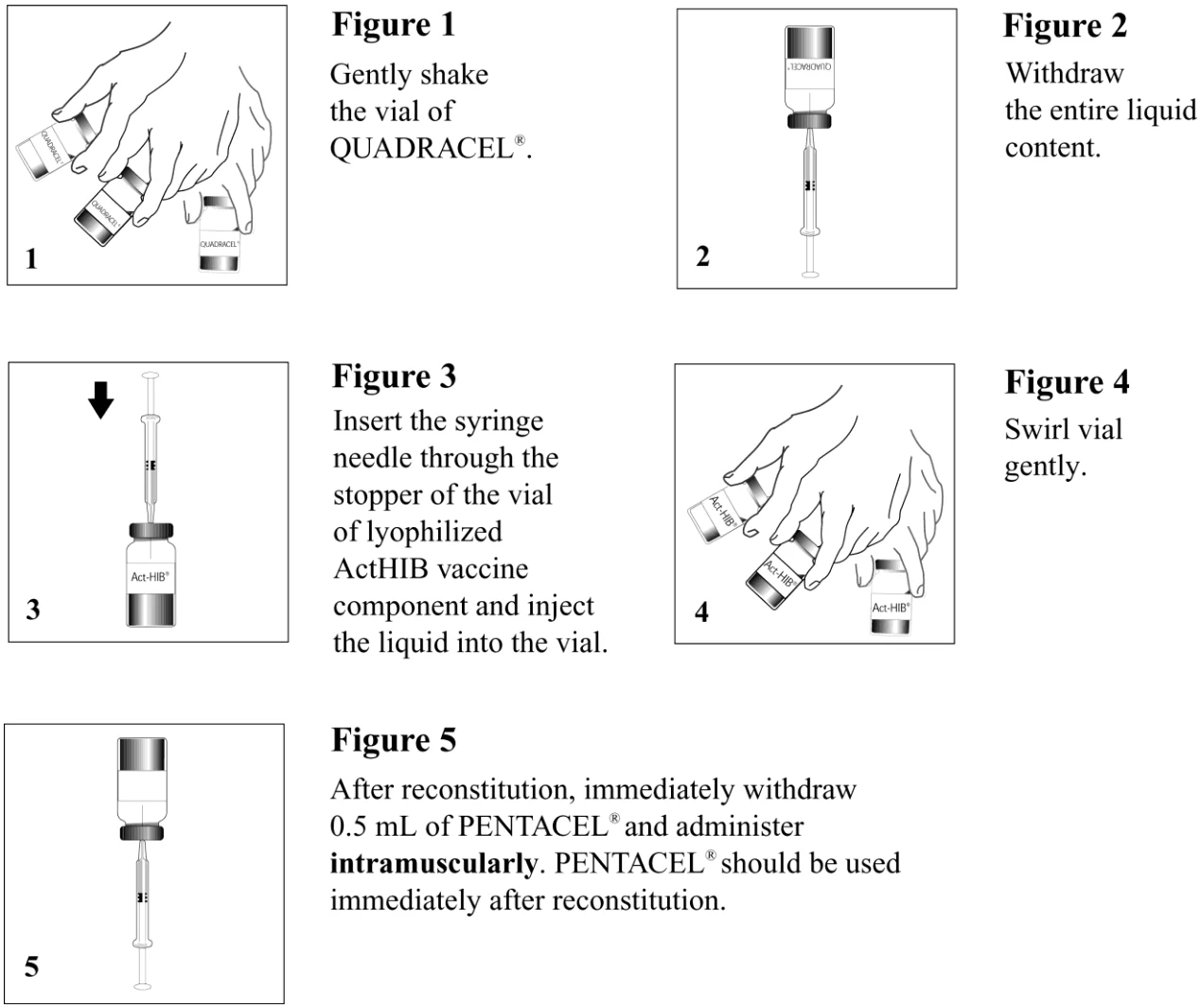
Cleanse the QUADRACEL® and Act-HIB® vial stoppers with a suitable germicide before reconstitution. Do not remove from either vial the stoppers or the metal seals holding them in place. Thoroughly but gently shake the vial of QUADRACEL®, withdraw the entire contents of the liquid vaccine and inject slowly into the vial of lyophilized Act-HIB®. Swirl the vial now containing PENTACEL® gently until a uniform, cloudy, white to off-white suspension results. After reconstitution, withdraw and administer a 0.5 mL dose of PENTACEL® intramuscularly. PENTACEL® should be used immediately after reconstitution. Refer to Figures 1, 2, 3, 4 and 5.
INSTRUCTIONS FOR RECONSTITUTION OF QUADRACEL® WITH Act-HIB®
4.4 Administration
Administration Route-Related Precautions: Do not administer PENTACEL® by intravascular injection: ensure that the needle does not penetrate a blood vessel.
Intradermal or subcutaneous routes of administration are not to be utilized.
PENTACEL® should not be administered into the buttocks.
Inspect for extraneous particulate matter and/or discolouration before use. If these conditions exist, the product should not be administered.
Aseptic technique must be used. Use a separate sterile needle and syringe, or a sterile disposable unit, for each individual patient to prevent disease transmission. Needles should not be recapped but should be disposed of according to biohazard waste guidelines.
Before injection, the skin over the site to be injected should be cleansed with a suitable germicide. Administer the total volume of reconstituted vaccine intramuscularly (I.M.). In infants younger than 1 year, the anterolateral aspect of the thigh provides the largest muscle and is the preferred site of injection. In older children, the deltoid muscle is usually large enough for injection.
Give the patient a permanent personal immunization record. In addition, it is essential that the physician or nurse record the immunization history in the permanent medical record of each patient. This permanent office record should contain the name of the vaccine, date given, dose, manufacturer and lot number.
4.5 Missed Dose
If immunization is delayed for any reason, the recommended schedule is:
- 3 single doses of 0.5 mL with 2 months between doses
- a 4th dose given 6 to 12 months after the 3rd dose
5 Overdose
For the most recent information in the management of a suspected drug overdose, contact your regional poison control centre or Health Canada’s toll-free number, 1-844 POISON-X (1-844-764-7669).
6 Dosage Forms, Strengths, Composition, and Packaging
To help ensure the traceability of vaccines for patient immunization record-keeping as well as safety monitoring, health professionals should record the time and date of administration, quantity of administered dose (if applicable), anatomical site and route of administration, brand name and generic name of the vaccine, the product lot number and expiry date.
Table 1 – Dosage Forms, Strengths and Composition
Description
PENTACEL® [Haemophilus b Conjugate Vaccine (Tetanus Protein – Conjugate) Reconstituted with Diphtheria and Tetanus Toxoids and Acellular Pertussis Vaccine Adsorbed combined with inactivated poliovirus ] is supplied in two vials: one vial containing lyophilized Haemophilus b conjugate vaccine consisting of the Haemophilus influenzae type b capsular polysaccharide PRP covalently bound to tetanus protein, and one vial containing a suspension of diphtheria and tetanus toxoids adsorbed on aluminum phosphate and acellular pertussis vaccine combined with inactivated poliovirus vaccine types 1, 2 and 3 and suspended in water for injection. The acellular pertussis vaccine is composed of 5 purified antigens (PT, FHA, PRN and FIM). After reconstitution, the vaccine is a sterile, uniform, cloudy, white to off-white suspension.
| Route of Administration | Dosage Form / Strength/Composition | Non-Medicinal Ingredients |
| Intramuscular injection | Reconstituted product for injection. Each single dose (0.5 mL) after reconstitution contains: Active Ingredients: Purified polyribosylribitol phosphate capsular polysaccharide (PRP) of Haemophilus influenzae type b covalently bound to tetanus protein, diphtheria toxoid, tetanus toxoid, acellular pertussis [pertussis toxoid (PT), filamentous haemagglutinin (FHA), pertactin (PRN), fimbriae types 2 and 3 (FIM)], inactivated poliovirus (IPV) type 1 (Mahoney), type 2 (MEF1) and type 3 (Saukett). | Aluminum phosphate (adjuvant), 2-phenoxyethanol, polysorbate 80, sucrose, Tris (hydroxymethyl) aminomethane, water for injection Manufacturing process residuals: Bovine serum albumin, formaldehyde, glutaraldehyde, neomycin, polymyxin B sulphate and streptomycin sulphate. |
Composition
After reconstitution, PENTACEL® is a sterile uniform, cloudy, white to off-white suspension.
Each single dose (0.5 mL) after reconstitution contains:
Active Ingredients
Purified Polyribosylribitol Phosphate Capsular Polysaccharide (PRP) of Haemophilus influenzae type b covalently bound to 18 – 30 mcg of Tetanus Protein 10 mcg
Diphtheria Toxoid 15 Lf
Tetanus Toxoid 5 Lf
Acellular Pertussis
Pertussis Toxoid (PT) 20 mcg
Filamentous Haemagglutinin (FHA) 20 mcg
Pertactin (PRN) 3 mcg
Fimbriae Types 2 and 3 (FIM) 5 mcg
Inactivated Vero Trivalent Poliovirus (vIPV)
Type 1 (Mahoney) 29 D-antigen units
Type 2 (MEF1) 7 D-antigen units
Type 3 (Saukett) 26 D-antigen units
Other Ingredients
Excipients:
Aluminum Phosphate (adjuvant) 1.5 mg
2-phenoxyethanol 0.6% v/v
Polysorbate 80 < 8.1 mcg
Water for Injection q.s. 0.5 mL
Tris (hydroxymethyl) aminomethane 0.6 mg
Sucrose 42.5 mg
Manufacturing process residuals:
| Residual Component | Amount per 0.5 mL Dose |
| Formaldehyde | 0.0004 to 0.0015 % w/w (2 mcg mcg to 7mcg mcg) |
| Glutaraldehyde | < 50 ng |
| Bovine Serum Albumin (BSA) | ≤ 10 ng |
| Neomycin | < 0.01 pg |
| Polymyxin B Sulfate | < 0.000001 pg |
| Streptomycin Sulfate | < 0.0001 pg |
Packaging
The stoppers of the vials do not contain latex (natural rubber).
5 dose package containing QUADRACEL® (5 x 0.5 mL vials) for reconstitution of Act-HIB® (5 x 1 dose vials).
7 Warnings and Precautions
General
PENTACEL® is not to be used for the treatment of diseases caused by H. influenzae type b, Corynebacterium diphtheriae, Clostridium tetani, Bordetella pertussis or poliovirus infections.
Before administration of PENTACEL®, health-care providers should inform the parent or guardian of the recipient of the benefits and risks of immunization, inquire about the recent health status of the recipient, review the recipient’s history concerning possible hypersensitivity to the vaccine or similar vaccine, previous immunization history, the presence of any contraindications to immunization and comply with any local requirements with respect to information to be provided to the parent or guardian before immunization and the importance of completing the immunization series.
It is extremely important that the parent or guardian be questioned concerning any signs or symptoms of an adverse reaction after a previous dose of vaccine. (See 2 Contraindications and 8 Adverse Reactions).
The rates and severity of adverse events in recipients of tetanus toxoid are influenced by the number of prior doses and level of pre-existing antitoxins3.
Do not administer QUADRACEL® alone. QUADRACEL® must be used to reconstitute Act-Hib® to obtain PENTACEL®. (See 4 Dosage and Administration, 4.3 Reconstitution).
3 The National Advisory Committee on Immunization (NACI) provides additional guidance on vaccines in Canada. Please refer to the published chapters on diphtheria, tetanus, pertussis and poliomyelitis.
As with any vaccine, PENTACEL® may not protect 100% of susceptible individuals.
Vaccines that contain Hib antigen do not provide protection against infections with other types of Haemophilus influenzae, or against meningitis of other origin.
Under no circumstances can the tetanus protein contained in conjugate vaccines containing tetanus toxoid as protein carrier be used to replace the usual tetanus vaccination.
Edematous reaction affecting one or both lower limbs has occurred following vaccination with Haemophilus influenzae type b-containing vaccines. When this reaction occurs, it does so mainly after primary injections and is observed within the first few hours following vaccination. Associated symptoms may include cyanosis, redness, transient purpura and severe crying. In reported cases, all events resolved spontaneously without sequelae within 24 hours.
Sudden infant death syndrome (SIDS) has occurred in infants following administration of DTaP vaccines. By chance alone, some cases of SIDS can be expected to follow administration of DTaP, IPV or Hib vaccines.
Hematologic
Because any intramuscular injection can cause an injection site hematoma in persons with any bleeding disorders, such as hemophilia or thrombocytopenia, or in persons on anticoagulant therapy, intramuscular injections with PENTACEL® should not be administered to such persons unless the potential benefits outweigh the risk of administration. If the decision is made to administer any product by intramuscular injection to such persons, it should be given with caution, with steps taken to avoid the risk of hematoma formation following injection.
Immune
The possibility of allergic reactions in persons sensitive to components of the vaccine should be evaluated. Hypersensitivity reactions may occur following the use of PENTACEL® even in persons with no prior history of hypersensitivity to the product components. Cases of allergic or anaphylactic reaction have been reported after receiving some preparations containing diphtheria and tetanus toxoids and/or pertussis antigens.
It is recommended that as with all other products, epinephrine hydrochloride solution (1:1,000) and other appropriate agents should be available for immediate use in case an anaphylactic or acute hypersensitivity reaction occurs. Health-care providers should be familiar with current recommendations for the initial management of anaphylaxis in non-hospital settings including proper airway management. For instructions on recognition and treatment of anaphylactic reactions, see the current edition of the Canadian Immunization Guide or visit the Health Canada website4.
Immunocompromised persons (whether from disease or treatment) may not obtain the expected immune response. If possible, consideration should be given to delaying vaccination until after the
4 The National Advisory Committee on Immunization (NACI) provides additional guidance on vaccines in Canada. Please refer to the published chapters on diphtheria, tetanus, pertussis and poliomyelitis.
completion of any immunosuppressive treatment4. Nevertheless, vaccination of persons with chronic immunodeficiency such as HIV infection is recommended even if the antibody response might be limited.
Monitoring and Laboratory Tests
Febrile or Acute Disease: It is recommended that vaccination should be postponed in cases of an acute or febrile disease. However, a disease with low-grade fever should not usually be a reason to postpone vaccination.
If any of the following events occur within the specified period after administration of a whole-cell pertussis vaccine or a vaccine containing an acellular pertussis component, the decision to administer PENTACEL® should be based on careful consideration of potential benefits and possible risks.
- Temperature of ≥40.5°C (105°F) within 48 hours, not attributable to another identifiable cause;
- Collapse or shock-like state (hypotonic-hyporesponsive episode) within 48 hours;
- Persistent crying lasting ≥3 hours within 48 hours;
- Convulsions with or without fever within 3 days.
Syncope related precautions
Syncope can occur following, or even before, any vaccination as a psychogenic response to the needle injection. Procedures should be in place to prevent falling and injury and to manage syncope.
Neurologic
A review by the US Institute of Medicine (IOM) found evidence for a causal relation between tetanus toxoid and both brachial neuritis and Guillain-Barré syndrome (GBS). It is recommended that if GBS occurred within 6 weeks of receipt of prior vaccine containing tetanus toxoid, the decision to give PENTACEL® or any vaccine containing tetanus toxoid should be based on careful consideration of potential benefits and possible risks4.
A few cases of demyelinating diseases of the central nervous system, peripheral mononeuropathies, and cranial mononeuropathies have been reported following vaccines containing tetanus and/or diphtheria toxoids, although the IOM concluded that the evidence is inadequate to accept or reject a causal relation between these conditions and vaccination.
Hypotonic-hyporesponsive episodes (HHEs) rarely follow vaccination with whole-cell pertussis- containing DTP vaccines and occur even less commonly after acellular pertussis-containing DTP vaccines and DT vaccines. NACI states that a history of HHEs is not a contraindication to the use of acellular pertussis vaccines but recommends caution in these cases4.
7.1 Special Populations
7.1.1 Pregnant Women
The vaccine should not be administered to pregnant women.
7.1.2 Breast-feeding
The vaccine should not be administered to nursing women.
7.1.3 Pediatrics
Currently, Haemophilus b conjugate vaccines are not recommended for infants younger than 2 months of age.
The potential risk of apnea and the need for respiratory monitoring for 48 – 72 hours should be considered when administering the primary immunization series to very premature infants (born ≤ 28 weeks of gestation) and particularly for those with a previous history of respiratory immaturity. As the benefit of vaccination is high in this group of infants, vaccination should not be withheld or delayed.
8 Adverse Reactions
8.2 Clinical Trial Adverse Reactions
Clinical trials are conducted under very specific conditions. The adverse reaction rates observed in the clinical trials; therefore, may not reflect the rates observed in practice and should not be compared to the rates in the clinical trials of another drug. Adverse reaction information from clinical trials may be useful in identifying and approximating rates of adverse drug reactions in real-world use.
Safety information described below are based upon studies with Pentacel® formulated with MRC-5 cell-derived IPV.
A total of 1,334 doses of PENTACEL® have been administered to infants and toddlers in 3 clinical trials. In all, 1,005 infants received 3 doses of PENTACEL®. Of these infants, 296 received 4 doses of PENTACEL®. Thirty-three toddlers received PENTACEL® as a 4th dose at 18 months.
In a randomized, controlled clinical trial conducted in Canada, 335 infants were immunized with PENTACEL® at 2, 4 and 6 months of age. In addition, 296 of these children were immunized as toddlers at 18 months. Table 2 below provides a summary of the frequency of solicited reactions observed within 24 hours following each dose of PENTACEL®. Injection site reactions were generally mild. Up to approximately one third of children receiving PENTACEL® experienced some degree of redness, swelling or tenderness around the injection site. The frequency and duration of severe redness and swelling was higher after the fourth dose in toddlers than in the previous three doses in infants, however severe tenderness did not increase with the fourth dose. Severe systemic reactions were infrequent with PENTACEL® and experienced by less than 2% of children. No infant immunized with PENTACEL® and only one toddler immunized with PENTACEL® experienced a fever >40°C.
Table 2: Frequency (%) of Solicited Reactions Observed 24 Hours Following a Single Dose of PENTACEL® Administered at 2, 4, 6 and 18 Months of Age
| Solicited Reactions | 2 months (N = 333) | 4 months (N = 327) | 6 months (N = 320) | 18 months (N = 295) |
| Injection Site Reactions | ||||
| Redness | 8.7 | 11.9 | 11.6 | 19.3 |
| Swelling | 11.7 | 8.8 | 9.4 | 14.2 |
| Tenderness | 26.4 | 27.1 | 19.7 | 28.1 |
| Systemic Reactions | ||||
| Fever ≥38.0°C | 18.6 | 19.5 | 15.0 | 21.5 |
| Less Active | 46.8 | 30.8 | 20.7 | 9.8 |
| Fussiness | 43.5 | 53.4 | 37.0 | 30.2 |
| Crying | 30.6 | 41.5 | 27.6 | 18.6 |
| Eating Less | 27.6 | 20.7 | 15.4 | 16.9 |
| Diarrhea | 10.2 | 7.6 | 6.6 | 5.4 |
| Vomiting | 8.7 | 5.2 | 4.7 | 4.4 |
8.5 Post-Market Adverse Reactions
The following additional adverse events have been spontaneously reported during the post-marketing use of PENTACEL® worldwide. Because these events are reported voluntarily from a population of uncertain size, it is not possible to reliably estimate their frequency or establish a causal relationship to vaccine exposure. Decisions to include these events in labelling were based on one or more of the following factors: 1) severity of the event, 2) frequency of reporting, or 3) strength of causal connection to PENTACEL®.
Immune system disorders
Anaphylaxis/anaphylactic reaction, hypersensitivity (allergic reactions, such as rash and urticaria).
Psychiatric disorders
Screaming
Nervous system disorders
Somnolence, HHE, depressed level of consciousness, hypotonia, convulsion.
Cardiac disorders
Cyanosis
Vascular disorders
Pallor
Gastrointestinal disorders
Vomiting, diarrhea
General disorders and administration site conditions
Injection site reactions (including inflammation, mass, abscess and sterile abscess), extensive swelling of the injected limb (including swelling that involved adjacent joints), vaccination failure/therapeutic response decreased (invasive H. influenzae type b disease).
Infections and infestations
Meningitis, rhinitis, viral infection
Metabolism and nutrition disorders
Decreased appetite
Respiratory, thoracic and mediastinal disorders
Apnea, cough
Skin and subcutaneous tissue disorders
Erythema, skin discoloration
Healthcare professionals should report any adverse occurrences temporally related to the administration of the product in accordance with local requirements. (See
Patient Medication Information, Reporting Side Effects for Vaccines).
9 Drug Interactions
9.4 Drug-Drug Interactions
Immunosuppressive treatments may interfere with the development of the expected immune response. (See 7 Warnings and Precautions.)
Topical use of lidocaine-prilocaine patches to reduce injection site pain has no adverse effect on antibody response to PENTACEL®.
Concomitant Vaccine Administration
Administering the most widely used live and inactivated vaccines during the same patient visit has produced seroconversion rates and rates of adverse reactions similar to those observed when the vaccines are administered separately5. It is recommended that vaccines administered simultaneously should be given using separate syringes at separate sites. Simultaneous administration is suggested, particularly when there is concern that a person may not return for subsequent vaccination5. Simultaneous administration of childhood vaccines such as PENTACEL®, MMR, varicella, pneumococcal conjugate and hepatitis B vaccines, is encouraged for children who are at the recommended age to receive these vaccines and for whom no contraindications exist.
Clinical trials have shown that PENTACEL® is safe and immunogenic if administered at the same time as other vaccines (including meningococcal C conjugate vaccine and hepatitis B vaccine).
PENTACEL® should not be mixed in the same syringe with other parenterals.
9.7 Drug-Laboratory Test Interactions
Antigenuria has been detected in some instances following administration of a vaccine containing Hib antigen. Therefore, urine antigen detection may not have definite diagnostic value in suspected Haemophilus influenzae type b disease within two weeks of immunization.
10 Clinical Pharmacology
10.1 Mechanism of Action
Clinical trial results described below are based upon studies with Pentacel® formulated with MRC-5 cell-derived IPV.
Diphtheria and Tetanus: Strains of C. diphtheriae that produce diphtheria toxin can cause severe or fatal illness characterized by membranous inflammation of the upper respiratory tract and toxin-induced damage to the myocardium and nervous system. Protection against disease attributable to C. diphtheriae is due to the development of neutralizing antibodies to diphtheria toxin. A serum diphtheria antitoxin level of 0.01 IU/mL is the lowest level giving some degree of protection. ACIP states that antitoxin levels
5 The National Advisory Committee on Immunization (NACI) provides additional guidance on vaccines in Canada. Please refer to the published chapters on diphtheria, tetanus, pertussis and poliomyelitis.
of at least 0.1 IU/mL are generally regarded as protective. Levels of 1.0 IU/mL have been associated with long-term protection.
Tetanus is an acute and often fatal disease caused by an extremely potent neurotoxin produced by C. tetani. The toxin causes neuromuscular dysfunction, with rigidity and spasms of skeletal muscles. Protection against disease attributable to C. tetani is due to the development of neutralizing antibodies to tetanus toxin. ACIP states that a serum tetanus antitoxin level of at least 0.01 IU/mL, measured by neutralization assay, is considered the minimum protective level. A tetanus antitoxin level of at least 0.1 IU/mL as measured by the ELISA used in clinical studies of PENTACEL® is considered protective for tetanus. Levels of 1.0 IU/mL have been associated with long-term protection.
Pertussis: Pertussis (whooping cough) is a respiratory disease caused by B. pertussis. This Gram-negative coccobacillus produces a variety of biologically active components, though their role in either the pathogenesis of, or immunity to, pertussis has not been clearly defined. The mechanism of protection from B. pertussis disease is not well understood.
Poliomyelitis: Inactivated Poliovirus induces the production of detectable levels of neutralizing antibodies against each type of poliovirus. The detection of type-specific neutralizing antibodies has been correlated with protection
Haemophilus influenzae type b: The response to the Act-HIB® component of the vaccine is typical of a T-dependent immune response with induction of immunologic priming and memory. Bactericidal activity against Hib is demonstrated in serum after immunization and correlates with the anti-PRP antibody response induced by Hib conjugate vaccine.
10.2 Pharmacodynamics
Diphtheria and Tetanus:
In a clinical trial in Canada, after 4 doses of PENTACEL®, 100% (N = 294) of immunized children achieved serum diphtheria and tetanus antitoxin levels of at least 0.01 IU/mL. 99.7% and 100% of these children achieved serum antitoxin levels of at least 0.1 IU/mL for diphtheria and tetanus, respectively.
After completion of the childhood immunization series, circulating antibodies to diphtheria and tetanus toxoids gradually decline but are thought to persist at protective levels for up to 10 years. NACI recommends that Diphtheria and Tetanus Toxoids boosters are recommended every 10 years.
Pertussis:
In a clinical trial in Sweden (Sweden I Efficacy Trial), pertussis components in PENTACEL® (i.e., PT, FHA, PRN and FIM) have been shown to prevent pertussis in infants with a protective efficacy of 85.2% using the World Health Organization (WHO) case definition (≥21 consecutive days of paroxysmal cough with culture or serologic confirmation or epidemiological link to a confirmed case). In the same study, the protective efficacy against mild disease was 77.9%.
Minimum serum antibody levels to specific pertussis vaccine components that confer protection against the development of clinical pertussis have not been identified. Nevertheless, a number of studies have demonstrated a correlation between the presence of serum antibody responses to pertussis vaccine components and protection against clinical disease. In a controlled clinical trial in Sweden (Sweden II Trial), the efficacy of a DTaP vaccine with the same formulation of five pertussis antigens as PENTACEL® was demonstrated to provide a two-fold to three-fold higher protection against pertussis with any cough compared to the vaccine containing three pertussis antigens. The observed difference supports the role of FIM in the protection against colonization of B. pertussis and mild disease.
In a recent publication, Bettinger et al reviewed pertussis cases during 1991-2004 using surveillance data from the Canadian Immunization Monitoring Program, Active (IMPACT), an active surveillance network based in 12 pediatric tertiary-care hospitals across Canada. Overall, the data show declining rates of pertussis during the years in which PENTACEL® has been used (1999-2004) compared to the period when whole-cell pertussis vaccine was used (1991-1996). Among children 1-4 years of age, incidence of pertussis declined 85%. Data from the Northwest Territories, Newfoundland and Labrador and British Columbia support national and IMPACT data demonstrating a progressive decline of pertussis cases among infants and children through 9 years of age.
Poliomyelitis:
A clinical study of PENTACEL® in 321 Canadian infants showed that, after 4 doses, more than 99.7% of vaccinated children achieved protective antibody levels (titres ≥1:8) to Poliovirus Types 1, 2 and 3 following the primary series.
Haemophilus influenzae type b:
In children aged ≥24 months, antibody titres to H. influenzae capsular polysaccharide (anti-PRP) of ≥0.15 mcg/mL following vaccination with unconjugated PRP vaccine correlated with protection against invasive H. influenzae type b disease immediately after immunization, whereas titres ≥1.0 mcg/mL correlated with protection for at least 1 year. Although the relevance of the 0.15 mcg/mL and 1.0 mcg/mL thresholds to clinical protection after immunization with conjugate vaccines is not known, these levels have been used to gauge antibody response to vaccination. In a clinical study of PENTACEL® in 294 Canadian infants, after 4 doses, 100% of vaccinated children achieved protective antibody titres ≥0.15 mcg/mL and 99.0% achieved protective antibody levels ≥1.0 mcg/mL.
10.3 Pharmacokinetics
Duration of Effect
To ensure optimal protection during childhood, 4 consecutive doses should be given at 2, 4, 6 and 18 months of age. A booster with a vaccine containing diphtheria, tetanus, acellular pertussis with or without IPV is required at 4 to 6 years.
Recommended immunization schedules: Canadian Immunization Guide - Canada.ca
11 Storage, Stability and Disposal
Store at 2° to 8°C (35° to 46°F). Do not freeze. Discard product if exposed to freezing.
The vaccine should be used immediately after reconstitution.
12 Special Handling Instructions
Do not use vaccine after expiration date.
PART 2: Scientific Information
13 Pharmaceutical Information
Drug Substance
Proper name: Haemophilus b Conjugate Vaccine (Tetanus Protein Conjugate) Reconstituted with
Diphtheria and Tetanus Toxoids and Acellular Pertussis Vaccine Adsorbed Combined with
Inactivated Poliovirus.
Product Characteristics:
PENTACEL® is supplied in two vials: one vial containing lyophilized Haemophilus b conjugate vaccine consisting of the Haemophilus influenzae type b capsular polysaccharide (PRP), covalently bound to tetanus protein, and one vial containing a suspension of diphtheria and tetanus toxoids adsorbed on aluminum phosphate and acellular pertussis vaccine combined with inactivated poliovirus types 1, 2 and 3 and suspended in water for injection. The acellular pertussis vaccine is composed of 5 purified pertussis antigens (PT, FHA, PRN, FIM). After reconstitution, the vaccine is a sterile, uniform, cloudy, white to off-white suspension.
C. diphtheriae is grown in modified Mueller’s growth medium. After purification by ammonium sulphate fractionation, the diphtheria toxin is detoxified with formaldehyde and diafiltered. C. tetani is grown in modified Mueller-Miller casamino acid medium without beef heart infusion. Tetanus toxin is detoxified with formaldehyde and purified by ammonium sulphate fractionation and diafiltration. Diphtheria and tetanus toxoids are individually adsorbed onto aluminum phosphate.
The 5 acellular pertussis vaccine components are produced from B. pertussis cultures grown in Stainer-Scholte medium modified by the addition of casamino acids and dimethyl-beta-cyclodextrin. PT, FHA and PRN are isolated separately from the supernatant culture medium. The FIM components are extracted and copurified from the bacterial cells. The pertussis antigens are purified by sequential filtration, salt-precipitation, ultrafiltration and chromatography. PT is detoxified with glutaraldehyde. FHA is treated with formaldehyde. The residual aldehydes are removed by diafiltration. The individual antigens are adsorbed separately onto aluminum phosphate.
Inactivated poliovirus (IPV) is a highly purified, inactivated poliovirus vaccine including three types of poliovirus: Type 1 (Mahoney), Type 2 (MEF-1) and Type 3 (Saukett). Each of the three strains of poliovirus is individually grown in Vero cells cultivated on microcarriers. The single virus harvest is concentrated and purified, then inactivated with formaldehyde to produce the type 1, 2 or 3 monovalent. Monovalents of each type are then combined in appropriate quantities to produce a trivalent concentrate.
After clarification and filtration, viral suspensions are concentrated by ultrafiltration and purified by two liquid chromatography steps. The monovalent viral suspensions are then inactivated with formaldehyde. After inactivation has been confirmed, one or more lots of inactivated monovalent virus are pooled, concentrated and equilibrated with phosphate buffered saline to produce an inactivated monovalent concentrate. The monovalent concentrates of each type are then combined to produce a trivalent concentrate.
The adsorbed diphtheria, tetanus and acellular pertussis components are combined into an intermediate concentrate. IPV is added and the vaccine is diluted to a final concentration of 2 doses/mL.
The potency of diphtheria and tetanus toxoids are measured by in vitro diphtheria and tetanus antigenicity enzyme-linked immunosorbent assays (ELISA) or alternately by assessing the ability of the diphtheria and tetanus toxoids to induce at least 2 neutralizing units per mL in the guinea pig potency test. The potency of the acellular pertussis PT component is evaluated by the antibody response of immunized mice to PT, as measured by ELISA. The potency of the FHA, PRN and FIM components of acellular pertussis antigens is measured by in-vitro FHA, PRN and FIM antigenicity ELISAs. The potency of the IPV antigens is determined by the in-vitro D-antigen ELISA for each serotype.
Act-HIB® is a sterile, lyophilized vaccine that is reconstituted at the time of use with Diphtheria and Tetanus Toxoids and Acellular Pertussis Vaccine Adsorbed combined with Inactivated Poliovirus. Act-HIB® consists of the Haemophilus b capsular polysaccharide PRP, a high molecular weight polymer prepared from the H. influenzae type b strain 1482 grown in a semi-synthetic medium, covalently bound to tetanus protein. Act-HIB® contains no preservative. The tetanus protein is prepared by ammonium sulphate purification, and formalin inactivation of the toxin from cultures of C. tetani (Harvard strain) grown in a modified Mueller and Miller medium. The toxoid is filter sterilized before the conjugation process. Potency of Act-HIB® is specified on each lot by limits on the content of PRP polysaccharide and protein in each dose and the proportion of polysaccharide and protein that is characterized as high molecular weight conjugate.
14 Clinical Trials
14.1 Clinical Trials By Indication
Haemophilus Influenzae Type B Disease, Diphtheria, Tetanus, Pertussis (Whooping Cough) And Poliomyelitis In Infants From The Age Of 2 Months And In Children Up To 6 Years Of Age (Prior To Their 7th Birthday).
Three pivotal clinical trials (Sweden Trial I, Sweden Trial II and PB9502) conducted in Sweden and in Canada, provide the clinical basis for the licensure of PENTACEL® in Canada. (See Table 3).
Table 3: Summary of Demographics and Study Design of the Trials with PENTACEL®
| Study | Study Design | Dosage and Route of Administration | Vaccination Schedule/ Study Population* | Gender |
| Sweden I | Randomized, placebo-controlled, double-blind, efficacy and safety trial with one whole cell DTP, two DTaP vaccines (2 and 5-component). | 0.5 mL I.M. | 2, 4, 6 months of age N = 2,587 | Males N = 1,330 Females N = 1,257 |
| Sweden II | Randomized, controlled, double-blind, multicentre efficacy trial with one whole cell DTP and three DTaP vaccines (2, 3 and 5-component). | 0.5 mL I.M. | 2, 4, 6 months of age N = 2,551 and 3, 5, 12 months of age N = 18,196 | Males N = 10,590 Females N = 10,157 |
| PB9502 | Randomized, controlled, single-blinded multicentre safety and immunogenicity comparative trial with PEDIACEL®†, PENTACEL®, PENTA™ ˧ and QUADRACEL®§ + Act-HIB®**. | 0.5 mL I.M. | 2, 4, 6 and 18 months of age N = 335 | Males N = 185 Females N = 150 |
* Number enrolled. † PEDIACEL® [Diphtheria and Tetanus Toxoids and Acellular Pertussis Vaccine Adsorbed Combined with Inactivated Poliomyelitis Vaccine and Haemophilus b Conjugate Vaccine (Tetanus Protein – Conjugate)] ˧ PENTA™ is a whole-cell DPT-Polio (MRC-5) with lyophilized PRP-T vaccine § QUADRACEL® [Diphtheria and Tetanus Toxoids and Acellular Pertussis Vaccine Adsorbed Combined with Inactivated Poliovirus] ** Act-HIB® [Haemophilus b Conjugate Vaccine (Tetanus Protein – Conjugate)] | ||||
Sweden I Efficacy Trial
A randomized, double-blinded, placebo-controlled efficacy and safety study was conducted in Sweden from 1992 - 1995 (Sweden I Efficacy Trial) under the sponsorship of the National Institute of Allergy and Infectious Diseases (NIAID). A total of 9,829 infants received 1 of 4 vaccines: TRIPACEL® [Diphtheria and Tetanus Toxoids and Acellular Pertussis Vaccine Adsorbed], the five-component DTaP vaccine that contains the same antigens (but with a lower content of PT and FHA per dose) present in PENTACEL® (N = 2,587); a two-component DTaP vaccine (N = 2,566); a whole-cell pertussis DTP vaccine from the U.S. (N = 2,102); or DT vaccine (Swedish National Bacteriological Laboratory) as placebo (N = 2,574). Infants were immunized at 2, 4 and 6 months of age. The mean length of follow-up was 2 years after the third dose of vaccine. The protective efficacy of TRIPACEL® against pertussis after 3 doses of vaccine using the World Health Organization (WHO) case definition (≥21 consecutive days of paroxysmal cough with culture or serologic confirmation or epidemiologic link to a confirmed case) was 85.2% (95% confidence interval [CI] 80.6 to 88.8). The protective efficacy of TRIPACEL® against mild pertussis (≥1 day of cough with laboratory confirmation) was 77.9% (95% CI 72.6 to 82.2). (Table 4) Protection against pertussis by TRIPACEL® was sustained for the 2-year follow-up period. (Table 5)
Table 4: Vaccine Efficacy Against Pertussis Infection of Varying Clinical Severity
| Clinical Severity of Pertussis | Vaccine Efficacy (%) of TRIPACEL® (n = 2,551) Compared to DT Control (n = 2,539) |
| cough ≥ 1 day | 77.9 |
| cough >7 days | 78.4 |
| cough ≥ 21 days | 81.4 |
| cough ≥30 days | 87.3 |
| paroxysmal cough ≥ 14 days | 82.3 |
| paroxysmal cough ≥ 21 days | 85.1 |
Another arm of the trial looked at the persistence of the protection provided by this TRIPACEL® formulation compared to a placebo. High levels of protection were sustained for TRIPACEL® over the entire 2-year follow-up period.
Table 5: Duration of Vaccine Efficacy for TRIPACEL® Compared to Placebo
| Vaccine Efficacy (%) Compared to DT (Placebo n = 2,068) | |
| Interval Since Third Dose (in days) | TRIPACEL® (n = 2,069) |
| 0-89 | 95 |
| 90-179 | 83.6 |
| 180-269 | 86.7 |
| 270-359 | 84.4 |
| 360-449 | 92.1 |
| 450-539 | 78.3 |
| 540-629 | 86.4 |
| 630-719 | 81.3 |
The incidence of injection site and systemic reactions after administration of TRIPACEL® was comparable to the DT control group.
A sub-study of this trial looked specifically at immunized children exposed to pertussis from other members of their households. This formulation of TRIPACEL® was more efficacious than any of the other acellular and whole-cell vaccines studied. There was a correlation between clinical protection and the presence of anti-PRN, anti-FIM and anti-PT antibodies respectively in the serum of immunized children.
Sweden II Efficacy Trial
A second NIAID-sponsored, prospective, randomized, double-blinded efficacy trial was conducted in Sweden (Sweden II Efficacy Trial) from 1993 to 1996. Infants (N = 82,892) were randomized to receive one of four vaccines: a two-component acellular DTaP vaccine (N = 20,697); a three-component acellular DTaP vaccine (n = 20,728); the same formulation of the five-component acellular DTaP vaccine that is contained in PENTACEL® (N = 20,747); or a European whole-cell DTP vaccine (N = 20,720). Vaccination occurred at 3, 5 and 12 months of age (88% of participants) or at 2, 4 and 6 months of age (12% of participants). The relative risk of typical pertussis (culture-confirmed B. pertussis infection with at least 21 days of paroxysmal cough) was 0.85 and 1.38 among children given the five-component and three-component vaccines, respectively, as compared with those given the whole-cell vaccine. The relative risk of typical pertussis was 0.62 among children given the five-component vaccine as compared with the three-component vaccine. The absolute efficacy of the three-component vaccine, when tested in an earlier double-blinded randomized placebo-controlled trial in Italy was 84% (95% CI, 76-89). Although the absolute efficacy of the five-component vaccine could not be determined in the Sweden II Efficacy Trial because of the lack of a DT control group, based on the relative risk data, it appears that the five-component vaccine demonstrated improved efficacy compared with the 84% absolute efficacy associated with the three-component vaccine. The observed difference supports the role of fimbriae types 2 and 3 (FIM) in the protection against colonization by B. pertussis and mild disease (Table 6).
Table 6: Geometric Mean Titres (GMTs) to Pertussis Antigens Following the Third Dose of TRIPACEL® (Vaccine Administered at 2, 4 And 6 Months)
| Pertussis Antigens | TRIPACEL® (n = 80) GMTs (EU/mL) |
| PT | 51.6 |
| FHA | 57.0 |
| PRN | 134.3 |
| FIM | 351.9 |
Rates of serious adverse events were less than or comparable to the rates in the other acellular pertussis and European whole-cell DTP groups in this study.
Clinical Trial PB9502
In a randomized controlled clinical trial conducted in Canada between 1995 and 1997, 787 infants received PENTACEL® (N = 335), PEDIACEL® (N = 339), PENTA™ (N = 112) or QUADRACEL® and Act-HIB®, given concomitantly at separate sites (N = 113) at 2, 4, and 6 months of age. Of the 787 children enrolled, 708 received a fourth dose of the same vaccine at 18-20 months of age.
Safety
Solicited injection site reactions occurred in 8.7% (redness) to 28.1% (tenderness) of PENTACEL® vaccinees. Severe injection site reactions were observed in only 0.9% (tenderness) to 7.5% (redness) of PENTACEL® vaccinees. (See Table 7) The frequency of reactions at the injection site was generally higher after the fourth dose than in the previous three doses in infants, however, severe tenderness did not increase with the fourth dose. Solicited systemic reactions occurred in 1.8% (vomiting) to 53.4% (fussiness). Except for decreased activity after the first dose (1.2%) and fussiness after the fourth dose (1.0%), severe systemic reactions were uncommon. (See Table 7) One child immunized with PENTACEL® experienced a fever ≥40°C. No HHE was observed in this study. One child immunized with PENTACEL® suffered a febrile seizure. PENTACEL® differed in solicited reactions from QUADRACEL® + Act-HIB® only with respect to tenderness and fever. Redness was less frequent with QUADRACEL® + Act-HIB®, whereas fever was milder with PENTACEL®. (See Table 8)
Table 7: Frequency (%) of Solicited Reactions Observed Within 24 Hours Following a Single Dose of PENTACEL® Administered at 2, 4, 6 and 18 Months of Age in Clinical Trial PB9502
| Solicited Reactions | 2 months (N = 334) | 4 months (N = 329) | 6 months (N = 321) | 18 months (N = 295) | |
| Solicited Reactions | 2 months (N = 334) | 4 months (N = 329) | 6 months (N = 321) | 18 months (N = 295) | |
| Crying | Any | 30.6 | 41.5 | 27.6 | 18.6 |
| Severe* | 0 | 0.3 | 0 | 0 | |
| Less Active | Any | 46.8 | 30.8 | 20.7 | 9.8 |
| Severe† | 1.2 | 0 | 0 | 0 | |
| Eating Less | Any | 27.6 | 20.7 | 15.4 | 16.9 |
| Severe ˧ | 0 | 0 | 0 | 0 | |
| Diarrhea | Any | 10.2 | 7.6 | 6.6 | 5.4 |
| Severe § | 0 | 0 | 0 | 0 | |
| Fever | Any | 18.6 | 19.5 | 15.0 | 21.5 |
| ≥ 40°C | 0 | 0 | 0 | 0.3 | |
| Fussiness | Any | 43.5 | 53.4 | 37.0 | 30.2 |
| Severe ** | 0.3 | 0.3 | 0 | 1.0 | |
| Injection Site Redness | Any | 8.7 | 11.9 | 11.6 | 19.3 |
| ≥ 35 mm | 2.7 | 4.0 | 1.6 | 7.5 | |
| Injection Site Swelling | Any | 11.7 | 8.8 | 9.4 | 14.2 |
| ≥ 35 mm | 5.1 | 3.7 | 1.6 | 5.1 | |
| Injection Site Tenderness | Any | 26.4 | 27.1 | 19.7 | 28.1 |
| Severe†† | 1.8 | 3.7 | 0.9 | 1.4 | |
| Vomiting | Any | 8.7 | 5.2 | 4.7 | 4.4 |
| Severe ˧ ˧ | 0 | 0 | 0 | 0 | |
* Cried continuously for ≥ 3 hrs. † Sleeping most of the time. ˧ Refused most or all feeds. § Multiple liquid stools without any solid consistency. ** Continuously fussy for ≥ 3 hrs. †† Baby cries when leg is moved. ˧ ˧ Frequent vomiting and inability to have any oral intake. | |||||
Table 8: Frequency (%) of Solicited Reactions Observed Within 24 Hours Following the Administration of PENTACEL® or QUADRACEL® + Act-HIB® (Q//A) at 2, 4, 6 and 18 Months of Age in Clinical Trial PB9502
| Solicited Reactions | Vaccine | Age (months) | |||
| 2 | 4 | 6 | 18 | ||
| QUADRACEL® + Act-HIB® | N = 113 | N = 111 | N = 111 | N = 104 | |
| PENTACEL® | N = 334 | N = 329 | N = 321 | N = 295 | |
| Crying | Q//A | 31.0 | 28.8 | 23.4 | 19.2 |
| PENTACEL® | 30.6 | 41.5 | 27.6 | 18.6 | |
| Less Active | Q//A | 51.3 | 27.9 | 21.6 | 16.3 |
| PENTACEL® | 46.8 | 30.8 | 20.7 | 9.8 | |
| Eating Less | Q//A | 34.5 | 20.7 | 16.2 | 20.2 |
| PENTACEL® | 27.6 | 20.7 | 15.4 | 16.9 | |
| Diarrhea | Q//A | 6.2 | 7.2 | 9.9 | 2.9 |
| PENTACEL® | 10.2 | 7.6 | 6.6 | 5.4 | |
| Fever | Q//A | 22.1 | 21.1 | 18.0 | 24.0 |
| PENTACEL® | 18.6 | 19.5 | 15.0 | 21.5 | |
| Fussiness | Q//A | 46.0 | 45.0 | 35.1 | 33.7 |
| PENTACEL® | 43.5 | 53.4 | 37.0 | 30.2 | |
| Injection Site Redness | Q//A | 0.9 | 8.1 | 12.6 | 18.3 |
| PENTACEL® | 8.7 | 11.9 | 11.6 | 19.3 | |
| Injection Site Swelling | Q//A | 5.3 | 3.6 | 7.2 | 13.5 |
| PENTACEL® | 11.7 | 8.8 | 9.4 | 14.2 | |
| Injection Site Tenderness | Q//A | 18.6 | 18.0 | 9.0 | 28.8 |
| PENTACEL® | 26.4 | 27.1 | 19.7 | 28.1 | |
| Vomiting | Q//A | 8.0 | 2.7 | 6.3 | 6.7 |
| PENTACEL® | 8.7 | 5.2 | 4.7 | 4.4 | |
14.3 Immunogenicity
Clinical Trial PB9502
In study PB9502, the immunogenicity presented through GMTs of PENTACEL® antigens did not show any clinically significant differences compared to administration of QUADRACEL® and Act-HIB® separately. (See Table 9, Table 10, Table 11and Table 12). Tetanus and diphtheria antitoxin levels were lower in infants receiving PENTACEL®, but these differences were not clinically significant; after 3 doses, 100% of infants in both groups had obtained the minimal level (≥ 0.01 EU/mL) of tetanus antibody thought to be protective and 99% of infants in both groups attained the minimal level (≥ 0.01 IU/mL) of diphtheria antibody thought to be protective. Although the GMT of tetanus antibody was also lower at 19 months in toddlers receiving PENTACEL®, the difference was not clinically significant. One hundred percent of toddlers in both groups were optimally protected against tetanus (≥ 0.1 EU/mL) following the fourth dose.
Table 9: Antibody Responses to PRP-T, Diphtheria and Tetanus Toxoids and Poliovirus Types 1, 2 and 3 Measured One Month After the Third Dose of the Primary Series with PENTACEL® or QUADRACEL® + Act-HIB® in Clinical Trial PB9502
| Antibody | Result | Post 3rd Dose (7 months of age) |
| PENTACEL® (N = 321-322) | QUADRACEL® + Act-HIB® (N = 107-108) | |
| Anti-PRP | ||
| GMT (mcg/mL) | 4.40 | 3.83 |
| (95% CI) | (3.78, 5.13) | (3.05, 4.80) |
| % ≥ 0.15 mcg/mL | 98.5 | 100 |
| % ≥ 1.0 mcg/mL | 84.7 | 88.9 |
| Diphtheria | ||
| GMT (IU/mL) | 0.28 | 0.36 |
| (95% CI) | (0.24, 0.33) | (0.28, 0.46) |
| % ≥ 0.01 IU/mL | 98.4 | 99.1 |
| % ≥ 0.10 IU/mL | 76.7 | 84.3 |
| Tetanus | ||
| GMT (EU/mL) | 0.88 | 1.61 |
| (95% CI) | (0.80, 0.96) | (1.40, 1.86) |
| % ≥ 0.01 EU/mL | 100.0 | 100 |
| % ≥ 0.10 EU/mL | 99.1 | 100 |
| Polio Type 1 | ||
| GMT | 723 | 702 |
| (95% CI) | (593, 882) | (513, 960) |
| % ≥ 1:8 | 99.4 | 98.1 |
| Polio Type 2 | ||
| GMT | 2,178 | 2595 |
| (95% CI) | (1,841, 2,578) | (2005, 3360) |
| % ≥ 1:8 | 100.0 | 100 |
| Polio Type 3 | ||
| GMT | 1,942 | 1837 |
| (95% CI) | (1,642, 2,297) | (1362, 2477) |
| % ≥ 1:8 | 99.4 | 99.1 |
Table 10: Antibody Responses to PRP-T, Diphtheria and Tetanus Toxoids and Poliovirus Types 1, 2 and 3 Measured Immediately Before and One Month After a Fourth Dose at 18 to 19 Months of Age with PENTACEL® or QUADRACEL® + Act-HIB® in Clinical Trial PB9502
| Antibody | Result | Pre 4th Dose | Post 4th Dose | |
| PENTACEL® (N = 293-294) | QUADRACEL® + Act-HIB® (N = 103-104) | PENTACEL® (N = 291-294) | QUADRACEL® + Act-HIB® (N = 103-104) | |
| Anti-PRP | ||||
| GMT(mcg/mL) | 0.42 | 0.37 | 30.1 | 27.1 |
| (95% CI) | (0.35, 0.49) | (0.28, 0.48) | (26.4, 34.2) | (21.6, 34.1) |
| % ≥ 0.15 mcg/mL | 75.4 | 100.0 | 100.0 | 100.0 |
| % ≥ 1.0 mcg/mL | 25.3 | 100.0 | 99.0 | 100.0 |
| Diphtheria | ||||
| GMT (IU/mL) | 0.05 | 0.05 | 4.42 | 4.39 |
| (95% CI) | (0.04, 0.06) | (0.04, 0.06) | (3.82, 5.11) | (3.43, 5.62) |
| % ≥ 0.01 IU/mL | 89.5 | 93.3 | 100.0 | 100.0 |
| % ≥ 0.10 IU/mL | 25.5 | 24.0 | 99.7 | 99.0 |
| Tetanus | ||||
| GMT (EU/mL) | 0.40 | 0.59 | 7.52 | 13.4 |
| (95% CI) | (0.35, 0.45) | (0.49, 0.71) | (6.89, 8.21) | (11.5, 15.7) |
| % ≥ 0.01 EU/mL | 99.3 | 100.0 | 100.0 | 100.0 |
| % ≥ 0.10 EU/mL | 90.8 | 94.2 | 100.0 | 100.0 |
| Polio Type 1 | ||||
| GMT | 108 | 102.5 | 14,874 | 15,113 |
| (95% CI) | (88.3, 133) | (92.9, 144) | (12,303, 17,983) | (11,493, 19,872) |
| % ≥ 1:8 | 90.8 | 89.3 | 99.7 | 100.0 |
| Polio Type 2 | ||||
| GMT | 303 | 375.7 | 21,690 | 20,735 |
| (95% CI) | (253, 364) | (289, 489) | (18,711, 25,145) | (16,392, 26,230) |
| % ≥ 1:8 | 98.3 | 99.0 | 100.0 | 100.0 |
| Polio Type 3 | ||||
| GMT | 243 | 229.9 | 22,930 | 20,596 |
| (95% CI) | (197, 300) | (160, 329) | (19,207, 27,376) | (15,265, 27,790) |
| % ≥ 1:8 | 94.9 | 94.1 | 100.0 | 100.0 |
Table 11: Pertussis Antibody Responses Measured One Month After the Third Dose of the Primary Series with PENTACEL® or QUADRACEL® + Act-HIB® in Clinical Trial PB9502
| Antibody | Result | Post 3rd Dose (7 months of age) |
| PENTACEL® (N = 320-321) | QUADRACEL® + Act-HIB® (N = 107-108) | |
| PT | ||
| GMC (EU/mL) | 89.0 | 102.6 |
| (95% CI) | (82.5, 96.0) | (90.5, 116.4) |
| % ≥ 4-fold rise* | 92.2 | 92.2 |
| FHA | ||
| GMC (EU/mL) | 152.6 | 165.3 |
| (95% CI) | (143.7, 162.2) | (148.4, 184.3) |
| % ≥ 4-fold rise* | 87.1 | 86.5 |
| PRN | ||
| GMC (EU/mL) | 55.9 | 40.5 |
| (95% CI) | (49.3, 63.3) | (33.0, 49.7) |
| % ≥ 4-fold rise* | 85.2 | 75.7 |
| FIM | ||
| GMC (EU/mL) | 243.8 | 332.3 |
| (95% CI) | (210.8, 282.1) | (264.6, 417.3) |
| % ≥ 4-fold rise* | 84.7 | 83.5 |
| * Percentage of vaccinees attaining at least a 4-fold increase over their pre-immunization antibody level at 2 months of age. | ||
PENTACEL®
[Haemophilus b Conjugate Vaccine (Tetanus Protein - Conjugate) Reconstituted with Diphtheria and TetanusToxoids and Acellular Pertussis Vaccine Adsorbed Combined with Inactivated Poliovirus
Table 12: Pertussis Antibody Responses Measured Immediately Before and One Month After a Fourth Dose with PENTACEL® or QUADRACEL® + Act-HIB® in Clinical Trial PB9502
| Antibody | Result | 4th Dose (18 to 19 months of age) | |||||||||||||||||||
| Pre-Immunization | Post-Immunization | ||||||||||||||||||||
| PENTACEL® (N = 280-282) | QUADRACEL® + Act-HIB® (N = 101) | PENTACEL® (N = 285-288) | QUADRACEL® + Act-HIB® (N = 103) | ||||||||||||||||||
| PT | GMC (EU/mL) | 11.4 | 14.8 | 181.7 | 222.9 | ||||||||||||||||
| (95% CI) | (10.3, 12.7) | (12.7, 17.3) | (166, 199) | (196, 253) | |||||||||||||||||
| % ≥ 4-fold rise* | - | - | 96.8 | 97.0 | |||||||||||||||||
| FHA | GMC (EU/mL) | 20.9 | 24.7 | 244.6 | 251.9 | ||||||||||||||||
| (95% CI) | (18.7, 23.2) | (20.8, 29.2) | (228, 263) | (224, 284) | |||||||||||||||||
| % ≥ 4-fold rise | - | - | 91.0 | 91.1 | |||||||||||||||||
| PRN | GMC (EU/mL) | 9.6 | 6.9 | 210 | 160.0 | ||||||||||||||||
| (95% CI) | (8.4, 10.9) | (5.5, 8.7) | (185, 239) | (132, 195) | |||||||||||||||||
| % ≥ 4-fold rise | - | - | 97.8 | 100 | |||||||||||||||||
| FIM | GMC (EU/mL) | 37.9 | 55.3 | 855 | 1079 | ||||||||||||||||
| (95% CI) | (32.7, 44.0) | (44.3, 69.1) | (753, 971) | (879, 1324) | |||||||||||||||||
| % ≥ 4-fold rise | - | - | 95.7 | 93.1 | |||||||||||||||||
* Percentage of vaccinees attaining at least a 4-fold increase over their pre-immunization antibody level at 18 to 19 months of age.
16 Non-Clinical Toxicology
General: Data in animals revealed no unexpected findings and no target organ toxicity.