


Product Monograph - PMS-Levofloxacin
SUMMARY PRODUCT INFORMATION
Route of Administration | Dosage Form / Strength | All Non-Medicinal Ingredients |
| Oral | Tablet / 250 mg, 500 mg, 750 mg | Colloidal Silicon Dioxide, Copovidone, Crospovidone, Magnesium Stearate, Microcrystalline Cellulose, Polyethylene Glycol, and Titanium Dioxide. In addition: 250 mg tablets also contain: Iron Oxide Red, Polyvinyl Alcohol (part. hydrolyzed) and Talc. 500 mg tablets also contain: Hypromellose, Iron Oxide Red, Iron Oxide Yellow, Polydextrose and Triacetin/Glycerol Triacetate. 750 mg tablets also contain: Polyvinyl Alcohol (part. hydrolyzed) and Talc. |
INDICATIONS AND CLINICAL USE
pms-LEVOFLOXACIN tablets are indicated for the treatment of adults with bacterial infections caused by susceptible strains of the designated microorganisms in the infections listed below.
Upper Respiratory Tract
Acute sinusitis (mild to moderate) due to Streptococcus pneumoniae, Haemophilus influenzae, or Moraxella (Branhamella) catarrhalis.
“Restrict the use of pms-LEVOFLOXACIN to settings where no other treatment options exist, and the clinical presentation meets the diagnostic criteria for acute bacterial sinusitis1.”
______________________________________
1Canadian Clinical Practice Guidelines for acute and chronic rhinosinusitis. Disrosiers et al, Allergy, Asthma and Clinical Immunology, 2011, 7:2.
Lower Respiratory Tract
Acute bacterial exacerbations of chronic bronchitis (mild to moderate) due to Staphylococcus aureus, Streptococcus pneumoniae, Haemophilus influenzae, Haemophilus parainfluenzae, or Moraxella (Branhamella) catarrhalis.
Community-acquired pneumonia (mild, moderate and severe infections) due to Staphylococcus aureus, Streptococcus pneumoniae (including penicillin-resistant strains), Haemophilus influenzae, Haemophilus parainfluenzae, Klebsiella pneumoniae, Moraxella (Branhamella) catarrhalis, Chlamydia pneumoniae, Legionella pneumophila, or Mycoplasma pneumoniae (see DOSAGE AND ADMINISTRATION; and CLINICAL TRIALS).
Nosocomial pneumonia due to methicillin-susceptible Staphylococcus aureus, Pseudomonas aeruginosa, Serratia marcescens, Escherichia coli, Klebsiella pneumoniae, Haemophilus influenzae or Streptococcus pneumoniae. Adjunctive therapy should be used as clinically indicated. Where Pseudomonas aeruginosa is a documented or presumptive pathogen, combination therapy with an anti-pseudomonal β-lactam is recommended.
pms-LEVOFLOXACIN is not indicated for acute bronchitis.
pms-LEVOFLOXACIN should not be prescribed to patients with acute bacterial exacerbations of simple/uncomplicated chronic obstructive pulmonary disease (i.e., patients who have chronic obstructive pulmonary disease without underlying risk factors)2
Skin and Skin Structure
Uncomplicated skin and skin structure infections (mild to moderate) due to Staphylococcus aureus or Streptococcus pyogenes.
Complicated skin and skin structure infections (mild to moderate), excluding burns, due to Enterococcus faecalis, methicillin-sensitive Staphylococcus aureus, Streptococcus pyogenes, Proteus mirabilis, or Streptococcus agalactiae.
Urinary Tract
Complicated urinary tract infections (mild to moderate) due to Enterococcus (Streptococcus) faecalis, Enterobacter cloacae, Escherichia coli, Klebsiella pneumoniae, Proteus mirabilis, or Pseudomonas aeruginosa (see DOSAGE AND ADMINISTRATION; and CLINICAL TRIALS).
Uncomplicated urinary tract infections (mild to moderate) due to Escherichia coli, Klebsiella pneumoniae or Staphylococcus saprophyticus.
______________________________________________
2Canadian Thoracic Society recommendations for management of chronic obstructive pulmonary disease – 2008 update – highlights for primary care. O’Donnell et al. Can Respir J 2008; 15 (Suppl A): 1A-8A.
Acute pyelonephritis (mild to moderate) caused by Escherichia coli (see DOSAGE AND ADMINISTRATION; and CLINICAL TRIALS).
Chronic bacterial prostatitis due to Escherichia coli, Enterococcus faecalis, or Staphylococcus epidermidis.
Appropriate culture and susceptibility tests should be performed before treatment in order to isolate and identify the organisms causing the infection, and to determine their susceptibility to levofloxacin. Therapy with levofloxacin may be initiated before the results of these tests are known; once results become available, appropriate therapy should be continued.
In cases of uncomplicated acute bacterial cystitis, limit the use of pms-LEVOFLOXACIN to circumstances where no other treatment options are available. A urine culture should be obtained prior to treatment to ensure levofloxacin susceptibility.
As with other drugs in this class, some strains of Pseudomonas aeruginosa may develop resistance fairly rapidly during treatment with levofloxacin. Culture and susceptibility testing performed periodically during therapy, will reveal not only the therapeutic effect of the antimicrobial agent, but also the possible emergence of bacterial resistance.
To reduce the development of drug-resistant bacteria and maintain the effectiveness of pms-LEVOFLOXACIN and other antibacterial drugs, pms-LEVOFLOXACIN should be used only to treat infections that are proven or strongly suspected to be caused by susceptible bacteria. When culture and susceptibility information are available, they should be considered in selecting or modifying antibacterial therapy. In the absence of such data, local epidemiology and susceptibility patterns may contribute to the empiric selection of therapy.
Geriatrics (≥ 65 years of age)
Drug absorption appears to be unaffected by age. Dose adjustment based on age alone is not necessary (see WARNINGS AND PRECAUTIONS, Special Populations; and ACTION AND CLINICAL PHARMACOLOGY, Special Populations and Conditions).
Pediatrics (< 18 years of age)
Safety and effectiveness in children under 18 years of age have not been established (see WARNINGS AND PRECAUTIONS, Special Populations).
CONTRAINDICATIONS
pms-LEVOFLOXACIN (levofloxacin) tablets are contraindicated in persons with a history of hypersensitivity to levofloxacin, quinolone antimicrobial agents, or to any other components of this product. For a complete listing, see the DOSAGE FORMS, COMPOSITION AND PACKAGING section of the Product Monograph.
Levofloxacin is also contraindicated in persons with a history of tendinitis or tendon rupture associated with the use of any member of the quinolone group of antimicrobial agents.
WARNINGS AND PRECAUTIONS
Serious Warnings and Precautions
|
|---|
General
The administration of levofloxacin increased the incidence and severity of osteochondrosis in immature rats and dogs. Other quinolones also produce similar erosions in the weight-bearing joints and other signs of arthropathy in immature animals of various species. Consequently, levofloxacin should not be used in pre-pubertal patients (see TOXICOLOGY).
Although levofloxacin is soluble, adequate hydration of patients receiving levofloxacin should be maintained to prevent the formation of a highly concentrated urine. Crystalluria has been observed rarely in patients receiving other quinolones, when associated with high doses and an alkaline urine. Although crystalluria was not observed in clinical trials with levofloxacin, patients are encouraged to remain adequately hydrated.
As with any antimicrobial drug, periodic assessment of organ system functions, including renal, hepatic, and hematopoietic, is advisable during prolonged therapy (see ADVERSE REACTIONS).
Use of pms-LEVOFLOXACIN with other drugs may lead to drug-drug interactions (see DRUG INTERACTIONS, Drug-Drug Interactions).
Sexually Transmitted Diseases
Levofloxacin is not indicated for the treatment of syphilis or gonorrhea. Levofloxacin is not effective in the treatment of syphilis. Antimicrobial agents used in high doses for short periods of time to treat gonorrhea may mask or delay the symptoms of incubating syphilis. All patients with gonorrhea should have a serologic test for syphilis at the time of diagnosis. Patients treated with antimicrobial agents with limited or no activity against Treponema pallidum should have a follow-up serologic test for syphilis after 3 months.
Cardiovascular
QT Prolongation
Some quinolones, including levofloxacin, have been associated with prolongation of the QT interval on the electrocardiogram and infrequent cases of arrhythmia. During post-marketing surveillance, very rare cases of torsades de pointes have been reported in patients taking levofloxacin. These reports generally involved patients with concurrent medical conditions or concomitant medications that may have been contributory. The risk of arrhythmias may be reduced by avoiding concurrent use with other drugs that prolong the QT interval including macrolide antibiotics, antipsychotics, tricyclic antidepressants, Class IA (e.g., quinidine, procainamide) or Class III (e.g., amiodarone, sotalol) antiarrhythmic agents, and cisapride. In addition, use of levofloxacin in the presence of risk factors for torsades de pointes such as hypokalemia, significant bradycardia, cardiomyopathy, patients with myocardial ischemia, and patients with congenital prolongation of the QT interval should be avoided (see DETAILED PHARMACOLOGY, Human Pharmacology, Studies Measuring Effects on QT and Corrected QT [QTc] Intervals).
Aortic Aneurysm and Aortic Dissection
Epidemiologic studies report an increased risk of aortic aneurysm and dissection after intake of fluoroquinolones, particularly in the older population.
Therefore, fluoroquinolones should only be used after careful benefit-risk assessment and after consideration of other therapeutic options in patients with positive family history of aneurysm disease, or in patients diagnosed with pre-existing aortic aneurysm and/or aortic dissection, or in presence of other risk factors for aortic aneurysm and dissection (e.g., Marfan syndrome, vascular Ehlers-Danlos syndrome, Takayasu arteritis, giant cell arteritis, Behcet's disease, hypertension, atherosclerosis).
In case of sudden severe abdominal, chest or back pain, patients should be advised to immediately consult a physician in an emergency department.
Endocrine and Metabolism
Blood Glucose Disturbances
Fluoroquinolones, including pms-LEVOFLOXACIN, have been associated with disturbances of blood glucose, including symptomatic hyperglycemia and hypoglycemia, usually in diabetic patients receiving concomitant treatment with an oral hypoglycemic agent (e.g., glyburide) or with insulin. In these patients, careful monitoring of blood glucose is recommended. SEVERE CASES OF HYPOGLYCEMIA, RESULTING IN COMA OR DEATH HAVE BEEN REPORTED. If a hypoglycemic reaction occurs, discontinue pms-LEVOFLOXACIN immediately and initiate appropriate therapy.
Disturbances of blood glucose, including symptomatic hyper– and hypoglycemia, have been reported with the use of quinolones, including levofloxacin. In patients treated with levofloxacin, some of these cases were serious. Blood glucose disturbances were usually in diabetic patients receiving concomitant treatment with an oral hypoglycemic agent (e.g., glyburide/glibenclamide) and/or with insulin. In these patients, careful monitoring of blood glucose is recommended. If a hypoglycemic reaction occurs in a patient being treated with levofloxacin, discontinue levofloxacin immediately and initiate appropriate therapy. Serious hypoglycemia and hyperglycemia have also occurred in patients without a history of diabetes (see ADVERSE REACTIONS; and DRUG INTERACTIONS, Drug-Drug Interactions, Antidiabetic Agents).
Hypoglycemic coma has been observed in diabetic patients with the use of levofloxacin. Fatal outcomes have been reported. All cases of hypoglycemic coma had multiple confounding factors; a temporal relationship with the use of levofloxacin was identified (onset of altered consciousness occurred within 3 days in most cases). Caution should be exercised when using levofloxacin in diabetic patients taking concomitant treatment with an oral hypoglycemic agent and/or insulin, especially those who are elderly or who have renal impairment (see WARNINGS AND PRECAUTIONS, Renal; and DRUG INTERACTIONS, Drug-Drug Interactions, Antidiabetic Agents).
Gastrointestinal
Clostridium difficile-associated disease
Clostridium difficile-associated disease (CDAD) has been reported with use of many antibacterial agents, including levofloxacin. CDAD may range in severity from mild diarrhea to fatal colitis. It is important to consider this diagnosis in patients who present with diarrhea or symptoms of colitis, pseudomembranous colitis, toxic megacolon, or perforation of the colon subsequent to the administration of any antibacterial agent. CDAD has been reported to occur over 2 months after the administration of antibacterial agents.
Treatment with antibacterial agents may alter the normal flora of the colon and may permit overgrowth of Clostridium difficile. C. difficile produces toxins A and B, which contribute to the development of CDAD. CDAD may cause significant morbidity and mortality. CDAD can be refractory to antimicrobial therapy.
If the diagnosis of CDAD is suspected or confirmed, appropriate therapeutic measures should be initiated. Mild cases of CDAD usually respond to discontinuation of antibacterial agents not directed against Clostridium difficile. In moderate to severe cases, consideration should be given to management with fluids and electrolytes, protein supplementation, and treatment with an antibacterial agent clinically effective against Clostridium difficile. Surgical evaluation should be instituted as clinically indicated since surgical intervention may be required in certain severe cases (see ADVERSE REACTIONS).
Hepatic
Very rare post-marketing reports of severe hepatotoxicity (including acute hepatitis and fatal events) have been received for patients treated with levofloxacin. No evidence of serious drug-associated hepatotoxicity was detected in clinical trials of over 7,000 patients. Severe hepatotoxicity generally occurred within 14 days of initiation of therapy and most cases occurred within 6 days. Most cases of severe hepatotoxicity were not associated with hypersensitivity. The majority of fatal hepatotoxicity reports occurred in patients 65 years of age or older and most were not associated with hypersensitivity. Levofloxacin should be discontinued immediately if the patient develops signs and symptoms of hepatitis (see ADVERSE REACTIONS, Post-Market Adverse Drug Reactions).
Immune
Hypersensitivity
Serious and occasionally fatal hypersensitivity and/or anaphylactic reactions have been reported in patients receiving therapy with quinolones, including levofloxacin. These reactions often occur following the first dose. Some reactions have been accompanied by cardiovascular collapse, hypotension/shock, seizure, loss of consciousness, tingling, angioedema (including tongue, laryngeal, throat or facial edema/swelling), airway obstruction (including bronchospasm, shortness of breath, and acute respiratory distress), dyspnea, urticaria, itching, and other serious skin reactions. Levofloxacin should be discontinued immediately at the first appearance of a skin rash or any other sign of hypersensitivity. Serious acute hypersensitivity reactions may require treatment with epinephrine and other resuscitative measures, including oxygen, IV fluids, antihistamines, corticosteroids, pressor amines and airway management, as clinically indicated (see ADVERSE REACTIONS).
Serious and sometimes fatal events, some due to hypersensitivity and some due to uncertain etiology, have rarely been reported in patients receiving therapy with quinolones, including levofloxacin. These events may be severe and generally occur following the administration of multiple doses. Clinical manifestations may include one or more of the following: fever; rash or severe dermatologic reactions (e.g., toxic epidermal necrolysis, Stevens-Johnson syndrome); vasculitis; arthralgia; myalgia; serum sickness; allergic pneumonitis; interstitial nephritis; acute renal insufficiency or failure; hepatitis, including acute hepatitis; jaundice; acute hepatic necrosis or failure; anemia, including hemolytic and aplastic; thrombocytopenia, including thrombotic thrombocytopenic purpura; leukopenia; agranulocytosis; pancytopenia; and/or other hematologic abnormalities. The administration of levofloxacin should be discontinued immediately, at the first appearance of a skin rash or any other sign of hypersensitivity, and supportive measures instituted (see ADVERSE REACTIONS).
Musculoskeletal
Tendinitis
Rupture of the shoulder, hand and Achilles tendons that required surgical repair or resulted in prolonged disability have been reported in patients receiving quinolones, including levofloxacin. pms-LEVOFLOXACIN should be discontinued if the patient experiences pain, inflammation or rupture of a tendon. Patients should rest and refrain from exercise until the diagnosis of tendinitis or tendon rupture has been confidently excluded. The risk of developing fluoroquinolone-associated tendinitis and tendon rupture is further increased in older patients usually over 60 years of age, in patients taking corticosteroid drugs, and in patients with kidney, heart or lung transplants. Factors, in addition to age and corticosteroid use, that may independently increase the risk of tendon rupture include strenuous physical activity, renal failure, and previous tendon disorders such as rheumatoid arthritis. Tendinitis and tendon rupture have also occurred in patients taking fluoroquinolones who do not have the above risk factors. Tendon rupture can occur during or after completion of therapy; cases occurring up to several months after completion of therapy have been reported. pms-LEVOFLOXACIN should be discontinued if the patient experiences pain, swelling, inflammation or rupture of a tendon. Patients should be advised to rest at the first sign of tendinitis or tendon rupture, and to contact their healthcare provider regarding changing to a non-quinolone antimicrobial drug (see ADVERSE REACTIONS).
Levofloxacin should not be used in patients with a history of tendon disease/disorder related to previous quinolone treatment (see CONTRAINDICATIONS).
Myasthenia Gravis
Fluoroquinolones have neuromuscular blocking activity and may exacerbate muscle weakness in persons with myasthenia gravis. Post-marketing serious adverse events, including deaths and requirement for ventilatory support, have been associated with fluoroquinolone use (including levofloxacin) in persons with myasthenia gravis. Avoid pms-LEVOFLOXACIN in patients with a known history of myasthenia gravis (see ADVERSE REACTIONS, Post-Market Adverse Drug Reactions).
Neurologic
CNS and Psychiatric Effects
Convulsions, toxic psychoses and increased intracranial pressure (including pseudotumor cerebri) have been reported in patients receiving quinolones, including levofloxacin. Quinolones including levofloxacin, may also cause central nervous system stimulation which may lead to tremors, restlessness, anxiety, light-headedness, dizziness, confusion and hallucinations, paranoia, depression, nightmares, insomnia and, rarely, suicidal thoughts or acts. These reactions may occur following the first dose. If these reactions occur in patients receiving levofloxacin, the drug should be discontinued and appropriate measures instituted. As with all quinolones, levofloxacin should be used with caution in patients with a known or suspected CNS disorder that may predispose to seizures or lower the seizure threshold (e.g., severe cerebral arteriosclerosis, epilepsy), or in the presence of other risk factors that may predispose to seizures or lower the seizure threshold (e.g., alcohol abuse, certain drug therapies such as NSAIDs and theophylline, renal dysfunction). Levofloxacin should be used with caution in patients with unstable psychiatric illness (see DRUG INTERACTIONS; and ADVERSE REACTIONS).
Peripheral Neuropathy
Rare cases of sensory or sensorimotor axonal polyneuropathy affecting small and/or large axons resulting in paresthesias, hypoesthesias, dysesthesias and weakness have been reported in patients receiving quinolones, including levofloxacin. Symptoms may occur soon after initiation of treatment and may be irreversible. Levofloxacin should be discontinued immediately if the patient experiences symptoms of neuropathy including pain, burning, tingling, numbness, and/or weakness or other alterations of sensation including light touch, pain, temperature, position sense, and vibratory sensation in order to prevent the development of an irreversible condition.
Central Nervous System Effects
Psychiatric Adverse Reactions
Fluoroquinolones, including pms-LEVOFLOXACIN, have been associated with an increased risk of psychiatric adverse reactions, including: toxic psychoses, hallucinations, or paranoia; depression, or suicidal thoughts; anxiety, agitation, restlessness, or nervousness; confusion, delirium, disorientation, or disturbances in attention; insomnia or nightmares; and memory impairment. Cases of attempted or completed suicide have been reported, especially in patients with a medical history of depression, or an underlying risk factor for depression. These reactions may occur following the first dose. If these reactions occur in patients receiving pms-LEVOFLOXACIN, discontinue pms-LEVOFLOXACIN and institute appropriate measures.
Central Nervous System Adverse Reactions
Fluoroquinolones, including pms-LEVOFLOXACIN, have been associated with an increased risk of seizures (convulsions), increased intracranial pressure (including, pseudotumor cerebri), tremors, and light-headedness. As with other fluoroquinolones, pms-LEVOFLOXACIN should be used with caution in patients with a known or suspected central nervous system (CNS) disorder that may predispose them to seizures or lower the seizure threshold (e.g., severe cerebral arteriosclerosis, epilepsy) or in the presence of other risk factors that may predispose them to seizures or lower the seizure threshold (e.g., certain drug therapy, renal dysfunction). If these reactions occur in patients receiving pms-LEVOFLOXACIN, discontinue pms-LEVOFLOXACIN immediately and institute appropriate measures.
Ophthalmologic
Vision Disorders
Consult an eye specialist if vision disorder occurs in association with the use of pms-LEVOFLOXACIN.
Renal
Safety and efficacy of levofloxacin in patients with impaired renal function (creatinine clearance ≤ 80 mL/min) have not been studied. Since levofloxacin is known to be substantially excreted by the kidney, the risk of toxic reactions to this drug may be greater in patients with impaired renal function. The potential effects of levofloxacin associated with possible increased serum/tissue levels in renal impaired patients, such as effect on QTc interval, have not been studied. Adjustment of the dosage regimen may be necessary to avoid the accumulation of levofloxacin due to decreased clearance. Careful clinical observation and appropriate laboratory studies should be performed prior to and during therapy, since elimination of levofloxacin may be reduced. Because elderly patients are more likely to have decreased renal function, care should be taken in dose selection, and it may be useful to monitor renal function. Administer levofloxacin with caution in the presence of renal insufficiency (see DOSAGE AND ADMINISTRATION, Recommended Dose and Dosage Adjustment, Patients with Impaired Renal Function; and DETAILED PHARMACOLOGY, Factors Influencing the Pharmacokinetics, Special Populations, Renal Insufficiency).
Skin
Phototoxicity
Moderate to severe phototoxicity reactions have been observed in patients exposed to direct sunlight or ultraviolet (UV) light while receiving drugs in this class. Excessive exposure to sunlight or UV light should be avoided. However, in clinical trials with levofloxacin, phototoxicity has been observed in less than 0.1% of patients. Therapy should be discontinued if phototoxicity (e.g., skin eruption) occurs.
Susceptibility/Resistance
Development of Drug Resistant Bacteria
Prescribing pms-LEVOFLOXACIN in the absence of a proven or strongly suspected bacterial infection is unlikely to provide benefit to the patient and risks the development of drug-resistant bacteria.
Special Populations
The safety and efficacy of levofloxacin tablets in children, adolescents (under the age of 18 years), pregnant women, and nursing mothers have not been established.
Pregnant Women
There are no adequate and well-controlled studies in pregnant women. Levofloxacin should be used during pregnancy only if the potential benefit justifies the potential risk to the fetus (see TOXICOLOGY).
Nursing Women
Levofloxacin has not been measured in human milk. Based upon data from ofloxacin, it can be presumed that levofloxacin can be excreted in human milk. Because of the potential for serious adverse reactions from levofloxacin in nursing infants, a decision should be made whether to discontinue nursing or to discontinue the drug, taking into account the importance of the drug to the mother (see TOXICOLOGY).
Pediatrics (< 18 years of age)
Levofloxacin is not indicated for the treatment of patients younger than 18 years of age. Quinolones, including levofloxacin, cause arthropathy in juvenile animals of several species (see TOXICOLOGY). The incidence of protocol-defined musculoskeletal disorders in a prospective long-term surveillance study was higher in children treated for approximately 10 days with levofloxacin than in children treated with non-fluoroquinolone antibiotics for approximately 10 days (see ADVERSE REACTIONS).
Geriatrics (≥ 65 years of age)
The pharmacokinetic properties of levofloxacin in younger adults and elderly adults do not differ significantly when creatinine clearance is taken into consideration. However, since the drug is known to be substantially excreted by the kidney, the risk of toxic reactions to this drug may be greater in patients with impaired renal function. Because elderly patients are more likely to have decreased renal function, care should be taken in dose selection. It may also be useful to monitor renal function.
Elderly patients may be more susceptible to drug-associated effects on the QT interval (see WARNINGS AND PRECAUTIONS, Cardiovascular).
Geriatric patients are at increased risk for developing severe tendon disorders including tendon rupture when being treated with a fluoroquinolone such as pms-LEVOFLOXACIN. This risk is further increased in patients receiving concomitant corticosteroid therapy (see WARNINGS AND PRECAUTIONS, Musculoskeletal).
Severe and sometimes fatal cases of hepatotoxicity have been reported post-marketing in association with levofloxacin. The majority of fatal hepatotoxicity reports occurred in patients 65 years of age or older and most were not associated with hypersensitivity (see WARNINGS AND PRECAUTIONS, Hepatic).
Effects on Ability to Drive and Use Machines
Neurologic adverse effects such as dizziness and light-headedness may occur. Therefore, patients should know how they react to levofloxacin before operating an automobile or machinery or engaging in other activities requiring mental alertness and coordination.
ADVERSE REACTIONS
Adverse Drug Reaction Overview
In North American Phase III clinical trials involving 7,537 subjects, the incidence of treatment-emergent adverse events in patients treated with levofloxacin tablets and injection was comparable to comparators. The majority of adverse events were considered to be mild to moderate, with 5.6% of patients considered to have severe adverse events. Among patients receiving multiple-dose therapy, 4.2% discontinued therapy with levofloxacin due to adverse experiences. The incidence of drug-related adverse reactions was 6.7%.
In clinical trials, the most frequently reported adverse drug reactions occurring in > 3% of the study population were nausea, headache, diarrhea, insomnia, dizziness and constipation.
Serious and otherwise important adverse drug reactions are discussed in greater detail in other sections (see WARNINGS AND PRECAUTIONS).
Clinical Trial Adverse Drug Reactions
Because clinical trials are conducted under very specific conditions, the adverse reaction rates observed in the clinical trials may not reflect the rates observed in practice and should not be compared to the rates in the clinical trials of another drug. Adverse drug reaction information from clinical trials is useful for identifying drug-related adverse events and for approximating rates.
The data described below reflect exposure to levofloxacin in 7,537 patients in 29 pooled Phase III clinical trials. The population studied had a mean age of 49.6 years (74.2% of the population was < 65 years), 50.1% were male, 71.0% were Caucasian and 18.8% were Black. Patients were treated with levofloxacin for a wide variety of infectious diseases (see INDICATIONS AND CLINICAL USE). Treatment duration was usually 3 – 14 days, the mean number of days on therapy was 9.6 days and the mean number of doses was 10.2. Patients received levofloxacin doses of 750 mg once daily, 250 mg once daily, or 500 mg once or twice daily. The overall incidence, type and distribution of adverse reactions were similar in patients receiving levofloxacin doses of 750 mg once daily, 250 mg once daily, and 500 mg once or twice daily.
Adverse reactions (characterized as likely related to drug-therapy) occurring in ≥ 1% of levofloxacin-treated patients are shown in Table 1.1 below.
Table 1.1: Common (≥ 1%) Adverse Reactions Reported in Clinical Trials with Levofloxacin
| System/Organ Class | Adverse Reaction | % (N = 7,537) |
|---|---|---|
| Infections and Infestations | moniliasis | 1 |
| Psychiatric Disorders | insomnia | 4a |
| Nervous System Disorders | headache dizziness | 6 3 |
| Respiratory, Thoracic and Mediastinal Disorders | dyspnea | 1 |
| Gastrointestinal Disorders | nausea diarrhea constipation abdominal pain vomiting dyspepsia | 7 5 3 2 2 2 |
Skin and Subcutaneous Tissue Disorders | rash pruritus | 2 1 |
Reproductive System and Breast Disorders | vaginitis | 1b |
| General Disorders and Administration Site Conditions | edema injection site reaction chest pain | 1 1 1 |
a N = 7,274 b N = 3,758 (women) |
Less Common Clinical Trial Adverse Drug Reactions (< 1%)
Less common adverse reactions occurring in 0.1 to < 1% of levofloxacin-treated patients are shown in Table 1.2 below.
Table 1.2: Less Common (0.1 to < 1%) Adverse Reactions Reported in Clinical Trials with Levofloxacin
| System/Organ Class | Adverse Reaction |
|---|---|
Blood and Lymphatic System Disorders | anemia, thrombocytopenia, granulocytopenia |
| Cardiac Disorders | cardiac arrest, palpitation, ventricular tachycardia, ventricular arrhythmia |
| Gastrointestinal Disorders | gastritis, stomatitis, pancreatitis, esophagitis, gastroenteritis, glossitis, pseudomembranous/C. difficile colitis |
| Hepatobiliary Disorders | abnormal hepatic function, increased hepatic enzymes, increased alkaline phosphatase |
| Immune System Disorders | allergic reaction |
| Infections and Infestations | genital moniliasis |
Metabolism and Nutrition Disorders | hyperglycemia, hypoglycemia, hyperkalemia |
Musculoskeletal and Connective Tissue Disorders | tendinitis, arthralgia, myalgia, skeletal pain |
| Nervous System Disorders | tremor, convulsions, paresthesia, vertigo, hypertonia, hyperkinesias, abnormal gait, somnolencea, syncope |
| Psychiatric Disorders | anxiety, agitation, confusion, depression, hallucination, nightmarea, sleep disordera, anorexia, abnormal dreaminga |
| Renal and Urinary Disorders | abnormal renal function, acute renal failure |
Respiratory, Thoracic and Mediastinal Disorders | epistaxis |
Skin and Subcutaneous Tissue Disorders | urticaria |
| Vascular Disorders | phlebitis |
a N = 7, 274
Rare (< 0.1%) adverse reactions from Phase III studies include dyspnea and rash maculo-papular.
In clinical trials using multiple-dose therapy, ophthalmologic abnormalities, including cataracts and multiple punctate lenticular opacities, have been noted in patients undergoing treatment with other quinolones. The relationship of the drugs to these events is not presently established.
Crystalluria and cylindruria have been reported with other quinolones.
Abnormal Hematologic and Clinical Chemistry Findings
Laboratory abnormalities seen in > 2% of patients receiving multiple doses of levofloxacin: decreased glucose 2.1%
It is not known whether this abnormality was caused by the drug or the underlying condition being treated.
Pediatric Data
In a group of 1,534 pediatric patients (6 months to 16 years of age) treated with levofloxacin for respiratory infections, children 6 months to 5 years of age received 10 mg/kg of levofloxacin twice a day for approximately 10 days and children greater than 5 years of age received 10 mg/kg to a maximum of 500 mg of levofloxacin once a day for approximately 10 days. The adverse reaction profile was similar to that reported in adult patients. Vomiting and diarrhea were reported more frequently in children than reported in adults. However, the frequency of vomiting and diarrhea was similar in levofloxacin-treated and non-fluoroquinolone antibiotic comparator-treated children.
A subset of 1,340 of these children treated with levofloxacin for approximately 10 days was enrolled in a prospective, long-term, surveillance study to assess the incidence of protocol-defined musculoskeletal disorders (arthralgia, arthritis, tendinopathy, gait abnormality) during 60 days and 1 year following the first dose of levofloxacin.
During the 60-day period following the first dose, the incidence of protocol-defined musculoskeletal disorders was greater in levofloxacin-treated children than in non-fluoroquinolone antibiotic comparator-treated children (2.1% vs. 0.9%, respectively [p = 0.038]). In 22/28 (78%) of these children, reported disorders were characterized as arthralgia. A similar observation was made during the one-year period, with a greater incidence of protocol-defined musculoskeletal disorders in levofloxacin-treated children than in non-fluoroquinolone antibiotic comparator-treated children (3.4% vs. 1.8%, respectively [p = 0.025]). The majority of these disorders occurring in children treated with levofloxacin were mild and resolved within 7 days. Disorders were moderate in 8 children and mild in 35 (76%) children.
Post-market Adverse Drug Reactions
Table 1.3 lists adverse reactions that have been identified during post-approval use of levofloxacin. Because these reactions are reported voluntarily from a population of uncertain size, reliably estimating their frequency or establishing a causal relationship to drug exposure is not always possible.
Table 1.3: Post-marketing Reports of Adverse Drug Reactions
| System Organ Class | Adverse Reaction |
|---|---|
| Blood and Lymphatic System Disorders | pancytopenia, aplastic anemia, leucopenia, hemolytic anemia, eosinophilia, thrombocytopenia including thrombotic thrombocytopenic purpura, agranulocytosis |
| Cardiac Disorders | isolated reports of torsades de pointes, electrocardiogram QT prolonged, tachycardia |
| Eye Disorders | uveitis, vision disturbance (including diplopia), visual acuity reduced, vision blurred, scotoma |
| Ear and Labyrinth Disorders | hypoacusis, tinnitus |
General Disorders and Administration Site Conditions | multi-organ failure, pyrexia, rash |
| System Organ Class | Adverse Reaction |
|---|---|
| Hepatobiliary Disorders | hepatic failure (including fatal cases), hepatitis, jaundice, hepatic necrosis |
| Immune System Disorders | hypersensitivity reactions, sometimes fatal including: anaphylactic/anaphylactoid reactions, anaphylactic shock, angioneurotic edema, serum sickness |
| Investigations | prothrombin time prolonged, international normalized ratio (INR) prolonged, muscle enzymes increased (CPK) |
| Musculoskeletal and Connective Tissue Disorders | tendon rupture, muscle injury (including rupture), rhabdomyolysis, myositis, myalgia |
| Nervous System Disorders | anosmia, ageusia, parosmia, dysgeusia, peripheral neuropathy (may be irreversible), isolated reports of encephalopathy, abnormal EEG, dysphonia, exacerbation of myasthenia gravis, amnesia, pseudotumor cerebri |
| Psychiatric Disorders | psychosis, paranoia, isolated reports of suicide attempt and suicidal ideation |
| Renal and Urinary Disorders | interstitial nephritis, nephrosis, glomerulonephritis |
Respiratory, Thoracic and Mediastinal Disorders | isolated reports of allergic pneumonitis, interstitial pneumonia, laryngeal edema, apnea |
| Skin and Subcutaneous Tissue Disorders | bullous eruptions to include: Stevens-Johnson Syndrome, toxic epidermal necrolysis, erythema multiforme, photosensitivity/phototoxicity reaction, leukocytoclastic vasculitis |
| Vascular Disorders | vasodilation, vasculitis, DIC |
DRUG INTERACTIONS
Overview
Levofloxacin undergoes limited metabolism in humans and is primarily excreted as unchanged drug in the urine. The P450 system is not involved in the levofloxacin metabolism, and is not affected by levofloxacin. Levofloxacin is unlikely to alter the pharmacokinetics of drugs metabolized by these enzymes. Disturbances of blood glucose have been reported in patients treated concomitantly with levofloxacin and an antidiabetic agent. Therefore, careful monitoring of blood glucose is recommended when these agents, including levofloxacin, are co-administered. As with all other quinolones, iron and antacids significantly reduced bioavailability of levofloxacin.
Drug-Drug Interactions
Table 1.4: Established or Potential Drug-Drug Interactions
| Proper name | Ref | Effect | Clinical comment |
|---|---|---|---|
| Antacids, Sucralfate, Metal Cations, Multivitamins | T | Tablets: Due to the chelation of levofloxacin by multivalent cations, concurrent administration of levofloxacin tablets with antacids containing calcium, magnesium, or aluminum, as well as sucralfate, metal cations such as iron, multi-vitamin preparations with zinc, or | These agents should be taken at least 2 hours before or 2 hours after levofloxacin tablet administration. |
| Proper name | Ref | Effect | Clinical comment |
|---|---|---|---|
| any products containing any of these components may interfere with the gastrointestinal absorption of levofloxacin, resulting in systemic levels considerably lower than desired. | |||
| Antidiabetic Agents | C | Disturbances of blood glucose, including hyperglycemia and hypoglycemia, have been reported in patients treated concomitantly with levofloxacin and an antidiabetic agent. Some of these cases were serious including hypoglycemic coma. | Careful monitoring of blood glucose is recommended when these agents, including levofloxacin, are co-administered. |
| Cyclosporine | CT | No significant effect of levofloxacin on the peak plasma concentrations, AUC, and other disposition parameters for cyclosporine was detected in a clinical study involving healthy volunteers. However, elevated serum levels of cyclosporine have been reported in the patient population when co-administered with some other quinolones. Levofloxacin Cmax and ke were slightly lower, while Tmax and t½ were slightly longer in the presence of cyclosporine, than those observed in other studies without concomitant medication. The differences, however, are not considered to be clinically significant. | No dosage adjustment is required for levofloxacin or cyclosporine when administered concomitantly. |
| Digoxin | CT | No significant effect of levofloxacin on the peak plasma concentrations, AUC, and, other disposition parameters for digoxin was detected in a clinical study involving healthy volunteers. Levofloxacin absorption and disposition kinetics were similar in the presence or absence of digoxin. | No dosage adjustment for levofloxacin or digoxin is required when administered concomitantly. Digoxin levels should be closely monitored in patients receiving concomitant therapy with digoxin. |
| Non-Steroidal Anti-Inflammatory Drugs (NSAIDs) | T | Although not observed with levofloxacin in clinical trials, some quinolones have been reported to have proconvulsant activity that is exacerbated with concomitant use of NSAIDs. | The concomitant administration of a non-steroidal anti-inflammatory drug with a quinolone, including levofloxacin, may increase the risk of CNS stimulation and convulsive seizures (see WARNINGS AND PRECAUTIONS, Neurologic; and DETAILED PHARMACOLOGY, Animal Pharmacology). |
| Probenecid and Cimetidine | CT | No significant effect of probenecid or cimetidine on the rate and extent of levofloxacin absorption was observed in a clinical study involving healthy volunteers. The AUC and t½ | No dosage adjustment for levofloxacin is required when administered concomitantly with probenecid or cimetidine except dosage adjustment for levofloxacin may be required based on |
| Proper name | Ref | Effect | Clinical comment |
|---|---|---|---|
| of levofloxacin were 27 – 38% and 30% higher, respectively, while CL/F and Clr were 21 – 35% lower during concomitant treatment with probenecid or cimetidine compared to levofloxacin alone. | the renal function of the patient. | ||
| Theophylline | CT/T | No significant effect of levofloxacin on the plasma concentrations, AUC, and other disposition parameters for theophylline was detected in a clinical study involving 14 healthy volunteers. Similarly, no apparent effect of theophylline on levofloxacin absorption and disposition was observed. However, concomitant administration of other quinolones with theophylline has resulted in prolonged elimination, elevated serum theophylline levels, and a subsequent increase in the risk of theophylline-related adverse reactions in the patient population. | Theophylline levels should be closely monitored, and theophylline dosage adjustments made if appropriate, when levofloxacin is coadministered. Adverse reactions, including seizures, may occur with or without an elevation in serum theophylline level (see WARNINGS AND PRECAUTIONS, Neurologic). |
| Warfarin | T | Certain quinolones, including levofloxacin, may enhance the effects of oral anticoagulant warfarin or its derivatives. | When these products are administered concomitantly, prothrombin time, International Normalized Ratio (INR), or other suitable coagulation tests should be monitored closely, especially in elderly patients. |
| Zidovudine | CT | Levofloxacin absorption and disposition in HIV-infected subjects, with or without concomitant zidovudine treatment, were similar. The effect of levofloxacin on zidovudine pharmacokinetics has not been studied. | No dosage adjustment for levofloxacin appears to be required when co-administered with zidovudine. |
Legend: C = Case Study; CT = Clinical Trial; T = Theoretical
Drug-Food Interactions
pms-LEVOFLOXACIN may be taken with or without food.
Drug-Herb Interactions
Interactions with herbal products have not been established.
Drug-Laboratory Interactions
Some quinolones, including levofloxacin, may produce false-positive urine screening results for opiates using commercially available immunoassay kits. Confirmation of positive opiate screens by more specific methods may be necessary.
DOSAGE AND ADMINISTRATION
Dosing Considerations
The dosage of pms-LEVOFLOXACIN tablets for patients with normal renal function (i.e., ClCr > 80 mL/min) is described in the following dosing chart. For patients with altered renal function (i.e., ClCr ≤ 80 mL/min), see Patients with Impaired Renal Function subsection.
Recommended Dose and Dosage Adjustment
Patients with Normal Renal Function
| Infection* | Dose | Freq. | Duration |
|---|---|---|---|
| Acute Bacterial Exacerbation of Chronic Bronchitis | 500 mg 750 mg | q24h q24h | 7 days 5 days |
| Comm.- Acquired Pneumonia | 500 mg | q24h | 7 – 14 days (10 – 14 days for severe infections) |
| 750 mg** | q24h | 5 days | |
| Sinusitis | 500 mg | q24h | 10 – 14 days |
| 750 mg*** | q24h | 5 days | |
| Nosocomial Pneumonia | 750 mg | q24h | 7 – 14 days |
| Uncomplicated SSSI | 500 mg | q24h | 7 – 10 days |
| Complicated SSSI | 750 mg | q24h | 7 – 14 days |
| Chronic Bacterial Prostatitis | 500 mg | q24h | 28 days |
| Complicated UTI | 250 mg | q24h | 10 days |
| 750 mg**** | q24h | 5 days | |
| Acute Pyelonephritis | 250 mg | q24h | 10 days |
| 750 mg | q24h | 5 days | |
| Uncomplicated UTI | 250 mg | q24h | 3 days |
* DUE TO THE DESIGNATED PATHOGENS (see INDICATIONS AND CLINICAL USE).
** Efficacy of this alternative regimen has only been documented for infections caused by penicillin-susceptible Streptococcus pneumoniae, Haemophilus influenzae, Haemophilus parainfluenzae, Mycoplasma pneumoniae, Chlamydia pneumoniae, and Legionella pneumophila.
*** The efficacy of a regimen of 750 mg daily for 5 days has been demonstrated to be non-inferior to a regimen of 500 mg daily for 10 days. The 750 mg daily 5-day regimen has not been compared to a regimen of 500 mg daily for 11 – 14 days.
**** The efficacy of this alternative regimen has been documented for infections caused by Escherichia coli, Klebsiella pneumoniae, and Proteus mirabilis. Efficacy against infections caused by Enterococcus faecalis, Enterobacter cloacae, or Pseudomonas aeruginosa has not been demonstrated with this regimen.
Patients with Impaired Renal Function
On the basis of the altered levofloxacin disposition pharmacokinetics in subjects with impaired renal function, dose adjustment is recommended for patients with impaired renal function as given below (see WARNINGS AND PRECAUTIONS, Renal; ACTION AND CLINICAL PHARMACOLOGY, Special Populations and Conditions, Renal Insufficiency; and DETAILED PHARMACOLOGY, Factors Influencing the Pharmacokinetics, Special Populations, Renal Insufficiency).
Dosing recommendations for renally impaired patients are based on data collected from a clinical safety and pharmacokinetic study in renally impaired patients treated with a single 500 mg oral dose of levofloxacin. There is no clinical experience available in this patient population for the 250 mg dose or 750 mg dose. Pharmacokinetic modelling was used to determine a recommended dosing regimen which would provide equivalent drug exposures for which clinical efficacy has been demonstrated. The potential effects of levofloxacin associated with possible increased serum/tissue levels in renal-impaired patients, such as effect on QTc interval, have not been studied.
| Renal Status | Initial Dose | Subsequent Dose |
|---|---|---|
| Acute Sinusitis/Acute Bacterial Exacerbation of Chronic Bronchitis/Community-Acquired Pneumonia/ Uncomplicated SSSI/Chronic Bacterial Prostatitis | ||
| ClCr from 50 to 80 mL/min | No dosage adjustment required | |
| ClCr from 20 to 49 mL/min | 500 mg | 250 mg q24h |
| ClCr from 10 to 19 mL/min | 500 mg | 250 mg q48h |
| Hemodialysis | 500 mg | 250 mg q48h |
| CAPD | 500 mg | 250 mg q48h |
| Complicated UTI/Acute Pyelonephritis | ||
| ClCr ≥ 20 mL/min | No dosage adjustment required | |
| ClCr from 10 to 19 mL/min | 250 mg | 250 mg q48h |
| Complicated SSSI/Nosocomial Pneumonia/Community-Acquired Pneumonia/Acute Bacterial Exacerbation of Chronic Bronchitis/Acute Sinusitis/Complicated UTI/Acute Pyelonephritis | ||
| ClCr from 50 to 80 mL/min | No dosage adjustment required | |
| ClCr from 20 to 49 mL/min | 750 mg | 750 mg q48h |
| ClCr from 10 to 19 mL/min | 750 mg | 500 mg q48h |
| Hemodialysis | 750 mg | 500 mg q48h |
| CAPD | 750 mg | 500 mg q48h |
| Uncomplicated UTI | No dosage adjustment required | |
ClCr = creatinine clearances
CAPD = chronic ambulatory peritoneal dialysis
When only the serum creatinine is known, the following formula may be used to estimate creatinine clearance.
Men: Creatinine Clearance (mL/min)
= Weight (kg) × (140 − age) serum creatinine (mcmol/L) × 1.2
Women: 0.85 × the value calculated for men.
The serum creatinine should represent a steady-state of renal function.
Missed Dose
More than the prescribed dose of pms-LEVOFLOXACIN should not be taken, even if a dose is missed.
Administration
pms-LEVOFLOXACIN can be administered without regard to food. Doses should be administered at least 2 hours before or 2 hours after antacids-containing calcium, magnesium, aluminum, sucralfate, metal cations such as iron, multi-vitamin preparations with zinc, or products containing any of these components.
OVERDOSAGE
In the event of an acute overdosage, activated charcoal may be administered to aid in the removal of unabsorbed drug. General supportive measures are recommended. The patient should be observed, including ECG monitoring (see ACTION AND CLINICAL PHARMACOLOGY, Pharmacodynamics, Studies Measuring Effects on QT and Corrected QT [QTc] Intervals), and appropriate hydration maintained. Treatment should be supportive. Levofloxacin is not efficiently removed by hemodialysis or peritoneal dialysis.
Levofloxacin exhibits a low potential for acute toxicity. Mice, rats, dogs and monkeys exhibited the following clinical signs after receiving a single high dose of levofloxacin: ataxia, ptosis, decreased locomotor activity, dyspnea, prostration, tremors, and convulsions. Doses in excess of 1,500 mg/kg orally produced significant mortality in rodents.
| For management of a suspected drug overdose, contact your regional Poison Control Centre. |
|---|
ACTION AND CLINICAL PHARMACOLOGY
Mechanism of Action
Levofloxacin is a synthetic broad-spectrum antibacterial agent for oral administration and IV administration.
Levofloxacin is the L-isomer of the racemate, ofloxacin, a quinolone antibacterial agent. The antibacterial activity of ofloxacin resides primarily in the L-isomer. The mechanism of action of levofloxacin and other quinolone antibacterials involves inhibition of bacterial topoisomerase II (DNA gyrase) and topoisomerase IV. Topoisomerases are essential in controlling the topological state of DNA, and are vital for DNA replication, transcription, repair and recombination.
Fluoroquinolones, including levofloxacin, differ in chemical structure and mode of action from other classes of antimicrobial agents, such as β-lactam antibiotics, aminoglycosides, and macrolides. Therefore, microorganisms resistant to these latter classes of antimicrobial agents may be susceptible to fluoroquinolones. For example, β-lactamase production and alterations in penicillin-binding proteins have no effect on levofloxacin activity. Conversely, microorganisms resistant to fluoroquinolones may be susceptible to other classes of antimicrobial agents.
Pharmacodynamics
Studies Measuring Effects on QT and Corrected QT (QTc) Intervals
Two studies have been conducted to assess specifically the effect of levofloxacin on QT and corrected QT (QTc) intervals in healthy adult volunteers. In a dose escalation study (n = 48) where the effect on average QTc, after single doses of 500, 1,000, and 1,500 mg of levofloxacin, was measured between the baseline QTc (calculated as the average QTc measured 24, 20, 16 hours and immediately before treatment) and the average post-dose QTc interval (calculated from measurements taken every half hour for two hours and at 4, 8, 12 and 24 hours after treatment), an effect on the average QTc (Bazett) was -1.84, 1.55 and 6.40 msec, respectively. In a study which compared the effect of 3 antimicrobials (n = 48) where the difference was measured between the baseline QTc (calculated as the average QTc measured 24, 20, 16 hours and immediately before treatment) and the average post-dose QTc interval (calculated from measurements taken every half hour for four hours and at 8, 12 and 24 hours after treatment), an effect on the average QTc was an increase of 3.58 msec after the 1,000 mg dose of levofloxacin. The mean increase compared to baseline of QTc at Cmax in these two trials was 7.82 msec and 5.32 msec after a single 1,000 mg dose. In these trials, no effect on QT intervals compared to placebo was evident at any of the doses studied. The clinical relevance of the results of these studies is not known (see DETAILED PHARMACOLOGY, Human Pharmacology, Studies Measuring the Effects on QT and Corrected QT (QTc) Intervals).
Pharmacokinetics
The mean (± SD) pharmacokinetic parameters of levofloxacin determined under single and steady-state conditions following oral (p.o.) or intravenous (IV) doses of levofloxacin are summarized in Table 1.5.
Table 1.5: Summary of Pharmacokinetic Parameters (mean ± SD)
| Regimen | N | Cmax mcg/mL) | Tmax (h) | AUCj (µg.h/mL) | CL/F (mL/min) | Vd/F (L) | t1/2 (h) | Clr (mL/min) |
|---|---|---|---|---|---|---|---|---|
| Single dose | ||||||||
| 250 mg p.o.a | 15 | 2.8 ± 0.4 | 1.6 ± 1.0 | 27.2 ± 3.9 | 156 ± 20 | ND | 7.3 ± 0.9 | 142 ± 21 |
| 500 mg p.o.a* | 23 | 5.1 ± 0.8 | 1.3 ± 0.6 | 47.9 ± 6.8 | 178 ± 28 | ND | 6.3 ± 0.6 | 103 ± 30 |
| 500 mg IVa | 23 | 6.2 ± 1.0 | 1.0 ± 0.1 | 48.3 ± 5.4 | 175 ± 20 | 90 ± 11 | 6.4 ± 0.7 | 112 ± 25 |
| 750 mg p.o.cc | 10 | 7.1 ± 1.4 | 1.9 ± 0.7 | 82.2 ± 14.3 | 157 ± 28 | 90 ± 14 | 7.7 ± 1.3 | 118 ± 28 |
| 750 mg IVc | 4 | 7.99 ± 1.2b | ND | 74.4 ± 8.0 | 170 ± 19 | 97.0 ± 14.8 | 7.5 ± 1.9 | ND |
| Multiple dose | ||||||||
| 500 mg q24h p.o.a | 10 | 5.7 ± 1.4 | 1.1 ± 0.4 | 47.5 ± 6.7x | 175 ± 25 | 102 ± 22 | 7.6 ± 1.6 | 116 ± 31 |
| 500 mg q24h IVa | 10 | 6.4 ± 0.8 | ND | 54.6 ± 11.1x | 158 ± 29 | 91 ± 12 | 7.0 ± 0.8 | 99 ± 28 |
| 500 mg or 250 mg q24h IV patients with bacterial infectionsd | 272 | 8.7 ± 4.0i | ND | 72.5 ± 51.2i,x | 154 ± 72 | 111 ± 58 | ND | ND |
| 750 mg q24h p.o.cc | 10 | 8.6 ±1.9 | 1.4 ± 0.5 | 90.7 ± 17.6 | 143 ± 29 | 100 ± 16 | 8.8 ± 1.5 | 116 ± 28 |
| 750 mg q24h IVc | 4 | 7.92 ± 0.91b | ND | 72.5 ± 0.8x | 172 ± 2 | 111 ± 12 | 8.1 ± 2.1 | ND |
| 500 mg p.o. single dose, effects of gender and age: | ||||||||
| malee | 12 | 5.5 ± 1.1 | 1.2 ± 0.4 | 54.4 ± 18.9 | 166 ± 44 | 89 ± 13 | 7.5 ± 2.1 | 126 ± 38 |
| femalef | 12 | 7.0 ± 1.6 | 1.7 ± 0.5 | 67.7 ± 24.2 | 136 ± 44 | 62 ± 16 | 6.1 ± 0.8 | 106 ± 40 |
| youngg | 12 | 5.5 ± 1.0 | 1.5 ± 0.6 | 47.5 ± 9.8 | 182 ± 35 | 83 ± 18 | 6.0 ± 0.9 | 140 ± 33 |
| elderlyh | 12 | 7.0 ± 1.6 | 1.4 ± 0.5 | 74.7 ± 23.3 | 121 ± 33 | 67 ± 19 | 7.6 ± 2.0 | 91 ± 29 |
| 500 mg p.o. single dose, patients with renal insufficiency: | ||||||||
| ClCr 50 – 80 mL/min | 3 | 7.5 ± 1.8 | 1.5 ± 0.5 | 95.6 ± 11.8 | 88 ± 10 | ND | 9.1 ± 0.9 | 57 ± 8 |
| ClCr 20 – 49 mL/min | 8 | 7.1 ± 3.1 | 2.1 ± 1.3 | 182.1 ± 62.6 | 51 ± 19 | ND | 27 ± 10 | 26 ± 13 |
| ClCr < 20 mL/min | 6 | 8.2 ± 2.6 | 1.1 ± 1.0 | 263.5 ± 72.5 | 33 ± 8 | ND | 35 ± 5 | 13 ± 3 |
| hemodialysis | 4 | 5.7 ± 1.0 | 2.8 ± 2.2 | ND | ND | ND | 76 ± 42 | ND |
| CAPD | 4 | 6.9 ± 2.3 | 1.4 ± 1.1 | ND | ND | ND | 51 ± 24 | ND |
| 750 mg IV single dose and multiple dose, patients with renal insufficiency: | ||||||||
| Single dose - ClCr 50 – 80 mL/mink | 8 | 13.3 ± 3.6 | ND | 128 ± 37 | 104 ± 25 | 62.7 ± 15.1 | 7.5 ± 1.5 | ND |
| Multiple q24h dose - ClCr 50 – 80 mL/mink | 8 | 14.3 ± 3.2 | ND | 145 ± 36 | 103 ± 20 | 64.2 ± 16.9 | 7.8 ± 2.0 | ND |
a healthy males 18 – 53 years of age;
b 60 min infusion for 250 mg and 500 mg doses, 90 min infusion for 750 mg dose;
c healthy male subjects 32 – 46 years of age;
cc healthy male subjects 19 – 51 years of age;
d including 500 mg q48h for 8 patients with moderate renal impairment (ClCr20 – 50 mL/min) and infections of the respiratory tract or skin;
e healthy males 22 – 75 years of age;
f healthy females 18 – 80 years of age;
g young healthy male and female subjects 18 – 36 years of age;
h healthy elderly male and female subjects 66 – 80 years of age;
i dose-normalized values (to 500 mg dose), estimated by population pharmacokinetic modelling;
j AUC for 0–∞ reported, unless otherwise specified;
k male and female subjects 34 – 54 years of age;
x AUC0-24h;
*Absolute bioavailability; F = 0.99 ± 0.08 from a 500 mg tablet and F = 0.99 ± 0.06 from a 750 mg tablet.
ND = Not Determined.
Absorption
Oral
Levofloxacin is rapidly and essentially completely absorbed after oral administration. Peak plasma concentrations are usually attained 1 to 2 hours after oral dosing. The absolute bioavailability of a 500 mg tablet and a 750 mg tablet of levofloxacin is approximately 99% in both cases, demonstrating complete oral absorption of levofloxacin. Levofloxacin pharmacokinetics are linear and predictable after single and multiple oral dosing regimens. Steady-state conditions are reached within 48 hours following a 500 mg or 750 mg once-daily dosage regimen. The peak and trough plasma concentrations attained following multiple once-daily oral dosage regimens were approximately 5.7 mcg/mL and 0.5 mcg/mL after the 500 mg doses, and 8.6 mcg/mL and 1.1 mcg/mL after the 750 mg doses, respectively.
There was no clinically significant effect of food on the extent of absorption of levofloxacin. Oral administration with food slightly prolongs the time to peak concentration by approximately 1 hour, and slightly decreases the peak concentration by approximately 14%. Therefore, levofloxacin can be administered without regard to food.
Distribution
The mean volume of distribution of levofloxacin generally ranges from 74 to 112 L after single and multiple 500 mg or 750 mg doses, indicating widespread distribution into body tissues. Levofloxacin reaches its peak levels in skin tissues (11.7 mcg/g for a 750 mg dose) and in blister fluid (4.33 mcg/g for a 500 mg dose) at approximately 3 – 4 hours after dosing. The skin tissue biopsy to plasma AUC ratio is approximately 2. The blister fluid to plasma AUC ratio is approximately 1, following multiple once-daily oral administration of 750 mg and 500 mg levofloxacin to healthy subjects, respectively. Levofloxacin also penetrates into lung tissues. Lung tissue concentrations were generally 2- to 5-fold higher than plasma concentrations, and ranged from approximately 2.4 to 11.3 mcg/g over a 24-hour period after a single 500 mg oral dose.
Levofloxacin is 24 to 38% bound to serum proteins across all species studied. Levofloxacin binding to serum proteins is independent of the drug concentration.
Metabolism
Levofloxacin is stereochemically stable in plasma and urine, and does not invert metabolically to its enantiomer, D-ofloxacin. Levofloxacin undergoes limited metabolism in humans, and is primarily excreted as unchanged drug (87%) in the urine within 48 hours.
Excretion
The major route of elimination of levofloxacin in humans is as unchanged drug in the urine. The mean terminal plasma elimination half-life of levofloxacin ranges from approximately 6 to 8 hours following single or multiple doses of levofloxacin given orally.
Special Populations and Conditions
Pediatrics
The pharmacokinetics of levofloxacin in pediatric patients have not been studied.
Geriatrics
There are no significant differences in levofloxacin pharmacokinetics between young and elderly subjects when the subjects’ differences in creatinine clearance are taken into consideration. Drug absorption appears to be unaffected by age. Levofloxacin dose adjustment based on age alone is not necessary.
Gender
There are no significant differences in levofloxacin pharmacokinetics between male and female subjects when the differences in creatinine clearance are taken into consideration. Dose adjustment based on gender alone is not necessary.
Race
The apparent total body clearance and apparent volume of distribution were not affected by race in a covariate analysis performed on data from 72 subjects.
Hepatic Insufficiency
Pharmacokinetic studies in hepatically impaired patients have not been conducted. Due to the limited extent of levofloxacin metabolism, the pharmacokinetics of levofloxacin are not expected to be affected by hepatic impairment.
Renal Insufficiency
Pharmacokinetic parameters of levofloxacin following oral or intravenous doses of levofloxacin in patients with impaired renal function (creatinine clearance ≤ 80 mL/min) are presented in Table 1.5. Clearance of levofloxacin is reduced and plasma elimination half-life is prolonged in this patient population. Dosage adjustment may be required in such patients to avoid accumulation.
A dosage reduction is being recommended depending on the levels of renal insufficiency. Dosing recommendations are based on pharmacokinetic modelling of data collected from a clinical safety and pharmacokinetic study in renally impaired patients treated with a single 500 mg oral dose of levofloxacin (see WARNINGS AND PRECAUTIONS, Renal; and DOSAGE AND ADMINISTRATION, Recommended Dose and Dosage Adjustment, Patients with Impaired Renal Function).
Neither hemodialysis nor continuous ambulatory peritoneal dialysis (CAPD) is effective in removal of levofloxacin from the body, indicating supplemental doses of levofloxacin are not required following hemodialysis or CAPD.
Bacterial Infection
The pharmacokinetics of levofloxacin in patients with community-acquired bacterial infections are comparable to those observed in healthy subjects.
STORAGE AND STABILITY
Store between 15°C and 30°C in well-closed containers.
DOSAGE FORMS, COMPOSITION AND PACKAGING
Tablets
250 mg: Each pink, capsule-shaped, coated tablet, debossed with “P” logo on one side and “250" on the other side, contains 250 mg of levofloxacin (as levofloxacin hemihydrate), and the following non-medicinal ingredients: Colloidal Silicon Dioxide, Copovidone, Crospovidone, Iron Oxide Red, Magnesium Stearate, Microcrystalline Cellulose, Polyethylene Glycol, Polyvinyl Alcohol (part. hydrolyzed), Talc, Titanium Dioxide. Available in HDPE bottles of 100 tablets.
500 mg: Each peach, capsule-shaped, coated tablet, debossed with “P” logo on one side and “500" on the other side, contains 500 mg of levofloxacin (as levofloxacin hemihydrate), and the following non-medicinal ingredients: Colloidal Silicon Dioxide, Copovidone, Crospovidone, Hypromellose, Iron Oxide Red, Iron Oxide Yellow, Magnesium Stearate, Microcrystalline Cellulose, Polydextrose, Polyethylene Glycol, Titanium Dioxide, Triacetin/Glycerol Triacetate. Available in HDPE bottles of 100 tablets.
750 mg: Each white, capsule-shaped, coated tablet, debossed with “P” logo on one side and “750” on the other side, contains 750 mg of levofloxacin (as levofloxacin hemihydrate), and the following non-medicinal ingredients: Colloidal Silicon Dioxide, Copovidone, Crospovidone, Magnesium Stearate, Microcrystalline Cellulose, Polyethylene Glycol, Polyvinyl Alcohol (part. hydrolyzed), Talc, Titanium Dioxide. Available in HDPE bottles of 100 tablets.
PART II: SCIENTIFIC INFORMATION
PHARMACEUTICAL INFORMATION
Drug Substance
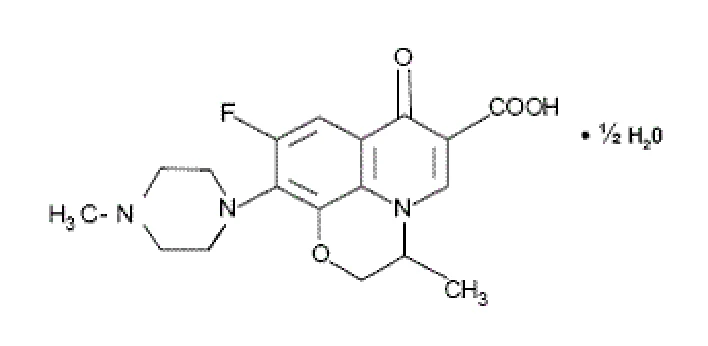
Proper name: Levofloxacin
Chemical Name: (S)-9-fluoro-2,3-dihydro-3-methyl-10-(4-methyl-1-piperazinyl)-7-oxo-7H-pyrido[1,2,3-de]-1,4-benzoxazine-6-carboxylic acid hemihydrate
Molecular formula: C18H20FN3O4 • ½ H2O
Molecular mass: 370.38 g/mol
Structural formula:
Physicochemical Properties
Levofloxacin is a light yellowish white to yellow-white crystal or crystalline powder with a melting point of 226 – 227oC. The pKa values for levofloxacin are 5.33 and 8.07 for pKa1 and pKa2, respectively. The molecule exists as a zwitterion at the pH conditions in the small intestine.
The data demonstrate that, from pH 0.6 to 5.8, the solubility of levofloxacin is essentially constant (approximately 100 mg/mL). Levofloxacin is considered soluble to freely-soluble in this pH range, as defined by USP nomenclature. Above pH 5.8, the solubility increases rapidly to its maximum at pH 6.7 (272 mg/mL), and is considered freely soluble in this range.
Above pH 6.7, the solubility decreases and reaches a minimum value (about 50 mg/mL) at a pH of approximately 6.9. Levofloxacin is considered freely-soluble to soluble at the pH range of 6.7 to 7.7, beyond which the solubility begins to increase again.
Levofloxacin has the potential to form stable co-ordination compounds with many metal ions. This in vitro chelation potential has the following formation order: Al+3 > Cu+2 > Zn+2 > Mg+2 > Ca+2.
CLINICAL TRIALS
Comparative Bioavailability Studies
Single dose crossover comparative bioavailability study of pms-LEVOFLOXACIN 500 mg Tablets, was performed vs. Janssen-Ortho Inc.’s, LEVAQUIN® administered as 1 x 500 mg Tablet in healthy male volunteers / Fasting State. The number of subjects that participated in the study is 22. Bioavailability data were measured and the results are summarized in the following table:
SUMMARY TABLE OF THE COMPARATIVE BIOAVAILABILITY DATA
Levofloxacin (1 x 500 mg) From measured data Geometric Mean Arithmetic Mean (CV %) | ||||
| Parameter | pms-LEVOFLOXACIN | LEVAQUIN®* | % Ratio of Geometric Means | Confidence Interval (90%) |
AUCT (mcg·h/mL) | 32.530 33.051 (17.1) | 31.187 31.773 (16.4) | 104.31 | 100.70 – 108.04 |
AUCI (mcg·h/mL) | 34.601 35.086 (16.1) | 33.239 33.756 (15.3) | 104.10 | 100.49 – 107.84 |
Cmax (mcg/mL) | 3.738 3.793 (22.1) | 3.599 3.700 (22.3) | 103.86 | 97.73 – 110.39 |
Tmax§ (h) | 1.00 (0.50 – 4.00) | 1.33 (0.75 – 3.00) | ||
T½€ (h) | 7.32 (18.6) | 7.14 (18.8) | ||
§ Expressed as median (range) only.
€ Expressed as the arithmetic mean (CV %) only.
* LEVAQUIN® is manufactured by Janssen-Ortho Inc. and purchased in Canada.
Acute Sinusitis
Study demographics and trial design
Table 2.1: Summary of Patient Demographics for Clinical Trials in Acute Sinusitis
| Study # | Trial Design | Dosage, Route of Administration and Uration | Study subjects (n = number)a | Mean Age (Range) | Gender Male/Female | ||||
|---|---|---|---|---|---|---|---|---|---|
| CAPSS-232 | Double-blind, randomized, prospective, multicentre | oral levofloxacin 750 mg once daily for 5 days | n = 389b | 41.7 (18 – 86) | 152/237 | ||||
oral levofloxacin 500 mg once daily for 10 days | n = 391b | 42.2 (18 – 85) | 173/218 | ||||||
| M92-040 | Randomized, open-label, active- controlled | oral levofloxacin 500 mg once daily for 10 – 14 days | n = 306 | 39.2 (18 – 85) | 115/191 | ||||
oral amoxicillin 500 mg/clavulanate 125 mg three times daily for 10 – 14 days | n = 309 | 38.6 (18 – 84) | 110/199 | ||||||
| N93-006 | Open-label, non- comparative | oral levofloxacin 500 mg once daily for 10 – 14 days | n = 329 | 41.6 (18 – 89) | 137/192 | ||||
a Subjects enrolled and randomized to treatment
b 780 outpatient adults with clinically and radiologically determined acute maxillary sinusitis (ITT population)
Study Results
5-Day Treatment Regimen
Table 2.2: Results of Study CAPSS-232 in Acute Sinusitis
| Endpoints | Levofloxacin n/N (%) | Comparator n/N (%) | 95% Confidence Intervalc |
|---|---|---|---|
| Clinical Success Ratea,b | 81/90 (90.0) (45.6% cured; 44.4% improved) | 89/95 (93.7) (55.8% cured; 37.9% improved) | (-4.8, 12.1) |
| Microbiologic Eradication Rated | 140/152 (92.1) | 133/149 (89.3) | (-9.7, 4.1) |
a Test-of-Cure visit 17 to 22 days after first dose of active study drug (7 – 12 days after last dose for 500 mg arm, 12 – 17 days after last dose for 750 mg arm) in microbiologically clinically evaluable population (subset of 462 patients where sinus samples were taken by sinus puncture).
b Clinical success was defined as complete (cured) or partial (improved) resolution of pre-treatment signs and symptoms of ABS to such extent that no further antibiotic treatment was deemed necessary
c Two-sided 95% CIs (with continuity correction) around the difference in response rates
d Microbiologically evaluable population
Table 2.3: Clinical Success Ratesa for Microbiologically Evaluable Populationb (CAPSS-232)
| Pathogen | Levofloxacin 750 mg x 5 days n/N (%) | Comparator n/N (%) |
|---|---|---|
| Streptococcus pneumoniae | 25/27 (92.6) | 26/27 (96.3) |
| Haemophilus influenzae | 19/21 (90.5) | 25/27 (92.6) |
| Pathogen | Levofloxacin 750 mg x 5 days n/N (%) | Comparator n/N (%) |
|---|---|---|
| Moraxella catarrhalis | 10/11 (90.9) | 13/13 (100.0) |
a Eradication rate for the three pathogens was the same as clinical success rate because microbiological success was presumed based on clinical success
b Subset of 462 patients where sinus samples were taken by sinus puncture
10 – 14 Day Treatment Regimen
Table 2.4: Clinical Successa in Pivotal Acute Sinusitis Studies – Clinically Evaluable Subjects
| Study Number | Levofloxacin n/N (%) | Comparator n/N (%) | 95% Confidence Interval |
|---|---|---|---|
| M92-040 | 236/267 (88.4) | 234/268 (87.3) | (-6.8, 4.6) |
| N93-006 | 265/300 (88.3) | N/A | N/A |
a cured plus improved
Table 2.5: Microbiologic Eradication in Pivotal Acute Sinusitis Studies – Microbiologically Evaluable Subjects
| Study Number | Levofloxacin n/N (%) | Comparator n/N (%) | 95% Confidence Interval |
|---|---|---|---|
| M92-040 | N/A | N/A | N/A |
| N93-006 | 127/138 (92.0) | N/A | N/A |
Table 2.6: Microbiologic Eradication Rates by Pathogen for Microbiologically Evaluable Population (N93-006)
| Pathogen | Levofloxacin n/N (%) |
|---|---|
| Haemophilus influenzae | 35/36 (97.2) |
| Streptococcus pneumoniae | 32/32 (100.0) |
| Staphylococcus aureus | 31/33 (93.9) |
| Moraxella (Branhamella) catarrhalis | 14/15 (93.3) |
Community-Acquired Pneumonia
Study Demographics and Trial Design
Table 2.7: Summary of Patient Demographics for Clinical Trials in Community – Acquired Pneumonia
| Study # | Trial Design | Dosage, Route of Administration and Duration | Study Subjects (n = number)a | Mean Age (Range) | Gender Male/Female | ||||
|---|---|---|---|---|---|---|---|---|---|
| CAPSS-150 | Double-blind, randomized, prospective, multicentre | oral or IV levofloxacin 750 mg once daily for 5 days | n = 256b | 53.1 (18 – 86) | 148/108 | ||||
| oral or IV levofloxacin 500 mg once daily for 10 days | n = 272 b | 55.3 (18 – 89) | 162/110 | ||||||
| K90-071 | Open-label, randomized, active-controlled | levofloxacin oral 488 mg or IV 500 mg once daily for 7-14 days | n = 295 | 49.0 (18 – 87) | 162/133 | ||||
| Study # | Trial Design | Dosage, Route of Administration and Duration | Study Subjects (n = number)a | Mean Age (Range) | Gender Male/Female | ||||
|---|---|---|---|---|---|---|---|---|---|
oral cefuroxime axetil 500 mg twice daily or IV ceftriaxone sodium 1 to 2 g once daily or in equally divided doses given twice daily for 7–14 days | n = 295 | 50.3 (18 – 96) | 163/132 | ||||||
| M92-075 | Open-label, non-comparative | oral or IV levofloxacin 500 mg once daily for 7 – 14 days | n = 264 | 51.9 (18 – 93) | 146/118 | ||||
a Subjects enrolled and randomized to treatment
b 528 outpatient and hospitalized adults with clinically and radiologically determined mild to severe community-acquired pneumonia
Study Results
5 Day Treatment Regimen
Table 2.8: Results of Study CAPSS-150 in Community – Acquired Pneumonia
| Endpoints | levofloxacin 750 mg once daily for 5 days n/N (%) | Comparator n/N (%) | 95% Confidence Intervalc |
| Clinical Success Ratea,b | 183/198 (92.4) | 175/192 (91.1) | (-7.0, 4.4) |
| Microbiologic Eradication Rated | 96/103 (93.2) | 85/92 (92.4) | (-8.6, 7.0) |
a 7 – 14 days after last dose of active study medication for clinically evaluable population
b success rates include the clinical response category of cured and improved
c two-sided 95% CIs (with continuity correction) around the difference in response rates
d 7 – 14 days after last dose of active study medication for microbiologically evaluable population
In the clinically evaluable population (31 – 38 days after enrollment) pneumonia was observed in 7 out of 151 patients in the levofloxacin 750 mg group and 2 out of 147 patients in the levofloxacin 500 mg group. Given the small numbers observed, the significance of this finding cannot be determined statistically.
Table 2.9: Microbiologic Eradication Rates by Pathogen for Microbiologically Evaluable Population
(5-day regimen)
| Pathogen | Levofloxacin 750 mg n/N (%) |
| Penicillin susceptible S. pneumoniae | 19/22 (86.4) |
| Haemophilus influenzae | 12/13 (92.3) |
| Haemophilus parainfluenzae | 12/12 (100.0) |
| Mycoplasma pneumoniae | 32/34 (94.1) |
| Chlamydia pneumoniae | 20/22 (90.9) |
| Legionella pneumophila | 12/12 (100.0) |
7 to 14 Day Treatment Regimen
In three North American clinical studies, of 655 patients treated with levofloxacin for community-acquired pneumonia, 45 clinically and microbiologically evaluable patients were defined as severely ill by study criteria and met American Thoracic Society criteria for severe community-acquired pneumonia (American Thoracic Society, 1993). Clinical success (cure and improvement) was achieved in 98% of these 45 patients. Data on the treatment of patients with severe Legionella pneumonia is limited to one patient.
Data on the treatment of community-acquired pneumonia due to penicillin-resistant S. pneumoniae is limited to 12 evaluable patients from the combined clinical trials database. Of these, 4 were considered to have been severe. All 12 patients achieved clinical success (see MICROBIOLOGY).
The following tables describe the results from the two pivotal trials for community-acquired pneumonia (7 – 14-day treatment regimen).
Table 2.10: Clinical Successa in Pivotal Community-Acquired Pneumonia Studies – Clinically Evaluable Subjects
| Study Number | Levofloxacin n/N (%) | Comparator n/N (%) | 95% Confidence Interval |
| K90-071 | 218/226 (96.5) | 208/230 (90.4) | (-10.7, -1.3) |
| M92-075 | 222/234 (94.9) | N/A | N/A |
a cured plus improved
Table 2.11: Microbiologic Eradication in Pivotal Community-Acquired Pneumonia Studies – Microbiologically Evaluable Subjects
| Study Number | Levofloxacin n/N (%) | Comparator n/N (%) | 95% Confidence Interval |
| K90-071 | 126/128 (98.4) | 126/144 (87.5) | (-17.1, -4.7) |
| M92-075 | 155/163 (95.1) | N/A | N/A |
Table 2.12: Microbiologic Eradication Rates by Pathogen for Microbiologically Evaluable Population (K90-071)
| Pathogen | Levofloxacin n/N (%) | Comparator n/N (%) |
| Chlamydia pneumoniae | 46/47 (97.9) | 49/53 (92.5) |
| Streptococcus pneumoniae | 39/39 (100.0) | 39/40 (97.5) |
| Haemophilus influenzae | 30/30 (100.0) | 19/24 (79.2) |
| Mycoplasma pneumoniae | 19/19 (100.0) | 22/22 (100.0) |
| Staphylococcus aureus | 10/10 (100.0) | 9/9 (100.0) |
| Haemophilus parainfluenzae | 7/8 (87.5) | 15/21 (71.4) |
| Moraxella (Branhamella) catarrhalis | 7/7 (100.0) | 6/7 (85.7) |
| Legionella pneumophila | 5/5 (100.0) | 3/4 (75.0) |
| Klebsiella pneumonia | 3/3 (100.0) | 8/8 (100.0) |
Table 2.13: Microbiologic Eradication Rates by Pathogen for Microbiologically Evaluable Population
(M92-075)
| Pathogen | Levofloxacin n/N (%) |
| Chlamydia pneumoniae | 71/75 (94.7) |
| Streptococcus pneumoniae | 43/44 (97.7) |
| Haemophilus influenzae | 38/39 (97.4) |
| Staphylococcus aureus | 10/12 (83.3) |
| Moraxella (Branhamella) catarrhalis | 11/11 (100.0) |
| Mycoplasma pneumoniae | 10/10 (100.0) |
| Haemophilus parainfluenzae | 8/9 (88.9) |
| Klebsiella pneumonia | 7/7 (100.0) |
| Legionella pneumophila | 4/5 (80.0) |
Acute Bacterial Exacerbation of Chronic Bronchitis
Study Demographics and Trial Design
Table 2.14: Summary of Patient Demographics for Clinical Trials in Acute Bacterial Exacerbation of Chronic Bronchitis
| Study # | Trial Design | Dosage, Route of Administration and Duration | Study Subjects (n = number)a | Mean Age (Range) | Gender Male/Female |
|---|---|---|---|---|---|
| CAPSS-197 | Multicentre randomized, blinded, non-inferiority | oral levofloxacin 750 mg once daily for 5 days | n = 187 b | 58 (18 – 91) | 93/94 |
oral amoxicillin 875 mg/clavulanate 125 mg twice daily for 10 days | n = 182 b | 59 (20 – 85) | 88/94 | ||
| K90-070 | Open-label, randomized, active- controlled | oral levofloxacin 488 mg once daily for 5-7 days | n = 187 | 59.8 (21 – 89) | 107/80 |
oral cefaclor 250 mg three times daily for 7-10 days | n = 186 | 61.2 (19 – 89) | 108/78 | ||
| M92-024 | Open-label, randomized, active- controlled | oral levofloxacin 500 mg once daily for 5-7 days | n = 248 | 51.7 (18 – 97) | 124/124 |
oral cefuroxime axetil 250 mg twice daily for 10 days | n = 244 | 53.1 (18 – 87) | 140/104 | ||
a Subjects enrolled and randomized to treatment
b From ITT population. Study subjects were characterized by FEV1< 50% predicted, or FEV1 between 50% and 65% predicted, with ≥ 4 exacerbations in the preceding 12 months and/or the presence of significant co-morbidity. About half (48.2%) of the subjects were current smokers, with a mean pack-year history of 42.4.
Study Results
5-Day Treatment Regimen
Table 2.15: Results of Study CAPSS-197 in Acute Bacterial Exacerbation of Chronic Bronchitis
| Endpoints | Levofloxacin 750 mg once daily for 5 days n/N (%) | Comparator n/N (%) | Differencec | 95% Confidence Intervald |
| Clinical Success Ratea | Successb: 95/120 (79.2) Non-success: 25/120 (20.8) | Successb: 103/126 (81.7) Non-success: 23/126 (18.3) | 2.6 | (-7.8, 12.9) |
Microbiologic Eradication Ratee | 70/86 (81.4) | 71/89 (79.8) | -1.6 | (-13.9, 10.7) |
a 17 to 26 days after the first dose of study drug for clinical evaluable subjects
b Success rates include the clinical response category of cured and improved
c Difference in success rates
d Two-sided 95% CIs (with continuity correction) around the difference (amoxicillin/clavulanate minus levofloxacin) in clinical success rates
e Microbiologically evaluable population
Table 2.16: Microbiologic Eradication Rates by Pathogen for Microbiologically Evaluable Population
| Pathogen | Levofloxacin n/N (%) | Comparator n/N (%) |
| Staphylococcus aureus | 4/5 (80.0) | 3/5 (60.0) |
| Streptococcus pneumoniae | 16/18 (88.9) | 10/13 (76.9) |
| Haemophilus influenzae | 25/30 (83.3) | 20/20 (100.0) |
| Haemophilus parainfluenzae | 18/20 (90.0) | 15/18 (83.3) |
| Moraxella catarrhalis | 10/12 (83.3) | 16/19 (84.2) |
7-Day Treatment Regimen
Table 2.17: Clinical Successa in Pivotal Acute Bacterial Exacerbation of Chronic Bronchitis
Studies – Clinically Evaluable Subjects
| Study Number | Levofloxacin n/N (%) | Comparator n/N (%) | 95% Confidence Interval |
| K90-070 | 141/154 (91.6%) | 142/155 (91.6%) | (-6.5, 6.6) |
| M92-024 | 210/222 (94.6%) | 212/229 (92.6%) | (-6.8, 2.7) |
a Cured plus improved
Table 2.18: Microbiologic Eradication in Pivotal Acute Bacterial Exacerbation of Chronic Bronchitis
Studies – Microbiologically Evaluable Subjects
| Study Number | Levofloxacin n/N (%) | Comparator n/N (%) | 95% Confidence Interval |
| K90-070 | 97/103 (94.2) | 77/89 (86.5) | (-16.6, 1.3) |
| M92-024 | 129/134 (96.3) | 137/147 (93.2) | (-8.6, 2.5) |
Table 2.19: Microbiologic Eradication Rates by Pathogen for Microbiologically Evaluable Population
(K90-070)
| Pathogen | Levofloxacin n/N (%) | Comparator n/N (%) |
| Haemophilus influenzae | 21/21 (100.0) | 17/24 (70.8) |
| Moraxella (Branhamella) catarrhalis | 18/19 (94.7) | 8/8 (100.0) |
| Haemophilus parainfluenzae | 14/15 (93.3) | 7/7 (100.0) |
| Pseudomonas aeruginosa | 8/10 (80.0) | 11/14 (78.6) |
| Streptococcus pneumoniae | 9/10 (90.0) | 6/7 (85.7) |
| Staphylococcus aureus | 8/9 (88.9) | 2/3 (66.7) |
Table 2.20: Microbiologic Eradication Rates by Pathogen for Microbiologically Evaluable Population
(M92-024)
| Pathogen | Levofloxacin n/N (%) | Comparator n/N (%) |
| Haemophilus influenzae | 42/44 (95.5) | 29/31 (93.5) |
| Haemophilus parainfluenzae | 27/27 (100.0) | 30/32 (93.8) |
| Moraxella (Branhamella) catarrhalis | 25/25 (100.0) | 29/32 (90.6) |
| Streptococcus pneumoniae | 14/16 (87.5) | 10/10 (100.0) |
| Staphylococcus aureus | 10/10 (100.0) | 34/35 (97.1) |
| Pseudomonas aeruginosa | 9/10 (90.0) | 8/9 (88.9) |
Nosocomial Pneumonia
Study demographics and trial design
Table 2.21: Summary of Patient Demographics for Clinical Trials in Nosocomial Pneumonia
| Study # | Trial design | Dosage, route of administration and duration | Study subjects (n = number)a | Mean age (Range) | Gender Male/female |
|---|---|---|---|---|---|
| CAPSS-117 | Open-label, randomized, active-controlled multicentre | IV levofloxacin 750 mg once daily for ≥ 24 hours with switch to oral levofloxacin 750 mg once daily at investigator discretion (7 – 15 days total) | n = 220 | 55.8 (19 – 93) | 161/59 |
IV imipenem/cilastatin 0.5-1 g q6-8h for ≥ 3 days with switch to oral ciprofloxacin 750 mg q 12h at investigator discretion (7 – 15 days total) | n = 218 | 55.5 (18 – 93) | 154/64 |
a Subjects enrolled and randomized to treatment
Table 2.22 - Results of Study CAPSS-117 in Nosocomial Pneumonia
| Endpoints | Levofloxacin n/N (%) | Comparator n/N (%) | 95% Confidence Interval |
| Clinical Success Ratea | 70/118 (59.3%) | 70/112 (62.5%) | (-9.9, 16.2) |
| Microbiologic Eradication Rateb | 62/93 (66.7%) | 57/94 (60.6%) | (-20.3, 8.3) |
a Success includes Cured and Improved; clinically evaluable population
b overall microbiologic eradication rates by subject for microbiologically evaluable population
Table 2.23: Microbiologic Eradication Rates by Pathogen for Microbiologically Evaluable Population (CAPSS-117)
| Pathogen | Levofloxacin n/N (%) | Comparator n/N (%) |
| Staphylococcus aureus | 14/21 (66.7) | 13/19 (68.4) |
| Pseudomonas aeruginosa | 10/17 (58.8) | 5/17 (29.4) |
| Haemophilus influenzae | 13/16 (81.3) | 14/15 (93.3) |
| Escherichia coli | 10/12 (83.3) | 7/11 (63.6) |
| Klebsiella pneumoniae | 9/11 (81.8) | 6/7 (85.7) |
| Serratia marcescenes | 9/11 (81.8) | 2/7 (28.6) |
| Streptococcus pneumoniae | 3/4 (75.0) | 5/7 (71.4) |
Uncomplicated Skin and Skin Structure Infections
Study demographics and trial design
Table 2.24: Summary of Patient Demographics for Clinical Trials in Uncomplicated Skin and Skin Structure Infections
| Study # | Trial Design | Dosage, Route of Administration and Duration | Study Subjects (n = number)a | Mean Age (Range) | Gender Male/Female |
| K90-075 | Open-label, randomized, active-controlled | oral levofloxacin 488 mg once daily for 7 – 10 days | n = 231 | 42.8 (15 – 85) | 124/107 |
| oral ciprofloxacin HCl 500 mg twice daily for 7-10 days | n = 238 | 45.2 (18 – 88) | 118/120 | ||
| L91-031 | Double-blind, randomized, active-controlled | oral levofloxacin 500 mg once daily for 7 days | n = 136 | 43.0 (16 – 79) | 67/69 |
| oral ciprofloxacin HCl 500 mg twice daily for 10 days | n = 136 | 44.3 (15 – 81) | 78/58 | ||
a Subjects enrolled and randomized to treatment
Study Results
Table 2.25: Clinical Successa in Pivotal Uncomplicated Skin and Skin Structure Infection Studies – Clinically Evaluable Subjects
| Study Number | Levofloxacin n/N (%) | Comparator n/N (%) | 95% Confidence Interval |
| K90-075 | 178/182 (97.8) | 182/193 (94.3) | (-7.7, 0.7) |
| L91-031 | 124/129 (96.1) | 116/124 (93.5) | (-8.4, 3.3) |
a cured plus improved
Table 2.26: Microbiologic Eradication in Pivotal Uncomplicated Skin and Skin Structure Infection Studies – Microbiologically Evaluable Subjects
| Study Number | Levofloxacin n/N (%) | Comparator n/N (%) | 95% Confidence Interval |
| K90-075 | 153/157 (97.5) | 135/152 (88.8) | (-14.5, -2.7) |
| L91-031 | 93/100 (93.0) | 87/97 (89.7) | (-11.7, 5.1) |
Table 2.27: Microbiologic Eradication Rates by Pathogen for Microbiologically Evaluable Population
(K90-075)
| Pathogen | Levofloxacin n/N (%) | Comparator n/N (%) |
| Staphylococcus aureus | 87/87 (100.0) | 76/87 (87.4) |
| Streptococcus pyogenes | 14/14 (100.0) | 18/20 (90.0) |
| Pseudomonas aeruginosa | 7/8 (87.5) | 10/10 (100.0) |
Table 2.28: Microbiologic Eradication Rates by Pathogen for Microbiologically Evaluable Population
(L91-031)
| Pathogen | Levofloxacin n/N (%) | Comparator n/N (%) |
| Staphylococcus aureus | 66/70 (94.3) | 70/75 (93.3) |
| Streptococcus pyogenes | 17/18 (94.4) | 12/13 (92.3) |
| Pseudomonas aeruginosa | 5/5 (100.0) | 5/5 (100.0) |
Complicated Skin and Skin Structure Infections
Study demographics and trial design
Table 2.29: Summary of Patient Demographics for Clinical Trial in Complicated Skin and Skin Structure Infections
| Study # | Trial Design | Dosage, Route of Administration and Duration | Study subjects (n = number)a | Mean Age (Range) | Gender Male/Female |
| LOFBIV-SSS-040 | Multicentre, open- label, randomized, comparative | oral or IV levofloxacin 750 mg once daily for 7 – 14 days | n = 200 | 51.9 (18 – 90) | 126/74 |
| IV ticarcillin/clavulanate 3.1 g every 4-6 hours alone or followed by amoxicillin/ clavulanate 875 mg twice daily (7 – 14 days total) | n = 199 | 49.8 (18 – 90) | 117/82 |
a Subjects enrolled and randomized to treatment
Table 2.30: Results of study LOFBIV-SSS-040 in Complicated Skin and Skin Structure Infections
| Endpoints | Levofloxacin n/N (%) | Comparator n/N (%) | 95% Confidence Interval |
| Clinical Success Ratea | 116/138 (84.1) | 106/132 (80.3) | (-13.3, 5.8) |
| Microbiologic Eradication Rateb | 82/98 (83.7) | 70/98 (71.4) | (-24.3, -0.2) |
a Success includes Cured and Improved; clinically evaluable population
b overall microbiologic eradication rates by subject for microbiologically evaluable population
Table 2.31: Microbiologic Eradication Rates by Pathogen for Microbiologically Evaluable Population (LOFBIV-SSS-040)
| Pathogen | Levofloxacin n/N (%) | Comparator n/N (%) |
| Staphylococcus aureus | 50/56 (89.3) | 35/49 (71.4) |
| Streptococcus faecalis | 8/10 (80.0) | 6/11 (54.5) |
| Streptococcus pyogenes | 5/6 (83.3) | 6/7 (85.7) |
| Proteus mirabilis | 9/10 (90.0) | 7/12 (58.3) |
| Streptococcus agalactiae | 9/12 (75.0) | 9/13 (69.2) |
| Pseudomonas aeruginosa | 4/7 (57.1) | 5/6 (83.3) |
Complicated Urinary Tract Infection and Acute Pyelonephritis
Study Demographics and Trial Design
Table 2.32: Summary of patient demographics for clinical trials in Complicated Urinary Tract Infection (cUTI) and Acute Pyelonephritis (AP)
| Study # | Trial design | Dosage, Route of Administration and Duration | Study Subjects (n = number)a | Mean Age (Range) | Gender Male/Female | |||
| CAPSS-349 | Multicentre, randomized, double-blind | IV levofloxacin 750 mg and /or oral levofloxacin 750 mg once daily for 5 days | n = 537b | 54.0 (18 – 94) | 207/330 | |||
| IV ciprofloxacin 400 mg and/or oral ciprofloxacin 500 mg twice daily for 10 days | n = 556b | 54.4 (18 – 93) | 220/336 | |||||
| L91-058 | Double-blind, randomized, active-controlled | oral levofloxacin 250 mg once daily for 10 days | n = 285 | 51.7 (18 – 95) | 117/168 | |||
| oral ciprofloxacin 500 mg twice daily for 10 days | n = 282 | 49.7 (18 – 93) | 112/170 | |||||
| L91-059 | Open-label, randomized, active-controlled | oral levofloxacin 250 mg once daily for 7 – 10 days | n = 326 | 62.5 (19 – 92) | 124/202 | |||
| oral lomefloxacin HCl 400 mg once-daily for 14 days | n = 324 | 59.9 (18 – 91) | 105/219 | |||||
a Subjects enrolled and randomized to treatment
b Intent-to-treat population. Patients with AP complicated by underlying renal diseases or conditions such as complete obstruction, surgery, transplantation, concurrent infection or congenital malformation were excluded.
Study Results
5 Day Treatment Regimen
Table 2.33: Clinical Successa in Complicated Urinary Tract Infection (cUTI) and
Acute Pyelonephritis (AP) – Microbiologically Evaluable Subjects
| Study Number | Levofloxacin n/N (%) | Comparator n/N (%) | 95% Confidence Intervalb |
| CAPSS-349 | 229/265 (86.4) | 213/241 (88.4) | (-3.8, 7.7) |
a Clinical success includes subjects who were cured or improved at the Post-therapy Visit
b Two-sided 95% confidence interval around the difference (comparator minus levofloxacin).
Table 2.34: Results of Study CAPSS-349 in Complicated Urinary Tract Infection (cUTI) and Acute Pyelonephritis (AP)
Primary Endpoint | Diagnosis | levofloxacin 750 mg once daily for 5 days | Comparator | Differencef | 95% Confidence Intervalg |
Microbiologic Eradicationa | mITT Population b,c | ||||
| Overall (cUTI or AP) | 240/317 (75.7) | 229/302 (75.8) | 0.1 | (-6.6, 6.9) | |
| cUTI | 162/223 (72.6) | 151/204 (74.0) | 1.4 | (-7.0, 9.8) | |
| AP | 78/94 (83.0) | 78/98 (79.6) | -3.4 | (-14.4, 7.6) | |
| Microbiologically Evaluable Population d,e | |||||
| Overall (cUTI or AP) | 228/265 (86.0%) | 215/241 (89.2%) | 3.2 | (-2.5, 8.9) | |
| cUTI | 154/185 (83.2%) | 144/165 (87.3%) | 4.0 | (-3.4, 11.4) | |
| AP | 74/80 (92.5%) | 71/76 (93.4%) | 0.9 | (-7.1, 8.9) | |
a At post-therapy visit (10 – 14 days after last active dose of levofloxacin and 5 – 9 days after last active dose of ciprofloxacin).
b The mITT population included patients who had a clinical diagnosis of AP or cUTI and who had a positive (≥ 105 CFU/mL) urine culture with no more than 2 uropathogens at Study Entry.
c In the mITT population there were a limited number of patients treated with IV therapy (levofloxacin-8, comparator-9), with catheters (levofloxacin-4, comparator-5) and with bacteremia (levofloxacin-13, comparator-12).
d The microbiologically evaluable population included patients with a confirmed diagnosis of cUTI or AP according to the protocol- specified inclusion criteria and with a known uropathogen with adequate growth (≥ 105 CFU/mL) who met all other microbiologic evaluability criteria.
e In the microbiologically evaluable population there were a limited number of patients treated with IV therapy (levofloxacin-4, comparator-3), with catheters (levofloxacin-3, comparator-3) and with bacteremia (levofloxacin-10, comparator-8).
f Difference in eradication rates (comparator minus levofloxacin)
g Two-sided 95% confidence interval around the difference (comparator minus levofloxacin) in microbiologic eradication rates.
Table 2.35: Microbiologic Eradication Rates by Pathogen at Post-therapy Visit
| Pathogen | Levofloxacin 750 mg x 5 days n/N (%) | Comparator n/N (%) | ||||
| mITT Population | ||||||
| Overall | AP | cUTI | Overall | AP | cUTI | |
| Escherichia coli | 165/206 (80.1) | 67/81 (82.7) | 98/125 (78.4) | 158/216 (73.1) | 70/89 (78.7) | 88/127 (69.3) |
| Klebsiella pneumoniae | 21/29 (72.4) | 19/26 (73.1) | 26/29 (89.7) | 22/25 (88.0) | ||
| Pathogen | Levofloxacin 750 mg x 5 days n/N (%) | Comparator n/N (%) | ||||
| Proteus mirabilis | 13/13 (100.0) | 10/10 (100.0) | 6/7 (85.7) | 6/7 (85.7) | ||
Escherichia coli with bacteremia | 7/12 (58.3) | 8/12 (66.7) | ||||
| Microbiologically Evaluable Population | ||||||
| Overall | AP | cUTI | Overall | AP | cUTI | |
| Escherichia coli | 155/172 (90.1) | 63/69 (91.3) | 92/103 (89.3) | 148/168 (88.1) | 63/67 (94.0) | 85/101 (84.2) |
| Klebsiella pneumoniae | 20/23 (87.0) | 18/21 (85.7) | 24/26 (92.3) | 21/23 (91.3) | ||
| Proteus mirabilis | 12/12 (100.0) | 9/9 (100.0) | 6/6 (100.0) | 6/6 (100.0) | ||
Escherichia coli with bacteremia | 6/9 (66.7) | 7/8 (87.5) | ||||
Table 2.36: Relapse Rates at Post-Study Visita
| Levofloxacin 750 mg x 5 days n/N (%) | Comparator n/N (%) | ||||||
| mITT Population | |||||||
| Overall (cUTI or AP) | 13/207 (6.3) | 11/204 (5.4) | |||||
| cUTI | 8/136 (5.9) | 10/139 (7.2) | |||||
| AP | 5/71 (7.0) | 1/65 (1.5) | |||||
| Microbiologically Evaluable Population | |||||||
| Overall (cUTI or AP) | 12/199 (6.0) | 11/195 (5.6) | |||||
| cUTI | 7/131 (5.3) | 10/135 (7.4) | |||||
| AP | 5/68 (7.4) | 1/60 (1.7) | |||||
a 33 – 40 days after the last active dose of levofloxacin and 28 – 35 days after the last active dose of ciprofloxacin
10-Day Treatment Regimen
Table 2.37: Clinical Successa in Pivotal cUTI and AP Studies – Microbiologically Evaluable Subjects
| Study Number | Levofloxacin n/N (%) | Comparator n/N (%) | 95% Confidence Interval |
| L91-058 | 163/177 (92.1) | 155/171 (90.6) | (-7.6, 4.7) |
| L91-059 | 195/209 (93.3) | 183/204 (89.7) | (-9.2, 2.0) |
a cured plus improved
Table 2.38: Microbiologic Eradication in Pivotal cUTI and AP Studies – Microbiologically Evaluable Subjects
| Study Number | Levofloxacin n/N (%) | Comparator n/N (%) | 95% Confidence Interval |
| L91-058 | 164/177 (92.7) | 159/171 (93.0) | (-5.4, 6.0) |
| L91-059 | 198/209 (94.7) | 189/204 (92.6) | (-7.0, 2.8) |
Table 2.39: Microbiologic Eradication Rates by Pathogen for Microbiologically Evaluable Population
(L91-058)
| Pathogen | Levofloxacin n/N (%) | Comparator n/N (%) |
| Escherichia coli | 88/92 (95.7) | 96/99 (97.0) |
| Klebsiella pneumonia | 31/32 (96.9) | 22/23 (95.7) |
| Streptococcus faecalis | 8/9 (88.9) | 6/11 (54.5) |
| Proteus mirabilis | 13/14 (92.9) | 5/5 (100.0) |
| Pseudomonas aeruginosa | 7/12 (58.3) | 7/7 (100.0) |
| Enterobacter cloacae | 9/9 (100.0) | 4/4 (100.0) |
Table 2.40: Microbiologic Eradication Rates by Pathogen for Microbiologically Evaluable Population
(L91-059)
| Pathogen | Levofloxacin n/N (%) | Comparator n/N (%) |
| Escherichia coli | 118/119 (99.2) | 116/118 (98.3) |
| Klebsiella pneumonia | 29/31 (93.5) | 23/25 (92.0) |
| Proteus mirabilis | 11/11 (100.0) | 9/9 (100.0) |
| Streptococcus faecalis | 4/8 (50.0) | 6/8 (75.0) |
| Pseudomonas aeruginosa | 8/9 (88.9) | 4/6 (66.7) |
| Enterobacter cloacae | 6/7 (85.7) | 4/6 (66.7) |
Uncomplicated Urinary Tract Infections
Study demographics and trial design
Table 2.41: Summary of patient demographics for clinical trials in Uncomplicated Urinary Tract Infections
| Study # | Trial Design | Dosage, Route of Administration and Duration | Study Subjects (n = number)a | Mean Age (Range) | Gender Male/female | |||
LOFBO- UTI-060 | Double-blind, randomized, active- controlled, multi-centre | oral levofloxacin 250 mg once daily for 3 days | n = 298 | 31.3 (18 – 57) | 0/298 | |||
oral ofloxacin 200 mg twice daily for 3 days | n = 296 | 32.0 (18 – 71) | 0/296 | |||||
a Subjects enrolled and randomized to treatment
Study Results
Table 2.42: Results of study LOFBO-UTI-060 in Uncomplicated Urinary Tract Infections
| Endpoints | Levofloxacin n/N (%) | Comparator n/N (%) | 95% Confidence Interval |
| Clinical Success Ratea | 154/157 (98.1) | 160/165 (97.0) | (-4.8, 2.6) |
| Microbiologic Eradication Rateb | 151/157 (96.2) | 153/165 (92.7) | (-8.7, 1.8) |
a Success includes Cured and Improved; microbiologically evaluable population
b Overall microbiologic eradication rates by subject for microbiologically evaluable population
Table 2.43: Microbiologic Eradication Rates by Pathogen for Microbiologically Evaluable Population (LOFBO-UTI-060)
| Pathogen | Levofloxacin n/N (%) | Comparator n/N (%) |
| Escherichia coli | 125/127 (98.4) | 131/138 (94.9) |
| Klebsiella pneumoniae | 10/11 (90.9) | 8/8 (100.0) |
| Staphylococcus saprophyticus | 8/8 (100.0) | 3/3 (100.0) |
| Staphylococcus aureus | 5/5 (100.0) | 3/3 (100.0) |
Chronic Bacterial Prostatitis
Study demographics and trial design
Table 2.44: Summary of patient demographics for clinical trials in Chronic Bacterial Prostatitis
| Study # | Trial design | Dosage, route of administration and duration | Study subjects (n = number)a | Mean age (Range) | Gender Male/female |
| CAPSS-101 | Double-blind, randomized, active-controlled, comparative | oral levofloxacin 500 mg once daily for 28 days | n = 197 | 50.9 (18 – 81) | 197/0 |
oral ciprofloxacin 500 mg twice daily for 28 days | n = 180 | 51.5 (19 – 83) | 180/0 |
a Subjects enrolled and randomized to treatment
Study Results
Table 2.45: Results of study CAPSS-101 in Chronic Bacterial Prostatitis
| Endpoints | Levofloxacin n/N (%) | Comparator n/N (%) | 95% Confidence Interval |
| Clinical Success Ratea | 122/170 (71.8) | 107/151 (70.9) | (-11.15, 9.34) |
| Microbiologic Eradication Rateb | 102/136 (75.0) | 96/125 (76.8) | (-8.98, 12.58) |
a Success includes Cured and Improved; mITT
b Overall microbiologic eradication rates by subject for microbiologically evaluable population
Table 2.46: Microbiologic Eradication Rates by Pathogen for Microbiologically Evaluable Population (CAPSS-101)
| Pathogen | Levofloxacin n/N (%) | Comparator n/N (%) |
| Escherichia coli | 14/15 (93.3) | 9/11 (81.8) |
| Enterococcus faecalis | 39/54 (72.2) | 34/45 (75.6) |
| Staphylococcus epidermis | 20/24 (83.3) | 26/29 (89.7) |
DETAILED PHARMACOLOGY
Animal Pharmacology
Pharmacodynamics
A summary of the major findings obtained from animal pharmacology studies with levofloxacin is presented below:
Table 2.47: Summary of Major Nonclinical Pharmacological Effects of Levofloxacin
| System | Species | Major Findings |
| Central Nervous System | mouse rat rabbit cat | ≥ 600 mg/kg, p.o., decreased spontaneous locomotor activity, CNS depression, decreased pinna reflex, decrease writhing response to acetic acid; increased incidences of strychnine-, pentylenetetrazol- and caffeine-induced convulsions; ≥ 200 mg/kg, IV, convulsions after rapid injection, decreased spontaneous motor activity, muscle tone, posture, body temperature; increased respiratory rate; prolonged hexobarbital sleep time At 200 mg/kg, IV, inhibition of conditioned-avoidance response; At 200 mg/kg, i.p., increased spontaneous motor activity, lowered body posture, increased restlessness At 200 mg/kg, p.o., decrease in body temperature ≥ 6 mg/kg, IV, decreased spinal reflex; ≥ 30 mg/kg, IV, increased EEG awake stage, seizure discharges |
Autonomic Nervous System | cat | At 20 mg/kg, IV, reduced contractile response of nictitating membrane to pre– and postganglionic stimulation; suppression of acetylcholine depressor response |
| Cardiopulmonary System | dog | ≥ 6 mg/kg, IV bolus, decreases in blood pressure, left ventricular pressure, respiration depth; ≤ 10 mg/kg, IV infusion, no effect on blood pressure; ≥ 20 mg/kg, IV infusion, decrease in blood pressure, decrease in cardiac output and stroke volume; increase in serum histamine concentrations |
| Gastrointestinal System | mouse rat | At 200 mg/kg, IV, inhibition of gastric propulsion ≥ 200 mg/kg, p.o., decrease in gastric fluid volume, total acidity, pepsin output; increase in gastric fluid pH; at 600 mg/kg, decrease in gastric emptying; at 200 mg/kg, IV, decrease in gastric fluid volume, acid and pepsin output and gastric emptying; increase in gastric pH |
| Urinary Tract | rat | ≥ 200 mg/kg, p.o., decrease in urinary volume and electrolyte excretion; at 200 mg/kg, IV, decrease in urinary volume |
| Inflammation | rat | At 600 mg/kg, p.o., inhibition of carrageenan-induced foot edema |
| Isolated Smooth Muscle | On dog mesenteric, renal, femoral, and basilar arteries, inhibition of norepinephrine-induced contractions ≥ 10 × 10-6 M; competitive inhibition of phenylephrine-induced contractions of rabbit thoracic artery |
In mice, the CNS stimulatory effect of quinolones is enhanced by concomitant administration of non-steroidal anti-inflammatory drugs.
In vitro and in vivo studies in animals indicate that levofloxacin is neither an enzyme inducer nor inhibitor in the human therapeutic plasma concentration range; therefore, no drug metabolizing enzyme-related interactions with other drugs or agents are anticipated.
Human Pharmacology
Pharmacodynamics
Studies Measuring the Effects on QT and Corrected QT (QTc) Intervals
Two double-blind, placebo-controlled studies assessing the effect of levofloxacin on QTc intervals in healthy male and female volunteers 18 – 84 years of age were conducted. Each had a four-treatment crossover, single-dose study design. One study evaluated dose-response. The other was a comparative study that involved measuring the effects of doses of levofloxacin and two other fluoroquinolones. In this comparative study, subjects were given twice the doses of these antibiotics that are recommended for the treatment of otherwise healthy subjects with community-acquired pneumonia. In both trials, no effect on QT intervals compared to placebo was evident at any of the doses of levofloxacin studied (top panels of figure A and figure B).
Dose escalation study (Figure A)
In this trial, the mean change in the average QTc interval (calculated from measurements taken every half hour for two hours and at 4, 8, 12 and 24 hours after treatment) from the baseline QTc (calculated as the average QTc measured 24, 20, 16 hours and immediately before treatment) was a decrease of 1.84 msec after treatment with 500 mg, an increase of 1.55 msec after treatment with 1,000 mg of levofloxacin and an increase of 6.40 msec after treatment with 1,500 mg. The change in QTc interval at Cmax (calculated using the Bazett formula) after treatment with 500 mg of levofloxacin was not significantly different from that measured after treatment with placebo. In this trial, the mean change in the QTc (Bazett) at Cmax from baseline QTc (calculated as the average QTc measured 24, 20, 16 hours and immediately before treatment) was -3.20 msec after treatment with 500 mg of levofloxacin, 7.82 msec after treatment with 1,000 mg of levofloxacin and 10.58 msec after treatment with 1,500 mg of levofloxacin.
Comparative, placebo-controlled study (Figure B; only levofloxacin and placebo data shown)
In this study, the mean change in the average QTc interval (calculated from measurements taken every half hour for four hours and at 8, 12 and 24 hours after treatment) from the baseline QTc (calculated as the average QTc measured 24, 20, 16 hours and immediately before treatment) was 3.58 msec after treatment with 1,000 mg levofloxacin. In this study, the change in the QTc (Bazett) at Cmax from a baseline QTc (calculated as the average QTc measured 24, 20, 16 hours and immediately before treatment) was 5.32 msec after treatment with 1,000 mg of levofloxacin.
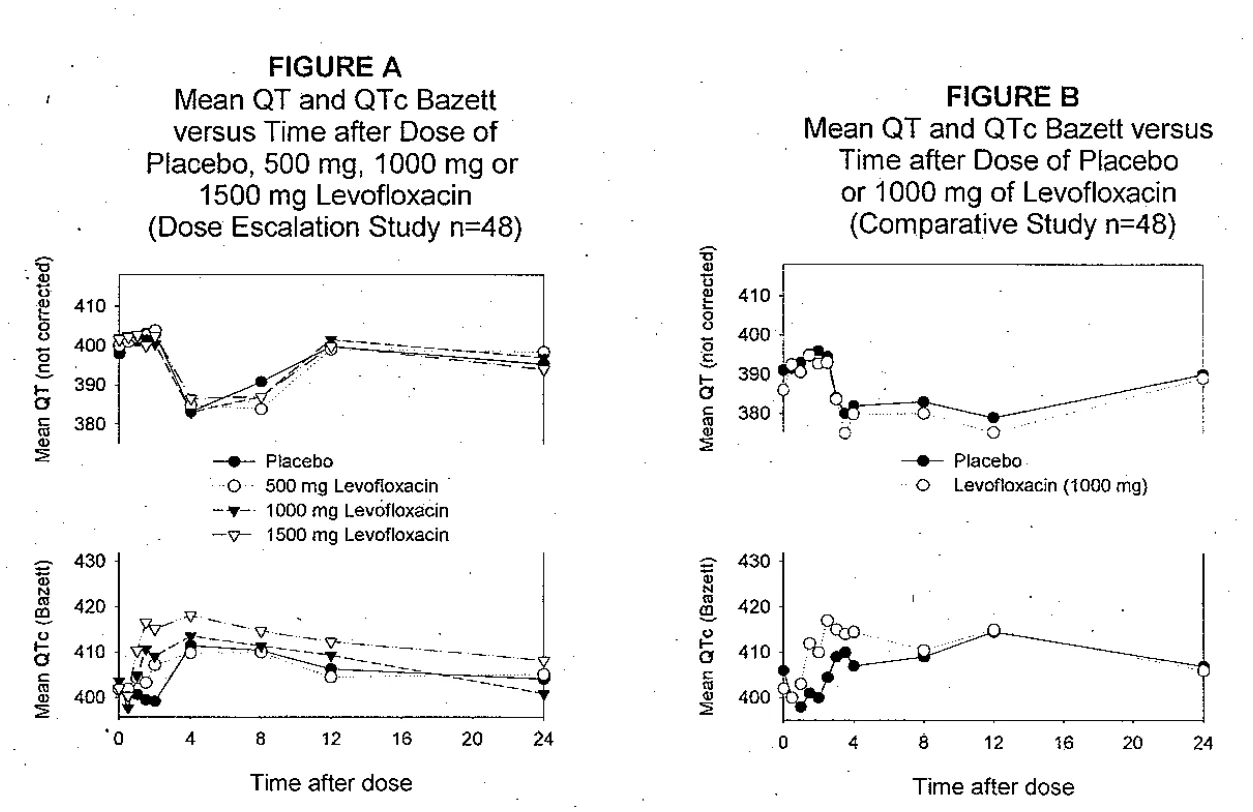
Pharmacokinetics
Absorption
Oral
Levofloxacin is rapidly and essentially completely absorbed after oral administration. Peak plasma concentrations are usually attained 1 to 2 hours after oral dosing. The absolute bioavailability of a 500 mg tablet and a 750 mg tablet of levofloxacin is approximately 99% in both cases, demonstrating complete oral absorption of levofloxacin. Levofloxacin pharmacokinetics are linear and predictable after single and multiple oral dosing regimens. After single oral doses of 250 to 1,000 mg of levofloxacin to healthy subjects, plasma concentrations increase proportionally with the dose as shown (mean ± SD):
Oral Dose (mg) | n | Peak Plasma Concentration (mcg/mL) | Area Under the Curve (AUC0-ω, mcg·h/mL) |
| 250 | 15 | 2.8 ± 0.4 | 27.2 ± 3.9 |
| 500 | 23 | 5.1 ± 0.8 | 47.9 ± 6.8 |
| 750 | 10 | 7.1 ± 1.4 | 82.2 ± 14.3 |
| 1,000 | 10 | 8.9 ± 1.9 | 111.0 ± 20.8 |
Steady-state conditions are reached within 48 hours following 500 mg or 750 mg once-daily dosage regimens. The peak and trough plasma concentrations attained following multiple once- daily oral dosage regimens were approximately 5.7 and 0.5 mcg/mL after the 500 mg doses, and 8.6 and 1.1 mcg/mL after the 750 mg doses, respectively.
Oral administration with food slightly prolongs the time to peak concentration by approximately 1 hour and slightly decreases the peak concentration by approximately 14%.
Distribution
The mean volume of distribution of levofloxacin generally ranges from 74 to 112 L after single and multiple 500 mg or 750 mg doses, indicating widespread distribution into body tissues. Levofloxacin reaches its peak levels in skin tissues (11.7 mcg/g for a 750 mg dose) and in blister fluid (4.33 mcg/g for a 500 mg dose) at approximately 3 – 4 hours after dosing. The skin tissue biopsy to plasma AUC ratio is approximately 2. The blister fluid to plasma AUC ratio is approximately 1, following multiple once-daily oral administration of 750 mg and 500 mg levofloxacin to healthy subjects, respectively. Levofloxacin also penetrates into lung tissues. Lung tissue concentrations were generally 2- to 5-fold higher than plasma concentrations and range from approximately 2.4 to 11.3 mcg/g over a 24-hour period after a single 500 mg dose. Levofloxacin also penetrates into cortical and spongiosa bone tissues in both the femoral head and distal femur. Peak levofloxacin concentrations in these tissues ranging from 2.4 to 15 mcg/g were generally attained by 2 to 3 hours after a single 500 mg oral dose.
In vitro, over a clinically relevant range (1 to 10 mcg/mL) of serum/plasma levofloxacin concentrations, levofloxacin is approximately 24 to 38% bound to serum proteins across all species studied, as determined by the equilibrium dialysis method. Levofloxacin is mainly bound (approximately 21 to 30%) to serum albumin in humans. Levofloxacin binding to serum proteins is independent of the drug concentration.
Metabolism
Levofloxacin is stereochemically stable in plasma and urine, and does not invert metabolically to its enantiomer, D-ofloxacin. Levofloxacin undergoes limited metabolism in humans and is primarily excreted as unchanged drug in the urine. Following oral administration, approximately 87% of an administered dose was recovered as unchanged drug in urine within 48 hours, whereas less than 4% of the dose was recovered in feces in 72 hours. Less than 5% of an administered dose was recovered in the urine as the desmethyl and N-oxide metabolites, the only metabolites identified in humans. These metabolites have little relevant pharmacological activity.
Excretion
The major route of elimination of levofloxacin in humans is as unchanged drug in the urine. The mean terminal plasma elimination half-life of levofloxacin ranges from approximately 6 to 8 hours following single or multiple doses of levofloxacin given orally or intravenously. The mean apparent total body clearance and renal clearance range from approximately 144 to 226 mL/min and 96 to 142 mL/min, respectively. Renal clearance in excess of the glomerular filtration rate suggests that tubular secretion of levofloxacin occurs in addition to its glomerular filtration. Concomitant administration of either cimetidine or probenecid results in approximately 24% and 35% reduction in the levofloxacin renal clearance, indicating that secretion of levofloxacin occurs in the renal proximal tubule. No levofloxacin crystals were found in any of the urine samples freshly collected from subjects receiving levofloxacin.
Factors Influencing the Pharmacokinetics
Special Populations
Elderly
There are no significant differences in levofloxacin pharmacokinetics between young and elderly subjects when the subjects’ differences in creatinine clearance are taken into consideration. Following a 500 mg oral dose of levofloxacin to healthy elderly subjects (66 – 80 years of age), the mean terminal plasma elimination half-life of levofloxacin was about 7.6 hours, as compared to approximately 6 hours in younger adults. The difference was attributable to the variation in renal function status of the subjects and was not believed to be clinically significant. Drug absorption appears to be unaffected by age. Levofloxacin dose adjustment based on age alone is not necessary.
Pediatric
The pharmacokinetics of levofloxacin in pediatric patients have not been studied.
Gender
There are no significant differences in levofloxacin pharmacokinetics between male and female subjects when the differences in creatinine clearance are taken into consideration. Following a 500 mg oral dose of levofloxacin to healthy male subjects, the mean terminal plasma elimination half-life of levofloxacin was about 7.5 hours, as compared to approximately 6.1 hours in female subjects. This difference was attributable to the variation in renal function status of the male and female subjects, and was not believed to be clinically significant. Drug absorption appears to be unaffected by the gender of the subjects. Dose adjustment based on gender alone is not necessary.
Race
The effect of race on levofloxacin pharmacokinetics was examined through a covariate analysis performed on data from 72 subjects: 48 white and 24 non-white. The apparent total body clearance and apparent volume of distribution were not affected by the race of the subjects.
Renal Insufficiency
Clearance of levofloxacin is reduced and plasma elimination half-life is prolonged in patients with impaired renal function (creatinine clearance ≤ 80 mL/min). Dosage adjustment may be required in such patients to avoid levofloxacin accumulation. Neither hemodialysis nor continuous ambulatory peritoneal dialysis (CAPD) is effective in removal of levofloxacin from the body, indicating supplemental doses of levofloxacin are not required following hemodialysis or CAPD (see ACTION AND CLINICAL PHARMACOLOGY, Pharmacokinetics; WARNINGS AND PRECAUTIONS, Renal; and DOSAGE AND ADMINISTRATION).
Plasma Ratio
Comparison of the expected steady-state AUC valuesa in renally impaired patients relative to those in patients with normal renal function:
| Creatinine Clearance | Creatinine Clearance | Creatinine Clearance | |
| 50 – 80 mL/min receiving | 20 – 49 mL/min receiving | < 20 mL/min receiving | |
| 500 mg q24h | 250 mg q24h | 250 mg q48h | |
AUC value relative to patients with normal renal function receiving 500 mg q24h | 172% | 183% | 139% |
AUC value relative to patients with normal renal function receiving 500 mg ql2h | 89% | 94% | 71% |
a Values were extrapolated from the mean levofloxacin plasma concentration-time data in subjects with normal renal function
(n = 23) and subjects with impaired renal function (n = 3 for ClCR 50 – 80 mL/min, n = 8 for ClCR 20 – 49 mL/min, and n = 6 for ClCR < 20 mL/min).
Urine Concentrations
The mean ± SD concentrations (mcg/mL) of levofloxacin in the urine following a 500 mg p.o. dose of levofloxacin in subjects with impaired renal function are summarized as followsa:
| Collection Interval | ClCr 50 – 80 mL/min | ClCr 20 – 49 mL/min | ClCr < 20 mL/min |
| nb = 3 | n = 8 | n = 6 | |
| 0 – 6h | 185 ± 61.7 | 98.1 ± 48.1 | 66.5 ± 27.3 |
| 6 – 12h | 91.6 ± 24.4 | 75.2 ± 22.1 | 39.0 ± 23.1 |
| 12 – 24h | 156 ± 183 | 58.6 ± 31.1 | 29.5 ± 20.7 |
| 24 – 36h | 49.7 ± 16.2 | 44.1 ± 10.6 | < 25 |
| 36 – 48h | < 25 | < 25 | < 25 |
a Limit of quantitation = 25 mcg /mL
b n = number of subjects
Expected steady-state urinary concentrations (mcg/mL) of levofloxacin in renally impaired patients with the recommended adjusted dose regimen in the treatment of complicated UTI and acute pyelonephritisa:
| Collection Interval | ClCr 50 – 80 mL/min | ClCr 20 – 49 mL/min | ClCr < 20 mL/min |
| receiving 250 mg | receiving 250 mg | receiving 250 mg | |
| q24h | q24h | q48h | |
| 0 – 6h | 161 | 103 | 54 |
| 6 – 12h | 61 | 76 | 29 |
| 12 – 24h | 40 | 58 | 24 |
| 24 – 36h | -- | -- | 23 |
| 36 – 48h | -- | -- | 16 |
a Values were extrapolated from the mean pharmacokinetic profiles in subjects with impaired renal function (n = 12 for ClCr 50 - 80 mL/min, n = 8 for CLcr 20 – 49 mL/min, and n = 6 for ClCr < 20 mL/min).
Hepatic Insufficiency
Pharmacokinetic studies in hepatically impaired patients have not been conducted. Due to the limited extent of levofloxacin metabolism, the pharmacokinetics of levofloxacin are not expected to be affected by hepatic impairment.
Bacterial Infection
The pharmacokinetics of levofloxacin in patients with serious community-acquired bacterial infections are comparable to those observed in healthy subjects.
HIV Infection
The pharmacokinetics of levofloxacin in HIV seropositive subjects (with CD4 cell counts ranging from 17 to 772) are comparable to those observed in healthy subjects.
Drug-Drug Interactions
The potential for pharmacokinetic drug interactions between levofloxacin and theophylline, warfarin, cyclosporine, digoxin, probenecid, cimetidine, sucralfate, zidovudine and antacids has been evaluated (see DRUG INTERACTIONS).
MICROBIOLOGY
Levofloxacin is the L-isomer of the racemate, ofloxacin, a quinolone antibacterial agent. The antibacterial activity of ofloxacin resides primarily in the L-isomer. The mechanism of action of levofloxacin and other quinolone antibacterials involves inhibition of bacterial topoisomerase II (DNA gyrase) and topoisomerase IV, enzymes required for DNA replication, transcription, repair, and recombination. In this regard, the L-isomer produces more hydrogen bonds and therefore, more stable complexes with DNA gyrase than does the D-isomer. Microbiologically, this translates into a 25- to 40-fold greater antibacterial activity for the L-isomer, levofloxacin, over the D-isomer. Quinolones rapidly and specifically inhibit bacterial DNA synthesis.
Levofloxacin has in vitro activity against a broad spectrum of gram-positive and gram-negative aerobic and anaerobic bacteria. Levofloxacin is often bactericidal at concentrations equal to or greater than the Minimum Inhibitory Concentrations (MIC). The in vitro activity of levofloxacin against clinical isolates is summarized in Table 2.48.
Table 2.48: In Vitro Activity of Levofloxacin Against Clinical Isolates
| Organism | (# of isolates) | MIC (mcg /mL) | ||||||||
| 50% | 90% | Range | ||||||||
| Acinetobacter baumannii | (57) | 0.120 | 16.000 | 0.060 –> 16.000 | ||||||
| Acinetobacter calcoaceticus | (48) | 0.250 | 0.250 | 0.030 –64.000 | ||||||
| Chlamydia pneumoniae | (10) | 0.250 | 0.250 | 0.125 –0.500 | ||||||
| Citrobacter diversus | (20) | 0.030 | 0.030 | 0.015 –0.060 | ||||||
| Citrobacter freundii | (50) | 0.060 | 1.000 | 0.015 –8.000 | ||||||
| Enterobacter spp. | (200) | 0.060 | 0.500 | ≤ 0.008 – > 16.000 | ||||||
| Enterobacter aerogenes | (44) | 0.250 | 0.500 | 0.060 – 2.000 | ||||||
| Enterobacter agglomerans | (13) | 0.250 | 0.250 | 0.060 – 0.500 | ||||||
| Organism | (# of isolates) | MIC (mcg /mL) | |||||||||
| 50% | 90% | Range | |||||||||
| Enterobacter cloacae | (97) | 0.250 | 0.500 | 0.025 – 16.000 | |||||||
| Enterococcus spp. | (162) | 1.000 | > 16.000 | 0.500 – > 16.000 | |||||||
| Enterococcus (Streptococcus) faecalis | (122) | 1.000 | 16.000 | 0.250 – 64.000 | |||||||
| Escherichia coli | (817) | 0.030 | 0.060 | ≤ 0.008 – > 16.000 | |||||||
| Haemophilus influenzae | (94) | 0.015 | 0.015 | ≤ 0.008 – 0.030 | |||||||
| Haemophilus parainfluenzae | (127) | 0.250 | 0.250 | 0.015 – 1.000 | |||||||
| Haemophilus parahemolyticus | (12) | 0.250 | 0.250 | 0.008 – 0.250 | |||||||
| Klebsiella spp. | (345) | 0.060 | 1.000 | 0.015 – 16.000 | |||||||
| Klebsiella oxytoca | (43) | 0.250 | 0.250 | 0.030 – 2.000 | |||||||
| Klebsiella pneumoniae | (225) | 0.250 | 0.500 | 0.060 – 18.000 | |||||||
| Legionella pneumophila | (10) | 0.030 | 0.0079 – 0.030 | ||||||||
| Moraxella (Branhamella) catarrhalis | (110) | 0.250 | 0.250 | 0.0150 – 1.000 | |||||||
| Morganella morganii | (43) | 0.060 | 1.000 | 0.0150 – > 16.000 | |||||||
| Mycoplasma pneumoniae | (60) | 0.250 | 0.500 | 0.250 – 0.500 | |||||||
| Neisseria gonorrhoeae | (47) | ≤ 0.008 | 0.016 | ≤ 0.008 – 0.060 | |||||||
| Neisseria meningitidis | (13) | 0.250 | 0.250 | 0.250 – 0.500 | |||||||
| Proteus and Providencia spp. | (36) | 0.060 | 1.000 | 0.015 – > 16.000 | |||||||
| Proteus mirabilis | (123) | 0.060 | 0.120 | 0.015 – 4.000 | |||||||
| Proteus vulgaris | (14) | 0.250 | 0.250 | 0.250 – 0.500 | |||||||
| Pseudomonas aeruginosa* | (378) | 1.000 | 8.000 | 0.030 – > 16.000 | |||||||
| Pseudomonas maltophilia | (17) | 0.500 | 2.000 | 0.250 – 4.000 | |||||||
| Salmonella spp. | (10) | 0.060 | 0.060 | 0.060 – 0.250 | |||||||
| Serratia spp. | (65) | 0.120 | 0.500 | 0.030 – > 16.000 | |||||||
| Serratia marcescens | (42) | 0.250 | 1.000 | 0.125 – 4.000 | |||||||
| Staphylococcus aureus | (565) | 0.250 | 0.500 | 0.125 – 32.000 | |||||||
Staphylococcus aureus, methicillin-resistant (MRSA)** | (25) | 0.250 | 0.500 | 0.120 – 1.000 | |||||||
Staphylococcus aureus, methicillin-susceptible (MSSA) | (25) | 0.250 | 0.500 | 0.120 – 0.500 | |||||||
Staphylococcus aureus, oxacillin-resistant | (62) | 8.000 | > 16.000 | 0.120 – > 16.000 | |||||||
Staphylococcus aureus, oxacillin-susceptible | (367) | 0.120 | 0.500 | 0.030 – 16.000 | |||||||
| Staphylococcus epidermidis | (47) | 0.250 | 8.000 | 0.250 – 32.000 | |||||||
Staphylococcus epidermidis, methicillin-resistant (MRSE) | (14) | 0.250 | 0.250 | 0.120 – 0.500 | |||||||
Staphylococcus epidermidis, methicillin-susceptible (MSSE) | (12) | 0.250 | 1.000 | 0.250 – 1.000 | |||||||
| Staphylococcus saprophyticus | (16) | 0.500 | 1.000 | 0.250 – 2.000 | |||||||
| Stenotrophomonas maltophilia | (43) | 2.000 | 16.000 | 0.250 – 16.000 | |||||||
| Streptococcus (Viridans group) | (8) | 0.750 | 1.000 | 0.250 – 1.000 | |||||||
| Streptococcus (Group C) | (28) | 0.500 | 1.000 | 0.250 – 2.000 | |||||||
| Streptococcus (Group G) | (34) | 0.500 | 1.000 | 0.250 – 2.000 | |||||||
| Streptococcus agalactiae | (96) | 1.000 | 2.000 | 0.500 – 2.000 | |||||||
| Streptococcus milleri | (35) | 0.500 | 1.000 | 0.250 – 4.000 | |||||||
| Streptococcus pneumoniae | (99) | 1.000 | 1.000 | 0.500 – 2.000 | |||||||
Streptococcus pneumoniae, penicillin-susceptible (MIC≤ 0.06 mcg/mL)‡ | (2,699) | 0.500 | 1.000 | ≤ 0.004 – > 8.000 | |||||||
Streptococcus pneumoniae, penicillin-resistant (MIC ≥ 2.0 mcg/mL)‡ | (538) | 0.500 | 1.000 | ≤ 0.004 – 2.000 | |||||||
| Organism | (# of isolates) | MIC (mcg /mL) | ||||||
| 50% | 90% | Range | ||||||
Streptococcus pneumoniae, clarithromycin-susceptible (MIC ≤ 0.25 mcg/mL)‡ | (502) | 0.500 | 1.000 | 0.250 – >16.000 | ||||
Streptococcus pneumoniae, clarithromycin-resistant (MIC ≥ 1.0 mcg/mL)‡ | (136) | 1.000 | 2.000 | 0.12 – 16.000 | ||||
Streptococcus pneumoniae, erythromycin-resistant (MIC ≥1.0 mcg/mL)‡ | (27) | 1.000 | 1.000 | 0.500 – 16.000 | ||||
| Streptococcus pyogenes | (87) | 0.500 | 1.000 | 0.250 – 2.000 | ||||
| Streptococcus sanguis | (19) | 1.000 | 2.000 | 0.250 – 2.000 | ||||
* As with other drugs in this class, some strains of Pseudomonas aeruginosa may develop resistance fairly rapidly during treatment with levofloxacin.
** Data obtained for isolates from Complicated Skin and Skin Structure clinical studies, and literature, indicate the MIC value has increased for MRSA (see INDICATIONS AND CLINICAL USE for approved organisms).
‡ Based on NCCLS classification
Levofloxacin is not active against Treponema pallidum (see WARNINGS AND PRECAUTIONS, Sexually Transmitted Diseases).
Resistance
Resistance to levofloxacin due to spontaneous mutation in vitro is a rare occurrence (range: 10-9 to 10-10). Although cross-resistance has been observed between levofloxacin and other fluoroquinolones, some organisms resistant to other quinolones, including ofloxacin, may be susceptible to levofloxacin.
Susceptibility Tests
Susceptibility testing for levofloxacin should be performed, as it is the optimal predictor of activity.
Dilution Techniques
Quantitative methods are used to determine antimicrobial minimal inhibitory concentrations (MICs). These MICs provide estimates of the susceptibility of bacteria to antimicrobial compounds. The MICs should be determined using a standardized procedure. Standardized procedures are based on a dilution method*1 (broth or agar) or equivalent with standardized inoculum concentrations and standardized concentrations of levofloxacin powder. The MIC values should be interpreted according to the following criteria:
For testing aerobic microorganisms other than Haemophilus influenzae, Haemophilus parainfluenzae, and Streptococcus pneumoniae:
MIC (mcg/mL) Interpretation
≤ 2 Susceptible (S)
4 Intermediate (I)
≥ 8 Resistant (R)
For testing Haemophilus influenzae and Haemophilus parainfluenzae:a
MIC (mcg/mL) Interpretation
≤ 2 Susceptible (S)
a These interpretive standards are applicable only to broth microdilution susceptibility testing with Haemophilus influenzae and Haemophilus parainfluenzae using Haemophilus Test Medium*1.
The current absence of data on resistant strains precludes defining any categories other than “Susceptible”. Strains yielding MIC results suggestive of a “non-susceptible” category should be submitted to a reference laboratory for further testing.
For testing Streptococcus pneumoniae:b
MIC (mcg/mL) Interpretation
≤ 2 Susceptible (S)
4 Intermediate (I)
≥ 8 Resistant (R)
b These interpretive standards are applicable only to broth microdilution susceptibility tests using cation-adjusted Mueller-Hinton broth with 2 – 5% lysed horse blood.
A report of “Susceptible” indicates that the pathogen is likely to be inhibited if the antimicrobial compound in the blood reaches the concentrations usually achievable. A report of “Intermediate” indicates that the result should be considered equivocal, and, if the microorganism is not fully susceptible to alternative, clinically feasible drugs, the test should be repeated. This category implies possible clinical applicability in body sites where the drug is physiologically concentrated or in situations where a high dosage of drug can be used. This category also provides a buffer zone which prevents small uncontrolled technical factors from causing major discrepancies in interpretation. A report of “Resistant” indicates that the pathogen is not likely to be inhibited if the antimicrobial compound in the blood reaches the concentrations usually achievable; other therapy should be selected.
Standardized susceptibility test procedures require the use of laboratory control microorganisms to control the technical aspects of the laboratory procedures. Standard levofloxacin powder should give the following MIC values:
| Microorganism | MIC (mcg/mL) | |
| Enterococcus faecalis | ATCC 29212 | 0.25 – 2 |
| Escherichia coli | ATCC 25922 | 0.008 – 0.06 |
| Escherichia coli | ATCC 35218 | 0.015 – 0.06 |
| Pseudomonas aeruginosa | ATCC 27853 | 0.5 – 4 |
| Staphylococcus aureus Haemophilus influenzae Streptococcus pneumoniae | ATCC 29213 ATCC 49247c ATCC 49619d | 0.06 – 0.5 0.008 – 0.03 0.5 – 2 |
c This quality control range is applicable to only H. influenzae ATCC 49247 tested by a broth microdilution procedure using Haemophilus Test Medium (HTM)*1.
d This quality control range is applicable to only S. pneumoniae ATCC 49619 tested by a broth microdilution procedure using cation-adjusted Mueller-Hinton broth with 2 – 5% lysed horse blood.
Diffusion Techniques
Quantitative methods that require measurement of zone diameters also provide reproducible estimates of the susceptibility of bacteria to antimicrobial compounds. One such standardized procedure*2 requires the use of standardized inoculum concentrations. This procedure uses paper disks impregnated with 5 mcg levofloxacin to test the susceptibility of microorganisms to levofloxacin. Reports from the laboratory, providing results of the standard single-disk susceptibility test with a 5 mcg levofloxacin disk, should be interpreted according to the following criteria:
For aerobic microorganisms other than Haemophilus influenzae, Haemophilus parainfluenzae, Streptococcus pneumoniae and Neisseria gonorrhoeae:
Zone diameter (mm) Interpretation
≥ 17 Susceptible (S)
14 – 16 Intermediate (I)
≤ 13 Resistant (R)
For Haemophilus influenzae and Haemophilus parainfluenzae:e
Zone diameter (mm) Interpretation
≥ 17 Susceptible (S)
e These interpretive standards are applicable only to disk diffusion susceptibility testing with Haemophilus influenzae and Haemophilus parainfluenzae using Haemophilus Test Medium* (HTM) 2.
The current absence of data on resistant strains precludes defining any categories other than “Susceptible”. Strains yielding zone diameter results suggestive of a “Nonsusceptible” category should be submitted to a reference laboratory for further testing.
For Streptococcus Pneumoniae:f
Zone diameter (mm) Interpretation
≥ 17 Susceptible (S)
14 – 16 Intermediate (I)
≤ 13 Resistant (R)
f These zone diameter standards for Streptococcus pneumoniae apply only to tests performed using Mueller-Hinton agar supplemented with 5% sheep blood and incubated in 5% CO2.
Interpretation should be as stated above for results using dilution techniques. Interpretation involves correlation of the diameter obtained in the disk test with the MIC for levofloxacin.
As with standardized dilution techniques, diffusion methods require the use of laboratory control microorganisms to control the technical aspects of the laboratory procedures. For the diffusion technique, the 5 mcg levofloxacin disk should provide the following zone diameters in these laboratory test quality control strains:
Microorganism Zone Diameter (mm)
| Escherichia coli | ATCC 25922 | 29 – 37 |
| Pseudomonas aeruginosa | ATCC 27853 | 19 – 26 |
| Staphylococcus aureus | ATCC 25923 | 25 – 30 |
| Haemophilus influenzae | ATCC 49247g | 32 – 40 |
| Streptococcus pneumoniae | ATCC 49619h | 20 – 25 |
g This quality control range is applicable to only H. influenzae ATCC 49247 tested by a disk diffusion procedure using Haemophilus Test Medium (HTM)*2.
h This quality control range is applicable to only S. pneumoniae ATCC 49619 tested by a disk diffusion procedure using Mueller-Hinton agar supplemented with 5% sheep blood and incubated in 5% CO2.
* REFERENCES
- 1. National Committee for Clinical Laboratory Standards: Methods for Dilution Antimicrobial Susceptibility Tests for Bacteria That Grow Aerobically, Fourth Edition, 1997.
- 2. National Committee for Clinical Laboratory Standards: Performance Standards for Antimicrobial Disk Susceptibility Tests, Sixth Edition, 1997.
TOXICOLOGY
The potential toxicity of levofloxacin has been evaluated in acute, sub-chronic, carcinogenicity, mutagenicity, reproduction and teratology, and special toxicity studies.
Acute Toxicity
Table 2.49: Summary of the Acute Toxicity Studies
| Strain/ Species | # Animal/ Group | Route | LD50 mg/kg | Summary Toxic Signes |
| Mouse | M-10 F-10 | p.o. | 1,881 1,803 | ↓ locomotor activity, ptosis, respiratory depression, tremor, convulsion |
| Mouse | M-10 | p.o. | 1,943 | ↓ locomotor activity, ptosis, prostration, tremor, convulsion |
| Rat | M-10 F-10 | p.o. | 1,478 1,507 | salivation, ptosis, ↓ locomotor activity, tremor, convulsion, respiratory depression |
| Rat | M-10 | p.o. | 1,754 | |
| Monkey | F-2 | p.o. | > 250 | soft stool, transient ↓ platelet count and ↑ bw at 250 mg/kg, transient ↑ bilirubin, ↓ bw, and emesis at 500 mg/kg |
| Mouse | M-10 F-10 | IV | 268 323 | ↓ locomotor activity, ptosis, abnormal posture, tachypnea, convulsion, dyspnea |
| Mouse | M-5 | IV | 244 | symptoms prior to death: tachypnea, collapse, dyspnea, convulsions, respiratory arrest. In survivors, ↓ locomotor activity and collapse |
| Rat | M-10 F-10 | IV | 423 395 | ↓ locomotor activity, prostration followed by respiratory depression, tachypnea, dyspnea, convulsion, tremor, salivation |
| Dog | F-2 | IV | 200 | salivation, dyspnea, tonic and clonic convulsion, death from respiratory arrest at 200 mg/kg, lacrimation, vomiting, lethargy, and tremors. ↑ RBC, WBC, ALT |
| Strain/ Species | # Animal/ Group | Route | LD50 mg/kg | Summary Toxic Signes | ||||
| and ALP, and ↓ P on Day 2. Values returned to normal by Day 8. | ||||||||
| Monkey | F-2 | IV | > 200 | at 200 mg/kg – ptosis, vomiting, ↓ locomotor activity, prostration and anorexia, ketone urine, proteinuria, ↓ glucose. Ptosis and emesis at 100 mg/kg | ||||
Signs of acute toxicity with metabolites (desmethyl and N-oxide) were similar to that of levofloxacin and were produced at doses significantly greater than would be encountered with therapeutic use.
Sub-Chronic Toxicity
Table 2.50: Summary of the Sub-chronic Toxicity Studies
| Species, Age/Grp/No., Sex/Grp | Route, Dosage, Duration | Results |
Rat 4 – 6 wk. old 4 grp 10 ♀ & 10 ♂/ grp | p.o. 0, 50, 200, 800 4 weeks | Lethality: No treatment-related deaths. Clin Obs: Salivation, body staining, transient pallor and hypothermia at 800 mg/kg. Transient ↓ fc in treated ♂ and ↓ bw gain during week 1 in ♂ at 800 mg/kg. Clin Path: ↑ WBC due to ↑ in lymphocytes at 800 mg/kg. PMNs ↓ in treated ♀ and at 50 and 200 mg/kg in ♂. ↓ K+, Cl-, and urea and ↑ P and ALT (primarily at 800 mg/kg). Higher M:E ratio at 800 mg/kg. Micro: ↓ relative heart weights at 800 mg/kg and ↑ cecal weights at 200 and 800 mg/kg. Slight vacuolization and minimal hypertrophy of hepatocytes at 800 mg/kg and arthropathy (minor) at 800 mg/kg. NOAEL = 200 mg/kg/day. TI = 2.8 |
Rat 4 – 5 wk. old 4 grp 20 ♀ & 20 ♂/ grp | p.o. 0, 20, 80, 320 26 wk. | Lethality: No treatment-related deaths. Clin Obs: Salivation, ↑ large fecal pellets, and stained haircoat mainly at 320 mg/kg. ↑ fc at 80 and 320 mg/kg, ↑ food conversion ratios in ♀ at 320 mg/kg. Clin Path: ↓ PMNs in all treated rats, ↑ glucose (treated ♂), ↓ triglycerides (320 mg/kg ♀), ↓ ß-globulin (treated rats), ↓ α-globulin (treated ♀), ↓ Cl- (320 mg/kg rats and 80 mg/kg ♀), ↓ total protein (80 and 320 mg/kg ♂), and ↑ urinary pH at 80 and 320 mg/kg. Micro: Dosage-related ↑ cecal weight, elongated and/or distended ceca and engorged goblet cells of the cecal mucosa. Changes in intestinal flora and lower nutrient absorption in the intestines probably responsible for most changes. No arthropathy. NOAEL = 20 mg/kg/day. TI = 2.8 |
Rat 6 wk. old 5 grp 10 ♀ & 10 ♂/ grp | diet 0, 100, 200, 400, 800 13 wk. | Lethality: No deaths. Clin. Obs: ↓ bw at 400 and 800 mg/kg. Clin Path: ↓ total protein (≥ 200 mg/kg), globulin, and triglycerides (at 800 mg/kg ♂ only). ↑ ALP at 800 mg/kg (♀). Micro: ↓ absolute liver weight ≥ 400% (♂), ↑ cecal weight and cecal distension (≥ 100). No arthropathy. NOAEL = 100 mg/kg/day. TI = 14 |
Rat 4 wk. old 3 grp, 5 ♂/ grp | IV 0, 20, 100 10 days | NSF |
Rat 4 wk. old 4 grp, 4 ♂/grp | IV 0, 10, 40, 160 2 wk. | Lethality: No mortality. Clin Obs: NSF. Clin Path and Micro: Crystalluria, ↑ cecal weight and ↓ (mild) AST and ALT at 160 mg/kg. No arthropathy. NOAEL = 40 mg/kg/day. TI = 5.6 |
| Species, Age/Grp/No., Sex/Grp | Route, Dosage, Duration | Results |
Rat 5 wk. old 4 grp 10 ♀ & 10 ♂/grp | IV 0, 20, 60, 180 4 wk. | Lethality: No mortality. Clin Obs: Transient ↓ spontaneous activity, blepharoptosis (♂), ↓ bw gain and fc, and swelling at the injection site at 180 mg/kg. Clin Path: ↓ total protein, albumin, A/G ratio, cholinesterase activity, urinary protein, and RBC. ↑ WBC, retic, and fibrinogen at 180 mg/kg. Crystalluria. Micro: ↓ weights of thymus, liver, heart, ovaries, and brain due to ↓ bw gain. ↑ cecal weight at 60 and 180 mg/kg. Arthropathy at 60 and 180 mg/kg. NOAEL = 20 mg/kg/day, TI = 2.8. |
Rat 6 wk. old 4 grp 10 ♀ & 10 ♂/grp | IV 0, 10, 30, 90 13 wk. | Lethality: None. Clin Obs: Slight ↓ fc at 30 and 90 mg/kg (♂). Clin Path: Mild ↓ total protein, phospholipids, and cholesterol at 90 mg/kg (♂) due to ↓ fc. Mild ↑ A/G and albumin at 30 and 90 mg/kg (♂). Crystalluria at 30 and 90 (♂) and 90 mg/kg (♀). Micro: ↑ cecal weight, arthropathy (mild) at 90 mg/kg. NOAEL = 30 mg/kg/day. TI = 4.2 |
Dog 4 – 5 mo old 5 grp 3 ♂/grp | IV 0, 2, 4, 15, 60 2 wk. | Lethality: None. Clin Obs: Histamine-like effects at 15 and 60 mg/kg, ↓ bw gain and fc at 60 mg/kg. Clin Path: ↑ plasma fibrinogen and urine specific gravity; ↓ serum Fe. Micro: ↓ absolute liver weight at 60 mg/kg and ↓ absolute and relative testes weight at 4, 15, and 60 mg/kg; and thrombus formation in injected vessels at 60 mg/kg, arthropathy and delayed testicular maturation at ≥ 4 mg/kg. NOAEL = 2 mg/kg/day. TI = 0.28 |
Dog 18 mo old 3 grp 3 ♂/grp | IV 0, 10, 30 2 wk. | Lethality: None. Clin Obs: Histamine-like effects and ↓ activity at 10 and 30 mg/kg. Signs subsided by 30 min post-administration except ↓ activity. Clin Path: NSF. Micro: NSF. NOAEL for arthropathy = 30 mg/kg/day. TI = 4.2 |
Dog 7 – 8 mo old 4 grp 3 ♀ & 3 ♂/grp | infusion 0, 3, 10, 30 4 wk. | Lethality: None. Clin Obs: Histamine-like effects in a dosage-related manner. Clin Path: NSF. Micro: Arthropathy at ≥ 10 mg/kg/day. NOAEL = 3 mg/kg/day. TI = 0.42 |
Monkey 2 – 4 yr old 4 grp 3 ♀ & 3 ♂/grp | p.o. 0, 10, 30, 100 4 wk. | Lethality: None. Clin Obs and Clin Path: Salivation and diarrhea at 100 mg/kg. Some animals occasionally had what appeared to be blood in the urine. Slight bw losses, unusually large adrenal glands in one monkey and low urinary pH in two monkeys at 100 mg/kg/day. Micro: NSF. NOAEL = 30 mg/kg/day. TI = 4.2 |
Monkey 2 – 4 yr old 4 grp 4 ♀ & 4 ♂/grp | p.o. 0, 10, 25, 62.5 26 wk. | Lethality: None. Clin Obs: ↓ fc in one high-dosage male during the first half of the study. Clin Path and Micro: NSF. NOAEL = 62.5 mg/kg/day. TI = 8.75 |
Monkey 2 – 4 yr old 4 grp 3 ♀ & 3 ♂/grp | IV 0, 10, 25, 63 4 wk. | Lethality: None. Clin Obs: Loose stools and slightly ↓ wc at 25 and 63 mg/kg and ptosis, occasional quietness, and ↓ fc (♀) at 63 mg/kg. Clin Path: NSF. Micro: NSF. NOAEL = 10 mg/kg/day. TI = 1.4 |
Dosage = mg/kg/day; Clin Obs = clinical observations; Clin Path = clinical pathology; Micro = macroscopic and microscopic findings; NOAEL = No Observable Adverse Effect Level; NSF = No Significant Findings;
TI = Therapeutic Index - relationship of toxic dose to the projected human dose (calculation based on maximum daily dose of 500 mg and body weight of 70 kg);
ALT = alanine aminotransferase; ALP = alkaline phosphatase; AST = aspartate aminotransferase;
A/G = albumin/globulin;
fc = food consumption; wc = water consumption; bw = body weight;
RBC = red blood cells; WBC = white blood cells; retic = reticulocyte; PMN = neutrophil;
M:E = myeloid:erythroid;
K+ = potassium; Cl- = chloride; P = phosphorus; Fe = iron.
Carcinogenicity
Levofloxacin exhibited no carcinogenic or tumorigenic potential after dietary administration of 10, 30 or 100 mg/kg/day for 2 years in a rat carcinogenicity study. The highest dose was 1.4 or 6.7 times the highest recommended human dose (750 mg) based on surface area or body weight, respectively. The mean levofloxacin plasma concentration in the 2-year rat bioassay (at 100 mg/kg/day) was 34% of the human steady-state concentration after 500 mg b.i.d. dosing. In a 2-stage multiple organ carcinogenesis model in rats, levofloxacin at a dosage level of approximately 668 mg/kg/day in diet for 16 weeks did not promote the development of preneoplastic or neoplastic lesions after pretreatment with a number of wide spectrum carcinogens.
Mutagenicity
Levofloxacin was not mutagenic in the following assays: Ames bacterial mutation assays (S. typhimurium and E. coli), CHO/HGPRT forward mutation assay, mouse micronucleus test, mouse dominant lethal test, rat unscheduled DNA synthesis and the mouse sister chromatid exchange (SCE) assays. It was positive in the in vitro chromosomal aberration (CHL cell line) and SCE assays (CHL/IU cell line).
Reproduction and Teratology
Table 2.51: Segment I: Fertility and Reproductive Performance Studies
| Studya | Parental Toxicity | Embryo/Fetal Toxicity | Teratogenicity |
Oral gavage, rat 0, 10, 60, 360 mg/kg/day 24/sex/group | salivation (at 60 mg/kg mostly ♂ and at 360 mg/kg ♀ & ♂) and soft stool at 360 mg/kg; ↑ wc at 360 mg/kg for ♂ and ≥ 60 mg/kg for ♀; ↓ in placental weights at 360 mg/kg. No effect on mating performance. | No effect on intrauterine survival or fetal development. | None |
IV, rat 0, 10, 30, 100 mg/kg/day 24/sex/group | swollen tail, soft feces, and urinary incontinence at 100 mg/kg in ♂ and ♀. In females, ↓ bw gain and fc (wk. 1 only) at 100 mg/kg. In males, ↓ bw gain ≥ 30 and slight ↓ fc at all levels, enlarged cecum ≥ 30 mg/kg. No effect on reproductive performance. NOAEL = 10 mg/kg/day for ♂ rats, 30 mg/kg/day for ♀ rats. | No effect on intrauterine survival or development. Slight non-dose-related ↑ in resorptions. NOAEL = 100 mg/kg/day for in utero exposure for rat fetuses. | None |
wc = water consumption; bw = body weight; fc = food consumption
a In both studies, males (8 weeks old) were administered levofloxacin daily for 9 weeks prior to mating, throughout the mating period, and until necropsy. The females (11 – 12 weeks old) were treated daily for 2 weeks prior to mating, throughout the mating period, and for 7 days after copulation.
NOAEL = No Observable Adverse Effect Level.
Table 2.52: Segment II: Teratogenicity
| Studya | Maternal Toxicity | Embryo/Fetal Toxicity | Teratogenicity |
Oral gavage, rat 0, 10, 90, 810 mg/kg/day 36♀/group | salivation, piloerection, alopecia, and poor hair coat, soft stool, hyperuresis and/or watery eyes at 90 mg/kg and 810 mg/kg. ↓ bw gain at 810 mg/kg, ↓ fc ≥ 90 mg/kg, ↑ wc at 810 mg/kg, enlarged cecum ≥ 90 mg/kg. NOAEL = 10 mg/kg. | No effect on survival and weaning rate, sexual maturation, development or reproductive performance of F1 generation. ↓ mean bw for pups at birth (♂ and ♀) on Days 63 – 77 postpartum (♀) at 810 mg/kg. ↑ fetal mortality, and ↓ fetal weight at 810 mg/kg. Maternal toxicity at 810 mg/kg led to delayed ossification of sternum, metatarsal, proximal phalange, and caudal vertebrae. | None |
Intravenous, rat 0, 10, 40, 160 mg/kg/day 36♀/group | ↓ fc at 40 mg/kg (Days 7 – 12 only) and at 160 mg/kg. Swollen tails (inj. site) and ↑ wc at 160 mg/kg. NOAEL = 10 mg/kg for dams. | Maternal toxicity led to delayed ossification of sternum and caudal vertebrae. No effect other than delayed ossification was observed. NOAEL = 40 mg/kg for fetuses, ≥160 mg/kg for pups. | None |
Oral gavage, rabbit 0, 5, 16, 50 mg/kg/day 16♀/group | ↓ fc and bw gain at 50 mg/kg, transient ↓ fc at 16 mg/kg, ↑ number placental remnants at 50 mg/kg, 4 dams aborted. NOAEL = 5 mg/kg/day for dams. | No adverse effects. NOAEL = 50 mg/kg/day for fetuses. | None |
Intravenous, rabbit 0, 6.25, 12.5, 25 mg/kg/day 20♀/group | transient ↓ bw and fc at 25 mg/kg early in gestation (Days 6 – 9). NOAEL = 12.5 mg/kg/day for maternal toxicity. | No adverse effects. NOAEL = 25 mg/kg/day for developmental toxicity. | None |
bw = body weight; wc = water consumption; fc = food consumption; inj. = injection a In both rat studies, the rats were dosed from Day 7 to Day 17 of gestation.
NOAEL = No Observable Adverse Effect Level
Table 2.53: Segment III: Perinatal and Postnatal
| Study | Maternal Toxicity | Embryo/Fetal Toxicity | Parturition/Neonatal Growth and Survival |
Oral gavage, rat 0, 10, 60, 360 mg/kg/day 24♀/group Dosed daily from Day 17 of gestation to Day 21 of lactation | salivation, diarrhea and soft feces at 360 mg/kg, salivation in some at 60 mg/kg, ↓ fc at 60 mg/kg during gestation and lactation (Days 14 – 18), ↓ fc during gestation and ↑ fc during lactation at 360 mg/kg, ↓ wc on 2 days during gestation and ↑ wc during lactation at 360 mg/kg. NOAEL = 10 mg/kg for dams. | No effects on either F1 or F2 generation. NOAEL = 360 mg/kg for pups. | No effects |
NOAEL = No Observable Adverse Effect Level
Special Studies
Arthropathic Potential
Levofloxacin and other quinolones have been shown to cause arthropathy in immature animals of most species tested (see WARNINGS AND PRECAUTIONS). In juvenile rats, 7 days of oral administration of 300 mg/kg/day levofloxacin results in blister and cavity formation in articular cartilage. In juvenile dogs (4 months old), 7 days of oral administration of 10 mg/kg/day levofloxacin produces blister formation, cavitation, and increased synovial fluid of diarthroidal joints. In young immature dogs (13 months old), blister formation and cavitation of the arthritic joint were observed in 1/3 dogs following oral administration of 40 mg/kg/day levofloxacin for 7 days.
In long-term multidose studies, arthropathy in rats was observed after oral administration of 800 mg/kg/day for 4 weeks, after intravenous administration at 60 mg/kg/day for 4 weeks and 90 mg/kg/day for 13 weeks. Arthropathic lesions were observed in 4-month-old dogs following 4 mg/kg/day intravenous administration for 2 weeks and in 7 – 8-month-old dogs following 10 mg/kg/day intravenous administration for 4 weeks. No arthropathy was observed following 2-week intravenous dosing at dosages up to 30 mg/kg/day in young adult dogs (18 months old).
Three-month old beagle dogs dosed orally with up to 40 mg/kg/day levofloxacin for 8 or 9 consecutive days, with an 18-week recovery period, exhibited musculoskeletal clinical signs by the final dose at dose levels ≥ 2.5 mg/kg (approximately 0.2-fold the pediatric dose based upon AUC comparisons). Synovitis and articular cartilage lesions were observed at the 10 and 40 mg/kg dose levels (equivalent to and 3-fold greater than the potential therapeutic dose, respectively). All musculoskeletal clinical signs were resolved by week 5 of recovery; synovitis was resolved by the end of the 18-week recovery period; whereas, articular cartilage erosions and chondropathy persisted.
Phototoxicity
When tested in a mouse ear swelling bioassay, levofloxacin exhibited phototoxicity similar in magnitude to ofloxacin but less phototoxicity than some of the other quinolones tested. A single oral administration of 800 mg/kg levofloxacin followed by UVA exposure has been shown to result in ear erythema and swelling.
Crystalluria
When tested in rats with 20, 60, 120 or 180 mg/kg of levofloxacin, crystalluria has been observed in some intravenous rat studies; urinary crystals are not formed in the bladder, being present only after micturition and are not associated with nephrotoxicity.
Cardiac Effects
Levofloxacin exhibits a weak interaction with the human HERG channel. The IC50 for levofloxacin in inhibiting human HERG K+ channel is 915 mcM. At therapeutic doses of 250, 500, and 750 mg levofloxacin, the peak unbound plasma concentrations ranged from 6 mcM for a single oral levofloxacin dose of 250 mg to 12 mcM and 15 mcM for 500 and 750 mg levofloxacin doses, respectively.
Studies in rabbit Purkinje fibers and studies in guinea pig right ventricular myocardium revealed no detectable effect on action potential duration with levofloxacin at concentrations up to 100 mcM.
The potential for levofloxacin to induce torsades de pointes was examined in a canine model of chronic high-degree atrioventricular block. Oral administration of levofloxacin at 6 and 60 mg/kg induced no ventricular arrhythmias. Monophasic action potential duration (MAP90) was not significantly affected by levofloxacin 0.3 and 3.0 mg/kg IV.
REFERENCES
- 1. Watanabe K, Kato N, Muto Y, Bandou K, Ueno K. Antibacterial activity of levofloxacin, s-isomer of ofloxacin, against anaerobic bacteria. Chemotherapy (Japan) 1992; 40:57-63.
- 2. Gough AW, Kasali OB, Sigler RE, Baragi V. Quinolone arthropathy – acute toxicity to immature articular cartilage. Toxicol Path 1992; 20(3):436-449.
- 3. Niederman MS, Bass JB Jr, Campbell GD, Fein AM, Grossman RF, Mandell LA, Marrie TJ, Sarosi GA, Torres A, Yu VL. Guidelines for the initial management of adults with community-acquired pneumonia: diagnosis, assessment of severity, and initial antimicrobial therapy. Amer Thoracic Soc, Med Section, Amer Lung Assoc. Amer Review of Respiratory Disease Nov 1993; 148(5):1418-1426.
- 4. Tanaka M, Kurata T, Fujisawa C. Mechanistic study of inhibition of levofloxacin absorption by aluminum hydroxide. Antimicrobial Agents and Chemotherapy 1993; 37(10):2173-2178.
- 5. Yamane N, Jones RN, Frei R, Hoban DJ, Pignatari AC, Marco F. Levofloxacin in vitro activity: results from an international comparative study with ofloxacin and ciprofloxacin. J Chemotherapy 1994; 6:83-91.
- 6. Peterson LR, Cooper I, Willard KE, et al. Activity of twenty-one antimicrobial agents including L-ofloxacin against quinolone-sensitive and -resistant, and methicillin-sensitive and -resistant Staphylococcus aureus. Chemotherapy 1994; 40:21-25.
- 7. Child J, Mortiboy D, Andrews JM, Chow AT, Wise R. Open-label crossover study to determine pharmacokinetics and penetration of two dose regimens of levofloxacin into inflammatory fluid. Antimicrobial Agents and Chemotherapy 1995; 39(12):2749-2751.
- 8. Fuch PC, Barry AL, Brown SD. The AST Surveillance Group. Prevalence of resistance to three fluoroquinolones: assessment of levofloxacin disk test error rates and surrogate predictors of levofloxacin susceptibility. Antimicrobial Agents and Chemotherapy 1996; 40(7):1633-1639.
- 9. DeAbate CA, Russell M, McElvaine P, Faris H, Upchurch J, Fowler CL, Polak EM, Morgan NS. Safety and efficacy of oral levofloxacin versus cefuroxime axetil in acute bacterial exacerbation of chronic bronchitis. Respiratory Care 1997; 42(2):206-213.
- 10. Fish DN, Chow AT. Levofloxacin clinical pharmacokinetics. Clinical Pharmacokinetics 1997; 32(2):101-119.
- 11. Isaacson DM, Fernandez JA, Frosco M, Foleno BD, Goldschmidt RM, Amararunga D, Manolz A, Lawrence LE, Wira E, Barrett JF. Levofloxacin: A review of its antibacterial activity. Recent Res Devel in Antimicrob Agents and Chemother 1996; 1:391-439.
- 12. Lee L-J, Sha X, Gotfried MH, Howard JR, Dix RK, Fish DN. Penetration of levofloxacin into lung tissue after oral administration to subjects undergoing lung biopsy or lobectomy. Pharmacotherapy 1998; 18(1):35-41.
- 13. Sydnor TA, Kopp EJ, Anthony KE, LoCoco JM, Kim SS, Fowler CL. An open-label assessment of the activity of levofloxacin for the treatment of acute community-acquired bacterial sinusitis in adults. Annals of Allergy, Asthma & Immunology 1998; 80:357-362.
- 14. Nichols RL, Smith JW, Gentry LO, Gezon J, Campbell T, Sokol P, Williams RR. Multicenter, randomized study comparing levofloxacin and ciprofloxacin for uncomplicated skin and skin structure infections. Southern Medical Journal 1997; 90(12):1193-1200.
- 15. File TM Jr, Segreti J, Dunbar L, Player R, Kohler R, Williams RR, Kojak C, Rubin A. A multicenter, randomized study comparing the efficacy and safety of iv/oral levofloxacin versus ceftriaxone/cefuroxime axetil in the treatment of adults with community-acquired pneumonia. Antimicrobial Agents and Chemotherapy 1997; 41(9):1965-1972.
- 16. Habib MP, Gentry LO, Rodriguez-Gomez G, Morowitz W, Polak E, Rae JK, Morgan NS, Williams RR. Multicenter, randomized study comparing efficacy and safety of oral levofloxacin and cefaclor in treatment of acute bacterial exacerbations of chronic bronchitis. Infectious Diseases in Clinical Practice 1998; 7:101-109.
- 17. Nicodemo AC, Robledo JA, Jasovich A, Neto W. A multicentre, double-blind, randomised study comparing the efficacy and safety of oral levofloxacin versus ciprofloxacin in the treatment of uncomplicated skin and skin structure infections. International Journal of Clinical Practice 1998; 52(2):69-74.
- 18. Noel GJ, Natarajan J, Chien S, Hunt TL, Goodman DB, Abels R. Effects of three fluoroquinolones on QT intervals in healthy adults after single doses. Clinical Pharmacology and Therapeutics 2003; 73:292-303.
- 19. West M, Boulanger BR, Fogarty C, Tennenberg A, Wiesinger B, Oross M, Wu S-C, Fowler C, Morgan N, Kahn JB. Levofloxacin compared with imipenem/cilastatin followed by ciprofloxacin in adult patients with nosocomial pneumonia: A multicenter, prospective, randomized, open-label study. Clinical Therapeutics 2003; 25(2): 485-506.
- 20. Bundrick W, Heron SP, Ray P, Schiff WM, Tennenberg AM, Wiesinger BA, Wright PA, Wu S-C, Zadeikis N, Kahn JB. Levofloxacin versus ciprofloxacin in the treatment of chronic bacterial prostatitis: A randomized double-blind multicenter study. Urology 2003; 62: 537-541.
- 21. Dunbar LM, Wunderlink RG, Habib MP, Smith LG, Tennenberg AM, Khashab MM, Wiesinger BA, Xiang JX, Zadeikis N, Kahn JB. High-dose, short-course levofloxacin for community-acquired pneumonia: a new treatment paradigm. Clinical Infectious Diseases 2003; 37:752-760.
- 22. Product Monograph - LEVAQUIN®, Janssen-Ortho Inc., Control No. 175523, Date of Revision August 13, 2014.
- 23. Canadian Clinical Practice Guidelines for acute and chronic rhinosinusitis. Disrosiers et al, Allergy, Asthma and Clinical Immunology, 2011, 7:2.
- 24. Canadian Thoracic Society recommendations for management of chronic obstructive pulmonary disease – 2008 update – highlights for primary care. O’Donnell et al. Can Respir J 2008; 15 (Suppl A): 1A-8A.
- 25. TEVA-LEVOFLOXACIN Product Monograph (Teva Canada Limited)) Revision date: July 17, 2019, Control Number: 226600.