


Product Monograph - PMS-Methylphenidate ER
SUMMARY PRODUCT INFORMATION
| Route of Administration | Dosage Form / Strength | All Non-medicinal Ingredients |
| Oral | Extended-Release Tablet / 18 mg, 27 mg, 36 mg, and 54 mg | Colloidal Silicon Dioxide, Eudragit RL, Hydroxypropyl Cellulose (in Opadry film-coating of 36 mg), Hydroxypropyl Methylcellulose, Hypromellose, Lactose, Polyethylene Glycol, Stearic Acid, Talc, Titanium Dioxide, Triethyl Citrate. Iron Oxide Yellow (18 mg, 54 mg), Iron Oxide Black (27 mg), and Iron Oxide Red (54 mg). The printing ink used for pms-METHYLPHENIDATE ER 18 mg, 27 mg, 36 mg & 54 mg tablets contain the following ingredients: FD&C Blue #1 Aluminum Lake, FD&C Red #40 Aluminum Lake, FD&C Yellow #6 Aluminum Lake, Isopropyl Alcohol, Lecithin (Soya), N-Butyl Alcohol, Propylene Glycol, Shellac Glaze-45%, Simethicone. |
INDICATIONS AND CLINICAL USE
pms-METHYLPHENIDATE ER (methylphenidate hydrochloride extended-release tablets) is indicated for the treatment of Attention Deficit Hyperactivity Disorder (ADHD) in:
- Children (6 – 12 years of age)
- Adolescents (13 – 18 years of age)
- Adults (> 18 years of age)
Pediatrics (< 6 years of age)
pms-METHYLPHENIDATE ER should not be used in children under six years, since safety and efficacy in this age group have not been established.
Geriatrics (> 65 years of age)
No data available.
A diagnosis of ADHD (DSM-IV) implies the presence of hyperactive-impulsive or inattentive symptoms that caused impairment and that were present before age 7 years. The symptoms must be persistent, must be more severe than is typically observed in individuals at a comparable level of development, must cause clinically significant impairment, e.g., in social, academic, or occupational functioning, and must be present in 2 or more settings, e.g., school (or work) and at home. The symptoms must not be better accounted for by another mental disorder. For the Inattentive Type, at least 6 of the following symptoms must have persisted for at least 6 months: lack of attention to details/careless mistakes, lack of sustained attention, poor listener, failure to follow through on tasks, poor organization, avoids tasks requiring sustained mental effort, loses things, easily distracted, forgetful. For the Hyperactive-Impulsive Type, at least 6 of the following symptoms must have persisted for at least 6 months: fidgeting/squirming, leaving seat, inappropriate running/climbing, difficulty with quiet activities, “on the go”, excessive talking, blurting answers, can’t wait turn, intrusive. For a Combined Type diagnosis, both inattentive and hyperactive-impulsive criteria must be met.
Special Diagnostic Considerations
The specific etiology of ADHD is unknown, and there is no single diagnostic test. Adequate diagnosis requires the use not only of medical but of special psychological, educational, and social resources. Learning may or may not be impaired. The diagnosis must be based upon a complete history and evaluation of the patient and not solely on the presence of the required number of DSM-IV characteristics.
Need for Comprehensive Treatment Program
pms-METHYLPHENIDATE ER is indicated as an integral part of a total treatment program for ADHD that may include other measures (psychological, educational, social) for patients with this syndrome. Drug treatment may not be indicated for all patients with this syndrome. Drug treatment is not intended for use in the patient who exhibits symptoms secondary to environmental factors and/or other primary psychiatric disorders, including psychosis. Appropriate educational placement is essential in children and adolescents with this diagnosis and psychosocial intervention is often helpful. When remedial measures alone are insufficient, the decision to prescribe drug treatment medication will depend upon the physician’s assessment of the chronicity and severity of the patient’s symptoms.
Long-Term Use
The effectiveness of methylphenidate hydrochloride extended-release tablets for long-term use, i.e., for more than 4 weeks in children and adolescents or 7 weeks in adults, has not been systematically evaluated in placebo-controlled trials. Therefore, the physician who elects to use pms-METHYLPHENIDATE ER for extended periods should periodically re-evaluate the long-term usefulness of the drug for the individual patient (see DOSAGE AND ADMINISTRATION).
CONTRAINDICATIONS
- Thyrotoxicosis, advanced arteriosclerosis, symptomatic cardiovascular disease, moderate to severe hypertension or glaucoma.
- Patients who are hypersensitive to methylphenidate or to any ingredient in the formulation or component of the container. For a complete listing, see the DOSAGE FORMS, COMPOSITION AND PACKAGING section of the Product Monograph.
- During treatment with monoamine oxidase inhibitors, and also within a minimum of 14 days following discontinuation of a monoamine oxidase inhibitor (hypertensive crises may result) (see DRUG INTERACTIONS; Drug-Drug Interactions).
WARNINGS AND PRECAUTIONS
Serious Warnings and Precautions Drug Dependence (see Dependence/Tolerance section below) |
General
pms-METHYLPHENIDATE ER is intended for oral use only. In dogs, the intravenous injection of the pulverized methylphenidate hydrochloride extended-release tablets resulted in death (see Product Monograph Part II: TOXICOLOGY, Acute Toxicity).
Sudden Death and Pre-existing Structural Cardiac Abnormalities or Other Serious Heart Problems
Children and Adolescents
Sudden death has been reported in association with stimulant drugs used for ADHD treatment at usual doses in children and adolescents with structural cardiac abnormalities or other serious cardiac problems. Although some serious heart problems alone carry an increased risk of sudden death, pms-METHYLPHENIDATE ER generally should not be used in children, adolescents, or adults with known structural cardiac abnormalities, cardiomyopathy, serious heart rhythm abnormalities, or other serious cardiac problems that may place them at increased vulnerability to the sympathomimetic effects of a stimulant drug.
Adults
Sudden deaths, stroke, and myocardial infarction have been reported in adults taking stimulant drugs at usual doses for ADHD. Although the role of stimulants in these adult cases is also unknown, adults have a greater likelihood than children of having serious structural cardiac abnormalities, cardiomyopathy, serious heart rhythm abnormalities, coronary artery disease, or other serious cardiac problems. Adults with such abnormalities should also generally not be treated with stimulant drugs (see CONTRAINDICATIONS).
General
Children
Theoretically, there exists a pharmacological potential for all ADHD drugs to increase the risk of sudden/cardiac death. Although confirmation of an incremental risk for sudden/cardiac death arising from treatment with ADHD medications is lacking, prescribers should consider this potential risk.
All drugs with sympathomimetic effects prescribed in the management of ADHD should be used with caution in patients who: a) are involved in strenuous exercise or activities, b) use other sympathomimetic ADHD drugs or c) have a family history of sudden/cardiac death. Prior to the initiation of treatment with sympathomimetic medications, a personal and family history (including assessment for a family history of sudden death or ventricular arrhythmia) and physical exam should be obtained to assess for the presence of cardiac disease. In patients with relevant risk factors and based on the clinician’s judgment, further cardiovascular evaluation may be considered (e.g., electrocardiogram and echocardiogram). Patients who develop symptoms such as exertional chest pain, unexplained syncope, or other symptoms suggestive of cardiac disease during ADHD treatment should undergo a prompt cardiac evaluation.
Fatigue
pms-METHYLPHENIDATE ER should not be used for the prevention or treatment of normal fatigue states.
Information for Patients
Patients should be informed that pms-METHYLPHENIDATE ER should be swallowed whole with the aid of liquids. Tablets should not be chewed, divided, or crushed. The medication is contained within a non-absorbable shell designed to release the drug at a controlled rate. The tablet shell, along with insoluble core components, is eliminated from the body; patients should not be concerned if they occasionally notice in their stool something that looks like a tablet. Patient information is provided in Product Monograph Part III: CONSUMER INFORMATION. To assure safe and effective use of pms-METHYLPHENIDATE ER, the information and instructions provided in Product Monograph Part III: CONSUMER INFORMATION should be discussed with patients.
Carcinogenesis and Mutagenesis
See TOXICOLOGY, Carcinogenicity and Mutagenicity; and Reproductive and Developmental Toxicity for discussion on animal data.
Cardiovascular
Pre-Existing Cardiovascular and Cerebral Vascular Conditions
CNS stimulants should be used with caution in patients with a pre-existing cardiovascular or cerebrovascular condition, taking into account risk predictors for these conditions. Patients should be screened for pre-existing or underlying cardiovascular or cerebrovascular conditions before initiation of treatment with pms-METHYLPHENIDATE ER and monitored for new conditions of the heart or brain during the course of treatment.
Hypertension and Other Cardiovascular Conditions
pms-METHYLPHENIDATE ER should be used cautiously in patients with mild hypertension and other cardiovascular conditions. Blood pressure should be monitored at appropriate intervals in patients receiving pms-METHYLPHENIDATE ER, especially in patients with hypertension. In the laboratory classroom clinical trials in children (Studies 1 and 2), both methylphenidate hydrochloride extended-release tablets and methylphenidate t.i.d. increased resting pulse by an average of 2-6 beats per minute (bpm) and produced average increases of systolic blood pressure (SBP) and diastolic blood pressure (DBP) of approximately 1-4 mm Hg during the day, relative to placebo. In the double-blind, placebo-controlled study in adults (Study 5), changes in mean DBP and SBP were observed with methylphenidate hydrochloride extended-release tablet doses up to 72 mg. A statistically significant (p< 0.05) mean increase in standing DBP and SBP versus baseline was reached at Week 1 in the 72 mg methylphenidate hydrochloride extended-release tablets dose group (mean increase of 2.0 mm Hg for standing DBP and 4.0 mm Hg for standing and supine SBP) but not at later time points. A statistically significant increase in pulse was observed for all methylphenidate hydrochloride extended-release tablets dose groups (18 mg, 36 mg and 72 mg) versus baseline (range of mean increase of 2.0-10.6 bpm). Therefore, caution is advised in treating patients whose underlying medical conditions might be compromised by increases in blood pressure or heart rate, e.g., those with pre-existing hypertension, heart failure or recent myocardial infarction.
Dependence/Tolerance
Drug Dependence
pms-METHYLPHENIDATE ER should be given cautiously to patients with a history of drug dependence or alcoholism. Chronic abusive use can lead to marked tolerance and psychological dependence with varying degrees of abnormal behaviour. Frank psychotic episodes can occur, especially with parenteral abuse (see DOSAGE AND ADMINISTRATION, Administration). Careful supervision is required during withdrawal from abuse since severe depression may occur. Withdrawal following chronic therapeutic use may unmask symptoms of an underlying disorder that may require follow-up.
Endocrine and Metabolism
Long-Term Suppression of Growth
Sufficient data on the safety of long-term use of methylphenidate in children are not yet available. Although a causal relationship has not been established, suppression of growth (i.e., weight gain and/or height) has been reported with the long-term use of stimulants in children. Therefore, patients requiring long-term therapy should be carefully monitored. Patients who are not growing or gaining weight as expected should have their treatment interrupted.
Gastrointestinal
Potential for Gastrointestinal Obstruction
Because the pms-METHYLPHENIDATE ER tablet does not appreciably change in shape in the gastrointestinal tract, pms-METHYLPHENIDATE ER should not be administered to patients with pre-existing gastrointestinal narrowing (pathologic or iatrogenic, such as small bowel inflammatory disease, “short gut” syndrome due to adhesions or decreased transit time, past history of peritonitis, cystic fibrosis, chronic intestinal pseudo-obstruction, or Meckel’s diverticulum). There have been rare reports of obstructive symptoms in patients with known strictures in association with the ingestion of other drugs in nondeformable controlled-release formulations. There have been very rare reports of obstructive symptoms associated with the use of methylphenidate hydrochloride extended-release tablets in patients without known gastrointestinal stricture. Due to the controlled-release design, pms-METHYLPHENIDATE ER tablets should only be used in patients who are able to swallow the tablets whole (see DOSAGE AND ADMINISTRATION, Administration).
Neurologic
Cerebrovascular Disorders
Cerebrovascular disorders (including cerebral vasculitis and cerebral hemorrhage) have been reported with the use of pms-METHYLPHENIDATE ER. Consider cerebrovascular disorders as a possible diagnosis in any patient who develops new neurological symptoms that are consistent with cerebral ischemia during pms-METHYLPHENIDATE ER therapy. These symptoms could include severe headache, unilateral weakness or paralysis, and impairment of coordination, vision, speech, language, or memory. If a cerebrovascular disorder is suspected during treatment, discontinue pms-METHYLPHENIDATE ER immediately. Early diagnosis may guide subsequent treatment (see ADVERSE REACTIONS, Post-Market Adverse Drug Reactions).
In patients with pre-existing cerebrovascular disorders (e.g., aneurysm, vascular malformations/anomalies), treatment with pms-METHYLPHENIDATE ER is not recommended.
Motor and Verbal Tics, and Worsening of Tourette’s Syndrome
Central nervous system (CNS) stimulants, including methylphenidate, have been associated with the onset or exacerbation of motor and verbal tics. Worsening of Tourette’s syndrome has also been reported. It is recommended that the family history be assessed, and that the patient is clinically evaluated for tics or Tourette’s syndrome before initiating methylphenidate. Regular monitoring for the emergence or worsening of tics or Tourette’s syndrome during treatment with methylphenidate is recommended at every dose adjustment and every visit, and treatment discontinued if clinically appropriate (see ADVERSE REACTIONS, Clinical Trial Adverse Drug Reactions, Adverse Events Occurring in Long-Term Safety Trials).
Effects on Ability to Drive and Use Machines
Stimulants may impair the ability of the patient to operate potentially hazardous machinery or vehicles. Patients should be cautioned accordingly until they are reasonably certain that methylphenidate hydrochloride extended-release tablets do not adversely affect their ability to engage in such activities.
Ophthalmologic
Increased Intraocular Pressure and Glaucoma
There have been reports of elevation of intraocular pressure (IOP) and glaucoma associated with methylphenidate treatment. pms-METHYLPHENIDATE ER is contraindicated in patients with glaucoma (see CONTRAINDICATIONS).
Psychiatric
Pre-Existing Psychosis
Administration of stimulants may exacerbate symptoms of behaviour disturbance and thought disorder in patients with a pre-existing psychotic disorder.
Screening Patients for Bipolar Disorder
Particular care should be taken in using stimulants to treat ADHD in patients with comorbid bipolar disorder because of concern for possible induction of a mixed/manic episode in such patients. Prior to initiating treatment with a stimulant, patients with comorbid depressive symptoms should be adequately screened to determine if they are at risk for bipolar disorder; such screening should include a detailed psychiatric history, including a family history of suicide, bipolar disorder, and depression.
Emergence of New Psychotic or Manic Symptoms
Treatment emergent psychotic or manic symptoms, e.g., hallucinations, delusional thinking, or mania in children and adolescents without a prior history of psychotic illness or mania, can be caused by stimulants at usual doses. If such symptoms occur, consideration should be given to a possible causal role of the stimulant, and discontinuation of treatment may be appropriate. In a pooled analysis of multiple short-term, placebo-controlled studies, such symptoms occurred in about 0.1% (4 patients with events out of 3,482 exposed to methylphenidate or amphetamine for several weeks at usual doses) of stimulant-treated patients compared to 0 in placebo-treated patients.
Aggression, Anxiety and Agitation
Aggressive behaviour, marked anxiety or agitation are often observed in patients with ADHD, and have been reported in patients treated with pms-METHYLPHENIDATE ER (see ADVERSE REACTIONS, Clinical Trial Adverse Drug Reactions). Anxiety led to discontinuation of pms-METHYLPHENIDATE ER in some patients. It is recommended to monitor patients beginning treatment with pms-METHYLPHENIDATE ER for the appearance of, or worsening of, aggressive behaviour, marked anxiety or agitation, in which case consider discontinuing methylphenidate.
Suicidal Behaviour and Ideation
There have been post-marketing reports of suicide-related events in patients treated with ADHD drugs, including cases of ideation, attempts, and very rarely, completed suicide. The mechanism of this risk is not known. ADHD and its related co-morbidities may be associated with increased risk of suicidal ideation and/or behaviour.
Therefore, it is recommended for patients treated with ADHD drugs that caregivers and physicians monitor for signs of suicide-related behaviour, including at dose initiation/optimization and drug discontinuation. Patients should be encouraged to report any distressing thoughts or feelings at any time to their healthcare professional. Patients with emergent suicidal ideation and behaviour should be evaluated immediately. The physician should initiate appropriate treatment of the underlying psychiatric condition and consider a possible change in the ADHD treatment regimen (see ADVERSE REACTIONS, Post-Market Adverse Drug Reactions).
Serotonin Syndrome
Serotonin syndrome is a rare but potentially life-threatening condition resulting from concomitant administration of serotonergic drugs. Serotonin syndrome has been reported when methylphenidate was co-administered with serotonergic drugs such as selective serotonin reuptake inhibitors (SSRIs) and serotonin-norepinephrine reuptake inhibitors (SNRIs). Other common serotonergic drugs include: tricyclic antidepressants (TCAs), serotonin 5-HT1 receptor agonists (triptans), and 5-HT3 receptor antagonist antiemetics. The symptoms of serotonin syndrome may include mental status changes (e.g., agitation, hallucinations, delirium, and coma), autonomic instability (e.g., tachycardia, labile blood pressure, dizziness, diaphoresis, flushing, hyperthermia), neuromuscular symptoms (e.g., tremor, rigidity, myoclonus, hyperreflexia, incoordination), seizures, and/or gastrointestinal symptoms (e.g., nausea, vomiting, diarrhea). If concomitant use of pms-METHYLPHENIDATE ER with a serotonergic drug is warranted, prompt recognition of the symptoms of serotonin syndrome is important so that treatment with methylphenidate and serotonergic drugs can be immediately discontinued and appropriate treatment instituted (see DRUG INTERACTIONS, Drug-Drug Interactions).
Sexual Function/Reproduction
Priapism
Prolonged and painful erections requiring immediate medical attention (sometimes including surgical intervention), have been reported with methylphenidate products, including methylphenidate hydrochloride in both pediatric and adult patients (see ADVERSE REACTIONS, Post-Market Adverse Drug Reactions). Priapism can develop after some time on methylphenidate, often subsequent to an increase in dose. Priapism has also appeared during a period of methylphenidate withdrawal (drug holidays or during discontinuation). Patients who develop abnormally sustained erections or frequent and painful erections should seek immediate medical attention.
Vascular
Peripheral Vasculopathy, Including Raynaud’s Phenomenon
Stimulants used to treat ADHD, such as pms-METHYLPHENIDATE ER, are associated with peripheral vasculopathy, including Raynaud’s phenomenon. Signs and symptoms are usually intermittent and mild; however, very rare sequelae include digital ulceration and/or soft tissue breakdown. Effects of peripheral vasculopathy, including Raynaud’s phenomenon, were observed in post-marketing reports at different times and at therapeutic doses in all age groups throughout the course of treatment. Signs and symptoms generally improve after reduction in dose or discontinuation of drug. Careful observation for digital changes is necessary during treatment with ADHD stimulants. Further clinical evaluation (e.g., rheumatology referral) may be appropriate for certain patients.
Special Populations
Pregnant Women
Methylphenidate hydrochloride has been shown to have teratogenic effects in rabbits when given in doses of 200 mg/kg/day, which is approximately 100 times and 40 times the maximum recommended human dose on a mg/kg and mg/m2 basis, respectively.
A reproduction study in rats revealed no evidence of harm to the fetus at oral doses up to 30 mg/kg/day, approximately 15-fold and 3-fold the maximum recommended human dose of methylphenidate hydrochloride extended-release tablets on a mg/kg and mg/m2 basis, respectively. The approximate plasma exposure to methylphenidate plus its main metabolite alpha-phenyl-2-piperidine acetic acid (PPAA) in pregnant rats was 2 times that seen in trials in volunteers and patients with the maximum recommended dose of methylphenidate hydrochloride extended-release tablets based on the AUC.
There are no adequate and well-controlled studies in pregnant women. pms-METHYLPHENIDATE ER should be used during pregnancy only if the potential benefit justifies the potential risk to the fetus.
Nursing Women
Methylphenidate has been detected in human milk. Based on breast milk sampling from five mothers, methylphenidate concentrations in human milk resulted in infant doses of 0.16% to 0.7% of the maternal weight adjusted dosage, and a milk to maternal plasma ratio ranging between 1.1 and 2.7 (see ACTION AND CLINICAL PHARMACOLOGY). Caution should be exercised if pms-METHYLPHENIDATE ER is administered to a breast-feeding woman.
There is one case report of an infant who experienced an unspecified decrease in weight during the period of exposure but recovered and gained weight after the mother discontinued treatment with methylphenidate. A risk to the suckling child cannot be excluded. A decision should be made whether to abstain from breast-feeding or to abstain from pms-METHYLPHENIDATE ER therapy, taking into account the benefit of breast-feeding to the child and the benefit of therapy to the mother.
Pediatrics (< 6 years of age)
pms-METHYLPHENIDATE ER should not be used in children under six years, since safety and efficacy in this age group have not been established. Long-term effects of methylphenidate in children have not been well-established (see WARNINGS AND PRECAUTIONS, Endocrine and Metabolism).
Monitoring and Laboratory Tests
Periodic laboratory tests are advised during prolonged therapy. The tests should include, but not be limited to, haematological parameters, including complete blood count, differential and platelet counts, and liver enzymes.
ADVERSE REACTIONS
Clinical Trial Adverse Drug Reactions
Because clinical trials are conducted under very specific conditions the adverse reaction rates observed in the clinical trials may not reflect the rates observed in practice and should not be compared to the rates in the clinical trials of another drug. Adverse drug reaction information from clinical trials is useful for identifying drug-related adverse events and for approximating rates.
The development program for methylphenidate hydrochloride extended-release tablets included exposures of 321 pediatric patients, and 305 adult patients to the drug in placebo-controlled, double-blind trials, and 3,590 pediatric and adult patients in open-label clinical trials. The patients in these studies received methylphenidate hydrochloride extended-release tablets 18, 36, 54 or 72 mg/day. Children, adolescents, and adults with ADHD were evaluated in five placebo-controlled clinical studies (Studies 1, 2, and 3 in children; Study 4 in adolescents; Study 5 in adults), three open-label clinical trials and two open-label extensions. A limited number of adolescents and adults received methylphenidate hydrochloride extended-release tablets 72 mg/day (n = 85) and 90 mg/day (n = 41), respectively. Safety was assessed by collecting adverse events, results of physical examinations, vital signs, weights, laboratory analyses, and ECGs.
Adverse events during exposure were obtained primarily by general inquiry and recorded by clinical investigators using terminology of their own choosing. Consequently, it is not possible to provide a meaningful estimate of the proportion of individuals experiencing adverse events without first grouping similar types of events into a smaller number of standardized event categories. In the tables and listings that follow, COSTART terminology has been used to classify reported adverse events, except for Study 5 in adults, where MedDRA terminology was used.
The stated frequencies of adverse events represent the proportion of individuals who experienced, at least once, a treatment-emergent adverse event of the type listed. An event was considered treatment emergent if it occurred for the first time or worsened while receiving therapy following baseline evaluation.
Adverse Events Leading to Discontinuation of Treatment
Placebo-controlled Trials
In a 4-week, placebo-controlled, parallel-group trial (Study 3), one patient treated with methylphenidate hydrochloride extended-release tablets (0.9%; 1/106), one methylphenidate t.i.d.-treated patient (0.9%; 1/107), and one placebo-treated patient (1.0%; 1/99) discontinued due to an adverse event (sadness, emotional lability, and increase in tics, respectively).
In the 2-week placebo-controlled phase of a trial in adolescents (Study 4), no patients treated with methylphenidate hydrochloride extended-release tablets (0%; 0/87) and 1 placebo-treated patient (1.1%; 1/90) discontinued due to an adverse event (increased mood irritability).
In the 5-week placebo-controlled phase of a trial in adults (Study 5), 0% (0/96) of the patients in the placebo group, 1.0% (1/101) of the patients in the methylphenidate hydrochloride extended-release tablets 18 mg dose group, 2.9% (3/102) of the patients in the methylphenidate hydrochloride extended-release tablets 36 mg dose group and 7.8% (8/102) of the patients in the methylphenidate hydrochloride extended-release tablets 72 mg dose group discontinued due to an adverse event.
Open-Label Trials
In two open-label, long-term safety trials (Studies 6 and 7), one study up to 27 months in children aged 6 to 13 and one study up to 9 months in child, adolescent and adult patients treated with methylphenidate hydrochloride extended-release tablets, 6.7% (101/1,514) of patients discontinued due to adverse events. Those events leading to discontinuation of methylphenidate hydrochloride extended-release tablets, with an incidence of > 0.5%, included: insomnia (1.5%), twitching (tics, 1.0%), nervousness (0.7%), emotional lability (0.7%), abdominal pain (0.7%), and anorexia (0.7%).
Adverse Events Occurring in Patients Treated with Methylphenidate Hydrochloride Extended-Release Tablets
Table 1.1 enumerates, for the 4-week placebo-controlled, parallel-group trial in children with ADHD at methylphenidate hydrochloride extended-release tablet doses of 18, 36, or 54 mg q.d., the incidence of treatment-emergent adverse events. The table includes only those events that occurred in 1% or more of patients treated with methylphenidate hydrochloride extended-release tablets, and placebo-treated patients.
Table 1.1: Incidence (%) of Treatment-Emergent Events1 in a 4-Week Placebo-Controlled Clinical Trial of Methylphenidate Hydrochloride Extended-Release Tablets in Children
| Body Systems | Preferred Term2 | Methylphenidate Hydrochloride Extended-Release Tablets q.d. (n = 106) | Methylphenidate Hydrochloride t.i.d. (n = 107) | Placebo (n = 99) | |||
| General | Headache | 14 | 6 | 10 | |||
| Abdominal pain | 7 | 6 | 1 | ||||
| Aggravation reaction | 2 | 2 | 2 | ||||
| Digestive | Vomiting | 4 | 2 | 3 | |||
| Anorexia | 4 | 0 | 0 | ||||
| Nervous | Insomnia | 4 | 1 | 1 | |||
| Dizziness | 2 | 0 | 0 | ||||
| Respiratory | Upper respiratory tract infection | 8 | 7 | 5 | |||
| Cough increased | 4 | 8 | 2 | ||||
| Pharyngitis | 4 | 4 | 3 | ||||
| Sinusitis | 3 | 1 | 0 | ||||
- 1 Events, regardless of causality, for which the incidence for patients treated with methylphenidate hydrochloride extended-release tablets was at least 1%. Incidence greater than 1% has been rounded to the nearest whole number.
- 2 COSTART terms
Table 1.2 lists the incidence of treatment-emergent adverse events for a 2-week placebo-controlled trial (Study 4) in adolescents with ADHD at methylphenidate hydrochloride extended-release tablet doses of 18, 36, 54 or 72 mg/day.
Table 1.2: Incidence (%) of Treatment-Emergent Events1 in a 2-Week Placebo-Controlled Clinical Trial of Methylphenidate Hydrochloride Extended-Release Tablets in Adolescents
| Body Systems | Preferred Term 2 | Methylphenidate Hydrochloride Extended-Release Tablets q.d. (n = 87) | Placebo (n = 90) | ||
| General | Abdominal pain | 2 | 2 | ||
| Accidental injury | 6 | 3 | |||
| Allergic reaction | 1 | 0 | |||
| Asthenia | 2 | 2 | |||
| Chest pain | 1 | 0 | |||
| Fever | 3 | 0 | |||
| Flu syndrome | 1 | 0 | |||
| Headache | 9 | 8 | |||
| Infection | 1 | 6 | |||
| Pain | 1 | 1 | |||
| Digestive | Anorexia | 2 | 0 | ||
| Diarrhea | 2 | 0 | |||
| Dyspepsia | 1 | 0 | |||
| Gastrointestinal Disorder | 1 | 0 | |||
| Increased appetite | 1 | 0 | |||
| Nausea | 1 | 2 | |||
| Tooth caries | 1 | 0 | |||
| Vomiting | 3 | 0 | |||
| Musculoskeletal | Myalgia | 1 | 0 | ||
| Nervous | Agitation | 1 | 0 | ||
| Anxiety | 1 | 0 | |||
| Dizziness | 1 | 0 | |||
| Insomnia | 4 | 0 | |||
| Neurosis | 1 | 1 | |||
| Tremor | 1 | 0 | |||
| Respiratory | Pharyngitis | 2 | 1 | ||
| Rhinitis | 3 | 2 | |||
| Urogenital | Dysmenorrhea | 2 | 0 | ||
- 1 Events, regardless of causality, for which the incidence for patients treated with methylphenidate hydrochloride extended-release tablets was at least 1%. Incidence has been rounded to the nearest whole number.
- 2 COSTART terms
Table 1.3 lists the incidence of treatment-emergent adverse events for a 5-week placebo-controlled trial (Study 5) in adults with ADHD at methylphenidate hydrochloride extended-release tablet doses of 18, 36, or 72 mg/day.
Table 1.3: Incidence (%) of Treatment-Emergent Events1 in a 5-Week Placebo-Controlled Clinical Trial of Methylphenidate Hydrochloride Extended-Release Tablets in Adults
| Body System | Preferred Term2 | Methylphenidate Hydrochloride Extended-Release Tablets | Placebo | ||||||||||
18 mg q.d. | 36 mg q.d. | 72 mg q.d. | q.d. | ||||||||||
| (n = 101) | (n = 102) | (n = 102) | (n = 96) | ||||||||||
| Cardiac Disorders | Palpitations | 2 | 5 | 5 | 0 | ||||||||
| Tachycardia | 4 | 5 | 8 | 0 | |||||||||
| Ear and Labyrinth Disorders | Vertigo | 2 | 3 | 2 | 0 | ||||||||
| Gastrointestinal Disorders | Abdominal pain upper | 4 | 2 | 2 | 5 | ||||||||
| Diarrhea | 3 | 1 | 4 | 5 | |||||||||
| Dry mouth | 8 | 7 | 21 | 2 | |||||||||
| Hemorrhoids | 0 | 0 | 4 | 0 | |||||||||
| Nausea | 8 | 16 | 15 | 4 | |||||||||
| General Disorders and Administration Site Conditions | Fatigue | 4 | 4 | 6 | 6 | ||||||||
| Infectious and Infestations | Influenza | 4 | 2 | 2 | 3 | ||||||||
| Nasopharyngitis | 7 | 8 | 4 | 9 | |||||||||
| Investigations | Weight decreased | 3 | 8 | 11 | 5 | ||||||||
| Metabolism and Nutrition Disorders | Decreased appetite | 20 | 22 | 34 | 7 | ||||||||
| Nervous System Disorders | Confusional state | 0 | 3 | 1 | 0 | ||||||||
| Dizziness | 6 | 10 | 9 | 7 | |||||||||
| Headache | 26 | 21 | 17 | 18 | |||||||||
| Initial insomnia | 3 | 2 | 5 | 2 | |||||||||
| Insomnia | 12 | 12 | 17 | 7 | |||||||||
| Migraine | 0 | 1 | 3 | 3 | |||||||||
| Paresthesia | 3 | 1 | 1 | 0 | |||||||||
| Tremor | 1 | 1 | 7 | 1 | |||||||||
| Psychiatric Disorders | Aggression | 2 | 3 | 2 | 1 | ||||||||
| Agitation | 0 | 1 | 3 | 1 | |||||||||
| Anxiety | 3 | 5 | 8 | 1 | |||||||||
| Attention Deficit/ Hyperactivity Disorder | 0 | 0 | 4 | 0 | |||||||||
| Depressed mood | 6 | 3 | 5 | 1 | |||||||||
| Depression | 0 | 3 | 4 | 1 | |||||||||
| Irritability | 4 | 4 | 9 | 1 | |||||||||
| Nervousness | 0 | 3 | 8 | 1 | |||||||||
| Restlessness | 0 | 2 | 6 | 0 | |||||||||
| Tension | 0 | 3 | 0 | 0 | |||||||||
| Respiratory, Thoracic and Mediastinal Disorders | Pharyngolaryngeal pain | 2 | 0 | 4 | 1 | ||||||||
| Skin and Subcutaneous Tissue Disorders | Hyperhidrosis | 5 | 3 | 8 | 1 | ||||||||
| Vascular Disorders | Hypertension | 0 | 1 | 4 | 4 | ||||||||
- 1 Events, regardless of causality, for which the incidence in any methylphenidate hydrochloride extended-release tablets dosage group was at least 2%. Incidence has been rounded to the nearest whole number.
- 2 MedDRA Terms.
Adverse Events Occurring in Long-Term Safety Trials
Methylphenidate Hydrochloride Extended-Release Tablets was evaluated in two long-term open-label studies (n = 1,514), one study up to 27 months in children aged 6 to 13 and one study up to 9 months in child, adolescent and adult patients. The adverse event profile seen is similar to that observed in shorter term trials. COSTART terminology is used to classify reported adverse experiences. The experiences are classified within body system categories and grouped by frequency.
Table 1.4: Adverse Events Occurring in Long-Term Safety Trials
| Frequency | Very Frequent | Frequent | Less Frequent | |||||||
|---|---|---|---|---|---|---|---|---|---|---|
| Body System | > 10% – < 50% | 5 – 10% | < 5% and > 1% | < 1% | ||||||
| Body as a Whole | headache | accidental injury, abdominal pain, fever | flu syndrome, allergic reaction, infection, aggravation reaction, pain, extremity pain, back pain | surgery procedure, accidental overdose, chest pain, cyst, infection fungal, photosensitivity reaction, malaise, asthenia, neck pain | ||||||
| Cardiovascular System | hypertension | cardiovascular disorder, tachycardia, migraine | ||||||||
| Digestive System | anorexia, vomiting | gastroenteritis, diarrhea, nausea, dyspepsia | rectal disorder, gastritis, increased appetite, nausea and vomiting, periodontal abscess, tongue disorder, tooth disorder, constipation | |||||||
| Endocrine System | diabetes mellitus | |||||||||
| Hemic and Lymphatic System | ecchymosis, petechia, lymphadenopathy | |||||||||
| Metabolic and Nutritional System | weight loss | dehydration | ||||||||
| Musculoskeletal System | myalgia | arthralgia, leg cramps | ||||||||
| Nervous System | insomnia | twitching, nervousness, emotional lability, anxiety, depression, somnolence, hostility, dizziness | apathy, neurosis, hallucinations, speech disorder, sleep disorder, tremor, thinking abnormal, abnormal dreams | |||||||
| Respiratory System | upper respiratory tract infection | pharyngitis, cough increased, rhinitis | sinusitis, respiratory disorder, asthma bronchitis, epistaxis | dyspnea, pneumonia, voice alterations, laryngitis | ||||||
| Frequency | Very Frequent | Frequent | Less Frequent | |||||||
| Body System | > 10% – < 50% | 5 – 10% | < 5% and > 1% | < 1% |
|---|---|---|---|---|
| Skin System | rash, contact dermatitis | pustular rash, urticaria, eczema, pruritus, skin benign neoplasm, acne, alopecia, nail disorder, psoriasis, herpes simplex | ||
| Special Senses | otitis media | conjunctivitis | ear disorder, diplopia, ear pain | |
| Urogenital System | albuminuria, urinary frequency, urinary tract infection, urinary urgency |
Tics
During two long-term, open-label studies, the overall incidence of tics (twitching) in children was 4.3% (48/1,109 subjects). In one study, the incidence of tics rose from 3% at baseline to 5% after one month. The incidence remained the same during the rest of the study. The treatment period was up to 27 months with a mean treatment duration of 10.3 months.
In a long-term study of up to 9 months of treatment, the incidence of tics was 0.4% (1/269) in adolescents and 0.7% (1/136) in adults.
Open-Label Adult Trials
In addition to the adverse events listed above, the following ADRs were reported in adult patients treated with methylphenidate hydrochloride extended-release tablets in open-label clinical trials of up to one year.
Table 1.5: Adverse Drug Reactions reported by Methylphenidate Hydrochloride Extended-Release Tablets -Treated Subjects in 5 Open-Label Clinical Trials of Adult Subjects
| Frequency | Very Frequent | Frequent | Less Frequent | |||||||
|---|---|---|---|---|---|---|---|---|---|---|
| Body System | > 10% - < 50% | 5 – 10% | < 5% and ≥ 1% | < 1% | ||||||
| Blood and Lymphatic System Disorders | leukopenia | |||||||||
| Cardiac Disorders | palpitations | |||||||||
| Eye Disorders | vision blurred | accommodation disorder, dry eye | ||||||||
| Gastrointestinal Disorders | dry mouth | abdominal pain upper, abdominal discomfort | ||||||||
| General Disorders and Administration Site Conditions | irritability, fatigue | feeling jittery, pyrexia | thirst | |||||||
| Infections and Infestations | nasopharyngitis | |||||||||
| Investigations | blood pressure increased, heart rate increased | alanine aminotransferase increased | ||||||||
| Frequency | Very Frequent | Frequent | Less Frequent | |||||||
| Body System | > 10% - < 50% | 5 – 10% | < 5% and ≥ 1% | < 1% |
|---|---|---|---|---|
| Metabolism and Nutrition disorders | decreased appetite | |||
| Musculoskeletal and Connective Tissue Disorders | muscle spasms, muscle tightness | |||
| Nervous System Disorder | psychomotor hyperactivity, paraesthesia | tension headache, sedation, lethargy, | ||
| Psychiatric Disorders | restlessness | agitation, depressed mood, initial insomnia, libido decreased | affect lability, aggression, anger, bruxism, hypervigilance, mood altered, mood swings, panic attack, tearfulness, tension, confusional state | |
| Reproductive system and Breast Disorders | erectile dysfunction | |||
| Respiratory, Thoracic and Mediastinal Disorders | oropharyngeal pain | |||
| Skin and Subcutaneous Tissue Disorder | hyperhidrosis | |||
| Vascular Disorders | hot flush |
All Clinical Trials (including open-labels trials, adult and pediatric)
Logorrhea was observed as an uncommon adverse reaction.
Post-Market Adverse Drug Reactions
Adverse events identified during post-marketing experience with methylphenidate hydrochloride extended-release tablets are included in Table 1.6.
In each table, the frequencies are provided according to the following convention:
Very common ≥ 1/10
Common ≥ 1/100 to < 1/10
Uncommon ≥ 1/1,000 to < 1/100
Rare ≥ 1/10,000 to < 1/1,000
Very rare < 1/10,000, including isolated reports
Table 1.6 Adverse Events Identified During Post-Marketing Experience with Methylphenidate Hydrochloride Extended-Release Tablets
| Blood and Lymphatic System Disorders | |
| Very rare | Pancytopenia, Thrombocytopenia, Thrombocytopenic purpura, Aplastic anemia |
| Cardiac Disorders | |
| Very rare | Arrhythmia |
| Immune System Disorders | |
| Rare | Hypersensitivity reactions such as Angioedema, Anaphylactic reactions, Auricular swelling, Bullous conditions, Exfoliative conditions, Urticarias, Pruritus NEC, Rashes, Eruptions and Exanthemas NEC, Serum sickness |
| Psychiatric Disorders | |
| Very rare | Disorientation, Hallucination, Hallucination auditory, Hallucination visual, Mania, Complete Suicide, Suicide ideation, Suicide attempt, Psychotic disorder, Logorrhea, Libido disorder |
| Nervous System Disorders | |
| Very rare | Convulsion, Grand mal convulsion, Dyskinesia Cerebrovascular disorder (including Cerebral vasculitis, Cerebral hemorrhage, Cerebral arteritis, Cerebral vascular occlusion) |
| Eye Disorders | |
| Very rare | Diplopia, Mydriasis, Visual impairment |
| Cardiac Disorders | |
| Very rare | Angina pectoris, Bradycardia, Extrasystoles, Supraventricular tachycardia, Ventricular extrasystoles |
| Vascular Disorders | |
| Very rare | Raynaud’s phenomenon |
| Hepatobiliary Disorders | |
| Very rare | Blood alkaline phosphatase increased, Blood bilirubin increased, Hepatic enzyme increased, Hepatocellular injury, Acute hepatic failure |
| Skin and Subcutaneous Tissue Disorders | |
| Very rare | Alopecia, Erythema, Dermatitis exfoliative, Stevens-Johnson Syndrome |
| Musculoskeletal and Connective Tissue Disorders | |
| Very rare | Arthralgia, Myalgia, Muscle twitching |
| Reproductive System and Breast Disorders | |
| Very Rare | Priapism |
| General Disorders and Administration Site Conditions | |
| Rare | Therapeutic response decreased |
| Very rare | Chest pain, Chest discomfort, Drug effect decreased, Hyperpyrexia, Sudden cardiac death |
| Investigations | |
| Very rare | Platelet count decreased, White blood cell count abnormal |
| Gastrointestinal Disorders | |
| Very rare | Pancreatitis |
| Endocrine Disorders | |
| Very rare | Hypoglycemia |
Adverse Events with Other Methylphenidate Hydrochloride Products
Nervousness and insomnia are the most common adverse reactions reported with other methylphenidate products. Other reactions include hypersensitivity (including skin rash, urticaria, fever, arthralgia, exfoliative dermatitis, erythema multiforme with histopathological findings of necrotizing vasculitis, and thrombocytopenic purpura); anorexia; nausea; dizziness; headache; dyskinesia; drowsiness; blood pressure and pulse changes, both up and down; tachycardia; angina; abdominal pain; and weight loss during prolonged therapy. There have been rare reports of Tourette’s syndrome. Toxic psychosis has been reported. Although a definite causal relationship has not been established, the following have been reported in patients taking this drug: instances of abnormal liver function, e.g., hepatic coma; isolated cases of cerebral arteritis and/or occlusion; leukopenia and/or anemia; transient depressed mood; and a few instances of scalp hair loss. There have been reports of serotonin syndrome following coadministration of methylphenidate with serotonergic drugs. Very rare reports of neuroleptic malignant syndrome (NMS) have been received, and in most of these, patients were concurrently receiving therapies associated with NMS. In a single report, a ten-year-old boy who had been taking methylphenidate for approximately 18 months experienced an NMS-like event within 45 minutes of ingesting his first dose of venlafaxine. It is uncertain whether this case represented a drug-drug interaction, a response to either drug alone, or some other cause.
Suicidal Behaviour and Ideation
There have been post-marketing reports of suicide-related events, including completed suicide, suicide attempt, and suicidal ideation in patients treated with ADHD drugs. In some of these reports, comorbid conditions may have contributed to the event (see WARNINGS AND PRECAUTIONS, Suicidal Behaviour and Ideation).
DRUG INTERACTIONS
Overview
Alcohol may exacerbate the CNS adverse effect of psychoactive drugs. Therefore, patients undergoing pms-METHYLPHENIDATE ER therapy should be advised to avoid alcohol during treatment.
Because of possible increases in blood pressure and heart rate, methylphenidate hydrochloride extended-release tablets should be used cautiously with drugs with similar pharmacological actions.
Drug-Drug Interactions
Because of possible increases in blood pressure, pms-METHYLPHENIDATE should be used cautiously with vasopressor agents (see WARNINGS AND PRECAUTIONS, Cardiovascular, Hypertension and Other Cardiovascular Conditions).
Inhibition of Drug-Metabolism by Methylphenidate
Human pharmacologic studies have shown that methylphenidate may inhibit the metabolism of coumarin anticoagulants (e.g., warfarin), anticonvulsants (e.g., phenobarbital, phenytoin, primidone) and some antidepressants (tricyclics and selective serotonin reuptake inhibitors). Downward dose adjustment of these drugs may be required when given concomitantly with methylphenidate. It may be necessary to adjust the dosage and monitor plasma drug concentrations (or, in the case of coumarin, coagulation times) when initiating or discontinuing concomitant methylphenidate.
Antipsychotics
Because a predominant action of methylphenidate is to increase extracellular dopamine levels, methylphenidate hydrochloride extended-release tablets may be associated with pharmacodynamic interactions when co-administered with some antipsychotics. Caution is warranted in patients receiving both methylphenidate hydrochloride extended-release tablets and an antipsychotic, as extrapyramidal symptoms could emerge when these drugs are administered concomitantly or when adjusting the dosage of one or both drugs.
Serotonergic Drugs
There have been reports of serotonin syndrome following coadministration of methylphenidate with serotonergic drugs. If concomitant use of methylphenidate hydrochloride extended-release tablets with a serotonergic drug is warranted, prompt recognition of the symptoms of serotonin syndrome is important. Methylphenidate hydrochloride extended-release tablets must be discontinued as soon as possible if serotonin syndrome is suspected.
Monoamine Oxidase Inhibitors
Methylphenidate is contraindicated during treatment with monoamine oxidase inhibitors, and also within a minimum of 14 days following discontinuation of a monoamine oxidase inhibitor (hypertensive crises may result). The same precautions apply to methylphenidate hydrochloride extended-release tablets (see CONTRAINDICATIONS).
Clonidine
Serious adverse events, including sudden death, have been reported in concomitant use with clonidine. In these cases, no causality for the combination could be established because of insufficient data.
Drug-Food Interactions
There are no known food interactions with methylphenidate hydrochloride extended-release tablets.
Drug-Herb Interactions
Interactions with herbal products have not been established.
Drug-Laboratory Interactions
Interactions with laboratory tests have not been established.
DOSAGE AND ADMINISTRATION
Dosing Considerations
pms-METHYLPHENIDATE ER (methylphenidate hydrochloride extended-release tablets) should be administered starting at the lowest possible dose. Dosage should then be individually and slowly adjusted, to the lowest effective dosage, since individual patient response to pms-METHYLPHENIDATE ER varies widely.
pms-METHYLPHENIDATE ER should not be used in patients with symptomatic cardiovascular disease and should generally not be used in patients with known structural cardiac abnormalities (see CONTRAINDICATIONS; and WARNINGS AND PRECAUTIONS).
Children
Theoretically, there exists a pharmacological potential for all ADHD drugs to increase the risk of sudden/cardiac death. Although confirmation of an incremental risk for sudden/cardiac death arising from treatment with ADHD medications is lacking, prescribers should consider this potential risk.
All drugs with sympathomimetic effects prescribed in the management of ADHD should be used with caution in patients who: a) are involved in strenuous exercise or activities, b) use other sympathomimetic ADHD drugs or c) have a family history of sudden/cardiac death. Prior to the initiation of treatment with sympathomimetic medications, a personal and family history (including assessment for a family history of sudden death or ventricular arrhythmia) and physical exam should be obtained to assess for the presence of cardiac disease. In patients with relevant risk factors and based on the clinician’s judgment, further cardiovascular evaluation may be considered (e.g., electrocardiogram and echocardiogram). Patients who develop symptoms such as exertional chest pain, unexplained syncope, or other symptoms suggestive of cardiac disease during ADHD treatment should undergo a prompt cardiac evaluation. Patients who are considered to need extended treatment with pms-METHYLPHENIDATE ER should undergo periodic evaluation of their cardiovascular status (see WARNINGS AND PRECAUTIONS).
Recommended Dose and Dosage Adjustment
General
pms-METHYLPHENIDATE ER should be administered orally once daily in the morning, with or without food. For patients new to methylphenidate, the starting dose for pms-METHYLPHENIDATE ER should be 18 mg daily. For patients currently on a methylphenidate-based product, see the conversion table below.
Dose-Selection
Patients New to Methylphenidate
The recommended starting dose of pms-METHYLPHENIDATE ER for patients who are not currently taking methylphenidate, or for patients who are on stimulants other than methylphenidate, is 18 mg once daily for all age groups.
Table 1.7: Recommended Starting Dose and Maximum Dosage of pms-METHYLPHENIDATE ER for Patients New to Methylphenidate
| Patient Age | Recommended Starting Dose | Maximum Dosage |
| Children (6-12 years of age) | 18 mg/day | 54 mg/day |
| Adolescents (13-18 years of age) | 18 mg/day | 54 mg/day |
| Adults (> 18 years of age) | 18 mg/day | 72 mg/day |
A limited number of adolescents have been treated with methylphenidate hydrochloride extended-release tablets 72 mg/day in the open-label extension of Study 4 (n = 62). A limited number of adults have been treated with doses above the recommended maximum daily dose, up to 90 mg/day (n = 41 in study 5).
Patients Currently Using Methylphenidate Hydrochloride
The recommended conversion dose of pms-METHYLPHENIDATE ER for patients who are currently taking methylphenidate hydrochloride b.i.d., t.i.d., or sustained-release (SR) at doses of 10 to 60 mg/day is provided in Table 1.8. Dosing recommendations are based on current dose regimen and clinical judgment.
Table 1.8: Recommended Dose Conversion from Methylphenidate Hydrochloride Regimens to pms-METHYLPHENIDATE ER
| Previous Methylphenidate Hydrochloride Daily Dose | Recommended pms-METHYLPHENIDATE ER Conversion Dose |
5 mg methylphenidate hydrochloride b.i.d. /t.i.d. or 20 mg methylphenidate hydrochloride SR | 18 mg q. a.m. |
10 mg methylphenidate hydrochloride b.i.d. /t.i.d. or 40 mg methylphenidate hydrochloride SR | 36 mg q. a.m. |
15 mg methylphenidate hydrochloride b.i.d. /t.i.d. or 60 mg methylphenidate hydrochloride SR | 54 mg q. a.m. |
| 20 mg methylphenidate hydrochloride b.i.d./t.i.d | 72 mg q. a.m. |
A dosage strength of 27 mg is available for physicians who wish to prescribe between the 18 mg and 36 mg dosages.
Dose-Titration
Dosage should be individualized according to the needs and responses of the patient. Based on an assessment of clinical benefit and tolerability, doses may be adjusted at weekly intervals for patients who have not achieved an optimal response.
Maintenance/Extended Treatment
There is no evidence available from controlled trials to indicate how long the patient with ADHD should be treated with pms-METHYLPHENIDATE ER. It is generally agreed that pharmacological treatment of ADHD may be needed for extended periods. The physician who elects to use pms-METHYLPHENIDATE ER for extended periods in patients with ADHD should periodically re-evaluate the long-term usefulness of the drug for the individual patient with trials off medication to assess the patient’s functioning without pharmacotherapy.
Dose-Reduction and Discontinuation
If paradoxical aggravation of symptoms or other adverse events occur, the dosage should be reduced or, if necessary, the drug should be discontinued.
If improvement is not observed after appropriate dosage adjustment over a one-month period, the drug should be discontinued.
Administration
pms-METHYLPHENIDATE ER tablets must be swallowed whole with liquids, and must not be chewed, divided or crushed. In dogs, the intravenous injection of the pulverized methylphenidate hydrochloride extended-release tablets resulted in death (see TOXICOLOGY, Acute Toxicity). The medication is contained within a non-absorbable shell designed to release the drug at a controlled rate. The tablet shell, along with insoluble core components, is eliminated from the body; patients should not be concerned if they occasionally notice something that looks like a tablet in their stool.
OVERDOSAGE
Signs and Symptoms
Signs and symptoms of methylphenidate hydrochloride extended-release tablets overdosage, resulting principally from overstimulation of the CNS and from excessive sympathomimetic effects, may include the following: vomiting, agitation, muscle twitching, convulsion, grand mal convulsions, confusional state, hallucination (auditory and/or visual), hyperhidrosis, headache, pyrexia, tachycardia, palpitations, heart rate increased, sinus arrhythmia, hypertension, mydriasis and dry mouth.
Recommended Treatment
Treatment consists of appropriate supportive measures. The patient must be protected against self-injury and against external stimuli that would aggravate the overstimulation already present. The efficacy of activated charcoal has not been established. Intensive care must be provided to maintain adequate circulation and respiratory exchange; external cooling procedures may be required for pyrexia.
Efficacy of peritoneal dialysis or extracorporeal hemodialysis for methylphenidate hydrochloride extended-release tablets overdosage has not been established. The prolonged release of methylphenidate from methylphenidate hydrochloride extended-release tablets should be considered when treating patients with overdose. Alcohol may induce the production of ethylphenidate. The amount of ethylphenidate production is proportional to the blood alcohol concentration (see DRUG INTERACTIONS, Overview). As with the management of all overdosage, the possibility of multiple drug ingestion, including alcohol, should be considered.
| For management of a suspected drug overdosage, contact your regional Poison Control Center immediately |
ACTION AND CLINICAL PHARMACOLOGY
Mechanism of Action
Methylphenidate hydrochloride is a central nervous system (CNS) stimulant. The mechanism of action on the CNS is not completely understood, but methylphenidate is thought to block the reuptake of dopamine and norepinephrine into the presynaptic neuron and increase the release of these monoamines into the extraneuronal space.
Pharmacodynamics
Methylphenidate is a racemic mixture comprised of the d- and l-isomers. The d-isomer is pharmacologically active; the l-isomer has little pharmacologic activity. Following administration of methylphenidate hydrochloride extended-release tablets, plasma concentrations of the l-isomer were approximately 1/40th the plasma concentrations of the d-isomer.
Pharmacokinetics
Absorption
Methylphenidate is readily absorbed. Following oral administration of methylphenidate hydrochloride extended-release tablets, plasma methylphenidate concentrations reach an initial maximum at about 1 hour followed by gradual ascending concentrations over the next 5 to 9 hours. Mean times to reach peak plasma concentrations across all doses of methylphenidate hydrochloride extended-release tablets occurred between 6 to 10 hours. Methylphenidate hydrochloride extended-release tablets once daily (q.d.) minimizes the fluctuations between peak and trough concentrations associated with multiple doses of immediate-release methylphenidate treatments (see Figure 1.1). The relative bioavailability of methylphenidate hydrochloride extended-release tablets q.d. and methylphenidate three times a day (t.i.d.) in adults is comparable.
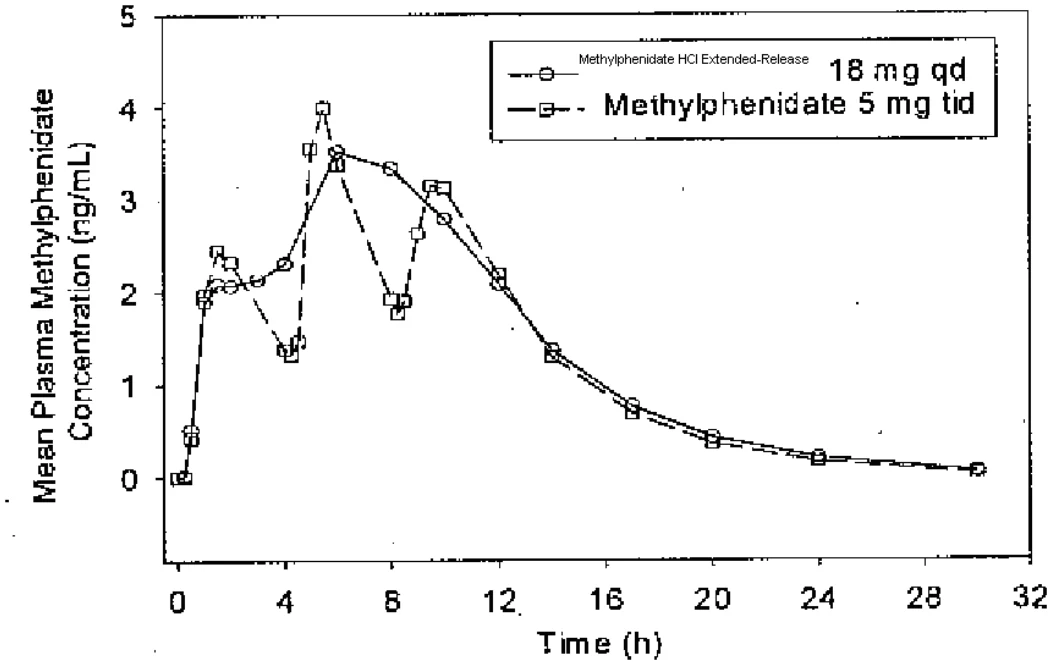
Figure 1.1: Mean methylphenidate plasma concentrations in 36 fasted adults, following a single dose of methylphenidate hydrochloride extended-release tablets 18 mg q.d. and immediate-release methylphenidate hydrochloride 5 mg t.i.d. administered every 4 hours.
Children (Single-Dose)
The mean pharmacokinetic parameters in 13 children 7 to 12 years of age following administration of methylphenidate hydrochloride extended-release tablets 18, 36 or 54 mg are summarized in Table 1.9.
Table 1.9: Pharmacokinetic Parameters in Children after Single Dosing (Mean ± SD)
| Parameters | Methylphenidate Hydrochloride Extended-Release Tablets 18 mg (n = 3) | Methylphenidate Hydrochloride Extended-Release Tablets 36 mg (n = 7) | Methylphenidate Hydrochloride Extended-Release Tablets 54 mg (n = 3) |
Cmax (ng/mL) Tmax (h) AUC0-11.5 (ng•h/mL)* | 6.0 ± 1.3 9.4 ± 0.02 50.4 ± 7.8 | 11.3 ± 2.6 8.1 ± 1.1 87.7 ± 18.2 | 15.0 ± 3.8 9.1 ± 2.5 121.5 ± 37.3 |
* Limited blood sampling
Adolescents (Steady-State)
The pharmacokinetics of methylphenidate were evaluated in adolescents 13 to 16 years of age with ADHD following steady-state dosing with methylphenidate hydrochloride extended-release tablets 36 mg, 54 mg, or 72 mg. The mean pharmacokinetic parameters are summarized in Table 1.10.
Table 1.10: Pharmacokinetic Parameters in Adolescents at Steady-State (Mean ± SD)
| Parameters | Methylphenidate Hydrochloride Extended-Release Tablets 36 mg (n = 10) | Methylphenidate Hydrochloride Extended-Release Tablets 54 mg (n = 8) | Methylphenidate Hydrochloride Extended-Release Tablets 72 mg* (n = 6) |
Cmax (ng/mL) Tmax (h) AUCinf (ng•h/mL) T1/2 (h) | 9.9 ± 5.5 7.0 ± 2.1 112 ± 55.9 4.3 ± 2.0 | 12.8 ± 3.4 6.8 ± 1.7 141 ± 34.3 3.6 ± 0.5 | 17.8 ± 4.5 7.0 ± 1.8 186 ± 33.9 3.5 ± 0.5 |
* Not recommended. In the clinical study, only 62 adolescents received methylphenidate hydrochloride extended-release tablets at this dose level.
Adults
The mean single dose pharmacokinetic parameters in 36 healthy adults following the administration of methylphenidate hydrochloride extended-release tablets 18 mg q.d. and methylphenidate hydrochloride 5 mg t.i.d. are summarized in Table 1.11.
Table 1.11: Pharmacokinetic Parameters in Adult Subjects after Single Dosing (Mean ± SD)
| Parameters | Methylphenidate Hydrochloride Extended-Release Tablets (18 mg q.d.) (n = 36) | Methylphenidate Hydrochloride (5 mg t.i.d.) (n = 35) |
Cmax (ng/mL) Tmax (h) AUCinf (ng•h/mL) T1/2 (h) | 3.7 ± 1.0 6.8 ± 1.8 41.8 ± 13.9 3.5 ± 0.4 | 4.2 ± 1.0 6.5 ± 1.8 38.0 ± 11.0 3.0 ± 0.5 |
The mean single dose and steady-state pharmacokinetic parameters in 25 healthy adults following the administration of methylphenidate hydrochloride extended-release tablets 54 and 72 mg q.d. are summarized in Table 1.12.
Table 1.12: Pharmacokinetic Parameters in Adult Subjects Following Single Dose and at Steady-State
(Mean ± SD)
| Parameters | Methylphenidate Hydrochloride Extended-Release Tablets 54 mg (n = 25) | Methylphenidate Hydrochloride Extended-Release Tablets 72 mg (n = 25) | ||
|---|---|---|---|---|
| Single Dose | ||||
Cmax (ng/mL) Tmaxa (h) AUCinf (ng-h/mL) T1/2 (h) | 12.03 ± 3.54 6 (1-10) 130 ± 32.4 3.58 ± 0.629 | 17.12 ± 5.80 6 (5-10) 196 ± 65.7 3.57 ± 0.617 | ||
| Steady State | ||||
| Cmax (ng/mL) | 12.45 ± 2.84 | 16.12 ± 4.60 | ||
| Parameters | Methylphenidate Hydrochloride Extended-Release Tablets 54 mg (n = 25) | Methylphenidate Hydrochloride Extended-Release Tablets 72 mg (n = 25) | ||
Tmaxa (h) AUCtau (ng-h/mL) T1/2 (h) | 6 (1-10) 139 ± 33.6b 3.60 ± 0.844 | 6 (5-8) 185 ± 49.0 3.63 ± 0.49 | ||
a median and range are listed
b n = 24
Distribution
Plasma methylphenidate concentrations in adults decline bi-exponentially following oral administration. The half-life of methylphenidate in adults following oral administration of methylphenidate hydrochloride extended-release tablets was approximately 3.5 h. In humans, 15 ± 5% of methylphenidate in the blood is bound to plasma proteins.
Metabolism and Excretion
In humans, methylphenidate is metabolized primarily by de-esterification to PPAA, which has little pharmacologic activity. In adults the metabolism of methylphenidate hydrochloride extended-release tablets q.d., as evaluated by metabolism to PPAA, is similar to that of methylphenidate t.i.d. The metabolism of single and repeated q.d. doses of methylphenidate hydrochloride extended-release tablets is similar. After oral dosing of radio-labelled methylphenidate in humans, about 90% of the radioactivity was recovered in urine. The main urinary metabolite was PPAA, accounting for approximately 80% of the dose (see ACTION AND CLINICAL PHARMACOLOGY; Special Populations and Conditions, Renal Insufficiency).
Dose Proportionality
Following administration of methylphenidate hydrochloride extended-release tablets in single doses of 18, 36, and 54 mg/day to healthy adults, Cmax and AUC inf of d-methylphenidate were proportional to dose, whereas l-methylphenidate Cmax and AUCinf increased disproportionately with respect to dose. Following administration of methylphenidate hydrochloride extended-release tablets, plasma concentrations of the l-isomer were approximately 1/40th the plasma concentrations of the d-isomer.
In a multiple-dose study in adolescent ADHD patients aged 13 to 16 administered their prescribed dose (18 to 72 mg/day) of methylphenidate hydrochloride extended-release tablets, mean Cmax and AUC during a dosing interval of the d-isomer and total methylphenidate increased proportionally with respect to dose.
Food Effects
In patients, there were no differences in either the pharmacokinetics or the pharmacodynamic performance of methylphenidate hydrochloride extended-release tablets when administered after a high-fat breakfast. There is no evidence of dose dumping in the presence or absence of food.
Special Populations and Conditions
Gender
In healthy adults, the mean dose-adjusted AUC inf values for methylphenidate hydrochloride extended-release tablets were 36.7 ng•h/mL in men and 37.1 ng•h/mL in women, with no differences noted between the two groups.
Race
In adults receiving methylphenidate hydrochloride extended-release tablets, dose-adjusted AUCinf was consistent across ethnic groups; however, the sample size may have been insufficient to detect ethnic variations in pharmacokinetics.
Age
The pharmacokinetics of methylphenidate hydrochloride extended-release tablets have not been studied in children less than 6 years of age, and methylphenidate hydrochloride extended-release tablets should not be used in this patient population. There are no data available for the use of methylphenidate hydrochloride extended-release tablets in patients over 65 years of age.
Hepatic Insufficiency
Methylphenidate hydrochloride extended-release tablets have not been studied in patients with hepatic insufficiency.
Renal Insufficiency
There is very limited experience with the use of methylphenidate in patients with renal insufficiency. Renal clearance is not significant for methylphenidate elimination, but the main methylphenidate metabolic product, PPAA, is predominantly (80%) cleared through the urine.
Nursing Women
A study conducted in rats indicated that the distribution profiles of methylphenidate in milk and plasma are similar. Methylphenidate has been detected in human milk. Based on breast milk sampling from five mothers, methylphenidate concentrations in human milk resulted in infant doses of 0.16% to 0.7% of the maternal weight adjusted dosage, and a milk to maternal plasma ratio ranging between 1.1 and 2.7.
STORAGE AND STABILITY
Store between 15°C and 30°C. Protect from moisture.
DOSAGE FORMS, COMPOSITION AND PACKAGING
Dosage Forms and Packaging
pms-METHYLPHENIDATE ER extended-release tablets contain methylphenidate hydrochloride as the medicinal ingredient and are available in 18 mg, 27 mg, 36 mg and 54 mg dosage strengths.
18 mg: Yellow, capsule-shaped coated tablet, ink-printed in black with “M 18” on one side and nothing on the other side. This dosage strength is supplied in bottles of 100 tablets.
27 mg: Grey, capsule-shaped coated tablet, ink-printed in black with “M 27” on one side and nothing on the other side. This strength is supplied in bottles of 100 tablets.
36 mg: White, capsule-shaped coated tablet, ink-printed in black with “M 36” on one side and nothing on the other side. This dosage strength is supplied in bottles of 100 tablets.
54 mg: Brownish-red, capsule-shaped coated tablet, ink-printed in black with “M 54” on one side and nothing on the other side. This dosage strength is supplied in bottles of 100 tablets.
In clinical studies, a dose of 72 mg was achieved by taking two 36 mg tablets. There is no 72 mg tablet available.
The dimensions of the pms-METHYLPHENIDATE ER tablets are as follows in Table 1.13.
Table 1.13: Tablet Sizes
| 18 mg Tablet | 27 mg Tablet | 36 mg Tablet | 54 mg Tablet | |
| Diameter | 6.25 mm | 7.82 mm | 7.82 mm | 7.82 mm |
| Length | 11.93 mm | 14.54 mm | 14.54 mm | 14.54 mm |
Composition
pms-METHYLPHENIDATE ER contains the following inert ingredients:
18 mg: Colloidal Silicon Dioxide, Eudragit RL, Hydroxypropyl Methylcellulose, Hypromellose, Iron Oxide Yellow, Lactose, Polyethylene Glycol, Stearic Acid, Talc, Titanium Dioxide, Triethyl Citrate.
27 mg: Colloidal Silicon Dioxide, Eudragit RL, Hydroxypropyl Methylcellulose, Hypromellose, Iron Oxide Black, Lactose, Polyethylene Glycol, Stearic Acid, Talc, Titanium Dioxide, Triethyl Citrate.
36 mg: Colloidal Silicon Dioxide, Eudragit RL, Hydroxypropyl Cellulose (in Opadry film coating), Hydroxypropyl Methylcellulose, Hypromellose, Lactose, Polyethylene Glycol, Stearic Acid, Talc, Titanium Dioxide, Triethyl Citrate.
54 mg: Colloidal Silicon Dioxide, Eudragit RL, Hydroxypropyl Methylcellulose, Iron Oxide Red, Iron Oxide Yellow, Hypromellose, Lactose, Polyethylene Glycol, Stearic Acid, Talc, Titanium Dioxide, Triethyl Citrate.
The printing ink used for pms-METHYLPHENIDATE ER 18 mg, 27 mg, 36 mg & 54 mg tablets contain the following ingredients: FD&C Blue #1 Aluminum Lake, FD&C Red #40 Aluminum Lake, FD&C Yellow #6 Aluminum Lake, Isopropyl Alcohol, Lecithin (Soya), N-Butyl Alcohol, Propylene Glycol, Shellac Glaze-45%, Simethicone.
PART II: SCIENTIFIC INFORMATION
PHARMACEUTICAL INFORMATION
Drug Substance
Proper name: Methylphenidate Hydrochloride, USP
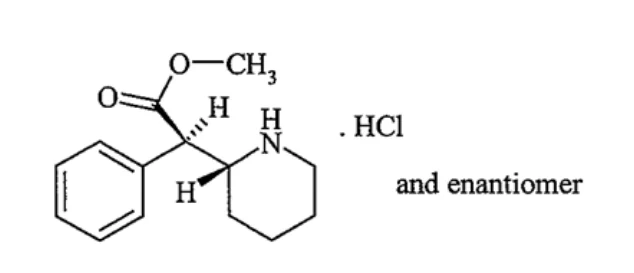
Chemical name: d, l (racemic) methyl α-phenyl-2-piperidineacetate hydrochloride
Molecular formula: C14H19NO2 • HCl
Molecular mass: 269.77 g/mol
Structural formula:
Physicochemical Properties
Description: methylphenidate hydrochloride, USP is a white to off-white powder pH: methylphenidate hydrochloride solutions are acidic to litmus pKa: 8.9
Solubility: freely-soluble in water and in methanol, soluble in alcohol, and slightly soluble in chloroform and in acetone
Melting Point: 224°C to 226°C
CLINICAL TRIALS
Comparative Bioavailability Studies
Single dose crossover comparative bioavailability study of pms-METHYLPHENIDATE ER 54 mg Extended-Release Tablets, was performed versus Janssen-Ortho Inc.’s CONCERTA®, administered as 1 x 54 mg extended-release tablets in 20 healthy male volunteers / fasting state. Bioavailability data were measured and the results are summarized in the following table:
SUMMARY TABLE OF THE COMPARATIVE BIOAVAILABILITY DATA
Methylphenidate (1 x 54 mg ER tablet, Fast) From measured data Geometric Mean Arithmetic Mean (CV %) | ||||
|---|---|---|---|---|
| Parameter | Test* | Reference† | % Ratio of Geometric Means | 90% Confidence Interval |
AUCT (ng·h/mL) | 116.972 122.001 (29.8) | 128.500 133.509 (29.7) | 91.03 | 88.08 − 94.07 |
AUCI (ng·h/mL) | 130.053 130.821 (30.1) | 137.516 137.799 (30.2) | 94.62 | 91.81 − 97.52 |
Cmax (ng/mL) | 10.733 11.538 (39.9) | 12.862 13.538 (29.5) | 83.44 | 78.54 − 88.65 |
Tmax§ (h) | 6.00 (5.50-12.00) | 7.50 (5.50-9.00) | ||
T½€ (h) | 4.68 (25.3) | 3.90 (12.8) | ||
* pms-METHYLPHENIDATE ER, Pharmascience Inc., Montreal, Quebec, Canada
† CONCERTA®, Janssen-Ortho Inc., Toronto, Ontario, Canada
§ Expressed as the median (range) only
€ Expressed as the arithmetic mean (CV %) only
Single-dose crossover comparative bioavailability study of pms-METHYLPHENIDATE ER 54 mg Extended-Release Tablets, was performed vs. Janssen-Ortho Inc.’s CONCERTA®, administered as 1 x 54 mg extended-release tablets in 20 healthy male volunteers / fed state. Bioavailability data were measured and the results are summarized in the following table:
SUMMARY TABLE OF THE COMPARATIVE BIOAVAILABILITY DATA
Methylphenidate (1 x 54 mg ER tablet, Fed) From measured data Geometric Mean Arithmetic Mean (CV %) | ||||
|---|---|---|---|---|
| Parameter | Test* | Reference† | % Ratio of Geometric Means | 90% Confidence Interval |
AUCT (ng·h/mL) | 126.774 133.966 (37.4) | 134.545 141.030 (33.8) | 94.22 | 90.08 − 98.56 |
AUCI (ng·h/mL) | 138.932 146.490 (36.9) | 137.733 144.412 (34.1) | 100.87 | 96.64 − 105.29 |
Cmax (ng/mL) | 11.880 12.505 (35.3) | 12.273 12.932 (33.3) | 96.79 | 89.80 − 104.33 |
Tmax§ (h) | 6.50 (5.50-10.50) | 6.75 (1.00-10.50) | ||
T½€ (h) | 5.43 (23.7) | 3.62 (10.6) | ||
* pms-METHYLPHENIDATE ER, Pharmascience Inc., Montreal, Quebec, Canada
† CONCERTA®, Janssen-Ortho Inc., Toronto, Ontario, Canada
§ Expressed as the median (range) only
€ Expressed as the arithmetic mean (CV %) only
Methylphenidate hydrochloride extended-release tablets was demonstrated to be effective in the treatment of ADHD in five randomized, double-blind, placebo-controlled studies in children, adolescents and adults who met the Diagnostic and Statistical Manual 4th edition (DSM-IV) criteria for ADHD.
Study Demographics and Designs
Table 2.1: Demographics and Designs for Controlled Clinical Trials in Patients with ADHD
| Study | Design | Methylphenidate Hydrochloride Extended-Release Tablets Dose/Treatment Duration | # of Patients | Mean Age (years) [Range] | Primary Efficacy Variable | ||||
|---|---|---|---|---|---|---|---|---|---|
| Controlled Studies in Children | |||||||||
| Study 1 | Double-blind, randomized, 3-period, 6-sequence crossover, placebo-controlled, comparative vs. IR methylphenidate | 18, 36 or 54 mg once daily | 64 | 9.2 [6-12] | IOWA Conners Rating scale for inattention / overactivity | ||||
| Study 2 | Double-blind, randomized, placebo-controlled, active-controlled, crossover, comparative vs. IR methylphenidate | 18, 36 or 54 mg once daily | 70 | 9.1 [6-12] | IOWA Conners Rating scale for inattention / overactivity | ||||
| Study 3 | Double-blind, randomized, placebo-controlled, active-controlled, parallel group vs. IR methylphenidate | 18, 36 or 54 mg once daily | 282 | 8.7 [6-12] | IOWA Conners Rating scale for inattention / overactivity | ||||
| Controlled Studies in Adolescents | |||||||||
| Study 4 | Double-blind, randomized, placebo-controlled | titration to 72 mg once daily | 220 | 14.7 [13-18] | Investigator ADHD rating scale | ||||
| Controlled Studies in Adults | |||||||||
| Study 5 | Double-blind, randomized, placebo-controlled, parallel group, dose-response | fixed doses of 18, 36 and 72 mg once daily | 401 | 34.0 [18-63] | Investigator-rated Connors Adult ADHD Rating Scale (CAARS) total score | ||||
Children
Three double-blind, active- and placebo-controlled studies were conducted in 416 children aged six to twelve. The controlled studies compared methylphenidate hydrochloride extended-release tablets q.d. (18, 36 or 54 mg), methylphenidate hydrochloride t.i.d. over 12 hours (15, 30 or 45 mg total daily dose), and placebo in two single-centre, 3-week, crossover studies (Study 1 and Study 2) and in a multicentre, 4-week, parallel-group comparison (Study 3). The primary comparison of interest in all three trials was methylphenidate hydrochloride extended-release tablets versus placebo.
Symptoms of ADHD were evaluated by community school teachers using the Inattention/Overactivity with Aggression (IOWA) Conners scale. Significant reduction in the Inattention/Overactivity subscale in the treatment group versus the placebo was shown consistently across all three controlled studies for methylphenidate hydrochloride extended-release tablets q.d.
and methylphenidate hydrochloride t.i.d. (p < 0.001). The scores for the placebo-controlled parallel study for all three treatment groups are presented in Figure 2.1.
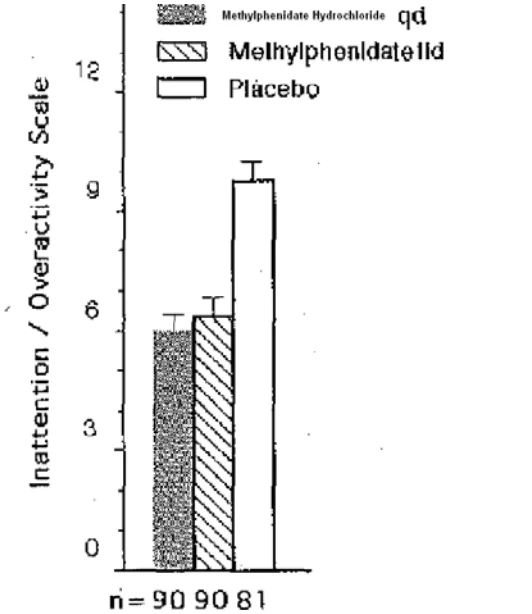
Figure 2.1: Mean community school teacher IOWA Conners Inattention/Overactivity scores with methylphenidate hydrochloride extended-release tablets q.d. (18, 36 or 54 mg), methylphenidate hydrochloride t.i.d. over 12 hours (15, 30 or 45 mg total daily dose), and placebo. The study involved 4 weeks of parallel-group treatments with a Last Observation Carried Forward analysis for weeks 2 to 4. Data at Week 4 is shown. Error bars represent mean plus standard error of the mean.
Studies 1 and 2
In the two placebo-controlled crossover studies (Studies 1 and 2), symptoms of ADHD were evaluated by laboratory school teachers using the SKAMP (Swanson, Kotkin, Agler, M-Flynn and Pelham) laboratory school rating scale. Significant improvement in attention and behaviour versus placebo was shown consistently across the two studies (p < 0.005). Efficacy was maintained through 12 hours after dosing, and the sustained beneficial effects of methylphenidate hydrochloride extended-release tablets q.d. therapy seen throughout the laboratory classroom day were comparable in duration to those with methylphenidate hydrochloride t.i.d. Figure 2.2 presents the laboratory school teacher SKAMP ratings for methylphenidate hydrochloride extended-release tablets q.d., methylphenidate hydrochloride t.i.d. and placebo in Study 1. Similar results were obtained in Study 2.
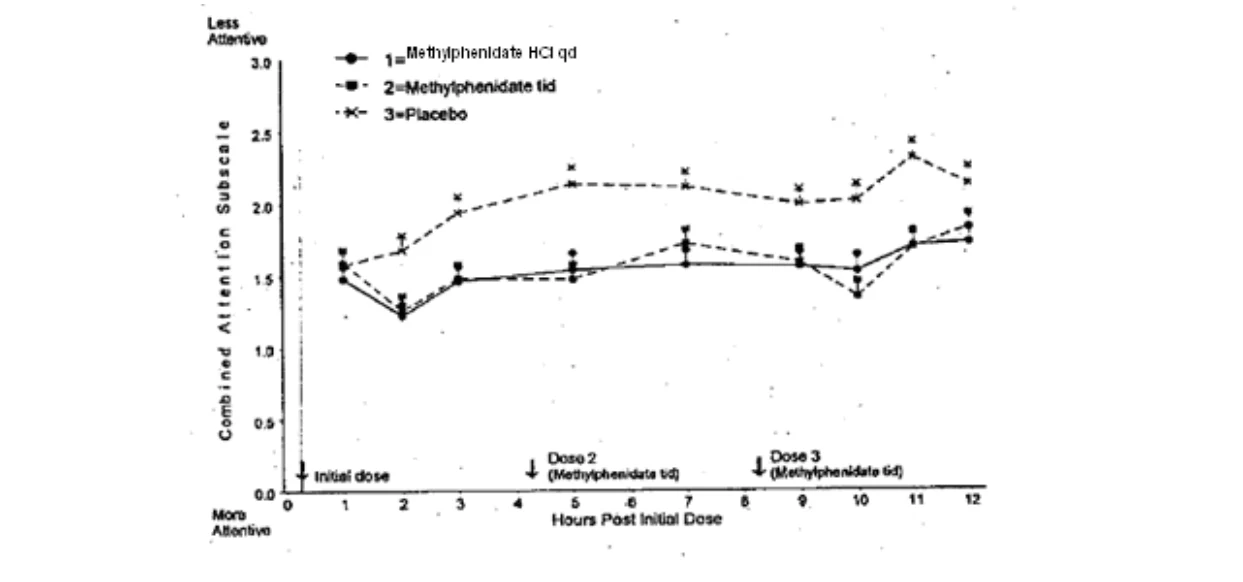
Figure 2.2: Mean laboratory school teacher SKAMP Ratings of Combined Attention (Study 1) with methylphenidate hydrochloride extended-release tablets q.d. (18, 36 or 54 mg), methylphenidate hydrochloride t.i.d. over 12 hours (15, 30 or 45 mg total daily dose) and placebo. Error bars represent mean plus standard error of the mean. The sample sizes for methylphenidate hydrochloride extended-release tablets, methylphenidate hydrochloride t.i.d., and placebo groups were 60, 62 and 60, respectively.
Adolescents (Study 4)
In a randomized, double-blind, multicentre, placebo-controlled trial (Study 4) involving 177 patients, methylphenidate hydrochloride extended-release tablets were demonstrated to be effective in the treatment of ADHD and was well-tolerated in adolescents aged 13 to 18 at doses up to 72 mg/day (1.4 mg/kg/day). Of 220 patients who entered an open 4-week titration phase, 177 were titrated to an individualized dose (maximum 72 mg/day) based on meeting specific improvement criteria on the ADHD Rating Scale and the Global Assessment of Effectiveness with acceptable tolerability. Patients who met these criteria were then randomized to receive either their individualized dose of methylphenidate hydrochloride extended-release tablets (18 − 72 mg/day, n = 87) or placebo (n = 90) during a two-week double-blind phase. At the end of this phase, mean scores for the investigator rating on the ADHD Rating Scale for methylphenidate hydrochloride extended-release tablets were significantly improved relative to placebo (CON -14.93; PLA -9.58; p = 0.001). Mean scores for methylphenidate hydrochloride extended-release tablets and placebo, respectively, at the end of the double-blind phase were 16.62 and 21.40, compared to 31.55 and 30.99 at baseline.
Adults (Study 5)
This was a 5-week, randomized, double-blind, multicentre, placebo-controlled, dose-response trial (Study 5) was conducted in 401 adults with ADHD aged 18 to 65 years using once daily methylphenidate hydrochloride extended-release tablets fixed doses of 18 mg, 36 mg and 72 mg. Efficacy was evaluated by the mean change from baseline to double-blind endpoint in the investigator-rated Connors’ Adult ADHD Rating Scale (CAARS) total score. All doses of methylphenidate hydrochloride extended-release tablets (18 mg, 36 mg and 72 mg/day) were statistically significantly superior to placebo in improving the CAARS total scores at double-blind endpoint compared to baseline (mean change of -7.6 for placebo, -10.6 (p = 0.0146) for methylphenidate hydrochloride extended-release tablets 18 mg, -11.5 (p = 0.0131) for methylphenidate hydrochloride extended-release tablets 36 mg and -13.7 (p < 0.0001) for the methylphenidate hydrochloride extended-release tablets 72 mg). Statistically significant differences compared to placebo were first observed at Week 1. Secondary endpoints included the investigator-rated Clinical Global Impressions - Severity (CGI-S) and the CAARS-S:S (patient-rated CAARS scale). The results from the secondary endpoints were consistent with the primary endpoint.
DETAILED PHARMACOLOGY
Animal Pharmacology
Pharmacodynamics
Methylphenidate hydrochloride is a sympathomimetic agent classified as a central nervous system (CNS) stimulant. Its mechanism of action is not entirely understood; however, it blocks the reuptake and enhances the release of dopamine and norepinephrine in the mammalian brain, an effect that increases dopamine and norepinephrine levels in the synaptic cleft. In vitro radioligand binding studies demonstrate that binding of methylphenidate in the brain is localized to dopamine-rich areas. Methylphenidate releases dopamine from a reserpine-sensitive storage pool and inhibits the catecholamine metabolic enzyme, monoamine oxidase (MAO), in the brain of rats.
Methylphenidate is a racemic mixture comprised of the d- and l-threo stereoisomers. The d-isomer is pharmacologically active; the l-isomer has little pharmacologic activity. In a number of animal models, methylphenidate enhances locomotor activity and induces stereotypic behaviours. Recent clinical findings in ADHD children suggest an abnormality in the dopamine transporter gene (DAT1), the D4 receptor gene (DRD-4) and/or the D2 receptor gene that may be at least partly overcome by the dopaminergic effects of methylphenidate, suggesting a possible mode of action.
Safety Pharmacology
Methylphenidate hydrochloride had no effect in hERG-transfected cells or on the action potential of guinea pig papillary muscles. The no observed adverse effect level (NOAEL) for stimulatory effects on the cardiovascular system in conscious dogs (increased blood pressure and heart rate) was 10 mg/kg. The NOAEL for stimulatory effects on the respiratory system in free-moving rats was 3 mg/kg. The NOAEL for methylphenidate hydrochloride’s convulsion evoking action in mice was 10 mg/kg.
Pharmacokinetics
Studies primarily in humans and rats, as well as limited information available for mice, dogs, monkeys and other species, demonstrate that methylphenidate is readily absorbed, distributed, metabolized and eliminated regardless of the route of administration. While the kinetic rates for these processes are similar among different species, there are differences in metabolic profiles. Distribution of metabolites differs from that of the unchanged parent material, with most of the material that reaches the brain consisting of the unchanged parent compound. Biotransformation in the gut or first-pass metabolism, or both, is common among the species studied. The primary metabolite in humans and a major metabolite in other species is alpha-phenyl-alpha-(2-piperidyl) acetic acid (PPAA), also commonly called ritalinic acid. Pharmacokinetic data showed dose-dependent exposure to methylphenidate and PPAA in adult animals; in juvenile rats, exposure was more than dose-proportional. In the presence of alcohol, an intermediate metabolite, ethylphenidate, is produced. The amount of ethylphenidate production is proportional to the blood alcohol concentration. Excretion of radioactivity into breast milk was observed after single oral administration of 5 mg/kg 14C-methylphenidate hydrochloride to lactating rats.
TOXICOLOGY
The toxicology program for methylphenidate and the oral controlled-release OROS methylphenidate dosage form consists of acute toxicity, long-term toxicity, carcinogenicity and mutagenicity, reproductive and developmental toxicity, and other special toxicity studies.
Acute Toxicity
The acute toxicity of methylphenidate hydrochloride has been studied primarily in mice and rats, and additionally in rabbits and dogs. Published oral LD50 values for rodents and rabbits range from approximately 190 to 900 mg/kg. The probable cause of death in LD50 studies was excessive central adrenergic stimulation. Clinical signs noted with high doses of methylphenidate in animal acute toxicity studies include agitation and increased motor activity, tremors and convulsions, decreased food consumption and stereotypic behaviours such as licking or gnawing.
A dog study was conducted to study the abuse potential of methylphenidate hydrochloride extended-release tablets (N = 8) and immediate release methylphenidate (N = 8). The dogs were intravenously administered with pulverized methylphenidate hydrochloride extended-release tablets or methylphenidate tablets mixed with liquid. Death occurred after a single 0.5 mg or 1 mg/kg dose of methylphenidate hydrochloride extended-release tablets. Mortality was not observed in methylphenidate-treated dogs dosed at 1 mg/kg/day for 2 weeks. It is likely that the deaths were due the particles present in the pulverized methylphenidate hydrochloride extended-release tablets.
Long-Term Toxicity
Treatment with methylphenidate hydrochloride at repeated high doses has demonstrated transient effects on body weight in rats and mice. The liver was the primary target organ for toxicity in mice and rats, with male mice being the most sensitive showing hepatocellular degeneration. Methylphenidate has shown some effects on maturation and estrous cyclicity in neonatal rats; estrous cycles were reversibly affected in older rats. Reversible effects of methylphenidate were seen on skeletal growth in neonatal rats; such effects were not seen in older rats. Endocrine effects of MPH have generally been inconsistent or did not show a dose response. The potential gastrointestinal (GI) effects and systemic toxicity of the OROS methylphenidate dosage form were evaluated in a study conducted in dogs. Except for excessive salivation, no other treatment-related clinical signs were observed. No treatment-related findings were seen in body or organ weights, physical exams, ophthalmic exams, qualitative food consumption, hematology, clinical chemistry, urinalysis, macroscopic exams or histopathologic evaluation of tissues. No treatment-related GI irritation or systemic effects were seen for oral doses up to 72 mg/day for 30 days.
A second study in beagle dogs was conducted to determine the possible local gastrointestinal and systemic effects of methylphenidate hydrochloride extended-release tablets after daily administration (0, 72, 144 or 216 mg/day) for 4 weeks. Females in all methylphenidate hydrochloride extended-release tablet groups showed toxicologic effects such as hyperactivity, reduced food consumption, and decreased mean body weight gain; in males, similar effects were seen only in the two higher methylphenidate hydrochloride extended-release tablet groups (144 and 216 mg/day). However, with the exception of mean body weight gain in 216 mg/day females, the methylphenidate hydrochloride extended-release tablets -related changes resolved during recovery.
Carcinogenicity and Mutagenicity
In a lifetime carcinogenicity study carried out in B6C3F1 mice, methylphenidate hydrochloride caused an increase in hepatocellular adenomas and, in males only, an increase in hepatoblastomas at a daily dose of approximately 60 mg/kg/day. This dose is approximately 30 times and 4 times the maximum recommended human dose of methylphenidate hydrochloride extended-release tablets on a mg/kg and mg/m2 basis, respectively. Hepatoblastoma is a relatively rare rodent malignant tumour type. There was no increase in total malignant hepatic tumours. The mouse strain used is sensitive to the development of hepatic tumours, and the significance of these results to humans is unknown.
Methylphenidate hydrochloride did not cause any increases in tumours in a lifetime carcinogenicity study carried out in F344 rats; the highest dose used was approximately 45 mg/kg/day, which is approximately 22 times and 5 times the maximum recommended human dose of methylphenidate hydrochloride extended-release tablets on a mg/kg and mg/m2 basis, respectively.
In a 24-week carcinogenicity study in the transgenic mouse strain p53+/-, which is sensitive to genotoxic carcinogens, there was no evidence of carcinogenicity. Male and female mice were fed diets containing the same concentration of methylphenidate as in the lifetime carcinogenicity study; the high-dose groups were exposed to 60 to 74 mg/kg/day of methylphenidate hydrochloride.
Methylphenidate was not mutagenic in the in vitro Ames reverse mutation assay or the in vitro mouse lymphoma cell forward mutation assay. Sister chromatid exchanges and chromosome aberrations were increased, indicative of a weak clastogenic response, in an in vitro assay in cultured Chinese Hamster Ovary cells. Methylphenidate was negative in vivo in males and females in the mouse bone marrow micronucleus assay.
Reproductive and Developmental Toxicity
Studies have been conducted in mice, rats and rabbits to evaluate the potential reproductive and developmental toxicity of methylphenidate. Rats appear to be a better animal model than rabbits for developmental/reproductive studies of methylphenidate, based on plasma AUC ratios of drug: metabolite.
Reproductive toxicity was studied using a Reproductive Assessment by Continuous Breeding (RACB) protocol or Sperm Morphology Vaginal Cytology Evaluations (SMVCE) endpoints to assess male and female reproductive functions. Methylphenidate hydrochloride did not impair fertility in male or female mice that were fed diets containing the drug in an 18-week Continuous
Breeding study. The study was conducted at doses up to 160 mg/kg/day, approximately 80-fold and 8-fold the highest recommended human dose of methylphenidate hydrochloride extended-release tablets on a mg/kg and mg/m2 basis, respectively. A perinatal and postnatal development study with neurobehavioural assessments in rats indicated slight developmental delay and marginal alterations in neuromotor performance in offspring of the high-dose dams treated with 30 mg/kg/day methylphenidate hydrochloride (approximately 15 and 3 times the maximum recommended daily human dose for methylphenidate hydrochloride extended-release tablets [54 mg methylphenidate hydrochloride] on a mg/kg and mg/m2 basis, respectively). No effects on learning and memory were seen in offspring and no adverse effects were noted in offspring of dams treated with methylphenidate hydrochloride doses of 12.5 mg/kg/day and lower.
A teratology study conducted in rats supports the conclusion that methylphenidate is not a developmental toxicant at the dose levels tested, up to 30 mg/kg/day. The maternal no-observed-adverse-effect level (NOAEL) of methylphenidate hydrochloride was 5 mg/kg/day. No adverse effects on embryo/fetal viability, growth or malformations were seen. The developmental toxicity NOAEL of methylphenidate hydrochloride was at least 30 mg/kg/day. In a study conducted in rabbits, methylphenidate hydrochloride was shown to have teratogenic effects when given in doses of 200 mg/kg/day, which is approximately 100 times and 40 times the maximum recommended human dose on a mg/kg and mg/m2 basis, respectively.
Weaning juvenile rats (F0) of both sexes were administered methylphenidate hydrochloride at total daily doses of 5, 12.5, and 30 mg/kg for approximately 4.5 months. The no observed adverse effect level (NOAEL) for F0 juvenile toxicity was considered to be 12.5 mg/kg/day for males and 30 mg/kg/day for females. For F1 developmental toxicity the NOAEL was considered to be 12.5 mg/kg/day.
Other Special Toxicity Studies
Five system transit and drug release studies conducted with the OROS methylphenidate dosage form in dogs showed no unexpected clinical signs during transit through the gastrointestinal (GI) tract. Membrane shells remained intact during GI transit with cumulative release of active ingredient generally comparable in vitro and in vivo.
Cellular toxicity profile of methylphenidate and effects of methylphenidate on mitochondrial function were evaluated in vitro using an MTT (3-[4,5-dimethythiazole-2-yl]-2,5-di-phenyl-tetrazolium bromide) assay. Results demonstrated that MPH in cell culture medium, at approximate concentrations of 0.125 and 0.25 mg/mL, was noncytotoxic to L-929 mouse fibroblast cells.
REFERENCES
Preclinical
- 1. Aoyama T, Kotaki H, Iga T. Dose-dependent kinetics of methylphenidate enantiomers after oral administration of racemic methylphenidate to rats. J Pharmacobio-Dyn 1990; 13:647-652.
- 2. Bhattacharyya AK, Ghosh B, Aulakh CS, Pradhan SN. Correlation of behavioral and neurochemical effects of acute administration of methylphenidate in rats. Prog Neuro-Psychopharmacol 1980; 4:129-136.
- 3. Chapin RE, Sloane RA. Reproductive assessment by continuous breeding: Evolving study design and summaries of 90 studies. Environ Health Perspect 1997; 105(Suppl. 1):199-395.
- 4. Cook EH, Stein MA, Krasowski MD, Cox NJ, Olkon DM, Kieffer JE, Leventhal BL. Association of attention-deficit disorder and the dopamine transporter gene. Am J Hum Genetics 1995; 56:993-998.
- 5. Costall B, Naylor RJ. The involvement of dopaminergic systems with the stereotyped behavior patterns induced by methylphenidate. J Pharm Pharmacol 1974; 26:30-33.
- 6. Dunnick JK, Hailey JR. Experimental studies on the long-term effects of methylphenidate hydrochloride. Toxicol 1995; 103:77-84.
- 7. Egger H, Bartlett F, Dreyfuss R, Karliner J. Metabolism of methylphenidate in dog and rat. Drug Metab Dispos 1981; 9:415-423.
- 8. Faraj BA, Israili ZH, Perel JM, Jenkins ML, Holtzman SG, Cucinell SA, Dayton PG. Metabolism and disposition of methylphenidate-14C: Studies in man and animals. J Pharmacol Exp Ther 1974; 191:535-547.
- 9. Gerlach J, Bjørndal N, Christensson E. Methylphenidate, apomorphine, THIP, and diazepam in monkeys: Dopamine-GABA behavior related to psychoses and tardive dyskinesia. Psychopharmacology 1984; 82:131-134.
- 10. Hendley ED, Snyder SH, Fauley JJ, Lapidus JB. Stereoselectivity of catecholamine uptake by brain synaptosomes: Studies with ephedrine, methylphenidate, and phenyl-2-piperidyl carbinol. J Pharmacol Exper Ther 1972; 183:103-116.
- 11. Hoffman BB, Lefkowitz RJ. Catecholamines, sympathomimetic drugs, and adrenergic receptor antagonists. In Hardman JG, Limbird LL, Molinoff PB, Ruddon RW, Goodman AG, eds, Goodman and Gilman’s The Pharmacological Basis of Therapeutics, 9th ed. New York: McGraw-Hill 1996; 199-248.
- 12. Meier R, Gross F, Tripod J. Ritalin, eine neuartige synthetische verbindung mit spezifischer zentralerregender wirkungskomponente. Klin Wochenscr 1954; 32:445-450.
- 13. Morrissey RE, Schwetz BA, Lamb JC, Ross MD, Teague JL, Morris RW. Evaluation of rodent sperm, vaginal cytology, and reproductive organ weight data from National Toxicology Program 13-week studies. Fundam Appl Toxicol 1988; 11:343-358.
- 14. National Toxicology Program (NTP). Toxicology and Carcinogenesis Studies of Methylphenidate Hydrochloride (CAS No. 298-59-9) in F344/N Rats and B6C3F1 Mice (Feed Studies). NTP TR No. 439, NIH Publication No. 95-3355. US Dept of Health & Human Services, Public Health Service, National Institutes of Health, Research Triangle Park, NC, 1995.
- 15. National Toxicology Program (NTP). Methylphenidate•HCI: Reproduction and Fertility Assessment in Swiss CD-1 Mice When Administered via Feed. Study No. NTP-87-FACB-055. US Dept of Health & Human Services, Public Health Service, National Institutes of Health, Research Triangle Park, NC, 1989.
- 16. Shih TM, Khachaturian ZS, Hanin I. Involvement of both cholinergic and catecholaminergic pathways in the central action of methylphenidate: A study utilizing lead-exposed rats. Psychopharmacology 1977; 55:187-193.
- 17. Sipes IG, Carter DE. The disposition and metabolism of methylphenidate hydrochloride (MPH HCl) in rats and mice. National Institute of Environmental Health Sciences Contract No. NO1-ES-3-5031. Final Draft Report, 13 August 1990.
- 18. Szporny L, Görög P. Investigations into the correlations between monoamine oxidase inhibition and other effects due to methylphenidate and its stereoisomers. Biochem Pharmacol 1961; 8:263-268.
- 19. Thai DL, Sapko MT, Reiter CT, Bierer DE, Perel JM. Asymmetric synthesis and pharmacology of methylphenidate and its para-substituted derivatives. J Med Chem 1998; 41(4):591-601.
- 20. Usdin E, Efron DH. Psychotropic Drugs and Related Compounds, 2nd ed. Rockville, MD: National Institute of Mental Health, Department of Health, Education, and Welfare 1972; DHEW Publication No. (HSM) 72-9074; 263-264.
- 21. Warawa EJ, Mueller NJ. Quinuclidine Chemistry. 3.-cis-2-(4’-chlorobenzhydryl)-3-quinuclidinol, a new central nervous system stimulant. Importance of the benzhydryl configuration. J Med Chem 1975; 18:71-74
- 22. Wargin W, Patrick K, Kilts C, Gualtieri CT, Ellington K, Mueller RA, Kraemer G, Breese GR. Pharmacokinetics of methylphenidate in man, rat and monkey. J Pharmacol Exp Ther 1983; 226:382-386.
- 23. Woods SK, Meyer JS. Exogenous tyrosine potentiates the methylphenidate-induced increase in extracellular dopamine in the nucleus accumbens: A microdialysis study. Brain Res 1991; 560:97-105.
Clinical
- 24. American Psychiatric Association. Diagnostic and statistical manual of mental disorders (4th ed.). Washington, DC: 1994; 78-85.
- 25. Biederman J, Mick E, Surman C, Doyle R, Hammerness P, Harpold T, Dunkel S, Dougherty M, Aleardi M, Spencer T. A randomized, placebo-controlled trial of OROS methylphenidate in adults with attention-deficit/hyperactivity disorder. Biol Psychiatry 2006; 59:829-835.
- 26. Biederman J, Mick E, Surman C, Doyle R, Hammerness P, Harpold T, Dunkel S, Dougherty M, Aleardi M, Spencer T. An open-label trial of OROS methylphenidate in adults with late-onset ADHD. CNS Spectr. 2006; 11(5): 390-396.
- 27. CPS Position Statement. The use of stimulant medication in the treatment of attention deficit hyperactivity disorder. Paediatr Child Health 2002; Vol. 7 No. 10: 693-696.
- 28. DuPaul GJ, Power TJ, Anastopoulos AD, Reid R. ADHD Rating Scale - IV: Checklists, Norms and Clinical Interpretation. New York: Guilford Press; 1998.
- 29. Fallu A, Richard C, Prinzo R, Binder C. Does OROS*-methylphenidate improve core symptoms and deficits in executive function? Results of an open-label trial in adults with attention deficit hyperactivity disorder. Curr Med Res Opin 2006; 22(12): 2557-2566.
- 30. Hardman J, Goodman Gilman A, Limbird LE. Goodman and Gilman’s The Pharmacological Basis of Therapeutics 9th ed. McGraw-Hill Inc. 1996; 219-221.
- 31. Loney J, Milich R. Hyperactivity, inattention, and aggression in clinical practice. In: Wolraich M and Routh DK eds, Advances in Developmental and Behavioral Pediatrics, 3rd ed. Greenwich, CT: JAI Press 1982; 113-147.
- 32. Medori R, Ramos-Quiroga A, Casas M, Kooij JJS, Niemelä A, Trott G-E, Lee E, Buitelaar JK. A randomized, placebo-controlled trial of three fixed dosages of prolonged-release OROS methylphenidate in adults with attention-deficit/hyperactivity disorder. Biol Psychiatry 2008; 63:981-989.
- 33. Modi NB, Wang B, Noveck RJ, Gupta SK. Dose-proportional and stereospecific pharmacokinetics of methylphenidate delivered using an osmotic, controlled-release oral delivery system. J Clin Pharmacol 2000; Vol. 40 No. 10:1141-1149.
- 34. Modi NB, Wang B, Hu WT, Gupta SK. Effect of food on the pharmacokinetics of osmotic controlled-release methylphenidate HCl in healthy subjects. Biopharm Drug Dispos 2000; 21:23-31.
- 35. Modi NB, Lindemulder B, Gupta SK. Single and multiple-dose pharmacokinetics of an oral once-a-day osmotic controlled-release OROS® (methylphenidate HCl) formulation. J Clin Pharmacol 2000; 40:379-388.
- 36. Markowitz JS Devane CL, Boulton DW, Nahas Z, Risch C, Diamond F, Patrick KS. Ethylphenidate formation in human subjects after the administration of a single dose of methylphenidate and ethanol. Drug Metab Dispo 2000;28(6):620-4.
- 37. Olson KR. Poisoning and Drug Overdose 4th ed. Mc Graw-Hill 2004; 72-74.
- 38. Palumbo D, Spencer T, Lynch J, Co-Chien G, Faraone SV. Emergence of tics in children with ADHD: Impact of once-daily OROS methylphenidate therapy. J Child Adolesc Psychopharmacol 2004;14(2):185-94.
- 39. Pelham WE, Gnagy EM, Burrows-Maclean L, Williams A, Fabiano GA, Morrisey SM, Chronis AM, Forehand GL, Nguyen CA, Hoffman MT, Lock TM, Fiebelkorn K, Coles EK, Panahon CJ, Steiner RL, Meichenbaum DL, Onyango AN, Morse GD. Once-a day CONCERTA® methylphenidate versus three-times-daily methylphenidate in laboratory and natural settings. PEDIA 2001; Vol. 107 No. 6:1-15.
- 40. Pelham WE, Jr., Milich R, Murphy DA, and Murphy HA. Normative data on the IOWA Conners teacher rating scale. J Clin Child Psychol 1989; 18:259-262.
- 41. Swanson J, Gupta S, Lam A, et al. Development of a new once-a-day formulation of methylphenidate for the treatment of attention-deficit/hyperactivity disorder. Arch Gen Psychiatry 2003; 60:204-211.
- 42. Swanson JM, Gupta S, Williams L, et al. Efficacy of a new pattern of delivery of methylphenidate for the treatment of ADHD: effects on activity level in the classroom and on the playground. J Am Acad Child Adolesc Psychiatry 2002; 41(11):1306-1314.
- 43. Swanson J, Gupta S, Guinta D, Flynn D, Agler D, Lerner M, Williams L, Shoulson I, Wigal S. Acute tolerance of methylphenidate in the treatment of attention deficit hyperactivity disorder in children. Clin Pharmacol Ther 1999; 66(3):295-305.
- 44. Swanson J, Greenhill L, Pelham W, Wilens T, Wolraich M, Abikoff H, Atkins M, August G, Biederman J, Bukstein O, Conners CK, Efron L, Fiebelkorn K, Fried J, Hoffman M, Lambrecht L, Lerner M, Leventhal B, McBurnett K, Morse E, Palumbo D, Pfiffner L, Stein M, Wigal S, Winans E. Initiating CONCERTATM (OROS® methylphenidate HCl) qd in children with attention-deficit hyperactivity disorder. J Clin Research 2000; 3:59-76.
- 45. Swanson JM. The SKAMP Rating Scale. In: Swanson J ed, School-based Assessments and Interventions for ADD Students. Irvine, CA: KC Publishing 1992; 65-69.
- 46. Swanson JM, Kraemer HC, Hinshaw SP, et al. Clinical relevance of the primary findings of the MTA: Success rates based on severity of ADHD and ODD symptoms at the end of treatment. J Am Acad Child Adolesc Psychiatry 2001; 40(2):168-179.
- 47. The MTA Cooperative Group. A 14-month randomized Clinical Trial of Treatment Strategies for Attention-Deficit/Hyperactive Disorder. Arch Gen Psychiatry 1999; 56: 1073-1086.
- 48. Topol EJ. Textbook of Cardiovascular Medicine 2nd ed. Lipincott Williams and Williams 2002; 874.
- 49. Wilens T, Pelham W, Stein M, et al. ADHD treatment with once-daily OROS® methylphenidate: interim 12-month results from a long-term open-label study. J Am Acad Child Adolesc Psychiatry 2003; 42(4):424-433.
- 50. Wolraich ML, Greenhill LL, Pelham W, et al. Randomized, controlled trial of OROS® methylphenidate once a day in children with attention-deficit/hyperactivity disorder. Pediatrics 2001; 108(4):883-892.
Other:
- 51. CONCERTA® Product Monograph (Janssen Inc.) Revision date: April 17, 2019, Control Number: 224296.