


Product Monograph - Rifadin
INDICATIONS AND CLINICAL USE
RIFADIN (rifampin) is indicated as a treatment of tuberculosis.
To achieve a complete kill of the bacillary population and to avoid selection of drug-resistant mutants, RIFADIN must be used concomitantly with at least one other active anti-tuberculous drug. The selection of the specific drug for partner is determined by the in vitro sensitivity of the causative organisms, comparative safety and effectiveness, the patient's previous clinical history and the absorption/distribution pattern of the drug.
It is also indicated for the prophylaxis of bacterial meningitis or carriage of N. meningitidis or H. influenza b in persons exposed to a primary case.
To reduce the development of drug-resistant bacteria and maintain the effectiveness of RIFADIN and other antibacterial drugs, RIFADIN should be used only to treat infections that are proven or strongly suspected to be caused by susceptible bacteria. When culture and susceptibility information are available, they should be considered in selecting or modifying antibacterial therapy. In the absence of such data, local epidemiology and susceptibility patterns may contribute to the empiric selection of therapy.
CONTRAINDICATIONS
- Jaundice associated with reduced bilirubin excretion.
- RIFADIN is contraindicated in patients who are hypersensitive to this drug, who have a history of previous sensitivity to any of the rifamycins or to any ingredient in the formulation, including any non-medicinal ingredient, or component of the container. For a complete listing, see AVAILABILITY OF DOSAGE FORMS.
- Premature and newborn infants in whom the liver is not yet capable of functioning with full efficiency.
- RIFADIN (rifampin) passes into the breast milk and therefore should not be used during lactation.
- RIFADIN use is contraindicated when given concurrently with the combination of saquinavir/ritonavir (see PRECAUTIONS).
WARNINGS
Hepatic
RIFADIN (rifampin) has been shown to produce liver dysfunction. There have been fatalities associated with jaundice in patients with liver disease or receiving RIFADIN concomitantly with other hepatotoxic agents. Since an increased risk may exist for individuals with liver disease, benefits must be weighed carefully against the risk of further liver damage. Patients with impaired liver function should only be given rifampin in case of necessity and then with caution and under strict medical supervision. In these patients, careful monitoring of liver function, especially serum alanine aminotransferase (ALT) and serum aspartate aminotransferase (AST) should be carried out prior to therapy and then every two to four weeks during therapy. If signs of hepatocellular damage occur, RIFADIN should be discontinued.
Cases of mild to severe cholestasis have been reported with rifampin therapy. Patients should be instructed to contact their physician immediately if they experience symptoms such as itching, weakness, loss of appetite, nausea, vomiting, abdominal pain, yellowing of eyes or skin or dark urine. If cholestasis is confirmed, RIFADIN should be discontinued (see ADVERSE REACTIONS).
In some cases, hyperbilirubinemia resulting from competition between rifampin and bilirubin for excretory pathways of the liver at the cell level can occur in the early days of treatment. An isolated report showing a moderate rise in bilirubin and/or transaminase level is not in itself an indication for interrupting treatment; rather, the decision should be made after repeating the tests, noting trends in the levels, and considering them in conjunction with the patient's clinical condition.
Rifampin has enzyme-inducing properties, including induction of delta aminolevulinic acid synthetase. Isolated reports have associated porphyria exacerbation with rifampin administration.
Drug Reaction with Eosinophilia and Systemic Symptoms (DRESS)
Severe, systemic hypersensitivity reactions, including fatal cases, such as Drug Reaction with Eosinophilia and Systemic Symptoms (DRESS) syndrome have been observed during treatment with anti-tuberculosis therapy (see ADVERSE REACTIONS).
It is important to note that early manifestations of hypersensitivity, such as fever, lymphadenopathy or biological abnormalities (including eosinophilia, liver abnormalities) may be present even though rash is not evident. If such signs or symptoms are present, the patient should be advised to consult their physician immediately.
RIFADIN should be discontinued if an alternative etiology for the signs and symptoms cannot be established.
Skin
Severe Bullous Reactions
Cases of severe bullous skin reactions such as Stevens Johnson syndrome (SJS), toxic epidermal necrolysis (TEN), and acute generalized exanthematous pustulosis (AGEP) have been reported with rifampin. If symptoms or signs of AGEP, SJS or TEN are present, rifampin treatment must immediately be discontinued.
Clostridium Difficile-Associated Disease
Clostridium difficile-associated disease (CDAD) has been reported with use of many antibacterial agents, including rifampin. CDAD may range in severity from mild diarrhea to fatal colitis. It is important to consider this diagnosis in patients who present with diarrhea, or symptoms of colitis, pseudomembranous colitis, toxic megacolon, or perforation of colon subsequent to the administration of any antibacterial agent. CDAD has been reported to occur over 2 months after the administration of antibacterial agents.
Treatment with antibacterial agents may alter the normal flora of the colon and may permit overgrowth of Clostridium difficile. C. difficile produces toxins A and B, which contribute to the development of CDAD. CDAD may cause significant morbidity and mortality. CDAD can be refractory to antimicrobial therapy.
If the diagnosis of CDAD is suspected or confirmed, appropriate therapeutic measures should be initiated. Mild cases of CDAD usually respond to discontinuation of antibacterial agents not directed against Clostridium difficile. In moderate to severe cases, consideration should be given to management with fluids and electrolytes, protein supplementation, and treatment with an antibacterial agent clinically effective against Clostridium difficile. Surgical evaluation should be instituted as clinically indicated, as surgical intervention may be required in certain severe cases (see ADVERSE REACTIONS).
Susceptibility/Resistance
Development of Drug Resistant Bacteria
Prescribing RIFADIN in the absence of a proven or strongly suspected bacterial infection is unlikely to provide benefit to the patient and risks the development of drug-resistant bacteria.
PRECAUTIONS
General
A complete blood count (CBC), serum creatinine and liver function tests should be obtained prior to instituting therapy and periodically throughout the course of therapy. Because of a possible transient rise in transaminase and bilirubin values, blood for baseline clinical chemistries should be obtained before RIFADIN dosing.
RIFADIN is a well characterized and potent inducer of drug metabolizing enzymes and transporters and might therefore decrease or increase concomitant drug exposure, safety and efficacy (see DRUG INTERACTIONS). Therefore, patients should be advised not to take any other medication without medical advice.
Rifampin may cause vitamin K dependent coagulopathy and severe bleeding (see ADVERSE REACTIONS). Monitoring of occurrence of coagulopathy is recommended for patients at particular bleeding risk. Supplemental vitamin K administration should be considered when appropriate (vitamin K deficiency, hypoprothrombinemia).
RIFADIN (rifampin) increases the requirements for anticoagulant drugs of the coumarin type. This effect is not observed until the fifth day following initiation of treatment. The decrease in prothrombin time usually lasts between 5 and 7 days, and is the result of RIFADIN’s ability to cause induction of drug metabolizing enzyme systems of the liver. As a result, the rate of metabolism of those drugs which are substrates for these enzymes can be altered, resulting in reduced pharmacological effects of the drugs involved. In patients receiving anticoagulants, it is recommended that daily prothrombin times be performed until the dose of the anticoagulant required has been established. This is particularly important when rifampin administration is either initiated or withdrawn.
The intermittent administration of high doses of RIFADIN >120 mg/dose has been reported to be associated with a hypersensitivity reaction, characterized by fever and myalgia. The incidence of this reaction is greater when RIFADIN is given on a once-a-week basis than on a twice or thrice weekly basis. It is recommended that when resuming treatment with RIFADIN after short or prolonged interruptions, it be given in small, gradually increasing doses. During the transitional period, the renal and hemapoietic systems should be closely monitored. The drug should be stopped immediately if renal failure, thrombocytopenia purpura or hemolytic anaemia develop and should not be re-instituted.
Safe conditions for the use of ethambutol alone or in combination with RIFADIN have not been established for children under the age of thirteen years. Although renal insufficiency does not alter blood levels of RIFADIN, marked increases in ethambutol levels are observed under similar conditions; this, therefore, should be taken into consideration in such patients receiving RIFADIN /ethambutol combination therapy. Caution is recommended when instituting therapeutic regimens in which isoniazid is to be used concurrently with RIFADIN, in patients with impaired liver function, the elderly and malnourished.
From experimental studies, it would appear that bromosulphalein (BSP) and RIFADIN compete with one another at the liver cell-bile canaliculus boundary. Clinically, this phenomenon can be reflected by spurious BSP levels. It is recommended that the BSP test be carried out at least five hours after the last dose of RIFADIN.
RIFADIN and its metabolites may produce a discoloration (yellow, orange, red, brown) of the teeth, urine, feces, saliva, sputum, sweat and tears. Individuals to be treated should be made aware of these possibilities in order to prevent undue anxiety.
Patients should be advised that soft contact lenses may be permanently stained. Teeth discoloration may also be permanent (see ADVERSE REACTIONS).
It has been reported that oral contraceptives have failed to prevent conception in some patients receiving RIFADIN in association with other anti-tuberculosis drugs. It is therefore necessary that alternative or additional contraceptive measures be recommended.
Use in Pregnancy
Teratogenic Effects
Although rifampin has been reported to cross the placental barrier and appear in the cord blood, the effect of combinations of RIFADIN with other anti-tuberculous drugs on the human fetus is not known. No obvious effect on the fetus was detected after the administration of RIFADIN to 15 pregnant patients. An increase in congenital malformations, primarily spinabifida and cleft palate, has been reported in the offspring of mice and rats given oral doses of RIFADIN 100 mg/kg/day during pregnancy.
RIFADIN should not be used in pregnant women or women with childbearing potential. If RIFADIN therapy is judged to be essential, such treatment should be implemented only after carefully weighing the potential benefits of therapy against the risks which may be involved. In women with childbearing potential, treatment with RIFADIN should be undertaken only when the possibility of pregnancy during therapy is judged to be remote.
Non-teratogenic effects
It is not known whether RIFADIN can affect reproduction capacity.
When administered during the last few weeks of pregnancy, rifampin can cause postnatal hemorrhages in the mother and infant. In this case, treatment with vitamin K may be indicated for postnatal hemorrhage.
Use in Nursing Mothers
Rifampin is excreted in breast milk. Therefore, RIFADIN should not be used during lactation (see CONTRAINDICATIONS).
Carcinogenesis, mutagenesis, impairment of fertility
There are no known human data on long-term potential for carcinogenicity, mutagenicity, or impairment of fertility. A few cases of accelerated growth of lung carcinoma have been reported in man, but a causal relationship with the drug has not been established. An increase in the incidence of hepatomas in female mice (of a strain known to be particularly susceptible to the spontaneous development of hepatomas) was observed when rifampin was administered in doses two to ten times the average daily human dose for 60 weeks followed by an observation period of 46 weeks. No evidence of carcinogenicity was found in male mice of the same strain, mice of a different strain, or rats under similar experimental conditions.
Rifampin has been reported to possess immunosuppressive potential in rabbits, mice, rats, guinea pigs, human lymphocytes in vitro, and humans. Antitumor activity in vitro has been shown with rifampin.
There was no evidence of mutagenicity in bacteria, Drosophila melanogaster, or mice. An increase in chromatid breaks was noted when whole blood cell cultures were treated with rifampin.
DRUG INTERACTIONS
Induction of Drug Metabolizing Enzymes and Transporters
RIFADIN is a well characterized and potent inducer of drug metabolizing enzymes and transporters. Enzymes and transporters reported to be affected by RIFADIN include cytochromes P450 (CYP) 1A2, 2B6, 2C8, 2C9, 2C19, and 3A4, UDP-glucuronyltransferases (UGT), sulfotransferases, carboxylesterases, and transporters including P-glycoprotein (P-gp) and multidrug resistance-associated protein 2 (MRP2). Most drugs are substrates for one or more of these enzyme or transporter pathways, and these pathways may be induced by RIFADIN simultaneously. Therefore, RIFADIN may accelerate the metabolism and decrease the activity of certain co-administered drugs or increase the activity of a co-administered pro-drug (where metabolic activation is required), and has the potential to perpetuate clinically important drug-drug interactions against many drugs and across many drug classes (Table 1). To maintain optimum therapeutic blood levels, dosages of drugs may require adjustment when starting or stopping concomitantly administered RIFADIN.
The following table provides examples of the induction effect of rifampin on exposure of selected drug metabolizing enzymes and transporter substrate drugs.
Table 1 - Effect of Rifampin Co-administration on Drugs or Drug Classes
| Drug or Drug Class | Effect | Comments |
|---|---|---|
Antiretroviral drugs (e.g., zidovudine, saquinavir, indinavir, efavirenz) |
| Rifampin 600 mg daily reduced zidovudine exposure (AUC) by 47% via induction of zidovudine glucuronidation and amination metabolism pathways. Rifampin 600 mg daily reduced saquinavir exposure (AUC) by 70% in healthy volunteers and by 47% in HIV-infected patients most likely via induction of CYP3A4 and possibly P-gp pathways. Rifampin 600 mg daily reduced efavirenz exposure (AUC) by 60% primarily via induction of efavirenz CYP2B6-mediated 8-hydroxylation pathway. (see CONTRAINDICATIONS) |
| Hepatitis-C antiviral drugs (e.g., daclatasvir, simeprevir, sofosbuvir, telaprevir) |
| The hepatitis C antivirals are cleared by various drug metabolizing enzymes and transporters which are susceptible to induction by multiple dose rifampin. Rifampin 600 mg daily reduced the exposure (AUC) of daclatasvir by 79%, simeprevir by 48%, sofosbuvir by 77% and telaprevir by 92% compared to control subjects. Concurrent use of treatment of hepatitis-C antiviral drugs and rifampin should be avoided. |
| Drug or Drug Class | Effect | Comments |
|---|---|---|
| Systemic hormonal contraceptives, including estrogens and progestins |
| Rifampin treatment reduces the systemic exposure of oral contraceptives. Patients using systemic hormonal contraceptives should be advised to change to non-hormonal methods of birth control during rifampin therapy. |
| Enalapril |
| Dosage adjustments should be made if indicated by the patient's clinical condition. |
Anticonvulsants (e.g., phenytoin) |
| Phenytoin is metabolized mainly by CYP2C9/2C19. Rifampin 450 mg daily doubled the clearance of phenytoin and reduced the half-life by about 50%. |
Antiarrhythmics (e.g., disopyramide, mexiletine, quinidine, propafenone, tocainide) |
| Rifampin 600 mg daily reduced the exposure (AUC) of mexiletine by 41%, quinidine by about 80%, propafenone by 87%, and tocainide by 25%. |
Antiestrogens (e.g., tamoxifen, toremifen) |
| Tamoxifen and toremifen are predominantly substrates of CYP3A4. Rifampin 600 mg daily reduced the systemic exposure (AUC) of tamoxifen by 86% and of toremifen by 87%. |
Antipsychotics (e.g., haloperidol) |
| Co-administration of rifampin to schizophrenic patients receiving haloperidol decreased haloperidol trough concentrations up to 70%. |
Oral anticoagulants (e.g., warfarin) |
| S-Warfarin is a clinical index substrate for CYP2C9. Rifampin 600 mg daily reduced the exposure (AUC) of S-warfarin by 74%. |
Antifungals (e.g., fluconazole, itraconazole, ketoconazole) |
| Rifampin 600 mg daily reduced fluconazole exposure (AUC) by approximately 23%, itraconazole by 88% and ketoconazole by about 80%. |
| Barbiturates |
| Rifampin has been shown to increase hexobarbital metabolic clearance by 2- to 3-fold in healthy volunteers and patients, and to significantly decrease hexobarbital half-life. |
| Beta blockers |
| Rifampin 600 mg daily reduced the exposure (AUC) of metoprolol by 33% and increased the clearance of propranolol by 169%. |
Benzodiazepines (e.g., diazepam) |
| Rifampin 600 and 1200 mg daily increased the clearance of diazepam by 60% and 98%, respectively. |
Benzodiazepine related drugs (e.g., zopiclone, zolpidem) |
| Rifampin 600 mg daily reduced the exposure (AUC) of zopiclone by 82% and of zolpidem by 73%. |
| Calcium channel blockers (e.g., diltiazem, nifedipine, verapamil) |
| Calcium channel blockers are primarily substrates of CYP3A4. Rifampin 1200 mg administered as a single oral dose 8h before administering a single oral dose of nifedipine 10 mg reduced nifedipine exposure (AUC) by 64%. Rifampin 600 mg daily reduced the exposure (AUC) of verapamil by 93%. |
| Drug or Drug Class | Effect | Comments |
|---|---|---|
| Chloramphenicol |
| In two children treated concomitantly with intravenous chloramphenicol and rifampin, peak chloramphenicol serum concentrations were reduced by 85.5% in one patient and by 63.8% in the other. |
| Clarithromycin |
| Rifampin 600 mg daily markedly reduced plasma concentrations of clarithromycin and increased clarithromycin metabolite concentrations. |
| Corticosteroids |
| Numerous cases appear in the literature describing a decrease in glucocorticoid effect when rifampin is prescribed concurrently. The literature contains reports of acute adrenal crisis or adrenal insufficiency induced by the combination of rifampin-isoniazid-ethambutol or rifampin-isoniazid in patients with Addison’s disease. In patients receiving concomitant rifampin, prednisolone AUC was reduced by 48% to 66% and clearance was increased by 45% to 91%. |
| Cardiac glycosides |
| Digoxin is a clinical index substrate for P-gp activity. Rifampin 600 mg daily reduced the bioavailability of oral digoxin by 30% and increased intestinal P-gp content 3.5-fold, which correlated with the AUC after oral digoxin. Several reports have been published regarding the interaction of digitoxin and rifampin. Decreased serum digitoxin levels were observed during anti-tuberculosis therapy with rifampin-isoniazid-ethambutol or with rifampin alone; serum digitoxin levels decreased by 53% and 54% respectively. |
| Clofibrate |
| Rifampin 600 mg daily significantly reduced steady-state plasma concentrations of clofibrate’s main circulating metabolite, chlorophenoxyisobutyric acid (CPIB), from 50 mcg/mL to 33 mcg/mL. Although CPIB plasma half-life of individual subjects was decreased during rifampin treatment, the change was not significant. |
| Dapsone |
| In a clinical probe cocktail study, rifampin 600 mg daily, increased the metabolism of dapsone via induction of CYP2C9, CYP2E1 and CYP3A4. |
| Doxycycline |
| In a group of hospitalized patients, rifampin (10 mg/kg daily) reduced the exposure (AUC) of doxycycline by about 50%. |
| Fluoroquinolones |
| Rifampin 900 mg daily modestly reduced the AUC of perfloxacin by about 35%. Rifampin 450 mg to 600 mg daily has been shown to reduce the exposure (AUC) of moxifloxacin by about 30%. |
| Oral hypoglycemic agents (sulfonylureas) |
| Sulfonylureas are primarily substrates of CYP2C9. Rifampin 600 mg daily reduced the exposure (AUC) of glyburide by 39% and of glipizide by 22%, and reduced the half-life of both drugs. It is probable that the blood glucose-lowering effect of glyburide is reduced during concomitant treatment with rifampin. |
| Drug or Drug Class | Effect | Comments |
|---|---|---|
| Immunosuppressive agents (e.g., cyclosporine, tacrolimus) |
| Cyclosporine and tacrolimus are substrates of CYP3A4 and P-gp. In 6 healthy volunteers, oral bioavailability of cyclosporine was reduced from 33% to 9% with co-administration of rifampin 600 mg daily. In 4 kidney transplant patients, co-administration of rifampin 600 mg daily reduced the exposure of cyclosporine (AUC) by approximately 60%. In 6 healthy volunteers, oral bioavailability of tacrolimus was reduced by 51% with co-administration of rifampin 600 mg daily via induction of CYP3A4 and P-gp. |
| Irinotecan |
| Irinotecan is extensively metabolized by various enzyme systems, including carboxyl esterases, UGT, and CYP3A4. Rifampin 450mg/day was administered to a patient as part of an antibiotic regimen including isoniazid (300 mg/day) and streptomycin (0.5 g/day im). Although there was no change in irinotecan exposure (AUC), irinotecan active metabolite exposure (AUC) decreased by 20% and its glucuronide metabolite decreased by 58.8%, possibly via induction of CYP3A4. |
| Levothyroxine |
| Rifampin 600 mg daily was administered to a patient previously treated with levothyroxine. Approximately 2 weeks after initiation of rifampin, thyroid stimulating hormone (TSH) concentration increased by 202% compared to the pretreatment concentration. TSH concentration returned to normal 9 days after discontinuance of rifampin. |
| Losartan |
| Losartan is metabolized by CYP2C9 and CYP3A4 to an active metabolite, E3174, which has greater antihypertensive activity than the parent compound. Rifampin 600 mg daily reduced the exposure (AUC) of losartan by 35% and E3174 by 40%. Losartan oral clearance was increased by 44%. The half-life values of both compounds were decreased by 50%. |
| Narcotic analgesics |
| Various studies and case reports have been reviewed between rifampin both opioid analgesics. Rifampin 600 mg daily decreased the mean AUC for IV and oral oxycodone by 53% and 86%, respectively, while oral oxycodone’s mean bioavailability decreased by 70%. Rifampin 600 mg daily reduced morphine Cmax by 41% and AUC by 28%. Using the cold pressor test to determine pain sensation, the administration of rifampin resulted in no analgesic effect of morphine. |
| Methadone |
| Methadone is predominantly metabolized by CYP2B6 and CYP3A4. Rifampin 600 mg daily reduced the oral bioavailability of methadone from 70% to 50%. |
| Drug or Drug Class | Effect | Comments |
|---|---|---|
| Praziquantel |
| Praziquantel is extensively metabolized by CYP enzymes. Rifampin 600 mg daily reduced plasma concentrations of praziquantel to below detectable levels in 7 of 10 subjects administered single dose praziquantel; of the 3 subjects with detectable concentrations, praziquantel exposure (AUC) was reduced by 85%. In the same study, rifampin reduced multiple dose praziquantel concentrations below detectable levels in 5 of 10 subjects; of the 5 subjects with detectable concentrations, praziquantel exposure was reduced by 80%. |
| Quinine |
| Quinine is mainly metabolized by CYP3A4. Rifampin 600 mg daily increased quinine clearance by 6.9-fold and reduced quinine exposure (AUC) and half-life. |
Selective 5-HT3 receptor antagonists (e.g., ondansetron) |
| Ondansetron is metabolized by multiple CYP enzymes. Rifampin 600 mg daily reduced the exposure (AUC) of orally administered ondansetron by 65% compared with placebo and the elimination half-life (t1⁄2) by 38%. The oral bioavailability of ondansetron was reduced from 60% to 40%. |
Statins metabolized by CYP3A4 (e.g., simvastatin) |
| Simvastatin is a clinical index substrate of CYP3A4. Rifampin 600 mg daily reduced simvastatin exposure (AUC) by 87% compared to placebo. Because the elimination half-life of simvastatin was not affected by rifampin, induction of the CYP3A4-mediated first-pass metabolism of simvastatin in the intestine and the liver probably explains this interaction. |
| Telithromycin |
| Telithromycin is metabolized primarily by CYP3A4. Rifampin 600 mg daily reduced telithromycin exposure (AUC) by 86%. |
| Theophylline |
| Theophylline is a clinical index inhibitor of CYP1A2. Rifampin 600 mg daily increased theophylline clearance by 40%, reduced theophylline exposure (AUC) by 27%, and reduced elimination half-life by 30%. |
Thiazolidinediones (e.g., rosiglitazone) |
| Rosiglitazone is primarily metabolized by CYP2C8 and to a lesser extent by CYP2C9. Rifampin 600 mg daily increased rosiglitazone apparent oral clearance by 3-fold, reduced rosiglitazone exposure (AUC) by 65%, and reduced elimination half-life from 3.9 to 1.5h. |
| Tricyclic antidepressants (e.g., nortriptyline) |
| Rifampin 600 mg daily as part of a tuberculosis treatment regimen that included isoniazid 300 mg daily, pyrazinamide 500 mg 3x per day and pyridoxine 25 mg was associated with higher than expected doses of nortriptyline required to obtain a therapeutic drug level. Following the discontinuation of rifampin, the patient became drowsy and the serum nortriptyline levels rose precipitously (3-fold) into the toxic range. |
| Drug or Drug Class | Effect | Comments |
|---|---|---|
| Clopidogrel |
| Rifampin strongly induces CYP2C19, resulting in both an increased level of clopidogrel active metabolite and platelet inhibition, which in particular might potentiate the risk of bleeding. As a precaution, concomitant use of clopidogrel and rifampin should be discouraged. |
Upon completion of the treatment with RIFADIN, a renewed readjustment of the dosage should be made.
Other interactions
When the two drugs are taken concomitantly, decreased concentrations of atovaquone and increased concentrations of rifampin were observed.
Concomitant antacid administration may reduce the absorption of rifampin. Daily doses of rifampin should be given at least 1 hour before the ingestion of antacids.
Probenecid and cotrimoxazole have been reported to increase the blood level of rifampin.
When RIFADIN is given concomitantly with the combination saquinavir/ritonavir, the potential for hepatotoxicity is increased. Therefore, concomitant use of RIFADIN with saquinavir/ritonavir is contraindicated (see CONTRAINDICATIONS).
When rifampin is given concomitantly with either halothane or isoniazid the potential for hepatotoxicity is increased. The concomitant use of RIFADIN, which contains rifampin, and halothane should be avoided. Patients receiving both rifampin and isoniazid should be monitored closely for hepatotoxicity (see WARNINGS).
The concomitant use of rifampin with other antibiotics causing vitamin K dependent coagulopathy such as cefazolin (or other cephalosporins with N-methyl-thiotetrazole side chain) should be avoided as it may lead to severe coagulation disorders, which may result in fatal outcome (especially with high doses).
Plasma concentration of sulfapyridine may be reduced following the concomitant administration of sulfasalazine and rifampin. This finding may be the result of alteration in the colonic bacteria responsible for the reduction of sulfasalazine to sulfapyridine and mesalamine.
Drug/laboratory tests interaction
Therapeutic levels of rifampin have been shown to inhibit standard microbiological assays for serum folate and vitamin B12. Therefore, alternate assay methods should be considered.
Transient abnormalities in liver function tests (e.g., elevation in serum bilirubin, abnormal bromosulphalein [BSP] excretion, alkaline phosphatase and serum transaminases), and reduced biliary excretion of contrast media used for visualization of the gallbladder have also been observed. Therefore, these tests should be performed before the morning dose of RIFADIN.
Rifampin has enzyme induction properties that can enhance the metabolism of endogenous substrates including adrenal hormones, thyroid hormones, and vitamin D.
Cross-reactivity and false-positive urine screening tests for opiates have been reported in patients receiving rifampin when using the KIMS (Kinetic Interaction of Microparticles in Solution) method (e.g., Abuscreen OnLine opiates assay; Roche Diagnostic Systems). Confirmatory tests, such as gas chromatography/ mass spectrometry, will distinguish rifampin from opiates.
ADVERSE REACTIONS
RIFADIN (rifampin) is usually well tolerated at recommended dosage levels.
Blood and lymphatic system disorders: Thrombocytopenia, purpura, leukopenia, hemolytic anemia (may be related to hypersensitivity reactions) and decreased hemoglobin have been observed. Thrombocytopenia with or without purpura has occurred when RIFADIN and ethambutol were administered concomitantly according to an intermittent dose schedule twice weekly and in high doses.
Thrombocytopenia has occurred primarily with high dose intermittent therapy, but has also been noted after resumption of interrupted treatment. It rarely occurs during well-supervised daily therapy. This effect is reversible if the drug is discontinued as soon as purpura occurs.
- Disseminated intravascular coagulation has also been rarely reported.
- Agranulocytosis has been reported very rarely.
- Occasionally, eosinophilia associated to hypersensitivity reactions has been encountered
Endocrine disorders: Rare reports of adrenal insufficiency in patients with compromised adrenal function have been observed.
Eye disorders: Visual disturbances have been observed.
- Occasionally, conjunctivitis associated with hypersensitivity reactions has been encountered.
Gastrointestinal disorders: heartburn, epigastric distress, nausea, vomiting, gas, cramps, abdominal discomfort and diarrhea, have been noted in some patients.
Occasionally, sore mouth, sore tongue associated with hypersensitivity reactions have been encountered.
General disorders and administration site conditions: Edema of the face and extremities has been reported.
Hepatobiliary disorders: Rarely, hepatitis or a shock-like syndrome with hepatic involvement and abnormal liver function tests has been reported. Transient abnormalities in liver function tests (elevations of serum bilirubin, BSP, alkaline phosphatase and serum transaminases) have been observed, particularly during the first few weeks of treatment (see PRECAUTIONS).
A few cases of jaundice with evidence of hepatocellular damage have been reported in patients receiving RIFADIN. In some of them it was possible, under careful laboratory control, to resume treatment after an interval without recurrence of abnormalities.
Immune system disorders: Immunological reactions (including anaphylaxis/anaphylactic reaction) with shortness of breath, wheezing, decrease in blood pressure and shock have occurred with intermittent dosage regimens.
Occasionally, hypersensitivity reactions such as: pruritus, urticaria, skin rashes, pemphigoid reaction, eosinophilia, sore mouth, sore tongue, conjunctivitis, acute hemolytic anemia and acute renal failure (usually due to acute tubular necrosis or to acute interstitial nephritis) have been observed.
Infections and infestations: Although Clostridium difficile has been shown in vitro to be sensitive to rifampin, pseudomembranous colitis has been reported with the use of rifampin (and other broad spectrum antibiotics). Therefore, it is important to consider this diagnosis in patients who develop diarrhea in association with antibiotic use (see WARNINGS).
Other reactions which have occurred with intermittent dosage regimens include “flu” syndrome/influenza (such as episodes of fever/pyrexia, chills, headache, dizziness, bone pain and malaise).
The “flu” syndrome/influenza may also appear if rifampin is taken irregularly by the patient or if daily administration is resumed after a drug free interval. It rarely occurs during well-supervised daily therapy.
Investigations: decrease in blood pressure (associated with hypersensitivity reactions).
Metabolism and nutritional disorders: anorexia/decreased appetite
Musculoskeletal and connective tissue disorders: Rare reports of myopathy have also been observed. Bone pain (may be related to hypersensitivity reactions).
Nervous system disorders: headache, drowsiness, fatigue, ataxia, dizziness, inability to concentrate, mental confusion, psychoses, behavioral changes, muscular weakness, fever, pains in extremities and generalized numbness have also been noted.
Cerebral hemorrhage and fatalities have been reported when rifampin administration has been continued or resumed after the appearance of purpura.
Renal and urinary disorders: Elevations in BUN and serum uric acid have been reported. Rarely, hemoglobinuria, hematuria, interstitial nephritis, renal insufficiency, tubular necrosis interstitial nephritis and acute kidney injury have been noted.
These are generally considered to be hypersensitivity reactions. They usually occur during intermittent therapy or when treatment is resumed following intentional or accidental interruption of a daily dosage regimen, and are reversible when rifampin is discontinued and appropriate therapy instituted.
Reproductive system and breast disorders
The following menstrual disturbances/disorders: breakthrough bleeding, spotting, amenorrhea, monthly prolongation of both menstrual interval and menses have been reported.
Respiratory, thoracic and mediastinal disorders: shortness of breath/dyspnea and wheezing are generally associated to hypersensitivity reactions.
Skin and subcutaneous tissue disorders: cutaneous reactions are mild and self-limiting and do not appear to be hypersensitivity reactions. Typically, they consist of flushing and itching with or without a rash (pruritus/rash pruritic). More serious cutaneous reactions/dermatitis allergic, which may be due to hypersensitivity, occur but are uncommon. Erythema multiforme including Stevens-Johnson syndrome (SJS), toxic epidermal necrolysis (TEN) and vasculitis have been reported on rare occasions. Occasionally, pruritus, urticaria, skin rashes, and pemphigoid reaction are associated with hypersensitivity reactions.
Clinical trials have furnished no evidence to suggest that RIFADIN has any harmful effects on the cochleovestibular system.
Post-Market Adverse Drug Reactions
Blood and lymphatic system disorders:
- Vitamin K dependent coagulation disorders
Congenital, familial and genetic disorders:
- Porphyria
Eye disorders:
- Tear discoloration
Gastrointestinal disorders:
- Gastrointestinal disorder
- Tooth discoloration (which may be permanent)
Hepatobiliary disorders:
- Cholestasis (see WARNINGS)
Investigations:
- Blood creatinine increased, hepatic enzyme increased
- Blood bilirubin increased, aspartate aminotransferase increased, alanine aminotransferase increased
Musculoskeletal and connective tissue disorders:
- Muscle weakness
Psychiatric disorders:
- Psychotic disorder
Pregnancy, puerperium and perinatal conditions:
- Post-partum hemorrhage, fetal-maternal hemorrhage
Renal and urinary disorders:
- Chromaturia
Respiratory, thoracic and mediastinal disorders:
- sputum discolored
Skin and subcutaneous tissue disorders:
- Skin reaction, sweat discoloration
- Drug Reaction with Eosinophilia and Systemic Symptoms (DRESS) syndrome (see WARNINGS)
- Acute generalized exanthematous pustulosis (AGEP)
Vascular disorders:
- Bleeding
SYMPTOMS AND TREATMENT OF OVERDOSAGE
For management of a suspected drug overdose, contact your regional Poison Control Centre.
The minimum acute lethal or toxic dose is not well established. However, nonfatal acute overdoses in adults have been reported with doses ranging from 9 to 12 g rifampin. Fatal acute overdoses in adults have been reported with doses ranging from 14 to 60 g. Alcohol or a history of alcohol abuse was involved in some of the fatal and non-fatal reports.
Nonfatal overdoses in pediatric patients ages 1 to 4 years old of 100 mg/kg for one to two doses has been reported.
Signs and Symptoms
Nausea, vomiting, abdominal pain, pruritus, headache and increasing lethargy will probably occur within a short time after acute ingestion; unconsciousness may occur when there is severe hepatic disease. Brownish-red or orange discoloration of the skin, urine, sweat, saliva, tears, teeth and feces will occur, and its intensity is proportional to the amount ingested. Facial or periorbital edema has also been reported in pediatric patients. Hypotension, sinus tachycardia, ventricular arrhythmias, seizures and cardiac arrest were reported in some fatal cases.
Liver enlargement, possibly with tenderness, can develop within few hours after severe overdosage; bilirubin levels may increase and jaundice may develop rapidly. Hepatic involvement may be more marked in patients with prior impairment of hepatic function. Other physical findings remain essentially normal. A direct effect upon the hematopoietic system, electrolyte levels, or acid-base balance is unlikely.
Management
In the event of an acute oral overdose activated charcoal may be considered. General supportive measures are recommended and individual symptoms should be treated as they arise.
Antiemetic medication may be required to control severe nausea and vomiting. Active diuresis (with measured intake and output) will help promote excretion of the drug. Hemodialysis may be of value in some patients. No specific antidote is known.
DOSAGE AND ADMINISTRATION
Treatment of tuberculosis
In the treatment of tuberculosis, RIFADIN should always be administered with at least one other anti-tuberculous drug. In general, therapy should be continued until bacterial conversion has been established and maximum clinical improvement has occurred.
To ensure optimum absorption, RIFADIN should be taken on an empty stomach (1 hour before breakfast).
Adults
600 mg in a single daily dose. Should intolerance occur, the daily dosage may be reduced to 450 mg. In patients with impaired liver function, a daily dose of 8 mg/kg should not be exceeded. A daily dosage of 10 mg/kg is recommended for frail and elderly persons.
Children
10 to 20 mg/kg not to exceed 600 mg/day. Data is not available for the determination of dosage for children under 5 years of age.
Prophylaxis versus H. influenza type b
Adults: 600 mg every 24 hours x 4 days
Children (≥1 month): 20 mg/kg (up to 600 mg) every 24 hours x 4 days
Neonates (<1 month): 10 mg/kg every 24 hours x 4 days
Prophylaxis versus N. meningitidis
Adults: 600 mg every 12 hours x 2 days
Children (≥1 month): 10 mg/kg (up to 600 mg) every 12 hours x 2 days
Neonates (<1 month): 5 mg/kg every 12 hours x 2 days
PHARMACEUTICAL INFORMATION
Drug Substance
Proper Name: RIFAMPIN
Chemical Name: 5,6,9,17,19,21-hexahydroxy-23-methoxy-2,4,12,16,18,20,22-heptamethyl-8-[N-(4-methyl-1-piperazinyl)formimidoyl]-2,7-(epoxypentadeca [1,11,13] trienimino) naphtho [2,1-b]furan-1,11(2H)-dione 21-acetate
Structural formula: C43H58N4O12
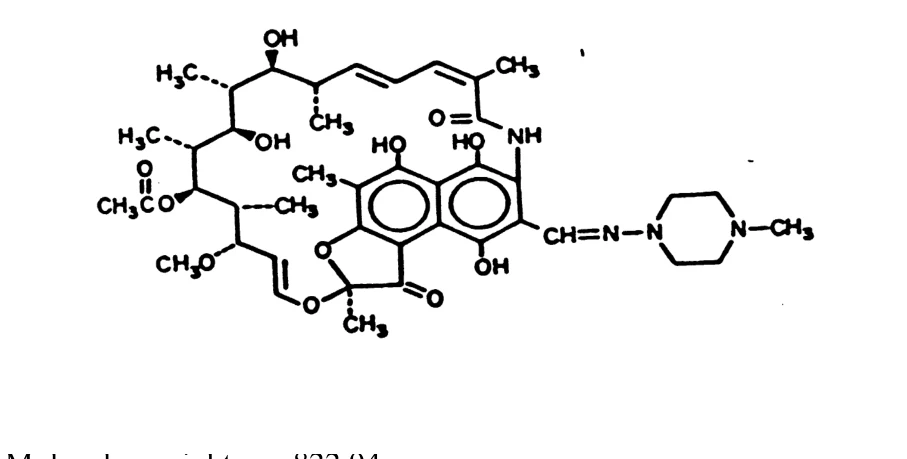
Molecular weight: 822.94
Description: RIFADIN is an orange to red-brown, tasteless, crystalline powder. It is highly soluble in chloroform and methylene chloride, readily soluble in methyl alcohol and ethyl acetate, and poorly soluble in acetone and water. Its melting point is 183-188oC.
AVAILABILITY OF DOSAGE FORMS
Each capsule contains: RIFADIN (rifampin) 150 mg (opaque maroon and opaque scarlet) or 300 mg (opaque maroon and opaque scarlet).
Non-medicinal ingredients: corn starch, D&C Red #28, FD&C Blue #1, FD&C Red #40, gelatin, magnesium stearate, titanium dioxide and white ink. Tartrazine-free.
Available in bottles of 100 capsules.
MICROBIOLOGY
Anti-mycobacterial activity
The minimum inhibitory concentration of RIFADIN (rifampin) for Mycobacterium tuberculosis in vitro, varies considerably with the technique used.
Rifampin inhibited 20 strains of Mycobacterium tuberculosis in concentrations of 0.005 to 0.02 mcg/mL in 7H-9 broth with Tween 80 and killed all or nearly all of the inoculum in four to eight times greater concentrations. In the same medium without Tween 80, as well as on 7H-10 agar, about 16 to 64 times these amounts were required to produce the same effect (Lorian & Finland, 1969). The susceptibility of a range of typical and atypical Mycobacterial to rifampin in Dubos medium is given in the following table:
IN VITRO
ACTIVITY OF RIFAMPIN ON COLLECTION STRAINS OF
MYCOBACTERIAL IN DUBOS MEDIUM
| STRAIN | MIC mcg/mL | STRAIN | MIC mcg/mL |
| M. tuberculosis H37Rv | 0.2 | M. smegmatis ATCC 607 | 100 |
| M. tuberculosis H37Ra | 0.2 | M. smegmatis 63 | 200 |
| M. tuberculosis Abate | 0.2 | M. chelonei NCTC 946 | 100 |
| M. tuberculosis Schiava | 0.1 | M. phlei 54 | 0.1 |
| M. bovis Vallée | 0.1 | M. phlei Timoteo | 0.1 |
| M. bovis BCG | 0.05 | M. thamnopheos | 0.1 |
| M. avium Poulet T3 | 10 | M. marinum | 0.1 |
| M. avium Bang | 0.1 | M. ranae (fortuitum) | 100 |
| M. avium Faisan2 | 5 | M. kansasii | 0.5 |
| M. avium Faisan4 | 2 | M. scrophulaceum | 0.2 |
| M. avium Kirchenberg | 20 | M. intracelluare | 0.1 |
Resistance Pattern
The incidence of primary resistance to rifampin in tuberculosis was found not to exceed 0.4 percent (Hobby et al., 1970).
The mutation rates of M. tuberculosis and M. kansasii toward resistance levels of roughly 10, 50 and 200 times the MIC of rifampin were found to range from 10-5 to 10-7. These relatively high values show that drug resistance to rifampin is of the streptomycin type. Consequently, monotherapy of human tuberculosis associated with a bacterial count greater than 10-7 involves a high risk of selecting rifampin-resistant organisms through the killing of the rifampin-sensitive population. (Manten et al., 1969). Mycobacterial resistant to 80 mcg/mL have been observed in patients under treatment for tuberculosis. Resistant strains may sometimes be isolated from patients treated with different drug combinations.
No cross-resistance with any of the known anti-tuberculous drugs or with antibiotics other than those in the rifamycin series has been demonstrated.
PHARMACOLOGY
Absorption
Rifampin is readily absorbed from the gastrointestinal tract. Peak blood levels in normal adults vary widely from individual to individual. Peak levels occur between 2 and 4 hours following the oral administration of a 600 mg dose with average peak values of 7-10 mcg/mL. Absorption of rifampin is reduced when the drug is ingested with food.
Cumulation was noted upon multiple dosages of RIFADIN (rifampin) 10 mg/kg/day to newborns. Peak values appeared to be delayed in the newborns which were not seen in children up to 18 months of age. It is suggested that the drug is less readily eliminated from the newborn, probably because of the low flow of bile during the first days of life. In all of these children and infants, the main serum level of rifampin corresponded to one-third to one-tenth the levels in adults receiving proportionally the same dose (Acocella et al., 1969).
Absorption is more rapid when rifampin is administered one hour before meals. The following data were reported by Furesz et al., 1967.
SERUM LEVELS OF RIFAMPIN (mcg/mL) AFTER ORAL ADMINISTRATION OF A SINGLE 150 mg DOSE
| Pt. No. | 2 Fasting | After Meal | 4 Fasting | After Meal | 6 Fasting | After Meal |
|---|---|---|---|---|---|---|
| 1 | 0.37 | 0 | 0.32 | 0 | 0 | 0.90 |
| 2 | 2.70 | 0 | 1.37 | 1.60 | 0.49 | 1.30 |
| 3 | 1.55 | 0 | 0.75 | 0.14 | 0.20 | 0.31 |
| 4 | 1.82 | 0 | 1.02 | 0 | 0.34 | 0.16 |
| 5 | 1.77 | 1.65 | 0.86 | 1.00 | 0.19 | 0.21 |
Distribution
Rifampin is distributed throughout the body and is detectable in many organs and body fluids, including the cerebrospinal fluid. The highest concentrations are present in the liver and bile. Rifampin is about 80% protein bound. Most of the unbound fraction is not ionized and therefore is diffused freely in tissues.
Biological Half-Life
In normal subject, the biological half-life of rifampin in serum averages about 3 hours after a 600 mg oral dose, with increases up to 5.1 hours reported after 900 mg dose. Biliary obstruction causes a longer half-life, but kidney blockage does not appear to cause a change. With repeated administration, the half-life decreases and reaches average values of approximately 2 to 3 hours. The half-life does not differ in patients with renal failure at doses not exceeding 600 mg daily and, consequently, no dosage adjustment is required. The half-life of rifampin at a dose of 720 mg daily has not been established in patients with renal failure. Refer to the WARNINGS section for information regarding patients with hepatic insufficiency.
THE FOLLOWING TABLE SUMMARIZES THE HALF-LIFE VALUES REPORTED
IN VARIOUS CONDITIONS
| SUBJECTS | DOSAGE | BIOLOGICAL HALF-LIFE |
|---|---|---|
| Normal Adults* | 300 mg | 1-3 hours |
Obstruction of** common bile duct (1 patient) | 300 mg 300 mg | 14 hours before operation 4-5 hours after operation |
Anuria** Patient #1 Patient #2 Patient #3 | 300 mg 300 mg 300 mg | 3.1 hours 2.8 hours 1.8 hours |
37 children*** 12 children*** | 10 mg/kg 20 mg/kg | 1.2-5.6 hours |
*L. Dettili, 1968; ** P. Spring, 1986; *** B. Krauer, 1968.
Excretion
Rifampin is eliminated from the blood equally in the urine and feces as unchanged drug and metabolites. Approximately half of the original dose eliminated by the bile is unchanged drug. The proportion of unchanged drug to metabolite is less in the urine than in the bile.
In the presence of complete renal shutdown, the drug is excreted entirely in the bile.
The principal metabolite in man is the biologically active desacetylrifampin. Its excretion appears to be a dynamically changing picture at all times. This can be seen in the following table, giving the details of fluid levels of desacetylrifampin after an intravenous dose of 300 mg 14C-rifampin to a patient with a biliary fistula (Keberle et al., 1968).
| Source | Time after medication | Percent of total radioactivity in the collection of samples as: | |
| Rifampin | Desacetylrifampin | ||
| Plasma | 0.5 hour | 93% | 5% |
| 1 hour | 77% | 12% | |
| 3 hours | 62% | 18% | |
Bile Urine | 1-1.5 hours | 39% | 49% |
| 3-3.5 hours | 14% | 58% | |
| 4-4.5 hours | 8% | 79% | |
| 0-24 hours | 43% of radioactivity administered is in bile | ||
| 0-4 hours | 69% | 17% | |
| 0-24 hours | 21% of radioactivity administered is in urine | ||
Desacetylation of rifampin in the body does not substantially modify its anti-mycobacterial activity. In Kirschner’s medium, the MIC against M. Tuberculosis varied from 0.1 to 2 mcg/mL.
Transplacental Transfer of Rifampin
Rifampin was administered orally to 20 women at the end of pregnancy in a dose of 300 mg (3.75-5.00 mg/kg) at intervals of 8-12 hours for various lapses of time. Maternal and fetal bloods were collected at parturition. In 5 cases, amniotic fluid was taken. Rifampin (detected by microbiological assay) rapidly crossed both blood-placental barrier and the chorion, being present in large amounts in fetal blood and amniotic fluid. The maternal blood level of rifampin was higher than the known values for male subjects. It was concluded that the fetus eliminates the drug more slowly than does the mother. Nevertheless, the amount of rifampin found in fetal blood is always less than that of the mother and after repeated dosage, the ratio is about 1:3 (Termine et al., 1970).
TOXICOLOGY
The toxicity of RIFADIN (rifampin) has been determined in various species of laboratory animals. With the exceptions of the dog and rhesus monkey, animals, including the mouse, rat rabbit and cynomolgus monkey satisfactorily tolerated oral doses of rifampin administered over a 2 to 26 week period. These doses were at least ten-fold the therapeutic dose recommended for man.
Acute Toxicity
The LD50 within 5 days, in the mouse, rat and rabbit is as follows:
| Species | Route | No. of Dose Levels | No. of Animals/ Dose | LD50 (mg/kg) | 95% Confidence Limits (mg/kg) |
|---|---|---|---|---|---|
| Mouse | i.p. | 4 | 20 | 621 | 595-647 |
| Mouse | oral | 5 | 22 | 858 | 829-888 |
| Rat | i.p. | 5 | 16 | 533 | 515-552 |
| Rat | oral | 6 | 10 | 1668 | 1303-2135 |
| Rabbit | oral | 1 | 8 | 1550 | --- |
LD50 based on the statistical method of Litchfield-Wilcoxon i.p. - intraperitoneal (Serralunga, 1967).
Rifampin given in combination with isoniazid or PAS to mice and rats, or with streptomycin sulfate to rats, did not demonstrate any increased acute toxicity of any of the drugs.
Subacute Toxicity
The cynomolgus monkey, dog and mouse, received oral doses of rifampin for periods of 1-13 weeks and in the rat, both oral and peritoneal administration was given for the same duration. Adverse effects were not observed in mice administered rifampin orally at dose levels inclusive of 100 mg/kg, or in rats administered 100 mg/kg. Parenteral doses of 100 mg/kg similarly did not produce adverse effects in the rat.
In the dog, oral doses of 100 mg/kg were toxic. Abnormalities were seen in behaviour, physical condition, renal and hepatic function tests and hemograms of these animals. After four to six weeks of treatment, death occurred in 50% of the treated animals, characterized pathologically by leukopenia, icterus, ascites, enteritis, and hepatic and renal degeneration. Icterus and moderate renal degeneration were also observed in the remaining animals. Occasional behaviour abnormalities and mild alterations in transaminase, alkaline phosphatase and protein values, were observed following a daily dose of 25 mg/kg of rifampin, administered over a period of four to thirteen weeks. No toxic effect was produced in dosage levels under 25 mg/kg/day.
Short-term (4-13 weeks) studies in the cynomolgus monkey demonstrated mild fatty changes and sporadic sublobar foci of necrosis in the livers of some monkeys; however, this could not be specifically related to drug administration.
A moderate loss of appetite and weight occurred in some monkeys receiving 105 mg/kg over a 90-day period; there were no other apparent toxic effects of the drug.
Rifampin given for a period of thirty days, alone and in combination with ethambutol, isoniazid, PAS or streptomycin sulfate to rats, in drug ratios proposed for human clinical trials, showed that the rat can satisfactorily tolerate oral doses of rifampin and of rifampin combinations without developing significant adverse effects.
Chronic Toxicity
Rats
Six-month chronic toxicity studies using doses of rifampin up to 200 mg/kg/day had no effect on body weight, hematology or gross and microscopic pathology of the animals.
Dogs
Six-month studies showed the same toxic effects as those seen in the short-term studies. Oral doses of 25 or 50 mg/kg/day caused emesis, anorexia, diarrhea, slight depression and ataxia; three animals died during the first seven weeks of treatment. Serum transaminase, alkaline phosphatase and bromosulphalein retention values were increased, while the albumin, total protein, erythrocyte and hemoglobin levels were decreased. Gross and histomorphologic examinations revealed that animals given 25 and 50 mg/kg/day had a hemorrhagic enteritis, degenerative hepatic and renal alterations, but these changes were not evident in the group given 12.5 mg/kg/day.
Cynomolgus Monkeys
In a six month study, oral doses of 15, 45, 75 and 105 mg/kg/day were administered. Some monkeys exhibited emesis and lethargy in the early phase of treatment. Hematologic, clinical chemistry and urinalysis examination results of treated animals were the same as those of the control animals, with the exception of one monkey on 105 mg/kg/day, which had an elevated alkaline phosphatase. The sacrificed animals failed to reveal any evidence of systemic toxic effects from administration of the drug following gross and microscopic examinations.
Rhesus Monkeys
During the first 30 days of an 18-month study of rifampin, administered orally in doses of 40, 80 and 120 mg/kg, nephrotoxicity developed. Kidney examinations showed many of the characteristics of acute and/or subacute glomerulonephritis, suggestive of target-organ effect. This target-organ-like effect on the kidney seems to be related specifically to the rhesus monkey, as cynomolgus monkeys, studied for a longer period of time, did not exhibit a similar toxicity.
In another study, doses of 40, 80 and 120 mg/kg administered orally to cynomolgus monkeys, failed to induce a renal target-organ effect, or other significant drug-related adverse reactions.
Carcinogenicity
There are no known human data on long-term potential for carcinogenicity, mutagenicity, or impairment of fertility. A few cases of accelerated growth of lung carcinoma have been reported in man, but a causal relationship with the drug has not been established. An increase in the incidence of hepatomas in female mice (of a strain known to be particularly susceptible to the spontaneous development of hepatomas) was observed when rifampin was administered in doses two to ten times the average daily human dose for 60 weeks followed by an observation period of 46 weeks. No evidence of carcinogenicity was found in male mice of the same strain, mice of a different strain, or rats under similar experimental conditions.
Rifampin has been reported to possess immunosuppressive potential in rabbits, mice, rats, guinea pigs, human lymphocytes in vitro, and humans. Antitumor activity in vitro has been shown with rifampin.
Mutagenicity
Increased frequency of chromosomal aberrations was observed in vitro in lymphocytes obtained from patients treated with combinations of rifampin, isoniazid, and pyrazinamide and combinations of streptomycin, rifampin, isoniazid, and pyrazinamide.
There was no evidence of mutagenicity in bacteria, Drosophila melanogaster, or mice. An increase in chromatid breaks was noted when whole blood cell cultures were treated with rifampin.
Fetal Toxicity and Teratogenicity
Mice
No maternal toxic effects were demonstrated when pregnant mice were given oral doses of 50 to 200 mg/kg of rifampin. A decrease in the average weight was noted in the fetuses of test animals receiving oral doses of 150 mg/kg and exencephaly was seen in 4% of the fetuses. An increase in the incidence of resorptions and a decrease in fetal numbers also occurred at an oral dose of 200 mg/kg. Skeletal abnormalities characterized by an absence of ossification also occurred on doses of 200 mg/kg. On oral doses of 50-100 mg/kg and 150-200 mg/kg, dose-dependent cleft palate abnormalities occurred with a range of 0.6%-0.72% and 3.69%-18.2%, respectively.
Rats
A maternal toxic effect occurred with oral doses of 200 mg/kg and over. Reductions in the number of fetuses and fetal weights, with an increase of resorptions, were seen following oral doses of 100 and 200 mg/kg. Spina bifida was observed with oral doses of 150 mg/kg and the incidence of this teratogenic abnormality increased with higher doses. On a dosage of 200 mg/kg, rhachischisis in the lumbosacral region and incomplete ossification centre development, particularly of the sternebrae, were noted.
In one study, following administration of rifampin in doses of 200 mg/kg, microcephaly was detected in 0.4% of the fetuses and microphthalmia in 1.2%. No adverse effect on lactation or on the suckling young was noted when oral doses of 50 and 100 mg/kg had been administered to female rats during the last trimester of pregnancy.
Rabbits
Doses of rifampin, 200 and 300 mg/kg/day produced a high mortality rate of the dams and toxic effects including anorexia, weight loss and abortion were produced in pregnant rabbits on oral doses of 75 and 150 mg/kg. Embryotoxic effects resulting in increased resorptions were evidenced following oral doses of 150 mg/kg. This species did not demonstrate any major malformations which could be attributed to the drug.
REFERENCES
- 1. Acocella, G. et al.: Kinetics in the newborn and infant of the antibiotic Rifampicin administered in single and multiple doses. 6th Int. Congr. of Chemother. Tokyo, 10-15 Aug. 1969.
- 2. Acocella, G.: Clinical pharmacokinetics of Rifampicin, Clinical Pharmacokinetics, 3, 108-127, 1978.
- 3. Bate, J., Cole, A.J.L.: Rifampicin and the assay of folate and Vitamin B12, Med Lab Tech, 31, 199-203, 1974.
- 4. Brickner, P.W.: Rifampin: Clinical Studies with a New Antibiotic, J. Clin. Pharmacol., 9, 243-250, (July-August) 1969.
- 5. Dettli, L.: The pharmacokinetics of Rimactane in patients with normal liver and kidney function. A Symposium on Rimactane, Basle, Nov. 1, 1968.
- 6. Dezulian, M.: Subacute toxicity test on rabbits with AF/AMP perorally, (unpublished report, 1966a).
- 7. Dezulian, M.: Subacute toxicity test with rifamycin AF/AMP in the dog, (unpublished report, 1966b).
- 8. Dezulian, M.: Chronic toxicity test in dogs with rifaldazine (rifamycin AMF) given by oral route, (unpublished report, 1966c).
- 9. Dickinson, J.M.: The suitability of new drugs for intermittent chemotherapy of tuberculosis. An experimental study, Scand. J. Resp. Dis. Suppl. 69, 91-98, 1969.
- 10. Furesz, S. et al.: Rifampicin: a new rifamycin III, Absorption, distribution and elimination in man, Arzneimittel-Forsch., 17, 534-537, 1967.
- 11. Gelber, R.H. et al.: The effect of rifampicin on Dapsone metabolism, Proc. West. Pharmacol. Soc., 18, 330-334, 1975.
- 12. Girling, D.J.: Adverse reactions to rifampicin in antituberculosis regimens, J. Antimicrob. Chemother., 3, 115-132, 1977.
- 13. Grumbach, F., Rist, N.: Activité antituberculeuse expérimentale de la rifampicine, dérivé de la rifamycine SV, (Ref. Tuberc.) (Paris), 31, 749-762, 1967.
- 14. Hobby, G.L. et al.: Primary Resistance: a continuing study of drug resistance in tuberculosis in a veteran population within the United States, VIII Sept. 1965 to Sept. 1969, Amer. Rev. Resp. Dis., 102, 347-355, 1970.
- 15. Hobby, G.L. et al.: In vitro activity of rifampin against the H37RV strain of mycobacterium tuberculosis, Amer. Rev. Resp. Dis., 99, 453, 1969.
- 16. Hunter, J.: Enzyme Induction and Medical Treatment, J. Roy. Coll. Phycns. Lond., 8(2), 163-174, (January 1974).
- 17. Hussels, H., Kroening, U., and Magdorf, J.: Ethambucol and Rifampicin Serum Levels in children: Second report on the combined Administration of Ethambutol and Rifampicin, Pneumonologie, 149, 31-38, 1973.
- 18. Karlson, A.G.: Comparison of three mediums for rifampin susceptibility test of mycobacteria, Amer. Rev. Resp. Dis., 101, 765-767, 1970.
- 19. Keberle, H. et al.: The metabolic fate of Rimactane in the animal and in man. A Symposium on Rimactane. Basle, Nov. 1, 1968.
- 20. Lorian, V. and Finland, M.: In vitro effect of rifampin on mycobacteria, Appl. Microbiol. (USA), 17:2, 202-207, 1969.
- 21. Lyons, R.W.: Correspondence: Orange contact lenses from Rifampin, N. Engl. J. Med., 372-373, Feb. 15, 1979.
- 22. Manten, A. et al.: Development of drug resistance of rifampicin, Chemotherapy (Basle), 14, 93, 1969.
- 23. Michot, F., Burgi, M., and Buttner, J.: Rimactane (Rifampicine) and Anticoagulant Treatment, Schweiz. Med. Wschr., 100, 583-584, 1970.
- 24. NittiI, V. et al.: Activity of rifampicin in experimental tuberculosis of the guinea pig, Chemotherapia, 12, 369-400, 1967.
- 25. Nocke-Finck, L., Breuer, H., and Reimers, D.: Wirkung von Rifampicin auf den Menstruationszyklus und die Ostrogenausschedung bei Einnahme oraler Kontrazeptiva, Dtsch. Med. Wschr., 98, 1521-1523, 17 Aug. 1973, (English Abstract: page 1521).
- 26. O’Reilly, R.A.: Interaction of Sodium Warfarin and Rifampin. Studies in Man, Annals of Internal Medicine, 81, 337-340, 1974.
- 27. Peters, U., Hausamen, T.-U., and Grosse-Brockhoff, F.: The Influence of Tuberculostatic Treatment on the Blood Dgitoxin Level, Verhandl. Dtsch. Ges. Inn. Med. 80, 1533, 1974.
- 28. Reimers, D.: Rifampicin and Ovulation Inhibitors, Presented: 64th Meeting of Professional Society of Lung and Bronchial Specialists, Berlin, Feb. 19, 1973.
- 29. Serralunga, M.G.: Rifamycin AF/AMP - Acute toxicity in three species: mouse, rat (i.p and p.o.) and rabbit (p.o.), (Unpublished report, 1967).
- 30. Spring, P.: The pharmacokinetics of Rimactane in patients with impaired liver and kidney function. A Symposium on Rimactane, Nov. 1, 1968.
- 31. Sylvalhti, E.K.G.: Half-life of tolbutamide in patients receiving tuberculostatic agents, Scand. J. Resp. Dis. Suppl. 88, 1974.
- 32. Termine, A. and Santuari, E.: Transplacental transfer of rifampicin, Chem. Abstracts 72, 195, 1970.
- 33. Tuchmann-Duplessis: Report on a teratological study of rifamycin (Rimactane) N 41 166E. Unpublished report, 1968.
- 34. Vorherr, H.: Drug Excretion in Breast Milk, Postgrad. Med., 56(4), 97-104, October 1974.
- 35. Walter, J.E. et al.: 30-Day oral administration in the rat - Rifampin (alone). Unpublished report, 1969.
- 36. Walter, J.E. and Diener, R.M.: 12 month interim toxicity report: oral administration in the rat. Unpublished report, 1970.
- 37. Warner, S.D.: Twelve-month chronic oral toxicity test of Rifampin (3(4-methyl-piperazinyl iminomethyl) rifamycin SV) in cynomolgus and rhesus monkeys. Unpublished report, 1970a.
- 38. Warner, S.D.: Twelve-month chronic oral toxicity test of Rifampin (3(4-methyl-piperazinyl iminomethyl) rifamycin SV) in the rhesus monkey (macaca mulatta). Unpublished report, 1970b.
- 39. WehrliI, W. et al. Action of rifamycins on RNA polymerase, Biochem. Biophys. Acta., 157:215-217, 1968.
- 40. Wolinsky, E. et al.: In vitro and in vivo activity of rifampin on atypical mycobacteria, Amer. Rev. Resp. Dis., 101:994-995, 1970.