


Product Monograph - Rofact
INDICATIONS AND CLINICAL USE
ROFACT (rifampin) is indicated for the treatment of pulmonary tuberculosis. In order to avoid emergence of resistance, ROFACT must be administered concomitantly with at least one other effective antituberculosis drug. Selection of the appropriate drug combinations should be determined on the basis of in vitro sensitivity tests, comparative safety as well as the patient's previous clinical history.
The following are the most frequently used treatment regimens for previously untreated patients:
- ROFACT with Isoniazid
- ROFACT with Ethambutol
- ROFACT with Isoniazid and Ethambutol
The possibility of a drug interaction as well as the individual properties and special precautions relating to drugs used in concomitant therapy should be taken into consideration, e.g., PAS is known to delay the absorption of Rifampin. When such concomitant medication is employed, it is recommended that an interval of 8 to 12 hours between each drug be observed.
To reduce the development of drug-resistant bacteria and maintain the effectiveness of ROFACT and other antibacterial drugs, ROFACT should be used only to treat infections that are proven or strongly suspected to be caused by susceptible bacteria. When culture and susceptibility information are available, they should be considered in selecting or modifying antibacterial therapy. In the absence of such data, local epidemiology and susceptibility patterns may contribute to the empiric selection of therapy.
CONTRAINDICATIONS
ROFACT (rifampin) is contraindicated in patients with a history of previous sensitivity or hypersensitivity to any other ingredient in the formulation. ROFACT is contraindicated in hepatic function impairment since rifampin is metabolized in the liver and may also be hepatotoxic. ROFACT is contraindicated in premature and newborn infants in whom the liver is not yet capable of functioning with full efficiency. Rifampin passes into breast milk and therefore should not be given during lactation.
WARNINGS
Rifampin should not be administered to patients also receiving saquinavir/ritonavir (ritonavir boosted saquinavir) as part of their combination antiretroviral therapy (ART) for HIV infection.
Hepatic dysfunction has been produced by rifampin. In patients with existing liver impairment the incidence of clinically evident hepatic adverse reactions is significantly increased. The incidence of hepatic adverse reactions and fatalities is much greater in patients given combination therapy as compared to monotherapy. Factors such as alcoholism, liver cirrhosis, extensive liver tuberculosis, adenocarcinoma of the liver and neoplasm of the biliary tract predispose the patient to the increased hepatic risk. Risks in such patients should be carefully evaluated against benefits. Assessment of liver function on a regular basis is essential. Periodic blood counts should also be carried out in patients receiving long-term treatment.
Skin
Serious reactions which may be due to hypersensitivity, like drug reaction with eosinophilia and systemic symptoms (DRESS) have been reported with rifampin. DRESS consists of a combination of three or more of the following: cutaneous reaction (such as rash or exfoliative dermatitis), eosinophilia, fever, lymphadenopathy and one or more systemic complications.
Tumorigenicity
Studies in female mice of a strain known to be particularly susceptible to the spontaneous development of hepatomas have shown that rifampin, given in doses of 2 to 10 times the maximum human dose for 1 year, causes a significant increase in the development of hepatomas. However, studies in male mice of the same strain, in other strains of male or female mice, or in rats have not shown that rifampin is tumorigenic.
Pregnancy/Reproduction
Rifampin crosses the placenta. It is recommended that pregnant women with tuberculosis be treated for a minimum of 9 months with multi-drug therapy, including rifampin. It has rarely caused postnatal hemorrhages in the mother and infant when administered during the last few weeks of pregnancy; vitamin K may be indicated. Neonates should be carefully observed for evidence of adverse effects.
Gastrointestinal - Clostridium difficile-associated disease
Clostridium difficile-associated disease (CDAD) has been reported with use of many antibacterial agents, including rifampin. CDAD may range in severity from mild diarrhea to fatal colitis. It is important to consider this diagnosis in patients who present with diarrhea, or symptoms of colitis, pseudomembranous colitis, toxic megacolon, or perforation of colon subsequent to the administration of any antibacterial agent. CDAD has been reported to occur over 2 months after the administration of antibacterial agents.
Treatment with antibacterial agents may alter the normal flora of the colon and may permit overgrowth of Clostridium difficile. C. difficile produces toxins A and B, which contribute to the development of CDAD. CDAD may cause significant morbidity and mortality. CDAD can be refractory to antimicrobial therapy.
If the diagnosis of CDAD is suspected or confirmed, appropriate therapeutic measures should be initiated. Mild cases of CDAD usually respond to discontinuation of antibacterial agents not directed against Clostridium difficile. In moderate to severe cases, consideration should be given to management with fluids and electrolytes, protein supplementation, and treatment with an antibacterial agent clinically effective against Clostridium difficile. Surgical evaluation should be instituted as clinically indicated, as surgical intervention may be required in certain severe cases.
Susceptibility/Resistance
Development of Drug Resistant Bacteria
Prescribing ROFACT in the absence of a proven or strongly suspected bacterial infection is unlikely to provide benefit to the patient and risks the development of drug-resistant bacteria.
PRECAUTIONS
Daily treatment with rifampin is often better tolerated than intermittent therapy, since rare hypersensitivity reactions may occur. Therefore, when resuming treatment with ROFACT after short or prolonged interruptions, the drug should be given in small, gradually increasing doses. During the transitional period, renal function should be closely monitored.
If as may happen in exceptional cases, the patient develops thrombocytopenia, purpura, hemolytic anemia or renal failure, treatment with ROFACT should be stopped immediately and not be reinstituted at a later date.
Since rifampin has been observed to increase the requirements for anticoagulant drugs of the coumarin type, the same can be expected for ROFACT. This effect was not observed until the fifth day following the initiation of treatment. The decrease in prothrombin time lasts 5 to 7 days on the average. The cause of this phenomenon is unknown. In patients receiving anticoagulants it is recommended that daily prothrombin times be performed until the required dose of the anticoagulant has been established.
Safe conditions for the use of ethambutol alone or in combination with ROFACT have not been as yet established for children under the age of thirteen years. Although renal insufficiency does not alter blood levels of ROFACT, marked increases in ethambutol levels are observed under similar conditions; this should be taken into consideration in such patients receiving ROFACT/Ethambutol concomitantly. If in the opinion of the physician, ethambutol therapy is to be used in combination with ROFACT, the possible visual deterioration associated with ethambutol should be carefully considered.
When instituting therapy with a combination of ROFACT and isoniazid, caution is recommended in the elderly, the malnourished and in patients with impaired liver function. Elevation of sulfobromophthalein (BSP) following administration of rifampin has been reported. Experimental studies indicate that rifampin and BSP compete with one another at the liver cell-bile boundary. Therefore, the BSP test should be performed prior to the daily dose of rifampin to avoid false-positive test results.
When ROFACT is used concomitantly with other antituberculosis agents the possible adverse effects of each drug as well as the interaction between the different drugs should be taken into consideration.
In order to prevent undue anxiety, patients should be made aware of the possibility that urine, feces, saliva, sputum, sweat and tears may be coloured red/orange by ROFACT and its metabolites. Patients should be advised that soft contact lenses may be permanently stained.
Concurrent use of estrogen-containing contraceptives with rifampin may decrease the effectiveness of the contraceptive because of stimulation of estrogen metabolism or reduction in enterohepatic circulation of estrogens, resulting in menstrual irregularities, intermenstrual bleeding, and unplanned pregnancies. Patients should be advised to use an additional method of contraception throughout the whole cycle while taking rifampin and estrogen-containing oral contraceptives concurrently.
Both in the laboratory animal and man, the administration of rifampin has been associated with evidence of induction of drug metabolizing enzyme systems of the liver. As a consequence, the rate of metabolism of those compounds which are substrates of such enzymes can be altered and in some instances accelerated, a phenomenon which can result in a reduced pharmacological effect of the drug involved. Changes of possible clinical significance have been reported for the following: oral anti-coagulants, hypoglycemic agents, dapsone, digitalis compounds and corticosteroids as well as oral contraceptives and ethambutol. Appropriate adjustment in the dosage and monitoring of effects of these drugs is therefore necessary when they are used concomitantly with ROFACT. This is particularly important when ROFACT administration is both initiated and withdrawn.
Microbiological techniques for assaying the serum concentrations of folic acid and vitamin B12 are not suitable for use during treatment with ROFACT.
Upon completion of the treatment with ROFACT, a renewed evaluation and readjustment of the dosage of any concomitantly administered drug should be made.
ADVERSE REACTIONS
Gastrointestinal disturbances including dyspepsia, epigastric distress, anorexia, nausea, vomiting, gas, cramps and diarrhea have been reported. Headache, drowsiness, fatigue, ataxia, dizziness, inability to concentrate, mental confusion, visual disturbances, muscular weakness, fever, pain in extremities and generalized numbness have also been noted. Pruritus, urticaria, skin rashes, eosinophilia, sore mouth and/or tongue, dyspnea and acute renal failure have occasionally been encountered. Thrombocytopenia, purpura, leukopenia, hemolytic anemia and decreased hemoglobin have been observed. Thrombocytopenia has been reported to occur in patients given ethambutol and rifampin concomitantly on an intermittent dose schedule twice weekly and in high doses. Elevations in blood urea nitrogen (BUN) and serum uric acid have been reported. Serious reactions which may be due to hypersensitivity, like DRESS syndrome, have been reported.
Transient abnormalities in liver function tests such as elevations of serum bilirubin and BSP, elevation of alkaline phosphatase and serum transaminases have been reported particularly during the first few weeks of treatment. The following menstrual disturbances, breakthrough bleeding, spotting, amenorrhea and prolongation of both the menstrual interval and menses have been reported to occur in women taking rifampin.
A few cases of jaundice with evidence of hepato-cellular damage have been reported in patients receiving rifampin. In some of them it was possible, under careful laboratory control, to resume treatment after an interval without recurrence of abnormalities.
Clinical trials have not shown any harmful effects on the cochleovestibular system caused by rifampin.
SYMPTOMS AND TREATMENT OF OVERDOSE
Treatment
Activated charcoal may be administered to aid in the removal of unabsorbed drug. General supportive measures are recommended. An antiemetic may be required to control severe nausea and vomiting. Active diuresis, with measured intake and output, may promote excretion of the drug. If serious hepatic impairment occurs which lasts more than 24 to 48 hours, bile drainage or hemodialysis may be indicated. Reversal of liver enlargement and improvement of impaired hepatic function usually occur within 72 hours in patients with previously adequate hepatic function.
The LD50 of rifampin in mice, rats, and rabbits is 0.885; 1.72; and 2.12 g/kg, respectively. In humans, acute overdosage with rifampin doses up to 12 g have not been fatal. However, at least one fatality has been reported following ingestion of a single 60 g dose of rifampin.
Symptoms
Overdosage of rifampin produces symptoms that are principally extensions of common adverse reactions. These include nausea, vomiting, lethargy, and brownish-red or orange discoloration of skin, urine, sweat, saliva, tears, and feces in proportion to the amount of drug ingested.
Following massive overdosage of rifampin, hepatic involvement can develop within a few hours and is manifested by liver enlargement, possibly with tenderness, jaundice, rapid increases in total and direct serum bilirubin and liver enzymes, and loss of consciousness.
For management of a suspected drug overdose, contact your regional Poison Control Centre.
DOSAGE AND ADMINISTRATION
It is recommended that ROFACT (rifampin) be administered once daily on an empty stomach (one hour before a meal) to ensure optimum absorption.
In the treatment of pulmonary tuberculosis, ROFACT must be given in conjunction with at least one other antituberculosis agent. In general, therapy should be continued until bacterial conversion has been established and maximum clinical improvement has occurred. If a ROFACT - PAS combination therapy is employed, it is recommended that the two drugs be administered at intervals of 8-12 hours.
Usual adult and adolescent dose
Tuberculosis: - in combination with other antituberculosis medications: oral, 600 mg once a day for the entire treatment period; or 10 mg per kg of body weight, up to 600 mg, two or three times a week, depending on the treatment regimen. Meningococcal infection (prophylaxis): - oral, 600 mg two times a day for two days.
In patients with impaired liver function, a daily dose of 8 mg/kg should not be exceeded. A daily dosage of 10 mg/kg of body weight is recommended for frail and elderly persons.
Usual pediatric dose
Infants up to 1 month of age - Tuberculosis: in combination with other antituberculosis medications - oral, 10 to 20 mg per kg of body weight once a day; or 10 to 20 mg per kg of body weight, two or three times a week, depending on the treatment regimen. Meningococcal infection (prophylaxis): oral, 5 mg per kg of body weight every twelve hours for two days.
Children 1 month of age and over - Tuberculosis: in combination with other antituberculosis medications - oral, 10 to 20 mg per kg of body weight, up to 600 mg, once a day; or 10 to 20 mg per kg of body weight, up to 600 mg, two or three times a week, depending on the treatment regimen. Meningococcal infection (prophylaxis): oral, 10 mg per kg of body weight every twelve hours for two days. The maximum daily dose should not exceed 600 mg.
PHARMACEUTICAL INFORMATION
Drug Substance: Rifampin, USP
Chemical Name:
(1) rifamycin,3-[[(4-methyl-1-piperazinyl) imino] methy l]-; (2) 5,6,9,17,19,21-Hexahydroxy-23-methoxy-2,4,12,16,18,20,22-heptamethy-8-[N-(4-methyl-1-piperazinyl) formimidoyl]-2,7-(epoxypentadeca[1,11,13]trienimino) naphtho[2,1-b]furan-1,11(2H)-dione 21-acetate
Structural Formula:
OH
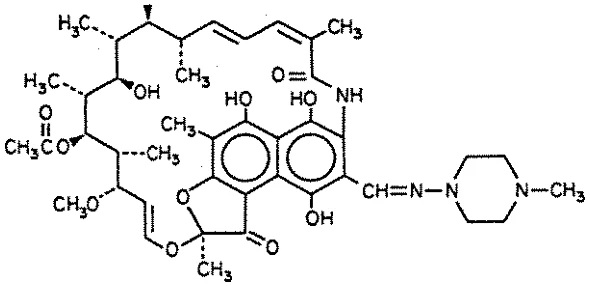
Molecular Formula: C43H58N4012
Molecular Weight: 822.95 g/mol
Description: Rifampin is an orange to red-brown, tasteless, crystalline powder.
It is highly soluble in chloroform and methylene chloride, readily soluble in methyl alcohol and ethyl acetate, and poorly soluble in acetone and water. Its melting point is 183 to 188o C.
COMPOSITION:
ROFACT 150 and 300 mg capsules contain:
- rifampicin, USP
Non-medicinal ingredients: Croscarmellose Sodium, NF; Magnesium Stearate, NF; Sodium Lauryl Sulfate, NF; Talc, USP.
AVAILABILITY
ROFACT 150 mg capsules contain 150 mg of rifampicin, USP in a coni-snap #4 elongated, maroon opaque coloured capsule branded radial "ICN R11". Bottles of 100.
ROFACT 300 mg capsules contain 300 mg of rifampicin, USP in a lok-type #1 capsule with brown opaque cap and scarlet opaque body branded "ICN R12".
Bottles of 100.
MICROBIOLOGY
The in vitro microbiological efficacy of rifampin was tested against 14 strains of mycobacteria and the minimal inhibitory concentrations (MIC) appear in the following table:
In vitro activity of ROFACT on Mycobacteria in Dubos Broth with 5% fraction V of Bovine Albumin
| Strain | MIC mcg/mL |
| Mycobacterium tuberculosis H37RV | 0.250 |
| var. hominis 71/22 var. hominis 71/23 var. hominis 71/26 var. hominis 71/27 var. hominis 72/32 var. hominis 72/33 var. hominis 72/36 var. hominis 72/37 var. hominis 72/38 var. hominis 72/39 var. bovis | 0.250 0.250 0.500 0.500 0.250 0.500 0.500 0.500 0.250 1.000 0.250 |
| Mycobacterium fortuitum | 4.000 |
| Mycobacterium phlei ISM 72/11 | 0.037 |
Tubercle bacilli displaying resistance to rifampin have been isolated occasionally from patients. Mycobacteria resistant to 80 µg/mL of rifampin have been observed in patients under treatment for tuberculosis. To minimize the development of resistance, rifampin should be administered with at least one other effective antitubercular drug. Cross resistance between rifampin and other antituberculous drugs has not been observed except in the case of related rifamycins.
PHARMACOLOGY
The absorption of rifampin takes place from the upper portion of the gastrointestinal tract. Average peak blood levels of about 7 µg/mL are reached between 2 and 4 hours following oral administration of a 600 mg dose, but there is considerable subject variability.
Twenty human subjects (8 males and 12 females) between the ages of 19 years and 59 years and a body weight ranging between 48.53 kg and 96.62 kg, were administered 600 mg ROFACT (2 capsules of 300 mg each), 1 1/2 hour before breakfast on an empty stomach and the blood levels of rifampin obtained were 7.0; 18.1; 16.9; 12.8; and 4.7 µg/mL at 1 1/2, 2, 4, and 8 hours post administration, respectively. The absorption of rifampin is significantly delayed by a meal as evidenced by a reduction in the 'area under the curve' and in peak blood concentrations.
Absorption of rifampin is seriously delayed and hindered by PAS (see INDICATIONS AND CLINICAL USE).
In an analysis of the distribution of rifampin in the body following a single oral dose of 450 mg, the drug was detected in a number of organs and body fluids as presented in the following tables.
Rifampin Levels in Human Tissues and Body Fluids After Oral Administration of a Single 450 mg Dose
| Organ & Body Fluid | Hours after administration | Serum Level mg/mL | mcg/mL or mcg/g |
| Lung | 5 | 4,08 | |
| 11-12 | 1,35 | 0,98 | |
| 11-12 | 2,05 | 0,95 | |
| Cavern Fluid | 16 | 1,80 | |
| Pleural Exudate | 4 | 1,55 | 0,14 |
| Cerebrospinal Fluid | 4 | 9,40* | 0,83 |
| 5,90** | 0,33** | ||
| 0,39** | |||
| Ascitic Fluid | 4 | 2,35 | 0,45 |
| 1,30 | 0,30 | ||
| 0,37 | 0,13 | ||
| 1,15 | 0,19 | ||
| Spleen | 15-16 | 0,56 | 0,47 |
| Bile | 6 | 7,50 | 183,00 |
| Liver | 6 | 7,50 | 36,00 |
| Cholescyst wall | 13 | 3,65 | 10,00 |
| 7,50 | 7,15 | ||
| 6 | 4,65 | 2,13 | |
| Stomach wall | 12-13 | 3,20 | 1,20 |
| Tumorous tissue | 2,10 | ||
| Colon wall | 12-13 | 5,20 | 3,30 |
| Organ & Body Fluid | Hours after administration | Serum Level mg/mL | mcg/mL or mcg/g |
| Mesocolon cyst | 13 | 0,65 | 0,49 |
| Cystic fluid | 13 | 0,33 | |
| Appendix | 12-13 | 1,18 | 1,30 |
| 12-13 | 3,05 | 2,10 | |
| Skin | 14 | 2,25 | 1,25 |
| Muscle | 12 | 2,95 | 2,58 |
| 14 | 2,25 | 1,20 | |
| Fat | 14-15 | 2,25 | 0,64 |
| Rib | 0,97 | ||
| Kidney | 12 | 0,97 | |
| Ureter | 12,00 | ||
| Urinary bladder wall** | 3-4 | 0,45 | |
| Prostate*** | 3-4 | 0,60 | |
| Seminal Vesicle*** | 0,49 | ||
| Mammary gland | |||
| Tumorous Tissue | 14-15 | ||
| Ovary cyst wall | |||
| Serrous cyst fluid (7 L) | 12-13 | ||
| Goiter*** | 4 | ||
| Milk | 12 | ||
| Saliva | 12 |
* Tuberculous meningitis ** Children: 20 mg/kg dose *** 150 mg dose
TOXICOLOGY
Acute Toxicity
Acute toxicology studies with ROFACT were carried out in mice, young and adult rats. The LD50 was calculated on the basis of mortality recorded in 5 days following administration of the drug. Studies carried out on young animals indicate that they have an increased susceptibility.
ACUTE TOXICITY OF ROFACT IN MICE AND RATS
| Species | Sex | Route | # of Dose Levels | # of Animals per dose | LD50 mg/kg | 95% Confidence Limits(mg/kg) |
| Mice | M | oral | 5 | 10 | 849 | 762-947 |
| Mice | F | oral | 5 | 10 | 827 | 745-917 |
| Young rats | M | oral | 5 | 10 | 1656 | 1496-1837 |
| Young rats | F | oral | 5 | 10 | 1611 | 1459-1780 |
| Adult rats | M | oral | 5 | 10 | 1565 | 1410-1734 |
| Adult rats | F | oral | 5 | 10 | 1521 | 1385-1672 |
| Young rats | M | i.p. | 5 | 10 | 570 | 519-627 |
| Young rats | F | i.p. | 5 | 10 | 571 | 517-630 |
| Mice | M | i.p. | 5 | 10 | 643 | 575-720 |
| Mice | F | i.p. | 5 | 10 | 621 | 560-689 |
| Rats | M | i.p. | 5 | 10 | 571 | 519-627 |
| Rats | F | i.p. | 5 | 10 | 571 | 517-630 |
In animals treated with lethal or toxic doses, alternating signs of excitement and depression along with difficulty in walking were observed. Death was usually preceded by convulsions, probably of an asphyxiating nature.
In dogs, and exact LD50 could not be established either by the oral or the intraperitoneal routes. In all animals, symptoms of toxicity i.e., depression alternating with signs of CNS excitation, vomiting, decreased diuresis, search for water and refusal of food were observed.
Subacute Toxicity:
Rat Studies:
Four groups of 20 rats each (males and females in equal numbers), average weight 125-135 grams received oral doses of 0, 100, 200 and 400 mg/kg respectively for 8 weeks, 7 days a week. At a dose of 100 mg/kg, there were no deaths and body weight and food consumption were comparable to those of the control group. The group treated with 200 mg/kg had 2 deaths and a slight decrease in body weight and food consumption as compared to the controls. Signs of CNS depression with reduced motor activity, sometimes alternating with periods of excitement, were observed at 400 mg/kg dose. In this group, 9 rats died.
Urinary findings in the 400 mg/kg group included glycosuria, proteinuria and in some cases, bilirubin, hematuria and hematinic casts were found in the urine. A reduction in RBC and WBC counts and increased glycemia, BUN and transaminase were observed in rats on a 400 mg/kg dose. The organ weights showed no change at 100 mg/kg, whereas at 200 mg/kg the weights of the kidney in females increased. All animals which survived the 400 mg/kg dose showed increases in liver and kidney weights as compared to the controls.
Macroscopic and microscopic examinations of the livers and kidneys from rats treated with 400 mg/kg, showed consistent fatty and hydropic degeneration.
Dog Studies
Sixteen dogs (average weight 10 kg), were divided into 4 groups of 4 dogs each (2 male and 2 female) and administered orally 0, 25, 50, and 100 mg/kg ROFACT for 8 weeks. Treatment was administered 7 days a week. At a dose of 100 mg/kg, one male and two female dogs died and the surviving dog exhibited jaundice. Hematological examination showed that at 100 mg/kg, ROFACT lowered RBC counts and hemoglobin, whereas glycemia, BUN and transaminase were increased. Dogs receiving 50 mg/kg showed signs of anorexia, vomiting and polydipsia and one female developed jaundice.
All treated animals showed an increase in the weights of the liver, kidneys and the spleen. Macroscopic and microscopic examinations showed fatty liver and kidney degeneration in dogs treated with 50 and 100 mg/kg ROFACT.
Chronic Toxicity
Rat Studies
Sixty rats, sprague-Dawley strain, male and female (initial weight 120 g), were divided into 3 groups (equal numbers of males and females), receiving daily (7 days a week) 0, 100 and 200 mg/kg ROFACT for 12 months orally.
At a dose of 100 mg/kg, the food consumption, weight gains and mortality were comparable to the control group. Rats treated with 200 mg/kg showed decreased weight gains and reduced food consumption. Hematological and biochemical parameters for rats receiving 100 mg/kg ROFACT were comparable to the controls. In a few rats, treated with 200 mg/kg, lowering of WBC and slight increases in BUN, glycemia and transaminase were observed. All treated rats showed frequent albumin in the urine.
The liver weights of rats treated with 100 mg/kg ROFACT were normal, whereas some of the rats treated with 200 mg/kg showed increased liver weights as compared to the controls. In rats treated with 100 mg/kg ROFACT, the histological findings were normal, while there was evidence of fatty liver degeneration at 200 mg/kg.
Dog Studies
Twelve Beagle dogs were divided into 3 groups of 4 animals each, (2 males and 2 females). ROFACT was administered orally in gelatin capsules at doses of 0, 25, and 50 mg/kg for 18 months on a treatment schedule of 7 days a week.
One female dog treated at the 25 mg/kg level died of hemorrhagic enteritis during the 16th week. In the group receiving 50 mg/kg, one male died at the 21st week and one female died at the 10th week. Both these animals developed jaundice and advanced lesions of the liver and kidney (steatosis). In other dogs, receiving 50 mg/kg there were slight or no decreases in body weight; some dogs displayed intermittent anorexia and occasional vomiting. One dog on the 50 mg/kg dose exhibited sedation and polydipsia after the 28th week. Presence of glycosuria, albuminuria and bilirubinuria were observed in animals surviving a dose of 50 mg/kg. A dose of 50 mg/kg reduced the hemoglobin levels as well as RBC numbers significantly.
One female treated with 25 mg/kg and all animals on 50 mg/kg, exhibited increased transaminase levels, especially during the last phases of treatment. Liver weights showed dose-related increases in all treated animals.
Macroscopic and microscopic examinations of livers and kidneys showed degeneration with characteristics of steatosis. The ECG showed no significant changes in treated animals as compared to controls.
Monkey Studies (Macaca irus)
Monkeys were administered rifampin orally, daily for 6 months at doses of 15, 45, 75 and 105 mg/kg/day. No adverse effects were observed, except at the 105 mg dose; several animals developed emesis and depression, loss of appetite and a significant loss of weight. In one monkey, elevated serum alkaline phosphatase was also observed.
Reproductive and Teratological Studies in Animals
Rats
Thirty pregnant rats were treated daily per os, from the 6th to the 21st day of gestation with ROFACT at levels of 0, 100 and 200 mg/kg. On the 21st day of pregnancy the rats were anaesthetized and the uterine contents examined for the followings: number of implants; number of reabsorptions; number, weight and vitality of fetuses; macroscopic abnormalities. Approximately 2/3 of the embryos of each rat were fixed, for observation of the skeleton and ossification. The remaining embryos were fixed with Bouin's liquid and observed through stereo microscopy for eventual abnormalities of soft tissue and organs.
Doses of 100 and 200 mg/kg did not cause maternal deaths. Reabsorptions were observed at both of these doses. A greater number of reabsorbed fetuses and a dose-related decrease in fetal weights were observed in the group receiving 200 mg/kg. Oral ROFACT at 100 mg/kg, generally did not cause any malformations, except for a single incidence of fusion of vertebral bodies. Treatment with 200 mg/kg of ROFACT caused an incidence of fusion of the palatine bones, two cases of general malformations (monstrosity), one case of bone malformation which consisted of bone centers of the sternum divided or missing entirely and fusion of vertebral bodies.
Rabbits
Twenty-four pregnant adult rabbits (New Zealand strain), were administered ROFACT 0, 100 and 200 mg/kg per os from the 7th to the 17th day of pregnancy (i.e., the period of organogenesis in this species).
During pregnancy, the rabbits were observed for behavioral changes, body weight, and food consumption. On the 29th day of pregnancy, the animals were anaesthetized and the uterine contents examined (refer to the section on Rats). Oral treatment with 100 mg/kg of ROFACT did not influence the body weight or food consumption of pregnant rabbits, whereas a dose of 200 mg/kg lowered both these parameters significantly. The fetuses showed a dose-related decrease in body weights. Furthermore, in rabbits treated with 200 mg/kg ROFACT the number of reabsorbed fetuses were higher and the number of live fetuses lower. This was a dose-related effect. The progeny of rabbits treated with 200 mg/kg ROFACT showed evidence of fissure of the second bone of the sternum, along with hydrocephalus. Also in this group, an incidence of 11.9% of spina bifida was observed.
Mice
Doses of 50-100 mg/kg of rifampin administered orally to pregnant mice were compatible with normal reproduction, while 150-200 mg/kg caused dose-dependent toxic effects on the embryos and malformations (particularly cleft palate and spina bifida) in 5-10% of the pregnant mice.
BIBLIOGRAPHY
- 1.
Acocella G. A metabolic and kinetic study on the association of rifampicin and isoniazid.
Respiration. Int Rev Thoracic Dis 1971;28:1-6
- 2.
Acocella G. Clinical pharmacokinetics of rifampicin. Clinical Pharmacokinetics
1978;3:108-127
- 3.
Bate S., and Cole A.J.L. Rifampicin and the assay of folate and vitamin B-12. Med Lab
Tch 1974;31:199-203
- 4. Bergamini N., Binda G., Ferrario A., Fowst G., and Pietra V. Liver function in TB patients under rifampicin treatment. Symposium on Rifampicin under the auspices of the International Union against tuberculosis. Prague 1970;pages 152-160
- 5.
Binda G., Domenichini E., Gottardi A., Orlandi B., Ortellu E., Pacini B., and Fowst G.
Rifampicin, A general review. Arzneimittel Forschung 1971;21:1907-1977
- 6. Blajchman M.A., Lowry R.C., Pettit J.E. and Stradling P. Rifampicin-induced immune thrombocytopenia. Brit Med Journal 1970;3:24-26
- 7. Boman G., Borga O., Hanngren A., Malmbor A.S. and Sjoqvist F. Blood levels of rifampcin, PAS and isoniazid after single oral doses separately and in combination in man. Symposium on Rifampicin under the auspices of the International Union against tuberculosis. Prague October 5-9 1970; pages 44-47
- 8.
Boman G., Hanngren A., Malmborg A.S., Borga O. and Sjoqvist F. Drug interaction:
decreased serum concentration of rifampicin when given with PAS. Lancet 1971;1: 800
- 9.
Brickner P.W. Rifampin: Clinical studies with a new antibiotic. J Clin Pharmacol
1969;9:243-250
- 10. Dans P.E., McGee R.F. , Wilcox C. and Finland M. Rifampicin: antibacterial activity in vitro and absorption and excretion in normal young men. Am J Med Sci 1970;259:120-132
- 11.
Fing H. Methods and difficulties of the resistance test with rifampicin. Respiration:
International Review of Thoracic Diseases. 1971;28:40-43
- 12.
Furesz S., Chemical and biological properties of Rifampicin. Antibiot Chemothera
1970;16:316-351
- 13.
Furesz S., Scotti R., Pallanza R., and Mapell E. Rifampicin: A New Rifamycin.
Arzneimittel Forschung 1967;17:534-537
- 14.
Ganguin H.G. and Neumeyer D. Thrombozytopenische purpura unter Rifampicin.
Symposium on rifampicin under the auspices of the International Union against tuberculosis. Prague October 5-9 1970; pages 59-61
- 15. Goldman S. and Brzakovic, N. Rifampicin in a comparative analysis in combination with other antitubercular drugs in the therapy of multiresistant chronic patients. Symposium on Rifampicin under the auspices of the International Union against tuberculosis. Prague October 5-9, 1970; pages 87-91
- 16. Grumback E. Activite antituberculeuse. Experimentale de la Rifampicine. Symposium on Rifampicin under the auspices of the International Union against tuberculosis. Prague October 5-9, 1970; pages 21-28
- 17. Chaapanen J.H. Experiences with rifampicin, especially in the ambulatory treatment of tuberculosis patients. Symposium on Rifampicin under the auspices of the International Union against tuberculosis. Prague October 5-9, 1970; pages 125-127
- 18. Fournier G., Orgiazzi J., Lenoir B. and Dechavanne M. Pseudomembraneous Colitis probably due to Rifampicin. Lancet 1980;12(1)8159:101
- 19.
Gelber R.H. et al. The effect of Rifampicin on Dapsone metabolism Proc West
Pharmacol Soc 1975;18:330-334
- 20.
Girling D.S. Adverse reactions to rifampicin in antituberculosis regimens. J Antimicrob
Chemother 1977;3:115-132
- 21.
Hobby G.L., Johnson P.H., and Boytan-Papirmvik J. Primary drug resistance. Amer Rev
Resp Dis 1971;103:842-844
- 22.
Jessamine A.G. and Eidus L. Drug therapy of tuberculosis. Can Family Phy 1971;17:45-
47
- 23. Konig K. Clinical and experimental trial with Rifampicin therapy of genitourinary tuberculosis with special regard to reduced renal function. Symposium on Rifampicin under the auspices of the International Union against tuberculosis. Prague October 5-9, 1970; pages 162-163
- 24.
Leading Articles. New Drugs Against Tuberculosis. The Lancet May 31, 1969; pages
1081-1082
- 25. Lees A.W., Allan G.W., Smith J., Tyrrell W.F. and Fallon R.J. Retreatment of pulmonary tuberculosis with Rifampin and Ethambutol. Amer Rev Resp Dis 1972;105:129-131
- 26.
Lees A.W., Asgher B., Hashem M.A. and Sinha B.N. Jaundice after Rifampicin. Brit J
Dis Chest 1970;64:90-95
- 27. Lukas W. Analytical study of the treatment of 18 cases of chronic open pulmonary tuberculosis with secondary resistance to Rifampicin. Respiration, International Review of Thoracic Diseases 1971;28:70-83
- 28.
Lyons R.W., Correspondence: Orange contact lenses from Rifampin. N Engl J Med
1979;Febr. 15:372-373
- 29. Maggi N., Furesz S., Pallanza R., and Pelizza G. Rifampicin desacetylation in the human organism. Arzneimittel Forschung 1969;19:651-654
- 30.
Maggi N., Pasqualucc C.R., Ballotta R., and Sensi P. Rifampicin: A new orally active
Rifamycin. Chemotherapia 1966;11:285-292
- 31. Martinez Cuesta J.J. Investigation de la sensibilité du mycobacterium tuberculostatiques de malades chroniques tuberculeux. Symposium on Rifampicin under the auspices of the International Union against tuberculosis. Prague October 5-9, 1970; pages 128-130
- 32.
Mison P. and Trinka L. Inhibition of mycobacterial RNA polymerase reaction by
Rifampicin. Symposium on Rifampicin under the auspices of the International Union against tuberculosis. Prague October 5-9, 1970; pages 10-13
- 33.
Morere P., Stain J.P., Chauvet M.C., Luce J.P., and LeProvost J. Essais cliniques de la
Rafadine (Rifampicine). Rev Tuberc et Pneumol 1969;33:177-198
- 34. Nitti V. Experimental and clinical studies on the antitubercular activity of Rifampicin alone or combined with other drugs. Antibiotica et Chemotherapia 1970;16:444-470
- 35. Nitti V. Results and tolerance of prolonged Rifampicin treatment in recent and chronic forms of pulmonary tuberculosis. Respiration. Int Rev Thoracic Diseases 1971;28:57-69
- 36. Nitti V., de Michele G., Iodice F., and Saviano G. Immediate and late results of treatment with Rifampicin and its association in fresh cases of pulmonary tuberculosis. Symposium on Rifampicin under the auspices of the International Union against tuberculosis. Prague October 5-9, 1970; pages 98-103
- 37. Orlowski K.H. Rifampicin in the treatment of previously untreated pulmonary tuberculosis. Respiration. Int Rev Thoracic Diseases 1971;28:100-106
- 38. Oschkinat F. and Flemming J. Serum levels after administration of Rifampicin. Int Rev of Thoracic Diseases. 1971;28:29-39
- 39.
Pallanz R., Arioli V., Furesz S., and Bolzoni G. Rifampicin: A new Rifamycin.
Arzneimittel Forschung 1967;17:529-533
- 40.
Raleigh J.W. Rifampin in the treatment of advanced tuberculosis. Amer Rev Resp
Diseases 1972;105:397-409
- 41.
Riess W., Schmid K., Keberle H., Dettli L. and Spring P. Pharmacokinetic Studies in
Field of Rifamycins. Proc of 6th International Congress of Chemotherapy. Tokyo 1969; page 80
- 42.
Rimactane Capsules. Ciba-Geigy Canada Ltd. Product Monograph. Revised October 15,
1979
- 43. Rosenfeld M. Rifampicin, Myambutol, Isoxyl and Capreomycin as combination partners in annual experiments. Antibiotica et Chemotherapia (Basel) 1970;16:501-515
- 44. Silvestri L.G. Mechanism of Rifampicin action. Symposium on Rifampicin under the auspices of the International Union against tuberculosis. Prague October 5-9, 1970; page 9
- 45. Sippel A., Hartmann E. and Guido R. Rifampicin resistance of RNA polymerase in the binary comples with DNA. Eur J Biochem. 1970;16:152-157
- 46.
Termine A. and Snatuari E. Transplacental transfer of Rifampicin. Determination of
Rifampicin in maternal and fetal serum and in the amniotic fluid. Ann Dist Carlo Forlanini 1968;28:431-439
- 47. Tuchmann-Duplessis H. and Mercier-Parot L. Influence d'un antibiotique, la rifampicine, sur le developement prenatal des rongeurs. Presse Medical 197o;78:1439
- 48.
Tzannes S.E., Kotsovoulou B., Stamatopoulos P., Kamarouzias D., and Stephanopoulos
C. Rifampicin in the treatment of chronic resistant pulmonary tuberculosis. Symposium on Rifampicin, under the auspices of the International Union against tuberculosis. Prague October 5-9, 1970
- 49.
Vall-Spinosa A., Lester, William, Moulding, Thomas, Davidson, Paul T., and McClatchy
T.K. Rifampin in the treatment of drug-resistant Mycobacterium tuberculosis infections. New England J Med 1970;283:216-221
- 50. Vorherr H. Drug Excretion in Breast Milk. Postgrad Med October 1974;56(4):97-104