


Product Monograph - Sandoz Levobunolol
ACTIONS AND CLINICAL PHARMACOLOGY
Levobunolol HCl is a noncardioselective beta-adrenoceptor antagonist, equipotent at both beta1 and beta2 receptors. Levobunolol is approximately 60 times more potent than the dextro isomer of bunolol in its beta-blocking activity, yet equipotent in its potential for direct myocardial depression. Accordingly, the levo isomer, levobunolol, is used. Levobunolol does not have a significant local anesthetic (membrane stabilizing) effect or intrinsic sympathomimimetic activity.
Beta-adrenergic receptor blockade reduces cardiac output in both healthy subjects and patients with heart disease. In patients with severe impairment of myocardial function, beta-adrenergic receptor blockade may inhibit the stimulatory effect of the sympathetic nervous system necessary to maintain adequate cardiac function.
Beta-adrenergic receptor blockade in the bronchi and bronchioles results in increased airway resistance from unopposed parasympathetic activity. Such an effect in patients with asthma or other bronchospastic conditions is potentially dangerous.
Levobunolol, when instilled into the eye, will lower elevated intraocular pressure as well as normal IOP, whether or not accompanied by glaucoma. Elevated intraocular pressure is a major risk factor in the pathogenesis of glaucomatous visual field loss. The higher the level of intraocular pressure, the greater the likelihood of optic nerve damage and visual field loss.
The onset of action with one drop of levobunolol can be detected within one hour after treatment, with maximum effect seen between two and six hours. A significant decrease in IOP can be maintained for up to 24 hours with once daily dosing of levobunolol 0.5%.
Measurements of aqueous flow and total outflow facility suggest that levobunolol lowers IOP primarily by decreasing aqueous humor production. Levobunolol reduces IOP with little or no effect on pupil size or accommodation, in contrast to the miosis which cholinergic agents are known to produce. The blurred vision and night blindness often associated with miotics would not be expected. This is particularly important in patients with central lens opacities who would
experience decreased visual acuity with pupillary constriction.
Levobunolol has been shown to be as effective as timolol in lowering intraocular pressure. In controlled clinical studies of up to two years duration, intraocular pressure was well-controlled in approximately 80% of subjects treated with levobunolol 0.5% b.i.d. The mean IOP decreases from baseline were between 6.87 mm Hg and 7.81 mm Hg. No significant effects on pupil size, tear production or corneal sensitivity were observed. Topically applied levobunolol at concentrations of 0.5% and 1%, decreased heart rate and blood pressure in some patients. The IOP-lowering effect of levobunolol was well-maintained over the course of these studies.
In a three-month controlled clinical study, once-daily application of levobunolol 0.5% controlled the IOP of 72% of subjects, producing an overall mean decrease in IOP of 7.0 mm Hg. Once-daily application of timolol 0.5% controlled the IOP of 64% of subjects, producing a mean decrease of IOP of 4.5 mm Hg. The difference in overall mean decreases in IOP was statistically significant.
In two subsequent three-month trials comparing levobunolol 0.5% with timolol 0.5% administered once daily, overall differences between the two drugs were not significant, greater percentage of subjects in both the levobunolol groups and the timolol groups maintained adequately lowered intraocular pressure in the latter two studies, probably because subjects with severe ocular hypertension, unlikely to be controlled by therapy with a beta-blocker alone, were excluded from the study.
In one three month study and one 1 year study, levobunolol 0.25% twice daily controlled the IOP of approximately 63% and 70% of the subjects, respectively. The overall mean decreases from baseline were 5.4 mm Hg and 5.1 mm Hg respectively.
In another three month clinical study, the mean decrease in IOP was significantly greater (more than 2 mm Hg) in the 0.25% and 0.5% levobunolol twice daily treatment groups than in the betaxolol 0.5% twice-daily treatment group.
The prophylactic effect of topical 0.5% levobunolol on IOP elevations after neodymium: YAG laser posterior capsulotomies was investigated in a controlled study. One drop was administered 30 to 120 minutes prior to the capsulotomy. Eight subjects (38%) in the vehicle treatment group and none in the levobunolol group experienced increases from baseline in IOP of 10 mm Hg or greater. Mean reductions in IOP from baseline ranged from 2.1-2.9 mm Hg in the levobunolol group, while in the vehicle treatment group, IOP increases (4.4-6.4 mm Hg) were observed at hours 1, 2, and 3 following capsulotomy.
In a controlled study, 0.5% levobunolol or placebo were administered immediately after a unilateral extracapsular cataract extraction and implantation of a posterior chamber intraocular lens. Treatment continued on a once-daily basis for seven days. The incidence of IOP evaluations from baseline ≥ 10 mm Hg was eight subjects (40%) in the vehicle group and four subjects (19%) in the levobunolol group. Mean IOP increased from baseline up to 8.6 mm Hg at 24 hours in the vehicle group and up to 2.0 mm Hg at 24 hours in the levobunolol group.
In another controlled study, levobunolol 0.5% was significantly more effective than betaxolol 0.5% or placebo in preventing increased IOP after cataract extraction and posterior chamber lens-placement. Two drops of the assigned medication were administered to the study eye after surgery. A significant mean increase in intraocular pressure from the preoperative to the early postoperative period was noted in the groups treated with betaxolol (6.73 mm Hg), placebo (5.35 mm Hg) and timolol (3.83 mm Hg). Levobunolol-treated eyes showed a mean decrease in pressure of 0.43 mm Hg.
An IOP of 30 mm Hg or greater was found in three placebo-treated eyes (15%), four betaxolol-treated eyes (20%), one timolol-treated eye (5%), and none of the levobunolol- treated eyes. Five placebo-treated eyes (25%), six betaxolol-treated eyes (30%), five timolol-treated eyes (25%), and one levobunolol-treated eye (5%) experienced a pressure rise of 10 mm Hg or greater.
INDICATIONS AND CLINICAL USES
Sandoz Levobunolol (levobunolol hydrochloride ophthalmic solution, 0.25% and 0.5%) are indicated for the control of intraocular pressure in patients with chronic open-angle glaucoma or mild to moderate ocular hypertension.
CONTRAINDICATIONS
Levobunolol is contraindicated in those individuals with bronchial asthma or with a history of bronchial asthma, or severe chronic obstructive pulmonary disease; sinus bradycardia; second and third degree atrioventricular block; overt cardiac failure; cardiogenic shock; or hypersensitivity to any component of this product.
WARNINGS
As with other topically applied ophthalmic drugs, levobunolol may be absorbed systemically. The same adverse reactions found with systemic administration of beta-adrenergic blocking agents may occur with topical administration.
Contains sodium metabisulfite, a sulfite that may cause allergic-type reactions including anaphylactic symptoms and life-threatening or less severe asthmatic episodes in certain susceptible people. The overall prevalence of sulfite sensitivity in the general population is unknown and probably low. Sulfite sensitivity is seen more frequently in asthmatic than in nonasthmatic people.
Keep out of reach of children. For external use only. Do not touch dropper tip to any surface, since this may contaminate the solution. Protect from light and excessive heat. Discard any unused solution after end of treatment period.
PRECAUTIONS
General
Levobunolol should be used with caution in patients with known contraindications to systemic use of beta-adrenoceptor blocking agents. These include abnormally low heart rate and heart block more severe than first degree. Congestive heart failure should be adequately controlled before beginning therapy with levobunolol. In patients with a history of cardiac disease, especially arrythmia and bradycardia, pulse rates should be monitored.
Levobunolol should be used with caution in patients with known hypersensitivity to other beta-adrenoceptor blocking agents. Use with caution in patients with known diminished pulmonary function.
In patients with angle-closure glaucoma, the immediate objective of treatment is to reopen the angle by constricting the pupil with a miotic. Levobunolol does not have a significant effect on the pupil and therefore should be used with a miotic and not alone in angle-closure glaucoma.
Special Populations
Pregnant Women: There are no adequate well-controlled studies in pregnant women. Levobunolol should be used during pregnancy only if the potential benefit justifies the potential risk to the fetus.
Nursing Women: It is not known whether this drug is excreted in human milk. Systemic beta-blockers and topical timolol maleate are known to be excreted in human milk. Caution should be exercised when levobunolol is administered to nursing women.
Pediatric: Safety and effectiveness in children have not been established.
Drug Interactions
Levobunolol may have additive effects in patients taking systemic anti-hypertensive drugs. These possible additive effects may include hypotension, including orthostatic hypotension, bradycardia, dizziness, and/or syncope. Conversely, systemic beta-adrenoceptor blocking agents may potentiate the ocular hypotensive effect of levobunolol.
Close observation of the patient is recommended when a beta-blocker is administered to patients receiving catecholamine-depleting drugs such as reserpine, because of possible additive effects and the production of hypotension and/or marked bradycardia, which may produce vertigo, syncope, or postural hypotension.
ADVERSE REACTIONS
Transient burning, stinging or itching, blepharoconjunctivitis and decreases in heart rate and blood pressure have been reported occasionally with the use of levobunolol Iridocyclitis,
headache, transient ataxia, dizziness, lethargy, urticaria and pruritus have been reported rarely with the use of levobunolol. Decreased corneal sensitivity has been noted in a small number of patients. The following additional adverse reactions have been reported with ophthalmic use of beta1 and beta2 (non-selective) adrenergic receptor blocking agents:
BODY AS A WHOLE:
CARDIOVASCULAR:
DIGESTIVE:
PSYCHIATRIC:
SKIN:
RESPIRATORY:
ENDOCRINE:
SPECIAL SENSES:
Headache.
Arrhythmia, syncope, heart block, cerebral vascular accident, cerebral ischemia, congestive heart failure, palpitation.
Nausea.
Depression.
Hypersensitivity, including localized and generalized rash.
Bronchospasm (predominantly in patients with pre-existing bronchospastic disease), respiratory failure.
Masked symptoms of hypoglycemia in insulin-dependent diabetics.
Signs and symptoms of keratitis, blepharoptosis, visual disturbances including refractive changes (due to withdrawal of miotic therapy in some cases), diplopia, ptosis.
Other reactions associated with the oral use of non-selective adrenergic receptor blocking agents should be considered potential effects with ophthalmic use of these agents.
OVERDOSAGE
Overdose has not been reported to date. Should accidental ocular overdosage occur, flush eye(s) with water or normal saline. If accidentally ingested, efforts to decrease further absorption may be appropriate (gastric lavage). The most common signs and symptoms to be expected with overdosage of a systemic beta-adrenergic blocking agent are symptomatic bradycardia, hypotension, bronchospasm, and acute cardiac failure. Should these symptoms occur, discontinue levobunolol therapy and initiate appropriate supportive therapy.
For management of a suspected drug overdose, contact your regional Poison Control Centre immediately.
DOSAGE AND ADMINISTRATION
The recommended starting dose is one drop of Sandoz Levobunolol 0.25% ophthalmic solution twice a day in the affected eye(s). If the clinical response is not adequate, the dosage may be changed to one drop of Sandoz Levobunolol 0.5% ophthalmic solution twice a day in the affected eye(s). Sandoz Levobunolol 0.5% ophthalmic solution once a day has been found to be effective in controlling intraocular pressure in many patients with mild to moderate open-angle glaucoma and ocular hypertension. As with any new medication, careful monitoring of patients is advised.
Dosages greater than one drop of Sandoz Levobunolol 0.5% ophthalmic solution b.i.d. are not generally more effective. If the patient's intraocular pressure is not satisfactory on this regimen, concomitant therapy with dipivefrin and/or epinephrine, and/or pilocarpine and other miotics, and/or systemically administered carbonic anhydrase inhibitors, such as acetazolamide, can be instituted.
PHARMACEUTICAL INFORMATION
Drug Substance
Proper name: Levobunolol hydrochloride
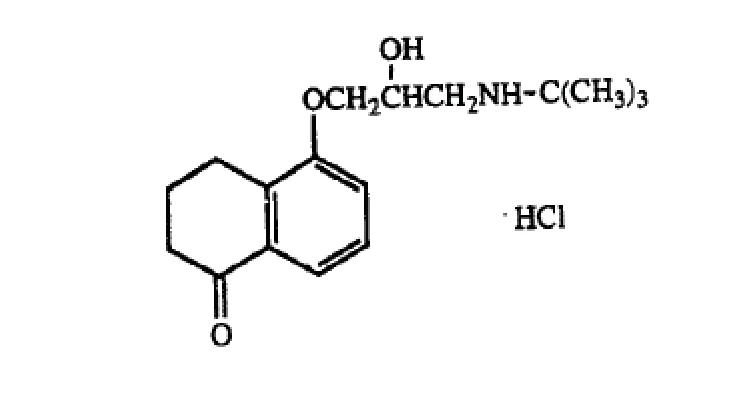
Chemical Name: 1-(2H)-Naphthalenone, 5-[3-[(1,1-dimethylethy)-amino]-2- hydroxypropoxy]-3,4-dihydro-hydrochloride (-)-.
or
(-)-5-[3-(tert-Butylamino)-2-hydroxypropo]-3,4-dihydro-1 (2H)-naphthalenone hydrochloride
Molecular formula: C17H25NO3HCl
Molecular mass: 327.85
Structural formula:
Solubility: (25°C)
Distilled Water: > 300 mg/mL Absolute ethanol: 24 mg/mL
pH of a 5% Solution: 4.5 - 5.5
pKa: Approximately 9.32
Melting Point: Approximately 209°C
Physicochemical properties: Fine, white to off-white crystalline powder; odourless;
bitter to taste
COMPOSITION
Each millilitre contains levobunolol hydrochloride 2.5 mg or 5 mg, with the following non- medicinal ingredients: benzalkonium chloride 0.004% as the preservative and polyvinyl alcohol; sodium chloride; dibasic sodium phosphate; potassium phosphate, monobasic; edetate disodium; sodium metabisulfite; sodium hydroxide or hydrochloric acid to adjust pH; purified water.
STORAGE AND STABILITY
Protect from light and excessive heat. Store at 15 - 30°C.
AVAILABILITY OF DOSAGE FORMS
Sandoz Levobunolol is supplied in two strengths (0.25% and 0.5%) in multiple dosage units of 5 mL, 10 mL, and 15 mL contained in opaque plastic (LDPE) DROPTAINER®bottles. The caps for the 0.5% solution are yellow while the caps for the 0.25% solution are blue.
DETAILED PHARMACOLOGY
Glaucoma is a disease characterized by progressive loss of visual function due to damage of the optic nerve. Usually associated with increased intraocular pressure, the primary objective of treatment is to lower intraocular pressure by either decreasing aqueous humor production or increasing aqueous humor outflow through the trabecular meshwork or the uveal tract. Analysis of aqueous flow measured by fluorophotometry and total outflow facility by tonography suggests that levobunolol lowers intraocular pressure primarily by decreasing aqueous humor production.
In controlled clinical studies, levobunolol was generally well tolerated and was as effective as timolol in lowering intraocular pressure. No significant effects on tear production, corneal sensitivity, pupil size or accommodation were observed.
Doses of levobunolol as low as 0.25% have been shown to be efficacious in the management of patients with open-angle glaucoma or ocular hypertension.
In a dose-titration study, the intraocular pressure of approximately 65% of patients was adequately controlled over the three month study period with either levobunolol 0.25% or timolol 0.125%. Mean decreases in intraocular pressure ranged from 6 to 8 mmHg in both treatment groups. An additional 10% of patients achieved adequate control with an upward titration of either medication. Decreases in blood pressure were minimal and of limited significance for both treatments. Decreases in heart rate were significantly greater for levobunolol versus timolol at four out of nine follow-up visits. However, the levobunolol patient group had a greater mean age and incidence of hypertension at baseline. Two levobunolol patients were diagnosed with sinus bradycardia during the study and two timolol patients
withdrew due to adverse events (lethargy, subjective decrease in visual acuity).
The long-term efficacy of twice-daily administration of 0.25% levobunolol over one year was demonstrated in a double-masked, randomized study of 78 patients. Intraocular pressure was adequately controlled in 70% of levobunolol patients and 71% of timolol patients. Mean heart rate and blood pressure were decreased from baseline by both treatments with the decrease in heart rate by levobunolol reaching statistical significance at weeks one and 24. There were no significant between group differences.
A randomized, double-masked investigation of 85 patients over three months compared levobunolol (0.25% and 0.5%) and betaxolol (0.5%). Overall mean decreases in intraocular pressure were significantly greater for both concentrations of levobunolol (5-7 mmHg) versus betaxolol (3-4 mmHg). Changes in heart rate and blood pressure were minimal with no significant differences between groups.
Long-term studies of up to four years have been carried out with levobunolol at a dose of 0.5% twice-daily. The ocular hypertensive effect of levobunolol was maintained in these long-term trials.
In a multi-centre trial of 391 patients, overall mean decreases in intraocular pressure over the four years were 7.1, 7.2, and 7.0 mmHg for the 0.5% levobunolol, 1% levobunolol and 0.5% timolol groups respectively. Adverse events accounted for 9.5% of patients to withdraw from the study. Changes in cardiovascular parameters were: mean heart rate decreases of 4.6, 6.4, 3.4 beats/minutes; mean decreases in systolic blood pressure of 0.7, 1.8, 2.2 mmHg; mean decreases in diastolic blood pressure of 1.1, 1.3, 2.0 mmHg; for 0.5% levobunolol, 1% levobunolol and timolol respectively. Overall, there were no significant differences between treatment groups for these parameters or the occurrence of adverse events.
Anterior segment surgery such as extracapsular cataract extraction or posterior capsulotomy is associated with a postsurgical increase in intraocular pressure. This rise in intraocular pressure may be greater in patients with preexisting glaucoma. Ocular hypotensive agents are used to minimize such increases in intraocular pressure. The prophylactic use of levobunolol was investigated in the following groups of surgical patients.
In a posterior capsulotomy study (neodymium:YAG laser), one drop of 0.5% levobunolol or vehicle was instilled into the study eye 30-60 minutes prior to the procedure. A second drop was instilled late in the evening of the day of surgery. lntraocular pressure peaked two hours postoperatively. At this time point 38% of vehicle treated patients had an increase in intraocular pressure of at least 10 mmHg. No increases in intraocular pressure were seen in the levobunolol treatment group. In a extracapsular cataract extraction study by the same investigators, one drop of 0.5% levobunolol was instilled immediately after the procedure and continued on a once-daily basis for seven days. Intraocular pressure peaked 24 hours postoperatively, eight patients (40%) treated with vehicle and four (19%) treated with levobunolol experienced an increase in intraocular pressure of at least 10 mmHg. Mean changes in intraocular pressure were consistently and significantly less in the levobunolol group when compared to the vehicle group.
In another study, patients undergoing extracapsular cataract extraction and posterior chamber lens placement received two drops of either levobunolol 0.5%, timolol 0.5%, betaxolol 0.5%, or placebo (artificial tears) just prior to patching the eye after surgery. Intraocular pressure was measured preoperatively, four to seven hours and 20-24 hours postoperatively. A significant increase in the mean intraocular pressure from preoperative values in the timolol, betaxolol and placebo groups occurred in the early postoperative period. The intraocular pressure was significantly lower in the levobunolol group compared to betaxolol and placebo. No significant difference was found for any treatment group at the 20-24 postoperative time period compared to preoperative values.
Pharmacokinetics
In humans, levobunolol is well absorbed following oral administration, achieving peak plasma levels within one hour of dosing with a plasma half-life of approximately six hours. It is subject to hepatic metabolism and is converted primarily to dihydrobunolol which has a plasma half-life of approximately seven hours. Levobunolol is excreted primarily in the urine, mainly as dihydrobunolol and intact levobunolol.
Plasma levels of levobunolol after ocular instillation twice-daily for one week ranged from 0.1 to 0.3 ng/mL and 0.3 - 0.6 ng/mL for 0.5% and 1.0% levobunolol respectively. Four of six subjects treated with 0.5% levobunolol and two of six subjects treated with 1% levobunolol had plasma levels less than 0.5 ng/mL, the limit of detection.
TOXICOLOGY
Acute Toxicity
Ocular administration in rabbits produced no toxic effects after 0.2% every half hour for 24 hours and 2% every hour for eight hours. However, corneal damage as evidenced by fluorescein staining involving 25% to 50% of cornea was observed when 2% levobunolol was administered every half hour for 24 hours. No signs of ocular discomfort were noted for these dosage regimens.
Acute oral (PO) and intravenous (IV) toxicity studies of levobunolol in mice, rats, hamsters, and dogs have been performed. The following table summarizes the LD50, data obtained for each species tested.
Table 1: Acute Oral and Intravenous Toxicitv of Levobunolol
| Species Strain | Route | Sex | LD50 (mg/kg) | Asymptomatic Dose (mg/kg) | Signs of Toxicity (oral administration) |
| Mouse MF1 | PO* IV | M F M F | 344-1,530 273-1,220 78 84 | 200-500 150-500 65 65 | ataxia, loss of righting reflex, seizures; decreased respiration, cyanosis |
| Rat CFN | PO IV | M F M F | 700 800 25 28 | 100 100 5 5 | decreased spontaneous motor activity, ataxia; decreased palpebral size; decreased respiration; deaths preceded by seizures |
| Hamster Syrian | PO | M F | 435 500 | 100 100 | sedation, ataxia, seizures; deaths attributed to respiratory failure |
| Dog Mongrel | PO | M F | >100 >100 | >10, <100 >10, <250 | sedation, ataxia, seizures; decreased respiration, vocalization; autopsies revealed changes related to convulsions (pulmonary congestion and hemorrhage) |
* Three strains of mice were used in oral studies: MF1, CD1 and CF1
Long Term Toxicity
Subacute and chronic ocular administration studies and chronic oral toxicity studies are summarized in Table 2.
Subacute Toxicity
In the subacute studies, histological evaluation of the eyes receiving treatment with 1% or 5% levobunolol up to eight times per day revealed no structural changes that could be attributed to levobunolol. In these studies, 1% levobunolol was nontoxic and 5% levobunolol was mildly irritating but nontoxic in rabbit eyes.
Chronic Ocular Toxicity
In a chronic one-year study of ocular administration in rabbits, variations in blood chemistry and hematology variables occurring during the study were within normal ranges. Histologically, no ocular or systemic drug-related changes were observed in any tissue. The few lesions found were evenly distributed between the placebo-treated and drug-treated groups. Body weight and organ weight did not change significantly during the course of the study.
The incidence of hyperemia, discharge, chemosis, and tearing recorded during daily eye examination was extremely low, occurring at fewer than 1% of all examinations. Lens opacities and corneal damage evidenced by fluorescein staining were observed in some rabbits during slit lamp examination, but were attributed to extraneous factors because of their occurrences in both treated and untreated eyes or their subsequent disappearance while treatment continued. Ophthalmoscopic examination revealed no drug-related effects on ocular tissue.
Chronic Oral Toxicity
In Wistar rats, chronic oral administration of up to 180 mg/kg/day of levobunolol over two years resulted in no significant adverse effects. Some animals receiving 180 mg/kg showed suppression of weight gain, and dark-coloured urine was noted in some animals in the 30 and 180 mg/kg groups. Also in those dosage groups, a steel-grey discolouration of exposed skin areas was noted during the last six months of the study. On autopsy, the internal organs of the majority of the animals in the 180 mg/kg group and some of the animals in the 30 mg/kg group showed generalized steel-grey discolouration. Histopathology revealed the presence of small, brownish-yellow granules, which were found to be secondary lysosomes.
Beagle dogs dosed at 2,6, or 24 mg/kg/day of oral levobunolol over one year showed no significant adverse reactions while animals receiving 100 mg/kg day showed significant toxic effects, including decreased food consumption and emesis, which resulted in some deaths and eventual discontinuation of the high dosage group. No significant behavioral or ophthalmic changes were observed, and no systemic toxicity was noted, except in the high- dose group. Throughout the study there were no changes in systolic blood pressure, but the mean resting heart rate was lower in treated dogs than in the control group.
Table 2
| Summary of Long-Term Toxicity Studies | |||||
| Study Type/ Reference | Species/ Number | Route of Administration | Duration | Dose | Observations at % of Evaluations |
| Long-term, subacute | Rabbit NZW, female 6/group | Ocular (50mc drop) | 28 days | 1% b.i.d. 1% q.i.d. 1% 8/day 5% b.i.d. 5% q.i.d. 5% 8/day | no significant ocular reactions, no apparent ocular discomfort ocular discomfort at < 1%, mild hyperemia at < 2% ocular discomfort at 5%, mild hyperemia at < 9%, tearing at < 8%, infrequent discharge & conjunctival congestion ocular discomfort at 37%, mild hyperemia at 13%, 1 case of mild corneal damage evidenced by fluorescein staining ocular discomfort at 75%, mild hyperemia at 51%, infrequent conjunctival congestion, discharge, tearing ocular discomfort at 91%, mild to moderate hyperemia at 19%, mild to moderate conjunctival congestion and ocular discharge at 50% of slit lamp evaluations |
| Chronic | Rabbit NZW, female 40/group | Ocular (50mcl drop) | 1 year | 0.5%, 1%, 5%, vehicle, b.i.d. | no drug related ocular or systemic toxic effects |
| Chronic | Wistar Rat 80 per sex 120 per sex in control groups | Oral | 2 years | 0.5, 2, 5 mg/kg/day | no significant adverse effects |
| Chronic | Wistar Rat 70 per sex 120 per sex in control groups | Oral | 2 years | 5, 30, 180 mg/kg/day | histopathology revealed brownish-yellow granules identified as secondary lysosomes; some suppression of weight gain in 180 mg/kg/day group; for 30 and 180 mg/kg/day groups, dark coloured urine in some animals, steel-grey discolouration of exposed skin in last 6 months of study and some discolouration of internal organs on autopsy |
| Chronic | Beagle Dog | Oral | 1 year | 2, 6, 24, mg/kg/day | No significant reactions Significant toxic effects resulting in some deaths and eventual |
| Summary of Long-Term Toxicity Studies | |||||
| Study Type/ Reference | Species/ Number | Route of Administration | Duration | Dose | Observations at % of Evaluations |
100 mg/kg/day | discontinuation of high dose group Mean resting heart rate was lower in treated versus control groups | ||||
Carcinogenicity Studies
Carcinogenicity studies in mice and rats are summarized in Table 3. Four uterine leiomyomas occurred among the 50 female mice in the high-dose group, while only one such tumour was noted among the 100 females in the control group and none in the mid- and low-dose groups. The development of leiomyomas as a result of treatment with carcinogenic substances is unknown, and degeneration to a malignant leiomyosarcoma is extremely rare.
During the two-year oral toxicity studies in rats mentioned previously, the carcinogenic potential of levobunolol was also evaluated. There were few noteworthy differences among the treatment groups in either the frequency or the types of tumours observed. There was a statistically significant (p ≤ 0.05) increase in the incidence of benign hepatomas in male rats administered 180 mg/kg/day (12800 times the maximum recommended human dose for glaucoma). Similar differences were not observed in rats administered oral doses equivalent to 350 times to 2000 times the maximum recommended human dose for glaucoma. There were no significant differences in the overall liver tumour incidence.
The results of the two-year studies in rats and the 80 week study in mice gave no evidence of carcinogenic risk for levobunolol.
Table 3
| Summary of Carcinogenicity Studies | |||||
| Species | No. and Sex | Route | Duration | Dose | Observations |
| Mouse (Swiss Albino, CF1) | 50 M, 50 F (100 per sex in control groups) | oral | 80 weeks | 12, 50 or 200 mg/kg/day | no significant difference in overall tumour rate but 4 uterine leiomyomas in female high dose group and 1 in control group |
| Wistar Rats | 70-80 M, 70-80 F (120 per sex in control groups) | oral | 2 years | 0.5, 2, 5, 30 or 180 mg/kg/day | significant incidence of benign hepatomas in male rats at 180 mg/kg/day (12800 times the maximum recommended human dose for glaucoma) |
Mutagenicity
Results of in vitro tests for genetic mutations are summarized in Table 4. Levobunolol does not appear to have mutagenic properties as indicated by the negative results achieved in these studies.
Table 4
| Summary of Mutagenicity Studies | ||
| Strain/Cell Line | Test | Observations |
| Salmonella typhimurium (5) | Ames (histidine-dependent) | negative results |
| Schizosaccharomyces pombe | Cell point mutation | |
| Saccharomyces cerevisiae | Mitotic gene conversion | |
| Chinese hamster ovary cells | Sister-chromatid exchange | |
| Chinese hamster lung cells | Point mutation | |
| Chinese hamster bone marrow cells | Chromosome-metaphase analysis | |
Reproduction and Teratology
Results of reproduction and teratology studies are summarized in Table 5. In rats, there was no adverse effect on male or female fertility at doses up to 1800 times the recommended human dose for glaucoma.
The same doses of levobunolol given to female rats from late gestation through weaning showed no deleterious effects on offspring.
In a teratogenic study using female New Zealand white rabbits, fetotoxicity as evidenced by an increase in resorption sites was noted. Doses of levobunolol equivalent to 200 and 700 times the maximum recommended dose for the treatment of glaucoma were given. The increase in resorption sites was greater in the high and middle dose groups than in the low dose or control group. Differences were significant (p < 0.05) only in the high dose group.
No fetotoxic effects have been observed in similar studies with rats at up to 1 800 times the human dose for glaucoma. The fetotoxicity noted in rabbits may be a species-specific effect related to beta-blockade.
Table 5
| Reproduction and Teratology | |||||
| Species | No. and Sex | Route | Dose | Duration | Observations |
Rat (Carworth CFN) | 13 M, 26 F per group including control | oral | 1, 10, 25 mg/kg/day | Male: dosed 63-140 days prior to mating to day 182 Female: dosed 14 days prior to mating to day 182 | No adverse effects on reproductive performance and no deleterious effects on progeny |
| 20 F per group | oral | 1, 10, 25 mg/kg/day | days 6-15 of gestation late gestation through weaning | no embryotoxic or teratogenic effect no deleterious effects on offspring | |
| Rabbit | 12 F per group | oral | l, 3, l0 mg/kg/day | days 6-18 of gestation | significant increase in resorption sites in high dose group |
REFERENCES
- 1.
Di Carlo FJ, Leinweber FJ, Szpiech JM, Davidson IWF. Metabolism of I-bunolol. Clin
Pharmacol Ther 1977; 22:858-63.
- 2. Yablonski ME, Novack GD, Burke PJ, et al. The effect of levobunolol on aqueous humor dynamics. Exp Eye Res 1987; 44:49-54.
- 3.
Levobunolol Study Group. A four-study of efficacy and safety in glaucoma tretment.
Ophthalmology 1989; 96:642-645.
- 4. Boozeman FW, Carriker R, Foerster R, Allen RC, Novack GC, Batoosingh AL. Long-term evaluation of 0.25% levobunolol and timolol for therapy for elevated intraocular pressure. Arch Ophthalmol 1988 May; 106:614-618.
- 5.
Long DA, Johns GE, Mullen RS, Bowe RG, Alexander D, Epstein DL, Weiss MJ, Masi RJ,
Charap AD, Eto CY, Novack GD. Levobunolol and betaxolol. A double-masked controlled comparison of efficacy and safety in patients with elevated intraocular pressure. Ophthalmol 1988 Jun; 95(6):735-41.
- 6. Wandel TA, Fishman JD, Chen KS, Novack GD and Kelley EP. Ocular hypotensive efficacy of 0.25% levobunolol instilled once-daily. Ophthalmology 1988; 95:252-254.
- 7. Novack GD, Tang-Liu D, Kelley EP, Liu SS, Shen CD, Duzman E. Plasma levobunolol levels following topical administration with reference to systemic side effects. Ophthalmologica 1987; 194: 194-200.