


Patient Medication Information: uses, side effects, how to take - Serevent Diskus (50mcg/Dose)
What is SEREVENT DISKUS used for?
Asthma (patients 4 years old and older):
SEREVENT DISKUS helps to prevent breathlessness and wheezing from happening due to asthma. SEREVENT DISKUS is used only as an add-on therapy to an inhaled corticosteroid when an inhaled corticosteroid by itself is not adequate to control your asthma symptoms.
Asthma is a chronic inflammatory disease of the lungs characterized by episodes of difficulty in breathing. People with asthma have extra sensitive or “twitchy” airways. During an asthma attack, the airways react by narrowing making it more difficult for the air to flow in and out of the lungs.
Control of asthma requires avoiding irritants that cause asthma attacks and taking the appropriate medications. For example, patients should avoid exposure to house dust mites, mold, pets, tobacco smoke and pollens.
Note to Parents: It is extremely important to make sure that children 4 to 18 years take both SEREVENT DISKUS and an inhaled corticosteroid together. If this cannot be guaranteed, speak to your doctor. A single combination product, containing both a bronchodilator and an inhaled corticosteroid, may be required.
Chronic Obstructive Pulmonary Disease (COPD):
SEREVENT DISKUS is used for the long-term control of symptoms due to COPD and to prevent wheezing in adults with COPD.
Serious Warnings and Precautions
SERIOUS WARNINGS FOR ASTHMA PATIENTS TAKING SEREVENT DISKUS SEREVENT DISKUS increases the risk of asthma-related death. SEREVENT DISKUS may increase the risk of asthma-related hospitalizations in patients 4 to 18 years old. Therefore, SEREVENT DISKUS:
For any concerns regarding the use of SEREVENT DISKUS, consult with your doctor. |
|---|
COPD is a type of lung disease in which there is a permanent narrowing of the airways, leading to breathing difficulties. In many patients, this narrowing of the airways is a result of many years of cigarette smoking. If you suffer from COPD, you must stop smoking to prevent further lung damage. Please contact your healthcare professional for help in smoking cessation.
How does SEREVENT DISKUS work?
SEREVENT DISKUS is a bronchodilator. It works by relieving spasm or narrowing in the small air passages in the lungs. This helps to open up the airways and makes it easier for air to get in and out of the lungs. The effects of SEREVENT DISKUS last for at least 12 hours. When it is taken regularly for the treatment of COPD or in combination with an inhaled corticosteroid for the treatment of asthma, it helps the small air passages to stay open.
SEREVENT DISKUS does not act quickly enough to provide relief from a sudden attack of breathlessness or wheezing due to asthma or COPD. A fast acting ‘reliever’ medicine, such as salbutamol (e.g., VENTOLIN) should be used for any sudden attacks of breathlessness or wheezing (e.g., asthma attacks).
Remember:
If you are being treated for asthma, you should always be given an inhaled corticosteroid for use together with SEREVENT DISKUS. The inhaled corticosteroid decreases the inflammation in your lungs while SEREVENT DISKUS opens the airways.
What are the ingredients in SEREVENT DISKUS?
Medicinal ingredients: salmeterol xinafoate.
Non-medicinal ingredients: lactose (milk sugar) and milk protein.
SEREVENT DISKUS comes in the following dosage forms:
SEREVENT DISKUS is a dry powder administered through a plastic inhaler device containing a foil strip with 60 blisters. Each blister contains 50 mcg of salmeterol.
Do not use SEREVENT DISKUS:
- Without an inhaled corticosteroid if you are being treated for asthma
- If you are allergic or have had an allergic reaction (swelling, anaphylactic reaction) to salmeterol or any of the ingredients in SEREVENT DISKUS
- If you have a past history of problems with the way your heart beats called cardiac tachyarrhythmias (heart beating fast and/or irregularly)
- If you are allergic to lactose (milk sugar) or milk protein
To help avoid side effects and ensure proper use, talk to your healthcare professional before you take SEREVENT DISKUS. Talk about any health conditions or problems you may have, including if you:
- Had to stop taking another medication for your breathing problems because you were allergic to it or it caused problems.
- Have been told that you are allergic to lactose (milk sugar) or milk protein.
- Are receiving treatment for a thyroid condition.
- Have diabetes.
- Have raised blood pressure.
- Have a heart problem.
Are pregnant, planning to become pregnant or breastfeeding.
- Are taking a medicine called ketoconazole, used to treat fungal infection.
- Have a past history of seizures.
Other warnings you should know about:
SEREVENT DISKUS is not for the treatment of acute asthma attacks or sudden increase of breathlessness and wheezing in COPD. If you get a sudden attack of wheezing and breathlessness between your doses of SEREVENT DISKUS and inhaled corticosteroid, you should use your fast acting ‘reliever’ medicine, such as salbutamol (e.g. VENTOLIN) which your doctor has prescribed to you. Use the medication as directed by your doctor.
Diabetes:
SEREVENT DISKUS can increase your blood sugar levels. Diabetic patients may need their blood sugar monitored more often. If you notice changes, discuss this with your doctor. Your diabetes medication may need a dosage adjustment.
Blood Tests:
SEREVENT DISKUS can cause abnormal blood test results including increased blood sugar. Your healthcare professional will decide when to perform blood tests and will interpret the results.
Asthma:
You should have your asthma assessed at regular intervals as agreed upon with your doctor. Once control of your asthma is achieved and maintained, your doctor may discontinue your SEREVENT DISKUS. Do not stop taking your SEREVENT DISKUS unless your doctor has advised you to do so.
If you notice the following warning signs, you should contact your healthcare professional as possible or go to the nearest hospital:
- A sudden worsening of your shortness of breath and wheezing shortly after using your fast acting ‘reliever’ medicine or after using SEREVENT DISKUS and inhaled corticosteroid.
- You do not feel relief within 10 minutes after using your fast acting ‘reliever’ medicine or the relief does not last for at least 3 hours.
- Measurement from your peak flow meter indicates a value less than 60 percent of predicted or personal best.
- You are breathless at rest.
- Your pulse is more than 120 beats per minute.
The following warning signs indicate that your asthma condition may be worsening and that your treatment needs to be reassessed by your doctor.
- A change in your symptoms such as more coughing, attacks of wheezing, chest tightness, or an unusual increase in the severity of the breathlessness.
- You wake up at night with chest tightness, wheezing or shortness of breath.
- You use increasing amounts of your fast acting ‘reliever’ medicine.
- Measurement from your peak flow meter indicates a value between 60 and 80 percent of predicted or personal best.
COPD:
If you have COPD, it is very important that even mild chest infections be treated right away. If you think you have an infection, see your doctor immediately.
People with COPD are more likely to get the flu (influenza). You should ask your doctor about flu vaccination.
The following warning signs indicate that your COPD condition may be worsening. You should contact your doctor as soon as possible if you notice:
- An unusual increase or decrease in the amount of phlegm.
- An unusual increase in the consistency and stickiness of the phlegm.
- The presence of blood in phlegm.
- A change in the colour of the phlegm to either brown, yellow or green.
- An unusual increase in the severity of the breathlessness.
- The necessity to increase the number of pillows in order to sleep in comfort.
- Symptoms of a cold (e.g., sore throat).
- Unexplained tiredness or fever.
- Chest tightness.
- Unexplained swelling.
Tell your healthcare professional about all the medicines you take, including any drugs, vitamins, minerals, natural supplements or alternative medicines.
The following may interact with SEREVENT DISKUS:
- Medicines used to treat fungal infections, such as ketoconazole
- Medicines used to treat high blood pressure, such as diuretics, also called “water pills”
- Medicines used to treat heart problems, such as beta-blockers
- Medicines used to treat depression, such as monoamine oxidase inhibitors (MAOIs) or tricyclic antidepressants
- Other medicines to treat asthma and COPD
How to take SEREVENT DISKUS:
It is very important that you use SEREVENT DISKUS twice a day, even if you have no symptoms. Use it once in the morning and again in the evening. When used for the treatment of COPD or together with an inhaled corticosteroid for the treatment of asthma, SEREVENT DISKUS will help protect you against breakthrough symptoms throughout the day and during the night. You should not use it more than twice a day. SEREVENT DISKUS does not replace your fast acting ‘reliever’ medicine, such as salbutamol (e.g. VENTOLIN) or inhaled corticosteroid therapy such as fluticasone propionate (e.g., FLOVENT). The overuse of SEREVENT DISKUS can cause serious side effects.
After you have started taking SEREVENT DISKUS it is likely that you will not need to use the fast acting ‘reliever’ medicine as often. If you have more than one medicine be careful not to confuse them.
If your doctor decides to stop treatment, do not keep any left-over medicine unless your doctor tells you to.
Usual Asthma Dose:
The usual dose is 1 inhalation twice daily (1 inhalation in the morning and 1 inhalation in the evening).
Even if you feel much better after starting to use SEREVENT DISKUS, you must continue to use an inhaled corticosteroid for your asthma according to your doctor's instructions.
Adolescents/Children with Asthma (4 to 18 years of age):
SEREVENT DISKUS is suitable for children 4 years of age and older. The severity of asthma changes with age. Your child should therefore be periodically re-examined by a doctor. It is important to make sure that he/she understands and properly follows the asthma therapies that have been prescribed. These will include in addition to SEREVENT DISKUS, a drug which reduces the inflammation in the lung due to asthma (also known as an inhaled corticosteroid or ‘controller’ medication) and a rapid onset, short duration bronchodilator (also known as a fast acting ‘reliever’ medicine).
It is extremely important to make sure that children 4 to 18 years take both SEREVENT DISKUS and an inhaled corticosteroid together. If this cannot be guaranteed, speak to your doctor. A single combination product, containing both a bronchodilator and an inhaled corticosteroid, may be required.
Usual COPD Dose:
The usual dose is 1 inhalation twice daily (1 inhalation in the morning and 1 inhalation in the evening).
COPD:
If you are troubled with mucus, try to clear your chest as completely as possible by coughing before you use SEREVENT DISKUS. This will allow SEREVENT DISKUS to pass more deeply into your lungs.
Even if you feel much better after starting to use SEREVENT DISKUS, you must continue to use your other COPD medication(s) according to your doctor's instructions.
About your SEREVENT DISKUS:
The blisters protect the powder for inhalation from the effects of the atmosphere.
When you take your SEREVENT DISKUS out of its box, it will be in the closed position.
A new DISKUS contains 60 individually protected doses of your medicine, in powder form. The device has a dose counter which tells you the number of doses remaining. It counts down from 60 to 1. To show when the last five doses have been reached the numbers appear red.
Each dose is accurately measured and hygienically protected. It requires no maintenance, and no refilling.
How to use your SEREVENT DISKUS properly:
It is important that you take each dose as instructed by your doctor, nurse, or pharmacist.
The DISKUS is easy to use. When you need a dose, just follow the six simple steps illustrated:
- 1. Open, 2. Slide, 3. Exhale, 4. Inhale, 5. Close, 6. Rinse.
Sliding the lever of your DISKUS opens a small hole in the mouthpiece and unwraps a dose ready for you to inhale it. When you close the DISKUS, the lever automatically moves back to its original position ready for your next dose when you need it. The outer case protects your DISKUS when it is not in use.
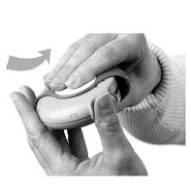
To open your DISKUS hold the outer case in one hand and put the thumb of your other hand on the thumb grip. Push the thumb grip away from you, until you hear it click into place. | |
Hold your DISKUS with the mouthpiece towards you. Slide the lever away until you hear another click. Your DISKUS is now ready to use. Every time the lever is pushed back a dose is made available for inhaling. This is shown by the dose counter. Do not play with the lever as this releases doses which will be wasted. | 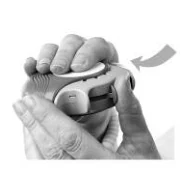 |
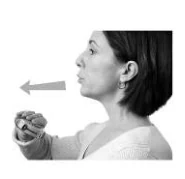
Hold the DISKUS away from your mouth. Breath out as far as is comfortable. Remember – never exhale into your DISKUS.
Before you start to inhale the dose, read through this section carefully. Once you have fully exhaled, place the mouthpiece to your mouth and close your lips around it. Breathe in steadily and deeply through your mouth until a full breath is taken. Remove the DISKUS from your mouth. Hold your breath for about 10 seconds or as long as is comfortable. Breathe out slowly. You may not be able to taste or feel the powder on your tongue, even if you have used the DISKUS correctly.
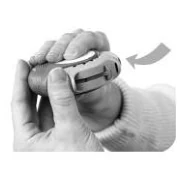
To close your DISKUS, put your thumb in the thumb grip, and slide it back until you hear a click. The lever is now automatically reset for your next use. The counter on the DISKUS indicates how many doses are remaining. 
Rinse out your mouth and gargle with water after each dose. Do not swallow the water. | 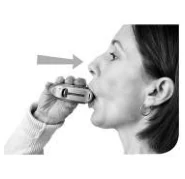 |
Overdose:
| If you think you have taken too much SEREVENT DISKUS, contact your healthcare professional, hospital emergency department or regional poison control centre immediately, even if there are no symptoms. |
|---|
If you accidentally take a larger dose than recommended, you may notice that your heart is beating faster than usual and that you feel shaky. Other symptoms you may experience include headache, muscle weakness and aching joints. Tell your doctor as soon as possible or contact your hospital emergency department.
Excessive use of SEREVENT DISKUS can be extremely dangerous. If you have used a larger
 | |
 |
than allowed recommended dose of SEREVENT DISKUS for a long period of time (months or years), you should talk to your doctor or pharmacist for advice. A gradual reduction of your dose may be needed. Do not stop taking the medication suddenly.
Missed Dose:
It is very important that you use SEREVENT DISKUS regularly. If you forget to inhale a dose do not worry, inhale another as soon as you remember but if it is near to the time for the next dose, wait until this is due. Do not take a double dose. Then go on as before.
What are possible side effects from using SEREVENT DISKUS?
These are not all the possible side effects you may feel when taking SEREVENT DISKUS. If you experience any side effects not listed here, contact your healthcare professional.
Side effects may include:
- pain in joints
- muscle cramps
- headache
- feeling a little shaky (tremor)
- disturbed sleep
- upper respiratory tract infection
- cough
- fever
- throat irritation
- feeling tired
- diarrhea
- nausea
- vomiting
Serious side effects and what to do about them
| Symptom / effect | Talk to your healthcare professional | Stop taking drug and get immediate medical help | ||
|---|---|---|---|---|
| Only if severe | In all cases | |||
| UNCOMMON | Allergic reactions: lumpy skin rash or hives anywhere in the body. | √ | ||
| Heart problems: fast or irregular heartbeat that does not go away on its own. | √ | |||
| RARE | Low blood potassium: muscle weakness, and muscle spasms. | √ | ||
| Increased amount of sugar in blood: excessive thirst, frequent urination, dry skin, blurred vision and fatigue. | √ | |||
| VERY RARE | Allergic reactions: sudden wheeziness and chest pain or tightness; or swelling of eyelids, face, lips, tongue or throat. | √ | ||
| Bronchospasm: sudden worsening of shortness of breath and wheezing shortly after using SEREVENT DISKUS. | √ | |||
| Mouth, throat becomes unusually irritated causing high pitched wheezing and choking. | √ | |||
Serious side effects and what to do about them
| Symptom / effect | Talk to your healthcare professional | Stop taking drug and get immediate medical help |
|---|
| Only if severe | In all cases | |||
|---|---|---|---|---|
| High blood pressure: headache and dizziness. | √ | |||
| UNKNOWN | Worsening of lung symptoms: increased shortness of breath, wheezing, cough and chest tightness accompanied by fever and more phlegm. | √ | ||
Increased excitement: feeling anxious, nervous, or agitated. | √ |
If you have a troublesome symptom or side effect that is not listed here or becomes bad enough to interfere with your daily activities, talk to your healthcare professional.
Reporting Side Effects
You can report any suspected side effects associated with the use of health products to Health Canada by:
NOTE: Contact your health professional if you need information about how to manage your side effects. The Canada Vigilance Program does not provide medical advice. |
|---|
Storage:
Keep your medicine in a safe place where children cannot reach it. Your medicine may harm them.
Keep SEREVENT DISKUS below 30°C and in a dry place.
If you want more information about SEREVENT DISKUS:
- Talk to your healthcare professional
- Find the full product monograph that is prepared for healthcare professionals and includes this Patient Medication Information by visiting the Health Canada website (https://www.canada.ca/en/health-canada/services/drugs-health-products/drug-products/drugproduct-database.html); the manufacturer’s website www.gsk.ca, or by calling 1-800-387-7374.
Last Revised March 2, 2021
© 2021 GSK group of companies or its licensor
Trademarks are owned by or licensed to the GSK group of companies