


Patient Medication Information: uses, side effects, how to take - Smofkabiven Peripheral
What is SmofKabiven Peripheral used for?
Your healthcare provider will choose SmofKabiven Peripheral to provide injectable food into your blood when you cannot eat enough.
How does SmofKabiven Peripheral work?
This product contains fats, building blocks for proteins, sugar, and salts to provide energy and nutrients. This is used when you cannot eat enough. Your healthcare provider may give you more salts, vitamins, and minerals to SmofKabiven Peripheral.
What are the ingredients in SmofKabiven Peripheral?
Medicinal ingredients:
Each 100 mL of mixed product for SmofKabiven Peripheral contains
Amino acids (building blocks for proteins)
Alanine 440 mg, arginine 380 mg, glycine 350 mg, histidine 93 mg, isoleucine 160 mg, leucine 230 mg, lysine acetate 210 mg, methionine 130 mg, phenylalanine 160 mg, proline 350 mg, serine 210 mg, taurine 32 mg, threonine 140 mg, tryptophan 63 mg, tyrosine 12 mg and valine 200 mg.
Electrolytes (salts)
Sodium acetate trihydrate 110 mg, calcium chloride dihydrate 18 mg, potassium chloride 140 mg, sodium glycerophosphate anhydrous 130 mg, magnesium sulfate heptahydrate 38 mg and zinc sulfate heptahydrate 0.4 mg.
Lipids (fats)
Soybean oil 850 mg, medium-chain triglycerides 850 mg, olive oil 700 mg and fish oil 420 mg.
Dextrose (sugar)
As glucose monohydrate 7.1 g.
Non-medicinal ingredients:
Glycerol.
Purified egg phospholipids.
all-rac-α-Tocopherol.
Sodium hydroxide (pH adjuster).
Sodium oleate.
Acetic acid, glacial (pH adjuster).
Hydrochloric acid (pH adjuster).
Water for injection.
SmofKabiven Peripheral comes in the following dosage forms:
SmofKabiven Peripheral consisting of three separate chambers: one chamber with a milk-like, homogenous lipid emulsion, one chamber containing a clear and colourless to slightly yellow amino acid solution and one containing a clear and colourless to slightly yellow dextrose solution. Before use, the seals between the chambers are broken, to mix the components together. Once mixed, SmofKabiven Peripheral is an opaque, white, homogenous lipid emulsion. You will receive your SmofKabiven Peripheral by intravenous infusion.
Do not use SmofKabiven Peripheral if:
- you are allergic to peanuts, fish, eggs, or soybeans or any of the contents of SmofKabiven Peripheral (see what the nonmedicinal ingredients are).
- you have high amounts of lipids in your blood.
- your liver does not work properlyyour body cannot use amino acids properly since birth.
- you cannot stop bleeding.
- your kidney does not work properly without dialysis.
- you have such a drop in blood pressure that you could die.
- your blood sugar is out of control.
- your blood has high amounts of any of the salts in SmofKabiven Peripheral.
- you have a rare blood disease called hemophagocytotic syndrome.
- you cannot have medical solution injected into your veins, or have excess water build-up in your lungs,excess water content in your body, and acute heart failure.
- you have a weak medical condition.
To help avoid side effects and ensure proper use, talk to your health care provider
before you take SmofKabiven Peripheral. Talk about any health conditions or problems you may have, including if:
- you have high amount of lipids in your blood.
- you have an allergy to peanuts, fish, eggs, or soybeans, which may rarely cause allergic reactions.
- you cannot use lipids and amino acids because you have kidney or liver problems, diabetes mellitus, inflammation of the pancreas, low amounts of thyroid hormones, or full-body infection that can cause death.
- you have heart problems.
- you tend to retain high amounts of salts in the body.
you are pregnant or planning to become pregnant.
- you are breast feeding or planning to breastfeed.
- you are taking any other medicines.
- any sign or symptom of allergic reaction (such as fever, shivering, rash, sweating and headache or breathlessness).
Tell your healthcare provider about all the medicines you take, including any drugs,
vitamins, minerals, natural supplements, or alternative medicines.
The following may interact with SmofKabiven Peripheral:
Soybean oil has a natural content of vitamin K1. The amount in SmofKabiven Peripheral, however, is minimal and not expected to importantly counteract the blood-thinning effect of coumarins.
There may also be an interaction between heparin and SmofKabiven Peripheral.
Inform your healthcare provider if you are taking any blood-thinning substance such as heparins or coumarins (warfarin) that helps to prevent blood clots.
Drug-Laboratory Interactions
SmofKabiven Peripheral may interfere with certain laboratory tests. It is important to tell any healthcare professional who is doing tests that you are using SmofKabiven Peripheral.
How to take SmofKabiven Peripheral:
- SmofKabiven Peripheral is given in a hospital or at home under the care of a healthcare provider.
- After proper training, you may be able to infuse SmofKabiven Peripheral by yourself.
- SmofKabiven Peripheral must be at room temperature before use. Use SmofKabiven Peripheral only if it looks like milk.
- Use only if the bag is not damaged.
- The bag should only be used one time.
- Throw away any leftovers.
Usual adult dose:
- You will receive SmofKabiven Peripheral into your blood.
- Your healthcare provider will control how much and how fast SmofKabiven Peripheral is given.
- SmofKabiven Peripheral should be given for 14 to 24 hours nonstop.
- Your healthcare provider may see how you are feeling and test your pee and blood.
SPECIAL HANDLING INSTRUCTIONS
Instructions for use and handling
Before administering the product in the plastic bag to the patient, intravenously, review these directions:
These instructions are only intended as guidelines for product use. Please ask your healthcare provider for detailed instructions on handling.
The bag 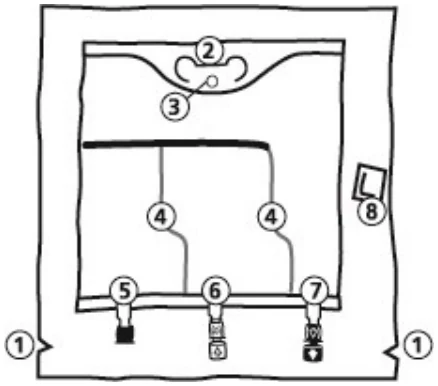 |
|
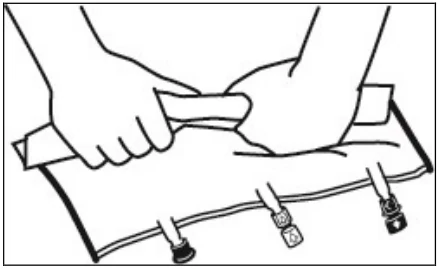
1 . Removal of overwrap 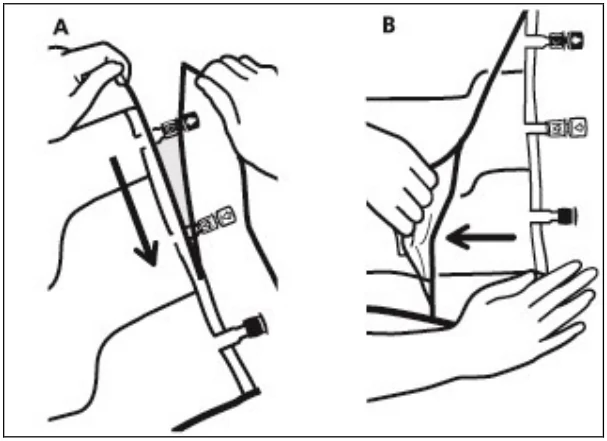 |
|
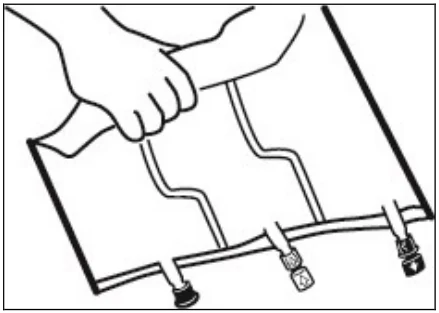 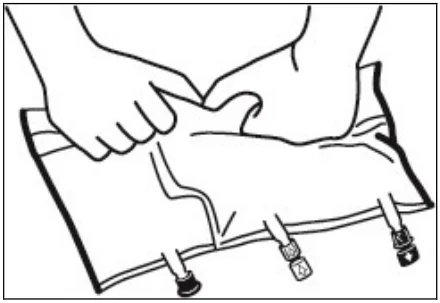  |
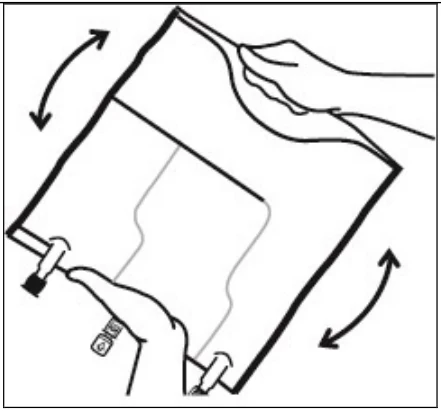
Please note: The liquids mix easily even though the horizontal seal remains closed. Mix the contents of the three chambers by inverting the bag three times until the components are thoroughly mixed. |
 | |
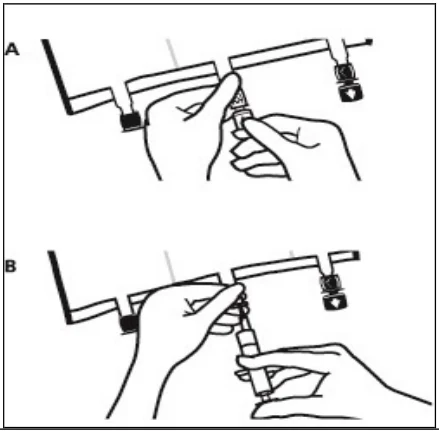 |
Please note: The membrane in the additive port is sterile.
|
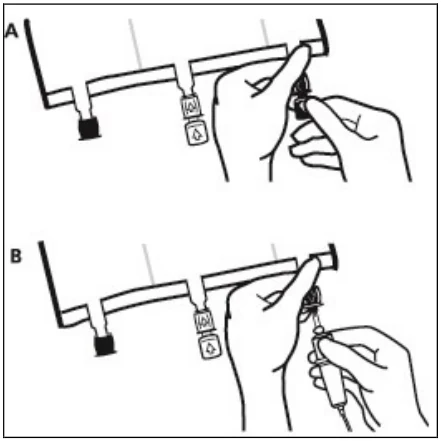 |
Please note: The membrane in the infusion port is sterile.
Please note: The inner part of the infusion port is sterile. |
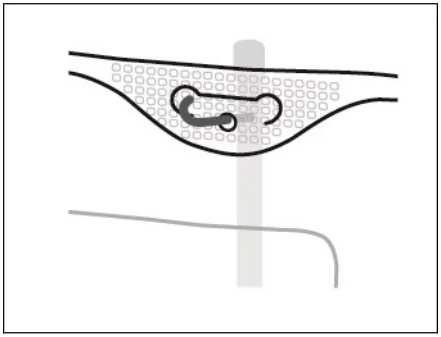 |
|
Overdose:
If you think that the dose you have received was too high or was infused too quickly, let your health care provider know right away. With an overdose, you may receive too much lipid. This is called “fat overload syndrome”. The infusion might be stopped or slowed down in these cases. See section “SIDE EFFECTS” for more information.
If you have any further questions on the use of SmofKabiven Peripheral, ask your health care provider.
| In case of drug overdose, contact a health care provider, hospital emergency department, or regional Poison Control Centre immediately, even if there are no symptoms. |
What are possible side effects from using SmofKabiven Peripheral?
Serious side effects have been seen with injectable fat and are listed in the table below:
| SERIOUS SIDE EFFECTS, HOW OFTEN THEY HAPPEN AND WHAT TO DO ABOUT THEM | |||
|---|---|---|---|
| Symptom / effect | Talk with your healthcare provider | Stop taking drug and get immediate medical help | |
| Only if severe | In all cases | ||
Common
| √ | ||
Uncommon
| √ | ||
| SERIOUS SIDE EFFECTS, HOW OFTEN THEY HAPPEN AND WHAT TO DO ABOUT THEM |
|---|
| Symptom / effect | Talk with your healthcare provider | Stop taking drug and get immediate medical help | |
|---|---|---|---|
Rare
| √ | ||
Fat overload syndrome:
This might happen if you received too much SmofKabiven Peripheral.
It may also happen because of a fast change in your health (such as infections or kidney problems).
Possible signs include:
- Fever.
- High fat level in the blood.
- Skin and eyes turning yellow.
- A drop in the number of red blood cells.
- Issues with stopping to bleed.
- A drop in the number of white blood cells and platelets.
- Increase in the size of the liver and spleen.
- Coma.
All these signs will usually go away when you stop the injectable food.
There could be other side effects that you may feel when receiving SmofKabiven Peripheral. If you have any side effects not listed here, talk to yourhealthcare provider.
Reporting Side Effects
You can help improve the safe use of health products for Canadians by reporting serious and unexpected side effects to Health Canada. Your report may help to identify new side effects and change the product safety information. 3 ways to report:
Postage paid labels and the Consumer Side Effect Reporting Form are available at MedEffect (http://hc-sc.gc.ca/dhp-mps/medeff/report-declaration/index-eng.php). Note: Contact your health professional if you need information about how to manage your side effects. The Canada vigilance Program does not provide medical advice. |
Storage:
Keep out of reach and sight of children.
Store between 15 °C to 25 °C. Do not freeze.
Store bags in overwrap.
Do not use SmofKabiven Peripheral after the expiry date which is printed on the container on the outer packaging (Mm/YYYY). The expiry date refers to the last day of the month.
Once the seals between the chambers have been broken and the product has been mixed, the product should be used immediately.
If you want more information about SmofKabiven Peripheral:
- Talk to your healthcare provider
- Find the full product monograph that is prepared for healthcare providers and includes this Patient Medication Information by visiting the Health Canada website (http://hc-sc.gc.ca/index-eng.php); the manufacturer’s website (http://www.fresenius-kabi.ca), or by calling 1-877-821-7724 (toll-free-telephone).

Fresenius Kabi Canada Ltd.
45 Vogell Rd., Suite 200
Richmond Hill, ON L4B 3P6
Last revised: July 4, 2016
Fresenius Kabi, is a registered trademark of Fresenius SE,
SmofKabiven and SMOFlipid are registered trademarks of Fresenius Kabi AG, and Biofine is a registered trademark of Fresenius Medical Care.