


Patient Medication Information: uses, side effects, how to take - Soliqua
Serious warnings and precautions box
What SOLIQUA is used for:
- SOLIQUA is used in combination with metformin, along with diet and exercise to improve blood sugar levels in adults with type 2 diabetes.
It is usually prescribed when other treatments are not enough to control your blood sugar levels. These other treatments may include:
- basal insulin alone or in combination with metformin
- a glucagon-like peptide-1 receptor agonist (GLP-1RA) in combination with metformin
How SOLIQUA works:
SOLIQUA contains two diabetes medicines:
insulin glargine:
- a long-acting type of insulin
- which helps control blood sugar (glucose) throughout the day.
- lixisenatide:
- Low blood sugar (hypoglycemia) is very common with medicines containing insulin such as SOLIQUA.
- When left untreated, hypoglycemia or hyperglycemia (high blood sugar) can cause loss of consciousness, coma, or death.
- Check your blood sugar levels regularly. Your healthcare professional will tell you when and how often to check your blood sugar levels (see “Other warnings you should know about” section below for more information).
- Your healthcare professional will tell you how much insulin you need each day. It is important to use SOLIQUA as prescribed.
- Do not inject SOLIQUA into your vein (intravenously) or muscle (intramuscularly).
- Do not mix SOLIQUA with any other type of insulin or liquid because it might not work as intended.
Use SOLIQUA only if the solution inside the pen is clear, colourless and free of particles.
- a medicine that belongs to a class of drugs called “GLP-1RA”.
- lixisenatide helps the body produce its own additional insulin when your blood sugar is high.
- lixisenatide also slows the absorption of sugar from food.
The ingredients in SOLIQUA are:
Medicinal ingredients: insulin glargine and lixisenatide
Non-medicinal ingredients: Glycerol, hydrochloric acid/ sodium hydroxide (for pH adjustment), metacresol (2.7 mg/mL; preservative), methionine, water for injection, zinc chloride.
SOLIQUA comes in the following dosage form(s):
Sterile solution for injection in a 3 mL prefilled SoloSTAR pen, olive colored.
Each mL of SOLIQUA contains:
- 100 units insulin glargine
- 33 mcg lixisenatide
Each unit dialed contains:
- 1 unit insulin glargine
- 0.33 mcg lixisenatide
Do not use SOLIQUA if:
- you are allergic to any of the ingredients in SOLIQUA (see “What are the ingredients in SOLIQUA?” section above)
you or a member of your family has ever had
- a thyroid cancer known as medullary thyroid cancer
- or a hereditary condition called Multiple Endocrine Neoplasia syndrome type 2 (MEN 2).
you are pregnant or breastfeeding
- you have type I diabetes
- you have diabetic ketoacidosis (a serious complication of diabetes)
- you are having an episode of hypoglycemia
To help avoid side effects and ensure proper use, talk to your healthcare professional before you take SOLIQUA. Talk about all health conditions or problems you may have, including if you:
- have or have had a type of thyroid cancer called medullary thyroid carcinoma or if a family member of yours has had this
- have or have had an inherited condition called multiple endocrine neoplasia syndrome type 2 or if a family member of yours has had this
- have any heart problems such as heart failure or heart rhythm disturbances (fast pulse or irregular heart rhythm, etc.)
have severe stomach problems such as:
- gastroparesis (slowed emptying of your stomach)
- history of stomach surgery
- conditions that involve inflammation of the gut (ulcerative colitis or Crohn's disease)
- are taking a rapid-acting or short-acting insulin. SOLIQUA has not been studied with this type of insulin
- have or have had pancreatitis (swelling of the pancreas)
- have stones in your gallbladder (gallstones), high levels of fat in your blood (hypertriglyceridemia) or if you regularly abuse alcohol
- have severe kidney problems or if you are on dialysis
- have diabetic retinopathy (condition affecting the eye)
- are 65 years of age or older
- are allergic to other diabetes medicines in the GLP-1RA class
- are breast-feeding or plan to breast-feed
- are pregnant or plan to become pregnant
are younger than 18 years old. SOLIQUA is not recommended for use in children under 18 years of age
Other warnings you should know about:
While using SOLIQUA be aware of the following:
- SOLIQUA may affect your kidneys. Your healthcare professional will do blood tests to monitor how well your kidneys are working before you take SOLIQUA and while you are taking SOLIQUA.
- SOLIQUA can cause abnormal blood test results. Your healthcare professional will decide when to perform blood tests and will discuss the results with you.
- Seek medical attention right away and stop taking SOLIQUA if you experience severe pain in your stomach area (abdomen) that will not go away with or without vomiting. This could be a sign of inflamed pancreas (acute pancreatitis).
- SOLIQUA may cause dehydration (loss of fluids from your body) from vomiting and diarrhea. Drink plenty of fluids to avoid dehydration.
- Gallbladder inflammation or gallstones have been seen in people who took medicines belonging to the same family of anti-diabetic medicines as SOLIQUA. If you have stomach pain, fever, nausea, vomiting, or yellowing of the skin and eyes, seek medical attention right away and stop taking SOLIQUA.
- If you know that you are due to have surgery or other procedures where you will be under anesthesia (sleeping), please tell your doctor that you are taking SOLIQUA. Some patients taking medicines like SOLIQUA have had problems with food or liquid from their stomach getting into their lungs while under general anesthesia or deep sedation.
Driving and using machines: hypoglycemia or hyperglycemia (see information below) can affect your ability to drive and use tools or machines. Ask your healthcare professional whether you can drive if:
- your blood sugar is often too low
- you find it hard to recognise when your blood sugar is too low
Injection Site and Allergic Reactions
The injection site should be rotated to reduce or prevent skin problems. Tell your healthcare professional before you rotate your injection area and if you notice any of these skin problems at the injection site:
- Redness, pain, itchy skin, hives, swelling, inflammation
- loss of fat under the skin resulting in small pits/dents (lipodystrophy/lipoatrophy)
- buildup of fat below the surface of the skin, causing lumps, thick skin (lipohypertrophy)
- Itchy, scaly, red/brown/grey bumpy spots, tender, bruised, hard, scarred or damaged skin (cutaneous amyloidosis).
- The insulin might not work as fast or as well if these skin problems happen. Your blood sugar might be harder to control.
- Hypoglycemia (low blood sugar) might occur if there is a sudden change in injection area. Your healthcare professional may tell you to check your blood sugar more closely. They might adjust your dose of insulin or other antidiabetic drugs.
- Most minor reactions will go away in a few days to weeks. They might also happen from certain skin cleaning products, poor injection technique or if you have an allergy to any of the ingredients.
Hypoglycemia (low blood sugar levels)
- Hypoglycemia (too little glucose in the blood) is one of the most common side effects in people using insulin.
- Serious hypoglycemia may be life-threatening (see Serious Warnings and Precautions Box above). Learn to recognize the signs of hypoglycemia – so you can take action to stop it getting worse.
Reasons why hypoglycemia may happen:
Examples include:
- You inject too much SOLIQUA
- You are not eating on time or you don’t eat enough
- You are recovering from an illness, from fever, from an injury, operation or other stress.
- You are doing more exercise than usual or a different type of physical activity
- You are taking or have stopped taking certain other medicines (see section below about other medicines that may interact with SOLIQUA)
- You change the area where you inject SOLIQUA (for example from the thigh to the upper arm)
- You lose carbohydrates from being sick (vomiting) or diarrhea
- You drink alcohol – especially when you have not eaten much
- You have severe kidney or liver disease, or some other disease such as hypothyroidism
Warning signs of hypoglycemia:
When your blood sugar level falls, you may have signs such as:
- sweating, clammy skin
- feeling anxious
- fast or irregular heartbeat
- high blood pressure
- headaches
- feeling very hungry
- feeling sick (nausea) or being sick (vomiting)
- feeling tired, sleepy, weak
- difficulty concentrating or speaking
- trembling
- tingling in the hands or arms, feeling numb and tingling often around the mouth
Not all signs will be present and some individuals may have other signs, or no signs at all.
Severe hypoglycemia (very low blood sugar) can make you:
- confused and disoriented
- have seizures
- lose self-control or pass out
Make sure you always wear your diabetes identification.
When the signs of hypoglycemia may be less clear:
The first warning signs of hypoglycaemia may change, be weaker or missing altogether if:
- You are elderly.
- You have had diabetes for a long time.
- You have a certain type of nerve damage (called “diabetic autonomic neuropathy”).
- You have a psychiatric illness.
- Your low blood sugar comes on slowly.
- Your low blood sugar is always around “normal” or your diabetes control has greatly improved recently.
- You are taking or have taken certain other medicines (see section below about other medicines that may interact with SOLIQUA).
- You develop hypoglycemia during the night (called “nocturnal hypoglycemia”). It is fairly common and lasts over 4 hours. Because you are usually asleep when it occurs, nocturnal hypoglycemia can go undetected, resulting in increased risk of severe hypoglycemia compared to the daytime. To help reduce the risk of unnoticed signs of night-time hypoglycemia, your healthcare professional may ask you to regularly check your overnight blood glucose levels.
You may not recognize when your blood sugar drops too low. Often the first sign of this is confusion or loss of consciousness. In such cases, you may develop severe hypoglycemia (and even pass out) before you know what is happening. Hypoglycemia can also cause falls, injuries and motor vehicles accidents. As such, if you find it difficult to recognize your warning signs of hypoglycemia, avoid situations (such as driving a car) in which you or others would be put at risk by hypoglycemia.
What to do if you experience hypoglycemia?
- Be familiar with the signs of low blood sugar.
- If you are experiencing signs of a low blood sugar level, check your blood sugar immediately.
- Take about 15 grams of sugar (carbohydrate) straight away. Examples of food or drinks you can use include glucose tablets, sugar (3 packets or 1 tablespoon dissolved in water), honey (1 tablespoon) or a regular soft drink or juice (2/3 cup). Carry a source of fast-acting carbohydrate (such as glucose tablets) with you at all times.
- If your blood sugar drops very low, you may need help from another person. Tell your relatives, friends and close colleagues to get medical help straightaway if you are not able
- to swallow or if you pass out (become unconscious). You may require an injection of glucagon or should be treated with intravenous administration of glucose by medical personnel. Without immediate medical help, serious reactions or even death could occur.
If you have hypoglycemia often, have difficulty in recognizing the symptoms, or if your diabetes is getting worse, you should consult your health professional to:
- adjust your therapy (insulin and/or other medication)
- adjust meal plans
- and/or adjust your physical activity
- Talk with your healthcare professional about the complete information you need to know about prevention and how to deal with low blood sugar.
Hyperglycemia (high blood sugar levels)
- Hyperglycemia (too much glucose in the blood) may develop if your body has too little insulin.
Reasons why hyperglycemia may happen:
Examples include:
- You have not injected your SOLIQUA or not injected enough.
- You inject SOLIQUA into an area with skin problems.
- Your medicine has become less effective – for example because it was not stored properly.
- Your pen does not work properly.
- You are eating significantly more than your meal plan suggests.
- You are under stress – such as emotional distress or excitement.
- You have an injury, infection or fever or have had an operation.
- You are taking or have taken certain other medicines (see section below about other medicines that may interact with SOLIQUA).
Warning signs of hyperglycemia:
Hyperglycemia can be mild or severe. It can progress to high glucose levels, diabetic ketoacidosis (DKA), and result in loss of consciousness and death.
Symptoms of hyperglycemia include:
- confusion or drowsiness
- increased thirst
- decreased appetite, nausea, or vomiting
- rapid heart rate
- increased urination and dehydration (too little fluid in your body)
- blurred vision
- flushed dry skin
- acetone odour of breath
- heavy breathing
- abdominal (stomach area) pain
Diabetic ketoacidosis (DKA)
- Diabetic ketoacidosis is a rare but serious, sometimes life-threatening problem you can get with diabetes because of increased levels of “ketone bodies” in your urine or blood, seen in tests.
- The first symptoms of diabetic ketoacidosis usually come on over a period of hours or days. With ketoacidosis, urine tests show large amounts of glucose and acetone.
- Symptoms of diabetic ketoacidosis are similar with the ones listed in the section “Warnings signs of hyperglycemia” above.
What to do if you experience hyperglycemia or DKA:
- Contact your healthcare professional immediately if you have severe hyperglycemia or DKA. This must always be treated by a healthcare professional, normally in a hospital.
- Severe or continuing hyperglycemia or DKA requires prompt evaluation and treatment by your health professional. SOLIQUA should not be used to treat DKA, and the persons treating you should be advised you are taking a long-acting insulin and about your regimen.
Tell your healthcare professional about all the medicines you take, including any drugs, vitamins, minerals, natural supplements or alternative medicines.
The following may interact with SOLIQUA:
- 1.
Medicines that increase your risk of having low blood sugar (hypoglycemia):
- • Insulin and any other medicine taken by mouth to treat diabetes such as sulfonylurea class of drugs (glyburide, gliclazide and glimepiride etc.)
- • Angiotensin converting enzyme (ACE) inhibitors, for heart problems or high blood pressure
- • Salicylates (such as acetylsalicylic acid) to treat pain and fever
- • Disopyramide, for heart problems
- • Fibrates, for lowering high levels of blood fats
- • Fluoxetine, for depression
- • Monoamine oxidase inhibitors (MAOIs), for depression or Parkinson´s disease
- • Pentoxifylline used to improve blood flow
- • Propoxyphene, a pain reliever
- • Octreotide to treat severe diarrhea, flushing, etc
- • Sulfonamide antibiotics, to treat infections
- 2.
Medicines that increase your risk of having high blood sugar (hyperglycemia):
- • Corticosteroids such as cortisone and prednisolone, for inflammation.
- • Danazol, for endometriosis
- • Diazoxide, for high blood pressure
- • Diuretics (water pills) for high blood pressure
- • Sympathomimetic medicines such as epinephrine (for severe allergy), salbutamol and terbutaline, for asthma
- • Glucagon, for very low blood sugar
- • Isoniazid, for tuberculosis
- • Somatropin, a growth hormone
- • Thyroid hormones, for thyroid problems
- • Oestrogens and progestogens, in birth control pills
- • Protease inhibitors, for HIV
- • Drugs for mental health problems such as clozapine, olanzapine and phenothiazine derivatives (chlorpromazine, Fluphenazine etc)
- 3.
Medicines that increase your risk of having hypoglycemia or hyperglycemia:
- • Beta-blockers such as propranolol, atenolol or heart problems or high blood pressure
- • Clonidine, for high blood pressure
- • Lithium, for mental health problems
- • Pentamidine for infections
- • Drinking alcohol
- 4. Medicines that may make it harder to recognise warning signs of low blood sugar: Beta-blockers and some other medicines (such as clonidine, guanethidine, reserpine, for high blood pressure).
- 5. Medicines that cause or worsen heart failure such as pioglitazone or rosiglitazone (to treat diabetes). SOLIQUA should not be used in combination with these medicines.
- 6. Medicines that increase your heart rate or that affect your heart rhythm.
- 7. Warfarin, a blood thinner: You might need to have more frequent blood tests to check your blood clotting.
- 8.
Other medicines taken by mouth. SOLIQUA slows stomach emptying. As such, it may affect the effect of some medicines that you swallow and should not stay too long in your stomach like:
- • Birth control pills: Take these at least 1 hour before your SOLIQUA injection or at least 11 hours after your SOLIQUA injection.
- • Antibiotics: Take these at least 1 hour before your SOLIQUA injection.
- • Acetaminophen (for pain and fever): Take this at least 1 hour before your SOLIQUA injection.
- • Atorvastatin (to lower cholesterol): Take this at least 1 hour before your SOLIQUA injection.
- • Ask your healthcare professional when you should take any other medicines that you take by mouth.
- 9. SOLIQUA with alcohol: Your blood sugar level may either rise or fall if you drink alcohol. Check your blood sugar level more often when you take alcohol.
How to take SOLIQUA:
Before you use SOLIQUA:
- Read the Instructions for Use for complete instructions on how to use the SOLIQUA pen and how to inject SOLIQUA.
- Talk to your healthcare professional about how to properly use SOLIQUA before you use it for the first time.
- Use SOLIQUA exactly as prescribed by your healthcare professional.
- Pen needles are not included. Ask your healthcare professional which needles to use.
- Do not share SOLIQUA with anyone else, even if you change the needle. You may give another person an infection or get an infection from them.
- Always look through the pen window before each injection. The liquid inside the pen should be clear, colourless, water-like and free of particle. Do not use SOLIQUA if liquid inside the pen is discolored, cloudy, contains particles, or if there are any signs of leakage.
- Do not use a syringe to remove SOLIQUA from the pre-filled pen to avoid dosing errors and potential for overdose.
How to inject SOLIQUA:
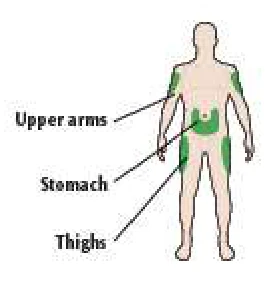
Inject SOLIQUA under the skin (subcutaneously) of your upper leg (thigh), stomach area (abdomen) or upper arm.
- You must change the injection site every day.
- If you are injecting the same area (thigh, abdomen or upper arm), you must use a different spot.
- This helps prevent skin changes in the spot where you inject SOLIQUA (see “Serious side effects and what to do about them” table)
- Do not inject where the skin has pits/dents, is thickened, or has lumps.
- Do not inject where the skin is itchy, tender, bruised, has red/brown/grey bumpy spots, scaly or hard, scarred or damaged.
- Do not inject SOLIQUA into a vein or muscle.
Usual dose:
- Based on your previous insulin use, your healthcare professional will tell you how much SOLIQUA you need each day.
- Your dose of SOLIQUA is administered as ‘units’. The dose window on the pen shows the number of units.
- The olive coloured SOLIQUA SoloSTAR pen delivers between 15 and 60 units of SOLIQUA. Do not use the SOLIQUA SoloSTAR pen for doses less than 15 units, or higher than 60 units.
- Inject SOLIQUA once a day within one hour before the first meal of the day. Use SOLIQUA at around the same time every day.
- Many factors may affect your usual SOLIQUA dose, which may include changes in your diet, activity, or work schedule. Follow your health professional’s instructions carefully. Consult your health professional if you notice your insulin requirements changing markedly.
Overdose:
If you have injected too much SOLIQUA, your blood sugar level may become too low (hypoglycemia). Check your blood sugar frequently. In general, to prevent hypoglycemia you must eat more food and monitor your blood sugar (see “Hypoglycemia” section above).
If you think you, or a person you are caring for, have taken too much SOLIQUA, contact a healthcare professional, hospital emergency department, regional poison control centre or Health Canada’s toll-free number, 1-844 POISON-X (1-844-764-7669) immediately, even if there are no signs or symptoms.
Missed dose:
- If you miss a dose of SOLIQUA, inject the missed dose within the hour prior to the next meal.
- Never take two doses on the same day to make up for a missed dose.
- Do not stop using SOLIQUA without talking to your healthcare professional. If you stop using it, your blood sugar levels can increase.
Possible side effects from using SOLIQUA:
These are not all the possible side effects you may have when taking SOLIQUA. If you experience any side effects not listed here, tell your healthcare professional.
Side effects may include:
- nausea, vomiting
- diarrhea
- cough
- runny or stuffy nose, sneezing
- flu (fever, tiredness, body aches)
- urinary tract infection
- back pain
- headache, dizziness
- muscle pain
- bruising, itching, redness or pain of the injection area
- sore throat
- urethritis (pain with urination)
- nervousness
- toothache
- falls
- weight gain
Serious side effects and what to do about them
| Frequency/Side Effect/Symptom | Talk to your healthcare professional | Stop taking this drug and get immediate medical help | |
|---|---|---|---|
| Only if severe | In all cases | ||
| Common | |||
| Hypoglycemia (low blood sugar): change in mood, change in vision, confusion, dizziness, fast heartbeat, feeling faint, weakness, tiredness, shaking, headache, hunger, sweating, clammy skin, nausea, vomiting, difficulty talking, trembling, tingling in hands or arms or mouth | ✓ | ||
| Bronchitis or Pneumonia (infection in the lungs): cough with mucous, fatigue, chest discomfort and/or pain, fever and chills, sweating, fatigue, shortness of breath | ✓ | ||
| Uncommon | |||
Dehydration from prolonged nausea, vomiting or diarrhea, or from not taking enough liquids by mouth: lightheadedness and fainting particularly upon standing | ✓ | ||
| Kidney problems including kidney failure: any change in the amount, frequency or colour (pale or dark) of urine | ✓ | ||
| Pancreatitis (inflammation of the pancreas): upper abdominal pain, fever, rapid pulse, nausea, vomiting, tenderness when touching the abdomen | ✓ | ||
| Gallbladder inflammation or gallstones: stomach pain, fever, nausea, vomiting, and yellowing of the skin and eyes | ✓ | ||
| Rare | |||
Changes of skin in the spot where you inject SOLIQUA:
Change the injection site with each injection to help prevent these changes | ✓ | ||
| Severe allergic reactions: itching, rash all over your body, shortness of breath, difficulty breathing or swallowing, fainting, sudden swelling of the face, lips, tongue or throat, rash, very fast heartbeat, low blood pressure | ✓ | ||
If you have a troublesome symptom or side effect that is not listed here or becomes bad enough to interfere with your daily activities, tell your healthcare professional.
Reporting Side Effects
You can report any suspected side effects associated with the use of health products to Health Canada by:
- Visiting the Web page on Adverse Reaction Reporting (canada.ca/drug-device-reporting) for information on how to report online, by mail or by fax; or
- Calling toll-free at 1-866-234-2345.
NOTE: Contact your healthcare professional if you need information about how to manage your side effects. The Canada Vigilance Program does not provide medical advice.
Storage:
Before first use (unopened pen):
- Store the pen in the refrigerator, between 2°C - 8°C
- Keep the pen the original package to protect from light
- Do not freeze
- Discard the pen if heated or frozen
After first use (opened/in use pen)
- Store the pen at room temperature (up to 25°C)
- Do not put your pen back in the refrigerator
- Do not store with needle attached
- Replace the pen cap after use to protect from light
- Discard the pen 28 days after first use or if heated or frozen
- Do not use SOLIQUA after the expiration date printed on the label
Keep out of reach and sight of children.
If you want more information about SOLIQUA:
- Talk to your healthcare professional
- Find the full Product Monograph that is prepared for healthcare professionals and includes this Patient Medication Information by visiting Health Canada Drug Product Database website (https://www.canada.ca/en/health-canada/services/drugs-health-products/drug-products/drug-product-database.html); the manufacturer’s website www.sanofi.com/en/canada, or by calling 1-888-852-6887.
Date of Authorization: 2025-12-11
INSTRUCTIONS FOR USE
SOLIQUA® SoloSTAR® (insulin glargine and lixisenatide injection) for subcutaneous injection
Read these instructions carefully before using your SOLIQUA SoloSTAR pen.
Do not share your SOLIQUA SoloSTAR pen with other people, even if the needle has been changed. You may give other people a serious infection, or get a serious infection from them.
SOLIQUA is an injectable prescription medicine that contains 2 diabetes medicines, insulin glargine and lixisenatide in a SoloStar® pen. The drug combination in this pen is only for the daily injection of 15 to 60 units of SOLIQUA. Each unit dialed contains 1 unit insulin glargine and 0.33 mcg lixisenatide.
Important information
- Check the label on the SOLIQUA SoloSTAR pen each time you inject to make sure you are using the correct medicine.
- Do not use your pen if it is damaged or if you are not sure that it is working correctly.
- Perform a safety test before each injection (see “Step 3: Do a safety test”).
- Always carry a spare pen and spare needles in case they are lost or stop working.
- Do not reuse needles. Always use a new sterile needle for each injection. This helps stop blocked needles, contamination and infection. If you reuse needles, you might not get your dose (underdosing) or get too much (overdosing).
- Do not use SOLIQUA in an insulin pump or inject SOLIQUA into your vein (intravenously) or muscle (intramuscularly).
- Do not mix SOLIQUA in any other type of insulin or liquid medicine prior to injection.
- Do not inject where the skin has pits, is thickened, or has lumps.
- Do not inject where the skin is itchy, tender, bruised, scaly or hard, scarred or damaged.
Change (rotate) your injection sites within the area you chose with each dose. Do not use the same spot for each injection. This helps avoid the following skin problems at the injection site:
- Skin thickening or pits (lipodystrophy) or lumps (lipohypertrophy).
- Itchy, scaly, red/brown/grey bumpy spots, tender, bruised, hard, scarred or damaged skin (cutaneous amyloidosis)
Learn to inject
- Talk with your healthcare professional about how to use the SOLIQUA SoloSTAR pen and how to inject correctly before using your pen.
- Ask for help if you have problems handling the pen, for example if you have vision problems.
- Read all of these instructions before using your pen. You may get too much or too little medicine if you do not follow the instructions correctly.
Need help?
If you have any questions about your pen or about diabetes, ask your healthcare professional, go to www.sanofi.ca or call sanofi-aventis at 1-888-852-6887.
Supplies you will need:
- 1 SOLIQUA SoloSTAR pen
- 1 new sterile needle (see Step 2 “Attach a new needle”)
- 1 alcohol swab
- a puncture-resistant container for used needles and pens (see “Throwing your pen away” at the end of these Instructions for Use)
Places to inject
Get to know your pen
STEP 1: Check your pen
Take a new pen out of the refrigerator at least 1 hour before you inject. Cold medicine is more painful to inject.
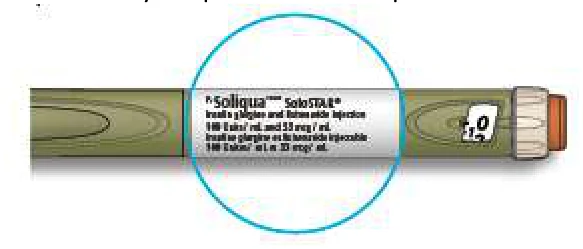
1A. Check the name and expiration date on the label of your pen.
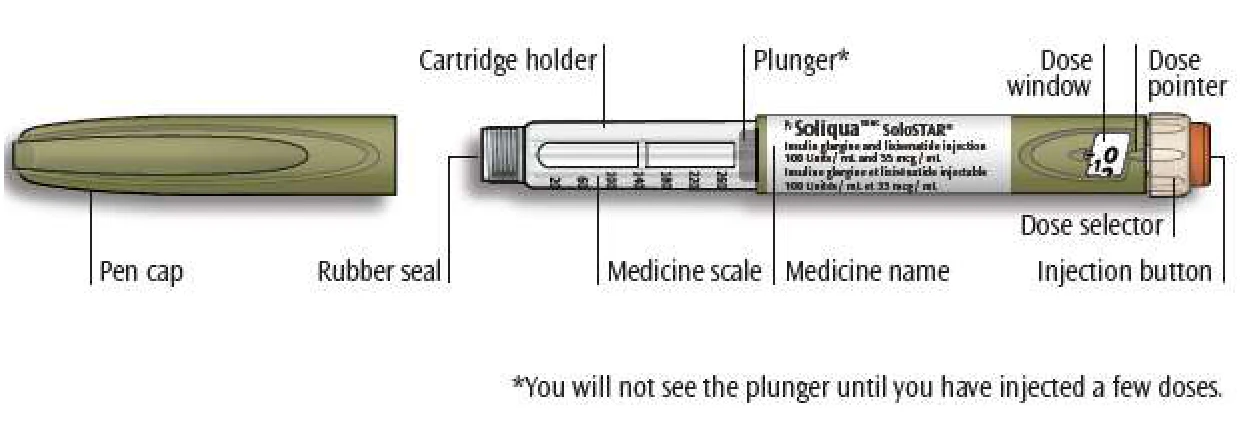
- Make sure you have the correct medicine. This pen is olive coloured with a dark orange injection button (see the “Get to know your pen” diagram).
- Do not use your pen after the expiration date on the pen label.
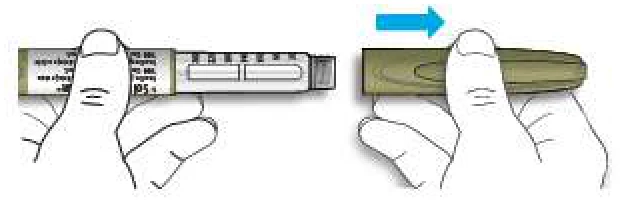
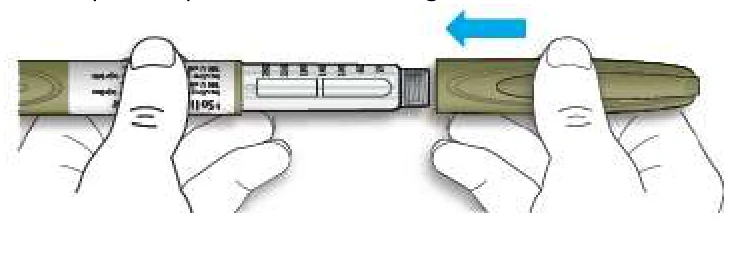
1B. Pull off the pen cap.
1C. Check that the medicine is clear and to almost colorless.
- If you see small particles, do not use this pen. Contact your healthcare professional.
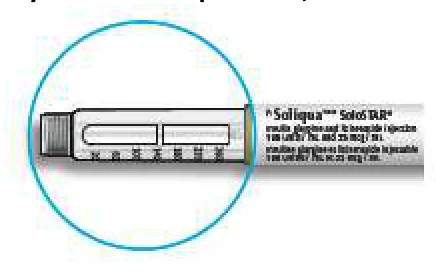
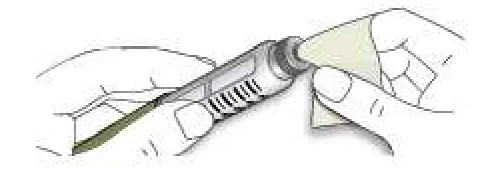
1D. Wipe the rubber seal with an alcohol swab.
If you have other injector pens
- Making sure you have the correct medicine is especially important if you have other injector pens.
STEP 2: Attach a new needle
Do not reuse needles. Always use a new sterile needle for each injection. This helps stop blocked needles, contamination and infection.
- Only use needles that are meant to be used with SOLIQUA SoloSTAR pen. Needles are supplied separately. If you do not know what needles to use, ask your healthcare professional or pharmacist.
2A. Take a new needle and peel off the protective seal.
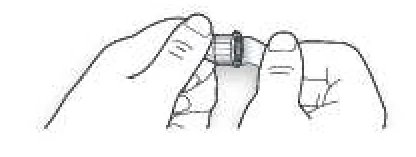
2B. Keep the needle straight and screw it onto the pen until fixed. Do not over-tighten.
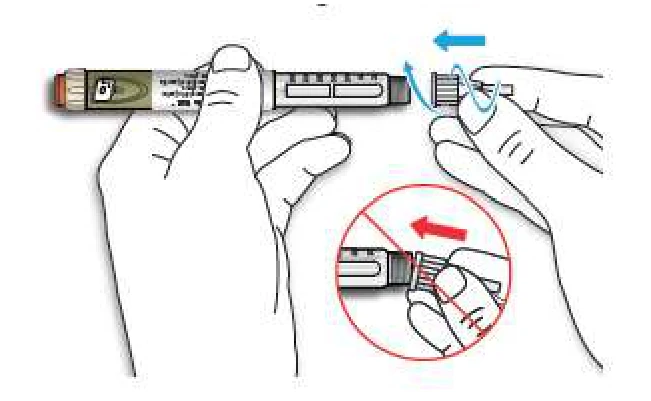
2C. Pull off the outer needle cap. Keep this for later.
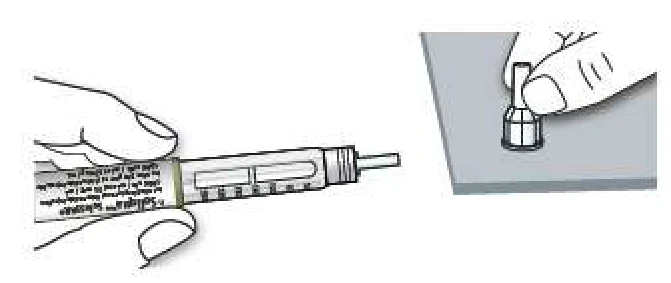
2D. Pull off the inner needle cap and throw it away.
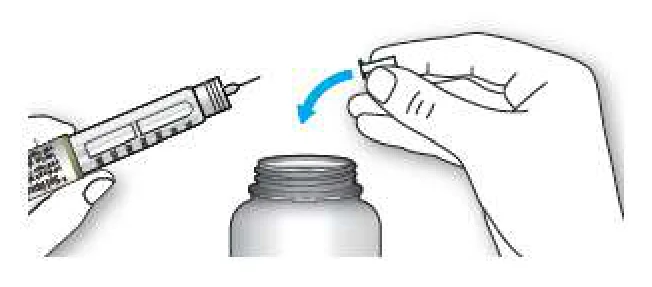
Handling needles
- Take care when handling needles to prevent needle-stick injury and cross-infection.
STEP 3: Do a safety test
Perform a safety test before each injection to:
- Check your pen and the needle to make sure they are working properly.
- Make sure that you get the correct dose.
3A. Select 2 units by turning the dose selector until the dose pointer is at the 2 mark.
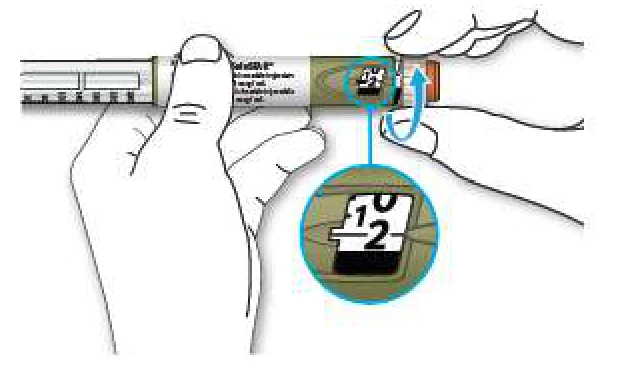
3B. Press the injection button all the way in.
- When the medicine comes out of the needle tip, your pen is working correctly.
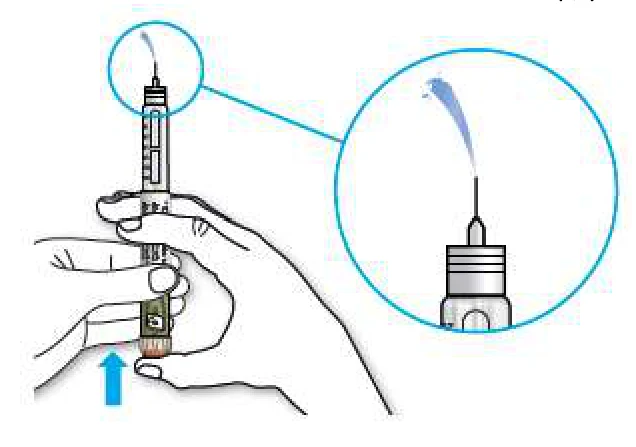
If no liquid appears:
- You may need to repeat this step up to 3 times before seeing the medicine.
If no medicine comes out after the third time, the needle may be blocked. If this happens:
- change the needle (see Step 6 to remove the needle and Step 2 to attach a new needle),
- then repeat the safety test (see Step 3A).
- Do not use your pen if still no medicine comes out of the needle tip. Use a new pen.
- Do not use a syringe to remove medicine from your pen.
If you see air bubbles
- You may see air bubbles in the medicine. This is normal, they will not harm you.
STEP 4: Select the dose
Do not select a dose or press the injection button without a needle attached. This may damage your pen.
- Only use this pen to inject your daily dose from 15 to 60 units. Do not change your dose unless your healthcare provider has told you to change your dose.
- Do not use this pen if you need a single daily dose that is more than 60 units.
- Do not use the pen if your single daily dose is less than 15 units.
4A. Make sure a needle is attached and the dose is set to ‘0’.
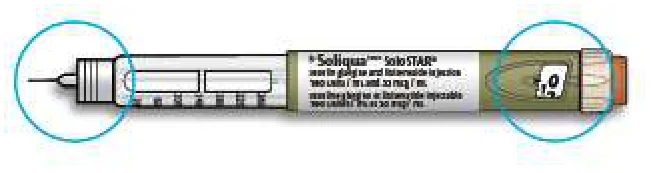
4B. Turn the dose selector until the dose pointer lines up with your dose.
- Do not dial your dose by counting the clicks, because you might dial the wrong dose. Always check the number in the dose window to make sure you dialed the correct dose.
- If you turn past your dose, you can turn back down.
- If there are not enough units left in your pen for your dose, the dose selector will stop at the number of units left.
- If you cannot select your full prescribed dose, use a new pen.
How to read the dose window
- Each line in the dose window equals 1 unit of SOLIQUA.
- Even numbers are shown in line with the dose pointer, as shown in picture
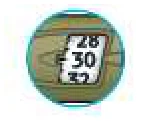
30 units selected
- Odd numbers are shown as a line between even numbers, as shown in picture.
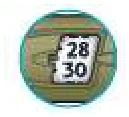
29 units selected
Units of medicine in your pen
- This pen contains 300 units of SOLIQUA and it is intended to be used for more than one dose.
STEP 5: Inject your dose
If you find it hard to press the injection button in, do not force it as this may break your pen. See the section after Step 5E below for help.
5A. Choose a place to inject as shown in the picture labeled “Places to inject.”
5B. Push the needle into your skin as shown by your healthcare professional.
- Do not touch the injection button yet.
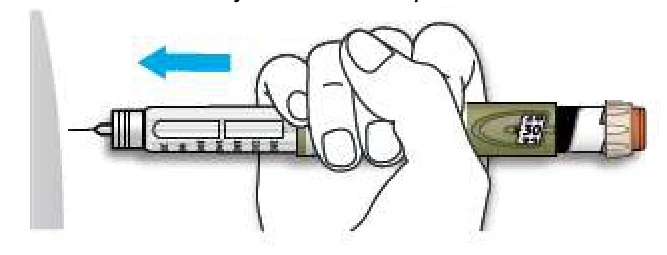
5C. Place your thumb on the injection button. Then press all the way in and hold.
- Do not press injection button at an angle. Your thumb could block the dose selector from turning.
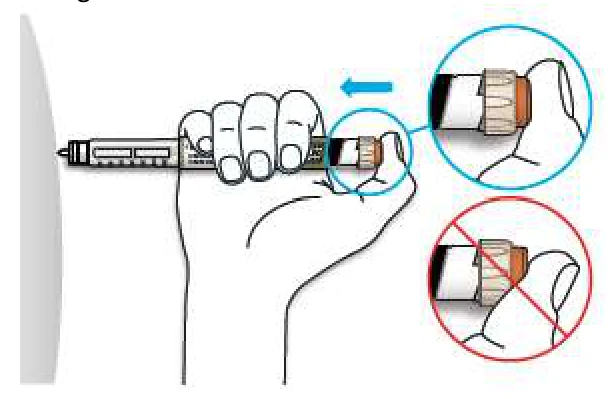
5D. Keep the injection button held in and when you see "0" in the dose window, slowly count to 10.
- This will make sure you get your full dose.
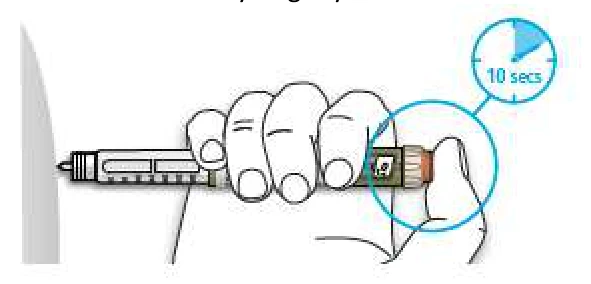
5E. After holding and slowly counting to 10, release the injection button. Then remove the needle from your skin.
If you find it hard to press the injection button in:
- Change the needle (see Step 6 to remove the needle and Step 2 to attach a new needle) then do a safety test (see Step 3).
- If you still find it hard to press in, get a new pen.
- Do not use a syringe to remove medicine from your pen.
STEP 6: Remove the needle
Take care when handling needles to prevent needle-stick injury and cross-infection.
- Do not put the inner needle cap back on.
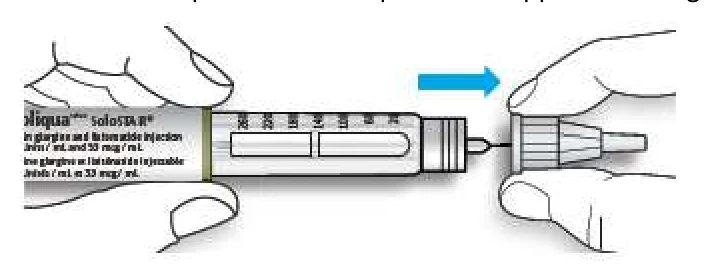
6A. Grip the widest part of the outer needle cap. Keep the needle straight and guide it into the outer needle cap back. Then push firmly on.
- The needle can puncture the cap if it is recapped at an angle.
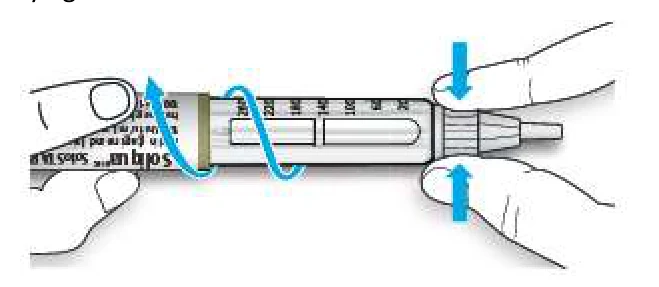
6B. Grip and squeeze the widest part of the outer needle cap. Turn your pen several times with your other hand to remove the needle.
- Try again if the needle does not come off the first time.
6C. Throw away the used needle in a puncture-resistant container (see “Throwing your pen away” at the end of these Instructions for Use).
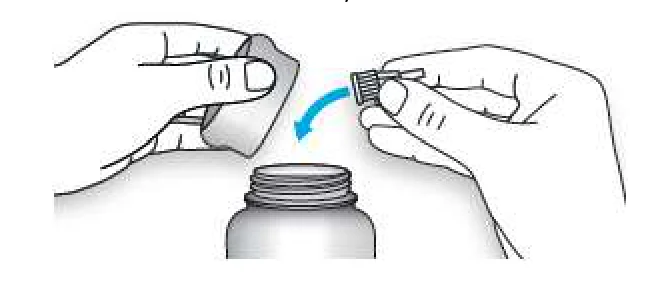
6E. Put your pen cap back on.
- Do not put the pen back in the refrigerator.
Use by
- Only use your pen for up to 28 days after its first use.
How to store your pen
Before first use
- Keep new pens in the refrigerator between 2°C to 8°C.
- Do not freeze. If you accidently freeze your pen, throw it away.
After first use
- Keep your pen at room temperature, up to 25°C.
- Do not put your pen back in the refrigerator.
- Do not store your pen with the needle attached.
- Store the pen with your pen cap on.
Keep this pen out of the sight and reach of children.
How to care for your pen
Handle your pen with care
- Do not drop your pen or knock it against hard surfaces.
- If you think that your pen may be damaged, do not try to fix it. Use a new one.
Protect your pen from dust and dirt
You can clean the outside of your pen by wiping it with a damp cloth (water only). Do not soak, wash or lubricate the pen. This may damage it.
Throwing your pen away
Replace the pen cap before disposing of your SOLIQUA SoloSTAR pen.
- Put the used SOLIQUA SoloSTAR pen in a sharps container right away after use. Do not dispose of the SOLIQUA SoloSTAR pen in your household trash.
If you do not have a sharps container, you may use a household container that is:
- made of a heavy-duty plastic,
- can be closed with a tight-fitting, puncture-resistant lid, without sharps being able to come out,
- upright and stable during use,
- leak-resistant, and
- properly labelled to warn of hazardous waste inside the container.
Such containers should be sealed and disposed of properly.
If you have any questions about SOLIQUA or about diabetes, ask your healthcare professional or call sanofi-aventis Canada Inc. at 1-888-852-6887.
Manufactured by sanofi-aventis Canada Inc., Toronto, Ontario, Canada M2R 3T4
Date of Authorization: 2025-12-11