


Product Monograph - SPC-Ganirelix
RECENT MAJOR LABEL CHANGES
None at time of the most recent authorization.
Certain sections or subsections that are not applicable at the time of the preparation of the most recent authorized product monograph are not listed.
TABLE OF CONTENTS
RECENT MAJOR LABEL CHANGES .............................................................................................................................. 2
PART I: HEALTH PROFESSIONAL INFORMATION ...................................................................................................... 4
1 INDICATIONS ..................................................................................................................................................... 4
1.1 Pediatrics ......................................................................................................................................................... 4
1.2 Geriatrics ......................................................................................................................................................... 4
2 CONTRAINDICATIONS ....................................................................................................................................... 4
4 DOSAGE AND ADMINISTRATION ...................................................................................................................... 4
4.1 Dosing Considerations .................................................................................................................................... 4
4.2 Recommended Dose and Dosage Adjustment ............................................................................................... 4
4.4 Administration ............................................................................................................................................... 4
4.5 Missed Dose ................................................................................................................................................... 5
5 OVERDOSAGE .................................................................................................................................................... 5
6 DOSAGE FORMS, STRENGTHS, COMPOSITION AND PACKAGING ................................................................... 5
7 WARNINGS AND PRECAUTIONS ....................................................................................................................... 6
7.1 Special Populations ........................................................................................................................................ 7
7.1.1 Pregnant Women .................................................................................................................................. 7
7.1.2 Breast-feeding ...................................................................................................................................... 7
7.1.3 Pediatrics ............................................................................................................................................... 7
7.1.4 Geriatrics ............................................................................................................................................... 7
8 ADVERSE REACTIONS ........................................................................................................................................ 8
8.1 Adverse Reaction Overview .......................................................................................................................... 8
8.2 Clinical Trial Adverse Reactions ..................................................................................................................... 8
8.2.1 Clinical Trial Adverse Reactions – Pediatrics ........................................................................................ 9
8.3 Less Common Clinical Trial Adverse Reactions ............................................................................................. 9
8.3.1 Less Common Clinical Trial Adverse Reactions – Pediatrics ................................................................ 9
8.4 Abnormal Laboratory Findings: Hematologic, Clinical Chemistry and Other Quantitative Data ................... 9
8.5 Post-Market Adverse Reactions ..................................................................................................................... 9
9 DRUG INTERACTIONS ........................................................................................................................................ 9
9.2 Drug Interactions Overview ........................................................................................................................... 9
9.3 Drug-Behavioural Interactions ....................................................................................................................... 9
9.4 Drug-Drug Interactions ................................................................................................................................. 10
9.5 Drug-Food Interactions ............................................................................................................................... 10
9.6 Drug-Herb Interactions ............................................................................................................................... 10
9.7 Drug-Laboratory Test Interactions .............................................................................................................. 10
10 CLINICAL PHARMACOLOGY ............................................................................................................................. 10
10.1 Mechanism of Action ................................................................................................................................. 10
10.2 Pharmacodynamics ................................................................................................................................... 10
10.3 Pharmacokinetics ...................................................................................................................................... 12
11 STORAGE, STABILITY AND DISPOSAL ............................................................................................................... 14
12 SPECIAL HANDLING INSTRUCTIONS ................................................................................................................ 14
PART II: SCIENTIFIC INFORMATION ........................................................................................................................ 15
13 PHARMACEUTICAL INFORMATION .................................................................................................................. 15
14 CLINICAL TRIALS ............................................................................................................................................... 16
14.1 Trial Design and Study Demographics ...................................................................................................... 16
14.2 Study Results .............................................................................................................................................. 16
14.3 Comparative Bioavailability Studies ........................................................................................................ 18
15 MICROBIOLOGY................................................................................................................................................ 19
16 NON-CLINICAL TOXICOLOGY ............................................................................................................................ 19
17 SUPPORTING PRODUCT MONOGRAPH .................................................................................................................. 20
PATIENT MEDICATION INFORMATION ................................................................................................................... 21
PART I: HEALTH PROFESSIONAL INFORMATION
1 INDICATIONS
SPC-Ganirelix (ganirelix injection) is indicated for the prevention of premature LH surges in women undergoing controlled ovarian hyperstimulation (COH).
1.1 Pediatrics
Pediatrics (< 18 years of age):
Ganirelix injection is not indicated for pediatric use. Based on the data submitted and reviewed by Health Canada, the safety and efficacy of SPC-Ganirelix, in pediatric patients has not been established.
1.2 Geriatrics
Geriatrics: Ganirelix injection is not indicated for geriatric use No data are available to Health Canada.
2 CONTRAINDICATIONS
SPC-Ganirelix is contraindicated in patients who are:
Hypersensitive to the active substance or to any similar peptides (such as GnRH or other GnRH analog) or to any Components including dry natural rubber/latex which is contained in the needle shield. For a complete listing, see DOSAGE FORMS, STRENGTHS, COMPOSITION AND PACKAGING.
- Known or suspected pregnancy or lactation.
- Moderate or severe impairment of hepatic or renal function.
4 DOSAGE AND ADMINISTRATION
4.1 Dosing Considerations
Prior to therapy with SPC-Ganirelix (ganirelix injection), patients should be informed of the length of treatment and monitoring procedures that will be required. The risk of possible reactions to the drug should be discussed (see ADVERSE REACTIONS).
4.2 Recommended Dose and Dosage Adjustment
Health Canada has not authorized an indication for pediatric use.
4.4 Administration
After initiating FSH therapy on Day 2 or 3 of the cycle, SPC-Ganirelix 250 mcg should be administered subcutaneously once daily during the early to mid follicular phase to take advantage of endogenous pituitary FSH secretion and therefore to potentially reduce the requirement for exogenously administered FSH. Treatment with SPC-Ganirelix should be continued daily until the day of hCG administration. In normal practice, this period is usually around 5 days, although SPC-Ganirelix treatment has ranged from 1 to 19 days in clinical trials. When an appropriate number of follicles of adequate size (≥ 17 mm in diameter) are present, as assessed by ultrasound, final maturation of follicles could be induced by administering hCG.
The time between two SPC-Ganirelix injections as well as between the last SPC-Ganirelix injection and the hCG injection should not exceed 30 hours, otherwise a premature ovulation may occur. Therefore, if the patient normally injects SPC-Ganirelix in the morning, the last of the SPC-Ganirelix injections in the series should be given on the same day as the hCG is given. If the patient normally injects SPC-Ganirelix in the afternoon, the last SPC-Ganirelix injection should be given in the afternoon prior to the day the hCG is given.
The administration of hCG should be withheld in cases where the ovaries are abnormally enlarged on the last day of FSH therapy. This will reduce the chance of developing OHSS. Air bubble(s) may be seen in the pre-filled syringe. This is expected, and removal of the air bubble(s) is not needed
4.5 Missed Dose
If a patient forgot a dose, it should be administered as soon as possible.
A double dose should not be administered to make up for forgotten individual doses.
If the patient is more than 6 hours late (so the time between two injections is longer than 30 hours), the dose should be administered as soon as possible.
5 OVERDOSAGE
There have been no reports of overdosage with ganirelix injection in humans.
For the most recent information in the management of a suspected drug overdose, contact your regional poison control centre or Health Canada’s toll-free number 1-844 POISON-X (1-844-769-7669).
6 DOSAGE FORMS, STRENGTHS, COMPOSITION AND PACKAGING
Table 1 – Dosage Forms, Strengths, Composition and Packaging
| Route of Administration | Dosage Form/Strength/Composition | All Non-medicinal Ingredients |
|---|---|---|
| Subcutaneous | Solution / ganirelix acetate equivalent to 250 mcg ganirelix / 0.5 mL | glacial acetic acid, mannitol, sodium hydroxide, water for injection |
SPC-Ganirelix is supplied as a clear colorless solution free from visible particulate matter filled in 1ml prefilled syringe containing ganirelix acetate equivalent to 250 mcg ganirelix/0.5 mL,.
Each SPC-Ganirelix pre-filled syringe is affixed with a staked needle 27 gauge x 1/2 inch, closed by a rigid needle shield. Each pre-filled syringe & needle is provided within carton.
Available as a single syringe.
Syringe plunger is not made with natural rubber latex. However, the needle shield of this product contains natural rubber latex which comes into contact with the product and may cause allergic reactions (see CONTRADICTIONS, DOSAGE FORMS, STRENGTHS, COMPOSITION AND PACKAGING, and
PHARMACEUTICAL INFORMATION).
Preservative-free, ready-to-use, sterile, single-use (discard immediately after use).
7 WARNINGS AND PRECAUTIONS
SPC-Ganirelix should be prescribed by physicians who are experienced in infertility treatment. Before starting treatment with SPC-Ganirelix, pregnancy must be excluded. Safe use of SPC-Ganirelix during pregnancy has not been established (see CONTRAINDICATIONS).
General
Hypersensitivity reactions and acute anaphylactic reactions have been reported with GnRH antagonists, including ganirelix injection. Anti-ganirelix antibody formation has not been reported with the use of ganirelix injection. However, antibody formation has been reported with other GnRH analogs.
Use of ganirelix injection in patients with signs and symptoms of active allergic conditions has not been evaluated, therefore, special care should be taken for these patients. Very rare cases of hypersensitivity reactions (both generalized and local), including various symptoms such as rash, facial swelling and dyspnea, have been reported during post-marketing surveillance, as early as with the first dose, among patients administered ganirelix injection. These events have included anaphylaxis (including anaphylactic shock), angioedema, and urticaria. (see ADVERSE REACTIONS, 8.5 Post-Market Adverse Reactions). If a hypersensitivity reaction is suspected, SPC-Ganirelix should be discontinued and appropriate treatment administered. In the absence of clinical experience, SPC-Ganirelix treatment is not advised in women with severe allergic conditions
The needle shield of this product contains dry natural rubber/latex which comes into contact with this product and may cause allergic reactions (see CONTRAINDICATIONS, DOSAGE FORMS, STRENGTHS, COMPOSITION AND PACKAGING, and PHARMACEUTICAL INFORMATION).
Efficacy and safety of ganirelix injection have not been established in women weighing > 90 kg or < 50 kg.
Efficacy and safety of ganirelix injection have not been studied in women for more than 3 consecutive cycles.
Carcinogenesis and Mutagenesis
See NON-CLINICAL TOXICOLOGY
Cardiovascular
See Pharmacodynamics
Monitoring and Laboratory Tests
The only relevant abnormal laboratory value was a neutrophil count ≥ 8.3 (*109/L) in 11.9% of the subjects. In addition, downward shifts within the ganirelix injection group were observed for hematocrit and total bilirubin. The clinical significance of these findings was not determined.
Reproductive Health: Female and Male Potential
Fertility
Since infertile women undergoing assisted reproduction, and particularly IVF, often have tubal abnormalities the incidence of ectopic pregnancies might be increased. Early ultrasound confirmation that a pregnancy is intrauterine is therefore important.
Ovarian hyperstimulation syndrome (OHSS) may occur during or following ovarian stimulation. OHSS must be considered an intrinsic risk of gonadotrophin stimulation. OHSS should be treated symptomatically, e.g. with rest, intravenous infusion of electrolyte solutions or colloids and heparin.
7.1 Special Populations
7.1.1 Pregnant Women
SPC-Ganirelix may cause fetal harm when administered to a pregnant woman. No teratogenic effects were observed in rats or rabbits, although, at higher concentrations (≥10 mcg/kg/day in rats and ≥ 30 mcg/kg/day in rabbits), an increase in the extent of litter resorption was observed. No treatment related changes in fertility, physical, or behavioral characteristics were observed in the offspring of female rats treated with ganirelix injection during pregnancy and lactation. Use of ganirelix injection in human pregnancy has not been studied. Because animal reproduction studies are not always predictive of human response, this drug should not be used during pregnancy. If this drug is used during pregnancy, the patient should be apprised of the potential hazard to the fetus.
The incidence of congenital malformations after Assisted Reproductive Technologies (ART) may be slightly higher than after spontaneous conceptions. This slightly higher incidence is thought to be related to differences in parental characteristics (e.g., maternal age, sperm characteristics) and to the higher incidence of multiple gestations after ART. There are no indications that the use of GnRH antagonists during ART is associated with an increased risk of congenital malformations. In clinical trials investigating more than 1000 newborns it has been demonstrated that the incidence of congenital malformations in children born after COH treatment using ganirelix injection is comparable with that reported after COH treatment using a GnRH agonist.
7.1.2 Breast-feeding
SPC-Ganirelix should not be used by lactating women. It is not known whether this drug is excreted in human milk.
7.1.3 Pediatrics
Based on the data submitted and reviewed by Health Canada, the safety and efficacy of ganirelix injection in pediatric patients has not been established; therefore, Health Canada has not authorized an indication for pediatric use.
7.1.4 Geriatrics
No data are available to Health Canada, therefore Health Canada has not authorized an indication for geriatric use.
8 ADVERSE REACTIONS
8.1 Adverse Reaction Overview
The following clinically significant adverse effects may be associated with Assisted Reproductive Technologies (ART) and/or treatment of SPC-Ganirelix (see 7 WARNINGS AND PRECAUTIONS and 14 CLINICAL TRIALS)
- Ectopic pregnancy
- Miscarriage
- Ovarian Hyperstimulation syndrome
- Birth defects
8.2 Clinical Trial Adverse Reactions
Clinical trials are conducted under very specific conditions. The adverse reaction rates observed in the clinical trials; therefore, may not reflect the rates observed in practice and should not be compared to the rates in the clinical trials of another drug. Adverse reaction information from clinical trials may be useful in identifying and approximating rates of adverse drug reactions in real-world use.
The safety of ganirelix injection was evaluated in two randomized, parallel-group, multicenter controlled clinical studies. Treatment duration for ganirelix injection ranged from 1 to 14 days. Table 2 represents maternal adverse events (AEs) from first day of ganirelix injection administration until confirmation of pregnancy by ultrasound in ganirelix injection treated subjects without regard to causality
Table 2: Incidence of AEs (All-subjects-treated group).
| Group | |||||
|---|---|---|---|---|---|
| Group | |||||
WHO system-organ class Preferred term | Ganirelix injection N = 872 | Buserelin N = 236 | |||
WHO system-organ class Preferred term | Ganirelix injection N = 872 | Buserelin N = 236 | |||
| All N (%) | All N (%) | ||||
| All N (%) | All N (%) | ||||
Reproductive disorders, female Abdominal pain-gynecological Ovarian hyperstimulation syndrome Vaginal bleeding Dysmenorrhea | 38 (4.4) 19 (2.2) 14 (1.6) 0 | 8 (3.4) 14 (5.9) 8 (3.4) 8 (3.4) | |||
Central and peripheral nervous system disorders Headache Dizziness | 71 (8.1) 19 (2.2) | 23 (9.7) 3 (1.3) | |||
Fetal disorders Death fetal Abortion missed | 29 (3.3) 7 (0.8) | 13 (5.5) 3 (1.3) | |||
Gastro-intestinal system disorders Nausea Abdominal pain | 22 (2.5) 16 (1.8) | 4 (1.7) 4 (1.7) | |||
Body as a whole - general disorders Fever Fatigue Pain Hot flushes | 4 (0.5) 23 (2.6) 10 (1.1) 15 (1.7) | 3 (1.3) 2 (0.8) 1 (0.4) 3 (1.3) | |||
Respiratory system disorders Upper respiratory tract infection Rhinitis | 6 (0.7) 9 (1.0) | 4 (1.7) 1 (0.4) | |||
Application site disorders Injection site reaction | 37 (4.2) | 5 (2.1) | |||
Red blood cell disorder Anemia | 1 (0.1) | 3 (1.3) | |||
n = number of subjects with AEs or drug-related AEs and N = total number of subjects in the group.
8.2.1 Clinical Trial Adverse Reactions – Pediatrics
Not applicable
8.3 Less Common Clinical Trial Adverse Reactions
See Clinical Trial Adverse Reactions.
8.3.1 Less Common Clinical Trial Adverse Reactions – Pediatrics
Not applicable.
8.4 Abnormal Laboratory Findings: Hematologic, Clinical Chemistry and Other Quantitative Data
Not applicable.
8.5 Post-Market Adverse Reactions
During post-marketing surveillance, very rare cases of hypersensitivity reactions, including rash, facial swelling and dyspnea, anaphylaxis (including anaphylactic shock), angioedema, and urticaria have been reported, as early as with the first dose, among patients administered SPC-Ganirelix
Drug Abuse and Dependence
There have been no reports of abuse or dependence of SPC-Ganirelix.
9 DRUG INTERACTIONS
9.2 Drug Interactions Overview
See Drug-Drug Interactions.
9.3 Drug-Behavioural Interactions
Interactions of ganirelix injection with lifestyle have not been established.
9.4 Drug-Drug Interactions
Formal in vivo or in vitro drug-drug interaction studies have not been conducted. Since SPC-Ganirelix can suppress the secretion of pituitary gonadotropins, dose adjustments of exogenous gonadotropins may be necessary when used during COH.
9.5 Drug-Food Interactions
Interactions of ganirelix injection with food have not been established.
9.6 Drug-Herb Interactions
Interactions of ganirelix injection with herbs have not been established.
9.7 Drug-Laboratory Test Interactions
Interactions of ganirelix injection with laboratory tests have not been established.
10 CLINICAL PHARMACOLOGY
10.1 Mechanism of Action
The pulsatile release of GnRH stimulates the synthesis and secretion of luteinizing hormone (LH) and follicle-stimulating hormone (FSH). The frequency of LH pulses in the mid and late follicular phase is approximately 1 pulse per hour. These pulses can be detected as transient rises in serum LH. At midcycle, a large increase in GnRH release results in an LH surge. The midcycle LH surge initiates several physiologic actions including: resumption of meiosis in the oocyte, ovulation and luteinization. Luteinization results in a rise in serum progesterone with an accompanying decrease in estradiol levels.
SPC-Ganirelix acts by competitively blocking the GnRH receptors on the pituitary gonadotroph and subsequent transduction pathway. It induces a rapid, reversible suppression of gonadotropin secretion. The suppression of pituitary LH secretion by ganirelix injection is more pronounced than that of FSH. An initial release of endogenous gonadotropins has not been detected with ganirelix injection which is consistent with a rapid antagonistic effect.
SPC-Ganirelix may be displaced during competition for the GnRH receptor by GnRH agonists. This may result in the stimulation of significant LH release and, thus, trigger an LH surge. Upon discontinuation of SPC-Ganirelix pituitary LH and FSH levels are fully recovered within 48 hours.
10.2 Pharmacodynamics
Ganirelix acetate is a synthetic decapeptide with high antagonistic activity against naturally occurring gonadotropin-releasing hormone (GnRH). Ganirelix acetate is derived from native GnRH with substitutions of amino acids at positions 1, 2, 3, 6, 8, and 10.
The pharmacologic effects of ganirelix acetate were evaluated in reproductive pharmacology studies in females and males and in several general pharmacology studies.
The effects of ganirelix acetate on the female reproductive endocrine system, specifically, ovulation, mating and pregnancy were evaluated in rats and dogs.
Single doses of Org 37462 (research code for ganirelix acetate), ranging from 0.125 to 2.0 mcg/rat (10 or 12 rats/group), were administered by SC injection to rats at noon of pro-oestrus. This resulted in a dose-related inhibition of ovulation with an ED50 of 0.29 mcg/rat which is approximately 1.4 mcg/kg. The corresponding ED50 value for another GnRH antagonist, detirelix, was 2.1 mcg/kg. The estrus cycle returned to normal rapidly following cessation of treatment.
A single SC dose of 3 mcg/kg Org 37462 to female rats during pro-estrus inhibited ovulation completely. Org 37462 also prevented ovulation when it was given at noon on the day before pro-oestrus as a suspension in corn oil (ED50 40 mcg/kg). This anti-ovulatory effect of Org 37462 is thought to be mediated by inhibiting the pre-ovulatory surge of gonadotropins.
The effects on mating and fertility were assessed after once daily SC injections at a dose of 2.5 mcg/kg of Org 37462 in female rats. Mating of female rats to adult sexually-experienced males after at least two weeks of Org 37642 treatment (2.5 mcg/kg) resulted in a significant increase in the incidence of vaginal oestrus. There were no significant differences in mating and fertility parameters between vehicle- and Org 37462-treated females, except for a significantly lower mean number of ova and a significantly lower mean number of live pups delivered. Extending the dose to 10 mcg/kg did not alter the percentage of rats mating during treatment or 7 weeks after cessation of treatment. The fertility of mated rats, however, was significantly reduced as shown by a decreased pregnancy rate. A significantly greater proportion of the Org 37462-treated rats mated on the first day of cohabitation; the reduction of fertility was attributed to an altered relationship between receptivity and ovulation. The effects on fertility were reversible.
Administration of Org 37462 resulted in reduced testosterone secretion in male rats, dogs and monkeys. There was a good relationship between plasma concentrations of Org 37462 and suppression of plasma testosterone levels. Org 37462 induces reversible suppression of the release of endogenous gonadotropins without initial stimulation inherent to GnRH agonists.
The effects of ganirelix acetate were investigated on histamine release and histamine -mediated effects, such as cardiovascular symptoms. Other general pharmacological properties of ganirelix were evaluated in vivo in mice, rats, dogs and monkeys. These studies included investigation of the effects of ganirelix on the central nervous, respiratory, cardiovascular, renal and digestive systems.
Org 37462 (dose range, 0.1-1000 mcg/kg SC) administered to mice, induced a small dose-related (range, 1.0-100 mcg/kg SC) increase in normal separation behaviour, miosis and a slight increase in body temperature. Org 37462 (range, 1-1000 mcg/kg SC) did not disrupt neurological or skeletal muscle co-ordination and function and did not significantly alter the onset or duration of the loss of the righting reflex induced by hexobarbital in mice. At a SC dose of 100 mcg/kg, however, the duration of action of hexobarbital was increased slightly. Org 37462 did not protect mice against a maximal electroshock induced tonic hind-limb extensor seizure, nor did it significantly affect pentylenetetrazol-induced tonic flexor and extensor seizures.
The capacity of Org 37462 to release histamine in vitro as compared to the second generation GnRH antagonist (detirelix) was assessed by means of a mixed rat peritoneal cell assay. The concentrations of antagonist that released 50% of the releasable histamine pool EC50 (mean ± SEM) for Org 3 7462 and detirelix were 17.8 ± 5.0 and 0.21 ± 0.03 mcg/mL, respectively. Thus, Org 37462 was found to be significantly less active than detirelix in this in vitro assay for histamine release.
The potential hypotensive activities of Org 37462 (range, 300-3000 mcg/kg IV) and detirelix (range,
30-300 mcg/kg IV) were studied in pentobarbital-anaesthetised rats (4 rats/group). The mean dose required to reduce mean blood pressure by 50 mmHg (ED50 dose and 95% confidence limits) was 901 mcg/kg (740-1140) for Org 37462 and 41 mcg/kg (22-54) for detirelix. No generalised hypersensitivity reactions in animals after SC administration have been observed. Thus, Org 37462 has less histamine releasing potential and therefore less hypotensive activity when compared to second generation GnRH antagonists.
In rats, Org 37462 (1-1000 mcg/kg SC or 0.1-100 mcg/kg IV) did not affect blood pressure or heart rate, nor did it elicit any diuretic, natriuretic or kaliuretic activity.
Org 37462 at SC doses of 1.0 and 10-100 mcg/kg (10 rats/group) increased the secretion of gastric acid and total milli-equivalents of hydrogen ions (mEq H+) by about 50% in pylorus-ligated male rats, but the increases were not dose dependent.
Org 37462 did not induce any significant effect on respiratory rate, respiratory flow rate, tidal volume, minute volume, venous or arterial blood pO2, pCO2 and pH in 4 pentobarbital-anesthetized dogs, each receiving the entire dose range of 1-1000 mcg/kg SC.
SC administration of Org 37462 (range, 1-1000 mcg/kg) to 4 cynomolgus monkeys/group had no significant effect on arterial blood pressure, heart rate or behaviour.
Administration of ganirelix acetate up to 1 mg/kg SC to animals evoked no effects on the central nervous, respiratory, cardiovascular and renal systems.
10.3 Pharmacokinetics
After IV dose a t½ was observed of 1.35 h in rats and 5 h in monkeys. This half-life is longer than one would expect of a peptide drug and inherent to the structure of ganirelix acetate. The half -life of GnRH is only a few minutes. Because of the presence of five D -amino acids ganirelix acetate is highly resistant to enzymatic degradation; it is not degraded in vitro by trypsin or chymotrypsin or by incubation with plasma. After SC administration the pharmacokinetic parameters were strongly influenced by the dosage because higher dosages resulted in depot formation at the SC injection site. The SC dose was rapidly released into the systemic circulation but as a result of depot formation tmax values increased with higher dosages. Absorption was probably the rate-limiting step for the systemic elimination of Ganirelix acetate. The bioavailability of ganirelix acetate after oral or nasal administration was low: < 1% relative to IV and 6% relative to SC administration, respectively.
Following a single IV dose, during the first few hours ganirelix acetate was predominantly found in tissues involved in metabolism and/or elimination. Almost all of the other organs/tissues sampled contained less than 1% of the dose at all time points.
Three metabolites, which were truncated peptides of the parent decapeptide were identified in the rat bile. Plasma and urine contained mostly undegraded ganirelix.
Whereas rat plasma did not contain metabolites, monkey plasma contained the 1-7 heptapeptide.
Excretion was mainly biliary; 13-26% and 58-84% of dosed radioactivity was recovered in urine and faeces, respectively.
The pharmacokinetic parameters of single and multiple injections of ganirelix injection in healthy adult females are summarized in Table 3. Steady state serum concentrations were reached after 2 to 3 days of treatment. The pharmacokinetics are dose -proportional in the dose range of 125 - 500 mcg.
Table 3 - Mean (SD) pharmacokinetic parameters of 250 mcg of ganirelix injection following a single subcutaneous (SC) injection (n=15) and daily SC injections (n=15) for seven days.
| Cmax | Tmax | t½ (h) | AUC0-∞ | CL (L/hr) | Vd L | |
|---|---|---|---|---|---|---|
| Ganirelix injection Single dose | 14.8(3.2) | 1.1(0.3) | 12.8(4.3) | 96(12) | 2.4 (0.2)† | 43.7(11.4)† |
| Ganirelix injection multiple dose | 11.2(2.4) | 1.1(0.2) | 16.2 (1.6) | 77.1(9.8) | 3.3 (0.4)* | 76.5(10.3) |
tmax Time to maximum concentration
t1/2 Elimination half-life
Cmax Maximum serum concentration
AUC Area under the curve; Single dose: AUC 0-∞; multiple dose AUC 0-24
Vd Volume of distribution
† Based on intravenous administration
CL Clearance = Dose/AUC0-∞
* Apparent Clearance
Absorption
The geometric mean absolute bioavailability of ganirelix acetate following a single 250 mcg subcutaneous injection to healthy female volunteers is 91.1%. Maximum serum concentrations [Cmax (SD)] following 250 mcg of ganirelix acetate were 14.8 (3.2) and 11.2 (2.4) ng/mL for single and multiple doses, respectively. Tmax is approximately one hour after subcutaneous injection.
Distribution:
The mean (SD) volume of distribution of ganirelix acetate in healthy females following intravenous administration of a single 250 mcg dose is 43.7(11.4) liters (L). The apparent volume of distribution (SD) following a SC injection of 250 mcg daily for seven days is 76.5(10.3) L. In vitro protein binding to human plasma was 81.9%.
Metabolism:
Following intravenous administration of radiolabeled ganirelix injection to healthy female volunteers, ganirelix acetate was the major compound present in the plasma (50-70% of administered dose) and urine (17.0-18.4% of administered dose) up to 4 hours after a single dose. There was no ganirelix acetate found in the feces. The 1-4 peptide metabolite of ganirelix acetate was the primary compound observed in the feces.
Elimination
The elimination half-life [t1/2 (SD)] following a single 250 mcg SC dose of ganirelix acetate to healthy female subjects was 12.8(4.3) hours. The t1/2 (SD) following daily 250 mcg SC doses of ganirelix acetate for seven days was 16.2(1.6) hours. The apparent clearance (SD) following daily 250 mcg SC doses of ganirelix injection for seven days was 3.3(0.4) L/hour. Approximately 90% of radiolabeled ganirelix acetate was excreted in the urine and feces within 192 hours following a single intravenous dose. On average, 97.2% of the total ganirelix acetate dose administered was recovered in the feces and urine (75.1% and 22.1%, respectively).
11 STORAGE, STABILITY AND DISPOSAL
Store between 15 - 30°C. Protect from light. Do not freeze. SINGLE USE ONLY.
Keep the product in its outer cardboard covering when not in use.
12 SPECIAL HANDLING INSTRUCTIONS
Inspect the solution before use. It must only be used if it is clear and without particulate matter.
The drug product should undergo a visual check for discolouration and leakage prior to administration, as well as strictly adhere to aseptic techniques at all times.
PART II: SCIENTIFIC INFORMATION
13 PHARMACEUTICAL INFORMATION
Drug Substance
Proper name: Ganirelix acetate
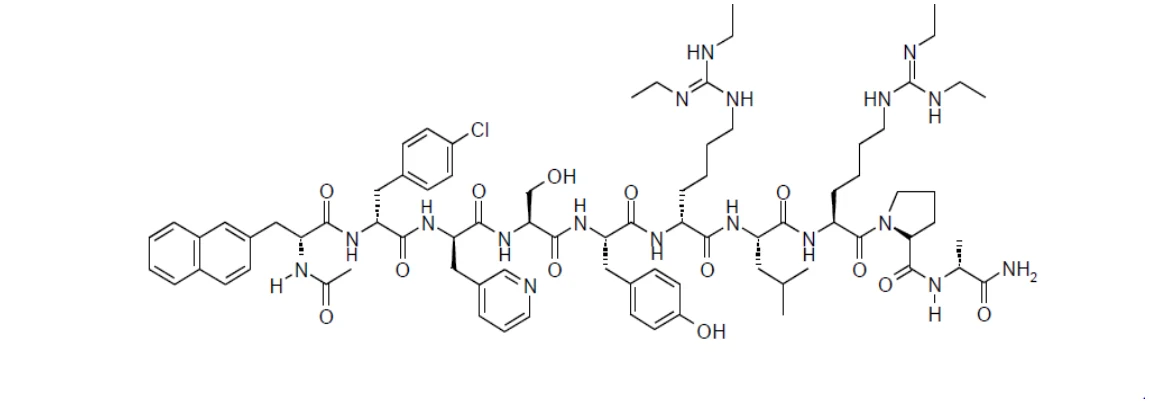
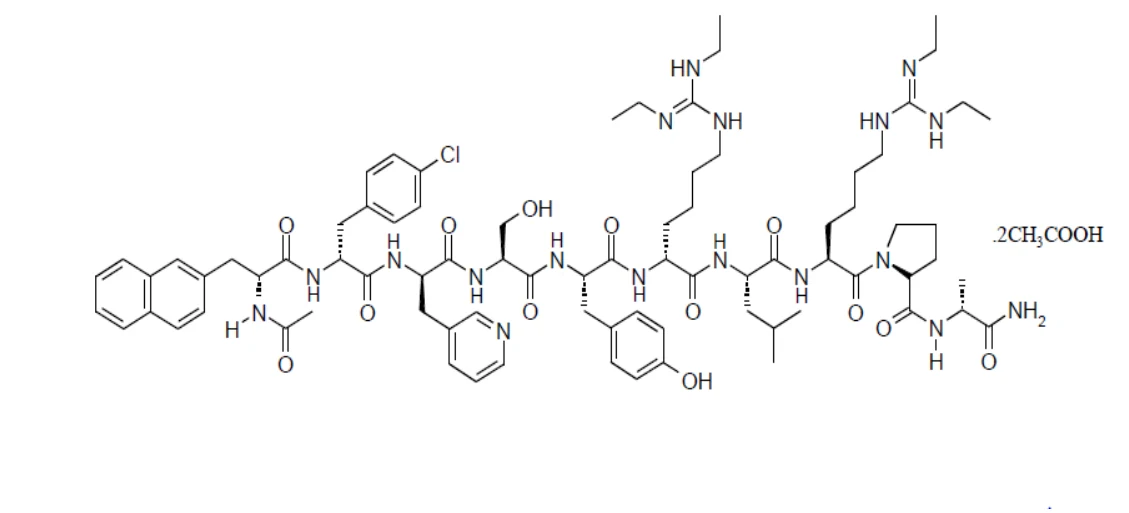
Chemical name: N-Acetyl-3-(2-naphthalenyl)-D-alanyl-4-chloro-D-phenylalanyl-3-(3-pyridinyl)-D-alanyl-L-seryl-L-tyrosyl-N’,N’’-diethyl-D-homoarginyl-L-leucyl-N’,N’’-diethyl-L-homoarginyl-L-prolyl-D-alaninamide, diacetate (salt)
Free base/Free Peptide:
Molecular formula and molecular mass: C80H113ClN18O13 and 1570.35 g/mol
Diacetate:
Molecular formula and molecular mass: C80H113ClN18O13. 2C2H4O2 and 1690.42 g/mol
Physicochemical properties: Ganirelix acetate is a white to off-white powder, soluble in water. The specific rotation is between -45° and -35° (On anhydrous, acetic acid and solvent free basis).
14 CLINICAL TRIALS
14.1 Trial Design and Study Demographics
The efficacy of ganirelix injection was established in three adequate and well -controlled clinical studies. For all studies, the administration of exogenous recombinant FSH [Follistim™ (follitropin beta for injection)] 150 IU daily was initiated on the morning of Day 2 or 3 of a natural menstrual cycle. ganirelix injection was administered on the morning of Day 7 or 8 (Day 6 of recombinant FSH administration). The dose of recombinant FSH administered was adjusted according to individual responses starting on the day of initiation of ganirelix injection . Both recombinant FSH and ganirelix acetate were continued daily until appropriate follicular growth was achieved for administration of hCG [Pregnyl® (chorionic gonadotropin for injection)].
Following hCG administration, ganirelix injection and recombinant FSH administration were discontinued. Oocyte retrieval, followed by in vitro fertilization (IVF) or intracytoplasmatic sperm injection (ICSI), was subsequently performed. ganirelix injection has shown to be safe and effective in women undergoing multiple treatment cycles (up to a maximum of 3 cycles).
In a multicenter, double-blind, randomized, dose -finding study, the safety and efficacy of ganirelix injection was evaluated for the prevention of LH surges in women undergoing COH with recombinant FSH. Ganirelix acetate doses ranging from 62.5 mcg to 2,000 mcg and recombinant FSH were administered to 332 patients undergoing COH for IVF (see Table 4).
Median serum LH on the day of hCG administration decreased with increasing doses of ganirelix acetate Median serum E2 (17β-estradiol) on the day of hCG administration was 1475,1110, and 1160 pg/mL for the 62.5, 125, and 250 mcg doses, respectively. Lower peak serum E2 levels of 823, 703, and 441 pg/mL were seen at higher doses of ganirelix injection 500, 1,000, and 2,000 mcg, respectively. The highest pregnancy and implantation rates were achieved with the 250 mcg dose of ganirelix injection as summarized in Table 4.
14.2 Study Results
Table 4 - Results from the multicenter, double-blind, randomized, dose-finding study to assess the efficacy of ganirelix injection to prevent premature LH surges in women undergoing COH with recombinant FSH.
Daily dose (mcg) of ganirelix acetate
| 62.5 mcg | 125 mcg | 250 mcg | 500 mcg | 1,000 mcg | 2,000 mcg | |
|---|---|---|---|---|---|---|
| 62.5 mcg | 125 mcg | 250 mcg | 500 mcg | 1,000 mcg | 2,000 mcg | |
No. subjects receiving Ganirelix injection | 31 | 66 | 70 | 69 | 66 | 30 |
| No. subjects with ET† | 27 | 61 | 62 | 54 | 61 | 27 |
| LH rise > 10 mlU/mL* | 5 | 6 | 1 | 0 | 0 | 0 |
Serum LH (mlU/mL) on day of hCG‡ | 3.6 | 2.5 | 1.7 | 1.0 | 0.6 | 0.3 |
| 5th-95th percentiles | 0.6-19.9 | 0.6-11.4 | <0.25-6.4 | 0.4-4.7 | <0.25-2.2 | <0.25-0.8 |
Serum E2 (pg/mL) on day of hCG‡ 5th-95th percentiles | 1475 645-3720 | 1110 424-3780 | 1160 384-3910 | 823 279-2720 | 703 284-2360 | 441 166-1940 |
| No. of follicles ≥11 mm¡§ | 10.7(5.1) | 10.7(4.8) | 11.8(4.6) | 10.1(4.7) | 10.8(4.7) | 10.2(5.2) |
| No. of oocytes¡ | 8.7(5.8) | 9.6(5.4) | 9.8(5.5) | 8.8(6.6) | 9.4(6.2) | 9.1(5.3) |
| No. of embryos¡ | 5.2(3.6) | 5.8(4.3) | 5.2(4.5) | 4.6(4.2) | 5.5(4.4) | 5.6(4.6) |
No. of embryos transferred¡ | 2.7(0.9) | 2.6(1.0) | 2.4(0.9) | 2.3(0.6) | 2.4(0.8) | 2.6(1.0) |
| Vital pregnancy rate W | ||||||
| per attempt, n (%) | 7(22.6) | 17(25.8) | 25(35.7) | 8(11.6) | 9(13.6) | 2(6.7) |
| per transfer, n (%) | 7(25.9) | 17(27.9) | 25(40.3) | 8(14.8) | 9(14.8) | 2(7.4) |
| Implantation rate (%)¡ | 14.2(26.8) | 16.3(30.5) | 21.9(30.6) | 9.0(23.7) | 8.5(21.7) | 4.9(20.1) |
Following initiation of ganirelix injection therapy. Includes subjects who have complied with daily injections.
‡ Median values
§ Restricted to subjects with hCG injection
¡ Mean (standard deviation)
† ET: Embryo Transfer
W As evidenced by ultrasound at 5-6 weeks following ET.
Increases in LH ≥ 10 IU/L were detected in twelve subjects (62.5 mcg n=5; 125 mcg n=6; 250 mcg n=1).Transient LH rises alone were not deleterious to achieving pregnancy with ganirelix injection at doses of 125 mcg (3/6 subjects) and 250 mcg (1/1 subjects). In addition, none of the subjects with LH rises ≥ 10 IU/L had an associated elevation of serum progesterone above 2 ng/mL which indicates that an LH surge or premature luteinization had not occurred.
Increases in LH ≥ 10 IU/L prior to administration of ganirelix injection on Day 6 of gonadotropin use were observed in high responders (high E2 levels) as well as in subjects with diminished ovarian reserve (high LH and FSH levels with low E2 levels).
Two multicenter, open-label, randomized trials were conducted to assess the efficacy and safety of ganirelix injection in women undergoing COH. Follicular phase treatment with ganirelix injection 250 mcg was studied using the luteal phase GnRH agonists, buserelin and leuprolide, as reference treatment in trial 38607 and 103-001, respectively. In both trials, a total of 463 and 198 subjects were treated with ganirelix injection by subcutaneous injection once daily starting on day 6 of recombinant FSH treatment. Recombinant FSH was maintained at 150 IU for the first 5 days of ovarian stimulation and was then adjusted by the investigator on the sixth day of gonadotropin use according to individual responses. The results are summarized in Table 5.
Table 5 -Results from the multicenter, open-label, randomized studies to assess the efficacy and safety of ganirelix injection in women undergoing COH.
| Protocol 38607 | Protocol 103-001 | |
|---|---|---|
| Protocol 38607 | Protocol 103-001 | |
| No. subjects treated | 463 | 198 |
| Duration of GnRH analog (days)§¥ | 5.4(2.0) | 4.7(2.1) |
| Duration of recombinant FSH (days)§¥ | 9.6(2.0) | 9.0(2.1) |
Serum LH (mIU/mL) on day of hCG‡ 5th-95th percentiles | 1.6 0.6-6.9 | 1.7 0.4-7.6 |
Serum E2 (pg/mL) on day of hCG‡ 5th-95th percentiles | 1190 373-3105 | 2001 950-4394 |
| No. of follicles >11mm¥§ | 10.7(5.3) | 12.3(5.8) |
| No. of oocytes¥ | 8.7(5.6) | 11.67(6.7) |
| Fertilization rate (%) | 62.1 | 62.4 |
| No. subjects with ET† | 399 | 178 |
| No. of embryos transferred¥ | 2.2(0.6) | 2.9(0.5) |
| No. of embryos¥ | 6.0(4.5) | 6.9(4.1) |
| Ongoing pregnancy rate W§ | ||
| per attempt, n (%)l | 94(20.3) | 61(30.8) |
| per transfer, n (%) | 93(23.3) | 61(34.3) |
| Implantation rate (%)¥ | 15.7(29) | 21.1(30.4) |
‡ Median values
§ Restricted to subjects with hCG injection
¥ Mean (standard deviation)
† ET: Embryo Transfer
W As evidenced by ultrasound at 12-16 weeks following ET
L Includes one patient who achieved pregnancy with intrauterine induction.
Some centers were limited to the transfer of < 2 embryos based on local practice standards
The mean number of days of GnRH analog treatment for subjects in the ganirelix injection group was 5.4 and 4.7 days, and 2-3 weeks longer in the GnRH agonist groups in trial 38607 and 103-001, respectively. The ongoing pregnancy rate was 20.3% and 30.8% in trial 38607 and 103-001, respectively, as confirmed by ultrasound scan 12-16 weeks post embryo transfer.
Increases in LH
In trial 38607, ganirelix injection treatment, 13 subjects (2.8%) had an LH value ≥ 10 IU/L. Seven of these subjects cancelled prior to embryo transfer. The other 6 subjects had ET but did not get pregnant. For all 13 subjects ganirelix acetate levels were measured to check for possible compliance problems but results indicated adequate compliance.
In the buserelin group, 3 (1.3%) subjects had an LH rise during agonist treatment one of which resulted in a cancellation. The other 2 subjects had ET and one of them got pregnant.
In trial 103-001, during ganirelix injection treatment, 7 subjects (3.5%) had an LH value ≥ 10 IU/L. All 7 had ET, 2 had an ongoing pregnancy and 1 had a miscarriage. In the leuporelin group 1 subject (1.0%) had an LH rise during agonist treatment. This subject had ET which resulted in an ongoing pregnancy.
Some undesirable effects reported in the above trials are related to the controlled ovarian hyperstimulation treatment for ART, e.g. abdominal pain, OHSS, ectopic pregnancy and miscarriage. The overall rate of OHSS was 3.5% in the ganirelix injection and 4.8% in the comparator groups.
14.3 Comparative Bioavailability Studies
Not applicable.
15 MICROBIOLOGY
No microbiological information is required for this drug product.
16 NON-CLINICAL TOXICOLOGY
Acute Toxicity
Dose-ranging acute toxicity studies were conducted in the rat and the cynomolgus monkey using IV and SC routes of administration. After IV administration of ganirelix acetate the approximate maximum tolerated dose was 1.0 mg/kg in rats and 3.0 mg/kg in monkeys. After SC injection of doses up to 40 mg/kg ganirelix acetate was well tolerated; no mortalities or clinical signs of systemic toxicity in the acute toxicity studies in rats and cynomolgus monkeys were observed. Local reactions at the SC injection site and pathologic changes occurred at doses ≥ 1 mg/kg/day with dose-related severity.
Subchronic and Chronic Toxicity
In the subchronic and chronic toxicity studies no clinical signs of systemic toxicity were present in mice, rats and monkeys at any of the dose levels tested, viz. up to 10 mg/kg SC in the 2-week toxicity studies, up to 5 mg/kg SC in the 13-week toxicity studies and up to 2.5 mg/kg SC in the 6-month chronic toxicity studies. Pharmacological effects on the reproductive organs were already observed after SC administration of 0.1 mg/kg/day (the lowest dose tested in most subchronic and chronic toxicity studies).
Reproduction and Teratogenicity
Reproductive toxicity studies in female rats showed that administration of a SC dose of 2.5 mcg/kg/day resulted in a slight decrease in fertility. SC administration of doses ≥ 100 mcg/kg/day to female or male rats for 13 weeks resulted in infertility of all treated animals. After 20 weeks of recovery, mating performance and fertility of both sexes were comparable with the vehicle-treated group, indicating reversibility of the effects on reproduction.
Exposure of a fetus to ganirelix acetate during organogenesis had no teratogenic effects. At dosages of ≥ 10 mcg/kg in rats and ≥ 30 mcg/kg in rabbits an increase in the extent of litter resorption was observed.
Carcinogenicity
Long-term toxicity studies in animals have not been performed with ganirelix to evaluate the carcinogenic potential of the drug. Ganirelix acetate did not induce a mutagenic response in the Ames test (S. typhimurium and E. coli) or produce chromosomal aberrations in in vitro assay using Chinese Hamster Ovary cells or mice bone marrow cells.
Mutagenicity
Ganirelix lacks genotoxic properties as demonstrated in a battery of in vitro and in vivo tests for the detection of mutagenic and clastogenic effects.
Special Toxicity
Local histamine release may cause a local reaction at the site of injection. Two sensitisation studies were performed with intradermal injections of ganirelix acetate. Overall, the response to the challenge dose of Org 37462 was comparable to the responses observed in the pre -induction and comparative-control tests. After SC administration signs of irritation were present at the injection site in ganirelix acetate-treated groups with dose-related severity and consisted of swelling and discoloration of the skin. Signs of injection-site irritation occurred occasionally in placebo-treated groups. The local tolerance outcome indicated that daily SC administered ganirelix acetate was well tolerated.
17 SUPPORTING PRODUCT MONOGRAPH
- 1. ORGALUTRAN ® (Solution, 250 mcg /0.5 mL), submission control No. 289424, Product Monograph, Organon Canada Inc. (January 10, 2025).