


Product Monograph - Sunosi
RECENT MAJOR LABEL CHANGES
| 7 Warnings and Precautions, 7.1.2 Breastfeeding | 06/2024 |
|---|
TABLE OF CONTENTS
Sections or subsections that are not applicable at the time of authorization are not listed.
RECENT MAJOR LABEL CHANGES ............................................................................................ 2
TABLE OF CONTENTS .............................................................................................................. 2
PART I: HEALTH PROFESSIONAL INFORMATION ...................................................................... 4
1 INDICATIONS ............................................................................................................... 4
1.1 Pediatrics ................................................................................................................ 4
1.2 Geriatrics ................................................................................................................ 4
2 CONTRAINDICATIONS ................................................................................................. 4
4 DOSAGE AND ADMINISTRATION ................................................................................. 5
4.1 Dosing Considerations ............................................................................................ 5
4.2 Recommended Dose and Dosage Adjustment ....................................................... 5
4.4 Administration ........................................................................................................ 6
4.5 Missed Dose ........................................................................................................... 6
5 OVERDOSAGE .............................................................................................................. 6
6 DOSAGE FORMS, STRENGTHS, COMPOSITION AND PACKAGING ................................. 7
7 WARNINGS AND PRECAUTIONS .................................................................................. 7
7.1 Special Populations................................................................................................. 9
7.1.1 Pregnant Women ............................................................................................. 9
7.1.2 Breastfeeding ................................................................................................. 10
7.1.3 Pediatrics (<18 years) ..................................................................................... 10
7.1.4 Geriatrics (>65 years) ...................................................................................... 10
8 ADVERSE REACTIONS ................................................................................................ 10
8.1 Adverse Reaction Overview .................................................................................. 10
8.2 Clinical Trial Adverse Reactions ............................................................................ 12
8.3 Less Common Clinical Trial Treatment Emergent Adverse Events ........................ 17
8.4 Abnormal Laboratory Findings: Hematologic, Clinical Chemistry and Other Quantitative Data ................................................................................................. 18
8.5 Post-Market Adverse Reactions ........................................................................... 18
9 DRUG INTERACTIONS ................................................................................................ 18
9.1 Serious Drug Interactions ..................................................................................... 18
9.2 Drug Interactions Overview .................................................................................. 18
9.4 Drug-Drug Interactions ......................................................................................... 19
9.5 Drug-Food Interactions ......................................................................................... 19
9.6 Drug-Herb Interactions ......................................................................................... 19
9.7 Drug-Laboratory Test Interactions ........................................................................ 19
10 CLINICAL PHARMACOLOGY ....................................................................................... 19
10.1 Mechanism of Action ............................................................................................ 19
10.2 Pharmacodynamics .............................................................................................. 19
10.3 Pharmacokinetics ................................................................................................. 20
11 STORAGE, STABILITY AND DISPOSAL ......................................................................... 21
12 SPECIAL HANDLING INSTRUCTIONS ........................................................................... 21
PART II: SCIENTIFIC INFORMATION ....................................................................................... 22
13 PHARMACEUTICAL INFORMATION ............................................................................ 22
14 CLINICAL TRIALS ........................................................................................................ 22
14.1 Trial Design and Study Demographics .................................................................. 22
14.2 Study Results ........................................................................................................ 23
15 MICROBIOLOGY ........................................................................................................ 31
16 NON-CLINICAL TOXICOLOGY ..................................................................................... 31
PATIENT MEDICATION INFORMATION .................................................................................. 34
PART I: HEALTH PROFESSIONAL INFORMATION
1 INDICATIONS
SUNOSI® (solriamfetol) is indicated for:
- The treatment of excessive daytime sleepiness (EDS) in adult patients with narcolepsy.
The treatment of excessive daytime sleepiness in adult patients with obstructive sleep apnea (OSA).
SUNOSI is not indicated to treat the underlying airway obstruction in patients with OSA. A maximal effort to treat the underlying airway obstruction with a primary OSA therapy (e.g., with continuous positive airway pressure (CPAP)), for an adequate period of time should be made, prior to initiating treatment with SUNOSI for excessive sleepiness. Primary OSA therapy for the underlying airway obstruction should be maintained during treatment with SUNOSI. SUNOSI is not a substitute for primary OSA therapy.
1.1 Pediatrics
Pediatrics (<18 years of age): No data are available to Health Canada; therefore, Health Canada has not authorized an indication for pediatric use.
1.2 Geriatrics
Geriatrics (>65 years of age): Limited data are available from patients 65 years of age or older.
Physicians who choose to treat geriatric patients with SUNOSI should consider treatment in the context of greater frequency of reduced renal function, other concomitant diseases and concomitant drug therapies, which may necessitate dose adjustments and additional or more frequent monitoring (see 4.2 DOSAGE AND ADMINISTRATION, Recommended Dose and Dosage Adjustment; 7.1.4 WARNINGS AND Precautions, Special Populations, Geriatrics >65 years).
2 CONTRAINDICATIONS
SUNOSI is contraindicated in patients:
- who are hypersensitive to this drug or to any ingredient in the formulation, including any non- medicinal ingredient, or component of the container. For a complete listing, see 6 DOSAGE FORMS, STRENGTHS, COMPOSITION AND PACKAGING.
- who are receiving concomitant treatment with monoamine oxidase inhibitors (MAOI) or within 14 days after MAOI treatment has been discontinued due to the risk of hypertensive crisis (see 9.2 DRUG INTERACTIONS, Drug Interactions Overview).
- with myocardial infarction within the past year, unstable angina pectoris, uncontrolled hypertension, serious cardiac arrhythmias and other serious heart problems (see 7 WARNINGS AND PRECAUTIONS, Cardiovascular).
- who have end-stage renal disease (see 4.2 DOSAGE AND ADMINISTRATION, Recommended Dose and Dosage Adjustment, Patients with Renal Impairment; 10.3 CLINICAL PHARMACOLOGY, Pharmacokinetics, Special Populations and Conditions)
4 DOSAGE AND ADMINISTRATION
4.1 Dosing Considerations
- Prior to initiating treatment, assess blood pressure and heart rate and ensure that blood pressure is adequately controlled. Monitor blood pressure and heart rate, during titration and periodically during treatment (see 7 WARNINGS AND PRECAUTIONS, Cardiovascular; 8.1 ADVERSE REACTIONS, Adverse Reaction Overview; 10.2 CLINICAL PHARMACOLOGY, Pharmacodynamics, Cardiac Electrophysiology).
- Concomitant use of SUNOSI with other drugs that increase blood pressure and/or heart rate (e.g., sympathomimetics) has not been evaluated. Caution should be exercised if SUNOSI is used concomitantly with other medicinal products that increase blood pressure and/or heart rate (see 7 WARNINGS AND PRECAUTIONS, Cardiovascular; 8.1 ADVERSE REACTIONS, Adverse Reaction Overview; 10.2 CLINICAL PHARMACOLOGY, Pharmacodynamics, Cardiac Electrophysiology).
- Patients with moderate or severe renal impairment who are treated with SUNOSI should be monitored closely for changes in blood pressure and/or heart rate (see 4.2 DOSAGE AND ADMINISTRATION, Recommended Dose and Dosage Adjustment; 7 WARNINGS AND PRECAUTIONS, Cardiovascular; 10.3 CLINICAL PHARMACOLOGY, Pharmacokinetics, Special Populations and Conditions).
- Administer once daily upon awakening, with or without food.
- Avoid taking SUNOSI within 9 hours of planned bedtime because of the potential to interfere with sleep.
- Long-term use: The need for continued treatment and the appropriate dose should be periodically assessed during extended treatment in patients prescribed SUNOSI.
- Not a therapy for the underlying airway obstruction in patients with OSA. Primary OSA therapy should be maintained in these patients.
4.2 Recommended Dose and Dosage Adjustment
Narcolepsy
- The recommended starting dose is 75 mg once daily, upon awakening.
- Depending on clinical response and tolerability, the dose can be titrated to a higher level by doubling the dose after an interval of at least 3 days. The recommended maximum daily dose is 150 mg once daily. Doses above 150 mg once daily did not confer additional benefit to outweigh dose-related adverse events (see 7 WARNINGS AND PRECAUTIONS).
Obstructive Sleep Apnea (OSA)
- The recommended starting dose is 37.5 mg once daily, upon awakening.
- Depending on clinical response and tolerability, the dose can be titrated to a higher level by doubling the dose at intervals of at least 3 days. The recommended maximum daily dose is 150 mg once daily. Doses above 150 mg once daily did not confer additional benefit to outweigh dose-related adverse events (see 7 WARNINGS AND PRECAUTIONS).
Patients with Renal Impairment
- Mild renal impairment (creatinine clearance of 60-89 mL/min): No dose adjustment is required.
- Moderate renal impairment (creatinine clearance of 30-59 mL/min): The recommended starting dose is 37.5 mg once daily. Based on tolerability, the dose may be increased to a maximum of 75 mg once daily after 7 days.
Severe renal impairment (creatinine clearance of 15-29 mL/min): Only if the benefit of treatment with SUNOSI is deemed to outweigh the risks, a maximum dose of 37.5 mg once daily can be used.
Patients with moderate or severe renal impairment should be monitored closely for changes in blood pressure and/or heart rate (see 7 WARNINGS AND PRECAUTIONS, Cardiovascular; 10.3 CLINICAL PHARMACOLOGY, Pharmacokinetics, Special Populations and Conditions).
- End stage renal disease (creatinine clearance <15 mL/min): Treatment is contraindicated in patients with end stage renal disease (see 2 CONTRAINDICATIONS; 10.3 CLINICAL PHARMACOLOGY, Pharmacokinetics, Special Populations and Conditions).
Pediatrics (<18 years of age)
- Health Canada has not authorized an indication for pediatric use.
Geriatrics (>65 years)
- Solriamfetol is predominantly eliminated by the kidney and since elderly patients are more likely to have decreased renal function, dose adjustments may be required based on creatinine clearance in these patients (see 7.1.4 WARNINGS AND PRECAUTIONS, Special Populations, Geriatrics (>65 years)).
4.4 Administration
Administer SUNOSI orally upon wakening, with or without food. Avoid taking SUNOSI within 9 hours of planned bedtime because of the potential to interfere with sleep if taken too late in the day.
Administration of a 37.5 mg dose can be achieved by splitting the 75 mg tablet using the score line.
4.5 Missed Dose
If the patient misses the scheduled morning dose, they may take it later in the day as long as it is not within 9 hours before bedtime.
Avoid taking SUNOSI less than 9 hours before bedtime as it may affect night time sleep. If the dose has been missed and it is less than 9 hours before bedtime, do not take this dose. Take the next scheduled dose the following morning.
5 OVERDOSAGE
There have been no reports of overdose of solriamfetol in the clinical studies.
In a clinical study involving healthy volunteers, there was one adverse event of mild tardive dyskinesia and one adverse event of moderate akathisia that occurred at a supratherapeutic dose of 900 mg; symptoms resolved after treatment discontinuation.
A specific reversal agent for SUNOSI is not available. Hemodialysis removed approximately 21% of a 75 mg dose in end stage renal disease patients. In the case of inadvertent overdose, symptomatic and supportive medical care with careful monitoring, including cardiovascular monitoring, should be provided, as appropriate.
| For management of a suspected drug overdose, contact your regional poison control centre or Health Canada’s toll-free number, 1-844-POISON-X (1-844-764-7669). |
|---|
6 DOSAGE FORMS, STRENGTHS, COMPOSITION AND PACKAGING
Table 1 - Dosage Forms, Strengths, Composition and Packaging
Sample blister pack of 7 tablets for 75 mg.
Packaged in blister strips containing 28 or 56 tablets.
Packaged in bottles with child-resistant cap containing 30 or 100 tablets.
Not all pack sizes may be marketed.
7 WARNINGS AND PRECAUTIONS
Cardiovascular
Blood Pressure and Heart Rate
In 12-week controlled clinical trials in patients with narcolepsy and OSA, treatment with SUNOSI increased mean systolic blood pressure, mean diastolic blood pressure and mean heart rate relative to placebo in a dose-dependent manner across the 37.5 mg, 75 mg and 150 mg dose range (see 8.1 ADVERSE REACTIONS, Adverse Reaction Overview).
Epidemiological data show that chronic elevations in blood pressure increase the risk of major adverse cardiovascular events (MACE), including stroke, heart attack and cardiovascular death. The magnitude of the increase in absolute risk is dependent on the increase in blood pressure and the underlying risk of MACE in the population being treated. Many patients with narcolepsy and OSA have multiple risk factors for MACE, including hypertension, diabetes, hyperlipidemia and high body mass index (BMI).
Assess blood pressure and control hypertension before initiating treatment with SUNOSI. Monitor blood pressure regularly during treatment, including during dose titration, and treat new-onset hypertension and exacerbations of pre-existing hypertension. Exercise caution when treating patients
| Route of Administration | Dosage Form / Strength/Composition | Non-medicinal Ingredients |
| Oral | Film-coated, oblong tablet containing solriamfetol hydrochloride equivalent to solriamfetol: 75 mg (yellow to dark yellow; scored) 150 mg (yellow) | Tablet core: hydroxypropyl cellulose, magnesium stearate Film coating: iron oxide yellow, polyethylene glycol, polyvinyl alcohol, talc, titanium dioxide |
at higher risk of MACE, particularly patients with known cardiovascular and or cerebrovascular disease, pre-existing or hypertension and patients with advanced age (see 2 CONTRAINDICATIONS).
Concomitant use of SUNOSI with other drugs that increase blood pressure and/or heart rate (e.g., sympathomimetics) has not been evaluated in controlled clinical trials. Use caution when treating patients with SUNOSI, who are also taking other drugs that increase blood pressure and heart rate (see 9.4 DRUG INTERACTIONS, Drug-Drug Interactions).
Periodically reassess the need for continued treatment with SUNOSI. If a patient experiences increases in blood pressure or heart rate that cannot be managed with dose reduction of SUNOSI or other appropriate medical intervention, consider discontinuation of SUNOSI.
Patients with moderate or severe renal impairment may be at higher risk of increases in blood pressure and heart rate because of the prolonged half-life of SUNOSI (see 10.3 CLINICAL PHARMACOLOGY, Pharmacokinetics, Special Populations and Conditions).
Dependence/Tolerance
The potential for abuse should be considered when prescribing SUNOSI. Physicians should carefully evaluate patients for a history of drug abuse, especially those with a history of drug/stimulant abuse (e.g., methylphenidate, amphetamine or cocaine) or alcohol abuse, and follow such patients closely. Patients should be observed for signs of misuse/abuse (e.g., incrementation of doses or drug-seeking behavior).
In a randomized double-blind, cross-over human abuse potential study in 43 subjects, aged 19 to 52 years (mean: 29 years), single supratherapeutic doses of SUNOSI 300 mg, 600 mg and 1200 mg were compared to placebo and phentermine 45 mg and 90 mg. All subjects had a history of alcohol and drug/stimulant abuse. On average, peak Drug Liking (VAS) scores with all three solriamfetol doses were statistically significantly greater than with placebo, similar to phentermine 45 mg and lower than phentermine 90 mg dose. All three solriamfetol doses had lower Overall Drug Liking scores compared to both phentermine doses. Based on a scale, interpreted as a measure of euphoric effects, both doses of phentermine and all doses of solriamfetol showed statistically significant greater effects compared to placebo.
In this study, “feeling of relaxation” was reported by 5% to 19% of subjects in the solriamfetol groups versus 5% in placebo and 15% to 20% of phentermine groups. “Elevated mood” was experienced by 8% to 24% of subjects in the solriamfetol groups versus 2.4% of subjects in the placebo group and 10% to 18% of subjects in the phentermine groups. “Palpitations” occurred in 3% to 12% of subjects in the solriamfetol groups compared to 0% of subjects that received placebo and 2.5% to 7.5% of phentermine-treated subjects.
Abrupt discontinuation of SUNOSI was evaluated in a long-term trial as well as during the two-week follow up periods of phase 3 controlled studies. The available data do not suggest physical dependence or a consistent pattern of withdrawal symptoms.
Driving and Operating Machinery
Patients with abnormal levels of sleepiness who take solriamfetol should be advised that their sleepiness may not be reduced completely with treatment and that they may experience dizziness or disturbance in attention after taking SUNOSI.
Patients with excessive daytime sleepiness, including those taking solriamfetol should be frequently reassessed for their degree of sleepiness and, if appropriate, advised to avoid driving or any other potentially dangerous activity, especially at the start of the treatment or when the dose is changed.
Ophthalmologic
Angle closure glaucoma
Mydriasis may occur in patients taking solriamfetol. Caution is advised in patients with increased ocular pressure or at risk of angle closure glaucoma.
Psychiatric
Treatment emergent psychiatric adverse events, such as anxiety, insomnia, agitation and irritability were reported more frequently, in a dose-related manner, in patients who received SUNOSI compared to patients who received placebo in 12-week placebo controlled clinical trials in patients with narcolepsy or OSA (see 8.2 ADVERSE REACTIONS, Clinical Trial Adverse Reactions).
SUNOSI has not been evaluated in patients with a history of or concurrent psychosis or bipolar disorders. Caution should be exercised when treating these patients due to psychiatric adverse reactions that could exacerbate symptoms (e.g. manic episodes) of pre-existing psychiatric disorders.
Patients treated with SUNOSI should be monitored for adverse reactions such as anxiety, insomnia and irritability which may exacerbate pre-existing psychiatric disorders or symptoms. If these symptoms persist or worsen, dose reduction or discontinuation should be considered.
Reproductive Health: Female and Male Potential
- Fertility
The effect of SUNOSI on fertility in humans is unknown. Animal studies do not indicate direct or indirect harmful effects with respect to fertility (see 16 NON-CLINICAL TOXICOLOGY, Reproductive and Developmental Toxicology).
7.1 Special Populations
7.1.1 Pregnant Women
SUNOSI is not recommended during pregnancy or in women of childbearing potential not using effective contraception.
There is a pregnancy exposure registry that monitors pregnancy outcomes in women exposed to SUNOSI during pregnancy. Healthcare professionals are encouraged to register pregnant patients, or pregnant women may enroll themselves in the registry by calling 1-877-283-6220 or contacting www.SunosiPregnancyRegistry.com.
There are no or limited data from the use of solriamfetol in pregnant women. Animal studies have shown reproductive toxicity. In an embryofetal development study in pregnant rats, the No Observable Adverse Effect Level (NOAEL) for maternal and embryofetal toxicity was approximately the same as the maximum recommended human dose (MRHD) based on mg/m2 body surface area. Maternal and developmental toxicity occurred at ≥4 times the MRHD and teratogenicity was noted at 19 times the MRHD based on mg/m2 body surface area.
In pregnant rabbits, the NOAEL for developmental toxicity was 2 times MRHD and for maternal toxicity it was 5 times MRHD based on mg/m2 body surface area. Developmental toxicity occurred at 5 and 10 times the MRHD and maternal toxicity occurred at 10 times the MRHD in rabbits based on mg/m2 body surface area (see 16 NON-CLINICAL TOXICOLOGY, Reproductive and Developmental Toxicology).
7.1.2 Breastfeeding
Available data from a lactation study in 6 women indicate that solriamfetol is present in human milk. The daily infant dose is 0.112 mg/kg (based on nominal infant weight of 6 kg) and the relative infant dose (RID) is approximately 5.5% of the maternal weight-adjusted dosage. Data are insufficient to determine effects of solriamfetol on the breastfed infant (see 10.3 Pharmacokinetics, Special Populations and Conditions, Breastfeeding).
Decisions regarding breastfeeding and continued use of SUNOSI must consider the potential benefit to the patient as well as the risk to the breastfeeding infant. Breastfed infants exposed to SUNOSI should be monitored for adverse events such as, but not limited to agitation, insomnia, anorexia, reduced weight gain, diarrhea and constipation (see 8.1 ADVERSE REACTIONS, Adverse Reaction Overview).
7.1.3 Pediatrics (<18 years)
No data are available to Health Canada; therefore, Health Canada has not authorized an indication for pediatric use.
7.1.4 Geriatrics (>65 years)
Of the total number of patients in the narcolepsy and OSA clinical studies treated with SUNOSI, 13% (123/935) were 65 years of age or over. Solriamfetol is predominantly eliminated by the kidney and since elderly patients are more likely to have decreased renal function, dose adjustments may be required based on creatinine clearance in these patients. Consideration should be given to the use of lower doses and close monitoring in these patients (see 4.2 DOSAGE AND ADMINISTRATION, Recommended Dose and Dosage Adjustment).
8 ADVERSE REACTIONS
8.1 Adverse Reaction Overview
In the 12-week placebo-controlled clinical trials the most common treatment emergent adverse events reported in patients treated with SUNOSI (37.5 mg/day, 75 mg/day, 150 mg/day or 300 mg/day) (incidence ≥5% and greater than placebo) in either the narcolepsy or OSA populations were headache, nausea, decreased appetite, anxiety and insomnia.
Certain events such as anxiety, insomnia, irritability and agitation were commonly observed within the first 2 weeks of initiating treatment and several resolved during continued treatment. If these symptoms persist or worsen, dose reduction or discontinuation should be considered (see 7 WARNINGS AND PRECAUTIONS).
In the 12-week placebo-controlled clinical trials in patients with narcolepsy or OSA, 17 of the 396 patients (4%) who received SUNOSI discontinued because of a treatment emergent adverse event compared to 7 of the 226 patients (<3%) who received placebo. The adverse events resulting in discontinuation that occurred in more than one patient treated with SUNOSI and at a higher rate than placebo were anxiety (2/396; <1%), palpitations (2/396; <1%) and restlessness (2/396; <1%).
In 12-week placebo controlled clinical trials in patients with narcolepsy and OSA, blood pressure increased and hypertension were each reported as treatment emergent adverse events in 1% of patients who received SUNOSI compared to <1% and 0%, respectively, of patients who received placebo. Treatment emergent adverse events of heart rate increased and palpitations were reported in 1% and 3%, respectively, of patients who received SUNOSI compared to 0% and <1% of patients who received placebo. Most of the treatment emergent adverse events were reported with the 150 mg dose or 300 mg dose (two times the maximum recommended dose).
SUNOSI’s effects on blood pressure and heart rate are summarized below. Patients with myocardial infarction within the past year, unstable angina pectoris, uncontrolled hypertension, serious cardiac arrhythmias and other serious heart problems were excluded from the clinical studies (see 2 CONTRAINDICATIONS; 7 WARNINGS AND PRECAUTIONS, Cardiovascular).
Table 2 shows maximum mean changes in blood pressure and heart rate recorded at baseline and post-baseline study visits when the Maintenance of Wakefulness Test (MWT) was administered at each visit over a period of approximately 10 hours. The maximum mean changes in blood pressure and heart rate were observed between 1 and 4 hours post-dose (see 14.2 CLINICAL TRIALS, Study Results).
Table 3 summarizes 24-hour ambulatory blood pressure monitoring (ABPM) and ambulatory heart rate monitoring performed in the outpatient setting.
Table 2 Maximal Mean Changes in Blood Pressure and Heart Rate Assessed at MWT Sessions from Baseline through Week 12: Mean (95% CI)*
| Placebo | SUNOSI 37.5 mg | SUNOSI 75 mg | SUNOSI 150 mg | SUNOSI 300 mg** | ||||||||||
|---|---|---|---|---|---|---|---|---|---|---|---|---|---|---|
| Narcolepsy | n SBP | 52 3.5 (0.7, 6.4) | - | 51 3.1 (0.1, 6.0) | 49 4.9 (1.7, 8.2) | 53 6.8 (3.2, 10.3) | ||||||||
n DBP | 23 1.8 (-1.8, 5.5) | - | 47 2.2 (0.2, 4.1) | 49 4.2 (2.0, 6.5) | 53 4.2 (1.5, 6.9) | |||||||||
| STUDY 1 | ||||||||||||||
n HR | 48 2.3 (-0.1, 4.7) | - | 26 3.7 (0.4, 6.9) | 49 4.9 (2.3, 7.6) | 53 6.5 (3.9, 9.0) | |||||||||
| OSA | n SBP | 35 1.7 (-1.4, 4.9) | 17 4.6 (-1.1, 10.2) | 54 3.8 (1.2, 6.4) | 103 2.4 (0.4, 4.4) | 35 4.5 (1.1, 7.9) | ||||||||
n DBP | 99 1.4 (-0.1, 2.9) | 17 1.9 (-2.3, 6.0) | 17 3.2 (-0.9, 7.3) | 107 1.8 (0.4, 3.2) | 91 3.3 (1.8, 4.8) | |||||||||
| STUDY 2 | ||||||||||||||
n HR | 106 1.7 (0.1, 3.3) | 17 1.9 (-1.9, 5.7) | 51 3.3 (0.6, 6.0) | 102 2.9 (1.4, 4.4) | 91 4.5 (3.0, 6.0) | |||||||||
SBP = systolic blood pressure; DBP = diastolic blood pressure; HR = heart rate * For study weeks 1, 4 and 12, SBP, DBP and HR were assessed pre-dose and every 1-2 hours for 10 hours after test drug administration. For all time points at all visits, the mean change from baseline was calculated, by indication and dose, for all patients with a valid assessment. The table shows, by indication and dose, the mean changes from baseline for the week and time point with the maximal change in SBP, DBP and HR. ** The maximum recommended daily dose is 150 mg. Dosages above 150 mg daily do not confer increased effectiveness sufficient to outweigh dose-related adverse reactions. | ||||||||||||||
Table 2 - Maximal Mean Changes in Blood 1
Table 3 - Blood Pressure and Heart Rate by 24-hour Ambulatory Monitoring: Mean Change (95% CI) from Baseline at Week 8
| Placebo | SUNOSI 37.5 mg | SUNOSI 75 mg | SUNOSI 150 mg | SUNOSI 300 mg** | |||||||||||||
|---|---|---|---|---|---|---|---|---|---|---|---|---|---|---|---|---|---|
| Narcolepsy | n* | 46 | 44 | 44 | 40 | ||||||||||||
| SBP | -0.4 (-3.1, 2.4) | - | 1.6 (-0.4, 3.5) | -0.5 (-2.1, 1.1) | 2.4 (0.5, 4.3) | ||||||||||||
| STUDY 1 | DBP | -0.2 (-1.9, 1.6) | - | 1.0 (-0.4, 2.5) | 0.8 (-0.4, 2.0) | 3.0 (1.4, 4.5) | |||||||||||
| HR | 0.0 (-1.9, 2.0) | - | 0.2 (-2.1, 2.4) | 1.0 (-1.2, 3.2) | 4.8 (2.3, 7.2) | ||||||||||||
OSA STUDY 2 | n* | 92 | 43 | 49 | 96 | 84 | |||||||||||
| SBP | -0.2 (-1.8, 1.4) | 1.8 (-1.1, 4.6) | 2.6 (0.02, 5.3) | -0.2 (-2.0, 1.6) | 2.8 (-0.1, 5.8) | ||||||||||||
| DBP | 0.2 (-0.9, 1.3) | 1.4 (-0.4, 3.2) | 1.5 (-0.04, 3.1) | -0.1 (-1.1, 1.0) | 2.4 (0.5, 4.4) | ||||||||||||
| HR | -0.4 (-1.7, 0.9) | 0.4 (-1.4, 2.2) | 1.0 (-0.9, 2.81) | 1.7 (0.5, 2.9) | 1.6 (0.3, 2.9) | ||||||||||||
SBP = systolic blood pressure; DBP = diastolic blood pressure; HR = heart rate
* Number of patients who had at least 50% valid ABPM readings.
** The maximum recommended daily dose is 150 mg. Dosages above 150 mg daily do not confer increased effectiveness sufficient to outweigh dose-related adverse reactions.
8.2 Clinical Trial Adverse Reactions
Clinical trials are conducted under very specific conditions. The adverse reaction rates observed in the clinical trials; therefore, may not reflect the rates observed in practice and should not be compared to the rates in the clinical trials of another drug. Adverse reaction information from clinical trials may be useful in identifying and approximating rates of adverse drug reactions in real-world use.
The safety of SUNOSI has been evaluated in 935 patients (ages 18 to 75 years) with narcolepsy or OSA. Among these patients, 396 were treated with SUNOSI and 226 received placebo in 12-week placebo-controlled trials at doses of 37.5 mg (OSA only), 75 mg and 150 mg once daily. The treatment emergent adverse events reported below were from two 12-week pooled placebo controlled studies in patients with narcolepsy (Table 4) and a 12-week placebo-controlled study in patients with OSA (Table 5).
Table 4 - Treatment Emergent Adverse Events ≥1% in Patients Treated with SUNOSI and Greater than Placebo in pooled 12-Week Placebo-Controlled Clinical Trials in Narcolepsy (75 mg and 150 mg)
Placebo n=108 (%) | SUNOSI 75 mg n=59 (%) | SUNOSI 150 mg n=102 (%) | All SUNOSI n=161 (%) | |
|---|---|---|---|---|
| Subjects with at least 1 TEAE | 56 (51.9) | 34 (57.6) | 73 (71.6) | 107 (66.5) |
| Cardiac disorders | ||||
| Palpitations | 1 (0.9) | 0 | 4 (3.9) | 4 (2.5) |
Placebo n=108 (%) | SUNOSI 75 mg n=59 (%) | SUNOSI 150 mg n=102 (%) | All SUNOSI n=161 (%) | |
|---|---|---|---|---|
| Gastrointestinal disorders | ||||
| Nausea | 4 (3.7) | 3 (5.1) | 7 (6.9) | 10 (6.2) |
| Diarrhea | 4 (3.7) | 2 (3.4) | 5 (4.9) | 7 (4.3) |
| Dry mouth | 2 (1.9) | 3 (5.1) | 4 (3.9) | 7 (4.3) |
| Constipation | 1 (0.9) | 3 (5.1) | 2 (2.0) | 5 (3.1) |
| Dyspepsia | 1 (0.9) | 1 (1.7) | 2 (2.0) | 3 (1.9) |
| Frequent bowel movements | 0 | 0 | 2 (2.0) | 2 (2.1) |
| General disorders and administration site conditions | ||||
| Fatigue | 1 (0.9) | 0 | 2 (2.0) | 2 (1.2) |
| Non-cardiac chest pain | 1 (0.9) | 0 | 2 (2.0) | 2 (1.2) |
| Pyrexia | 0 | 0 | 2 (2.0) | 2 (1.2) |
| Immune system disorder | ||||
| Seasonal allergy | 0 | 1 (1.7) | 3 (2.9) | 4 (2.5) |
| Infections and infestations | ||||
| Nasopharyngitis | 4 (3.7) | 5 (8.5) | 10 (9.8) | 15 (9.3) |
| Sinusitis | 1 (0.9) | 2 (3.4) | 1 (1.0) | 3 (1.9) |
| Injury, poisoning and procedural complications | ||||
| Procedural pain | 0 | 1 (1.7) | 1 (1.0) | 2 (2.1) |
| Investigations | ||||
| Blood pressure increased | 1 (0.9) | 0 | 2 (2.0) | 2 (1.2) |
| Blood glucose increased | 0 | 1 (1.7) | 1 (1.0) | 2 (1.2) |
| Weight decreased | 0 | 1 (1.7) | 1 (1.0) | 2 (1.2) |
| Metabolism and nutrition disorders | ||||
| Decreased appetite | 1 (0.9) | 5 (8.5) | 9 (8.8) | 14 (8.7) |
Placebo n=108 (%) | SUNOSI 75 mg n=59 (%) | SUNOSI 150 mg n=102 (%) | All SUNOSI n=161 (%) | |
|---|---|---|---|---|
| Musculoskeletal and connective tissue disorders | ||||
| Arthralgia | 1 (0.9) | 0 | 3 (2.9) | 3 (1.9) |
| Back pain | 1 (0.9) | 1 (1.7) | 2 (2.0) | 3 (1.9) |
| Myalgia | 0 | 0 | 2 (2.0) | 2 (1.2) |
| Nervous system disorders | ||||
| Headache | 8 (7.4) | 6 (10.2) | 19 (18.6) | 25 (15.5) |
| Paraesthesia | 0 | 2 (3.4) | 1 (1.0) | 3 (1.9) |
| Memory impairment | 1 (0.9) | 1 (1.7) | 1 (1.0) | 2 (1.2) |
| Psychiatric disorders | ||||
| Anxiety | 1 (0.9) | 1 (1.7) | 7 (6.9) | 8 (5.0) |
| Insomnia | 4 (3.7) | 2 (3.4) | 6 (5.9) | 8 (5.0) |
| Bruxism | 0 | 0 | 3 (2.9) | 3 (1.9) |
| Agitation | 0 | 0 | 2 (2.0) | 2 (1.2) |
| Irritability | 1 (0.9) | 0 | 2 (2.0) | 2 (1.2) |
| Depression | 1 (0.9) | 0 | 2 (2.0) | 2 (1.2) |
| Panic attack | 0 | 0 | 2 (2.0) | 2 (1.2) |
| Renal and urinary disorders | ||||
| Pollakiuria | 1 (0.9) | 1 (1.7) | 2 (2.0) | 3 (1.9) |
| Respiratory, thoracic and mediastinal disorders | ||||
| Sinus congestion | 1 (0.9) | 1 (1.7) | 1 (1.0) | 2 (1.2) |
| Skin and subcutaneous tissue disorders | ||||
| Acne | 0 | 2 (3.4) | 2 (2.0) | 4 (2.5) |
| Hyperhidrosis | 0 | 1 (1.7) | 1 (1.0) | 2 (1.2) |
** The following terms are combined to reflect clusters of similar preferred terms:
- Headache = ‘headache,’ ‘tension headache,’ and ‘head discomfort’
- Insomnia = ‘insomnia,’ ‘initial insomnia,’ ‘middle insomnia,’ and ‘terminal insomnia’
Table 5 Treatment Emergent Adverse Events ≥1% in Patients Treated with SUNOSI and Greater than Placebo in a 12-Week Placebo-Controlled Clinical Trial in Patients With OSA
Placebo n=118 (%) | SUNOSI 37.5 mg n=58 (%) | SUNOSI 75 mg n=61 (%) | SUNOSI 150 mg n=116 (%) | All SUNOSI n=235 (%) | |
|---|---|---|---|---|---|
Subjects with at least 1 TEAE | 57 (48.3) | 37 (63.8) | 29 (47.5) | 83 (71.6) | 149 (63.4) |
| Cardiac disorders | |||||
| Palpitations | 0 | 1 (1.7) | 1 (1.6) | 5 (4.3) | 7 (3.0) |
| Gastrointestinal disorders | |||||
| Nausea | 7 (5.9) | 3 (5.2) | 3 (4.9) | 10 (8.6) | 16 (6.8) |
| Diarrhea | 1 (0.8) | 1 (1.7) | 3 (4.9) | 5 (4.3) | 9 (3.8) |
| Abdominal pain* | 2 (1.7) | 0 | 0 | 7 (6.0) | 7 (3.0) |
| Dry mouth | 2 (1.7) | 1 (1.7) | 1 (1.6) | 5 (4.3) | 7 (3.0) |
Gastroesophageal reflux disease | 0 | 0 | 2 (3.3) | 3 (2.6) | 5 (2.1) |
| Constipation | 1 (0.8) | 1 (1.7) | 1 (1.6) | 1 (0.9) | 3 (1.3) |
| Vomiting | 1 (0.8) | 1 (1.7) | 0 | 2 (1.7) | 3 (1.3) |
| Dyspepsia | 0 | 1 (1.7) | 0 | 2 (1.7) | 3 (1.3) |
| General disorders and administration site conditions | |||||
| Feeling jittery | 0 | 3 (5.2) | 3 (4.9) | 1 (0.9) | 7 (3.0) |
| Chest discomfort | 0 | 2 (3.4) | 0 | 3 (2.6) | 5 (2.1) |
| Pyrexia | 0 | 0 | 0 | 3 (2.6) | 3 (1.3) |
| Infections and infestations | |||||
| Urinary tract infection | 0 | 1 (1.7) | 2 (3.3) | 4 (3.4) | 7 (3.0) |
| Bronchitis | 0 | 1 (1.7) | 0 | 2 (1.7) | 3 (1.3) |
| Injury, poisoning and procedural complications | |||||
| Road traffic accident | 1 (0.8) | 0 | 1 (1.6) | 2 (1.7) | 3 (1.3) |
| Metabolism and nutrition disorders | |||||
| Decreased appetite | 1 (0.8) | 1 (1.7) | 3 (4.9) | 9 (7.8) | 13 (5.5) |
Placebo n=118 (%) | SUNOSI 37.5 mg n=58 (%) | SUNOSI 75 mg n=61 (%) | SUNOSI 150 mg n=116 (%) | All SUNOSI n=235 (%) | |
|---|---|---|---|---|---|
| Musculoskeletal and connective tissue disorders | |||||
| Back pain | 2 (1.7) | 2 (3.4) | 0 | 3 (2.6) | 5 (2.1) |
| Muscle spasms | 1 (0.8) | 0 | 0 | 5 (4.3) | 5 (2.1) |
| Pain in extremity | 1 (0.8) | 2 (3.4) | 1 (1.6) | 2 (1.7) | 5 (2.1) |
| Myalgia | 0 | 0 | 0 | 3 (2.6) | 3 (1.3) |
| Nervous system disorders | |||||
| Dizziness | 1 (0.8) | 1 (1.7) | 1 (1.6) | 3 (2.6) | 5 (2.1) |
| Psychiatric disorders | |||||
| Anxiety | 0 | 1 (1.7) | 2 (3.3) | 6 (5.2) | 9 (3.8) |
| Irritability | 0 | 3 (5.2) | 0 | 4 (3.4) | 7 (3.0) |
| Respiratory, thoracic and mediastinal disorders | |||||
| Cough | 0 | 0 | 1 (1.6) | 2 (1.7) | 3 (1.3) |
| Skin and subcutaneous tissue disorders | |||||
| Hyperhidrosis | 0 | 0 | 0 | 5 (4.3) | 5 (2.1) |
| Pruritus | 0 | 3 (5.2) | 0 | 1 (0.9) | 4 (1.7) |
| Vascular disorders | |||||
| Hypertension | 0 | 0 | 0 | 3 (2.6) | 3 (1.3) |
* The following term is combined to reflect clusters of similar preferred terms:
- Abdominal pain = ‘abdominal pain,’ ‘abdominal pain upper,’ and ‘abdominal discomfort’
Dose-dependent treatment emergent adverse events
In the 12-week placebo-controlled clinical trials that compared doses of 37.5 mg, 75 mg and 150 mg of SUNOSI to placebo, the following treatment emergent adverse events were dose-related: headache, nausea, decreased appetite, anxiety, diarrhea, dry mouth, insomnia and dizziness (Table 6). The dose relationships were generally similar in narcolepsy and OSA patients.
Table 6 Dose-Dependent Treatment Emergent Adverse Events ≥2% in Patients Treated with SUNOSI and Greater than Placebo in Pooled 12-Week Placebo-Controlled Clinical Trials in Narcolepsy and OSA
| Placebo N=226 (%) | SUNOSI 37.5 mg N=58* (%) | SUNOSI 75 mg N=120 (%) | SUNOSI 150 mg N=218 (%) | SUNOSI Combined N=396 (%) | |
|---|---|---|---|---|---|
| Headache** | 18 (8) | 4 (6.9) | 11 (9.2) | 29 (13.3) | 44 (11.1) |
| Decreased appetite | 2 (0.9) | 1 (1.7) | 8 (6.7) | 18 (8.3) | 27 (6.8) |
| Nausea | 11 (4.9) | 3 (5.2) | 6 (5) | 17 (7.8) | 26 (6.6) |
| Anxiety | 1 (0.4) | 1 (1.7) | 3 (2.5) | 13 (6) | 17 (4.3) |
| Diarrhea | 5 (2.2) | 1 (1.7) | 5 (4.2) | 10 (4.6) | 16 (4.0) |
| Dry mouth | 4 (1.8) | 1 (1.7) | 4 (3.3) | 9 (4.1) | 14 (3.5) |
| Insomnia** | 7 (3.1) | 1 (1.7) | 3 (2.5) | 9 (4.1) | 13 (3.3) |
| Dizziness | 4 (1.8) | 1 (1.7) | 3 (2.5) | 5 (2.3) | 9 (2.3) |
* In OSA only
** The following terms are combined to reflect clusters of similar preferred terms:
- Headache = ‘headache,’ ‘tension headache,’ and ‘head discomfort’
- Insomnia = ‘insomnia,’ ‘initial insomnia,’ ‘middle insomnia,’ and ‘terminal insomnia’
8.3 Less Common Clinical Trial Treatment Emergent Adverse Events
Other clinically relevant treatment emergent adverse events of <1% incidence are shown below.
Narcolepsy population
Cardiac disorders: tachycardia
Gastrointestinal disorders: vomiting
General disorders and administration site conditions: chest discomfort, chest pain, feeling jittery, thirst
Nervous system disorders: tremor, psychomotor hyperactivity
Psychiatric disorders: distractability, mood altered, mood swings, pressure of speech
Respiratory, thoracic and mediastinal disorders: cough
Skin and subcutaneous tissue disorders: angioedema, rash, urticaria
OSA population
Cardiac disorders: tachycardia
Investigations: blood pressure increased, heart rate increased, weight decreased
Nervous system disorders: disturbance in attention, tremor
Psychiatric disorders: restlessness, agitation, bruxism
Respiratory, thoracic and mediastinal disorders: dyspnea
Skin and subcutaneous tissue disorders: rash papular
8.4 Abnormal Laboratory Findings: Hematologic, Clinical Chemistry and Other Quantitative Data
Clinical Trial Findings
No clinically important changes in clinical chemistry, hematology or urinalysis parameters were observed with SUNOSI in the 12-week placebo-controlled trials in patients with narcolepsy or OSA.
8.5 Post-Market Adverse Reactions
In addition to the adverse reactions observed during clinical trials, the following adverse reactions have been identified during post-approval use of SUNOSI. Because these adverse reactions are reported voluntarily from a population of uncertain size, reliably estimates of their frequency cannot be made.
Immune system disorders: Hypersensitivity (rash erythematous, rash [unspecified] and urticaria).
9 DRUG INTERACTIONS
9.1 Serious Drug Interactions
9.2 Drug Interactions Overview
Solriamfetol is minimally metabolized in humans and is primarily excreted unchanged in the urine (see 10.3 CLINICAL PHARMACOLOGY, Pharmacokinetics).
No clinical drug interaction studies have been performed. The following information is based on in vitro systems used to evaluate potential drug interactions.
CYP AND UGT enzymes:
With the exception of weak inhibition of CYP2D6 (IC50 of 360 µM), solriamfetol is not a substrate or inhibitor of any of the major CYP enzymes, and does not induce CYP1A2, 2B6, 3A4 or UGT1A1 enzymes at clinically relevant concentrations.
Transporter systems:
Solriamfetol does not appear to be a substrate or inhibitor of membrane transporters P-gp, BCRP, OATP1B1, OATP1B3, OAT1 or OAT3.
Solriamfetol is a low-affinity substrate of multiple renal cationic drug transporters, without strong affinity for any individual transporter tested (OCT2, MATE1, OCTN1 and OCTN2).
Solriamfetol is a weak inhibitor of OCT2 (IC50 of 146 µM) and MATE1 (IC50 of 211 µM) but, not an inhibitor of renal transporters OCT1, MATE2 K, OCTN1 or OCTN2.
Concomitant treatment with monoamine oxidase inhibitors (MAOI) or within 14 days after MAOI treatment has been discontinued is contraindicated (see 2 CONTRAINDICATIONS).
Based on the in vitro data, clinically significant pharmacokinetic drug interactions involving the major CYP enzymes and transporter systems are not expected to occur in patients taking solriamfetol.
9.4 Drug-Drug Interactions
Caution should be exercised if SUNOSI is used concomitantly with other medicinal products that increase blood pressure and/or heart rate (e.g., sympathomimetics) (see 7 WARNINGS AND PRECAUTIONS, Cardiovascular; 8.1 ADVERSE REACTIONS, Adverse Reaction Overview; 10.2 CLINICAL PHARMACOLOGY, Pharmacodynamics, Cardiac Electrophysiology). Concomitant use of SUNOSI with other drugs that increase blood pressure and/or heart rate has not been evaluated.
SUNOSI must not be administered concomitantly with MAOIs or within 14 days after MAOI treatment has been discontinued. Concomitant use of MAO inhibitors and noradrenergic drugs may increase the risk of hypertensive crisis (see 2 CONTRAINDICATIONS).
Dopaminergic drugs that increase levels of dopamine or that bind directly to dopamine receptors may result in pharmacodynamic interactions with SUNOSI (see 10.3 CLINICAL PHARMACOLOGY, Pharmacokinetics). Interactions with dopaminergic drugs have not been evaluated with SUNOSI. Use caution when concomitantly administering dopaminergic drugs with SUNOSI.
9.5 Drug-Food Interactions
Interactions with food have not been established.
9.6 Drug-Herb Interactions
Interactions with herbal products have not been established.
9.7 Drug-Laboratory Test Interactions
Interactions with laboratory tests have not been established.
10 CLINICAL PHARMACOLOGY
10.1 Mechanism of Action
The mechanism of action by which solriamfetol increases sleep latency in patients with excessive daytime sleepiness associated with narcolepsy or OSA has not been fully characterized. However, its efficacy could be mediated through its activity as a dopamine and norepinephrine reuptake inhibitor (DNRI).
10.2 Pharmacodynamics
In vitro data
In radioligand-binding experiments with cells expressing cloned human receptors/transporters, solriamfetol showed affinity for dopamine (replicate Ki=6.3 and 14.2 µM) and norepinephrine transporter (replicate Ki=3.7 and >10µM) but no appreciable affinity for the serotonin transporter (Ki=81.5 µM). Solriamfetol inhibited the reuptake of dopamine (replicate IC50=2.9 and 6.4µM) and norepinephrine (IC50=4.4 µM) but not of serotonin by these cells (IC50 > 100 µM).Solriamfetol binds to 5HT1A receptors (Ki = 3.6 μM) and alpha-2A and alpha-2B adrenoceptors (Ki=10.5 and 2.7 µM, respectively). Binding to 5HT1A receptors was associated with low potency agonist activity
(EC50=25 µM); however, binding to alpha-2A and alpha-2B receptors was not associated with functional activity as measured in cell-based in vitro assays.
Solriamfetol showed no appreciable binding affinity for dopamine, serotonin, norepinephrine, GABA, adenosine, histamine, orexin, benzodiazepine, muscarinic acetylcholine or nicotinic acetylcholine receptors.
Cardiac Electrophysiology
The effects of single 300 mg and 900 mg doses of solriamfetol (2 times and 6 times the maximum recommended dosage, respectively) were investigated in a single-centre, randomized, placebo- and positive-controlled, double-blind, 4-period crossover thorough ECG study in 60 healthy subjects. Solriamfetol caused a dose- and concentration-dependent increase in heart rate. The maximum differences from placebo in mean change from baseline heart rate were 12.7 bpm (90% CI 10.7, 14.8) for the 300 mg treatment arm and 19.3 bpm (90% CI 16.6, 22.0) for the 900 mg treatment arm, both occurring at 6 h post-dosing.
Solriamfetol 300 mg did not have any clinically relevant effect on the QTcF interval. Interpretation of the QTcF results for the 900 mg dose was confounded by the large heart rate increases.
10.3 Pharmacokinetics
Solriamfetol exhibits linear pharmacokinetics over the dose range of 42 to 1008 mg (approximately 0.28 to 6.7 times the maximum recommended dosage). Steady state is reached within 3 days, and once-daily administration of 150 mg is expected to result in minimal solriamfetol accumulation (1.06 times single-dose exposure).
Steady state Cmax and AUCtau values for 150 mg solriamfetol, predicted from a population pharmacokinetic model developed based on data collected in 791 subjects, were 835 ng/mL and 8874 ng*hr/mL, respectively.
Absorption:
The oral bioavailability of solriamfetol is approximately 95%, with peak plasma concentrations occurring at a median Tmax of 2 hours (range 1.25 to 3 hours) under fasted conditions.
Ingestion of SUNOSI with a high-fat meal resulted in minimal changes in Cmax and AUC; however, a delay of approximately 1 hour was observed in Tmax. The results show that SUNOSI can be taken with or without food.
Distribution:
The apparent volume of distribution of solriamfetol is approximately 198.7 L indicating extensive tissue distribution beyond the vascular compartment. Plasma protein binding ranged from 13.3% to 19.4% over the solriamfetol concentration range of 0.059 to 10.1 µg/mL in human plasma. The mean blood-to-plasma concentration ratio ranged from 1.16 to 1.29.
Metabolism:
Solriamfetol is minimally metabolised in humans.
Elimination:
The apparent mean elimination half-life is about 7.1 hours.
In a human mass-balance study, approximately 95% of the dose was recovered in urine as unchanged solriamfetol and 1% or less of the dose was recovered as the minor inactive metabolite N acetyl solriamfetol. Renal clearance (approximately 18.2 L/h) represented the majority of apparent total clearance (19.5 L/h). Renal clearance exceeded creatinine clearance by approximately 3-fold, indicating that active tubular secretion is likely involved in the renal elimination of the parent drug.
Special Populations and Conditions
Population PK analysis indicated that age, gender and race do not have clinically relevant effects on the pharmacokinetics of solriamfetol.
Renal Impairment: In an open-label study, a single 75 mg dose of solriamfetol was administered to subjects with varying degrees of renal impairment (n = 6 subjects per group). Effects of renal impairment on mean Cmax and median Tmax values were not clinically meaningful. However, compared to subjects with normal renal function (eGFR of >90 mL/min/1.73 m2), AUC of solriamfetol was higher by approximately 1.5-, 2.3- and 4.4-fold, and t1/2 increased approximately 1.2-, 1.9- and 3.9-fold in patients with mild (eGFR of 60-80 mL/min/1.73 m2), moderate (eGFR of 30-59 mL/min/1.73 m2) or severe (eGFR <30 mL/min/1.73 m2) renal impairment, respectively (see 4.2 DOSAGE AND ADMINISTRATION, Recommended Dose and Dosage Adjustment).
End Stage renal disease (ESRD): Six patients with ESRD received a single 75 mg dose of solriamfetol. Compared to subjects with normal renal function, AUC of solriamfetol was higher by approximately 6.2- and 4.6-fold, and t½ increased approximately 13- and 22-fold in ESRD patients without or with hemodialysis, respectively. On average, 21% of solriamfetol was removed by hemodialysis. Solriamfetol is contraindicated in patients with end stage renal disease (see 2 CONTRAINDICATIONS; 4.2 DOSAGE AND ADMINISTRATION, Recommended Dose and Dosage Adjustment).
Breastfeeding: A single-dose milk and plasma lactation study was conducted in 6 healthy adult lactating women who were between 10 days and 52 weeks postpartum and were administered a single oral 150 mg dose of SUNOSI. The cumulative median amount excreted in breast milk was 0.67 mg over 72 hours, which is about 5.5% of the maternal dose on a daily weight-adjusted basis. Of the total amount of solriamfetol excreted in breast milk over 72 hours, approximately 78% and 98% were excreted by 8 and 24 hours, respectively, with an apparent mean elimination half-life in breast milk of about 5 hours. (see 7.1.2 Breastfeeding).
11 STORAGE, STABILITY AND DISPOSAL
Store between 15°C to 30°C.
Bottles: Once opened, use within 4 months. Keep the container closed in order to protect from moisture.
Dispose of any unused drug product or waste material in accordance with local requirements.
12 SPECIAL HANDLING INSTRUCTIONS
There are no special handling instructions required.
PART II: SCIENTIFIC INFORMATION
13 PHARMACEUTICAL INFORMATION
Drug Substance
Proper name: INN/USAN: solriamfetol
Chemical name: IUPAC: (R)-2-amino-3-phenylpropylcarbamate hydrochloride
Molecular formula and molecular mass: C10H15N2O2Cl
194.23 Daltons (free base)
230.69 Daltons (as hydrochloride salt)
Structural formula:
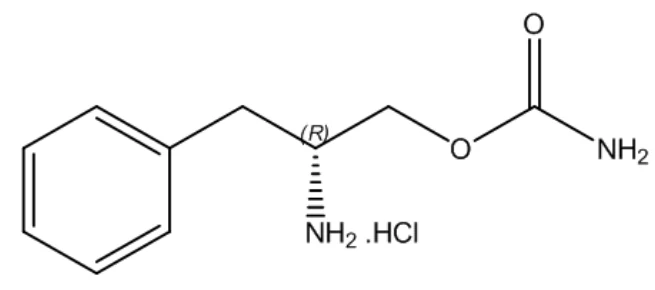
Physicochemical properties: White to off-white solid. Melting range: 183-189°C. Freely soluble in water, highly soluble in aqueous media at 37°C at pH range 1-7. Solriamfetol possesses one chiral centre at position 2. The orientation at this position is “R”.
14 CLINICAL TRIALS
14.1 Trial Design and Study Demographics
Table 7 - Summary of patient demographics for clinical trials in narcolepsy or OSA
| Study # | Study design | Dosage, route of administration and duration | Study subjects (n) | Mean age (Range) | Sex |
| Study 14-002 (TONES 2) | Randomized, double-blind, placebo-controlled, parallel-group study conducted in adults with narcolepsy (with or without cataplexy) | SUNOSI (75 mg, 150 mg or 300 mg) or placebo once daily for 12 weeks | 236 Placebo n=60 75 mg n=59 150 mg n=60 300 mg n=60 | 36.2 years (18 to 70) | Male: 34.7% Female: 65.3% |
| Study # | Study design | Dosage, route of administration and duration | Study subjects (n) | Mean age (Range) | Sex |
| Study 14-003 (TONES 3) | Randomized, double-blind, placebo-controlled, parallel-group study conducted in adults with OSA | SUNOSI (37.5 mg, 75 mg, 150 mg or 300 mg) or placebo once daily for 12 weeks | 474 Placebo n=114 37.5 mg n=56 75 mg n=58 150 mg n=116 300 mg n=115 | 53.9 years (20 to 75) | Male: 62.7% Female: 37.3% |
| Study 14-004 (TONES 4) | Randomized-withdrawal, double-blind, placebo-controlled study conducted in adults with OSA | Open-label period: SUNOSI (75 mg, 150 mg or 300 mg) once daily for 4 weeks Randomized withdrawal period: SUNOSI (75 mg, 150 mg or 300 mg) or placebo once daily for 2 weeks | Open label period n=174 Randomized withdrawal period Placebo n=62 SUNOSI n=60 | 54.8 years (24 to 74) | Male: 61.5% Female: 38.5% |
| Study 14-005 (TONES 5) | Long-term safety and maintenance of efficacy study, including a 2-week randomized-withdrawal, double-blind, placebo-controlled period after at least 6 months of treatment, conducted in adults with narcolepsy (with or without cataplexy) or OSA | Open-label period: SUNOSI (75 mg, 150 mg or 300 mg) once daily for up to 52 weeks Randomized withdrawal period: SUNOSI (75 mg, 150 mg or 300 mg) or placebo once daily for 2 weeks | Open label period n=643 Randomized withdrawal period Placebo n=141 SUNOSI n=139 | 49.3 years (18 to 76) | Male: 52.4% Female: 47.6% |
14.2 Study Results
Narcolepsy
Study 14-002 (TONES 2) was a 12-week, randomized, double-blind, placebo-controlled, parallel-group study, evaluating the efficacy of SUNOSI (solriamfetol) for reducing excessive daytime sleepiness in adult patients with narcolepsy (with or without cataplexy).
Patients included in the study had to be diagnosed with narcolepsy according to the International Classification of Sleep Disorders 3rd edition (ICSD-3) criteria or the Diagnostic and Statistical Manual of Mental Disorders 5th edition (DSM-5) criteria. In addition, patients had to have excessive daytime sleepiness as documented by an Epworth Sleepiness Scale [ESS] score greater than or equal to 10, and a mean sleep latency less than 25 minutes, based on the mean of the first 4 trials of the 40-minute Maintenance of Wakefulness Test (MWT) at baseline.
Efficacy was assessed by two co-primary endpoints, the change from baseline in mean sleep latency measured by the MWT and mean ESS total score at Week 12, and the pre-specified key secondary endpoint, the percentage of patients with improvement in overall clinical condition at Week 12 as assessed by the Patient Global Impression of Change (PGIc) scale. The MWT measures an individual’s ability to remain awake during the daytime, based on the duration of sleep latency (i.e., time to sleep onset) when placed in a darkened, quiet environment. For the MWT patients were instructed to remain awake for as long as possible during each of five 40-minute test sessions, and sleep latency was determined from the mean time (minutes) patients could remain awake during the first four test sessions. The ESS is a validated 8-item questionnaire by which patients rate their perceived likelihood of falling asleep in usual daily life activities. The total score ranges from 0 to 24, with higher scores reflecting greater sleepiness. The PGIc is a 7-point scale ranging from “very much improved” to “very much worse,” which assesses the patient’s report of change in symptoms and clinical condition relative to the start of the study. The percentage of patients improved on the PGIc at Week 12 included patients who were minimally improved, much improved or very much improved relative to baseline.
A total of 239 patients with narcolepsy were randomized in a 1:1:1:1 ratio to receive SUNOSI 75 mg, 150 mg or 300 mg (two times the maximum recommended dose) or placebo once daily. Patients randomized to the 150-mg dose received 75 mg once daily for the first three days before increasing to 150 mg. Demographic and baseline characteristics were similar between patients randomized to placebo or SUNOSI. Median age was 34 years (range 18 to 70 years), 65% were female, 80% were Caucasian, 14% were African American and 3% were Asian. Approximately 51% of patients had cataplexy. Most patients reported prior use of psychostimulants. Any prior medications that could affect the evaluation of excessive sleepiness including, but not limited to, prescription and non-prescription sleep aids or stimulants, and any anti-cataplectic medications, were discontinued prior to initiating treatment with study medication and were not permitted during the study. At baseline MWT mean sleep latency was < 10 minutes and mean ESS score was approximately 17 (Table 8).
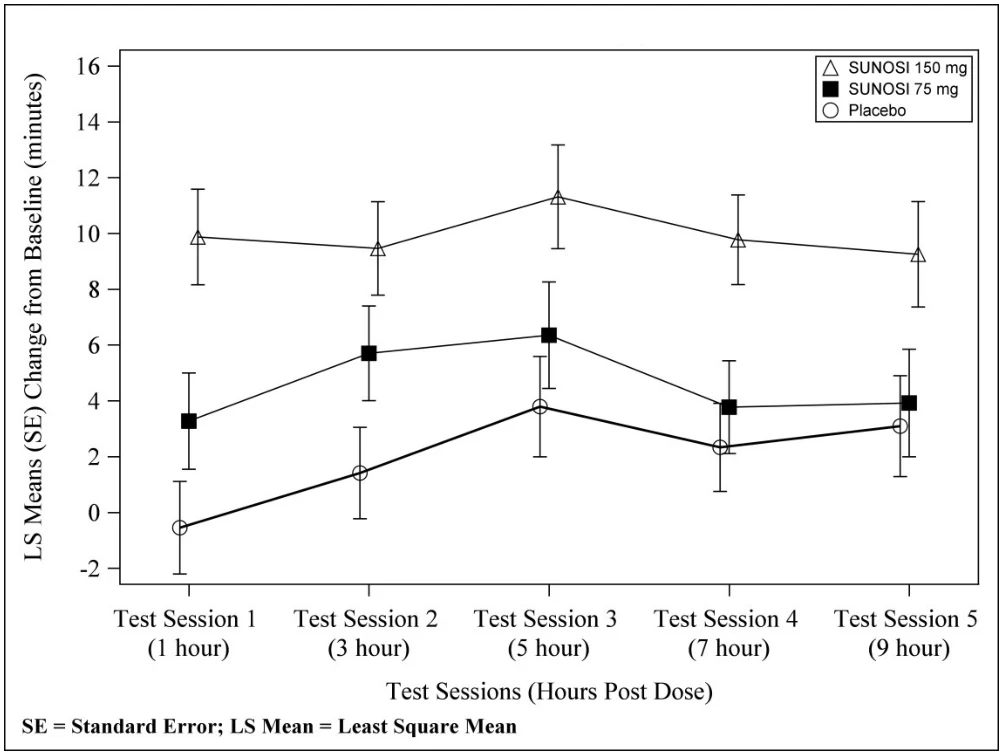
At Week 12, patients randomized to SUNOSI 150 mg showed statistically significant improvements on the co-primary endpoints of MWT (treatment effect difference: 7.7 minutes increase in mean sleep latency) and ESS (treatment effect difference: 3.8 points decrease in total score), as well as on the PGIc (treatment difference: 38.5% more with improved overall condition), compared with placebo (Table 8). Patients randomized to receive 75 mg did not show statistically significant improvements for both co-primary endpoints of MWT/ESS. The hierarchical testing procedure stopped when statistical significant improvement was demonstrated on the ESS, but not on the MWT, and no further statistical testing was done on the PGIc (Table 8). These effects were dose-dependent, observed at Week 1 and maintained over the study duration. (Figure 1) At Week 12, patients who were randomized to receive 150 mg of SUNOSI compared to patients who received placebo had an increase in mean sleep latency that was sustained during each of the five MWT trials, spanning approximately 9 hours after dosing (Figure 2). Doses above 150 mg once daily did not confer additional efficacy that was sufficient to outweigh the dose-related treatment emergent adverse events.
Nighttime sleep as measured with polysomnography was not affected by the use of SUNOSI.
Table 8 - Efficacy Results at Week 12 in Patients with Narcolepsy in Study 14-002 (mITT Populationa)
| Treatment Groups (N) | Mean Baseline Value (SD) | Mean Change from Baseline | Difference from Placebo (95% CI) | P - Value | ||||||||||
|---|---|---|---|---|---|---|---|---|---|---|---|---|---|---|
MWT mean sleep latency (min) | Placebo (58) Sunosi 75 mg (59) Sunosi 150 mg (55) | 6.2 (5.7) 7.5 (5.4) 7.9 (5.7) | LS Mean (SE) 2.1 (1.3) 4.7 (1.3) 9.8 (1.3) | - 2.6 (-1.0, 6.3) 7.7 (4.0, 11.3) |
<0.0001b | |||||||||
ESS total score | Placebo (58) | 17.3 (2.9) | LS Mean (SE) | - | - | |||||||||
| -1.6 (0.7) | ||||||||||||||
| Sunosi 75 mg (59) | 17.3 (3.5) | -3.8 (0.7) | -2.2 (-4.0, -0.3) | 0.0211d | ||||||||||
| Sunosi 150 mg (55) | 17.0 (3.6) | -5.4 (0.7) | -3.8 (-5.6, -2.0) | <0.0001b | ||||||||||
| PGIc | Percentage of Patients Improved*c | Percentage Difference from Placebo (95% CI) | P - Value | |||||||||||
| Placebo (58) | 39.7% | - | - | |||||||||||
| Sunosi 75 mg (59) | 67.8% | 28.1 (10.8, 45.5) | 0.0023† | |||||||||||
| Sunosi 150 mg (55) | 78.2% | 38.5 (21.9, 55.2) | <0.0001b | |||||||||||
SD = Standard Deviation; SE = Standard Error; LS Mean = Least Square Mean; Difference From Placebo = LS Mean Difference on change from baseline between active drug and placebo. MWT results are derived from the first 4 trials of the MWT and a positive change from baseline represents improvement in the sleep latency time. On the ESS, a negative change from baseline represents improvement in excessive daytime sleepiness.
amITT Population included all randomized patients who received at least one dose of study medication and had a baseline and at least one post-baseline evaluation of the MWT or ESS
bStatistically significant difference between SUNOSI and placebo based on the pre-specified hierarchical testing strategy and after adjusting for multiplicity at α=0.05.
cThe percentage of patients improved on the PGIc includes those who reported very much, much and minimal improvements dThe MWT co-primary endpoint failed to show a statistically significant difference (α=0.05) between SUNOSI and placebo, based on the pre-specified hierarchical testing strategy
†Nominal p-value.
Figure 1 - Co-Primary Efficacy Endpoints in Patients with Narcolepsy in Study 14-002
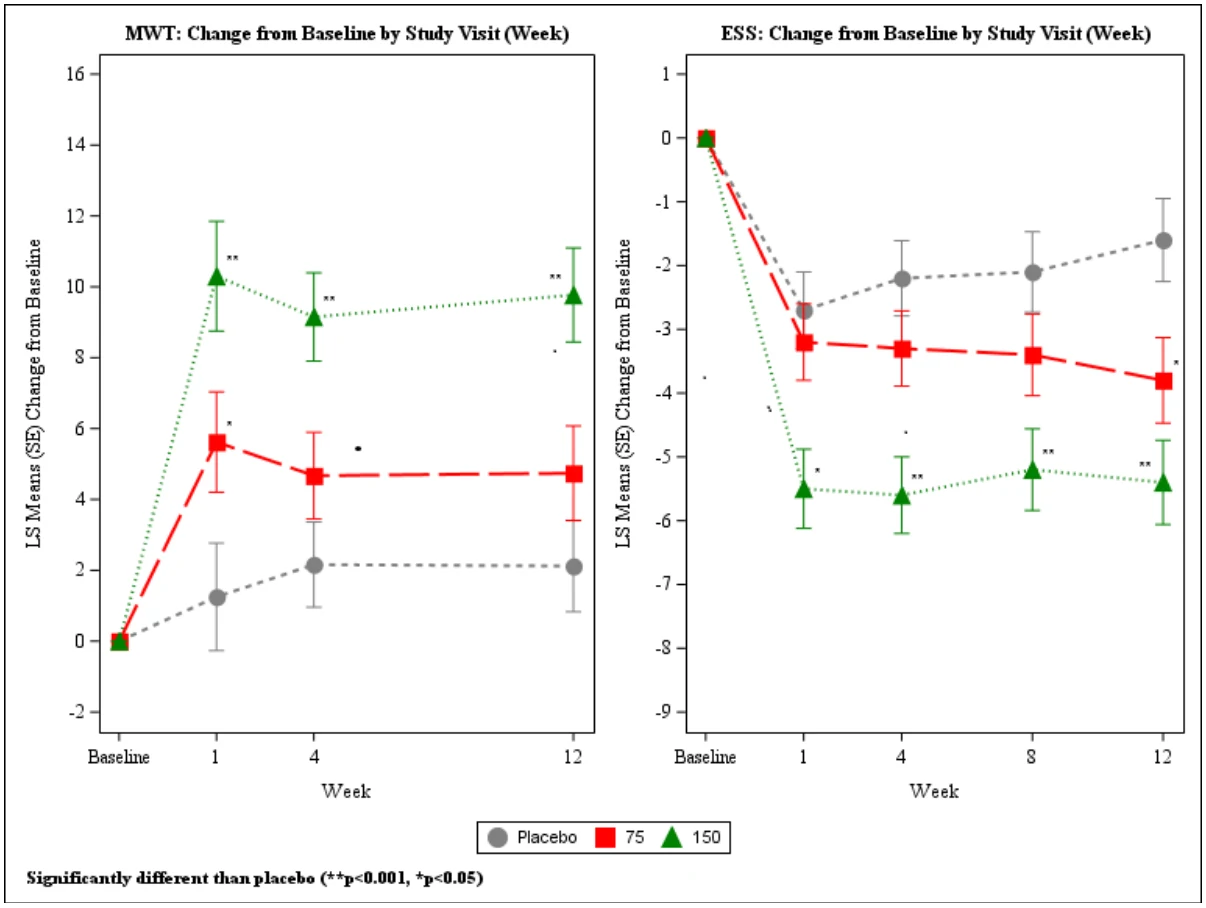
Figure 2 - Maintenance of Wakefulness Test Improvements in Test Sessions 1 through 5 in Patients with Narcolepsy in Study 14-002 at Week 12
SUNOSI was not shown to reduce cataplexy in narcolepsy in the study as an exploratory endpoint.
Obstructive Sleep Apnea (OSA)
Study 14-003 (TONES 3) was a 12-week multi-centre, randomized, double-blind, placebo-controlled study evaluating the efficacy of SUNOSI for reducing excessive daytime sleepiness in adult patients diagnosed with OSA according to ICSD-3 criteria. In addition, patients had to have an ESS score greater than or equal to 10, and a mean sleep latency less than 30 minutes, as documented by the mean of the first 4 trials of the 40-minute MWT at baseline.
Efficacy was assessed by the co-primary efficacy endpoints, the change from baseline in MWT mean sleep latency and mean ESS total score at Week 12 and the pre-specified key secondary endpoint, the percentage of subjects reported as improved (minimally, much or very much) at Week 12 by PGIc.
A total of 476 patients with OSA were randomized, in a 1:1:2:2:2 ratio, to receive SUNOSI 37.5 mg, 75 mg, 150 mg, 300 mg (two times the maximum recommended dose) or placebo once daily. Patients randomized to the 150-mg dose received 75 mg once daily for the first three days before increasing to 150 mg. Demographic and baseline disease characteristics were similar for the SUNOSI and placebo groups. Median age was 55 years (range 20 to 75 years), 37% were female, 76% were Caucasian, 19% were African American and 4% were Asian. Patients who reported compliant use of a primary OSA therapy at baseline (approximately 70%) were to continue using the primary OSA therapy throughout the study. Compliant use of a primary OSA therapy was defined as positive airway pressure (PAP) use of ≥4 hours per night on ≥70% of nights (≥5 of 7 nights/week), historical report (with investigator concurrence) of use of an oral appliance on ≥70% of nights (≥5 of 7 nights/week) or receipt of an effective surgical intervention for OSA symptoms. Any prior medications that could affect the evaluation of excessive sleepiness including, but not limited to, prescription and non-prescription sleep aids or stimulants were discontinued prior to initiating treatment with study medication and were not permitted during the study.
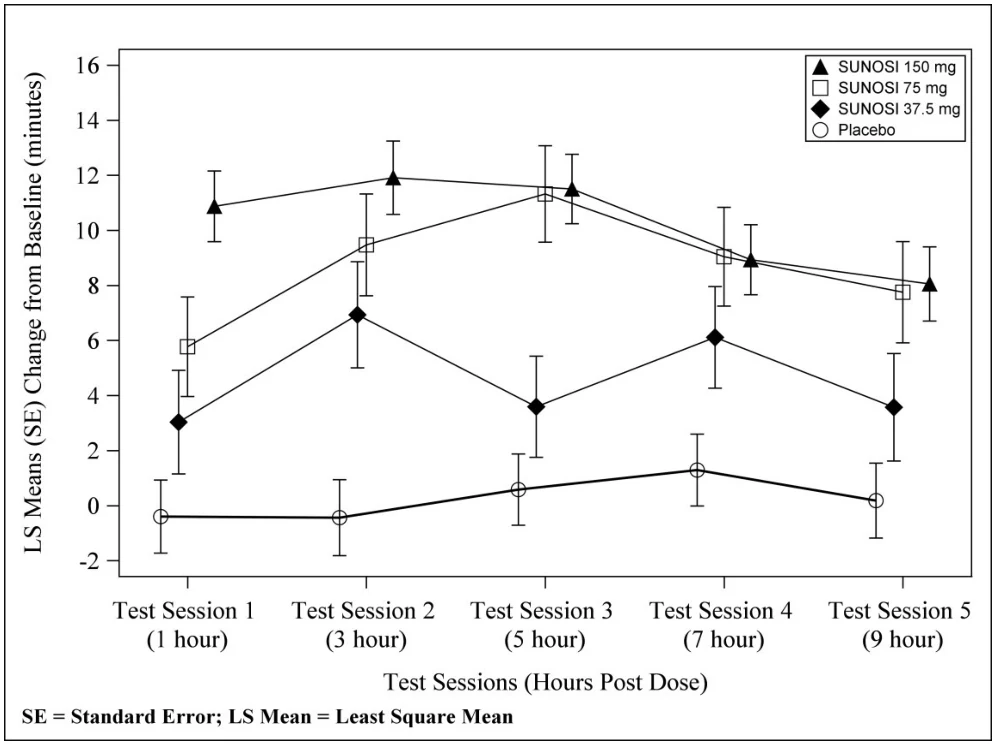
At Week 12, patients randomized to SUNOSI 37.5 mg, 75 mg and 150 mg showed statistically significant improvements on the co-primary endpoints of MWT (treatment effect difference: 4.5 minutes, 8.9 minutes and 10.7 minutes, respectively; Table 9) and ESS (treatment effect difference: 1.9 points, 1.7 points and 4.5 points respectively; Table 9), compared with placebo (Table 9). A statistically significant greater percentage of subjects reported improvement on the PGIc at Week 12 at the 75 mg and 150 mg dose levels compared to placebo but, not at the 37.5 mg dose level (Table 9). These effects were observed at Week 1, maintained over the study duration and were generally dose-dependent (Figure 3). At Week 12, patients who were randomized to receive 75 mg and 150 mg of SUNOSI compared to patients who received placebo had an increase in mean sleep latency that was sustained during each of the 5 MWT trials, spanning approximately 9 hours after dosing (Figure 4). Doses above 150 mg once daily did not confer additional efficacy that was sufficient to outweigh the dose-related treatment emergent adverse events.
Nighttime sleep as measured with polysomnography was not affected by the use of SUNOSI in Study 14-003. Patients’ compliance with a primary OSA therapy device was similar across the placebo and SUNOSI treatment groups at baseline, and did not change during the 12-week study period in any treatment group.
Table 9 - Efficacy Results at Week 12 in Patients with OSA in Study 14-003 (mITT Populationa)
| Treatment Group (N) | Mean Baseline Value (SD) | Mean Change from Baseline | Difference from Placebo (95% CI) | P - Value | |||||||||
|---|---|---|---|---|---|---|---|---|---|---|---|---|---|
| MWT mean sleep latency (min) | Placebo (114) | 12.6 (7.1) | LS Mean (SE) 0.2 (1.0) | - | - | ||||||||
| Sunosi 37.5 mg (56) | 13.6 (8.1) | 4.7 (1.4) | 4.5 (1.2, 7.9) | 0.0086b | |||||||||
| Sunosi 75 mg (58) | 12.4 (6.9) | 9.1 (1.4) | 8.9 (5.6, 12.4) | <0.0001b | |||||||||
| Sunosi 150 mg (116) | 12.5 (7.2) | 11.0 (1.0) | 10.7 (8.1, 13.4) | <0.0001b | |||||||||
| ESS total score | Placebo (114) | 15.6 (3.3) | LS Mean (SE) -3.3 (0.5) | - | - | ||||||||
| Sunosi 37.5 mg (56) | 15.1 (3.5) | -5.1 (0.6) | -1.9 (-3.4, -0.3) | 0.0161b | |||||||||
| Sunosi 75 mg (58) | 15.0 (3.5) | -5.0 (0.6) | -1.7 (-3.2, -0.2 | 0.0233b | |||||||||
| Sunosi 150 mg (116) | 15.1 (3.4) | -7.7 (0.4) | -4.5 (-5.7, -3.2) | <0.0001b | |||||||||
| Treatment Group (N) | Mean Baseline Value (SD) | Mean Change from Baseline | Difference from Placebo (95% CI) | P - Value | |||||||
|---|---|---|---|---|---|---|---|---|---|---|---|
| Percentage of Patients Improvedc | Percentage Difference from Placebo (95% CI) | P - Value | |||||||||
| PGIc | Placebo (114) | 49.1% | - | - | |||||||
| Sunosi 37.5 mg (56) | 55.4% | 6.2 (-9.7, 22.2) | 0.4447 | ||||||||
| Sunosi 75 mg (58) | 72.4% | 23.3 (8.6, 38.0) | 0.0035b | ||||||||
| Sunosi 150 mg (116) | 89.7% | 40.5 (29.8, 51.3) | <0.0001b | ||||||||
SD = Standard Deviation; SE = Standard Error; LS Mean = Least Square Mean; Difference From Placebo = LS Mean Difference on change from baseline between active drug and placebo. MWT results are derived from the first 4 trials of the MWT and a positive change from baseline represents improvement in the sleep latency time. On the ESS, a negative change from baseline represents improvement in excessive daytime sleepiness.
amITT Population included all randomized patients who received at least one dose of study medication and had a baseline and at least one post-baseline evaluation of the MWT or ESS
bStatistically significant difference between SUNOSI and placebo based on the pre-specified hierarchical testing strategy and after adjusting for multiplicity.
cThe percentage of patients improved on the PGIc includes those who reported very much, much and minimal improvements.
Figure 3 - Co-Primary Efficacy Endpoints in Patients with OSA in Study 14-003
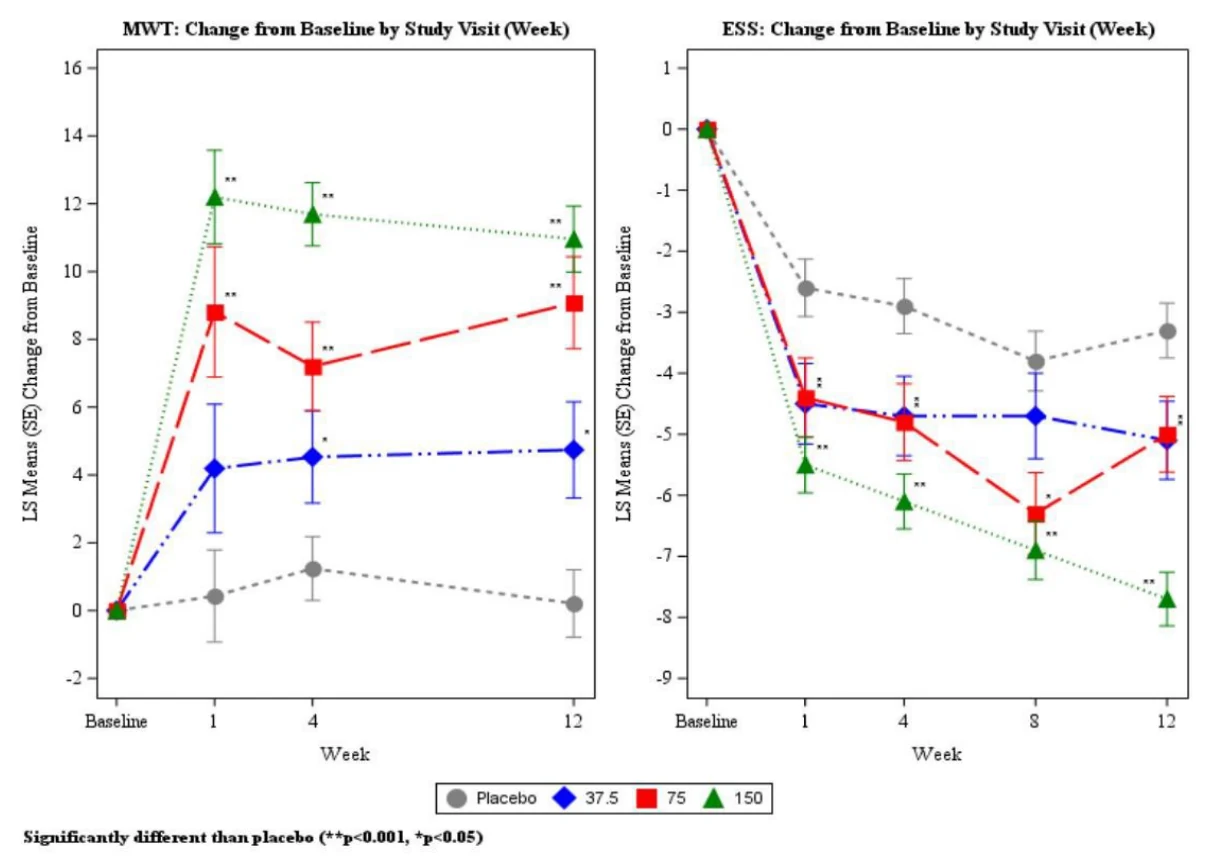
Figure 4 - Maintenance of Wakefulness Test Improvements in Test Sessions 1 through 5 in Patients with OSA in Study 14-003 at Week 12
Maintenance of efficacy in Narcolepsy and OSA
The maintenance of effect of SUNOSI in reducing excessive daytime sleepiness in patients with narcolepsy and OSA was assessed in two randomized-withdrawal, placebo-controlled studies, Study 14-004 (TONES 4, OSA patients) and Study 14-005 (TONES 5, narcolepsy and OSA patients).
Study 14-004 was a 6-week, multi-centre, double-blind, placebo-controlled, randomized-withdrawal study adult patients with a diagnosis of OSA, a baseline ESS score greater than or equal to 10, and a baseline mean sleep latency less than 30 minutes, as documented by the mean of the first 4 trials of the 40-minute MWT. The co-primary efficacy endpoints were the change from the beginning to the end of the randomized withdrawal period (Week 4 to Week 6) in MWT mean sleep latency and mean ESS total score. During a 2-week, open-label titration phase, patients initiated treatment with SUNOSI 75 mg once daily, and were titrated to their maximum tolerable dose between 75 mg and 300 mg per day (two times the maximum recommended dose). Patients were continued on this dose for an additional 2-week stable-dose phase. At the end of the stable-dose phase, 124 patients, who tolerated and responded to 4 weeks of open label treatment (“much” or “very much” improved on the PGIc and showed any improvements on the MWT and ESS), entered a double-blind withdrawal phase. For the 2-week double-blind withdrawal phase, patients were randomized 1:1 to either continue SUNOSI (n=60) at the dose received in the stable-dose phase or switch to placebo (n=62). Compared to patients who remained on SUNOSI, patients randomized to placebo experienced statistically significant worsening of sleepiness as measured by the change in MWT mean sleep latency (LS mean difference of 11.2 on MWT; 95% CI 7.8, 14.6; p<0.0001) and mean ESS total score from Week 4 to Week 6 (LS mean difference of -4.6 on ESS 95% CI -6.4, -2.8; p<0.0001).
Study 14-005 was a long-term, open-label study in which 638 patients with either narcolepsy or OSA, who had completed a prior trial, were treated with SUNOSI for up to 52 weeks. During a 2-week, open-label titration phase, patients initiated treatment with SUNOSI 75 mg once daily, and were titrated to their maximum tolerable dose between 75 mg and 300 mg per day (two times the maximum recommended dose). Patients remained on this dose during a subsequent open-label treatment period (maintenance phase) of either 38 weeks (for patients previously enrolled in Study 14-002 or Study 14-003) or 50 weeks (all others). A 2-week randomized-withdrawal period was incorporated into the maintenance phase of the study. After 6 months of stable-dose treatment during the maintenance phase, 282 patients (79 with narcolepsy; 203 with OSA) entered the randomized-withdrawal period. Unlike Study 14-004, there were no protocol-defined improvement criteria for entering the randomized-withdrawal period of this study. Patients were randomized 1:1 to either continue to receive SUNOSI at the dose received in the maintenance phase (n=139) or to switch to placebo (n=141). The primary efficacy endpoint was change in ESS total score from the beginning to the end of the 2-week randomized-withdrawal period. Compared to patients who remained on SUNOSI, patients randomized to placebo experienced statistically significant worsening of sleepiness as measured by the change in ESS total score (LS mean difference of -3.7 on ESS; p<0.0001) during the 2-week randomized-withdrawal period. Fewer patients treated with solriamfetol reported worsening on the PGIc (percentage difference of -36.2%; p<0.0001).
For patients who were using a primary OSA therapy at the beginning of the study, primary OSA therapy use did not change over the course of the long-term study.
15 MICROBIOLOGY
No microbiological information is required for this drug product.
16 NON-CLINICAL TOXICOLOGY
General Toxicology: Repeated dose toxicity studies with daily oral application of solriamfetol were conducted in mice (duration 13 weeks), rats (duration 26 weeks with a 3-month recovery period) and dogs (duration 52 weeks with a 3-month recovery period). Following daily administration by oral gavage, solriamfetol related behavioral changes (hyperactivity, agitation and/or excitation) attributed to the pharmacology of the compound were observed at the lowest doses administered (29 mg/kg/day in rats, 17 mg/kg/day in mice, 8 mg/kg/day in dogs). The clinical signs were noted post-dose throughout dosing periods of up to 13, 26 and 52 weeks in mice, rats and dogs, respectively. The severity of the clinical signs increased with dose. Body weight loss and/or decreases in body weight gain occurred at ≥168 mg/kg/day, ≥97 mg/kg/day and ≥8 mg/kg/day in mice, rats and dogs, respectively.
In rats, solriamfetol related histopathological changes were noted in kidney, liver, ovary, fat and lung. In the kidney, swollen/vacuolated tubular cells were noted in the papilla and/or medulla with no degenerative structural or functional damage at ≥253 mg/kg/day and were consistent with solriamfetol-induced kidney effects being reactive/adaptive in nature. Liver findings also appeared to be adaptive in nature, with hepatocellular hypertrophy at ≥26 mg/kg/day after 26 weeks. Ovarian changes included prominent corpora lutea at 295 mg/kg/day and para-ovarian cysts at ≥97 mg/kg/day in the 13-week study and at ≥253 mg/kg/day in the 26-week study. Prominent corpora lutea did not result in any solriamfetol related changes in estrus cyclicity after 13 and 26 weeks of dosing and there were no effects on serum prolactin levels. Dose-related increases in foamy macrophages in the lung (females at ≥29 mg/kg/day; males at ≥253 mg/kg/day) were consistent with phospholipidosis. In both males and females, multi-focal alveolitis was noted at 395 mg/kg/day and focal granulomatous inflammation or intra-alveolar giant cells at ≥253 mg/kg/day. Atrophy in adipose tissue was noted at ≥253 mg/kg/day and correlated with decreases in serum triglyceride. A mechanistic study indicated that decreases in lipogenesis were associated with fat loss. In dogs, atrophy of adipose tissue, the only histopathological target organ identified in dogs, was observed at 42 mg/kg/day. The 26 week study in the rat and 52 week study in dog each included a 3-month withdrawal period after administration of the high dose of solriamfetol (397 mg/kg/day in rats; 42 mg/kg/day in dogs), during which time the solriamfetol related effects completely or partially reversed.
No Observable Adverse Effect Levels (NOAELs) were not determined in rats and dogs. At the Lowest Observable Adverse Effect Levels (LOAELs), there were behavioral changes rats and dogs, body weight reductions in the dog and histopathological changes in the rat. The behavioral changes were related to solriamfetol pharmacology and had no effect on survival in either species. The reduction in body weights in dogs occurred during the first week(s) of dosing but recovered thereafter, with further dosing. In the rat, histopathological changes noted in liver appeared adaptive and changes in lung did not include any inflammatory response to presence of foamy macrophages. AUC-based margins for solriamfetol derived from these studies (based on comparison with clinical AUC at the maximum recommended human dose (MRHD) of 150 mg/day) were <1 for mice (based on NOAEL) and <2 for rats and dogs (based on LOAEL).
Carcinogenicity: Solriamfetol did not increase the incidence of neoplastic findings in mice or rats treated orally for up to 104 and 101 weeks, respectively, at 20, 65 and 200 mg/kg/day (mice) and 35, 80 and 200 mg/kg/day (rats). AUC- based safety margins at the high dose, based on systemic exposure at the MRHD (150 mg/day) were about 7.5 in mice and about 21 in rats.
Genotoxicity: Solriamfetol was not mutagenic in the in vitro bacterial reverse mutation (Ames) assay or clastogenic in the in vitro mammalian chromosomal aberration assay or in the in vivo mouse bone marrow micronucleus assay.
Reproductive and Developmental Toxicology: In fertility studies, solriamfetol was administered to male rats at 35, 110 and 350 mg/kg/day and to female rats at 15, 67 and 295 mg/kg/day prior to mating (4 weeks in males and 2 weeks in females), over mating and until gestation day 7 (in females) or necropsy (in males after ~8 weeks of dosing). Solriamfetol had no effect on mating, fertility and reproductive indices. Thus, the NOAEL in male and female rats was 22 and 19 times the MRHD, respectively, based on mg/m2 body surface area.
Effects on embryofetal development were investigated in pregnant rats and rabbits. In rats, solriamfetol was administered by oral gavage during organogenesis at 15, 67 and 295 mg/kg/day. Solriamfetol at 67 and 295 mg/kg/day resulted in maternal toxicity with clinical signs and decreased body weight gain and developmental toxicity with an increase in early resorptions and post implantation loss. At 295 mg/kg/day, fetal weights were reduced and there was an increase in litters with skeletal malformations. The maternal and embryofetal developmental NOAEL was 15 mg/kg/day. Based on the MRHD and mg/m2 body surface area comparison, the NOAEL for maternal and developmental in the rat was approximately the same as the MRHD. Maternal and developmental toxicity occurred at ≥4 times the MRHD and teratogenicity occurred at 19 times the MRHD.
In rabbits, solriamfetol was administered during organogenesis at 17, 38 and 76 mg/kg/day. At 76 mg/kg/day, solriamfetol was maternotoxic with clinical signs, body weight loss, reduced body weight gain and lower food consumption. Decreased fetal body weight was noted at 76 mg/kg/day. There was a slight increase in the incidence of the skeletal variation and slight to moderate malaligned sternebrae at 38 and 76 mg/kg/day doses. The NOAEL for maternal toxicity was 38 mg/kg/day and
NOAEL for developmental toxicity was 17 mg/kg/day. In rabbits, the NOAEL was at 2 times the MRHD based on mg/m2 body surface area, while developmental toxicity and maternal toxicity occurred at 5 times and 10 times the MRHD, respectively.