


Product Monograph - Teva-Atomoxetine
SUMMARY PRODUCT INFORMATION
| Route of Administration | Dosage Form / Strength | All Nonmedicinal Ingredients |
| Oral | 10, 18, 25, 40, 60, 80 and 100 mg capsules | For the 10 mg, 18 mg, 25 mg, 40 mg and 60 mg strengths the non-medicinal ingredients are pregelatinized starch, sodium laurylsulfate and hard gelatin capsule contains gelatin, titanium dioxide, D&C Yellow 10 (18 mg capsules), FD&C Blue 1/Brilliant Blue FCF (25 mg and 40 mg capsules) and D&C yellow 10, FD&C Blue 1 and Brilliant Blue FCF (60 mg capsules). For the 80 mg or 100 mg strengths the non-medicinal ingredients are pregelatinized starch and dimeticone. The capsule shell contains gelatin, titanium dioxide and red iron oxide. |
INDICATIONS AND CLINICAL USE
TEVA-ATOMOXETINE (atomoxetine hydrochloride) is indicated for the treatment of Attention-Deficit/Hyperactivity Disorder (ADHD) in children 6 years of age and over, adolescents, and adults.
A diagnosis of ADHD (DSM-IV) implies the presence of hyperactive-impulsive or inattentive symptoms that cause impairment and that were present before age 7 years. The symptoms must be persistent, must be more severe than is typically observed in individuals at a comparable level of development, must cause clinically significant impairment, e.g., in social, academic, or occupational functioning, and must be present in 2 or more settings, e.g., school (or work) and at home. The symptoms must not be better accounted for by another mental disorder. For the Inattentive type, at least 6 of the following symptoms must have persisted for at least 6 months: lack of attention to details/careless mistakes, lack of sustained attention, poor listener, failure to follow through on tasks, poor organization, avoids tasks requiring sustained mental effort, loses things, easily distracted, forgetful. For the Hyperactive-Impulsive type, at least 6 of the following symptoms must have persisted for at least 6 months: fidgeting/squirming, leaving seat, inappropriate running/climbing, difficulty with quiet activities, “on the go,” excessive talking, blurting answers, can’t wait turn, intrusive. For a Combined Type diagnosis, both inattentive and hyperactive-impulsive criteria must be met.
Special Diagnostic Considerations
The specific etiology of ADHD is unknown, and there is no single diagnostic test. Adequate diagnosis requires the use not only of medical but also of special psychological, educational, and social resources. Learning may or may not be impaired. The diagnosis must be based upon a complete history and evaluation of the patient and not solely on the presence of the required number of DSM-IV characteristics.
Need for Comprehensive Treatment Program
TEVA-ATOMOXETINE is indicated as an integral part of a total treatment program for ADHD that may include other measures (psychological, educational, and social) for patients with this syndrome. Drug treatment may not be indicated for all patients with this syndrome. Drug treatment is not intended for use in the patient who exhibits symptoms secondary to environmental factors and/or other primary psychiatric disorders, including psychosis. Appropriate educational placement is essential in children and adolescents with this diagnosis and psychosocial intervention is often helpful. When remedial measures alone are insufficient, the decision to prescribe drug treatment medication will depend upon the physician’s assessment of the chronicity and severity of the patient’s symptoms.
Pediatrics (<6 years of age)
The safety and efficacy of atomoxetine hydrochloride in pediatric patients less than 6 years of age have not been established.
CONTRAINDICATIONS
- Hypersensitivity: TEVA-ATOMOXETINE (atomoxetine hydrochloride) is contraindicated in patients known to be hypersensitive to atomoxetine or other constituents of the product (see WARNINGS).
Monoamine Oxidase Inhibitors: TEVA-ATOMOXETINE should not be taken with monoamine oxidase inhibitors (MAOI), or within 2 weeks after discontinuing MAOI.
- Treatment with MAOI should not be initiated within 2 weeks after discontinuing TEVA-ATOMOXETINE. With other drugs that affect brain monoamine concentrations, there have been reports of serious, sometimes fatal, reactions (including hyperthermia, rigidity, myoclonus, autonomic instability with possible rapid fluctuations of vital signs, and mental status changes that include extreme agitation progressing to delirium and coma) when taken in combination with MAOI. Some cases presented with features resembling neuroleptic malignant syndrome. Such reactions may occur when these drugs are given concurrently or in close proximity.
- Pheochromocytoma: TEVA-ATOMOXETINE should not be used in patients with pheochromocytoma or a history of pheochromocytoma. Serious reactions, including elevated blood pressure and tachyarrhythmia, have been reported in patients with pheochromocytoma or a history of pheochromocytoma who received atomoxetine.
- Narrow Angle Glaucoma: In clinical trials, atomoxetine hydrochloride use was associated with an increased risk of mydriasis and therefore its use is not recommended in patients with narrow angle glaucoma.
- Symptomatic cardiovascular disease.
- Severe Cardiovascular Disorders: TEVA-ATOMOXETINE should not be used in patients with severe cardiovascular disorders whose condition would be expected to deteriorate if they experienced increases in blood pressure or heart rate that could be clinically important.
- Moderate to severe hypertension.
- Advanced arteriosclerosis.
- Uncontrolled hyperthyroidism.
WARNINGS AND PRECAUTIONS
POTENTIAL ASSOCIATION WITH THE OCCURRENCE OF BEHAVIOURAL AND EMOTIONAL CHANGES, INCLUDING SELF-HARM
Pediatric Placebo-Controlled Clinical Trial Data: An increased risk over placebo for suicide-related events in children and adolescents taking atomoxetine hydrochloride, was identified in a pooled analysis of placebo-controlled trials of 6-18 weeks duration. Of 1357 patients who received atomoxetine hydrochloride, 5 (0.37%) had reports of suicidal ideation compared to 0% of 851 patients who received placebo. In addition, one suicide attempt (overdose) was identified, which occurred in an atomoxetine hydrochloride
- patient. No completed suicides occurred during these trials. (See also WARNINGS AND PRECAUTIONS, Special Populations, Pediatrics, 6-18 years of age.)
- Post-Marketing Data: There have been very rare reports of suicidal ideation, suicidal attempts, suicidal depression and completed suicides in children, adolescents and adults (see ADVERSE REACTIONS, Post-Market Adverse Drug Reactions, Tables 8 and 9).
ADHD and its related co-morbidities may be associated with increased risk of suicidal ideation and/or behavior. Rigorous clinical monitoring for suicidal ideation or other indicators of potential for suicidal behavior is advised in patients of all ages. This includes monitoring for agitation-type of emotional and behavioral changes, and clinical worsening.
Families and caregivers of pediatric patients being treated with TEVA-ATOMOXETINE should be alerted about the need to monitor patients for the emergence of agitation, anxiety, panic attacks, hostility, irritability, hypomania or mania, unusual changes in behaviour, and other symptoms, as well as the emergence of suicidality particularly after starting treatment or changing the dose. Such symptoms should be reported immediately to healthcare providers.
Such monitoring should include daily observation by families and caregivers.
Screening Patients for Bipolar Disorder
Particular care should be taken in treating ADHD in patients with comorbid bipolar disorder because of concern for possible induction of a mixed/manic episode in patients at risk for bipolar disorder. Prior to initiating treatment with TEVA-ATOMOXETINE , patients with comorbid depressive symptoms should be adequately screened to determine if they are at risk for bipolar disorder; such screening should include a detailed psychiatric history, including a family history of suicide, bipolar disorder, and depression.
Emergence of New Psychotic or Manic Symptoms
Treatment emergent psychotic or manic symptoms, e.g., hallucinations, delusional thinking, or mania in children and adolescents without a prior history of psychotic illness or mania can occur with atomoxetine use at usual doses. If such symptoms occur, consideration should be given to a possible causal role of atomoxetine, and discontinuation of treatment should be considered. In a pooled analysis of multiple short-term, placebo-controlled studies, such symptoms occurred in about 0.2% (4 patients with events out of 1939 exposed to atomoxetine for several weeks at usual doses) of atomoxetine-treated patients compared to 0 out of 1056 placebo-treated patients.
Pre-Existing Psychosis:
Administration of medications for ADHD may also exacerbate symptoms of behavior disturbance and thought disorder in patients with a pre-existing psychotic disorder.
Severe Liver Injury: Post-marketing reports indicate that atomoxetine hydrochloride can cause severe liver injury in rare cases, including acute liver failure. Although no evidence of liver injury was detected in clinical trials of about 6000 patients, there have been rare cases in postmarketing experience of clinically significant liver injury that were considered probably or possibly related to atomoxetine hydrochloride. In one patient, liver injury, manifested by elevated hepatic enzymes (up to 40 X upper limit of normal [ULN]) and jaundice (bilirubin up to 12 X ULN), recurred upon rechallenge and was followed by recovery upon drug discontinuation, providing evidence that atomoxetine hydrochloride likely caused the liver injury. This patient recovered from his liver injury, and did not require a liver transplant. Such reactions may occur several months after therapy is started, but laboratory abnormalities may continue to worsen for several weeks after drug is stopped. One case of hepatic failure leading to a liver transplant has been reported in a child taking atomoxetine. Because of probable under-reporting, it is impossible to provide an accurate estimate of the true incidence of these events. Severe liver injury due to any drug may potentially progress to acute liver failure resulting in death or the need for a liver transplant.
TEVA-ATOMOXETINE should be discontinued in patients with jaundice or laboratory evidence of liver injury, and should not be restarted. Laboratory testing to determine liver enzyme levels should be done upon the first symptom or sign of liver dysfunction (e.g., pruritus, dark urine, jaundice, right upper quadrant tenderness, or unexplained "flu-like" symptoms). (See also CONSUMER INFORMATION).
Allergic Events
Although uncommon, allergic reactions, including anaphylactic reactions, rash, angioneurotic edema, and urticaria, have been reported in patients taking atomoxetine hydrochloride.
Effects on Growth
Growth and development should be monitored during treatment with atomoxetine. Patients requiring long-term therapy should be monitored and consideration should be given to dose reduction or interrupting therapy in patients who are not growing or gaining weight satisfactorily.
Associated with decreased appetite, some patients experienced growth retardation early in therapy in terms of both weight and height gain. On average, after an initial decrease in weight and height gain, patients treated with atomoxetine recovered to mean weight and height as predicted by group baseline data over the long-term treatment.
In general, the weight and height gain of pediatric patients treated with atomoxetine hydrochloride lags behind that predicted by normative population data for about the first 9-12 months of treatment. Subsequently, weight gain rebounds and at about 3 years of treatment, patients treated with atomoxetine hydrochloride gained 17.9 kg on average, 0.5 kg more than predicted by their baseline data. After about 12 months, gain in height stabilizes, and at 3 years, patients treated with atomoxetine hydrochloride gained 19.4 cm on average, 0.4 cm less than predicted by their baseline data.
Cardiovascular
Pre existing Cardiovascular Conditions
TEVA-ATOMOXETINE can increase heart rate and blood pressure. It is recommended that heart rate and blood pressure be measured before treatment is started, after the dose is increased or decreased, and periodically during treatment to detect possible clinically important increases, particularly during the first few months of therapy.
TEVA-ATOMOXETINE should be used with caution in patients whose underlying medical conditions could be worsened by increases in blood pressure or heart rate, such as patients with hypertension, tachycardia, or cardiovascular or cerebrovascular disease (see CONTRAINDICATIONS and ADVERSE REACTIONS).
In addition, TEVA-ATOMOXETINE should be used with caution in patients with congenital long QT syndrome, acquired long QT syndrome (for example, due to concomitant use of a drug that may prolong the QT), or a family history of QT prolongation. Patients should be screened for pre-existing or underlying cardiovascular or cerebrovascular conditions before initiation of treatment with TEVA-ATOMOXETINE and monitored for new conditions of the heart or brain during the course of treatment.
Orthostatic hypotension has been reported in subjects taking atomoxetine hydrochloride. In short-term child- and adolescent-controlled trials, 5.2% (34/657) of atomoxetine hydrochloride -treated subjects experienced symptoms of postural hypotension compared with 2.0% (8/408) of placebo-treated subjects. TEVA-ATOMOXETINE should be used with caution in any condition that may predispose patients to hypotension, or conditions associated with abrupt heart rate or blood pressure changes.
The increase in blood pressure and heart rate observed during treatment with atomoxetine hydrochloride during placebo-controlled clinical trials for pediatric patients and adults with ADHD are shown in Tables 1 and 2, respectively.
Table 1. Proportion of pediatric ADHD patients treated with Atomoxetine Hydrochloride (any dose) or placebo, in whom a given increase in diastolic and systolic blood pressure and heart rate was observed during acute placebo-controlled trials.
Parameter (unit) | Change from baseline (limit of interest) | Percent of ADHD pediatric patients (%) |
| Time observed | ||
Maximum (change at any post-baseline visit) | Endpoint (change at the last visit) | |
Atomoxetine Hydrochloride N= 2287 | Placebo N= 1334 | |
Atomoxetine Hydrochloride N= 2287 | ||
Placebo N= 1334 | ||
| Diastolic BP | 5 | |
| 63 | 54 | |
| 39 | ||
| 30 | ||
| (mm Hg) | 10 20 | 42 10 | 33 7 | 22 4 | 15 2 |
Systolic BP (mm Hg) | 5 10 20 | 60 42 12 | 55 36 9 | 36 22 5 | 32 17 3 |
Heart rate (beats/min) | 10 20 40 | 49 23 2 | 36 11 1 | 31 12 1 | 18 4 0 |
Table 2. Proportion of adult ADHD patients treated with Atomoxetine Hydrochloride (any dose) or placebo, in whom a given increase in diastolic and systolic blood pressure and heart rate was observed during long-term placebo-controlled trials.
Parameter (unit) | Change from baseline (limit of interest) | Percent of ADHD adult patients (%) | |||
| Time observed | |||||
Maximum (change at any post-baseline visit) | Endpoint (change at the last visit) | ||||
Atomoxetine Hydrochloride N= 499 | Placebo N= 1334 | Atomoxetine Hydrochloride N= 499 | Placebo N= 1334 | ||
Diastolic BP (mm Hg) | 5 10 20 | 53 31 4 | 49 23 2 | 31 15 2 | 24 10 1 |
Systolic BP (mm Hg) | 5 10 20 | 59 37 11 | 56 38 8 | 33 20 4 | 25 12 3 |
Heart rate (beats/min) | 10 20 40 | 57 23 1 | 38 11 0 | 30 8 0 | 18 3 0 |
The overall increase in blood pressure and heart rate observed during treatment with
Atomoxetine Hydrochloride during controlled and uncontrolled clinical trials for pediatric patients with ADHD are shown in Table 3.
Table 3. Proportion of overall pediatric ADHD patients treated with Atomoxetine Hydrochloride (any dose), in whom a given increase in diastolic and systolic blood pressure and heart rate was observed during controlled and uncontrolled clinical trials.
Parameter (unit) | Change from baseline (limit of interest) | Atomoxetine Hydrochloride N= 8417 Percent of ADHD pediatric patients (%) | |||
| Time observed | |||||
Maximum (change at any post-baseline visit) | Endpoint (change at the last visit) | ||||
Diastolic BP (mm Hg) | 5 10 20 | 74 56 18 | 41 24 5 |
Systolic BP (mm Hg) | 5 10 20 | 73 57 23 | 42 27 8 |
Heart rate (beats/min) | 10 20 40 | 64 39 5 | 31 12 1 |
Sudden Death and Pre-existing Structural Cardiac Abnormalities or Other Serious Heart Problems
Children and Adolescents: Sudden death has been reported in association with atomoxetine treatment at usual doses in children and adolescents with structural cardiac abnormalities or other serious heart problems as well as in some patients without structural heart problems. Although some serious heart problems alone carry an increased risk of sudden death, atomoxetine generally should not be used in children or adolescents with known serious structural cardiac abnormalities, cardiomyopathy, serious heart rhythm abnormalities, or other serious cardiac problems that may place them at increased vulnerability to the noradrenergic effects of atomoxetine.
Adults: Sudden deaths, stroke, and myocardial infarction have been reported in adults taking atomoxetine at usual doses for ADHD. Although the role of atomoxetine in these adult cases is also unknown, adults have a greater likelihood than children of having serious structural cardiac abnormalities, cardiomyopathy, serious heart rhythm abnormalities, coronary artery disease, or other serious cardiac problems. Consideration should be given to not treating adults with clinically significant cardiac abnormalities.
General
Children: Theoretically there exists a pharmacological potential for all ADHD drugs to increase the risk of sudden/cardiac death. Although confirmation of an incremental risk for adverse cardiac events arising from treatment with ADHD medications is lacking, prescribers should consider this potential risk.
All drugs with sympathomimetic effects prescribed in the management of ADHD should be used with caution in patients who: a) are involved in strenuous exercise or activities, b) use stimulants, or c) have a family history of sudden/cardiac death. Prior to the initiation of treatment with sympathomimetic medications, a personal and family history (including assessment for a family history of sudden death or ventricular arrhythmia) and physical exam should be obtained to assess for the presence of cardiac disease. In patients with relevant risk factors and based on the clinician’s judgment, further cardiovascular evaluation may be considered (e.g., electrocardiogram and echocardiogram). Patients who develop symptoms such as exertional chest pain, unexplained syncope, or other symptoms suggestive of cardiac disease during ADHD treatment should undergo a prompt cardiac evaluation. Patients who are considered to need extended treatment with TEVA-ATOMOXETINE should undergo periodic evaluation of their cardiovascular status (see DOSAGE AND ADMINISTRATION).
Genitourinary
Effects on urine outflow from the bladder: In adult ADHD controlled trials, the rates of urinary retention and urinary hesitation were increased among atomoxetine subjects compared with placebo subjects. A complaint of urinary retention or urinary hesitancy should be considered potentially related to atomoxetine.
Priapism: Rare postmarketing cases of priapism, defined as painful and non-painful penile erection lasting more than 4 hours, have been reported for pediatric and adult patients treated with atomoxetine hydrochloride. The erections resolved in cases in which follow-up information was available, some following discontinuation of atomoxetine hydrochloride. Prompt medical attention is required in the event of suspected priapism.
Vascular
Peripheral Vasculopathy, Including Raynaud’s Phenomenon
Medications used to treat ADHD, including stimulants and non-stimulant (atomoxetine hydrochloride), are associated with peripheral vasculopathy, including Raynaud’s phenomenon. Signs and symptoms are usually intermittent and mild; however, very rare sequelae include digital ulceration and/or soft tissue breakdown. Effects of peripheral vasculopathy, including Raynaud’s phenomenon, were observed in post-marketing reports at different times and at therapeutic doses in all age groups throughout the course of treatment. Signs and symptoms generally improve after reduction in dose or discontinuation of drug. Careful observation for digital changes is necessary during treatment with ADHD medications. Further clinical evaluation (e.g., rheumatology referral) may be appropriate for certain patients.
Special Populations
Pregnant Women: No adequate and well-controlled studies have been conducted in pregnant women. TEVA-ATOMOXETINE should not be used during pregnancy unless the potential benefit justifies the potential risk to the fetus. The effect of atomoxetine hydrochloride on labour and delivery in humans is unknown.
The extent of exposure in pregnancy during clinical trials was very limited.
Nursing Mothers: Atomoxetine and/or its metabolites were excreted in the milk of rats. It is not known if atomoxetine is excreted in human milk. Caution should be exercised if TEVA-ATOMOXETINE is administered to a nursing woman.
Pediatrics (< 6 years of age): The safety and efficacy of atomoxetine hydrochloride in pediatric patients less than 6 years of age have not been established.
Pediatrics (6–18 years of age):
Risk of Suicide-Related Behaviours and Ideation in Children (see also WARNINGS AND PRECAUTIONS - POTENTIAL ASSOCIATION WITH THE OCCURRENCE OF BEHAVIOURAL AND EMOTIONAL CHANGES, INCLUDING SELF-HARM).
Pediatric Placebo-Controlled Clinical Trial Data: An increased risk over placebo, for suicide-related events in children and adolescents taking atomoxetine hydrochloride was identified in a combined analysis of 12 short-term (6–18 weeks) placebo-controlled trials (11 in ADHD and 1 in enuresis). Of 1357 patients who received atomoxetine hydrochloride, 5 (0.37%) had reports of suicidal ideation compared to 0% of 851 patients who received placebo. In addition, one suicide attempt (overdose) was identified which occurred in an atomoxetine hydrochloride patient. These 6 events occurred in atomoxetine hydrochloride patients 7 to 12 years of age who were male. There were no events in older adolescents, who comprised about 25 percent of the study population. Time to onset ranged from 9 to 32 days, and doses ranged from 0.48 to 1.40 mg/kg/day. A similar analysis in adult patients treated with atomoxetine hydrochloride for either ADHD or major depressive disorder (MDD) found no increased risk over placebo of suicidal ideation or behavior with the use of atomoxetine hydrochloride.
Not included in these numerators were 6 cases (3 in the atomoxetine hydrochloride arms and 3 in the placebo arms) of non-fatal potentially self-injurious actions where the intent is unknown, including burns and taking more than one dose of medication at a time.
Post Marketing Data: There have been very rare reports of suicidal ideation, suicidal attempts, suicidal depression and completed suicides in children and adolescents (see ADVERSE REACTIONS, Post-Market Adverse Drug Reactions, Tables 8 and 9).
Rigorous clinical monitoring for suicidal ideation or other indicators of potential for suicidal behaviour is advised in patients of all ages. This includes monitoring for agitation-type of emotional and behavioural changes, and clinical worsening.
Irritability and Mood Swings: Clinical Trial Data
Clinical trial data in children and adolescents show higher rates than placebo for irritability, mood swings, aggression, crying and tearfulness (see ADVERSE REACTIONS, Tables 4 and 5). The relationship, if any, between these events and suicide-related behaviours in children and adolescents with ADHD is unclear.
Aggressive Behaviour or Hostility
Patients beginning treatment for ADHD should be monitored for the appearance of, or worsening of, aggressive behaviour or hostility.
Caregivers/patients should be instructed to call their doctor as soon as possible should they notice an increase in aggression or hostility.
Aggressive behaviour or hostility has been observed in patients with ADHD, and has been reported with some medications indicated for the treatment of ADHD.
Although there is no conclusive evidence that atomoxetine causes aggressive behaviour or hostility, this was observed more frequently in clinical trials among children , adolescents and adults treated with atomoxetine compared to placebo (risk ratios varying from 1.03 in children and adolescents to 1.38 in adults – not statistically significant).
Geriatrics (> 65 years of age): The safety and efficacy of atomoxetine hydrochloride in geriatric patients have not been established.
Monitoring and Laboratory Tests
Routine laboratory tests are not required.
CYP2D6 metabolism: Poor metabolizers (PMs) of CYP2D6 have a 10-fold higher AUC and a 5-fold higher peak concentration to a given dose of atomoxetine hydrochloride compared with extensive metabolizers (EMs). Approximately 7% of a Caucasian population are PMs. Laboratory tests are available to identify CYP2D6 PMs. The blood levels in PMs are similar to those attained by taking strong inhibitors of CYP2D6. The higher blood levels in PMs lead to a higher rate of some adverse effects of atomoxetine hydrochloride (see ADVERSE REACTIONS).
ADVERSE REACTIONS
Atomoxetine hydrochloride was administered to 3262 children or adolescent patients with ADHD and 471 adults with ADHD in clinical studies. During the ADHD clinical trials, 1409 patients (1236 pediatric and 173 adults) were treated for longer than 1 year and 1940 patients (1704 pediatric and 236 adults) were treated for over 6 months.
The data in the following tables and text cannot be used to predict the incidence of side effects in the course of usual medical practice where patient characteristics and other factors differ from those that prevailed in the clinical trials. Similarly, the cited frequencies cannot be compared with data obtained from other clinical investigations involving different treatments, uses, or investigators. The cited data provide the prescribing physician with some basis for estimating the relative contribution of drug and non-drug factors to the adverse event incidence in the population studied.
Child and Adolescent Clinical Trials
Reasons for discontinuation of treatment due to adverse events in child and adolescent clinical trials: In acute child and adolescent placebo-controlled trials, 4.1% (27/661) of atomoxetine subjects and 1.2% (5/410) placebo subjects discontinued for adverse events. For all studies, (including open-label and long-term studies), 5.8% of extensive metabolizer (EM) patients and 8.9% of poor metabolizer (PM) patients discontinued because of an adverse event. Among atomoxetine hydrochloride-treated patients, somnolence (0.8%, N=5); aggression (0.5%, N=3); irritability (0.5%, N=3); vomiting (0.5%, N=3) and abdominal pain (0.3%, N=2) were the reasons for discontinuation reported by more than 1 patient.
Commonly observed adverse events in acute child and adolescent, placebo-controlled trials: Commonly observed adverse events associated with the use of atomoxetine hydrochloride (incidence of 2% or greater) and not observed at an equivalent incidence among placebo-treated patients (atomoxetine hydrochloride incidence greater than placebo) are listed in Table 4 for all acute placebo-controlled trials. Results were similar in the BID trials and QD trials except as shown in Table 5, which shows both BID and QD results for selected adverse events. The most commonly observed adverse events in patients treated with atomoxetine hydrochloride (incidence of 5% or greater and at least twice the incidence in placebo patients, for either BID or QD dosing) were: appetite decreased, dizziness, dyspepsia, fatigue and/or lethargy, irritability, nausea, somnolence, and vomiting (see Table 4). Additional data on blood pressure and heart rate from ADHD clinical trials is shown in Tables 1-3.
Table 4: Common Treatment-Emergent Adverse Events Reported in Atomoxetine Hydrochloride Placebo-Controlled Clinical Trials in Children and Adolescents with ADHDa
| Adverse Event | Percentage of Patients Reporting Events | |
|---|---|---|
| atomoxetine hydrochloride (N=657) | Placebo (N=408) | |
| Gastrointestinal Disorders | ||
| Abdominal pain upper | 18 | 13 |
| Dyspepsia | 5 | 1 |
| Nausea | 9 | 6 |
| Vomiting | 11 | 6 |
| General Disorders | ||
| Fatigue and/or Lethargy | 8 | 4 |
| Investigations | ||
| Weight decreased | 2 | 0 |
| Metabolism and Nutritional Disorders | ||
| Anorexia | 2 | <1 |
| Appetite decreased | 16 | 6 |
| Adverse Event | Percentage of Patients Reporting Events |
|---|
| atomoxetine hydrochloride (N=657) | Placebo (N=408) | ||||
|---|---|---|---|---|---|
| Nervous System Disorders | |||||
| Dizziness | 5 | 2 | |||
| Headache | 21 | 20 | |||
| Somnolence | 10 | 4 | |||
| Psychiatric Disorders | |||||
| Irritability | 7 | 4 | |||
| Mood swings | 2 | <1 | |||
| Respiratory Disorders | |||||
| Rhinorrhea | 4 | 2 | |||
| Skin and Subcutaneous Tissue Disorders | |||||
| Rash | 3 | 1 | |||
a Events reported by at least 2% of patients treated with atomoxetine, and greater than placebo. The following events did not meet this criterion but were reported by more atomoxetine-treated patients than placebo-treated patients and are possibly related to atomoxetine treatment: aggression, blood pressure increased, early morning awakening, flushing, mydriasis, sinus tachycardia, crying, tearfulness, suicidal ideation. The following events were reported by at least 2% of patients treated with atomoxetine, and equal to or less than placebo: cough, diarrhea, insomnia, nasal congestion, nasopharyngitis, pharyngitis, pyrexia, upper respiratory tract infection.
Table 5: Common Treatment-Emergent Adverse Events Associated with the Use of Atomoxetine Hydrochloride in Acute (up to 9 weeks) Child and Adolescent Trialsa
| Adverse Event | Percentage of Patients Reporting Events from BID Trials | Percentage of Patients Reporting Events from QD Trials | ||
|---|---|---|---|---|
| atomoxetine hydrochloride (N=340) | Placebo (N=207) | atomoxetine hydrochloride (N=317) | Placebo (N=201) | |
| Gastrointestinal Disorders | ||||
| Abdominal pain | 1 | <1 | 3 | <1 |
| Abdominal pain upper | 21 | 16 | 15 | 8 |
| Constipation | 3 | 1 | <1 | 0 |
| Dyspepsia | 4 | 2 | 6 | <1 |
| Nausea | 7 | 8 | 10 | 4 |
| Vomiting | 12 | 9 | 11 | 2 |
| General Disorders | ||||
| Adverse Event | Percentage of Patients Reporting Events from BID Trials | Percentage of Patients Reporting Events from QD Trials |
|---|
| atomoxetine hydrochloride (N=340) | Placebo (N=207) | atomoxetine hydrochloride (N=317) | Placebo (N=201) | |
|---|---|---|---|---|
| Fatigue and/or Lethargy | 5 | 5 | 11 | 2 |
| Pyrexia | 5 | 7 | 6 | 4 |
| Infections and Infestations | ||||
| Ear infection | 3 | 1 | 1 | <1 |
| Influenza | 3 | 1 | 1 | <1 |
| Pharyngitis streptococcal | 2 | <1 | <1 | <1 |
| Investigations | ||||
| Weight decreased | 3 | 0 | 2 | 0 |
| Metabolism and Nutritional Disorders | ||||
| Anorexia | 2 | <1 | 3 | <1 |
| Appetite decreased | 13 | 6 | 19 | 5 |
| Nervous System Disorders | ||||
| Dizziness | 6 | 3 | 4 | <1 |
| Headache | 28 | 25 | 14 | 15 |
| Sedation | 1 | 1 | 3 | 1 |
| Somnolence | 7 | 5 | 14 | 3 |
| Psychiatric Disorders | ||||
| Aggression | 1 | 1 | 3 | <1 |
| Crying | 2 | 1 | 1 | 0 |
| Mood swings | 2 | 0 | 3 | 1 |
| Irritability | 8 | 5 | 6 | 3 |
| Respiratory Disorders | ||||
| Cough | 11 | 7 | 6 | 9 |
| Rhinorrhoea | 4 | 3 | 3 | 1 |
| Skin and Subcutaneous Tissue Disorders | ||||
| Rash | 4 | 1 | 2 | 1 |
a Events reported by at least 2% of patients treated with atomoxetine, and greater than placebo in either BID or QD trials.
The following adverse events occurred in child and adolescent patients, and were obtained from ongoing clinical trials:
Common: depression (including major depression, depressive symptoms, depressed mood, and dysphoria), insomnia (including initial insomnia, middle insomnia, and terminal insomnia), and pruritus.
Uncommon: asthenia, palpitations, sinus tachycardia, syncope (includes syncope vasovagal), and tremor.
The following adverse events occurred in at least 2% of child and adolescent CYP2D6 PM patients and were statistically significantly more frequent in PM patients compared with CYP2D6 EM patients: appetite decreased (24% of PMs, 17% of EMs); insomnia and middle insomnia (14% of PMs, 7% of EMs); weight decreased (7% of PMs, 4% of EMs); constipation (7% of PMs, 4% of EMs); sedation (4% of PMs, 2% of EMs); depression and/or depressed mood (5% of PMs, 3% of EMs); abrasion (4% of PMs, 2% of EMs); tremor (5% of PMs, 1% of EMs); early morning awakening (2% of PMs, 1% of EMs); enuresis (3% of PMs, 1% of EMs); pruritus (3% of PMs, 1% of EMs); mydriasis (2% of PMs, 1% of EMs); conjunctivitis (3% of PMs, 1% of EMs); syncope (2% of PMs, 1% of EMs); animal bite (2% of PMs, 1% of EMs).
Adult Clinical Trials
Reasons for discontinuation of treatment due to adverse events in acute adult placebo-controlled trials: In the acute adult placebo-controlled trials, 8.5% (23/270) atomoxetine subjects and 3.4% (9/266) placebo subjects discontinued for adverse events. Among atomoxetine hydrochloride -treated patients, insomnia (1.1%, N=3); chest pain (0.7%, N=2); palpitations (0.7%, N=2); and urinary retention (0.7%, N=2) were the reasons for discontinuation reported by more than 1 patient.
Commonly observed adverse events in acute adult placebo-controlled trials: Commonly observed adverse events associated with the use of atomoxetine hydrochloride (incidence of 2% or greater) and not observed at an equivalent incidence among placebo-treated patients (atomoxetine hydrochloride incidence greater than placebo) are listed in Table 6.
The most commonly observed adverse events in patients treated with atomoxetine hydrochloride (incidence of 5% or greater and at least twice the incidence in placebo patients) were: constipation, dry mouth, nausea, appetite decreased, dizziness, insomnia, decreased libido, ejaculatory problems, erectile disturbance, urinary hesitation and/or urinary retention and/or difficulty in micturition, and dysmenorrhea (see Table 6). Additional data on blood pressure and heart rate from ADHD clinical trials is shown in Tables 1-3.
Table 6: Common Treatment-Emergent Adverse Events Associated with the Use of Atomoxetine Hydrochloride in Acute (up to 10 weeks) Adult Trials
| Adverse Eventa | Percentage of Patients Reporting Event | |||||
|---|---|---|---|---|---|---|
| Atomoxetine Hydrochloride | Placebo | |||||
| (N=269) | (N=263) | |||||
| Cardiac Disorders | ||||||
| Palpitations | 4 | 1 | ||||
| Gastrointestinal Disorders | ||||||
| Constipation | 10 | 4 | ||||
| Dry mouth | 21 | 6 | ||||
| Dyspepsia | 6 | 4 | ||||
| Flatulence | 2 | 1 | ||||
| Adverse Eventa | Percentage of Patients Reporting Event |
|---|
| Atomoxetine Hydrochloride | Placebo |
|---|
| (N=269) | (N=263) | |
|---|---|---|
| Nausea | 12 | 5 |
| General Disorders | ||
| Fatigue and/or Lethargy | 7 | 4 |
| Pyrexia | 3 | 2 |
| Chills | 3 | 1 |
| Infections | ||
| Sinusitis | 6 | 4 |
| Investigations | ||
| Weight decreased | 2 | 1 |
| Metabolism and Nutritional Disorders | ||
| Appetite decreased | 10 | 3 |
| Musculoskeletal Disorders | ||
| Myalgia | 3 | 2 |
| Nervous System Disorders | ||
| Dizziness | 6 | 2 |
| Headache | 17 | 17 |
| Insomnia and/or middle insomnia | 17 | 8 |
| Paraesthesia | 4 | 2 |
| Sinus headache | 3 | 1 |
| Psychiatric Disorders | ||
| Abnormal dreams | 4 | 3 |
| Libido decreased | 6 | 2 |
| Sleep disorder | 4 | 2 |
| Renal and Urinary Disorders | ||
| Urinary hesitation and/or urinary retention and dysuria | 8 | 0 |
| Reproductive System and Breast Disorders | ||
| Dysmenorrheac | 7 | 3 |
| Ejaculation failureb and/or ejaculation disorderb | 5 | 2 |
| Erectile dysfunctionb | 7 | 1 |
| Impotenceb | 3 | 0 |
| Menses delayed c | 2 | 1 |
| Menstrual disorderc | 3 | 2 |
| Menstruation irregularc | 2 | 0 |
| Orgasm abnormal | 2 | 1 |
| Prostatitisb | 3 | 0 |
| Skin and Subcutaneous Tissue Disorders | ||
| Rash | 2 | 1 |
| Adverse Eventa | Percentage of Patients Reporting Event |
|---|
| Atomoxetine Hydrochloride | Placebo |
|---|
| (N=269) | (N=263) | |
|---|---|---|
| Sweating increased | 4 | 1 |
| Vascular Disorders | ||
| Hot flushes | 3 | 1 |
a Events reported by at least 2% of patients treated with atomoxetine, and greater than placebo. The following events did not meet this criterion but were reported by more atomoxetine-treated patients than placebo-treated patients and are possibly related to atomoxetine treatment: early morning awakening, peripheral coldness, tachycardia. The following events were reported by at least 2% of patients treated with atomoxetine, and equal to or less than placebo: abdominal pain upper, arthralgia, back pain, cough, diarrhea, influenza, irritability, nasopharyngitis, sore throat, upper respiratory tract infection, vomiting.
b Based on total number of males (atomoxetine hydrochloride, N=174; placebo, N=172).
c Based on total number of females (atomoxetine hydrochloride, N=95; placebo, N=91).
The following adverse events occurred in adult patients, and were obtained from ongoing clinical trials:
Common: agitation, asthenia, dysgeusia, feeling jittery, flushing, hyperhidrosis, pollakiuria, somnolence (including sedation), testicular pain, thirst, and tremor.
Uncommon: feeling cold, muscle spasms, pruritus, restlessness, urticaria, and vision blurred.
The following adverse events occurred in at least 2% of adult CYP2D6 poor metaboliser (PM) patients and were statistically significantly more frequent in PM patients compared to CYP2D6 extensive metaboliser (EM) patients: vision blurred (3.9% of PMs, 1.3% of EMs); dry mouth (34.5% of PMs, 17.4% of EMs); constipation (11.3% of PMs, 6.7% EMs); feeling jittery (4.9% PMs, 1.9% of EMs); decreased appetite (23.2% of PMs, 14.7% of EMs); tremor (5.4% of PMs, 1.2% of EMs); insomnia (19.2% of PMs, 11.3% of EMs); sleep disorder (6.9% of PMs, 3.4% of EMs); middle insomnia (5.4% of PMs, 2.7% of EMs); terminal insomnia (3.0% of PMs, 0.9% of EMs); urinary retention (5.9% of PMs, 1.2% of EMs); erectile dysfunction (20.9% of PMs, 8.9% of EMs); ejaculation disorder (6.1% of PMs, 2.2% of EMs); hyperhidrosis (14.8% of PMs, 6.8% of EMs); peripheral coldness (3.0% of PMs, 0.5% or EMs).
Male and female sexual dysfunction: Atomoxetine appears to impair sexual function in some patients. Changes in sexual desire, sexual performance, and sexual satisfaction are not well assessed in most clinical trials because they need special attention and because patients and physicians may be reluctant to discuss them. Accordingly, estimates of the incidence of untoward sexual experience and performance cited in product labelling are likely to underestimate the actual incidence. The table below displays the incidence of sexual side effects reported by at least 2% of adult patients taking atomoxetine hydrochloride in placebo-controlled trials.
Table 7
| Atomoxetine Hydrochloride | Placebo | |
| Erectile dysfunctiona | 7% | 1% |
| Libido decreased | 6% | 2% |
| Ejaculation failurea and/or ejaculation disordera | 5% | 2% |
| Impotencea | 3% | 0% |
| Orgasm abnormal | 2% | 1% |
a Males only.
There are no adequate and well-controlled studies examining sexual dysfunction with atomoxetine hydrochloride treatment. While it is difficult to know the precise risk of sexual dysfunction associated with the use of atomoxetine hydrochloride, physicians should routinely inquire about such possible side effects.
Post-Market Adverse Drug Reactions
During the first 5 years of post-market experience, it is estimated that over 5 million patients have been treated with atomoxetine hydrochloride, for 1,715,000 patient-years of therapy.
Tables 8 and 9 are based on post-market spontaneous adverse event reports. The percentages shown are calculated by dividing the number of adverse events reported to the company by the estimated number of patients exposed to the drug during the same time period. The causal relationship between atomoxetine hydrochloride and the emergence of these events has not been established.
Table 8: Atomoxetine Hydrochloride Post-Market Spontaneous Adverse Event Reports in Children and Adolescents with ADHD.
| Adverse Event | Frequency | |||||||
|---|---|---|---|---|---|---|---|---|
| ≥1% | <1% and ≥0.1% | <0.1% and ≥0.01% | <0.01% | |||||
| Cardiac Disorders | ||||||||
| Palpitations | X | |||||||
| Sinus tachycardia | X | |||||||
| Electrocardiogram QT prolongeda | X | |||||||
| Eye Disorders | ||||||||
| Mydriasis | X | |||||||
| Gastrointestinal Disorders | ||||||||
| Abdominal pain | X | |||||||
| Dyspepsia | X | |||||||
| Hepatobiliary effects | X | |||||||
| Liver Function Tests abnormal | X | |||||||
| Nausea | X | |||||||
| Vomiting | X | |||||||
| General Disorders | ||||||||
| Lethargy | X | |||||||
| Adverse Event | Frequency |
|---|
| ≥1% | <1% and ≥0.1% | <0.1% and ≥0.01% | <0.01% | |
|---|---|---|---|---|
| Sudden death | X | |||
| Injury | ||||
| Overdose | X | |||
| Investigations | ||||
| Weight decreased | X | |||
| Metabolism and Nutritional Disorders | ||||
| Anorexia | X | |||
| Appetite decreased | X | |||
| Nervous System Disorders | ||||
| Dizziness | X | |||
| Hypoaesthesia | X | |||
| Paraesthesia | X | |||
| Seizureb | X | |||
| Somnolence | X | |||
| Syncopec | X | |||
| Tics | X | |||
| Psychiatric Disorders | ||||
| Aggression/Hostility | X | |||
| Anxiety | X | |||
| Depression and depressed mood | X | |||
| Early morning awakening | X | |||
| Irritability | X | |||
| Mood swings | X | |||
| Sensory disturbances including hallucinations | X | |||
| Suicidalityd | X | |||
| Skin and Subcutaneous Tissue Disorders | ||||
| Hyperhidrosis | X | |||
| Pruritis | X | |||
| Rash | X | |||
| Urogenital Disorders | ||||
| Male genital pain | X | |||
| Painful or prolonged penile erection | X | |||
| Urinary hesitation | X | |||
| Urinary retention | X | |||
| Vascular Disorders | ||||
| Peripheral vascular instability, e.g., Raynaud’s phenomenon | X | |||
| Potential to exacerbate pre-existing Raynaud’s phenomenon | X | |||
a These spontaneously reported cases are not well documented, and the method of correction is unknown b Frequency of seizures reported = 0.01%
c Includes reports of ‘loss of consciousness’.
d Includes reports of completed suicide, suicidal ideation, suicide attempt and suicidal depression.
Table 9: Atomoxetine Hydrochloride Post-Market Spontaneous Adverse Event Reports in Adult Patients with ADHD.
| Adverse Event | Frequency | ||||||||
|---|---|---|---|---|---|---|---|---|---|
| ≥1% | <1% and ≥0.1% | <0.1% and ≥0.01% | <0.01% | ||||||
| Cardiac Disorders | |||||||||
| Palpitations | X | ||||||||
| Tachycardia | X | ||||||||
| Electrocardiogram QT prolongeda | X | ||||||||
| Gastrointestinal Disorders | |||||||||
| Abdominal pain | X | ||||||||
| Constipation | X | ||||||||
| Dry mouth | X | ||||||||
| Dyspepsia | X | ||||||||
| Flatulence | X | ||||||||
| Hepatobiliary effects | X | ||||||||
| Liver Function Tests abnormal | X | ||||||||
| Nausea | X | ||||||||
| General Disorders | |||||||||
| Fatigue | X | ||||||||
| Lethargy | X | ||||||||
| Chills | X | ||||||||
| Sudden death | X | ||||||||
| Injury | |||||||||
| Overdose | X | ||||||||
| Investigations | |||||||||
| Weight decreased | X | ||||||||
| Metabolism and Nutritional Disorders | |||||||||
| Appetite decreased | X | ||||||||
| Nervous System Disorders | |||||||||
| Dizziness | X | ||||||||
| Hypoaesthesia | X | ||||||||
| Insomnia | X | ||||||||
| Middle insomnia | X | ||||||||
| Seizureb | X | ||||||||
| Sinus headache | X | ||||||||
| Adverse Event | Frequency |
|---|
| ≥1% | <1% and ≥0.1% | <0.1% and ≥0.01% | <0.01% | |
|---|---|---|---|---|
| Syncopec | X | |||
| Tics | X | |||
| Psychiatric Disorders | ||||
| Anxiety | X | |||
| Depression and depressed mood | X | |||
| Early morning awakening | X | |||
| Libido decreased | X | |||
| Sleep disorder | X | |||
| Suicidalityd | X | |||
| Renal and Urinary Disorders | ||||
| Difficulty in micturition | X | |||
| Urinary hesitation | X | |||
| Urinary retention | X | |||
| Reproductive System and Breast Disorders | ||||
| Dysmenorrhea | X | |||
| Ejaculation disorder | X | |||
| Ejaculation failure | X | |||
| Erectile dysfunction | X | |||
| Male genital pain | X | |||
| Menstruation irregular | X | |||
| Orgasm abnormal | X | |||
| Prostatitis | X | |||
| Skin and Subcutaneous Tissue Disorders | ||||
| Dermatitis | X | |||
| Hyperhidrosis | X | |||
| Urogenital Disorders | ||||
| Male genital pain | X | |||
| Painful or prolonged penile erection | X | |||
| Vascular Disorders | ||||
| Hot flushes | X | |||
| Peripheral coldness | X | |||
| Peripheral vascular instability, e.g., Raynaud’s phenomenon | X | |||
| Potential to exacerbate pre-existing Raynaud’s phenomenon | X | |||
a These spontaneously reported cases are not well documented, and the method of correction is unknown.
b Frequency of seizures reported = 0.0035%
c Includes reports of ‘loss of consciousness’.
d Includes reports of completed suicide, suicidal ideation, suicide attempt, and suicidal depression.
In post-market experience, serious skin reactions, hepatic failure and severe hepatic injury were reported at a spontaneous reporting rate less than 0.001%.
DRUG ABUSE AND DEPENDENCE
Atomoxetine hydrochloride is not a controlled substance.
Atomoxetine hydrochloride is not a stimulant drug. In a randomized, double-blind, placebo-controlled, abuse-potential study in adults comparing effects of atomoxetine hydrochloride and placebo, atomoxetine hydrochloride was not associated with a pattern of response that suggested stimulant or euphoriant properties.
Clinical trials data in over 4000 children, adolescents, and adults with ADHD showed only isolated incidents of drug diversion or inappropriate self-administration associated with atomoxetine hydrochloride. There was no evidence of symptom rebound or adverse events suggesting a drug-discontinuation or withdrawal syndrome.
In preclinical studies, atomoxetine did not show a behavioural profile or stimulant properties associated with drugs that have abuse liability.
DRUG INTERACTIONS
Overview
Atomoxetine hydrochloride is primarily metabolized by the CYP2D6 pathway to 4-hydroxyatomoxetine. In extensive metabolizers (EMs), inhibitors of CYP2D6 (e.g., paroxetine, fluoxetine, quinidine) increase atomoxetine steady-state plasma concentrations to exposures similar to those observed in poor metabolizers (PMs). Dosage adjustment of atomoxetine hydrochloride may be necessary when coadministered with CYP2D6 inhibitors, e.g., paroxetine, fluoxetine, and quinidine (see DOSAGE AND ADMINISTRATION). In EM individuals treated with paroxetine or fluoxetine, the AUC of atomoxetine is approximately 6- to 8-fold and Css,max is about 3- to 4-fold greater than atomoxetine alone.
TEVA-ATOMOXETINE should be used with caution if used concomitantly with other drugs that increase QT interval or disturb electrolyte balance or inhibit CYP2D6.
In vitro studies suggest that coadministration of cytochrome P450 inhibitors to PMs will not further increase the plasma concentration of atomoxetine.
Atomoxetine did not cause clinically significant inhibition or induction of cytochrome P450 enzymes, including CYP1A2, CYP3A, CYP2D6, and CYP2C9.
Drugs that affect norepinephrine should be used cautiously when co-administered with TEVA-
ATOMOXETINE because of the potential for additive or synergistic pharmacological effects.
Drug-Drug Interactions
Table 10: Established or Potential Drug-Drug Interactions with Atomoxetine Hydrochloride
| Drug | Ref | Effect | Clinical comment |
|---|---|---|---|
| MAO Inhibitors | T | There have been reports of serious, sometimes fatal, reactions when MAO Inhibitors are given concurrently or in close proximity to other drugs that affect brain monoamine concentrations. | See CONTRAINDICATIONS |
| Desipramine | CT | Coadministration of atomoxetine hydrochloride with desipramine, did not alter the pharmacokinetics of desipramine. | Because desipramine has noradrenergic effects, it should not be used in combination with atomoxetine hydrochloride. |
Fluoxetine, Paroxetine | CT | Coadministration of selective inhibitors of CYP2D6 may increase atomoxetine steady-state plasma concentrations to exposures similar to those observed in CYP2D6 poor metabolizer patients. | Slower titration of atomoxetine hydrochloride may be necessary in those patients who are also taking fluoxetine, paroxetine or other CYP2D6 inhibitor drugs (see Dosage and Administration, Special Populations). |
| Salbutamol or other β-adrenergic receptor agonists | CT | There was no significant interaction between salbutamol and atomoxetine | Atomoxetine hydrochloride may be used in combination with inhaled β2 agonists, e.g., salbutamol, but should be used with caution in patients being treated with systemically administered (oral or intravenous) β2 agonists, including salbutamol. |
Anti-hypertensive drugs and Pressor Agents | T | Possible effects on blood pressure. | Atomoxetine hydrochloride should be used with caution in patients being treated with anti-hypertensive drugs and pressor agents, or other drugs that increase blood pressure. |
| Methylphenidate | CT | Co-administration of methylphenidate with atomoxetine hydrochloride did not increase cardiovascular effects beyond those seen with methylphenidate administration alone. | |
| Midazolam | CT | Co-administration of atomoxetine hydrochloride with midazolam, resulted in small increases in midazolam plasma concentrations. | No dosage adjustment required. |
| Drug | Ref | Effect | Clinical comment |
|---|---|---|---|
Drugs highly bound to plasma protein | In vitro | Atomoxetine did not affect the binding of warfarin, acetylsalicylic acid, phenytoin, or diazepam to human albumin in-vitro. Similarly, these compounds did not affect the binding of atomoxetine to human albumin. | No dosage adjustment required. |
Drugs affecting gastric pH | CT | Drugs that elevate gastric pH (magnesium hydroxide/aluminum hydroxide, omeprazole) had no effect on atomoxetine hydrochloride bioavailability. | No dosage adjustment required. |
Legend: CT = Clinical Trial; T = Theoretical
Drug-Food Interactions
TEVA-ATOMOXETINE may be taken with or without food.
Drug-Lifestyle Interactions
Alcohol: Consumption of ethanol with atomoxetine hydrochloride did not change the intoxicating effects of ethanol.
DOSAGE AND ADMINISTRATION
Dosing Considerations
TEVA-ATOMOXETINE should be administered starting at the lowest possible dose. Dosage should then be individually and slowly adjusted to the lowest effective dose, since individual patient response to TEVA-ATOMOXETINE varies widely.
TEVA-ATOMOXETINE should not be used in patients with symptomatic cardiovascular disease and should not generally be used in patients with known structural cardiac abnormalities (see CONTRAINDICATIONS and WARNINGS AND PRECAUTIONS).
Children: Theoretically there exists a pharmacological potential for all ADHD drugs to increase the risk of sudden/cardiac death. Although confirmation of an incremental risk for adverse cardiac events arising from treatment with ADHD medications is lacking, prescribers should consider this potential risk.
All drugs with sympathomimetic effects prescribed in the management of ADHD should be used with caution in patients who: a) are involved in strenuous exercise or activities, b) use stimulants, or c) have a family history of sudden/cardiac death. Prior to the initiation of treatment with sympathomimetic medications, a personal and family history (including assessment for a family history of sudden death or ventricular arrhythmia) and physical exam should be obtained to assess for the presence of cardiac disease. In patients with relevant risk factors and based on the clinician’s judgment, further cardiovascular evaluation may be considered (e.g., electrocardiogram and echocardiogram). Patients who develop symptoms such as exertional chest pain, unexplained syncope, or other symptoms suggestive of cardiac disease during ADHD treatment should undergo a prompt cardiac evaluation. Patients who are considered to need extended treatment with TEVA-ATOMOXETINE should undergo periodic evaluation of their cardiovascular status. (See WARNINGS AND PRECAUTIONS).
Rigorous clinical monitoring for suicidal ideation or other indicators of potential for suicidal behavior is advised in patients of all ages. This includes monitoring of agitation-type emotional and behavioral changes, and clinical worsening (see WARNINGS AND PRECAUTIONS - POTENTIAL ASSOCIATION WITH THE OCCURRENCE OF BEHAVIOURAL AND EMOTIONAL CHANGES, INCLUDING SELF-HARM).
TEVA-ATOMOXETINE (atomoxetine hydrochloride) is intended for oral administration and may be taken with or without food, either as a single daily dose in the morning or as divided doses in the morning and late afternoon/early evening.
Initial improvement of ADHD symptoms is generally observed within 1 to 4 weeks of initiating therapy.
Atomoxetine hydrochloride did not worsen tics in pediatric patients, and may be used in patients with ADHD and comorbid motor tics or diagnosis of Tourette's Disorder. Atomoxetine hydrochloride did not worsen anxiety in either pediatric or adult patients, and may be used in patients with ADHD and comorbid anxiety disorders. (See ACTION AND CLINICAL PHARMACOLOGY, Special Populations and Conditions, Patients with Concomitant Illness).
If patients miss a dose, they should take it as soon as possible; however, they should not take more than the prescribed total daily amount of TEVA-ATOMOXETINE in any 24-hour period.
TEVA-ATOMOXETINE may be discontinued without tapering the dose.
Recommended Dose and Dosage Adjustment
Children (6 years and over) and Adolescents up to 70 kg Body Weight:
Do not exceed the recommended initial dose and subsequent dose escalations of TEVA-ATOMOXETINE. More rapid dose escalation may be associated with increased rates of somnolence and digestive system complaints. Do not exceed the recommended maximum total daily dose of 1.4 mg/kg or 100 mg, whichever is less. No additional benefit has been demonstrated at doses greater than 1.2 mg/kg/day (see Clinical Trials). The safety of single doses over 1.8 mg/kg/day and total daily doses above 1.8 mg/kg have not been systematically evaluated, and therefore should not be administered because of potential side-effects (see ACTION AND CLINICAL PHARMACOLOGY - Cardiovascular Safety,
OVERDOSAGE and DETAILED PHARMACOLOGY [Safety Pharmacology, Cardiac Function and Pharmacokinetics]).
TEVA-ATOMOXETINE should be initiated at a total daily dose of approximately 0.5 mg/kg (Step 1) for 7 to 14 days. Based on tolerability, the dose should be successively increased to approximately 0.8 mg/kg/day (Step 2) for 7 to 14 days, and then to approximately 1.2 mg/kg/day (Step 3). Table 11 below provides for each titration step the corresponding daily TEVA-ATOMOXETINE dose according to body weight. After a minimum of 30 days, the maintenance dose should be reassessed and adjusted according to clinical response.
The total daily dose in children and adolescents up to 70 kg should not exceed 1.4 mg/kg or 100 mg, whichever is less.
As the lowest available capsule strength is 10 mg, the child should weigh at least 20 kg at the time of initiation of therapy. Only whole capsules should be administered.
Table 11 Daily TEVA-ATOMOXETINE Dose for Each Titration Step as per Body Weight, in Children and Adolescents up to 70 kg Body Weight.
| Body Weight | Step 1 (approx. 0.5 mg/kg/day) | Step 2 (approx. 0.8 mg/kg/day) | Step 3 (approx. 1.2 mg/kg/day) | Maximum Dose | |
| 20-29 kg | 10 mg/day | 18 mg/day | 25 mg/day | 1.4 mg/kg/day or 100 mg/day (whichever is less) | |
| 30-44 kg | 18 mg/day | 25 mg/day | 40 mg/day | ||
| 45-64 kg | 25 mg/day | 40 mg/day | 60 mg/day | ||
| 65-70 kg | 40 mg/day | 60 mg/day | 80 mg/day | ||
Children and Adolescents over 70 kg Body Weight, and Adults
Do not exceed the recommended initial dose and subsequent dose escalations of TEVA-ATOMOXETINE. Do not exceed the recommended maximum total daily dose of 100 mg. The safety of single doses over 120 mg and total daily doses above 150 mg have not been systematically evaluated and therefore should not be administered because of potential side effects (see ACTION AND CLINICAL PHARMACOLOGY- Cardiovascular Safety, OVERDOSAGE and DETAILED PHARMACOLOGY [Safety Pharmacology, Cardiac Function and Pharmacokinetics]).
TEVA-ATOMOXETINE should be initiated at a total daily dose of 40 mg/day (Step 1) for 7 to 14 days. Based on tolerability, the dose should be successively increased to 60 mg/day (Step 2) for 7 to 14 days, and then to 80 mg/day (Step 3). After 2 to 4 additional weeks, the total daily dose may be increased to a maximum of 100 mg in patients who have not achieved an optimal response.
The maximum recommended total daily dose in children and adolescents over 70 kg and adults is 100 mg.
Dosage Adjustment for Special Populations
Hepatic Impaired
Atomoxetine clearance may be reduced in ADHD patients with hepatic impairment. For patients with moderate hepatic impairment (Child-Pugh Class B), initial and target doses should be reduced to 50% of the normal dose. For patients with severe hepatic impairment (Child-Pugh Class C), initial dose and target doses should be reduced to 25% of the normal dose.
Renal Impaired
Subjects with end stage renal disease had higher systemic exposure to atomoxetine than healthy subjects (about a 65% increase), but there was no difference when exposure was corrected for mg/kg dose. Atomoxetine can therefore be administered to ADHD patients with end stage renal disease or lesser degrees of renal insufficiency using the usual dosing regimen. Atomoxetine may exacerbate hypertension in patients with end stage renal disease.
Dosing adjustment for use with a strong CYP2D6 inhibitor
In children (≥ 6 years old) and adolescents up to 70 kg body weight administered strong CYP2D6 inhibitors, e.g., paroxetine, fluoxetine, and quinidine, TEVA-ATOMOXETINE should be initiated at 0.5 mg/kg/day and only increased to the next dose level if symptoms fail to improve after 14 days and the previous dose is well tolerated.
In children (≥ 6 years old) and adolescents over 70 kg body weight and adults administered strong CYP2D6 inhibitors, e.g., paroxetine, fluoxetine, and quinidine, TEVA-ATOMOXETINE should be initiated at 40 mg/day and only increased to the next dose level if symptoms fail to improve after 14 days and the previous dose is well tolerated.
Maintenance/Extended Treatment
Pharmacological treatment of ADHD may be needed for extended periods. The efficacy of atomoxetine hydrochloride in maintaining symptom response during long-term treatment in children and adolescents was studied in an 18-month trial (3 months of acute open-label treatment followed by up to 15 months of placebo-controlled maintenance treatment). The results from this study suggest that atomoxetine may be beneficial in the long-term treatment of ADHD. Too few patients completed the study to permit an adequate assessment of the long-term safety profile of atomoxetine hydrochloride in this study. The long-term safety of atomoxetine hydrochloride has been demonstrated in double-blind and open-label clinical trials of at least 24 months. The physician who elects to use TEVA-ATOMOXETINE for extended periods should periodically reevaluate the long-term usefulness of the drug for the individual patient (see INDICATIONS AND CLINICAL USE).
OVERDOSAGE
| For management of a suspected drug overdose, contact your regional Poison Control Centre. |
During post-marketing, there have been reports of non-fatal, acute and chronic overdoses of atomoxetine alone. The most commonly reported symptoms accompanying acute and chronic overdoses were somnolence, dizziness, tremor, abnormal behaviour, and gastrointestinal symptoms. Hyperactivity and agitation have also been reported. Signs and symptoms consistent with mild to moderate sympathetic nervous system activation (e.g., mydriasis, tachycardia, dry mouth, blood pressure increased) have also been observed. Most events were mild to moderate. In some cases of overdose with atomoxetine hydrochloride, seizures have also been reported, including myoclonus of the extremities. Less commonly, there have been reports of QT prolongation and mental changes, including disorientation and hallucinations.
There were no deaths involving overdose of atomoxetine hydrochloride alone. There have also been reports of fatal, acute overdoses involving a mixed ingestion of atomoxetine hydrochloride and at least one other drug.
In the first 18 months of market availability in the US, among the mixed overdose reports involving atomoxetine hydrochloride where at least one other drug was taken in overdose amounts, there were 3 deaths reported, all in adults. The largest quantity of atomoxetine hydrochloride alone in a single overdose was 1400 mg, taken by a 17 year old patient. He experienced chest pain and drowsiness and was treated with activated charcoal about 2 hours after the ingestion and recovered fully after an overnight hospital stay for observation.
Management of Overdose: There is no established antidote for atomoxetine hydrochloride overdose. Treatment has been supportive, including establishing an airway when necessary, monitoring of cardiac and vital signs, along with appropriate symptomatic and supportive measures. Gastric lavage may be indicated if performed soon after ingestion. Activated charcoal may be useful in limiting absorption. Because atomoxetine is highly protein-bound, dialysis is not likely to be useful in the treatment of overdose.
ACTION AND CLINICAL PHARMACOLOGY
Mechanism of Action
Atomoxetine hydrochloride is a selective norepinephrine reuptake inhibitor. Its therapeutic effect in ADHD is thought to be related to its potent inhibition of the pre-synaptic norepinephrine transporter, with minimal affinity for other noradrenergic receptors or for other neurotransmitter transporters or receptors.
Pharmacodynamics
In ex vivo uptake and neurotransmitter depletion studies, atomoxetine was found to selectively inhibit the pre-synaptic norepinephrine transporter without directly affecting the serotonin or dopamine transporters. Atomoxetine has minimal affinity for other receptor systems. Atomoxetine is primarily oxidized to 4-hydroxyatomoxetine, which is also a potent inhibitor of the pre-synaptic norepinephrine transporter.
Cardiovascular Safety
The safety and tolerability of gradually increasing multiple-dose regimes of atomoxetine 60 to 150 mg/day was studied in 16 healthy adults (10 EM subjects and 6 PM subjects). None of the mean or individual QTc(F) intervals exceeded the upper limits of normal for each gender. The EM group had no statistically significant changes in mean QTc(F) interval compared to the placebo treatment. No statistically significant changes in QTc(F) were noted 1 hour post dose (during peak plasma concentrations) in the PM group. The PM group had a statistically significant increase in the mean QTc(F) interval measured at time 0 (during trough plasma concentrations) on the last day of the 60- and 75-mg atomoxetine twice-daily dosing regimens compared to the placebo. The greatest mean prolongation was about 17 msec at the 60-mg BID dose level, with the mean interval length of 417.2 msec. At the 75-mg BID atomoxetine dose level, the greatest mean prolongation was 15 msec, and the mean interval length was 414.9 msec. The 60 mg BID and 75 mg BID doses correspond to 1.4-2.24 mg/kg/day and 1.75-2.8 mg/kg/day, respectively. Baseline ECGs obtained during screening of pediatric patients for atomoxetine clinical trials were reviewed for cases of QTc prolongation. Using a correction method based on data from baseline ECGs, there were 32/3902 cases (0.8%) with QTc(D)>450 msec and 5/3902 cases (0.1%) with QTc(D)>500 msec. In a meta-analysis of ECG data from patients who received atomoxetine in pediatric clinical trials, no relationship was observed between changes from baseline to final QTc(D) and prescribed atomoxetine dose, or between changes from baseline to QTc(D) at time of expected peak exposure and prescribed atomoxetine dose.
Overall, the data do not suggest a meaningful relationship between atomoxetine plasma concentrations and the length of the QT interval corrected for heart rate in the recommended dosage range. However, since there is no requirement for a priori screening of ADHD patients for CYP2D6 metabolizer status before initiating treatment with atomoxetine, it is important that the lowest effective dose be used, so as to minimize potential cardiac side effects.
Pharmacokinetics
Atomoxetine is well-absorbed after oral administration and is minimally affected by food. It is eliminated primarily by oxidative metabolism through the cytochrome P450 2D6 (CYP2D6) enzymatic pathway and subsequent glucuronidation. Atomoxetine has a half-life of about 5 hours. A fraction of the population (about 7% of Caucasians and 2% of African Americans) are poor metabolizers (PMs) of CYP2D6 metabolized drugs. These individuals have reduced activity in this pathway resulting in 10-fold higher AUCs, 5-fold higher peak plasma concentrations, and slower elimination (plasma half-life of 21.6 hours) of atomoxetine compared with people with normal activity [extensive metabolizers (EMs)]. Drugs that inhibit CYP2D6, such as fluoxetine, paroxetine, and quinidine, cause similar increases in exposure.
The pharmacokinetics of atomoxetine have been evaluated in more than 400 children and adolescents in selected clinical trials using a population approach. Single-dose and steady-state individual pharmacokinetic data were also obtained in children, adolescents, and adults. When doses were normalized to a mg/kg basis, similar half-life, Cmax, and AUC values were observed in children, adolescents, and adults. Clearance and volume of distribution after adjustment for body weight were also similar.
Atomoxetine pharmacokinetics are dose proportional within the therapeutic range; hence, administration of atomoxetine hydrochloride once- or twice-daily is expected to result in the same systemic exposure (AUC) over a 24-hour period. Results of efficacy analysis show that once-daily (QD) dosing with atomoxetine hydrochloride is efficacious in the treatment of ADHD.
Absorption: Atomoxetine is rapidly absorbed after oral administration, with absolute bioavailability of about 63% in extensive metabolizers (EMs) and 94% in poor metabolizers (PMs). Mean maximal plasma concentrations (Cmax) are reached approximately 1 to 2 hours after dosing.
TEVA-ATOMOXETINE can be administered with or without food. In clinical trials with children and adolescents, administration of atomoxetine hydrochloride with food resulted in a 9% lower Cmax. Administration of atomoxetine hydrochloride with a standard high-fat meal in adults did not affect the extent of oral absorption of atomoxetine (AUC), but did decrease the rate of absorption, resulting in a 37% lower Cmax and delayed Tmax by 3 hours.
Distribution: The steady-state volume of distribution after intravenous administration was approximately 0.85 L/kg indicating that atomoxetine distributes primarily into total body water. In children and adolescents, volume of distribution increased nearly proportionally to increases in body weight. Volume of distribution is similar across the patient weight range after normalizing for body weight.
At therapeutic concentrations, 98% of atomoxetine in plasma is bound to protein, primarily albumin.
Metabolism: Atomoxetine undergoes biotransformation primarily through the cytochrome P450 2D6 (CYP2D6) enzymatic pathway. People with reduced activity in the CYP2D6 pathway (PMs) have higher plasma concentrations of atomoxetine compared with people with normal activity (EMs). For PMs, AUC of atomoxetine at steady-state is approximately 10-fold higher and Css,max is about 5-fold greater than for EMs.
Coadministration of atomoxetine hydrochloride with potent inhibitors of CYP2D6, such as fluoxetine, paroxetine, or quinidine, results in a substantial increase in atomoxetine plasma exposure, and dosing adjustment may be necessary (see Drug-Drug Interactions). In EM patients treated with potent CYP2D6 inhibitors such as fluoxetine, and paroxetine, the AUC of atomoxetine is approximately 6- to 8-fold and Css,max is about 3- to 4-fold greater than with atomoxetine alone.
In vitro studies suggest that coadministration of cytochrome P450 inhibitors to PMs will not increase the plasma concentration of atomoxetine.
Atomoxetine did not inhibit or induce the CYP2D6 pathway.
The major oxidative metabolite formed regardless of CYP2D6 status is 4-hydroxy-atomoxetine, which is rapidly glucuronidated. 4-Hydroxyatomoxetine is equipotent to atomoxetine as an inhibitor of the norepinephrine transporter, but circulates in plasma at much lower concentrations (1% of atomoxetine concentration in EMs and 0.1% of atomoxetine concentration in PMs). 4-Hydroxyatomoxetine is primarily formed by CYP2D6. In individuals that lack CYP2D6 activity (poor metabolizers), 4-hydroxyatomoxetine is formed by several other cytochrome P450 enzymes, but at a slower rate. N-Desmethyl-atomoxetine is formed by CYP2C19 and other cytochrome P450 enzymes, but has much less pharmacological activity than atomoxetine, and plasma concentrations are lower (5% of atomoxetine concentration in EMs and 45% of atomoxetine concentration in PMs).
Elimination: The mean elimination half-life of atomoxetine after oral administration is 5.2 hours and 21.6 hours in EM and PM subjects, respectively. The elimination half-life of 4-hydroxyatomoxetine is similar to that of N-desmethylatomoxetine (6 to 8 hours) in EM subjects, while the half-life of N-desmethylatomoxetine is much longer in PM subjects (34 to 40 hours).
Atomoxetine is excreted primarily as 4-hydroxyatomoxetine-O-glucuronide, mainly in the urine (greater than 80% of the dose) and to a lesser extent in the feces (less than 17% of the dose). Only a small fraction (less than 3%) of the atomoxetine hydrochloride dose is excreted as unchanged atomoxetine, indicating extensive biotransformation.
Special Populations and Conditions
Pediatrics: The pharmacokinetics of atomoxetine in children and adolescents are similar to those in adults. The pharmacokinetics of atomoxetine have not been evaluated in children under 6 years of age.
Geriatrics: The pharmacokinetics of atomoxetine have not been systematically evaluated in the geriatric population.
Gender: Gender did not influence atomoxetine disposition.
Race: Ethnic origin did not influence atomoxetine disposition.
Hepatic Insufficiency: Single doses of atomoxetine hydrochloride administered to EM subjects with moderate to severe hepatic insufficiency (Child-Pugh Class B and C) resulted in increased atomoxetine exposure, reduced atomoxetine clearance, and prolonged half-life of parent drug compared with healthy subjects. Dosage adjustment is recommended for patients with moderate or severe hepatic impairment (see DOSAGE AND ADMINISTRATION).
Renal Insufficiency: Single doses of atomoxetine hydrochloride administered to EM subjects with end stage renal disease resulted in higher atomoxetine exposure (AUC) than in healthy subjects (about a 65% increase), but there was no difference when exposure was corrected for mg/kg dose. Atomoxetine hydrochloride can therefore be administered to ADHD patients with end stage renal disease or lesser degrees of renal insufficiency using the normal dosing regimen.
Genetic Polymorphism: There are two major phenotypes associated with CYP2D6: extensive metabolizers that comprise > 90% of the population, and poor metabolizers. Approximately 7% of the Caucasian population and 2% of Black population are poor metabolizers of CYP2D6.
Patients with Concomitant Illness
Pediatric Patients with ADHD and Comorbid Tics: Study LYAS enrolled patients meeting DSM-IV criteria for ADHD and comorbid Tourette’s Disorder or chronic motor tics. Atomoxetine hydrochloride met the primary study objective of non-inferiority to placebo with respect to worsening of tics and had a beneficial effect in reducing tic severity. Atomoxetine hydrochloride was also markedly superior to placebo in reducing symptoms of ADHD as assessed by the ADHDRS-IV Parent: Inv Total score (p=0.002).
Patients with ADHD and Comorbid Anxiety Disorder
Study LYBP: Pediatric patients (n = 176, age 8-17), who met DSM-IV criteria for ADHD and at least one of the anxiety disorders of separation anxiety disorder, generalized anxiety disorder or social phobia were randomized 1:1 into a 12-week double-blind, placebo-controlled trial. The statistical analysis plan specified that patients responding (i.e., > 25% reduction in Pediatric Anxiety Rating Scale (PARS) total scores) during a blinded placebo lead-in period be excluded from the primary efficacy analyses. However, all of the enrolled patients with a baseline and at least one post-baseline score were included in the remaining efficacy analyses. Initial atomoxetine hydrochloride dose was 0.8 mg/kg/day, with increase to a target dose of 1.2 mg/kg/day (median dose 1.3 mg/kg/day ± 0.3 mg/kg/day). Atomoxetine hydrochloride was markedly superior to placebo in reducing symptoms of ADHD as assessed by the ADHDRS-IV-Parent: Inv Total score (p<0.001) and mean PARS total score improved significantly for atomoxetine hydrochloride relative to placebo (p = 0.011). Worsening of anxiety was defined post-hoc as a 25% increase in PARS, or patient-reported anxiety as an adverse event. Based on these criteria, patients on atomoxetine hydrochloride did not have worsening of anxiety relative to the placebo group. Of the 158 patients who completed the double-blind placebo lead-in, 26 (16%) discontinued the study.
Study LYDQ: Adult patients (n=442, age 18-65), who met DSM-IV criteria for adult ADHD and social anxiety disorder (23% of whom also had Generalized Anxiety Disorder) were randomized into a 16-week double-blind, placebo-controlled trial. The statistical analysis plan specified that patients responding (i.e., > 25% decrease in social anxiety symptoms as measured by the Liebowitz Social Anxiety Scale) during a blinded placebo lead-in period be excluded from the primary efficacy analyses. However, all of the enrolled patients with a baseline and at least one post-baseline score were included in the remaining efficacy analyses. Atomoxetine hydrochloride was initiated at 40 mg/day to a maximum dose of 100 mg/day (mean daily dose 83 mg/day ± 19.5 mg/day). Atomoxetine hydrochloride was markedly superior to placebo in reducing symptoms of ADHD as assessed by the Conners’ Adult ADHD Rating Scale (p<0.001) and mean LSAS total score improved significantly for atomoxetine hydrochloride relative to placebo (p≤0.01). Worsening of anxiety was defined post-hoc as a 25% increase in LSAS, or patient-reported anxiety as an adverse event. Based on these criteria, patients on atomoxetine hydrochloride did not have worsening of anxiety relative to the placebo group. Of the 436 patients who completed the double-blind placebo lead-in, 172 (39%) discontinued the study.
STORAGE AND STABILITY
Store at room temperature, 15 to 30°C, away from moisture.
TEVA-ATOMOXETINE capsules are not intended to be opened, they should be taken whole.
DOSAGE FORMS, COMPOSITION AND PACKAGING
TEVA-ATOMOXETINE (atomoxetine hydrochloride) capsules are supplied in 10 mg, 18 mg, 25 mg, 40 mg, 60 mg, 80 mg or 100 mg strengths, as atomoxetine base equivalent.
10 mg: Hard gelatin capsules with a white opaque cap and white opaque body, filled with a white to off-white powder with small agglomerates. Imprinting on body and cap: A10. They are supplied in unit dose of 30 (3 strips of 10) capsules.
18 mg: Hard gelatin capsules with a yellow opaque cap and white opaque body, filled with a white to off-white powder with small agglomerates. Imprinting on body and cap: A18. They are supplied unit dose of 30 (3 strips of 10) capsules.
25 mg: Hard gelatin capsules with a blue opaque cap and white opaque body, filled with a white to off-white powder with small agglomerates. Imprinting on body and cap: A25. They are supplied in unit dose of 30 (3 strips of 10) capsules.
40 mg: Hard gelatin capsules with a blue opaque cap and blue opaque body, filled with a white to off-white powder with small agglomerates. Imprinting on body and cap: A40. They are supplied in unit dose of 30 (3 strips of 10) capsules.
60 mg: Hard gelatin capsules with a blue opaque cap and yellow opaque body, filled with a white to off-white powder with small agglomerates. Imprinting on body and cap: A60. They are supplied in unit dose of 30 (3 strips of 10) capsules.
80 mg: Hard gelatin capsules with an orange opaque cap and a white opaque body. Imprinting on cap “rph” and “A132” on body. They are supplied in unit dose of 30 (3 strips of 10) capsules.
100 mg: Hard gelatin capsules with an orange opaque body and cap. Imprinting on cap “rph” and “A131” on body. They are supplied in unit dose of 30 (3 strips of 10) capsules.
Atomoxetine hydrochloride 80 mg capsules exhibit comparable bioavailability to 2x40 mg capsules.
Atomoxetine hydrochloride 100 mg capsules exhibit comparable bioavailability to a combination of one 40 mg and one 60 mg capsule.
Composition
For the 10 mg, 18 mg, 25 mg, 40 mg and 60 mg strengths the non-medicinal ingredients are pregelatinized starch, sodium laurylsulfate and hard gelatin capsule contains gelatin, titanium dioxide, D&C Yellow 10 (18 mg capsules), FD&C Blue 1/Brilliant Blue FCF (25 mg and 40 mg capsules) and D&C yellow 10, FD&C Blue 1 and Brilliant Blue FCF (60 mg capsules).
For the 80 mg or 100 mg strengths the non-medicinal ingredients are pregelatinized starch and dimeticone. The capsule shell contains gelatin, titanium dioxide and red iron oxide.
PART II: SCIENTIFIC INFORMATION
PHARMACEUTICAL INFORMATION
Drug Substance
Common Name: Atomoxetine Hydrochloride
Chemical Name: Benzenepropanamine N-methyl-gamma(2-methylphenoxy) hydrochloride,(-)
Molecular Formula: C17H21NO·HCl
Molecular Weight: 291.82 g/mol
Structural Formula:
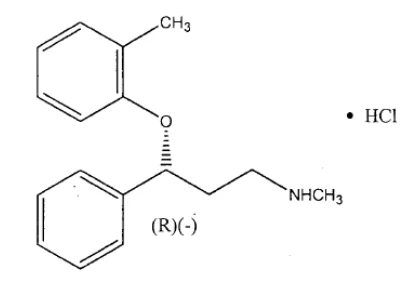
Physicochemical Properties: Atomoxetine hydrochloride is a white to off-white crystalline powder, which has a solubility of 27.8 mg/mL in water and 272.7 mg/mL in Methanol. Atomoxetine hydrochloride is the R(-) isomer, as determined by x-ray diffraction.
| pH: | 4.80 (1% aqueous solution) |
| pKa: | 10.13 |
| Melting Point: | Onset temperature 168-169°C. |
CLINICAL TRIALS
Comparative Bioavailability
For 10 mg, 18 mg, 25 mg, 40 mg and 60 mg strength
This is a three-way, blinded, randomized, single dose (1 x 10 mg), crossover bioequivalence study conducted in 19 healthy, non-smoking, male and female subjects 23 to 48 years of age to compare the bioavailability of atomoxetine from Teva-Atomoxetine (Teva Canada Limited), the Canadian reference product, Strattera (Eli Lilly Canada Inc.) and the UK reference product Strattera (Eli Lilly and Company Limited) under fasting condition. The results from the comparison of Teva-Atomoxetine and Strattera (Eli Lilly Canada Inc.) are presented in the table below.
SUMMARY TABLE OF THE COMPARATIVE BIOAVAILABILITY DATA
Atomoxetine (1 x 10 mg) From measured data Geometric Mean Arithmetic Mean (CV %) | ||||
| Parameter | Teva-Atomoxetine | Strattera1 | % Ratio of Geometric Means | 90% Confidence interval |
AUCT (ng⋅h/mL) | 453.90 620.23 (121) | 434.19 580.11 (118) | 104.54 | 97.82 – 111.72 |
AUCI (ng⋅h/mL) | 468.58 677.34 (139) | 450.58 630.35 (132) | 103.96 | 97.42 – 110.93 |
Cmax (ng/mL) | 92.57 97.61 (33) | 103.27 107.49 (31) | 89.64 | 83.10 – 96.69 |
Tmax§ (h) | 1.38 (73) | 1.11 (112) | ||
T1/2§ (h) | 3.71 (82) | 3.69 (78) | ||
1 Strattera (Eli Lilly Canada Inc.) was purchased in Canada
§ Expressed as the arithmetic mean (%CV) only
This is a three-way, blinded, randomized, single dose (1 x 60 mg), crossover bioequivalence study conducted in 21 healthy, non-smoking, male and female subjects 24 to 54 years of age to compare the bioavailability of atomoxetine from Teva-Atomoxetine (Teva Canada Limited), the Canadian reference product, Strattera (Eli Lilly Canada Inc.) and the UK reference product Strattera (Eli Lilly and Company Limited) under fasting condition. The results from the comparison of Teva-Atomoxetine and Strattera (Eli Lilly Canada Inc.) are presented in the table below.
Atomoxetine (1 x 60 mg) From measured data Geometric Mean Arithmetic Mean (CV %) | ||||
| Parameter | Teva-Atomoxetine | Strattera1 | % Ratio of Geometric Means | 90% Confidence interval |
AUCT (ng⋅h/mL) | 3858.05 4668.48 (68) | 3908.45 4770.33 (78) | 98.71 | 92.68 – 105.14 |
AUCI (ng⋅h/mL) | 3937.24 4978.15 (85) | 3988.13 5134.23 (98) | 98.72 | 92.75 – 105.09 |
Cmax (ng/mL) | 680.46 702.43 (22) | 704.06 728.38 (31) | 96.65 | 88.16 – 105.96 |
Tmax§ (h) | 1.20 (95) | 1.23 (92) | ||
T1/2§ (h) | 4.48 (70) | 4.50 (75) | ||
1 Strattera (Eli Lilly Canada Inc.) was purchased in Canada
§ Expressed as the arithmetic mean (%CV) only
For 80 mg and 100mg strength
A single dose crossover comparative bioavailability study of Teva-Atomoxetine 25 mg capsules (formerly ratio-Atomoxetine) (Teva Canada Limited) and Strattera® 25 mg capsules (Eli Lilly Canada Inc.) following a single dose of 25mg in 26 healthy adult male and females under fasting conditions was conducted. The results from measured data are summarized in the table below.
Atomoxetine (1 x 25 mg) From measured data Geometric Mean Arithmetic Mean (CV %) | ||||
|---|---|---|---|---|
| Parameter | Atomoxetine* | Strattera®† | % Ratio of Geometric Means** | 90% Confidence Interval |
AUC0-t (ng·h/mL) | 968.13 1890.2 (147.5) | 962.59 1857.0 (146.3) | 100.6 | 96.5-104.7 |
AUCinf (ng·h/mL) | 1008.10 2096.6 (154.0) | 1008.88 2093.5 (154.3) | 99.9 | 95.9-104.0 |
Cmax (ng/mL) | 191.1975 207.696 (43.7) | 202.2626 221.000 (46.6) | 94.5 | 87.3-102.2 |
Tmax§ (h) | 1.000 (0.500-6.000) | 0.750 (0.500-6.041) | ||
T½ (h) | 3.388 4.785 (111.4) | 3.577 5.093 (113.6) | ||
kel (1/h) | 0.24449 (43.9) | 0.23176 (43.8) | ||
* Teva-Atomoxetine (formerly ratio-Atomoxetine) 25 mg capsules manufactured by Teva Canada Limited
† Strattera® 25 mg capsules (Lilly, Canada) were purchased in Canada
§ Expressed as the median (min-max)
** Based on least square estimate due to unbalanced sequence
A single dose crossover comparative bioavailability study of Teva-Atomoxetine 60 mg capsules (formerly ratio-Atomoxetine (Teva Canada Limited.) and Strattera® 60 mg capsules (Eli Lilly Canada Inc.) following a single dose of 60 mg in 26 healthy adult male and females under fasting conditions was conducted. The results from measured data are summarized in the table below.
Atomoxetine (1 x 60 mg) From measured data Geometric Mean Arithmetic Mean (CV %) | ||||
|---|---|---|---|---|
| Parameter | Test* | Reference† | % Ratio of Geometric Means** | 90% Confidence Interval |
AUC0-t (ng·h/mL) | 2708.68 3996.8 (134.9) | 2596.50 3854.9 (136.1) | 104.3 | 100.5-108.3 |
AUCinf (ng·h/mL) | 2779.35 4430.7 (157.8) | 2662.74 4270.6 (158.6) | 104.4 | 100.4-108.5 |
Cmax (ng/mL) | 508.6929 528.385 (31.0) | 493.1764 517.269 (32.6) | 103.1 | 93.3-114.0 |
Tmax§ (h) | 1.00 (0.50-6.50) | 0.75 (0.50-6.50) | ||
T½ (h) | 4.468 (104.2) | 4.506 (101.6) | ||
kel (1/h) | 0.21602 (36.1) | 0.21324 (36.2) | ||
* Teva-Atomoxetine (formerly ratio-Atomoxetine) 60 mg capsules manufactured by Teva Canada Limited
† Strattera® 60 mg capsules (Lilly, Canada) were purchased in Canada
§ Expressed as the median (min-max)
** Based on least square estimate
The efficacy and safety of atomoxetine hydrochloride for the treatment of ADHD in children, adolescents and adults (Table 12) who met the Diagnostic and Statistical Manual 4th edition (DSM-IV) criteria were established in 6 acute, randomized, double-blind, placebo-controlled studies. Examination of population subsets (gender, age) did not reveal any differential responsiveness on the basis of these subgroupings.
Four additional double-blind, placebo-controlled studies were also conducted with children and adolescents in the school setting, and in adults (Table 12). Efficacy and safety were assessed in patients with comorbid tic disorder (pediatrics), and comorbid anxiety disorders (pediatrics and adults). As well, evening efficacy was assessed with once daily dosing (pediatrics and adults).
Long-term efficacy of atomoxetine hydrochloride was established in an 18 month, randomized, double-blind, placebo-controlled relapse-prevention study. Too few patients completed to allow an adequate assessment of long-term safety from this study.
The long-term safety of atomoxetine hydrochloride has been demonstrated in double-blind and open-label clinical trials involving 5382 children or adolescent patients and 525 adult patients with ADHD. During the ADHD clinical trials, 1625 children and adolescent patients were treated for longer than 1 year and 2529 children and adolescent patients were treated for over 6 months.
In both pediatric and adult studies, atomoxetine hydrochloride showed efficacy in patients who had been previously treated with stimulants, as well as in stimulant-naïve patients. Atomoxetine hydrochloride has a different mechanism of action from stimulant therapies. Data on evening efficacy suggest that atomoxetine hydrochloride is not associated with the ‘on/off’ phenomena characteristic of stimulants.
Study Demographics and Trial Design
Table 12: Summary of Patient Demographics for Controlled Clinical Trials in ADHD Patients
| Study No. | Trial design | Atomoxetine Dose/Duration | No. of Subjects | Mean Age (range) | Gender | |||||
|---|---|---|---|---|---|---|---|---|---|---|
| Randomized, Double-Blind Studies in Children and Adolescents | ||||||||||
| HFBD | Acute, placebo-controlled, parallel groups. | BID dosing, max 2.0 mg/kg/day; 9 weeks. | n = 147 | 9.7 years (7 – 13) | M = 119 F = 28 | |||||
| HFBK | Acute, placebo-controlled, parallel groups. | BID dosing, max 2.0 mg/kg/day; 9 weeks. | n = 144 | 9.9 years (7 – 13) | M = 117 F = 27 | |||||
| LYAC | Acute, dose-ranging, placebo-controlled, parallel groups. | Fixed BID doses 0.5, 1.2, and 1.8 mg/kg/day; 8 weeks. | n = 297 | 11.2 years (8 – 18) | M = 212 F = 85 | |||||
| LYAT | Once-daily dosing, acute, placebo-controlled, parallel groups. | QD dosing, max 1.5 mg/kg/day; 6 weeks. | n = 171 | 10.3 years (6 - 16) | M = 120 F = 51 | |||||
| LYBG | Once-daily dosing, acute, placebo-controlled, parallel groups, and assessment of evening efficacy. | QD dosing, max 1.8 mg/kg/day; 8 weeks. | n = 197 | 9.5 years (6 – 13) | M = 139 F = 58 | |||||
| LYAW | Once- daily dosing, acute, placebo-controlled, parallel groups, and assessment of efficacy in the school setting. | QD dosing, max 1.8 mg/kg/day; 7 weeks. | n = 153 | 9.9 years (7 - 13) | M = 123 F = 30 | |||||
| LYAS 1 | Acute, placebo-controlled, parallel groups, patients with ADHD and comorbid tic disorder. | BID dosing, max 1.5 mg/kg/day; up to 18 weeks | n = 148 | 11.2 years (7 – 17) | M = 131 F = 17 | |||||
| Study No. | Trial design | Atomoxetine Dose/Duration | No. of Subjects | Mean Age (range) | Gender | |||||
|---|---|---|---|---|---|---|---|---|---|---|
| LYBI | Parallel-group comparison of atomoxetine, extended-release methylphenidate and placebo. | BID dosing max 1.8 mg/kg/day; approx. 6 weeks. | n = 516 | 10.2 years (6 – 17) | M = 383 F = 133 | |||||
| LYAF | Long-term relapse prevention, placebo-controlled, parallel groups. | BID dosing, max 1.8 mg/kg/day; 52 weeks double-blind. | n = 416 | 10.4 years (6 – 16) | M = 373 F = 43 | |||||
| LYBP 2 | Placebo-controlled, parallel group study in patients with ADHD and comorbid anxiety. | BID dosing max 1.8 mg/kg/day; approx. 12 weeks. | n = 176 | 12.0 years (8 – 18) | M = 114 F = 62 | |||||
| Randomized, Double-Blind Studies in Adults | ||||||||||
| LYAA | Acute, placebo-controlled, parallel groups. | BID dosing, max 120 mg/day 10 weeks | n = 280 | 40.3 years (18 – 67) | M = 178 F = 102 | |||||
| LYAO | Acute, placebo-controlled, parallel groups. | BID dosing max 120 mg/day 10 weeks | n = 256 | 42.1 years (19 – 77) | M = 170 F = 86 | |||||
| LYDQ 3 | Placebo-controlled, parallel group study in adult patients with ADHD and comorbid social anxiety. | BID dosing max 100 mg/day; approx. 16 weeks. | n = 442 | 38.0 years (18 – 65) | M = 237 F = 205 | |||||
1, 2 and 3 : See Action and Clinical Pharmacology, Special Populations, Patients with concomitant illness.
Children and Adolescents: Improvement on signs and symptoms of ADHD were evaluated by a comparison of mean change from baseline to endpoint for atomoxetine hydrochloride- and placebo-treated patients. The primary efficacy measure in all studies was the ADHD Rating Scale-IV-Parent Version (ADHDRS), with the exception of Study LYAW which used the ADHD Rating Scale-IV-Teacher Version. Both scales have been well-validated and contain 18 items corresponding exactly to the DSM-IV symptom criteria, thus providing strong content validity. Both scales were administered and scored by an investigator following interviews with a parent or teacher.
Doses ranged from 0.5 to 2.0 mg/kg/day. In clinical trials, the mean weight of children 6 to 12 years of age was 35 kg, and their mean final dose was 45 mg/day. Atomoxetine hydrochloride was dosed twice daily, morning and late afternoon/early evening in Studies HFBD, HFBK, and LYAC, or once daily in the morning in Studies LYAT, LYAW, and LYBG.
Adults: The primary outcome measure in the adult studies was the validated Conners’ Adult ADHD Rating scale (CAARS), which contains 18 items that correspond exactly to the DSM-IV symptom criteria. This instrument is investigator-administered and scored, with ratings based on patient self-report. Adult patients with current diagnoses of depression and anxiety were excluded, which ensured that improvements related to atomoxetine hydrochloride were attributable to improvements in ADHD. Doses ranged from 30 to 60 mg twice daily, which correspond, on a weight-adjusted basis for a 70 kg adult, to the dosing used in children.
Study Results
Children and Adolescents
Acute, Double-Blind, Placebo-Controlled Studies: The effectiveness of atomoxetine hydrochloride in the treatment of ADHD was established in 6 randomized, double-blind, placebo-controlled studies of pediatric patients, ages 6 to 18 (Studies HFBD, HFBK, LYAC, LYAT, LYAW, LYBG). Approximately one-third of the patients met DSM-IV criteria for inattentive subtype and two-thirds met criteria for both inattentive and hyperactive/ impulsive subtypes. In all studies, atomoxetine hydrochloride demonstrated a statistically significantly (p<0.001) greater mean reduction in core ADHD symptoms compared with placebo on the primary efficacy measure (Figure 1).
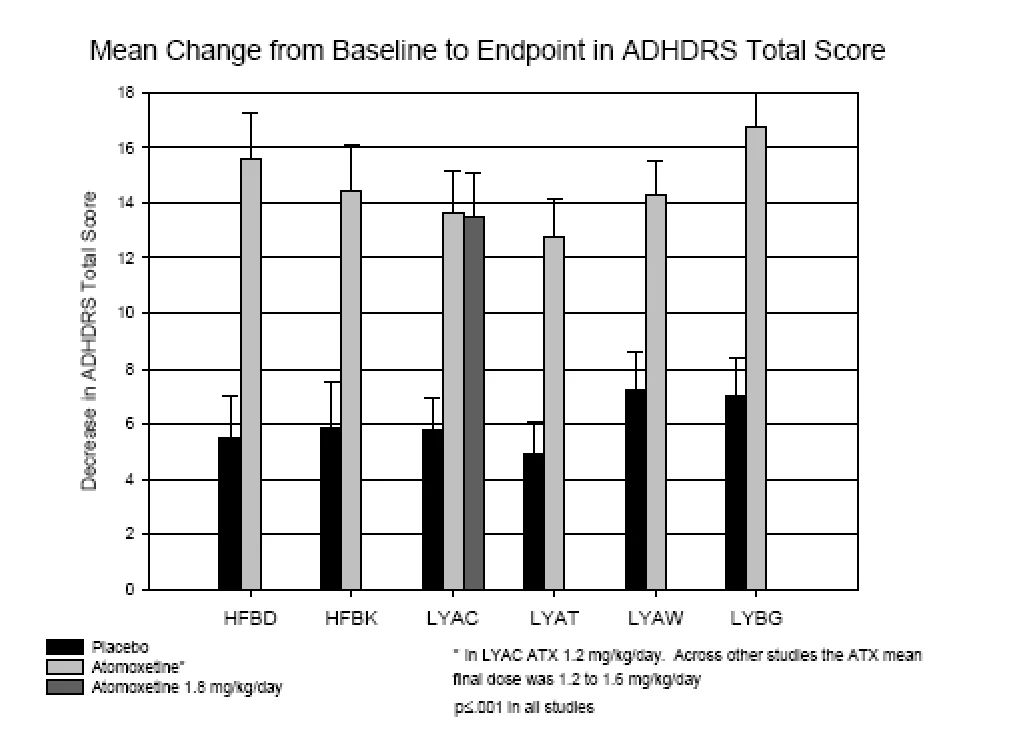
Figure 1. Mean change from baseline to endpoint on the ADHDRS-IV-Parent:Inv Total score in the acute, double-blind, placebo-controlled pediatric studies.
The effect size in the atomoxetine hydrochloride treatment group was similar across studies, providing evidence of a consistent treatment effect regardless of dosing regimen (once or twice daily) or which observer (teacher or parent) was providing information for the primary outcome measure. The efficacy of atomoxetine hydrochloride in children and adolescents was demonstrated in both Hyperactive-Impulsive and Inattentive symptom domains, in ADHD patients with or without comorbidity (e.g., Oppositional Defiant Disorder, depression), and in patients with or without prior stimulant use.
Improvements in the primary outcome measure were consistently accompanied by improvements in broader measures of quality of life and functioning, including behaviour at school, self-esteem and family functioning.
The results of the fixed dose study (LYAC) provided evidence of dose response (onset of effect at 0.5 mg/kg/day, with maximal effect at 1.2 mg/kg/day). For the overall group, no further benefit was demonstrated at 1.8 mg/kg/day.
Study LYAT demonstrated the effectiveness of atomoxetine hydrochloride when administered once daily in the morning (Figure 2). Clinical improvement was typically seen within 1 week of starting treatment, and at 2 to 4 weeks, mean reductions in symptom severity scores were approaching maximal reductions. Study LYBG further demonstrated that the efficacy of atomoxetine hydrochloride persisted from morning until late evening following a once-daily morning dose.
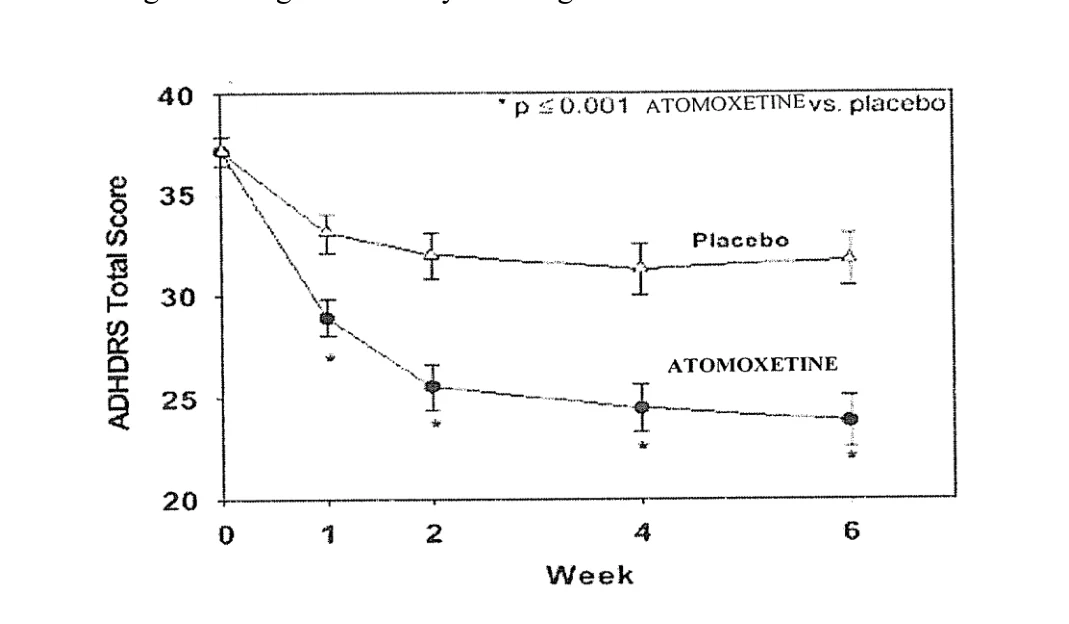
Figure 2: Once-Daily Administration of Atomoxetine Hydrochloride.
Long-Term Placebo-Controlled Study: The effectiveness of atomoxetine hydrochloride in maintaining symptom response was investigated in Study LYAF, an 18-month study of children and adolescents aged 6 to 15 who met DSM-IV criteria for ADHD. A total of 604 patients were enrolled in this study. Patients who responded to atomoxetine hydrochloride during approximately 3-months open-label treatment (n = 416) were randomized to double-blind, placebo-controlled continuation at their current doses of atomoxetine (n = 292) or on placebo (n = 124) for approximately 9 months to observe for relapse. Patients who were still on atomoxetine (n = 163) at the end of 12 months of treatment were further randomized to an additional 6 months double-blind, placebo-controlled continuation at their current doses of atomoxetine (n = 81) or on placebo (n = 82). The results from this study suggest that atomoxetine may be beneficial in the long-term treatment of ADHD. Too few patients completed to allow an adequate assessment of long-term safety from this study.
Children and adolescents enrolled in acute double-blind, placebo-controlled clinical trials, as well as those enrolled in open-label trials, were followed prospectively to assess safety, tolerability, and effects on growth. The long-term safety of atomoxetine hydrochloride has been demonstrated in double-blind and open-label clinical trials involving 5382 children or adolescent patients. During the ADHD clinical trials, 1625 children and adolescent patients were treated for longer than 1 year and 2529 children and adolescent patients were treated for over 6 months. In these trials, atomoxetine hydrochloride was safe and well tolerated, and there were minimal, if any, long-term effects on weight and height compared to normal growth curves.
Active Comparator Study: Study LYBI was a randomized, double-blind, parallel group, 6 week pediatric study to test the non-inferiority of atomoxetine to a standard extended-release stimulant comparator. The comparator was shown to be associated with superior response rates compared to atomoxetine (p=0.016). However, this study excluded patients who were stimulant nonresponders, so it is possible that the results were biased favouring the stimulant comparator. For patients not previously treated with a stimulant, there was no significant difference in response rates between stimulant comparator and atomoxetine (p=0.423). Both atomoxetine and the comparator were statistically superior to placebo. Both atomoxetine and comparator were safe and well-tolerated. Neither medication produced statistically significant QT prolongation compared to placebo.
Studies in Adult ADHD Patients
The results of 2 large placebo-controlled studies in adult patients with ADHD (N=536) have demonstrated the efficacy and safety of atomoxetine hydrochloride in this population. Atomoxetine hydrochloride was statistically significantly superior to placebo at reducing ADHD symptoms as measured on the CAARS Total ADHD symptom score (Figure 3, LYAA p = 0.004, LYAO p = 0.002). Efficacy was observed for overall ADHD symptoms as well as in the individual domains of Predominately Inattentive and Predominately Hyperactive-Impulsive symptoms.
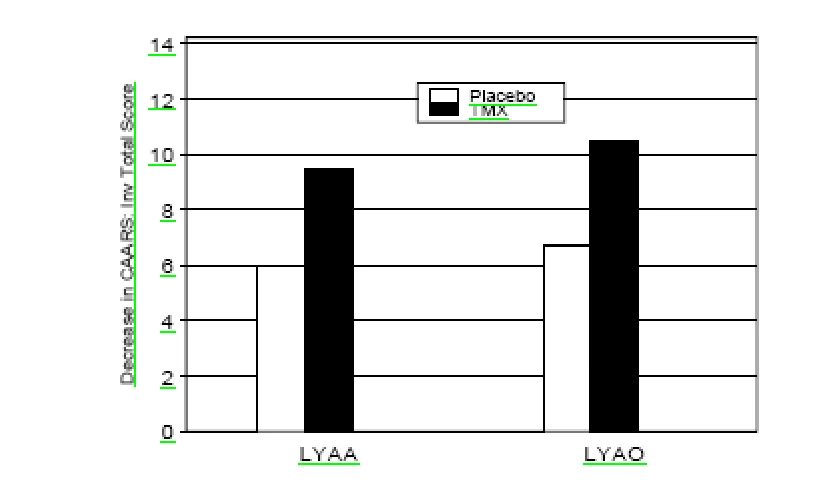
Figure 3: CAARS Total Scores – Mean change from baseline to endpoint in randomized, double-blind, placebo-controlled adult studies
DETAILED PHARMACOLOGY
Efficacy Pharmacology
Atomoxetine hydrochloride was designed to be a potent and selective inhibitor of the norepinephrine transporter. In vitro, atomoxetine was found to have highly selective potency for the norepinephrine transporter over the dopamine and serotonin transporters, and was highly selective for inhibiting the uptake of radiolabelled norepinephrine into hypothalamic synaptosomes. Of the two primary phase I metabolites, 4-hydroxyatomoxetine was found to have similar in vitro potency for the norepinephrine transporter and inhibition of norepinephrine uptake compared to atomoxetine, while N-desmethylatomoxetine had lower affinity than atomoxetine for all three monoamine transporters. Further, atomoxetine and these metabolites were found to have relatively low affinities for neurotransmitter receptors and ion channels. In vivo evaluation of atomoxetine also demonstrated high potency and selectivity of atomoxetine for the norepinephrine transporter. In the prefrontal cortex, a site believed to be important for attention in humans, dose-dependent increases in the extracellular concentrations of norepinephrine and dopamine occurred when atomoxetine was given intraperitoneally or when atomoxetine was delivered directly through a microdialysis probe, suggesting that the increases in prefrontal cortex norepinephrine and dopamine were produced by local inhibition of the norepinephrine transporter. Atomoxetine did not produce a significant increase in the extracellular concentrations of dopamine in the nucleus accumbens, an area believed to mediate the rewarding effects of dopamine transporter inhibitors, and the striatum, an area believed to mediate the effects of dopamine transporter inhibitors on locomotor activity.
Safety Pharmacology
Atomoxetine was evaluated in animals or in vitro for potential effects on the central nervous system and behaviour, including abuse potential, and for effects on cardiovascular, respiratory, renal, gastrointestinal, and immune function.
In contrast to the high affinity of atomoxetine for the norepinephrine transporter site, atomoxetine, 4-hydroxyatomoxetine, and N-desmethylatomoxetine, have relatively low binding affinities for adrenergic, muscarinic, histaminergic, GABAergic, serotonergic, and dopaminergic receptors, as well as many other receptor sites and ion channels. Atomoxetine exhibited no agonist effects on isolated smooth and cardiac tissues and did not inhibit acetylcholine- or isoproterenol-induced contractions of these respective tissues. Therefore, atomoxetine would not be expected to interfere with the physiologic function mediated by these receptor systems or produce toxicity associated with muscarinic or adrenergic receptors. Importantly, clinical signs observed in rodents and dogs were consistent only with effects on the central nervous system (for example, reduced motor activity, leg weakness, jerky gait, tremors, and convulsions).
Atomoxetine is not associated with abuse potential, based upon its receptor binding profile and nonclinical behavioural pharmacology, as well as animal drug discrimination studies conducted with atomoxetine.
Atomoxetine produced no important changes in respiratory or renal function, gastrointestinal motility, or immune function in animals.
Cardiac Function
Atomoxetine was evaluated for effects on cardiac function in vitro and in dogs. In vitro blockade of the cloned human cardiac IKr (HERG) channel by atomoxetine occurred with an IC50 of 0.869 µM. Studies with canine Purkinje tissue and in dogs given atomoxetine orally did not produce effects predictive or consistent with a compound-related QT interval prolongation. Concomitant inhibition of sodium and calcium inward currents in vitro helps explain the lack of in vivo findings. These observations, together with the clinical experience with atomoxetine, indicate that the in vitro HERG blockade observation is not likely predictive of an increased cardiovascular risk for atomoxetine.
Cardiovascular Safety Study:
The safety and tolerability of gradually increasing multiple-dose regimes of atomoxetine was studied during a 20 day period in a clinical pharmacology study involving 16 healthy adults (10 EM subjects and 6 PM subjects). Placebo or atomoxetine 60 to 150 mg/day, was given as twice daily doses of 30 mg, 45 mg, 60 mg, and 75 mg. None of the mean or individual QTc(F) intervals (QT interval corrected by the Fridericia method) exceeded the upper limits of normal for each gender.
The EM group had no statistically significant changes in mean QTc(F) interval following any dose of atomoxetine compared to the placebo treatment. No statistically significant changes in QTc(F) were noted 1 hour post dose (during peak plasma concentrations) in the PM group. The PM group had a statistically significant increase in the mean QTc(F) interval measured at time 0 (during trough plasma concentrations) on the last day of the 60- and 75-mg atomoxetine twice-daily dosing regimens compared to the placebo. The greatest mean prolongation was about 17 msec at the 60-mg BID dose level, with the mean interval length of 417.2 msec. At the 75-mg BID atomoxetine dose level, the greatest mean prolongation was 15 msec, and the mean interval length was 414.9 msec. The 60 mg BID and 75 mg BID doses correspond to 1.4-2.24 mg/kg/day and 1.75-2.8 mg/kg/day, respectively.
Baseline ECGs obtained during screening of pediatric patients for atomoxetine clinical trials were reviewed for cases of QTc prolongation. Using Bazett’s method for correcting QT (the usual method for automated QTc intervals), there were 131/3902 cases (3.4%) with QTc(B)>450 msec and 5/3902 cases (0.1%) with QTc(B)>500 msec. Using a correction method based on data from baseline ECGs (the method preferred by most regulatory agencies), there were 32/3902 cases (0.8%) with QTc(D)>450 msec and 5/3902 cases (0.1%) with QTc(D)>500 msec. In a meta-analysis of ECG data from patients who received atomoxetine in pediatric clinical trials, no relationship was observed between changes from baseline to final QTc(D) and prescribed atomoxetine dose (n=3127 patients), or between changes from baseline to QTc(D) at time of expected peak exposure and prescribed atomoxetine dose (n=2084 all patients, n=151 PM patients). For clinical trial patients where plasma concentrations were available, no relationship was observed between changes from baseline QTc(D) and atomoxetine plasma concentration during peak atomoxetine exposure (n=728 all patients, n=83 PM patients).
Overall, the data do not suggest a meaningful relationship between atomoxetine plasma concentrations and the length of the QT interval corrected for heart rate in the recommended dosage range. However, since there is no requirement for a priori screening of ADHD patients for CYP2D6 metabolizer status before initiating treatment with atomoxetine, it is important that the lowest effective dose be used, so as to minimize potential cardiac side effects.
Pharmacokinetics
Atomoxetine was well absorbed following oral administration to adult mice, rats, and dogs.
The primary oxidative (phase I) metabolite of atomoxetine was identified as 4-hydroxyatomoxetine, and its major ultimate metabolite is 4-hydroxyatomoxetine-O-glucuronide, in all species evaluated. The major routes of metabolism are aromatic ring-hydroxylation, benzylic/aliphatic hydroxylation, and N-demethylation. Subsequent O-glucuronidation and O-sulfation of the hydroxylated metabolites are the only phase II metabolic pathways to participate in the conjugation of the oxidized atomoxetine metabolites. Plasma concentrations of atomoxetine and its primary phase I metabolites, N-desmethylatomoxetine and 4-hydroxyatomoxetine, increased with dose in each species. There was generally minimal accumulation with repeated dosing, which appeared to be due to the relatively rapid clearance of atomoxetine in each of the species evaluated. The half-life of atomoxetine following a single intravenous dose was 1.2 hr, 1.4 hr and 3.4 hr in the mouse, rat and dog, respectively. The most profound difference observed among species was the low bioavailability in rodents (approximately 4%) compared to the high bioavailability in dog (approximately 74%). These differences appear to be almost purely mediated by the efficient first-pass hepatic clearance of atomoxetine in rodents, resulting in poor systemic exposure to atomoxetine but high exposure to its metabolites. In the dog, atomoxetine does not undergo extensive first-pass metabolism.
Increases in hepatic cytochrome P450 activity were observed in mice and rats after large oral doses of atomoxetine. Slight increases in total cytochrome P450 content were observed at the highest dose tested (16 mg/kg/day) in male dogs. However, no evidence of such changes in cytochrome P450 activity have been observed in clinical studies.
Binding of atomoxetine and N-desmethylatomoxetine to plasma protein was high in each species evaluated including humans (82% to 99%), while the binding of 4-hydroxyatomoxetine to plasma protein was substantially lower (55% to 67%).
In the rat, atomoxetine and its metabolites were rapidly and widely distributed in tissues, with the highest levels being observed in the gastrointestinal tract and the liver. Milk excretion is not a major route of elimination for atomoxetine and/or its metabolites. Atomoxetine and/or its metabolites crossed the placenta resulting in relatively low fetal exposure compared to exposure in maternal tissues.
The major route of excretion of atomoxetine-derived radioequivalents was via the urine in each of the species evaluated. A low amount of fecal excretion appears to be due to biliary elimination. Very little atomoxetine was excreted intact, indicating that direct renal or biliary elimination of atomoxetine are minor routes of systemic clearance.
TOXICOLOGY
Acute Toxicity
The median lethal oral dose of atomoxetine hydrochloride in animals was estimated to be 25 mg/kg for cats, >37.5 mg/kg for dogs, and ≥190 mg/kg in rats and mice. Premonitory signs of toxicity following single oral doses of atomoxetine in animals included mydriasis and reduced pupillary light reflex, mucoid stools, salivation, vomiting, ataxia, tremors, myoclonic jerking, and convulsions.
Long-Term Toxicity
Toxicity studies of up to 1 year were conducted in adult rats and dogs to evaluate the potential chronic toxicity of atomoxetine. There was no major target organ toxicity observed in dogs given oral doses up to 16 mg/kg/day or in rats given atomoxetine in the diet at time-weighted average doses up to 47 mg/kg/day. These doses are approximately 6-7 times the maximum recommended daily oral dose in children, and approximately 4-5 times the maximum recommended daily oral dose in adults, on a mg/m2 basis. Mild hepatic effects, characterized by mottling and pallor of the liver, increased relative liver weights, hepatocellular vacuolation, and slightly increased serum ALT values, occurred in male rats given time-weighted average doses ≥14 mg/kg/day. No hepatic effects were observed in dogs. Clinical signs of mydriasis, reduced pupillary light reflex, emesis, and tremors were observed in dogs, and these effects were minimal in adult dogs given ≤8 mg/kg/day. Similar clinical signs were observed in young dogs (8 weeks of age) given atomoxetine orally for 1 month.
Toxicity studies were conducted to evaluate potential effects of atomoxetine on growth, neurobehavioural, and sexual development as well as reproductive performance in rats dosed from the early postnatal period to early adulthood. No important effects on bone growth, brain morphology, neurobehavioral or reproductive performance were observed in rats administered atomoxetine hydrochloride from 10 days of age through adulthood, at oral doses up to 50 mg/kg, approximately 7 times the maximum recommended daily oral dose in children on a mg/m2 basis. There were no effects on the anatomy or morphology of either male or female reproductive organs. There was a minor, dose-related increase in time-to-onset of vaginal patency and preputial separation (1 to 3 days compared with controls), but all animals reached sexual maturity and no malformations of the vagina or prepuce/glans penis were observed. In male rats, spermatogenesis was normal. There were slight decreases in the number of sperm held in the epididymis but no effects on fertility. For both male and female rats, there were no effects on mating or fertility indices, no effects on embryo implantation or embryo viability, and no effects on learning and memory tests. The significance of these findings to humans is not known.
Carcinogenicity
Atomoxetine hydrochloride was not carcinogenic in rats and mice when given in the diet for 2 years at time-weighted average doses up to 47 and 458 mg/kg/day, respectively. The highest dose used in rats is approximately 8 and 5 times the maximum human dose in children and adults, respectively, on a mg/m2 basis. Plasma levels (AUC) of atomoxetine at this dose in rats are estimated to be 1.8 times (extensive metabolizers) or 0.2 times (poor metabolizers) those in humans receiving the maximum human dose. The highest dose used in mice is approximately 39 and 26 times the maximum human dose in children and adults, respectively, on a mg/m2 basis.
Mutagenicity
Atomoxetine hydrochloride was negative in a battery of genotoxicity studies that included a reverse point mutation assay (Ames Test), an in vitro mouse lymphoma assay, a chromosomal aberration test in Chinese hamster ovary cells, an unscheduled DNA synthesis test in rat hepatocytes and an in vivo micronucleus test in mice. However, there was a slight increase in the percentage of Chinese hamster ovary cells with diplochromosomes, suggesting endoreduplication (numerical aberration).
The metabolite N-desmethylatomoxetine hydrochloride was negative in the Ames Test, mouse lymphoma assay, and unscheduled DNA synthesis test.
Teratogenicity
No evidence of drug-associated teratogenicity or retarded fetal development was produced in rabbits or rats administered atomoxetine hydrochloride throughout organogenesis at oral doses up to 100 mg/kg/day and 150 mg/kg/day (at least 20 times the maximum recommended daily oral dose in children and 13 times the maximum recommended daily oral dose in adults, on a mg/m2 basis). In a rat fertility study, decreased pup weight and survival was observed, predominantly during the first week postpartum following maternal dietary atomoxetine time-weighted average doses of 23 mg/kg/day or higher. No adverse effects were observed in surviving pups.
Atomoxetine hydrochloride did not impair fertility when administered to rats from 10 days of age through adulthood at oral doses up to 50 mg/kg/day (up to 7 times the maximum recommended daily oral dose in children and 4 times the maximum recommended daily oral dose in adults, on a mg/m2 basis). In addition, no evidence of impaired fertility was observed in either of two fertility studies in adult rats provided atomoxetine HCl in the diet at time-weighted average doses up to 57 mg/kg/day (up to 8 times the maximum recommended daily oral dose in children and 5 times the maximum recommended daily oral dose in adults, on a mg/m2 basis).
Parturition in rats was not affected by atomoxetine.
Impairment of fertility
Atomoxetine HCl did not impair fertility in rats when given in the diet at doses of up to
57 mg/kg/day, which is approximately 6 times the maximum human dose on a mg/m2 basis.
Growth and Neurobehavioural/Sexual development in rats
A study was conducted in young rats to evaluate the effects of atomoxetine on growth and neurobehavioral and sexual development. Rats were treated with 1, 10, or 50 mg/kg/day (approximately 0.2, 2, and 8 times, respectively, the maximum human dose on a mg/m2 basis) of atomoxetine given by gavage from the early postnatal period (Day 10 of age) through adulthood. Slight delays in onset of vaginal patency (all doses) and preputial separation (10 and 50 mg/kg), slight decreases in epididymal weight and sperm number (10 and 50 mg/kg), and a slight decrease in corpora lutea (50 mg/kg) were seen, but there were no effects on fertility or reproductive performance. A slight delay in onset of incisor eruption was seen at 50 mg/kg. A slight increase in motor activity was seen on Day 15 (males at 10 and 50 mg/kg and females at 50 mg/kg) and on Day 30 (females at 50 mg/kg) but not on Day 60 of age. There were no effects on learning and memory tests. The significance of these findings to humans is unknown.
REFERENCES
- 1. Adler L, Spencer T, Willims D, et al. Long-term, open label study of the safety and efficacy of atomoxetine in adults with attention-deficit/hyperactivity disorder: An interim Analysis. J Clin Psychiatry 2005; 66:294-299.
- 2. Adler L, Sutton V, Moore R, et al. Quality of life assessment in adult patients with attention-deficit/hyperactivity disorder treated with atomoxetine. J Clin Psychopharmacol 2006; 26:648-652.
- 3.
Adler L, Liebowitz M, Kronenberger W, et al. Atomoxetine treatment in adults with
Attention-Deficit/Hyperactivity Disorder and comorbid Social Anxiety Disorder.
Depression and Anxiety 2009; 0:1–11.
- 4.
Adler L, Spencer T, Brown T, et al. Once-daily atomoxetine for adult Attention-
Deficit/Hyperactivity Disorder: A 6-month, double-blind trial. J Clin Psychopharmacol 2009; 29:44-50.
- 5. Allen AJ, Kurlan R, Gilbert D, et al. Atomoxetine treatment in children and adolescents with ADHD and comorbid tic disorders. Neurology 2005;65:1941–1949.
- 6. American Academy of Pediatrics (2001), Clinical Practice Guideline: Treatment of the School-Aged Child with Attention-Deficit/Hyperactivity Disorder. Pediatrics 108:1033-1044.
- 7. American Psychiatric Association (2000), Diagnostic and Statistical Manual of Mental Disorders: DSM-IV-TR. American Psychiatric Association, Washington, DC.
- 8. Buitelaar J, Michelson D, Danckaerts M, et al. A randomized, double-blind study of continuation treatment for Attention-Deficit/Hyperactivity Disorder after 1 year. Biol Psychiatry 2007: 61:694-699.
- 9. Canadian ADHD Resource Alliance (www.CADDRA.ca): Canadian ADHD Practice Guidelines: Medications for Attention Deficit/Hyperactivity Disorder, 2006 (1st Ed); Chapter 10 (App 17), 1-14.
- 10. Chalon S, Desager J, Desante K, et al. Effect of hepatic impairment on the pharmacokinetics of atomoxetine and its metabolites. Clin Pharmacol Therap 2003; 73:178-191.
- 11. Dell'Agnello G, Maschietto D, Bravaccio C, et al. Atomoxetine hydrochloride in the treatment of children and adolescents with Attention-Deficit/Hyperactivity Disorder and Comorbid Oppositional Defiant disorder: A placebo-controlled Italian study. European Neuropsychopharmacol (2009);19:822–834.
- 12. Faries D, Yalcin I, Harder D, et al. Validation of the ADHD Rating Scale as a clinician administered and scored instrument. J Attn Disorders 2001;5(2):107-115.
- 13. Geller D, Donnelly C, Lopez F, et al. Atomoxetine treatment for pediatric patients with attention-deficit/hyperactivity disorder with comorbid anxiety disorder. J Amer Acad Child & Adolesc Psych 2007; 46:1119-1127.
- 14. Hesdorffer DC, Ludvigsson P, Olafsson E, et al. ADHD as a risk factor for incident unprovoked seizures and epilepsy in children. Arch Gen Psychiatry 2004;61:731-736.
- 15. Heil S, Holmes H, Bickel W, et al. Comparison of the subjective, physiological, and psychomotor effects of atomoxetine and methylphenidate in light drug users. Drug and Alcohol Dependence 2002; 67:149-156.
- 16. Kelsey D, Sumner C, Casat C, Allen AJ, et al. Once-daily atomoxetine treatment for children with Attention-Deficit/Hyperactivity Disorder, including an assessment of evening and morning behavior: a double-blind, placebo-controlled trial. Pediatrics 2004; 114(1)e1-e8.
- 17. Kratochvil C, Heiligenstein J, Dittmann R, et al. Atomoxetine and methylphenidate treatment in children with ADHD: A prospective, randomized, open-label trial. J Amer Acad Child Adolesc Psych 2002;41:776-784.
- 18. Kratochvil C, Newcorn J, Arnold LE, et al. Atomoxetine alone or combined with fluoxetine for treating ADHD with comorbid depressive or anxiety symptoms. J Am Acad Child Adolesc Psychiatry 2005;44(9):915–924.
- 19. Kratochvil C, Wilens T, Greenhill L, et al. Effects of long-term atomoxetine treatment for young children with attention-deficit/hyperactivity disorder. J Amer Acad Child & Adolesc Psych 2006; 45:919-927.
- 20. Lowe S, Lim M, Smith B, et al. Haemodynamic effects of IV salbutamol and oral atomoxetine, alone and in combination. J Clin Pharmacol 2001;41(9):1025.
- 21. Maziade M, Rouleau N, Lee B, et al. Atomoxetine and neuropsychological function in children with Attention-Deficit/Hyperactivity Disorder: Results of a pilot study. J Child Adolesc Psychopharmacol 2009;19(6):709-718.
- 22.
Michelson D, Faries D, Wernicke J. Atomoxetine in the Treatment of Children and Adolescents with ADHD: A Randomized, Placebo-Controlled, Dose-Response Study.
Pediatrics 2001;108(5):1-9.
- 23. Michelson D, Allen A, Busner J, et al. Once-daily atomoxetine treatment for children and adolescents with attention deficit hyperactivity disorder: a randomized, placebo-controlled study. Amer J Psychiatry 2002;159:1896-1901.
- 24. Michelson D, Adler L, Spencer T, et al. Atomoxetine in adults with ADHD: Two randomized, placebo-controlled studies. Biol Psychiatry 2003;53:112–120.
- 25. Michelson D, Buitelaar J, Danckaerts M, et al. Relapse prevention in pediatric patients with ADHD treated with atomoxetine: A randomized, double-blind, placebo-controlled study. J. Am. Acad. Child Adolesc. Psychiatry 2004;43:896–904.
- 26. Montoya A, Hervas A, Cardo E, et al. Evaluation of atomoxetine for first-line treatment of newly diagnosed, treatment-naïve children and adolescents with attention deficit/ hyperactivity disorder. Curr Med Research & Opinion 2009;25(11):2745–2754.
- 27. Newcorn J, Spencer T, Biederman J, et al. Atomoxetine treatment in children and adolescents with Attention-Deficit/Hyperactivity Disorder and comorbid Oppositional Defiant Disorder. J Am Acad Child Adolesc Psychiatry 2005;44(3):240–248.
- 28. Perwien A, Kratochvil C, Faries DE, et al. Atomoxetine treatment in children and adolescents with attention-deficit hyperactivity disorder: What are the long-term health-related quality-of-life outcomes? J Child & Adolesc Psychopharmacol 2006; 16:713-724.
- 29. Quintana H, Cherlin E, et al. Transitioning from methylphenidate or amphetamine to atomoxetine in children and adolescents with attention-deficit/hyperactivity disorder – a preliminary tolerability and efficacy study. Clinical Therapeutics, June 2007.
- 30. Sangal R, Owens J, Allen AJ, et al. Effects of atomoxetine and methylphenidate on sleep in children with ADHD. Sleep 2006; 29:1573-1585.
- 31. Sauer JM, Ring B, Witcher J. Clinical pharmacokinetics of atomoxetine. Clin Pharmacokinet 2005;44(6):571-590.
- 32. Simpson D, Plosker G. Atomoxetine: A Review of its Use in Adults with Attention Deficit Hyperactivity Disorder. Drugs 2004;64:205-222.
- 33. Smith B, Soon D, Teng C, et. al. Hemodynamic effects of atomoxetine are less pronounced than methylphenidate, and not additive in combination. J Clin Pharmacol 2001;41:1014-1033.
- 34. Spiller HA, Lintner CP, Winter ML: Atomoxetine ingestions in children: A report from Poison Centers. Ann Pharmacother 2005;39:1045-1048.
- 35. Svanborg P, Thernlund G, Gustafsson P, et al. Efficacy and safety of atomoxetine as add-on to psychoeducation in the treatment of attention deficit/hyperactivity disorder: A randomized, double-blind, placebo-controlled study in Swedish children and adolescents. Eur Child Adolesc Psychiatry 2009;18:240–249.
- 36. Svanborg P, Thernlund G, Gustafsson P, et al. Atomoxetine improves patient and family coping in attention deficit/hyperactivity disorder: A randomized, double-blind, placebo-controlled study in Swedish children and adolescents. Eur Child Adolesc Psychiatry 2009; Published On-line May 23, 2009.
- 37. Weiss M, Tannock R, Kratochvil C, et al. A randomized, placebo-controlled study of once-daily atomoxetine in the school setting in children with ADHD. J Am Acad Child Adolesc Psychiatry 2005;44(7):647–655.
- 38. Wernicke J, Adler L, Spencer T, et al. Changes in symptoms and adverse events after discontinuation of atomoxetine in children and adults with Attention Deficit/Hyperactivity Disorder: A Prospective, Placebo-Controlled Assessment. J Clin Psychopharmacol 2004; 24:30-35.
- 39. Wernicke J, Faries D, Girod D et al. Cardiovascular effects of atomoxetine in children, adolescents, and adults. Drug Safety 2003;26:729-40.
- 40. Wernicke JF, Holdridge KC, Jin L, et al. Seizure Risk in Patients with ADHD Treated with Atomoxetine. Dev Med Child Neur 2007; 49: 498-502
- 41. Wilens T. Drug therapy for adults with Attention-Deficit Hyperactivity Disorder. Drugs 2003;63:2395-2411.
- 42. Wilens T, Newcorn J, Kratochvil C, et al. Long-term atomoxetine treatment in adolescents with attention-deficit/hyperactivity disorder. J Pediatrics 2006; 149:112-119.
- 43. PrStrattera® 10, 18, 25, 40, 60, 80 and 100 mg Capsules Product Monograph Control No. 184870, Eli Lilly Canada Inc., Canada. Date of Revision: October 1, 2015.
- 44. For 10-60mg: A single dose, comparative bioavailability study of three formulations of Atomoxetine Hydrochloride 10 mg Capsules under fasting conditions. Data is on file at Teva Canada Limited.
- 45. For 10-60mg: A single dose, comparative bioavailability study of three formulations of Atomoxetine Hydrochloride 60 mg Capsules under fasting conditions. Data is on file at Teva Canada Limited.
- 46. For 80-100mg: A single dose, comparative bioavailability study of two formulations of Atomoxetine Hydrochloride 25 mg Capsules under fasting conditions. Data is on file at Teva Canada Limited.
47 For 80-100mg: A single dose, comparative bioavailability study of two formulations of Atomoxetine Hydrochloride 60 mg Capsules under fasting conditions. Data is on file at Teva Canada Limited.