


Product Monograph - Tabrecta
RECENT MAJOR LABEL CHANGES
| Section 7 Warnings and Precautions | 06/2023 |
|---|---|
| Section 8 Adverse Reactions | 06/2023 |
| Section 14 Clinical Trials | 06/2023 |
TABLE OF CONTENTS
Sections or subsections that are not applicable at the time of authorization are not listed .
TABLE OF CONTENTS .............................................................................................................. 3
PART I: HEALTH PROFESSIONAL INFORMATION ..................................................................... 4
1 INDICATIONS .............................................................................................................. 4
1.1 Pediatrics .......................................................................................................... 5
1.2 Geriatrics........................................................................................................... 5
2 CONTRAINDICATIONS ................................................................................................. 5
3 SERIOUS WARNINGS AND PRECAUTIONS BOX ............................................................ 5
4 DOSAGE AND ADMINISTRATION................................................................................. 5
4.1 Dosing Considerations ....................................................................................... 5
4.2 Recommended Dose and Dosage Adjustment..................................................... 5
4.4 Administration................................................................................................... 7
4.5 Missed dose ...................................................................................................... 8
5 OVERDOSAGE ............................................................................................................. 8
6 DOSAGE FORMS, STRENGTHS, COMPOSITION AND PACKAGING ................................. 8
7 WARNINGS AND PRECAUTIONS .................................................................................. 8
7.1 Special Populations .......................................................................................... 11
7.1.1 Pregnant Women ....................................................................................... 11
7.1.2 Breast-feeding............................................................................................ 11
7.1.3 Pediatrics ................................................................................................... 11
7.1.4 Geriatrics ................................................................................................... 11
8 ADVERSE REACTIONS ................................................................................................ 12
8.1 Adverse reaction overview ............................................................................... 12
8.2 Clinical Trial Adverse Reactions ........................................................................ 12
8.3 Less Common Clinical Trial Adverse Reactions .................................................. 14
8.4 Abnormal laboratory findings: hematologic, clinical chemistry and other quantitative data....................................................................................................... 14
9 DRUG INTERACTIONS................................................................................................ 15
9.2 Drug Interactions Overview.............................................................................. 15
9.4 Drug-Drug Interactions .................................................................................... 16
9.5 Drug-Food Interactions .................................................................................... 19
9.6 Drug-Herb Interactions .................................................................................... 19
9.7 Drug-Laboratory Test Interactions .................................................................... 19
10 CLINICAL PHARMACOLOGY ....................................................................................... 20
10.1 Mechanism of Action.................................................................................. 20
10.2 Pharmacodynamics .................................................................................... 20
10.3 Pharmacokinetics ....................................................................................... 20
11 STORAGE, STABILITY AND DISPOSAL ......................................................................... 22
12 SPECIAL HANDLING INSTRUCTIONS........................................................................... 22
PART II: SCIENTIFIC INFORMATION ...................................................................................... 23
13 PHARMACEUTICAL INFORMATION............................................................................ 23
14 CLINICAL TRIALS .............................................................................................................. 24
14.1 Clinical Trials by Indication.......................................................................... 24
15 MICROBIOLOGY ........................................................................................................ 30
16 NON-CLINICAL TOXICOLOGY ..................................................................................... 30
PATIENT MEDICATION INFORMATION ................................................................................. 32
PART I: HEALTH PROFESSIONAL INFORMATION
1 INDICATIONS
TABRECTA® (capmatinib tablets) is indicated for:
the treatment of adult patients with locally advanced unresectable or metastatic non-small cell lung cancer (NSCLC) harbouring mesenchymal-epithelial transition (MET) exon 14 skipping alterations.
Efficacy in patients with NSCLC harbouring MET exon 14 skipping (METex14) alterations was based on overall response rate and duration of response in a single-arm study (see 14 CLINICAL TRIALS).
Documentation of the presence of a METex14 alteration based on a validated test is required prior to treatment with TABRECTA (see 7 WARNINGS AND PRECAUTIONS).
1.1 Pediatrics
Pediatrics (<18 years of age): No data are available to Health Canada; therefore, Health Canada has not authorized an indication for pediatric use.
1.2 Geriatrics
Geriatrics (≥65 years of age): In Study A2201 (GEOMETRY mono-1), 61% of the 373 patients were 65 years of age or older, and 18% were 75 years of age or older. No clinically important differences in safety or efficacy were observed between patients aged 65 years or older and younger patients.
2 CONTRAINDICATIONS
TABRECTA is contraindicated in patients who are hypersensitive to this drug or to any ingredient in the formulation, including any non-medicinal ingredient, or component of the container. For a complete listing, see 6 DOSAGE FORMS, STRENGTHS, COMPOSITION AND PACKAGING.
3 SERIOUS WARNINGS AND PRECAUTIONS BOX
4 DOSAGE AND ADMINISTRATION
4.1 Dosing Considerations
- TABRECTA has not been studied in patients with severe renal impairment. No dose adjustment is necessary in patients with mild or moderate renal impairment (See 10 CLINICAL PHARMACOLOGY).
- No dose adjustment is necessary in patients with mild, moderate, or severe hepatic impairment (See 10 CLINICAL PHARMACOLOGY).
4.2 Recommended Dose and Dosage Adjustment
- Recommended Dose
The recommended dose of TABRECTA is 400 mg orally twice daily with or without food (See 10 CLINICAL PHARMACOLOGY).
- Treatment duration
Treatment should be continued until disease progression or unacceptable toxicity.
- Dose modifications for adverse reactions
The recommended dose reduction schedule for the management of adverse reactions (ARs) based on individual safety and tolerability is listed in Table 1.
Table 1 TABRECTA dose reduction schedule
| Dose level | Dose and schedule | Number and strength of tablets |
| Starting dose | 400 mg twice daily | Two 200 mg tablets / twice daily |
| First-dose reduction | 300 mg twice daily | Two 150 mg tablets / twice daily |
| Second-dose reduction | 200 mg twice daily | One 200 mg tablet / twice daily |
TABRECTA should be permanently discontinued in patients unable to tolerate 200 mg orally twice daily.
Recommendations for dose modifications of TABRECTA for adverse reactions (ARs) are provided in Table 2.
Table 2 TABRECTA dose modifications for the management of adverse reactions
| Adverse reaction | Severity | Dose modification |
| Interstitial lung disease (ILD)/pneumonitis (see 7 WARNINGS AND PRECAUTIONS) | Any grade treatment-related | Permanently discontinue TABRECTA. |
| Isolated ALT and/or AST elevations from baseline, without concurrent total bilirubin increase (see 7 WARNINGS AND PRECAUTIONS) | Grade 3 (>5.0 to ≤20.0 x ULN) | Temporarily withhold TABRECTA until recovery to baseline ALT/AST grade. If recovered to baseline within 7 days, then resume TABRECTA at the same dose, otherwise resume TABRECTA at a reduced dose as per Table 1. |
| Grade 4 (>20.0 x ULN) | Permanently discontinue TABRECTA. | |
| Combined elevations in ALT and/or AST with concurrent total bilirubin increase, in the absence of cholestasis or hemolysis (see 7 WARNINGS AND PRECAUTIONS) | If patient develops ALT and/or AST >3 x ULN along with total bilirubin >2 x ULN, irrespective of baseline grade | Permanently discontinue TABRECTA. |
| Grade 2 (>1.5 to ≤3.0 x ULN) | Temporarily withhold TABRECTA until recovery to baseline bilirubin grade. |
| Adverse reaction | Severity | Dose modification |
| Isolated total bilirubin elevation from baseline, without concurrent ALT and/or AST increase (see 7 WARNINGS AND PRECAUTIONS) | If recovered to baseline within 7 days, then resume TABRECTA at the same dose, otherwise resume TABRECTA at a reduced dose as per Table 1. | |
| Grade 3 (>3.0 to ≤10.0 x ULN) | Temporarily withhold TABRECTA until recovery to baseline bilirubin grade. If recovered to baseline within 7 days, then resume TABRECTA at a reduced dose as per Table 1, otherwise permanently discontinue TABRECTA. | |
| Grade 4 (>10.0 x ULN) | Permanently discontinue TABRECTA. | |
| Other adverse reactions (see 8 ADVERSE REACTIONS) | Grade 2 | Maintain dose level. If intolerable, consider temporarily withholding TABRECTA until resolved, then resume TABRECTA at a reduced dose as per Table 1. |
| Grade 3 | Temporarily withhold TABRECTA until resolved, then resume TABRECTA at a reduced dose as per Table 1. | |
| Grade 4 | Permanently discontinue TABRECTA. | |
Abbreviations: ALT, alanine aminotransferase; AST, aspartate aminotransferase; ILD, interstitial lung disease; ULN, upper limit of normal. Grading according to CTCAE Version 4.03 (CTCAE = Common Terminology Criteria for Adverse Events). Baseline = at the time of treatment initiation. | ||
Pediatrics (<18 years of age): Health Canada has not authorized an indication for pediatric use.
Geriatrics (≥65 years of age): No dose adjustment is necessary in patients 65 years of age or older.
Renal Impairment: No dose adjustment is recommended in patients with mild or moderate renal impairment. The pharmacokinetics and safety of TABRECTA in patients with severe renal impairment have not been studied (see 10 CLINICAL PHARMACOLOGY).
Hepatic Impairment: No dose adjustment is necessary in patients with mild, moderate, or severe hepatic impairment (See 10 CLINICAL PHARMACOLOGY).
4.4 Administration
TABRECTA should be taken orally twice daily with or without food. The tablets should be swallowed whole and should not be broken, chewed, or crushed (See 10 CLINICAL PHARMACOLOGY).
4.5 Missed dose
If a dose of TABRECTA is missed or vomiting occurs, the patient should not make up the dose, but take the next dose at the scheduled time.
5 OVERDOSAGE
There is limited experience with overdose in clinical studies with TABRECTA. Patients should be closely monitored for signs or symptoms of adverse reactions, and general supportive measures and symptomatic treatment should be initiated in cases of suspected overdose. In case of overdose, TABRECTA should be withheld and symptomatic treatment initiated.
| For management of a suspected drug overdose, contact your regional poison control centre. |
|---|
6 DOSAGE FORMS, STRENGTHS, COMPOSITION AND PACKAGING
Table 3 – Dosage Forms, Strengths, Composition and Packaging
TABRECTA (capmatinib) 150 mg film-coated tablet: pale orange brown, ovaloid, curved film-coated tablet with beveled edges, unscored, debossed with ‘DU’ on one side and ‘NVR’ on the other side.
TABRECTA (capmatinib) 200 mg film-coated tablet: yellow, ovaloid, curved film-coated tablet with beveled edges, unscored, debossed with ‘LO’ on one side and ‘NVR’ on the other side.
Packaging
TABRECTA 150 mg and 200 mg tablets are supplied in blister packaging: 12 blisters/card, 5 or 10 cards/carton (60 or 120 tablets).
7 WARNINGS AND PRECAUTIONS
Please see 3 SERIOUS WARNINGS AND PRECAUTIONS BOX.
| Route of Administration | Dosage Form / Strength/Composition | Non-medicinal Ingredients |
| Oral | Tablets 150 mg and 200 mg capmatinib (as capmatinib hydrochloride) | Cellulose microcrystalline; crospovidone; hypromellose; iron oxide, black (for the 150 mg tablets); iron oxide, red (for the 150 mg tablets); iron oxide, yellow; macrogol 4000; magnesium stearate; mannitol; povidone; silica colloidal anhydrous; sodium laurilsulfate; talc and titanium dioxide. |
General
Patient selection for METex14 alterations
Documentation of the presence of a METex14 alteration in tumour or plasma specimens using a validated test is required prior to treatment with TABRECTA. If a METex14 skipping mutation is not detected in a plasma specimen, tumor tissue should be tested if feasible (see 14 CLINICAL TRIALS).
Driving and Operating Machinery
No studies on the effects of TABRECTA on the ability to drive or use machines have been performed. Exercise caution when driving or operating a vehicle or potentially dangerous machinery until the patient is reasonably certain that TABRECTA does not affect them adversely.
Hepatic/Biliary/Pancreatic
Hepatotoxicity
Hepatotoxicity occurred in patients treated with TABRECTA (see 8 ADVERSE REACTIONS). Any Grade transaminase (alanine aminotransferase [ALT] and/or aspartate aminotransferase [AST]) elevations were reported in 55 of 373 patients (14.7%) treated with TABRECTA in Study A2201 (GEOMETRY mono-1). Grade 3 or 4 ALT/AST elevations were observed in 26 of 373 patients (7.0%) treated with TABRECTA. Three patients (0.8%) discontinued TABRECTA due to ALT/AST elevations. One patient died due to hepatitis. ALT/AST elevations mostly occurred within approximately the first 3 months of treatment. The median time-to-onset of Grade 3 or higher ALT/AST elevations was 7.6 weeks (range: 2.1 to 201.6 weeks).
Liver function tests (including ALT, AST, and total bilirubin) should be performed prior to the start of treatment, every 2 weeks during the first 3 months of treatment, then once a month or as clinically indicated, with more frequent testing in patients who develop transaminase or bilirubin elevations. Based on the severity of the transaminase elevations, temporarily withhold, dose reduce, or permanently discontinue TABRECTA (see 4.2 Recommended Dose and Dosage Adjustment).
Elevations of pancreatic enzymes
Amylase/lipase elevations of any grade were reported in 52 of 373 patients (13.9%) treated with TABRECTA in Study GEOMETRY mono –1. Grade 3 or 4 amylase/lipase elevations were reported in 32 of 373 patients (8.6%) treated with TABRECTA. Three patients (0.8%) discontinued TABRECTA due to amylase/lipase elevations. The median time to onset of grade 3 or higher amylase/lipase elevations was 8.5 weeks (range: 0.1 to 135.0 weeks. Acute pancreatitis was reported in one patient (0.3%).
Amylase and lipase should be monitored at baseline and regularly during treatment with TABRECTA. Based on the severity of the pancreatic enzymes’ elevations, temporarily withhold, dose reduce, or permanently discontinue TABRECTA (see 4.2 Recommended Dose and Dosage Adjustment).
Immune
Hypersensitivity
No cases of serious hypersensitivity were reported in patients treated with TABRECTA in Study GEOMETRY mono - 1. In other clinical trials, cases of serious hypersensitivity were reported uncommonly (< 1%) in patients treated with TABRECTA (see 8.2 Clinical Trial Adverse Reactions). Clinical symptoms included pyrexia, chills, pruritus, rash, blood pressure decreased, nausea and vomiting. Based on the severity of the adverse drug reaction, temporarily withhold or permanently discontinue TABRECTA.
Reproductive Health: Female and Male Potential
- Fertility
There are no data on the effect of capmatinib on human fertility. Fertility studies with capmatinib were not conducted in animals.
- Teratogenic Risk
Based on findings from animal studies and its mechanism of action, TABRECTA can cause fetal harm when administered to a pregnant woman. Oral administration of capmatinib to pregnant rats and rabbits during the period of organogenesis resulted in malformations at exposures less than the human exposure (see 16 NON-CLINICAL TOXICOLOGY). Pregnant women and females of reproductive potential should be advised of the potential risk to a fetus if TABRECTA is used during pregnancy or if the patient becomes pregnant while taking TABRECTA. Sexually-active females of reproductive potential should use effective contraception during treatment with TABRECTA and for at least 7 days after the last dose. Male patients with sexual partners who are pregnant, possibly pregnant, or who could become pregnant should use condoms during treatment with TABRECTA and for at least 7 days after the last dose (see 7.1 Special Populations).
Respiratory
Interstitial Lung Disease (ILD)/Pneumonitis
ILD/pneumonitis, which can be fatal, has occurred in patients treated with TABRECTA (see 8 ADVERSE REACTIONS). Any Grade ILD/pneumonitis was reported in 17 of 373 patients (4.6%) treated with TABRECTA in Study A2201 (GEOMETRY mono-1). Grade 3 ILD/pneumonitis was reported in 7 patients (1.9%), with a fatal event of pneumonitis reported in 1 patient (0.3%). ILD/pneumonitis occurred in 9 of 173 patients (5.2%) with a history of prior radiotherapy and 8 of 200 patients (4.0%) who did not receive prior radiotherapy. Eight patients (2.1%) discontinued TABRECTA due to ILD/pneumonitis. ILD/pneumonitis mostly occurred within approximately the first 3 months of treatment. The median time-to-onset of Grade 3 or higher ILD/pneumonitis was 7.9 weeks (range: 0.7 to 88.4 weeks).
Prompt investigation should be performed in any patient with new or worsening of pulmonary symptoms indicative of ILD/pneumonitis (e.g. dyspnea, cough, fever). TABRECTA should be immediately withheld in patients with suspected ILD/pneumonitis and permanently discontinued if no other potential causes of ILD/pneumonitis are identified (see 4 DOSAGE AND ADMINISTRATION).
Skin
Risk of Photosensitivity
Based on findings from animal studies, there is a potential risk of photosensitivity reactions with TABRECTA (see 16 NON-CLINICAL TOXICOLOGY). In GEOMETRY mono-1, it was recommended that patients use precautionary measures against ultraviolet exposure such as the use of sunscreen or protective clothing during treatment with TABRECTA. Patients should be advised to limit direct ultraviolet exposure during treatment with TABRECTA.
7.1 Special Populations
7.1.1 Pregnant Women
Based on findings from animal studies and its mechanism of action, TABRECTA can cause fetal harm when administered to a pregnant woman. There are no adequate and well-controlled studies in pregnant women to inform a product-associated risk. Oral administration of capmatinib to pregnant rats and rabbits during the period of organogenesis resulted in fetotoxicity and teratogenicity. Reduced fetal weights and increased incidences of fetal malformations were observed in rats and rabbits following prenatal exposure to capmatinib at or below the exposure in humans at the maximum recommended human dose (MRHD) of 400 mg twice daily based on area under the curve (AUC). TABRECTA should not be used during pregnancy, unless clearly necessary, and only after a careful consideration of both the mother’s need and the risk to the fetus.
Sexually-active females of reproductive potential should use effective contraception (methods that result in less than 1% pregnancy rates) during treatment with TABRECTA and for at least 7 days after the last dose.
Pregnant women and females of reproductive potential should be advised of the potential risk to a fetus if TABRECTA is used during pregnancy or if the patient becomes pregnant while taking TABRECTA.
Male patients with sexual partners who are pregnant, possibly pregnant, or who could become pregnant should use condoms during treatment with TABRECTA and for at least 7 days after the last dose.
7.1.2 Breast-feeding
It is not known if capmatinib is transferred into human milk after administration of TABRECTA. There are no data on the effects of capmatinib on the breastfed child or on milk production. Because of the potential for serious adverse drug reactions in breast-fed children, breast-feeding is not recommended during treatment with TABRECTA and for at least 7 days after the last dose.
7.1.3 Pediatrics
Pediatrics (<18 years of age): No data are available to Health Canada; therefore, Health Canada has not authorized an indication for pediatric use.
7.1.4 Geriatrics
Geriatrics (≥65 years of age): In Study A2201 (GEOMETRY mono-1), 61% of the 373 patients were 65 years of age or older, and 18% were 75 years of age or older. No clinically important differences in safety or efficacy were observed between patients aged 65 years or older and younger patients.
8 ADVERSE REACTIONS
8.1 Adverse reaction overview
The safety of TABRECTA was evaluated in 373 adult patients with locally advanced or metastatic NSCLC in the pivotal multi-cohort Study A2201 (GEOMETRY mono-1) (see 14 CLINICAL TRIALS). The median duration of exposure to TABRECTA across all cohorts was 17.9 weeks (range: 0.4 to 281.0 weeks). Among patients who received TABRECTA, 36.7% were exposed for at least 6 months and 21.7%% were exposed for at least one year.
Serious adverse events (AEs) were reported in 198 patients (53.1%) who received TABRECTA. Serious AEs in > 2% of patients included dyspnea (6.7%), pneumonia (5.9%), pleural effusion (4.3%), general physical health deterioration (2.9%), and vomiting (2.4%). Fourteen patients (3.8%) died while on treatment with TABRECTA due to causes other than the underlying malignancy, including one hepatitis and one treatment-related pneumonitis.
Permanent discontinuation of TABRECTA due to an AE was reported in 65 patients (17.4%). The most frequent AEs (≥0.5%) leading to permanent discontinuation of TABRECTA were peripheral edema (2.1%), pneumonitis (1.6%), fatigue (1.3%), ALT increased (0.8%), AST increased (0.8%), blood creatinine increased (0.8%), nausea (0.8%), pneumonia (0.8%), vomiting (0.8%), blood bilirubin increased (0.5%), breast cancer (0.5%), cardiac failure (0.5%), general physical health deterioration (0.5%), interstitial lung disease (ILD) (0.5%), lipase increased (0.5%), organising pneumonia (0.5%) and pleural effusion (0.5%).
Dose interruptions due to an adverse event were reported in 211 patients (56.6%) who received TABRECTA. Adverse events requiring dose interruption in > 2% of patients who received TABRECTA included peripheral edema (11.0%), blood creatinine increased (8.3%), nausea (6.2%), lipase increased (5.6%), vomiting (5.6%), ALT increased (4.8%), dyspnea (4.6%), pneumonia (4.3%), amylase increased (3.8%), AST increased (3.2%), and asthenia (2.1%) and blood bilirubin increased (2.1%).
Dose reductions due to an adverse event were reported in 98 patients (26.3%) who received TABRECTA. Adverse events requiring dose reductions in > 2% of patients who received TABRECTA included peripheral edema (9.1%), ALT increased (3.2%) and blood creatinine increased (2.1%).
The most common adverse reactions (ARs) reported with an incidence of ≥20% (all Grades) in patients who received TABRECTA were peripheral edema, nausea, fatigue, vomiting, blood creatinine increased, dyspnea, and decreased appetite. The most common Grade 3 or 4 ARs reported with an incidence of ≥5% in patients who received TABRECTA were peripheral edema, fatigue, dyspnea, ALT increase, and lipase increased.
8.2 Clinical Trial Adverse Reactions
Clinical trials are conducted under very specific conditions. The adverse reaction rates observed in the clinical trials; therefore, may not reflect the rates observed in practice and should not be compared to the rates in the clinical trials of another drug. Adverse reaction information from clinical trials may be useful in identifying and approximating rates of adverse drug reactions in real-world use.
Adverse reactions from study A2201 (GEOMETRY mono-1) are listed in Table 4 by MedDRA system organ class (SOC). Within each SOC, the adverse reactions are ranked by frequency, with the most frequent reactions first.
Table 4 Adverse reactions (≥ 1%) in patients who received TABRECTA in the pivotal Study A2201 (GEOMETRY mono-1)
| Adverse reactions | TABRECTA (N=373) | ||||||
|---|---|---|---|---|---|---|---|
All Grades n (%) | Grade 3/4 n (%) | ||||||
| Gastrointestinal disorders | |||||||
| Nausea | 170 (46) | 9 (2.4)* | |||||
| Vomiting | 106 (28) | 9 (2.4)* | |||||
| Constipation | 70 (19) | 3 (0.8)* | |||||
| Diarrhea | 69 (19) | 2 (0.5)* | |||||
| Abdominal pain1 | 54 (15) | 8 (2.1) | |||||
| General disorders and administration-site conditions | |||||||
| Edema peripheral2 | 212 (57) | 39 (11)* | |||||
| Fatigue3 | 127 (34) | 30 (8)* | |||||
| Back pain | 63 (17) | 3 (0.8)* | |||||
| Non-cardiac chest pain4 | 53 (14) | 7 (1.9)* | |||||
| Pyrexia5 | 53 (14) | 3 (0.8)* | |||||
| Weight decreased | 41 (11) | 2 (0.5)* | |||||
| Generalized edema | 7 (1.9) | 7 (1.9)* | |||||
| Metabolism and nutrition disorders | |||||||
| Decreased appetite | 80 (21) | 4 (1.1)* | |||||
| Hypophosphatemia | 24 (6) | 9 (2.4) | |||||
| Hyponatremia | 23 (6) | 14 (3.8) | |||||
| Hypoalbuminemia | 47 (13) | 5 (1.3)* | |||||
| Infections and infestations | |||||||
| Cellulitis | 11 (2.9) | 4 (1.1)* | |||||
| Investigations | |||||||
| Blood creatinine increased | 101 (27) | 1 (0.3)* | |||||
| Alanine aminotransferase increased | 53 (14) | 26 (7) | |||||
| Aspartate aminotransferase increased | 38 (10) | 13 (3.5) | |||||
| Lipase increased | 37 (10) | 25 (7) | |||||
| Amylase increased | 36 (10) | 15 (4.0) | |||||
| Blood bilirubin increased6 | 14 (3.8) | 3 (0.8)* | |||||
| Renal and urinary disorders | |||||||
| Acute kidney injury7 | 5 (1.3) | 1 (0.3)* | |||||
| Respiratory, thoracic, and mediastinal disorders | |||||||
| Dyspnea | 93 (25) | 26 (7) | |||||
Adverse reactions
TABRECTA (N=373) | |||||
|---|---|---|---|---|---|
All Grades n (%) | Grade 3/4 n (%) | ||||
| Cough | 62 (17) | 2 (0.5)* | |||
| ILD / pneumonitis | 17 (4.6) | 7 (1.9)* | |||
| Skin and subcutaneous tissue disorders | |||||
| Pruritus8 | 36 (10) | 1 (0.3)* | |||
| Rash9 | 32 (9) | 2 (0.5)* | |||
| Urticaria | 5 (1.3) | 2 (0.5)* | |||
Data cut-off date: 30-Aug-2021 MedDRA version 24.01; Grading according to CTCAE Version 4.03. 1 Abdominal pain includes PTs of Abdominal pain, Abdominal pain upper, Abdominal discomfort. 2 Edema peripheral includes PTs of edema peripheral, peripheral swelling and fluid overload. 3 Fatigue includes PTs of fatigue and asthenia. 4 Non-cardiac chest pain includes PTs of chest discomfort, musculoskeletal chest pain, non-cardiac chest pain and chest pain. 5 Pyrexia includes PTs of pyrexia and body temperature increased. 6 Blood bilirubin increased includes preferred terms (PTs) of blood bilirubin increased, bilirubin conjugated increased, and hyperbilirubinemia 7 Acute kidney injury incudes PTs of acute kidney injury and renal failure. 8 Pruritus includes preferred terms (PTs) of pruritus and pruritus allergic 9 Rash includes preferred terms (PTs) of rash, rash erythematous, rash macular, rash maculo-papular and rash vesicular. * No grade 4 Adverse Reactions reported in GEOMETRY mono-1. **the safety population (N=373) includes patients with both MET amplified or METex14 altered advanced NSCLC (see 14 CLINICAL TRIALS). | |||||
8.3 Less Common Clinical Trial Adverse Reactions
Adverse reactions that occurred in < 1% patients who received TABRECTA in clinical trials:
Gastrointestinal disorders: acute pancreatitis
Immune system disorders: hypersensitivity
8.4 Abnormal laboratory findings: hematologic, clinical chemistry and other quantitative data
Table 5 Selected laboratory abnormalities (≥ 20%) that worsened from baseline in patients who received TABRECTA in the pivotal Study A2201 (GEOMETRY mono-1)
TABRECTA (N = 373) | ||||||||
|---|---|---|---|---|---|---|---|---|
| Laboratory Abnormality | All Grades % | Grade 3 to 4 % | ||||||
| Hematology | ||||||||
| Lymphocyte decreased | 45 | 14 | ||||||
| Leukocytes decreased | 25 | 1.7 | ||||||
| Hemoglobin decreased | 24 | 2.8* | ||||||
| Chemistry | ||||||||
| Albumin decreased | 72 | 1.9* | ||||||
| Creatinine increased | 65 | 0.5* | ||||||
| Alanine Aminotransferase increased | 39 | 9 | ||||||
| Amylase increased | 34 | 4.7 | ||||||
| Alkaline phosphatase increased | 32 | 0.6* | ||||||
| Gamma Glutamyl Transferase increased | 30 | 6 | ||||||
| Lipase increased | 29 | 9 | ||||||
| Aspartate Aminotransferase increased | 28 | 6 | ||||||
| Phosphate decreased | 26 | 4.4 | ||||||
| Potassium increase | 25 | 4.1* | ||||||
| Sodium decreased | 24 | 6 | ||||||
| Glucose decreased | 23 | 0.3* | ||||||
Data cut-off date: 30-Aug-2021; Grading according to CTCAE Version 4.03.
*No grade 4 Adverse Reactions reported in GEOMETRY mono-1.
9 DRUG INTERACTIONS
9.2 Drug Interactions Overview
Capmatinib is a substrate of CYP3A4. Coadministration of TABRECTA with a strong CYP3A inhibitor may increase the incidence and severity of adverse drug reactions of TABRECTA. Coadministration of TABRECTA with a strong or moderate CYP3A inducer may decrease TABRECTA anti-tumor activity.
Meanwhile, capmatinib is a moderate inhibitor of CYP1A2 and also an inhibitor of transporters P-gp and BCRP. Coadministration of TABRECTA with a CYP1A2, P-gp or BCRP substrate may increase the incidence and severity of adverse drug reactions of these substrates.
9.4 Drug-Drug Interactions
The drugs listed in this table are based on either drug interaction case reports or studies, or potential interactions due to the expected magnitude and seriousness of the interaction (i.e., those identified as contraindicated).
Table 6 -Established or Potential Drug-Drug Interactions
| [Proper/Common name] | Source of Evidence | Effect | Clinical comment |
| Effect of other medicinal products on TABRECTA | |||
| Strong CYP3A inhibitors (including but not limited to, clarithromycin, indinavir, itraconazole, ketoconazole, lopinavir/ritonavir, nefazodone, nelfinavir, posaconazole, ritonavir, saquinavir, telaprevir, telithromycin, verapamil, and voriconazole) | CT | In healthy subjects, coadministration of a single 200 mg capmatinib dose with the strong CYP3A inhibitor itraconazole (200 mg once daily for 10 days) increased capmatinib AUCinf by 42% with no change in capmatinib Cmax compared to administration of capmatinib alone. Coadministration of TABRECTA with a strong CYP3A inhibitor may increase the incidence and severity of adverse drug reactions of TABRECTA. | Patients should be closely monitored for adverse drug reactions during coadministration of TABRECTA with strong CYP3A inhibitors. |
| Strong CYP3A inducers (including but not limited to, carbamazepine, phenobarbital, phenytoin, rifampicin and St. John’s wort (Hypericum perforatum)) | CT | In healthy subjects, coadministration of a single 400 mg capmatinib dose with the strong CYP3A inducer rifampicin (600 mg once daily for 9 days) decreased capmatinib AUCinf by 67% and decreased Cmax by 56% compared to administration of capmatinib alone. Decreases in capmatinib exposure may decrease TABRECTA anti-tumor activity. | Coadministration of TABRECTA with strong CYP3A inducers, should be avoided. An alternative medication with no or minimal potential to induce CYP3A should be considered. |
| Moderate CYP3A inducers (including but not limited to efavirenz) | PBPK | Simulations using physiologically-based pharmacokinetic (PBPK) models predicted that coadministration of a 400 mg capmatinib dose with the moderate CYP3A inducer efavirenz (600 mg once daily for 20 days) would result in a 44% decrease in capmatinib AUC0-12h and 34% decrease in Cmax at steady-state compared to administration of capmatinib alone. Decreases in capmatinib exposure may decrease TABRECTA anti-tumor activity. | Coadministration of TABRECTA with moderate CYP3A inducers, should be avoided. An alternative medication with no or minimal potential to induce CYP3A should be considered. |
| Effect of TABRECTA on other medicinal products | |||
Substrates of CYP enzymes (including but not limited to theophylline and tizanidine) | CT | In cancer patients, coadministration of caffeine (CYP1A2 probe substrate) with multiple doses of capmatinib (400 mg twice daily) increased caffeine AUCinf by 134% with no change in caffeine Cmax compared to administration of caffeine alone. Coadministration of TABRECTA with a CYP1A2 substrate may increase the incidence and severity of adverse drug reactions of these substrates. | If coadministration is unavoidable between TABRECTA and CYP1A2 substrates where minimal concentration changes may lead to serious adverse drug reactions, decrease the CYP1A2 substrate dose in accordance with the approved product monograph. |
P-glycoprotein (P-gp) (including but not limited to digoxin, dabigatran etexilate, colchicine, sitagliptin, saxagliptin and posaconazole) and breast cancer resistance protein (BCRP) substrates (including but not limited to methotrexate, rosuvastatin, pravastatin, mitoxantrone and sulfasalazine) | CT | In cancer patients, coadministration of digoxin (P-gp substrate) with multiple doses of capmatinib (400 mg twice daily) increased digoxin AUCinf by 47% and increased Cmax by 74% compared to administration of digoxin alone. In cancer patients, coadministration of rosuvastatin (BCRP substrate) with multiple doses of capmatinib (400 mg twice daily) increased rosuvastatin AUCinf by 108% and increased Cmax by 204% compared to administration of rosuvastatin alone. Coadministration of TABRECTA with a P-gp or BCRP substrate may increase the incidence and severity of adverse drug reactions of these substrates. | If coadministration is unavoidable between TABRECTA and P-gp or BCRP substrates where minimal concentration changes may lead to serious adverse drug reactions, decrease the P-gp or BCRP substrate dose in accordance with the approved product monograph. |
| MATE1 and MATE2K substrates | In vitro | Based on in vitro data, capmatinib and its major metabolite CMN288 showed reversible inhibition of renal transports MATE1 and MATE2K. Capmatinib may inhibit MATE1 and MATE2K at clinically relevant concentrations. Coadministration of TABRECTA may increase the exposure of MATE1 and MATE2K substrates, which may increase the adverse reactions of these substrates. | If coadministration is unavoidable between TABRECTA and MATE1 or MATE2K substrates where minimal concentration changes may lead to serious adverse reactions, decrease the MATE1 or MATE2K substrate dosage in accordance with the approved product monograph. |
| Legend: C = Case Study; CT = Clinical Trial; T = Theoretical; PBPK = physiologically-based pharmacokinetic | |||
Substrates of CYP3A enzyme
In cancer patients, coadministration of midazolam (CYP3A substrate) with multiple doses of capmatinib (400 mg twice daily) did not cause any clinically significant increase in midazolam exposure (9% increase in AUCinf and 22% increase in Cmax) compared to administration of midazolam alone.
Clinically relevant drug-drug interactions between capmatinib and CYP3A substrates are unlikely to occur as coadministration of capmatinib had no clinically meaningful effect on exposure of midazolam (a CYP3A substrate).
Agents that raise gastric pH
Capmatinib demonstrates pH-dependent solubility and becomes poorly soluble as pH increases in vitro. In healthy subjects, coadministration of a single 600 mg capmatinib dose with the proton pump inhibitor rabeprazole (20 mg once daily for 4 days) decreased capmatinib AUCinf by 25% and decreased Cmax by 38% compared to administration of capmatinib alone. Clinically relevant drug drug interactions between capmatinib and gastric-acid-reducing-agents are unlikely to occur as co-administration of rabeprazole had no clinically meaningful effect on exposure of capmatinib.
In vitro evaluation of drug interaction potential
Interactions between enzymes and TABRECTA
In vitro studies showed that capmatinib is an inhibitor of CYP2C8, CYP2C9, and CYP2C19. Capmatinib also showed induction of CYP2B6 and CYP2C9 in cultured human hepatocytes. Simulations using PBPK models predicted that capmatinib given at a dose of 400 mg twice daily is unlikely to cause clinically relevant interaction via CYP2B6, CYP2C8, CYP2C9 or CYP2C19.
Interactions between transporters and TABRECTA
Based on in vitro data, capmatinib showed inhibition of uptake transporters OATP1B1, OATP1B3, OAT1, OAT3 and OCT1. However, capmatinib is not expected to cause clinically relevant inhibition of OATP1B1, OATP1B3, OAT1, OAT3 and OCT1 uptake transporters based on the concentration achieved at the therapeutic dose. Capmatinib is not a multidrug resistance-associated protein (MRP2) inhibitor in vitro at clinically relevant concentrations.
Based on in vitro data, capmatinib is an inhibitor of bile salt export pump (BSEP).
Based on in vitro data, capmatinib is a P-gp substrate, but not a BCRP or MRP2 substrate. Capmatinib is not a substrate of transporters involved in active hepatic uptake in primary human hepatocytes.
9.5 Drug-Food Interactions
Food does not alter capmatinib bioavailability to a clinically meaningful extent. TABRECTA can be administered with or without food (see 4 DOSAGE AND ADMINISTRATION and 10 CLINICAL PHARMACOLOGY).
Concomitant use of TABRECTA with grapefruit products may increase the incidence and severity of adverse drug reactions of TABRECTA. Patients should be closely monitored for adverse drug reactions.
9.6 Drug-Herb Interactions
Interactions with herbal products have not been established.
Avoid concomitant use of St. John’s Wort, as this herb is a strong inducer of CYP3A.
9.7 Drug-Laboratory Test Interactions
Interactions with laboratory tests have not been established.
10 CLINICAL PHARMACOLOGY
10.1 Mechanism of Action
Capmatinib is an inhibitor of the MET receptor tyrosine kinase. Capmatinib treatment resulted in regression of tumor xenograft models derived from lung cancer including all alterations leading to MET exon 14 skipping mutations. Capmatinib inhibits MET phosphorylation (both autophosphorylation and phosphorylation triggered by the ligand hepatocyte growth factor [HGF]), MET-mediated phosphorylation of downstream signaling proteins, as well as proliferation and survival of MET-dependent cancer cells.
10.2 Pharmacodynamics
Capmatinib exposure-response relationships and the time course of pharmacodynamics response are unknown.
Cardiac electrophysiology
Based on a pharmacokinetic-pharmacodynamic analysis of pooled data from two open-label, uncontrolled studies with a combined total of 273 patients with advanced solid tumours, of whom 265 received capmatinib at a dose of 400 mg twice a day, large mean increases from baseline (i.e., >20 msec) in the QTc interval were not predicted at concentrations expected with the recommended therapeutic dose of 400 mg twice daily.
10.3 Pharmacokinetics
Capmatinib exhibited dose-proportional increases in systemic exposure (AUCinf and Cmax) across the dose range tested (200 to 400 mg twice daily). Steady-state is expected to be achieved after approximately 3 days after oral dosing of capmatinib 400 mg twice daily, with a geometric mean accumulation ratio of 1.39 (coefficient of variation (CV): 42.9%).
Table 7 Summary of TABRECTA pharmacokinetic parameters in patients
Cmax (ng/mL) Geomean (Geomean CV%)1 | tmax (h) Median2 | t1/2,eff (h) 3 | AUCtau (h*ng/ml) Geomean (Geomean CV%)1 | CLss/F (L/h) Geomean (Geomean CV%)1 | Vss/F (L)4 | |
|---|---|---|---|---|---|---|
| Steady state (400 mg twice a day) | 4780 (61.3) | 1-2 | 6.54 | 20200 (60.5) | 19.8 (60.5) | 164 |
1 Geomean (Geomean CV%): geometric mean (CV% of geometric mean)
2 tmax are presented as median values
3 t1/2,eff: effective half-life calculated from the geometric mean accumulation ratio of 1.39.
4 Vss/F is estimated using popPK approach (Vss/F=V1/F+V2/F).
Absorption:
Peak plasma levels of capmatinib (Cmax) were reached approximately 1 to 2 hours (Tmax) after an oral 400 mg dose of capmatinib in cancer patients. The absorption of capmatinib after oral administration is estimated to be greater than 70%.
Food Effect
Food does not alter capmatinib bioavailability to a clinically meaningful extent. TABRECTA can be administered with or without food (see 4 DOSAGE AND ADMINISTRATION).
Oral administration of a single 600 mg dose with high-fat and low-fat meals in healthy subjects increased capmatinib AUCinf by 46% and 20%, respectively, while no change in Cmax was observed when compared to capmatinib administration under fasting conditions.
Distribution:
Capmatinib is 96% bound to human plasma proteins, independent of concentration. The apparent mean volume of distribution at steady-state (Vss/F) is 164 L in cancer patients.
The blood-to-plasma ratio was 1.5 (concentration range of 10 to 1000 ng/mL), but decreased at higher concentrations to 0.9 (concentration 10000 ng/mL).
Capmatinib crossed the blood-brain barrier in rats with a brain-to-blood exposure (AUCinf) ratio of approximately 9%.
Metabolism:
In vitro and in vivo studies indicated that capmatinib is cleared mainly through metabolism driven by cytochrome P450 (CYP) 3A4 and aldehyde oxidase. The most abundant radioactive component in plasma is unchanged capmatinib (42.9% of radioactivity AUC0-12h). The major circulating metabolite, M16 (CMN288), is pharmacologically inactive and accounts for 21.5% of the radioactivity in plasma AUC0-12h.
Elimination:
The effective elimination half-life of capmatinib is 6.54 hours. The geometric mean steady-state apparent oral clearance (CLss/F) of capmatinib was 19.8 L/hr.
Capmatinib is eliminated mainly through metabolism, and subsequent fecal excretion. Following a single oral administration of [14C]-capmatinib to healthy subjects, 78 ±10% of the total radioactivity was recovered in the feces and 22 ±8.5% in the urine. Unchanged capmatinib in feces accounted for 42 ±23% of the dose while in urine is negligible.
Special Populations and Conditions
Effects of age, gender, race, and body weight: Population pharmacokinetic analysis showed that there is no clinically relevant effect of age (26 to 90 years), gender, race (Caucasian, Asian, Native American, Black, unknown), and body weight (35 to 131 kg) on the systemic exposure of capmatinib.
Hepatic Insufficiency: A study was conducted in non-cancer subjects with various degrees of
- hepatic impairment based on Child-Pugh classification using a 200 mg single-dose of capmatinib. The geometric mean systemic exposure (AUCinf) of capmatinib was decreased by approximately 23% and 9% in subjects with mild (N = 6) and moderate (N = 8) hepatic impairment, respectively, and increased by approximately 24% in subjects with severe (N = 6) hepatic impairment compared to subjects with normal (N = 9) hepatic function. Cmax was decreased by approximately 28% and 17% in subjects with mild and moderate hepatic impairment, respectively, compared to subjects with normal hepatic function, while Cmax was similar (increased by 2%) in subjects with severe hepatic impairment compared to subjects with normal hepatic function (see 4 DOSAGE AND ADMINISTRATION). Mild, moderate or severe hepatic impairment had no clinically significant effect on the exposure of capmatinib.
- Renal Insufficiency: Based on a population pharmacokinetic analysis that included 207 patients with normal renal function (creatinine clearance [CLcr] ≥90 mL/min), 200 patients with mild renal impairment (CLcr 60 to 89 mL/min), and 94 patients with moderate renal impairment (CLcr 30 to 59 mL/min), mild or moderate renal impairment had no clinically significant effect on the exposure of capmatinib. TABRECTA has not been studied in patients with severe renal impairment (CLcr 15 to 29 mL/min) (see 4 DOSAGE AND ADMINISTRATION).
11 STORAGE, STABILITY AND DISPOSAL
TABRECTA (capmatinib) should not be stored above 25°C. Store in the original package to protect from moisture.
TABRECTA film-coated tablets must be kept out of reach and sight of children.
12 SPECIAL HANDLING INSTRUCTIONS
No special requirements
PART II: SCIENTIFIC INFORMATION
13 PHARMACEUTICAL INFORMATION
Drug Substance
| Proper/Common name: | Capmatinib hydrochloride |
|---|---|
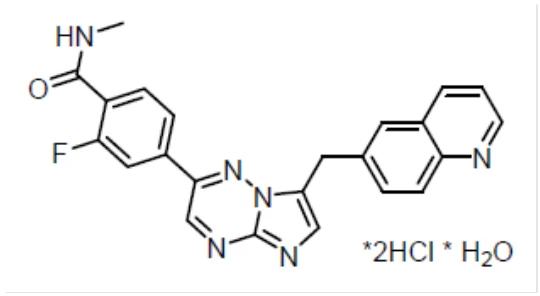
| Chemical name: | 2-Fluoro-N-methyl-4-[7-(quinolin-6-ylmethyl)imidazo[1,2-b][1,2,4]triazin-2-yl]benzamide—hydrogen chloride—water (1/2/1) |
| Structural formula: | |
| Molecular mass: | Free base: 412.43 Salt form on anhydrous basis: 485.34 Salt form on monohydrate basis: 503.36 |
| Molecular formula: | Free base: C23H17FN6O Salt form on anhydrous basis: C23H17FN6O·2HCl Salt form on monohydrate basis: C23H17FN6O·2HCl·H2O |
| Physicochemical properties: | |
|---|---|
| Solubility: |
| Solvent | Solubility (mg/mL) a | Temperature | |
|---|---|---|---|
| pH 1.0 (HCL 0.1N) | 4.176 | 37 oC | |
| pH 2.0 citrate buffer | 4.227 | 37 oC | |
| pH 3.0 citrate buffer | 0.234 | 37 oC |
 |
| pH 4.0 acetate buffer | < LOQ* | 37 oC | |
|---|---|---|---|
| pH 6.8 phosphate buffer | < LOQ* | 37 oC | |
| pH 7.5 phosphate buffer | < LOQ* | 37 oC |
a Equilibrum solubility determined after 24 hours stirring. Solubility is measured for the dihydrochloride monohydrate form. *Limit of quantification (13.6 µg/mL) |
14 CLINICAL TRIALS
14.1 Clinical Trials by Indication
Locally advanced unresectable or metastatic NSCLC with MET exon 14 skipping (METex14) alterations
The efficacy of TABRECTA was evaluated in A2201 (GEOMETRY mono-1), a multicenter, non-randomized, open-label, multi-cohort Phase II study in adult patients with locally advanced (Stage IIIB) or metastatic (Stage IV) NSCLC with MET dysregulation. Patients (N = 373) were enrolled into study cohorts based on their prior treatment status (treatment-naïve or previously treated) and MET dysregulation status (MET exon 14 skipping [METex14] alteration and/or MET amplification). Patients with METex14-altered NSCLC (N = 160) were enrolled into the MET-altered cohorts regardless of MET amplification. Patients with MET amplification and without METex14 alterations in the tumour were enrolled into the MET-amplified cohorts.
The presence of METex14 in tumour specimens was determined using a validated clinical trial assay (CTA) which is a qualitative real-time reverse transcriptase-polymerase chain reaction (RT-PCR) designed to detect MET exon 14 skipping mRNA derived from formalin-fixed, paraffin-embedded tumour tissues.
Eligible patients were required to have NSCLC with a mutation that leads to MET exon 14 skipping, epidermal growth factor receptor (EGFR) wild-type and anaplastic lymphoma kinase (ALK) rearrangement negative status, at least one measurable lesion as defined by Response Evaluation Criteria in Solid Tumors (RECIST) version 1.1, and adequate organ functions, and Eastern Cooperative Oncology Group (ECOG) performance status (PS) 0 to 1. Patients with symptomatic central nervous system (CNS) metastases who were neurologically unstable or required increasing doses of steroids within the prior 2 weeks to manage CNS symptoms, patients with clinically significant uncontrolled cardiac disease, or patients pre-treated with any MET or hepatocyte growth factor (HGF) inhibitor were not eligible for the study.
In the efficacy population, the majority of patients were White (77%), followed by Asian (19%) and 1.3% black. Sixty-one percent of patients were never smokers, 83% had adenocarcinoma, 8% had squamous cell lung carcinoma, 25% had ECOG PS 0, 74% had ECOG PS 1, 99% had Stage IV disease and 16% had CNS metastases. In the previously treated cohorts, 91% had prior chemotherapy, 86% had prior platinum-based chemotherapy, 32% had prior immunotherapy, and 16% had received 2 prior systemic therapies.
Table 8 - Summary of patient demographics for clinical trials in patients with locally advanced unresectable or metastatic NSCLC harbouring a METex14 skipping alteration
| Study # | Study design | Dosage, route of administration and duration | Study subjects (n) | Mean age (Range) | Sex |
| Study: A2201 (GEOMETRY mono-1) | A multi-cohort, non-randomized, open-label phase II, multicenter, study of oral cMET inhibitor INC280 (capmatinib) in adult patients with EGFR wild-type, ALK rearrangement negative, MET altered or amplified , advanced NSCLC | Tablets 400 mg, orally taken twice daily until disease progression, unacceptable toxicity | 160 METex14 altered NSCLC patients: Previously treated (100): Cohort 4 (69 in 2/3rd line) and Cohort 6 (31 in 2nd line) Treatment Naïve (60): Cohort 5b (28) And Cohort 7 (32) | 71 years (range: 48 to 90 years) | 61% female and 39% male |
Data Cut-off date: 30-Aug-2021
EGFR = epidermal growth factor receptor; ALK = anaplastic lymphoma kinase
The primary endpoint of the study was overall response rate (ORR) as determined by a Blinded Independent Review Committee (BIRC) according to RECIST 1.1. The key secondary endpoint was duration of response (DOR) by BIRC. The efficacy data for treatment-naïve and previously treated patients were analyzed independently i.e. separately per cohort.
Efficacy results for treatment-naïve and previously treated patients are presented in Table 9 and Table 10, respectively.
Table 9 Efficacy results in treatment-naïve patients with METex14-altered NSCLC in A2201 (GEOMETRY mono-1)
| Efficacy parameters | Treatment-naïve patients Cohort 5b N=28 | Treatment-naïve patients Cohort 7 N=32 | Treatment-naïve patients Cohorts 5b and 7 N=60 | |||||||||||||||
| Overall response ratea (95% CI)b | 68% (48, 84) | 69% (50, 84) | 68% (55, 80) | |||||||||||||||
| Complete response (CR), n (%) | 2 (7) | 1 (3.1) | 3 (5) | |||||||||||||||
| Partial response (PR), n (%) | 17 (61) | 21 (66) | 38 (63) | |||||||||||||||
| Duration of responsea | ||||||||||||||||||
| Number of responders, n | 19 | 22 | 41 | |||||||||||||||
| Median, months (95% CI)c | 13 (6, NE) | 17 (8, NE) | 17 (8, 22) | |||||||||||||||
| Patients with DOR ≥6 months | 68% | 73% | 71% | |||||||||||||||
| Patients with DOR ≥12 months | 47% | 50% | 49% | |||||||||||||||
Data cut-off date: 30-Aug-2021 Cohort 5b is the primary cohort of the treatment-naïve patients; Cohort 7 is the expansion cohort. Abbreviations: CI, Confidence Interval; NE, not estimable. ORR: CR+PR. a Determined by a Blinded Independent Review Committee (BIRC) according to RECIST v1.1. b Clopper and Pearson exact binomial 95% CI. c Based on Kaplan-Meier estimate. | ||||||||||||||||||
Table 10 Efficacy results in previously treated patients with METex14-altered NSCLC in A2201 (GEOMETRY mono-1)
| Efficacy parameters | Previously treated patients Cohort 4 (2/3L) N=69 | Previously treated patients Cohort 6 (2L) N=31 | Previously treated patients Cohorts 4 and 6 N=100 | |||||||||||||
| Overall response ratea (95% CI)b | 41% (29, 53) | 52% (33, 70) | 44% (34, 54) | |||||||||||||
| Complete response (CR), n (%) | 1 (1.4) | 0 (0) | 1 (1.0) | |||||||||||||
| Partial response (PR), n (%) | 27 (39) | 16 (52) | 43 (43) | |||||||||||||
| Duration of responsea | ||||||||||||||||
| Number of responders, n | 28 | 16 | 44 | |||||||||||||
| Median, months (95% CI)c | 10 (6, 13) | 9 (4, NE) | 10 (6, 13) | |||||||||||||
| Patients with DOR ≥6 months | 64% | 63% | 64% | |||||||||||||
| Patients with DOR ≥12 months | 32% | 44% | 36% | |||||||||||||
Data cut-off date: 30-Aug-2021 Cohort 4 is the primary cohort of the previously treated patients; Cohort 6 is the expansion cohort. Abbreviations: CI, Confidence Interval; NE, not estimable. ORR: CR+PR. a Determined by a Blinded Independent Review Committee (BIRC) according to RECIST v1.1. b Clopper and Pearson exact binomial 95% CI. c Based on Kaplan-Meier estimate. | ||||||||||||||||
Based on an exploratory subgroup analysis, ORR was 15% (95% CI: 1.9, 45) in patients with METex14-altered squamous cell carcinoma of the lung (N=13; 10/13 were pre-treated patients). This result should be interpreted with caution given the inherent risks with subgroup analyses in general.
The reduction of tumor size based on the best percentage change from baseline in sum of longest diameters per BIRC assessment is shown in Figure 1.
Figure 1 Waterfall plot for best percentage change from baseline in sum of longest diameters per
BIRC assessment by cohort
METex14-positive, treatment-naïve patients (Cohorts 5b and 7)
METex14-positive, previously treated patients (Cohorts 4 and 6)
Data cut-off date: 30-Aug-2021
*Patients still on-treatment
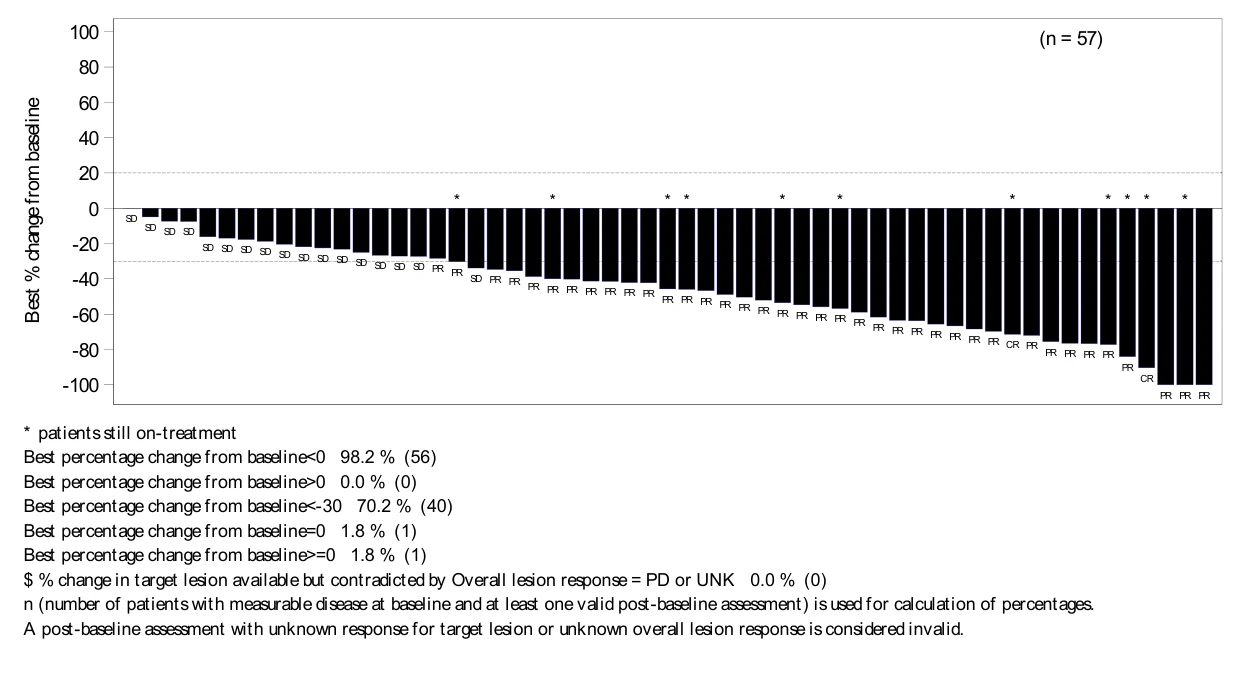
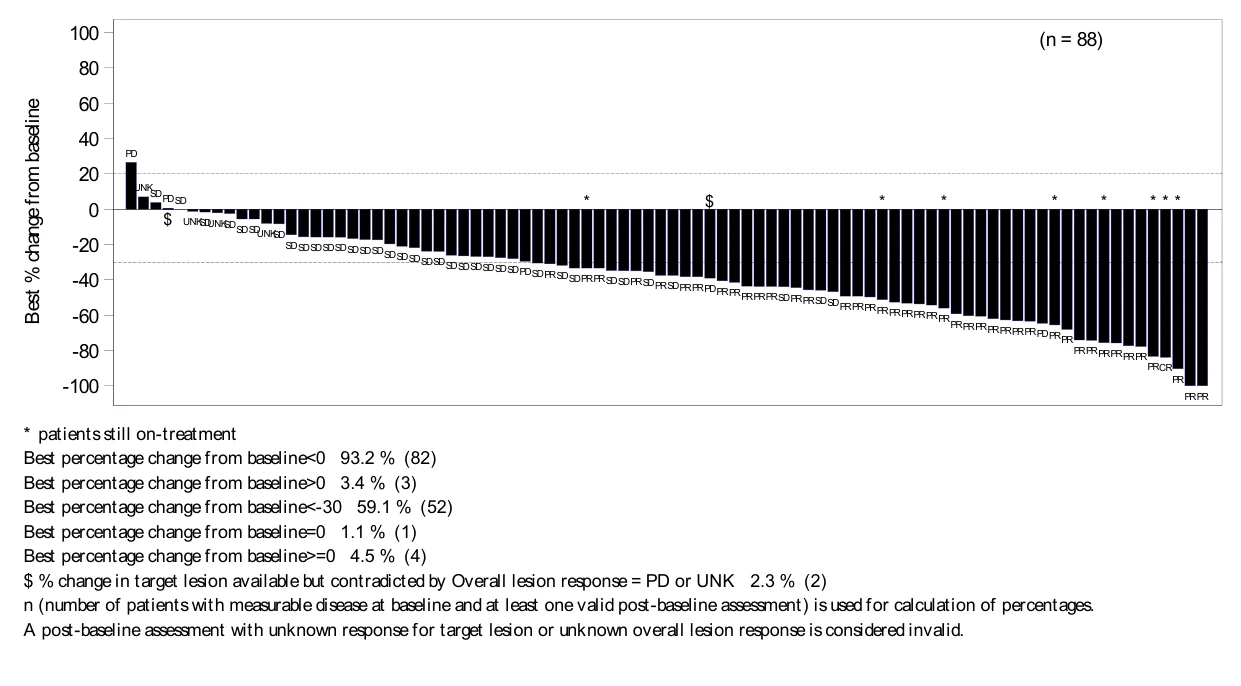
$ % change in target lesion available but contraindicated by overall lesion response=PD or UNK n (number of patients with measurable disease at baseline and at least one valid post-baseline assessment) was used for calculation of percentages.
A post-baseline assessment with unknown response for target lesion or unknown overall lesion response was considered invalid.
15 MICROBIOLOGY
No microbiological information is required for this drug product.
16 NON-CLINICAL TOXICOLOGY
General Toxicology: Repeat-dose toxicity studies of up to 3 months’ duration were conducted in rats and cynomolgus monkeys. The principal target organs were the pancreas, brain/central nervous system (CNS), liver, and kidney.
In a 3-month study in rats, capmatinib was administered to males at 20, 40, 60, and 90 mg/kg/day, and females at 10, 20, 30, and 45 mg/kg/day. Mortality was observed at ≥60 mg/kg/day in males, and ≥30 mg/kg/day in females. Histopathologic findings included brain white matter vacuolation at doses ≥ 2.2 times the human exposure (AUC) at the recommended dose, and low-grade pancreatic acinar cell vacuolation and/or apoptosis without inflammation, which appeared reversible. Tremors and convulsions were also observed in some of the animals, suggestive of CNS toxicity. Additional findings in a 28-day study included elevations in liver enzymes (ALT, AST, and/or sorbitol dehydrogenase [SDH]) and bilirubin. The No Observed Adverse Effect Level (NOAEL) was 40 mg/kg/day in males and 20 mg/kg/day in females, corresponding to approximately 1.2-fold and 1-fold of the exposure (AUC), respectively, in patients receiving the recommended dose.
In a 3-month study in monkeys, capmatinib was administered at 10, 30, and 75 mg/kg/day. Histopathologic changes included neutrophilic infiltration in the liver, and mononuclear cell infiltration, dilation and inflammation in the kidneys. Additional histopathologic findings in a 28-day study included pancreatic low-grade acinar cell apoptosis and crystalline-like material within the renal interstitium and/or tubular lumen. Follow-up investigations indicated that the kidney material is calcium phosphate precipitates. The NOAEL was 30 mg/kg/day, corresponding to approximately 0.6-to-1.1-fold of the exposure (AUC) in patients receiving the recommended dose.
Carcinogenicity: Carcinogenicity studies with capmatinib have not been conducted.
Genotoxicity: Capmatinib was not mutagenic in the in vitro bacterial reverse mutation assay (Ames test) and did not cause chromosomal aberrations in the in vitro chromosome aberration assay in human peripheral blood lymphocytes. Capmatinib was not clastogenic in the in vivo bone marrow micronucleus test in rats.
Reproductive and Developmental Toxicology: In embryo-fetal development studies in rats and rabbits, pregnant animals received oral doses of capmatinib up to 30 mg/kg/day and 60 mg/kg/day, respectively, during the period of organogenesis. At 30 mg/kg/day in rats and 60 mg/kg/day in rabbits, the maternal systemic exposure (AUC) was approximately 1.4 and 1.5 times, respectively, the exposure in humans at the MRHD of 400 mg twice daily.
In rats, maternal toxicity (reduced body weight gain and food consumption) was observed at the dose of 30 mg/kg/day. Fetal effects included reduced fetal weights, irregular/incomplete ossification, and increased incidences of fetal malformations (e.g. abnormal flexure/inward malrotation of hindpaws/forepaws, thinness of forelimbs, lack of/reduced flexion at the humerus/ulna joints, narrowed or small tongue) at doses of ≥10 mg/kg/day (with maternal systemic exposure at 0.56 times the exposure in humans at the MRHD of 400 mg twice daily).
In rabbits, no maternal effects were detected at doses up to 60 mg/kg/day. Fetal effects included small lung lobe at ≥5 mg/kg/day (with systemic exposure at 0.016 times the exposure in humans at the MRHD of 400 mg twice daily), and reduced fetal weights, irregular/incomplete ossification and increased incidences of fetal malformations (e.g. abnormal flexure/malrotation of hindpaws/forepaws, thinness of forelimbs/hindlimbs, lack of/reduced flexion at the humerus/ulna joints, small lung lobes, narrowed or small tongue) at the dose of 60 mg/kg/day (with systemic exposure at 1.5 times the exposure in humans at the MRHD of 400 mg twice daily).
Special Toxicology:
Photosensitivity: In vitro and in vivo photosensitization assays with capmatinib suggested that capmatinib has the potential for photosensitization. The NOAEL for in vivo photosensitization was 30 mg/kg/day (Cmax of 14,000 ng/mL), about 2.9 times the human Cmax at the 400 mg twice daily clinical dose.